
At that moment, nothing else mattered anymore. — Lucy Caldwell
Wutopia Lab’s innovative water conservancy project in Nanhai, Guangdong, marks the pioneering use of mulberry-based fish ponds. The dynamic “ripples” created along the mulberry garden fence at the foot of Xiqiao Mountain inspired the design. The Nanhai Freshwater Fish Industry Technology Demonstration and Promotion Center was completed and opened in April 2023.
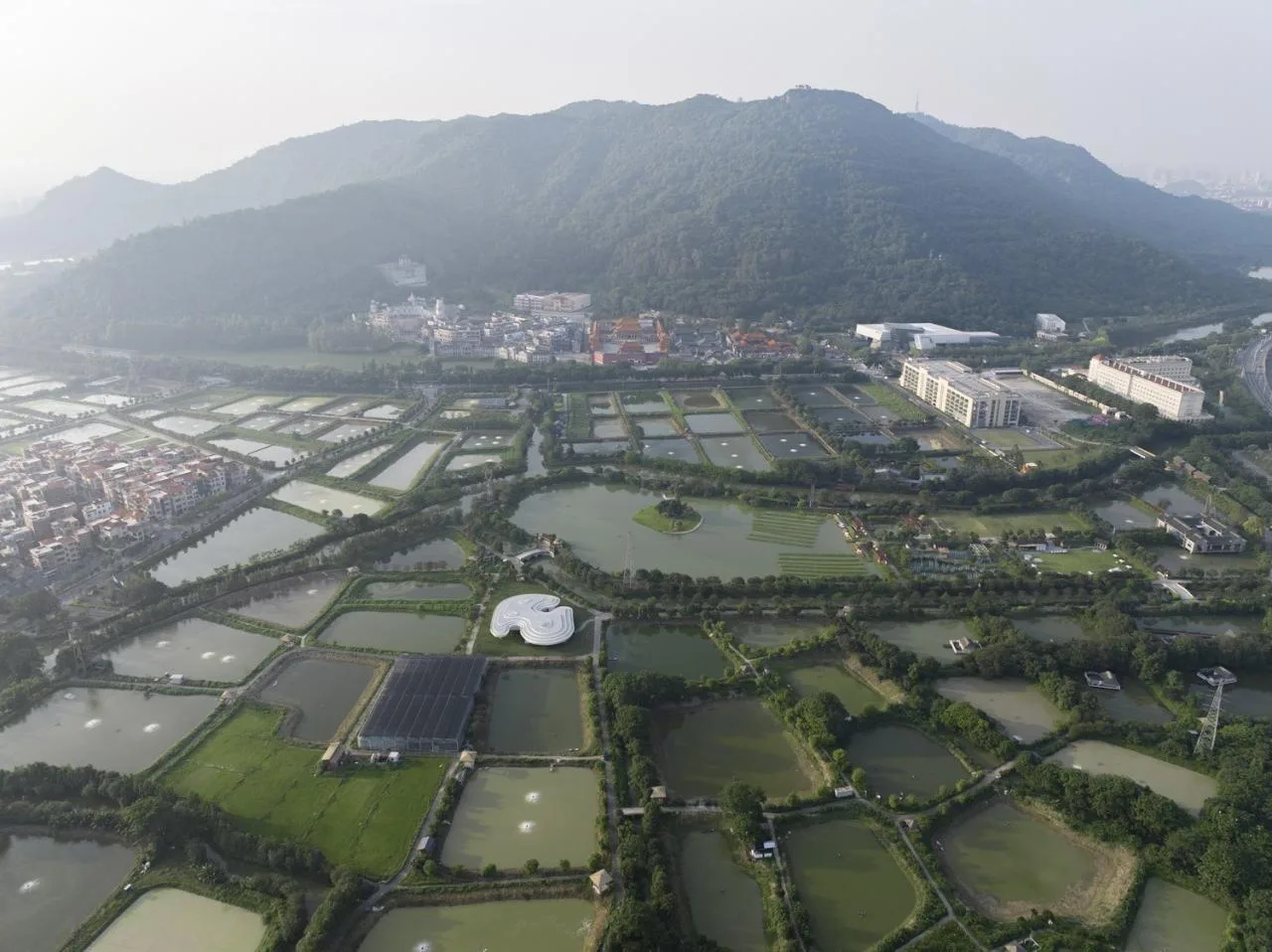
Overall bird’s-eye view of the site © Wu Siming
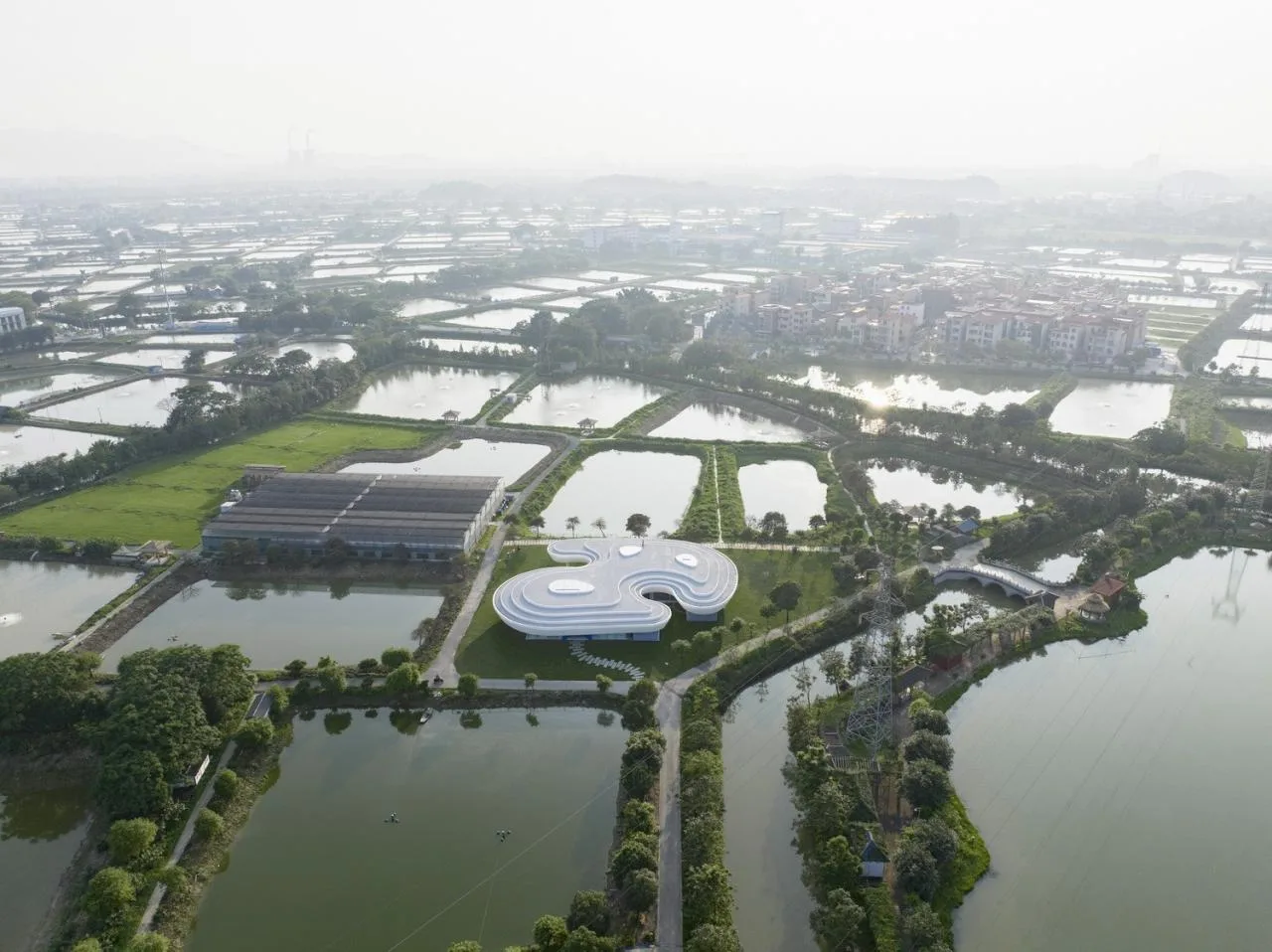
Overall bird’s-eye view of the site © Wu Siming
The First Ripple
“Ripple” is the fourth building within the comprehensive exhibition hall group of Yugeng Yue Yun in Xiqiao Town, and notably the first to be completed. It extends the cloud concept introduced in Hall 1, which speaks of experiences “once in the sea, on the clouds, in the mulberry fields.” However, instead of repeating the cloud motif, I found inspiration in photographs of the site sent by Wu Gang from Shanghai, where I was unable to visit in person.
In these images, I noticed the delicate ripples formed by water spraying over the pond’s surface, resembling white lace. At that moment, I was captivated and envisioned creating a ripple on the soft soil beside the pond.
Ripples visible in the distant pond on the left © Wu Siming
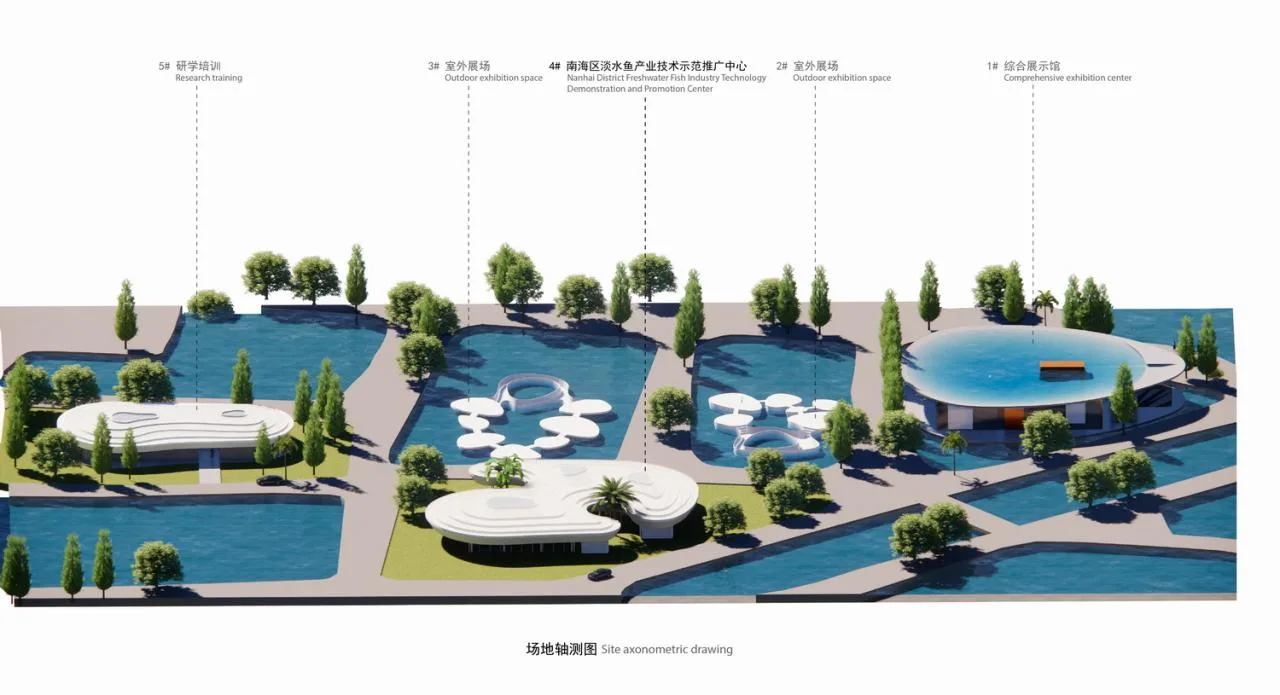
△ Site axonometric map © Wutopia Lab
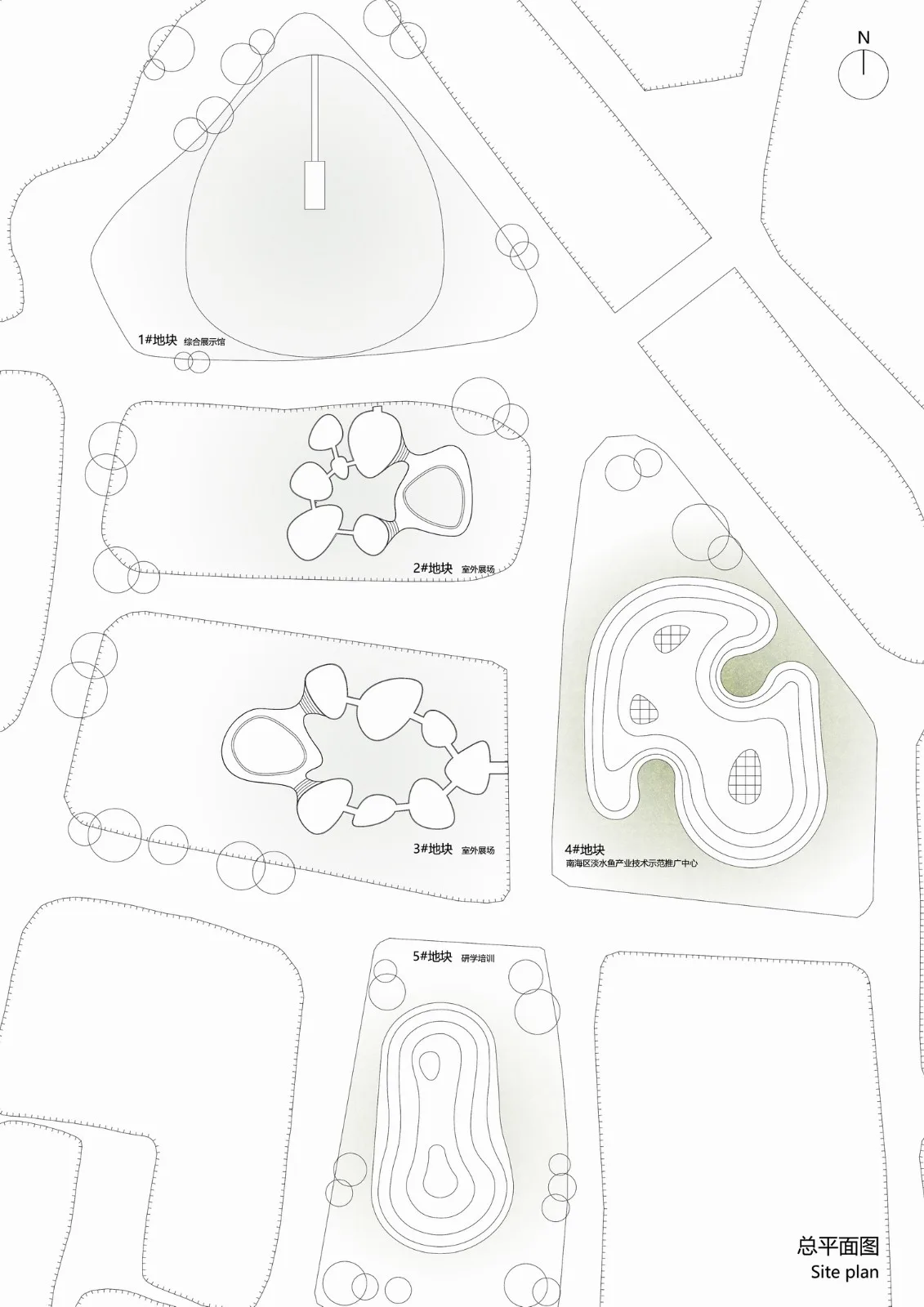
△ General layout plan © Wutopia Lab
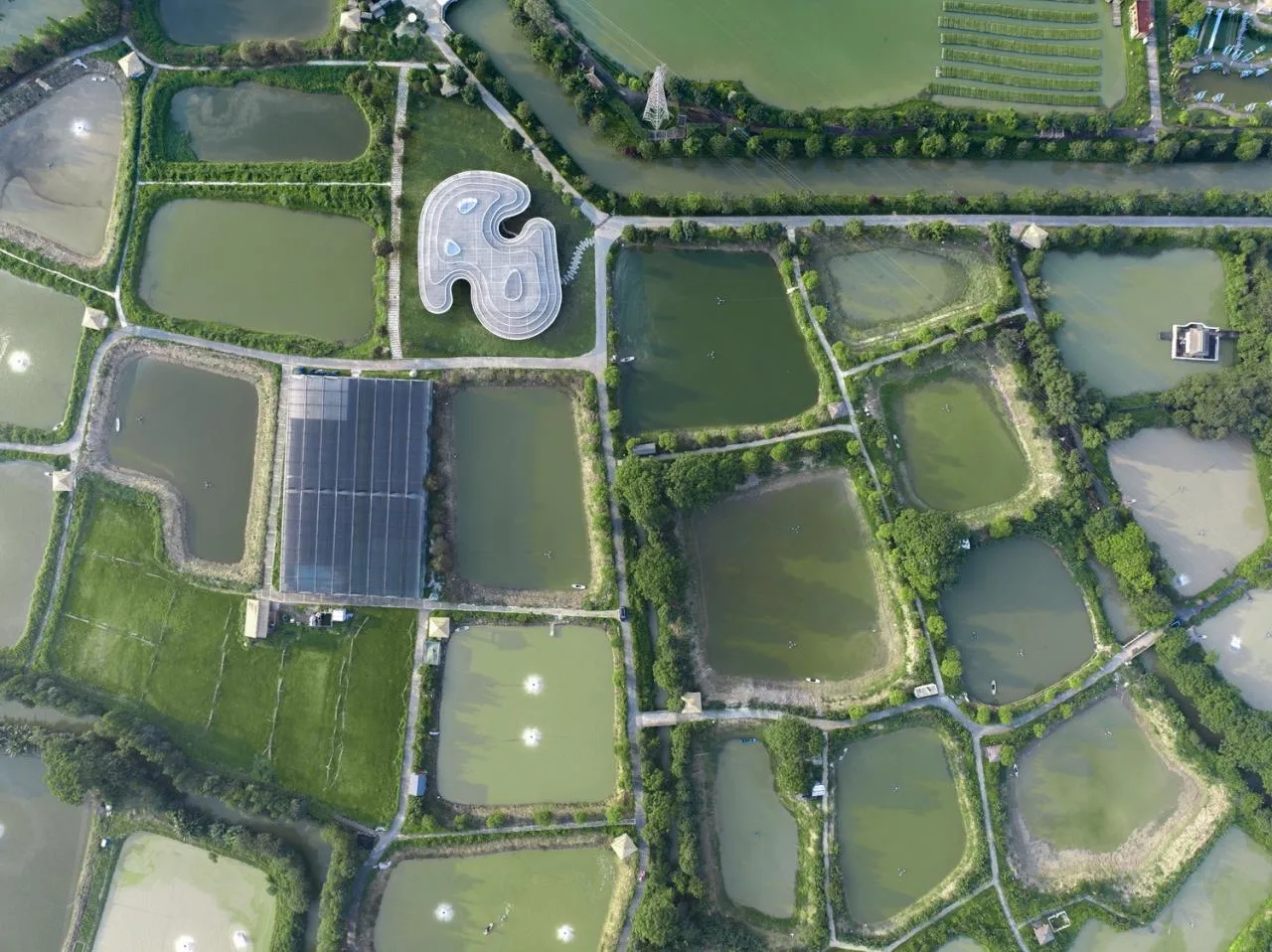
Top view bird’s-eye perspective © Wu Siming
The budget was very tight. I decided to design the roof of Hall 4 to mimic ripples, while maintaining a regular square layout inside the exhibition hall to facilitate display arrangements. The tension between the curves of the roof and the straight lines of the hall required emphasizing the roof design and downplaying the facade. Ripples would dominate not only the facade but also the fifth facade (the roof). I envisioned them as floating ripples.
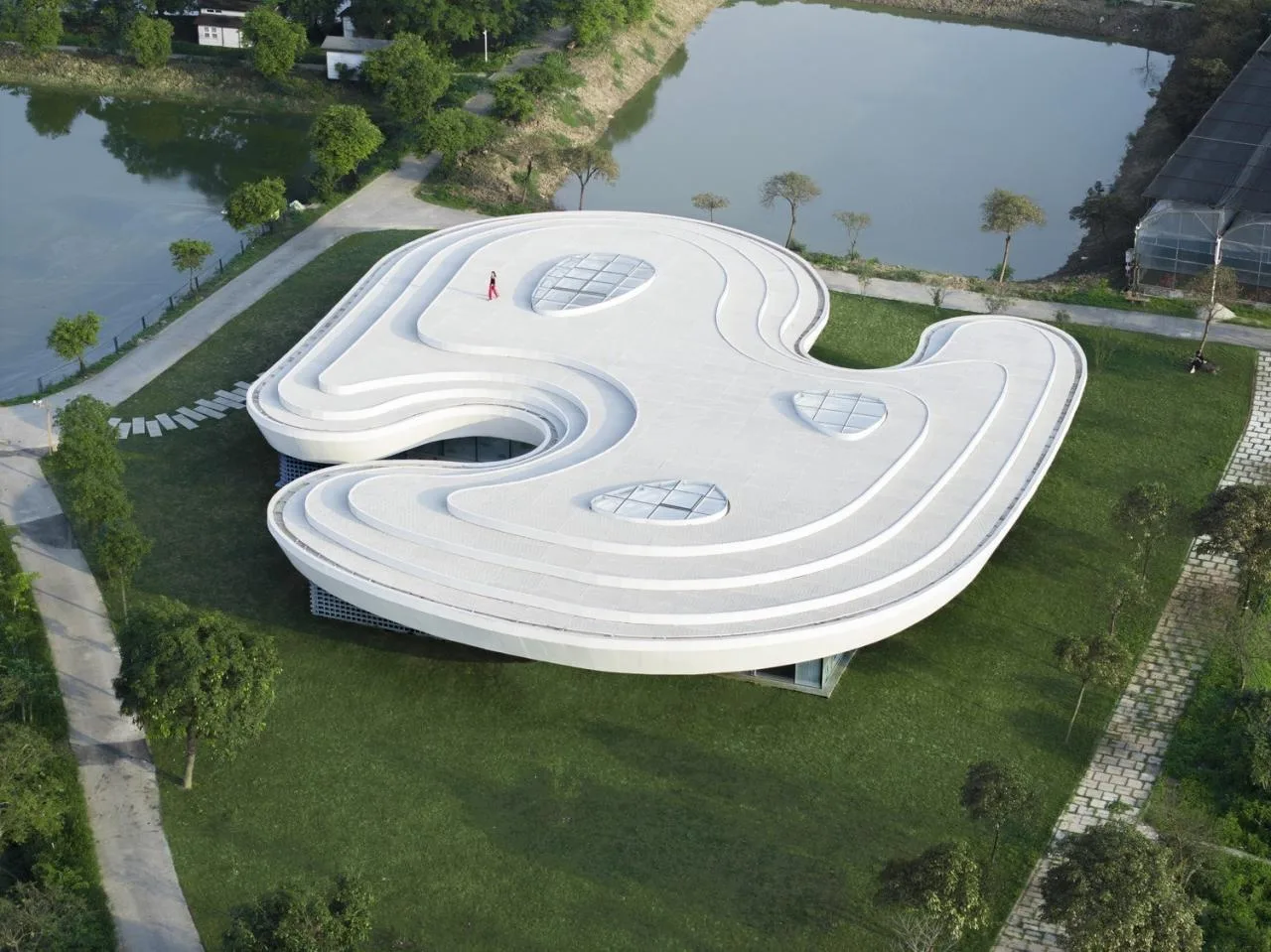
△ Southeast side bird’s-eye view © Wu Siming
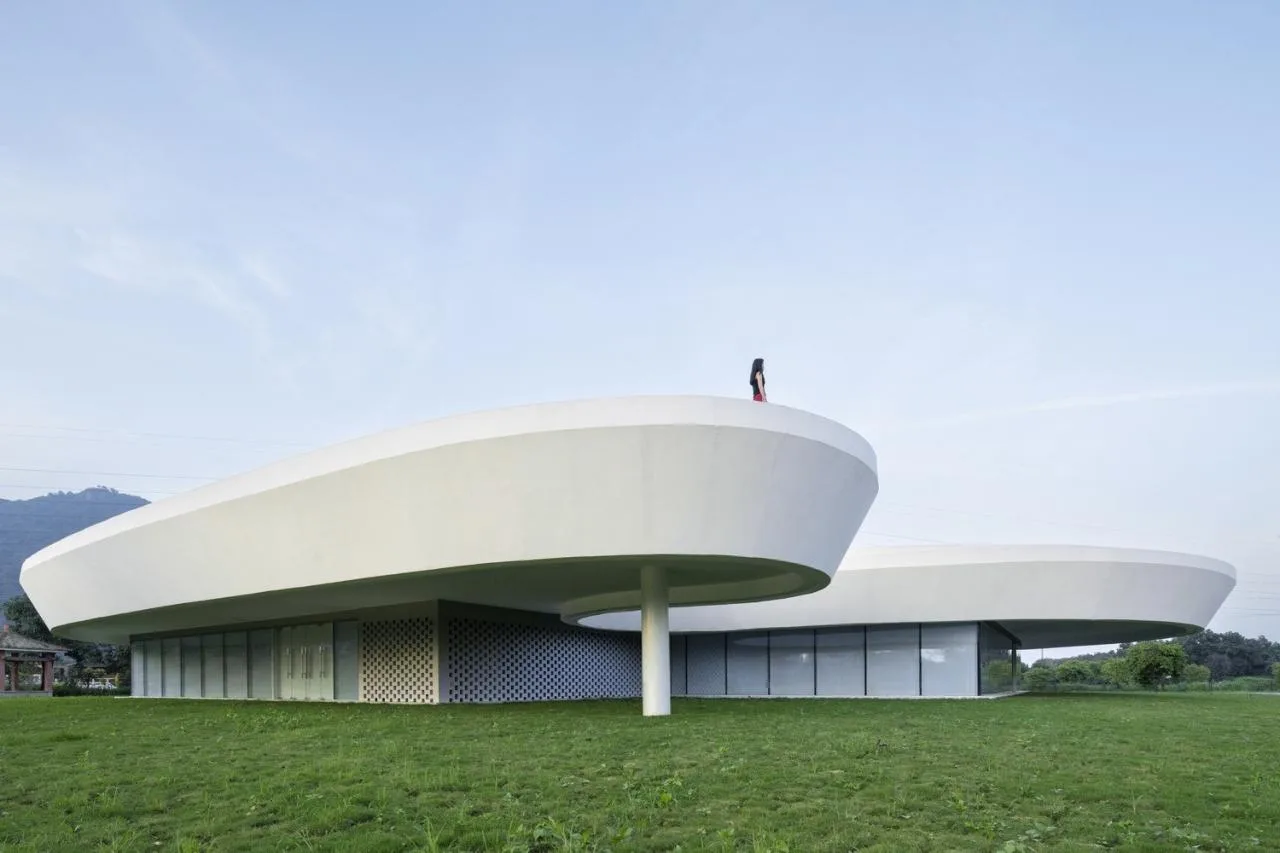
Southwest side facade © Wu Siming
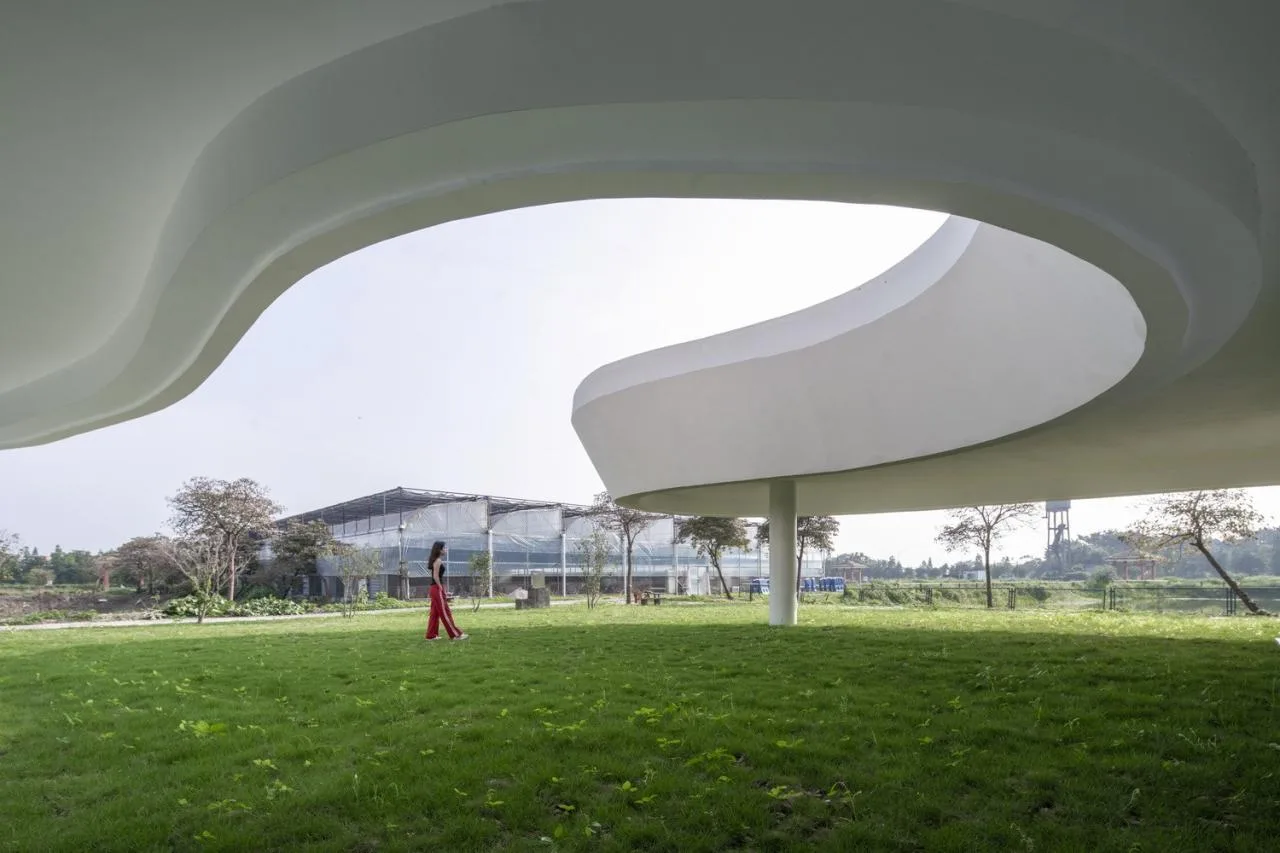
△ Curved roof © Wu Siming
I did not aim to imitate SANNA’s extreme precision and lightness, nor did I want to overtly express the structure. Metallic clouds obscure the sky, carrying heavy emotions. In June 2022, inspired by a sudden feeling, I wanted the ripples to appear thick and tense, as if suspended. I designed the roof with a maximum thickness of 3.5 meters and the facade at 2.4 meters high. This creates the visual effect of the roof pressing down on the facade, controlling the overall expression.
The roof layers on the facade at varying heights, resembling ripples. The glass skylight at the center is divided into concentric contour lines, totaling five circles. The thickest point reaches 3.5 meters, gradually thinning to 1.9 meters at the eaves. Viewed from above, the roof evokes images of ripples, terraced fields, and clouds, reinforcing the mulberry fields theme of the unfinished Hall 1 cloud concept.
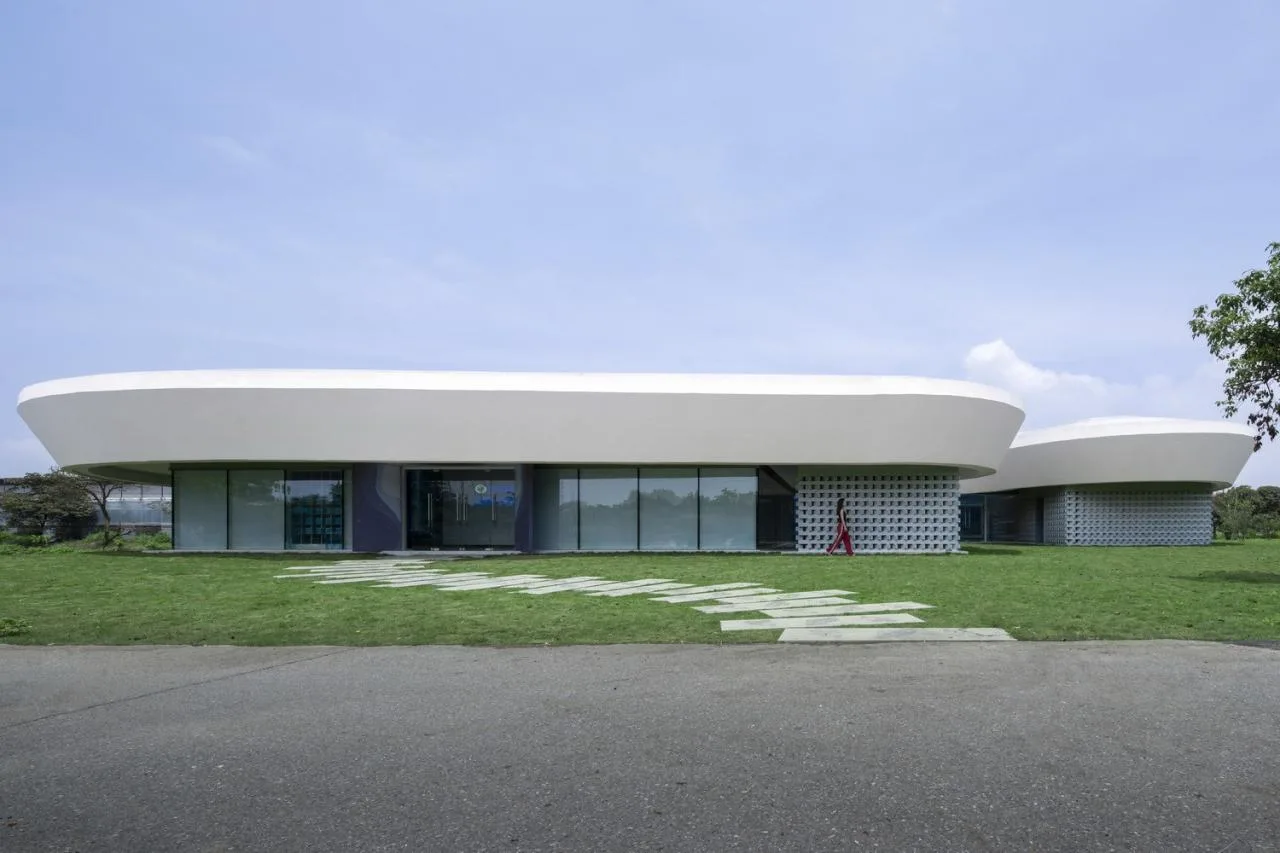
△ East side facade © Wu Siming
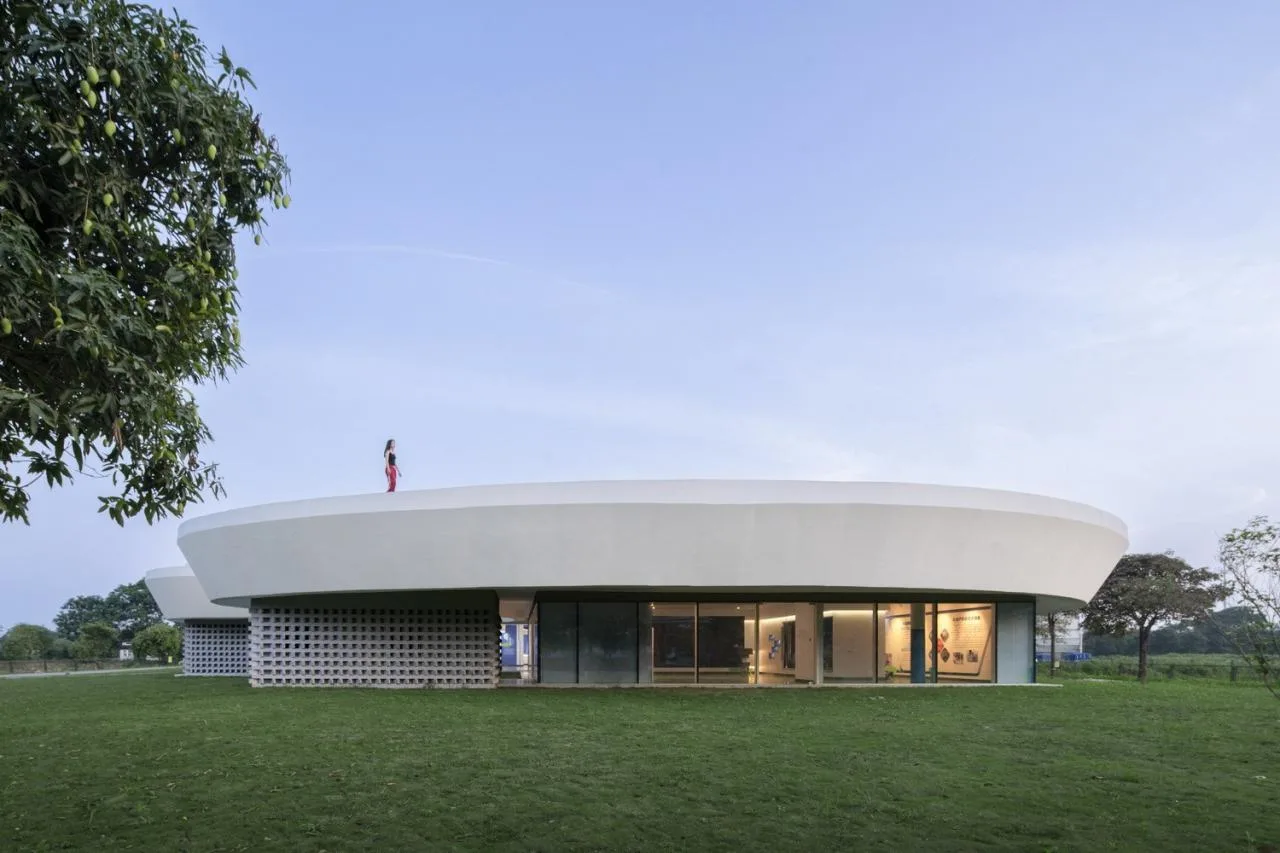
△ North side facade © Wu Siming
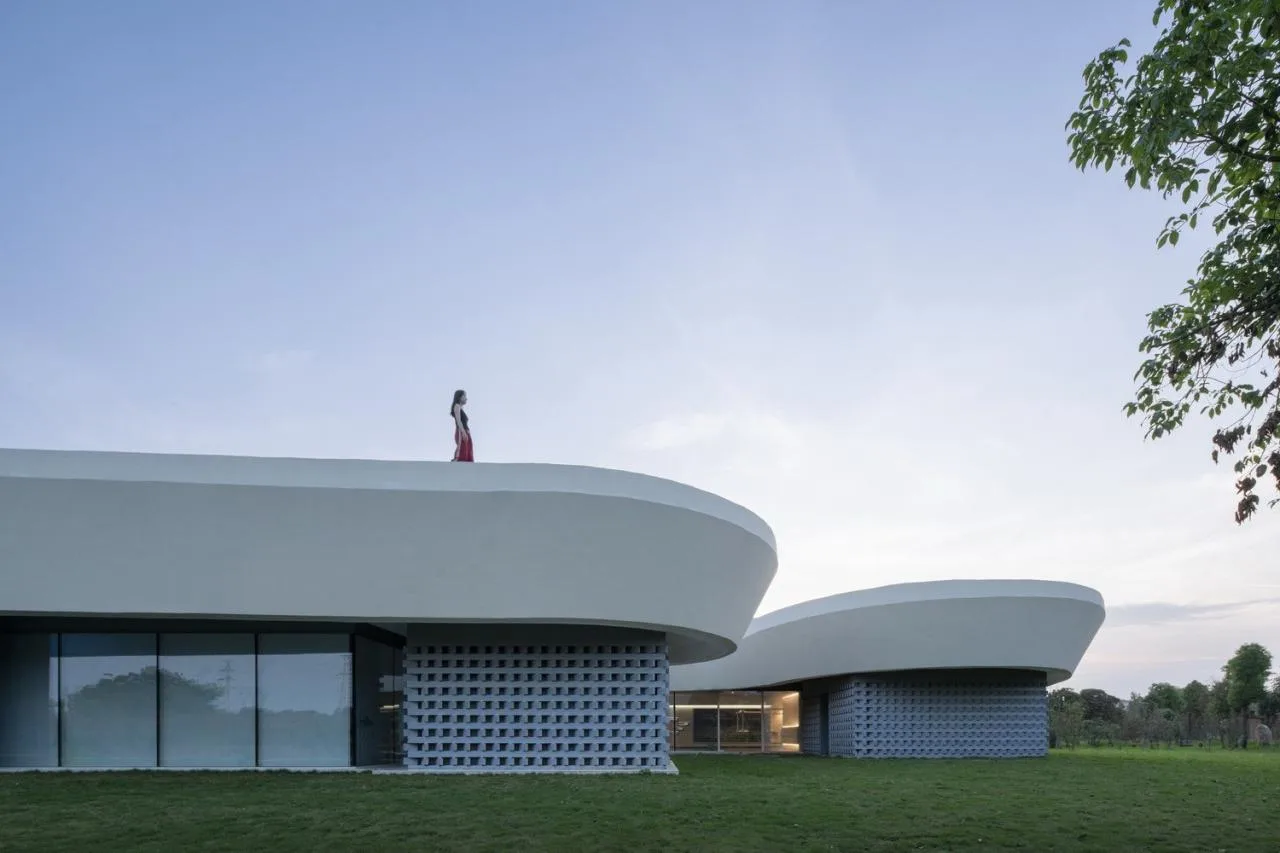
△ East side facade © Wu Siming
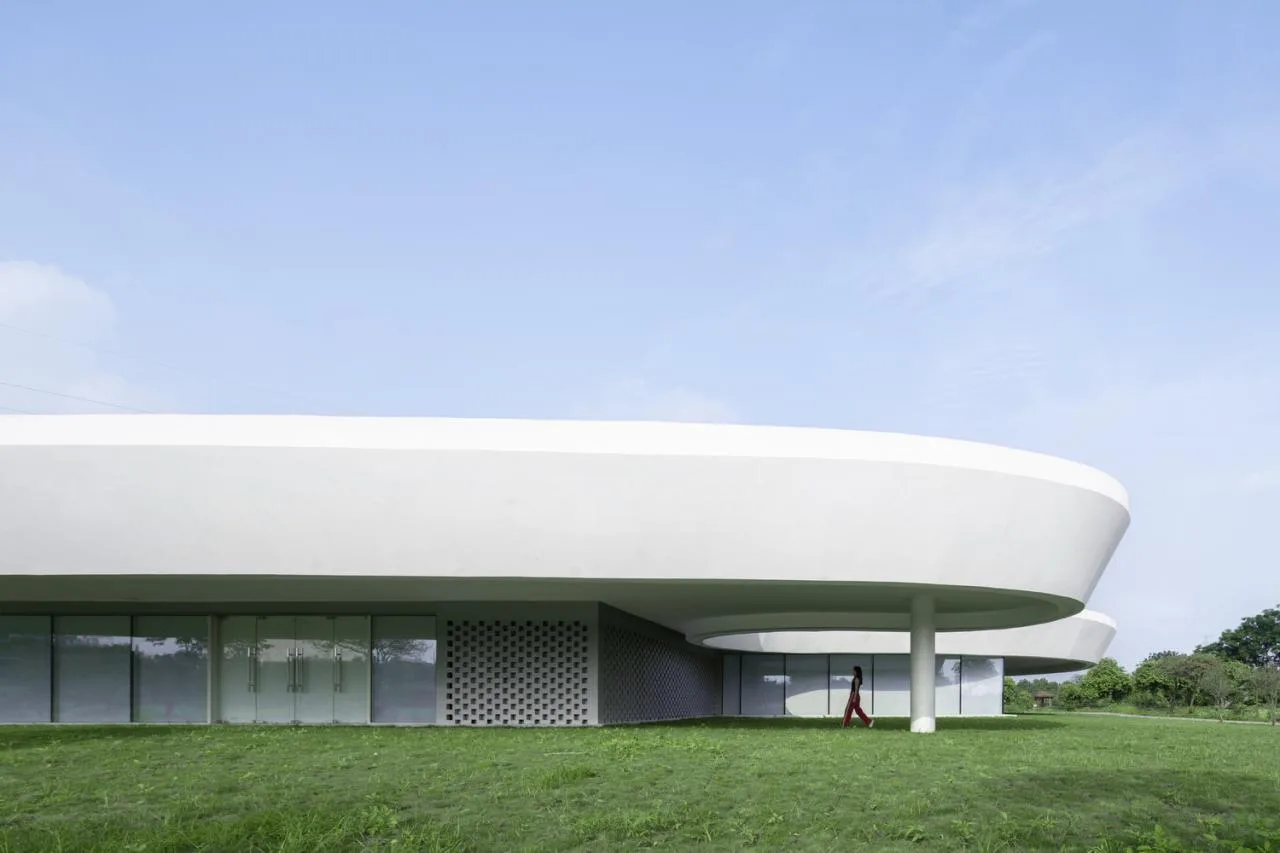
△ West side facade © Wu Siming
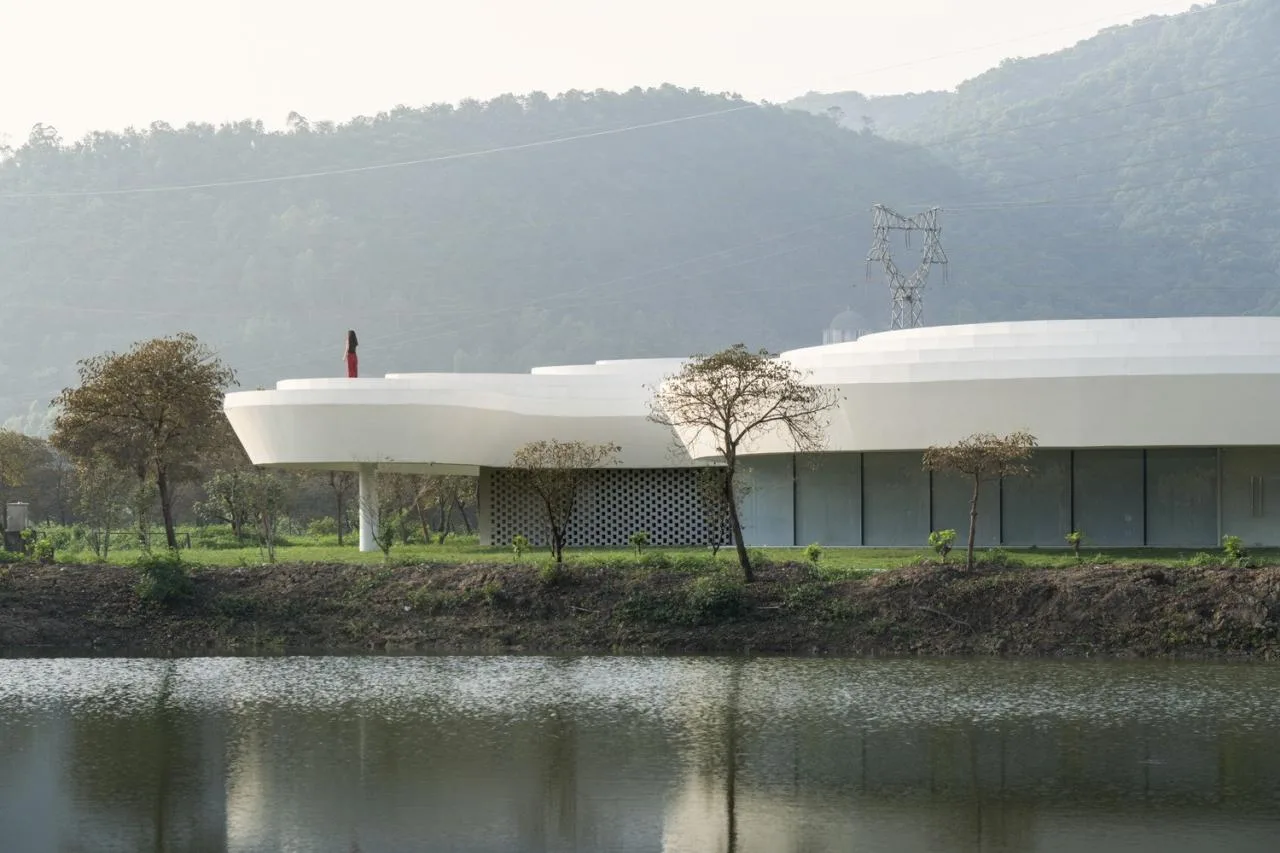
△ South facade © Wu Siming
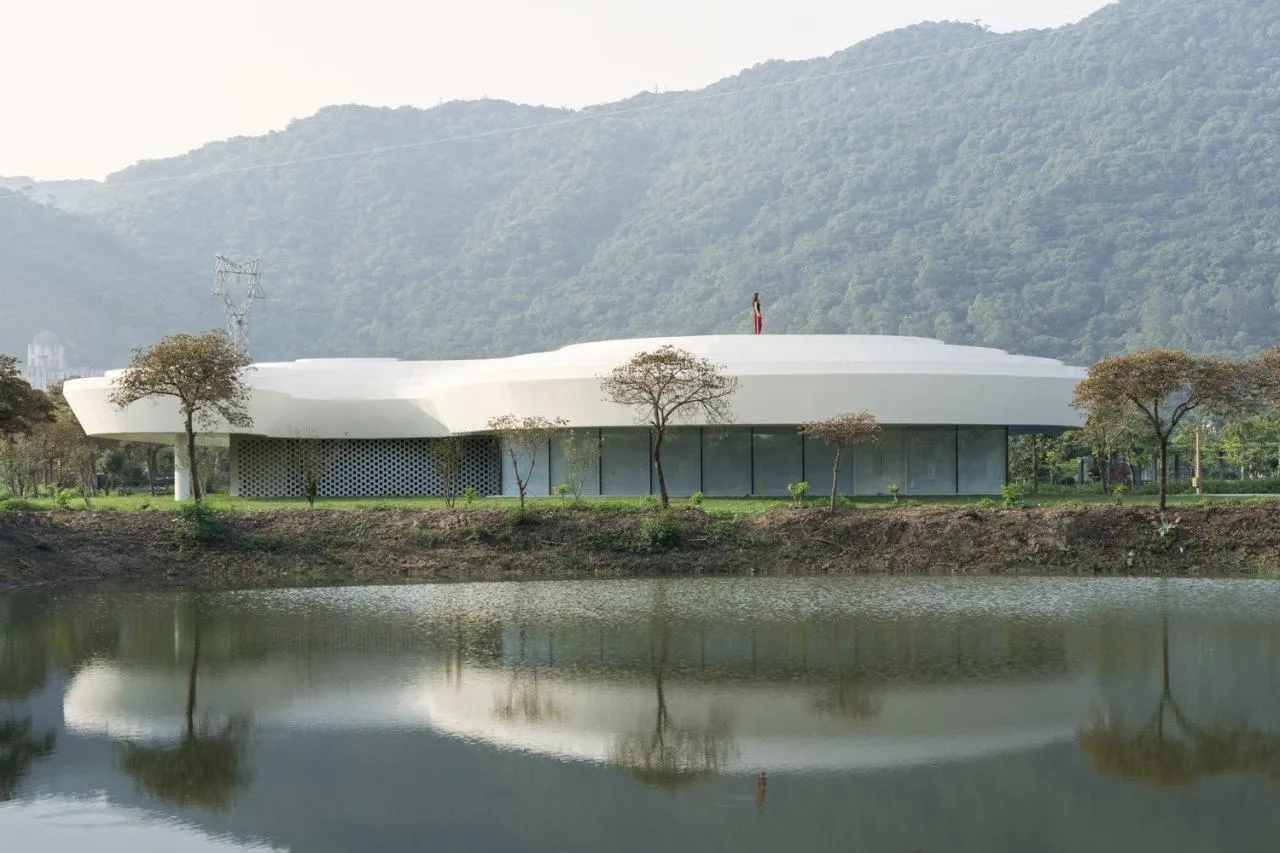
△ South facade © Wu Siming
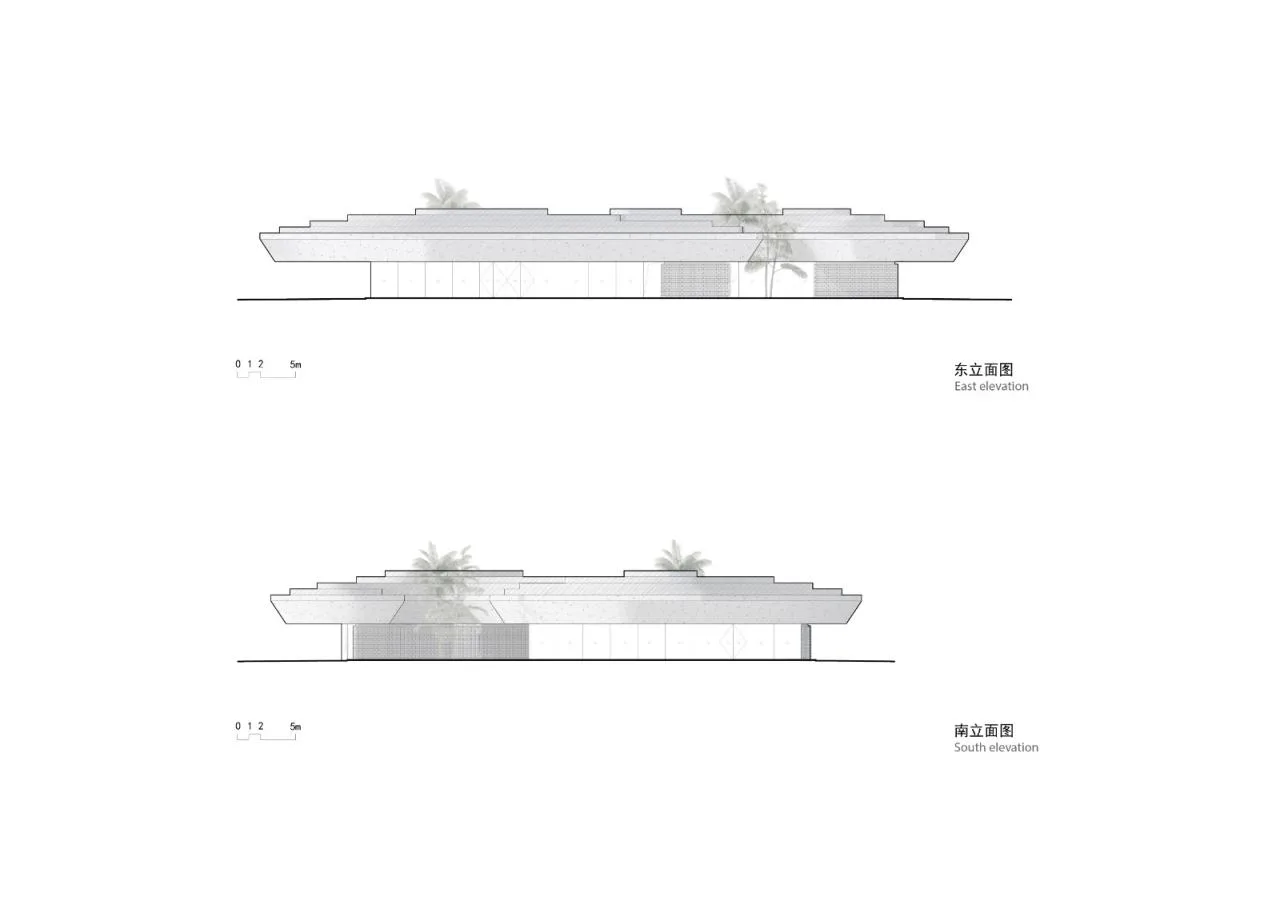
△ Elevation drawing © Wutopia Lab
Although the ripples appear thick, they are not heavy. I rejected the original bulky, expensive terraced concrete roof design that was difficult to build. Instead, the roof panels are set at 4 meters above ground, where all waterproofing, drainage, and insulation are installed.
Between the roof panels and the indoor ceilings are only structural elements and circuits, ensuring the exhibition halls maintain a uniform elevation of 3.2 meters to meet display requirements. The ripples’ shapes are formed on this ceiling plane.
The ripple surfaces are clad with a 50 × 50 × 50H × 3 fluorocarbon-sprayed steel grating, creating a white translucent skin. Compared to the heaviness of the facades, the roof offers a lightweight visual experience from above. Each ripple layer is edged with white aluminum plates.
At the eaves, GRC splicing smooths joints using crack-resistant mortar, finished with cement paint that mimics concrete plastering. This achieves a seamless, pure appearance for the ripples.
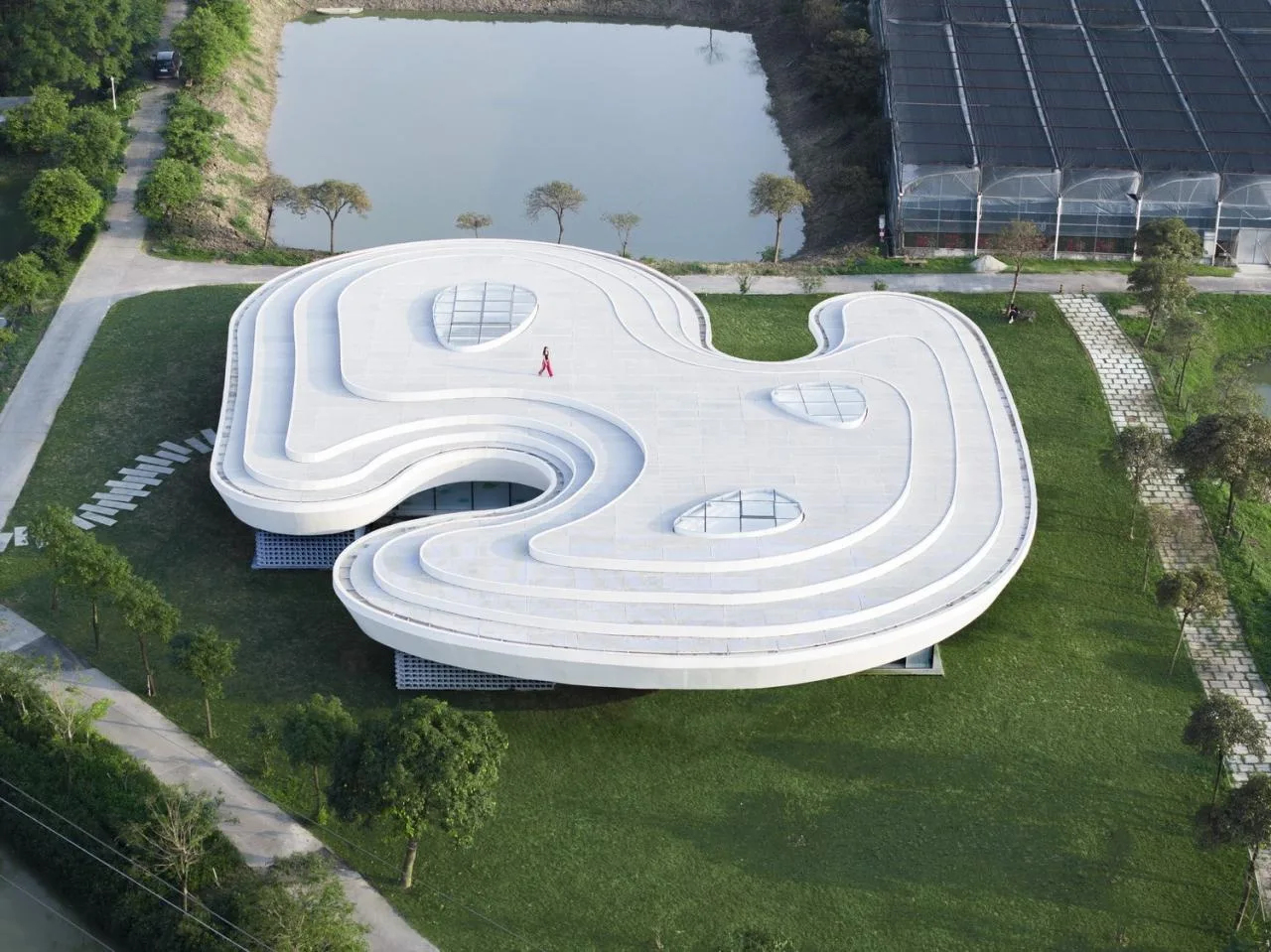
△ North side bird’s-eye view © Wu Siming
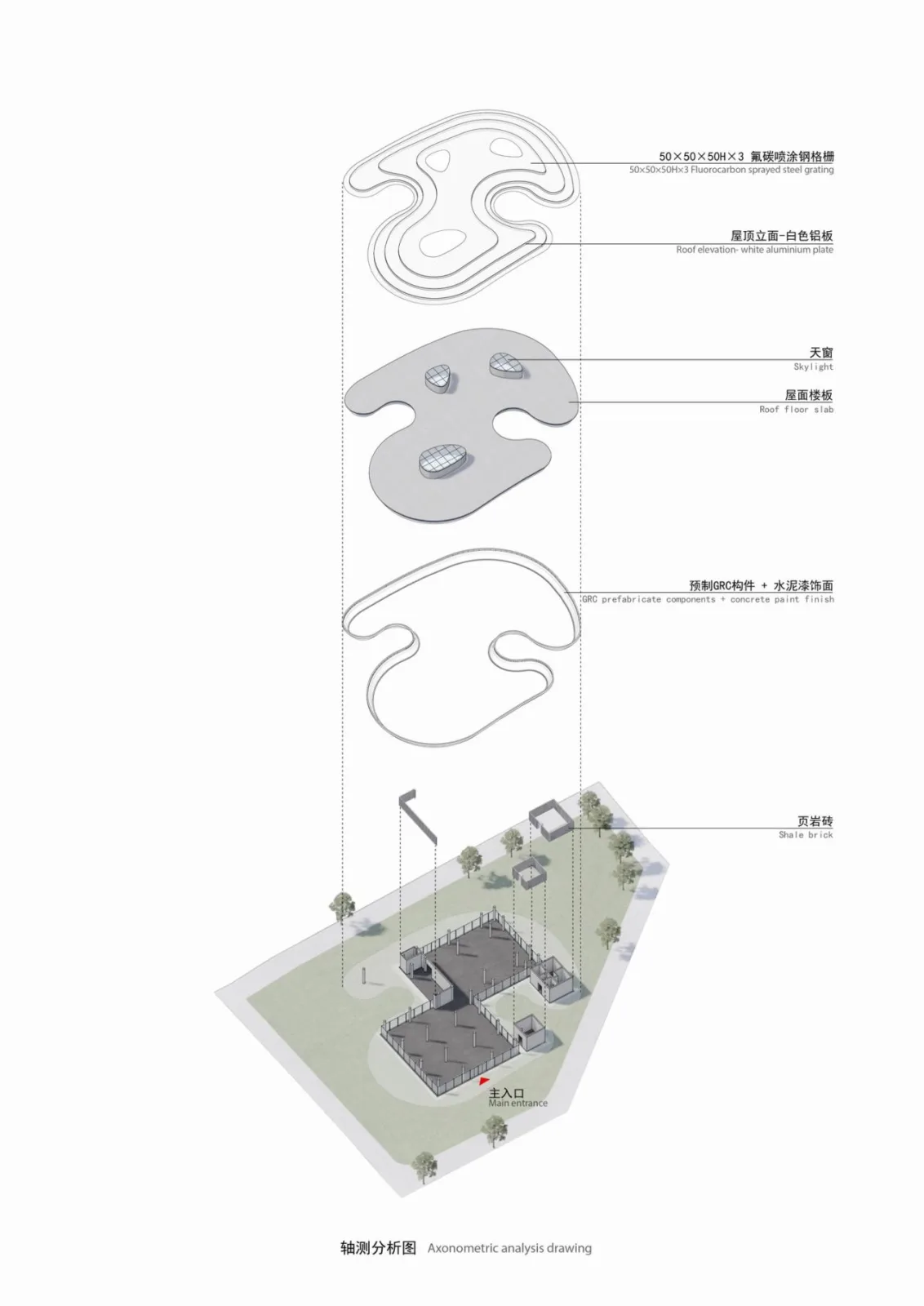
△ Axis Measurement Analysis Diagram © Wutopia Lab
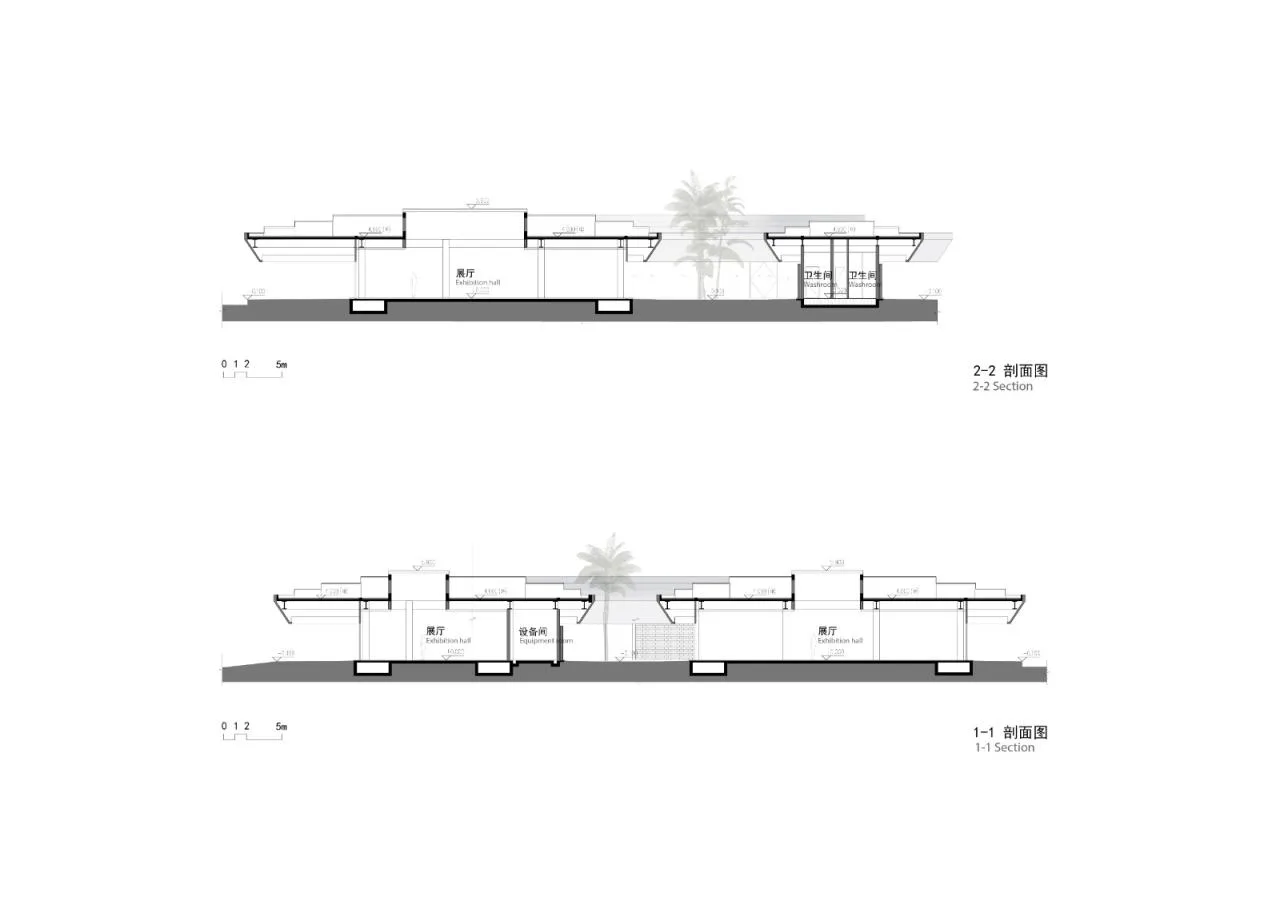
△ Section diagram © Wutopia Lab
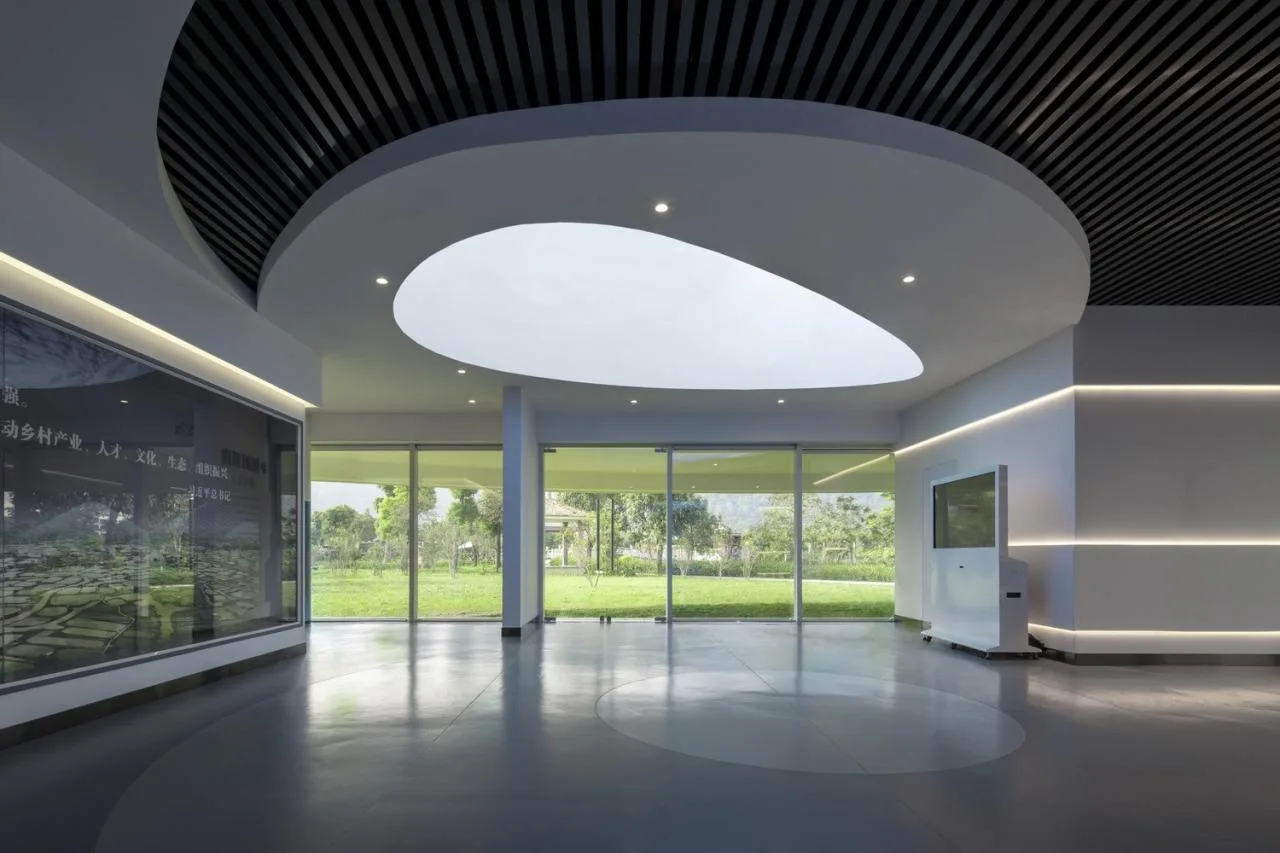
△ Exhibition Hall © Wu Siming
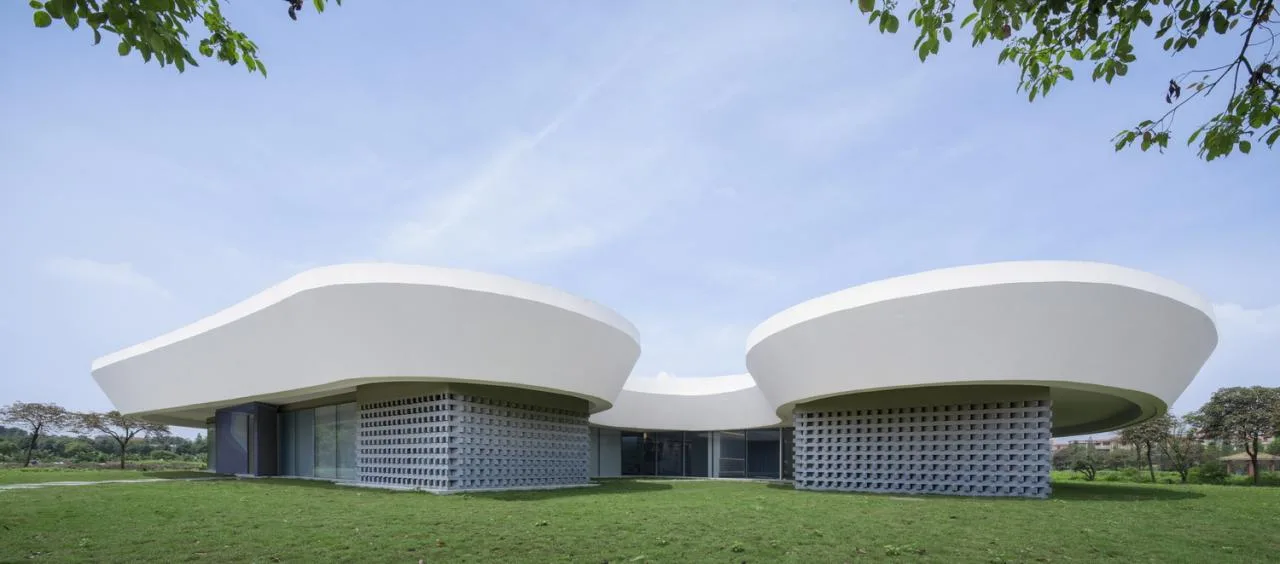
Northeastern facade © Wu Siming
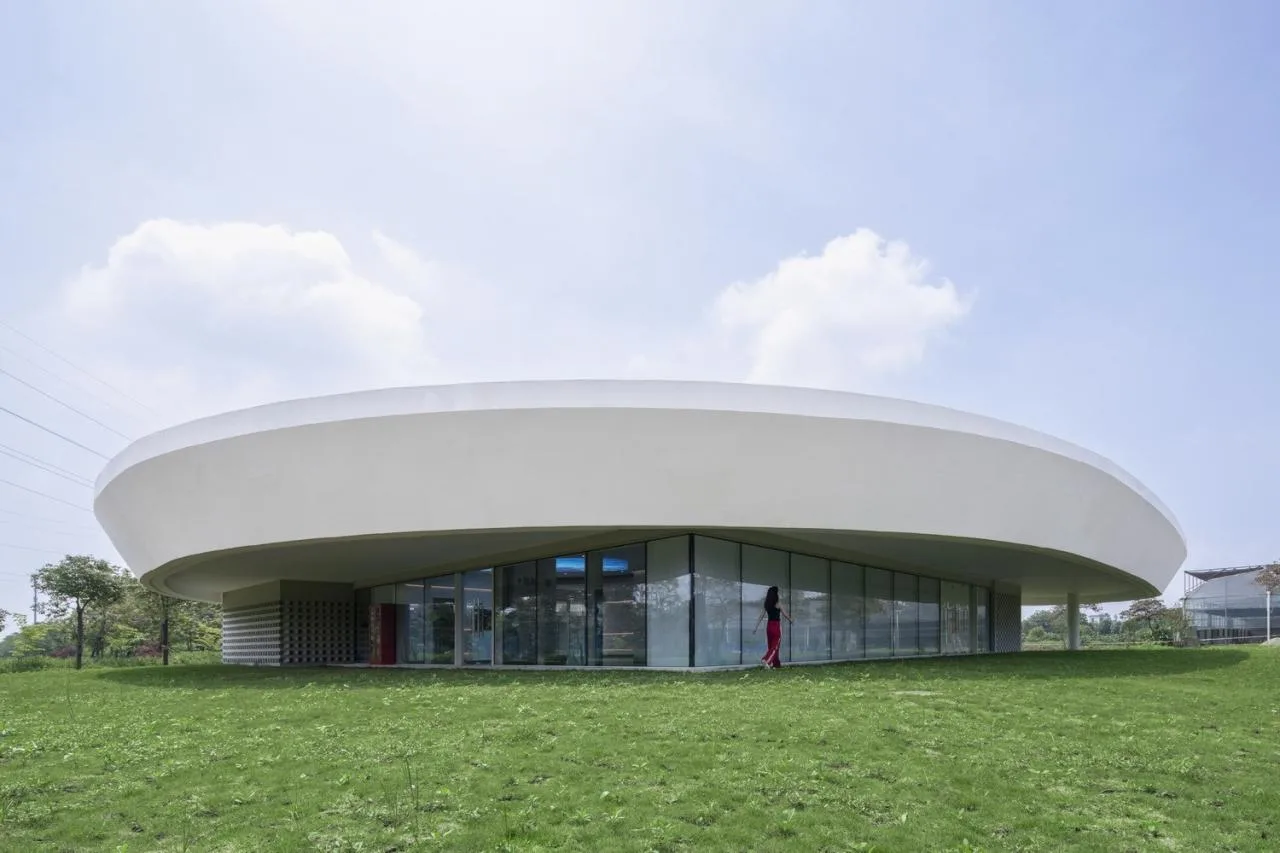
Northwest side facade © Wu Siming
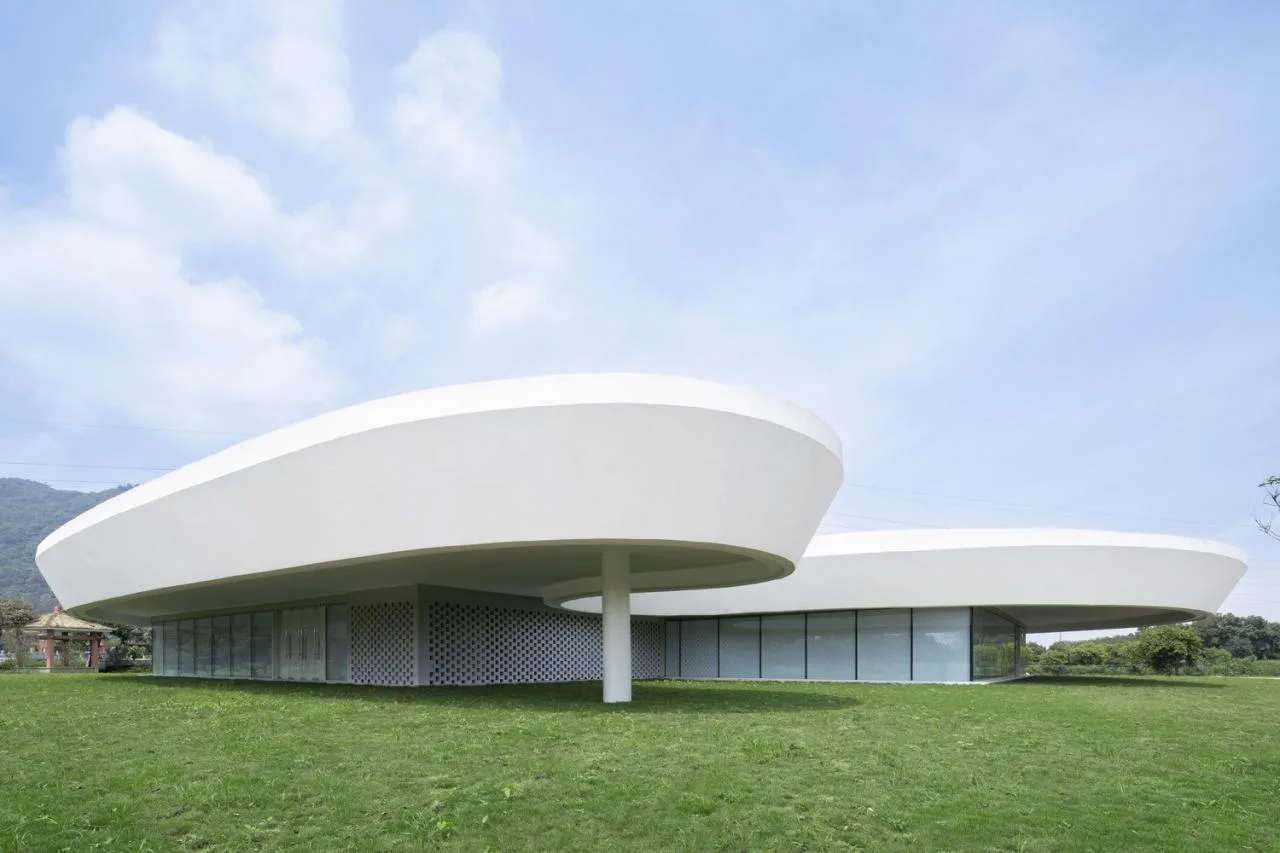
Southwest side facade © Wu Siming
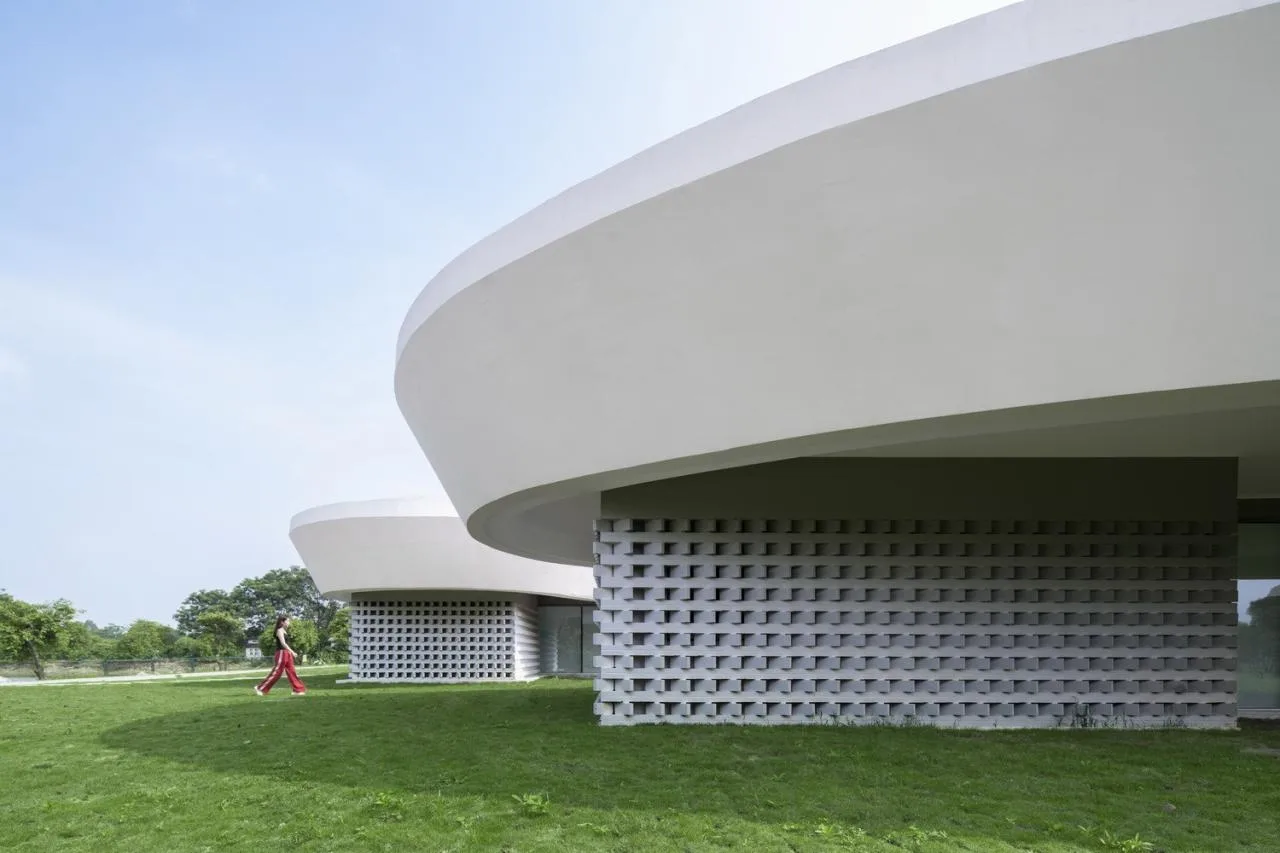
△ North side facade © Wu Siming
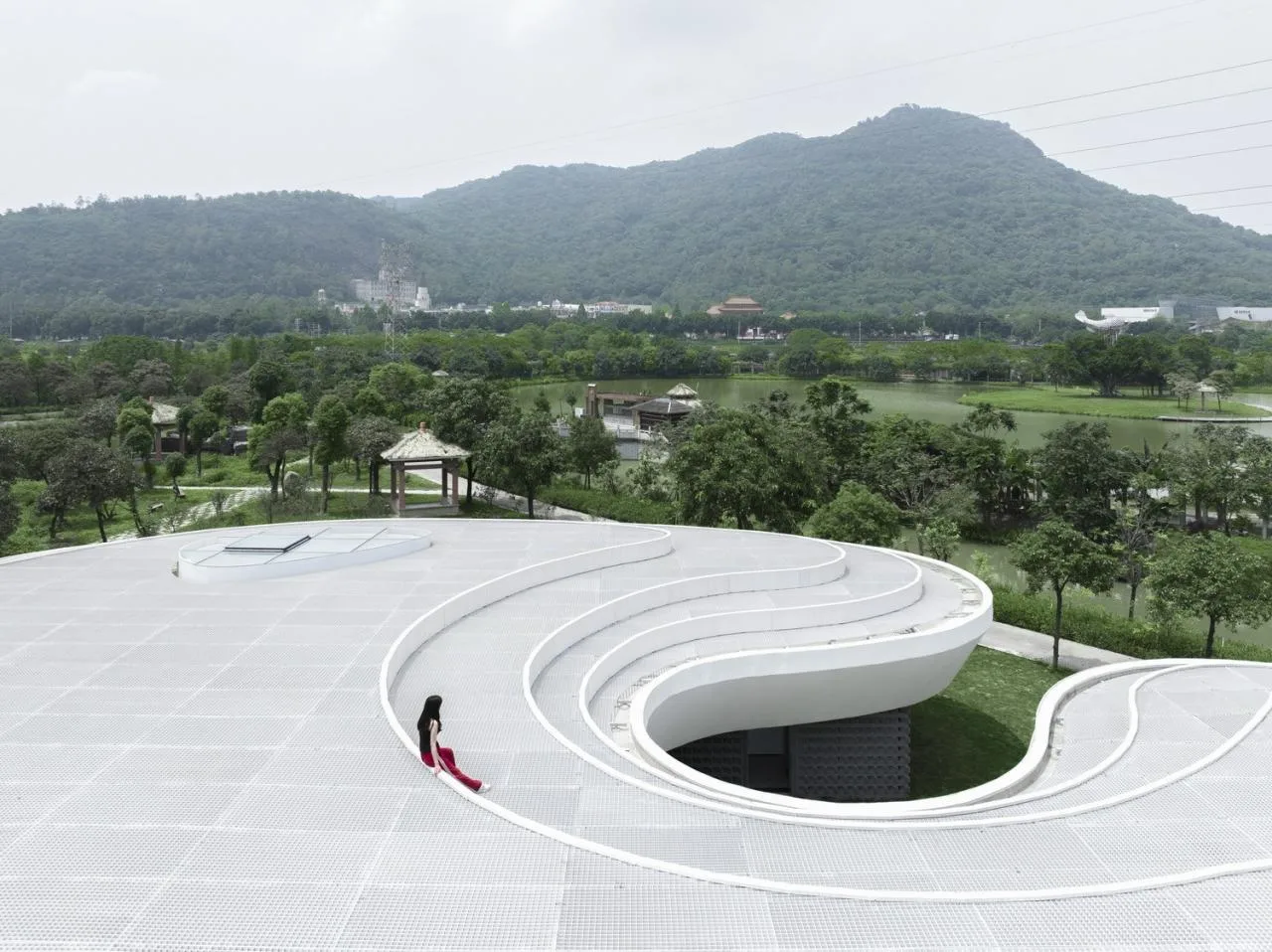
△ Steel grid roof © Wu Siming
The first ripple may appear thick, but it actually floats and is accessible. Yet standing on it brings a slight unease, as it transforms back into a delicate ripple. This architectural effect, reminiscent of Baroque techniques, cleverly balances heaviness and lightness.
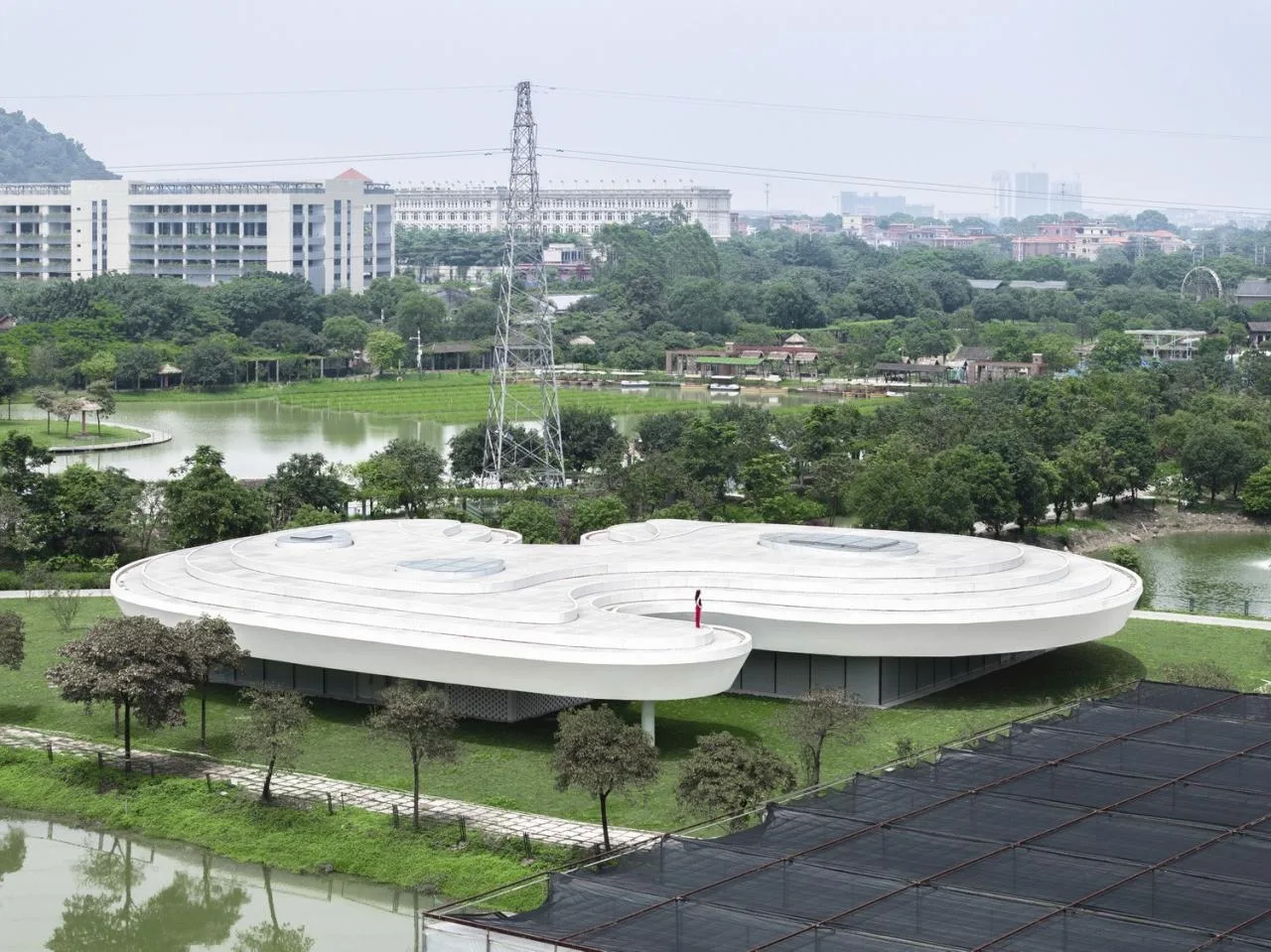
△ Suspended ‘Ripples’ © Wu Siming
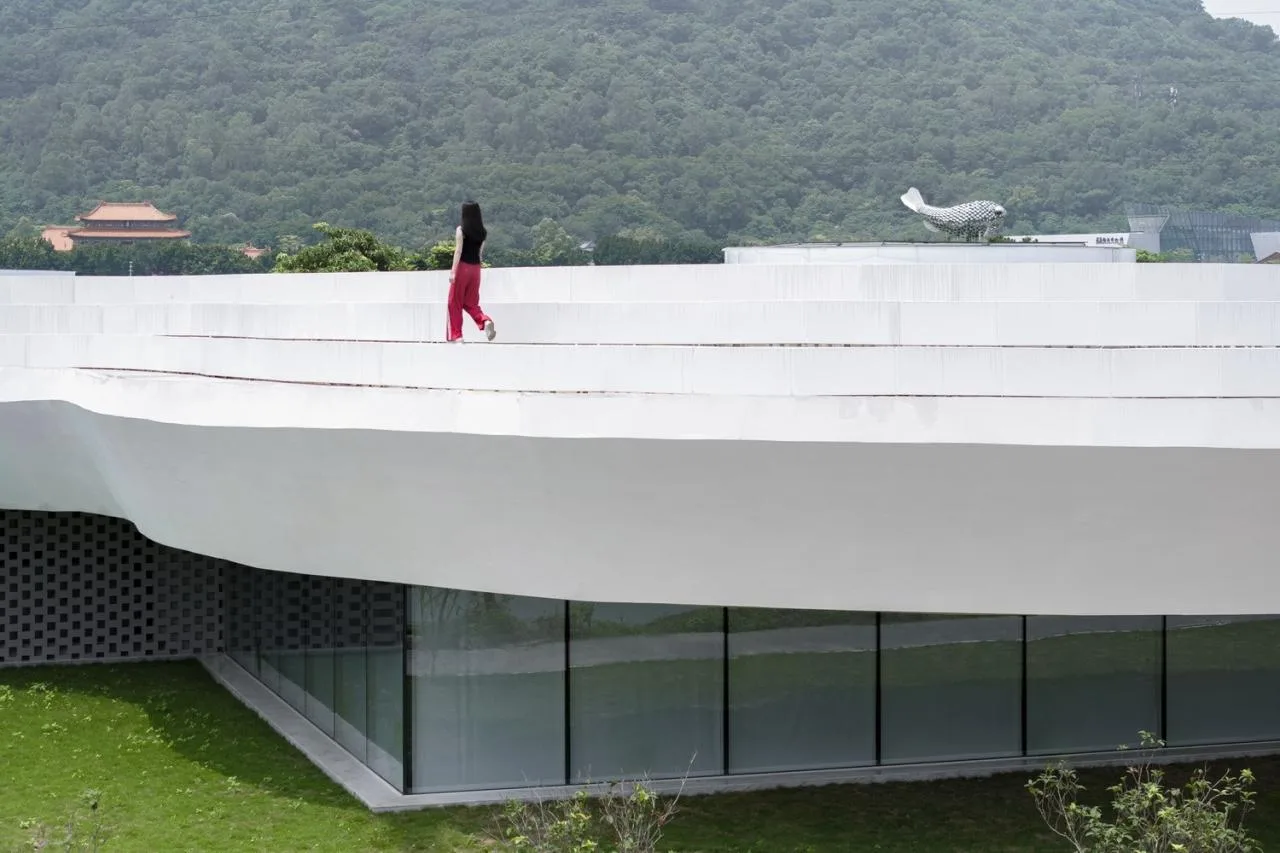
△ Film and Television City and Earth Art Festival installations in the distance © Wu Siming
A Storm in a Teacup
The owner demanded fast, simple, and cost-effective construction. Structural engineers employed prestressed pipe piles—a mature foundation method common in the soft soil regions of the Pearl River Delta—to address the challenging soil conditions.
This foundation prevents excessive settlement caused by inadequate soil bearing capacity, which could otherwise lead to sinking or tilting of the steel structure above. The architect envisioned ripples with a maximum overhang of 7.8 meters that appear both substantial and light.
The exhibition hall floor is a 250mm-thick reinforced concrete raft slab, reinforced with double-layer, bi-directional steel bars. Embedded column bases enhance the structural integrity of the main steel frame, allowing the ripples to elegantly hover above the ground.
To preserve the purity of the ripples, rainwater pipes are concealed within steel columns. A 0.7mm-thick aluminum plate caps the eaves as a lightning conductor, connected to the roof structure to create a lightning protection network. This system safeguards the building without unsightly external lightning protection strips.
The ceiling below the roof serves as the air supply system. Local pipe trenches are reserved beneath the ceiling panels, with air outlets cast into the raft slab to maintain ceiling integrity. Heat dissipation vents pass through the computer room roof and are hidden behind grilles.
Continuity and purity extend to the facade, where skylights function as natural smoke exhaust openings, enabling an uninterrupted glass facade.
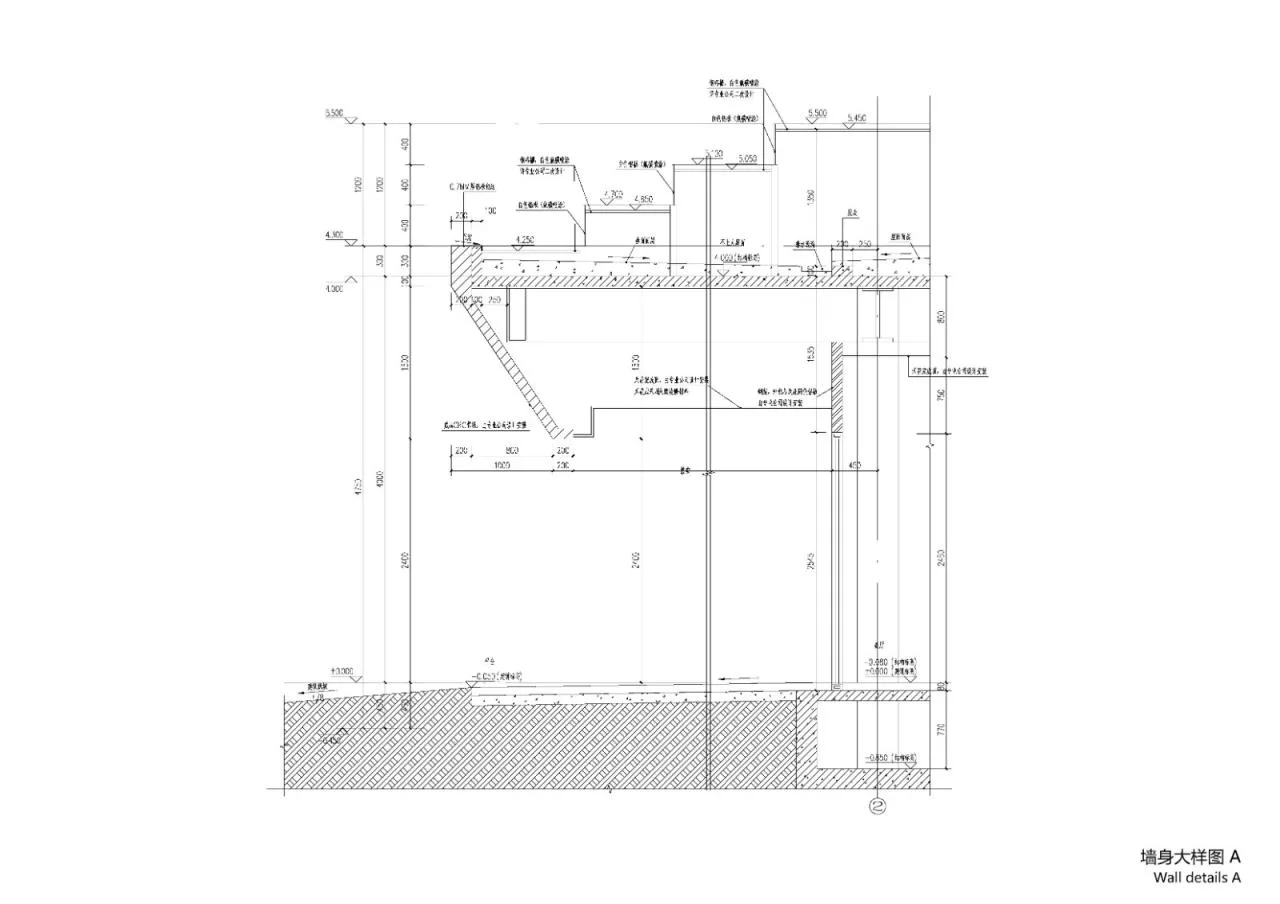
△ Wall sample A © Wutopia Lab
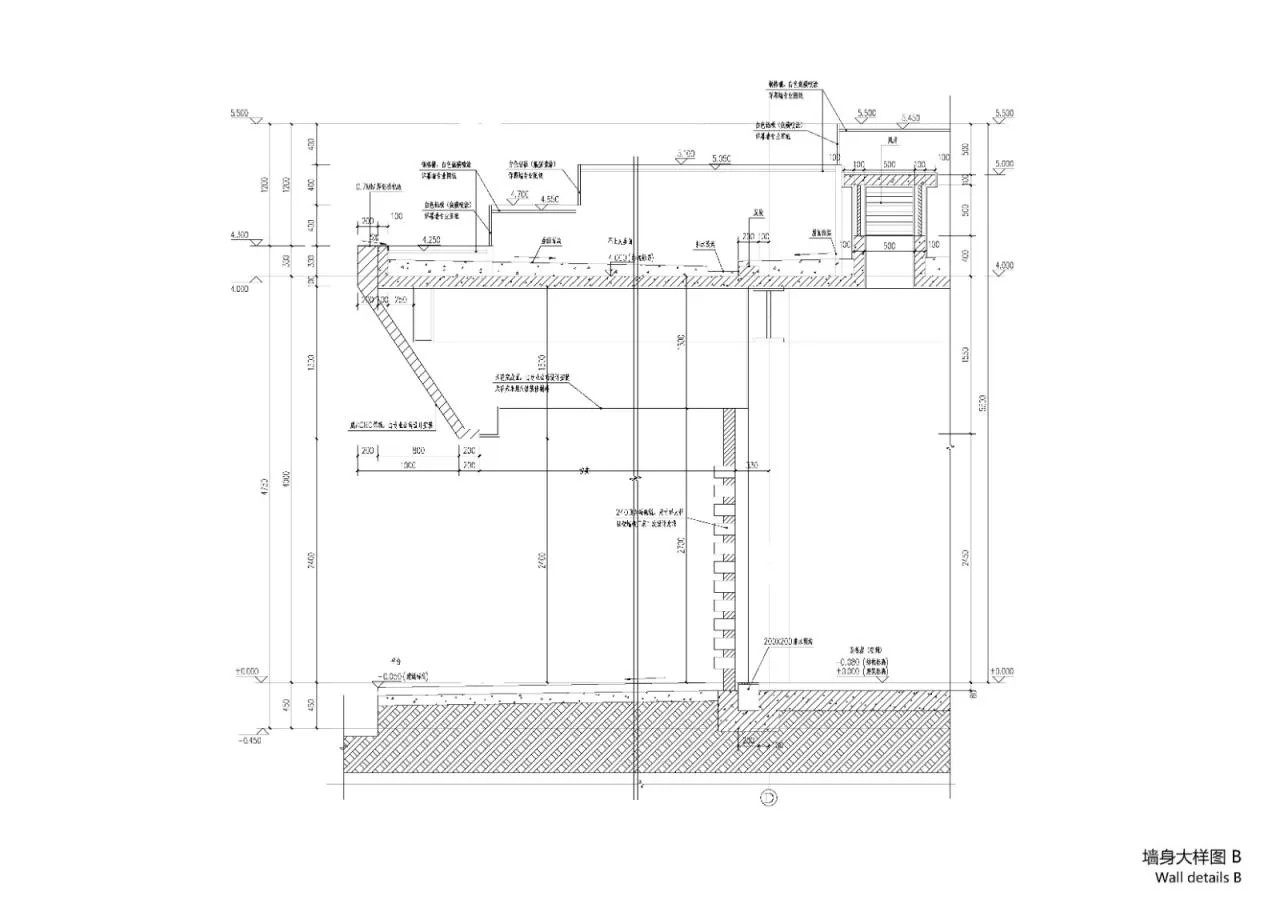
△ Wall sample B © Wutopia Lab
The 666-square-meter exhibition hall has transformed a modest site into a ripple that gently floats beneath Xiqiao Mountain.
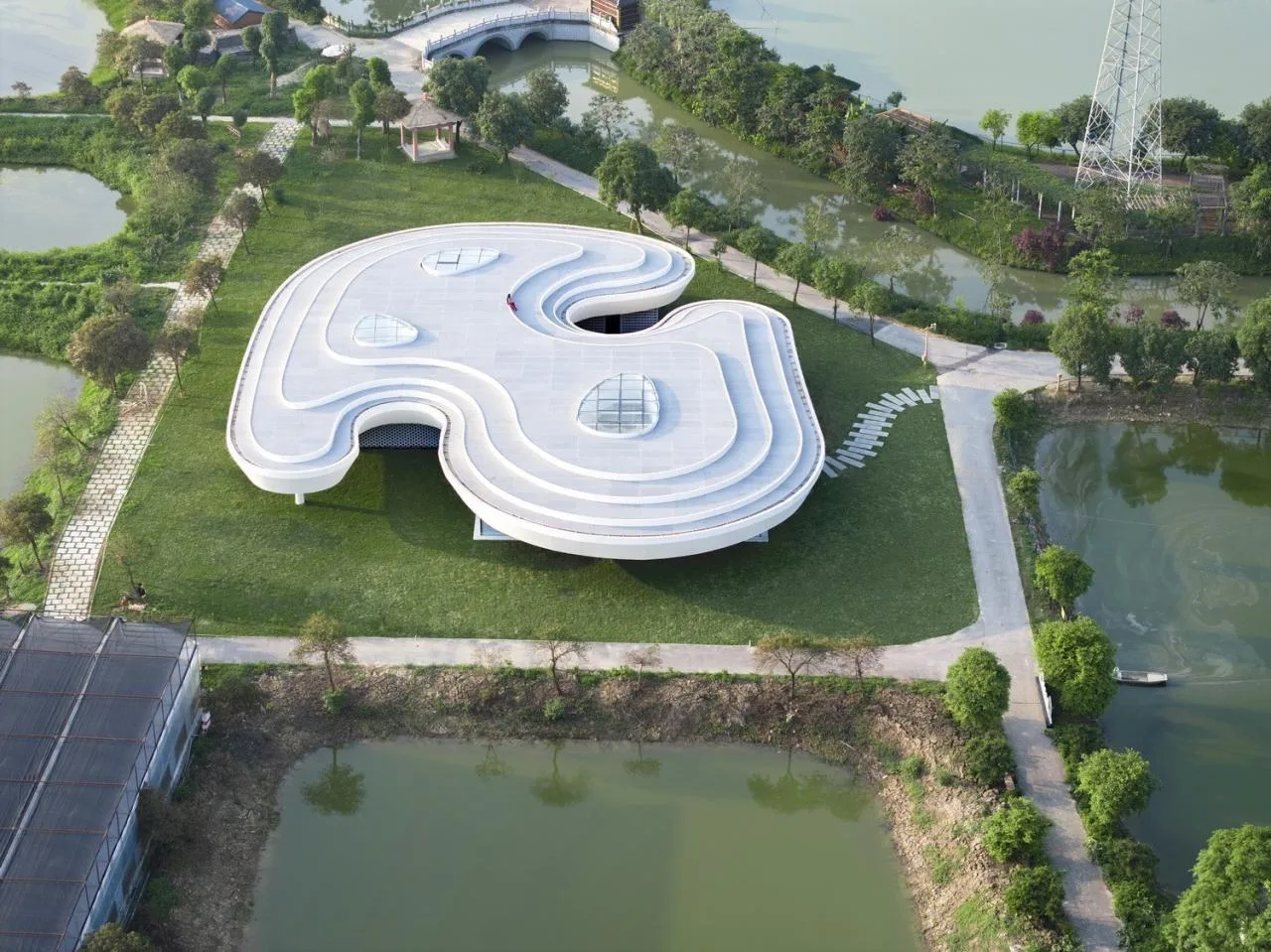
△ South side bird’s-eye view © Wu Siming
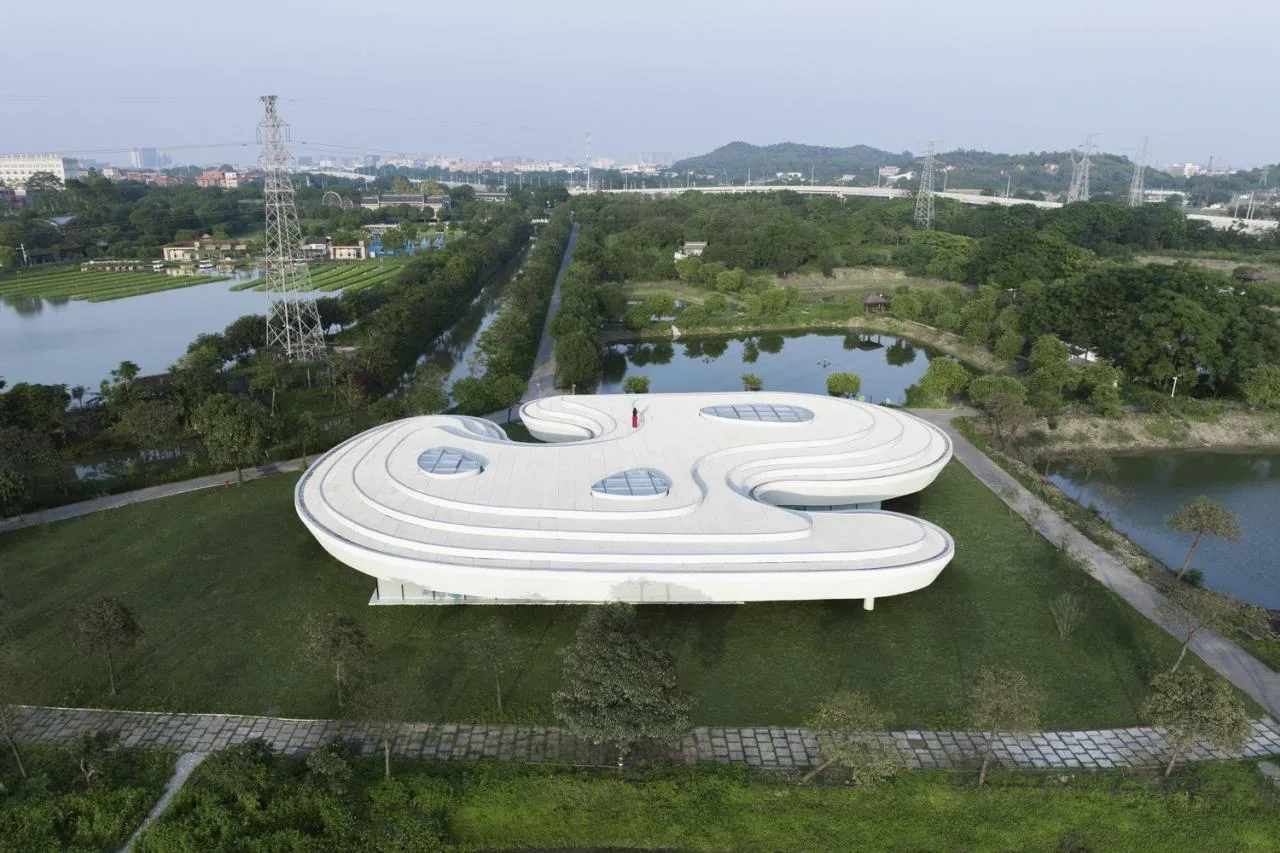
△ West side bird’s-eye view © Wu Siming
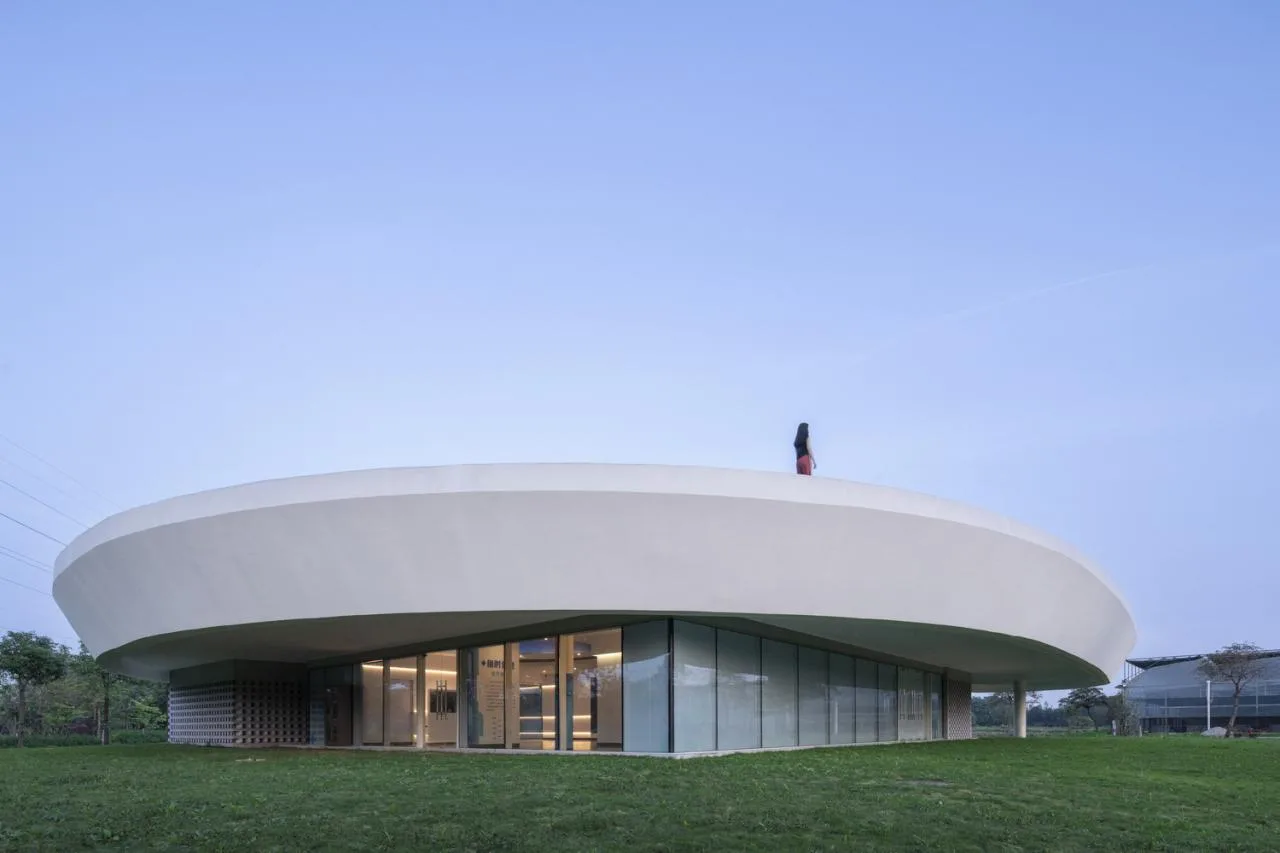
Northwest side facade © Wu Siming
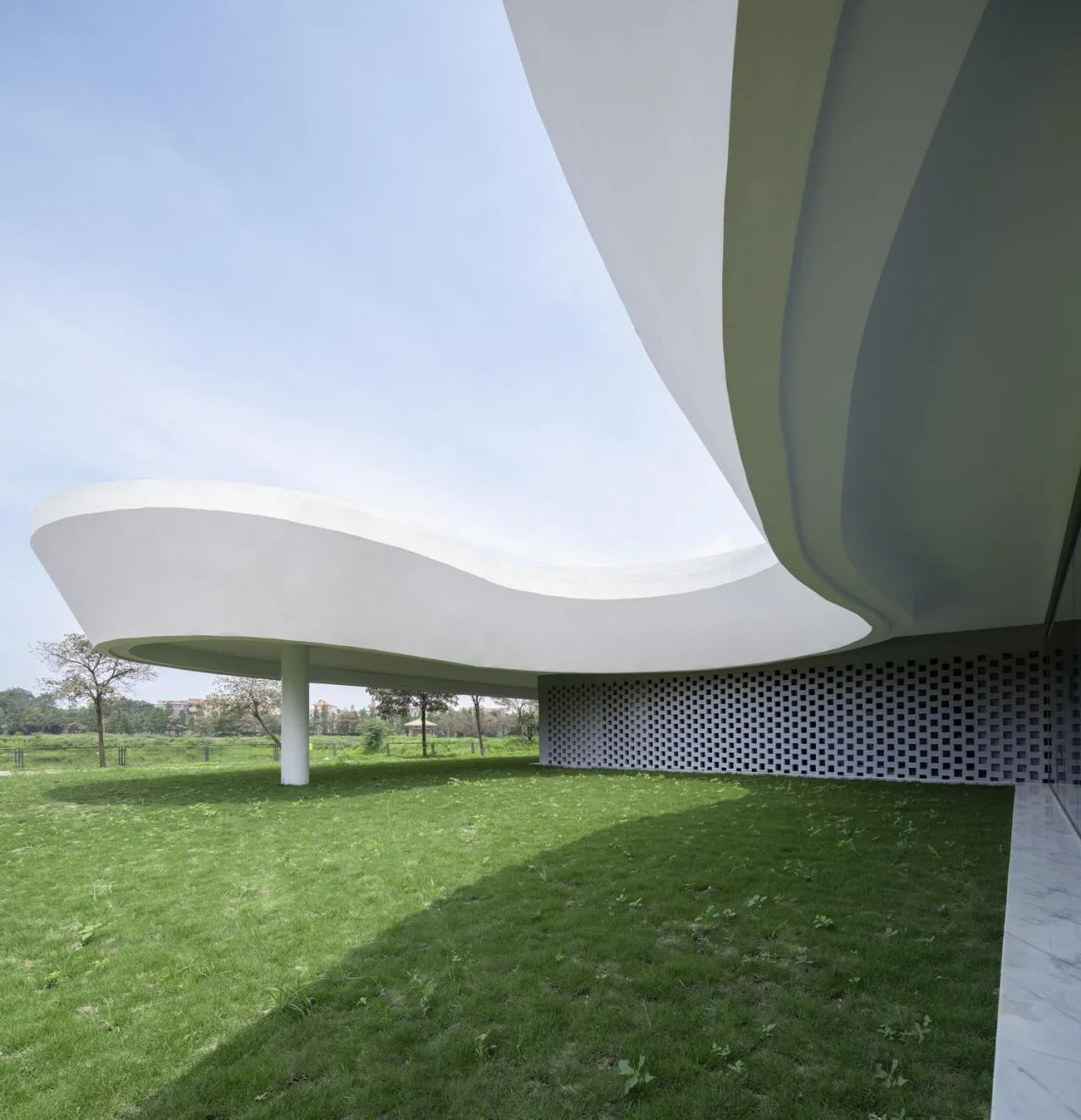
△ Curved roof © Wu Siming
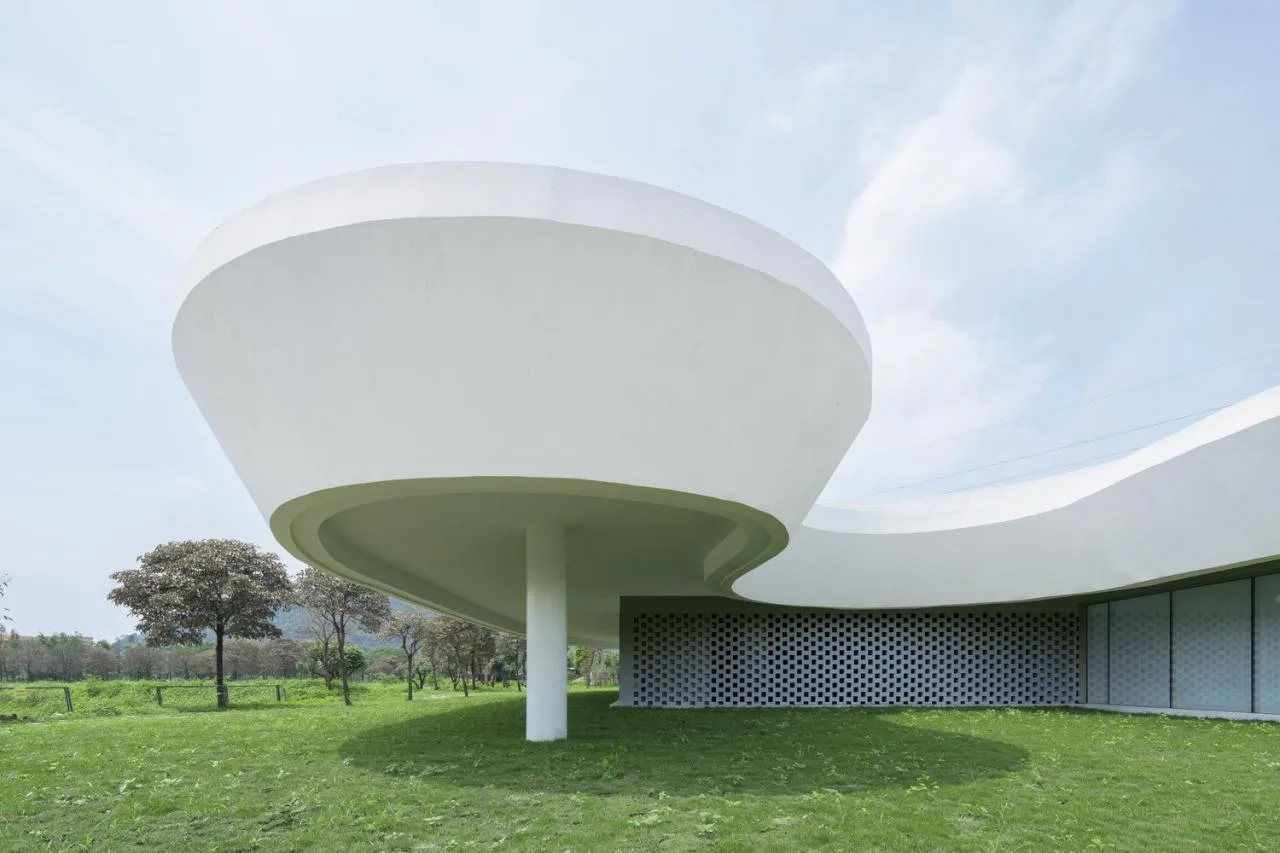
△ Curved roof © Wu Siming
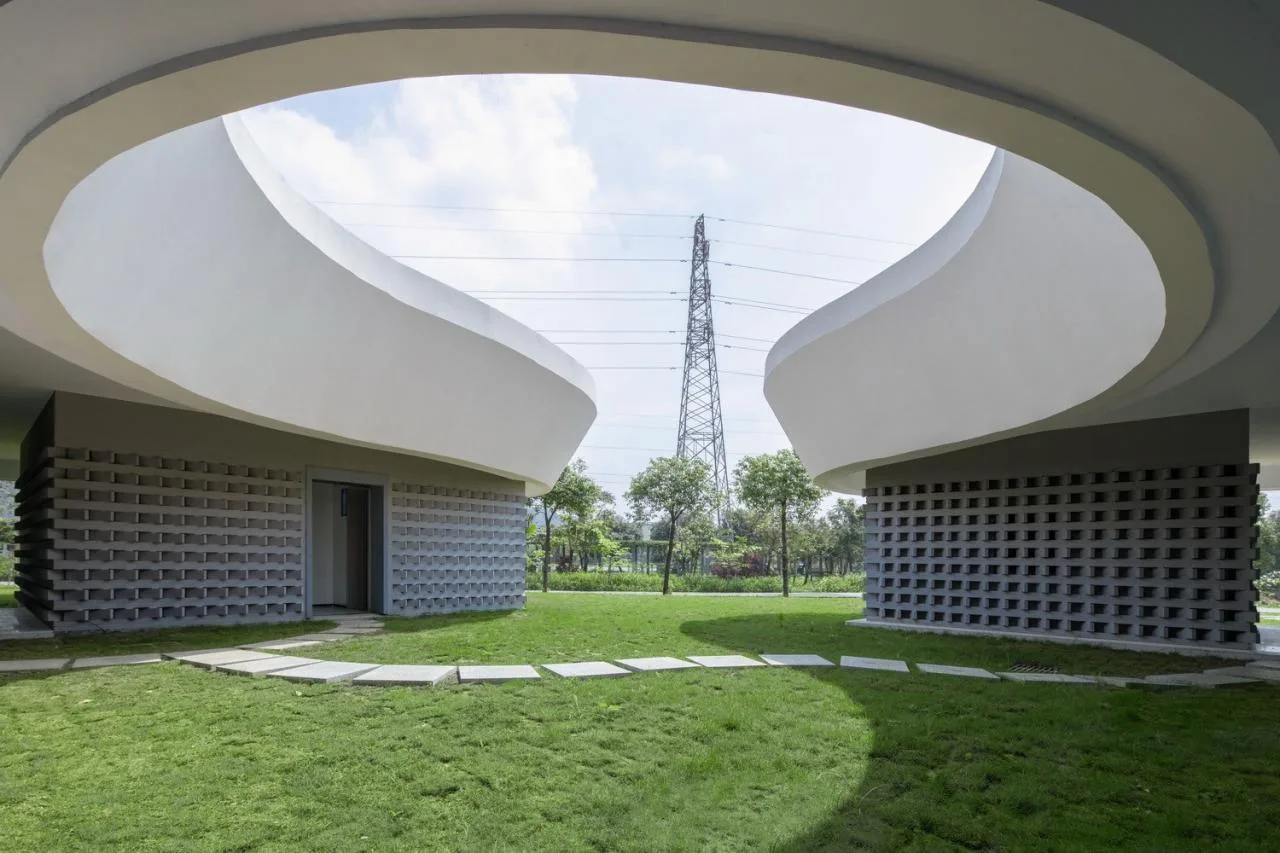
△ Curved roof © Wu Siming
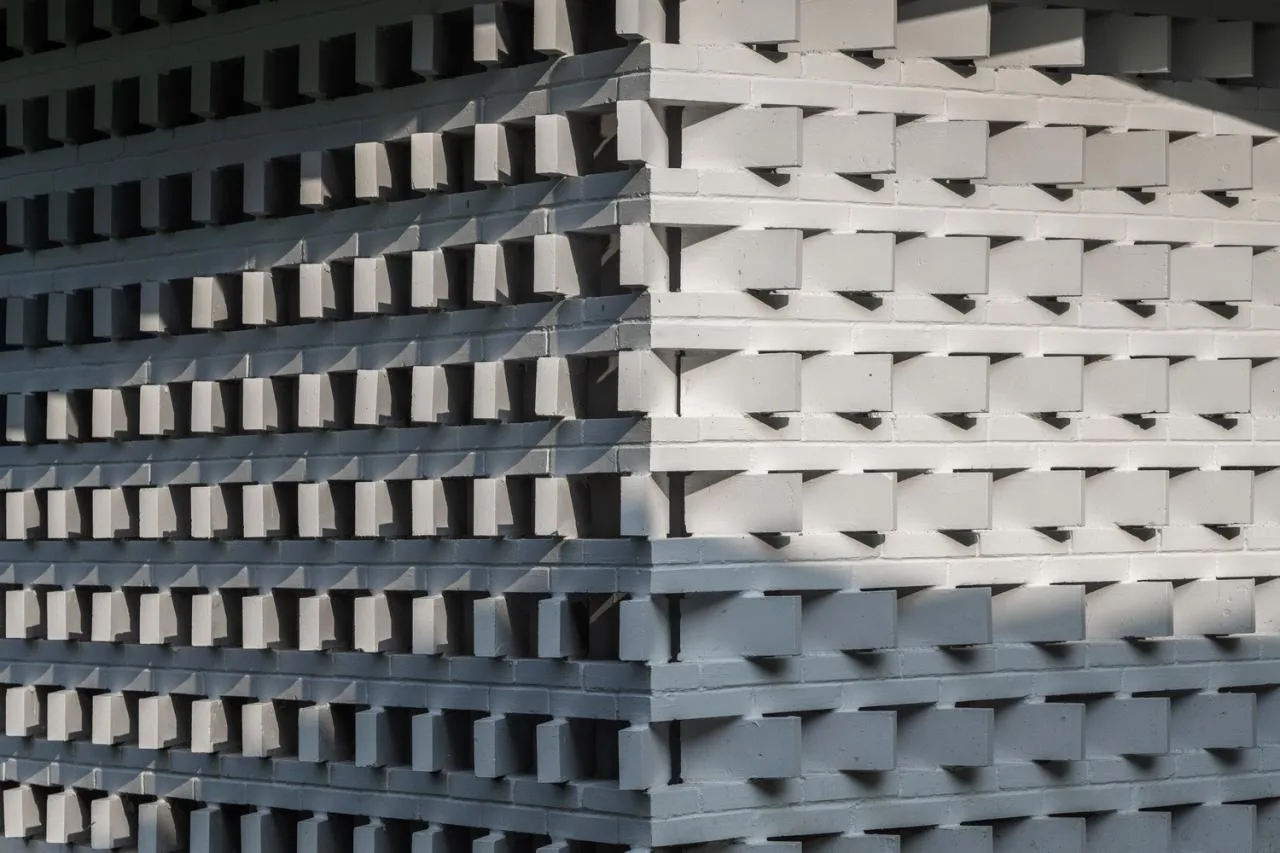
△ Flower brick wall details © Wu Siming
Embracing Relaxation
When my college classmate Wu Gang visited me, Shanghai had just lifted its lockdown restrictions. I had no bold words to express my discomfort, nor did I want to force myself to articulate my worries in writing. My decision was simple and swift.
The popular architectural discourse was irrelevant. I use architecture as a means to create land art: white, semi-transparent, symbolic, metaphorical, dual, Baroque — all elements combined into a dramatic image that reflects some of my emotions. That is enough. All the rigorous training and deep thinking must ultimately reveal an incredible ease.
You can’t imagine how beautiful the place is — the way sunlight falls on the ground is unlike anywhere else. — Colin Barrett
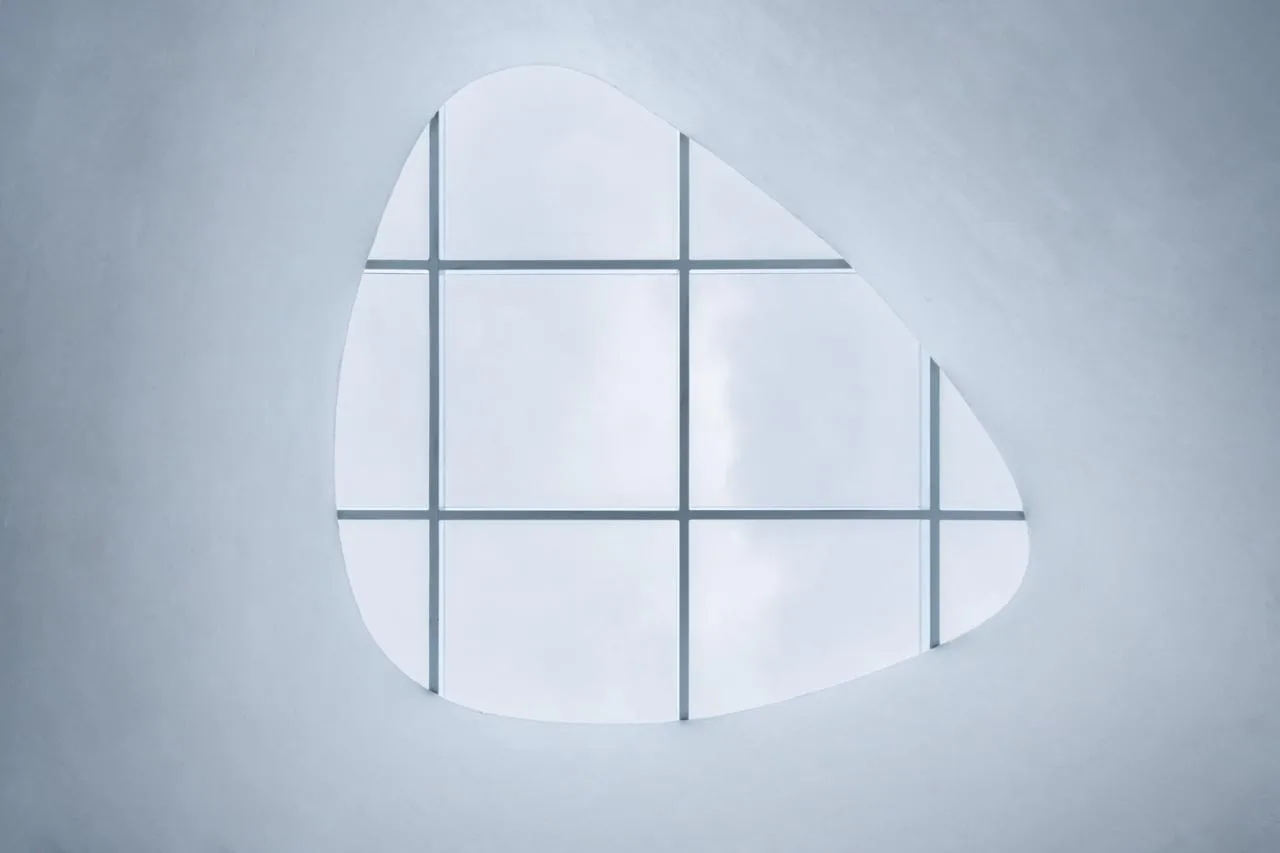
△ Skylight © Wu Siming
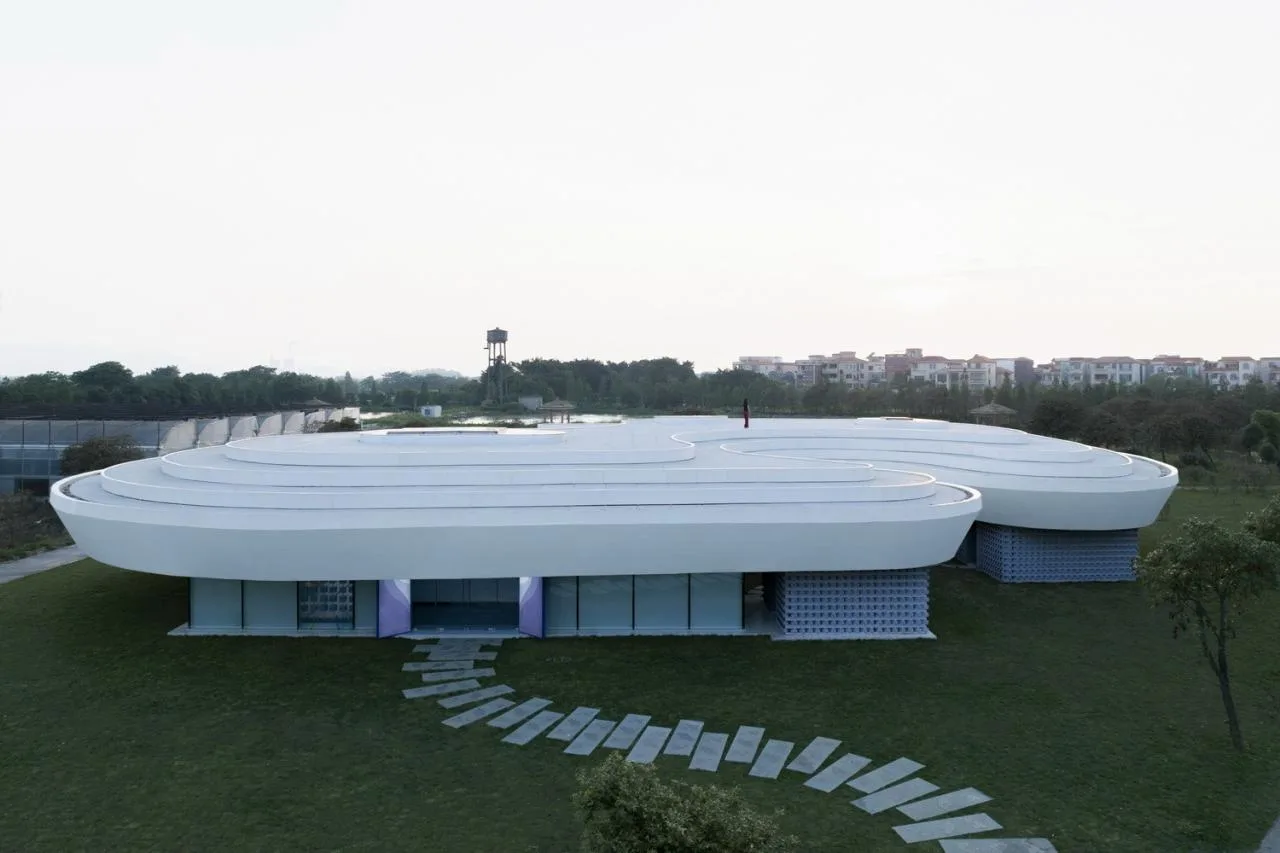
Suspended roof © Wu Siming
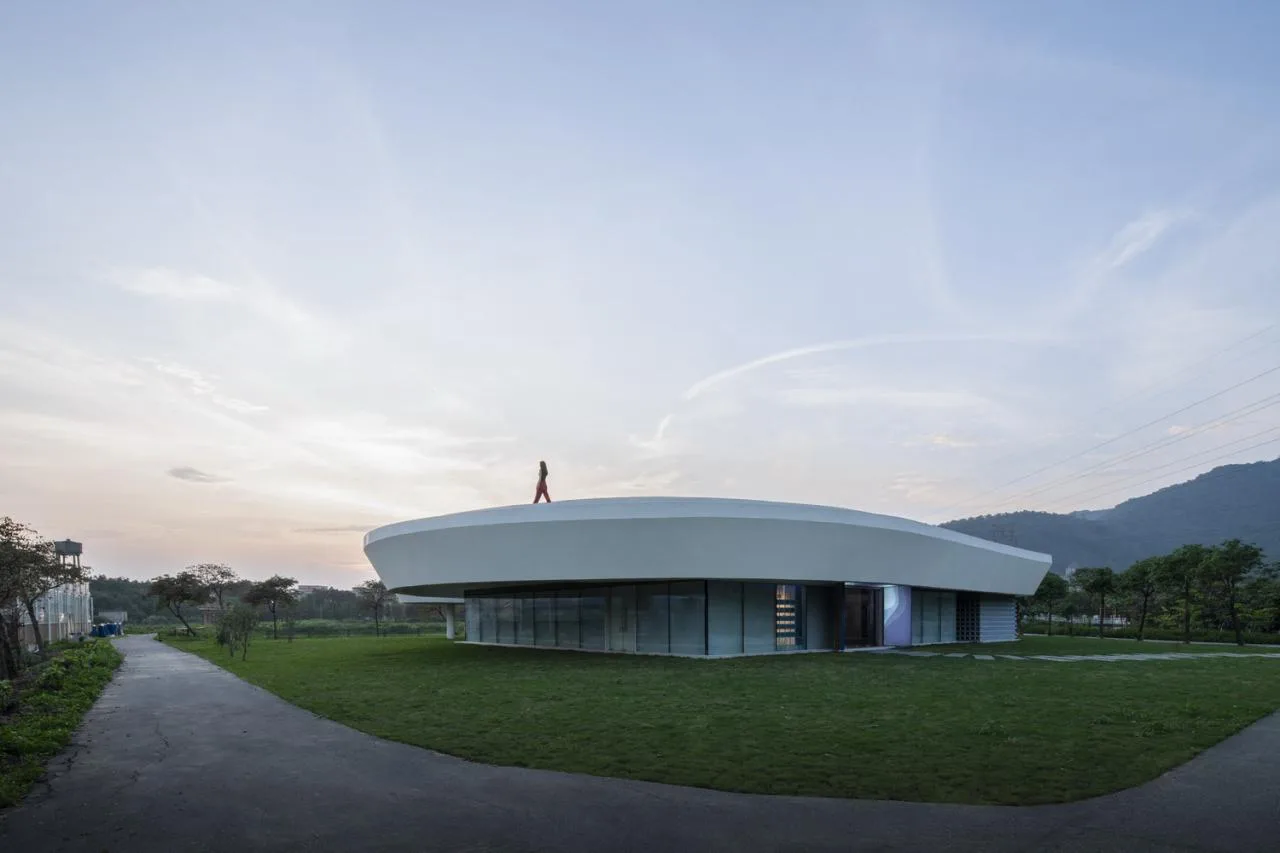
Southeast side facade © Wu Siming
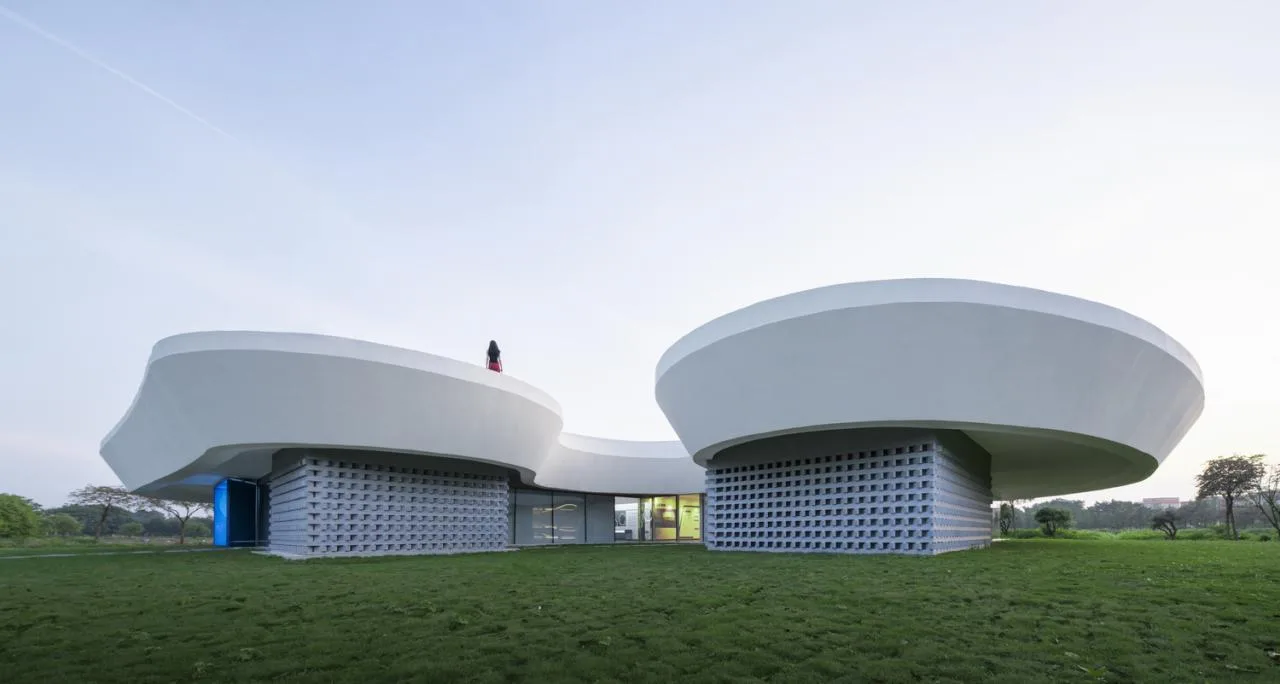
Northeastern facade © Wu Siming
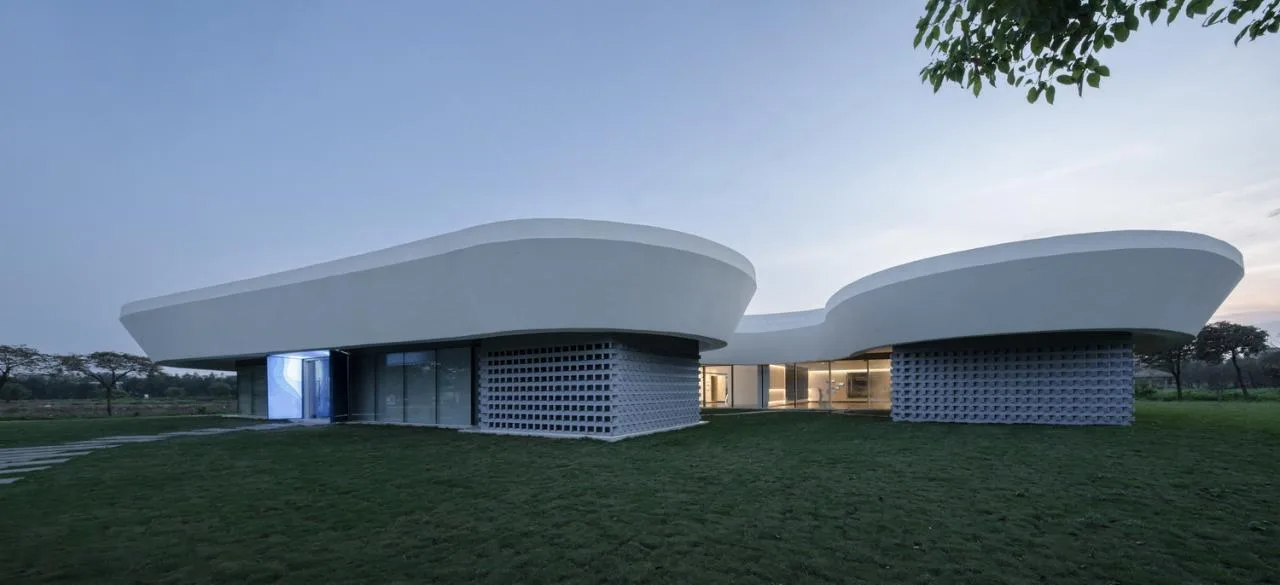
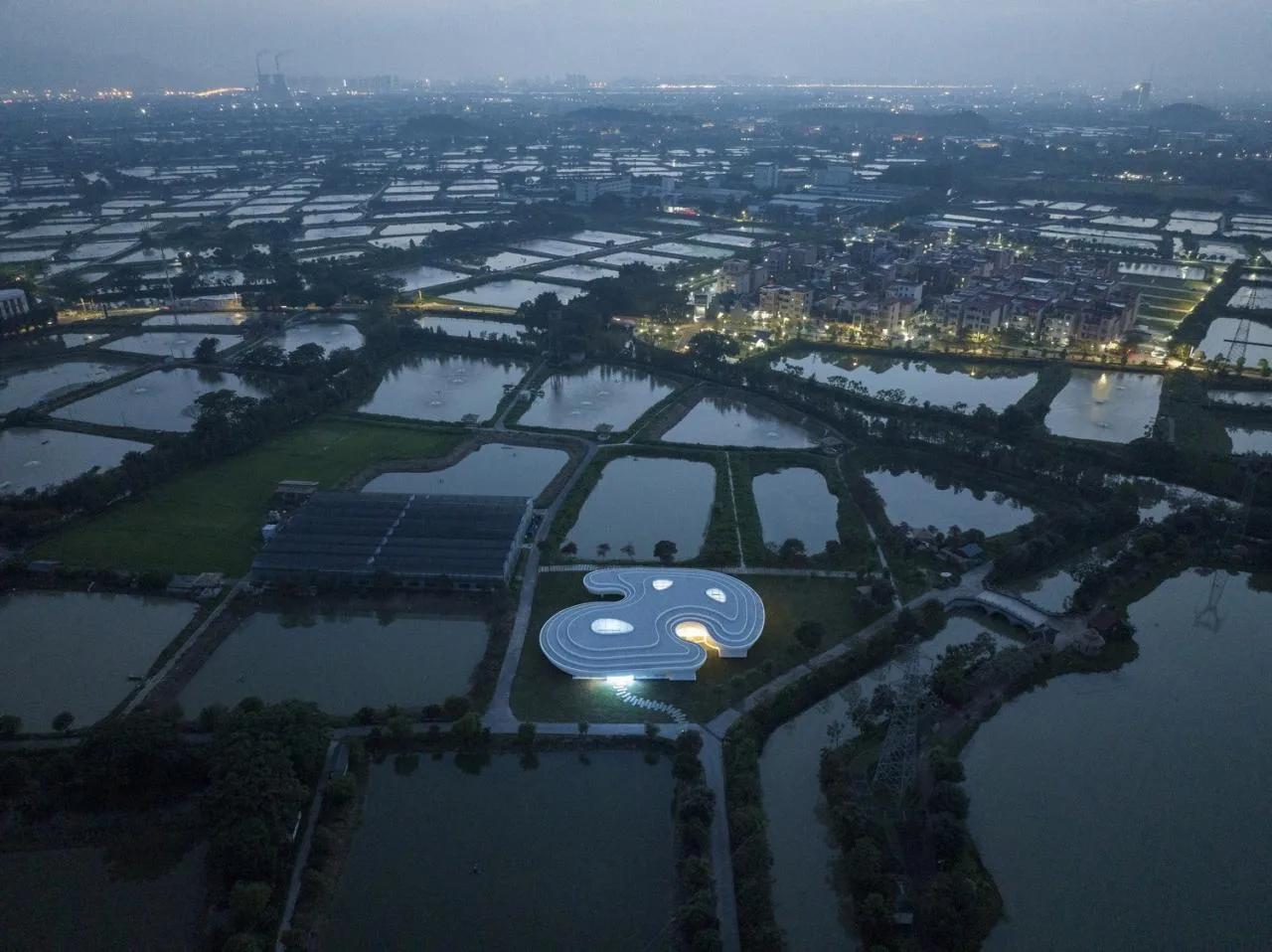
Northeast side facade night view © Wu Siming
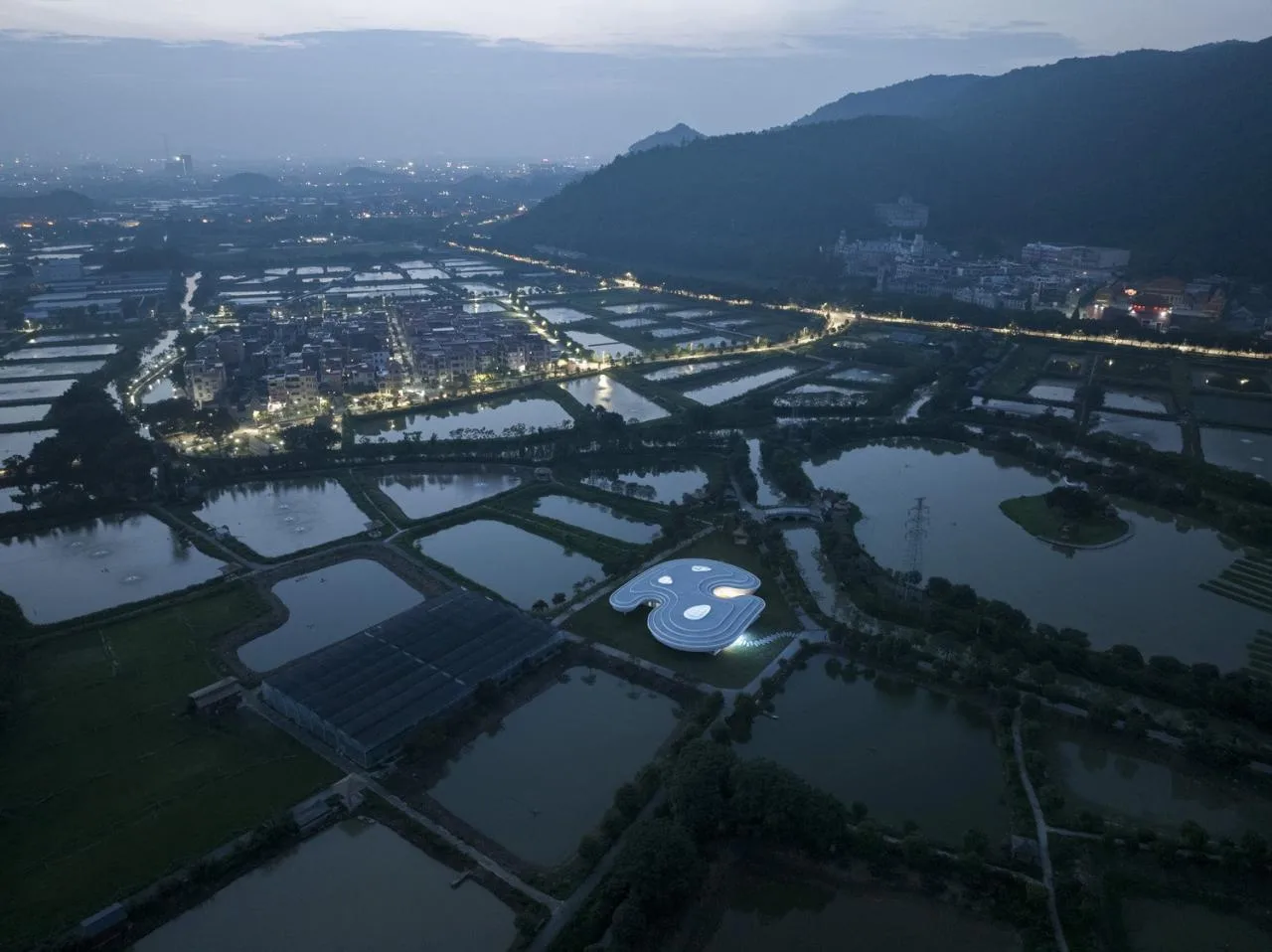
△ Night view bird’s-eye view © Wu Siming
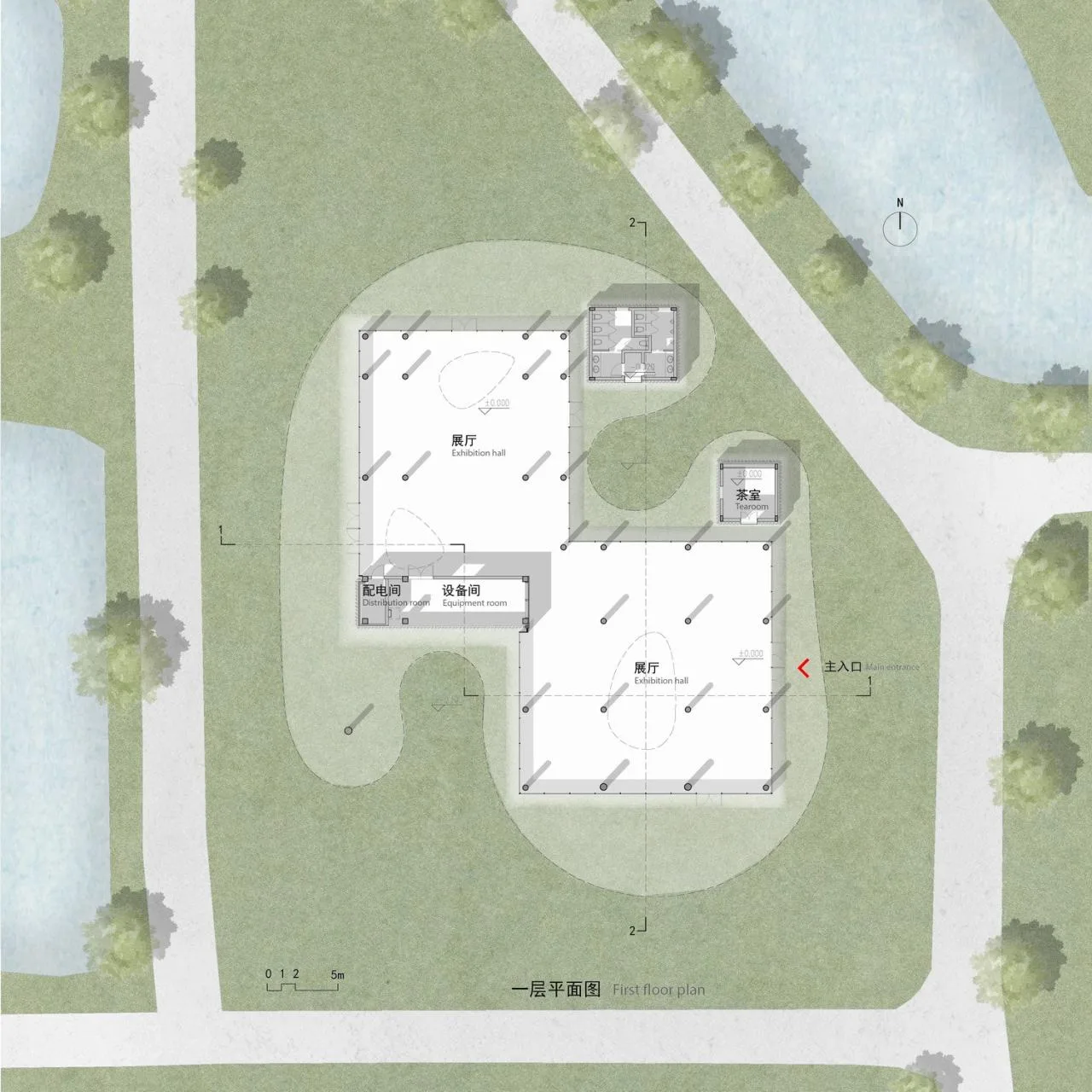
△ First floor plan © Wutopia Lab
Project Information
Design company: Wutopia Lab
Lead Architect: Yu Ting
Project Architect: Yellow River
Design Team: Xie Jialin, Lin Jianming (Intern)
Owner: Yugeng Yueyun Cultural Tourism Development Co., Ltd., Xiqiao Town, Nanhai District, Foshan City
Planning unit: Xiqiao Mountain Academy, Nanhai District, Foshan City
Construction Drawing Design: Guangdong Zhuozhi Design Engineering Co., Ltd
Construction Unit: Guangdong Xingui Construction Engineering Co., Ltd
Structural Consultant: Miao Binhai
Location: Yu Geng Yue Yun Cultural Tourism Park, Nanhai District, Foshan City
Total construction area: 666 square meters
Roof projection area: 1263 square meters
Design period: June 2022 – September 2022
Construction completed: April 2023
Photography: Wu Siming
Video: Wu Siming















Must log in before commenting!
Sign Up