
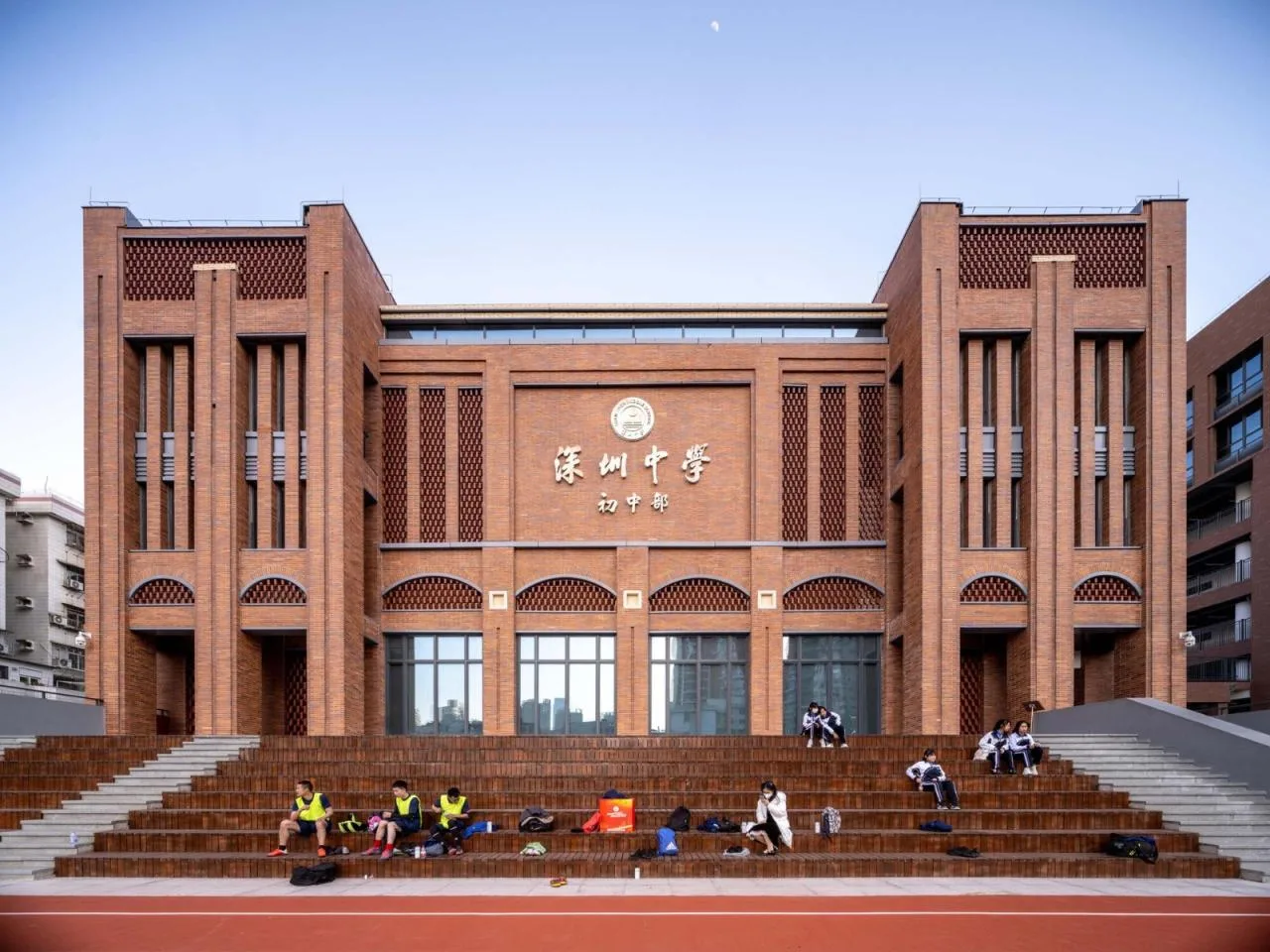
Background: With a century-long vision emphasizing education as its foundation, Shenzhen aims to set a benchmark for high-quality basic education development. The goal is to provide education that satisfies the community, delivering excellent learning experiences for young students while establishing a model of happiness and well-being. As part of this initiative, Shenzhen has undertaken renovation and expansion projects across multiple primary and secondary schools. The junior high division of Shenzhen Middle School is a key project in this effort.
As a flagship institution in Shenzhen’s education system, Shenzhen High School carries the responsibility of aligning with world-class standards. The demolition and expansion of the junior high section intends to enlarge educational capacity, improve the learning environment, and create a dynamic campus featuring distinctive characteristics, openness, innovation, and ecological sustainability for both teachers and students.
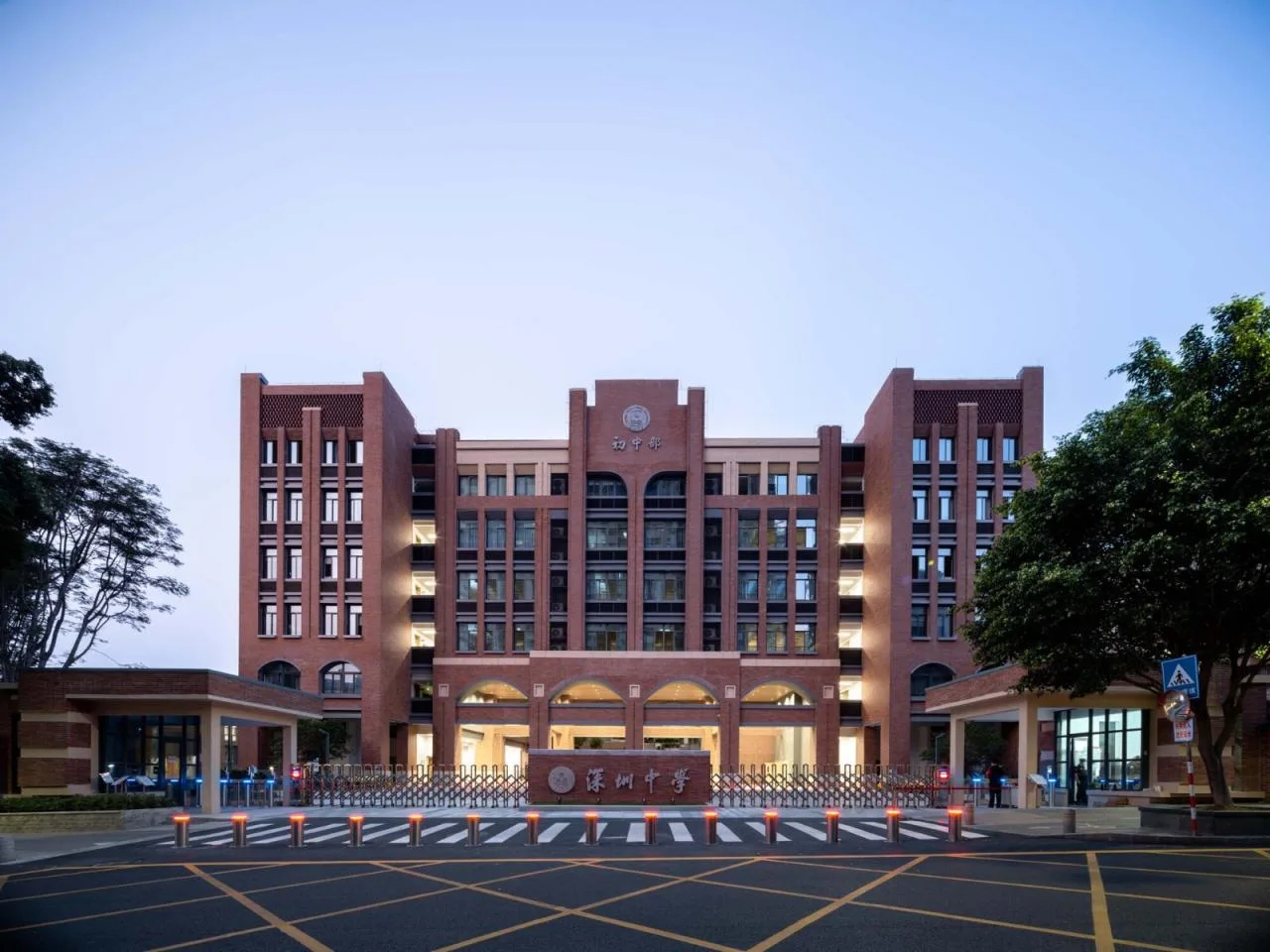
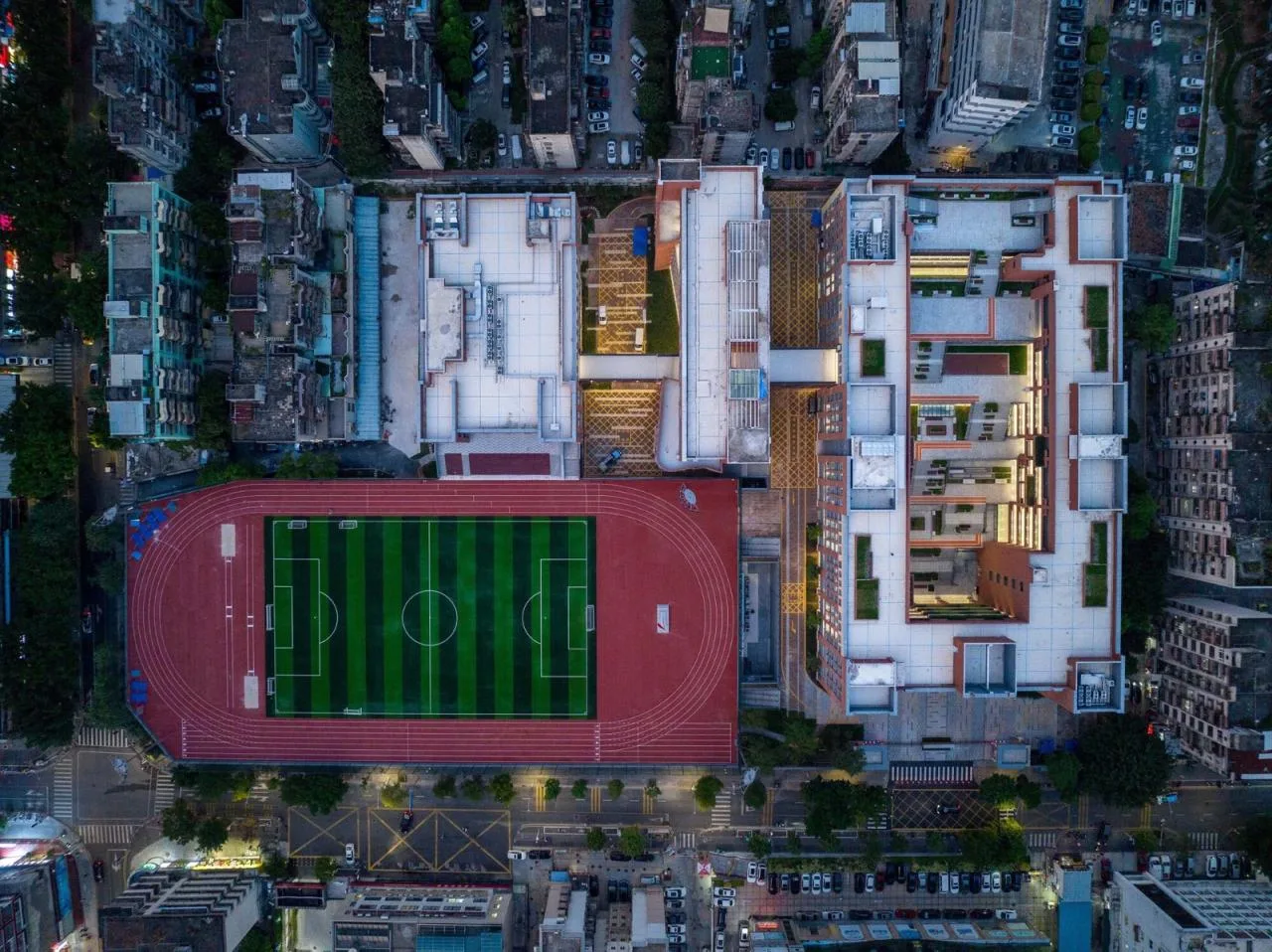
The project faces several challenges: limited land availability, a high plot ratio, a 4-meter elevation difference across the site, and complex terrain. The existing preserved building sits centrally, significantly influencing campus planning. Additionally, half of the land is occupied by the sports field, limiting public activity spaces within the buildings.
To the west, Beili South Road is a lower-grade street with heavy traffic during school hours, increasing congestion and complicating parent pick-up and drop-off operations.
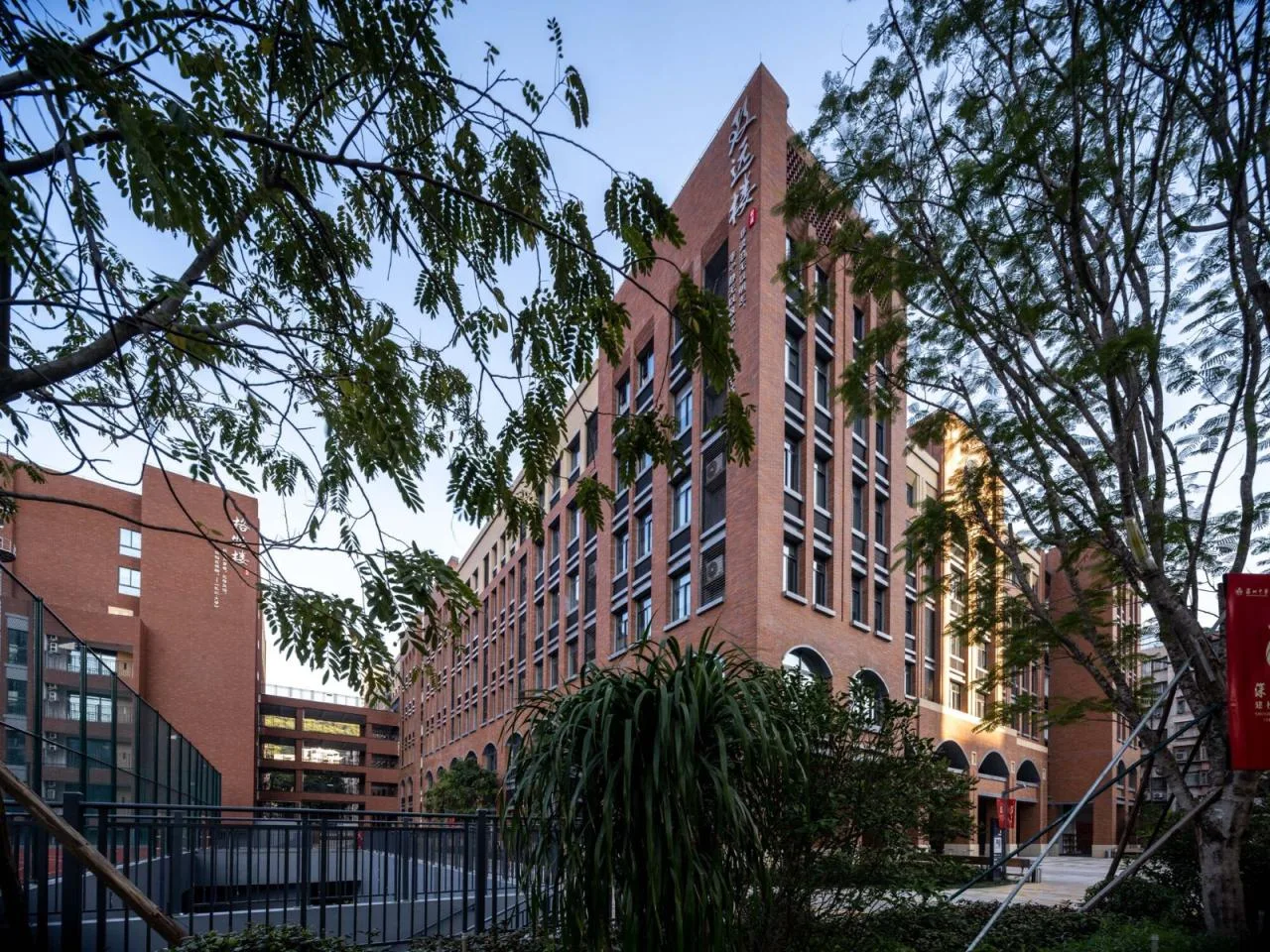
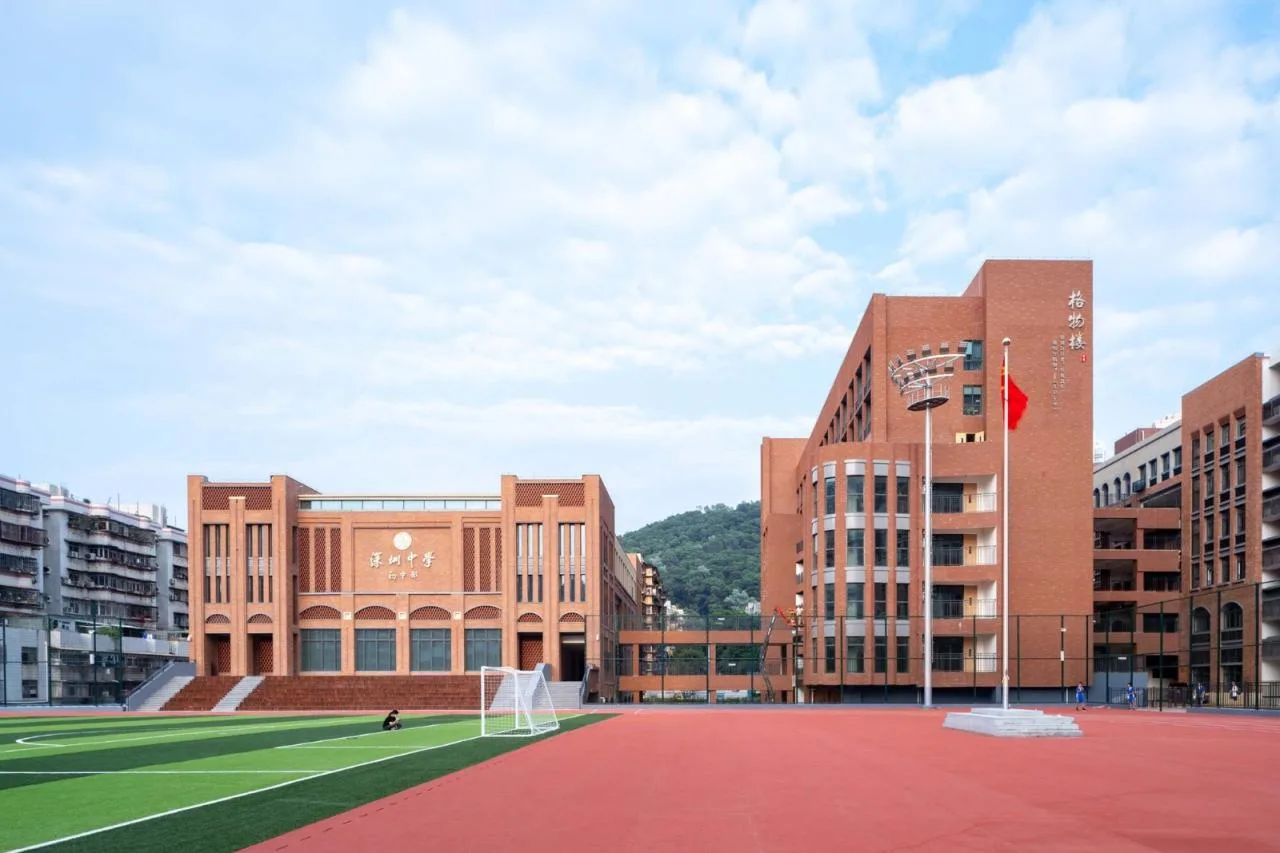
To tackle these challenges, the design for the junior high school department is based on three key concepts: multi-story interconnected interaction, functional composite stacking, and the knowledge ladder. These strategies creatively address land scarcity while providing diverse spatial experiences.
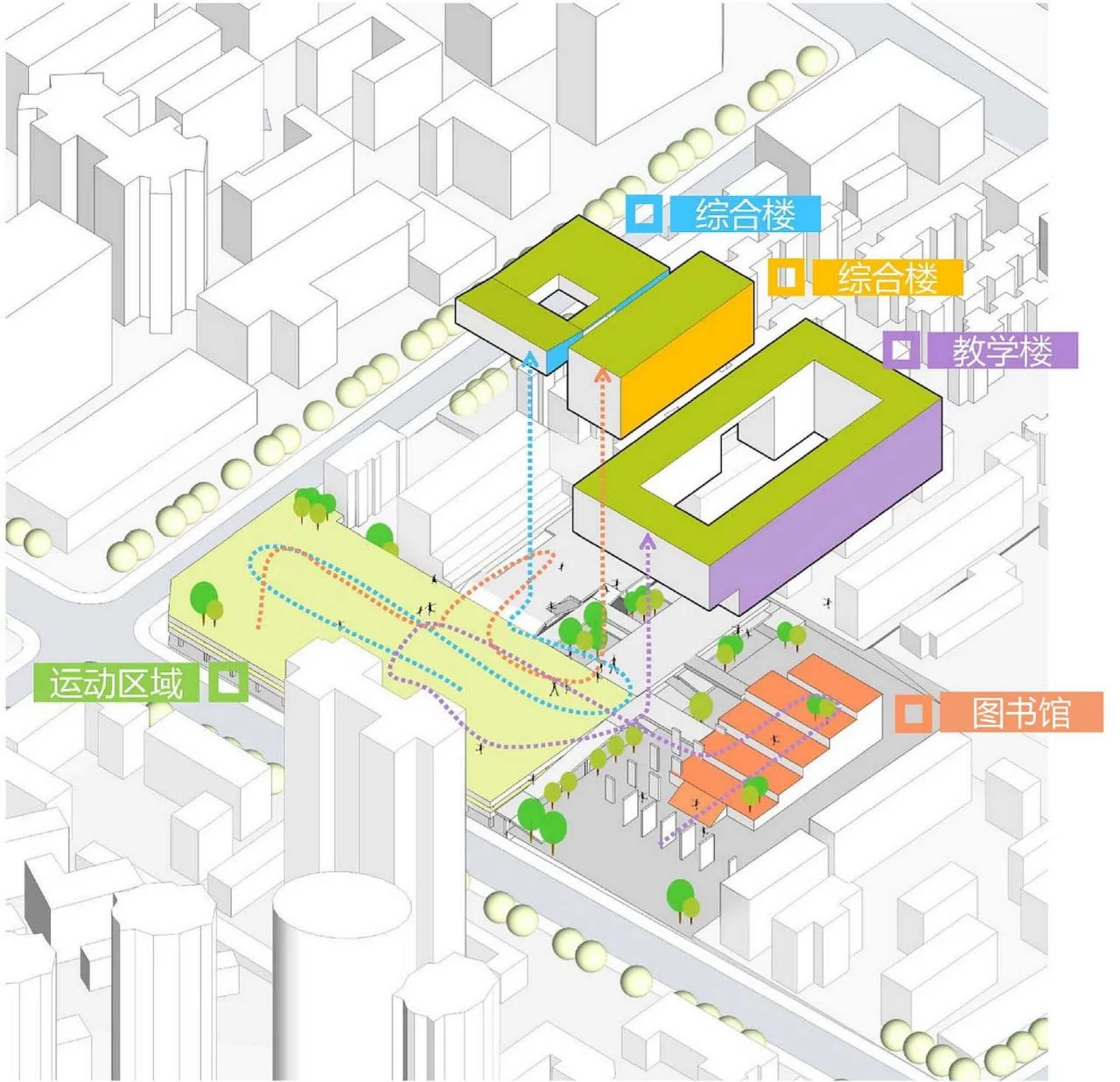
The multi-story interconnected design takes advantage of the site’s elevation differences to reshape campus terrain and spatial organization. It maximizes multi-level public spaces, creating a campus environment with rich layers. Elevated areas offer semi-outdoor spots for interaction among teachers and students. Corridors establish efficient connections between the sports area, the newly built comprehensive building, the preserved comprehensive building, and the new teaching building.
Importantly, a designated parent pick-up and drop-off zone on the school’s first floor mitigates urban traffic disruptions during peak hours.
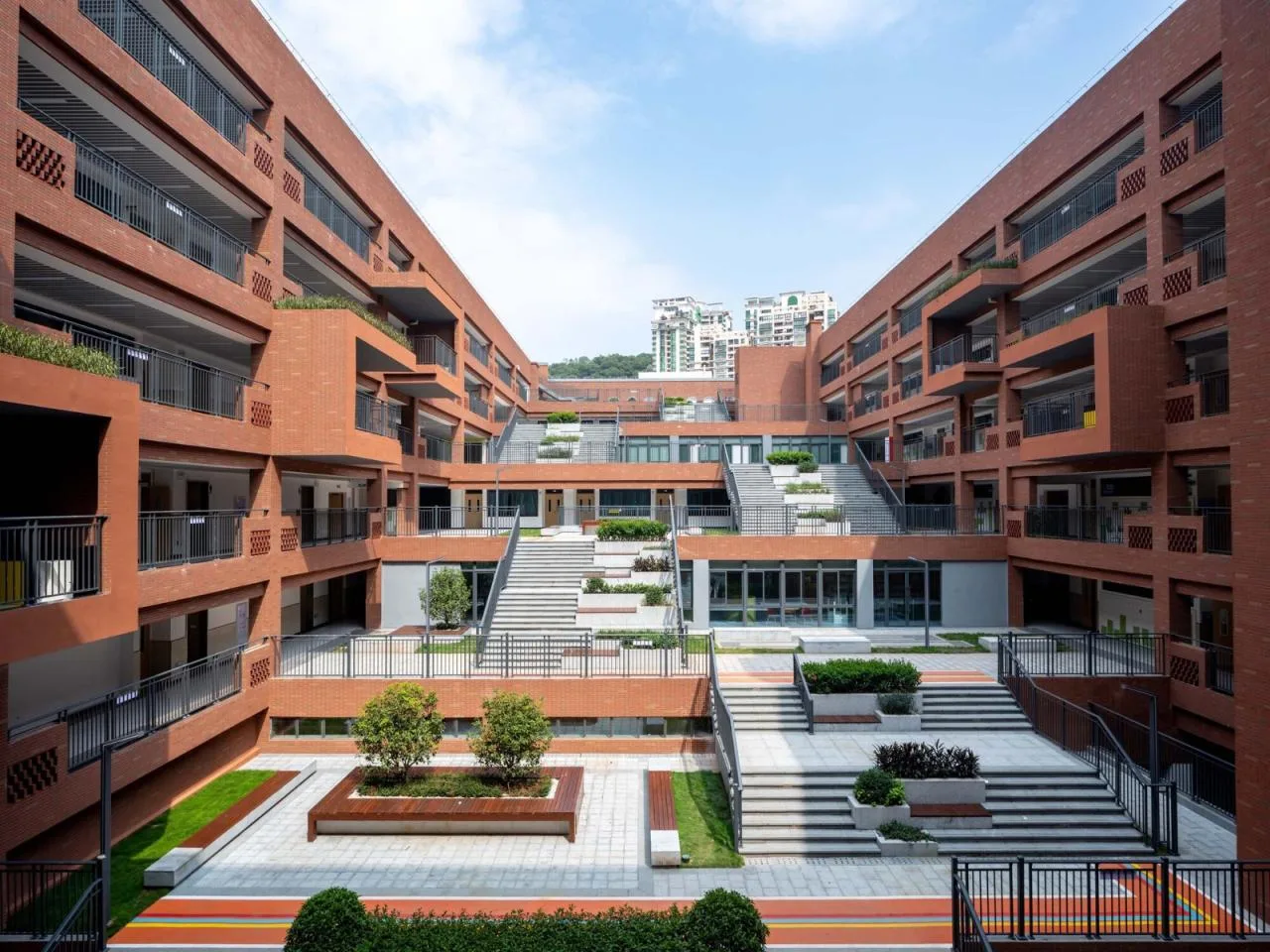
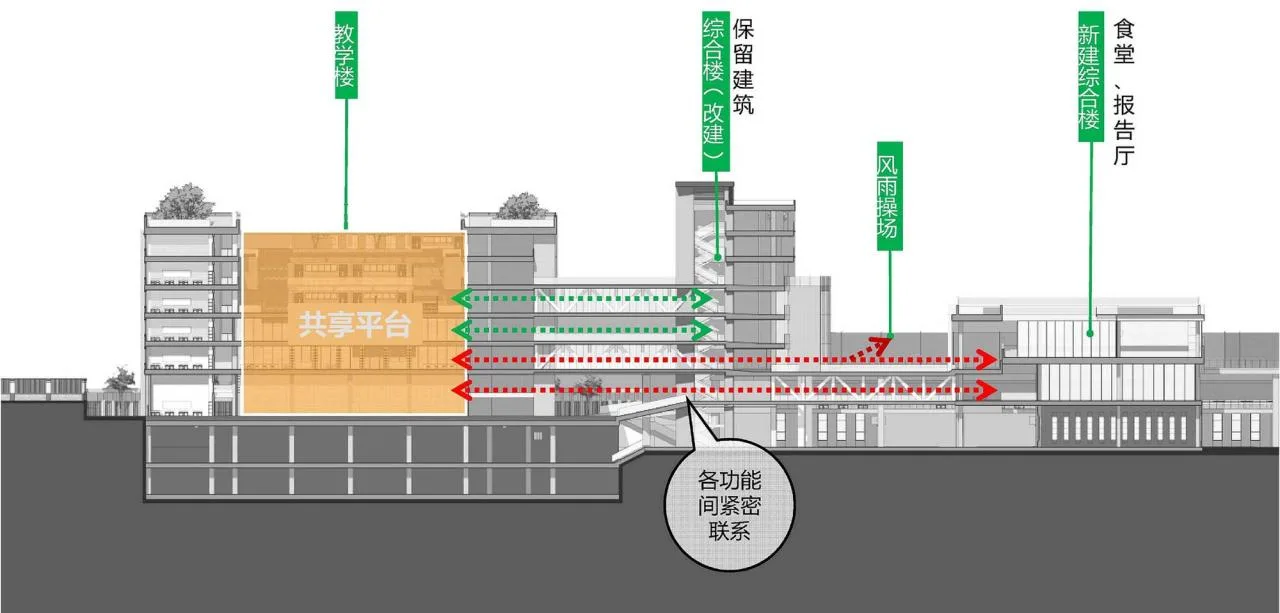
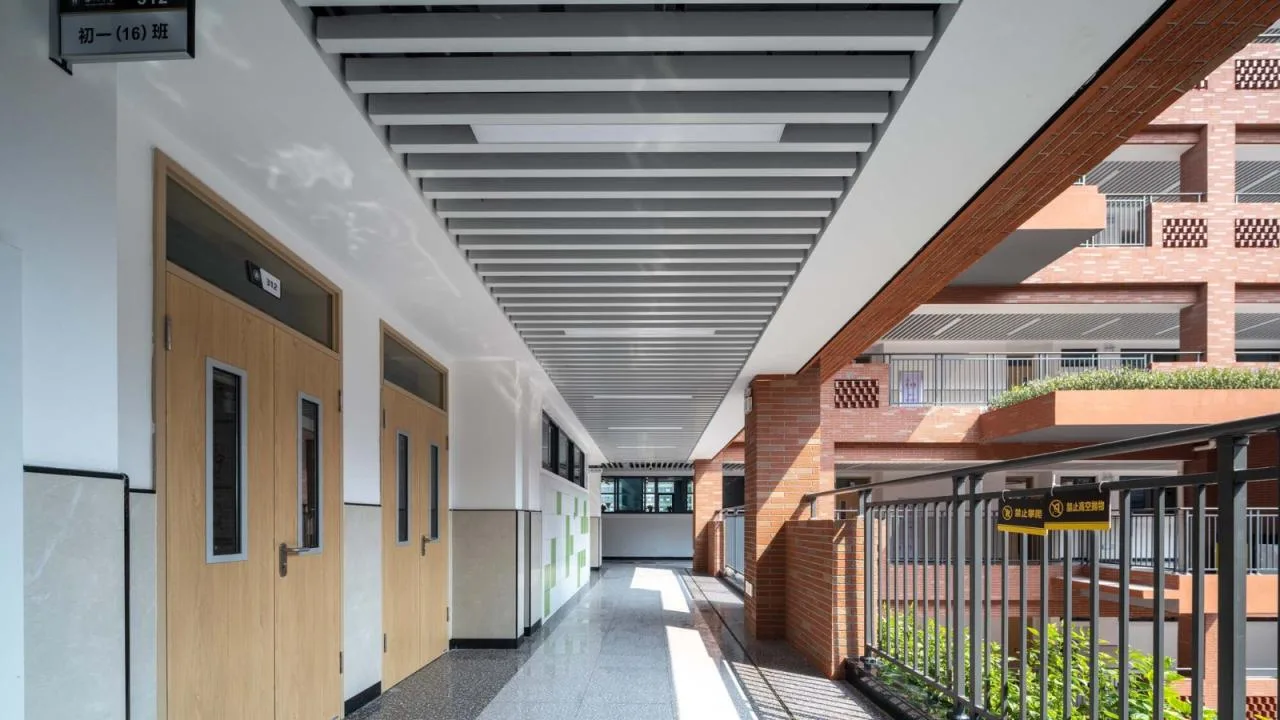
The functional composite stacking approach organizes the main teaching areas on the south side, vertically integrating teaching and auxiliary functions to maximize limited land use. While the teaching and comprehensive buildings are planned as relatively independent units, elevated floors and platforms connect them seamlessly. The library, landscape terraces, and corridors form a cohesive circulation network linking various functional zones.
The knowledge ladder concept is embodied by the stepped-back library, serving as a lively communal atrium for the campus. This design not only expands accessible outdoor activity spaces for students on each floor during breaks but also enriches areas for extracurricular and informal learning. It effectively addresses limitations caused by the high floor area ratio.
Surrounding the knowledge ladder, “floating boxes” provide additional spaces for communication and relaxation. These elements enhance courtyard enjoyment and create a subtle visual interplay between “seeing” and “being seen,” fostering quiet social interaction.
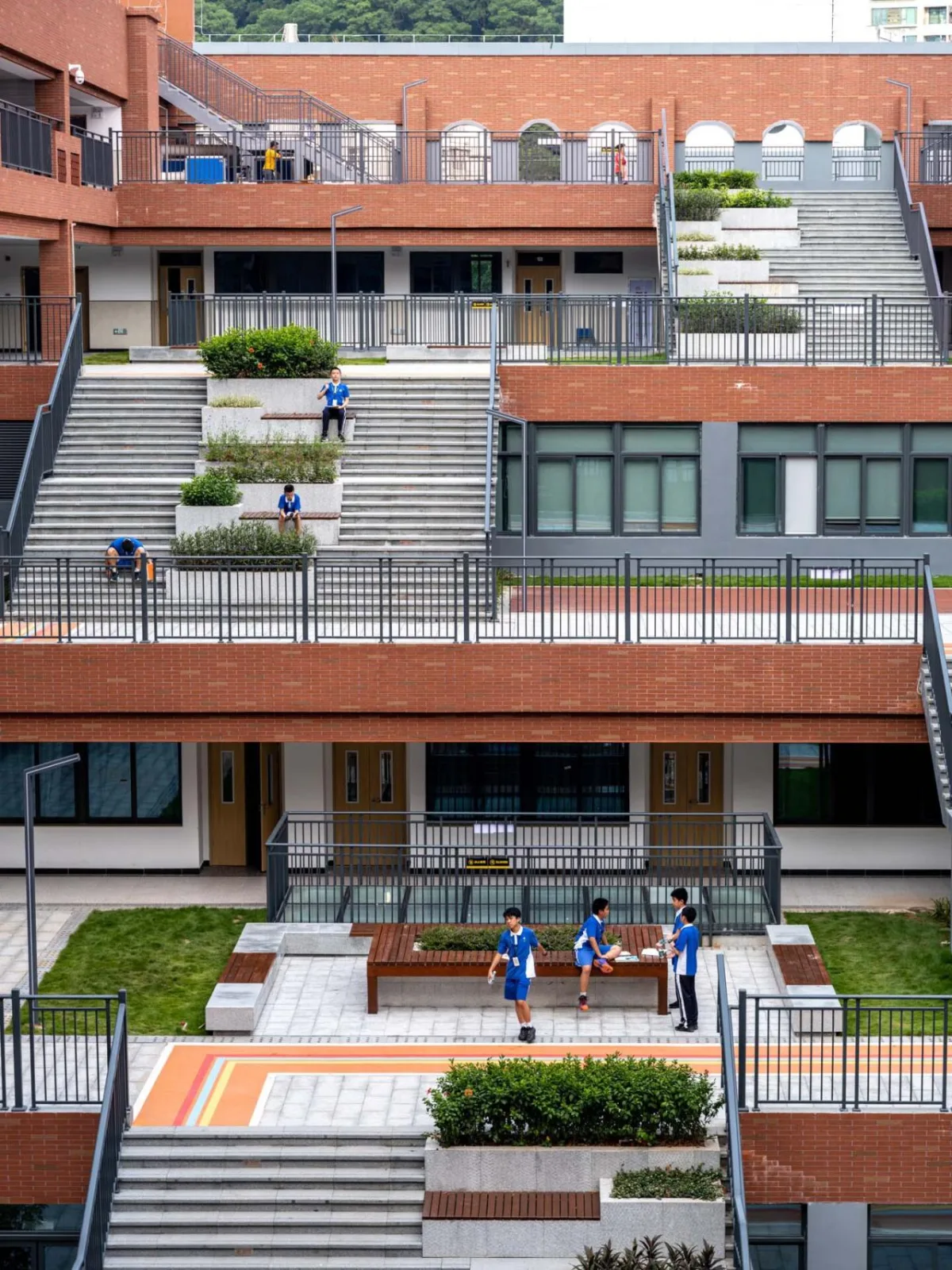
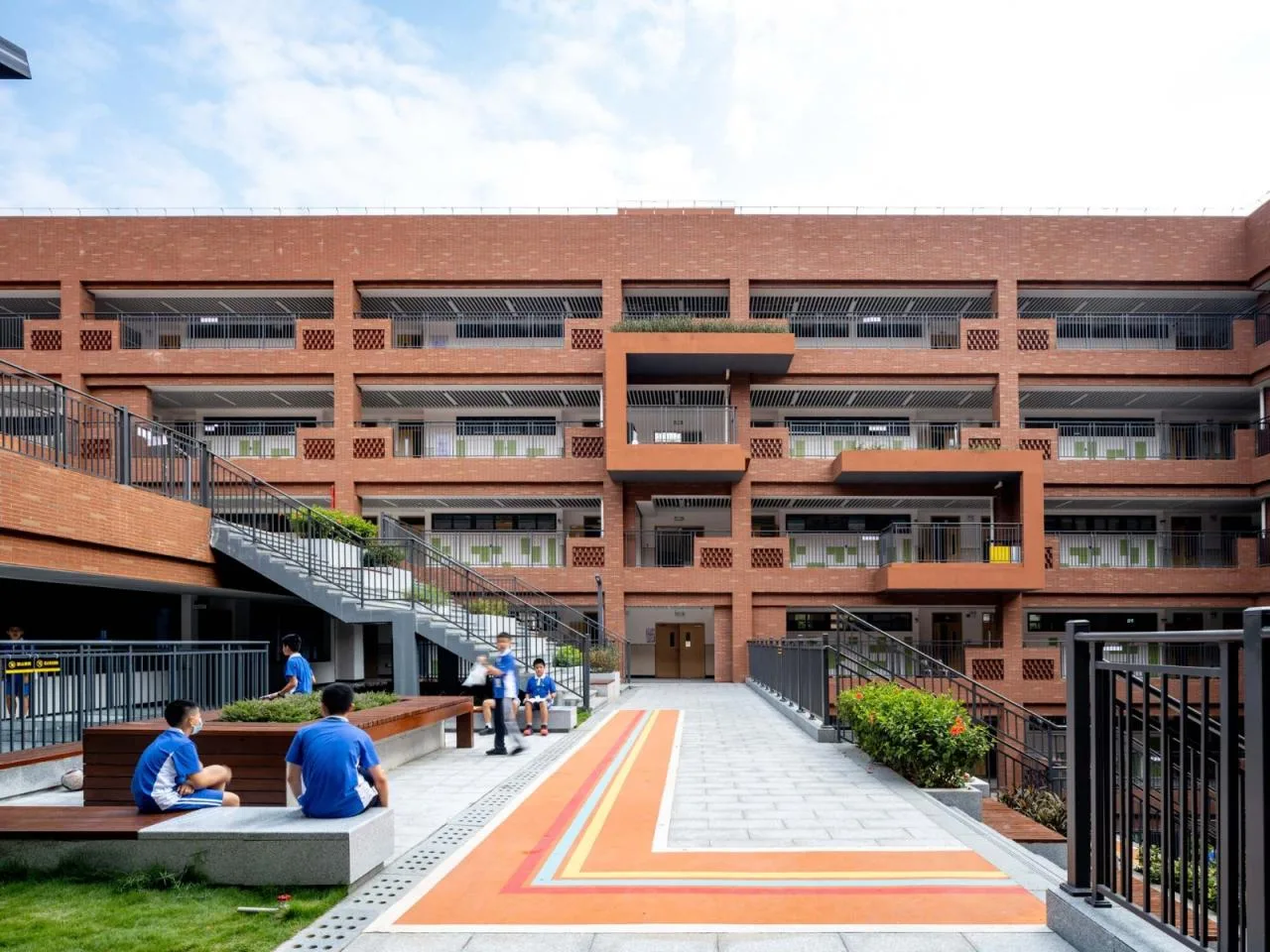
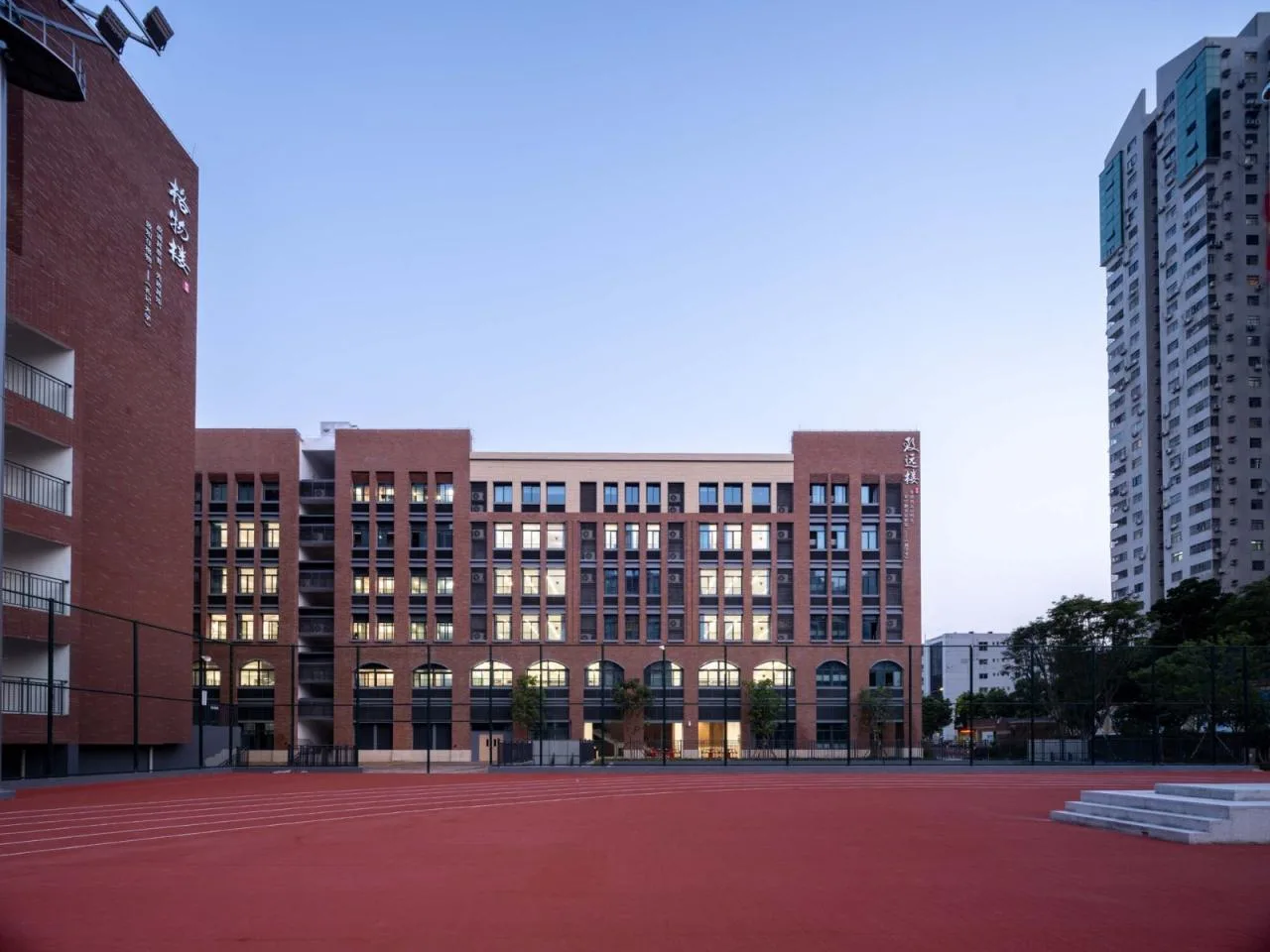
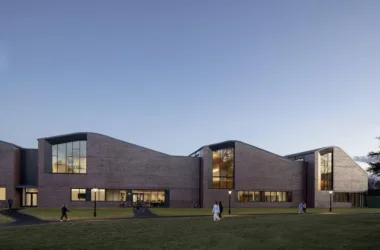
Echoing the architectural style of Shenzhen Middle School’s new junior high and high school campuses, the façade maintains a classic three-tiered composition. It incorporates modern design techniques and features the iconic emblem of Shenzhen Middle School, establishing a distinctive and memorable architectural identity.
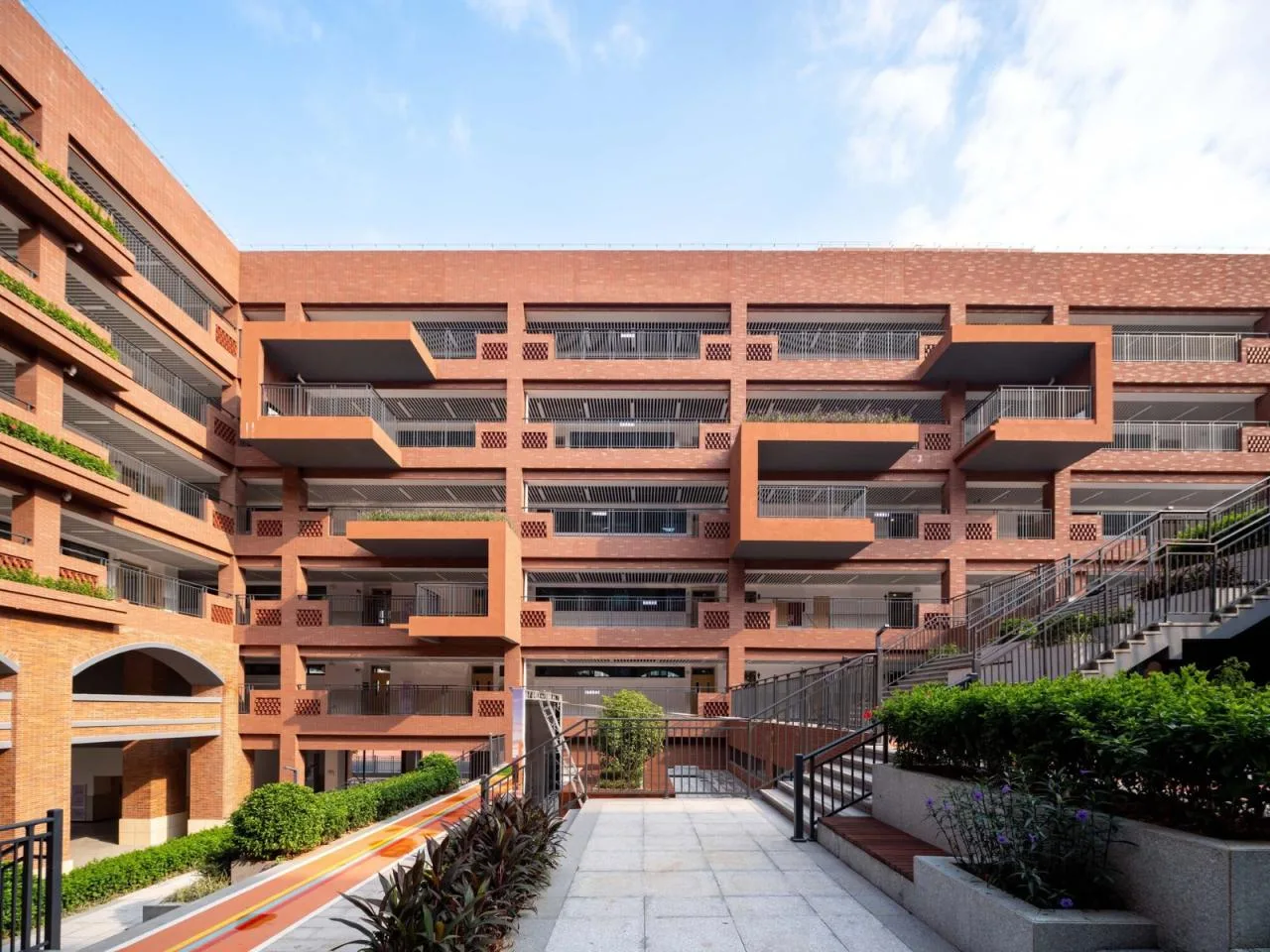
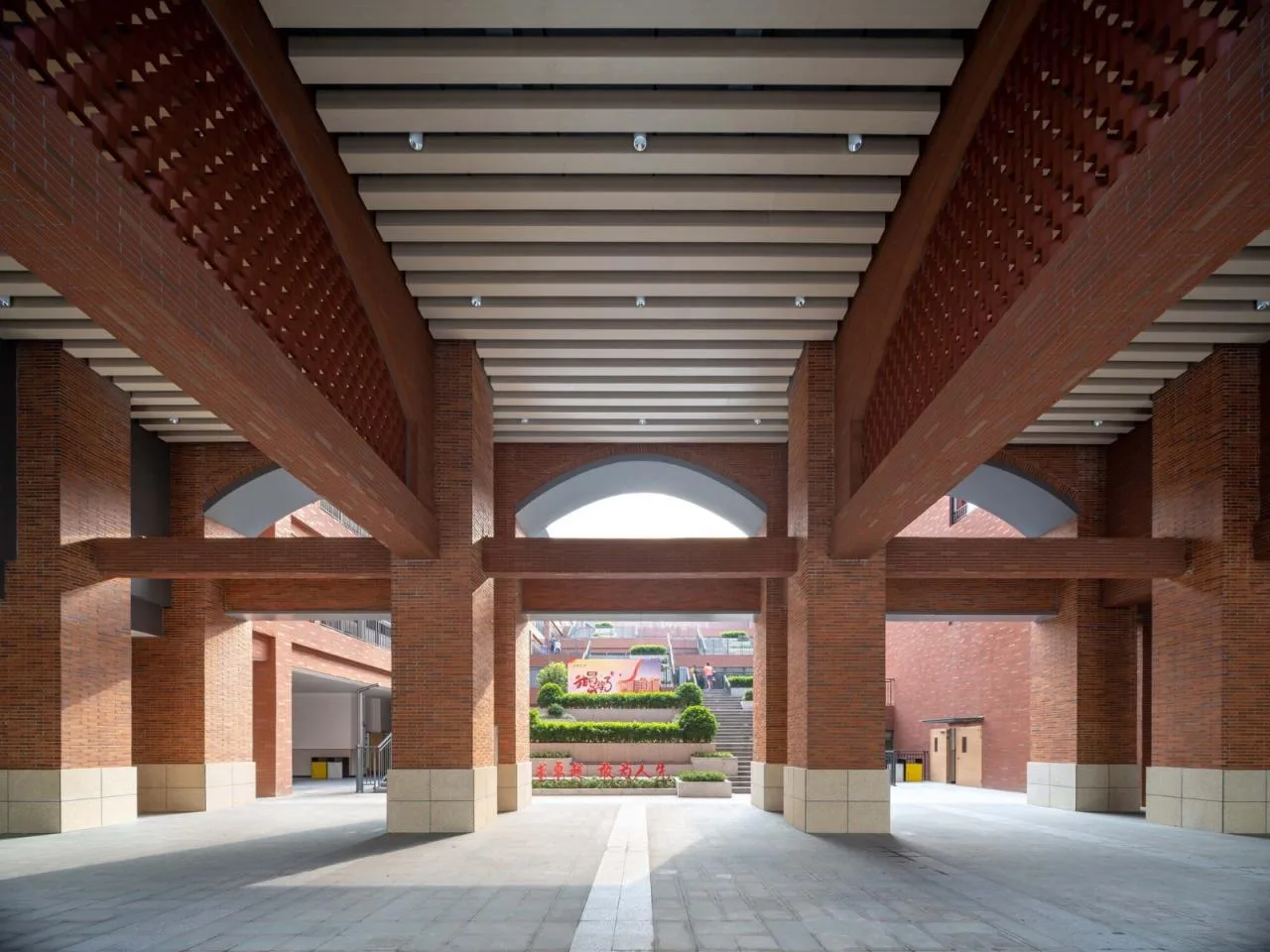
In September 2022, after two years of construction, students at Shenzhen Middle School’s junior high department celebrated their “Back to School Day” as the newly renovated campus officially opened for use. Let’s take a closer look at the feedback and impressions from the community.
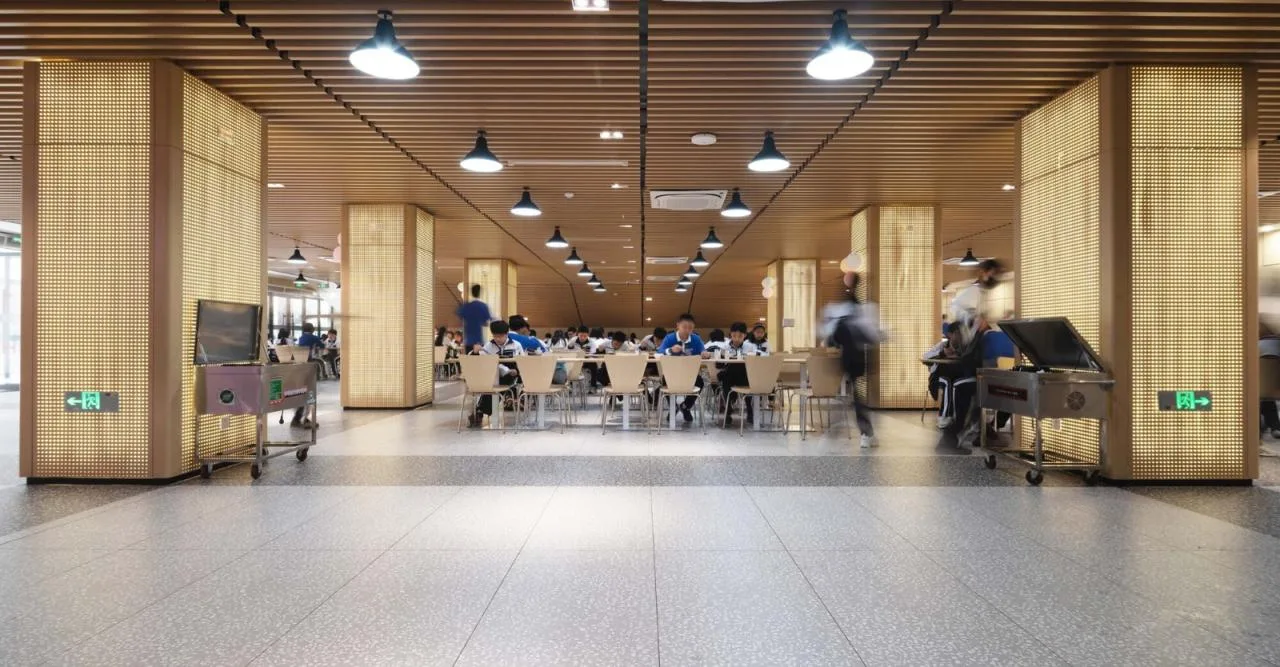
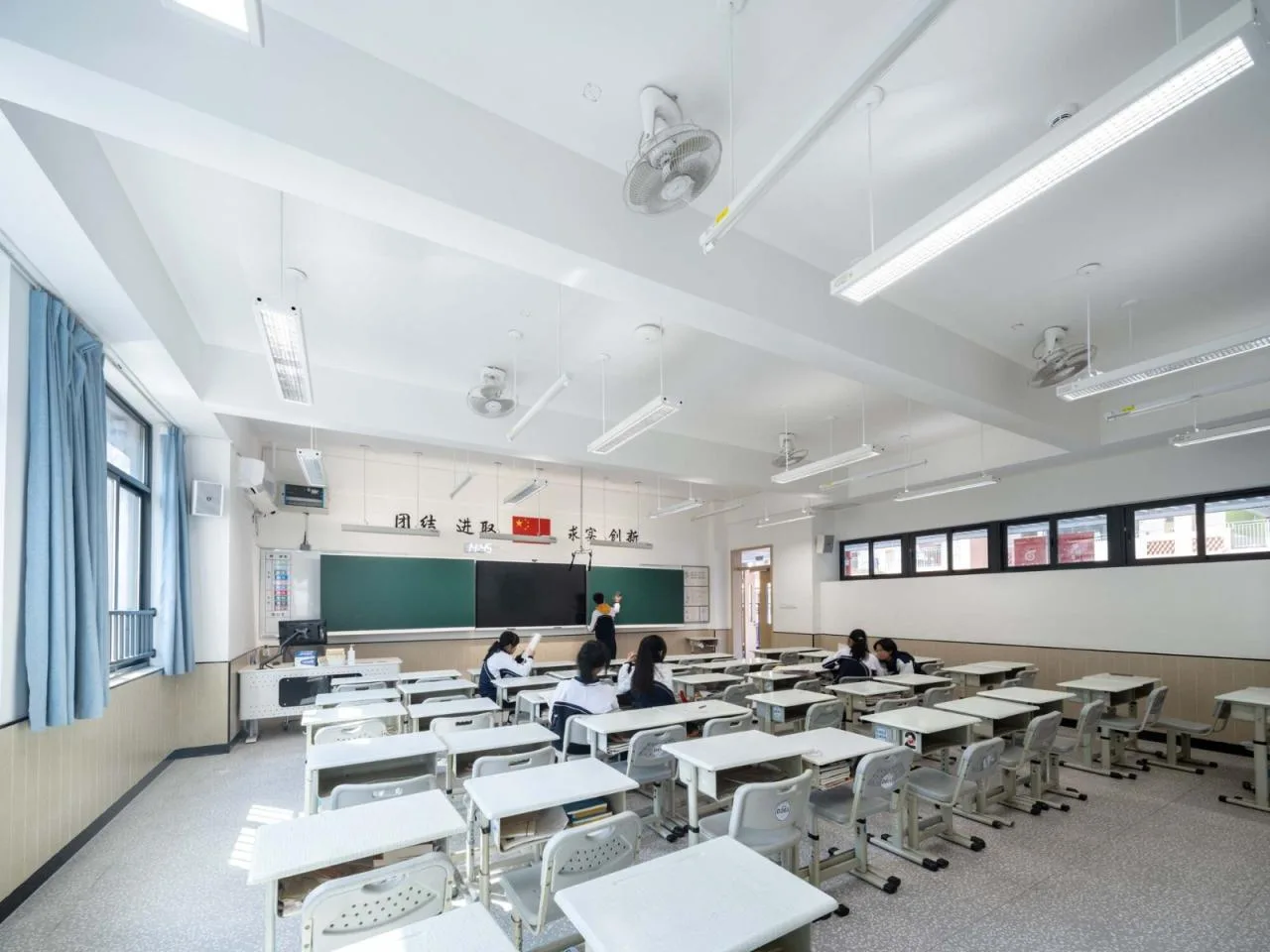
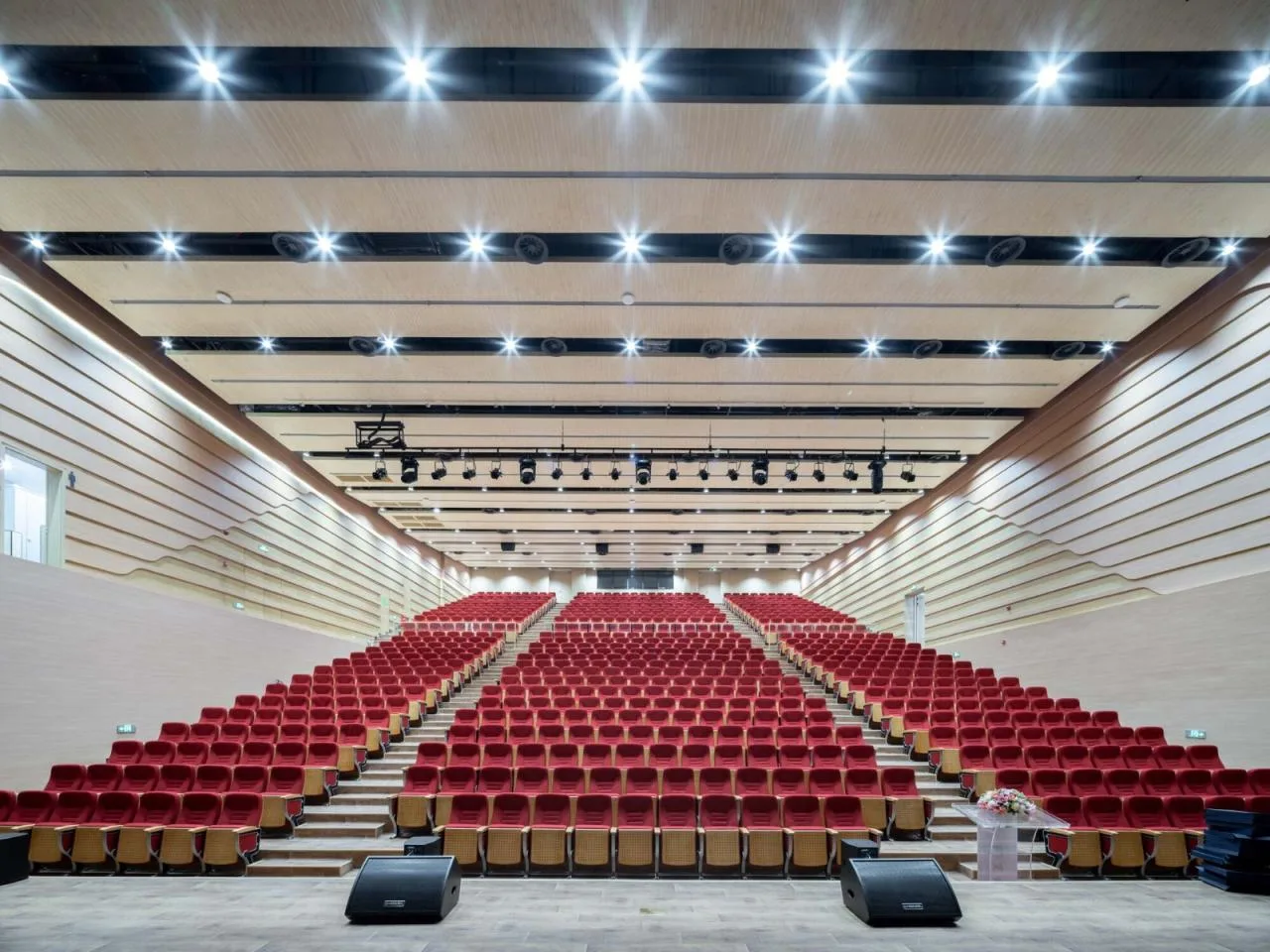
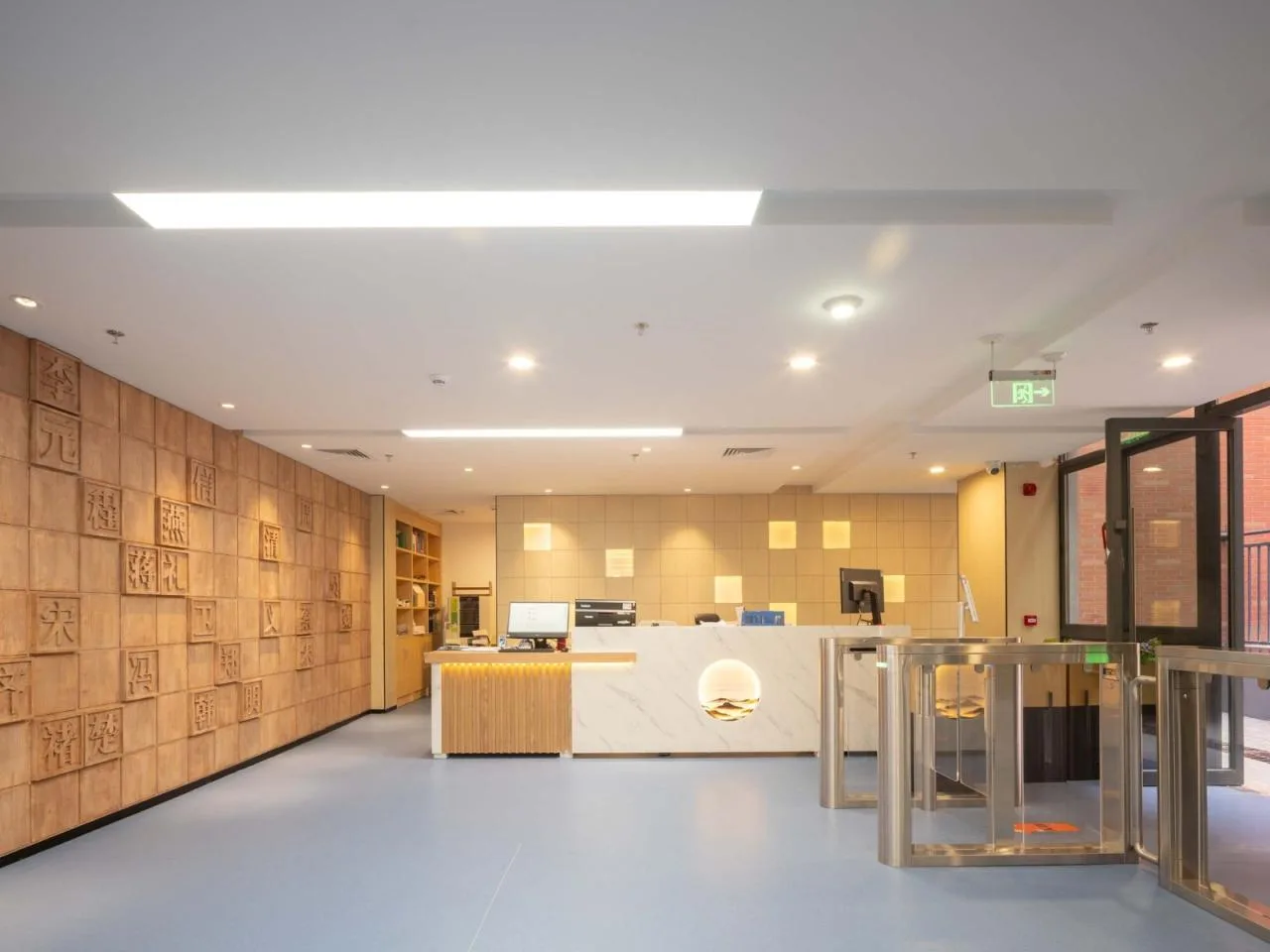
Project Drawings
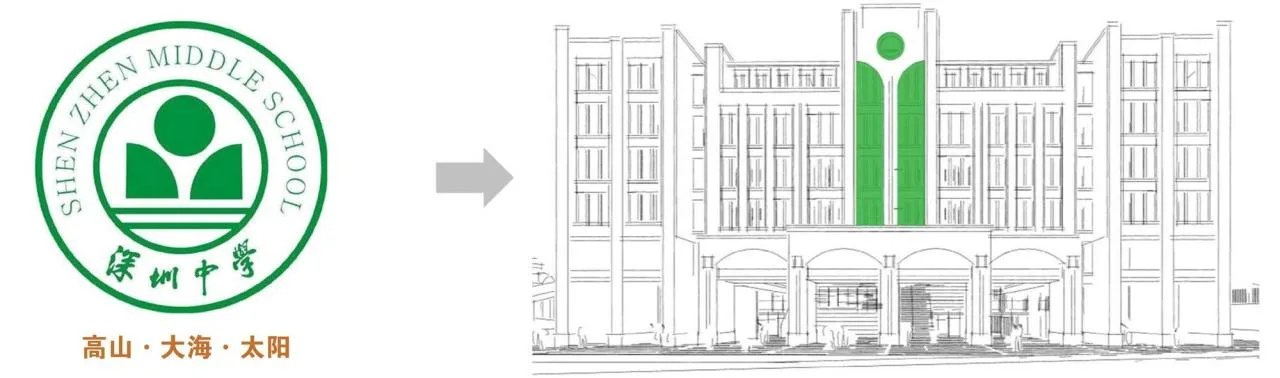
△ Logo Analysis Diagram
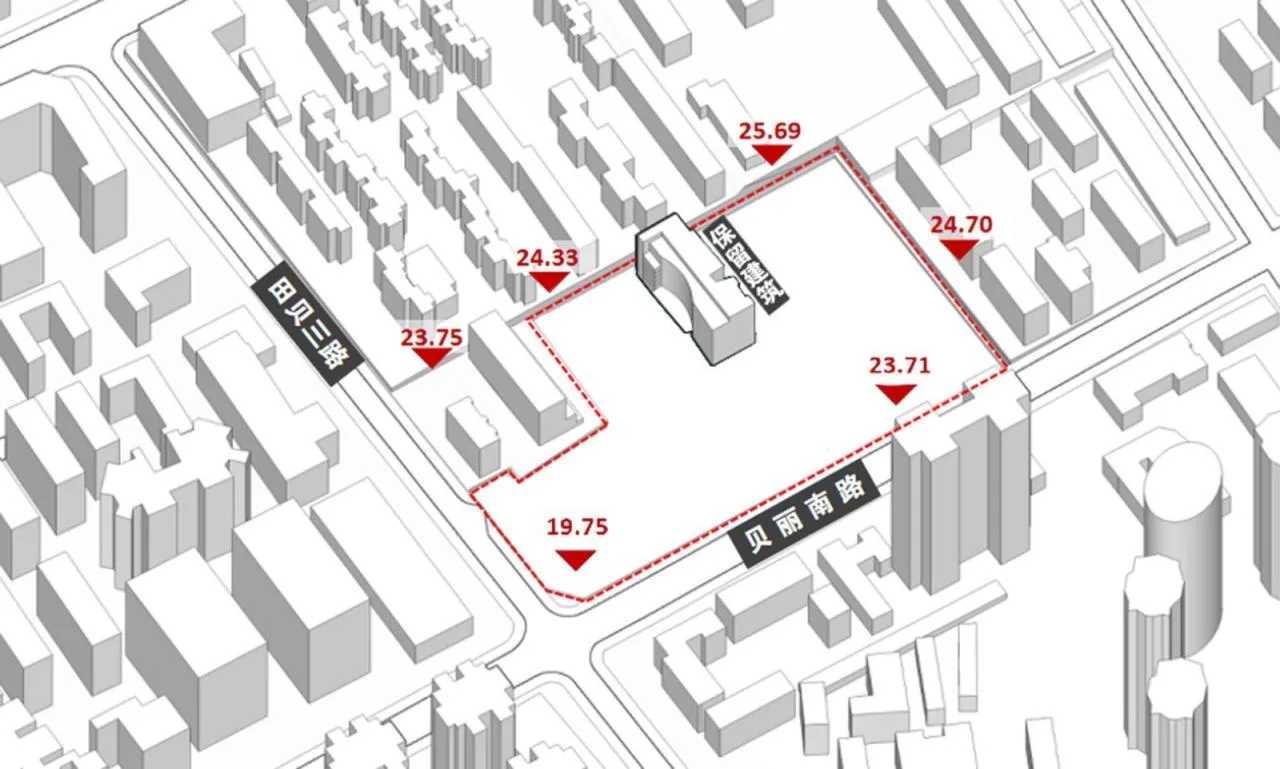
△ Base Schematic Diagram
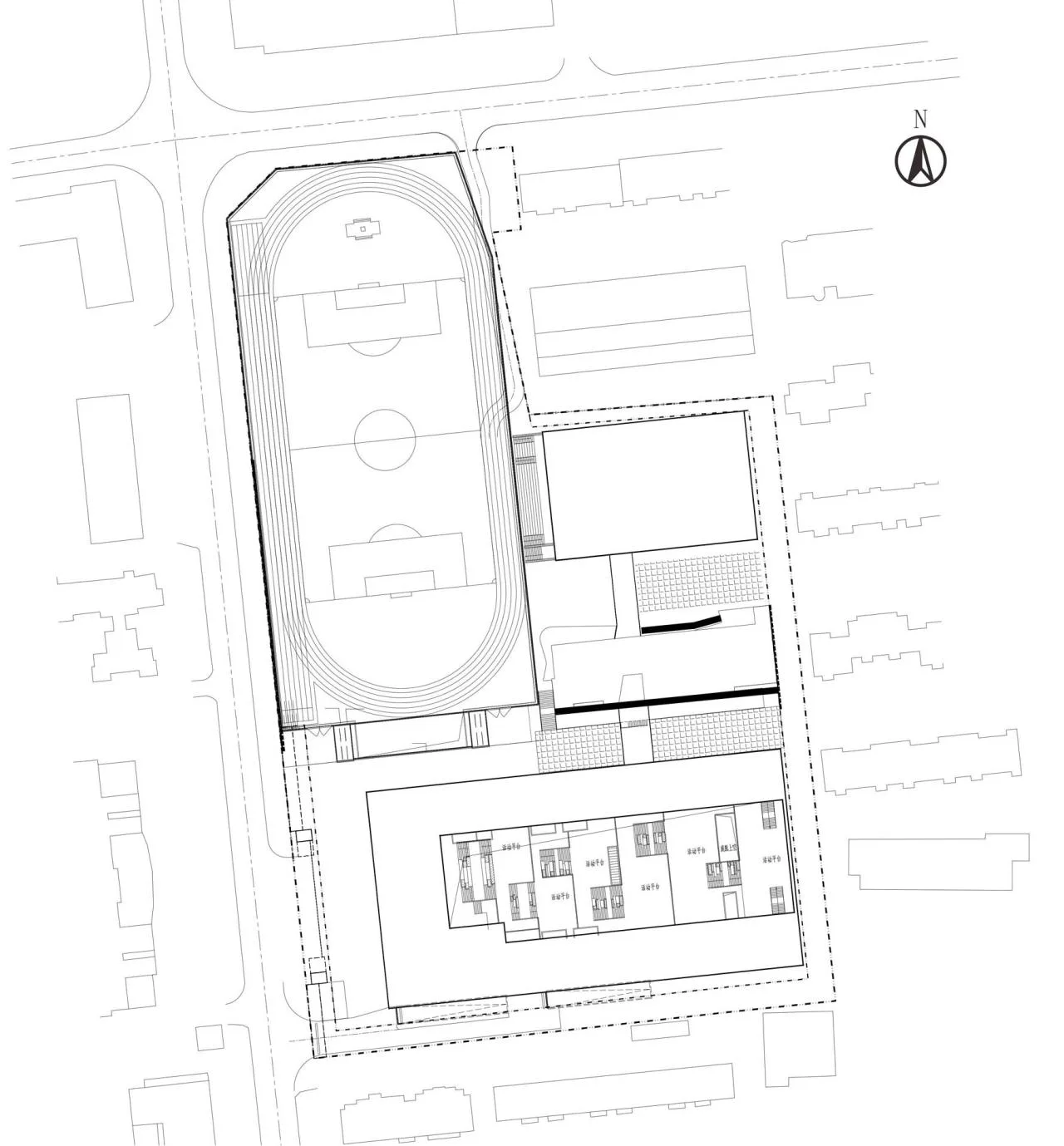
△ General Layout Plan
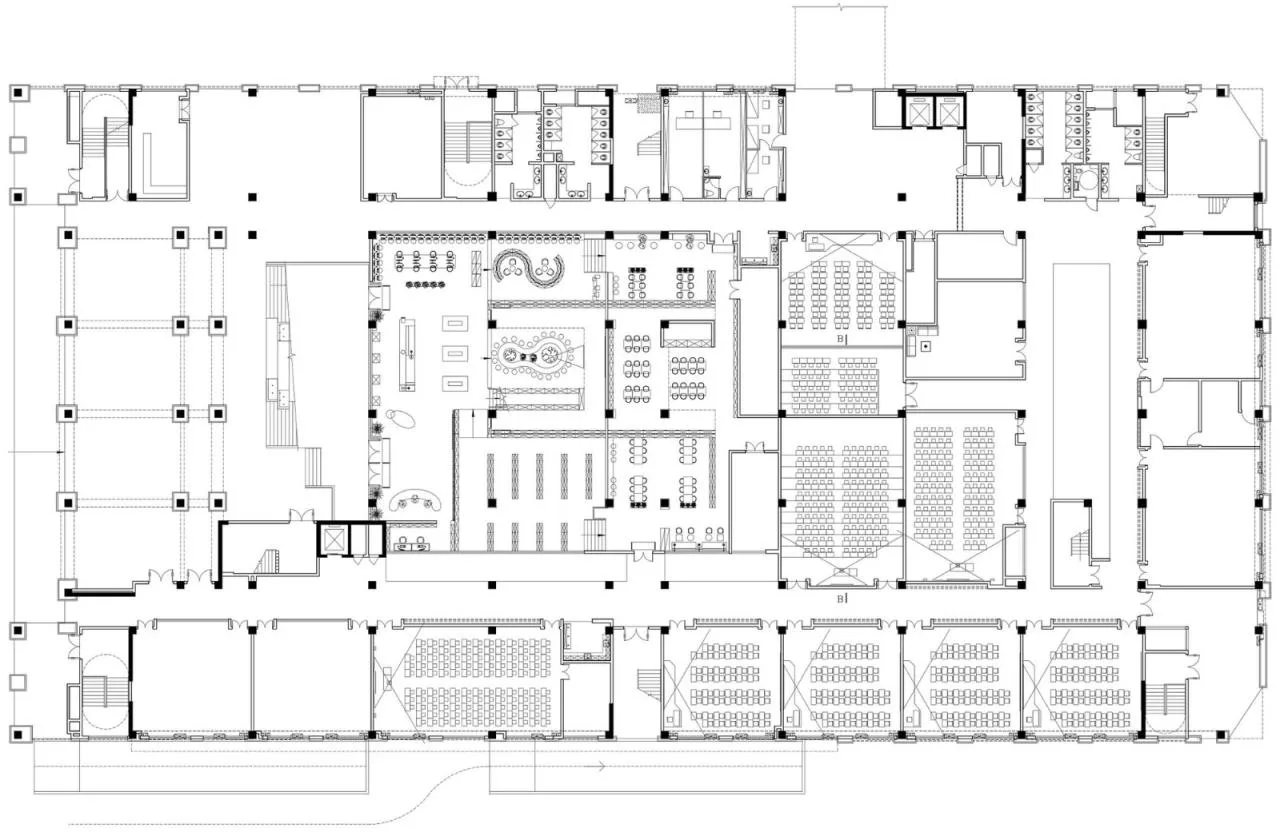
△ First Floor Plan
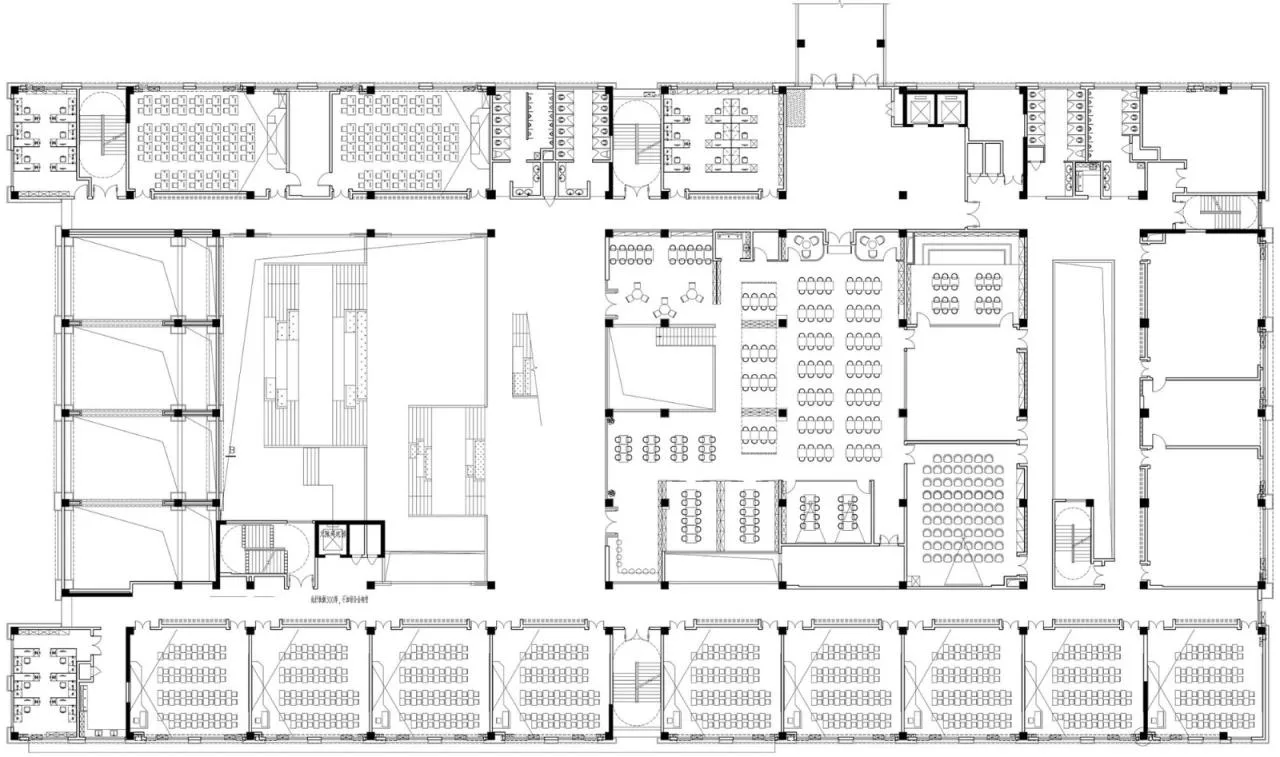
△ Third Floor Plan
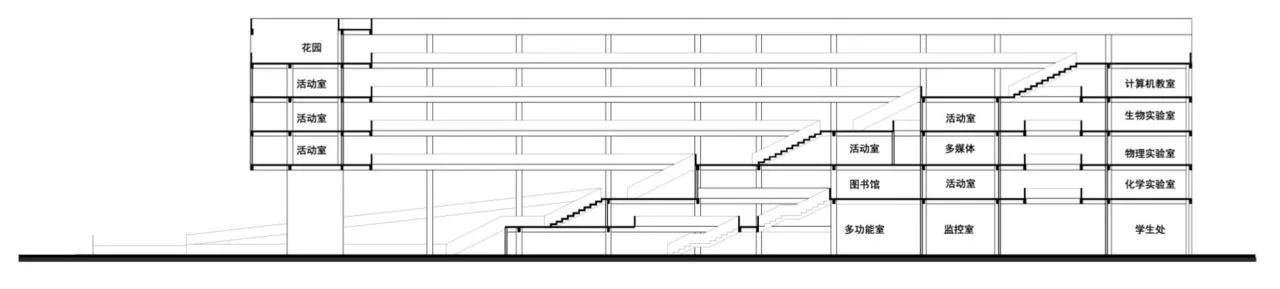
△ Section Diagram
Project Information
Architect: Huayi Design
Area: 63,000 m²
Project Year: 2022
Photographer: Zhan Changheng
Suppliers: Hunan Valin Xiangtan Iron and Steel Co., Ltd; Lopo Art Ceramics Co., Ltd; Xinyi Glass Holdings Limited
Design Team: Lu Qiang, Lu Yi, Zhongyue, Song Lijuan, Zheng Xiao, Bi Yueyuan, Shi Hualei, Lei Yin, Zhang Baowen, Chen Dongyuan, Huang Heming, Yu Lixia, Sun An, Wei Ziheng, Jiang Zhengju, Jie Zhun, Zeng Rui, Zhang Yanlong, Cui Luming, Peng Xumin, Zhuang Yanshan, Chen Shiqi, Wang Yang, Chen Shaolin, Yi Xin, Xue Jianming, Zhang Zisheng, Cao Huan, Zhou Ying, Wu Changyan, Gao Long, Du Xinrui, Huang Chaoyu, Huang Zhiyou, Zhao Guangzhen, Li Liangcai, Shi Yaqun, Liang Yongchao
Construction: China Construction Fourth Engineering Bureau Co., Ltd
Client: Education Engineering Management Center of Shenzhen Construction and Engineering Bureau
Location: Shenzhen















Must log in before commenting!
Sign Up