
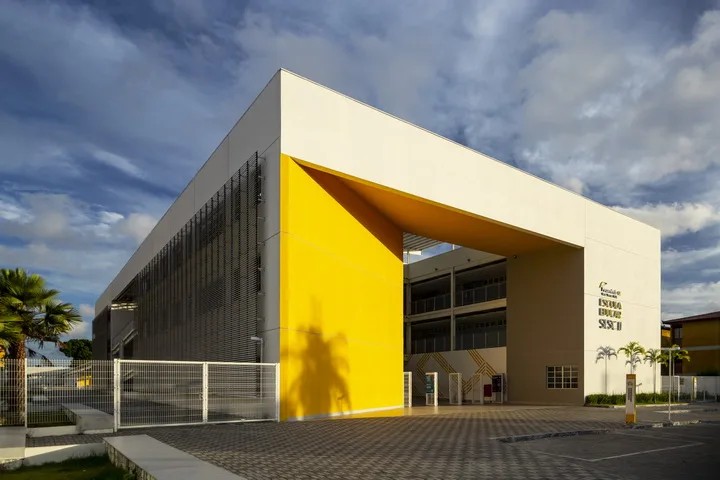
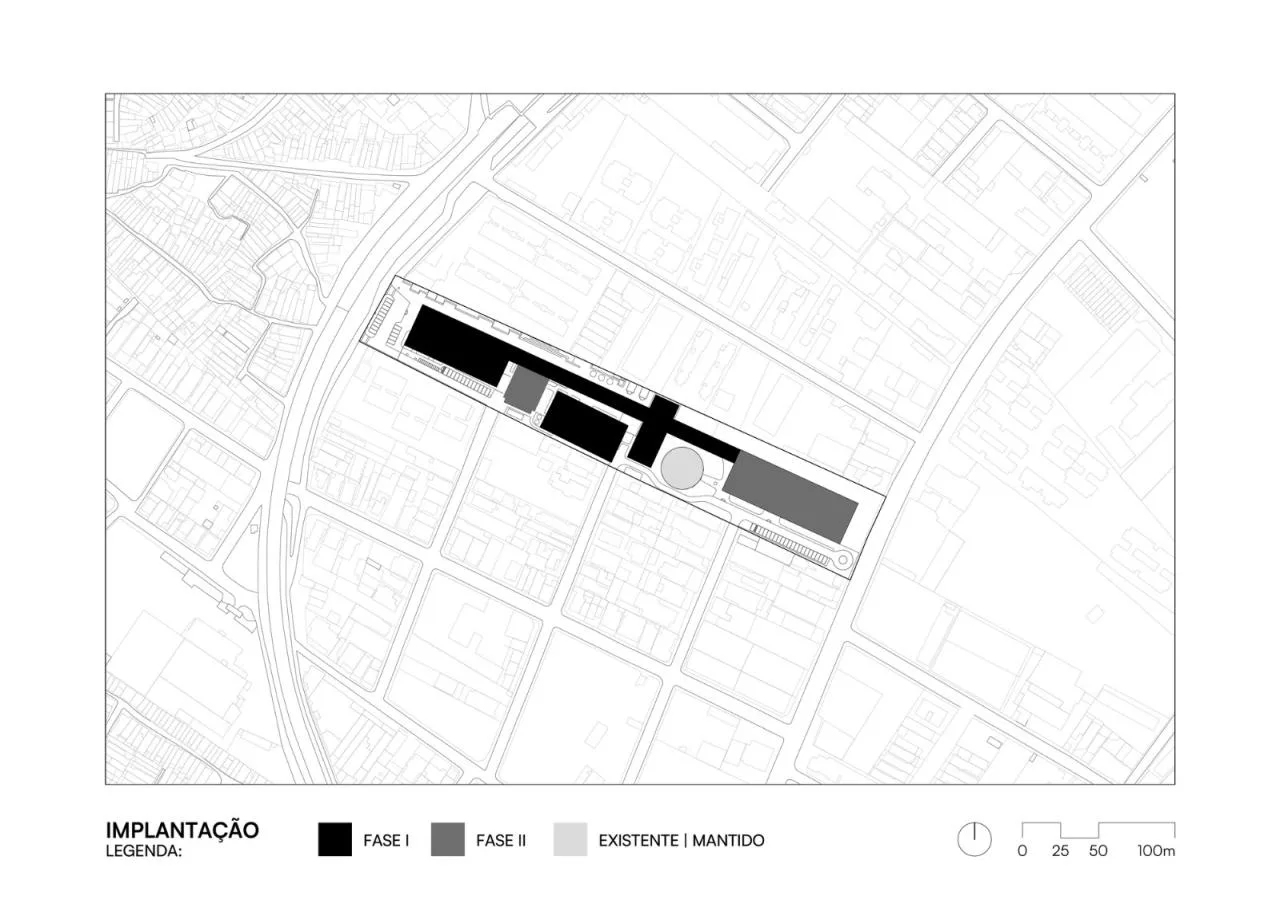
The Educar II School project by SESC-CE is situated in the Damas community of Fortaleza. The site stretches longitudinally from east to west, measuring approximately 350 meters by 50 meters. Both sides of the site face the main road, with three horizontal passages along the southern edge. The project also took into account existing features such as a small local church, a sports arena slated for renovation and integration into the school, and an old building currently housing part of the school but planned for demolition to make way for new construction.
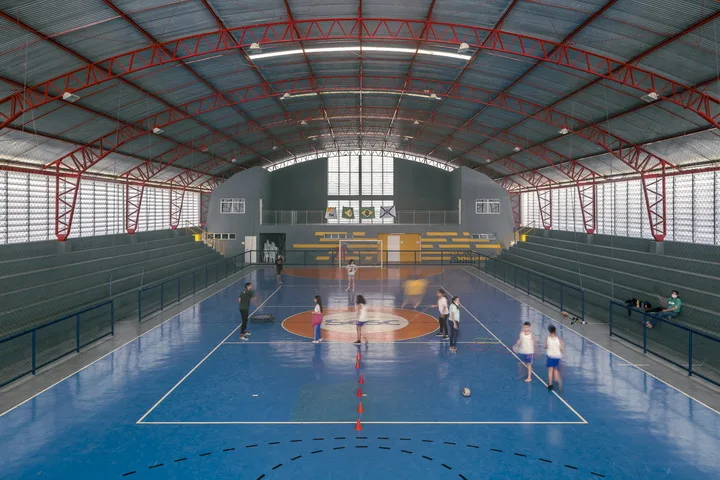
The functional program includes areas for kindergarten, basic education levels one and two, an auditorium, extracurricular activity spaces, a self-service restaurant, and renovation of the original gymnasium. To meet these needs within the existing site constraints and adhere to the planned schedule, the design adopts a rational, modular, coordinated, and industrialized approach—from the structural system to window installations—optimizing workflow and reducing construction time. A phased implementation strategy is also employed.
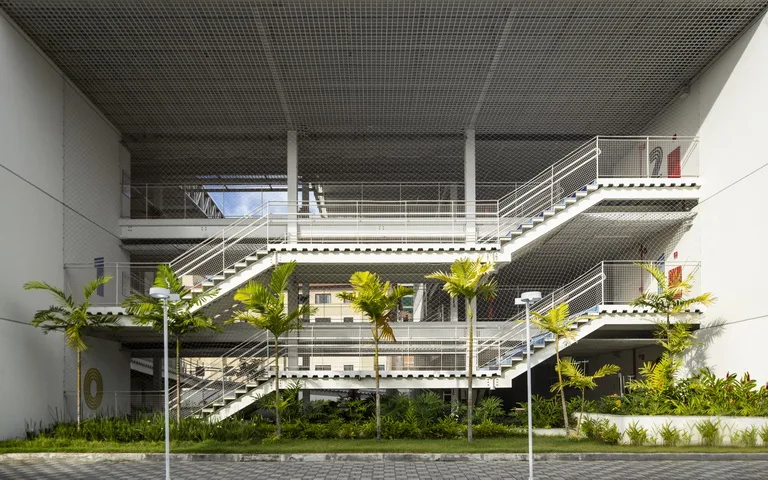
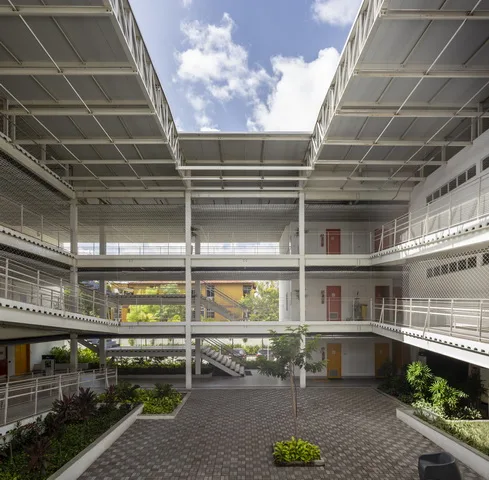
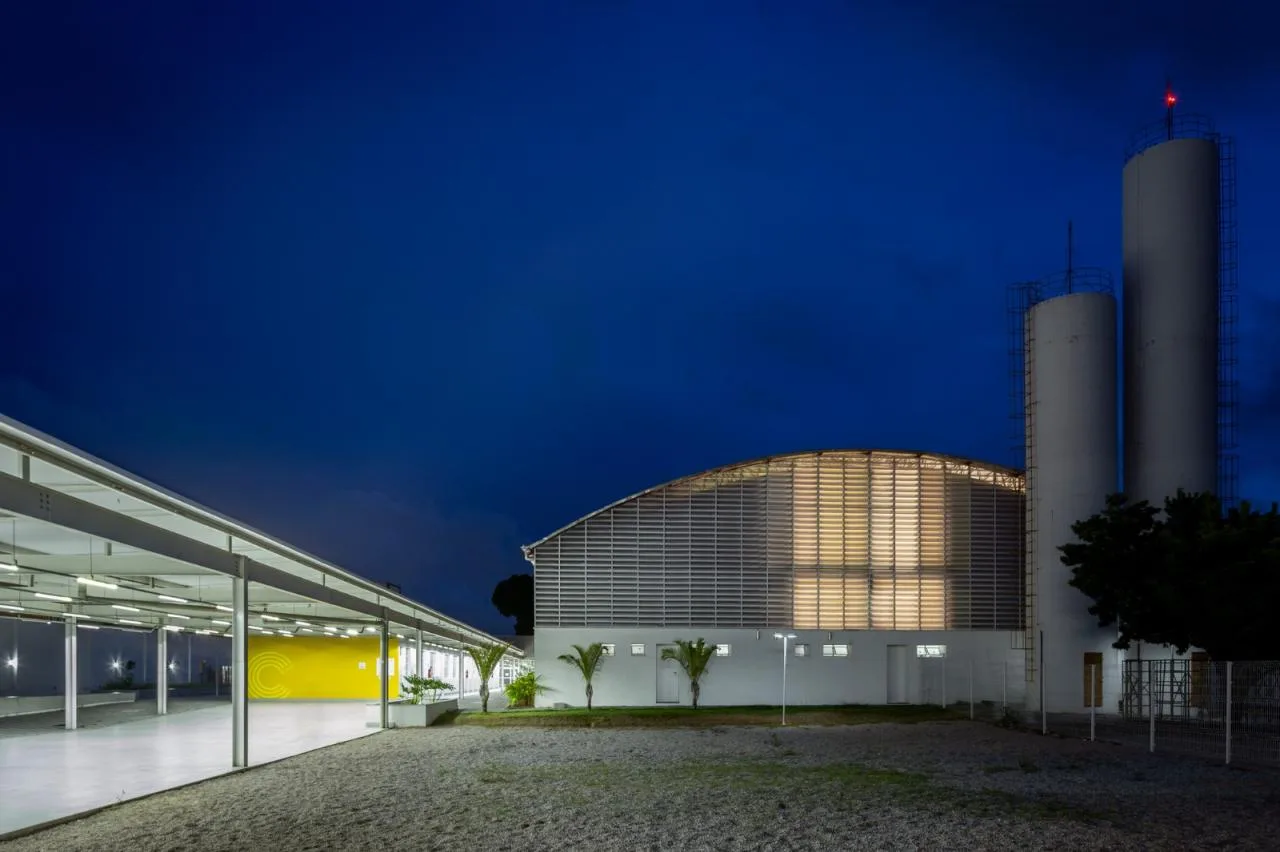
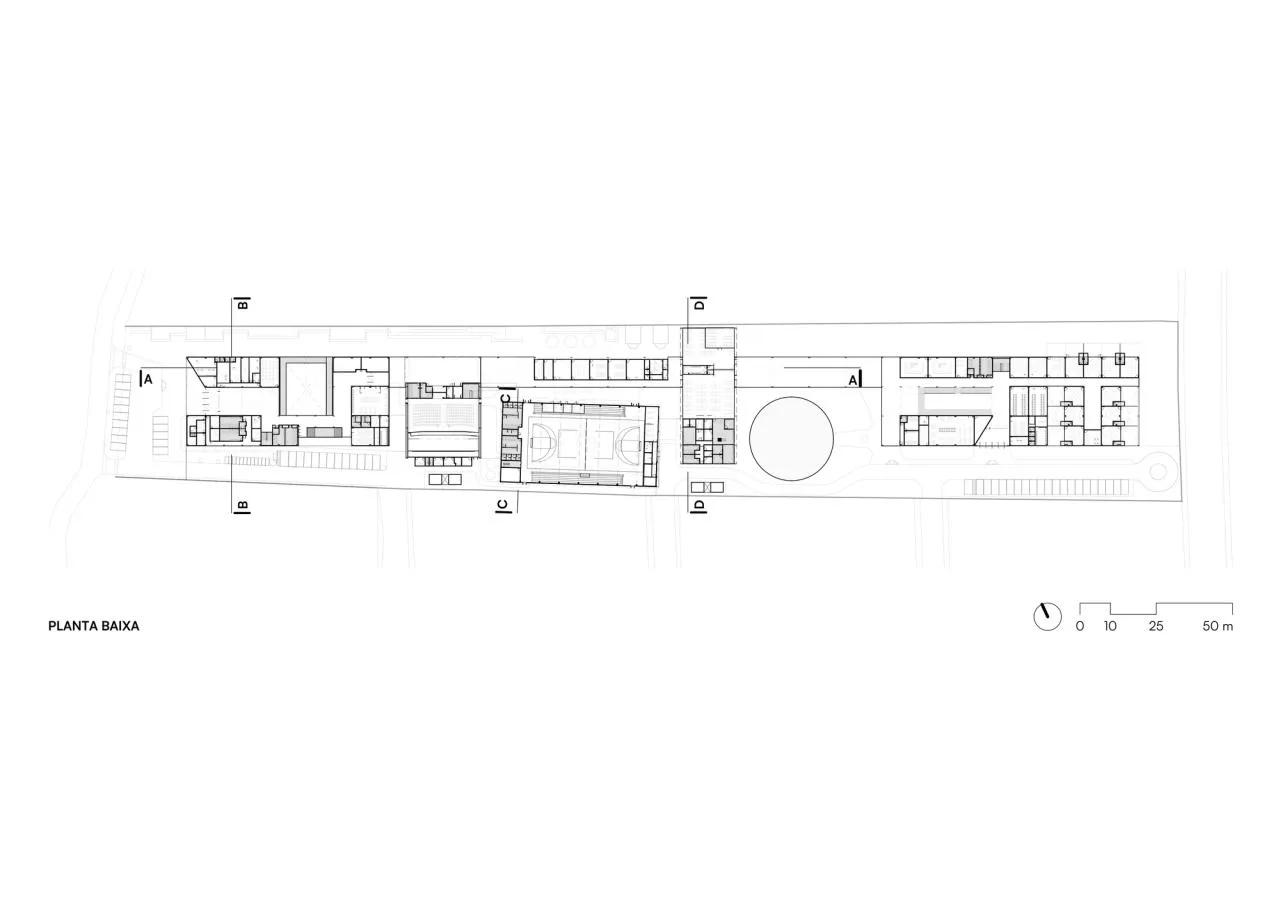
The first phase has been completed in the most spacious area of the site. It is accessible via the main road on the west side and one of the transverse roads. This phase includes the second teaching area, extracurricular activity spaces, the buffet restaurant, the renovated gymnasium, and a trail. The second phase, currently in design, involves the demolition of the original structure and redevelopment of the eastern section and walkway, which can be used while the first phase is under construction. The buildings in the first phase are arranged not as isolated blocks but as a cohesive system, governed by structural logic and functional distribution. This layout fills the gaps between existing land structures, organizes functions efficiently, connects circulation routes, and guides pedestrian flow.
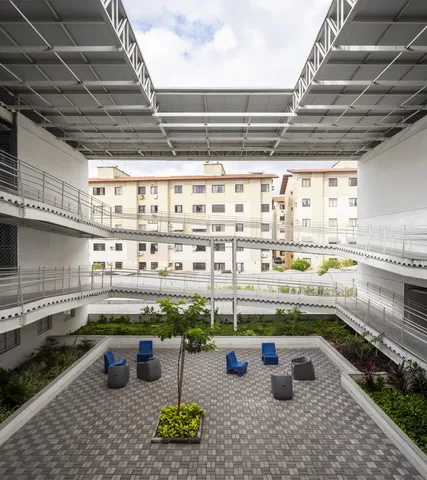
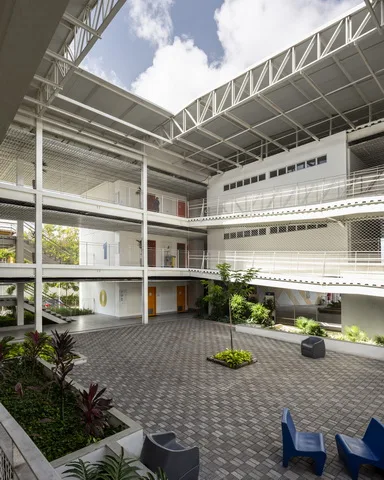
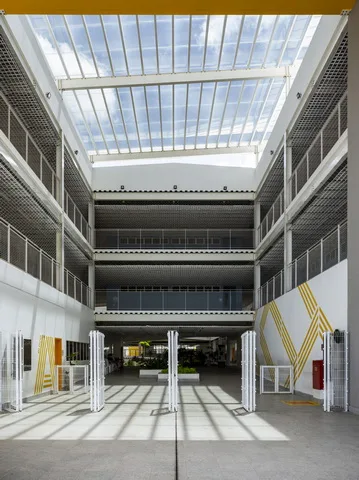
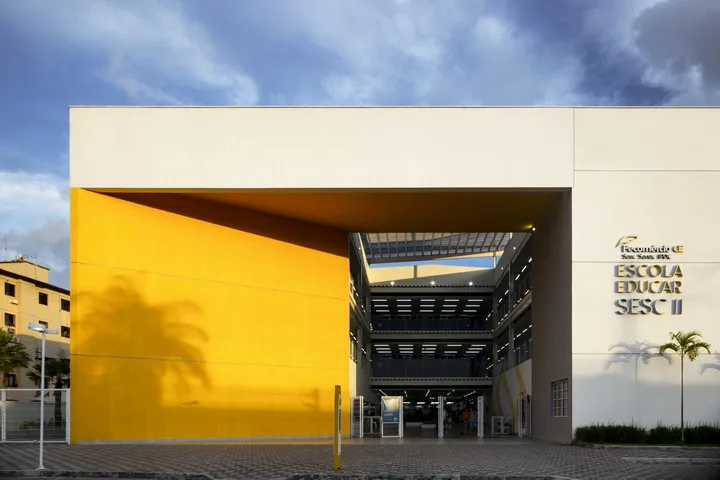
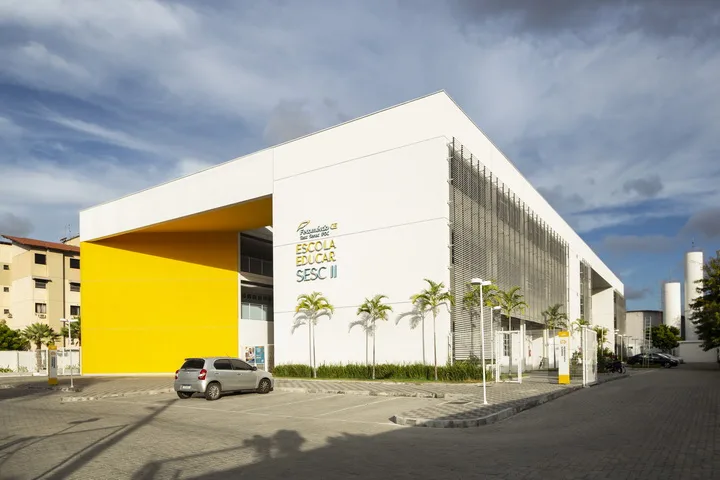
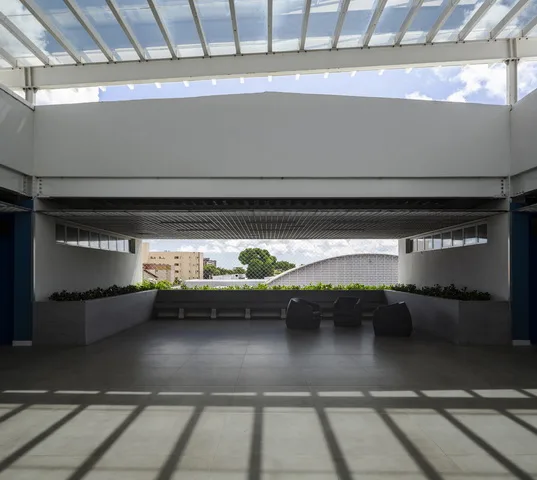
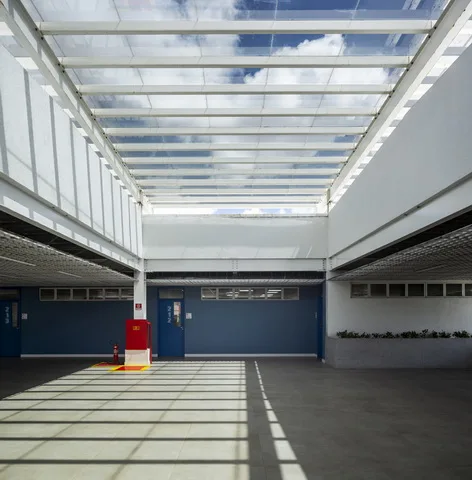
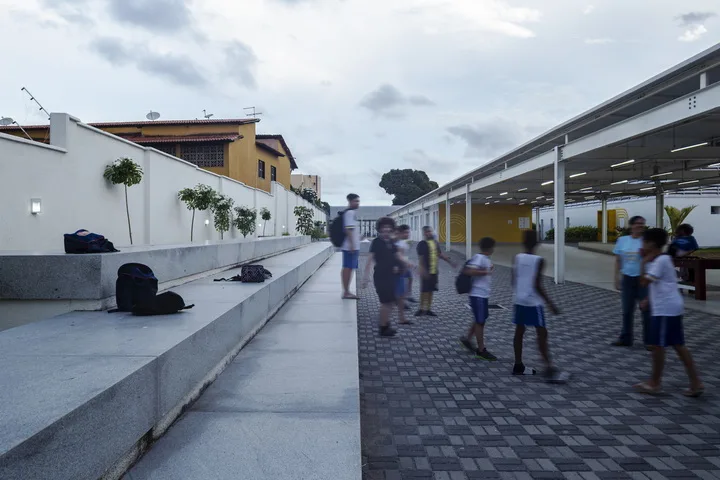
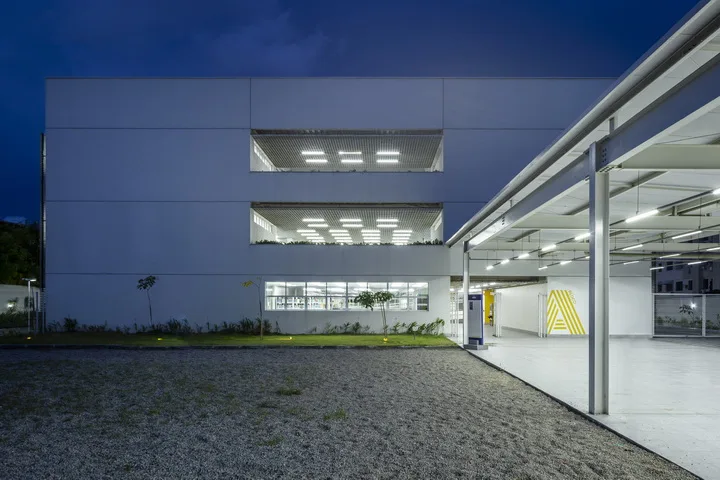
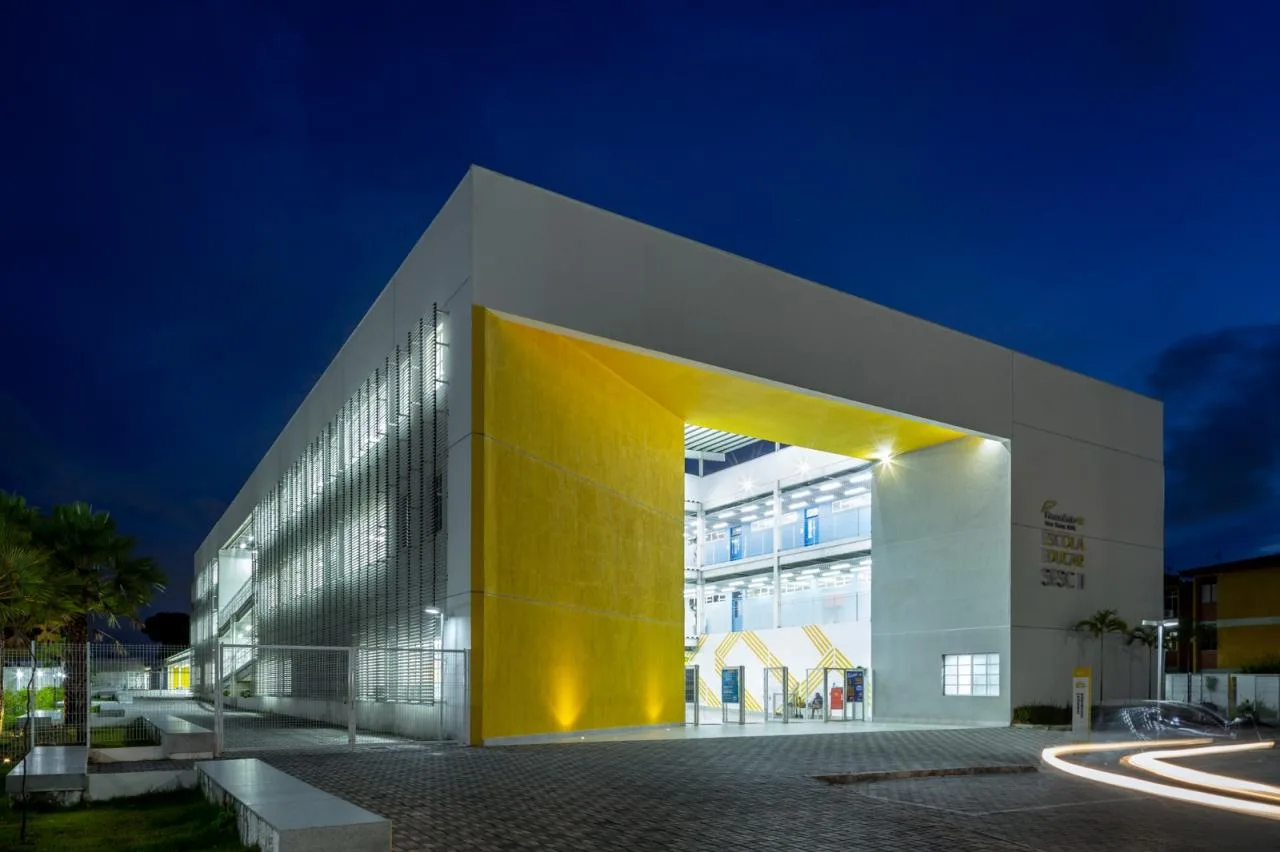
The teaching building occupies a large footprint, bordering the main western passage and forming a prominent entrance. From here, foot traffic is directed to other areas, while service access is routed further south via a secondary channel. The design integrates the building seamlessly into the site, creating porous connections and open courtyards. A distinctive rigid corner structure breaks the grid pattern, emphasizing the entrance. Equally important are the created voids—social spaces such as the internal courtyard with a ramp and the extensive linear park to the north—which link different zones of the school complex.
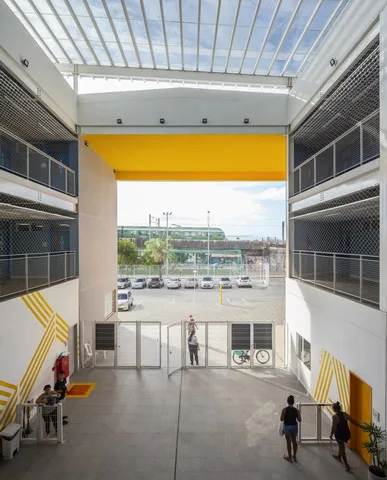
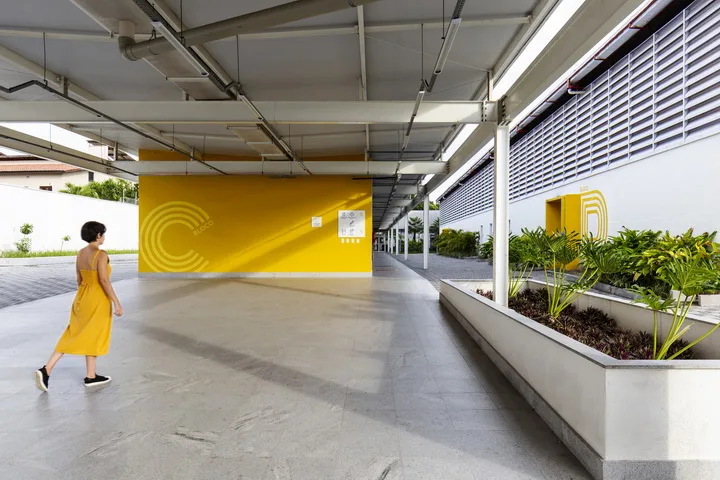
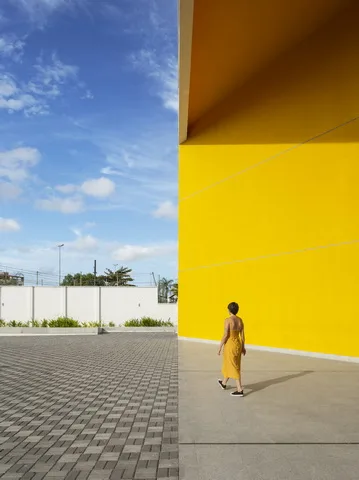
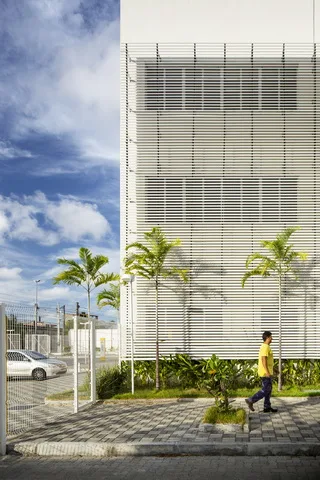
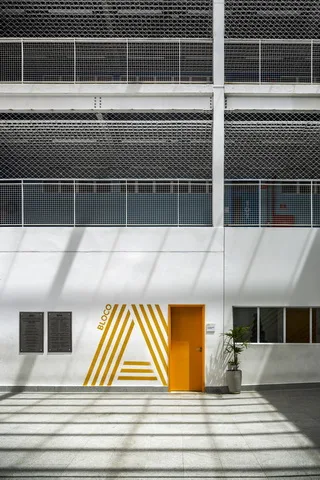
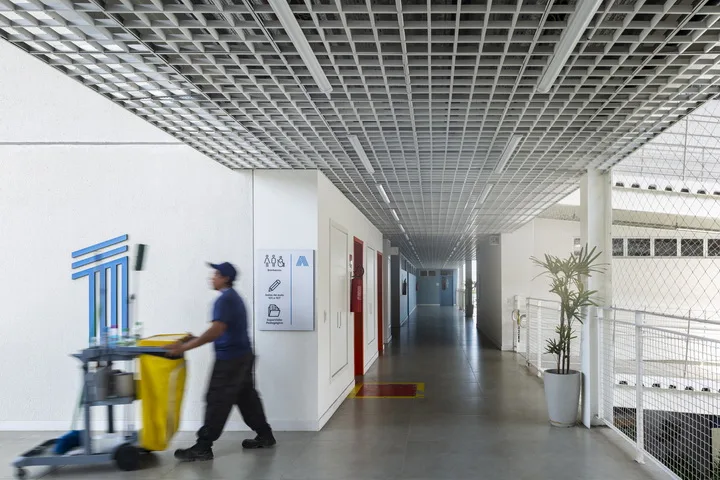
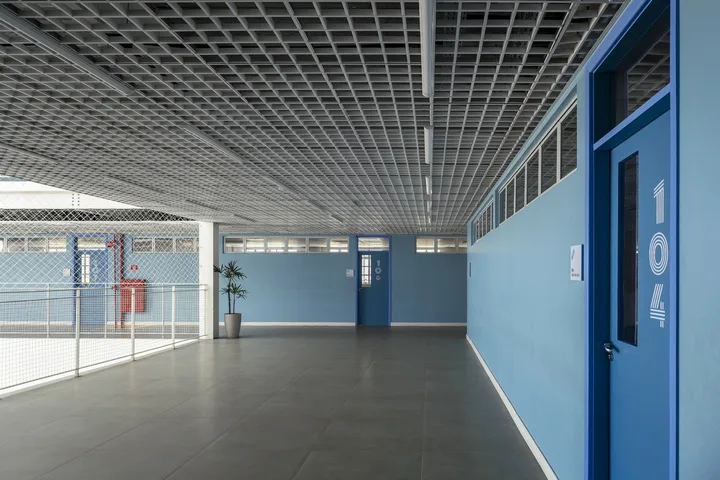
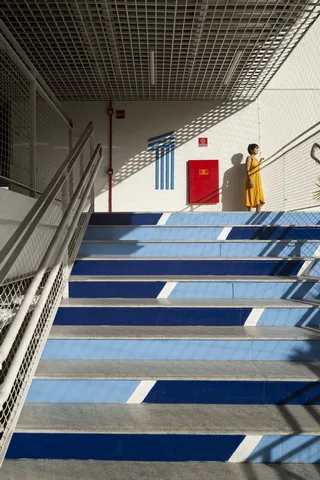
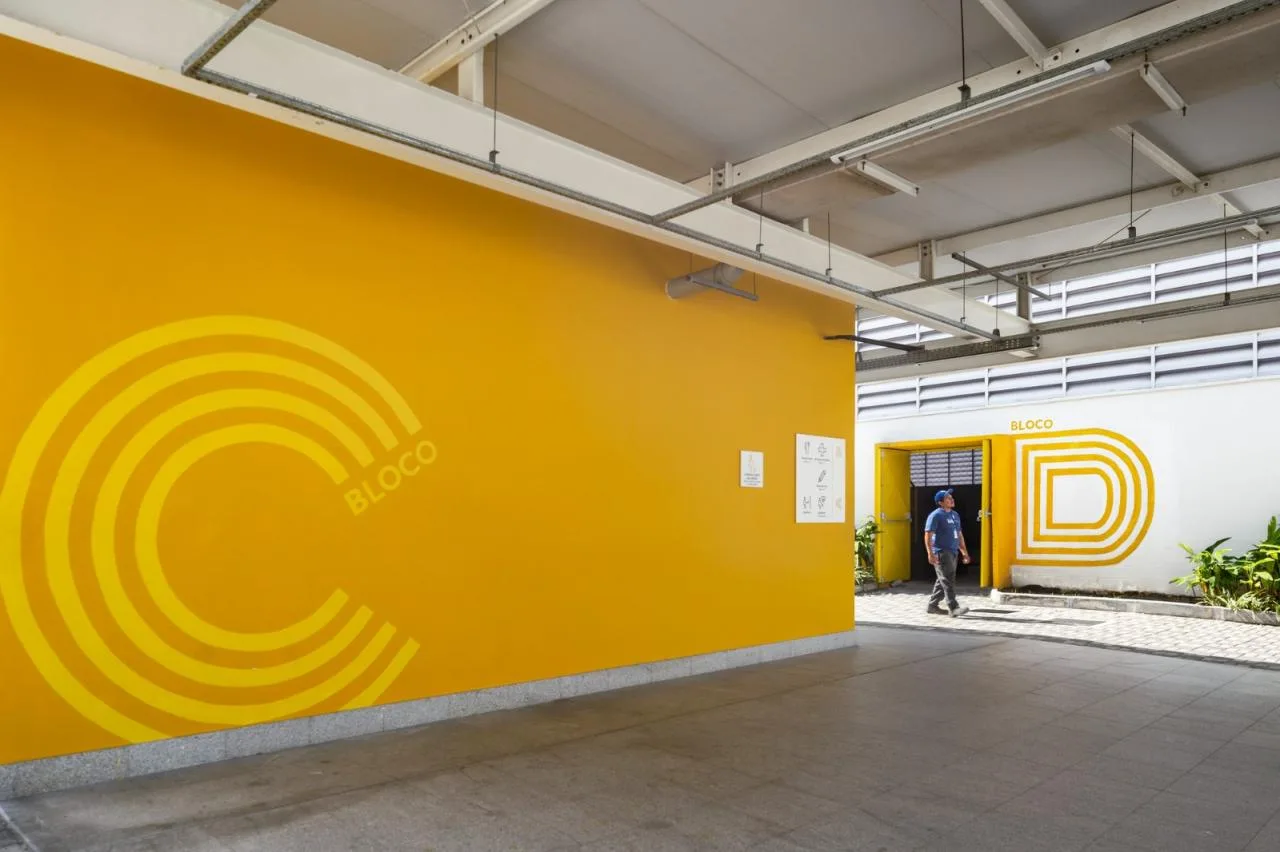
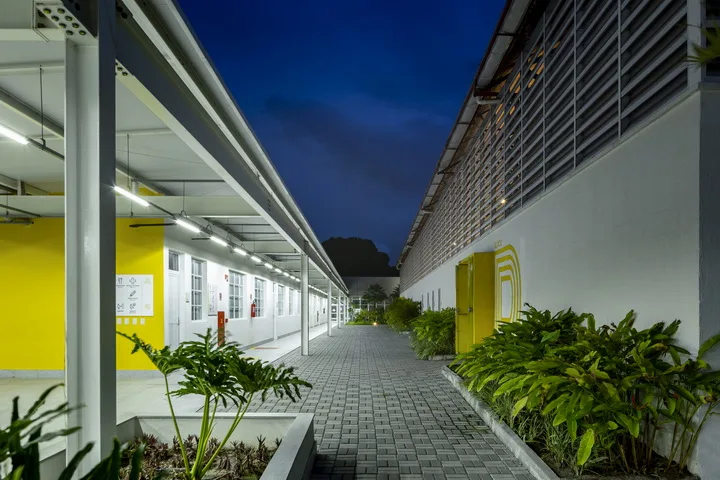
Color plays a central role in the design, marking circulation paths and vertical movement, while distinguishing different functional areas. Neutral white tones guide the building’s volumes and structure, uniting the architectural space with its visual identity. The metal structure is designed around a 1.2-meter module to accommodate project constraints, addressing challenges posed by large spans and the assembly of overlapping components. A second layer of horizontal sunshades protects interiors from direct sunlight and adds visual complexity to the facade.
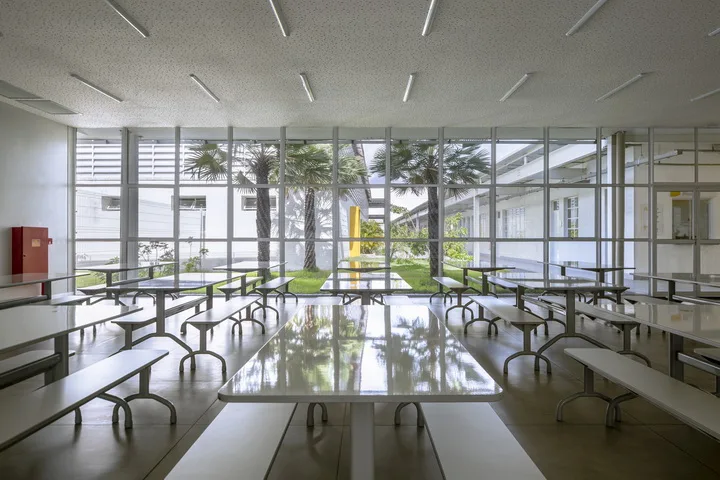
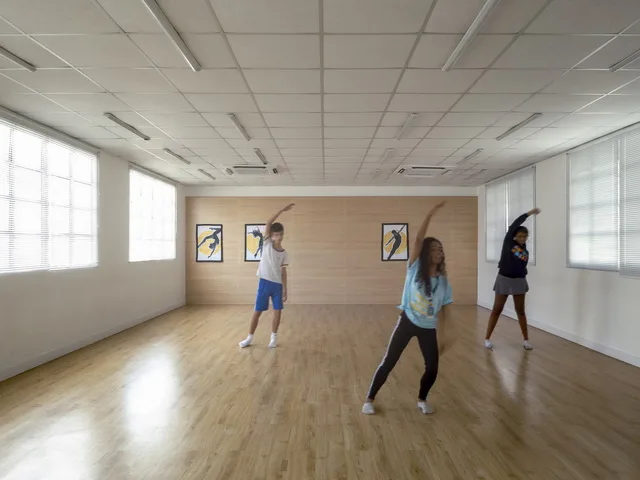
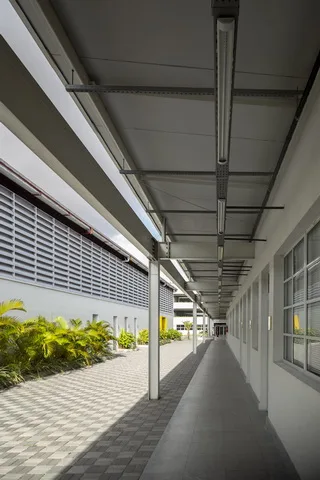
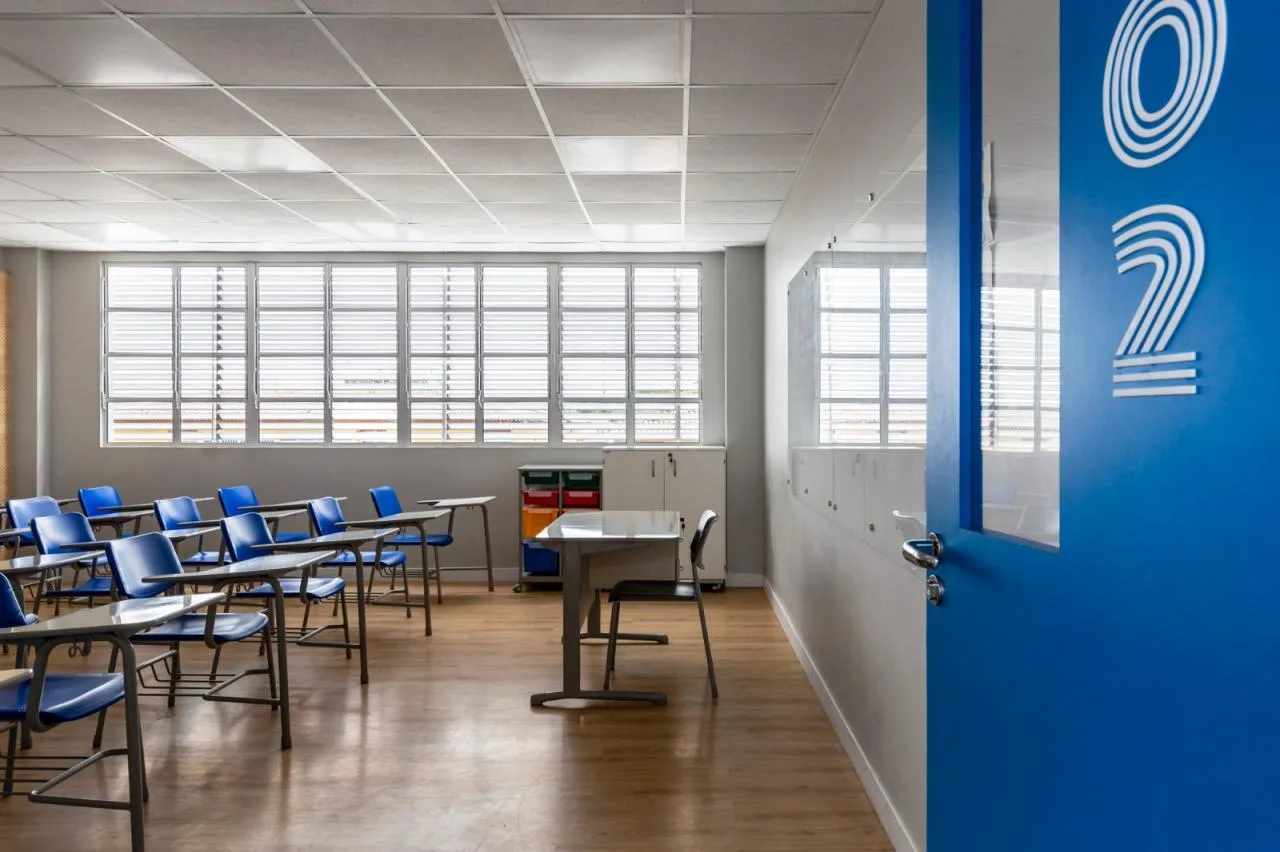
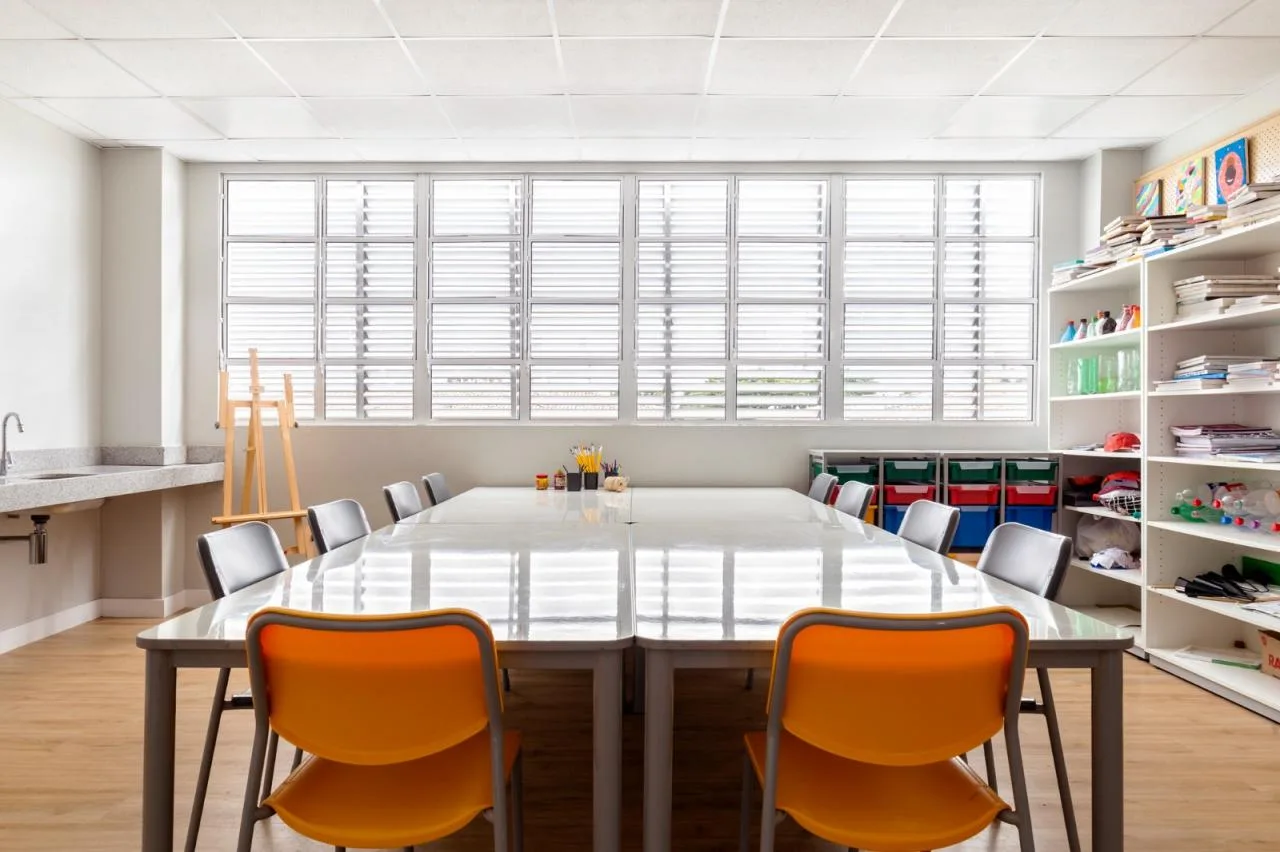
The project implements several strategies to enhance environmental comfort. Natural ventilation is achieved through vertical and horizontal circulation paths, with a central courtyard introducing greenery to improve air humidity. Windows are shielded by fixed horizontal metal sunshades, creating comfortable, ergonomic spaces with ample natural light and airflow. This design fosters a close connection between the built environment and green social areas, ensuring well-being for students and staff. Classrooms feature windows on opposing walls to promote cross ventilation and prevent indoor carbon dioxide buildup.
Project Drawings
△ Base schematic diagram
△ Plan view
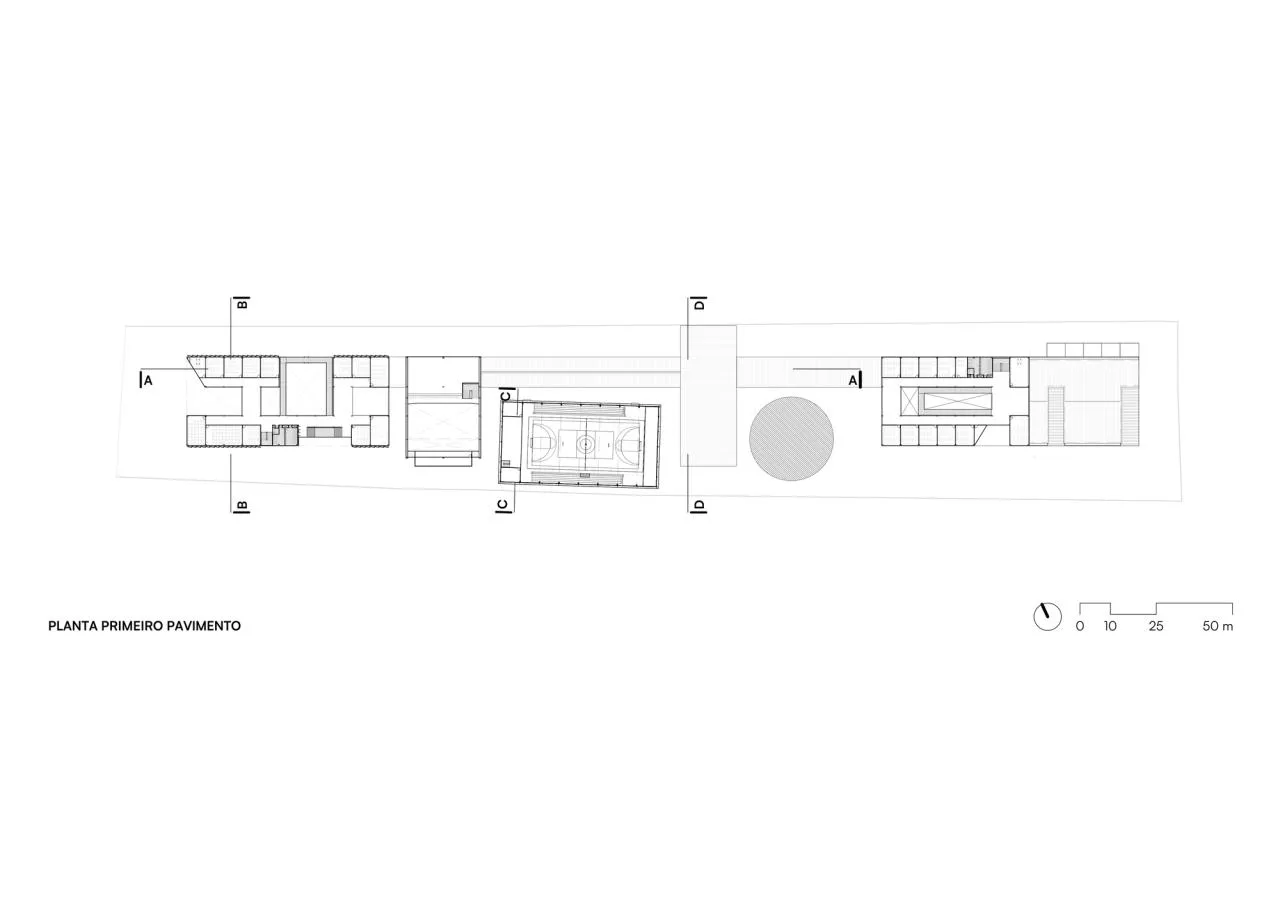
△ First floor plan
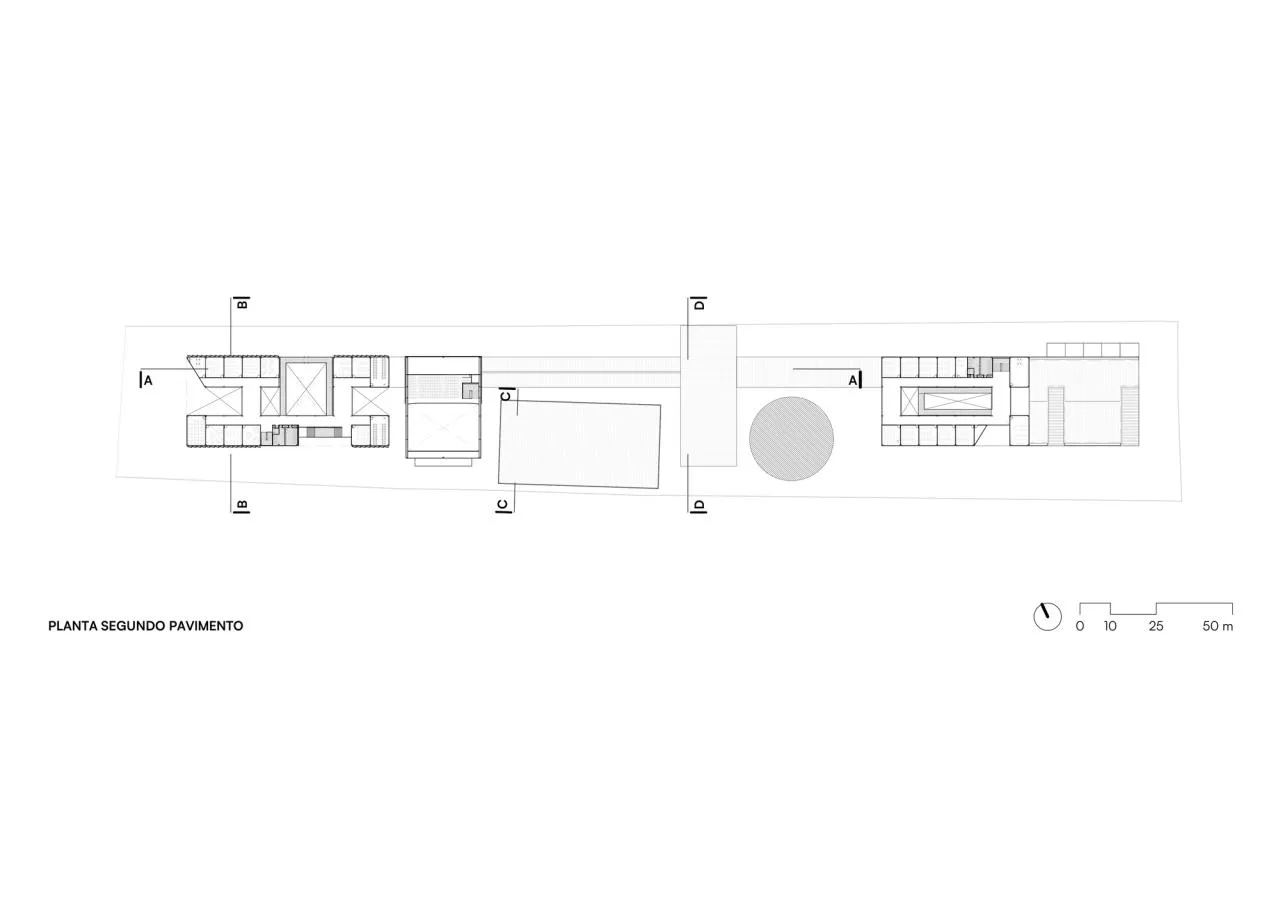
△ Second floor plan
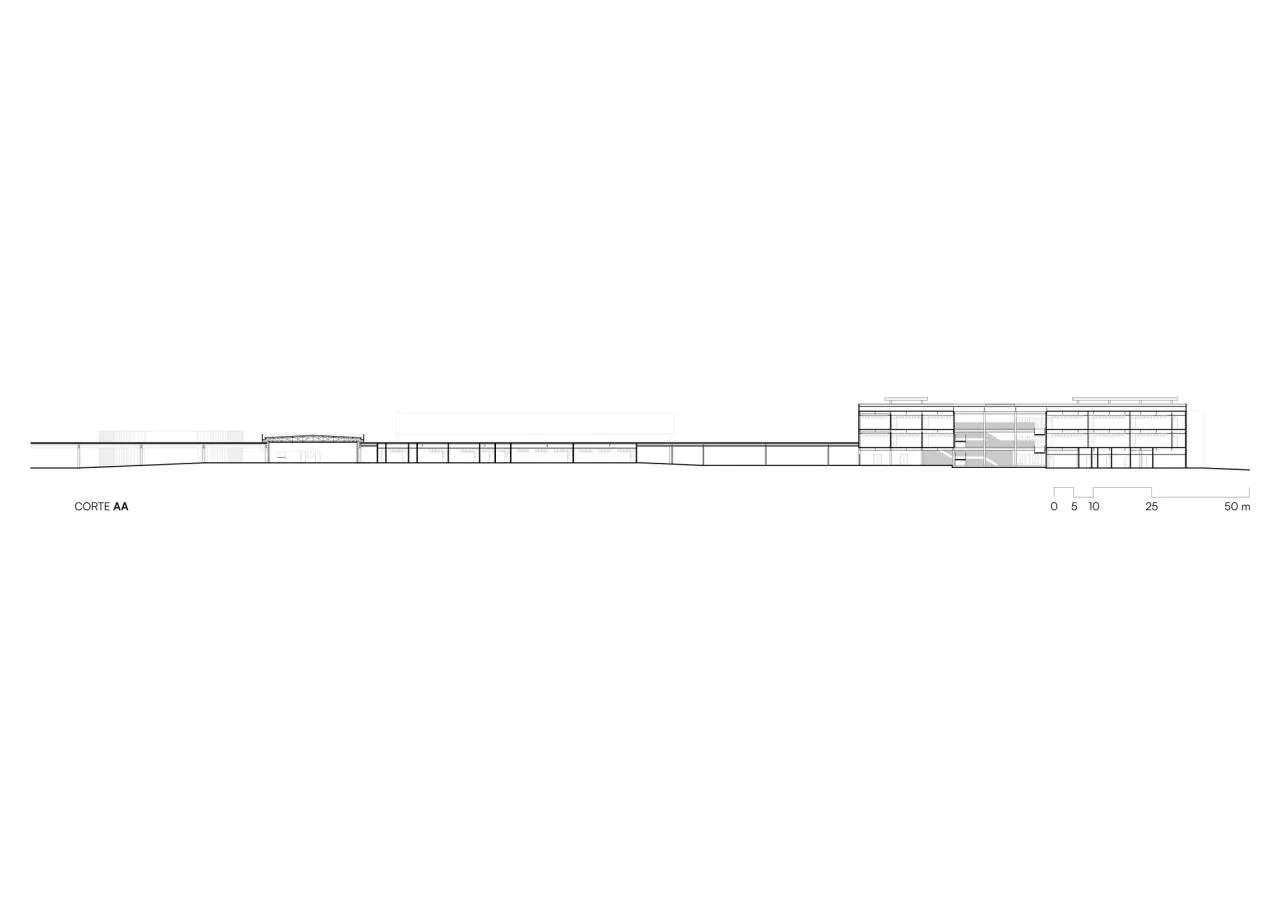
△ Section diagram
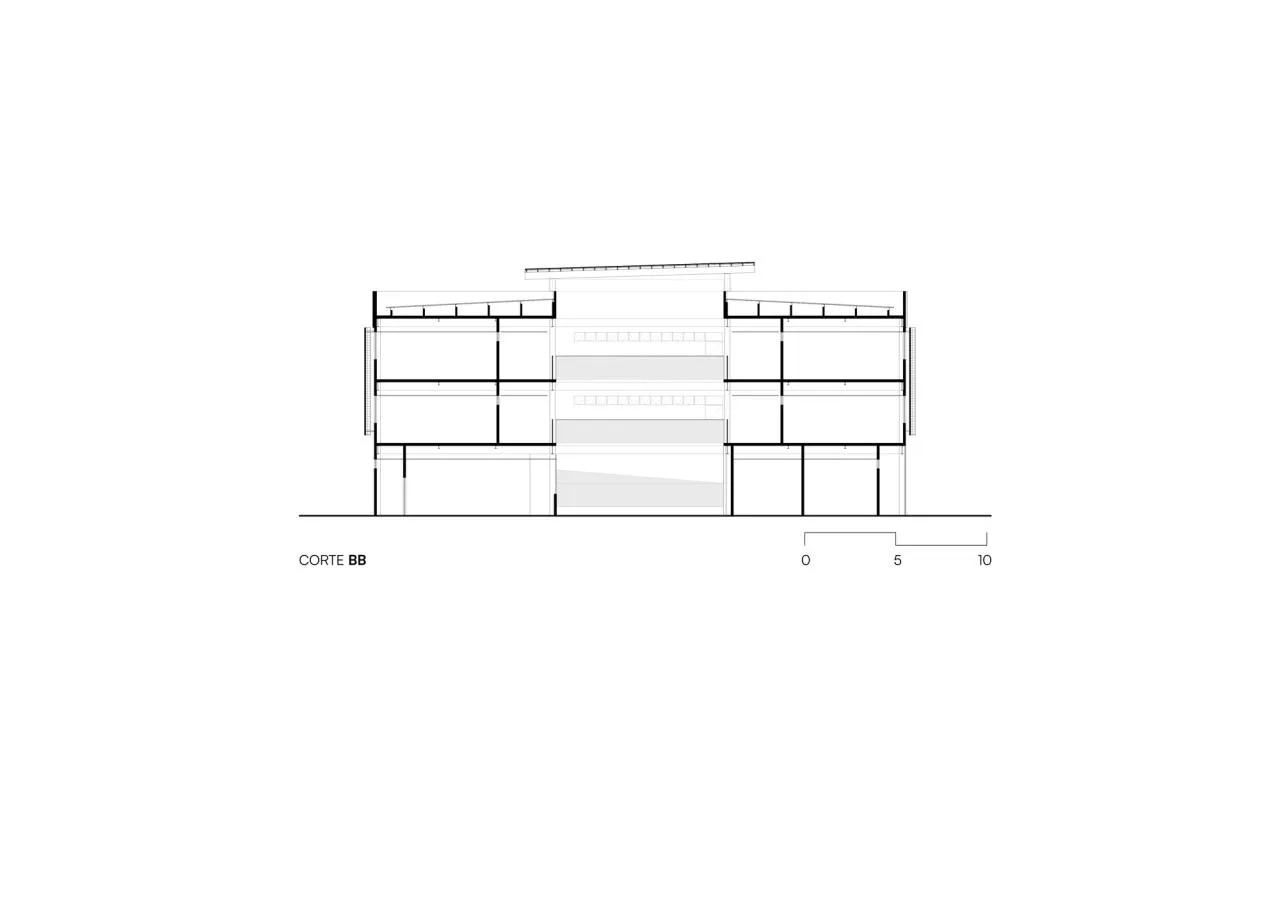
△ Section diagram
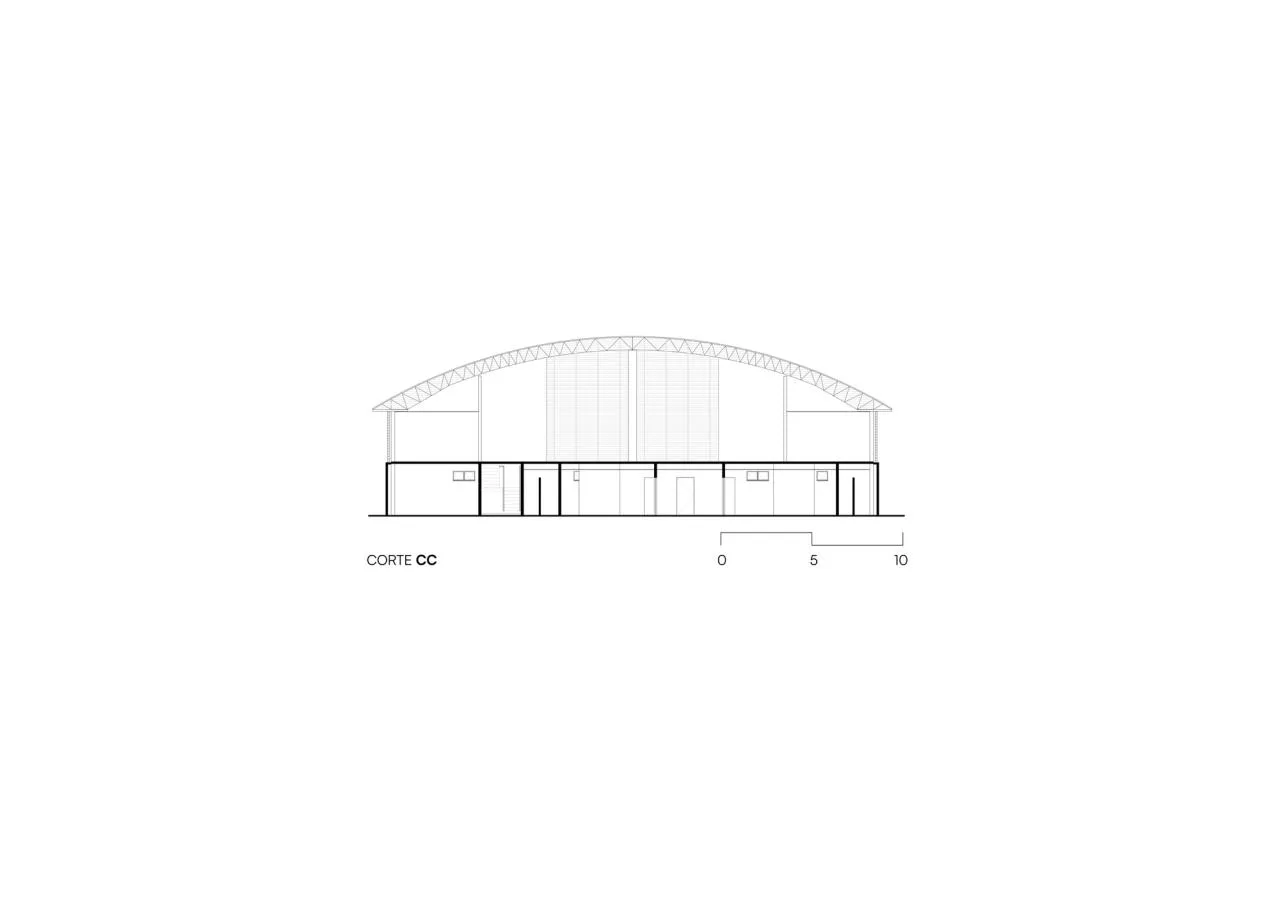
△ Section diagram
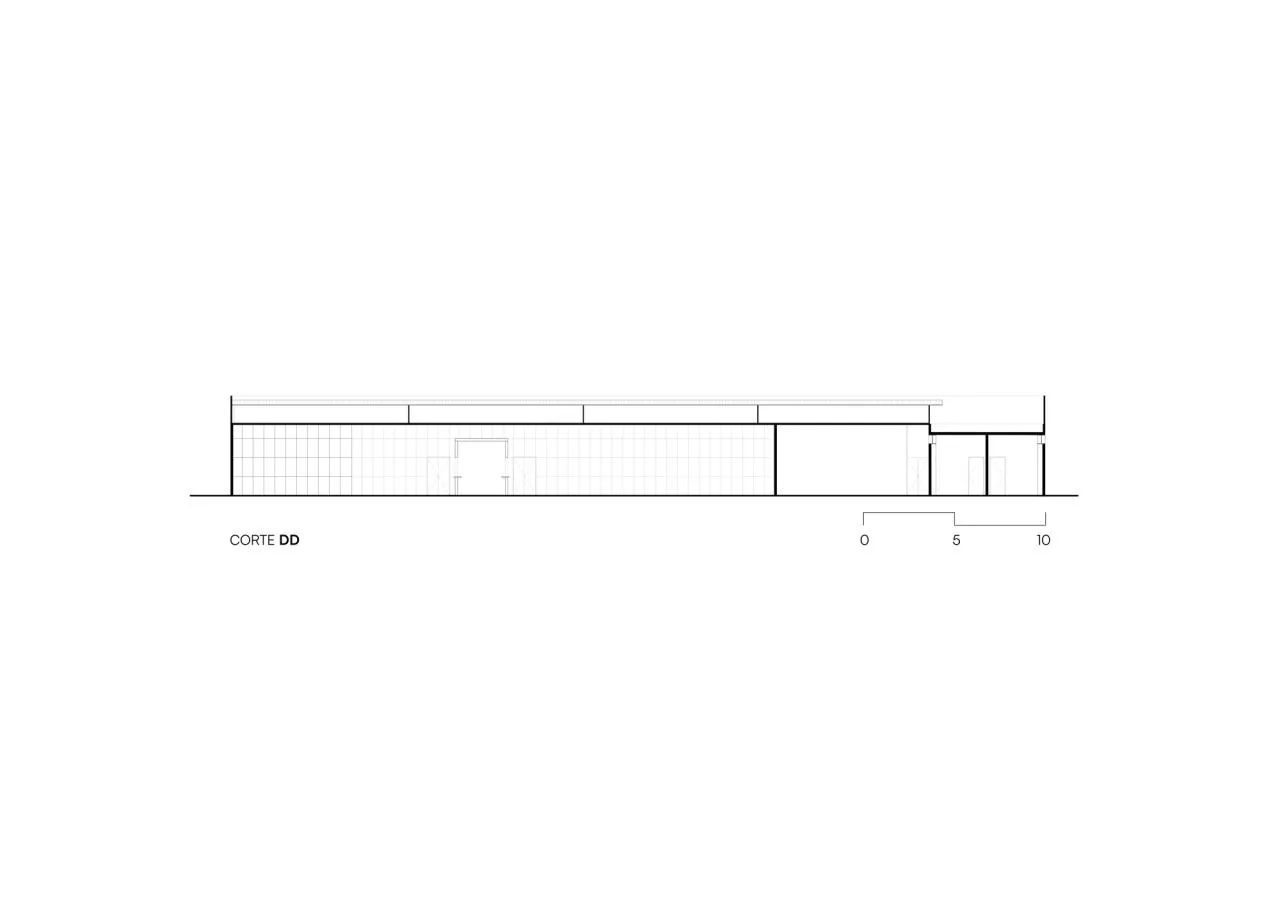
△ Section diagram
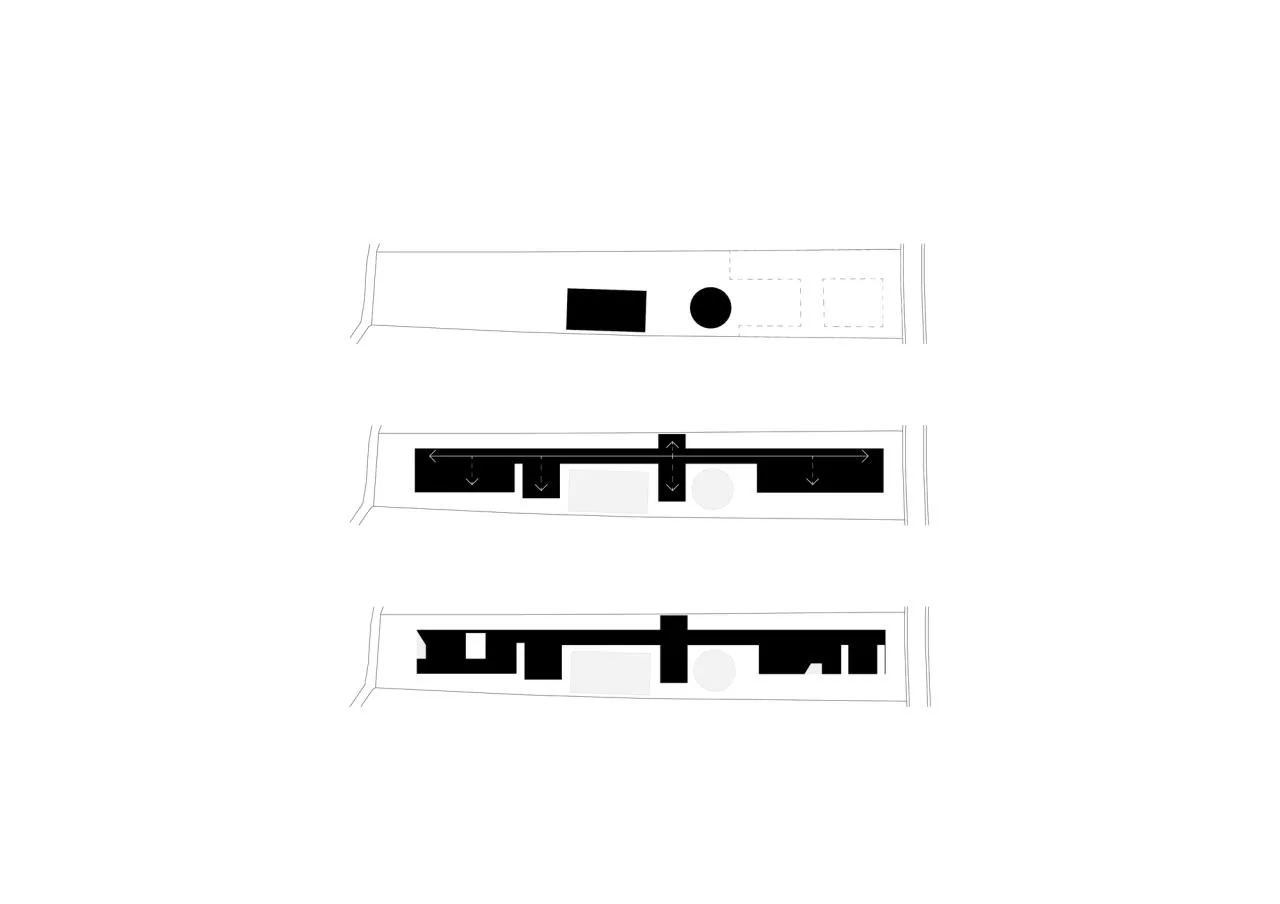
△ Block analysis diagram
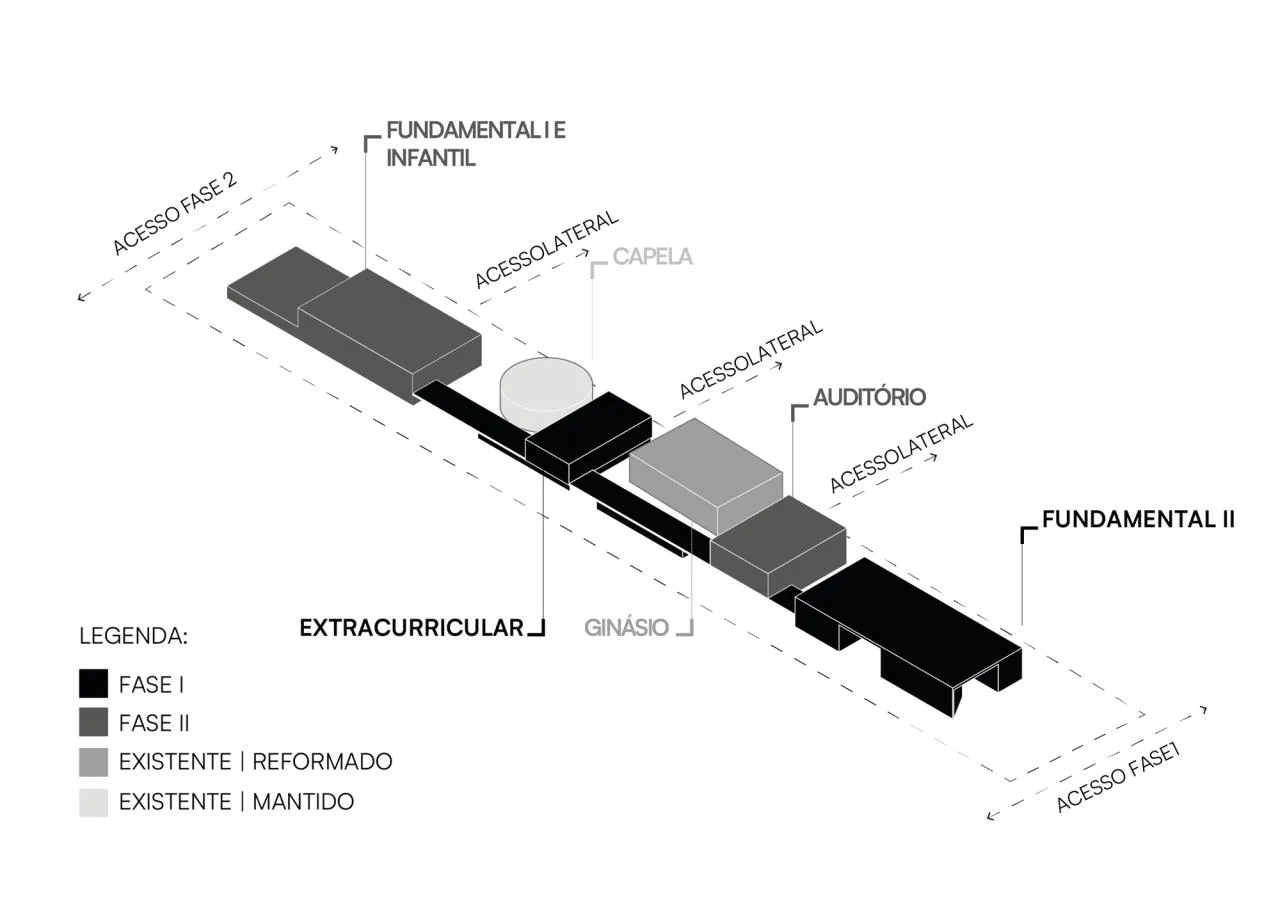
△ Functional zoning diagram
Project Information
Architect: Rede Arquitetos
Project Year: 2022
Photographer: Igor Ribeiro
Manufacturers: Deca, Docol, Neocom, Sherwin-Williams, Vault Free Metal Structures
Lead Architects: Bruno Braga, Bruno Perdigão, Igor Ribeiro, Luis Cattony
Architect: Raquel Leite
Interns: Frederico Leite, Julia Brito, Maiara Lacerda
Acoustic Design: Harmonia
Air Conditioning System: Comaru Engenharia do Ar
Visual Communication Design: Nativo Estúdio de Design
Concrete Structure Design: E3 Engenharia Estrutural
Metal Structure Design: Holanda Engenharia
Building Installation: Transitar Engenharia e Consultoria
Budget Control: Ari Holanda Júnior Engenharia Diagnóstica
Landscape Design: Gerson Amaral
Construction Contractor: WR Engenharia
Location: Fortaleza, Brazil













Must log in before commenting!
Sign Up