
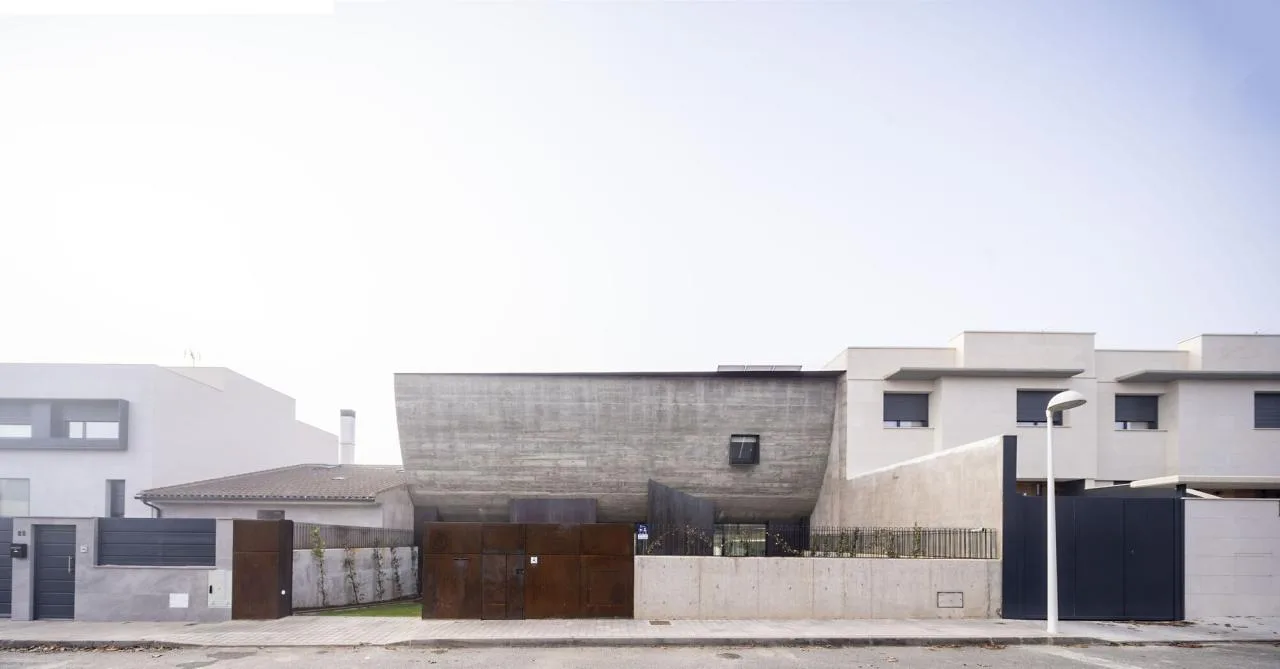
In urban areas, adjacent houses are connected along their side walls to create a continuous linear form, maintaining consistency in volume, material, and height. This project explores various approaches to urban planning and the potential forms of single-family housing, highlighting their relationship with the surrounding environment.
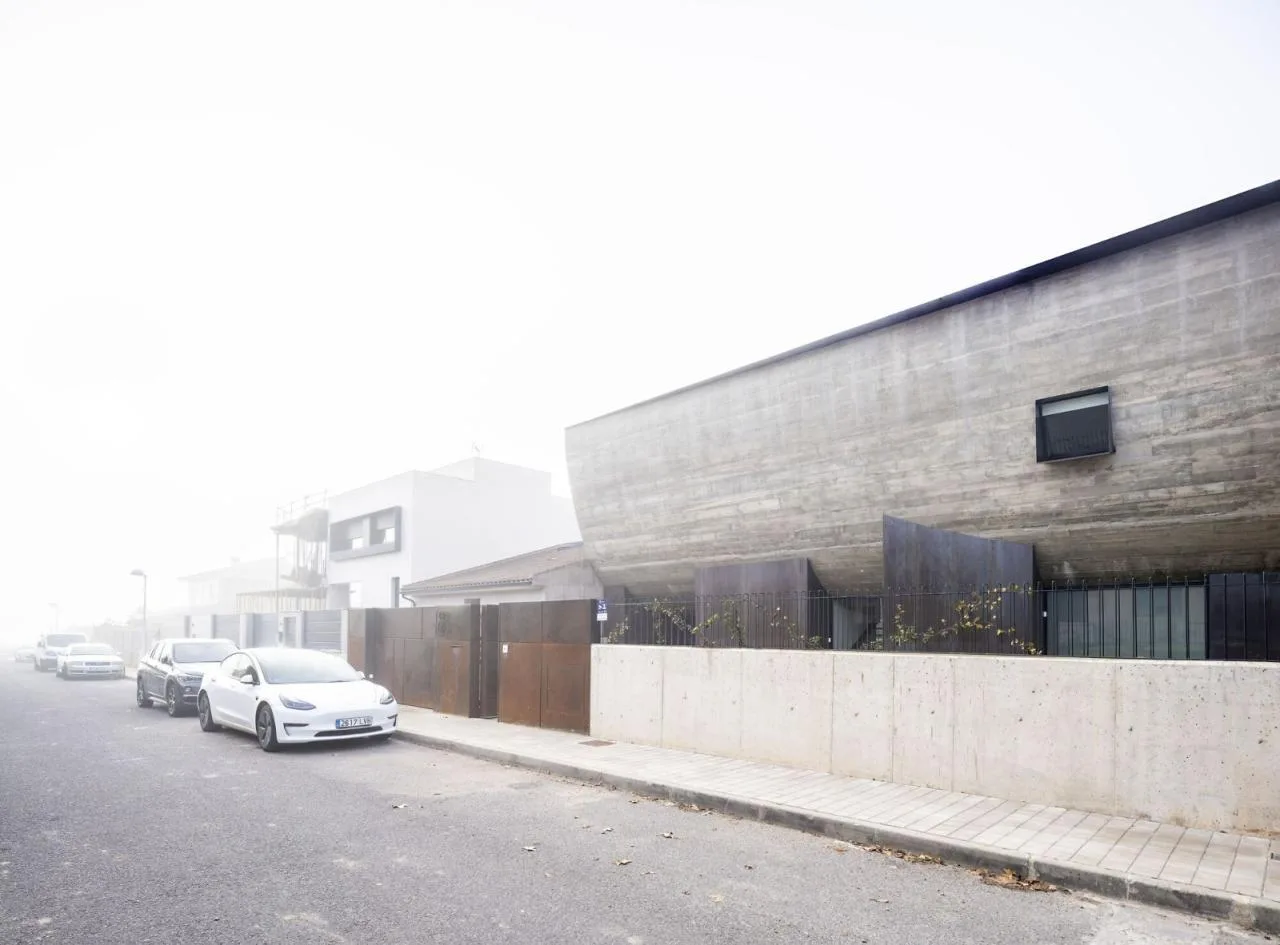
Due to the small minimum plot size defined by Ciudad Real’s planning regulations and mandatory setback zones at the front and rear boundaries, the most practical solution is to create two small courtyards at each end of the plot, with the house positioned between them. The front areas are primarily dedicated to pedestrian and vehicle access, offering limited possibilities, while the rear is often enclosed by neighboring walls, receives minimal natural light, and becomes a narrow, confined courtyard.
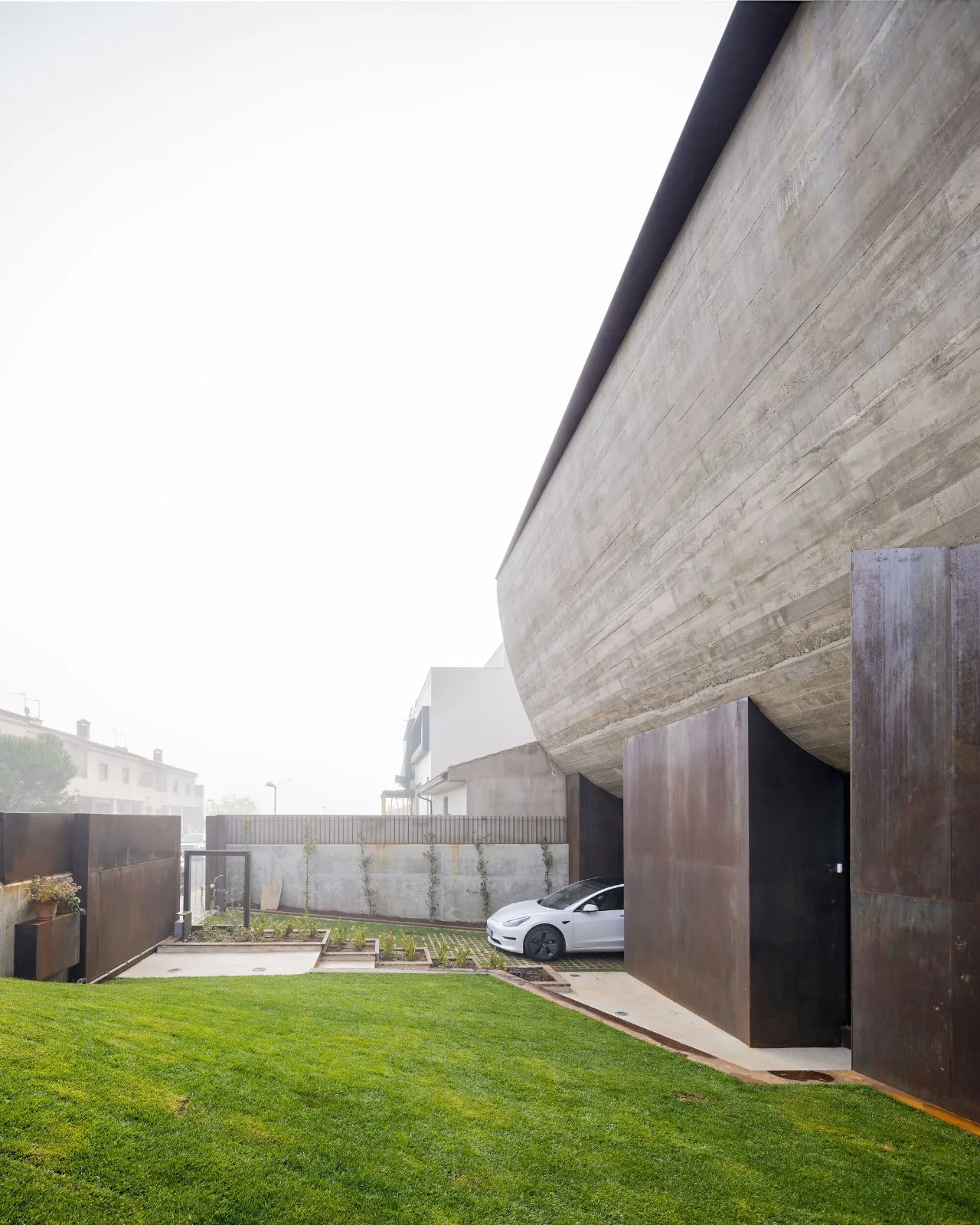
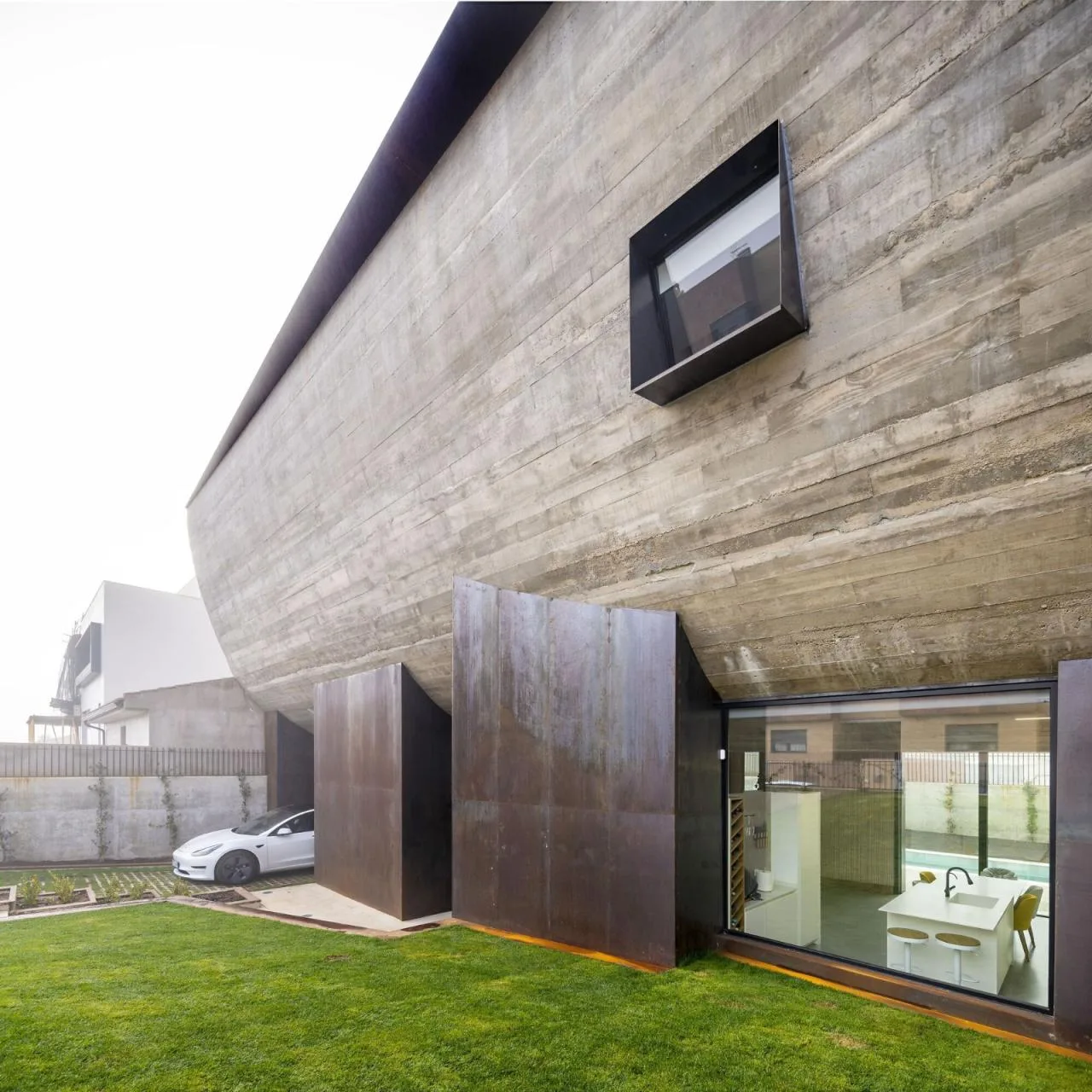
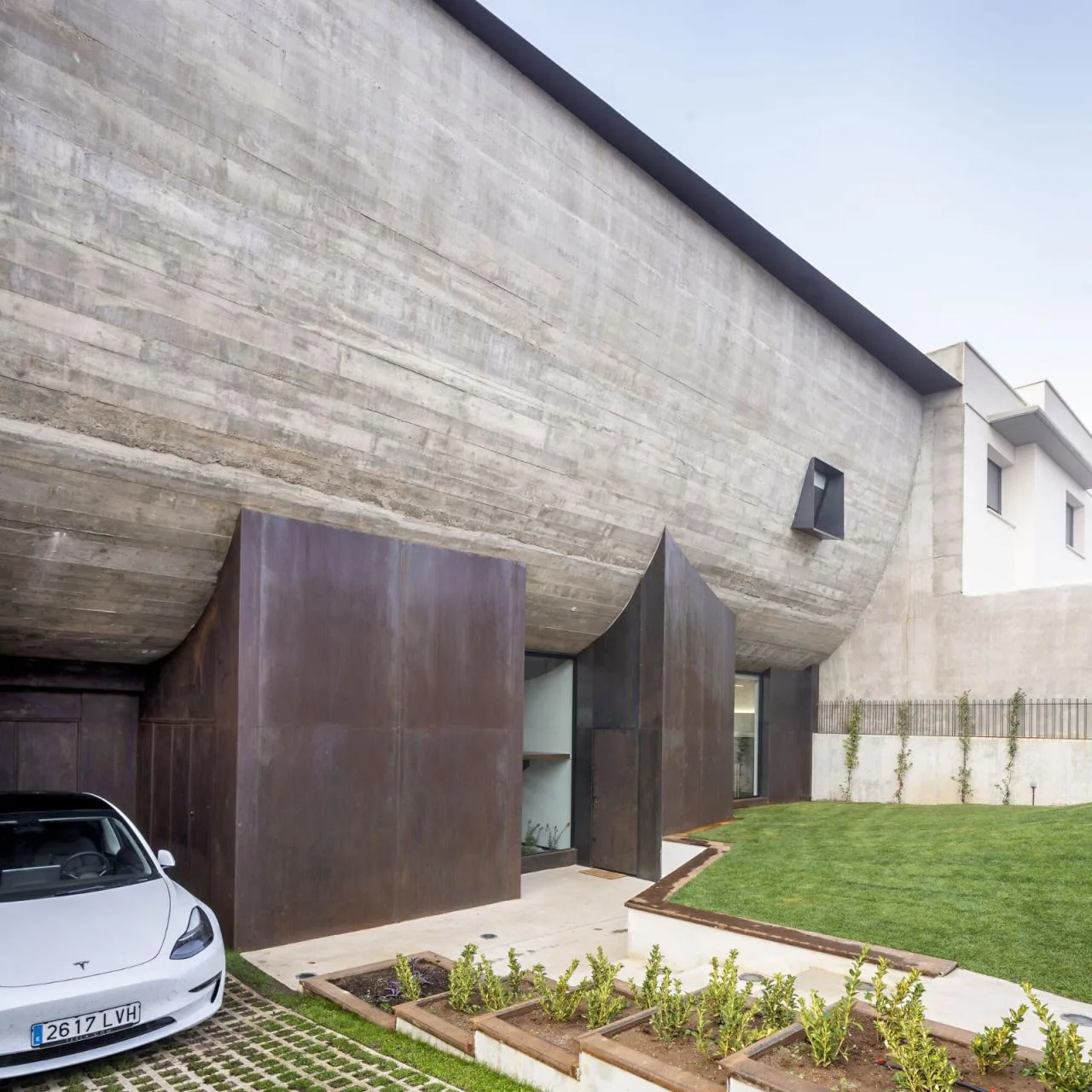
The design focuses on a curved volume section that houses the bedroom, while the slightly recessed ground floor opens up to connect visually with the two courtyards. This design allows glass areas to be concealed behind steel columns embedded in the concrete volume, blurring the boundary between interior and exterior. It raises questions about the nature of a courtyard in a single-family home and what defines a residence. Here, the lower level can be seen as a transitional space, protected beneath the main structure.
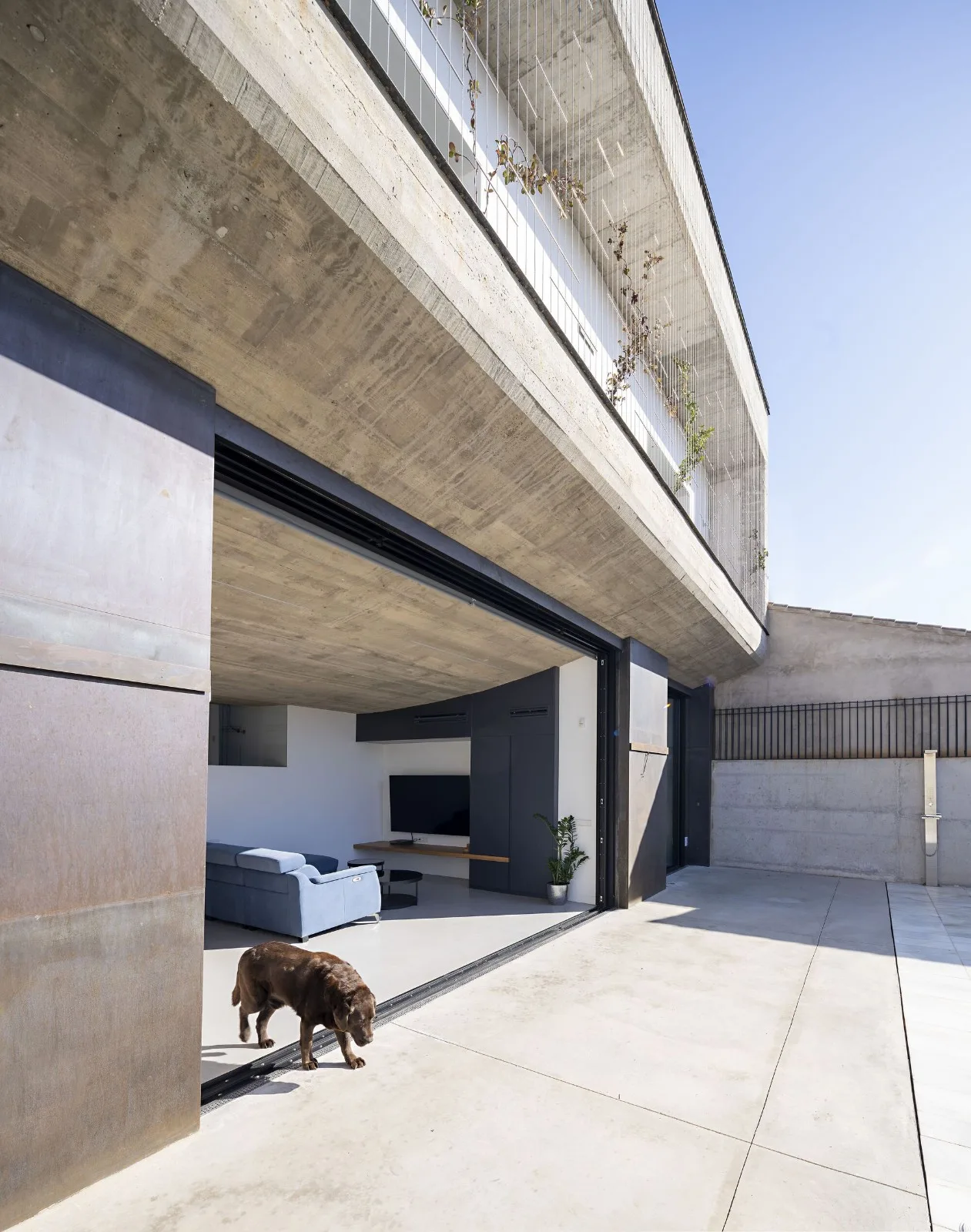
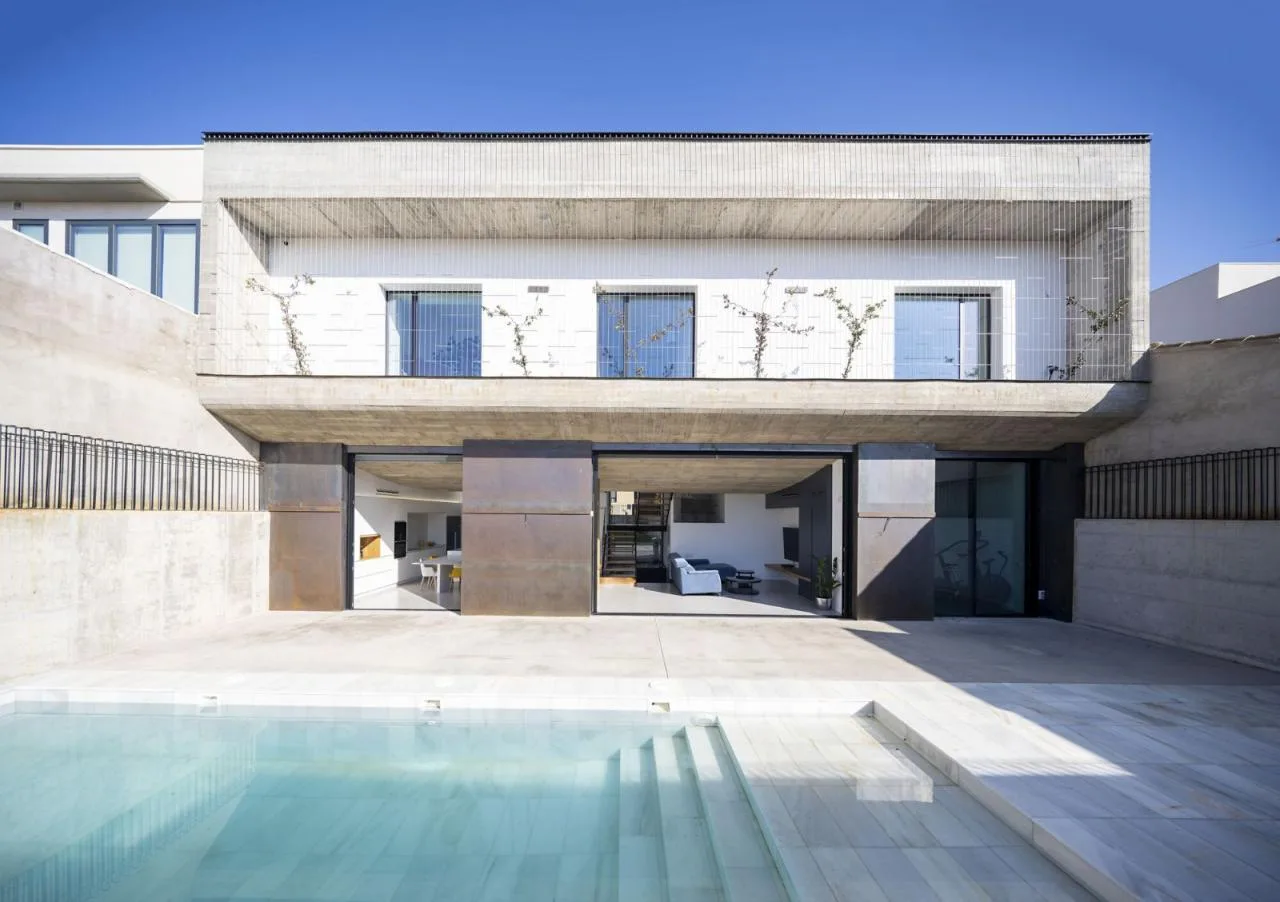
This concept drives a more assertive use of public spaces. The floor plan’s carving and the raised lawn area at the plot’s edge extend the perceived boundaries of the lot from the living room and kitchen—spaces where families spend much of their daily life. Corten steel brackets support concrete cantilevered elements, housing first-floor living spaces. Some supports are slightly rotated to emphasize the overall geometry and curvature.
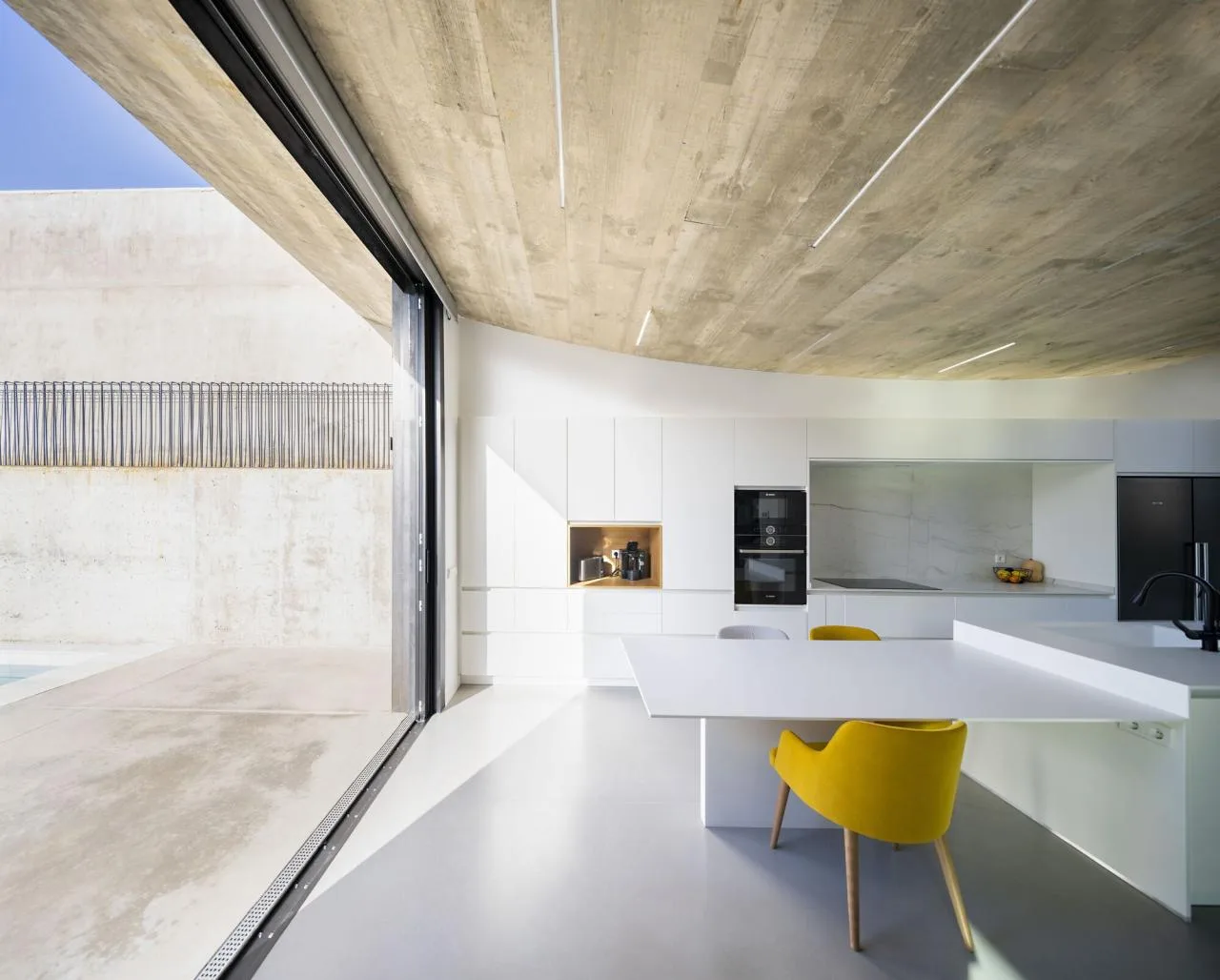
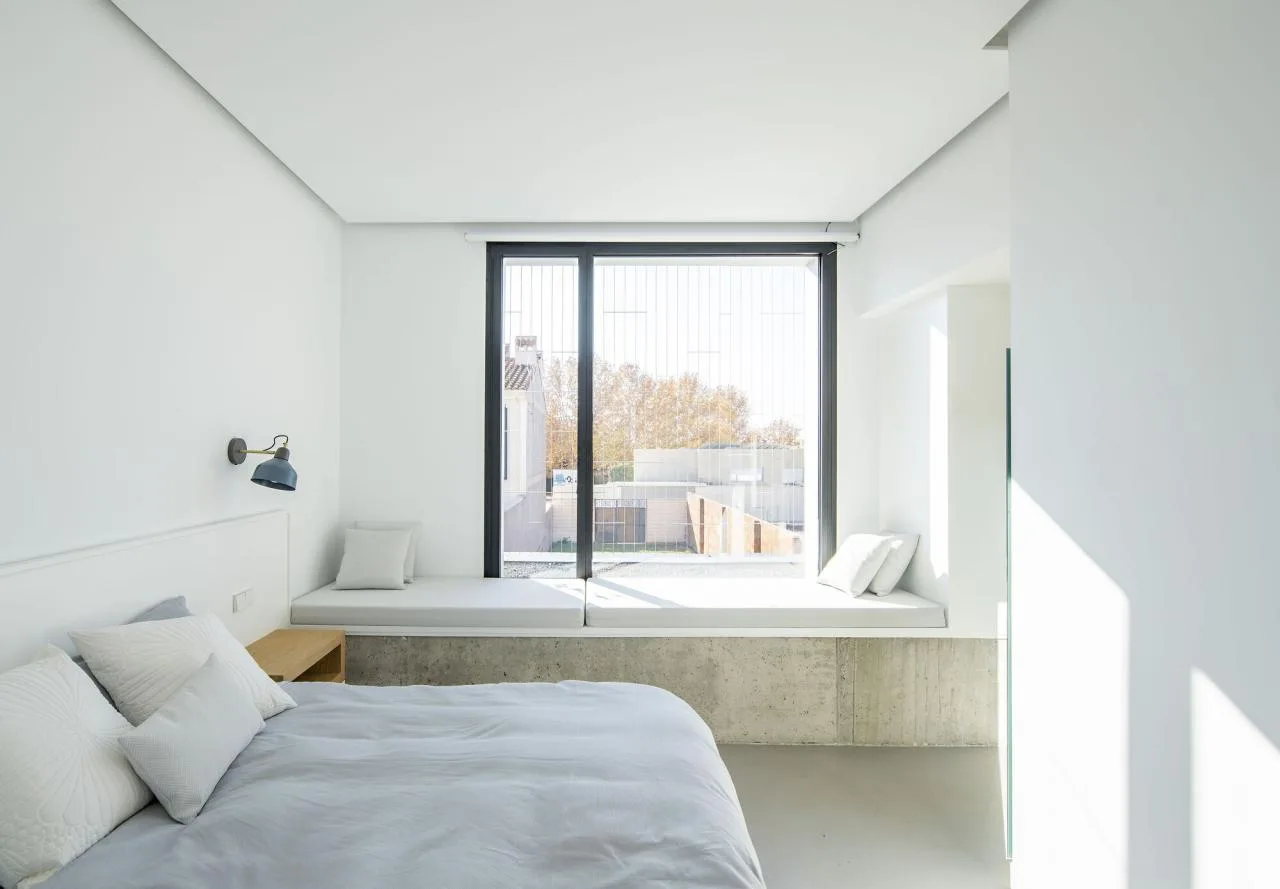
The distribution of volumes on the first floor creates a striking contrast between the main and rear facades in relation to the urban environment. The northeast-facing Calle Villahermosa facade deliberately limits visual connections with adjacent homes and their windows by breaking through the concrete shell with a singular opening, establishing a specific connection to the street. This approach rejects compositional or volumetric relationships with neighboring residences, offering a new perspective on the connection between individual homes and the broader city fabric.
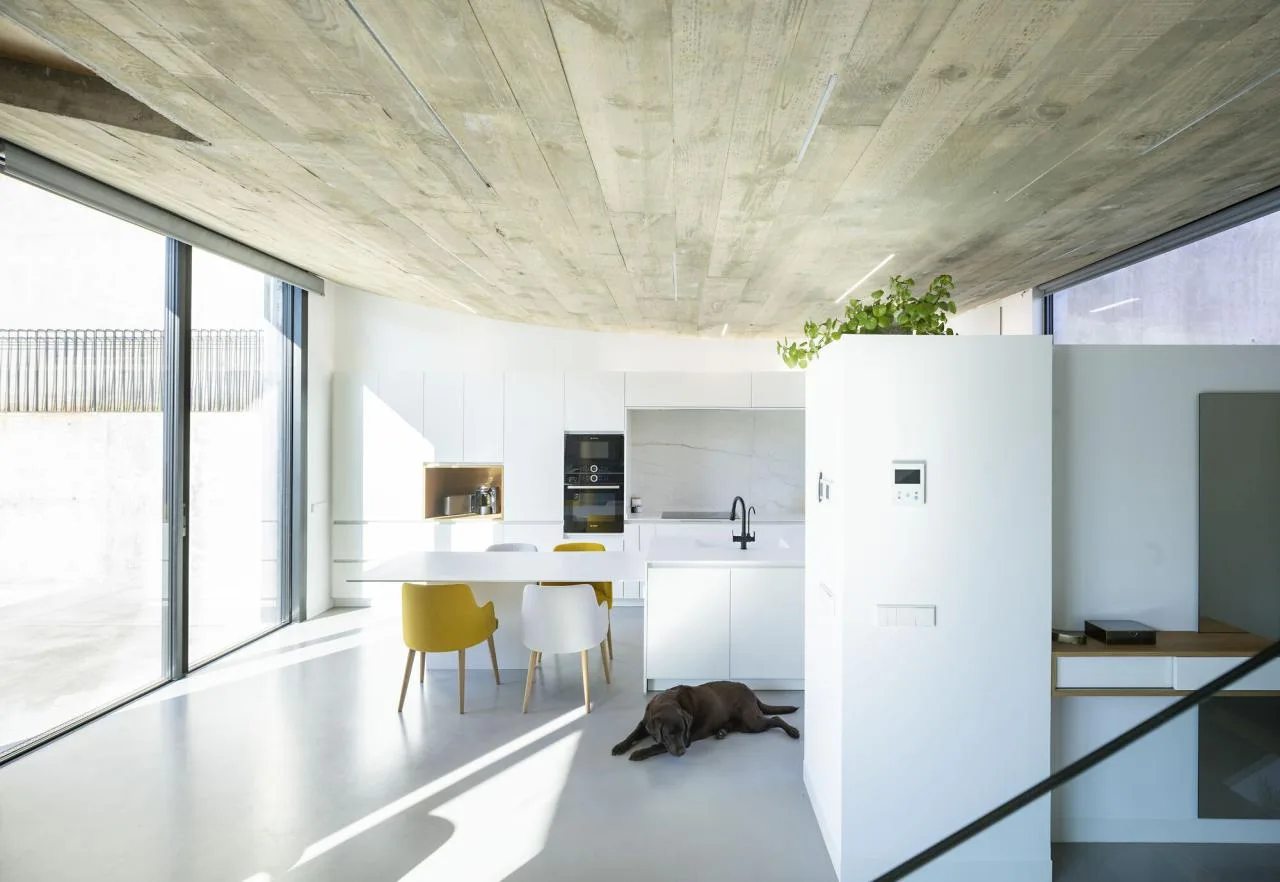
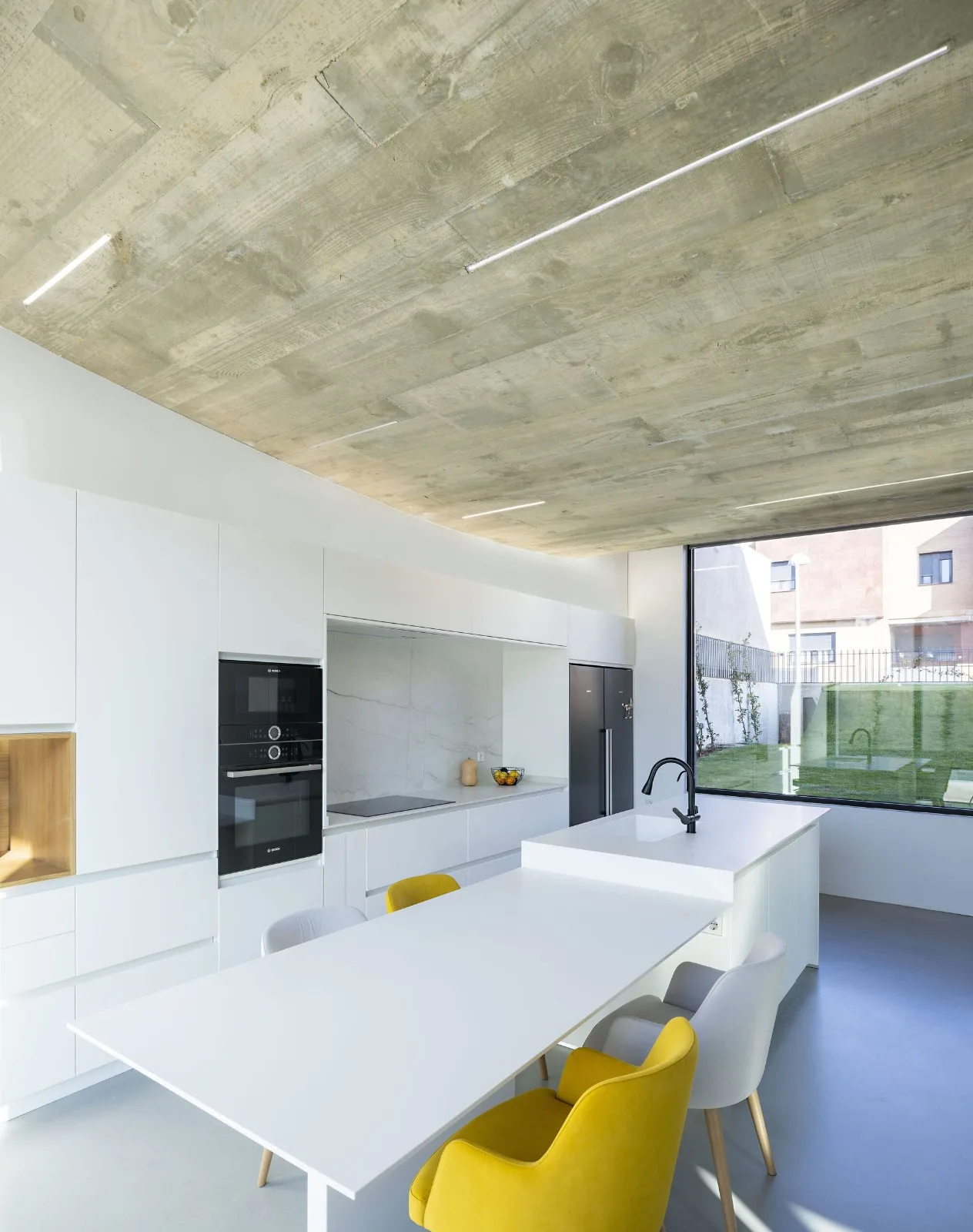
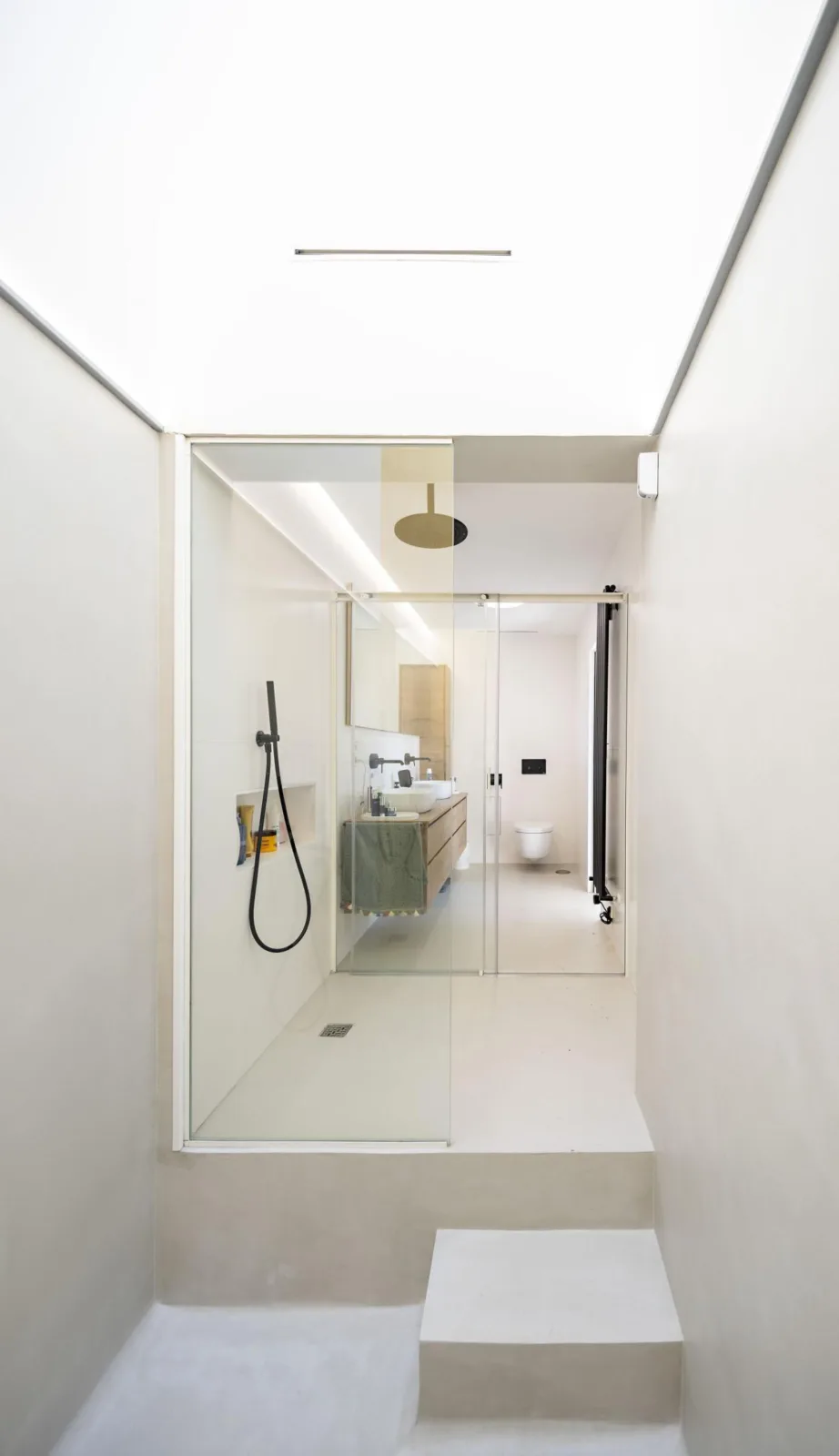
At the south-facing backyard, the concrete shell ends asymmetrically compared to the main facade, with lower points designed to enhance permeability. Natural light is carefully filtered using bioclimatic strategies, including steel cables woven through plant growth. The curved main facade not only extends views toward the sky from the first floor but also allows natural zenith light to reach secondary rooms, service areas, stairwells, and a courtyard illuminating one of the bedrooms. The master bedroom’s bathtub is carved into the tip of the curve, featuring a skylight that provides natural light while maintaining privacy.
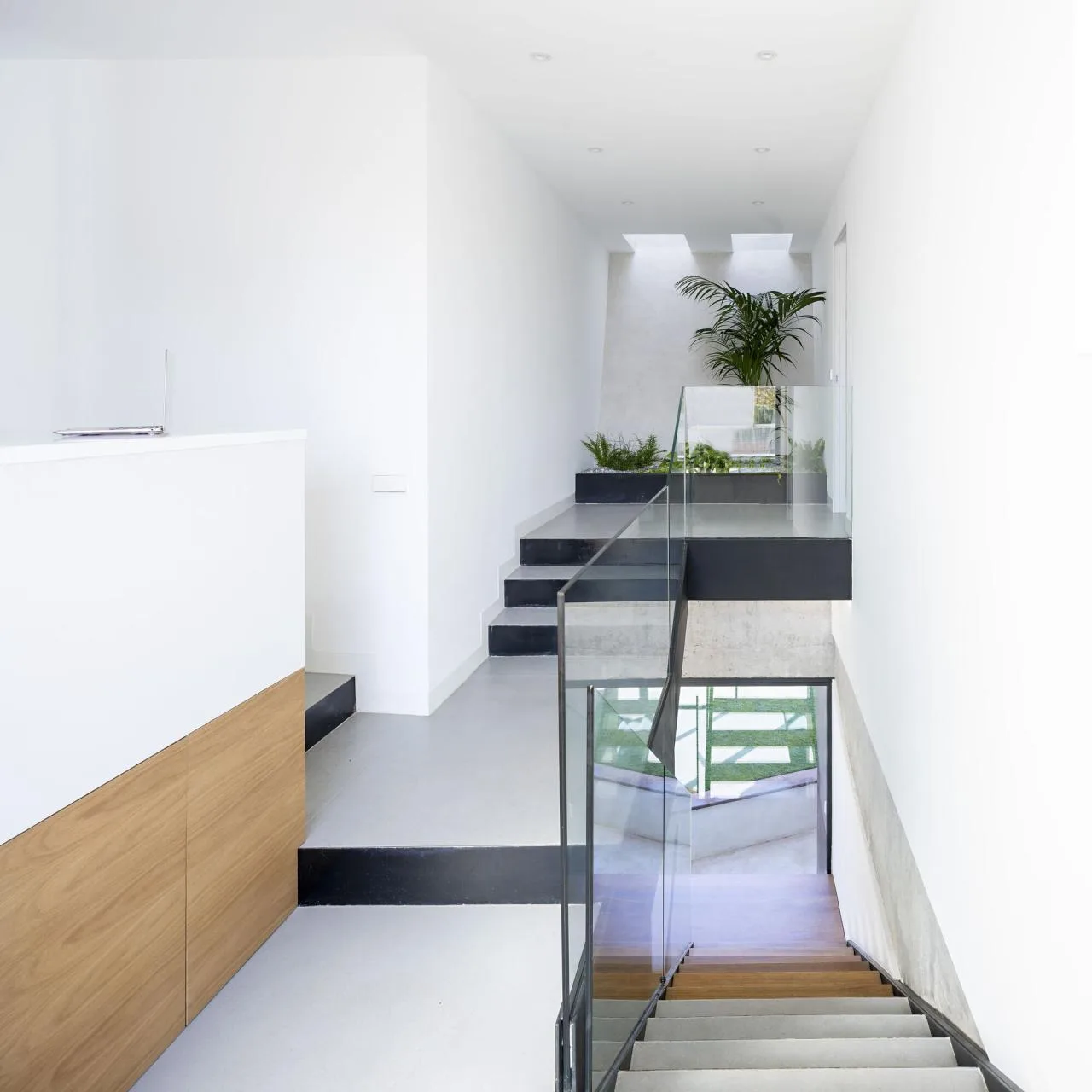
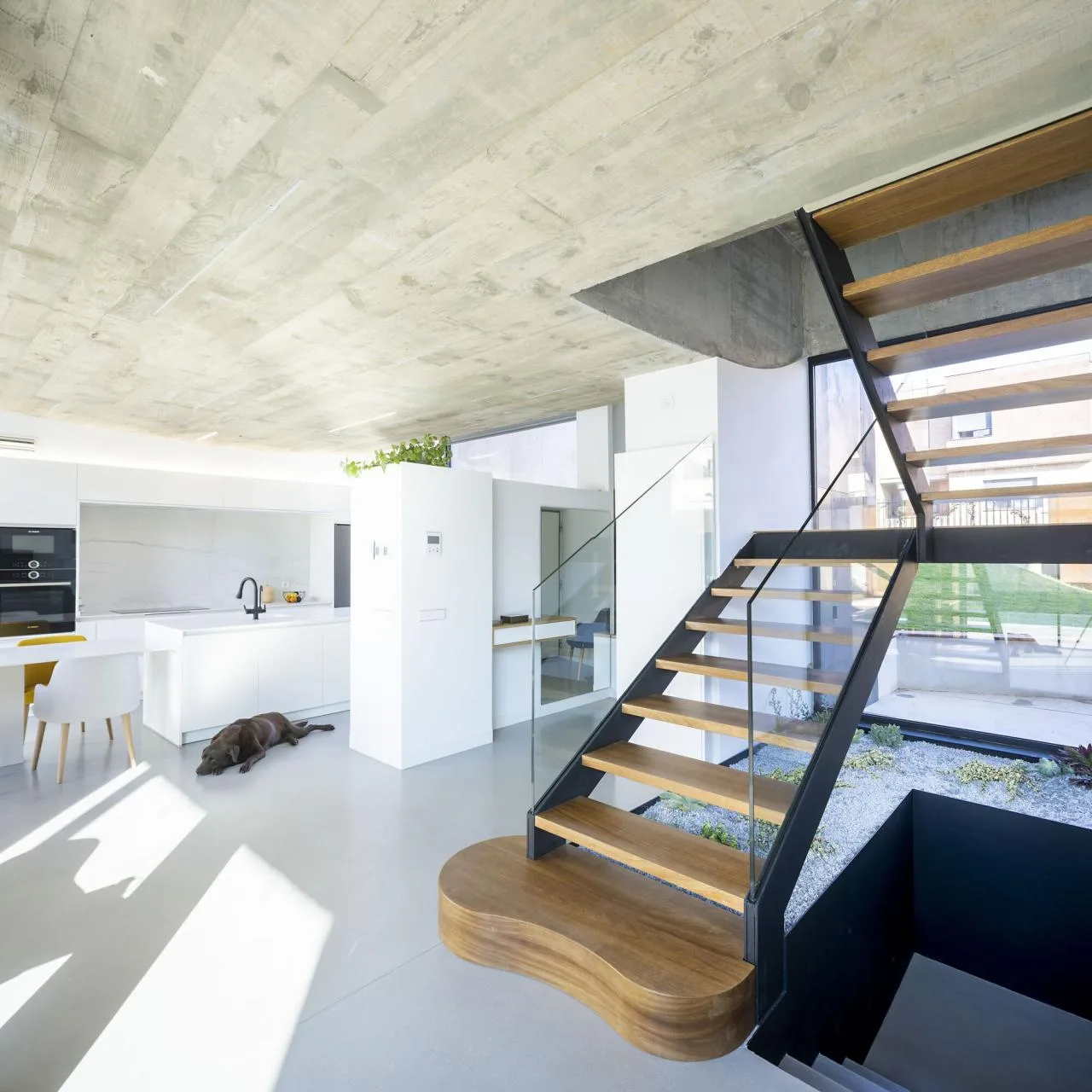
The staggered ends of the concrete curve create unique opportunities to enhance how occupants interact with the house and its surroundings. Extended window sills become indoor seating areas for reading or resting, geometric floor recesses accommodate flower pots, and built-in desks, workstations, and storage solutions integrate seamlessly into the home’s design.
Project Drawings
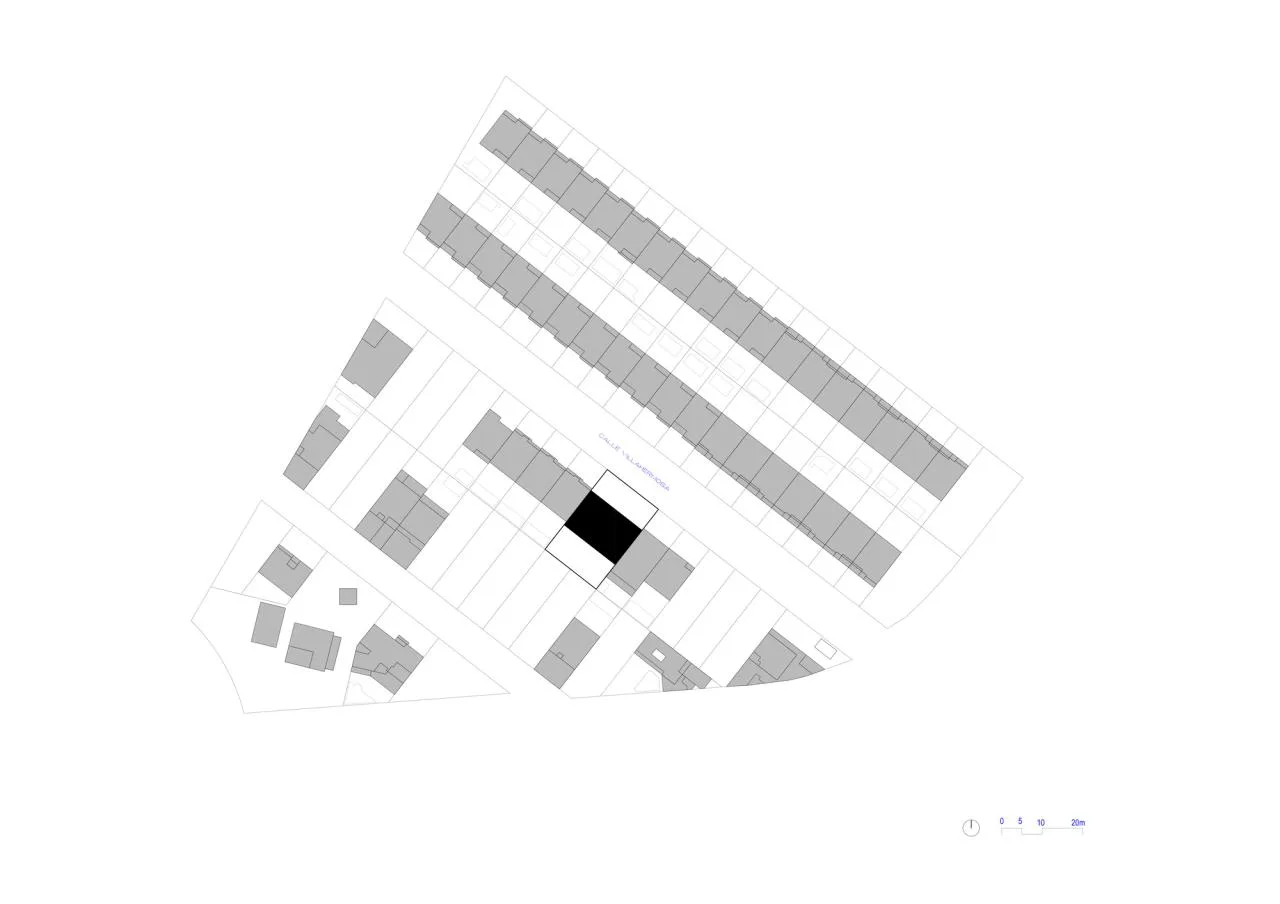
△ Base schematic diagram
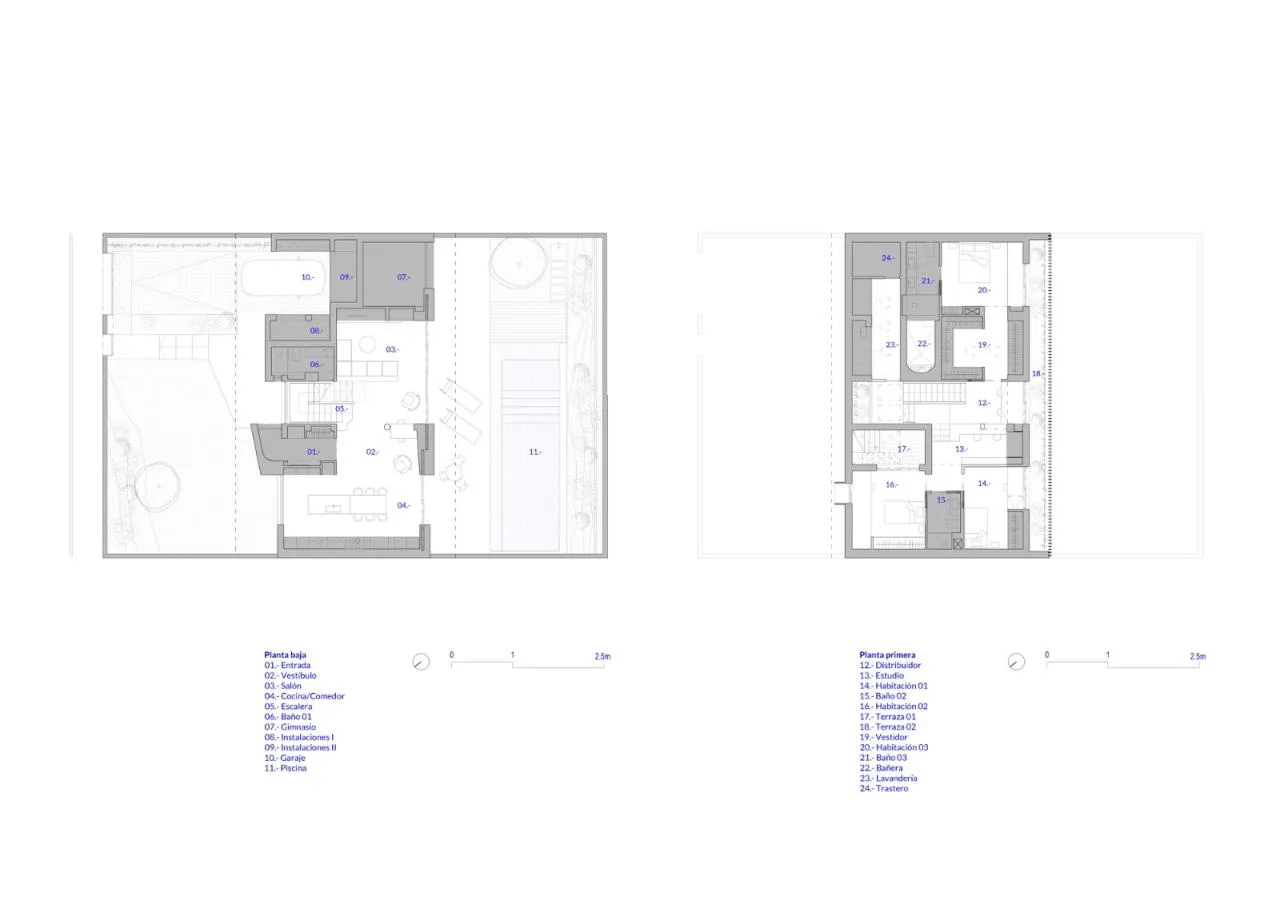
△ Plan view
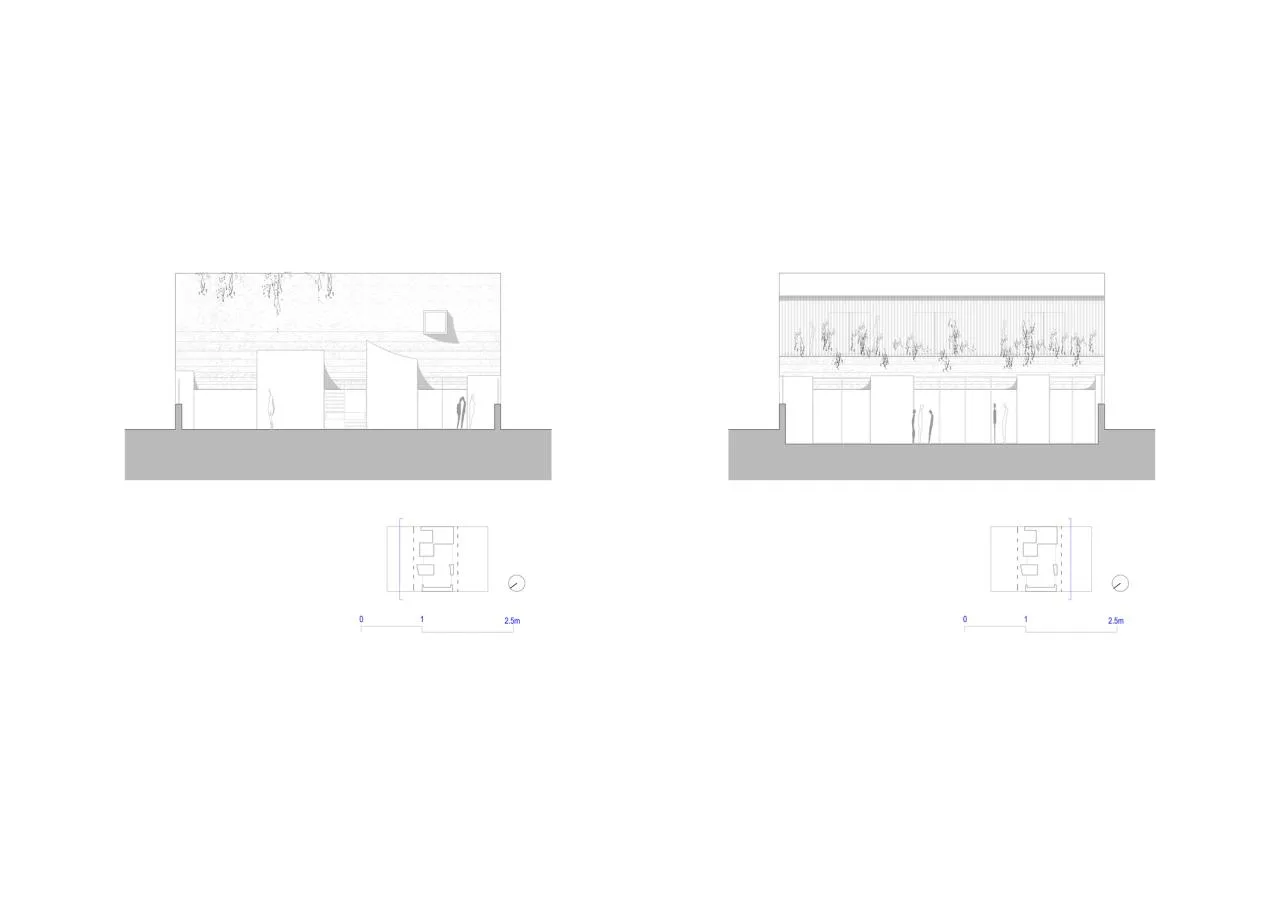
△ Elevation drawing
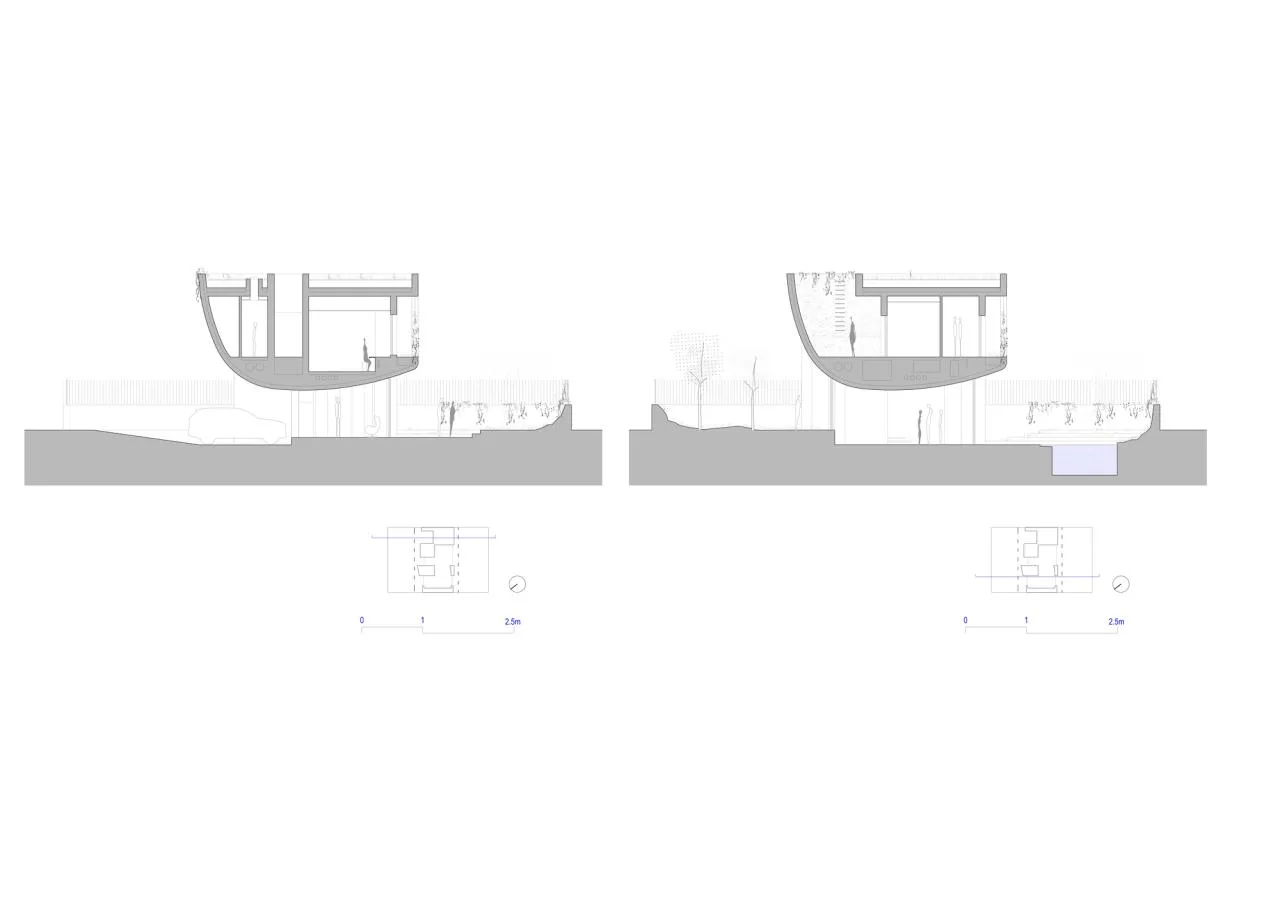
△ Section diagram
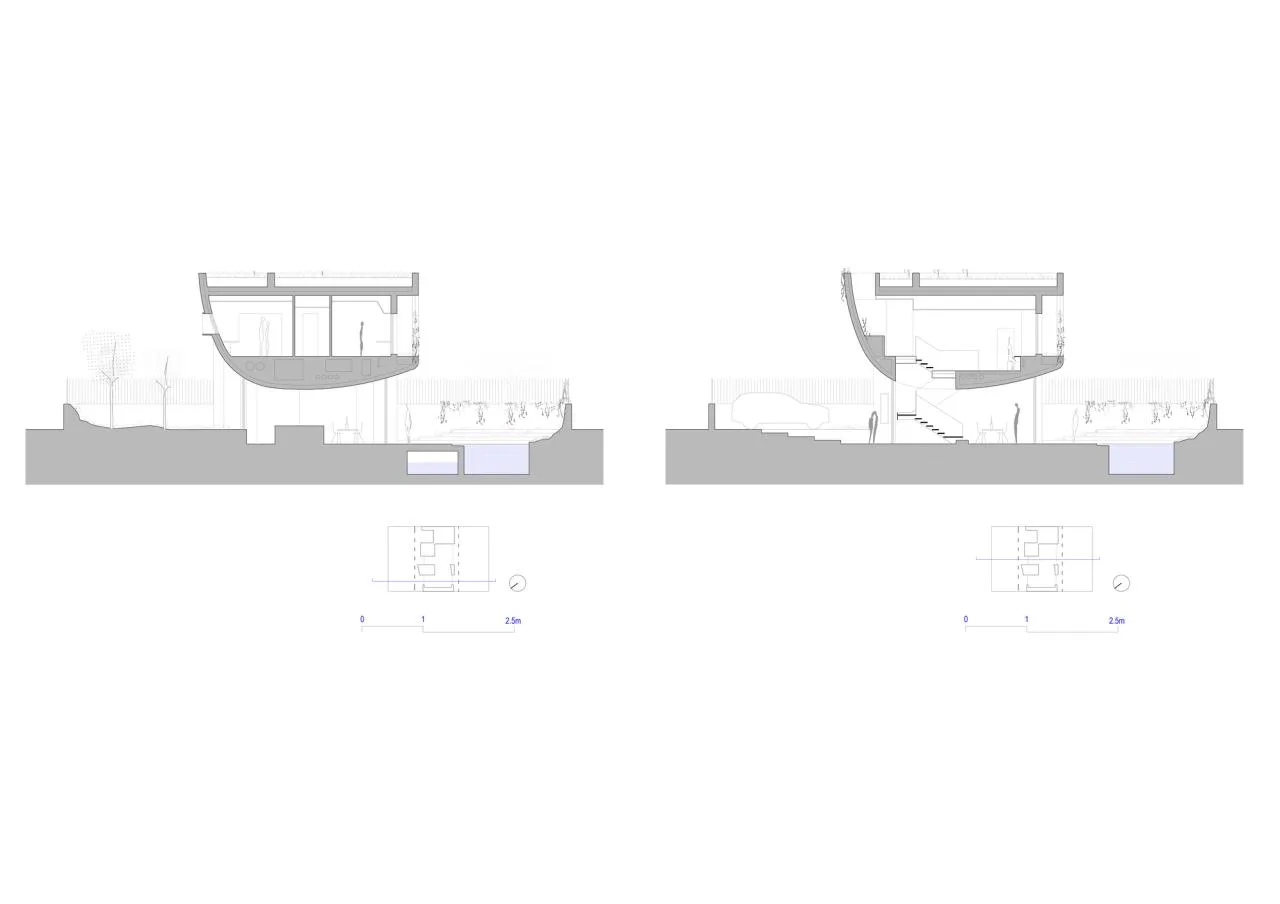
△ Section diagram
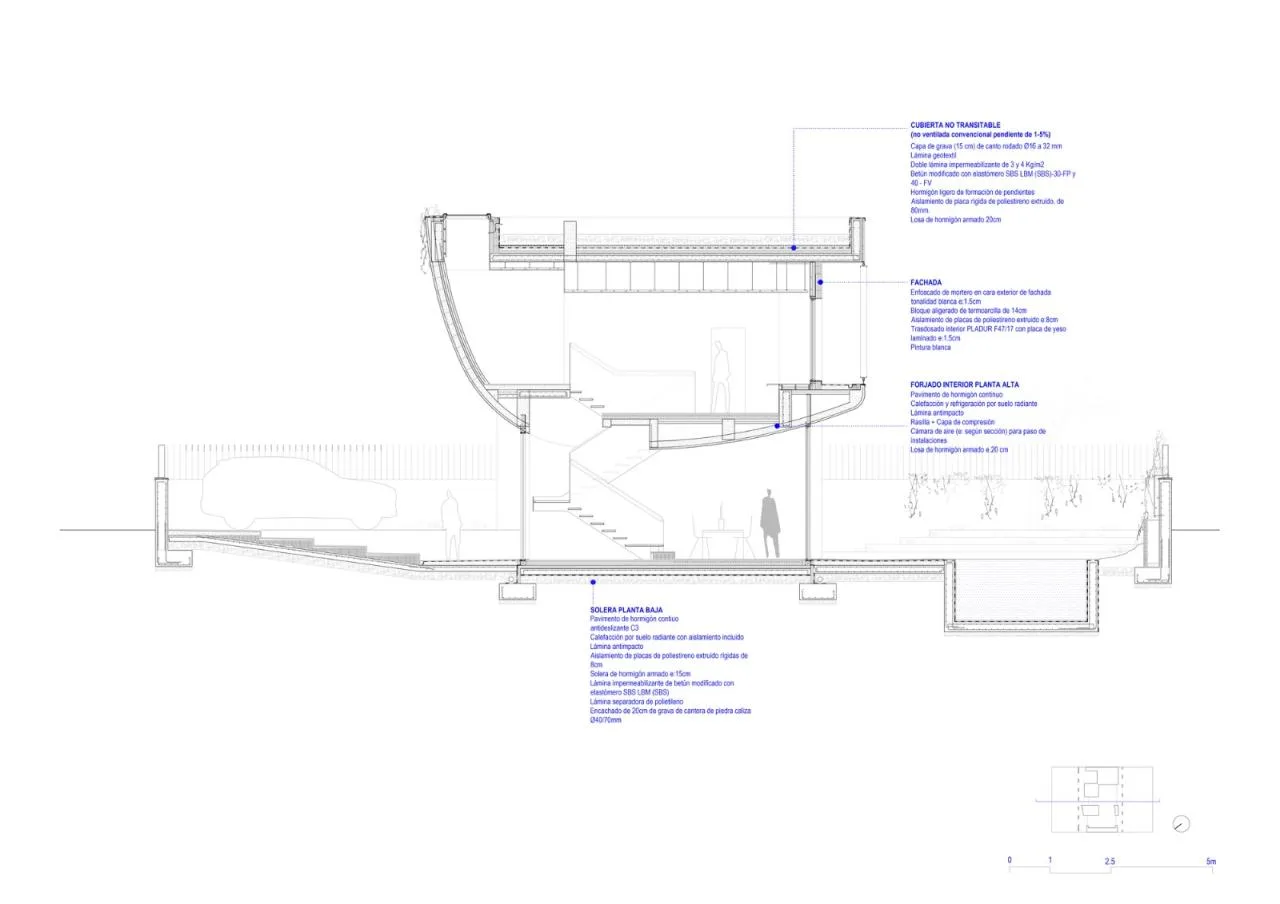
△ Structural schematic diagram
Project Information
Architect: MUKA Arquitectura
Project Year: 2022
Photographer: Javier Callejas
Manufacturer: Porcelanosa Grupo
Lead Architects: Moisés Royo Márquez, Jesús Bermejo López
Collaborators: Ignacio Campos Alcaraz, Loreto Carmenado Vaquero, Alba Martín de Vidales, Mateos Antonio González Rodríguez, Chrysostom Páez Ferrer
Function: Single-family Residence
Location: Ciudad Real, Spain













Must log in before commenting!
Sign Up