
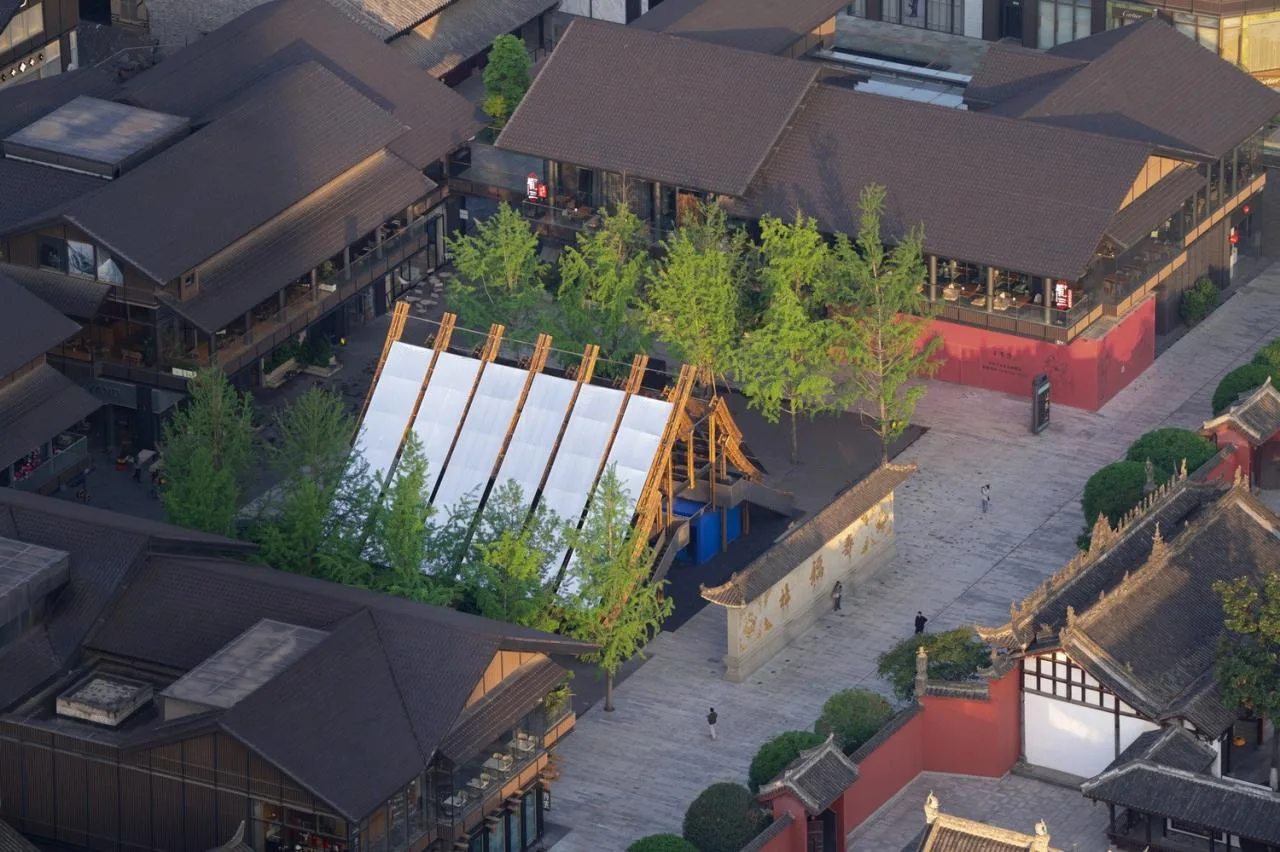
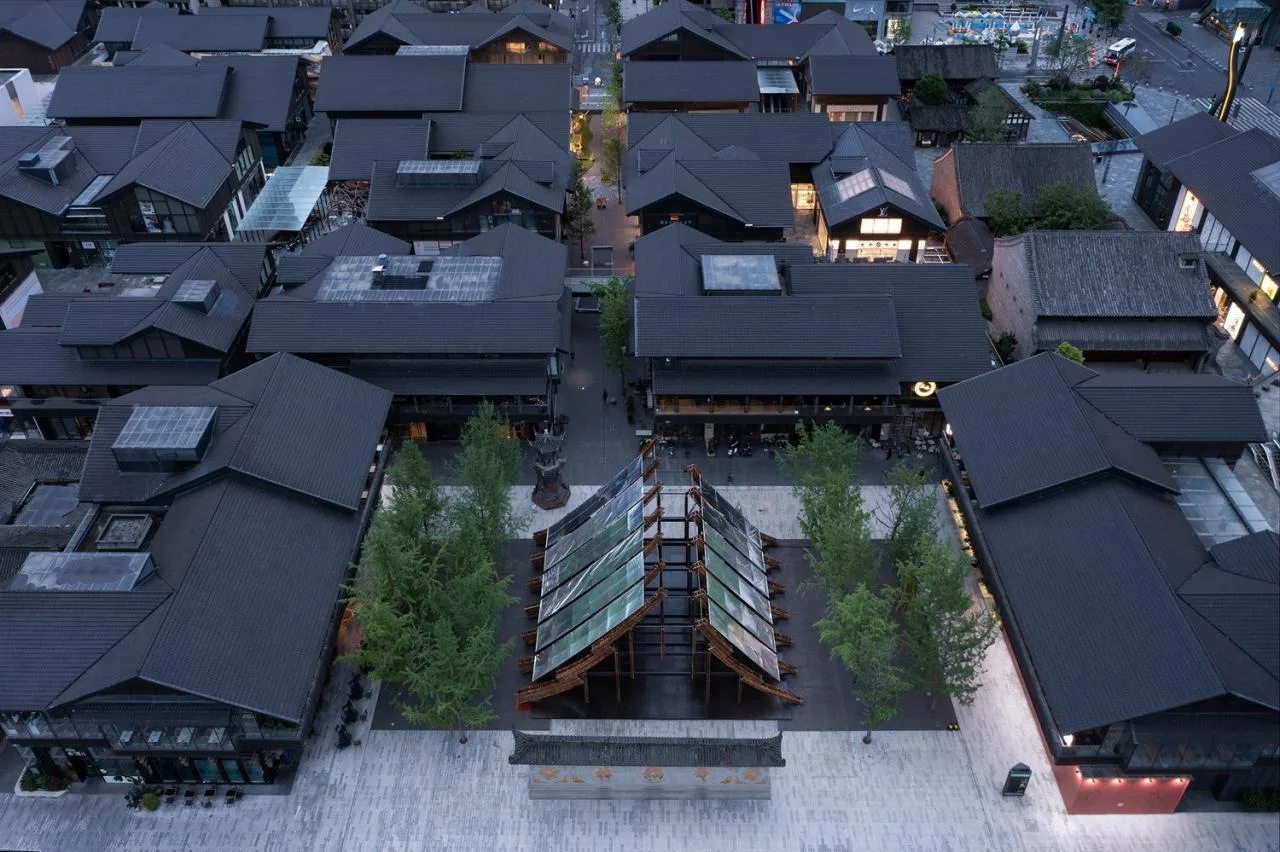
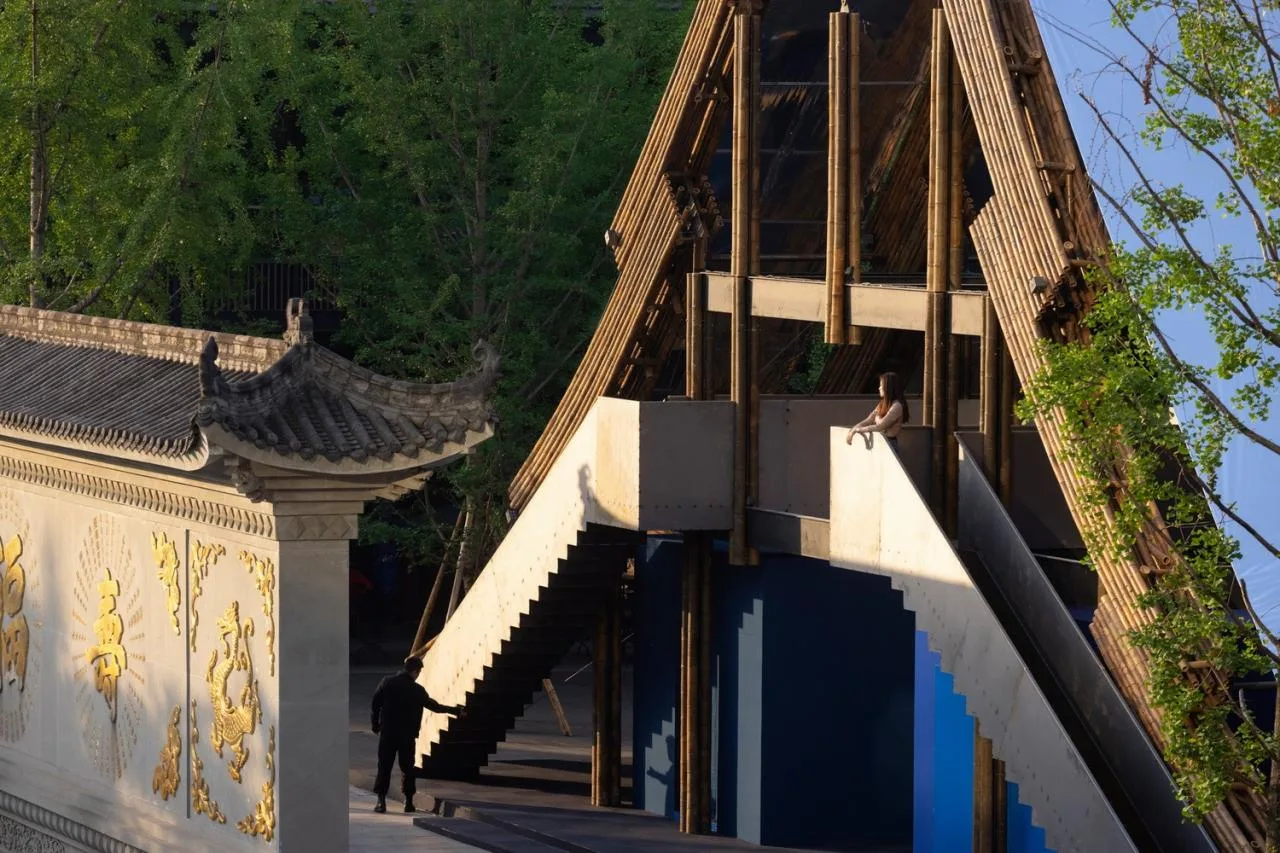
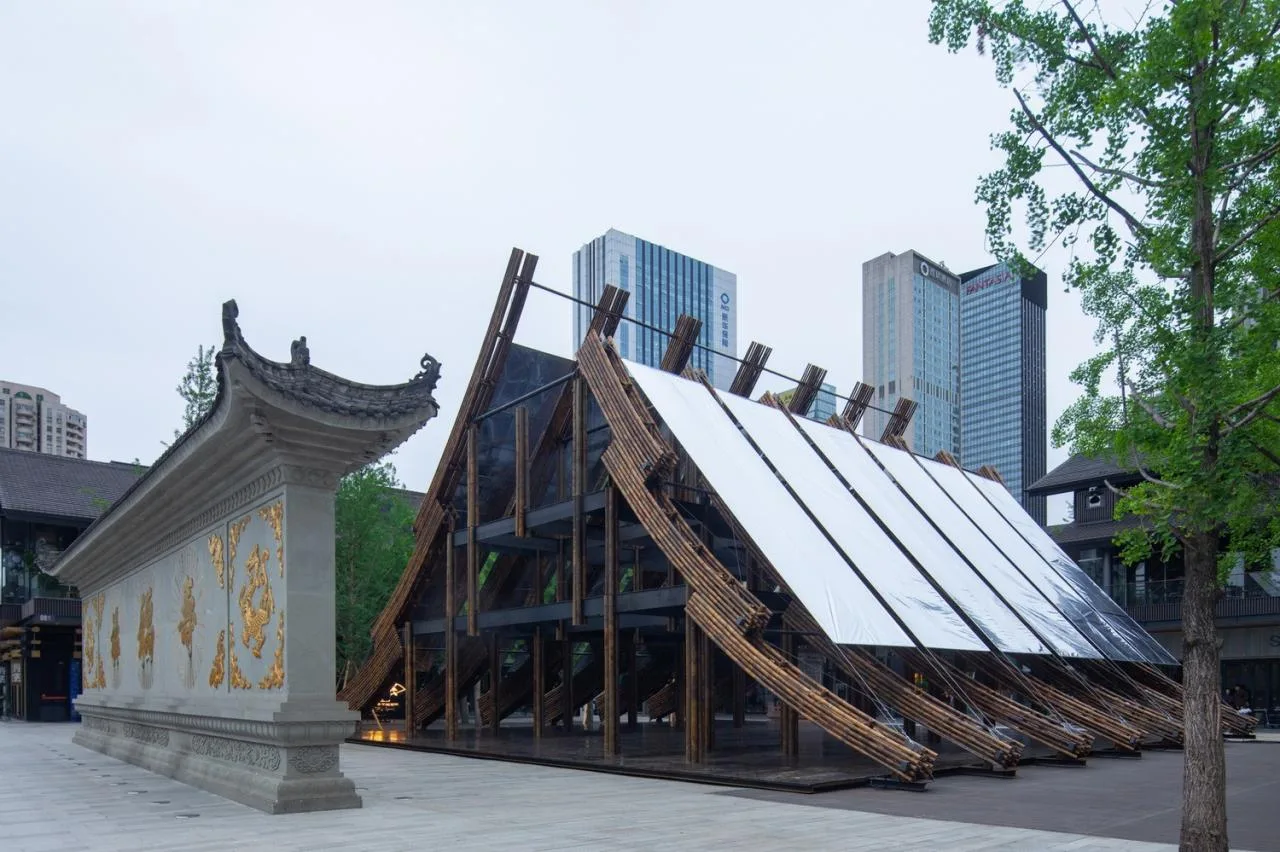
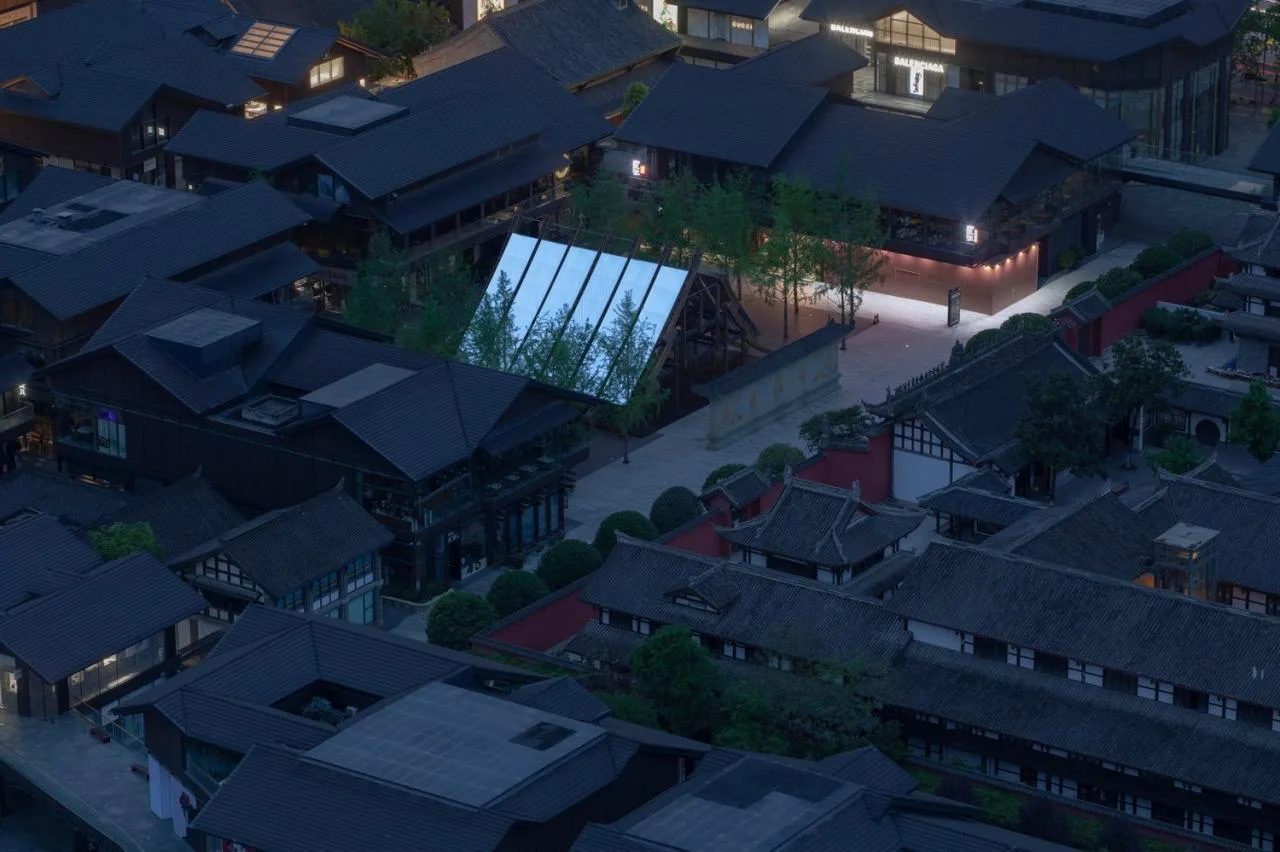
This project is situated in the heart of Chengdu, a key city in northwest China. To celebrate the eighth anniversary of Taikoo Li, an open, low-density shopping district, Naked Building Renewal Architecture Firm designed a 20-day temporary installation. This “ungrounded building” serves as a practice in creating a “time-limited building.”
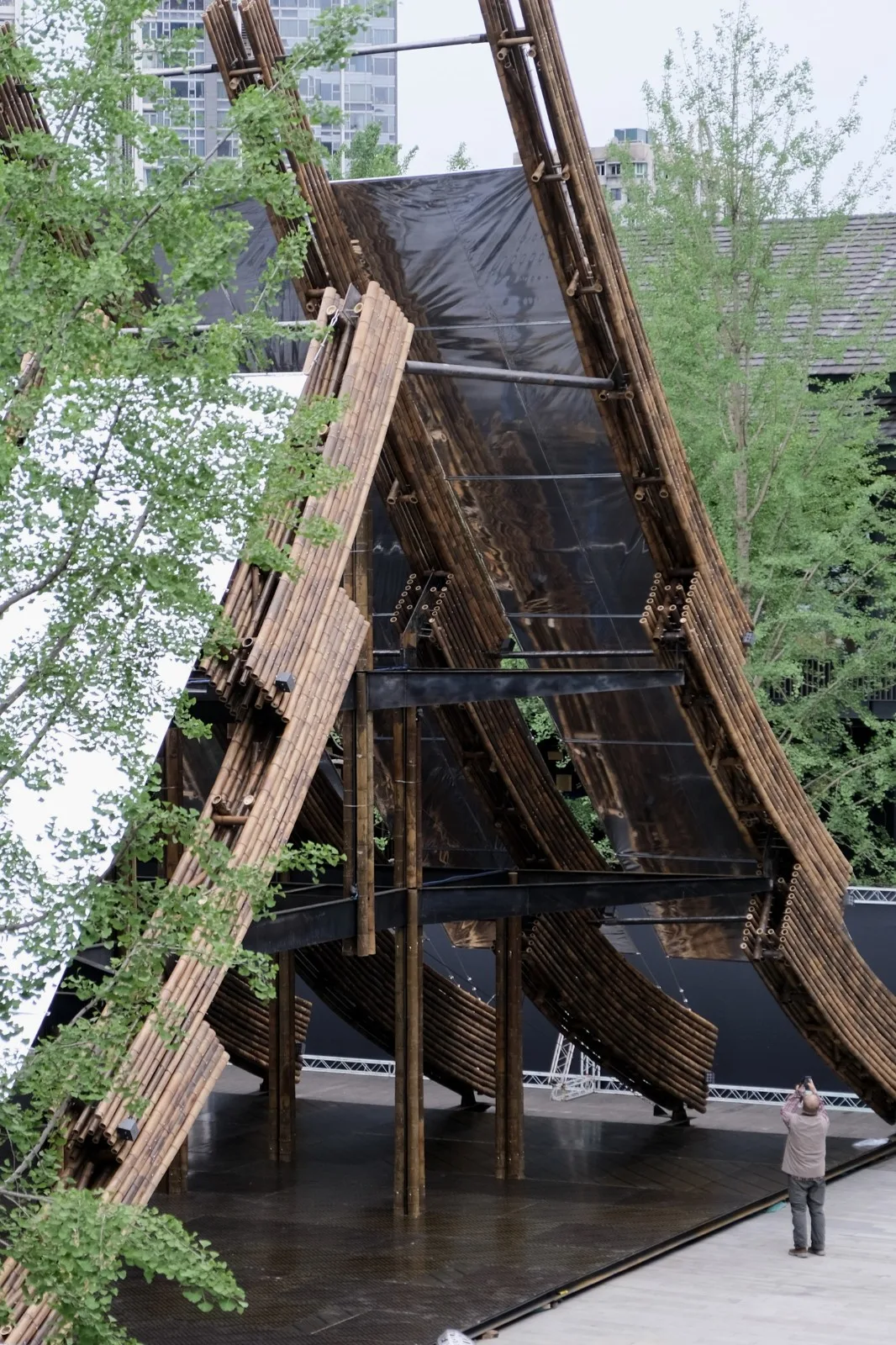
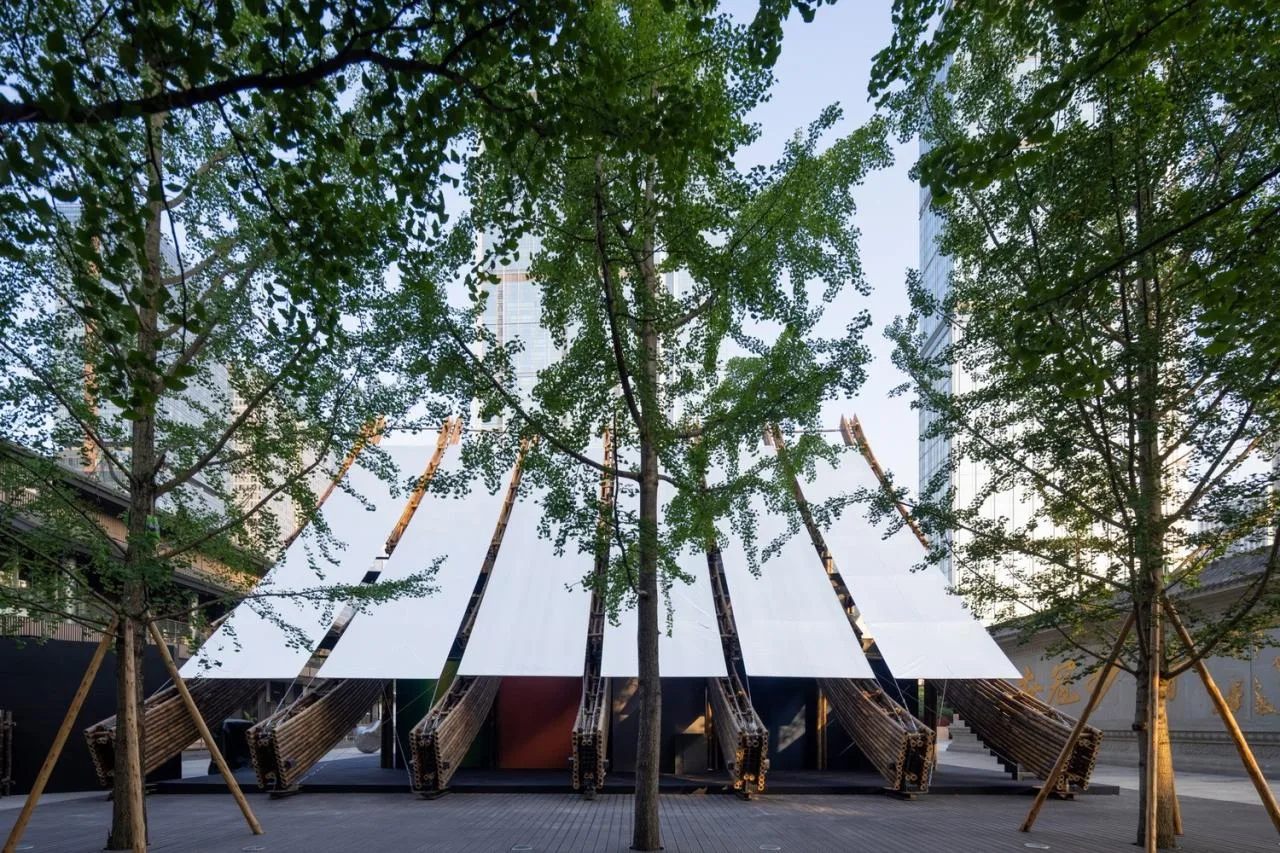
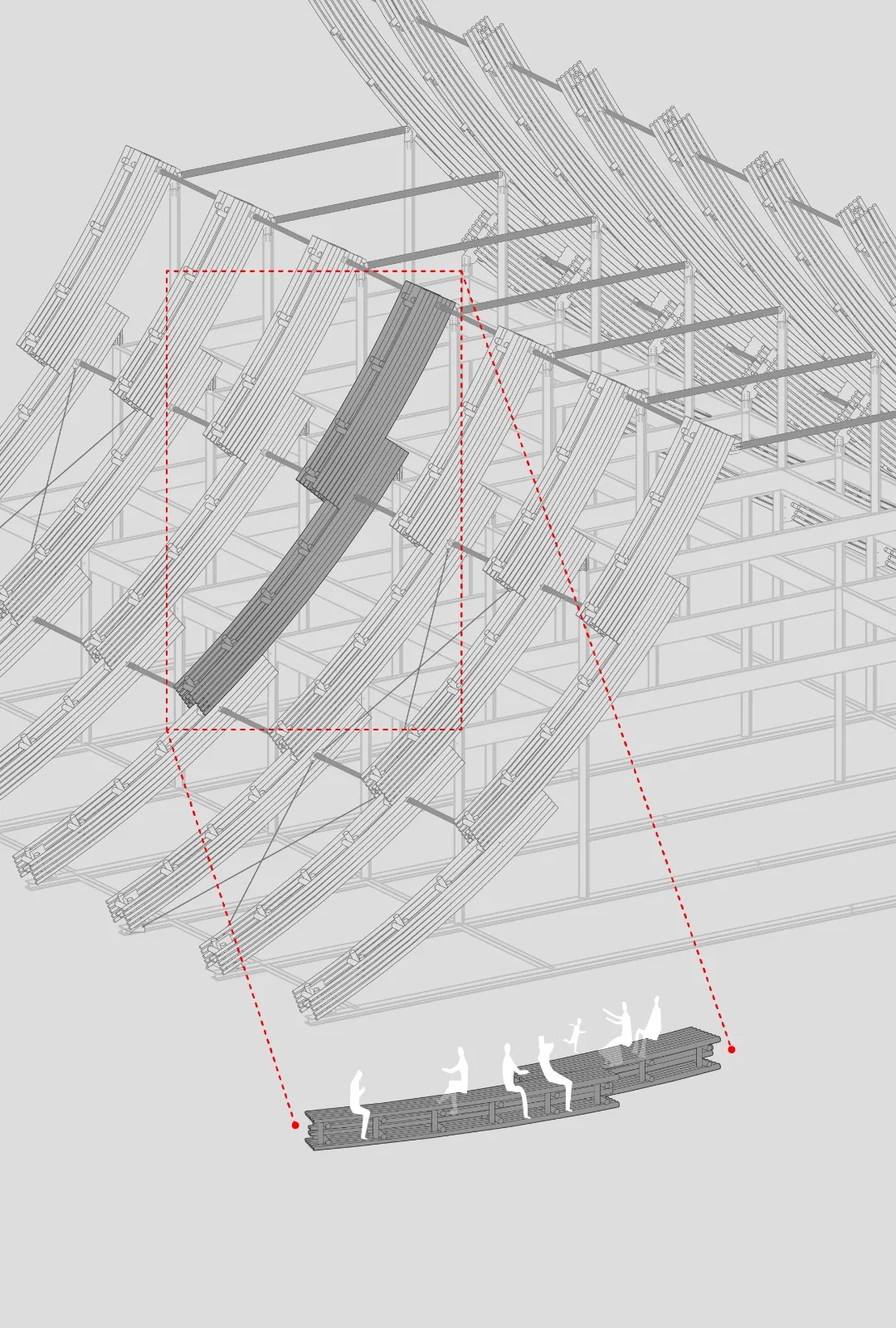
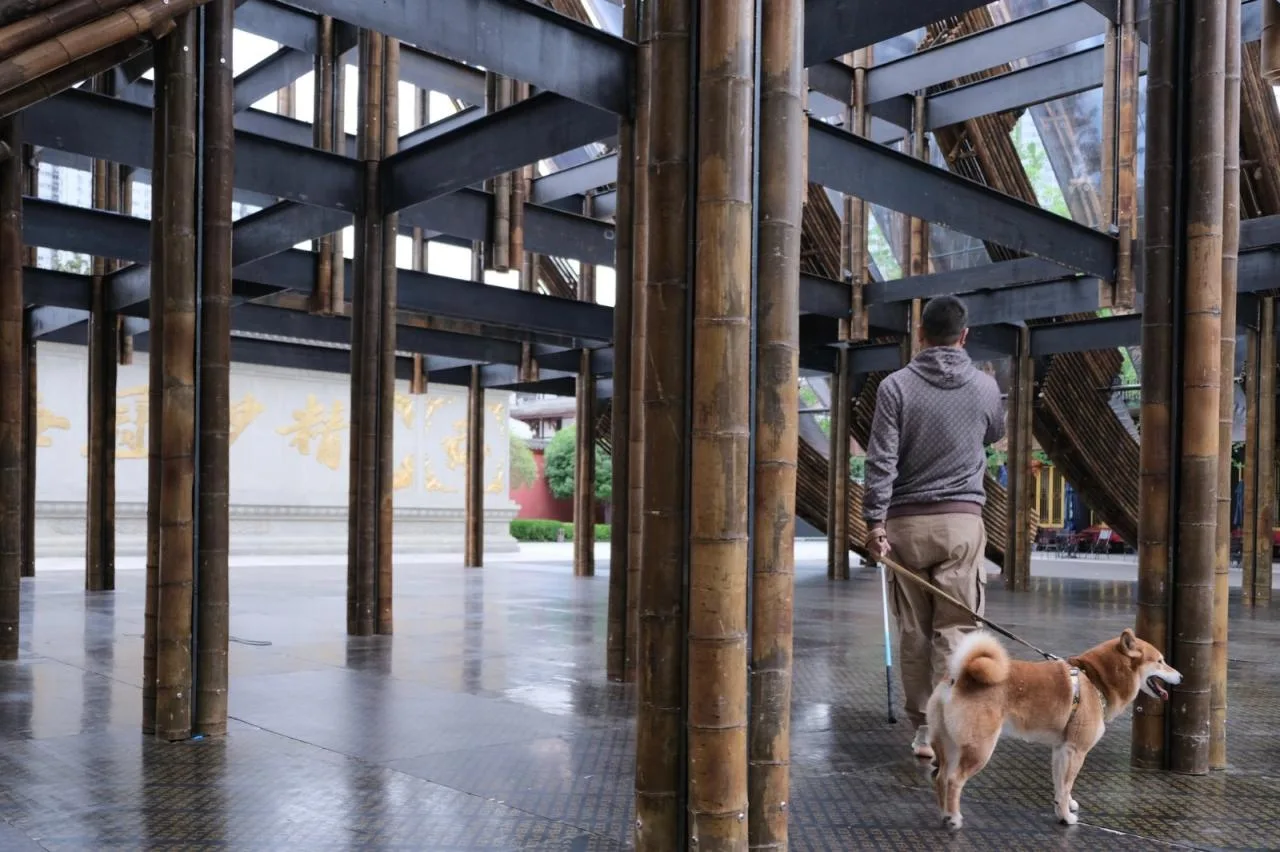
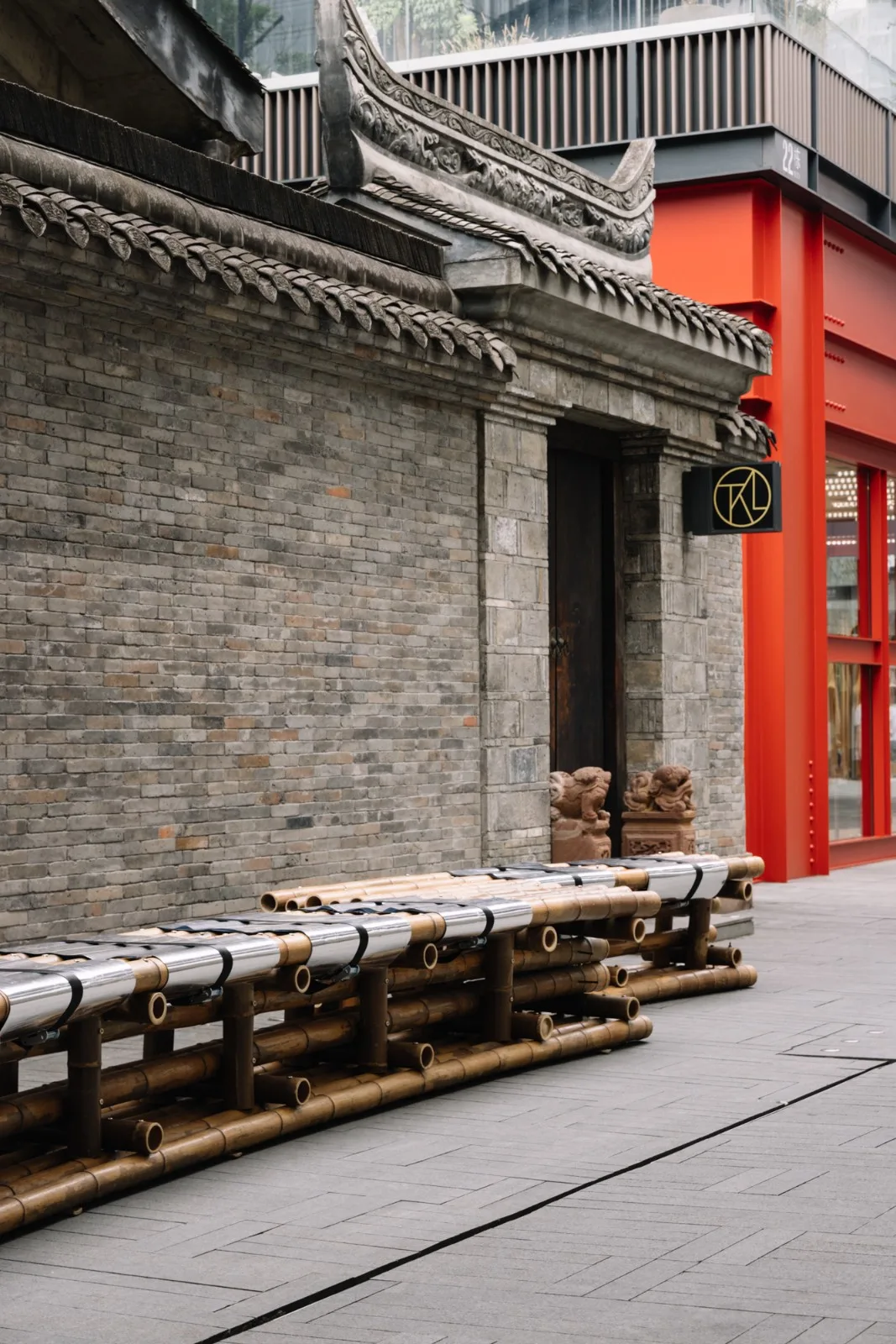
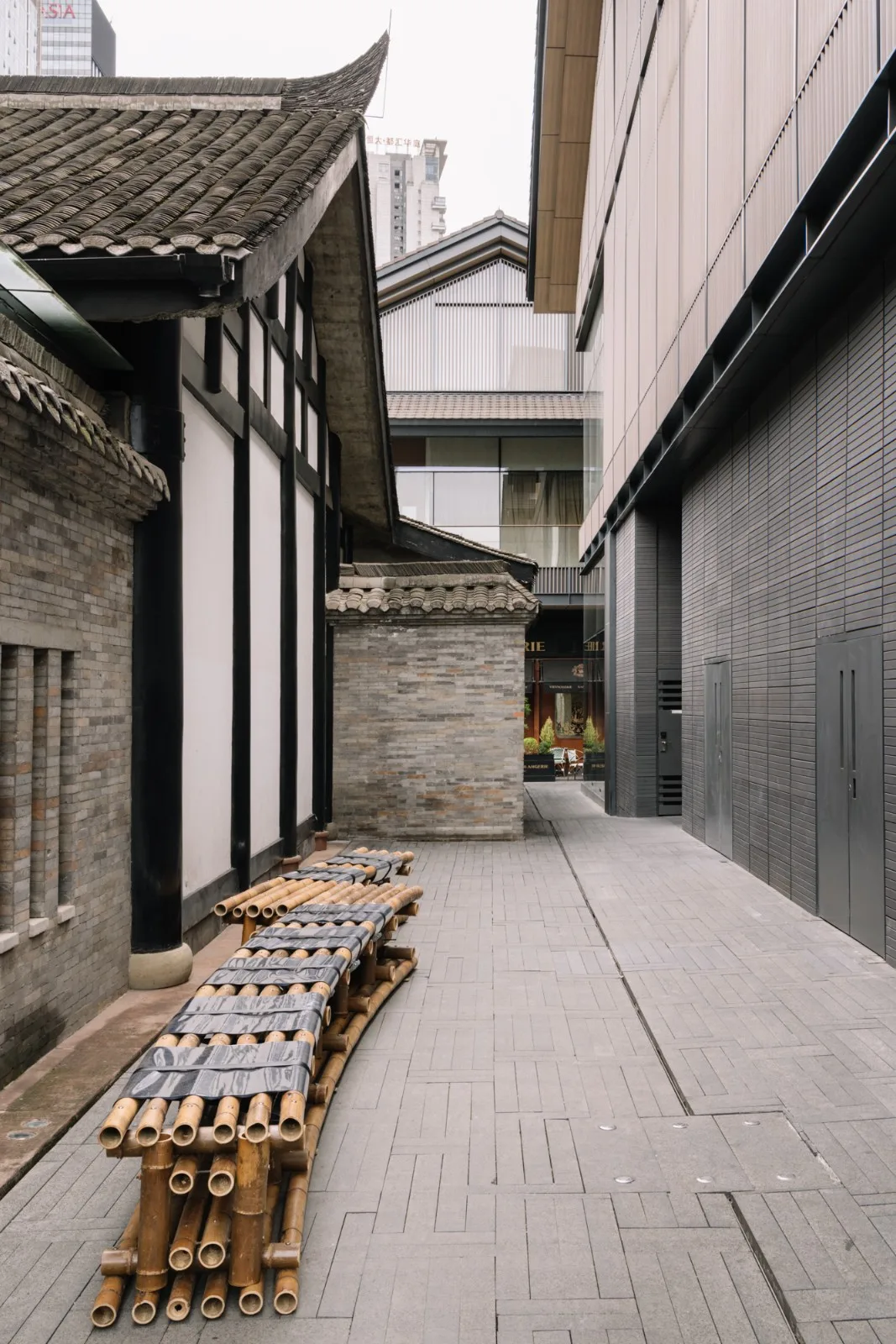
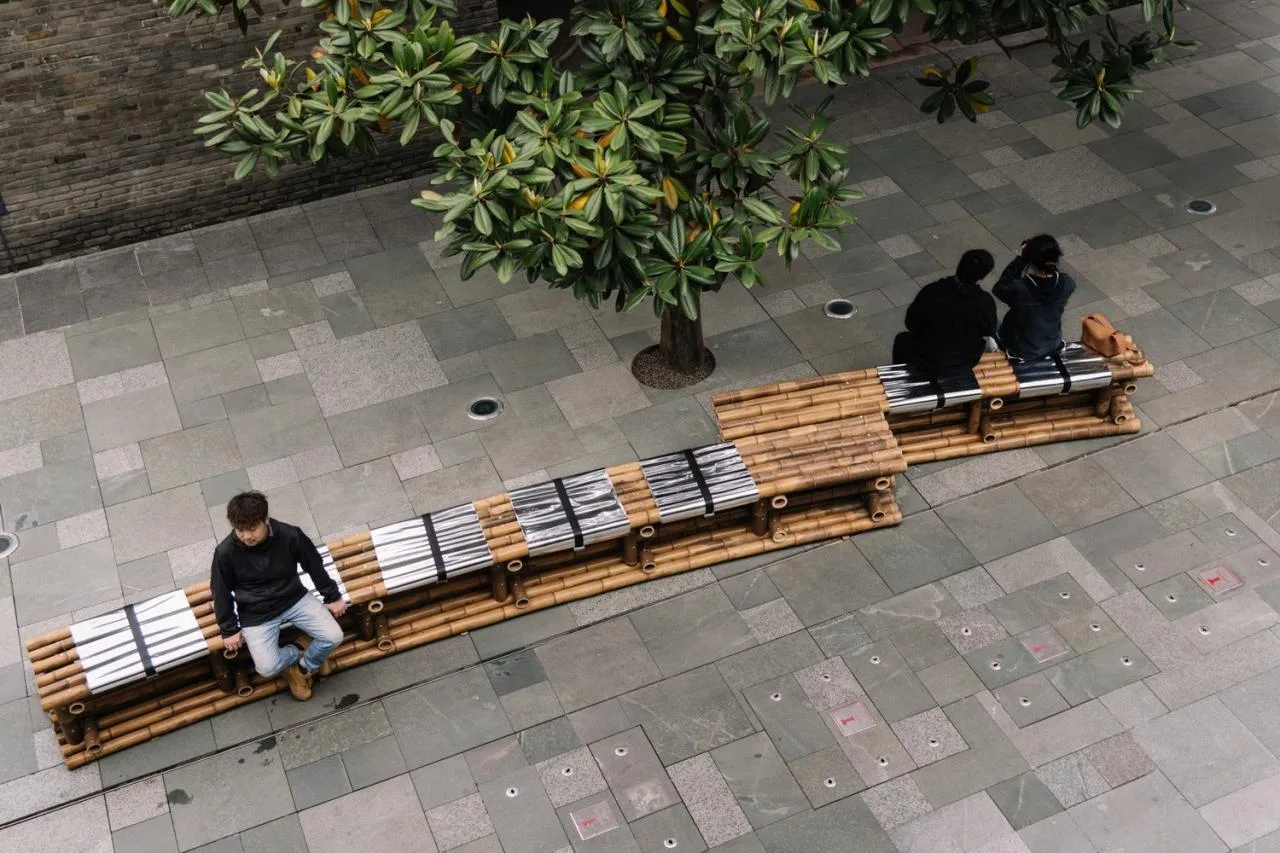
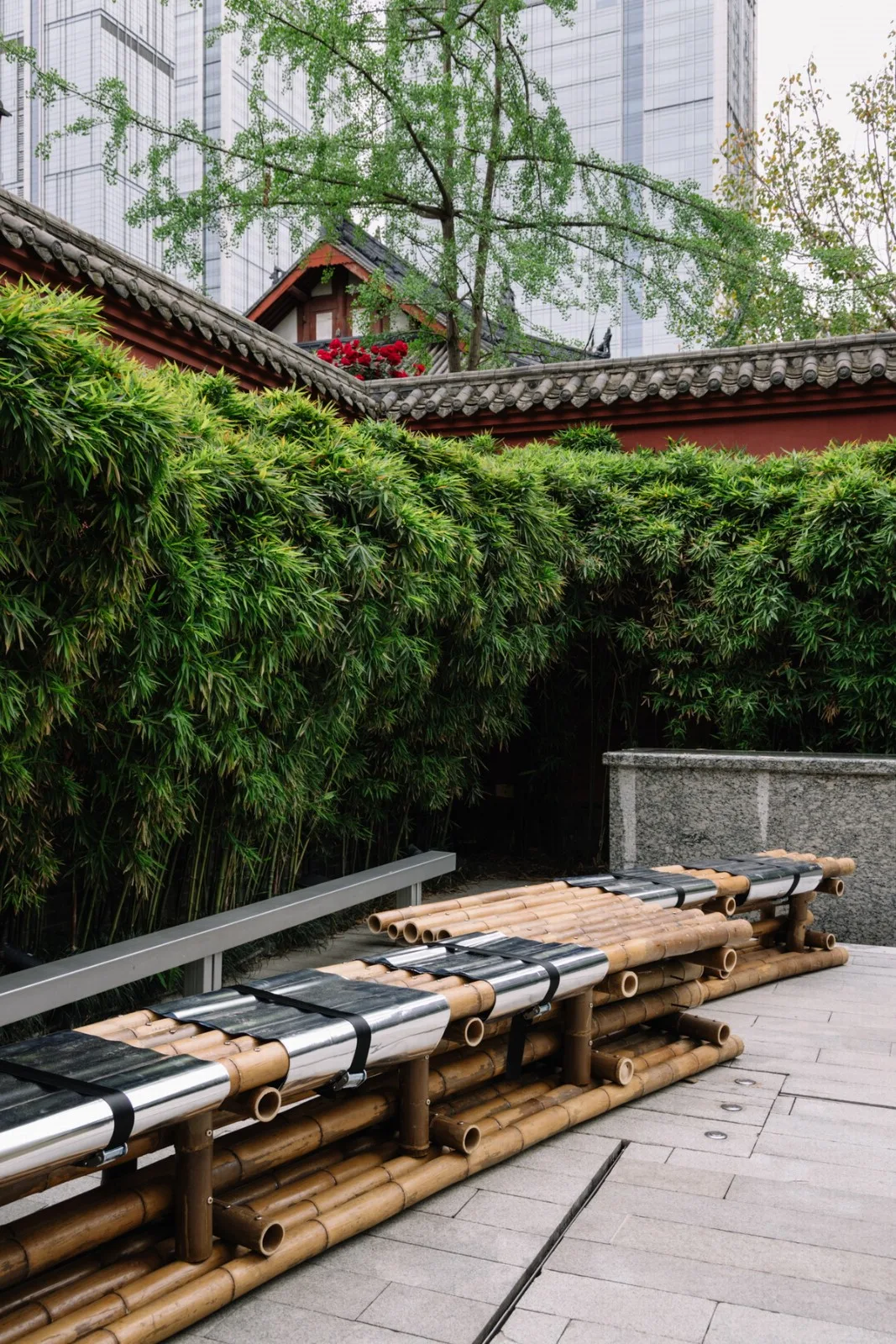
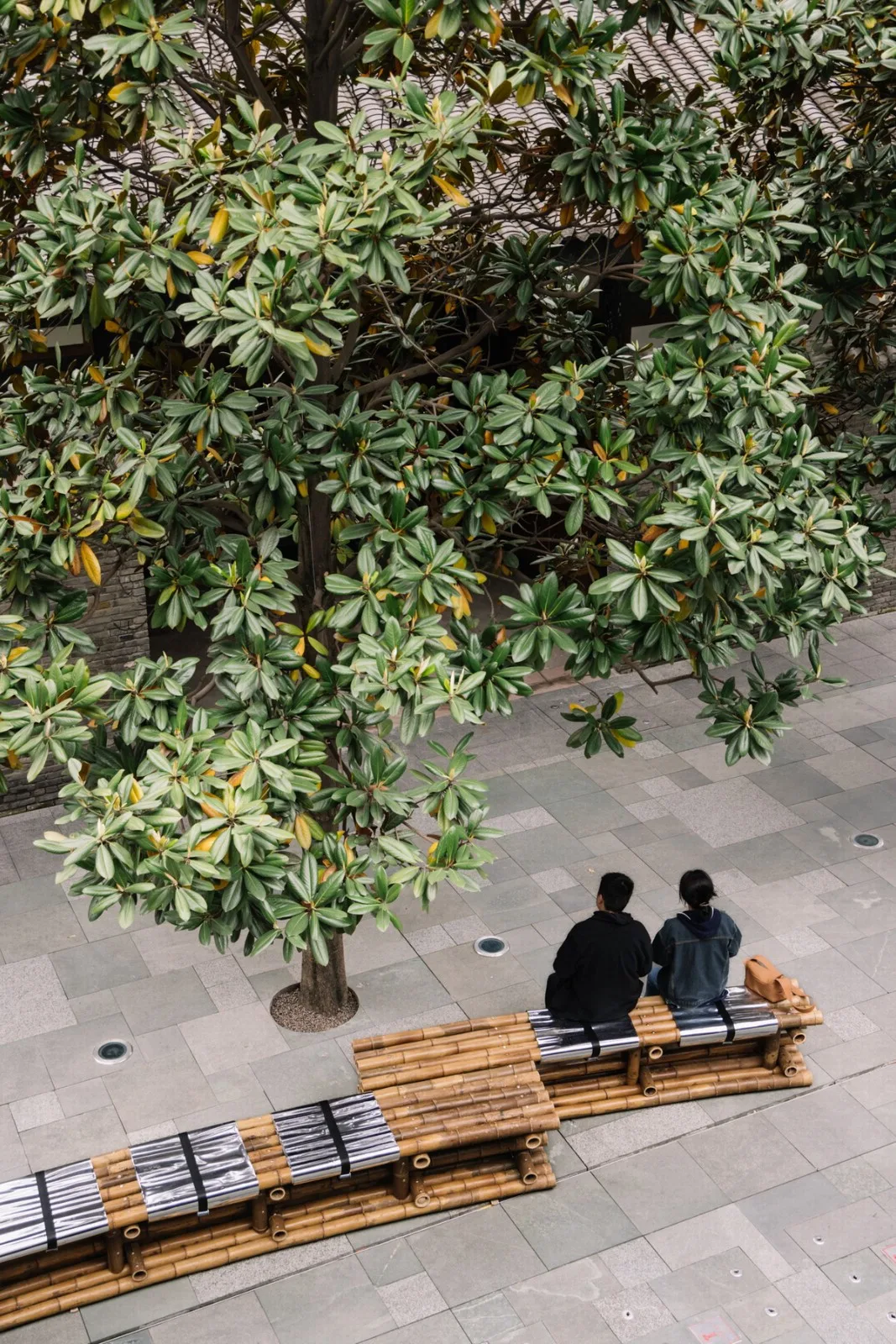
After the exhibition, the prefabricated building components will be disassembled into chairs, enabling a circular use cycle from architecture to public furniture. Bamboo was chosen as the primary material due to its cultural significance to the city and its sustainable nature—it completes its growth cycle in two to three years and regenerates continuously. Bamboo’s recyclability supports the building’s lifecycle. The design uses 550mm as the main module dimension, matching the size of a chair, to create bamboo stools as architectural elements.
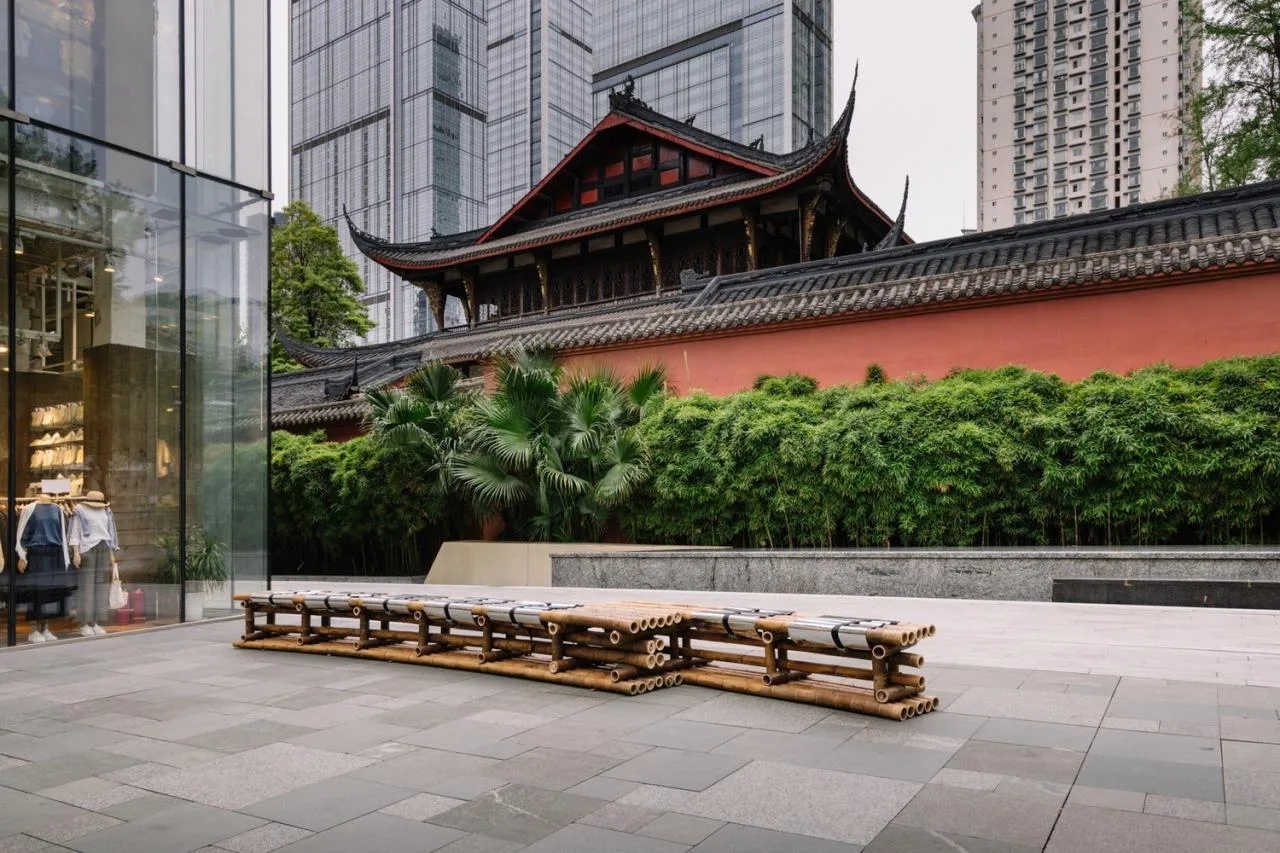
The architectural inspiration comes from the Chinese character for ‘eight,’ which is formed by strokes symbolizing a new temporal concept rooted in ancient Chengdu culture. Each stroke also represents the idea of ‘entry’ or openness, symbolizing connection and inclusivity, while evoking the figure of a person—reflecting creativity, diversity, and a people-centered approach. The architect aims for visitors to engage directly with this cultural narrative, bringing together people from various neighborhoods, regions, and cities.
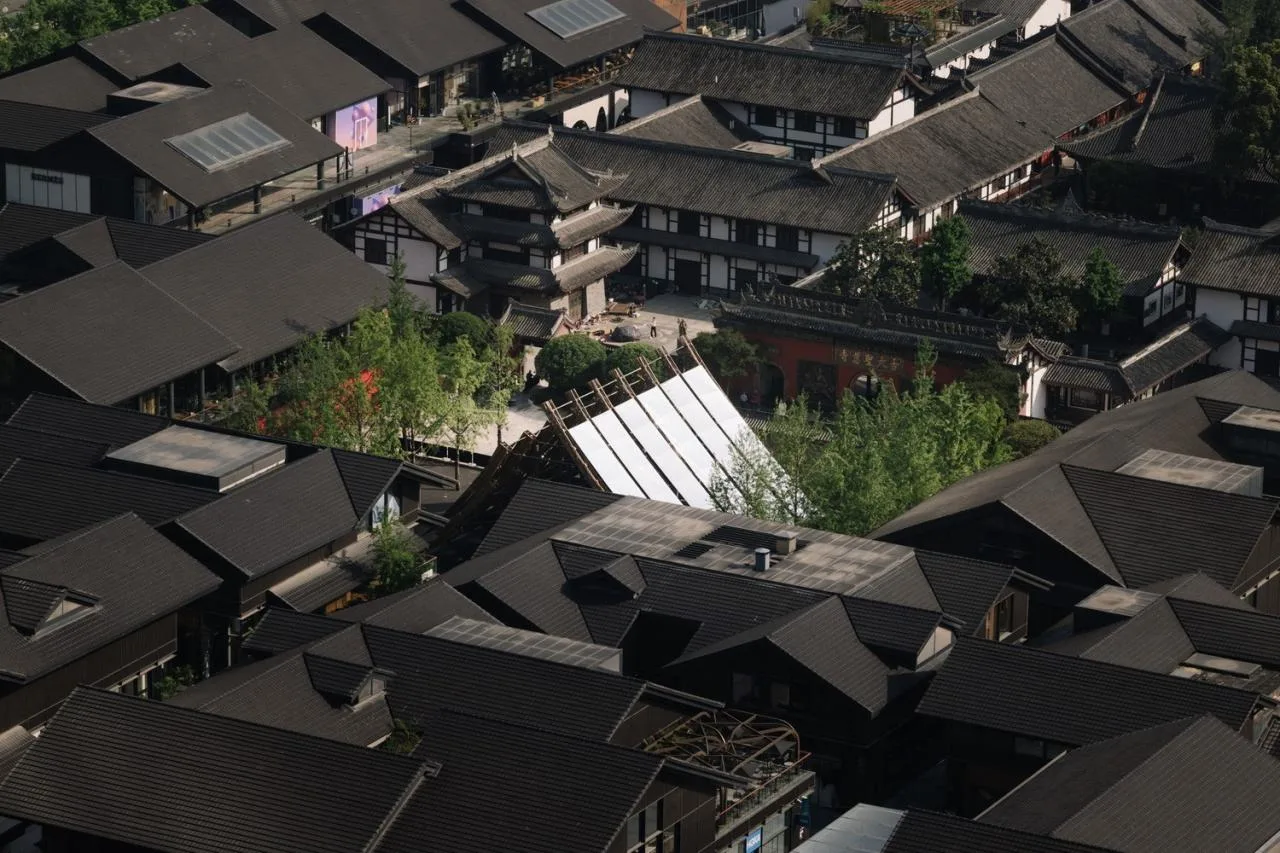
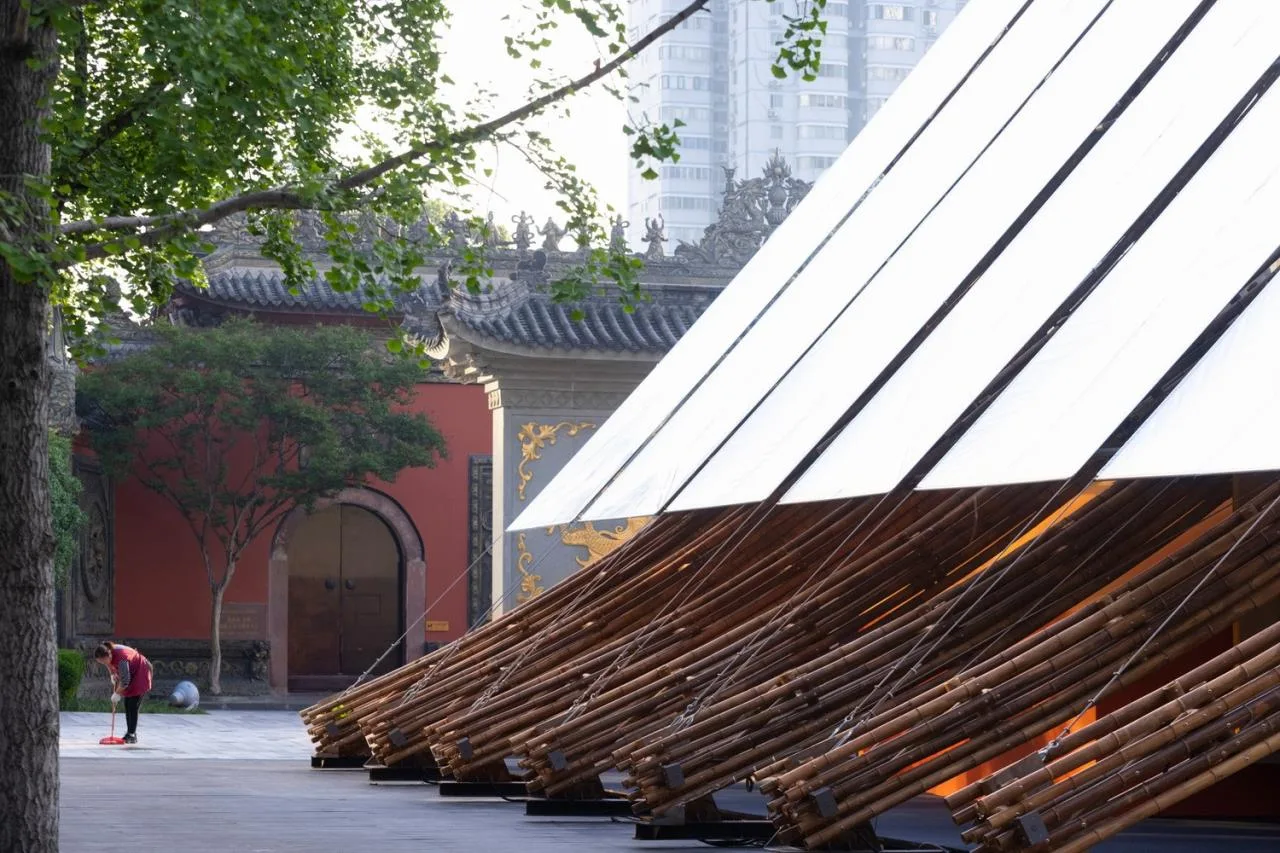
While studying the brush strokes, a stable triangular relationship was discovered, aligning perfectly with architectural mechanical principles. This insight inspired the development of a construction system based on traditional brush strokes.
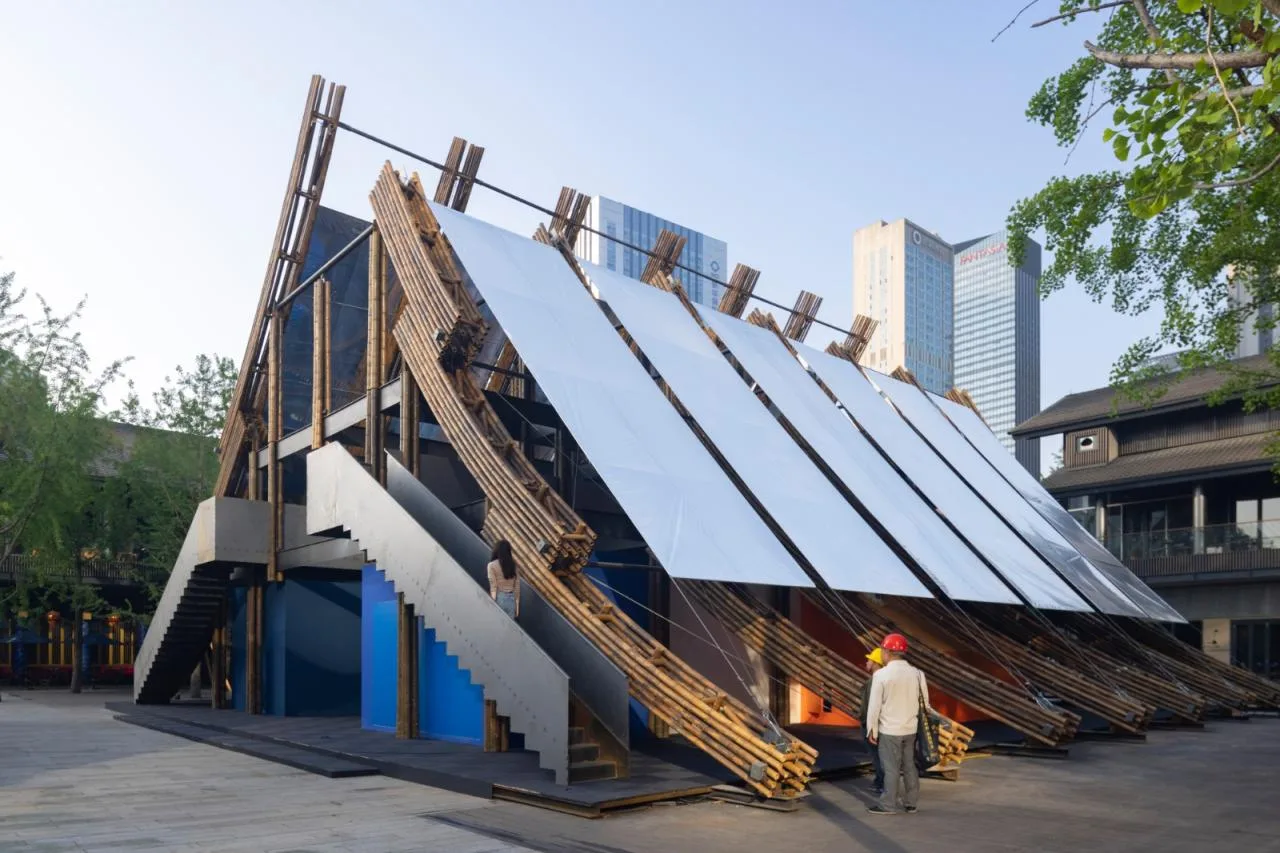
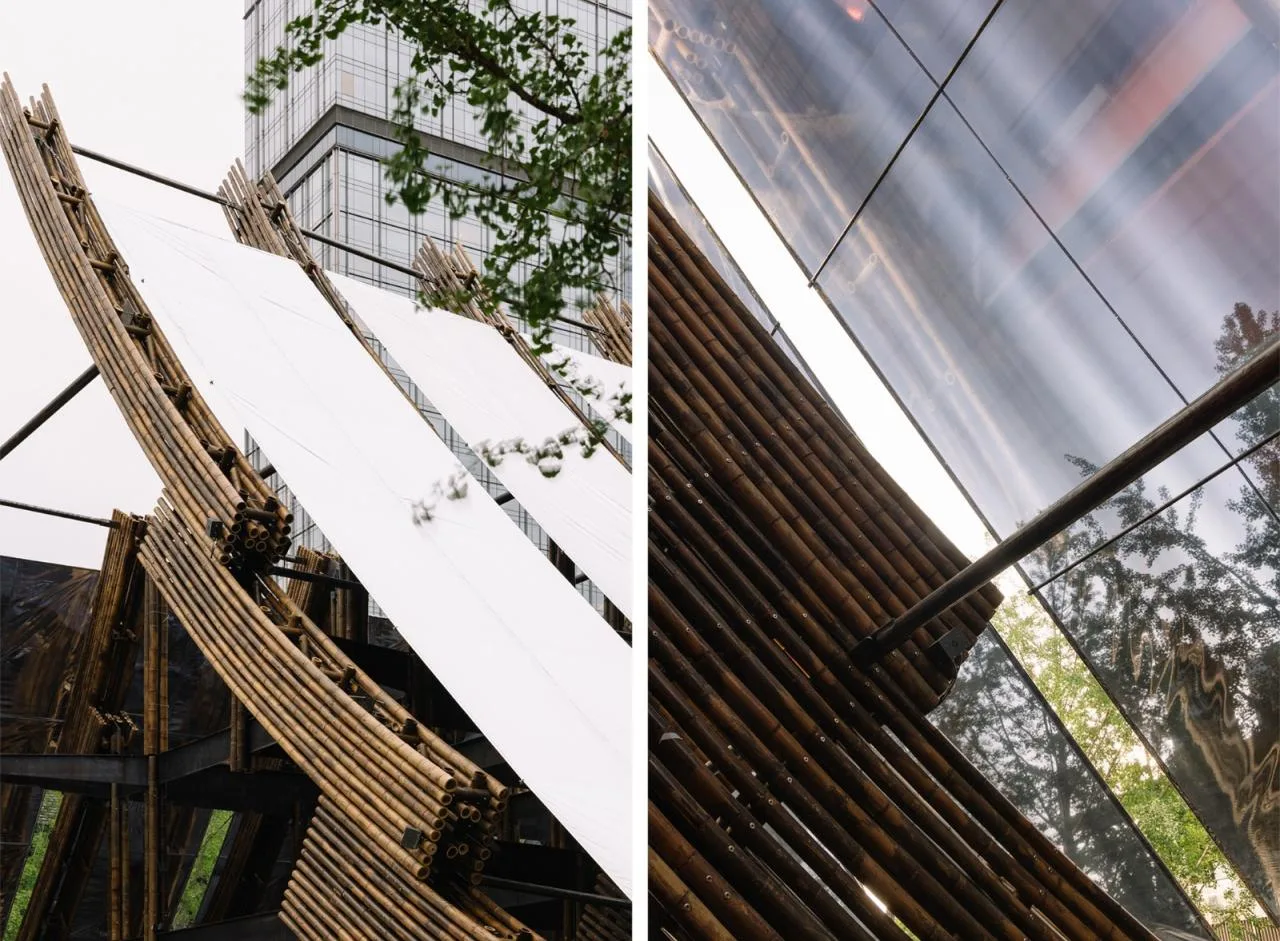
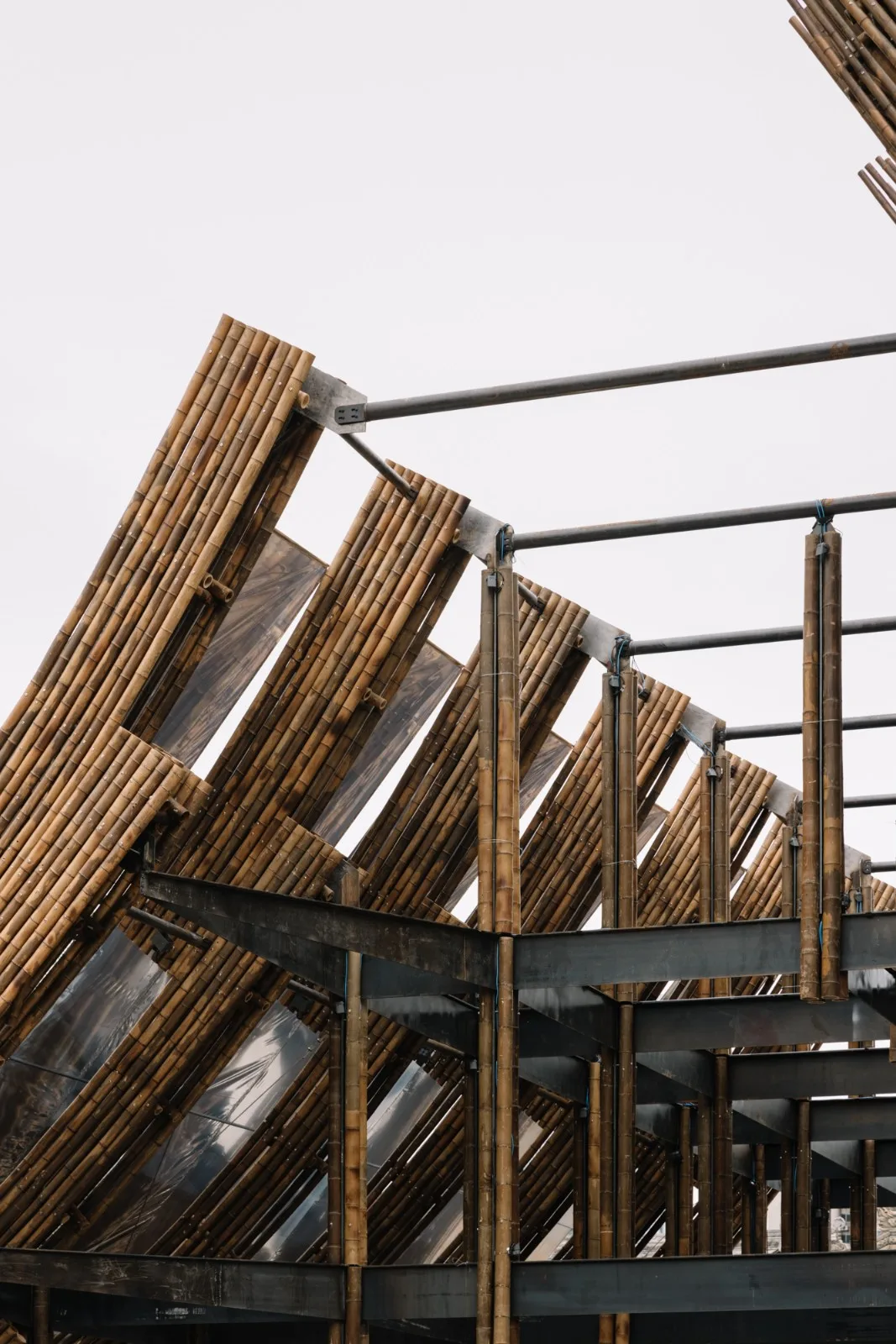
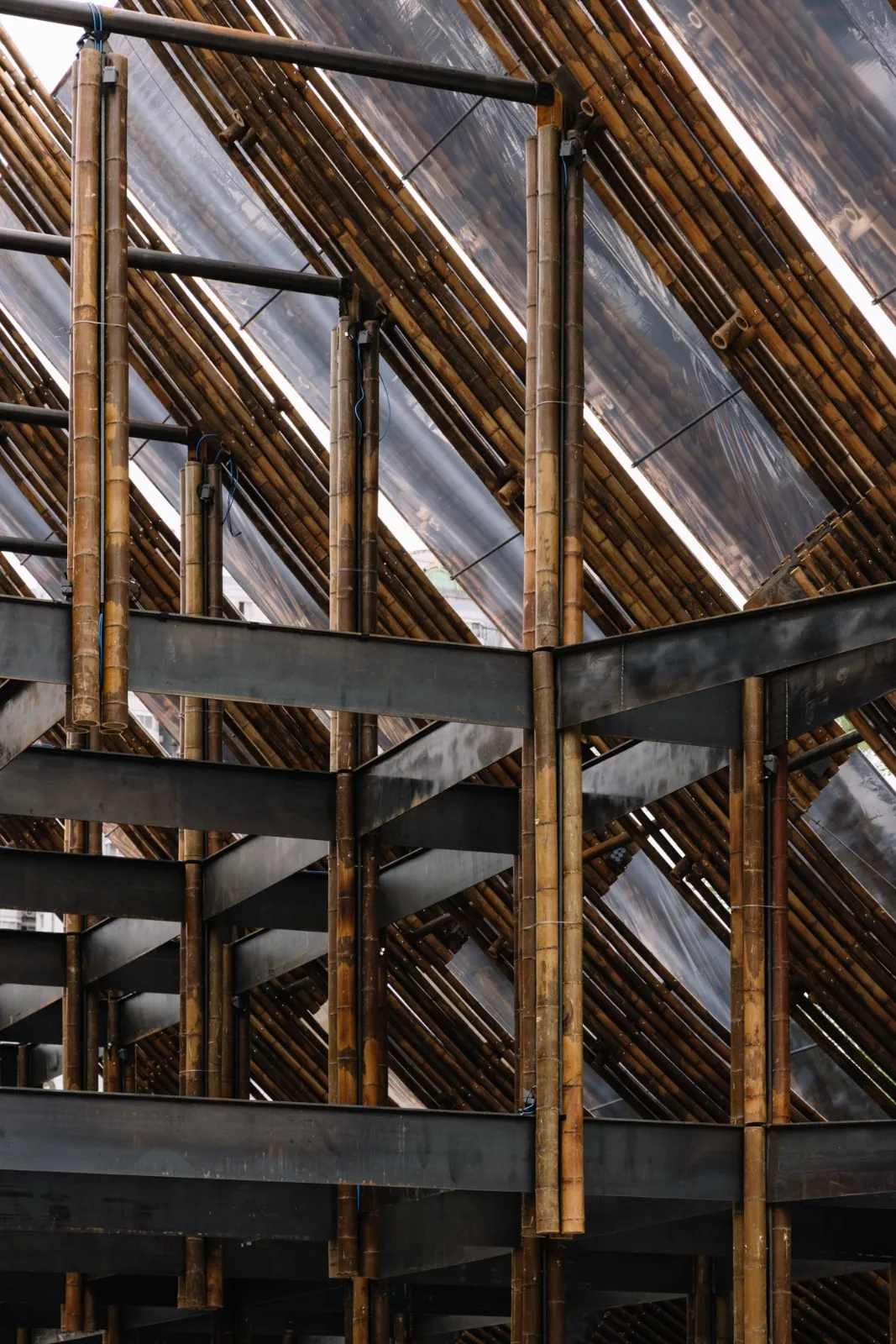
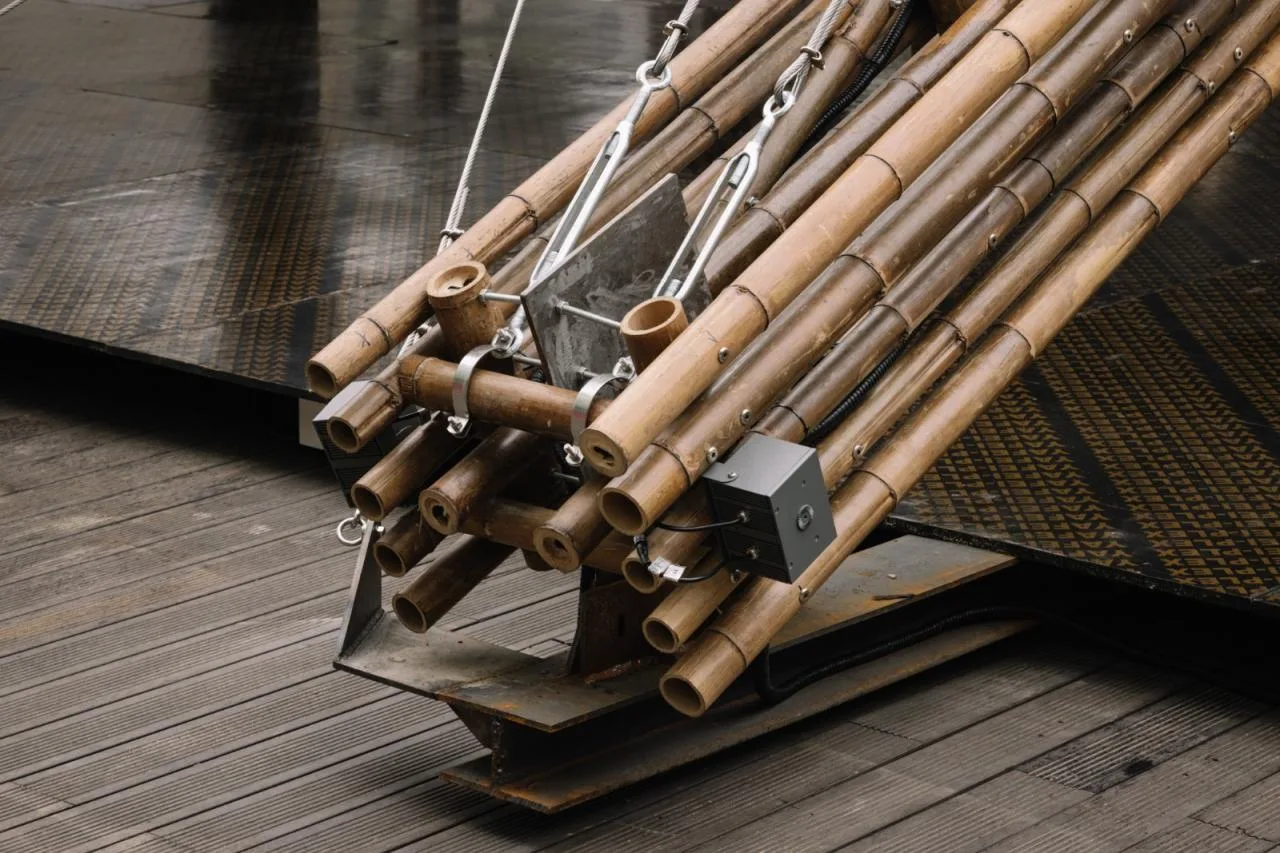
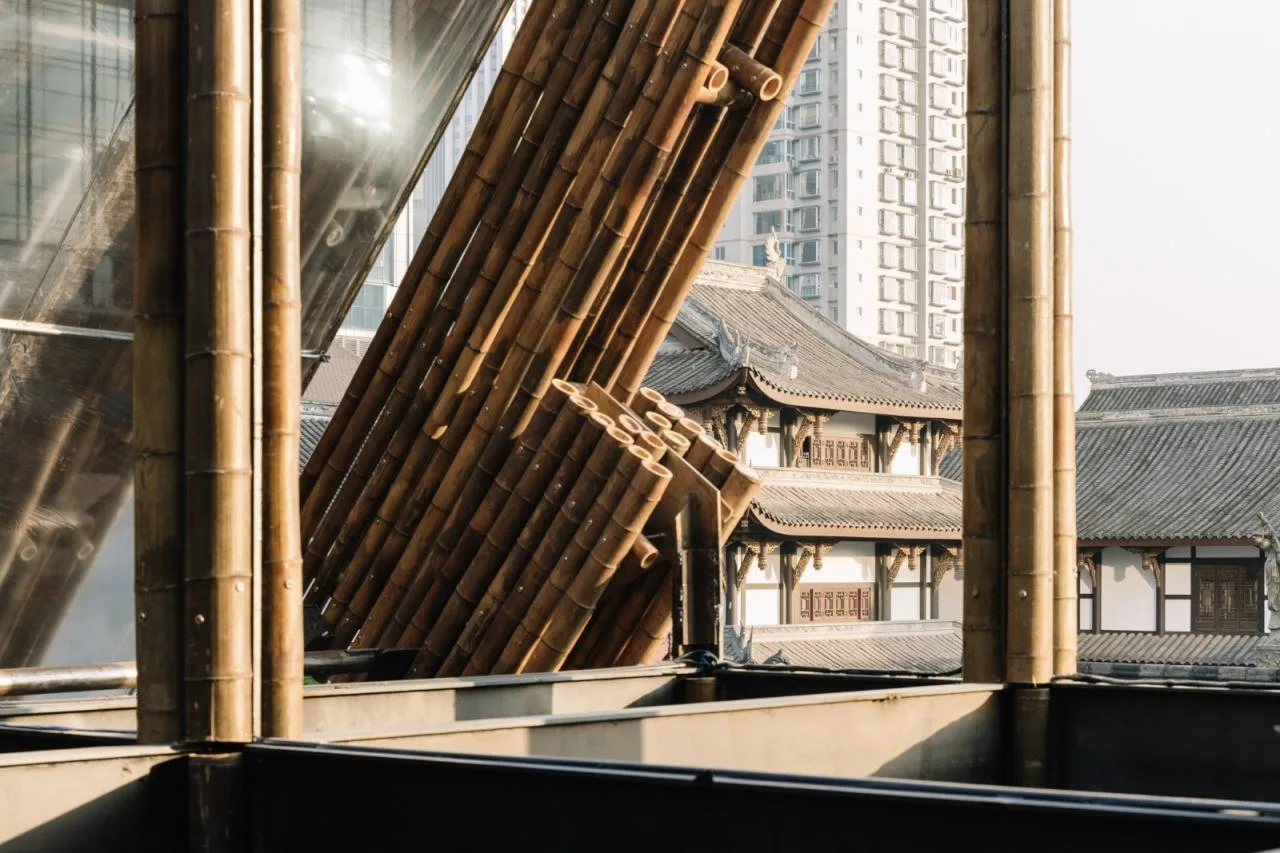
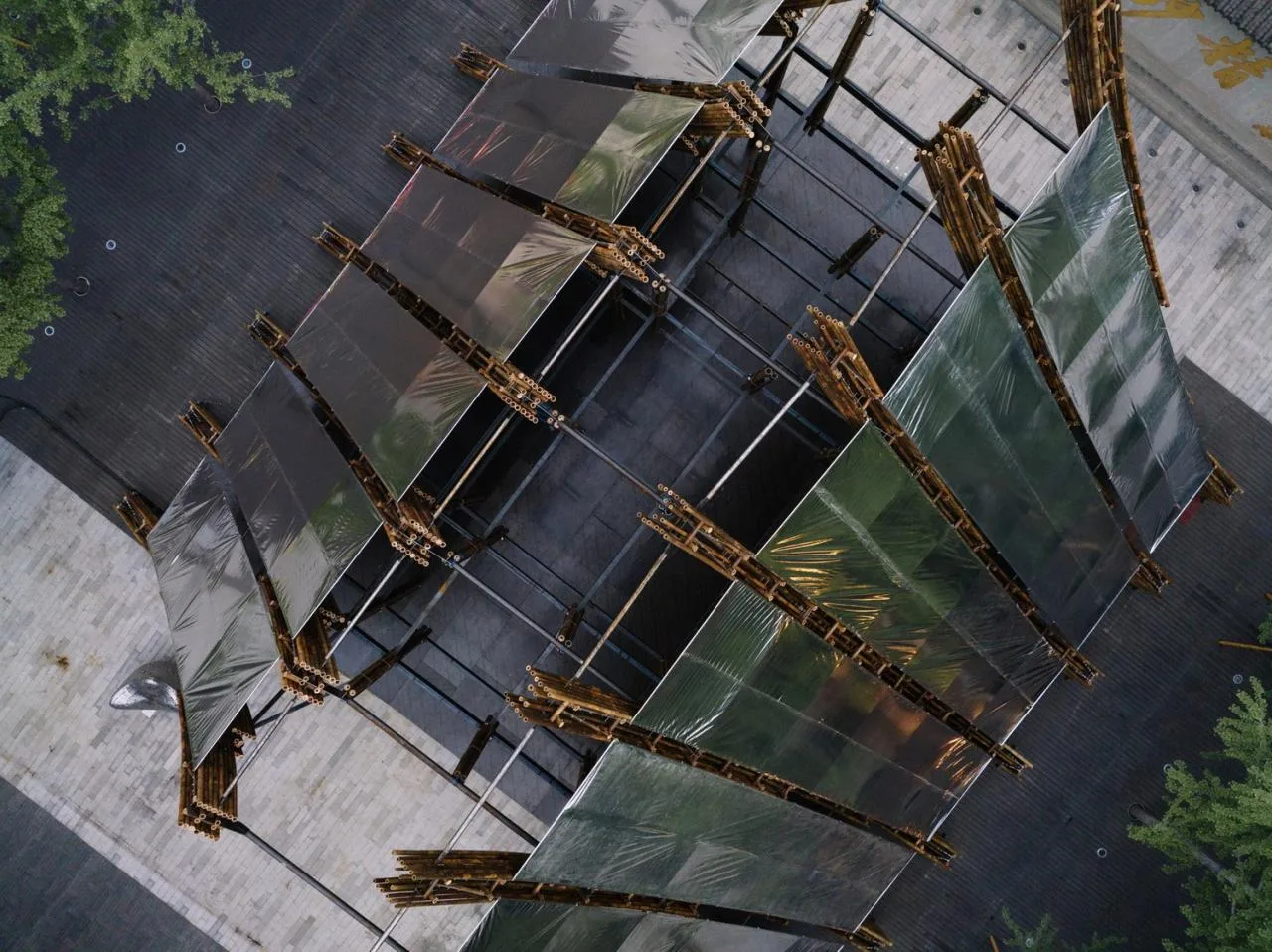
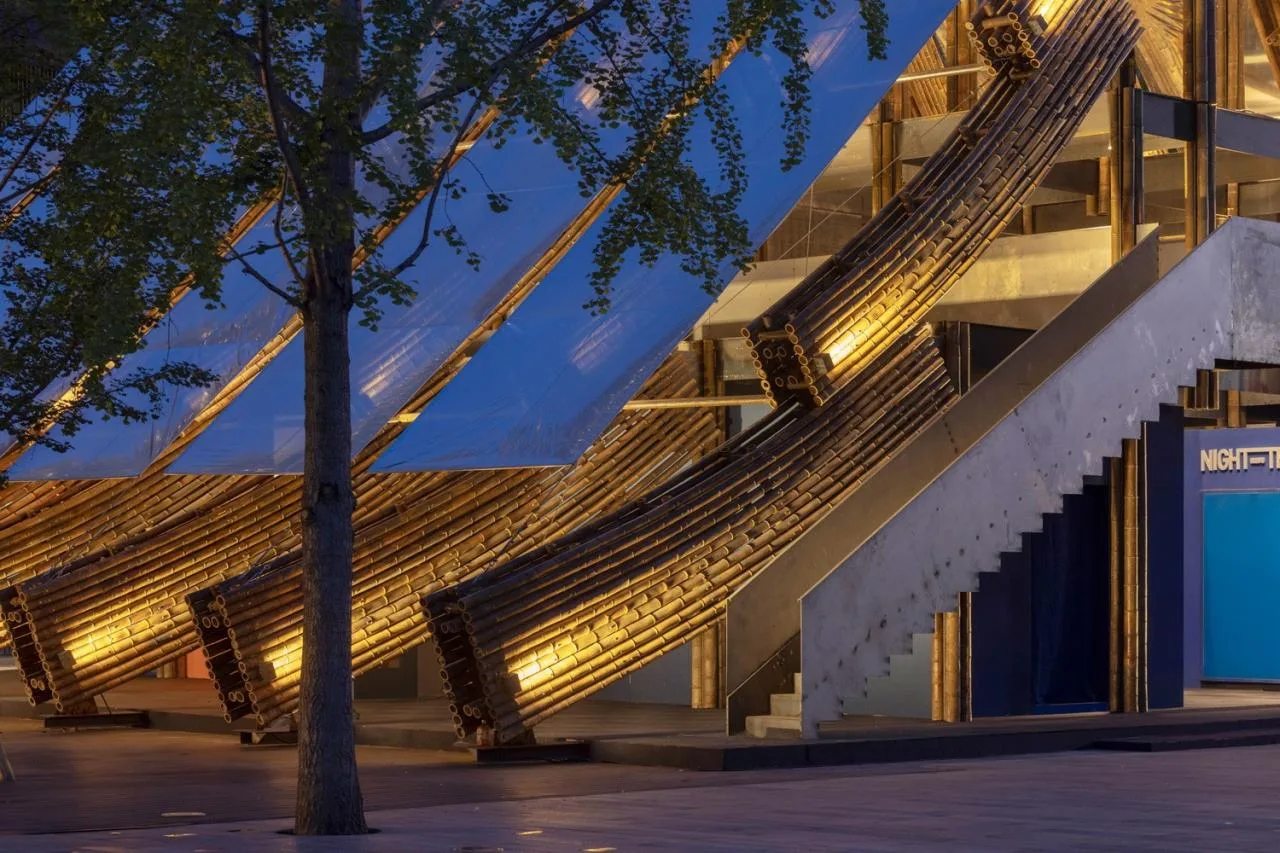
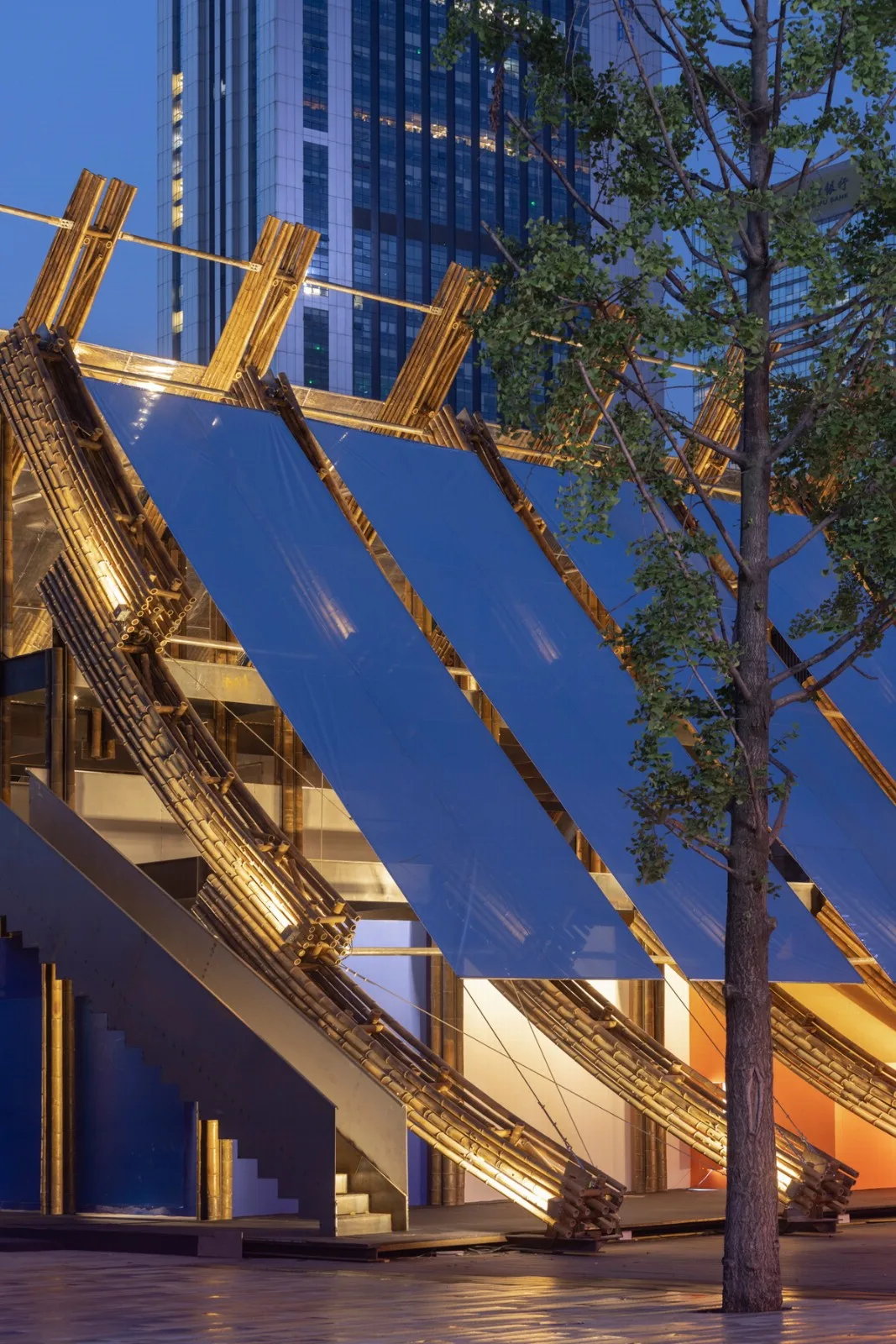
The construction method for the “bi” and “nai” segments is identical: three groups of carbonized curved bamboo beams are sequentially assembled using traditional bamboo structures reinforced with steel rivet joints. The connection points naturally form the “pen edge” effect found in Chinese calligraphy, characterized by “one stroke, one setback.”
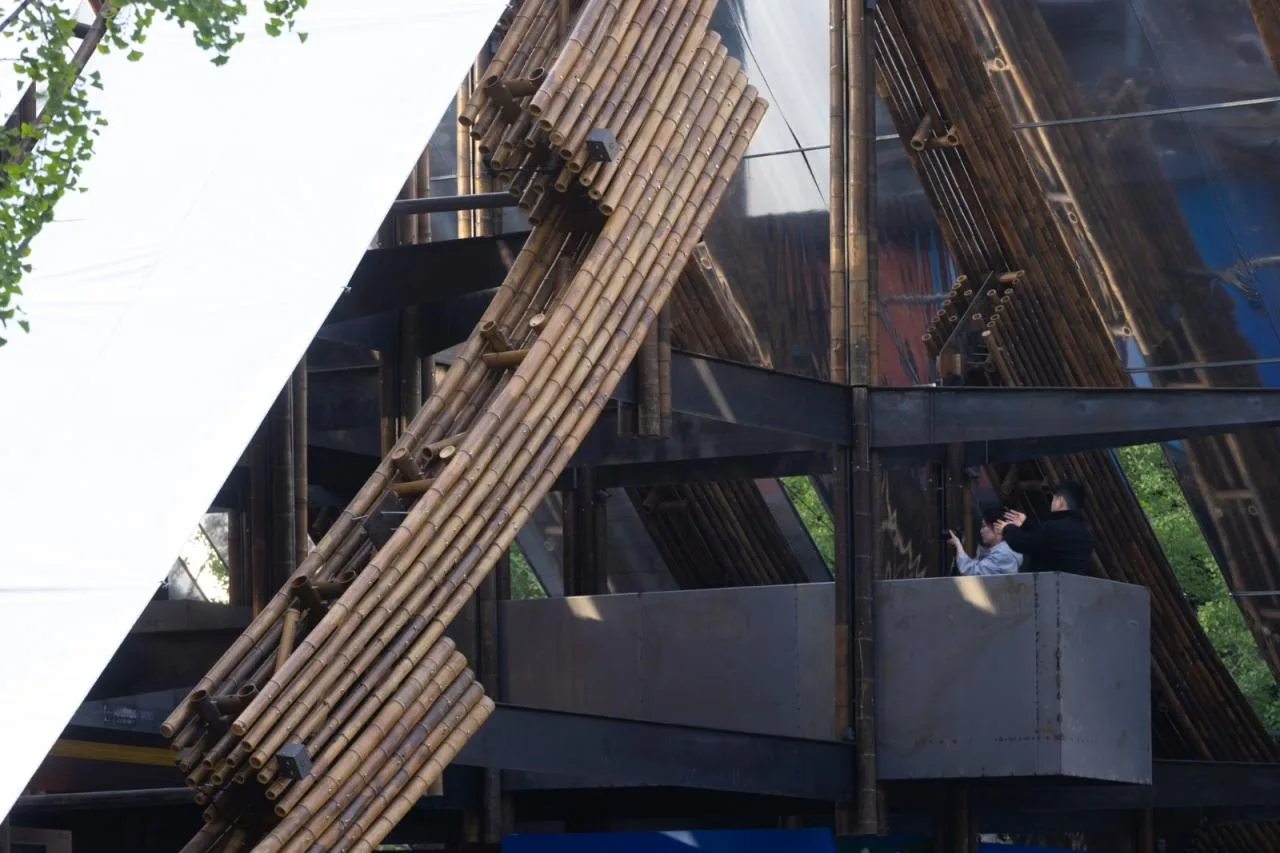
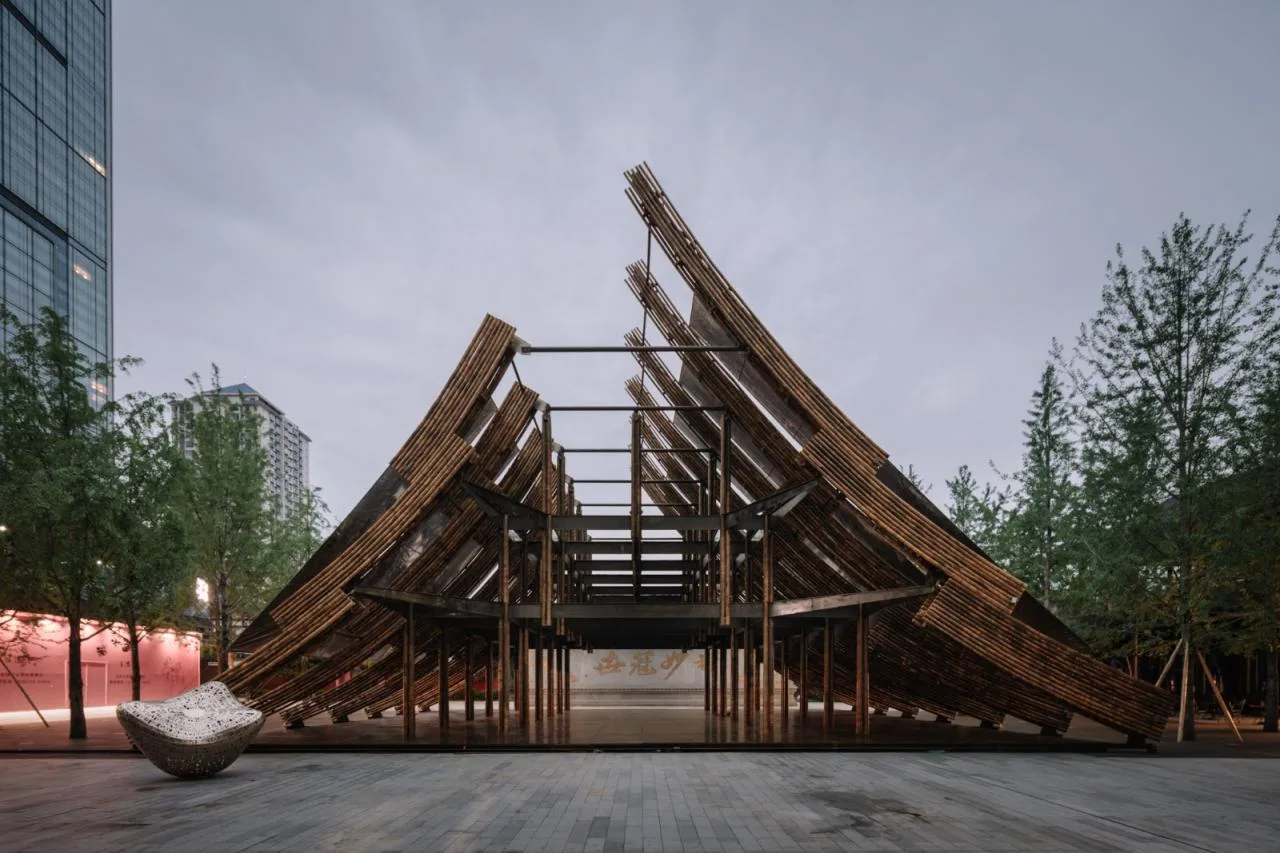
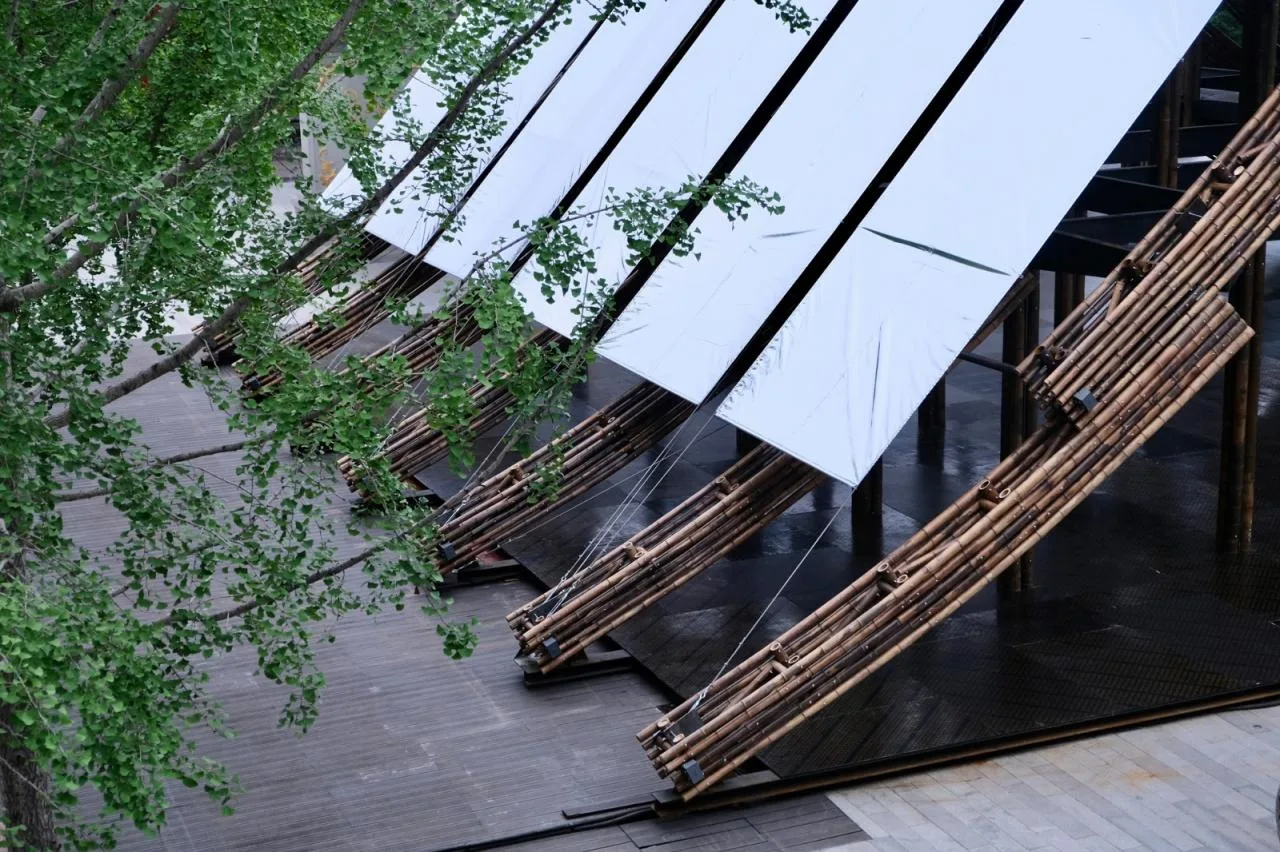
The design features three sections of “skimming” from top to bottom, with decreasing quantities of 8, 6, and 5 respectively. The arrangement begins with 6 bamboo poles, followed by 8 and then 12 poles, varying the thickness to mimic the brush tip of a calligraphy pen.
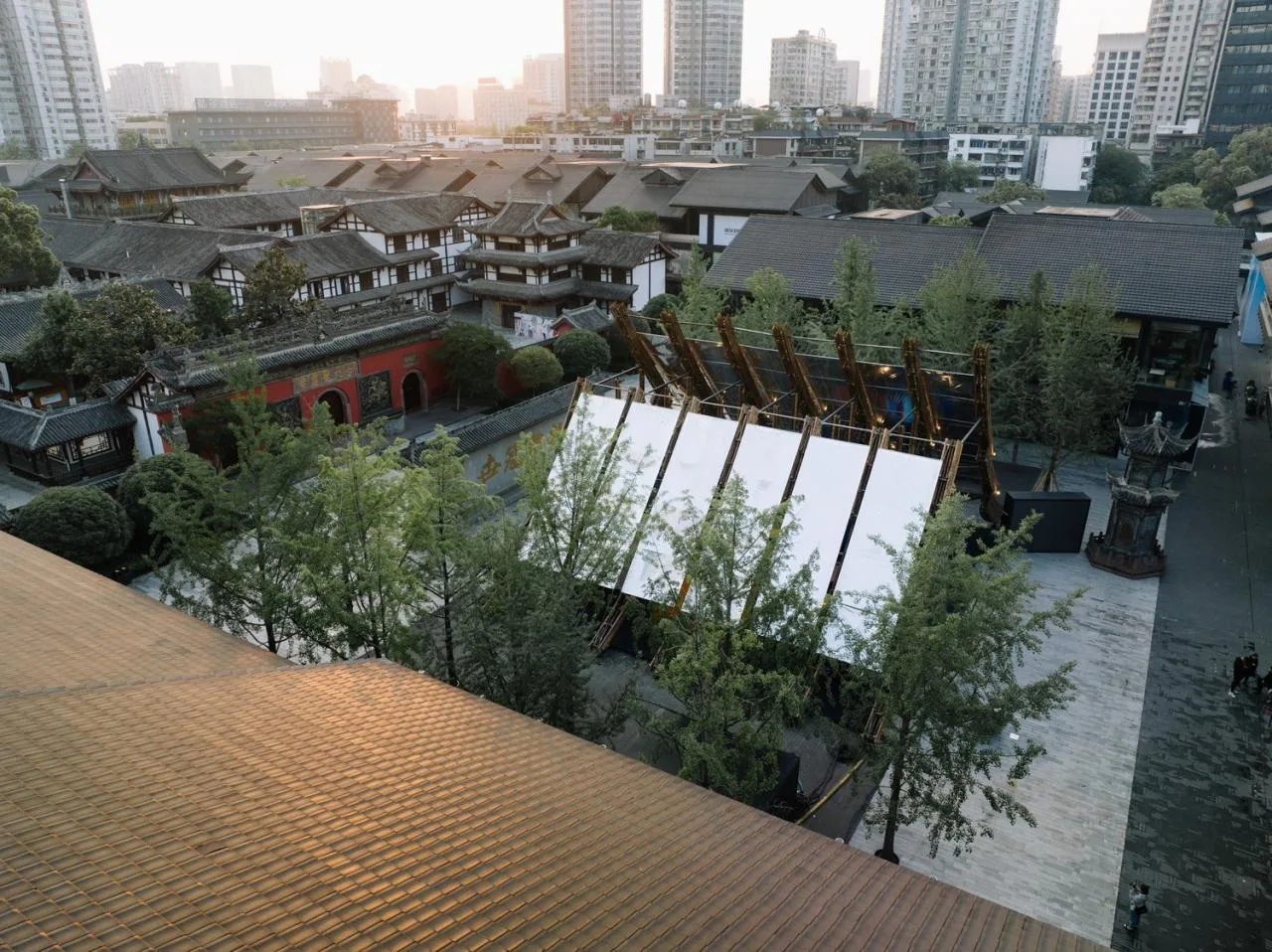
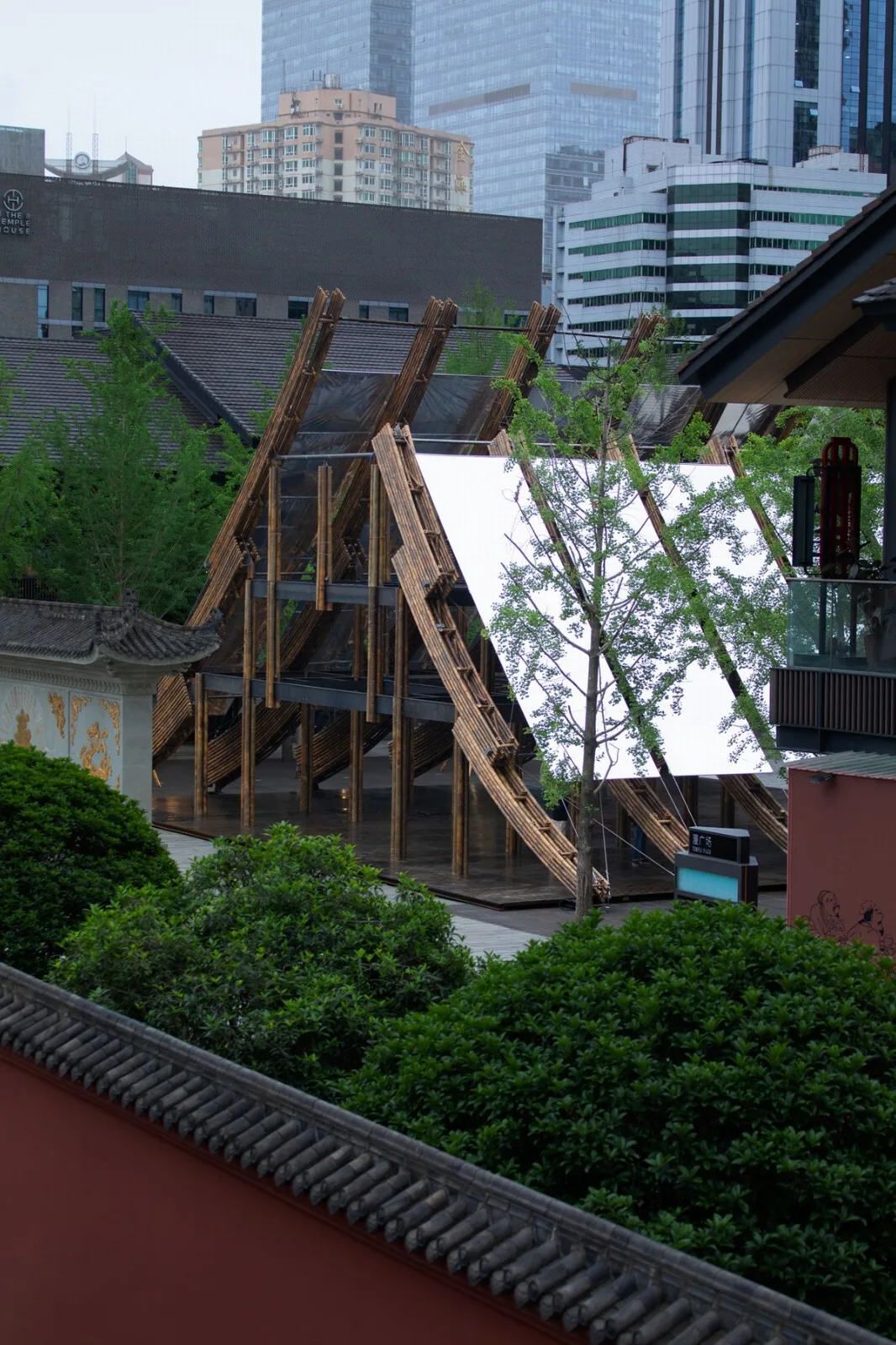
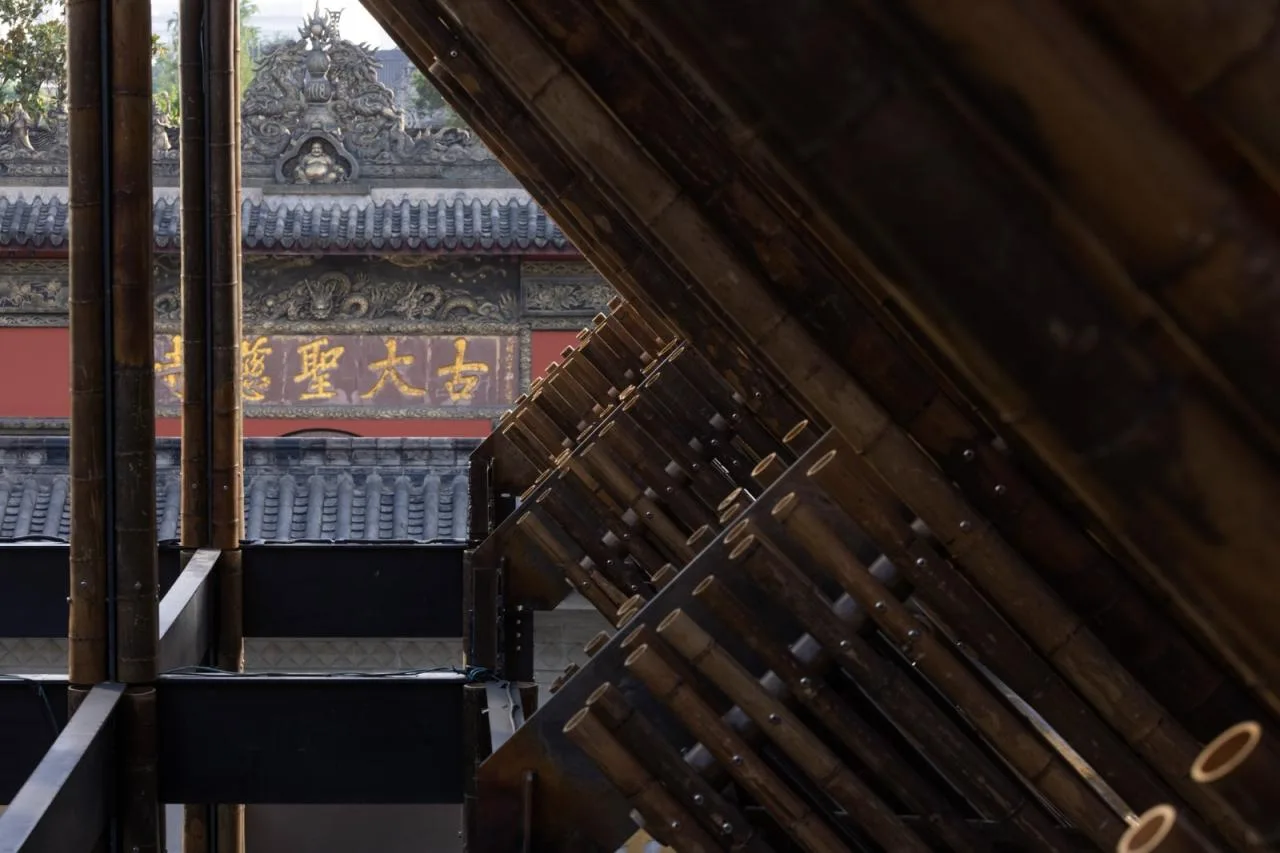
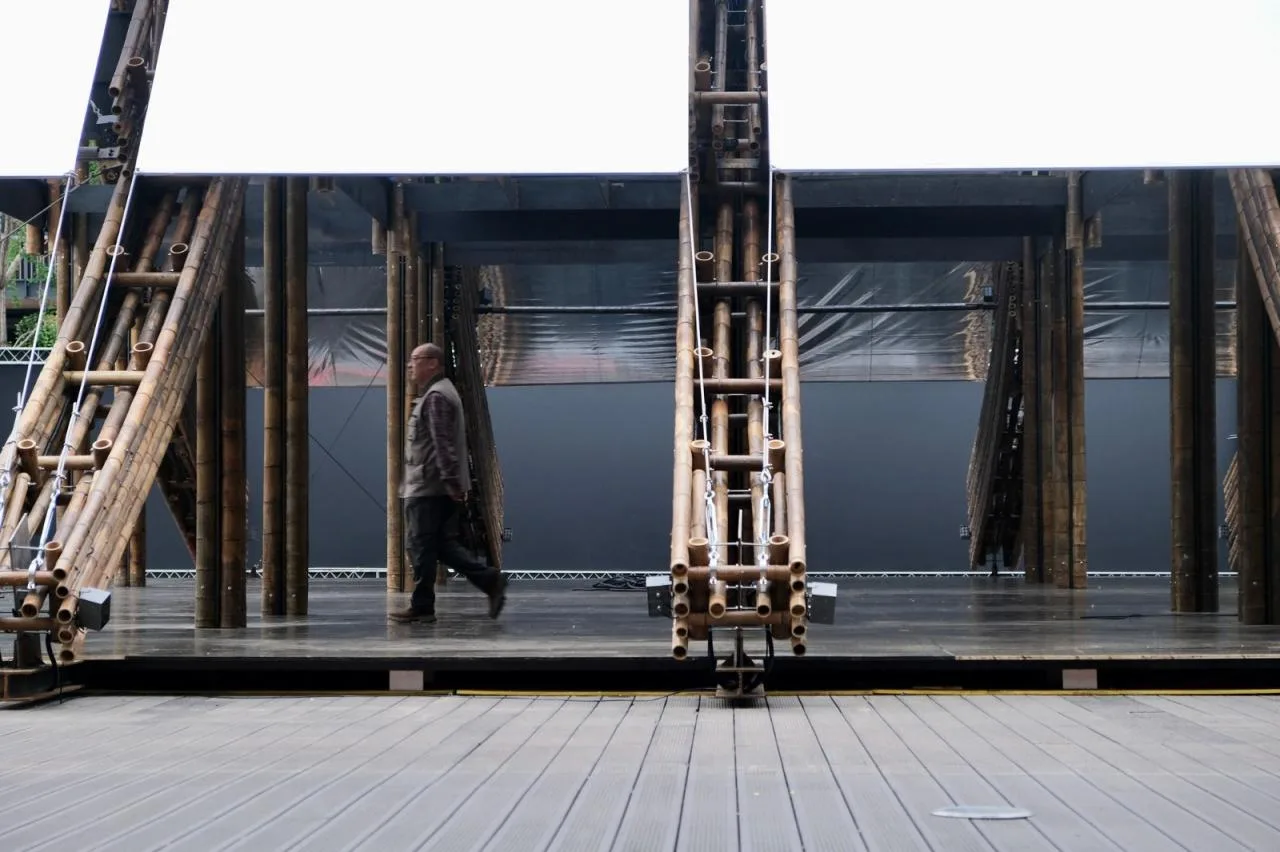
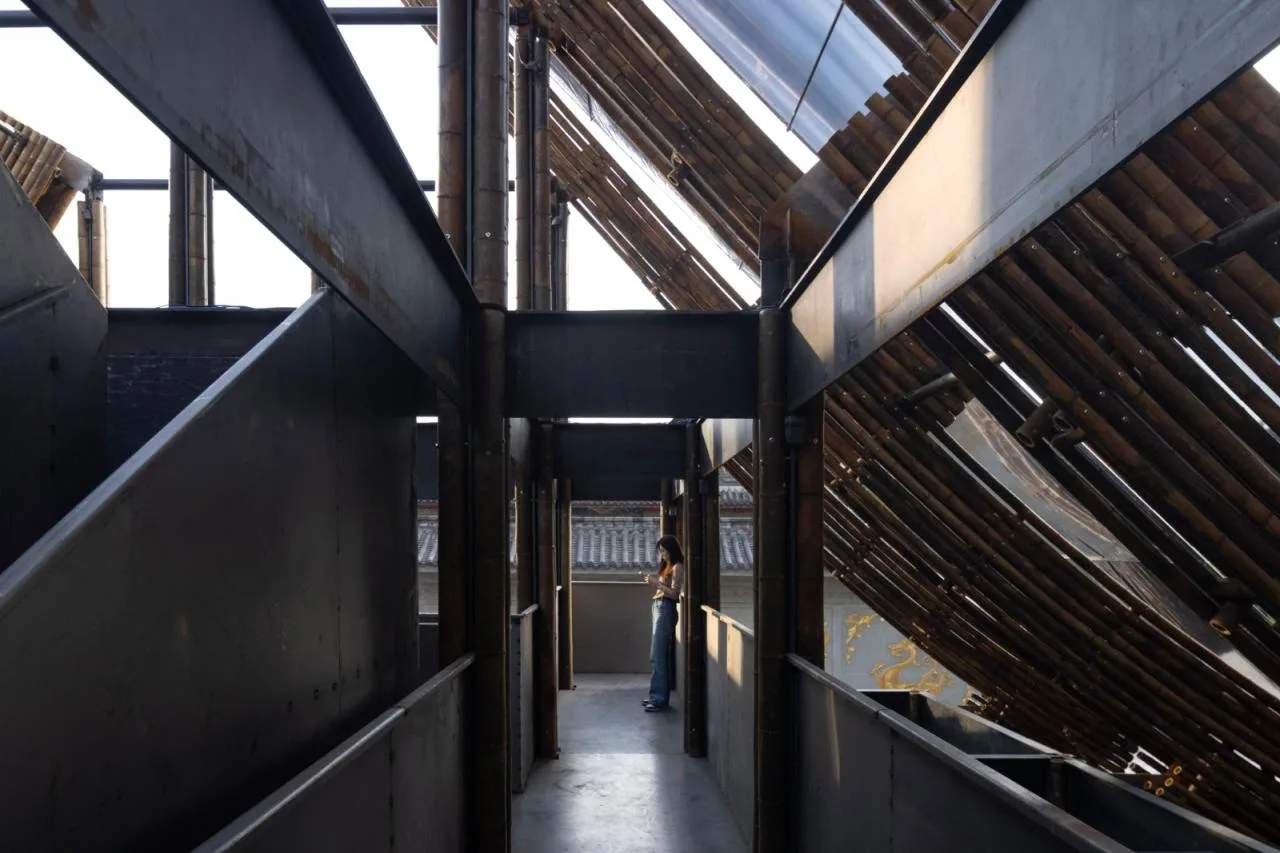
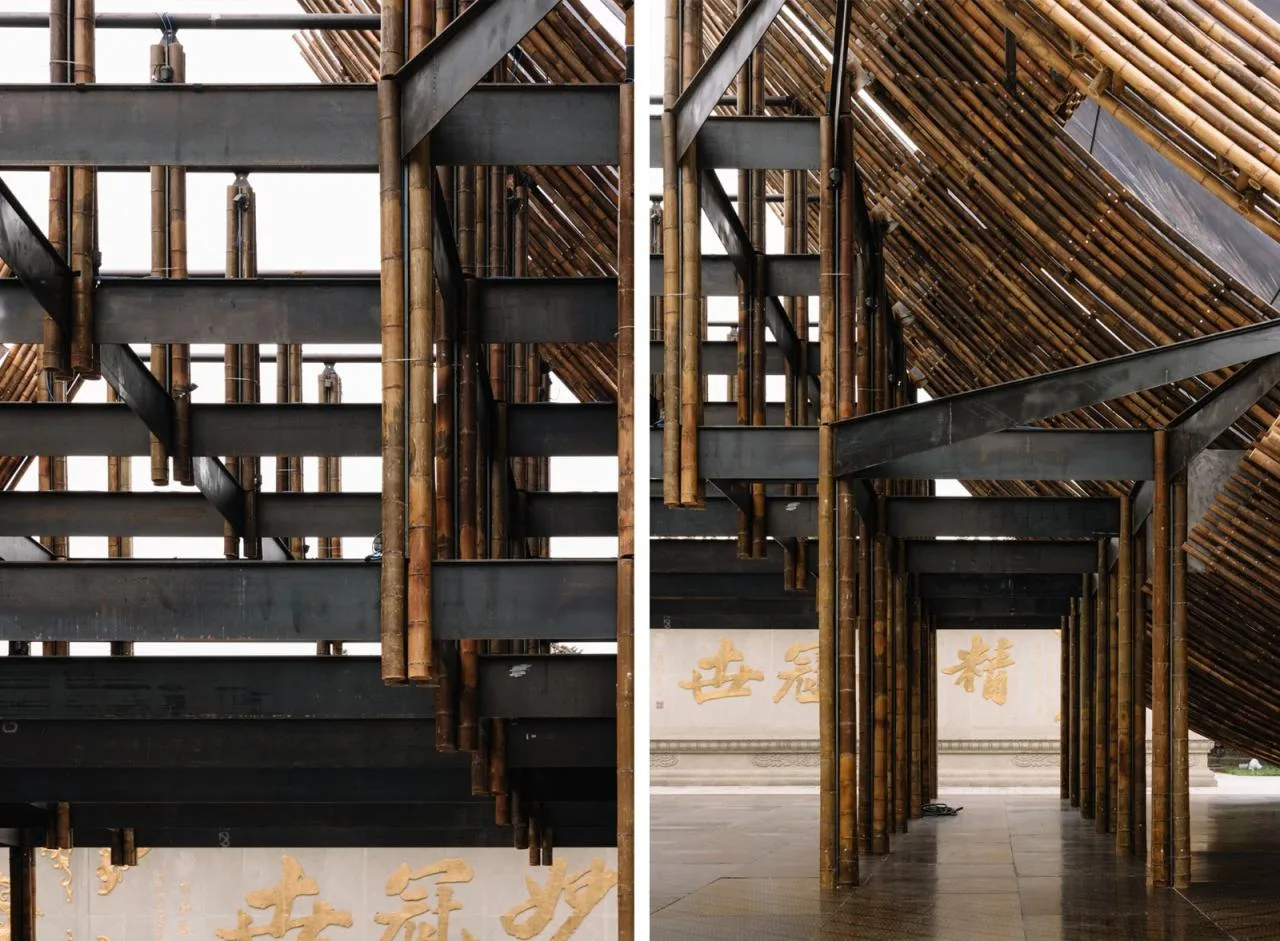
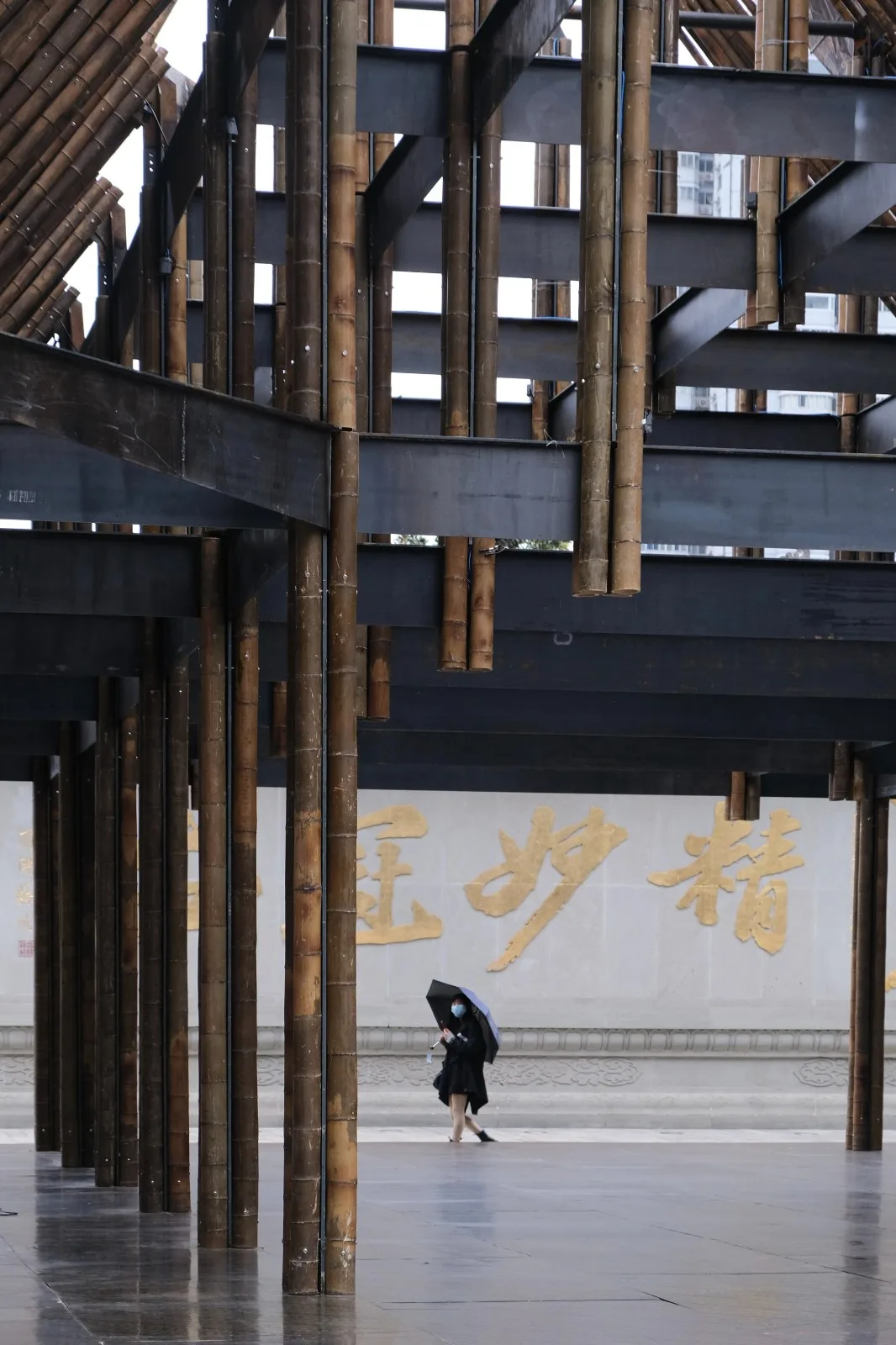
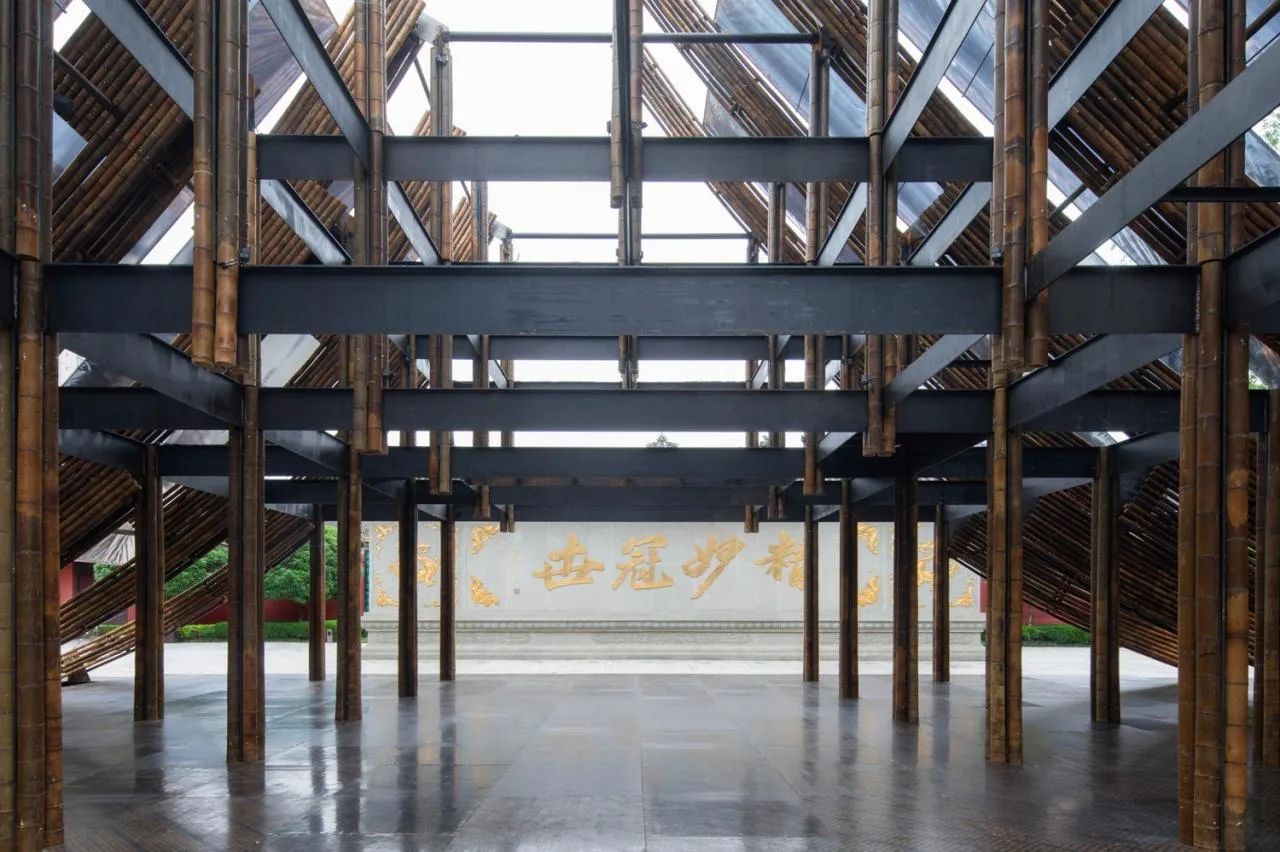
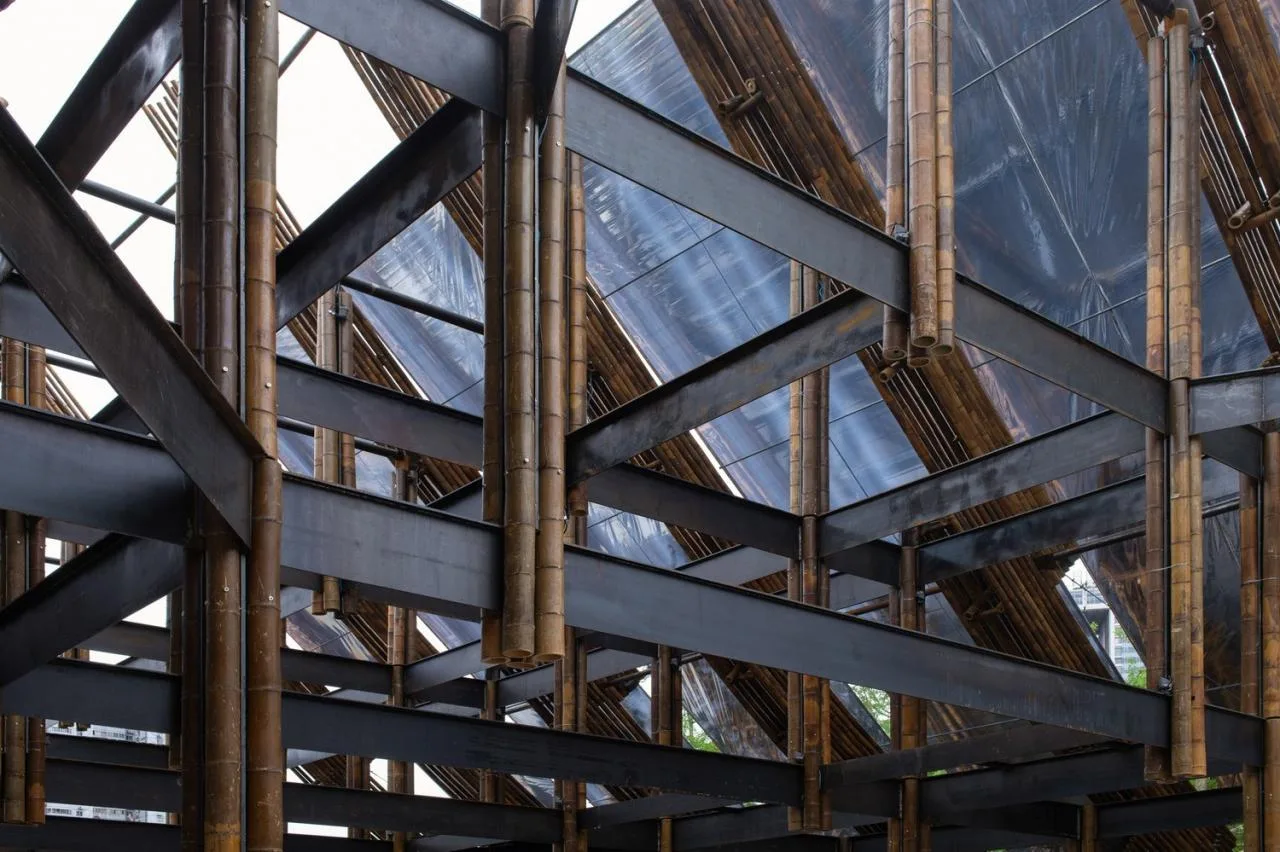
The architecture utilizes the traditional Chuandou structure from Sichuan province as a framework to support the “skimming and pressing beams.” The second floor features steel-structured corridors, while the third-floor platform offers views of Shenggu Daci Temple’s plaque to the north and panoramic vistas of modern streets and alleys to the west. This space serves as a temporal corridor merging ancient and modern eras. On the Chuandou structure, another vertically staggered and interconnected system is developed.
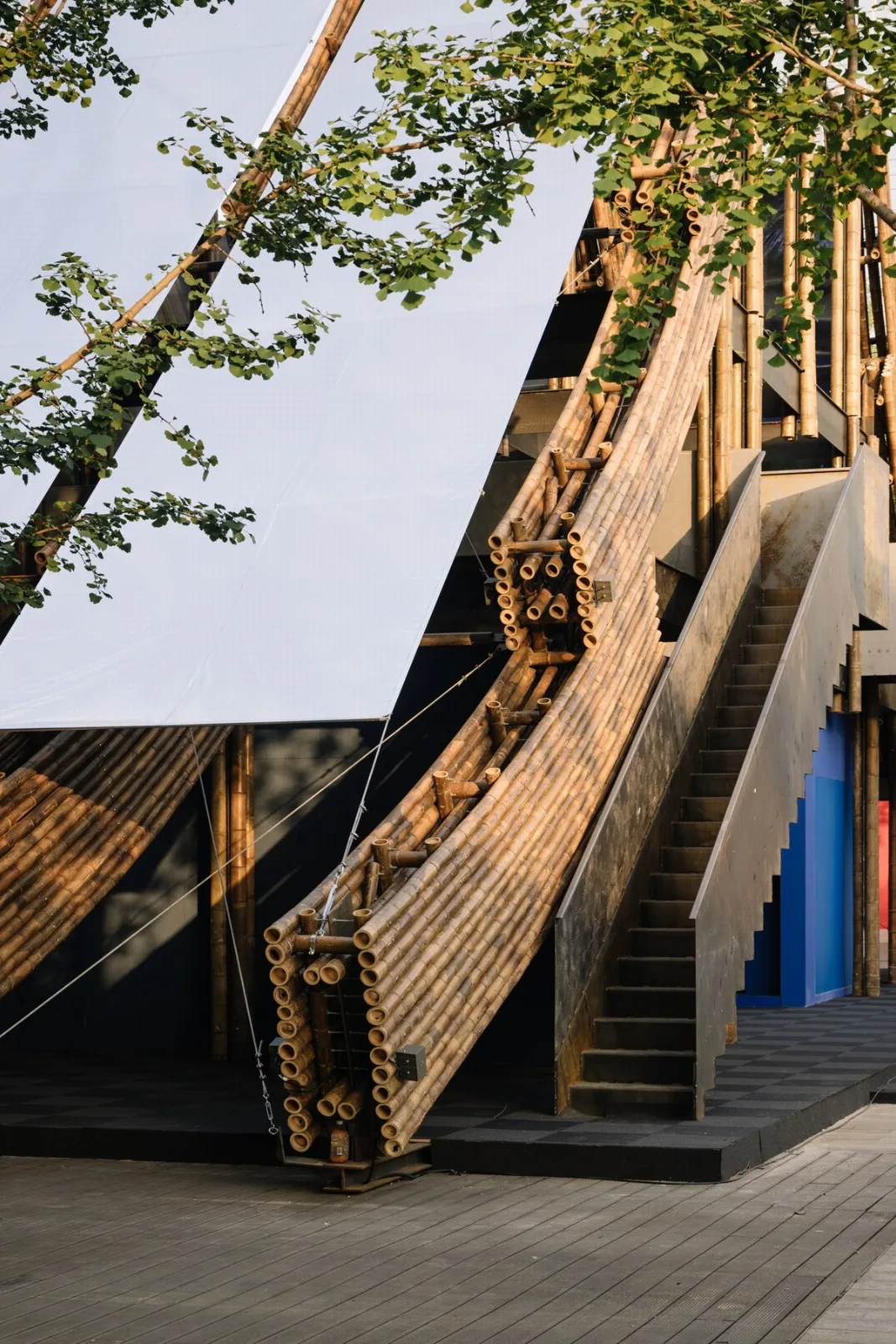
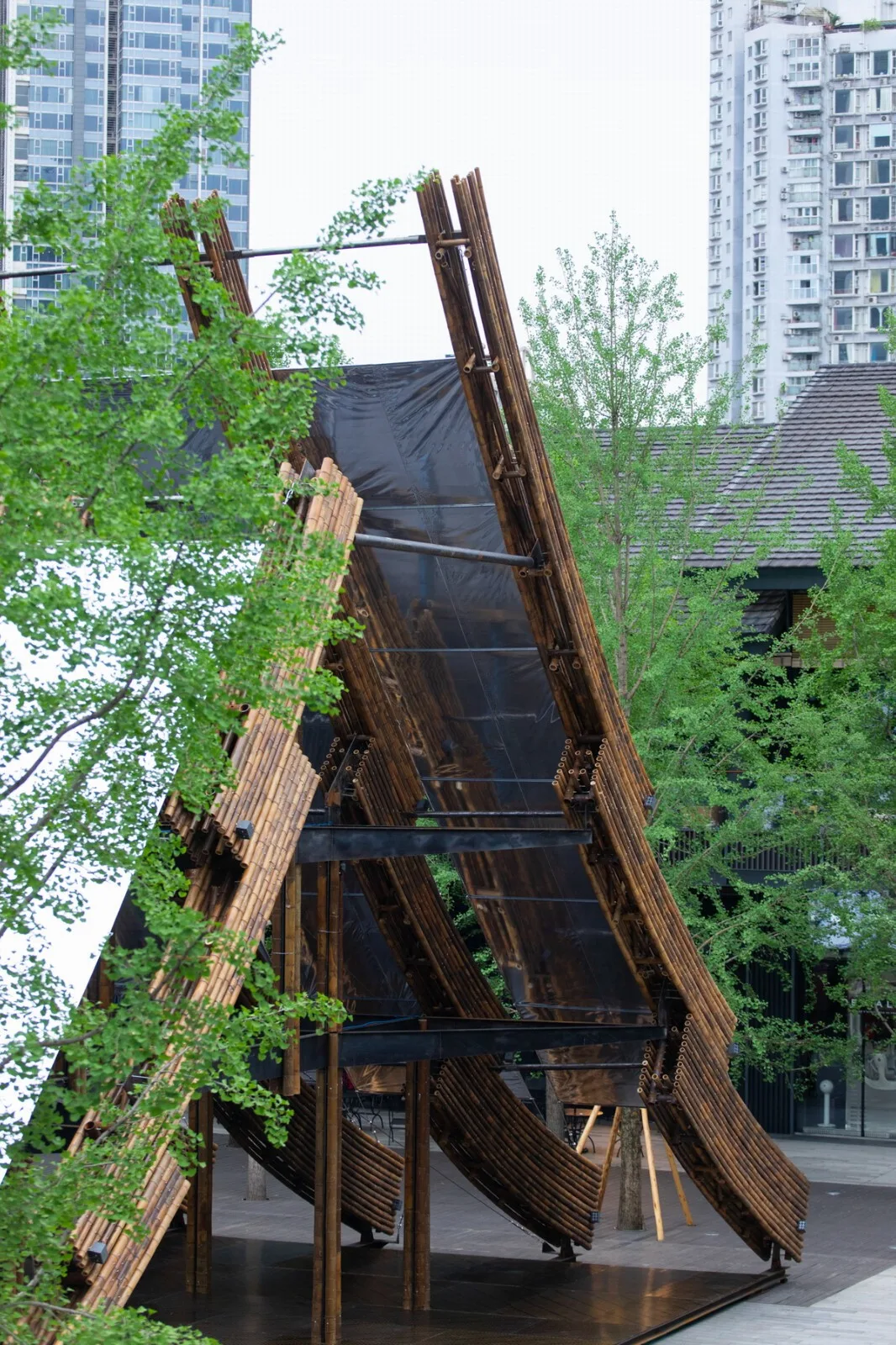
Disassembly and Assembly of Three-Mode Array Bamboo Steel Beams
Bamboo beams are constructed by assembling bamboo poles into frames, which then form high-quality bamboo spans, ultimately creating “bamboo beams.” Steel anchor bolts connect the bamboo poles, while steel inserts join the bamboo beams. A total of 42 bamboo beams were fabricated at the Jielu factory in Yancheng and transported to Chengdu for final installation. The bamboo beam system uses an open web truss structural design, which is lightweight and hollow, facilitating long-distance transport and efficient crane assembly on site.
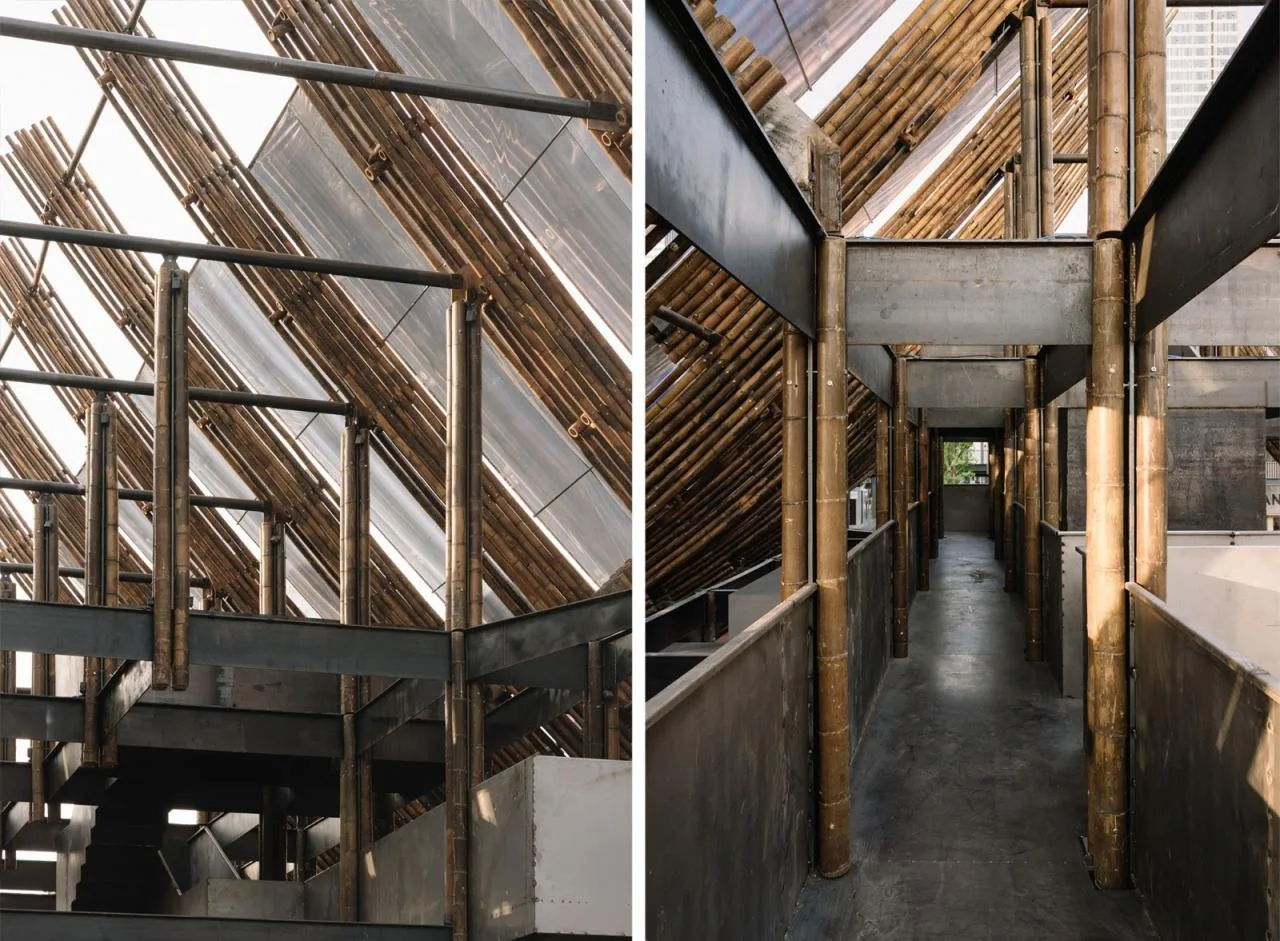
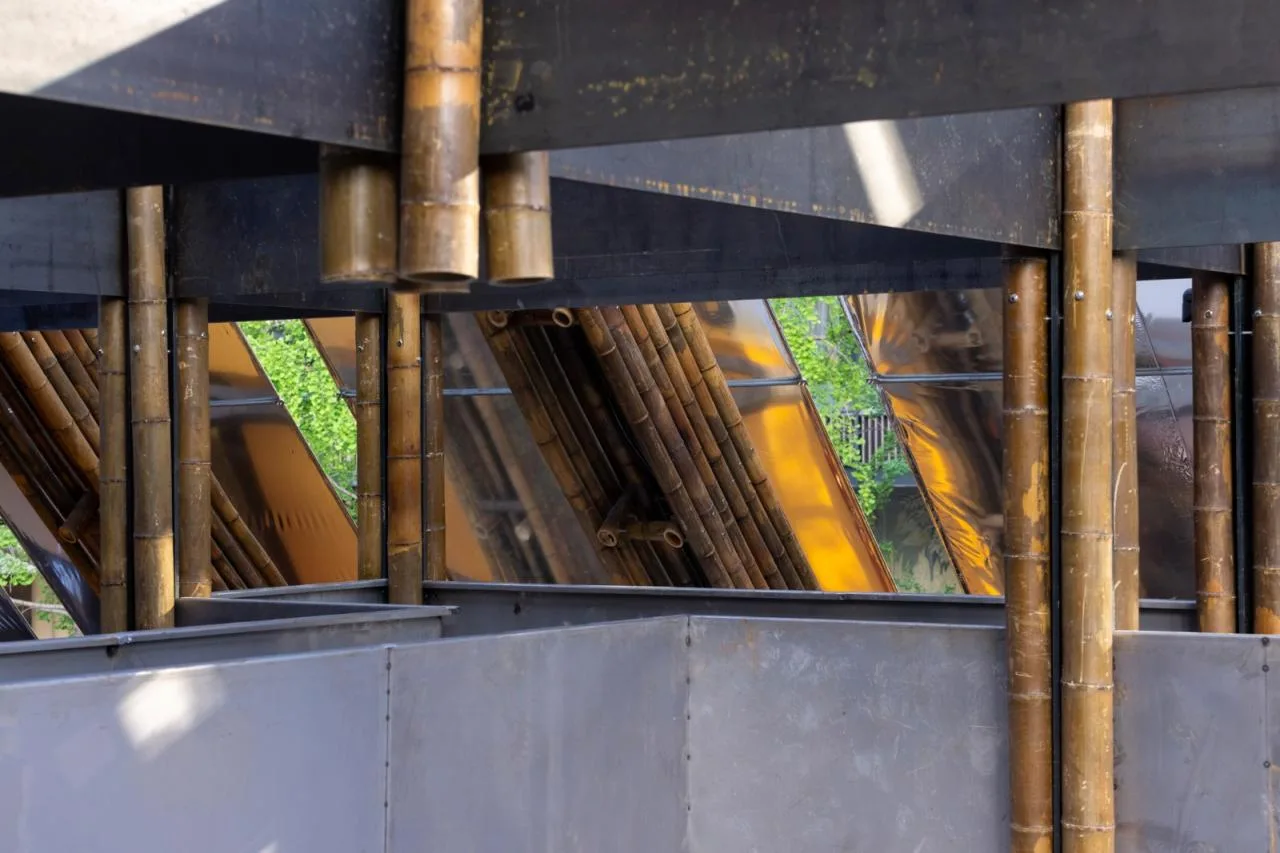
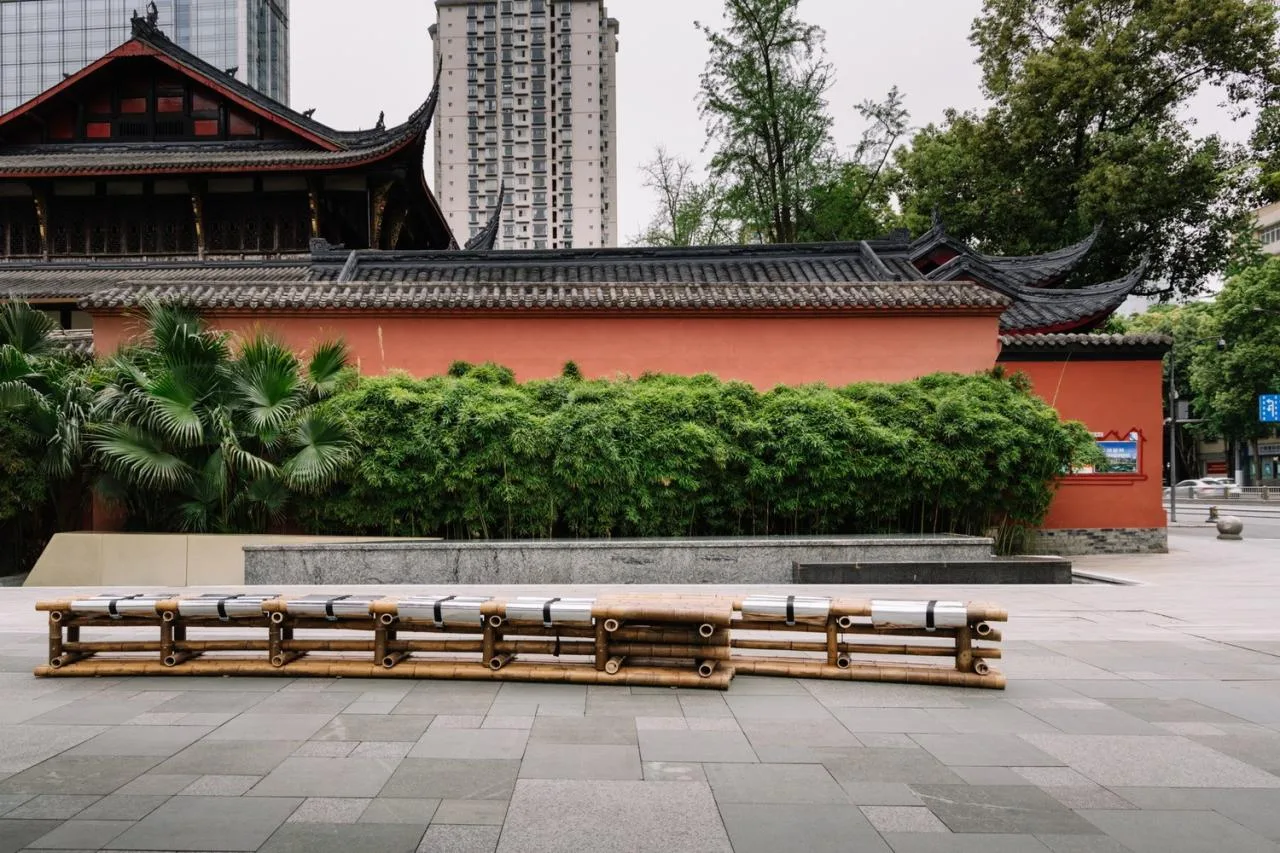
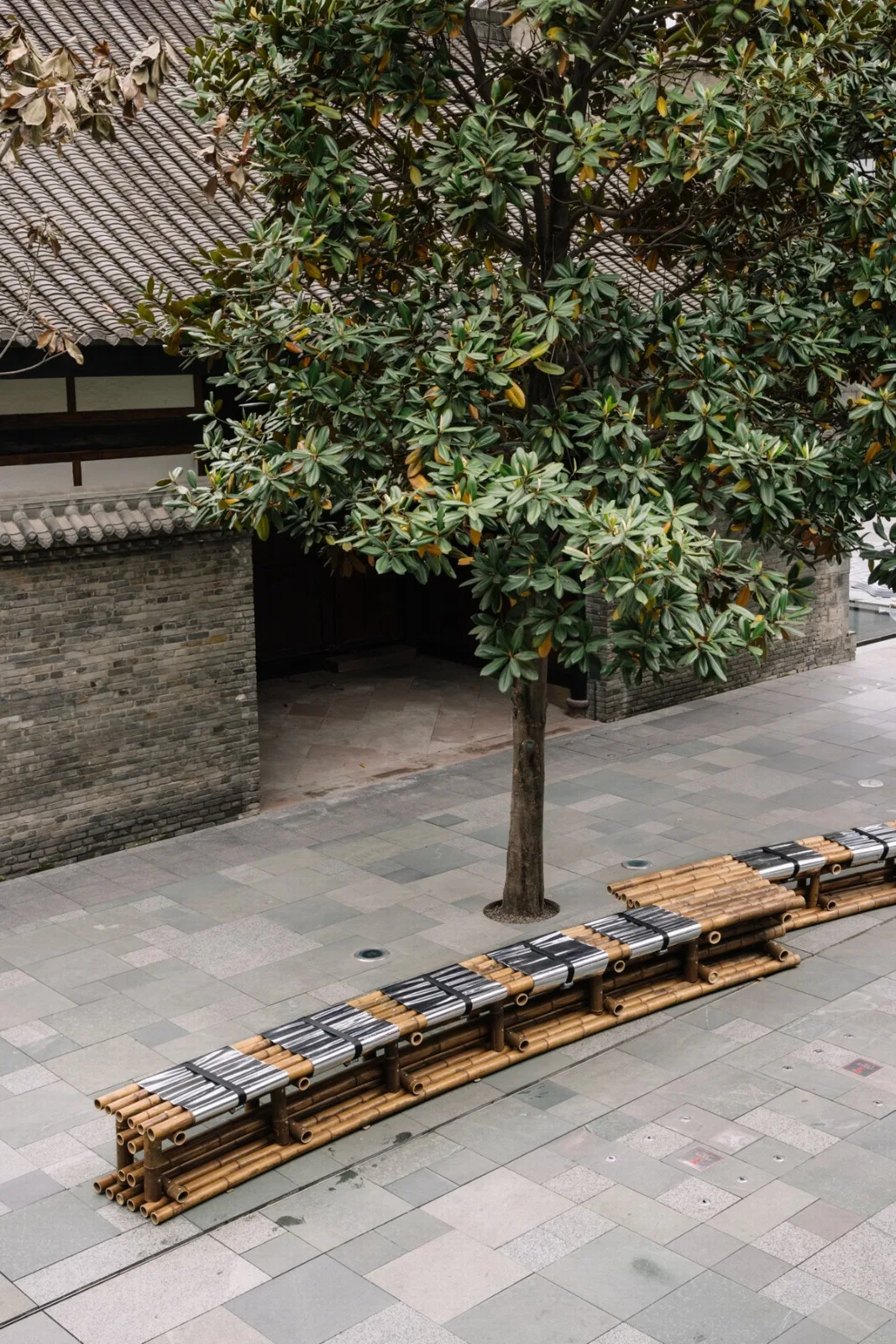
Four bamboo stools are covered with a renewable, semi-transparent silver film tensioned externally. This film is assembled economically using “welding and ironing” techniques for the seams. Each stool measures 2.6 meters wide horizontally and 10 meters long vertically. The ends are secured by 3mm steel cables fixed to steel bolts via hoop rings, tightened with orchid screws to maintain tension and a straight form.
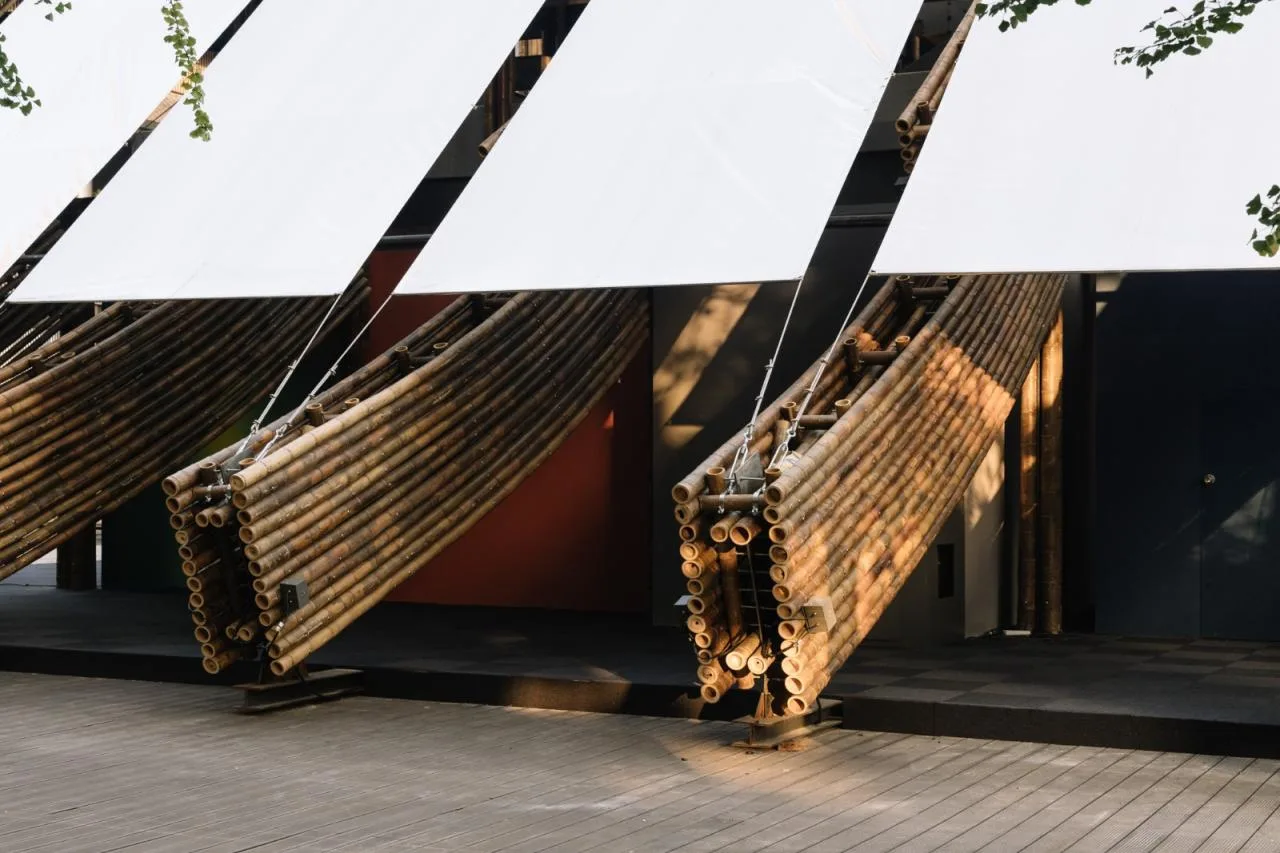
Following the exhibition, some bamboo benches were placed throughout Chengdu Yuanyang Taikoo Li’s public spaces to provide rest areas for visitors. Another batch was donated to the Taikoo Real Estate Zhuchuang Community Center, offering seating for local residents, thereby achieving a circular and sustainable use of materials.
Project Drawings
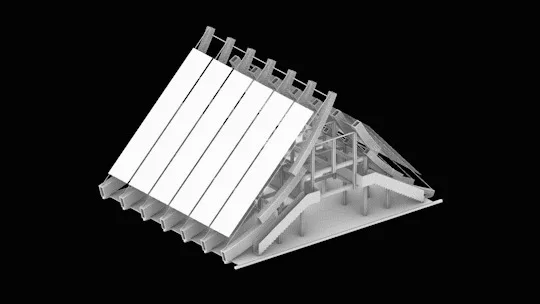
△ Model diagram
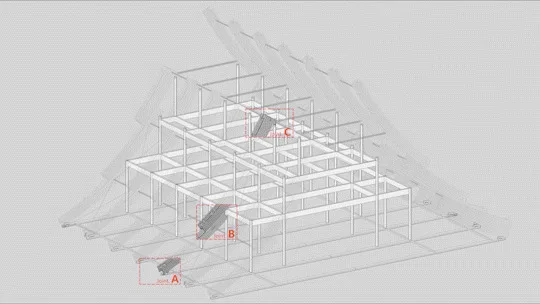
△ Structural analysis diagram
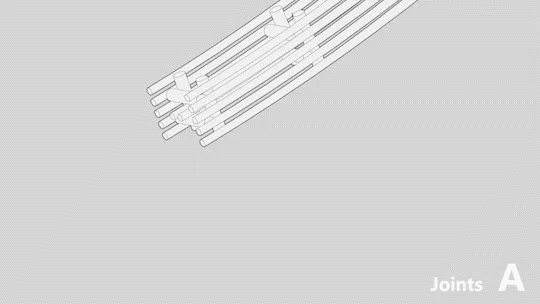
△ Structural analysis diagram
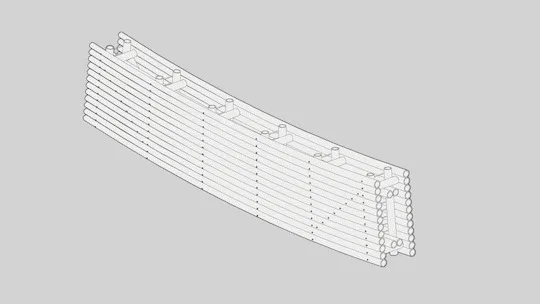
△ Construction Process Diagram
Project Information
Architect: Bare Building Renewal
Area: 465 square meters
Project Year: 2023
Photographer: Existence Architecture – Architectural Photography, Han Shuang, Wen Studio
Lead Partners: Bai Zhenqi, Yu Ying
Vice Partner: Xue Leqian
Resident Architect: Wu Enze
Design Team: Wu Enze, Sheng Mengxuan, Wu Yejing, Liang Xiaoyi
Curator: Pinhui Art Curator
Structural Design: Luan Cong Construction Design Firm
Lighting Design: ELA Seeker
General Construction Management: EMCC Jielu
Construction Consultant: Zhang Chenghua
Steel Structure Construction: Tuogu Building
Bamboo Structure Construction: Shanghai Jingdao Original Bamboo
Media Advisor: Han Shuang
Illustration Design: Sheng Mengxuan, Huang Hongsheng, Wu Yejing
Location: Chengdu















Must log in before commenting!
Sign Up