
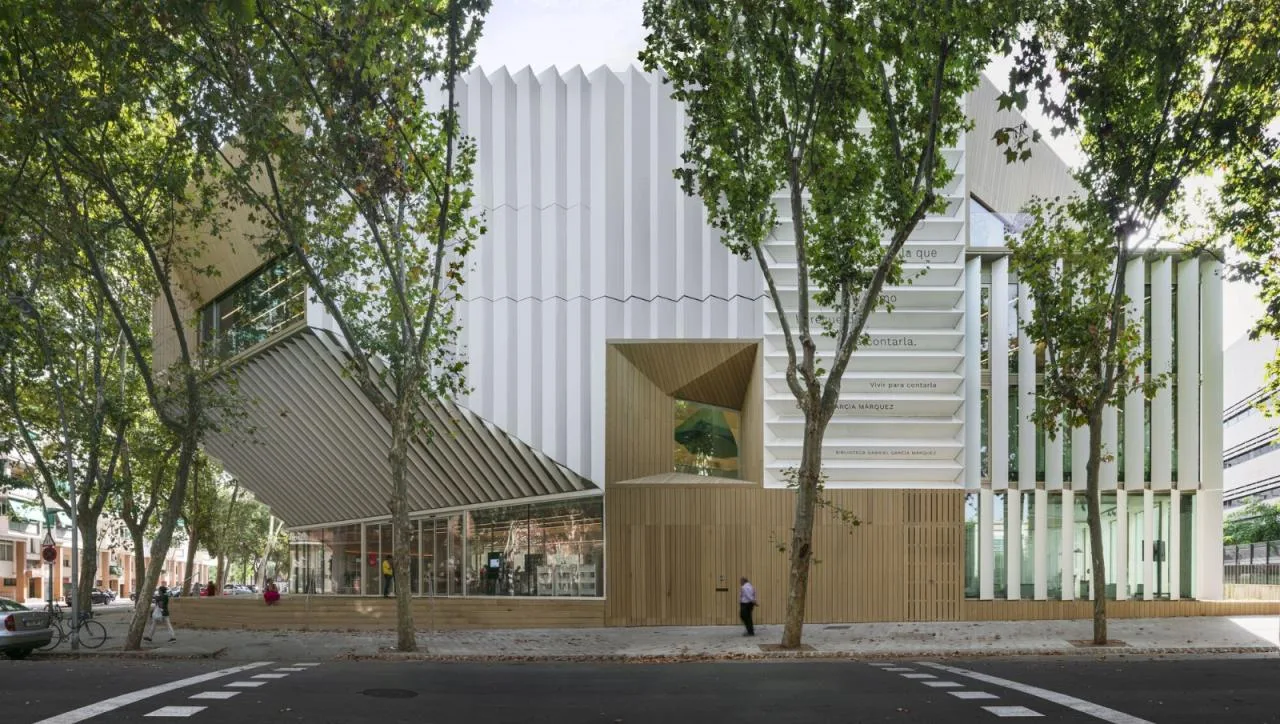
The Gabriel Garcia Marquez Library is situated in a densely populated urban area of Barcelona. Reflecting the city’s rich cultural context, the building’s geometric form adapts to its surroundings by echoing Barcelona’s traditional “chamfered” urban texture, a characteristic feature of neighborhoods throughout the metropolis.
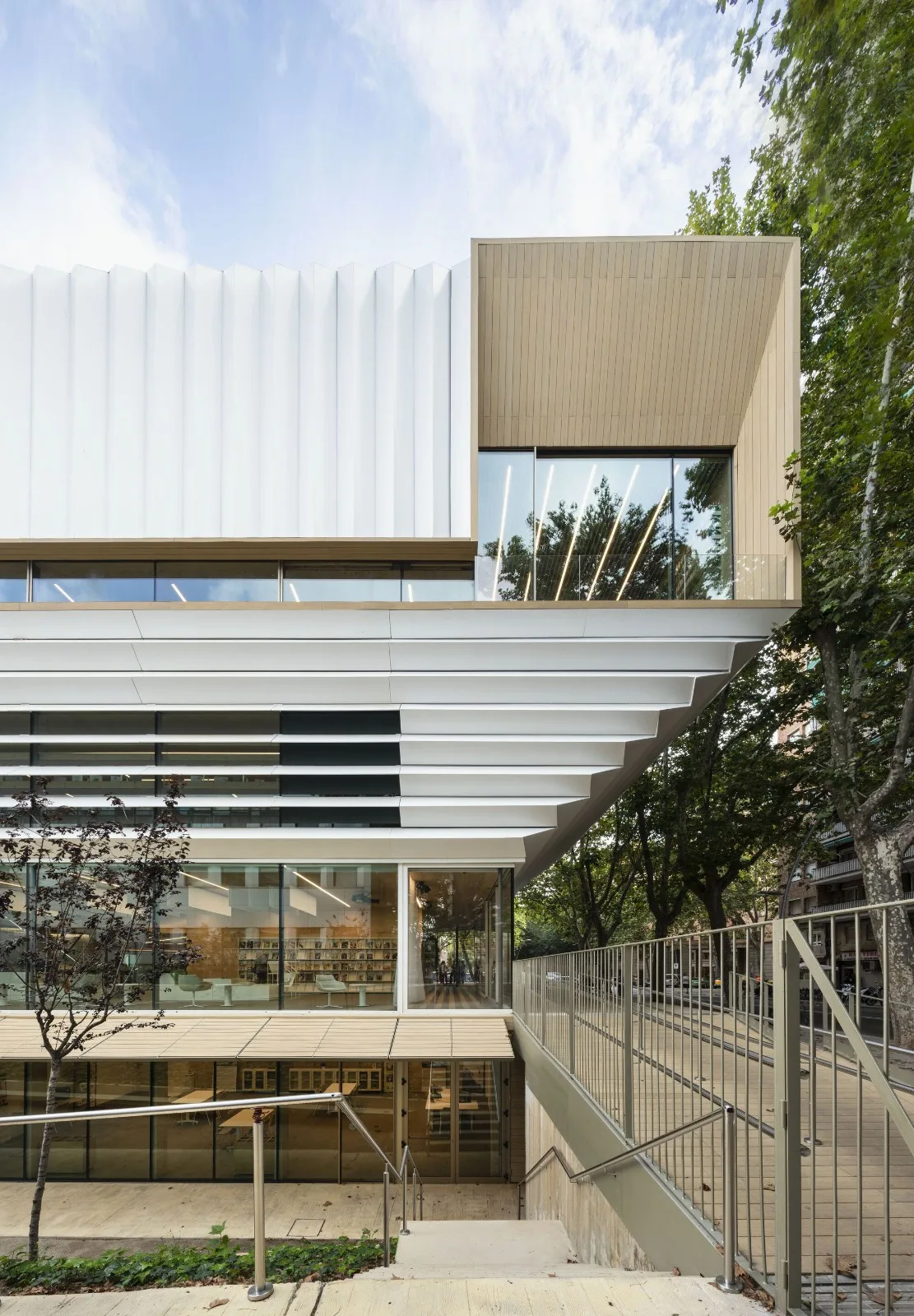
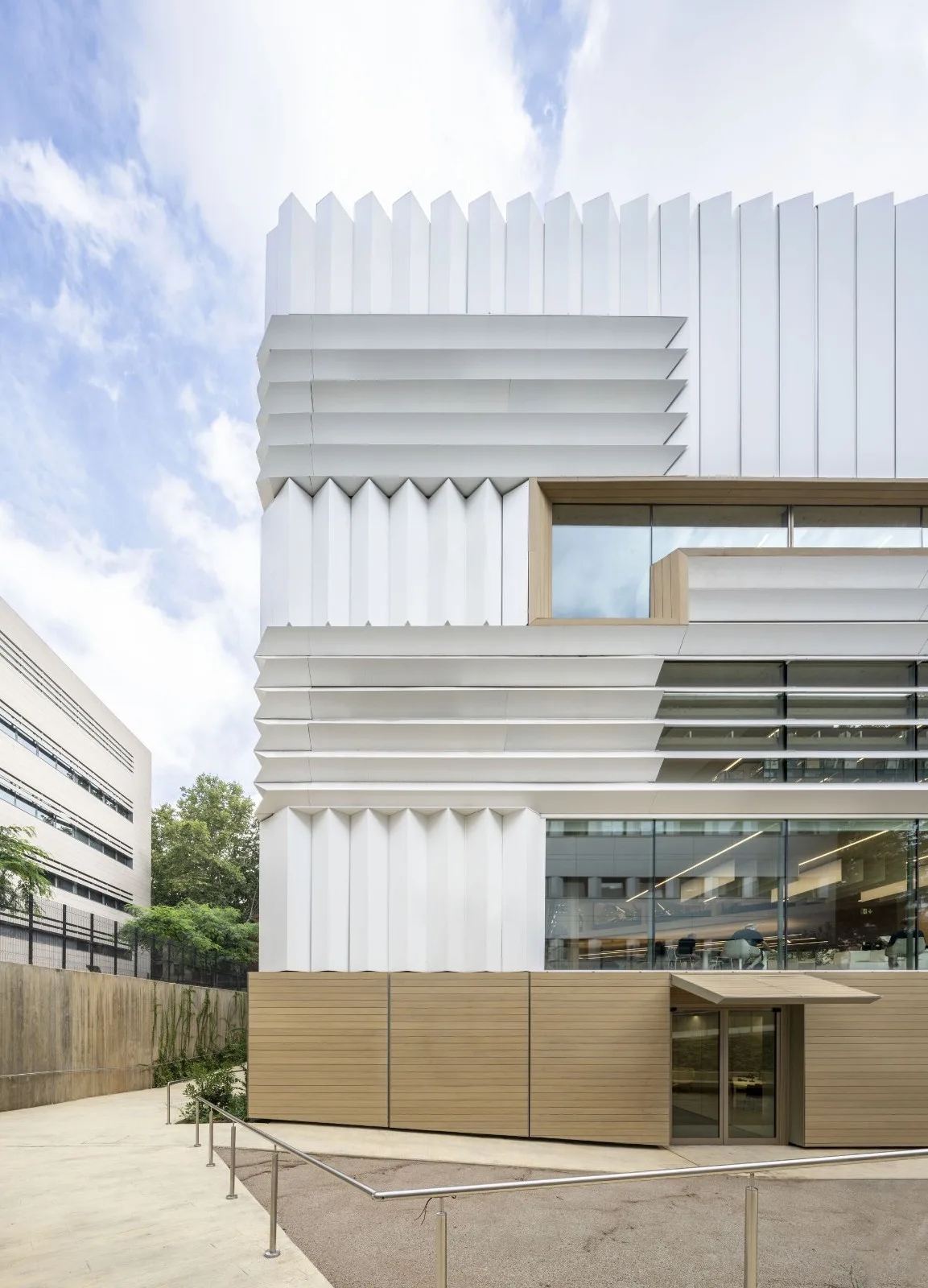
The building acts as a sculptural presence perched on an elevated plaza, allowing pedestrians to pass smoothly along the cultural axis of the block. The library is suspended above this open space, creating a sheltered porch area, while mature trees stand on the opposite side. The four chamfered corners of the white volume direct attention toward key scenic points in the environment. These cutouts foster a comfortable and inviting atmosphere within the library, while the use of warm wood accents adds aesthetic charm and connects the building to Barcelona’s urban planning tradition.
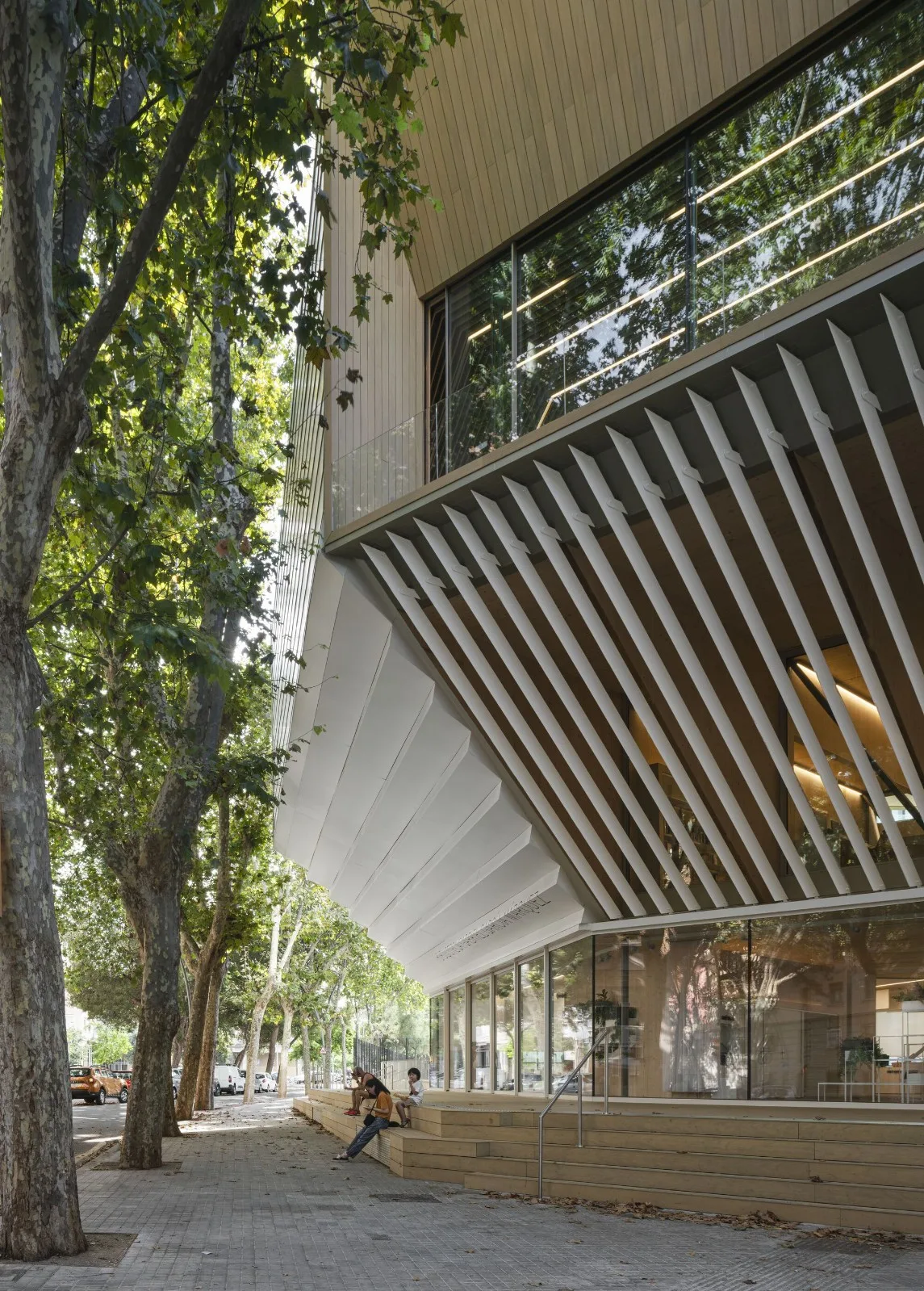
The structure resembles a stack of open books with folded and perforated pages. Each ‘book’ consists of dense wooden panels oriented in different directions. This arrangement not only defines spatial orientation but also optimizes lighting, functionality, and connectivity with the cityscape.
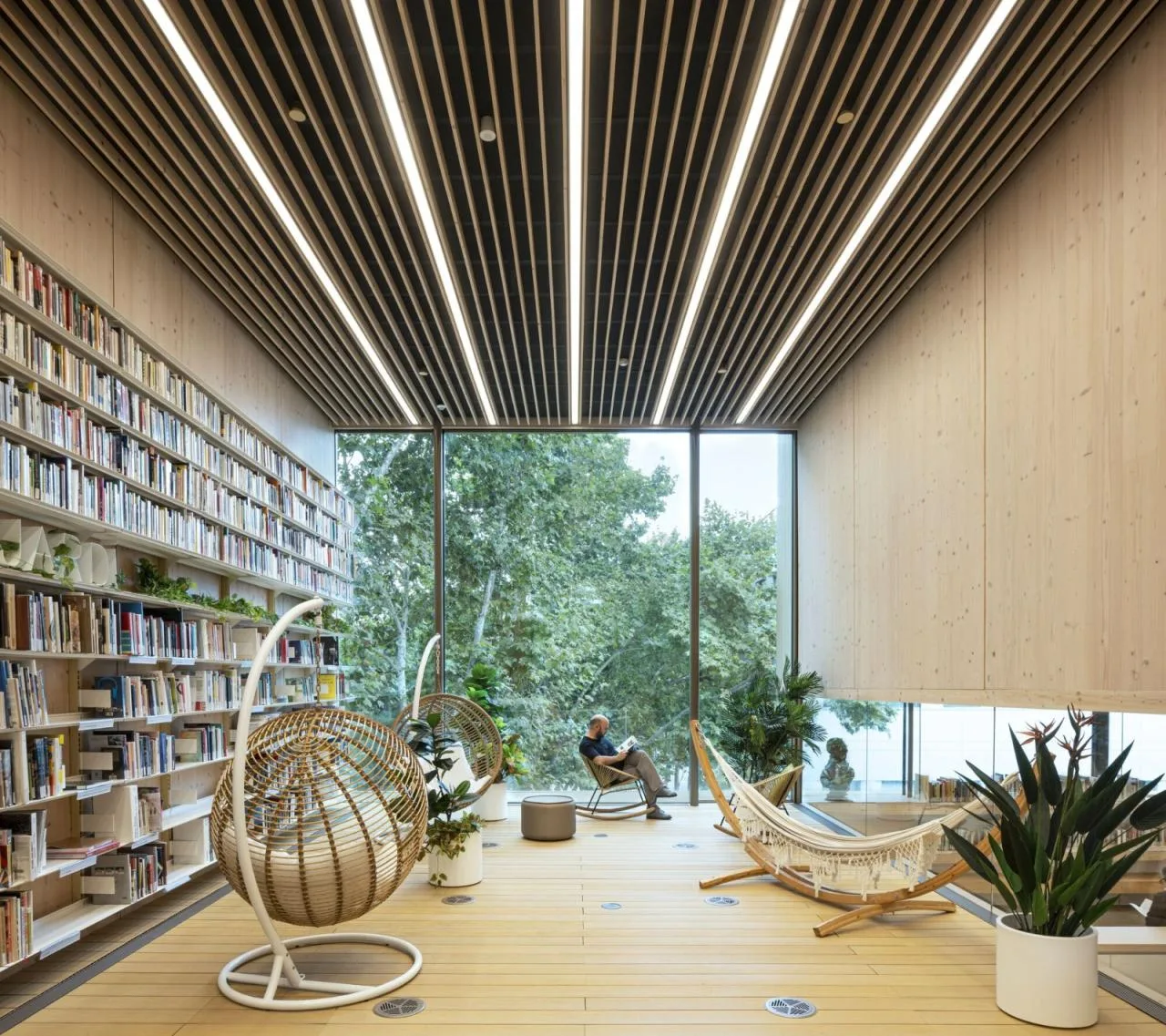
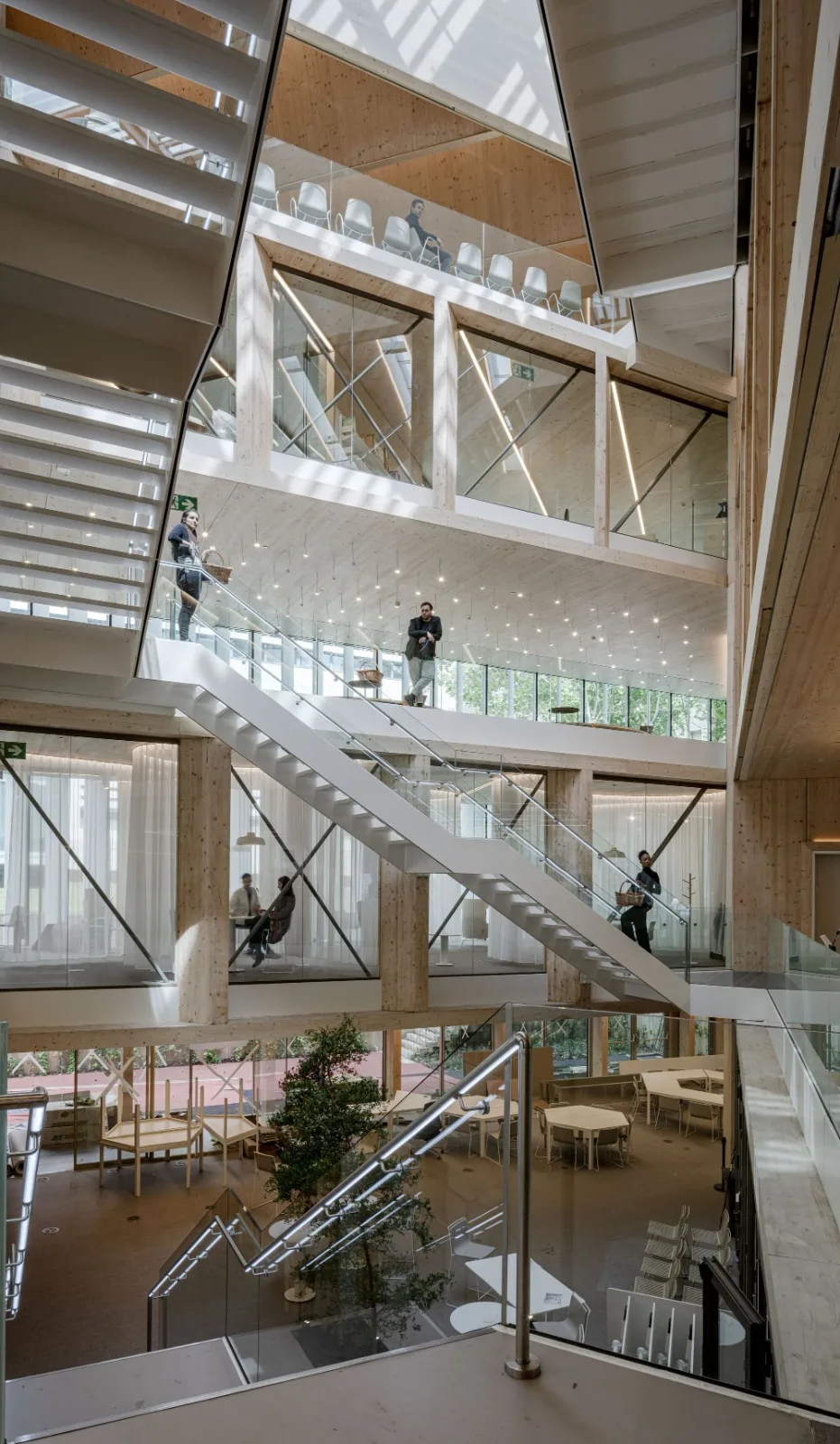
The wooden structure offers several innovative advantages, making it an ideal choice for realizing the architectural vision. It enhances sustainability by reducing the project’s carbon footprint and greenhouse gas emissions. Additionally, the use of prefabrication and industrialized construction methods accelerates the building process, delivering significant time and cost benefits.
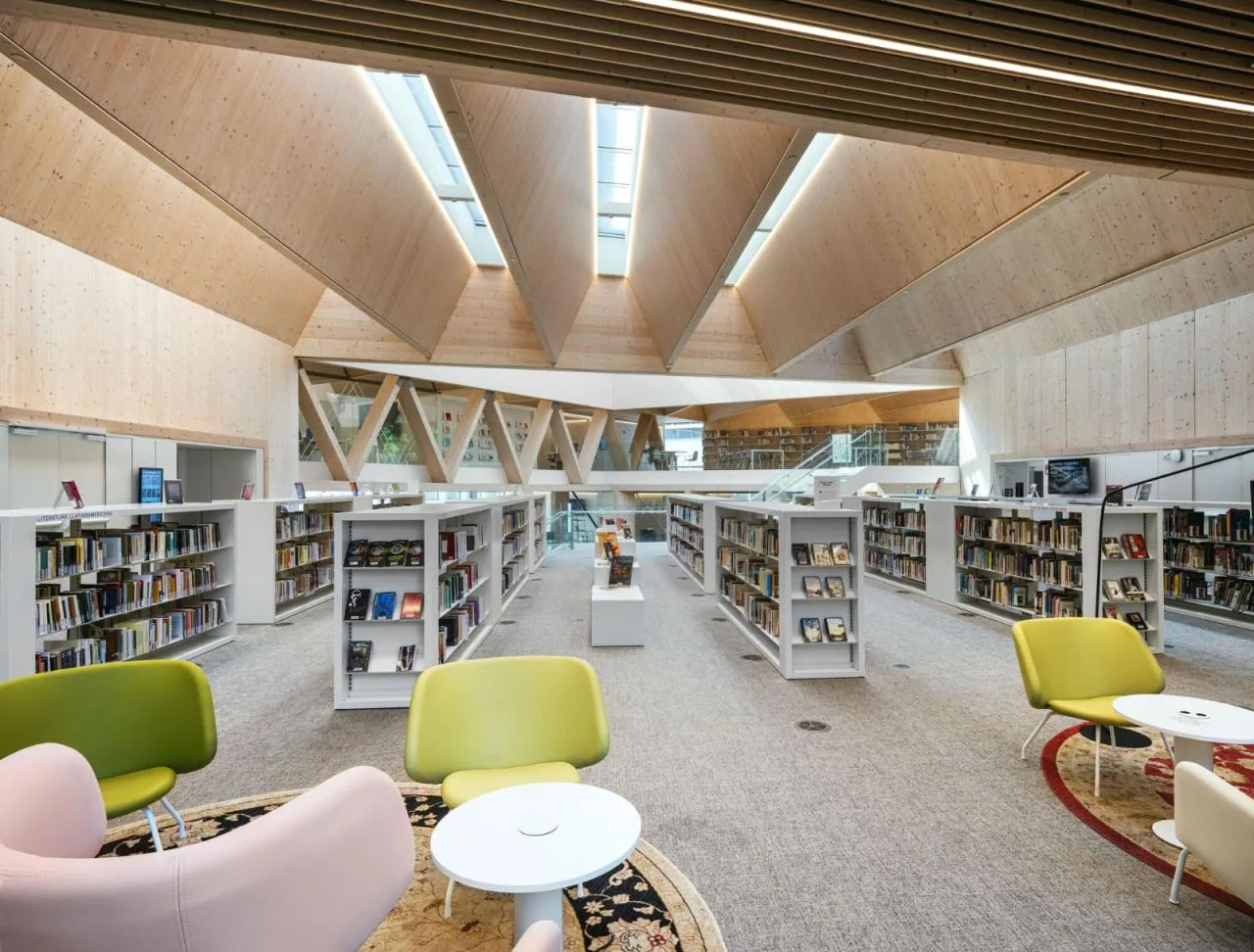
The library is organized around a large triangular courtyard that connects all functional areas via the main staircase. This expansive space introduces natural light into the heart of the building, enhancing interior illumination and acting as a solar chimney. This passive design strategy is especially effective in warm, humid climates, absorbing solar heat to warm interior air, which then rises and vents at the top, promoting natural air circulation.
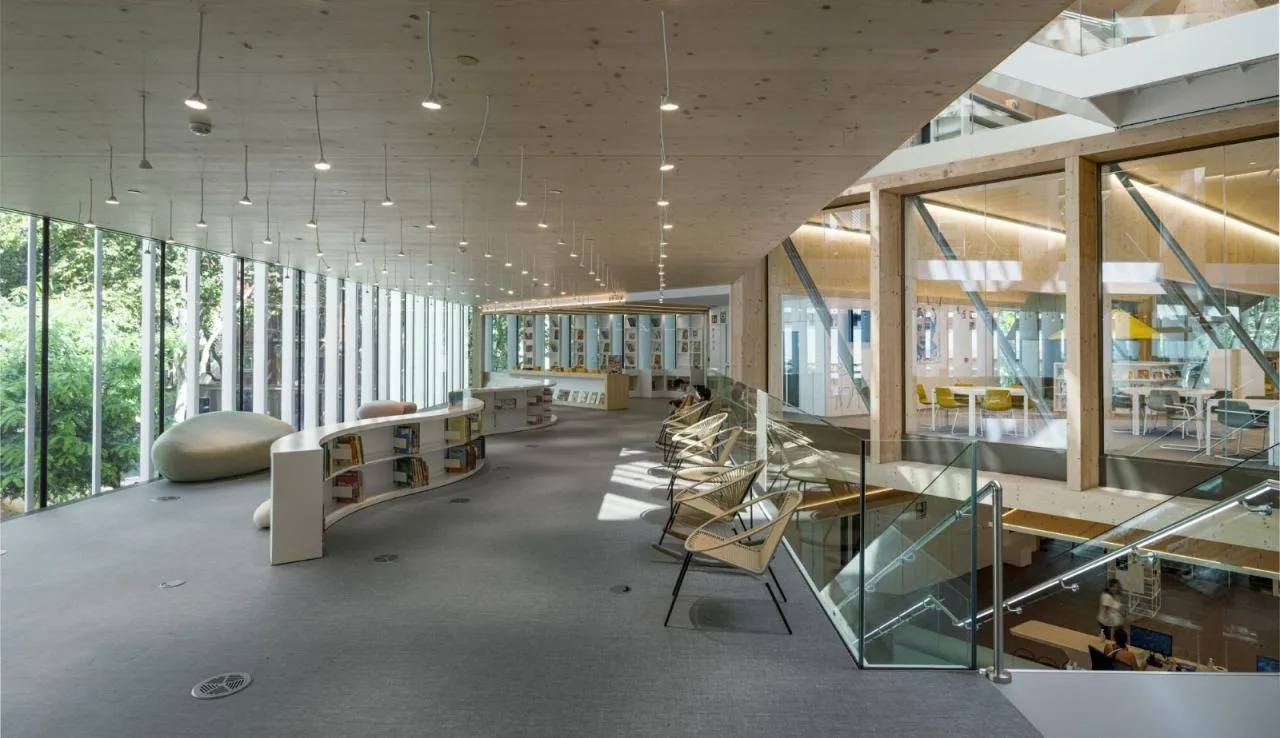
The structure features three vertical cores constructed from laminated wood panels that efficiently organize the library’s different zones. Two of these cores are triangular and house stairs and elevators adjacent to the internal courtyard. The third core is square and contains restrooms and storage areas. Along these vertical cores, two distinct spatial types alternate, clearly defined by function. The first is a closed space, combining dense wood and steel structures tailored to lighting and views. These enclosed areas accommodate acoustically sensitive functions such as multipurpose rooms, radio studios, group workspaces, children’s areas, internal offices, and labs.
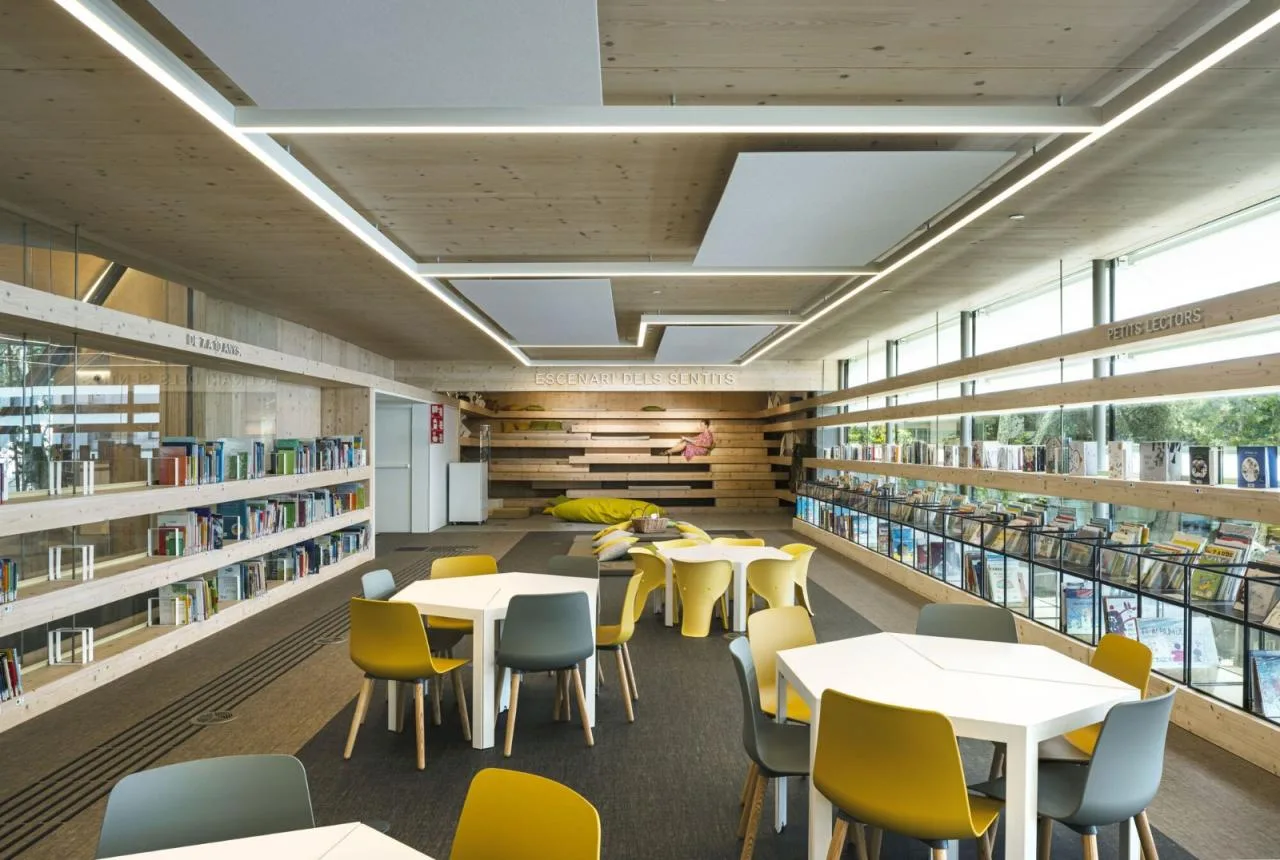
Throughout the project, the architect collaborated closely with the Library Alliance, following a comprehensive research plan. SUMA Arquitectura recognized libraries as vital public spaces that serve as catalysts and condensers of society. From an architectural standpoint, their significance lies not merely in the activities they host—which could happen anywhere—but in their unique spatial intensity and ecosystem quality. Consequently, the architecture—structure, façade, and more—is intricately connected to furniture, functionality, collections, and users.
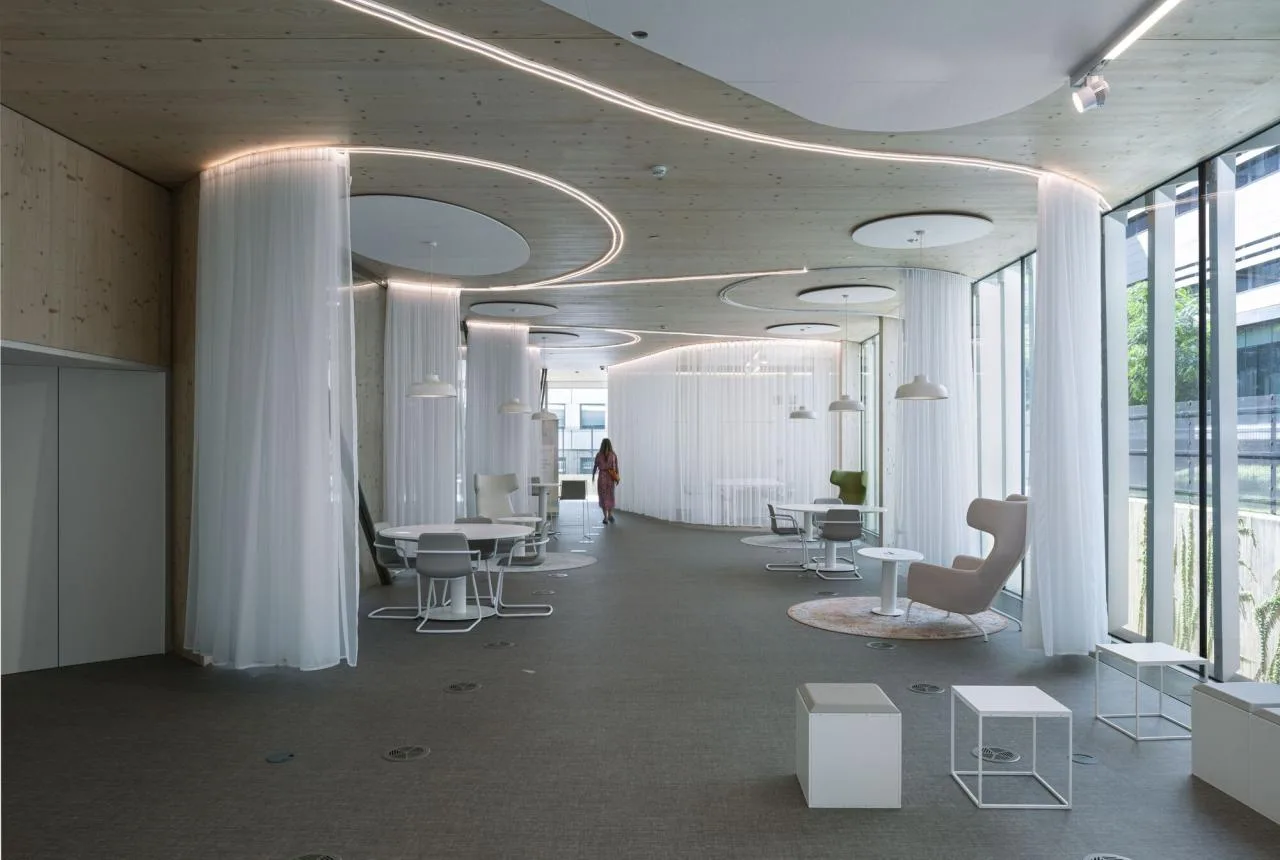
The architectural program is dynamic and tightly integrated, functioning as a true “social condenser” that encourages information exchange, communication, and knowledge creation. The Marquez Library offers a variety of ecosystems: outdoor terraces for fresh air; a creative discussion space on the first floor for gatherings; an expandable multifunctional hall in the basement for TV events or performances; and the central staircase for reading, meetings, and discussions. Through this diverse composition, the public library becomes a welcoming space where everyone can find their place—it is truly a home for all.
Project Drawings
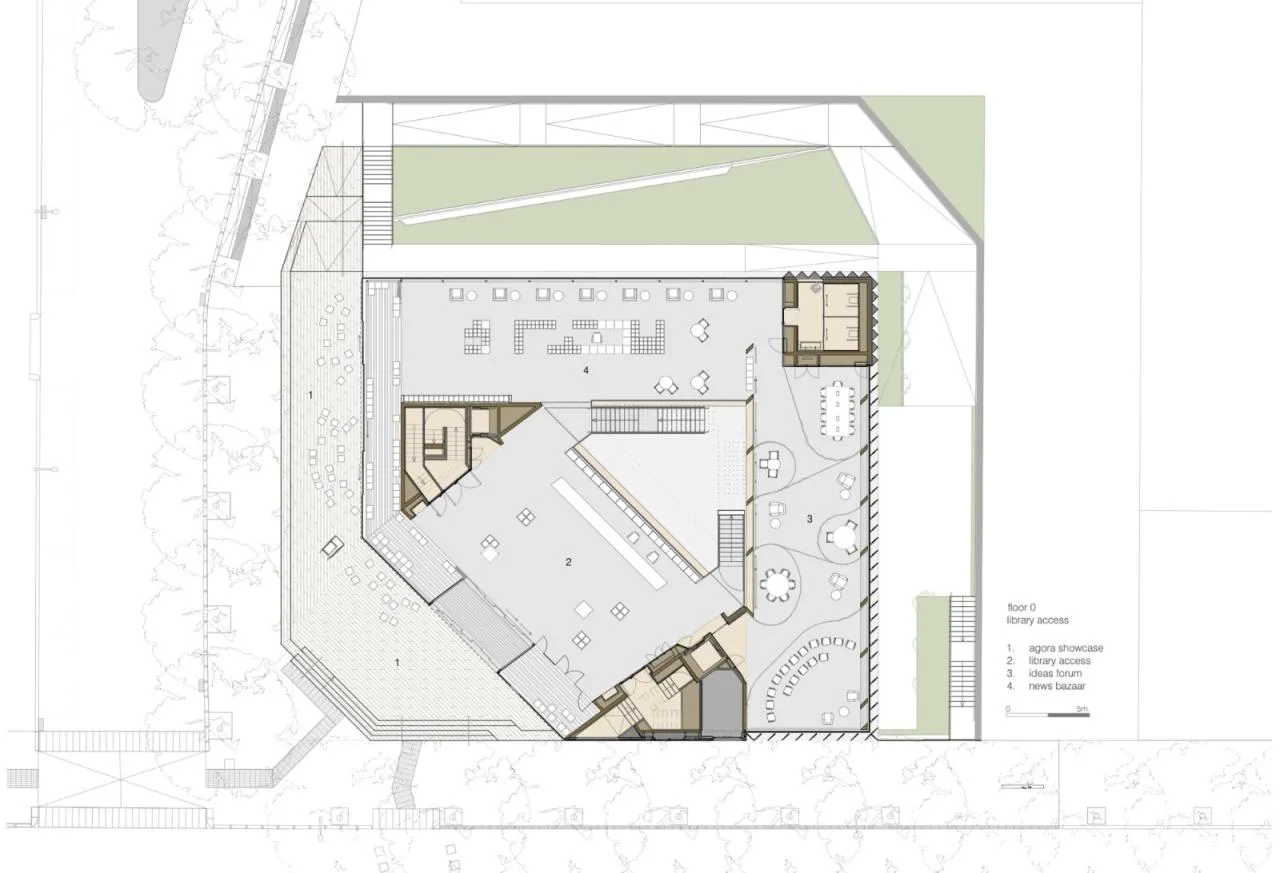
△ First Floor Plan
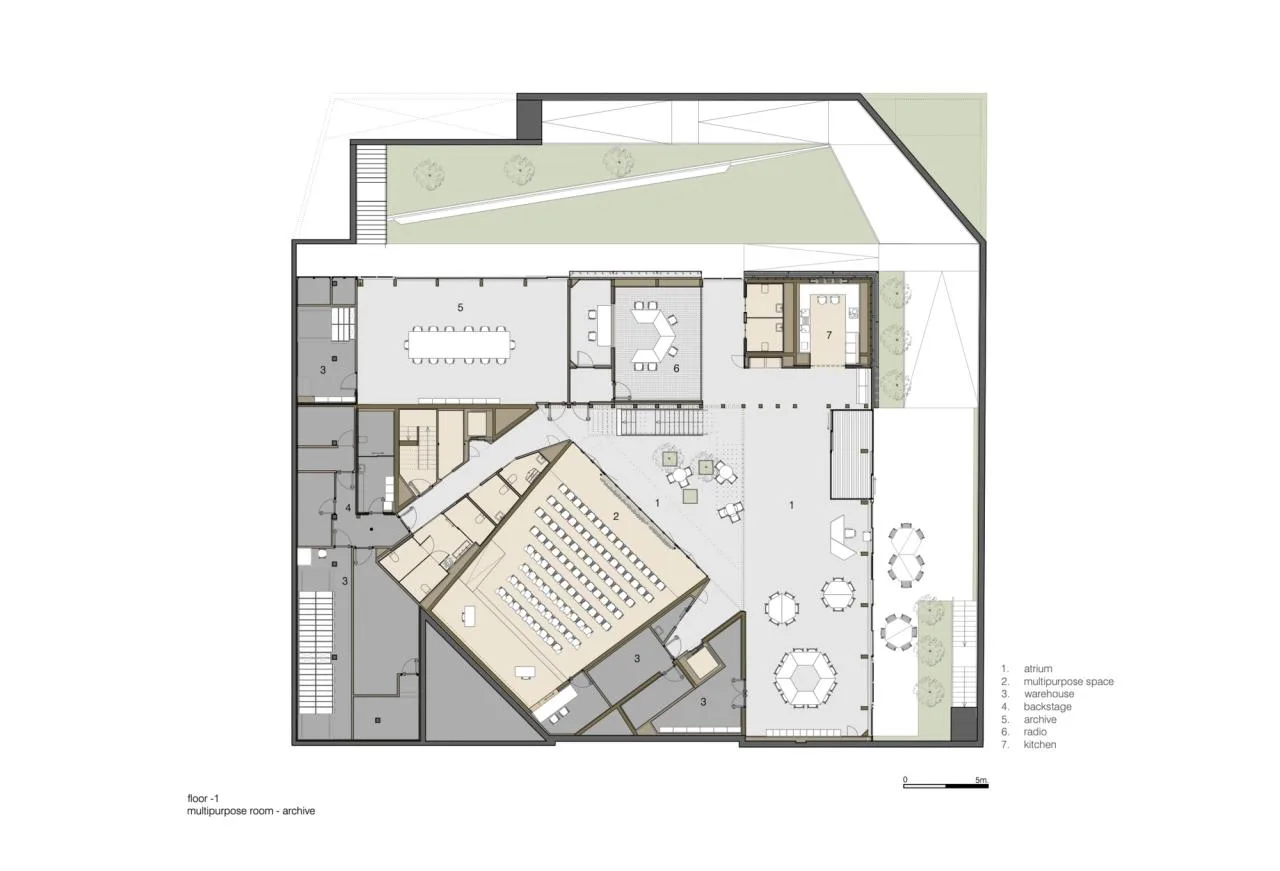
△ Basement Floor Plan
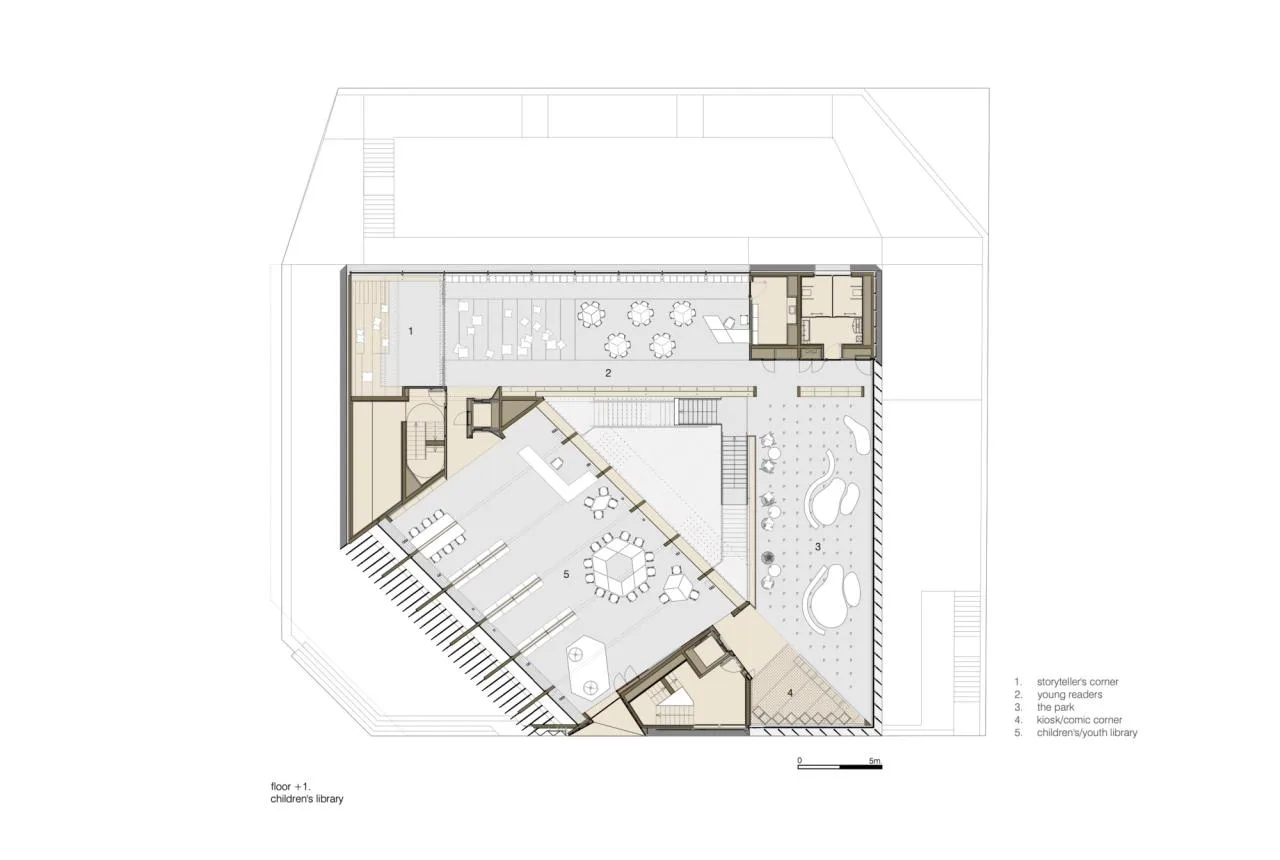
△ Second Floor Plan
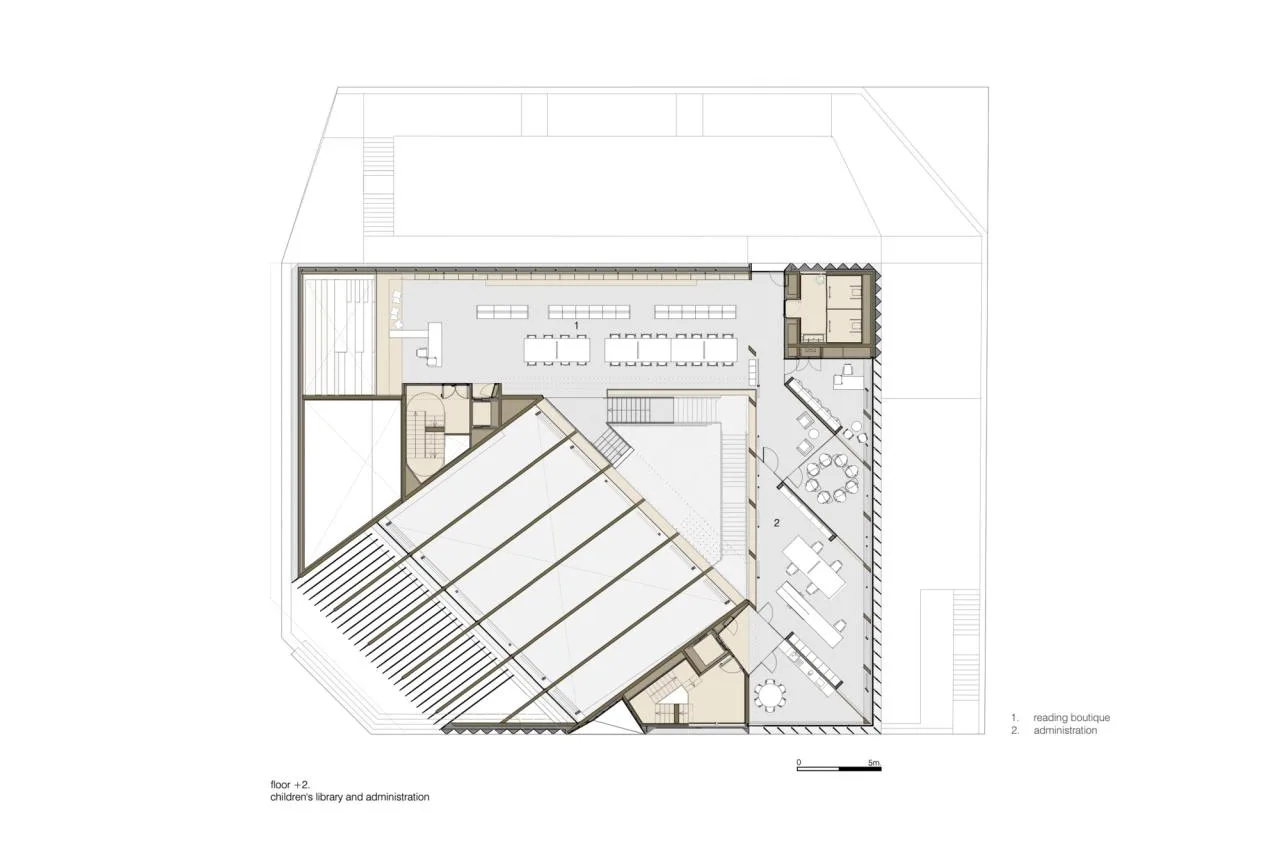
△ Third Floor Plan
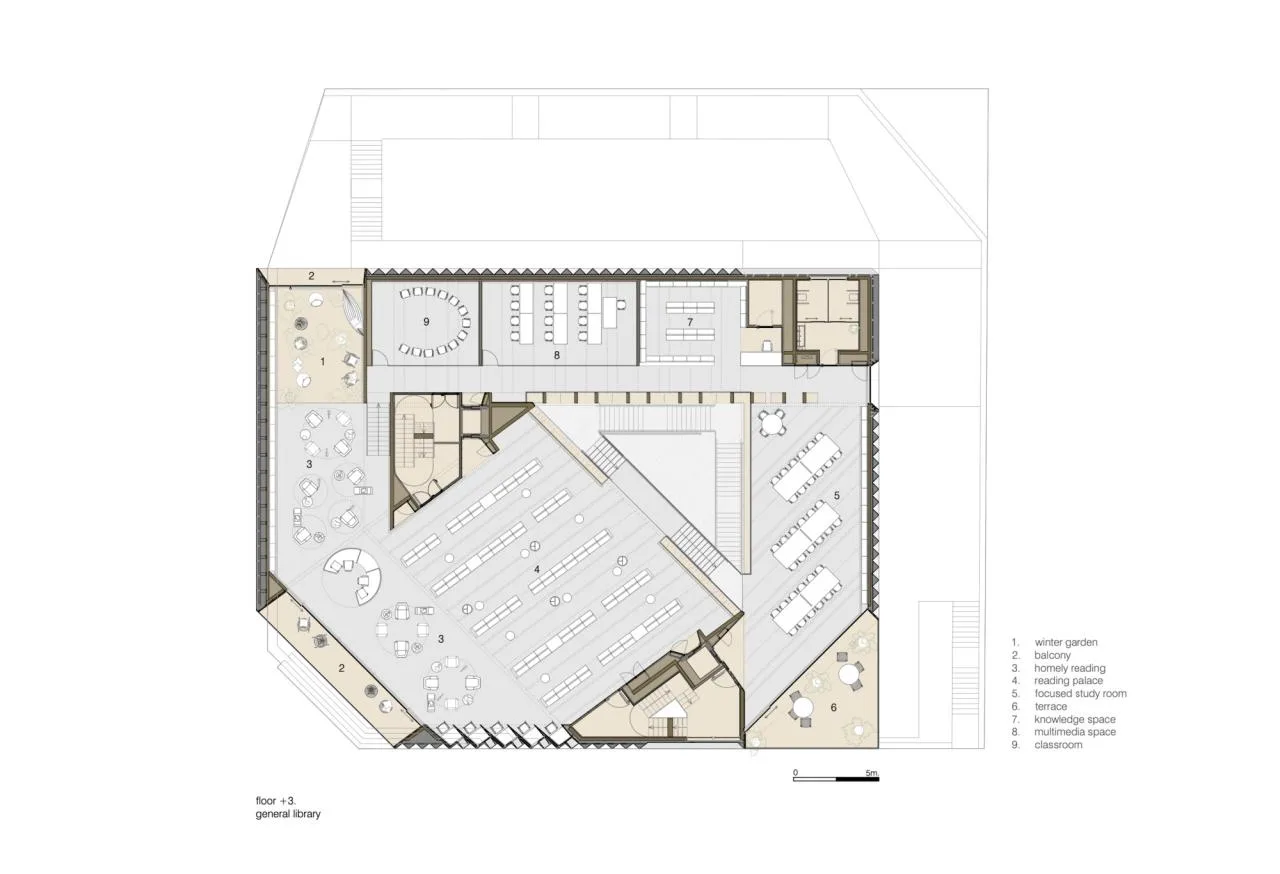
△ Fourth Floor Plan
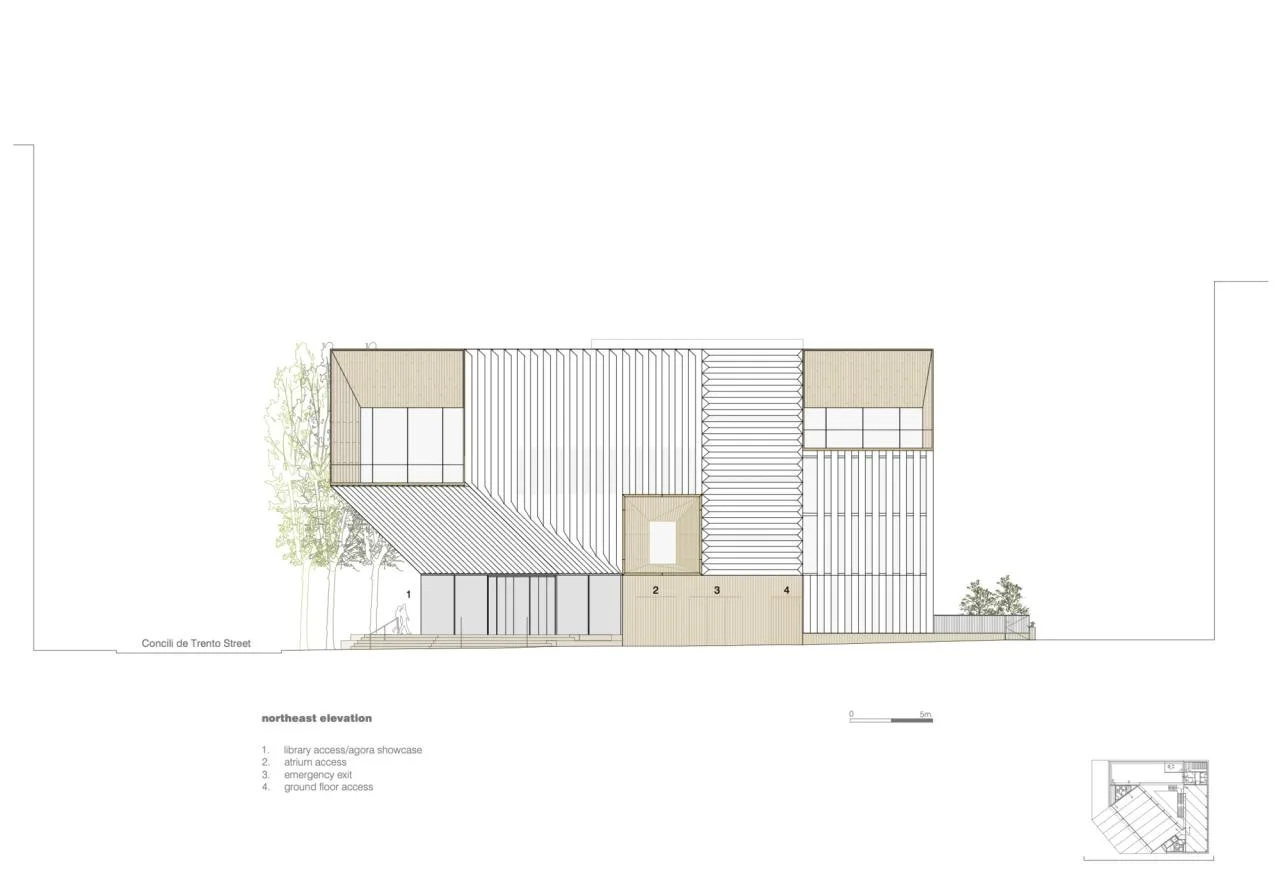
△ Elevation Drawing
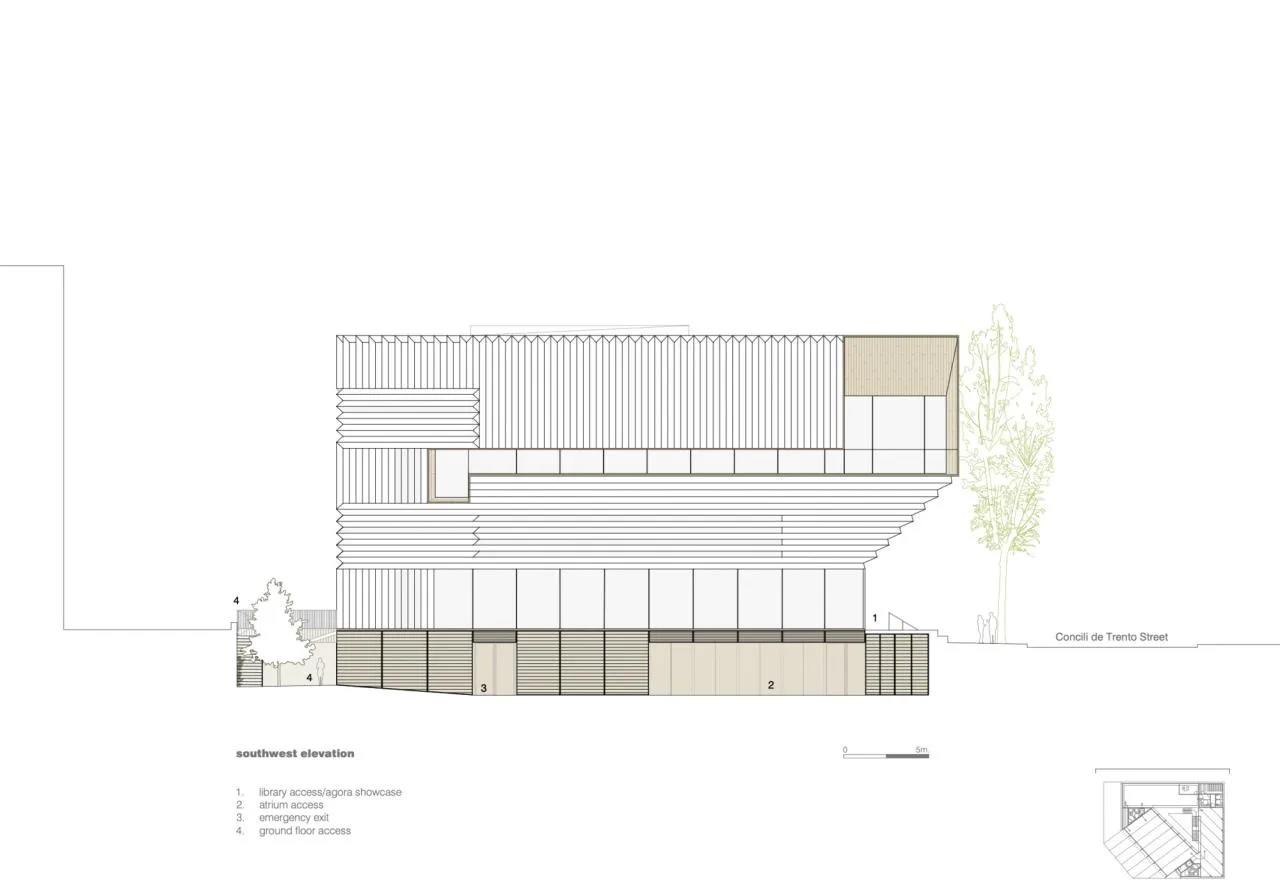
△ Elevation Drawing
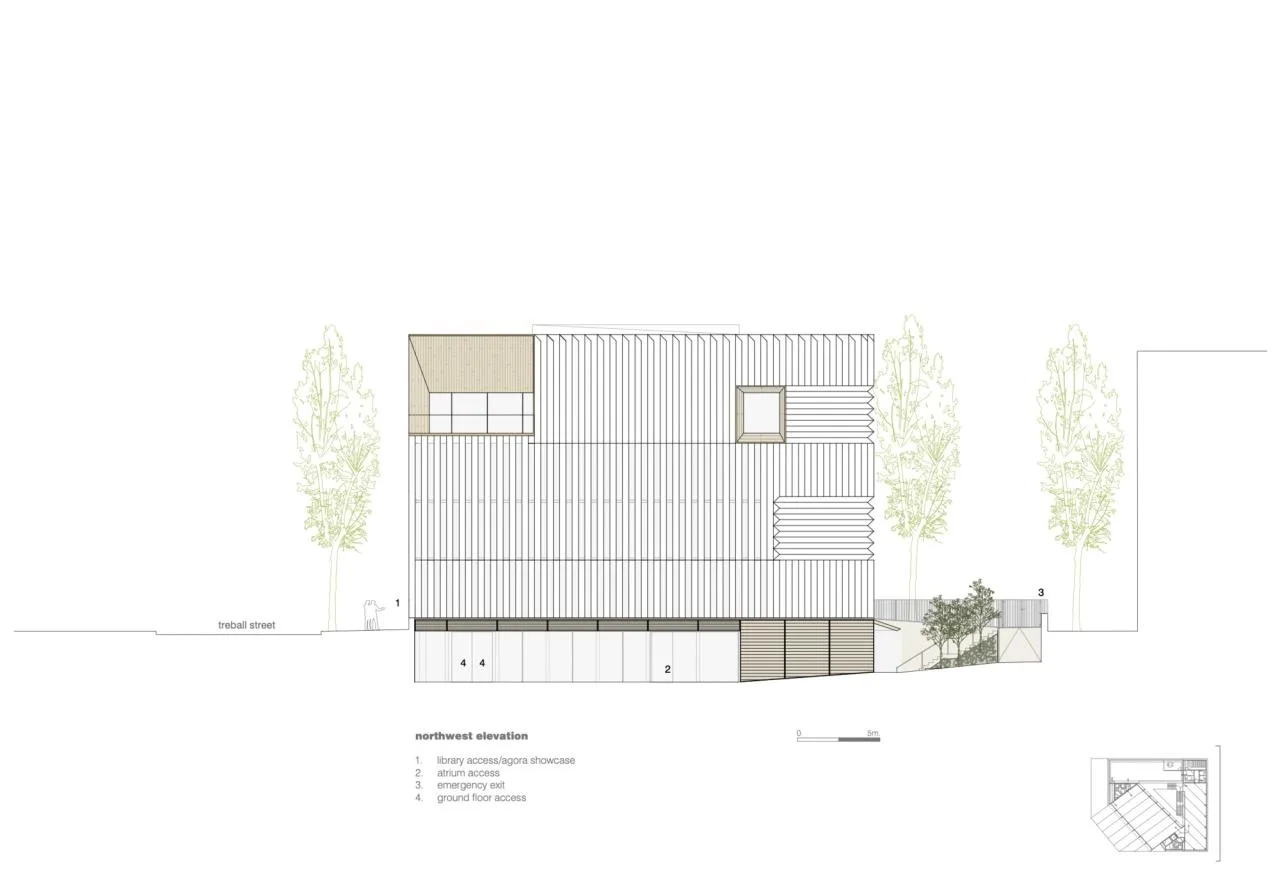
△ Elevation Drawing
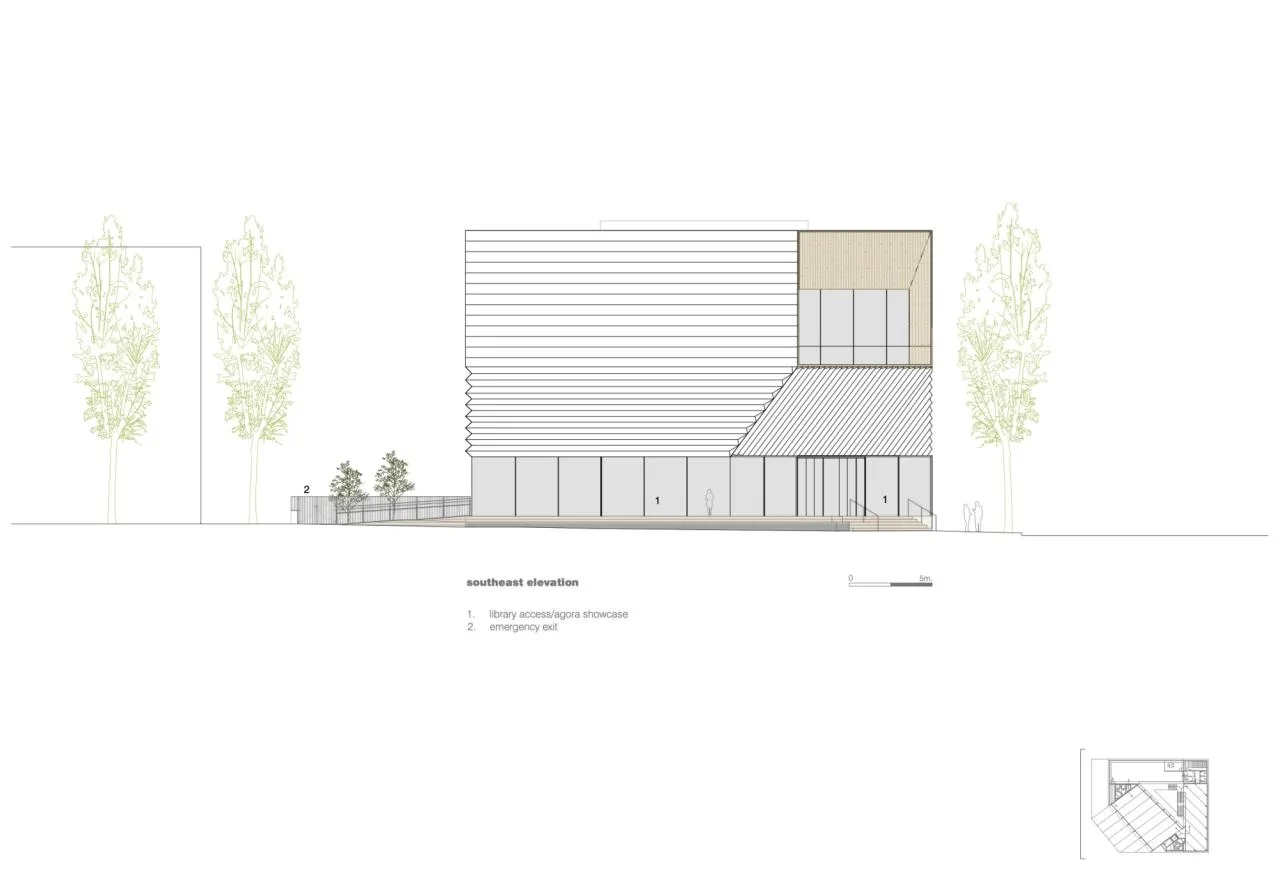
△ Elevation Drawing
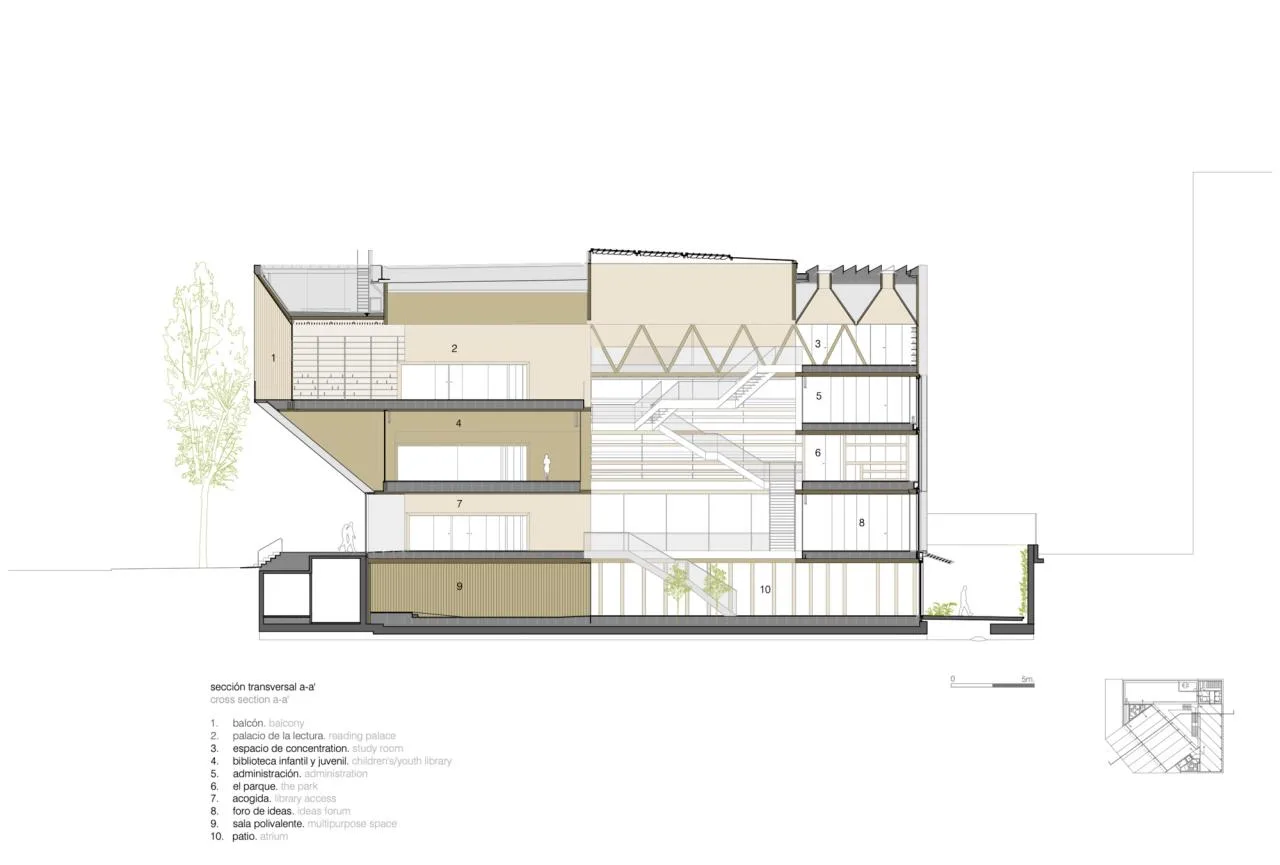
△ Section Diagram
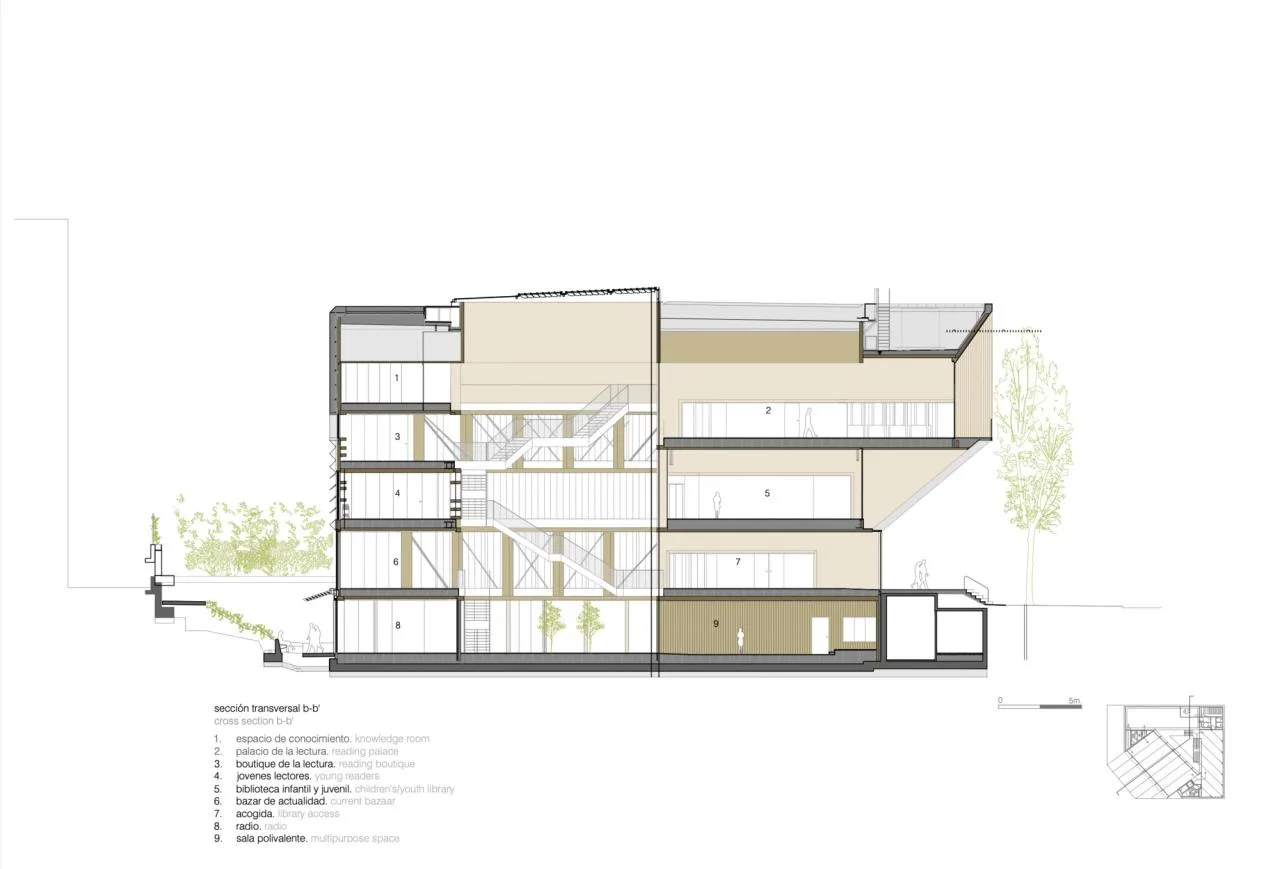
△ Section Diagram
Project Information
Architect: SUMA Arquitectura
Area: 4,170 m²
Project Year: 2022
Photographer: Jesús Granada
Manufacturers: B-deckt S.L, Binder Holz GmbH Wood Industry, Cristalería Martos, KLH, Metra Building, Nanotures S.L
Design Team: Marta Romero, Jesús Lopez, Luis Sierra, Ana Patricia Minguito, Pablo Corroto, María Abellán, Sara Contreras, Rita Álvarez Tabio, Miguel Ángel Maure
Structural Engineer: Miguel Nevado
Client: BIMSA – Municipality of Barcelona
Technical Advisor: Nuria Sáiz
Facade Consultant: ENAR
Execution: Antonio Yoldi, Miguel Ángel Orcalla MasterPlan
Installation Project: M7 Ingenieros
Landscape Architect: Julio Gonzalez
Acoustics: Margarida Acoustic Engineering
Energy Efficiency & LEED: CABA
Wayfinding Signage: COMO Design
Contractors: UTE VIAS CRC – Civil COBRA – Installations
Location: Barcelona, Spain













Must log in before commenting!
Sign Up