
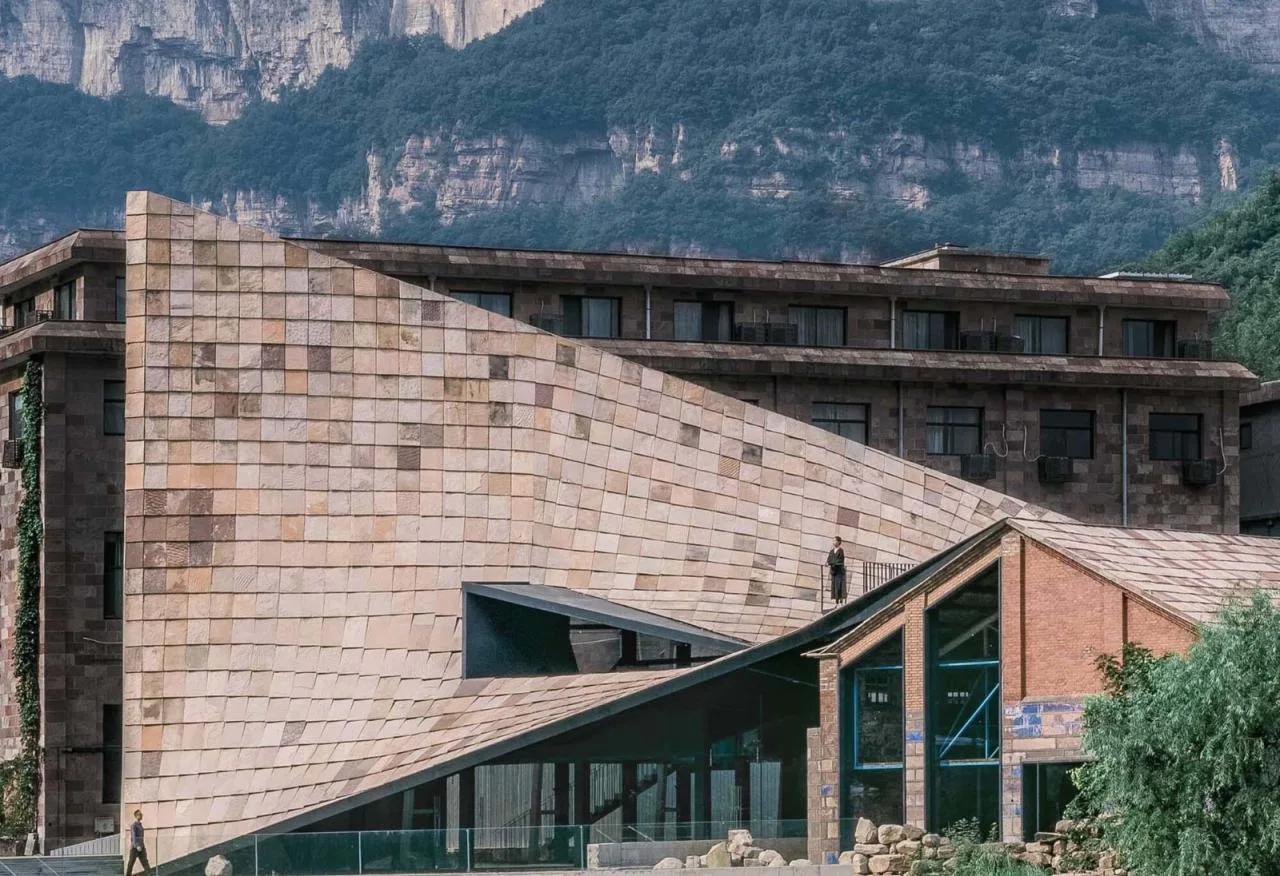
Located in the Taihang Mountain area of Shibanyan Town, Linzhou, Anyang, Henan Province, the riverside road offers breathtaking views of sheer cliffs carved by nature, rushing towards you with raw power. In Guo Xi’s essay “Lin Quan Gao Zhi,” it is said: “The Taihang Mountains rest on the Huaxia Mountains, their faces cloaked in forest.” This eloquently captures the spirit of this landscape.
Shibanyan Town lies within the Taihang Grand Canyon Scenic Area and has recently been promoted as the premier sketching base in northern China, earning the nickname “Chinese Painting Valley.” In line with rural cultural and tourism revitalization, plans were made to establish a landmark art museum at the town’s entrance.
To avoid inefficiencies caused by conflicting interests, a tripartite cooperation model involving government, artists, and social capital was adopted. Supported by policy, the art museum provides aesthetic education and cultural benefits to the public, establishes a cultural brand for Linzhou, and offers a cultural exchange hub for artist Meng Xinyu, who has long been inspired by the Taihang Mountains. Additionally, it generates cultural tourism revenue for local investors, ensuring sustainable operation. This diverse value creation fosters long-term sustainable development.
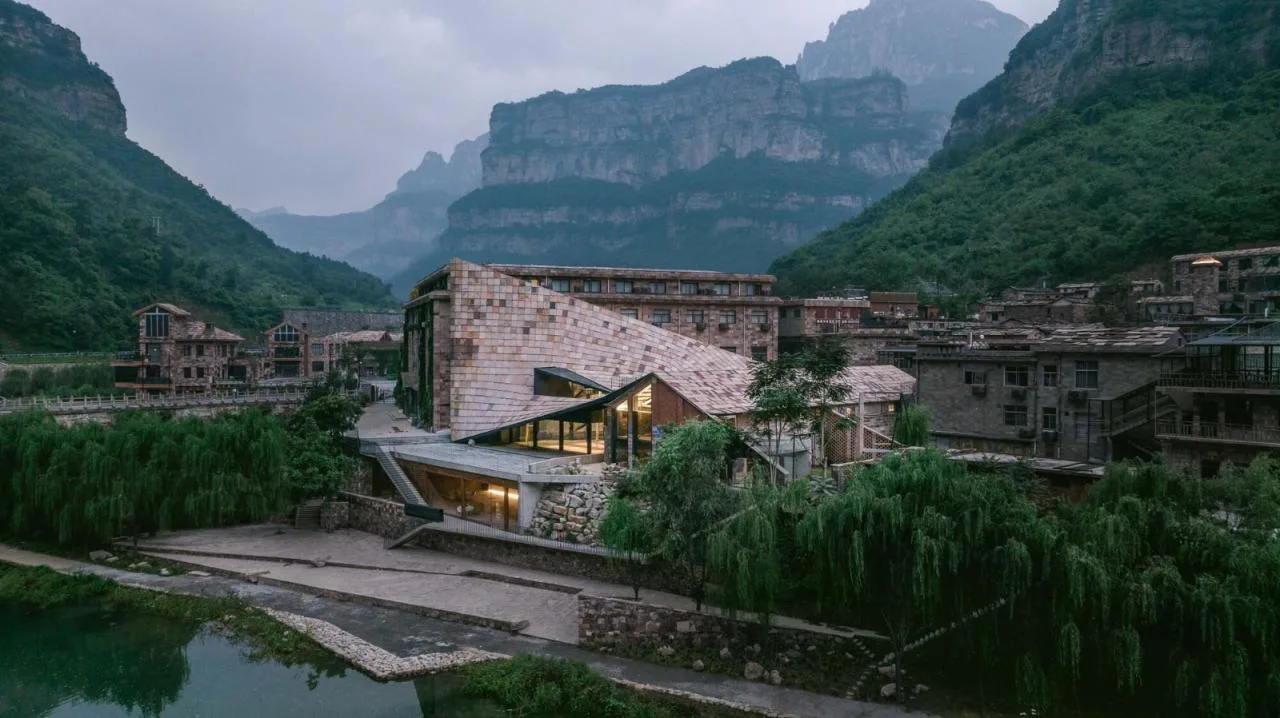
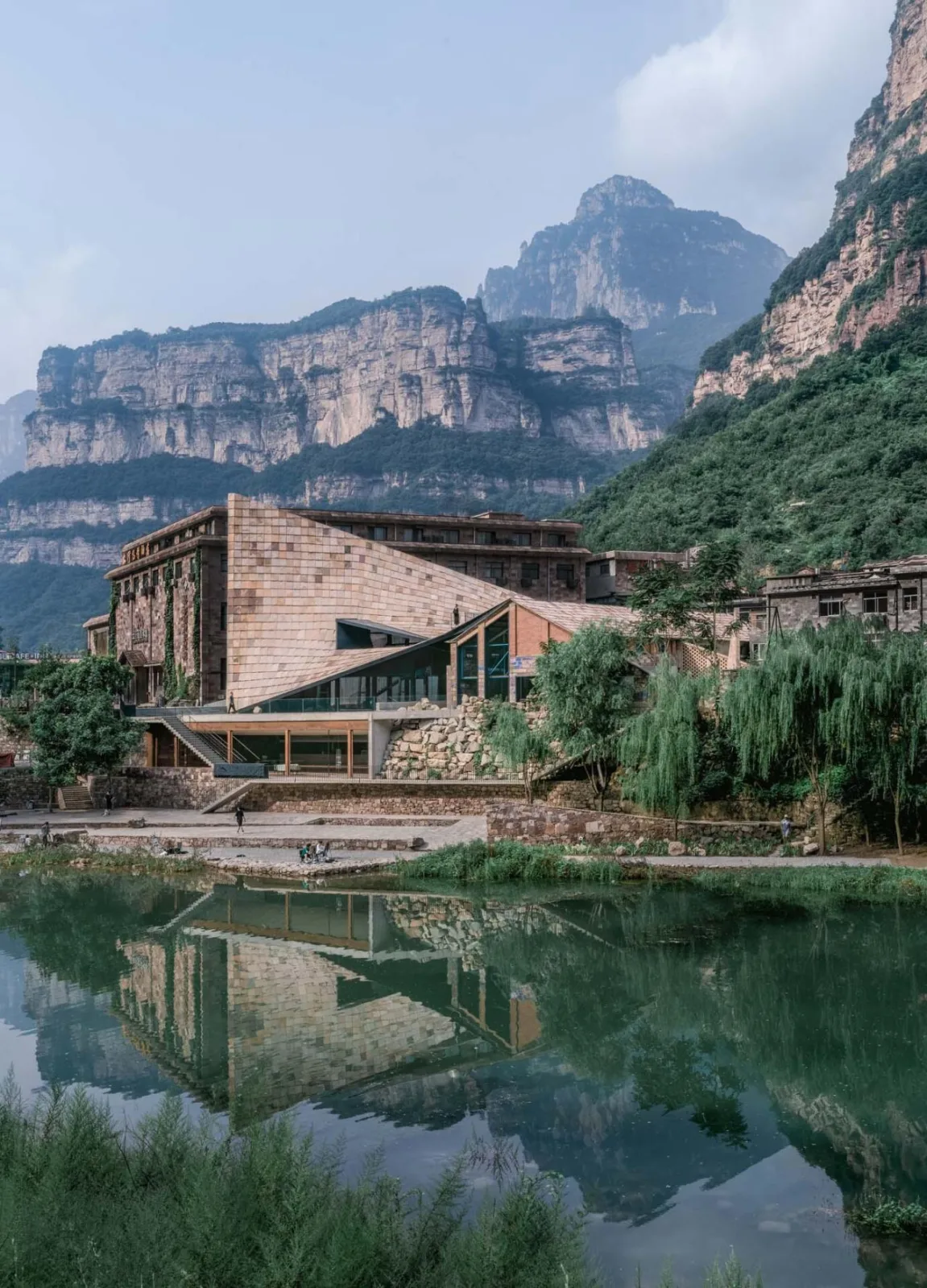
The experimental site for this distinctive landmark is situated at a triangular plot near the town’s entrance bridge, surrounded by buildings of varying heights. On the south side stands a large square building housing a complex of supply and marketing cooperatives, an exhibition hall dedicated to shoulder pole culture, and a hotel; to the north, a sloped roof warehouse is preserved.
These existing structures symbolize two common types of art museums. In consumer culture, art museums are often categorized into two models: the “cold box,” or White Cube, typical of Western modern art spaces designed to separate artwork from everyday life and create a pure, neutral aesthetic experience; and the second, which uses local architectural symbols like sloping roofs to evoke cultural nostalgia and establish identity.
However, in the complex urban fabric of Shibanyan Town, these conventional approaches fall short. The contrasting scales and forms of the buildings either overwhelm or isolate the museum, resulting in a rigid and artificial presence. To address this, different strategies were explored.
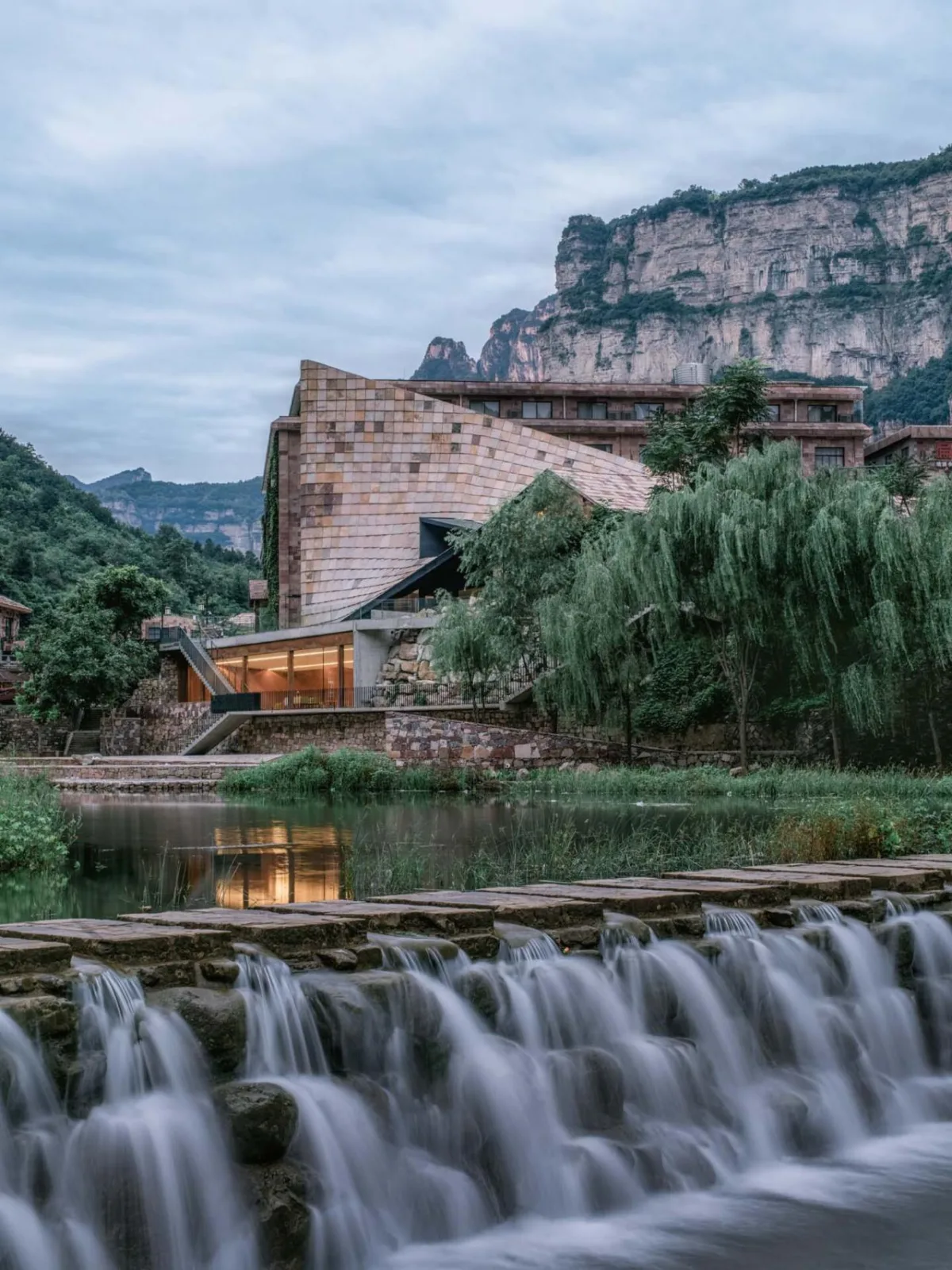
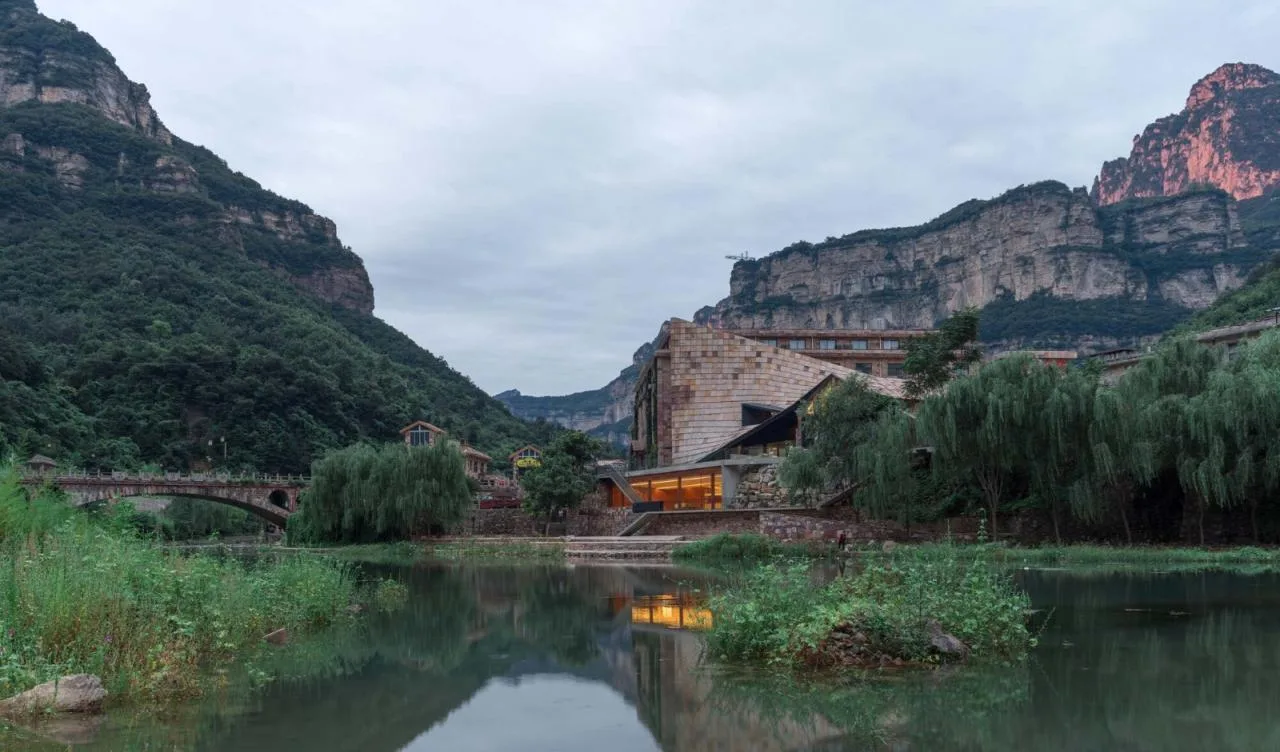
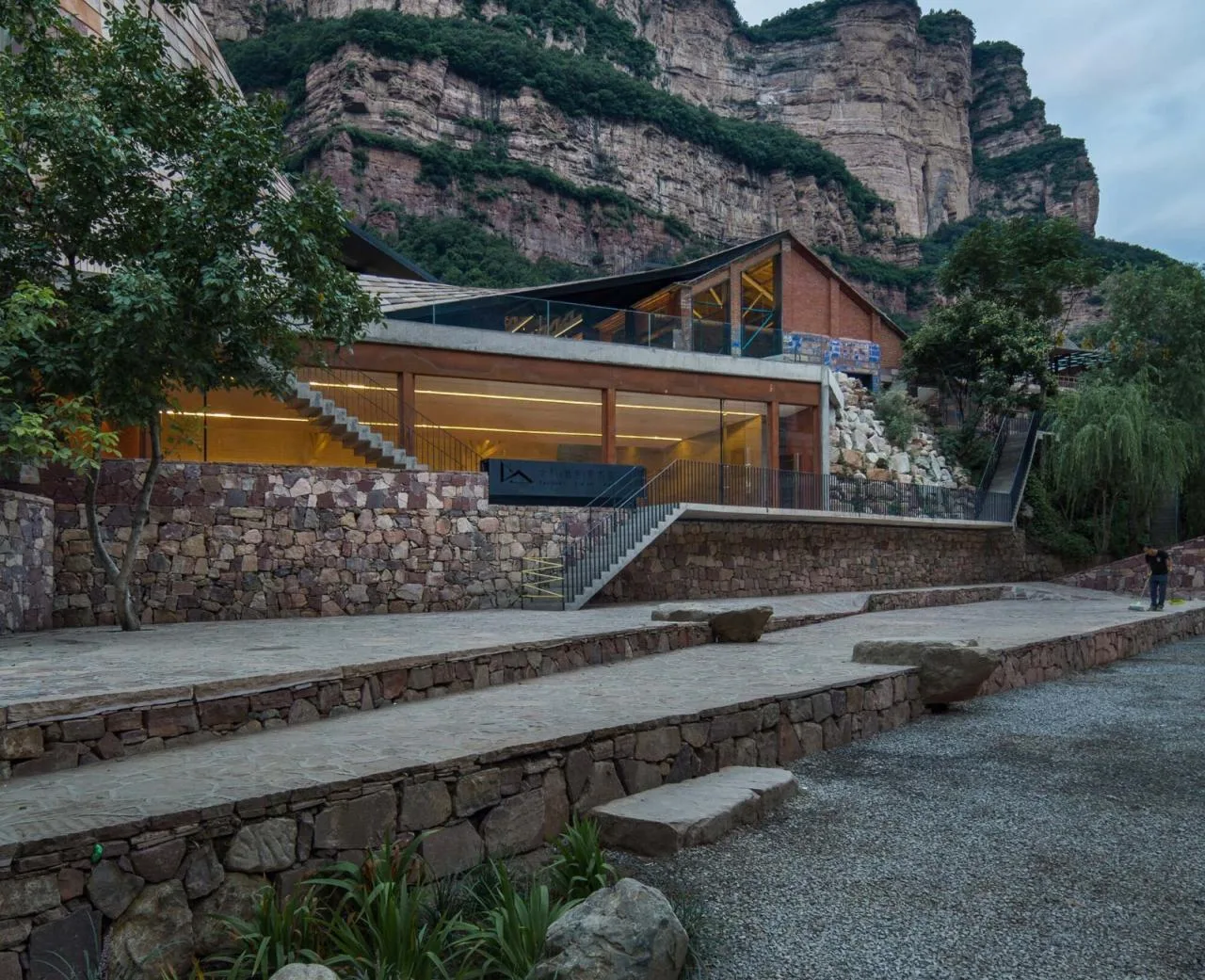
Originally, this triangular area functioned as a passive space for kitchen exhaust and waste disposal, enclosed by residential buildings. To improve lighting and ventilation, a narrow courtyard was introduced, linking the west street to the east waterfront, facilitating pedestrian flow and connecting the museum to the old warehouse to the north. This integration stitches the town’s urban texture together.
The river-facing facade became a key design focus. Vertically, the strict geometric order of the square houses contrasts with the natural, organic forms of the mountains behind them. The museum’s role is to harmonize these opposing elements.
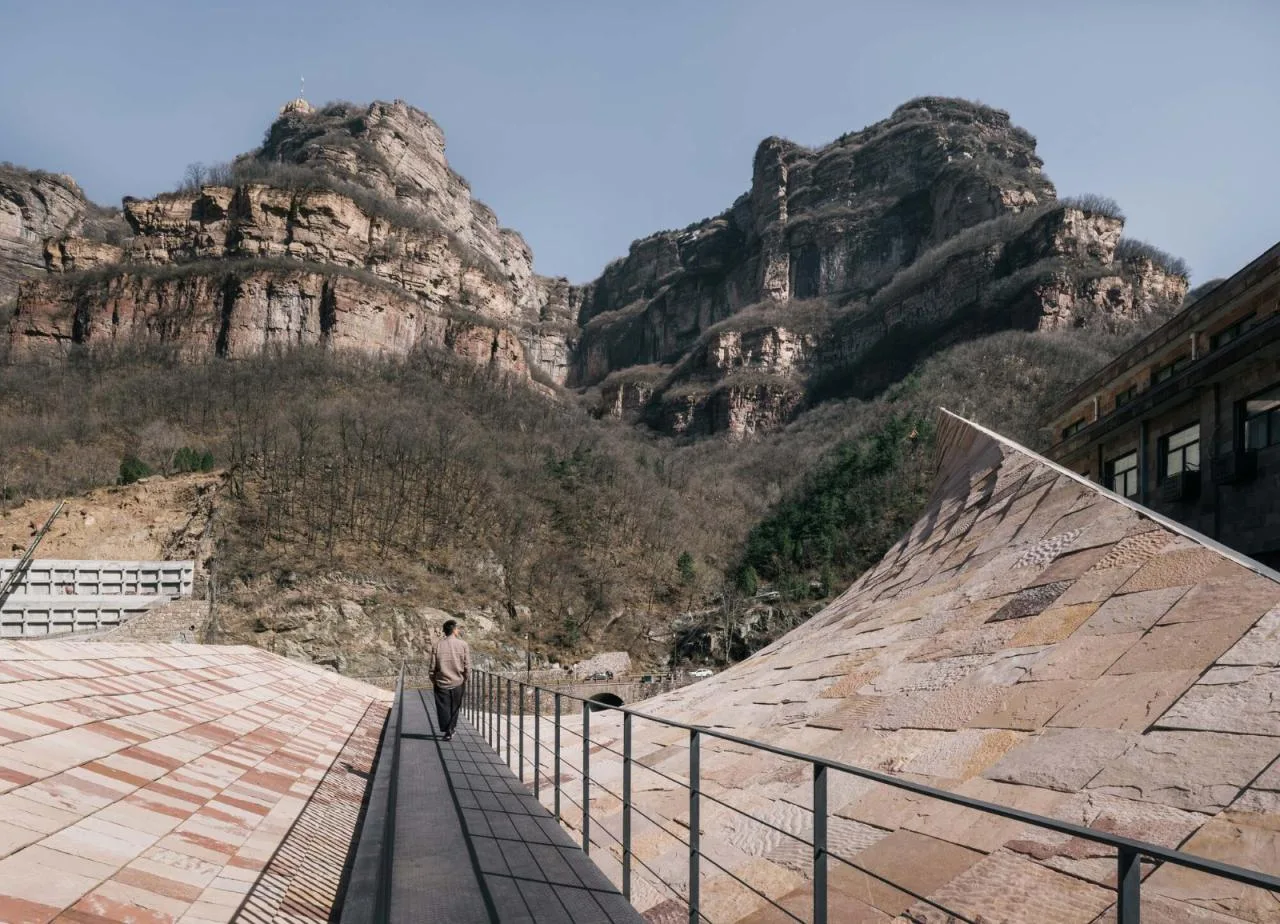
Inspired by Fan Kuan’s Northern Song Dynasty painting “Journey to the Mountains and Streams,” which depicts majestic, towering mountains with winding paths and streams creating complex volumes, the museum’s interface was defined as a “porous” and “tilted” near-mountain landscape. A zigzagging path connects the local Cangxi stream to distant mountains, creating a layered sense of depth and evoking a profound, mysterious atmosphere.
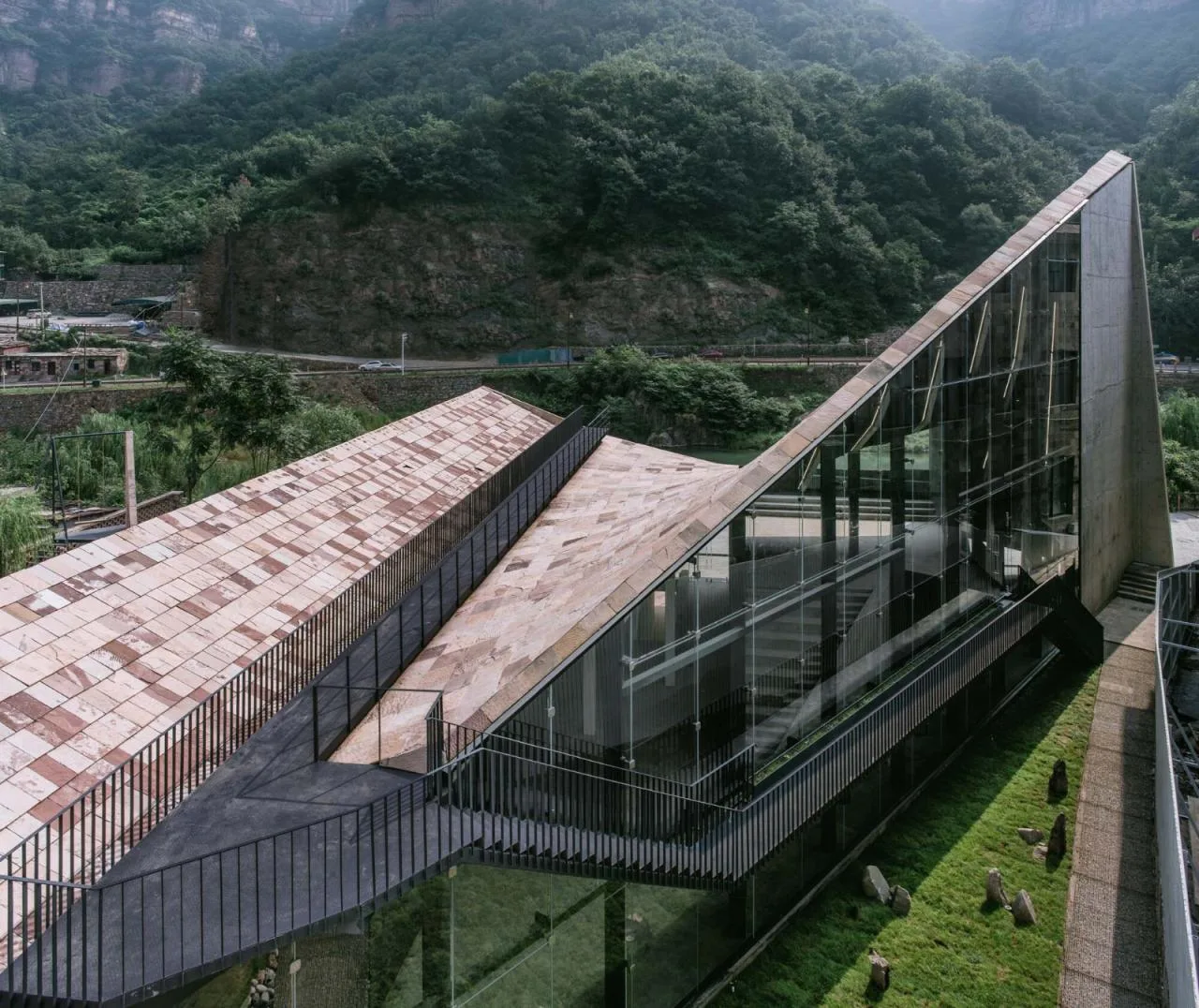
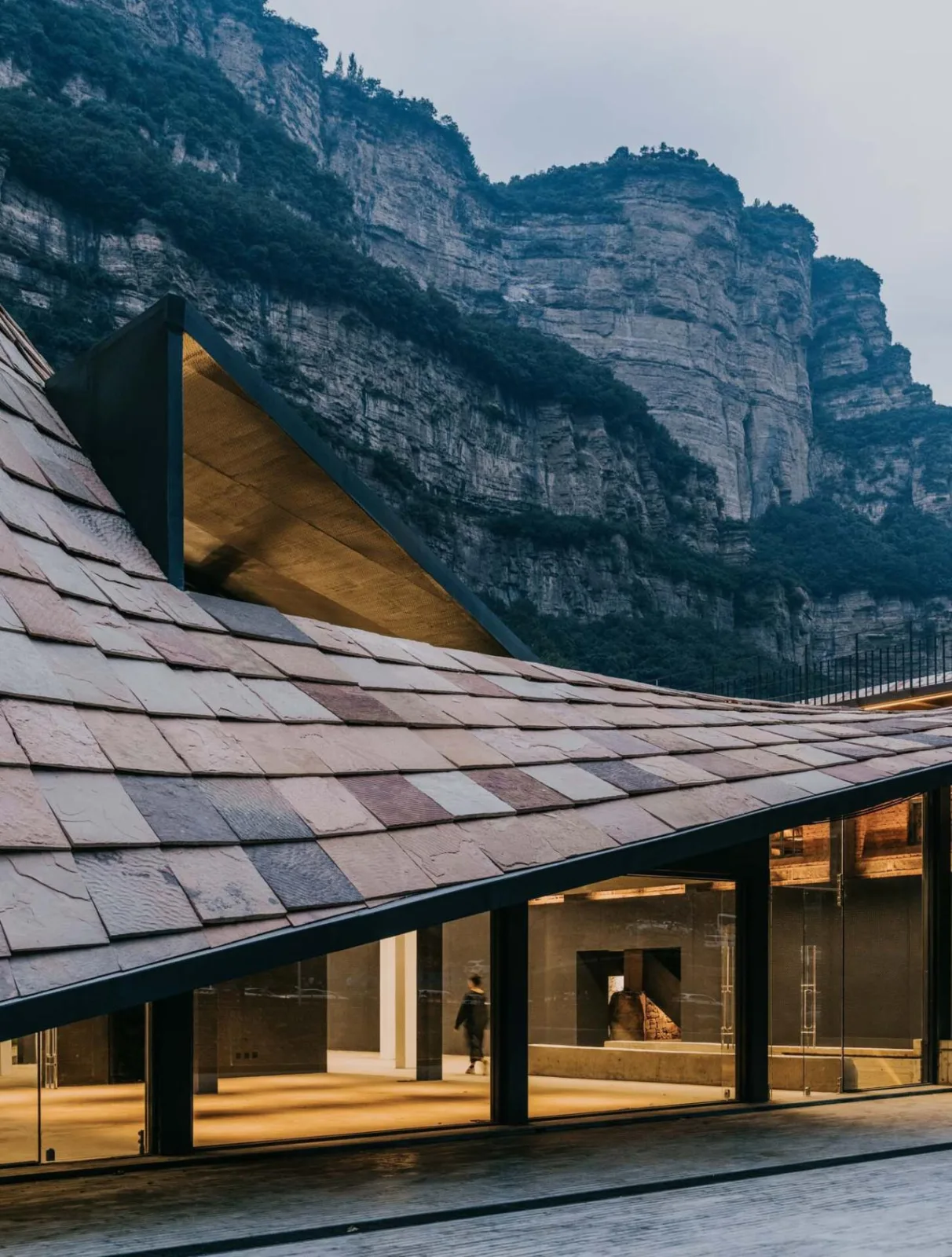
Horizontally, the height difference between the tall southern buildings and the northern warehouse posed a challenge. A small compact building would lose presence and fail to relate to the warehouse. Instead, the museum wraps the old warehouse with a triangular curved volume that integrates both into a cohesive whole. A sweeping curved line follows the warehouse eaves and descends to the ground.
Locals and visitors note two key features: first, the subtle curves and bright stone colors allow the building to stand out while blending harmoniously with the village’s regular patterns and natural surroundings. This creates a lively coexistence between humans and nature. Second, the architecture seems to organically grow from the mountainous environment, as if it has stood there for years, deeply rooted in the Taihang cultural context.
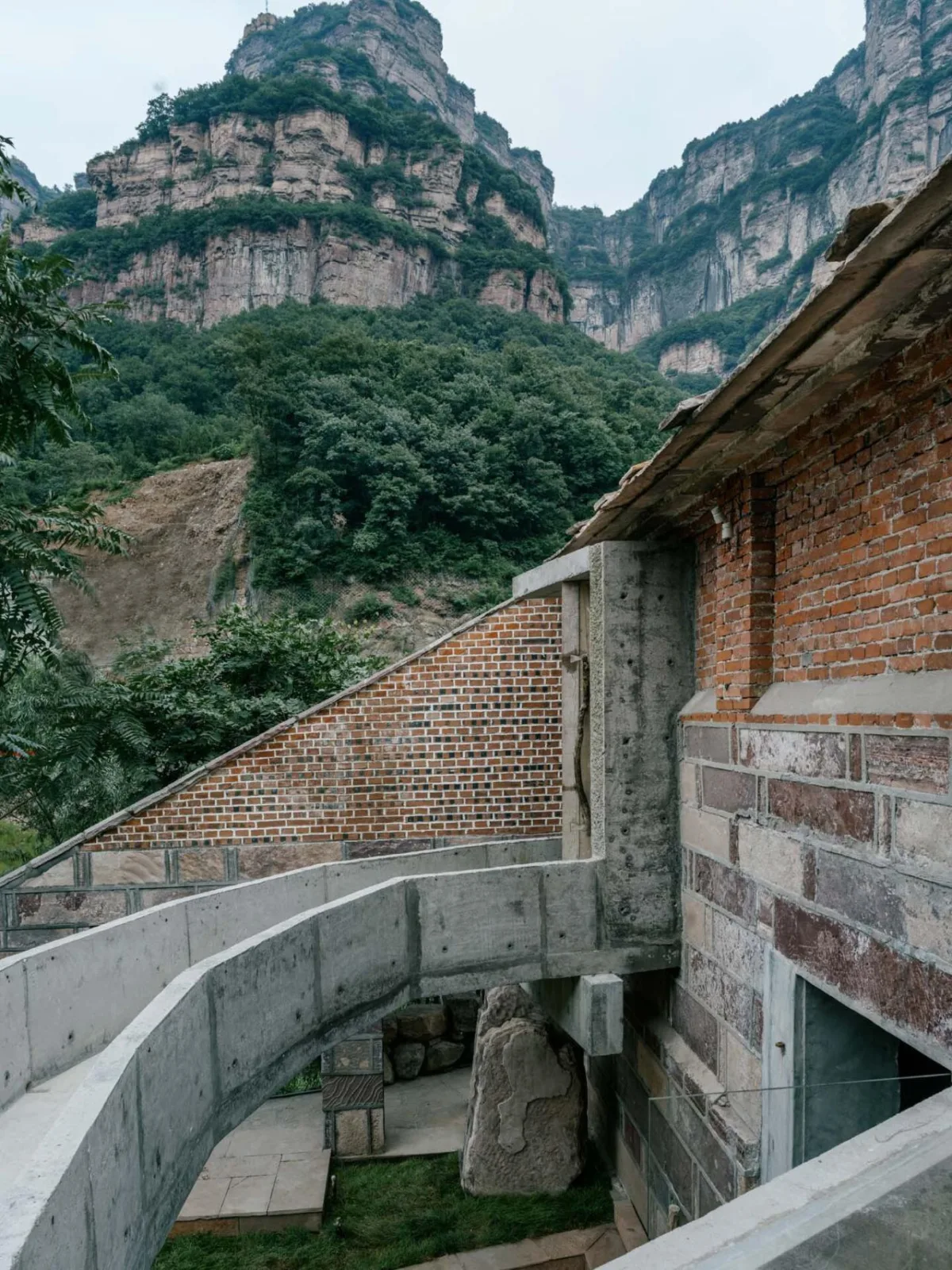
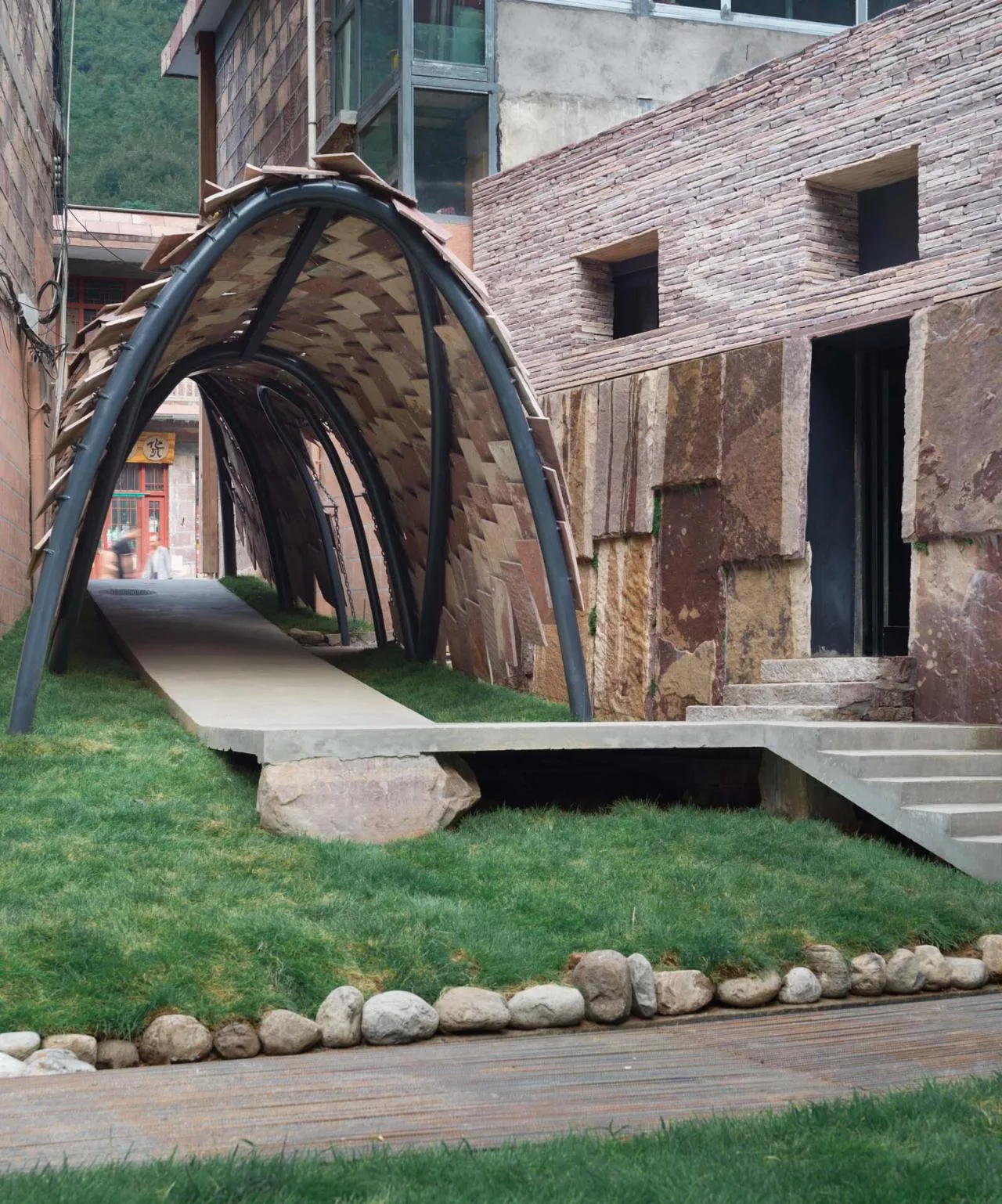
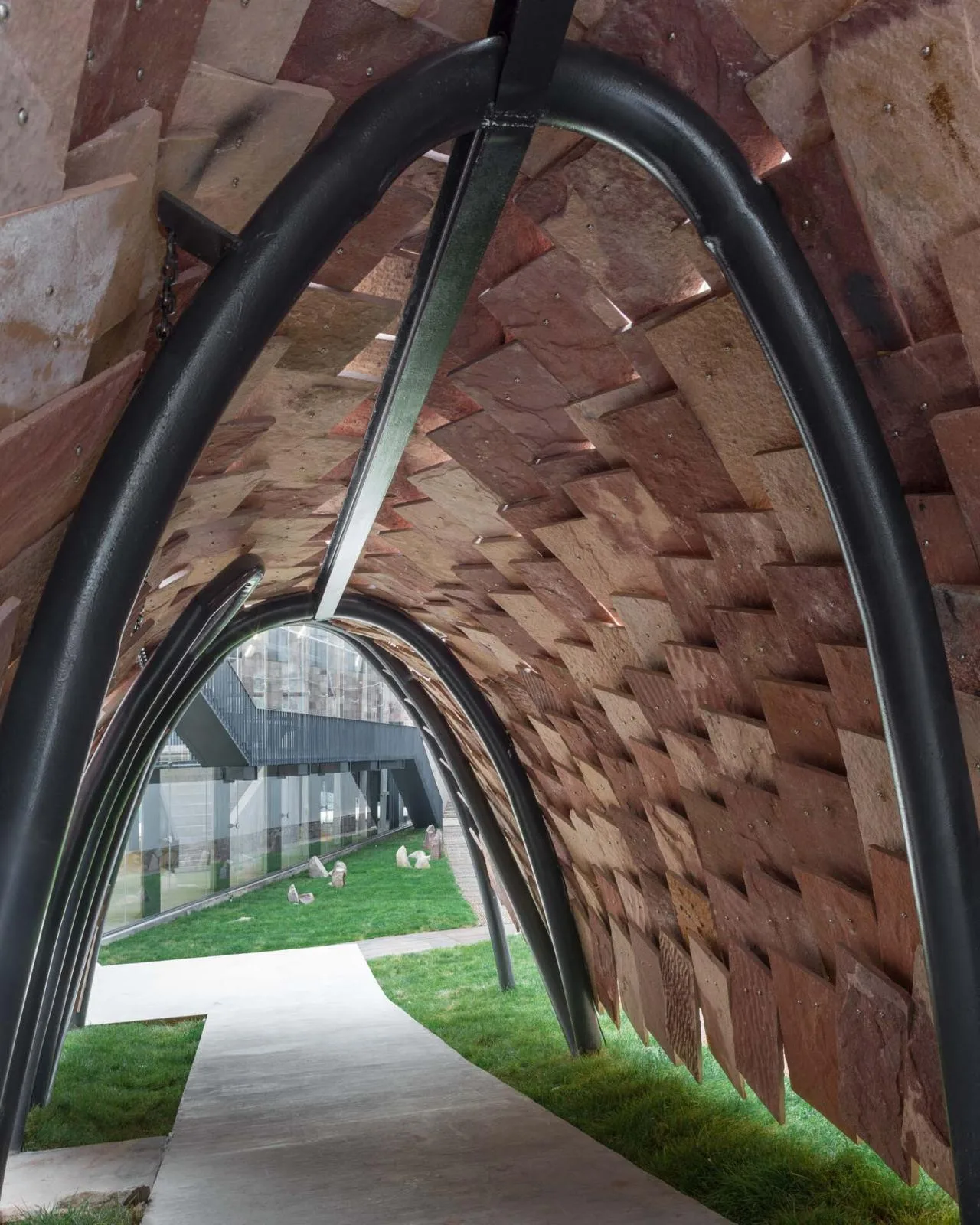
Stone has long been intimately connected with this town’s identity. Due to limited arable land, terraced fields supported by stacked stones form the traditional agricultural landscape. Many village houses with stone walls and roofs remain, reflecting a heritage of craftsmanship passed down from the Ming and Qing dynasties.
The older generation once embodied the spirit of “Foolish Old Man Moves Mountains,” contributing to large-scale projects like the Hongqi Canal. Linzhou is known as a hometown of architecture and a key construction labor base in China.
However, under the influence of the commodity economy and cheaper construction methods, many buildings in Shibanyan Town have abandoned traditional stone techniques in favor of simpler materials that merely coat frame structures.
This project attempts to combine efficient steel construction with traditional stone craftsmanship, not simply as an experiment but as a strategic move to enhance the cultural and tourism brand. Stone slabs and stones serve both as building materials and as a medium for cultural expression.
This approach respects local traditions while addressing practical needs for affordable construction, embodying sustainable design by minimizing material and resource use. It also redefines the simple, rustic aesthetic of everyday life.
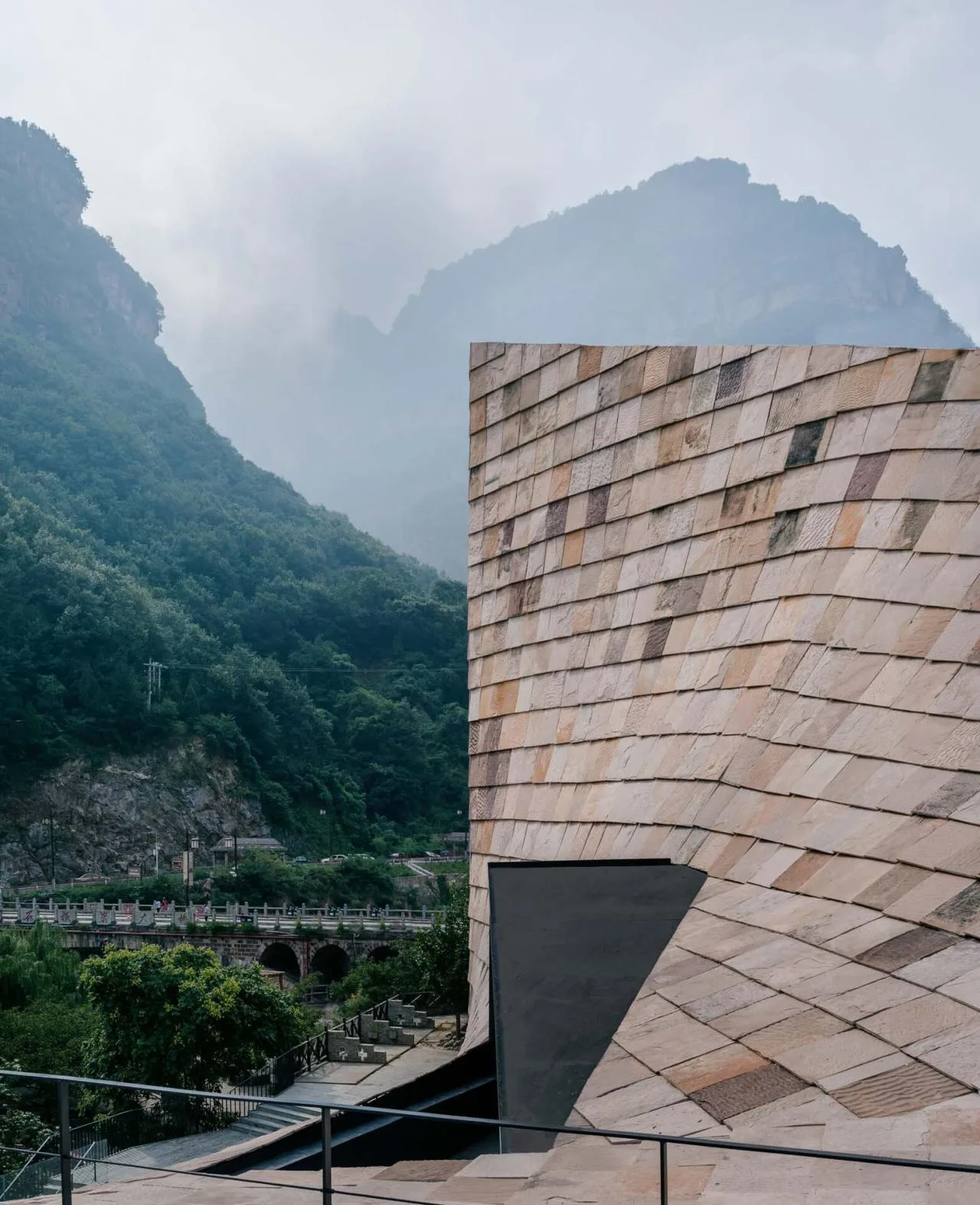
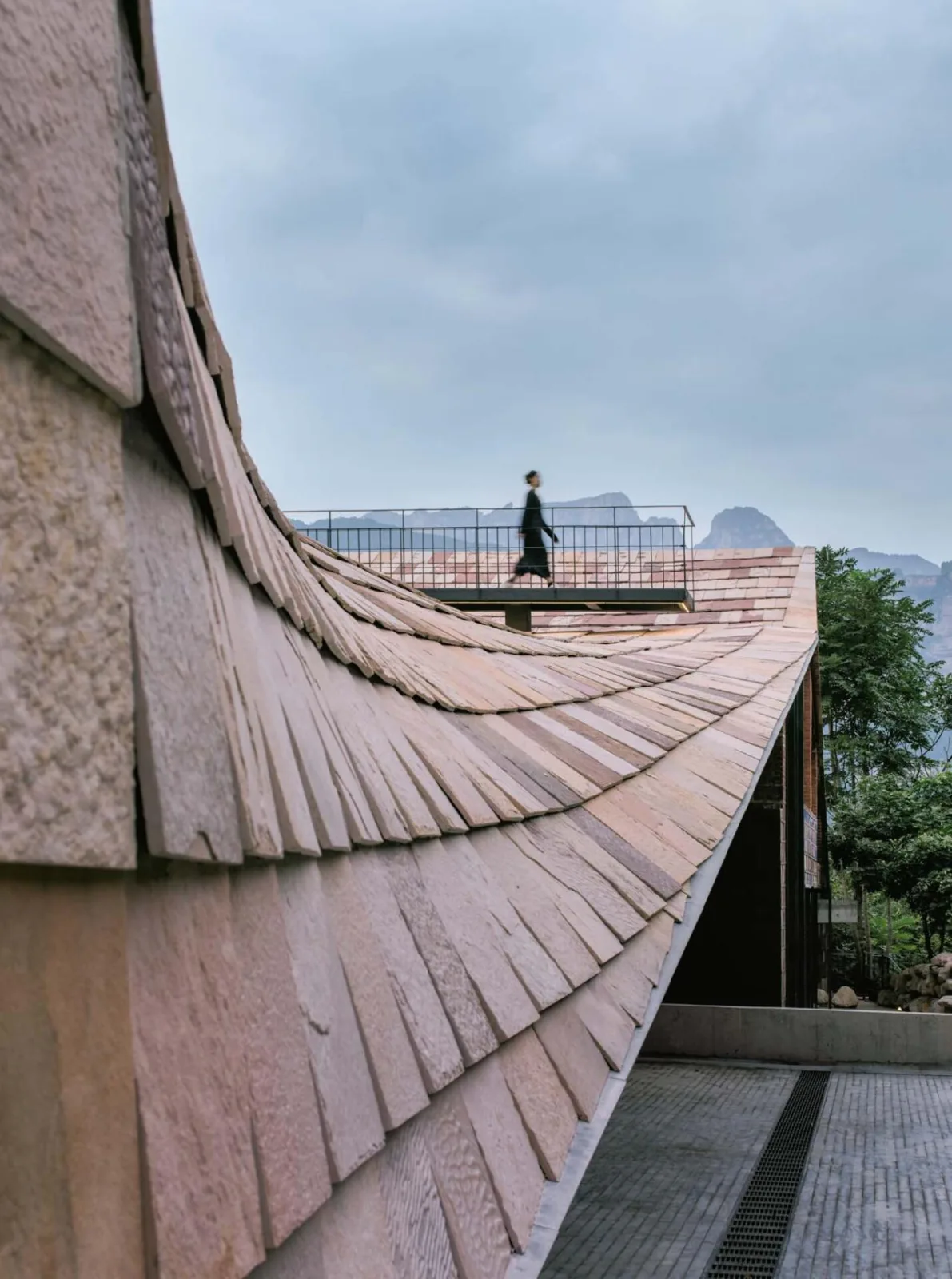
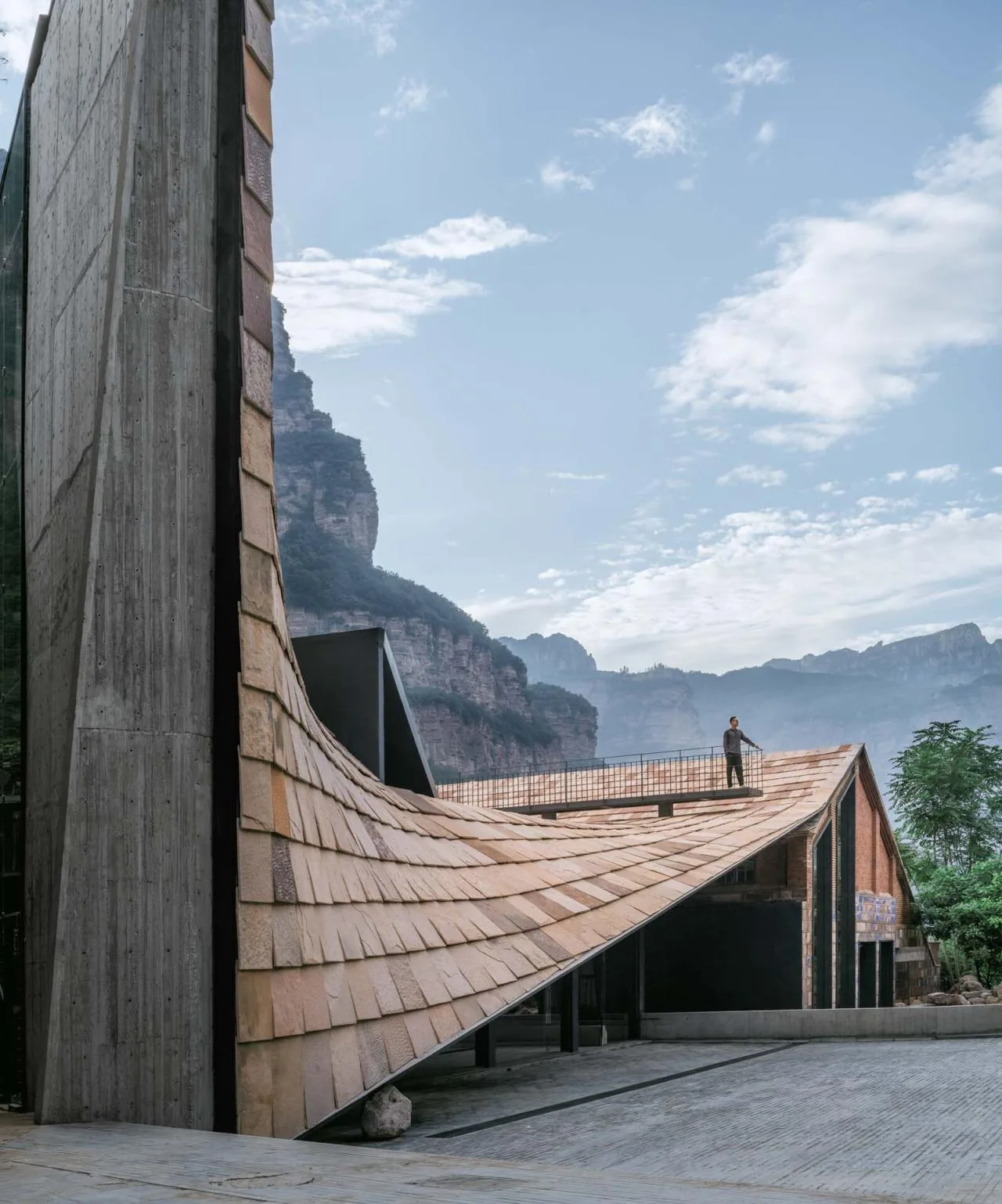
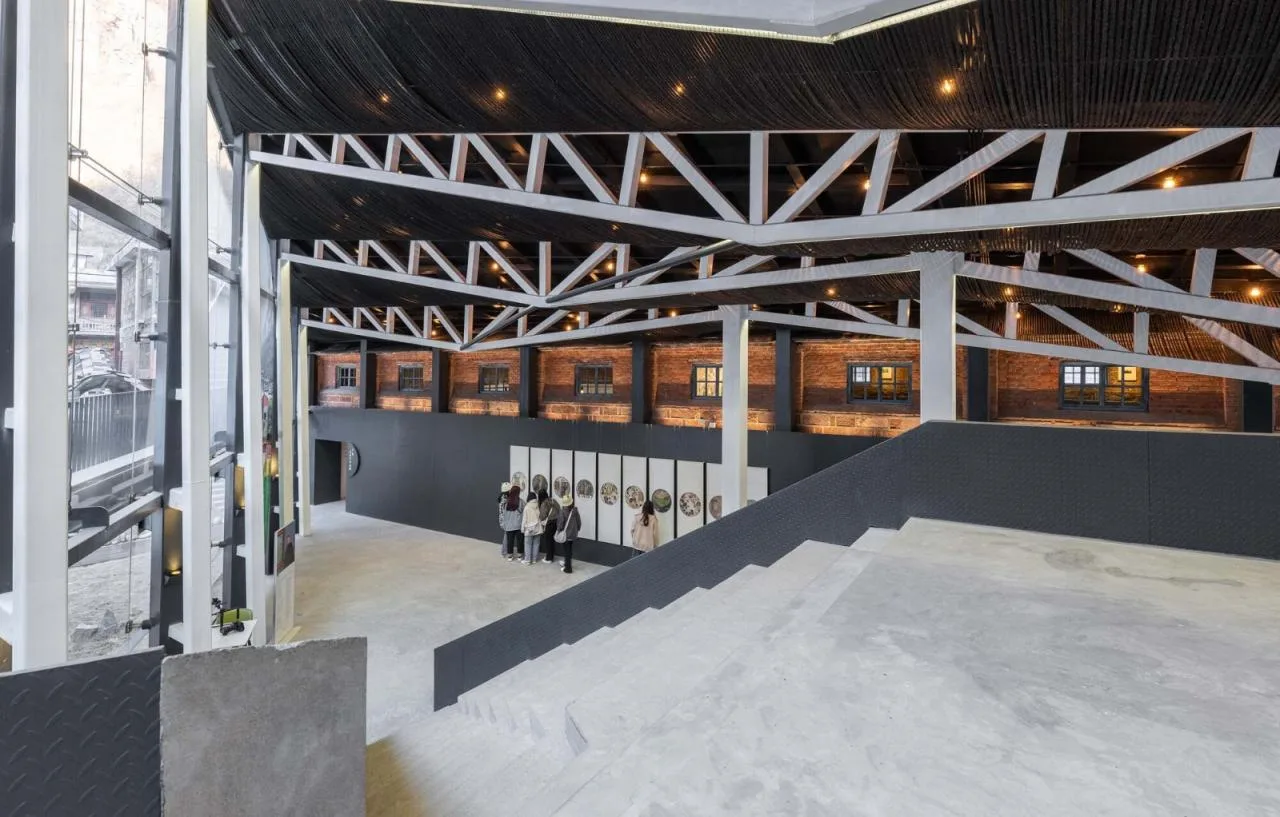
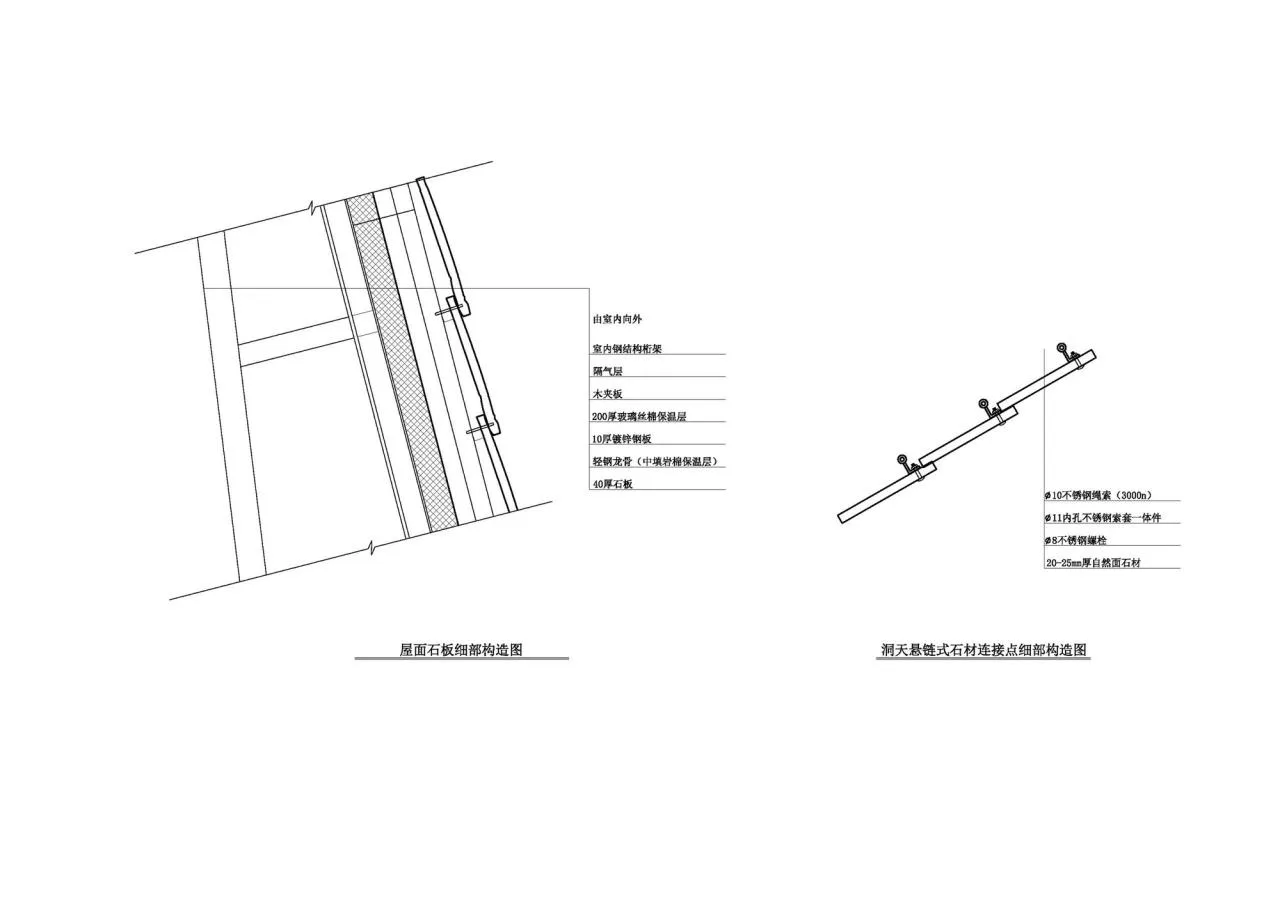
A large stock of reclaimed old stone slabs with rich red sand slate textures was repurposed for roofing. These slabs, 4 cm thick and roughly 60 x 80 cm in size, total 70 tons across 1,600 pieces. Installation began at the southeast corner, unfolding along longitudinal and transverse axes toward the western eaves. Colors were carefully distributed and slabs cut as needed during installation.
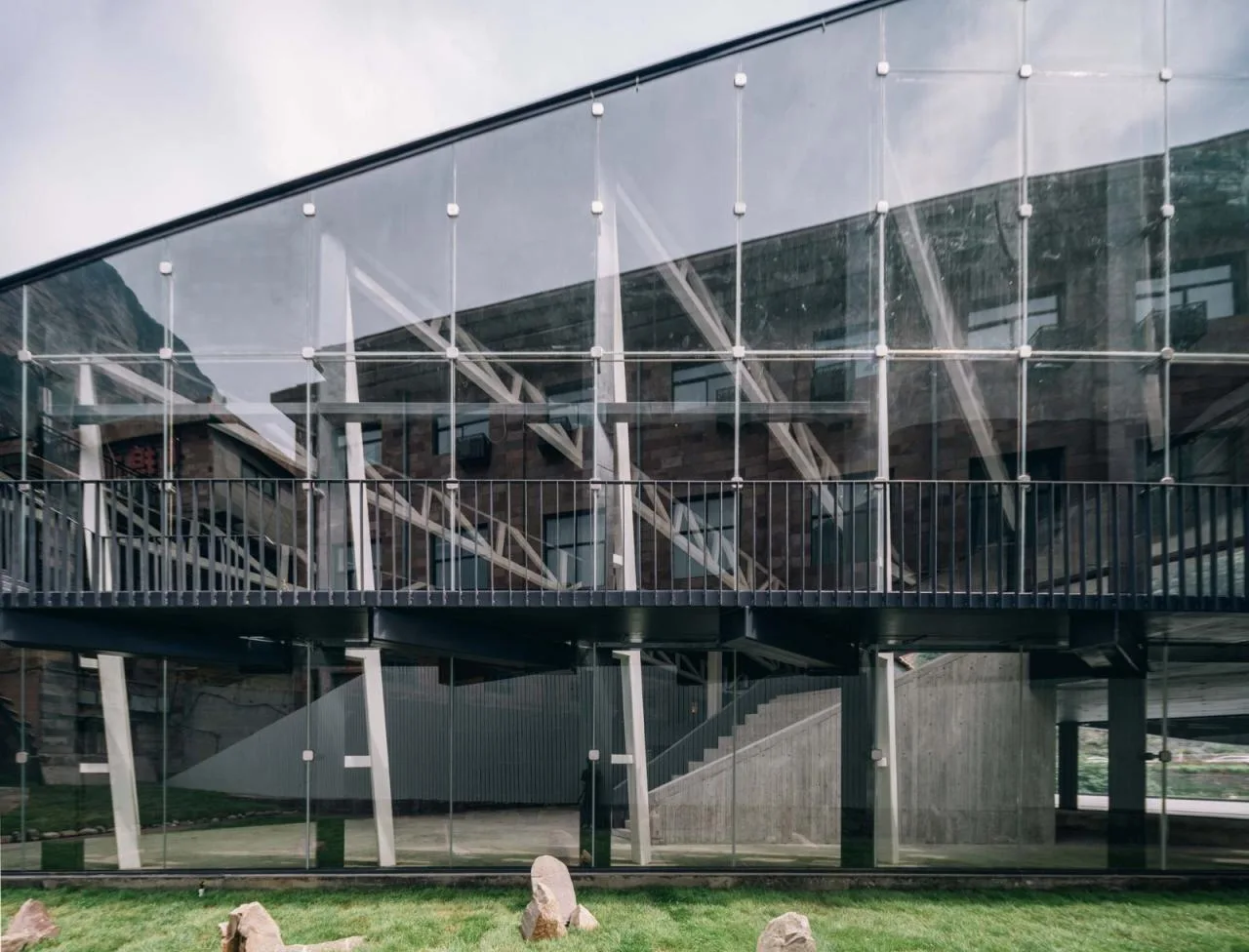
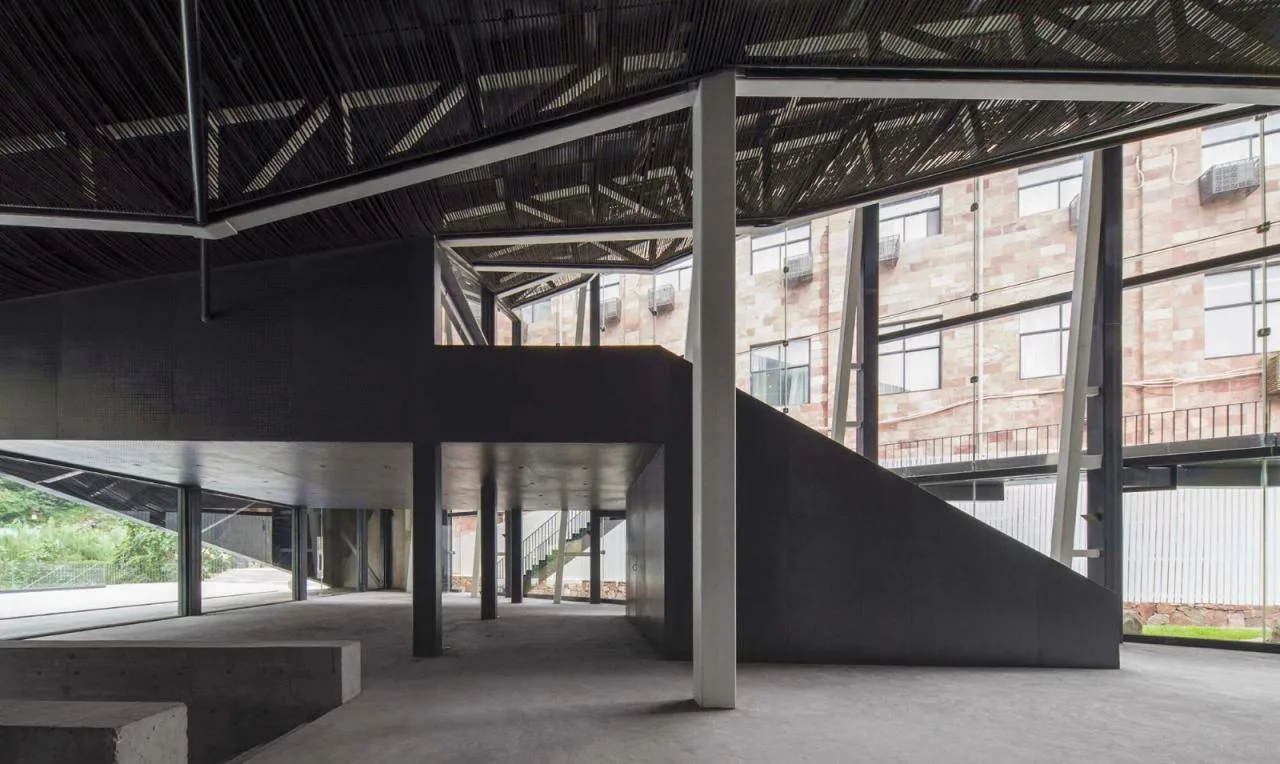
Local workers simplified the steel roof truss by connecting two elevation points per truss, facilitating construction while accommodating the roof’s curvature.
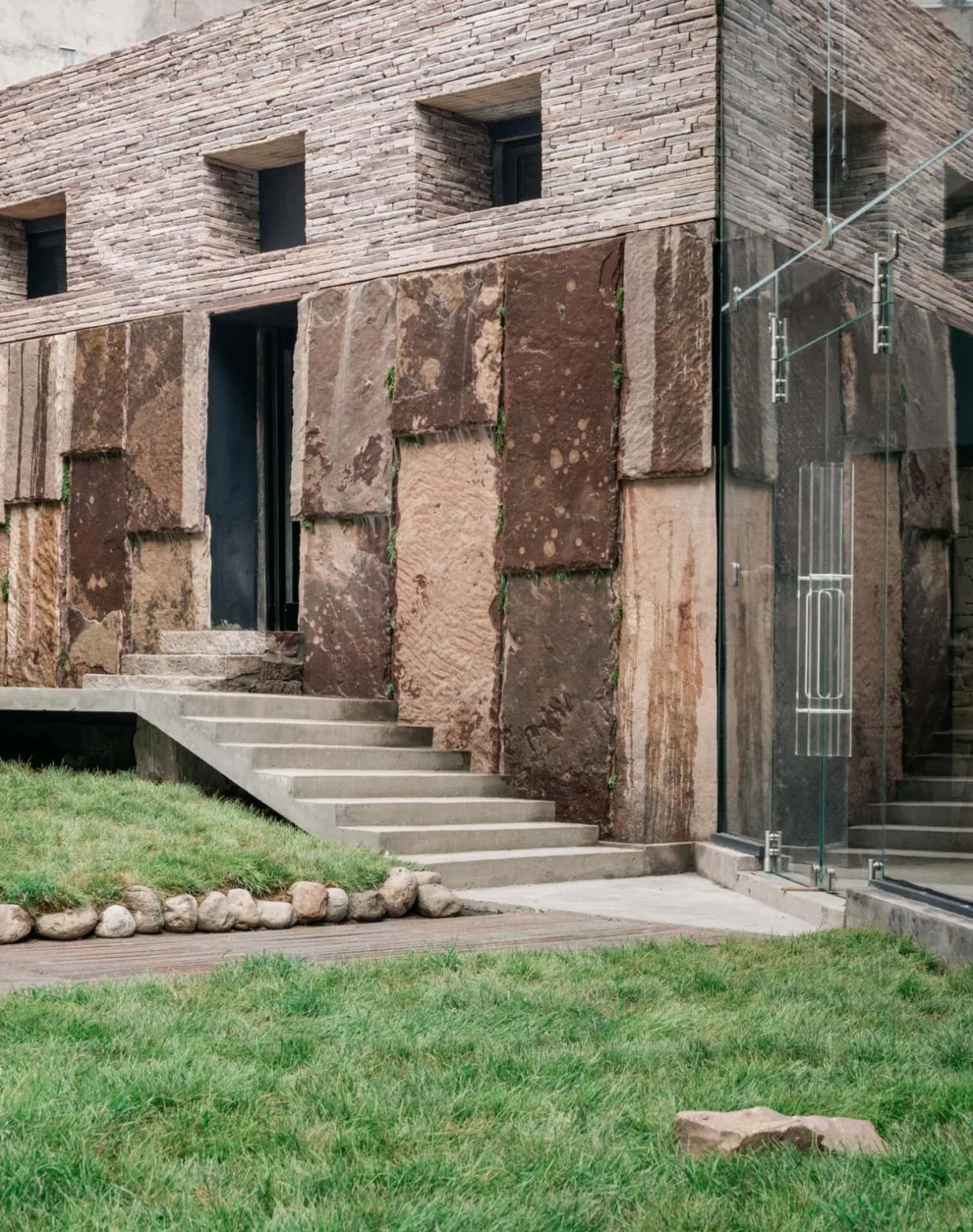
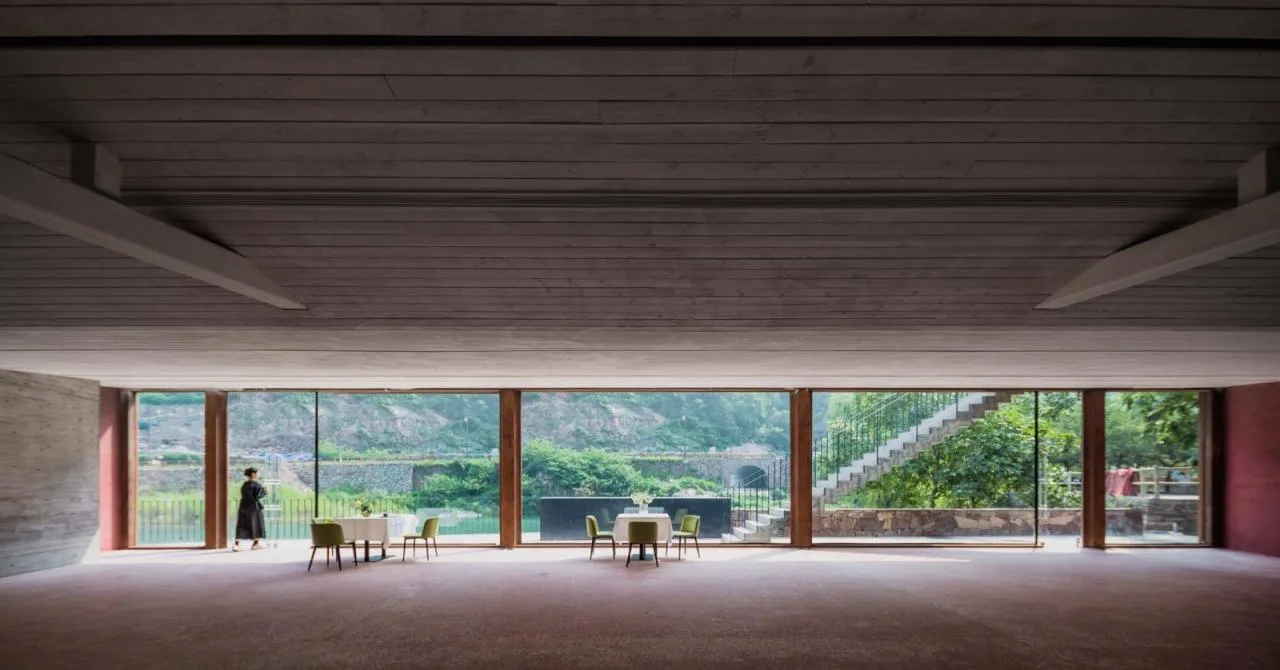
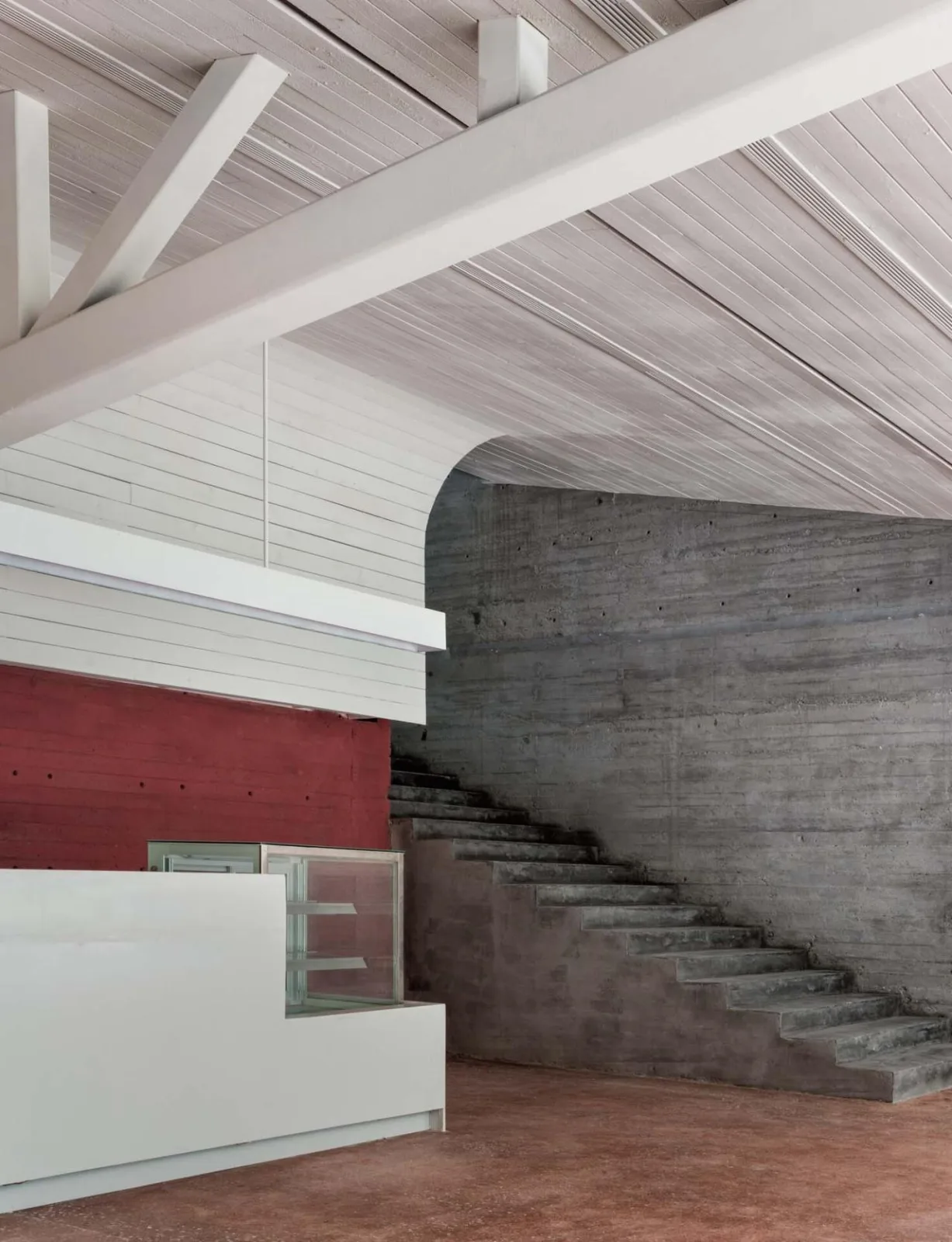
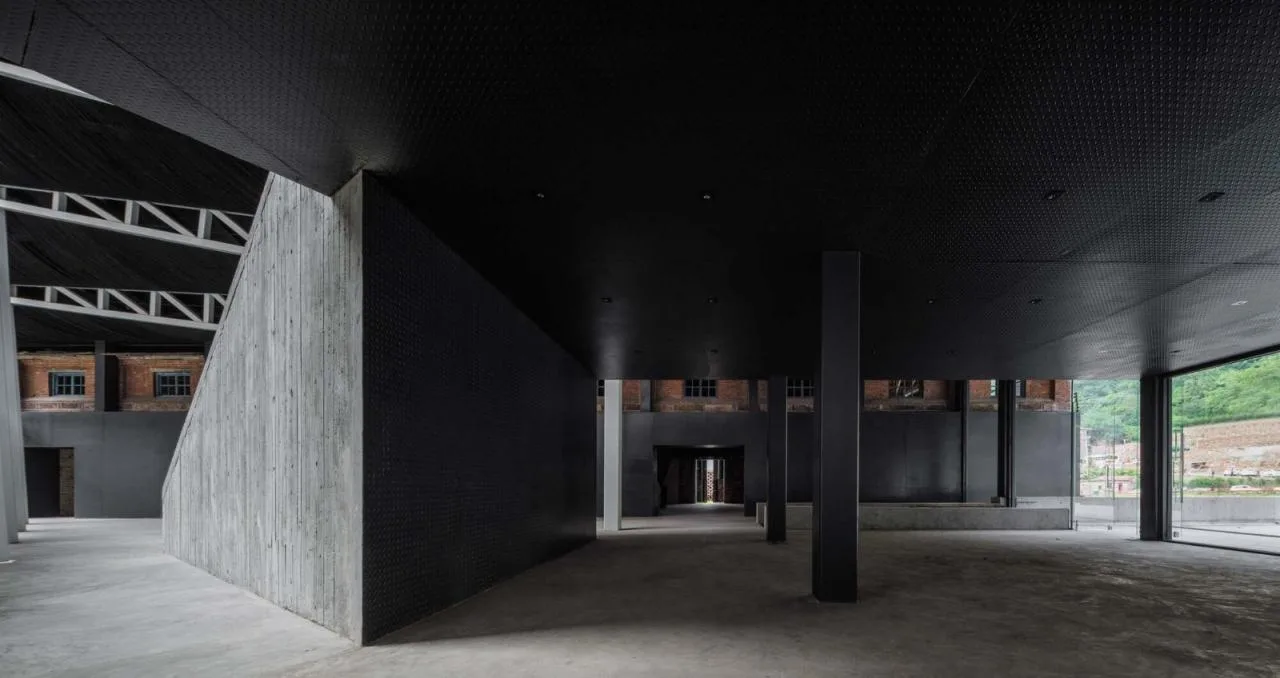
Below the museum, the hillside was excavated to create a restaurant space. Concrete retaining walls on the north and south sides were shaped irregularly, adapting to large stones encountered during excavation. The red terrazzo floor incorporates local red sandstone aggregate.
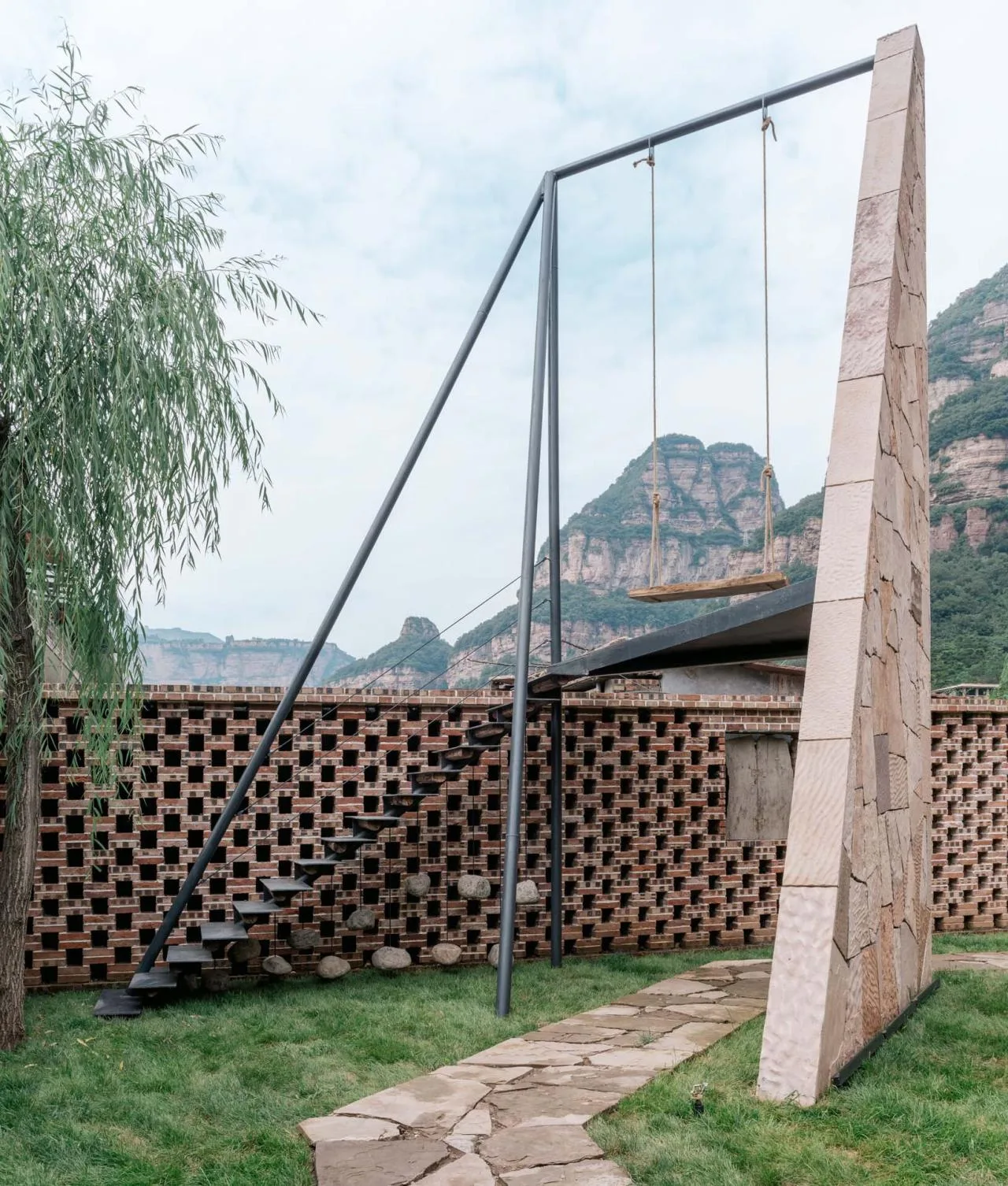
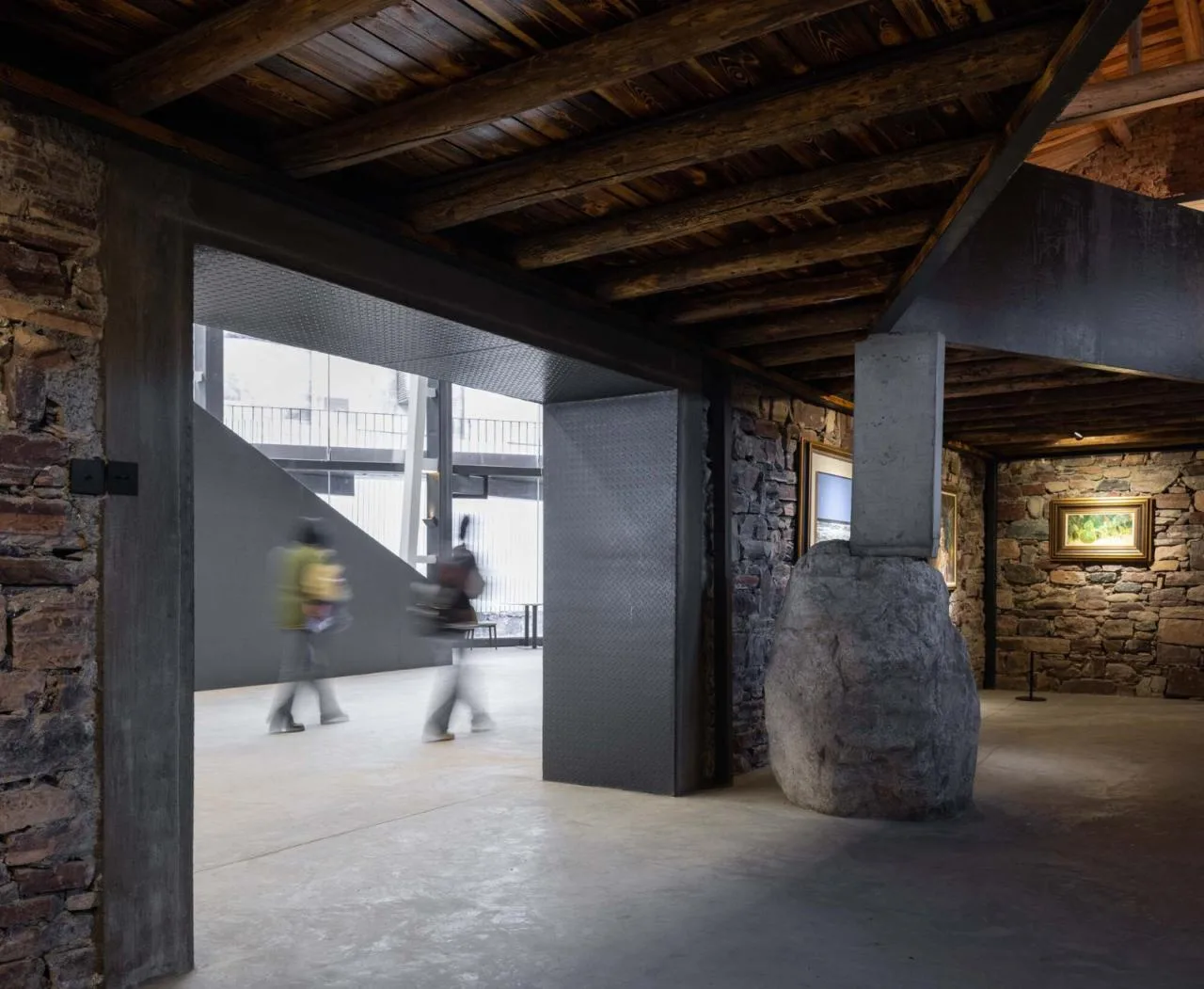
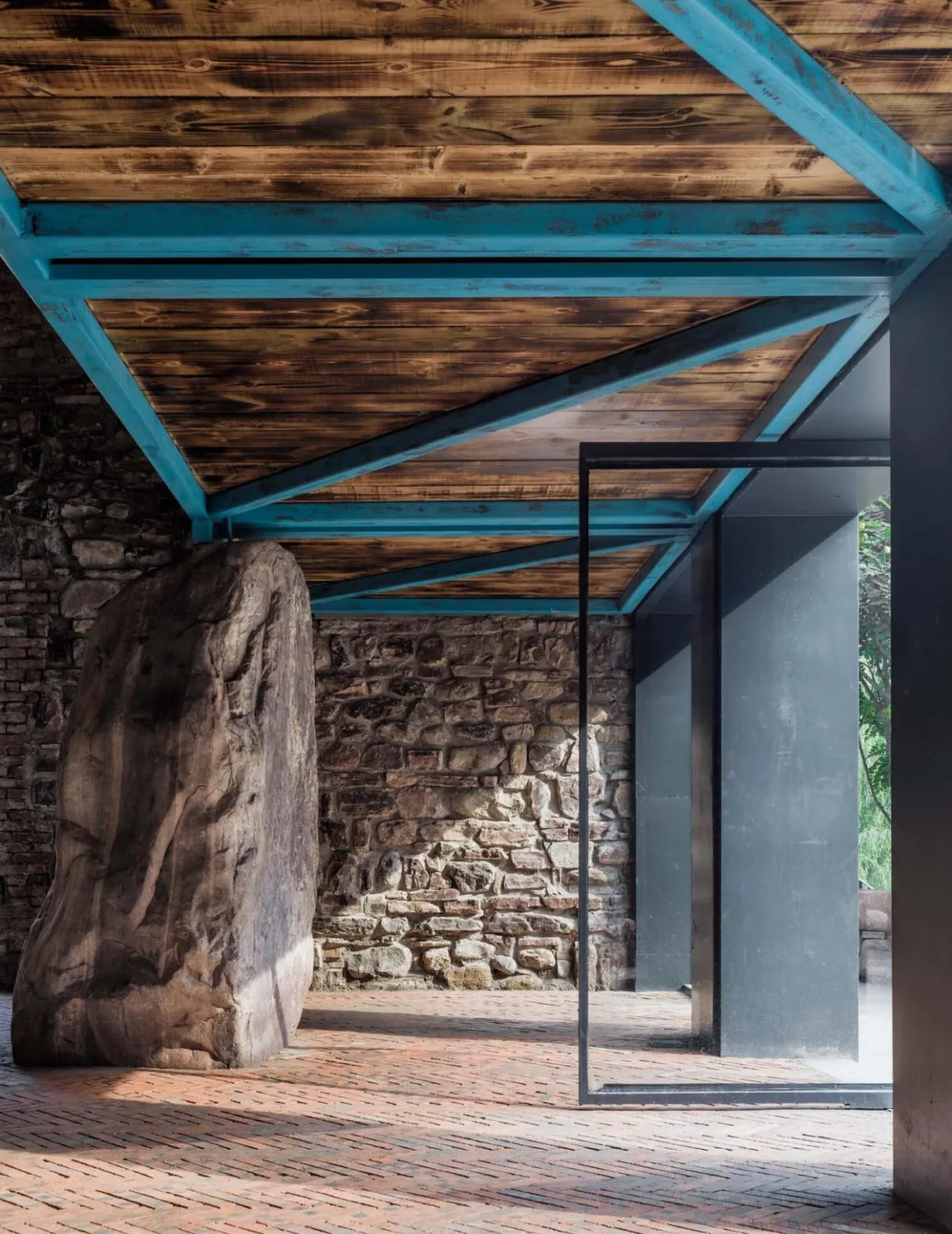
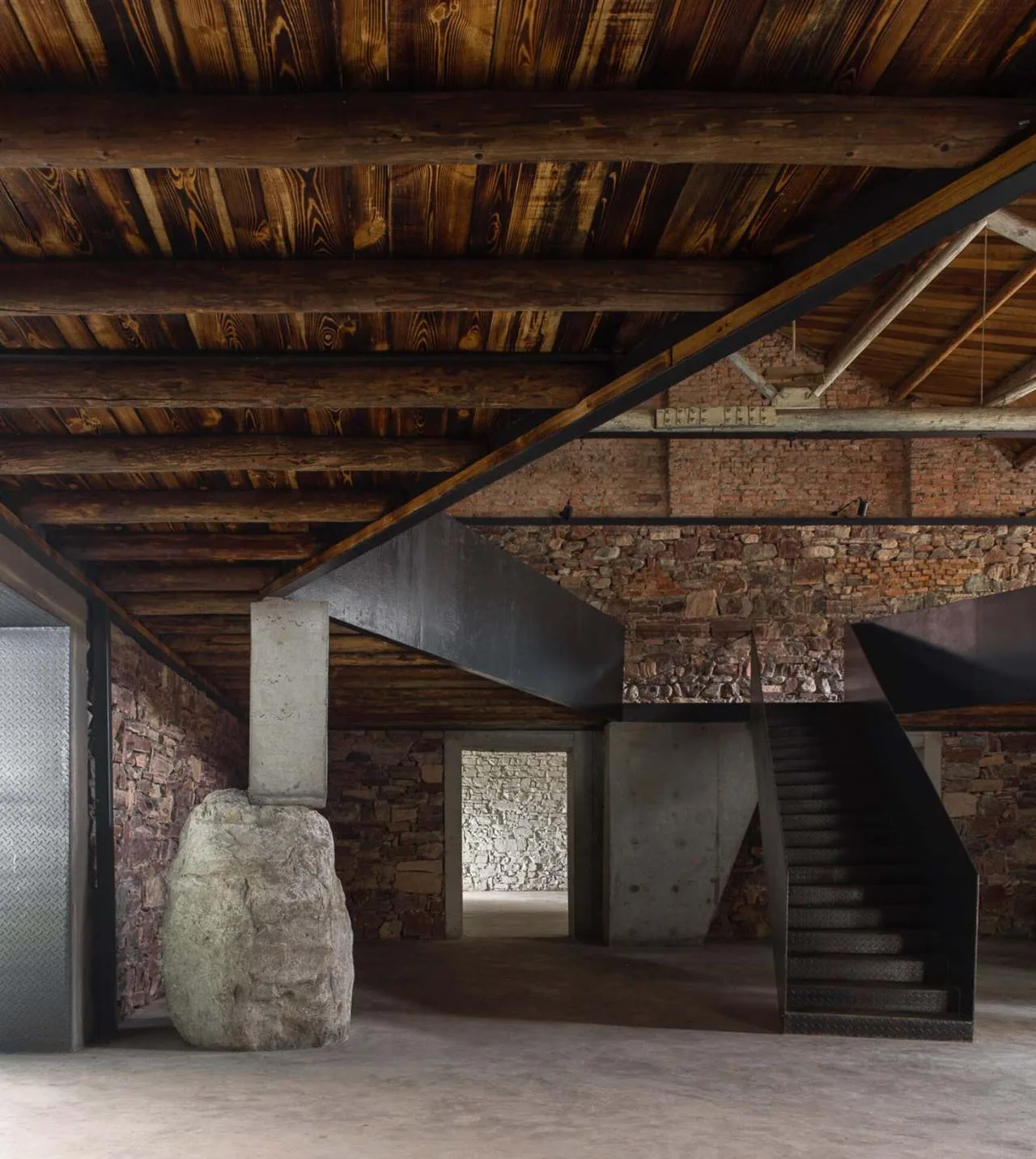
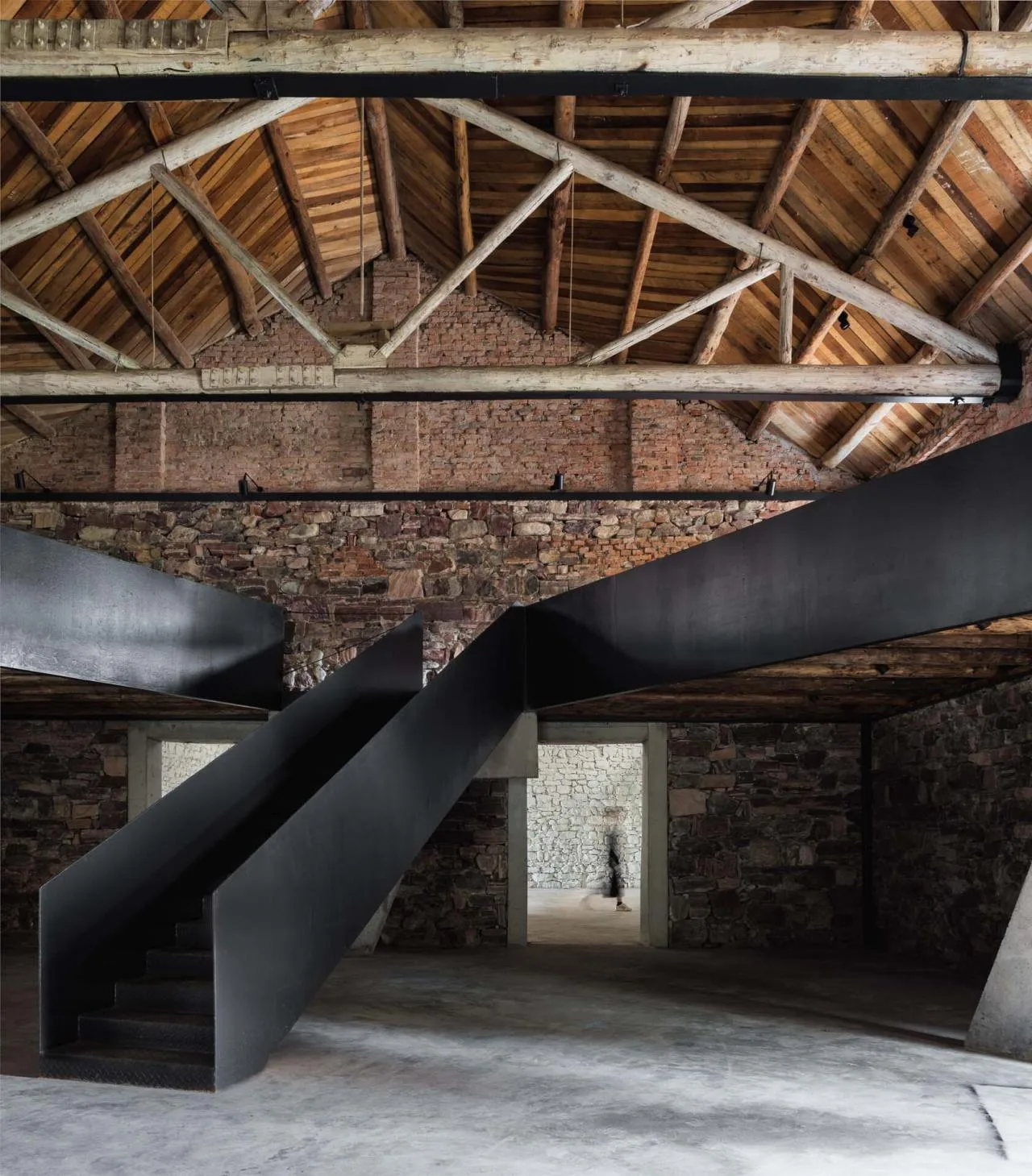
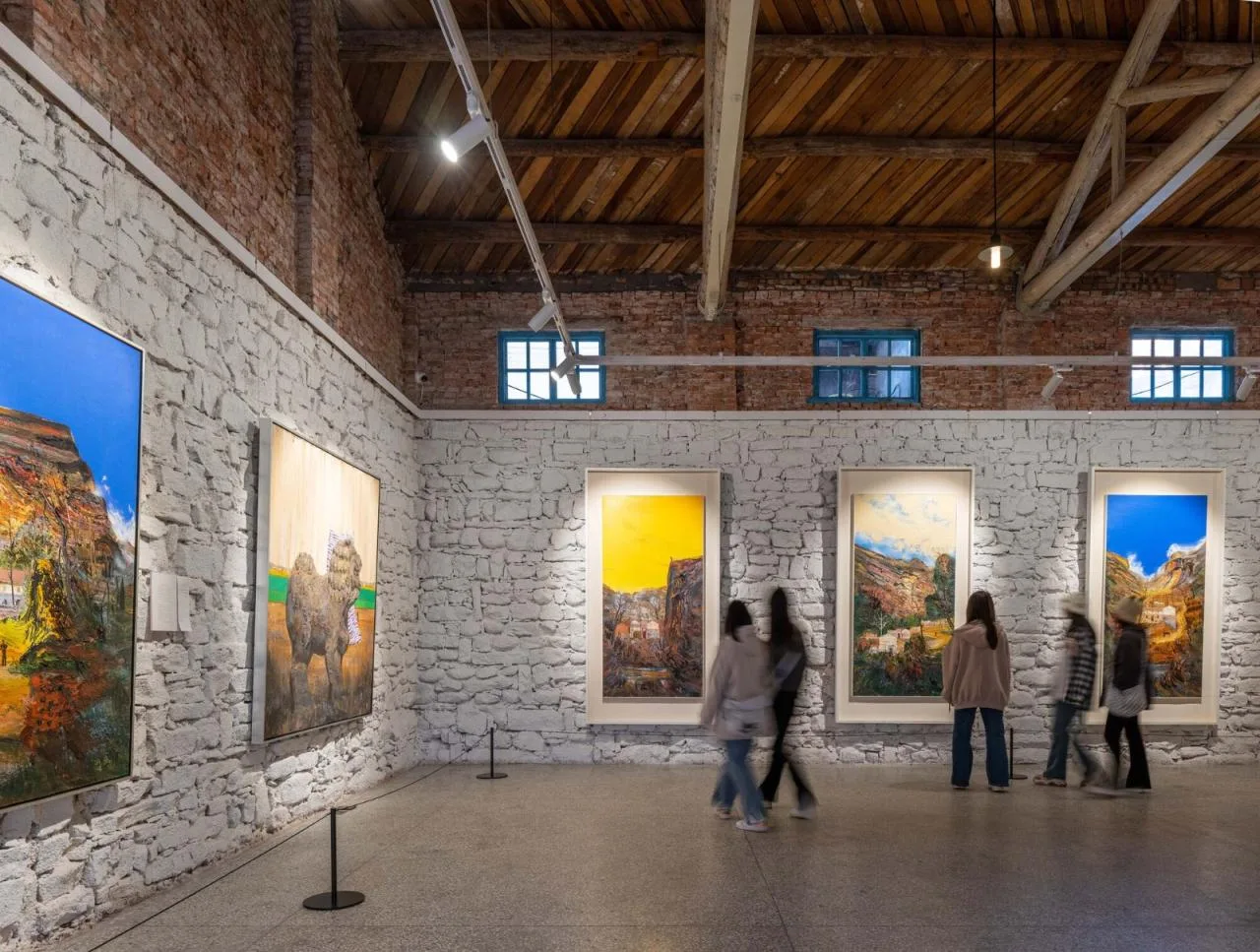
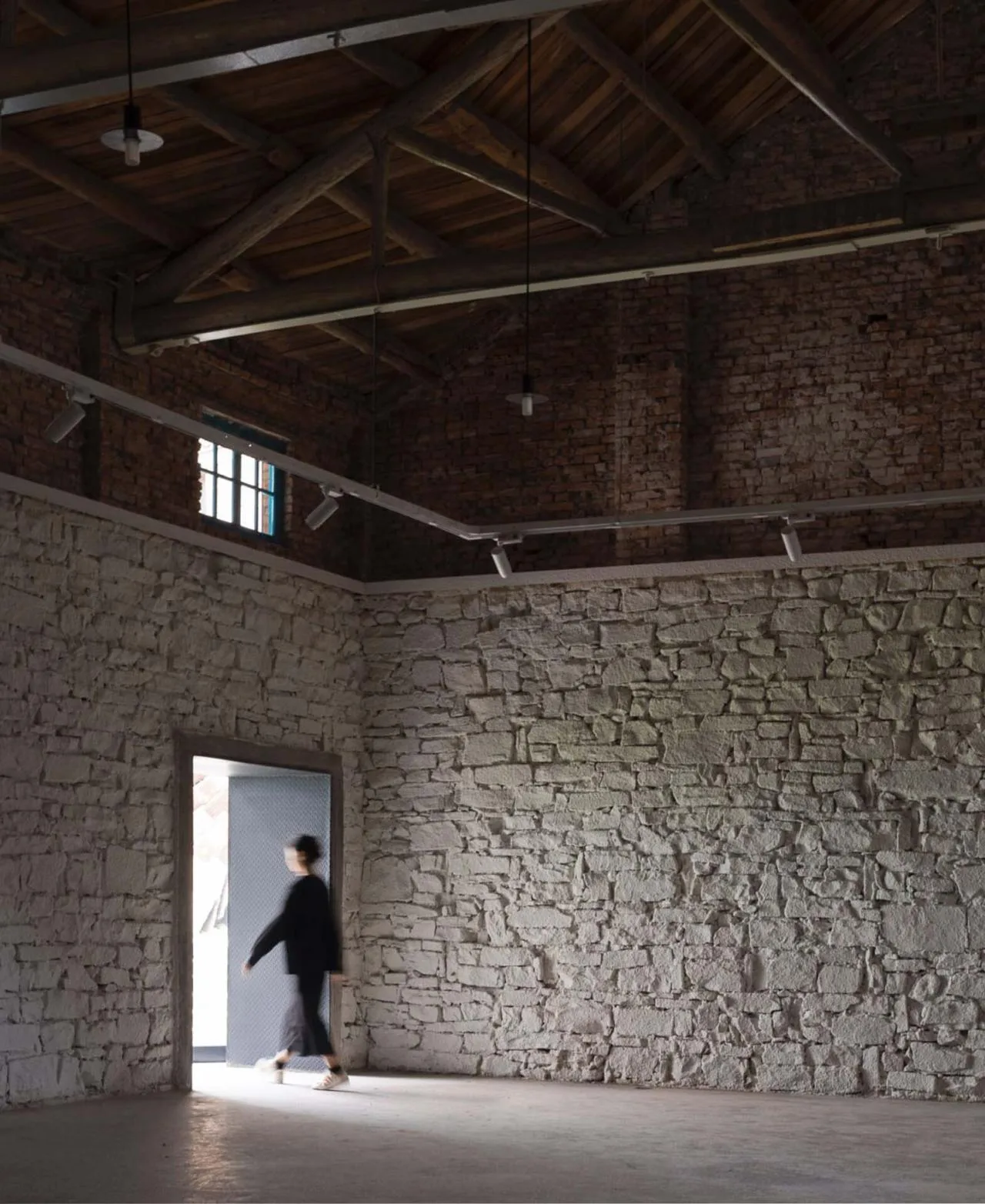
Excavated stones were used for waterfront embankments and landscaping the courtyard. Large boulders from the stream support the warehouse attic, creating a striking contrast between the rugged stones and the light steel structure. Exposed brick and stone walls showcase paintings in the White Hall, Black Hall, and Studio. Pebbles serve as both building foundation and counterweights for the steel plate staircase in the north courtyard.
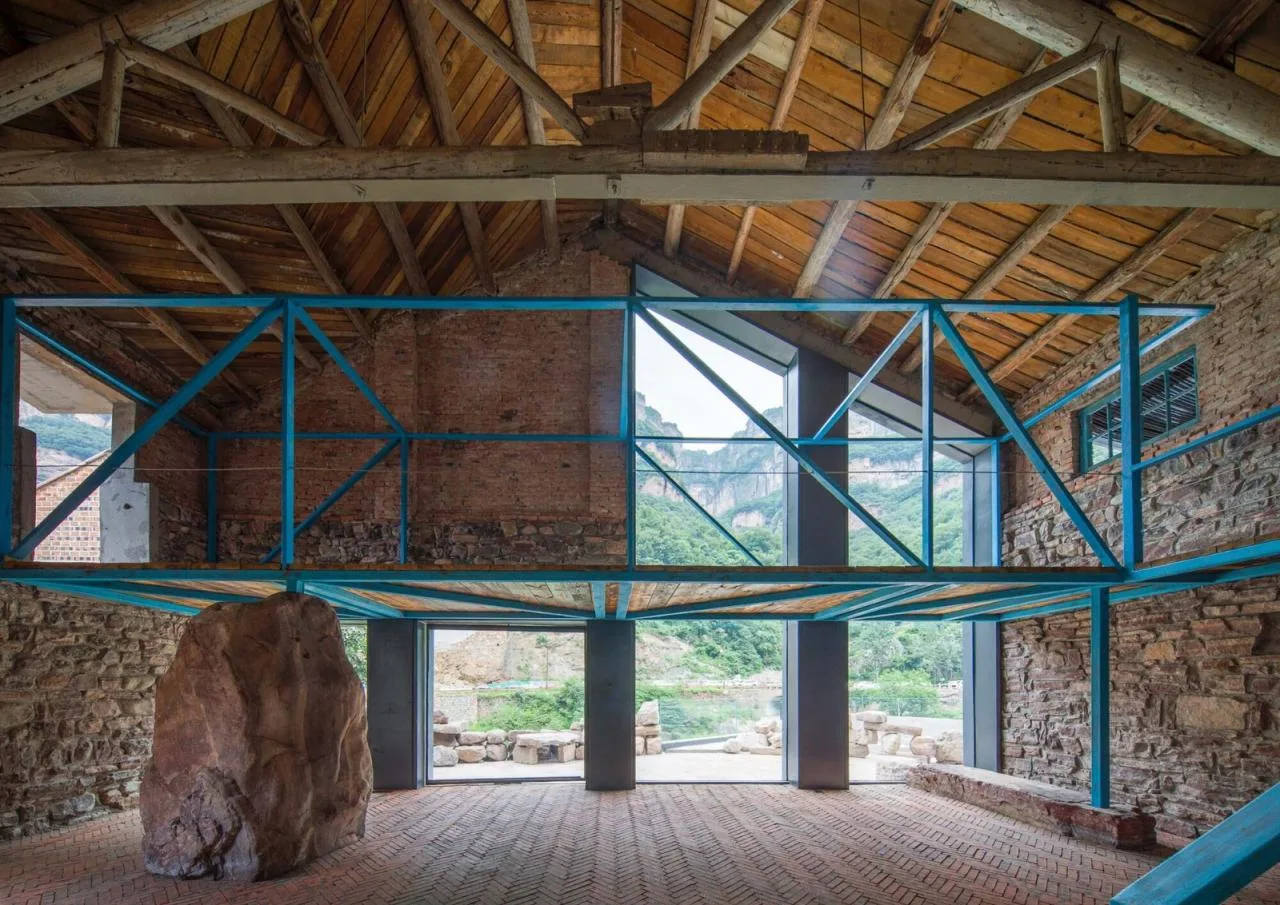
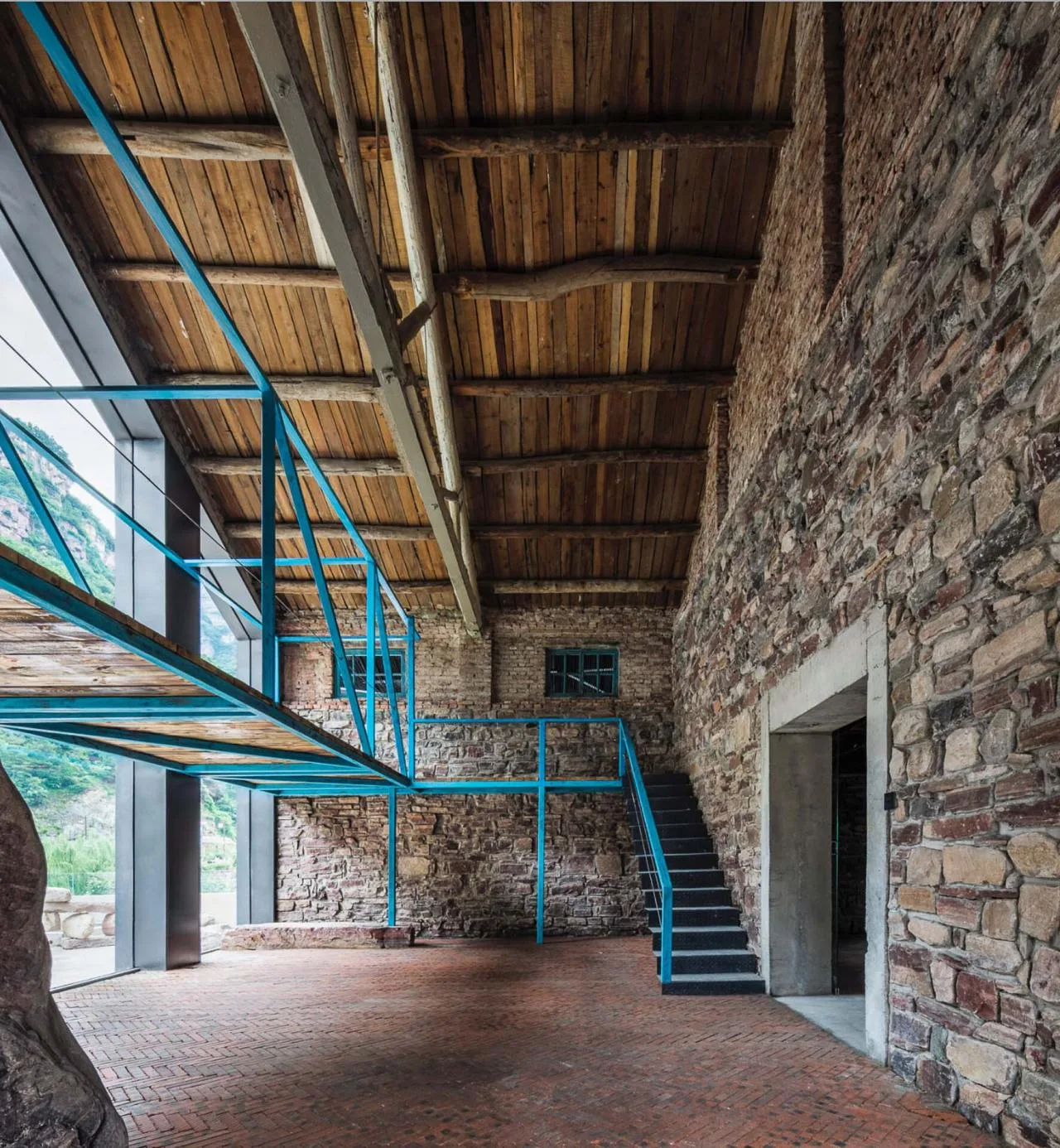
Modern art museums often create a sense of unfamiliarity by isolating artistic creation from public viewing, resulting in the sterile “white box” environment that venerates artworks.
In a small town context, the goal is to foster a daily aesthetic experience. By exposing simple, rustic materials, residents familiar with stone craftsmanship discover a new yet recognizable environment, while students find a free and open space for creative exchange.
At the same time, the museum connects the pastoral lifestyle of painter Meng Xinyu to its audience. Visitors and locals can gather on the north courtyard, enjoying tea and conversation with passersby.
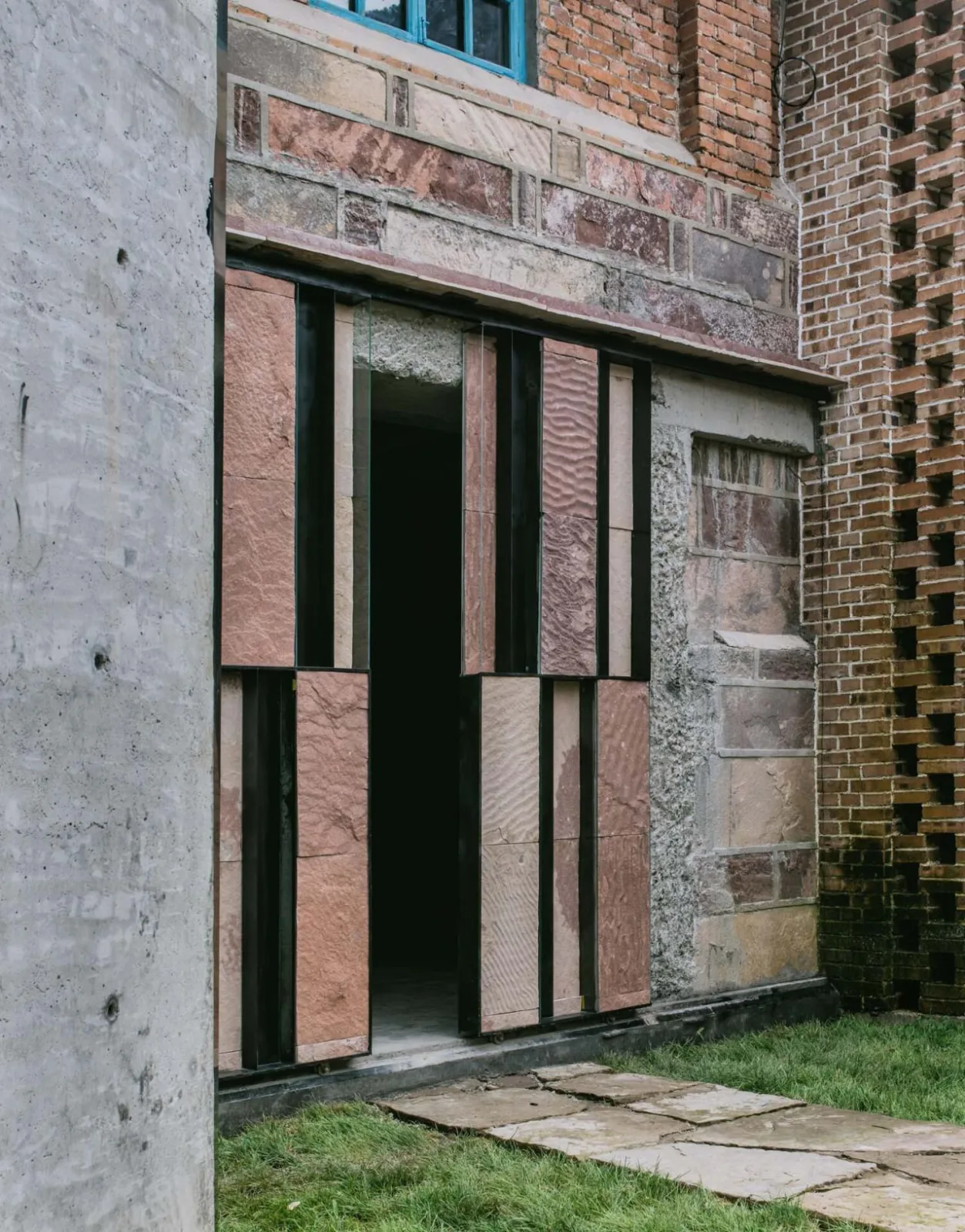
The continuous path of Zhizhi weaves through the building facade, blending modern materials with local sandstone. Landscape elements such as curved alleys, long bridges, winding paths, stone foundations, observation decks, caves, and water walls intermingle, embracing nature through layered terraces.
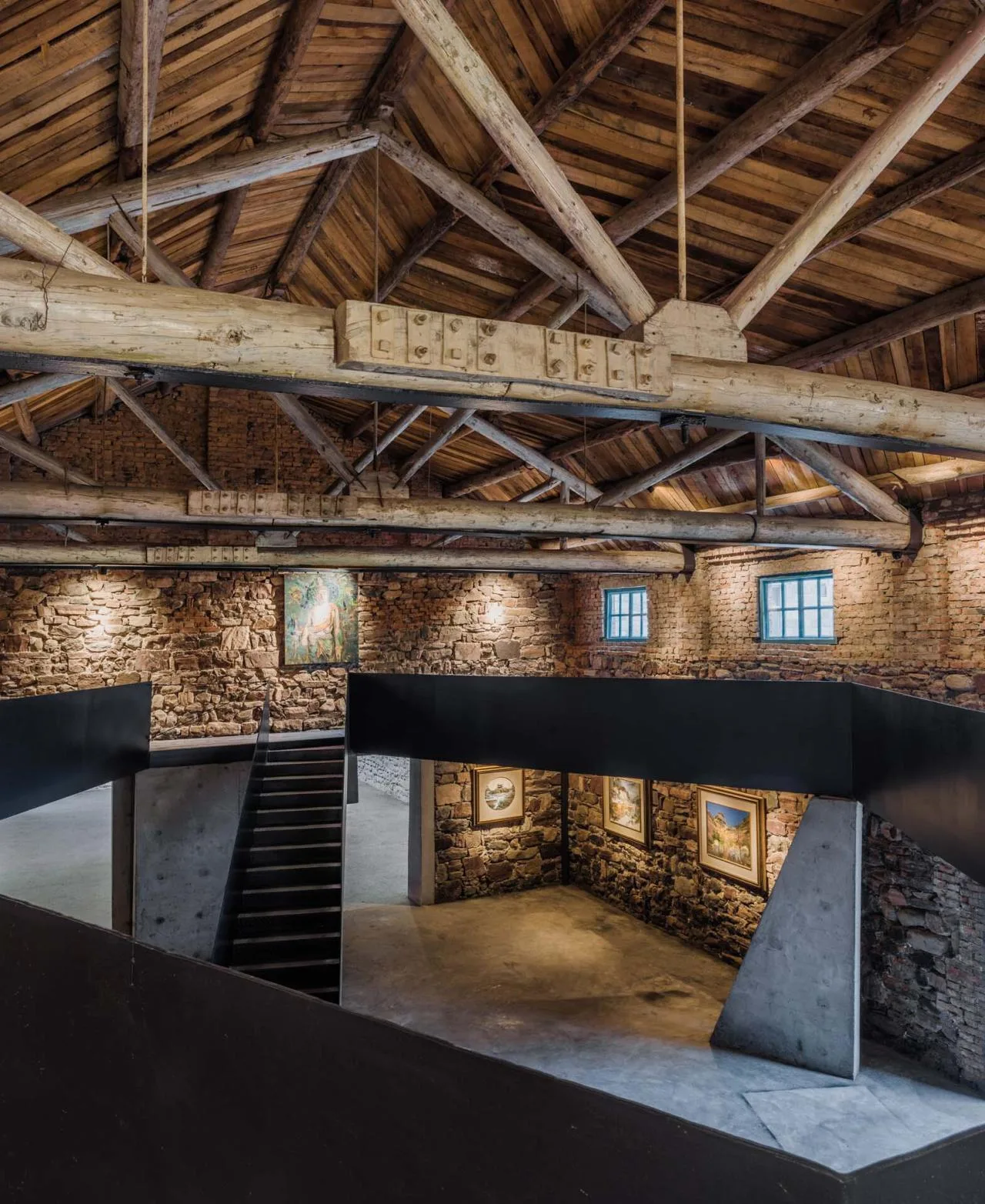
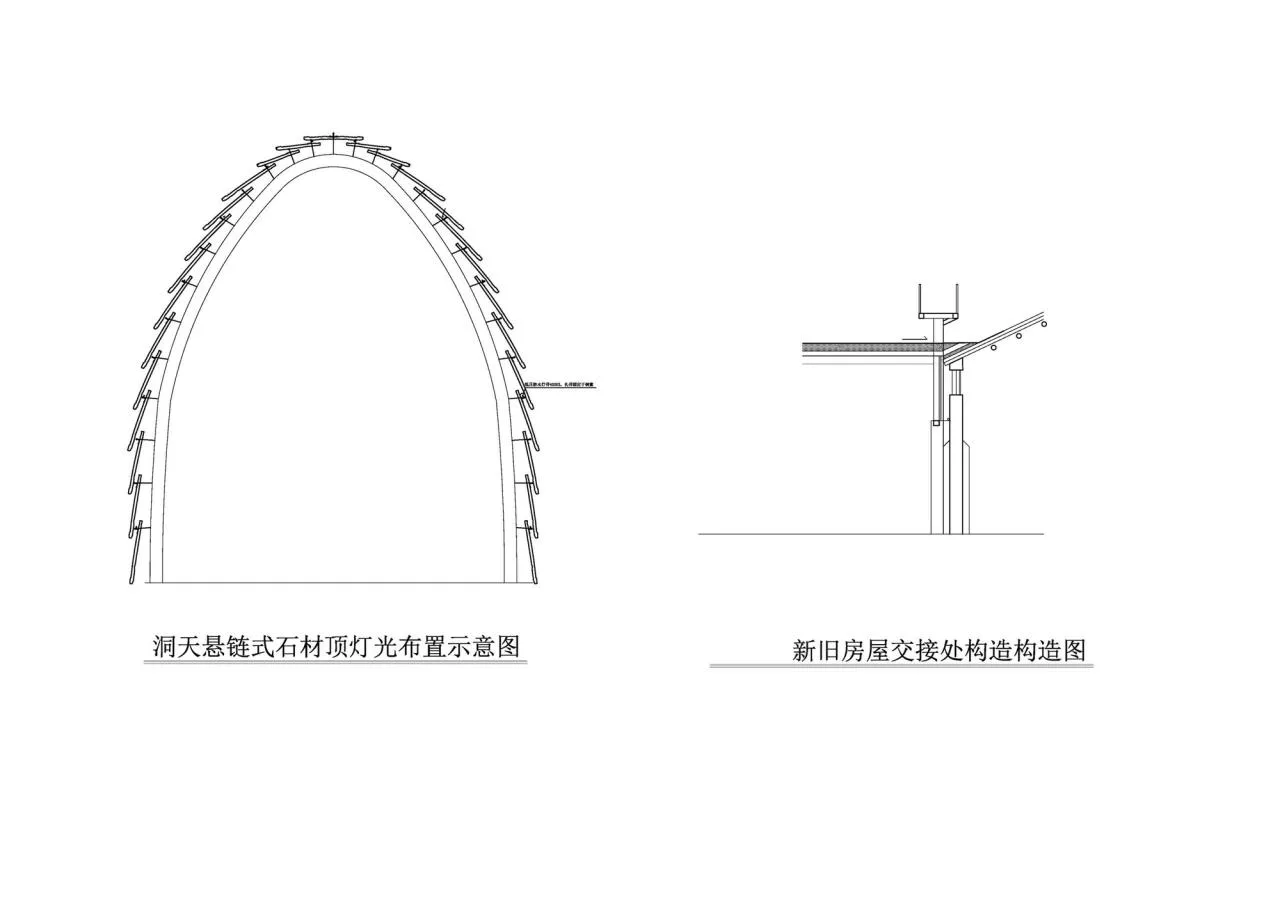
The dialogue between old and new facades creates a harmonious, fresh, and vibrant environment. Inside, the renovated warehouse serves as an exhibition hall supported by natural boulders, expressing simplicity and honesty.
The multifunctional new building reveals its roof trusses, with black hemp rope and white steel creating a dynamic spatial tension. The coffee shop walls are painted in red sandstone hues, adding a fashionable touch. Floor-to-ceiling glass panels, measuring 21 square meters, provide expansive views of the surrounding mountains and waters.
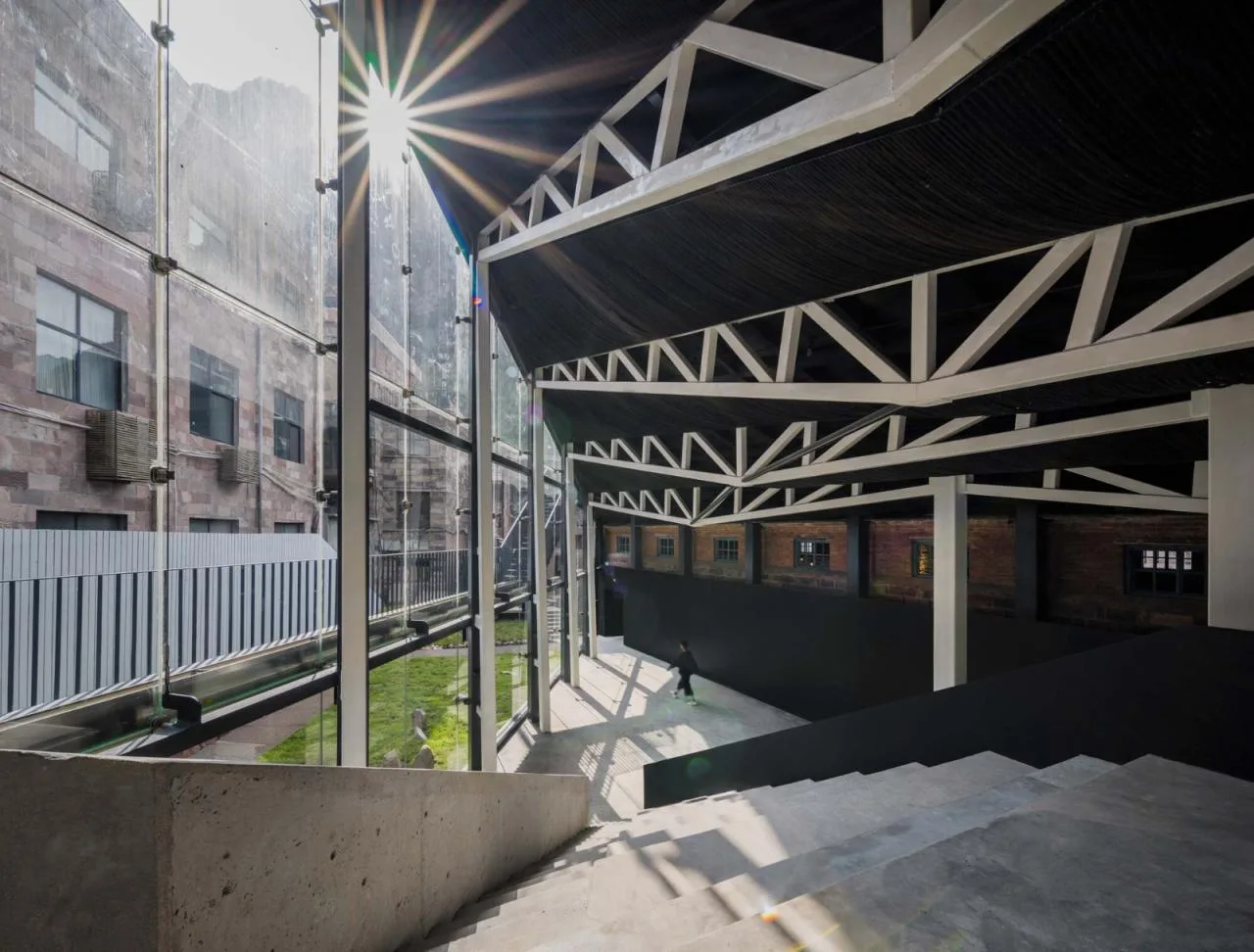
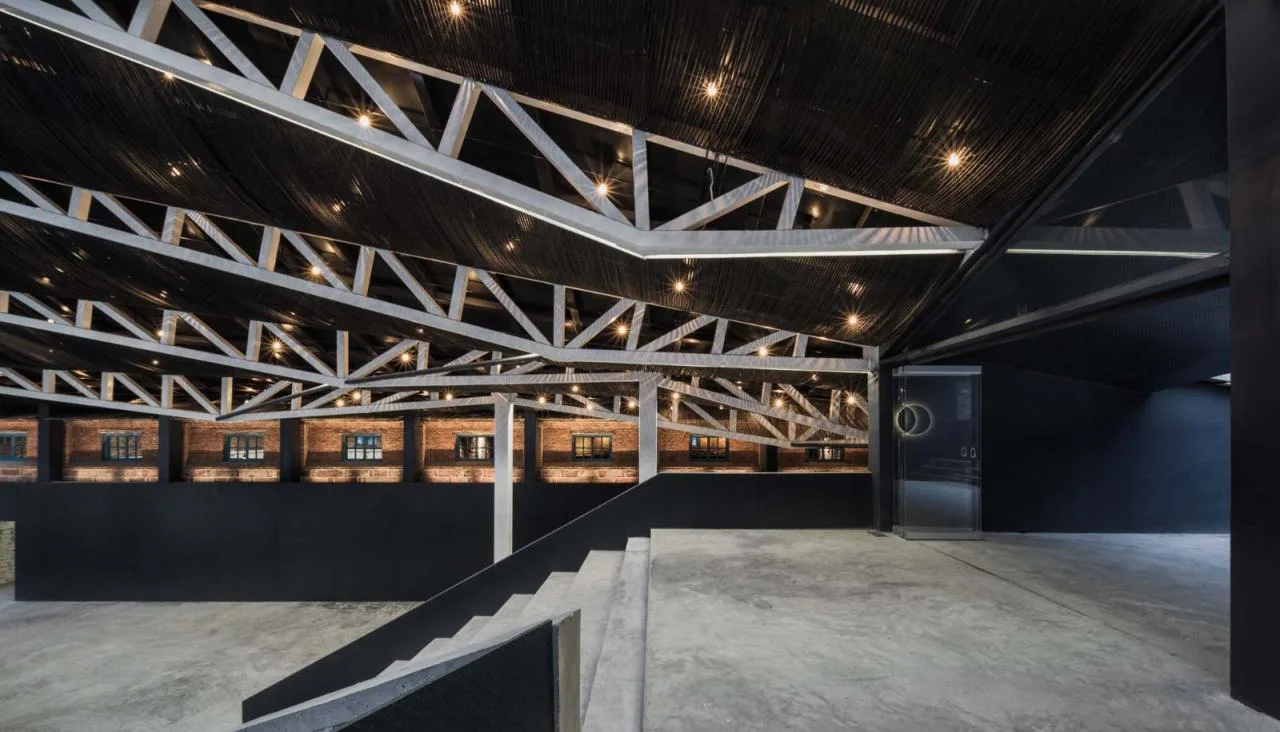
The architectural flow employs the concept of “Kuang Ao Dui,” a technique of opening and closing spaces:
- At the west entrance, a secluded cave path leads to a clear, deep central courtyard, which further points to the eastern entrance.
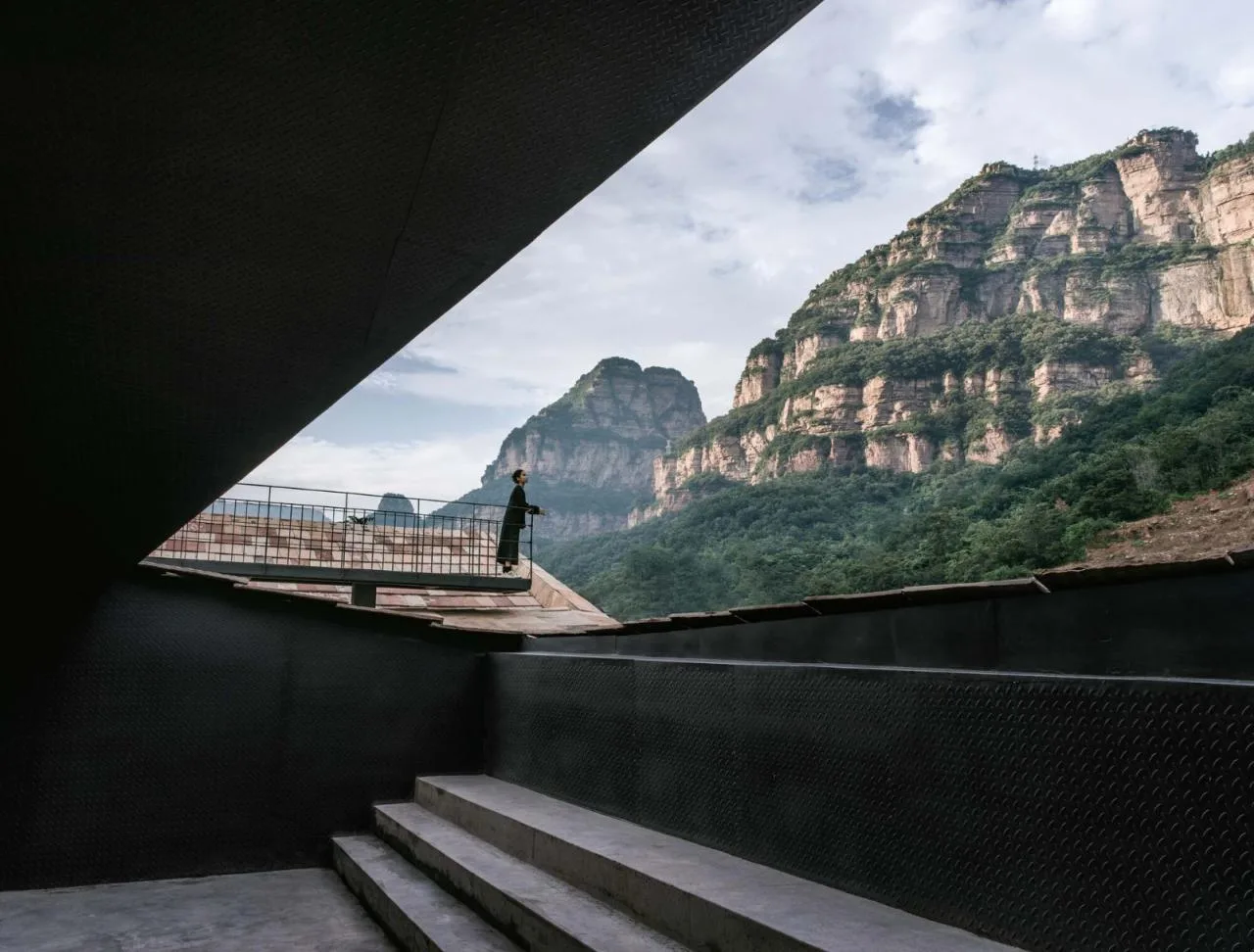
- Visitors move from viewing paintings in the hall to stepping onto terraces that offer breath and outlook, overlooking distant mountains.
- The warehouse exhibition hall provides a protective enclosure, with views reminiscent of Jing Hao’s paintings through large windows.
- Sunken paths lead to open restaurant views framed by expansive glass.
- A continuous path ascends to the roof, where views suddenly open amidst a compact environment, surrounded by a natural valley.
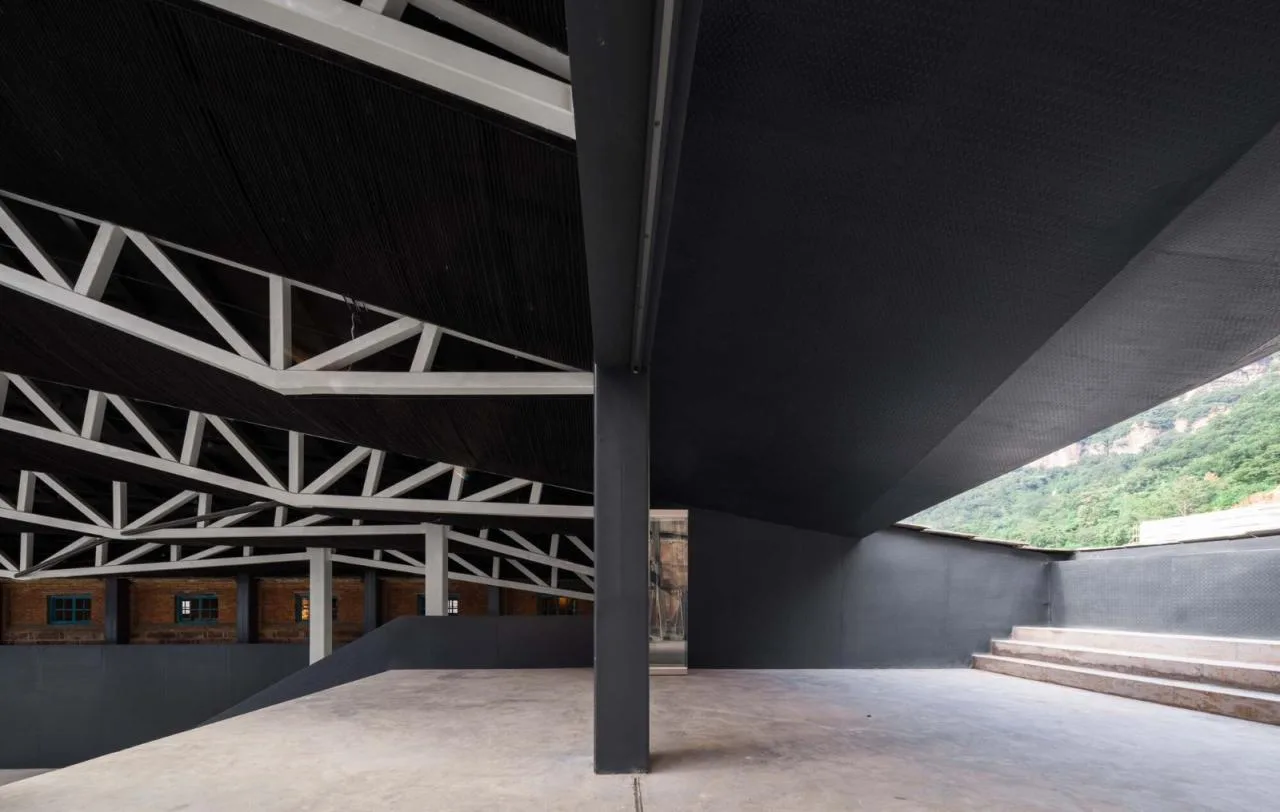
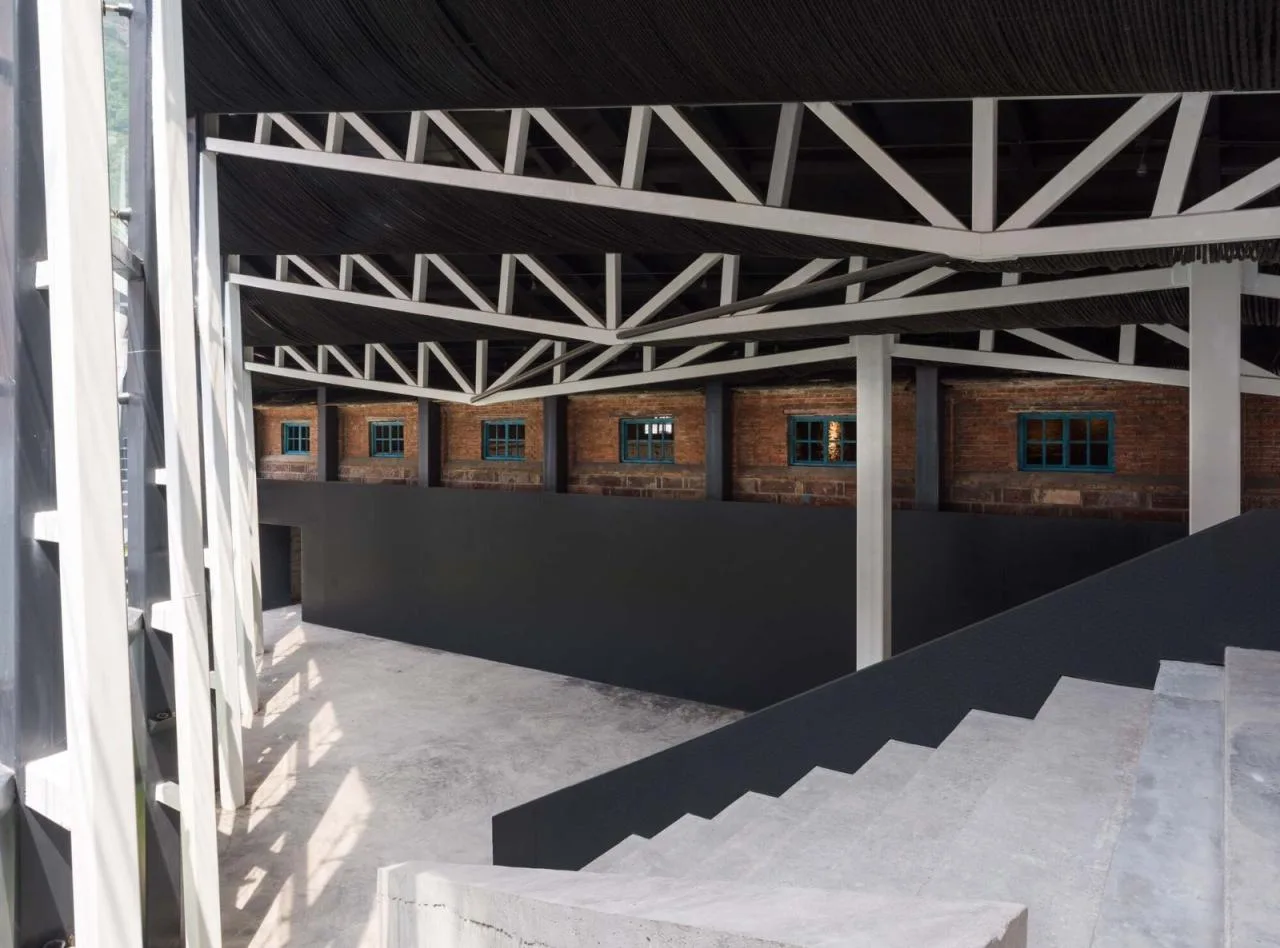
The vision for this public art venue in Shibanyan Town reflects China’s ongoing urban transformation, where culture and lifestyle persist through cycles of change.
From the Northern Song Dynasty paintings of Jing Hao and Guo Xi, through Qing Dynasty settlements motivated by water scarcity, to the remnants of Republican-era inns, the area’s history is rich and layered.
In the 1970s and 80s, Shibanyan was underdeveloped due to limited farmland. The 1990s commodity economy and labor export expansion helped establish the town’s street framework. In the new millennium, the natural beauty spurred tourism and related industries like dining, commerce, and accommodation, primarily driven by imported and homogeneous business models.
Recently, the challenge has been to upgrade the “Chinese Painting Valley” industry to create a sustainable community lifestyle connecting locals, artists, students, government, and tourists.
Can this industrial upgrade foster creative clusters and localized art communities? Can the museum serve as a platform for social interaction, exhibitions, performances, and cross-disciplinary innovation? The goal is to cultivate diverse, community-oriented, and personalized public art, strengthening a cultural community that is inclusive, open, and grounded in local identity and geography.
In this sense, the museum, which integrates historic relics with new spaces, marks a step toward a new way of life.
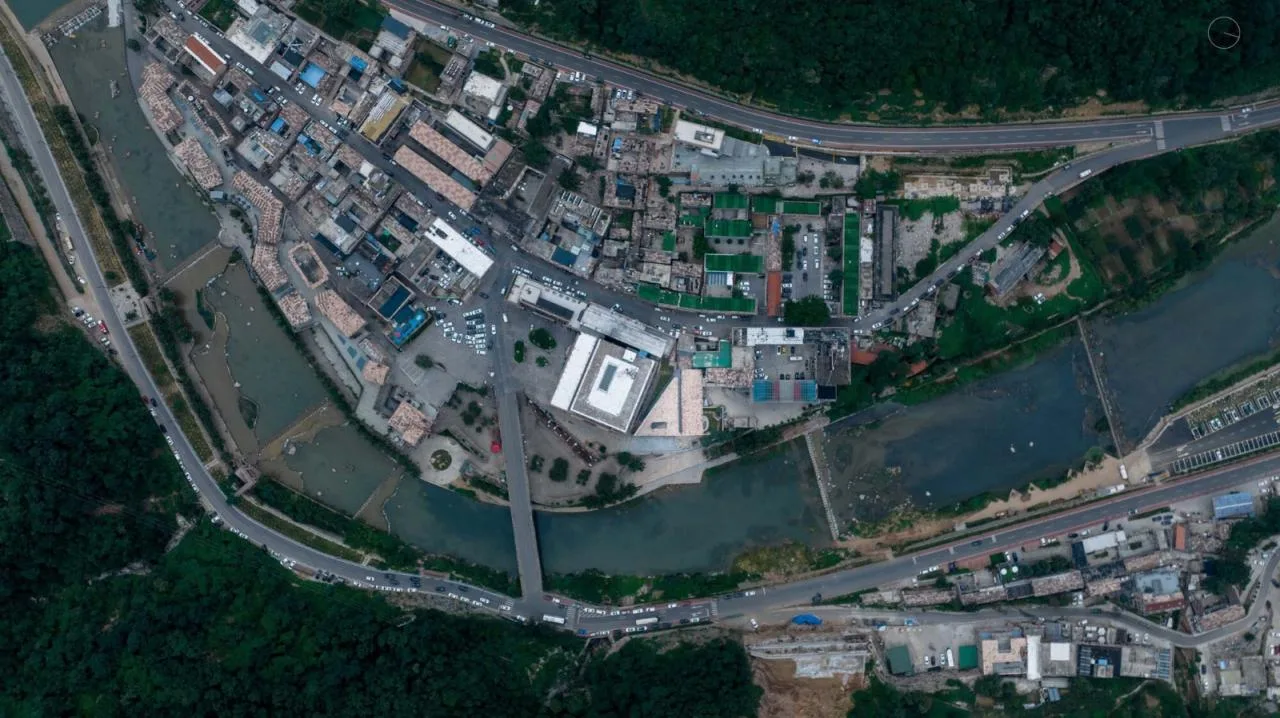
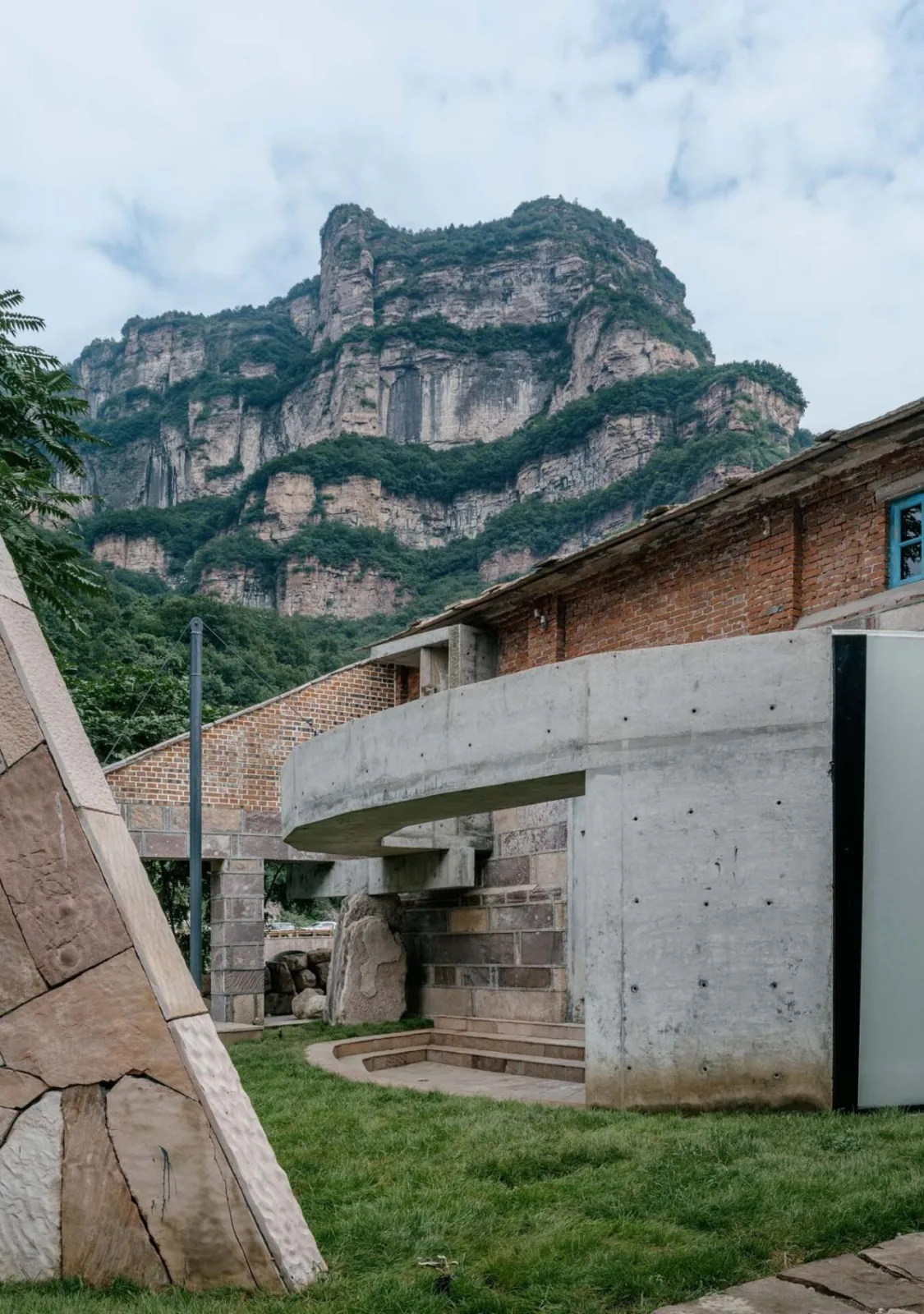
Spaces without rigid definitions offer greater flexibility and adaptability compared to highly specialized functions. Admired art museums increasingly embrace participatory public art within local contexts.
They become part of everyday life, places for social interaction and gatherings, embodying multiple identities rather than a single purpose. Free spatial layouts stimulate possibilities, offering flexible, multi-sensory experiences that gradually open up to community life over time.
Accordingly, the indoor hall features universal lighting suitable for art exhibitions, handicraft and agricultural product showcases, traditional folk drama performances, small meetings, art lectures, and cooperative training, or simply as a space for relaxation and conversation.
The warehouse exhibition hall hosts daily art displays and artist studios recreating painting environments, integrating art into public life.
The museum’s ambiguity is especially evident outdoors, with multiple entrances and interconnected paths linking the riverbank to the street. Several open platforms face the waterfront:
- A passage alongside the water guides visitors from the northern tourist parking to the town.
- Above this passage, cafes and barbecue stalls thrive during summer evenings, serving tourists and supporting museum operations. Daytime finds students sketching and children playing here.
- The restaurant roof doubles as a venue for art exhibitions and social events, transforming at night into a stage for community square dancing.
- The mountain viewing terrace and rooftop walkway, known as the “wedding corridor,” enrich public life with diverse possibilities.
This dynamic environment aims to spark a “Medici effect,” fostering an inclusive, humane public art space.
Project Drawings
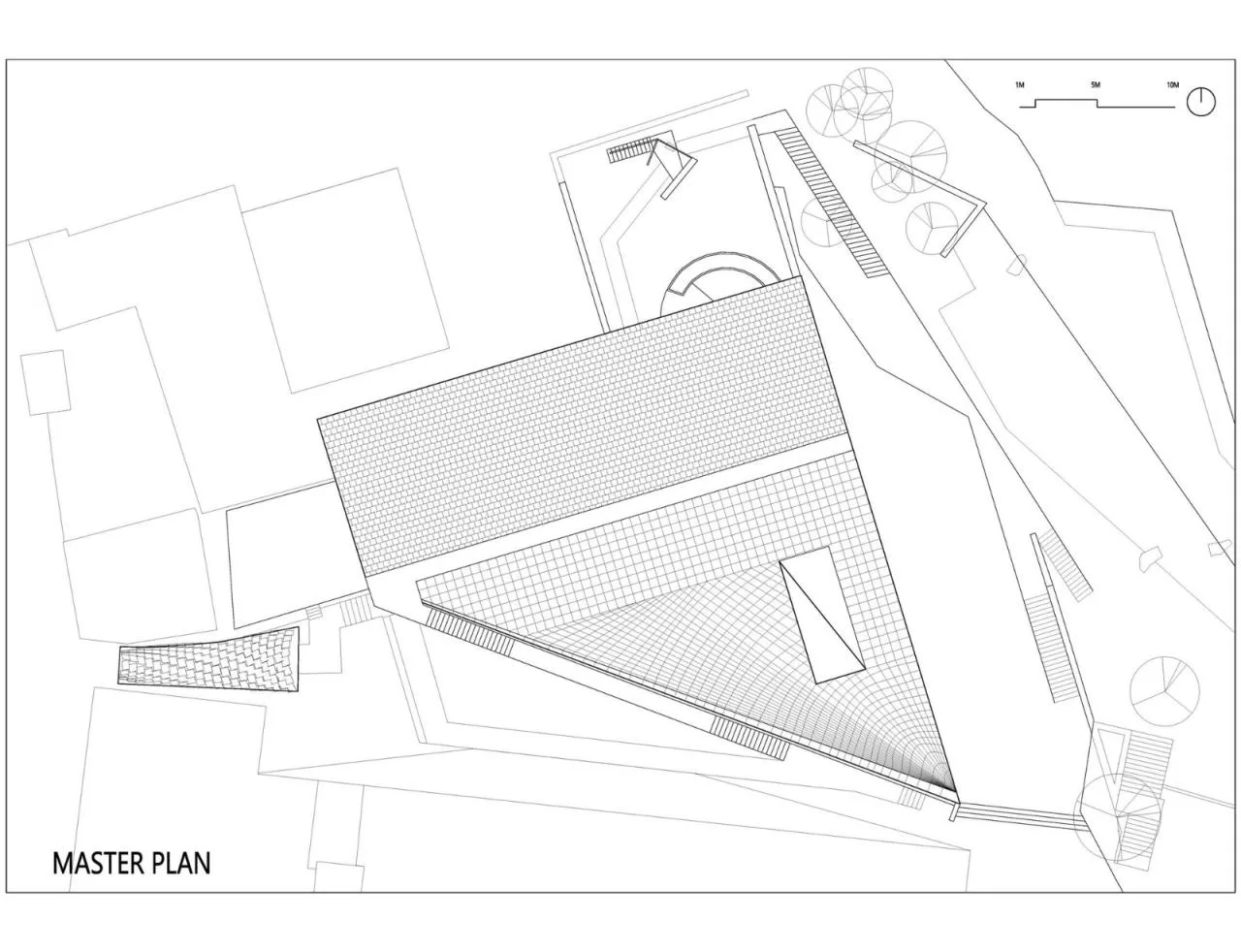
△ General Layout Plan
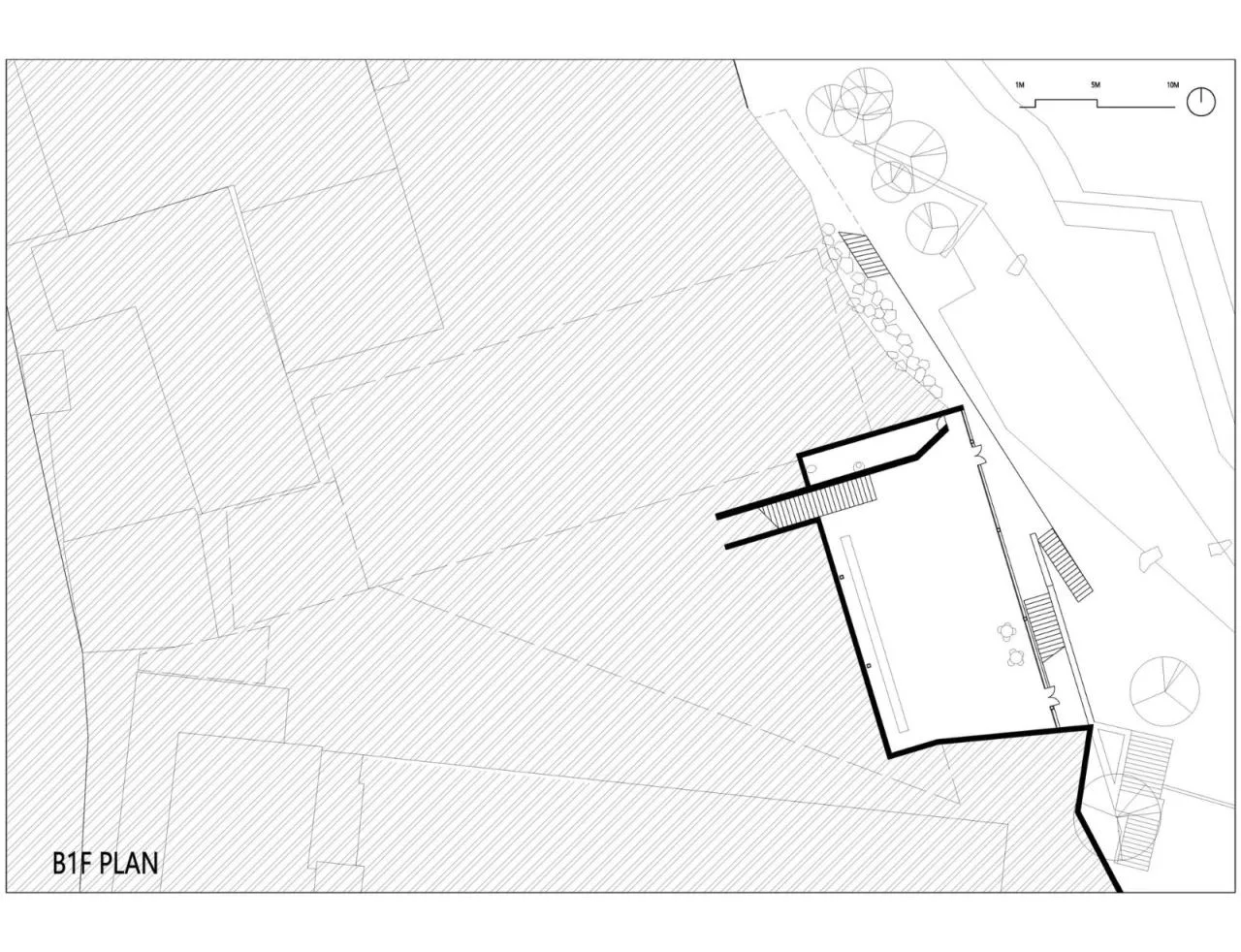
△ Basement Floor Plan
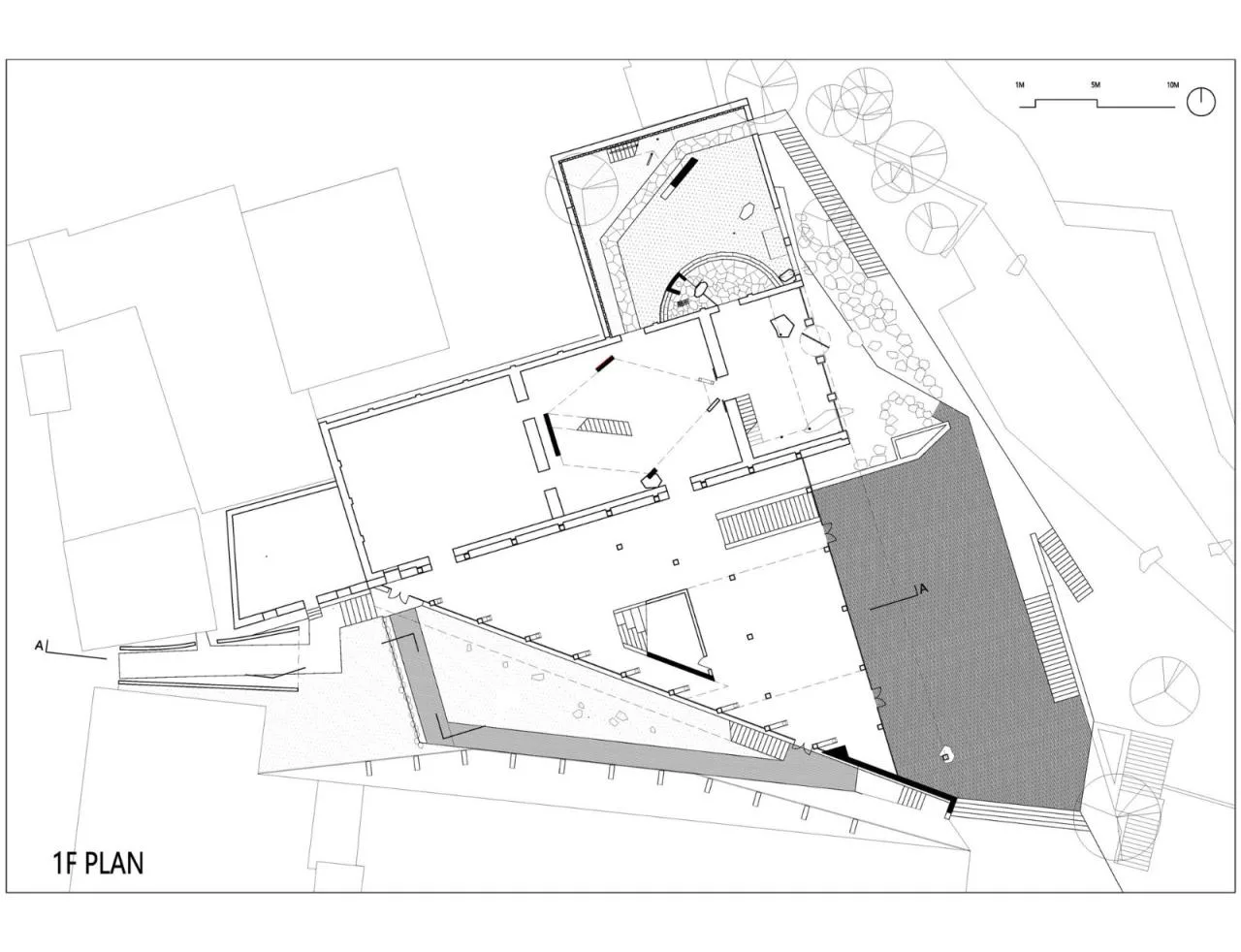
△ First Floor Plan
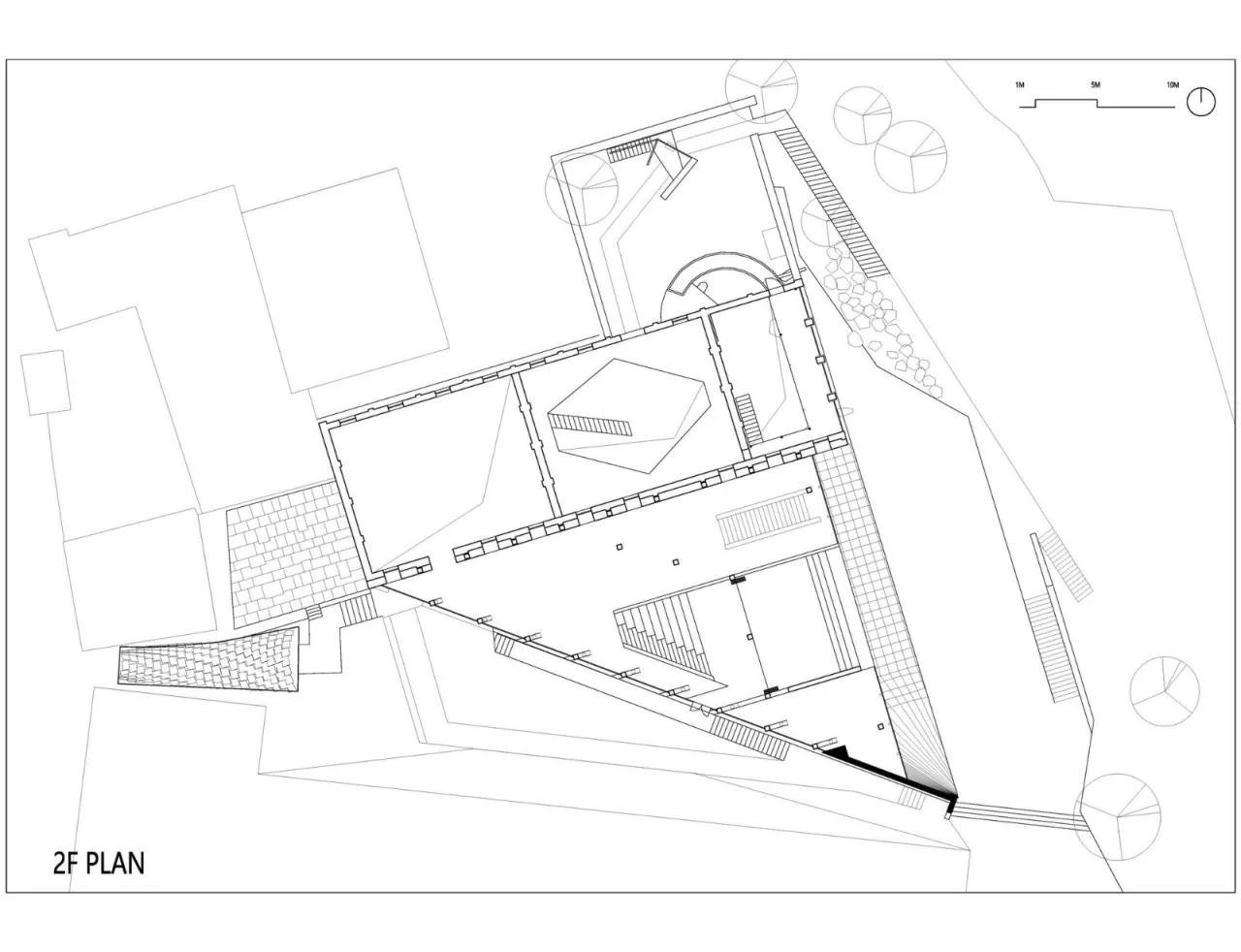
△ Second Floor Plan
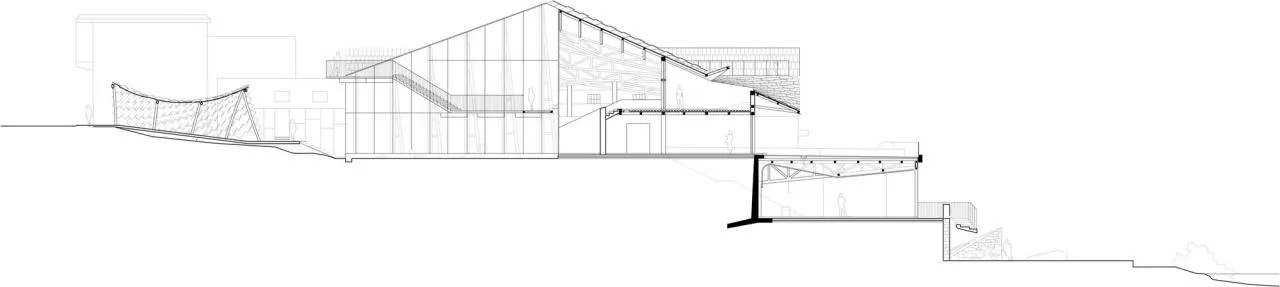
△ Section Diagram
Project Information
Architect: Wang Chong Studio
Area: 1,500 square meters
Project Year: 2022
Photographers: Coppak Studio, Zhu Yumeng
Design Guidance: Mr. Zhang Baowei, Zhang Yifei, Zhang Dongguang
Deepening and Construction: Party Pays Tribute, Hua’an Installation Engineering Co., Ltd.
Artist: Meng Xinyu
Client: Taihang Xinyu Art Museum
Location: Anyang City















Must log in before commenting!
Sign Up