
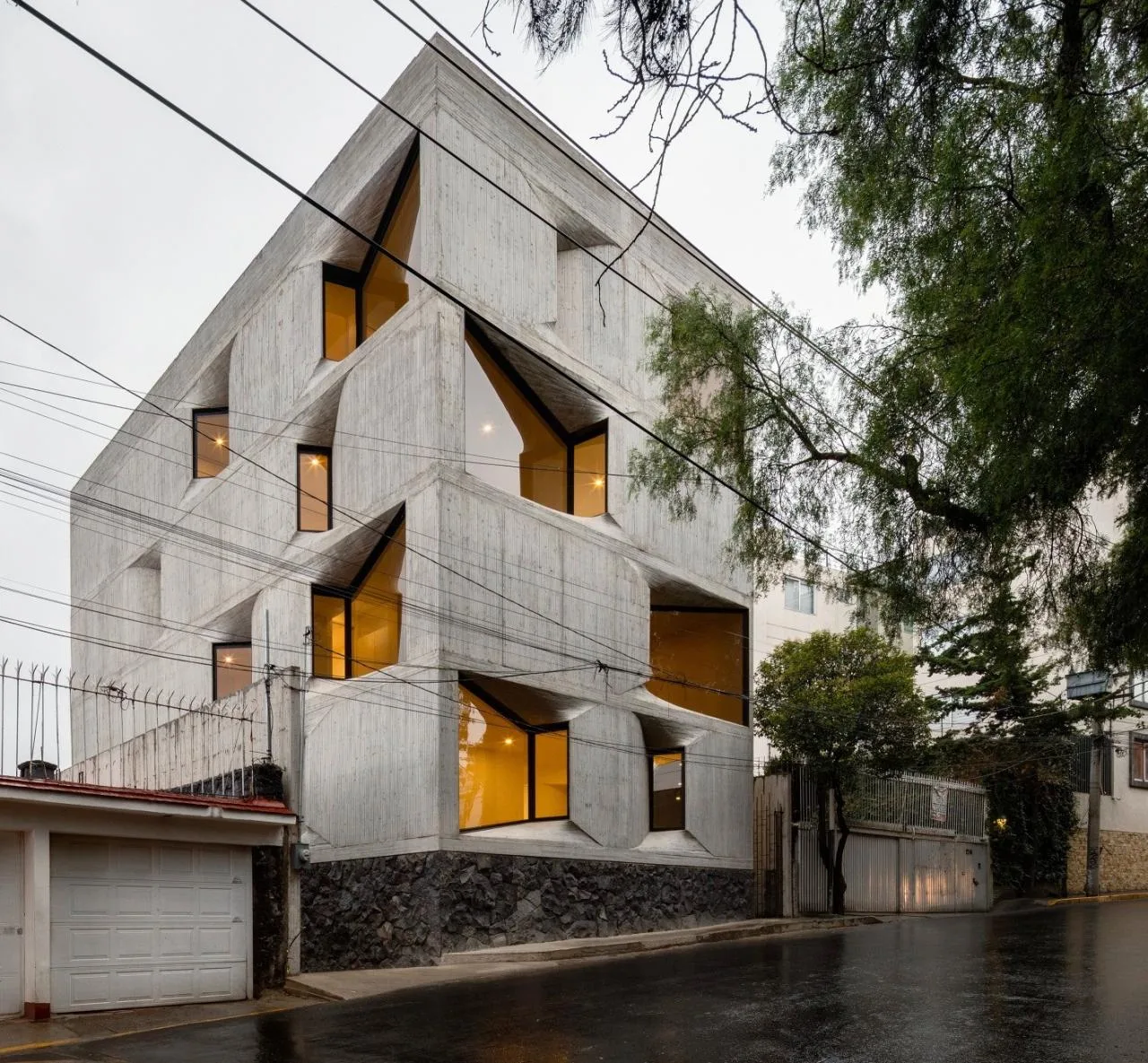
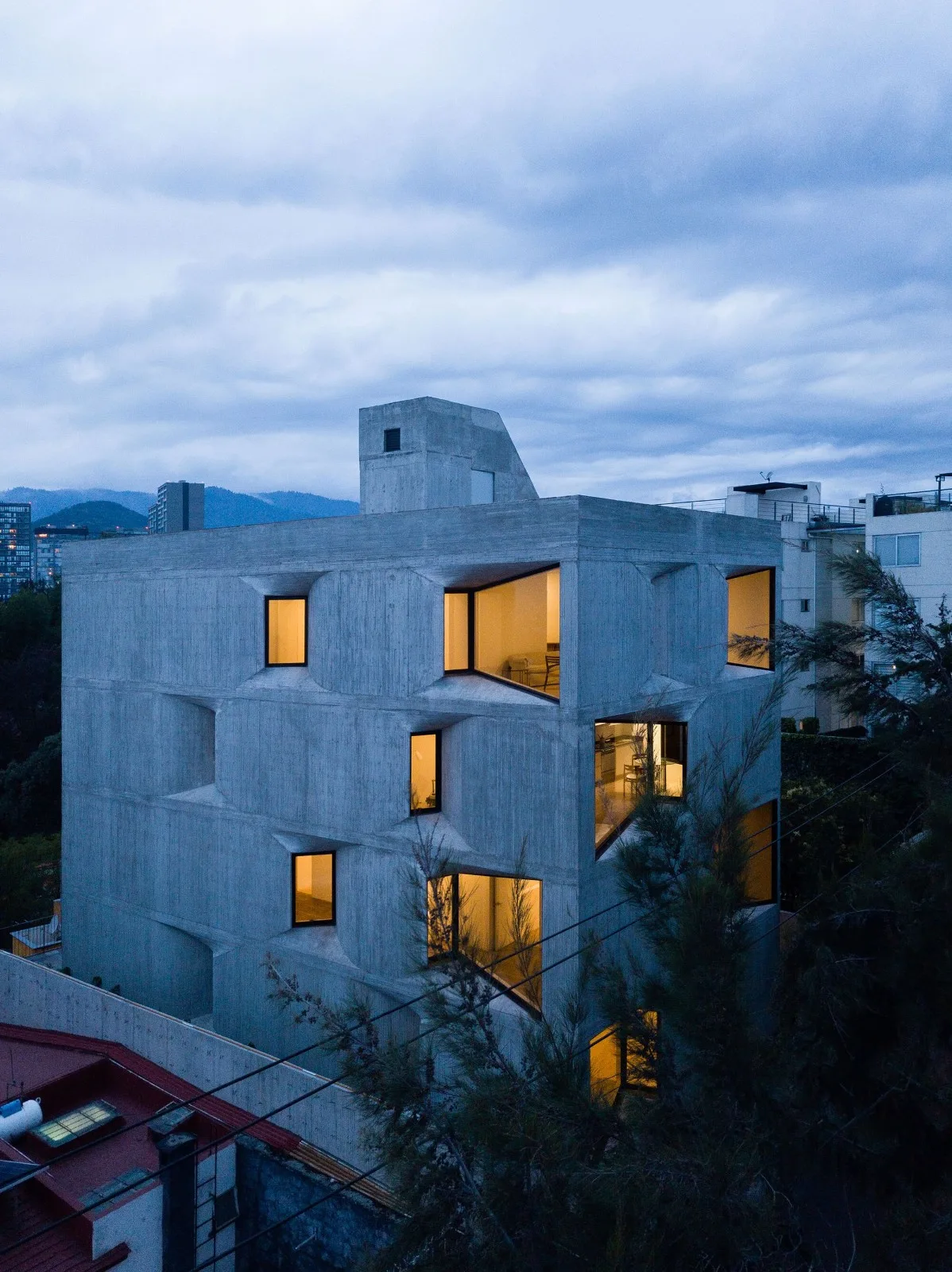
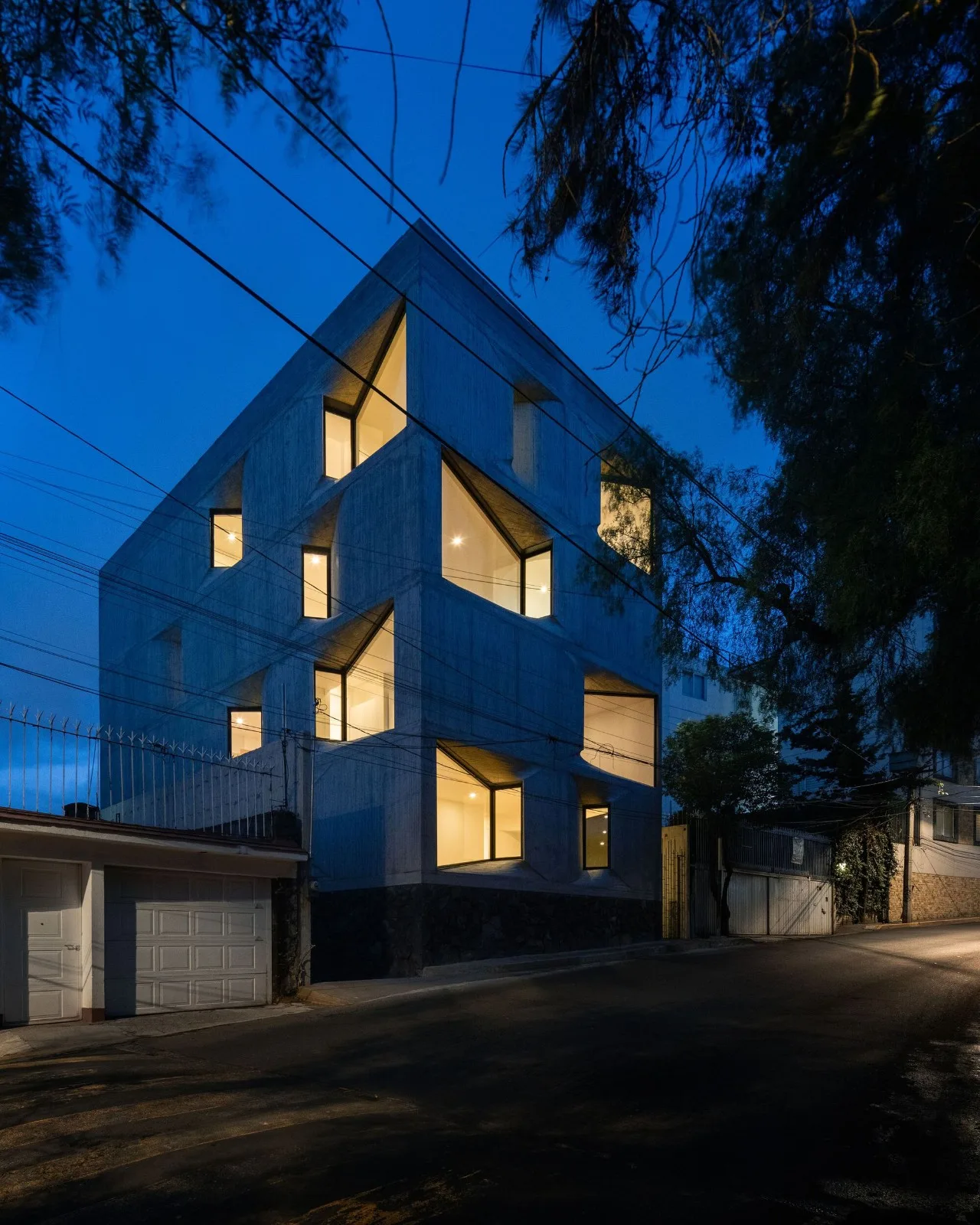
This residential project is located in Mexico City and consists of seven apartments with one to two bedrooms each, plus a basement parking area. From the outset, the design was set to use cast-in-place concrete as the primary building system. The unit layouts were kept simple and straightforward, while maximizing the site’s footprint and allowable height. These constraints aligned with the client’s requirements and allowed us to explore an intriguing design opportunity: creating openness.
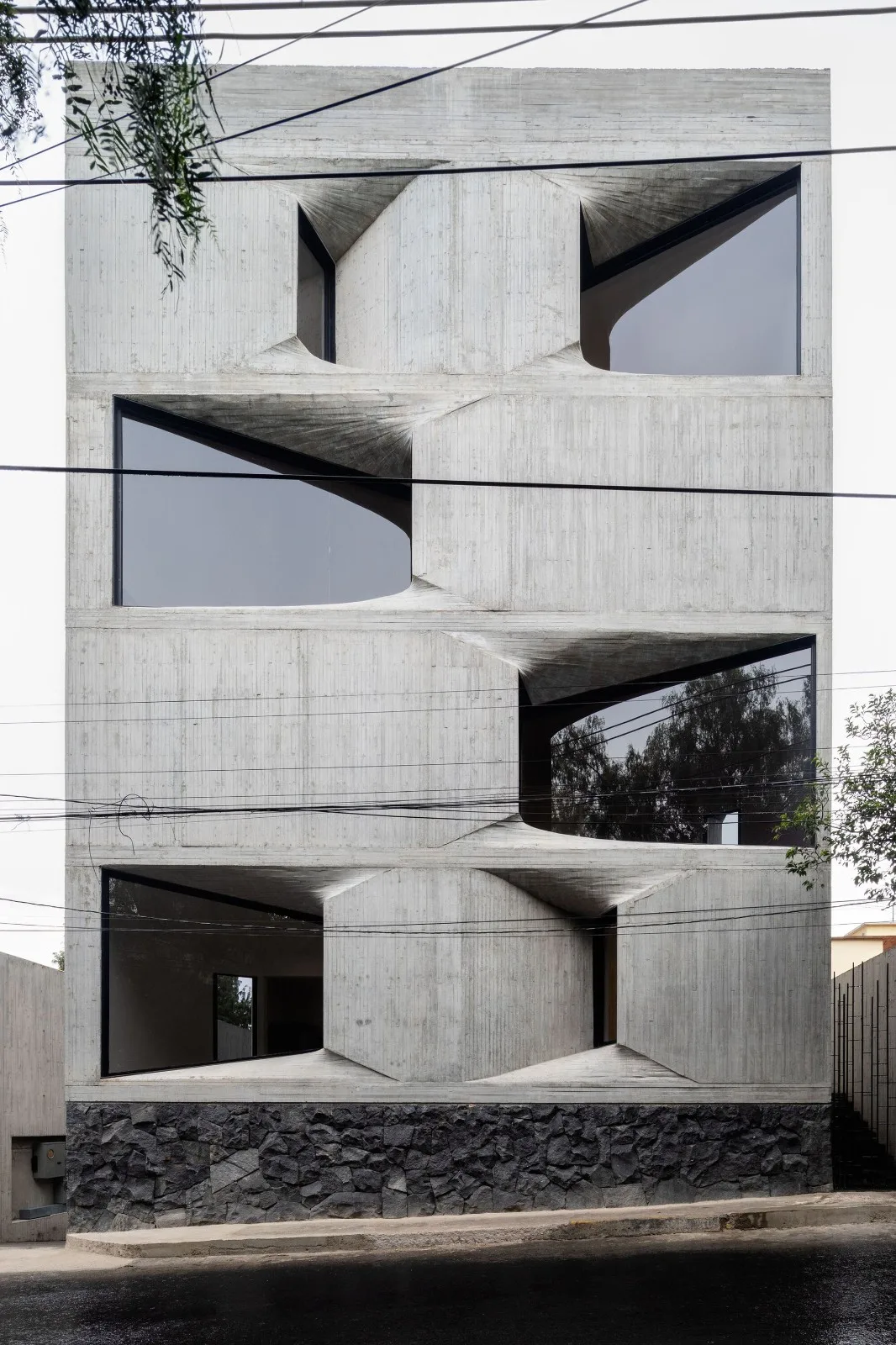
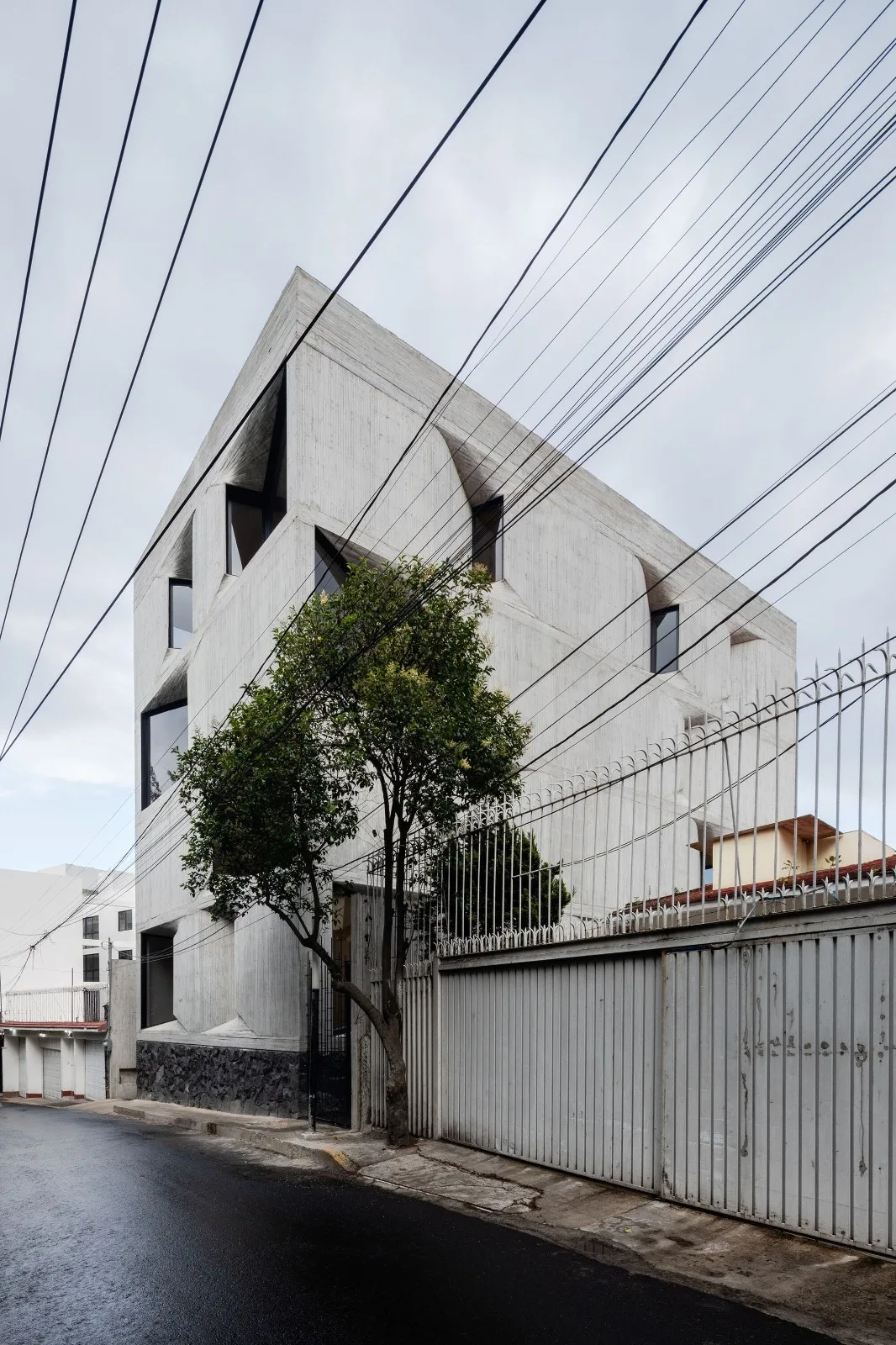
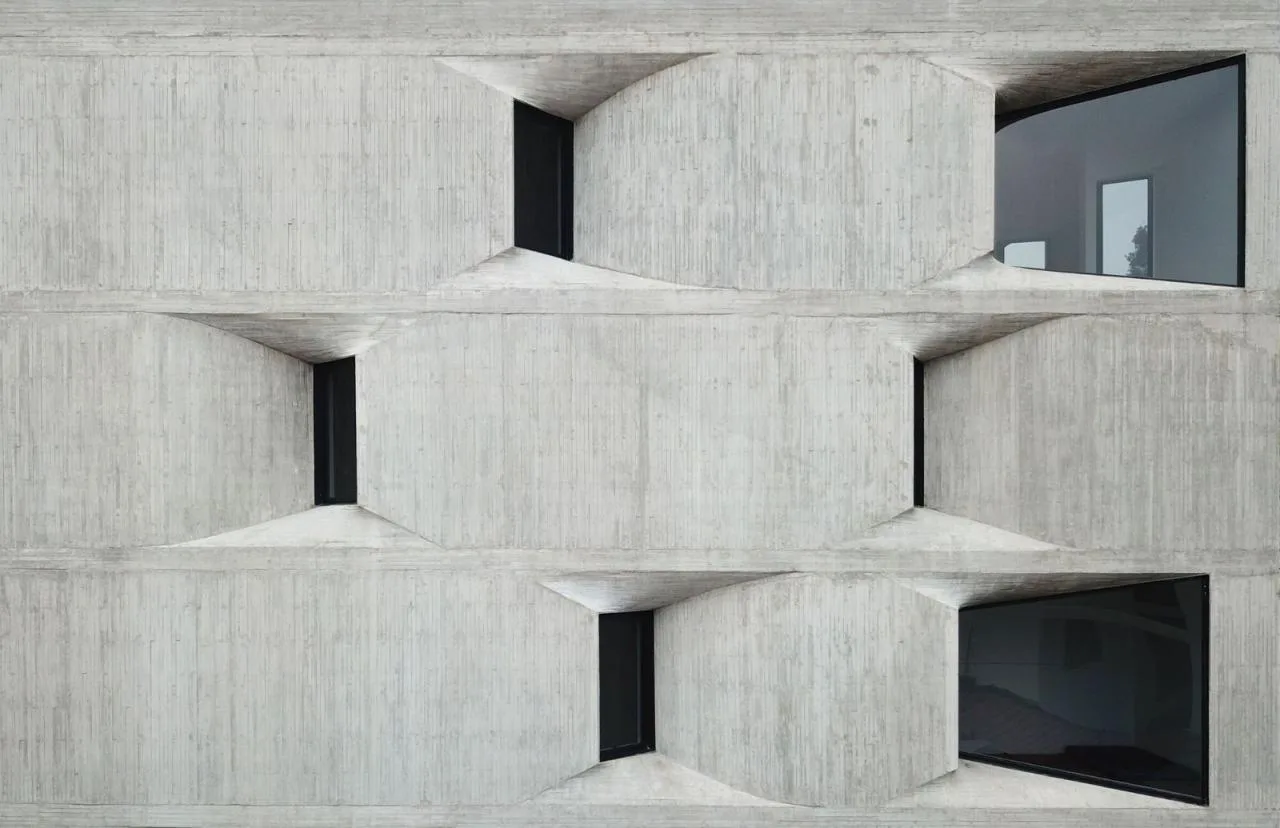
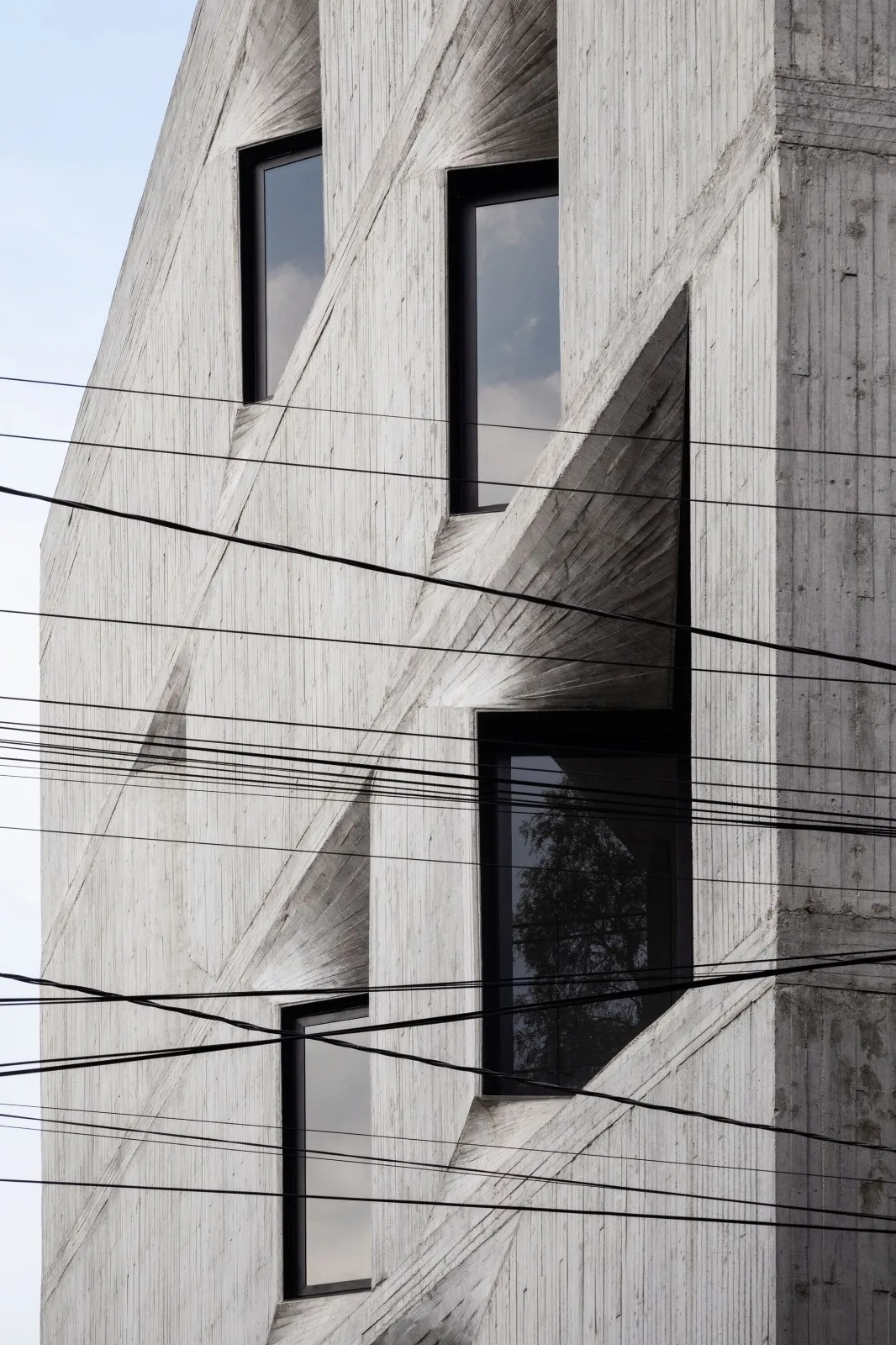
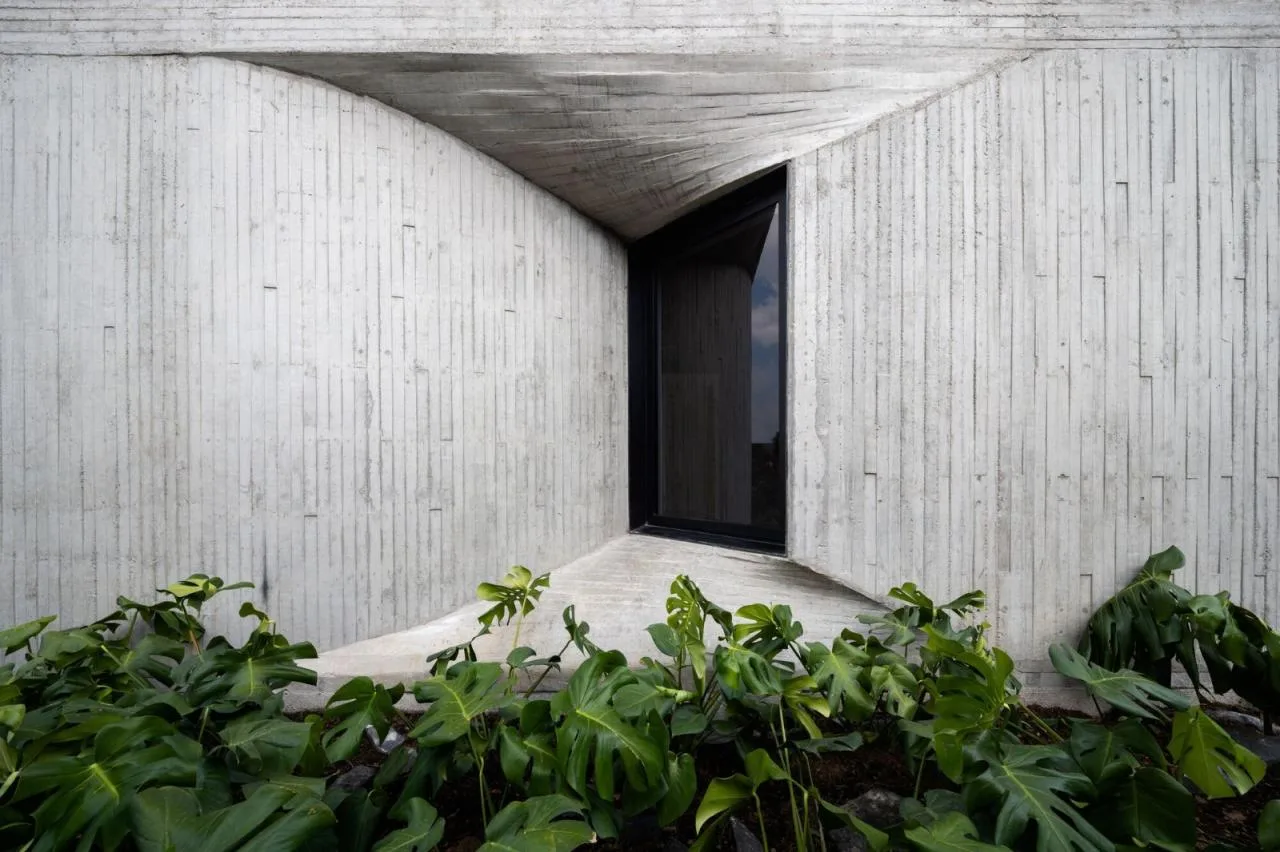
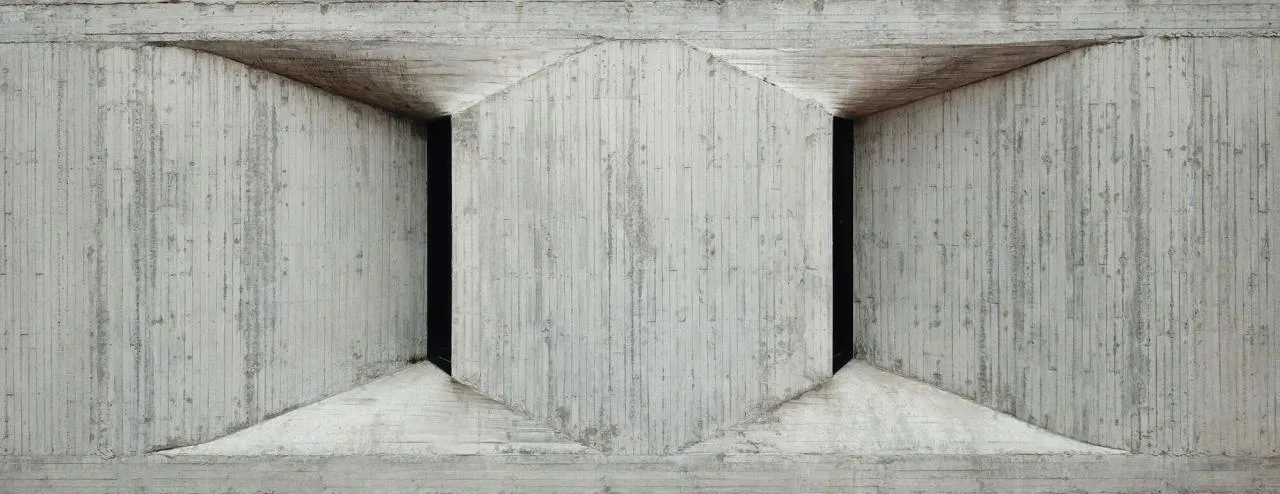
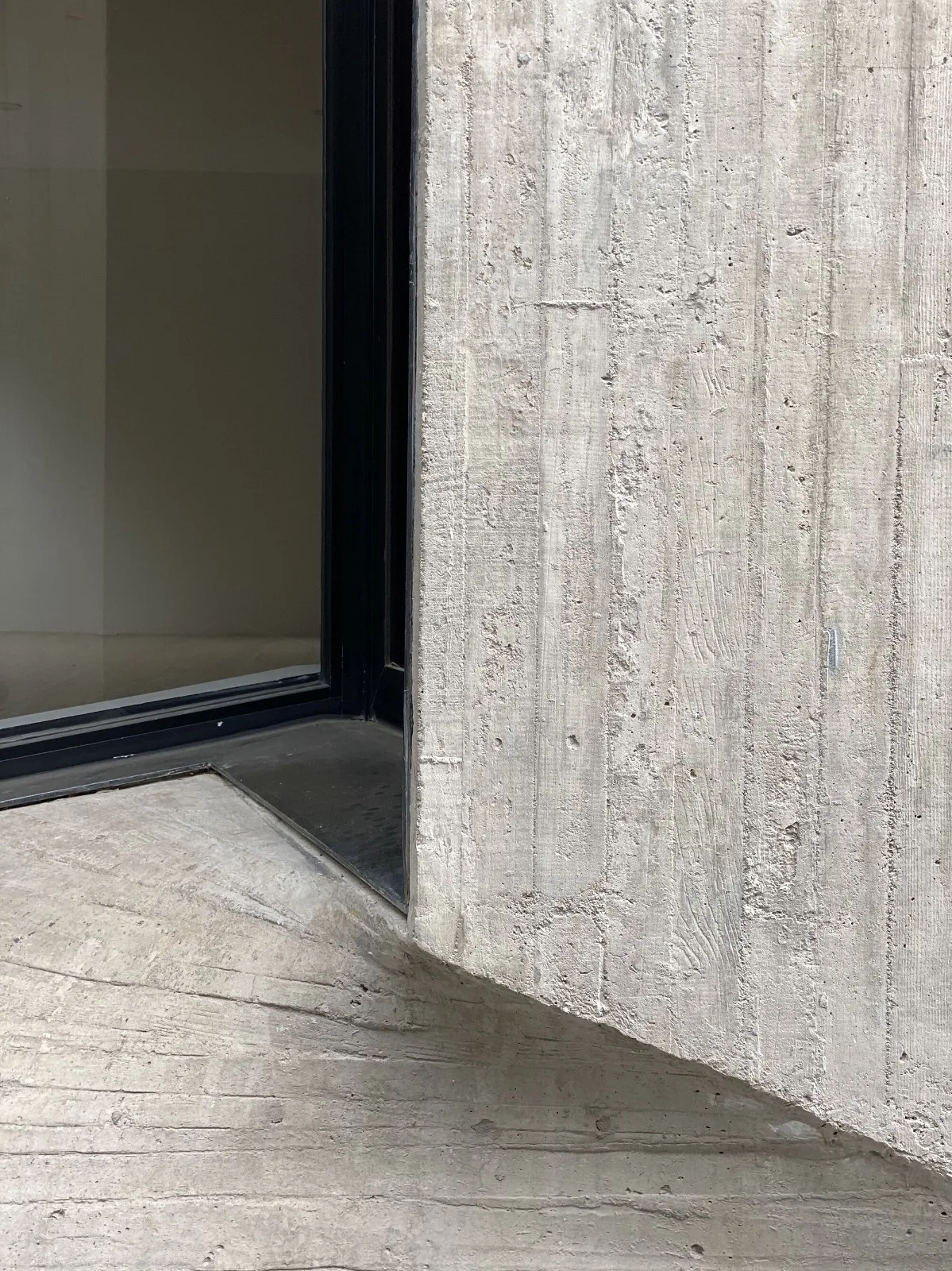
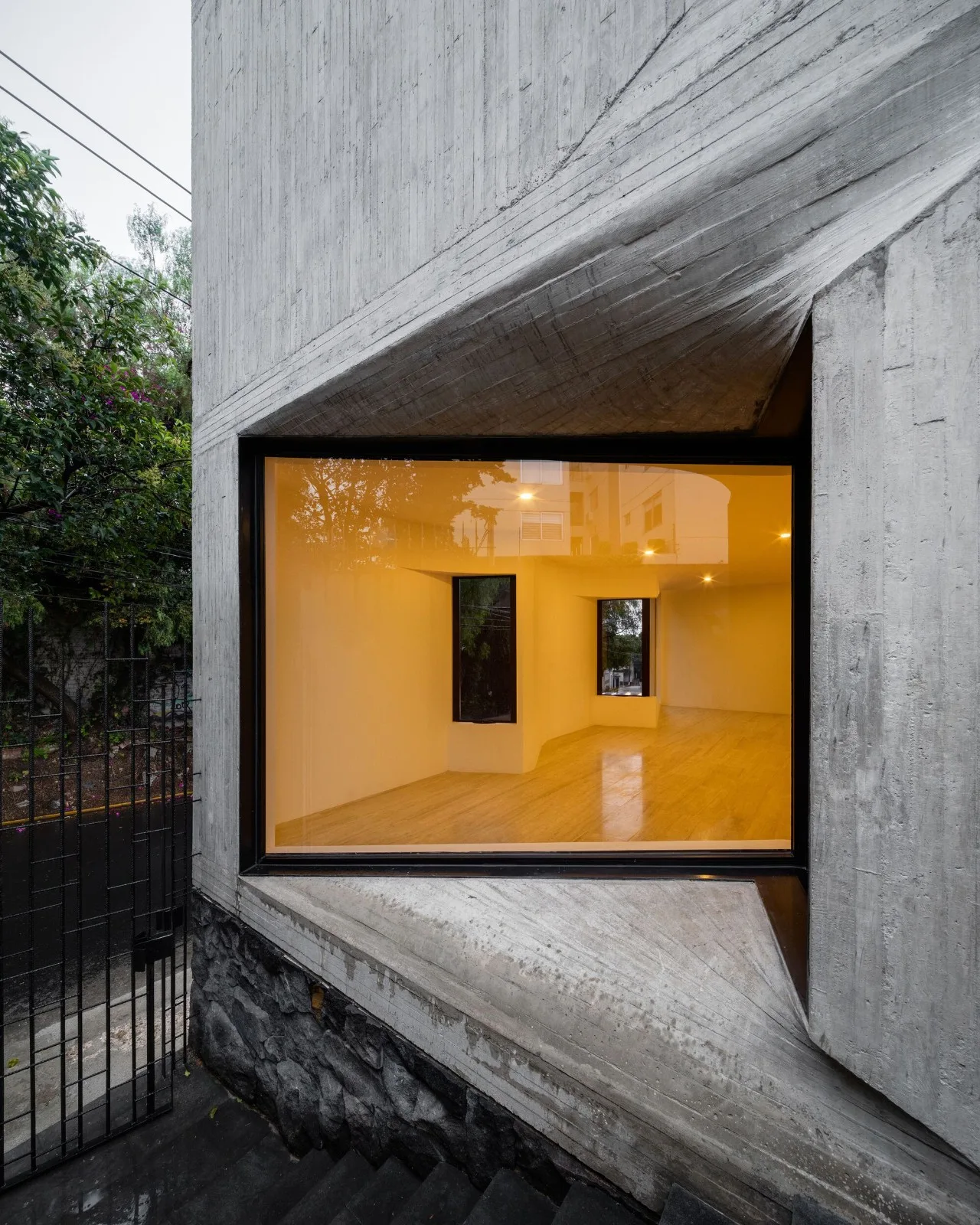
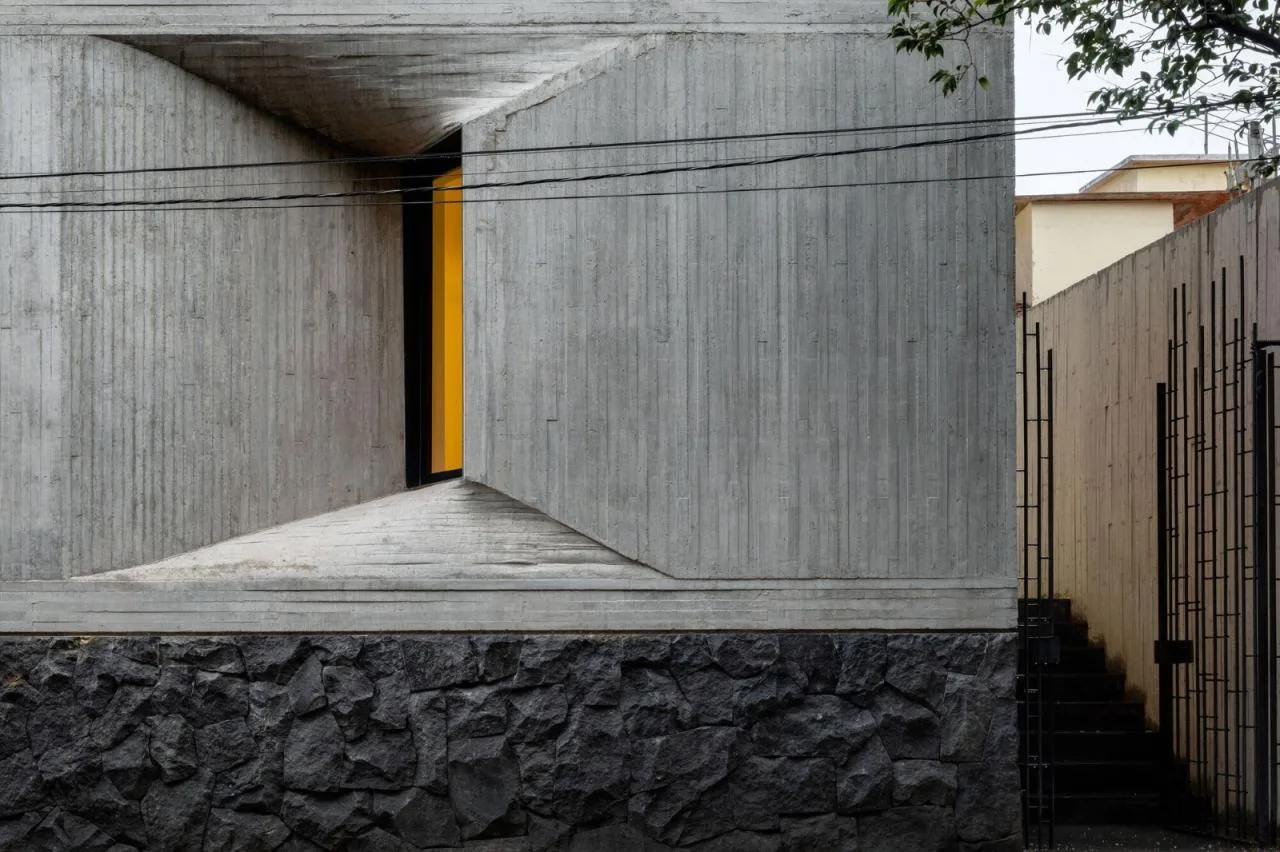
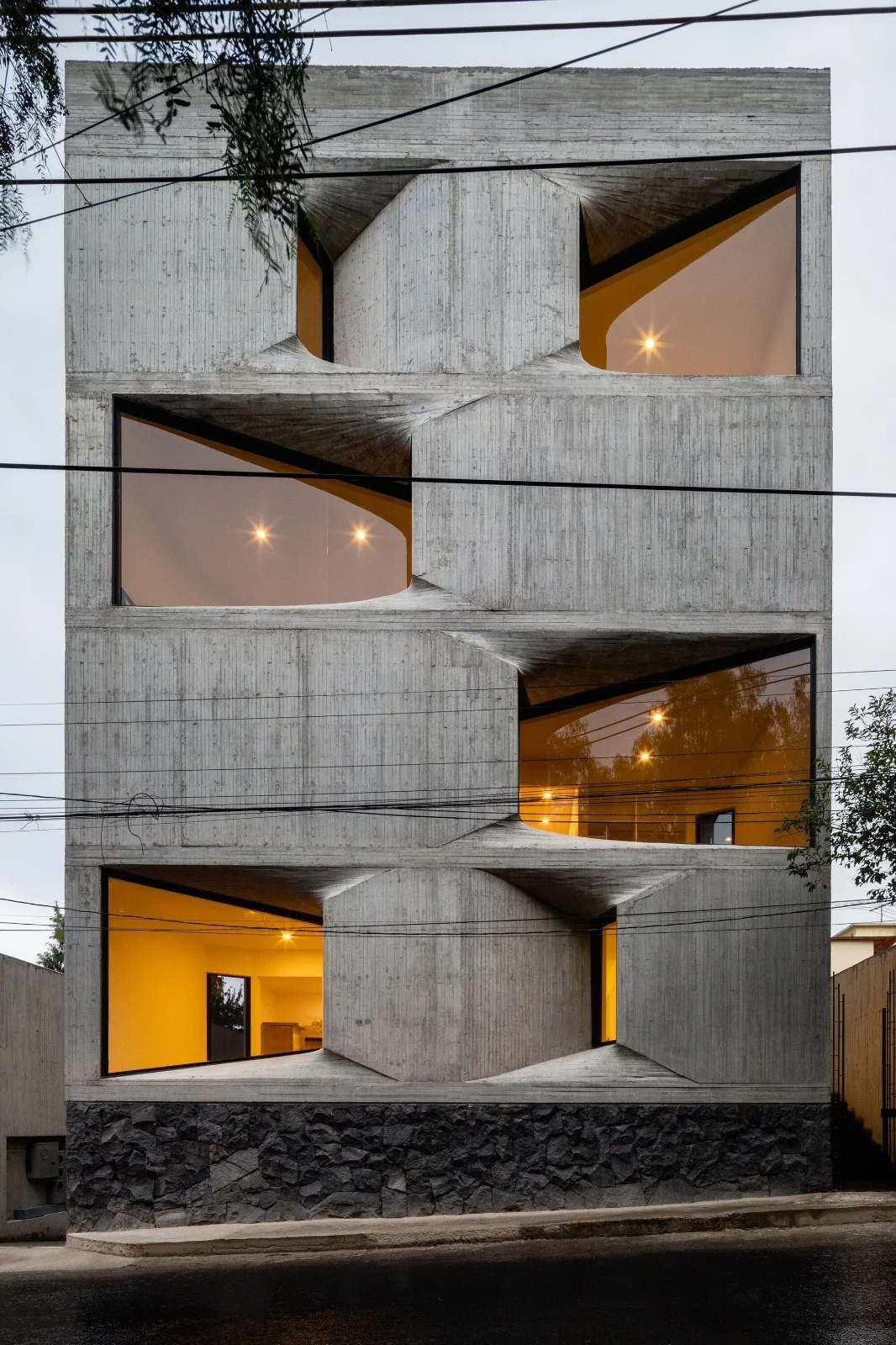
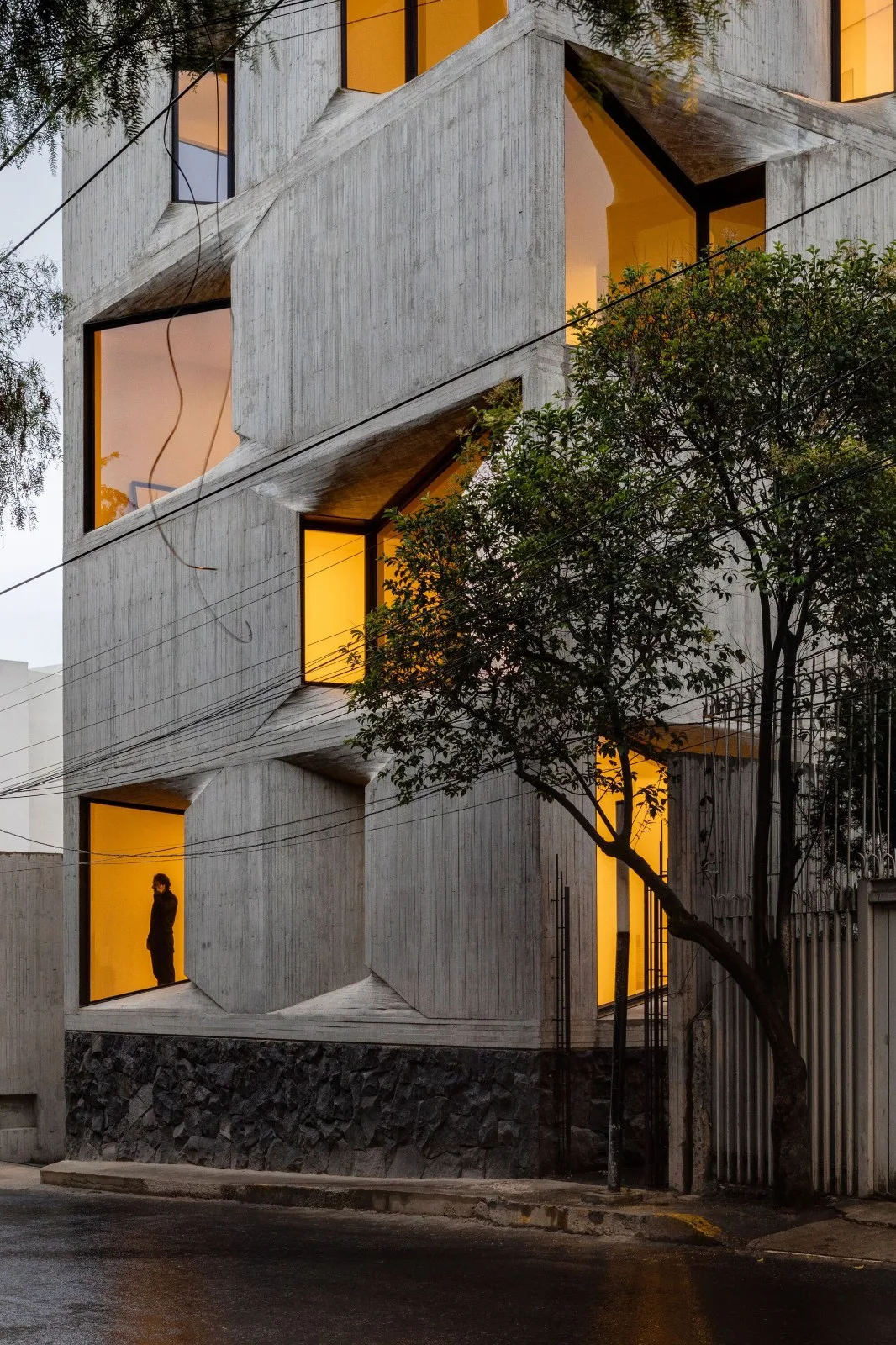
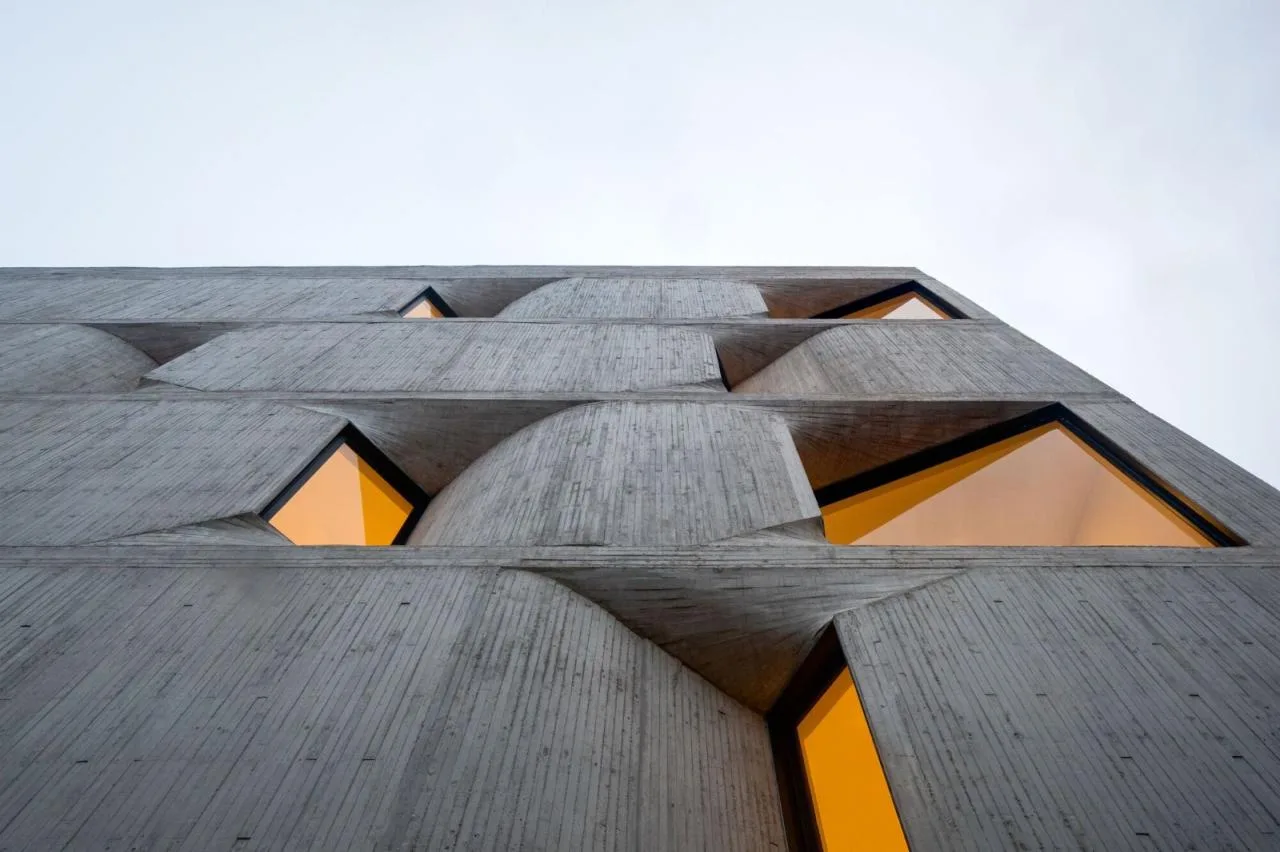
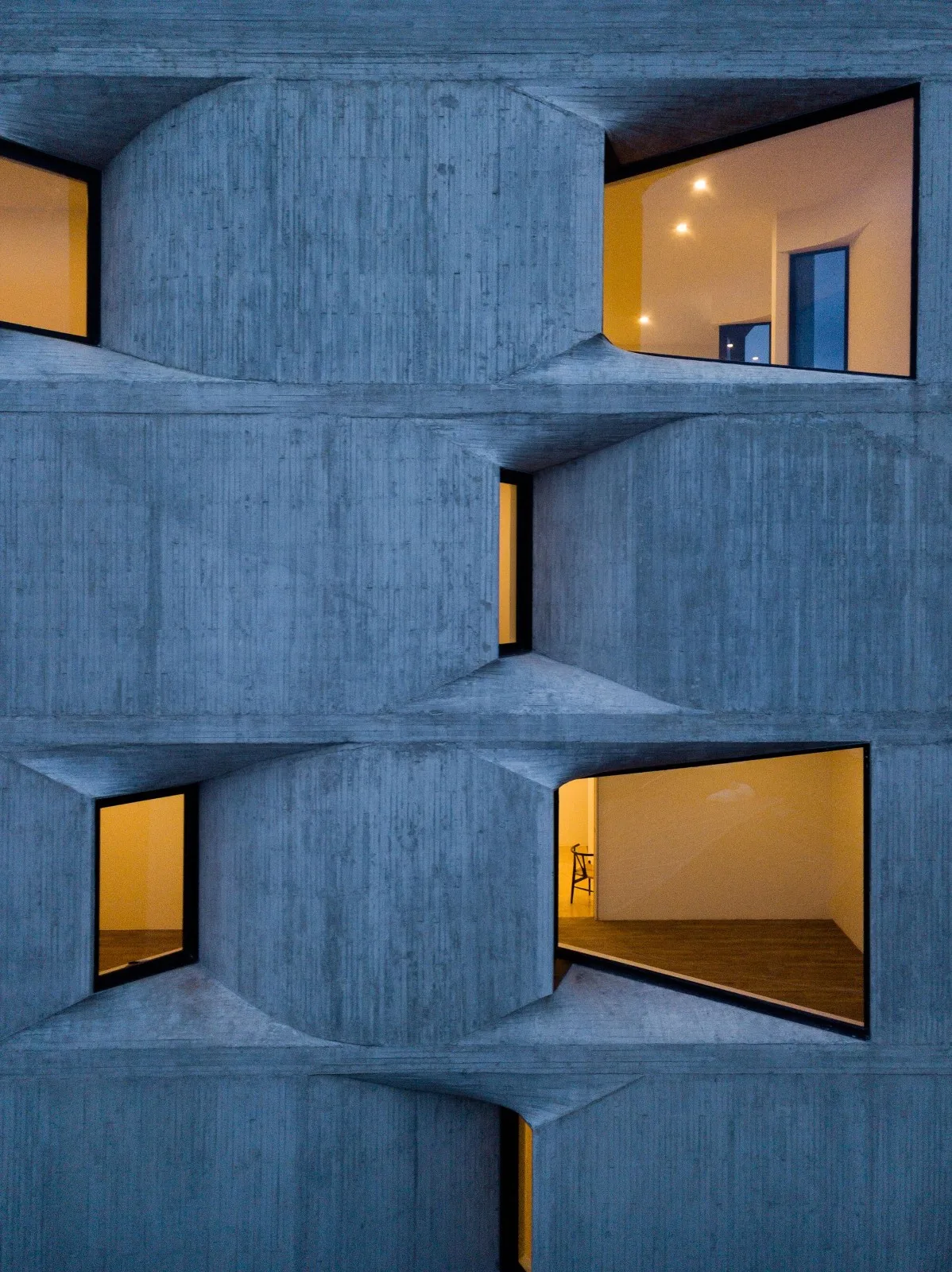
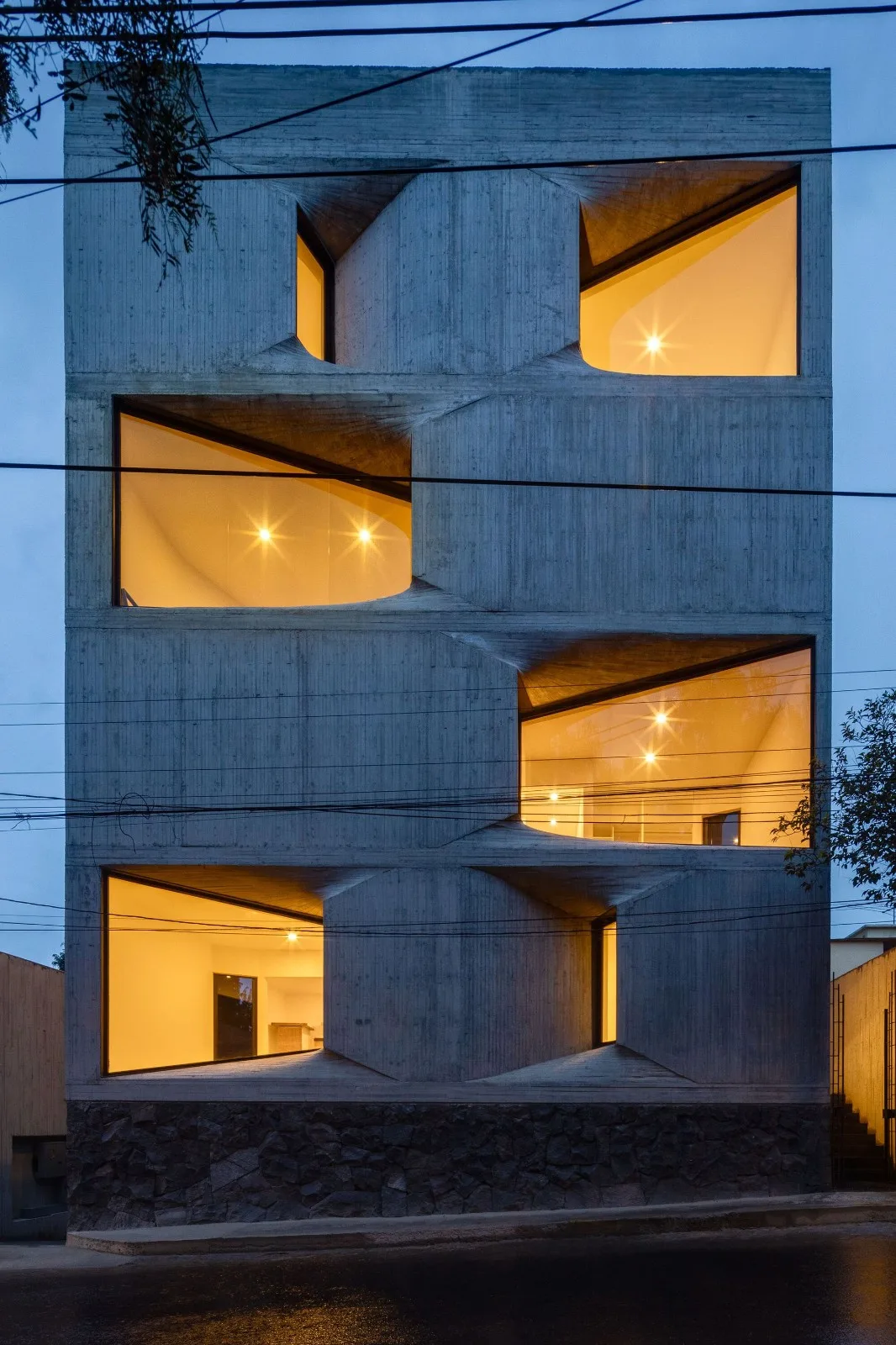
The site strategy addresses the dual street frontages, where traditional windows are less desirable. To ensure abundant natural light, visibility, and ventilation in every corner, the architects designed windows that are familiar yet uniquely distinct. Rectangular windows rotate on the facade, creating two linear textured planes at the top and bottom, transforming each window into an inverted trapezoidal bay.
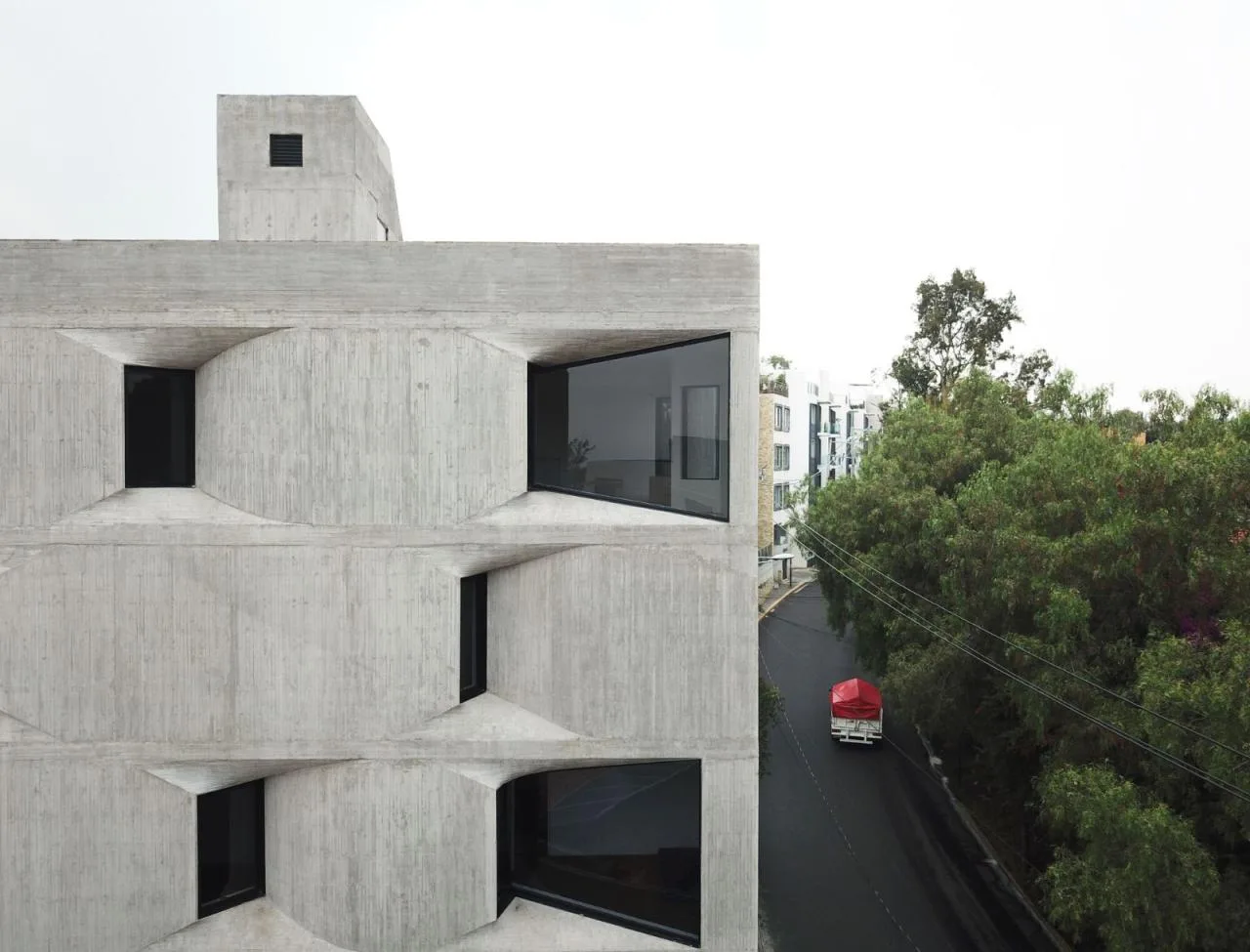
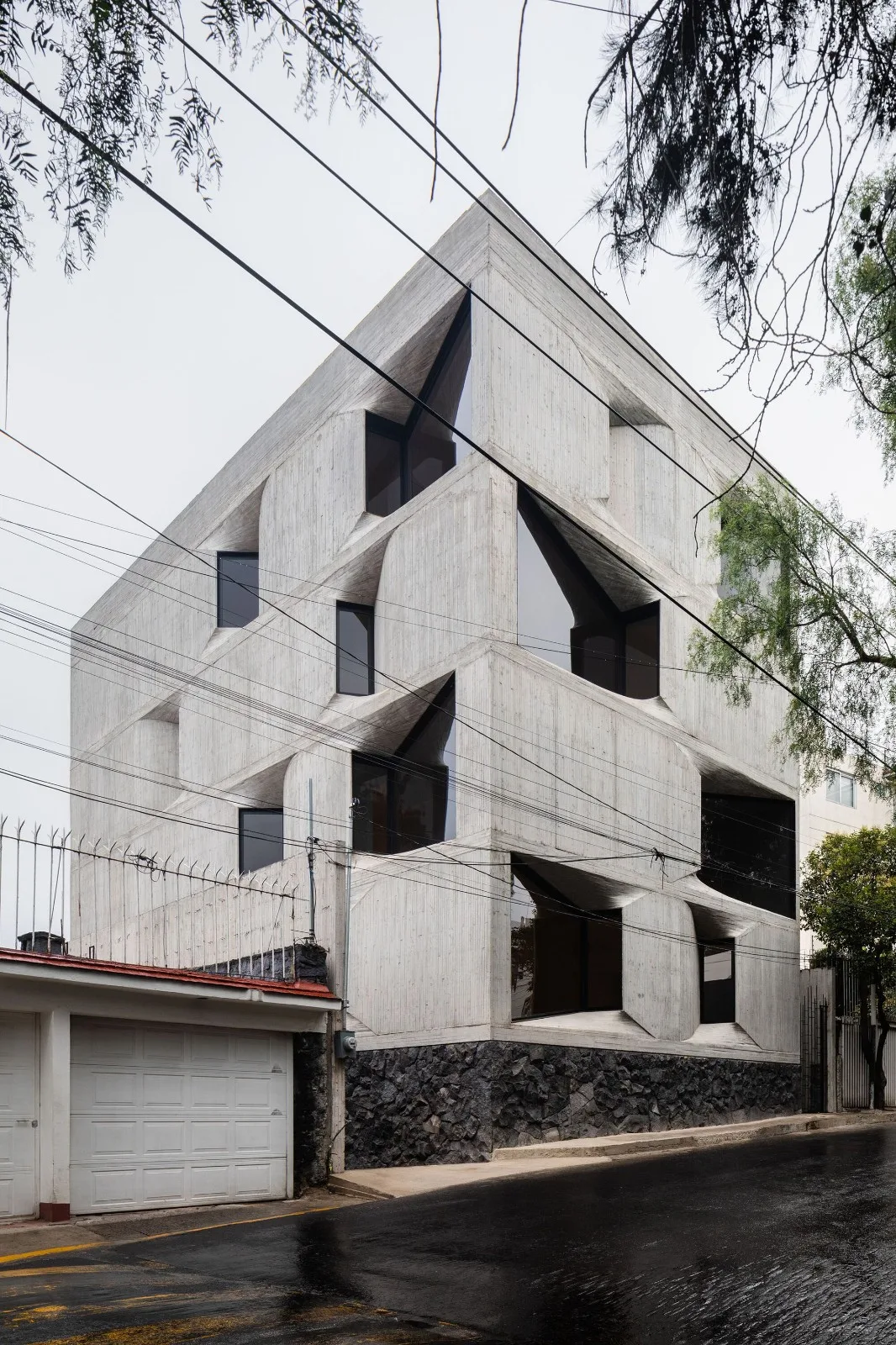
When these windows rotate inward, the floor visually pulls the head and windowsill, generating a pronounced flatness on the facade interspersed with gentle, dynamic shallow reliefs. This creates varied interior experiences, as the constantly shifting facade contrasts with the standardized unit layouts. From inside, looking out onto the street produces a subtle forced perspective, making each unit feel unique when viewed from the street.
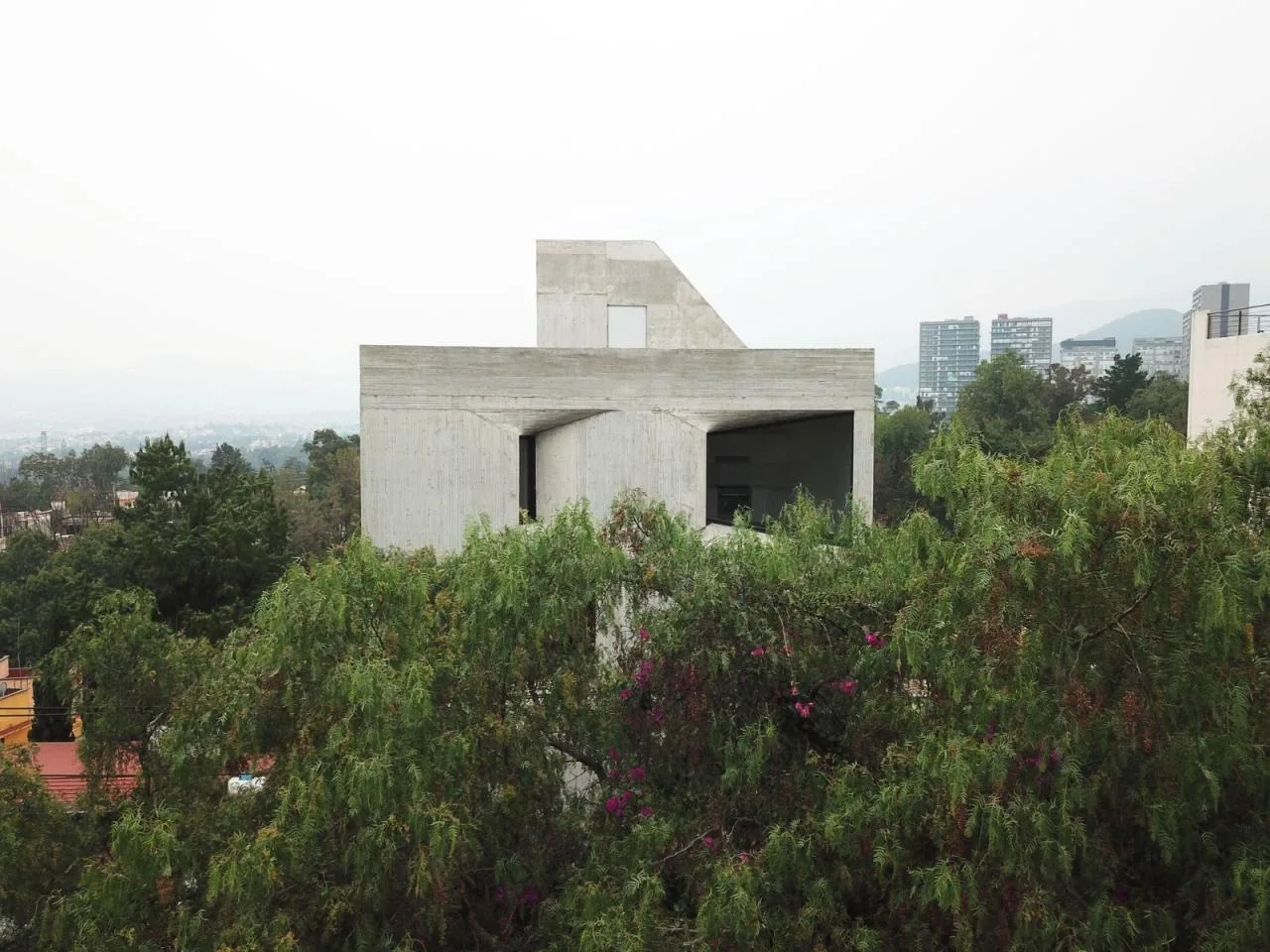
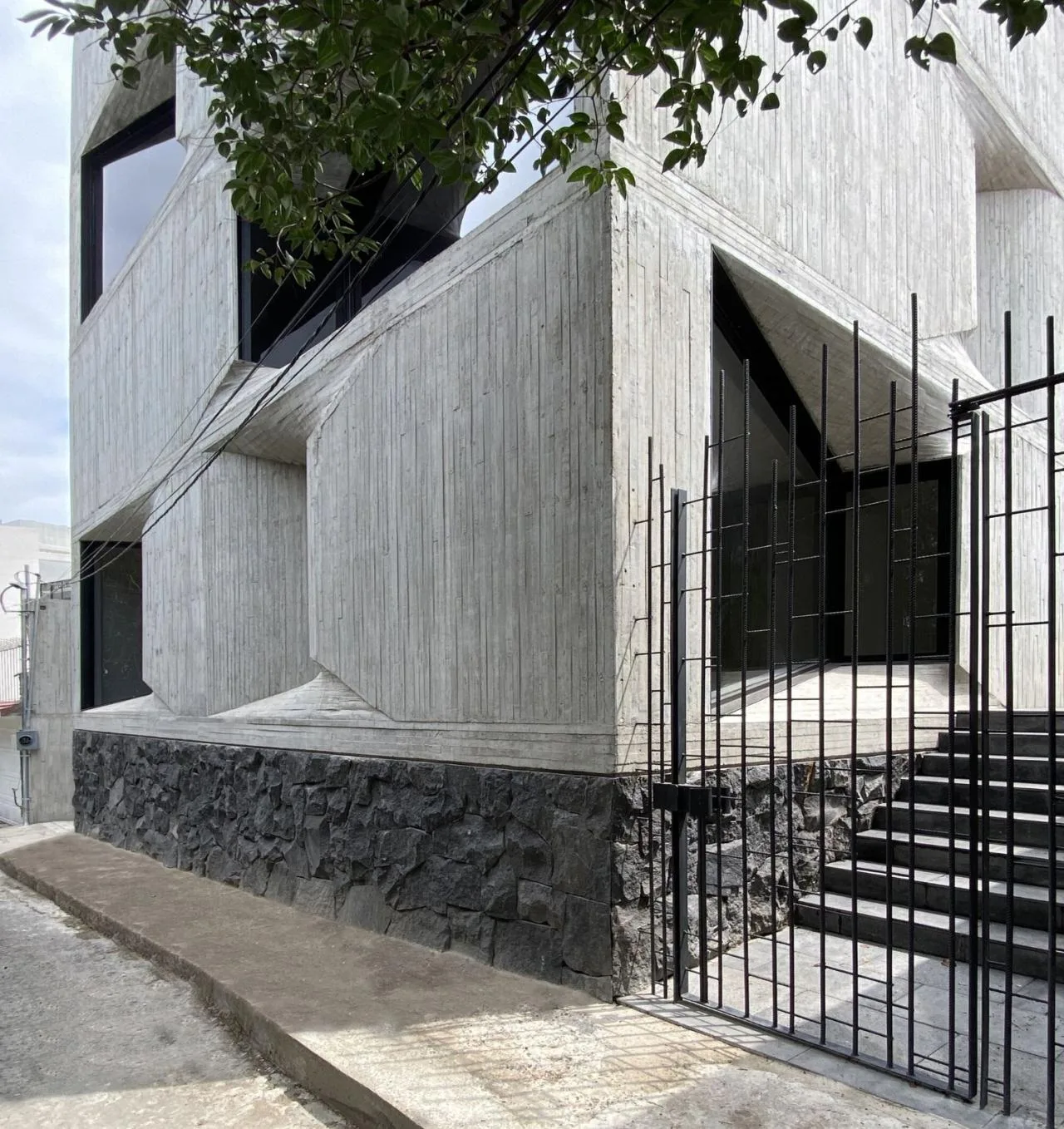
The design of these openings was informed by iterative digital modeling and research into the history of linear concrete surfaces in Latin American architecture. Several large-scale models helped identify construction connection points, employing concrete slabs as the main expression of the open concept.
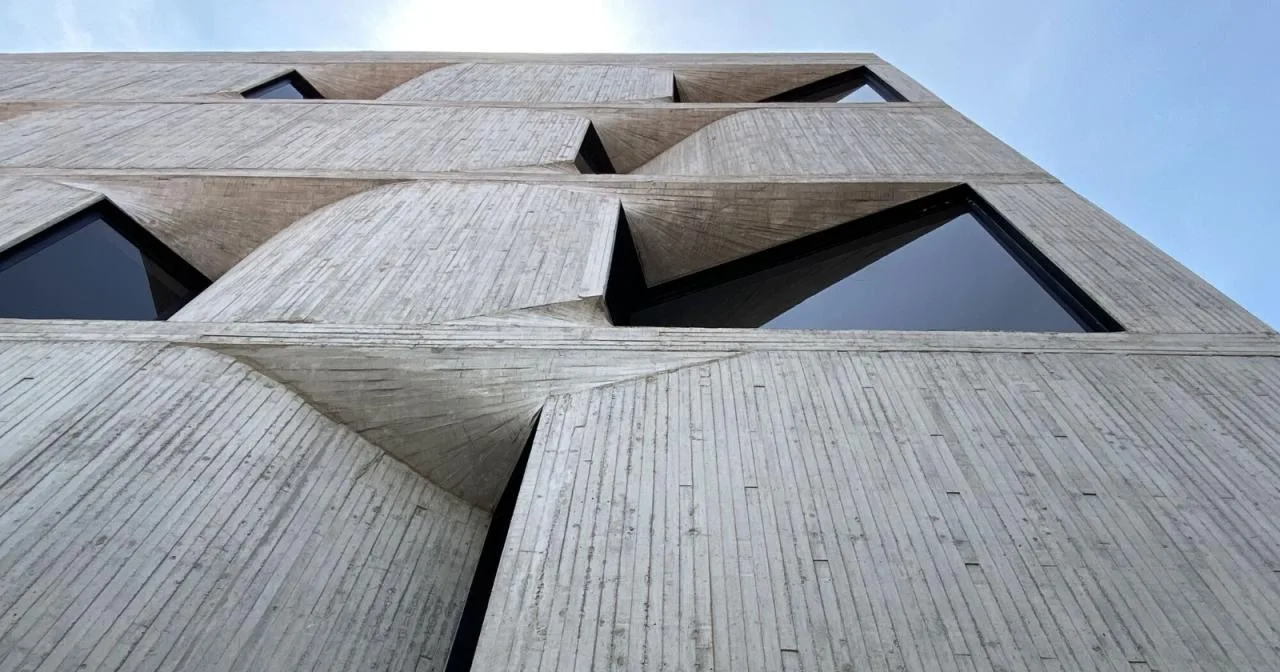
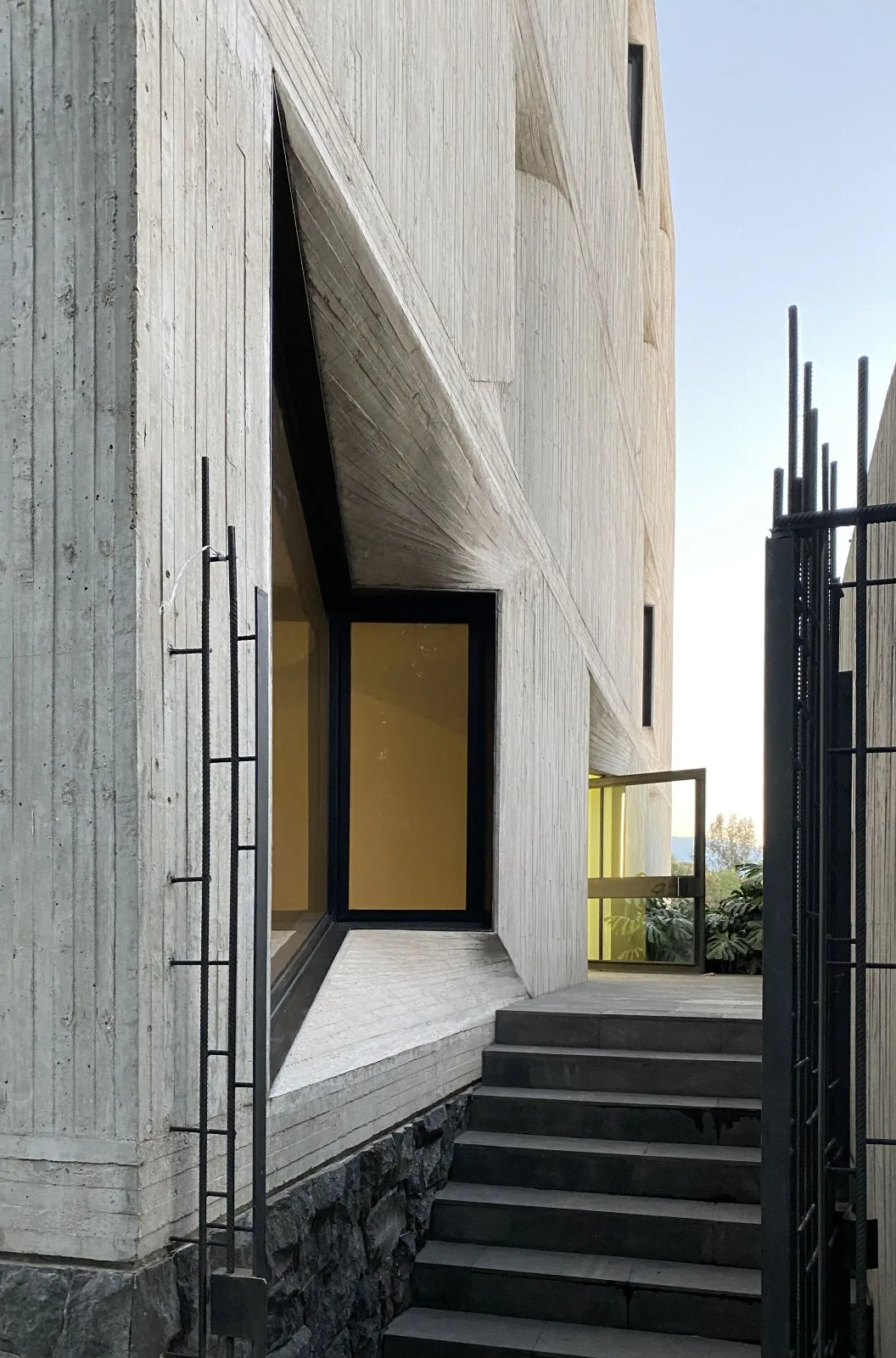
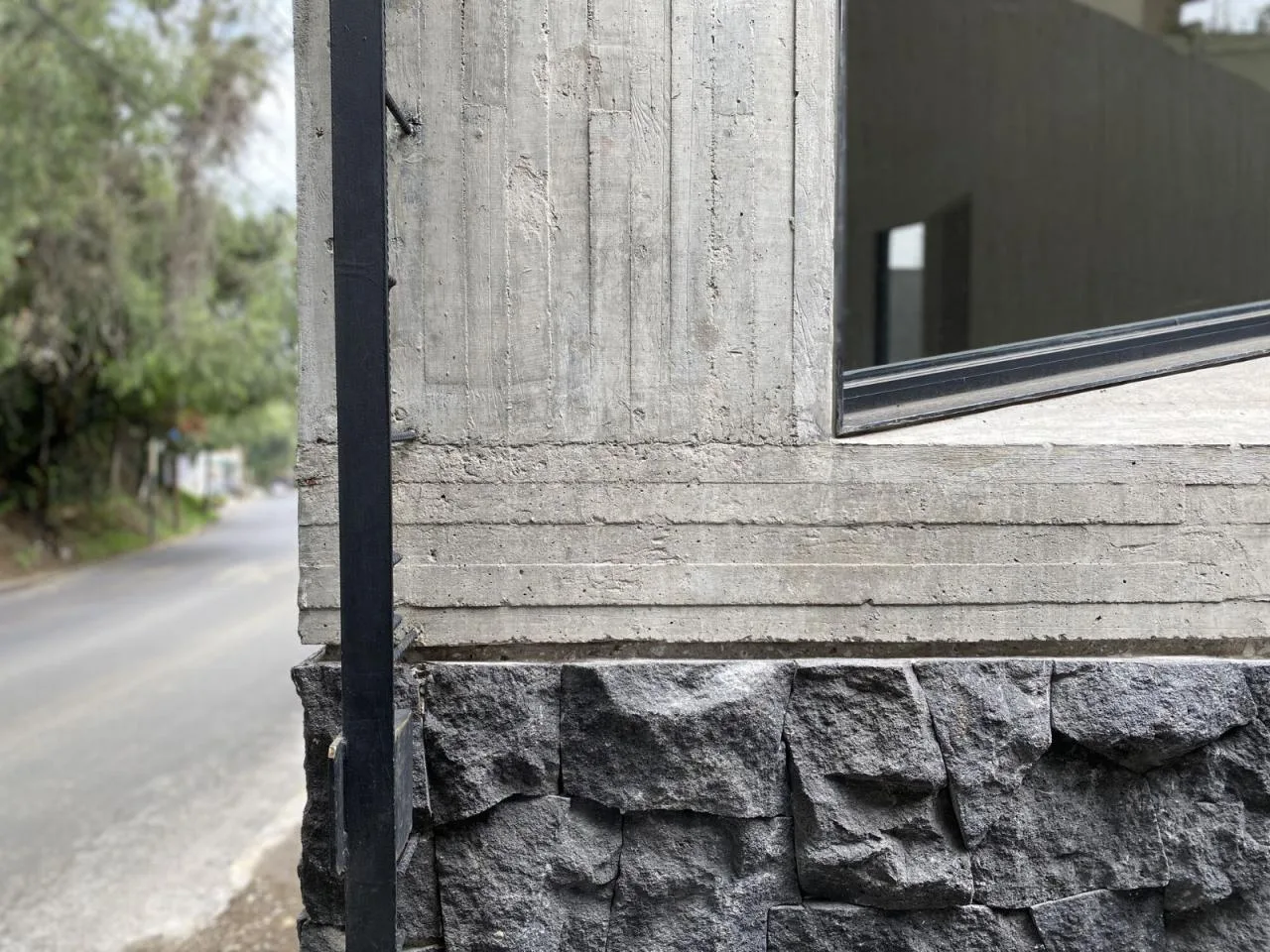
The final approach combines traditional architectural techniques with reusable fiberglass casting modules, bridging digital technology and architectural tradition. The site’s narrow plot is typical of this urban neighborhood and influenced the initial design choices. The sloping central lot is flanked by two existing single-family homes, both potentially allowing vertical expansion in the future.
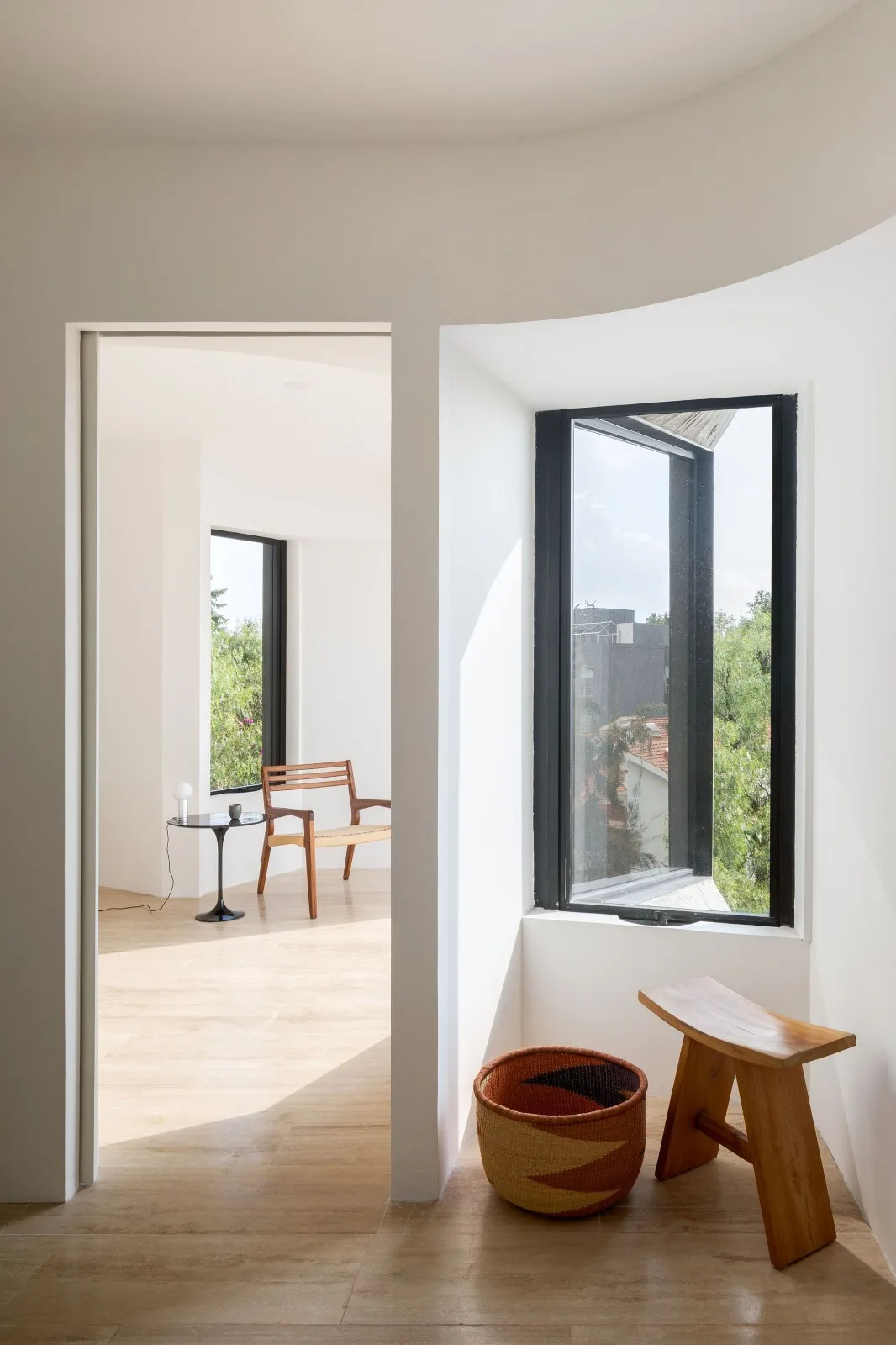
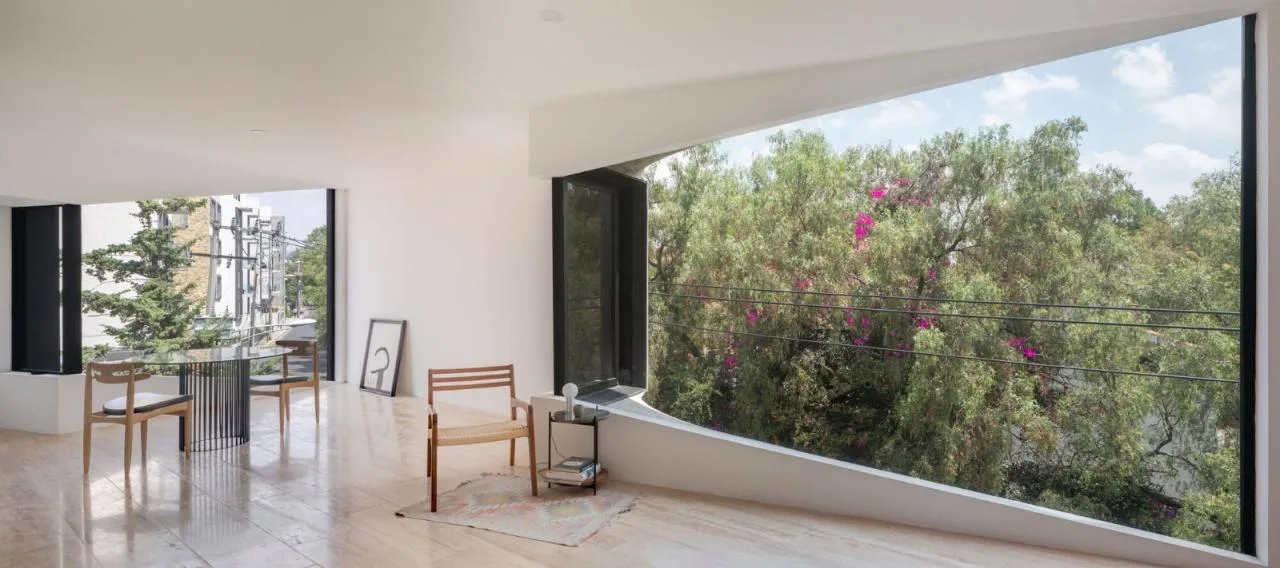
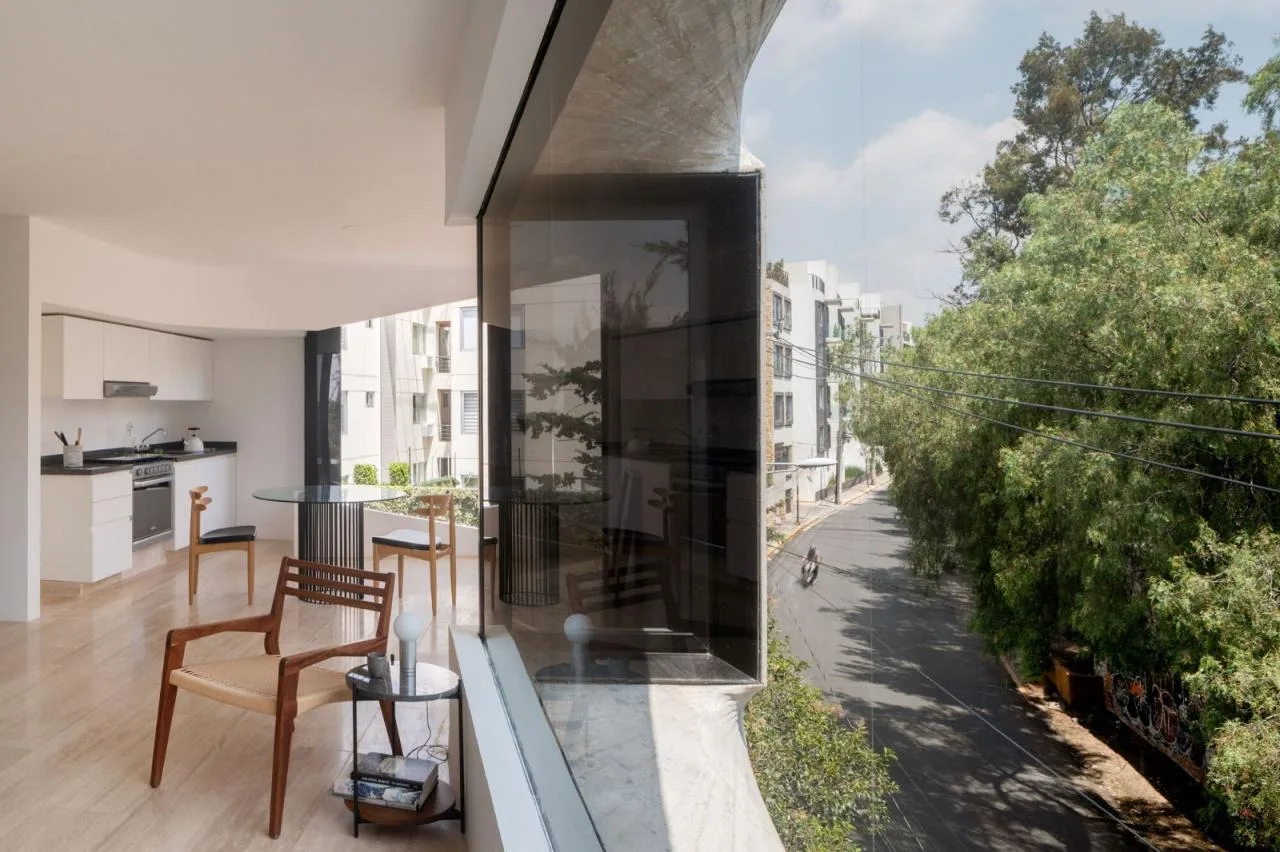
Considering these factors, Young Ayata + Michan decided to reduce the building footprint and side walls, allowing for additional window space. Furthermore, the setback from the property line enabled an extra floor to be added under revised regulations, maximizing square footage and the number of apartments.
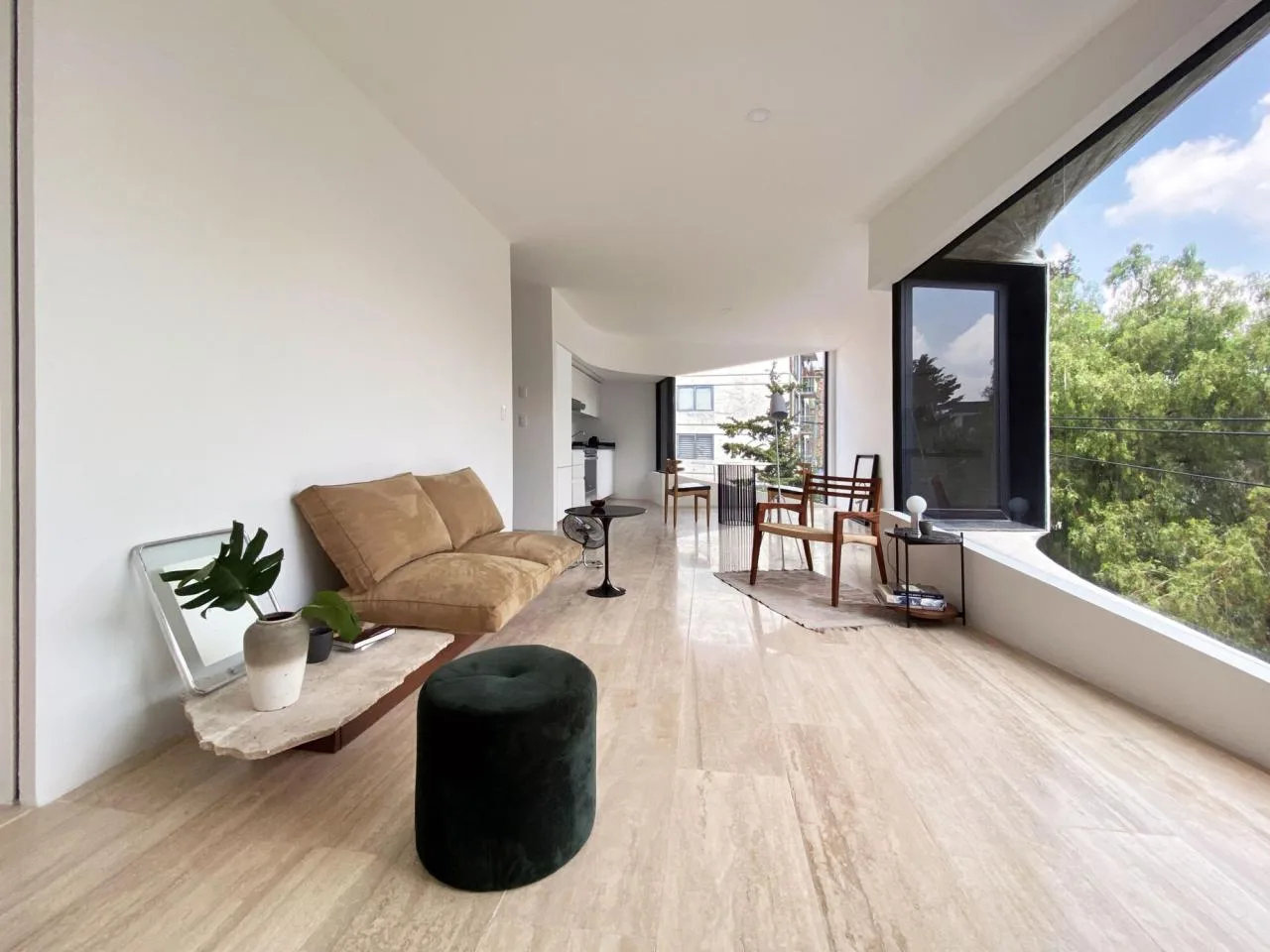
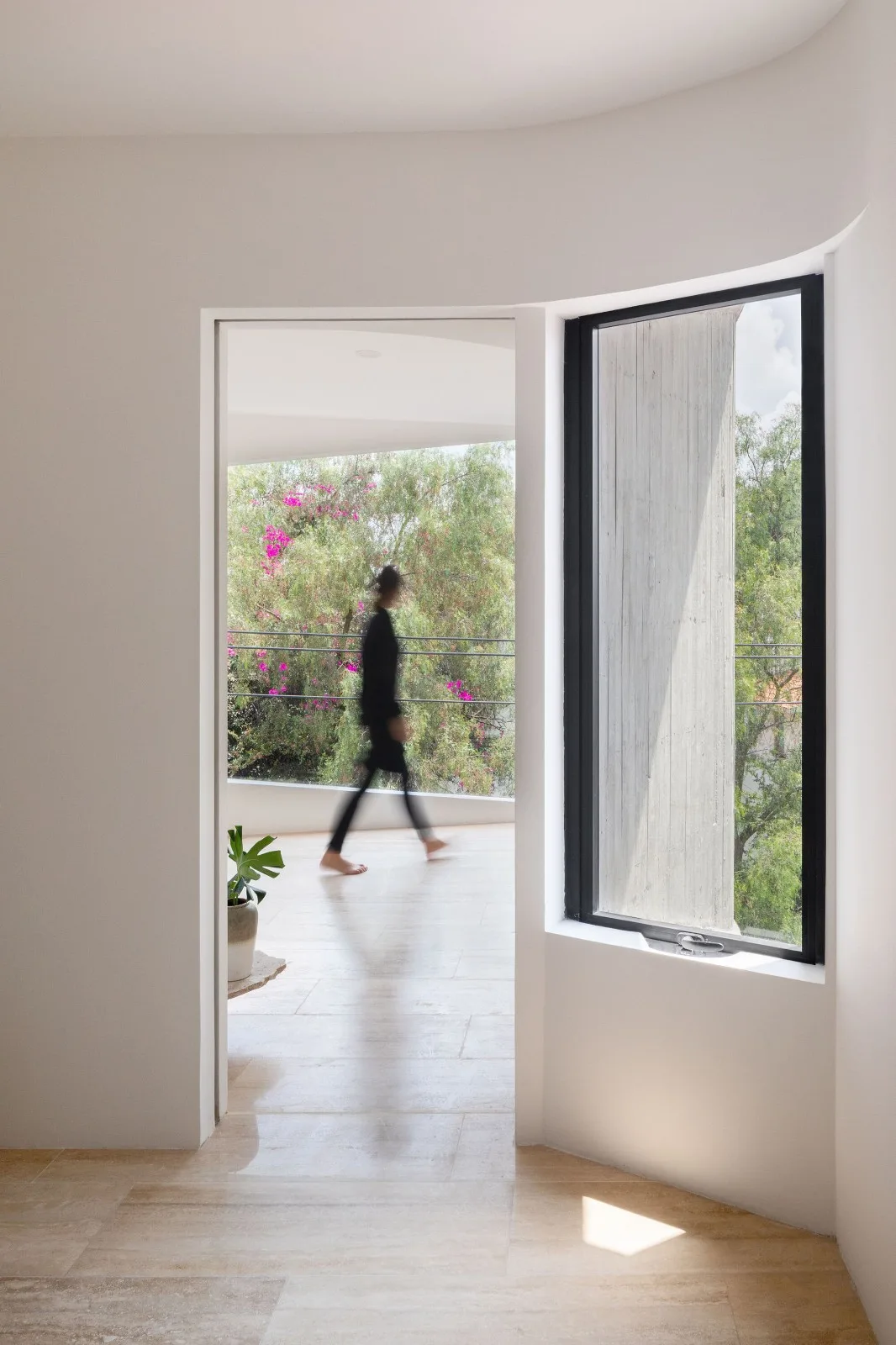
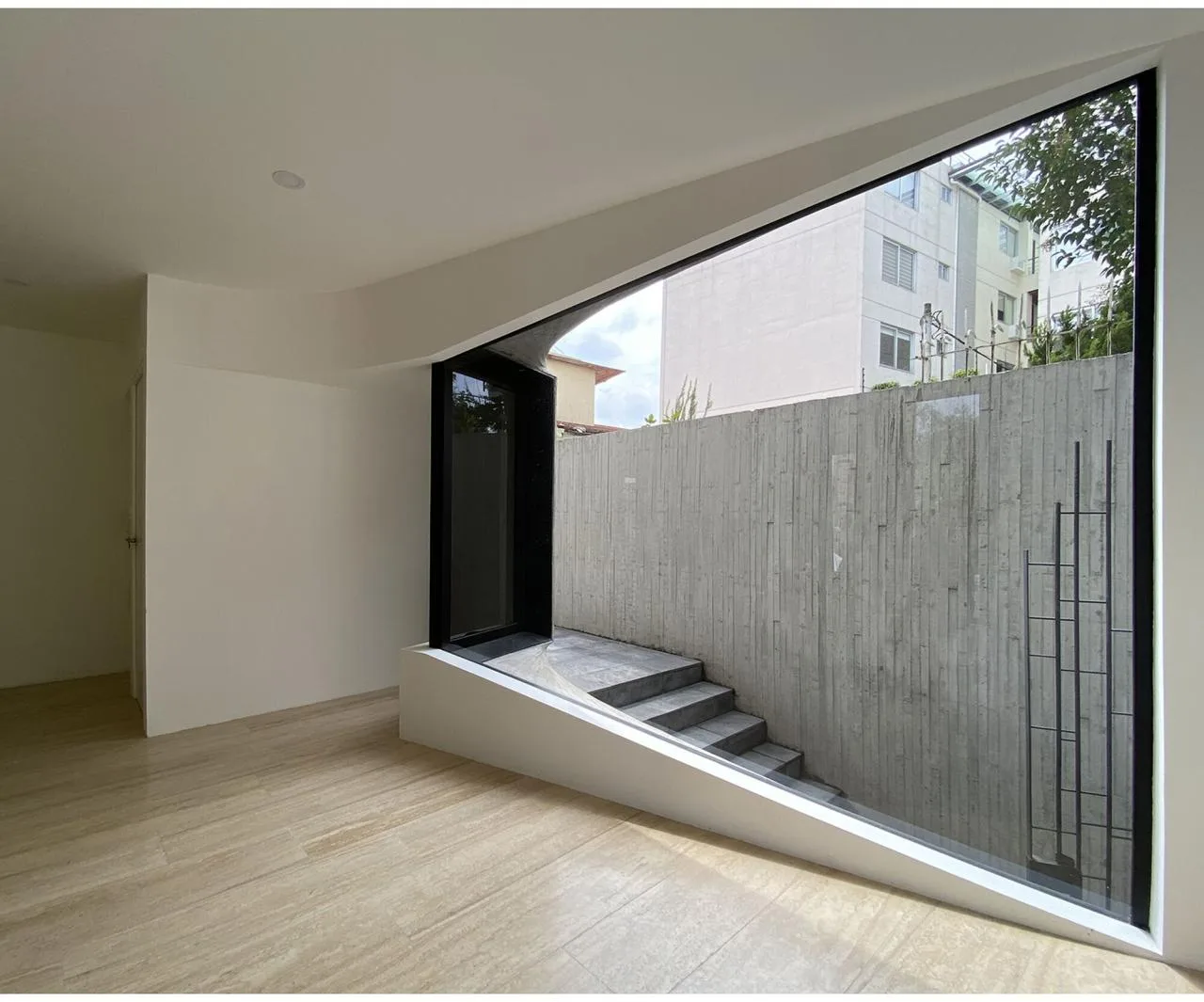
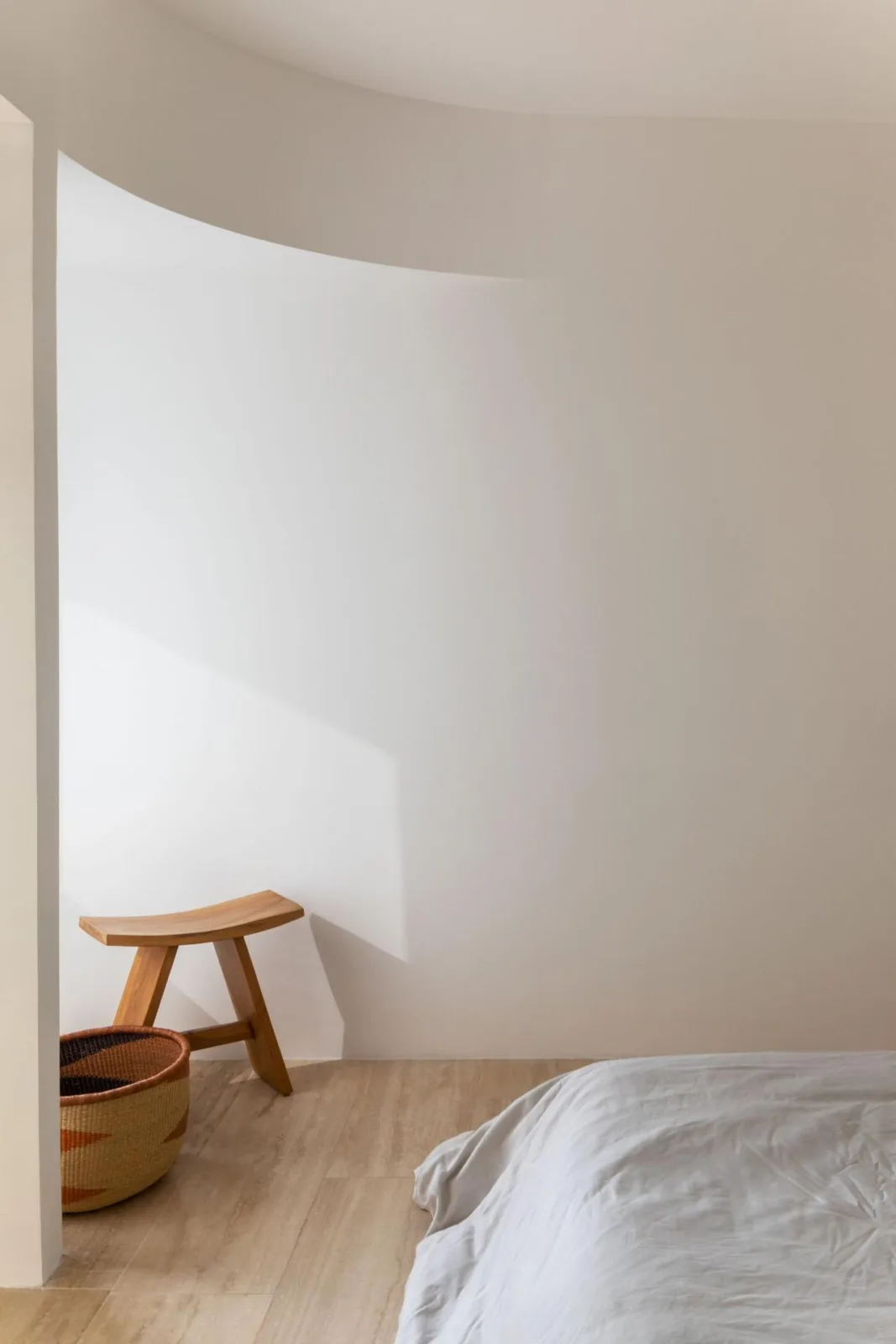
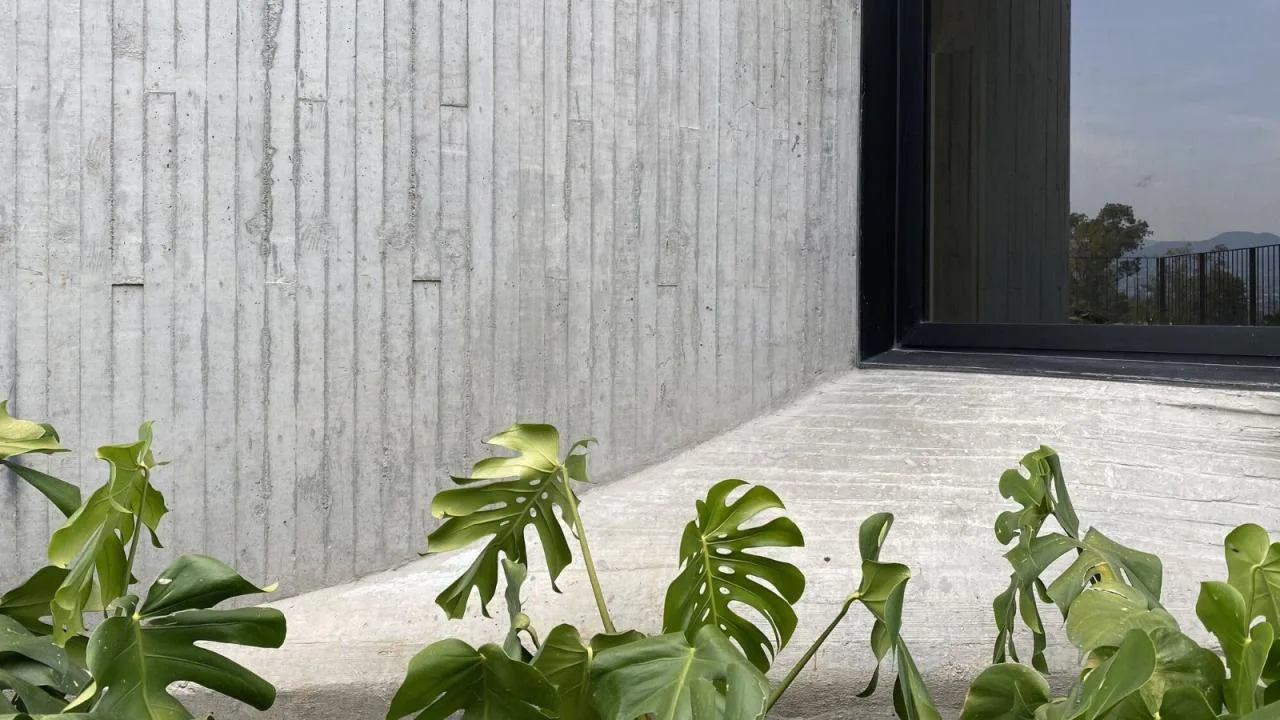
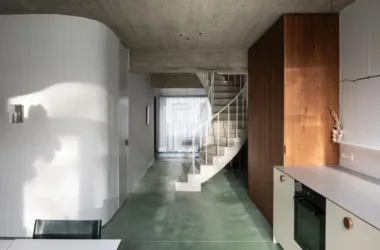
This slightly diminished footprint allows for recessed or perforated windows to become a defining feature: 22 rectangular openings of varying sizes rotate on the facade, creating a mosaic of trapezoids with adjustable, four-sided reversals. From the interior, these windows frame diverse views and perspectives, as the shifting facade harmonizes with the standardized unit designs. The open concept dictates the main material choice: cast-in-place concrete, which results in a consistent striped texture. The dark gray exterior contrasts sharply with the brighter, softer interior palette, featuring wooden flooring and polished limestone that complement white-painted walls, light fixtures, and natural sunlight. The flowing pattern of openings creates a fluid, floating bridge connecting the building’s two ends.
Project Drawings
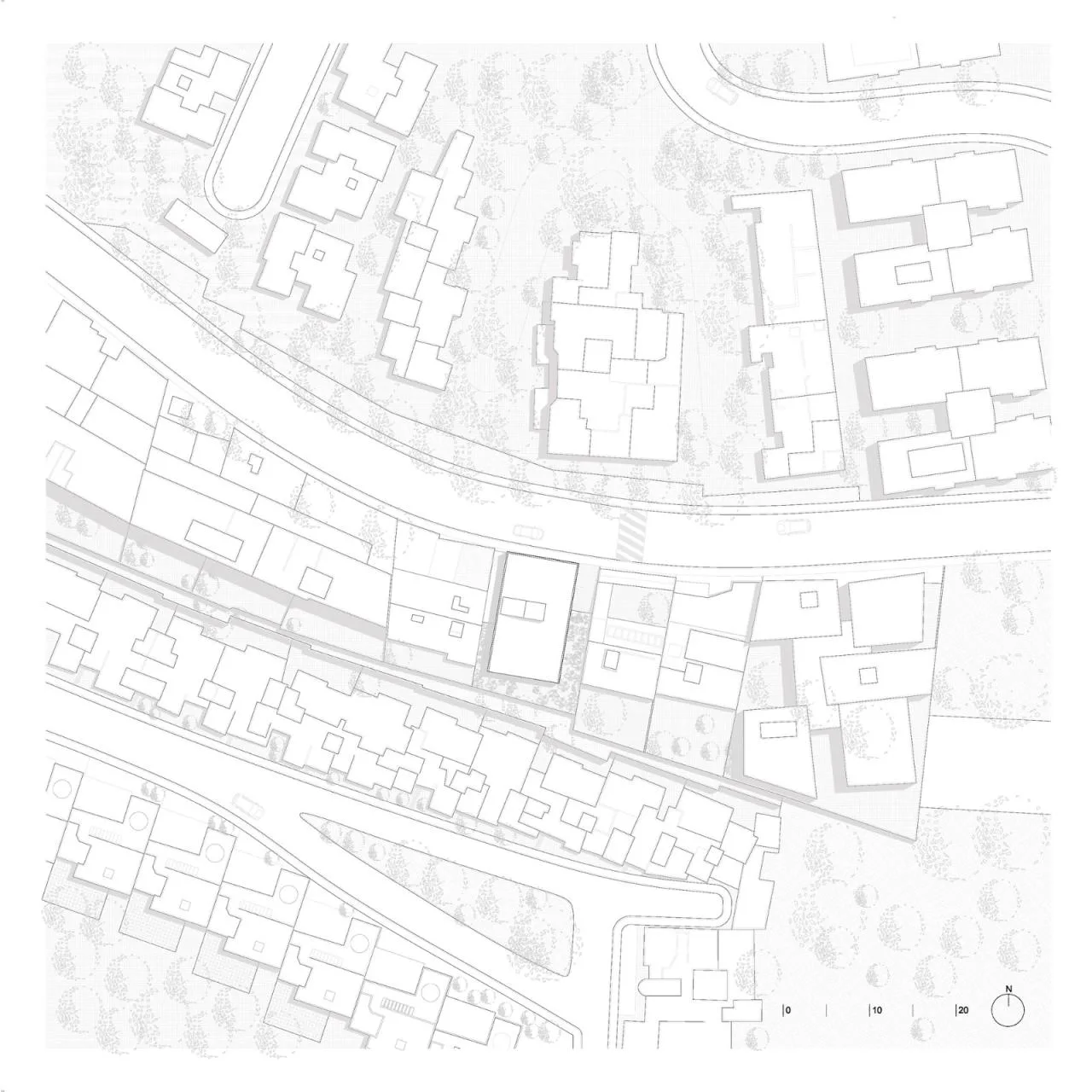
△ General Layout Plan
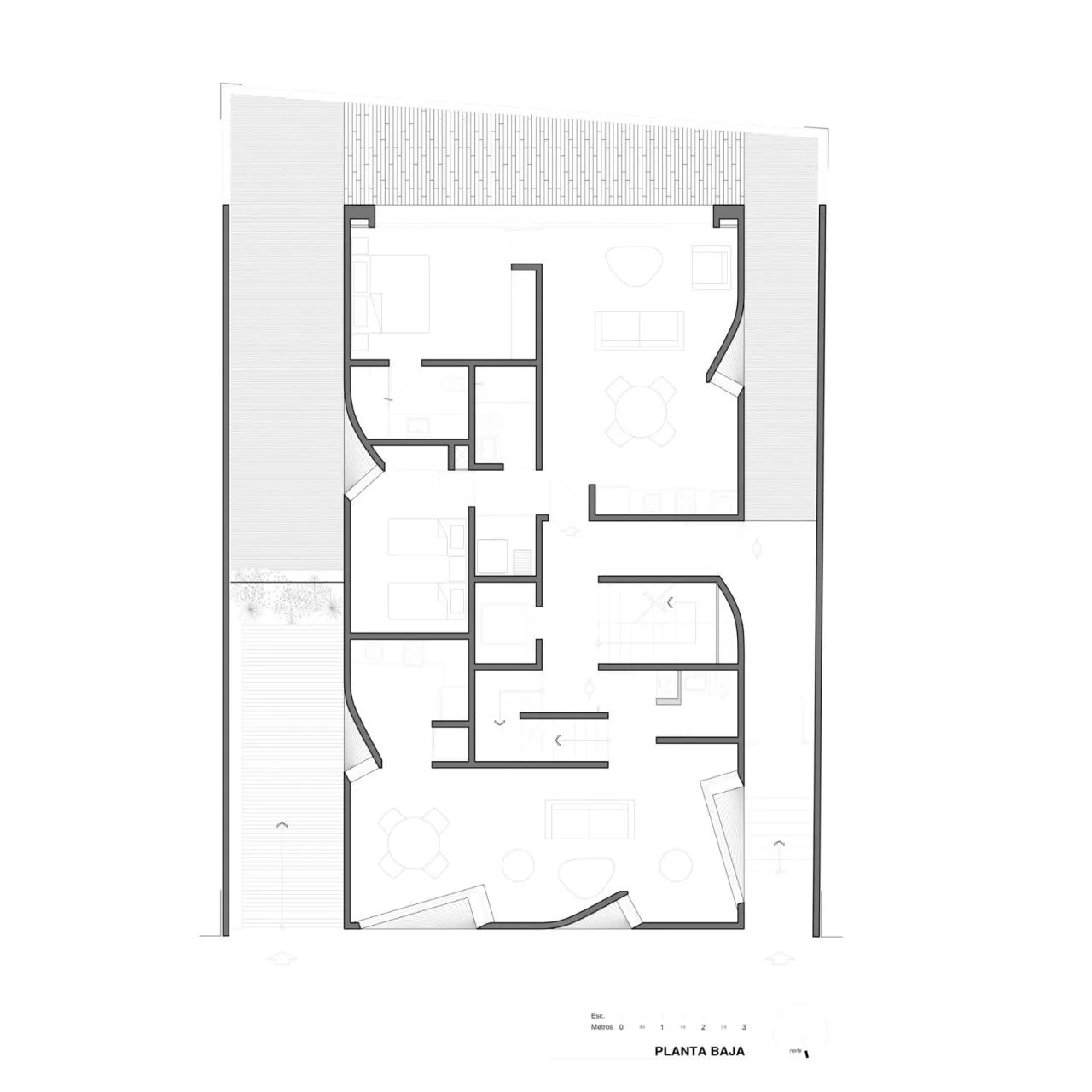
△ First Floor Plan
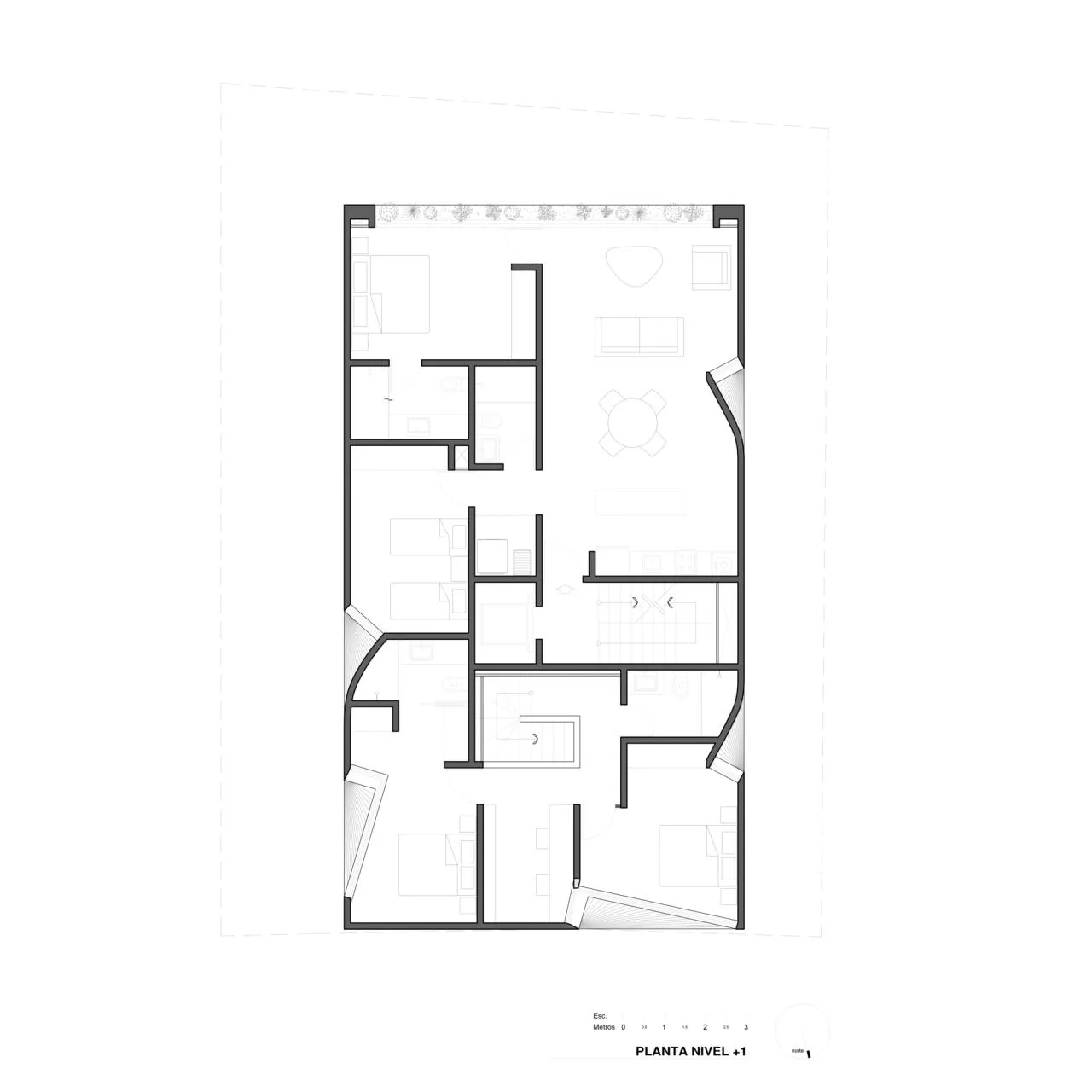
△ Second Floor Plan
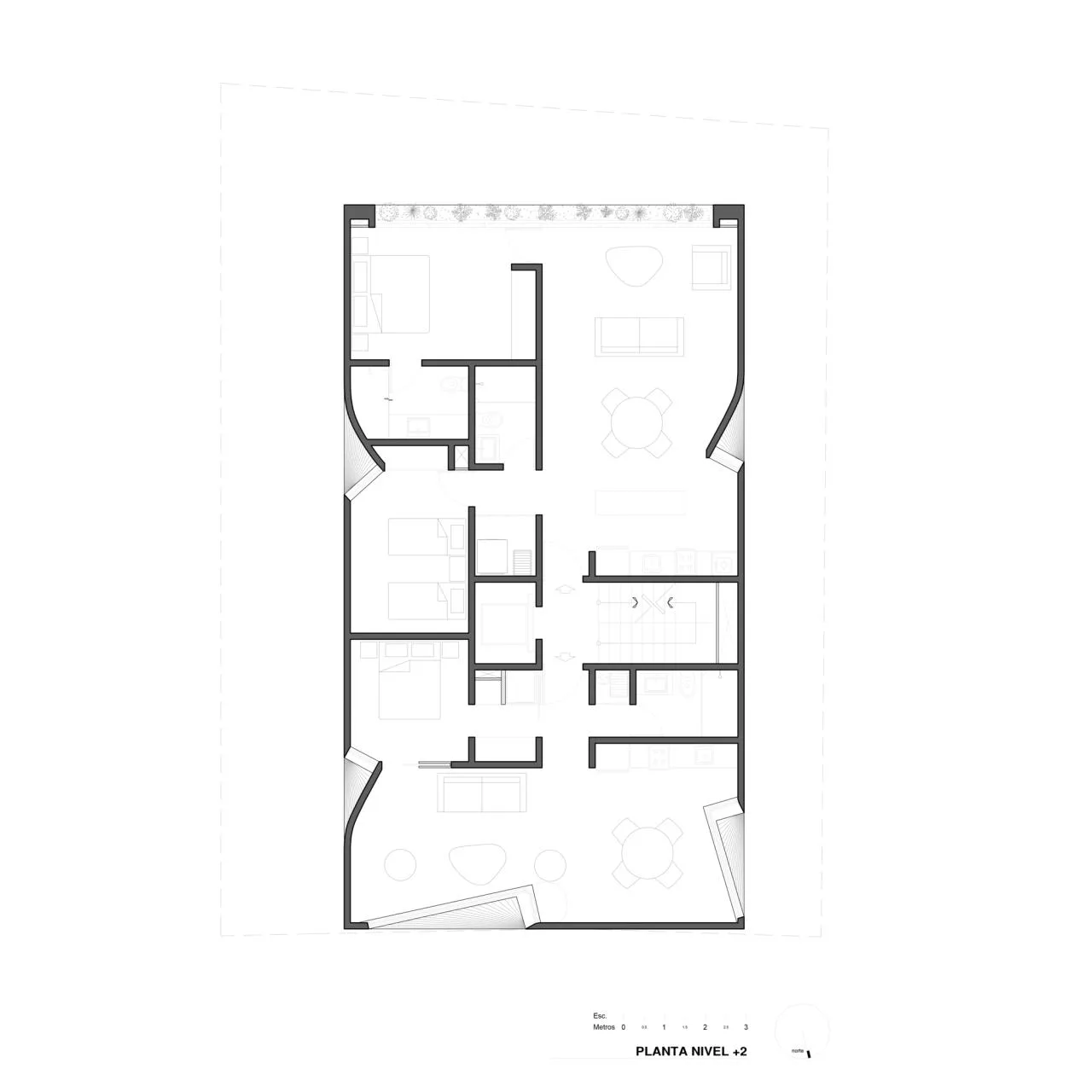
△ Third Floor Plan
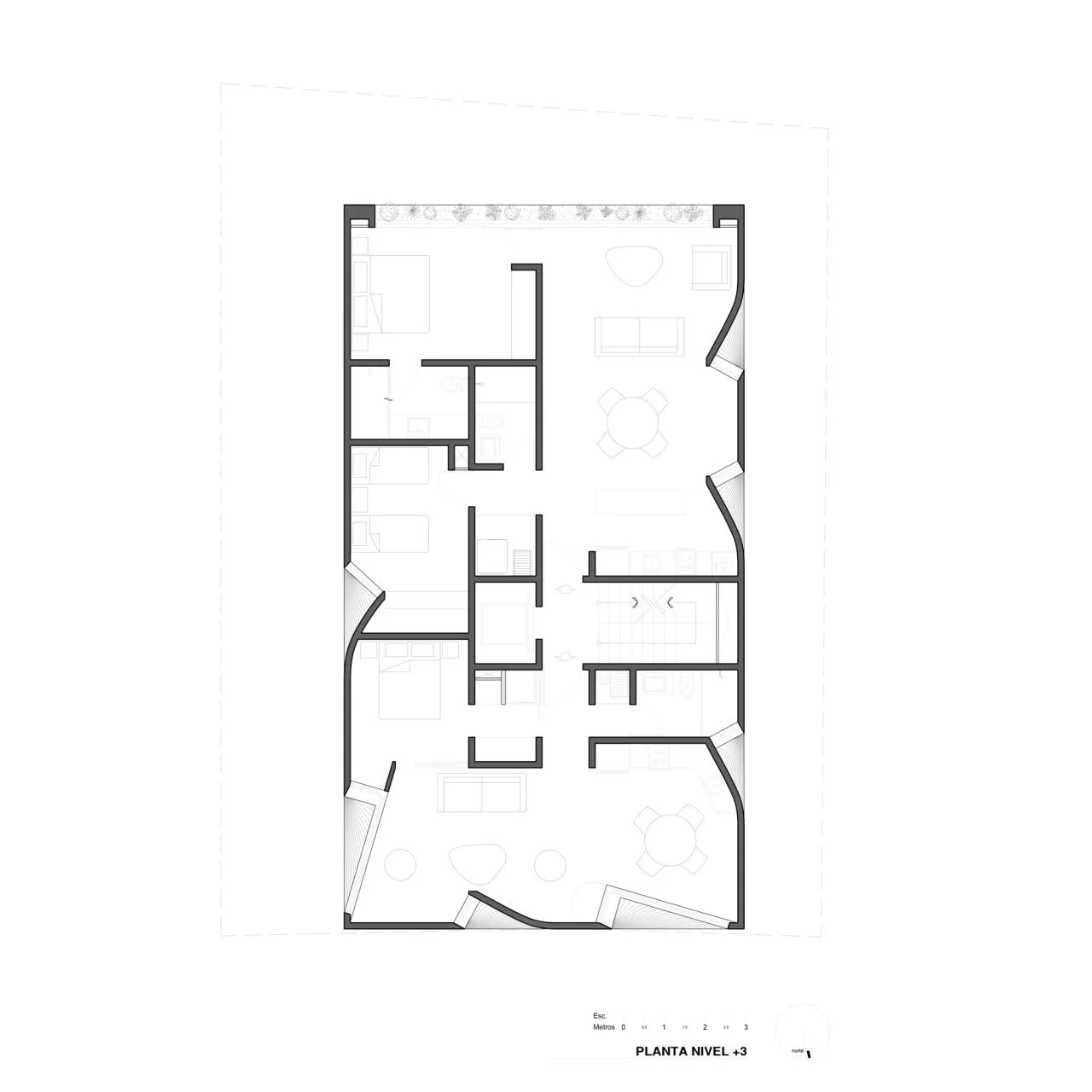
△ Fourth Floor Plan
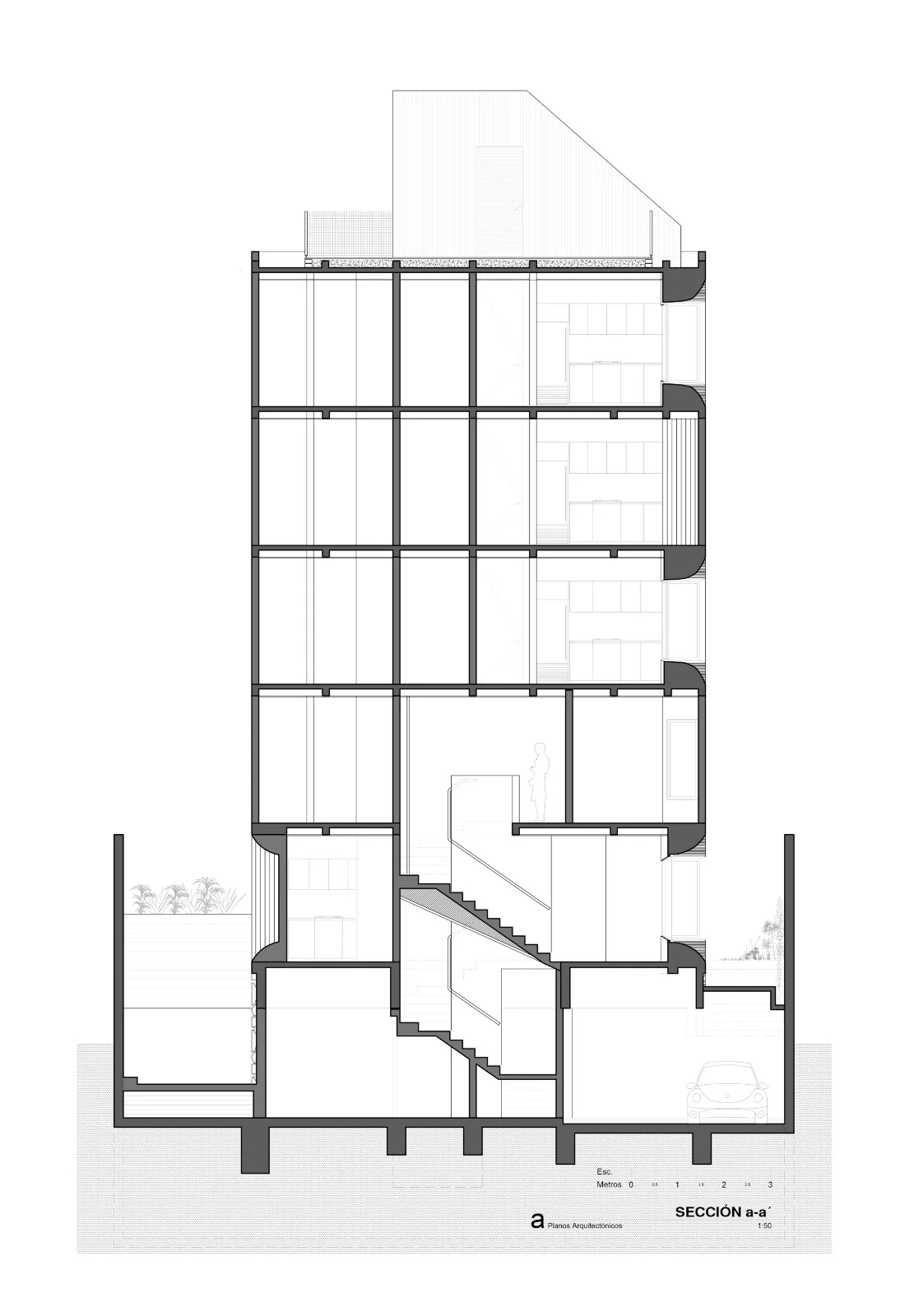
△ Section Diagram
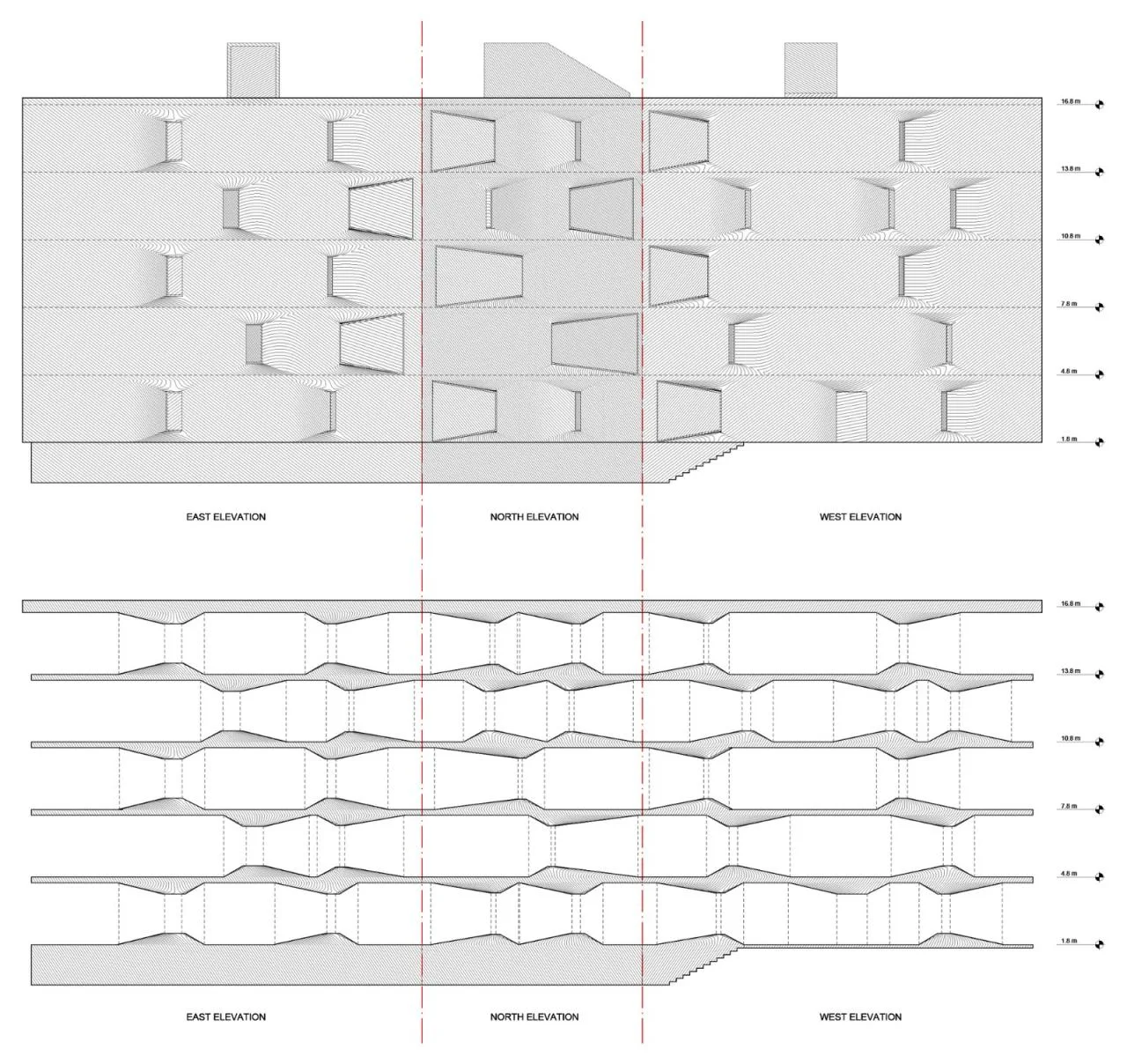
△ Elevation Drawing
Project Information
Architects: Michan Architecture, Young & Ayata
Project Year: 2020
Photographers: Rafael Gamo, Alexandra Bov é, Rafael Buzali
Suppliers: Alsam Acabados, Aluvisa, Holcim
Lead Architects: Kutan Ayata, Michael Young, Isaac Michan, Daniel Narciso Martinez, Sina Ozbudun, Jorge Sanchez, Omar Acevedo
Location: Mexico City, Mexico












Must log in before commenting!
Sign Up