
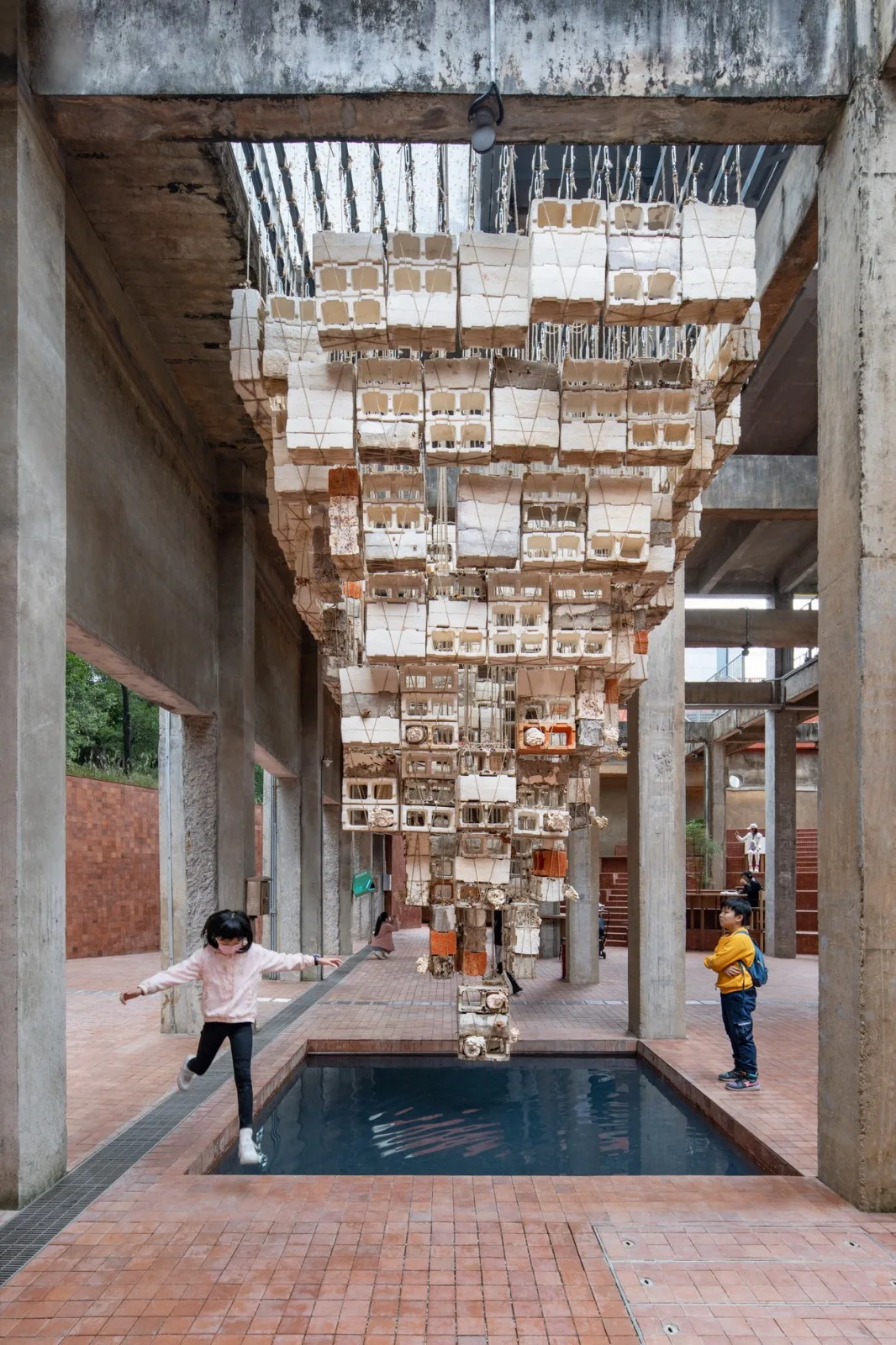
At the 2022 Shenzhen Hong Kong Biennale of Urban Architecture, under the theme of “Urban Vitality,” Link Arc Architecture Firm presented an ecological installation titled “Reverse Construction” in the “Journey of Things and Spirits” section of the main exhibition. Utilizing growing mushroom bricks as the primary material, this project aims to empower architecture with the concept of “growth,” foster an ecological environment unlike traditional man-made structures, and reevaluate the relationship between nature and urban life.
© Rkatsiteli
Mycelium, the root-like structure of mushrooms, can span thousands of acres and demonstrates remarkable resilience and adaptability across diverse environments. This installation studies and emulates the growth patterns of mycelium, applying these biological principles to architectural construction to explore building technologies suited for the future.
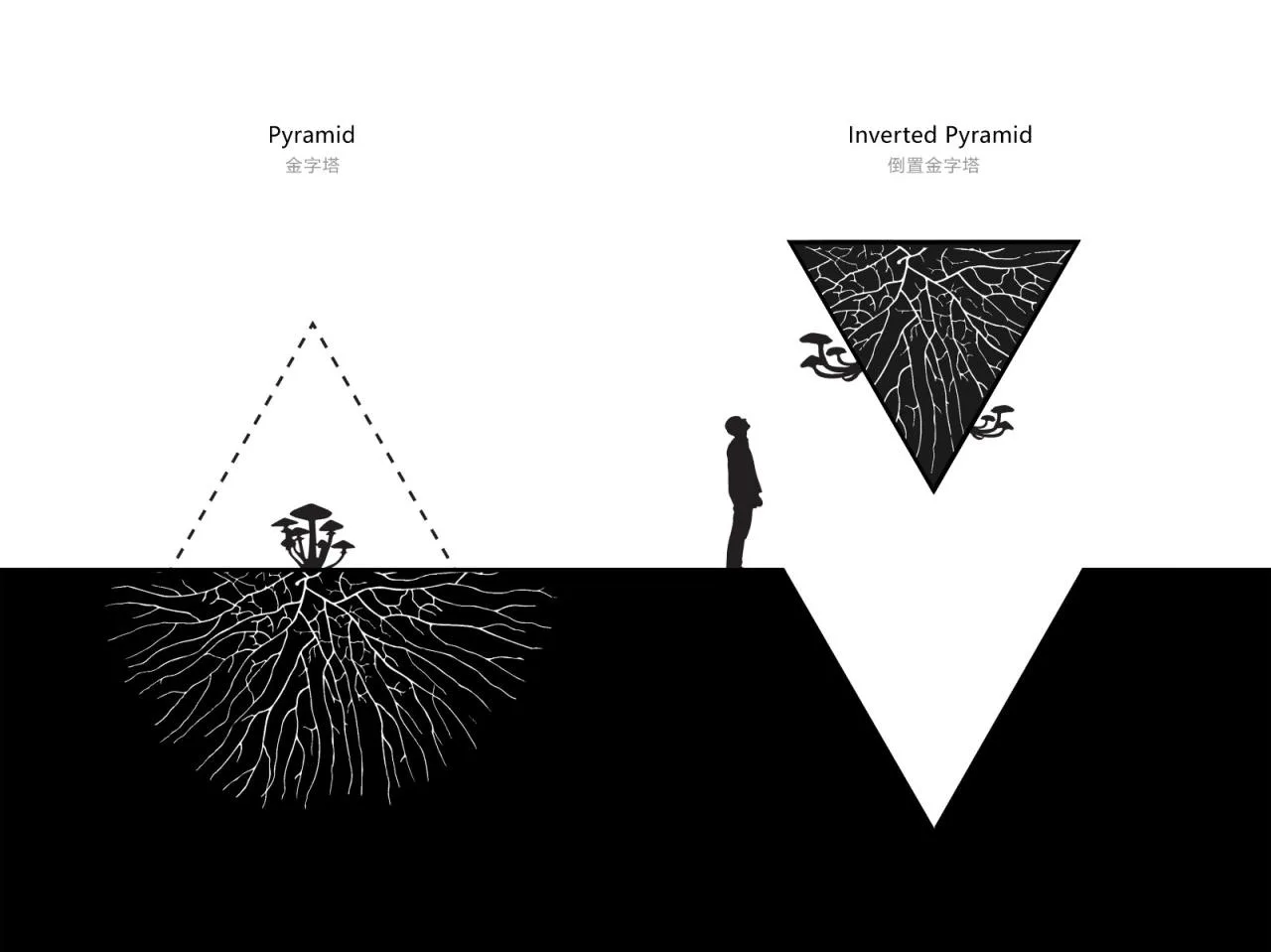
△ Conceptual diagram © Link Arc Architecture Firm
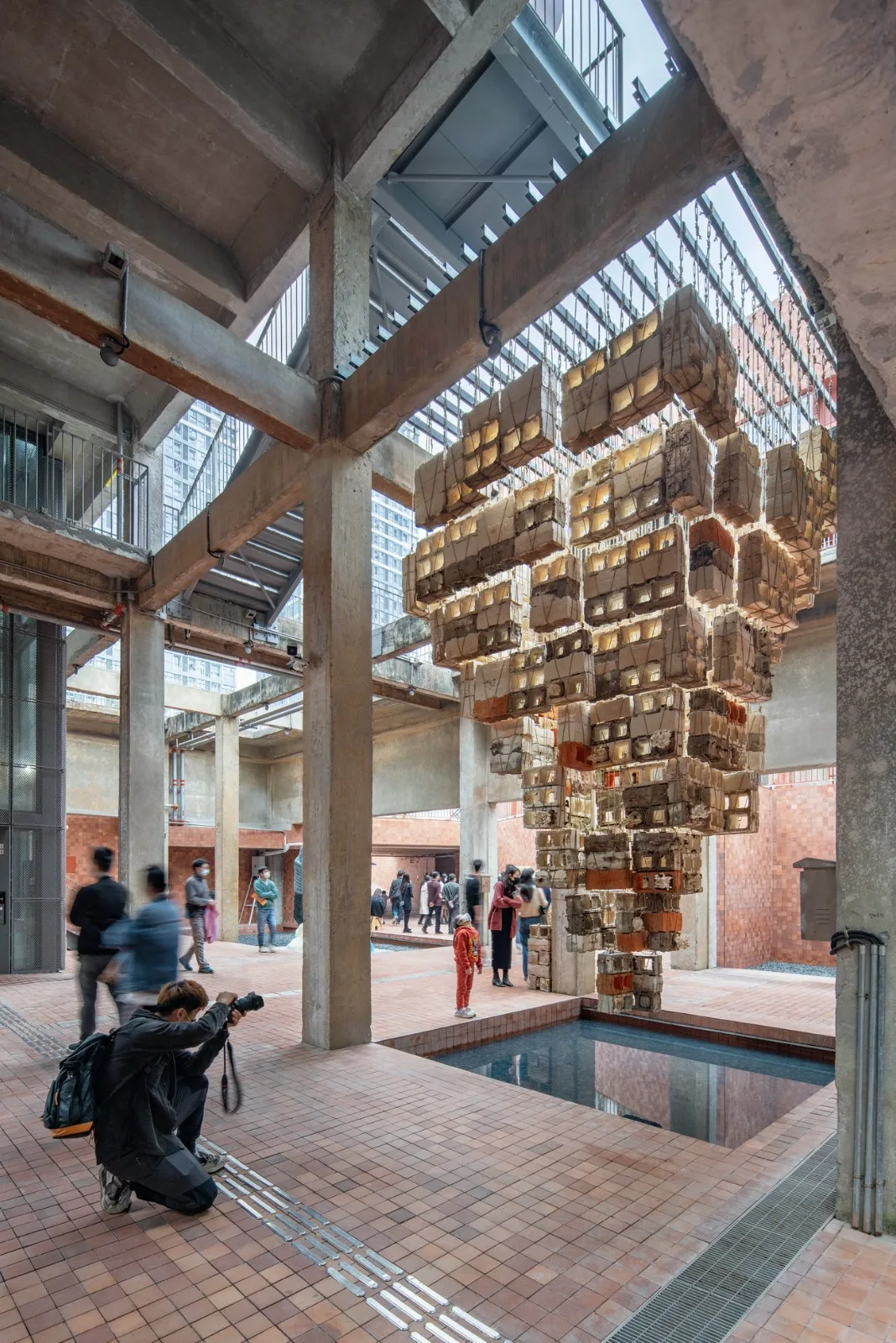
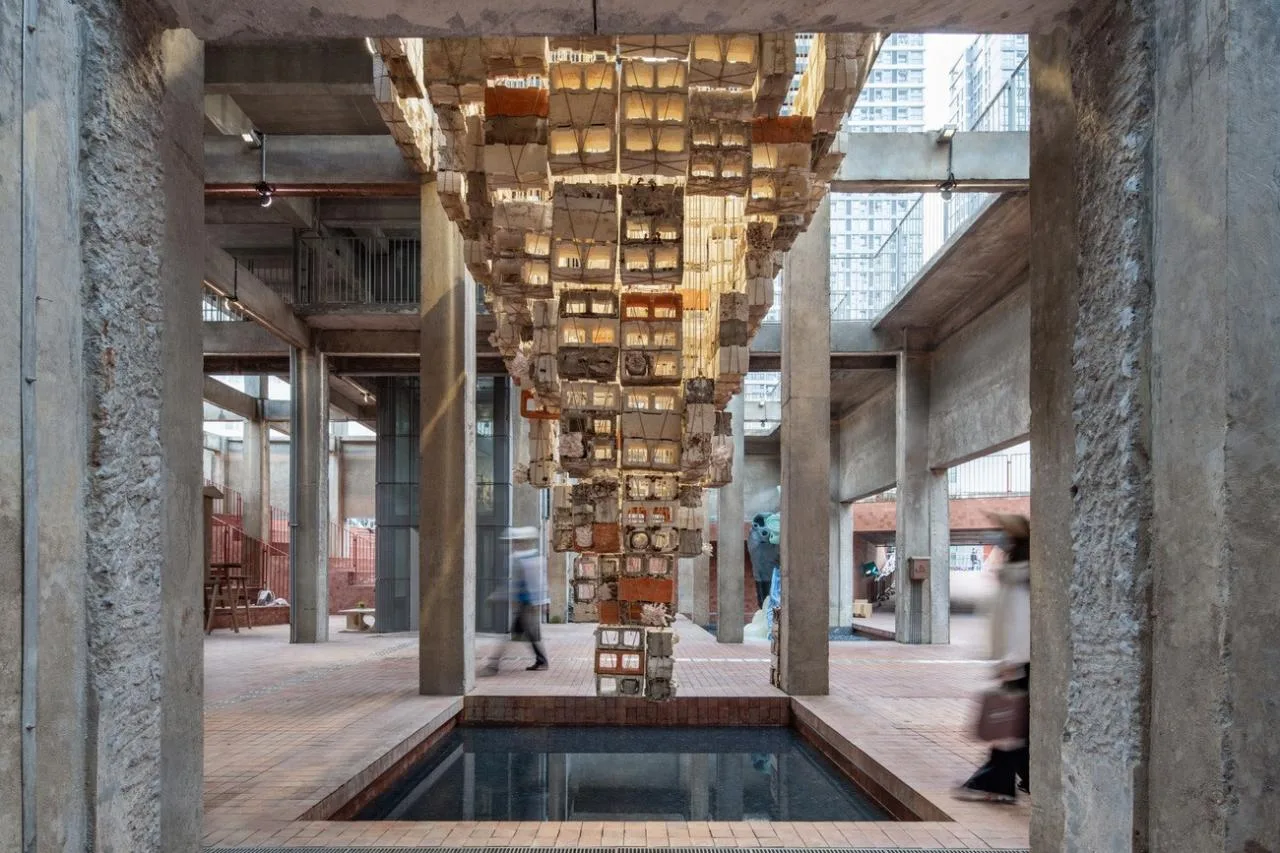
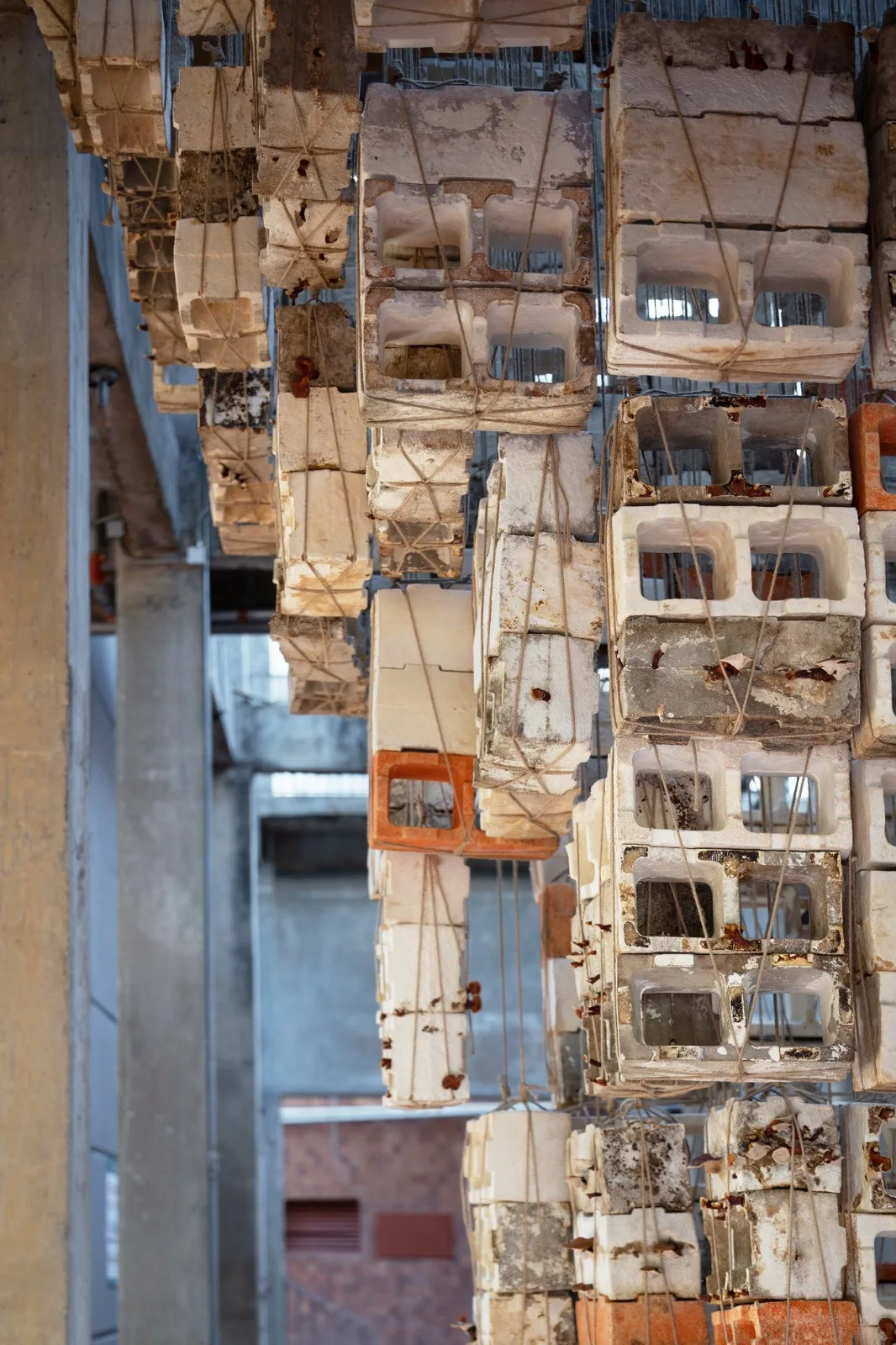
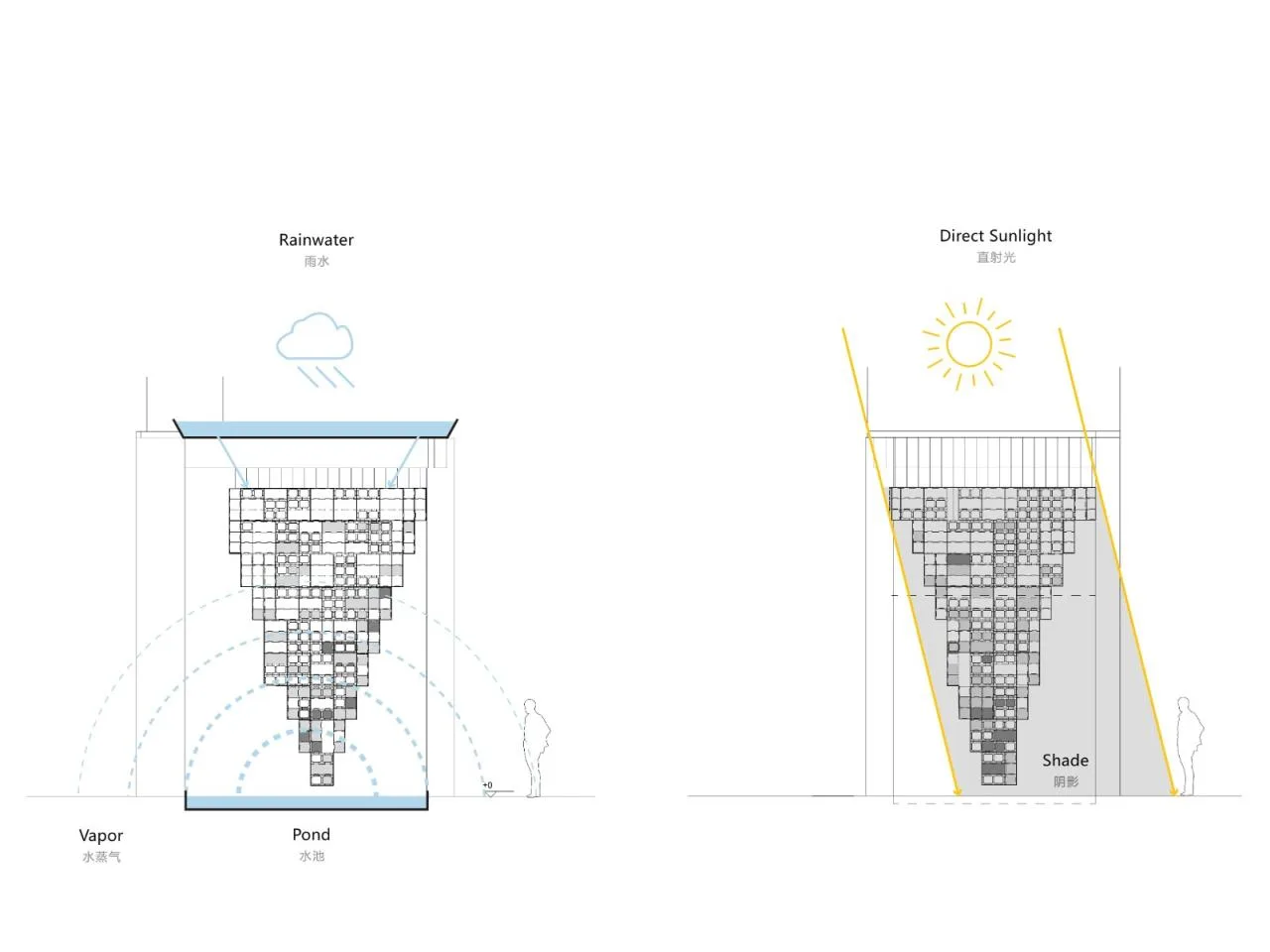
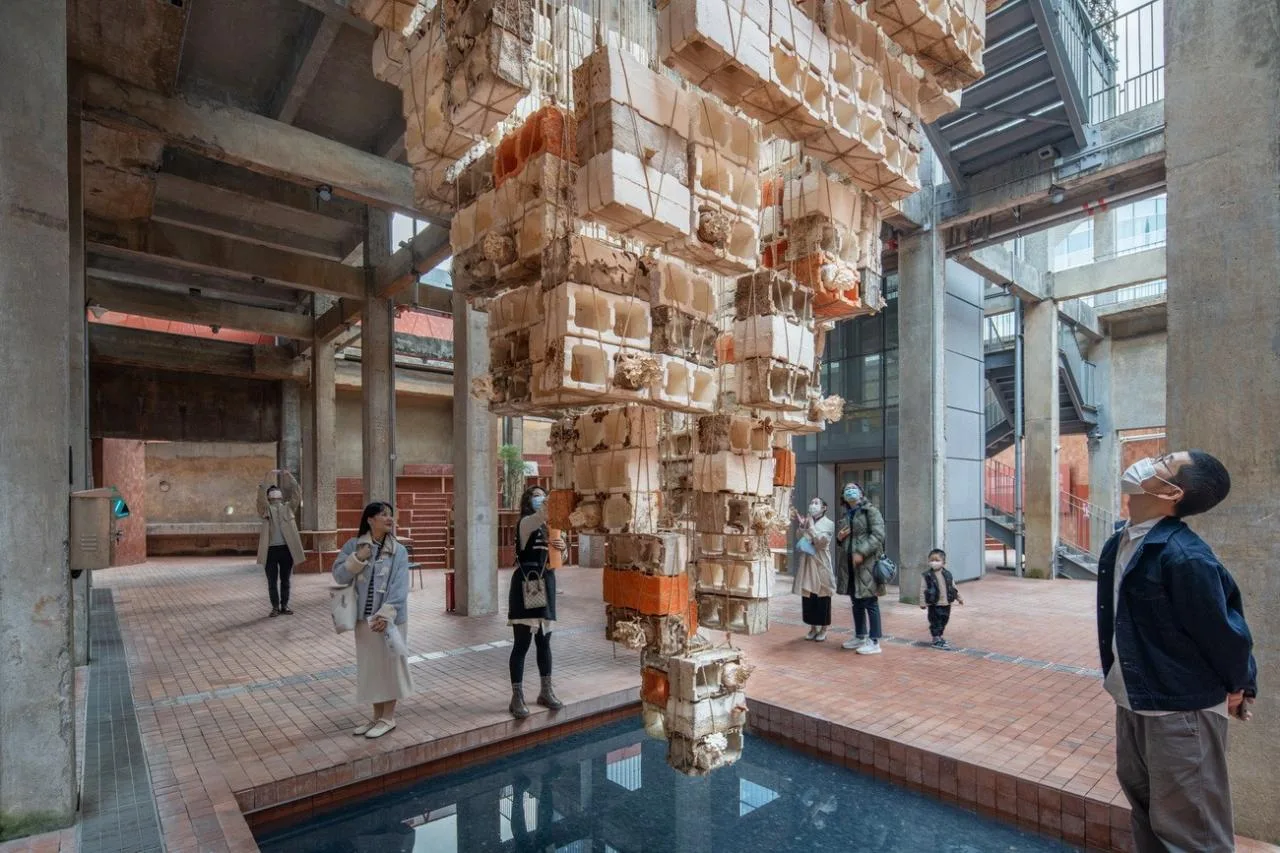
This project investigates the potential synergy between human-made structures and hidden natural ecosystems, striving to dissolve the traditional divide and foster intentional symbiotic cooperation. Typically, pyramids symbolize human grandeur and dominance over nature. However, “Reverse Construction” is composed of suspended mushroom bricks forming an inverted pyramid with a porous structure that challenges this human-centered symbolism. The design maximizes rainwater collection at the top while providing ample shade beneath.
© Rkatsiteli
© Rkatsiteli
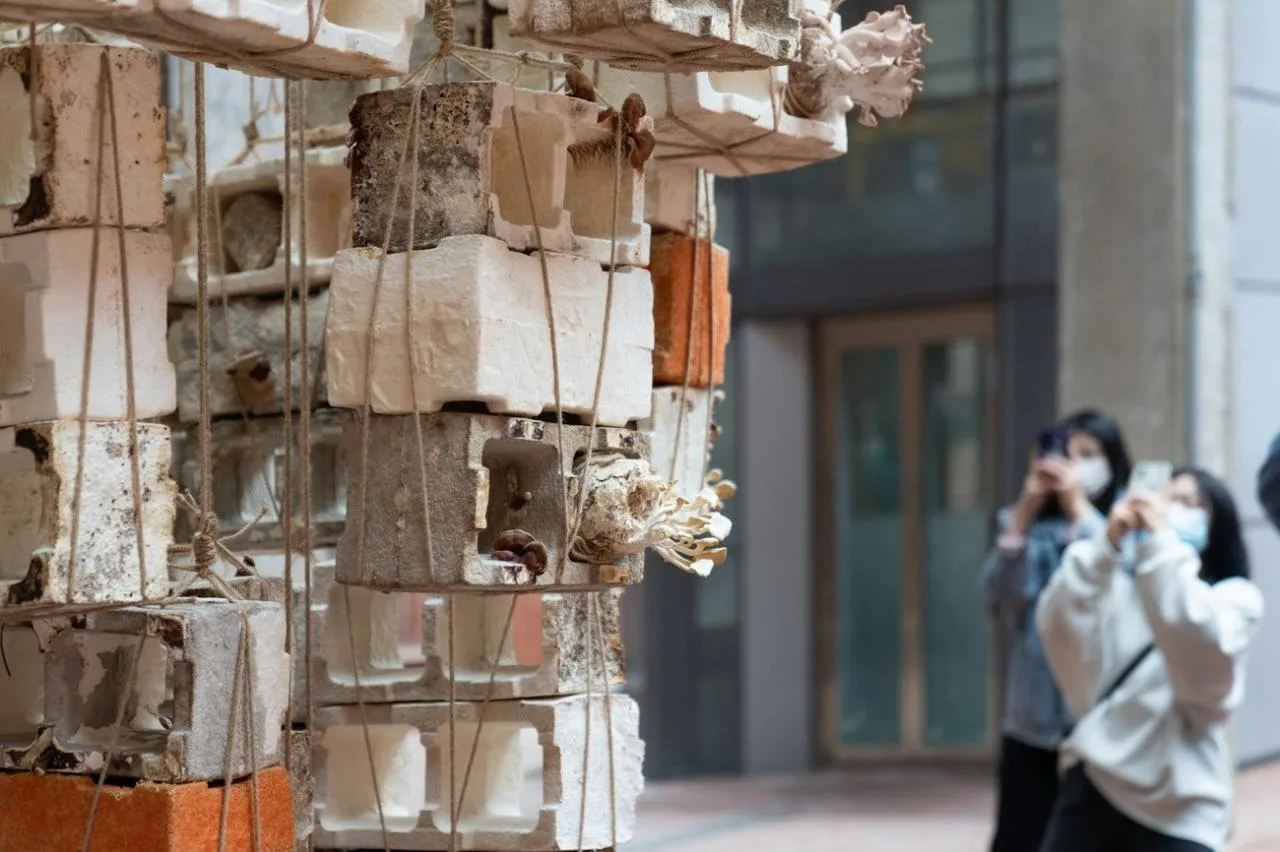
The installation consists of 400 suspended mushroom bricks, a biodegradable and renewable ecological material. These bricks are cultivated using crop waste such as straw, sugarcane bagasse, and bran as the growth medium. Specific mycelium strains are introduced to naturally grow and solidify the raw materials into lightweight, structurally sound bricks. This material exhibits strong plasticity and can “grow” into any mold shape under suitable temperature and humidity, contrasting with the precision demands of conventional building materials.
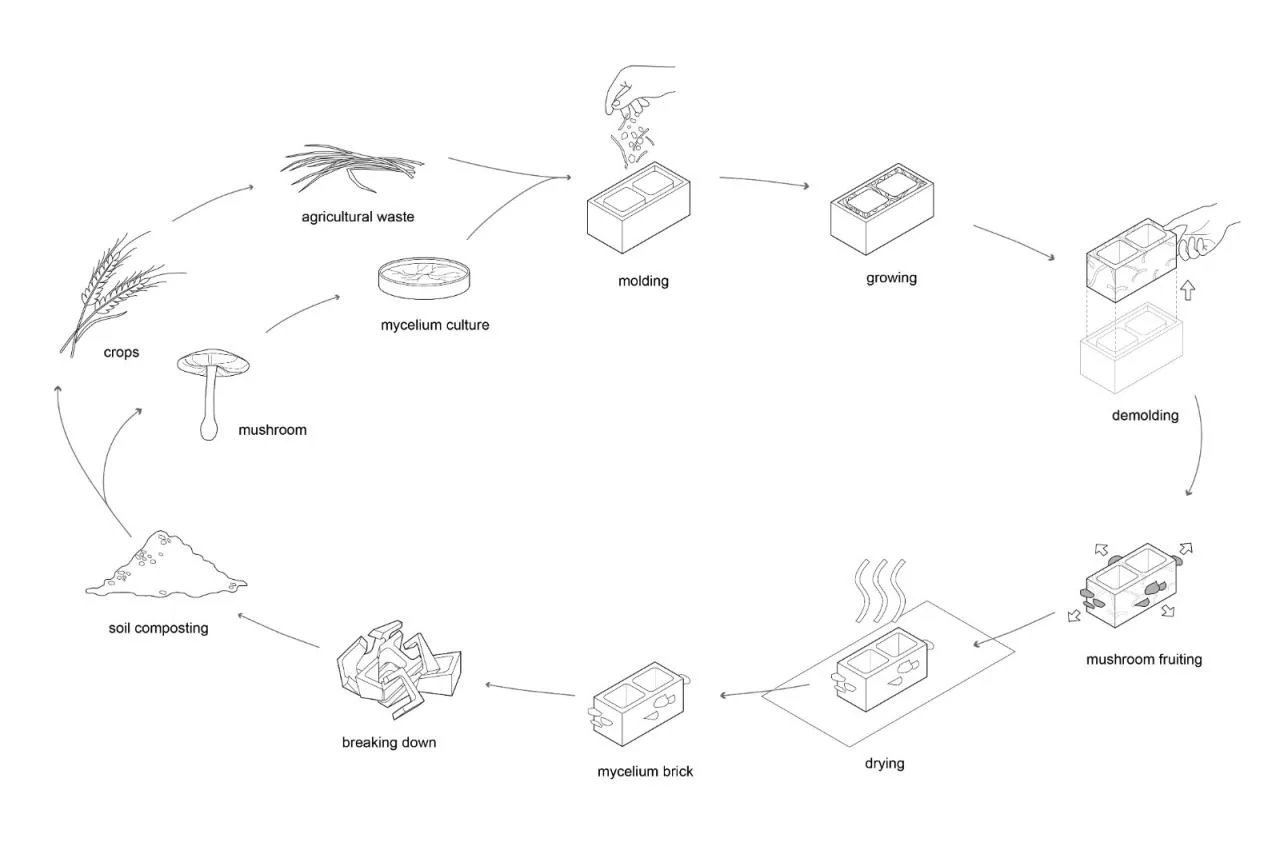
The lifecycle of mushroom bricks © Link Arc Architecture Firm
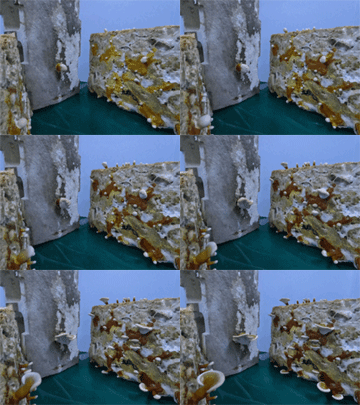
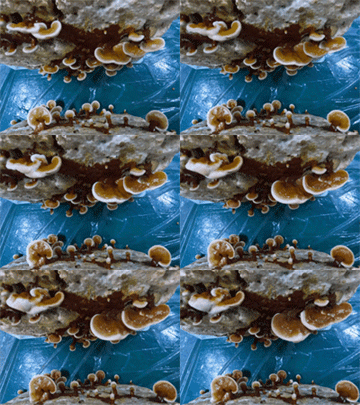
Dynamic diagrams illustrating the mushroom growth process © Link Arc Architecture Firm
This material is sustainable and recyclable. Once discarded, the mushroom bricks can be broken down and buried in soil, where they decompose within months without harming the environment. This aligns with the project’s commitment to advancing sustainable architectural research and practice. After the exhibition, the bricks will be repurposed as naturally formed building materials.
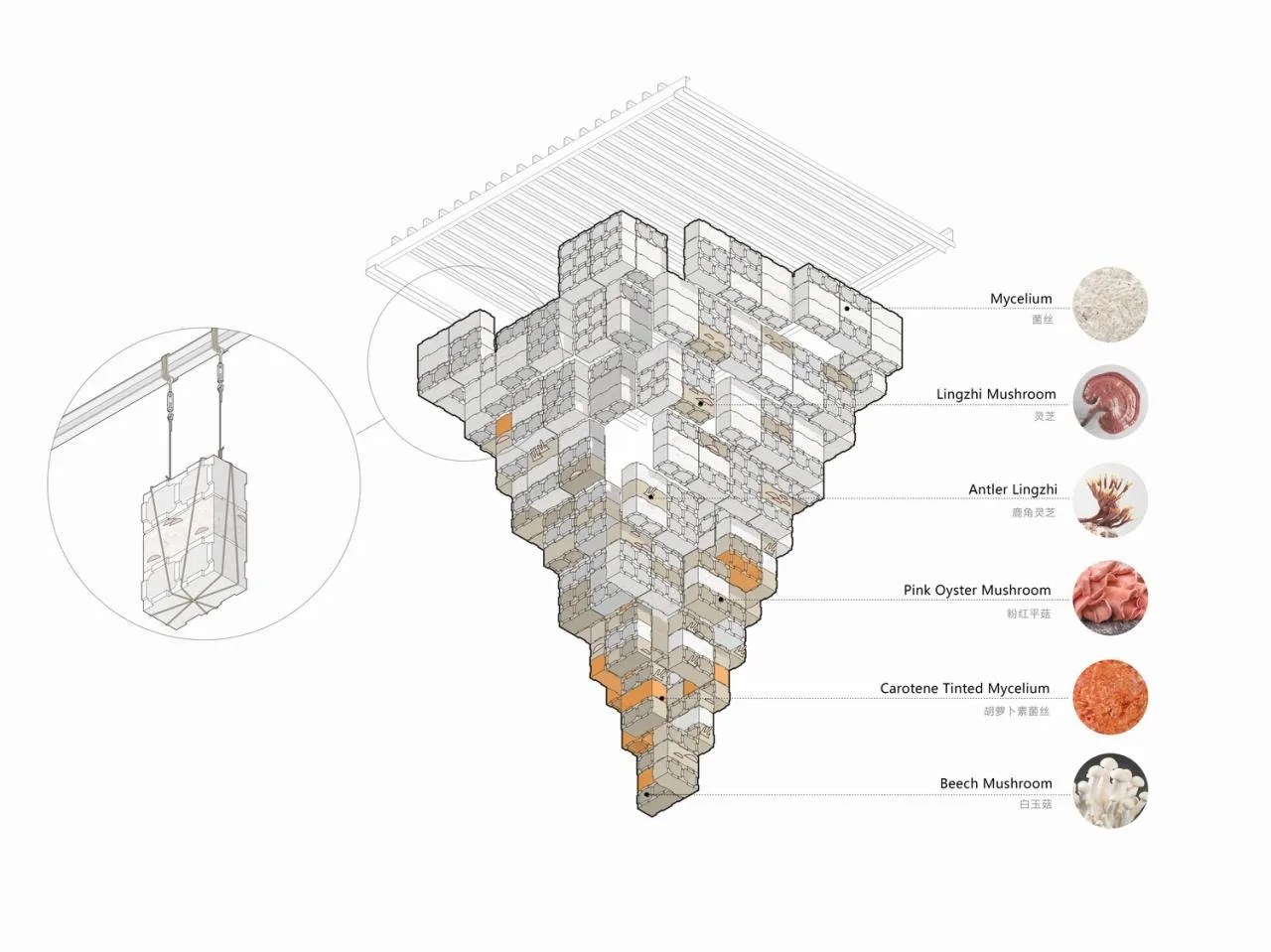
Schematic diagram of hanging nodes and mycelial varieties © Link Arc Architecture Firm
The lifecycle of mushroom bricks © Link Arc Architecture Firm
© Rkatsiteli
© Rkatsiteli
With years of practical experience in Shenzhen, the team has developed a deep understanding of the city’s climate and ecology. The exhibition space is a semi-outdoor area converted from an old brewery, suspended beneath a bare concrete frame. This environment is ideal for mushroom bricks to absorb moisture from the air. The installation’s primary material, mushroom bricks, naturally absorb atmospheric moisture, creating a suitable growth environment for the mushrooms themselves. A water pool beneath the structure generates a humid microclimate, further enhancing the conditions for the installation’s “growth.”
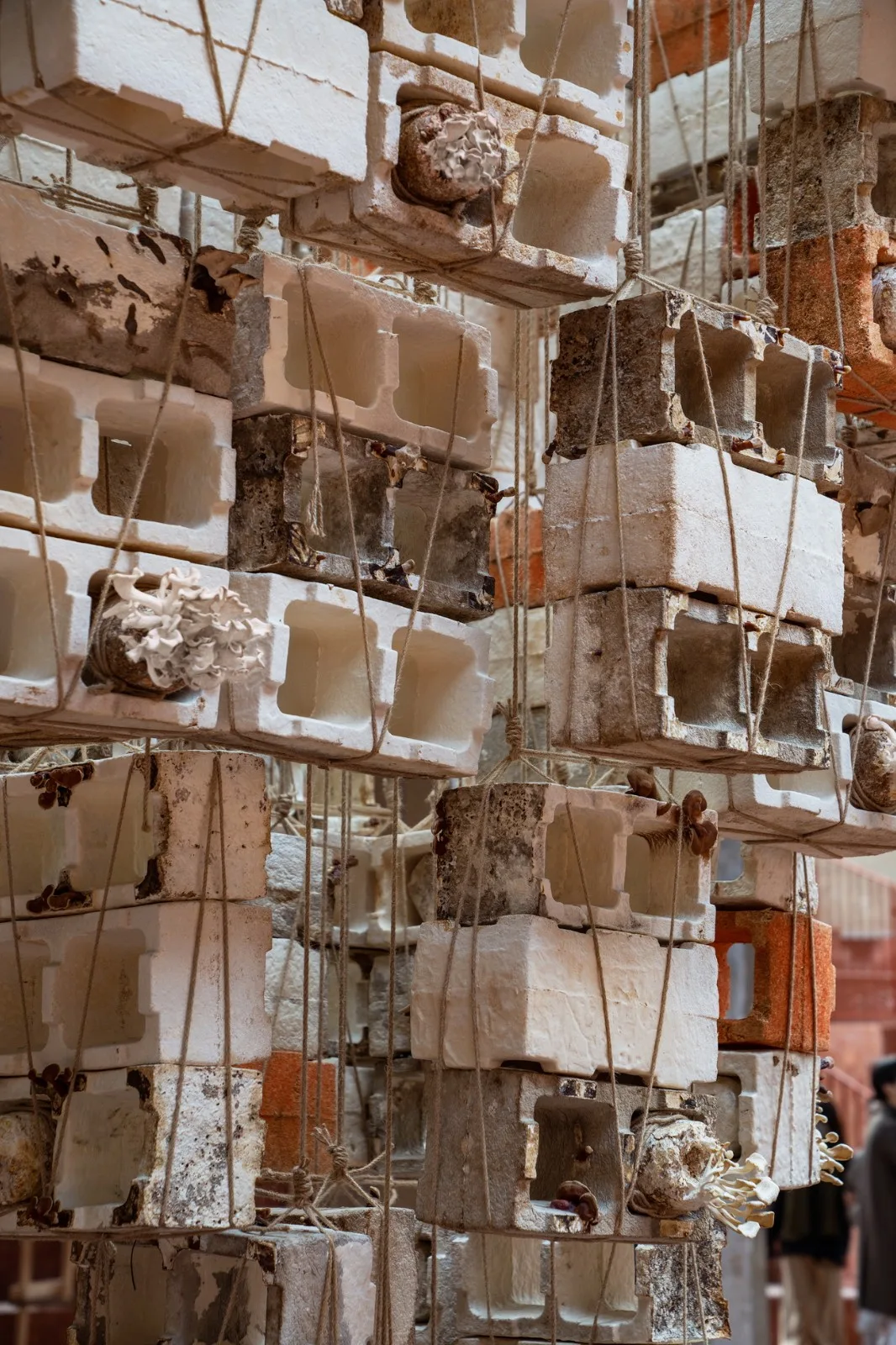
© Rkatsiteli
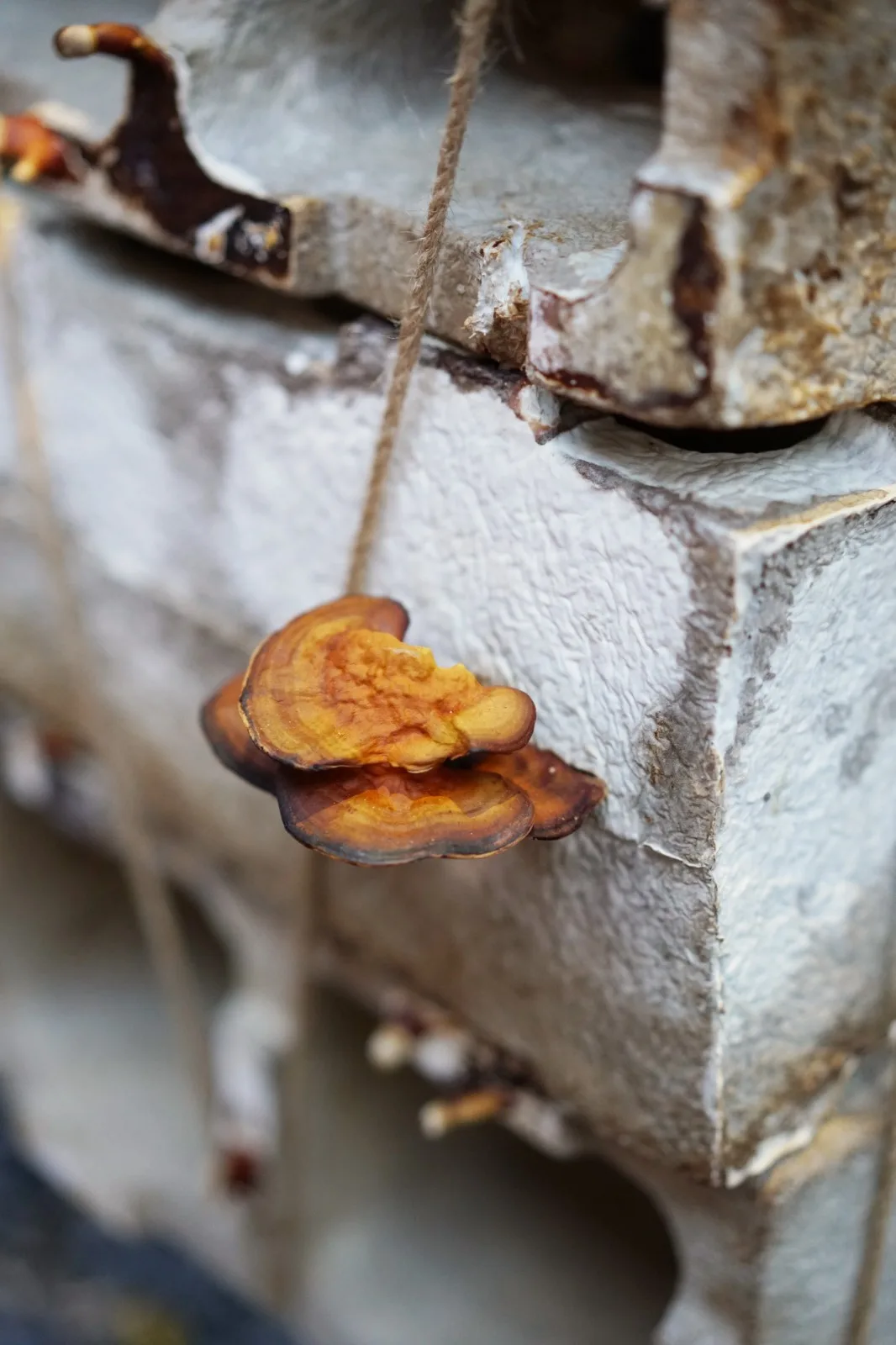
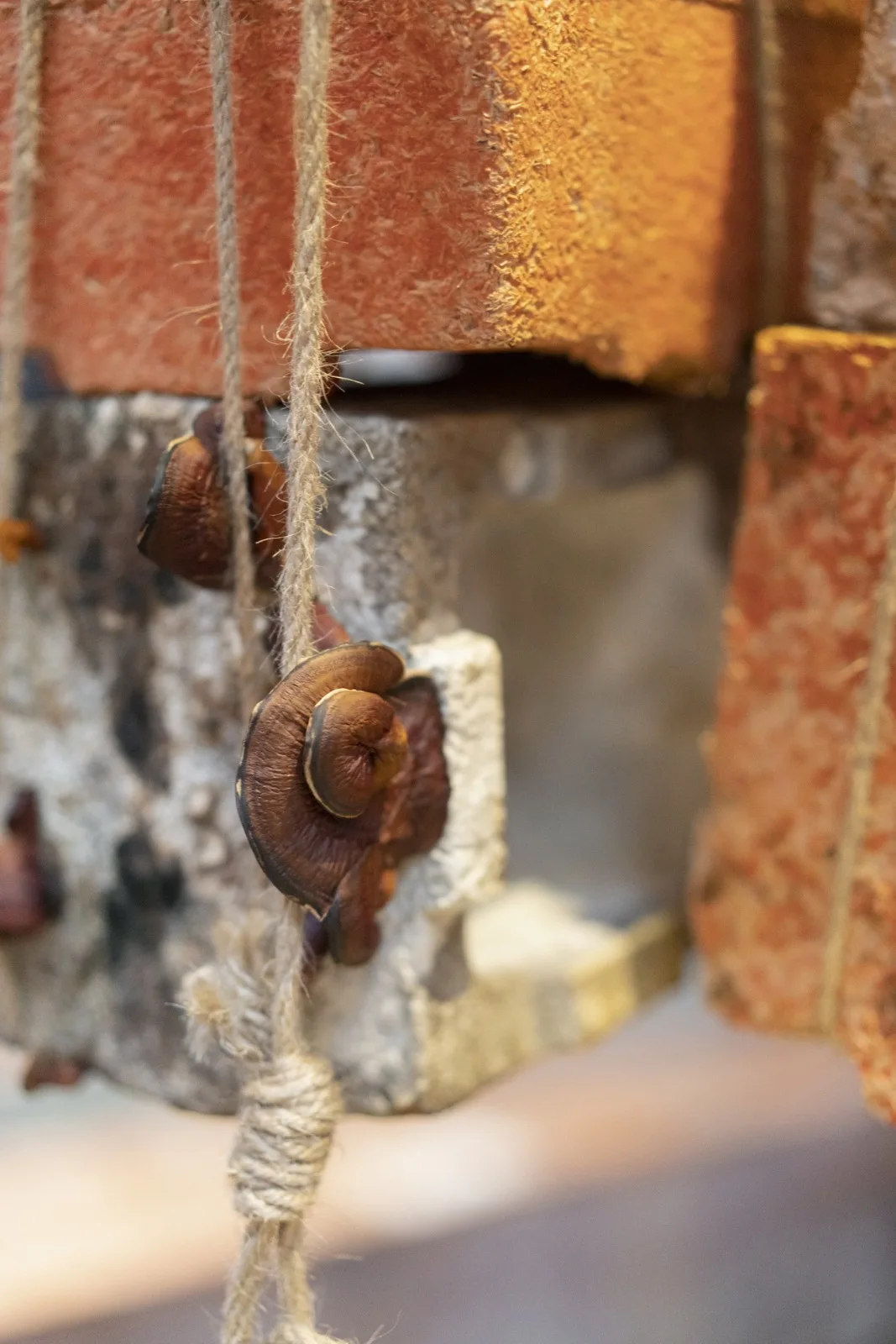
© Link Arc Architecture Firm
Unlike typical mushroom brick production where mycelium is inactivated, this project selectively cultivates mycelium to grow fresh mushrooms, bringing life and sustainability to the installation through a biodegradable ecological cycle. This approach transforms the installation into a living, self-growing entity, showcasing how natural crops can thrive and replace conventional cultivation structures to form new natural architectures. This innovative fusion of building materials and ecology reinforces the theme of the “Journey of Things and Spirits” exhibition section, enhancing the installation’s interactivity and appeal.
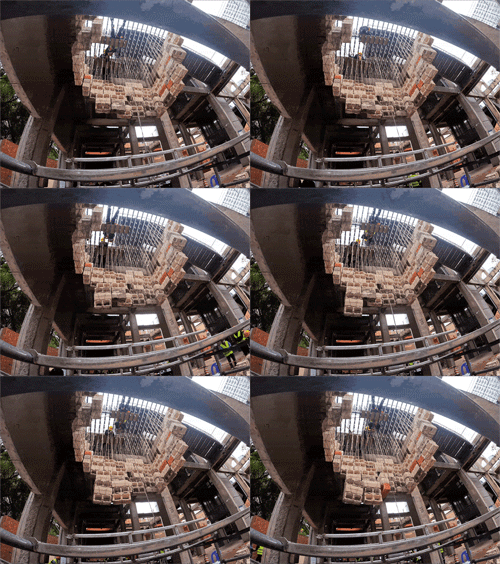
△ Dynamic diagram © Link Arc Architecture Firm
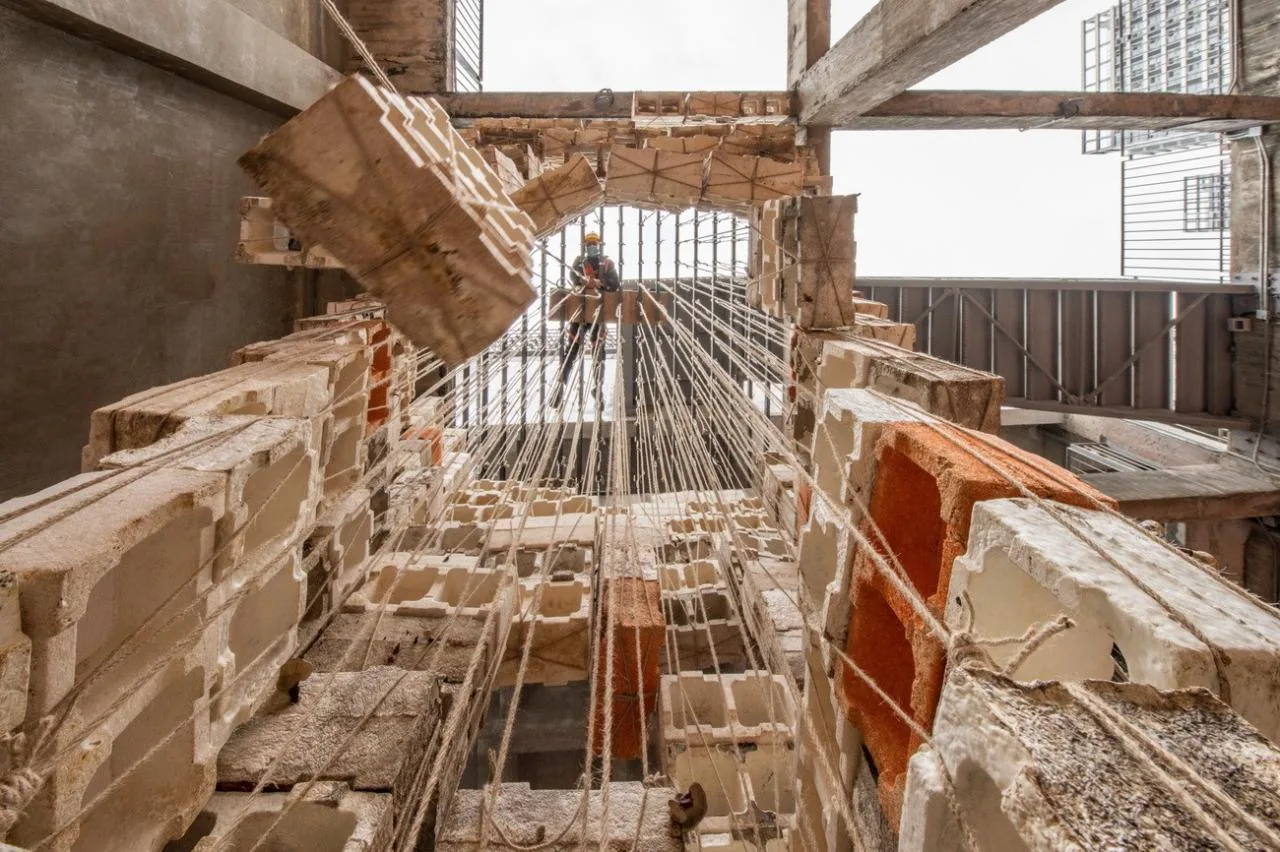
© Rkatsiteli
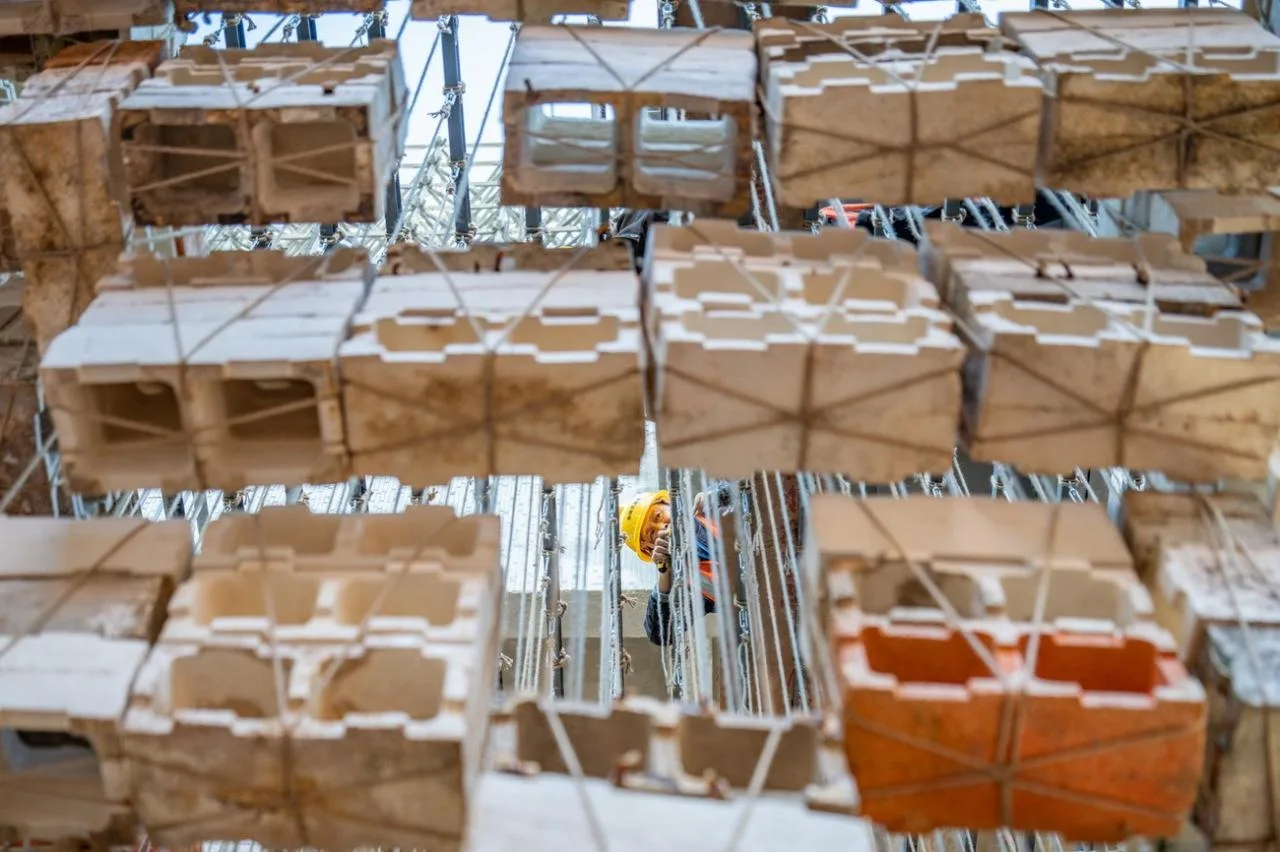
© Rkatsiteli
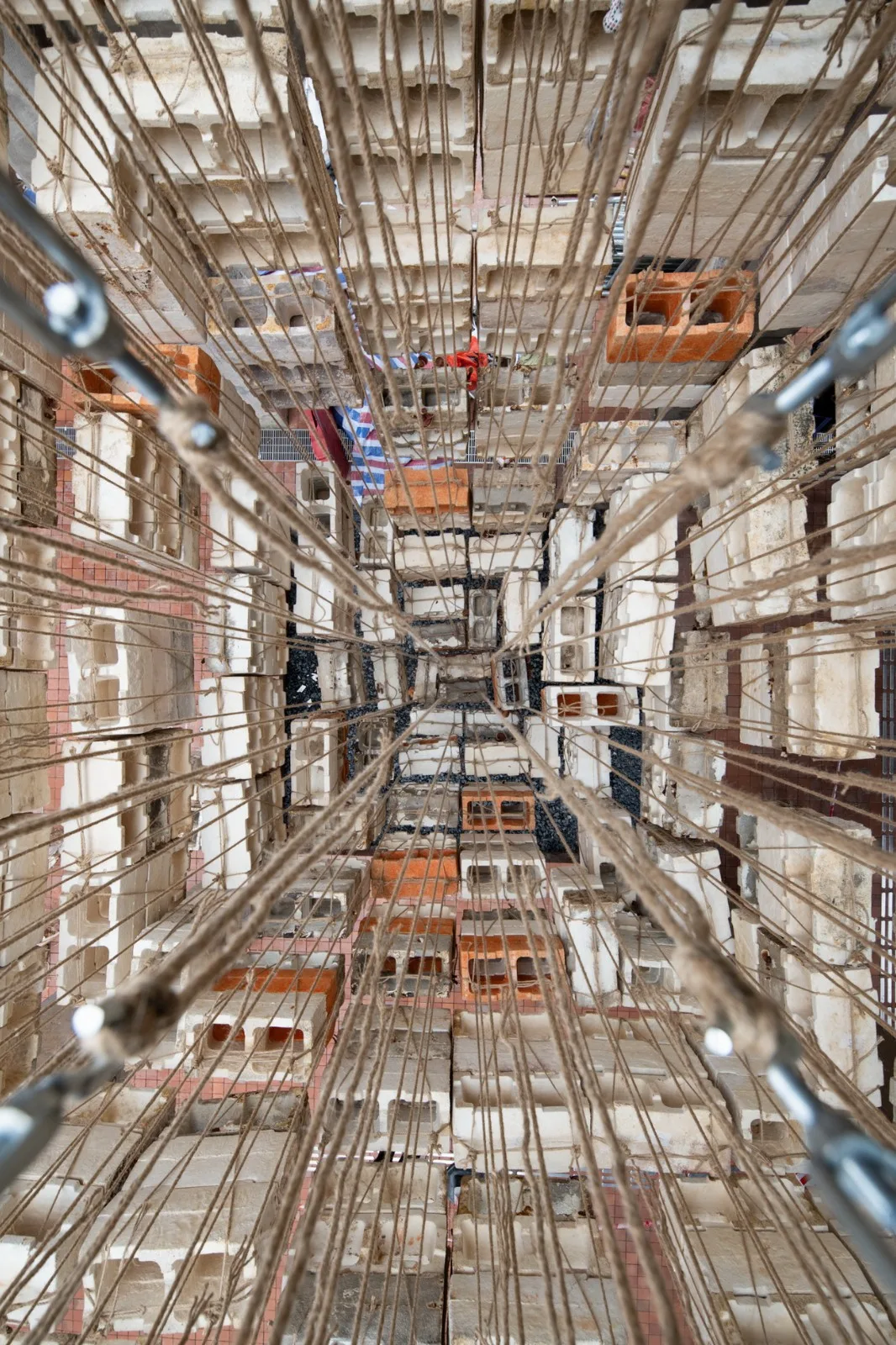
© Rkatsiteli
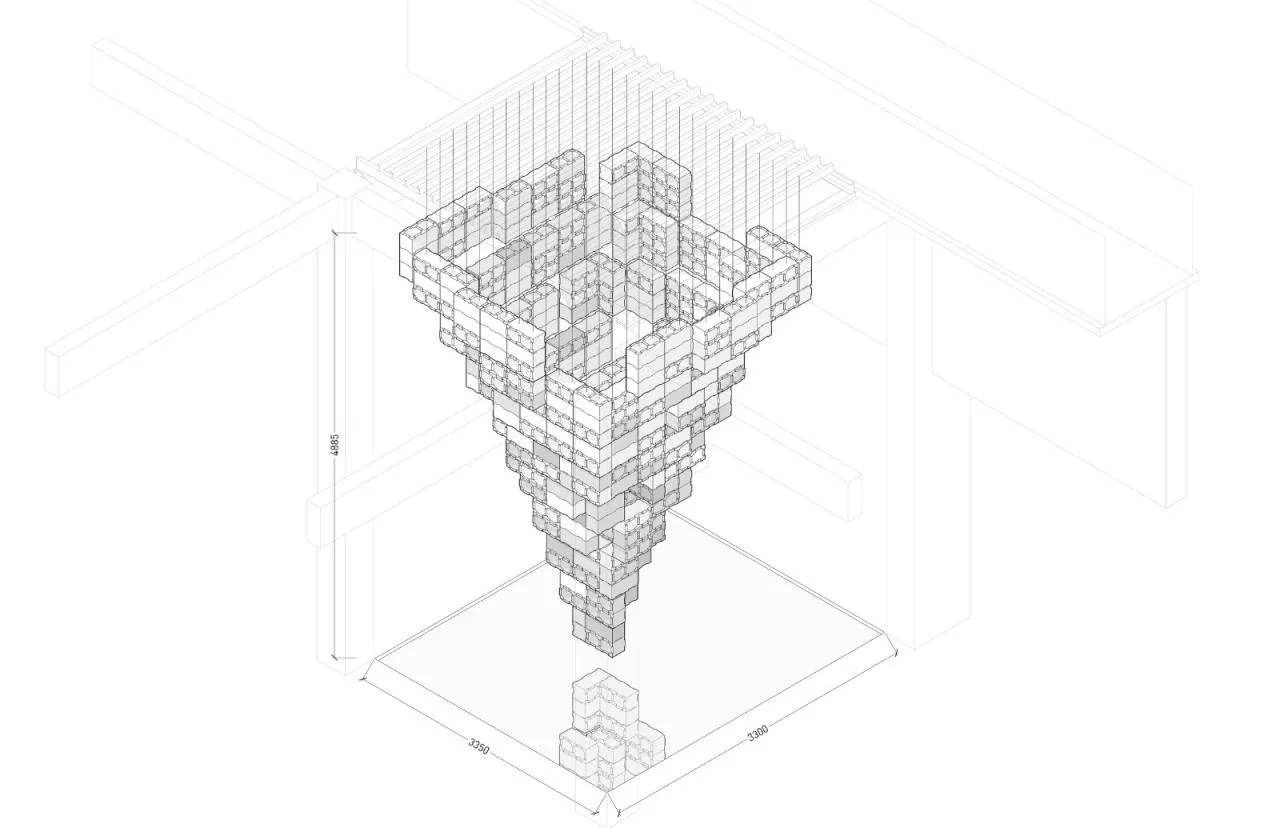
Northeast axonometric view © Link Arc Architecture Firm
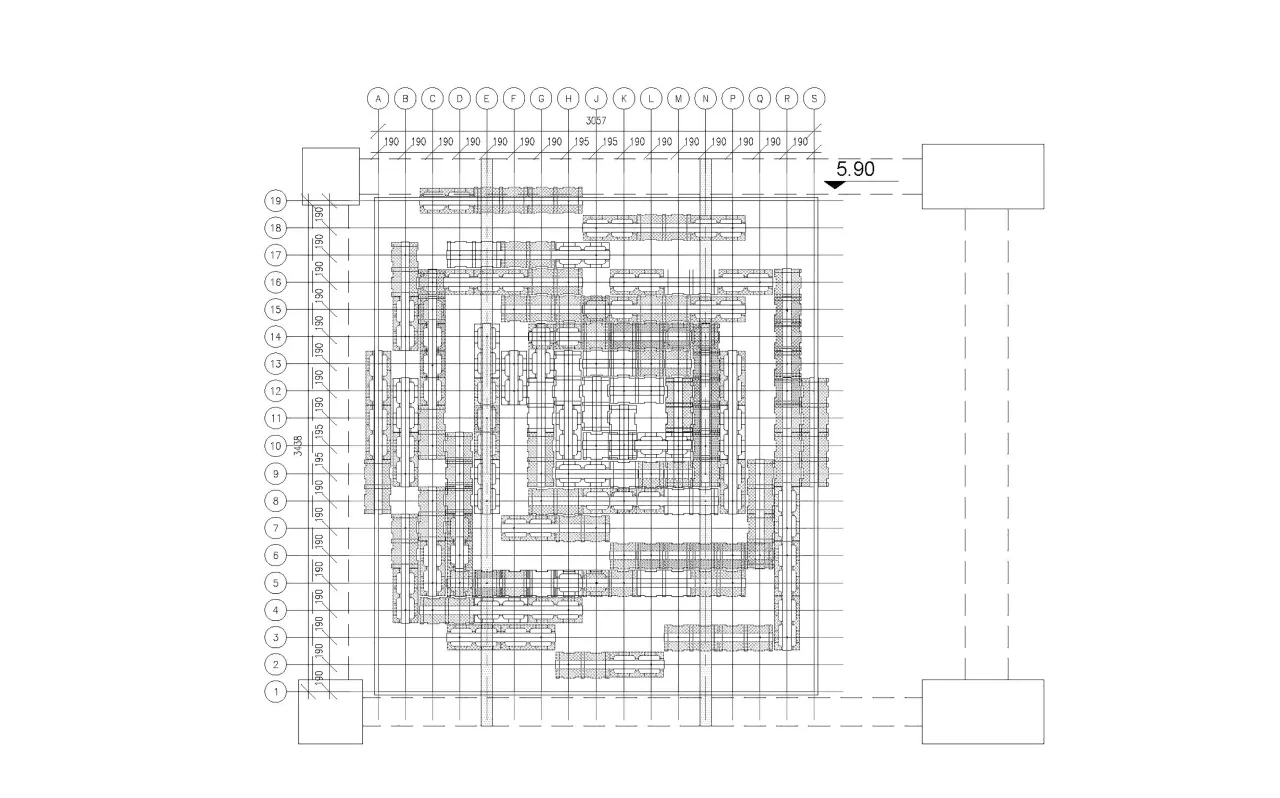
△ General layout plan © Link Arc Architecture Firm
Project Information
Project Name: Reverse Construction
Location: Jinbeifang, Yuehai City, Shenzhen, China
Exhibition Dates: December 10, 2022 – March 12, 2023
Lead Architect: Lu Yichen
Project Leaders: Guo Shiyu, Qin Simeng, Letty Lau, Zhong Zhenwei
Project Team: Luis Ausin, Liu Zida, Yang Lingyun, Zhou Rui, Ma Chenhao
Biotechnology Support: Shenzhen Circular Biotechnology Co., Ltd
Photography: Bai Yu, Zhang Chao
Video Production: Wang Eryi, Li Hao
Host: Shenzhen Municipal People’s Government
Organizers: Shenzhen Planning and Natural Resources Bureau, Luohu District People’s Government of Shenzhen
Implementation: Guangdong Yuehai Land Group Co., Ltd
Supporting Units: Shenzhen Biennale Public Art Foundation, Shenzhen Urban Planning and Design Research Institute
Special Fund Support: Shenzhen Cultural Industry Development Special Fund
Chief Curators: Lu Andong, Wang Zigeng, Chen Bokang















Must log in before commenting!
Sign Up