
Game Homestay
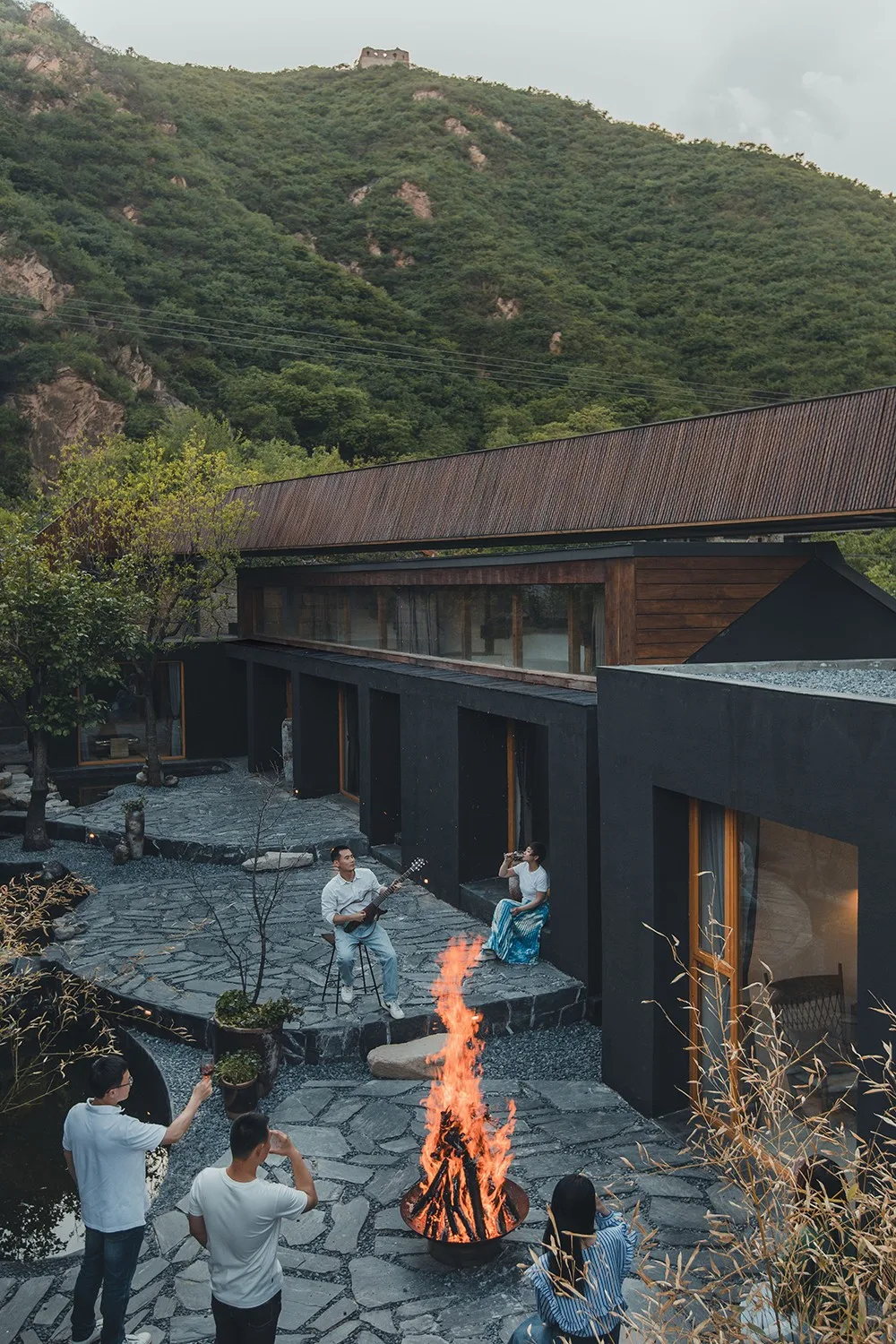
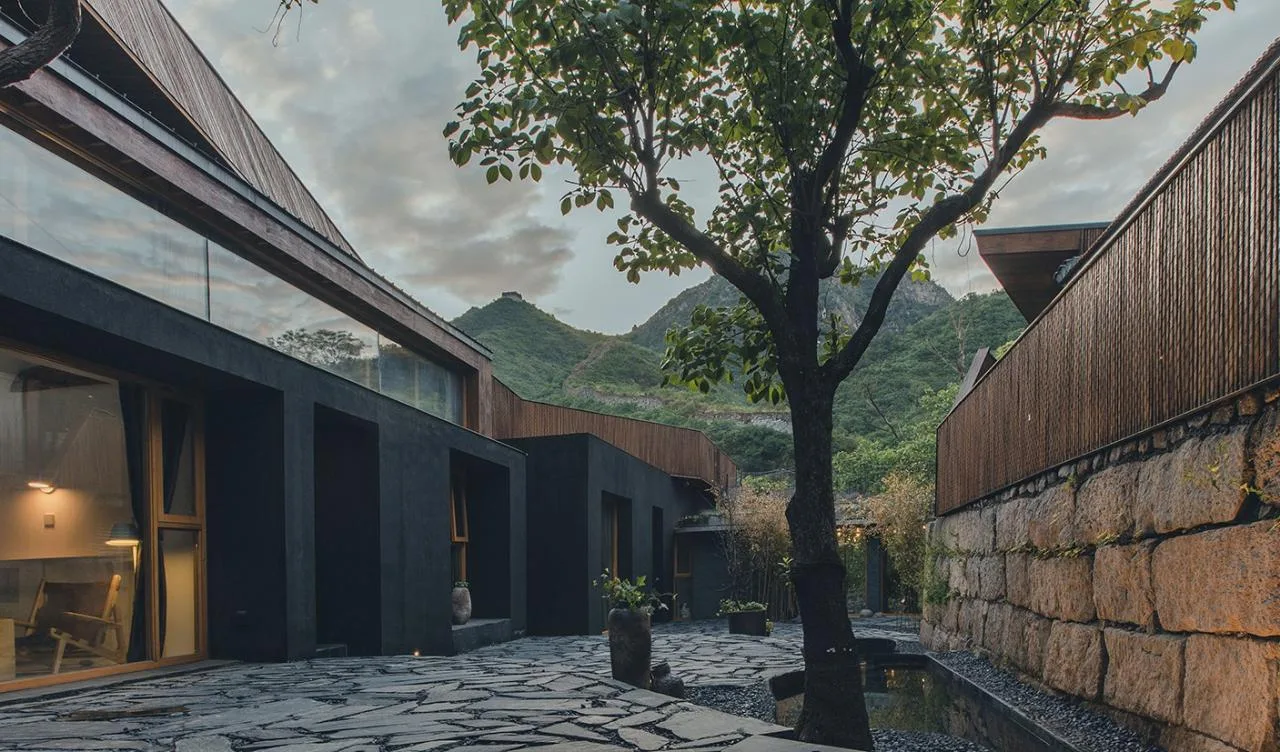
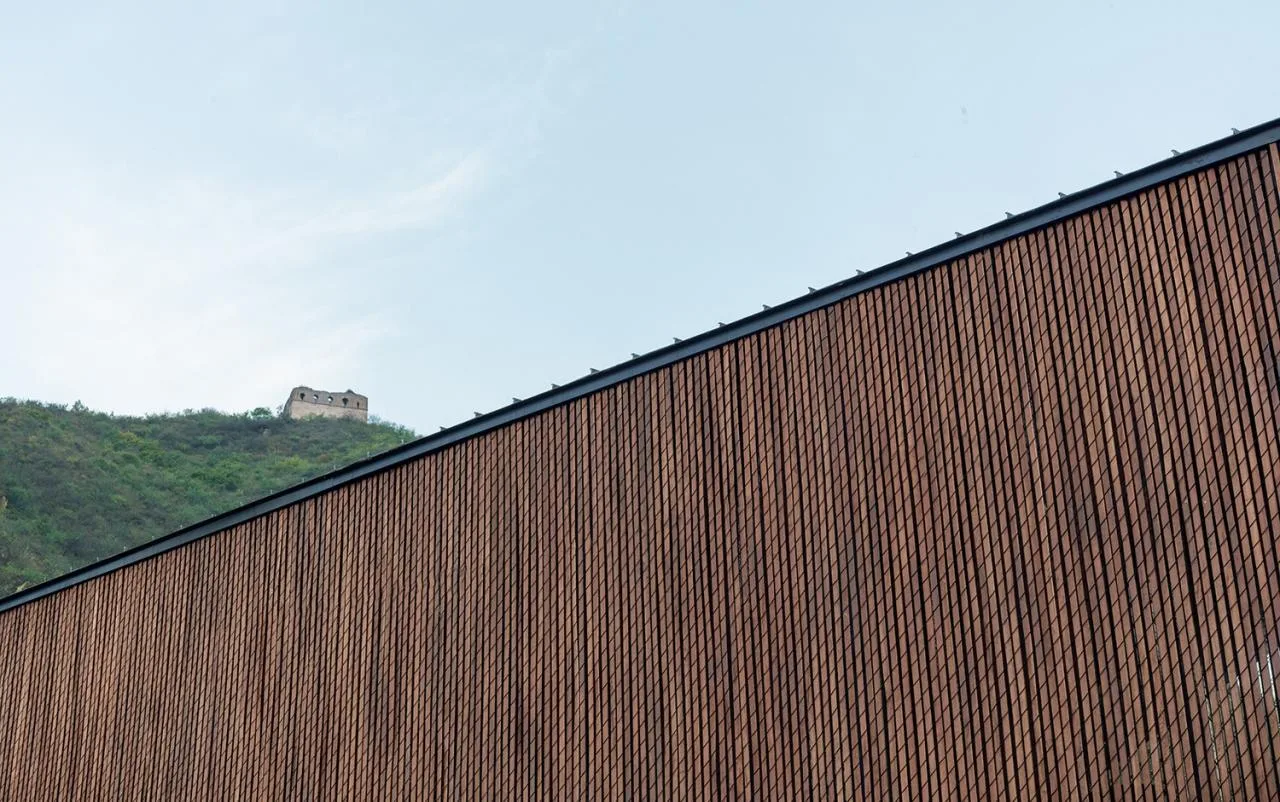
At the end of 2020, near the Great Wall at Shuiguan in Huairou, Beijing, we designed three courtyards for Xiaoxi Homestay—perhaps better described as a rural inn.
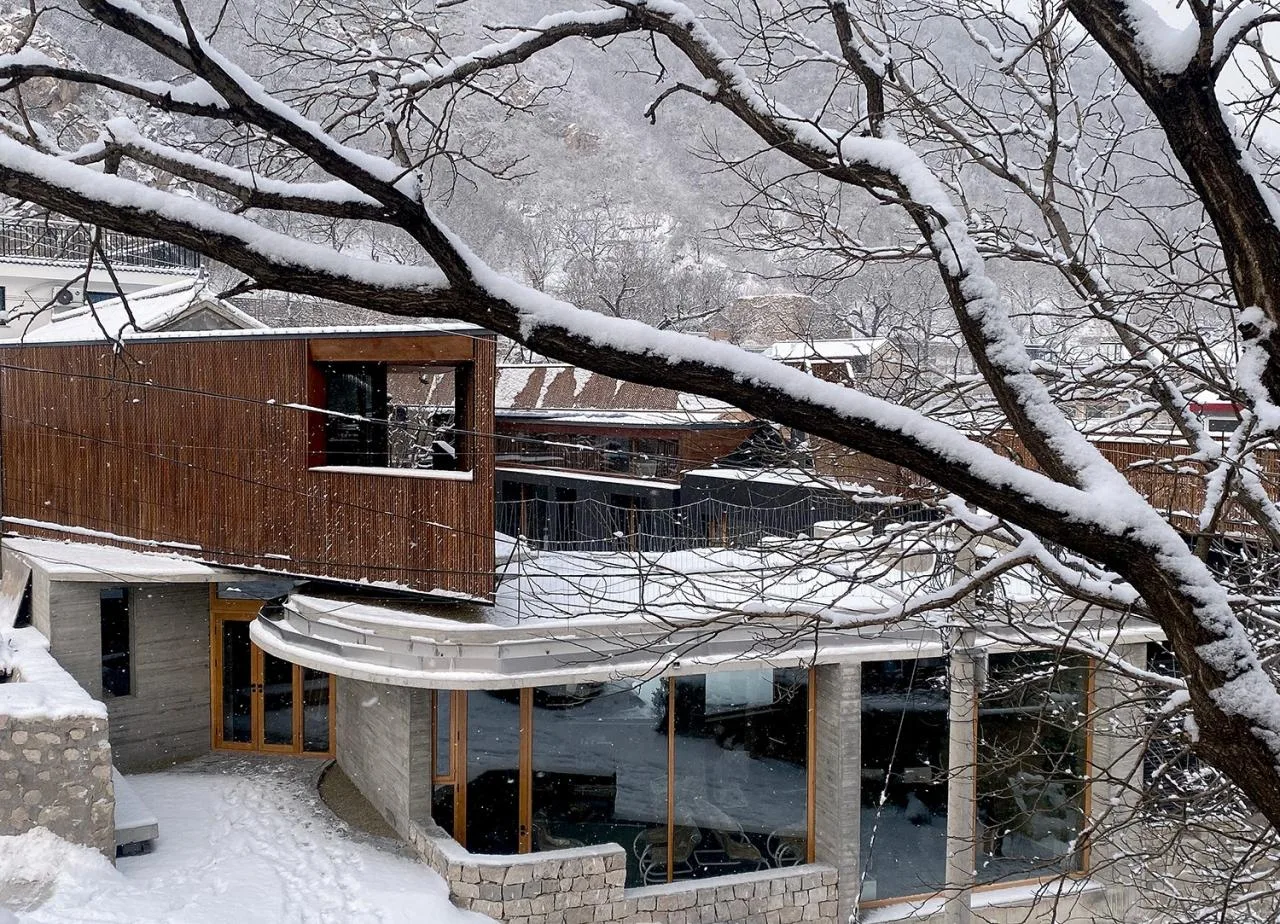
▲ Project Overview © Large scale construction
I have designed and operated similar hotels before and cherish the idea of experiencing a lifestyle “detached from daily life”—living fully in the “here and now.” The house in this project is not primarily a “home” filled with its owner’s memories, but serves more as a “theme park,” a game that blurs the line between reality and fantasy.
Since this is a game, it needs rules. The owners requested simplicity and wished to preserve the existing structure, maintaining three courtyards and three distinct façades. Beyond that, the specific gameplay was left to our creativity.
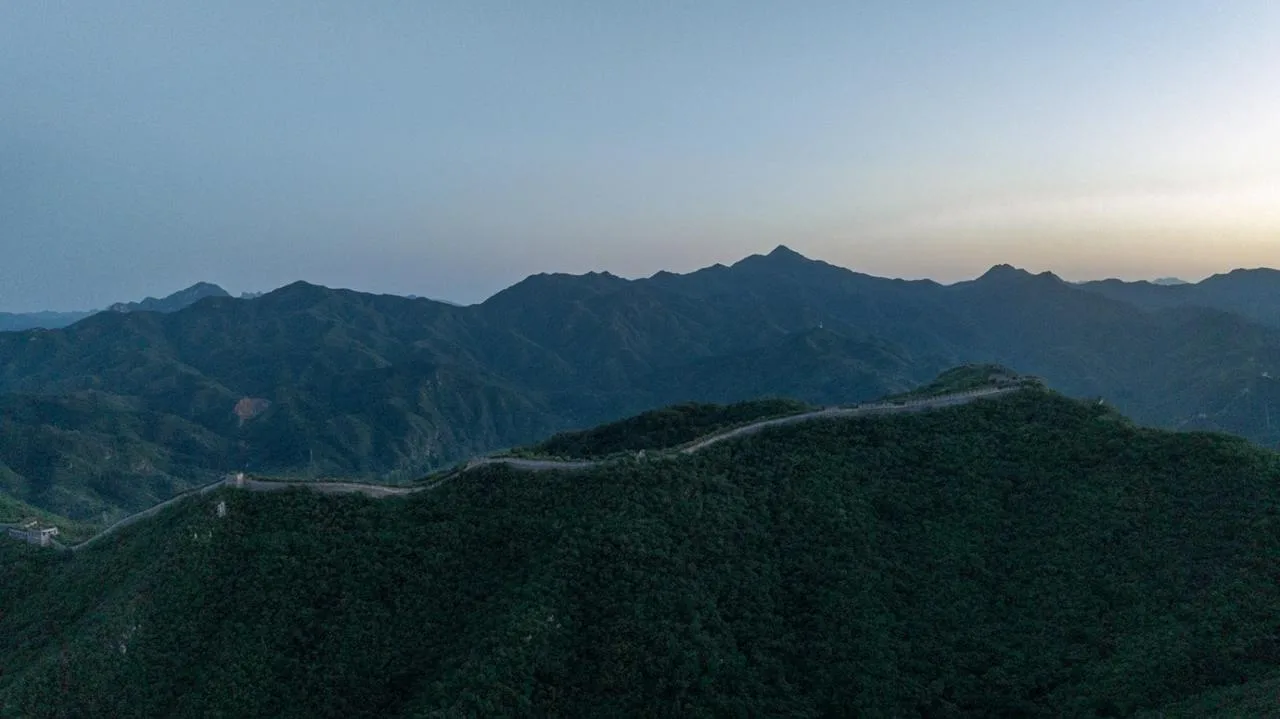
▲ Venue environment © Zhu Yumeng
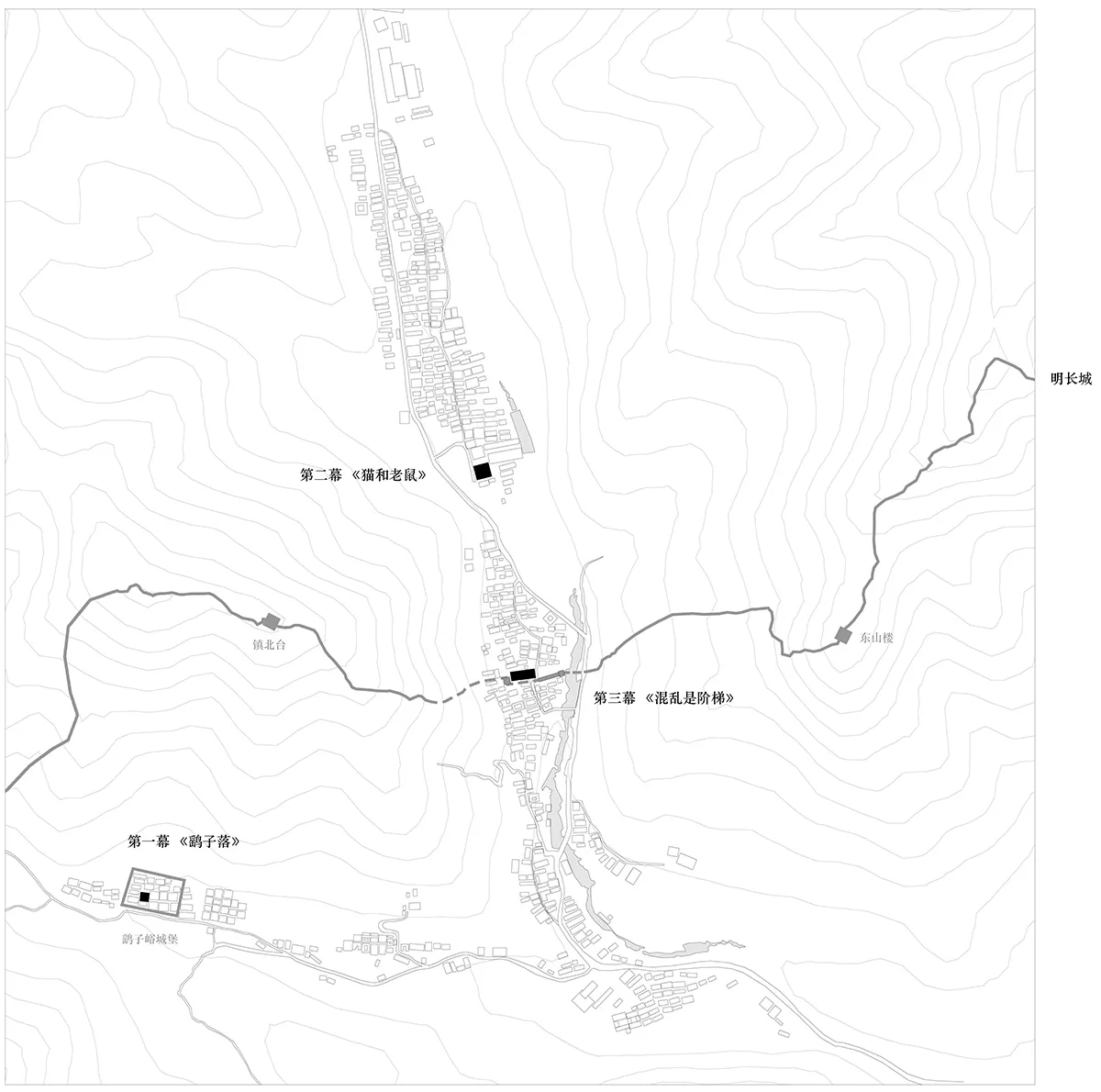
▲ Relationship between the three courtyards and the Great Wall © Large scale construction
Dangerous Great Wall
The site is unique, with the Ming Great Wall within easy reach. Its imposing features are an undeniable attraction, yet they also evoke a sense of awe and distance.
My approach is to find the emotional connection between people and the place. Why is the Great Wall so moving? Because of its superhuman presence. Unlike the Egyptian pyramids or Nazca lines, which reflect dialogues with gods, the Great Wall emerges from a different origin: “danger.” Built along the most perilous ridges to fend off threats, it alters the energy and courage of the landscape. Though familiar since childhood, seeing it in person still inspires a sense of awe that is both unexpected and justified.
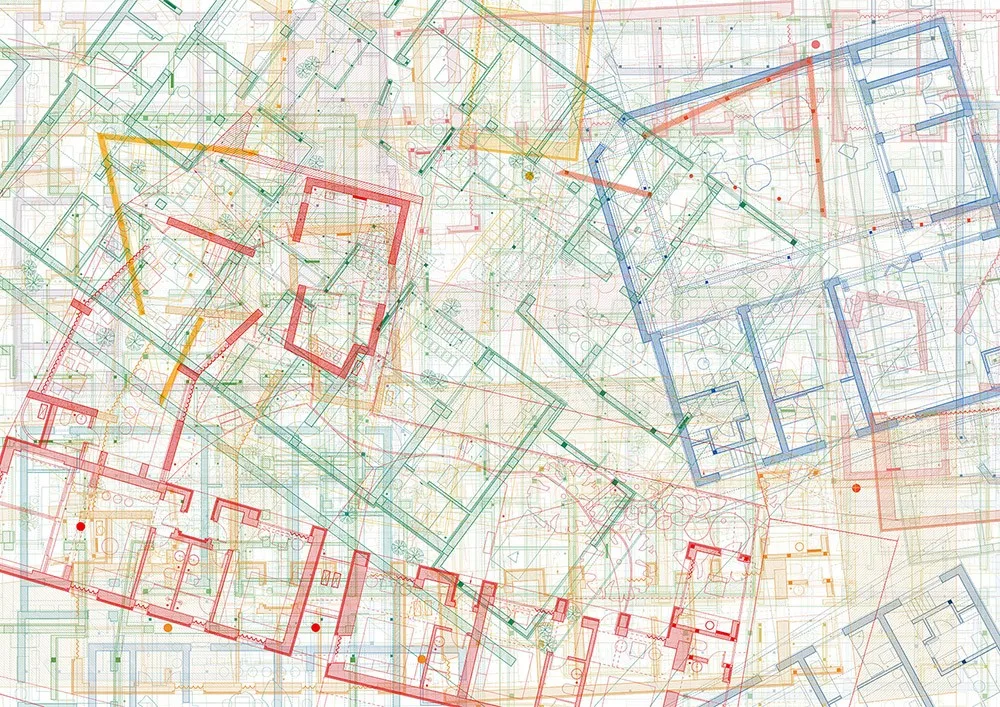
▲ Concept diagram of hazardous relationships © Large scale construction
Inspired by this, I became interested in incorporating elements of “danger” into otherwise safety-focused architecture. Would this provoke new kinds of stimulation and strength? I’m not sure, but I’m curious.
Thus, the game was set around three scenes themed on “danger.”
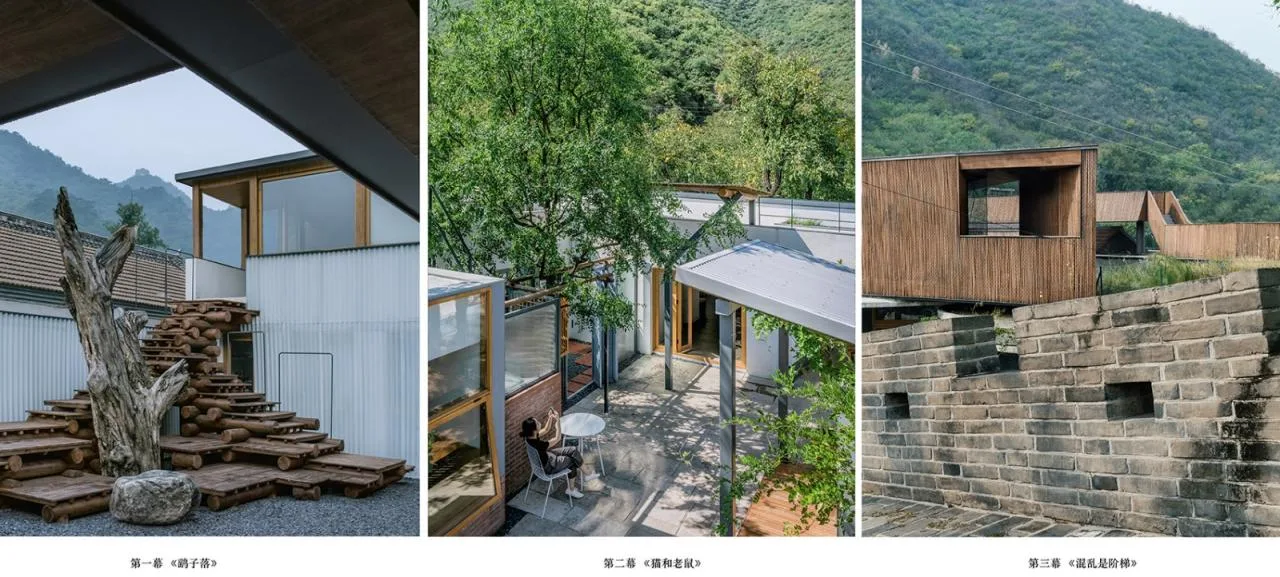
▲ Three scenes © Zhu Yumeng
The Third Play: ‘Chaos is a Ladder’
At the Foot of the Great Wall
The final chapter of the game leads us to the Second Gate Castle, once a crucial entry point to the capital. Huanghua City, known as the “Golden Soup,” was the first pass, with the second pass serving as its outer defense. Now, the city wall lies in ruins, bricks scattered across houses. Only two stone city gates remain, hidden beneath overgrowth, silently revealing their history.
In recent years, families have built new homes—no castles remain—and the Great Wall itself has gradually faded compared to old photographs. In 2013, to promote tourism, villagers collected old bricks to restore a former enemy building on the original city platform, which now serves as the façade of Erdaoguan. Our project site is adjacent to this.
With the sudden emergence of dozens of homestays, the village has rapidly evolved—with buildings growing “faster, taller, and more numerous.” For example, while we debated shrinking eaves by a centimeter, our neighbors suddenly built a white house with two red birds perched atop.
The locals embrace these changes, and perhaps the Great Wall itself has grown indifferent, having witnessed 600 years of transformation. It continues to embody its original purpose, quietly demonstrating the immense energy forged from danger and the unwavering will to overcome mountains and rivers.
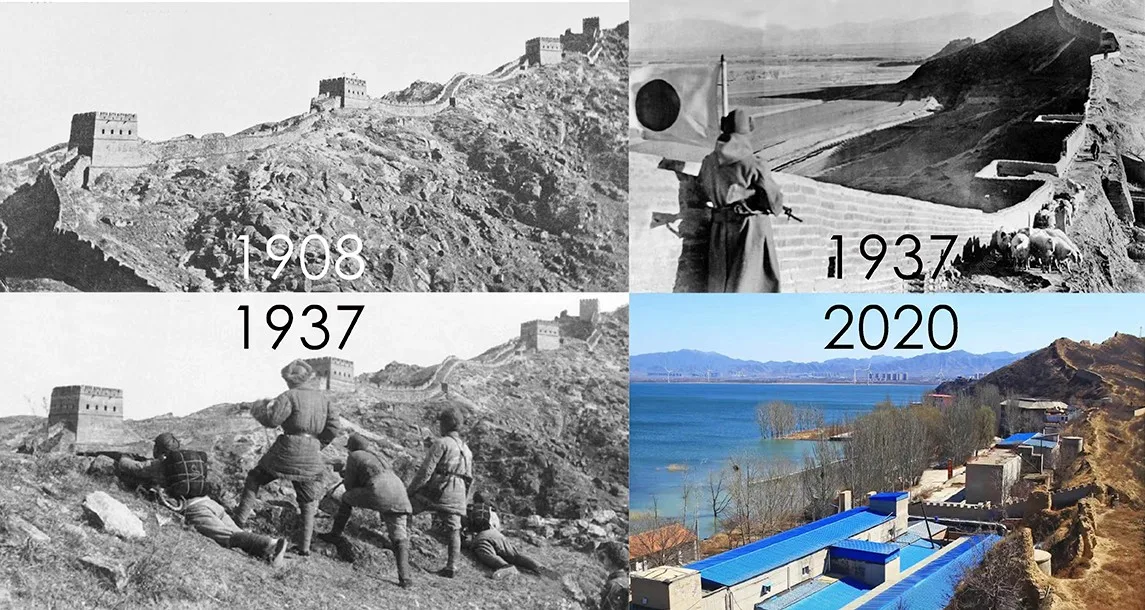
▲ Changes through the Great Wall era © Large scale construction
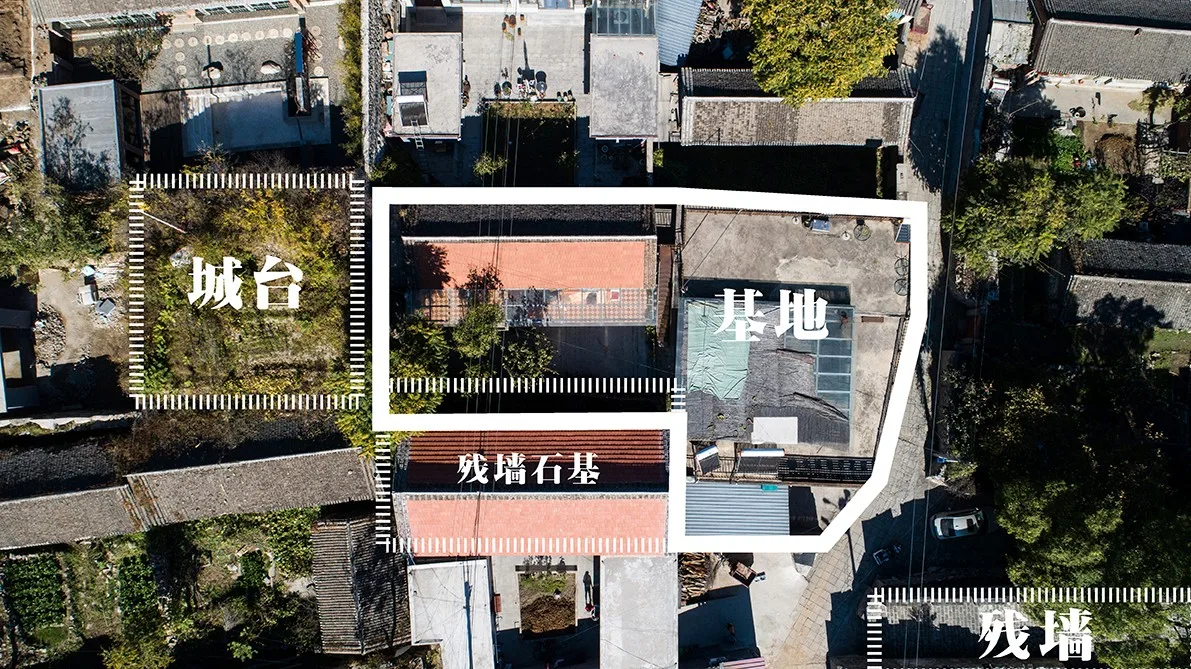
▲ Location relationship between the base and the Great Wall © Large scale construction
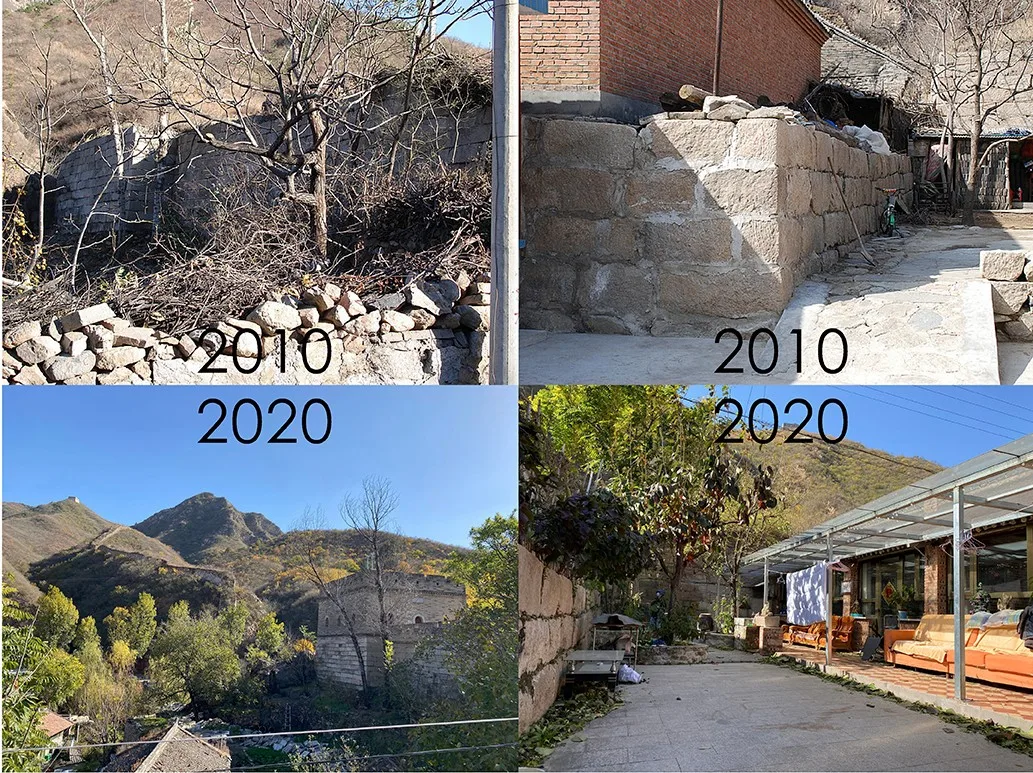
▲ Changes in the Great Wall era within the base environment © Large scale construction
Antenna Dance
Standing on the base, as close as the Great Wall, another element demands attention: the antenna. Its rapid growth and imposing presence often cause us to avoid looking at it.
Yet, when placed alongside the Great Wall, I noticed a shared formal beauty: both exhibit tension through the courage to rise above the ground beneath them.
They also embody contrast. The Great Wall was built along the most challenging ridges to block invaders, while the antenna rises from the easiest roadside to connect people.
However, connection and blockage are two sides of the same coin. The Great Wall appears to connect by blocking, while antennas bring the internet that connects the world, yet also trap us in virtual cocoons, severing real connections. Watching the hurried delivery workers on the streets, this feels like the danger of our era.
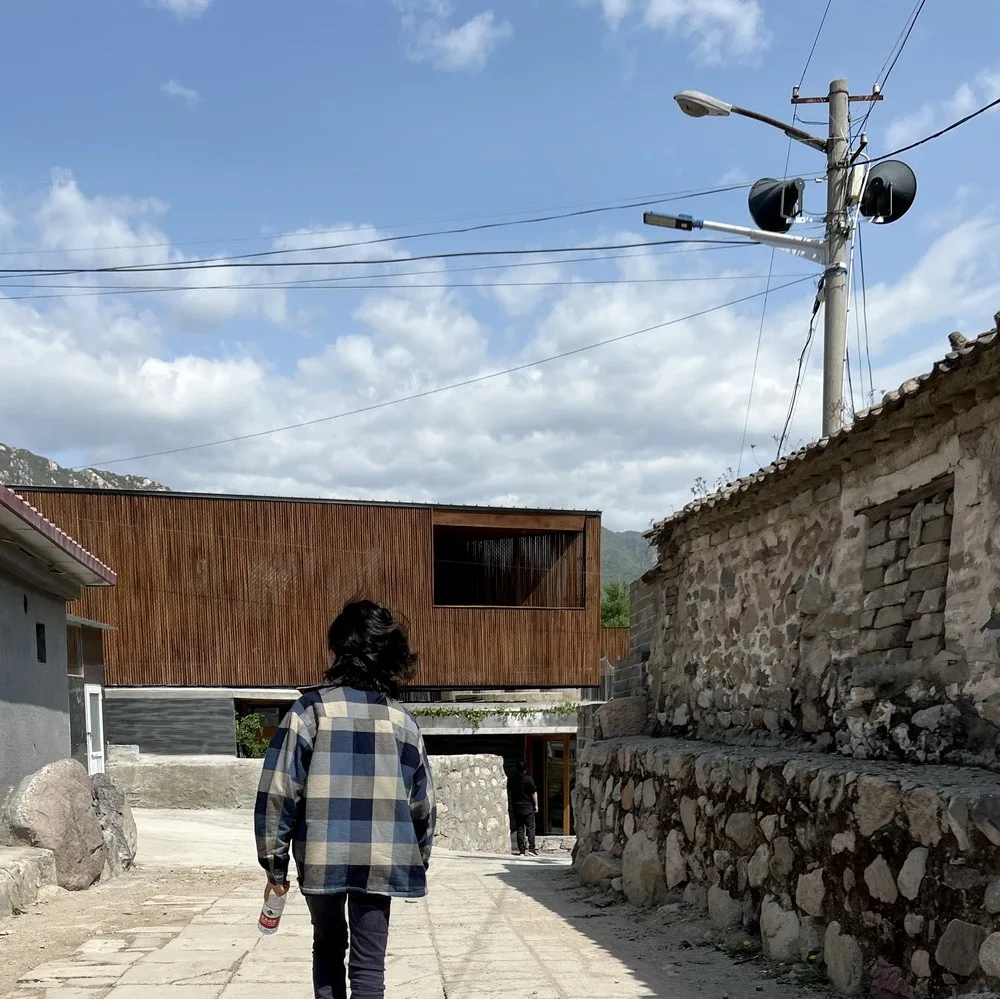
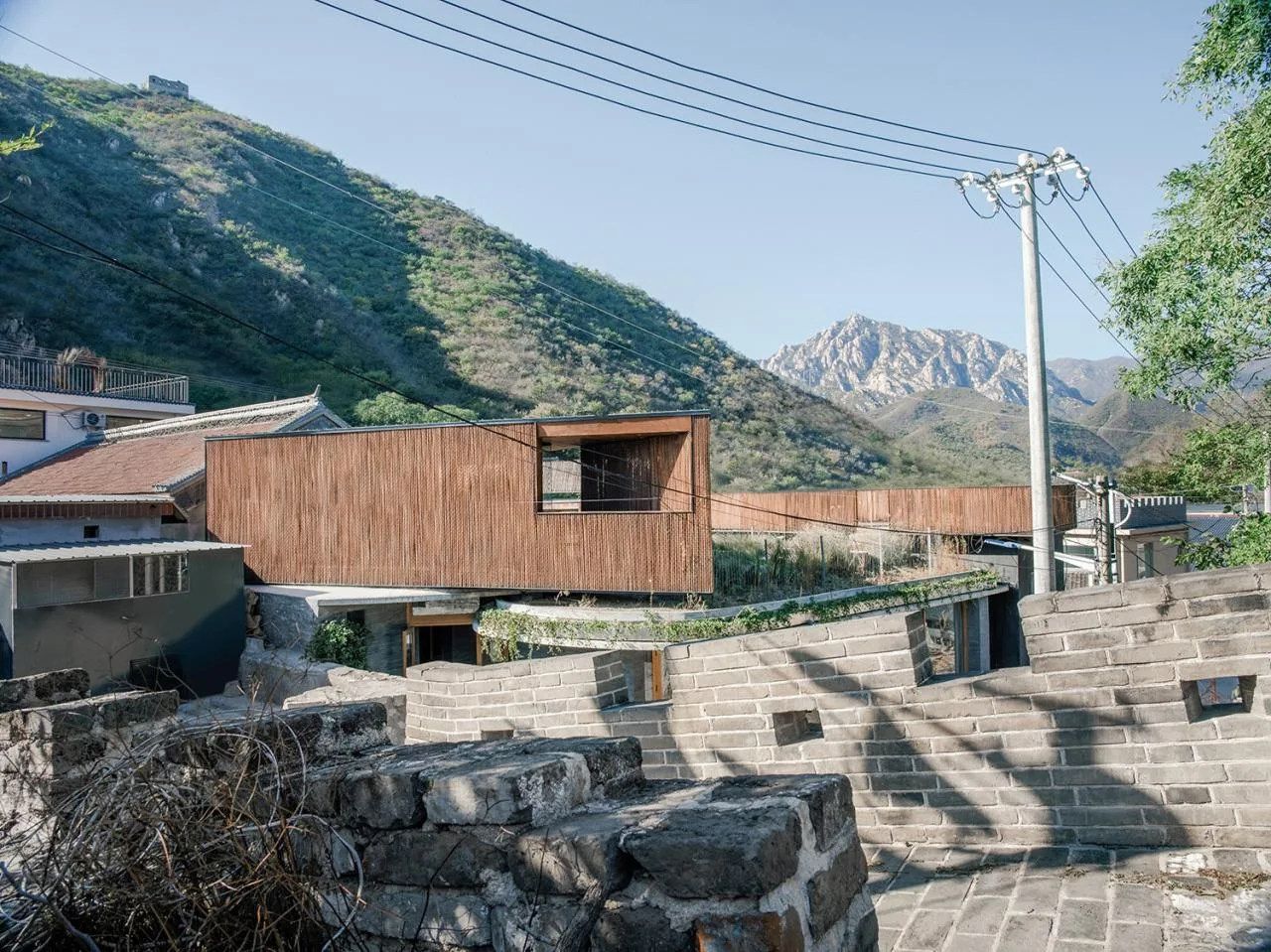
▲ Antenna and Courtyard © Large scale construction & Zhu Yumeng
Imitation Connection
The booming homestay market reflects a tension between “authentic experience” and “internet celebrity check-ins.” As a checkpoint on the Great Wall, we are inevitably part of this dynamic. Instead of resisting it, we chose to embrace it.
We mimicked the willful act of “forcibly connecting” the Great Wall and the antenna by creating a third structure on site—an object seemingly “connected but actually disconnected.”
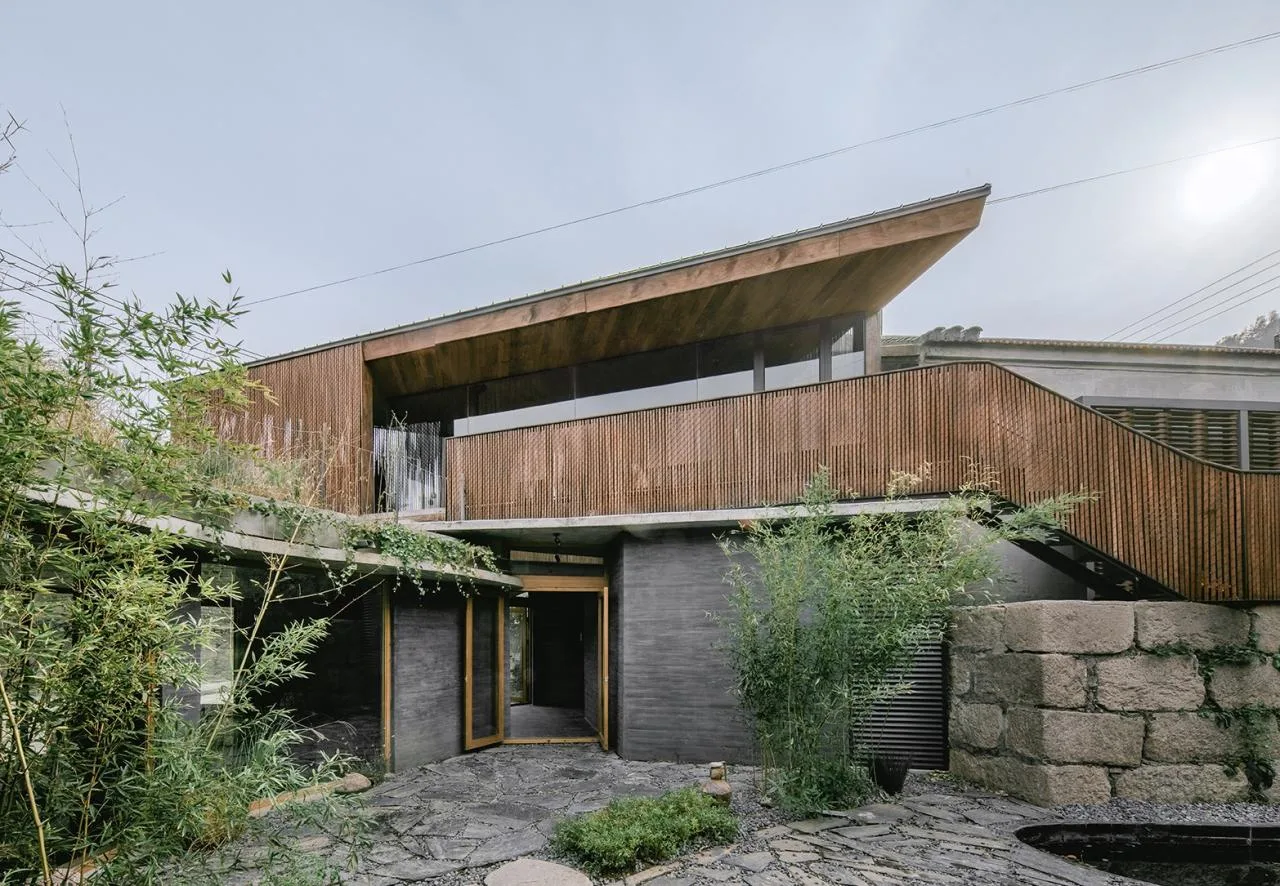
It is a pedestrian bridge that rises and falls over the original building, spanning left and right—sometimes attached, sometimes suspended.
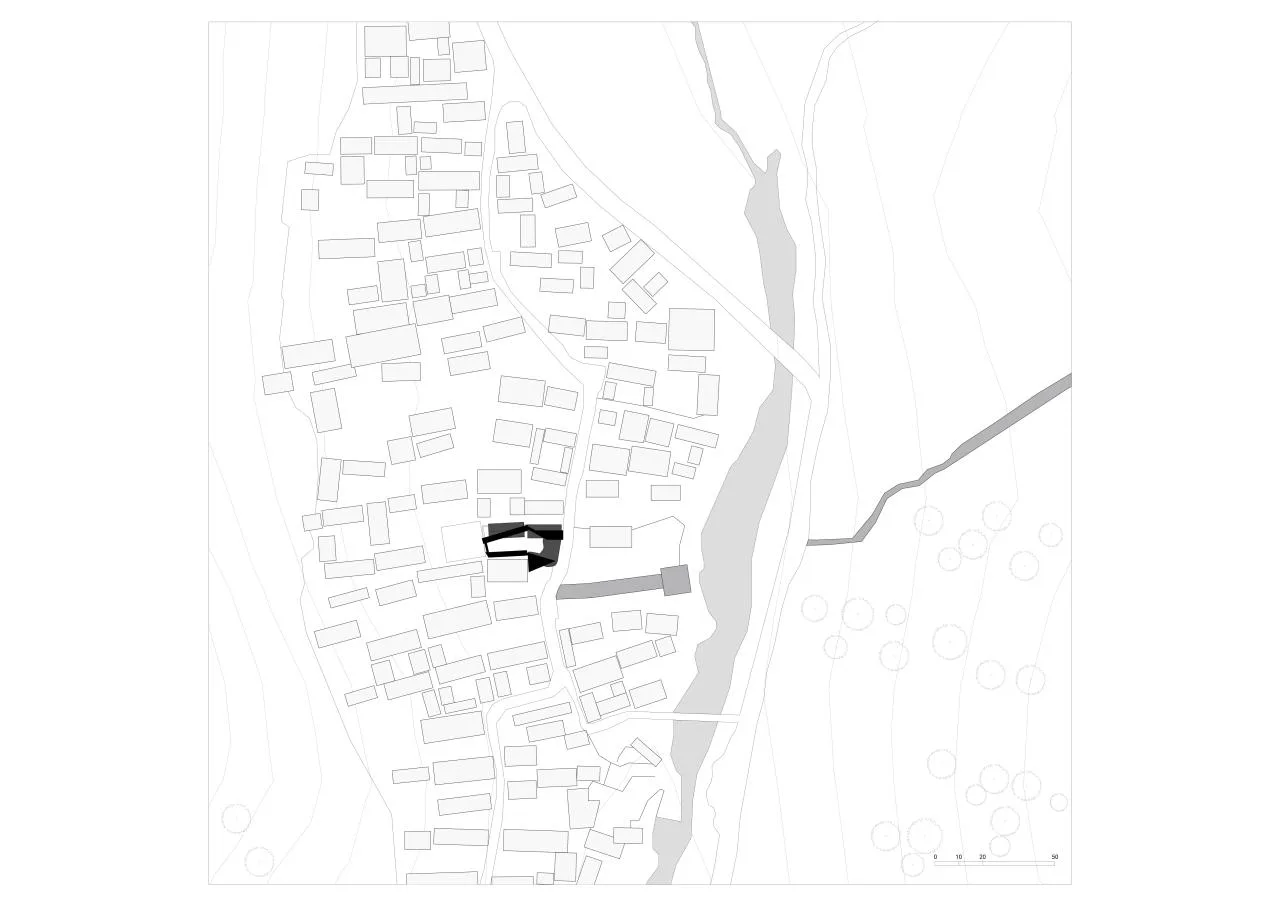
▲ General plan of No.1 Courtyard © Large scale construction
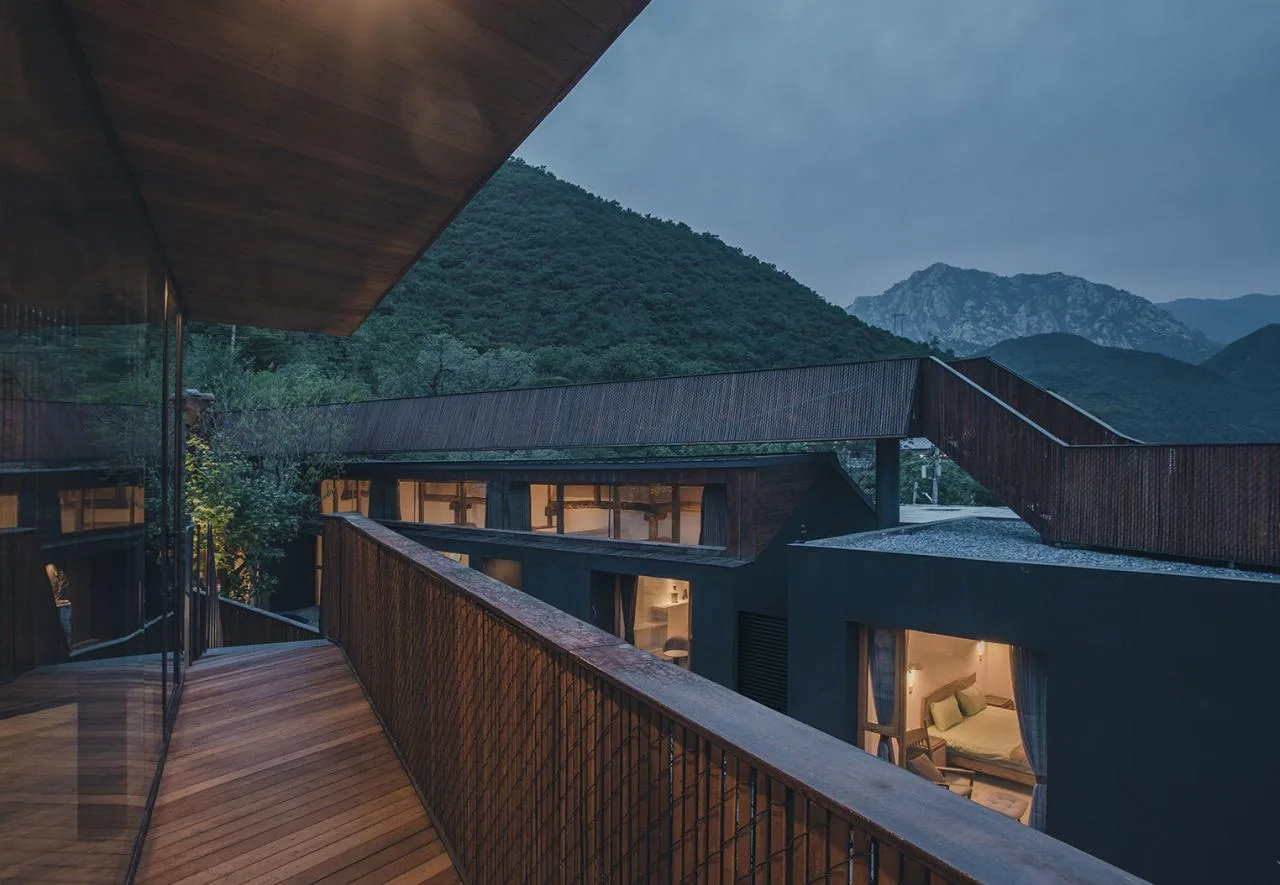
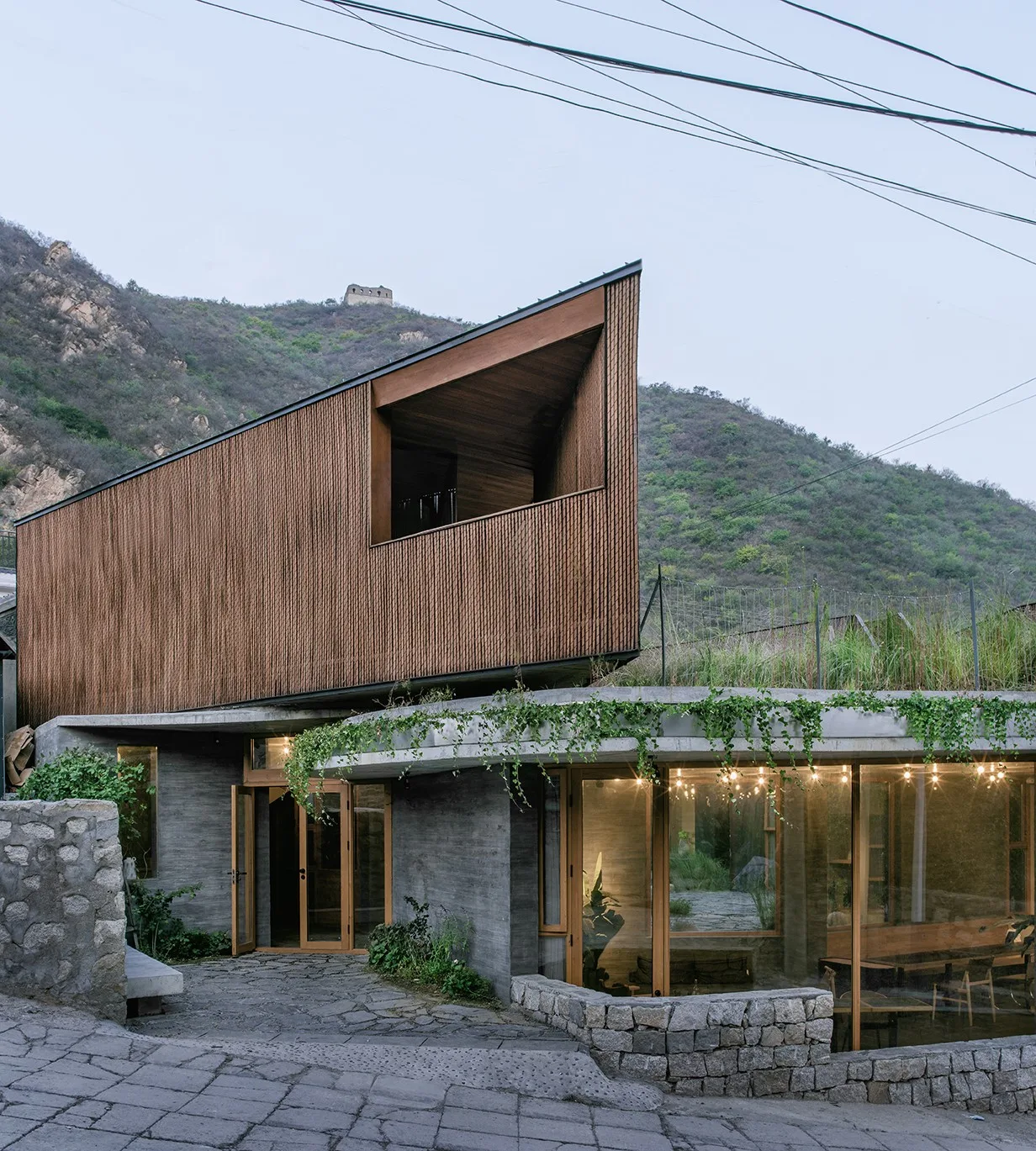
▲ Project appearance © Xi Youji
Tianqiao Great Wall Antenna
Following the game’s rules, we preserved the original house as much as possible, removing only the blocked ceiling in the middle of the courtyard. This excavation allowed the long courtyard to gradually descend from west to east. The street-facing restaurant sinks partially below street level, offering a more direct view of the Great Wall from the courtyard.
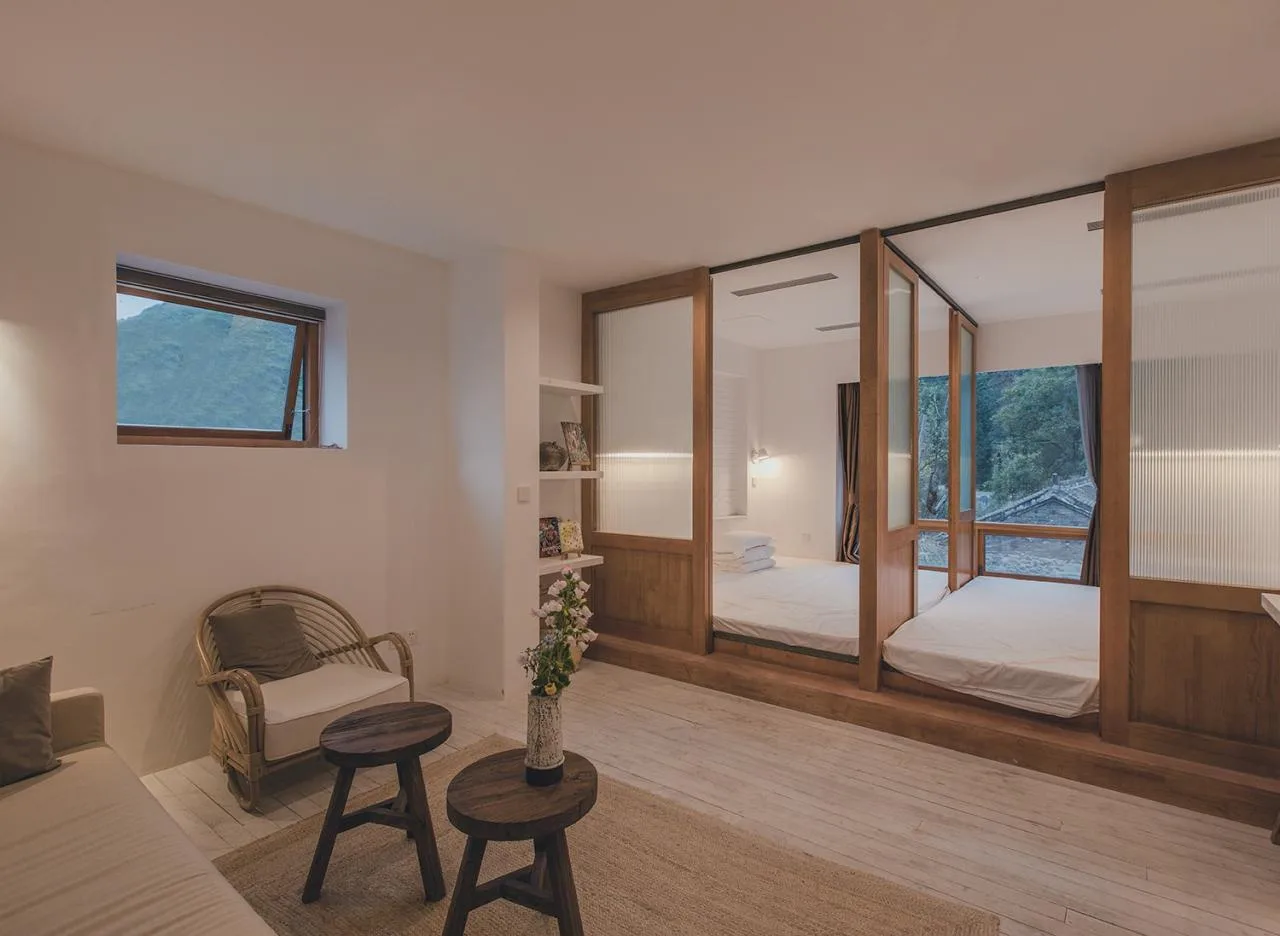
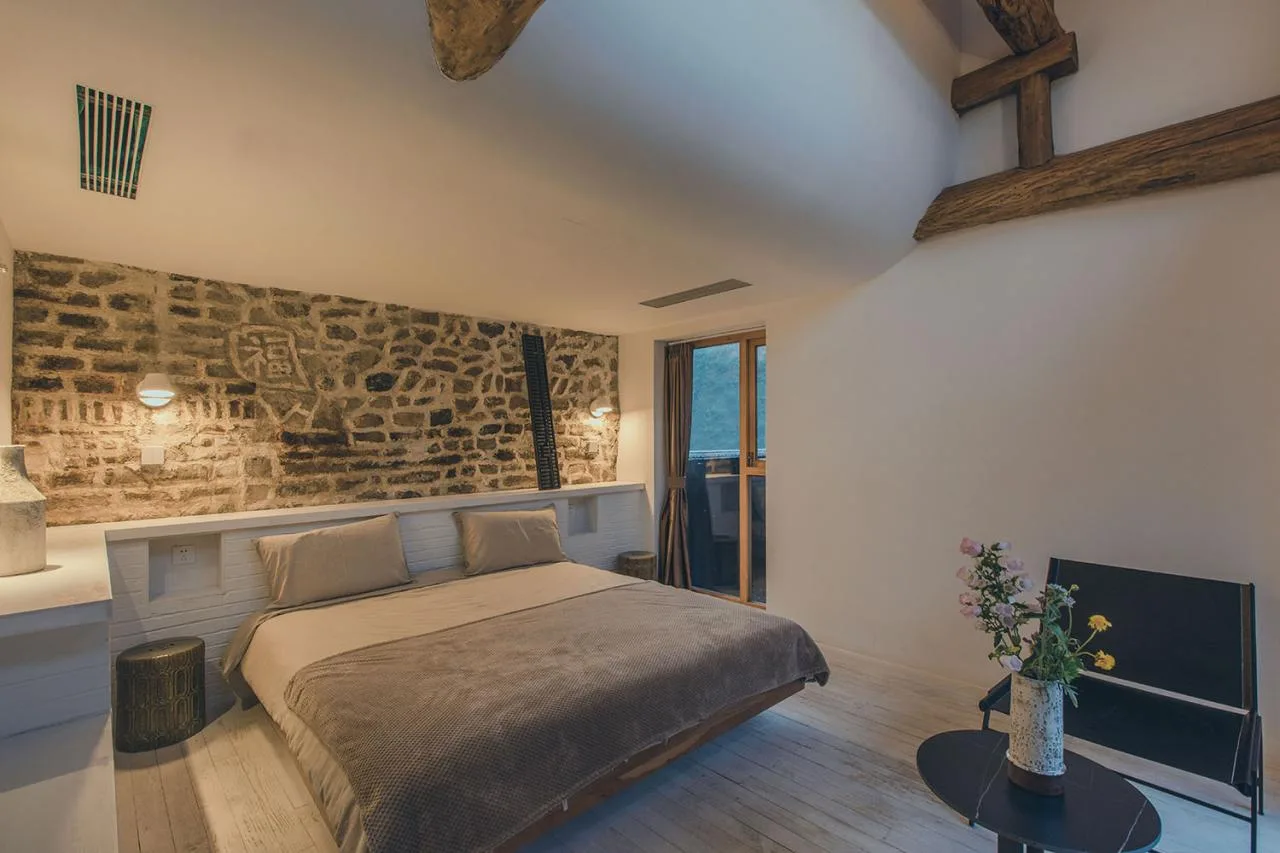
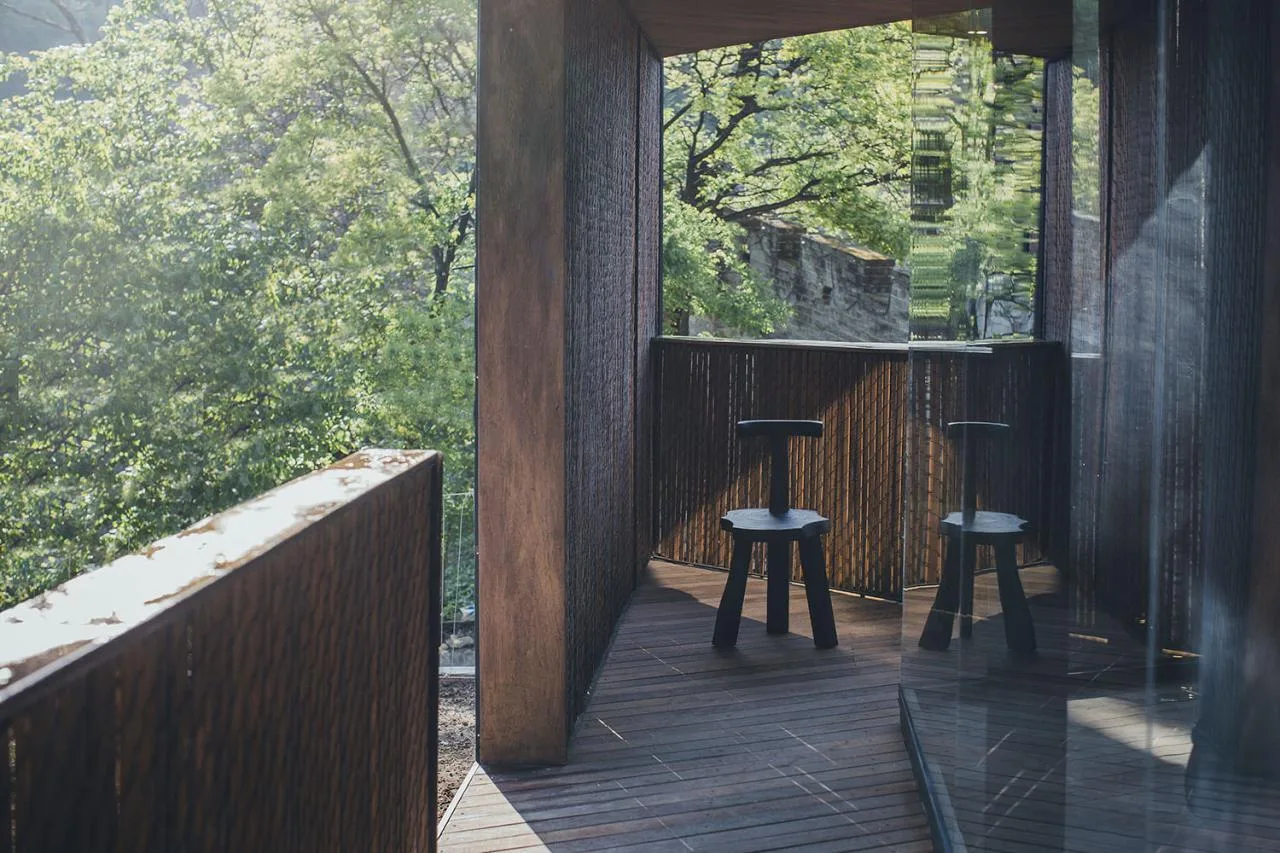
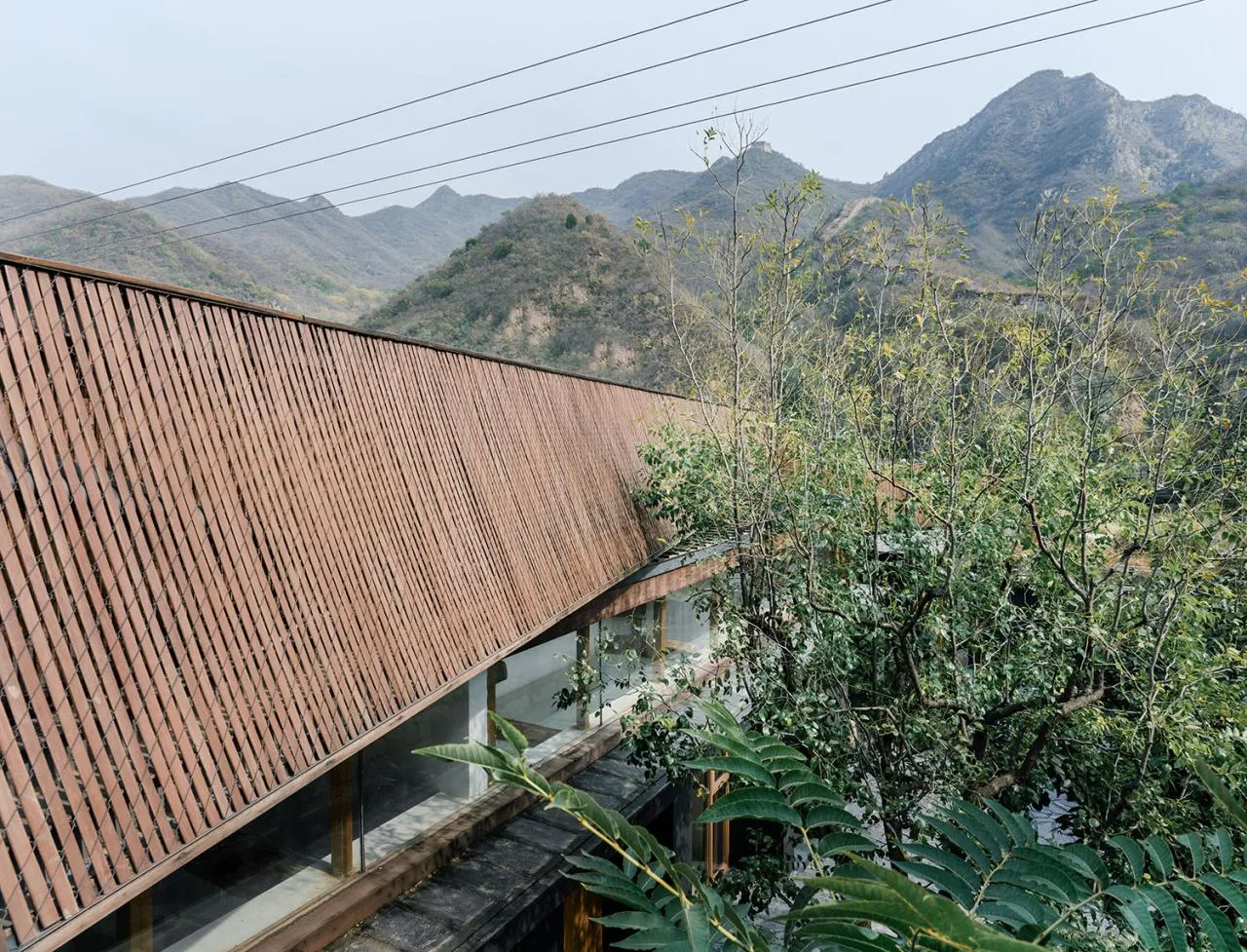
At the same time, this design enhances visual connections between the interior and exterior. The old wooden frame of the original house remains, with the southern roof raised to introduce sunlight and tree shadows, creating a cozy small bedroom.
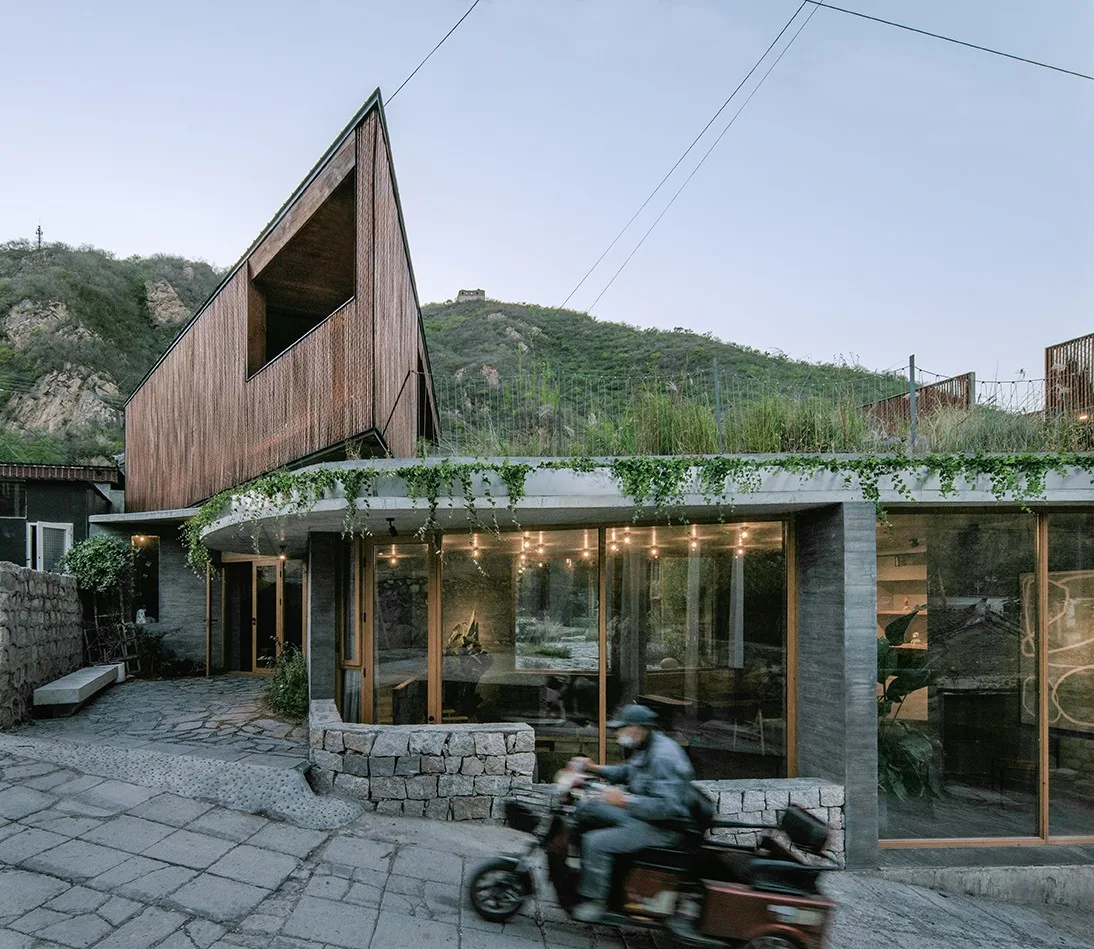
▲ Sunken restaurant along the street © Zhu Yumeng
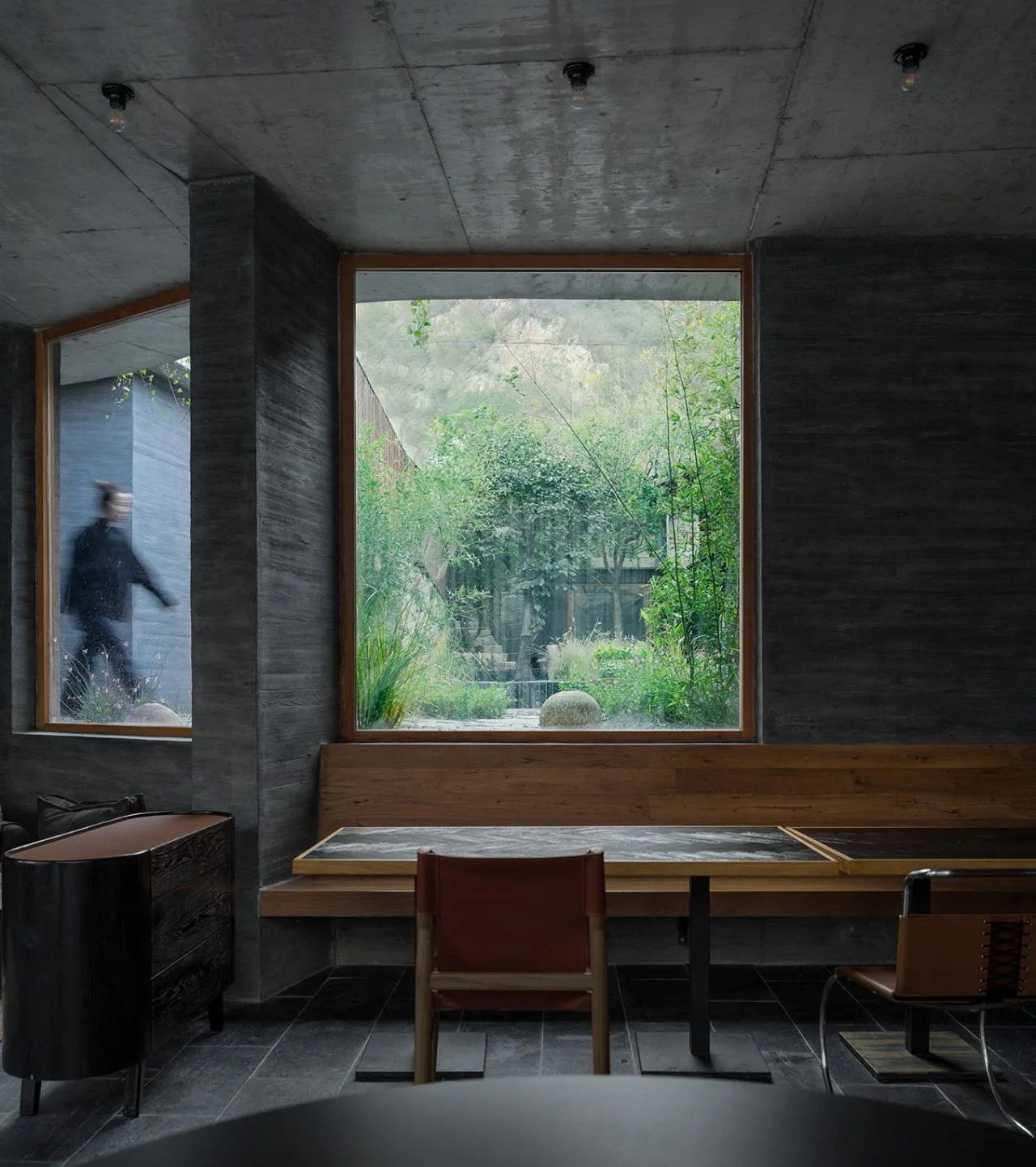
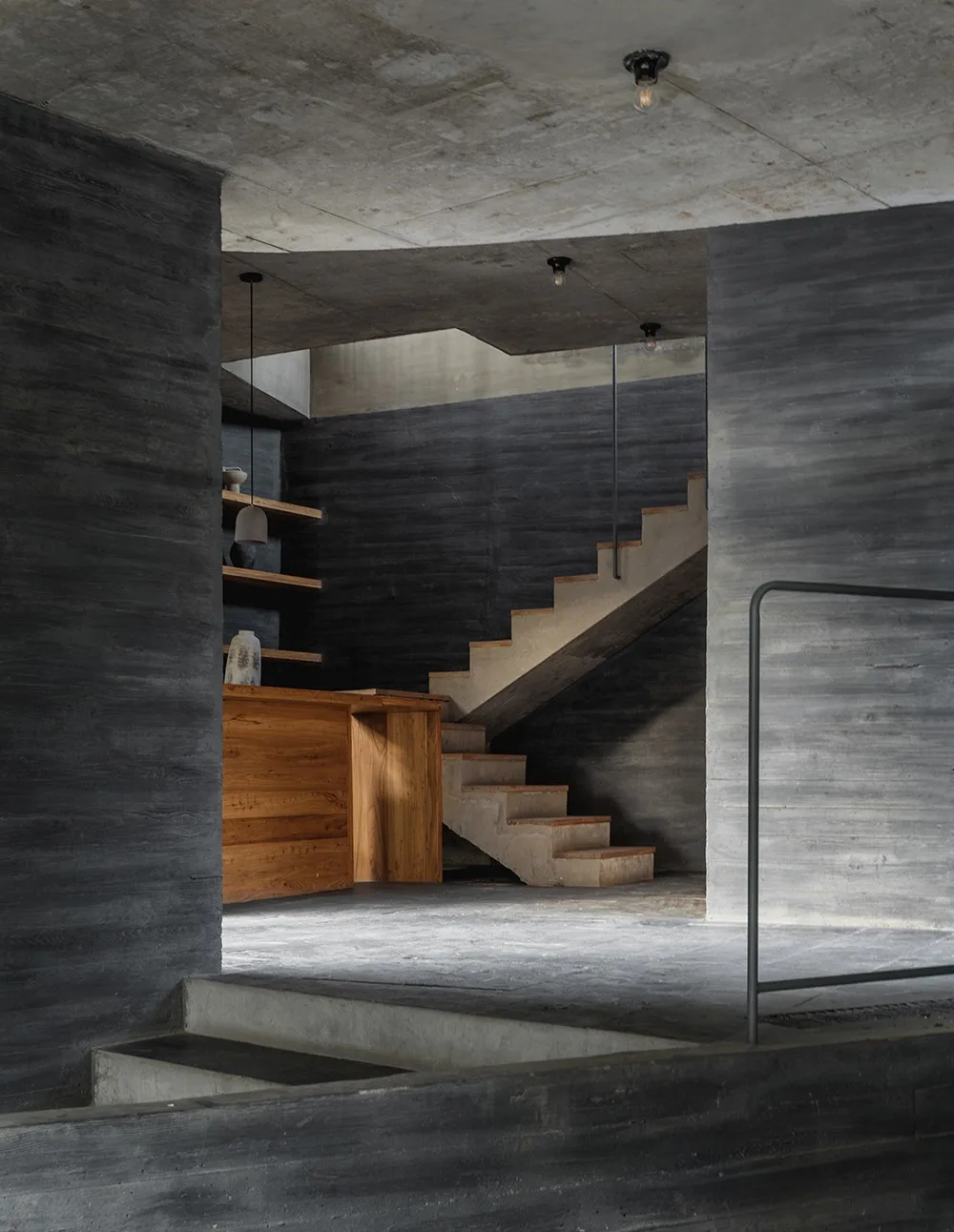
▲ Indoor sunken restaurant © Zhu Yumeng
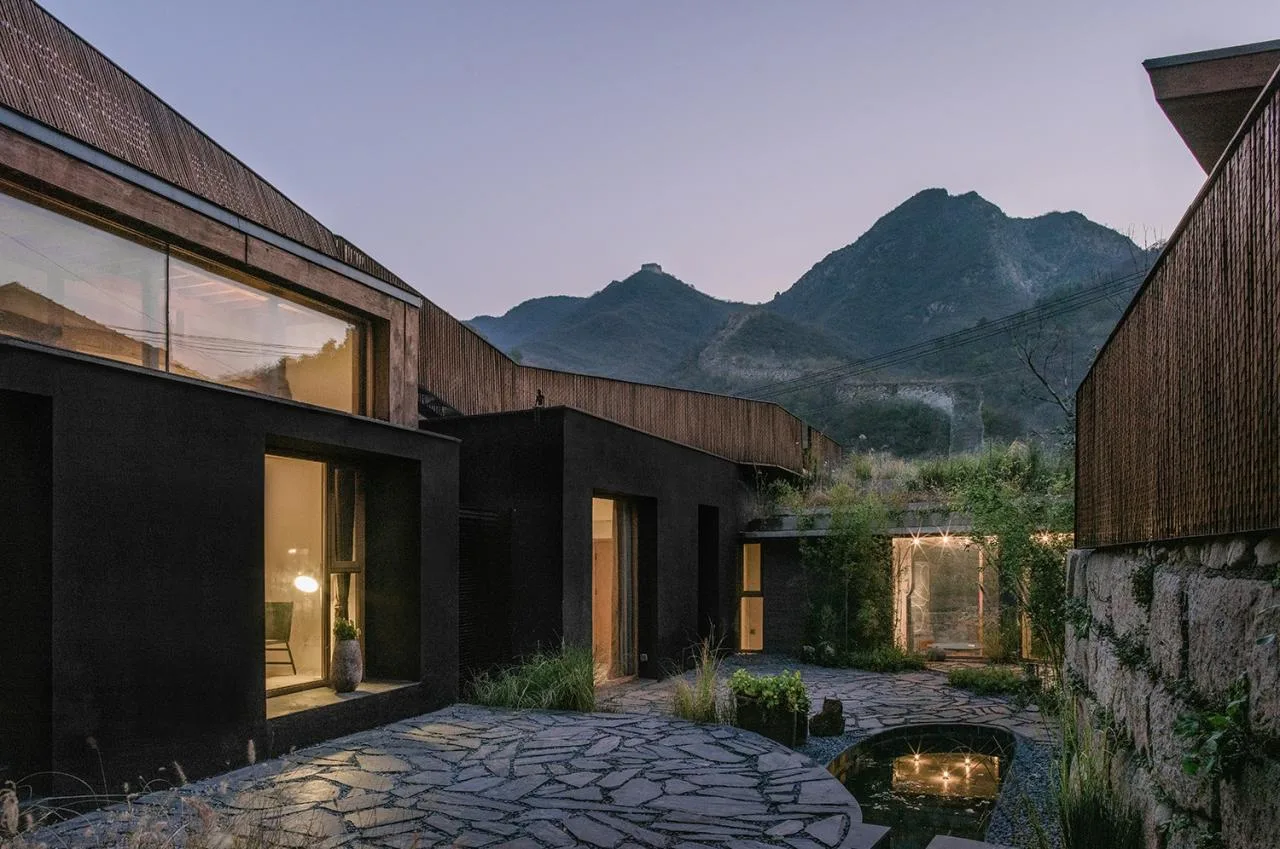
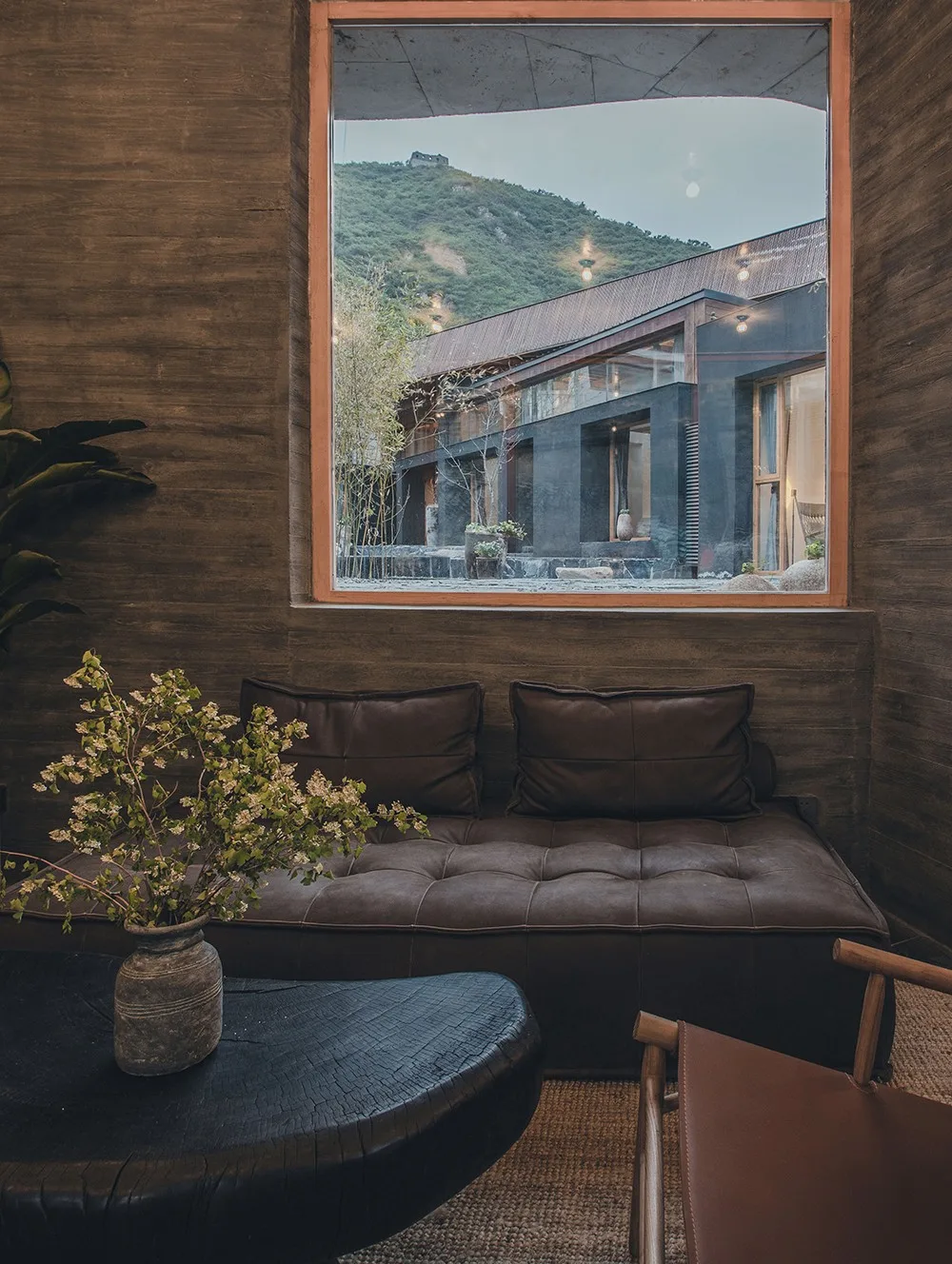
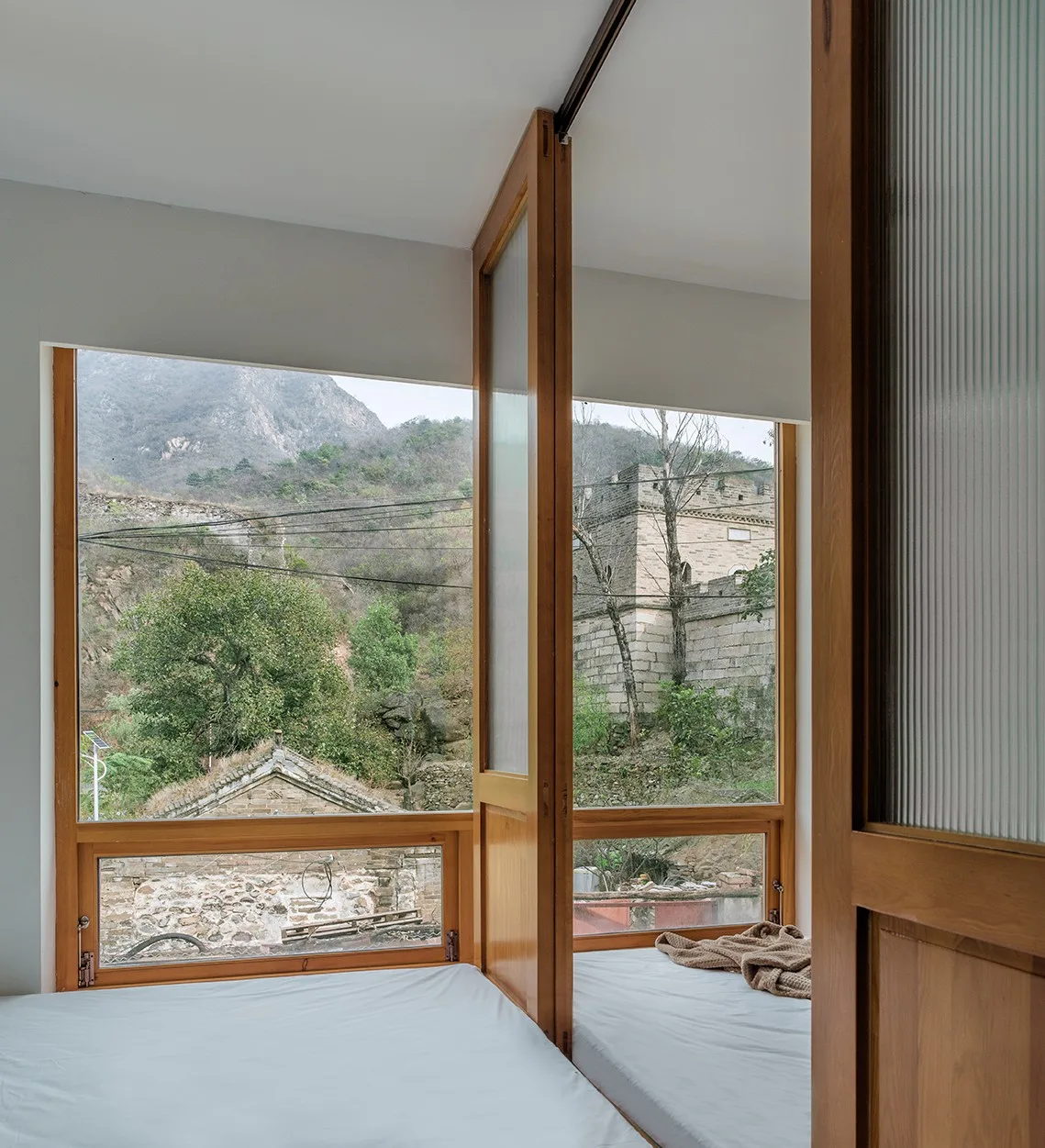
▲ Visual connections between interior and exterior © Zhu Yumeng
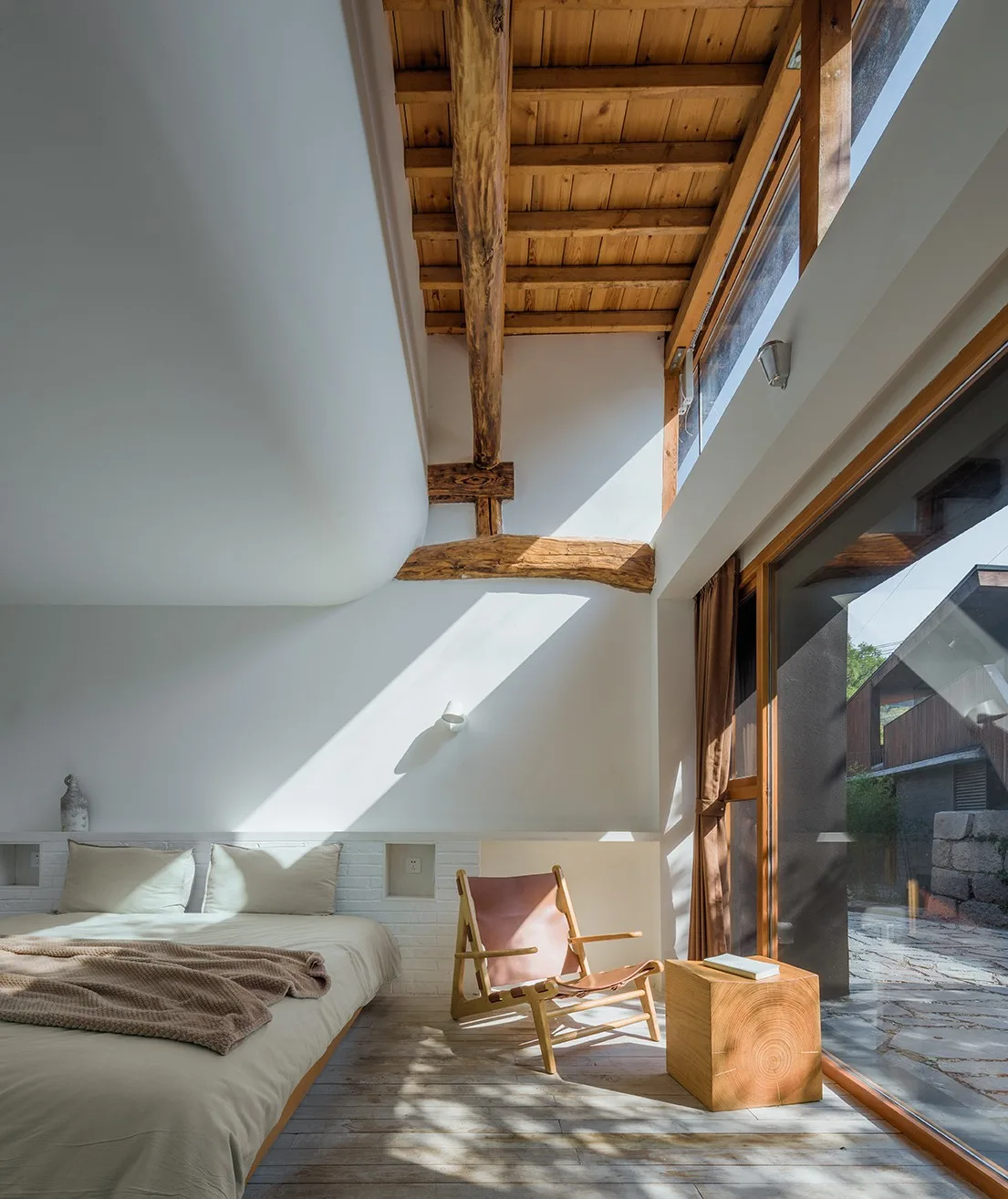
▲ Bedroom © Zhu Yumeng
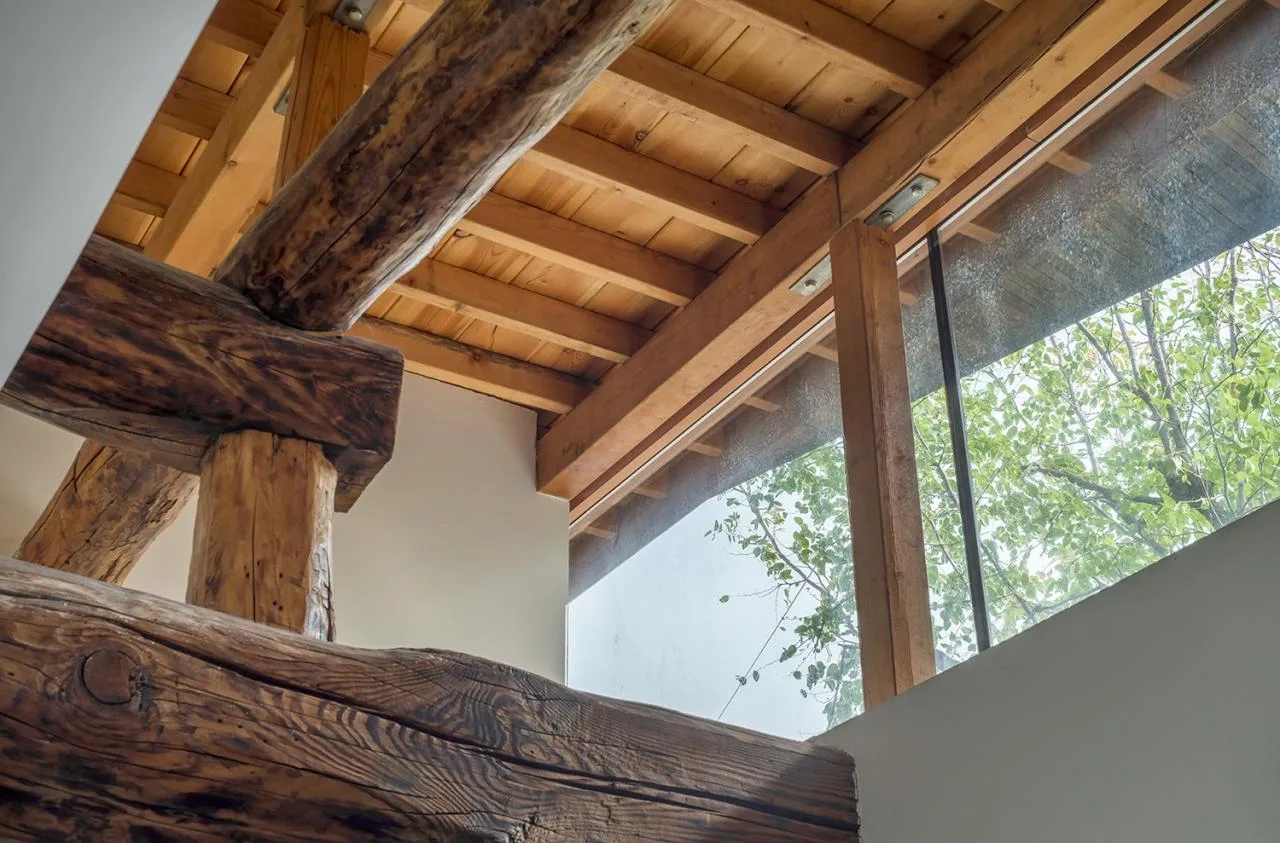
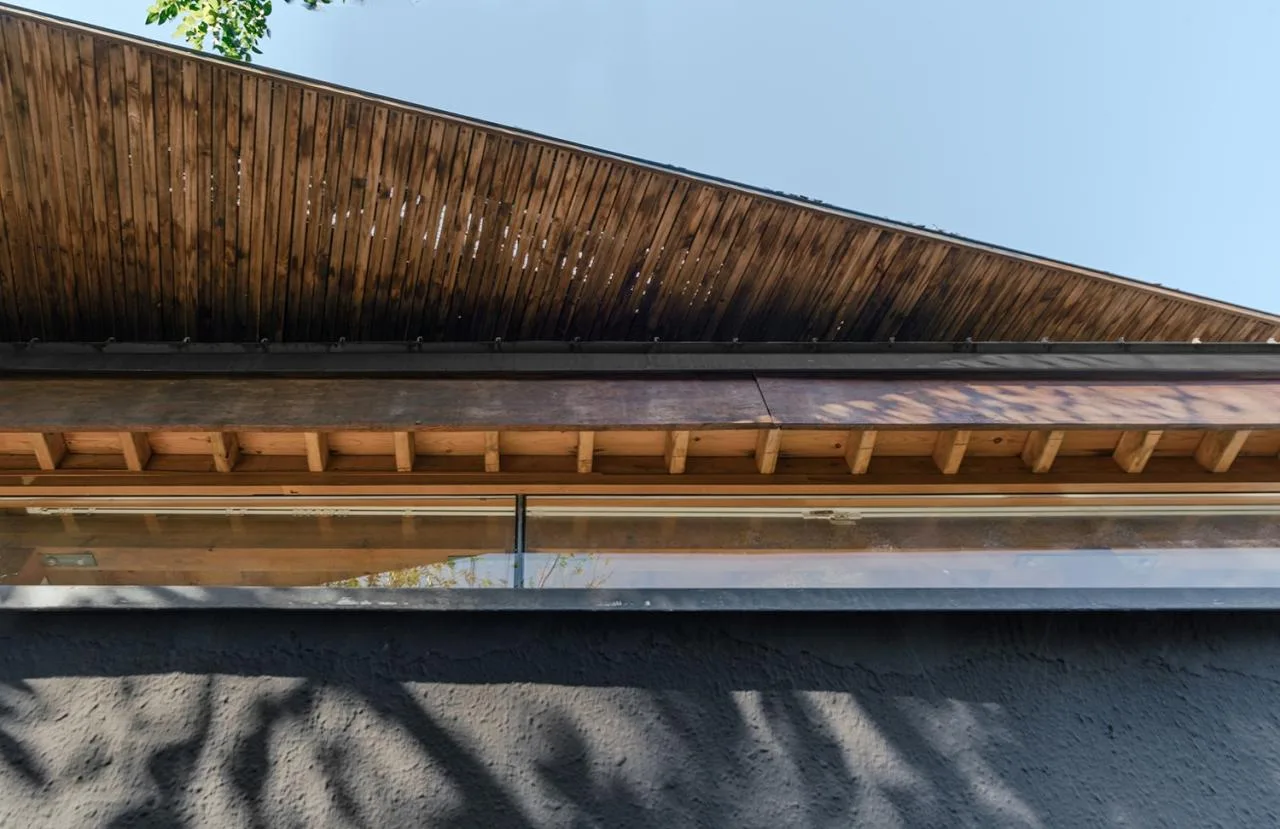
▲ Roof details © Zhu Yumeng
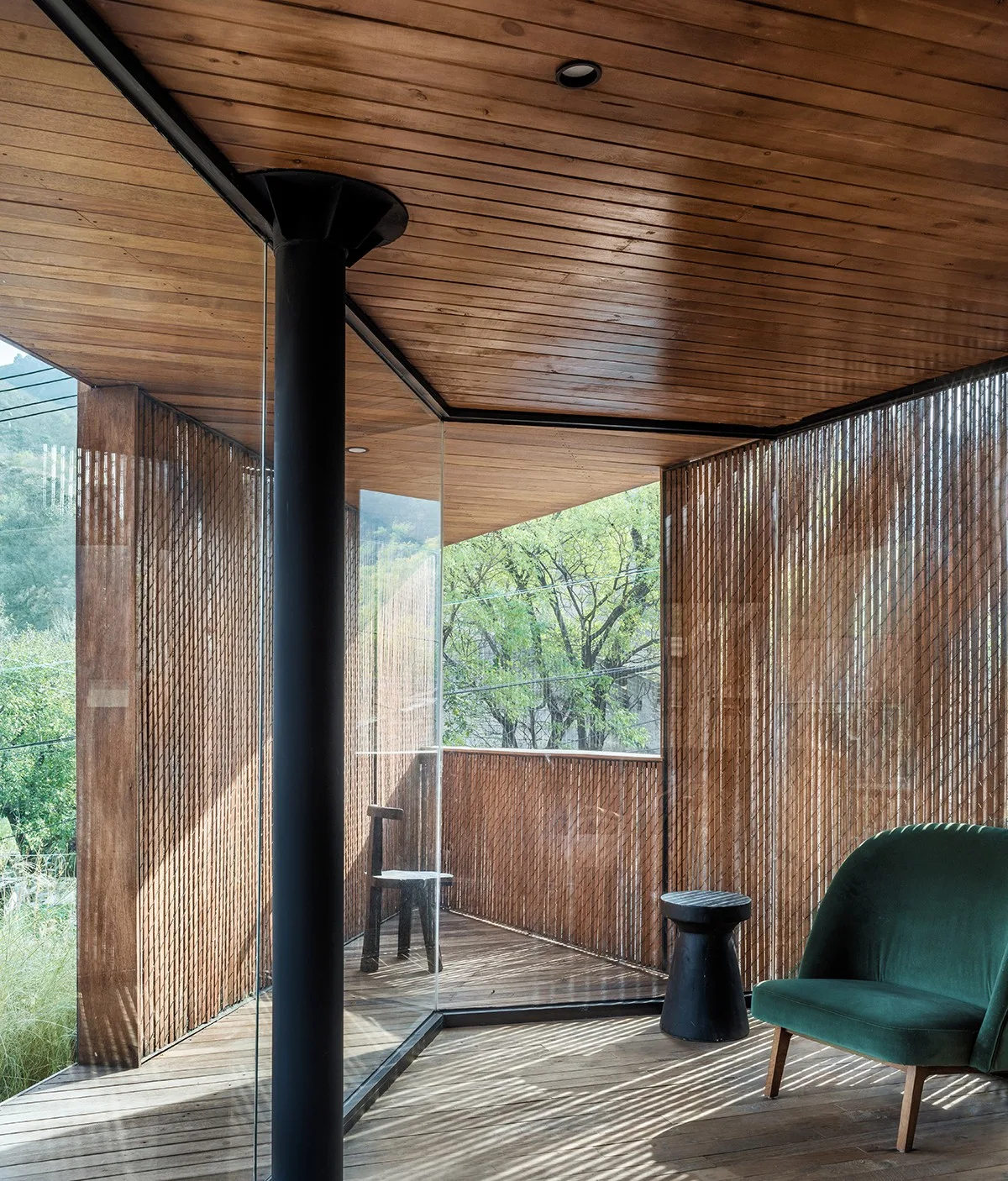
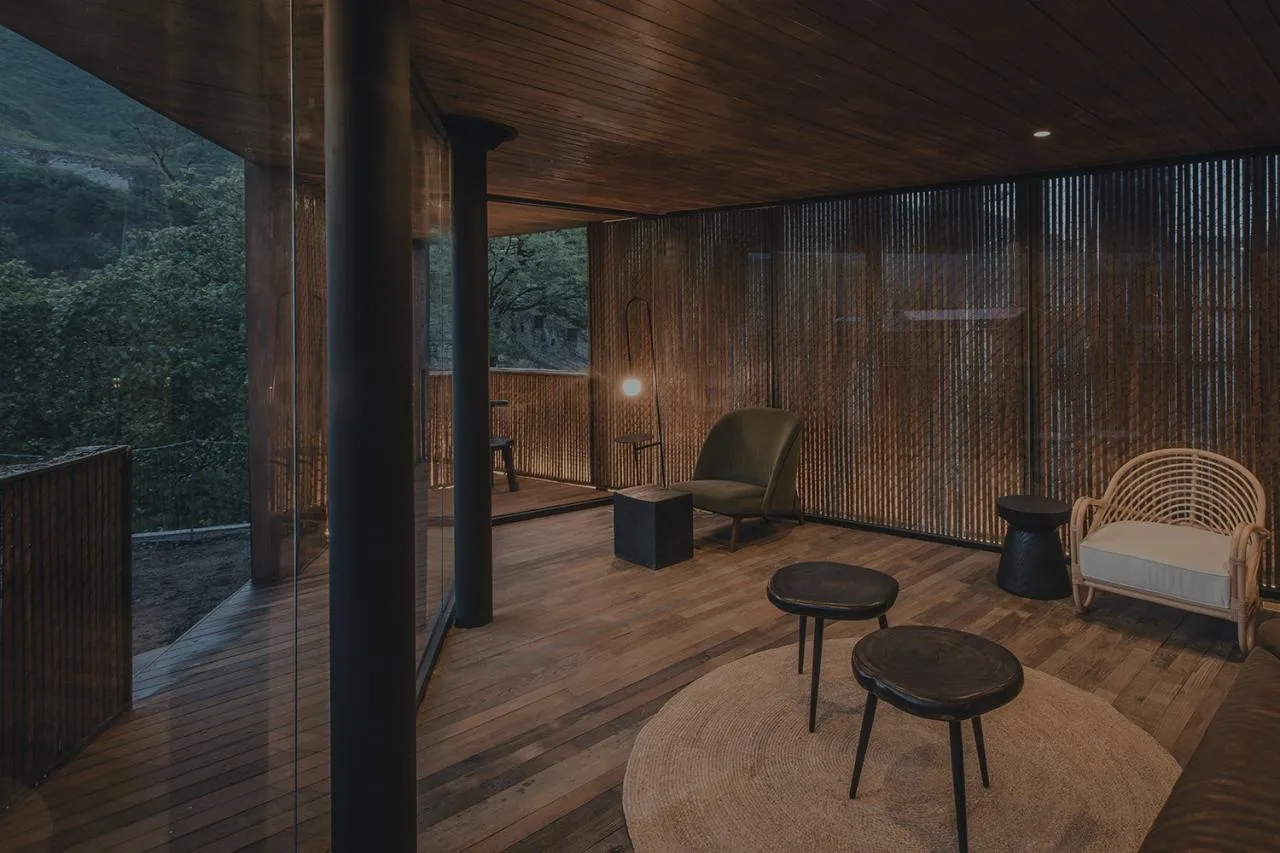
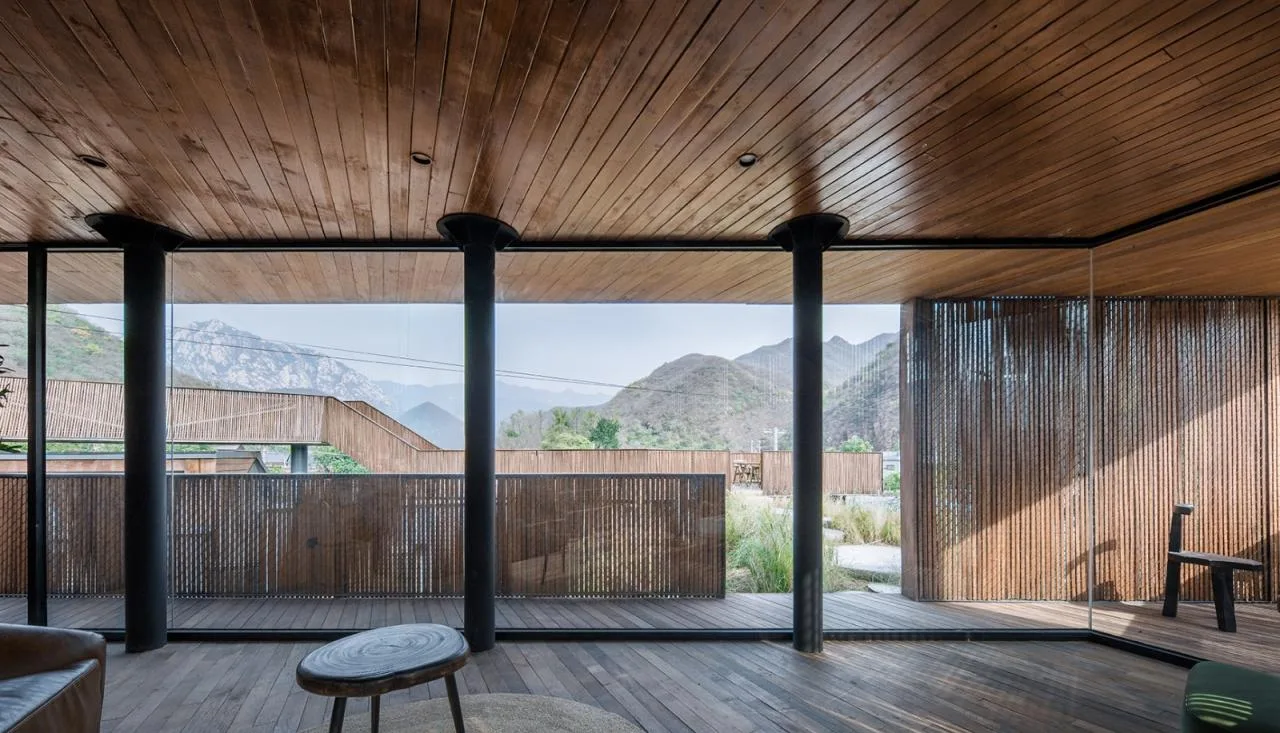
▲ Second floor public area © Zhu Yumeng
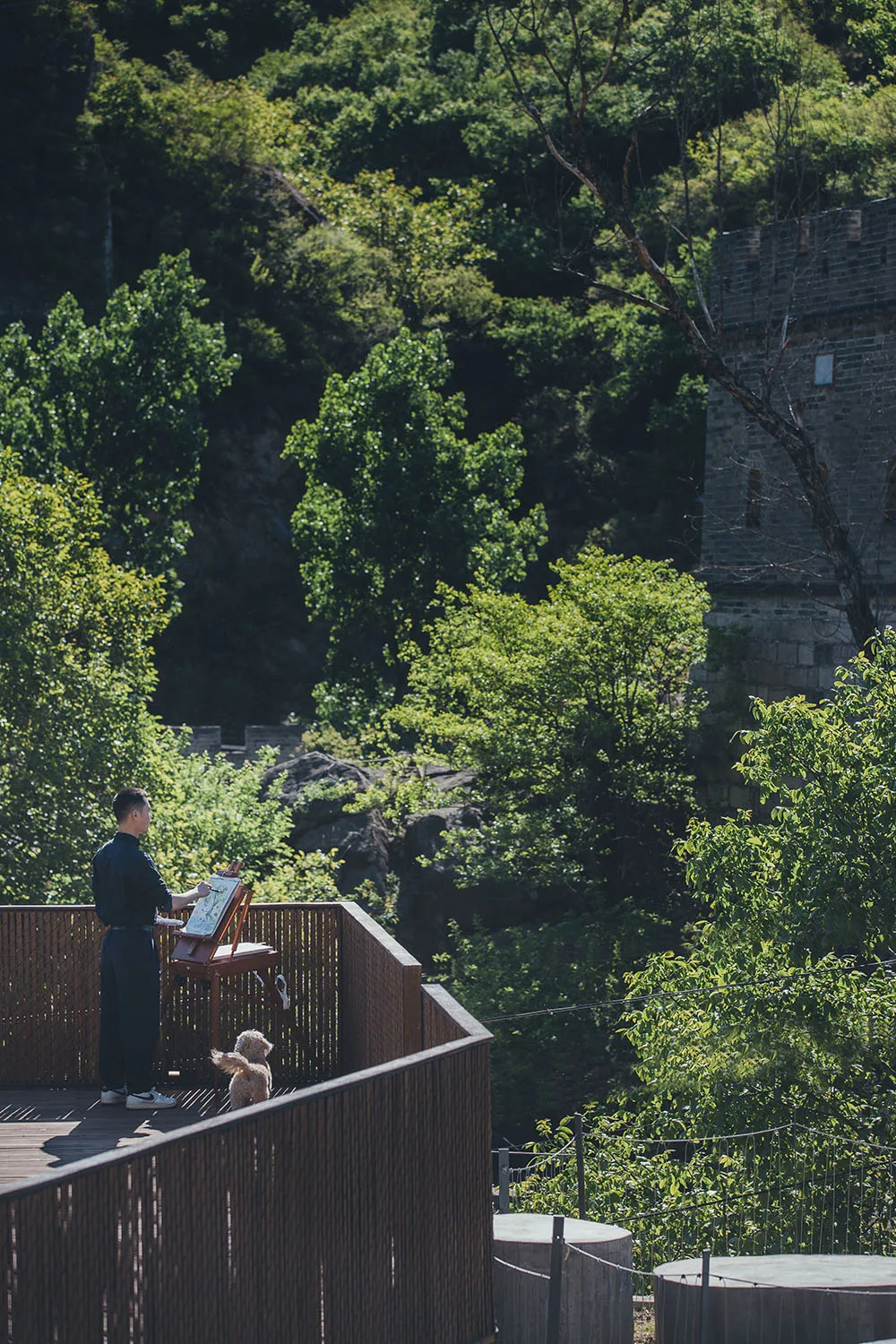
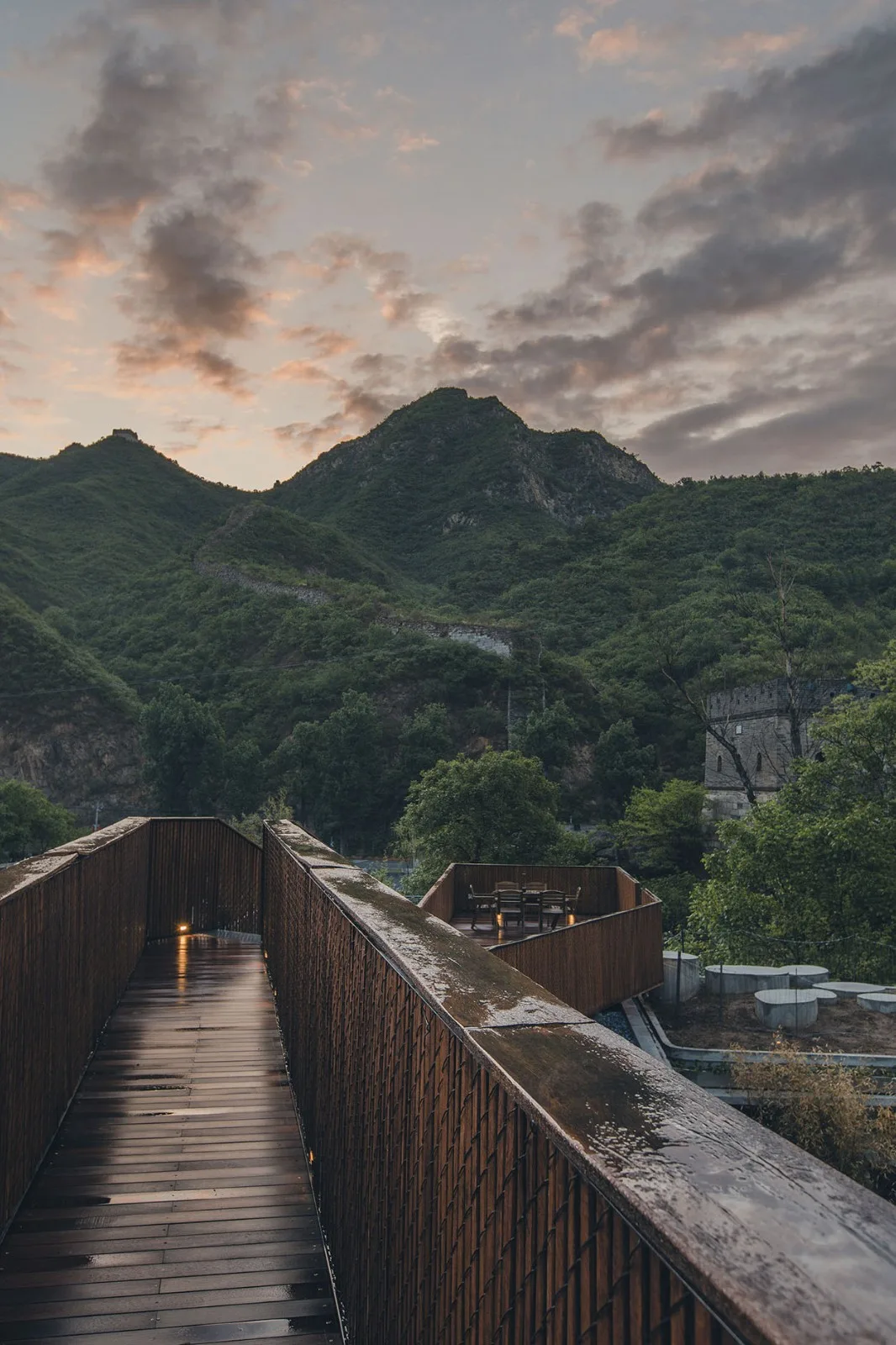
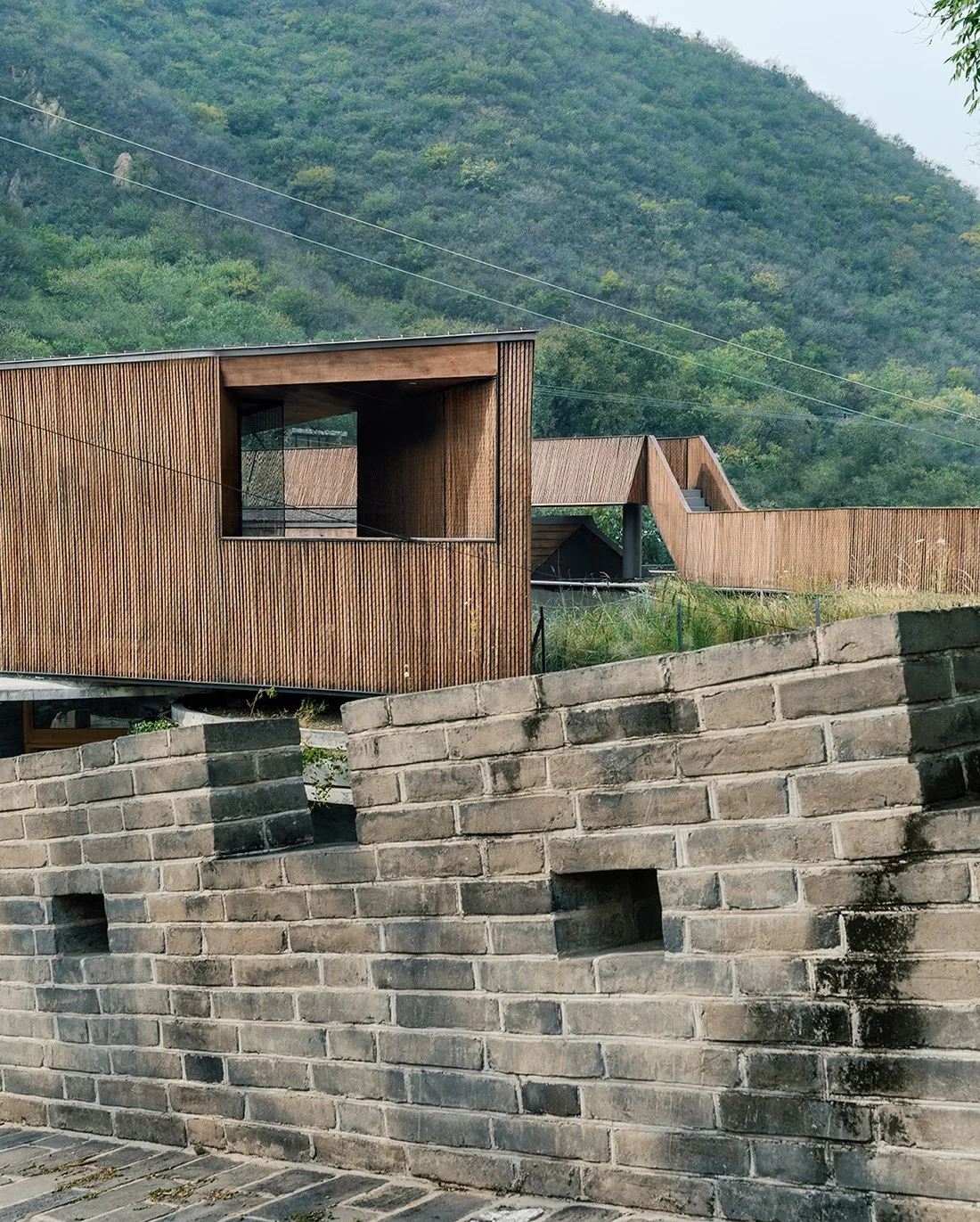
Above the courtyard is a 30-meter skybridge that overlooks the winding Great Wall on one side and connects to the massive ruins of the city gate on the other. Walking down the bridge, gently touching the stone foundation of the Great Wall, the distant enemy tower emerges once again. It seems within reach, yet the Great Wall beyond the triangular gap is severed by a village road—perhaps created when villagers broke through the old wall.
The pedestrian bridge itself breaks at this point, leaving a walkable gap covered in weeds. This gap unintentionally transforms the skybridge and Great Wall into a connected landscape, popular among internet celebrities’ photos.
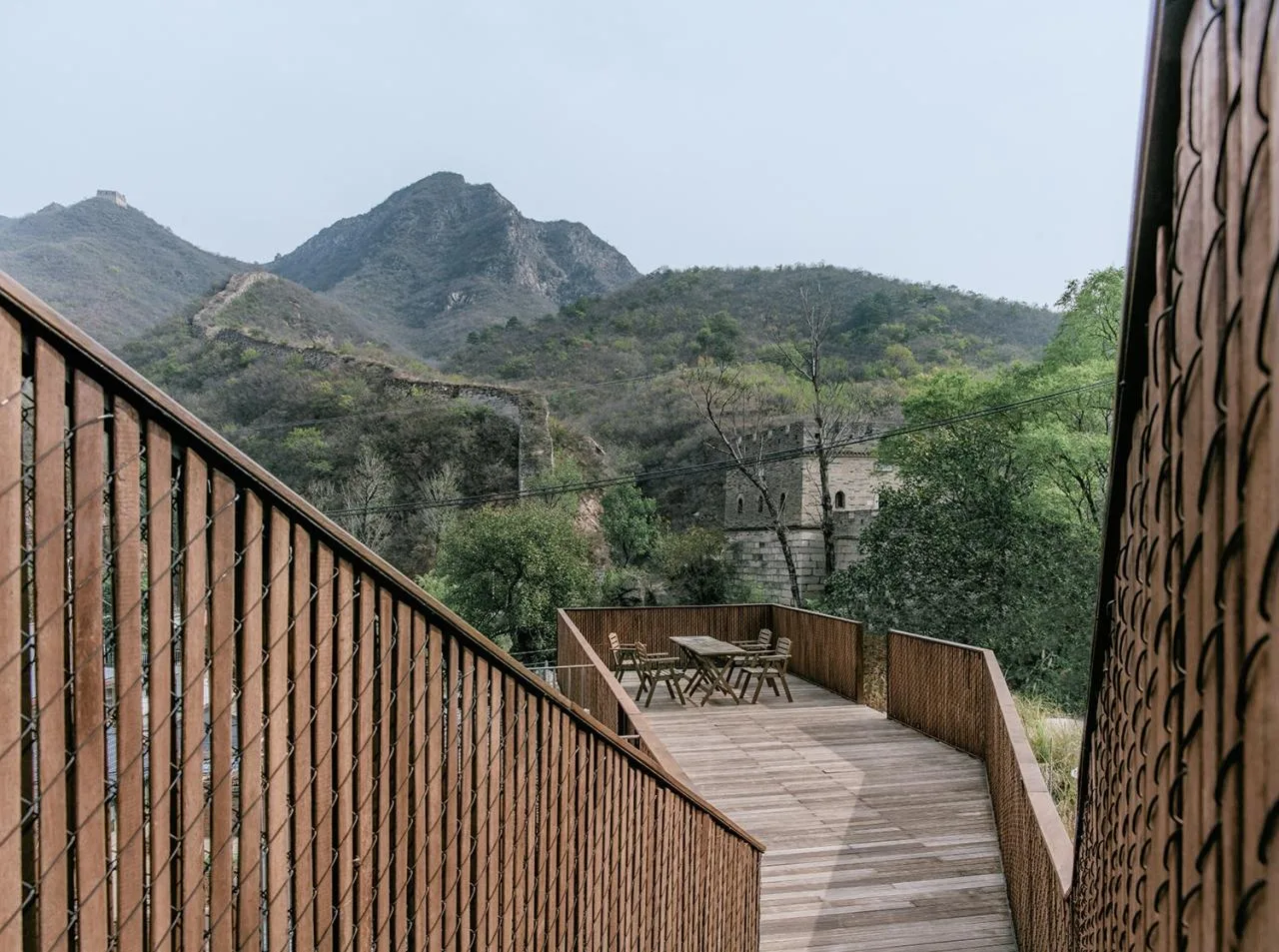
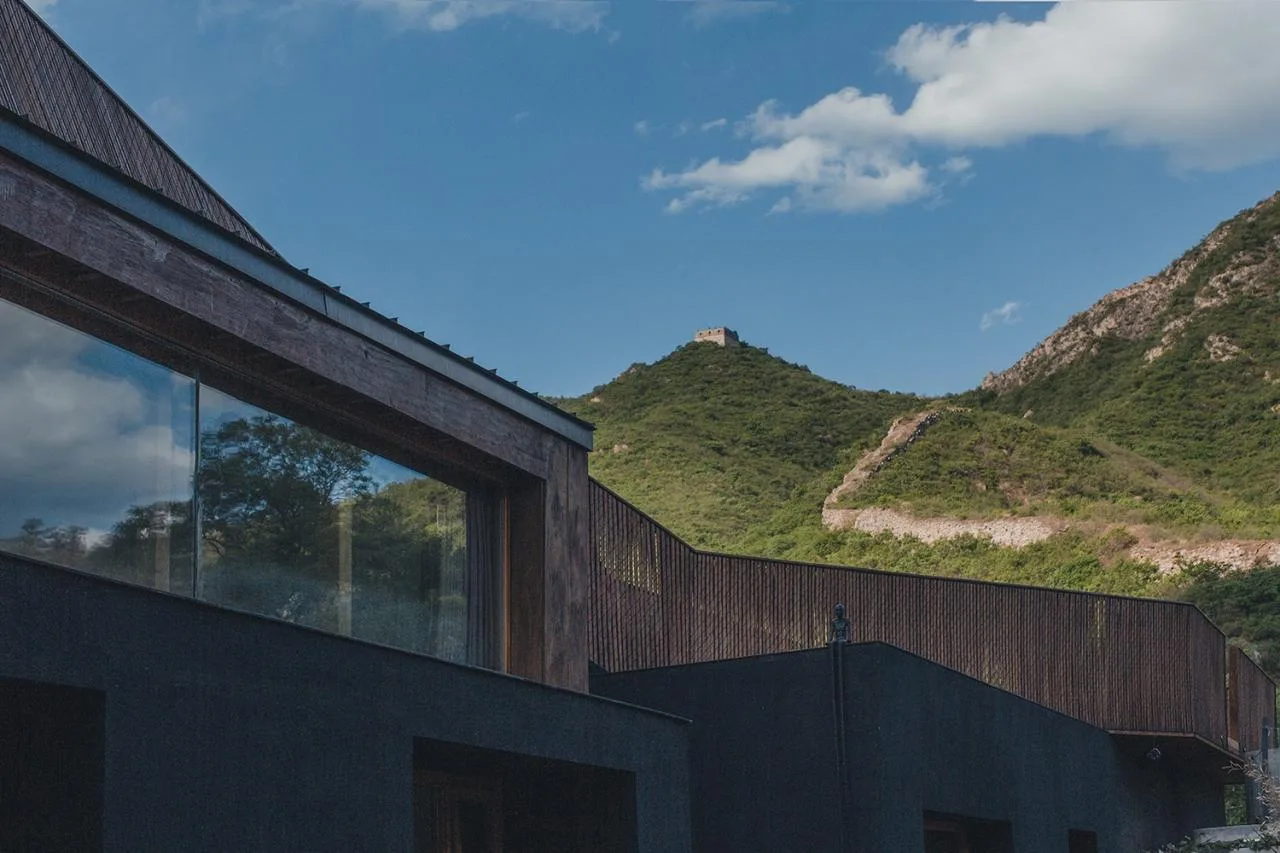
▲ Distant mountain enemy tower © Zhu Yumeng
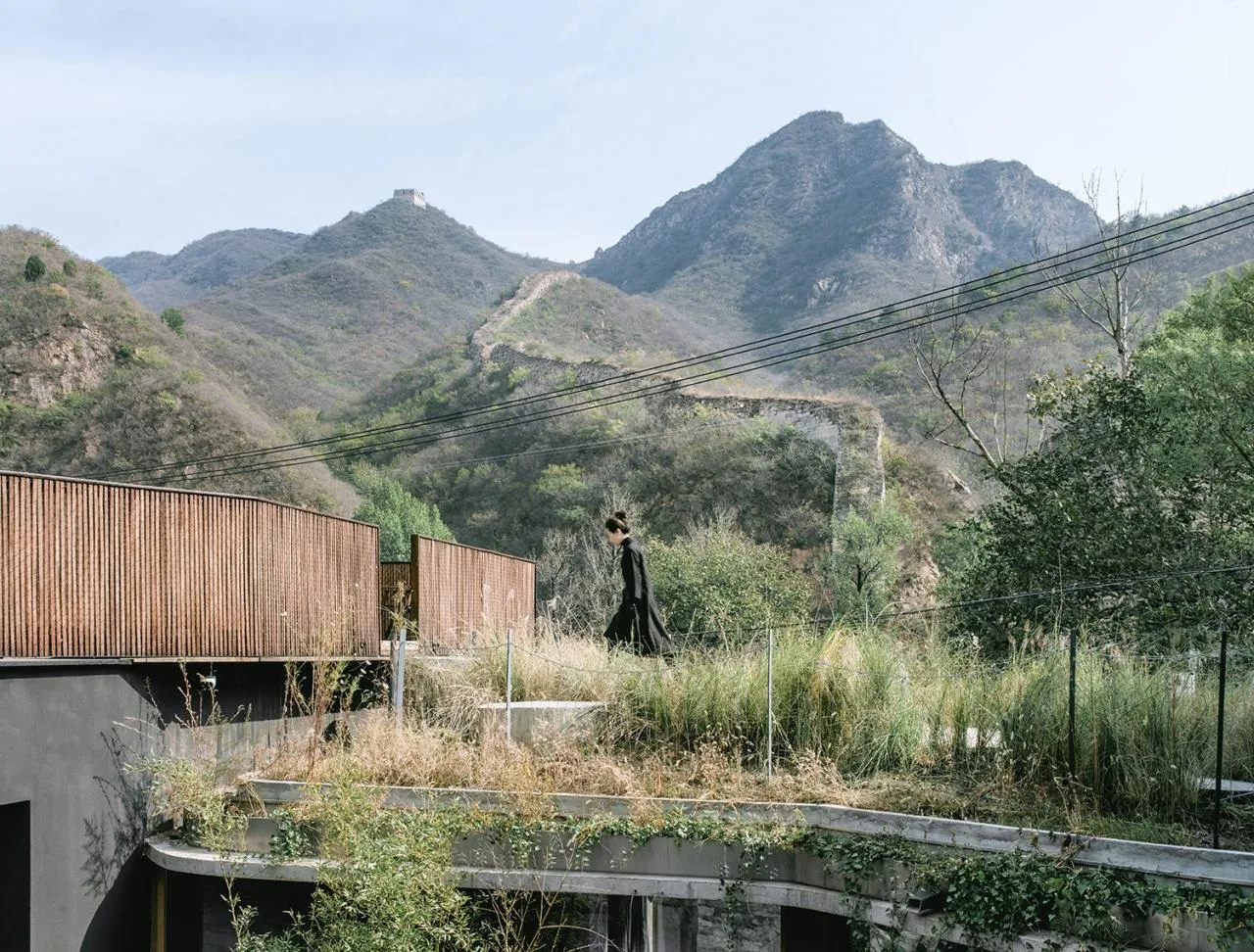
▲ Gap in the ring bridge © Zhu Yumeng
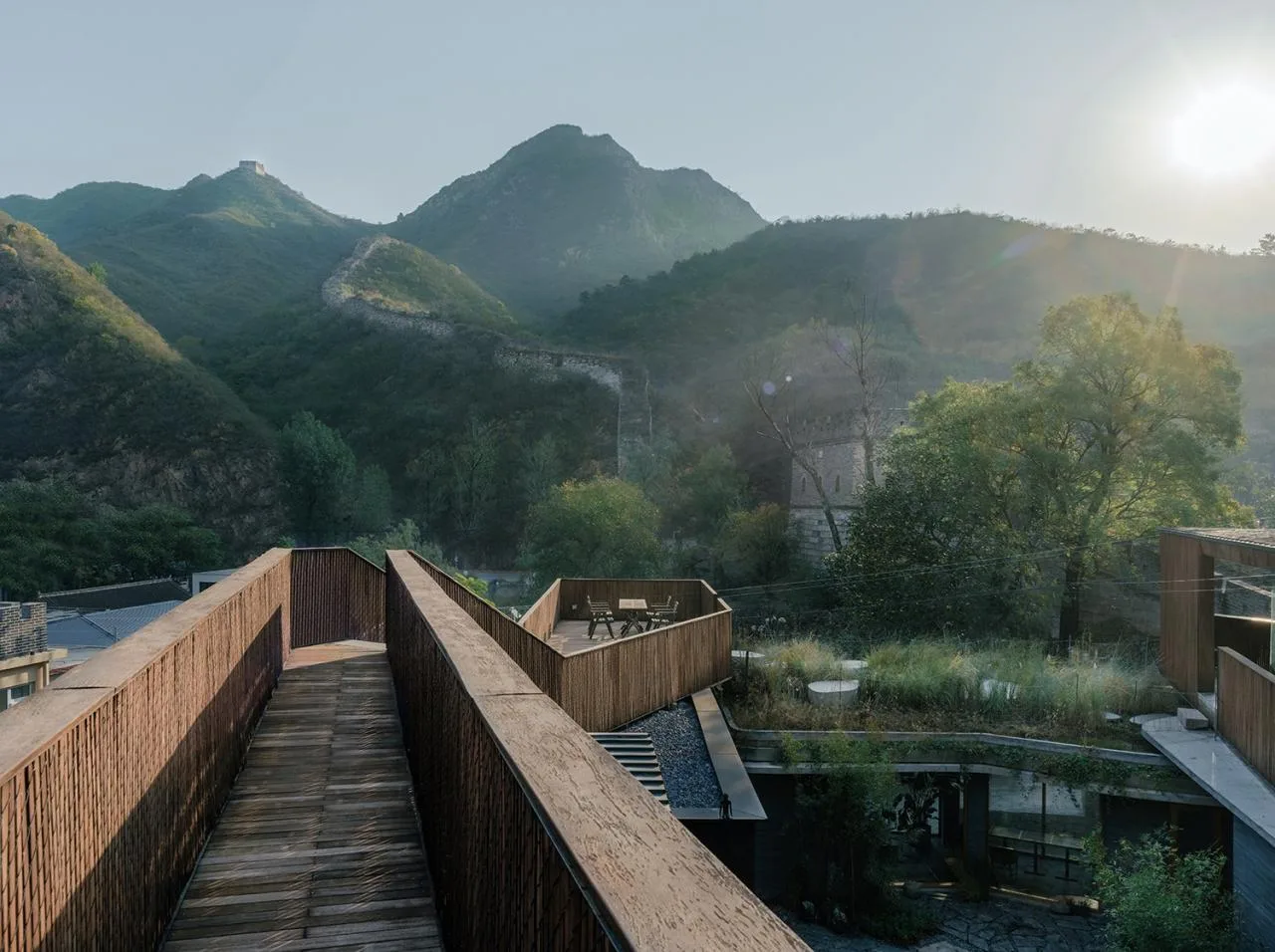
▲ The overpass appears connected to the Great Wall as one © Zhu Yumeng
This illusion of connection contrasts with the reality of disconnection. The ancient Xiongguan Pass has been replaced by a semi-transparent triangular wooden structure. The remaining walls along the road border an empty field. Under the watchful eyes of falcons, villagers’ simple daily lives provide an ideal backdrop for photoshoots.
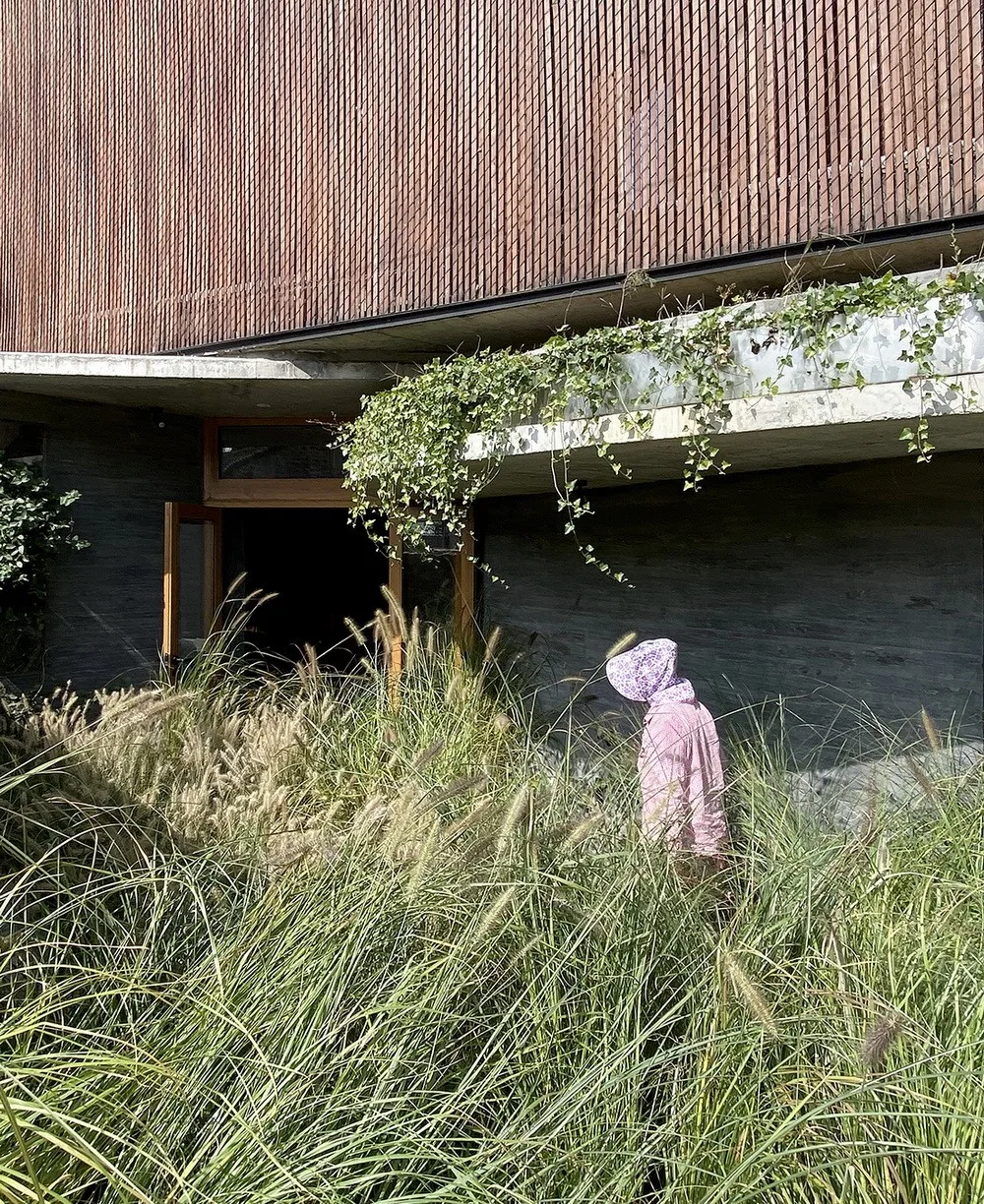
The large windows of the sunken restaurant reveal the architect’s intention to connect the public interior and exterior spaces. Yet, in reality, this only creates a transparent barrier between tourists and residents, whose lives remain incompatible. Meanwhile, an elderly woman sunning herself daily on a stone bench adds genuine warmth to the scene.
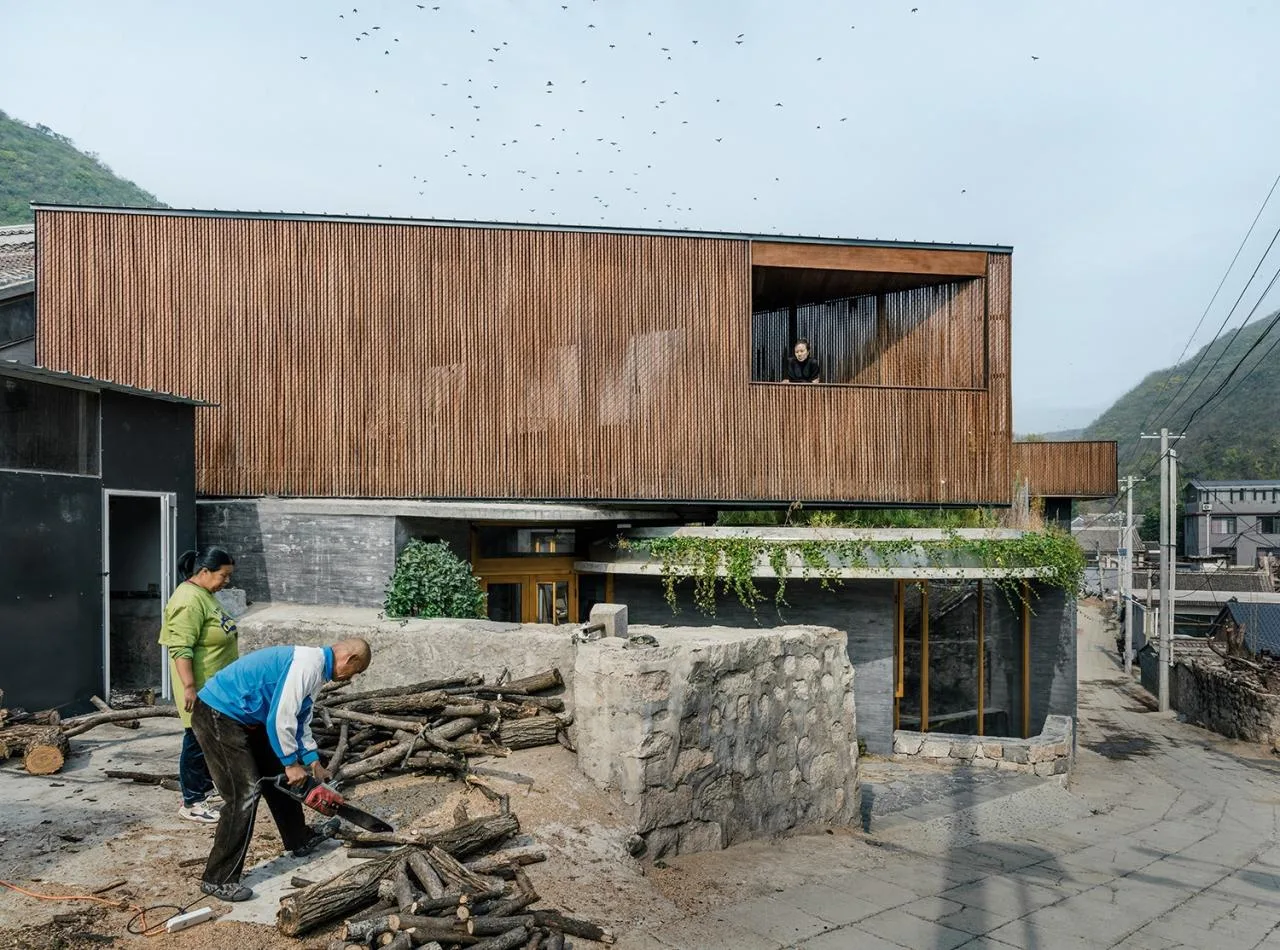
▲ Project and villagers’ daily scenes © Zhu Yumeng
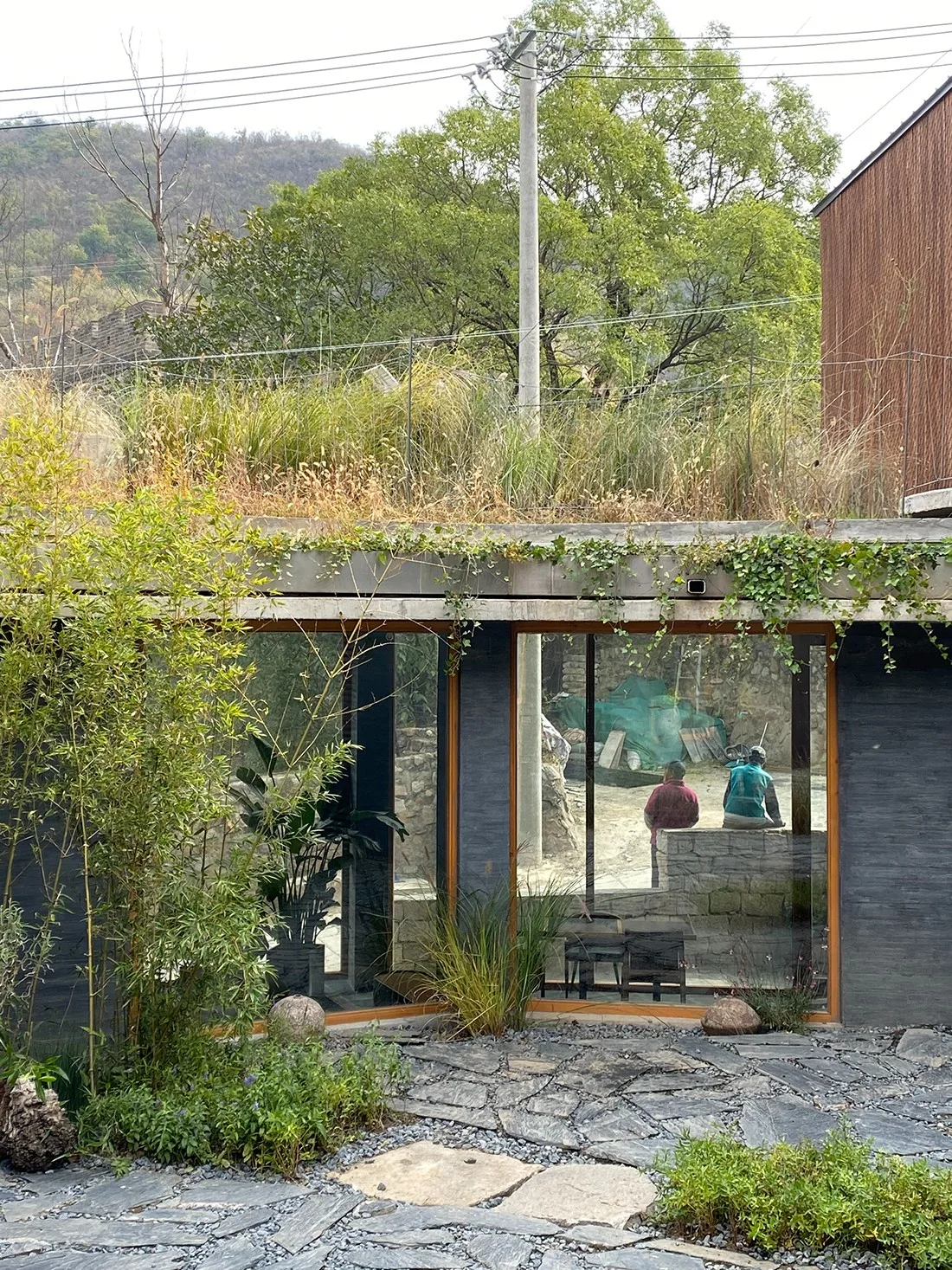
▲ Project and villagers’ daily scenes © Large scale construction
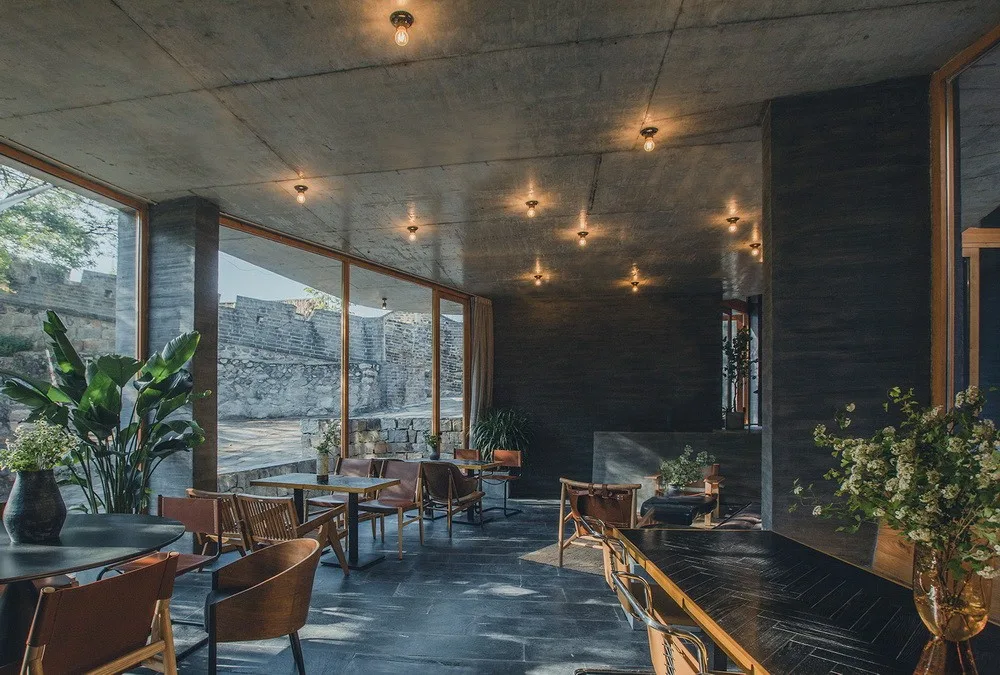
▲ Large windows in the restaurant © Xi Youji
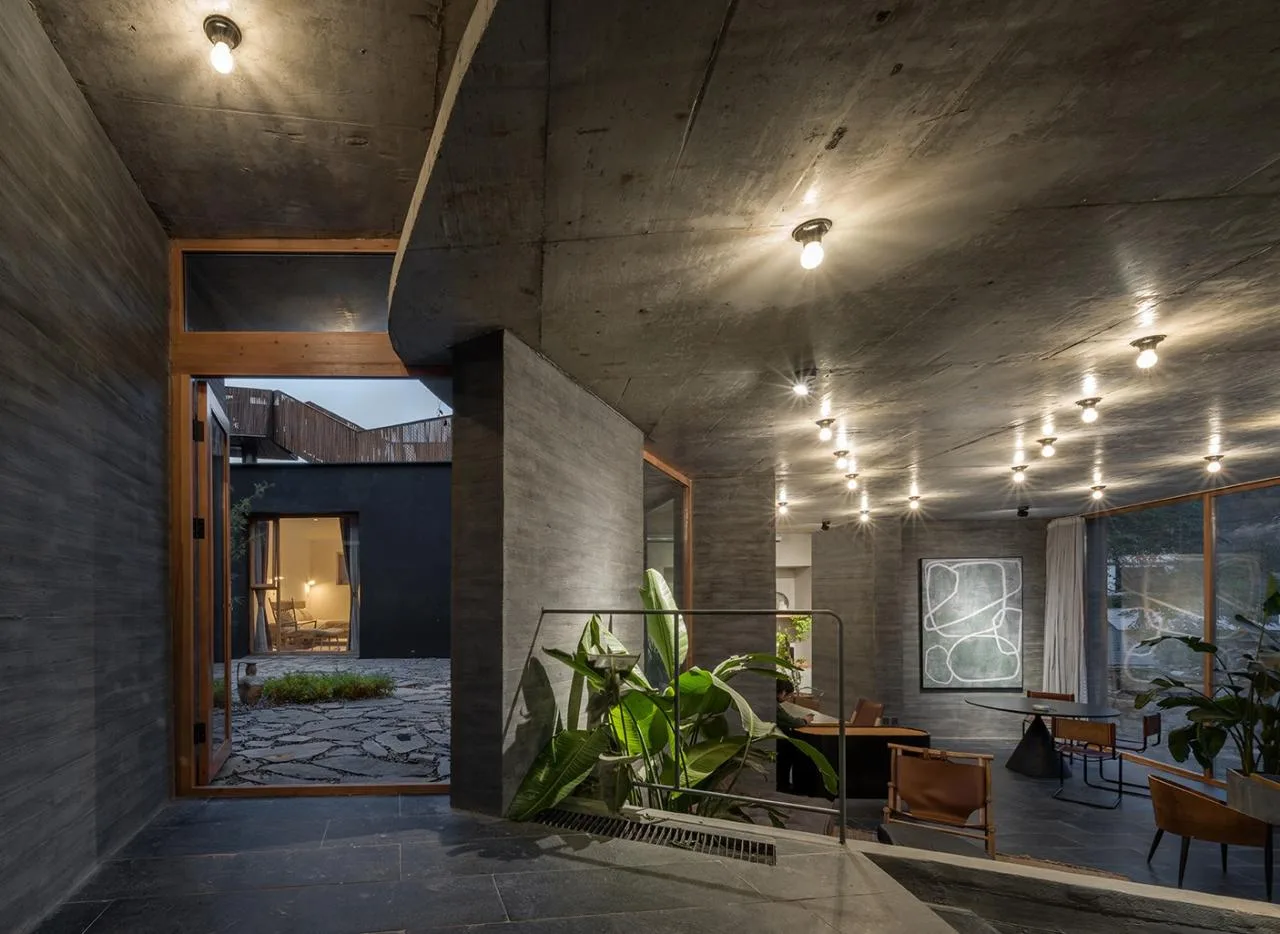
▲ Restaurant © Zhu Yumeng
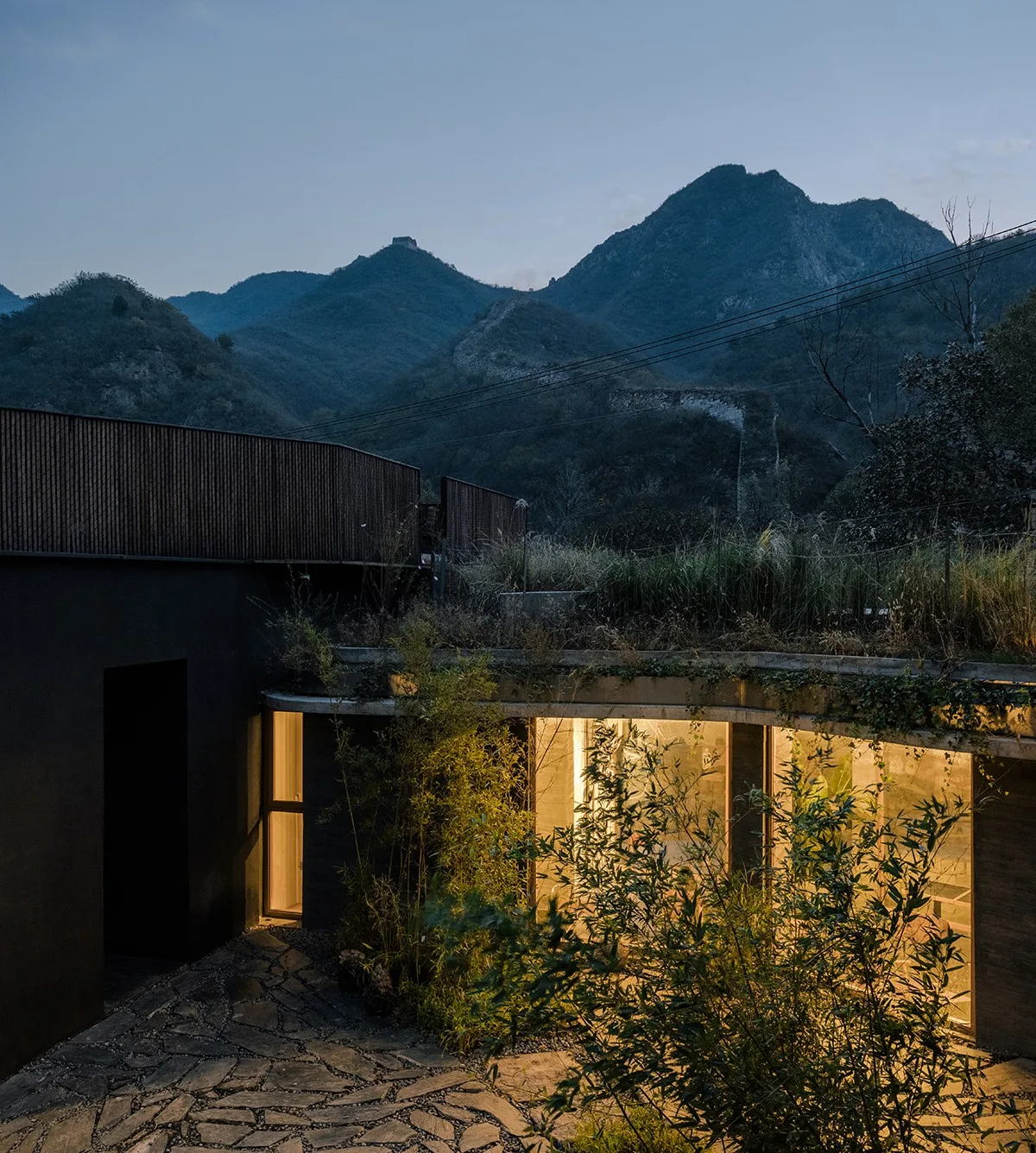
▲ Night view of the restaurant © Zhu Yumeng
Compared to the silent Great Wall, the antenna is more conspicuous. It occupies the vacant land left by the city gate with a tall pole, serving as a landmark and signal tower. The Great Wall and surrounding houses are intertwined within it.
Facing this overwhelming presence, Tianqiao remains calm. Instead of evading or avoiding, it embraces the antenna, dancing horizontally in parallel or direct confrontation—using “poison to fight poison.”
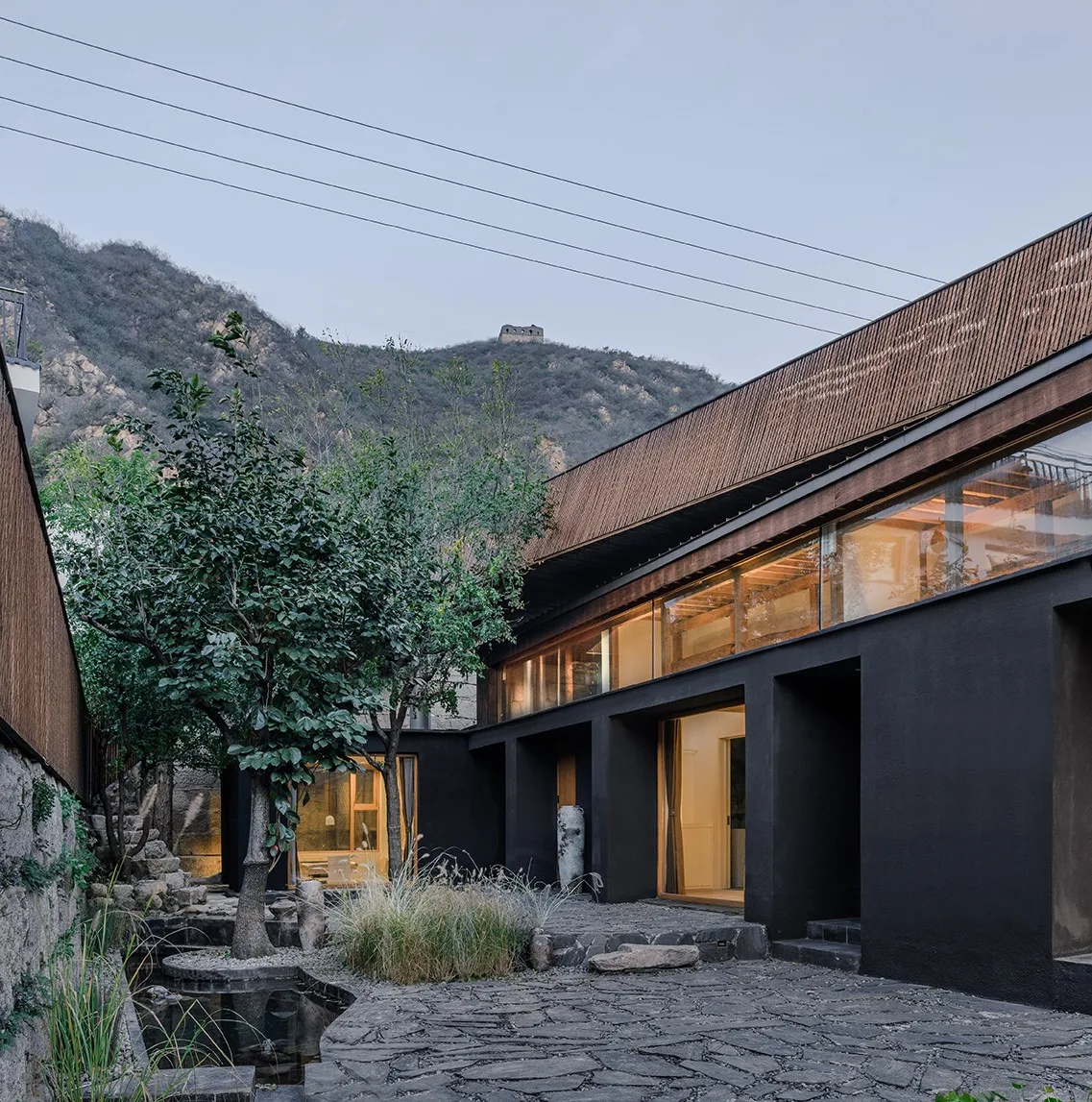
▲ Skybridge and antenna © Zhu Yumeng
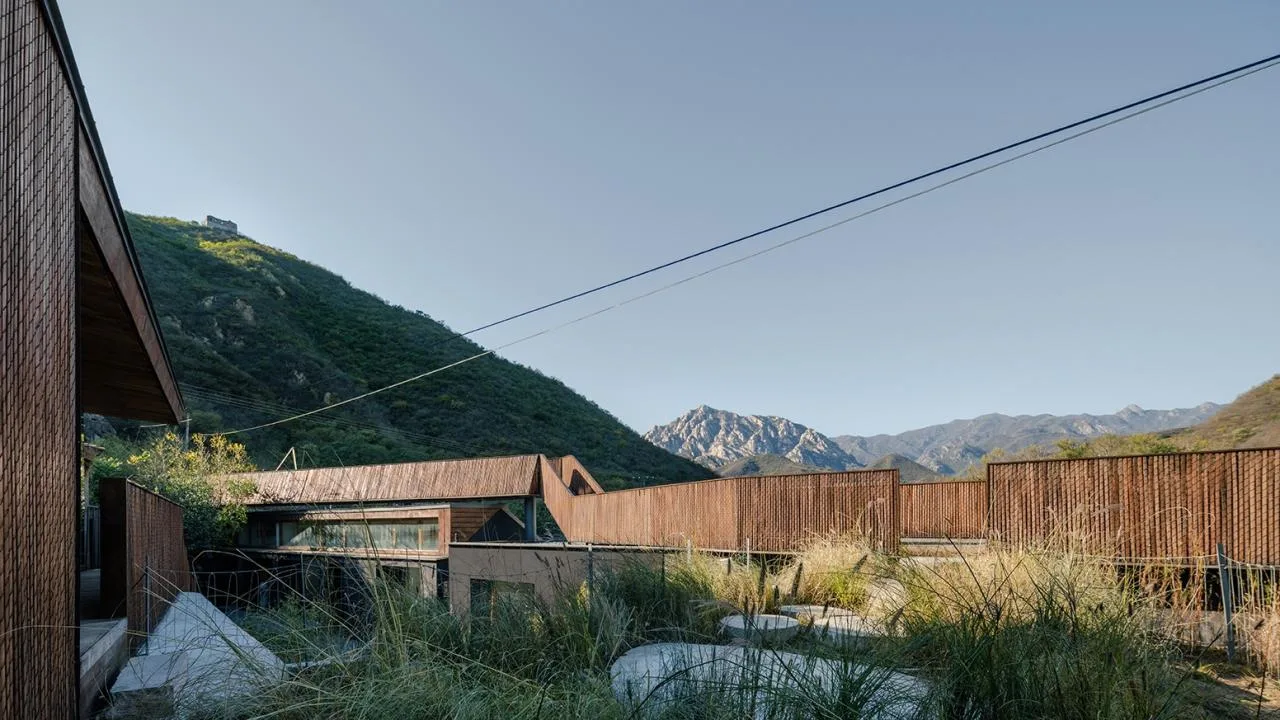
▲ Skybridge and antenna © Zhu Yumeng
This is no longer a physical connection but a bridge of communication between tourists and residents, reflecting mutual care between virtual lifestyles and real daily life. Just as the chaotic antenna scene is magnified and highlighted in a young girl’s check-in photo, the question remains: is ignoring or erasing it a multiple-choice or an advanced Photoshop challenge?
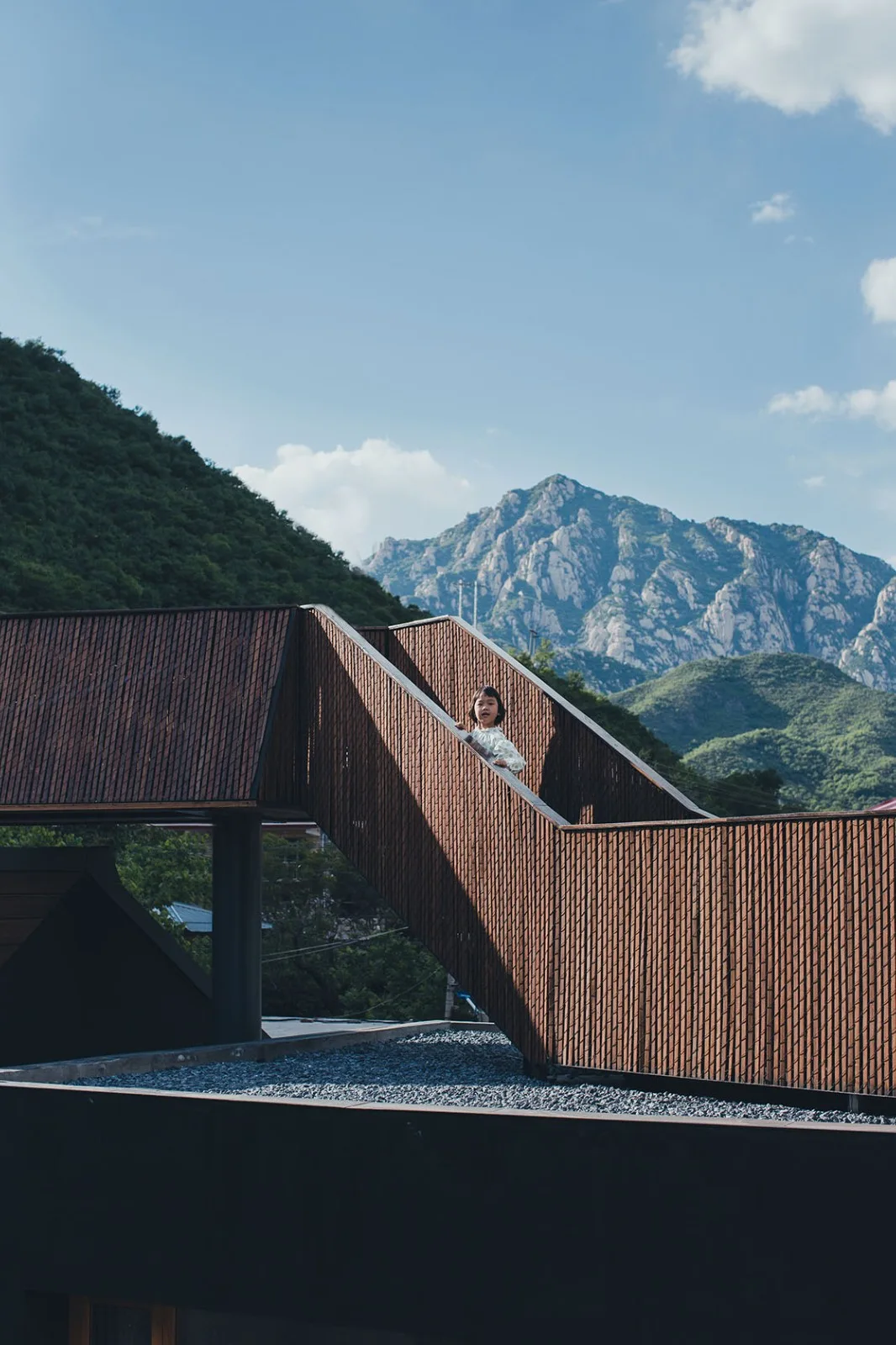

▲ Overpass © Xi Youji
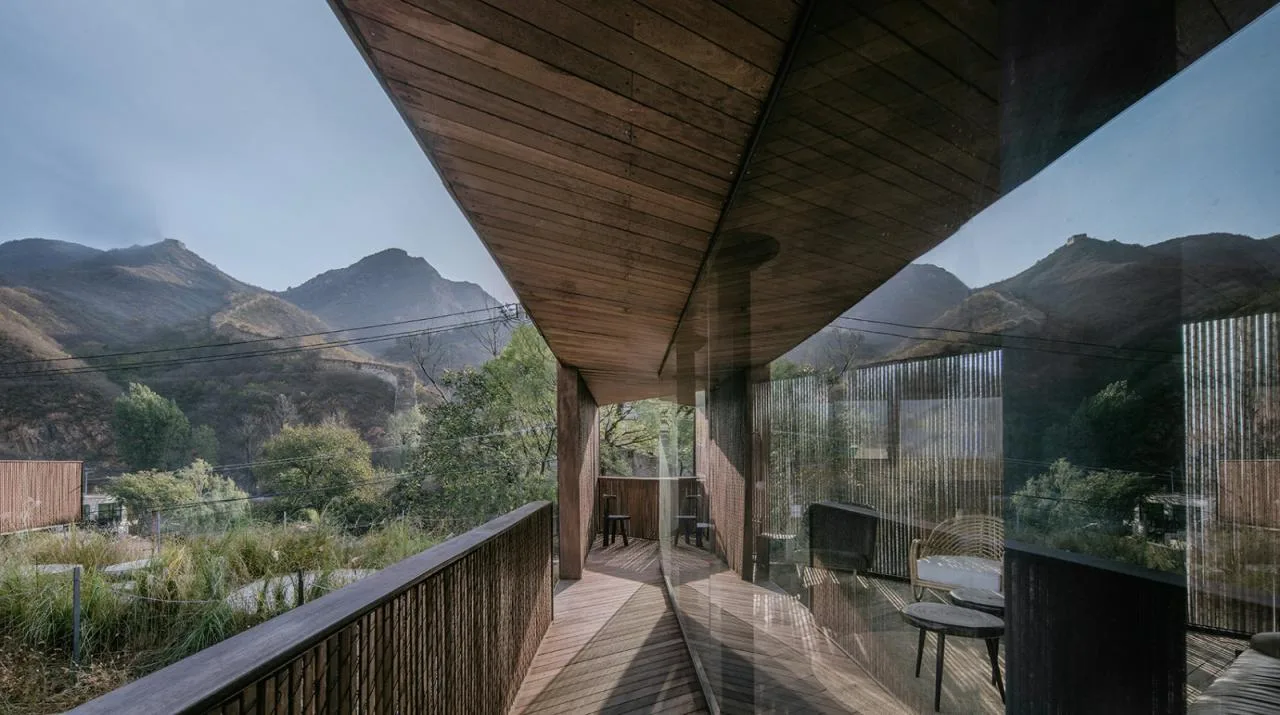
▲ Virtual lifestyle and real-life scenarios © Zhu Yumeng
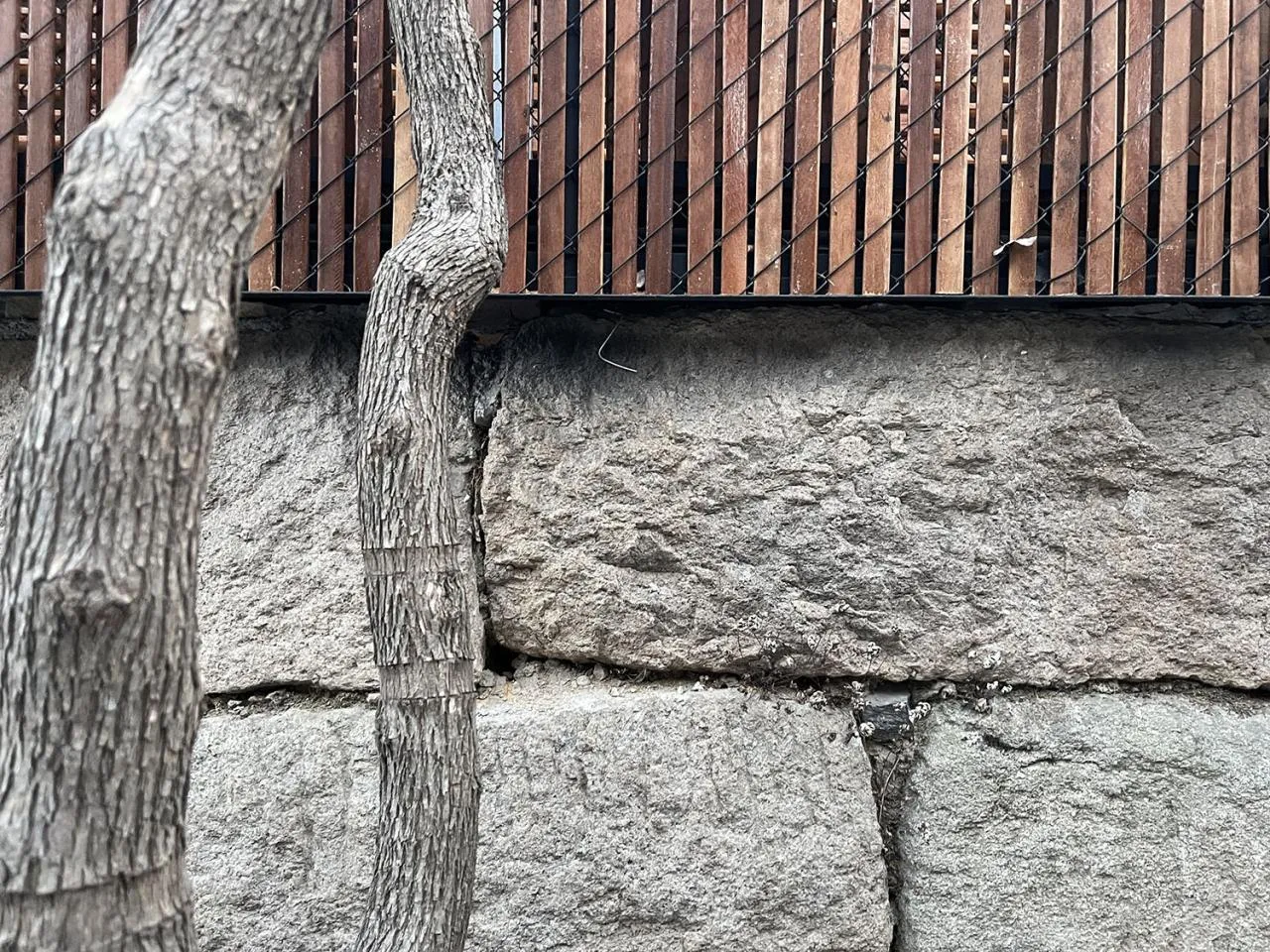
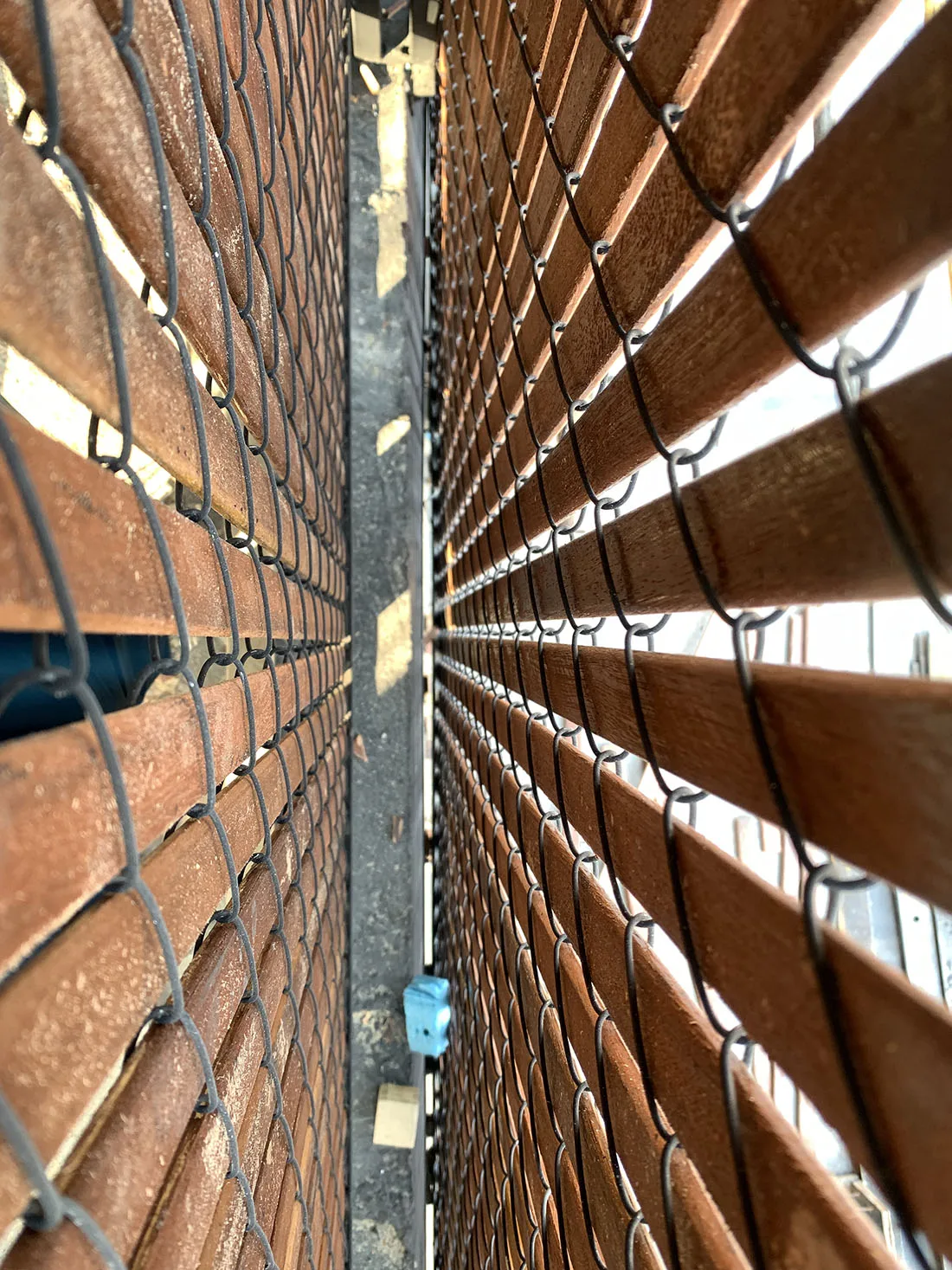
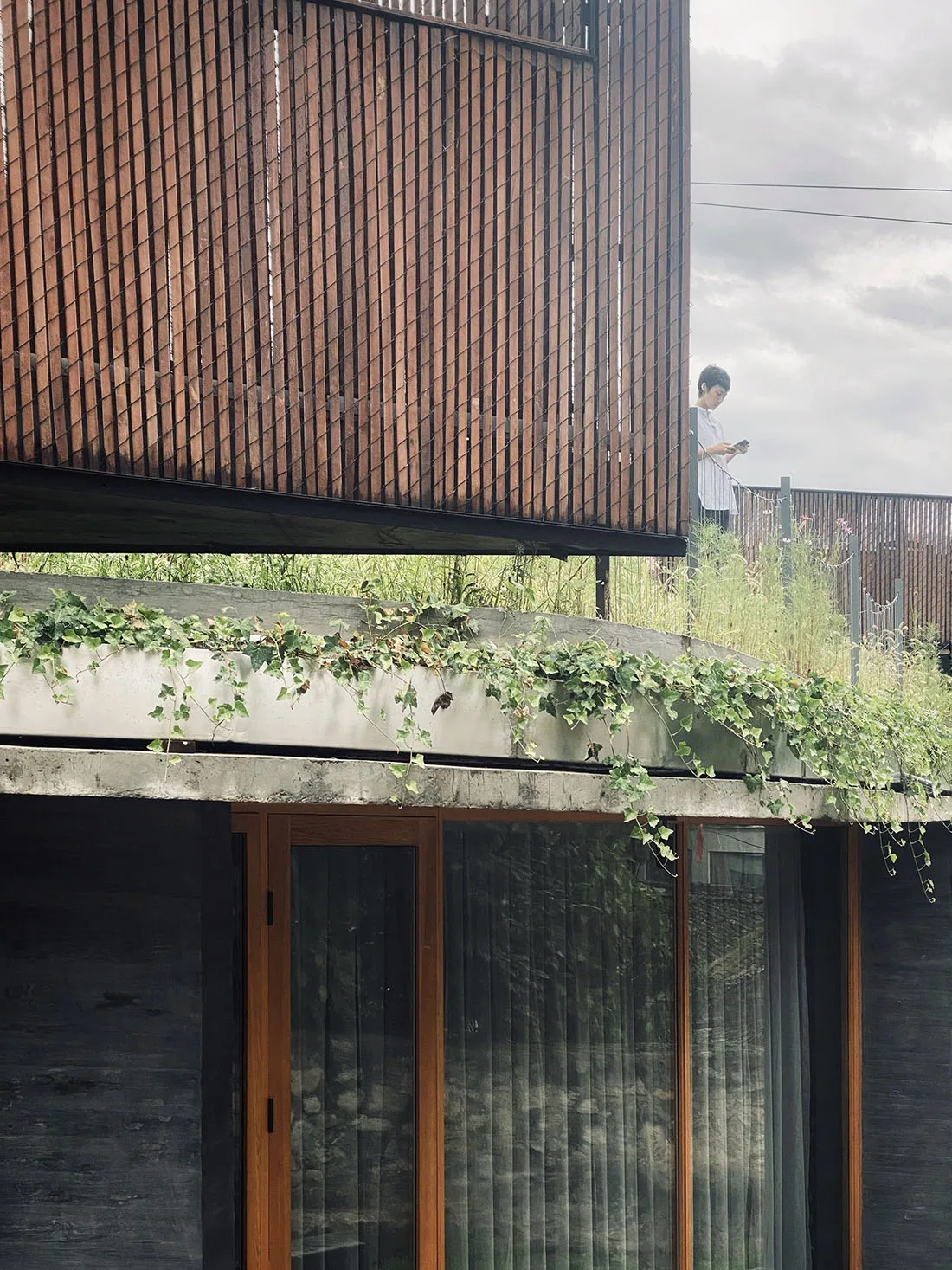
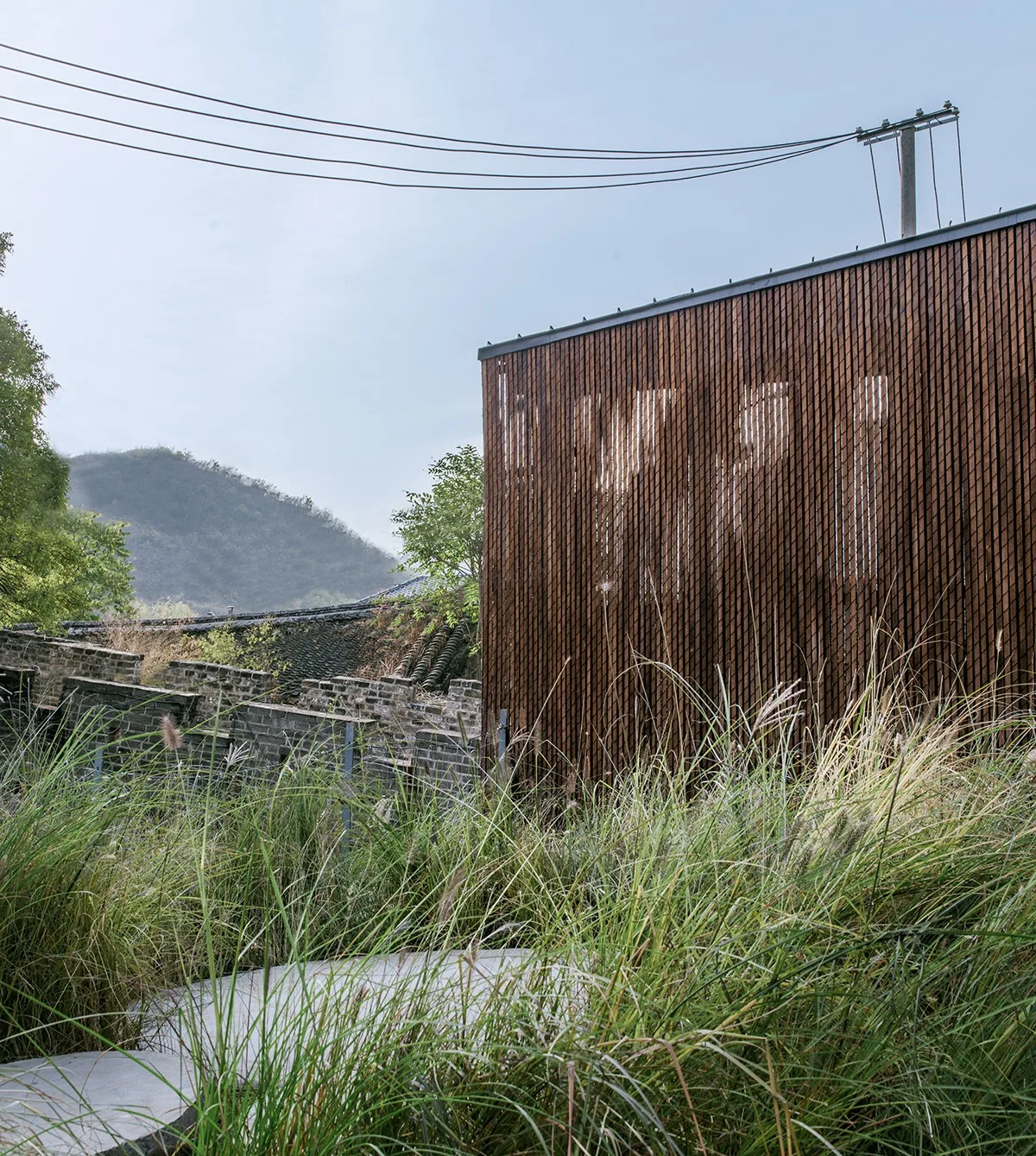
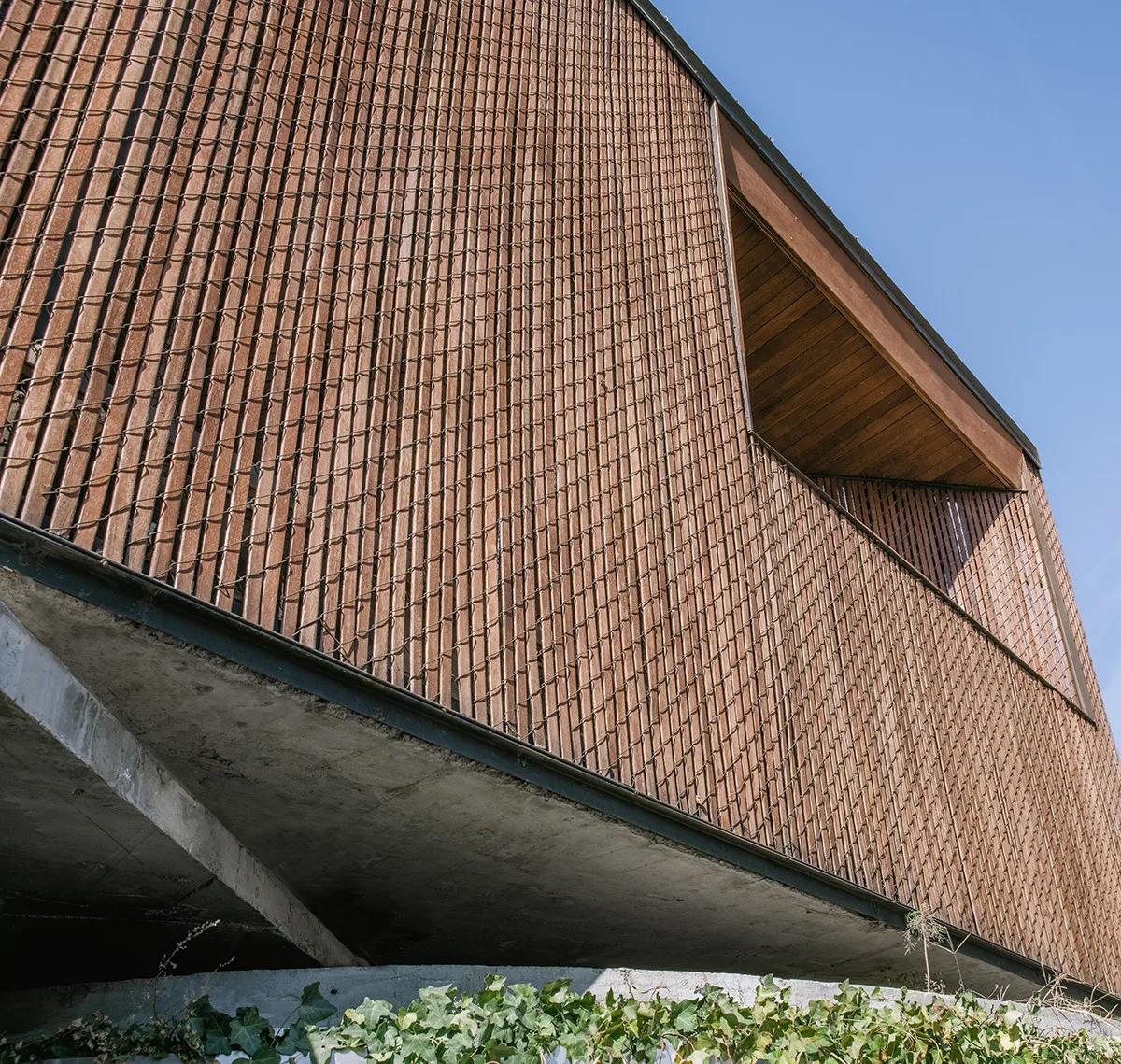
▲ Pedestrian bridge grille details © Large scale construction
Can I Ask, Where Is the Way?
Facing the past, let alone the future, can the seemingly infinite connectivity of the present era bear the cost of severing reality? Perhaps the answer lies on platforms like TikTok and Xiaohongshu.
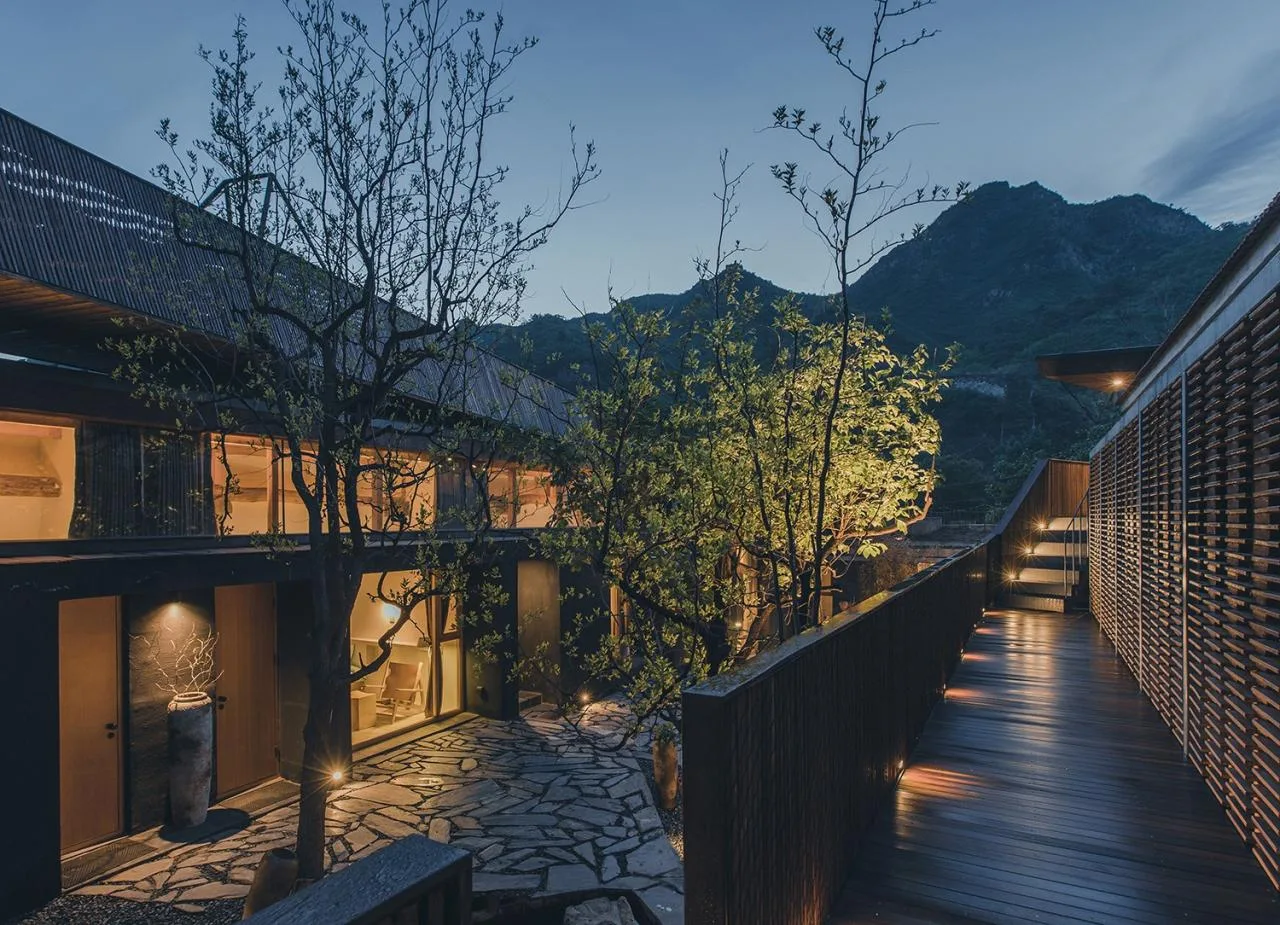
▲ Night view of the project © Xi Youji
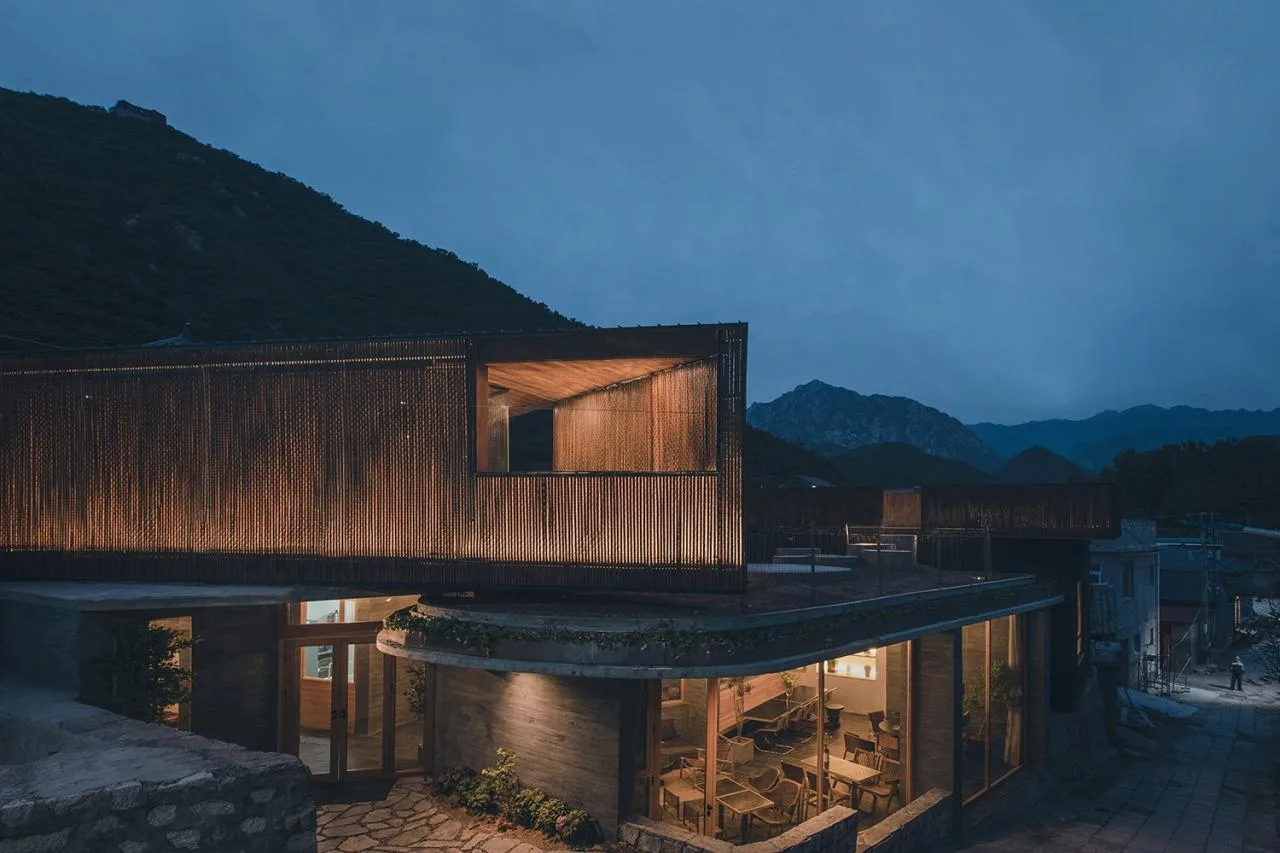
▲ Night view of the project © Xi Youji
Project Drawings
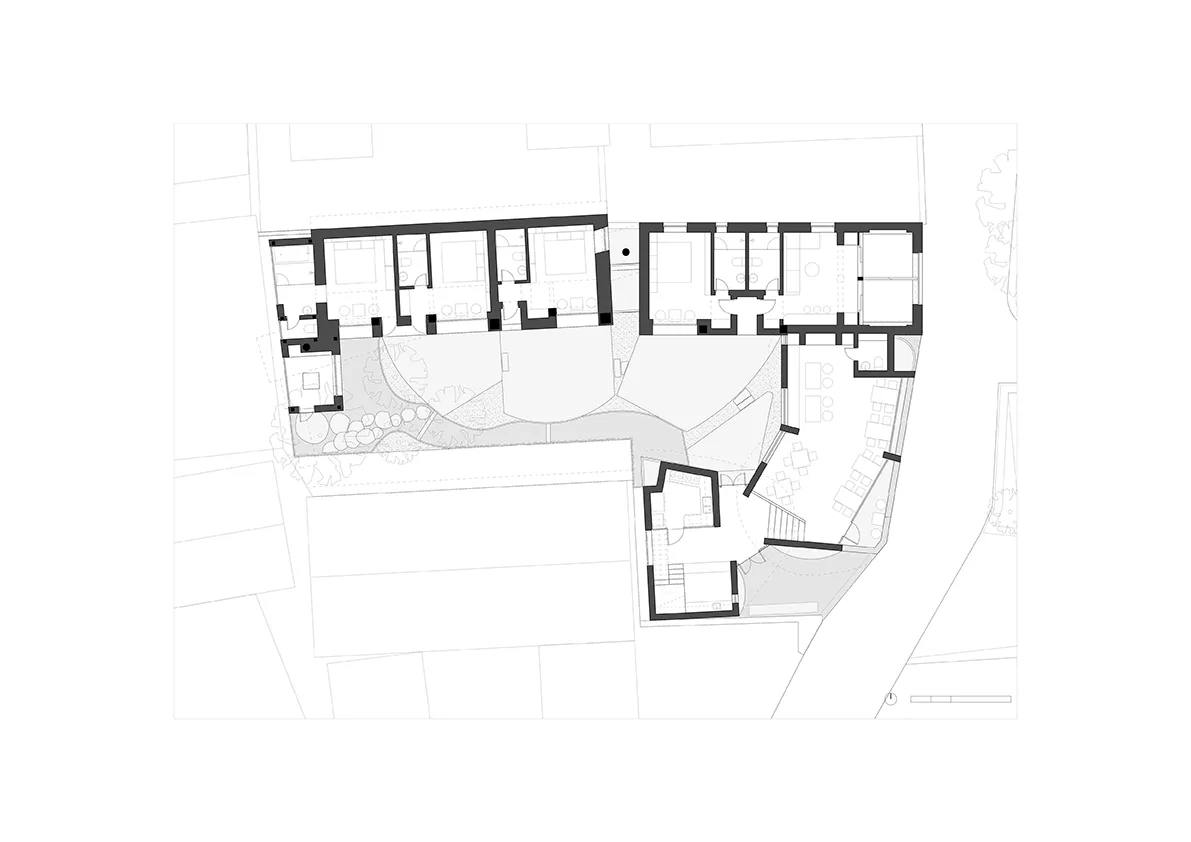
▲ First floor plan © Large scale construction
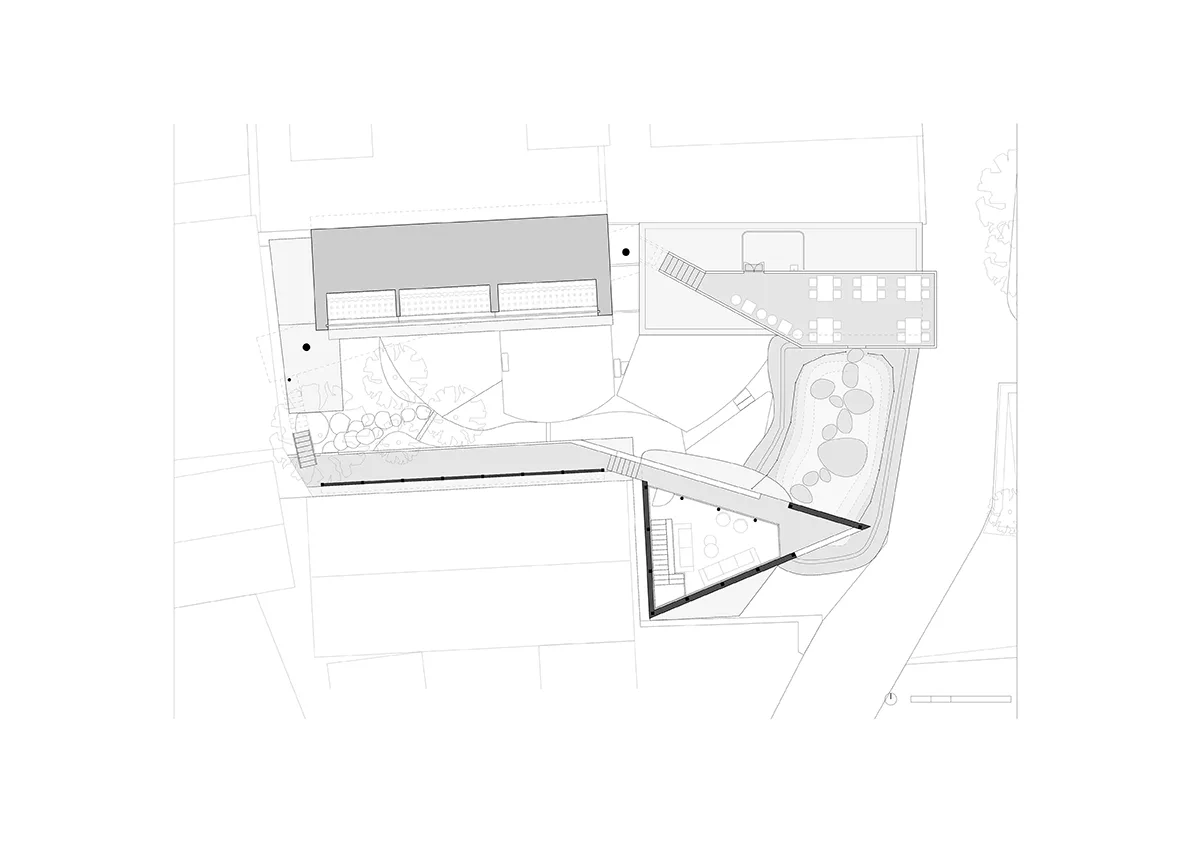
▲ Second floor plan © Large scale construction
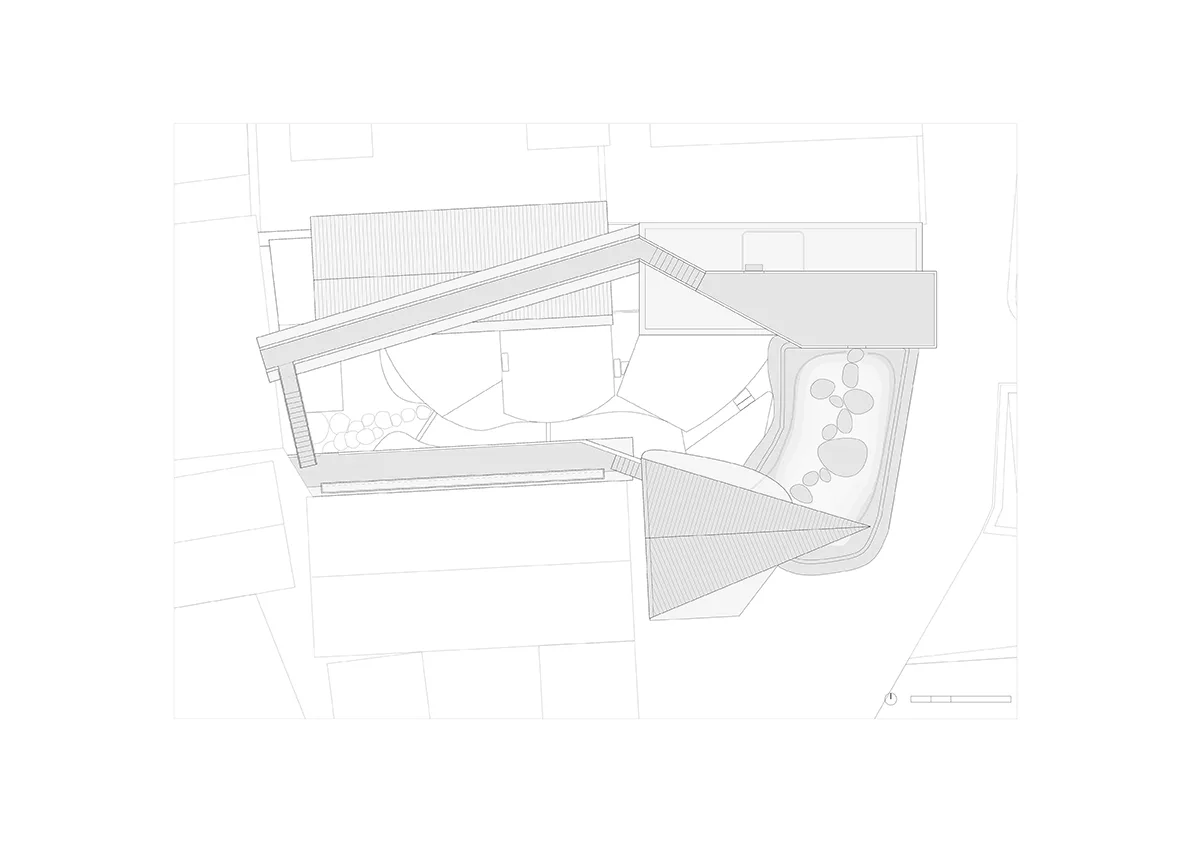
▲ Roof plan © Large scale construction
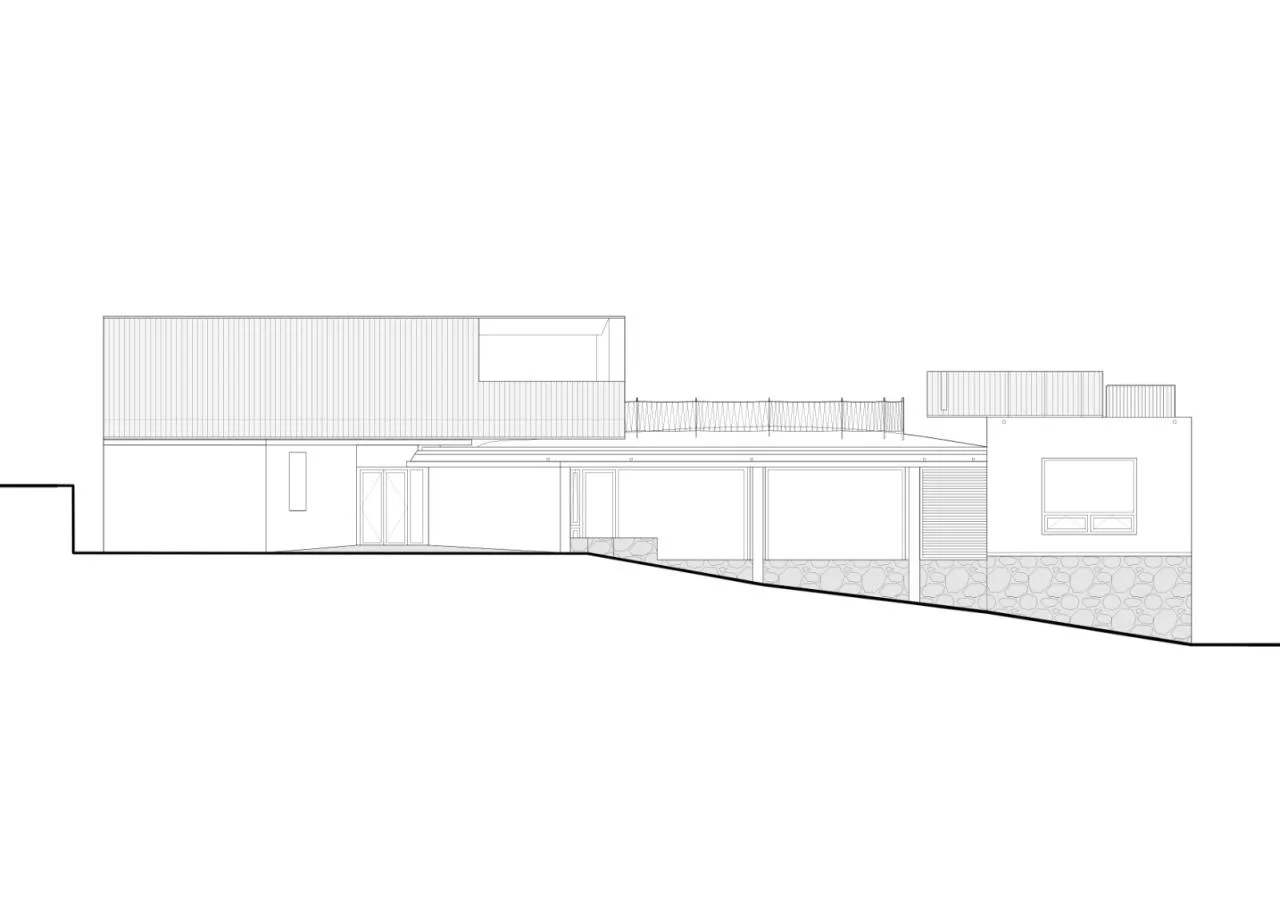
▲ Front view of No.1 Courtyard © Large scale construction
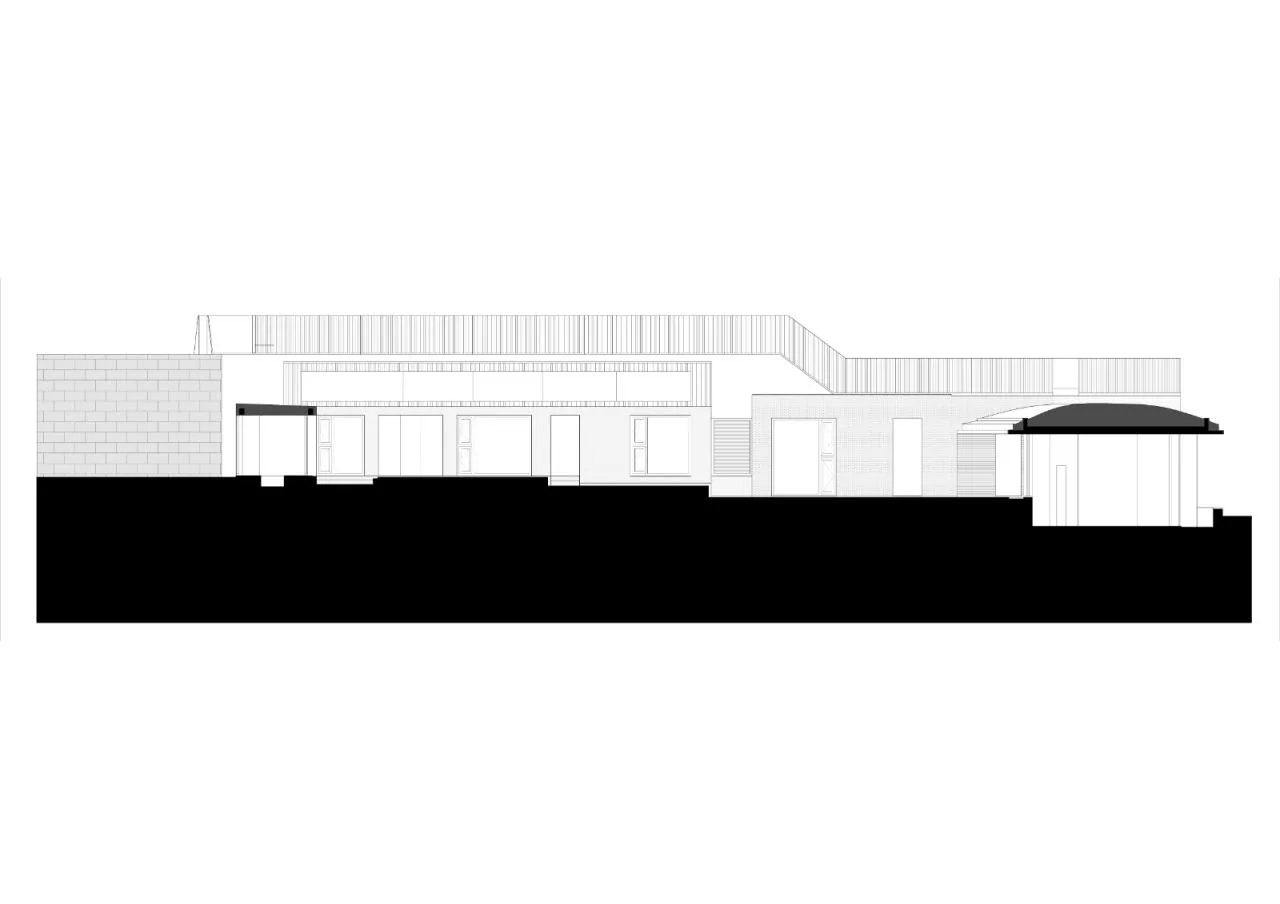
▲ Section of No.1 Courtyard © Large scale construction
Project Information
Location: Huairou, Beijing
Time: 2020–2022
Owner: Xiaoxi Homestay
Area: 498 square meters of land, 314 square meters of buildings
Cost: 1.9 million (including landscape and soft furnishings)
Design: Large scale building
Architecture / Interior / Landscape: Liu Yang, Hu Muhuai, Duan Qi, Cai Zhuoqun
Structure: Gao Xuemei, Li Ping
Electrical: Hou Yanming
Water Heating: Guohaifeng
Video: Zhu Yumeng Studio
Photos: Zhu Yumeng Studio, Xi You Ji Studio, Da Liao Architecture















Must log in before commenting!
Sign Up