
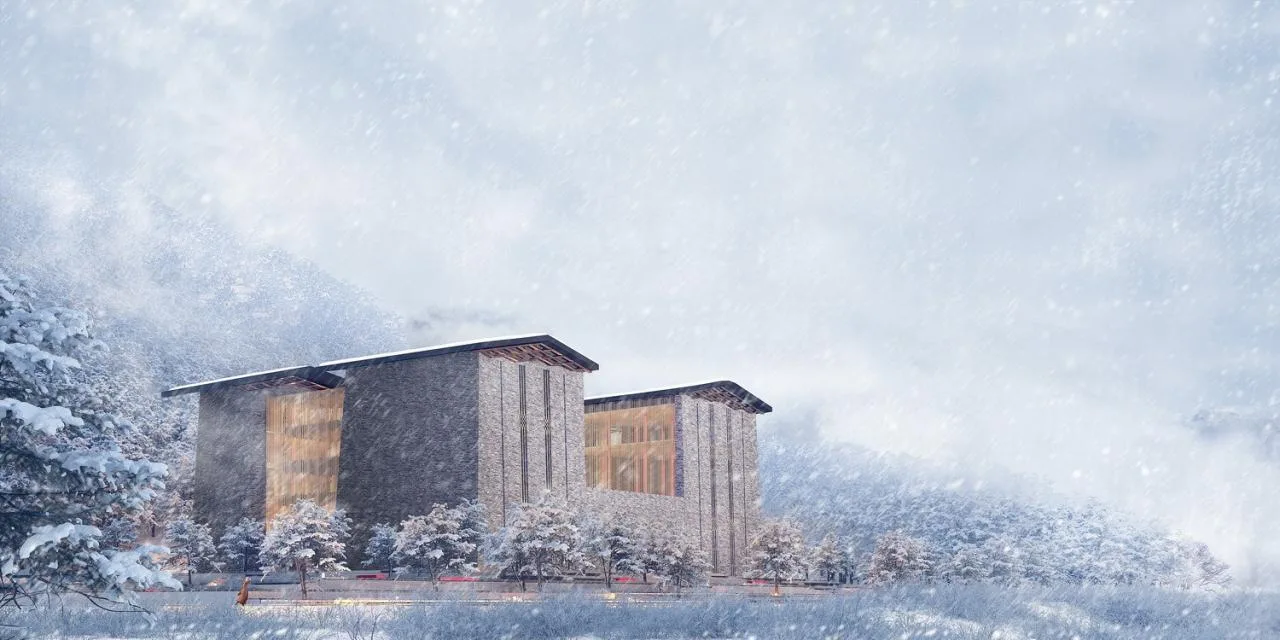
1: Project Introduction
Location: Sichuan, China
Principal Designer: Ding Xianglei
Design Team: Ren Manjia, Chen Shuwen, Xu Ruofan, Li Yajing, Zhou Qingping
The cultural complex is situated in Xisuo Village, Marcang Town, Marcang City, within the Aba Prefecture of Sichuan Province. Aba Prefecture is home to the Jiarong Tibetan ethnic group. The Zhuokeji Tusi Official Village, located in Xisuo Village, is celebrated as a “pearl of Eastern architecture” due to its grand scale and intricate craftsmanship.
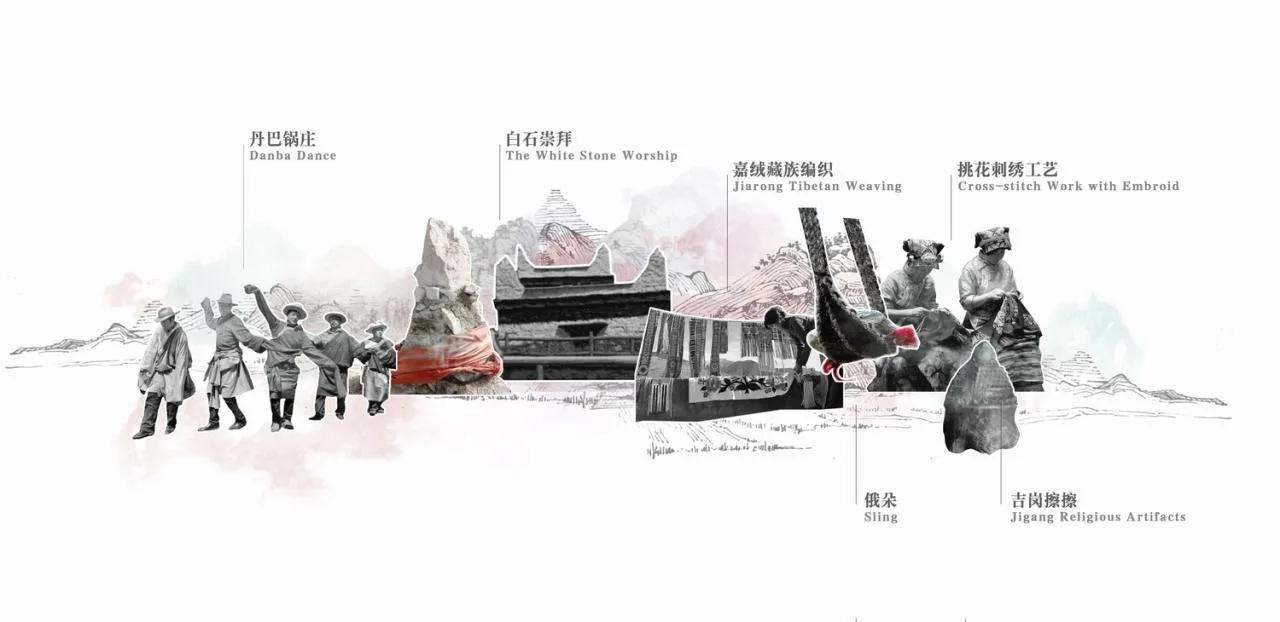
Our design merges the unique cultural symbols of the Jiarong Tibetan people with the architectural style of the Zhuokeji Tusi Official Village, drawing inspiration from the traditional stone-stacked facade typical of the region. Using space as a medium, we aim to preserve the local historical and cultural heritage, integrating traditional regional architecture into both the spiritual and daily lives of the community.
2: Venue Information & Regional Culture
Venue Photos
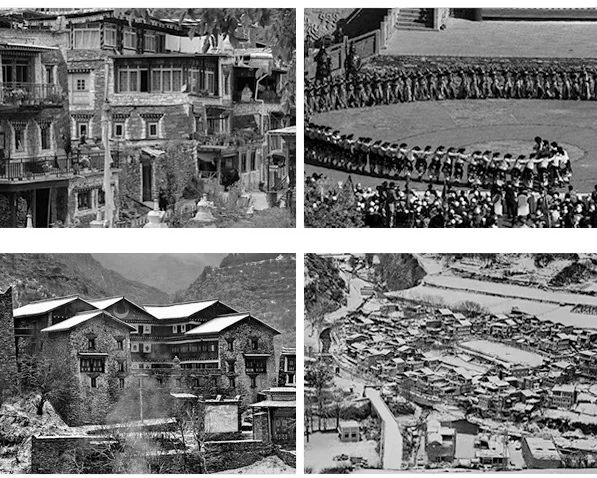
Cultural Customs
Village Environment
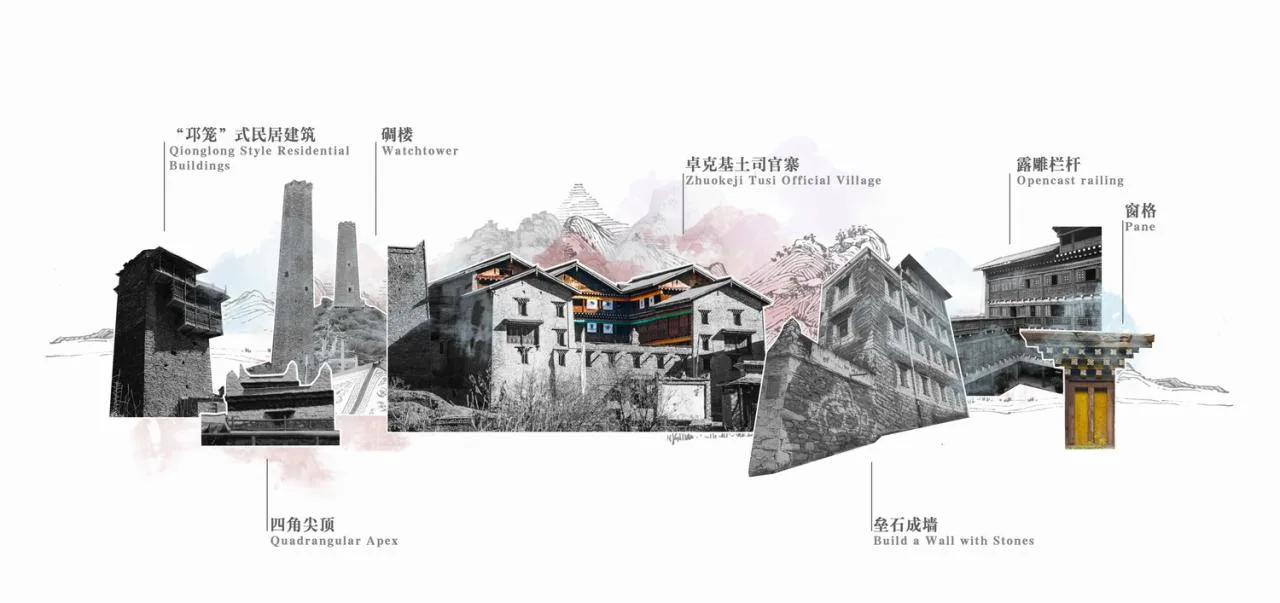
3: Spatial Composition
Site Plan
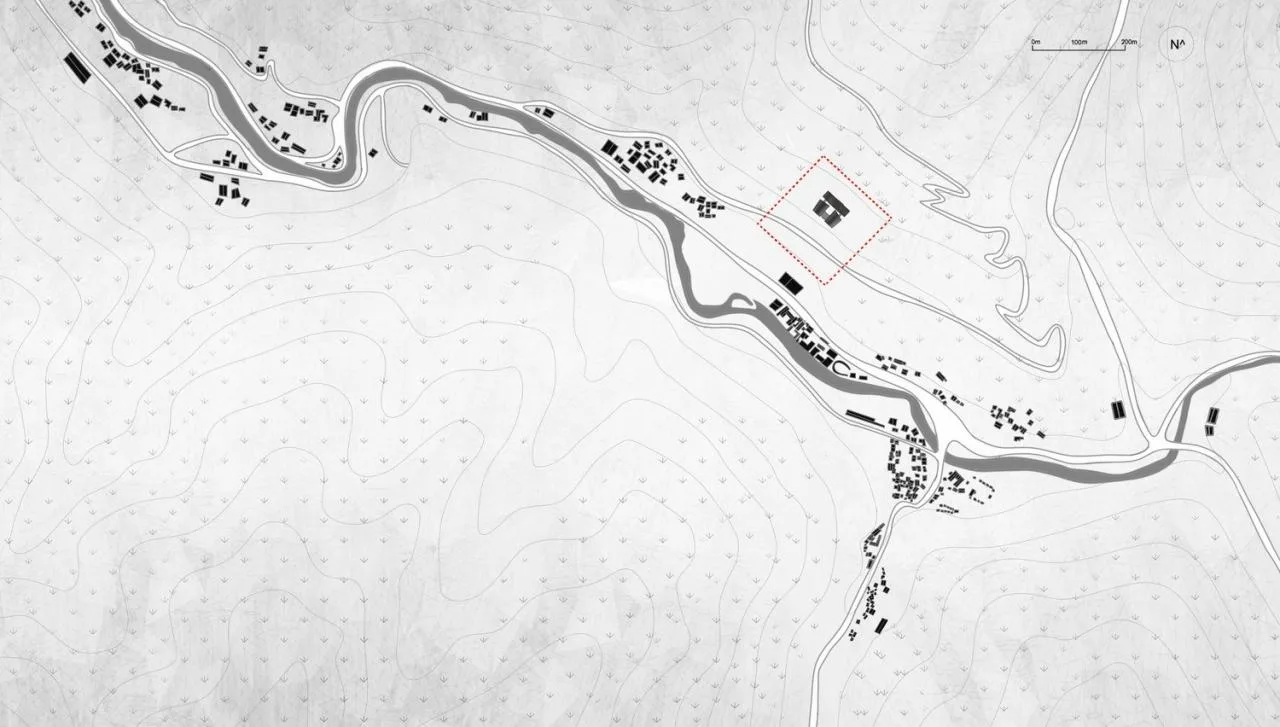
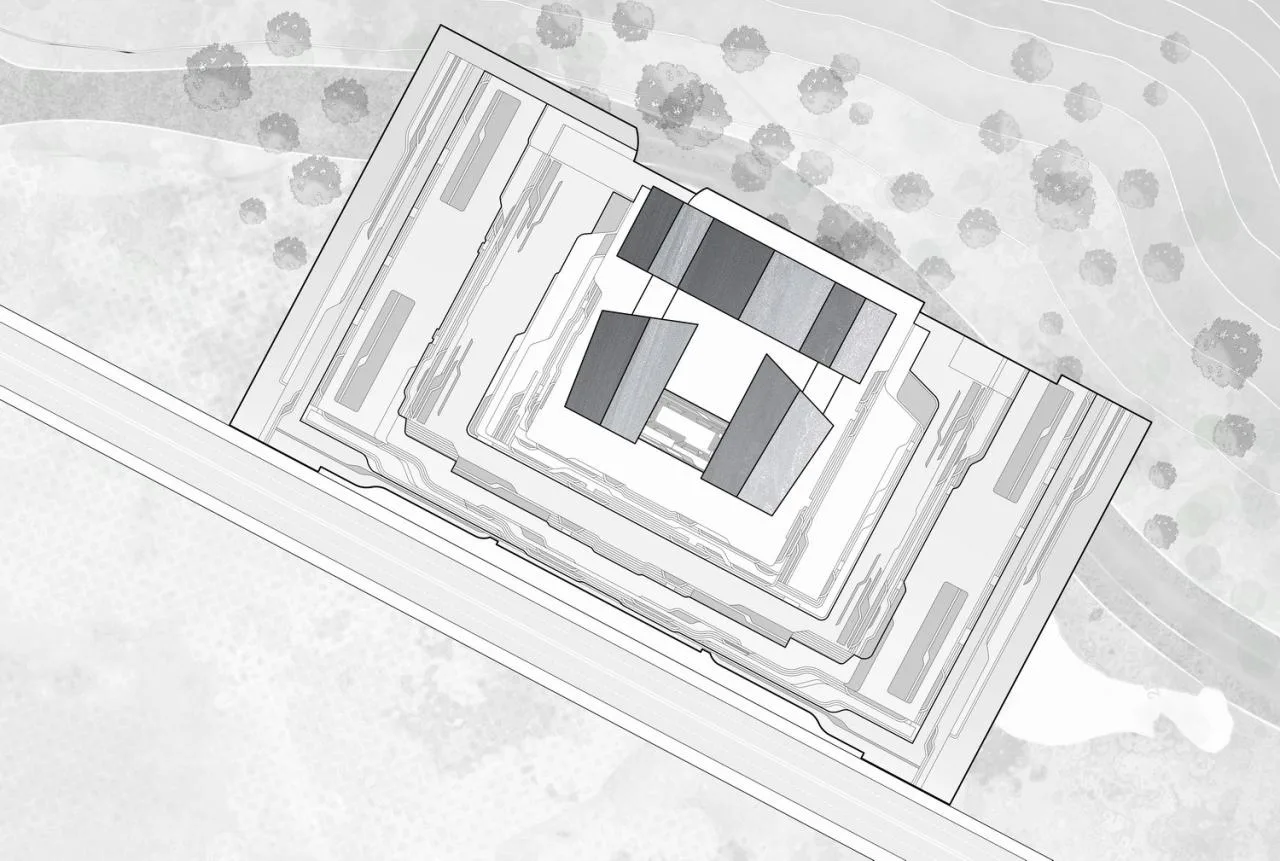
The project occupies a vacant plot on the northern slope of Xisuo Village, facing Nazugou to the south. It is flanked by traditional residential buildings and backed by dense, untouched forest. To protect the landscape and respect the cultural context of Xisuo, the site is set apart from the village, overlooking the Zhuokeji Tusi Official Village across the river.
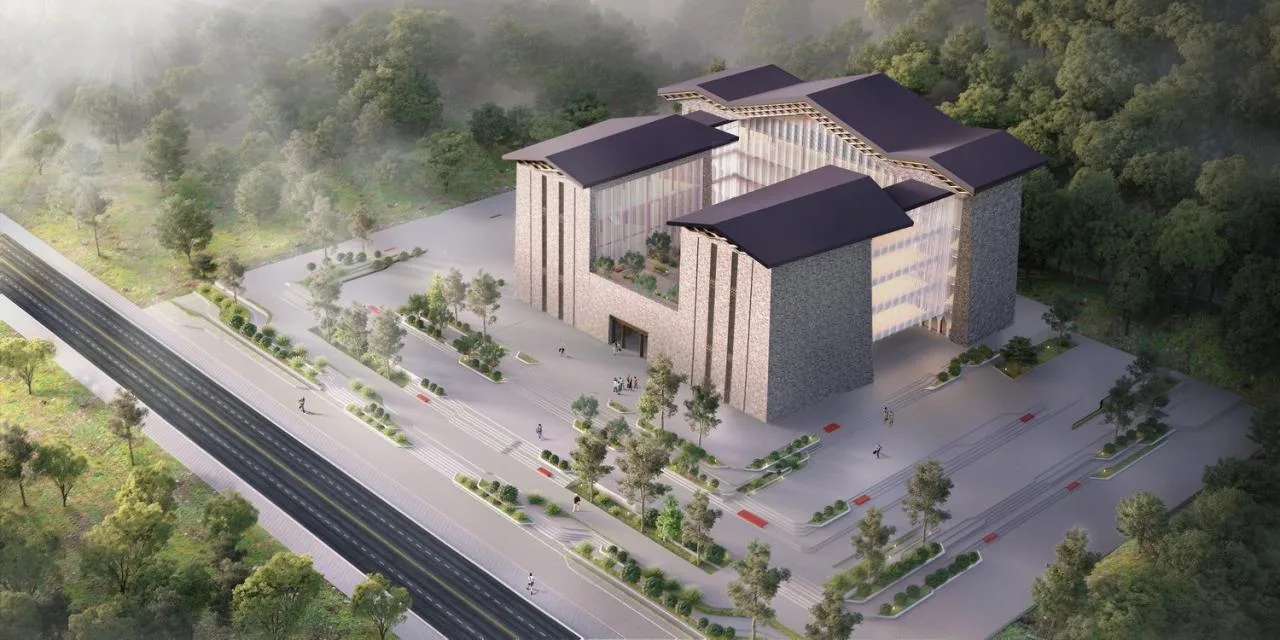
The cultural complex covers approximately 25,000 square meters, with a building footprint of around 5,200 square meters.
4: Design Intentions
Morphological Development
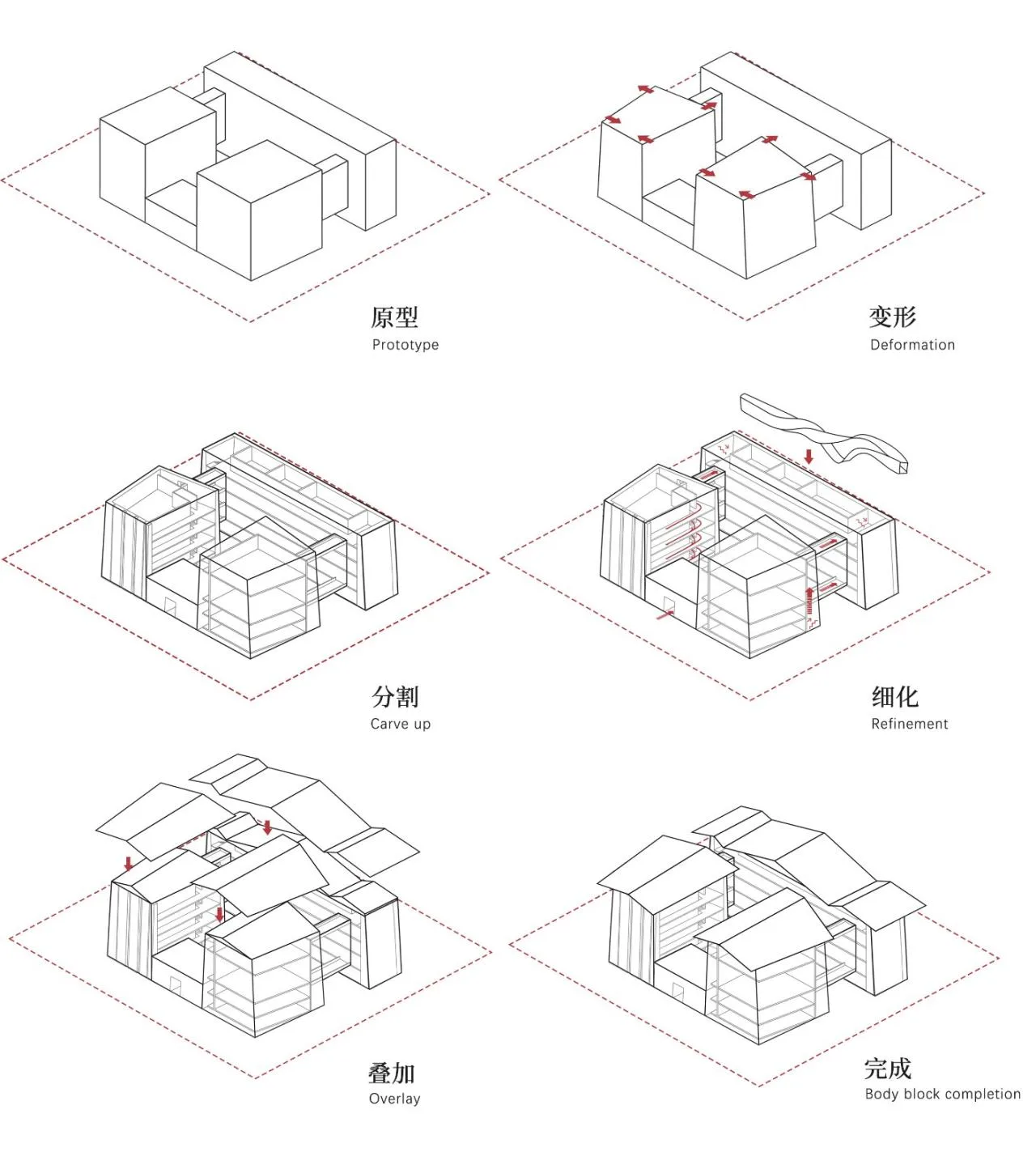
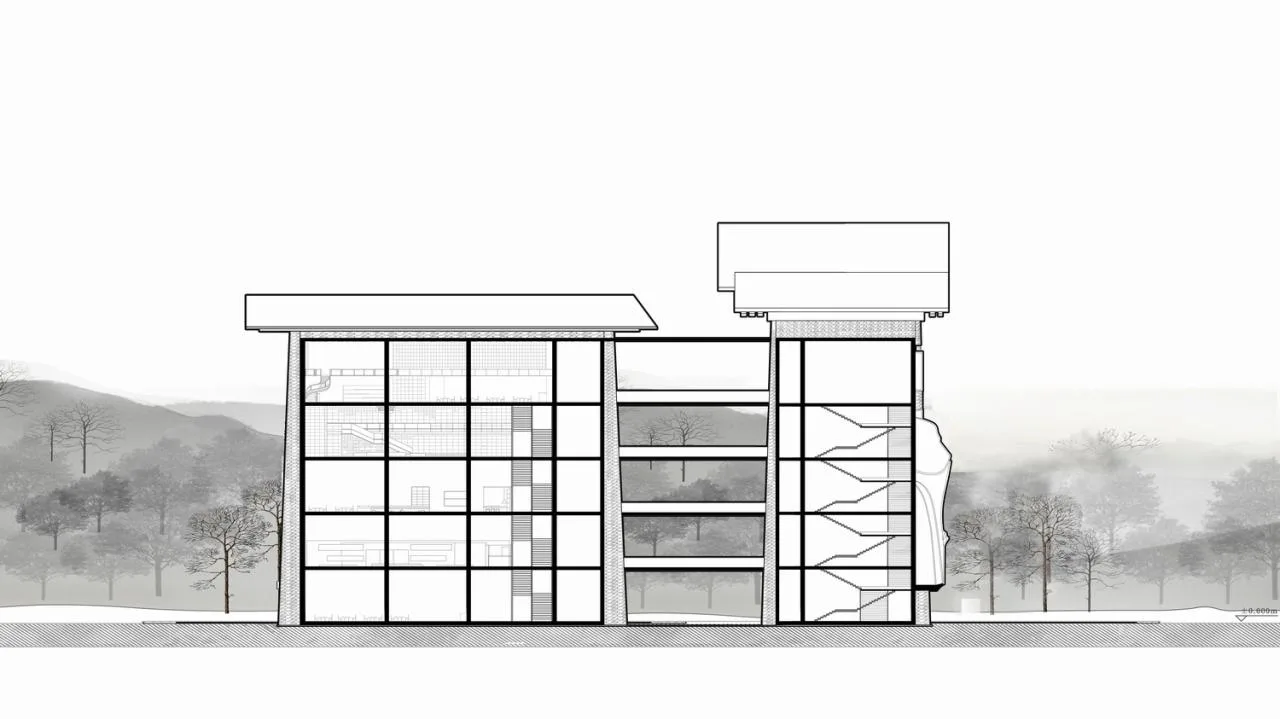
The architectural design continues the symmetrical axis established by the Tusi official village, dividing the building into front and rear sections connected by a suspended corridor. This corridor forms a “loop” shape, enhancing the interaction between the two parts.
The front section features “concave” blocks that simplify complexity, giving the thick trapezoidal stone walls a solemn and powerful presence. To accommodate tourists, a streamlined corridor is added to the rear block, bringing natural landscapes indoors and emphasizing traditional stone textures while infusing new vitality into the structure.
Spatially, the design opts for a flexible layout, linking spaces based on function to provide visitors with an engaging experience.
By grounding the design in traditional architectural forms and integrating contemporary spatial concepts, the project seeks to create a cultural complex that harmonizes traditional architecture with modern design principles.
5: Building Functions
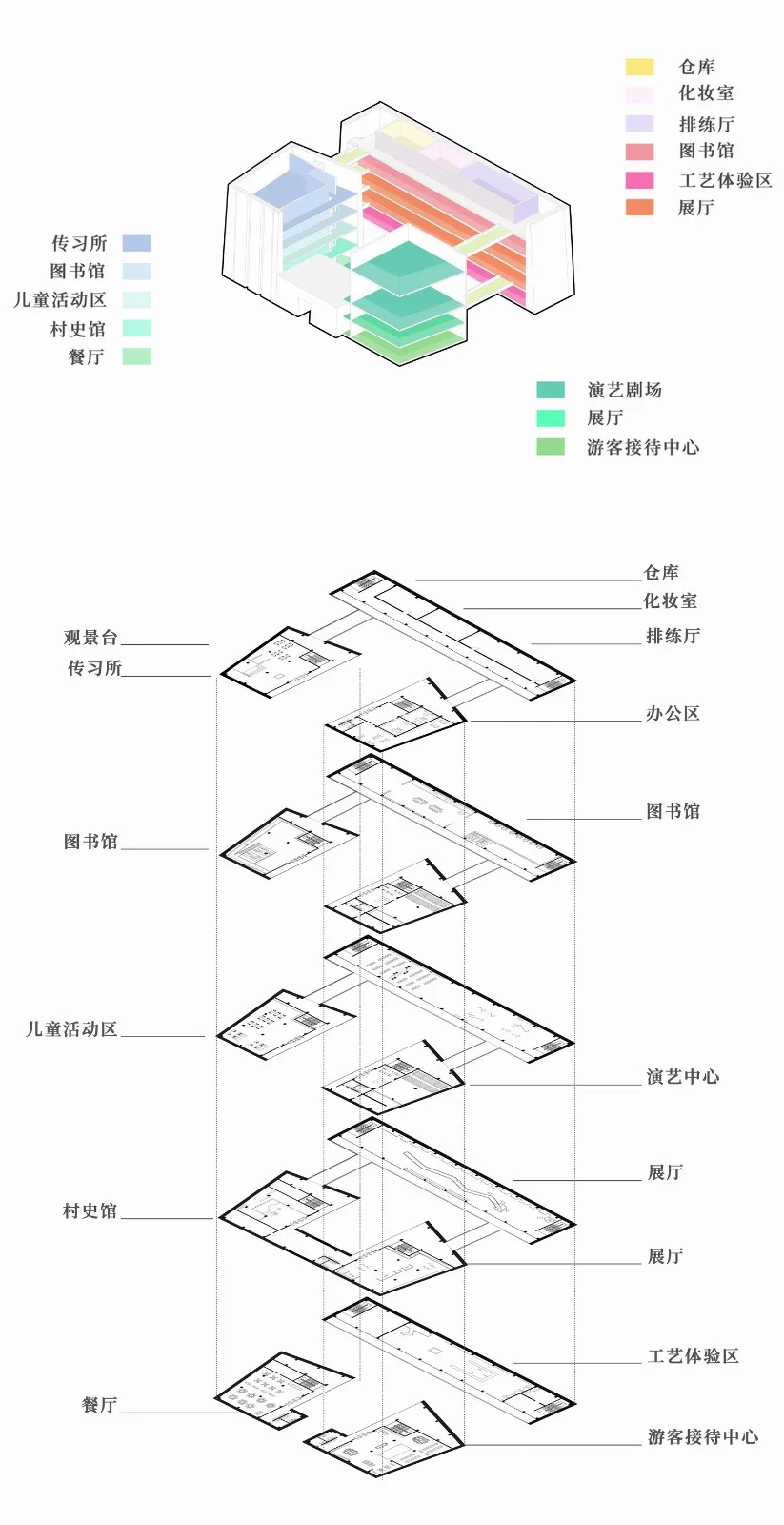
The cultural complex caters to both local villagers and international tourists. It houses a village history museum, exhibition hall, reception center, craft experience area, performing arts theater, library, village training center, restaurant, and more.
6: Building Facade
The architectural layout follows the spatial logic of the Zhuokeji Tusi Official Village, connecting different spaces through corridors.
7: Design Drawings
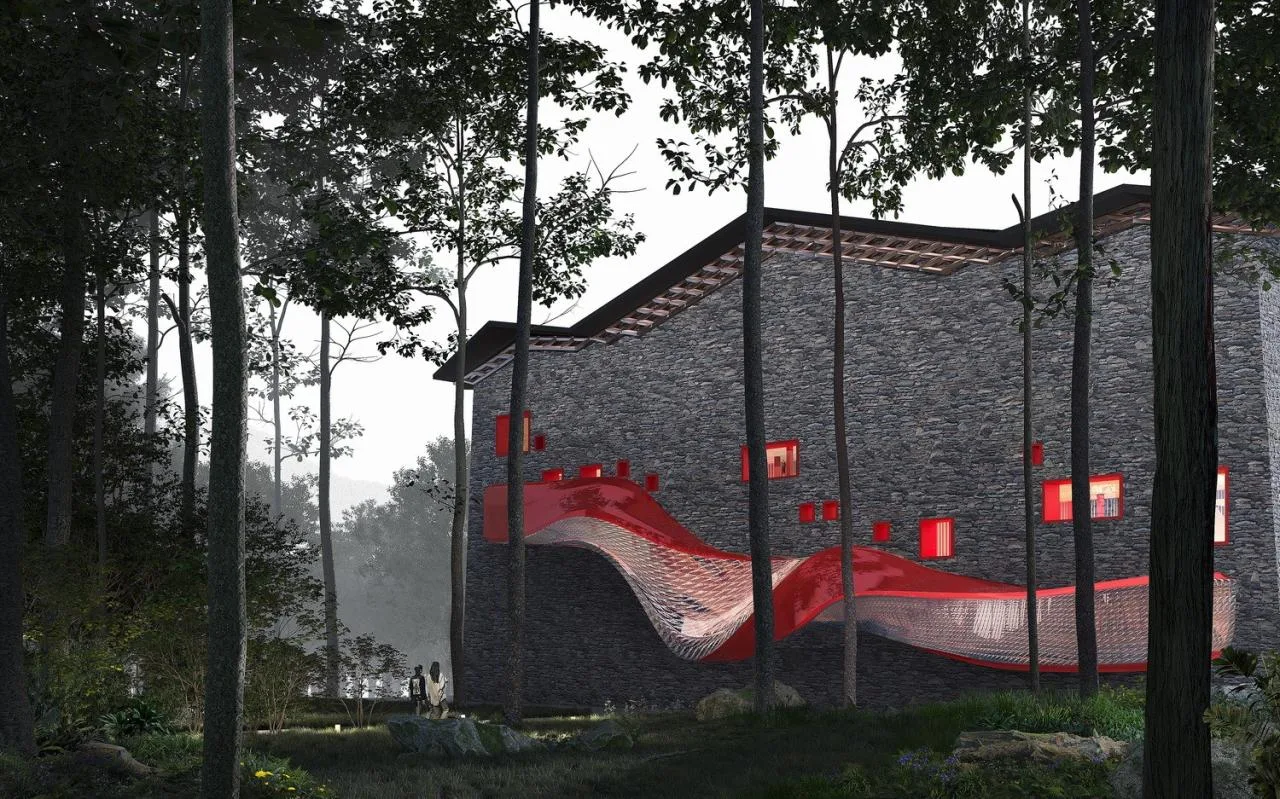
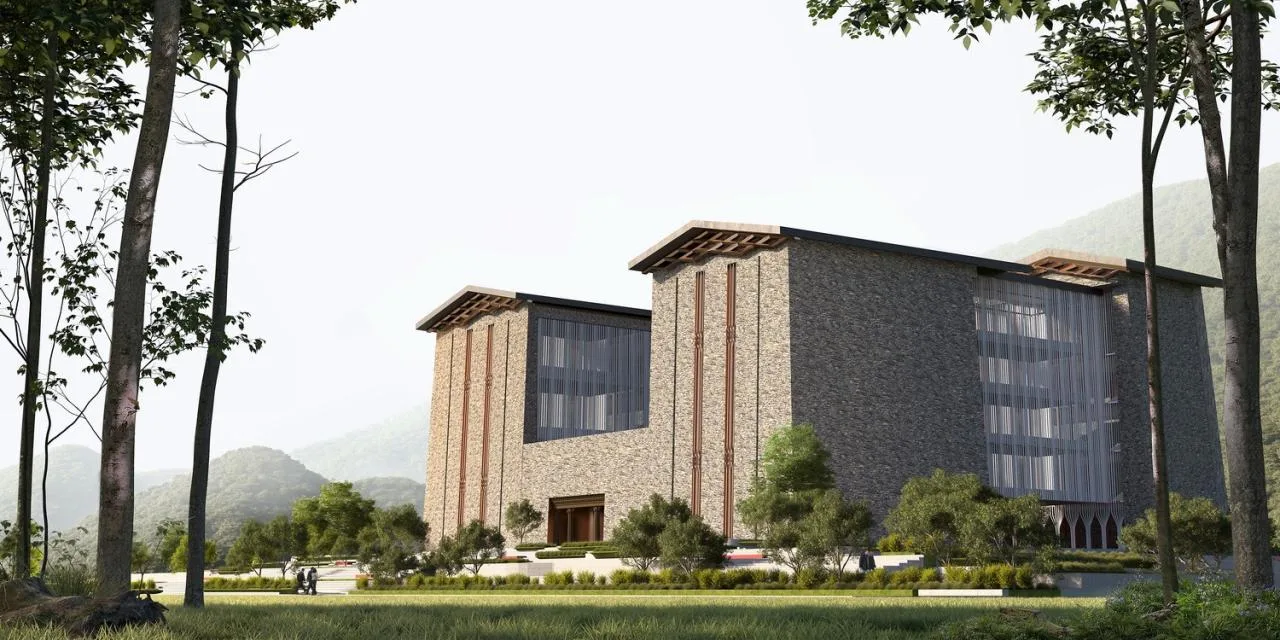
The design preserves the traditional form of the Tusi official village by combining stone wall facades with glass corridors at the rear. These curved glass corridors seamlessly connect layers of interior spaces, bringing lush outdoor scenery indoors to create a distinctive public tourist area.
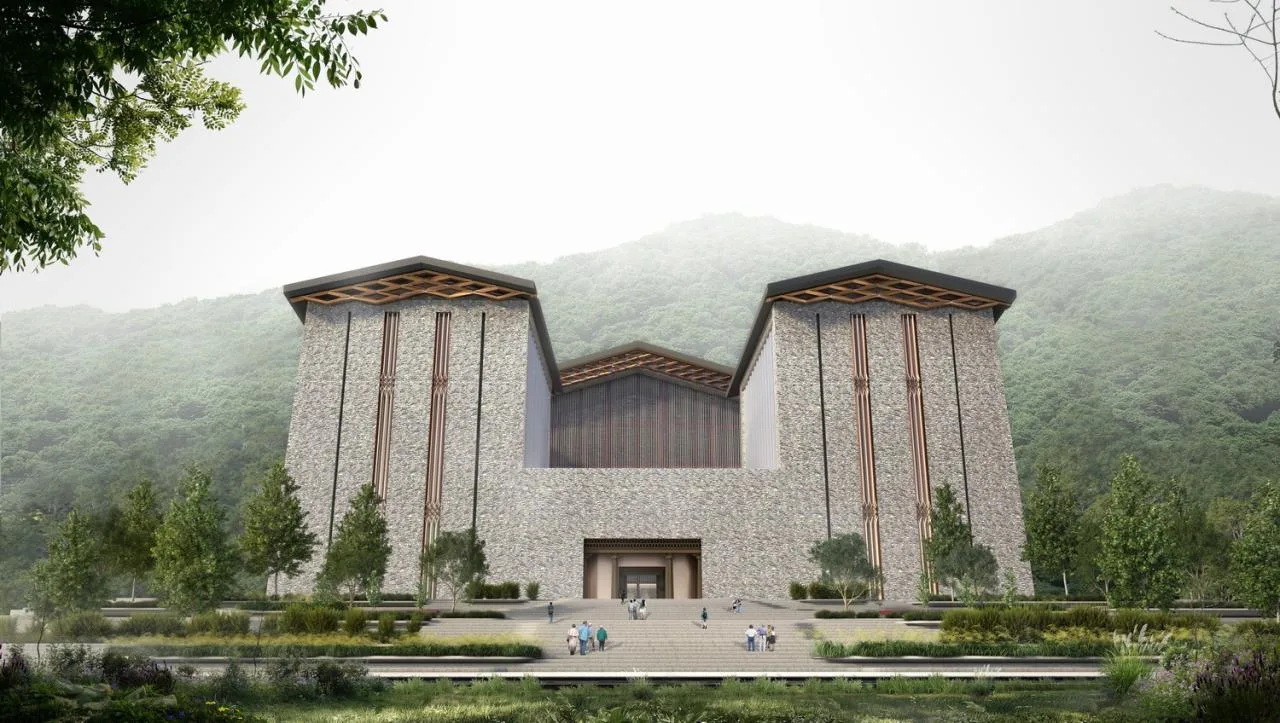
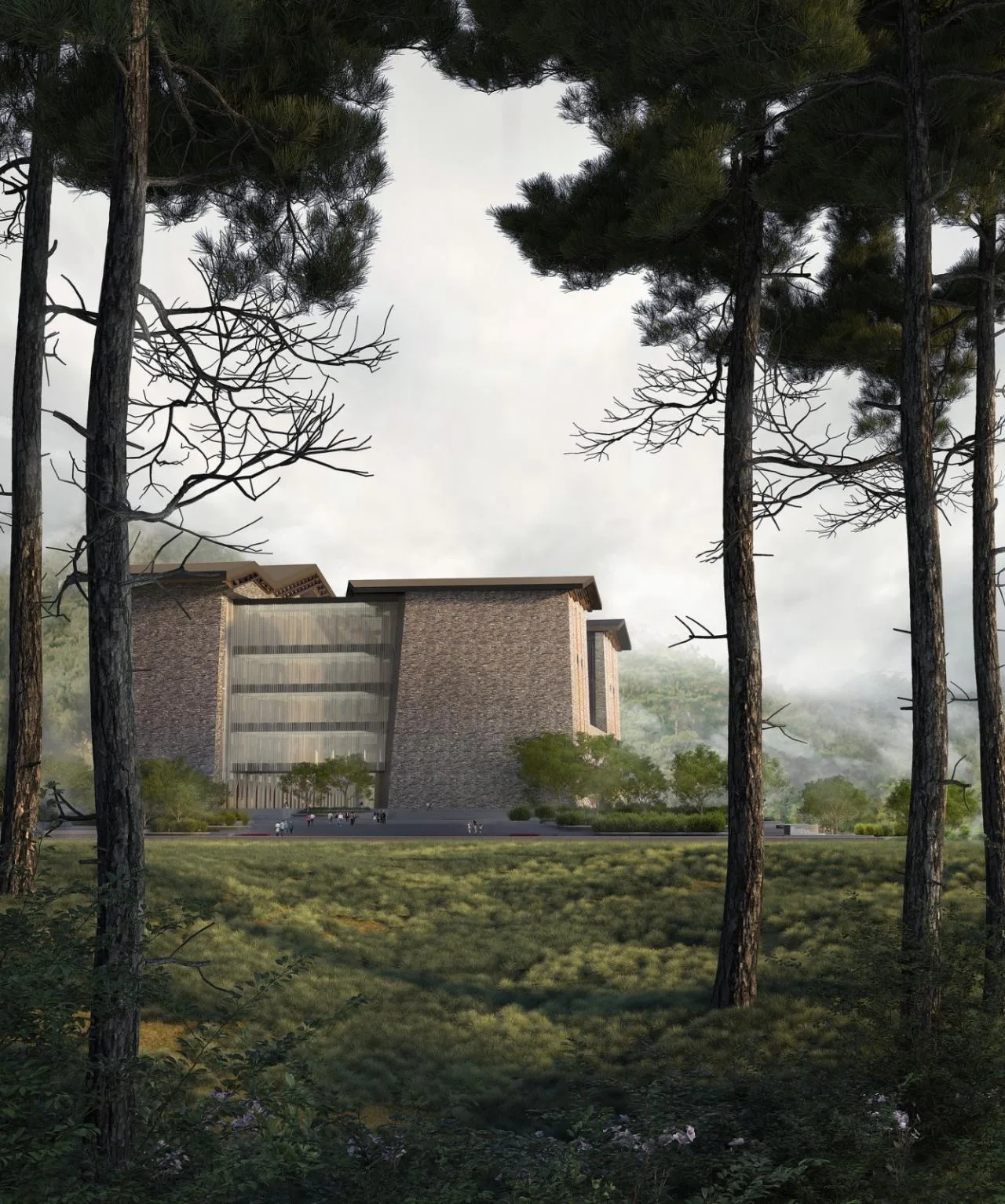
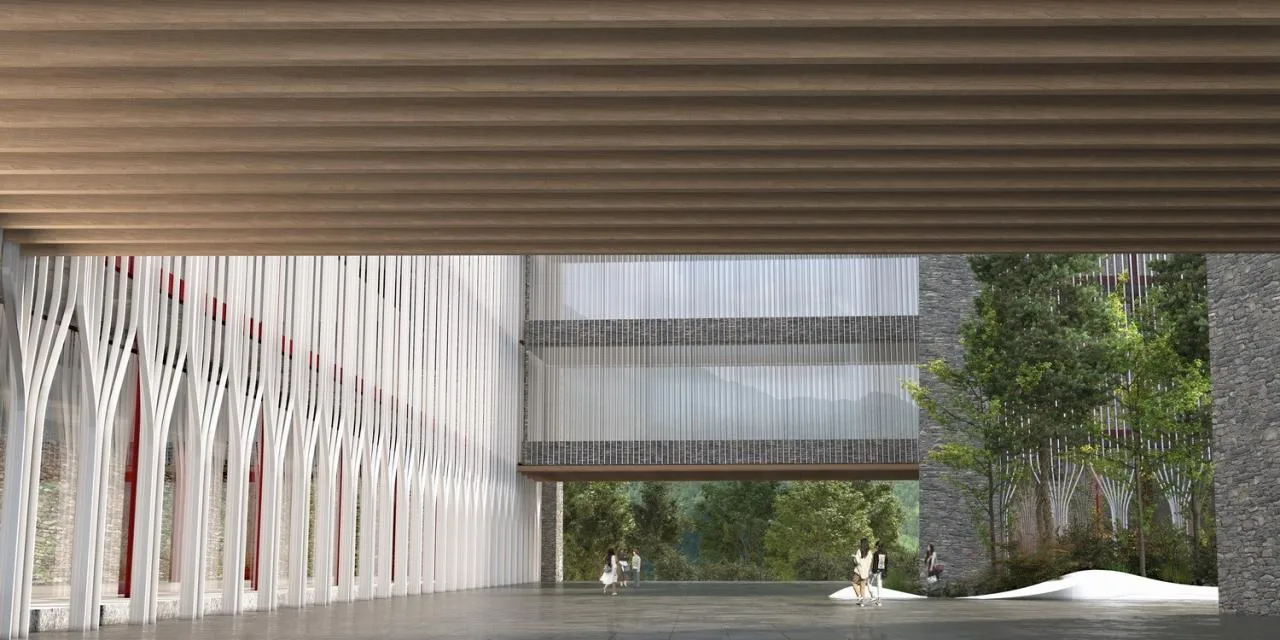
From a distance, the thick stone walls combined with grid curtain walls add depth and detail to the facade. Inside, the spacious atrium offers ample space for visitors, while the continuous curtain wall blurs the boundary between the atrium and interior, creating a soft and inviting atmosphere.
3.1 Exhibition Hall
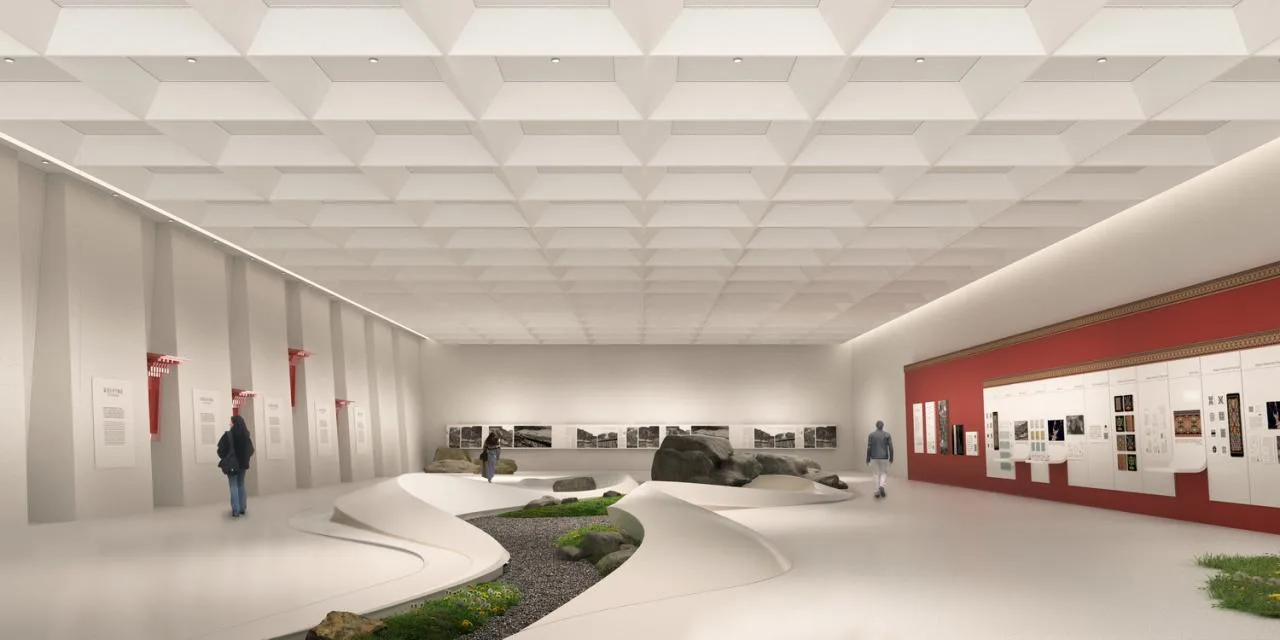
The exhibition hall showcases artifacts and historical photographs that reflect local culture and traditions. Display areas line both sides of the hall’s walls, featuring smooth curved surfaces that enclose a central rest area with a sunken landscape pool. The flowing curves guide visitors through the space, while the sunken pool blurs the boundary between indoors and outdoors, enriching the visitor experience.
3.2 Training Center
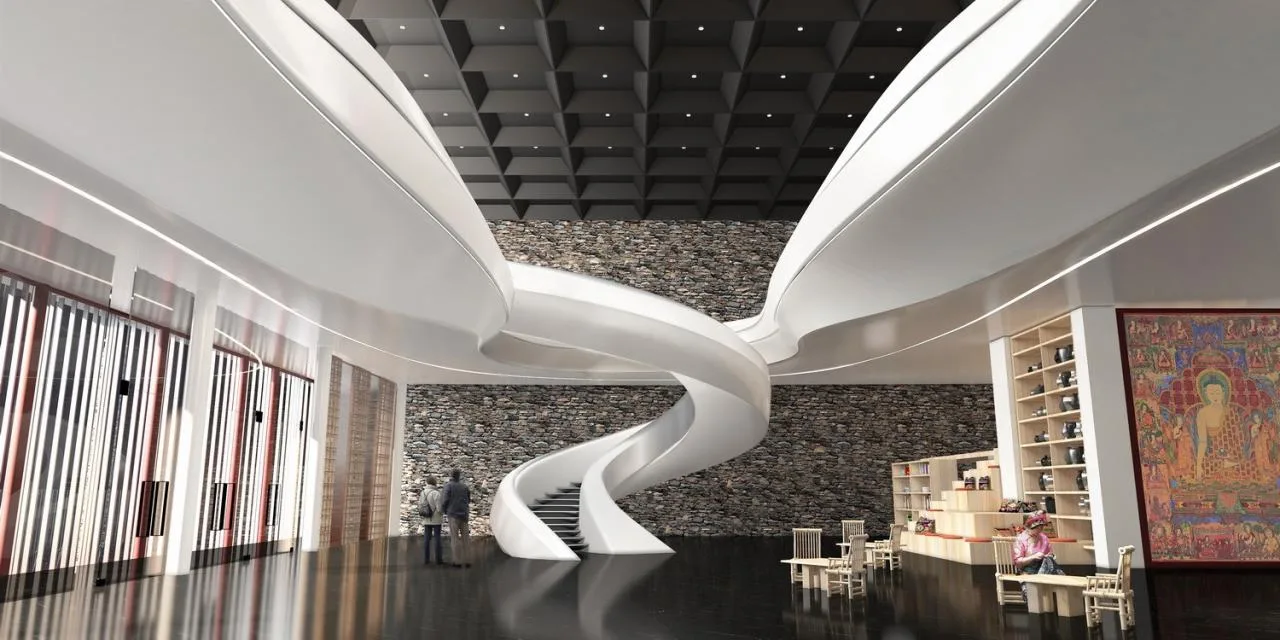
Serving as a hub for promoting local ethnic culture, the training center features curved corridors and spiral staircases that create a dynamic atmosphere. The black and white color palette fosters a solemn and calm environment.
3.3 Restaurant
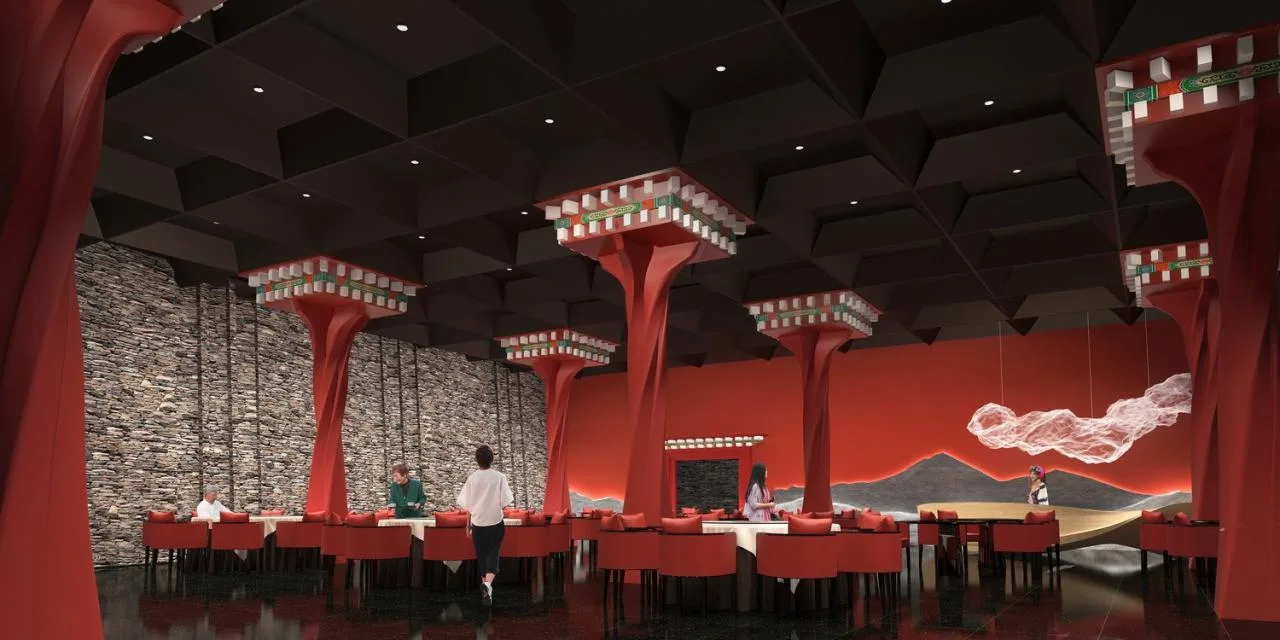
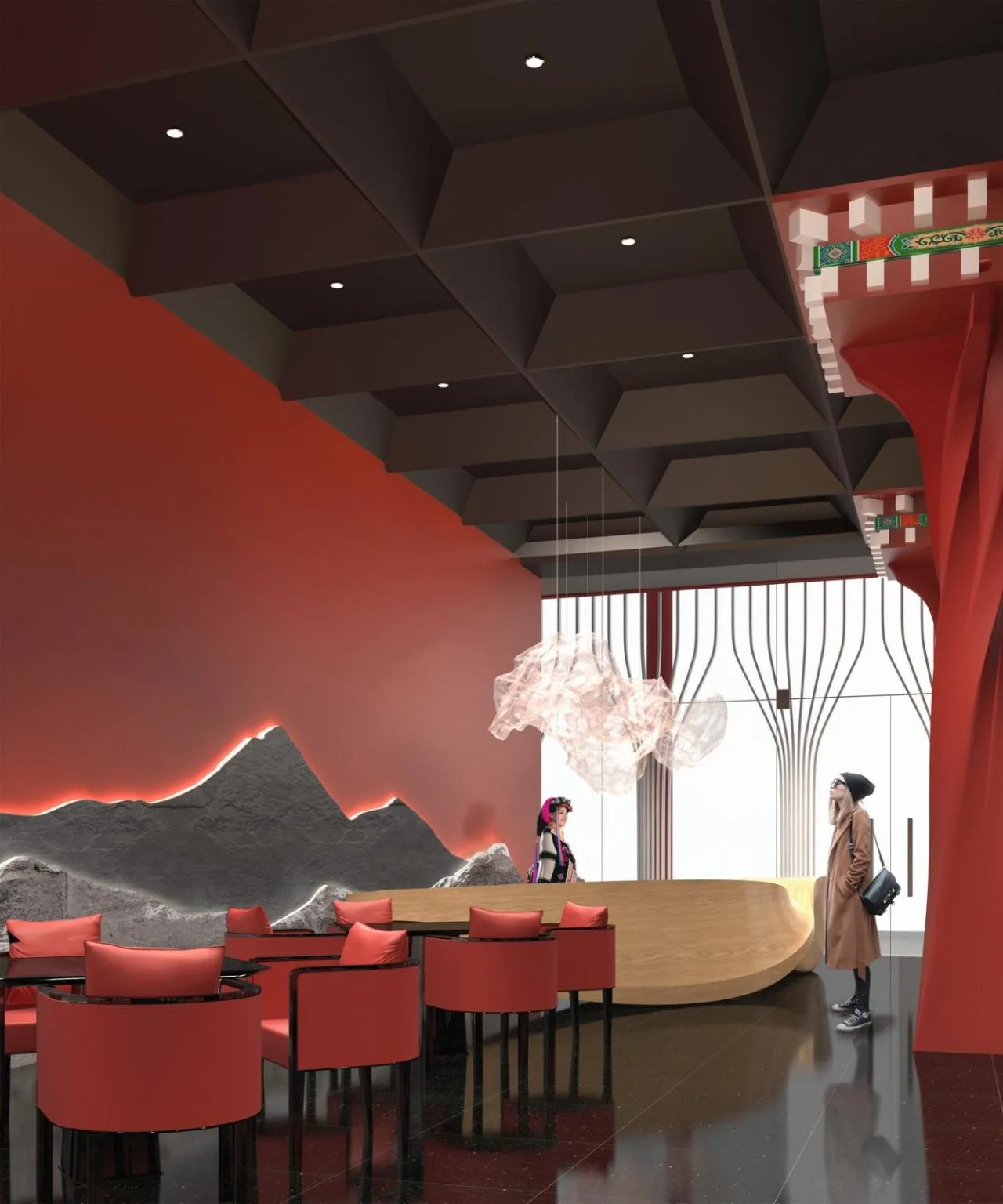
The restaurant’s interior combines black and red tones with stone elements to create a rich, textured space. Wooden columns, characteristic of the local architecture, blend with flowing curved forms, giving the dining area a distinctive personality. This design offers visitors an authentic experience of Jiarong Tibetan cuisine culture.
3.4 Library
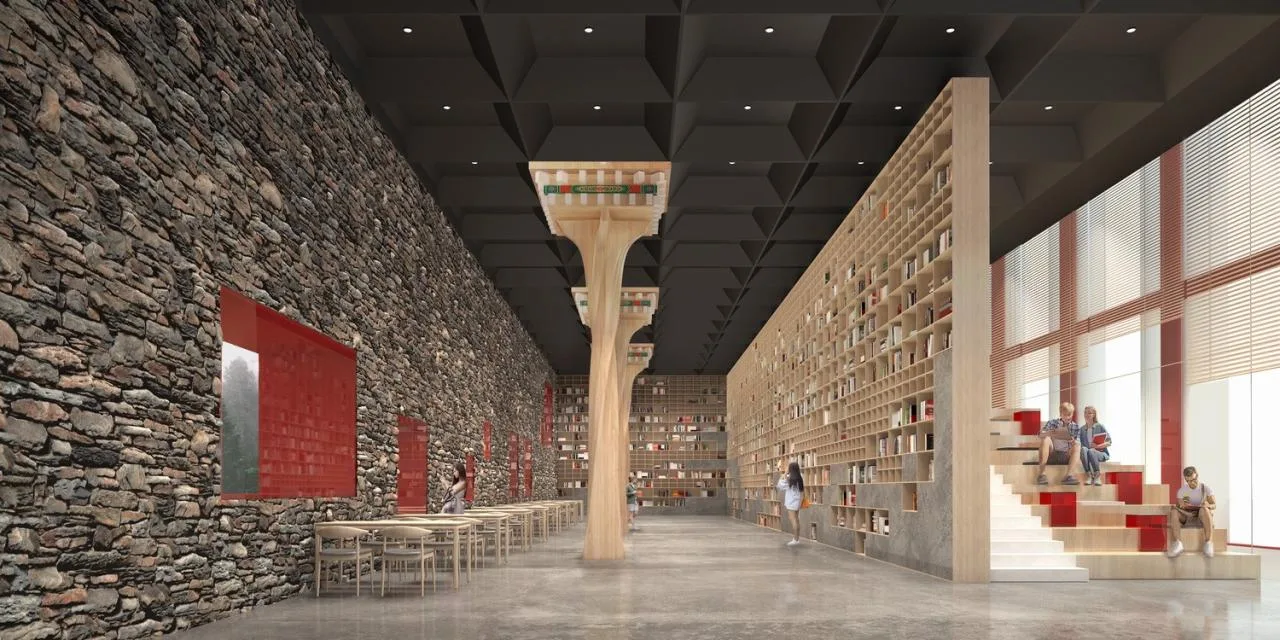
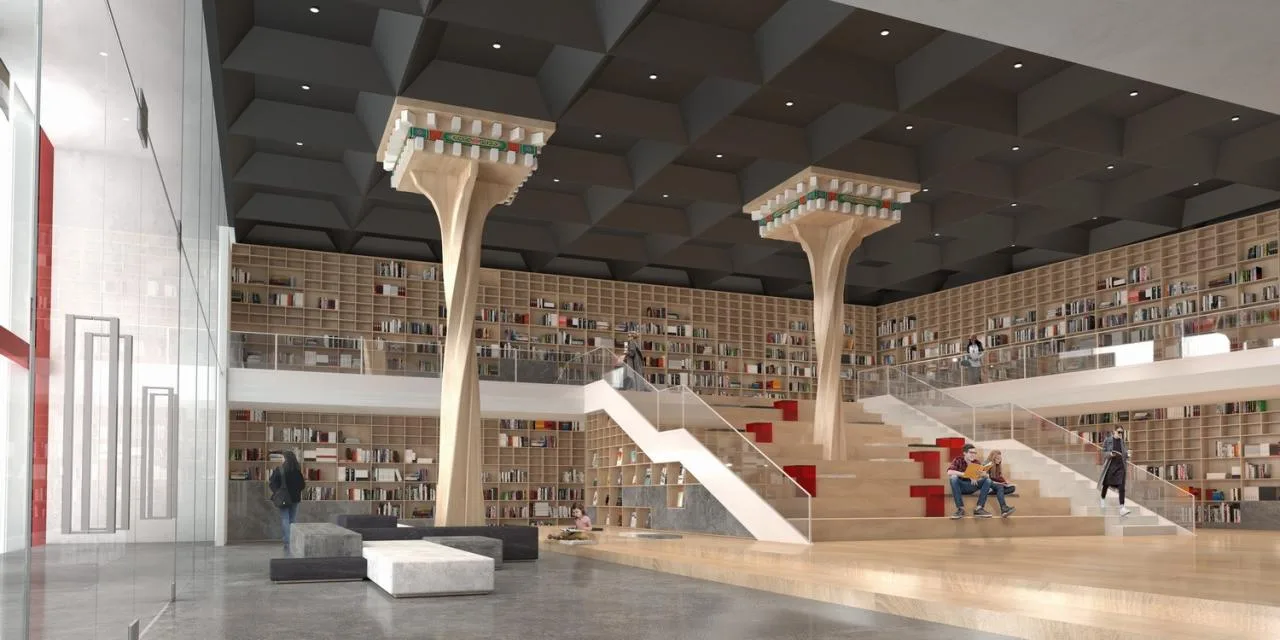
The library fills a local gap by providing a spacious reading area to serve both villagers and tourists. It incorporates traditional wooden structures, enhancing the regional architectural atmosphere. The integration of bookshelves with walls creates an immersive reading environment. Through the windows, visitors can enjoy views of the village and mountains, offering a peaceful and comfortable space to read surrounded by nature.
3.5 Children’s Activity Area
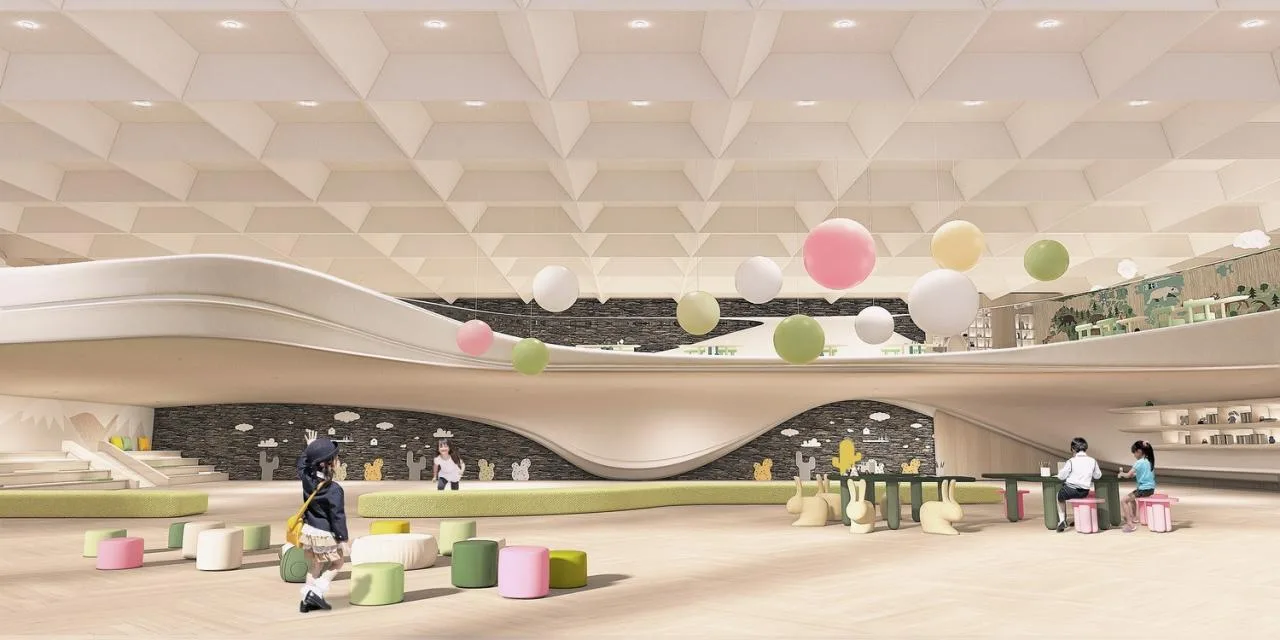
Designed as a fun and safe space for children, the activity room features bright colors and curved forms that blend aesthetics with functionality. It aims to meet children’s needs for reading and play in a comfortable and enjoyable environment.
8: Conclusion
Modern architecture is gradually replacing traditional forms due to advances in materials, structural techniques, economics, and comfort. However, the traditional stone architecture of the Jiarong Tibetan people no longer fully meets contemporary living needs. Addressing the survival and relevance of traditional regional architecture is central to this design.
We honor and preserve local traditional construction methods by integrating Jiarong Tibetan cultural symbols with the architectural style of the Zhuokeji Tusi Official Village. Traditional stone-stacked facades are used to influence the building’s appearance while contemporary structural styles are woven into the design. This approach aims to create a cultural complex that breathes new life into traditional architecture, ensuring its legacy continues within a modern context.
Project Information
Project Name: Architectural Design of Xisuo Stone Village Cultural Complex in Marcang City
Designer: Non expert architecture
Project Design & Completion Year: March 2023
Creator: Ding Xianglei
Design Team: Ren Manjia, Chen Shuwen, Xu Ruofan, Li Yajing, Zhou Qingping
Project Location: Sichuan, China
Site Area: 25,000 square meters
Building Area: 5,200 square meters
Photography Credit: Site images sourced from the internet; all other images © Non expert architecture















Must log in before commenting!
Sign Up