
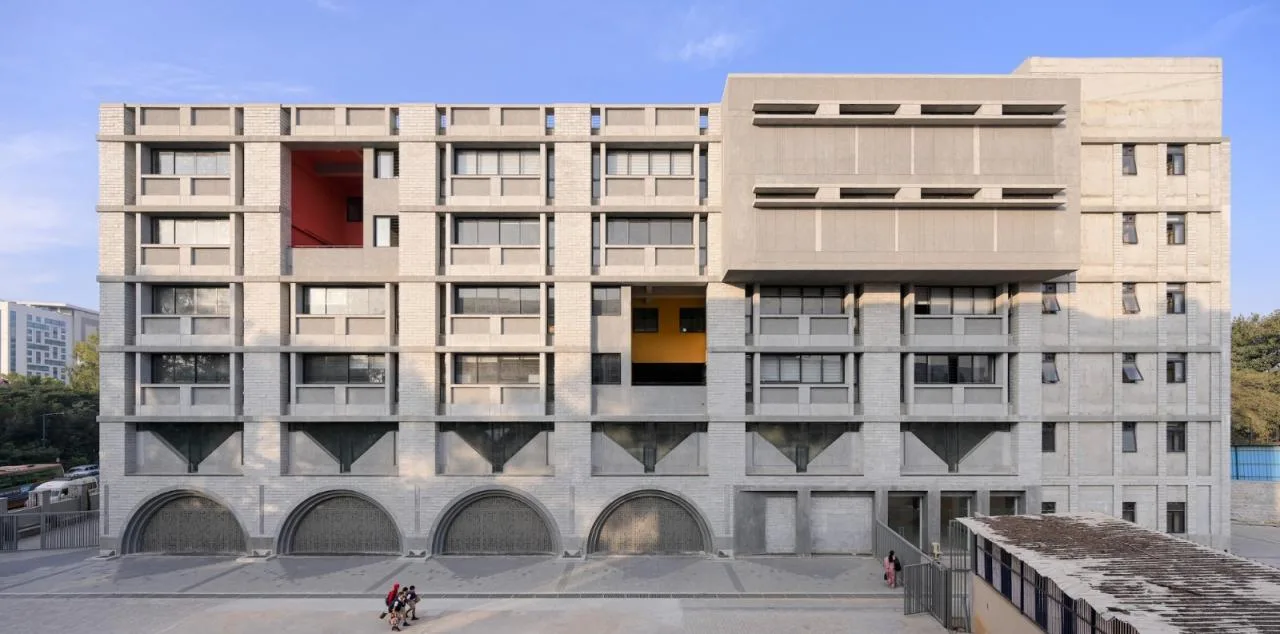
St. Joseph’s Law School belongs to a consortium of colleges affiliated with St. Joseph’s University in Bangalore. Established in 1882 by priests from the French Foreign Missionary Society, St. Joseph’s College evolved into a university. In 1937, the Jesuits, a Catholic religious order focused on education, took over the college.
The design of the new building is influenced primarily by four key factors: the limited urban space, the rich heritage and history of the campus, the young and dynamic user community, and the project’s specific needs.
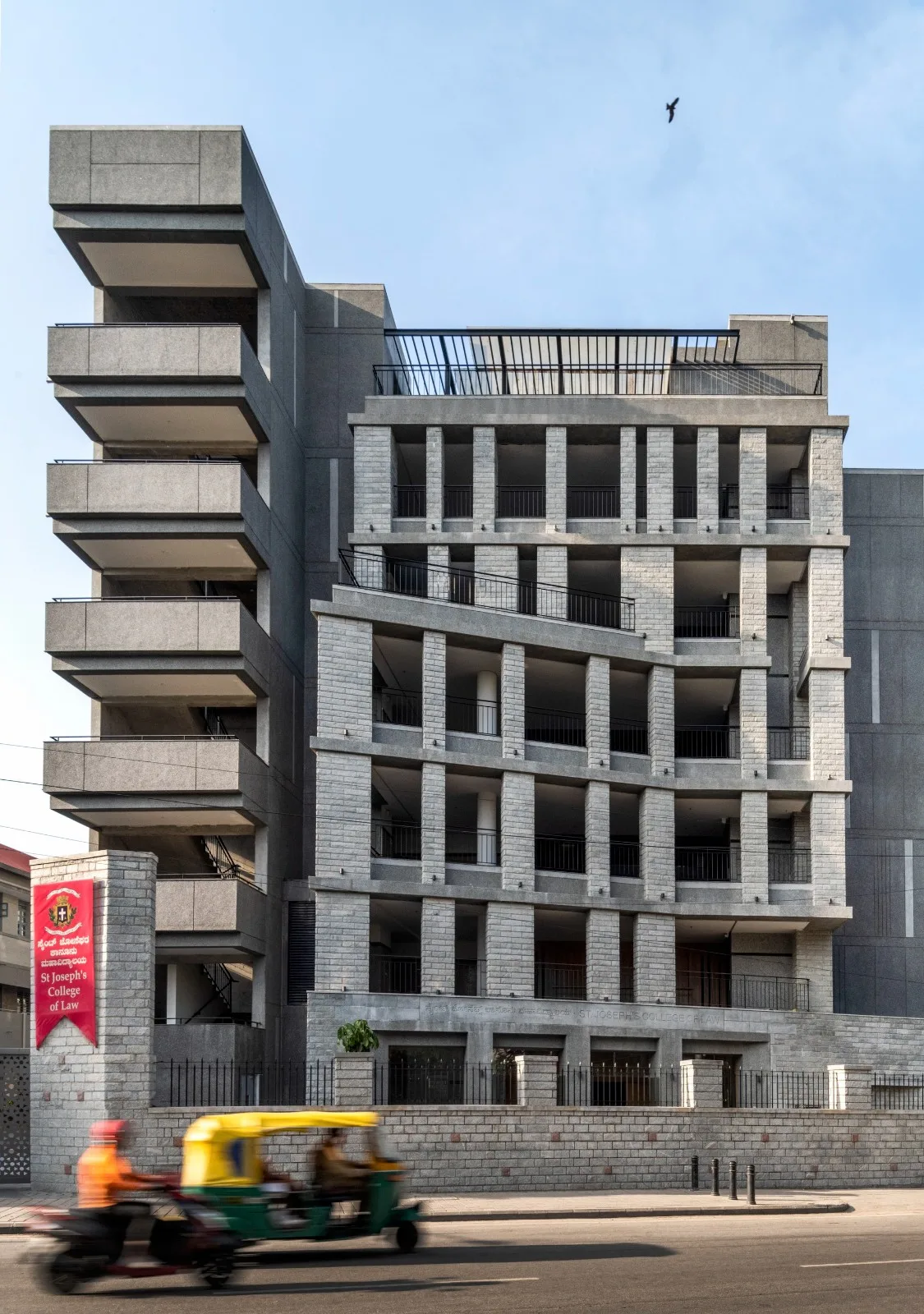
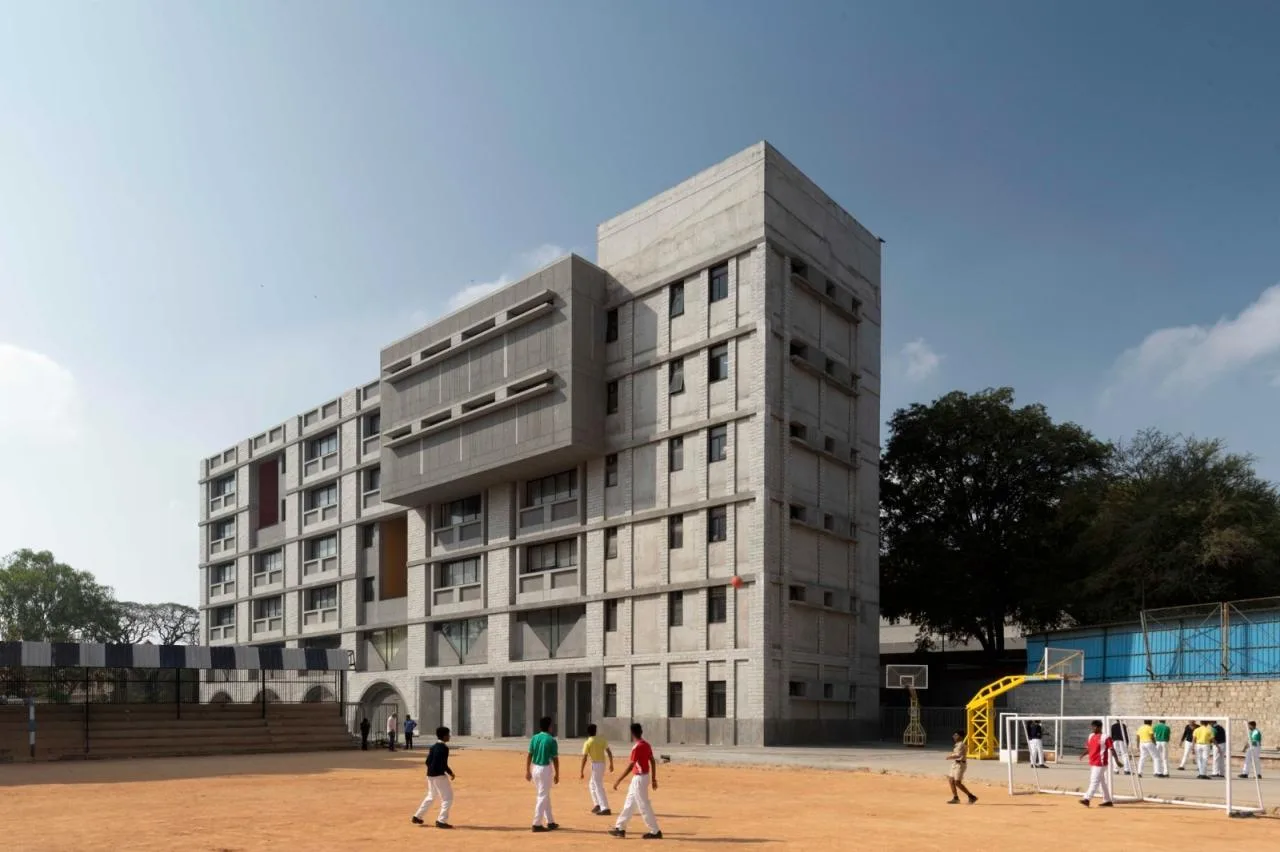
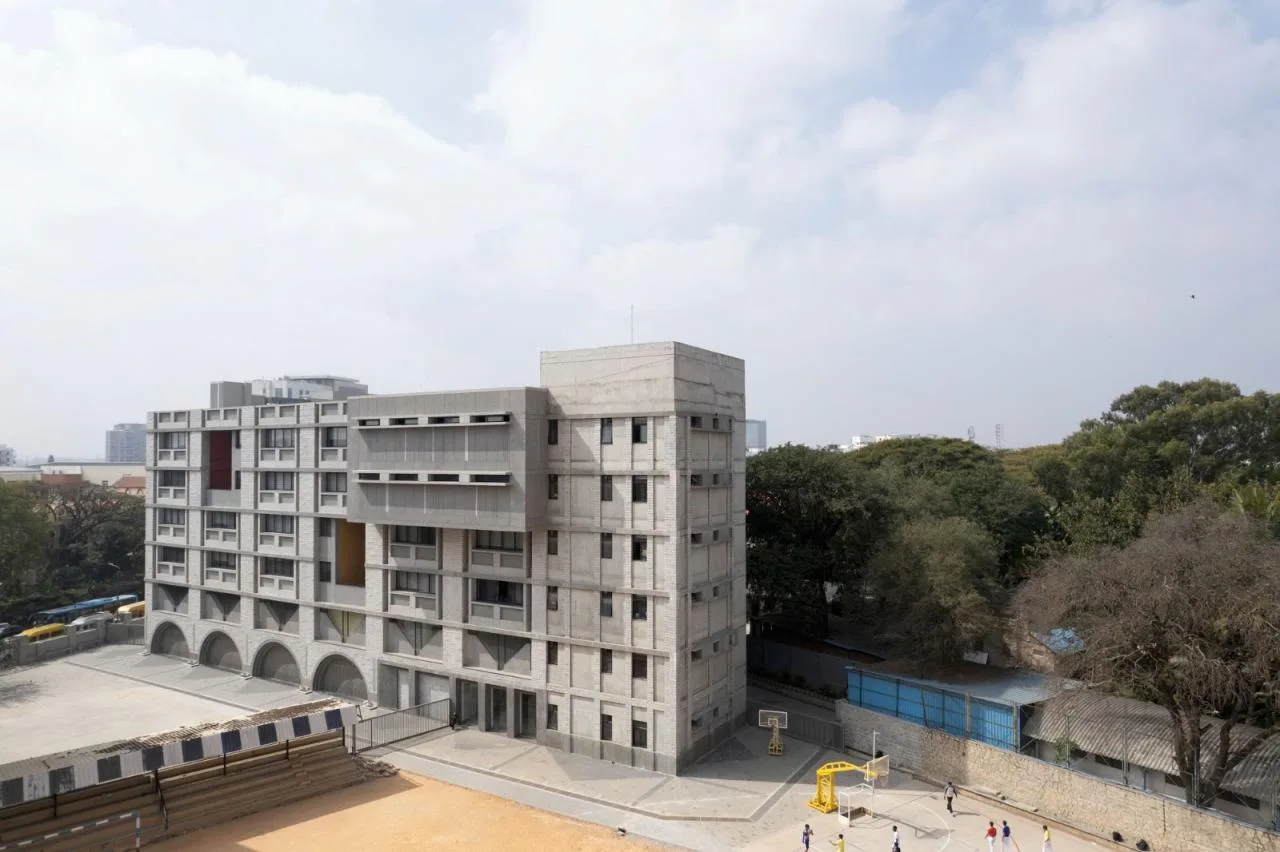
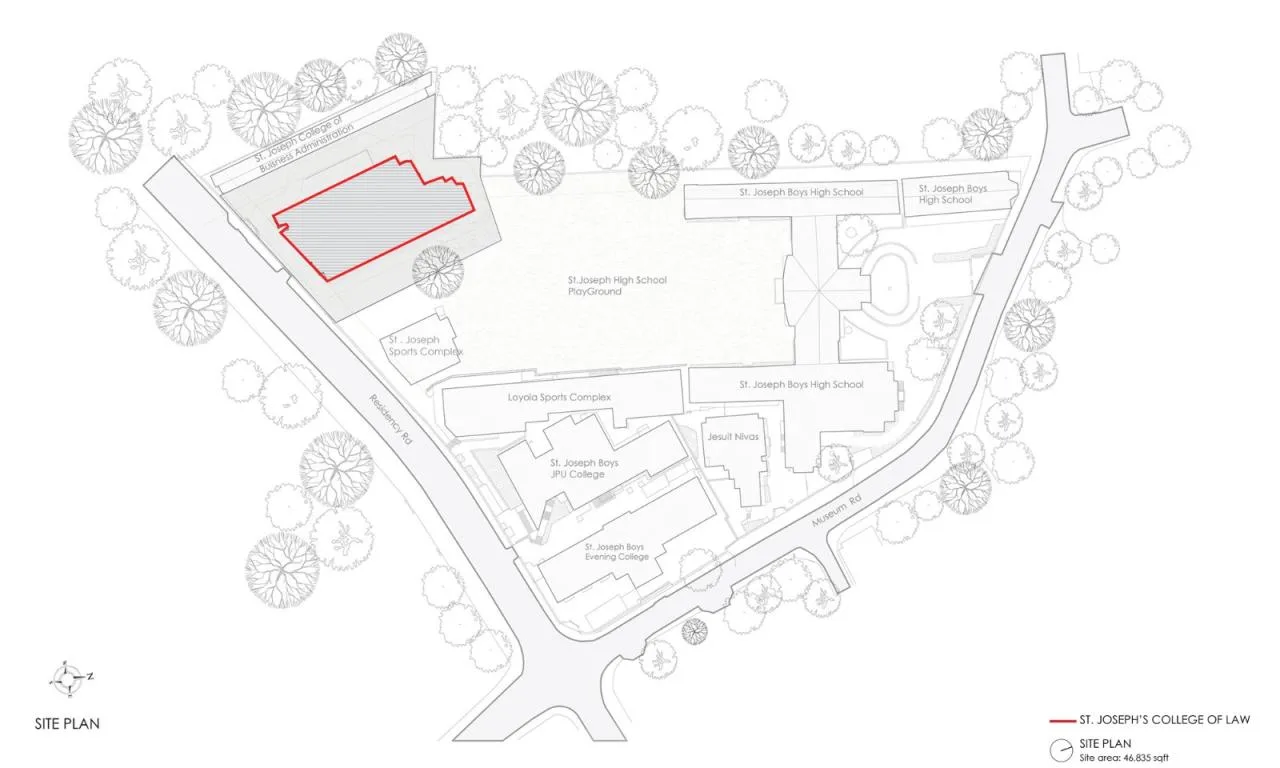
The building sits on just over an acre of land within one of Bangalore’s oldest educational campuses. To the south, the plot borders the main road, with an old street block to the west. A playground lies to the north, and an open space to the east remains reserved for future development.
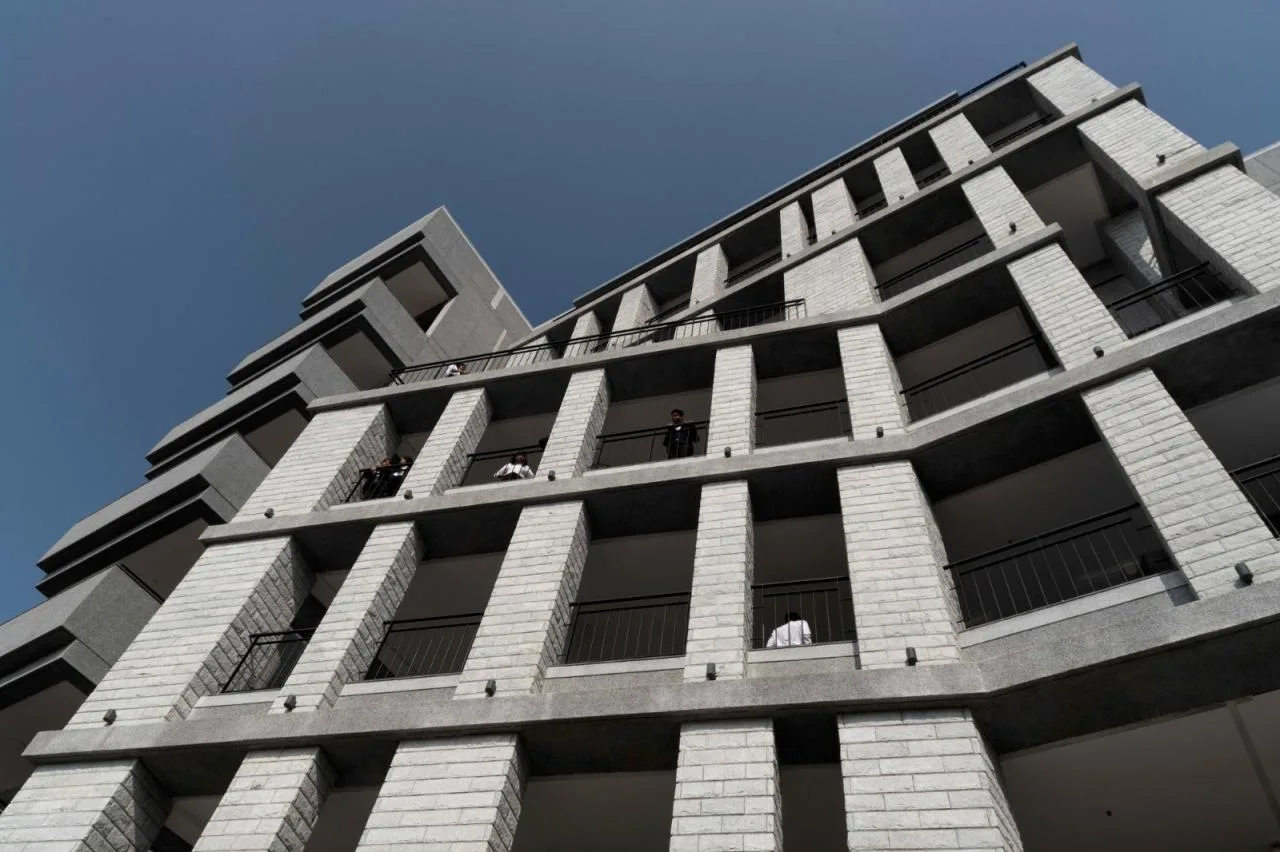
Due to the confined plot in the central business district, the design adopts a vertical approach rather than the traditional sprawling, ground-hugging structures typical of older Catholic institutions.
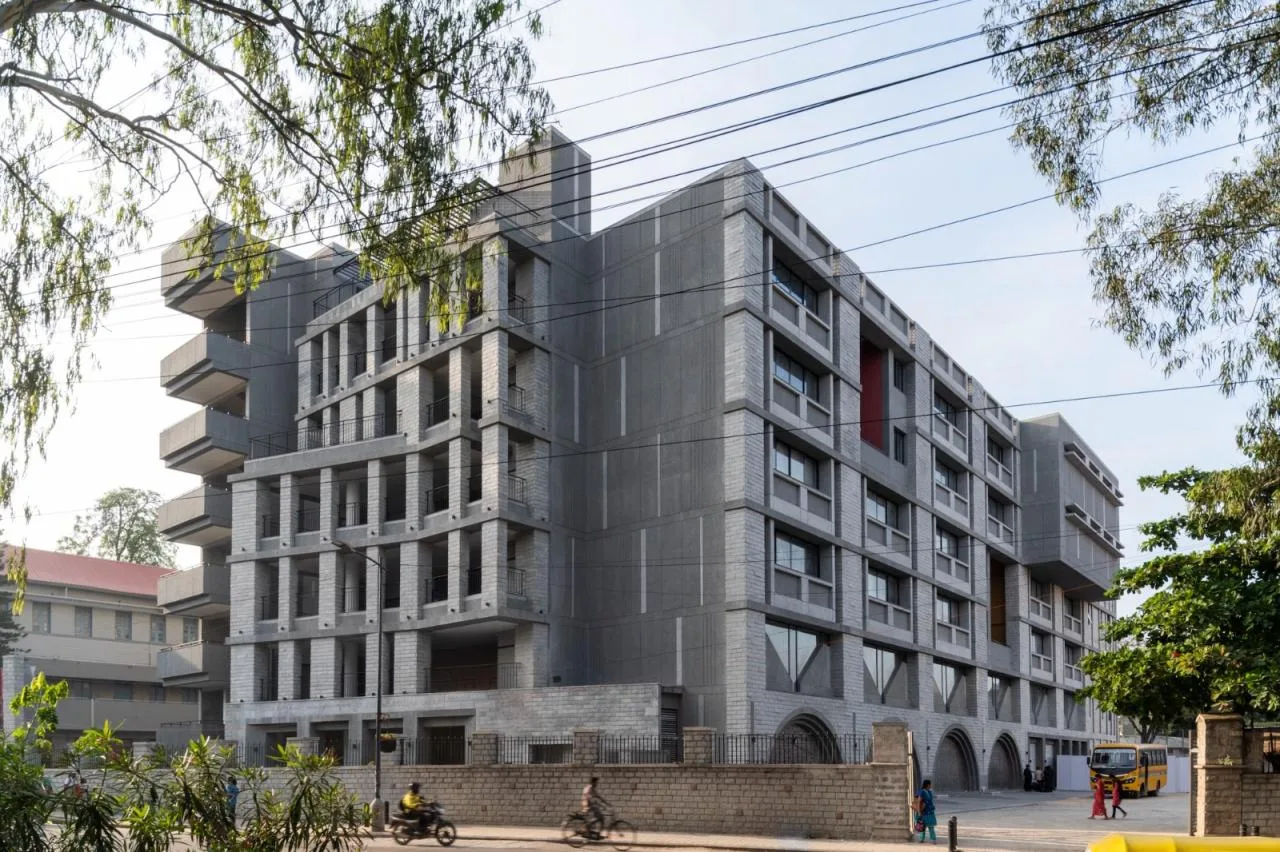
The oldest building on campus dates back to 1910, and there was a desire for the new structures to reflect a similar architectural heritage. However, the design team avoided replicating the common Greco-Roman style found in many Catholic institutions.
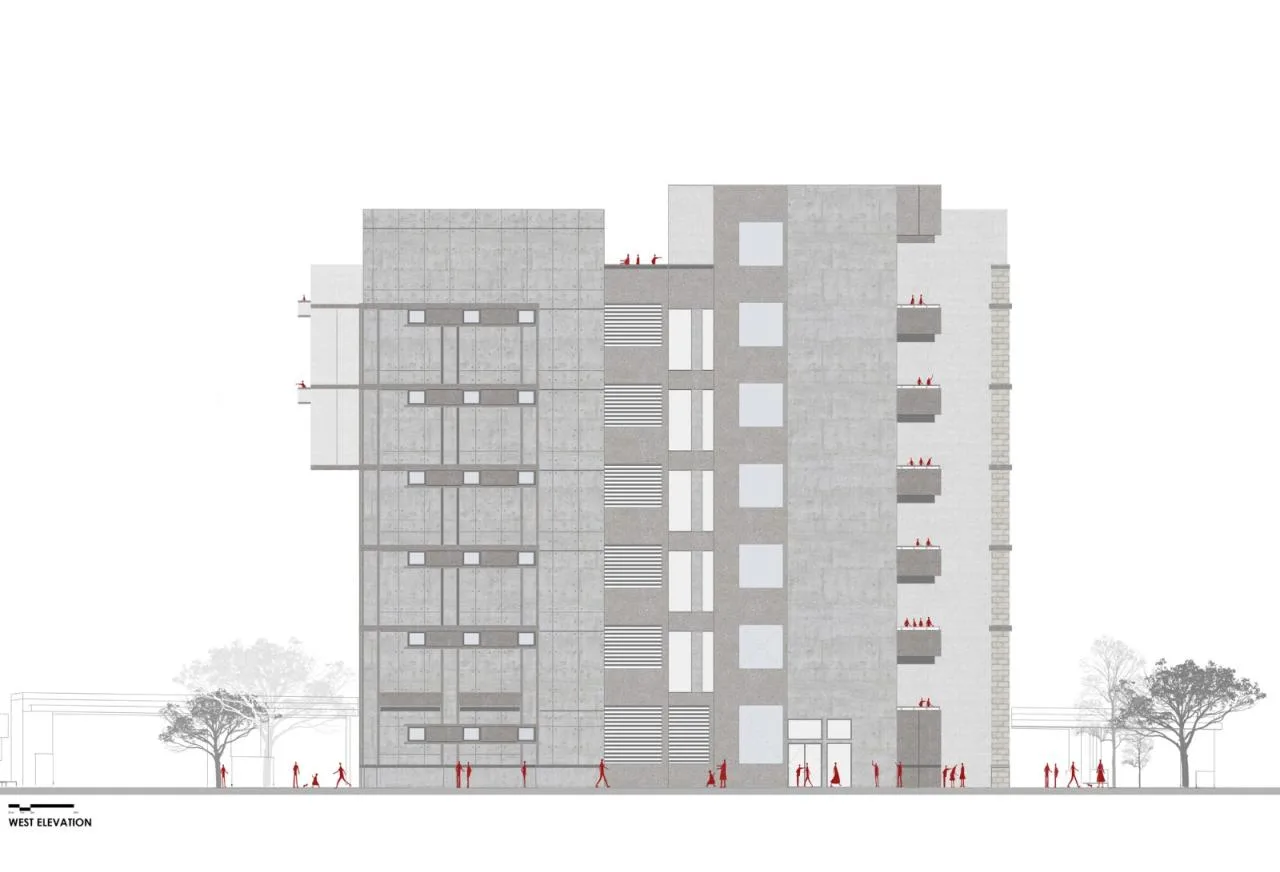
Instead, the building captures the scale, discipline, and grandeur associated with classical architecture. The repetition of window frames creates a strong sense of order, solidity, and masculinity. The building’s massive form is anchored to the ground with semi-circular arches, while the wedge-shaped doors and windows above visually transfer its weight downward.
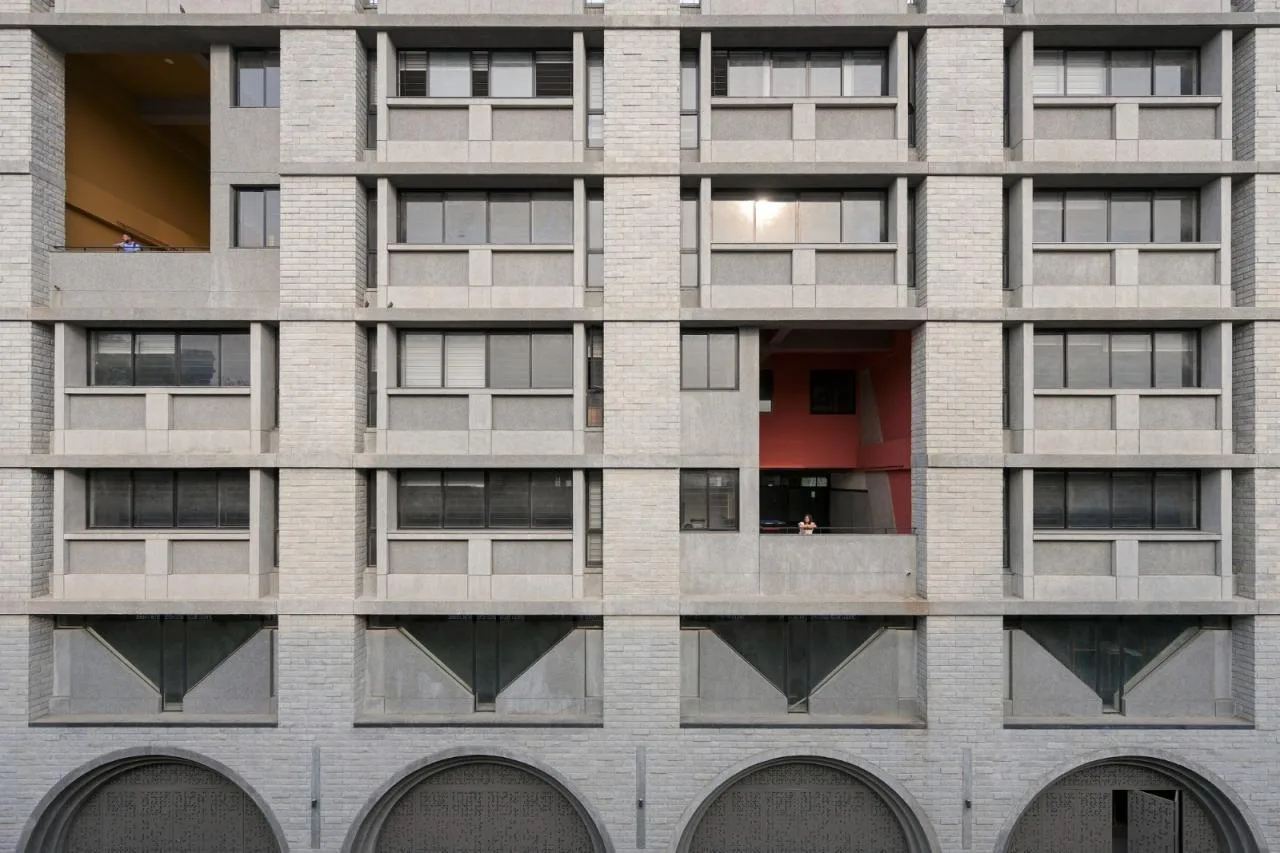
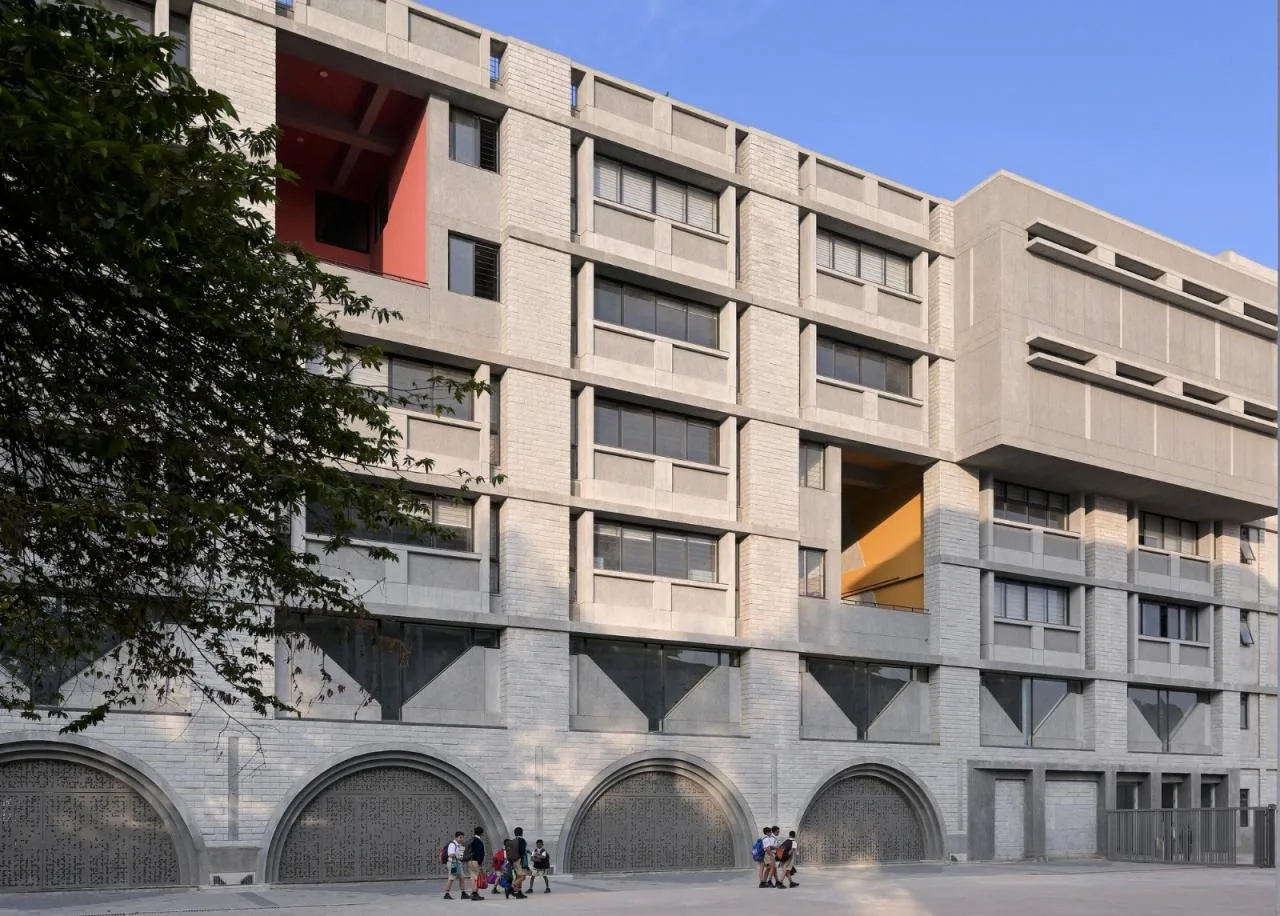
The multifunctional hall spans the entire ground floor and first floor, accommodating 1,000 seats. This hall plays a crucial role in shaping the spatial organization from the second floor upwards.
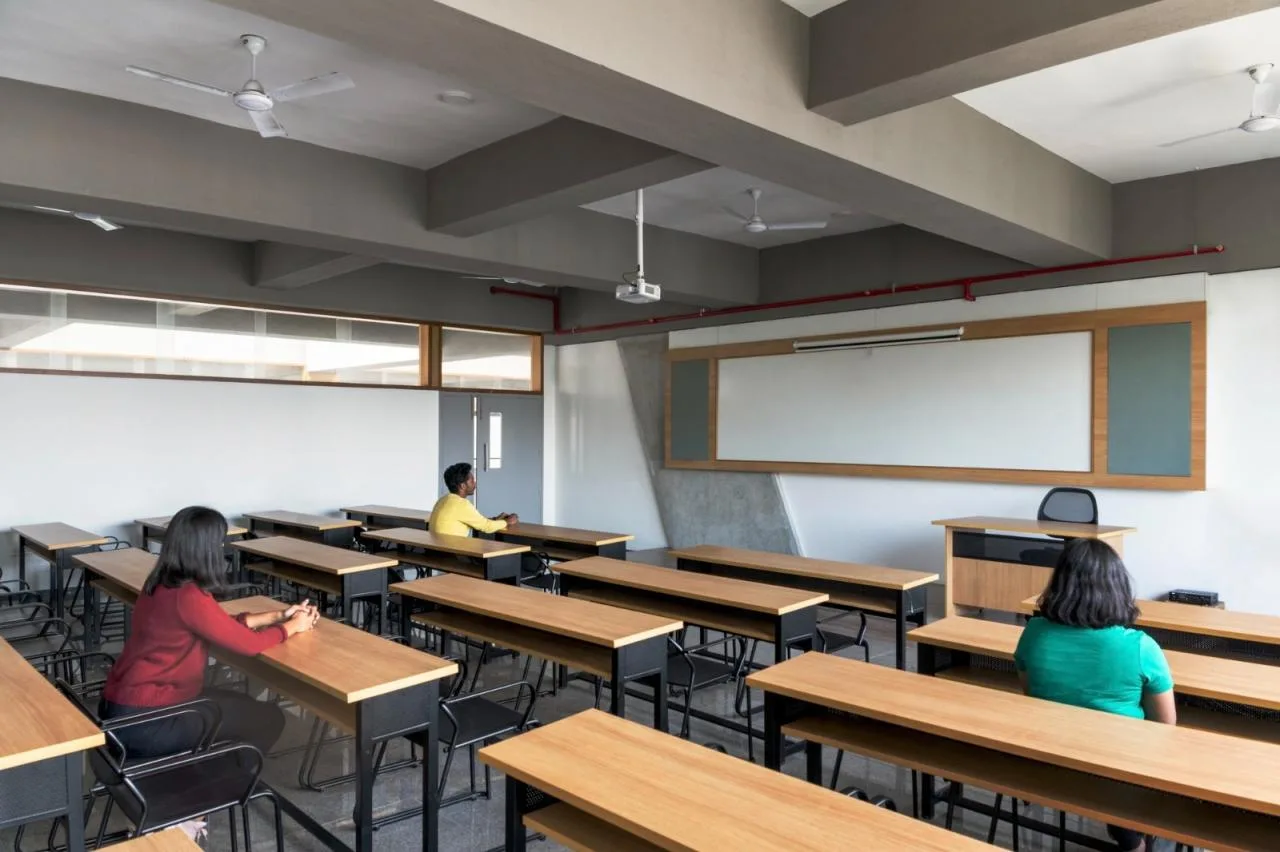
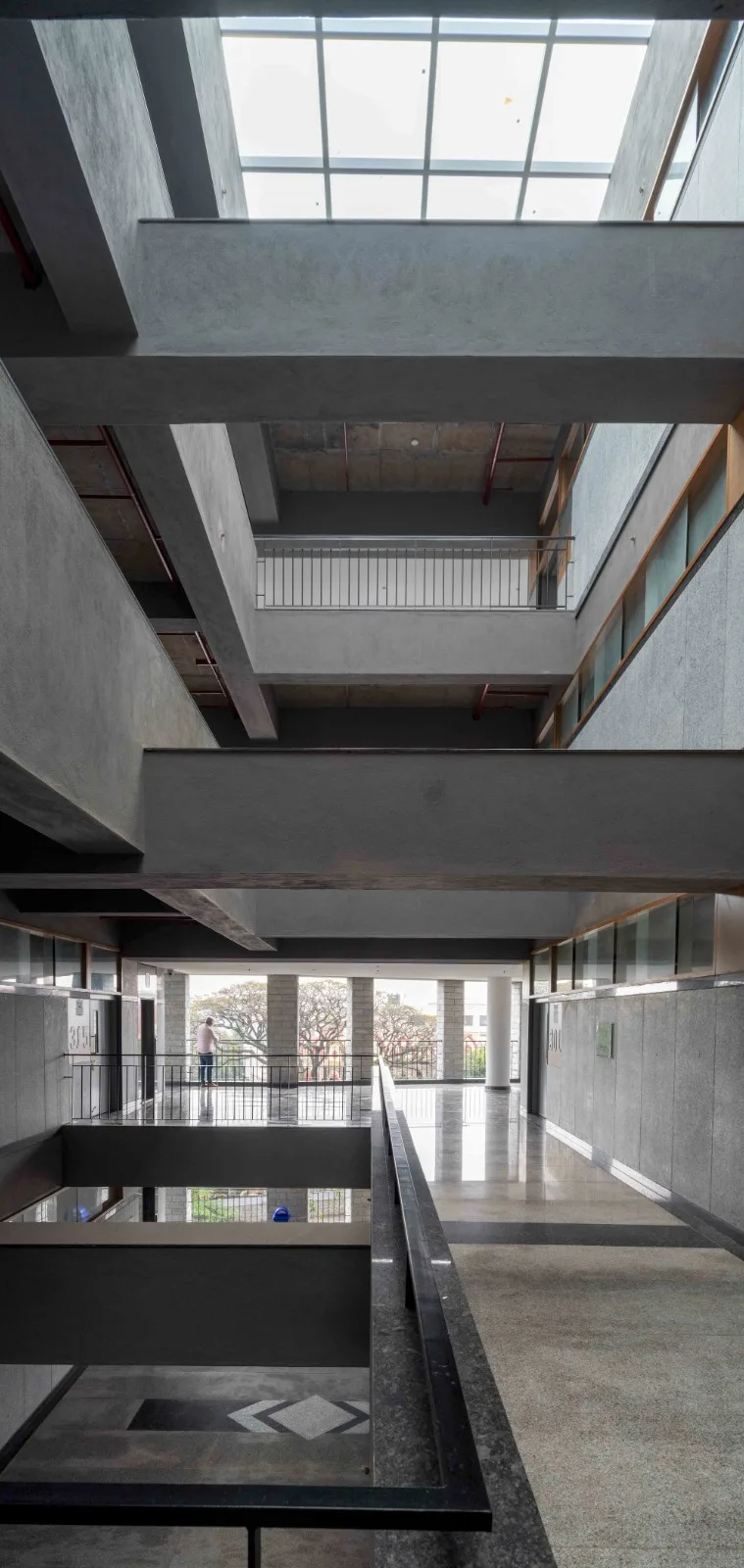
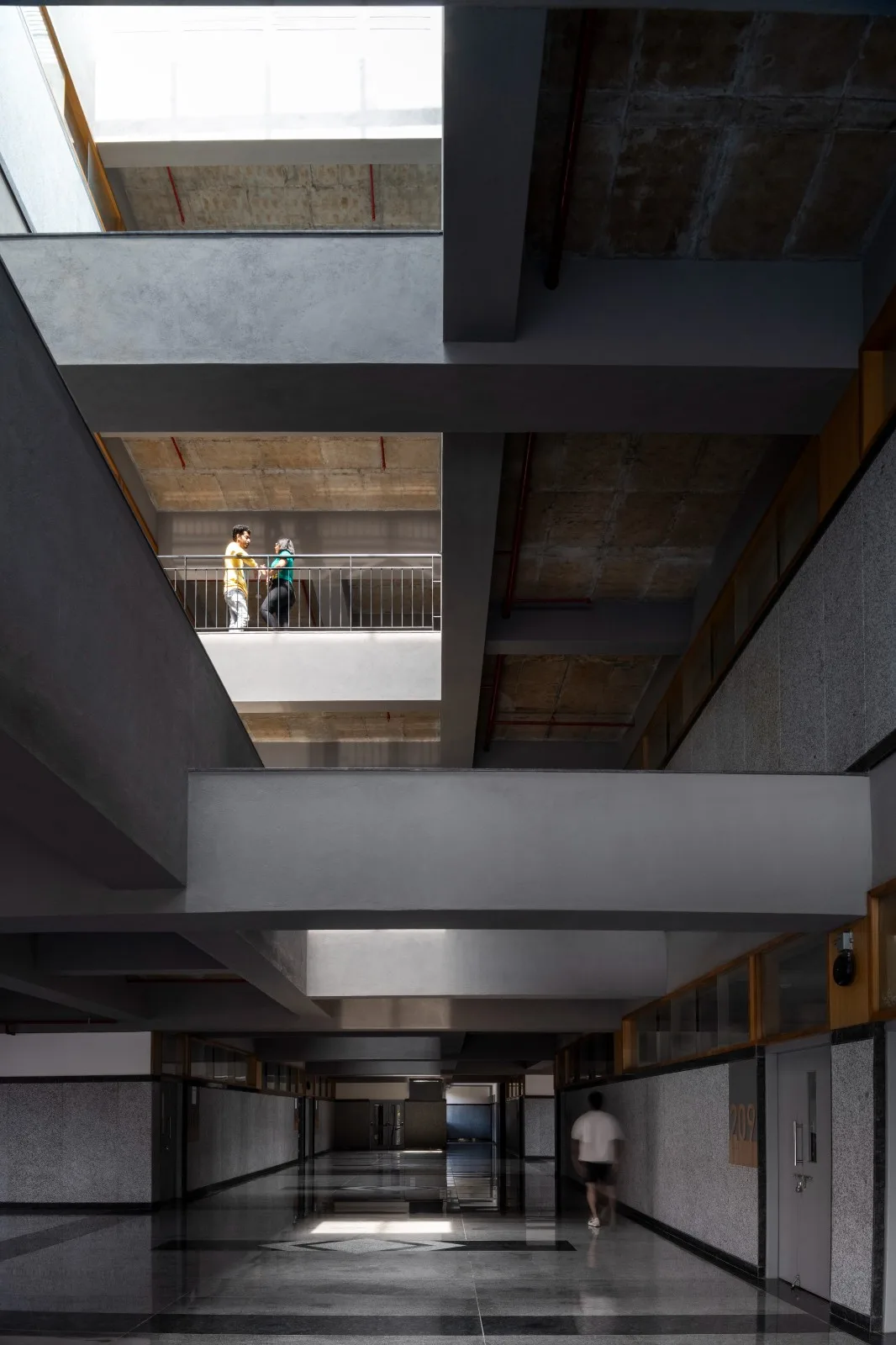
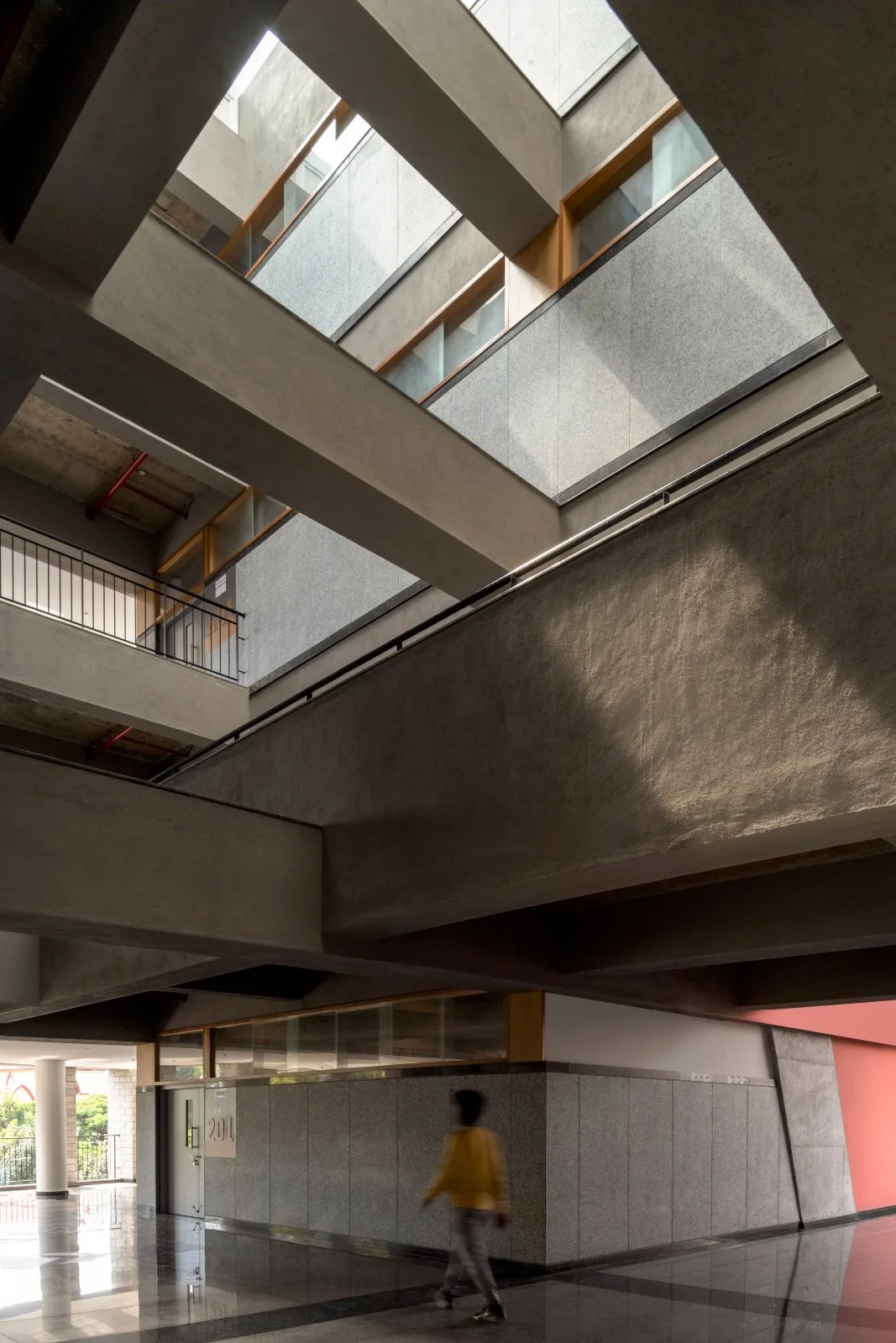
Classrooms on the second floor are arranged along both sides of a 25-foot-wide corridor. On higher floors, large cutouts allow natural light and ventilation to penetrate the building’s core. Corridors alternate between floors, facilitating easier communication between levels.
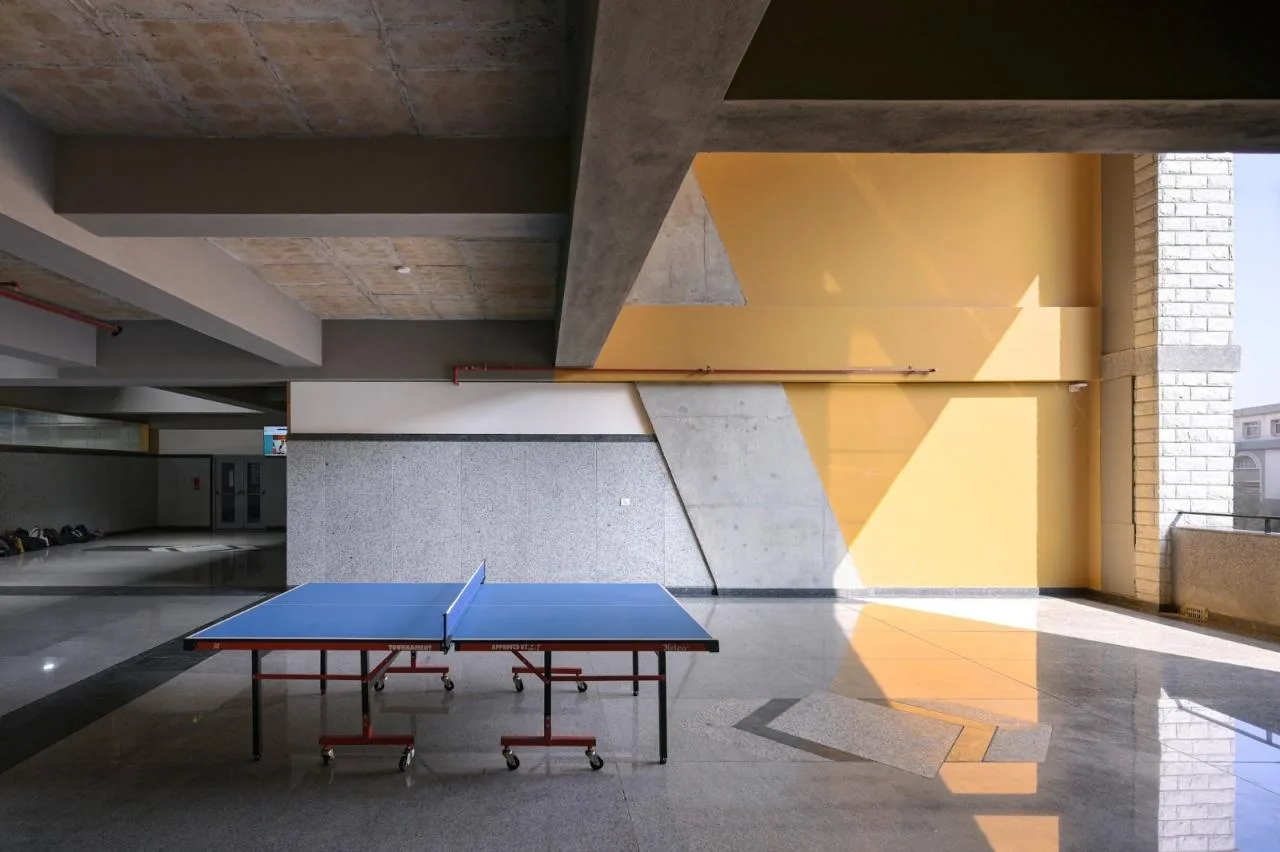
The building’s central spine serves as a vibrant public space, encouraging casual encounters and interaction. A two-story, double-height space within the core connects the interior with the outside world, creating a comfortable area for relaxation.
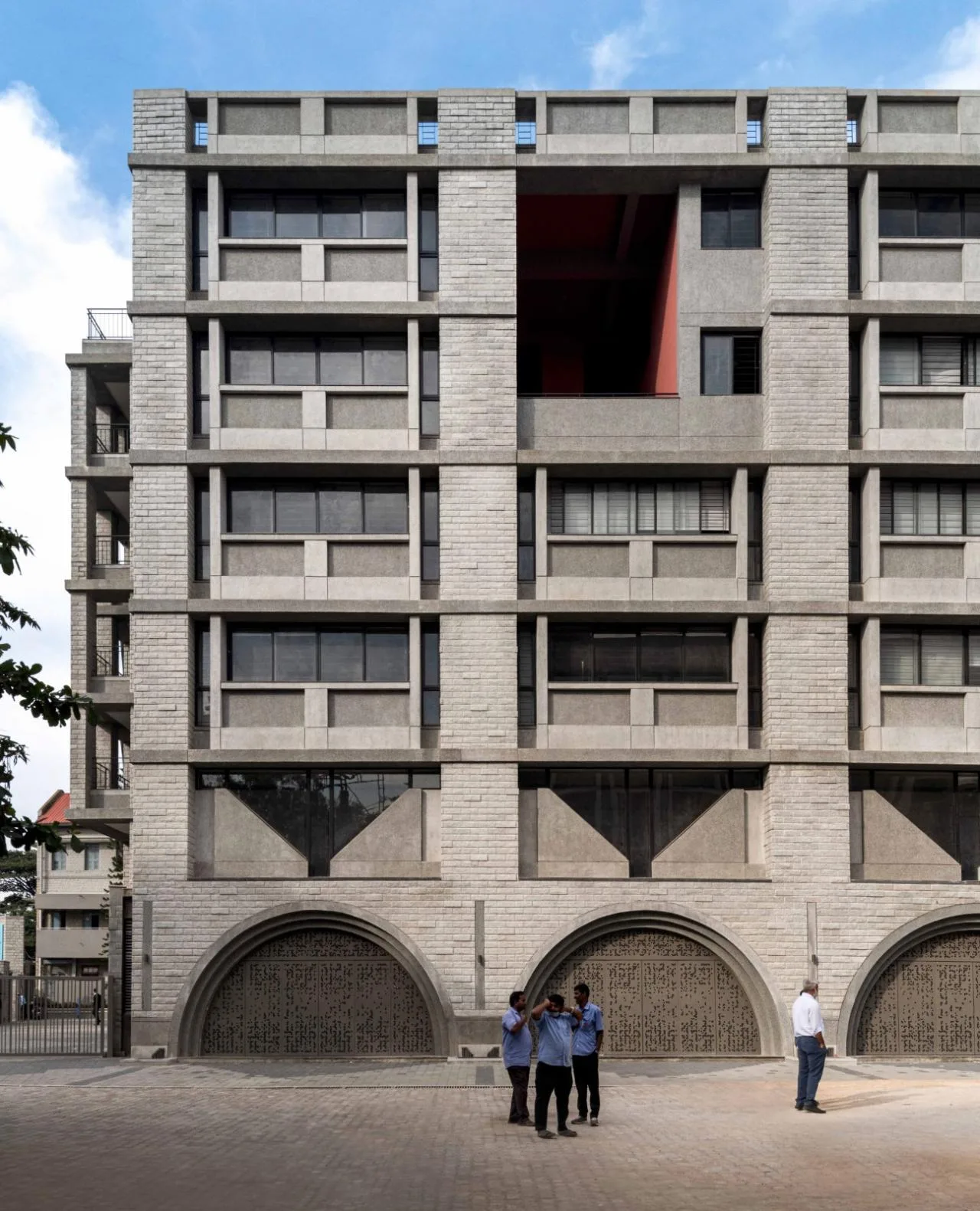
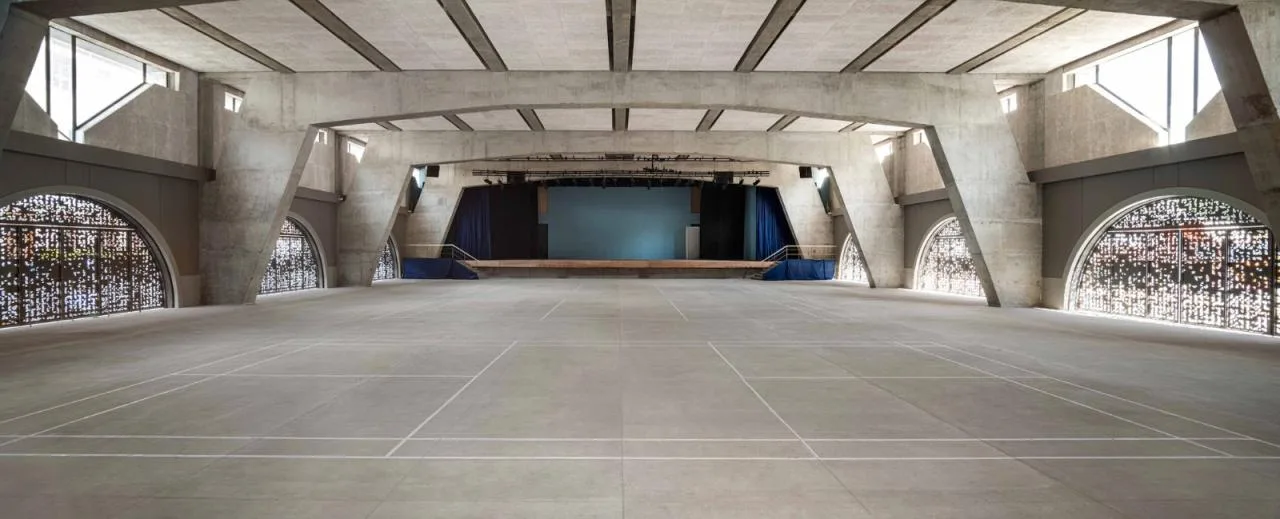
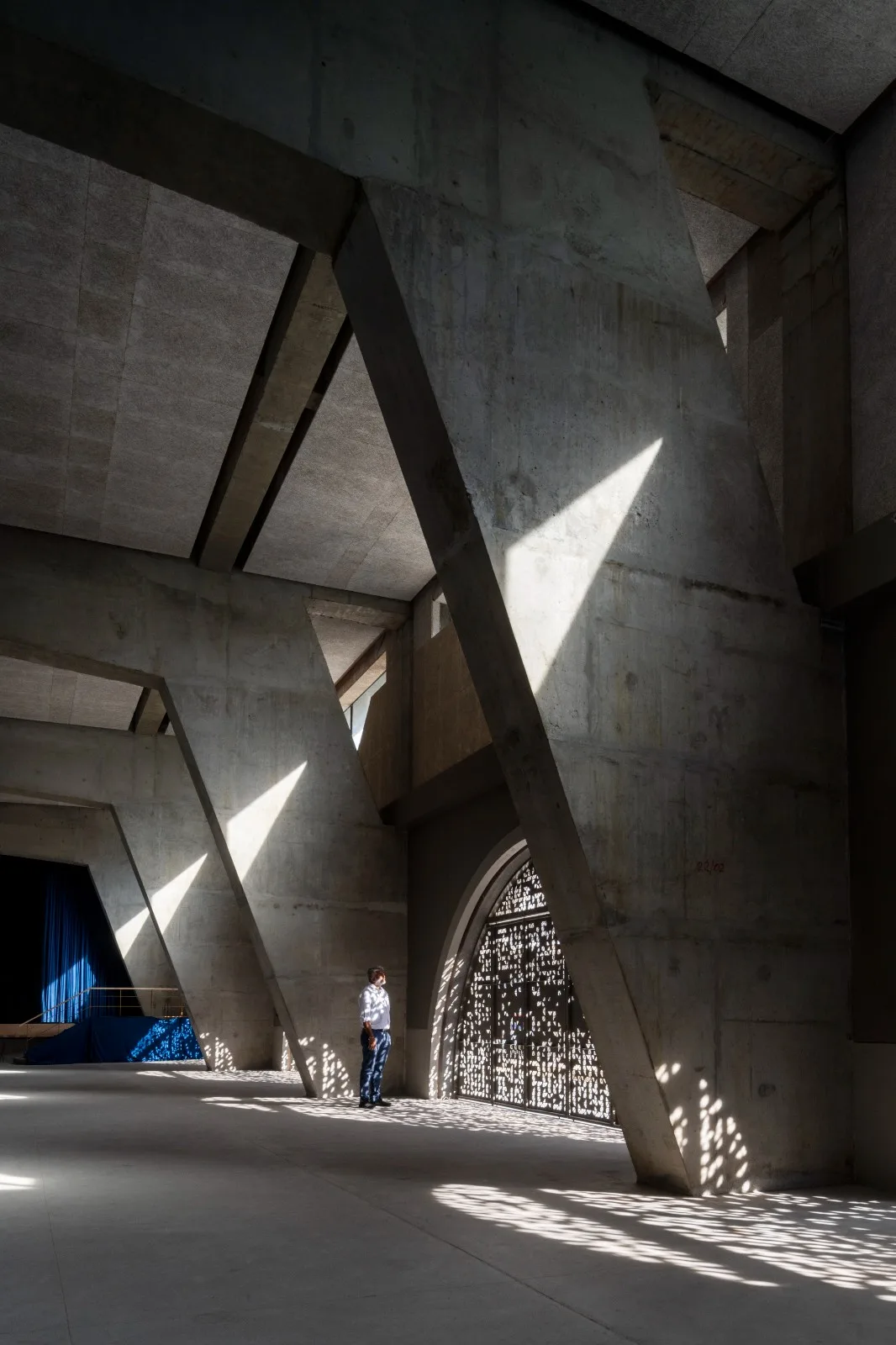
The most complex aspect of the project was designing the column-free multipurpose hall (MPH), which seats 1,000 people. It features a 100-foot span between columns and stretches approximately 150 feet in length.
The MPH includes acoustic treatments and serves as a basketball court and cultural event venue. Collaborating with structural consultants, the team implemented a Vierendeel truss system. Columns on the east and west sides branch into vertical and diagonal members, supported by hanging secondary supports that carry the upper floors’ load.
This approach creates a stunning double-height, column-free space on the ground floor, flanked by large branching columns. These columns taper as they rise, adding dynamic visual interest to the upper floors’ rest and public areas.
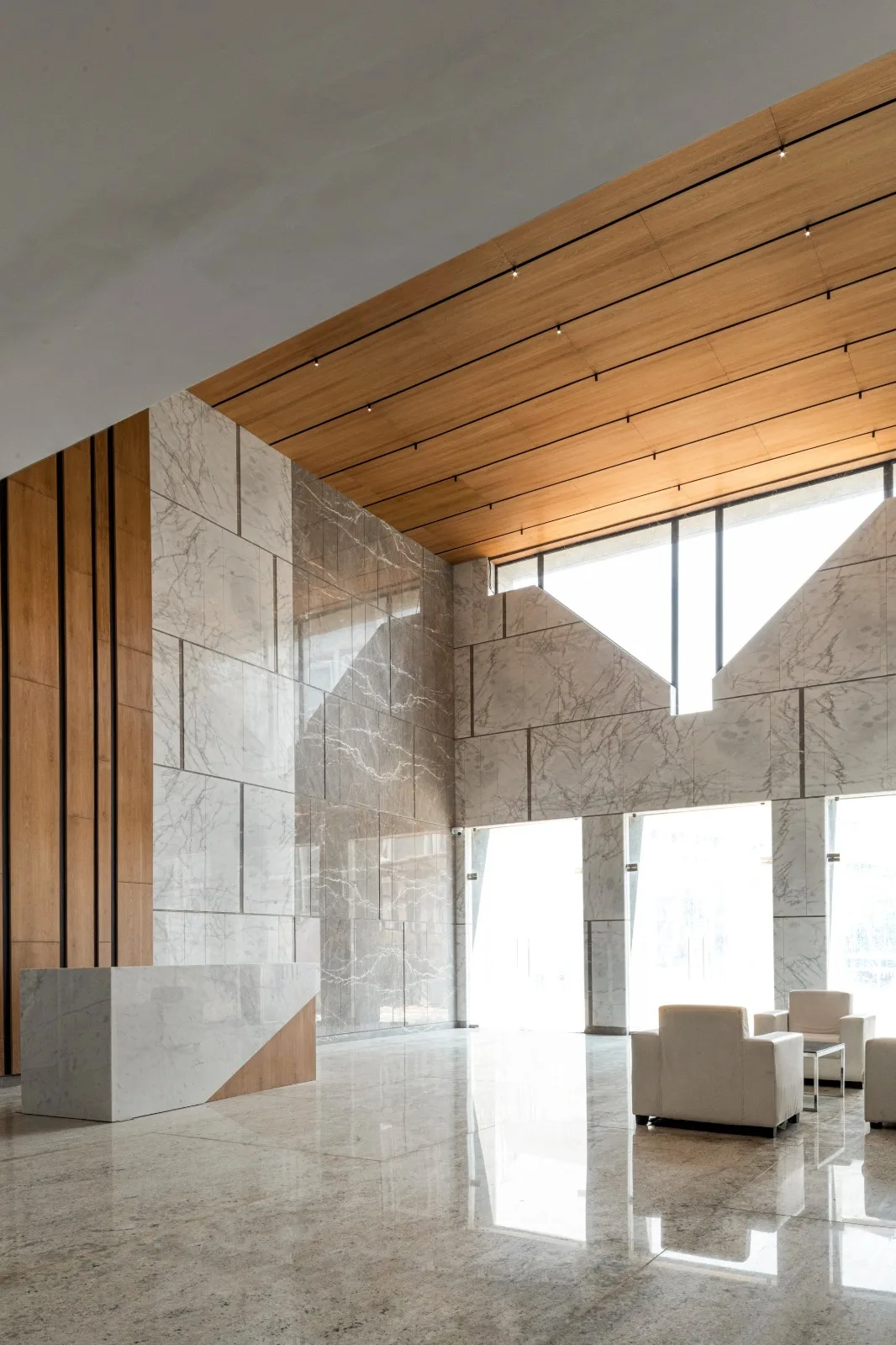
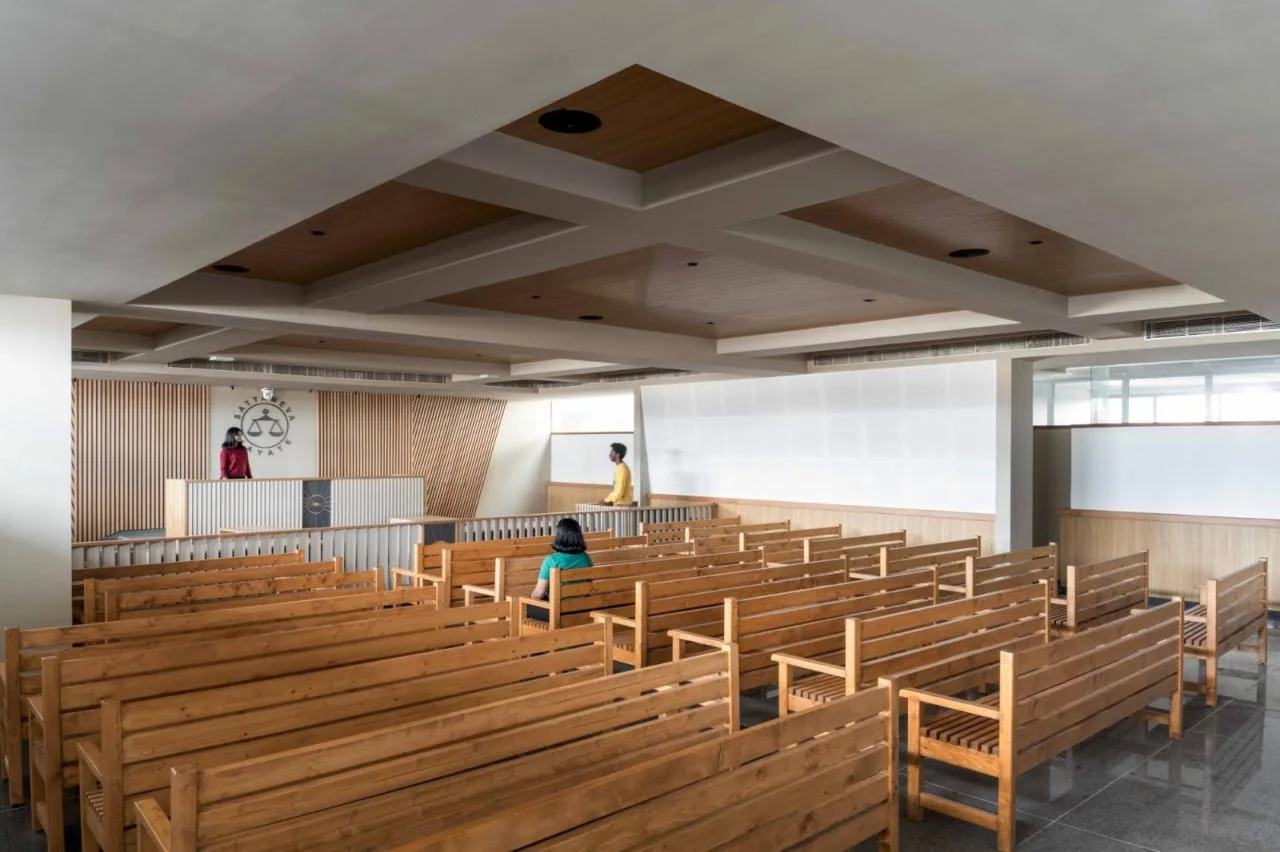
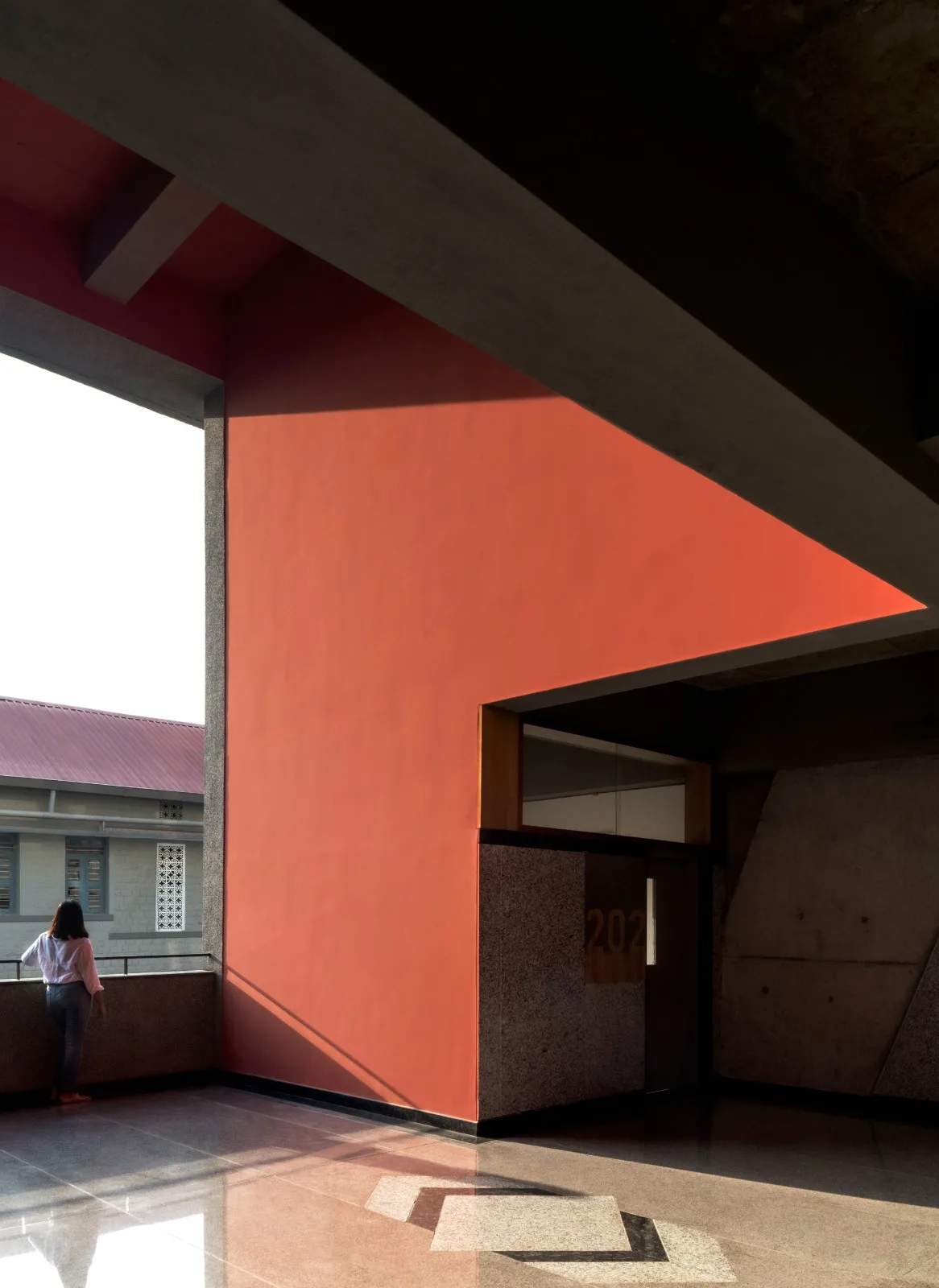
The combination of the formally treated Vierendeel columns and the façade’s arches clad in aggregate plaster and stone gives the building a strong, vibrant character. This design both honors the traditional architectural language of the campus and introduces a refined, modern aesthetic.
The goal was to create a building that blends harmoniously into the urban fabric, as if it has always belonged there, while also reflecting contemporary elegance and relevance.
Project Drawings
△ Base Schematic Diagram
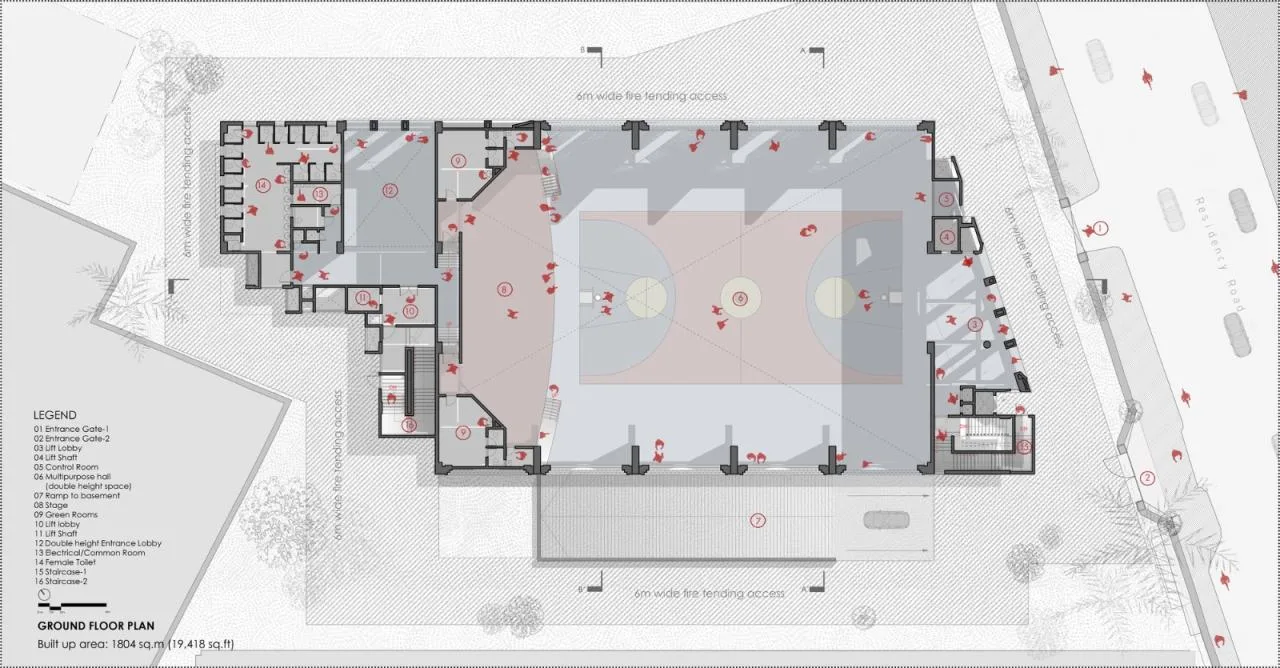
△ First Floor Plan
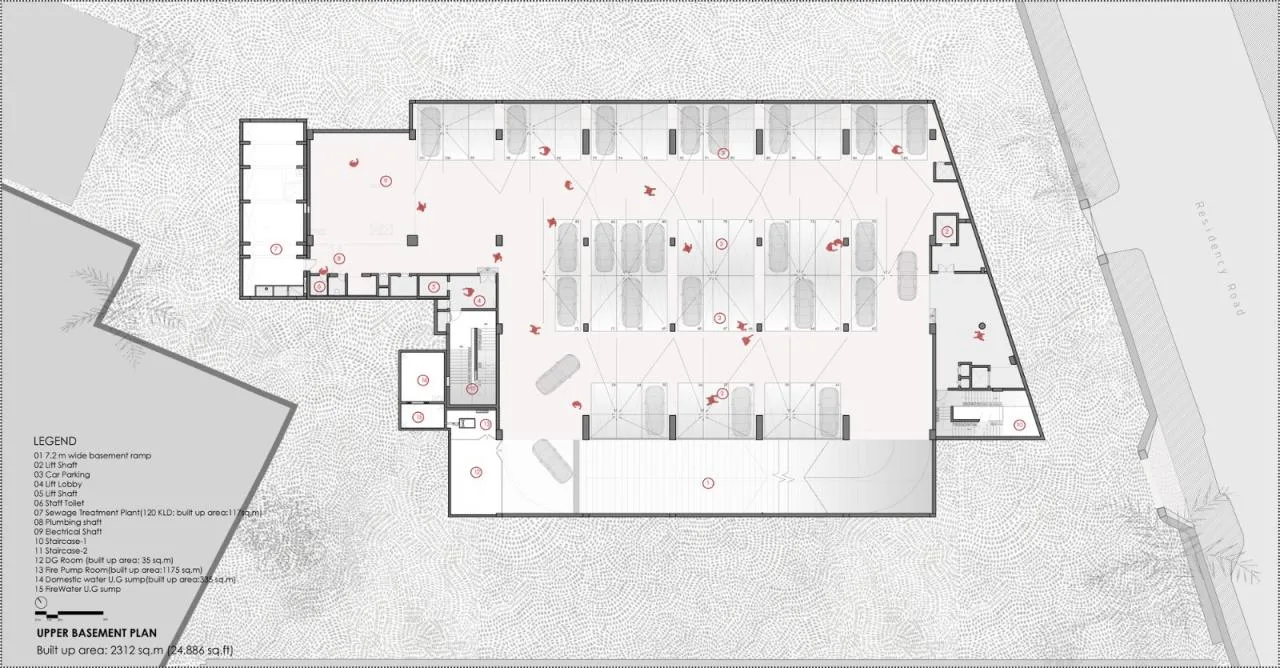
△ Underground Floor Plan
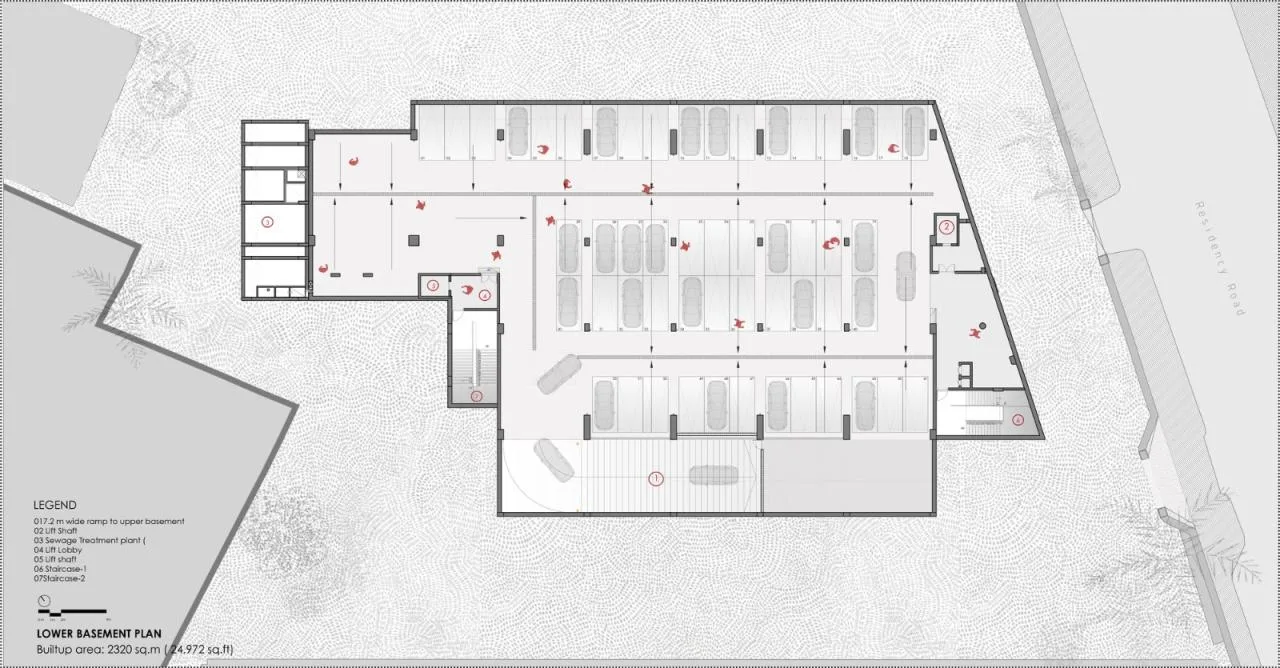
△ Underground Second Floor Plan
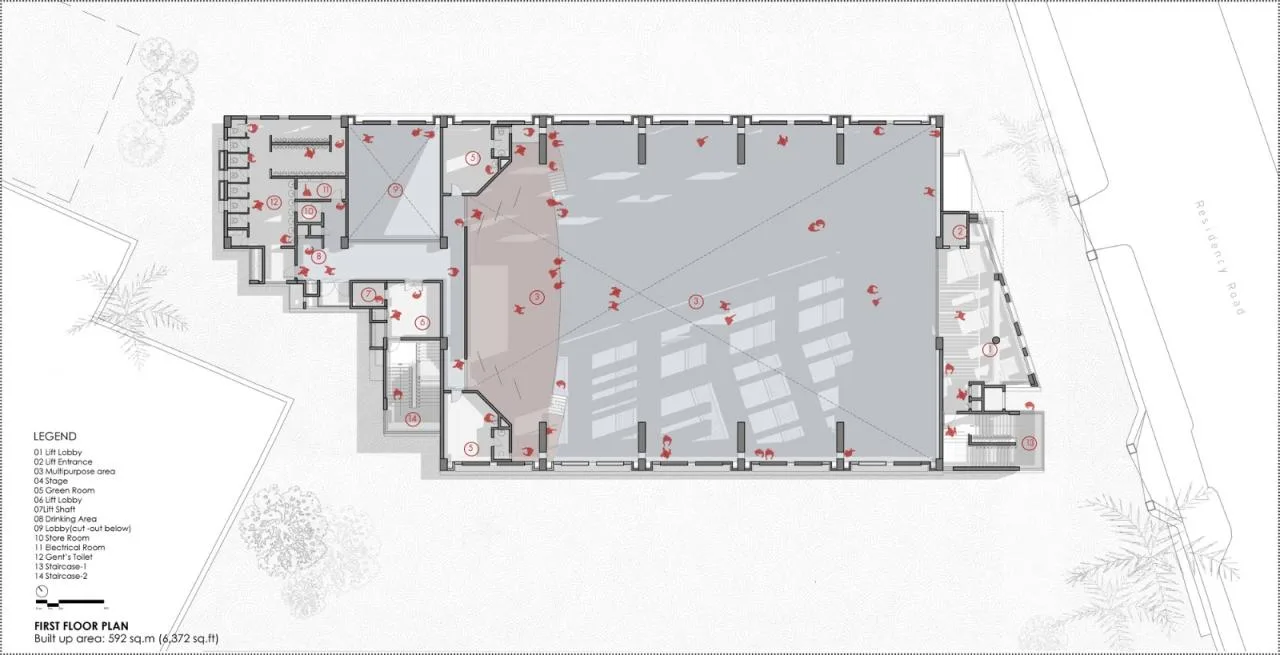
△ First Floor Plan
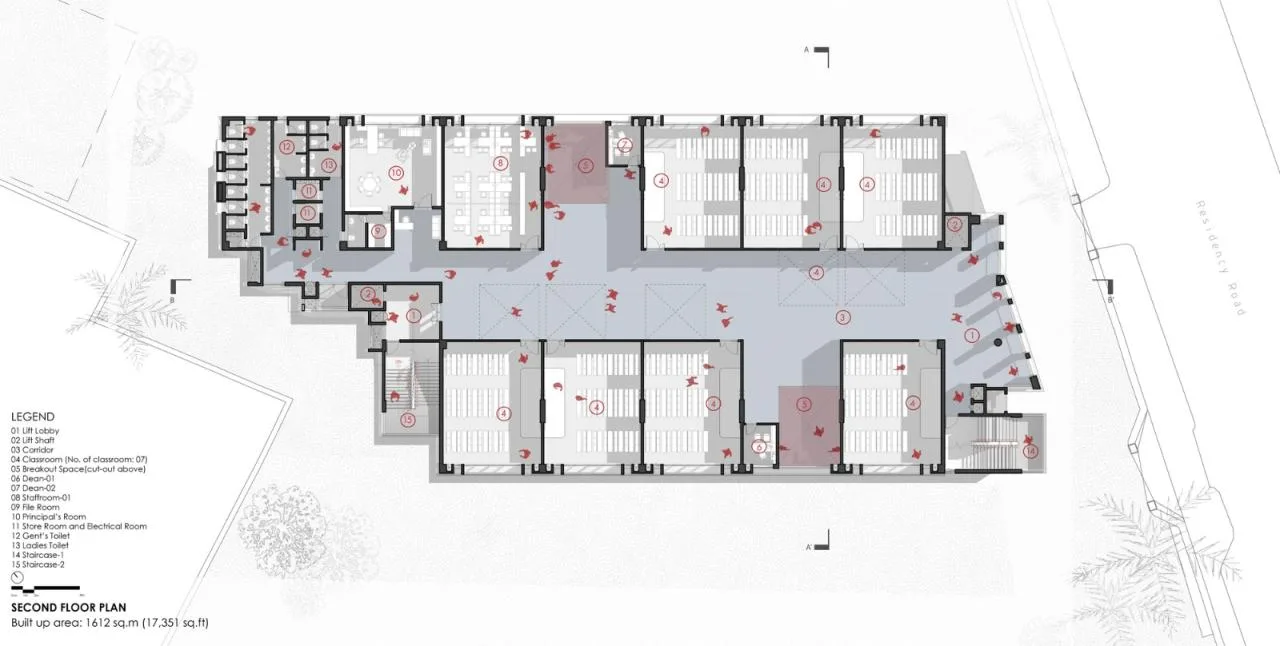
△ Second Floor Plan
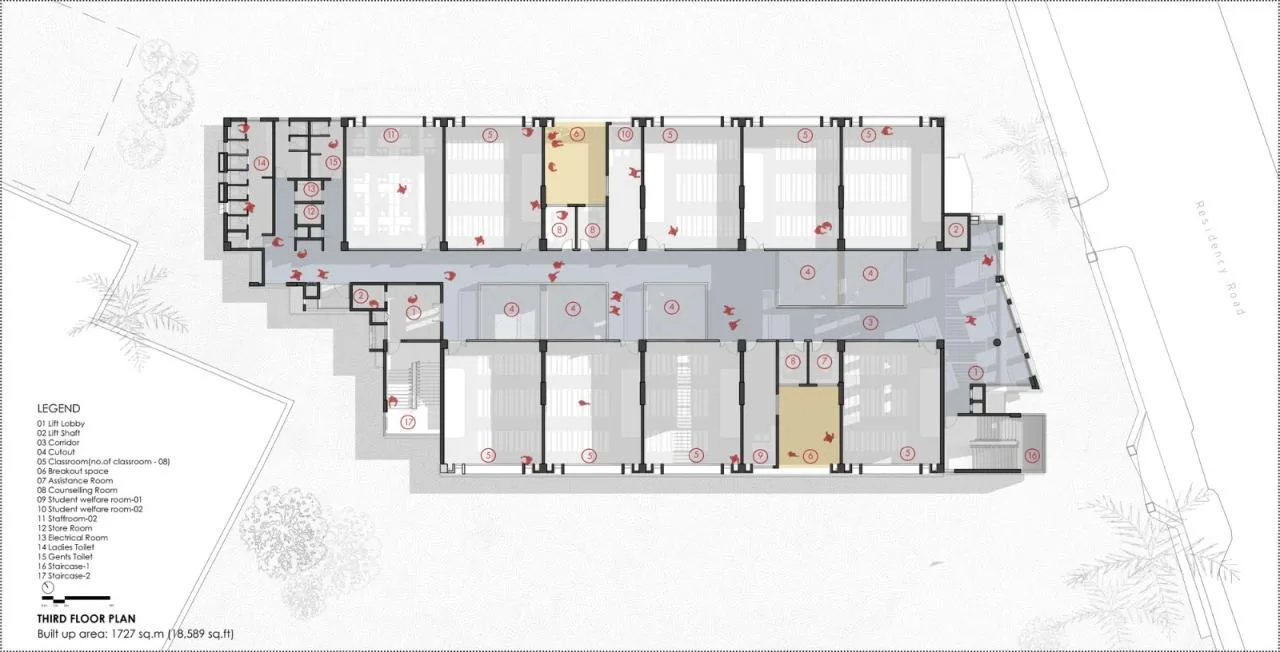
△ Third Floor Plan
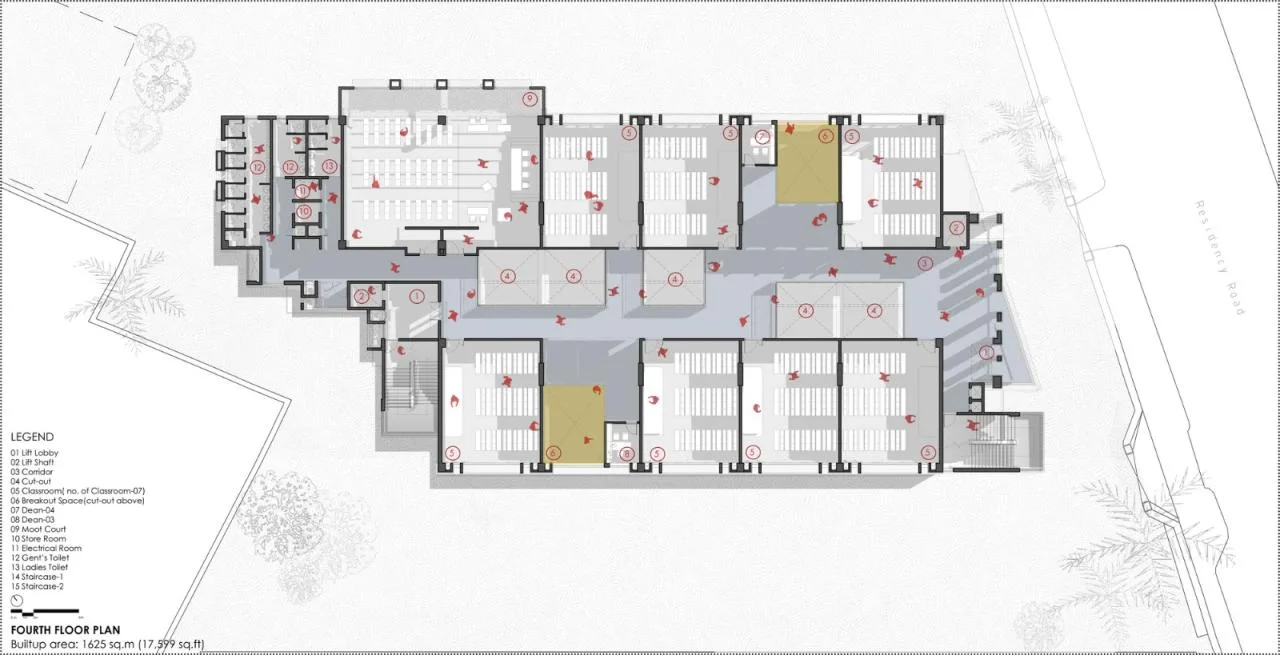
△ Fourth Floor Plan
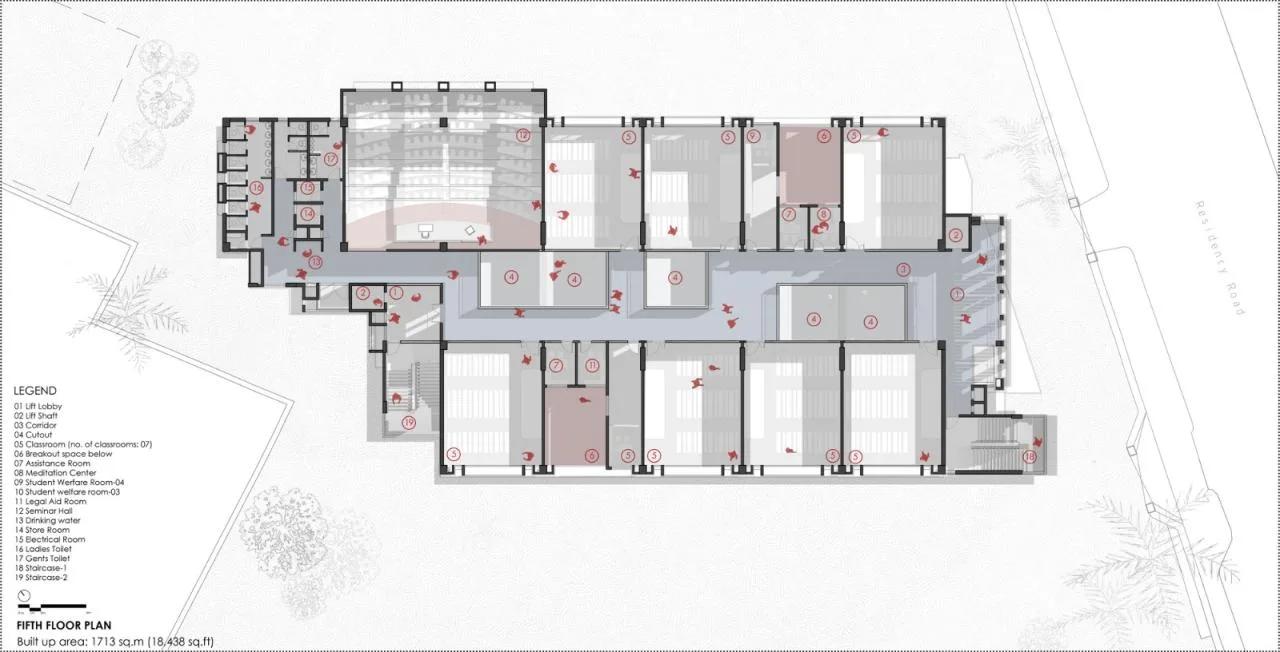
△ Fifth Floor Plan
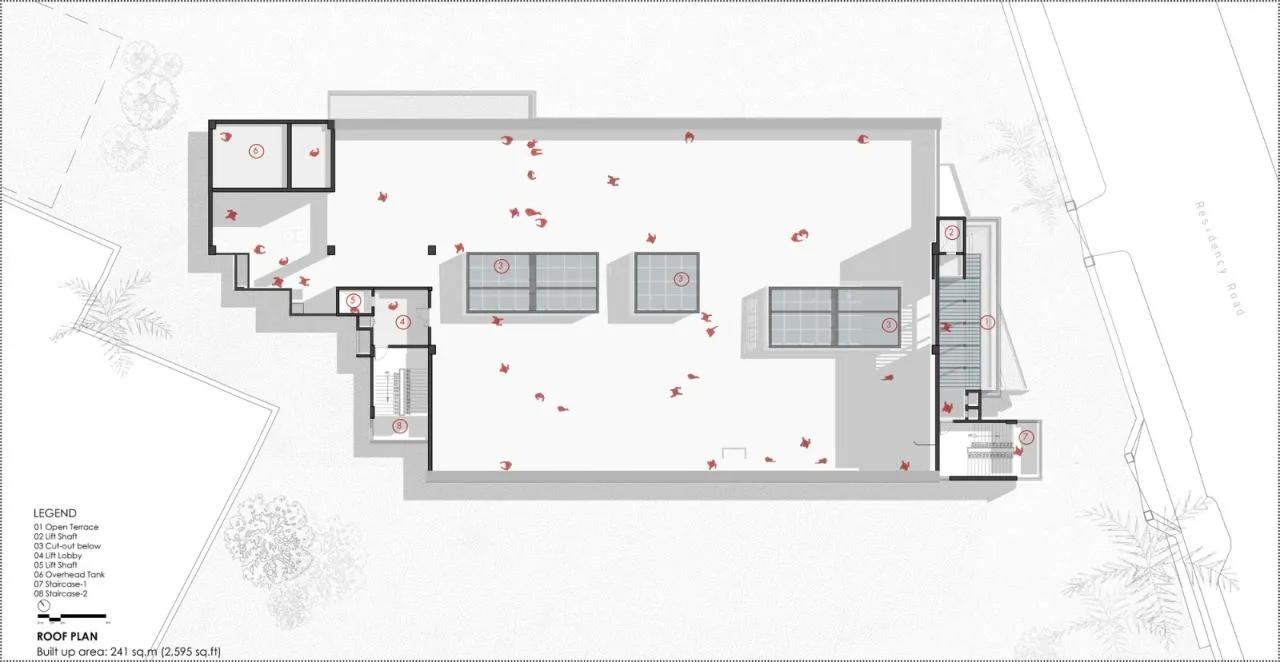
△ Roof Plan
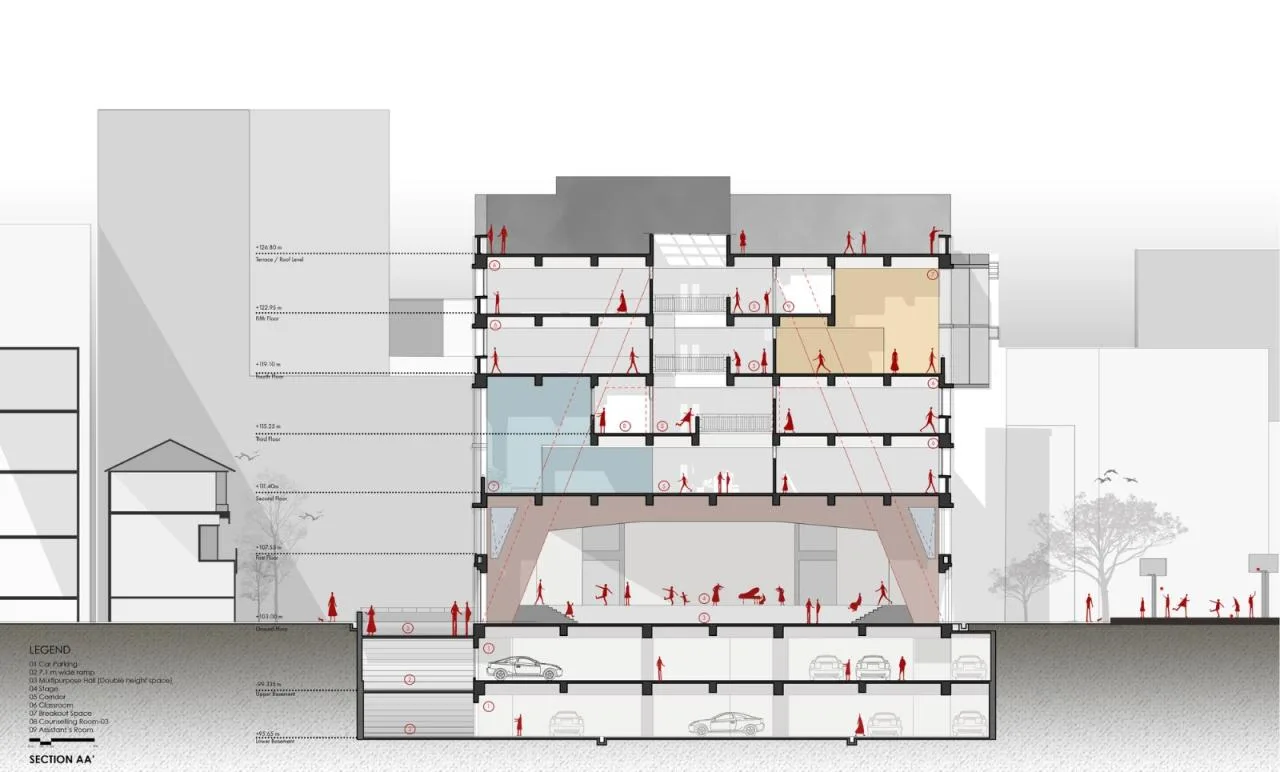
△ Section Diagram
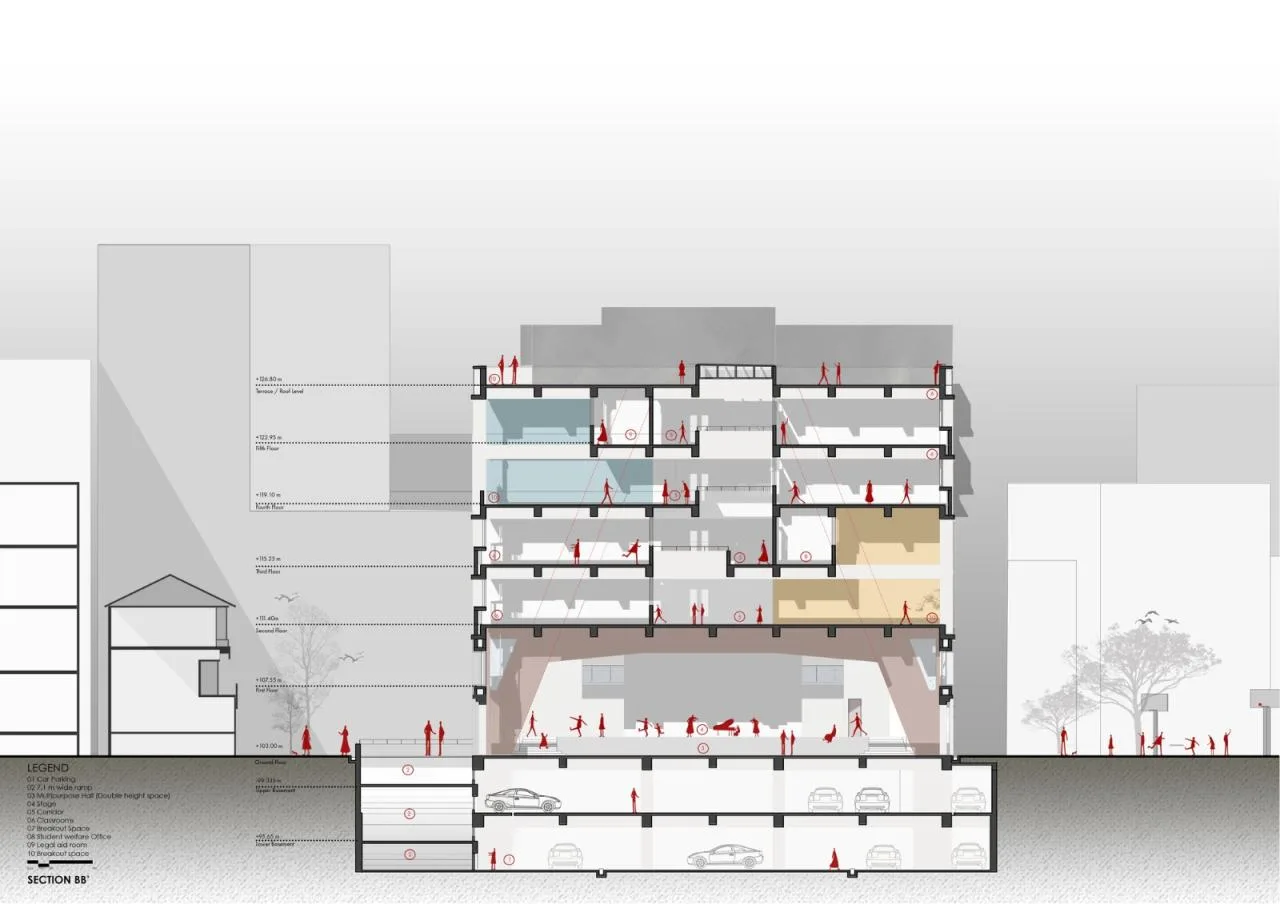
△ Section Diagram
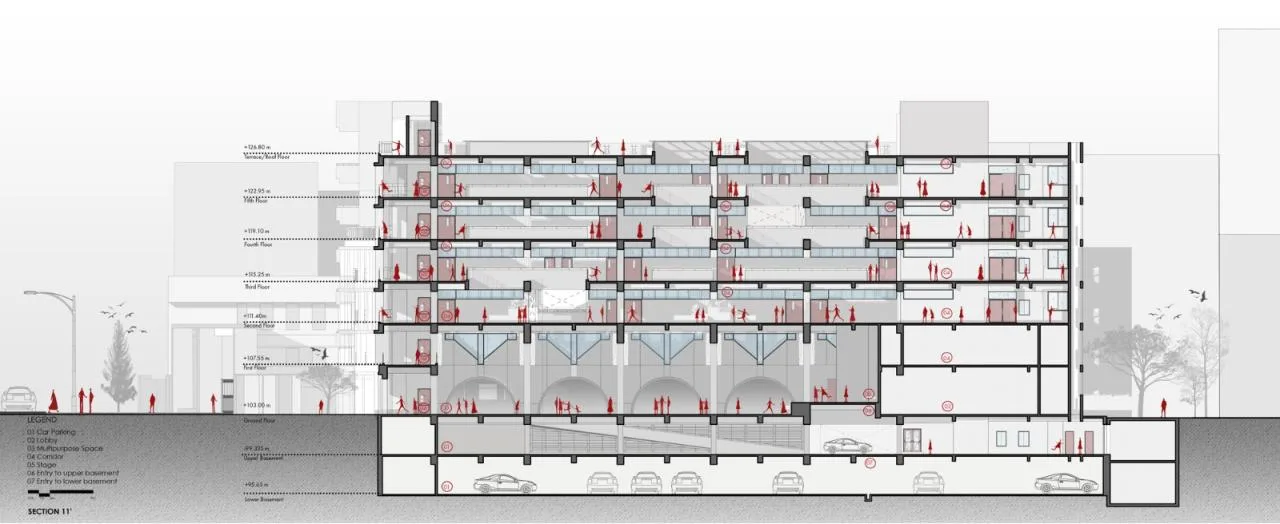
△ Section Diagram
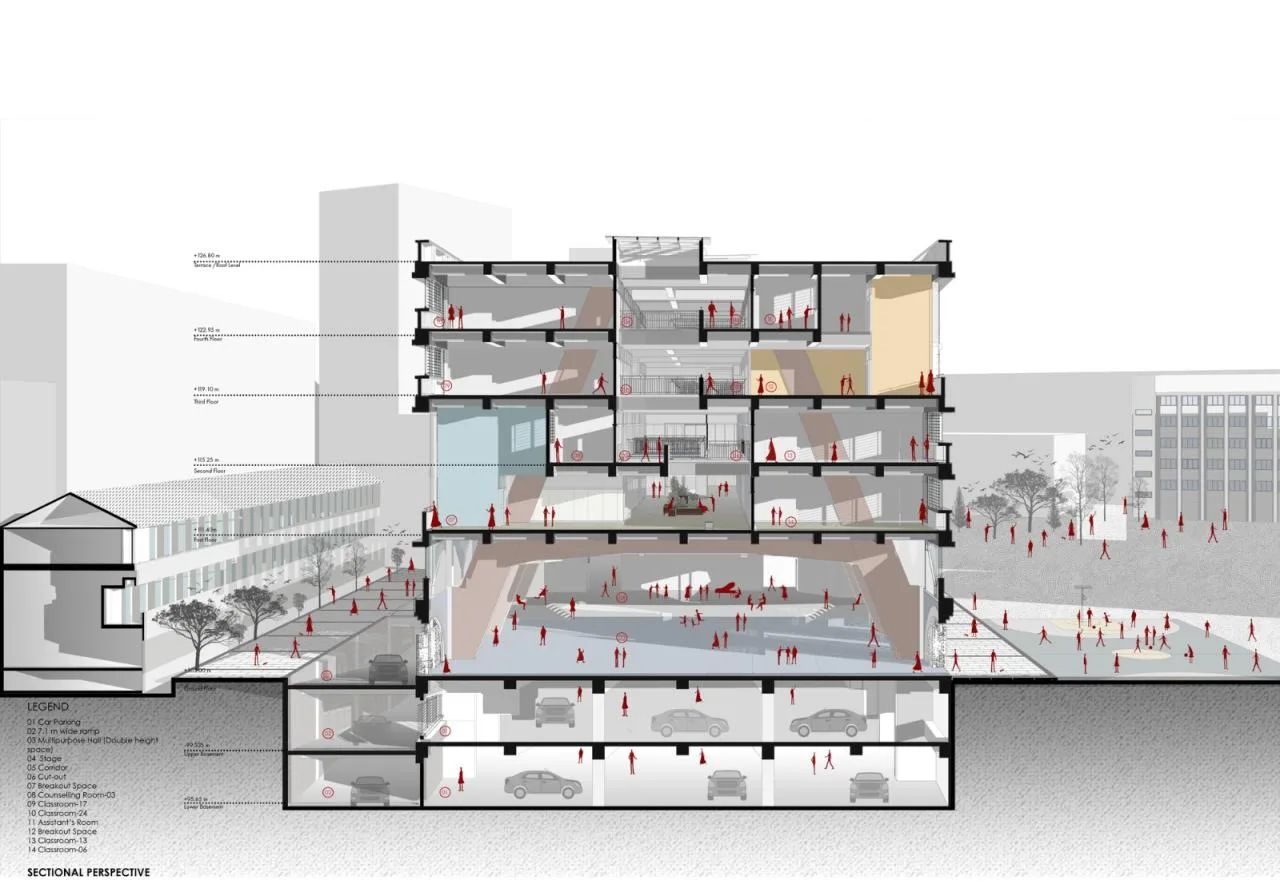
△ Sectional Perspective
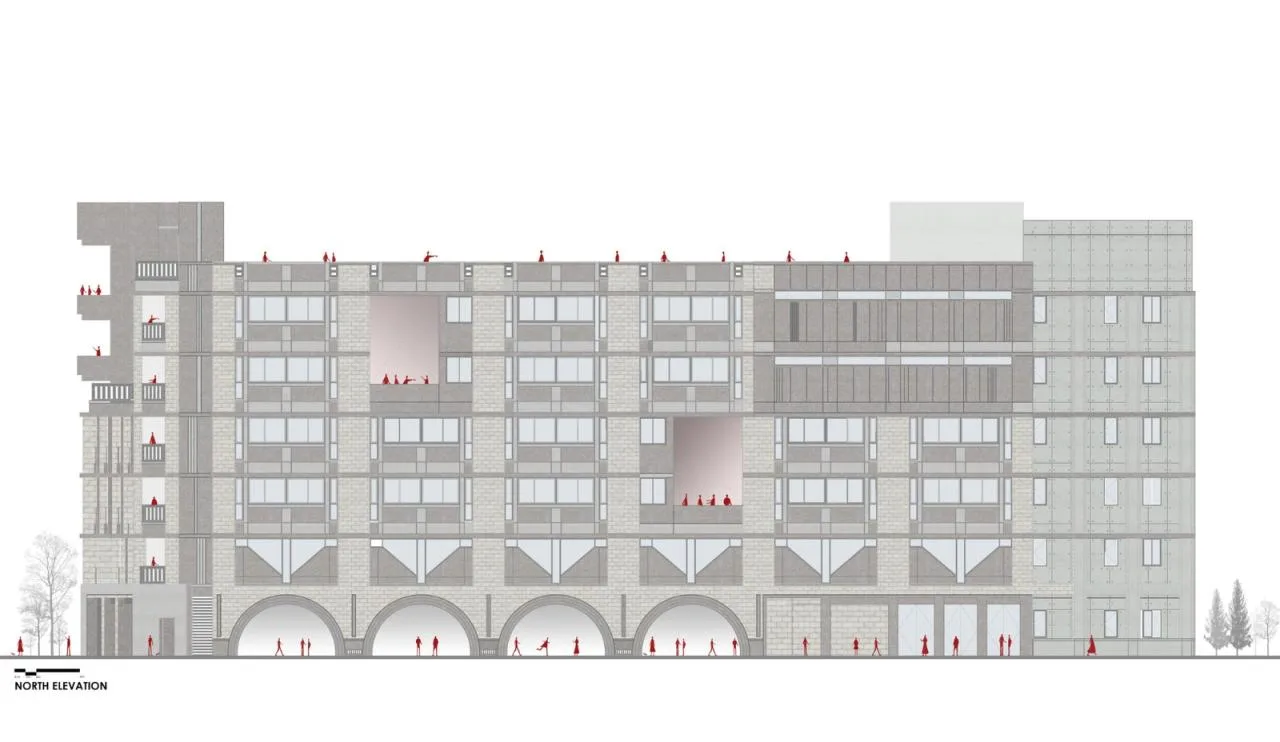
△ North Elevation View
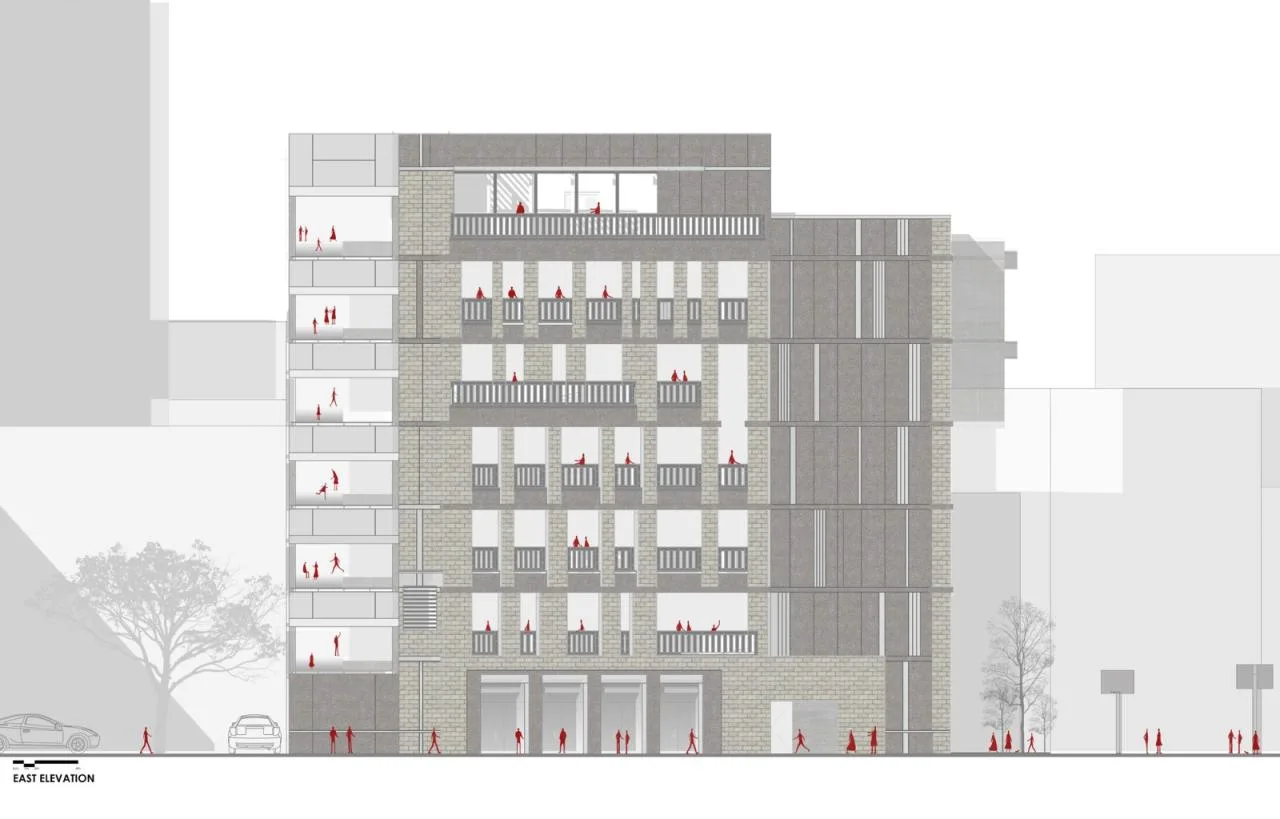
△ East Elevation View
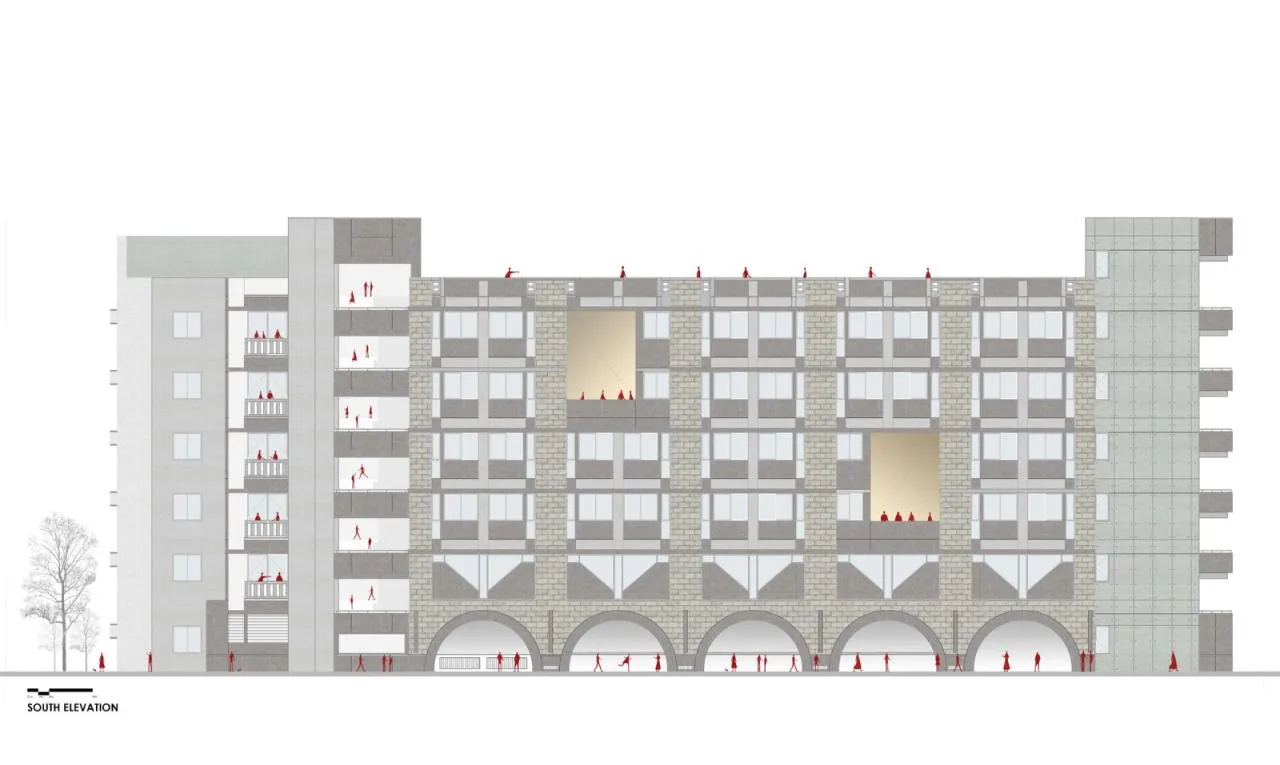
△ South Elevation View
Project Information
Architect: BetweenSpaces
Area: 150,000 square feet
Project Year: 2023
Photographers: Vivek Eadara, Suryan//Dang
Manufacturers: FUJITEC, LG
Lead Architects: Pramod Jaiswal, Divya Ethirajan
Project Team: Darshan Cariappa, Ruchi Patel
Structural Consultant: Krishna Hegde Consulting Engineer
Electrical Consultant: San Design Consultants Pvt. Ltd
HVAC Consultant: KH Aircon Planning
Civil Contractor: Cicon Engineers Pvt Ltd
Power Contractor: New Asha Power Systems (India) Pvt. Ltd
Location: Bengaluru, India












Must log in before commenting!
Sign Up