
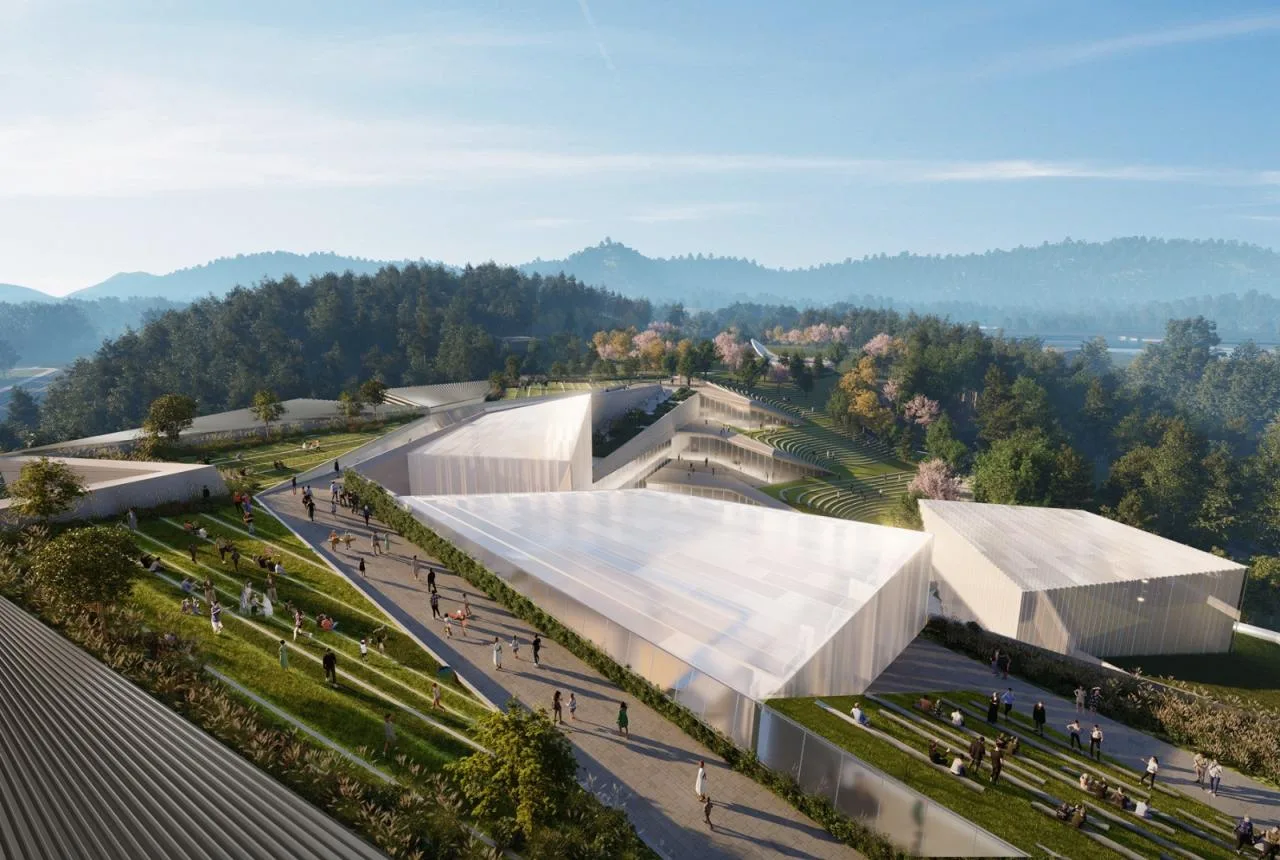
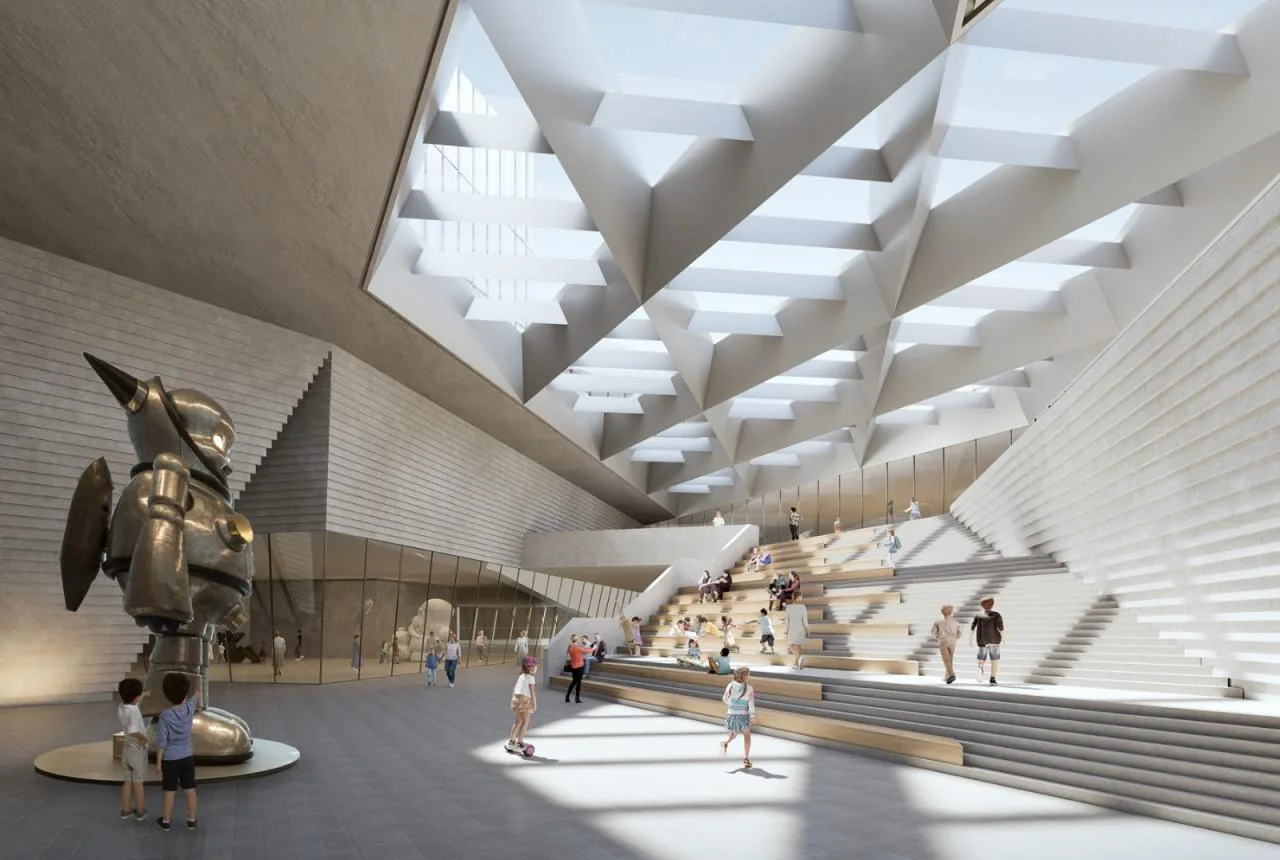
The Art Heart in the Valley, the Hill of Three Crystals © AG Huichuang
Localization Research:
A New Contemporary Art Lifestyle Destination
Shenzhen is increasingly recognized worldwide for its architectural art aesthetics and vibrant art scene. Around Tanglang Mountain, the city is developing a series of world-class cultural infrastructures that seamlessly integrate urban life with nature. The completion of “Longhua Two Hearts and One Pavilion” marks a new cultural landmark, elevating the urban cultural industry and establishing a future world-class cultural destination with exceptional quality.
The project comprises a music and art center, an animation art museum, and a women and children’s center. Drawing on years of research and practice in urban cultural architecture, AG Huichuang interprets the design with the theme “Artistic Heart in the Valley, the Hill of Three Crystals.” The three core buildings cluster together, exploring the “three cultural crystals” that symbolize the fusion of nature and architectural art. This design resonates with the surroundings, connects the city, gathers artistic energy, and generates vitality. It creates a contemporary cultural and artistic hub that harmonizes ecology and arts, provides immersive experiences, encourages participation across all ages, and fuels urban dynamism.
△ Scheme film © AG Huichuang
Suturing Boundaries:
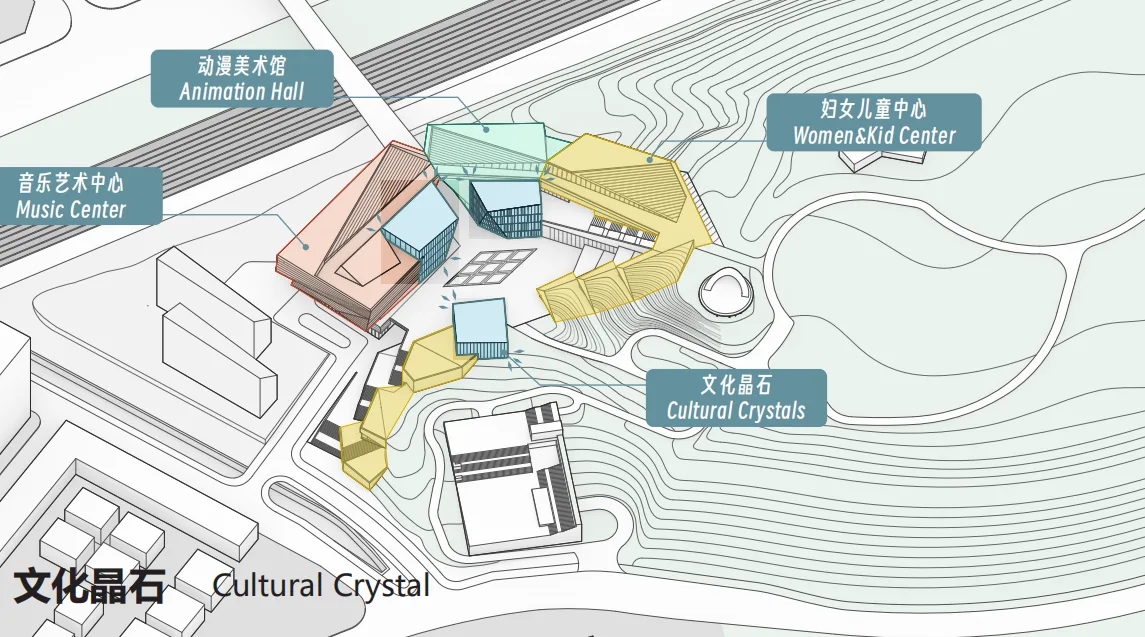
One Valley, Two Interfaces, Three Crystals
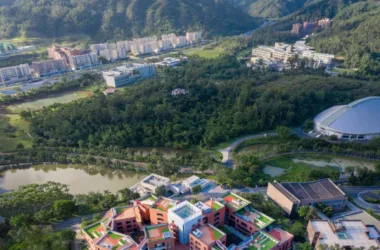
Situated at the city’s edge, adjacent to Baishilong Music Park, the venue contributes to a natural ecological urban green ring, offering panoramic views of Tanglang Mountain and Meilin Mountain. The design prioritizes high-quality craftsmanship and aims to establish a cultural highland by creating a “stitched boundary” that responds to both the urban environment and natural landscape on either side.
Upon completion, the architecture forms a “valley, two interfaces, and three crystals.” Leveraging the site’s slopes and elevation changes, the building volumes extend naturally into a multidimensional park. Three distinctive gardens and rooftop spaces themed around family, children, and women create a sustainable architectural form that blends with its environment.
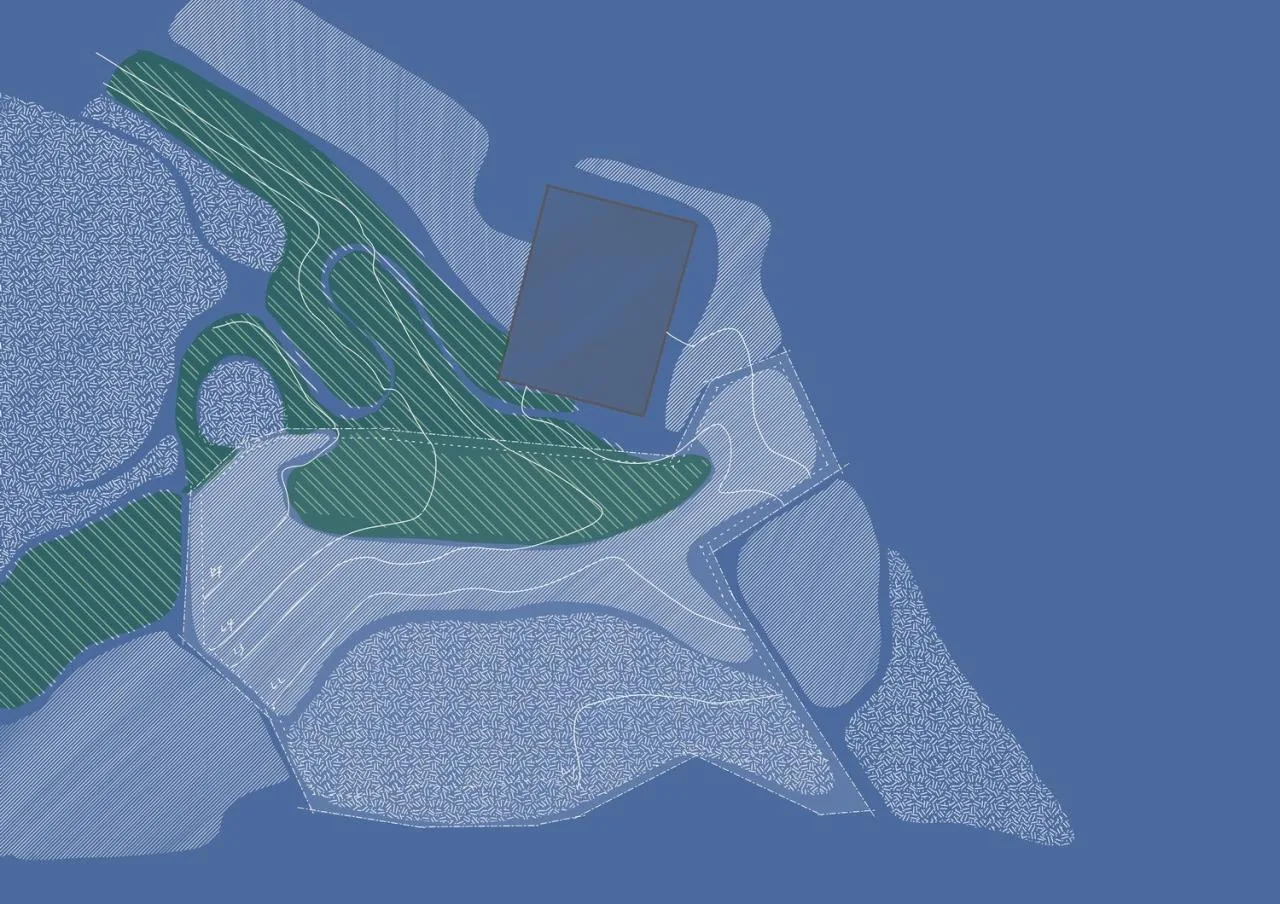
△ Base Characteristics © AG Huichuang
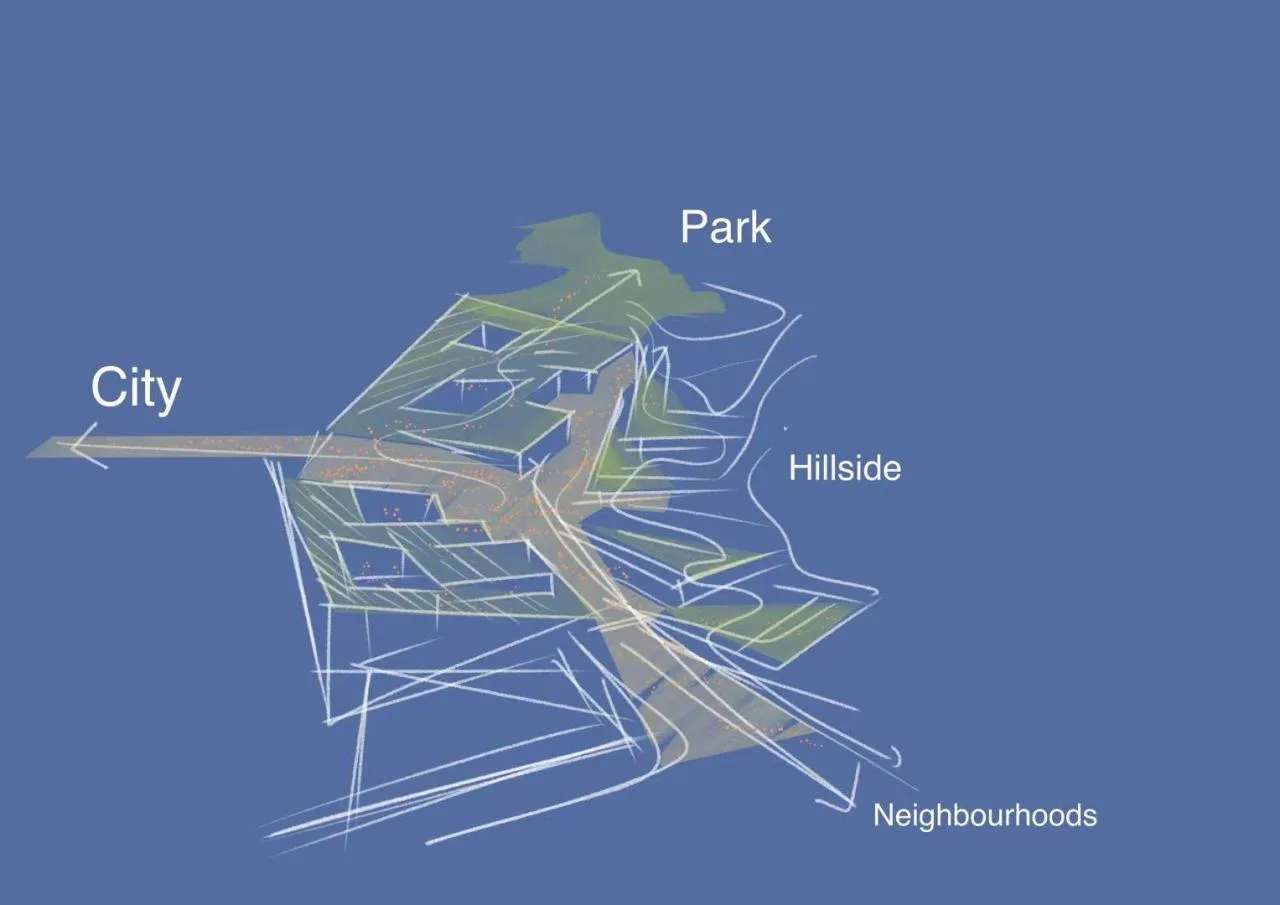
A Valley © AG Huichuang
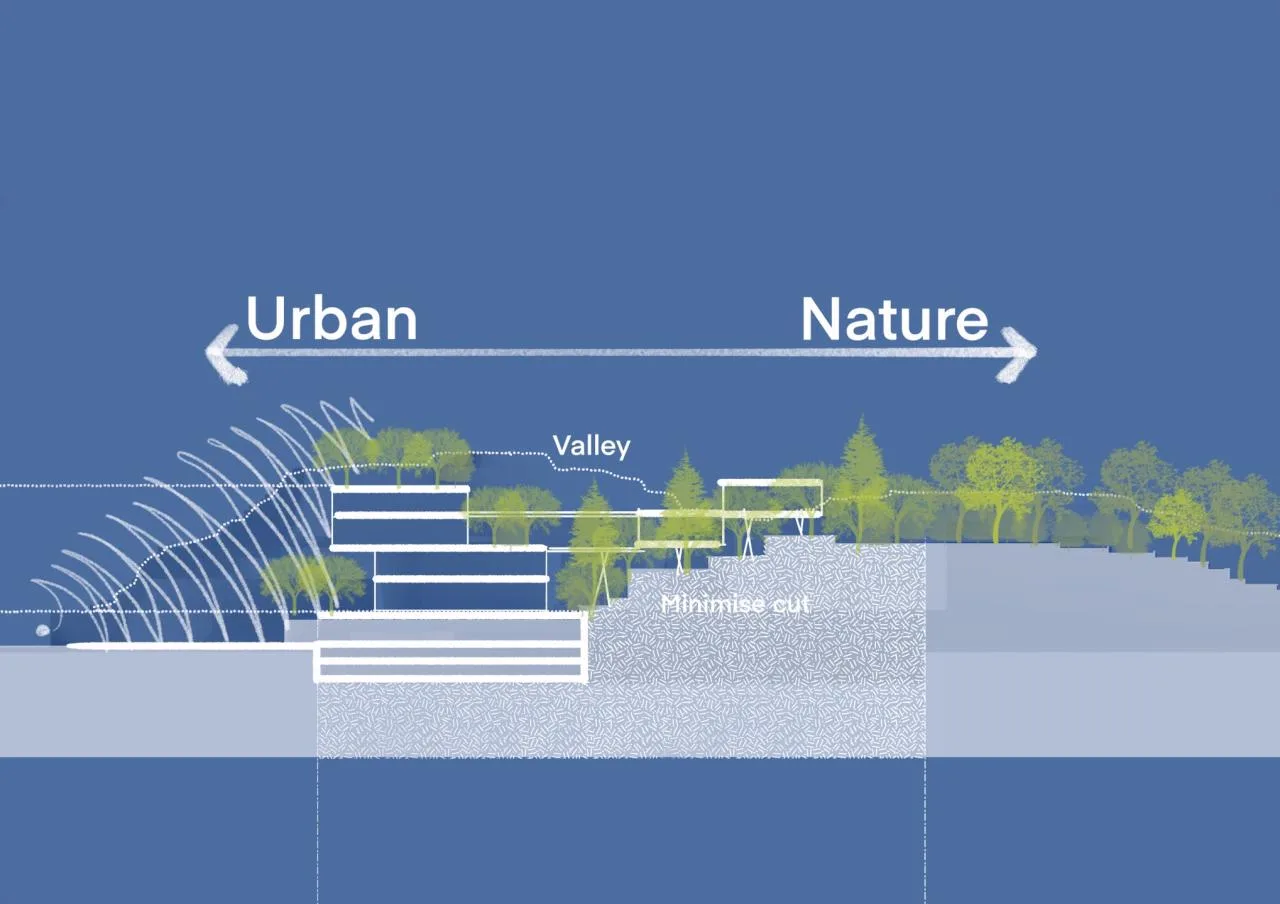
△ Two Segment Interface © AG Huichuang
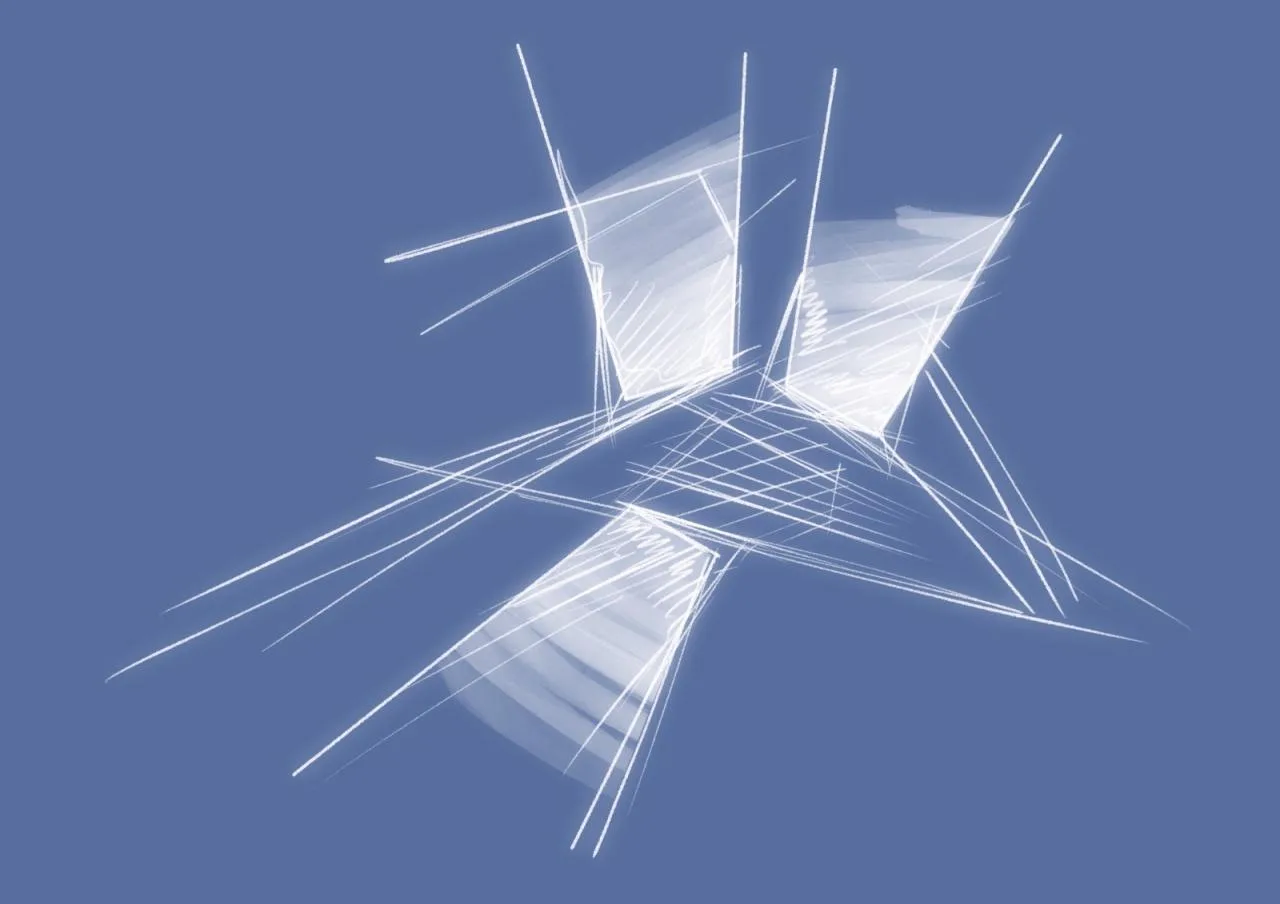
Three Crystal Stones © AG Huichuang
Integrating Landscape and Surrounding Park Network
The design continues the cultural narrative of the landscape by reconnecting the terrain and restoring the site’s previously fragmented relationship between city and nature. Through ecological restoration, it links mountain and sea corridors, creating an immersive spatial experience. This approach emphasizes the harmony between nature and architectural art.
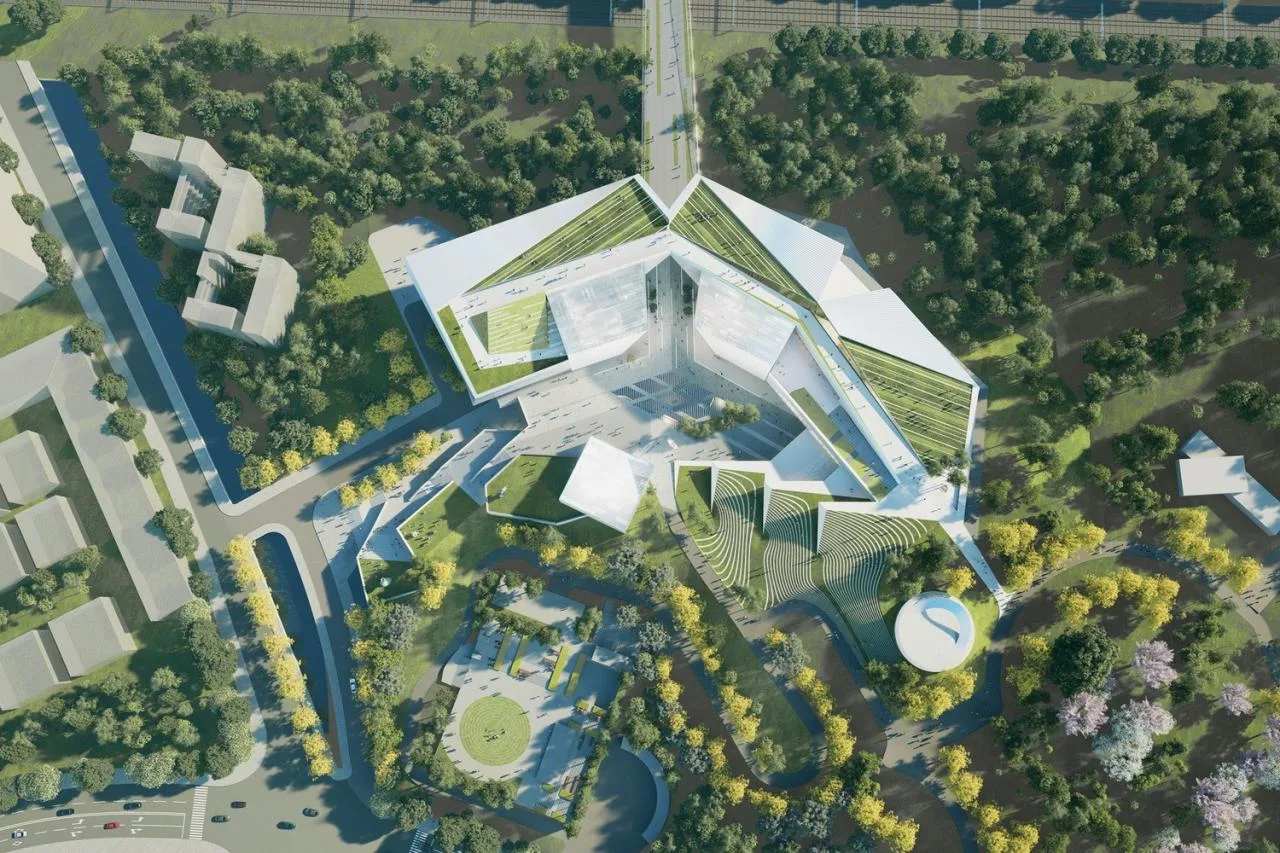
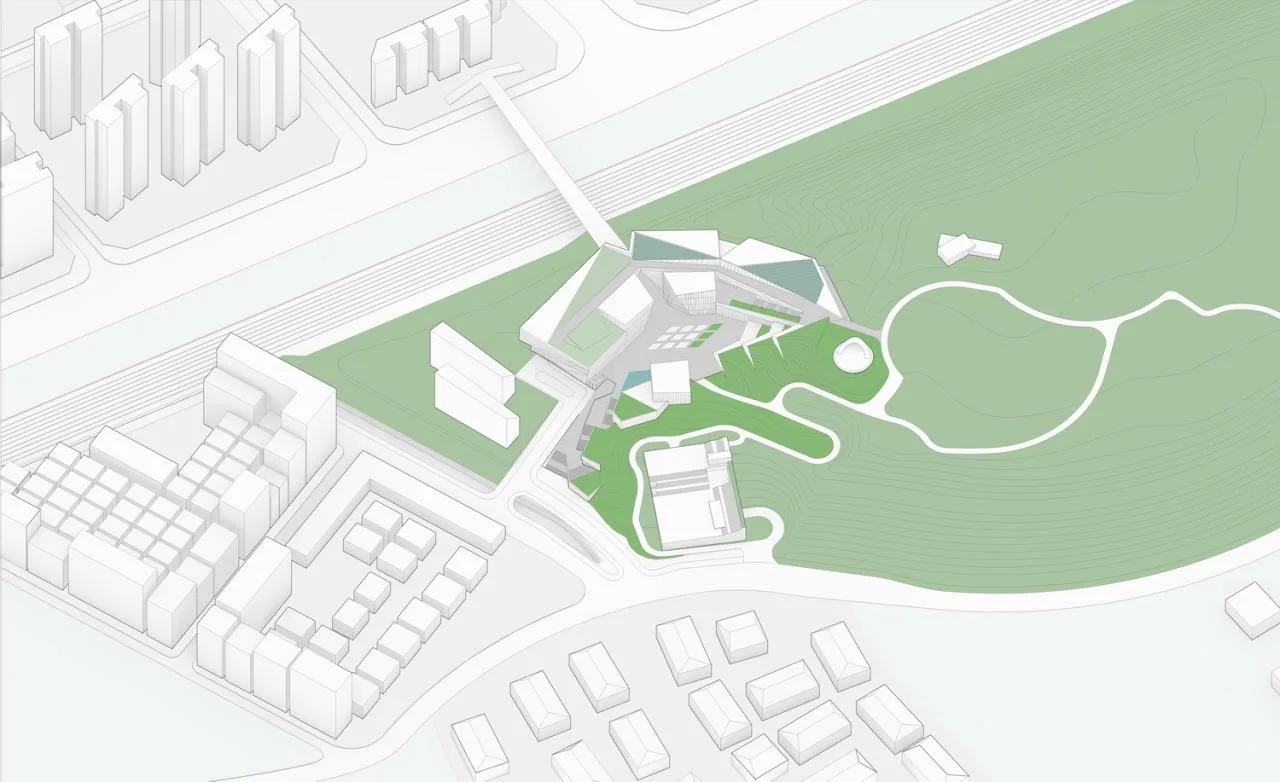
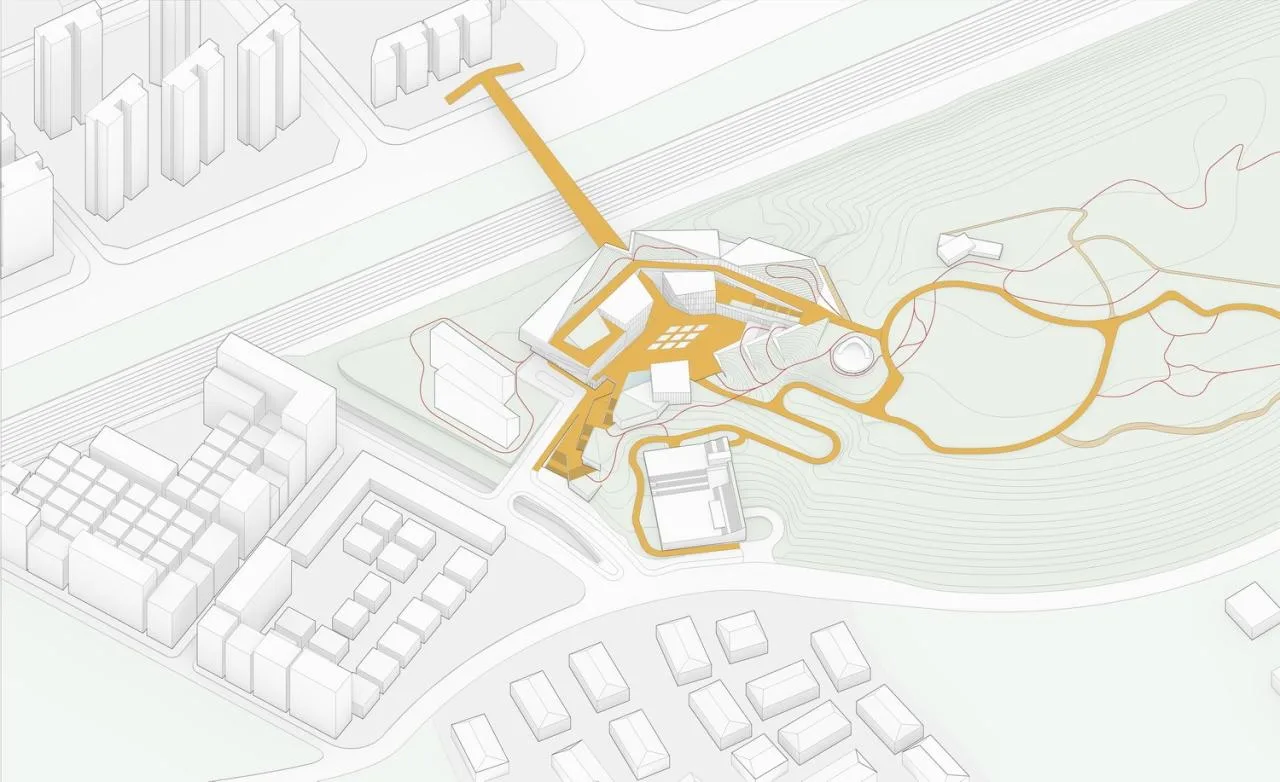
Stitching urban vitality and mountain park system: Building Longhua’s cultural highland with two hearts and one museum © AG Huichuang
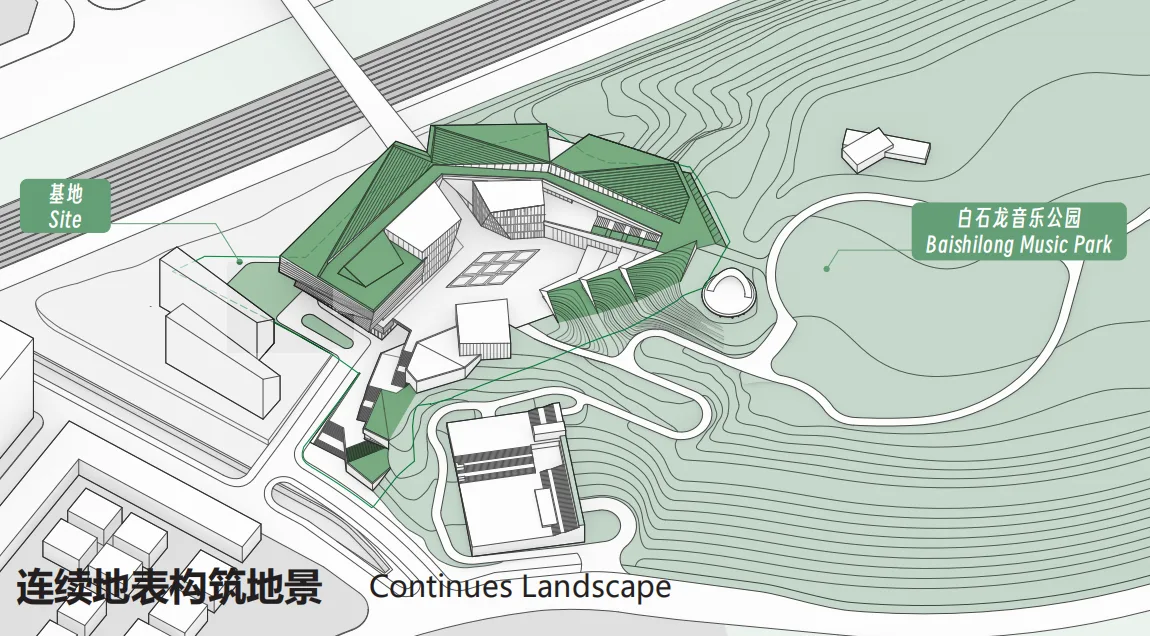
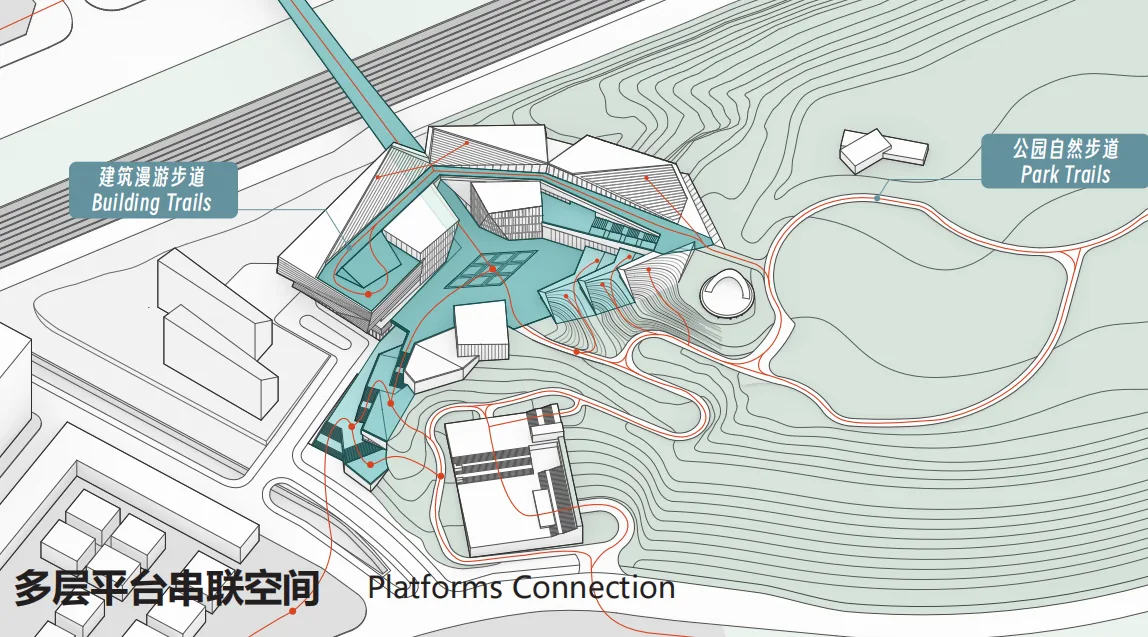
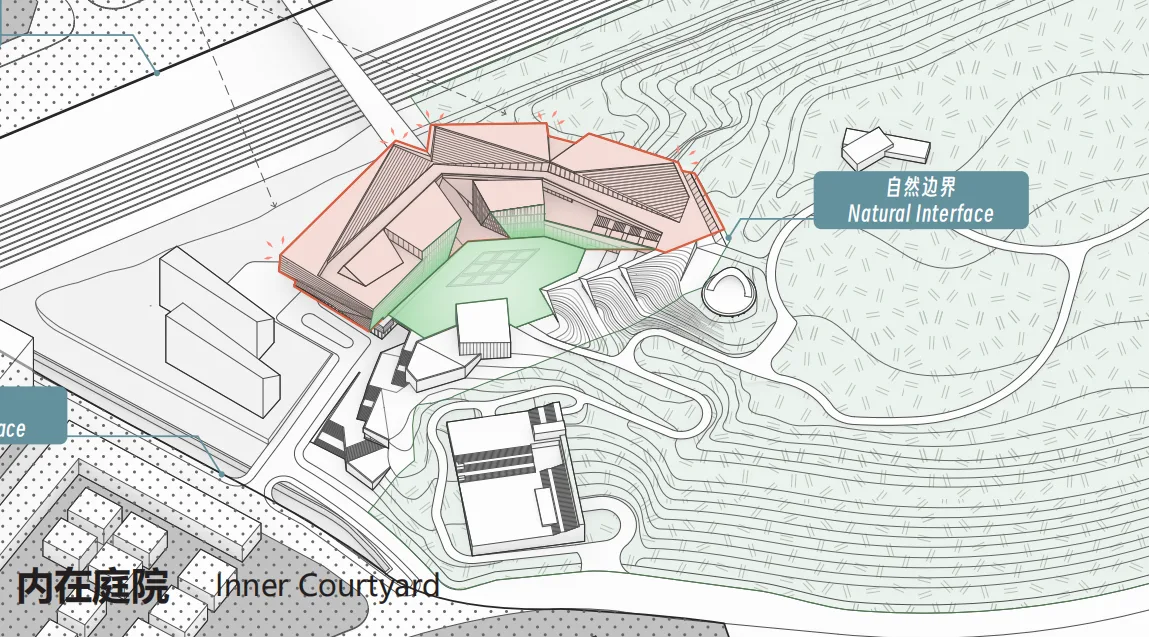
Ecology, culture, and art coexist and grow together, forming a cultural stage that extends through mountains and valleys © AG Huichuang
Multidimensional Park and Multi-Level Public Art & Cultural Platform
The design carefully studies the seamless integration of architecture with the park’s terrain and prioritizes accessibility and city connections. It introduces the concept of a “multidimensional park” to foster community engagement, facilitate interaction between spaces and citizens, and fully utilize rooftop areas to incorporate natural landscapes. This approach creates a sustainable and diverse atmosphere throughout the project. Following the principle of minimal excavation, the buildings follow the natural terrain, reducing earthwork, controlling construction costs, and protecting the local ecology.
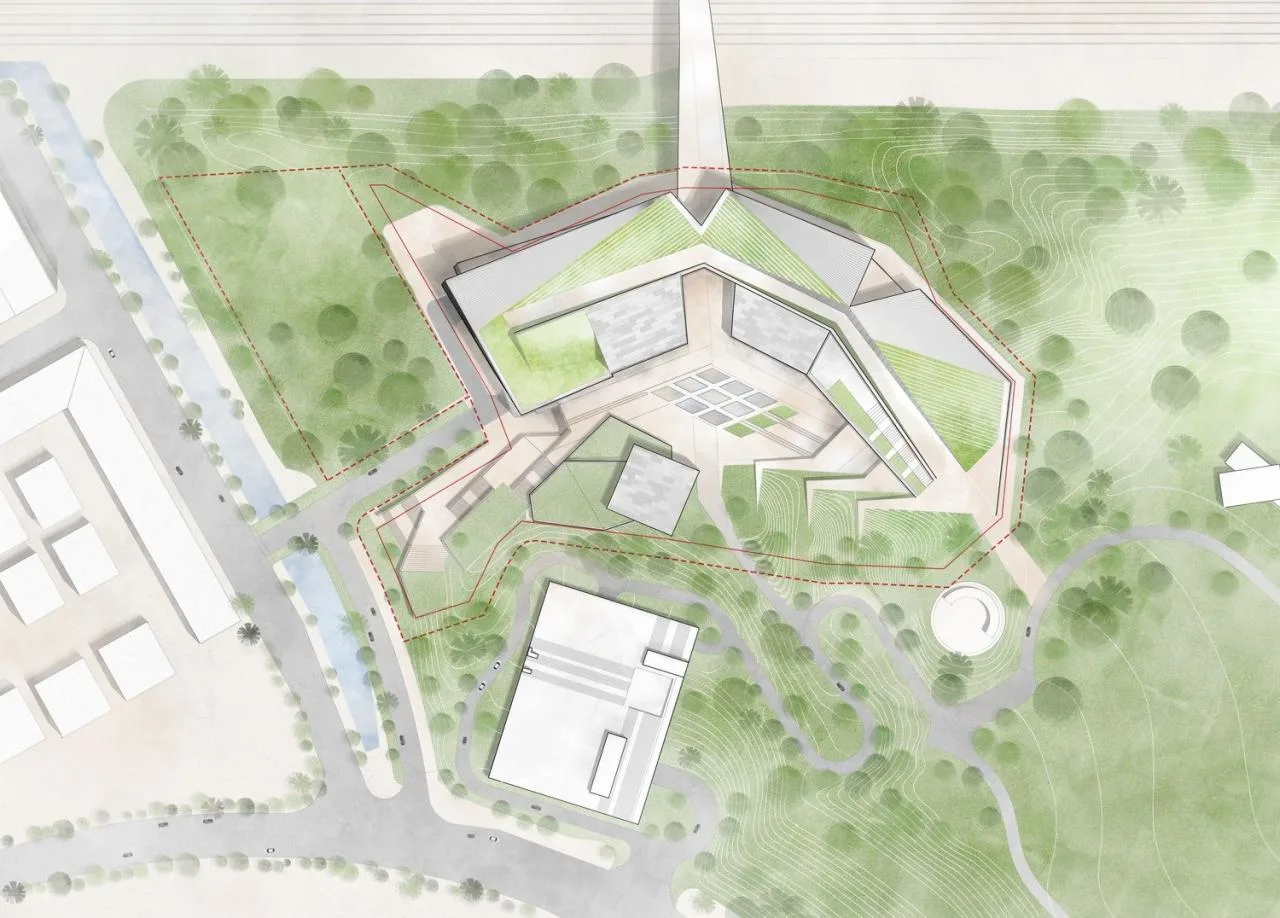
Building Plan: Creating a Sustainable and Diverse Project Atmosphere with Framework Thinking © AG Huichuang
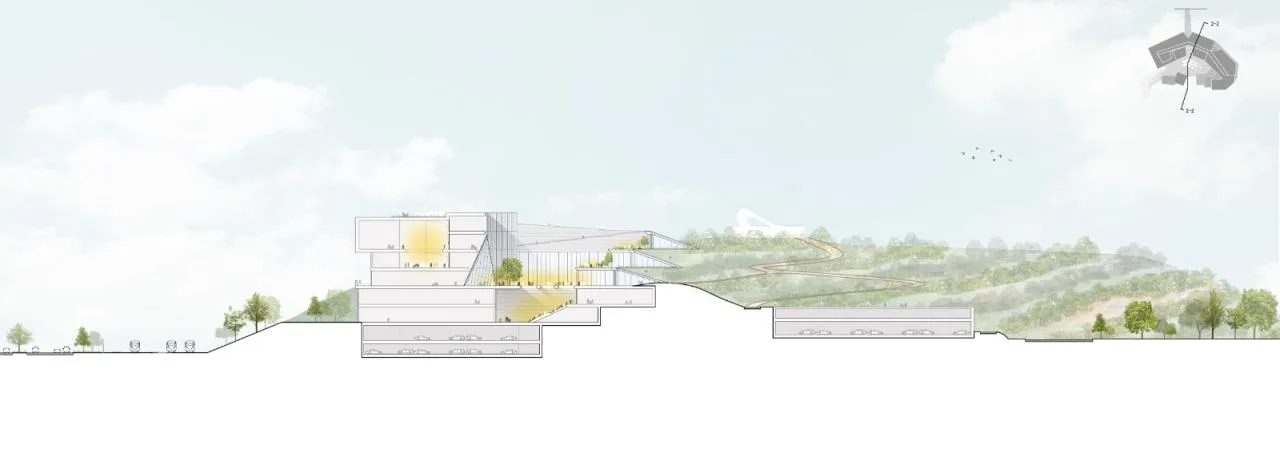
△ Architectural Section: Coexistence and Growth with the Environment © AG Huichuang
Cultural Settlement and Operational Foundations
The design emphasizes inclusiveness, interoperability, and foresight among building units. Public spaces connect the three core buildings closely, creating vibrant shared areas and comprehensive visitor routes. This forms a series of sustainable urban vitality scenes from multiple perspectives, shaping the spatial development. The ultimate aim is to accommodate users of all ages, with rich exhibition content providing flexibility for future operations and activation of the surrounding area.
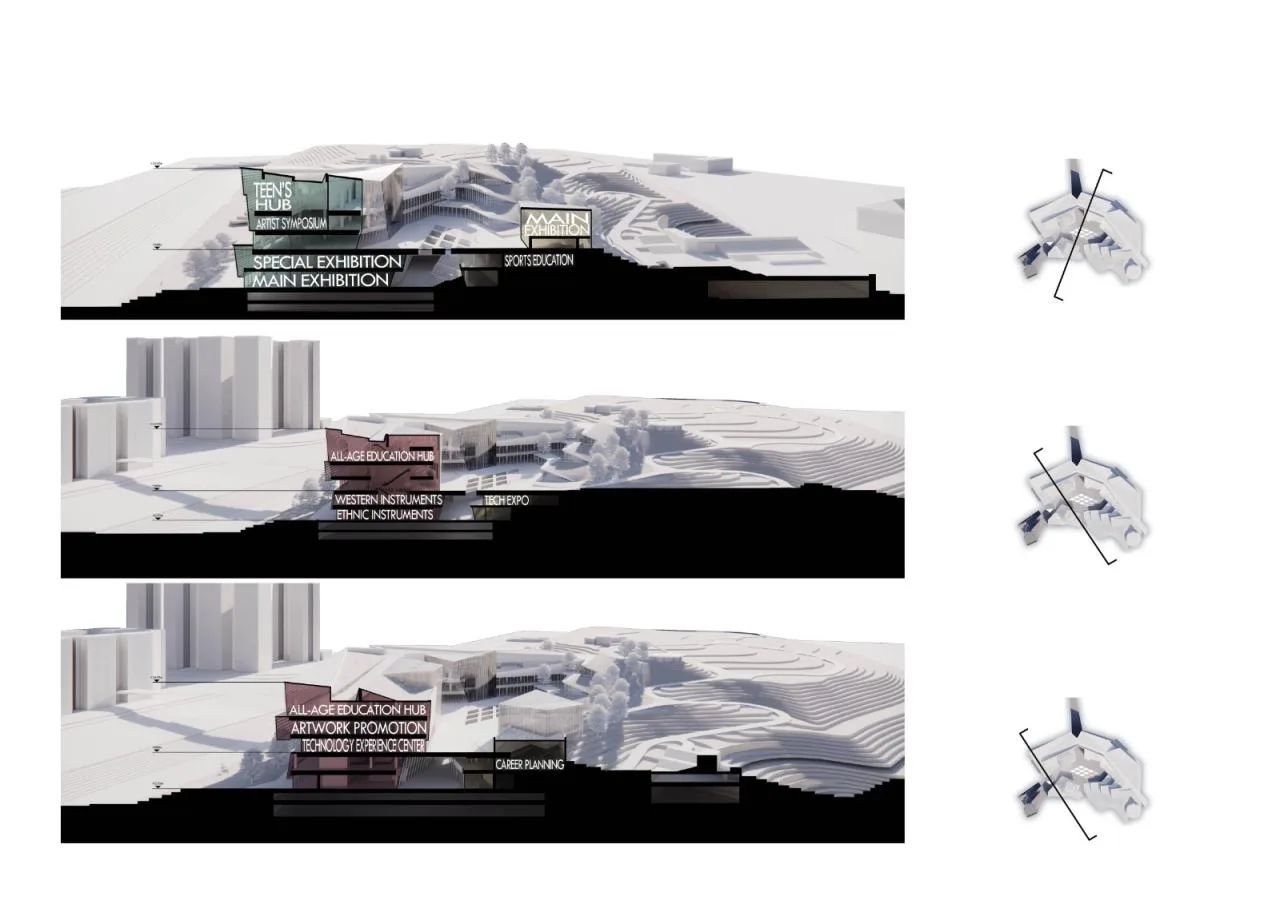
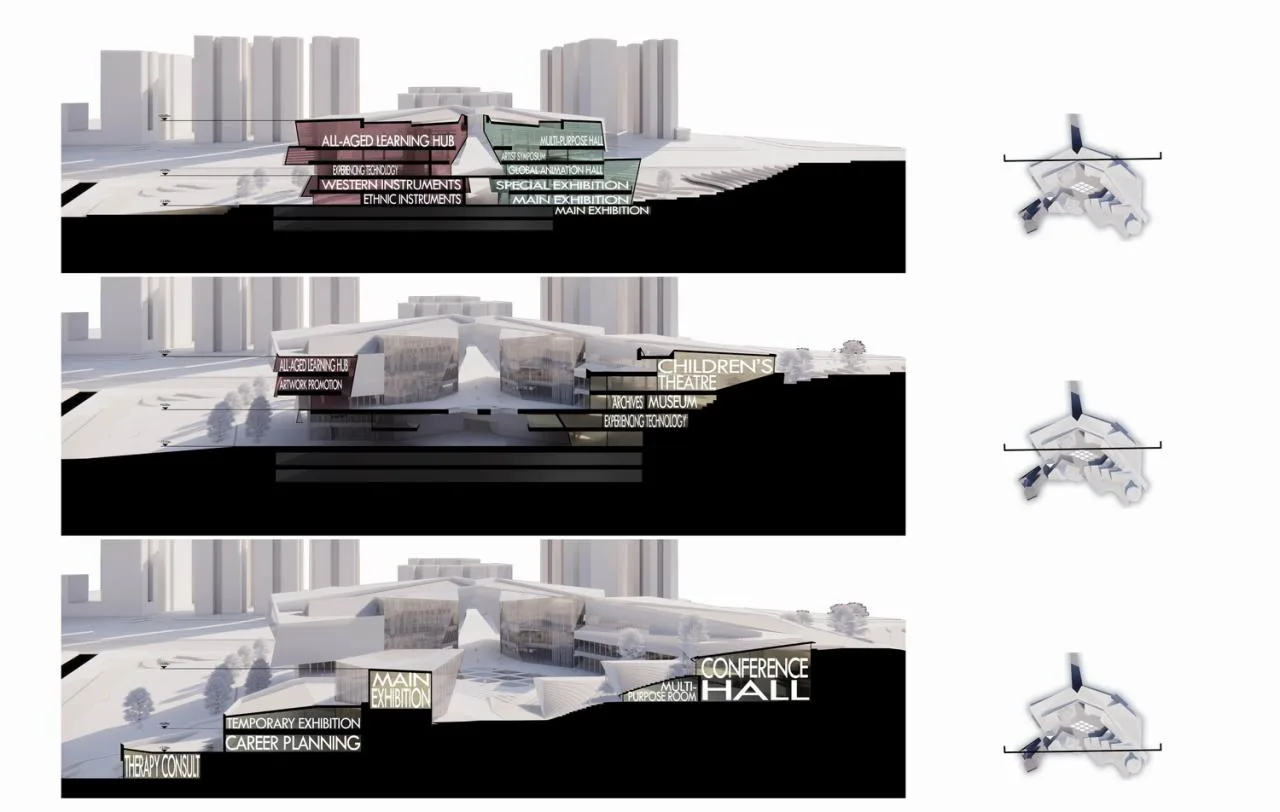
Realizing the “settlement” of urban architectural culture © AG Huichuang
Valley Art Heart, Three Crystal Hill:
Encouraging Full-Age Participation to Boost Urban Vitality
Guided by the principles of coexistence and shared quality of life, the design embraces the community concept and diversity. The three buildings—two hearts and one museum—offer cultural functions that can be combined or separated. Their three-dimensional platforms and vertical relationships link the city to the park, fostering interaction and full-age participation. This forms a “multidimensional cultural and artistic hill” that grows in harmony with its environment.
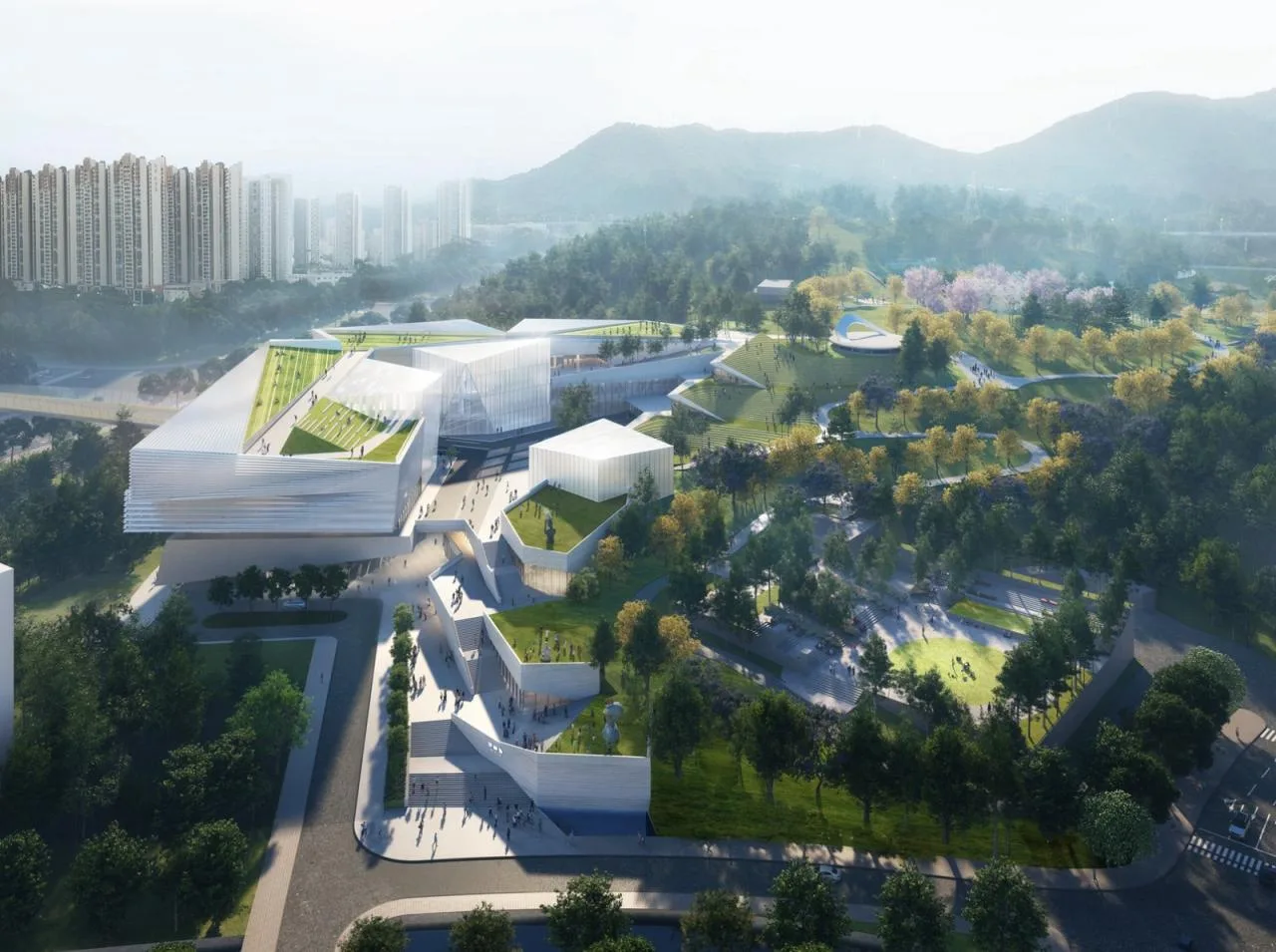
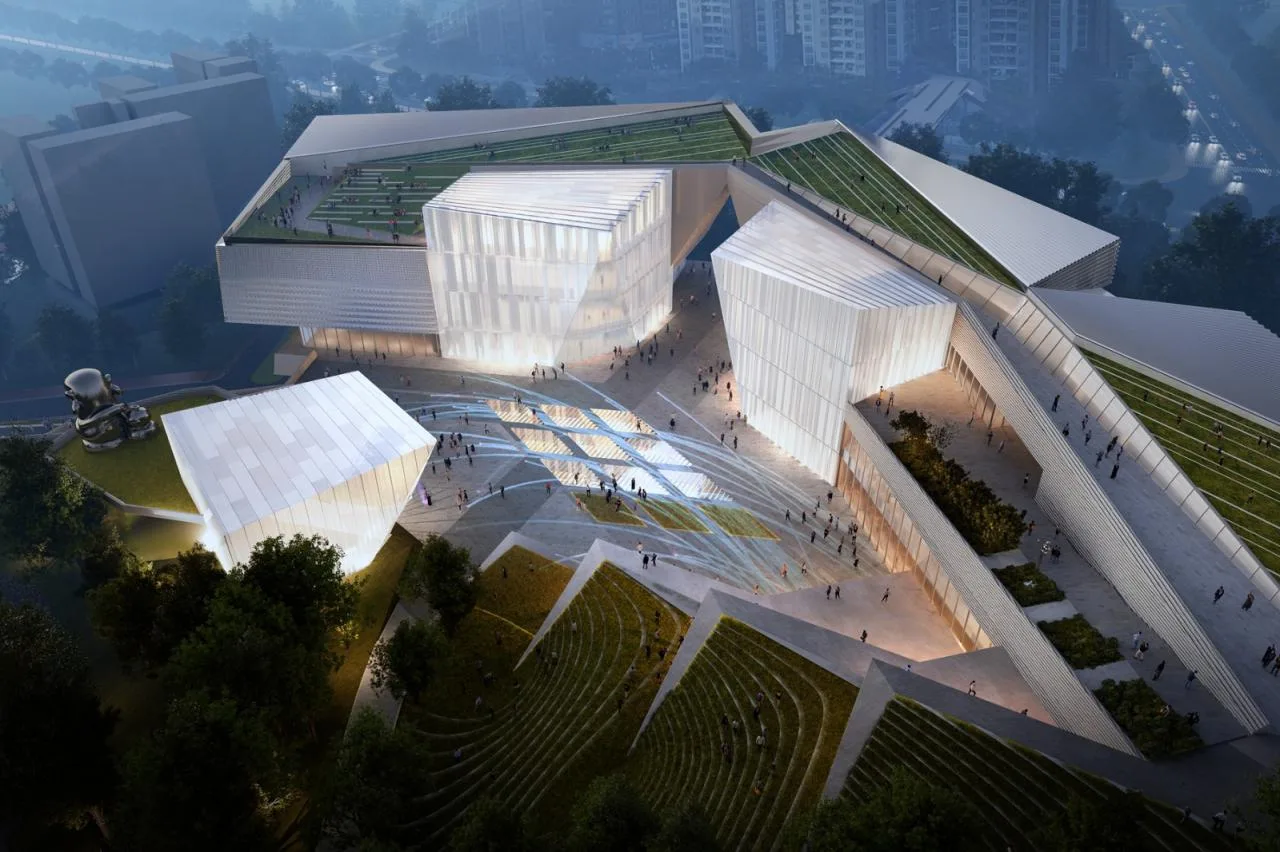
The cultural and artistic valley preserves a familiar connection to citizens’ daily lives while fostering vibrant cultural energy © AG Huichuang
Facade Design Inspired by “Cultural Crystals”
The building’s facade draws inspiration from “cultural crystals,” using bold and concise forms to express volume relationships. Surrounding the central square, three cultural crystals define the exterior image of the core functions. The negative spaces create internal courtyards that frame scenic views.
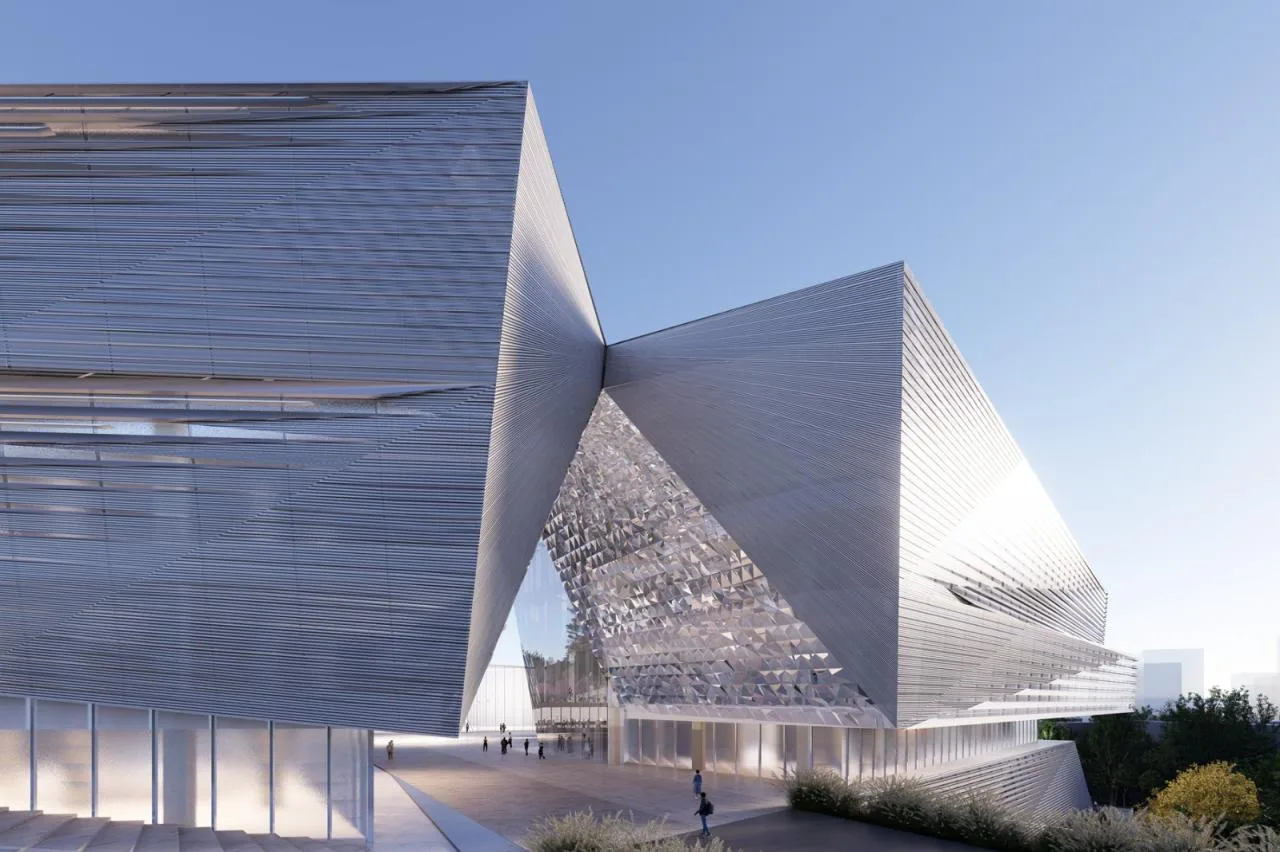
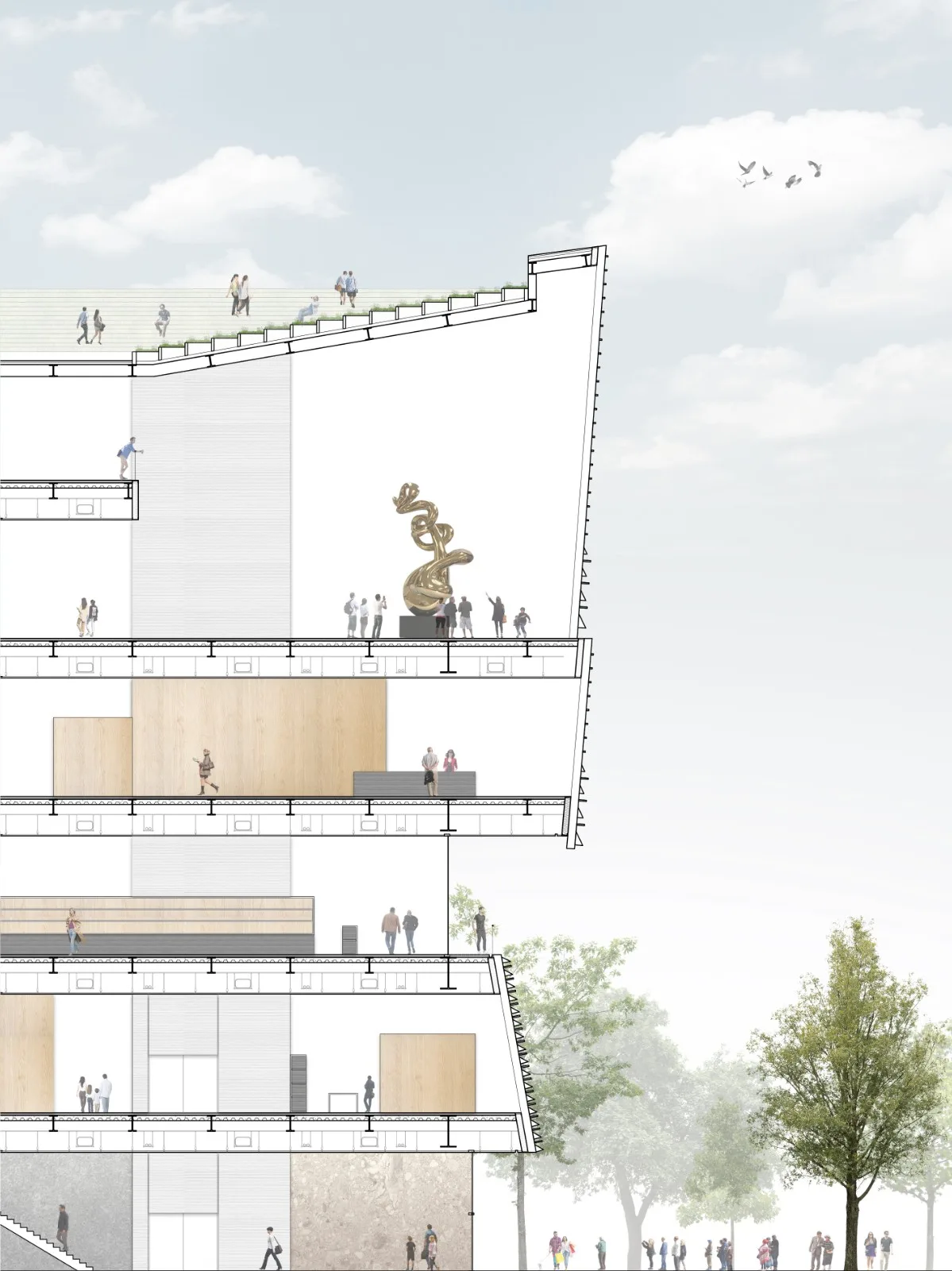
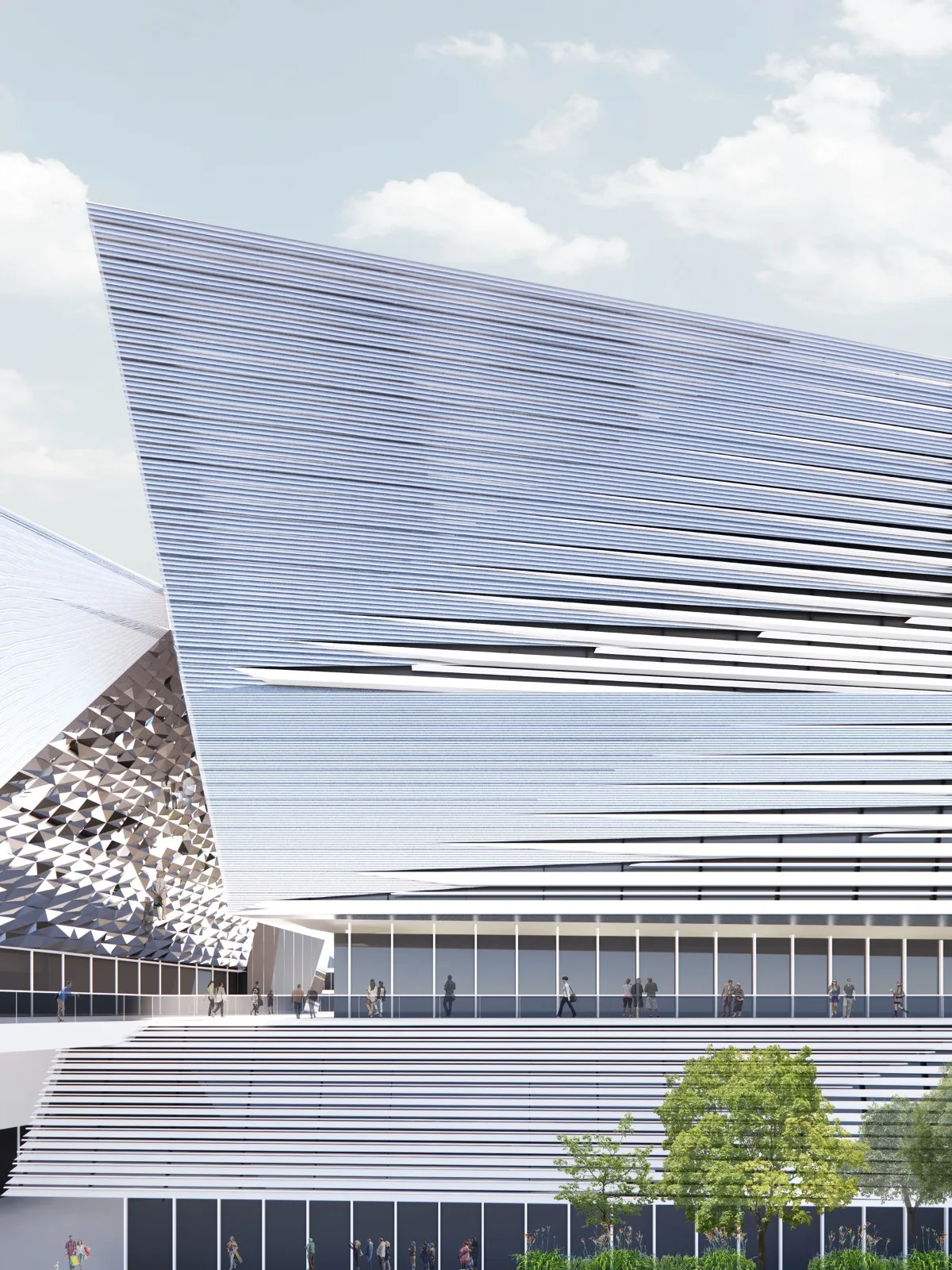
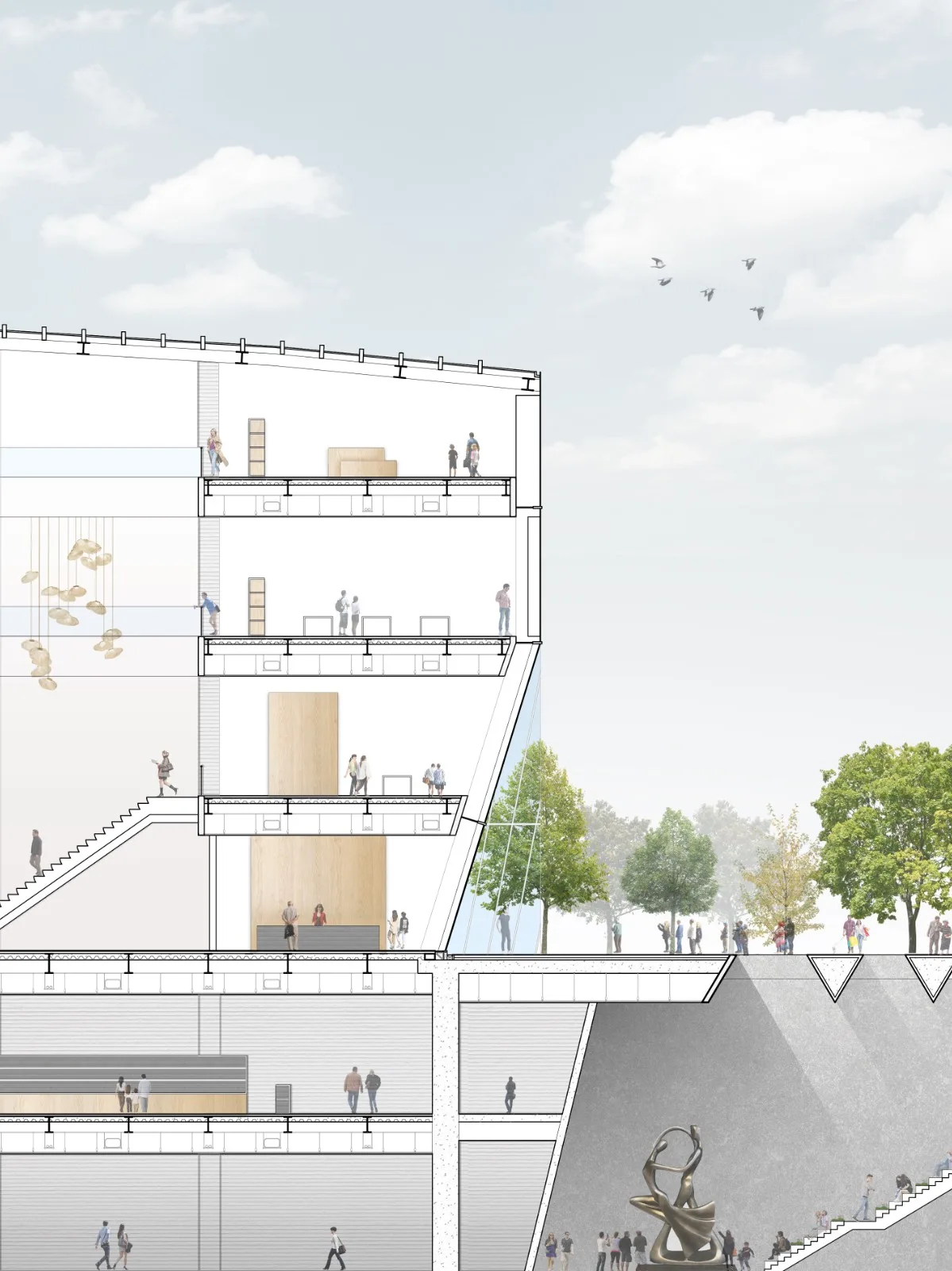
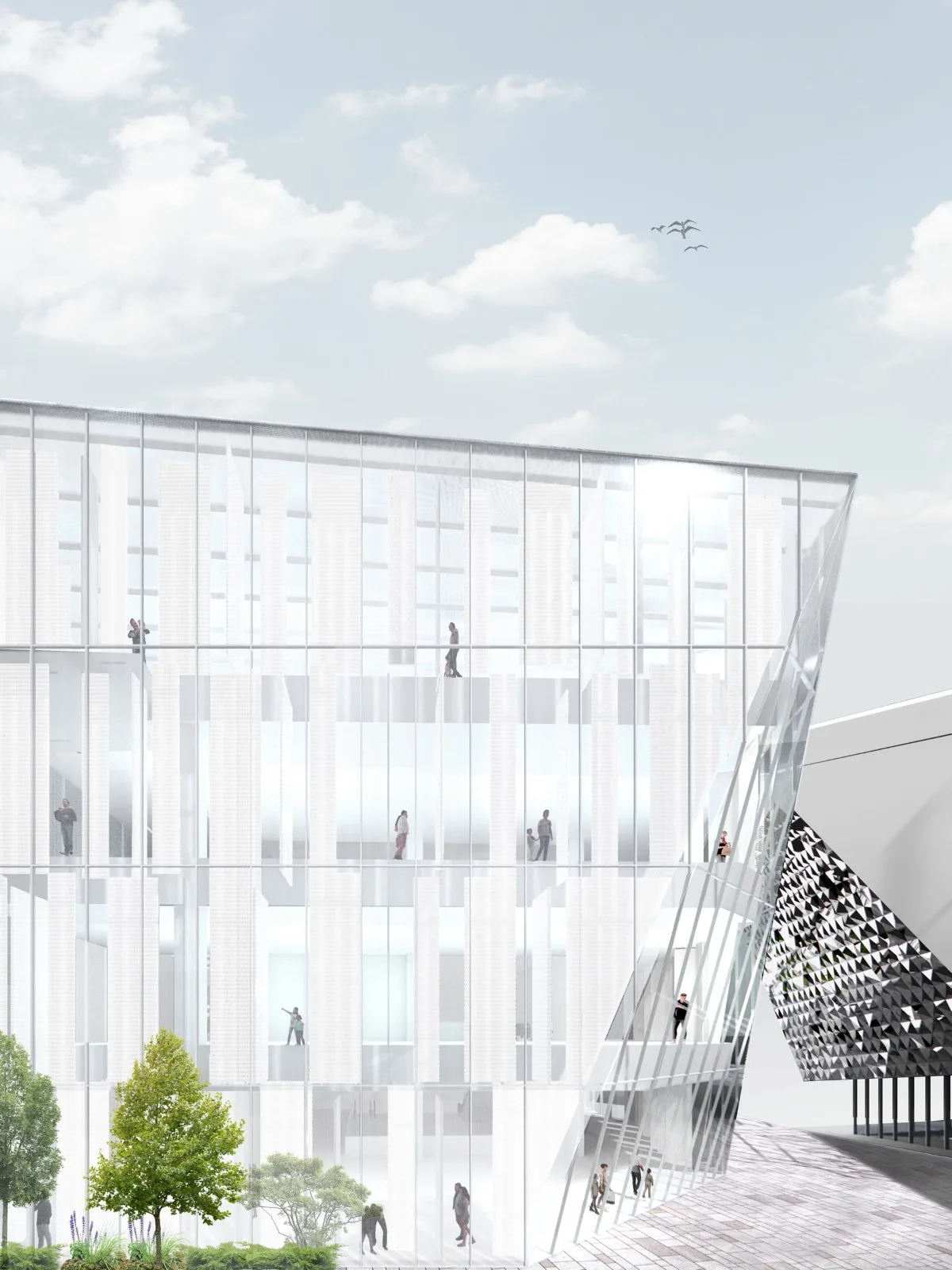
△ Building Facade © AG Huichuang
The facade facing the city features a unique rhythm of silver-gray metal panels, responding to the urban texture. In contrast, the side facing Tanglang Mountain is primarily stone, concealed beneath a green roof, creating a tranquil and rich architectural tourism space.
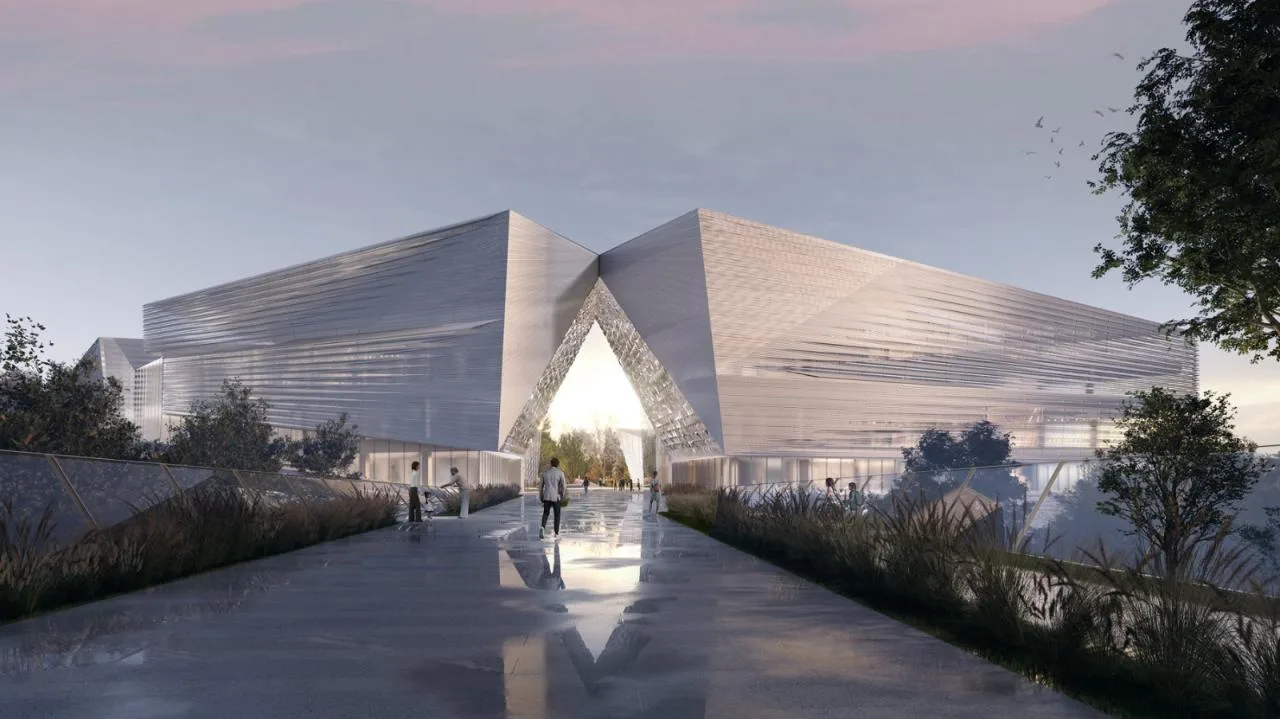
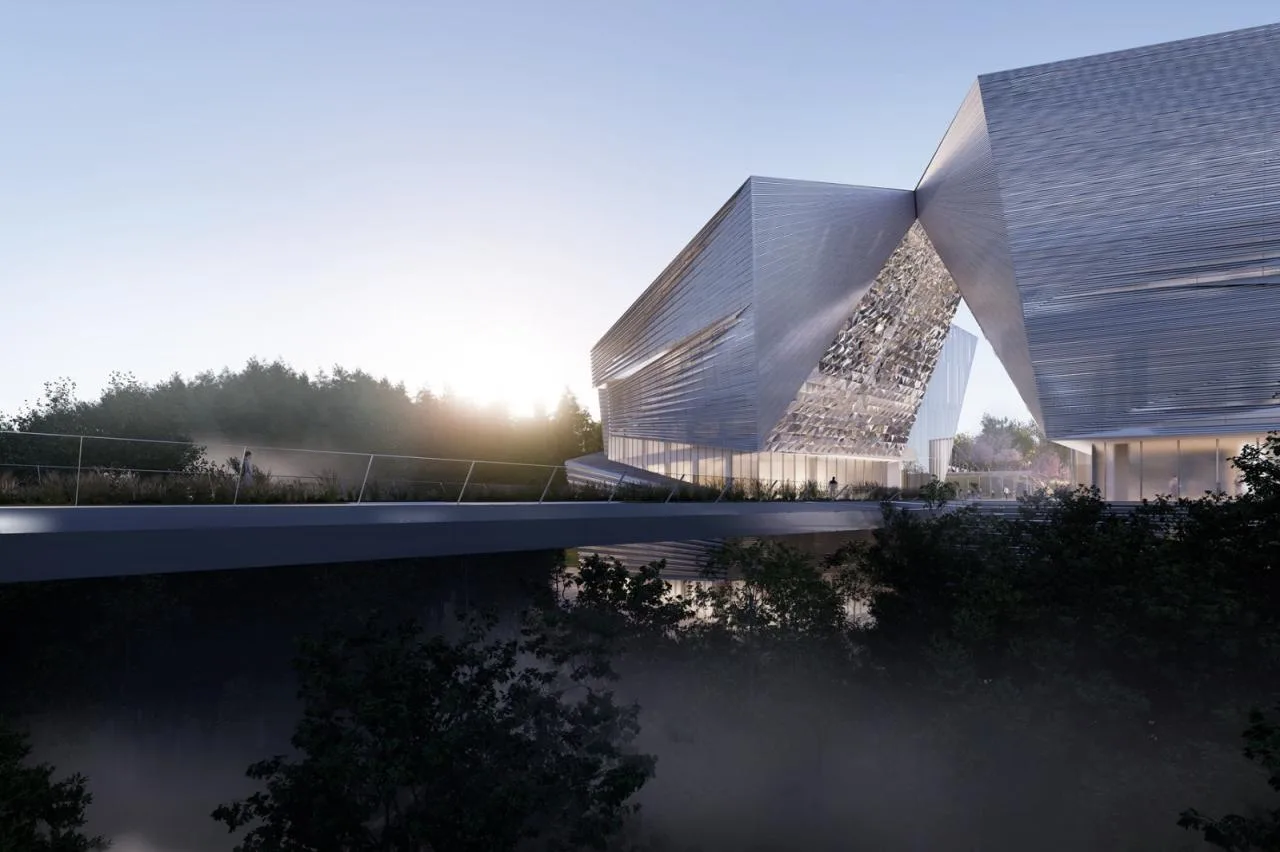
The building volume sits adjacent to the northern city boundary, maximizing the city’s visual presence © AG Huichuang
Creating an Experience of “Space Sharing, Streamlining, and Intensification”
Guided by the spatial concept of space sharing, streamlined flow, efficient connectivity, and accessible convenience, the building forms a cohesive whole. Materials such as wood, stone, and concrete are employed strategically to define spatial characters at key nodes. The design enhances the project’s public nature by focusing on user needs, creating spaces that support efficient operation through intensive shared use. The core area links major venues and key zones, resulting in a clear, orderly, continuous, and open hub.
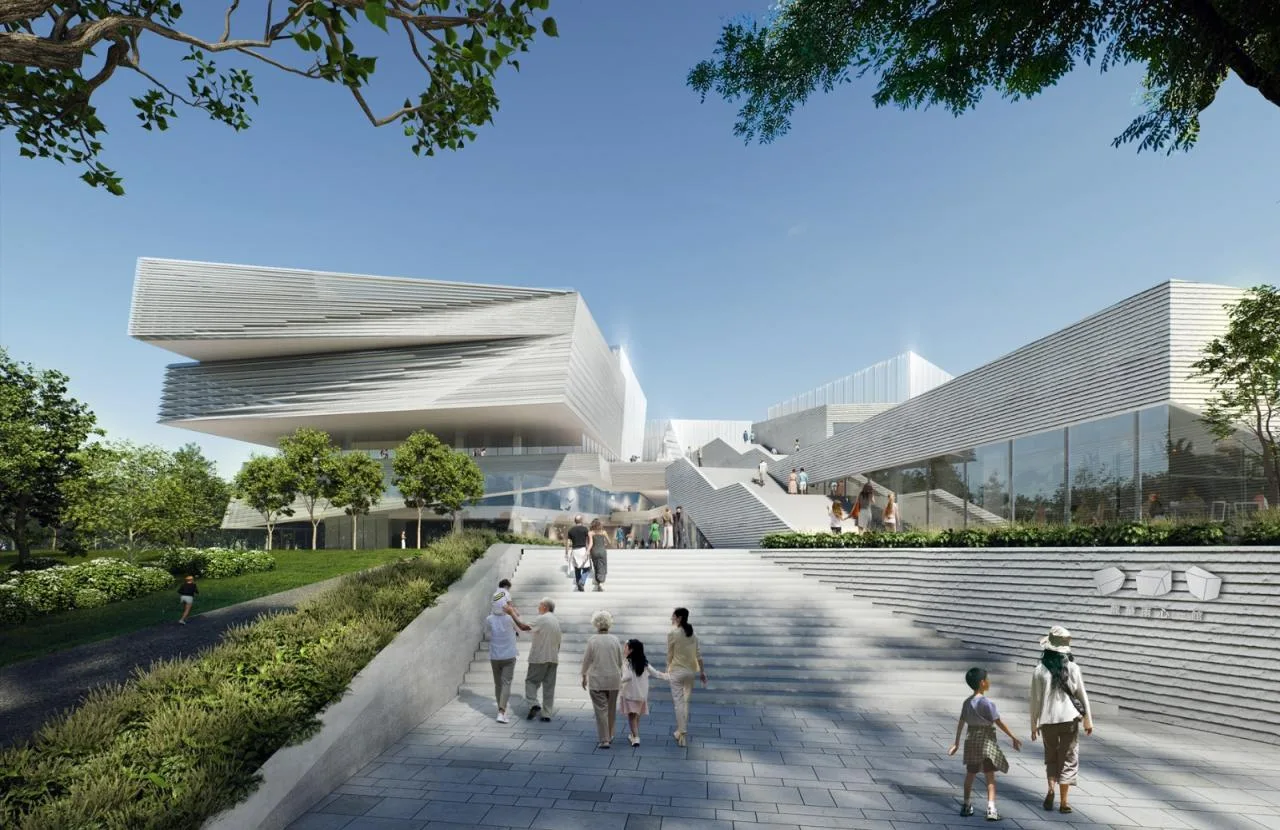
△ Connecting the music center entrance with the community, fostering three generations living together in the mountain city of string music © AG Huichuang
Large transparent glass sections are used in public spaces and entrances to blur the boundaries between indoors and outdoors, offering rich natural views and wayfinding cues. Within exhibition spaces, perforated metal panels provide natural lighting while effectively controlling interior illumination.
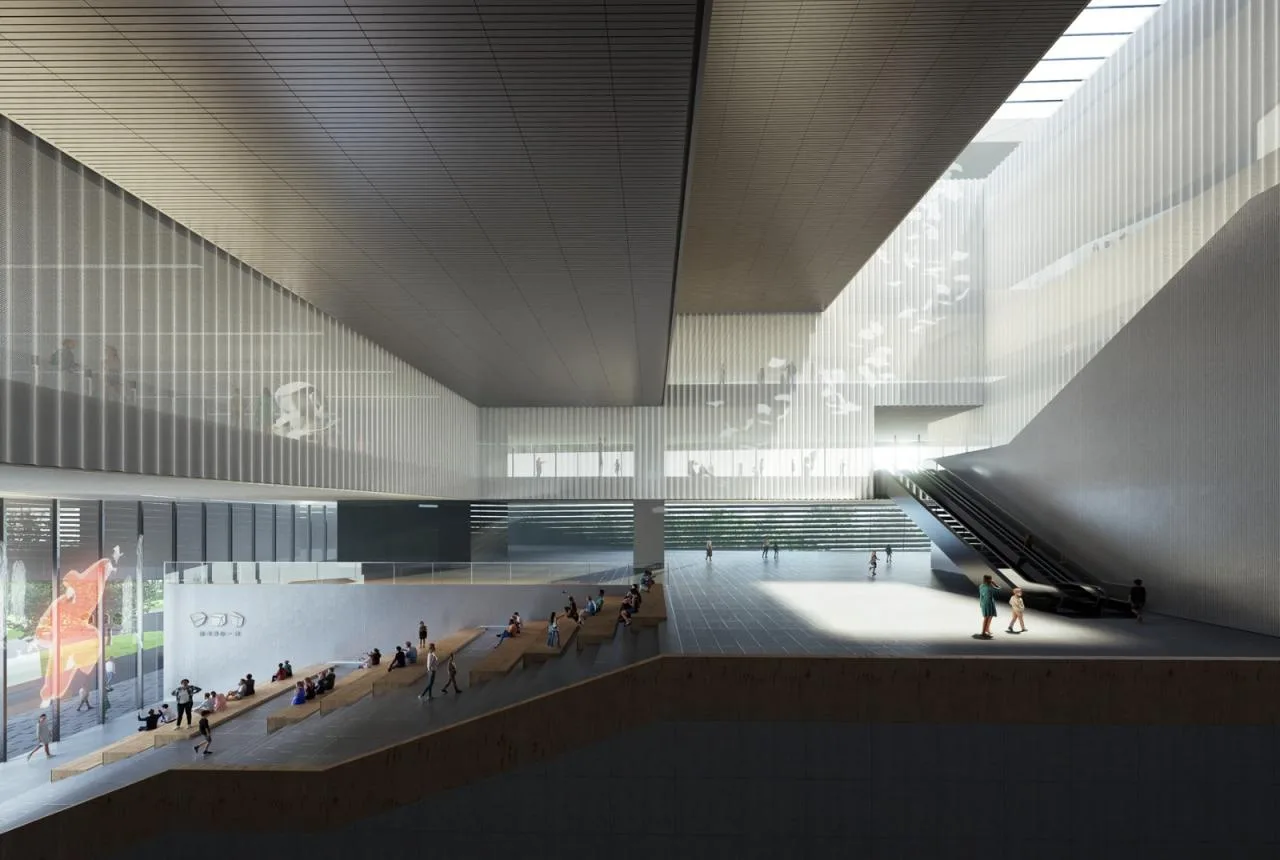
△ Space Sharing, Streamlined and Intensive © AG Huichuang
Theme Garden: Ecology and Cultural Art Growing Together
The design respects the existing natural terrain and extends the park experience through a rooftop natural trail. It seamlessly integrates daily life and culture, blurring the lines between living and art. The park unfolds into a lively valley, featuring rooftop trails that guide visitors through diverse landscapes. Combining natural pathways, sky farms, starry campsites, and sunset theaters, this vibrant cultural forest embraces ecological diversity.
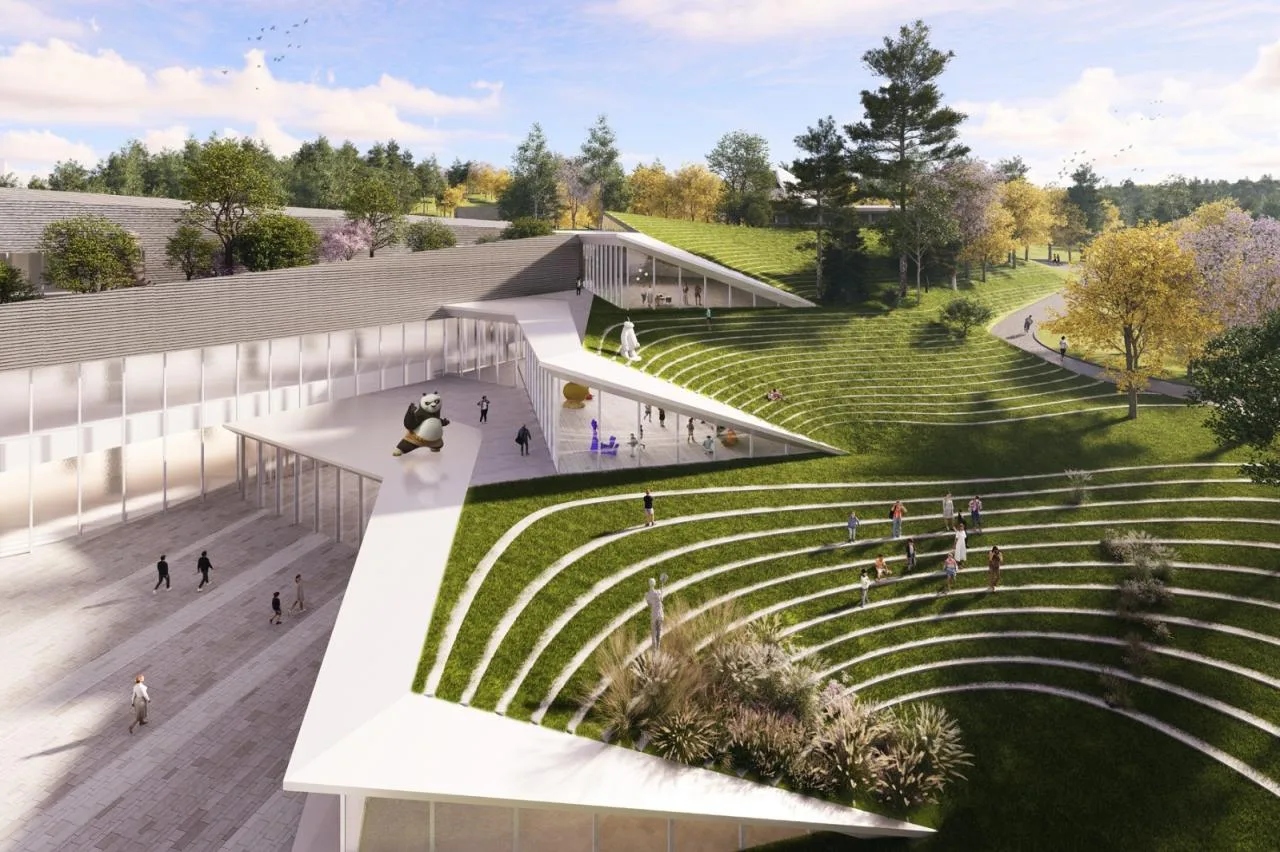
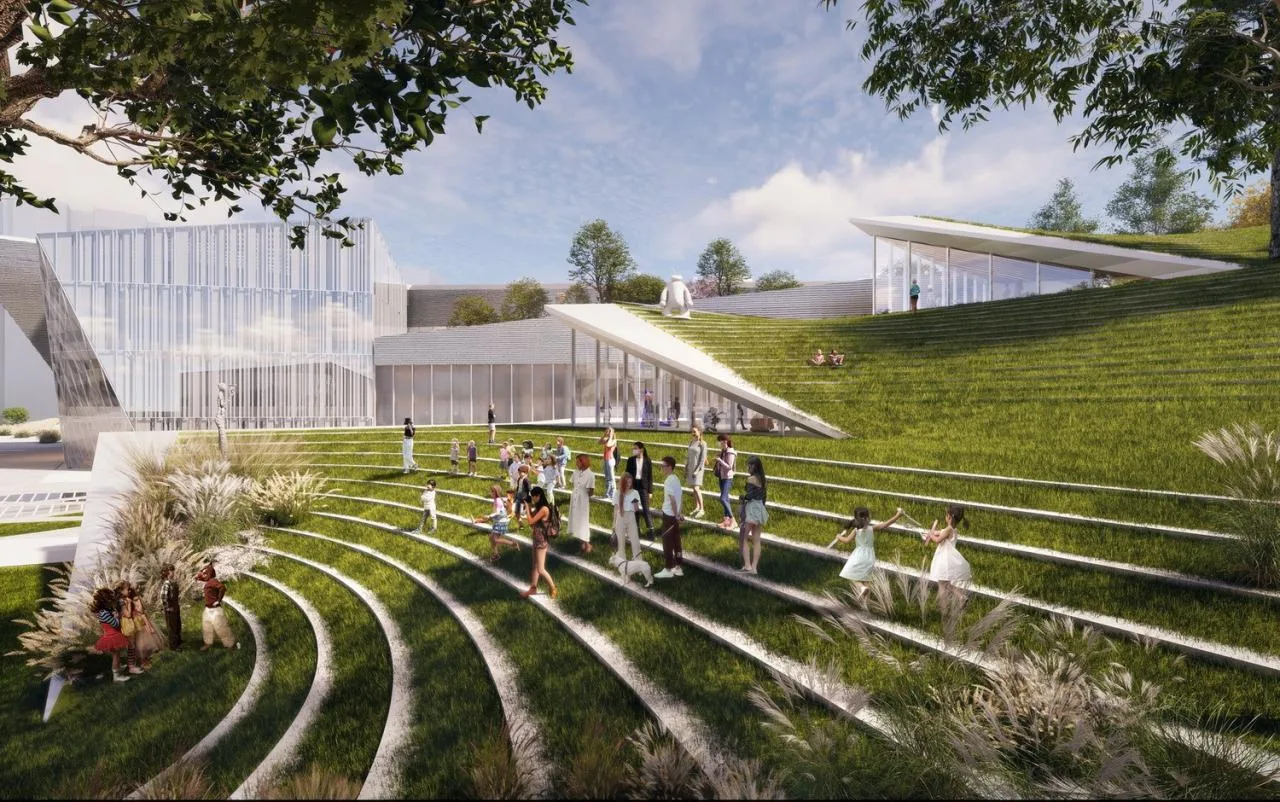
Three thematic gardens dedicated to family, children, and women blend with rooftop landscapes, creating natural and welcoming trails © AG Huichuang
Full-Age Community Interaction with Balanced Activity and Vitality Throughout the Day
The art center embraces the concept of community, integrating art appreciation, cultural exhibitions, interest groups, and conference functions to foster familiarity, daily engagement, and an open atmosphere. Operational strategies prioritize dynamic-static balance and all-day vitality, catering to visitors of all ages and maximizing building use around the clock. Seasonal programming with diverse media themes will offer citizens an age-friendly learning environment.
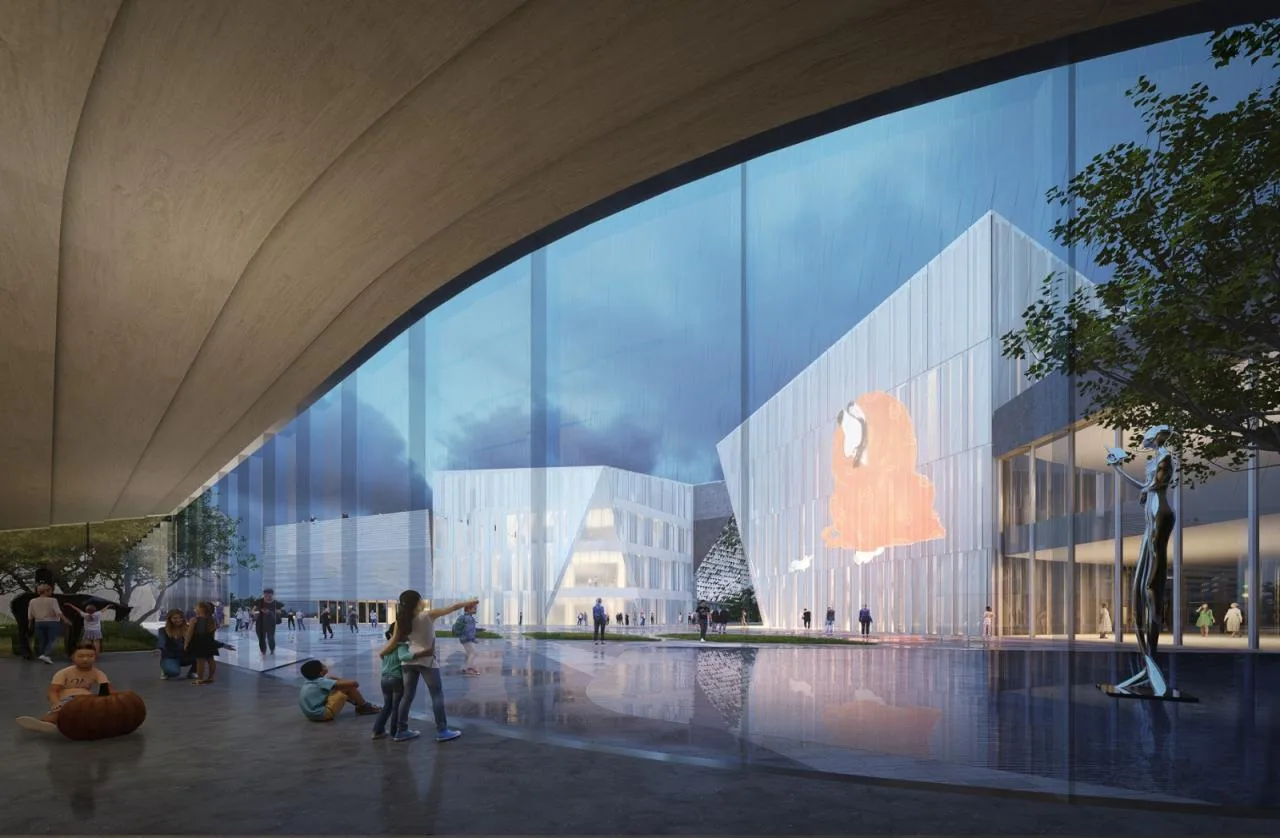
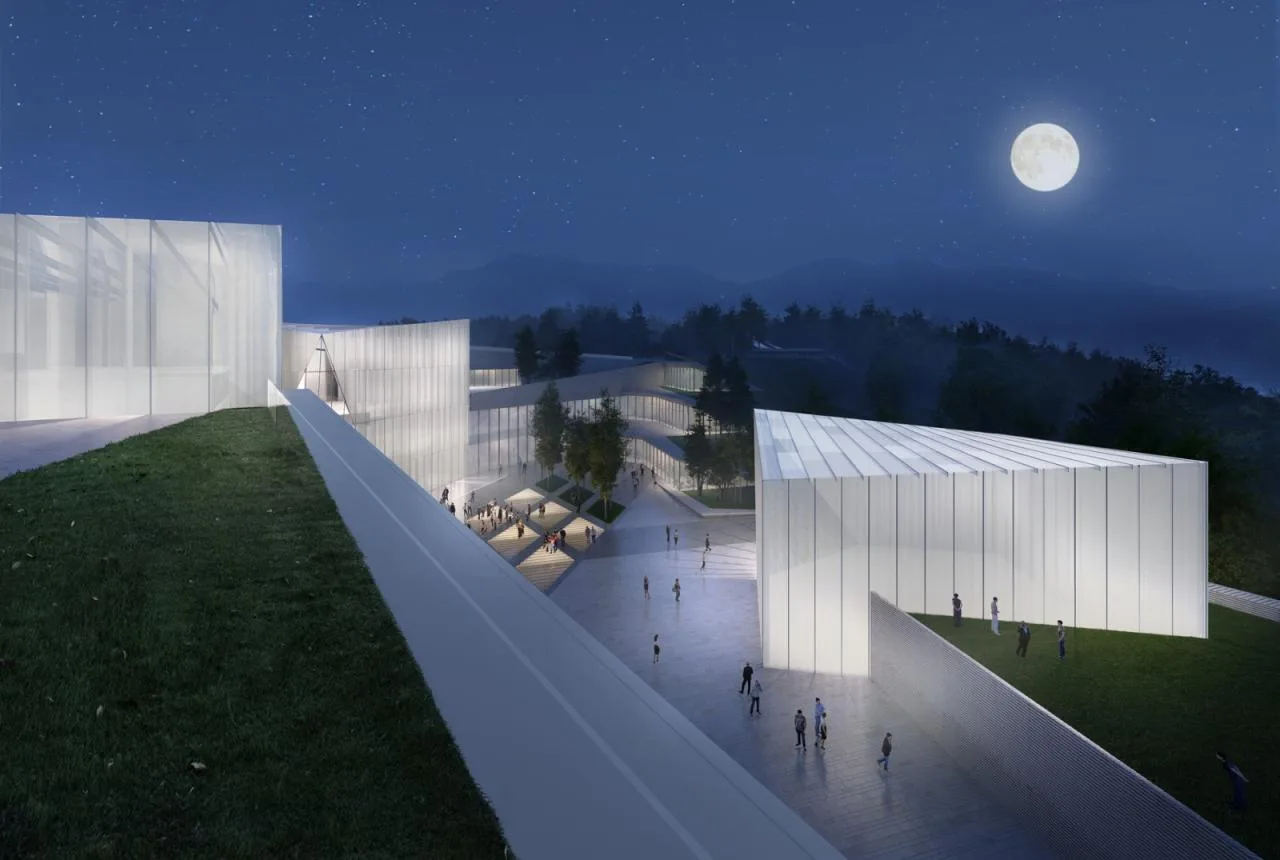
Longhua’s Two Hearts and One Pavilion acts as a vibrant cultural living room shared by the nation, fostering urban vitality © AG Huichuang
Project Information
Project Name: Longhua District Music and Art Center, Animation Art Museum, Women and Children’s Center Construction Project (Feasibility Study, Design)
Location: Shenzhen, China
Building Area: 60,930 square meters
Project Type: Public Cultural Architecture
Status: Winning Bid Proposal
Client: Construction and Engineering Bureau of Longhua District, Shenzhen
Design: AG Huichuang
Collaborator: China Southwest Architectural Design and Research Institute
Design Team: Lv Dawen, Cai Hui
Architectural Designers: Tao Ran, Andrei Purice, Zhang Jinwei, Wang Zixun, Wu Ziqing, Yang Qingcui, Zhang Yi















Must log in before commenting!
Sign Up