
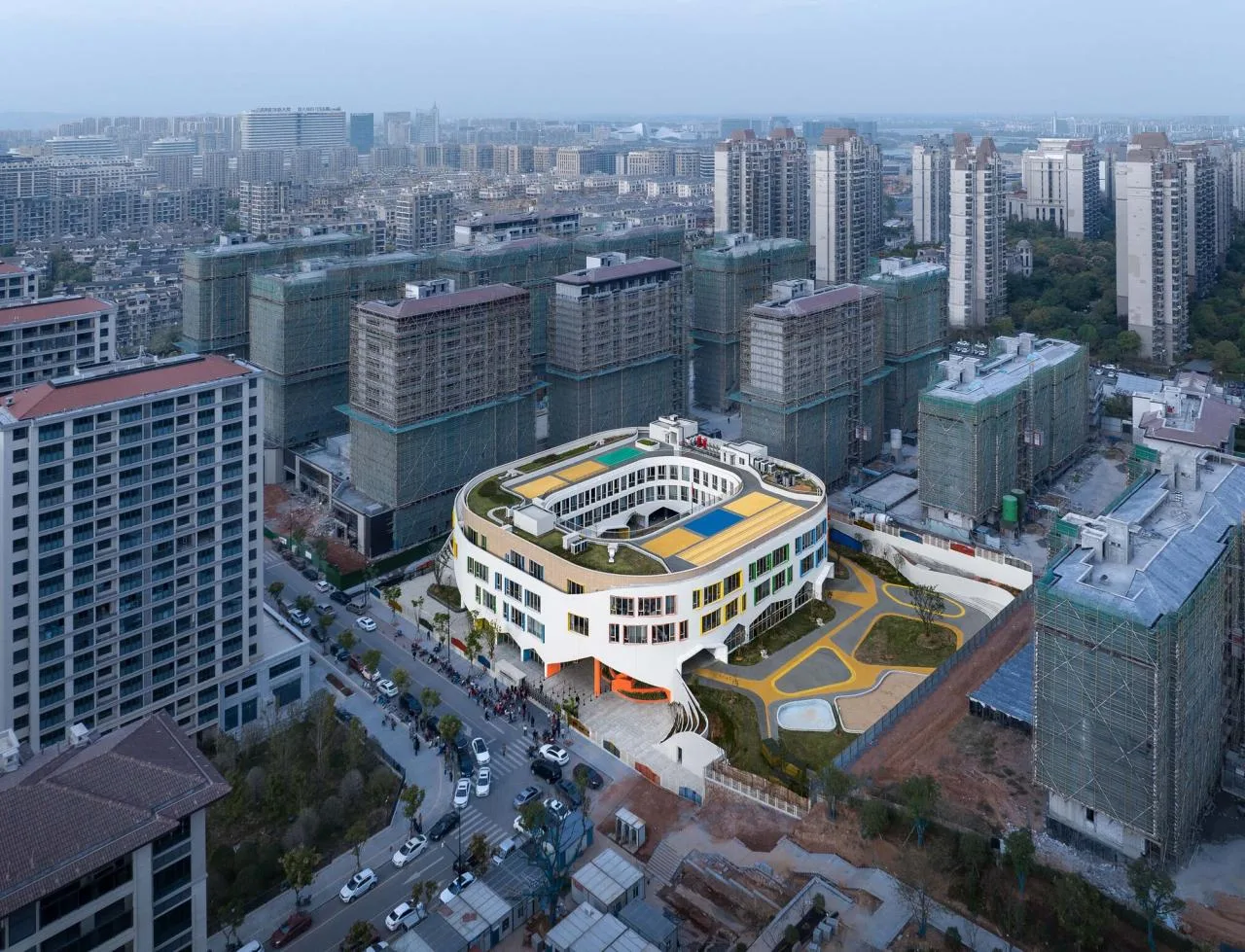
The Faculty Kindergarten (Qianjiashan Park), designed by LYCS Architecture, has officially opened and is now operational. Located in the Smart New City of Quzhou, the project covers a total construction area of 11,568 square meters. It is built to meet Zhejiang Province’s first-class standards and accommodates up to 15 classes simultaneously.
Situated in a high-density residential area, the site is surrounded by residential buildings on all sides except the west. As the demand for children’s activity space grows, the limited campus land presents a challenge. This project focuses on maximizing freedom within the confined space, aiming to inspire children’s motivation to explore and learn independently through play and joy.
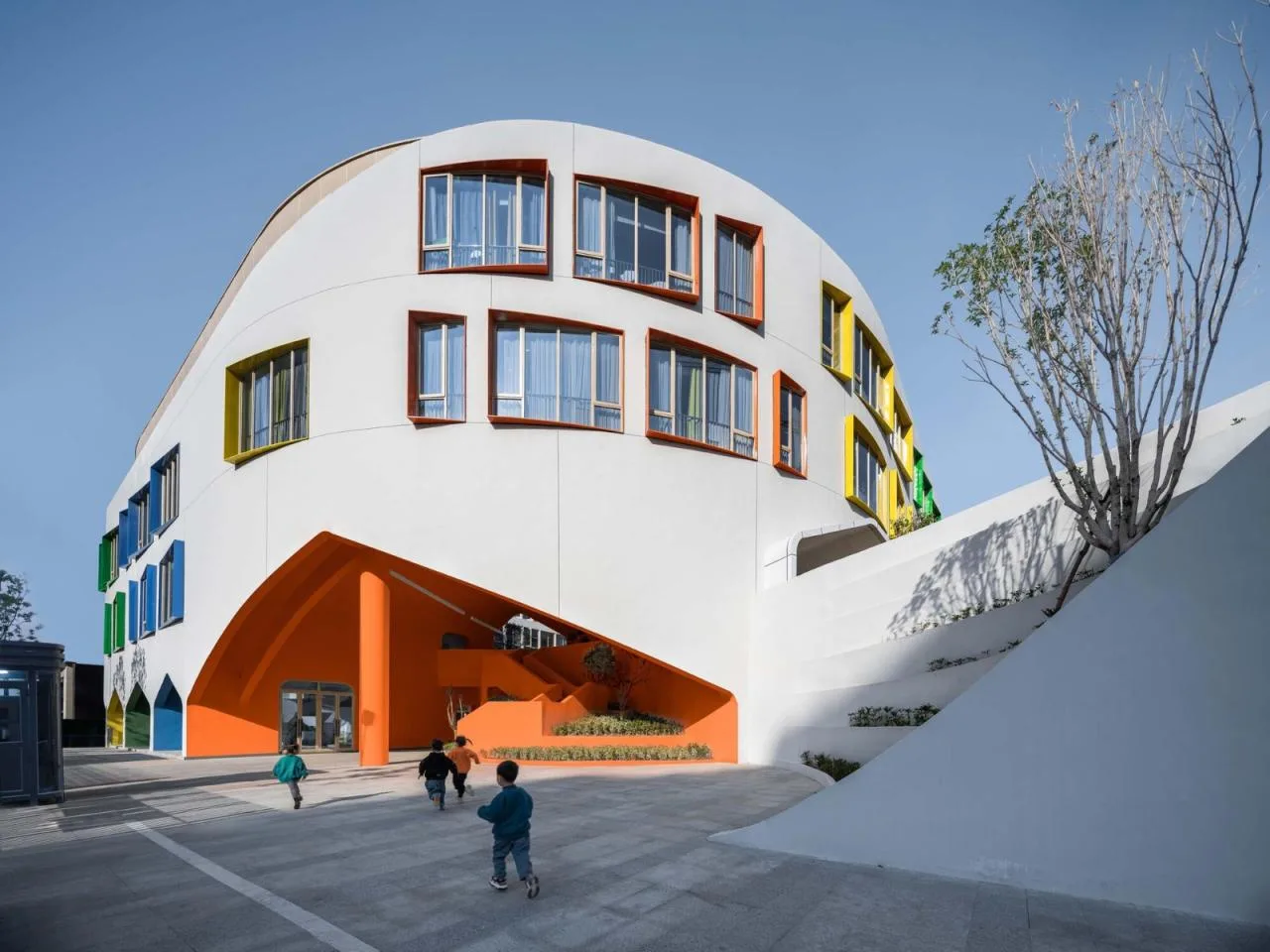
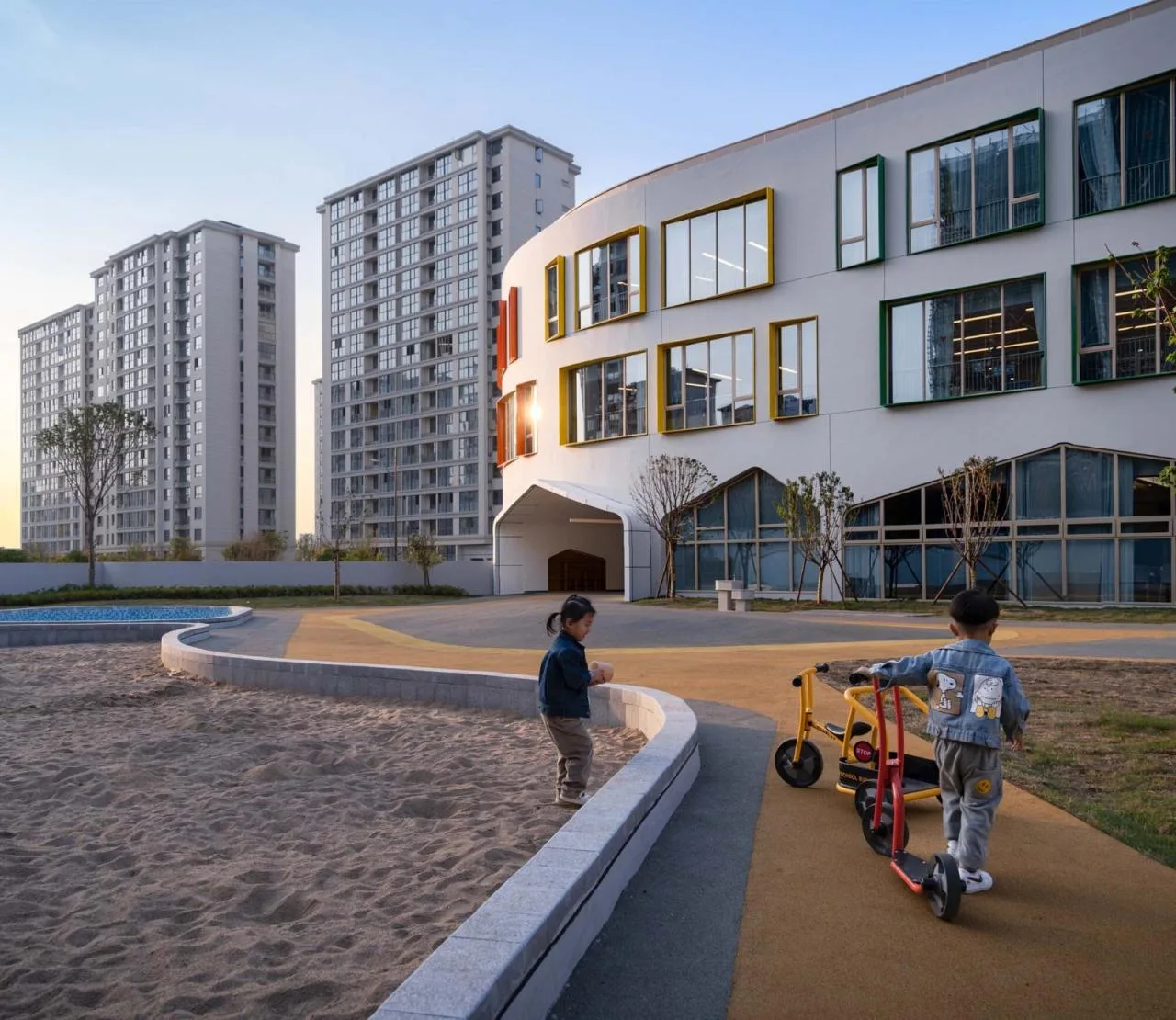
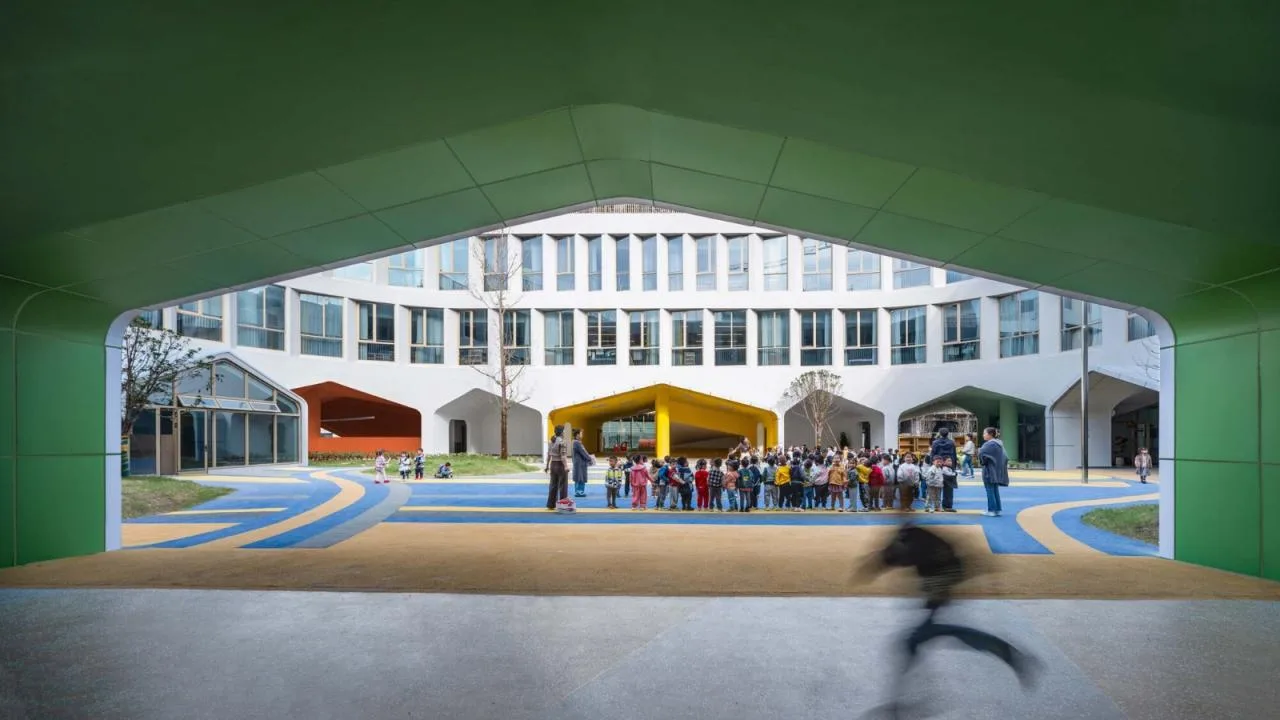
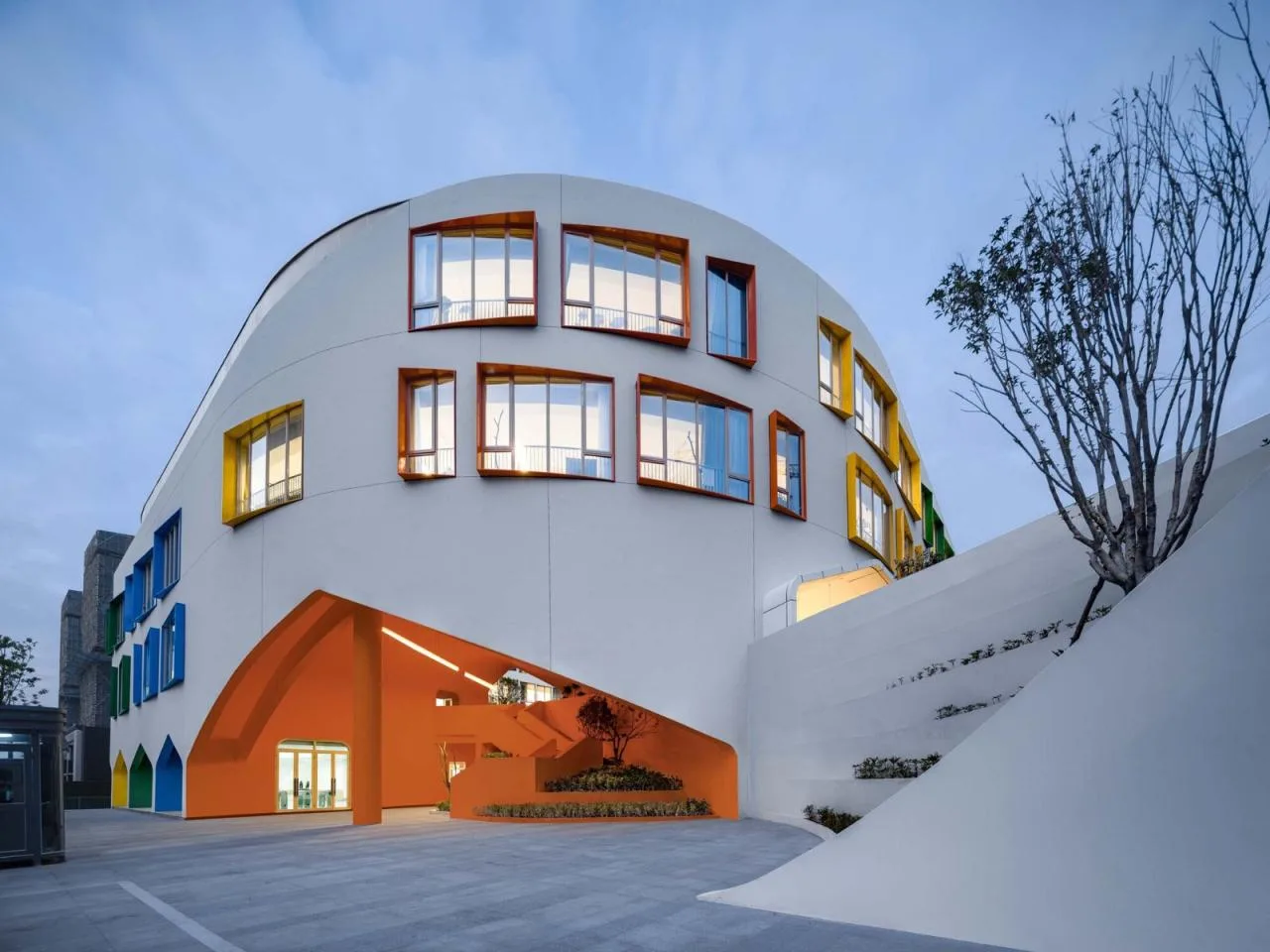
Traditional campuses typically separate teaching areas from activity zones, limiting children’s play space. With the goal of “returning” the site to the children, the design team chose to preserve the natural terrain and transform it into a beloved playground. Inspired by a small spaceship in an amusement park, the campus building is envisioned as a spaceship gently landing in a natural amusement park, creating a fresh and nature-oriented environment for children.
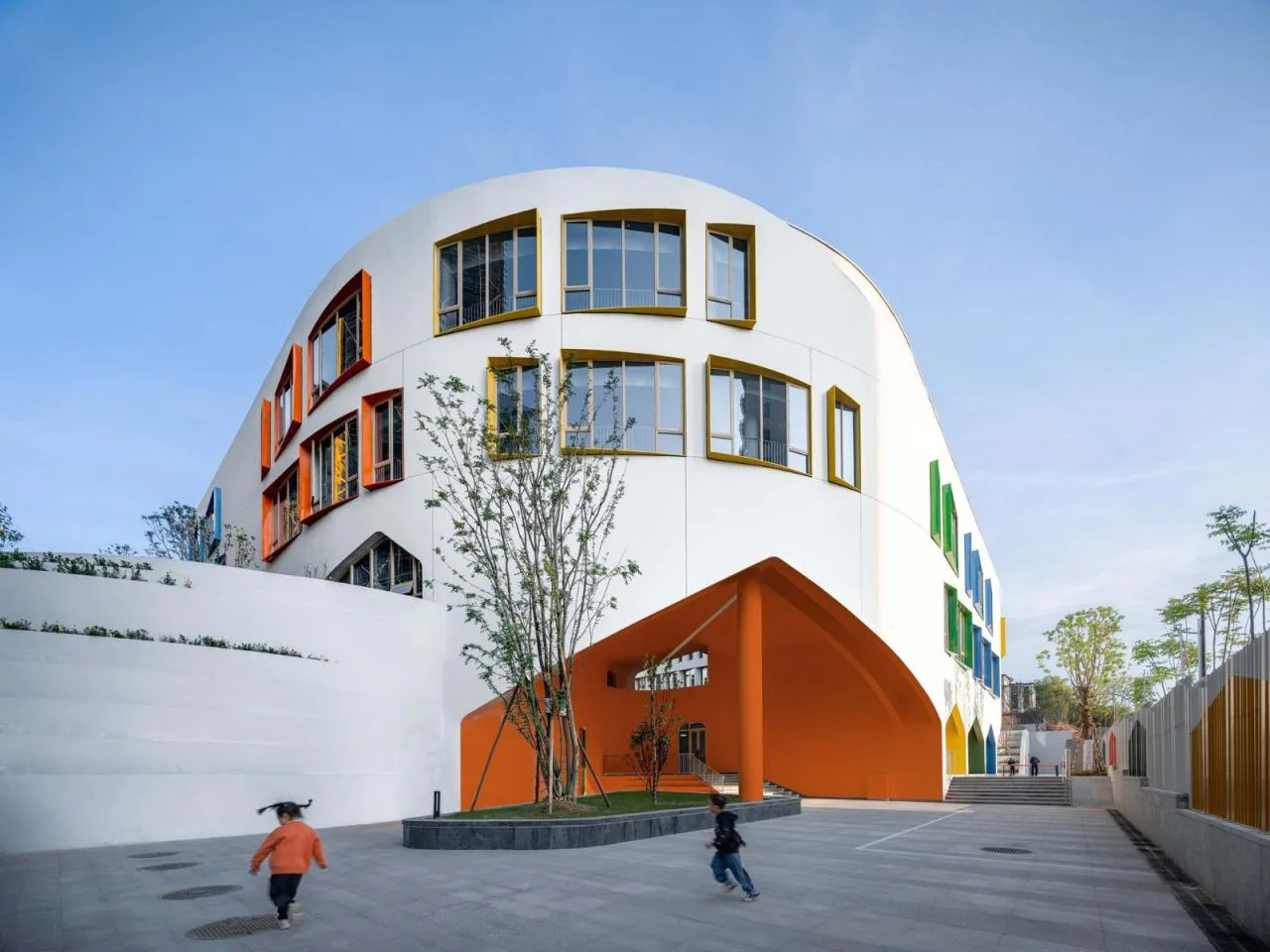
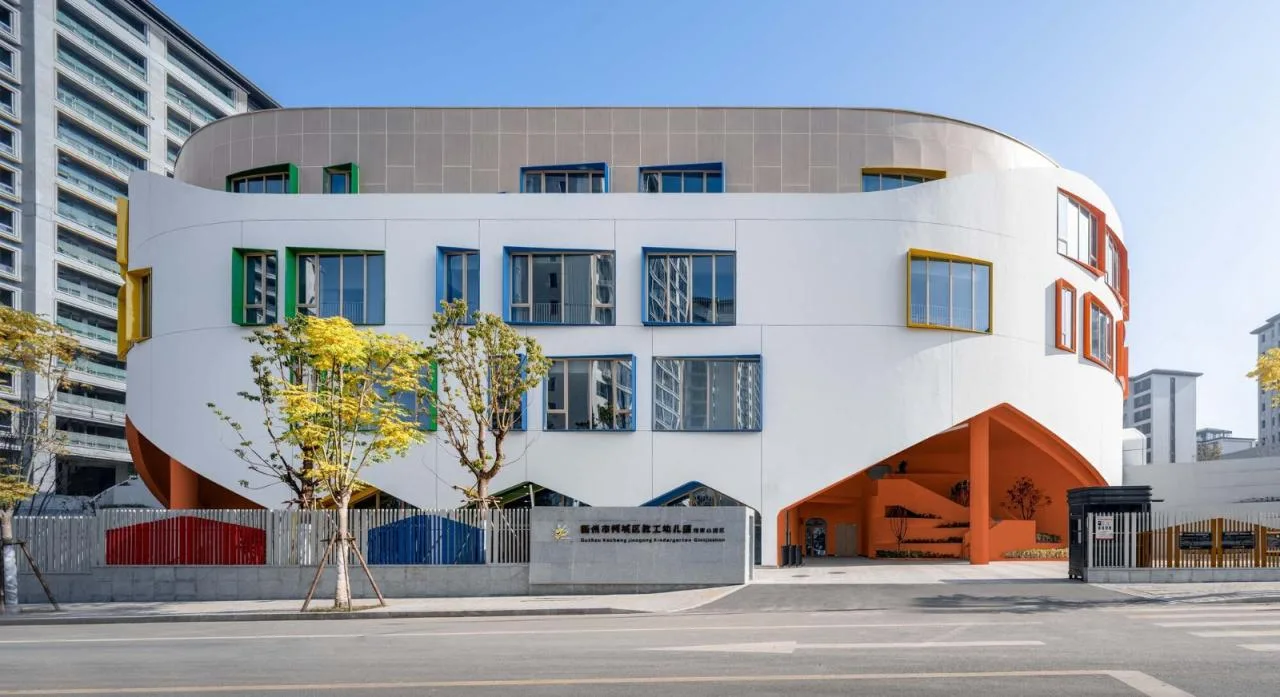
The English word “kindergarten” literally means “children’s garden,” so the design centers around the needs of children. Environments that children prefer often reflect things they are familiar with. The donut-shaped spaceship building is highly appealing to children, sparking their curiosity and desire to explore the campus.
Beyond familiarity, the circular building naturally encloses an inner courtyard that invites abundant natural light and ventilation. From a child’s perspective, lying on the grassy slopes inside this courtyard feels like being in a warm, safe valley.
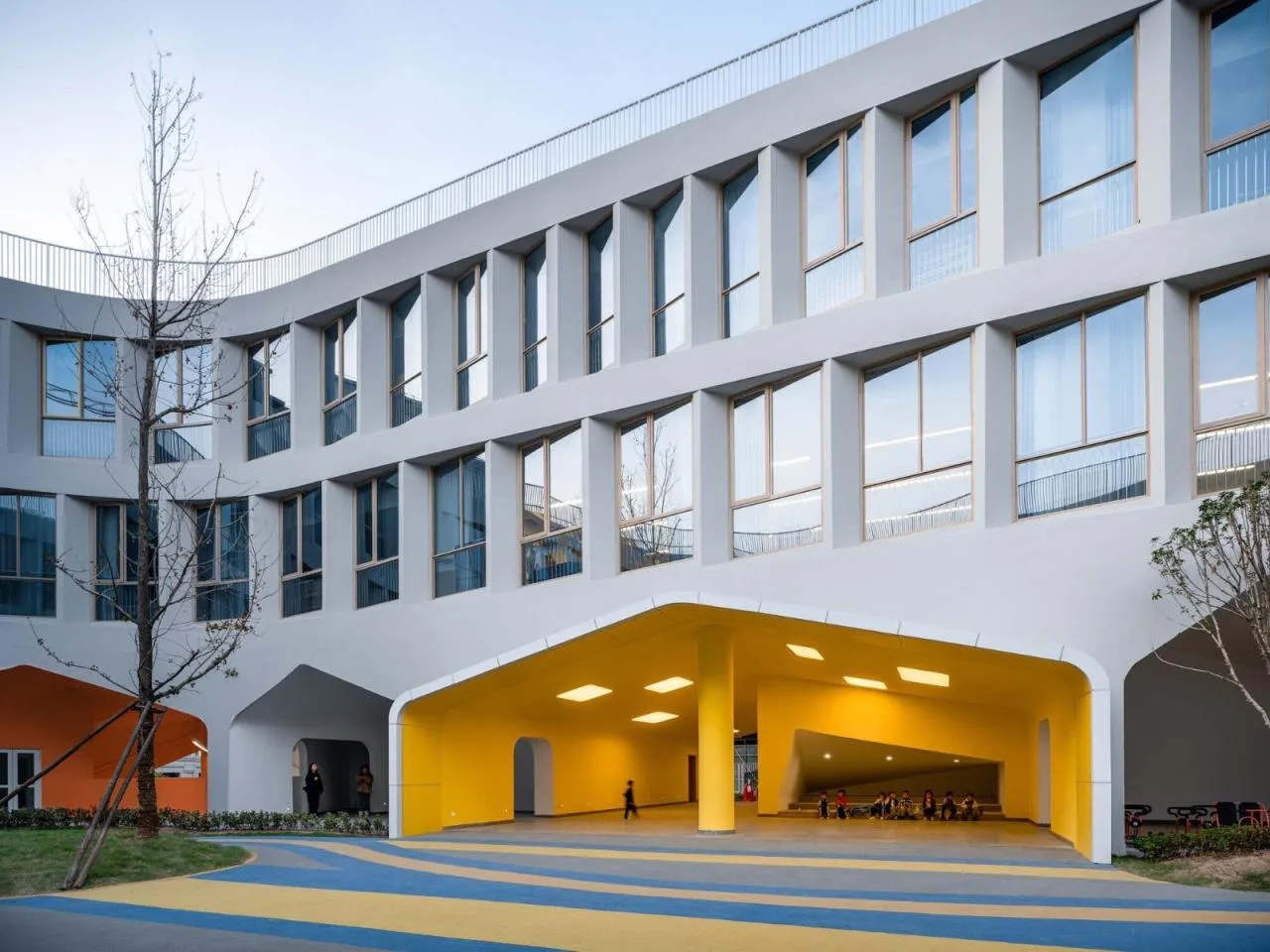
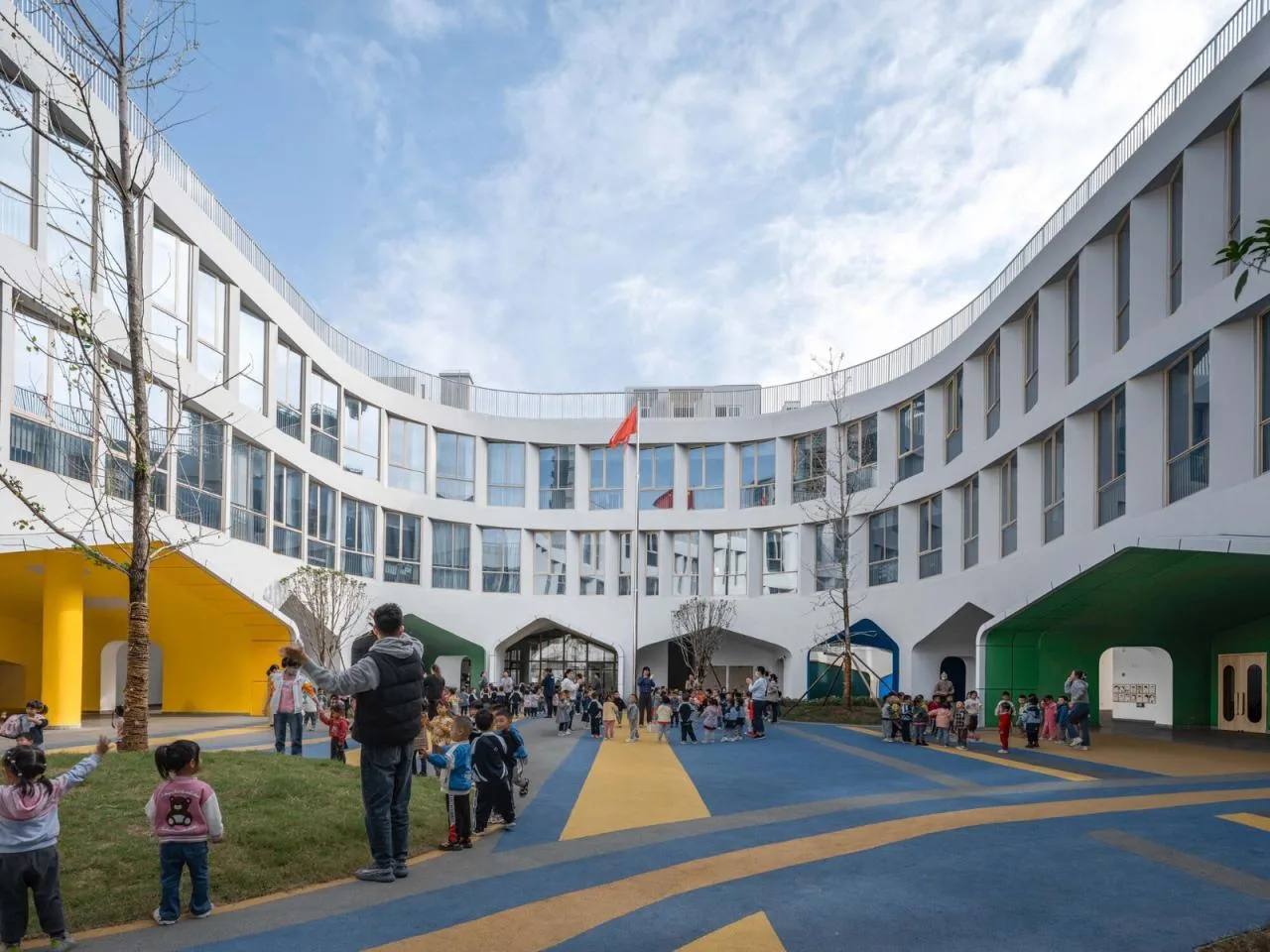
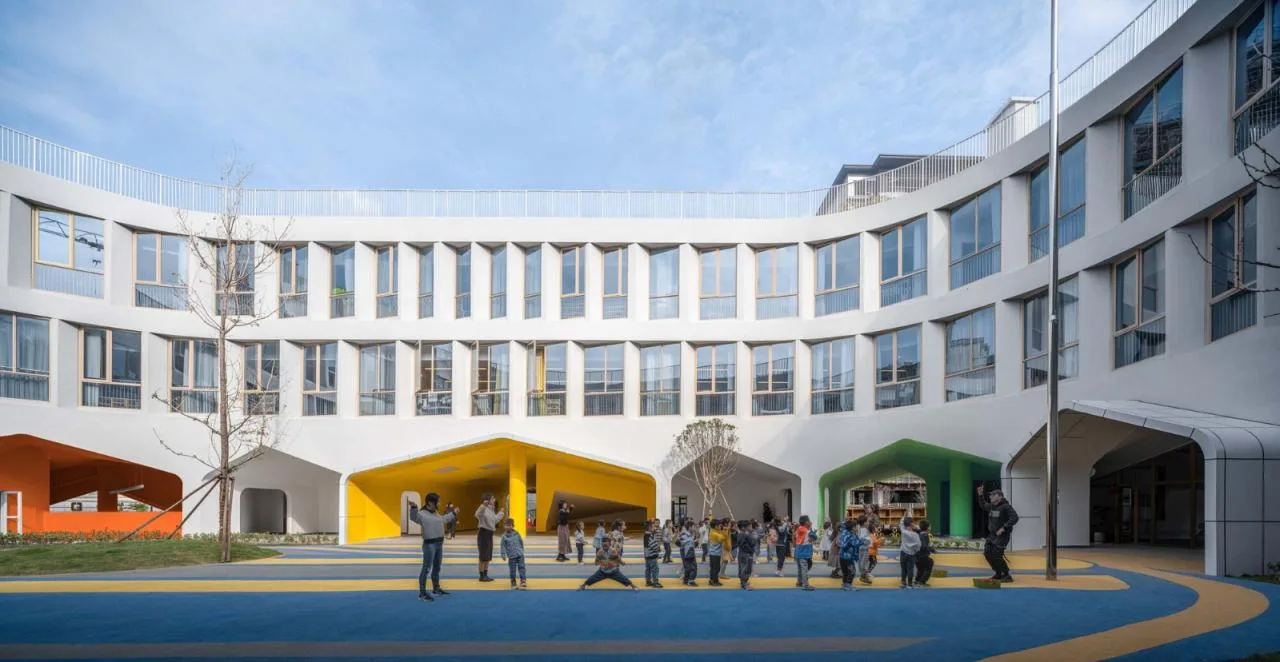
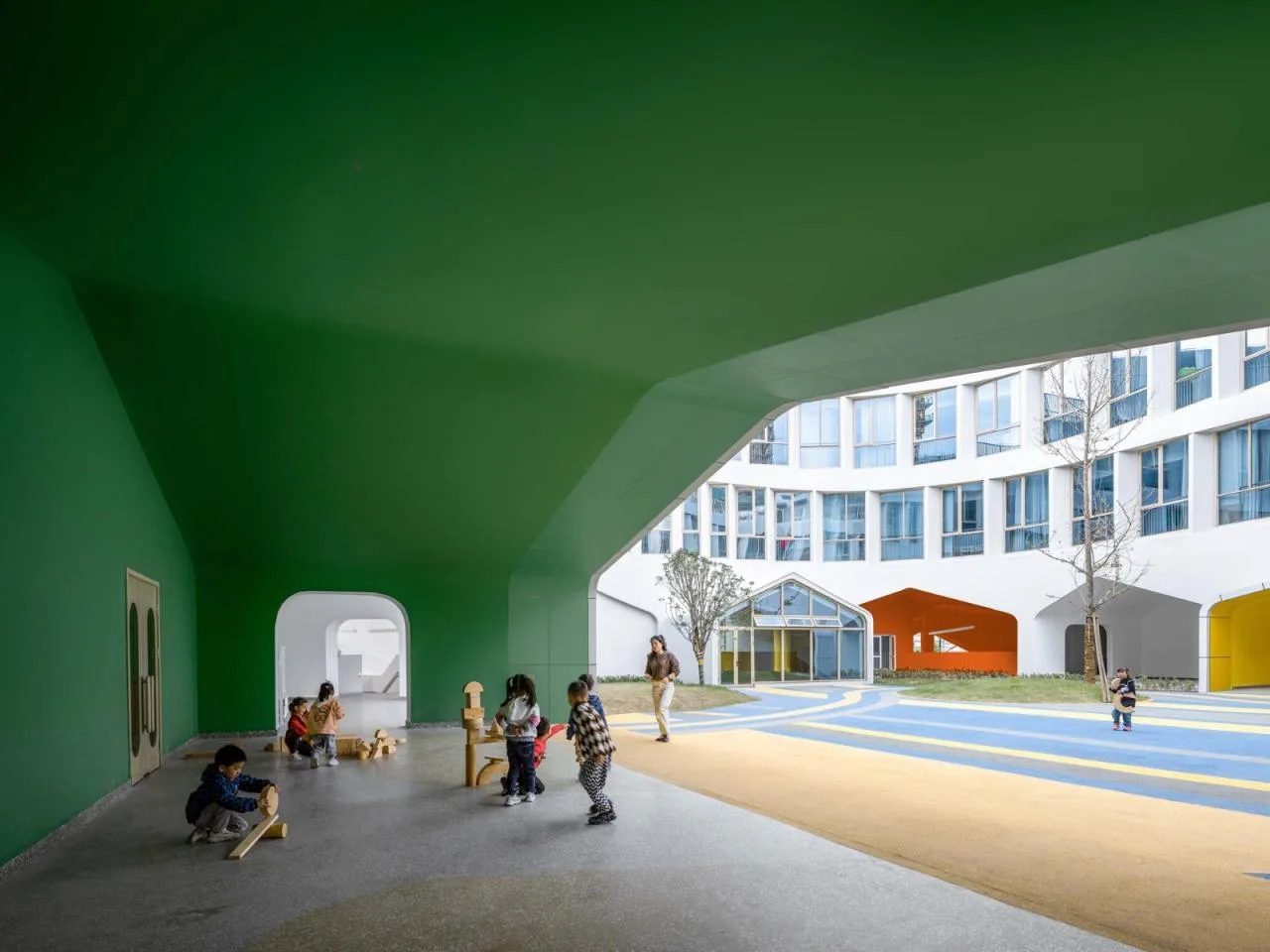
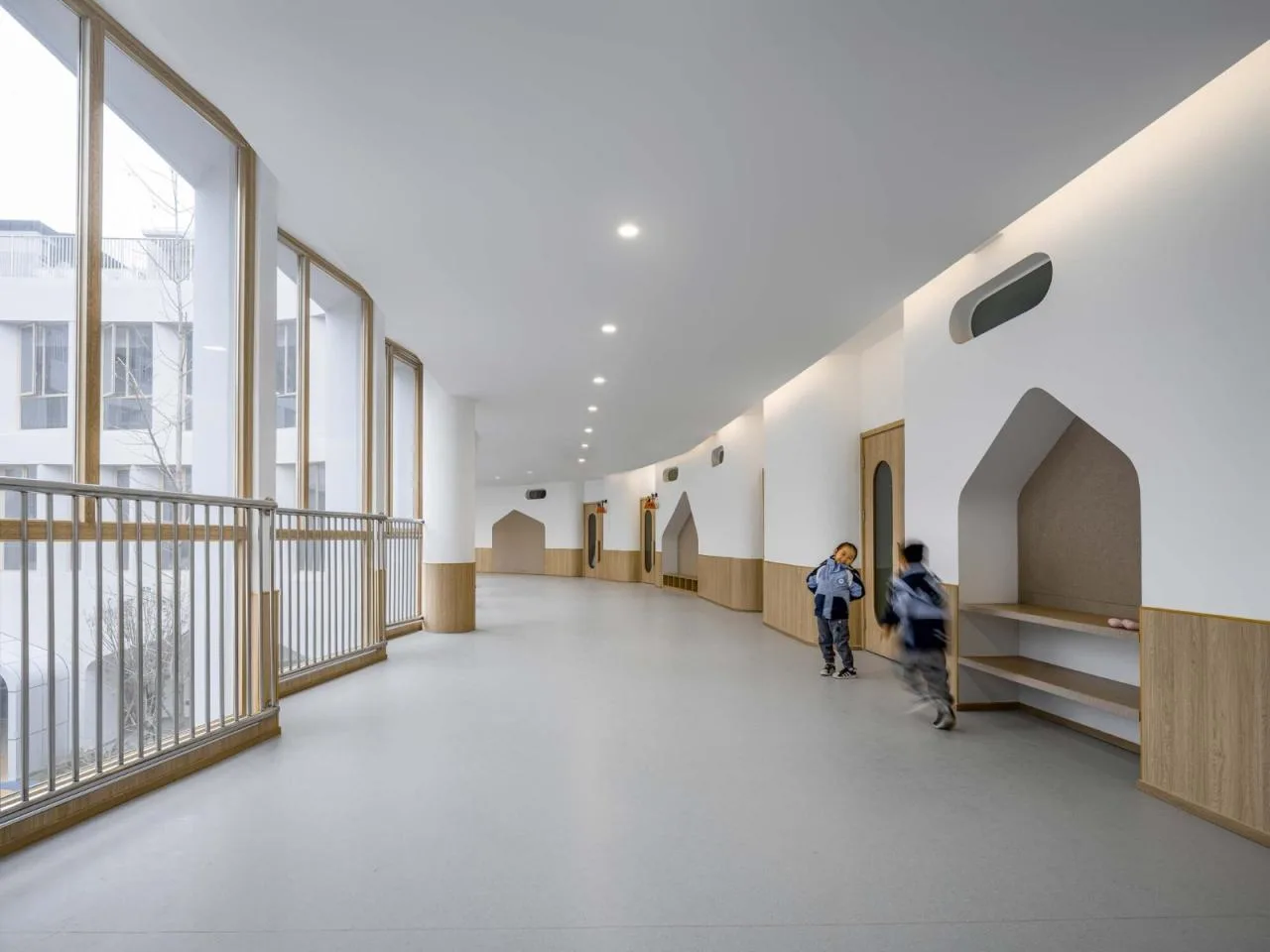
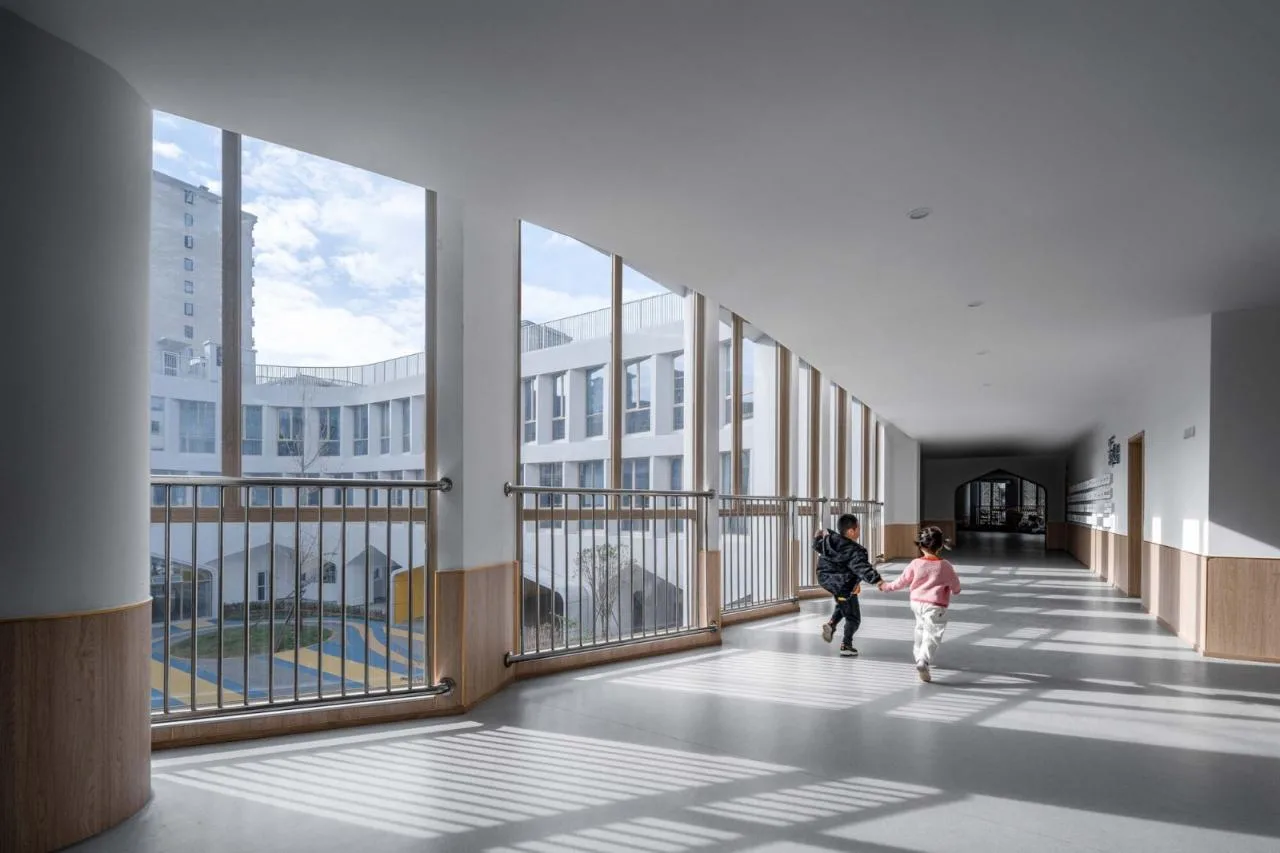
Small houses of various shapes line the circular corridors, painted in bright yellow, vibrant green, and lively blue, adding childlike charm to the façade. The second-floor circular corridor acts as the main venue for children’s recess activities and doubles as an exhibition gallery showcasing their study diaries and creative projects.
The staggered glass windows let sunlight pour in, creating playful patterns of light and shadow. Children paint, chase, and play along the hallway, engaging visually and socially with peers playing in the valley below.
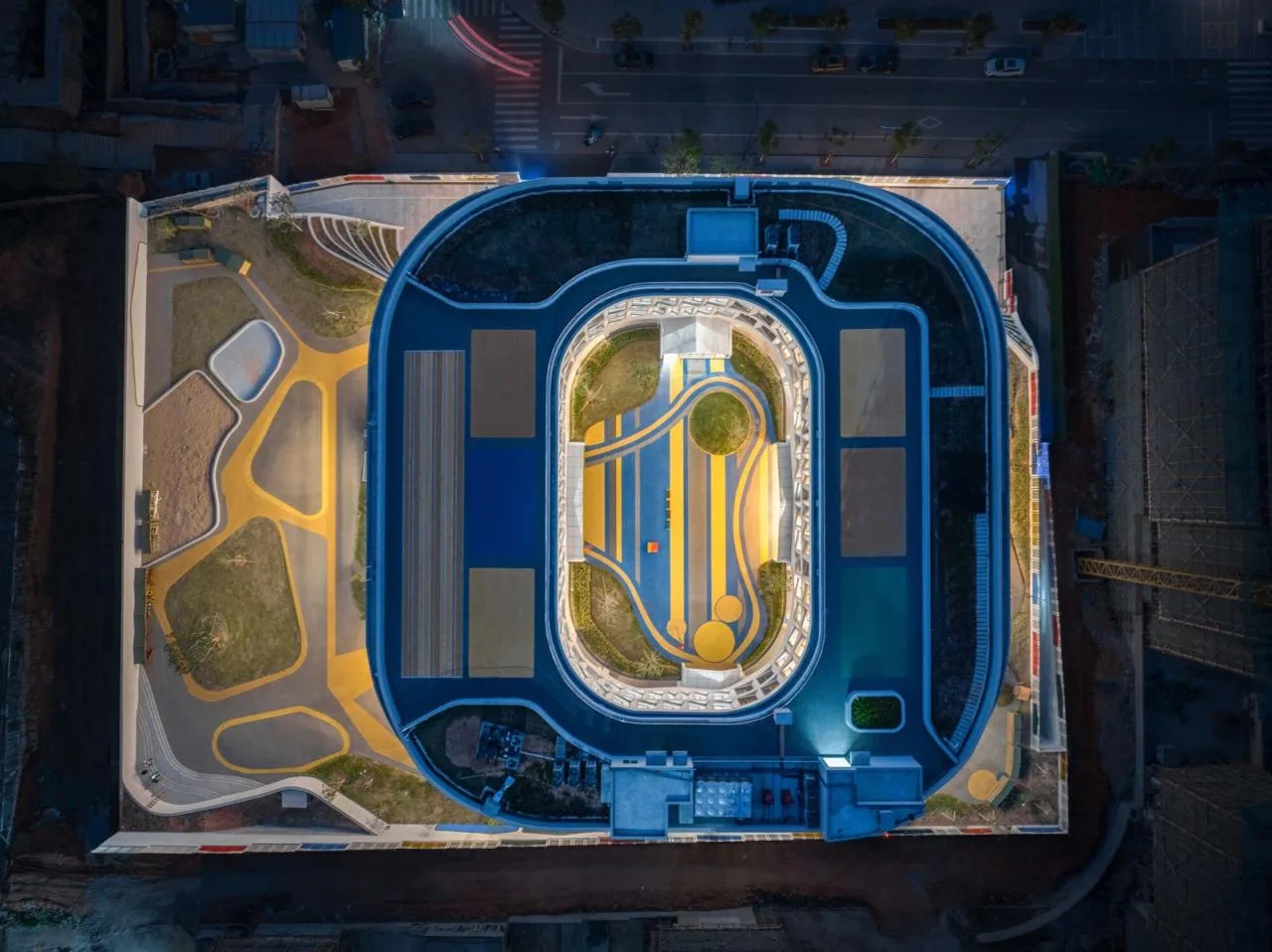
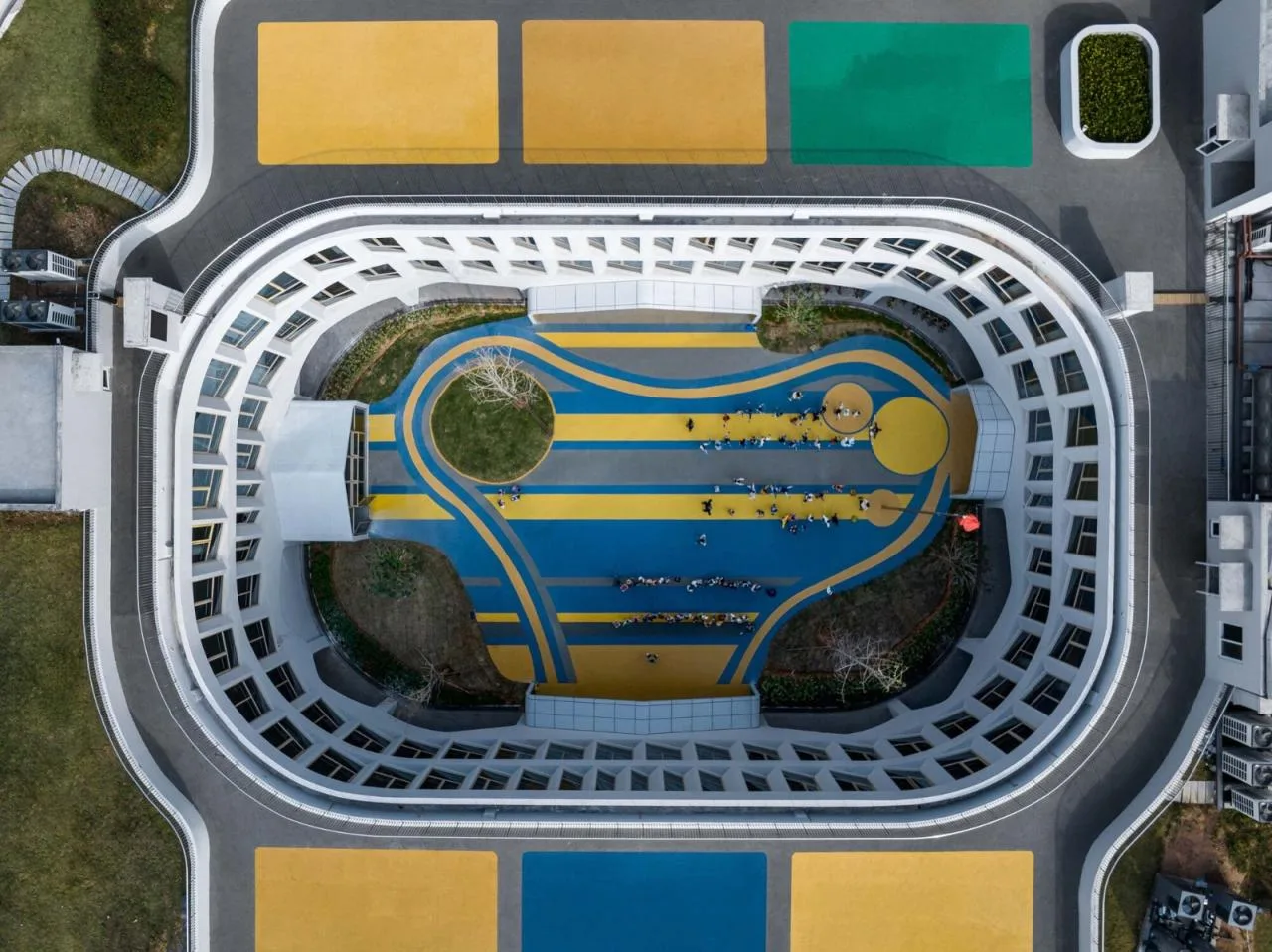
Inspired by small-scale educational spaces from Haishu School in Future Science and Technology City to Yiwu Foreign Language School, the design embraces compactness. The team used houses of varying sizes to carve out unique aerial spaces, “subtracting” from the first-floor area.
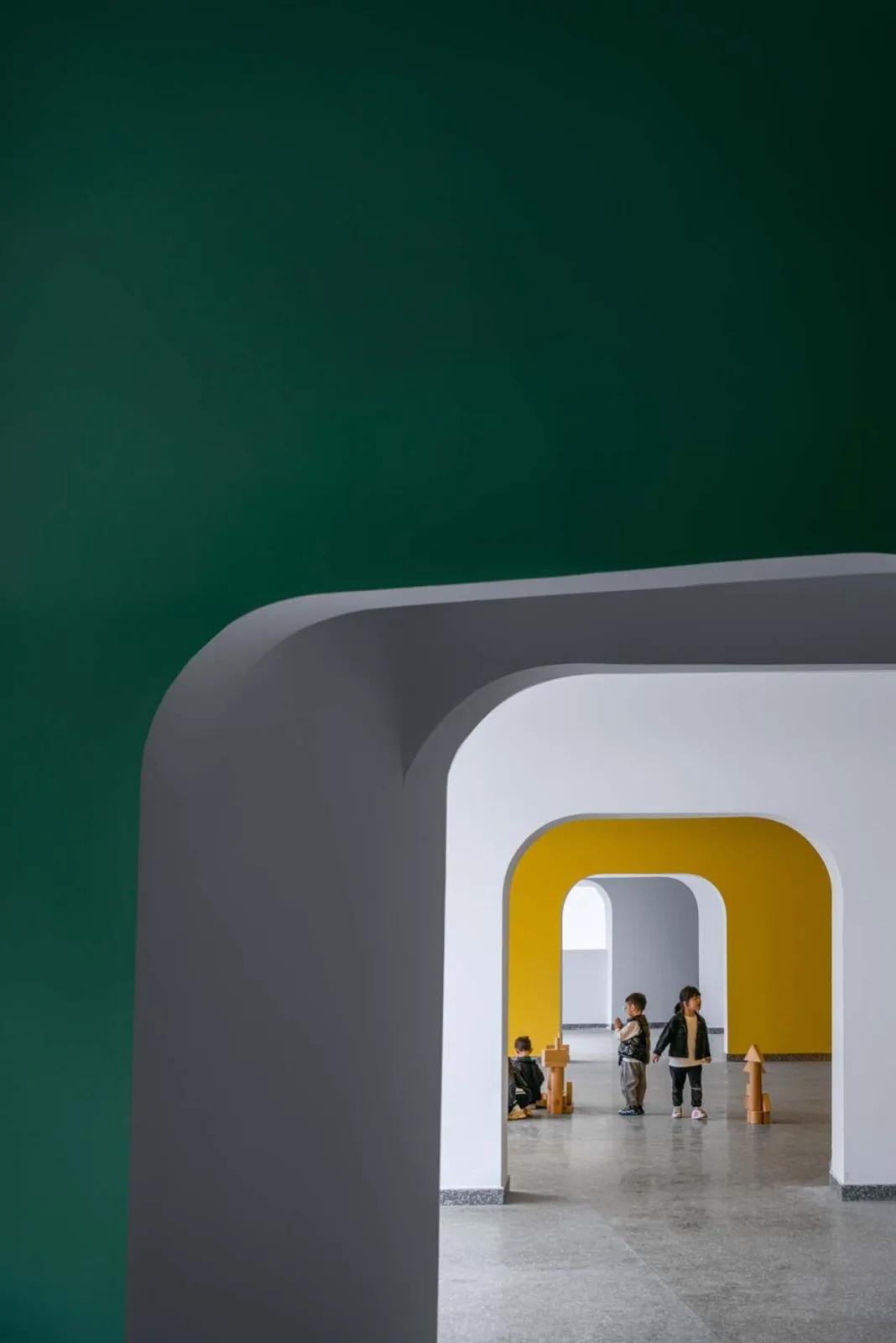
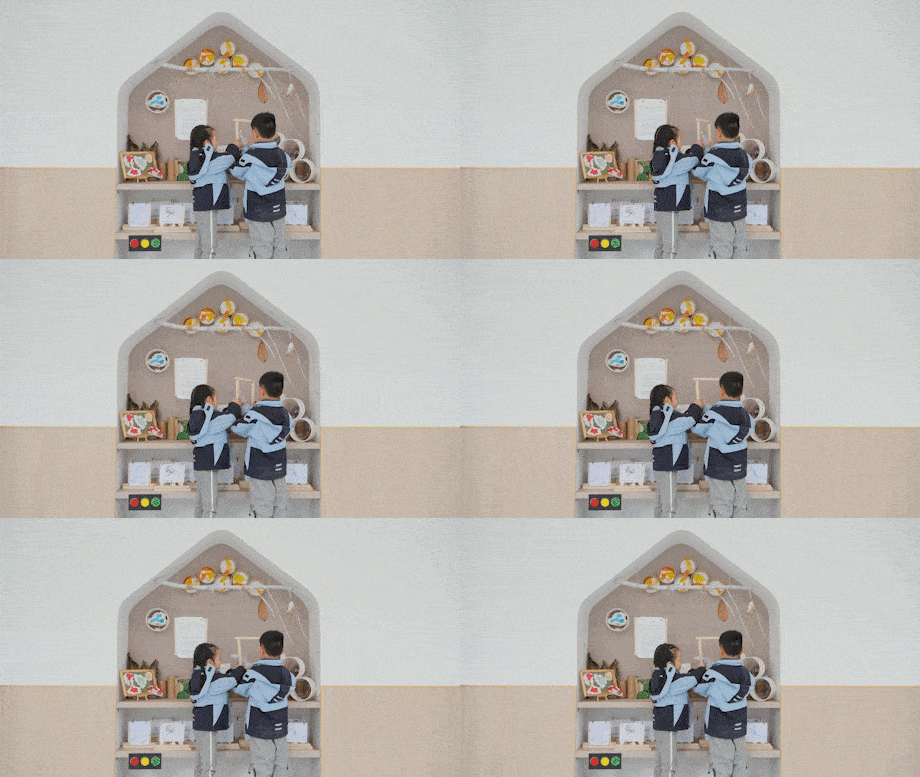
The small houses are categorized into three types: play, transportation, and learning. Those dedicated to play serve as bridges connecting the inner courtyard and outdoor park, offering diverse facilities that invite children to choose freely during breaks. Whether playing hide-and-seek or reading picture books, children find their ideal “campsites” here.
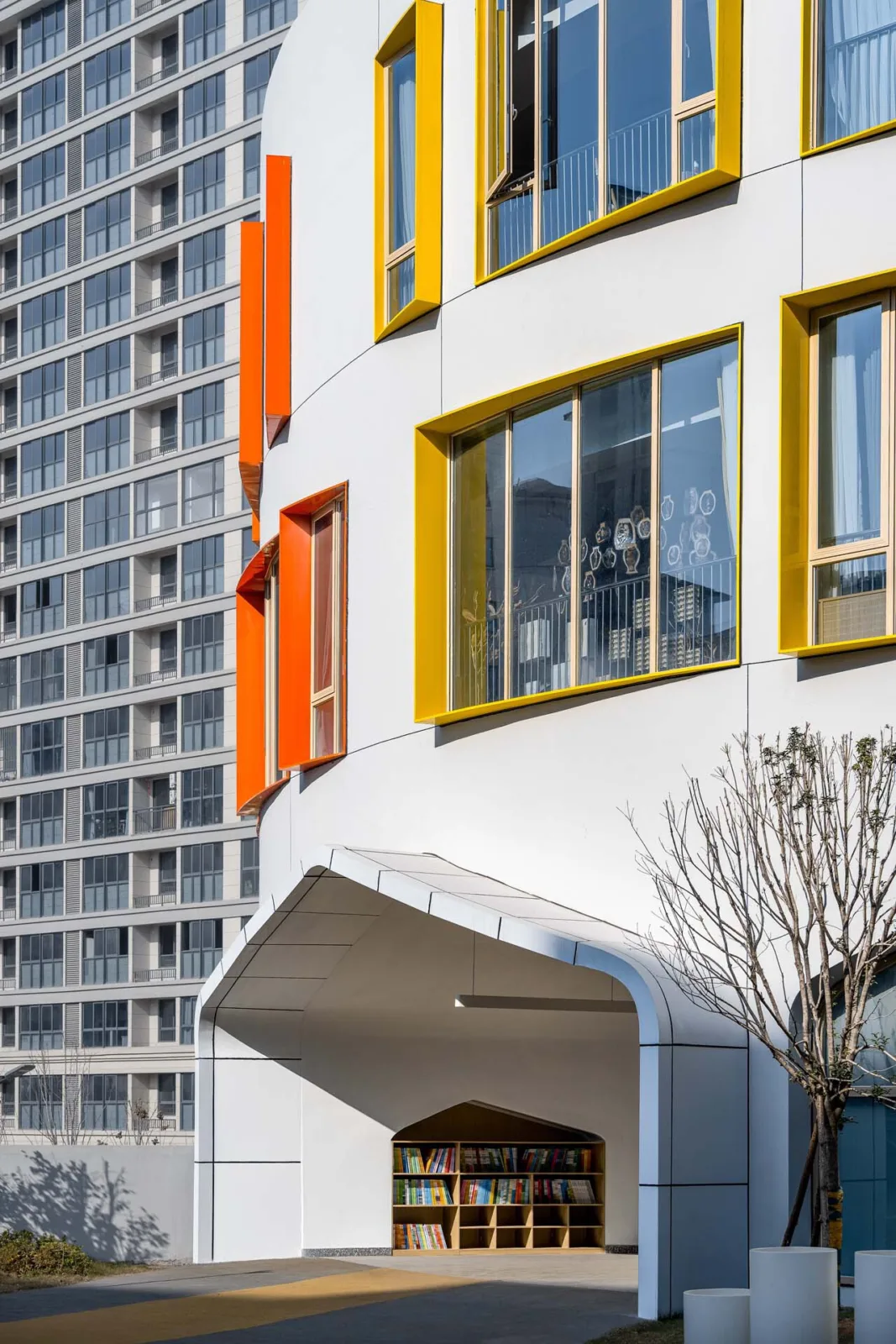
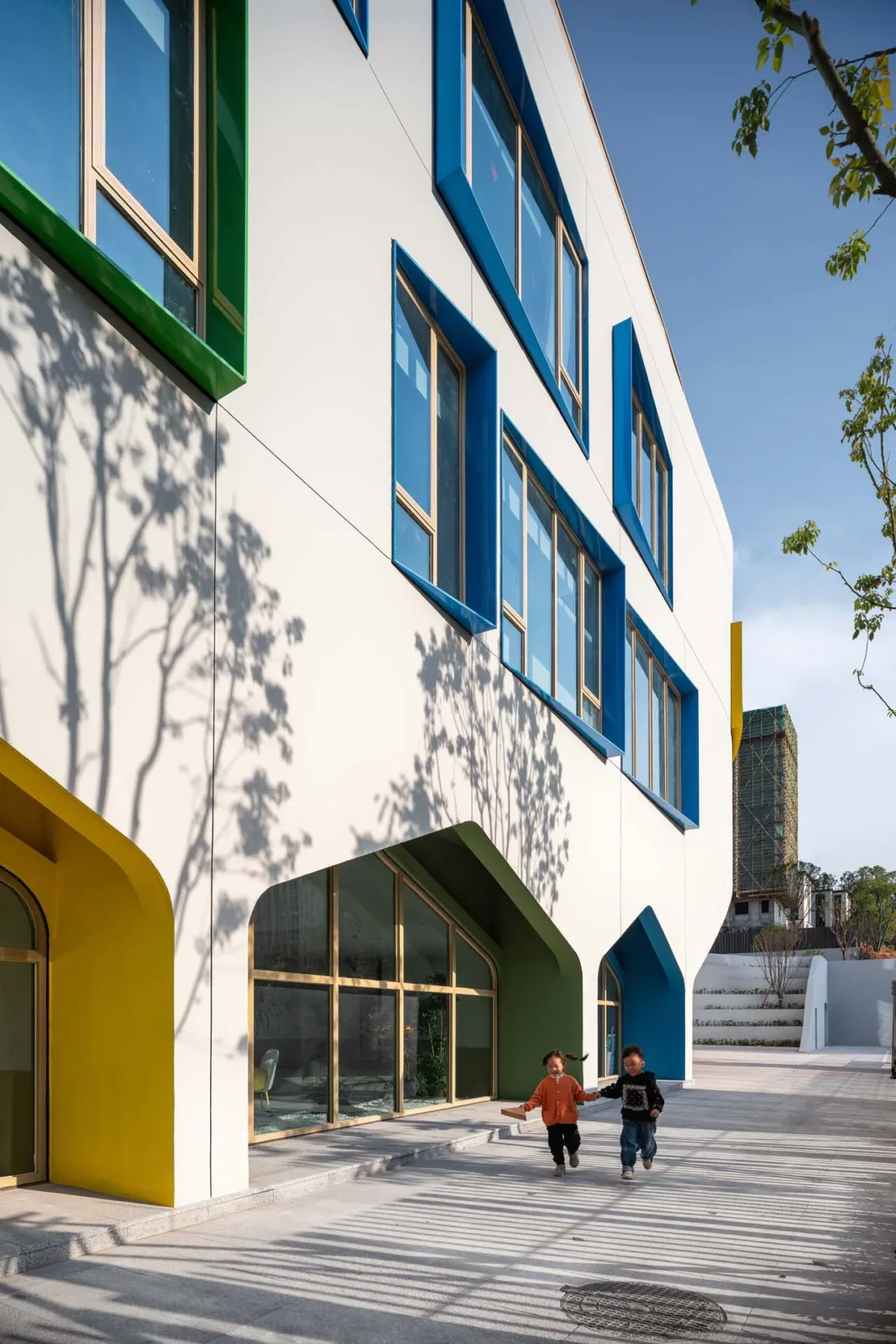
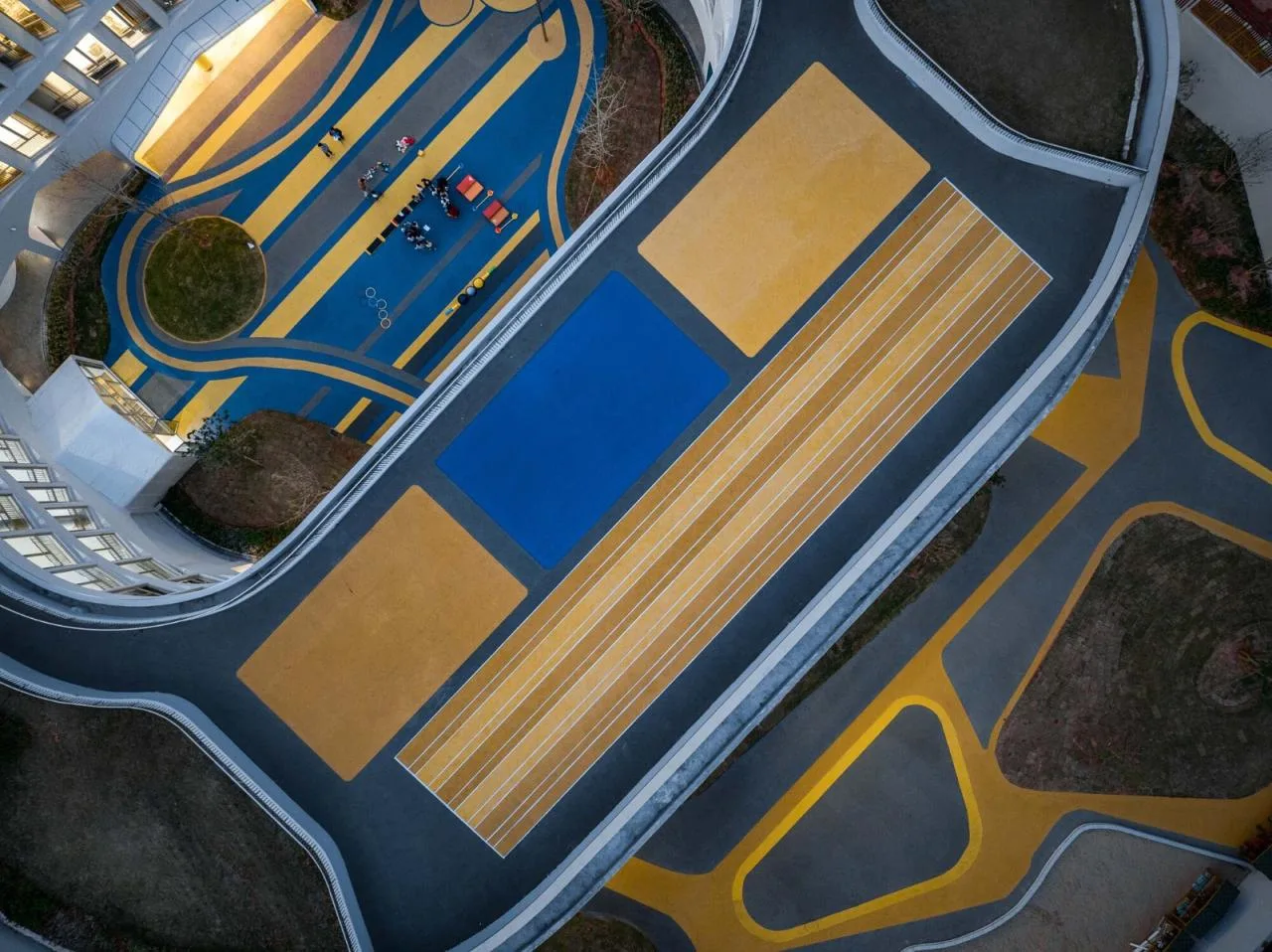
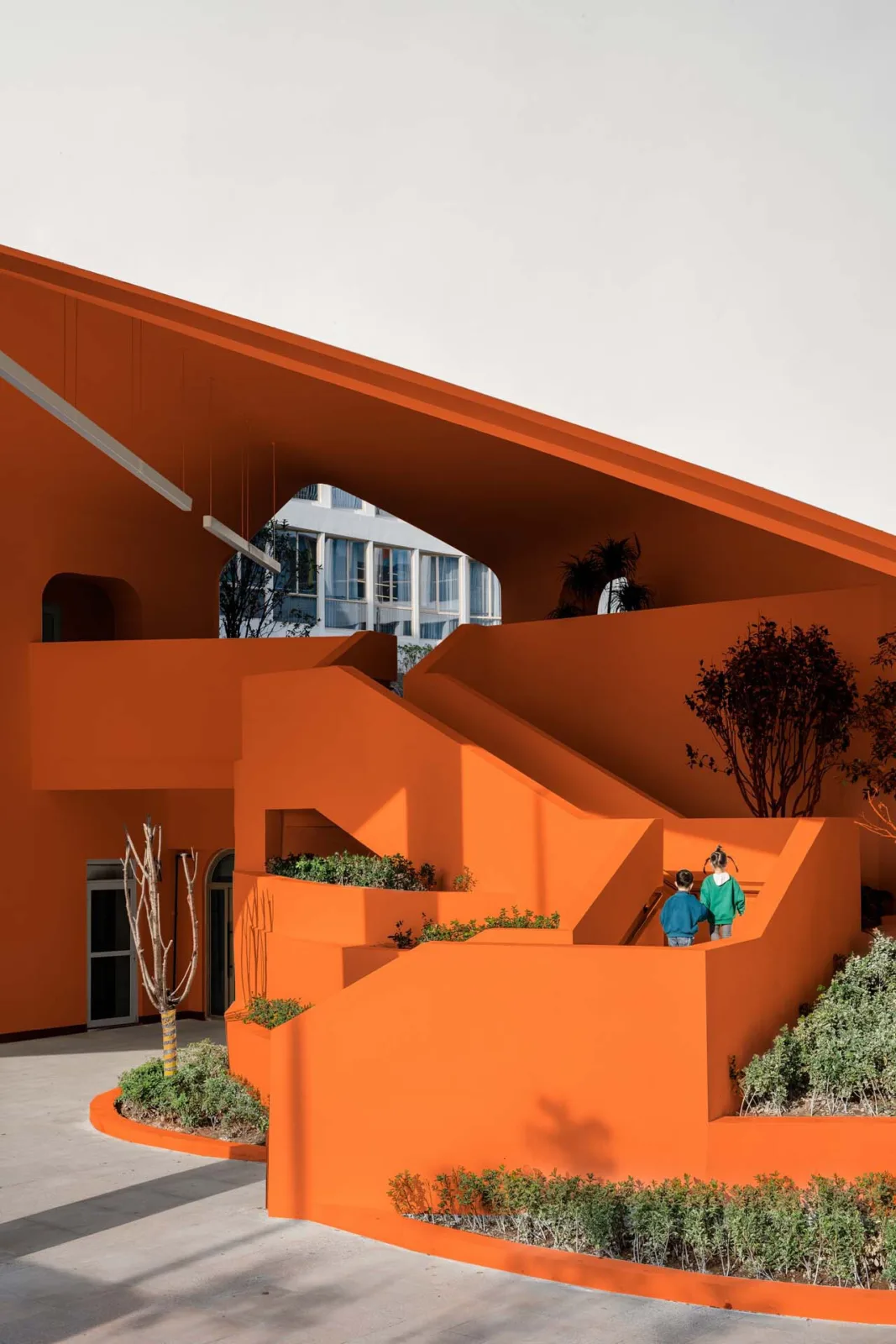
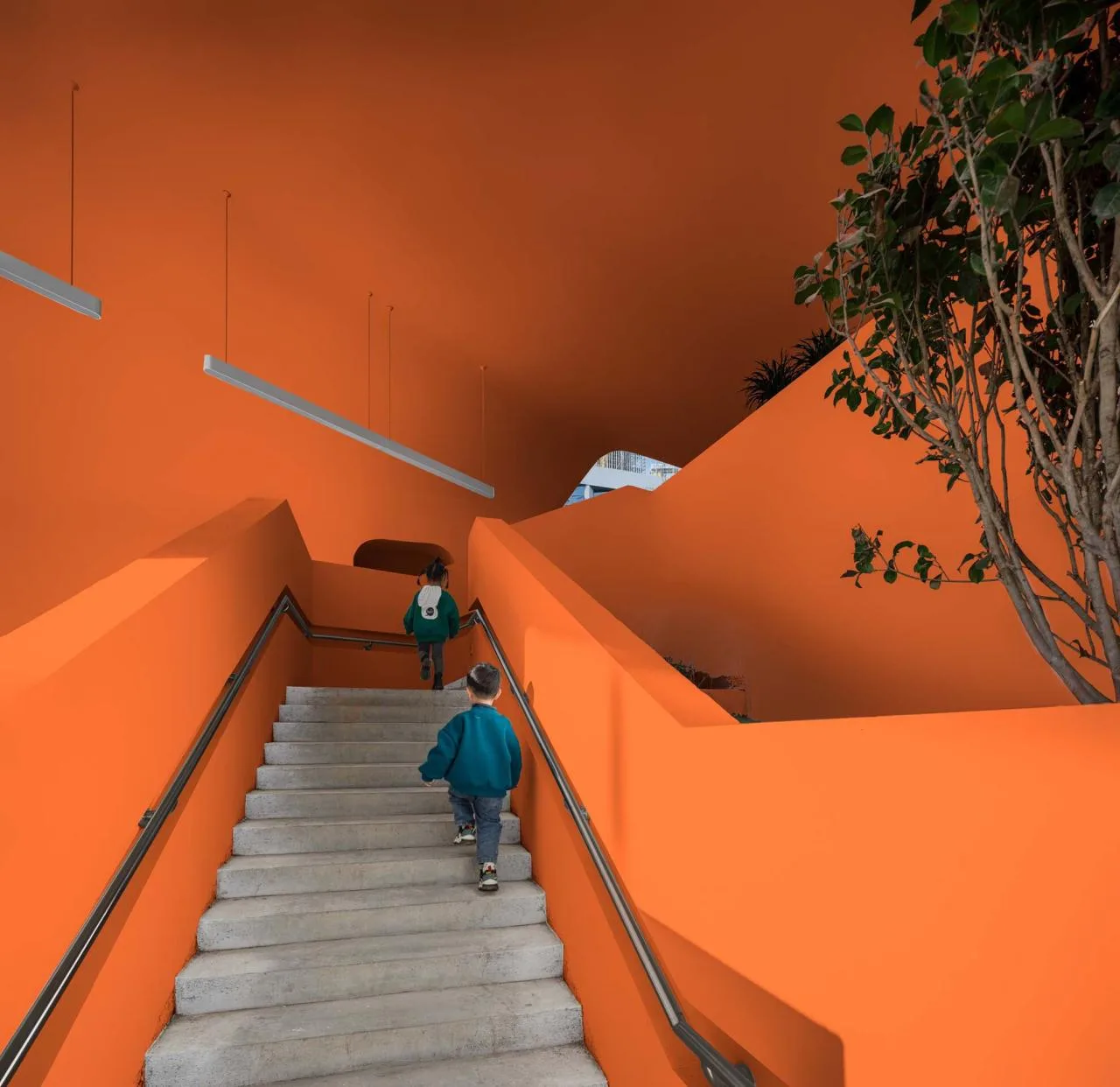
The two houses designated for passage connect the “valley” with the campus entrance and underground shuttle area, cleverly addressing site elevation differences and maintaining privacy. A landscaped staircase leads children into the fairy-tale kingdom-like valley.
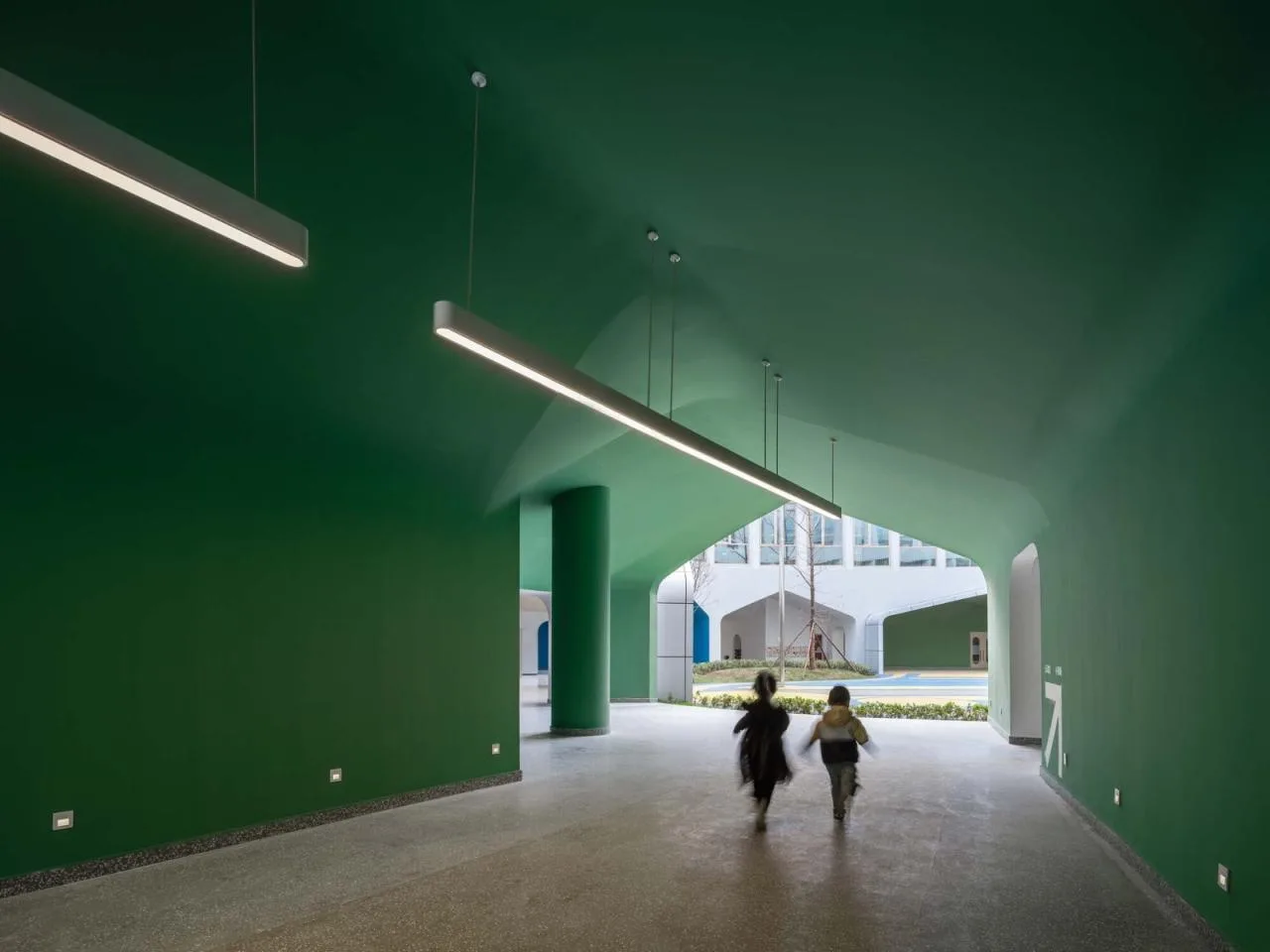
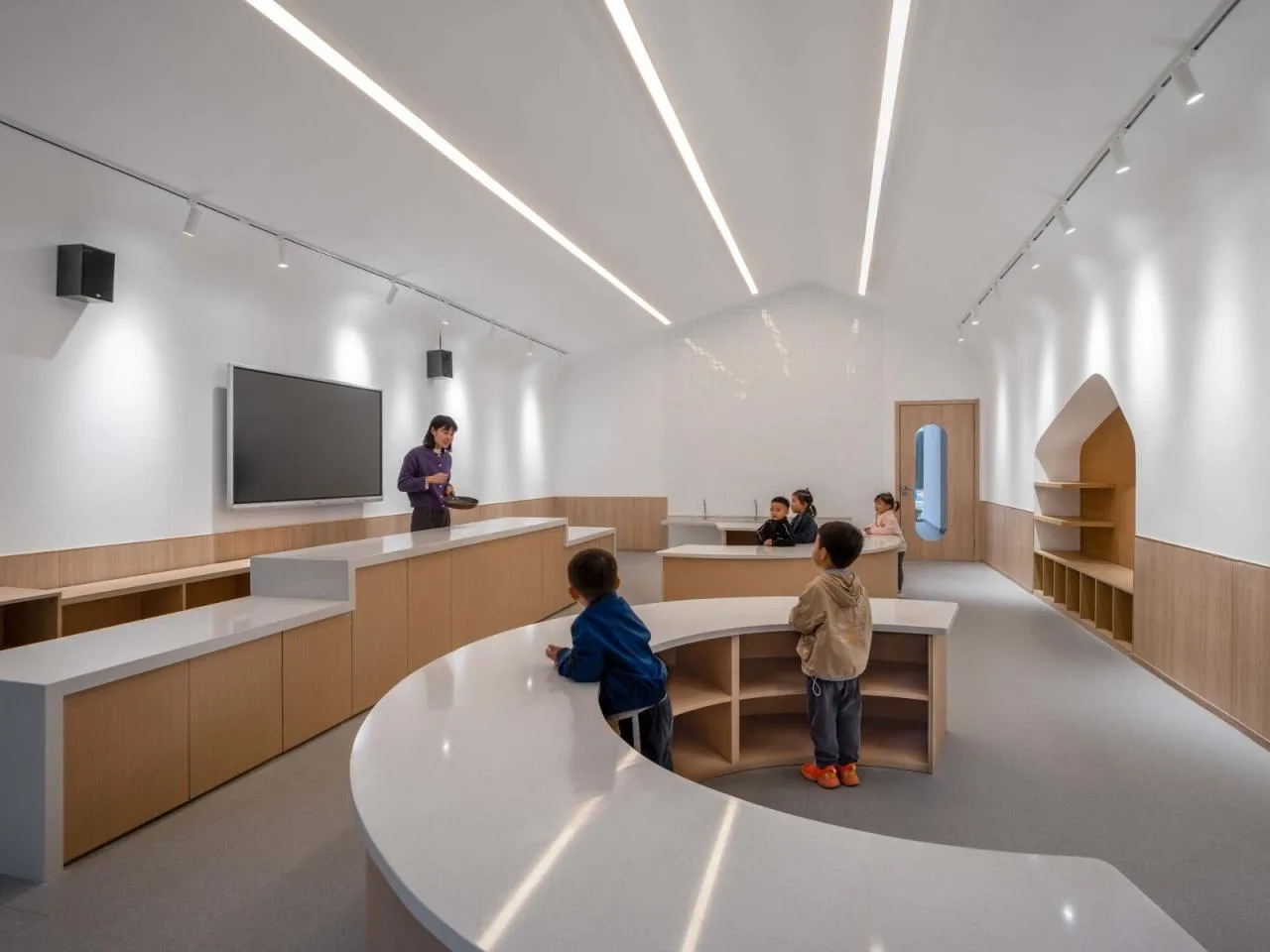
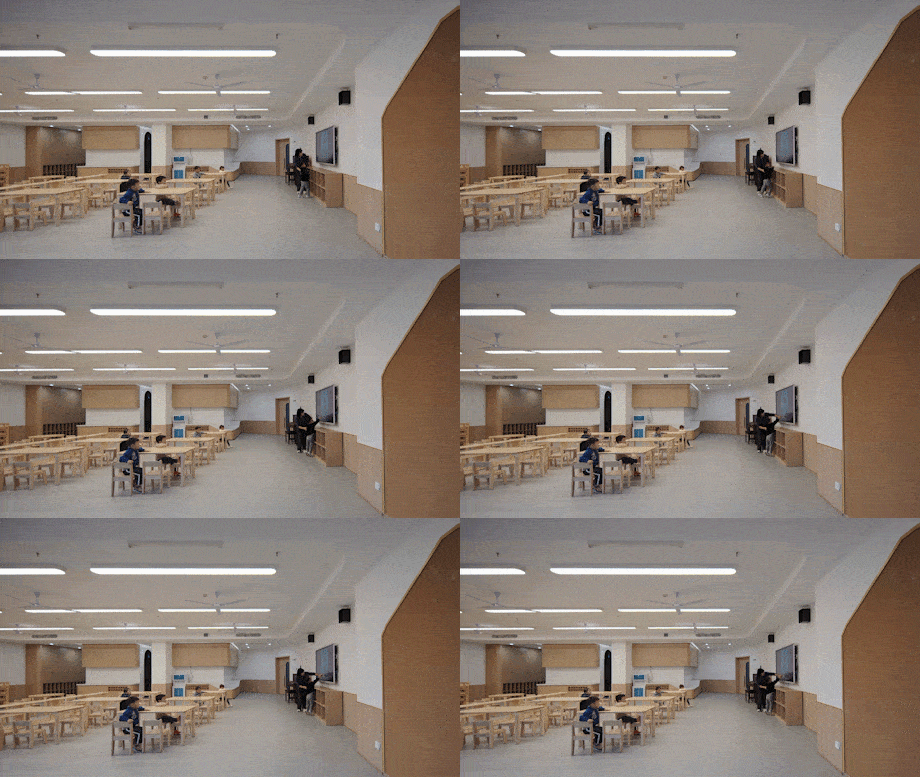
Learning houses include music and sports rooms and specialized classrooms, all designed with bright, transparent interiors that foster happy growth through education and play. The curved chamfered doorway links the courtyard, street, and garden, creating multiple flowing pathways where children freely run and explore various “caves” within the valley.
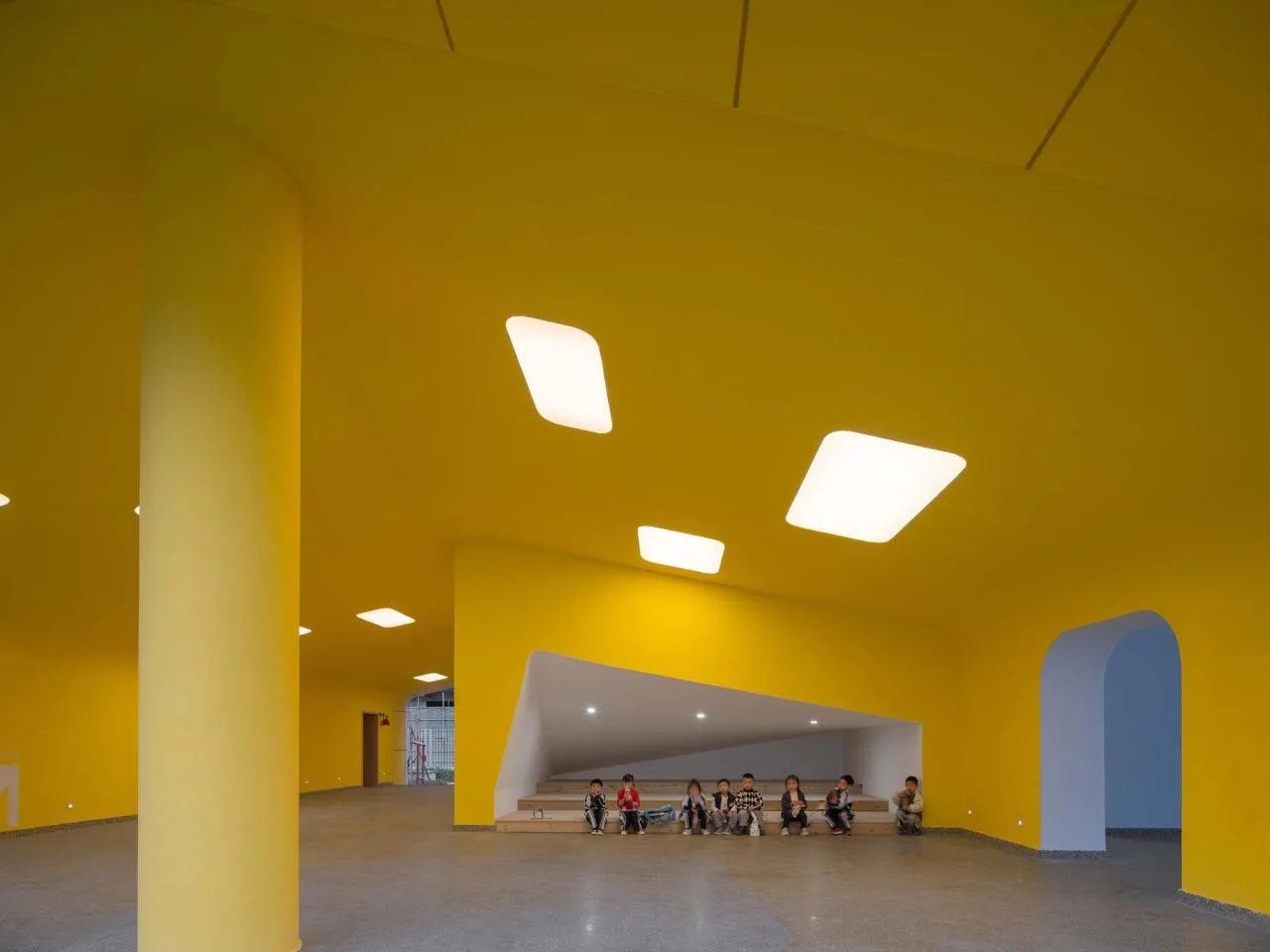
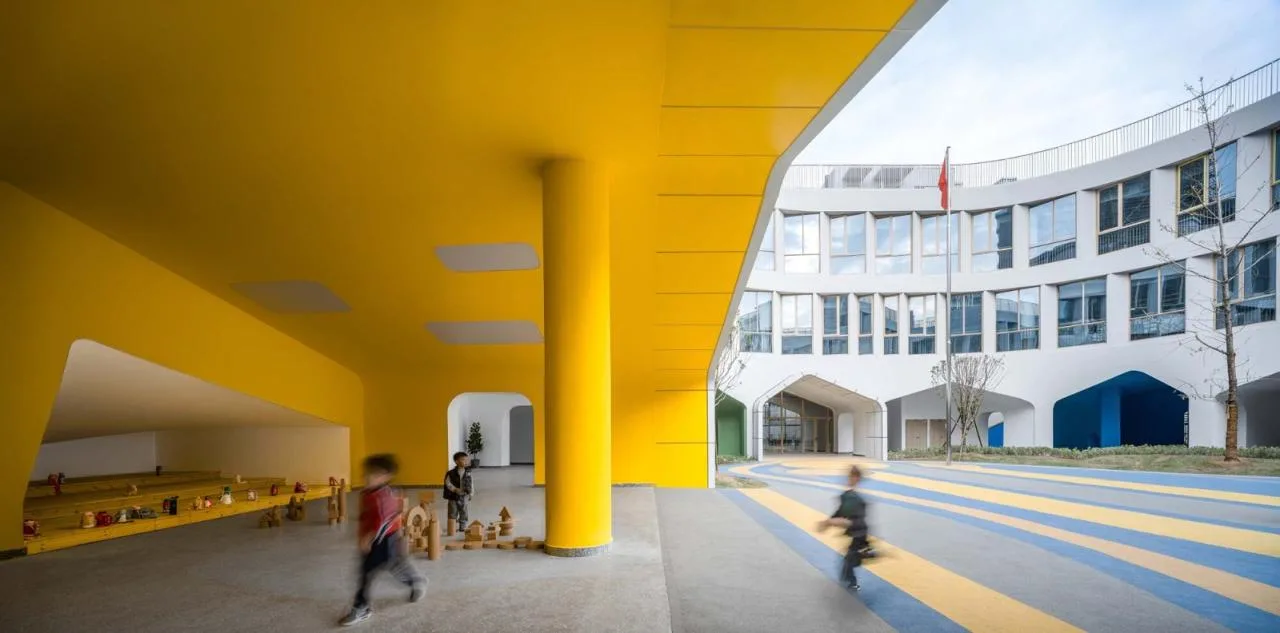
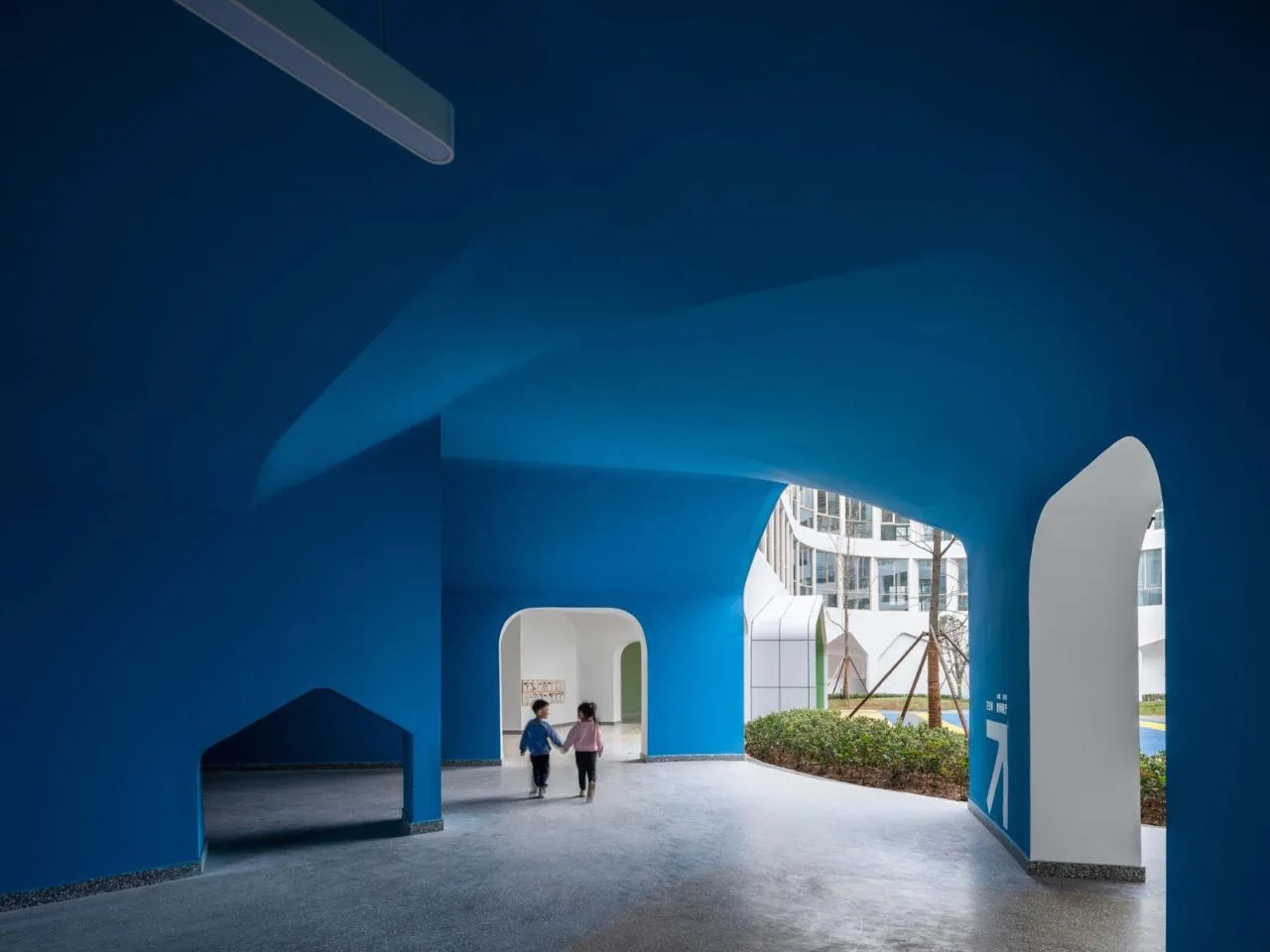
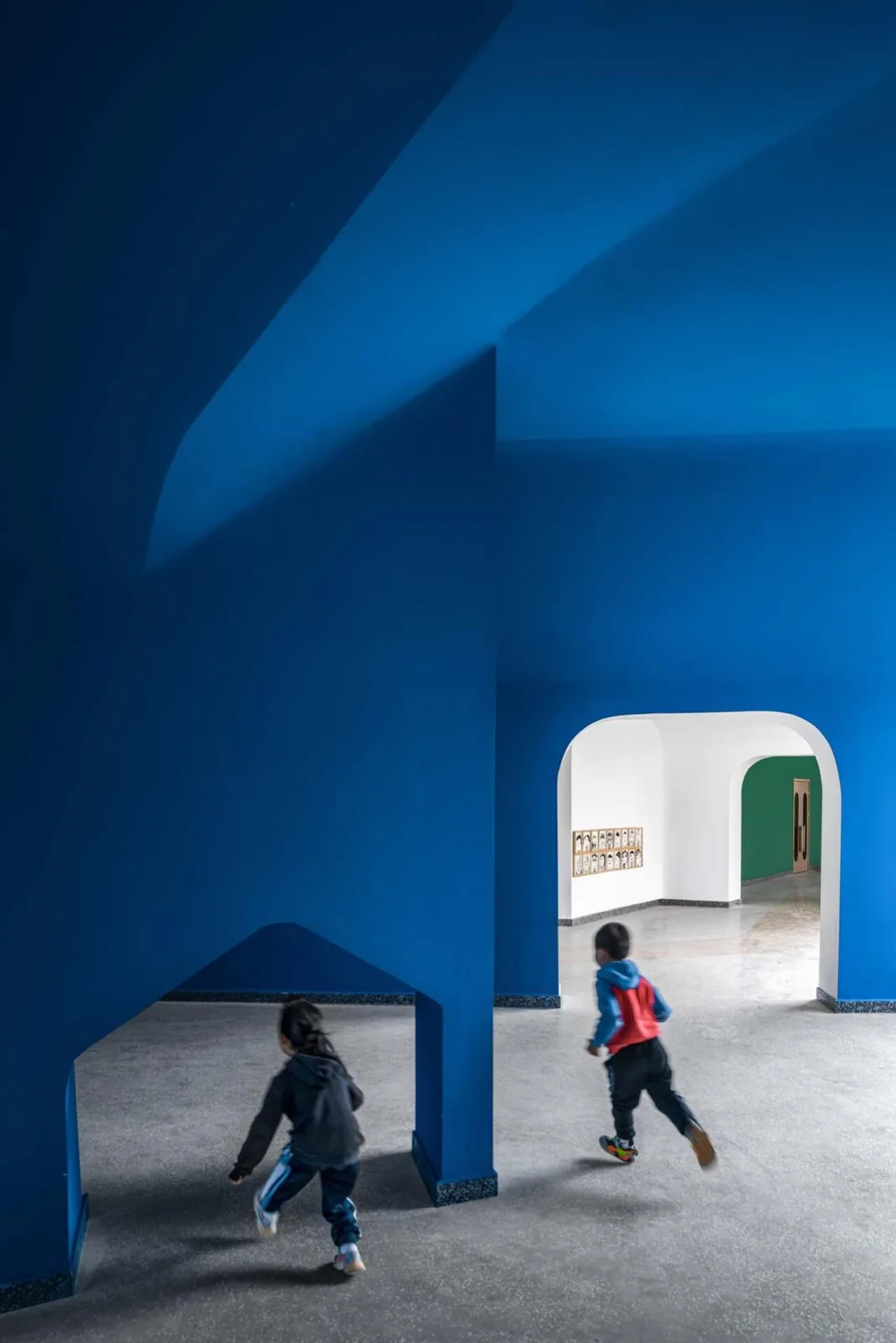
These uniquely shaped small houses are arranged around the inner courtyard like tents gathered around a campfire. Their semi-open design adds fluidity to the layout, creating a natural, nurturing environment for children.
The open landscape stimulates children’s imagination of outdoor camping. As a reinterpretation of small-scale educational spaces in high-density urban settings, Teacher Kindergarten crafts a “children’s garden” filled with familiar, natural elements. The design returns the site to nature as much as possible, encouraging children to become masters of their own learning and offering new possibilities for future educational environments.
Project Drawings
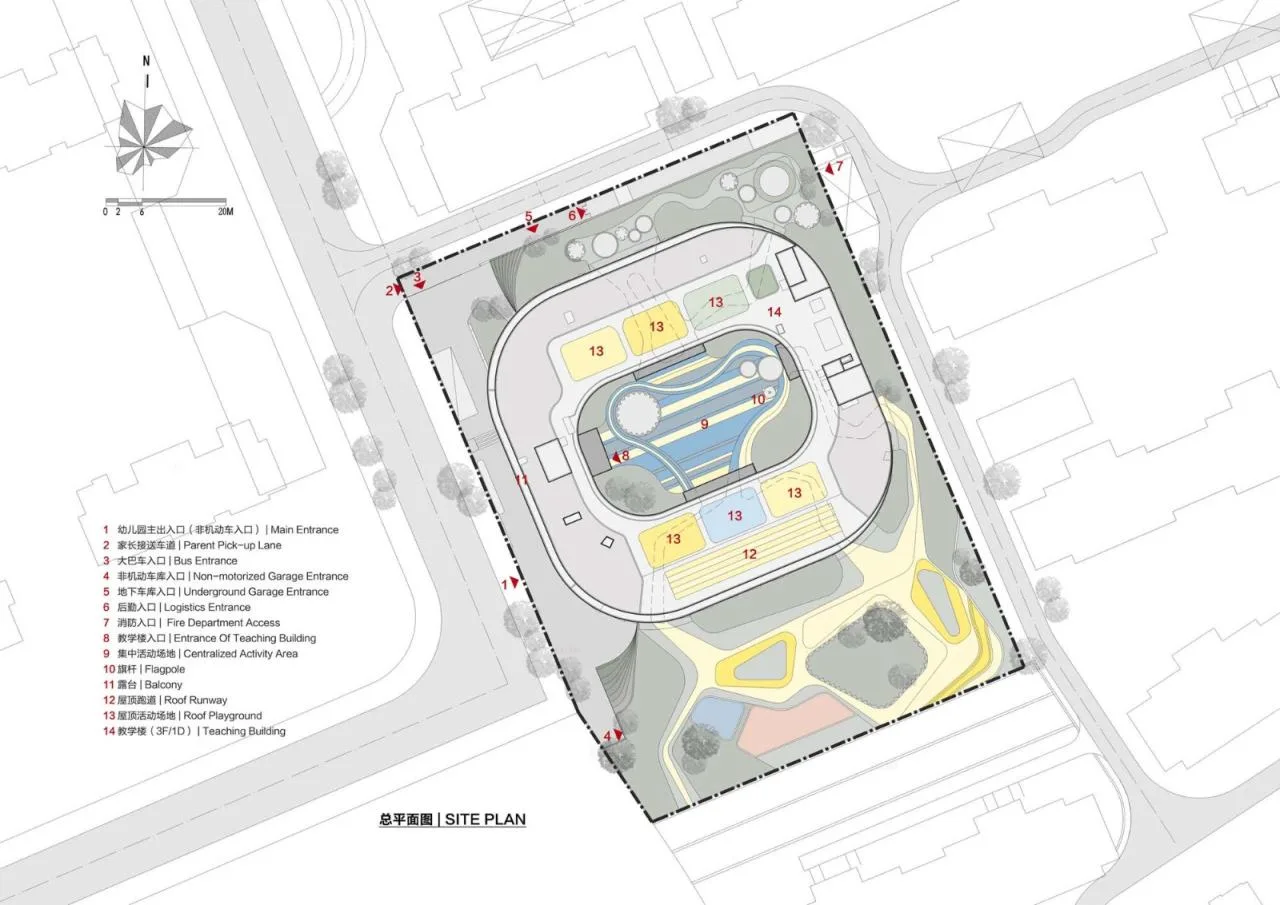
△ General Layout Plan
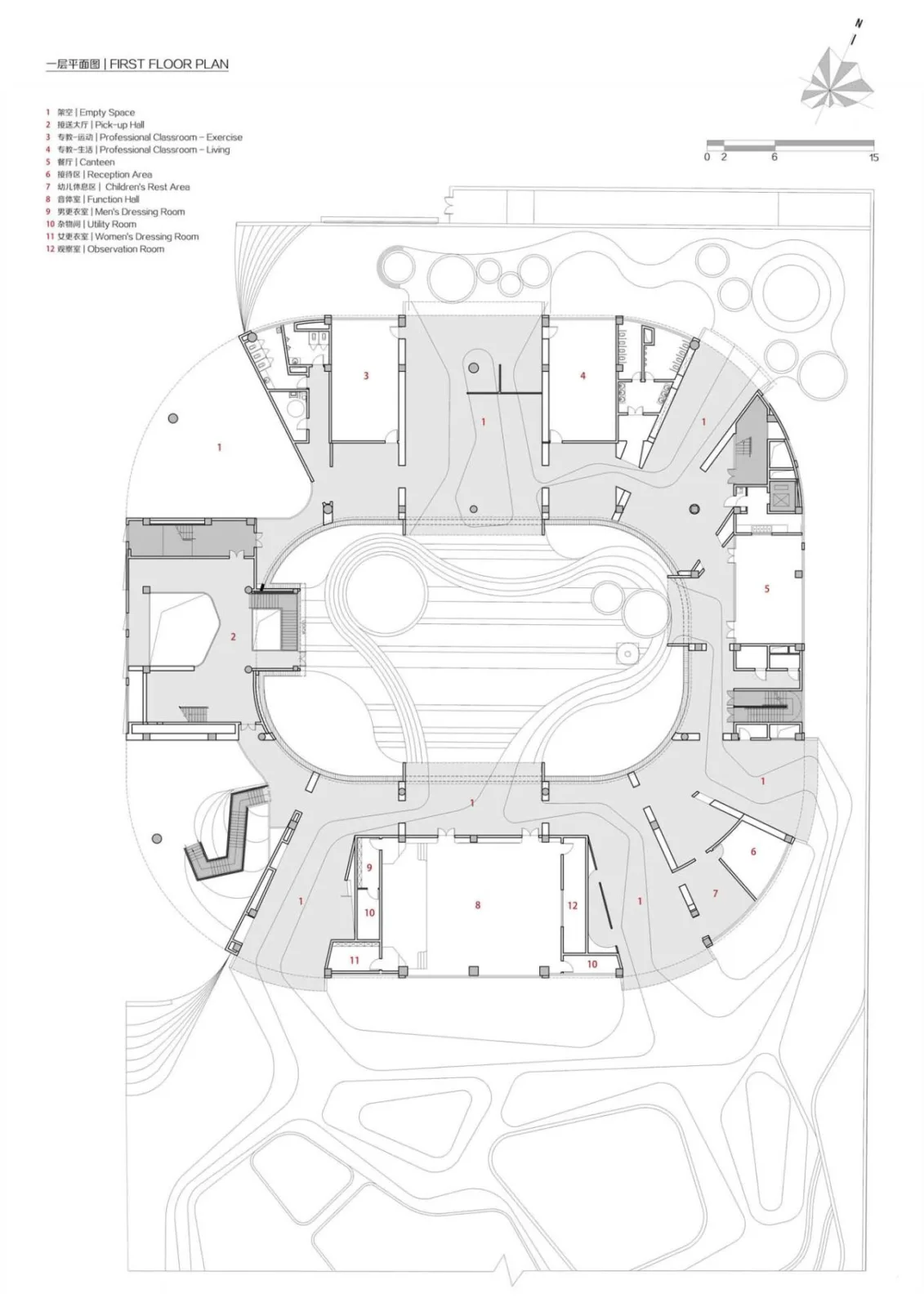
△ First Floor Plan
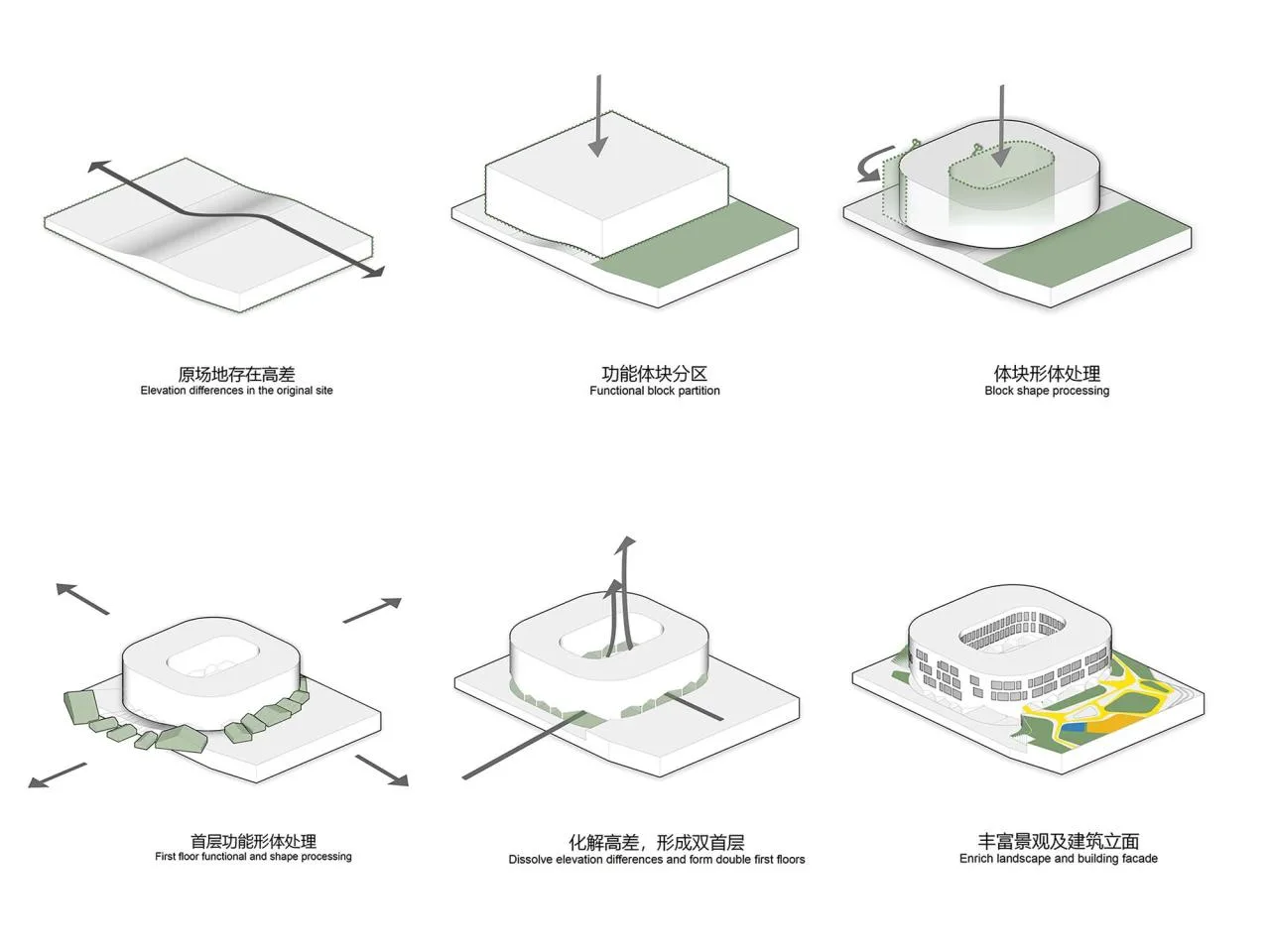
△ Analysis Chart
Project Information
Architect: Zero One City Architecture Firm
Area: 11,568 m²
Project Year: 2022
Photographer: Wu Qingshan
Design Team: Ruan Hao, Zhan Yuan; Zhao Lin, Sheng Xichen, Xu Mengjia, Yin Yue, Wang Wenguang, Zheng Sidan, Ruan Ziming, Chen Xiangning, Ma Guangyu
Indoor Team: Xu Sheng, Lu Xianhui, Li Honghui, Chen Ying, Wang Danlu, Ruan Wenjuan, Yin Yue
Landscape Design: Zero One City Architecture Firm, Zhejiang Baoye Architectural Design and Research Institute Co., Ltd.
Cooperating Design Institute: Zhejiang Baoye Architectural Design and Research Institute Co., Ltd.
Construction Contractor: Zhejiang Yuantu Construction Group Co., Ltd.
Owner: Quzhou Xiqu Investment Co., Ltd.
Location: Quzhou















Must log in before commenting!
Sign Up