
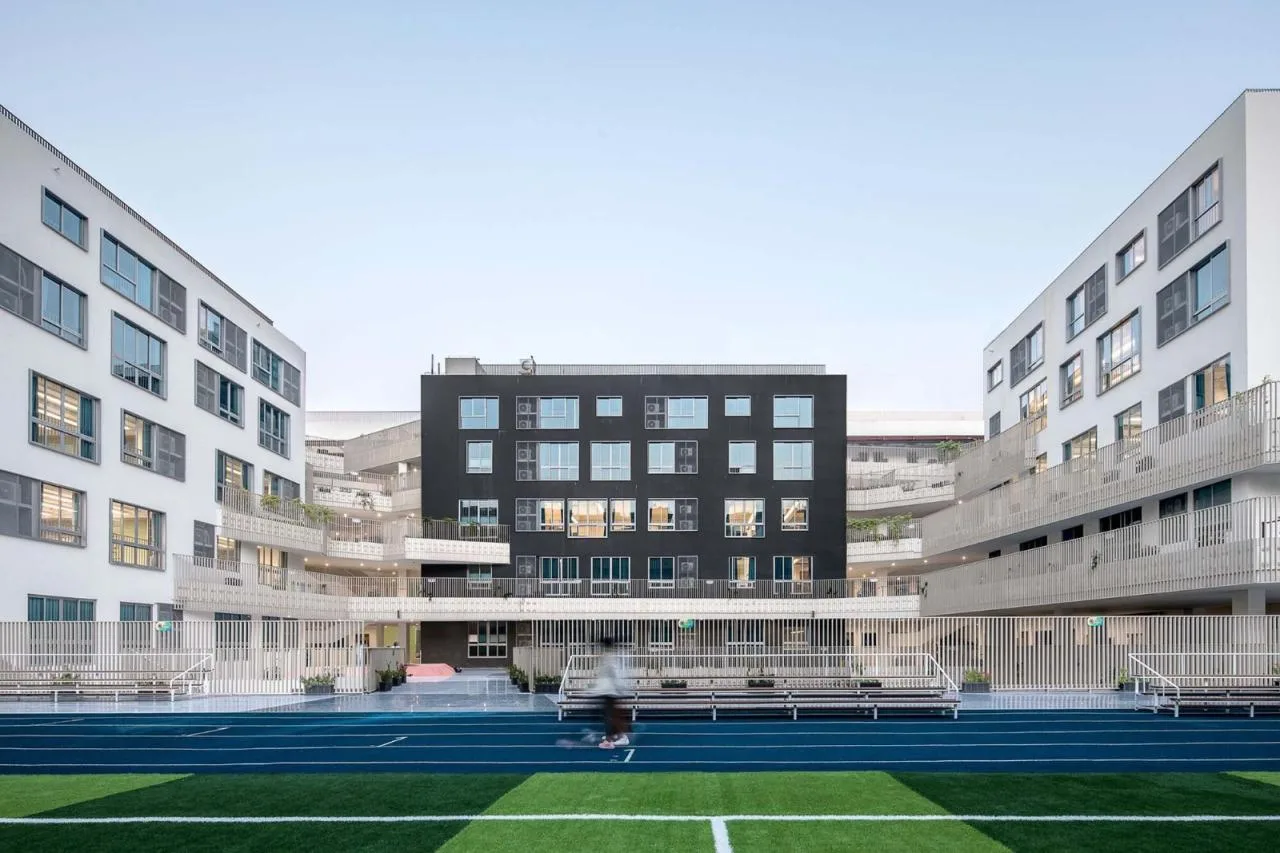
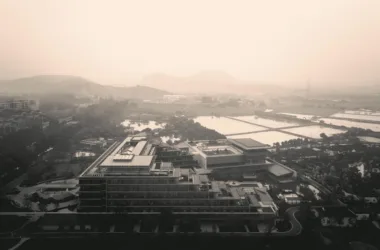
Project Overview: Taoyuan Primary School is situated in Sungang, Luohu, Shenzhen, within the future New Luohu Reception Hall area, characterized by unique geographical features. The surrounding neighborhood consists mainly of residential zones and mixed industrial-commercial land with a high population density. Within a one-kilometer radius, there are few schools—only Sungang Primary School and Guiyuan Middle School—both of which have outdated facilities due to their age. Reflecting the region’s focus on technology, ecology, culture, and innovation under the “New Luohu” initiative, Taoyuan Primary School aims to become a top-tier educational institution representing Luohu’s quality of education. The school seeks to alleviate the shortage of nearby school places and strengthen the area’s overall educational capabilities.
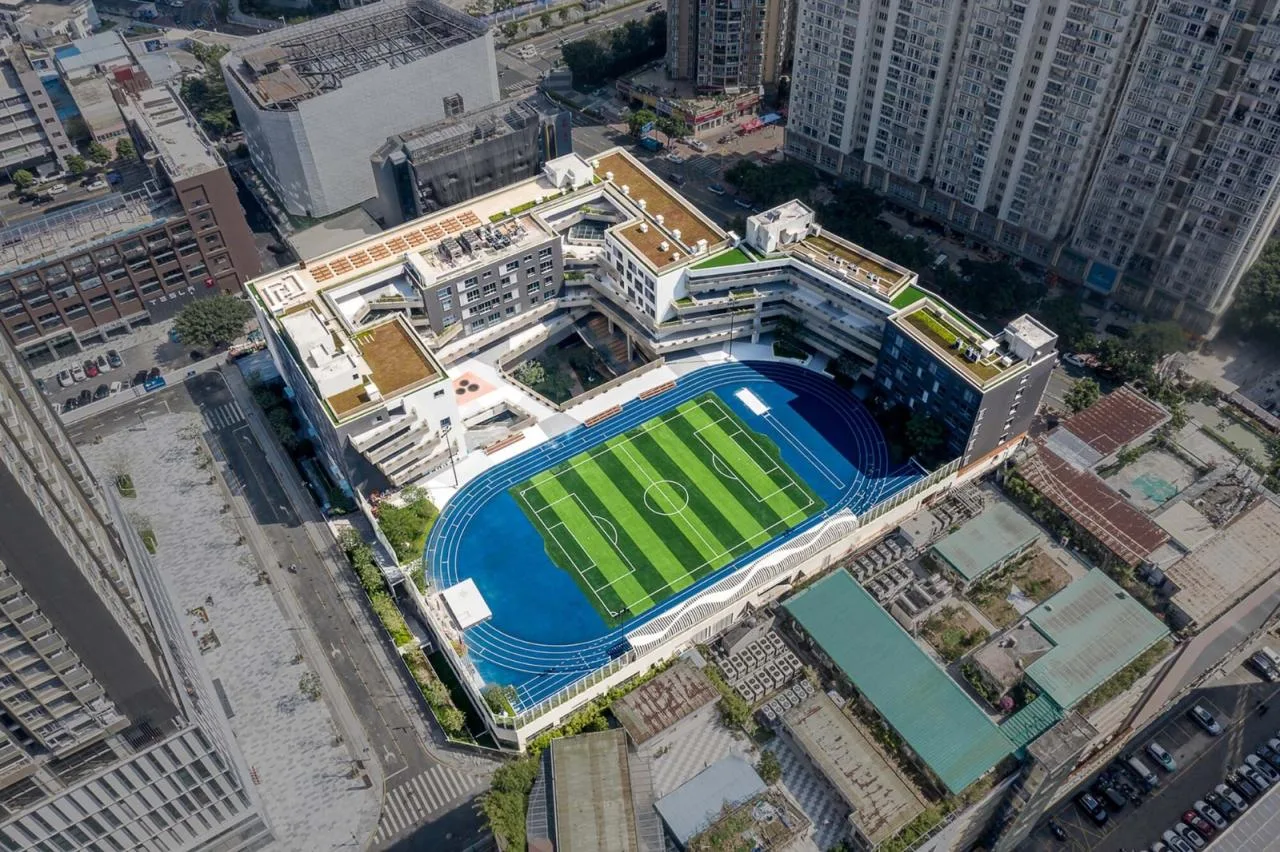
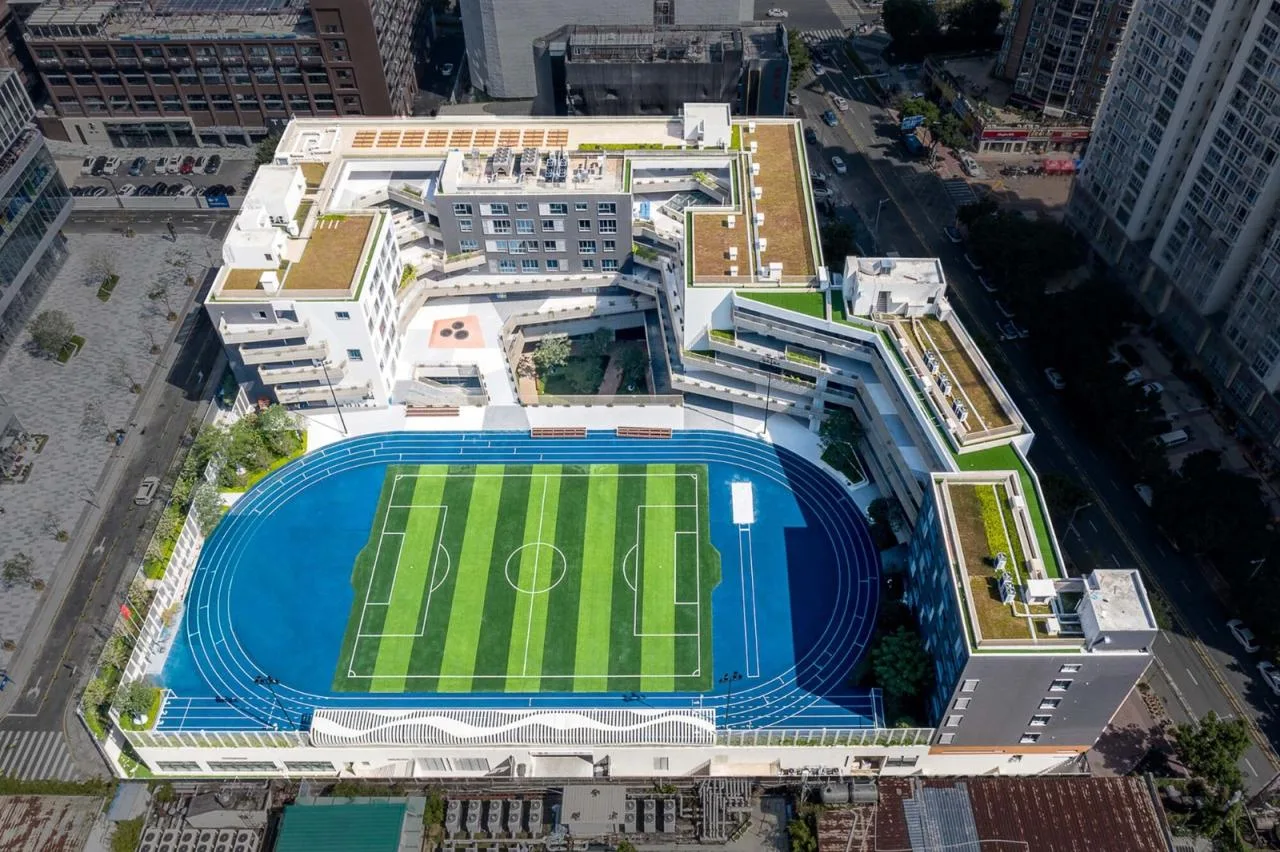
The design encompasses roughly 13,000 square meters, accommodating a school with 36 classrooms and 12 mobile classrooms. Given the high-density urban renewal context, the design team faced the challenge of creating a welcoming and pleasant campus environment while meeting these capacity demands. After thorough consideration, the team envisioned an “urban oasis” nestled among high-rise buildings, incorporating three-dimensional garden landscaping. This approach enhances ventilation, natural light, and sunlight exposure, ensuring the building itself is comfortable and inviting. The goal is for the school to be a green, vibrant space that supports children’s exploration and learning, embodying a vision of scientific education, resource sharing, and ecological harmony.
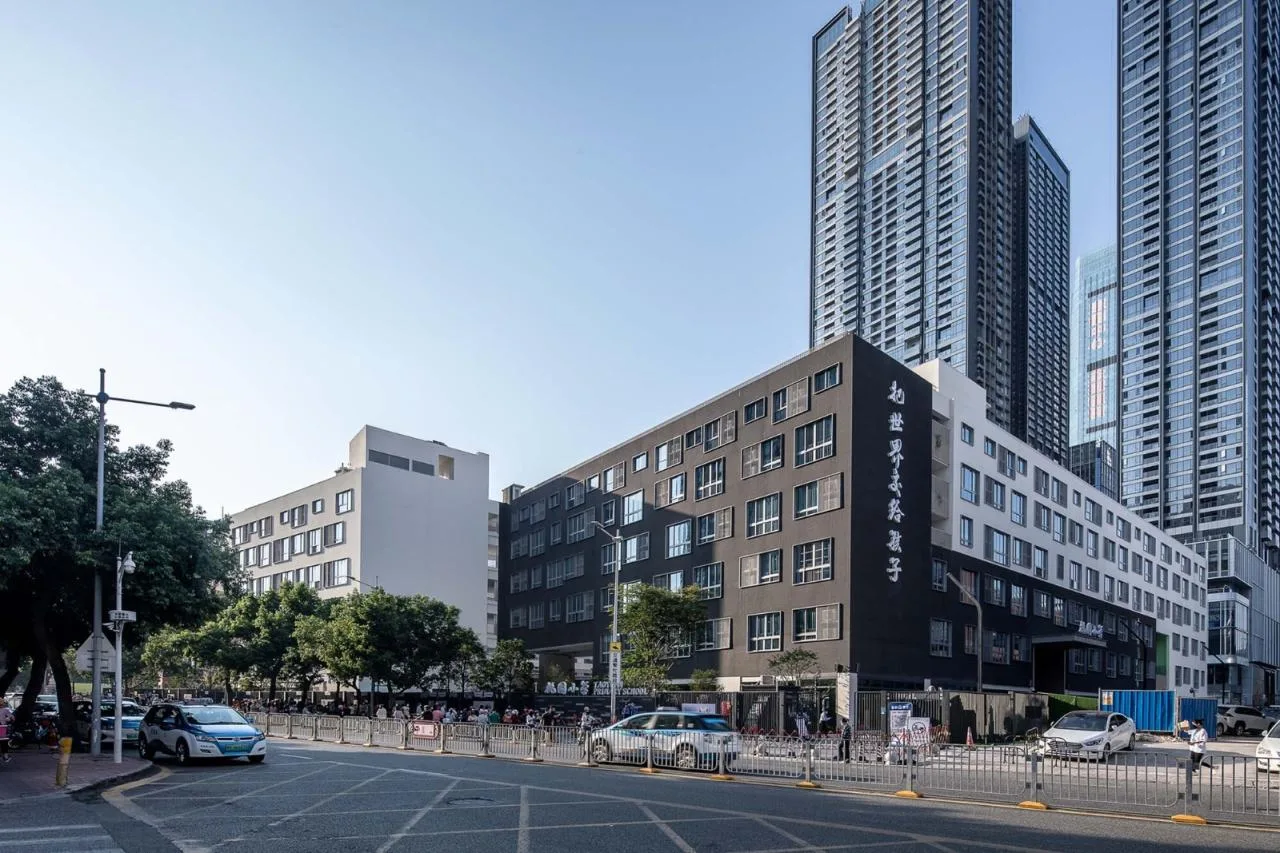
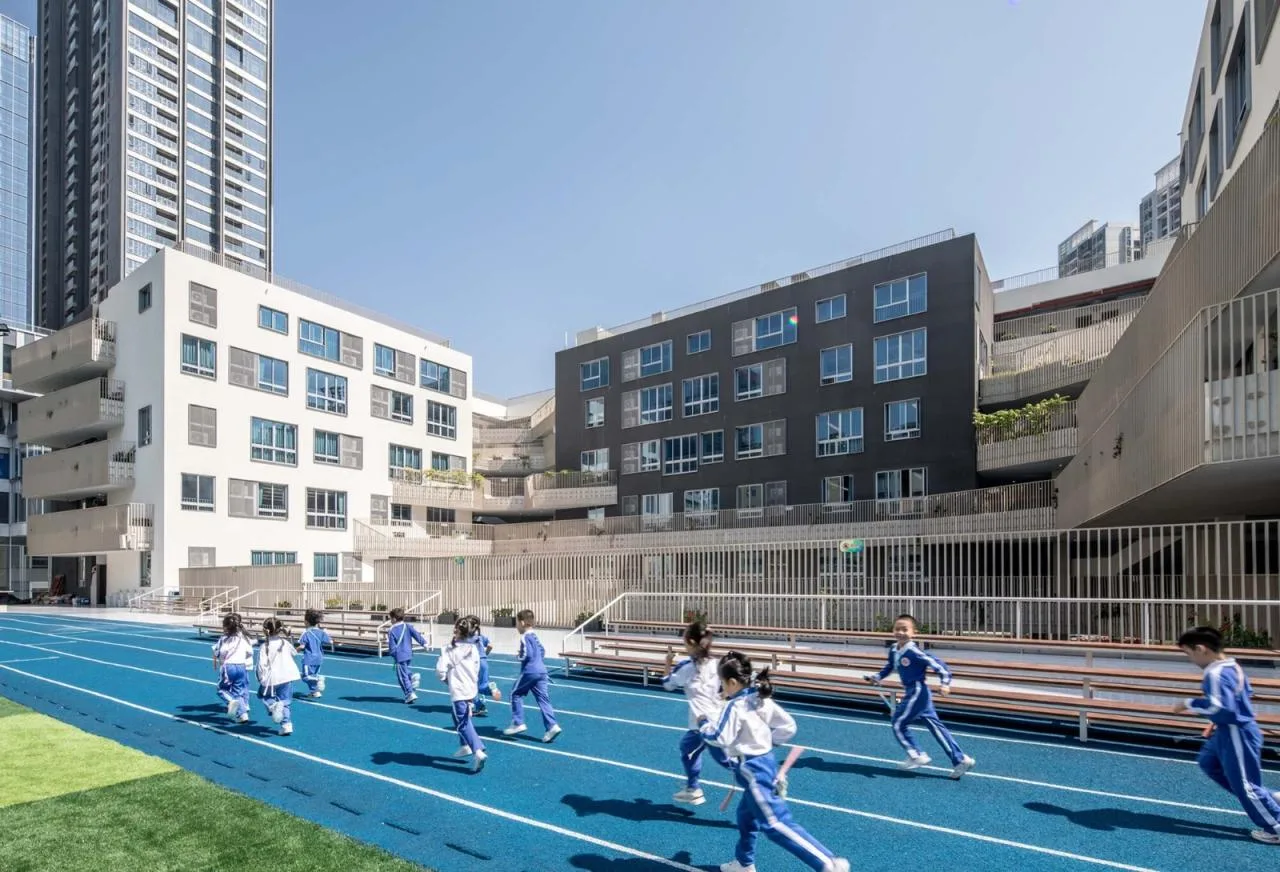
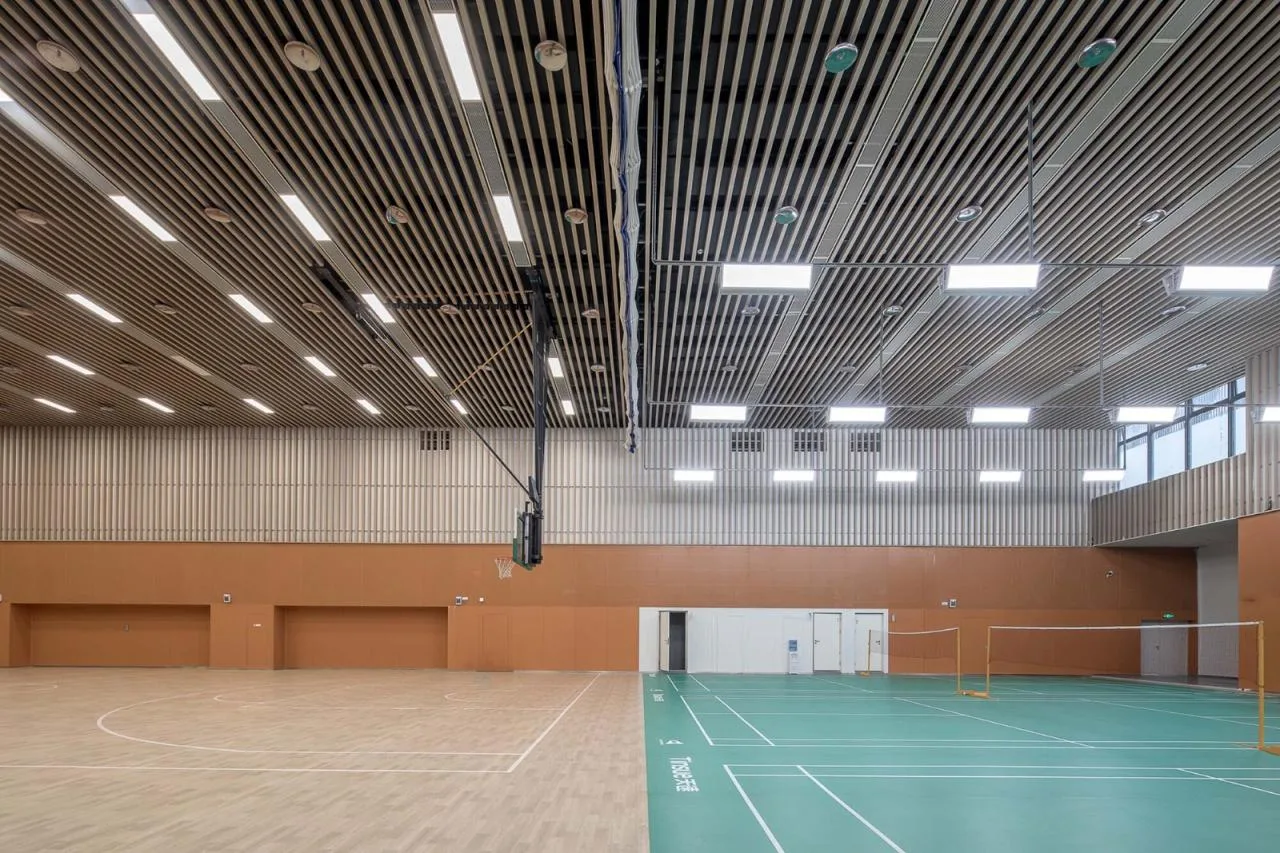
The building’s vertical functional layout is designed for flexibility. Traditionally, campus buildings are divided horizontally into four areas: teaching, sports, academics, and living. However, the limited land requires a more dynamic approach. Functions are redistributed vertically, with overlapping roles between the student center and sports center allowing for dynamic reorganization. To maximize land use, the design introduces a “composite educational space” concept, employing techniques such as ground elevation and multi-story structures to organize spaces efficiently. Sports and academic facilities occupy the first and basement floors for easy sharing with the community, while the teaching center remains more private and separate. Administrative offices are placed on the top floor. This vertical, flexible layout supports resource sharing and efficient use under urban density constraints.
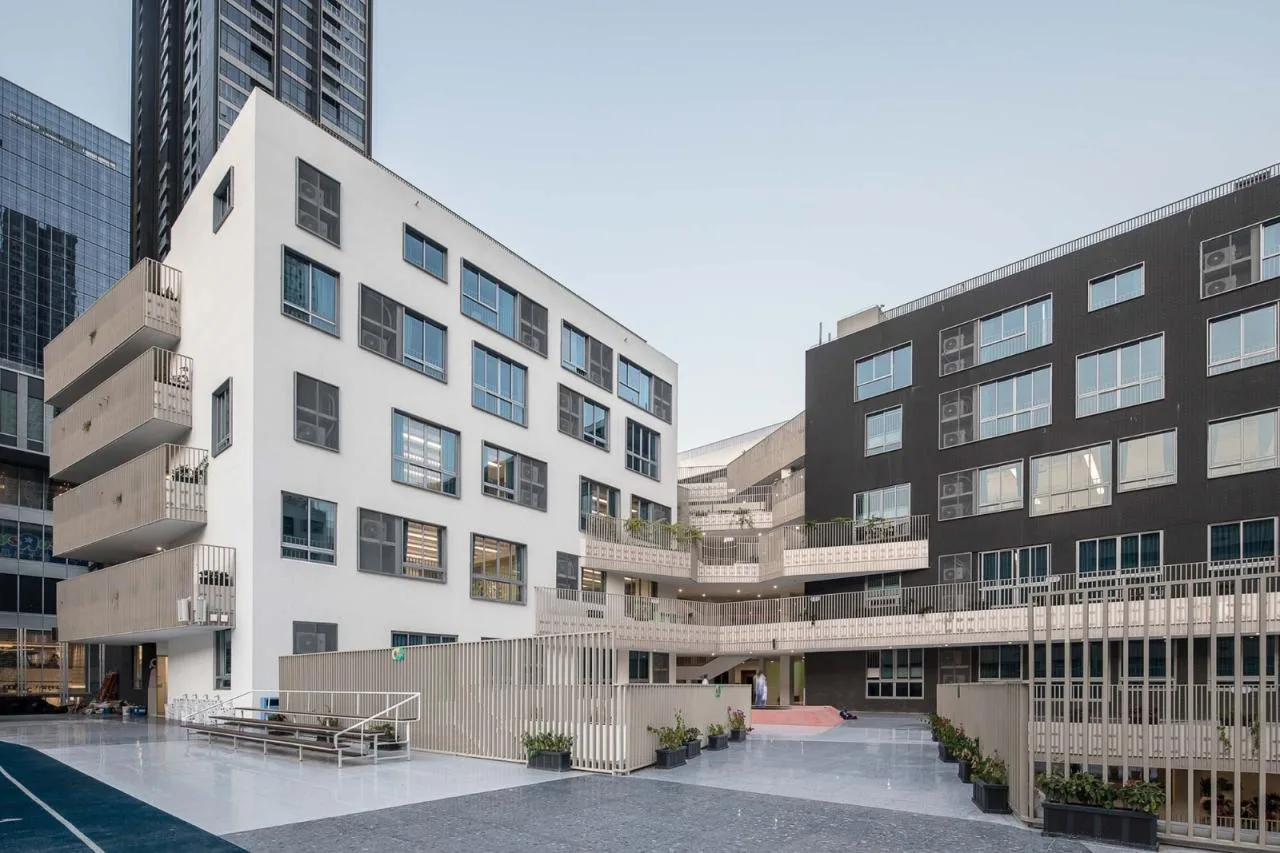
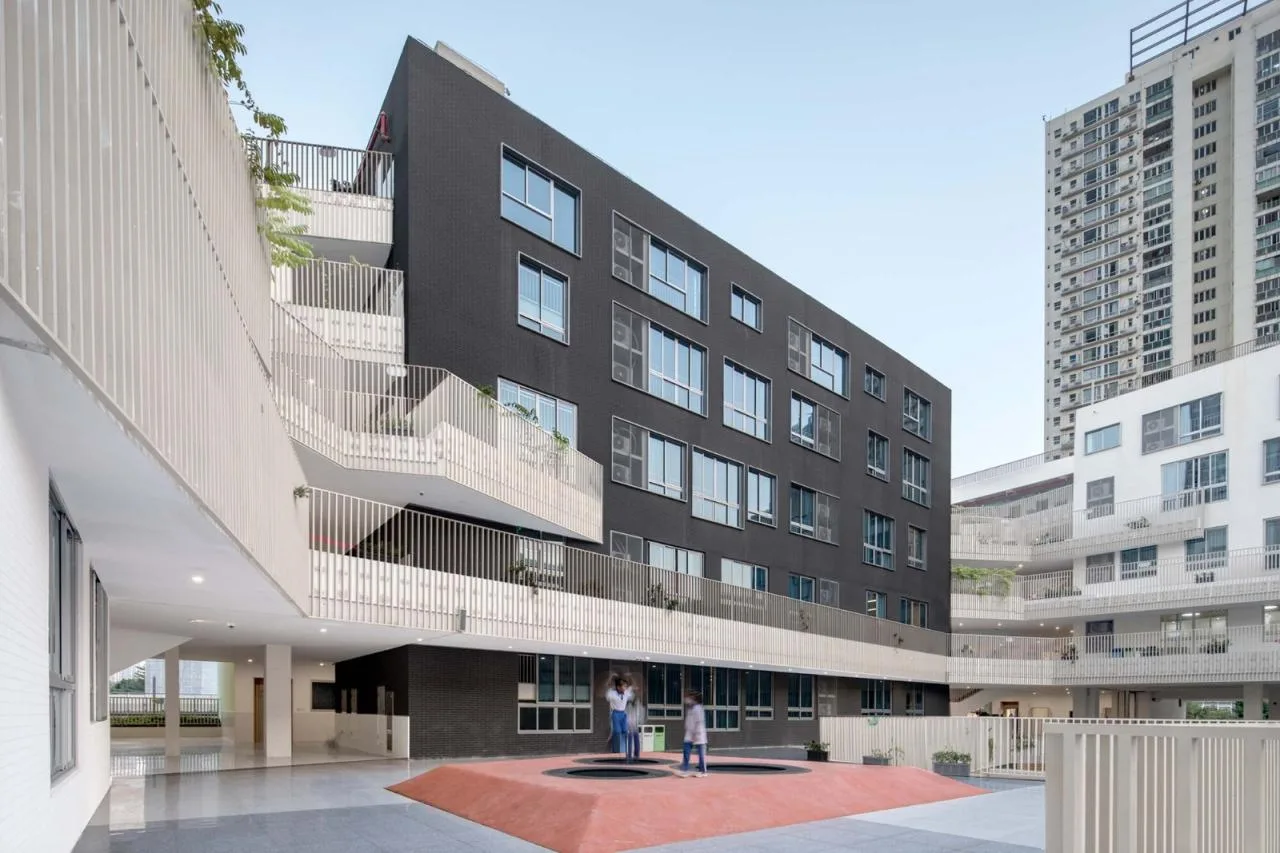
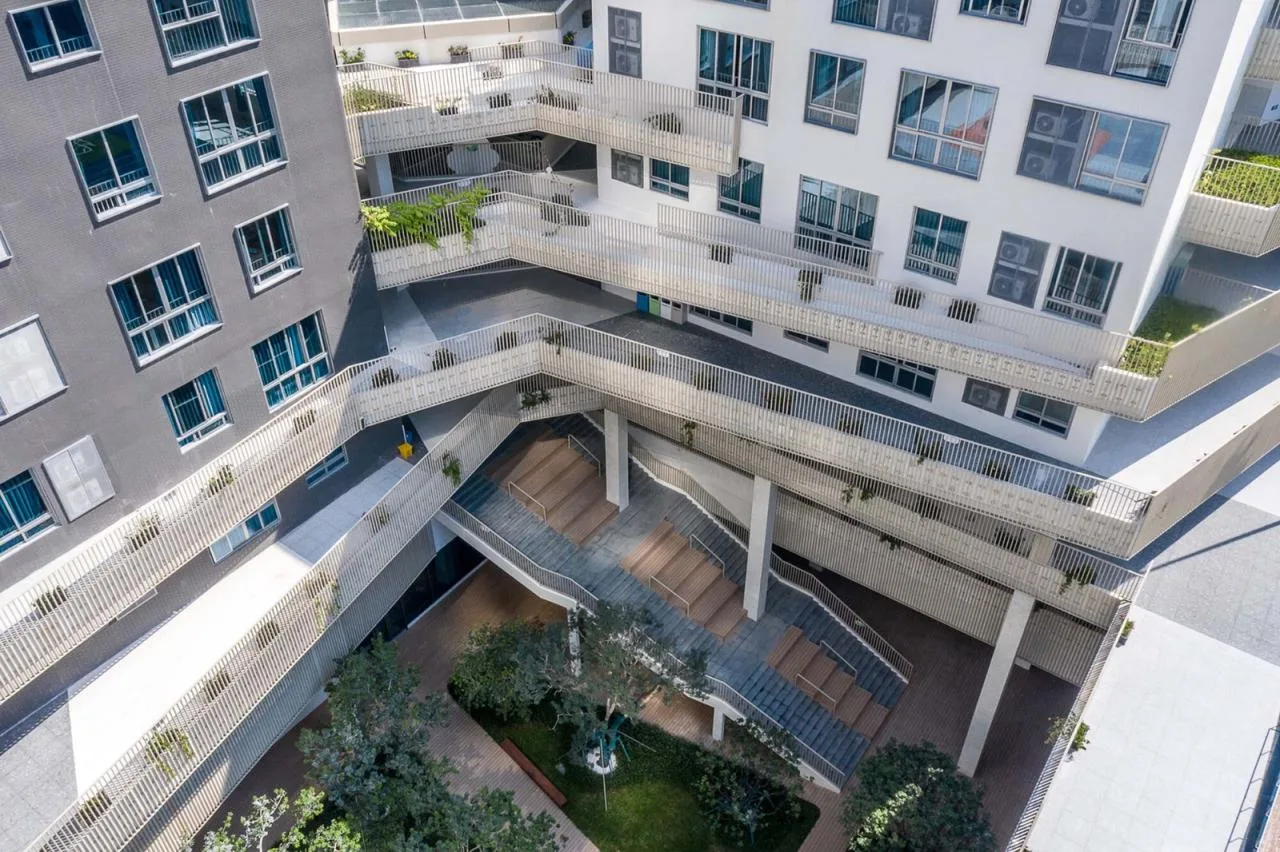
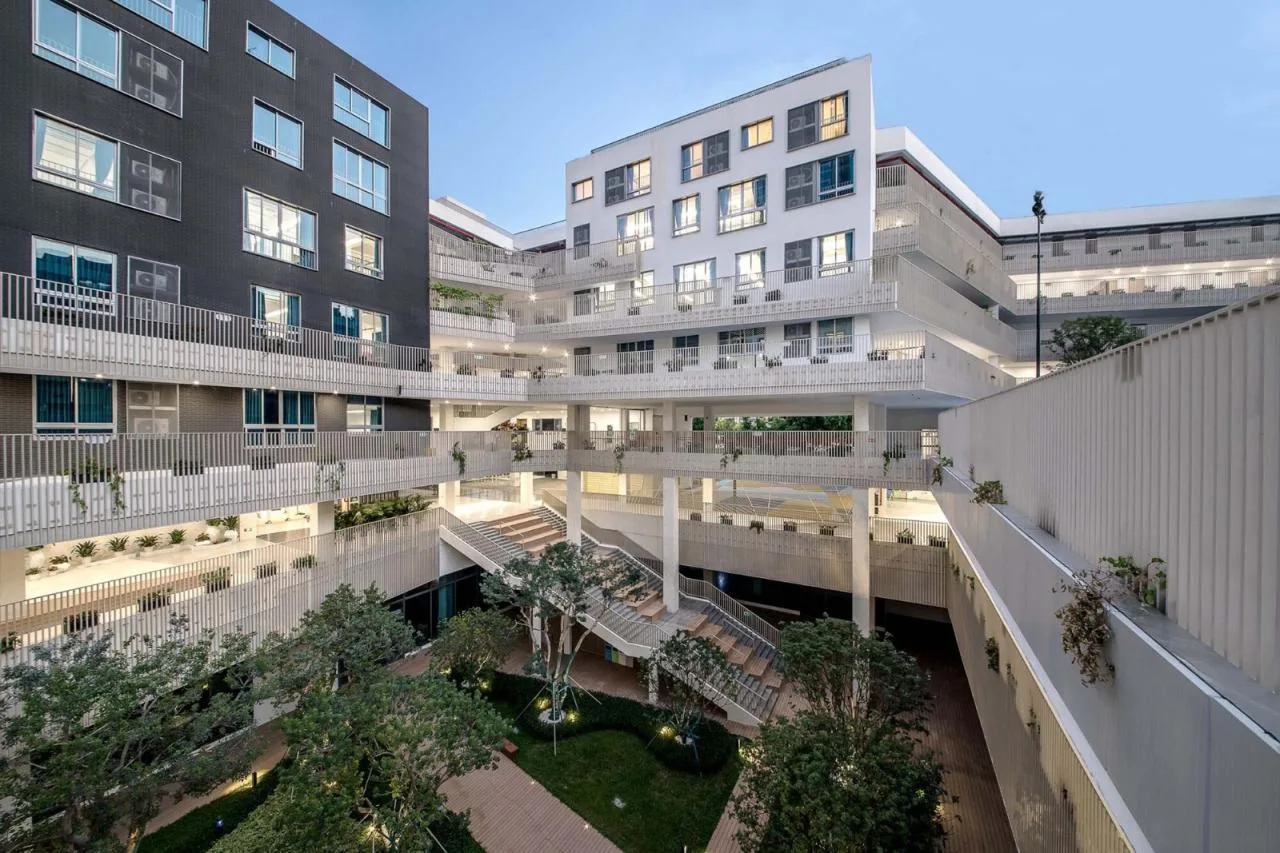
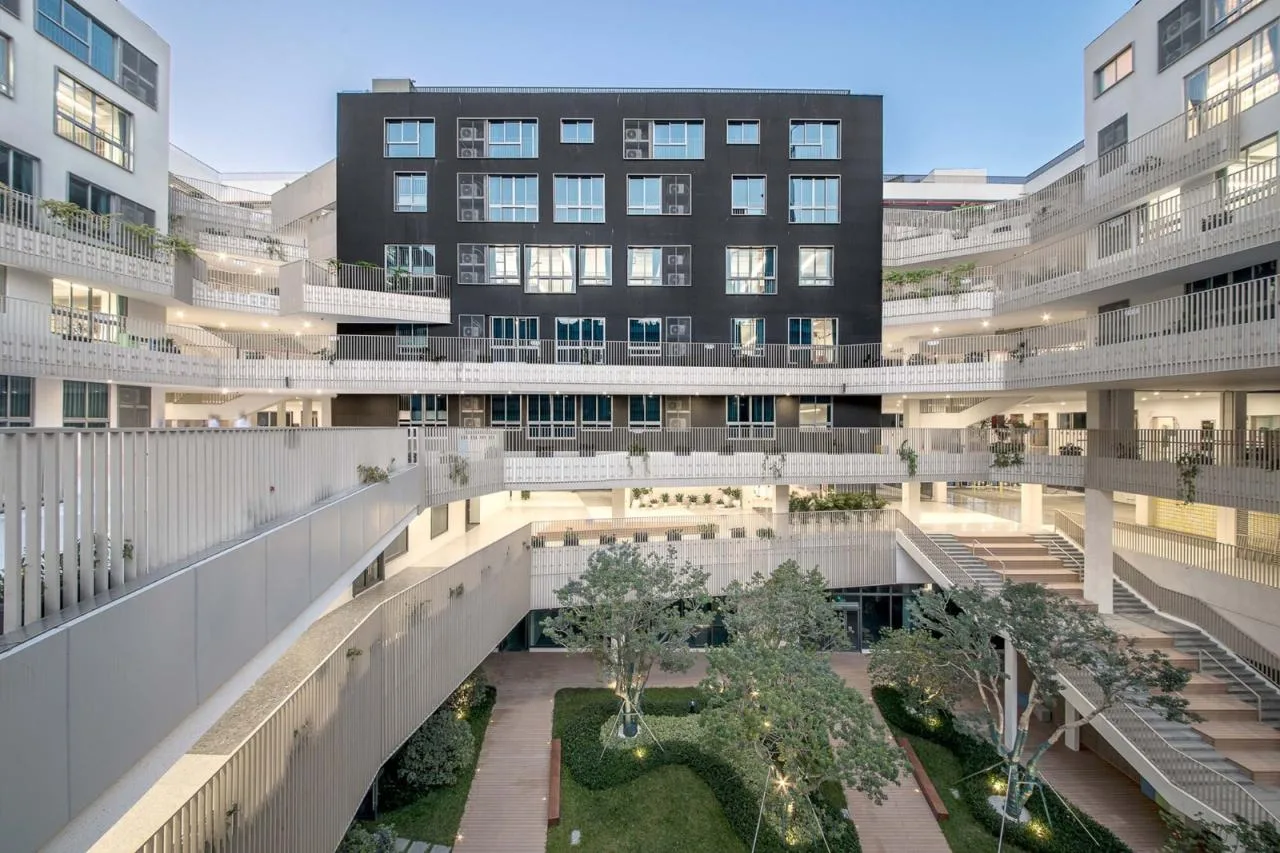
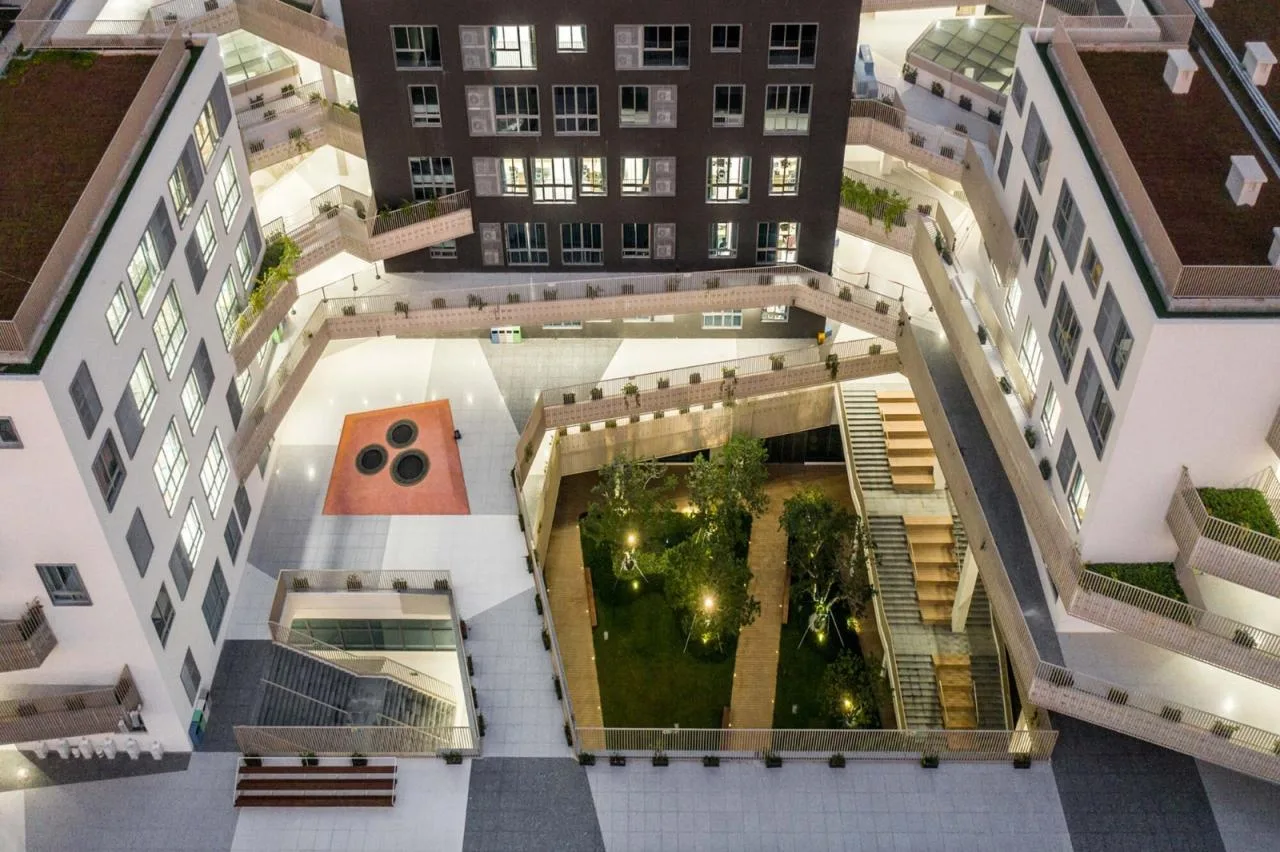
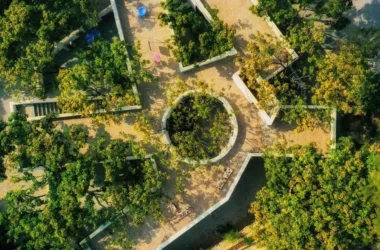
The efficient four-story vertical design features a spacious central courtyard inspired by nature, shaped as a “semi-basin” through tiered, twisting landscape platforms, creating an engaging and playful environment. Around this courtyard, the basement floor houses shared facilities such as the cafeteria, library, swimming pool, and gymnasium, all benefiting from natural light and ventilation. These spaces serve both the school and the local community during non-school hours, maximizing resource utilization and fostering community engagement.
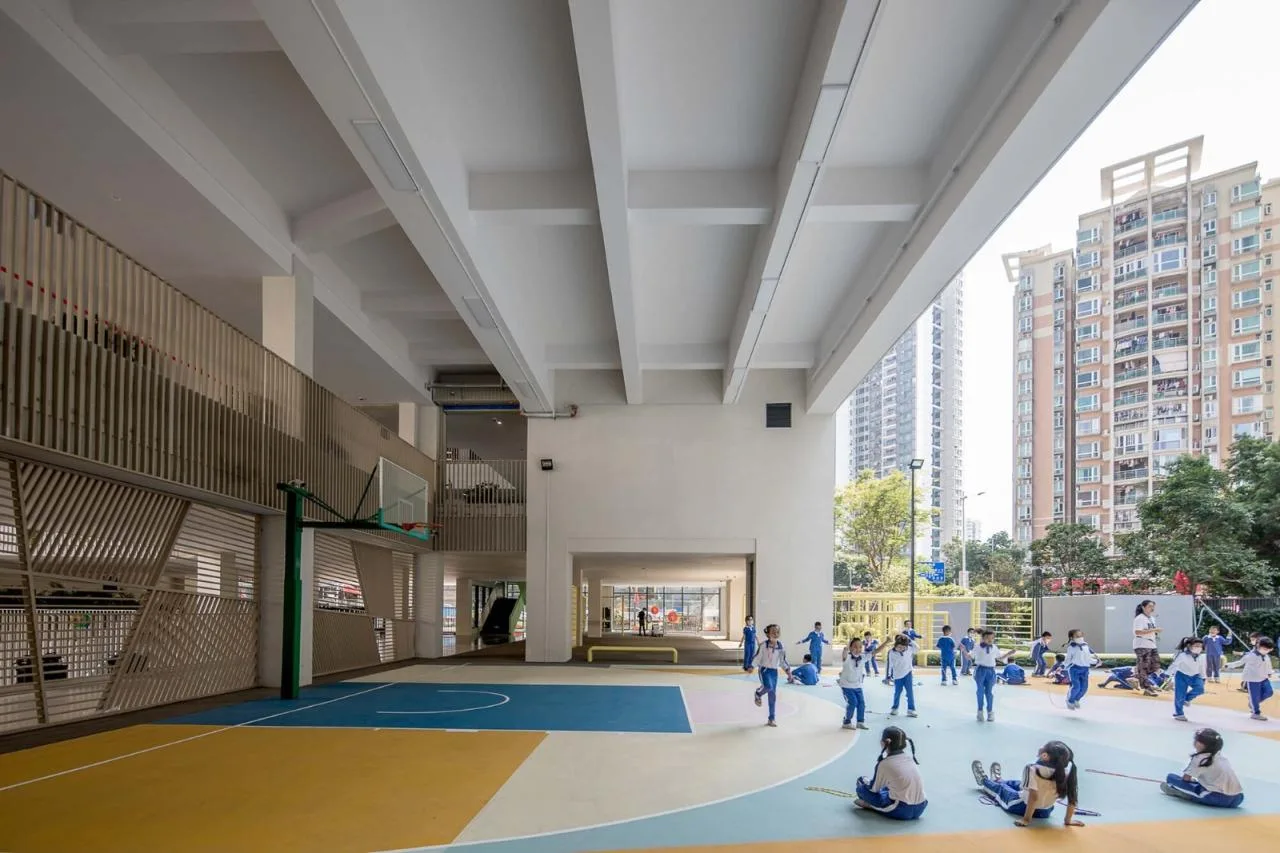
The ground level, designed as a “multi-first floor,” integrates the basement, ground, and second floors through elevated platforms, courtyards, and large steps, blending urban life with campus vitality into a four-layered ground system. The central layer combines teaching areas with activity spaces and scenic corridors, breaking traditional layouts. The rooftop serves as a multifunctional communication layer, supporting sports, landscaping, and social activities, enriching the campus experience.
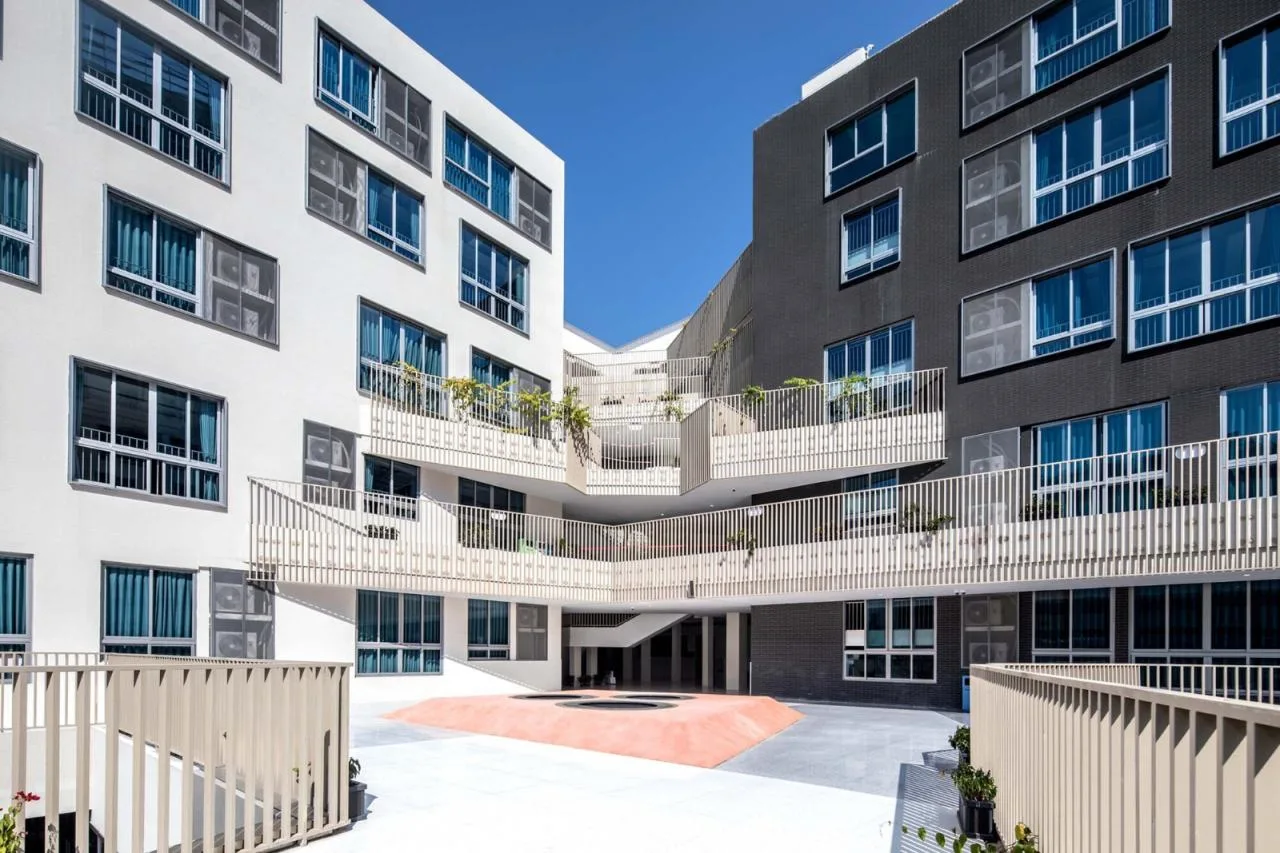
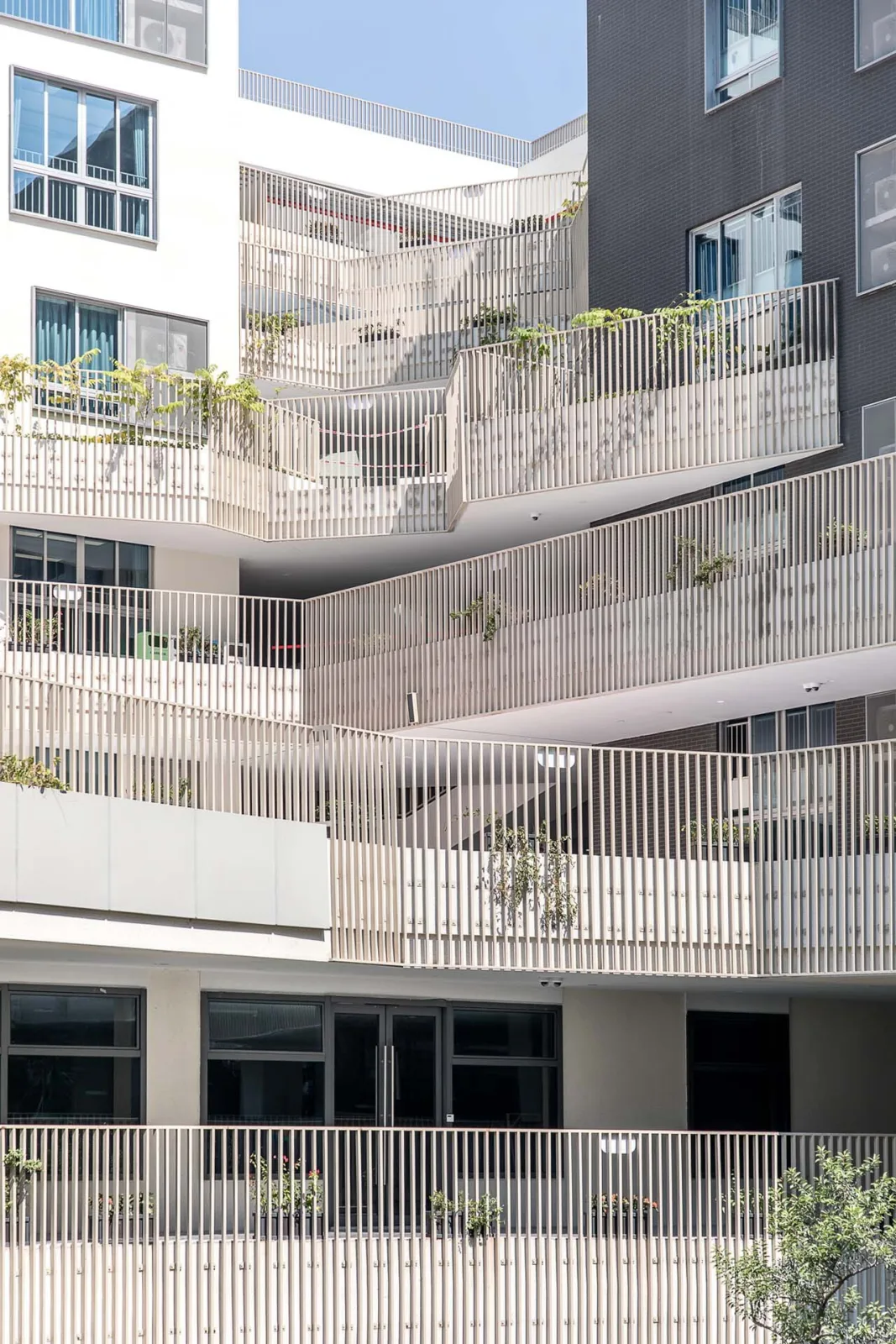
The landscape design features a “stacked garden” created through layered platform greening, vertical greenery, and rooftop plants. This design integrates flexible teaching groups with the courtyard’s spatial dynamics, creating varied scales and levels that enhance connections between learning activities. The architecture and landscape form a composite learning environment that supports diverse teaching needs.
The design employs three strategies to create a “roaming space”: extending the building form to face the landscape and maximize views; incorporating differentiated courtyard landscapes rather than enclosed courtyards; and introducing vertical landscape platforms within the teaching groups. These platforms, combined with terraced gardens, provide students with natural spaces for activities and breaks.
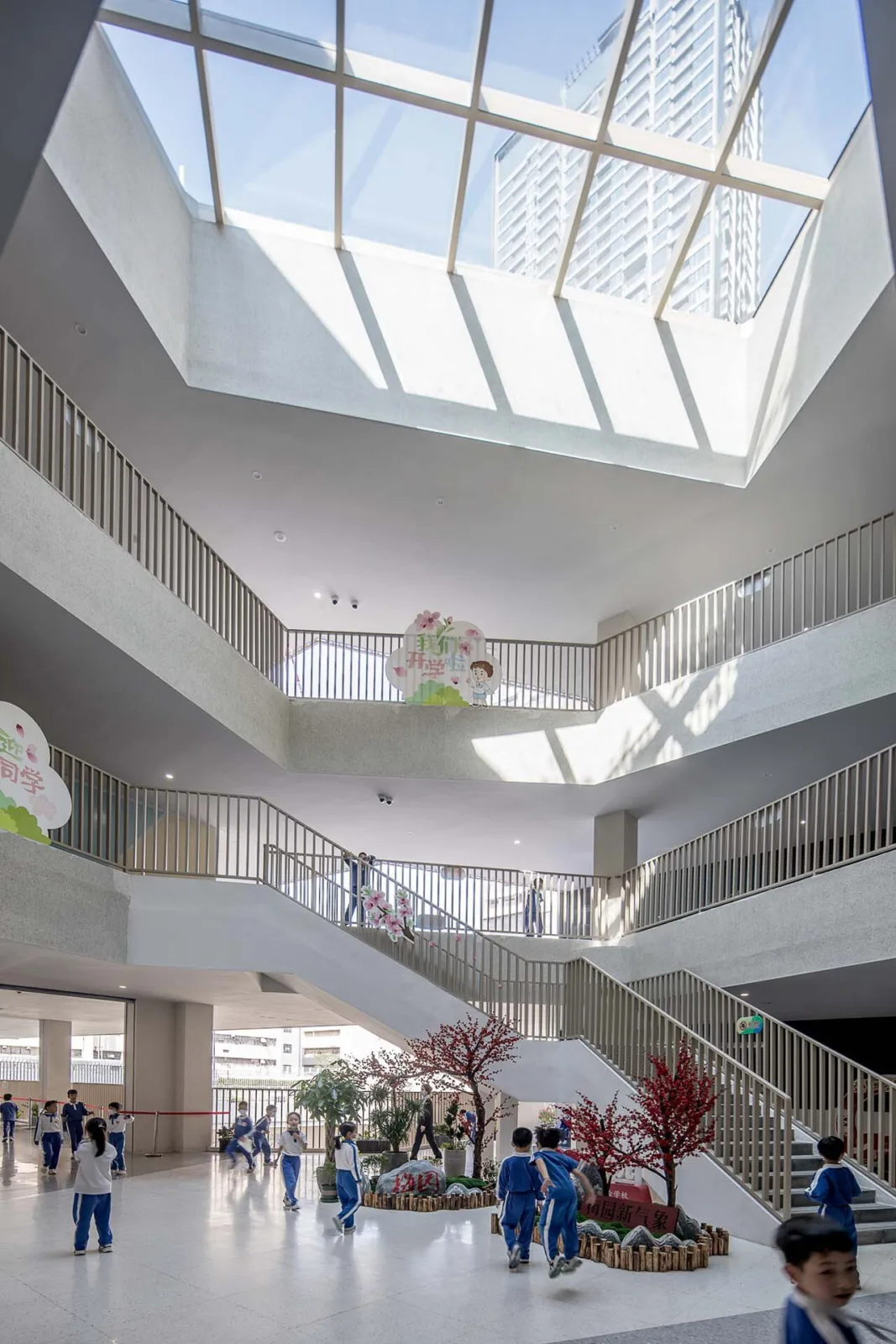
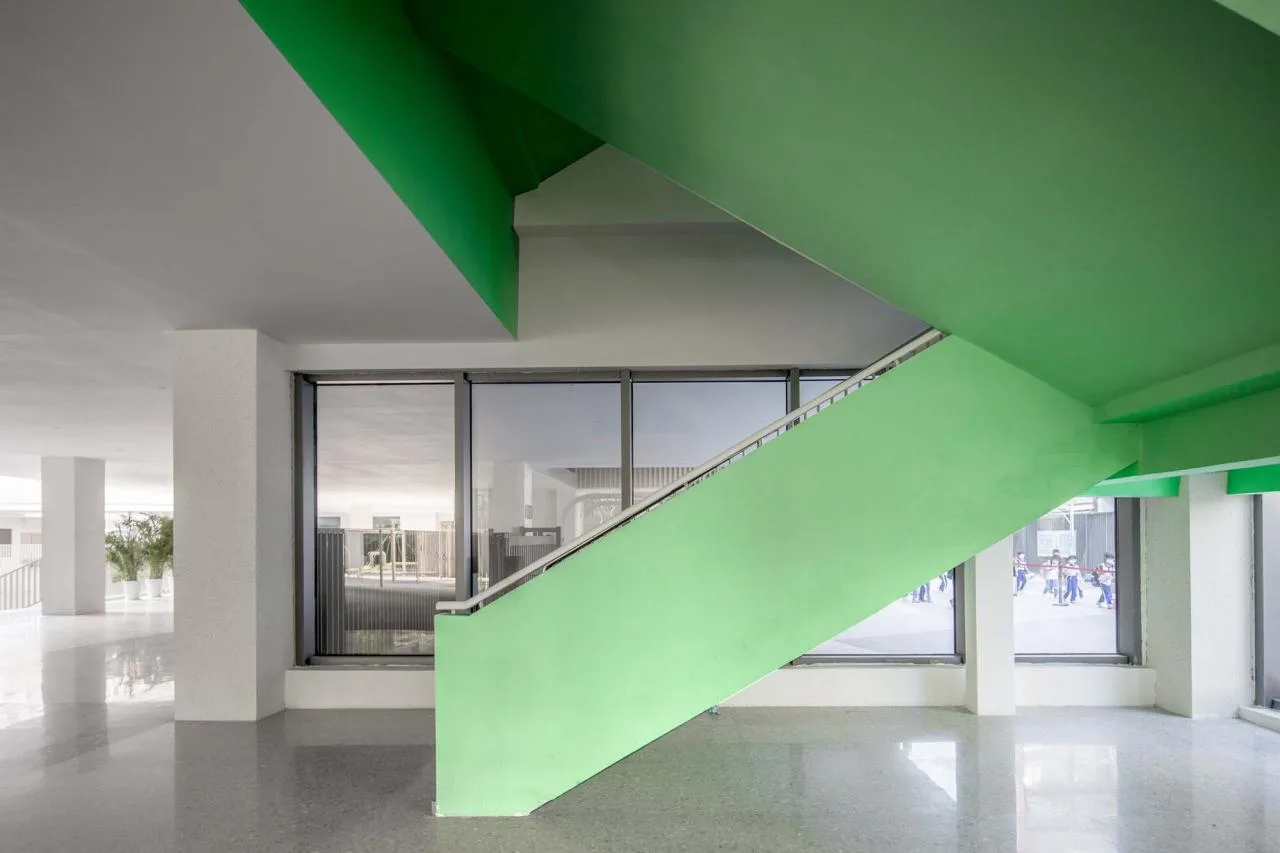
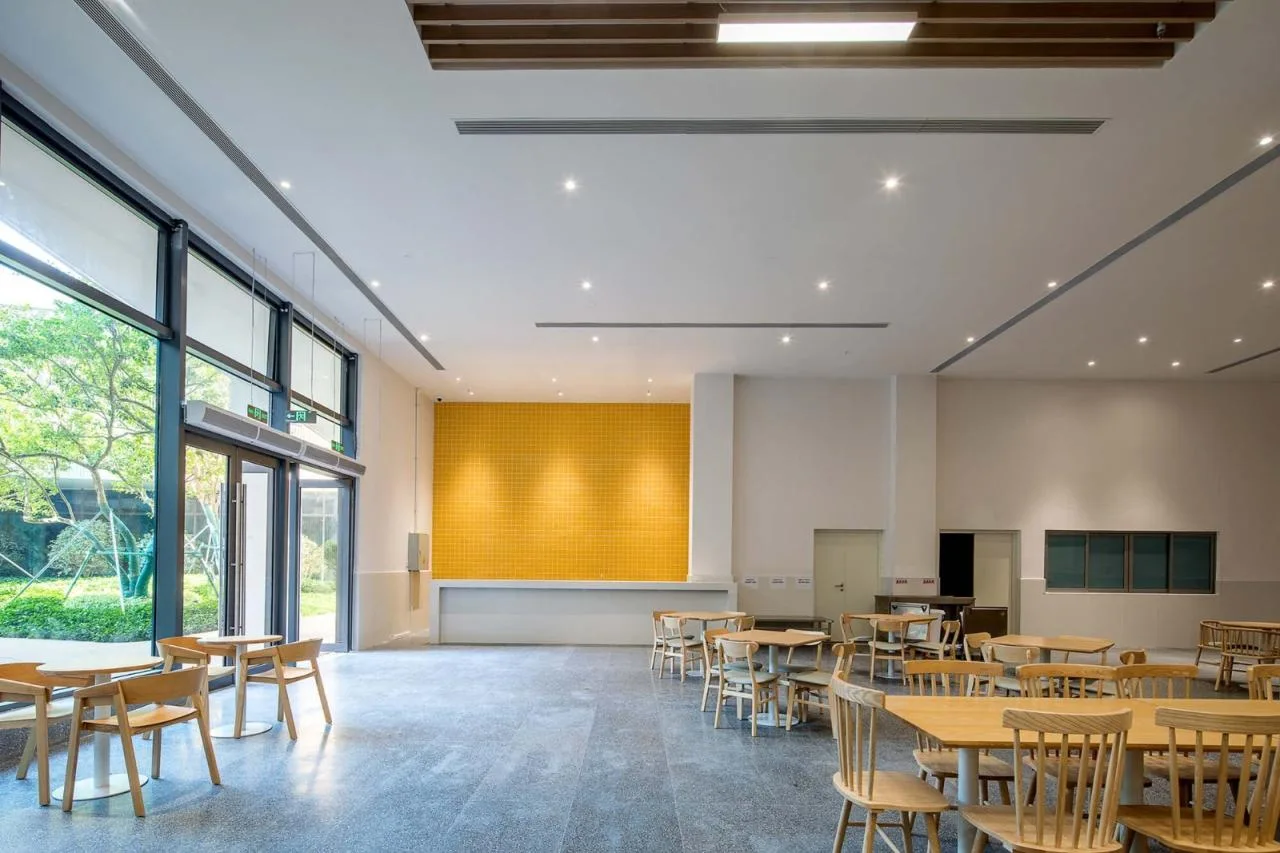
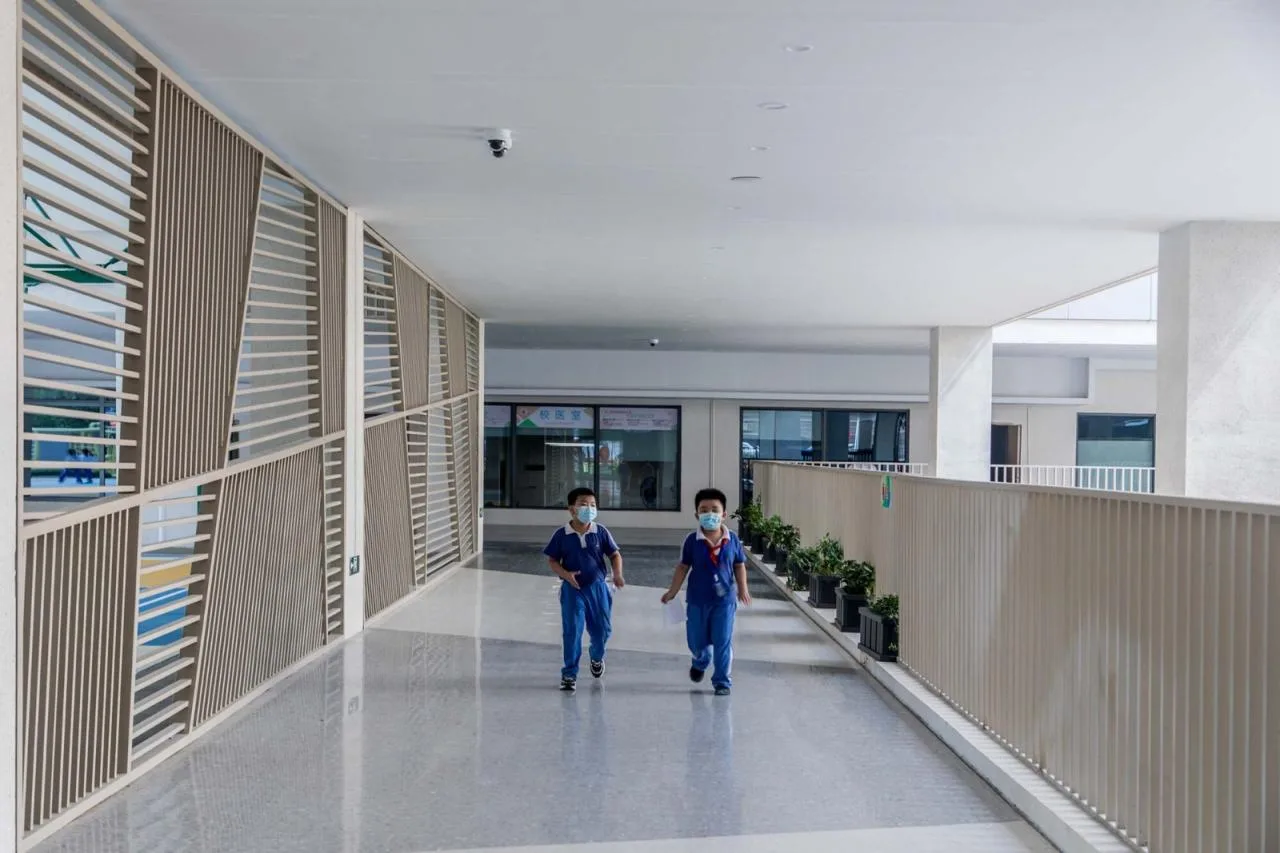
The boundary between “teaching and learning” is expanded beyond the traditional classroom setting. The design encourages student interaction by widening corridor areas on each floor, transforming typically narrow passageways into vibrant teaching spaces. These expanded zones include “reading corners” and “discussion areas,” creating a blended model of classroom, informal learning space, and communication corridor. This open, integrated, and flexible layout adapts to various teaching methods and student learning styles, blurring the lines between instruction and activity.
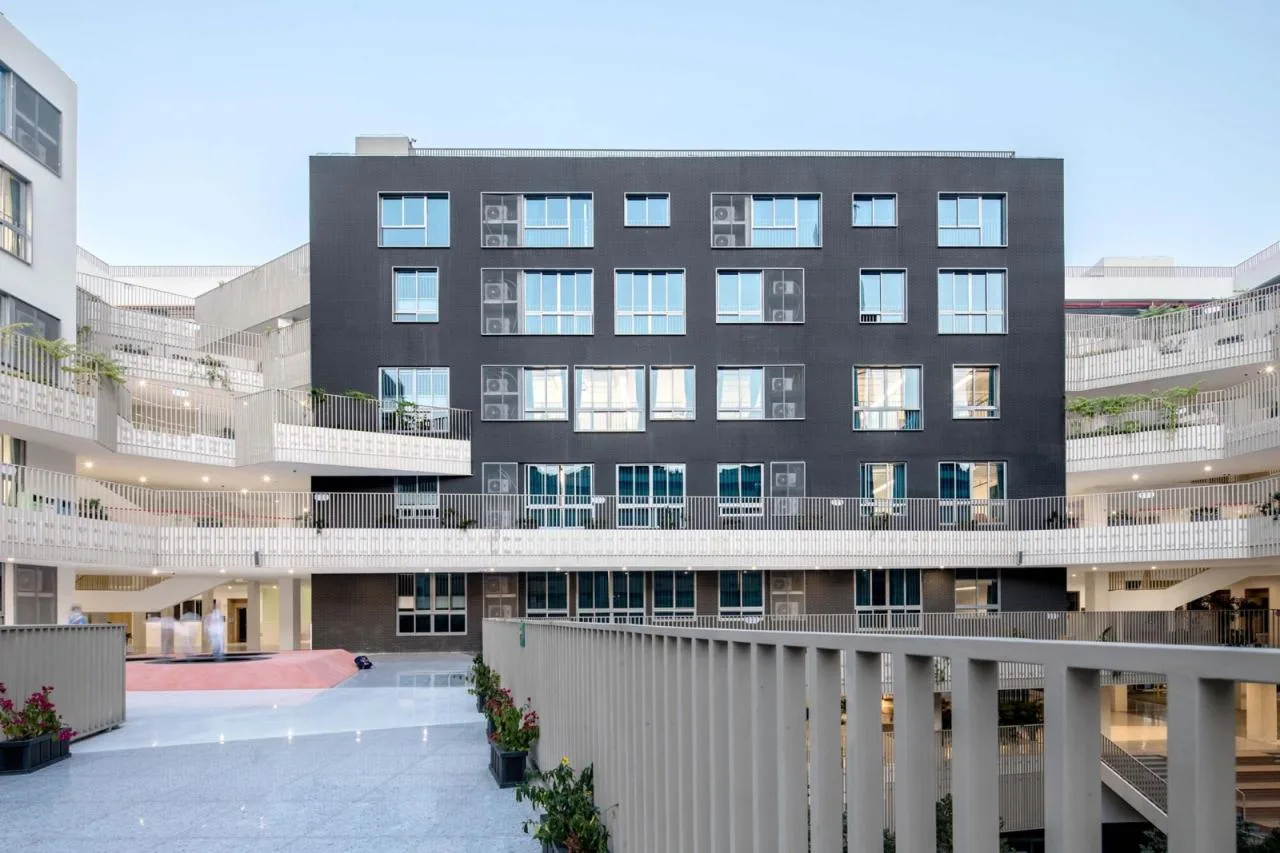
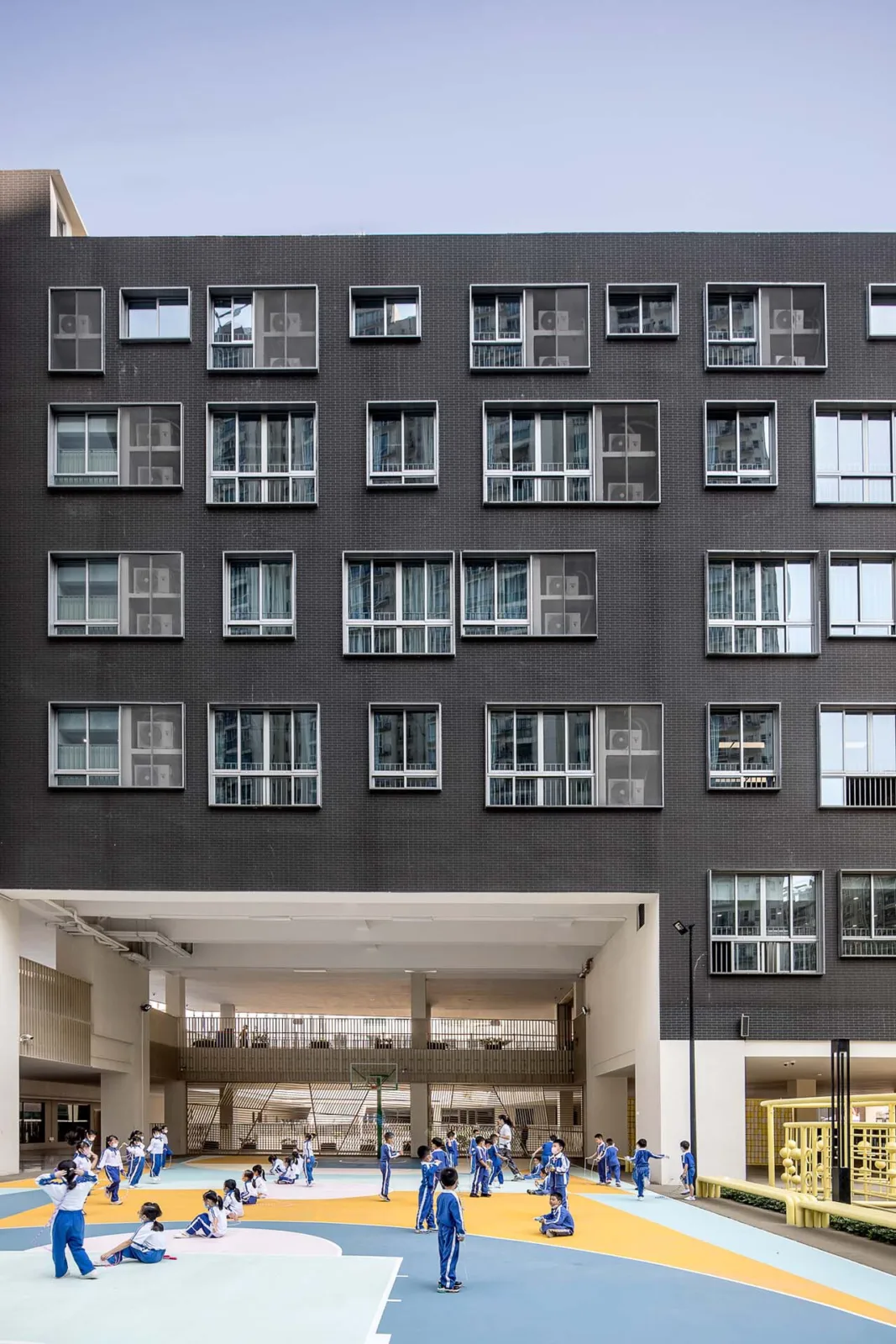
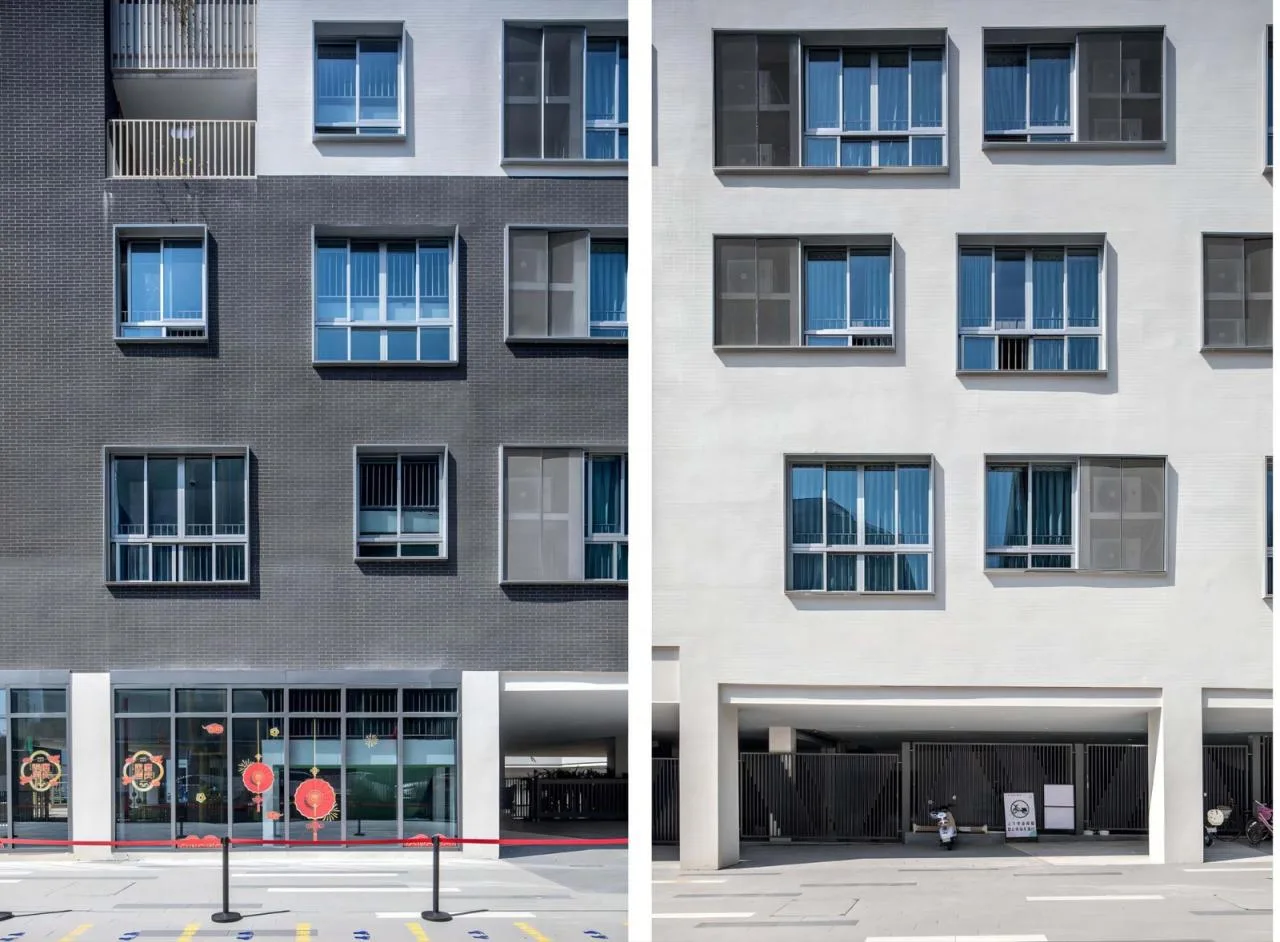
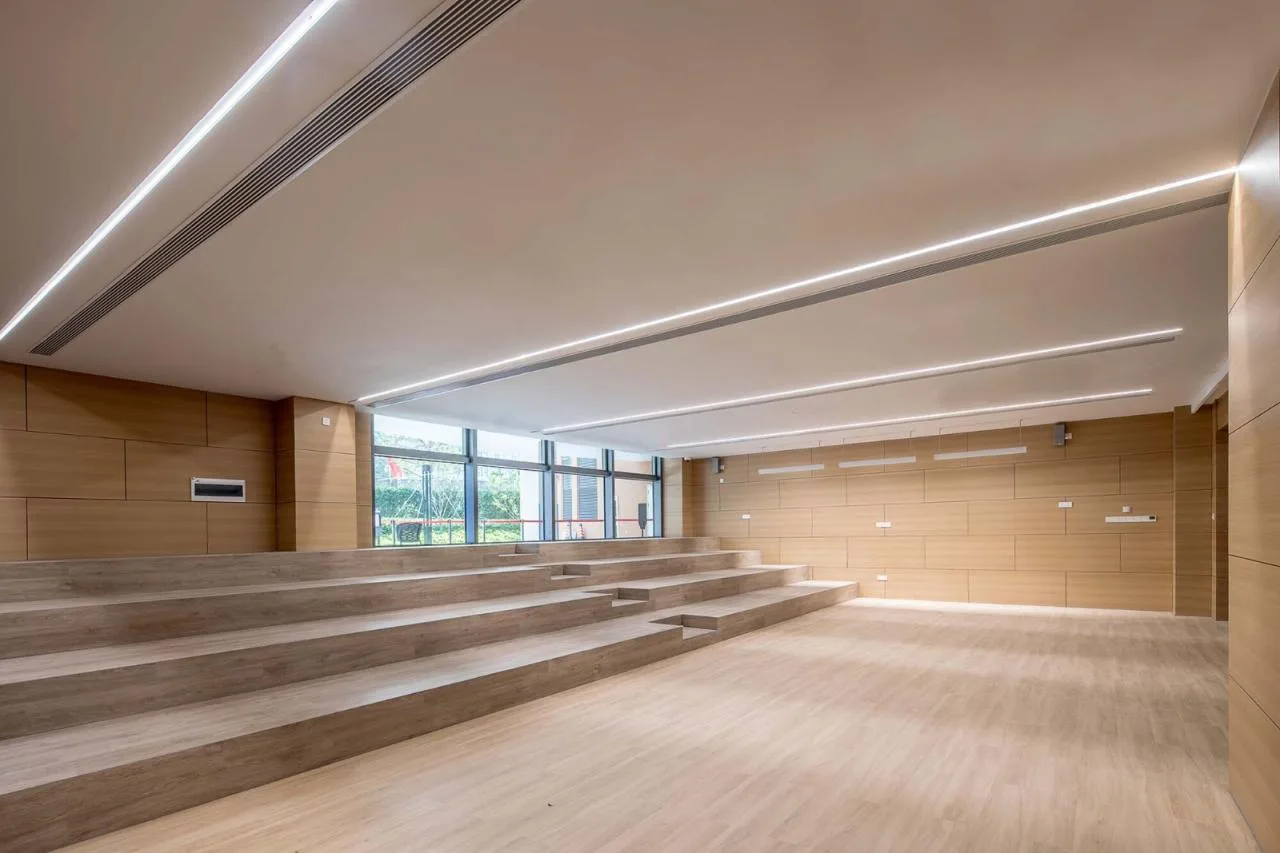
The campus features a clean, elegant architectural style with a Nordic-inspired palette of black, white, and gray. Accents of vibrant colors are strategically used in select areas, while uniform window sizes add rhythm and variation to the facade, reflecting a serious yet lively educational atmosphere. Interior spaces predominantly feature calm wood tones to foster a conducive learning environment. Bright colors are applied selectively—for example, blue decor on the lower ground floor and sheltered playground, vivid orange in sports areas, and fresh green on staircases. These color choices effectively define different public spaces, add visual interest, influence students’ moods, and support healthy adolescent development.
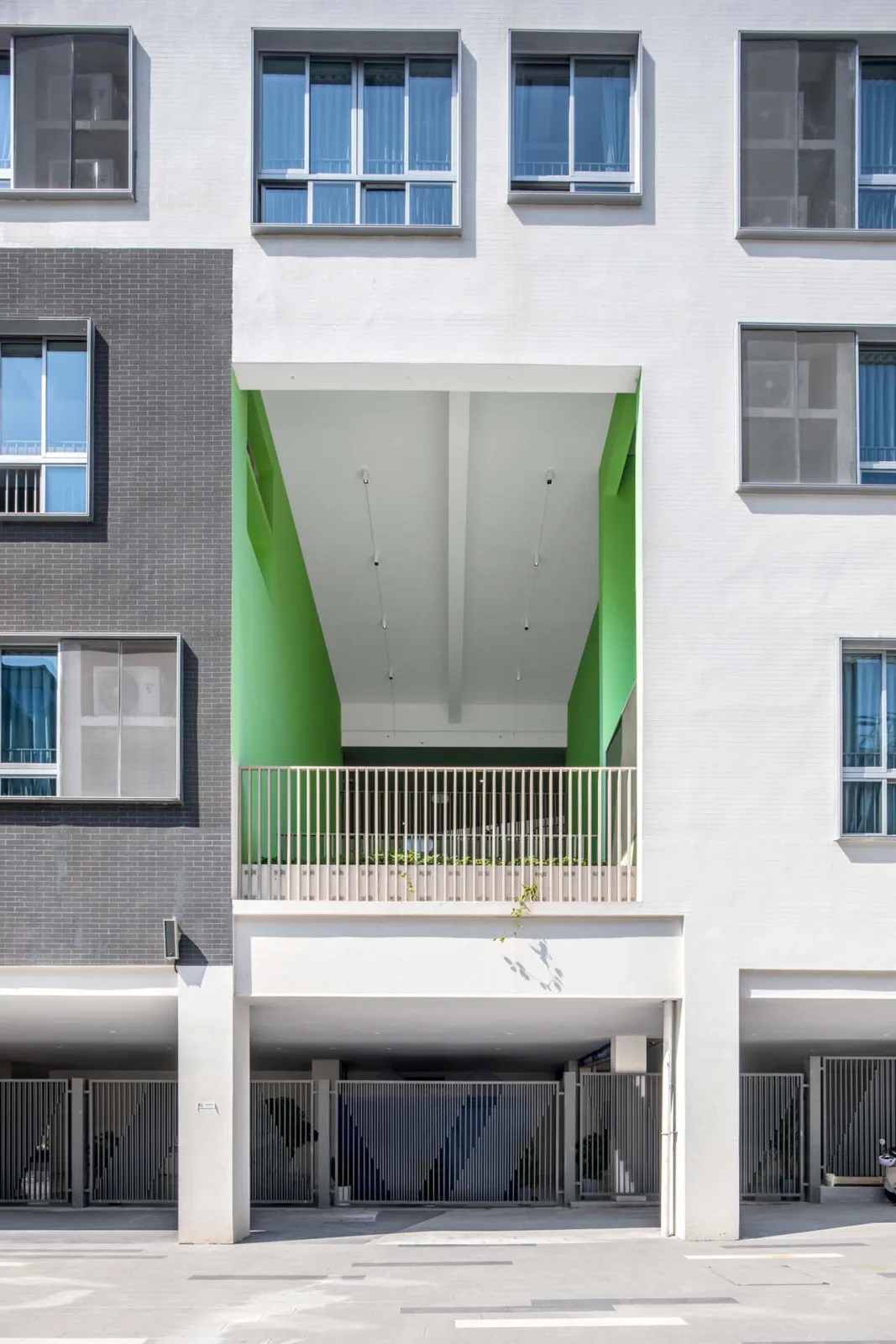
Conclusion: Modern urban campuses tend to be high-density and standardized, yet the vertical growth of educational buildings can disrupt students’ continuous spatial experience and the sense of campus community. This project addresses how to create engaging spatial relationships within a dense urban environment. It strives to provide vibrant and enjoyable outdoor spaces while fulfilling fundamental educational needs. As previously discussed with educators, learning extends beyond the classroom and is deeply connected to nature.
Project Drawings
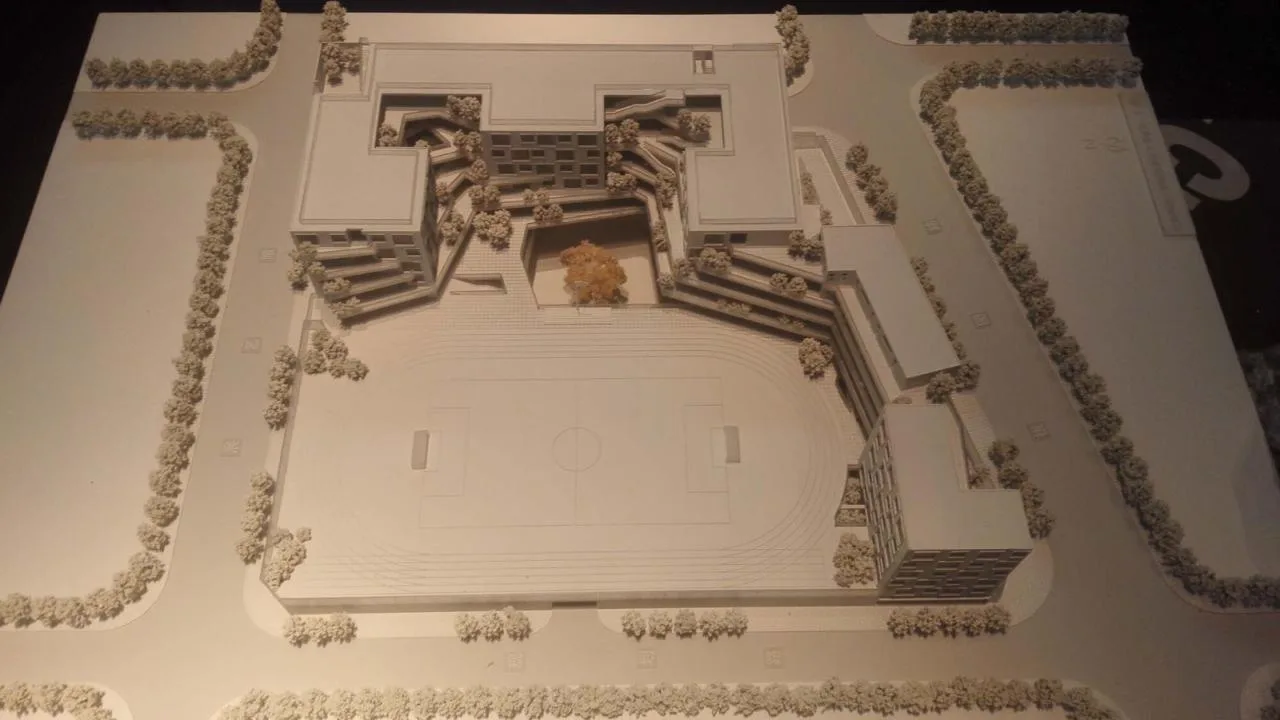
△ Model Diagram
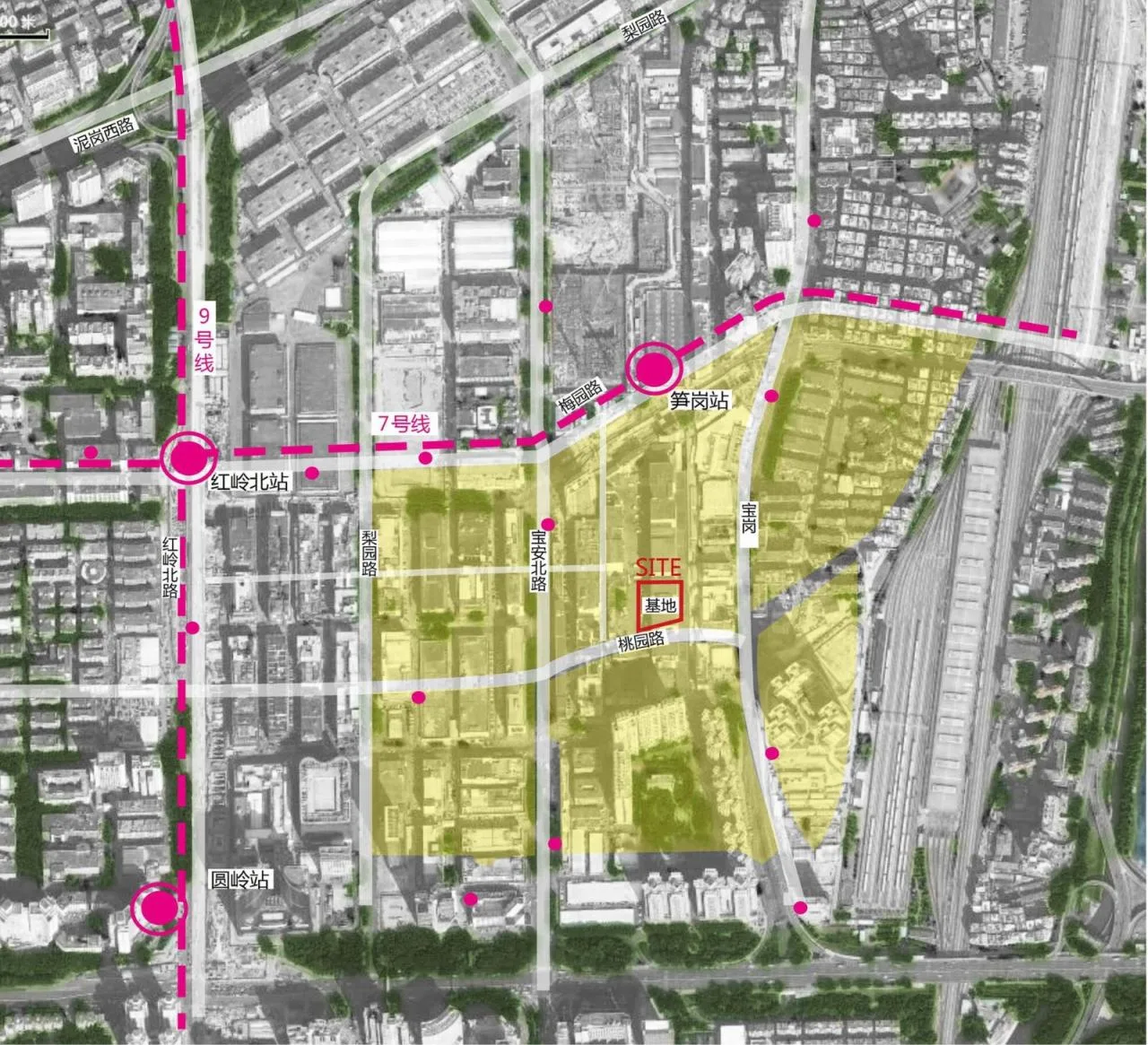
△ Base Schematic Diagram
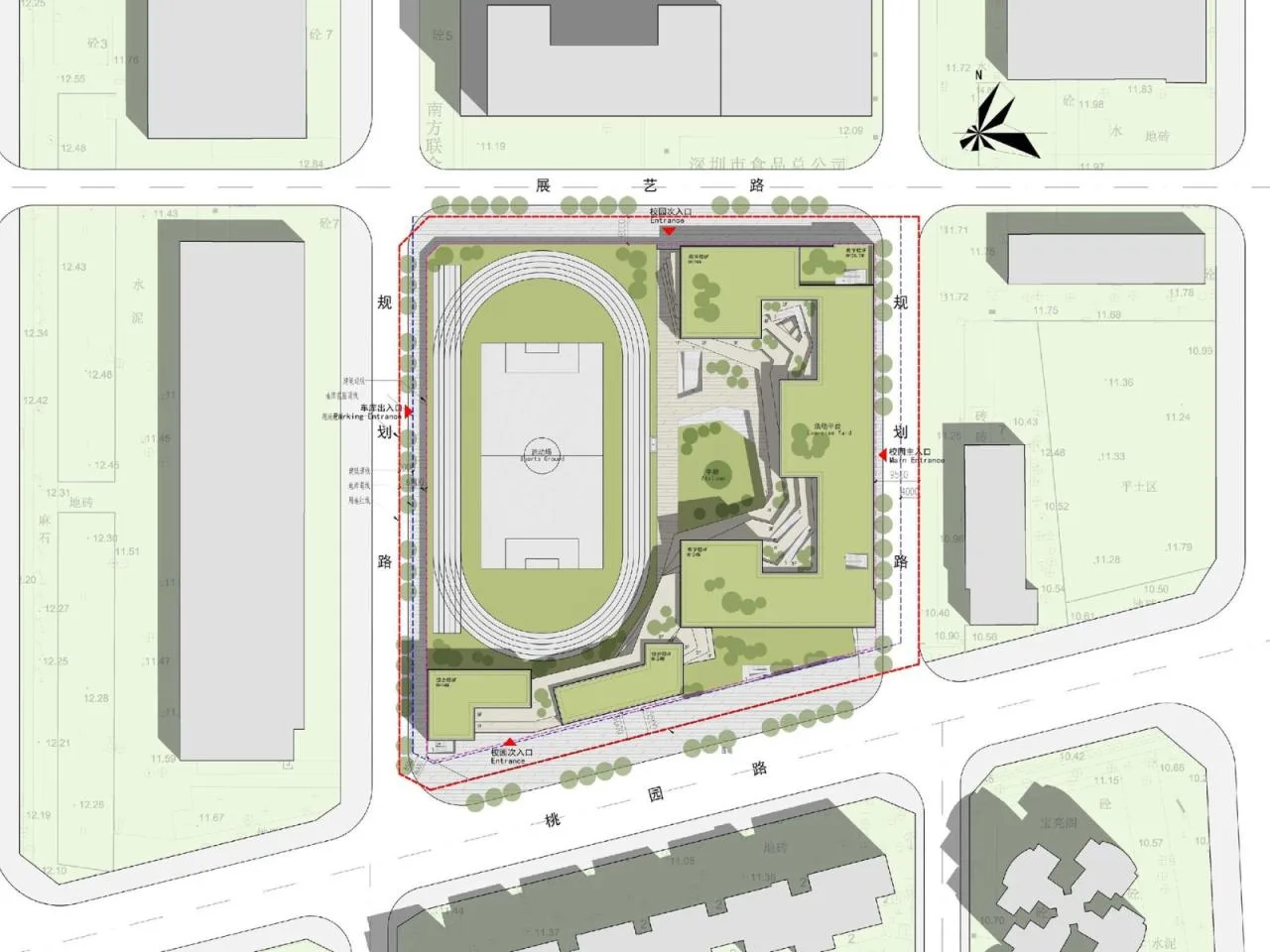
△ General Layout Plan
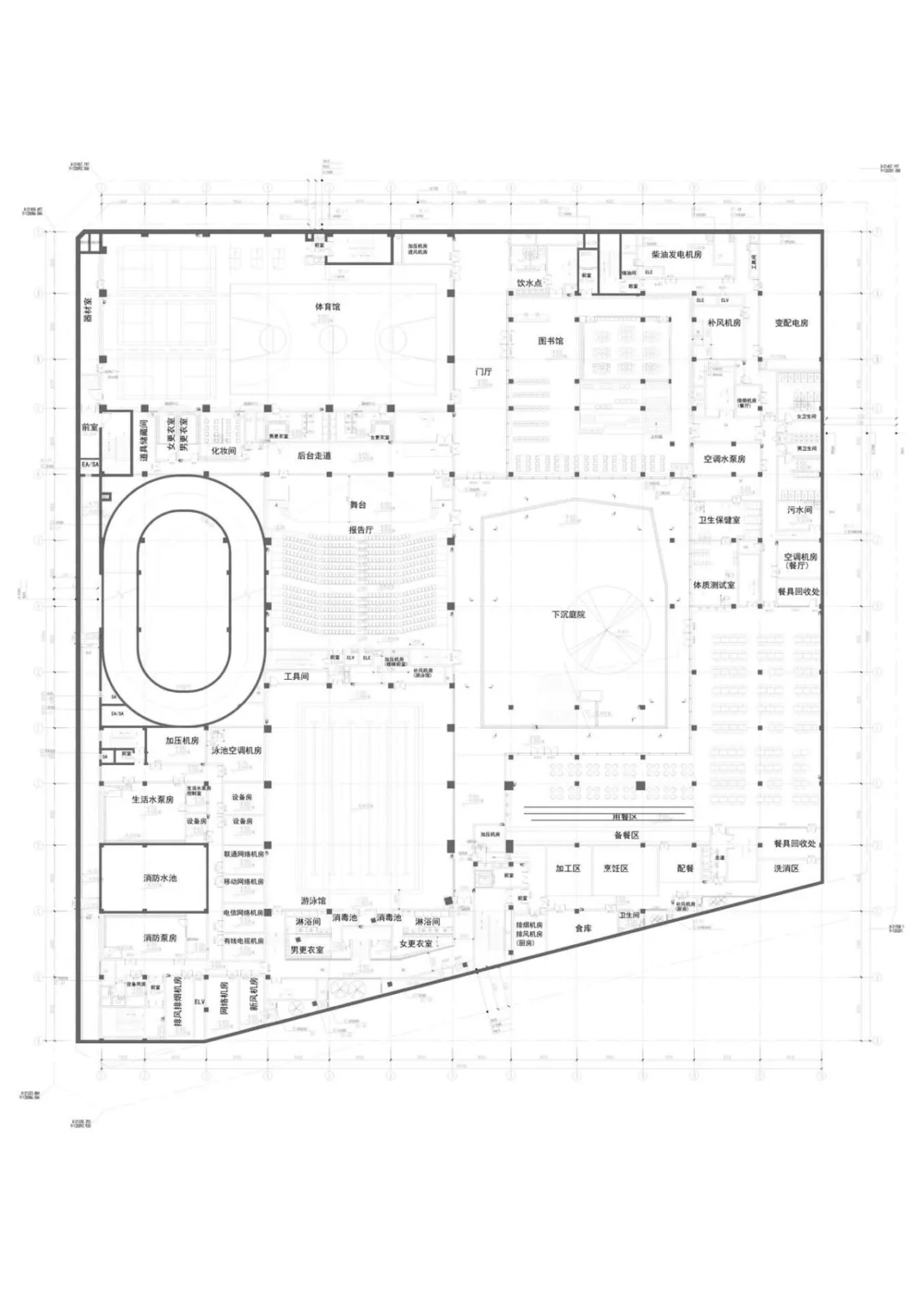
△ Basement Floor Plan
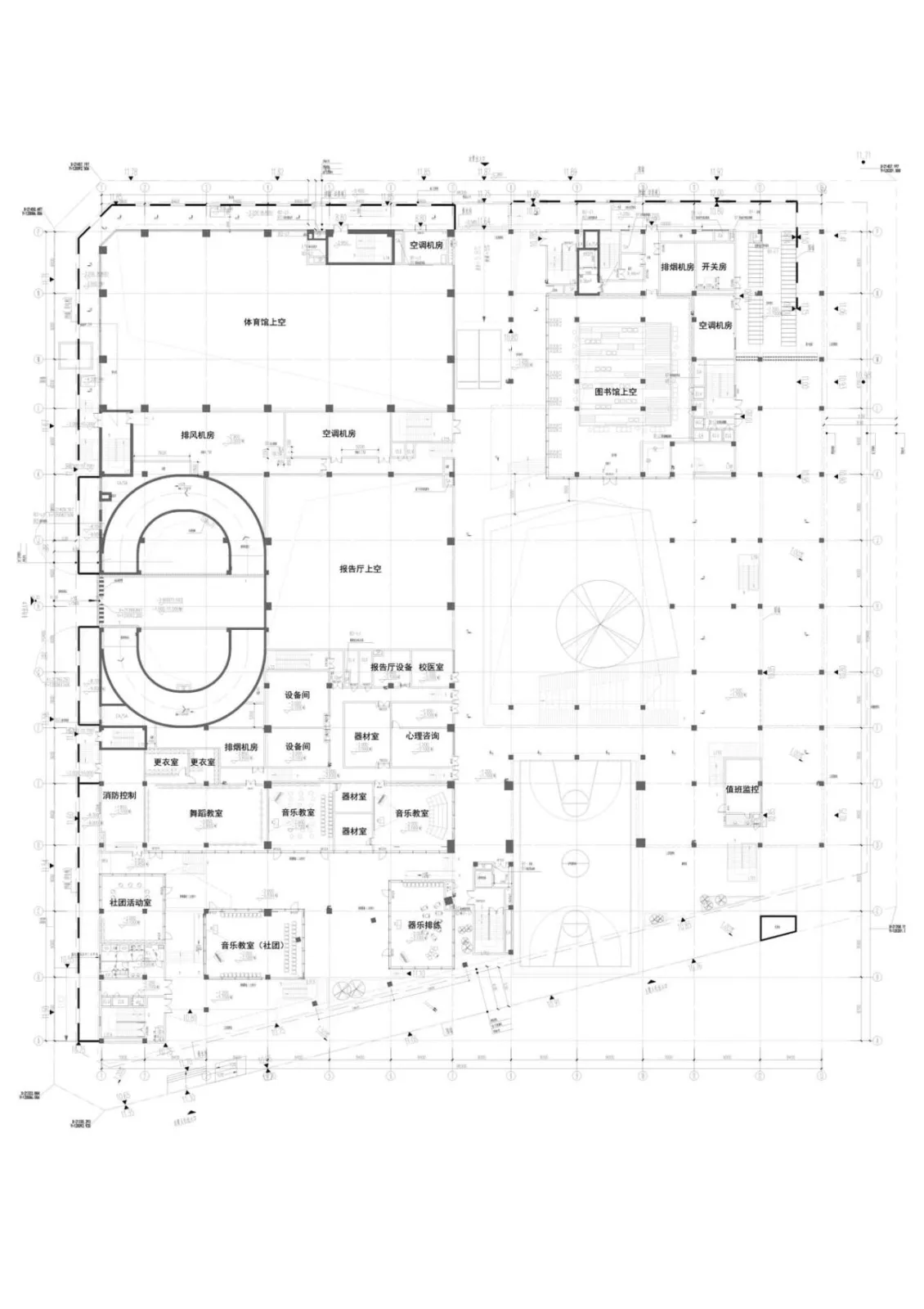
△ First Floor Plan
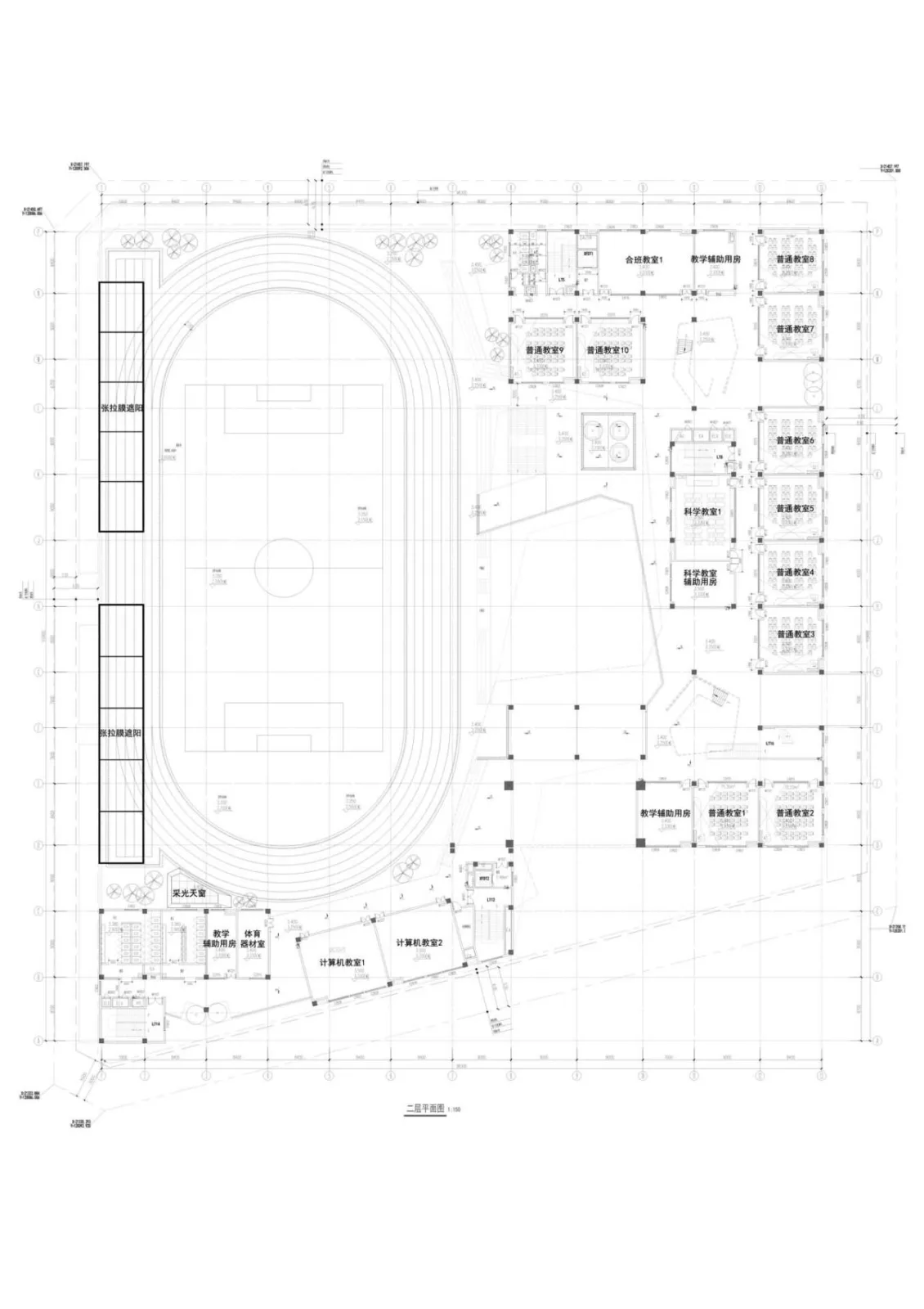
△ Second Floor Plan
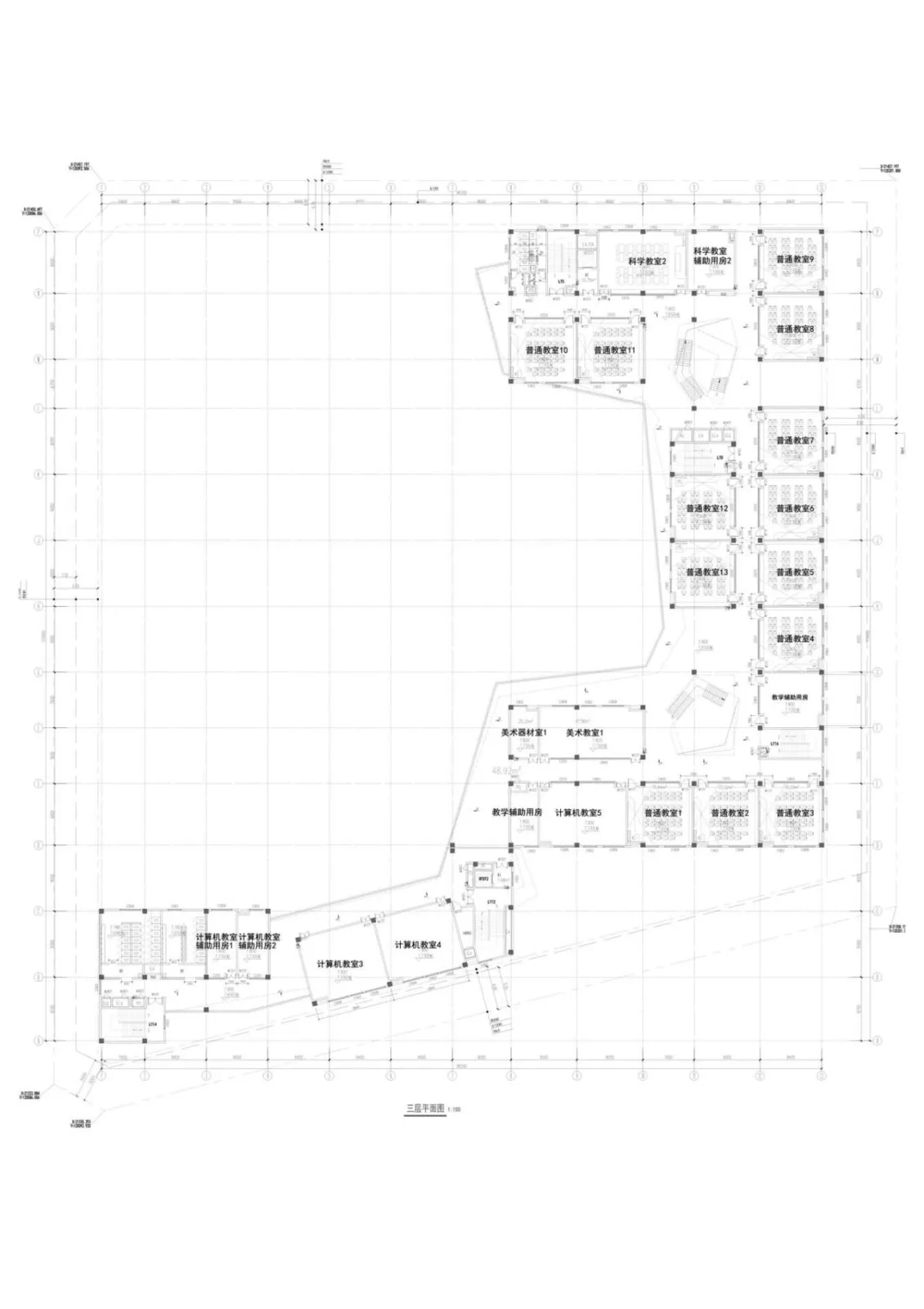
△ Third Floor Plan
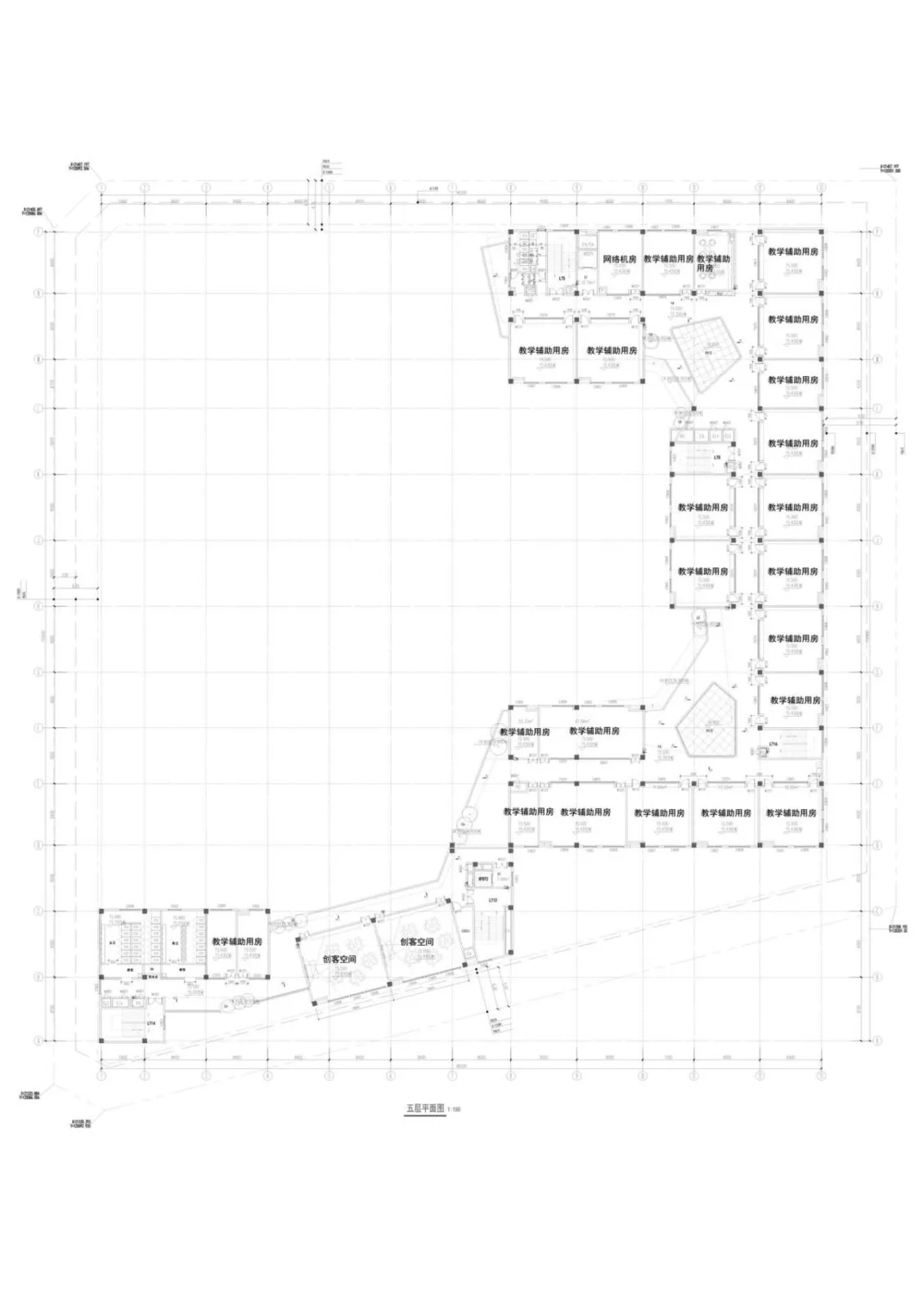
△ Fifth Floor Plan
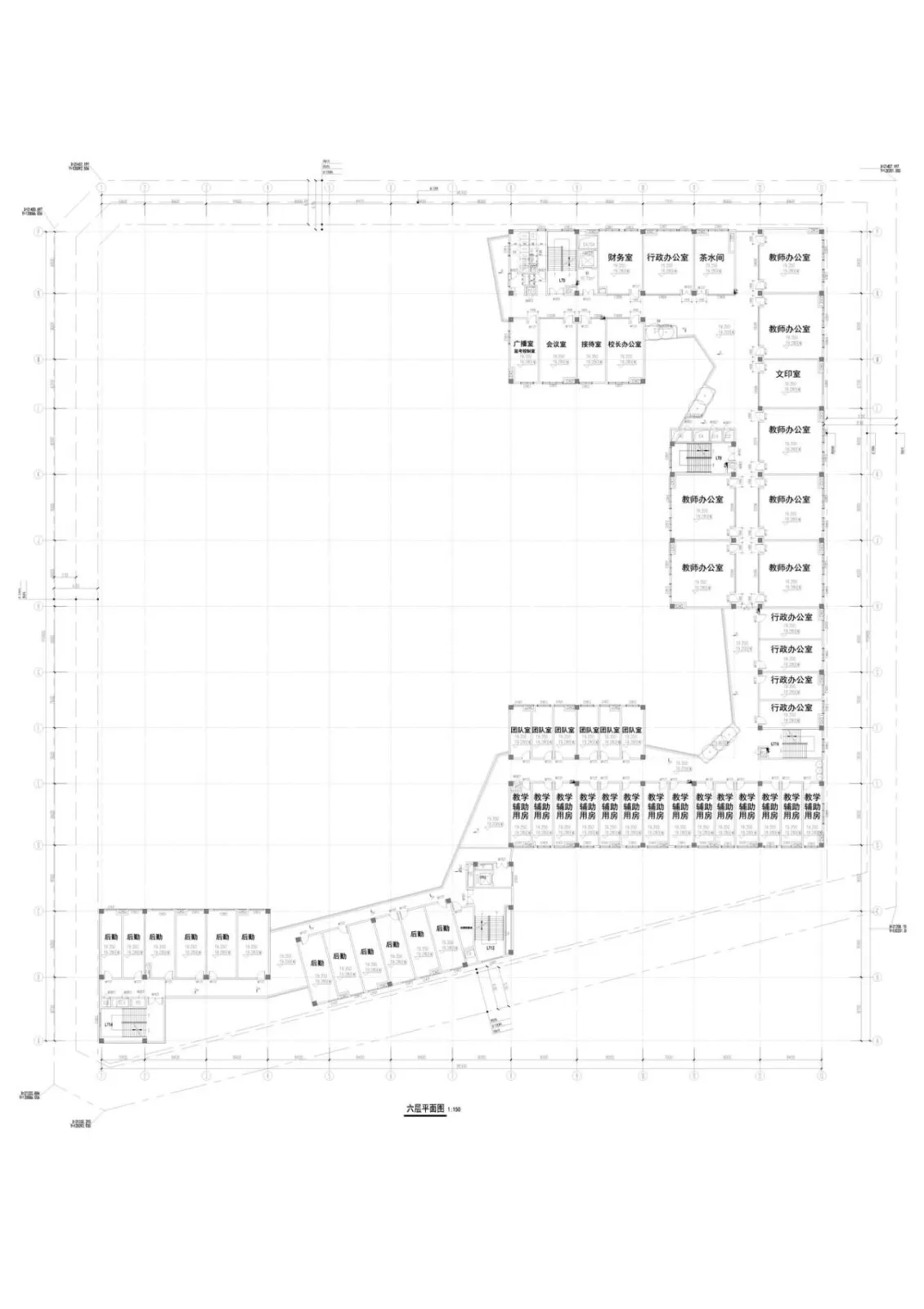
△ Sixth Floor Plan
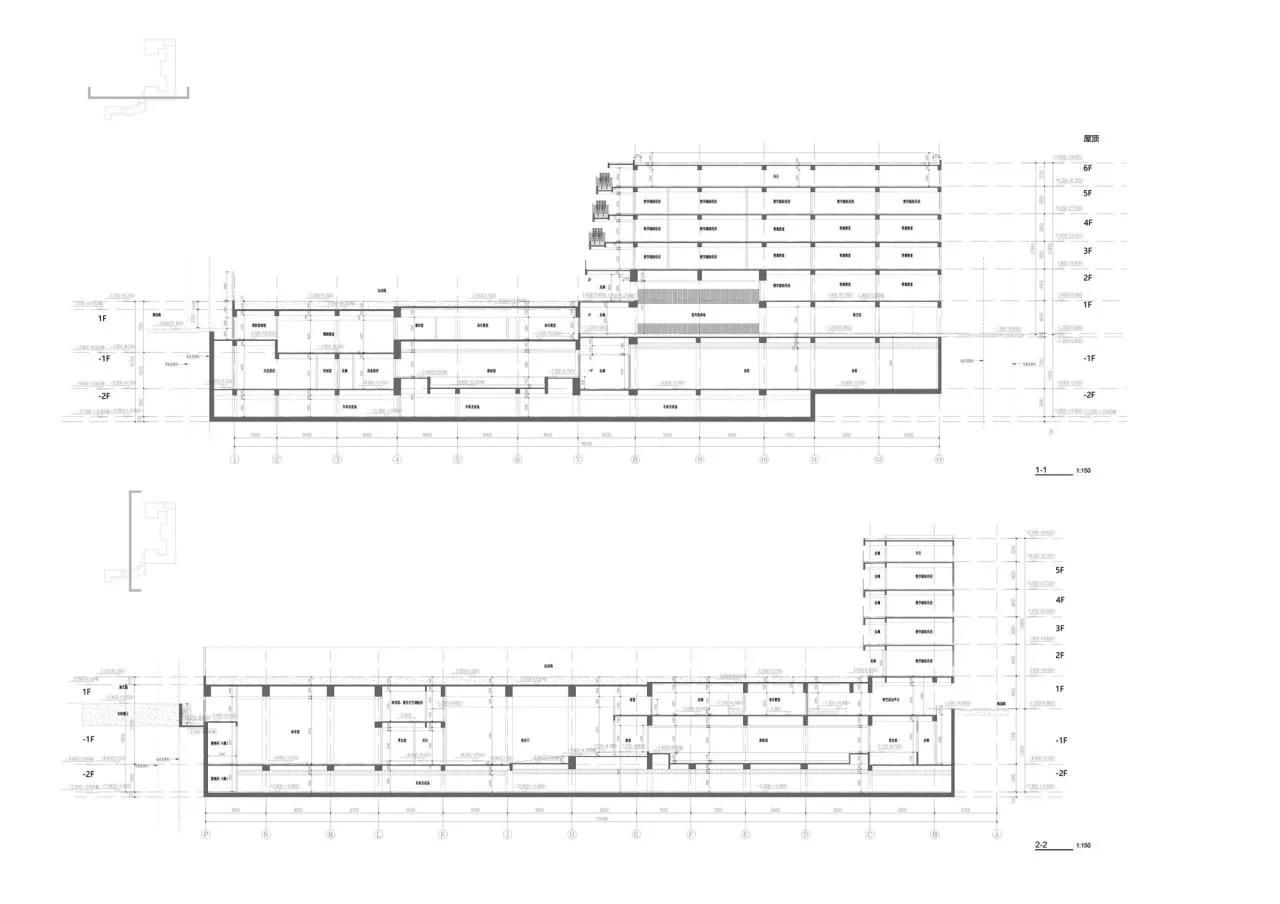
△ Section Diagram
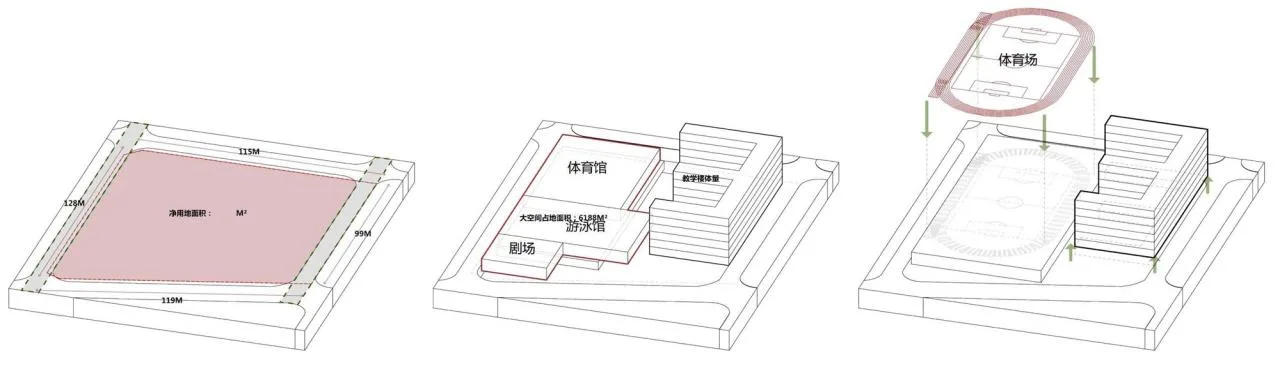
△ Analysis Chart
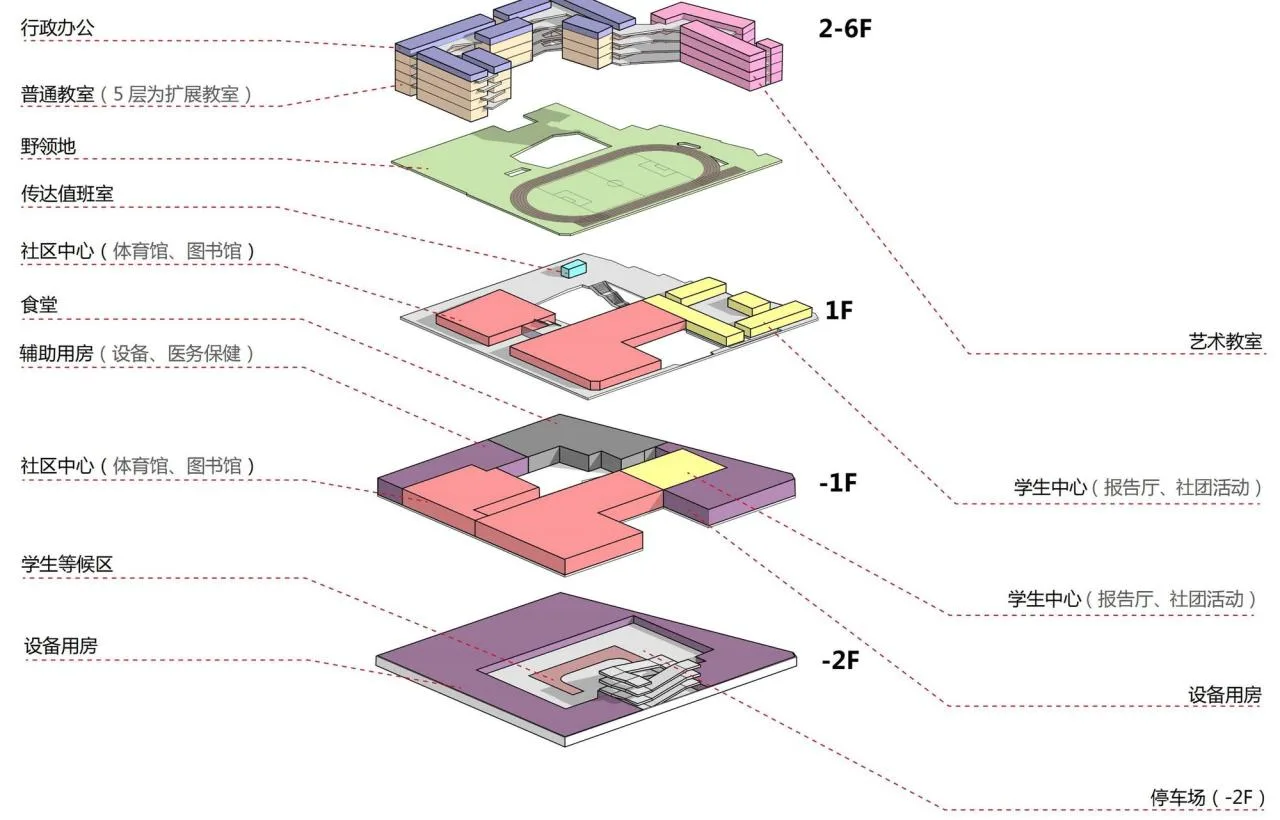
△ Functional Analysis Area
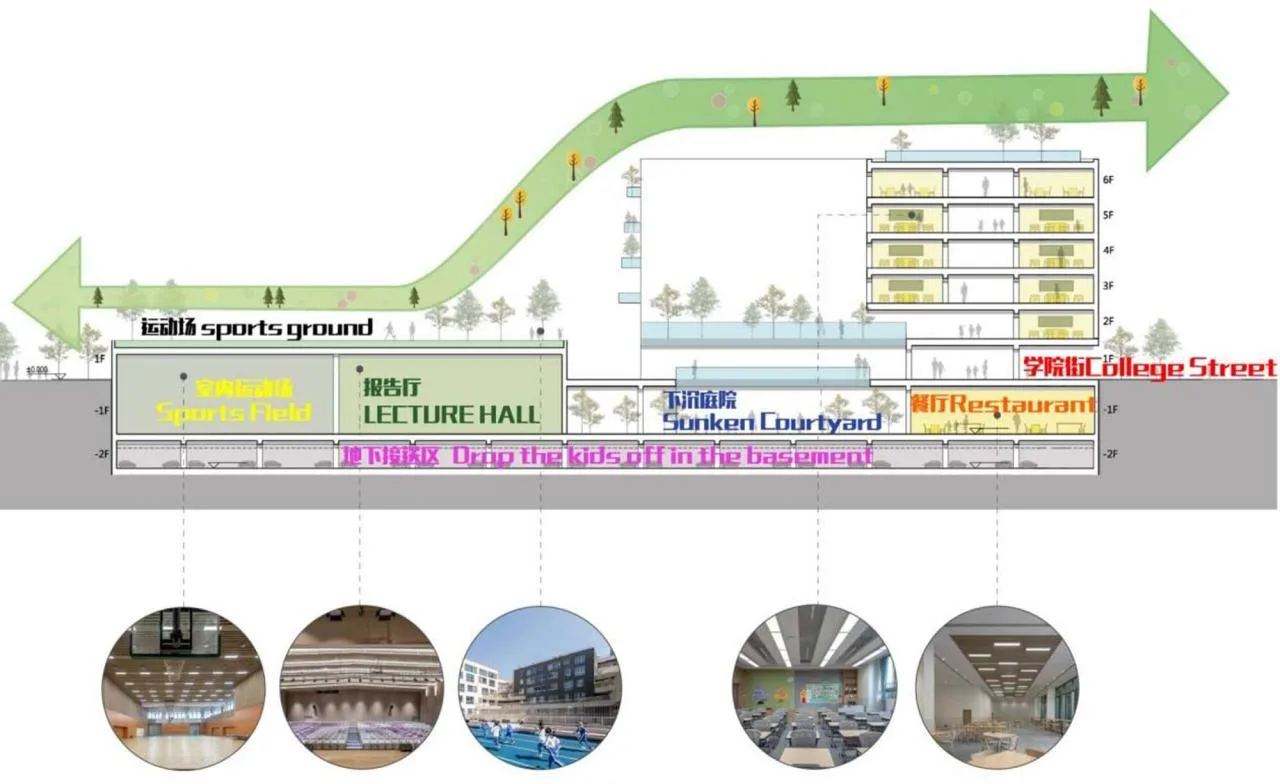
△ Analysis Chart
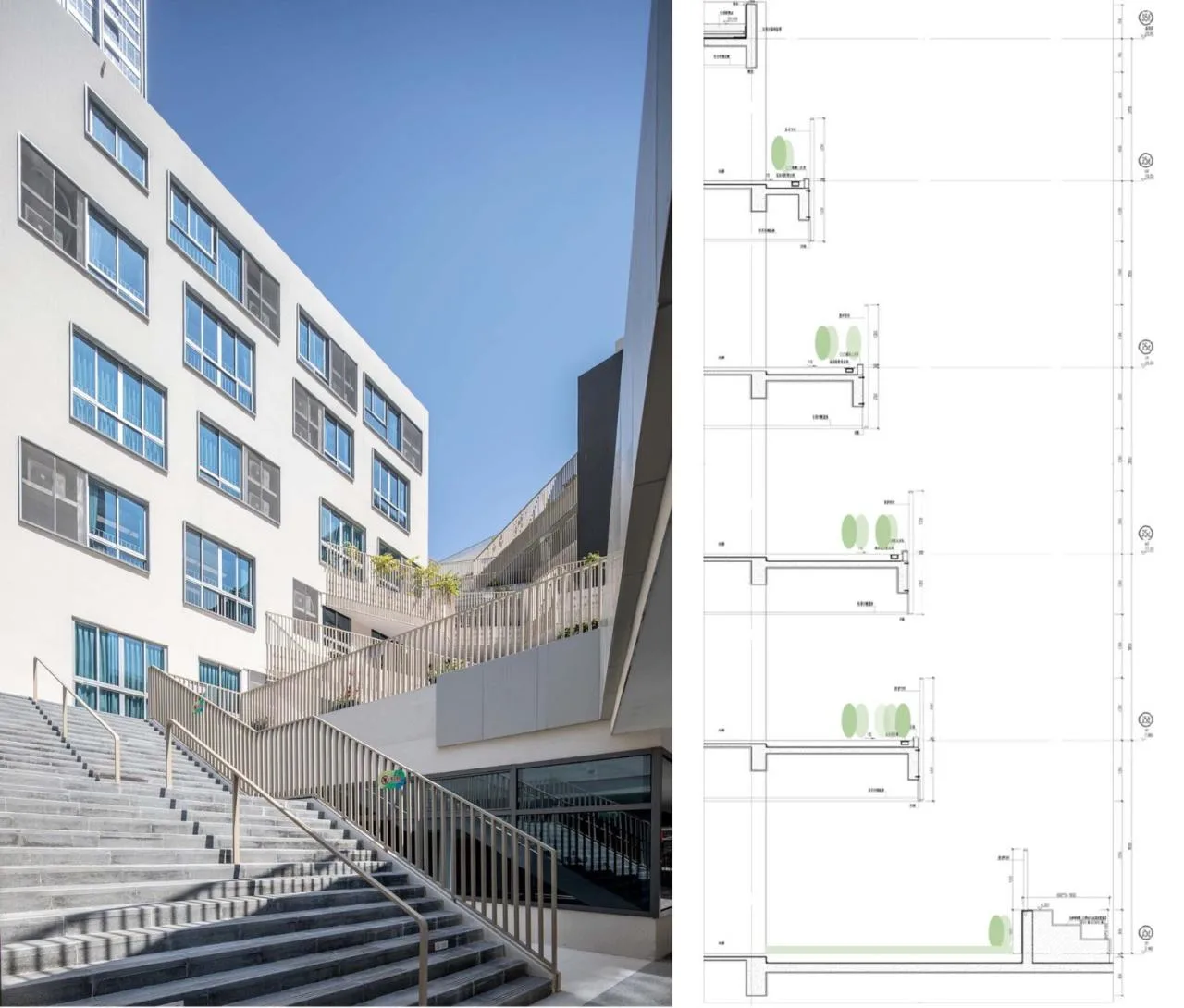
△ Detailed Drawing
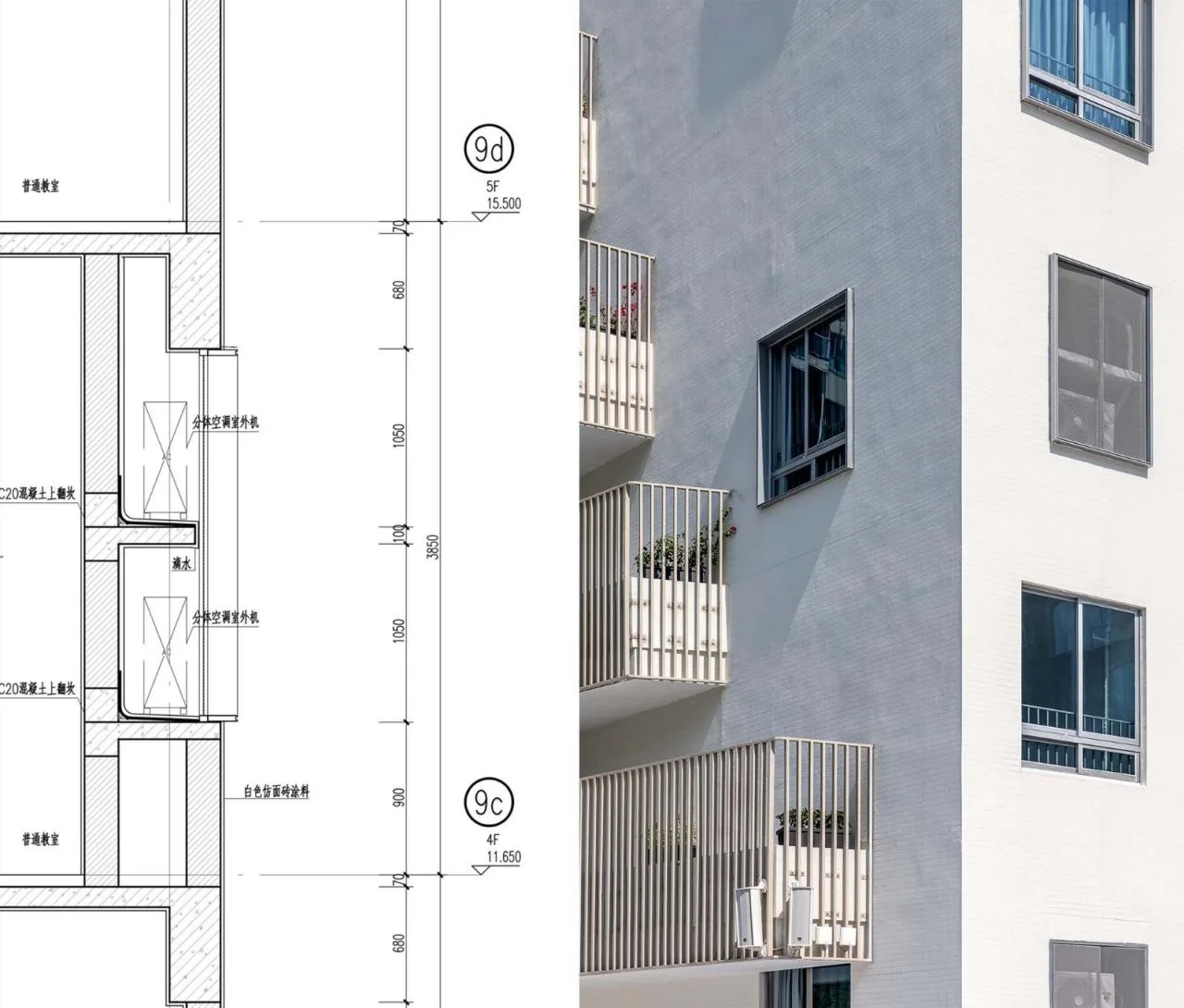
△ Detailed Drawing
Project Information
Architect: Cube Design
Area: 42,000 m²
Project Year: 2022
Photographer: Chen Junwei, Arhat Photography Studio, Shenzhen
Manufacturers: Guke Paint, Guangmei, Deliya
Lead Architect: Qiu Huikang
Design Team: Guo Jiangbo, Ji Guowei, Xie Feifei, Xie Cong, Kong Xiaoli, Zhao Xueqing, Zhang Hui
Interior Design: He Peng, Xiong Fen, Fu Yanan, Huang Lei, Wang Hua
Partner: Huayang International Design Group
Principal: Luohu District Education Bureau, Taoyuan Primary School
Location: Shenzhen












Must log in before commenting!
Sign Up