
Hangzhou High-Tech Zone (Binjiang) is actively fostering high-tech industries and strategic emerging sectors, aiming to become a vibrant “Silicon Valley paradise.” As the most dynamic and innovative area in Hangzhou, the project is situated in the central plot of this zone. From the outset, we asked ourselves: What kind of heritage and innovation should a primary school at the heart of technology and future international integration embody?
Our goal is to let children freely express their nature and truly become the creators of their campus.
△ Project video © Li Yi
Engaging with the City: Reflecting and Responding to the Venue Environment
The influx of talent into the high-tech zone has significantly increased the demand for high-quality educational resources. Meanwhile, every inch of land in this rapidly growing central area must be utilized efficiently.
To mitigate the negative effects of dense residential and bustling commercial surroundings, the sports field, gymnasium, and cafeteria are positioned on the site’s perimeter. This placement buffers external disturbances and facilitates shared use with neighboring communities.
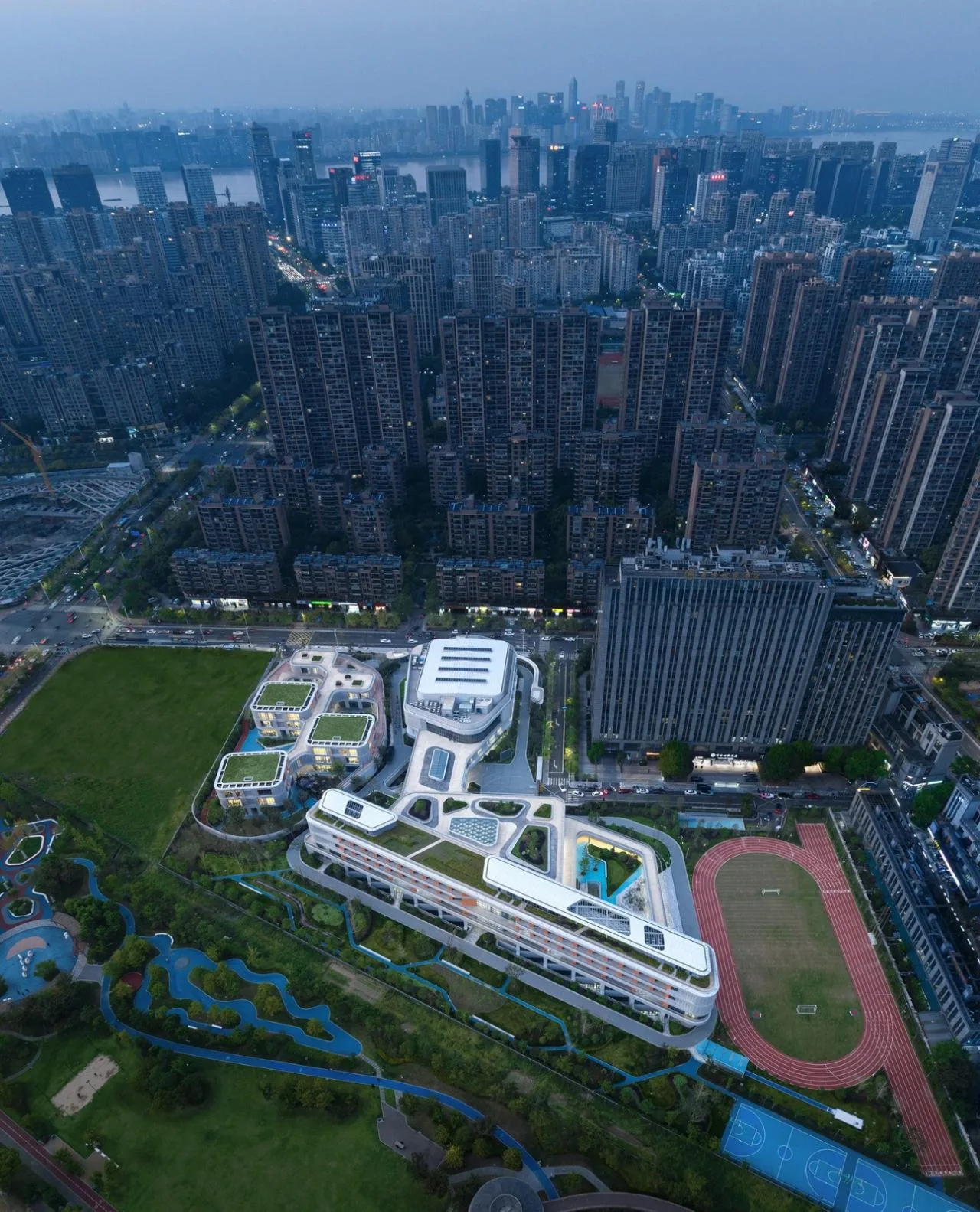
The campus is surrounded by high-rise buildings © Li Yi
To the south, the Beitang River landscape belt offers beautiful scenery with open and tranquil spaces. We designed the classrooms to face this picturesque view, arranging them in a straight line from north to south with a zigzag pattern to create natural self-shading. Interlayer sunshade panels soften direct sunlight, enhancing comfort inside.
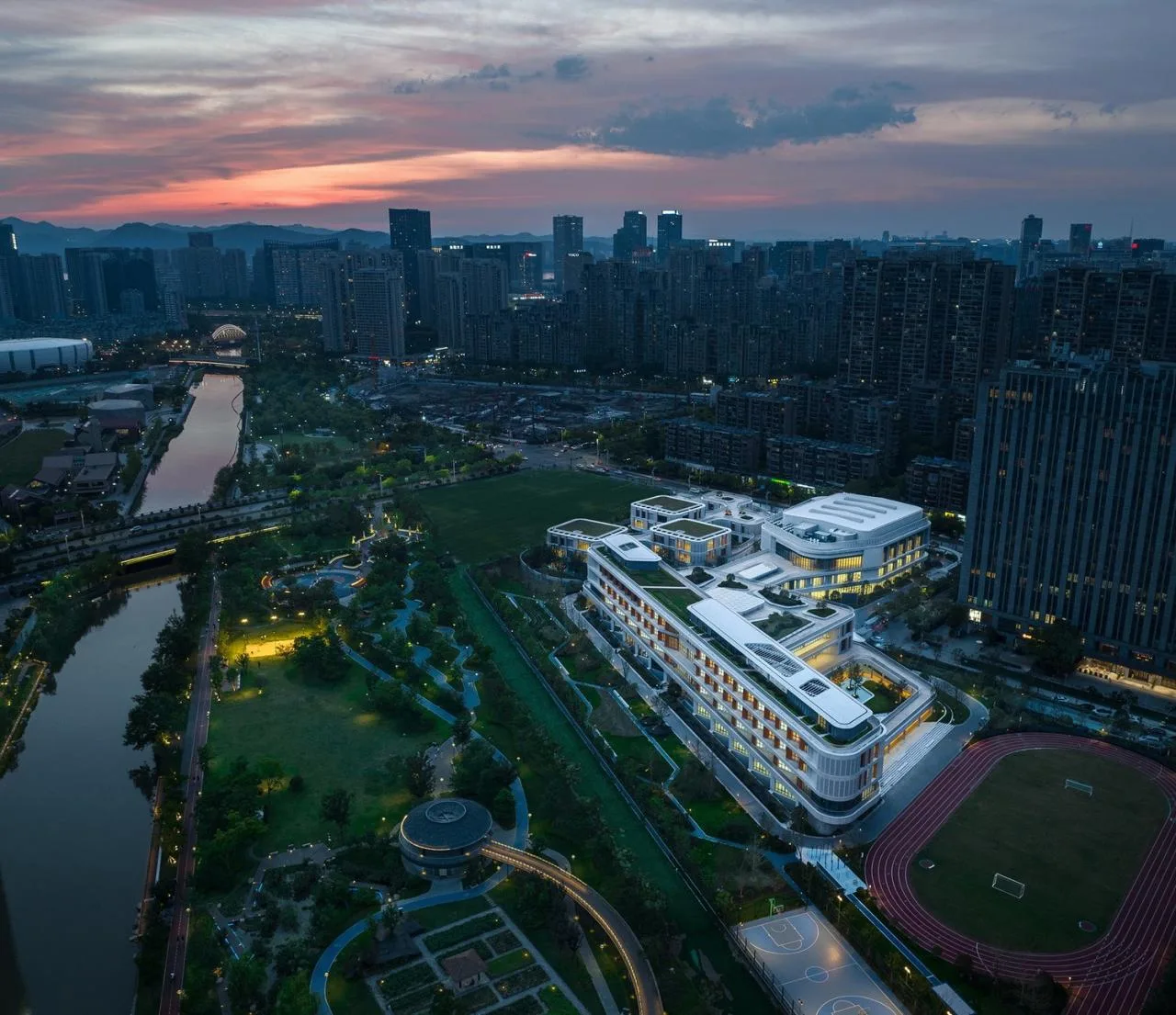
Southern campus landscape views © Li Yi
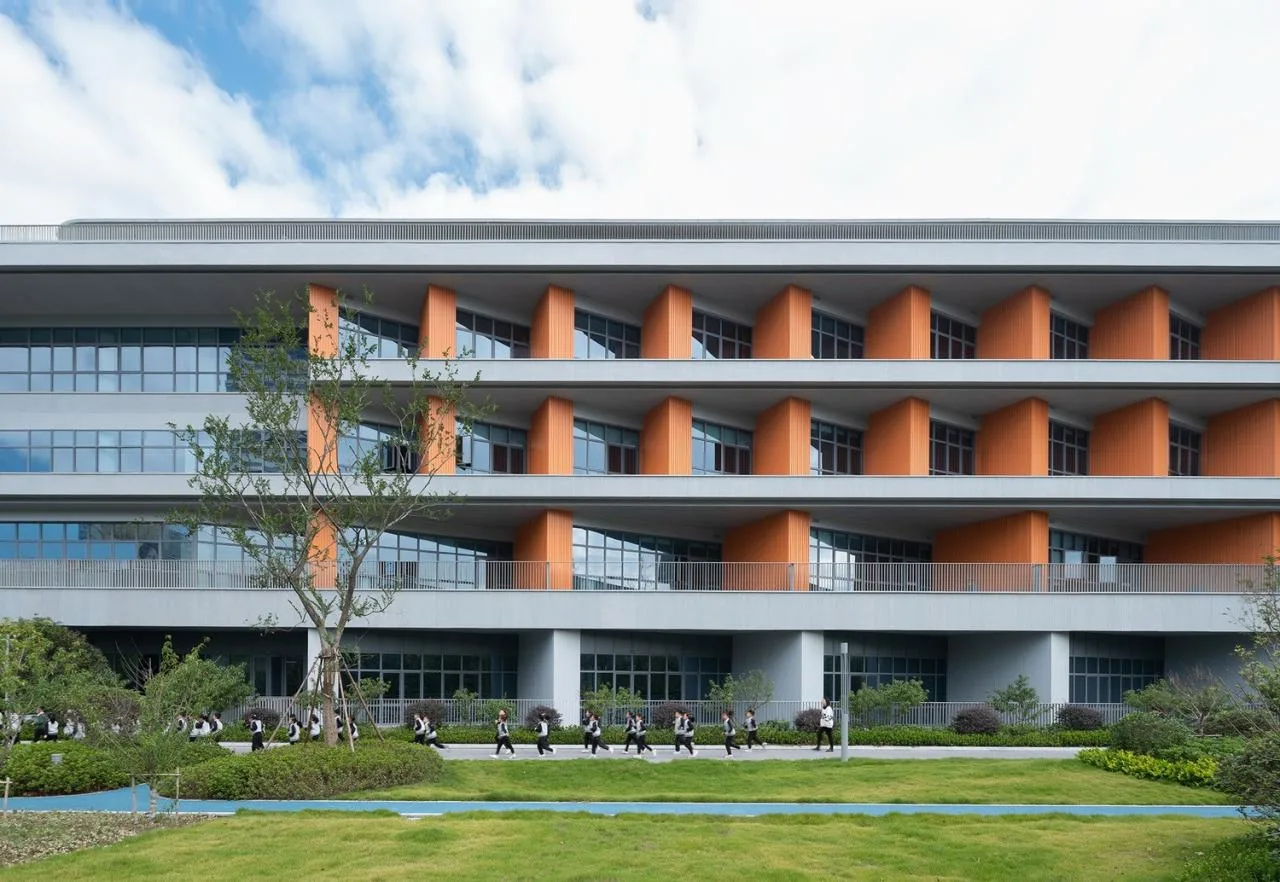
The primary school overlooks the city park on the south side, offering diverse forms and views © Li Yi
Professional classrooms and academic exchange spaces of various sizes are centralized around the atrium, creating a seamless connection between north and south while maximizing green open spaces.
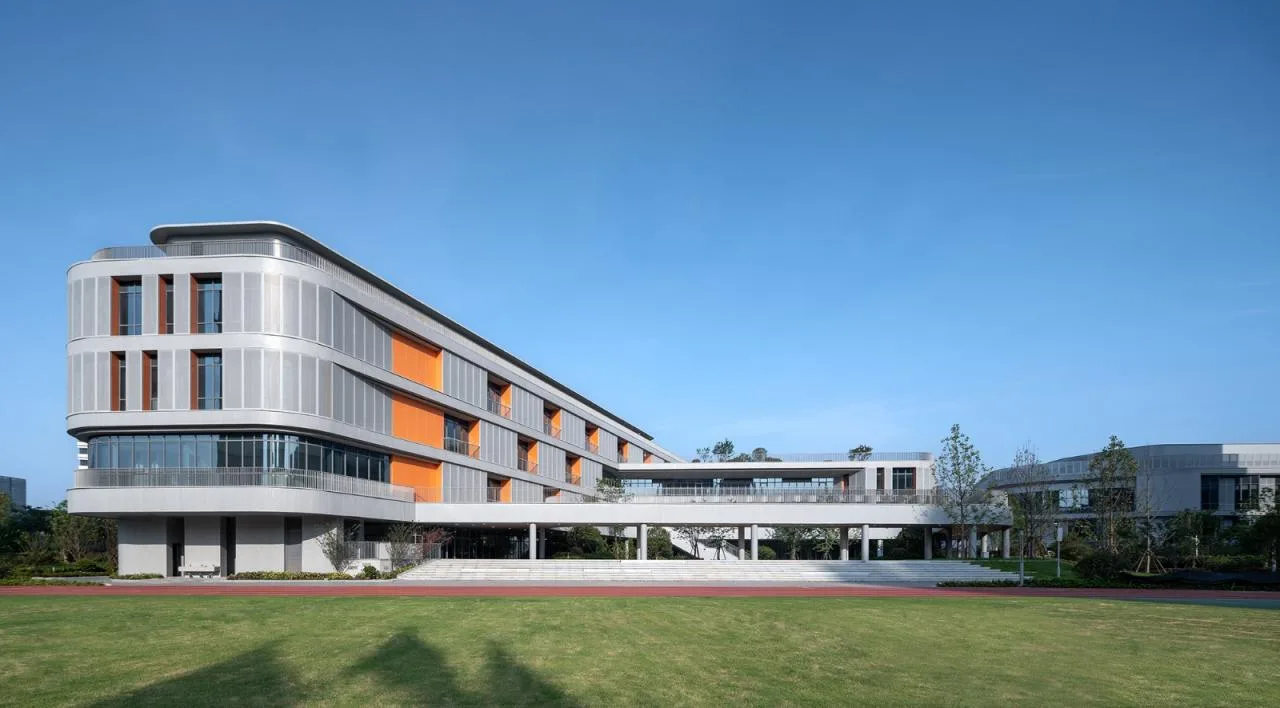
△ Relationship between the side forms of primary school sports fields © Li Yi
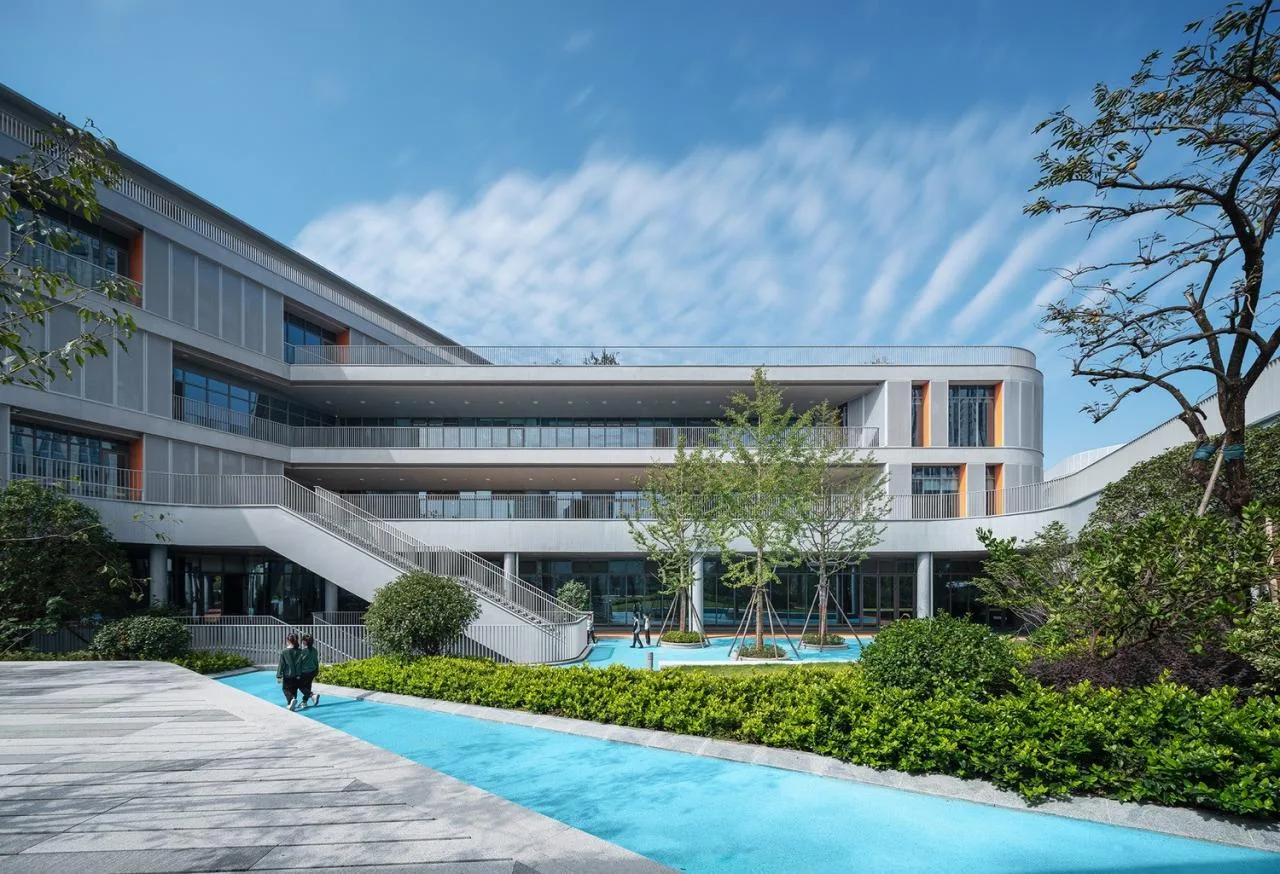
△ Primary School Sports Garden © Li Yi
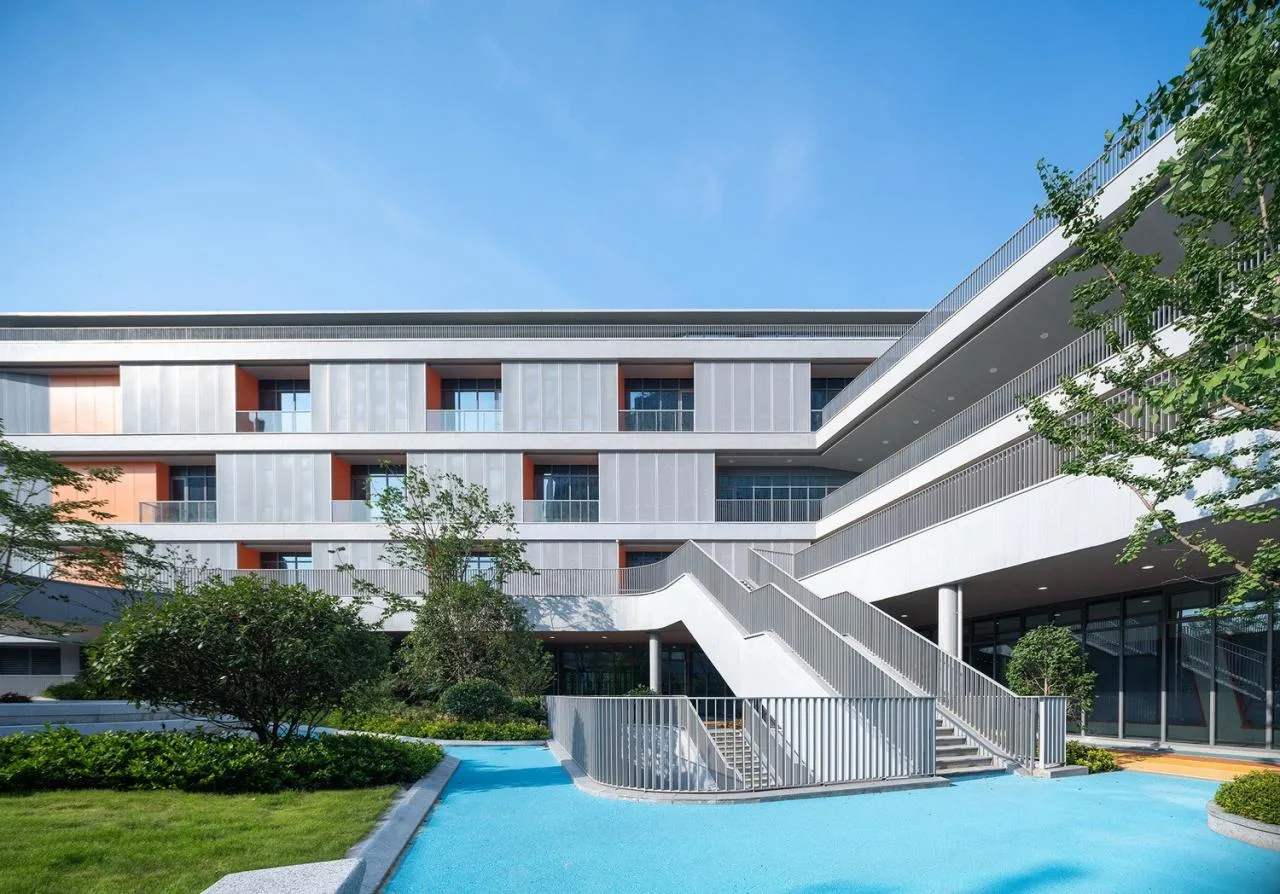
△ Diverse physical activity areas within the primary school © Li Yi
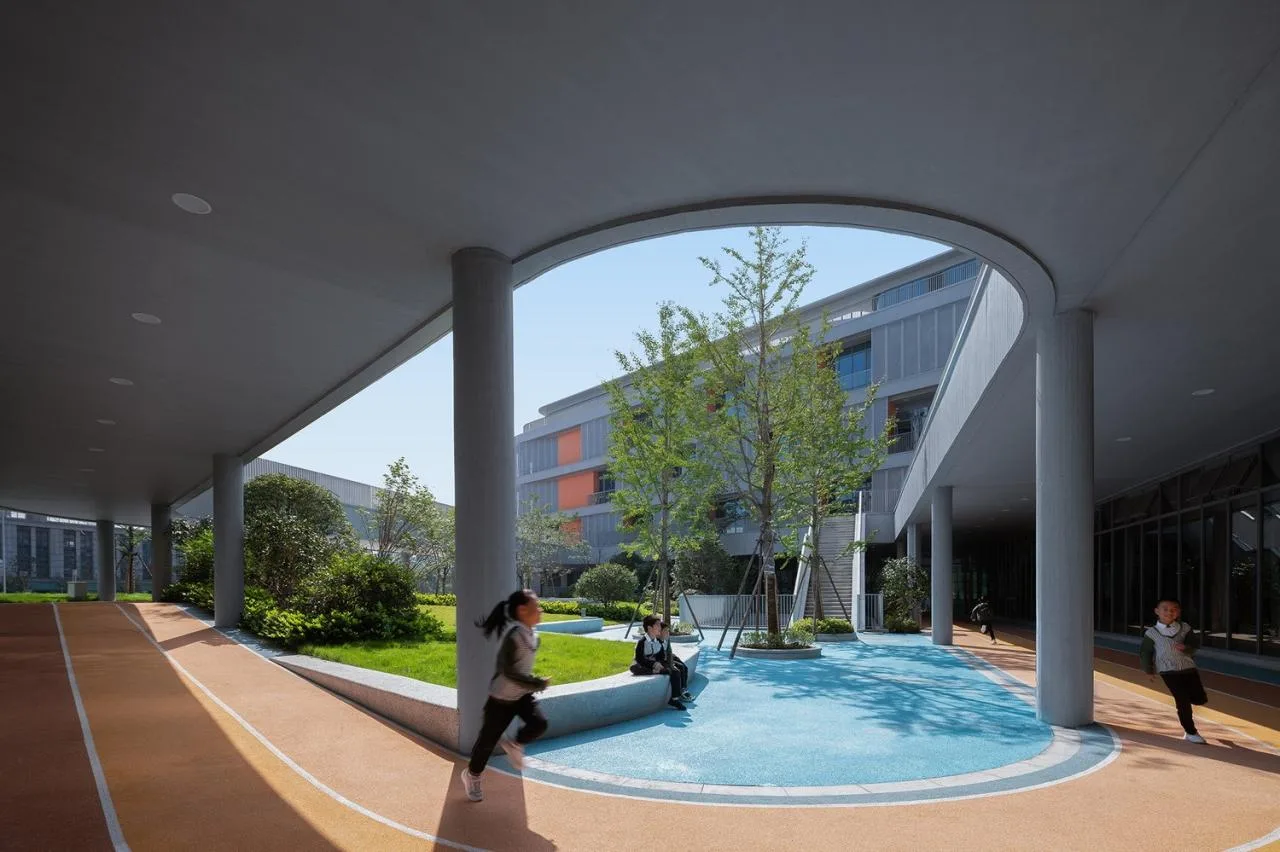
△ Elevated wind and rain track in the primary school © Li Yi
To address transportation challenges, we implemented above-ground harbor-style buffer zones and underground shuttle routes for vehicles. The campus walls are designed not as mere boundaries but as multifunctional spaces providing shaded outdoor areas where parents can relax and find shelter from the sun or rain.
Engaging with the Campus: A Three-Dimensional Creative Learning Community
Every classroom is conceived as a “home,” creating a container for the class community. This fosters a sense of belonging, eventually forming a “class neighborhood” among classrooms. We encourage sharing and friendly interaction between classes, inspiring children to confidently take the first step in social communication.
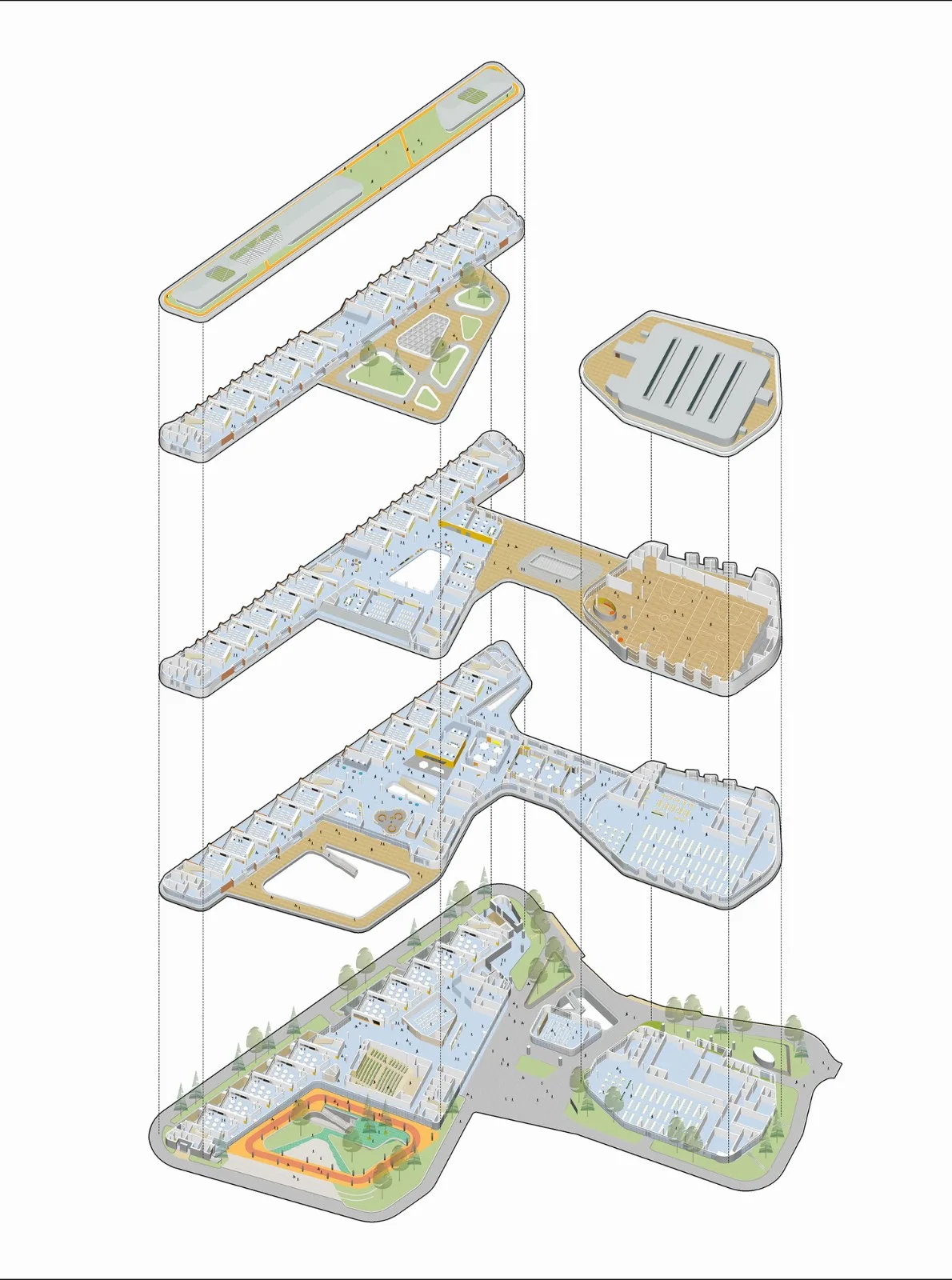
△ Exploded axis measurement © Zhejiang University Architectural Design and Research Institute
The personalized tutoring area within each classroom serves as an exclusive extension of the class collective. The entrance acts as a transitional space linking the class neighborhood, offering psychological comfort. Here, students can confidently express themselves and develop social awareness. Informal learning spaces and balconies on the north side are shared by students of the same age group, collectively forming the “class neighborhood” within the learning community.
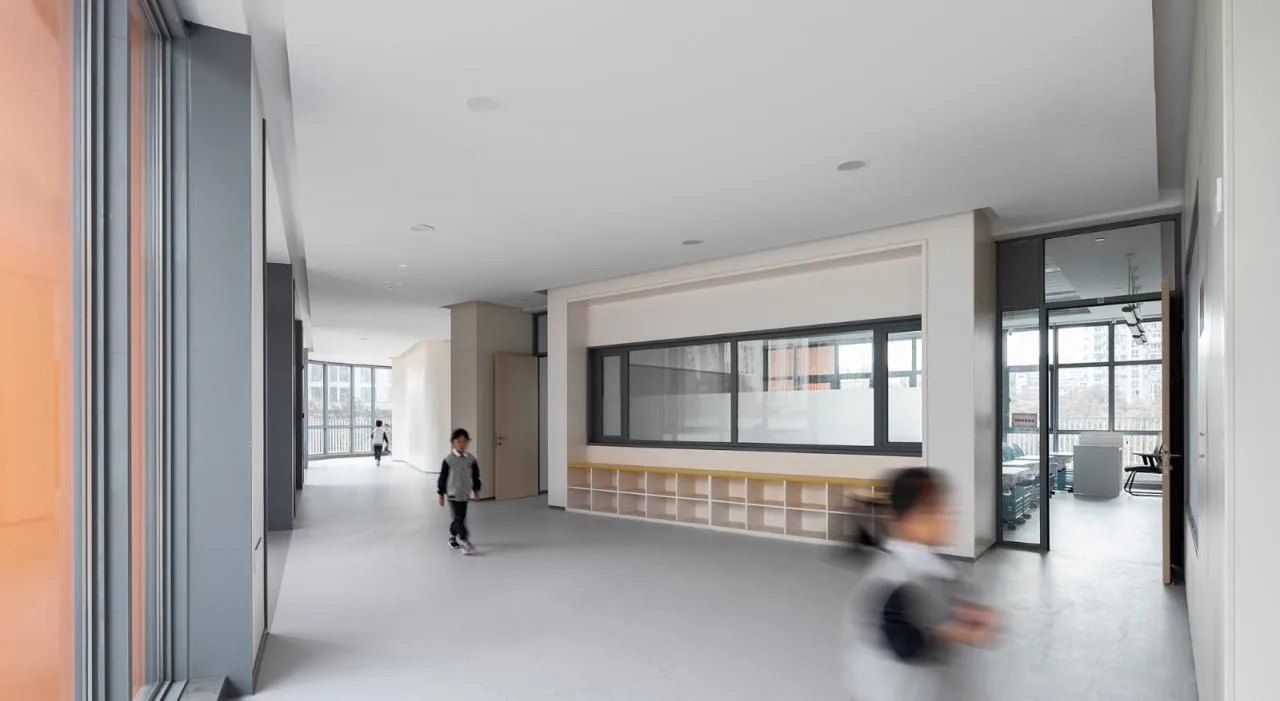
△ Foyer space in front of the classroom © Li Yi
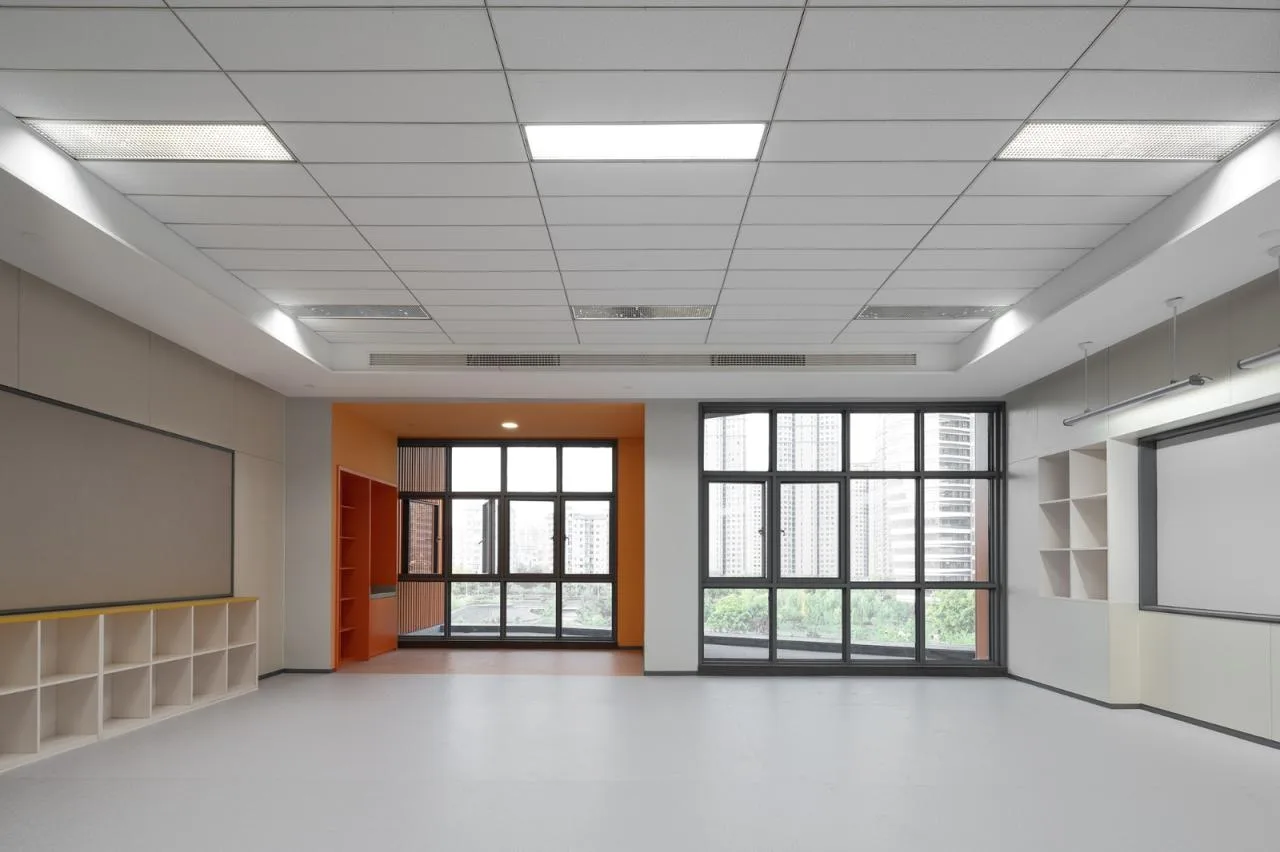
△ Classroom with south-facing panoramic view © Li Yi
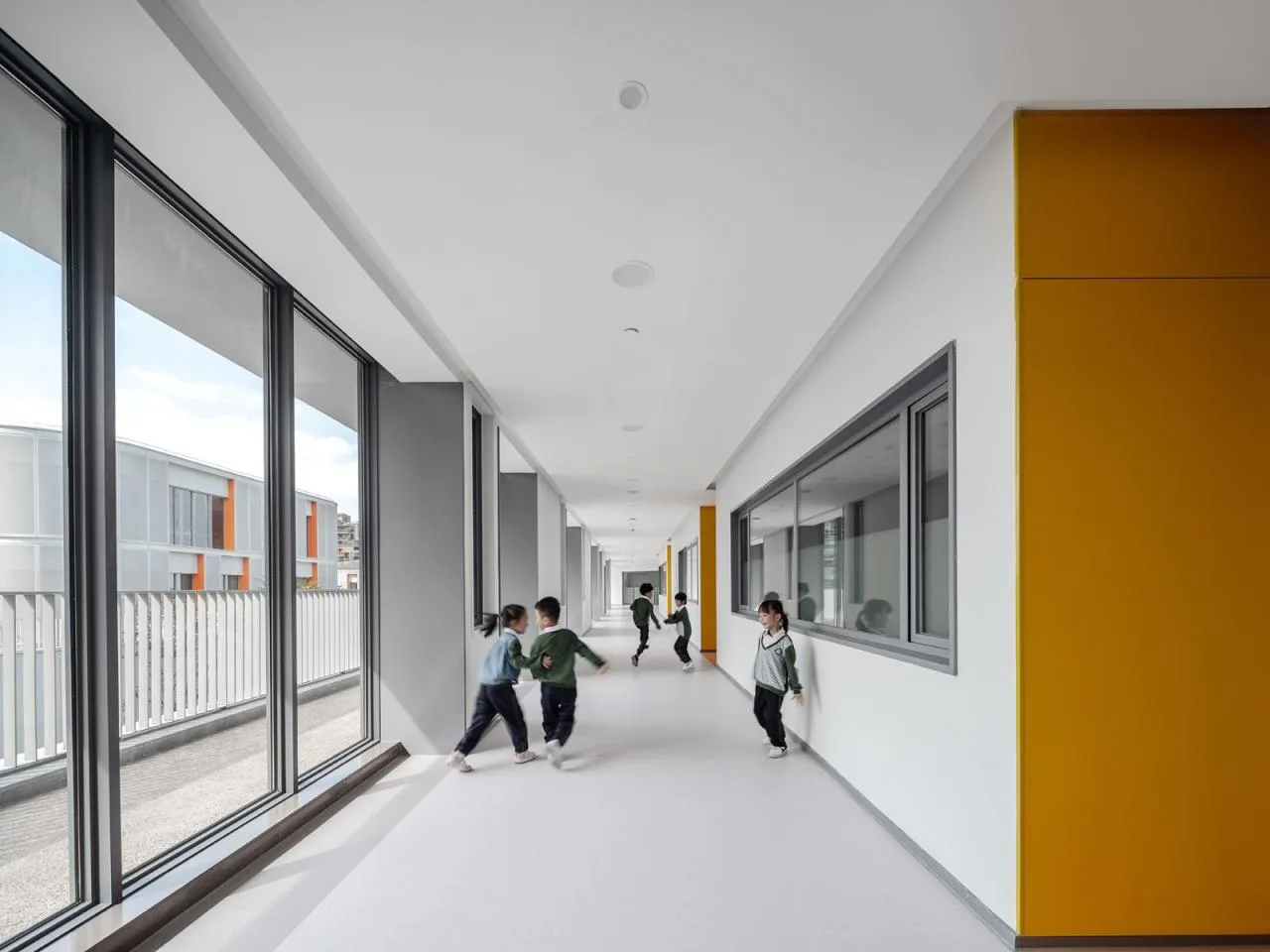
△ Public corridor in the teaching area © Li Yi
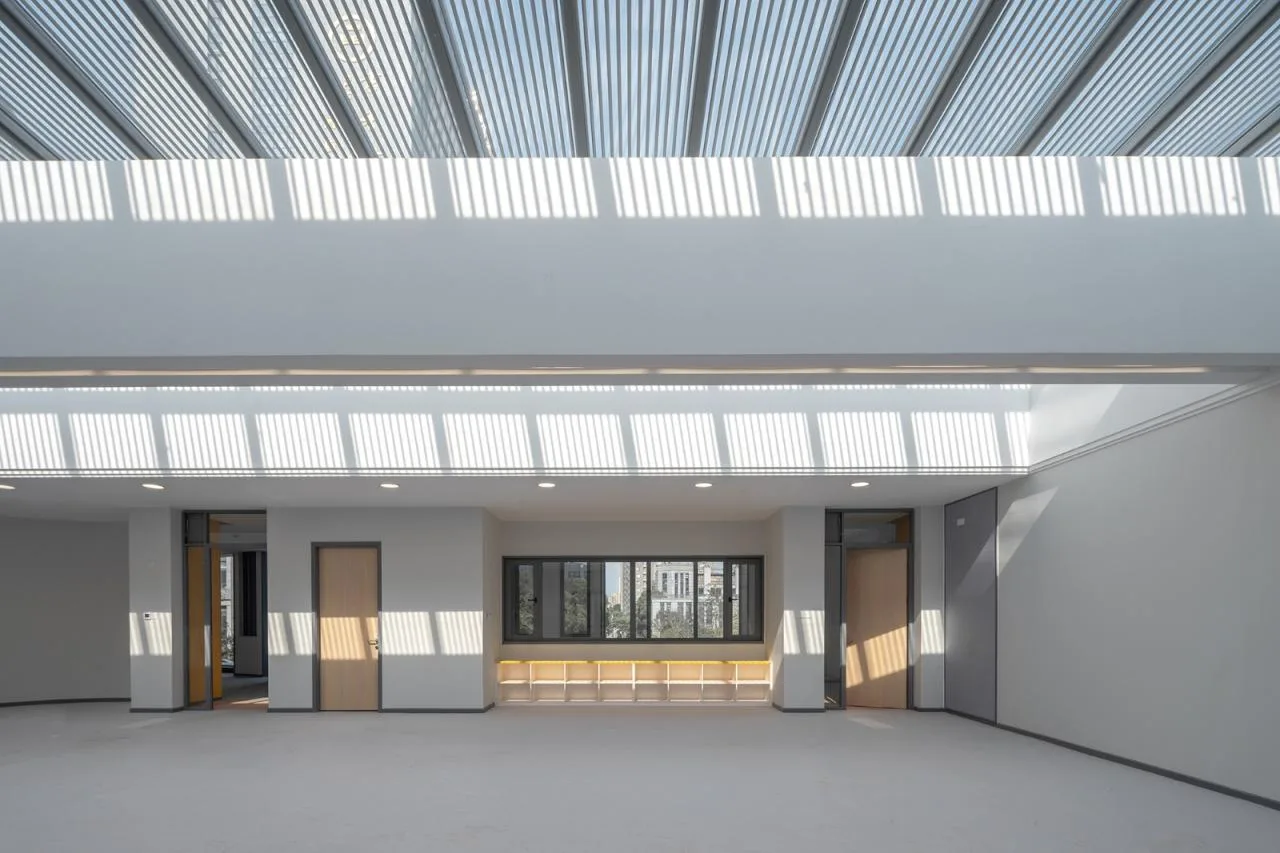
△ Skylight activity room © Li Yi
The school’s shared spaces encircle the atrium within the teaching complex, enabling the creation of immersive themed museums tailored to different educational plans. These spaces combine themed exhibitions, interactive experiences, project-based learning, and open teaching areas, fostering the three-dimensional creative learning community envisioned.
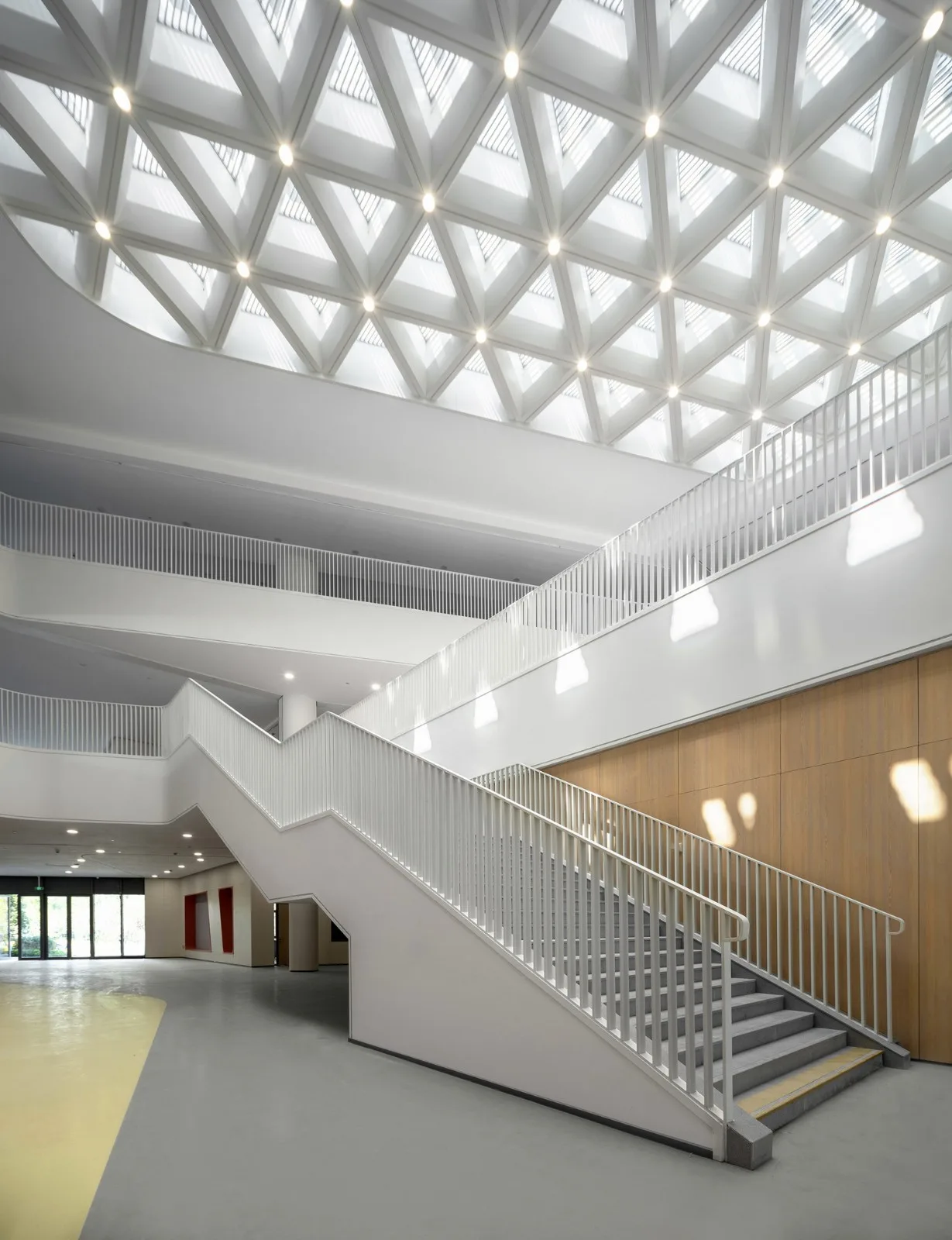
△ Flowing atrium shared space © Li Yi
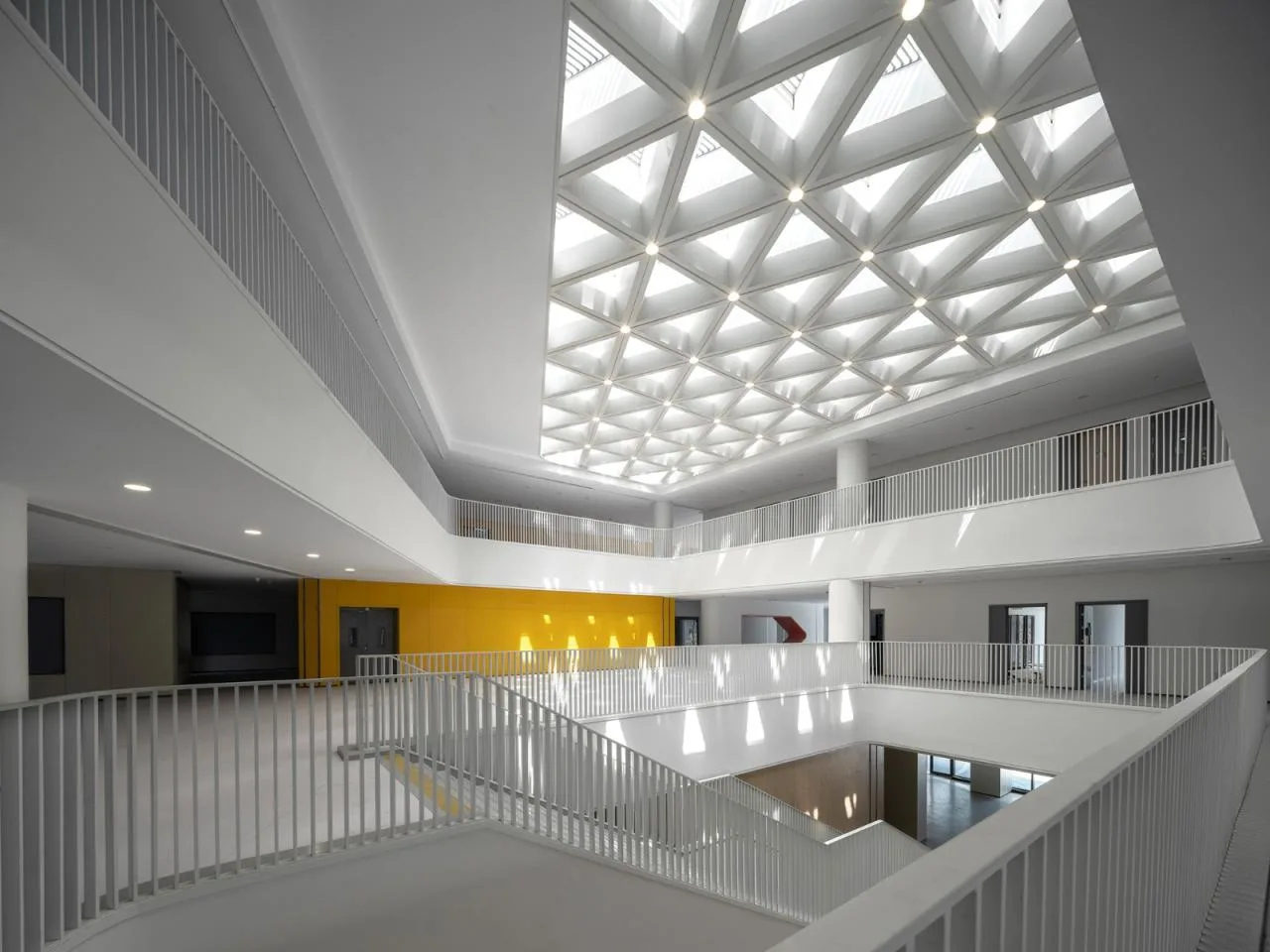
△ Second-floor shared atrium © Li Yi
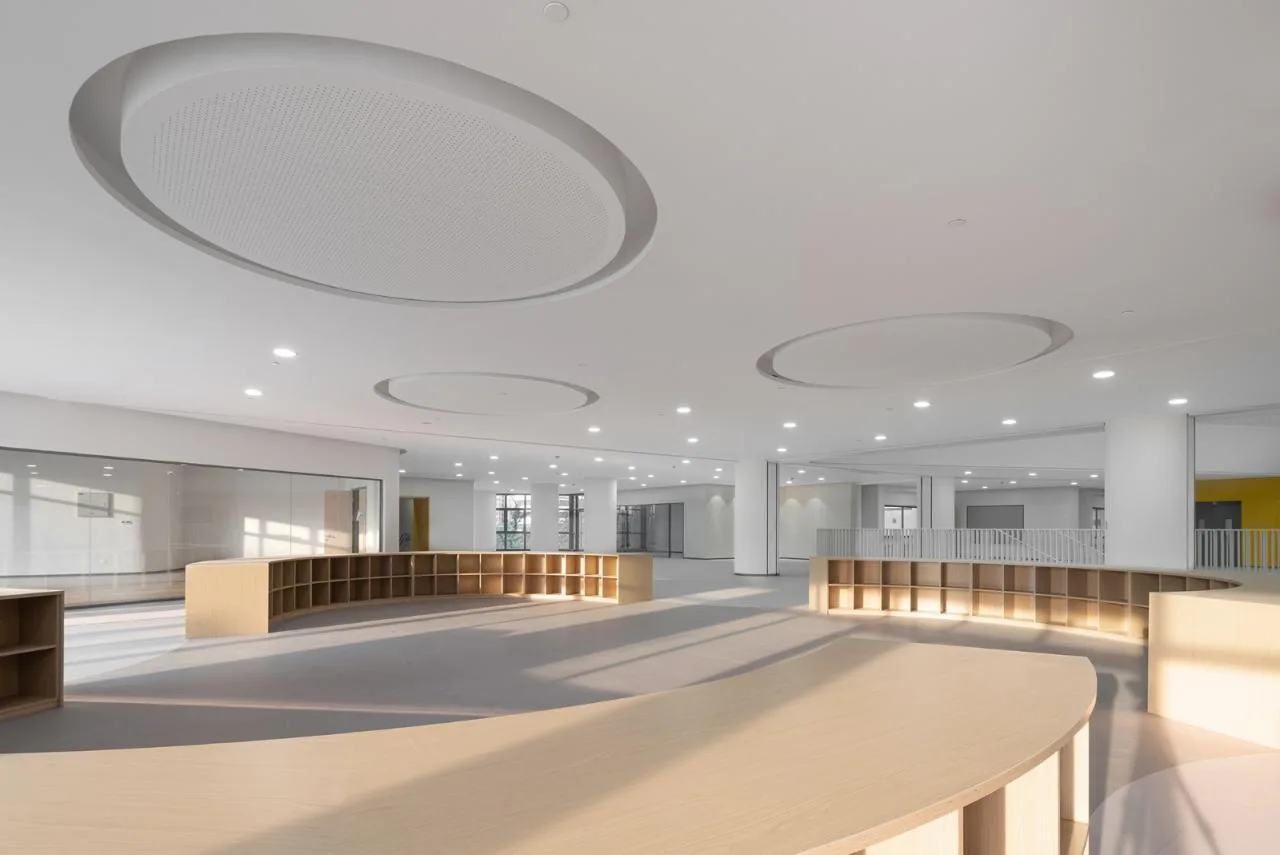
△ Open reading space © Li Yi
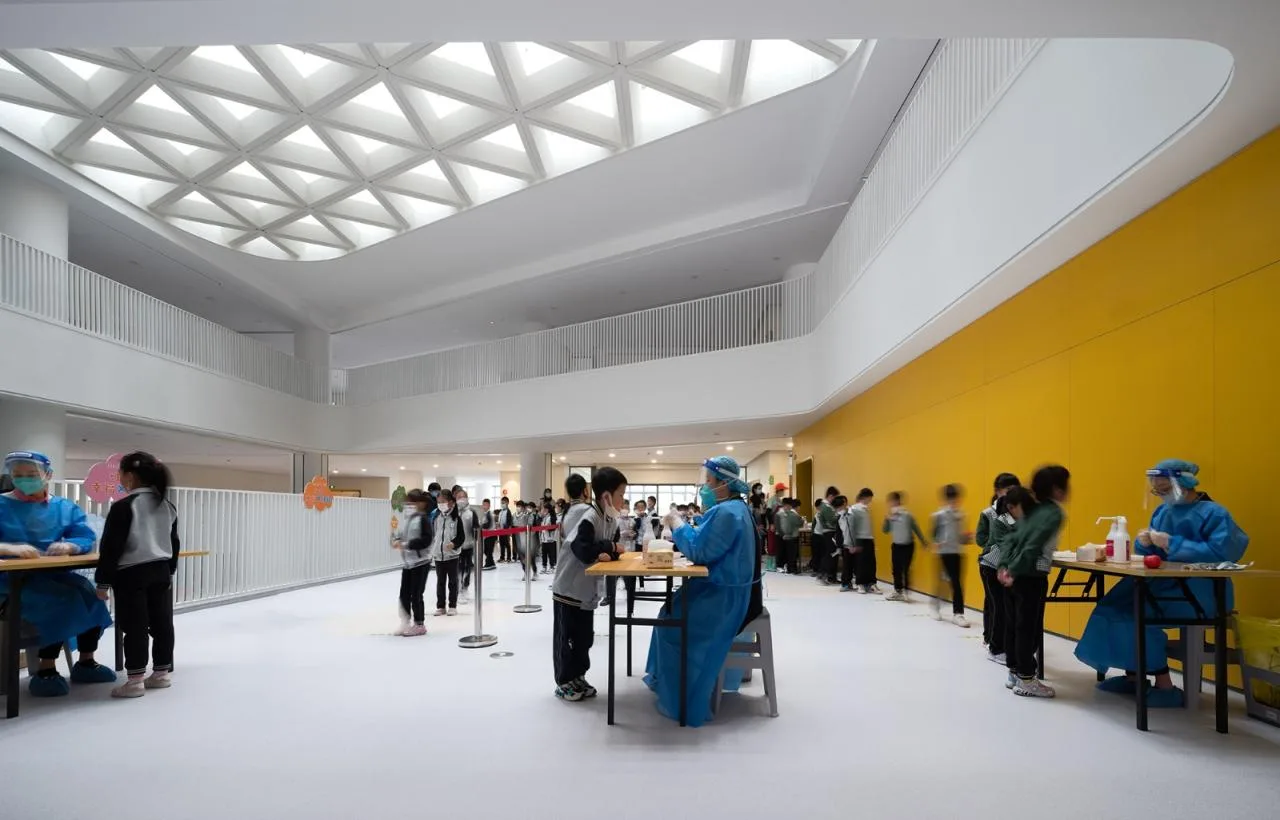
The atrium accommodates a variety of functions © Li Yi
The primary school and kindergarten are not completely separated; the landscape corridor extends the southern landscape belt and serves as a transitional growth space.
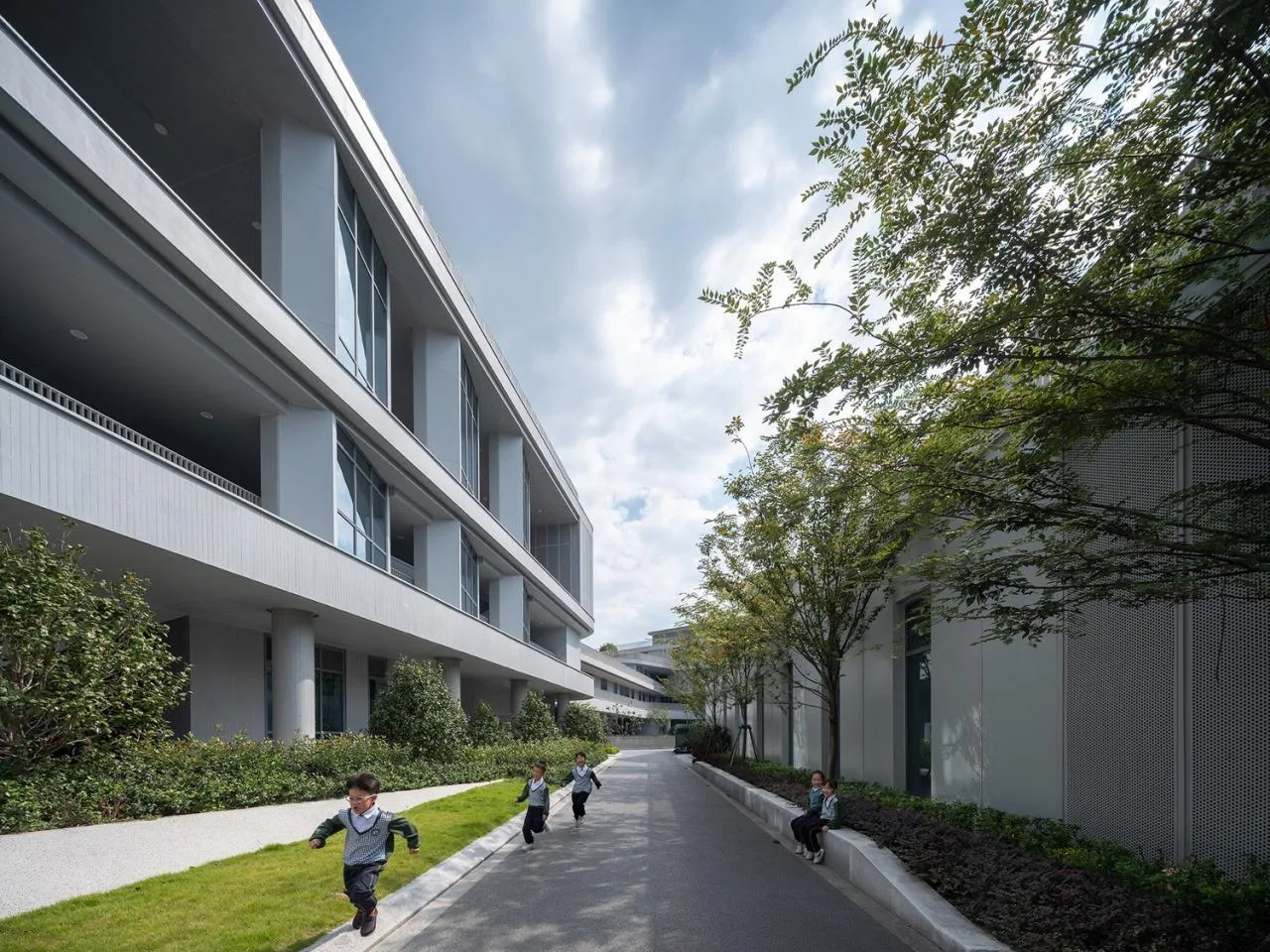
△ Shared square between primary school and kindergarten © Li Yi
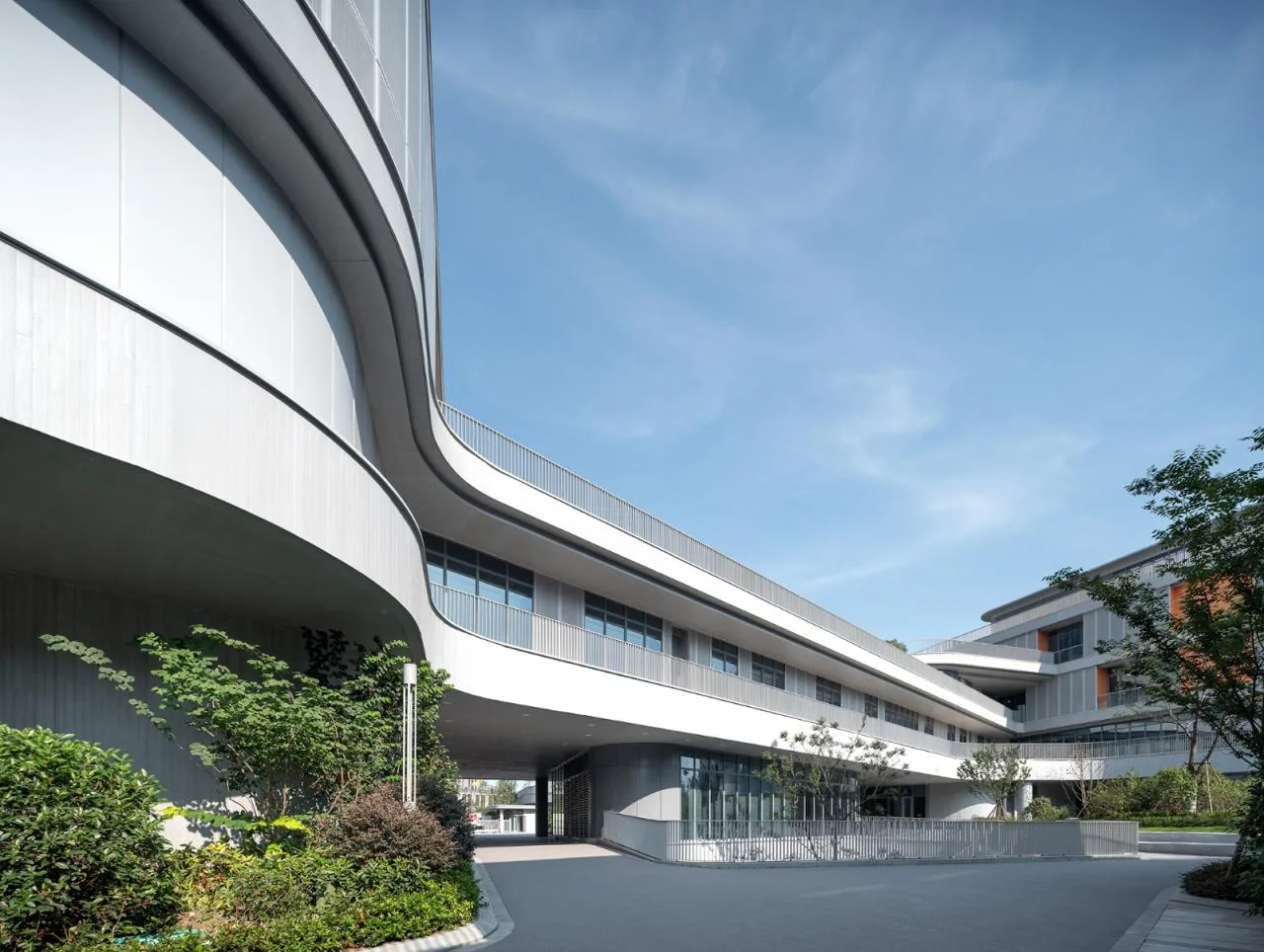
Landscape corridor connecting primary school and kindergarten © Li Yi
Engaging with Children: A Kingdom of Space, Light, and Shadow Play
In organizing indoor and outdoor spaces, we strive to blur the lines between teaching areas and circulation zones. By incorporating varied scales of atriums, sunken courtyards, layered roofs, and corridor “grey spaces,” we connect teaching units above and below ground, creating widespread informal learning environments. These fluid spaces inspire children to explore, question, and communicate—forming their dream kingdom.
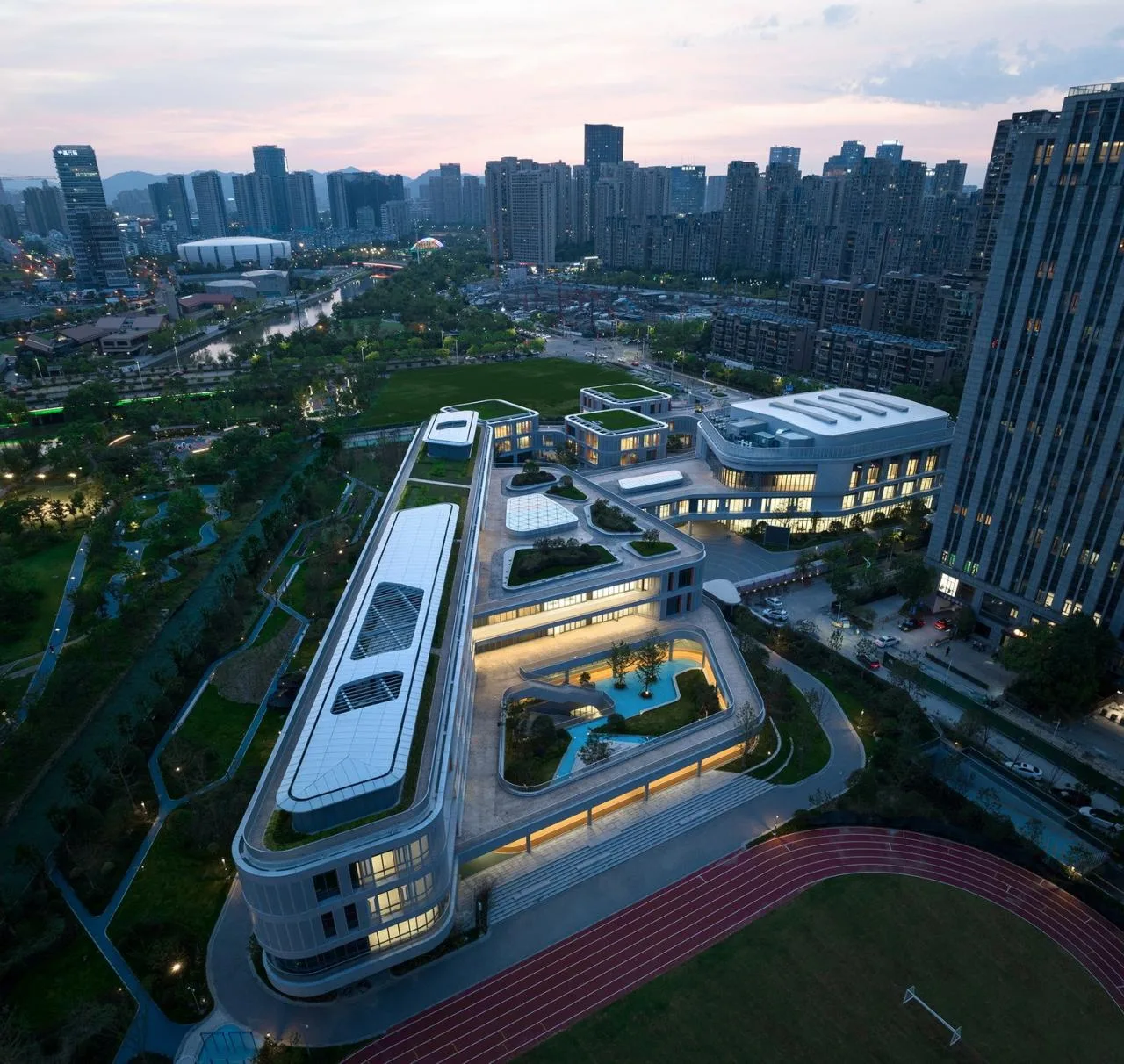
Campus in the Garden © Li Yi
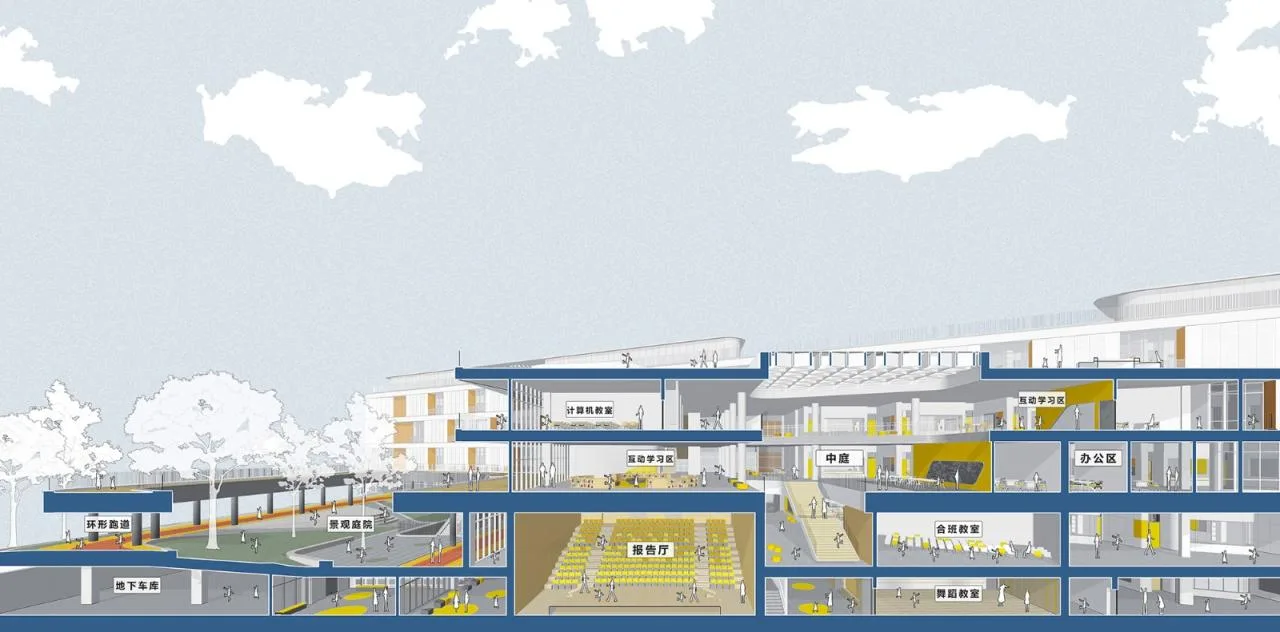
△ Sectional perspective © Zhejiang University Architectural Design and Research Institute
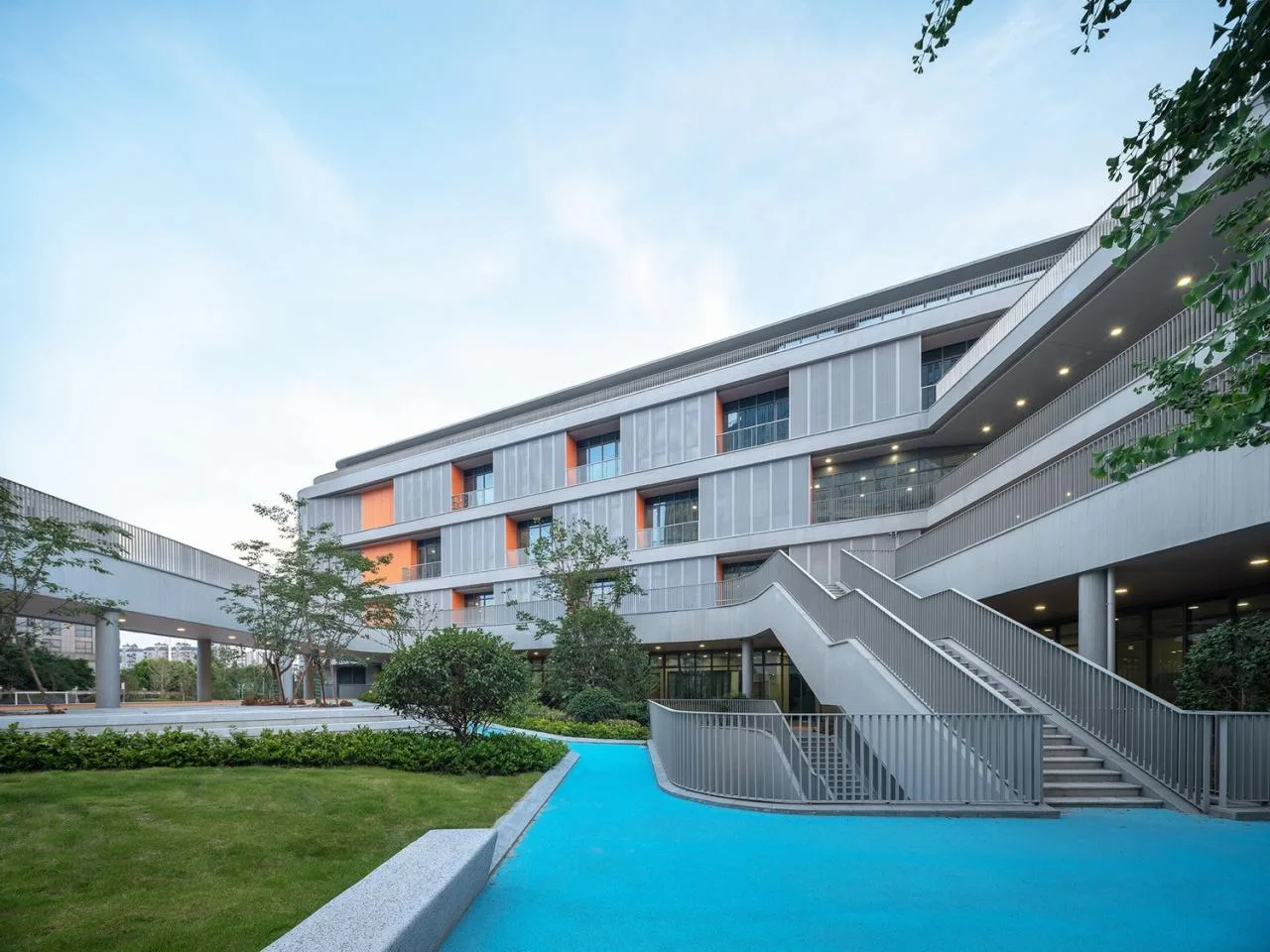
Continuous courtyard spaces above and below ground © Li Yi
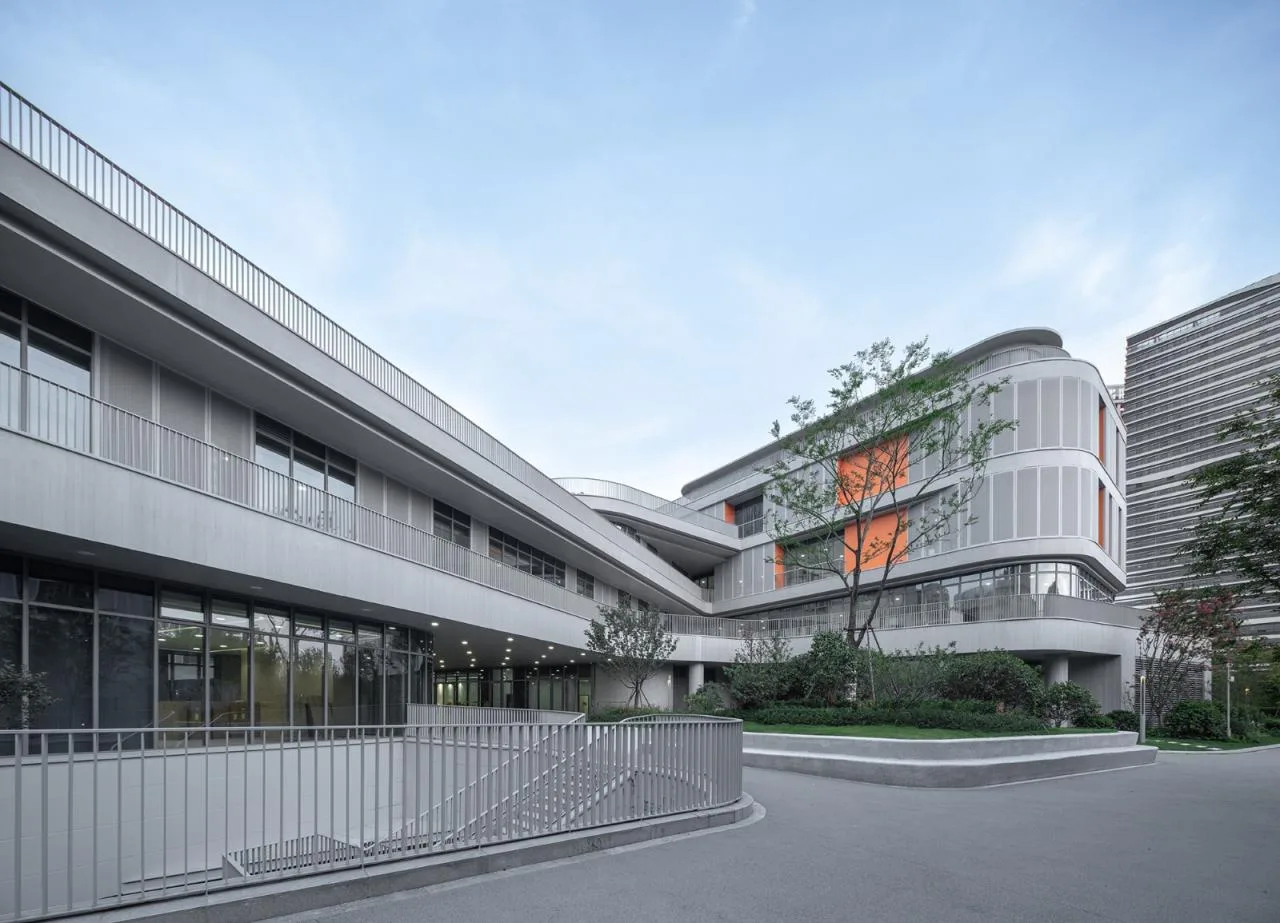
△ Sunken courtyard and movable platform © Li Yi
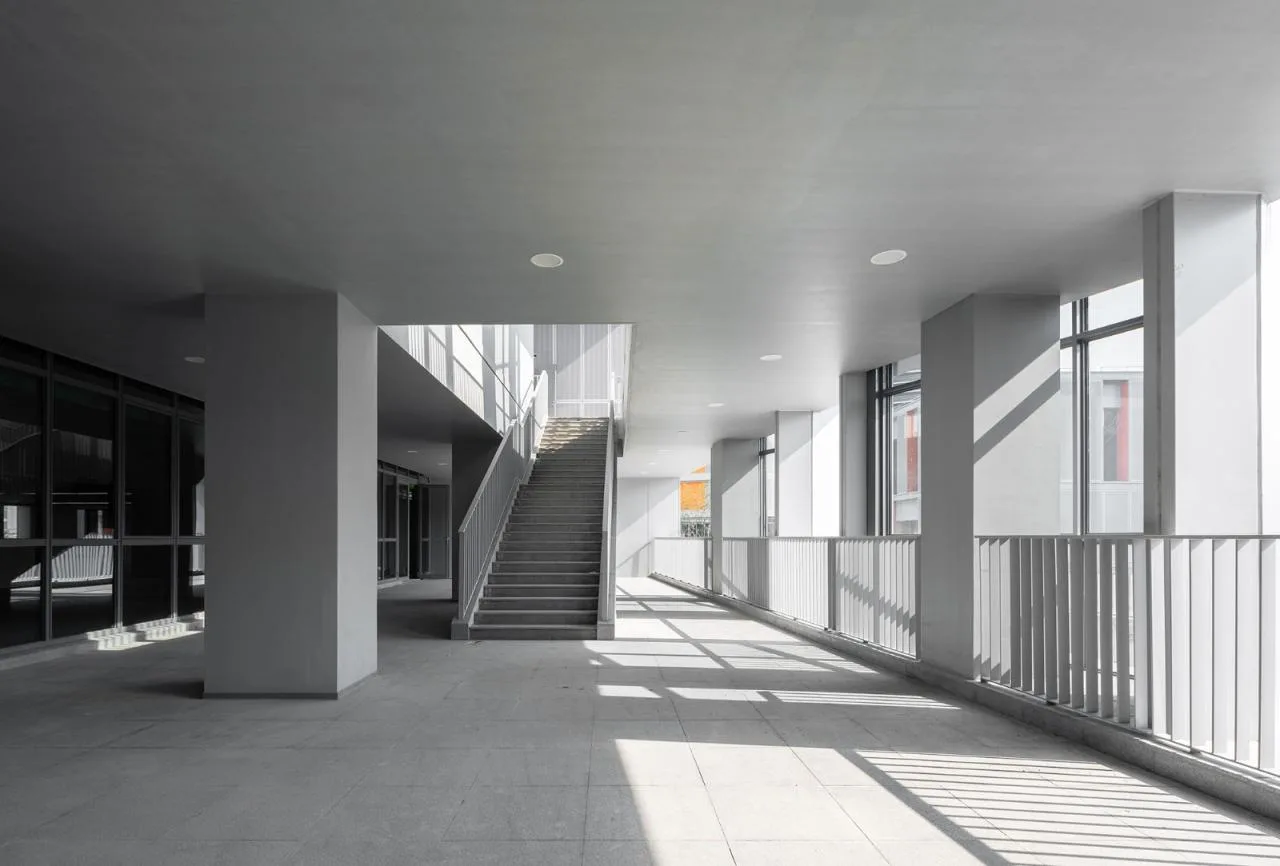
△ Outdoor activity platform at the sports hall © Li Yi
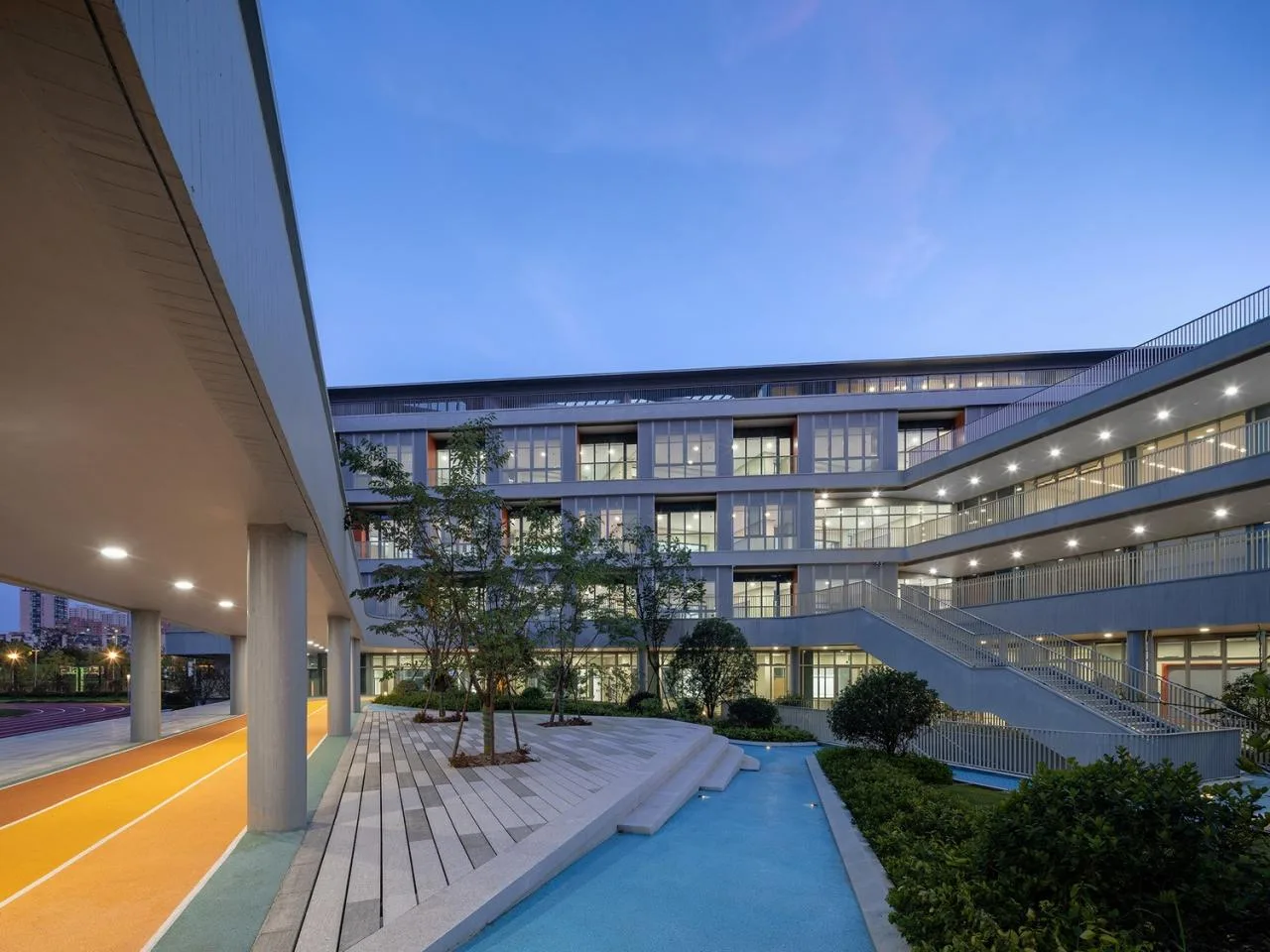
The softly lit night view of the buildings © Li Yi
Light and shadow are integral to all spaces; architecture cannot exist without them.
Within the campus’s overall elegant light gray palette, light and shadow interplay through folded, interwoven, and layered architectural forms. Perforated light gray panels, aluminum cladding, and plain concrete with wood grain textures produce varied interior light effects. The consistent color tone combined with diverse surface textures creates a rich visual experience.
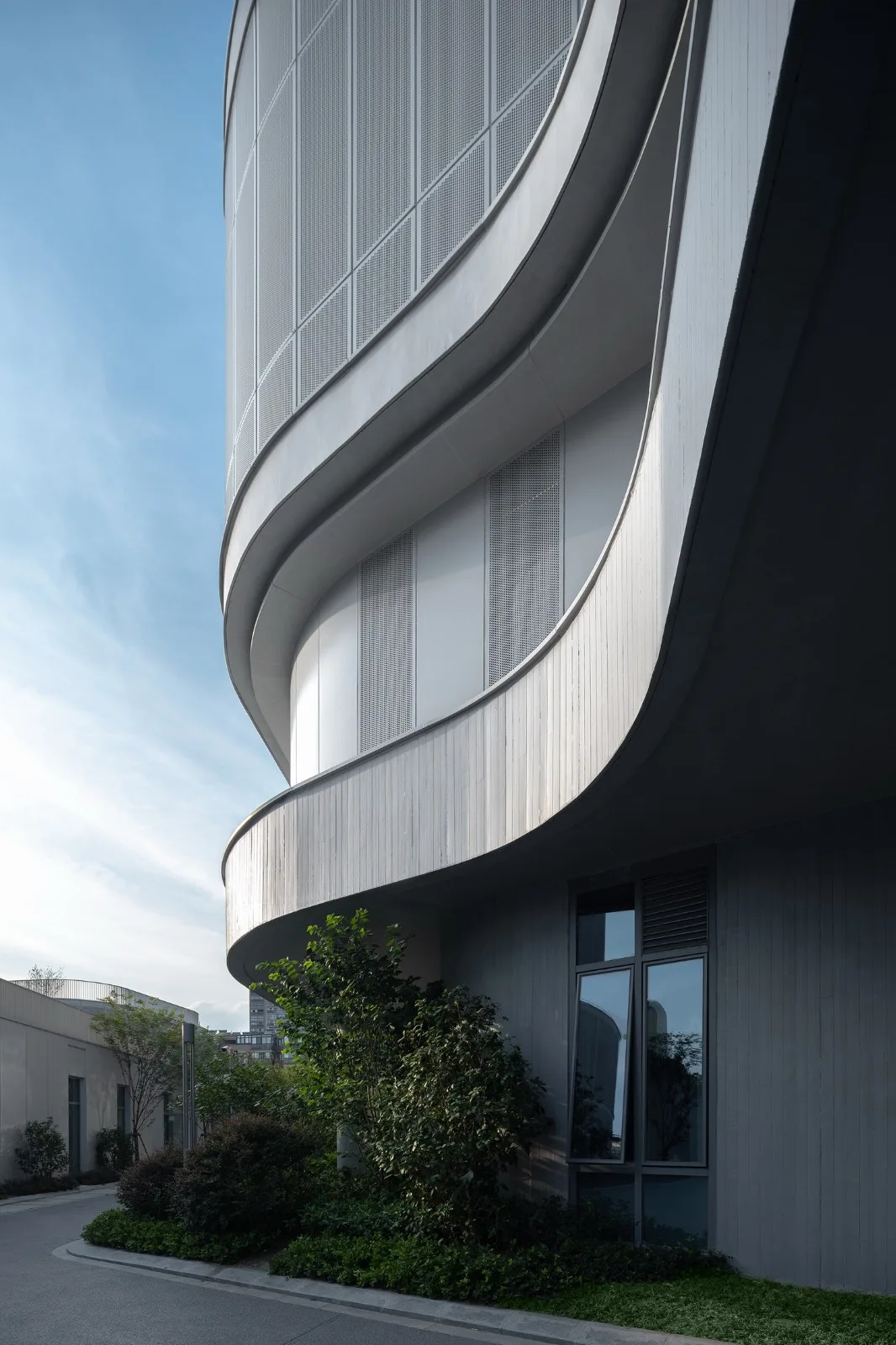
△ Smooth styling and material combinations in the primary school © Li Yi
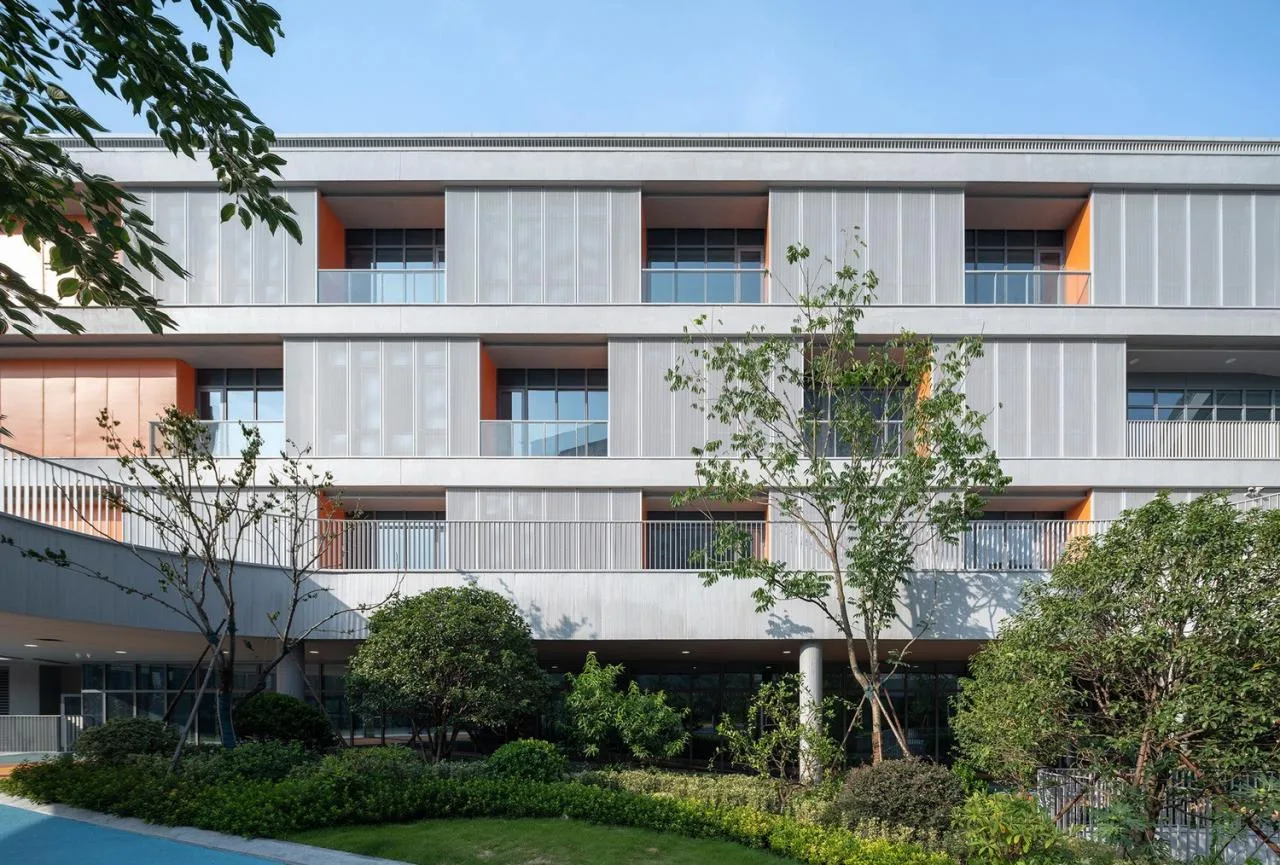
△ Building details © Li Yi
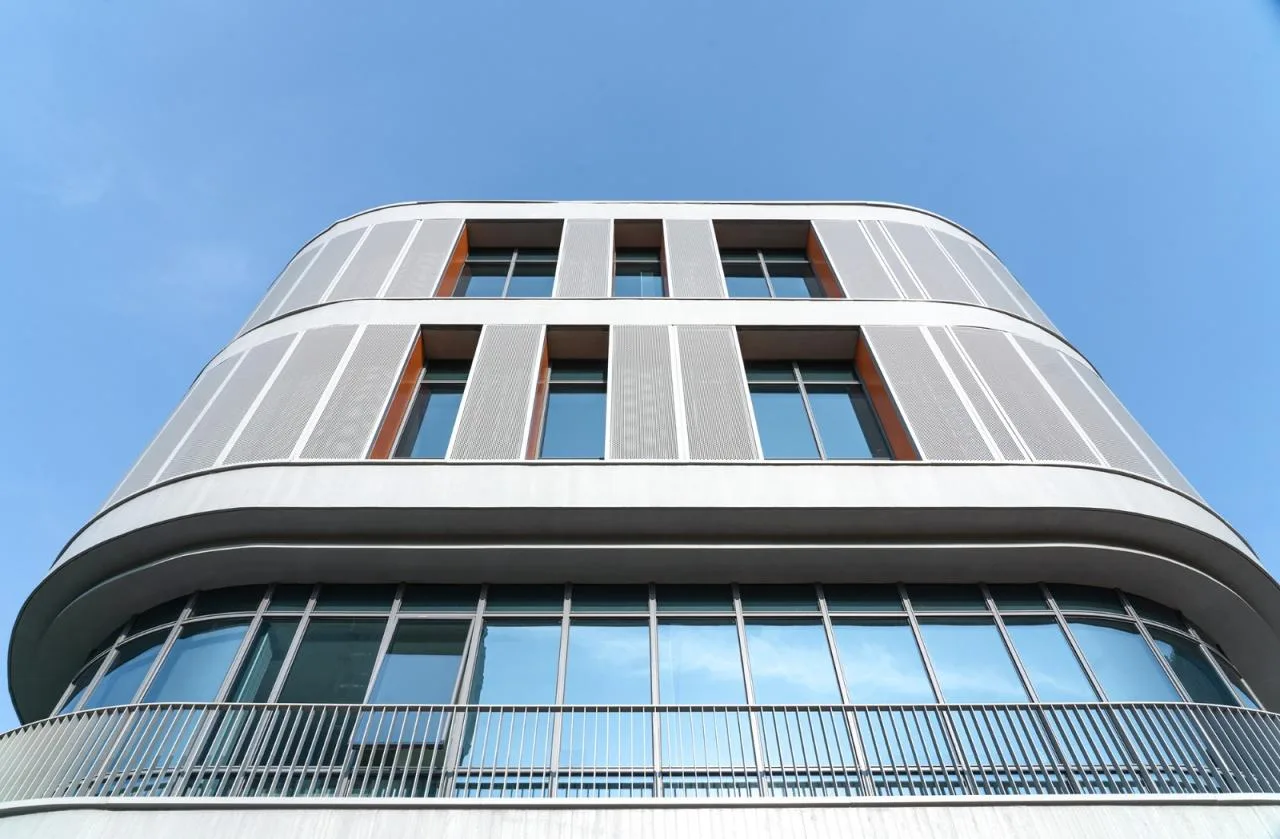
△ Local façade © Li Yi
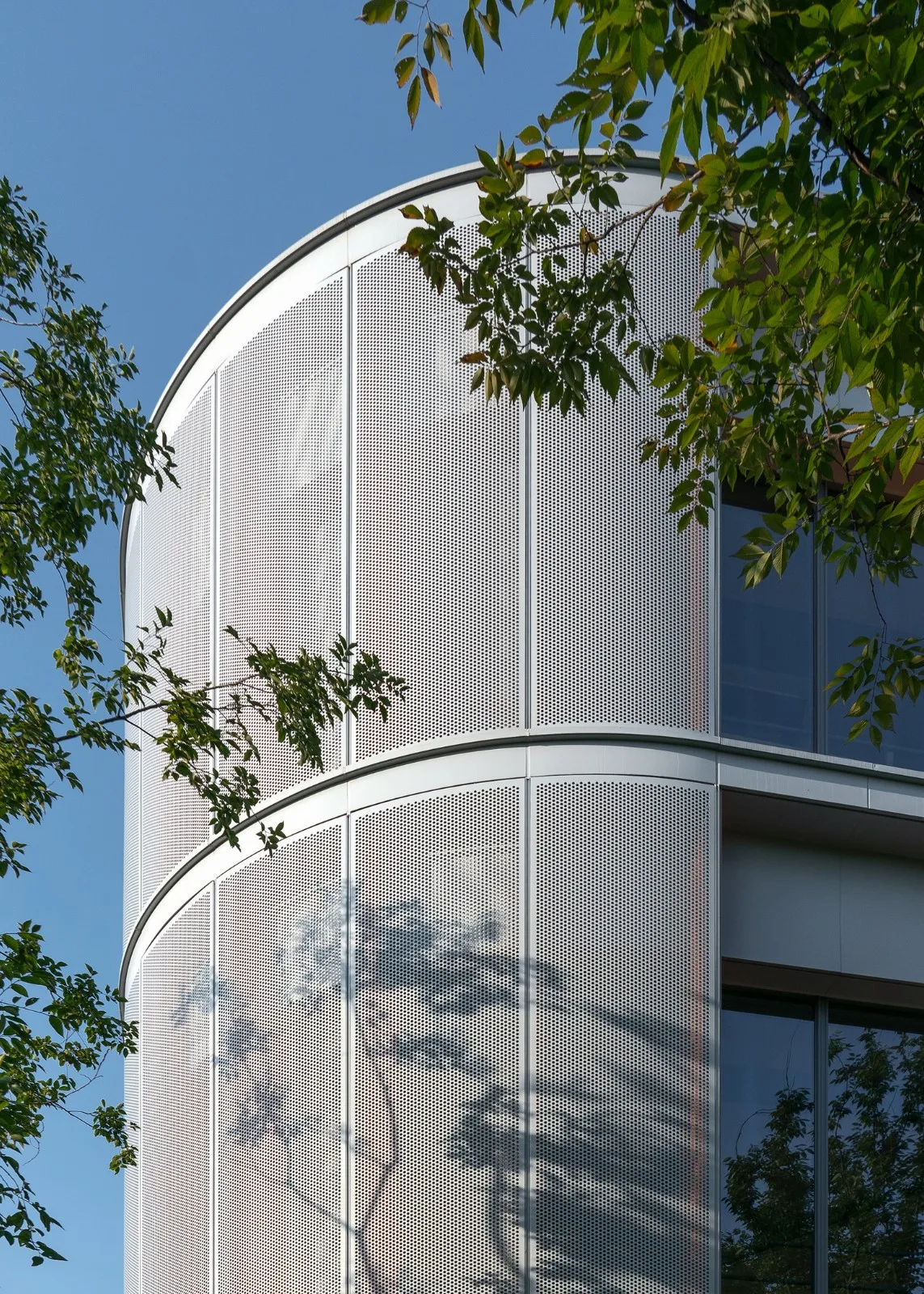
△ Lightweight perforated aluminum panel façade © Li Yi
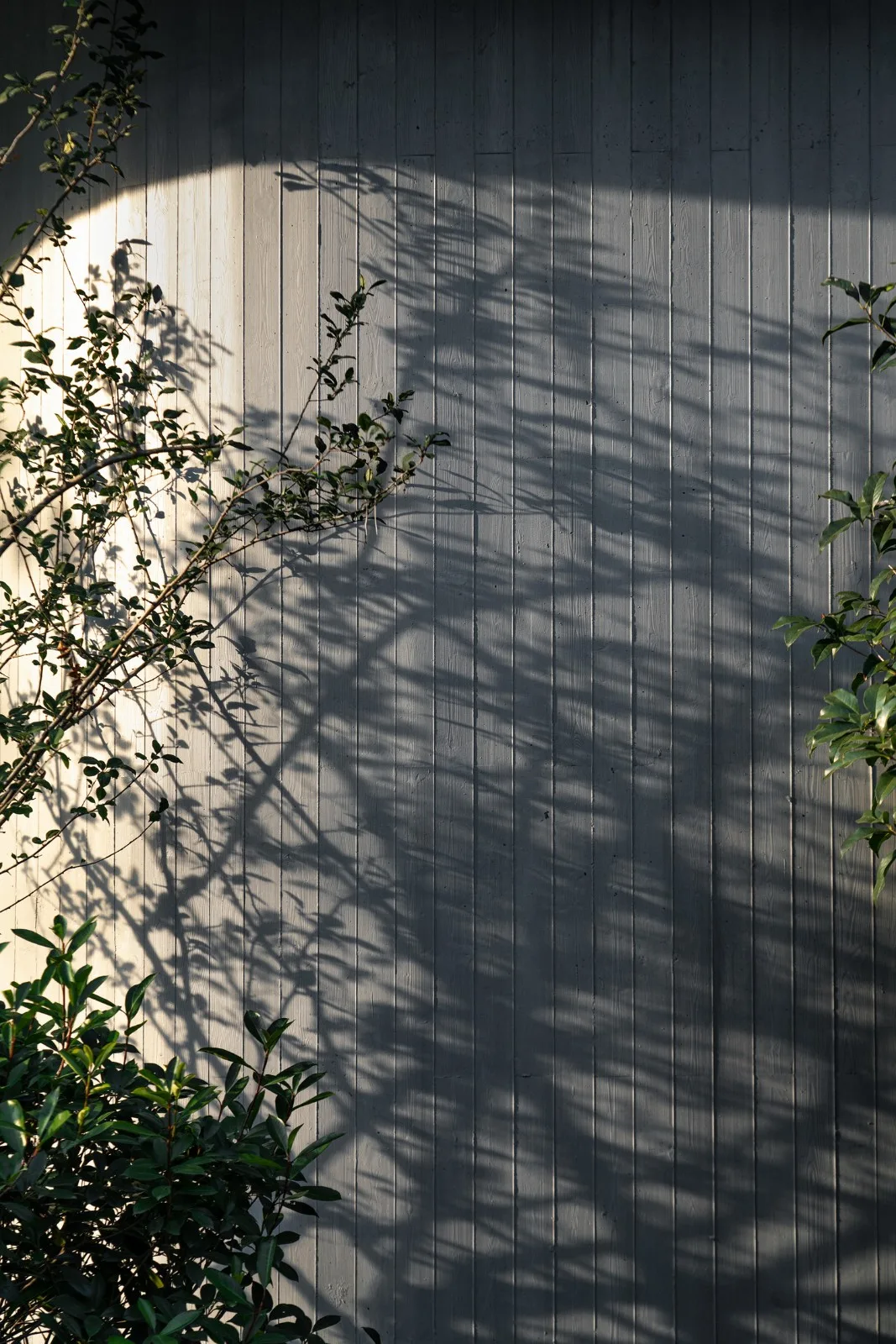
△ Clear water concrete and interplay of light and shadow © Li Yi
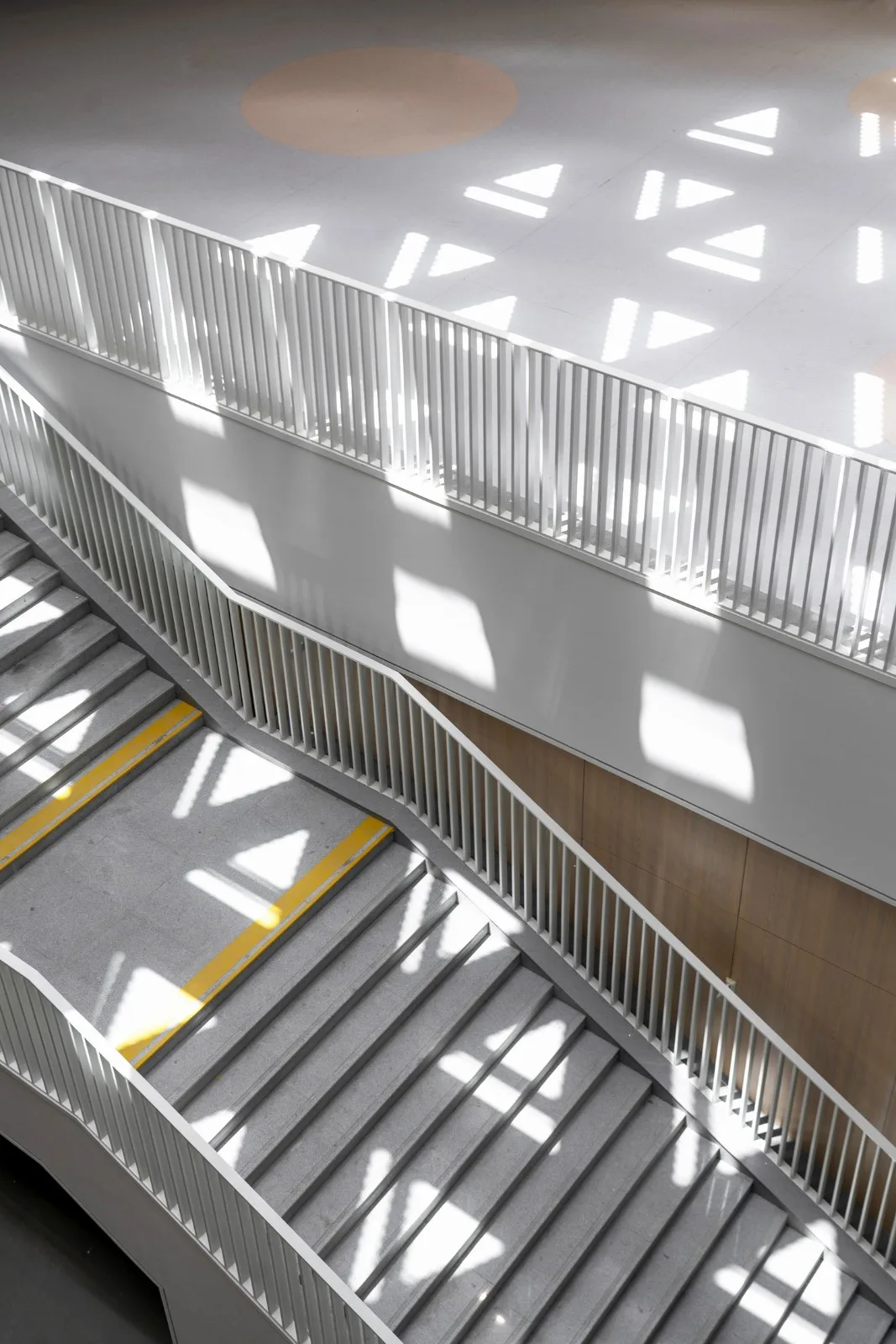
△ Light and shadow in the courtyard © Li Yi
Subtle changes in light and shadow create the most authentic play experience for children—chasing, exploring, and dreaming. We hope that within this playful and gentle environment, children become the brushstrokes that bring the campus to life and grow naturally.
Project Drawings
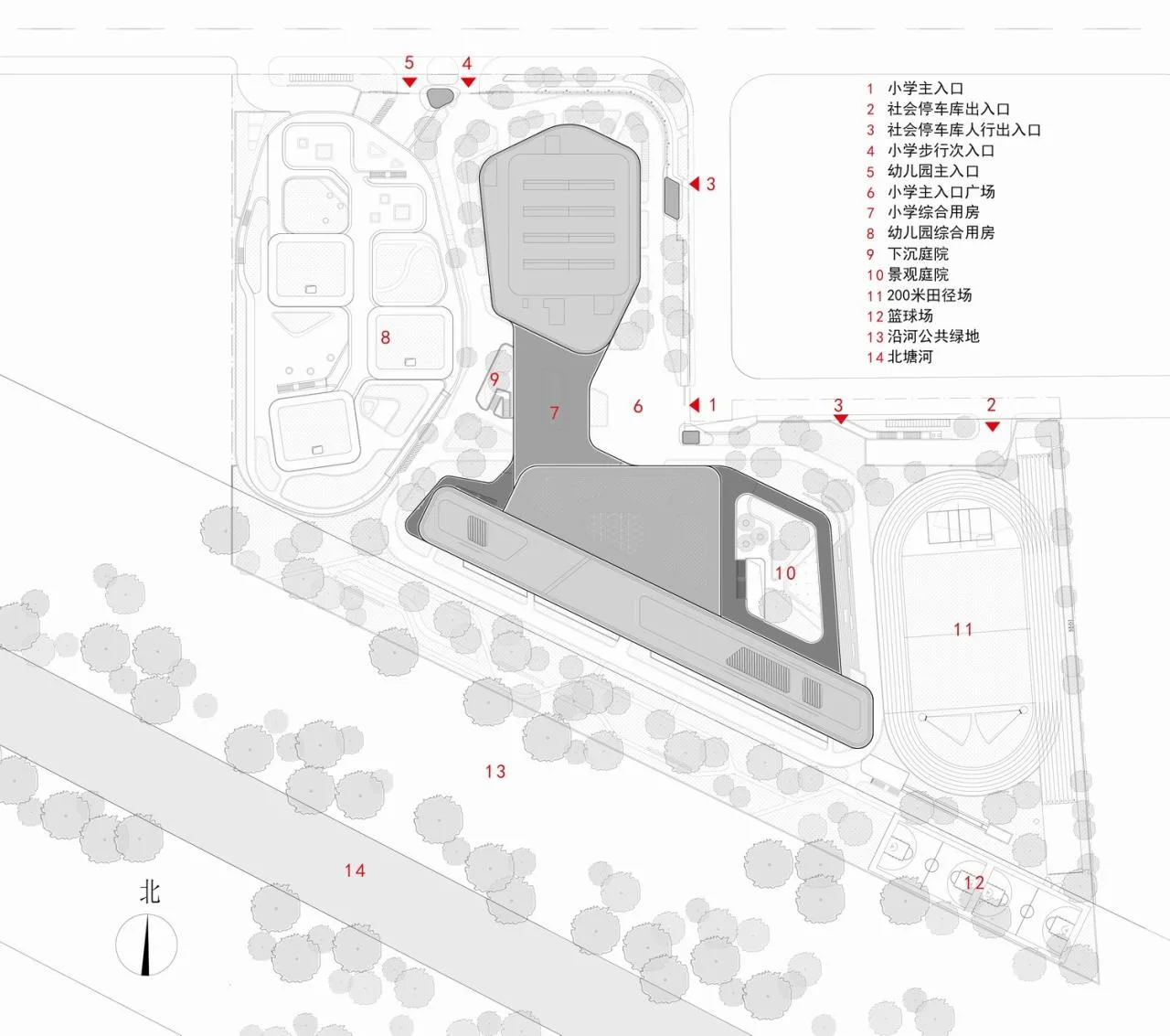
△ General layout plan © Zhejiang University Architectural Design and Research Institute
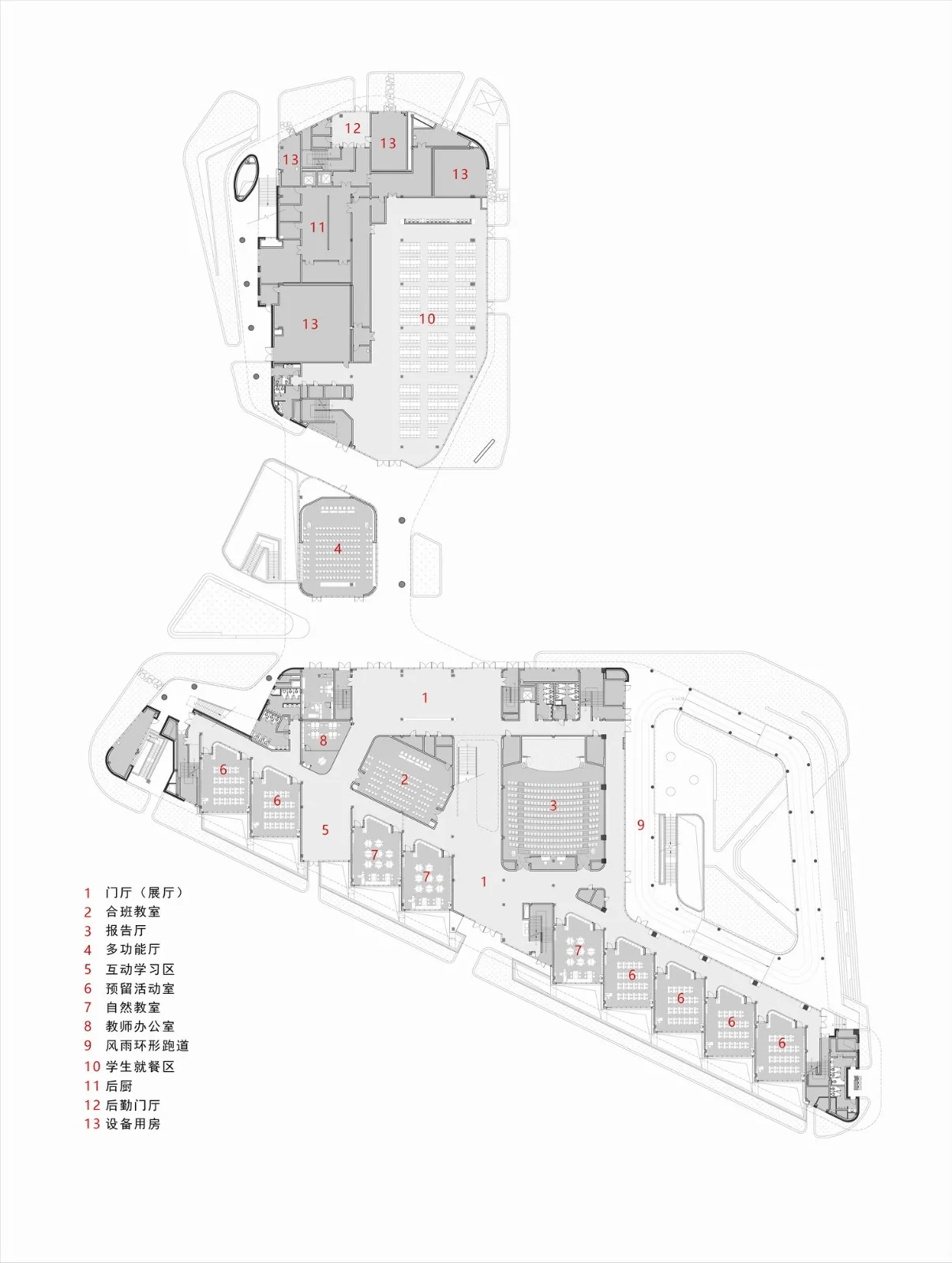
△ First floor plan © Zhejiang University Architectural Design and Research Institute
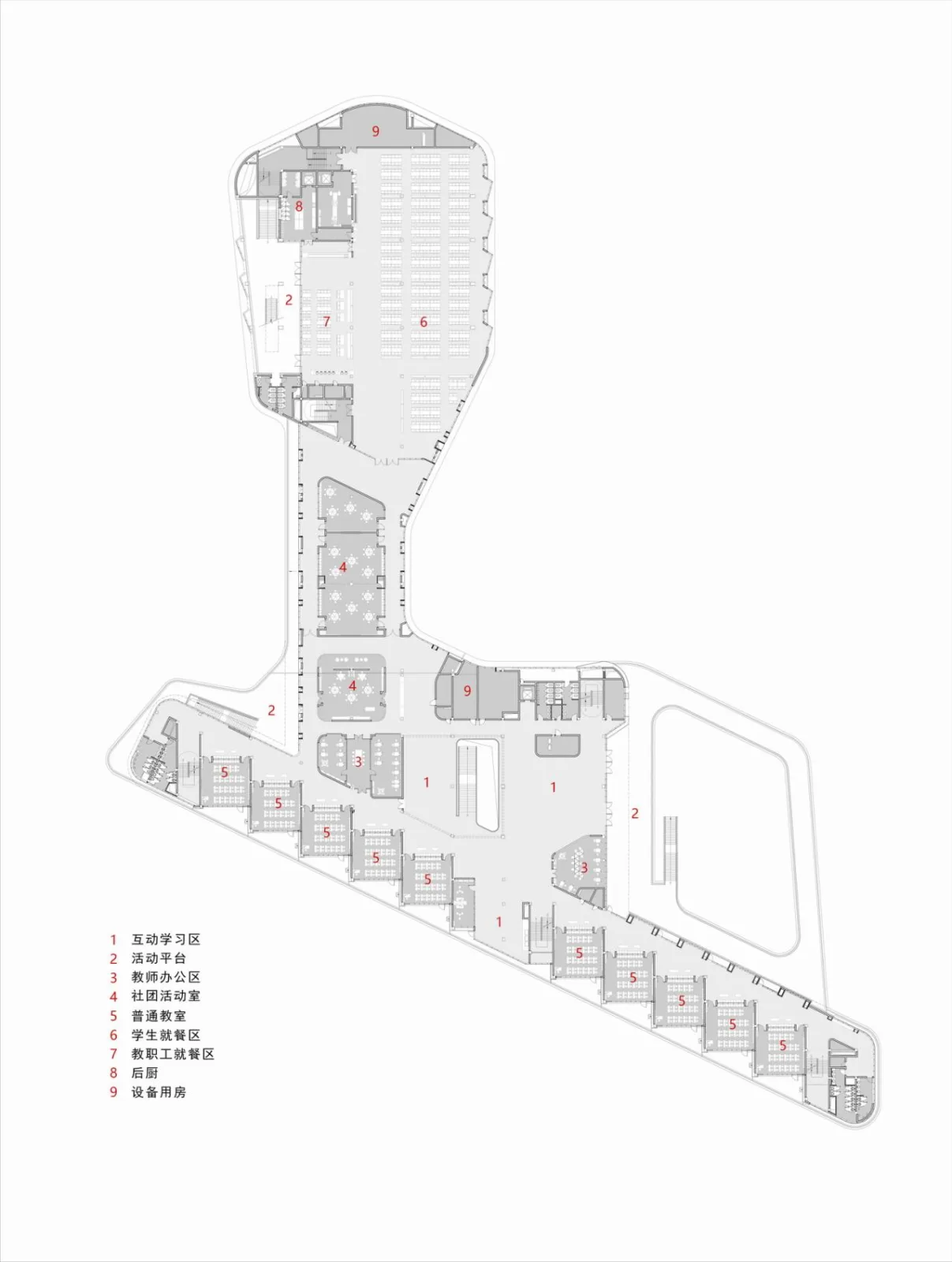
△ Second floor plan © Zhejiang University Architectural Design and Research Institute
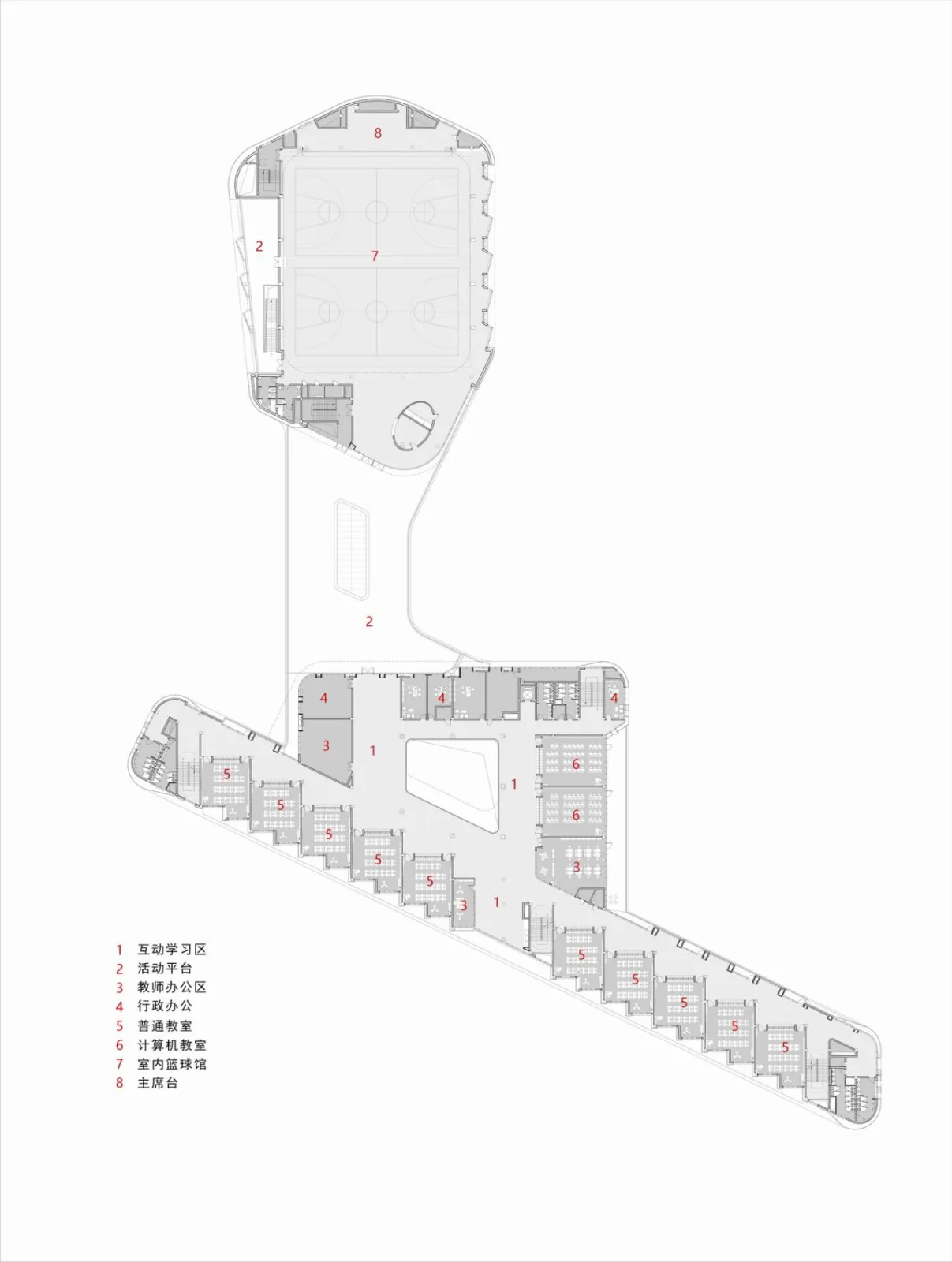
△ Third floor plan © Zhejiang University Architectural Design and Research Institute
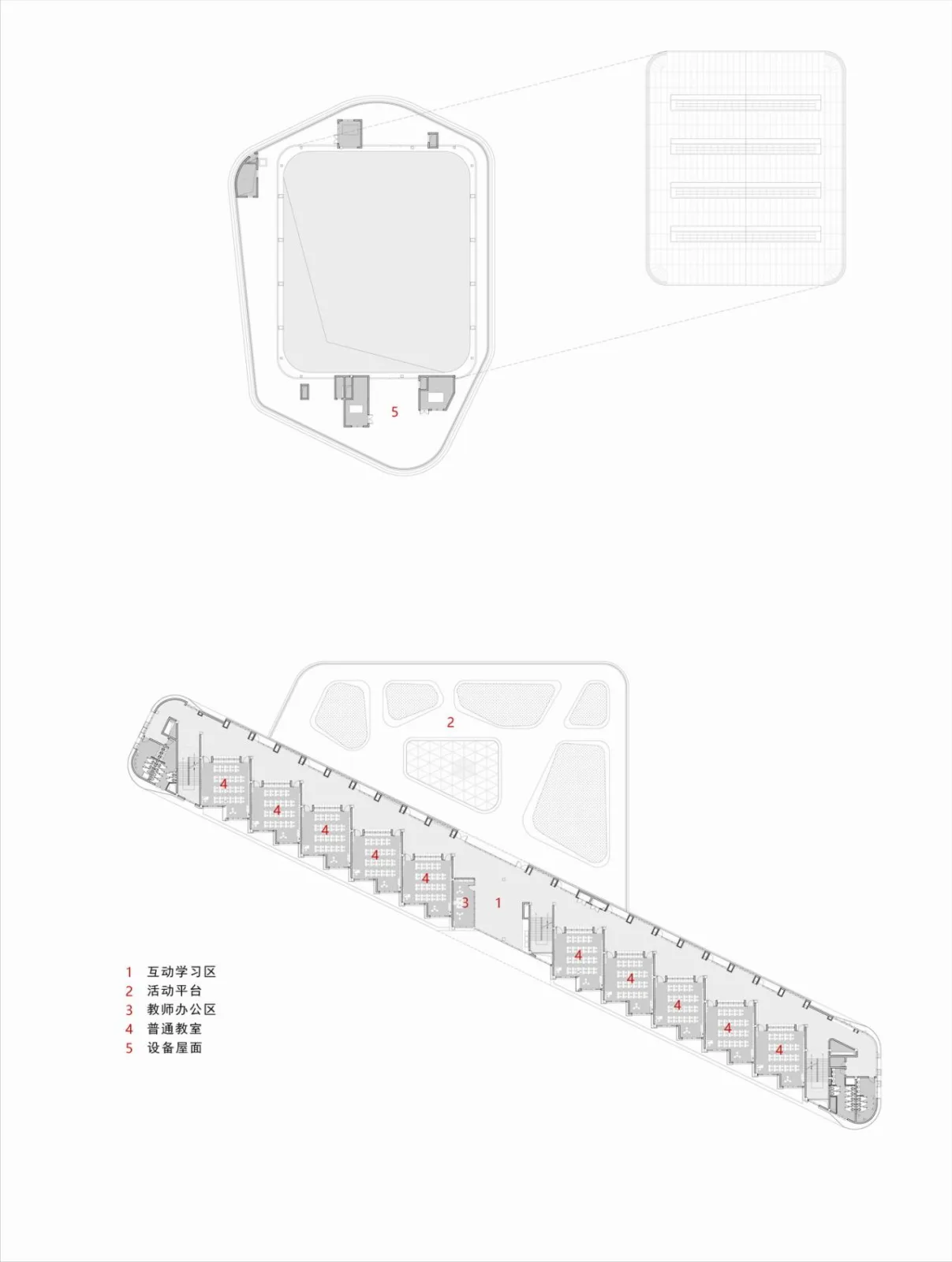
△ Fourth floor plan © Zhejiang University Architectural Design and Research Institute
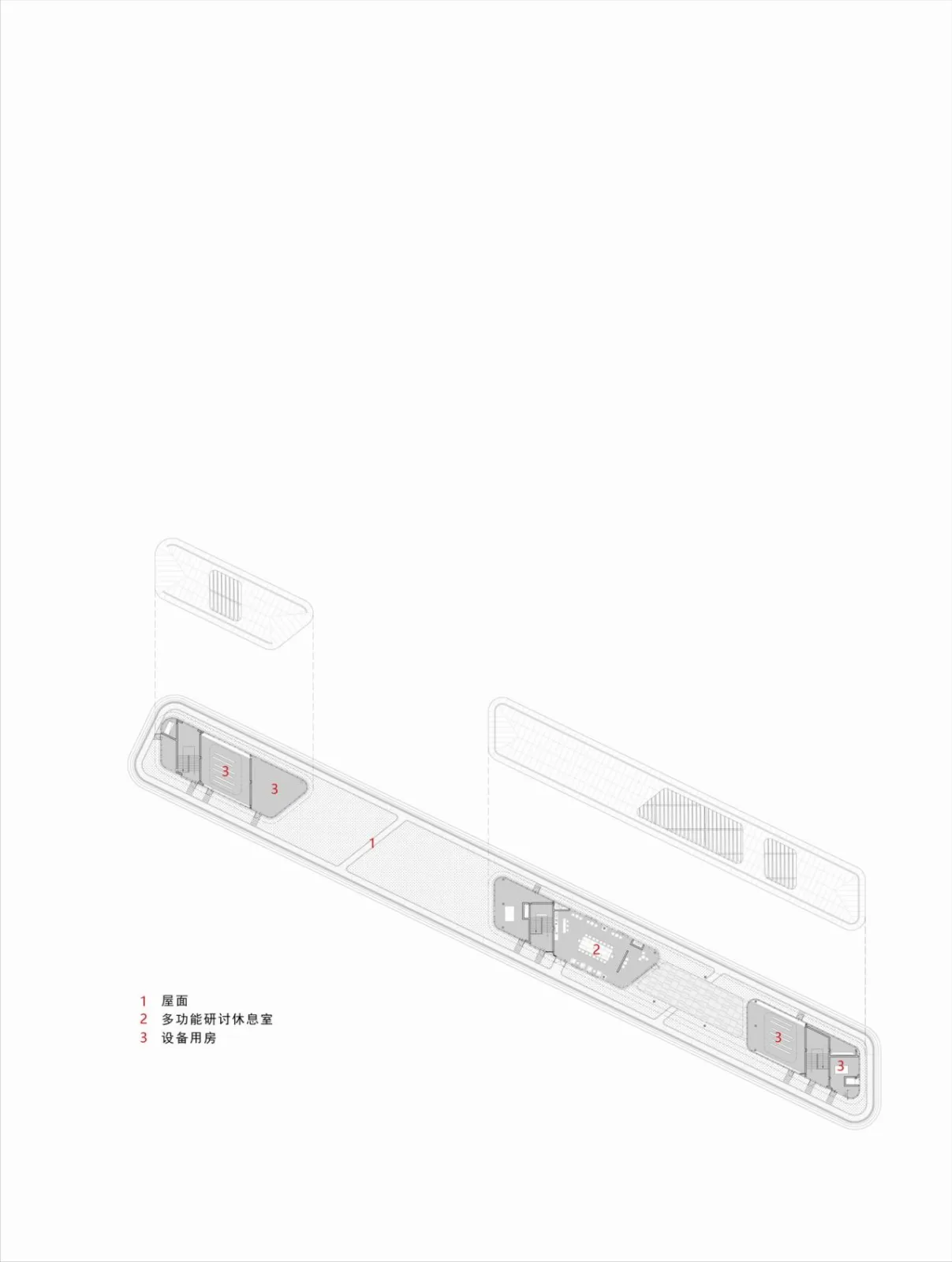
△ Roof plan © Zhejiang University Architectural Design and Research Institute
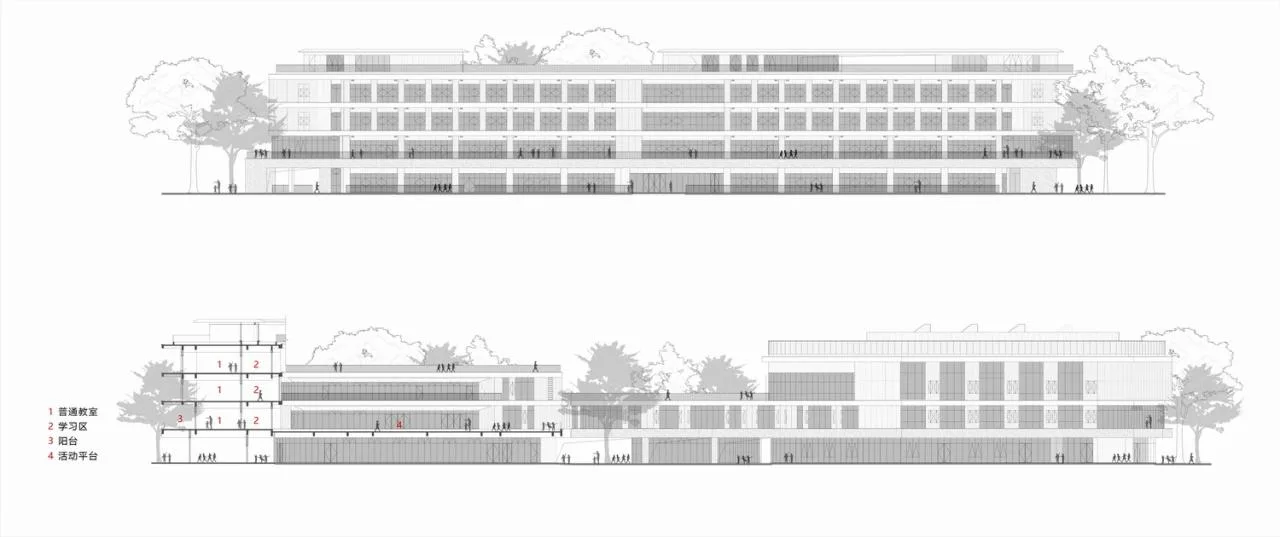
△ Elevation drawing © Zhejiang University Architectural Design and Research Institute
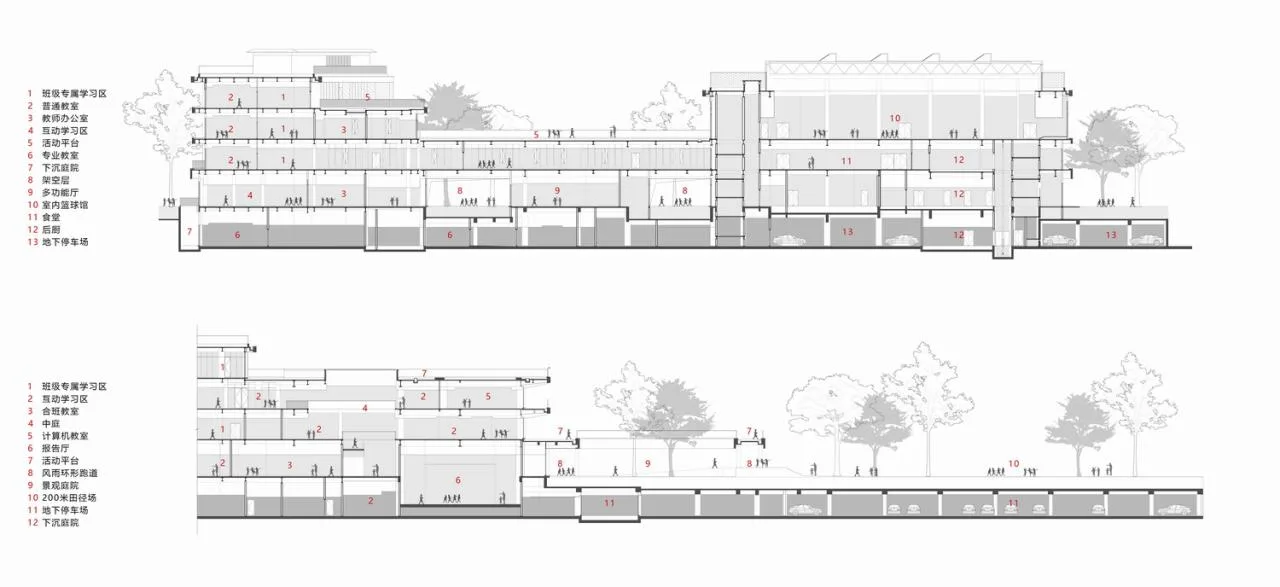
△ Section diagram © Zhejiang University Architectural Design and Research Institute
Project Details
Project Name: Hangzhou Jiangnan Experimental School Education Group Jianghui Primary School
Project Type: Educational Architecture
Location: Hangzhou, Zhejiang
Design Firm: Zhejiang University Architectural Design and Research Institute
Lead Architects: Fan Xuzhuang, Wang Hao
Architecture Team: Fan Xuzhuang, Zhu Rui, Wang Hao, Xu Sun, Liu Jia, Yu Zhaobing
Structural Team: Shen Jin, Wang Jun, Wang Chengzhi, Li Li
Water Supply & Drainage Team: Chen Ji, Chen Fei, Zhao Jieqin
HVAC Team: Qiu Yu, Guo Yinan
Electrical Team: Zheng Guoxing, Yang Kai, Ding Li, Fan Hongjian
Intelligent Systems Team: Li Xiangqun, Yuan Xiaonan, Ye Agile
Curtain Wall Team: Bai Qi’an, Chen Dong, Yang Dongyan
Interior Design Team: Li Jingyuan, Hu Xu, Chen Yuxiong, Jia Ru, Huang Lixuan, Wang Guancui, Guo Sicong, Peng Wenhui
Landscape Team: Yao Haojun, Lu Qunying, Ge Minjie, Yin Zhihong
Design Start Date: December 22, 2017
Project Completion Date: August 3, 2022
Project Address: Hangzhou, Zhejiang Province
Site Area: 29,520 square meters
Total Construction Area: 41,439 square meters
Above-Ground Area: 22,389 square meters
Underground Area: 19,052 square meters
Owner: Education Bureau of Binjiang District, Hangzhou City
Construction Management: Hangzhou Greentown Binfeng Construction Management Co., Ltd.
Construction Contractor: Zhejiang Zhonghao Construction Group Co., Ltd.
Materials: Perforated aluminum panels (Guangzhou Kuoxin), plain concrete coating (SKK), aluminum alloy doors and windows (Foshan Fenglv)
Architectural Photography: Li Yi















Must log in before commenting!
Sign Up