
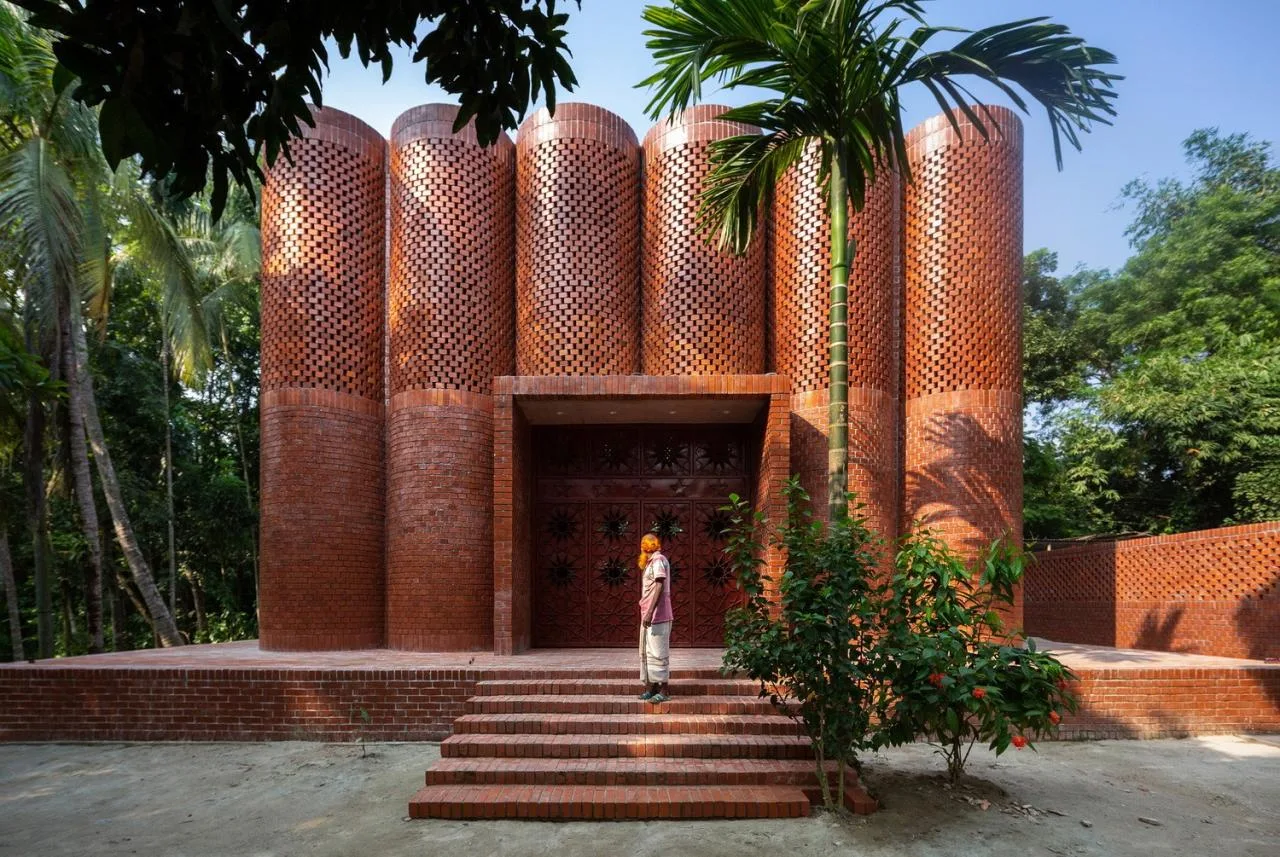
Background: Sufism, one of the most profound and thought-provoking aspects of Islam, emerges from diverse philosophical and social perspectives, emphasizing closeness to Allah (Schimmel, A., 1975). In Bangladesh, Sufi saints played a crucial role in spreading Islam through their devotion, exemplary character, and humanitarian efforts. They often acted as political advisors to regional rulers, influencing social welfare initiatives.
The Uwaisi Tariqa, named after Owais al-Qarani, is a spiritual branch of Sufism that conveys the language of Islamic mysticism. This project centers around the Dorgah (tomb) built for the Uwaisi Tariqa’s Pir (Sufi spiritual leader). While ‘Pir’ is a Persian term—reflecting the significant influence of Persian saints in the region—local adaptations were made. Originally, the tomb was situated within the Pir’s residence, but a distinctive structure was later designed to honor the Pir’s legacy.
Throughout history, Bangladesh has been governed by various powers, becoming home to a rich tapestry of cultures, beliefs, and philosophies. This diversity fostered unique cultural, religious, and architectural identities. From the 13th century until the British occupation in the mid-18th century, Muslim rulers shaped the region’s heritage. During the independent Sultanate period (1342-1576), nearly three-quarters of the mosques in Bangladesh were constructed. These mosques typically featured square layouts, differing from the rectangular Turkish mosque styles.
Although few tombs from this era survive, they reveal fascinating adaptations of traditional Islamic architecture tailored to local styles and needs. The design and materials of the Dorgah were heavily influenced by the mosques and tombs of the Sudani period.
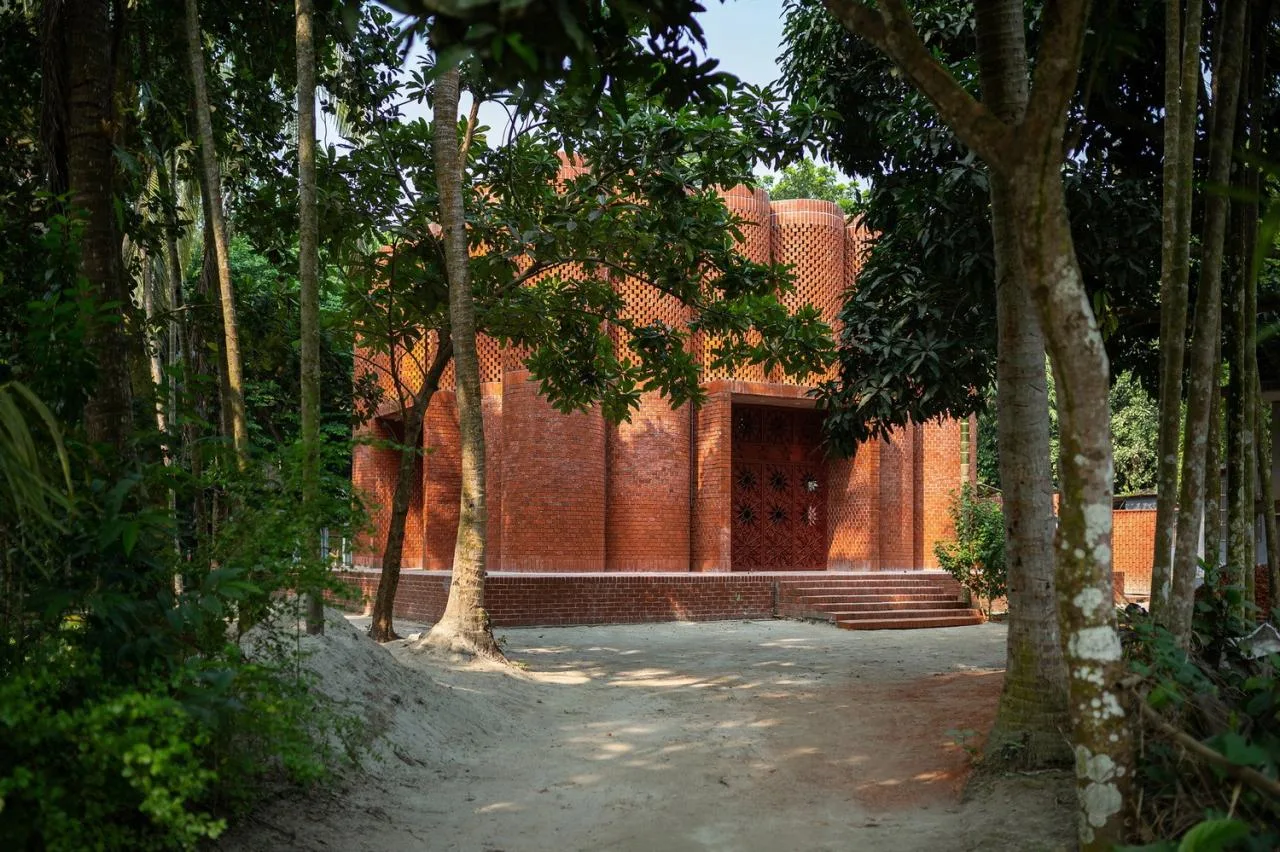
Concept: A Chandelier from Heaven — The design approach evolved alongside technological advances, available resources, ideologies, and local culture, culminating in a solution naturally embraced by the community. A Dorgah is typically a burial site for revered religious figures, especially Sufi saints or ascetics.
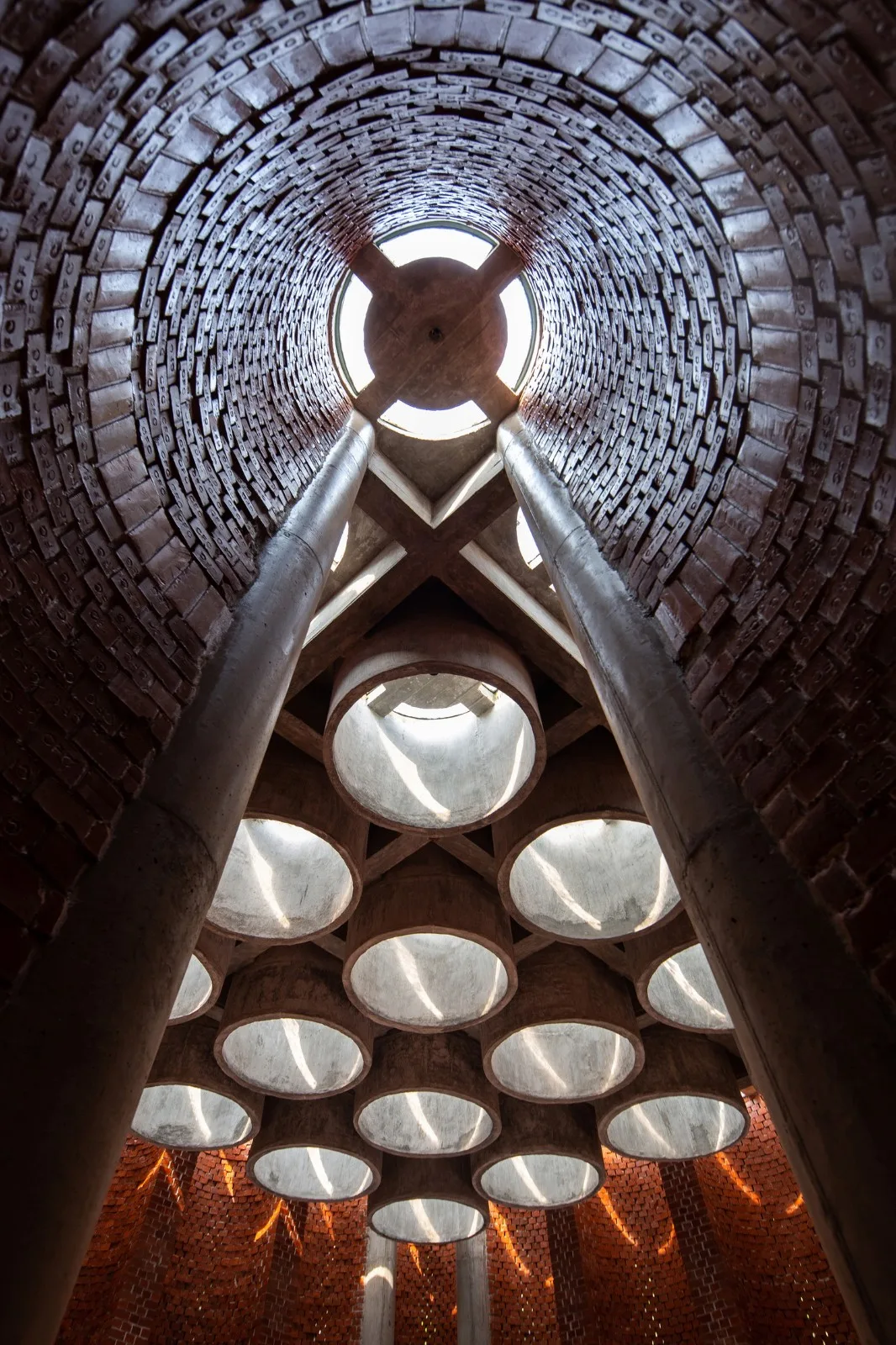
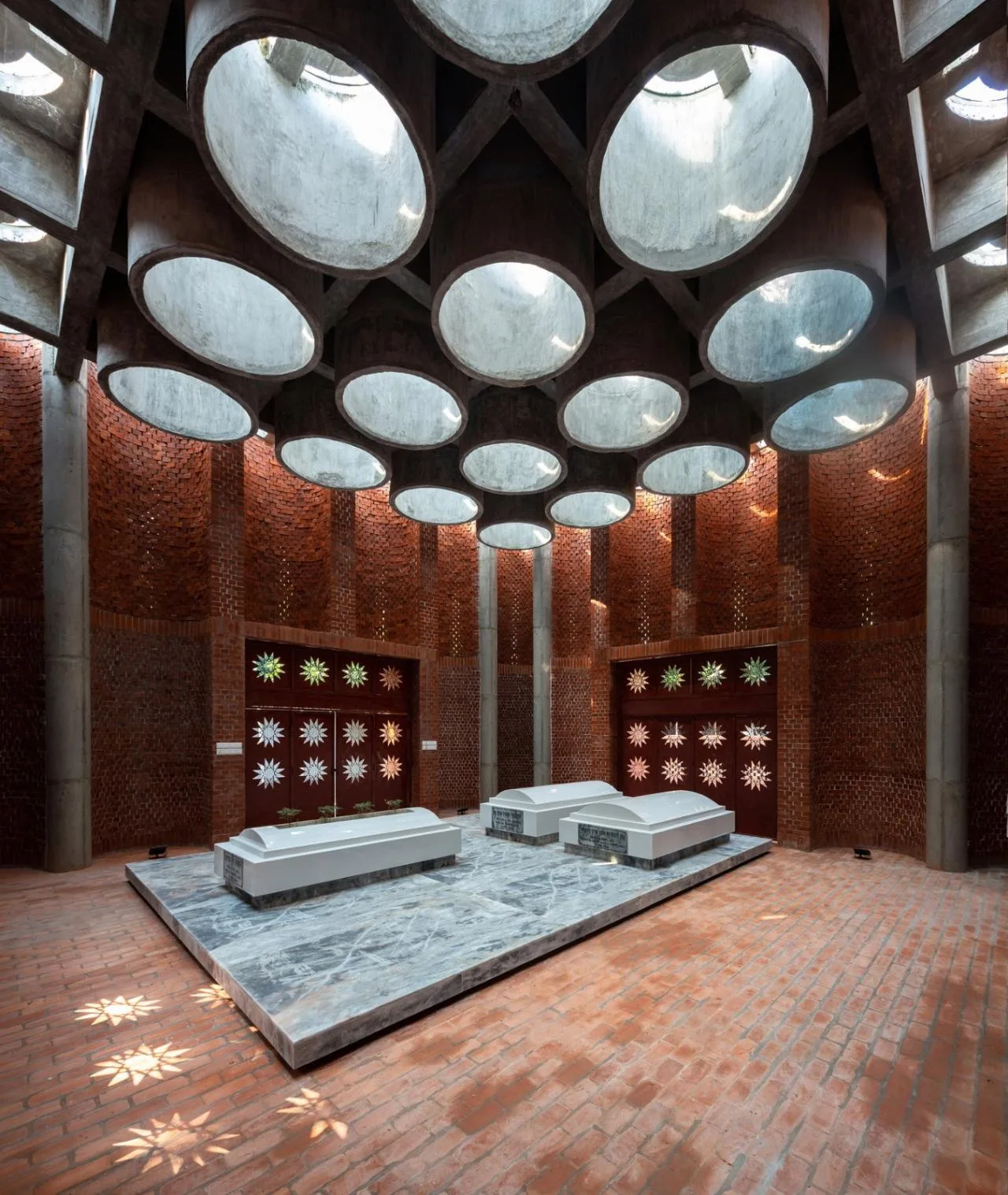
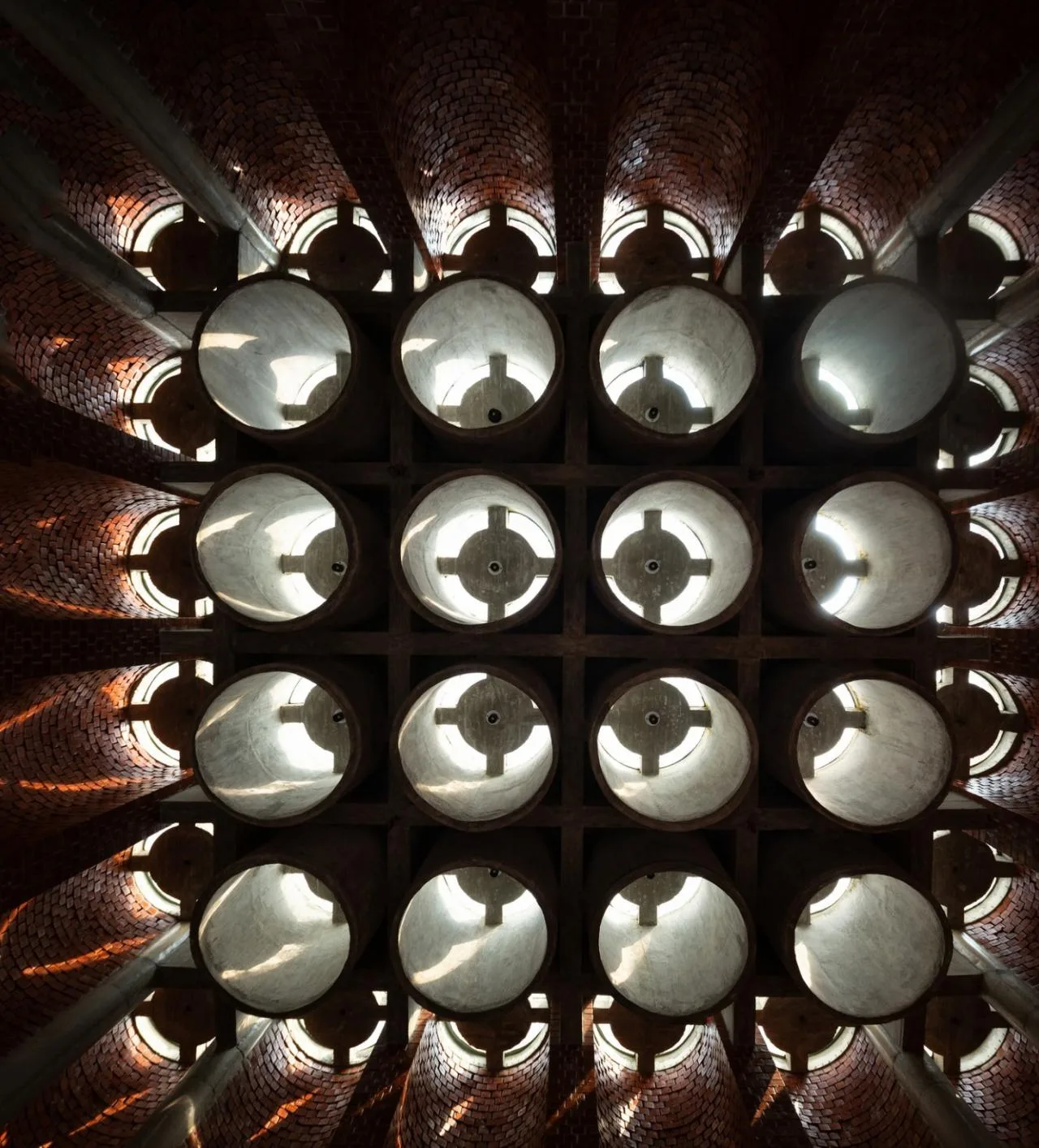
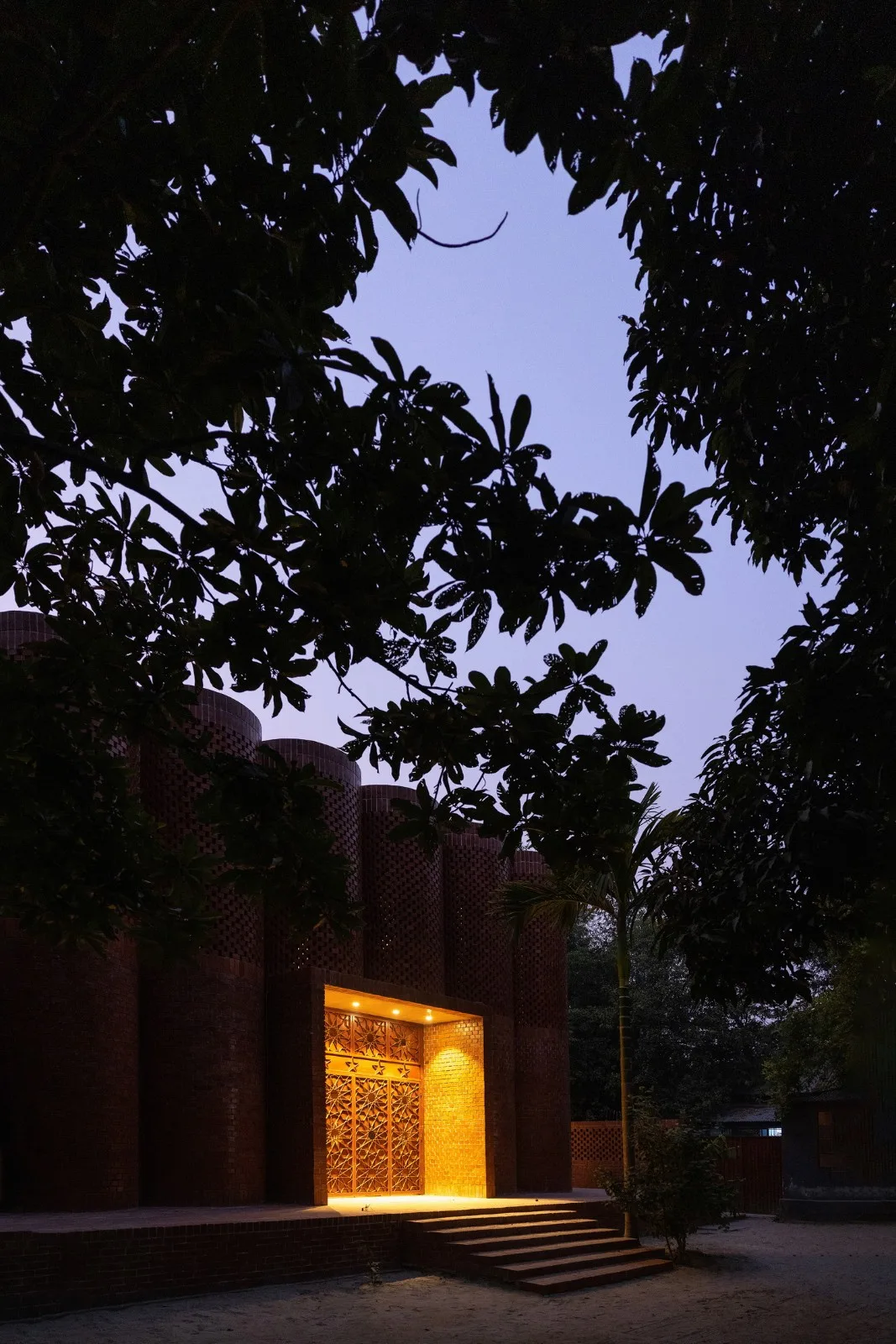
In Persian, Dorja means “gateway.” Symbolically, the Dorgah represents the resting place of the earthly body and a portal through which the soul ascends to heaven. The chandelier from heaven bestows holy light, connecting the earthly realm with higher powers. The graves and chandelier patterns create a mysterious cosmic atmosphere, evoking deep spirituality. While the tomb’s exterior reflects reality, its interior transcends the physical world.
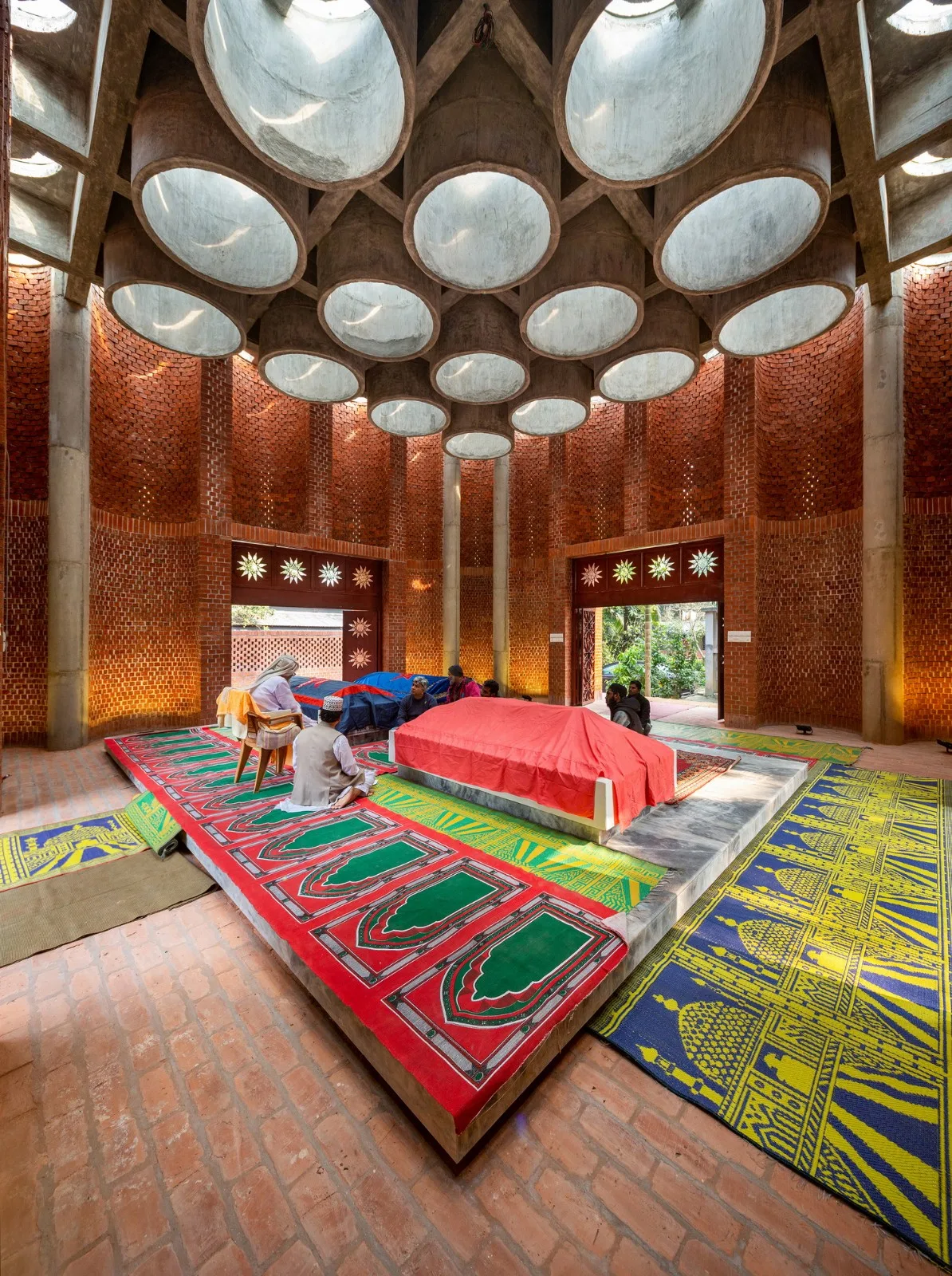
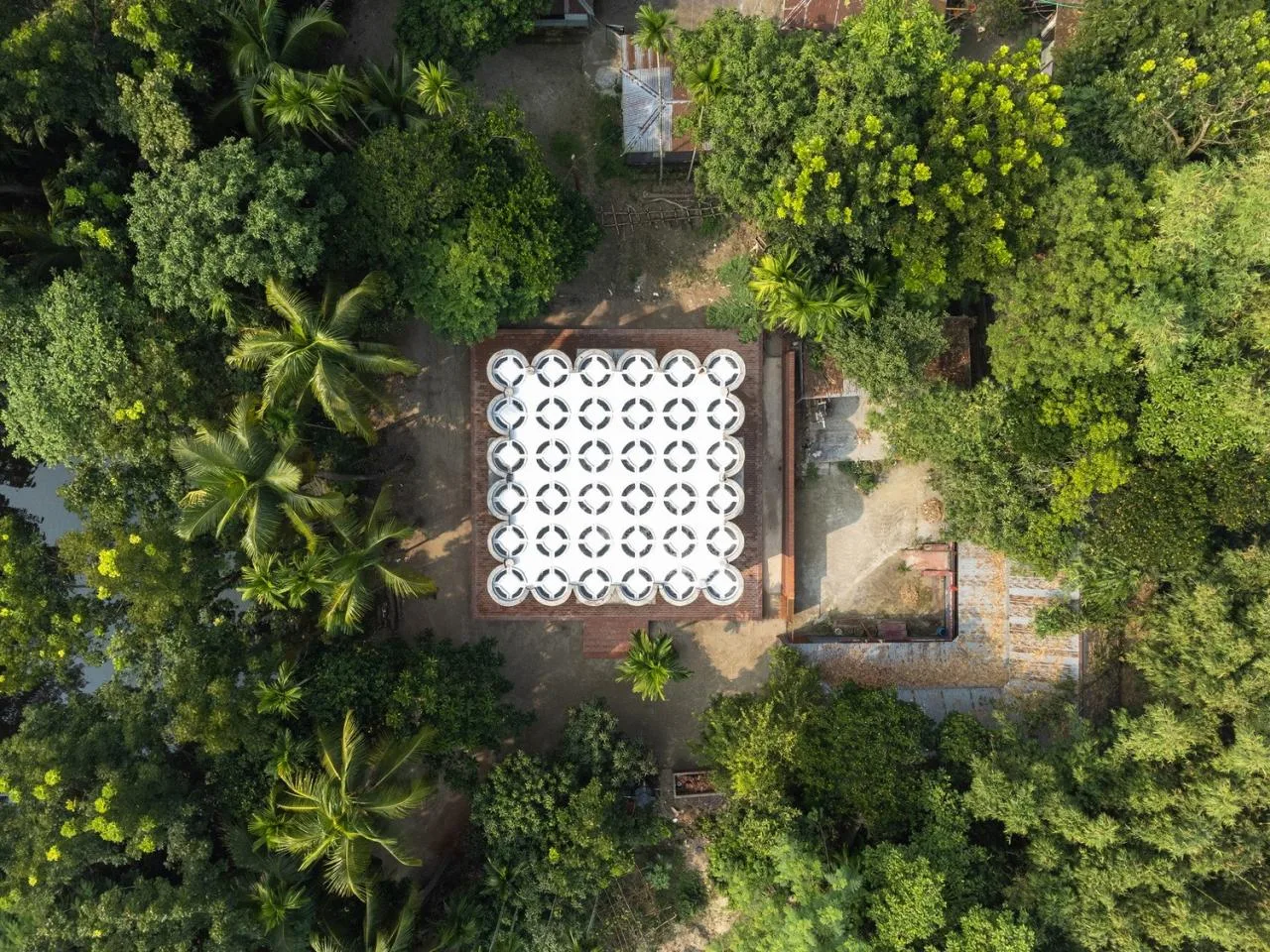
Form Generation: Square modules are commonly found in Islamic tomb architecture across the Indian subcontinent (Koch, E. 1991). These designs often draw inspiration from traditional Bangladeshi cottages. The Dorgah adopts this square shape, measuring 36’x36’ (approximately 11m x 11m), housing three graves on a white marble platform.
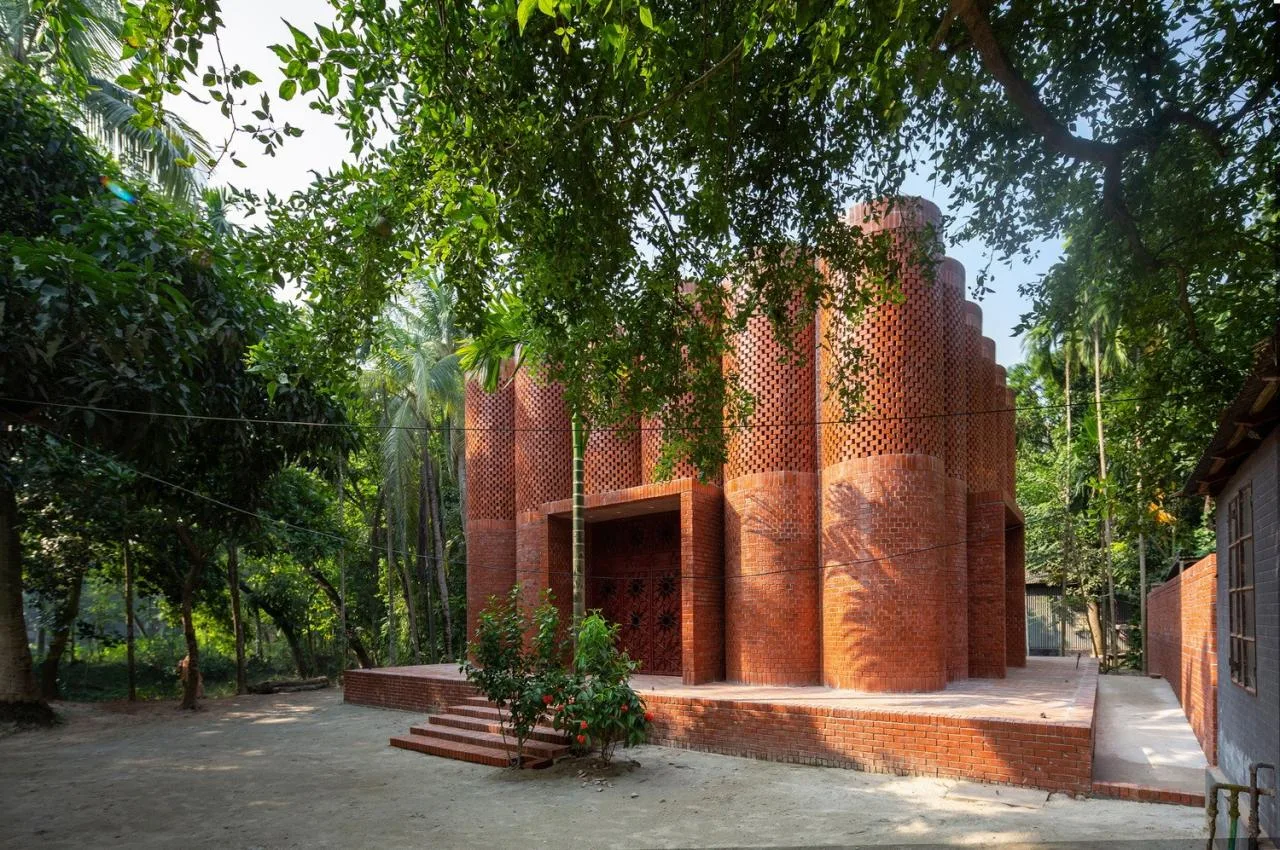
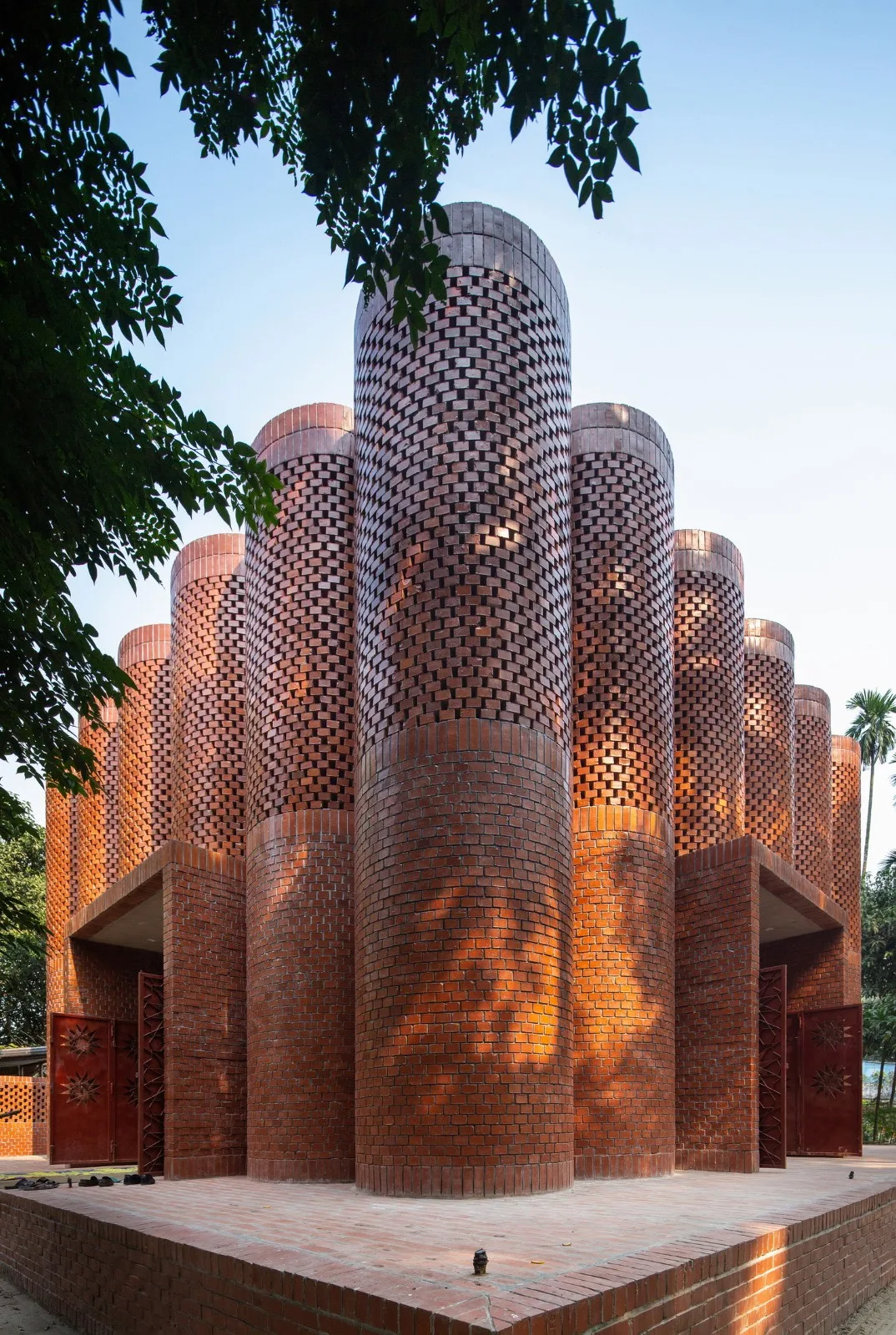
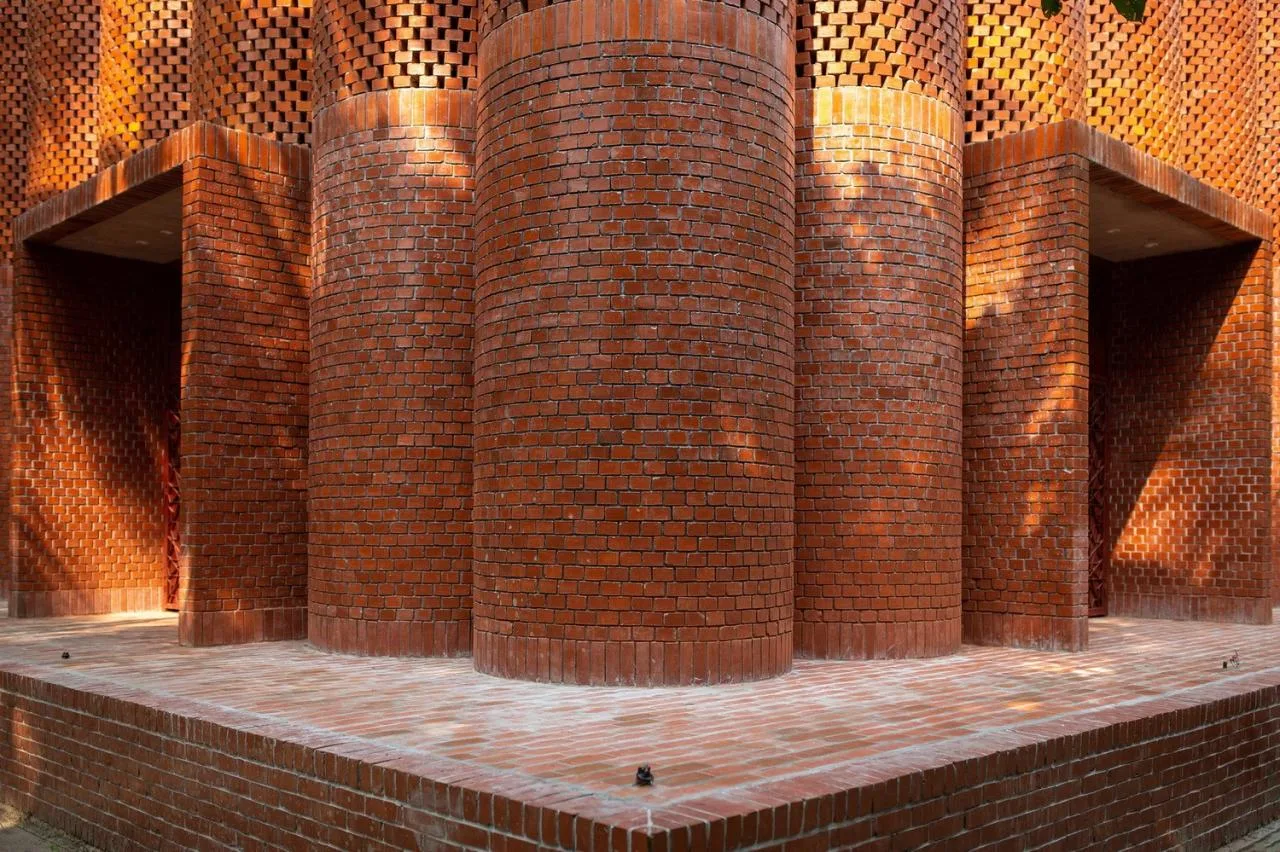
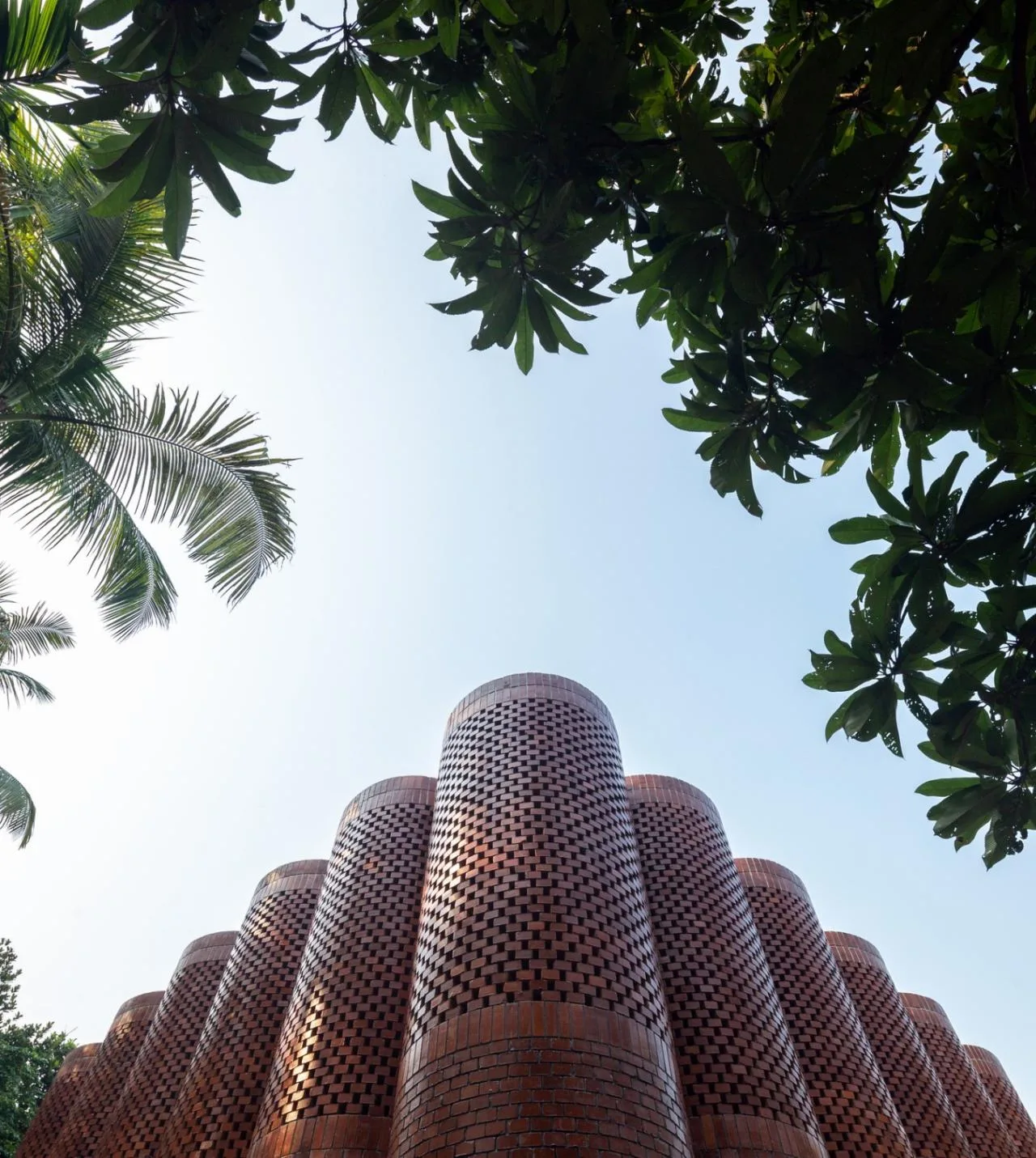
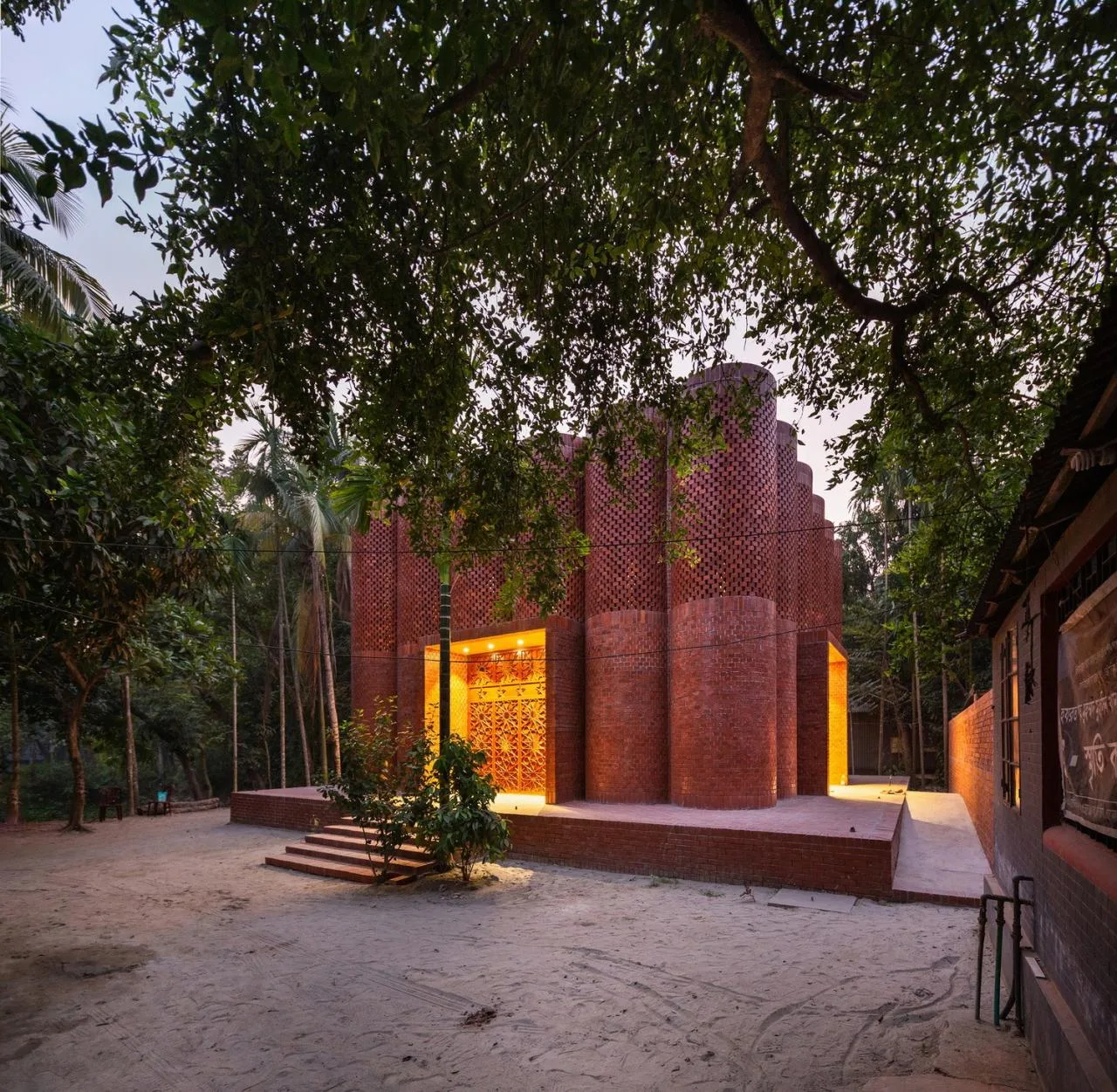
Unlike typical Vitti cottages, the Dorgah’s base is raised by 3 feet and harmoniously integrated into the surrounding residential landscape. This approach fosters an informal, natural stance rather than a formal entryway. The plan also highlights various structural corners, visually emphasizing the three-dimensional volume of the building.
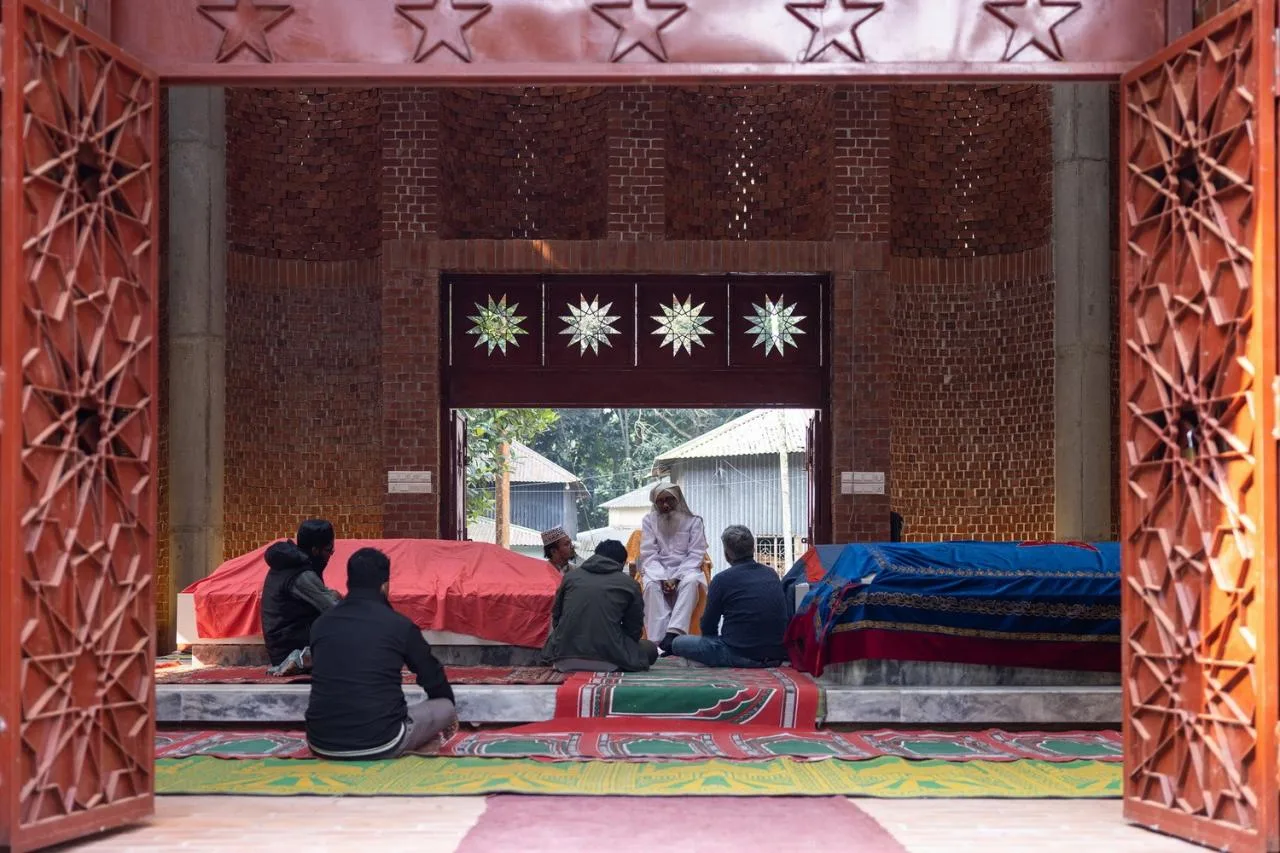
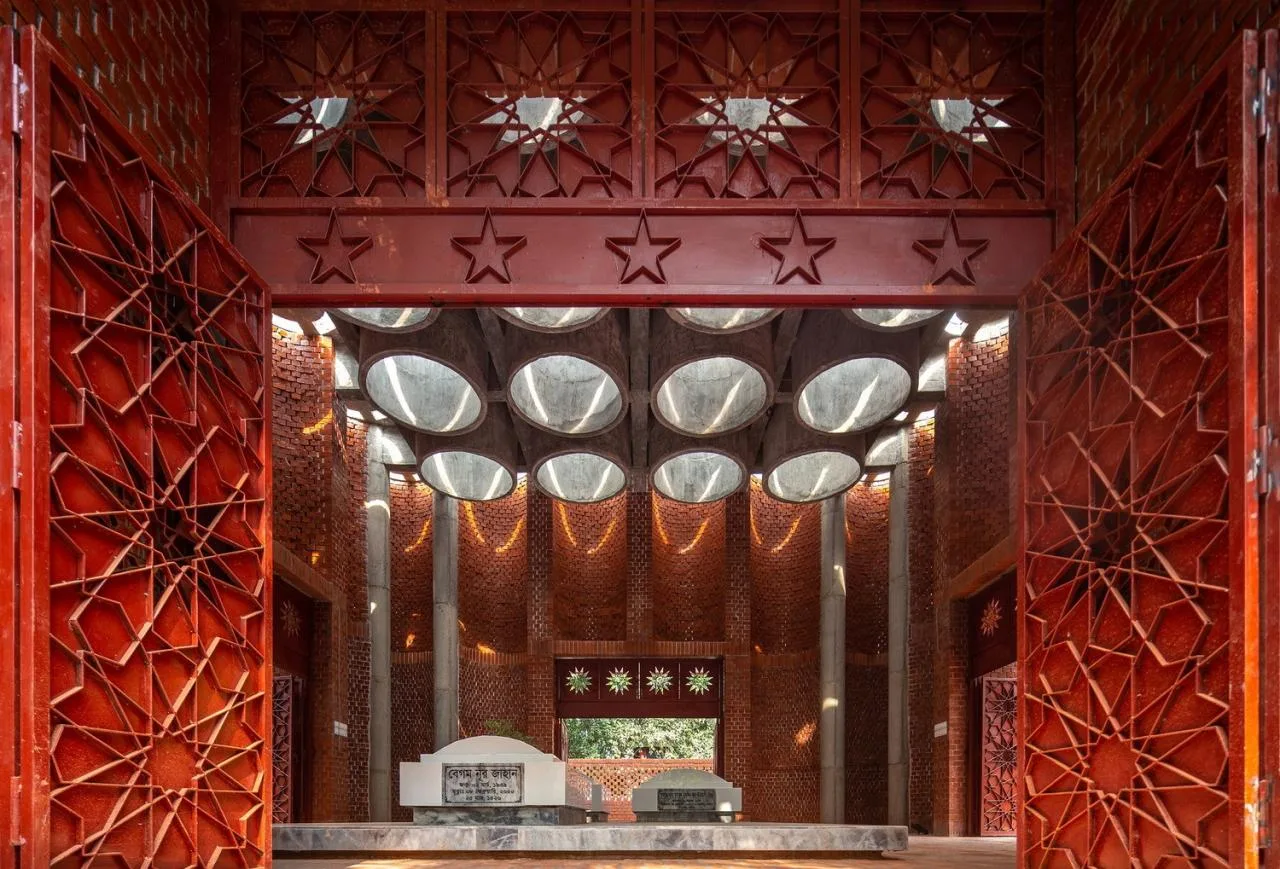
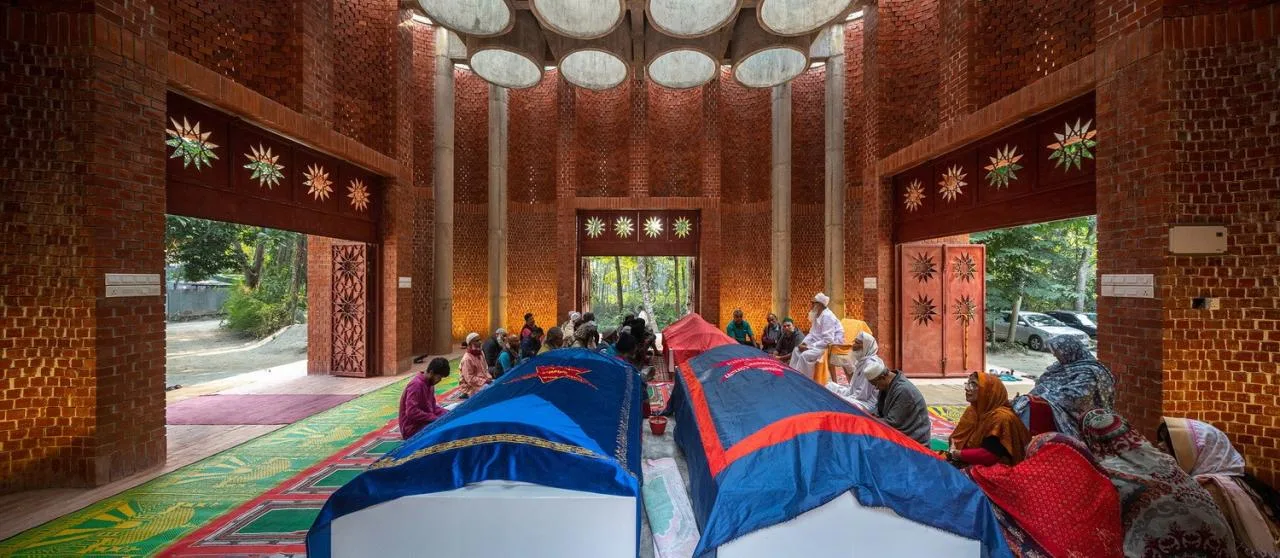
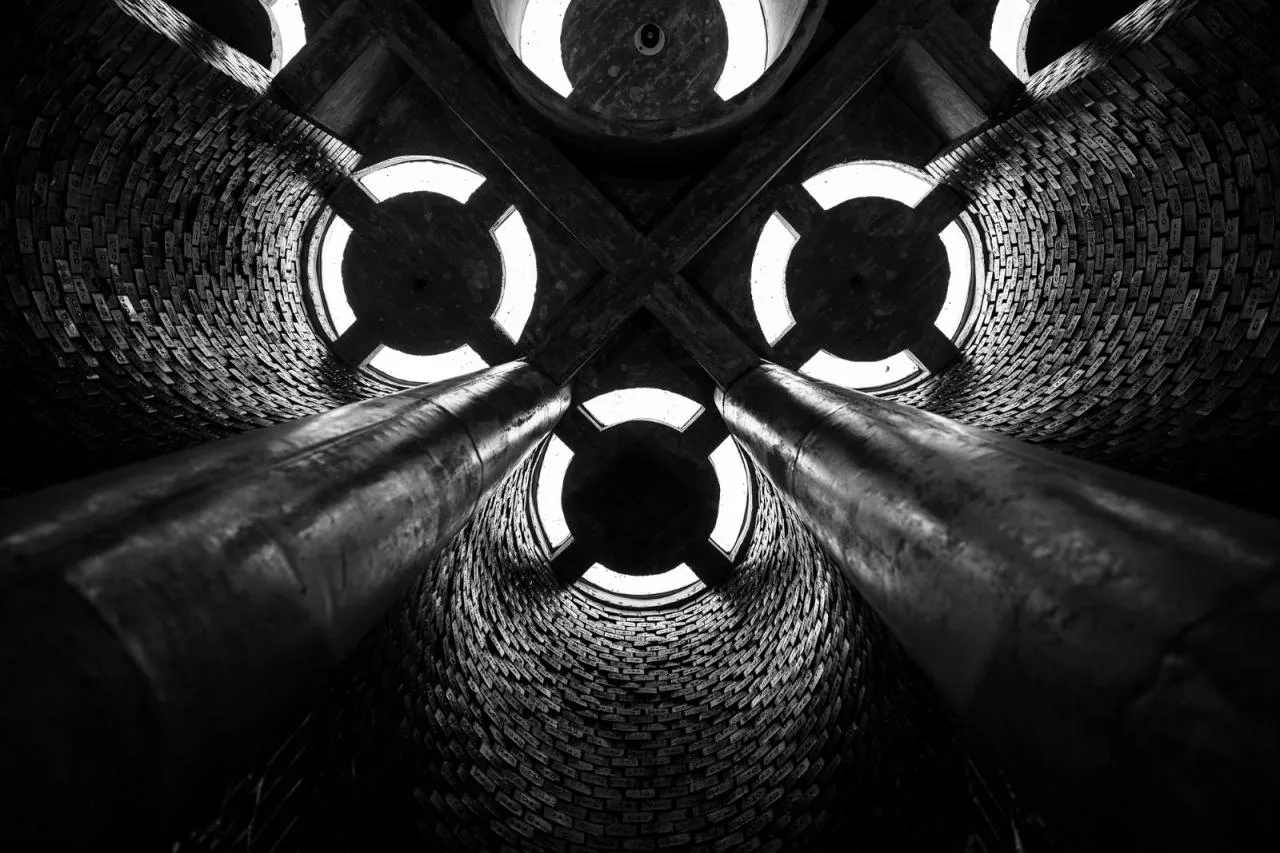
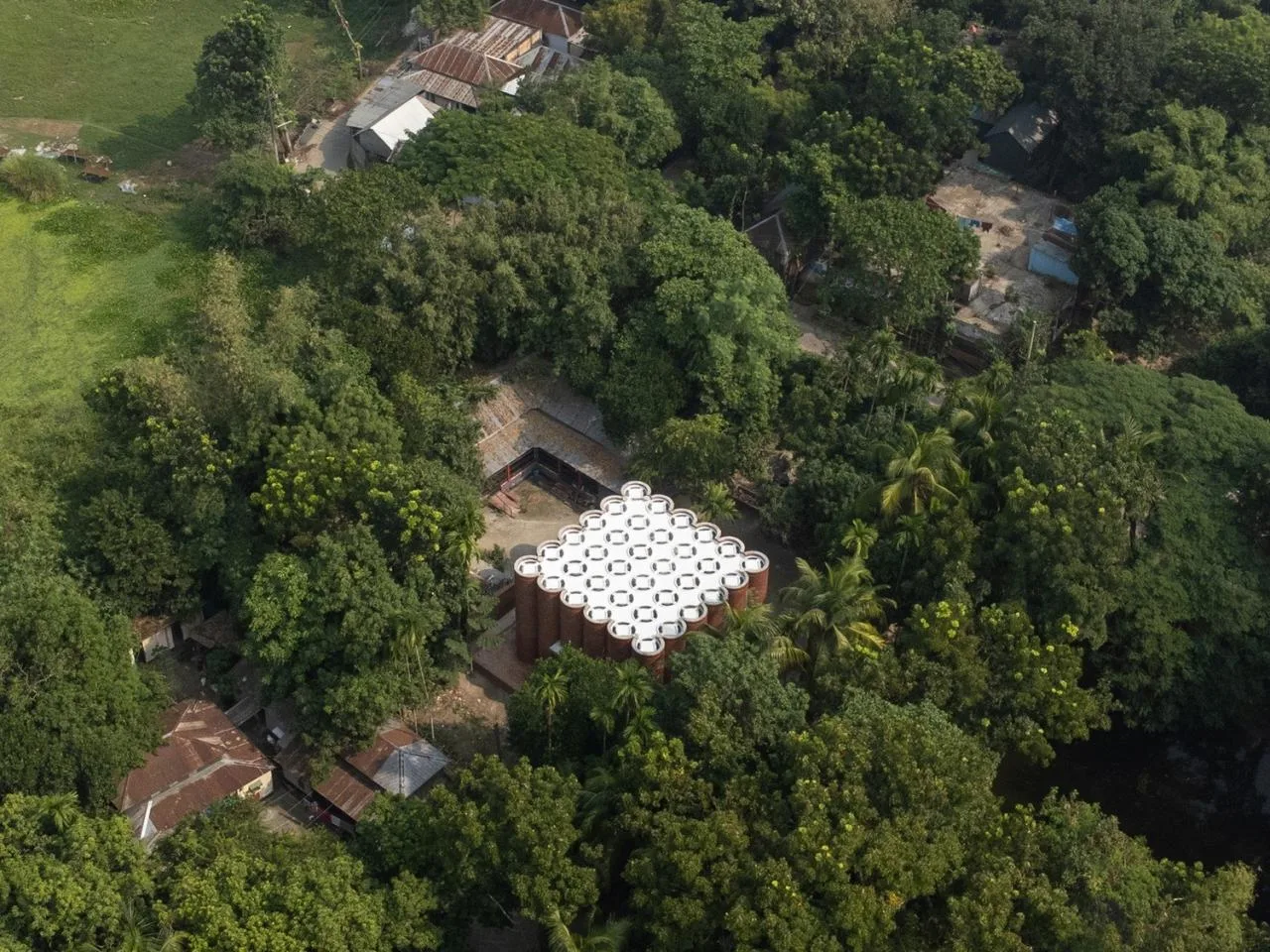
The structure rises from a 3-foot square base (about 0.9 meters) to a total height of 24 feet (around 7.3 meters). Its ceiling features 36 circular openings, inspired by the multi-dome mosques of the Sudani period. Among these, 16 are cylindrical “droplets” suspended from a waffle-like ceiling, forming a vibrant branch-like chandelier.
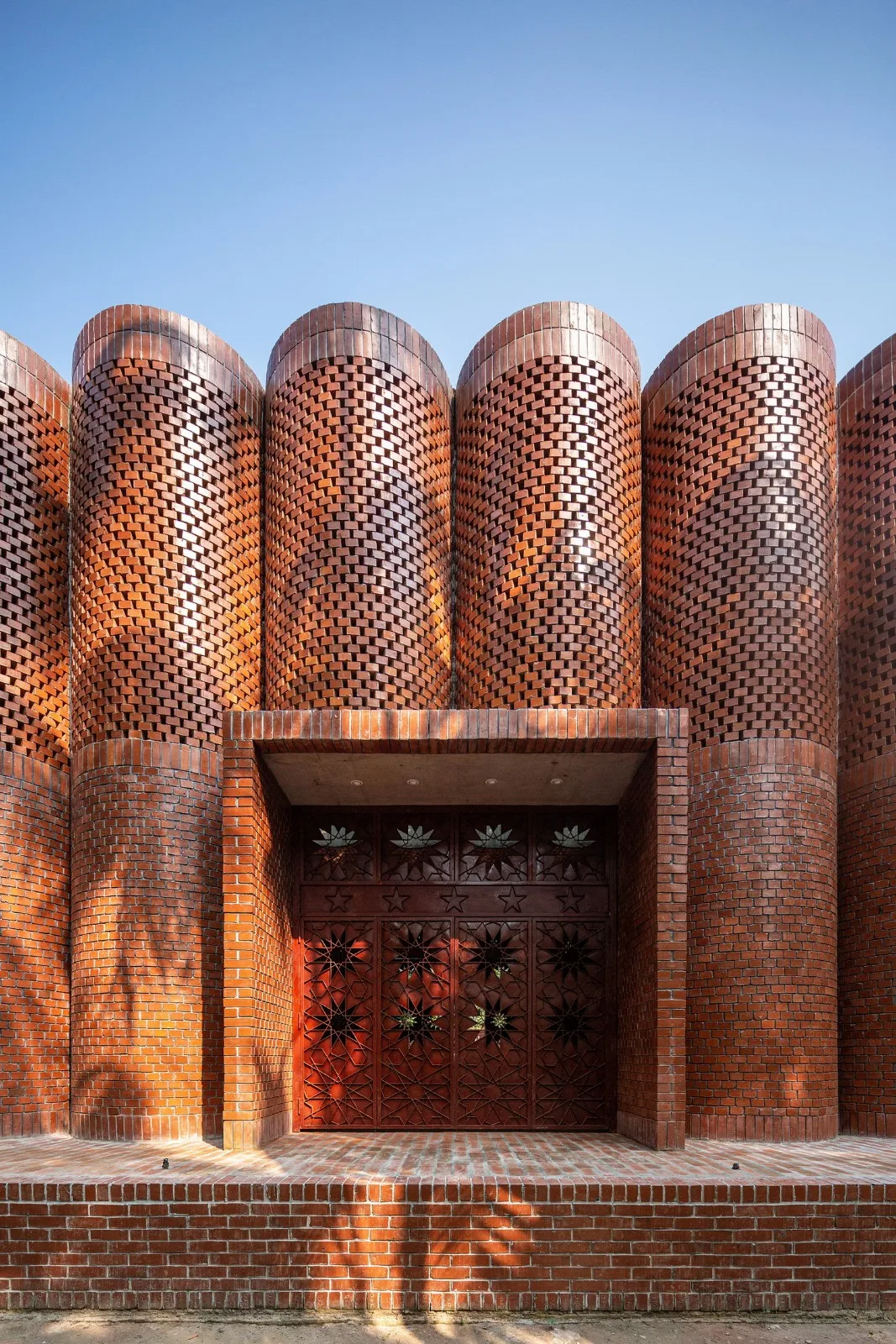
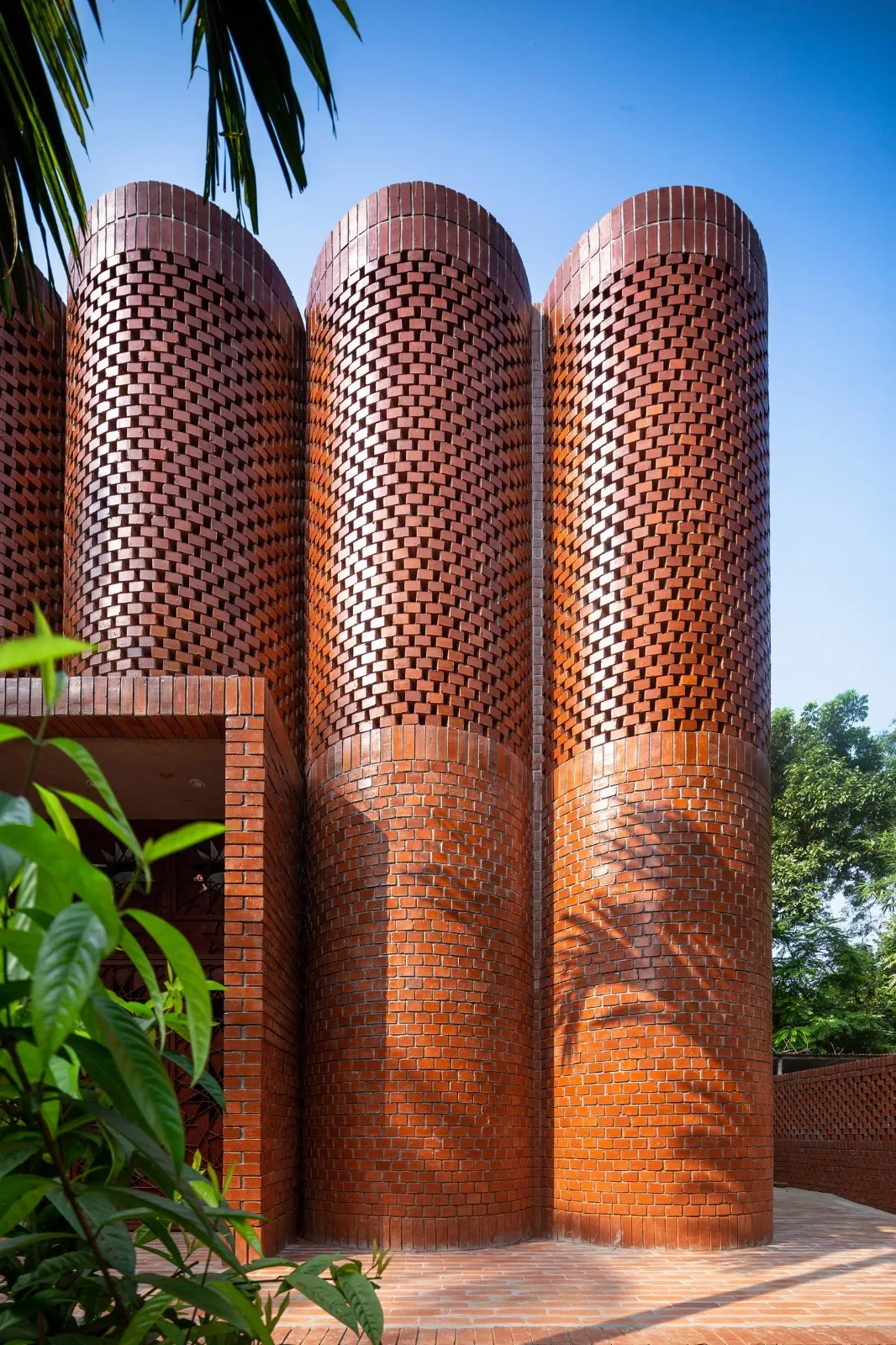
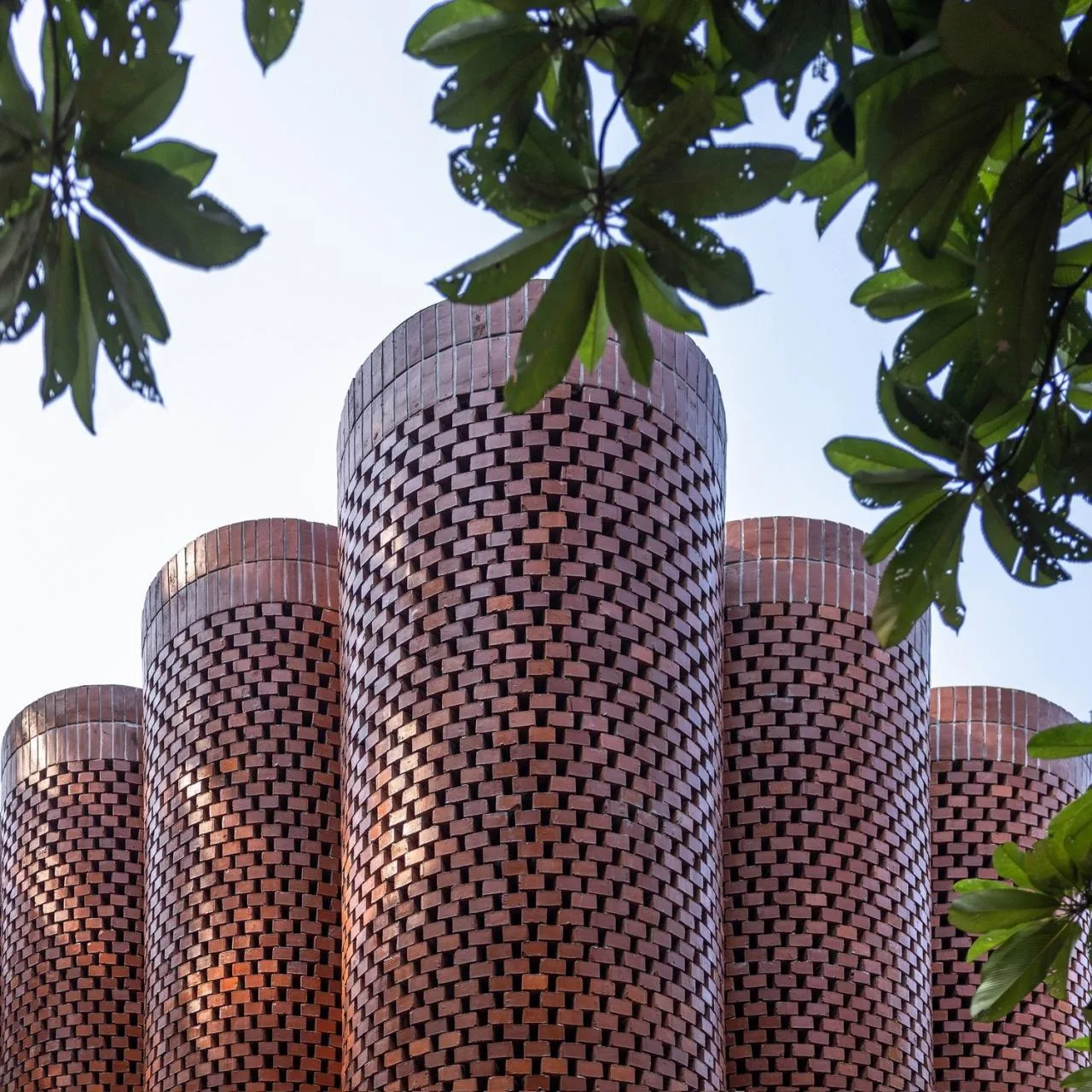
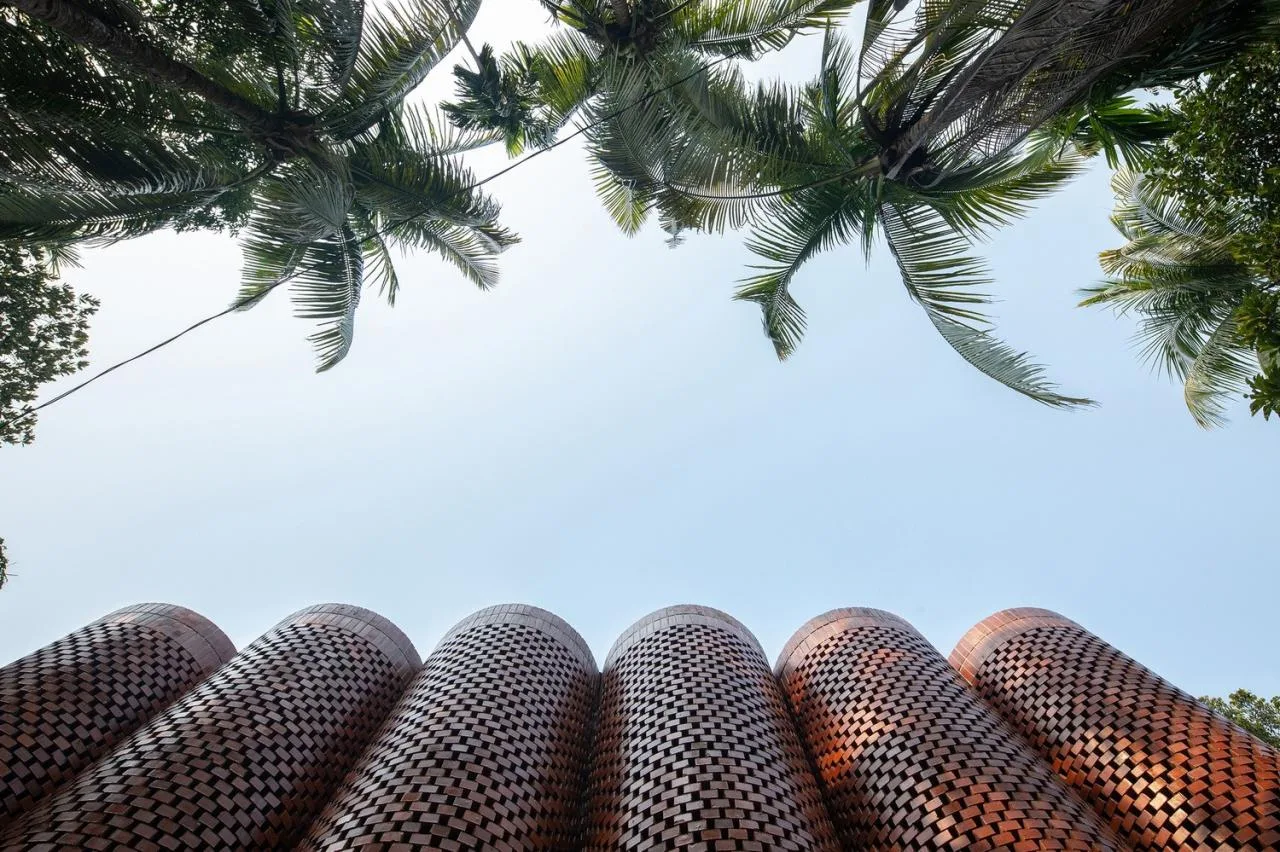
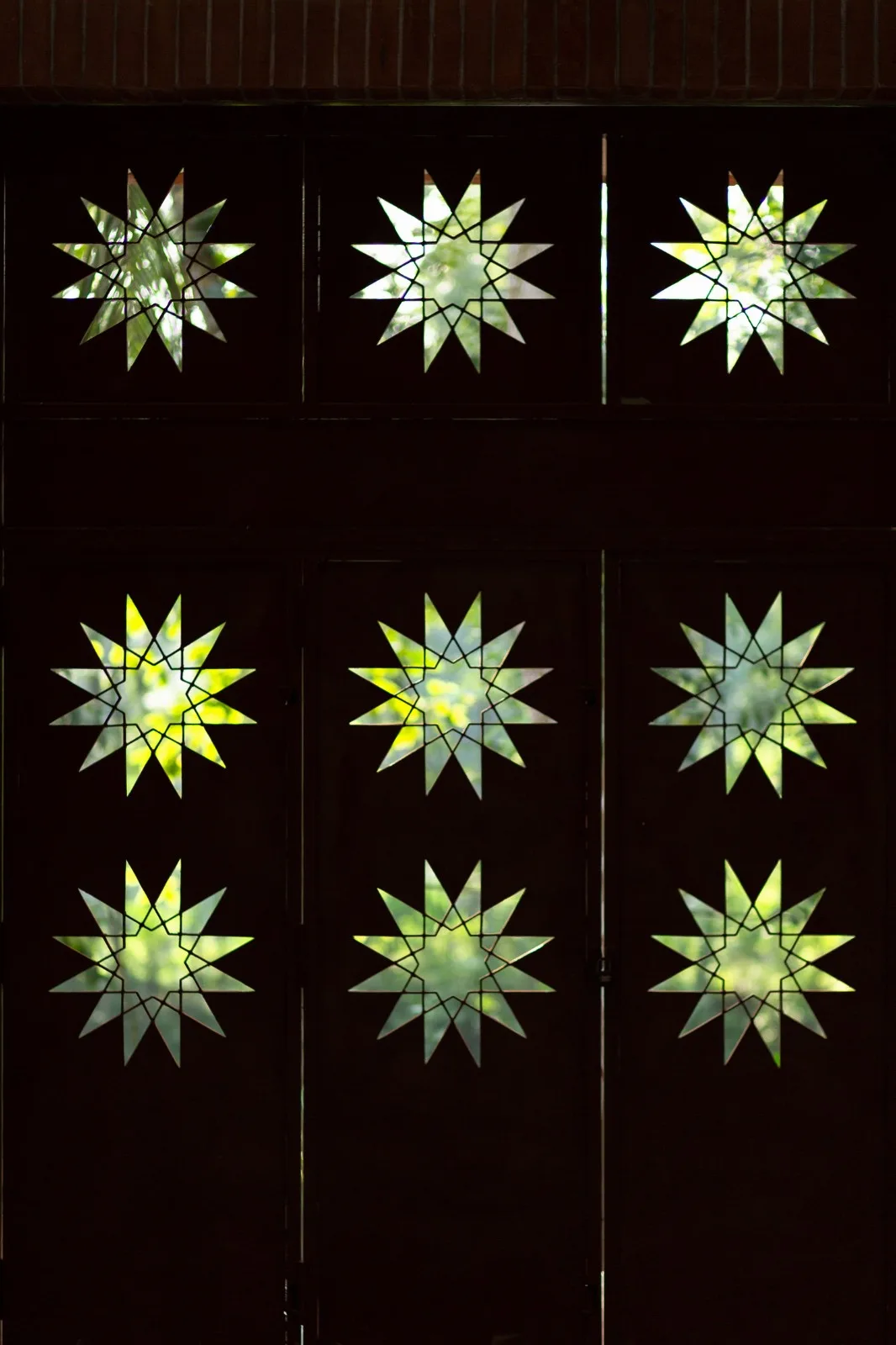
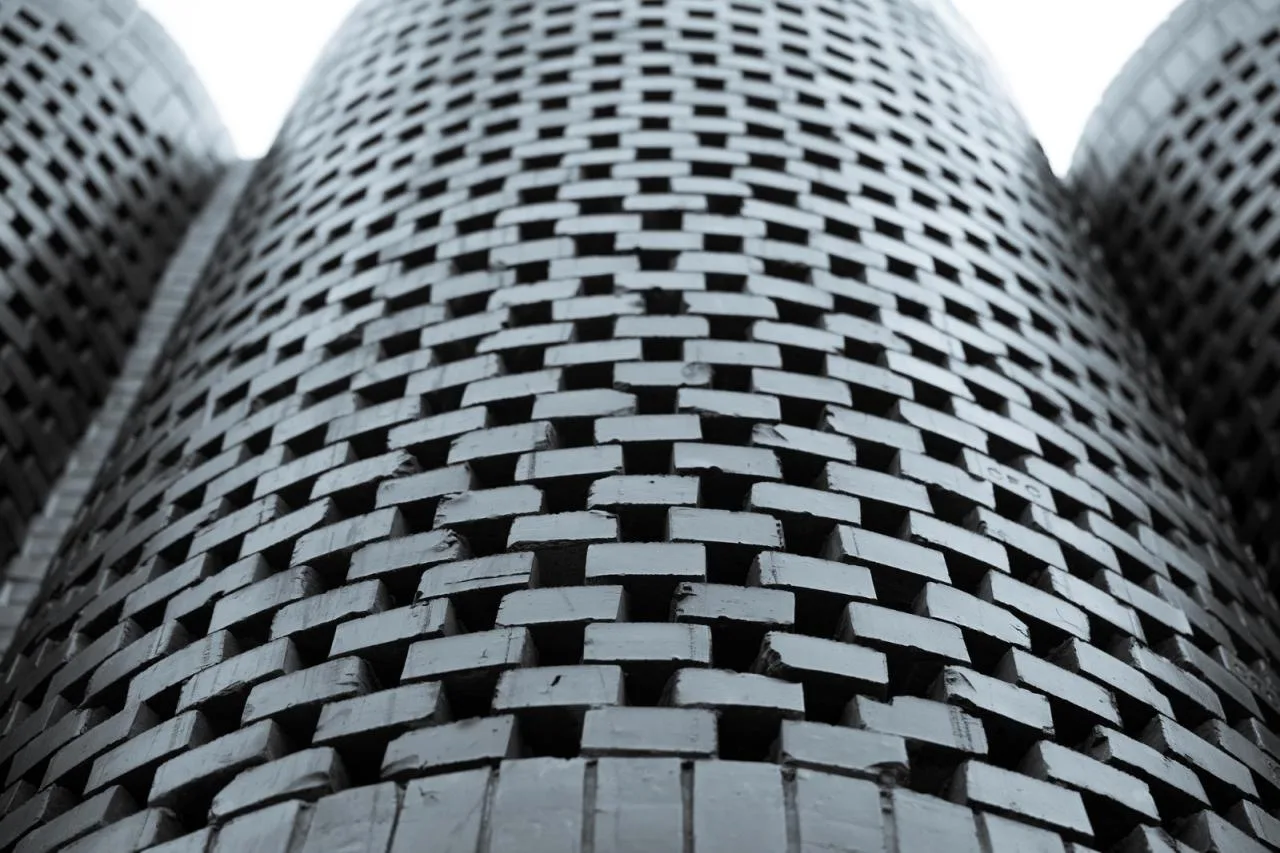
Natural light filters through this chandelier into the Dorgah, casting intricate patterns on the floor. To emphasize the structure’s significance, the architect incorporated corner turrets reminiscent of those seen in Sudani-period mosques. These repeated semi-circular turrets with perforations provide natural lighting and ventilation, shaping the building’s side facade into a familiar yet innovative landmark.
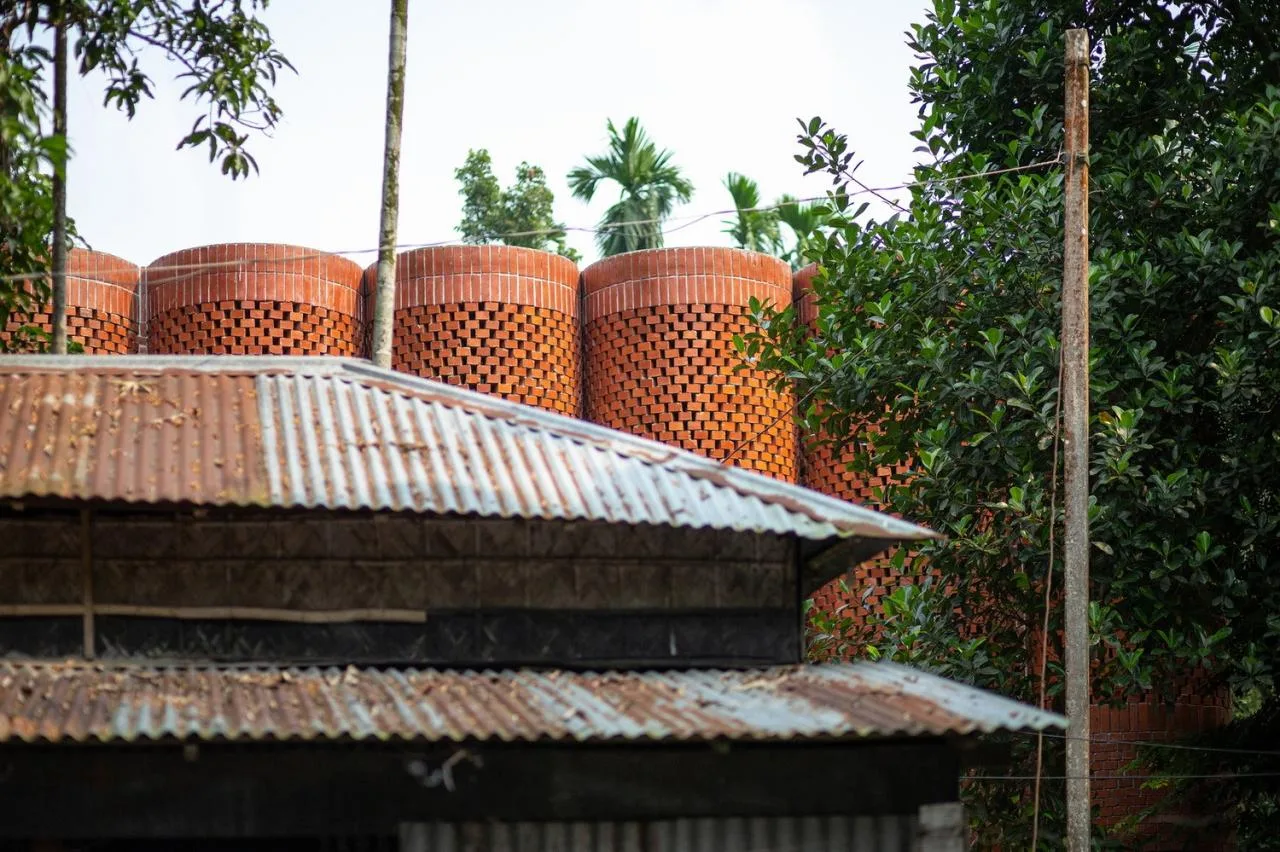
Construction Adaptations: Due to resource constraints, local masons and traditional construction techniques were employed. Because local bamboo can only reach certain lengths, scaffolding was erected in three stages to reach the 21-foot-high (approximately 6.4 meters) ceiling.
The most challenging aspect was suspending 6-foot-long (about 1.8 meters) concrete cylindrical droplets from the waffle ceiling. Craftsmen first cast the waffle board with circular openings, then hung the cylindrical droplets. Each droplet required four metal templates, each consisting of two 3-foot-high (about 0.9 meters) units, to shape the 6-foot-long form between the waffle structures.
Natural light penetrates these perforated droplets, creating a dramatic, spiritual atmosphere. The semi-circular brick towers were cast around the edges of the chandelier ceiling.
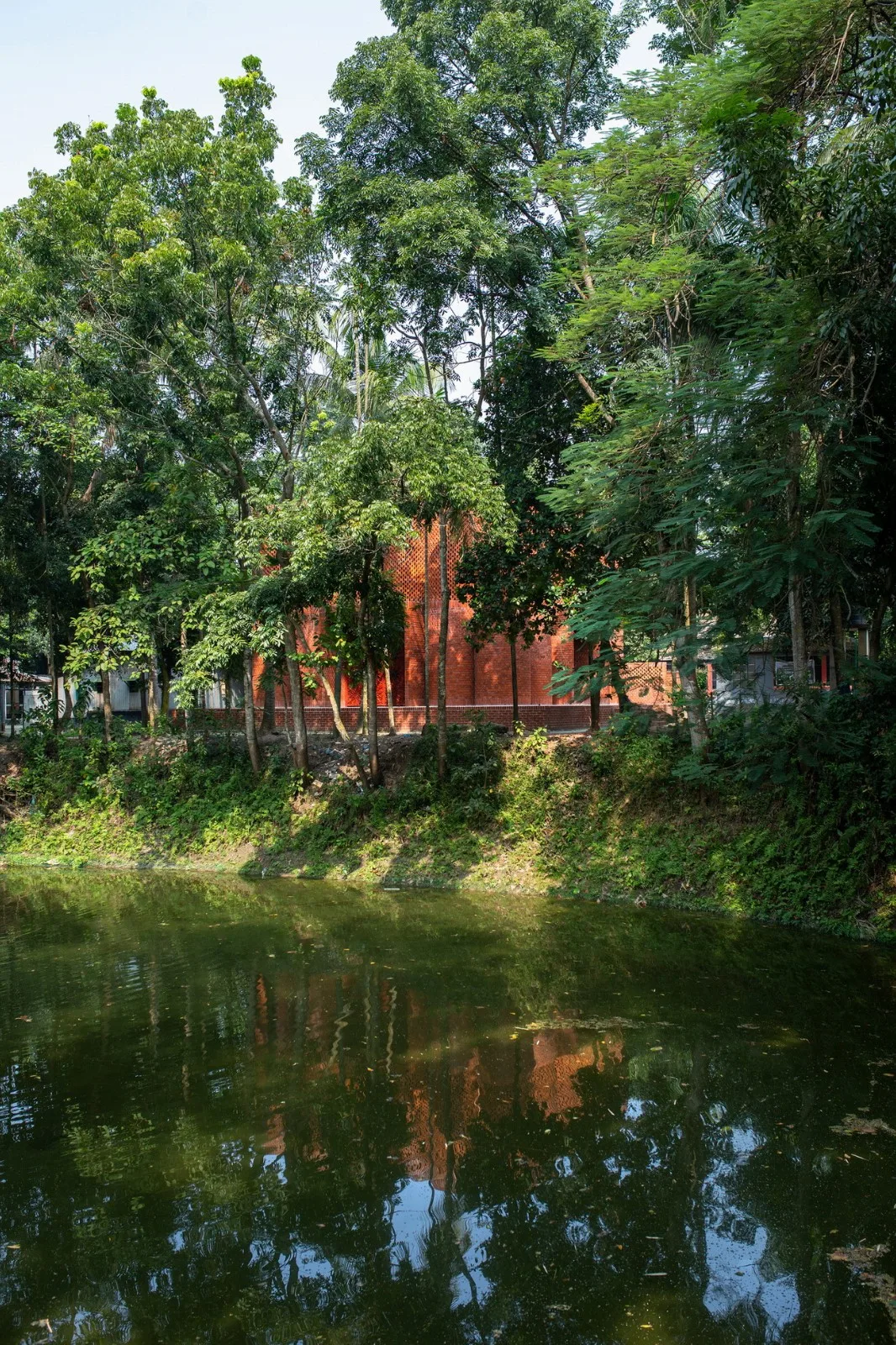
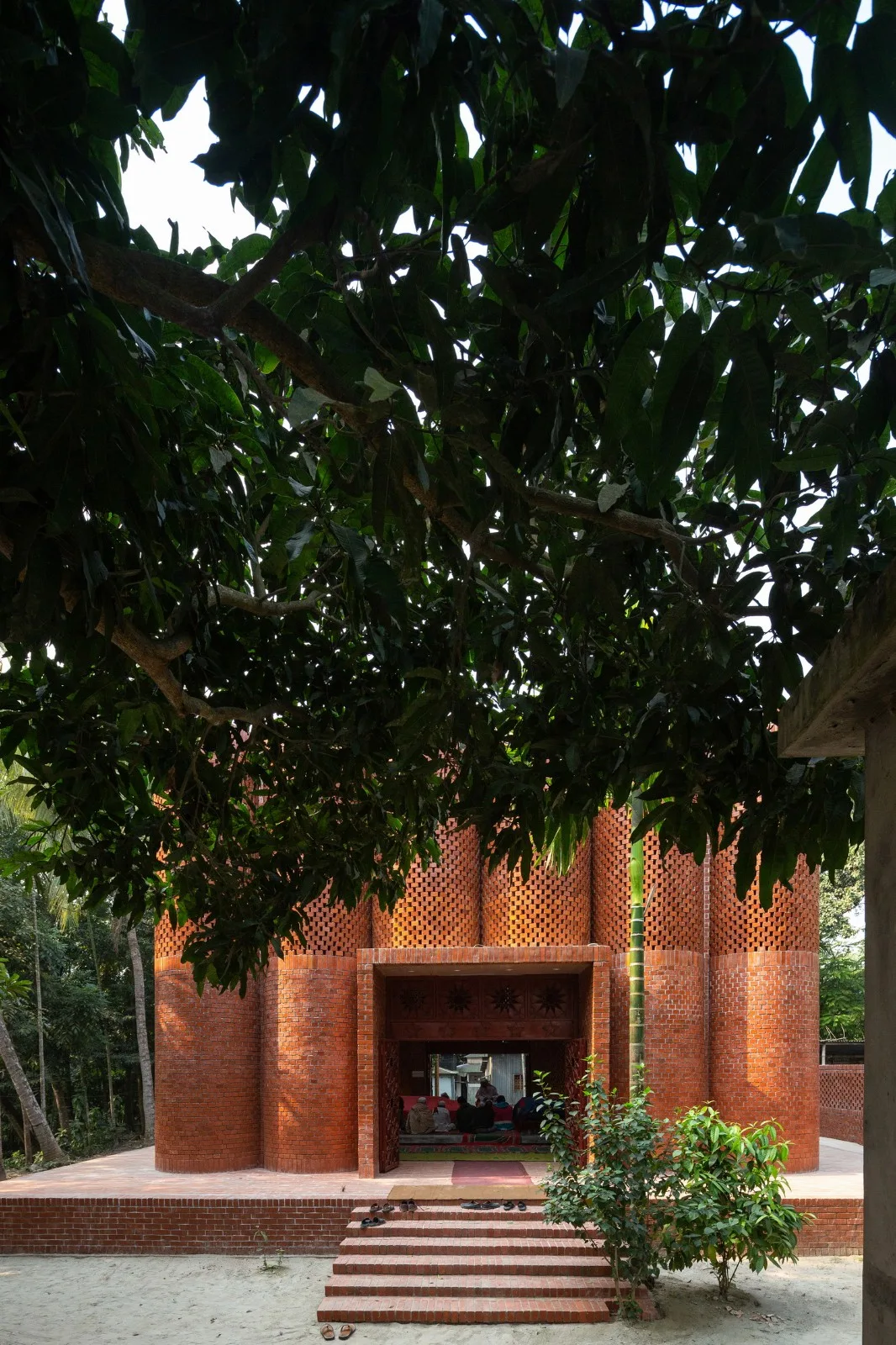
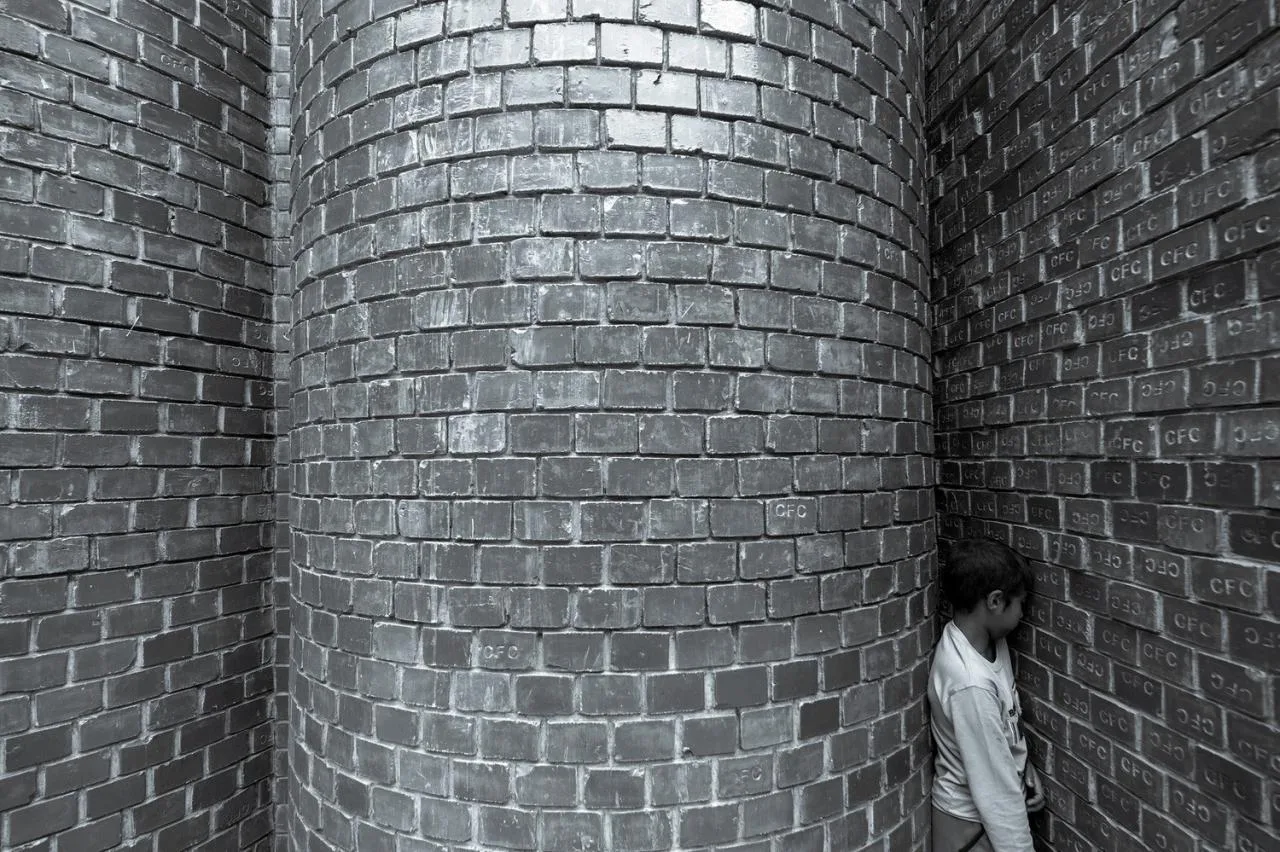
The project’s bricks trace their origins to medieval Bengal Buddhist temples. During the Sudani period, brick and clay decorations were predominant, and the local community valued the raw, red brick aesthetic. To achieve harmony within the environment and meaningful symbolism, the architect chose red brick for the Dorgah’s outer shell and base.
Bricks were manually selected from nearby yards to ensure local authenticity at multiple levels. Structural elements such as columns, slabs, and cylindrical droplets are made of concrete to meet functional demands for larger spans, load-bearing, and construction flexibility. Ultimately, the three tombs rest on a raised white marble platform above the brick floor.
Project Drawings
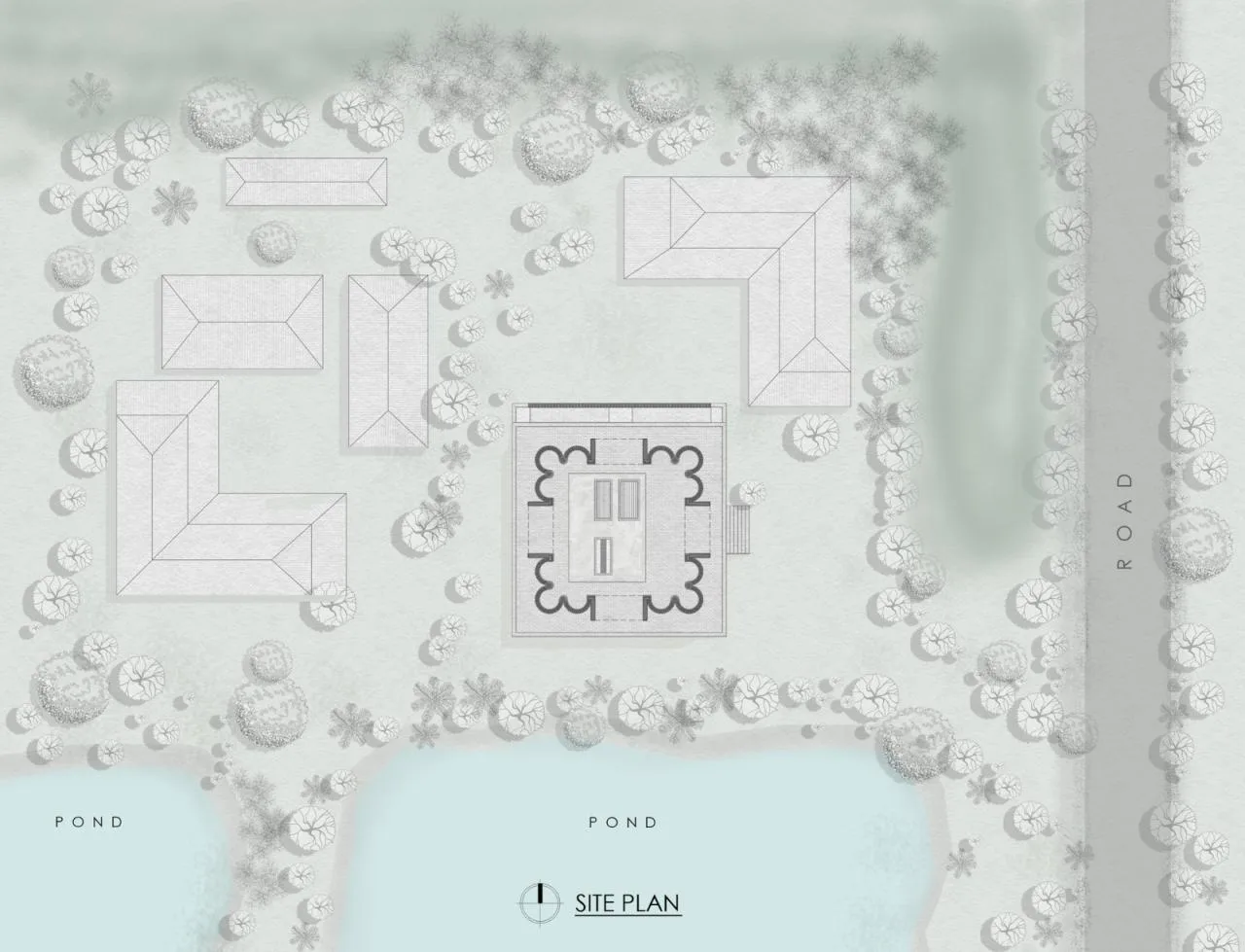
△ General Layout Plan
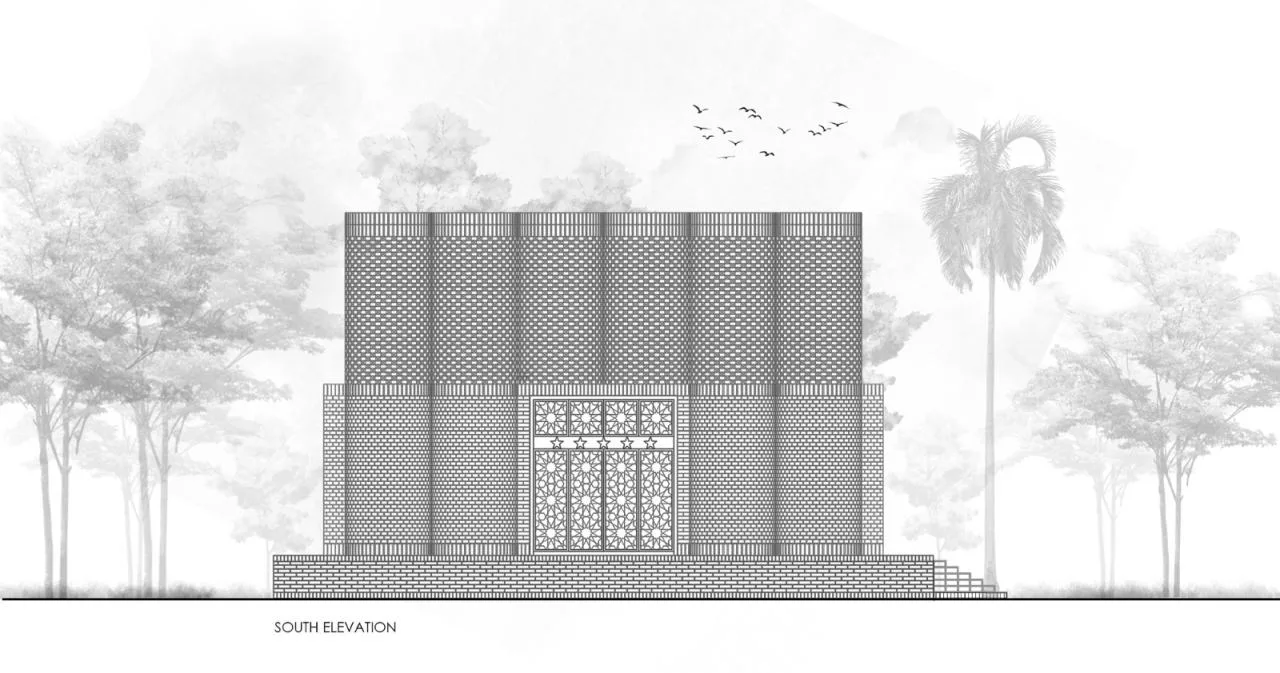
△ Elevation Drawing
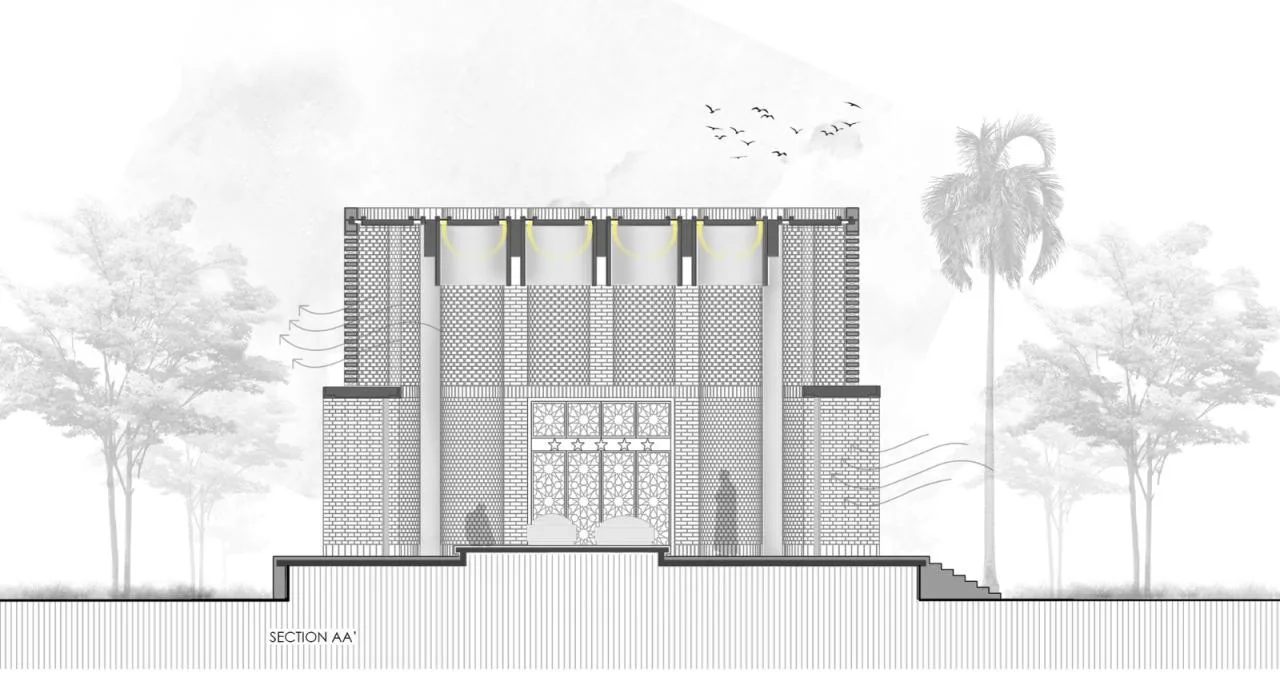
△ Section Diagram
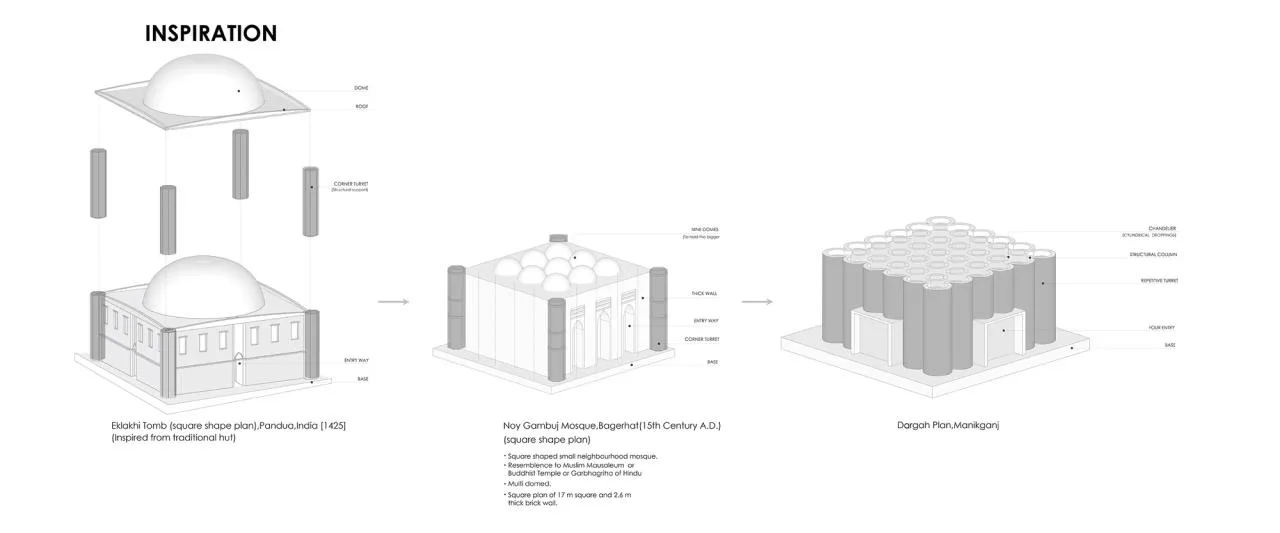
△ Analysis Chart
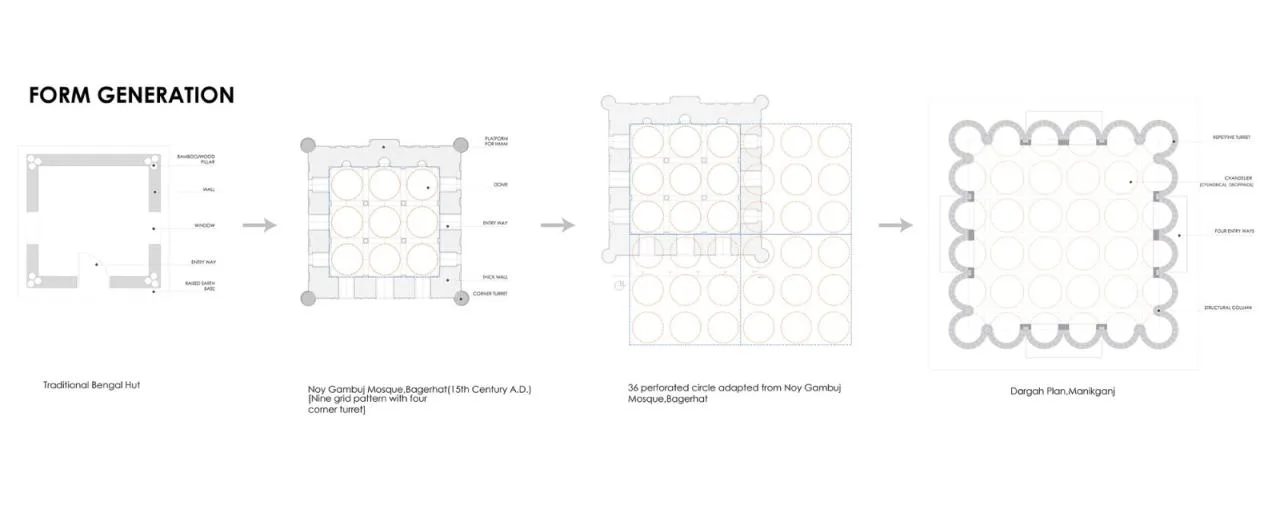
△ Analysis Chart
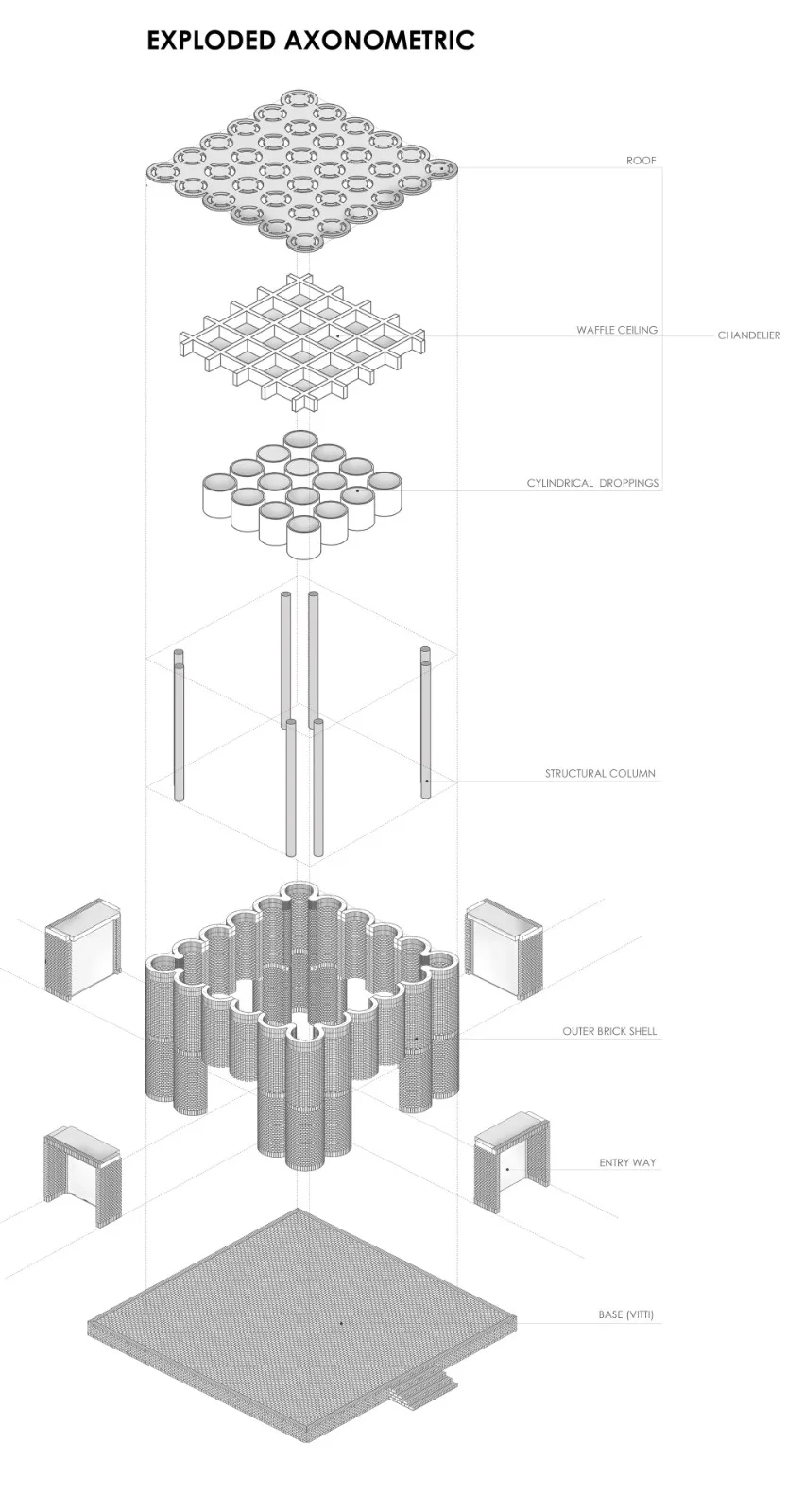
△ Structural Analysis Diagram
Project Information
Architect: Sthapotik
Area: Approximately 196.58 square meters
Project Year: 2022
Photographer: Asif Salman
Lead Architect: Sharif Uddin Ahammed
Drawing and On-site Supervision: Sharif Uddiin Ahammed, S.M. Mushhfiqul Karim, Sadeka Badiozzamman
Recording Team: Sharif Uddiin Ahammed, Syeda Saikha Sudah, Asifa Jamal
Location: Manikganj, Bangladesh













Must log in before commenting!
Sign Up