
Project Introduction
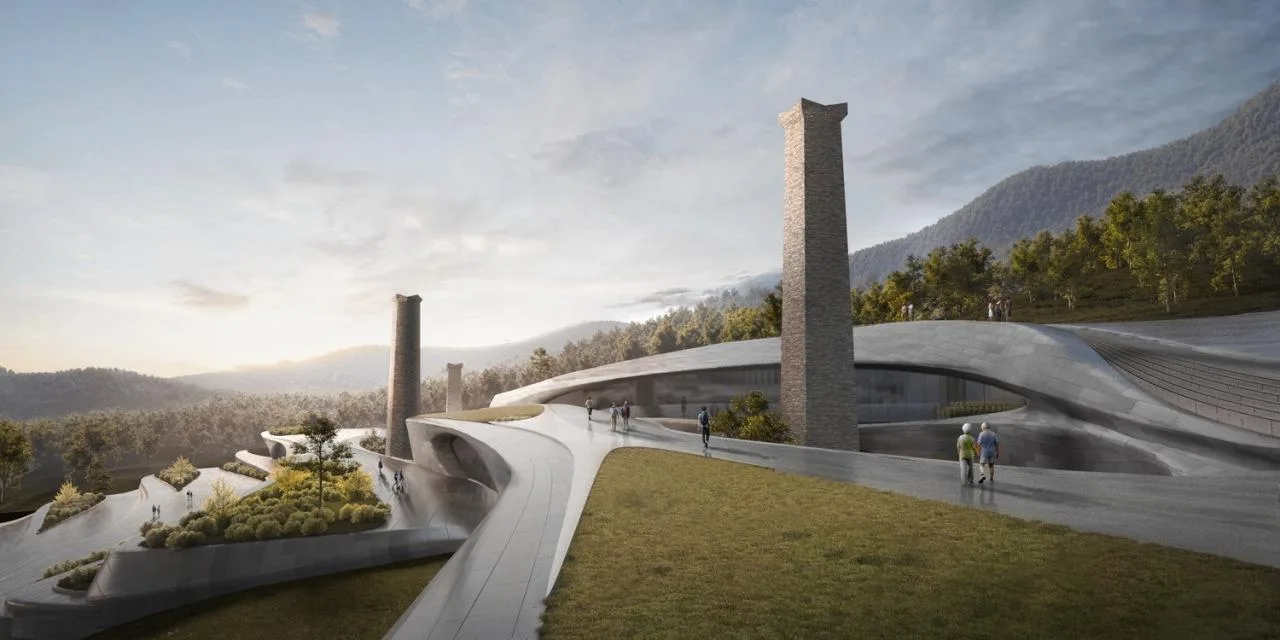
This project is situated in Molo Village, Danba County, within the Garze Prefecture of Sichuan Province. The architectural design draws inspiration from the natural undulating mountain contours, guiding the spatial layout of the building. It respects and aims to preserve the traditional local culture by incorporating the distinctive stone watchtower architecture of the Danba region as a cultural symbol and memory.
The design delivers a cultural complex that simultaneously fulfills the cultural commemoration needs and supports distinctive commercial activities, serving both villagers and tourists through modern architectural expressions.
Venue Information & Regional Culture
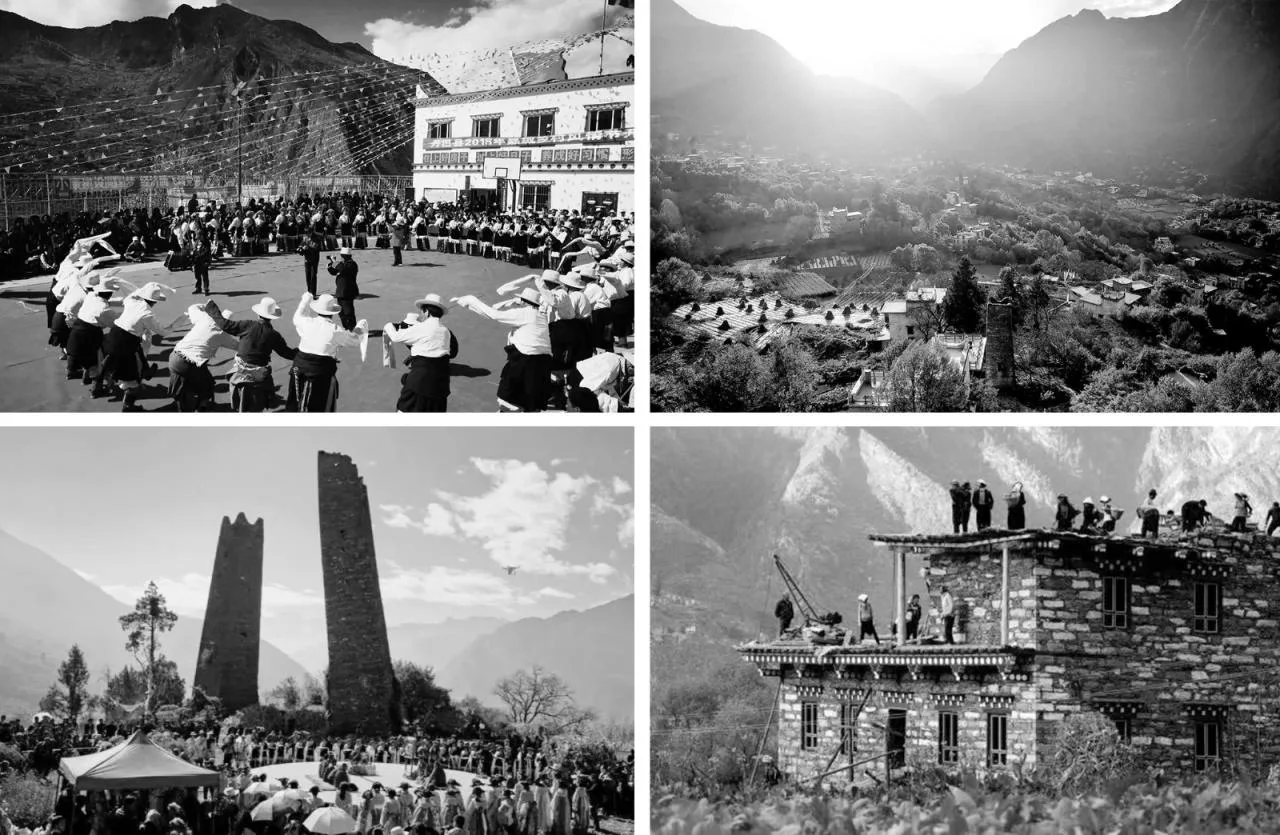
△ Village Environment
Venue photos:
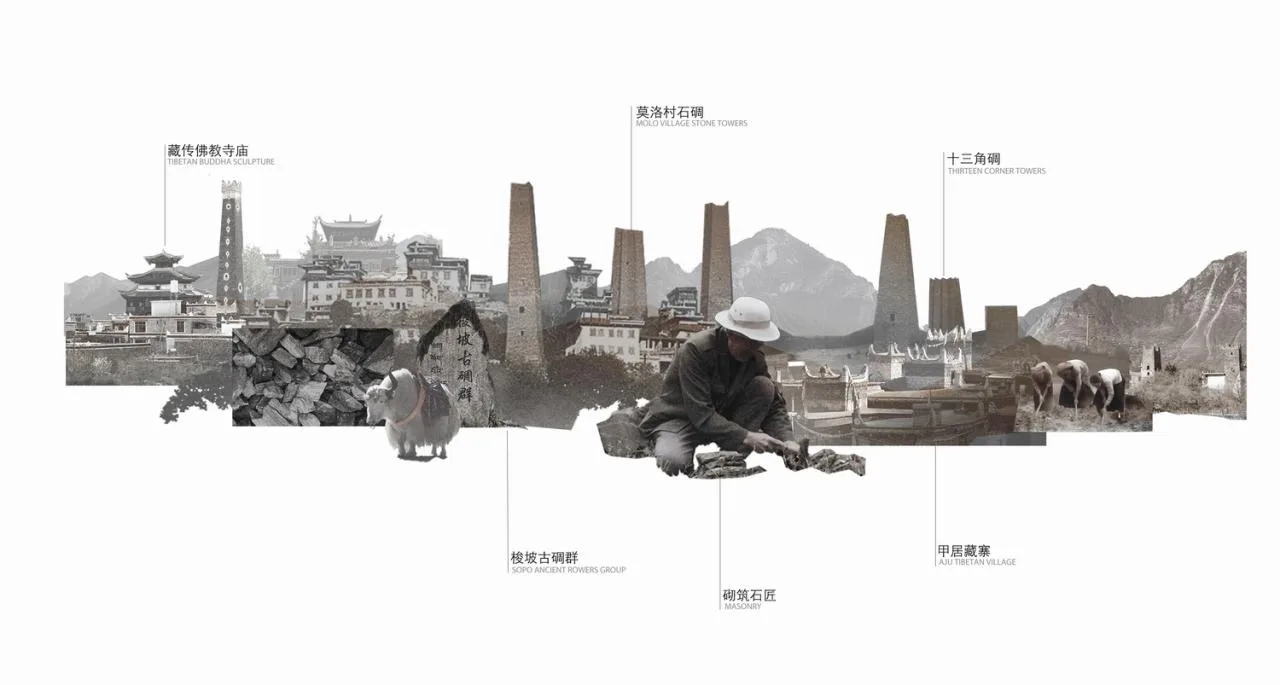
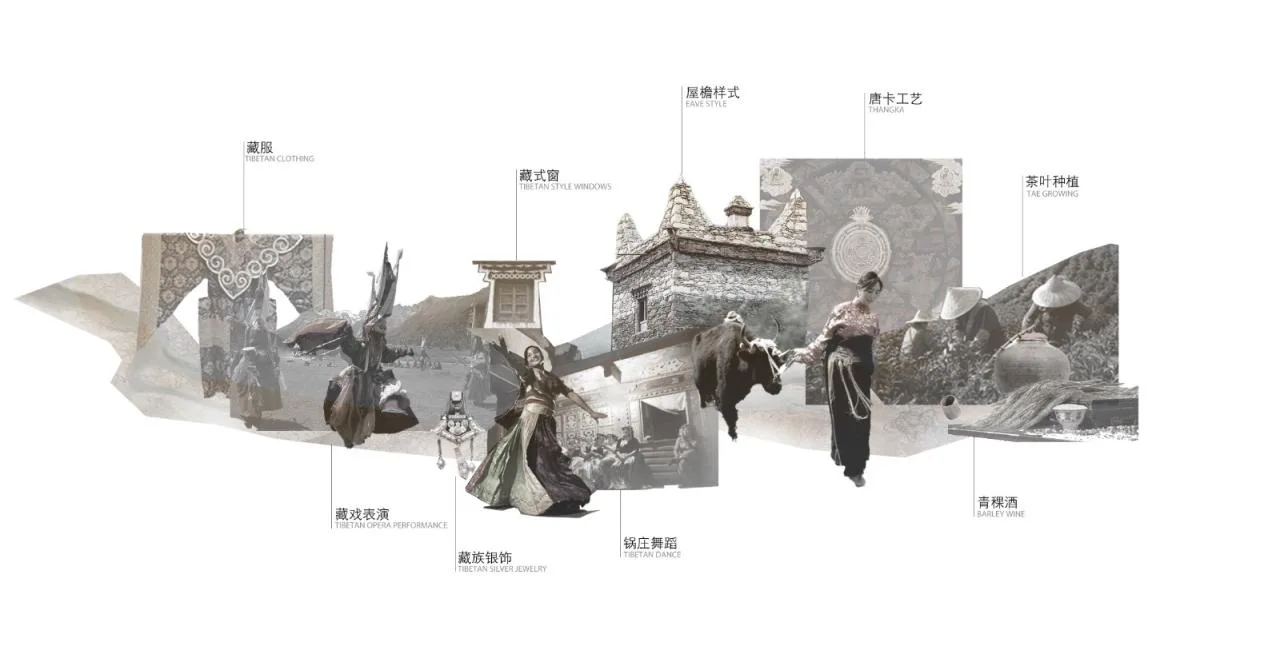
△ Cultural Customs
Space Combination
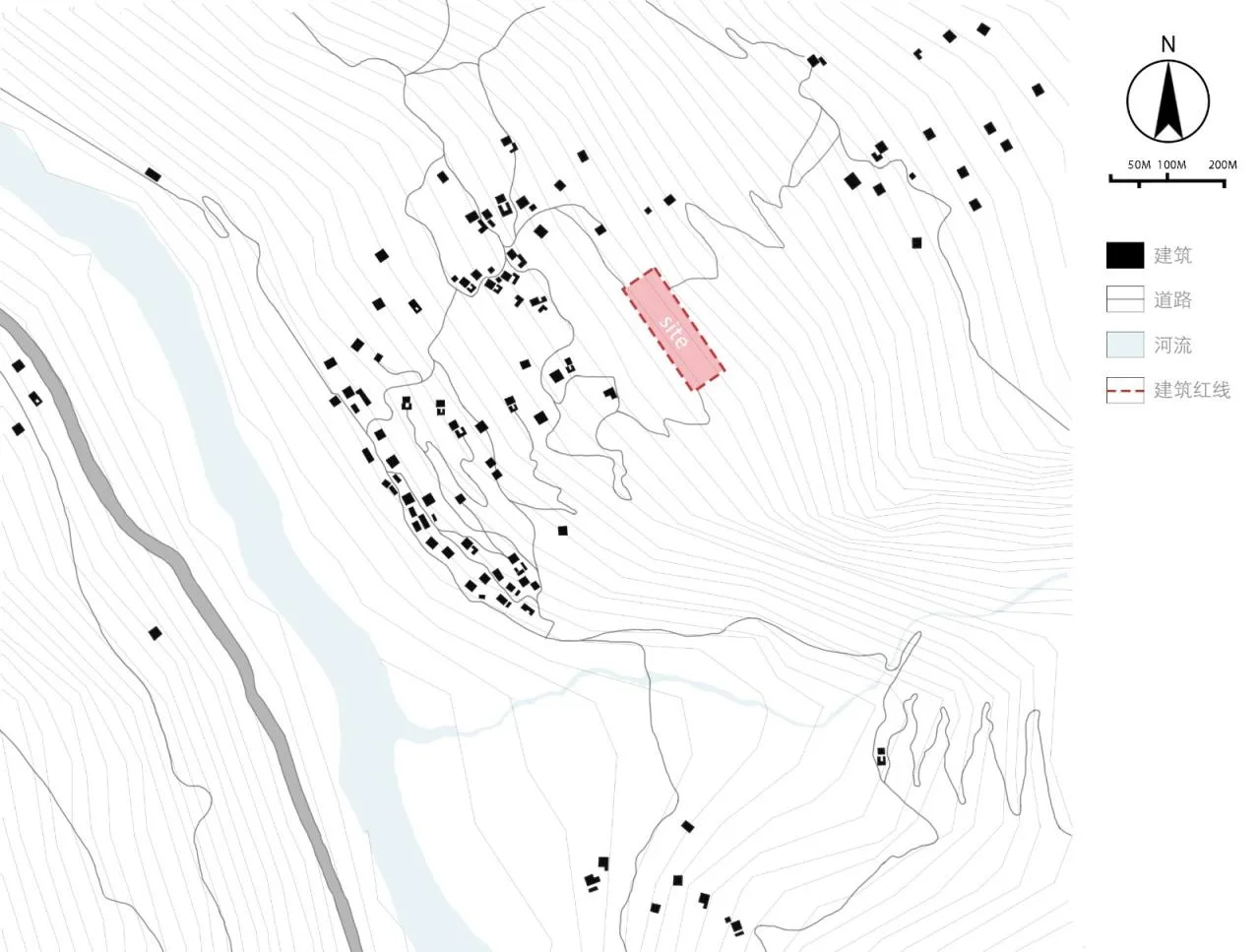
△ Site Plan
The village lies at the crossroads of Maolonggou and the Dadu River. Due to the village’s dense layout and the historical protection of the stone watchtower, Qionglong, the site was selected on an open area above the village, covering approximately 15,000 square meters.
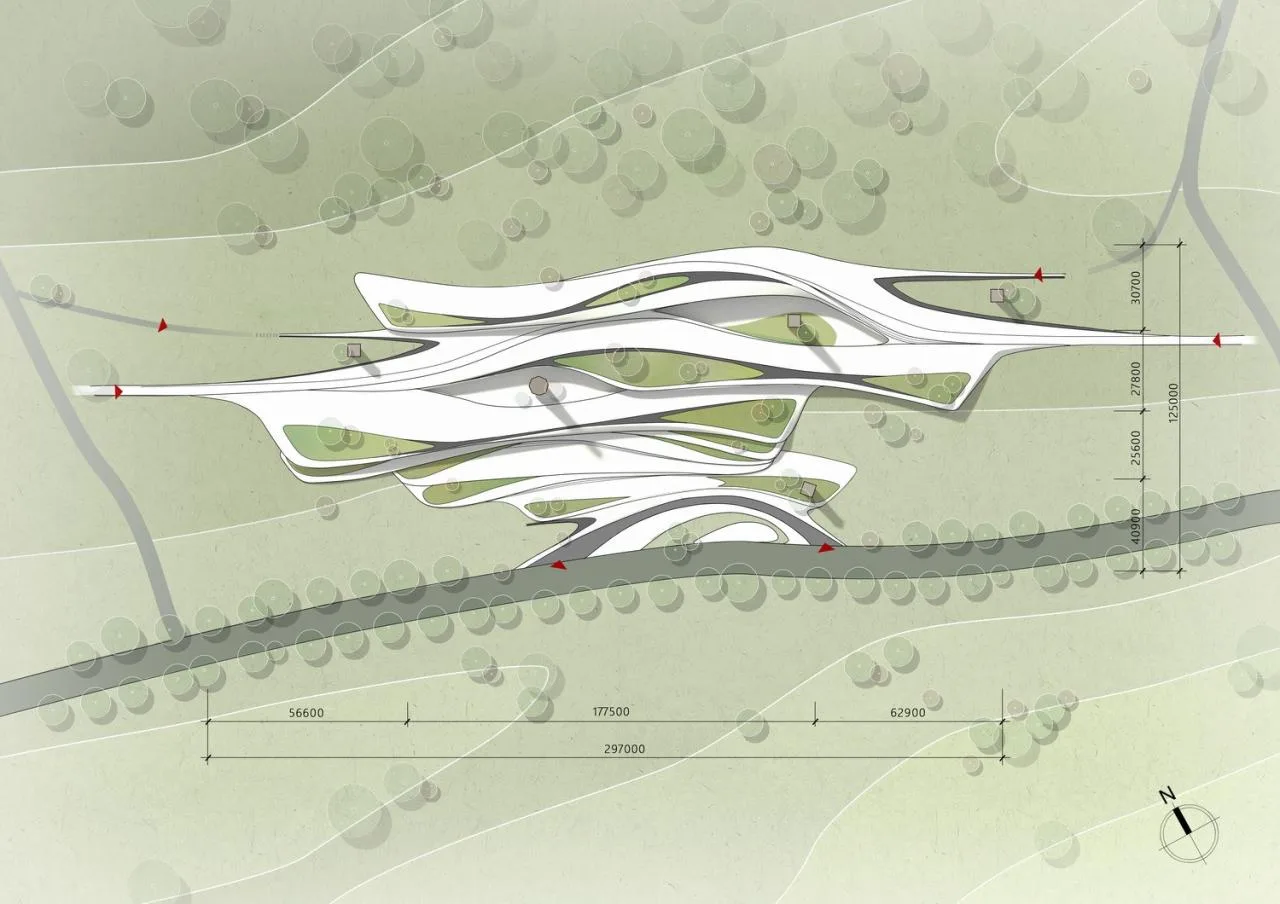
△ Building Plan
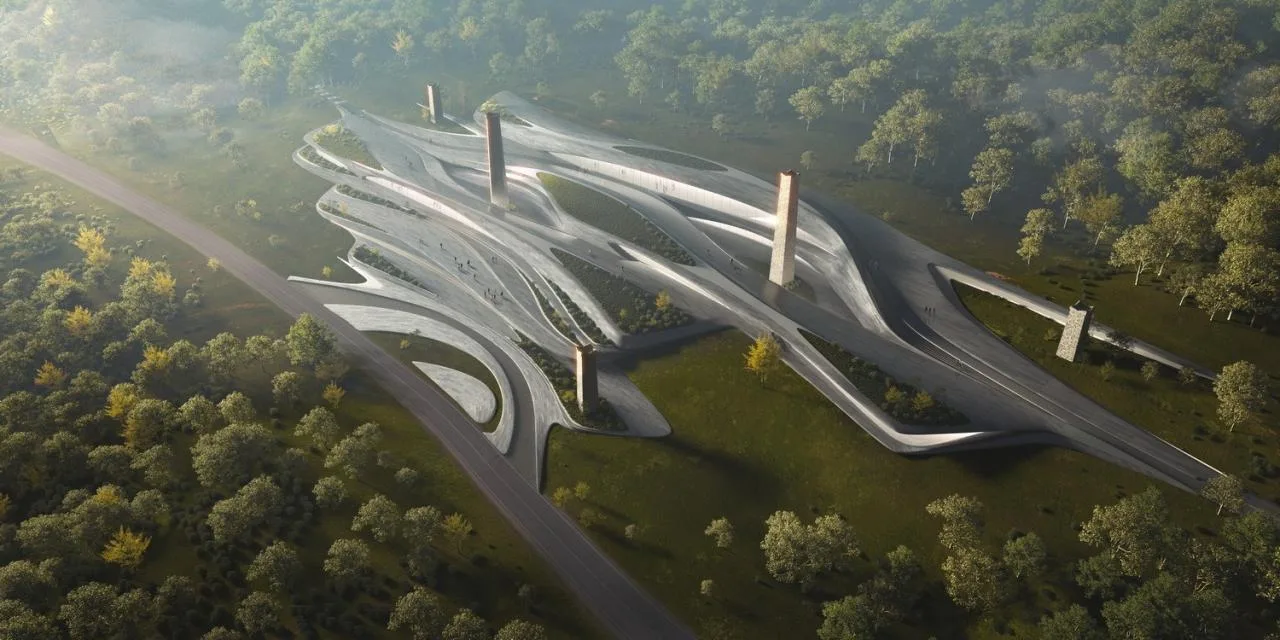
△ Aerial View of Buildings
Design Intent
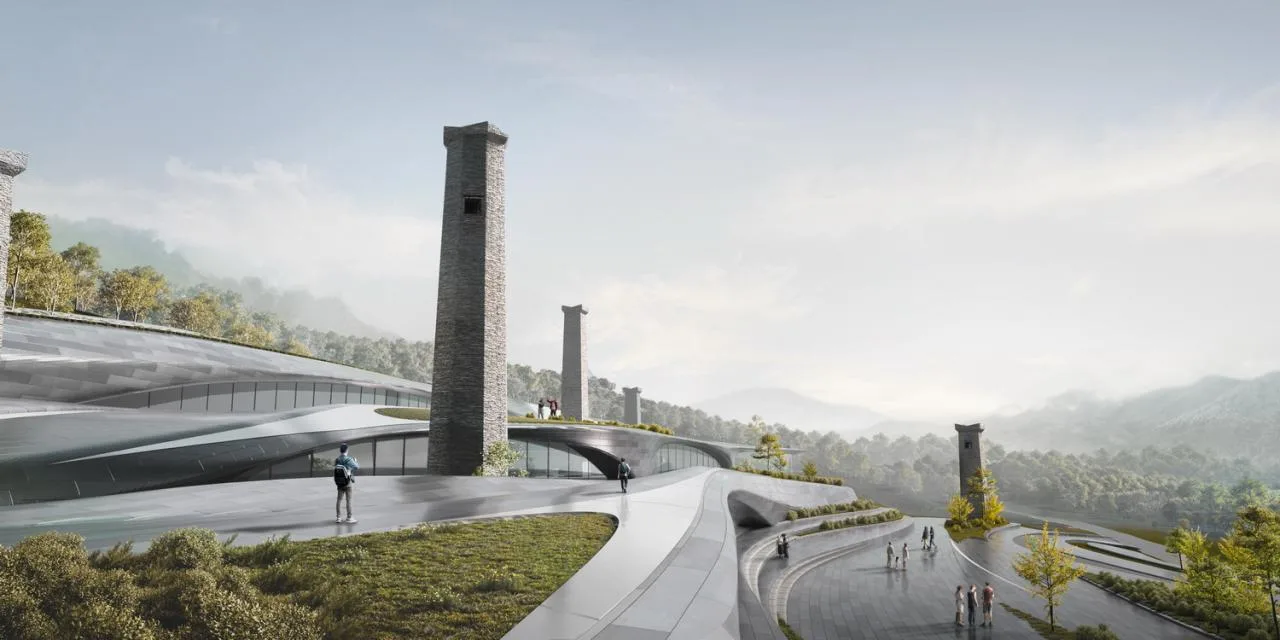
The design emphasizes harmony and continuity with the natural surroundings, adopting a curved form that blends seamlessly with the site. Taking advantage of the terrain’s elevation changes, three distinct blocks are embedded into the hillside as stepped platforms, forming the building’s core.
The structure acts as an extension of the natural landscape, featuring flowing curves that follow the mountain’s contours. Ramps connect different levels, allowing visitors to explore the building and its surroundings freely, guided by the terrain.
Reflecting the unique site conditions, the design incorporates elements of Tibetan and Qiang cultural expression. Within the atrium’s commemorative space, towering structures symbolize the iconic ancient watchtowers of the Jiarong Tibetan people, carrying traditional architectural styles and national memory that embody the spirit of the place.
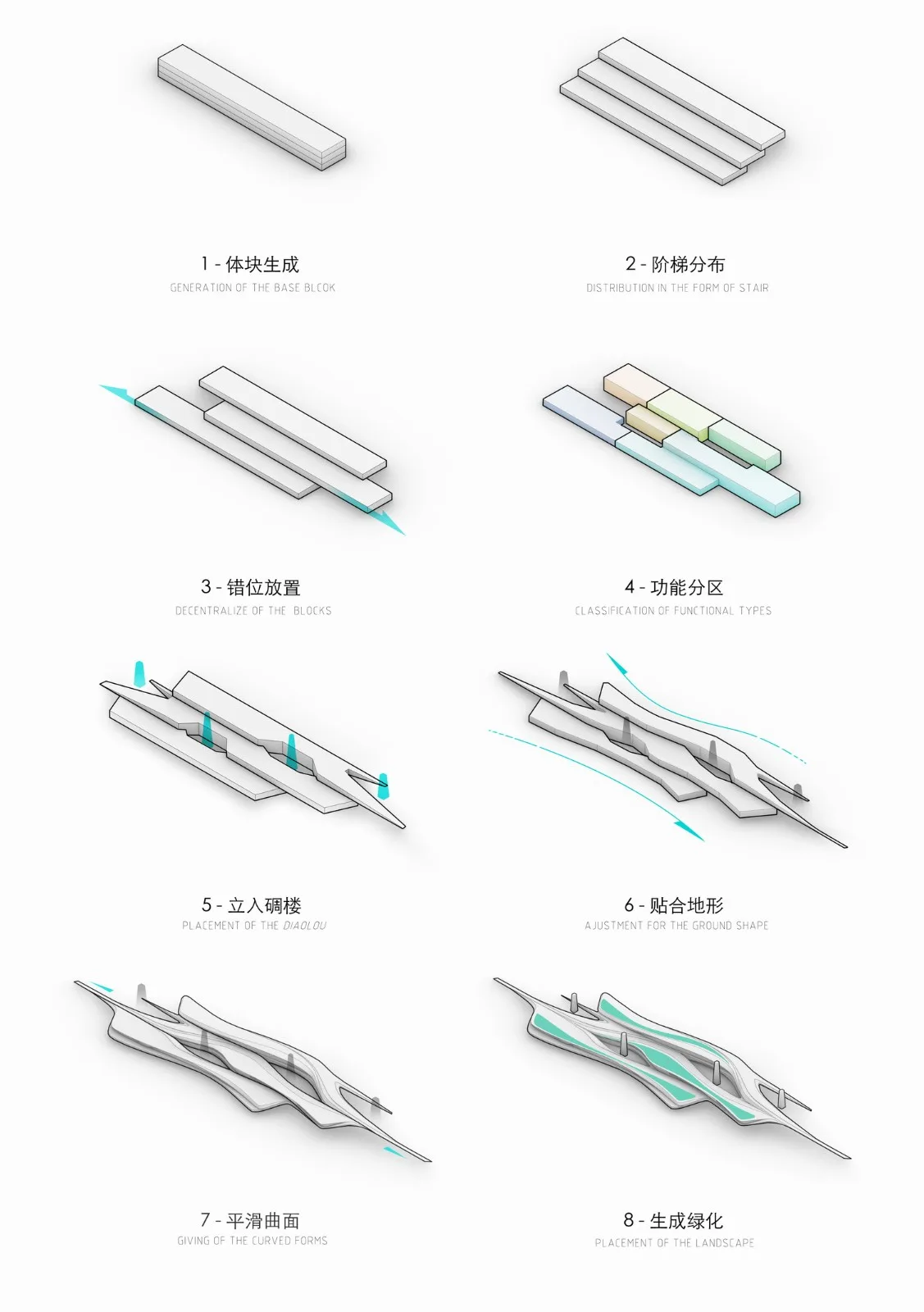
△ Shape Generation
Building Structure
Historically, the Jiarong people used local materials to build stone bunkers for defense. Among these, the Qionglong-style stone bunkers, reaching over 30 meters in height and constructed from various-sized gravel blocks, represent a pinnacle of indigenous architectural wisdom.
Qiang watchtowers are designed to be stable and resistant to overturning. Their trapezoidal form, wider at the base and narrower at the top, lowers the building’s center of gravity and reduces the weight of the upper sections.
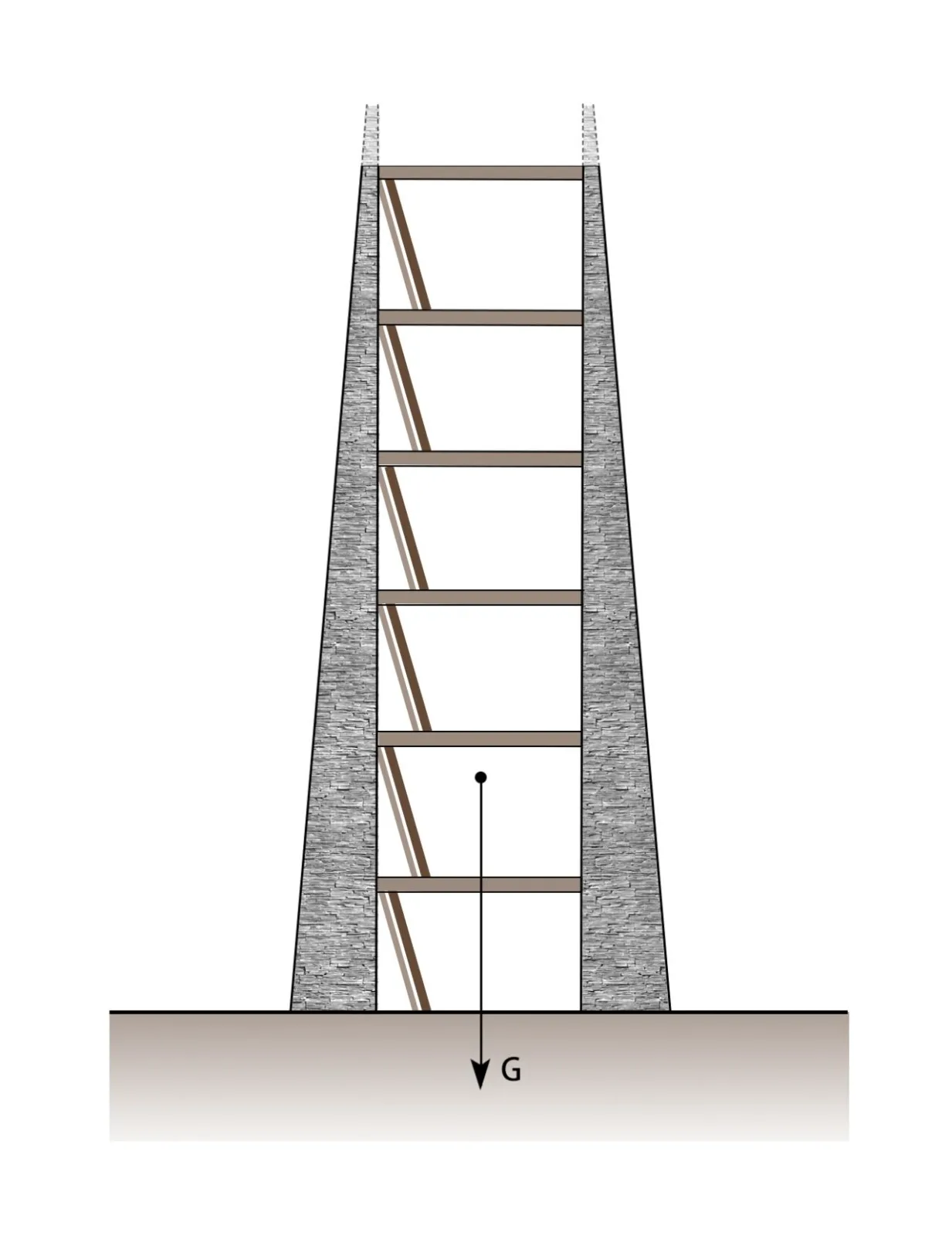
Building Plan and Facade
The site is near the village, and the spatial program is organized from the interior to exterior, and from bottom to top, including a study center, exhibition hall, main hall, children’s activity room, restaurant, and library.
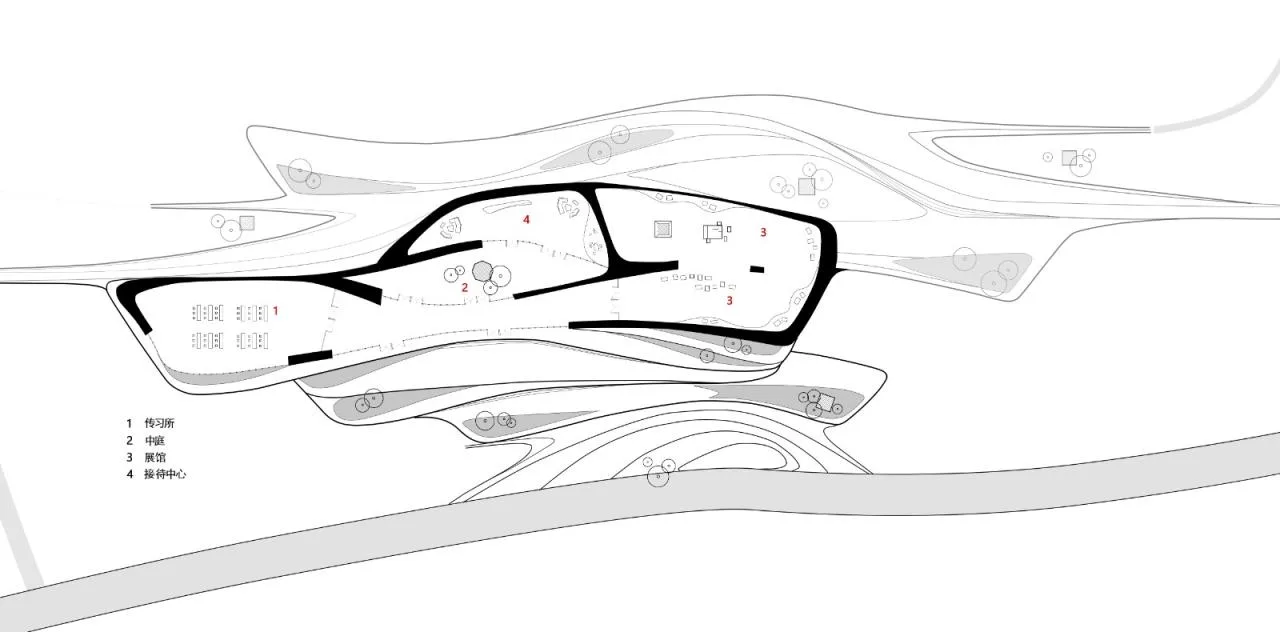
△ First Floor Plan
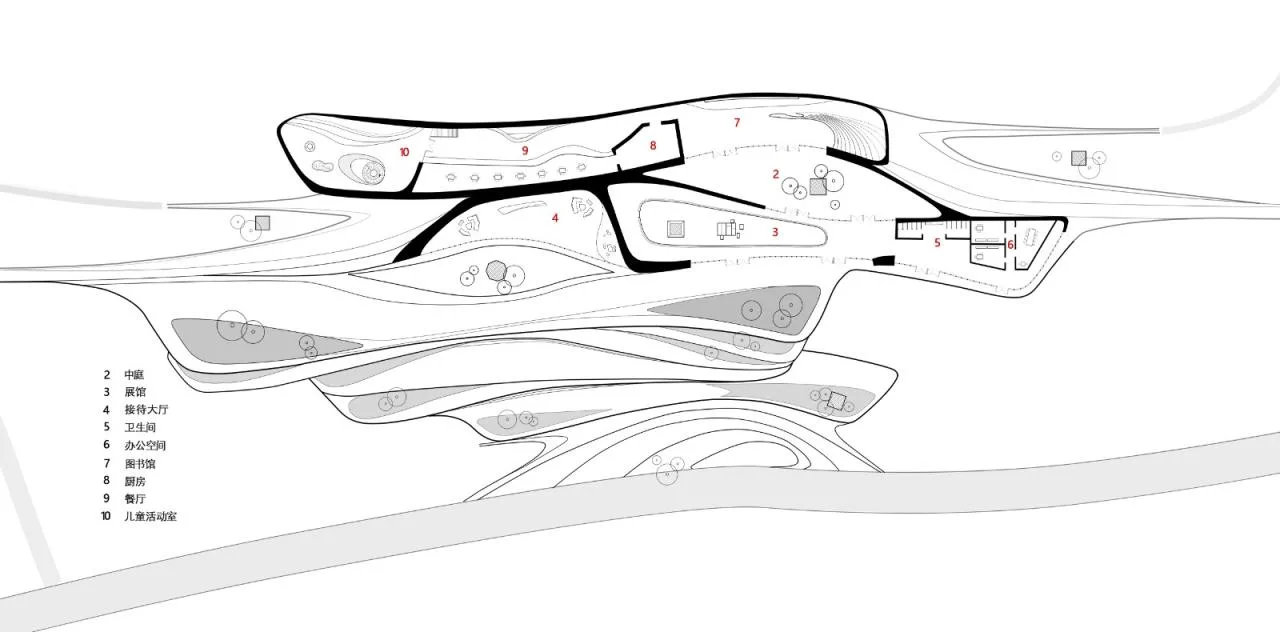
△ Second Floor Plan
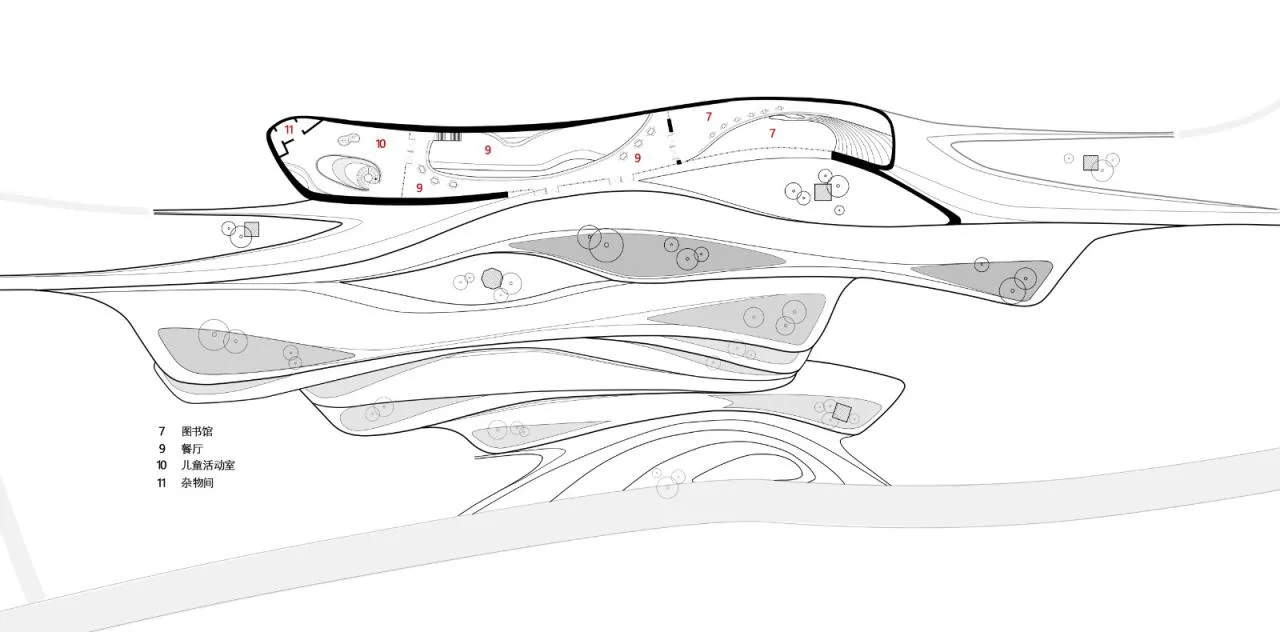
△ Third Floor Plan
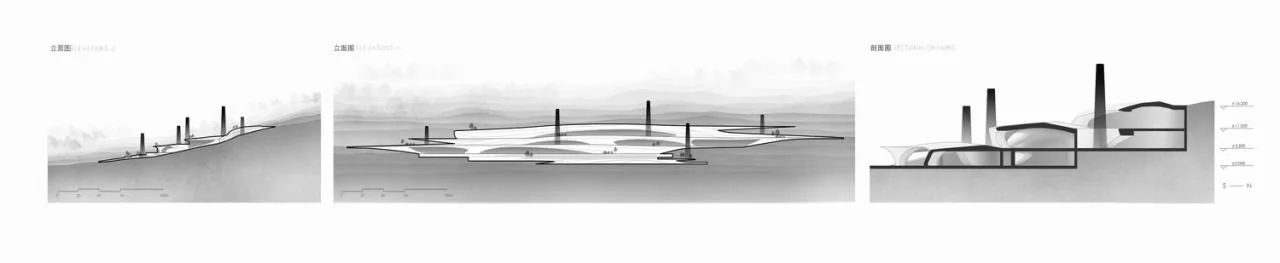
△ Building Facade and Section
Drawing Representation
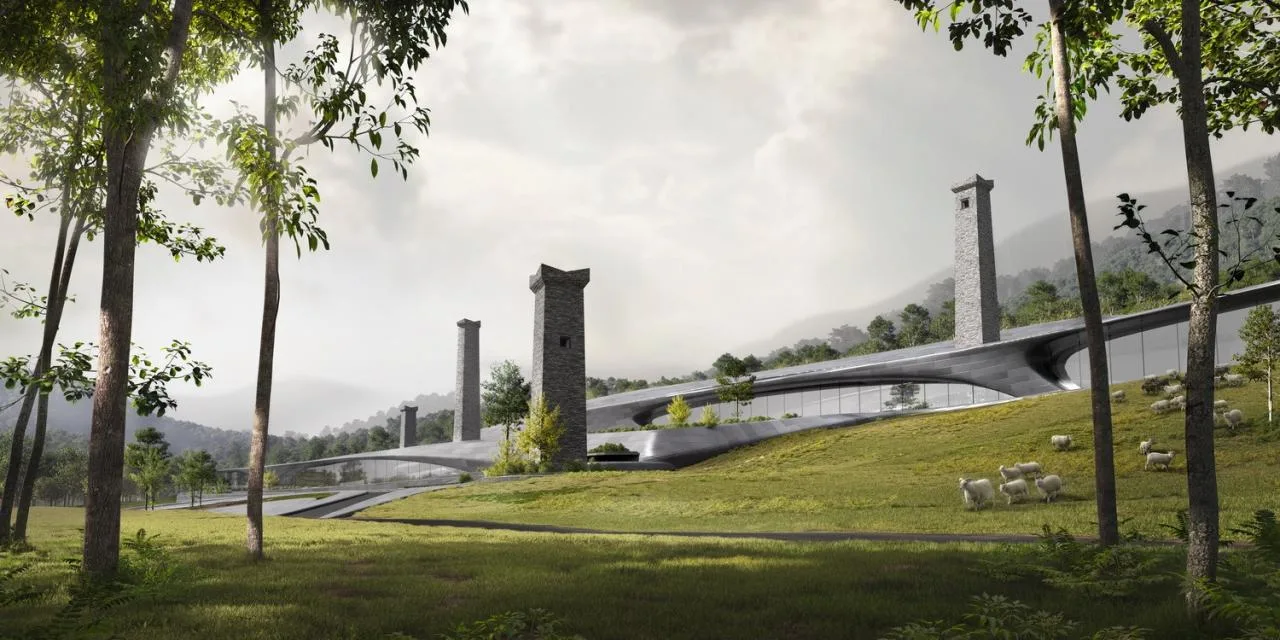
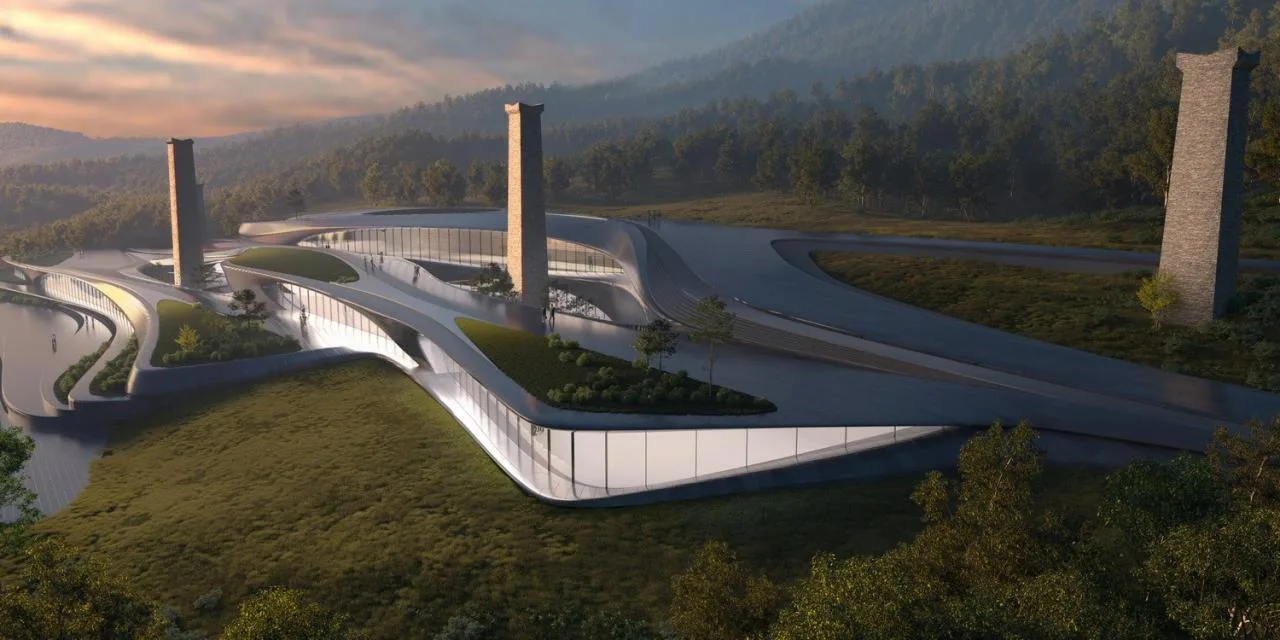
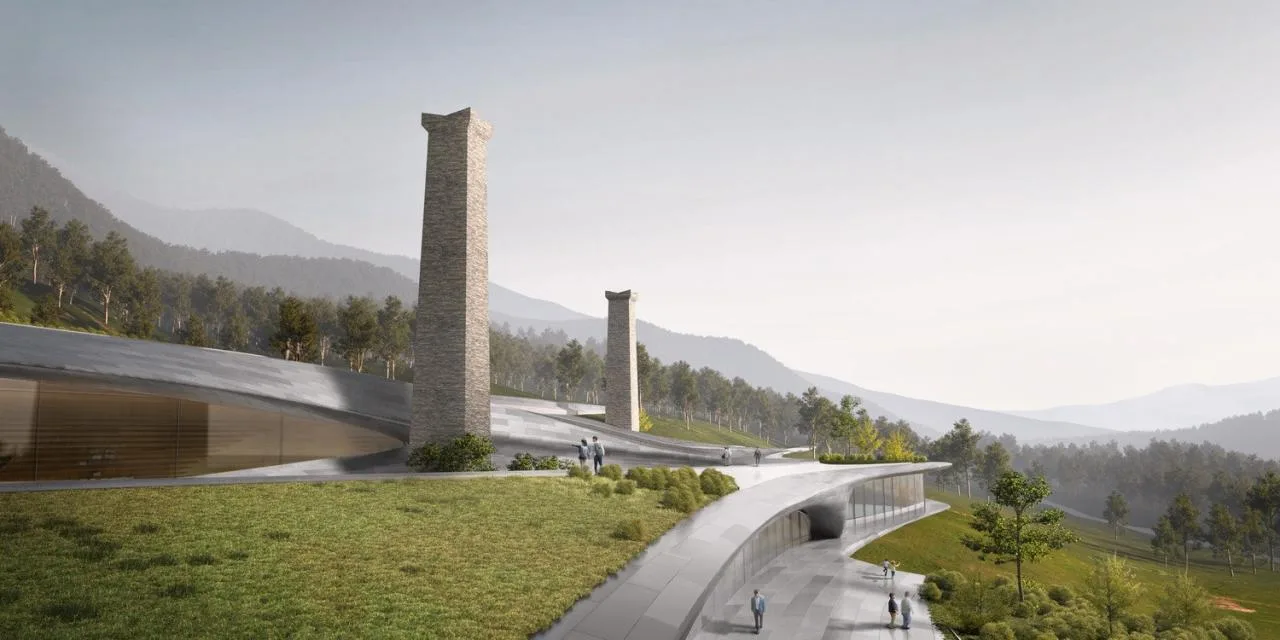
The building exterior employs gray matte curved stone slabs, reflecting the color palette of traditional Jiarong Tibetan architecture. Its overall form mimics the nearby mountains, integrating the structure into the landscape with a restrained volume that resonates with the Jiarong Tibetan people’s reverence for the mountains.
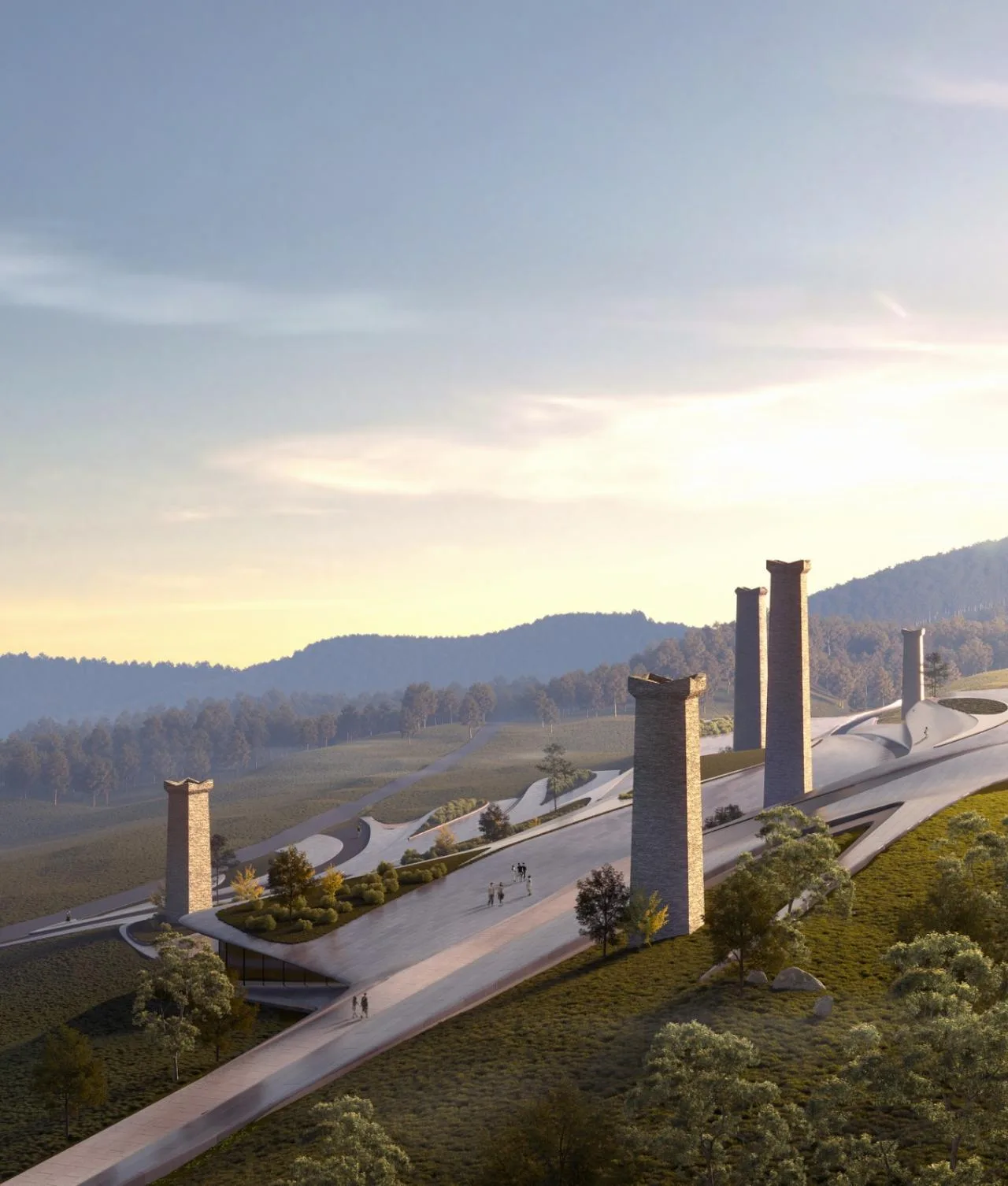
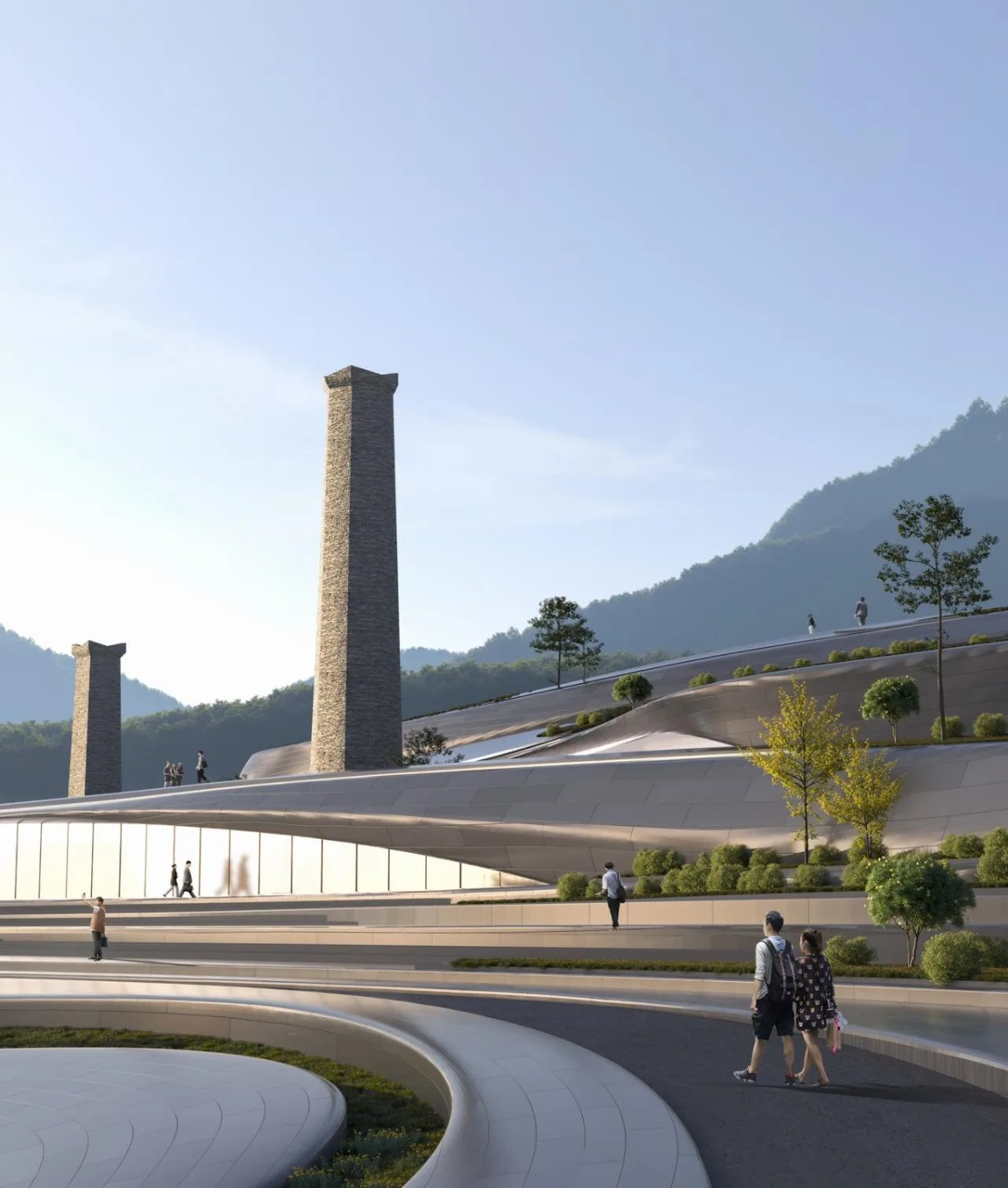
The building’s stepped setbacks create covered earth spaces. Vegetation planted atop each floor softens the structure’s edges, blending it organically into the natural hillside and blurring the boundary between building and terrain. This approach allows the cultural complex to merge into the landscape as a nature-integrated architectural form.
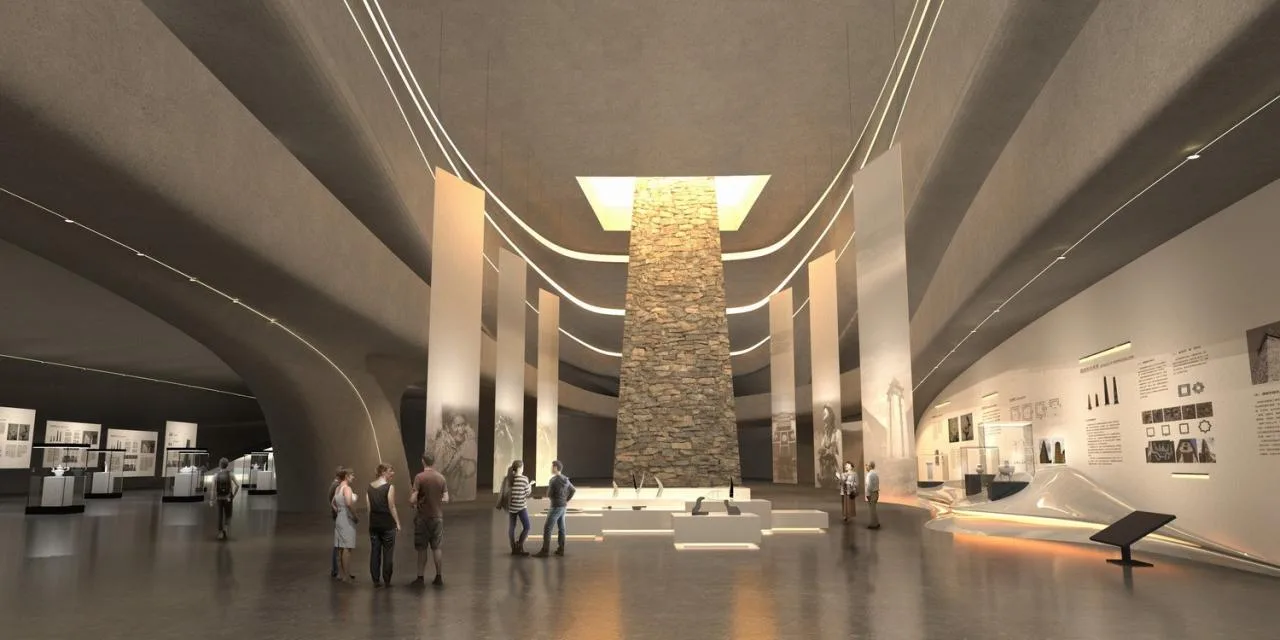
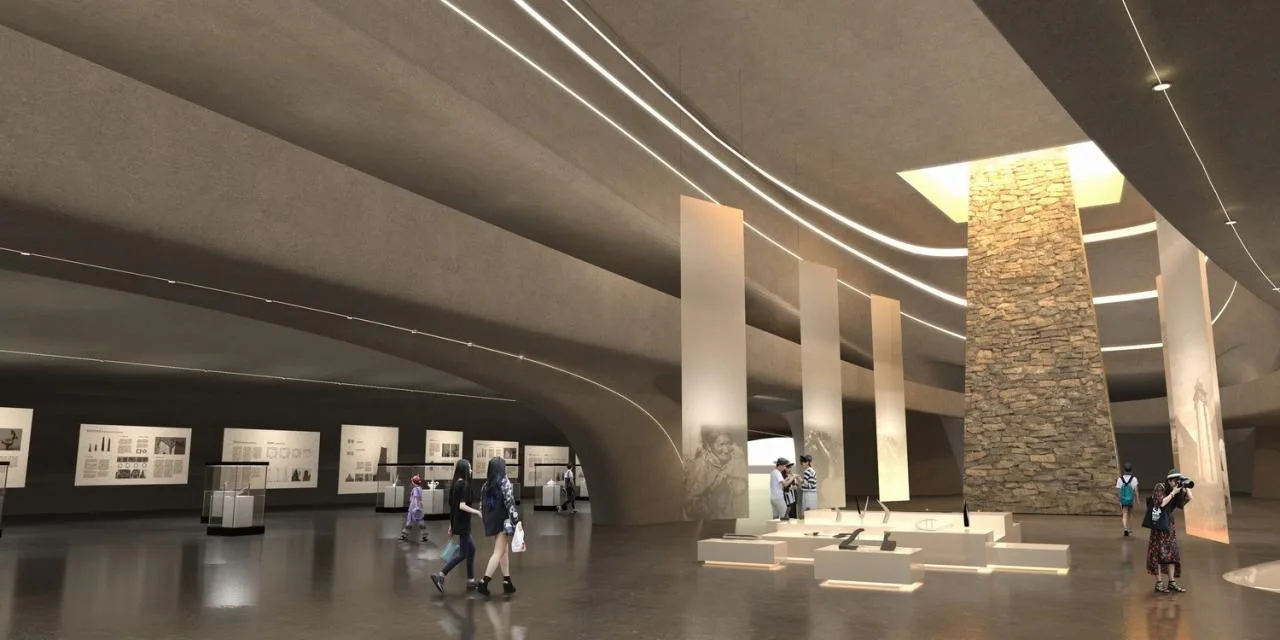
△ Diaolou Historical and Cultural Museum
As a vessel for preserving and continuing local heritage, the Historical and Cultural Museum serves as a key spatial node within the complex. The watchtower acts as the visual focal point, enhancing the exhibition hall’s commemorative and iconic qualities. The mezzanine gallery surrounding the watchtower expands the visitor experience by increasing the spatial depth of the exhibition path.
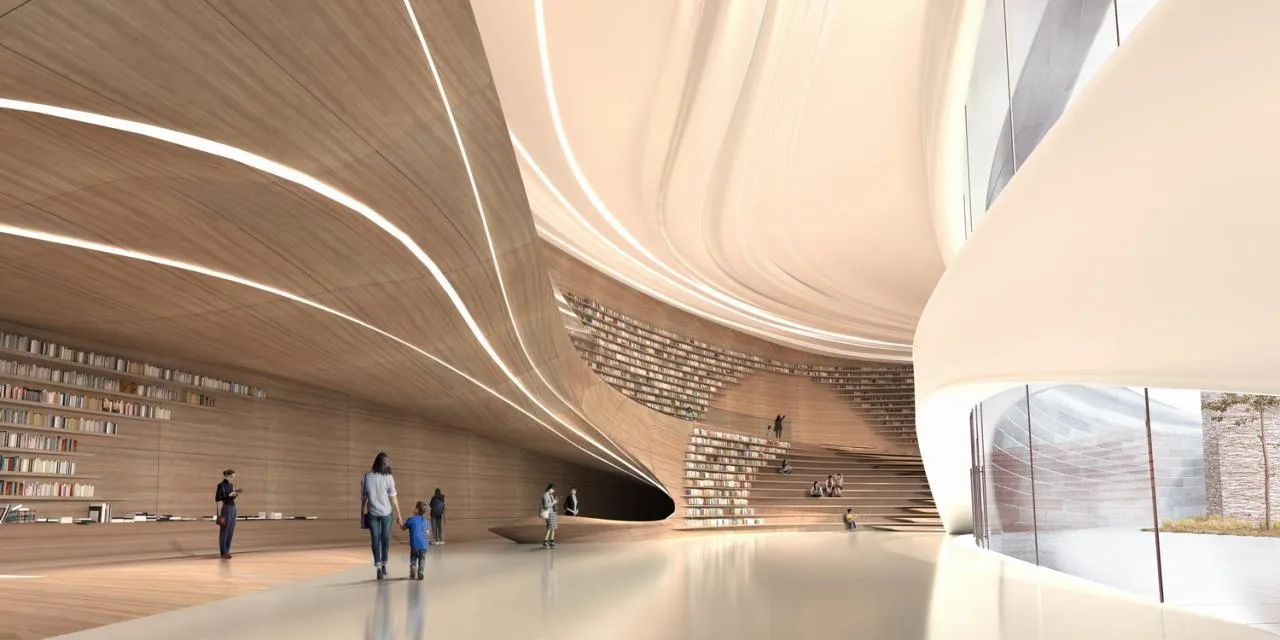
△ Library
The library’s interior mirrors the curved exterior shape. The staircase functions not only as circulation but also as a space for reading, resting, and small events. A cantilevered second-floor platform integrates with the stepped reading area spanning the first floor.
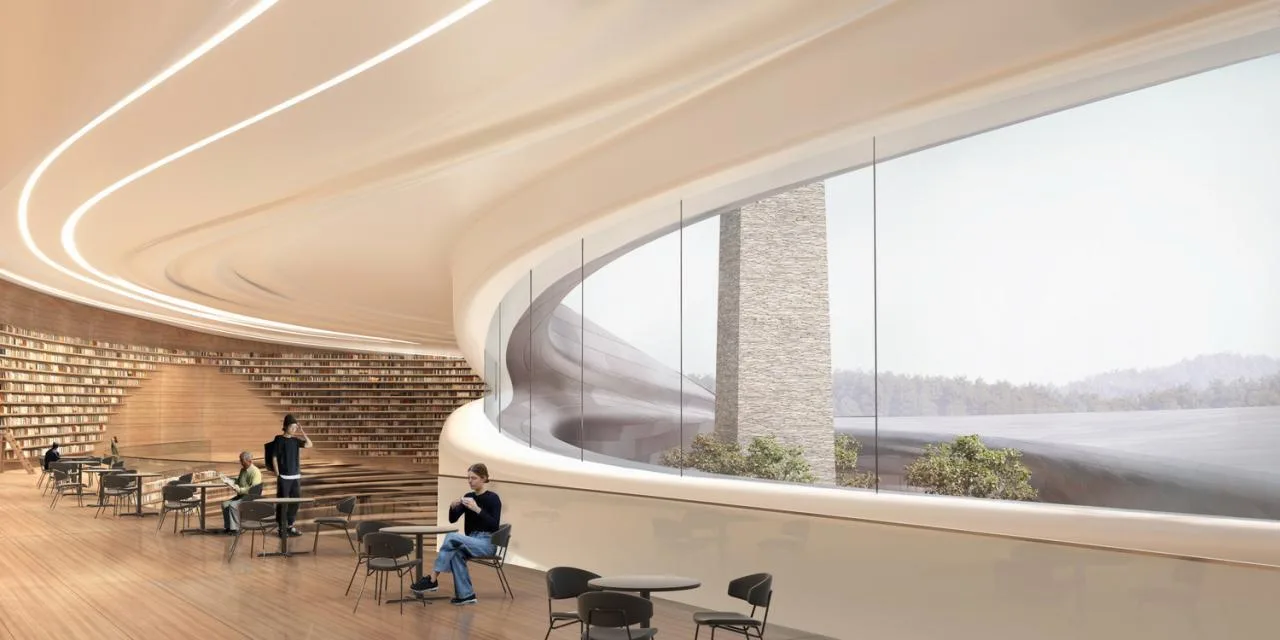
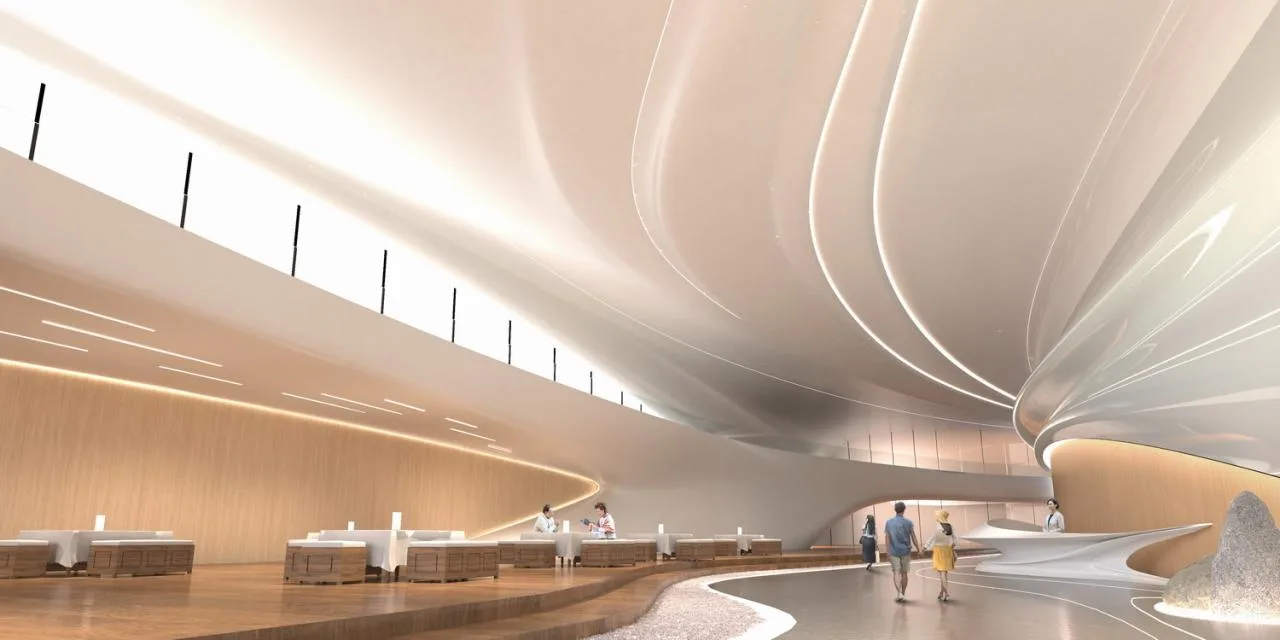
△ Restaurant
The restaurant is nestled between the library and the children’s activity room, primarily catering to tourists seeking local cuisine. The furniture design draws inspiration from traditional Jiarong Tibetan styles, creating an authentic dining atmosphere.
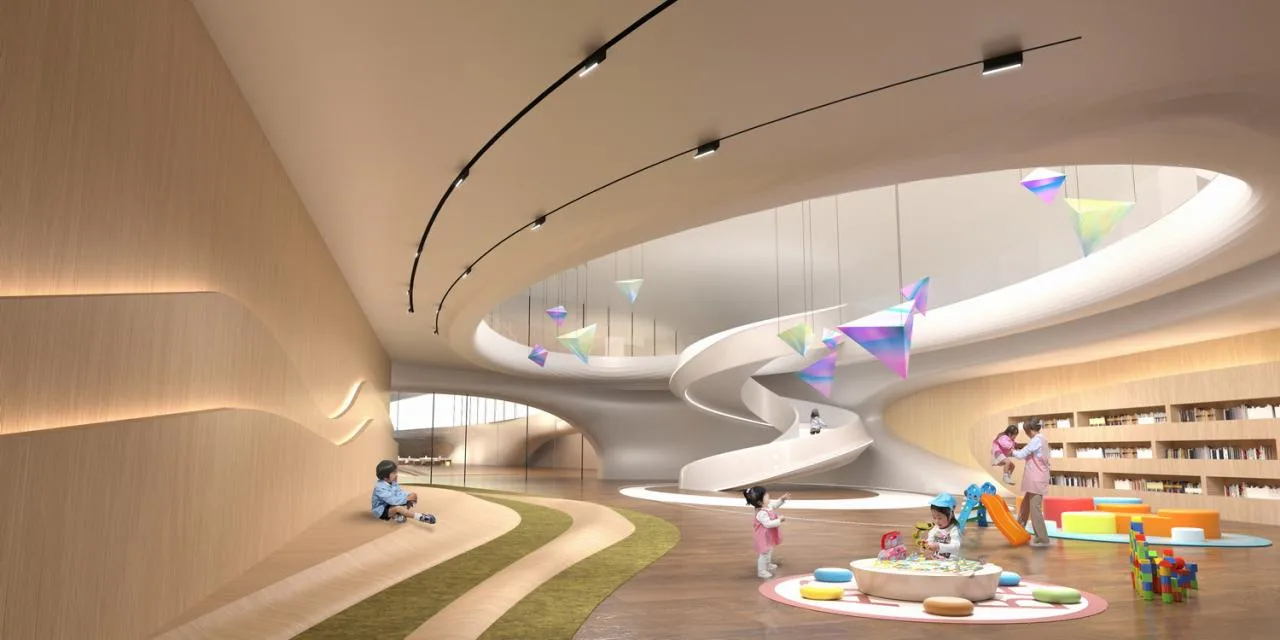
△ Children’s Activity Room
The children’s activity room prioritizes safety and an engaging spatial experience, providing a secure and comfortable environment with smooth, rounded planning that supports active play.
Conclusion
Rural development is advancing rapidly, yet often overlooks the cultural and local identity embedded in traditional architecture. The widespread homogenization of rural buildings further diminishes regional cultural expression.
This project explores how architectural form can effectively showcase local characteristics by deconstructing and reinterpreting regional cultural elements into modern, dynamic spatial forms. It highlights the relationship between architecture, regional culture, and place through bold surfaces, aiming to preserve and promote local heritage while contributing to the vision of building beautiful, culturally rich rural communities.
Project Information
Project Name: Tibetan Watchtower Stone Charm – Architectural Design of Molo Village Cultural Complex in Danba County, Garze Prefecture, Sichuan Province
Designer: Non expert architecture
Design & Completion Year: March 2023
Creator: Ding Xianglei
Design Team: Hao Jiahe, Xie Xumin, Li Zhuojie, Huang Jiajia
Project Location: Sichuan, China
Site Area: 15,000 square meters
Building Area: 10,000 square meters
Photography Credits: Site images are sourced from the internet; all other image copyrights belong to Non expert architecture















Must log in before commenting!
Sign Up