
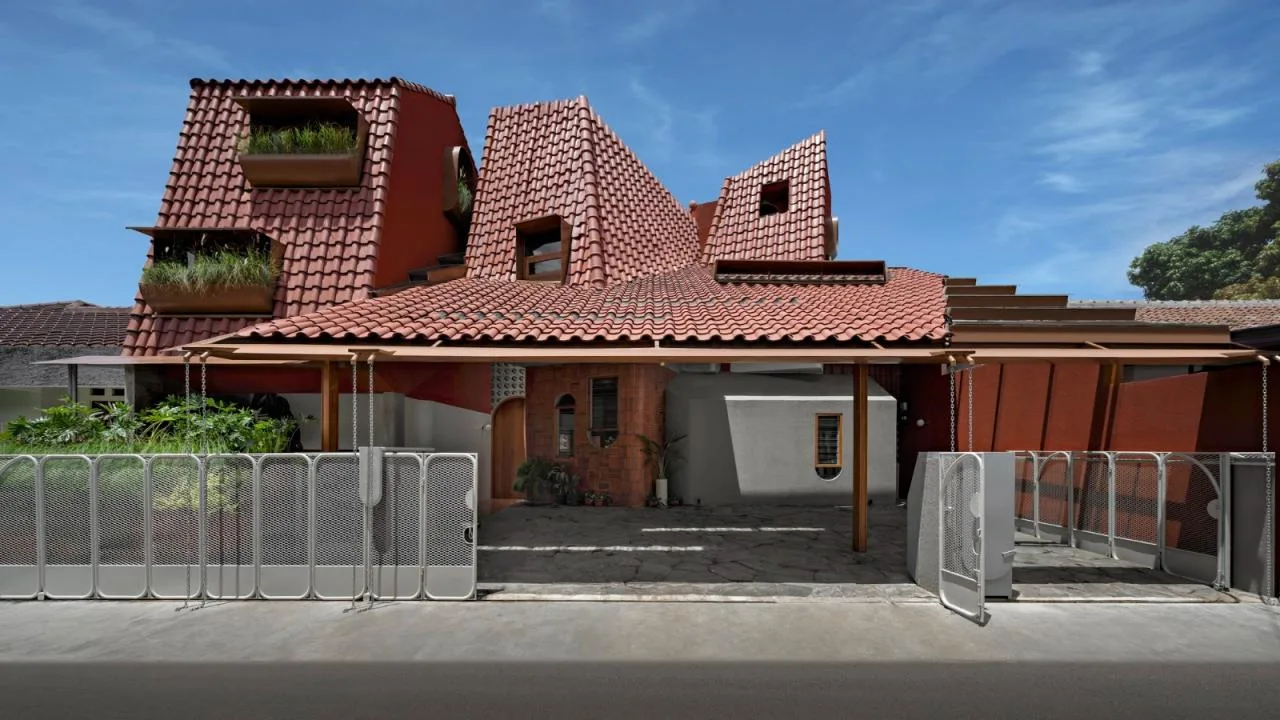
When the client first met with us, they said, “I like this messy design.” One of the reasons they appreciate this design is that the house can accommodate large family gatherings and prayer sessions, hosting up to dozens of people simultaneously. It can also be used for religious recitations with neighbors, making the house feel like a villa crowned with a traditional Javanese roof that integrates Islamic values into daily life.
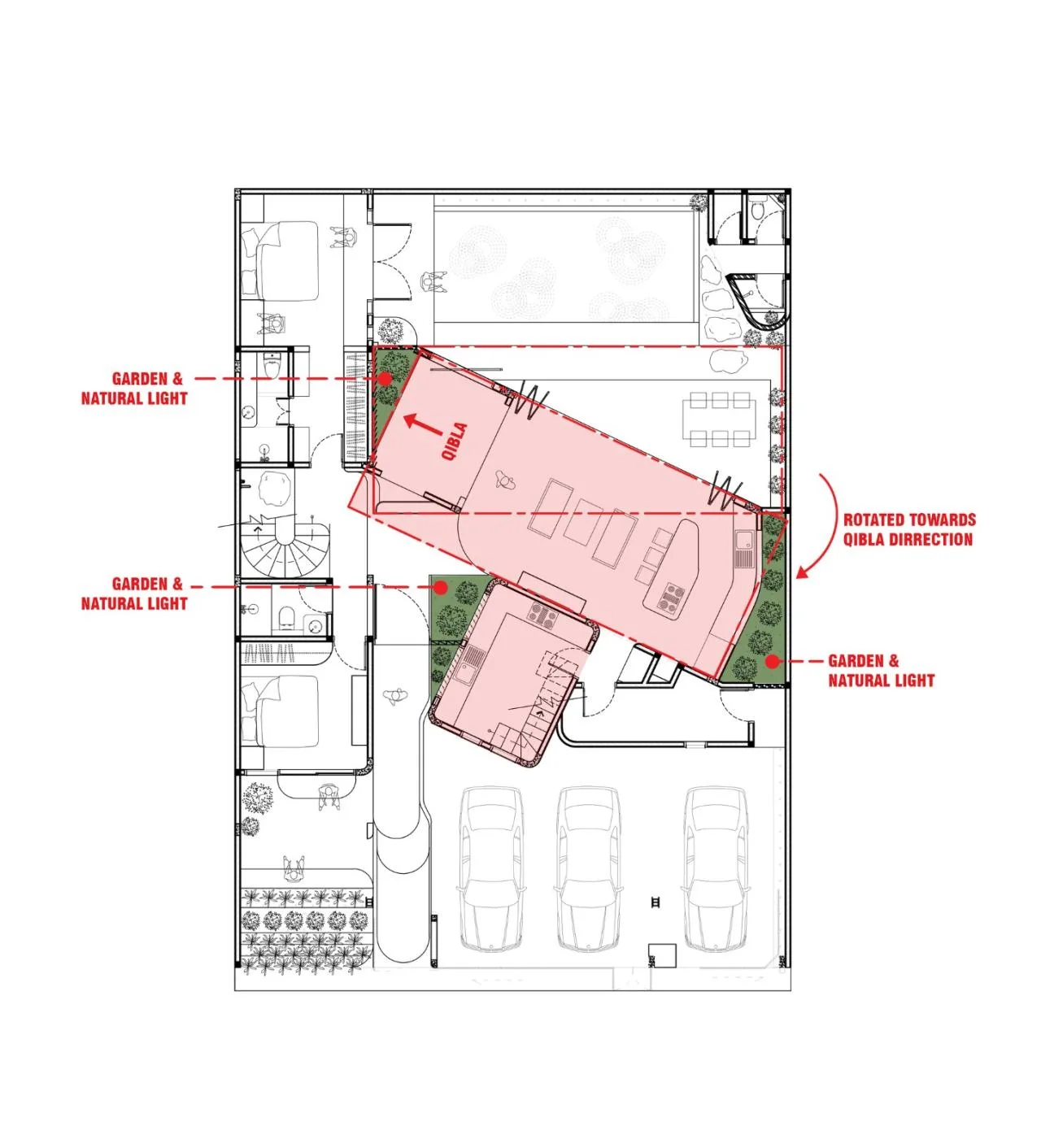
The term “distracted” here refers to elements or behaviors that divert attention. This house achieves distraction primarily through motion — one of the rooms is designed to rotate, allowing it to face the Qibla. This dynamic feature meets the residents’ needs by enabling participation in religious activities with the extended family while fostering social interaction. The design inspiration is drawn from the traditional Javanese roof, a local architectural style from a region in Indonesia, which imparts spatial qualities and novel architectural forms.
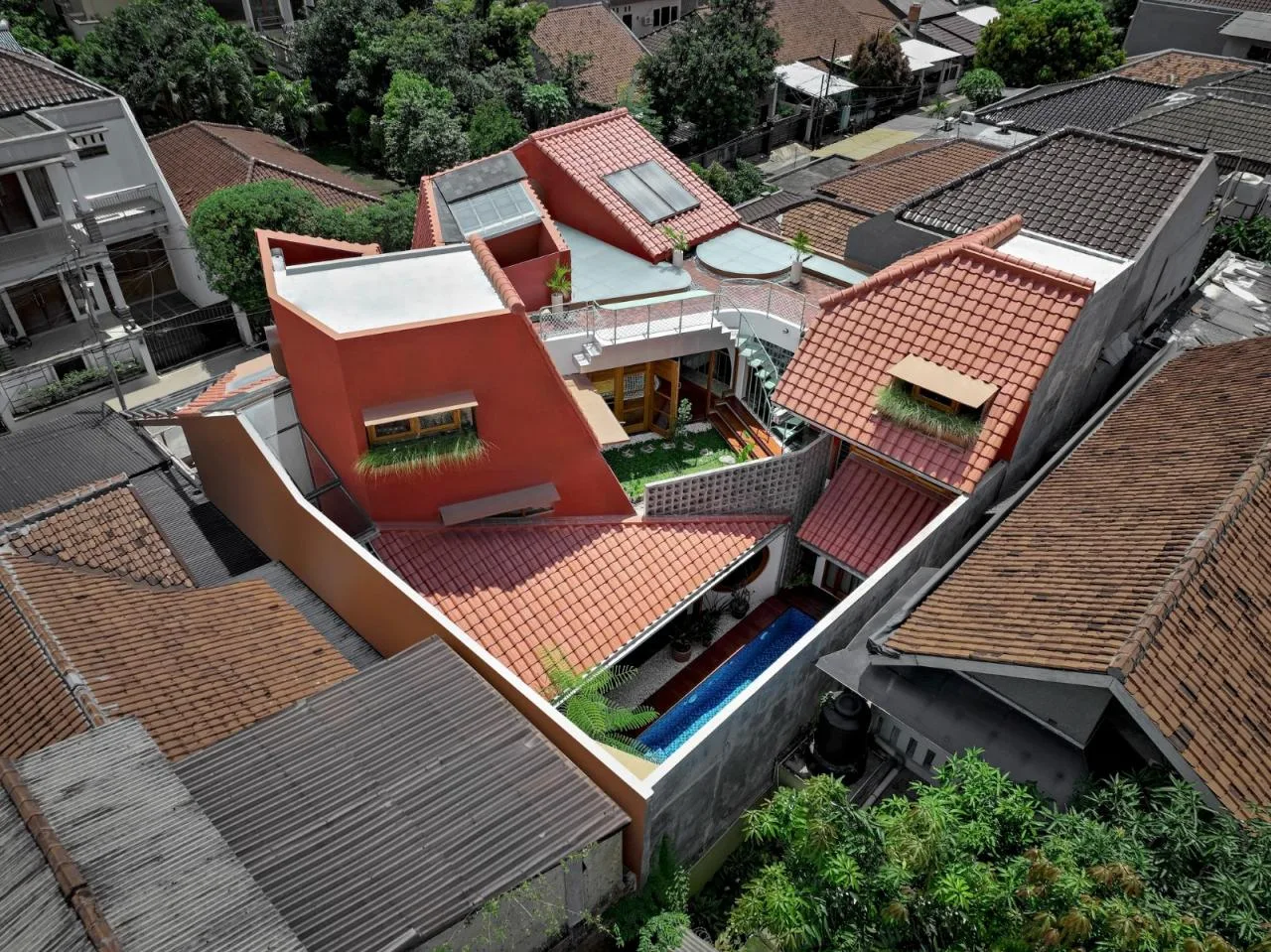
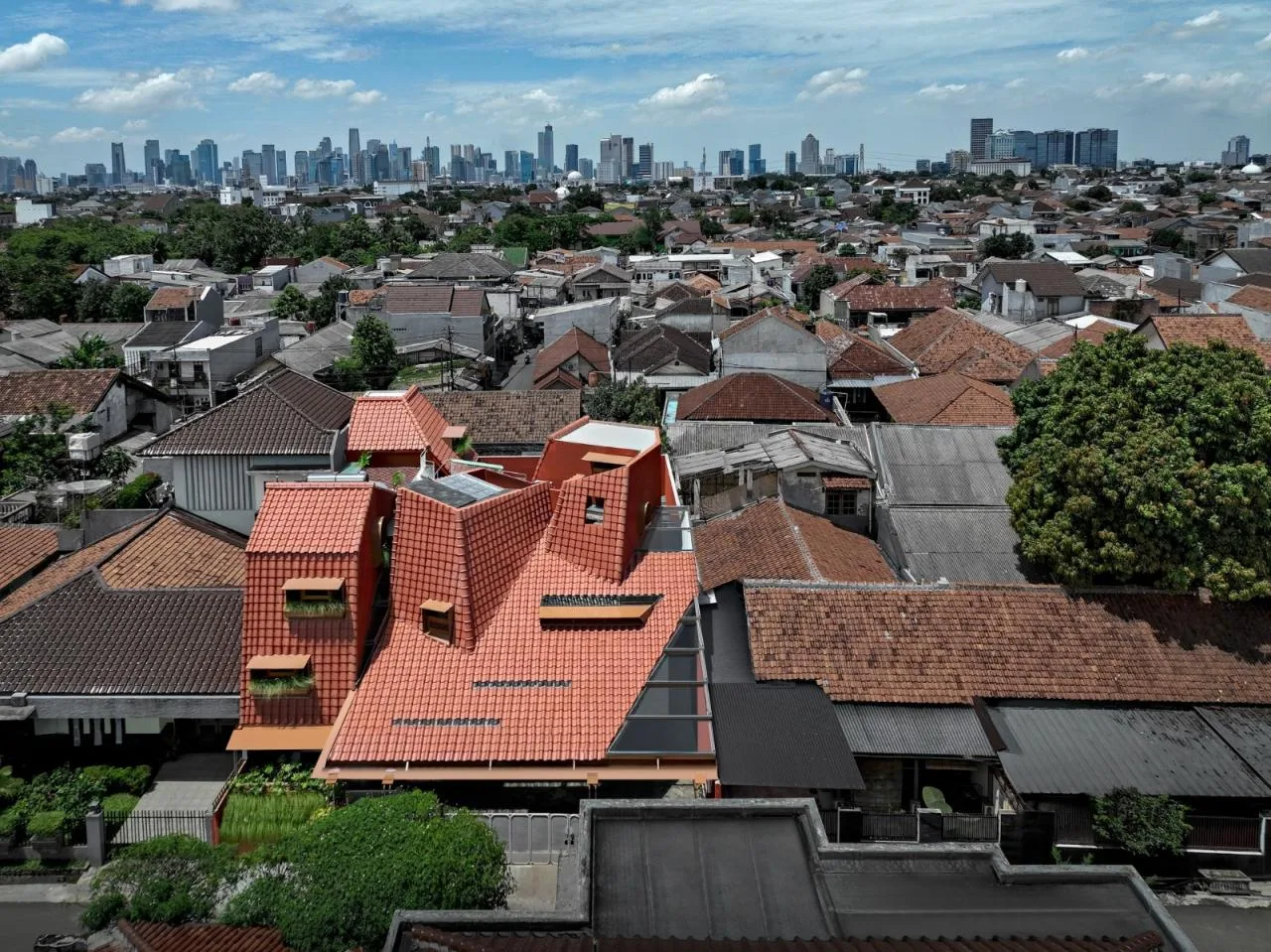
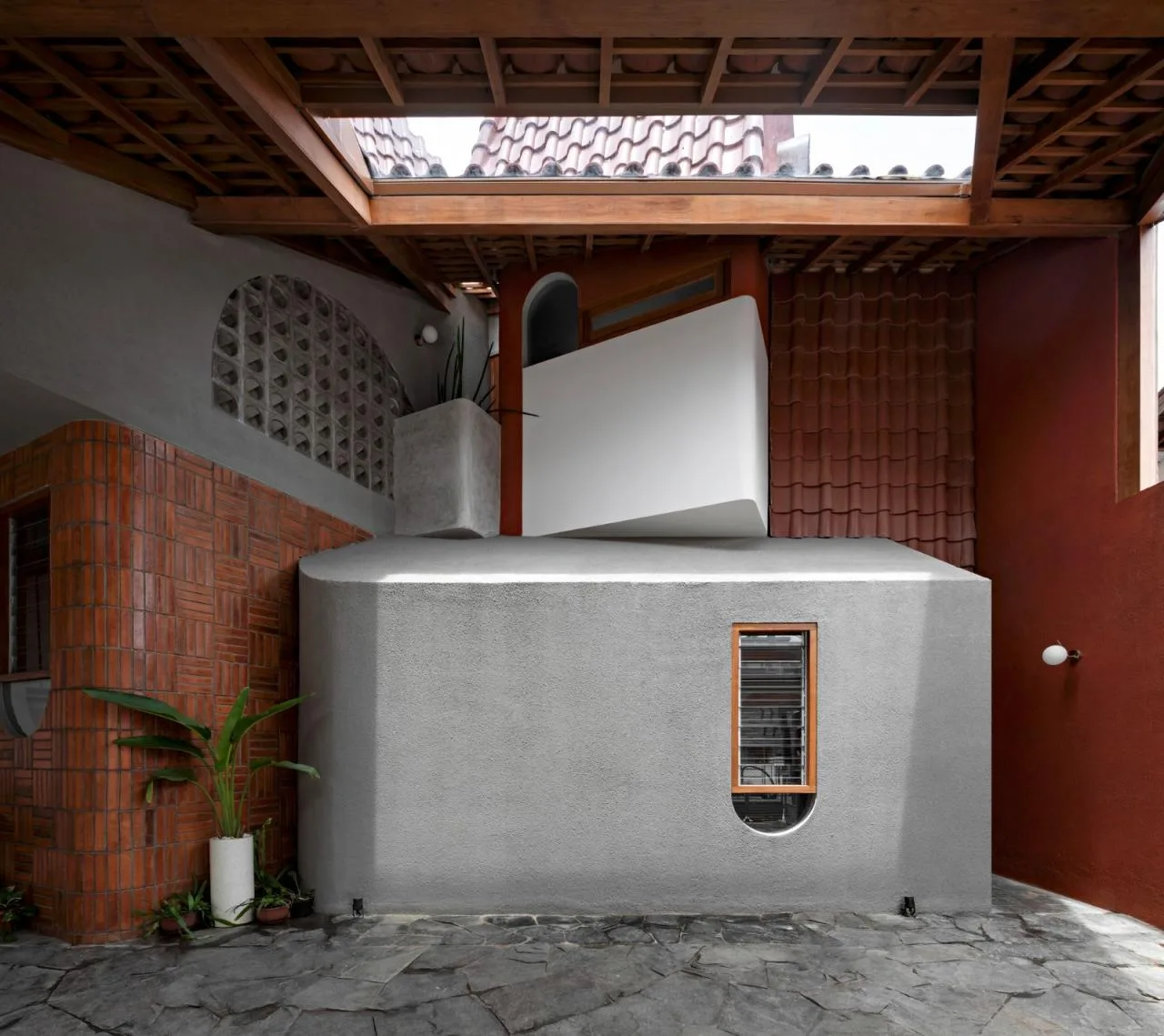
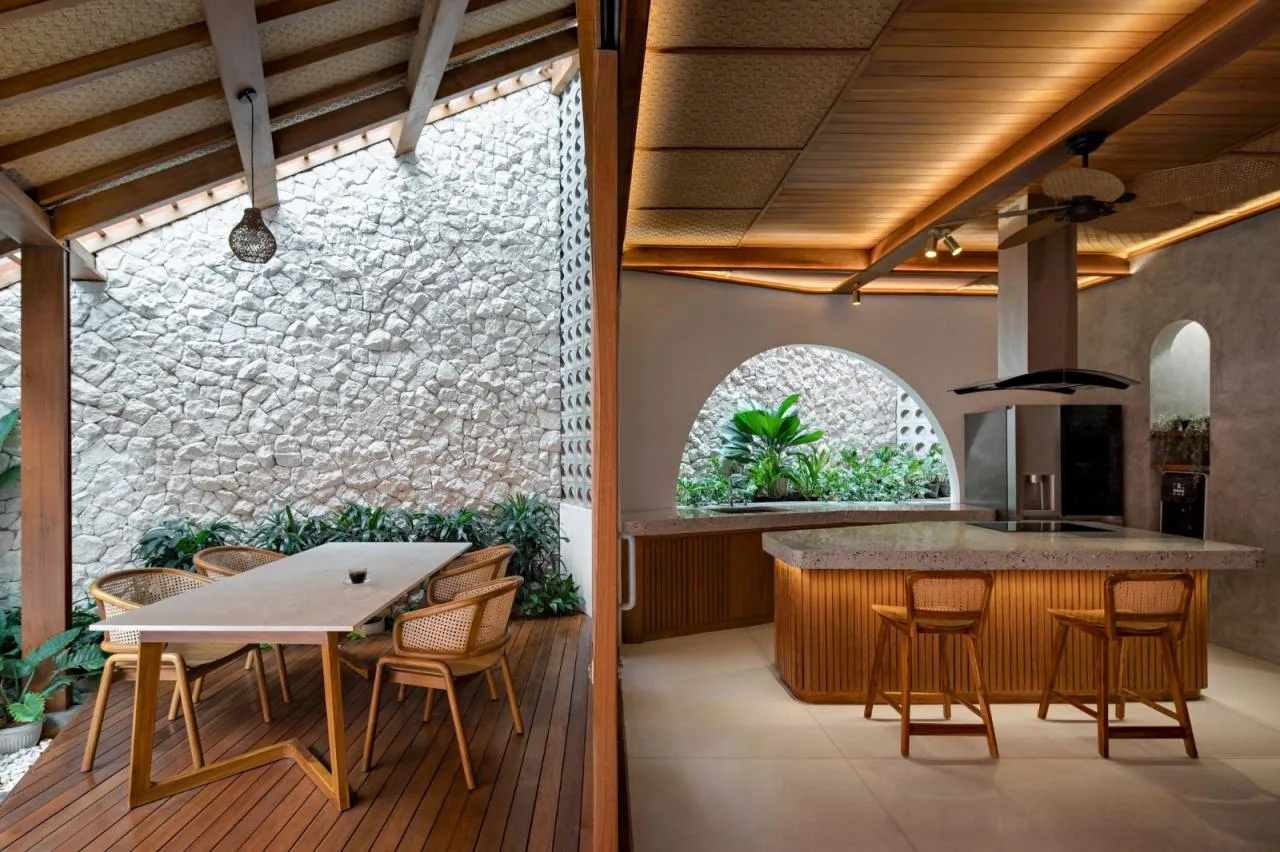
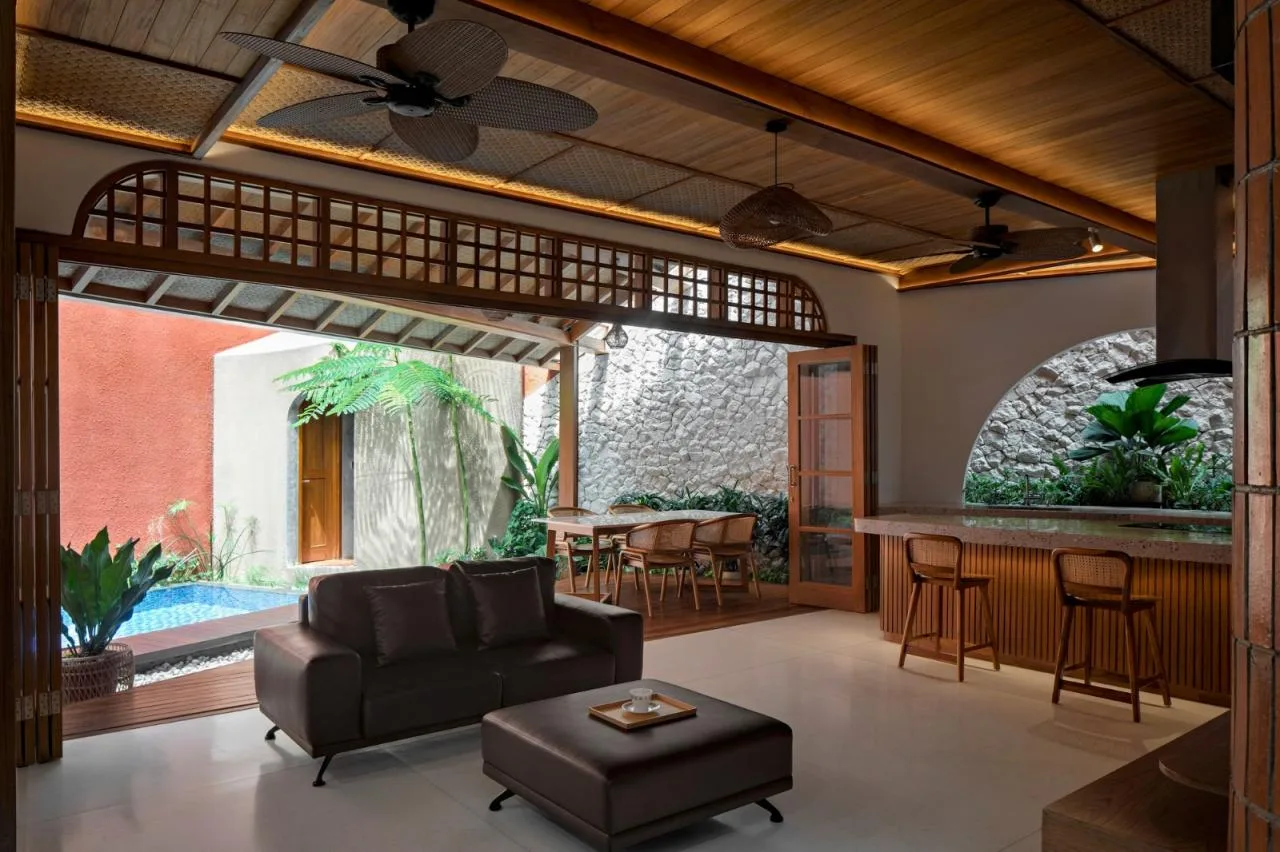
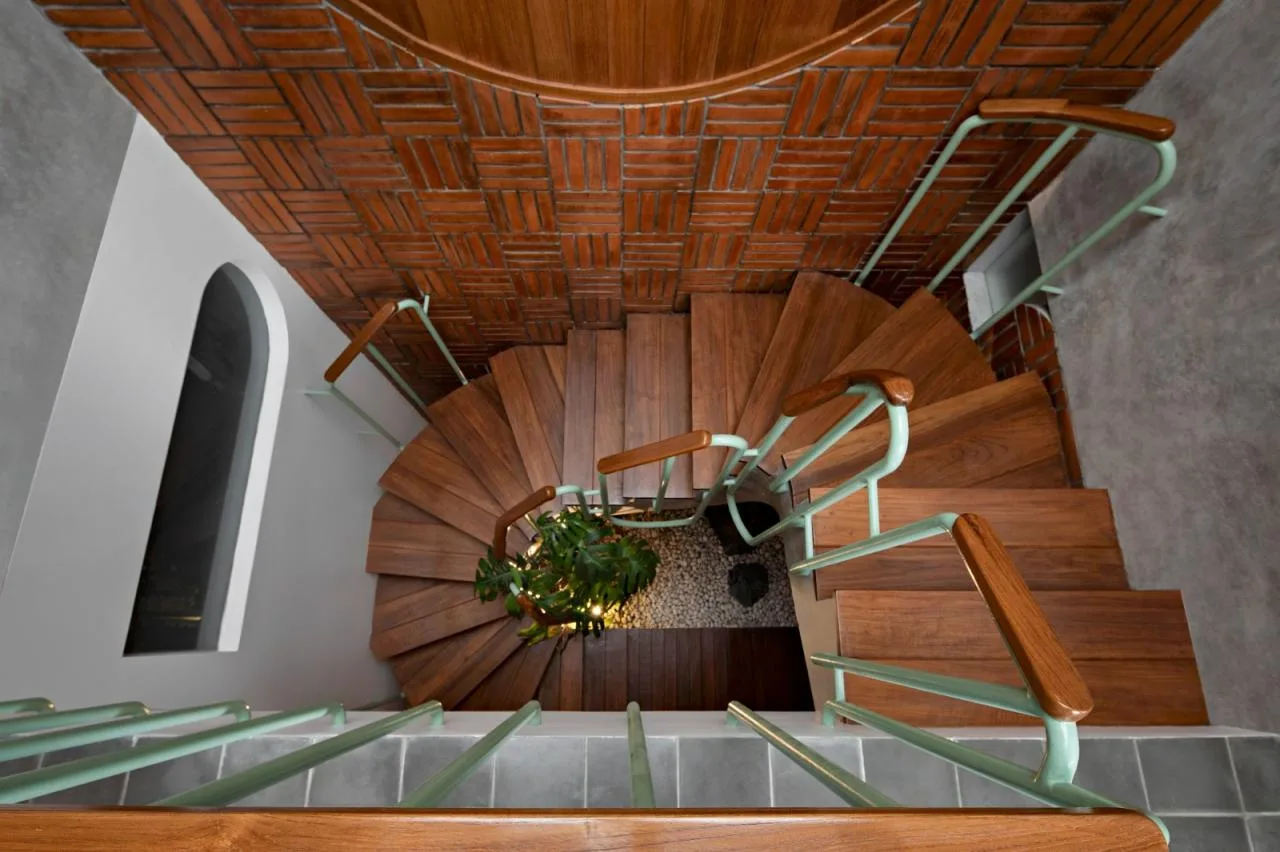
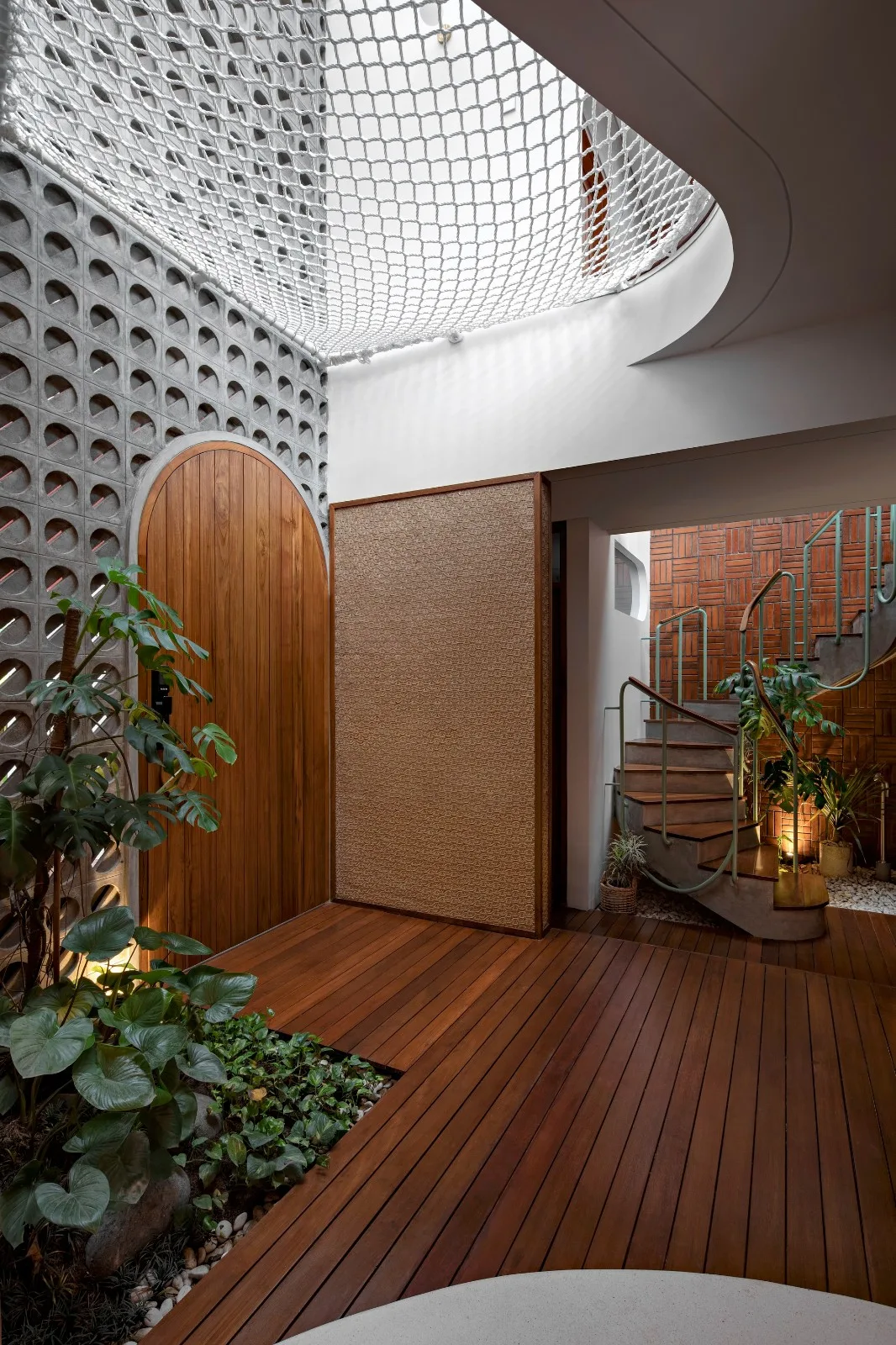
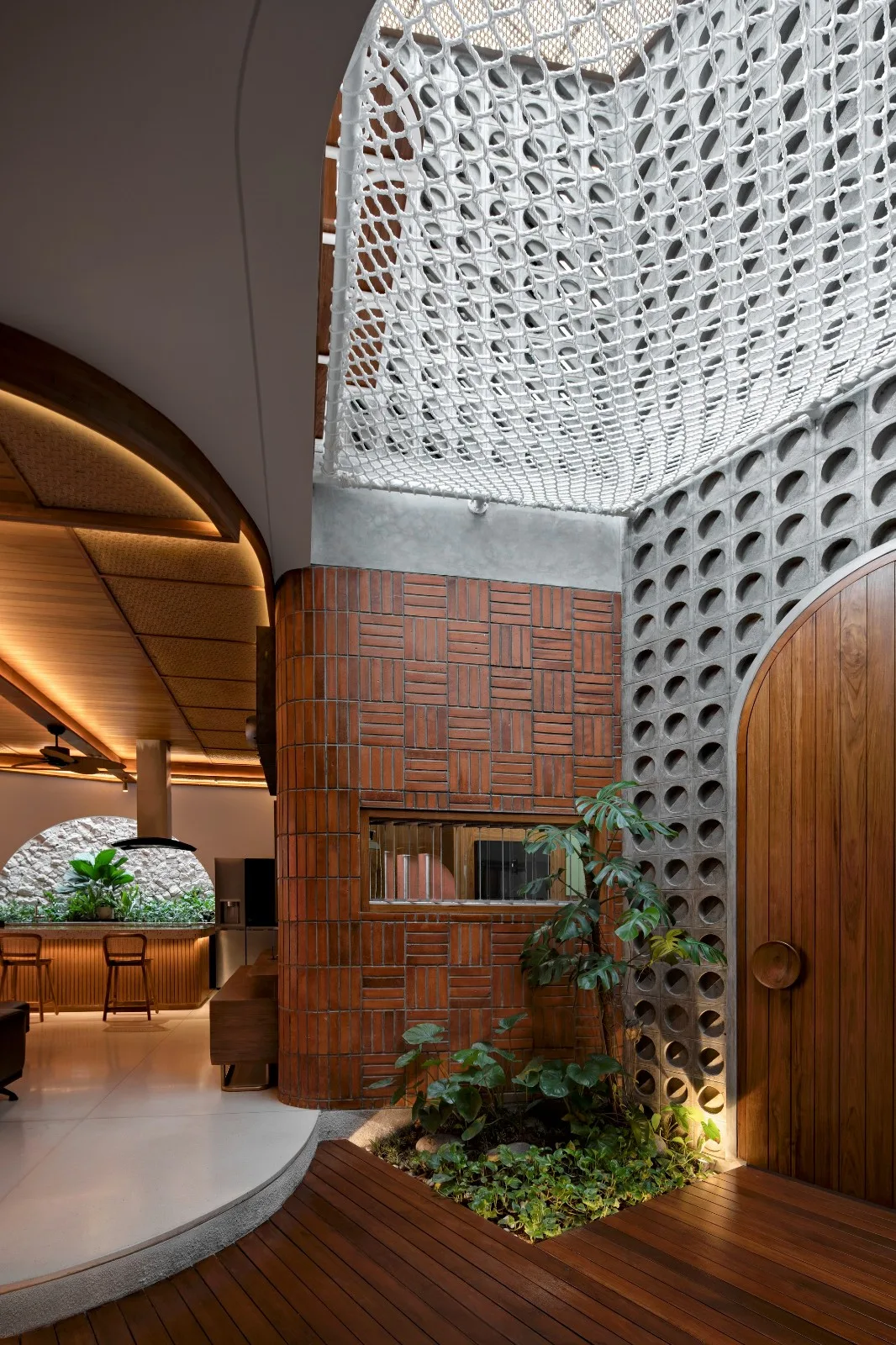
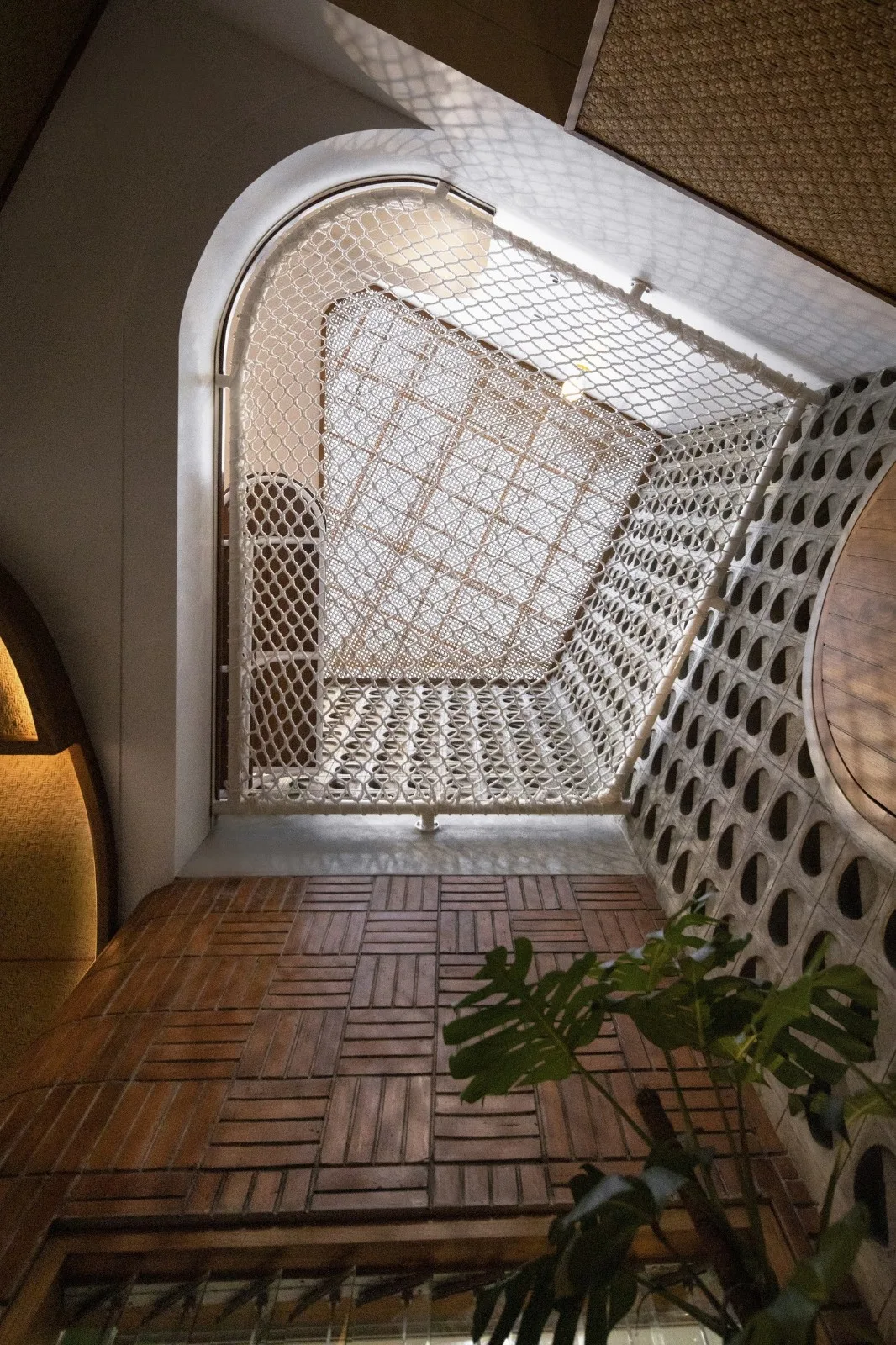
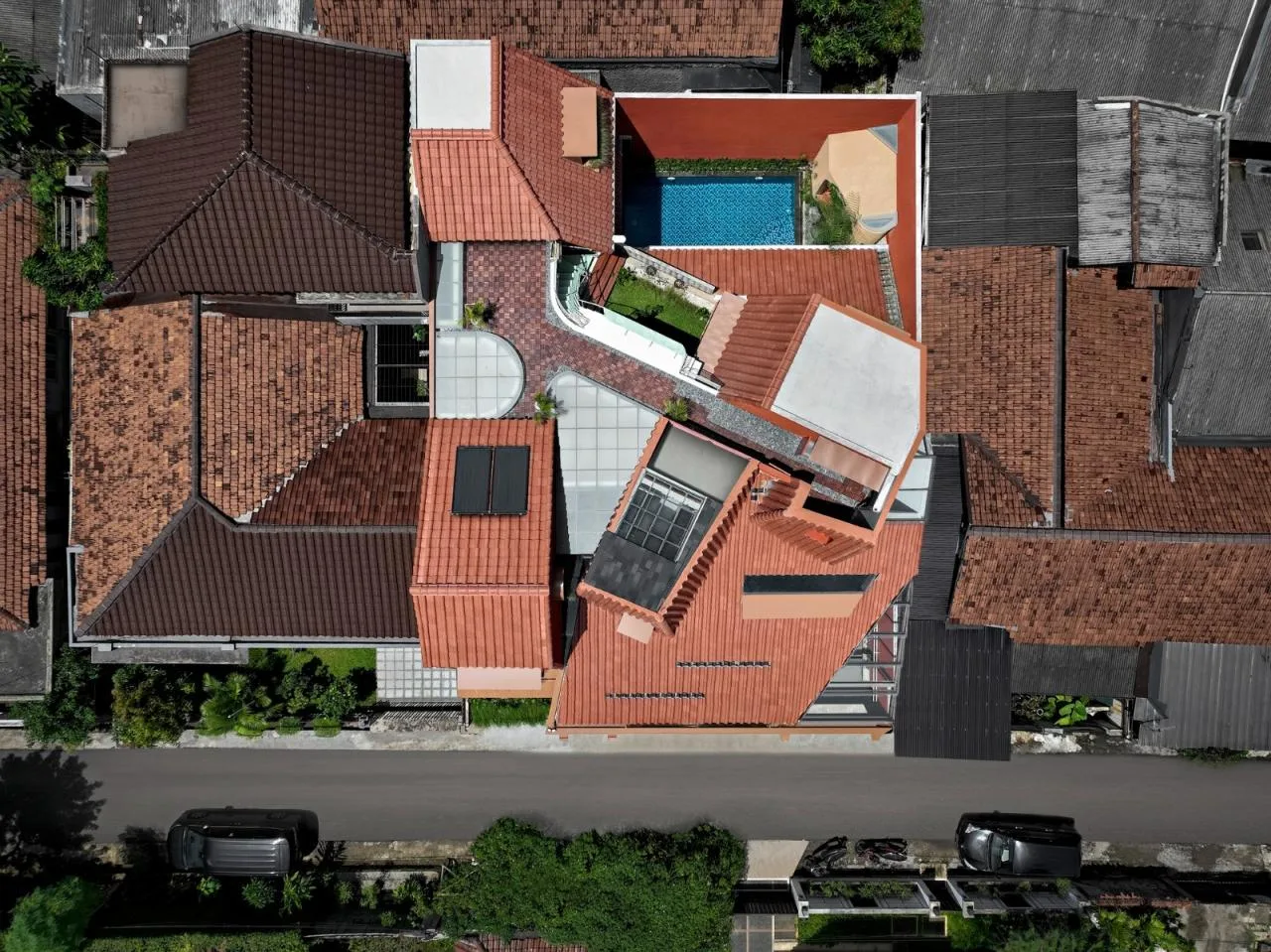
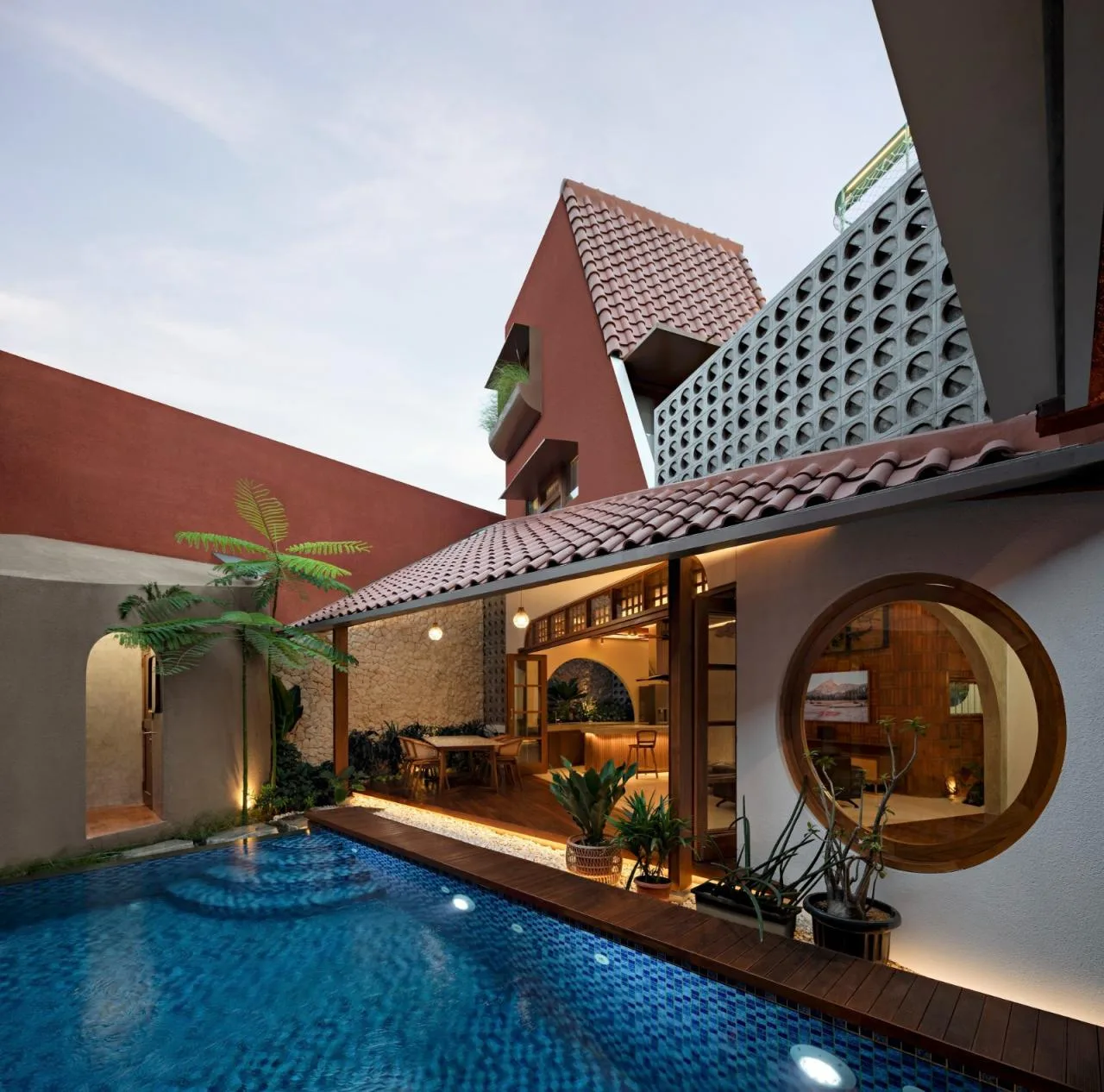
The spatial characteristics are inspired by the experience of public areas and the sense of controlled chaos caused by the loss of existing terrain. The organic spaces formed by the distracted design of the public area and the house are arranged side by side. The leftover organic spaces serve as green zones, dry garden landscapes, ventilation sources, and natural lighting. These are seamlessly integrated with the interior, turning the public area into a shaded outdoor space. Additionally, this area incorporates passive design elements such as breathable walls and skylights.
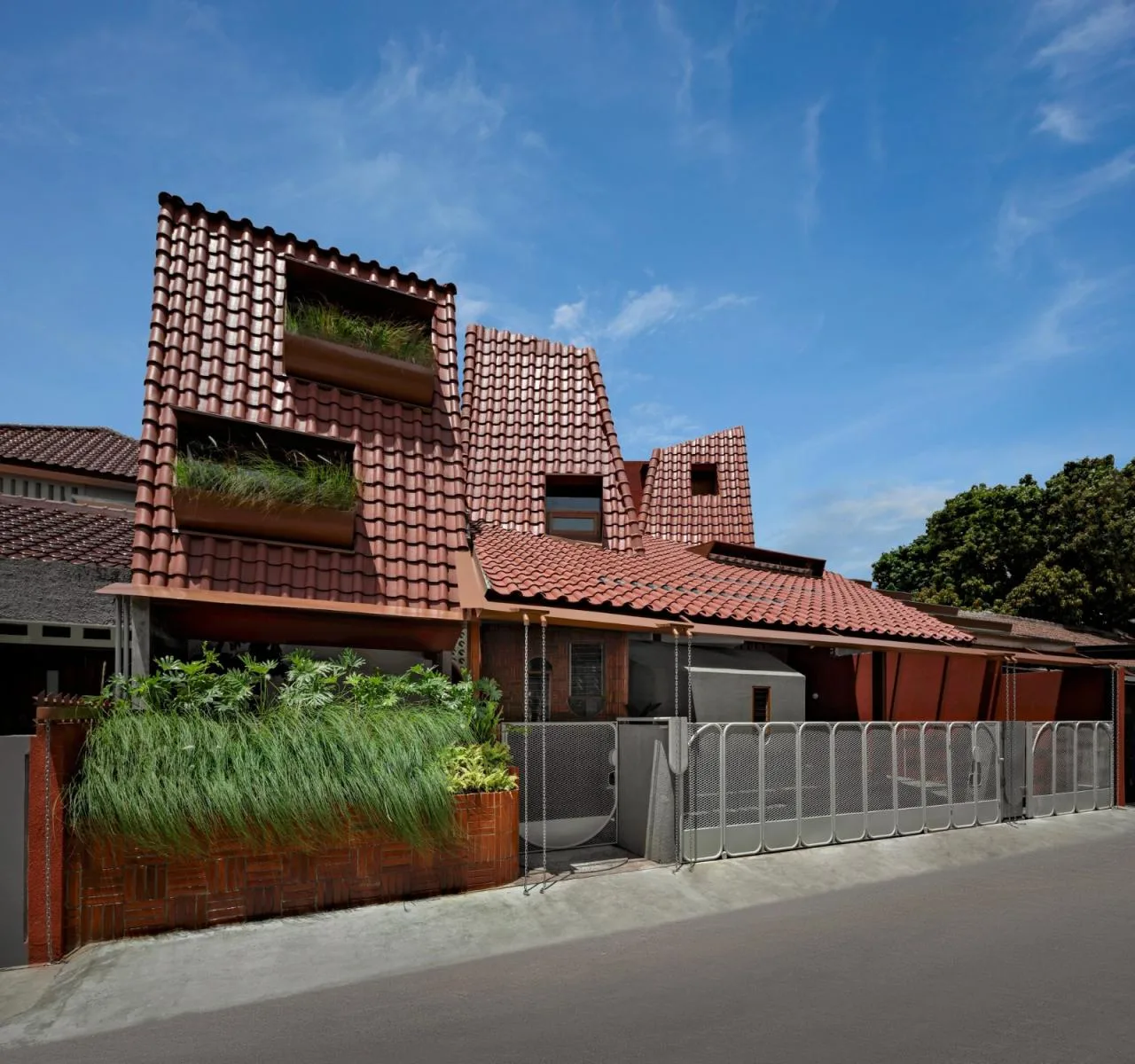
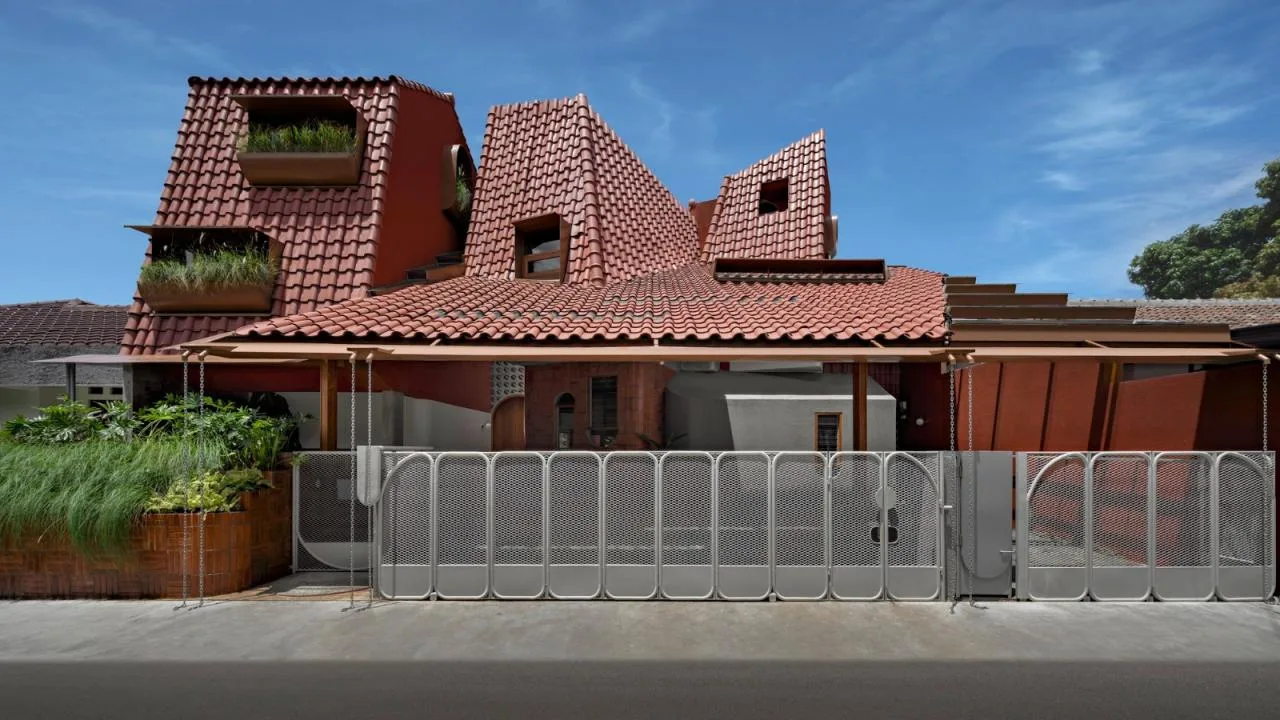
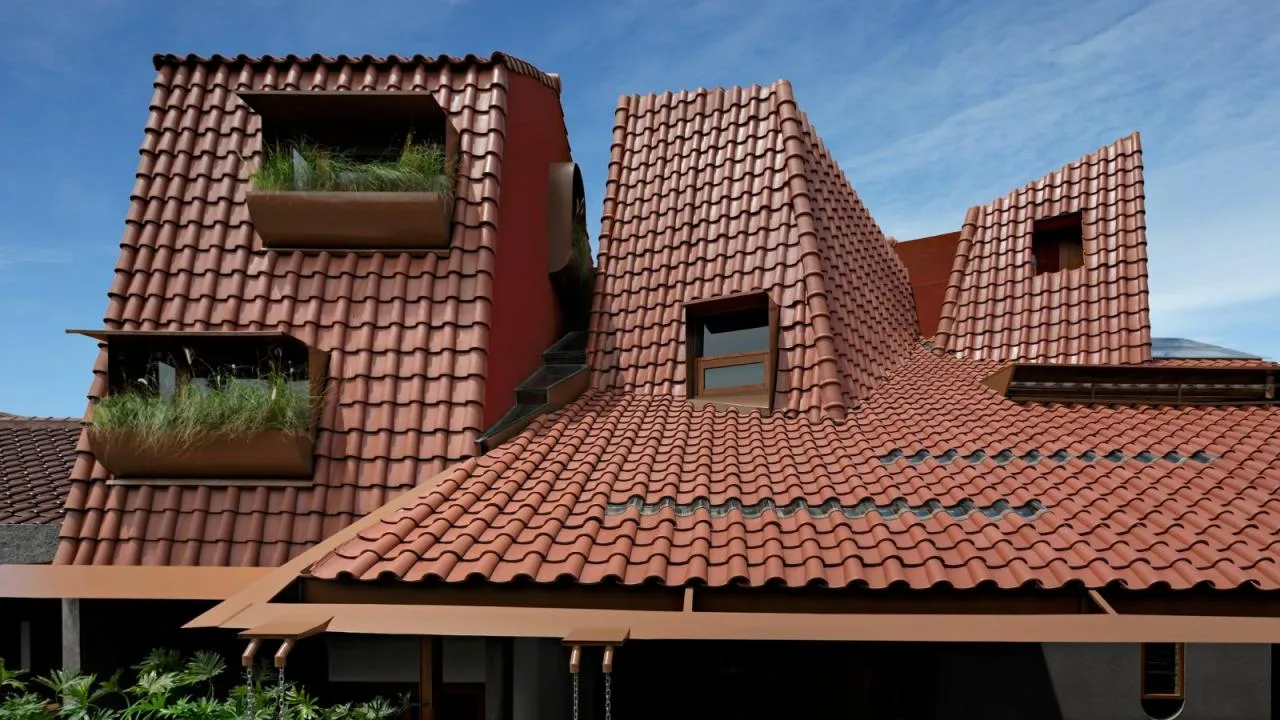
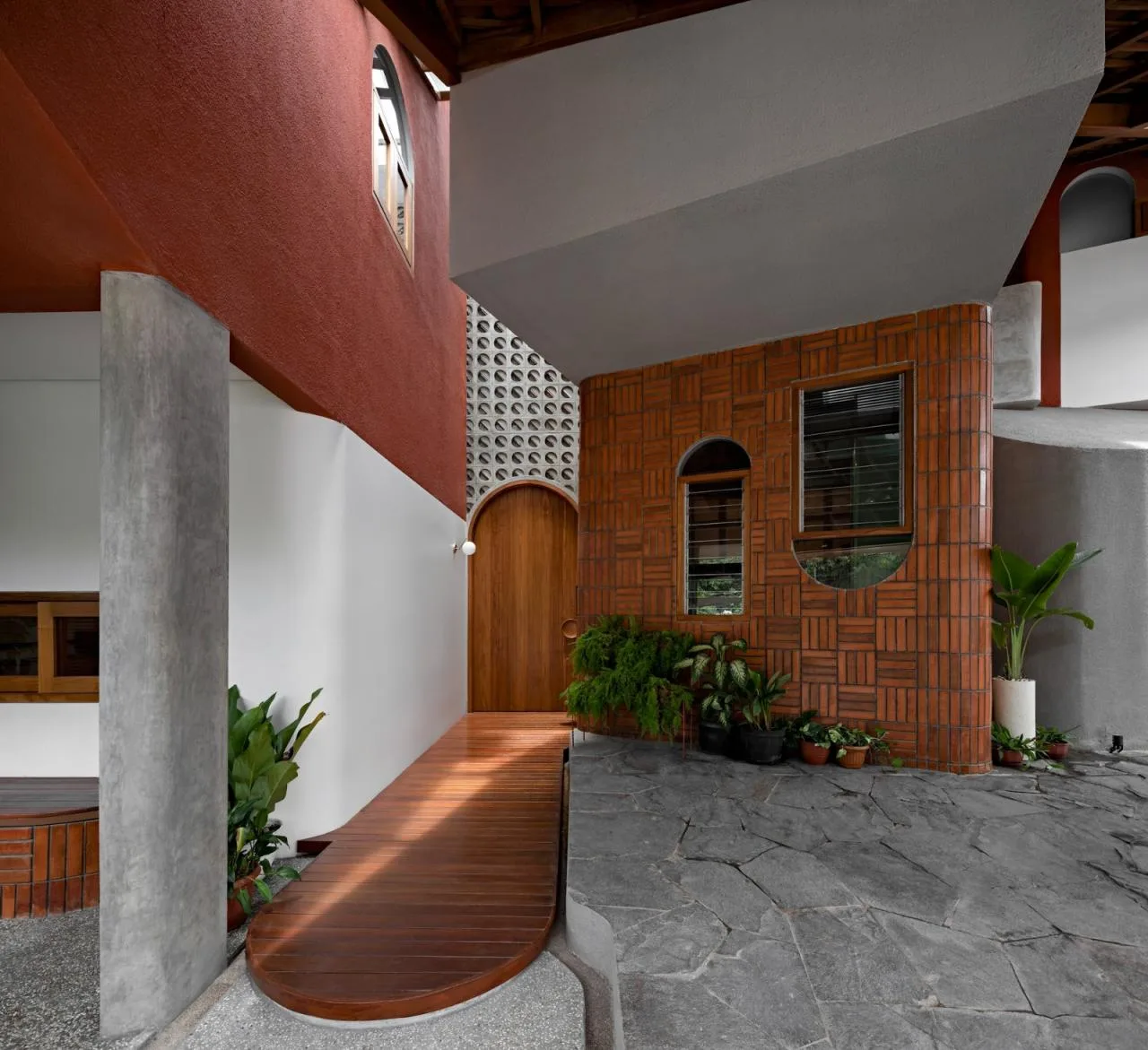
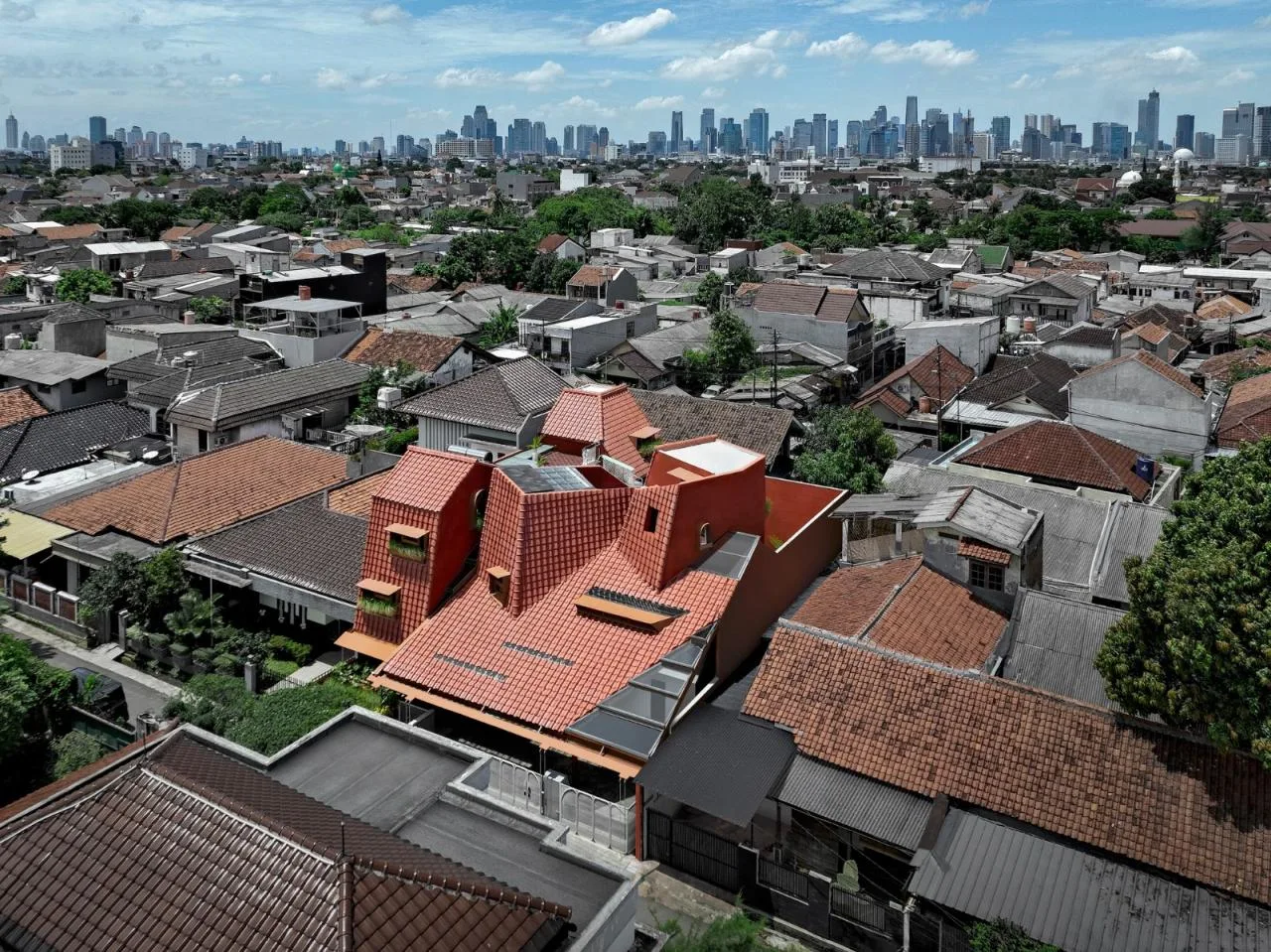
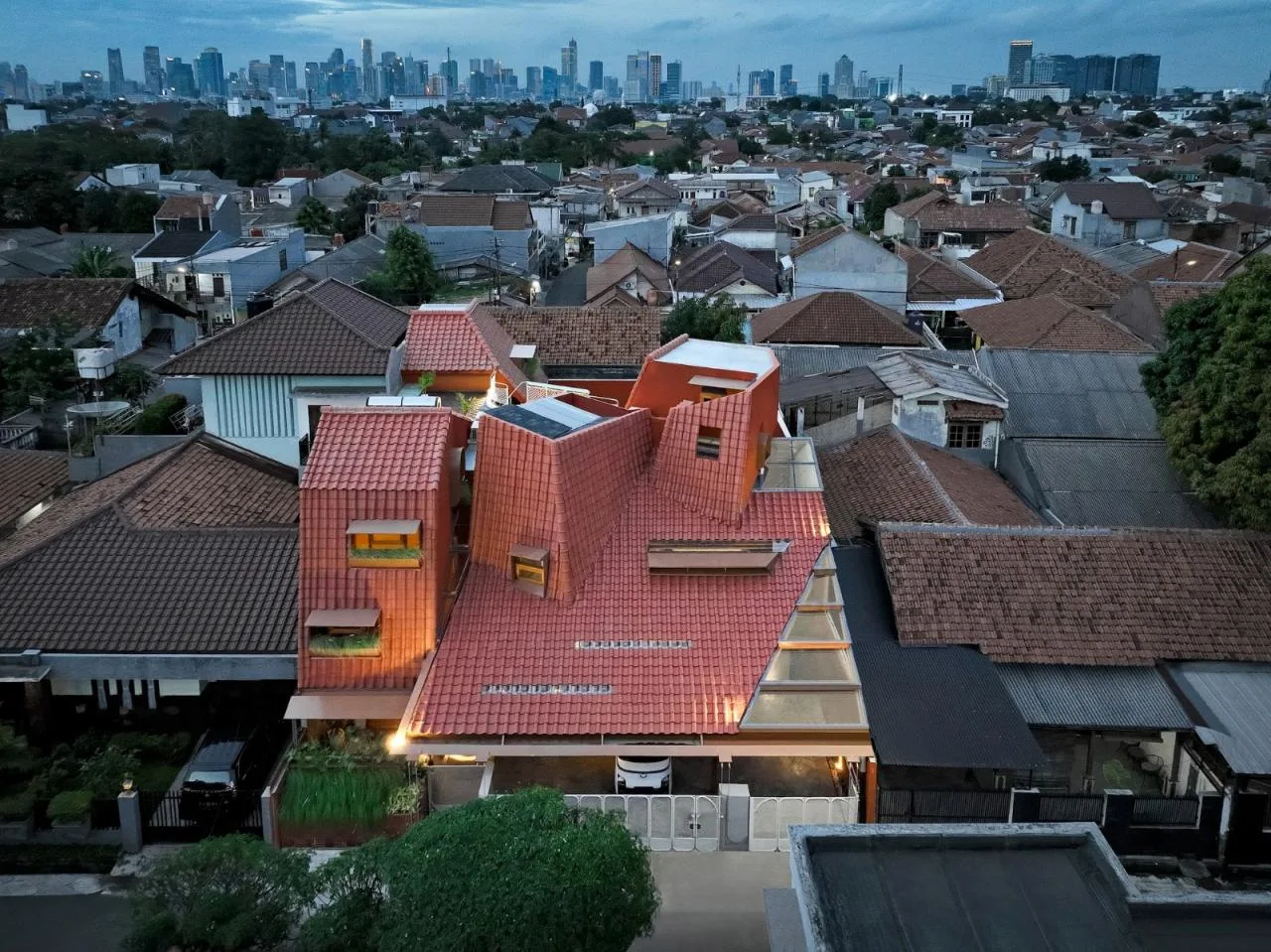
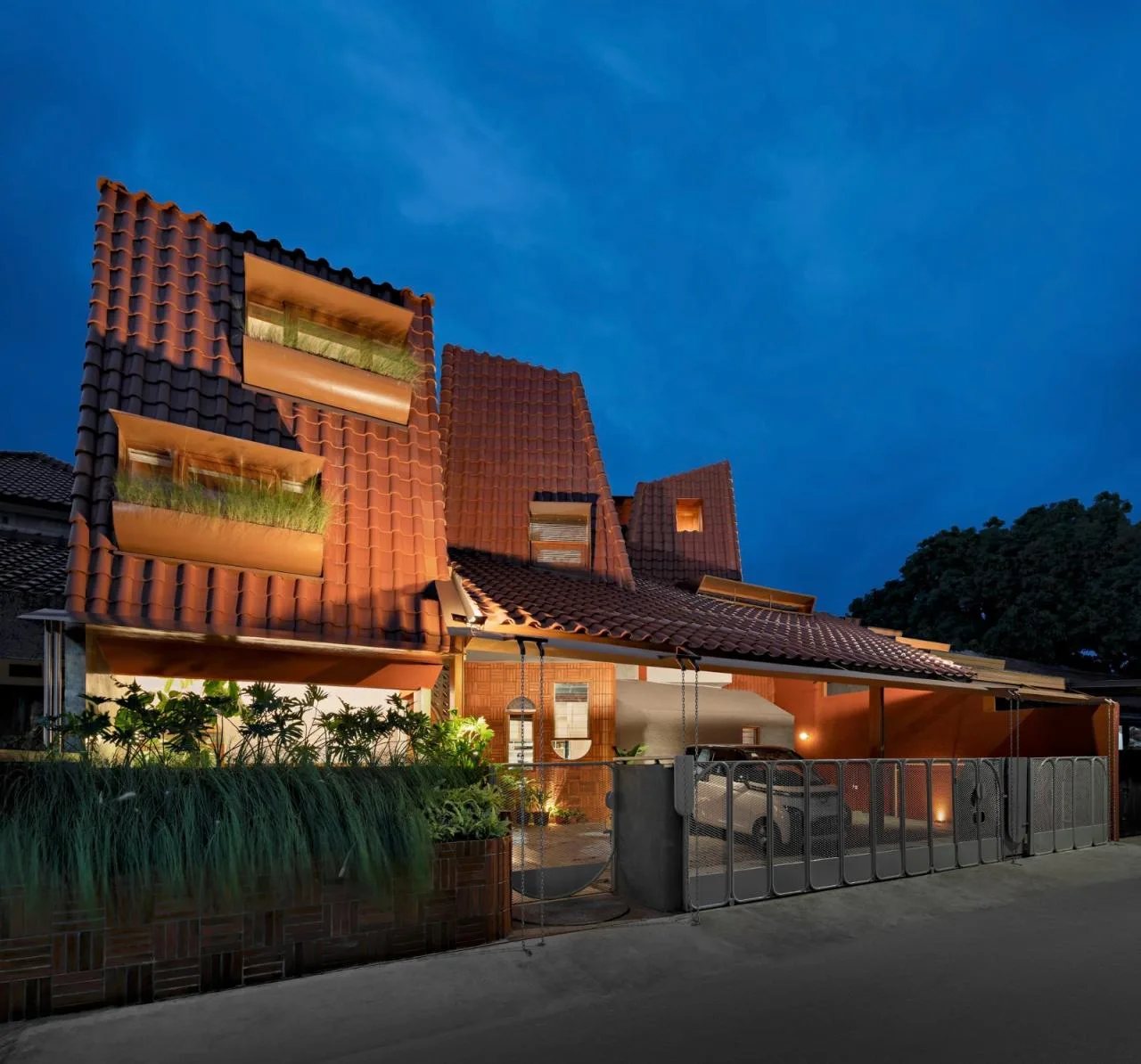
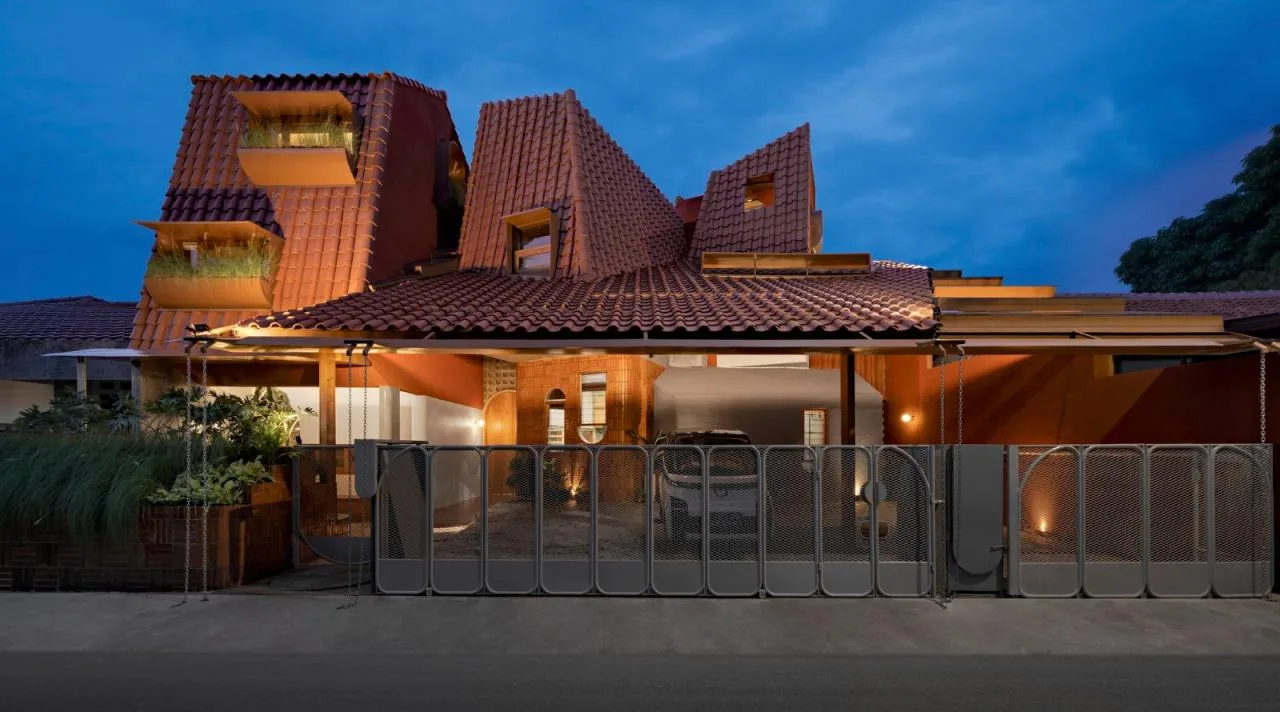
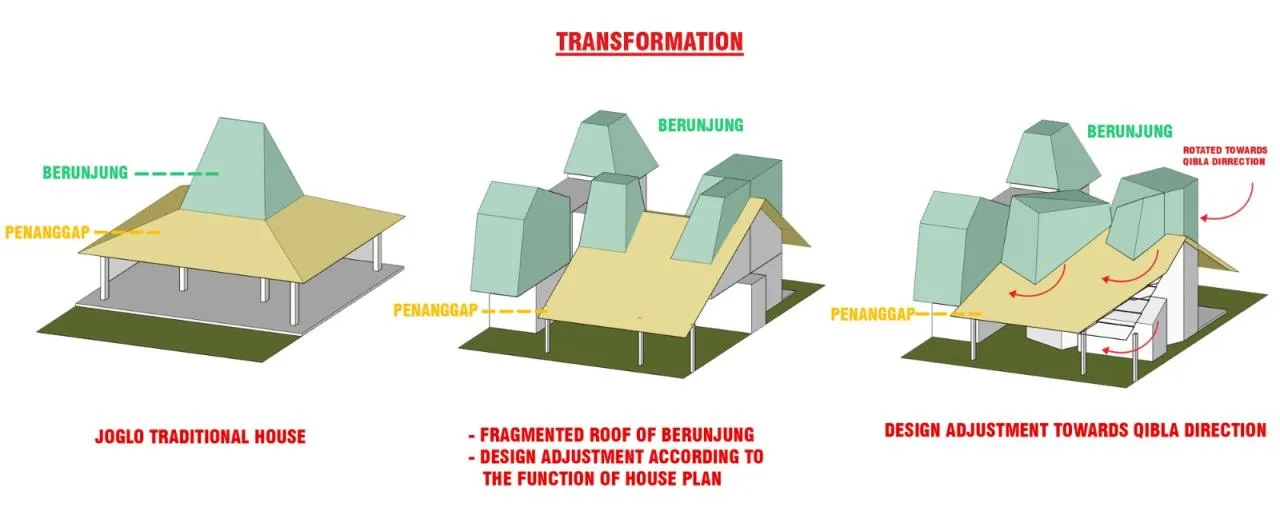
The distinctive architectural form is rooted in the Javanese roof—typical of traditional houses in certain regions of Indonesia—which was also a dream of the residents. We adapted and transformed this form according to the functional requirements of the space. The berunjung (a traditional Javanese towering roof) features a large volume proportion, with bay-style rooms and mezzanines below that serve as front service areas. The sloping roof covers the terrace and acts as a garage while highlighting the interior space. This new transformation enhances the residents’ sense of distraction. Most houses have been oriented towards the Qibla with the space below modified, altering the original form and making it more distinctive.
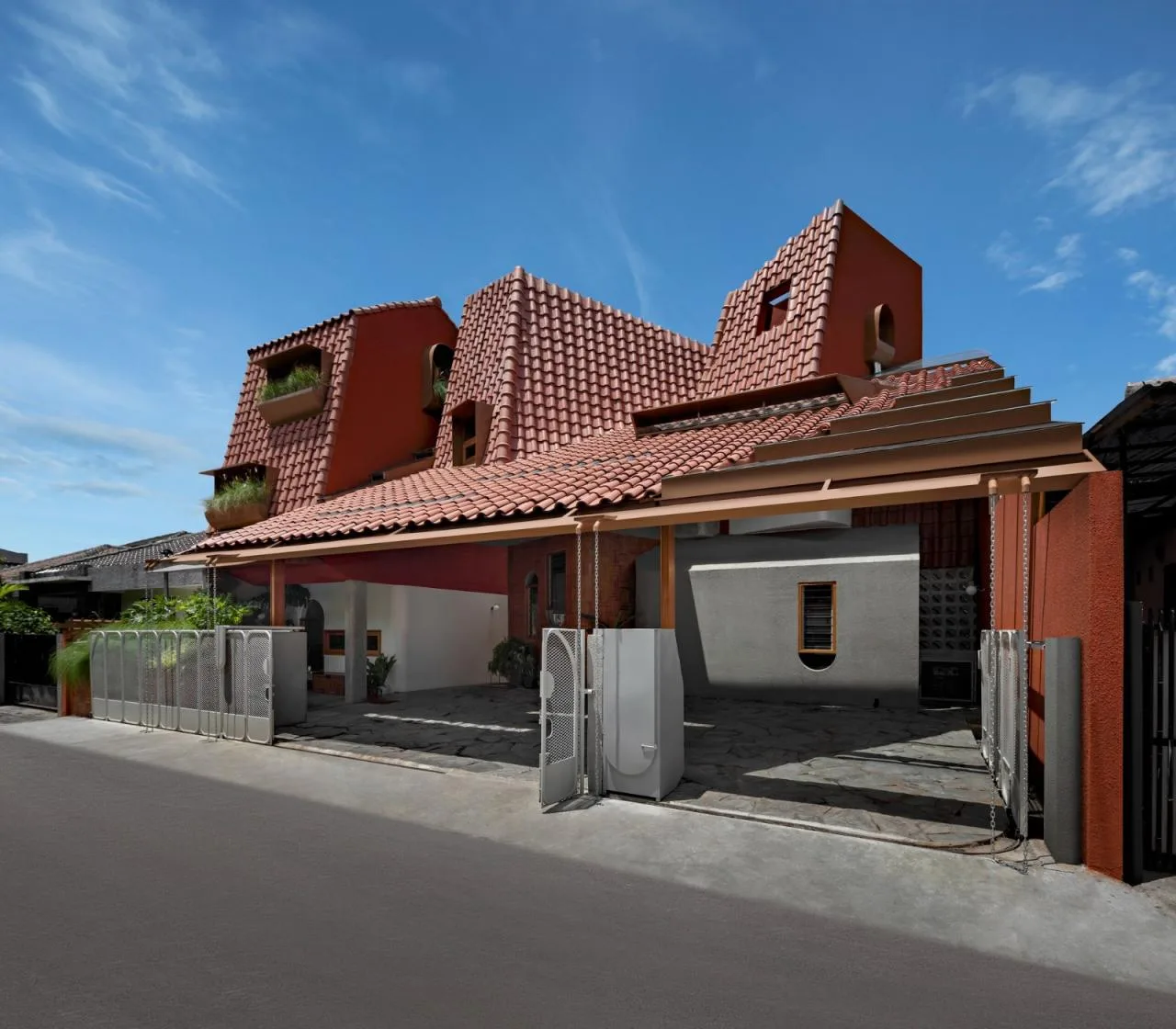
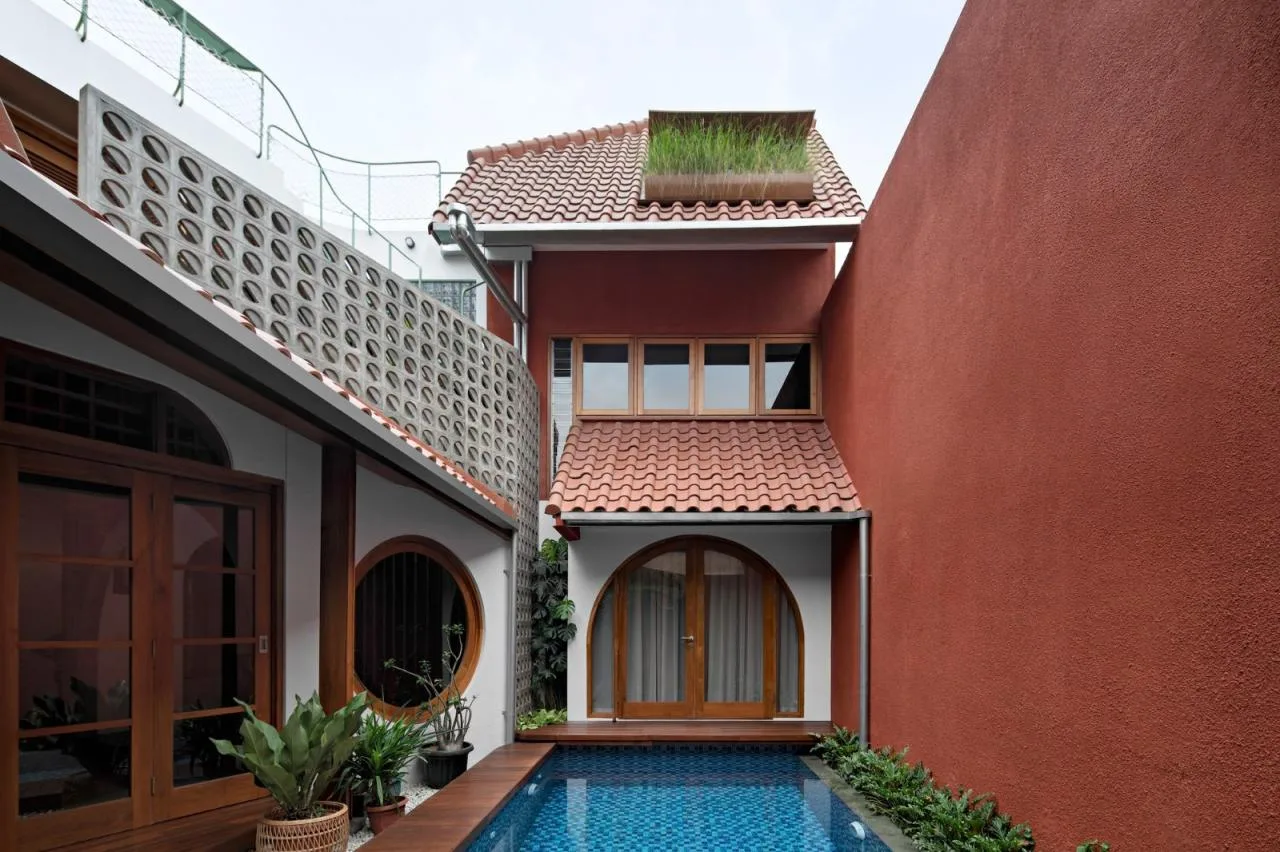
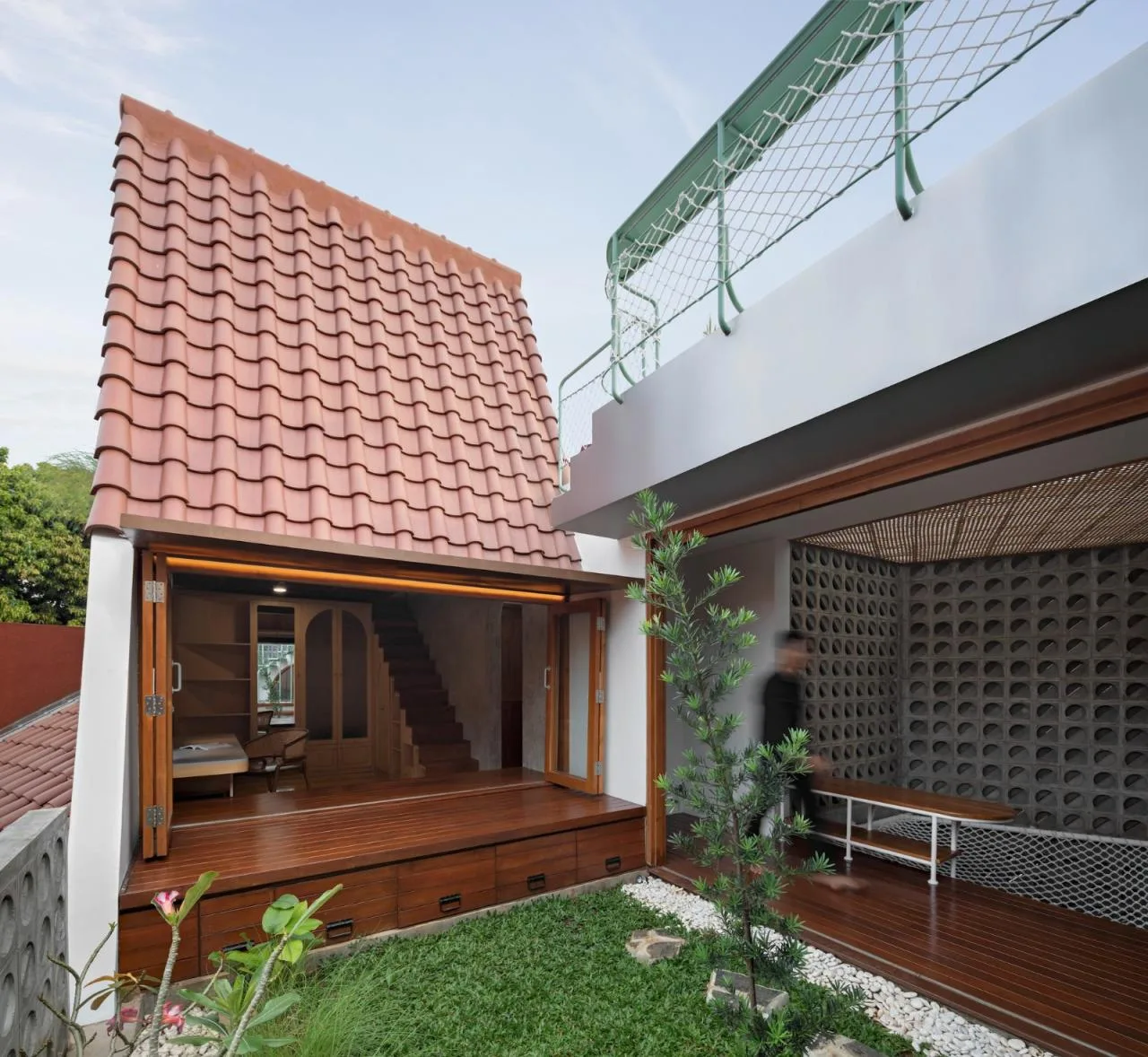
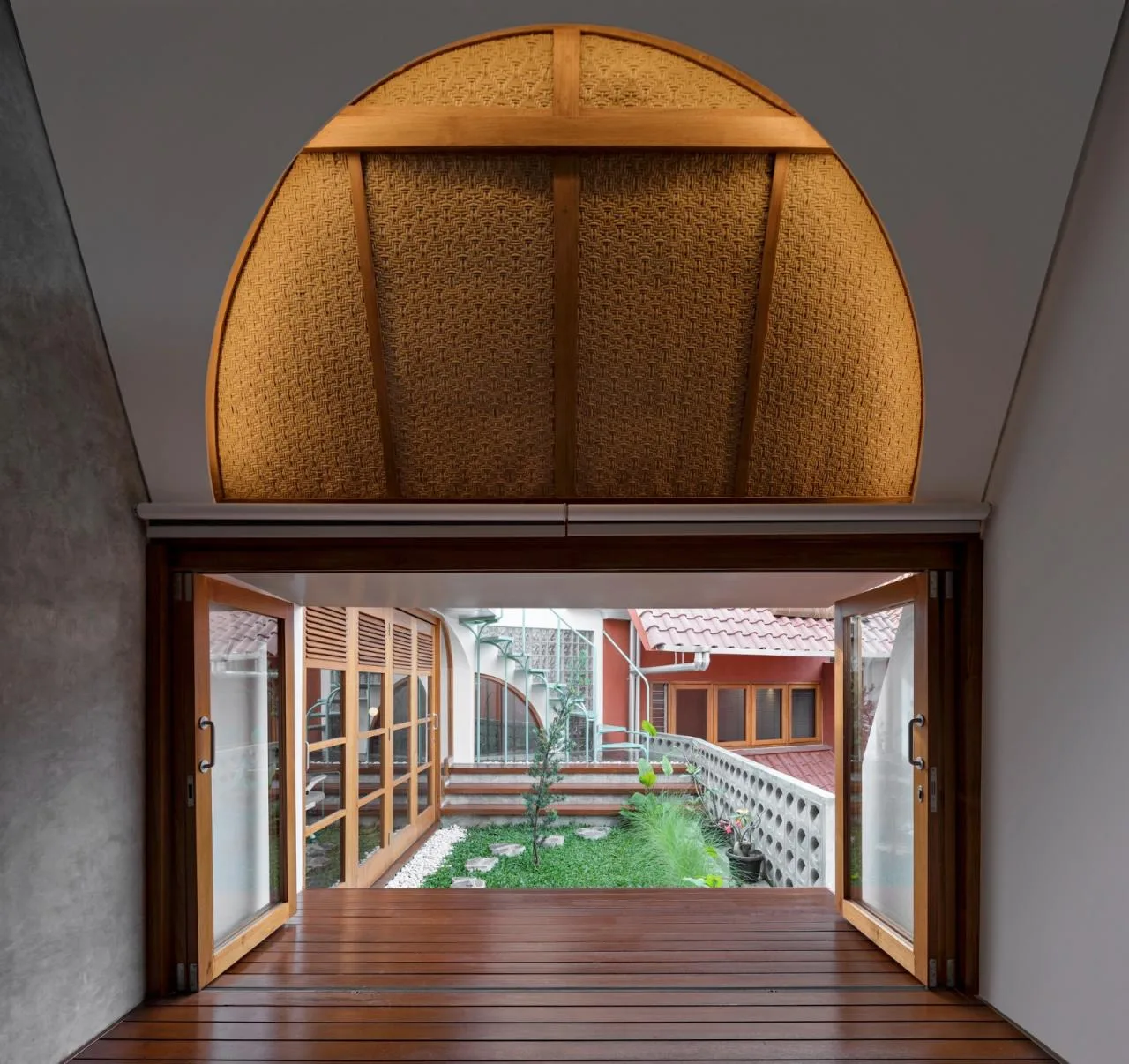
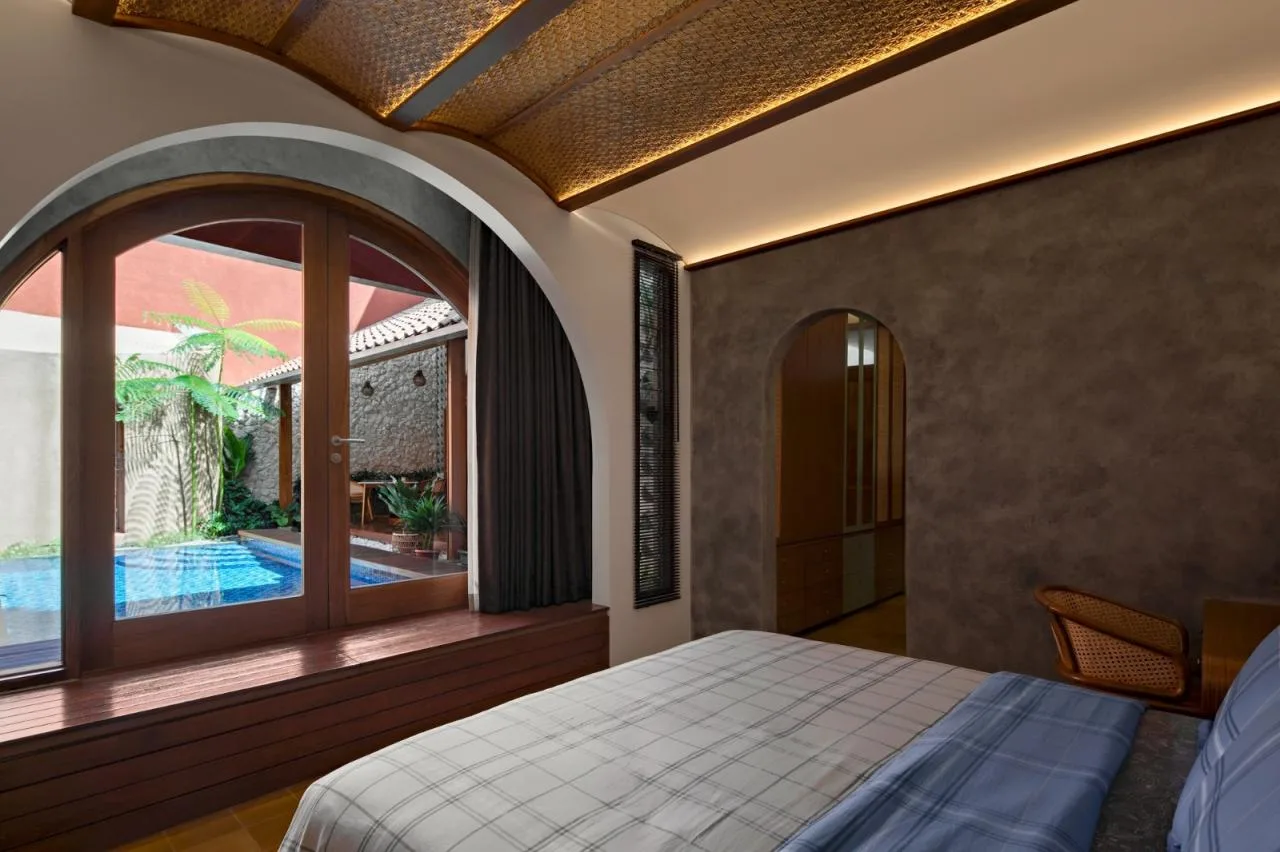
While honoring the traditional Javanese houses with their characteristic clay brick roofs, we also selected clay tile roofing materials familiar to Indonesian society. This choice reflects the surrounding environment, an older settlement where sloped roofs traditionally utilize clay tiles. Our goal was to integrate the building harmoniously with its environment while using local materials to create a distinctive, modern design that still evokes its original form. Other familiar materials such as brick, cement, natural stone, and wood were also used and extended into the house interiors.
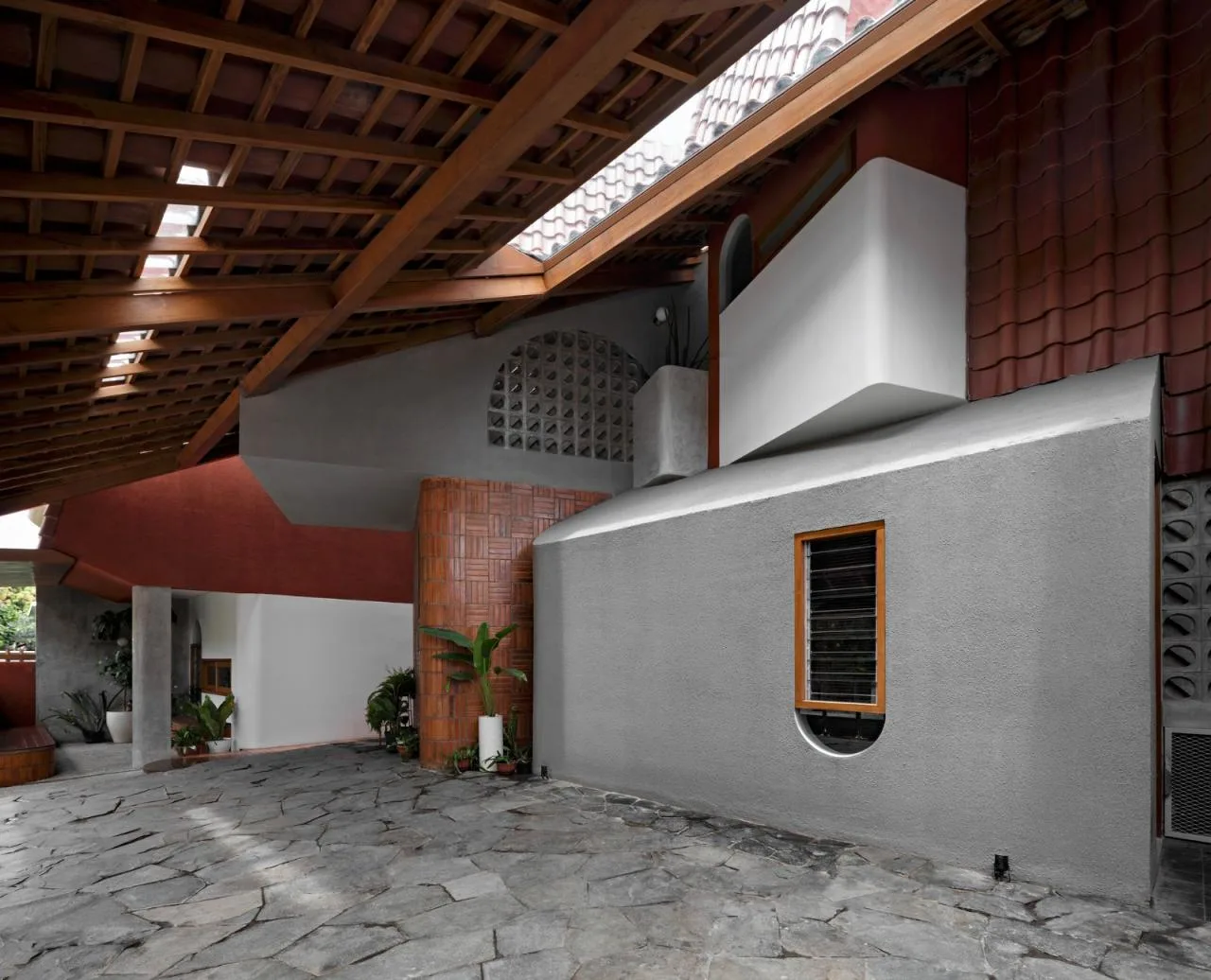
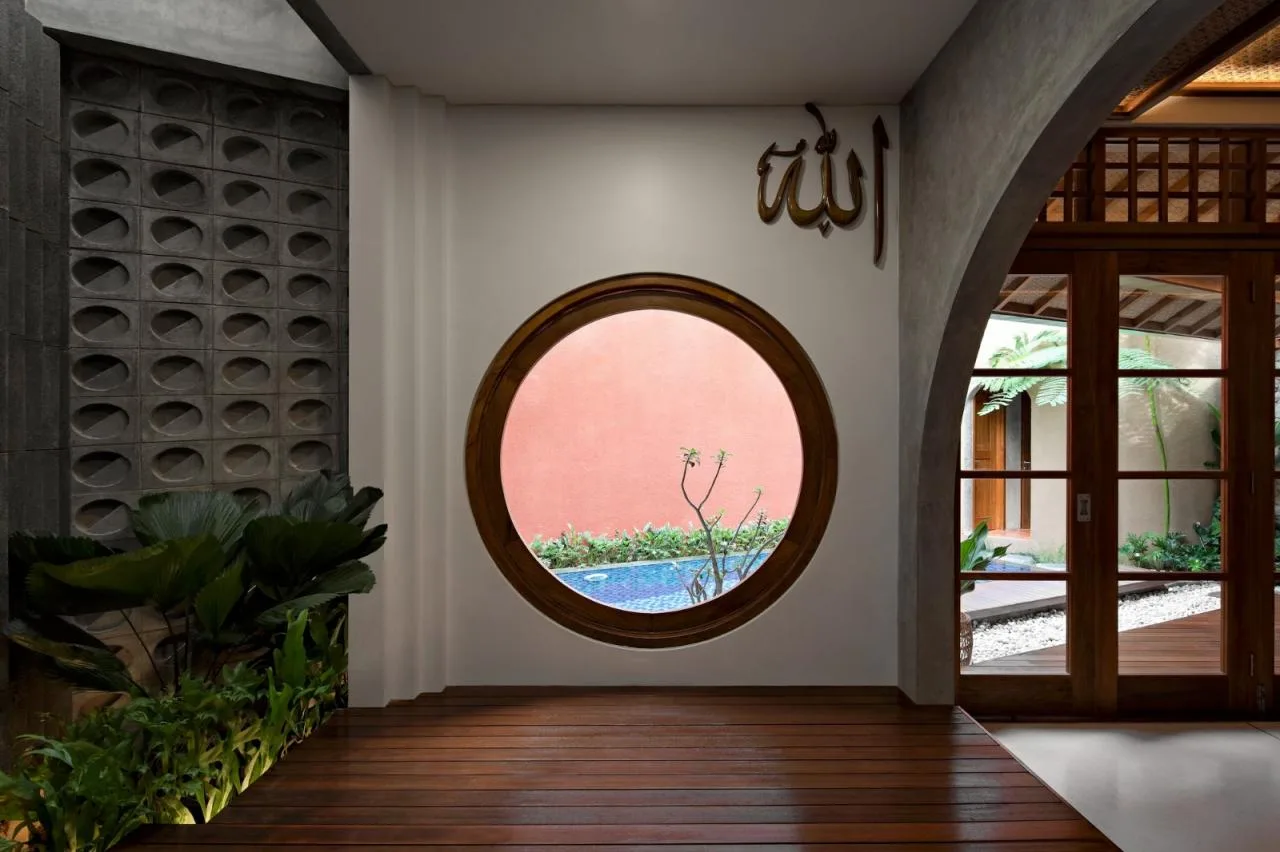
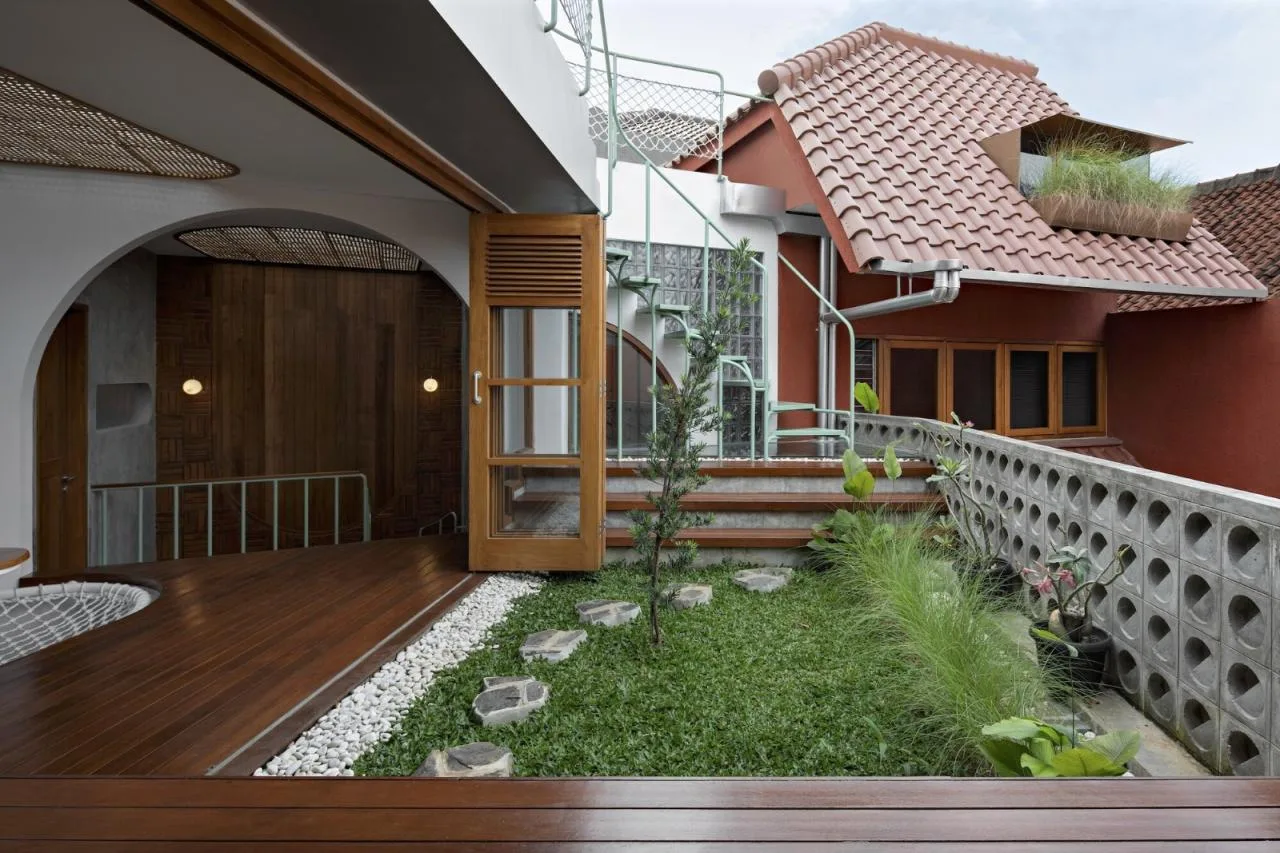
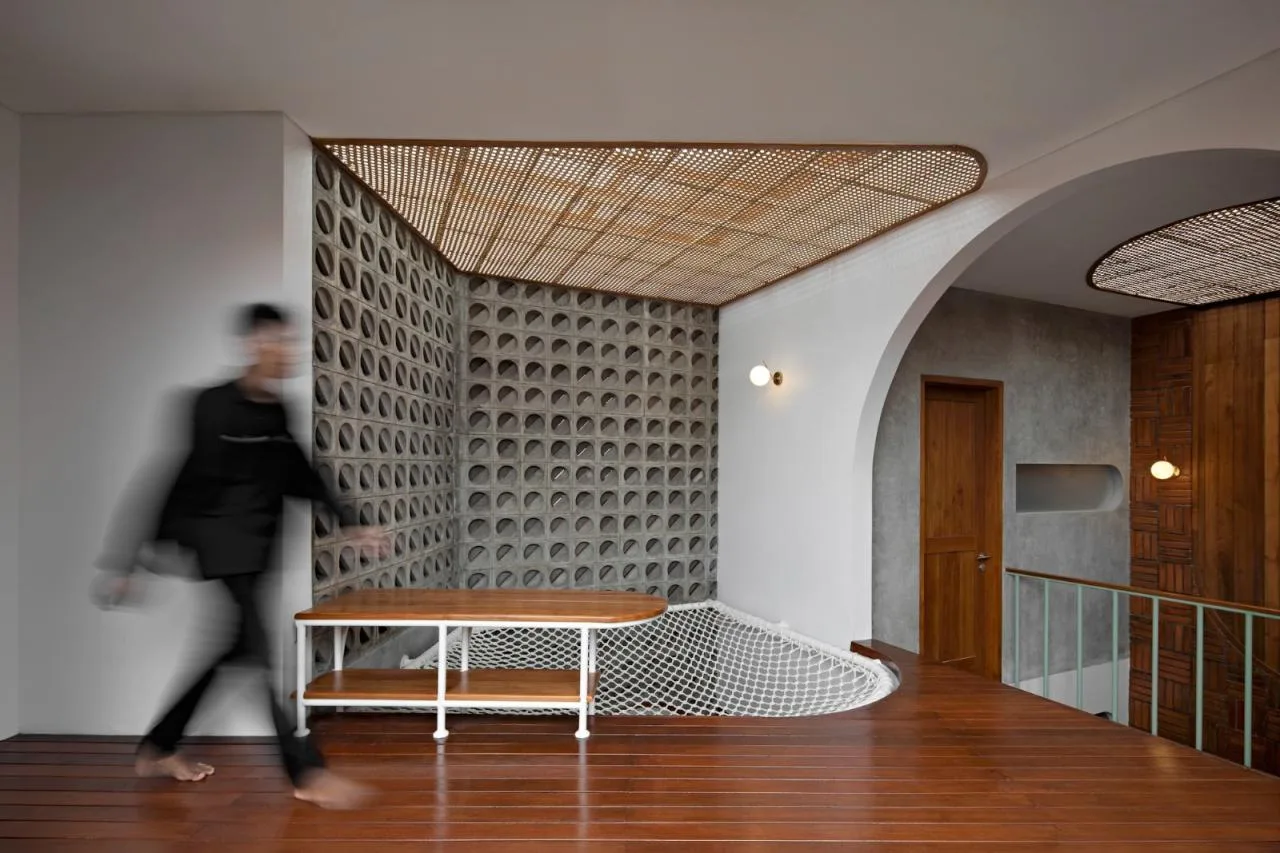
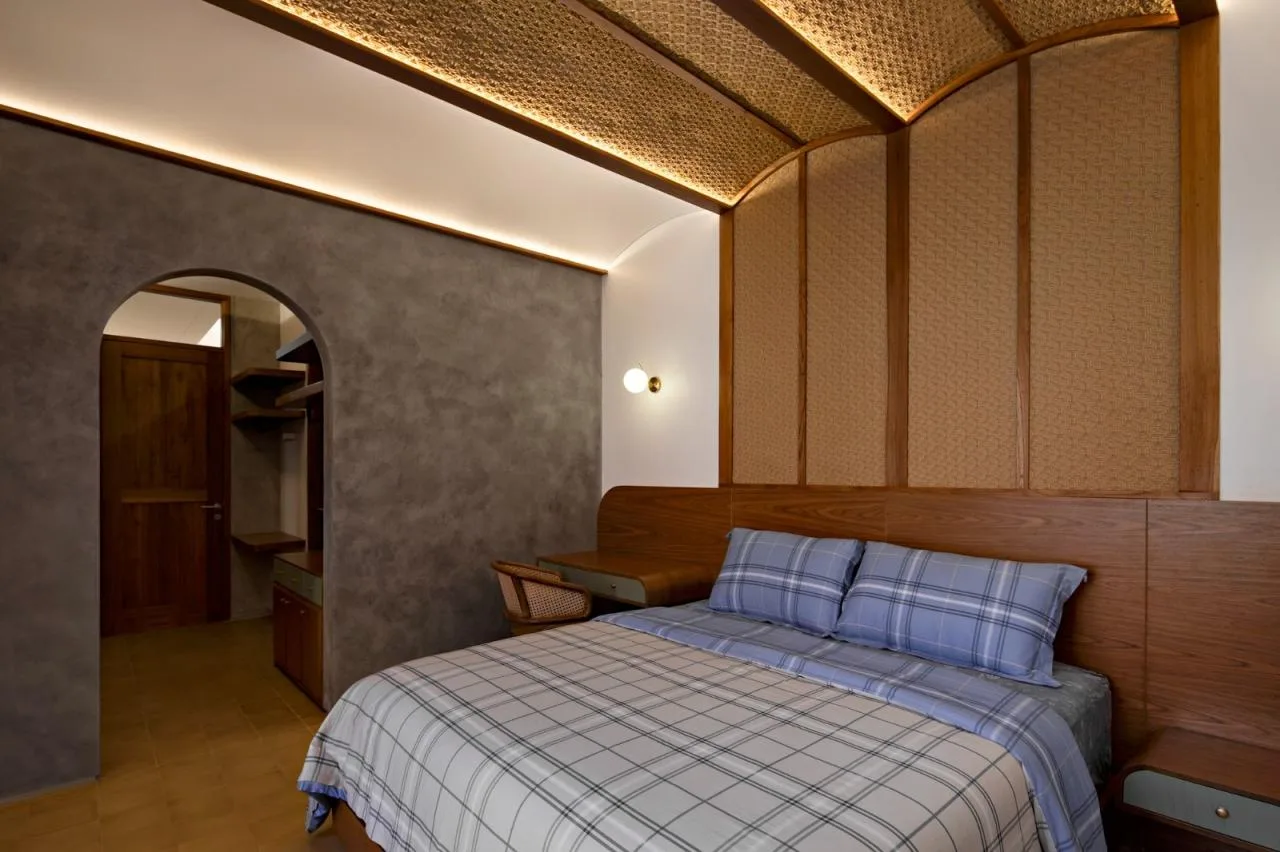
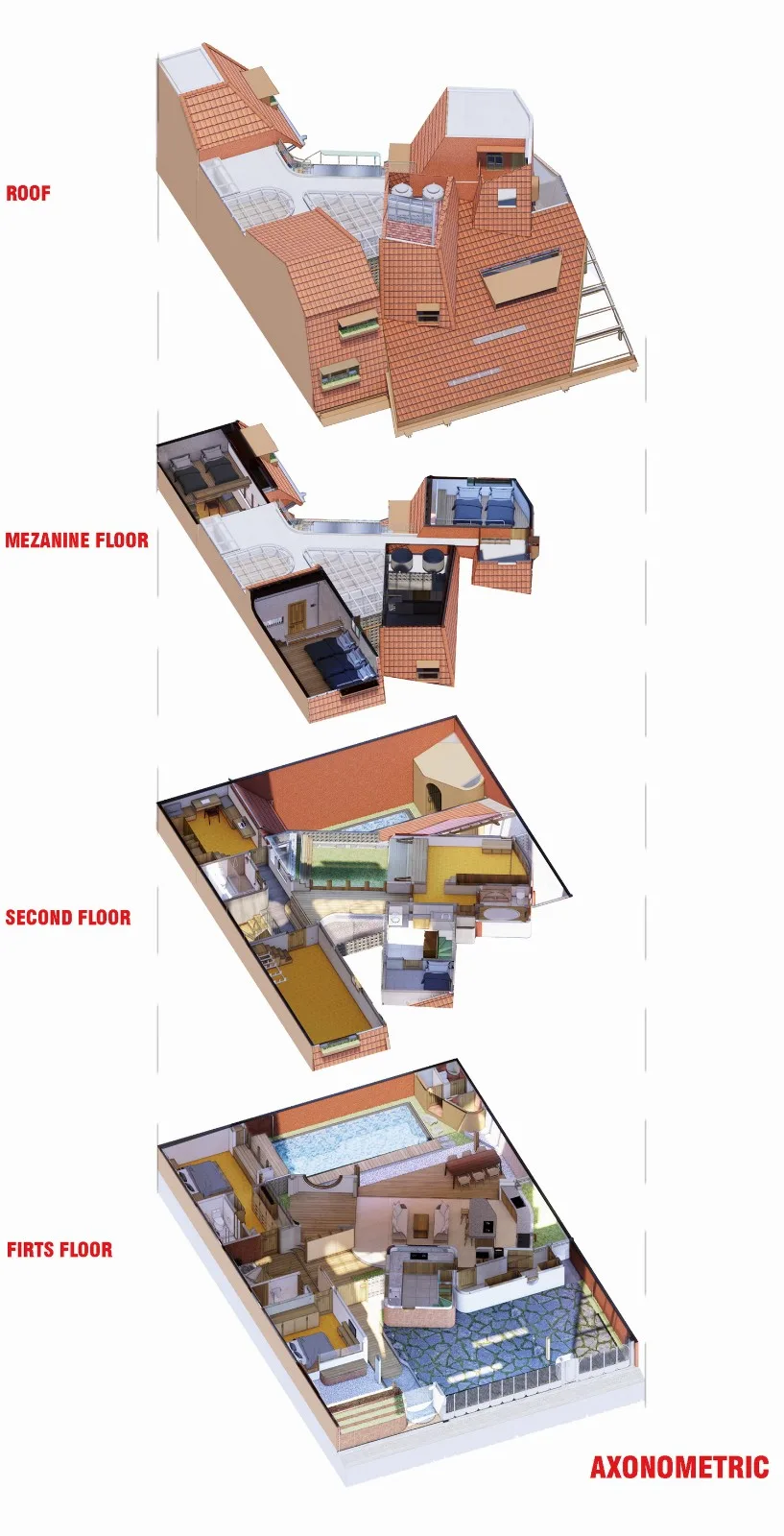
Residential Function: This home is designed to support the gathering and prayer needs of a large family, accommodating many people simultaneously. To address this, a public space is directly connected to the prayer room, which includes the family room, dining area, and open kitchen. When needed, the prayer room can be expanded into the public space facing the Qibla. The residence houses seven permanent residents, with dozens of extended family members occasionally staying overnight during weekends, holidays, or special occasions. To maximize space, mezzanines were specifically designed in the upper-level rooms, enabling vertical expansion without occupying additional land.
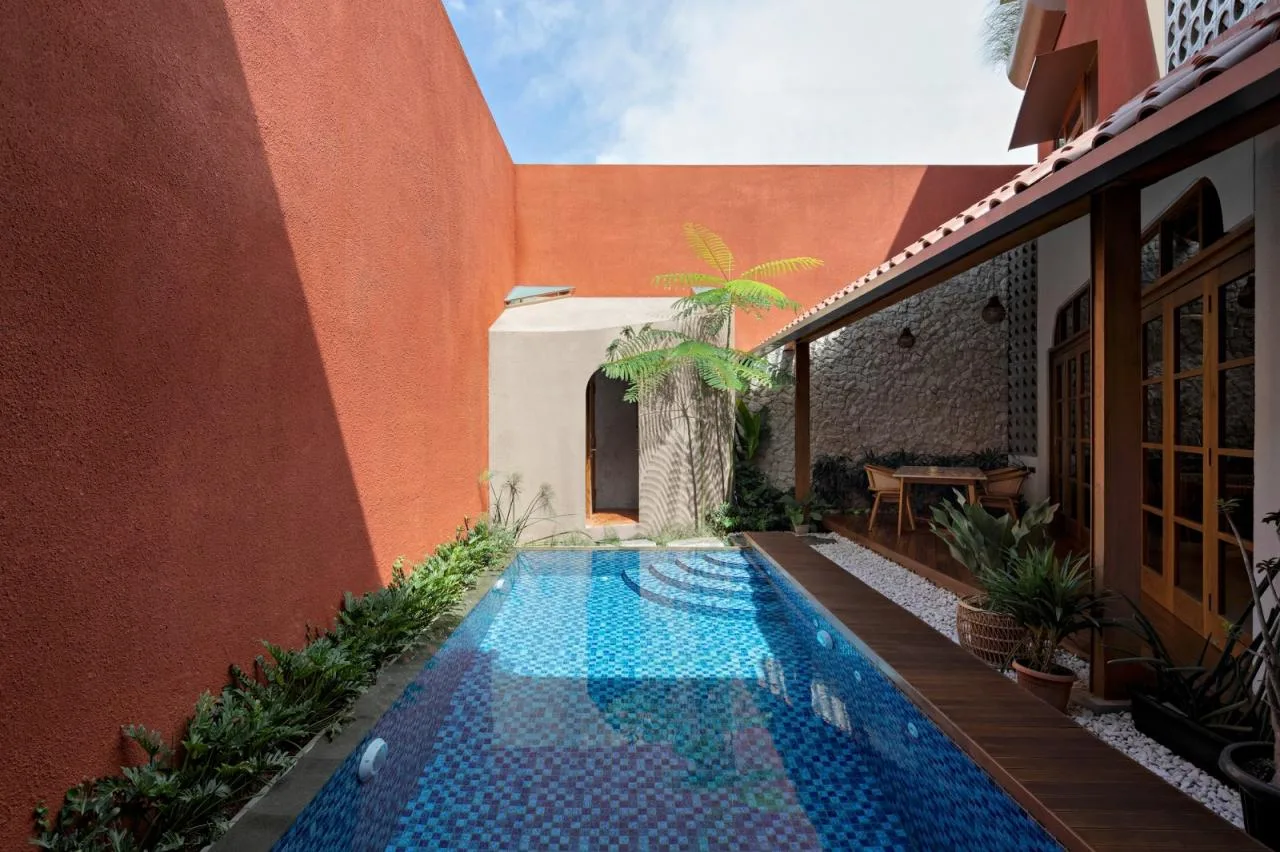
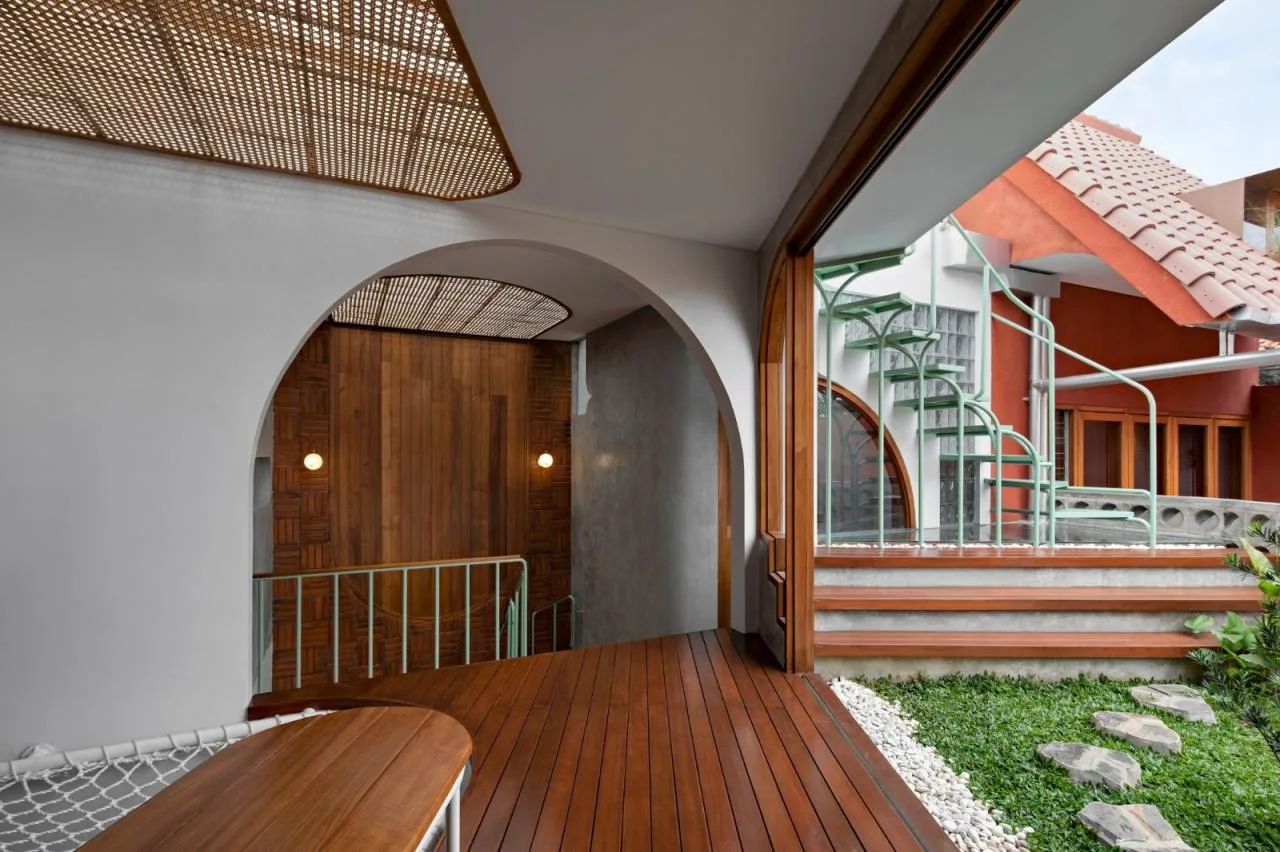
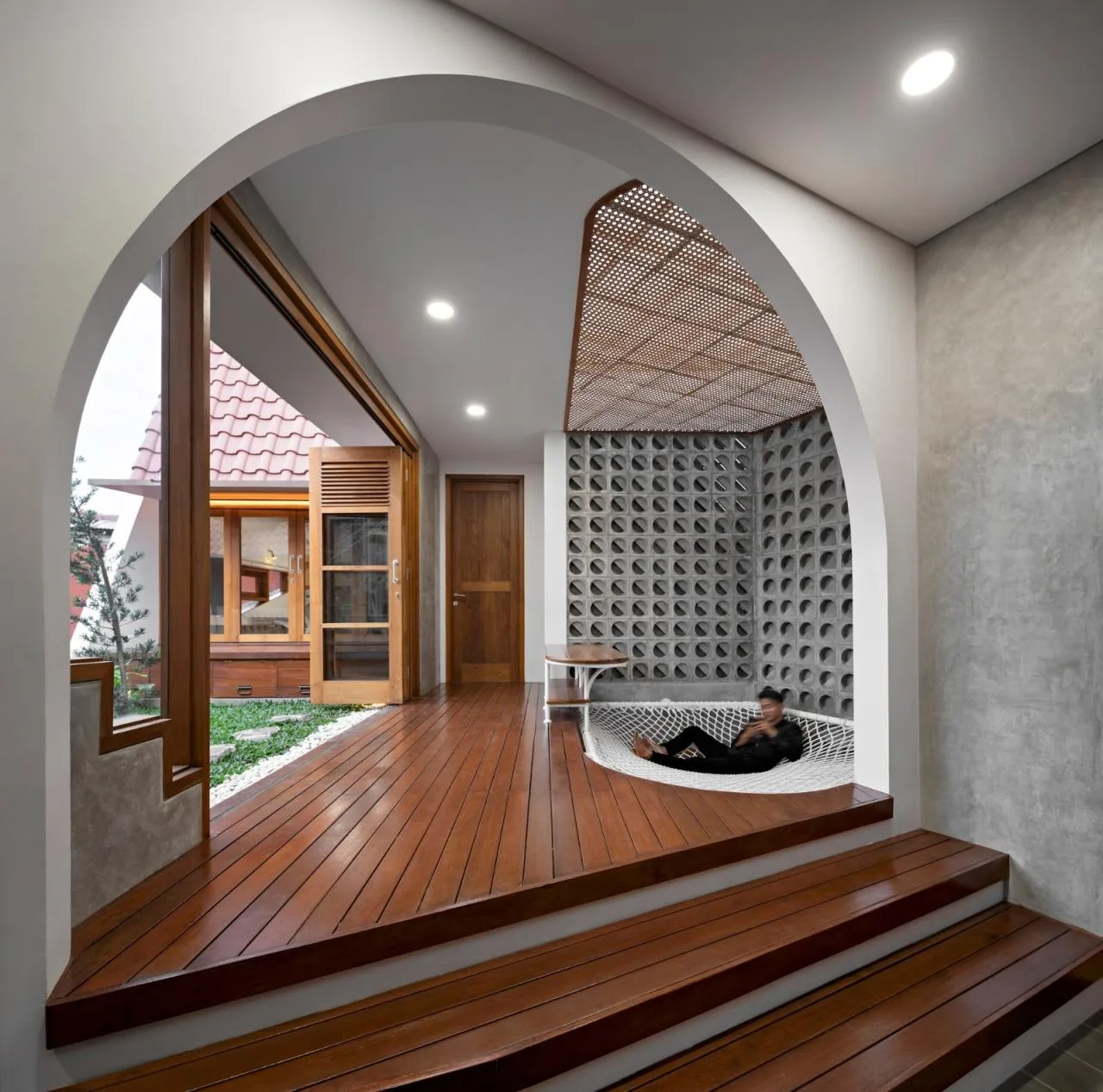
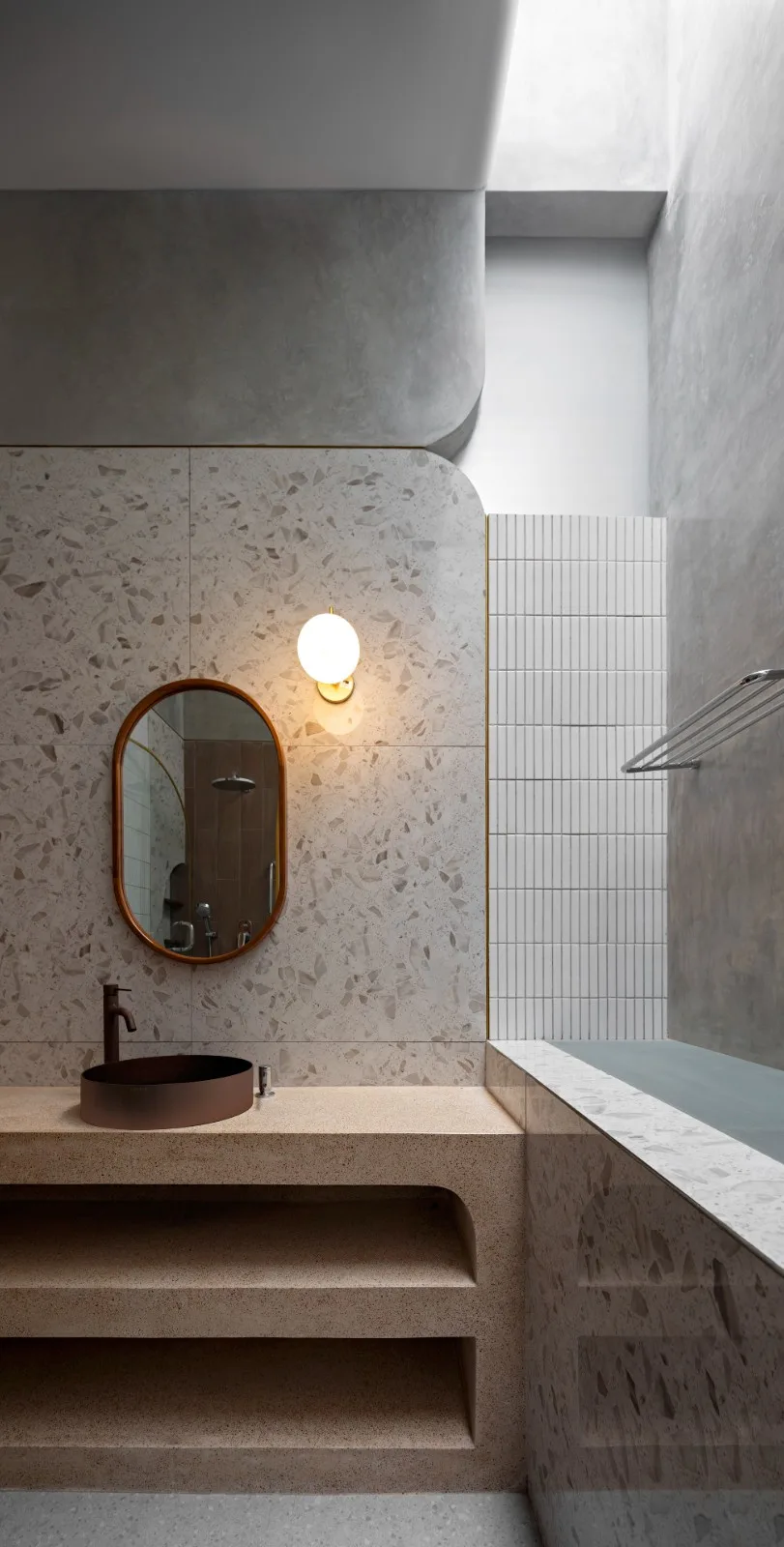
Another important aspect for the residents is to incorporate Islamic values in daily life. These include proper mattress orientation, ensuring at least the feet do not face the toilet, and thoughtful toilet placement. The bathroom features a cleaning system designed to stay away from dirt, with drainage channels that cleanse the floor area to maintain hygiene.
Project Drawings
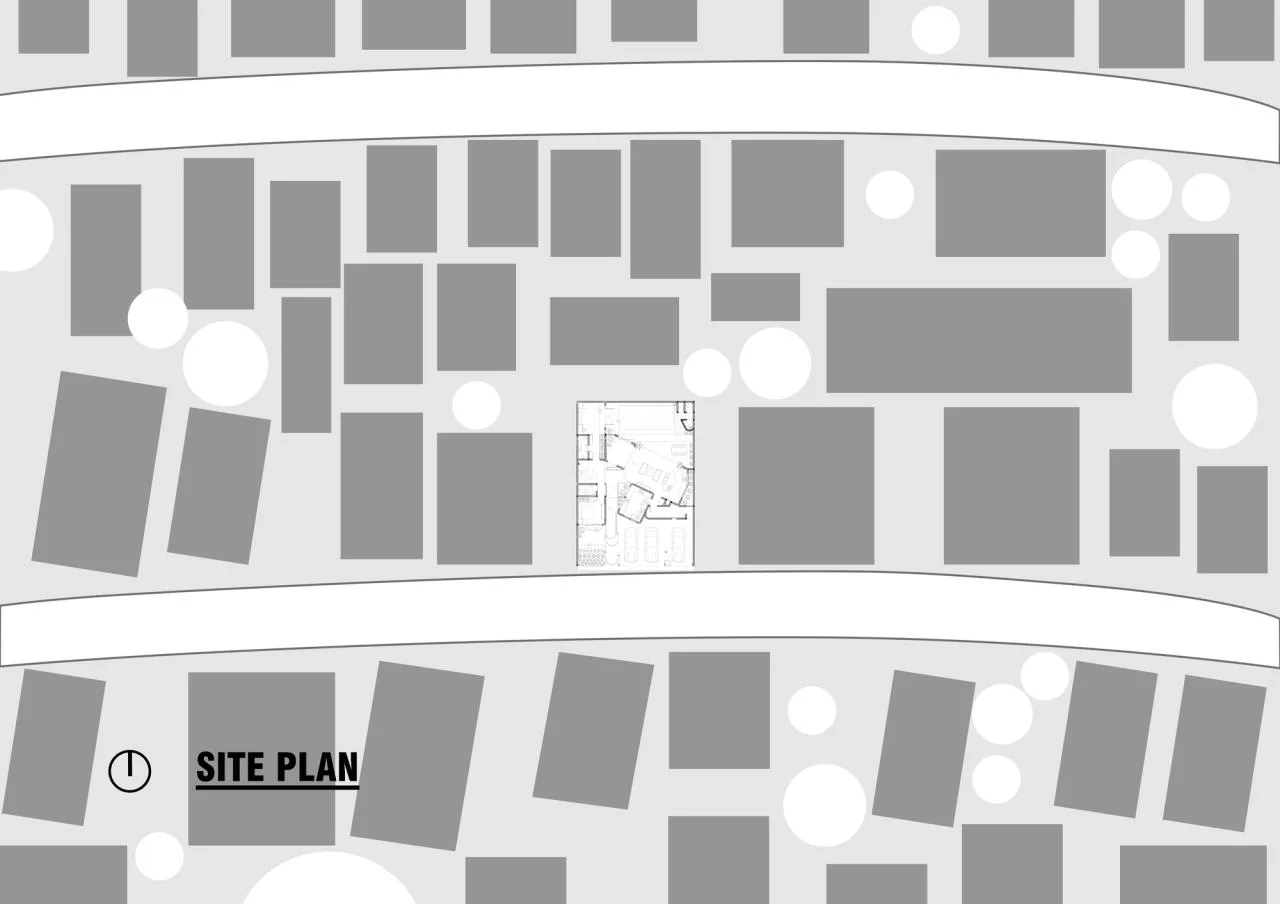
△ Base schematic diagram
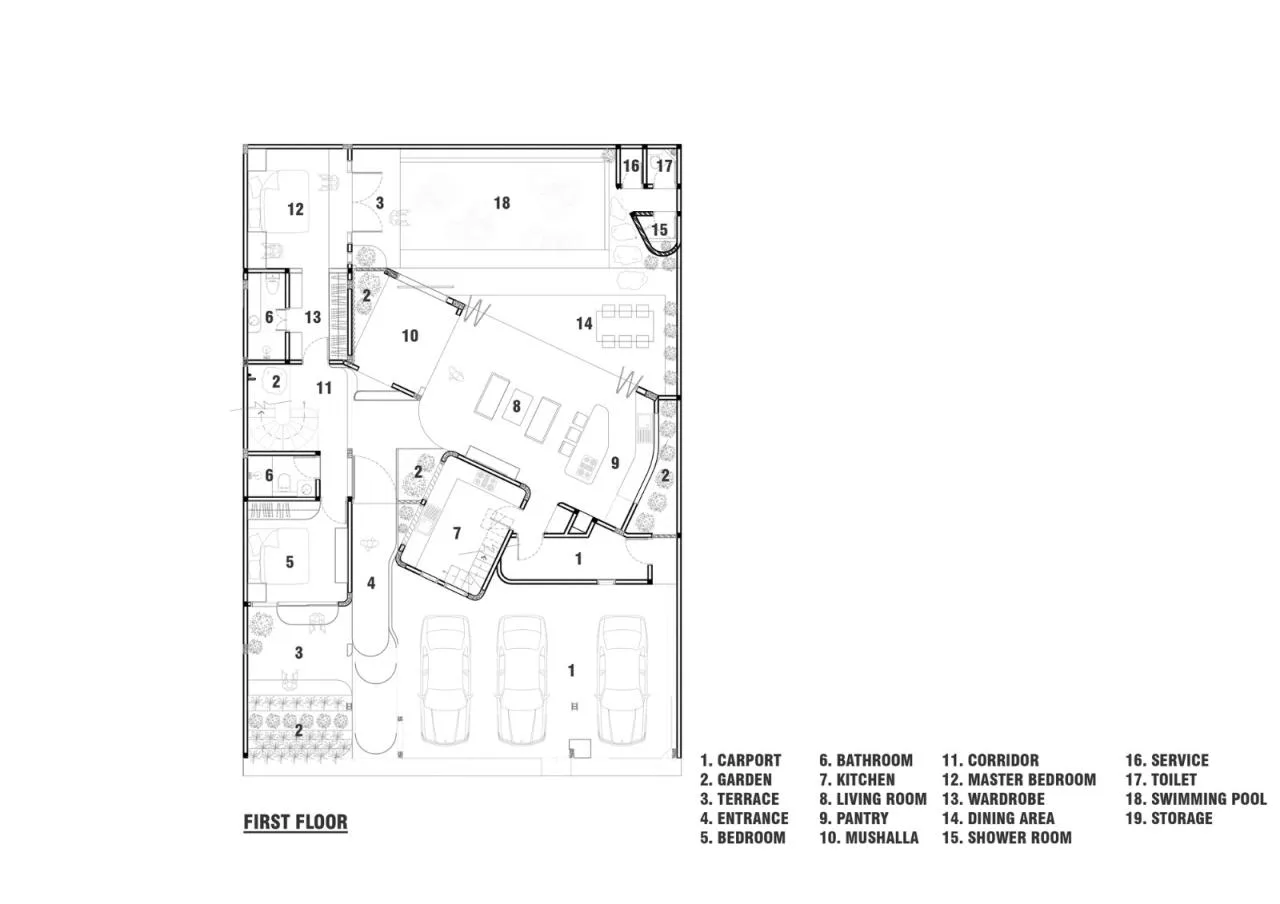
△ First floor plan
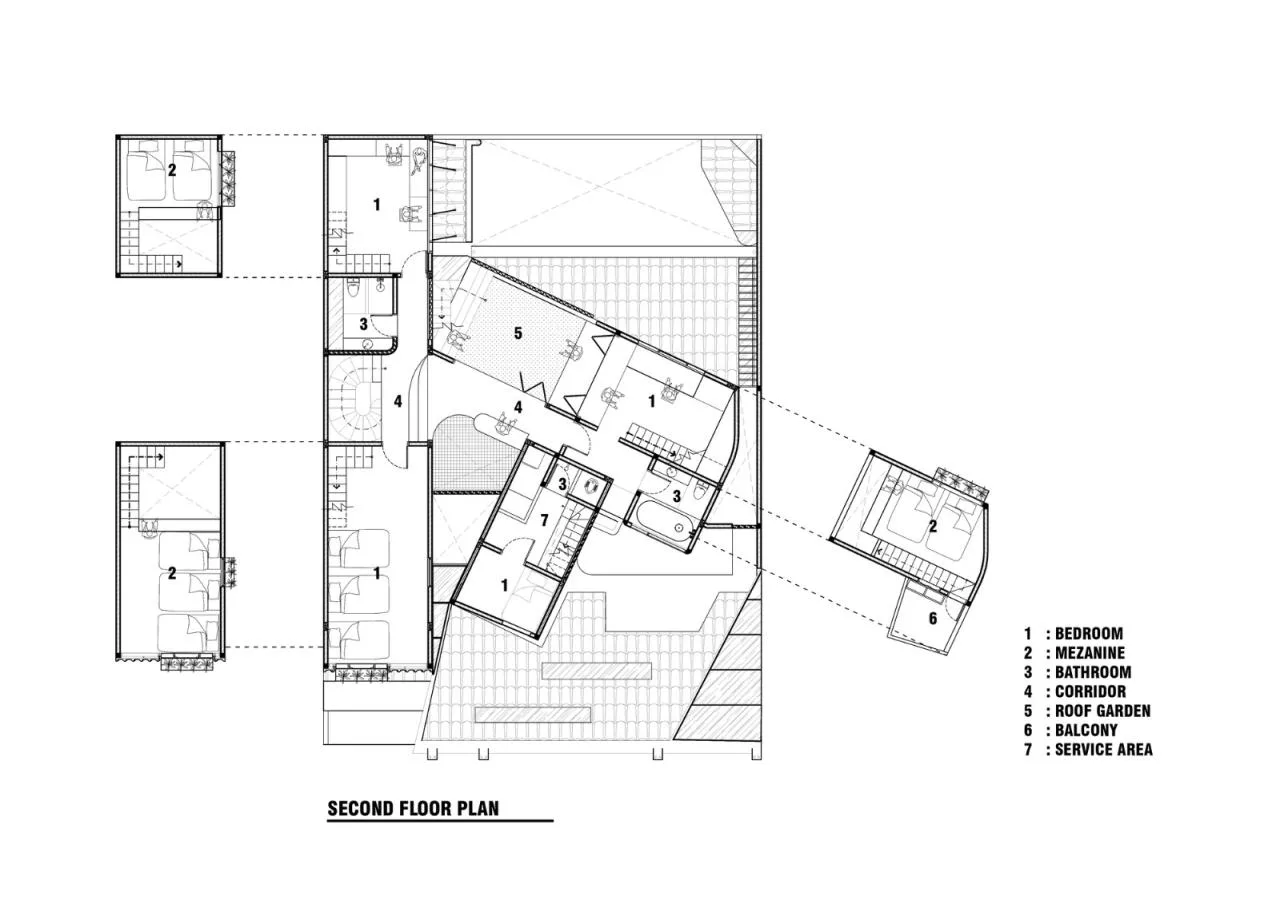
△ Second floor plan
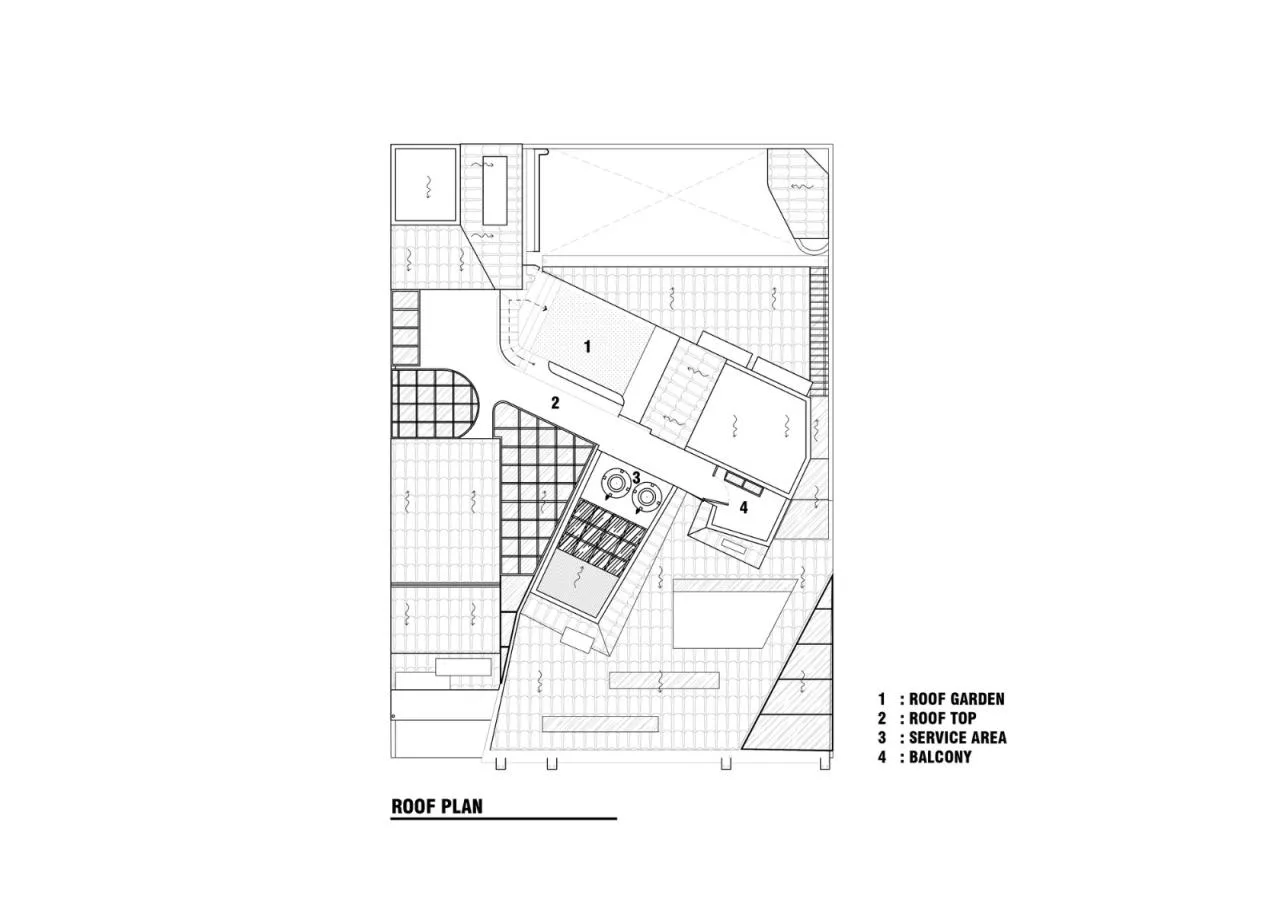
△ Roof plan
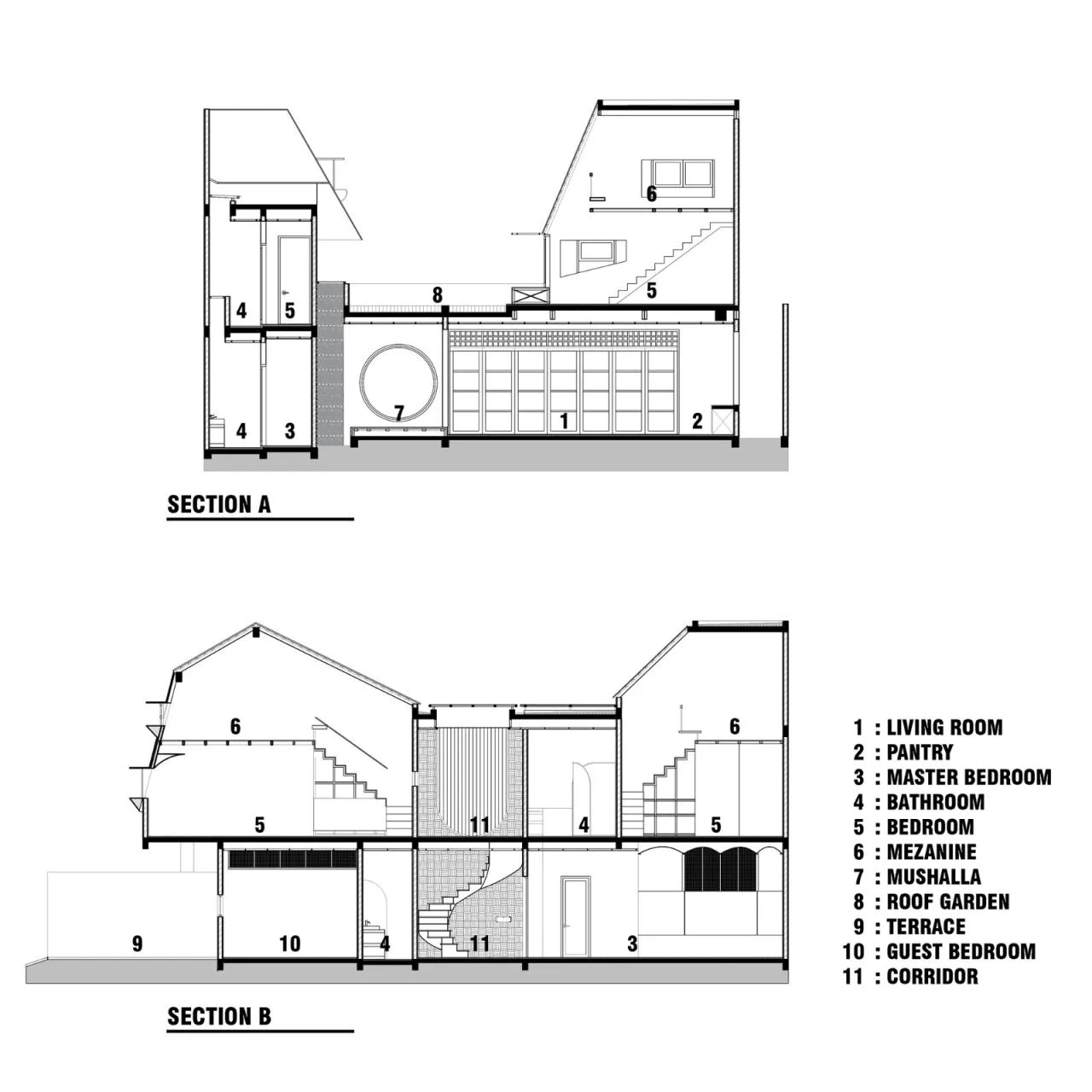
△ Section diagram
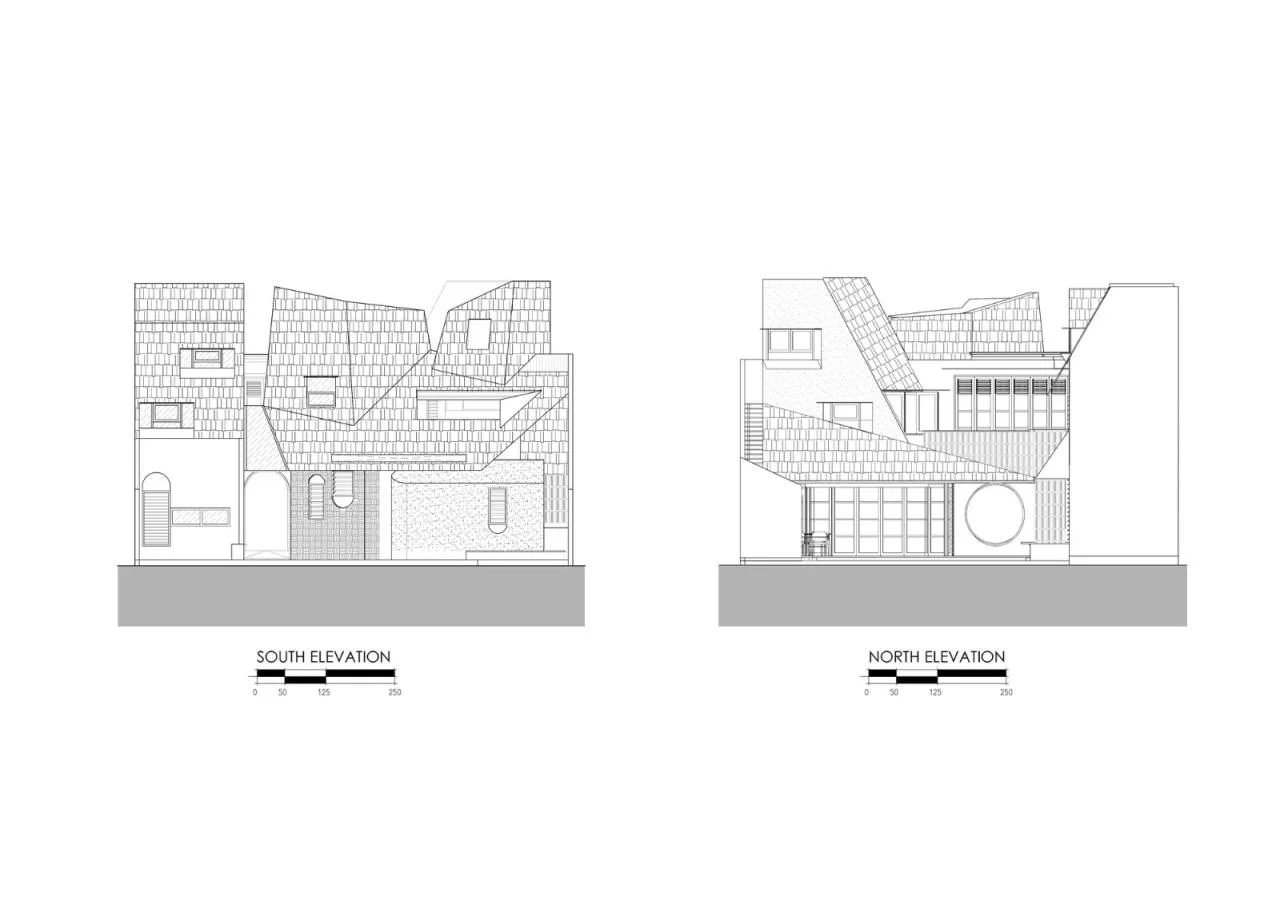
△ Elevation drawing
△ Analysis chart
△ Analysis chart
Project Information
Architect: Ismail Solehudin Architecture
Area: 420 square meters
Project Year: 2023
Photographer: Mario Wibowo
Suppliers: Boss, Kanmuri Roofing, Nippon Paint, Philips, Rucika
Design Team: Radhian Dwiadhyasa
Engineering Management: Ali Yazid Bustomi
On-site Management: Zainy Tamrin
Cost Engineer: Devina Agustin
Main Contractor: Muhammad Ihsan Hadiyat
General Contractor: Wani Build
Structural Engineer: PT DESAIN PUTRA PERSADA
Location: Jakarta, Indonesia












Must log in before commenting!
Sign Up