
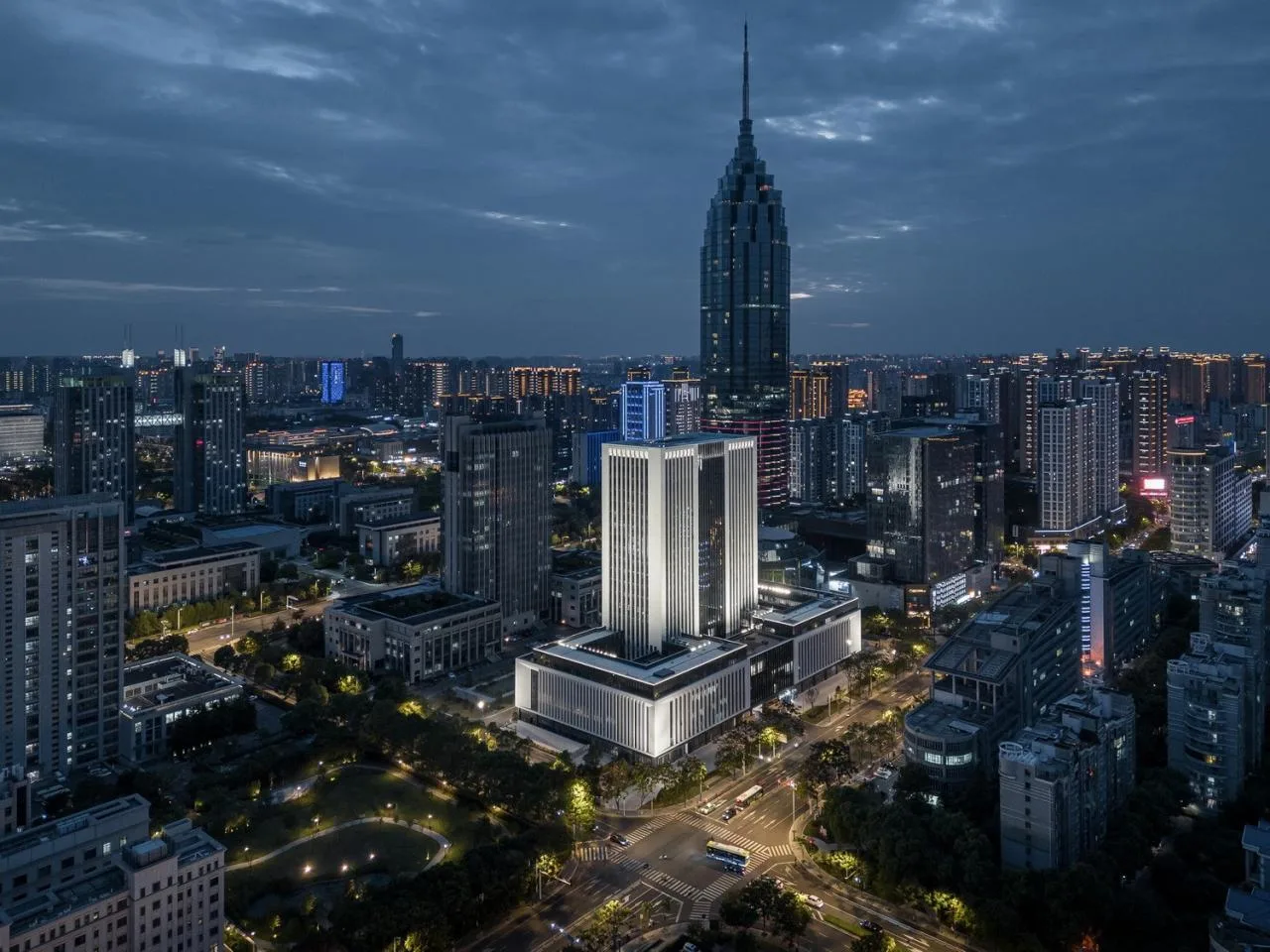
01 Project Background
As Changzhou experienced significant growth, the city expanded northward, forming a Municipal Cultural Center centered around the twin towers of the municipal government. This core is surrounded by landmark buildings such as the City Museum, Poly Grand Theater, Olympic Sports Center, and Cultural Square, making it the largest public building complex in Changzhou.
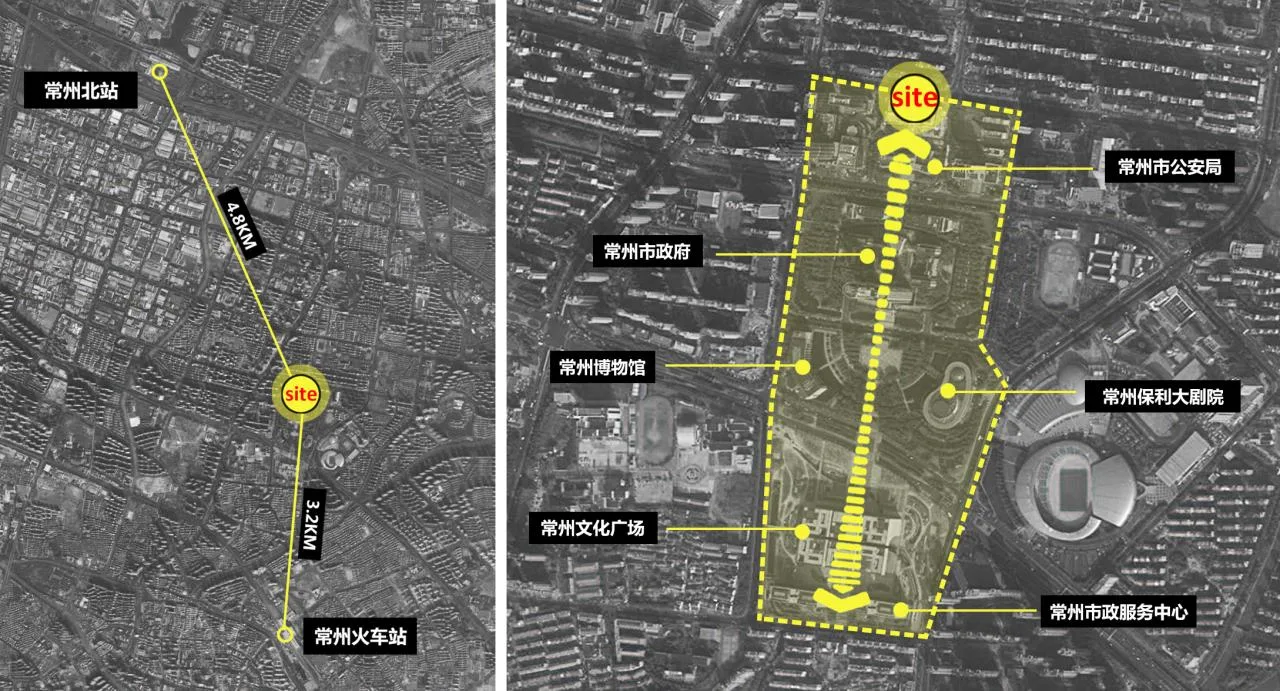
△ Project location
The project site is located at the northernmost tip of the central axis within this core complex. It borders the government office building to the south and a residential area to the north. Currently, the site serves as a parking lot.
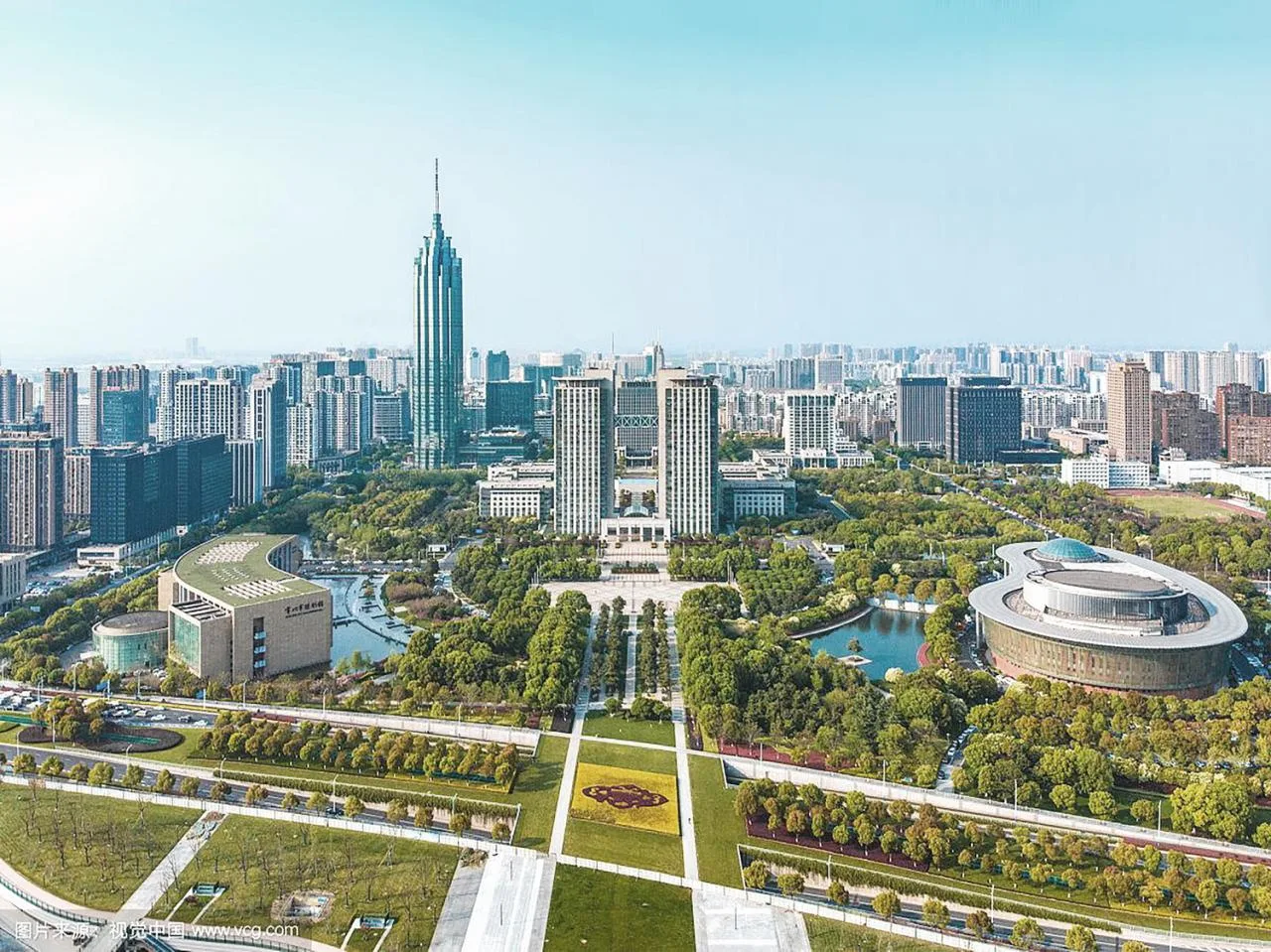
△ Changzhou Citizen Square
The design goal is to create an iconic, high-end commercial office building within the municipal area that seamlessly integrates offices, hotels, and retail spaces. The building aims to harmonize with surrounding structures and contribute positively to the urban environment.
02 Project Vision: Harmony in Diversity
This project serves as a vital element of the urban core public building community. It must fulfill the skyline requirements outlined in the planning, maintain the central axis relationship with the municipal service center, cultural square, and municipal building, and thoughtfully integrate diverse podium functions.
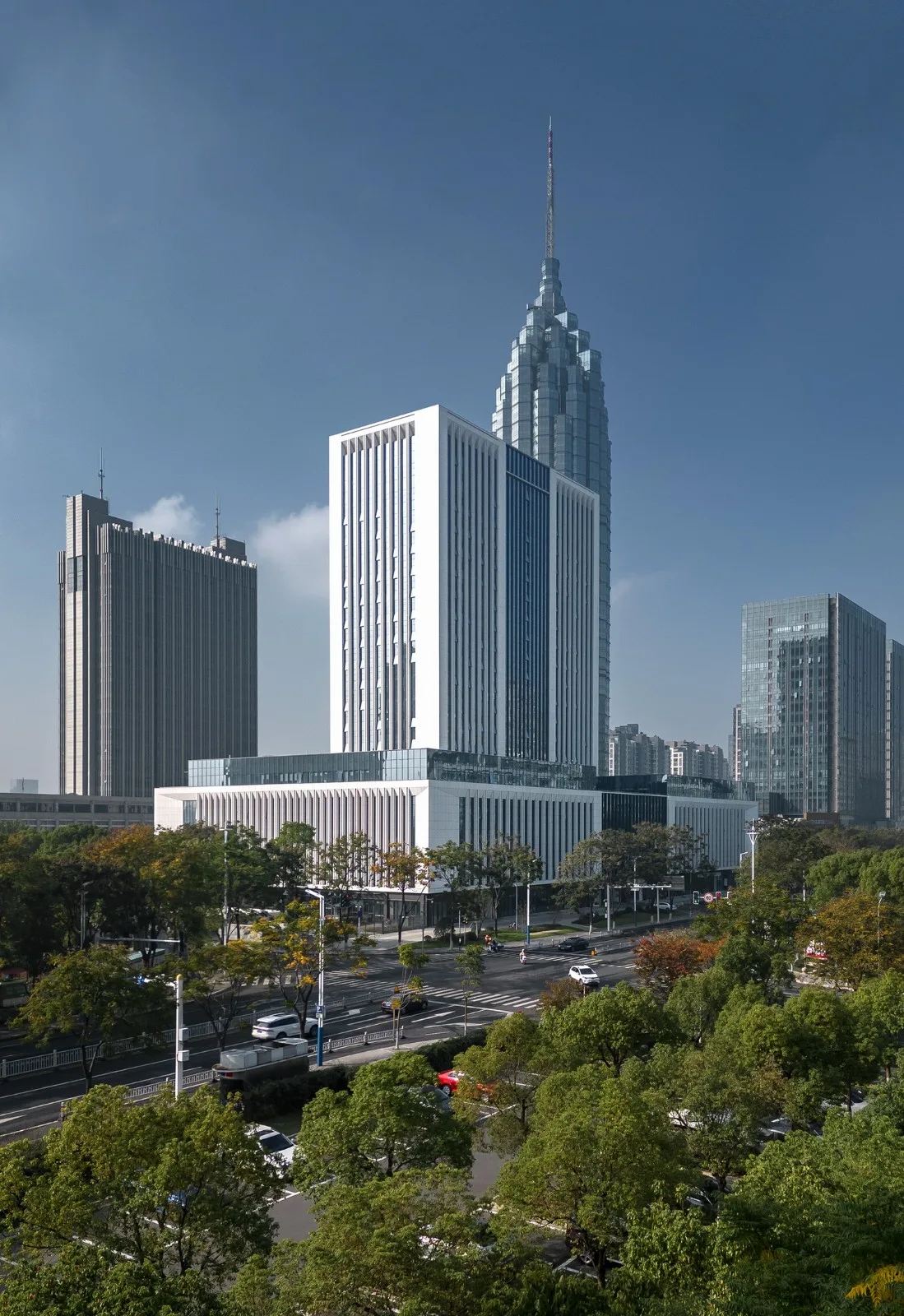
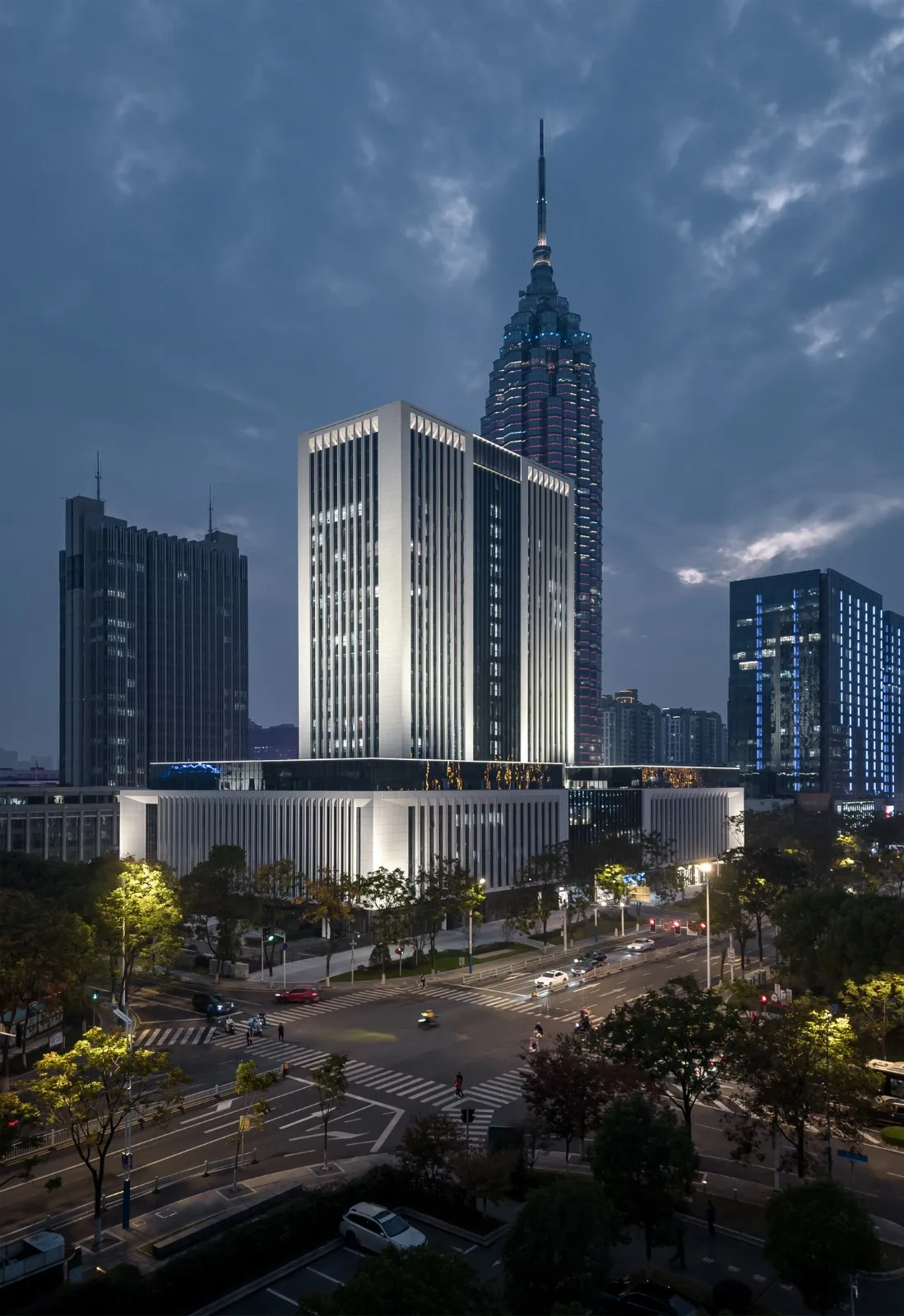
As the final building on the northern end of the central axis, it forms a harmonious cluster with the Public Security Bureau building to the south. The design also minimizes the building’s length to reduce its imposing presence on Taihu Lake Road and the neighboring residential areas to the north.
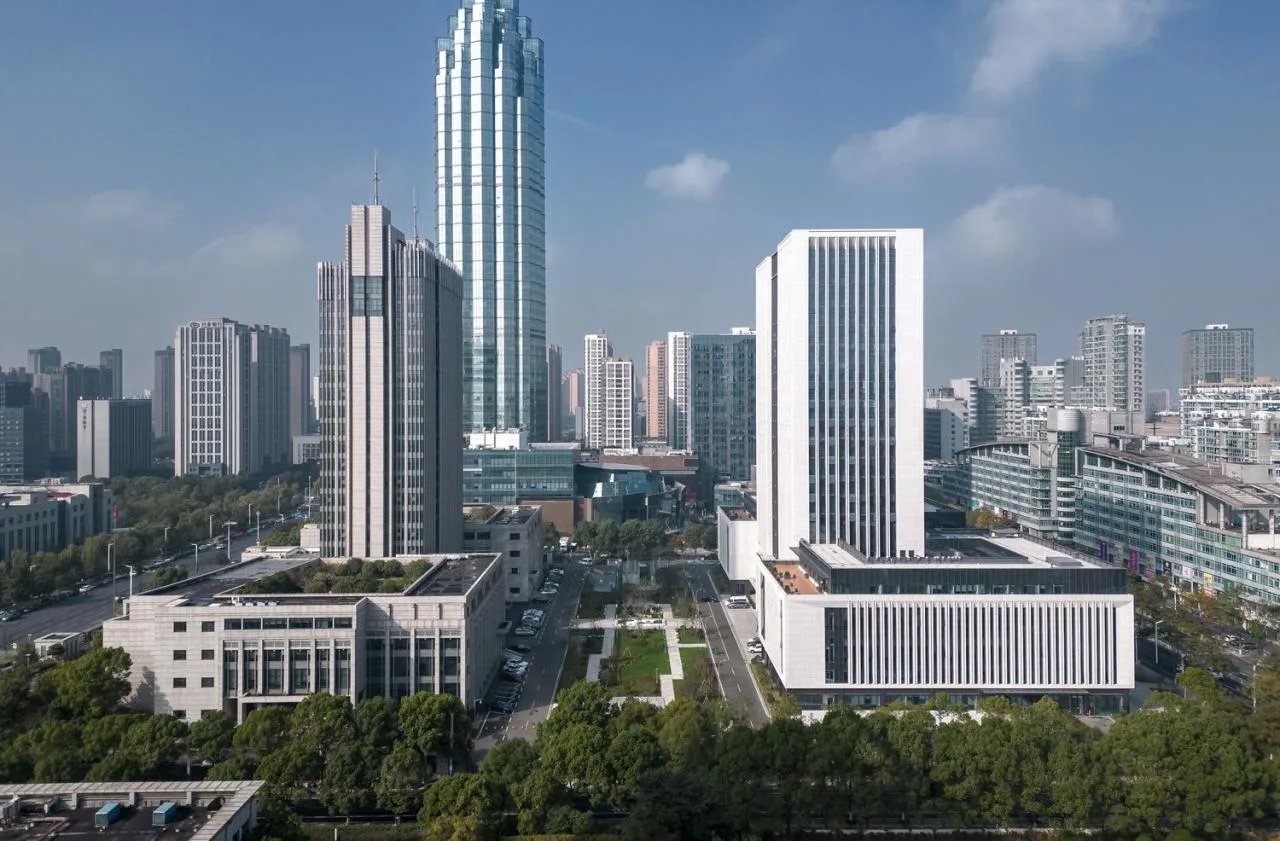
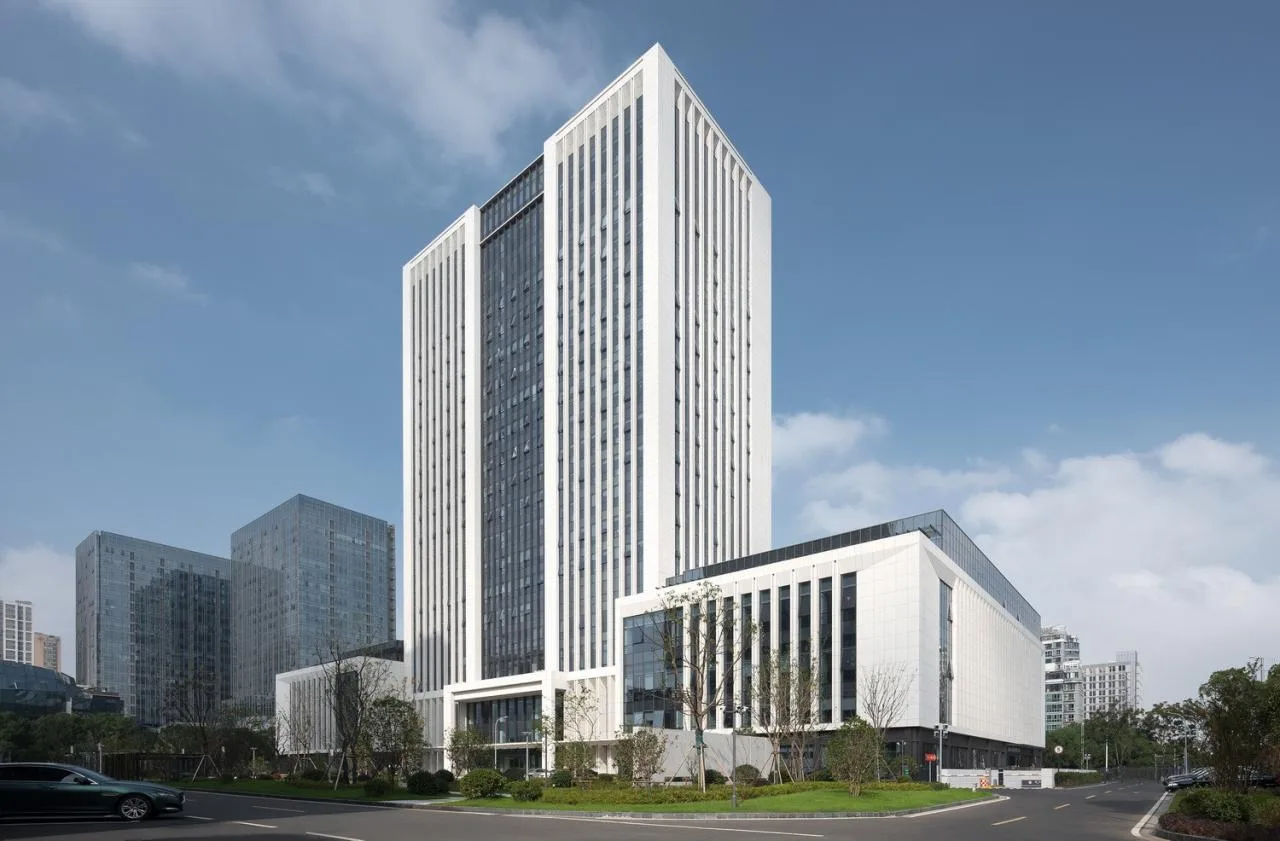
The design team aimed to create a multifunctional mixed-use office building that blends seamlessly with the architectural group while expressing a unique personality and contemporary character. This project adds vital new elements to the city’s large public building complex.
03 Urban Design: Symmetry and Sequence
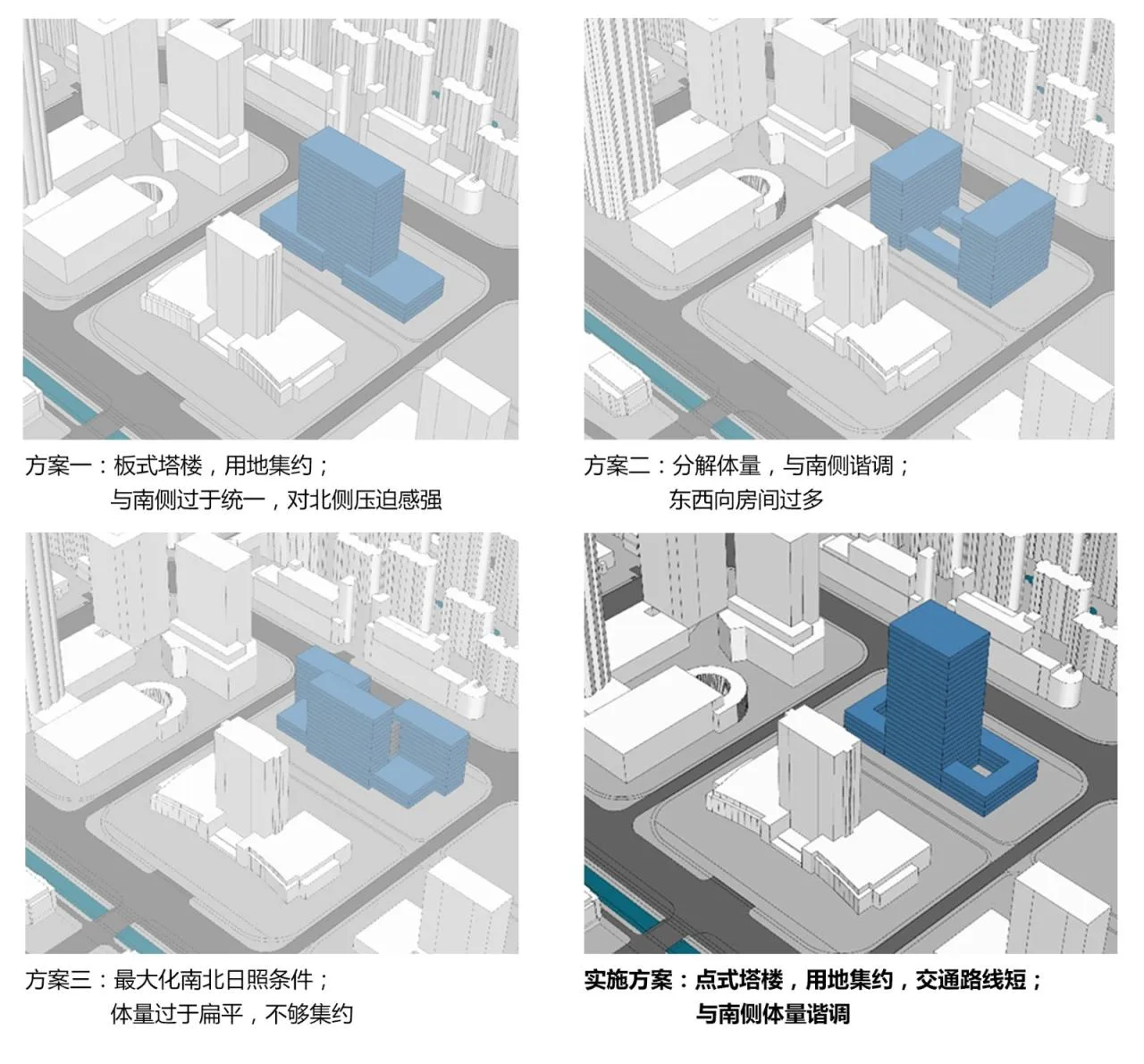
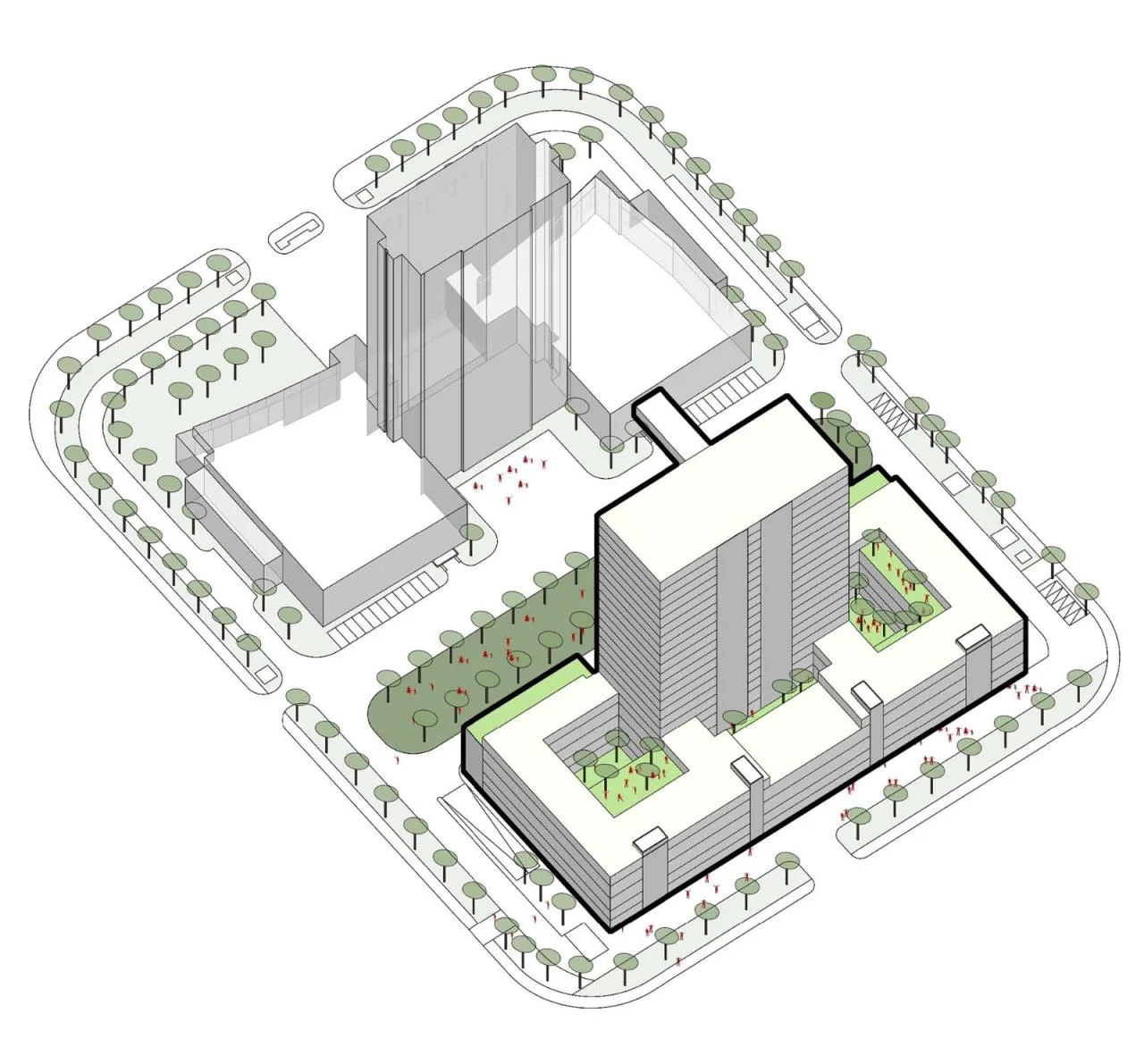
△ Scheme comparison and selection
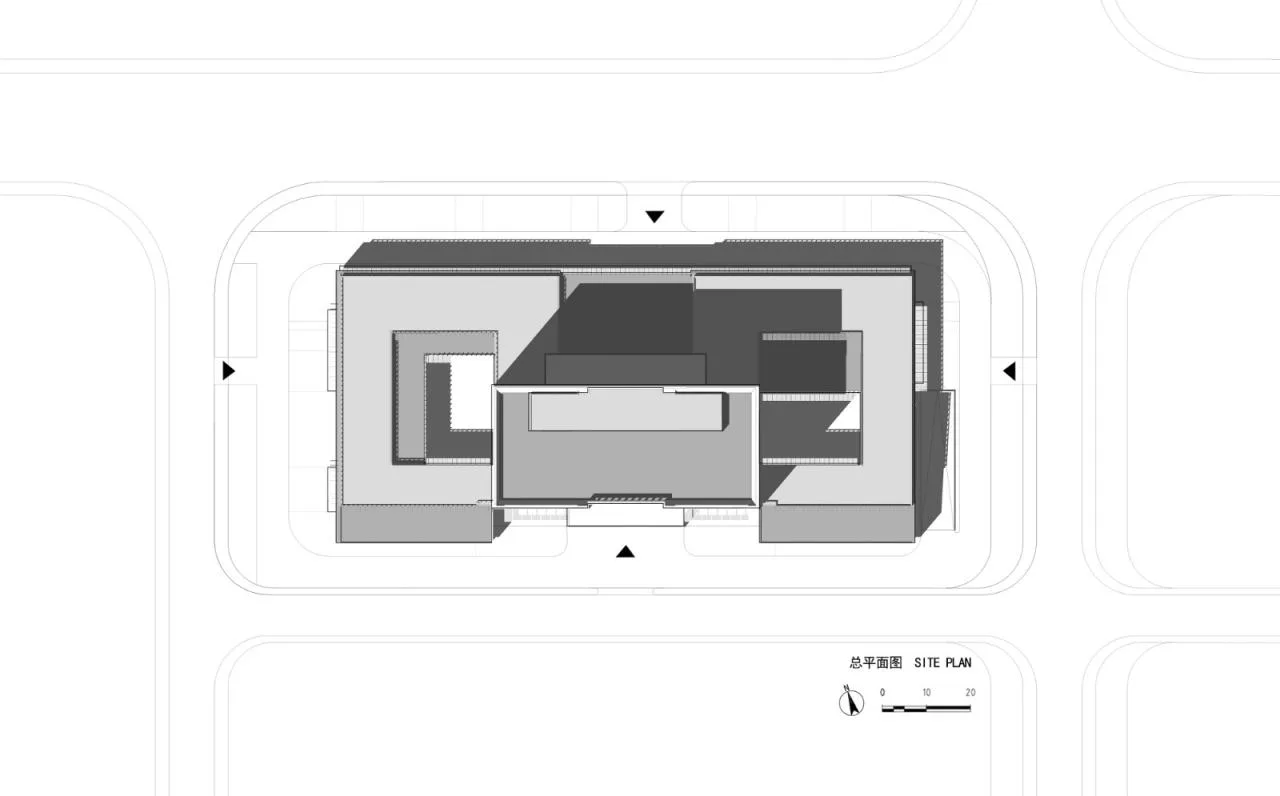
One of the main urban design challenges was balancing three key relationships: the central axis, existing southern buildings, and the main urban road to the north, while also meeting the client’s requirements for image and mixed-use functionality. The design team conducted an in-depth analysis of the surrounding buildings and environment, evaluated multiple site layout options, and ultimately selected the optimal plan.
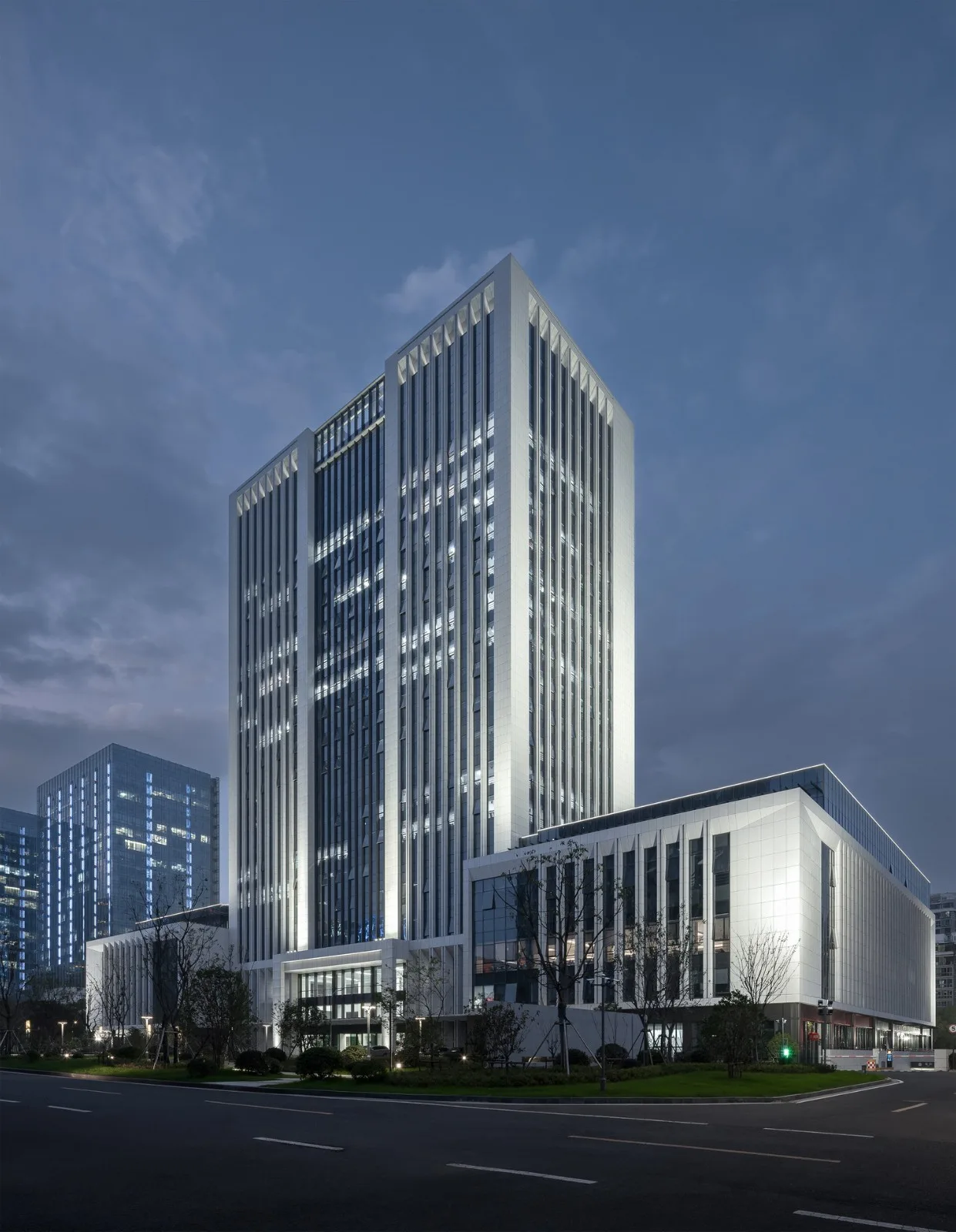
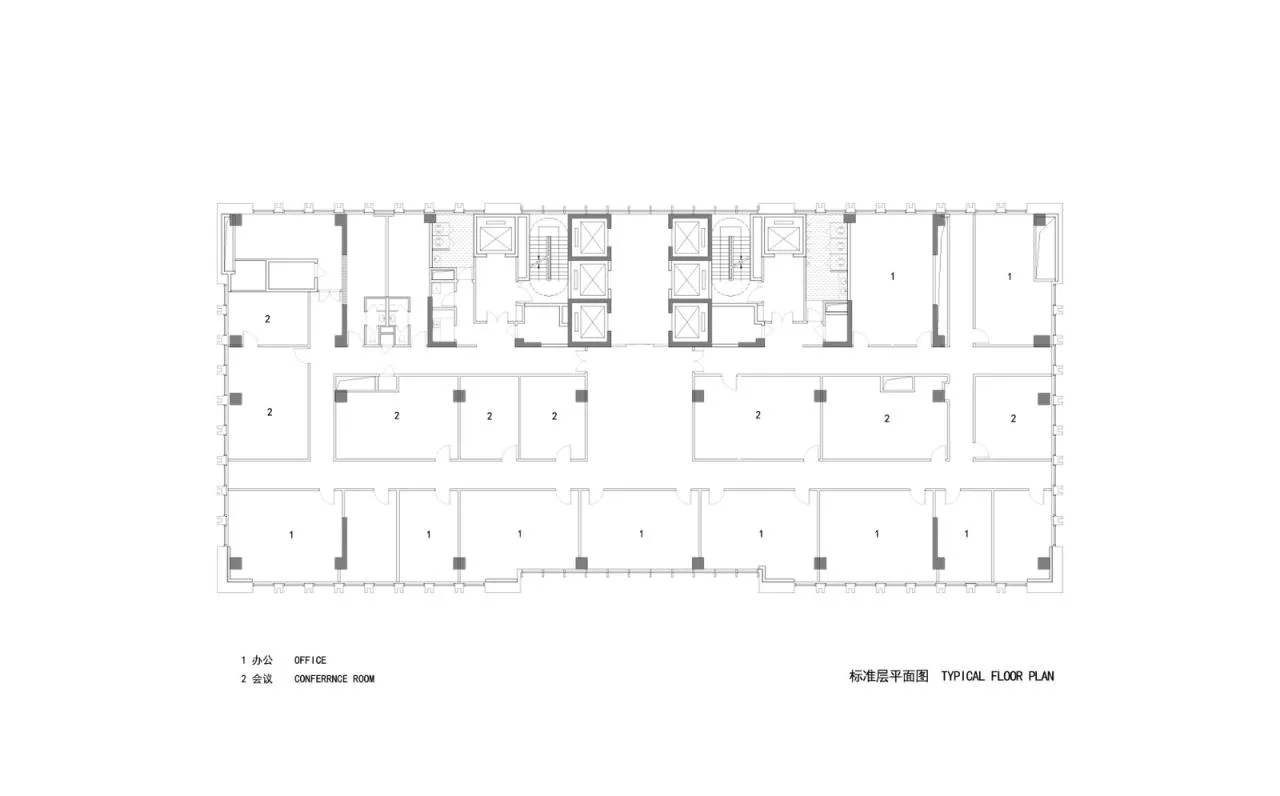
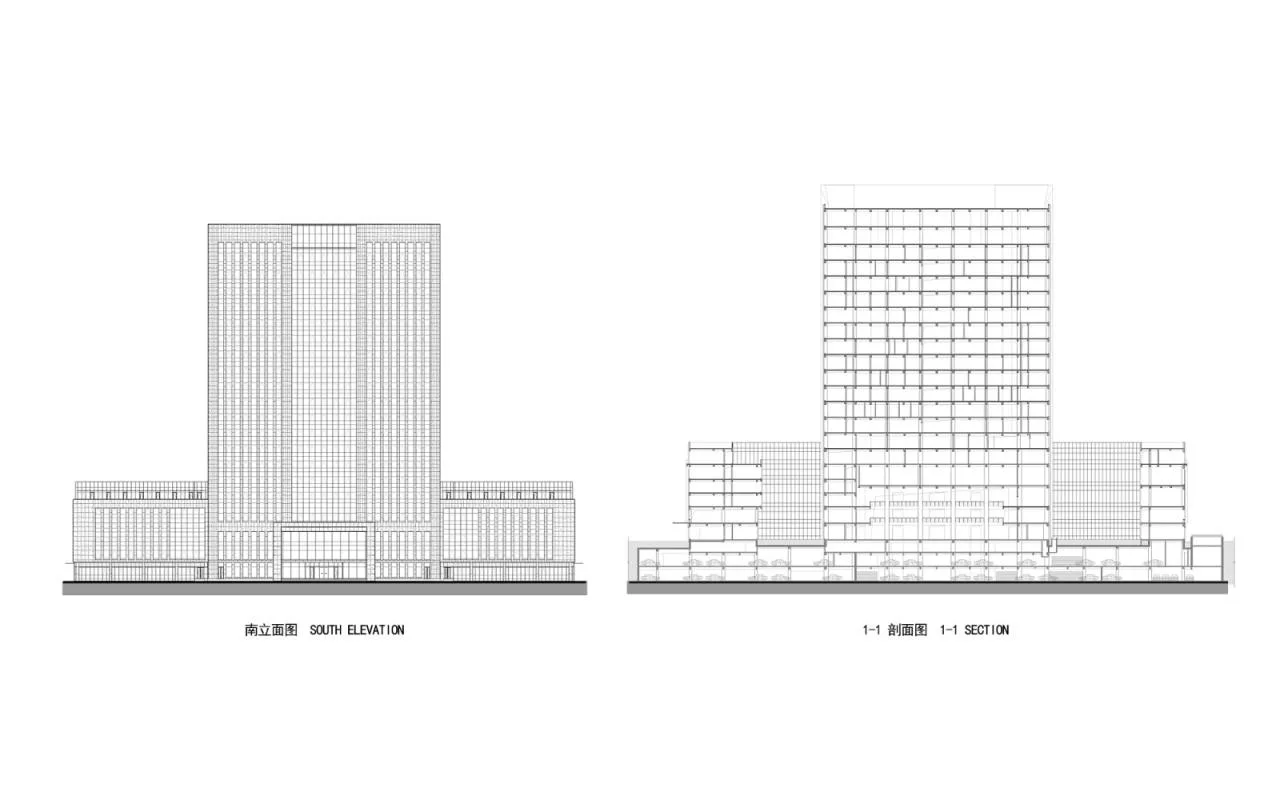
The 20-story slab tower features a symmetrical layout with a north-facing core, maximizing the number of south-facing rooms. The design efficiently utilizes the site while ensuring harmony with the surrounding architectural community. Its height is similar but slightly taller than the existing southern office building, contributing a high-quality and distinctive chapter to the municipal cultural axis.
04 Integration and Central Garden Design
The design team carefully analyzed the relationship between the building podium and urban roads. Entrances for retail and hotels are positioned along the commercially valuable Taihu Lake Road to the north, while the office entrance connects to a central garden located between the southern side and the office tower.
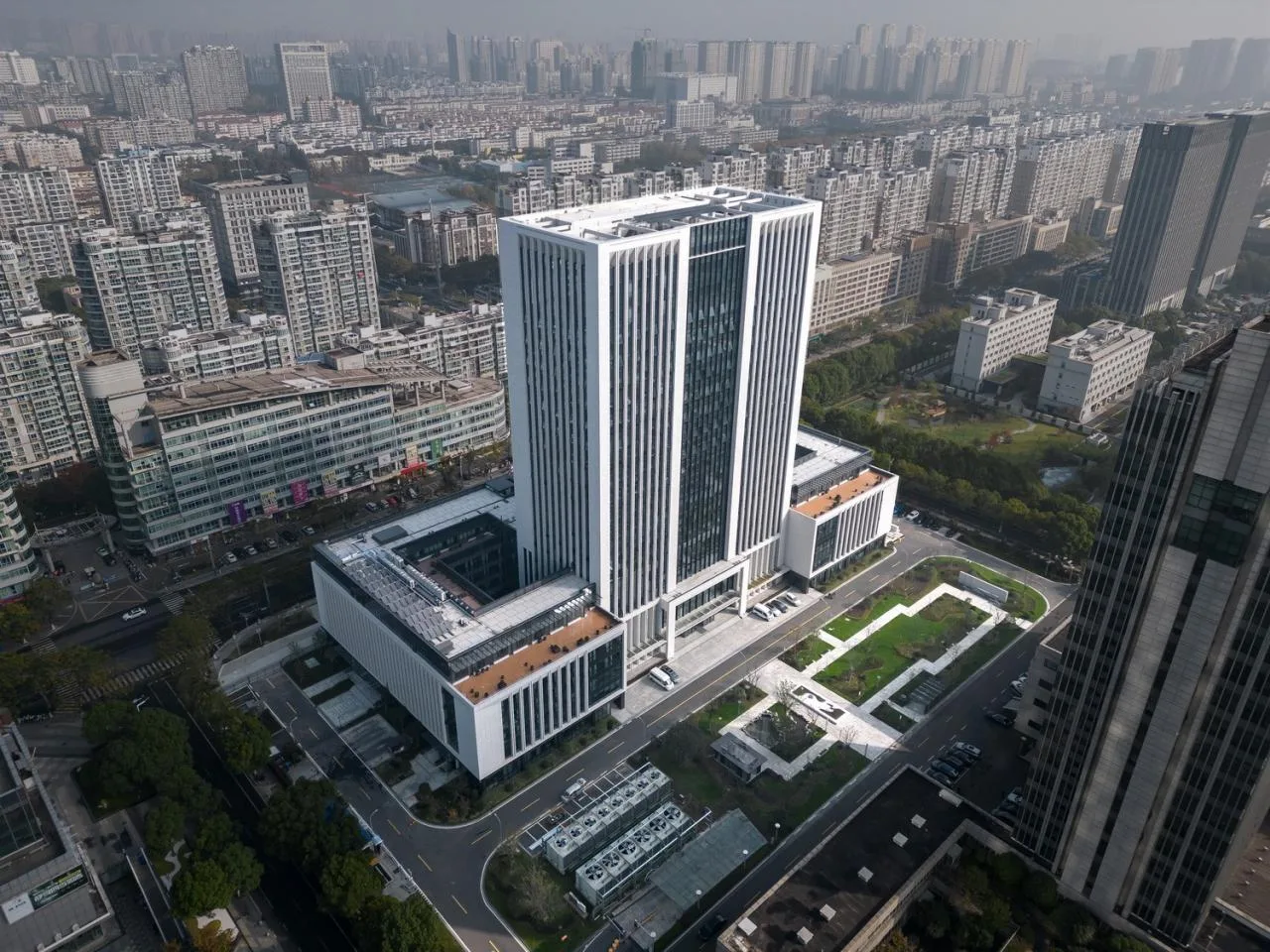
The two ramps on the north side of the existing office building presented design challenges. The client desired a pleasant landscape within the limited space while maintaining connectivity between the garages on both sides.
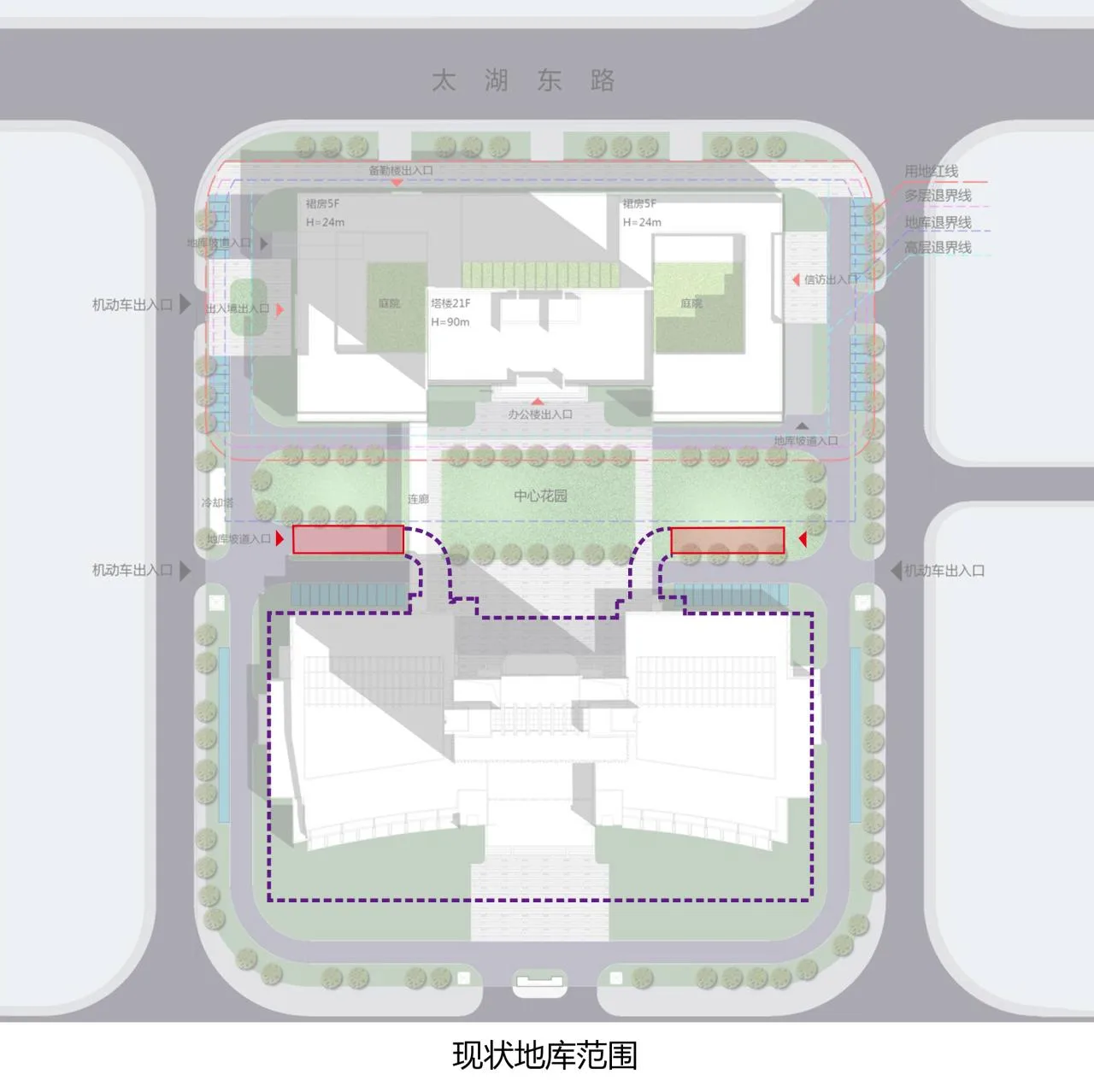
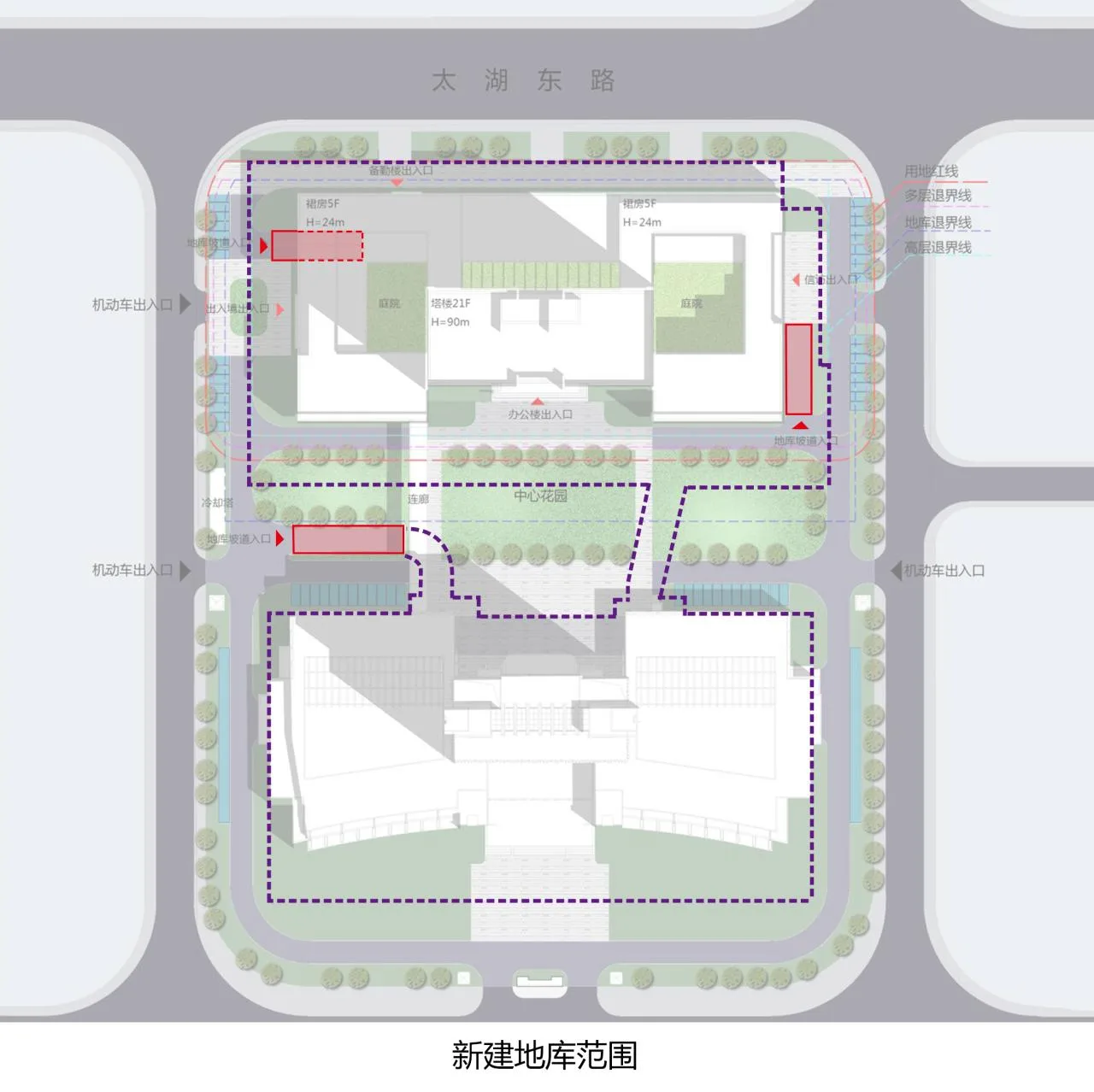
To address these issues, the design team removed the existing eastern ramp and coordinated its reconstruction with the new building. This created fragmented space between the two office buildings, freeing up more area for the central landscaped garden. It also simplified the complex underground entrances and intersecting traffic flows on the constrained site, achieving seamless underground connectivity.
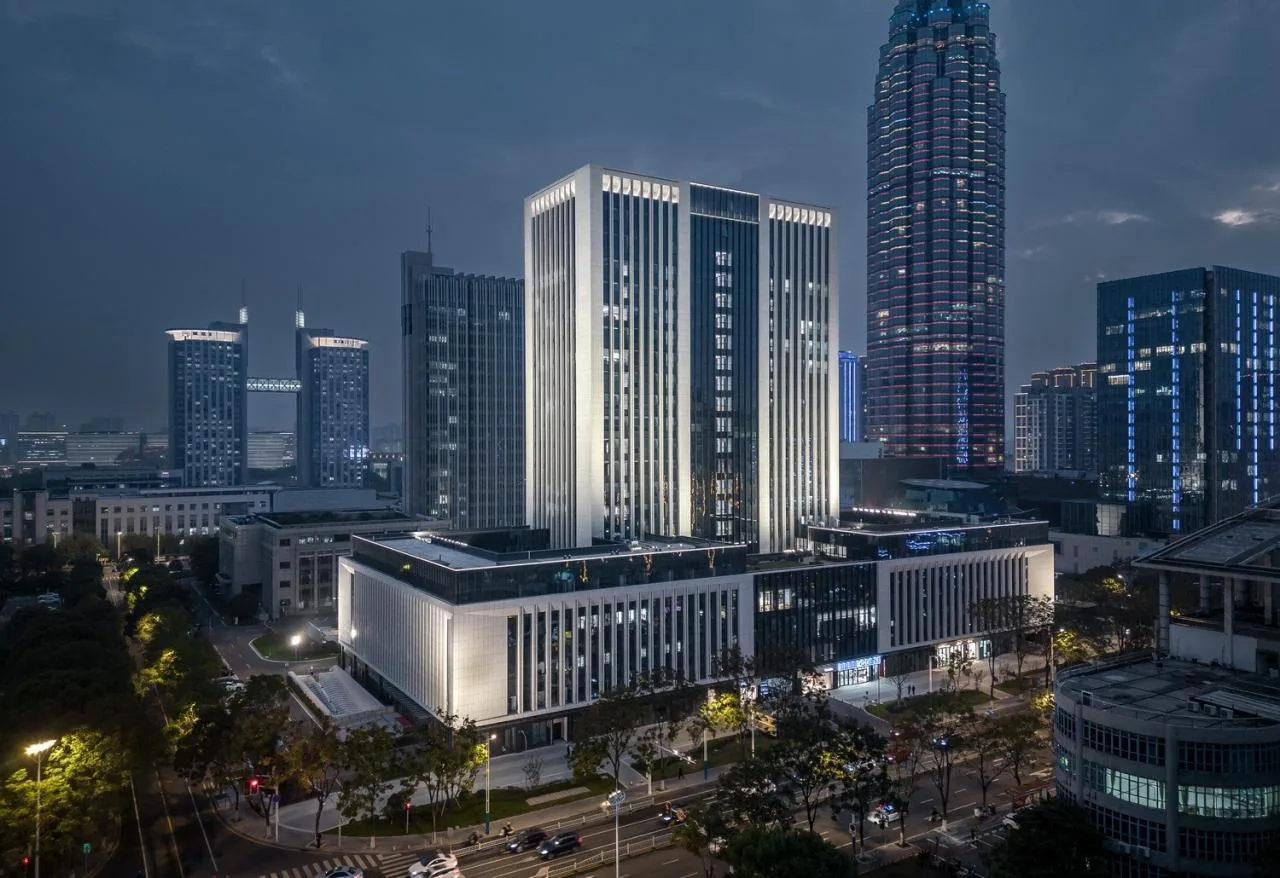
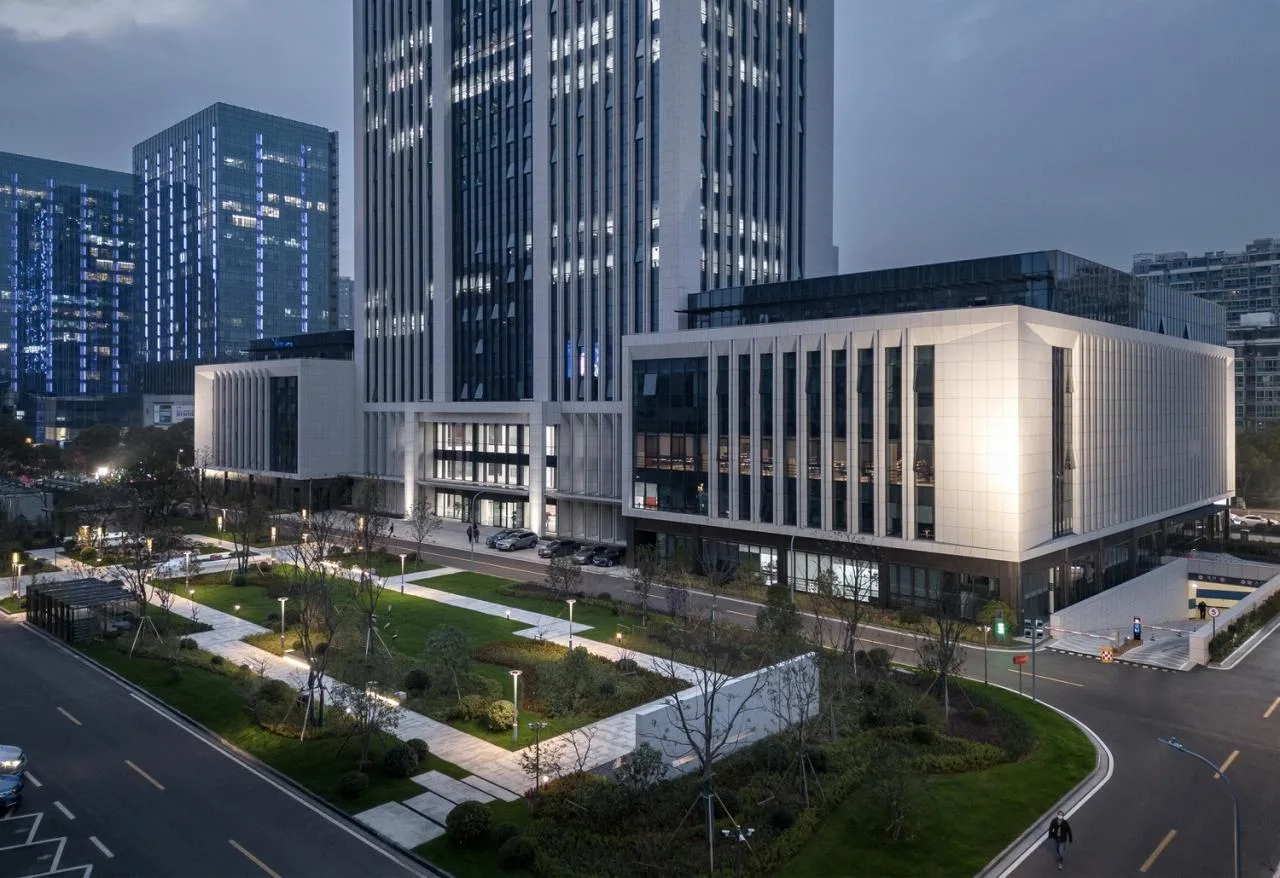
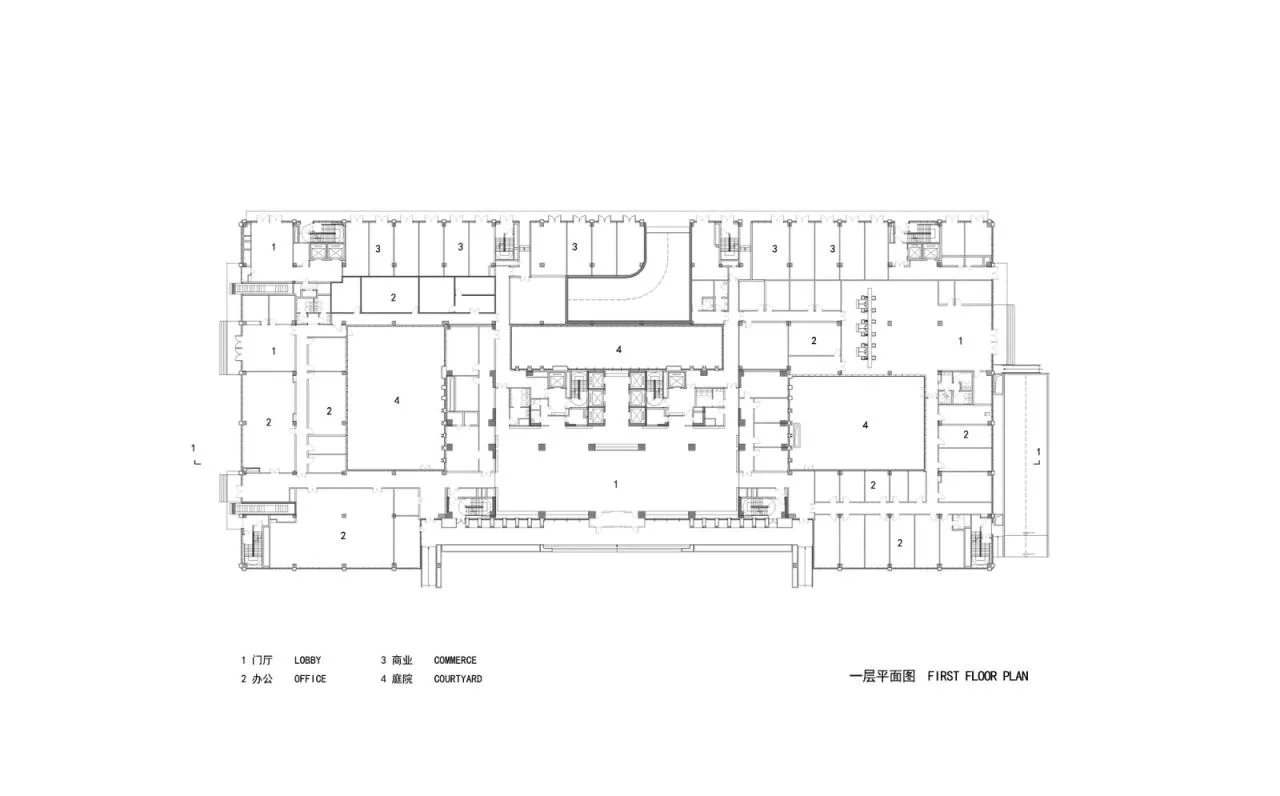
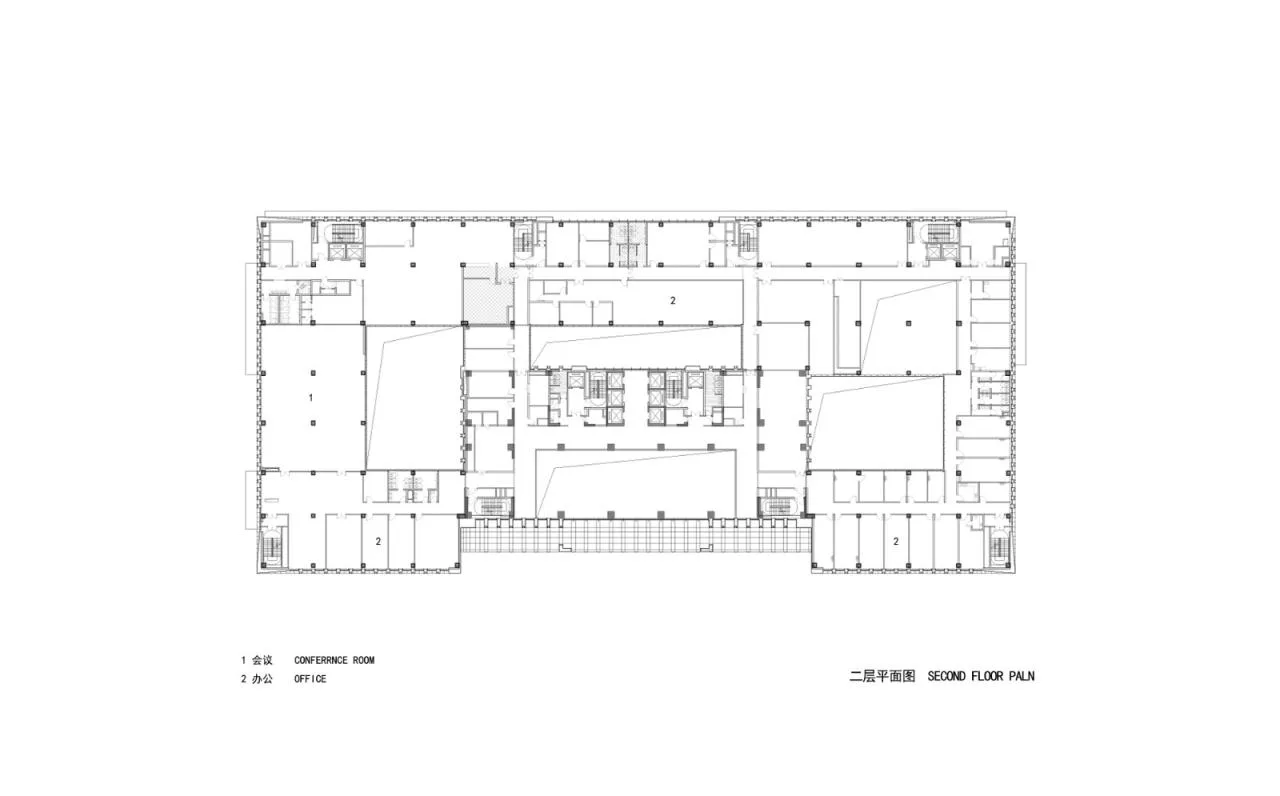
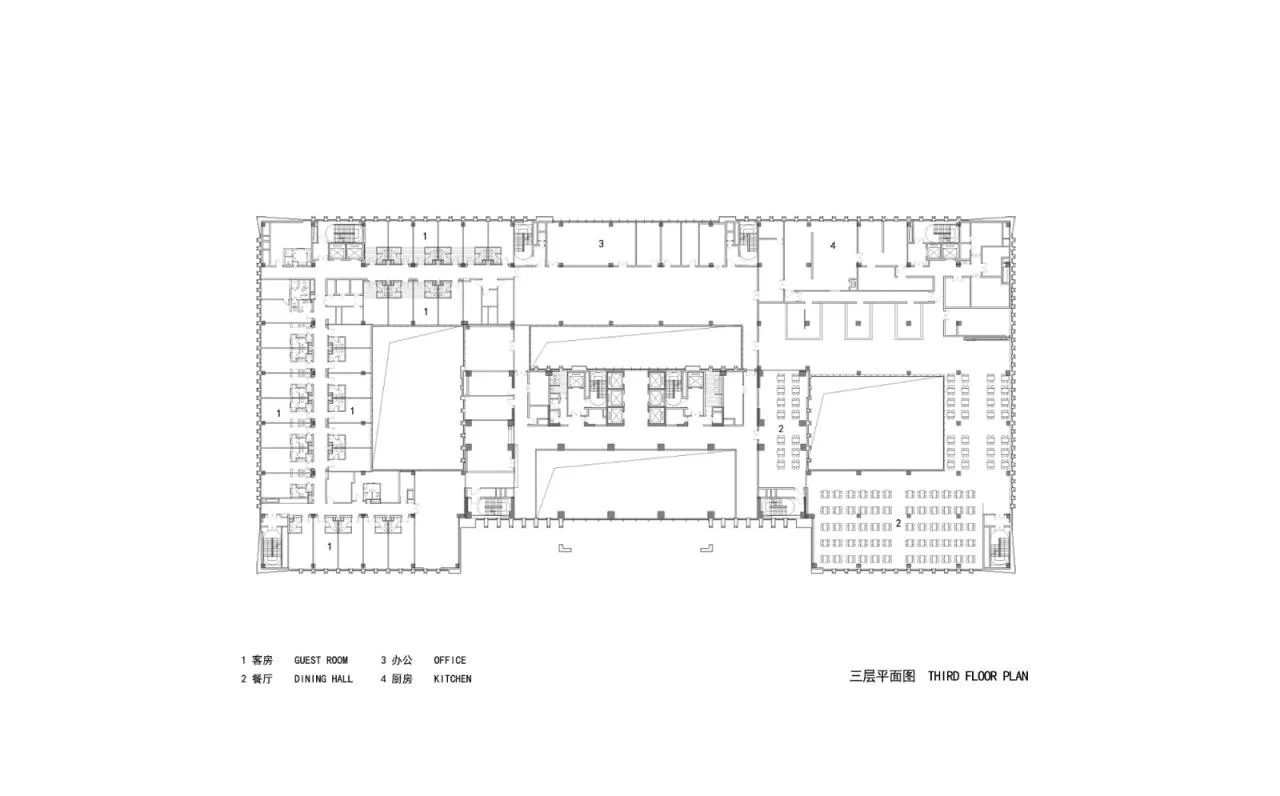
The podium features complex and diverse functions. The team designed two staggered courtyards, east and west, to fit within multi-floor height restrictions. This layout efficiently accommodates the tower lobby, street-facing commercial spaces, east and west service halls, offices, canteens, and a 150-room business hotel.
05 Facade Design: Standing with Strength
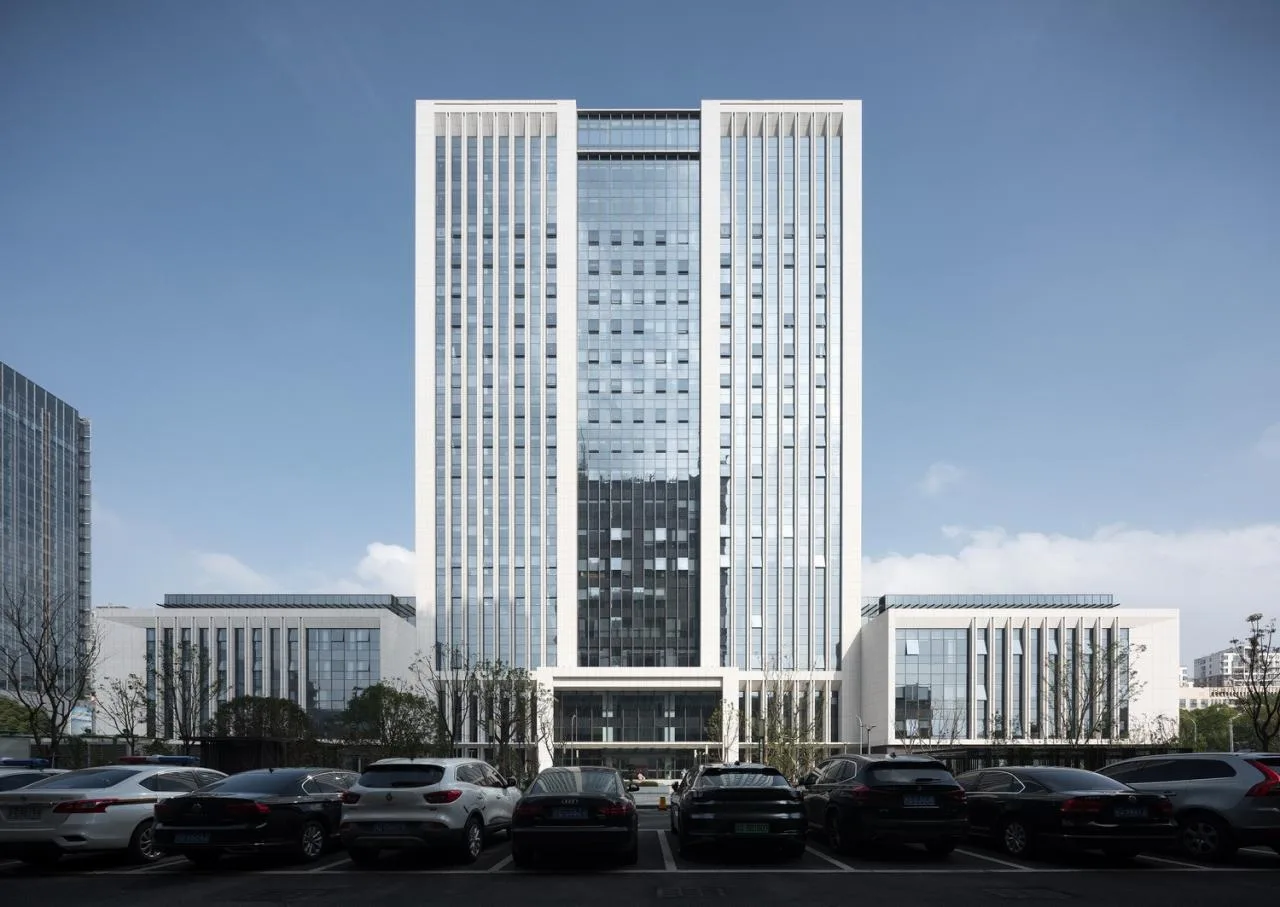
As a key part of the municipal cultural complex, the design team analyzed the facade texture and proportions of nearby buildings. They chose to use simple yet powerful vertical elements to continue the facade language of the southern building, while ensuring the left and right wing podiums, which have different heights, form a harmonious and unified whole.
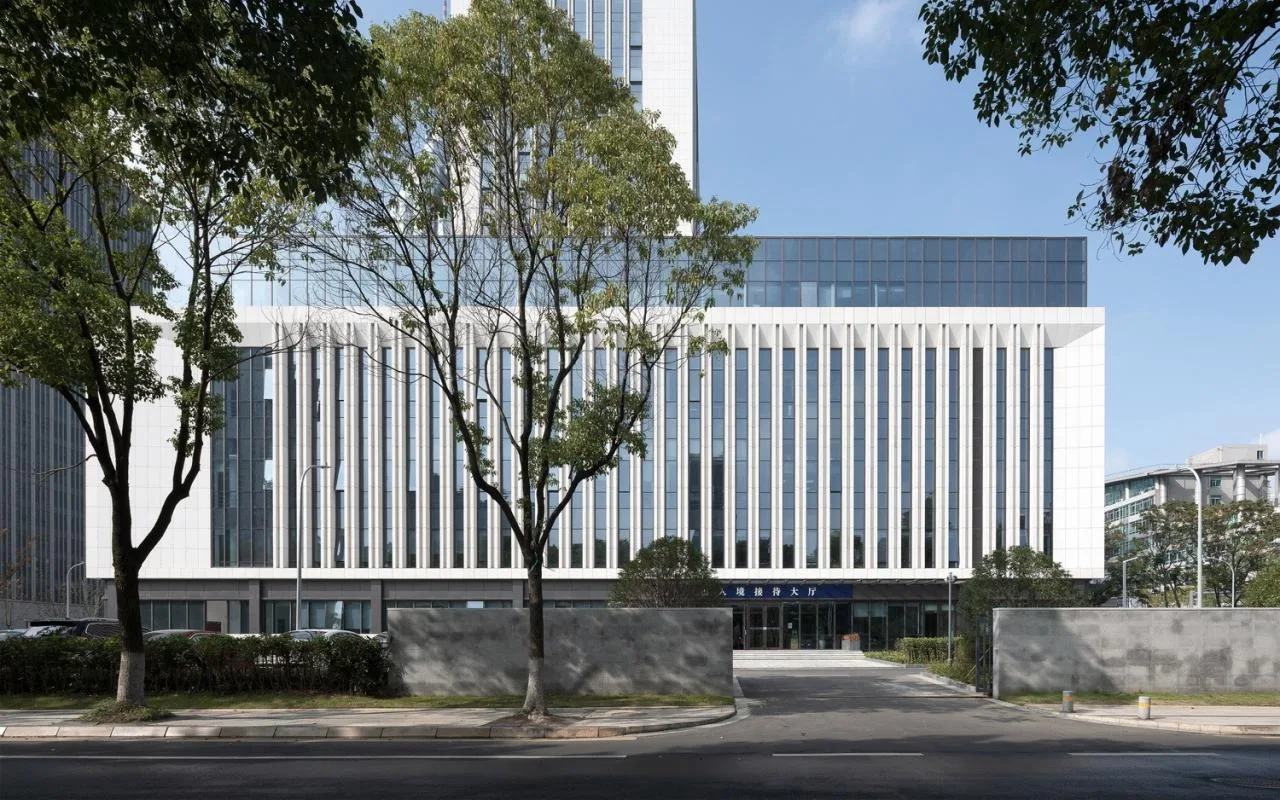
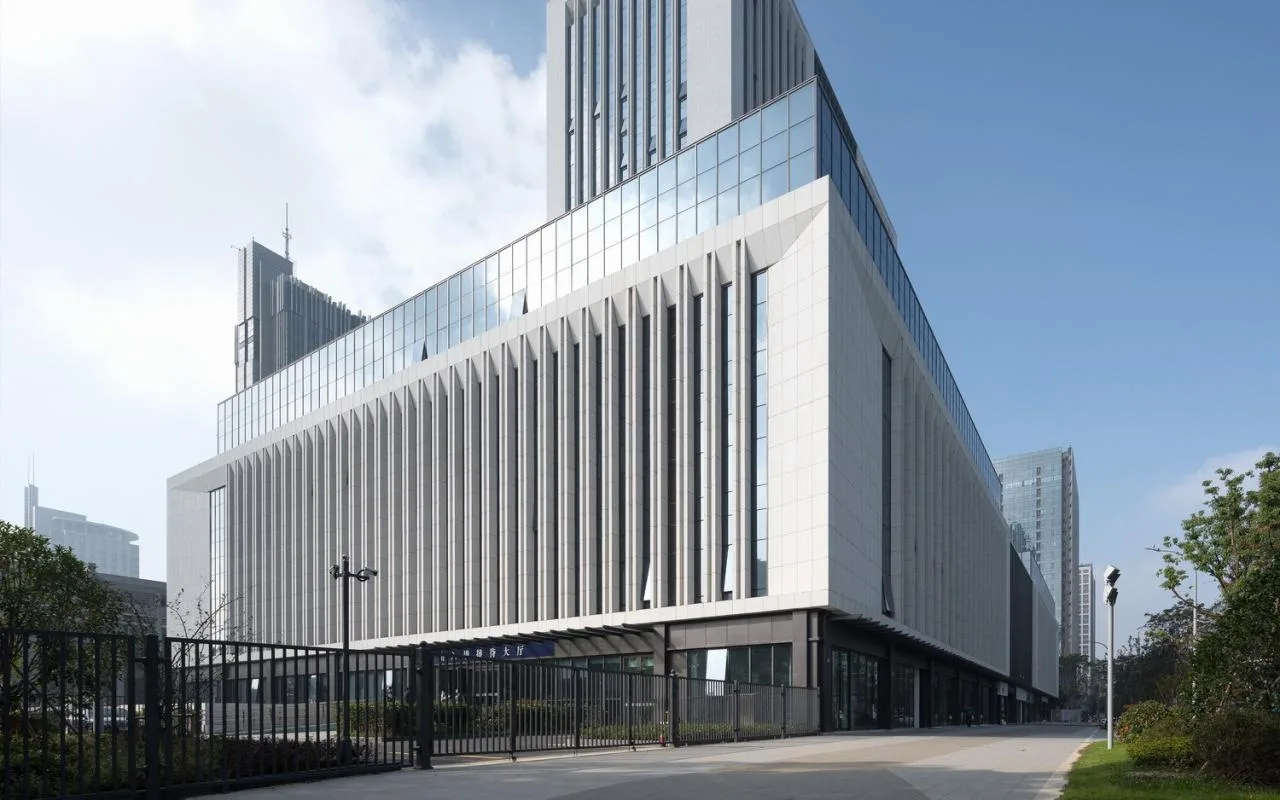
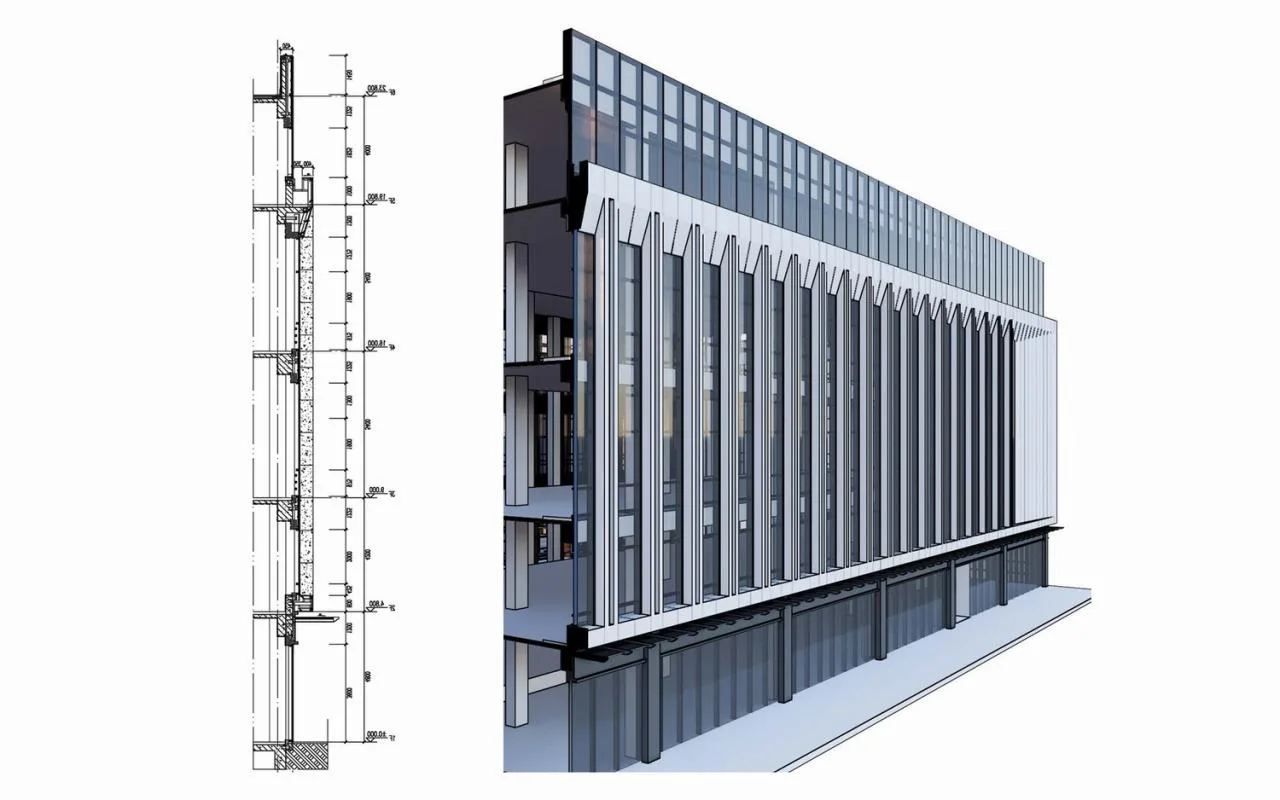
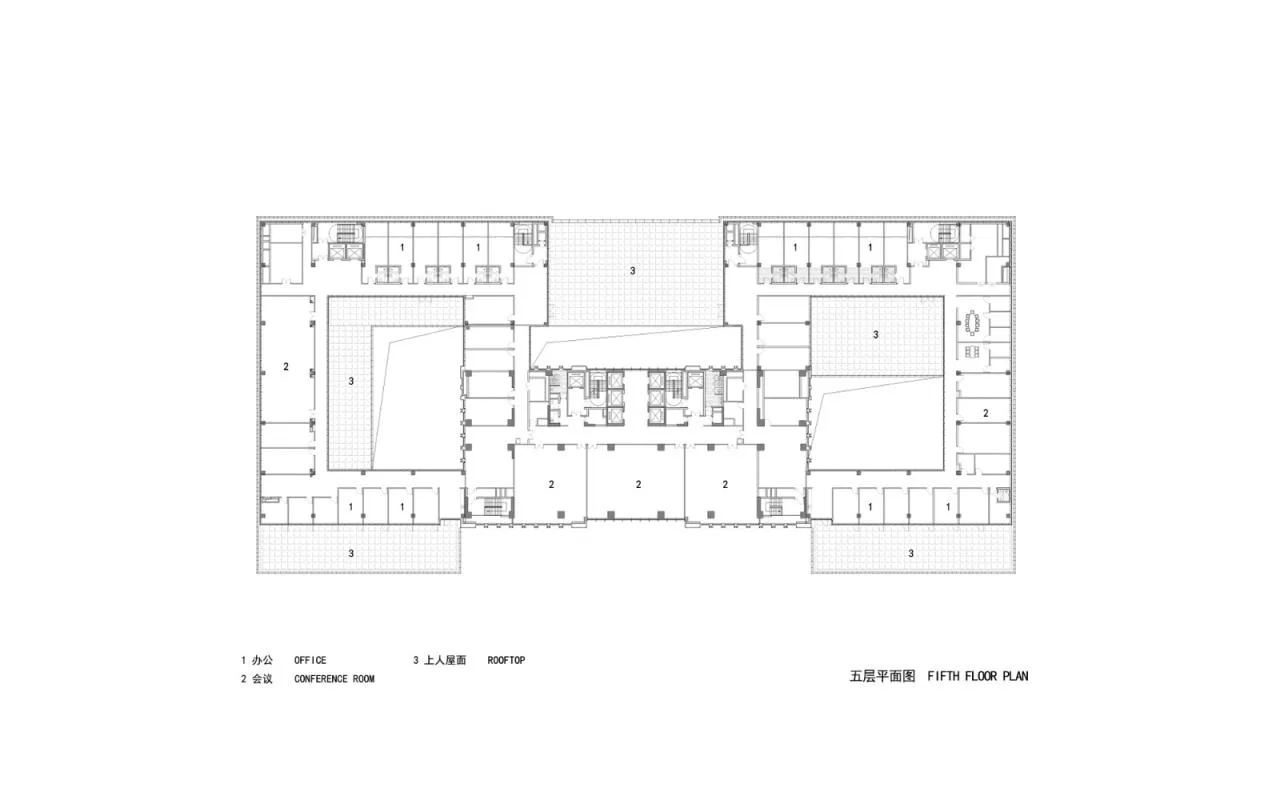
The fifth floor of the podium features a glass curtain wall with a setback design, maintaining visual consistency with the existing four-story podium to the south. This serves as a respectful nod to the classic architecture in the area.
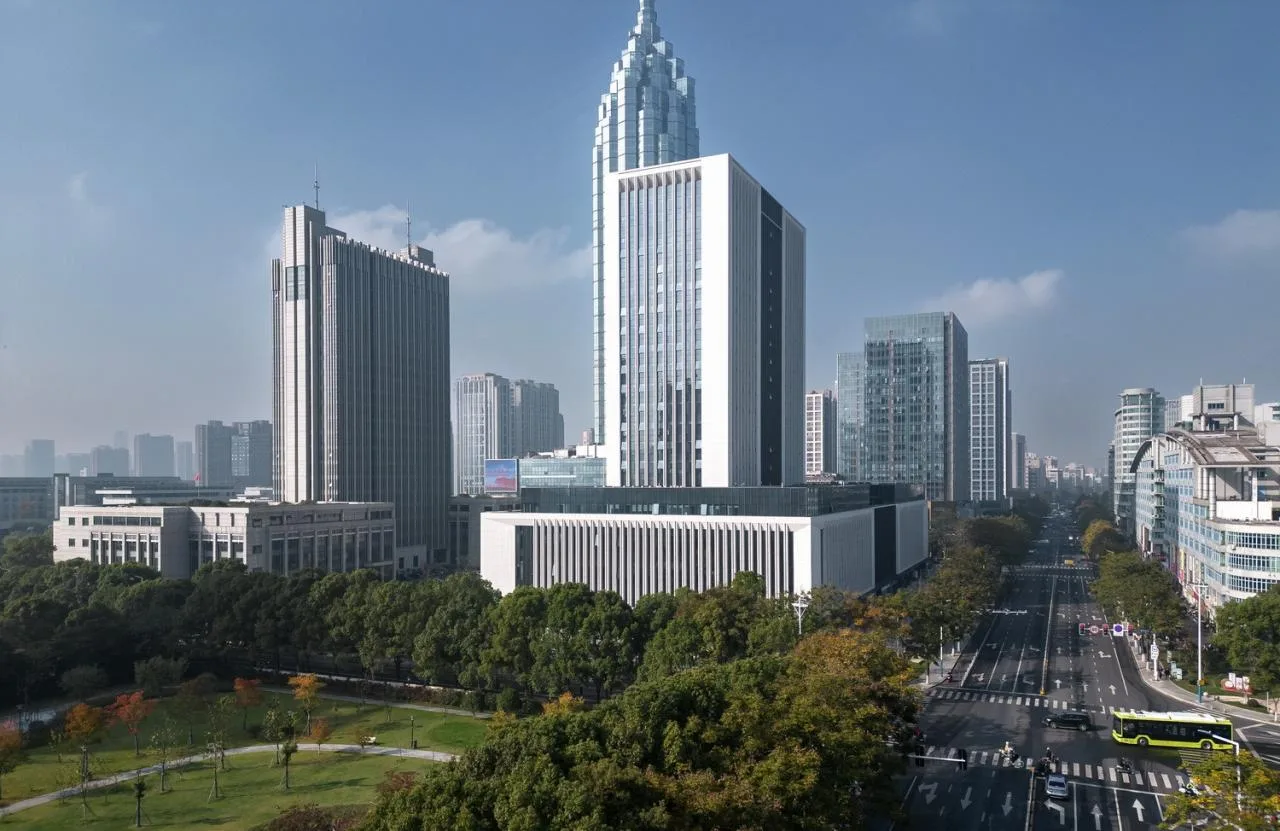
The design balances solid and void elements with simple texture divisions, eliminating unnecessary decorative features. This approach results in an architectural image that is both pure and flexible, lightening the originally heavy forms and reducing the sense of visual oppression in the surrounding environment. The material textures and refined craftsmanship also highlight the building’s modernity, distinguishing it from the southern structure built 15 years ago.
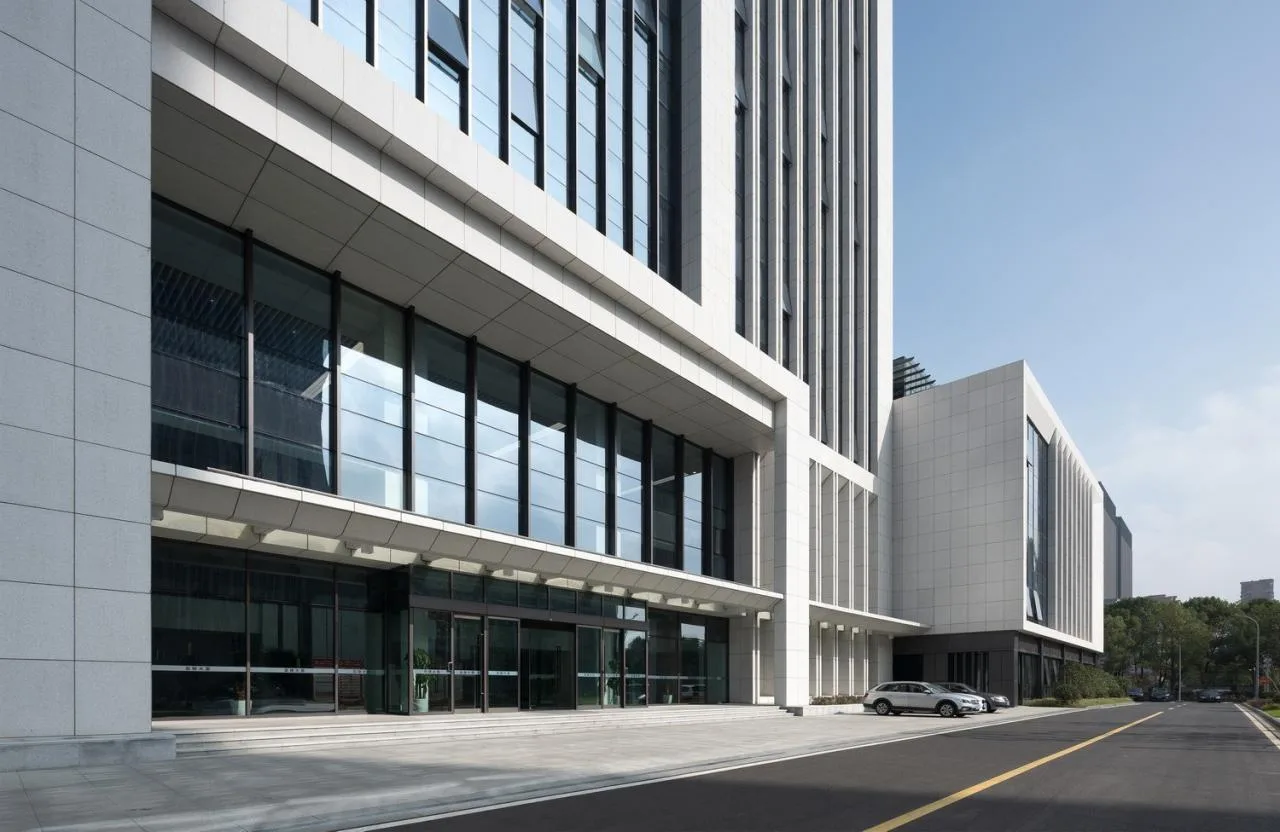
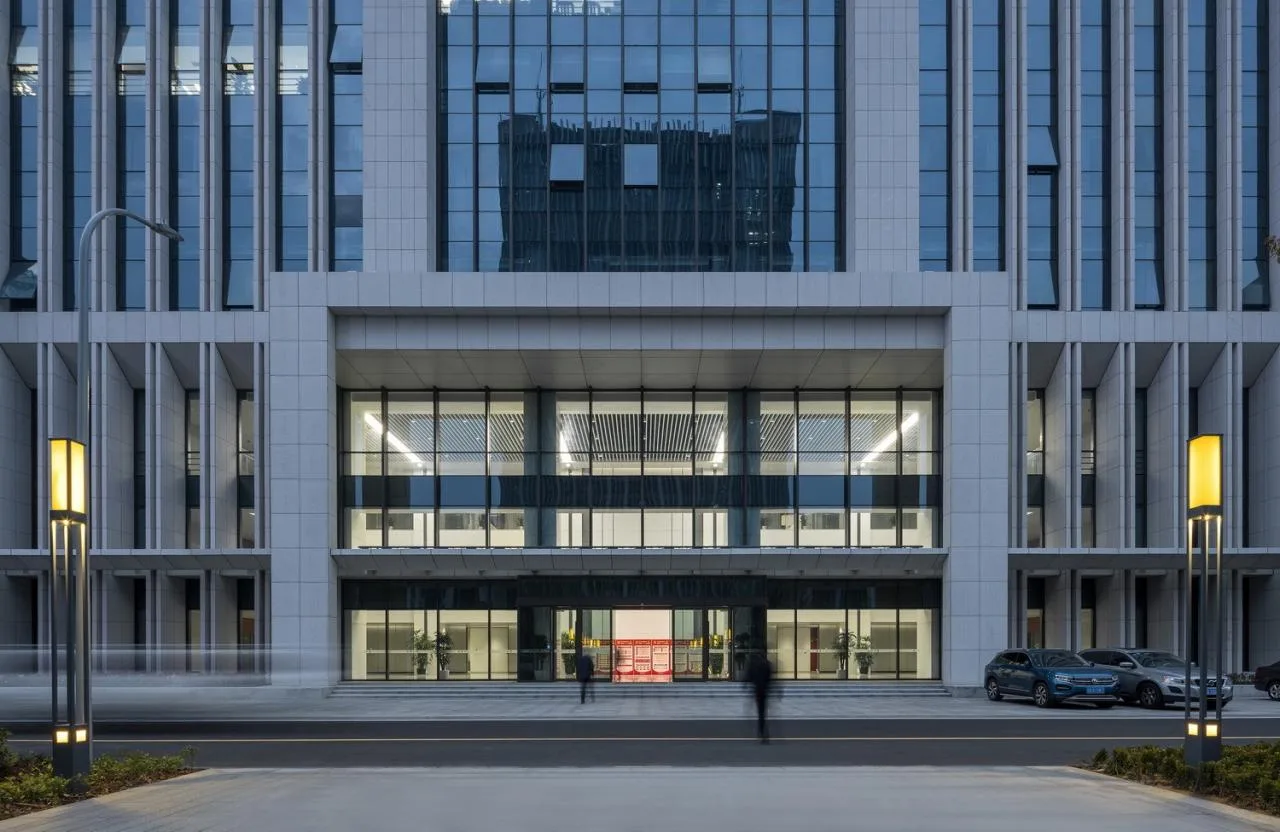
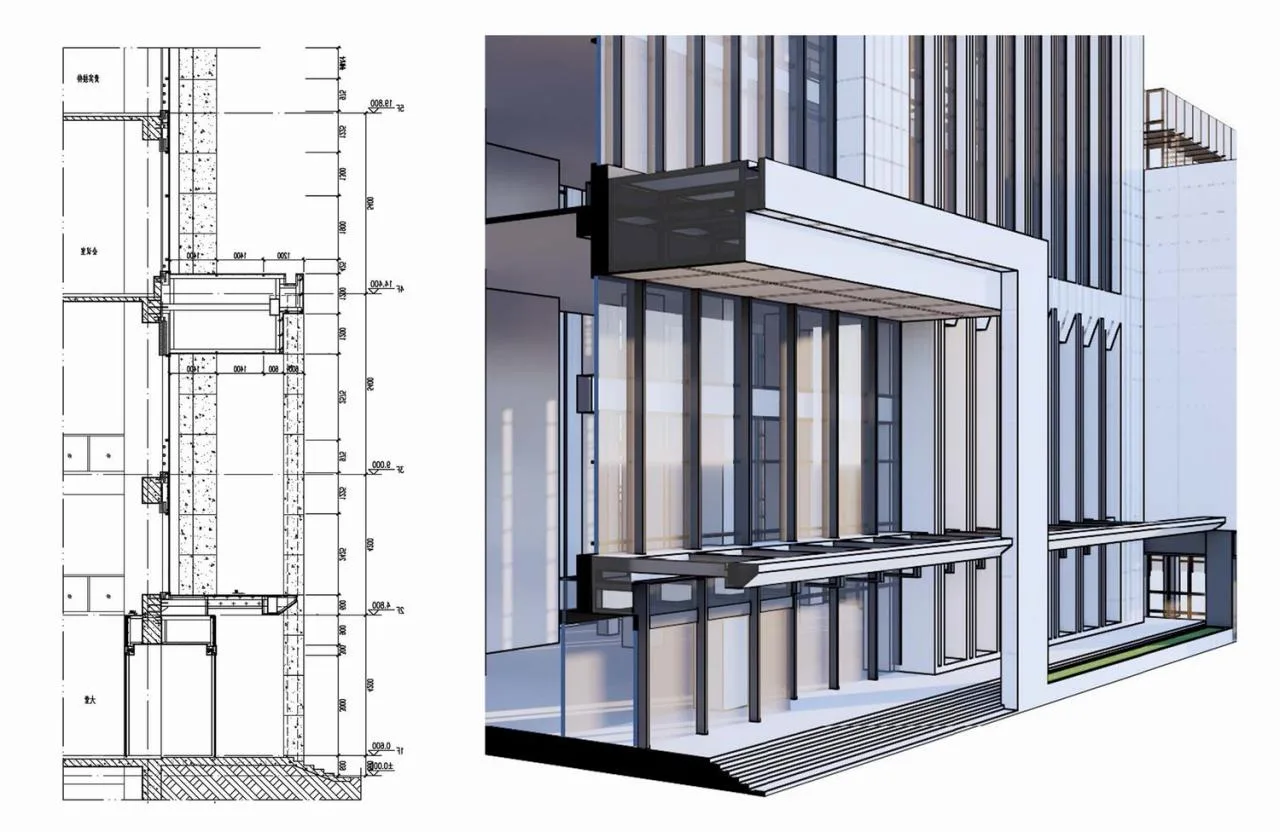
Due to fire safety height restrictions, the canopy at the entrance of the Princess Office on the south side is relatively small. The design team enhanced its visual richness within this limited space, skillfully creating a dignified yet subtle feature. The accessible ramp is discreetly tucked behind a flower bed to preserve the facade’s integrity.
06 Interior Design: Subtle Elegance
The interior design employs a minimalist language and a cohesive color palette, aligning with the building’s solemn and steady office atmosphere.
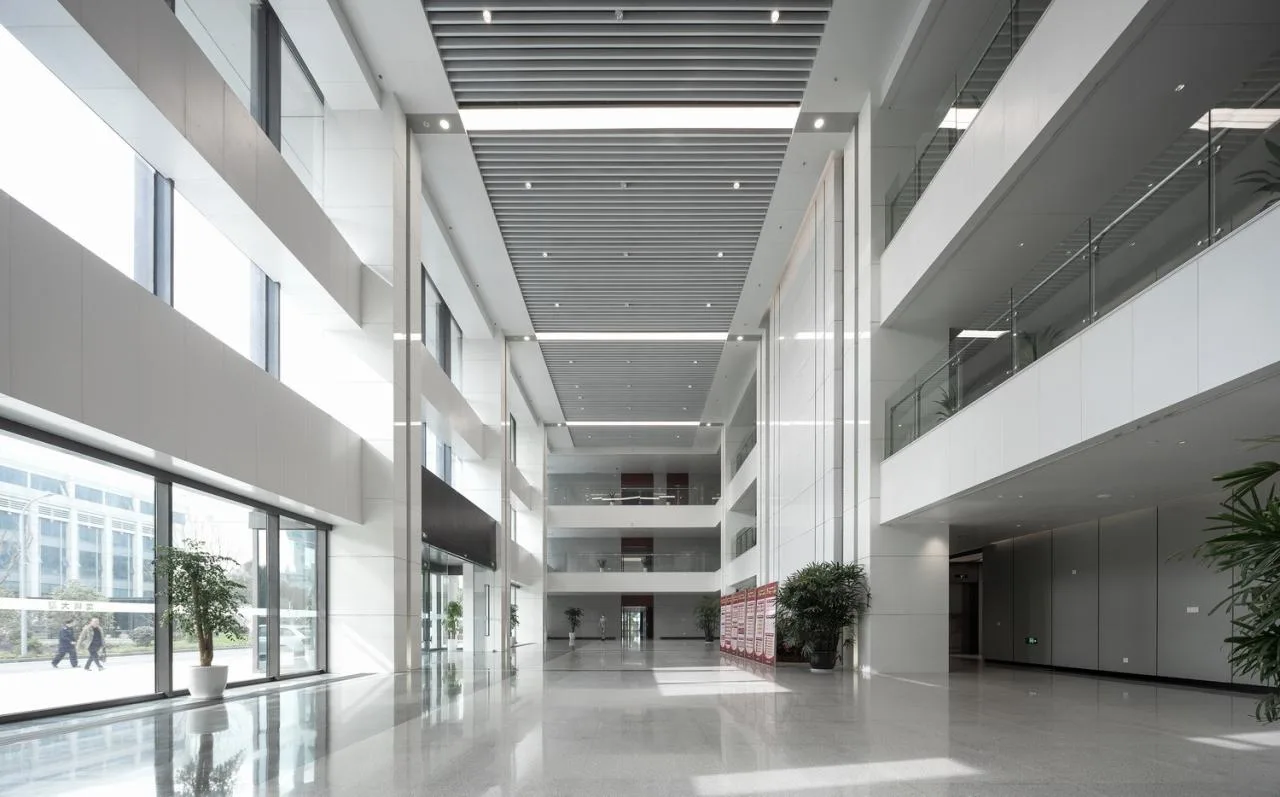
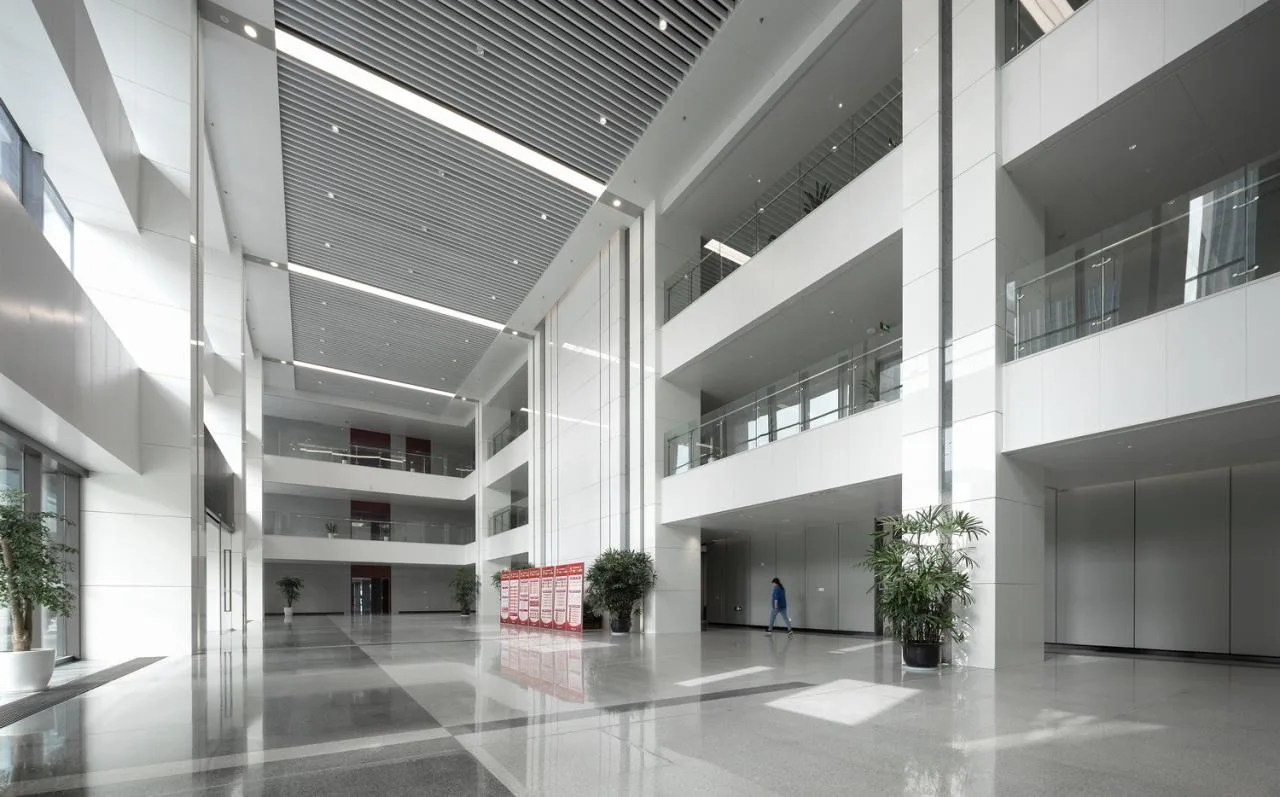
The north-located core tube allows for a spacious, three-story-high lobby beneath the tower. HVAC and fire protection systems are cleverly concealed within the design, showcasing a refined, integrated approach.
07 Landscape Design: Dense Garden Experience
Given the limited outdoor space, the design maximizes the use of courtyards and rooftop terraces to enhance natural lighting and create a “green office, happy life” environment.
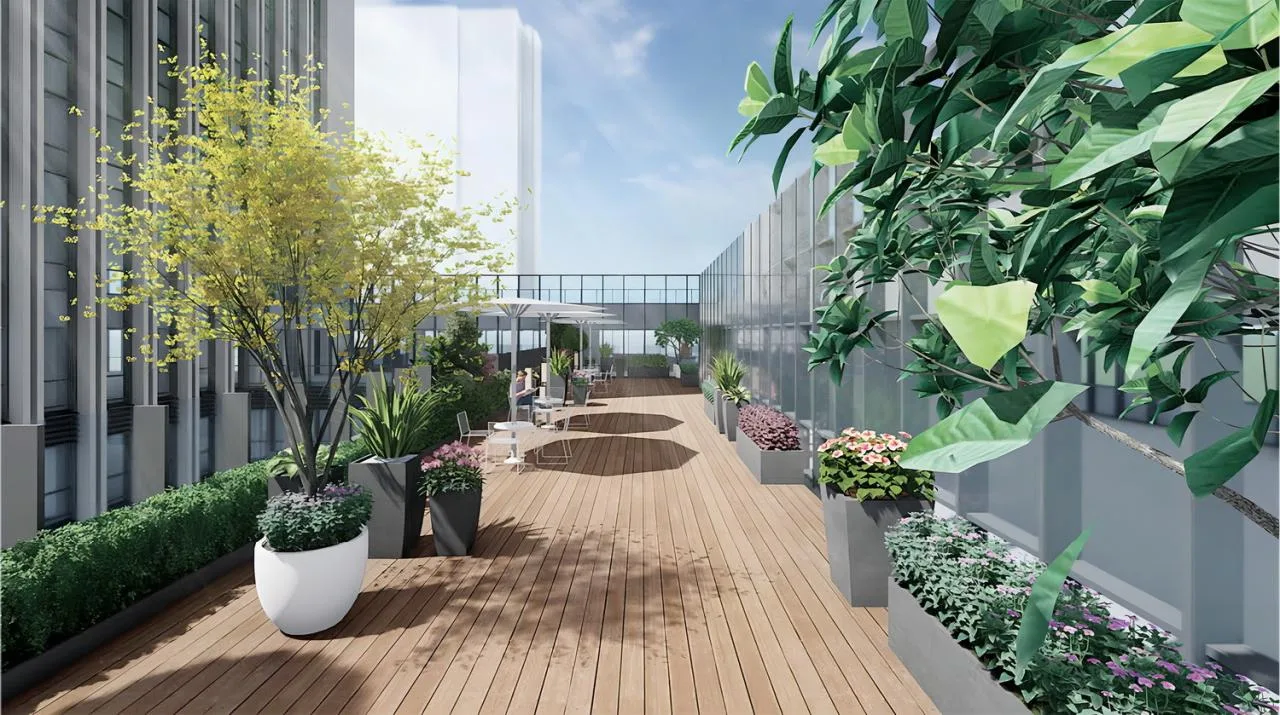
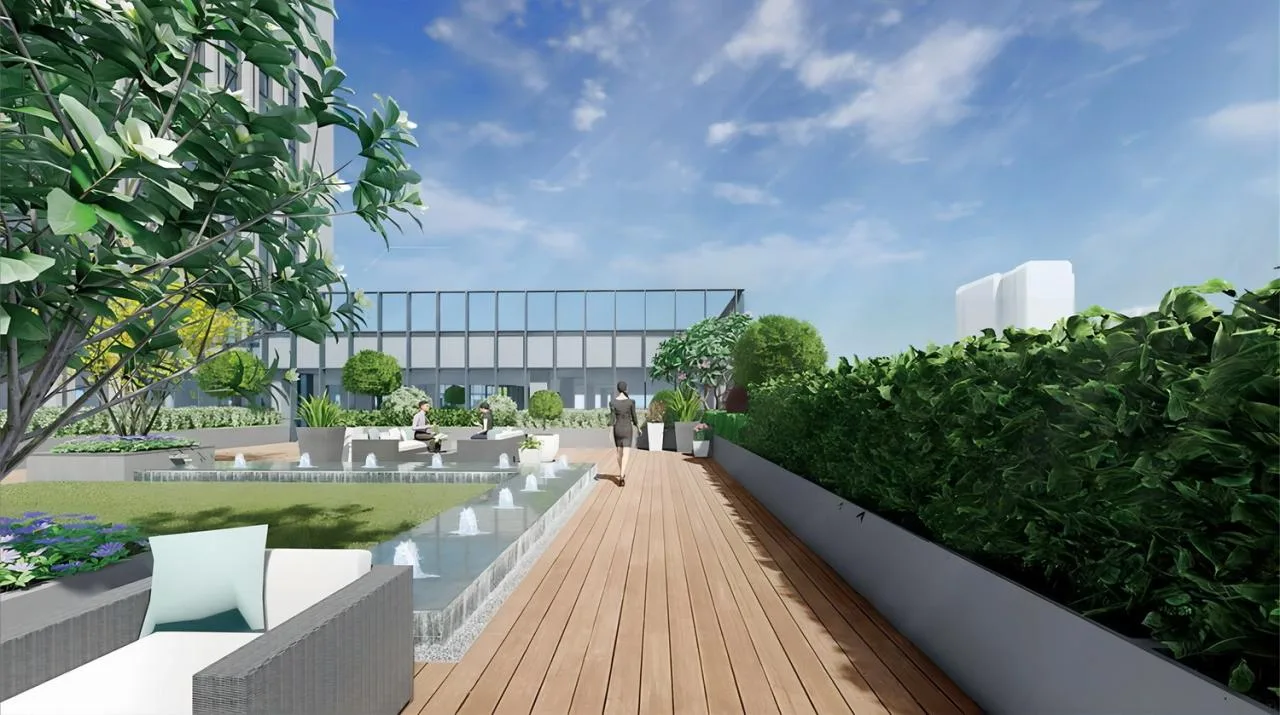
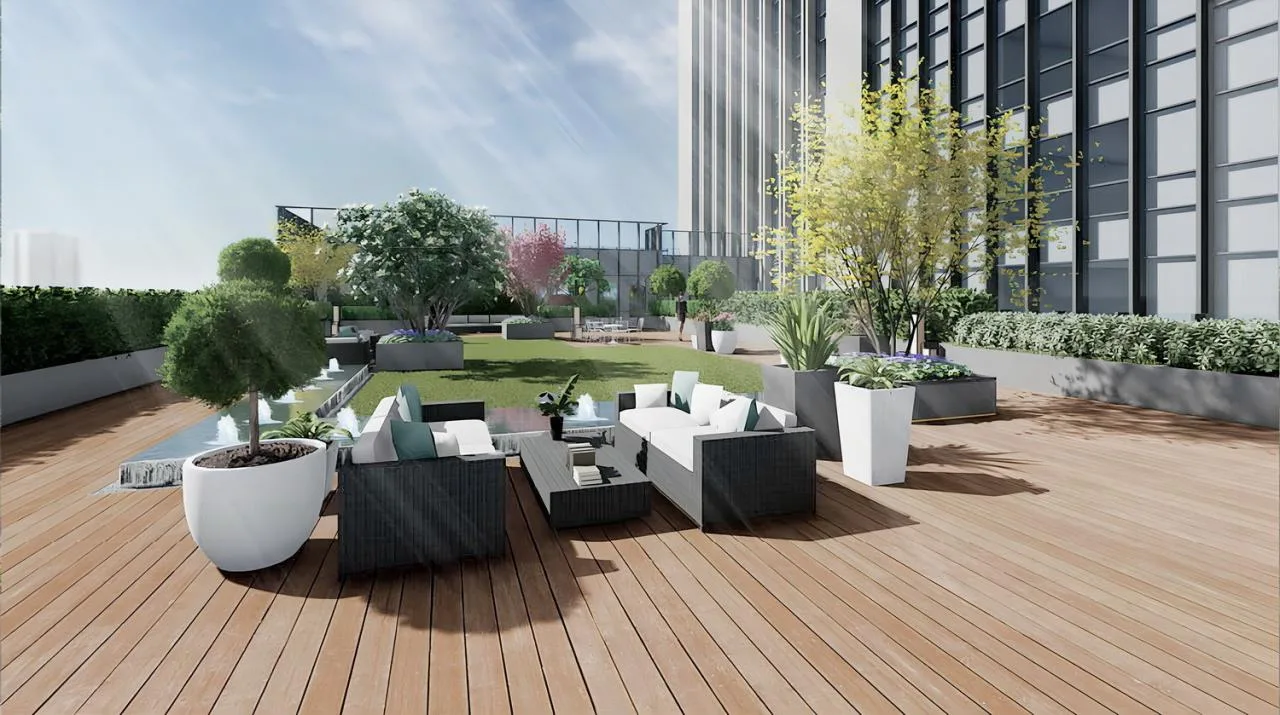
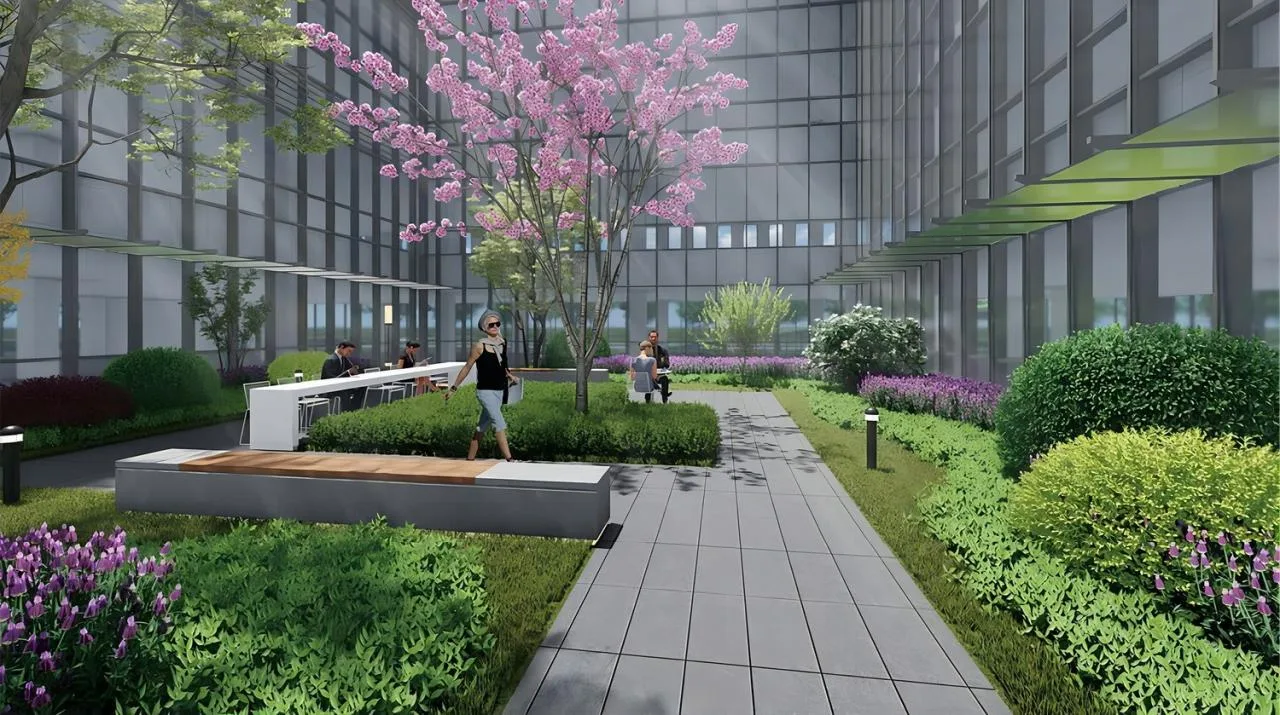
The landscape design draws inspiration from the architecture’s square, dignified forms and strong vertical lines, integrating elements of traditional Chinese garden design. Combined with modern minimalist techniques, flowing rhythms create a dense garden experience.
08 Conclusion
The Longjin Building project was completed within one year from proposal to finish, despite a tight design schedule and complex coordination among multiple departments and specialties. The design team facilitated numerous professional collaborations and conducted multiple site inspections and material tests during construction. The project achieved high-quality execution recognized by the owner. It successfully integrates with the urban context while adding a vibrant new chapter to the municipal cultural axis.
Project Drawings
Project Information
Project Name: Changzhou Longjin Building
Owner: Changzhou Jinling Investment Group Co., Ltd
Building Size: 79,745.42 square meters
Completion Date: July 2022
Concept Design Team: Chen Tao, Zou Danni, Zhou Shuguang, Yan Kongyu, Wu Xuanyi
Construction Drawing Team: Jia Jie, Hu Hong, Shi Xiaojin, Zhang Yujiang, Yao Yichen, Zhu Jiayou, Gong Feixue, Wu Gina, Ding Jun
Curtain Wall Design: Jiangsu General Building Decoration Co., Ltd
Interior Design: Jiangsu General Building Decoration Co., Ltd
Landscape Design: Guangzhou Longteng Landscape Design Co., Ltd
Lighting Design: Changzhou Urban Lighting Management Office
Photography: Architectural Vision














Must log in before commenting!
Sign Up