
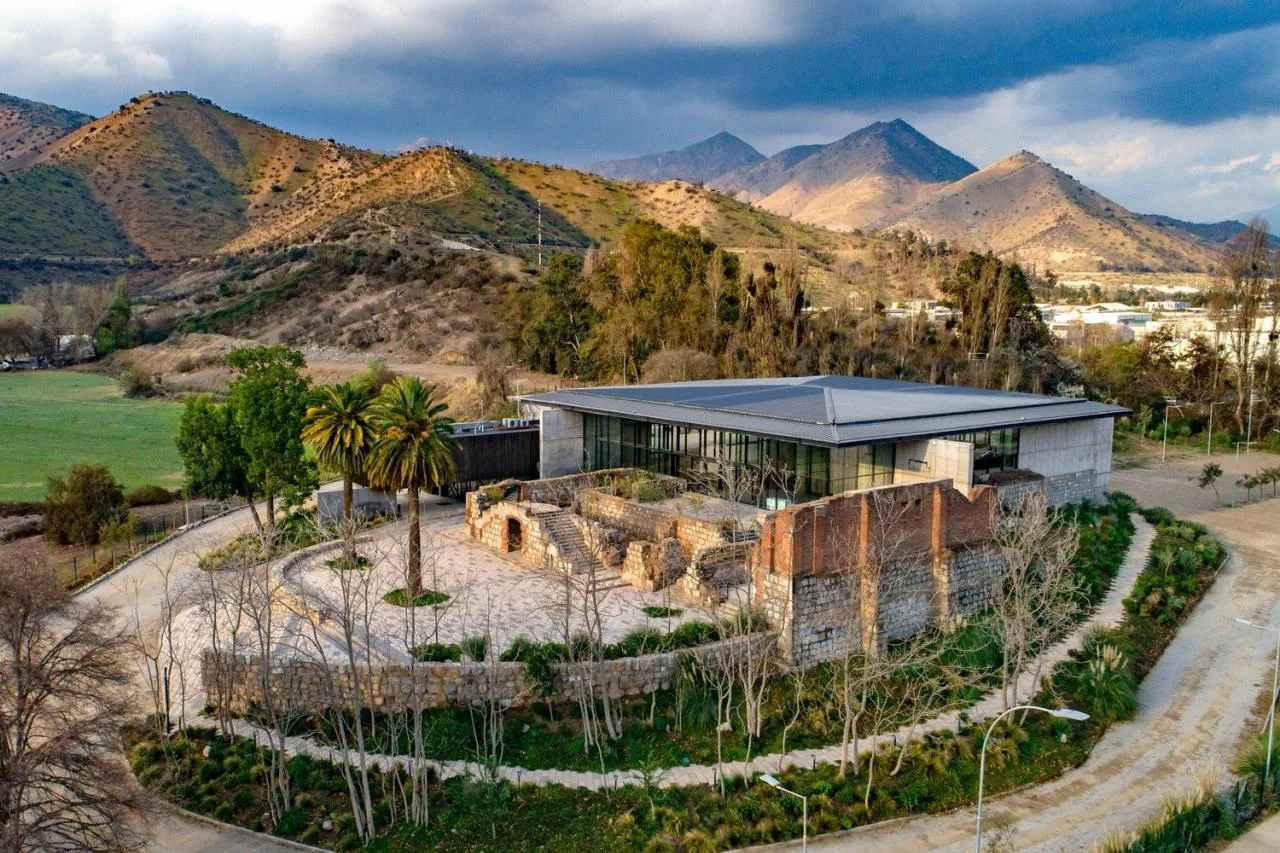
This project involves designing an event center in Santiago, Chile, with a capacity for 1,000 people. The site features the ruins of a 19th-century mansion situated on a small hill.
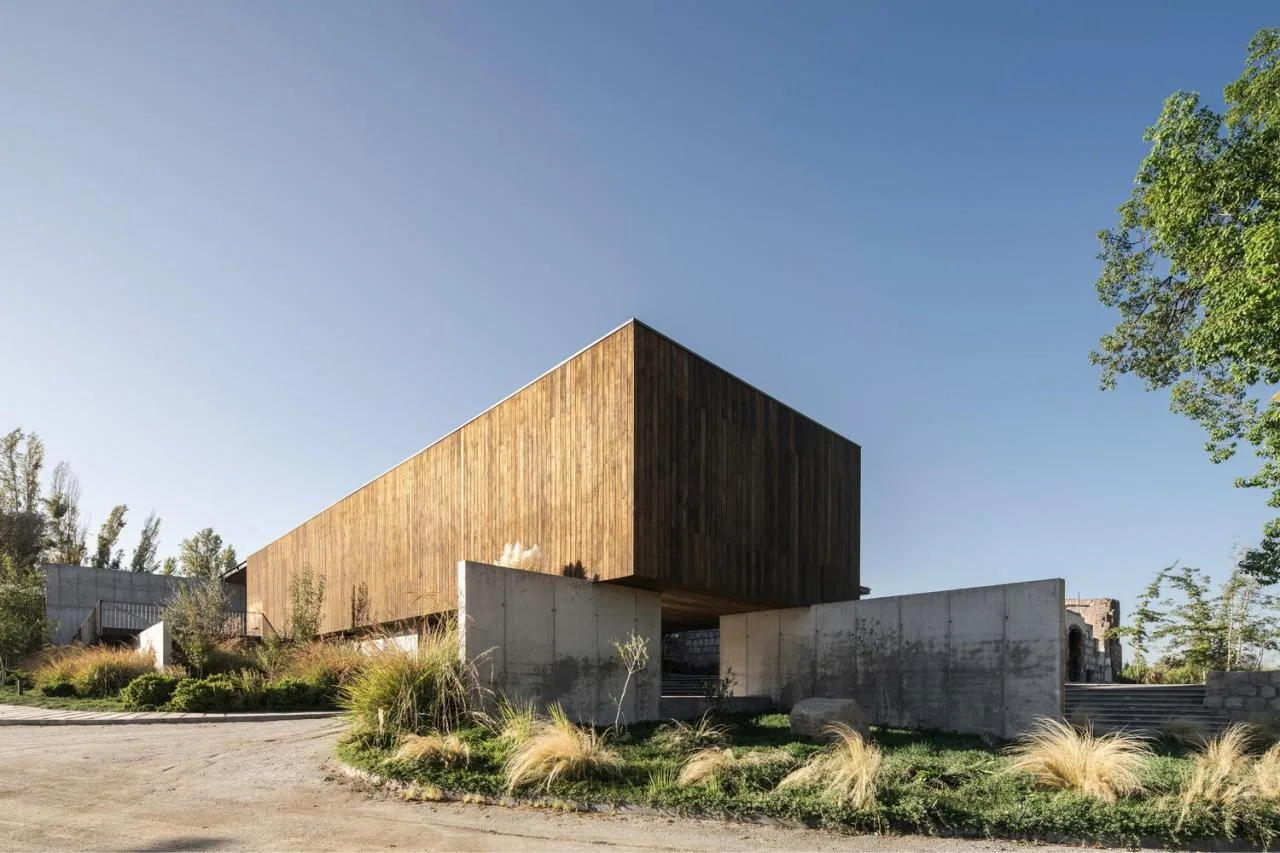
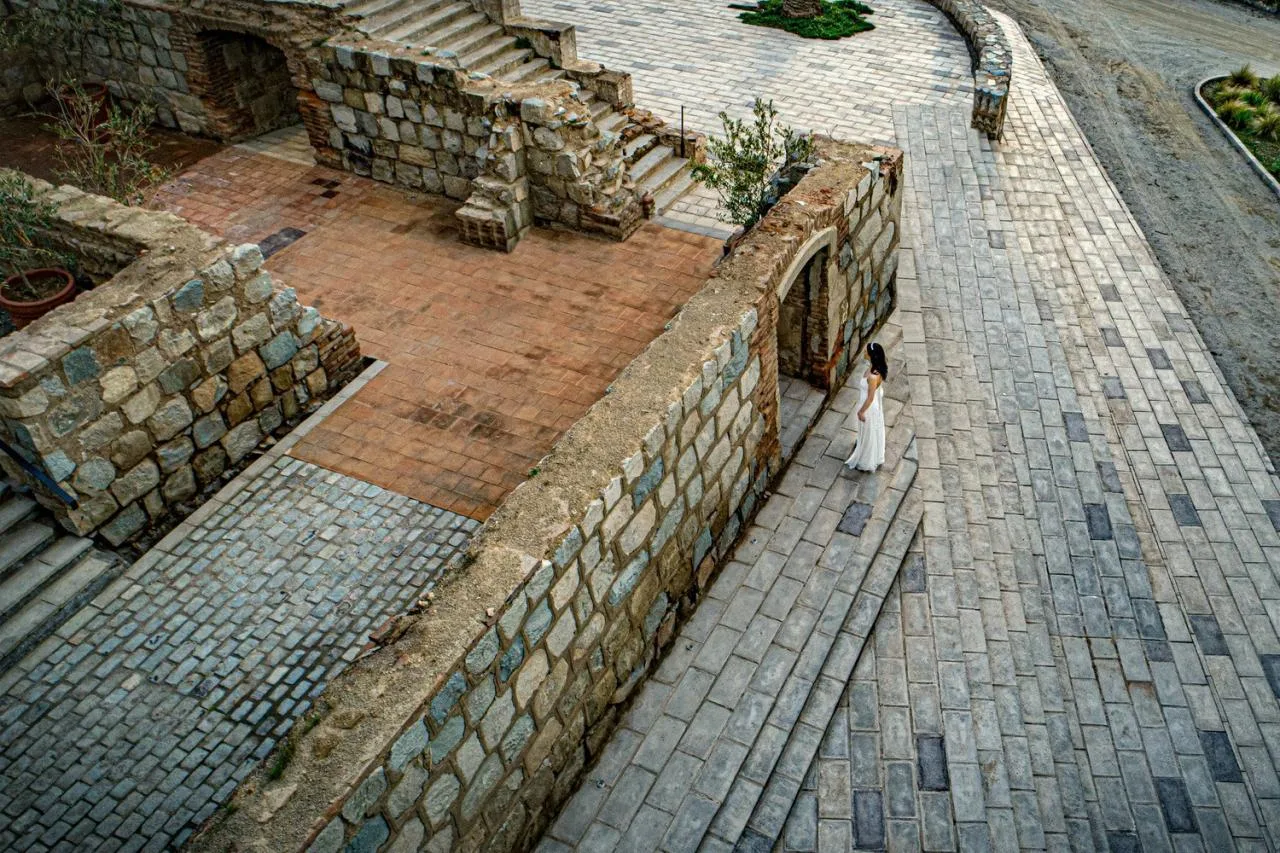
Working closely with archaeologists, all stones and brick walls remaining on site were carefully preserved. The accumulated soil caused by earthquakes and looting was cleared to reveal the site’s historical significance and elegance, making these ruins the central feature of the architectural design.
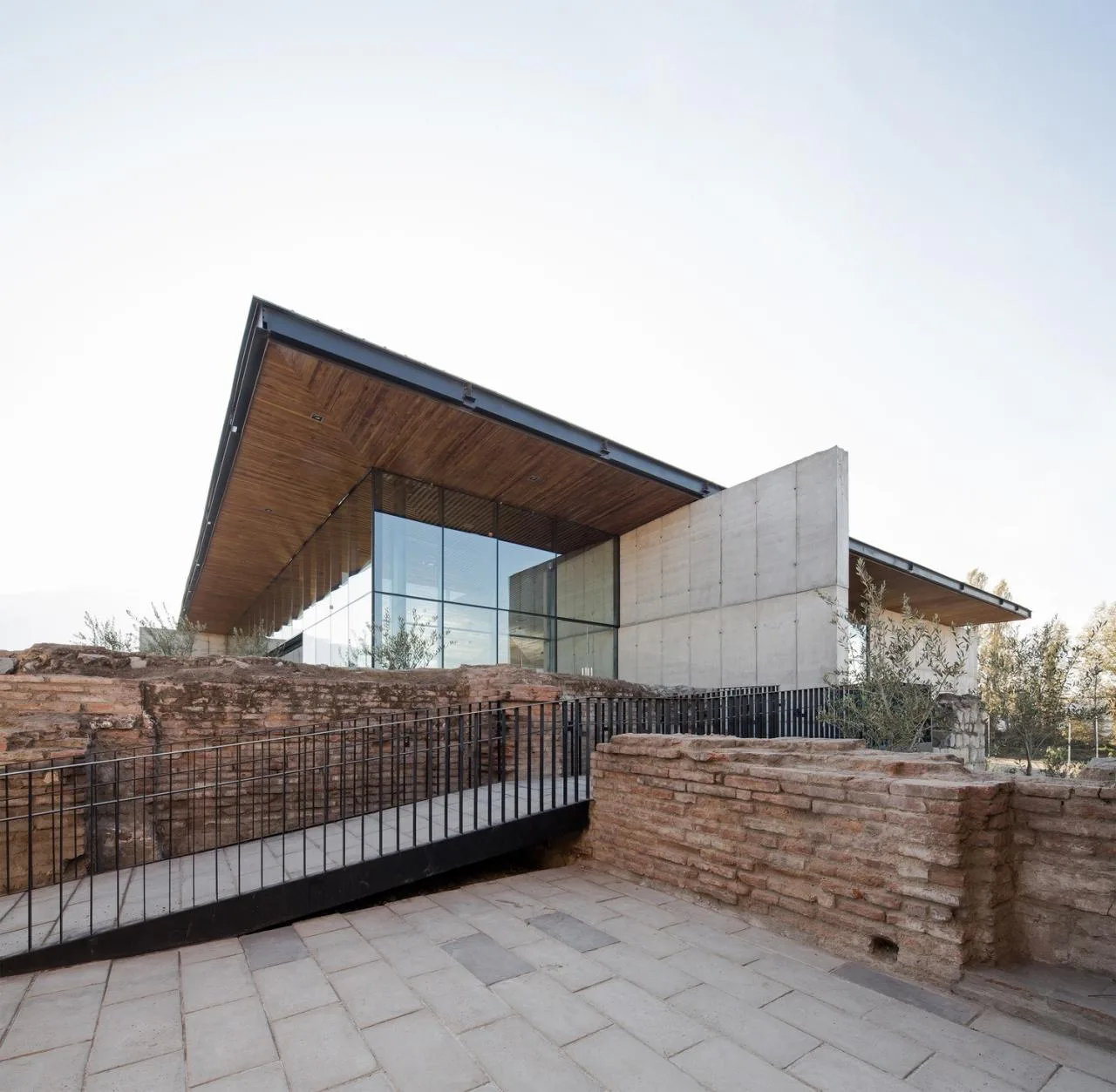
The guiding design principle is to honor the traces and raw materials of the site, using them as the backdrop for the activity center. The new construction focuses on adding only the essential elements needed to accommodate modern uses and functions.
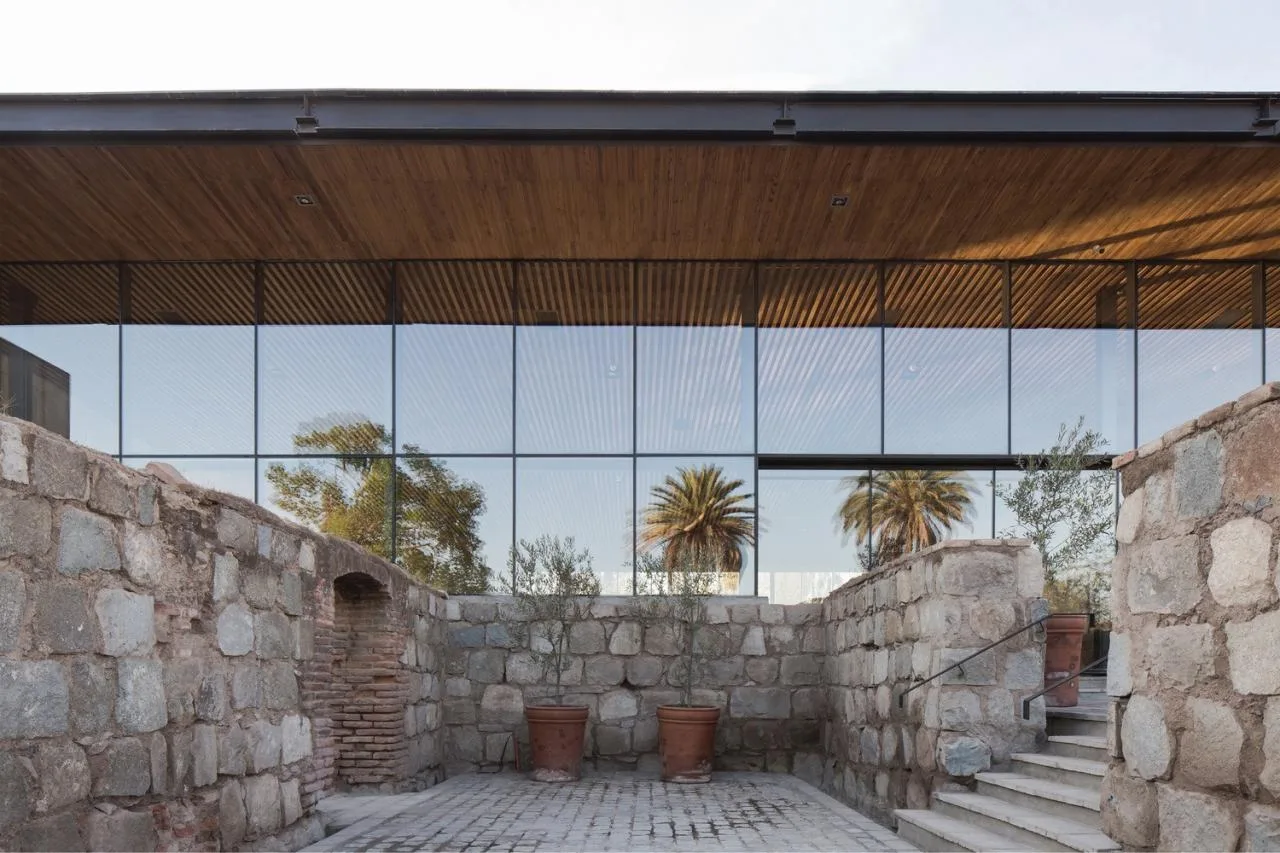
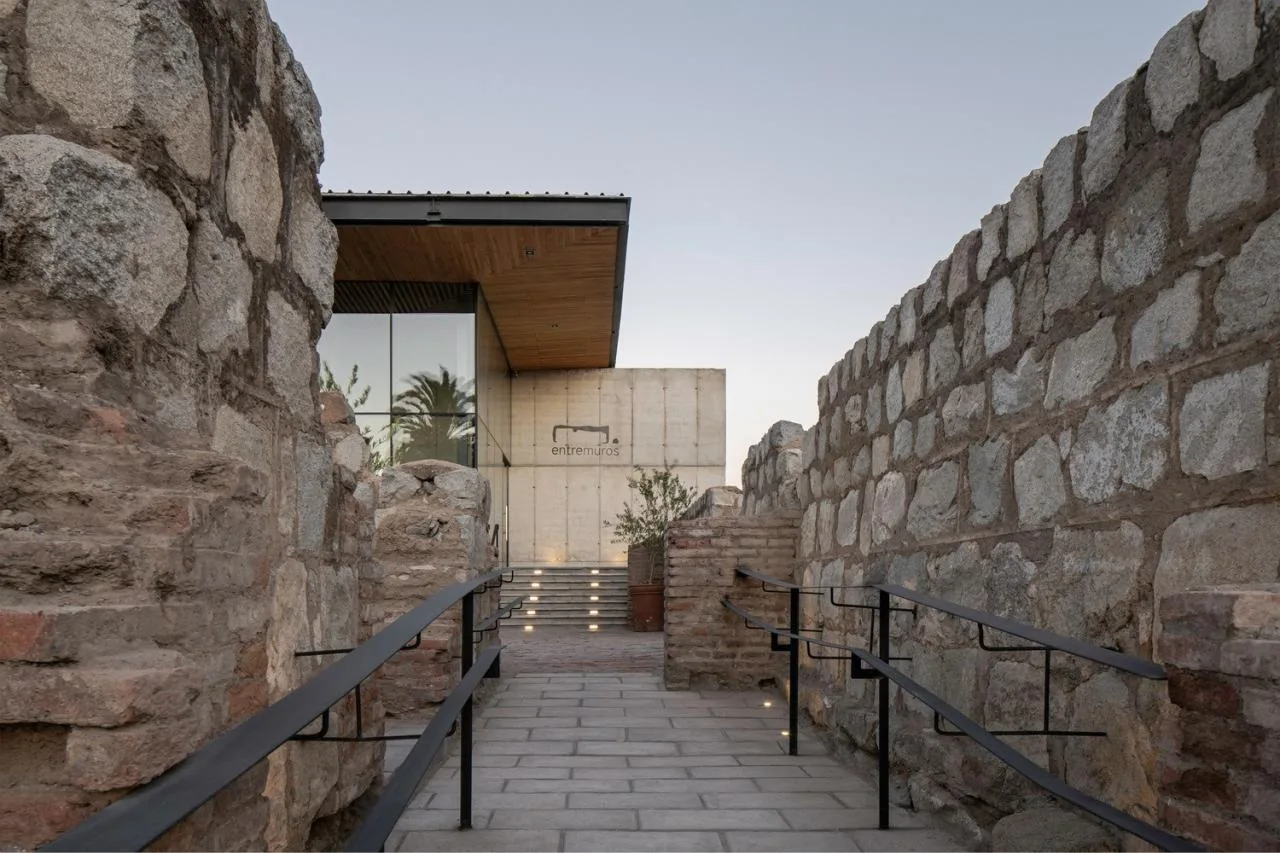
The project integrates walls, courtyards, and plazas, comprising indoor spaces, open areas, and cocktail zones. The activity center, nestled within the mansion ruins, offers sweeping views of the surroundings while becoming a distinct urban landmark for the community.
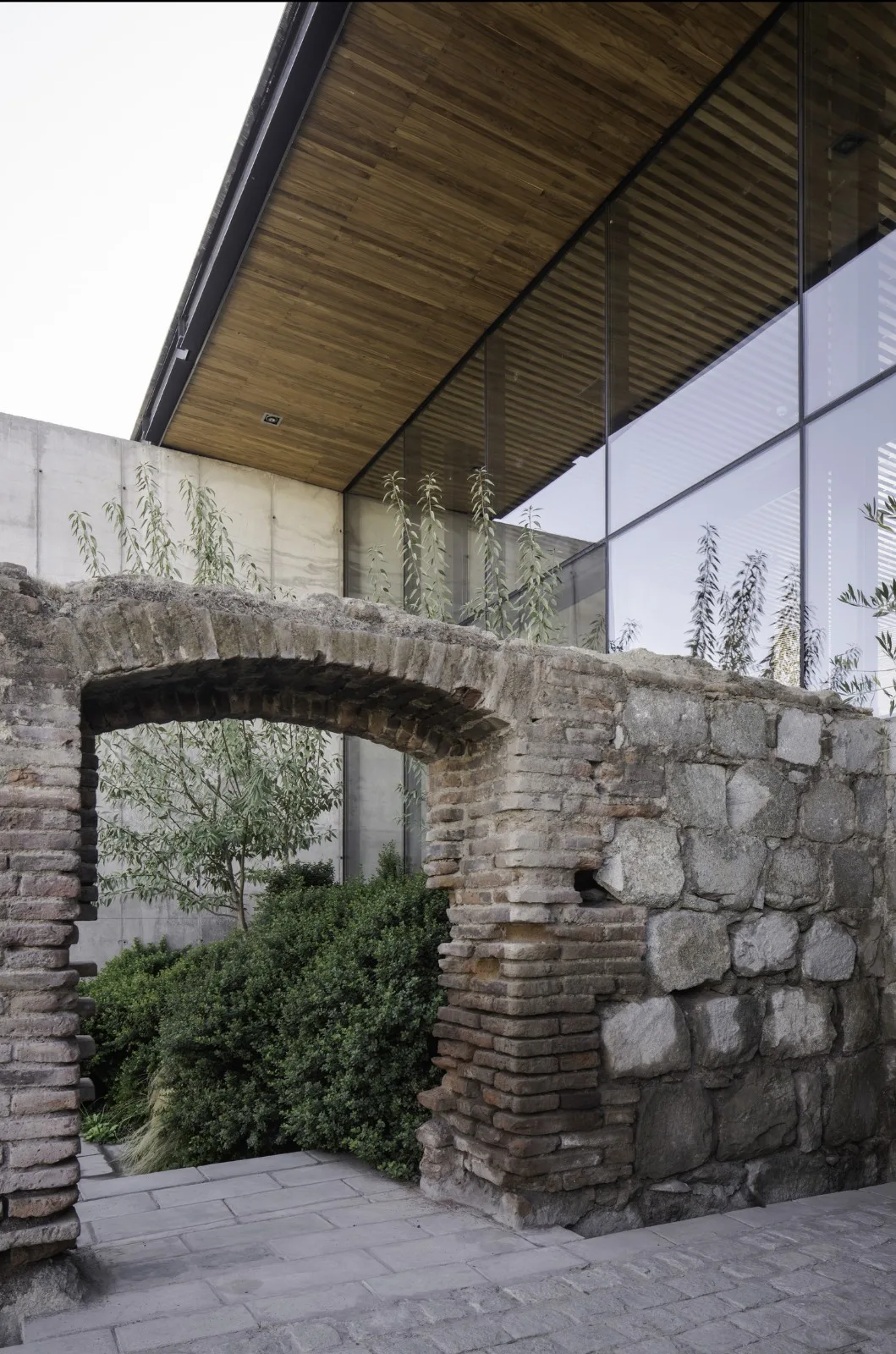
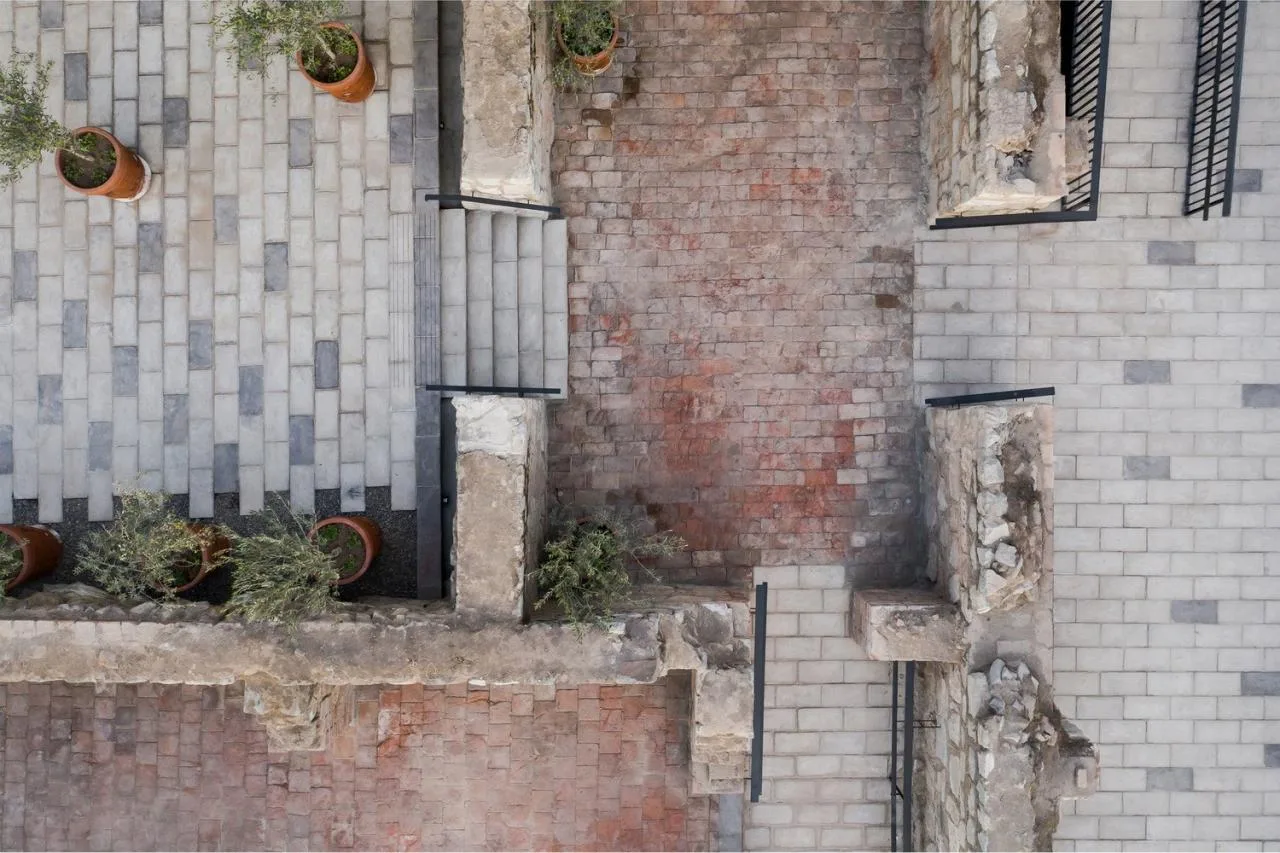
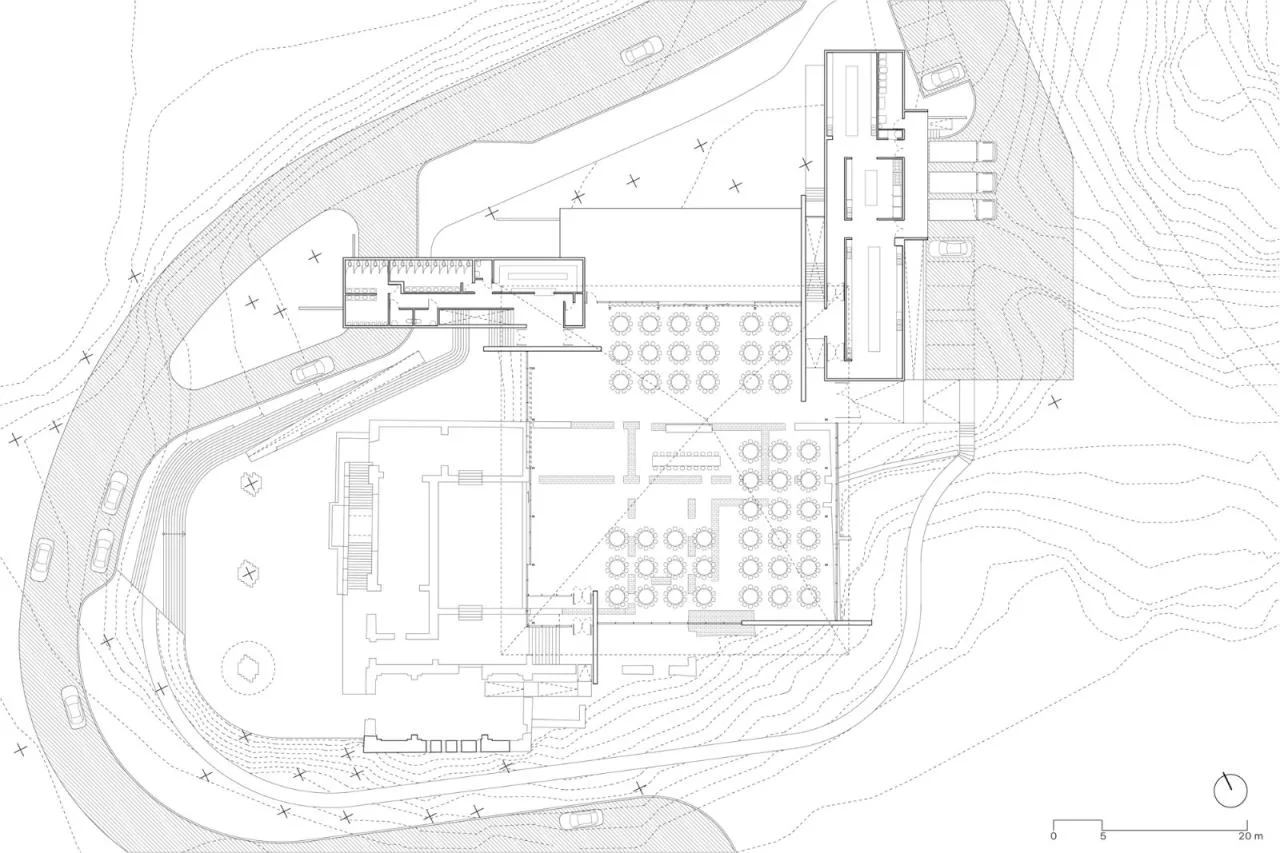
The design features two large enclosed “wooden strips” forming the building’s core, housing service and administrative areas essential for the activity center. One strip contains bathrooms, administrative offices, and visitor services, while the other includes the kitchen, storage, equipment, and supplier facilities. Additionally, the project restored the original pavement, reinforced existing walls, and cleaned the brick and stone vertical surfaces.
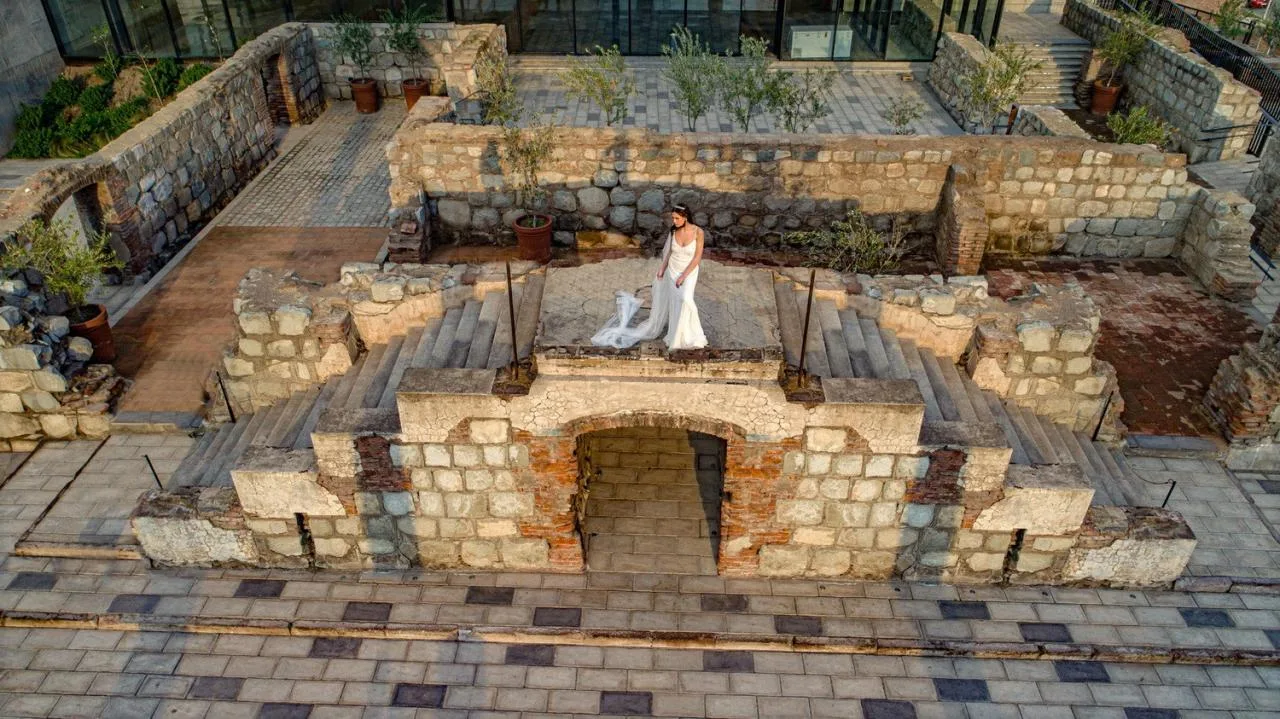
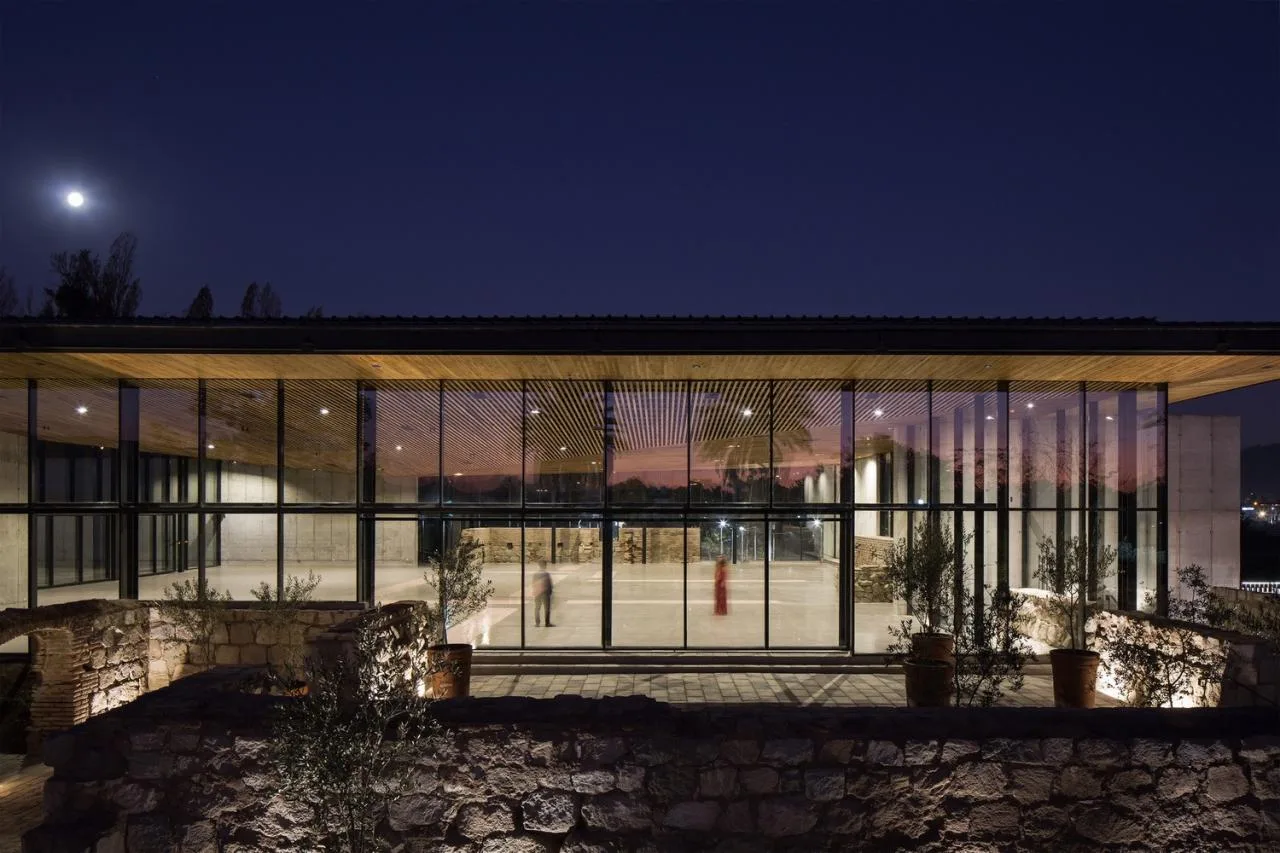
Reinforced concrete walls with exposed surfaces on all four sides are strategically placed between the original walls and the wooden strips. This structural setup minimizes deformation during earthquakes. These walls support a large suspended steel and wood roof covering 1,100 square meters, creating a spacious event hall that offers shade and shelter.
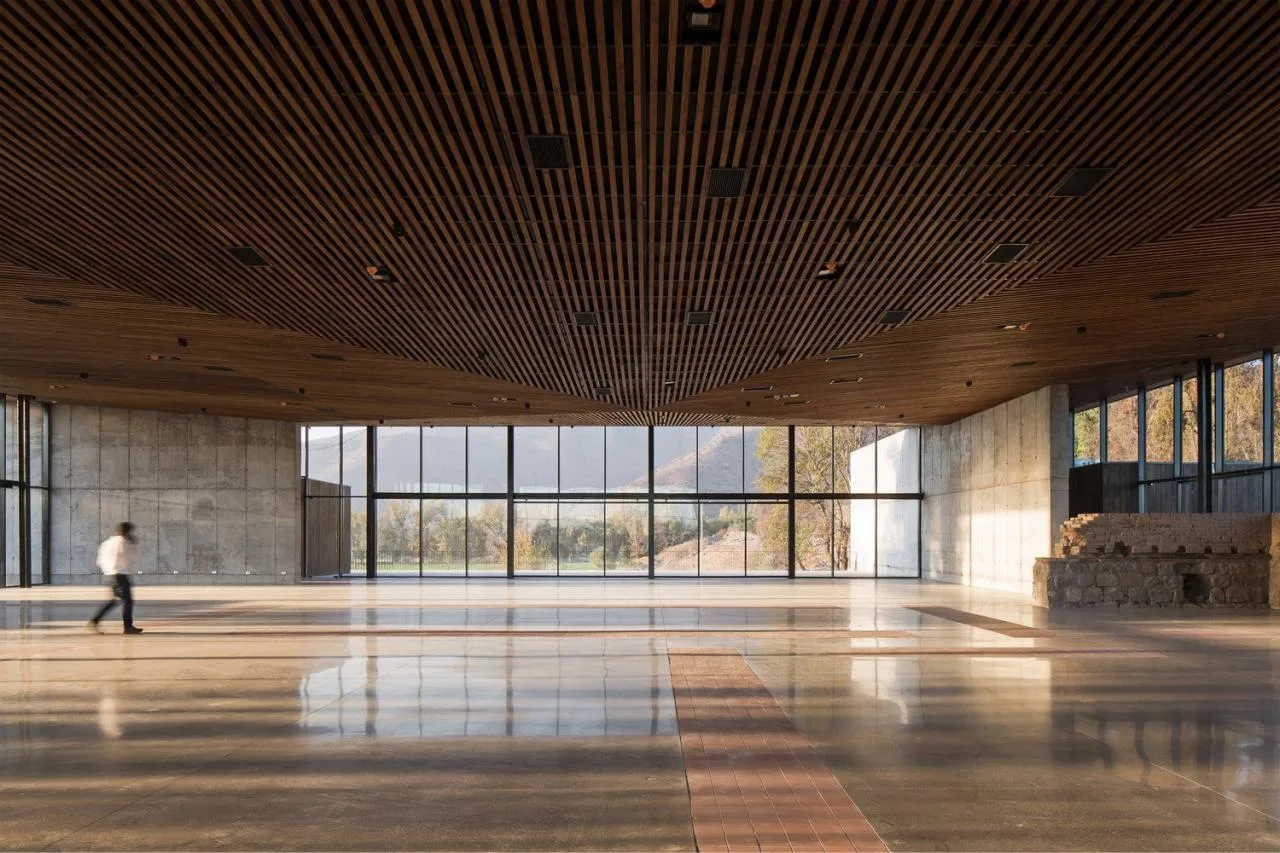
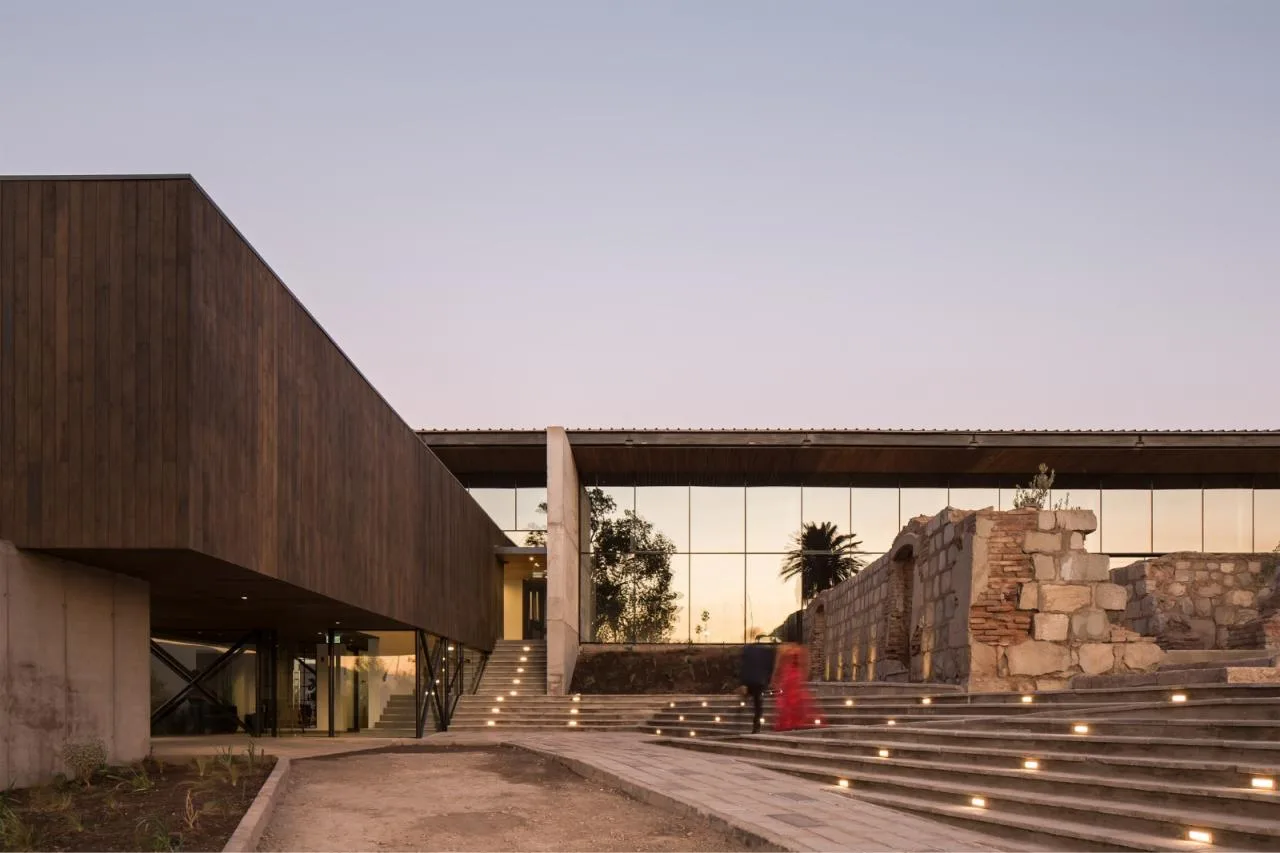
The resulting open space is pillar-free and enclosed by a five-meter-high glass curtain wall, visually connecting the interior with pedestrians, nearby ruins, and the surrounding landscape. Large movable glass doors within the curtain wall facilitate natural ventilation, reducing reliance on air conditioning, and link the lobby with courtyard areas on multiple site levels.
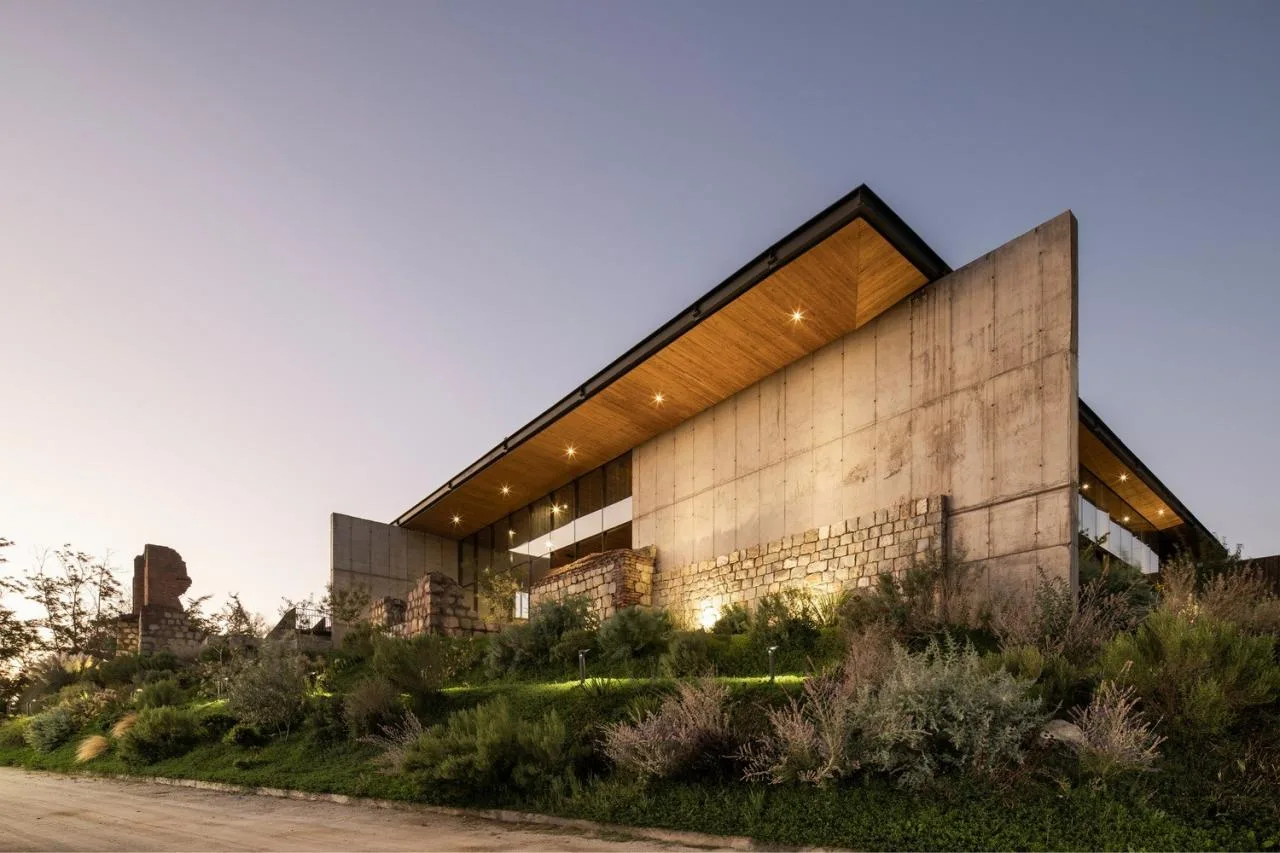
The project aims to establish a dialogue between contemporary architecture and the restoration of heritage buildings that reflect Chile’s historical era. It clearly distinguishes new interventions from inherited elements while ensuring that the proportions and scale of new additions harmonize respectfully with the existing site.
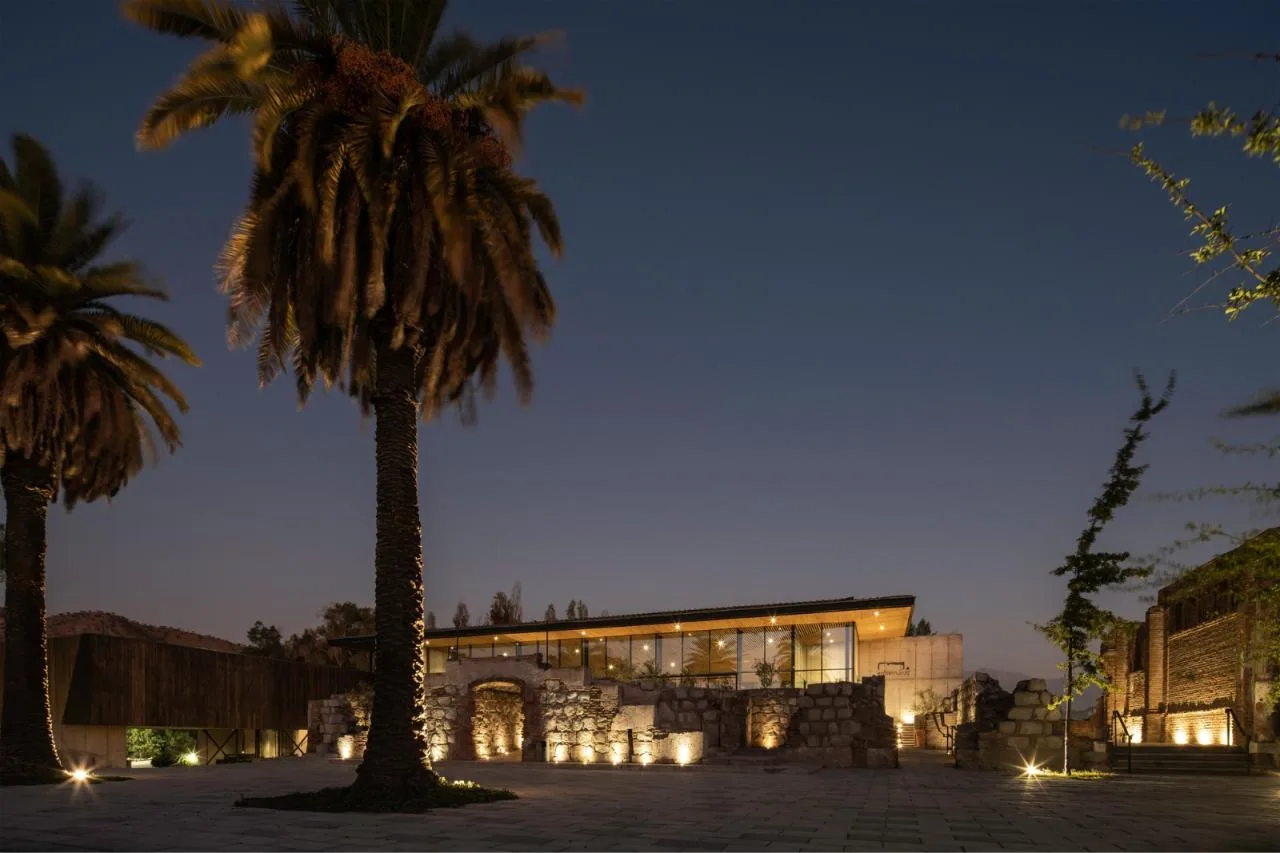
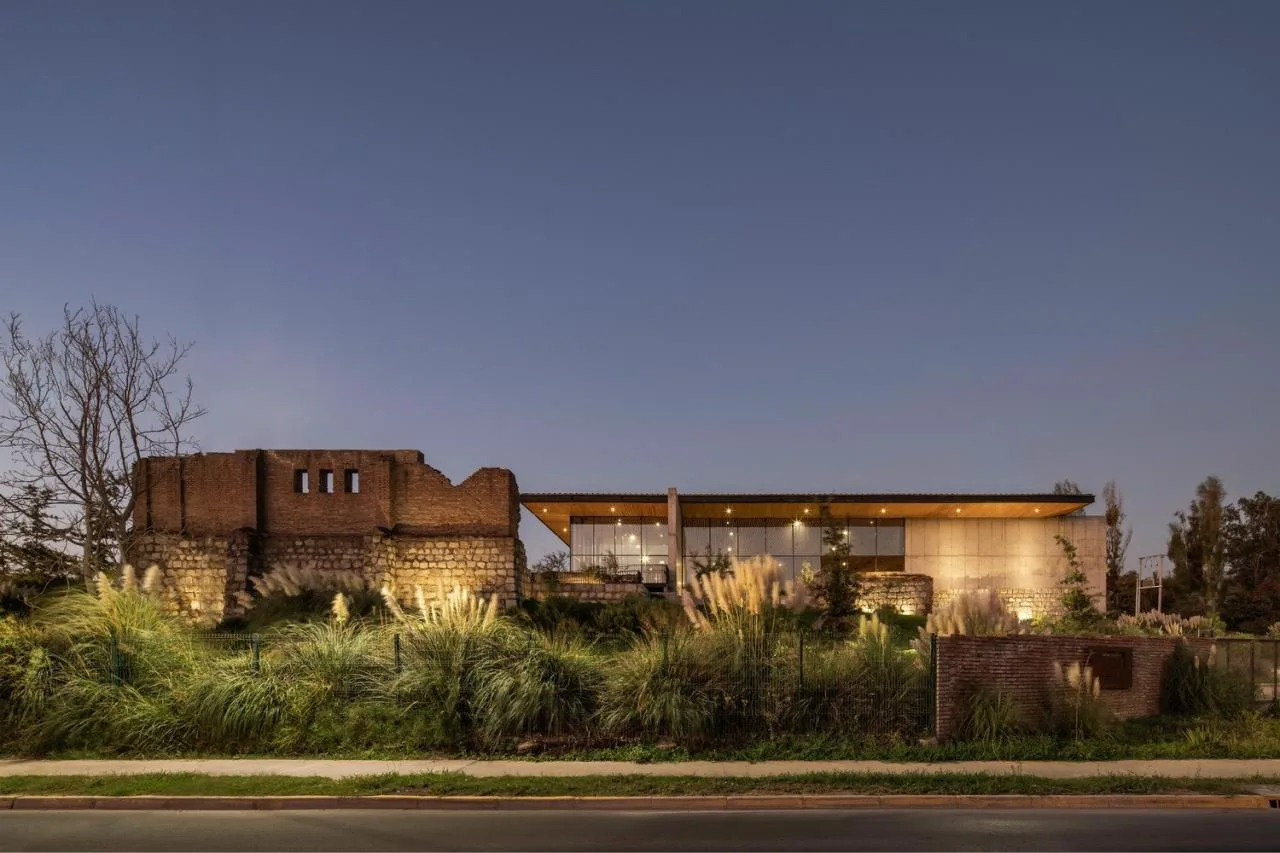
As part of the design, the original mansion’s floor plan is reconstructed by outlining brick and stone walls on the main hall floor, illustrating the scale and footprint of the now-absent building. The landscape design plays a crucial role in harmonizing the project with its surroundings, using native, drought-resistant plants that convert the original outdoor space into a cocktail area.
Additionally, ground-level lighting highlights the ruins’ walls, showcasing their significance and weight in contrast to the transparent, lightweight hall and its wooden roof.
Project Drawings
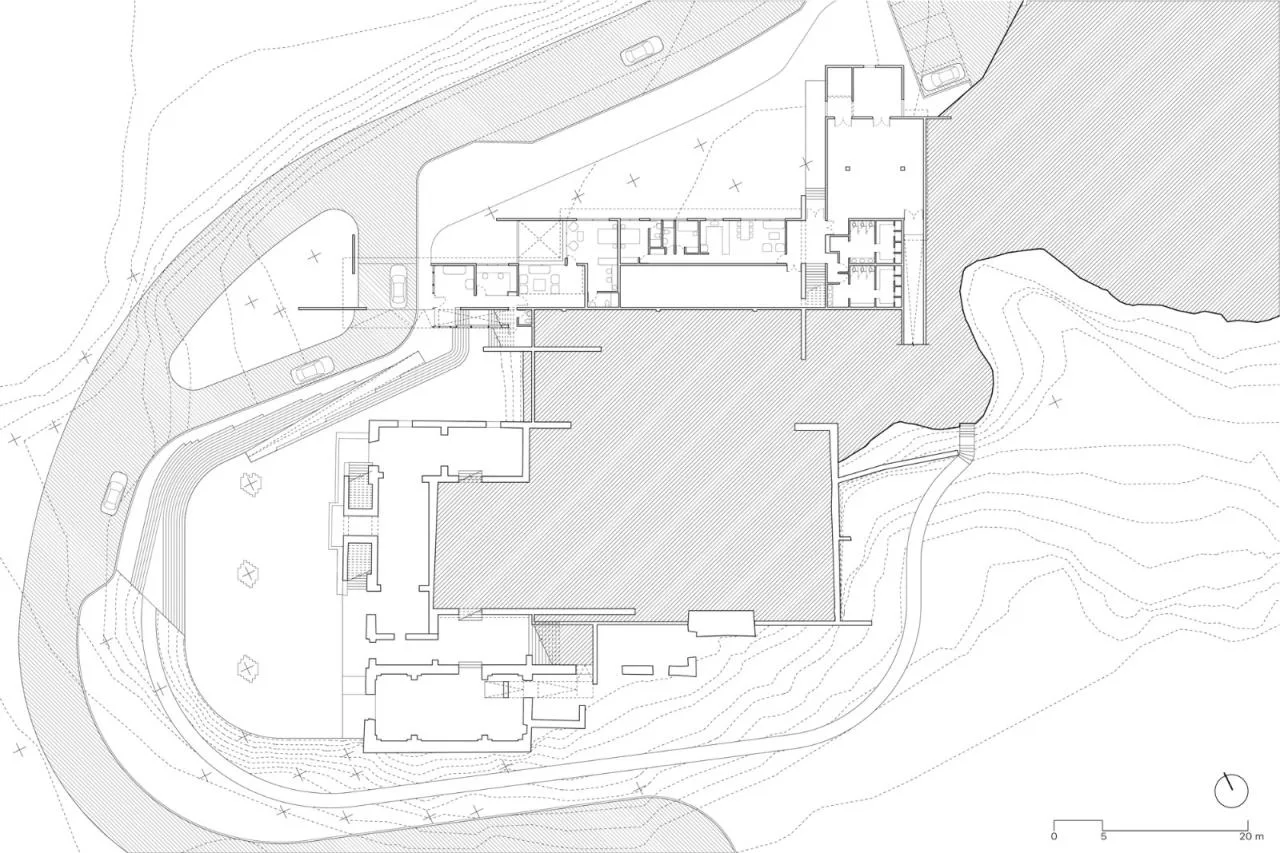
△ First Floor Plan
△ Second Floor Plan
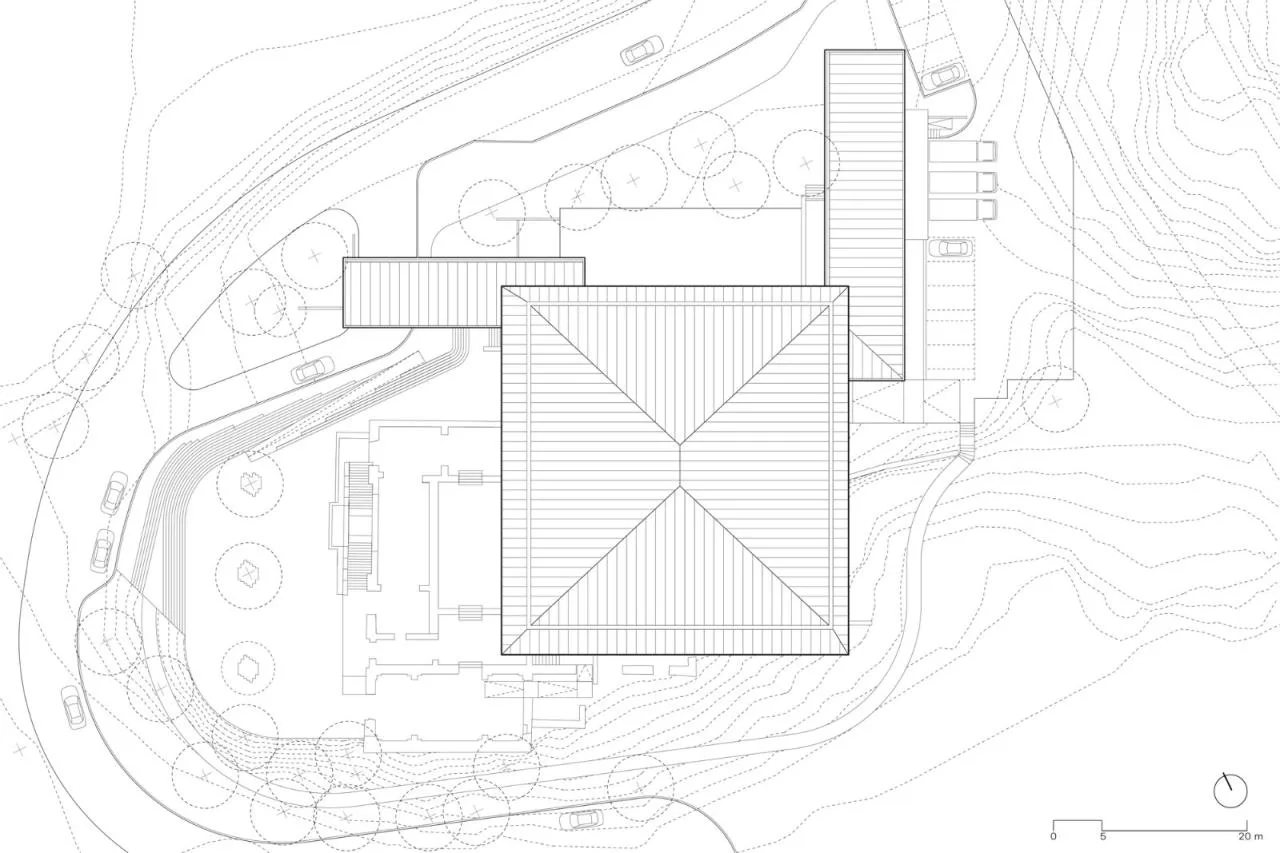
△ Roof Plan
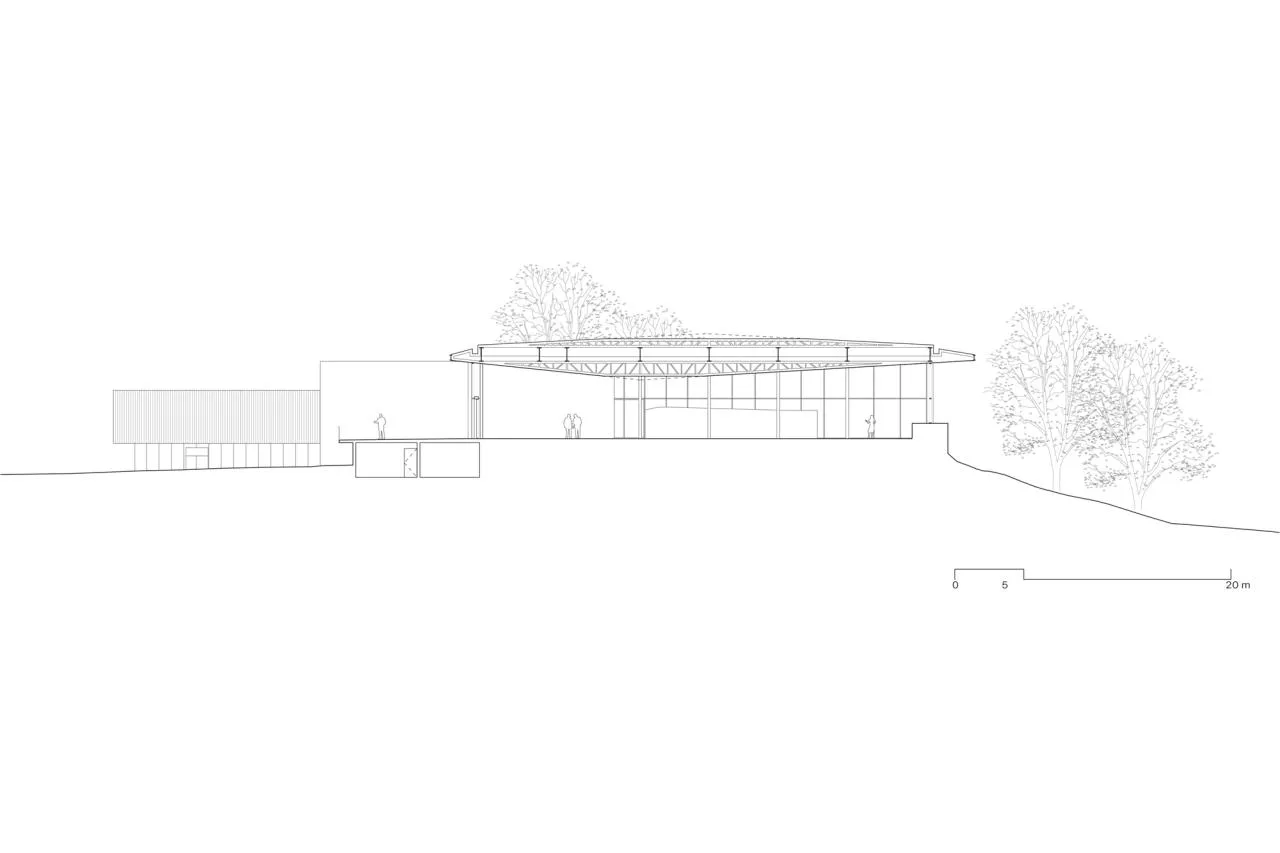
△ Section Diagram
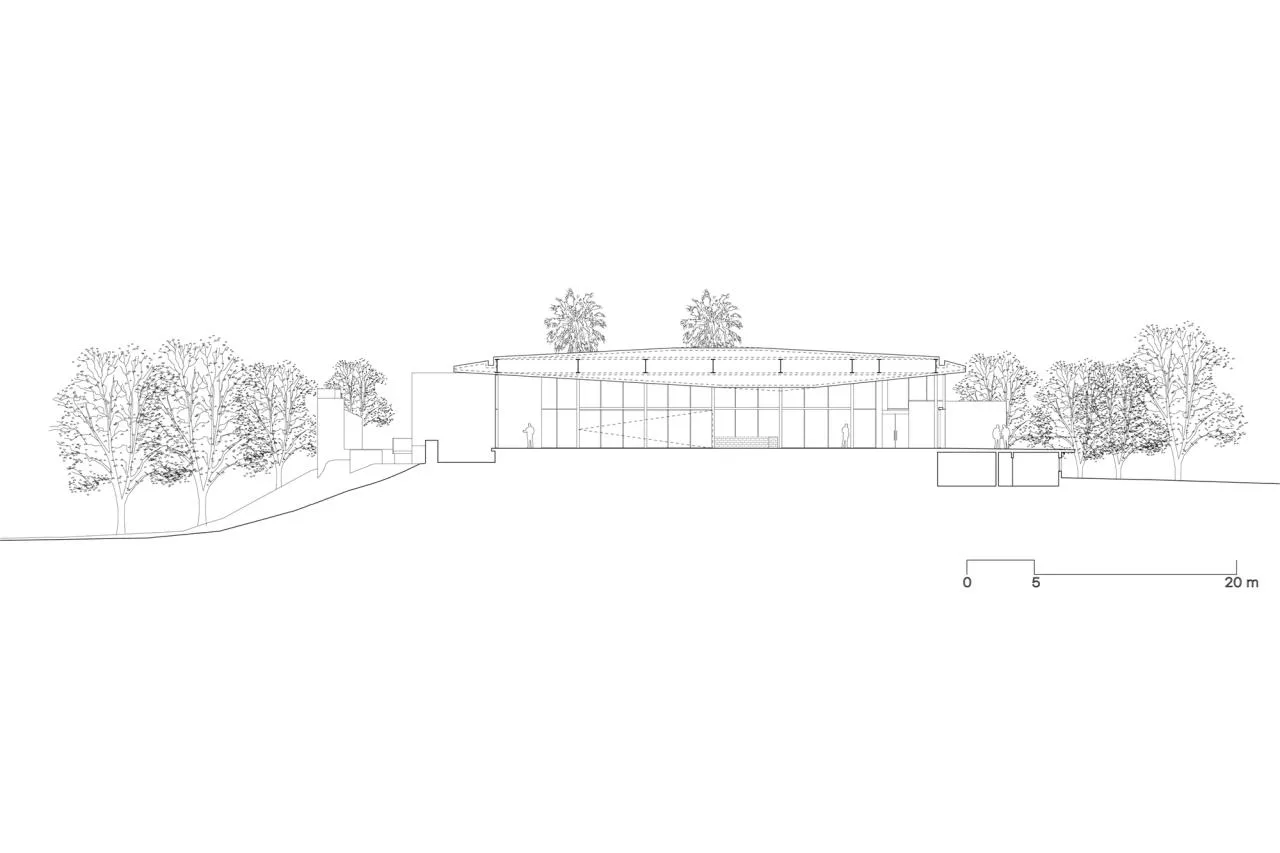
△ Section Diagram
Project Information
Architect: Triangular
Project Year: 2020
Photographers: Nico Saieh, Ximena Muñoz
Manufacturers: GLASSTECH, Topwood
Lead Architects: Tomás Swett Amenábar, Gonzalo De la Parra García
Collaborative Architects: Alejandro Armstrong, Gabriel Díaz
Location: Santiago, Chile












Must log in before commenting!
Sign Up