
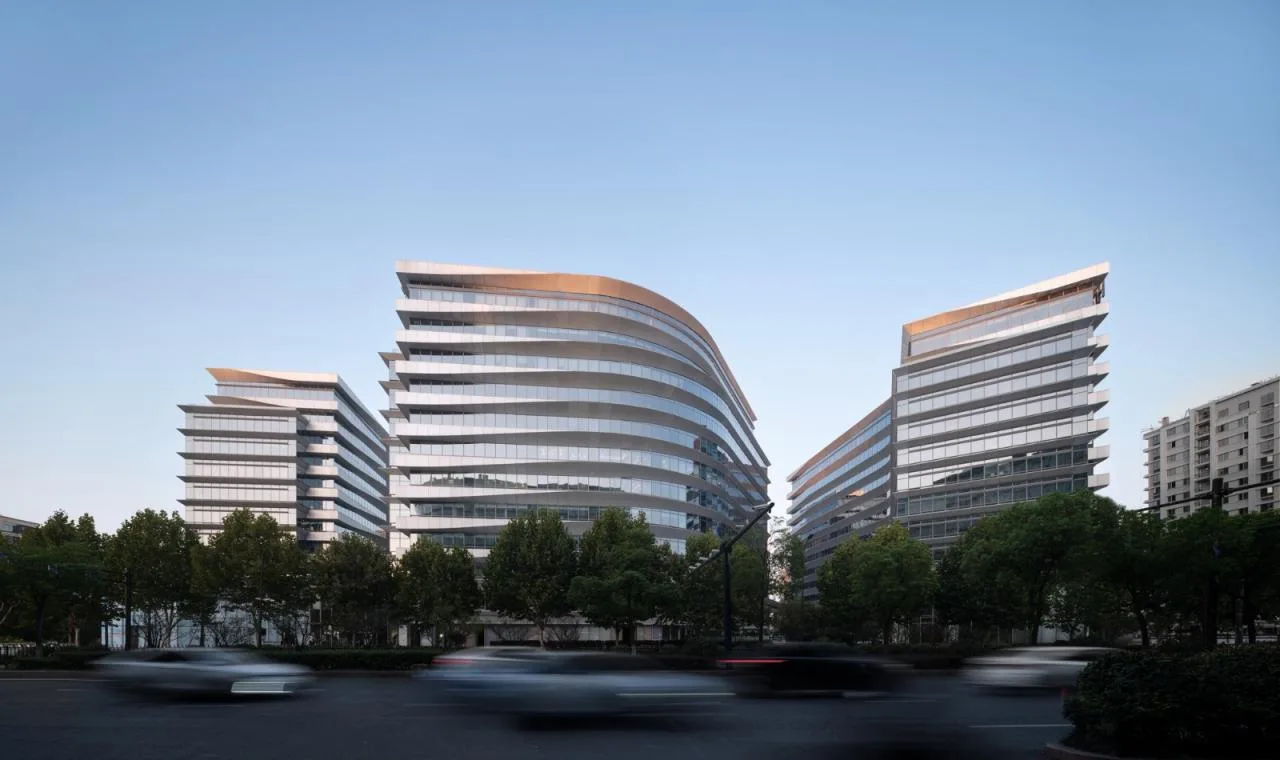
Customized and non-conventional designs for commercial parks are key to fostering urban spatial diversity. When approaching such projects, we emphasize uncovering the unique characteristics of the site and the exclusive connections between the location and the city, using these insights to develop comprehensive design strategies. — Ling Jiangoa, Executive President of Elephant Design; Chief Architect
01 / A Business Landmark Adjacent to the Rail Transit Hub
Hangzhou East Railway Station serves as a critical node within China’s high-speed rail network, featuring eight horizontal and eight vertical lines, making it one of the largest railway transportation hubs in Asia. To establish a “domestic first-class hub economy demonstration zone” centered around East Station, Hangzhou Chengdong New City is developing a commercial matrix cluster spanning 1.5 million square meters to address the area’s commercial development gaps. Dongzhan Garden International is strategically positioned at a key intersection along the hub’s eastern axis, less than 1,000 meters walking distance from the station. The project aims to become a vibrant connector within the city’s dynamic ring, fueling regional business growth.
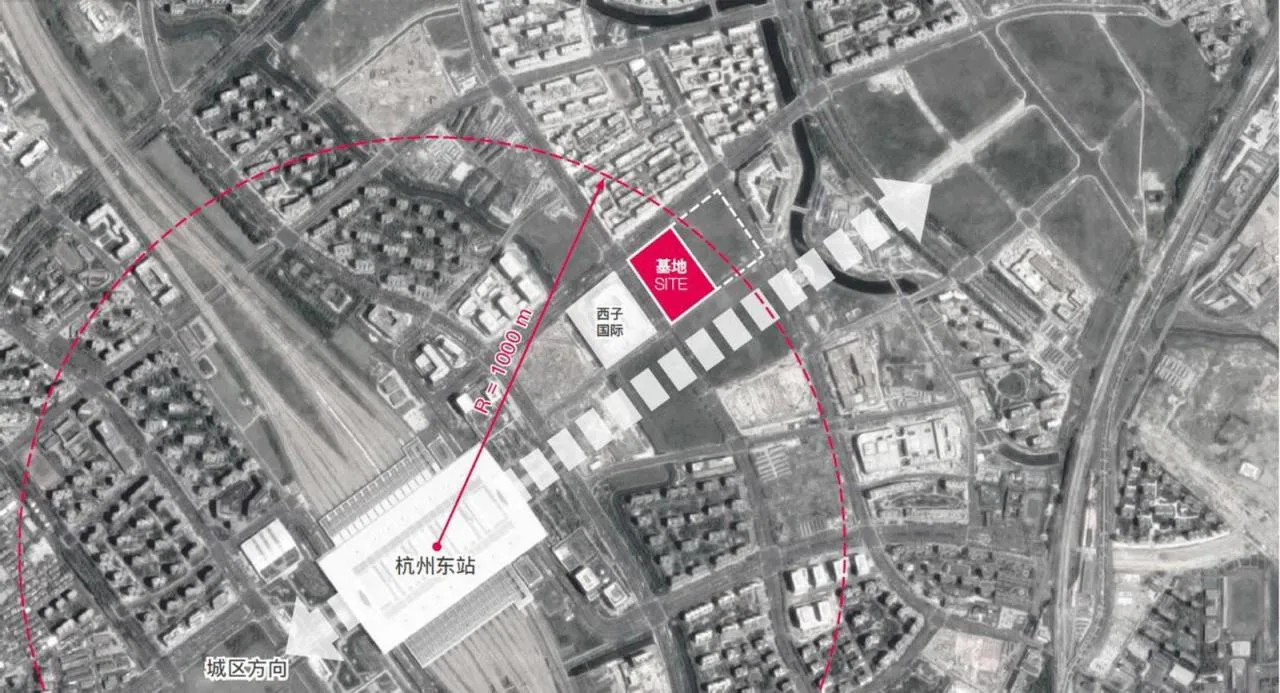
△ Location Analysis Map
Dongzhan Garden International covers approximately 24,000 square meters of land and offers a total built area of around 137,000 square meters. The complex comprises three garden-style office buildings, a star-rated hotel, and a pedestrian-friendly commercial district. This diverse mix of business formats fosters a synergistic ecosystem where commerce, business, and business travel complement and enhance one another.
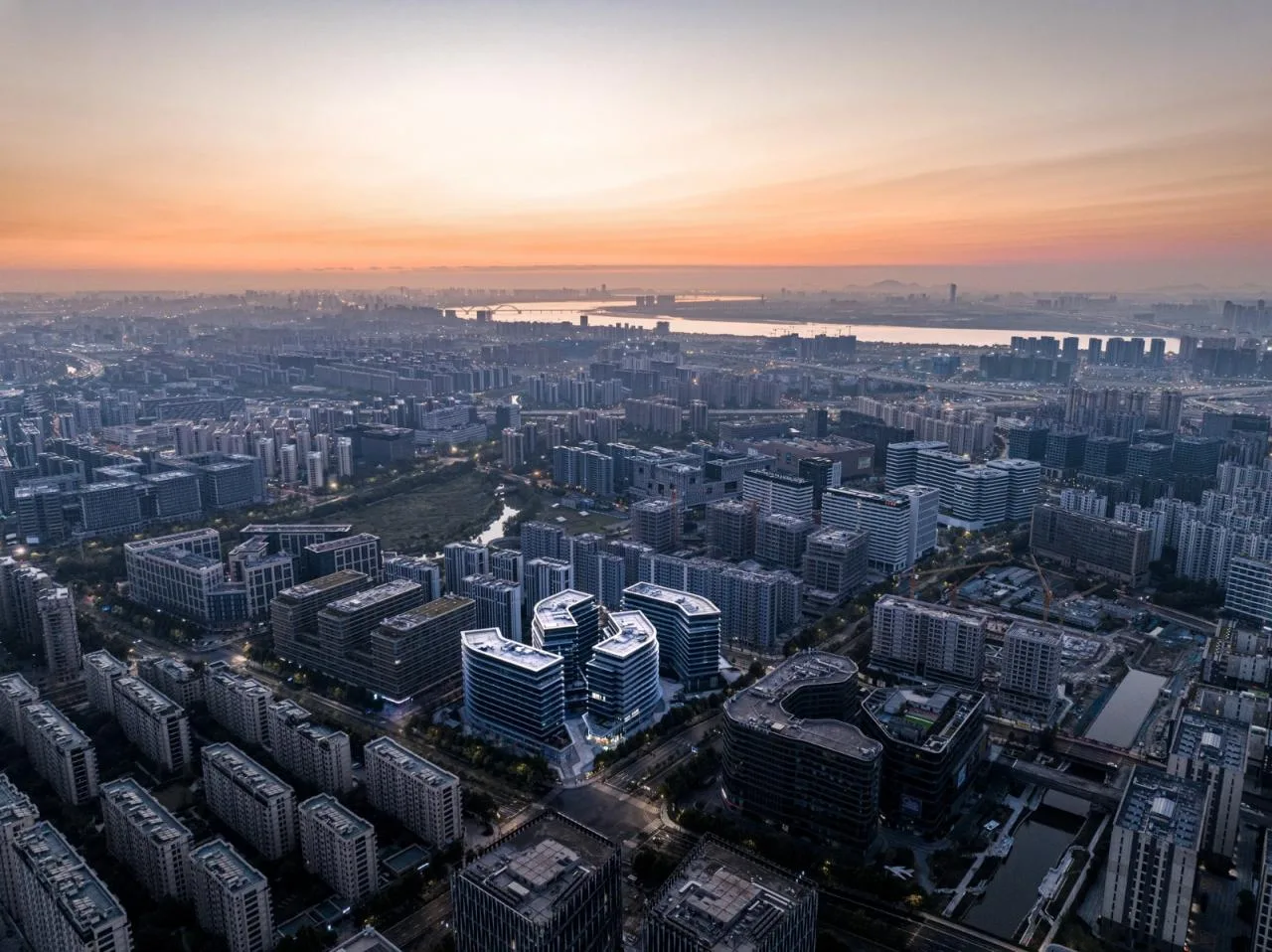
Garden International at Sunset
02 / The Site’s Extreme Challenges
The project site is highly constrained. The plan limits building heights to 50 meters with a floor area ratio (FAR) of 3.5. Assuming a 12-floor building, the density must be at least 40%. Additionally, a residential area lies less than 50 meters northeast of the site, requiring the new office buildings to accommodate sunlight access for these residences. These factors significantly restrict the available space for building layout.
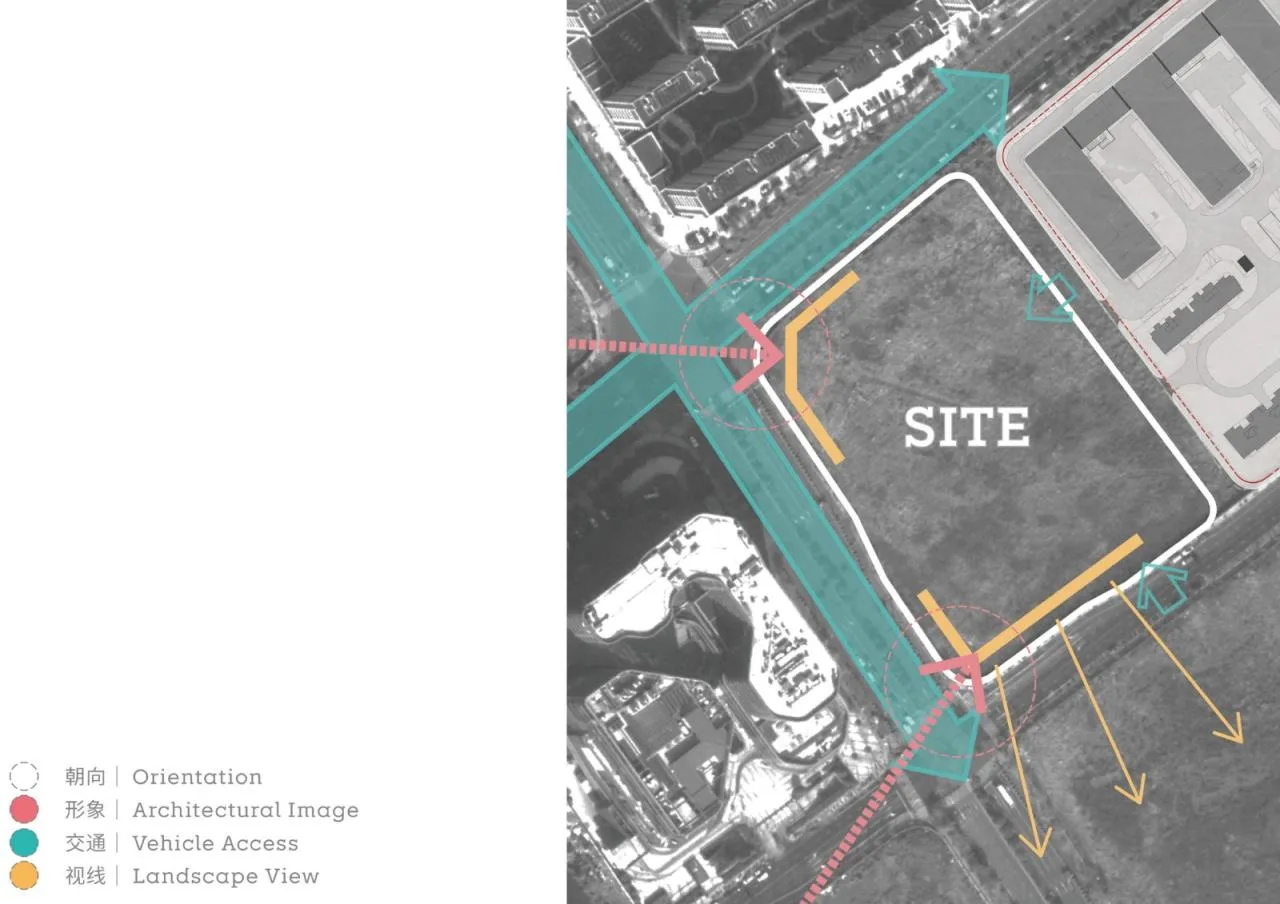
△ Site Analysis Diagram
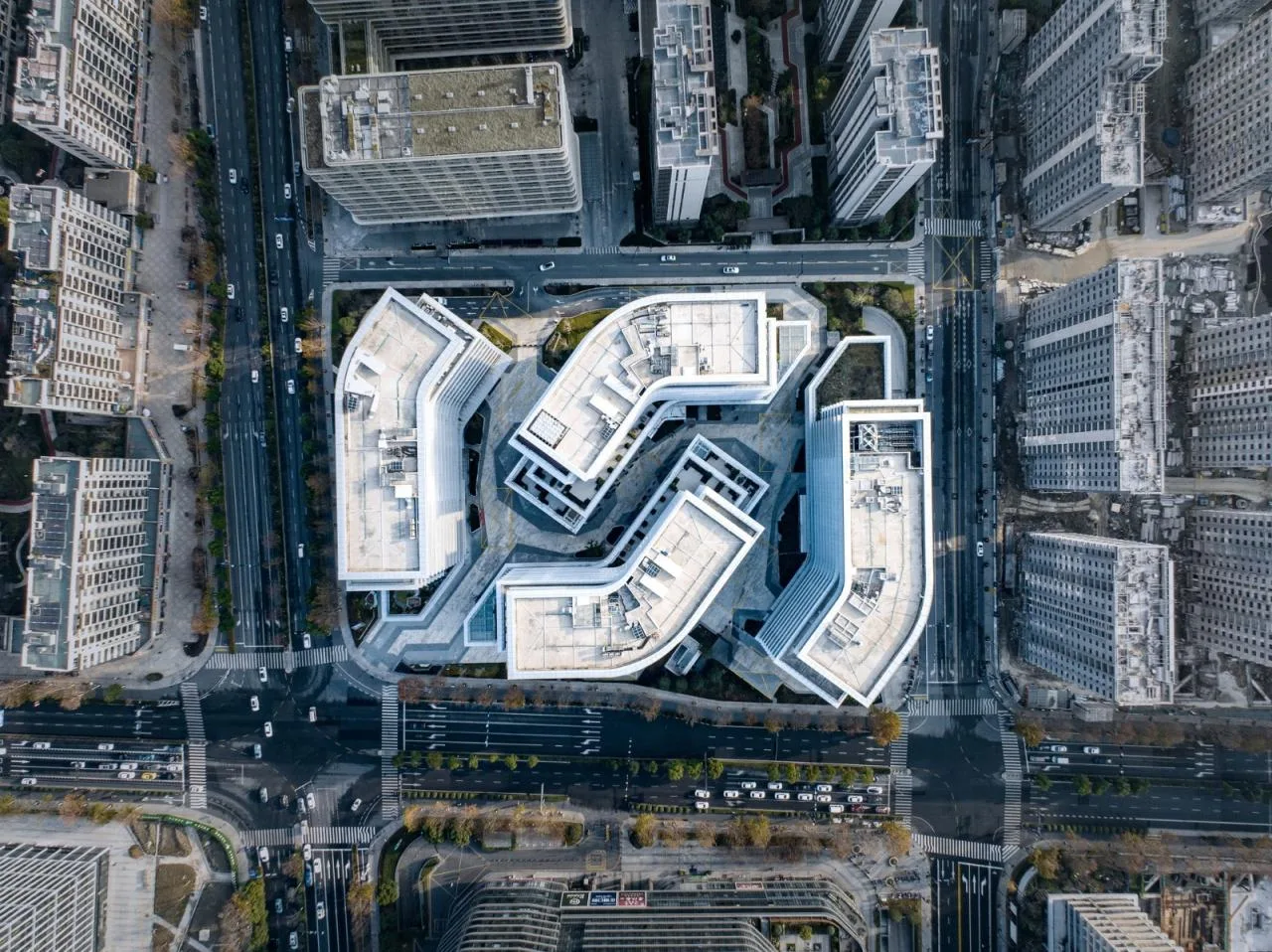
△ Aerial View of the Site
Beyond the site constraints, there is a strong demand for an iconic and image-defining presence aligned with the project’s prime location. The southern boundary faces the main sightline of Hangzhou East Station, while the northern edge borders Tiancheng Road, a primary route leading directly to the station. The northwest and southwest facades serve as key urban landmarks, shaping the skyline around Hangzhou East Station.
Architects face the challenge of creating a comfortable, pleasant spatial experience within these tight parameters, while respecting the urban interface’s integrity and fulfilling landmark expectations.
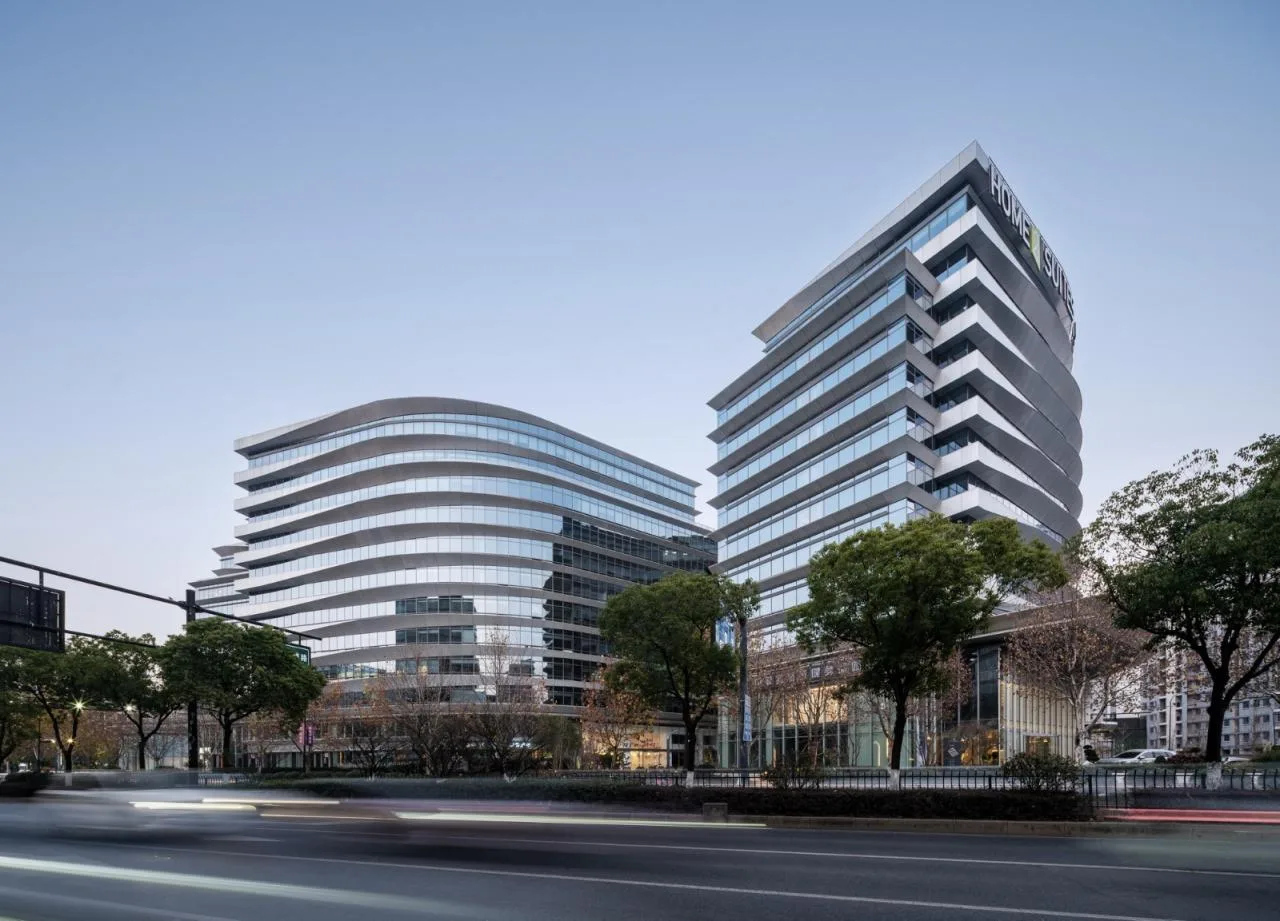
△ Garden International Street Corner
03 / The ‘Twist’ That Follows the Trend
The site is rotated 37° off the north-south axis, which initially seems challenging but ultimately inspired the architectural solution. The design aligns building volumes along urban roads to meet functional needs, ensuring adequate building capacity and good urban alignment. Then, the architect cleverly “twisted” the rectangular buildings arranged diagonally into bent shapes. These four bent lines form a “windmill-like” configuration that is enclosed yet open.
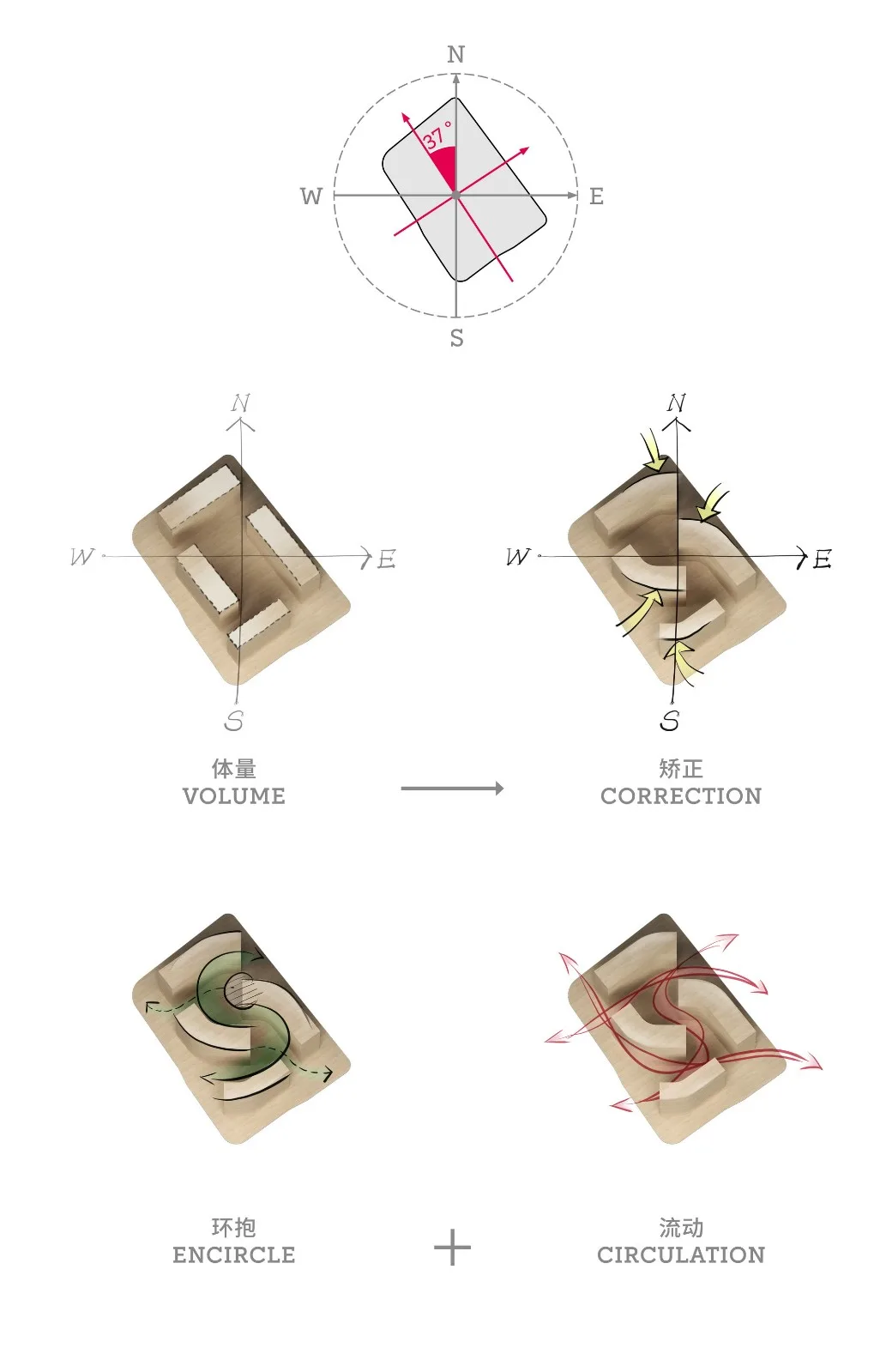
△ Shape Generation Analysis
This innovative layout meets all requirements for plot ratio, sunlight access on the northeast side, and boundary setbacks, while expressing a distinct personality that respects the urban interface’s integrity. The twisted buildings interact and stand independently, creating intricate, dynamic internal spaces that offer a unique experience akin to a “natural canyon.”
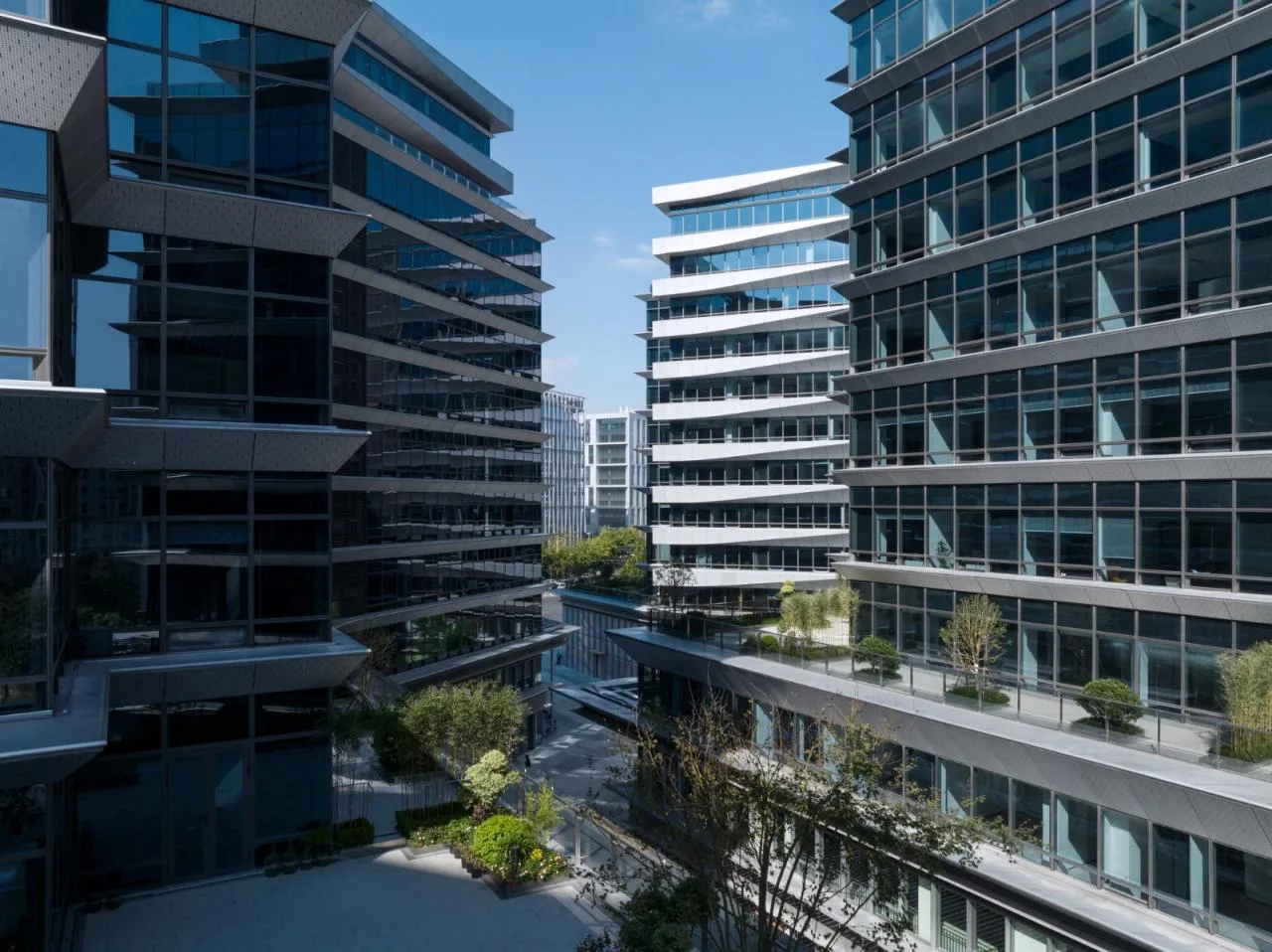
△ “Canyon” Landscape
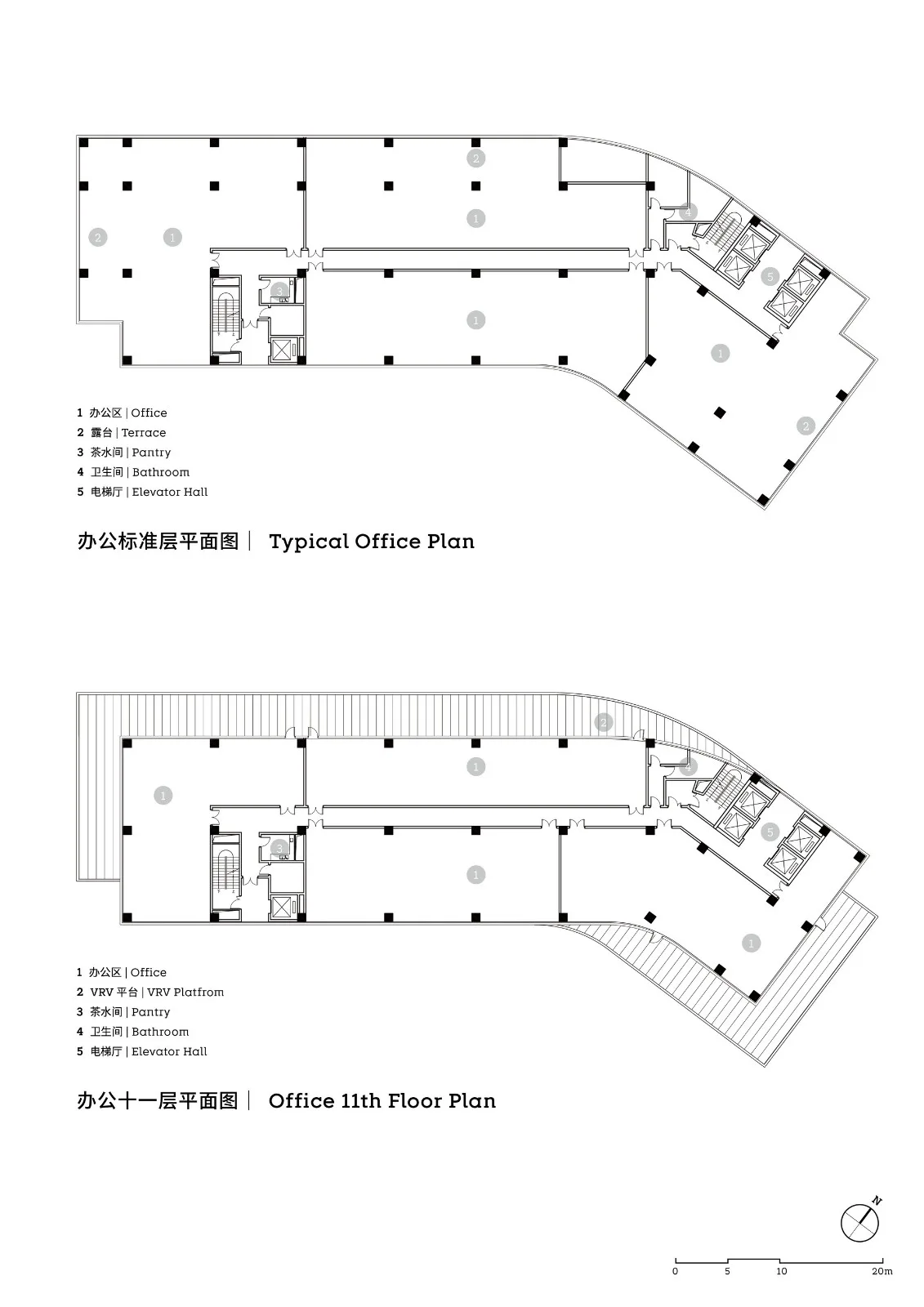
To minimize visual impact, the core structure was positioned in a less prominent corner where building spacing is tightest. To enhance spatial layering within the “canyon,” terraces were added on the 3rd and 11th floors, featuring greenery and offering relaxing outdoor spaces for office workers.
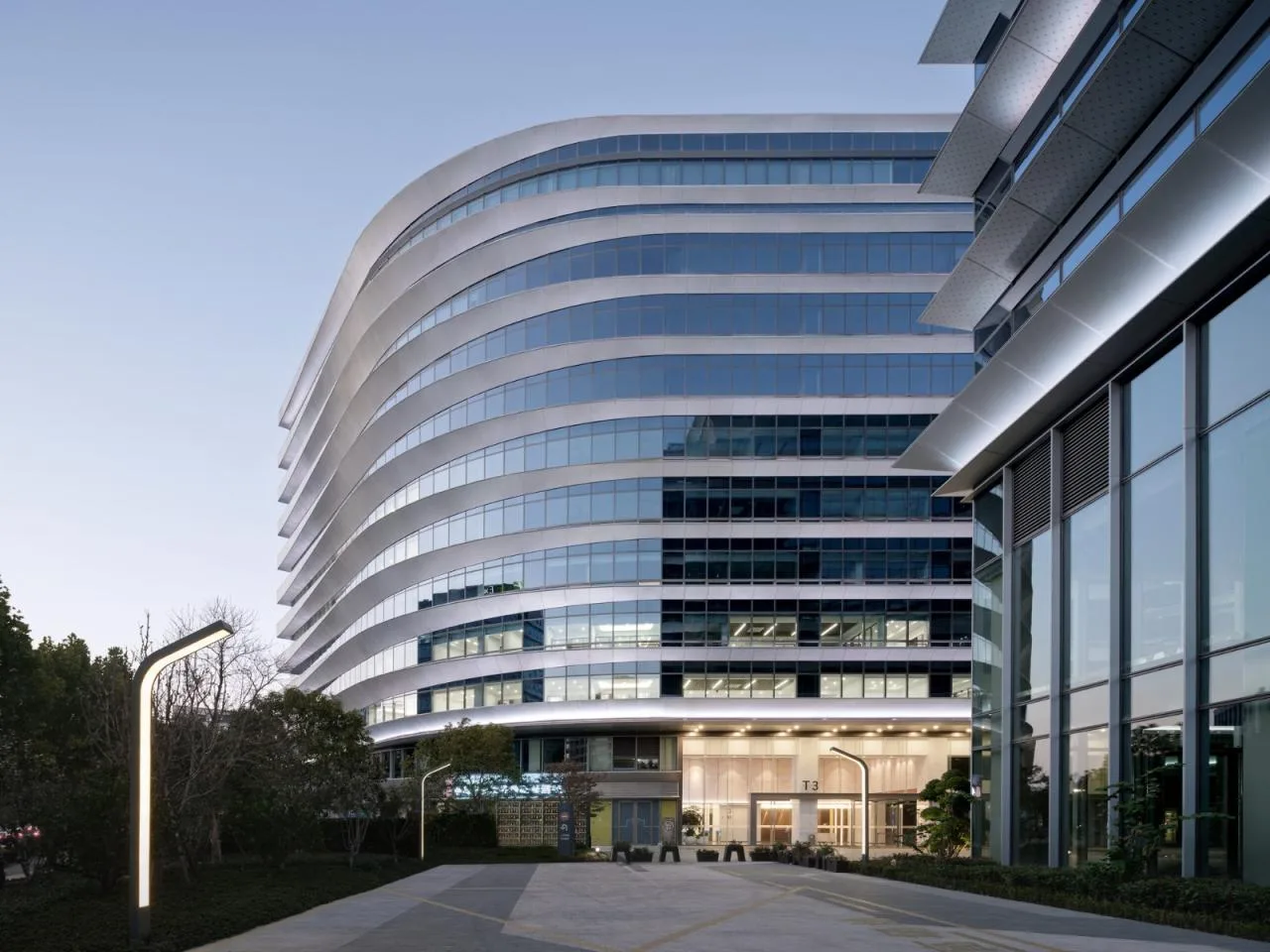
△ Ground-level Park Space
The twisted building layout creates appropriately sized small plazas around the site. Its striking curved facades present an open and inviting posture, attracting visitors from surrounding city streets to enter, shop, or simply stroll.
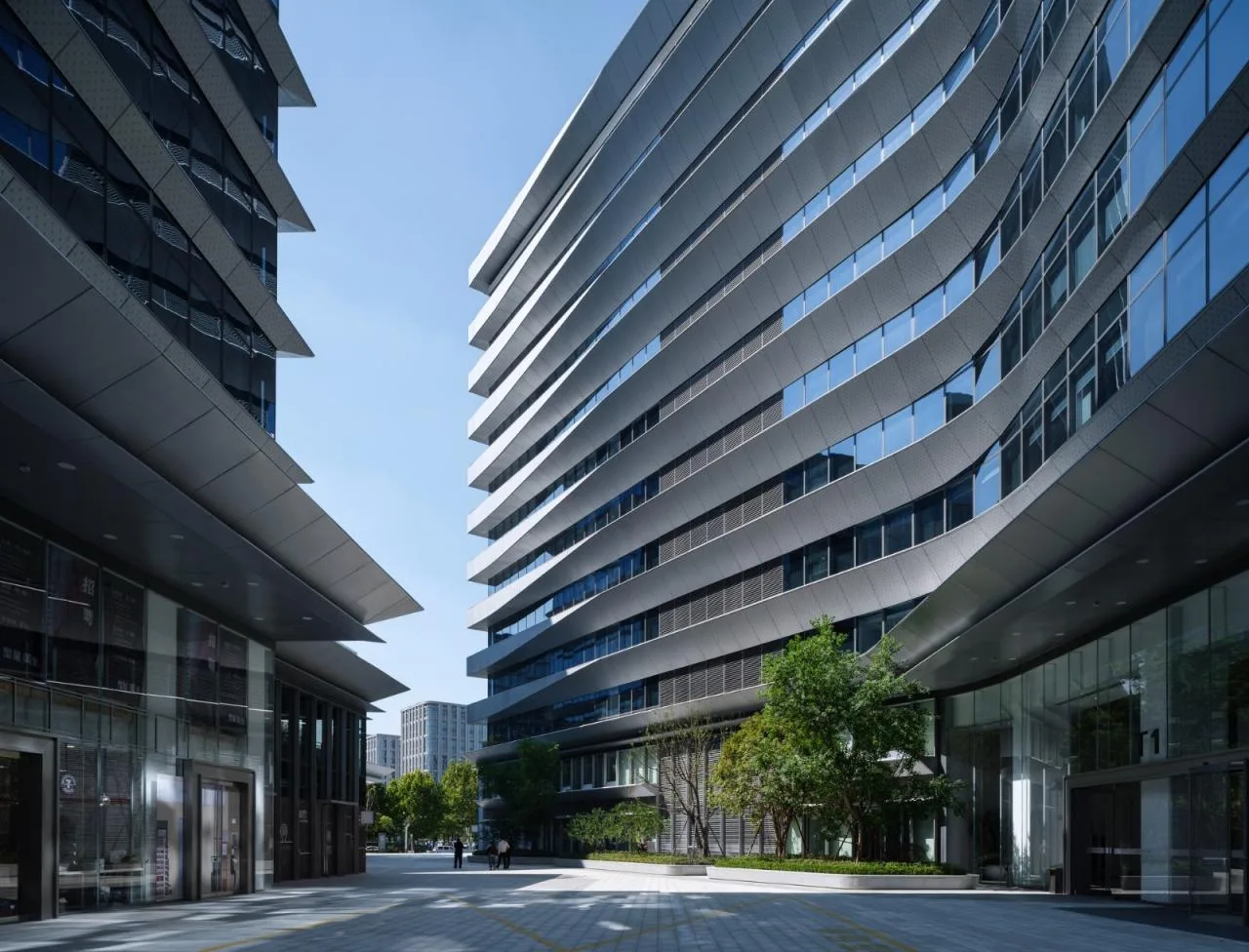
△ Internal Pedestrian View
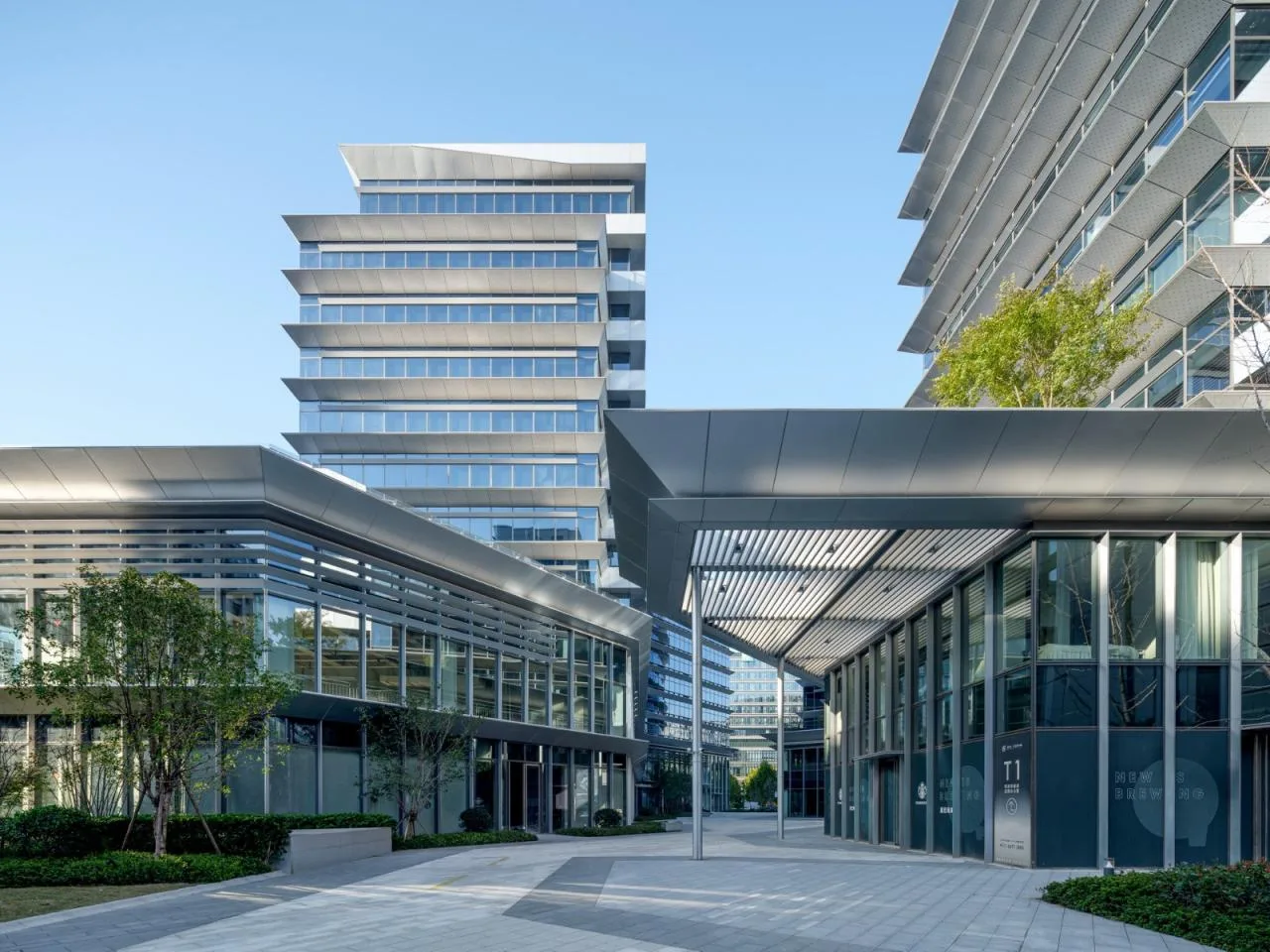
△ Office Building Entrance
04 / Simple Yet Rich
Local regulations prohibit glass curtain walls on building facades facing residential areas within a 100-meter radius. Considering cost and other constraints, the facade design adopts a “window wall system.”
△ Building Facade
The facade successfully merges form and function. Responding to the curved volumes and the need to conceal window openings, the architect employed horizontal aluminum panels as the primary facade element. To address differing sun exposure—minimizing west-facing sunlight and maximizing south-facing light—the panels were given a three-dimensional twisted profile.
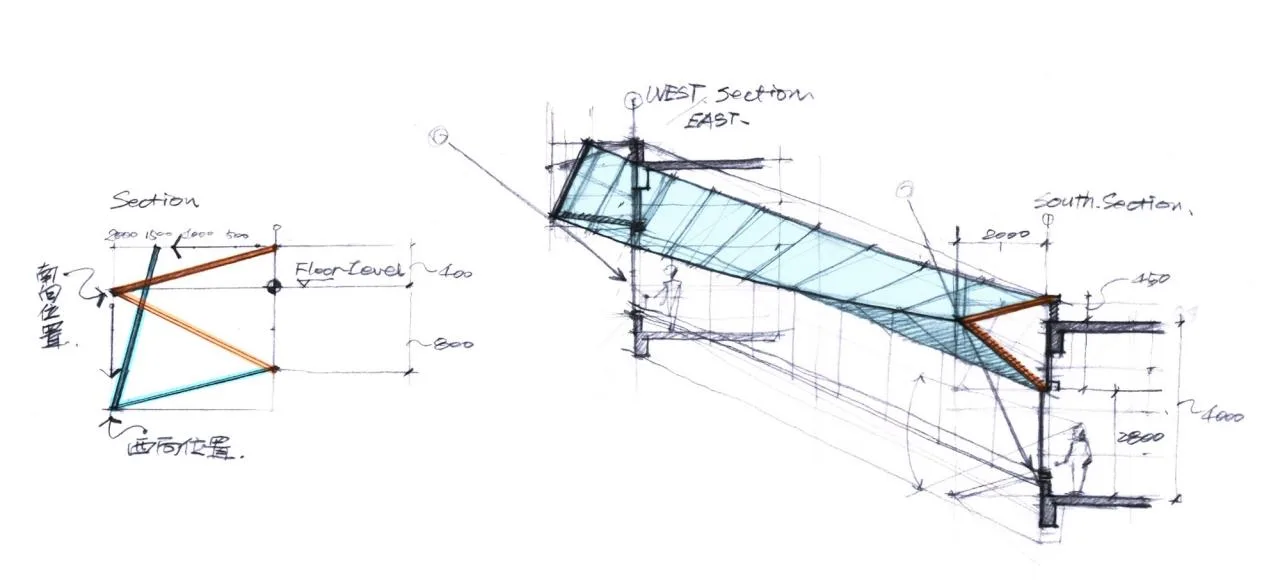
Concept Sketch of Aluminum Panels
The trapezoidal cross-section panels, 1.5 meters high on the east and west sides, gradually twist into a triangular cross-section 0.5 meters high on the south side. This creates the impression of a horizontal ridge culminating in a peak on the side.
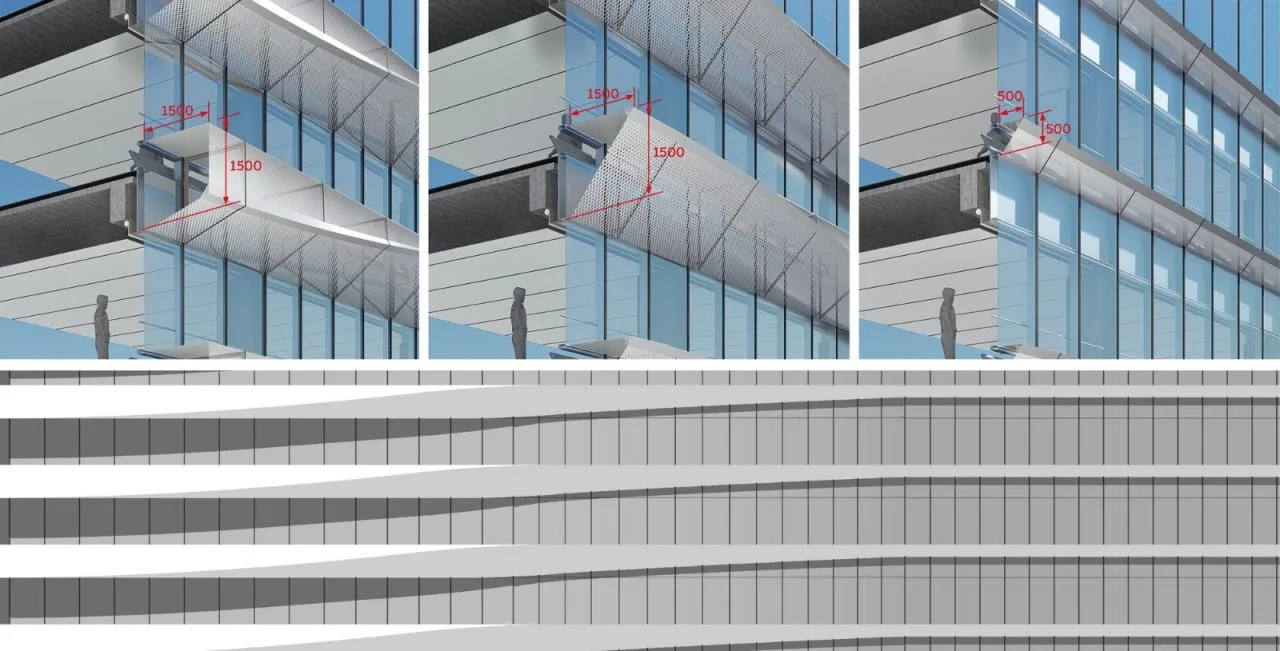
△ Facade Hierarchy
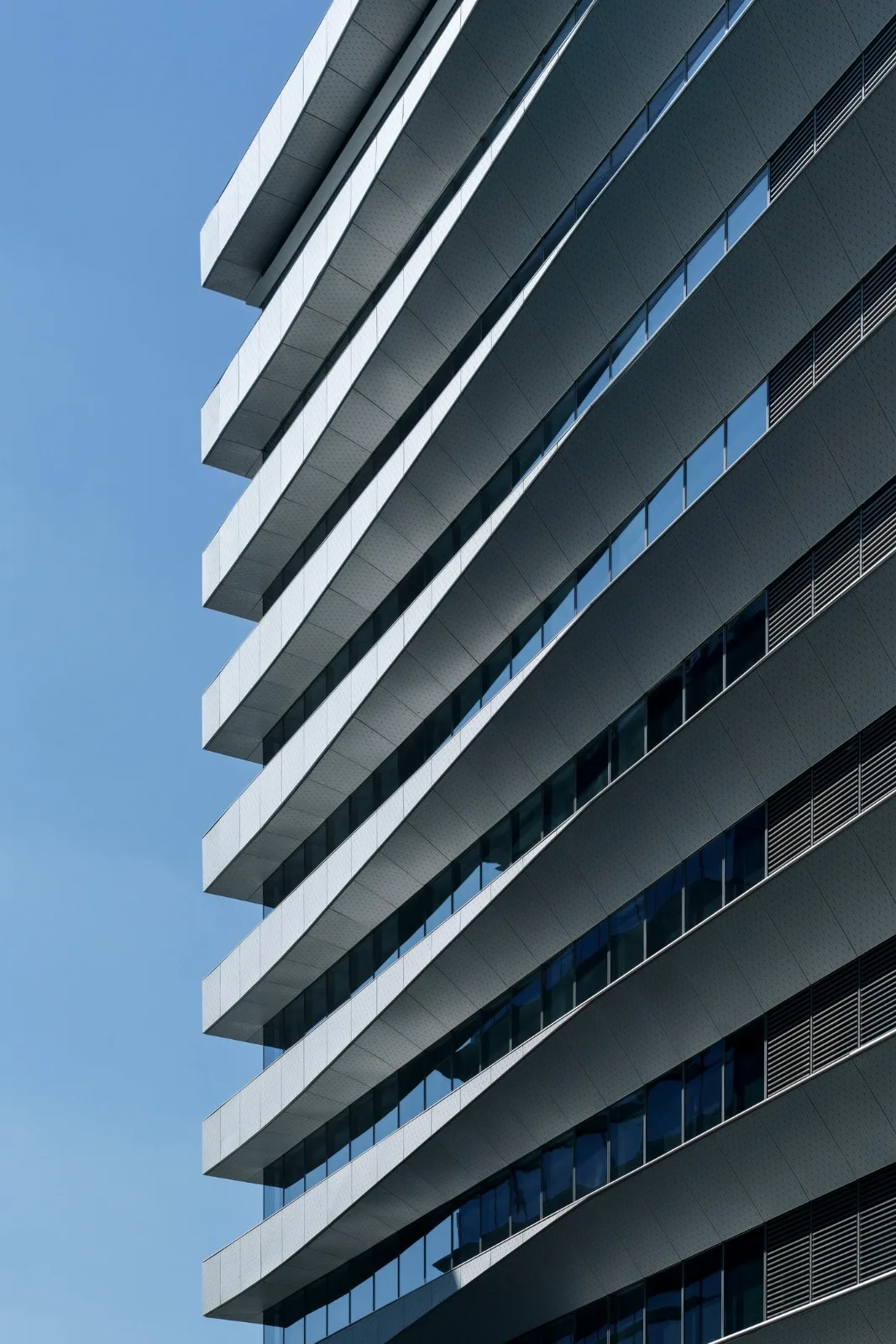
△ Facade Details
The overall facade is clean, elegant, and rich in variation. From the city streets, all window openings are concealed behind shading panels, allowing the cost-effective window wall system to achieve a quality comparable to curtain wall systems.
05 / Materials and Detailing
The project uses silver-white perforated aluminum panels coated with fluorocarbon paint. The gradient edges of the panels feature meticulously crafted interlocking joints, resembling mortise and tenon connections, ensuring a refined and high-quality appearance. The glass is darker, with approximately 42% transmittance and 13% reflectivity. Against this dark glass backdrop, the elegance and lightness of the aluminum panels stand out, while their reflective surfaces locally brighten the glass color, enhancing visual layering. The architect spent nearly a year developing samples to guarantee delicate and elegant color perception from various angles.
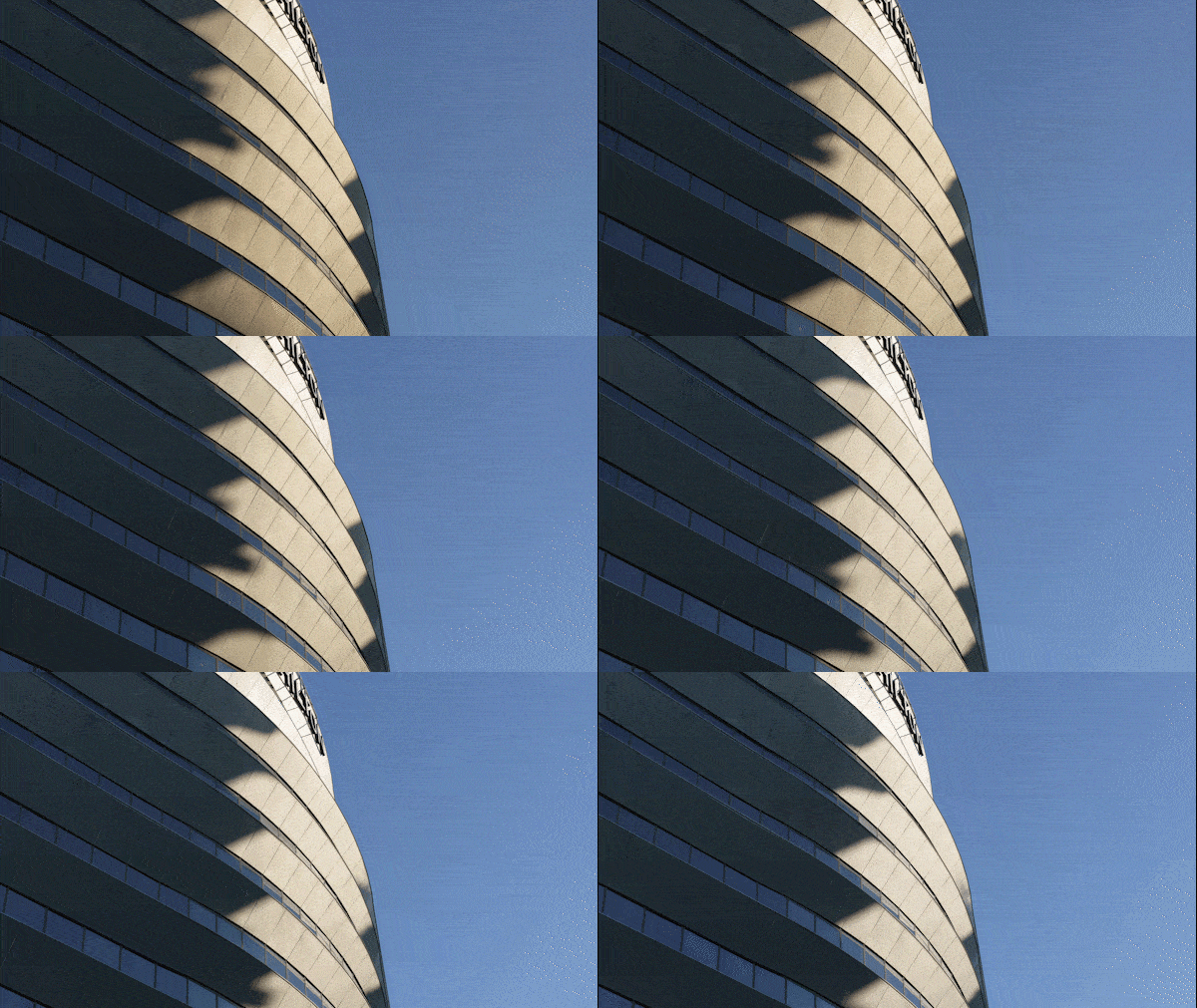
△ Detailed Light and Shadow Variations
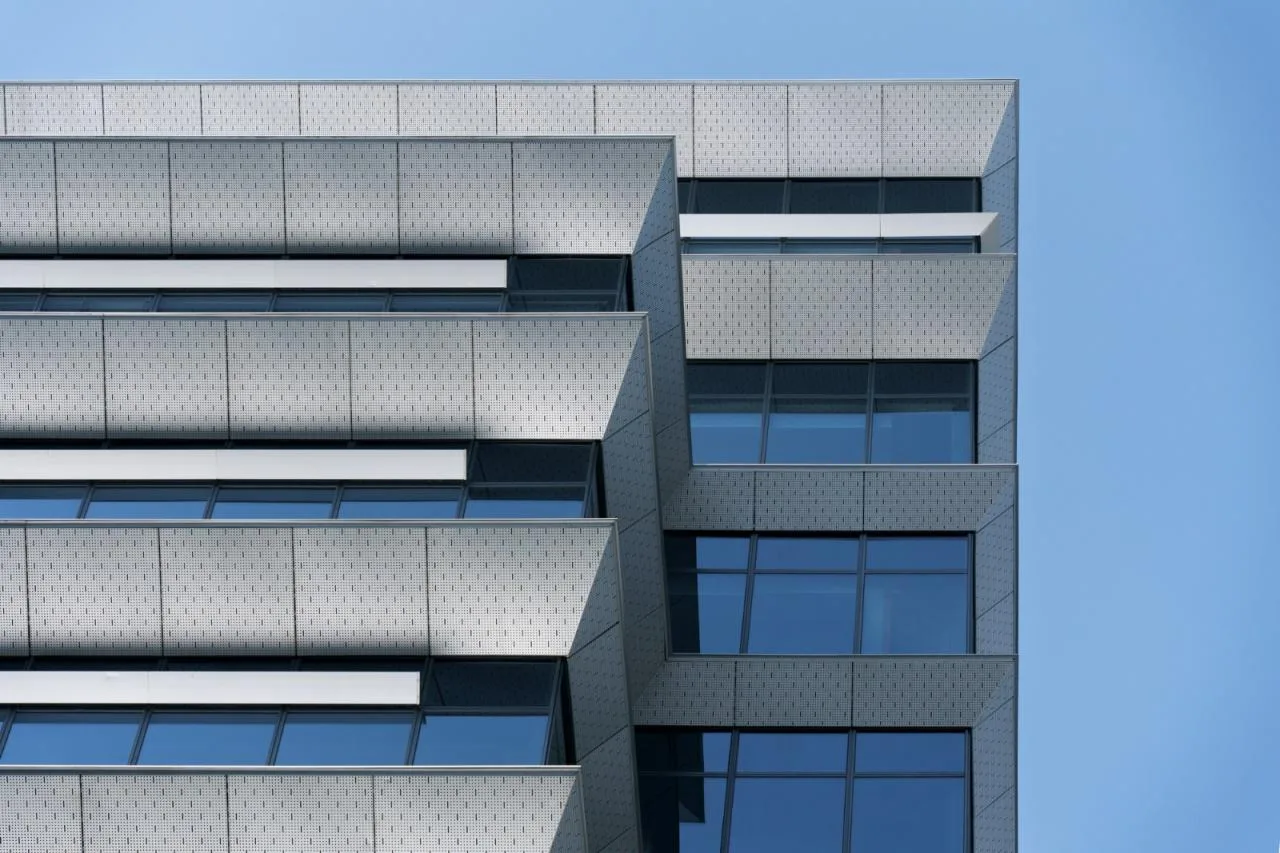
△ Aluminum Panel Details
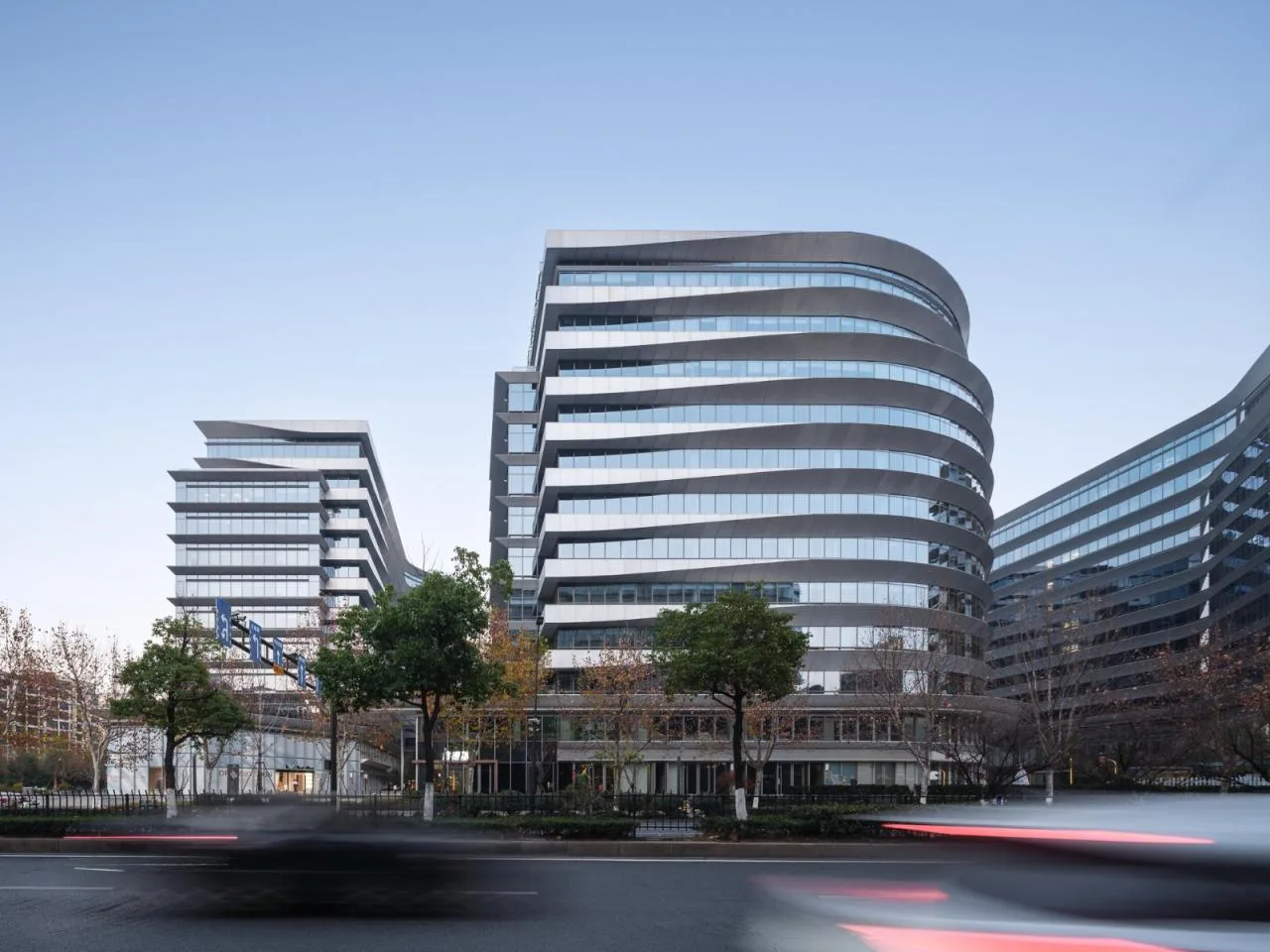
△ Street Facade
Conclusion
Leveraging the immense foot traffic and hidden commercial potential around Hangzhou East Station, East Station Garden International aims to create an open, urban park-like environment. The architects developed a series of innovative, site-specific strategies that balance economic viability with landmark appeal, offering a fresh model for similar projects.
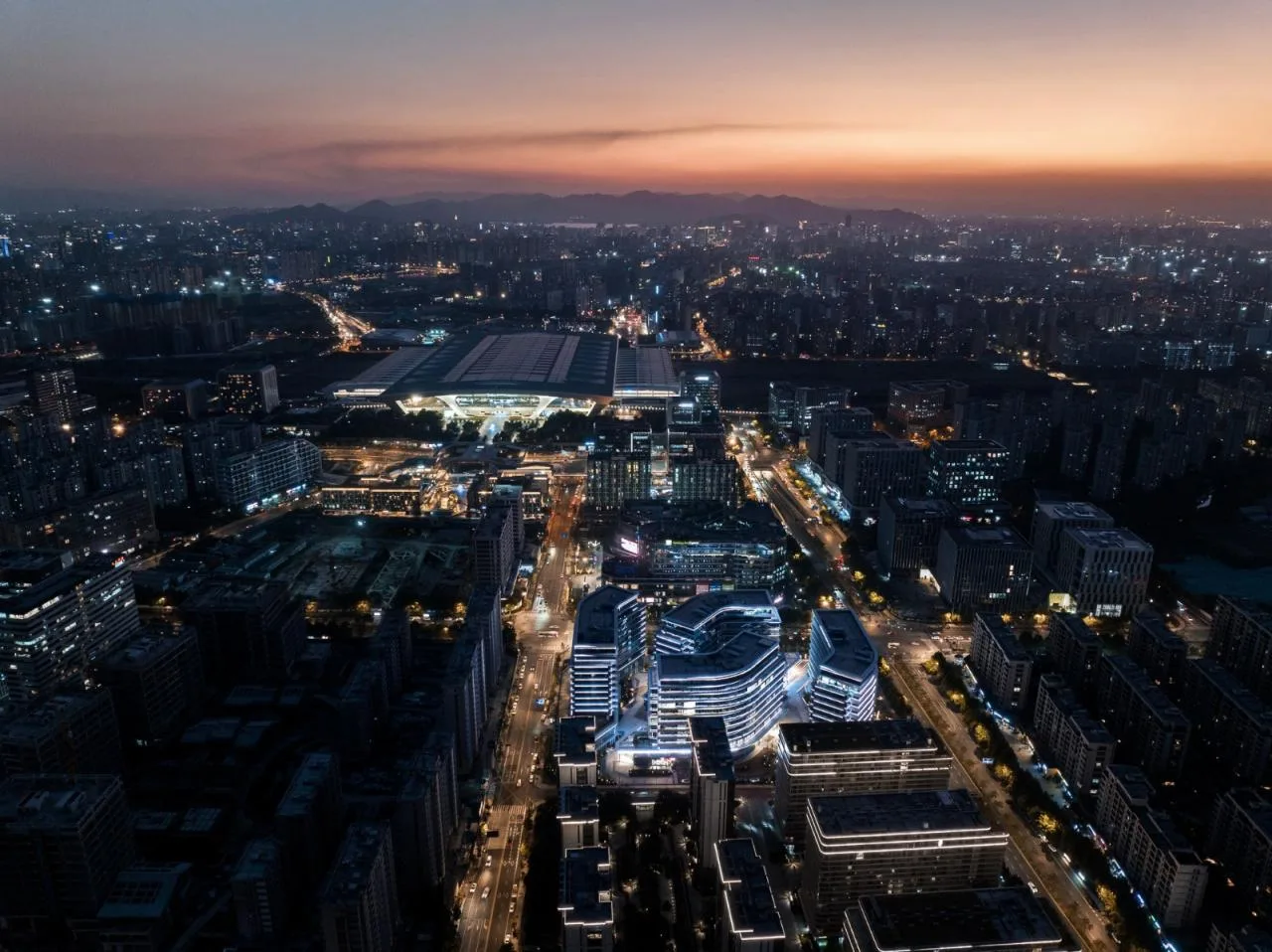
△ Nighttime Aerial View
Project Drawings
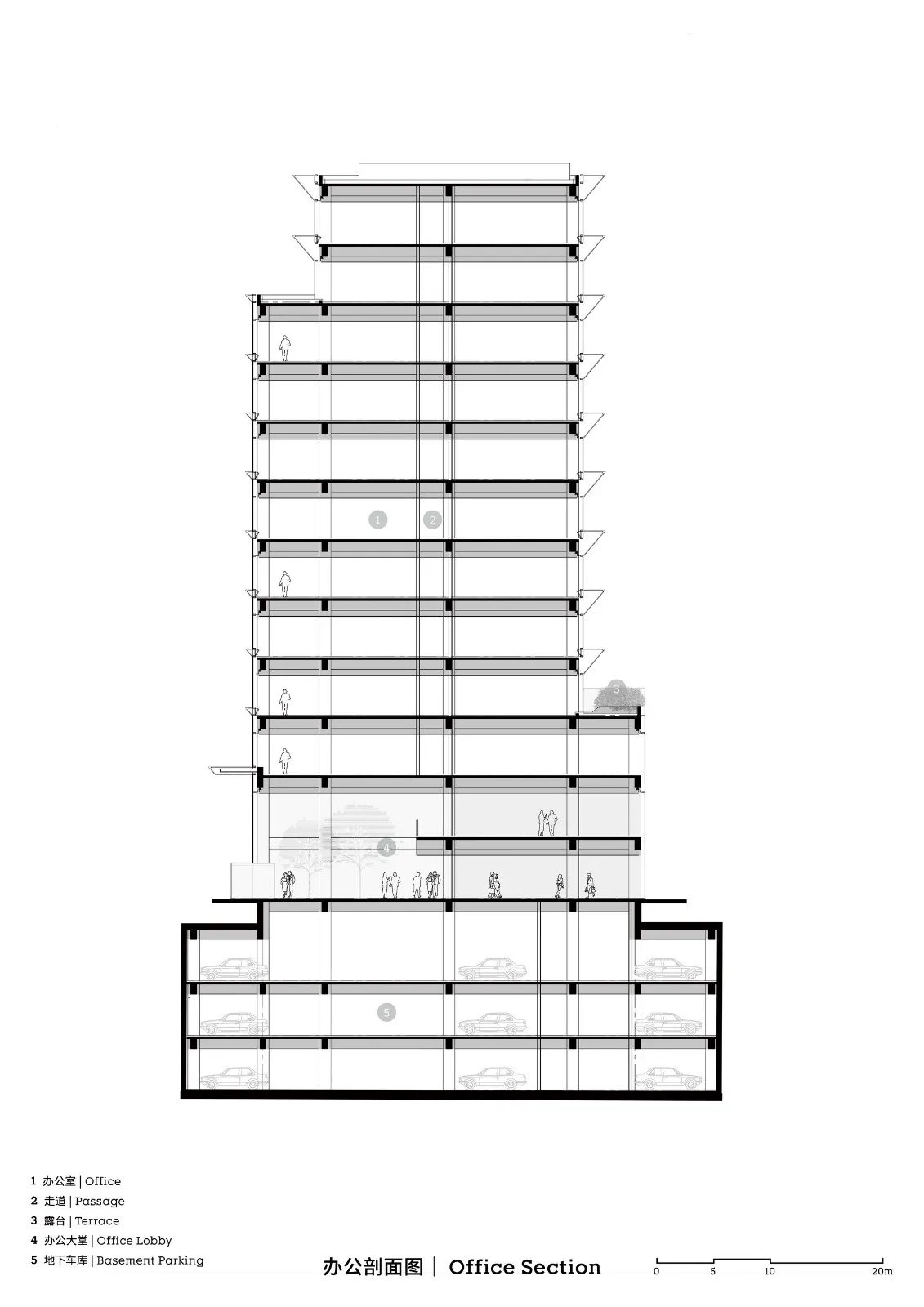
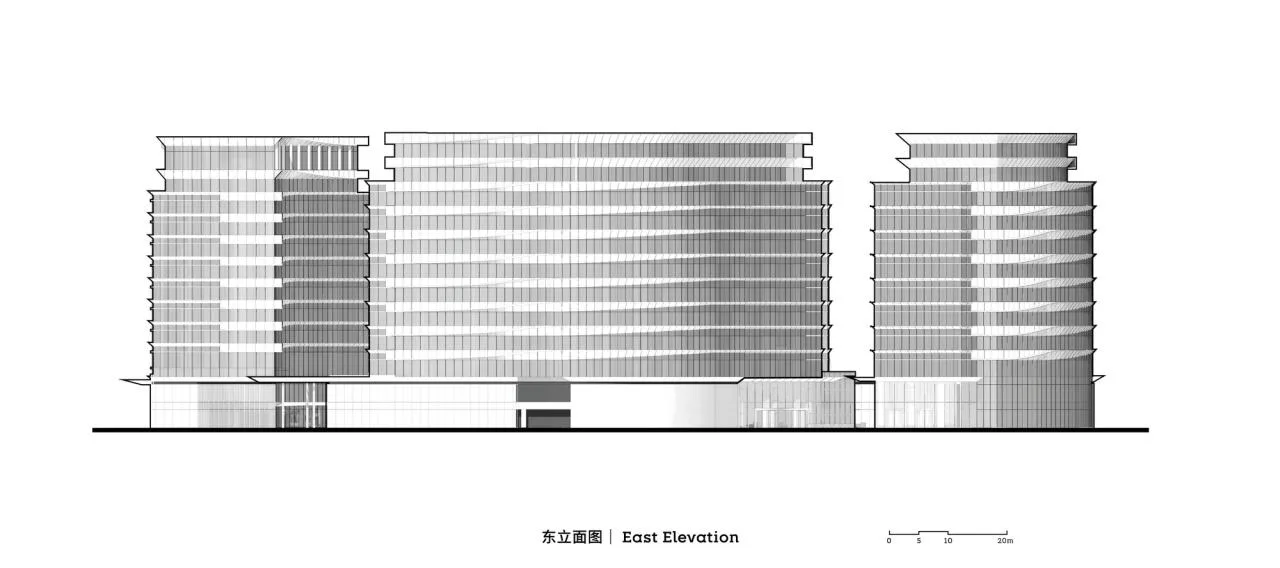
Project Information
Project Name: Hangzhou East Station Garden International
Location: Hangzhou, Zhejiang Province
Owner: Hangzhou Garden Co., Ltd. Economic Cooperative
Architectural Design: Goa Elephant Design
Design / Completion: 2017 / 2022
Total Construction Area: 138,500 square meters
Image Credits: RudyKu, Goa Elephant Design














Must log in before commenting!
Sign Up