
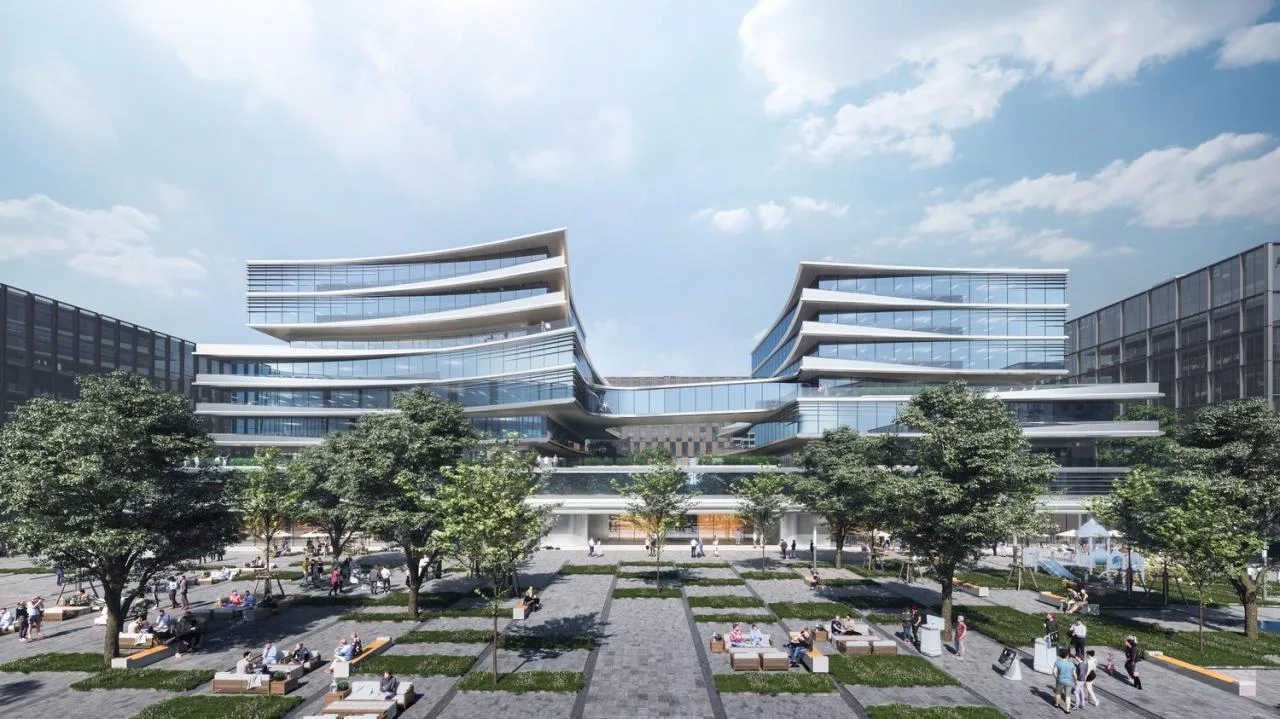
The capital of Lithuania, Vilnius, has approved a major commercial center project designed by Zaha Hadid Architects for the local developer Hanner. This development will seamlessly integrate with Vilnius’s urban planning and the adjacent popular public square, establishing itself as a new focal point for the community.
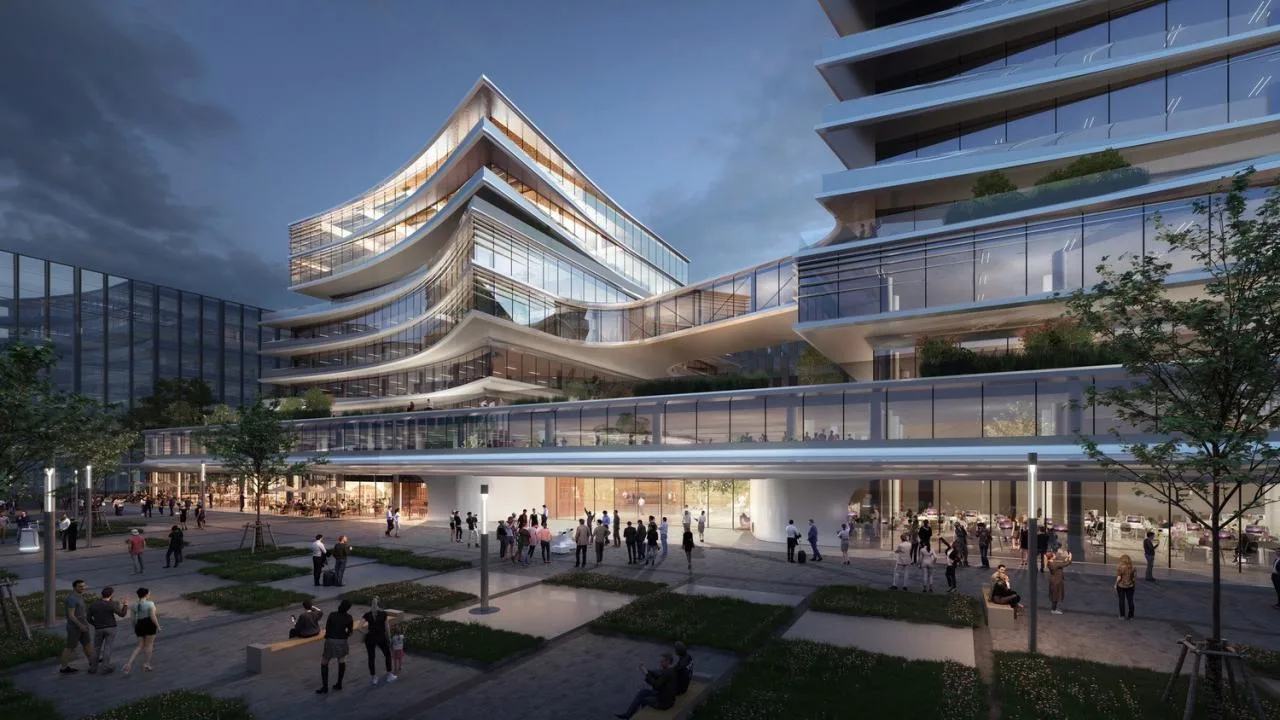
The commercial center features two low-rise towers, comprising 8 and 9 floors, with a total area of 24,000 square meters. These towers are connected at street level by a courtyard, share public facilities across two floors, and are linked by a “wedding bridge” on the fifth floor. The building’s curved facade and cantilevered balconies face the historic Gediminas Castle Tower in the city center, creating a visual dialogue with Vilnius’s heritage.
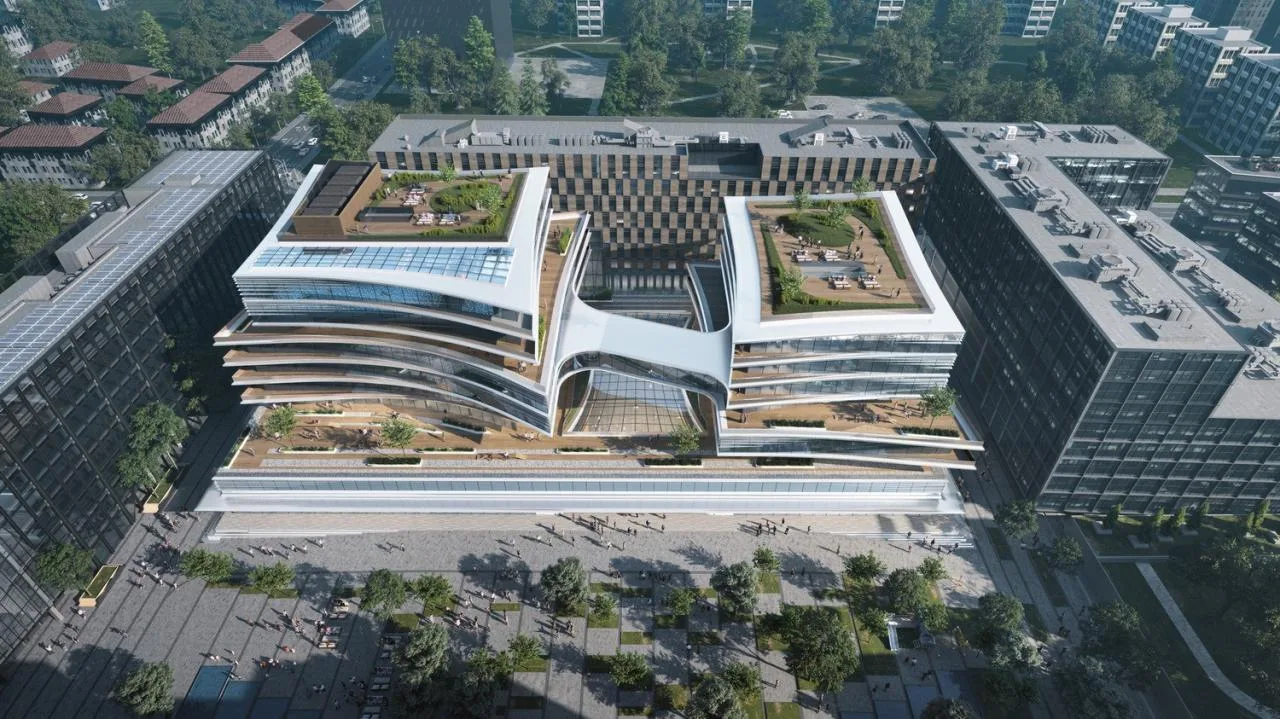
The design reinterprets the dynamic geometric forms characteristic of neighboring municipal buildings. It includes a landscape terrace, rooftop garden, and public square covering 11,750 square meters, directly connected to the public square designed by Martha Schwartz.
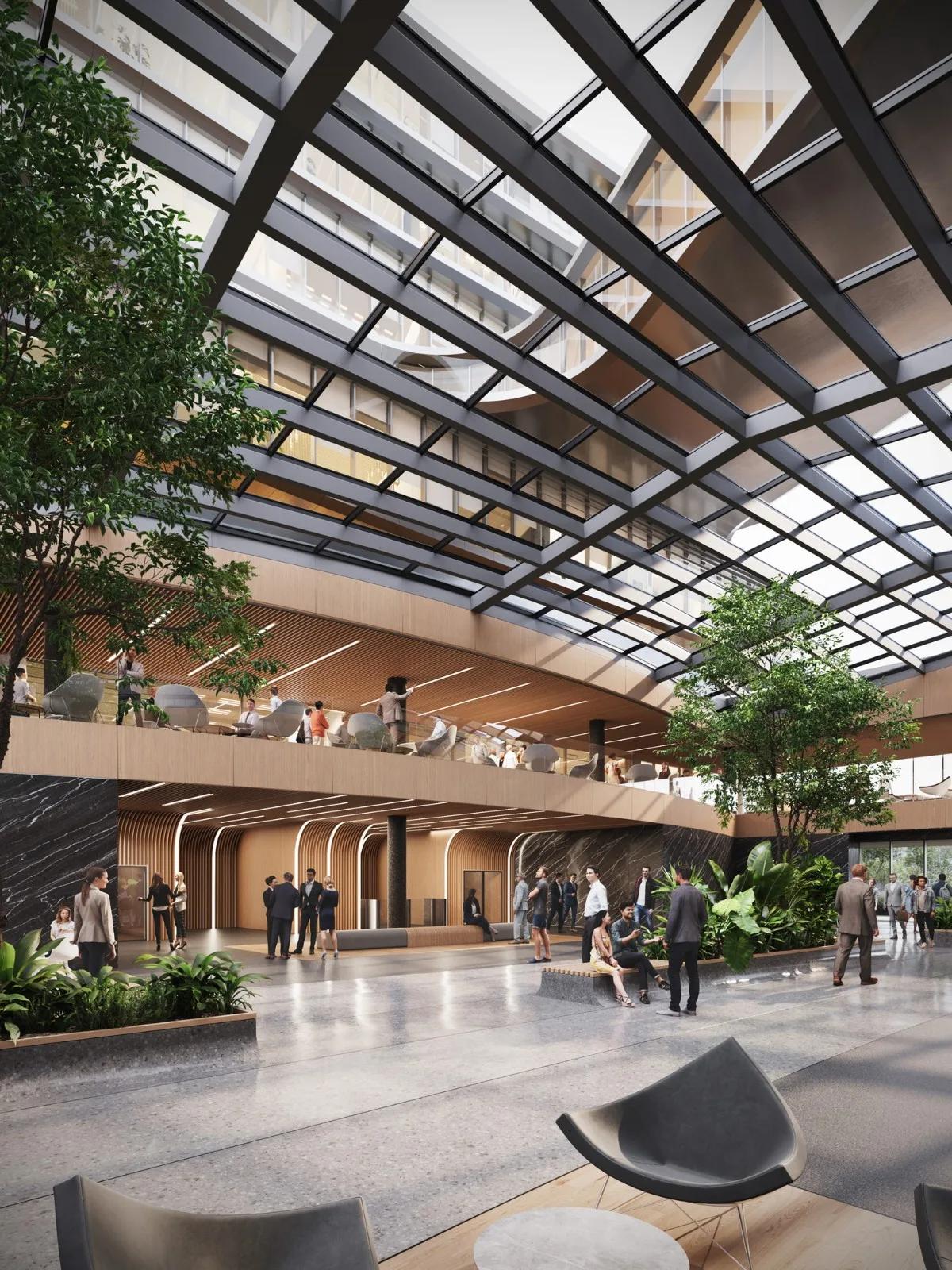
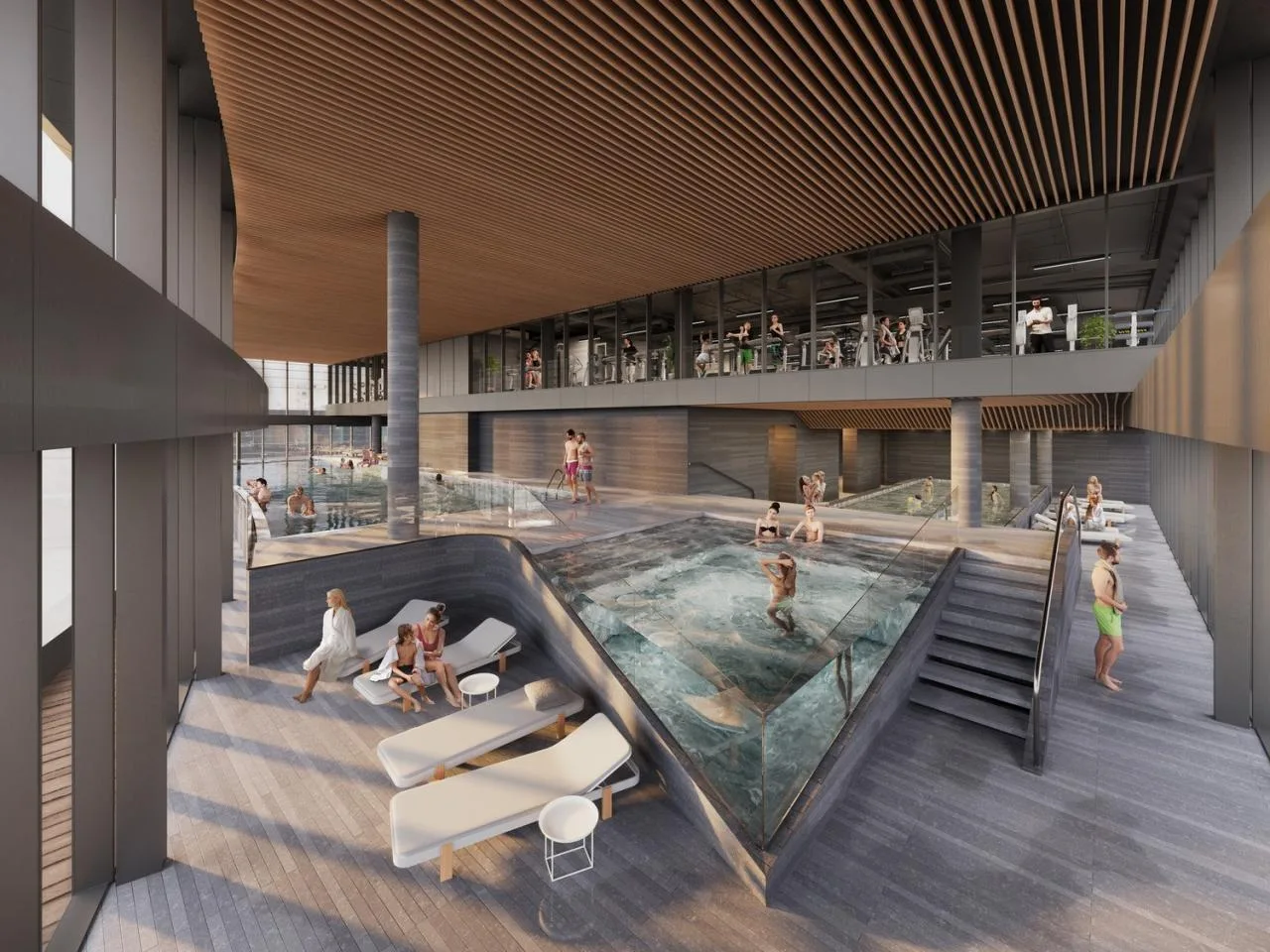
The central courtyard is flanked by cafes, restaurants, and shops, serving residents, office workers, and visitors alike. Elevators provide access to the top floor, which features two public swimming pools, a sauna, a steam room, and a sunbathing platform, all offering panoramic views of Vilnius’s historic old town.
Flexible office spaces occupy the central floors of each tower, designed for maximum adaptability. These spaces vary in size and layout to accommodate a diverse range of tenants—from startups to established international companies. Many offices connect to rooftop gardens and landscaped terraces, allowing users to enjoy the surrounding cityscape. The building’s glass facade is complemented by warm, wooden-tone external louvers that echo the interior finishes.
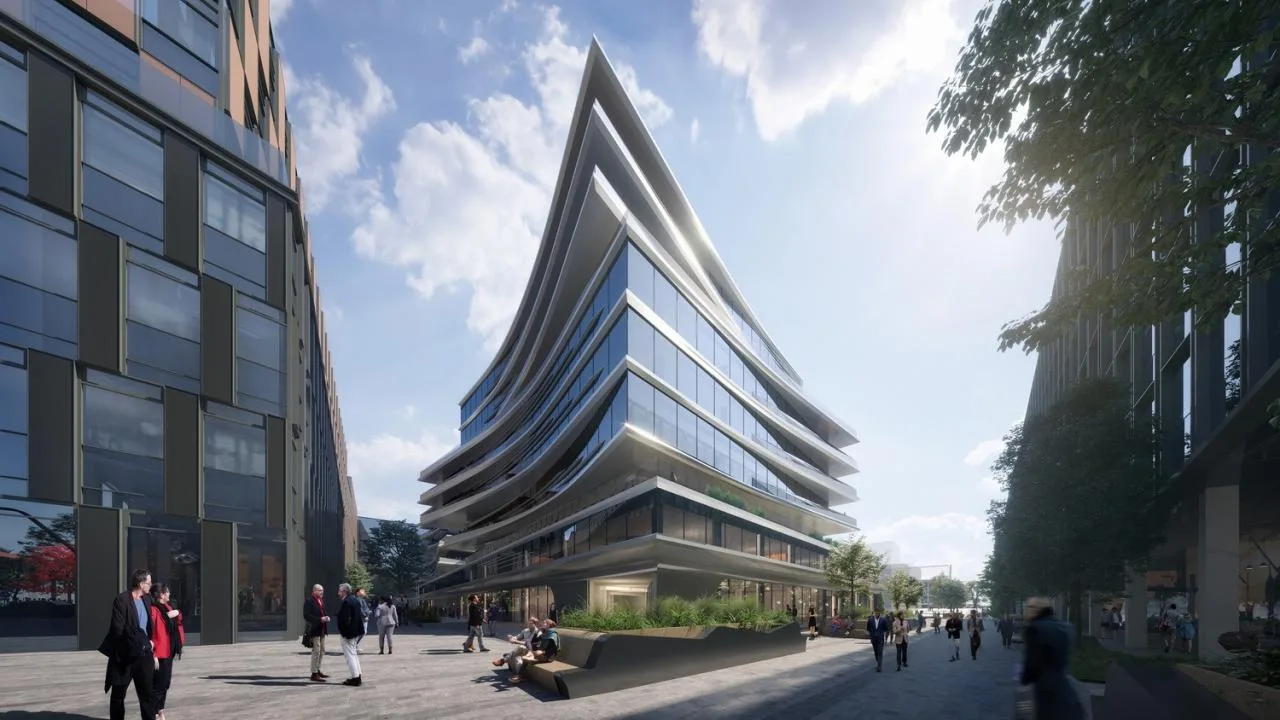
Taking into account Vilnius’s humid continental climate, the architect optimized the facade’s louvers and cantilevered balconies through an annual sunlight analysis. This strategy enhances solar heat gain during cold months while minimizing direct sunlight in the summer.
The external shading devices align with the lower solar altitude of about 38° from October to April and are perpendicular to the highest summer solar altitude of 151°. The project adopts a sustainable construction system to reduce embodied carbon during construction and decrease energy consumption during operation.
Digital design optimization minimizes material usage and aligns with a procurement system that increases recycled content. Interior wood finishes are sourced from certified local suppliers, supporting a shortened delivery chain. All materials have been evaluated for disassembly and reuse at the building’s end of life.
Natural mixed ventilation combined with an efficient heat exchange and recovery system reduces energy demand for most of the year. Double-layer insulated low-emissivity glass provides excellent natural performance in public and office spaces.
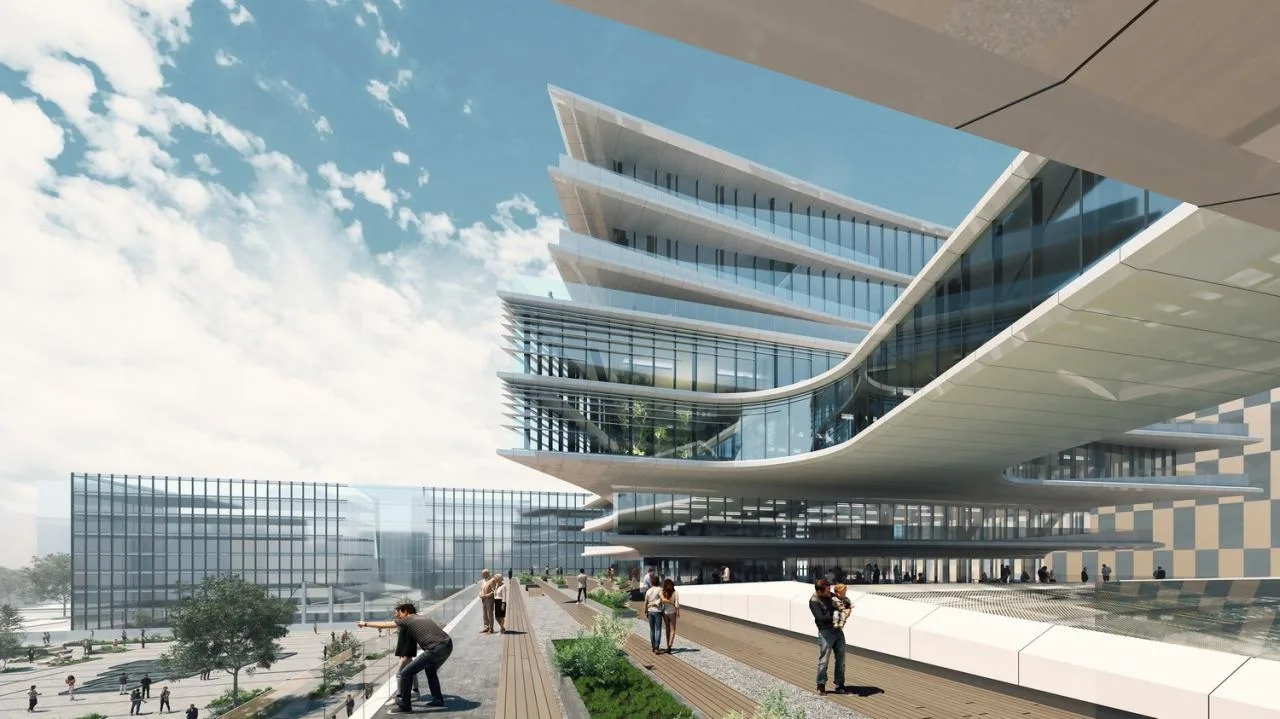
The digital optimization process not only reduces material requirements but also enhances the project’s recyclability when combined with the procurement strategy. Interior wood materials come from locally certified sources, integrated into a supply chain designed to minimize transportation distances. All materials have been carefully selected to allow dismantling and reuse at the building’s end of service. — ZHA
Meanwhile, Zaha Hadid Architects is also working on the reconstruction of the Lithuanian railway station complex and its surrounding area in Vilnius. Their proposal, titled “Green Connection,” won first place in an international design competition, aligning with the city’s sustainable development goals.
Project Information
Owner: Hanner
Architectural Design: Zaha Hadid Architects (ZHA)
Architectural Design Lead: Patrik Schumacher
ZHA Project Managers: Gianluca Racana, Ludovico Lombardi
ZHA Project Assistant: Michele Salvi
ZHA Project Team: Alessandra Laiso, Giovanni Basile, Ivo Ambrosi, Szu An Yao
ZHA Competition Stage Project Managers: Gianluca Racana, Ludovico Lombardi
ZHA Competition Stage Project Assistant: Davide del Giudice
ZHA Competition Stage Project Leaders: Alexandra Fisher, Jose Eduardo Navarrete Deza
ZHA Competition Stage Project Team: Maria Laging, Lara Zakhem
Consultants:
Local Architectural Firm: Unitectus
Structural Engineer: Ribinis b ū vis
Facade Engineer: Staticus
MEP Engineer: Eva Danovska
Fire Engineer: GSCentras













Must log in before commenting!
Sign Up