
MOOI ARCHIVE is situated in the Nanjing New City Industrial Park, formerly the Nanjing Second Machine Tool Factory. This historic star factory enterprise in Jinling has now been transformed into a cutting-edge industrial park that leads innovative development. The design team preserved the original spatial framework of the factory building while creating a unique dining bar concept that blurs boundaries. With an open and novel spatial approach, the design merges the industrial character of the historic building with a community-oriented commercial space tailored for modern living.
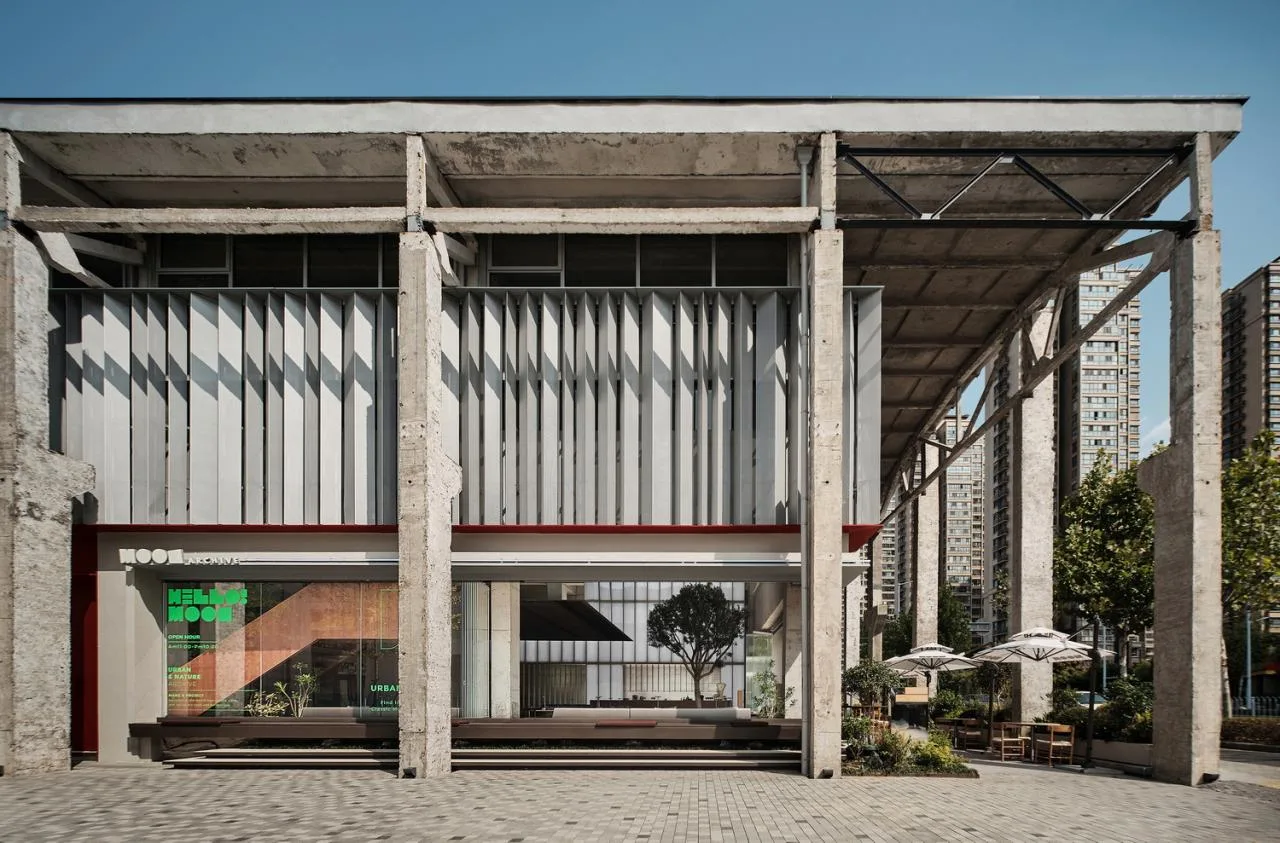
△ Overview of the Space
Taking advantage of its prime location near the street and adjacent to the community, the design team embraced the principles of “disappearance” and “integration” as their guiding logic. The brand name “MOOI,” meaning “beautiful” in Dutch, further embodies this concept. Following the design philosophy of “less is more,” the team prioritized functionality while eliminating spatial boundaries. Outdoor landscapes are seamlessly extended indoors, integrating the space with street life and creating the sensation of dining in a park. This approach offers visitors a rare, intimate encounter with nature through a variety of spatial landscapes.
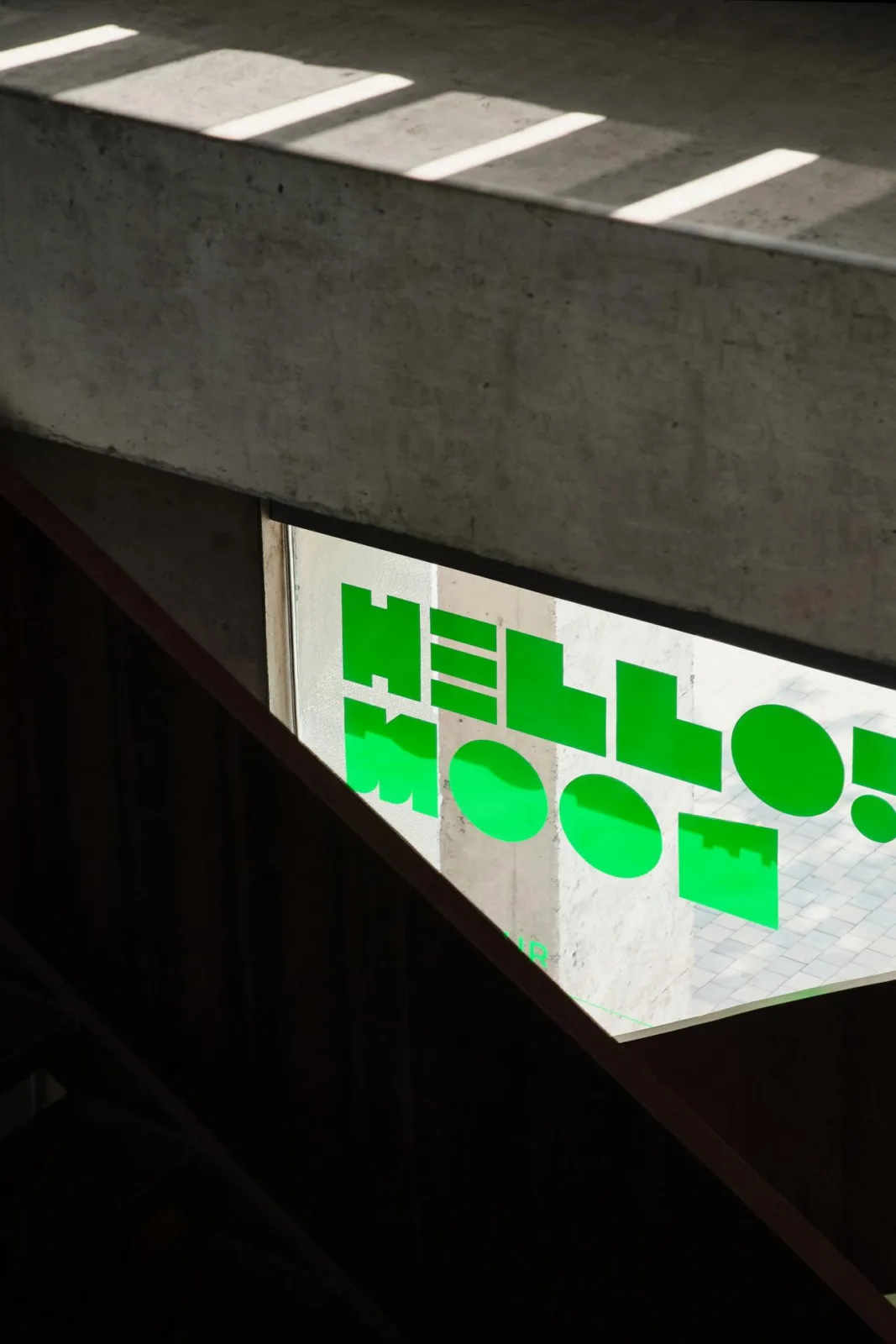
△ Space Brand Logo
Transforming the Old into New, Making Heavy Feel Light
During the early design stages, the team aimed to respect the building’s original appearance while avoiding generic spaces. The challenge was to rethink the spatial framework and lighten the building’s heaviness by creating a welcoming and airy environment. This vision became the project’s core focus.
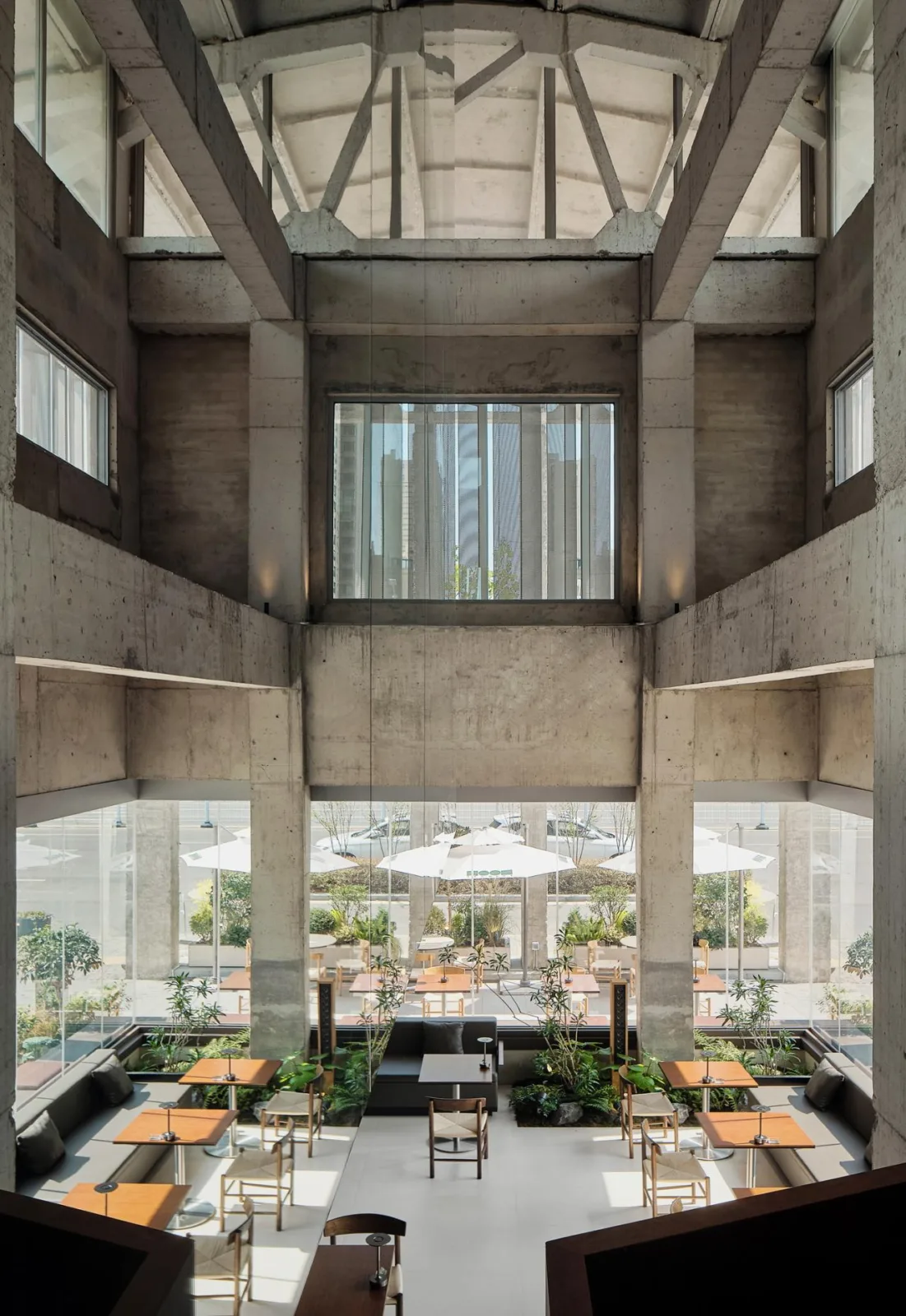
△ Transparent Factory Building Structure
Through meticulous structural analysis, the design team employed the concept of “disappearance” to create trusses throughout the building, supported by bridge cables, forming an 8-meter-long bottomless support system. The kitchen area is suspended across two floors, cleverly dividing dining and functional spaces, while seamlessly incorporating columns into the spatial design.
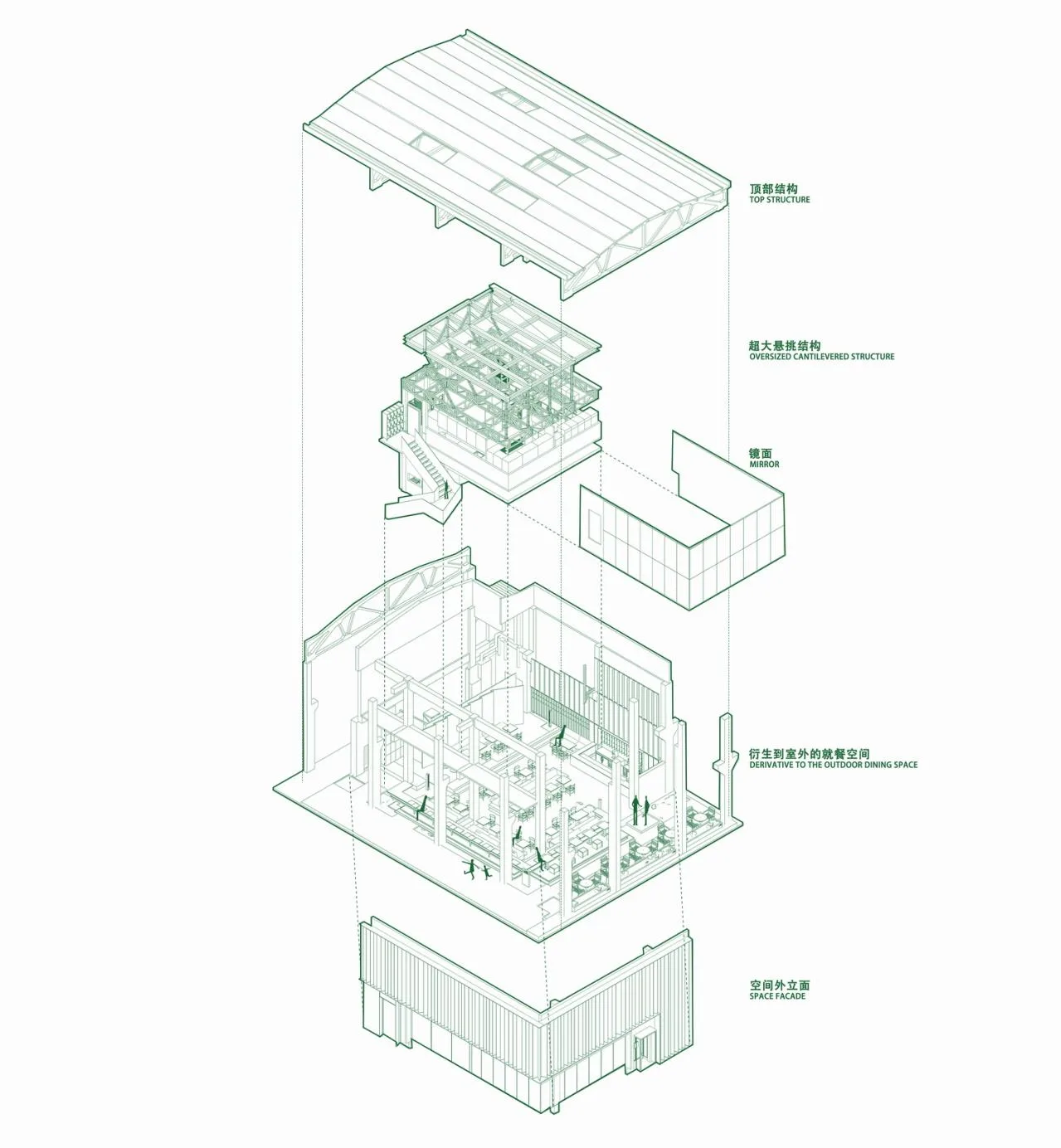
△ Spatial Analysis Diagram
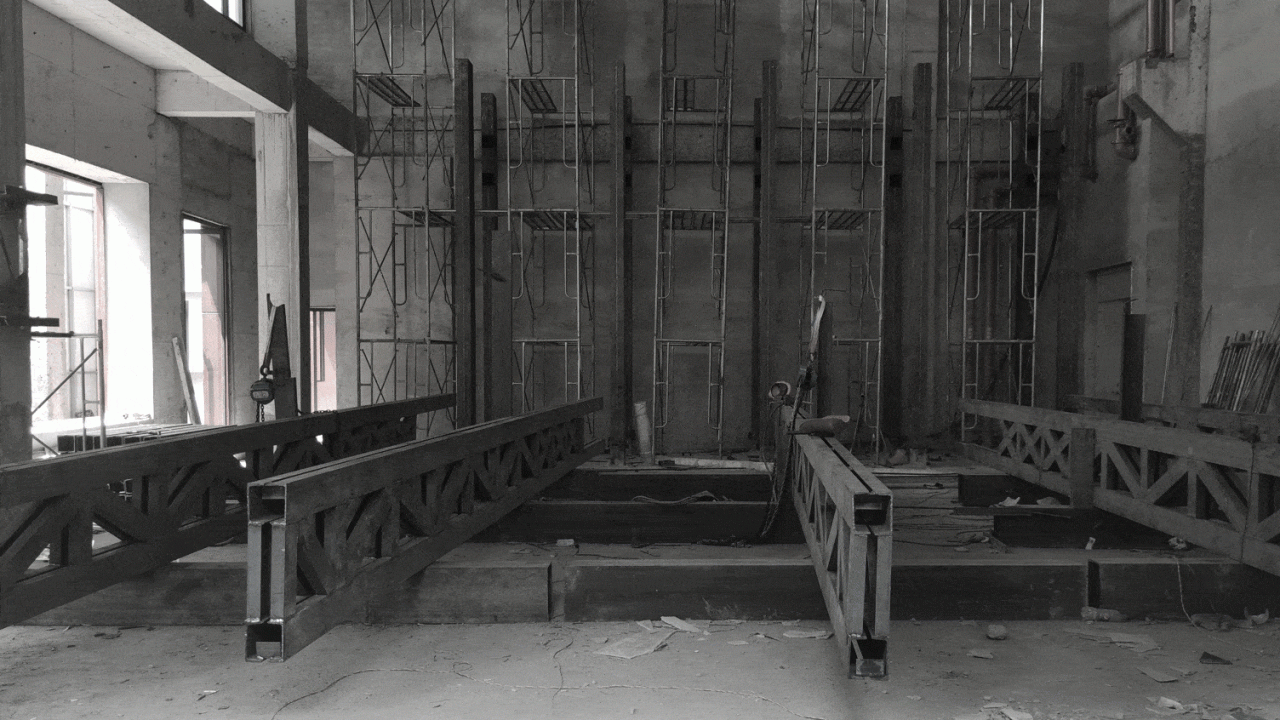
△ Suspended Structure Construction Process
The suspended structural blocks are clad in mirror material, integrating them into the décor and the overall space. By borrowing the symmetry of the old factory building, the mirrored surfaces create the illusion of a glass box on the second floor, reinforcing the “disappearance” concept and softening the visual weight of the structural elements.
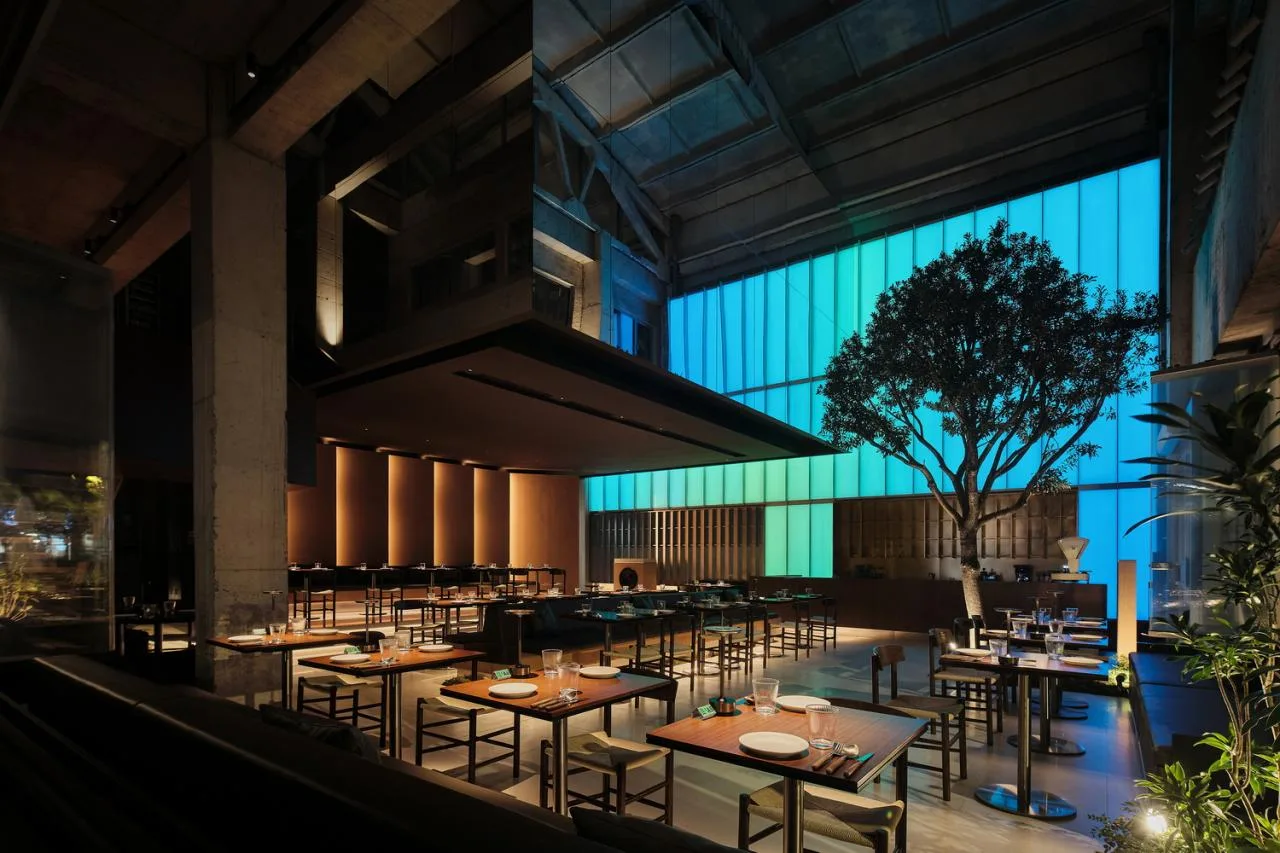
△ Nighttime Atmosphere in the Dining Bar
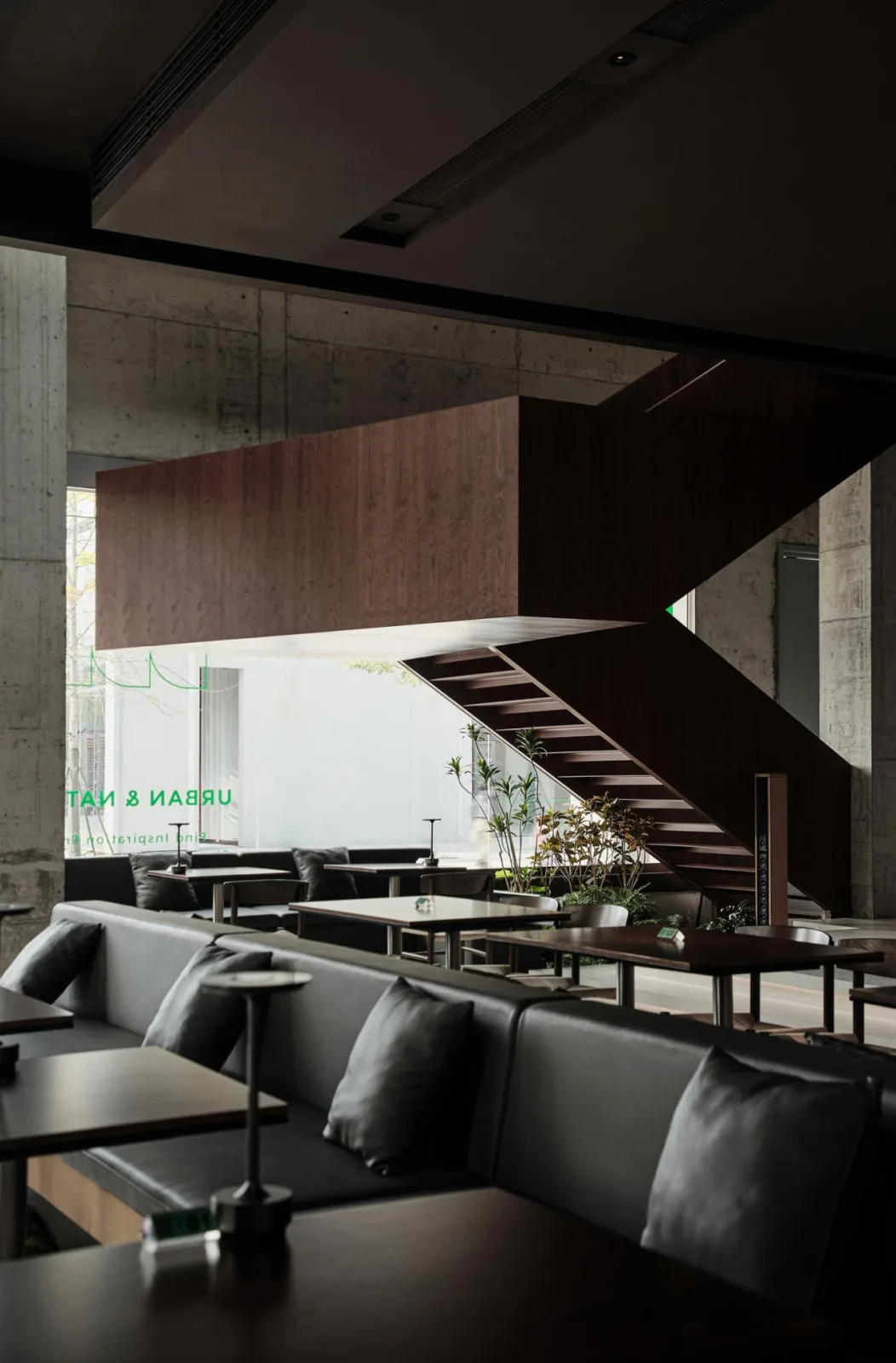
△ Staircase Details
The original factory building’s height of approximately 11 meters allows for spacious open areas. The old building’s framework is revealed as the new space’s façade, creating a layered interplay between old and new, effectively dissolving boundaries and expanding spatial possibilities.
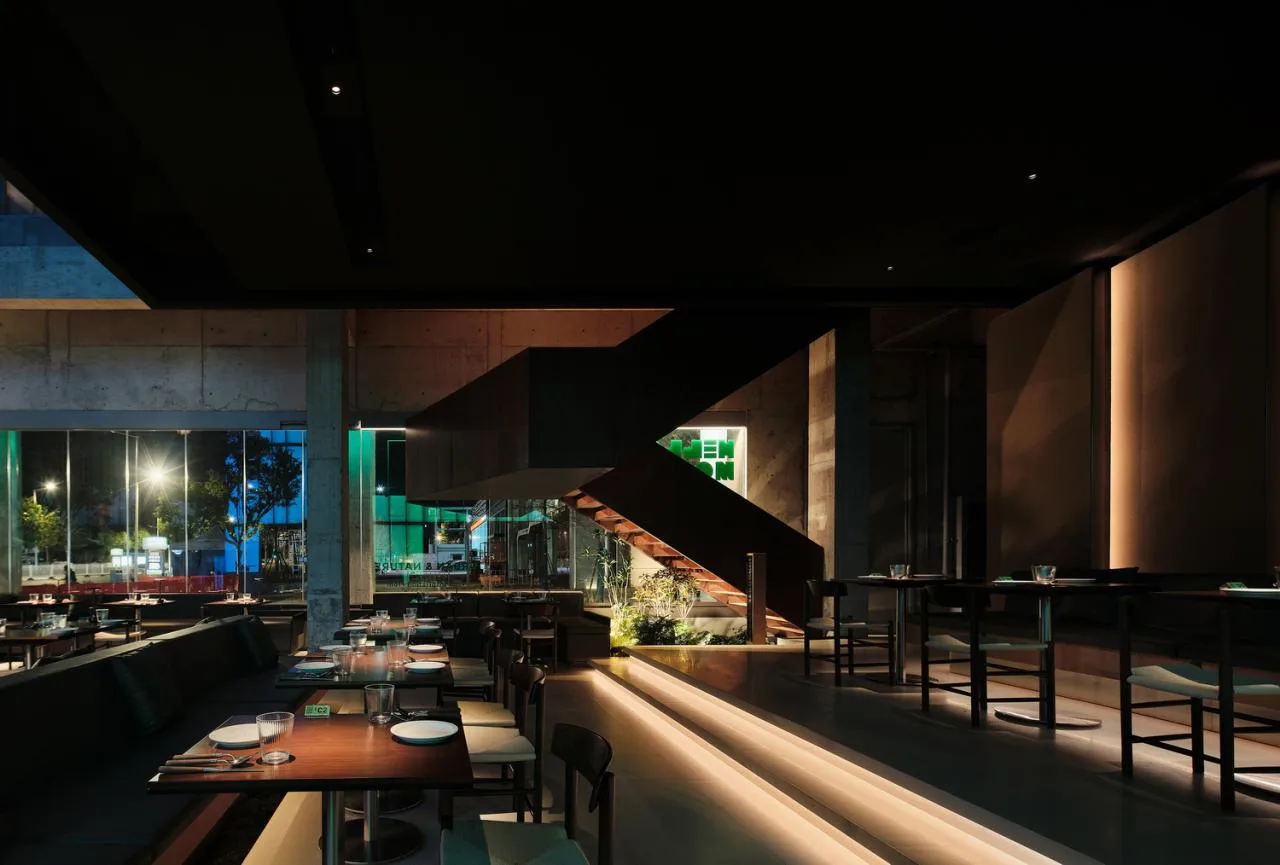
△ Layered Environment in the Dining Area
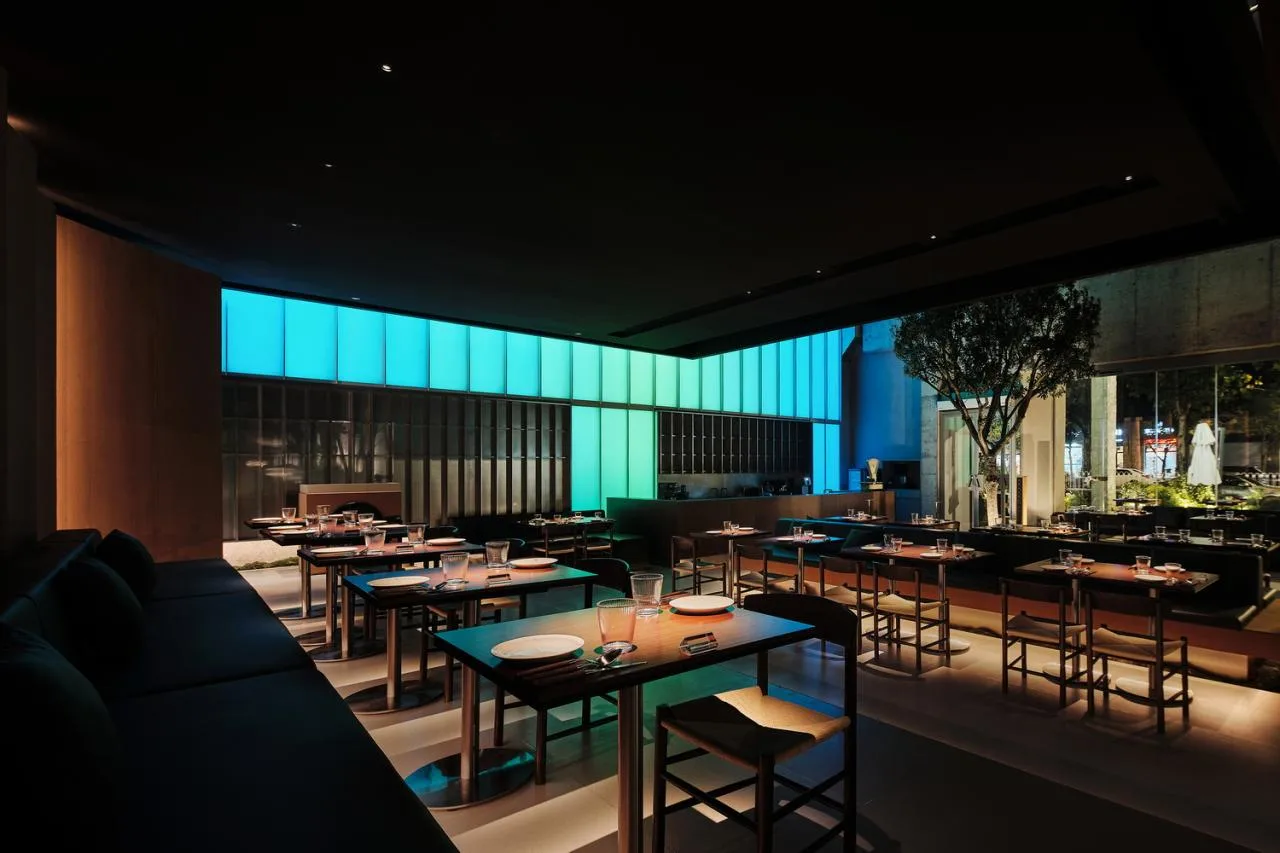
△ Dining Area Overview
Blurring Architectural Boundaries to Foster a Harmonious Dialogue with Nature
A 5-meter-long bayberry tree stands within the dining area, profoundly softening the line between indoor and outdoor spaces. The suspended structure’s scale complements the industrial aesthetic, while wooden tables and chairs harmonize with the indoor and outdoor greenery, creating a tranquil environment where guests can connect with nature. The transparent glass façade, enriched with lush plantings inside and out, eliminates the division between concrete walls and the natural world, allowing diners to enjoy an intimate experience with their surroundings.
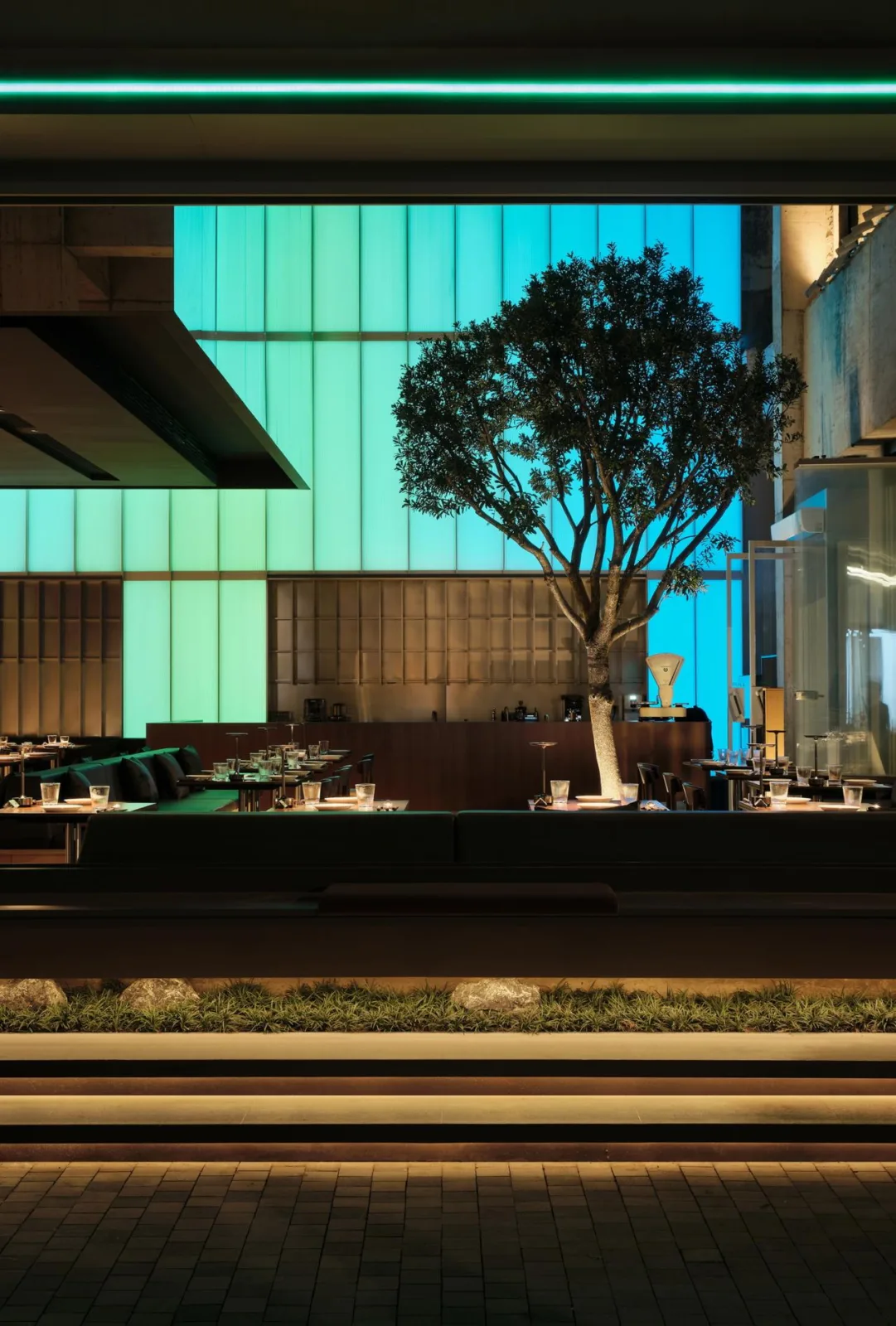
Harmony Between Greenery and Interior Space
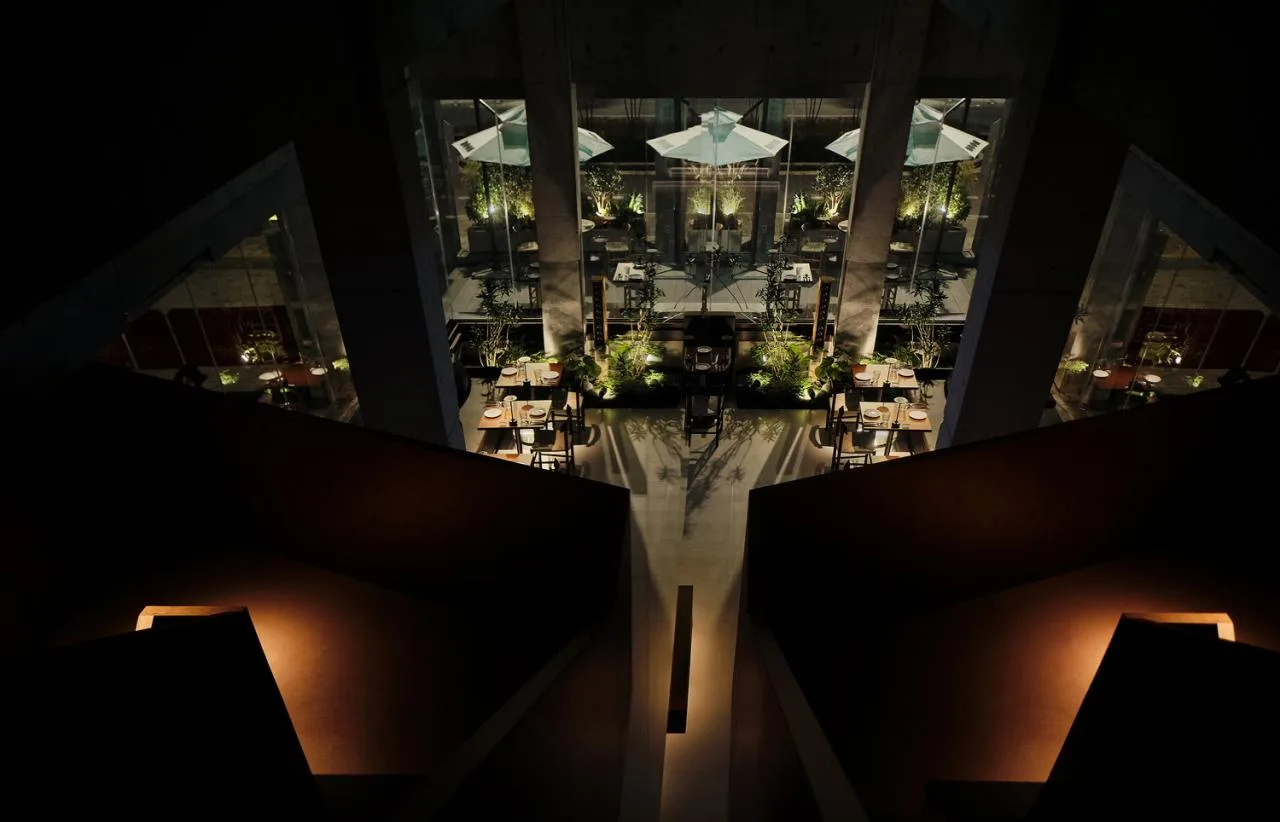
△ View of the Restaurant from the Staircase
The lighting design mimics the natural rhythm of daylight, dynamically adjusting to create distinct atmospheres throughout the day. A light sensor detects varying light conditions from sunrise to sunset, triggering six different indoor lighting scenes. These range from lively greens and blues during the day, to warm oranges and reds in the evening, and finally soft pinks and purples at night. This natural light progression, combined with the mirrored reflections upstairs, dissolves spatial boundaries and offers a dreamlike interplay between interior and exterior.
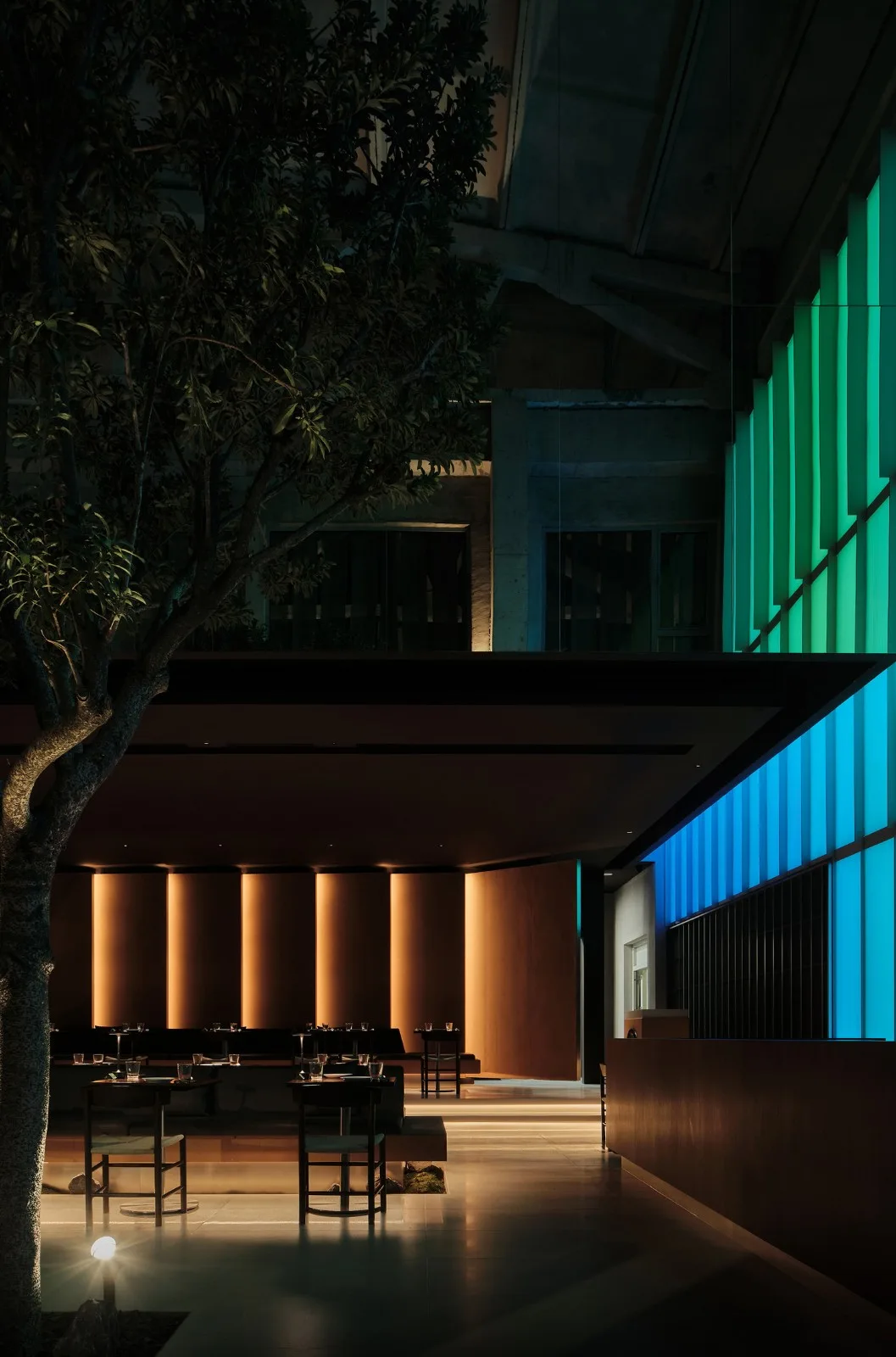
△ Indoor Lighting Design
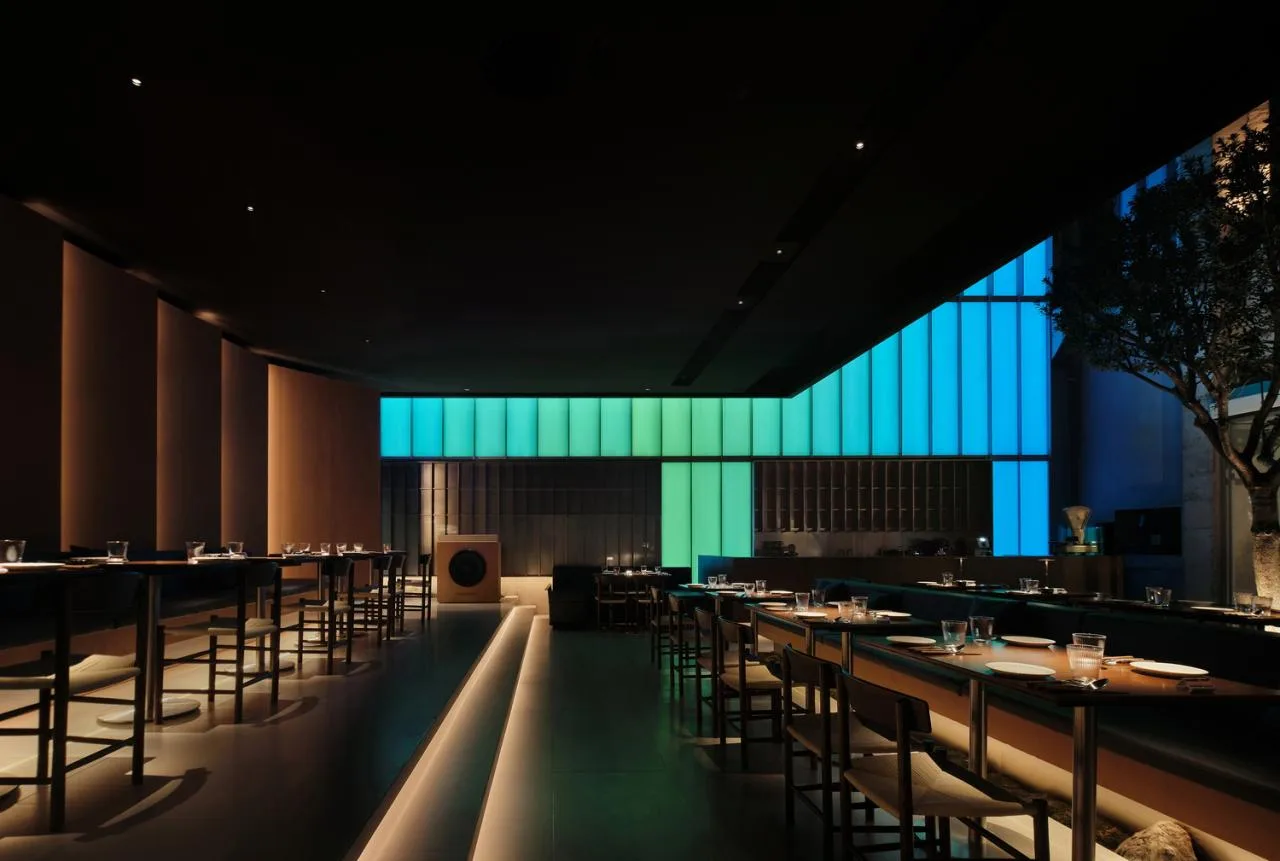
△ Dynamic Indoor Lighting Effects
Open Street-Corner Community
The restaurant’s façade features frameless folding glass windows that semi-enclose the transparent bottom dining area in an L-shape, adaptable to different seasons and occasions. Set against the concrete frame structure, boundaries are both emphasized and softened. The design extends a welcoming invitation to the neighborhood and passersby, encouraging them to enter, linger, dine, gather, and participate in cultivating a vibrant community atmosphere. On sunny afternoons, local families bring their children to enjoy creative dining experiences. Adults engage in conversation while children freely explore, feeling as liberated as if in a park. This natural ambiance enriches the space and inspires spontaneous exploration.
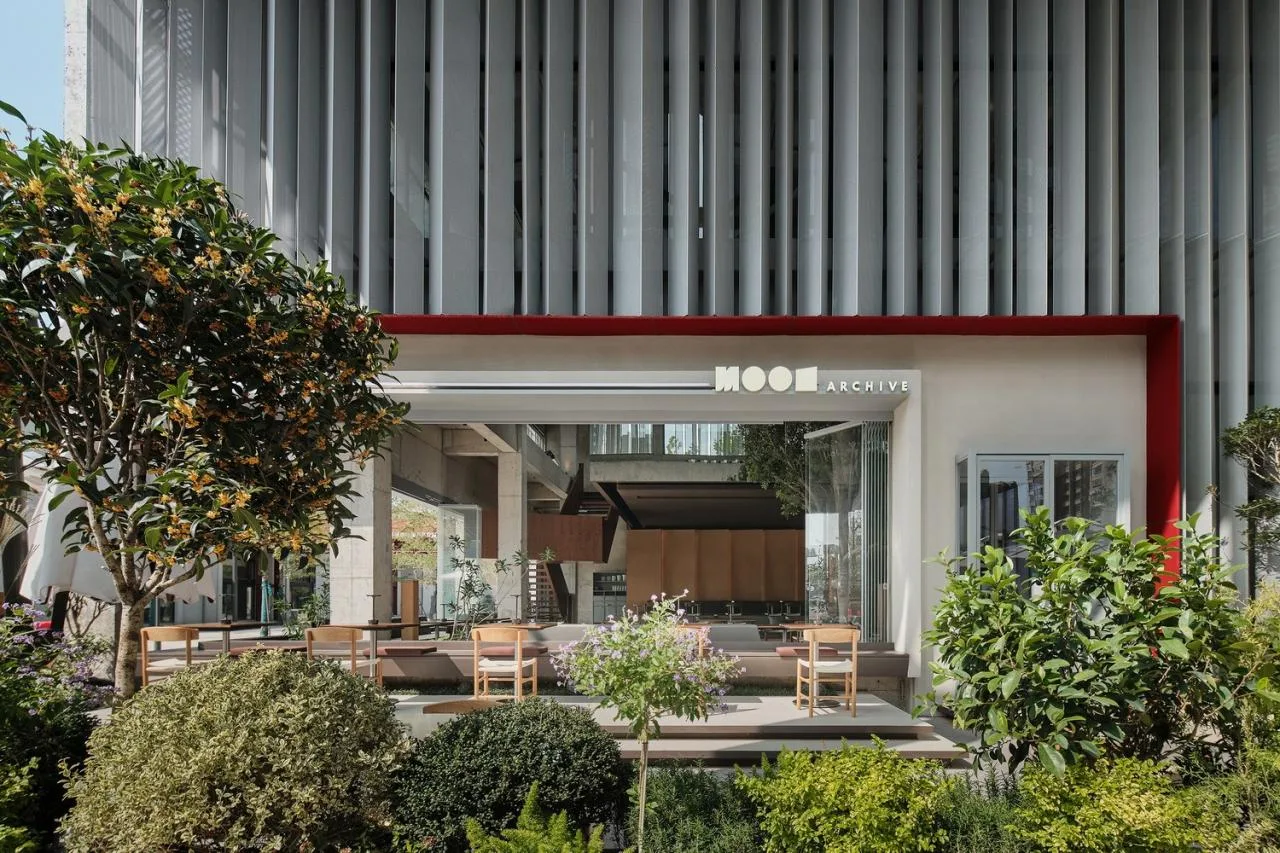
△ Natural and Friendly Spatial Experience
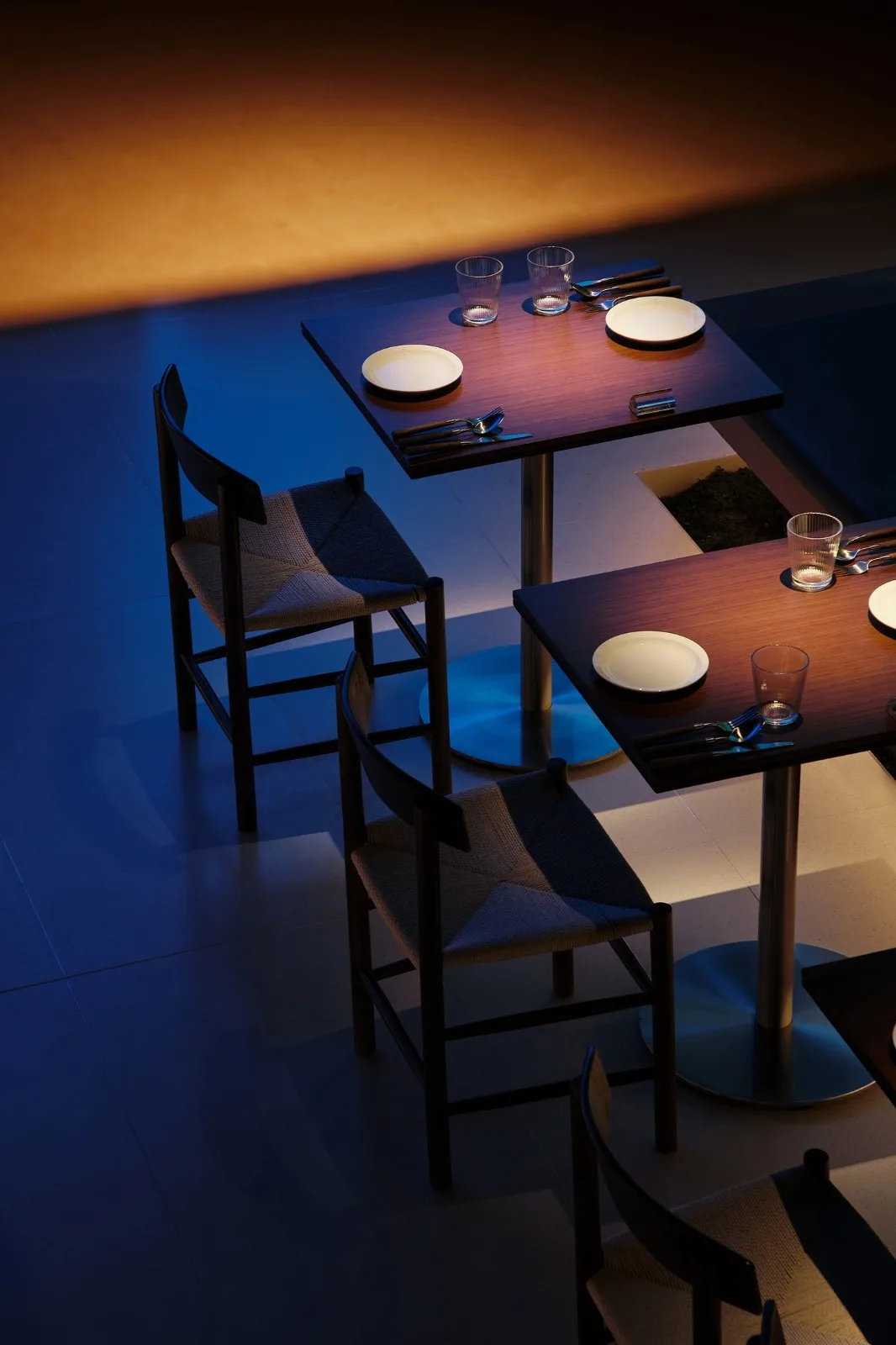
Dining Area Details
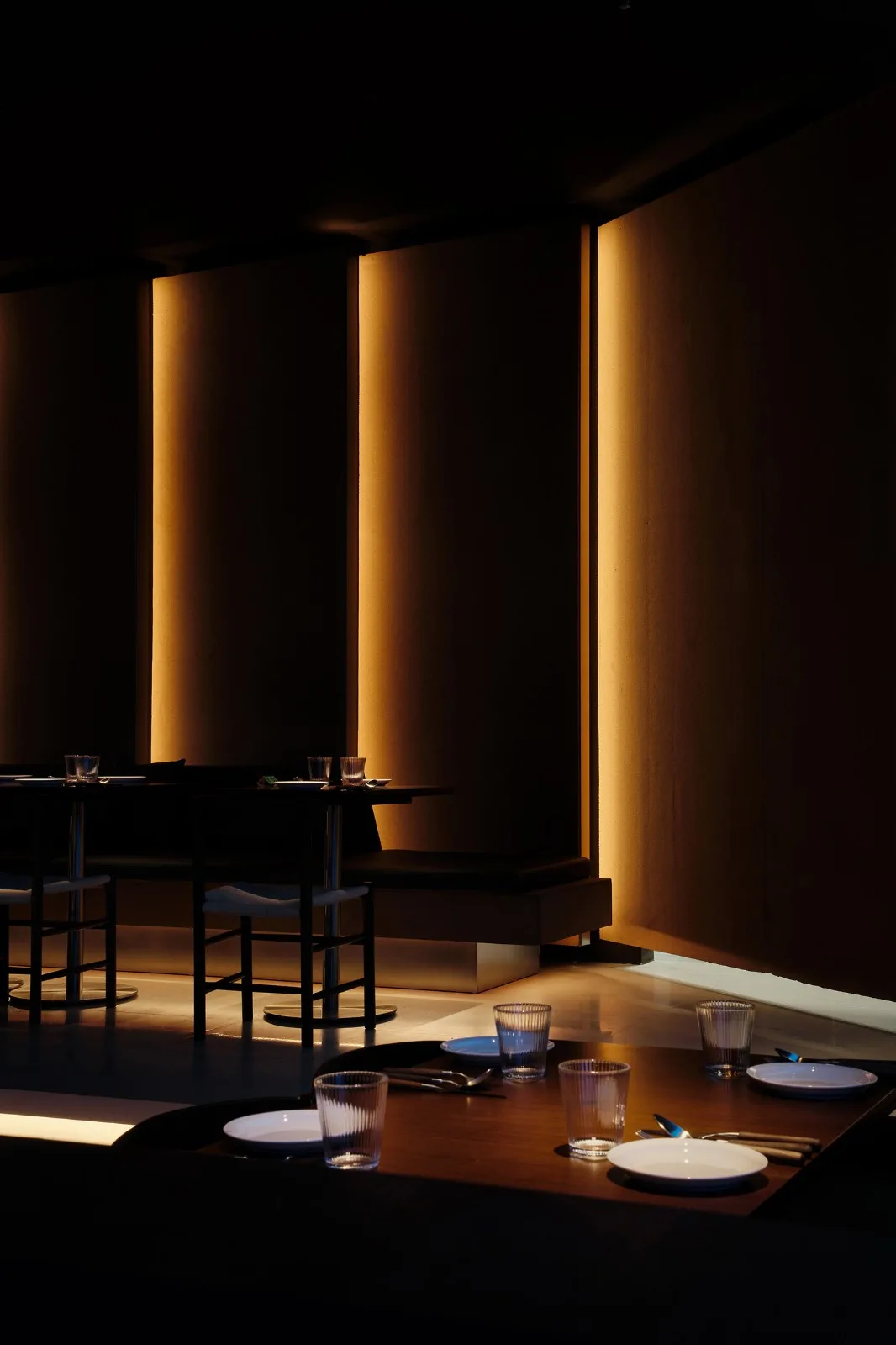
△ Varied Atmosphere Created by Different Lighting Colors
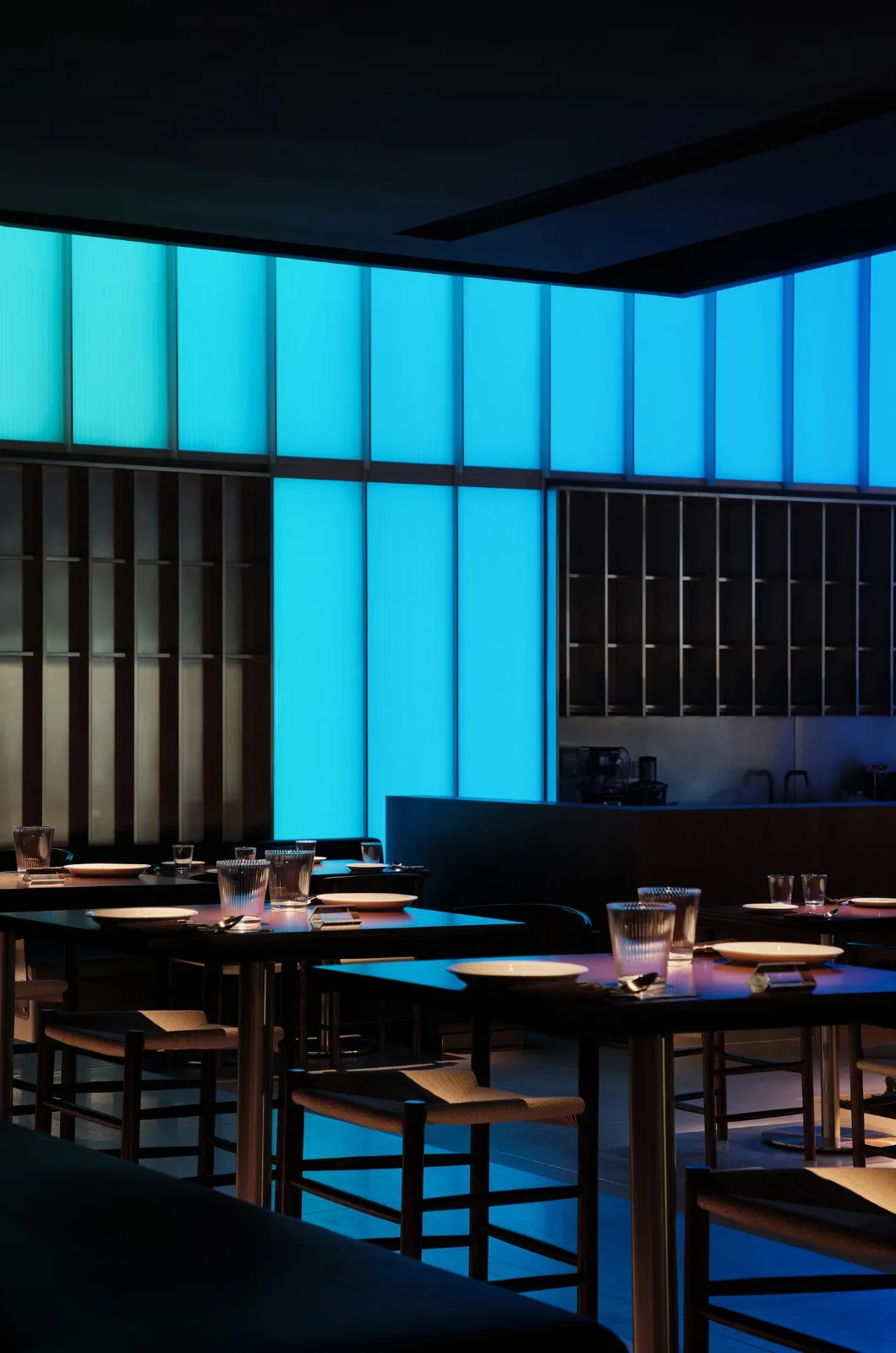
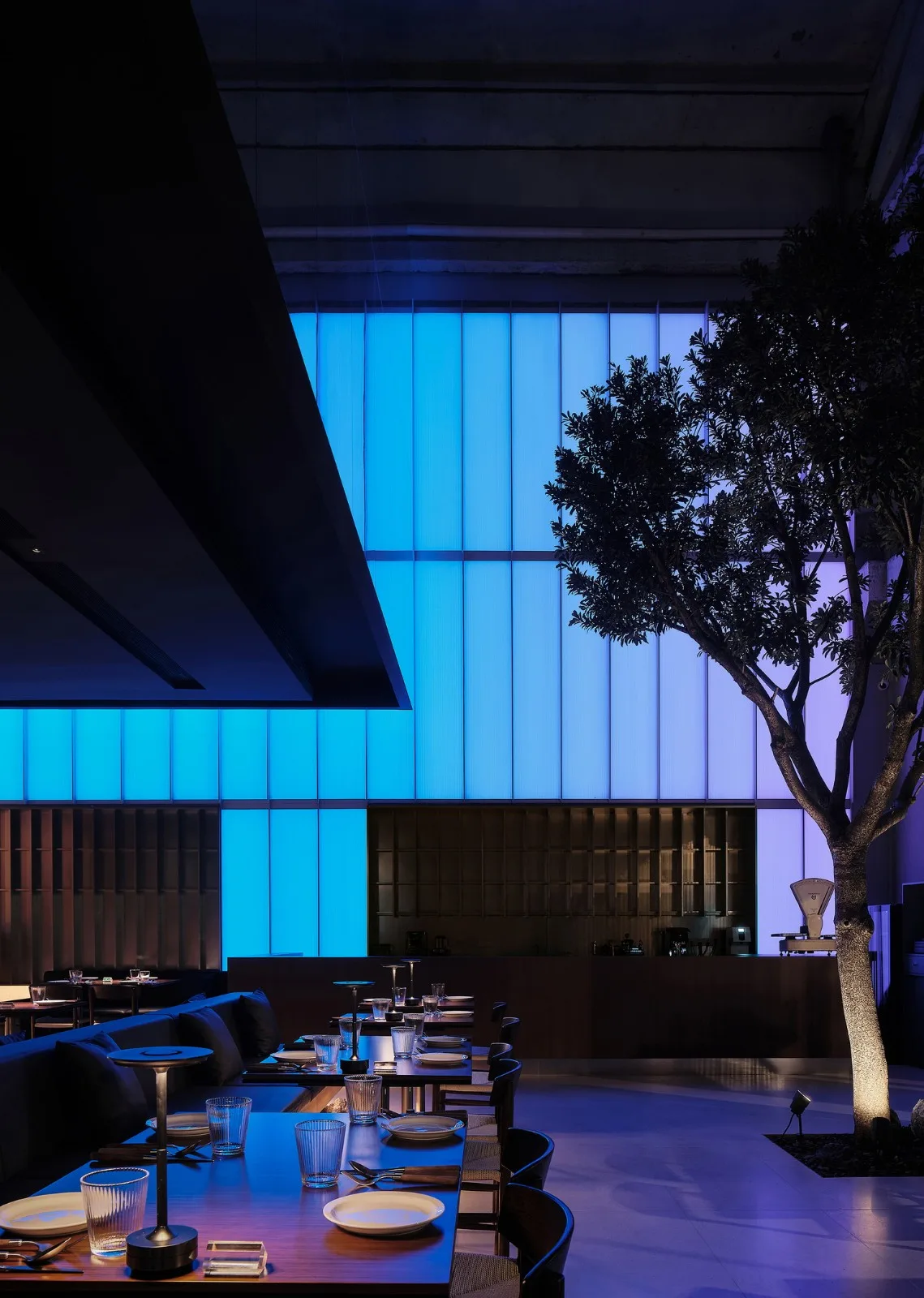
△ Interaction Between Light and Local Space
By creating a fresh, vibrant environment in a space once dedicated to industrial production, MOOI ARCHIVE now stands as a lively street-corner destination in the city’s industrial park. It offers a delightful experience that evolves from day to night, fostering new connections between people, space, neighborhoods, and nature. Visitors can sense a unique community vibe that inspires renewed aspirations in everyday life.
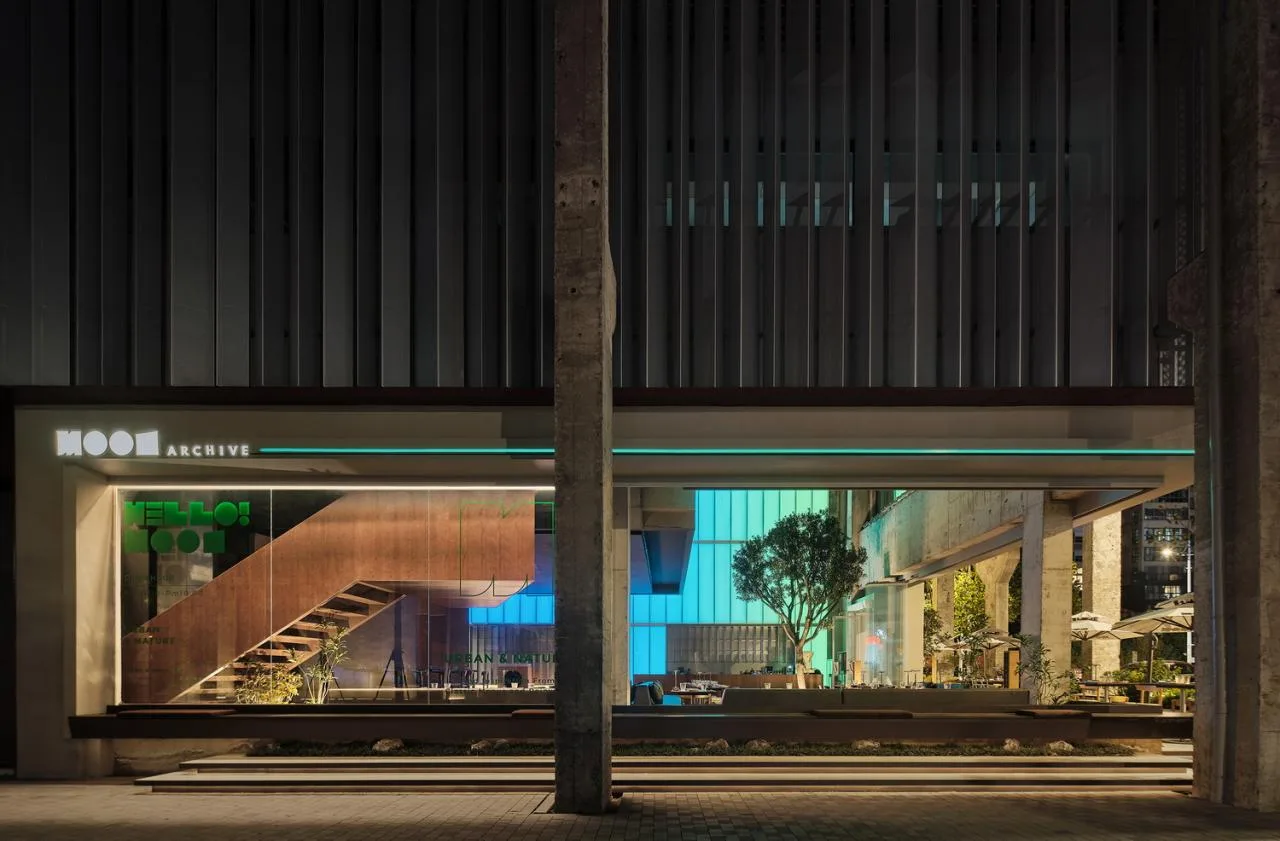
△ Nighttime Exterior View
Project Drawings
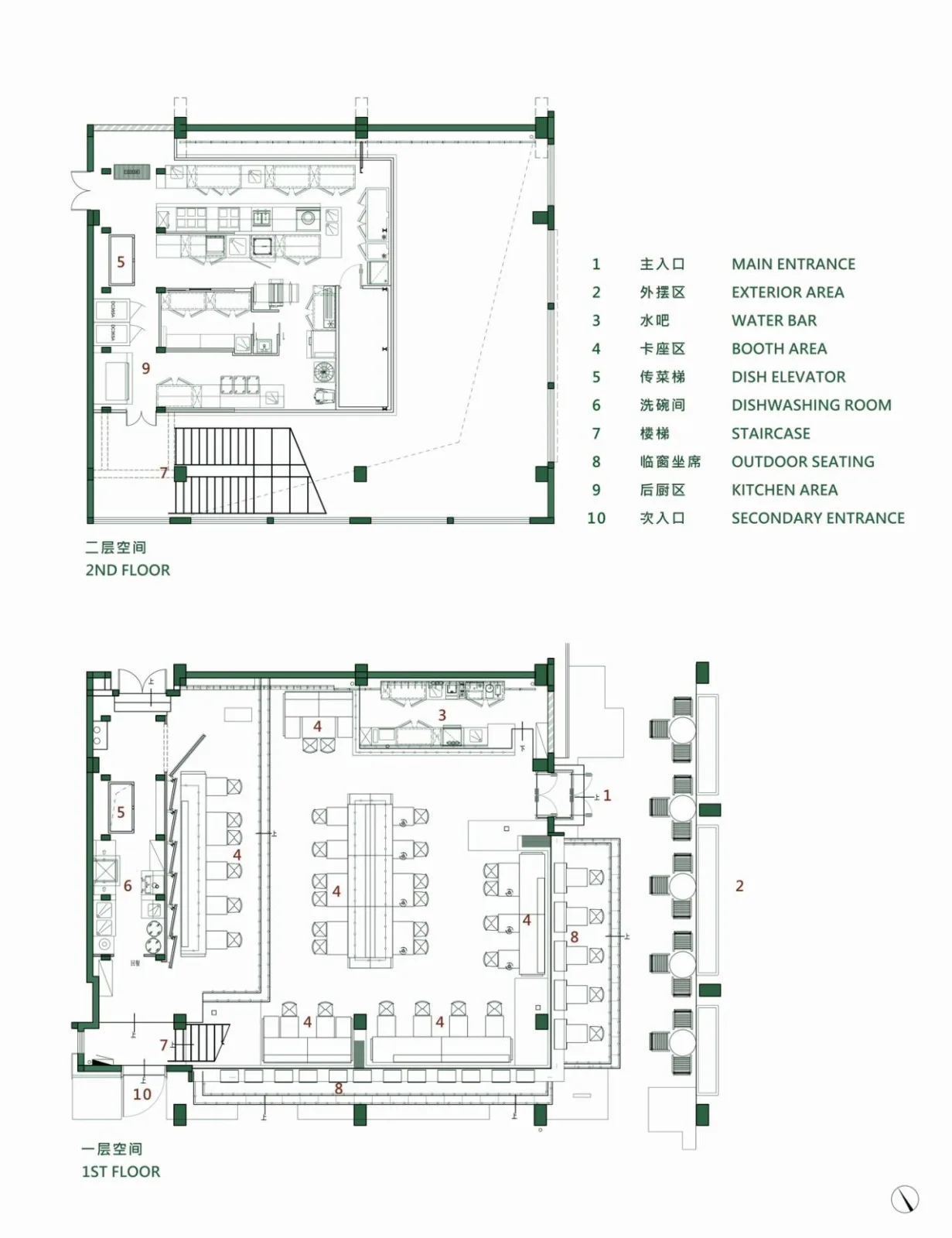
△ Floor Plan
Project Details
Design Period: August 2021 – May 2022
Construction Period: May 2022 – September 2022
Design Team: TRIOSTUDIO from Sanlishe
Project Location: Nanjing, Jiangsu
Status: Completed
Building Area: 201 square meters
Lighting Collaboration: Weiguang Lighting
Landscape Collaboration: Yige Nature
Photography: ingallery
Main Materials: Textured coating, cork board, mirror panels, stainless steel, polycarbonate (PC) board















Must log in before commenting!
Sign Up