
The wind blows freely in the sky, unbound by reins,
Yet we on the ground cannot last forever.
For the boundless wilderness, the starry sky still shines bright —
Perhaps you can still vaguely see it.
From this moment on, I ride my horse and gradually drift away,
With a reluctant glance back,
Still amidst the vast fragrant grass, far from emptiness.
— Xi Murong
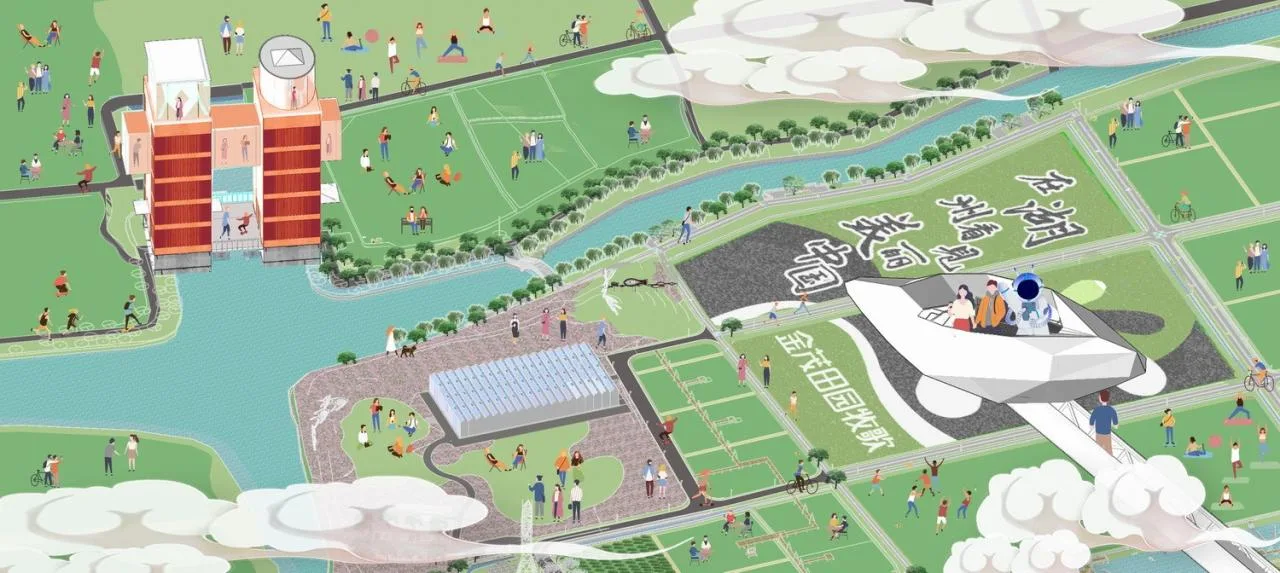
▲ The future of rural areas
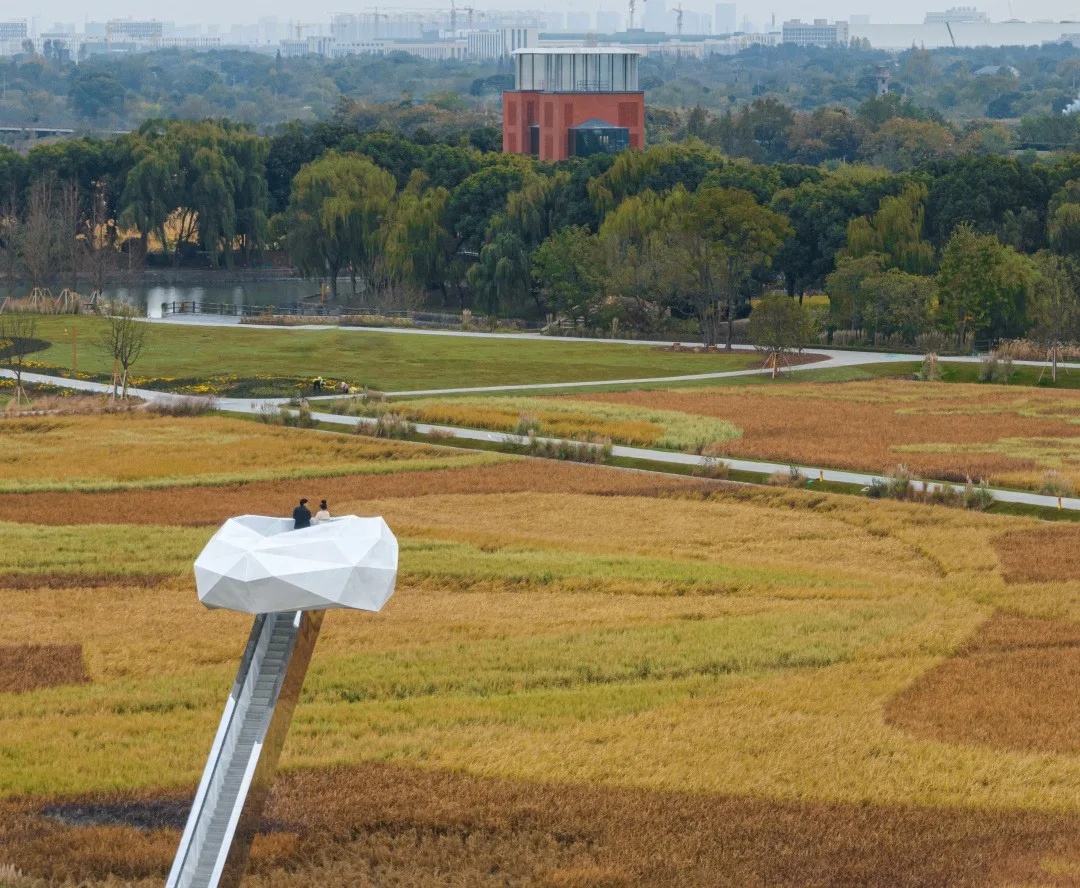
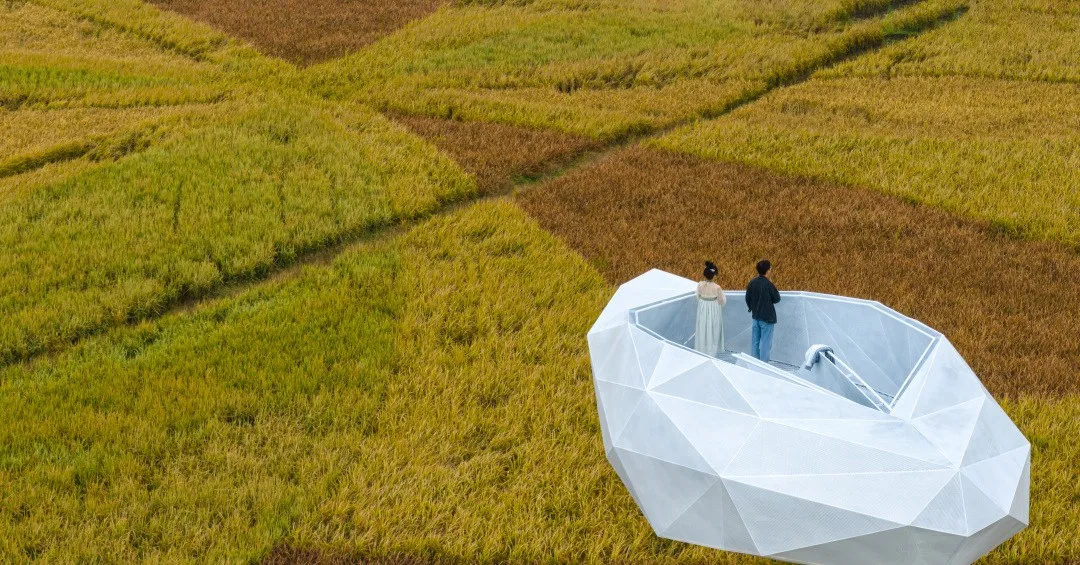
▲ Aerial view of the project
The Challenges Facing Rural Areas
British poet Cooper once said, “God created the countryside, and humanity created the city.” This reflects that rural areas have existed since the dawn of human society, while cities are cultural creations of mankind. For thousands of years, rural areas have formed the foundation of Chinese civilization, but they now face significant challenges amid rapid urbanization.
Philosopher Heidegger noted that “On the earth” means “under the sky,” symbolizing a connection to divinity and a sense of belonging to humanity. This primitive unity merges heaven, earth, gods, and humans into one. The question remains: will rural areas disappear in China?
In response, rural revitalization has become a key national strategy aimed at promoting rural development and improving farmers’ living standards. Sustainable development strives to balance economic growth, social progress, and ecological preservation by reconciling conflicts between economy, society, and environment.
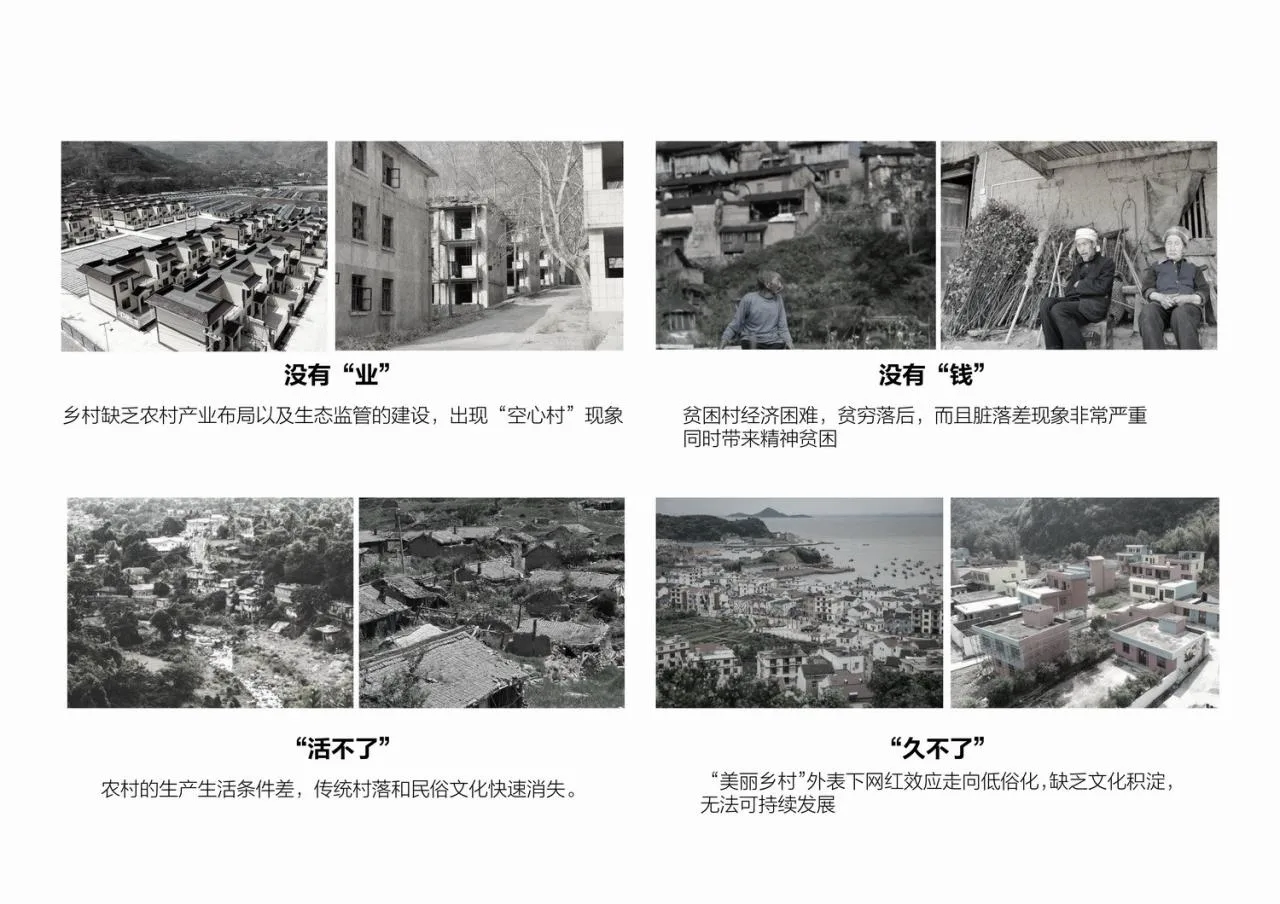
▲ The dilemma in rural areas
Micro Upgrades to Infrastructure
Agricultural development is a vital part of rural revitalization, playing a major role in boosting rural economies, increasing farmers’ incomes, and fostering social prosperity. Rural infrastructure includes water gates, greenhouses, roads, substations, irrigation channels, tractor paths, and sewage stations.
Many of these infrastructures lack design elements, suffer from vacancy, or have low space utilization. However, their structural safety offers an excellent foundation for micro-updates. Through quick, artistic enhancements and lightweight functional additions, existing infrastructure can be revitalized effectively.
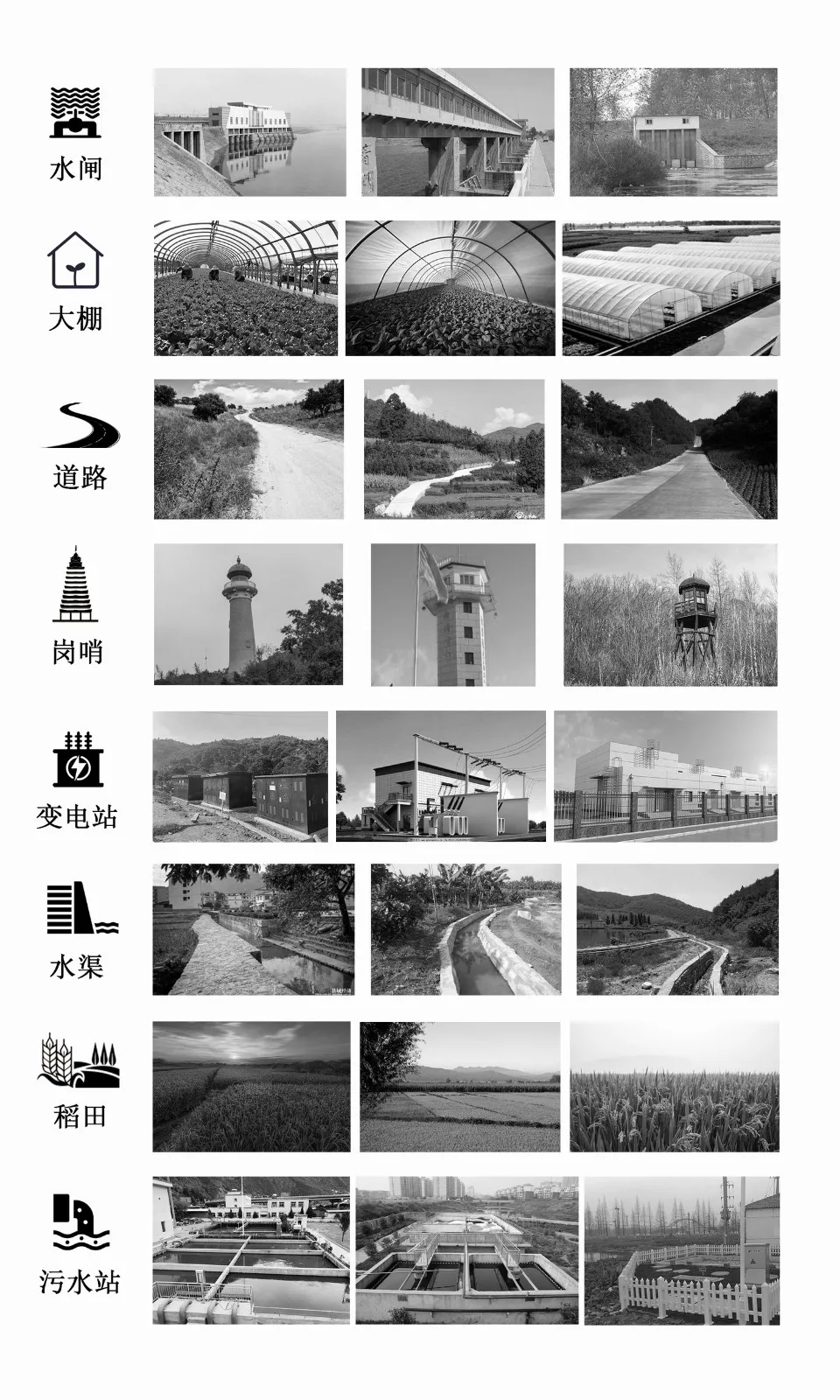
▲ Facility classification
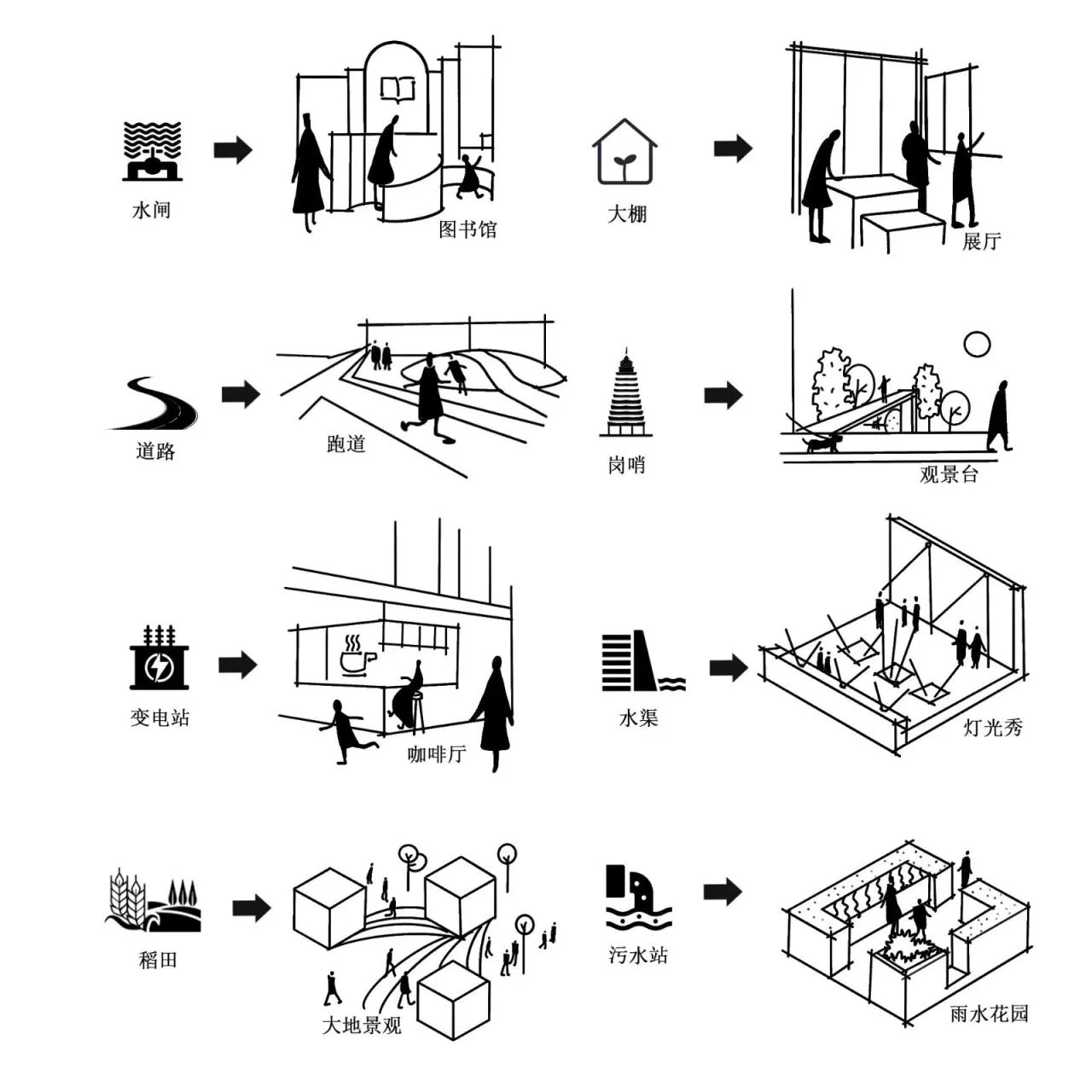
▲ Integration of facilities and functions
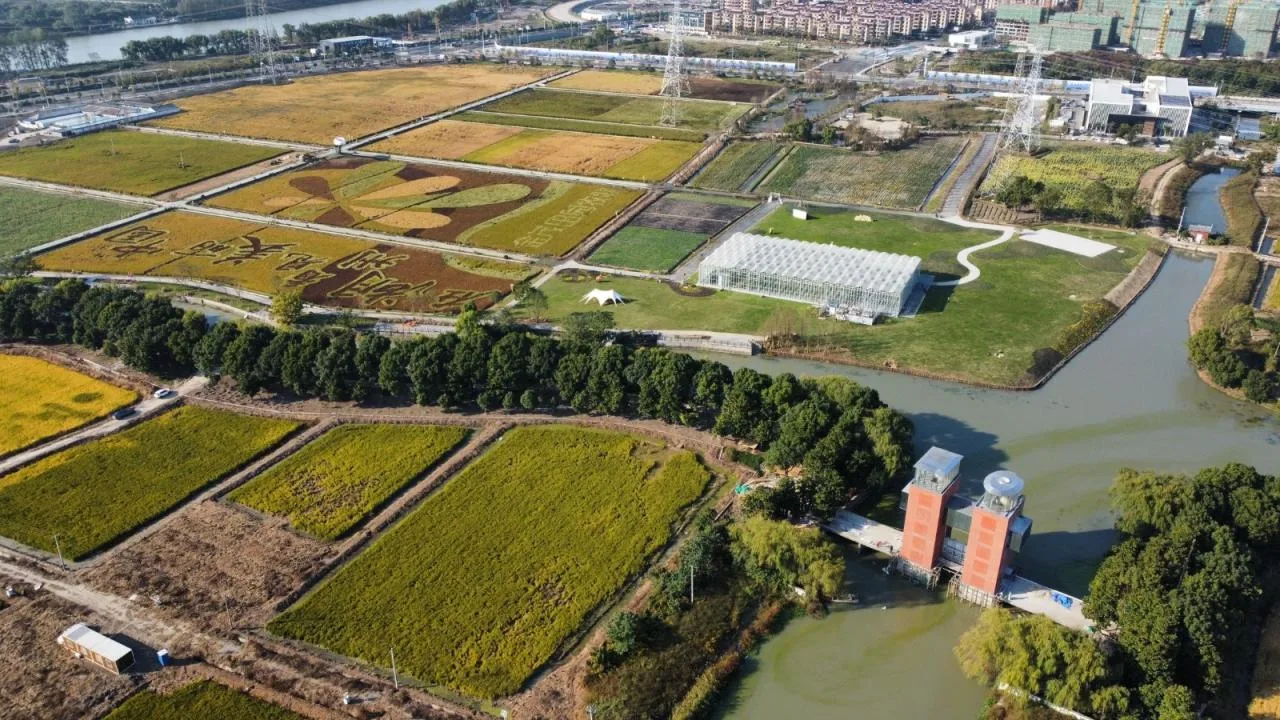
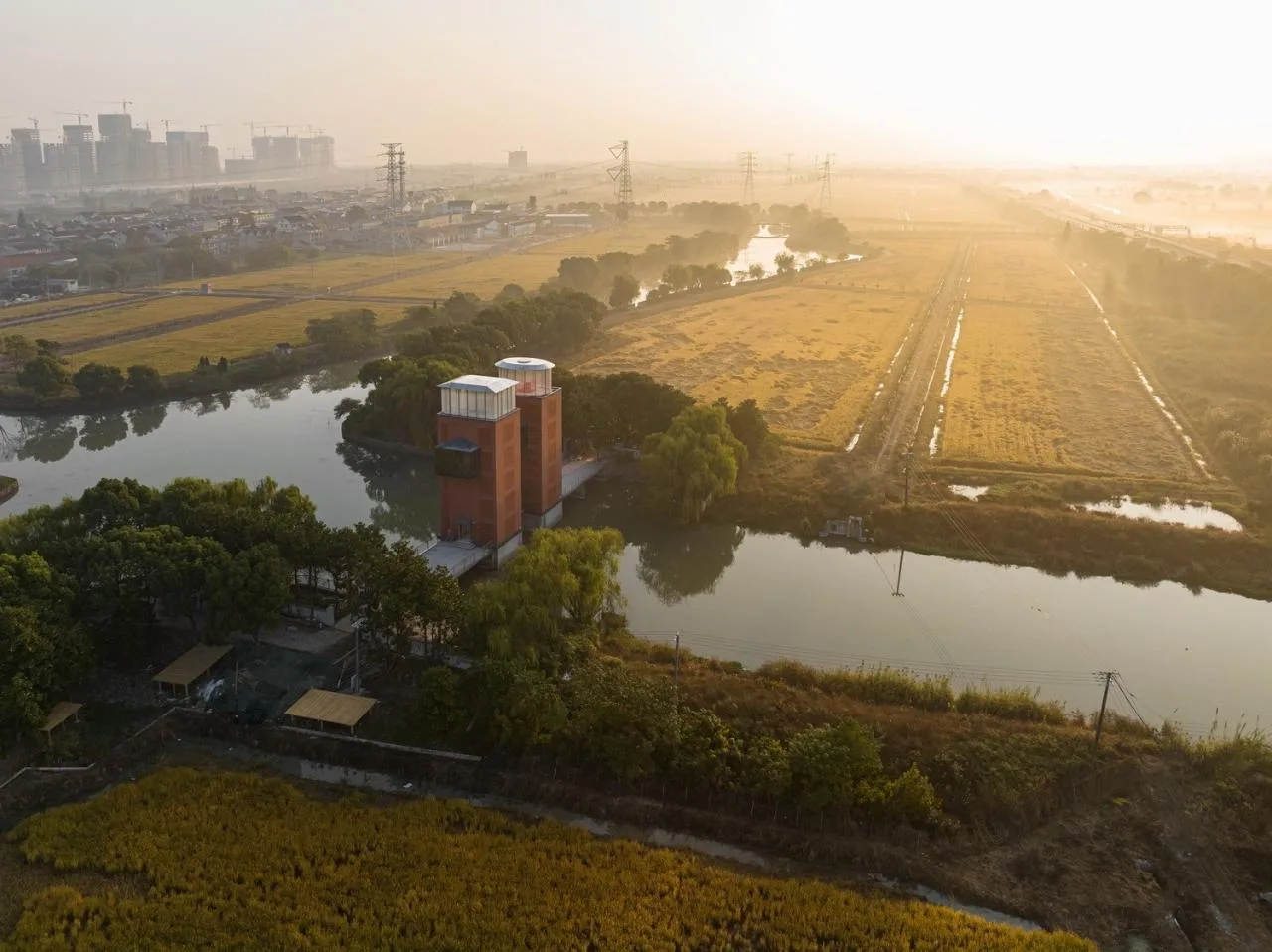
▲ Coordinated development of Jinnong culture and tourism
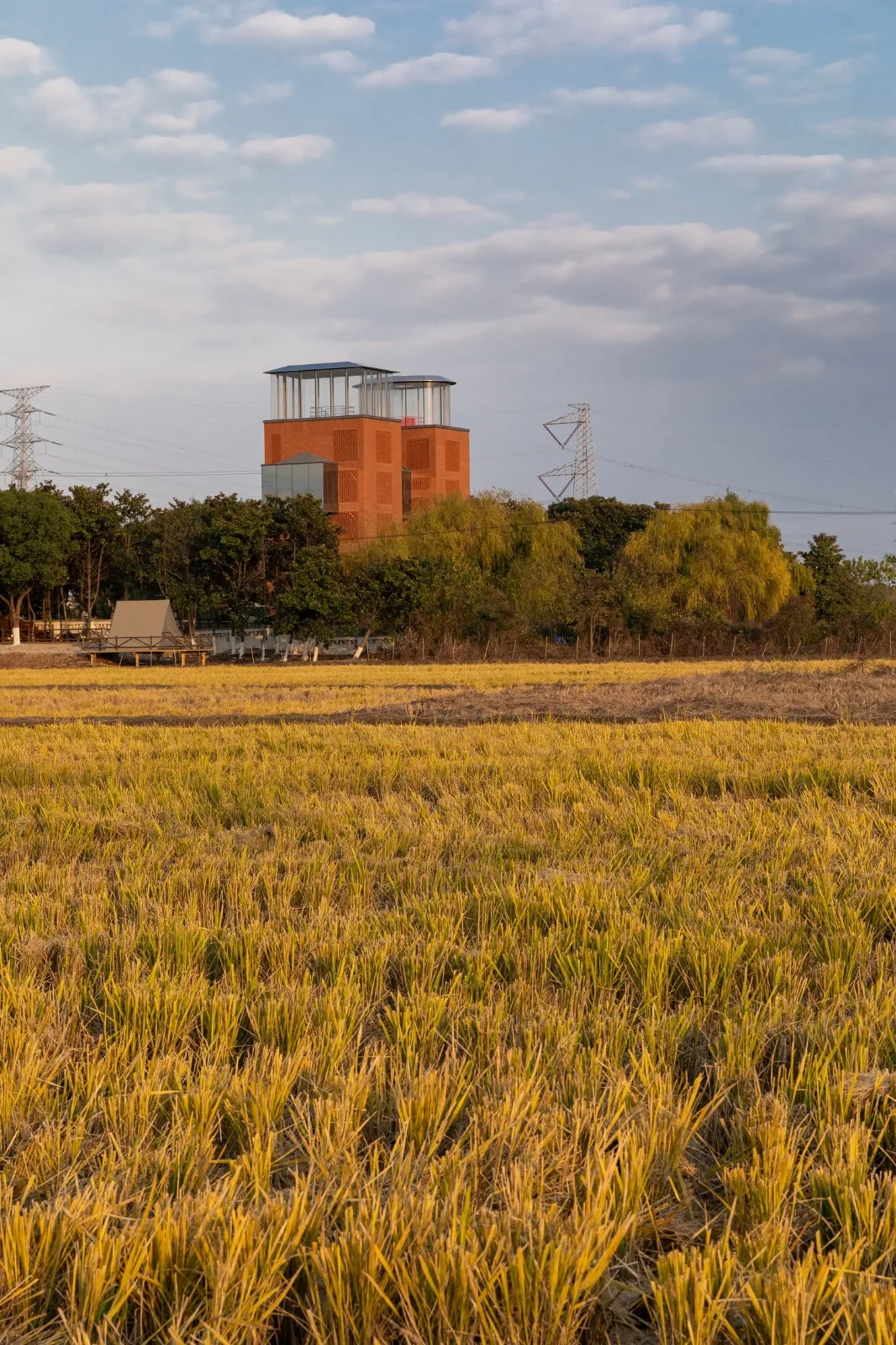
▲ Rice fields: Blending production with landscape
Art as a Catalyst for Micro Upgrades
Artistic leadership guides social development and can play a crucial role in rural revitalization. By promoting cultural heritage through art, it helps farmers reconnect with their traditions.
A prominent example is the Echigo-Tsumari Art Triennale in Japan, where aging and depopulation led to many abandoned houses and schools. Under the direction of renowned curator Fumio Kitagawa, idle spaces were transformed through contemporary art, local culture, and land integration. The inaugural event in 2000 was highly acclaimed and has since become the world’s largest international outdoor art festival, held every three years.
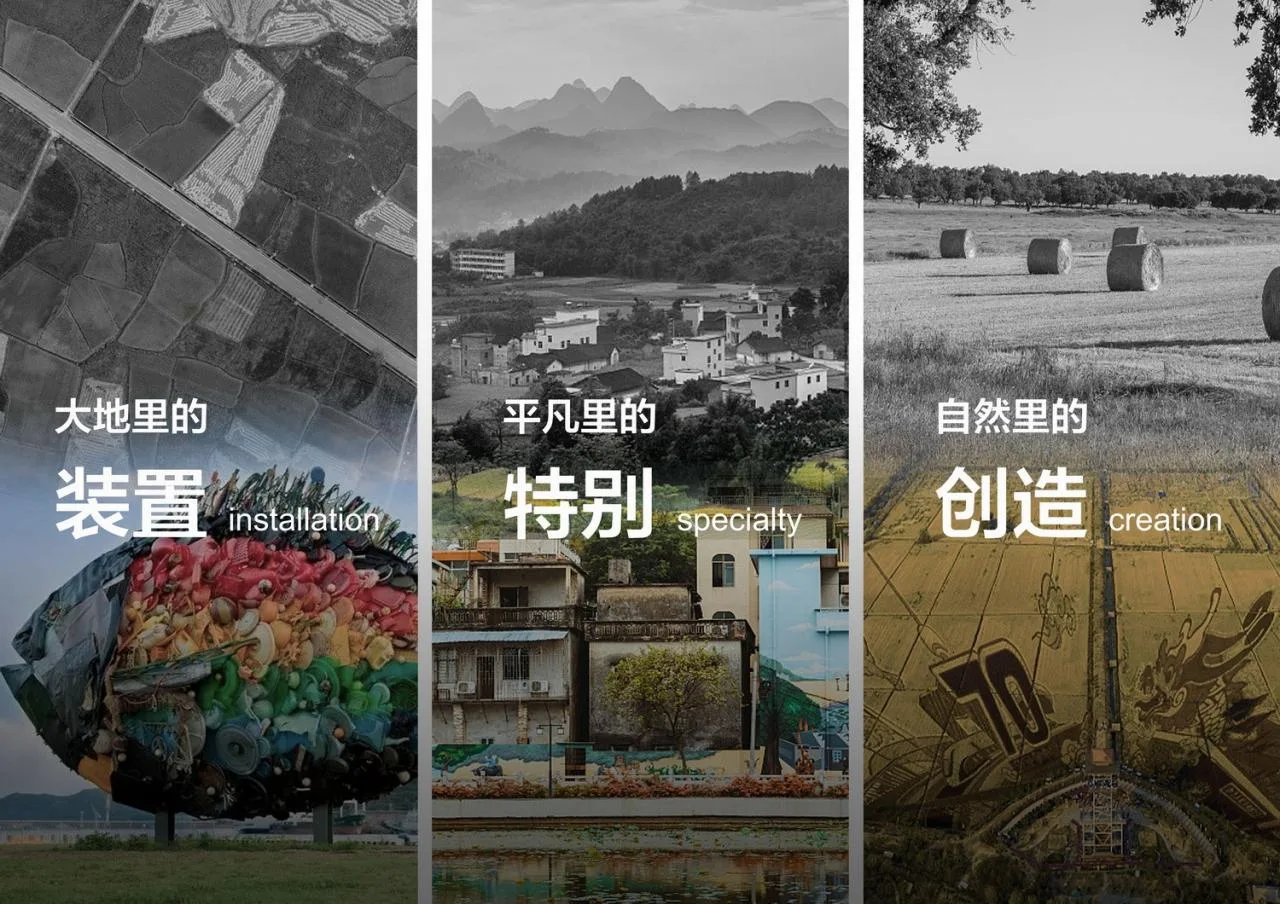
▲ Inclusiveness in rural areas
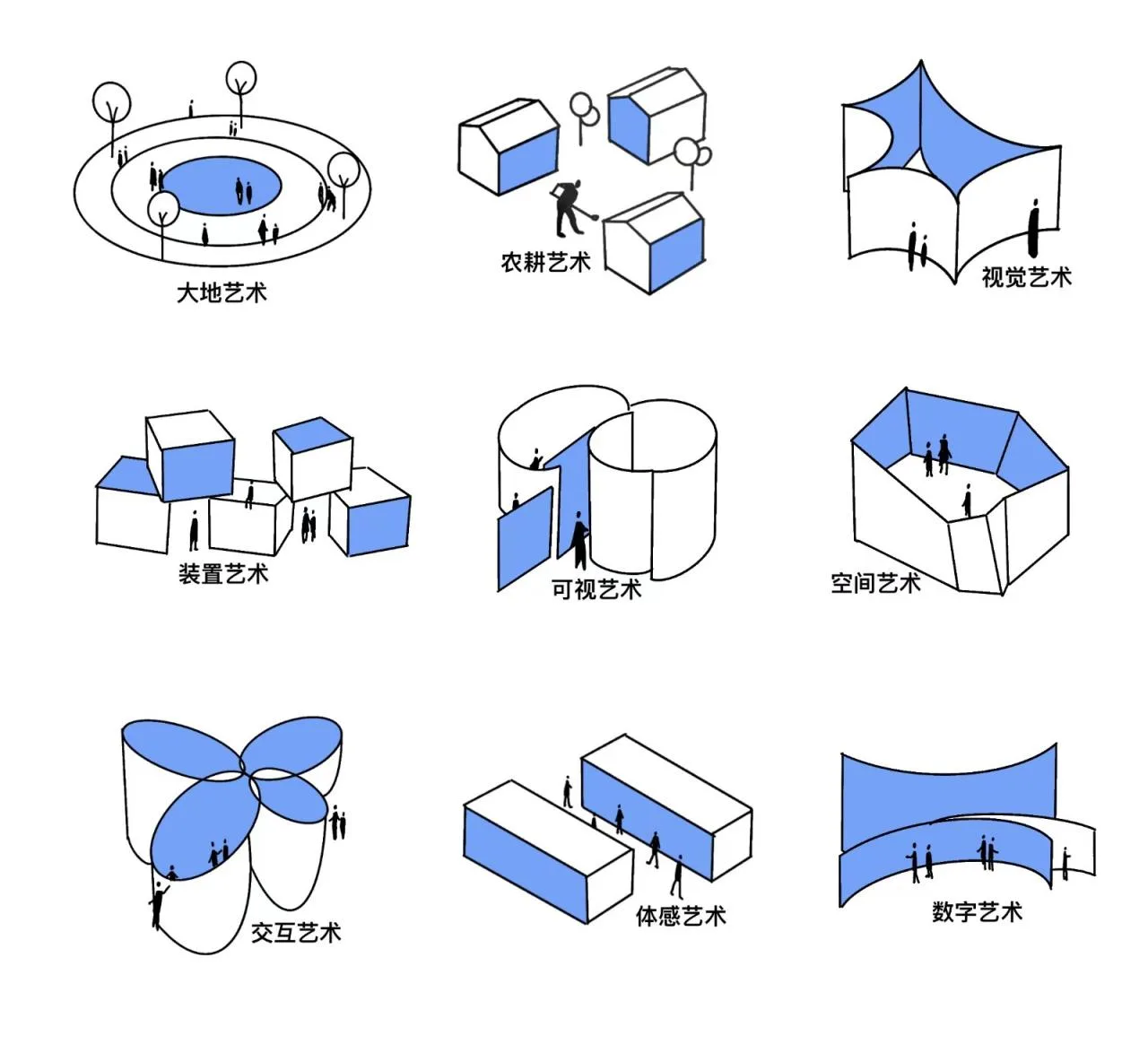
▲ Diversity of rural art
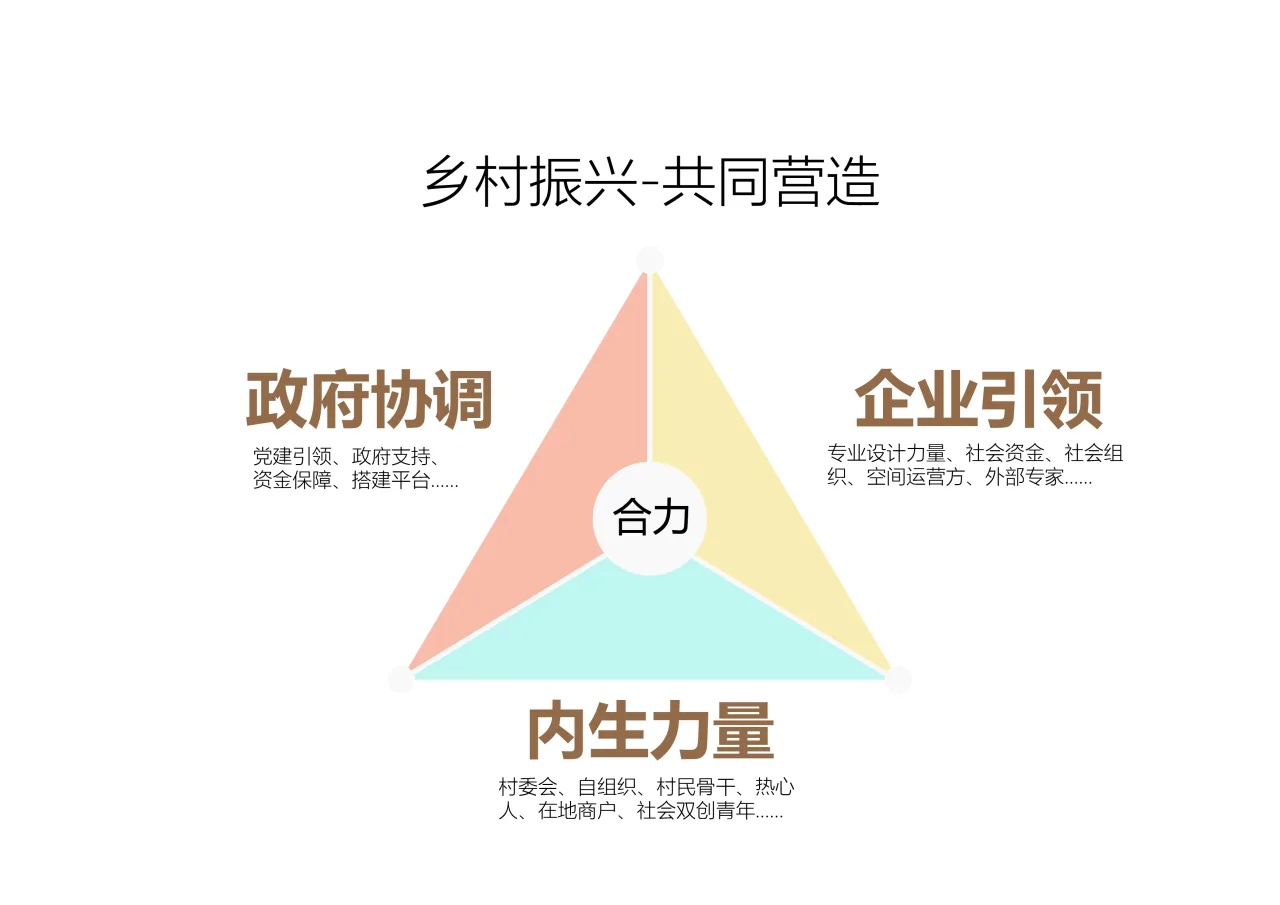
▲ Analysis chart of rural art
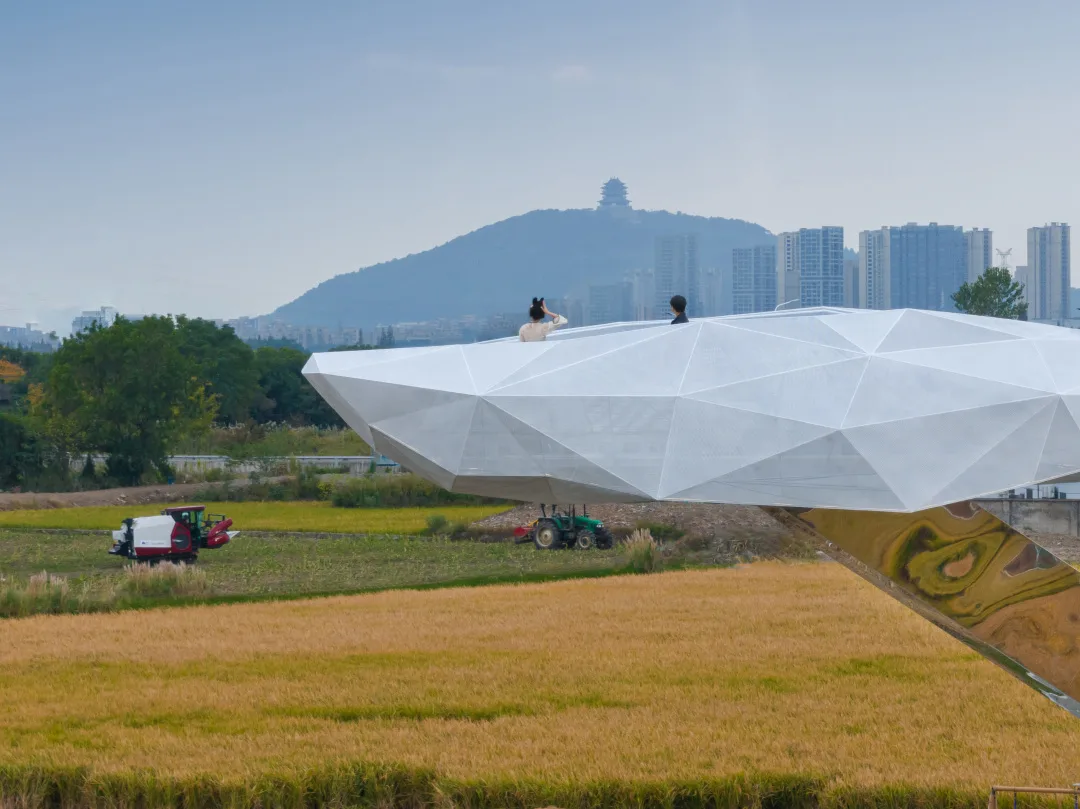
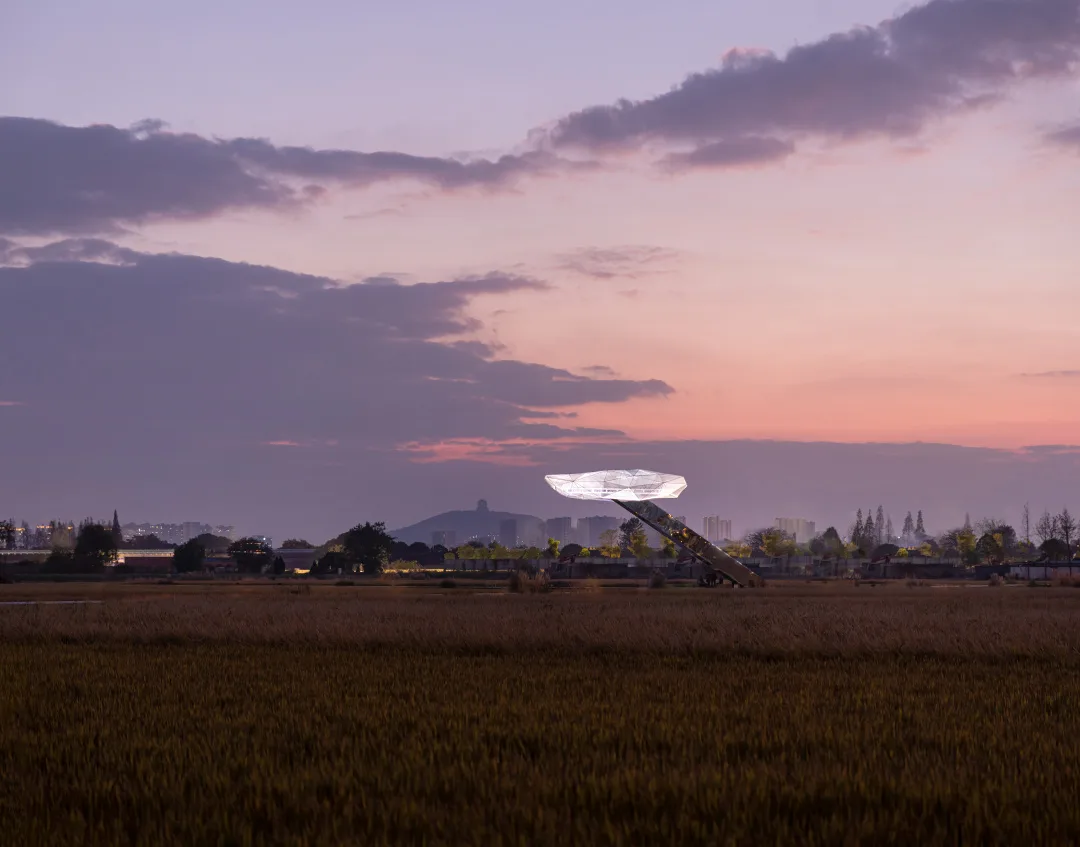
▲ Pastoral art observation deck: If Clouds Know
Revitalizing Rural Sentiment Through Micro Updates
The essence of reviving rural sentiment lies in reconnecting people emotionally with the countryside. This involves making the countryside’s charm felt, recognizing its value anew, and encouraging people to return.
Improving rural living quality, promoting rural tourism, and enhancing the environment through micro-updates empowers rural industries, particularly agriculture+, enabling sustainable operations. The goal is to nurture family bonds, love, and friendship in the countryside, ultimately creating a place people cherish.
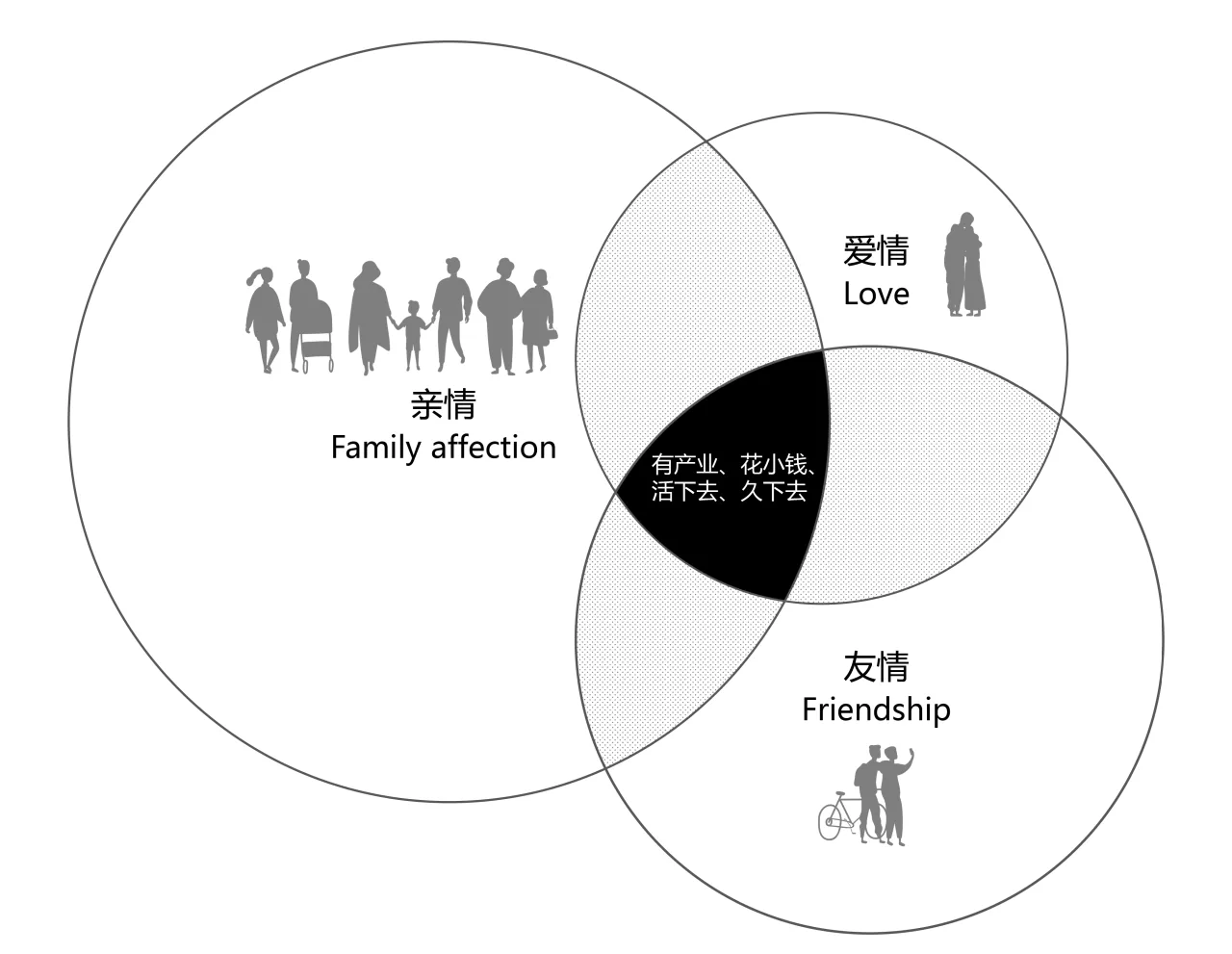
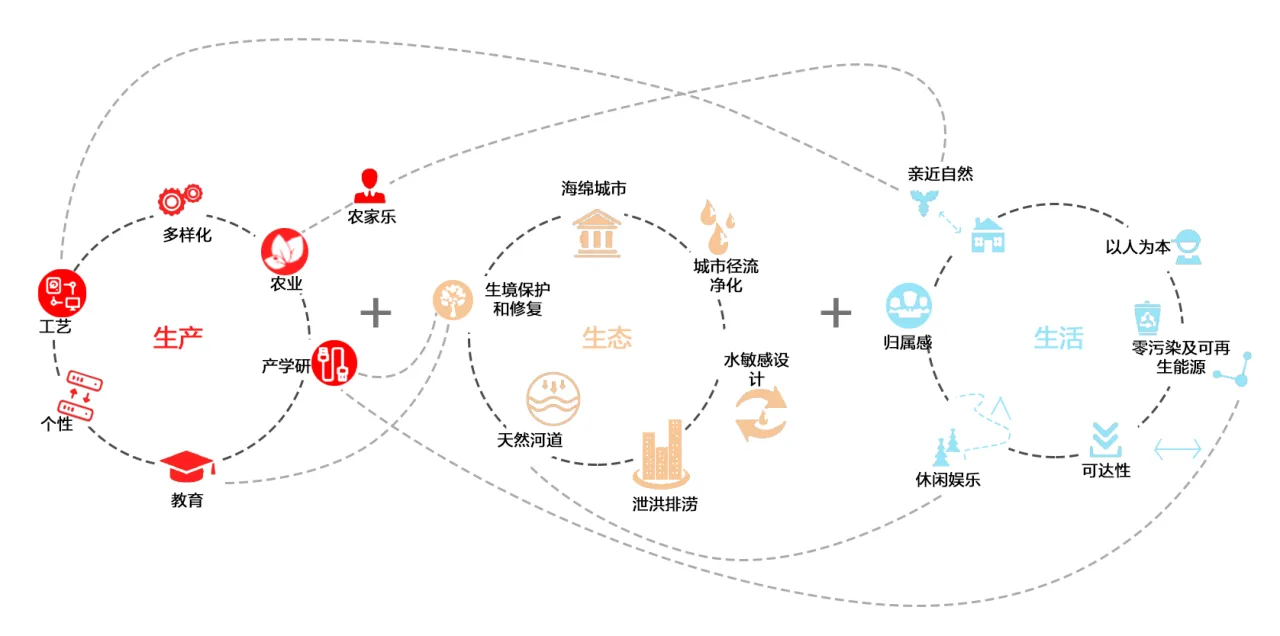
▲ Agriculture+ Empowerment Closed Loop Diagram
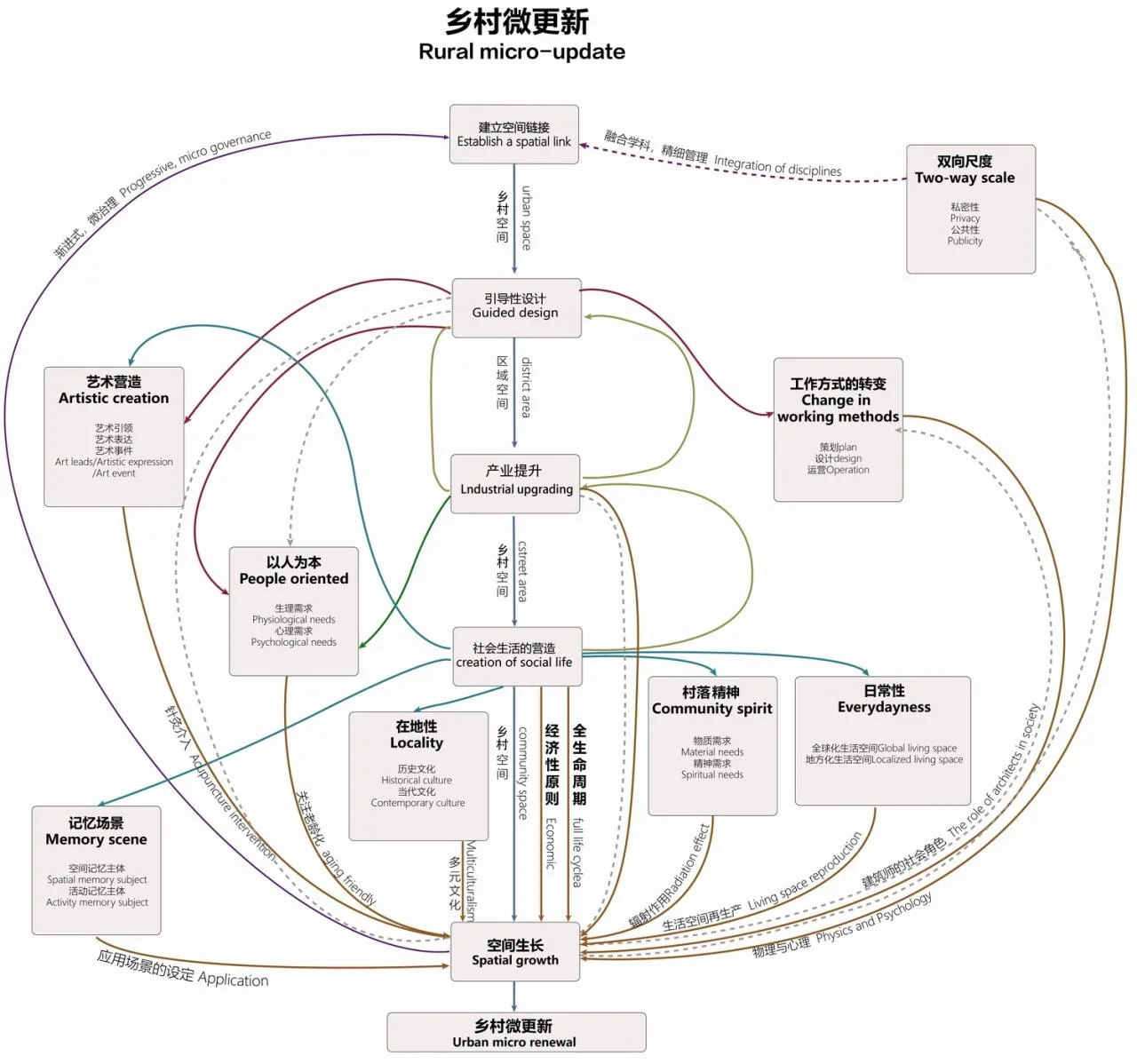
▲ Analysis chart of rural revitalization
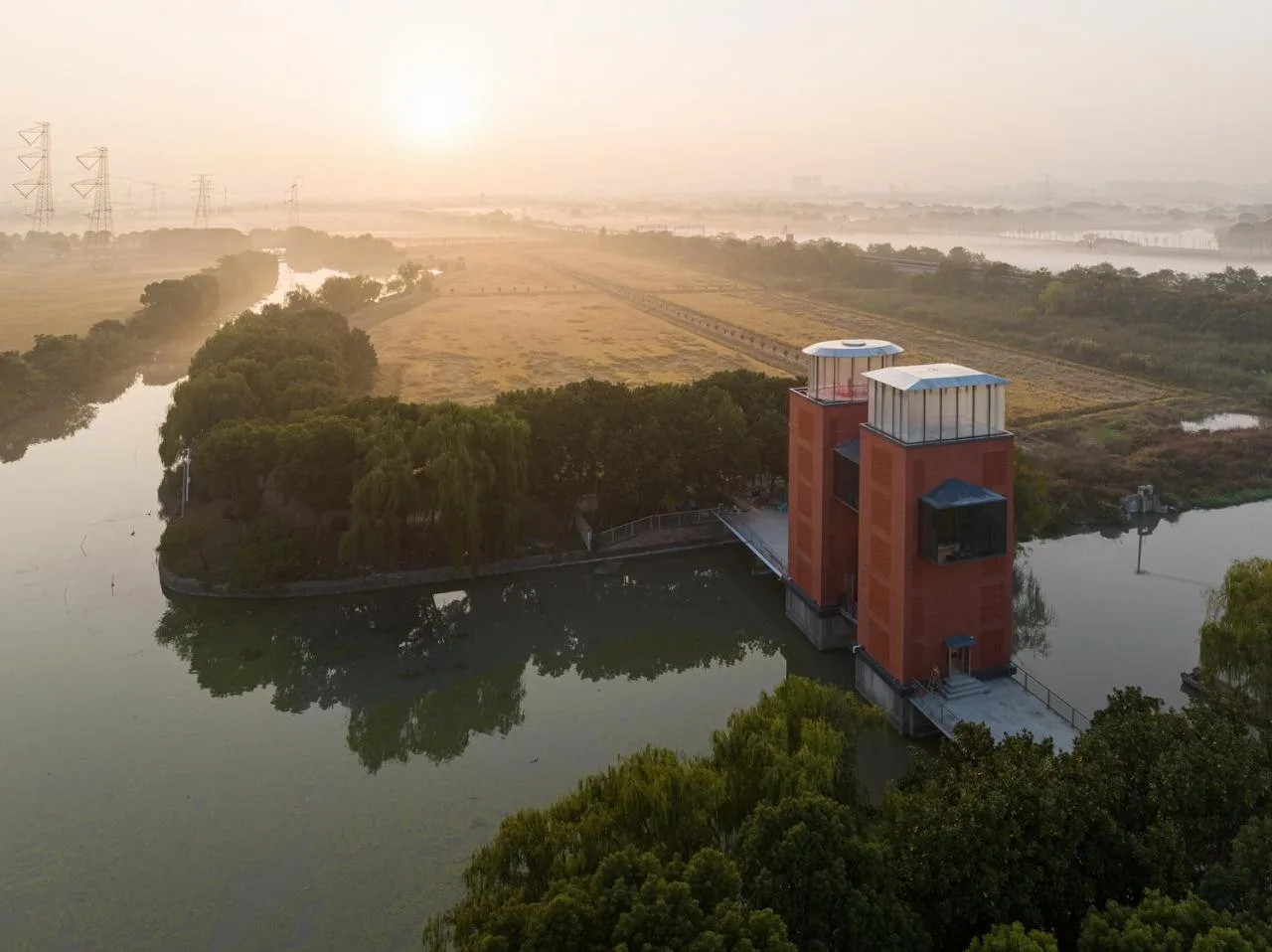
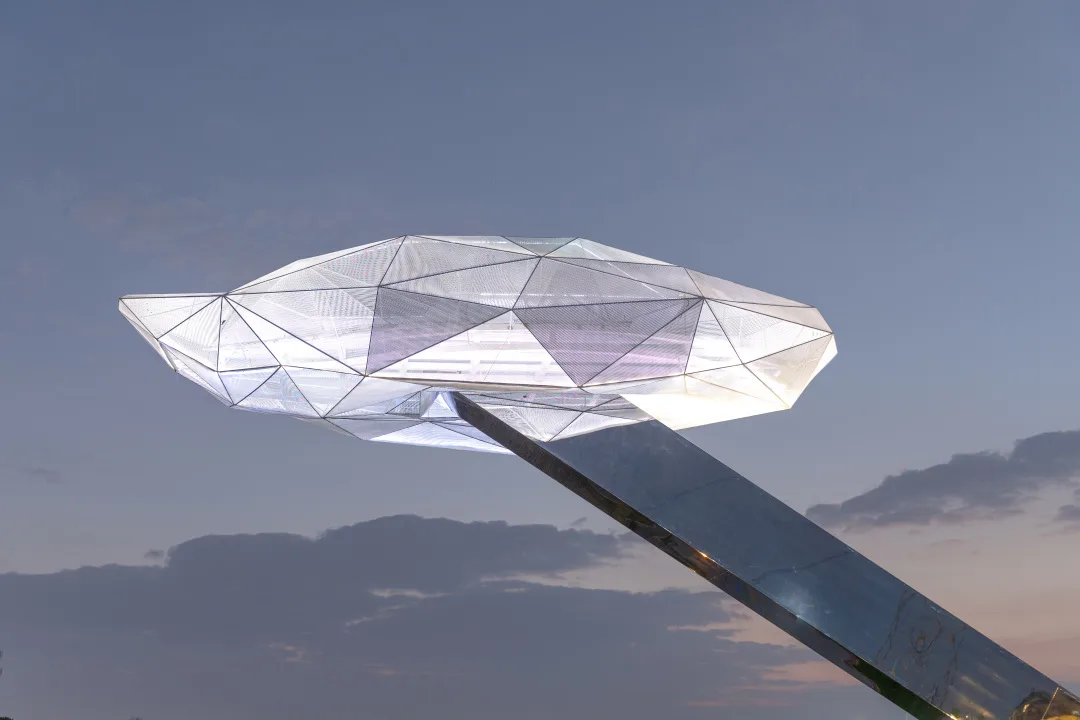
▲ Real photographs
On-Site Practice of Rural Micro Renewal
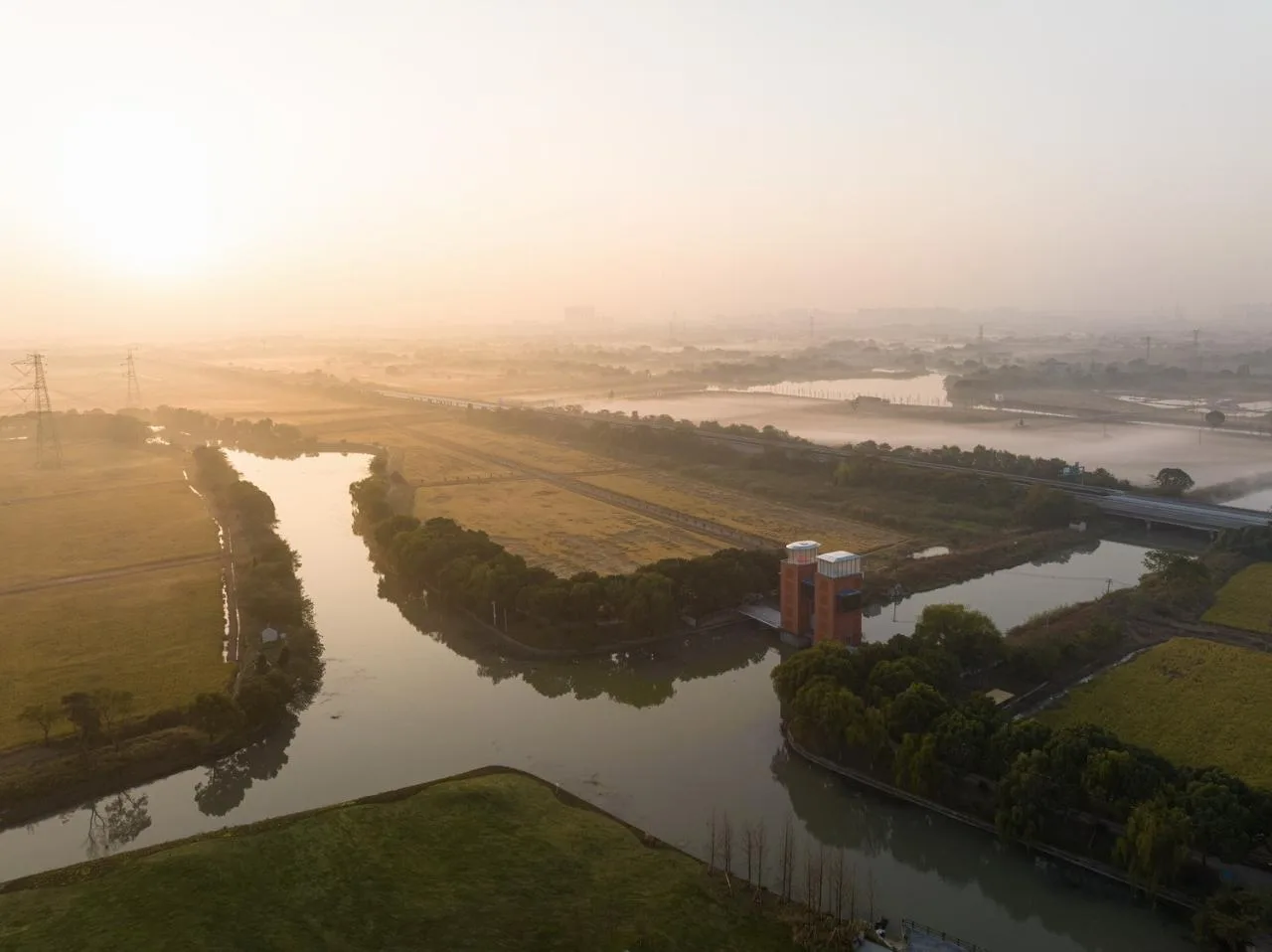
The Jinmao Pastoral Project is located in the fields at the corner of Tangdian Village, south of Taihu Lake. Its predecessor, the “Watching Lighthouse,” is the Daxinggang Sluice situated on the river channel at the village corner, serving as the highest landmark within several kilometers.
Though the original structure and water gate function are preserved, years of use and weathering have dulled its facade. A revitalization is needed to inject new life into the surrounding landscape. The “Clouds of Hometown” viewing platform is located along the plowed field path, offering panoramic views over the fields.
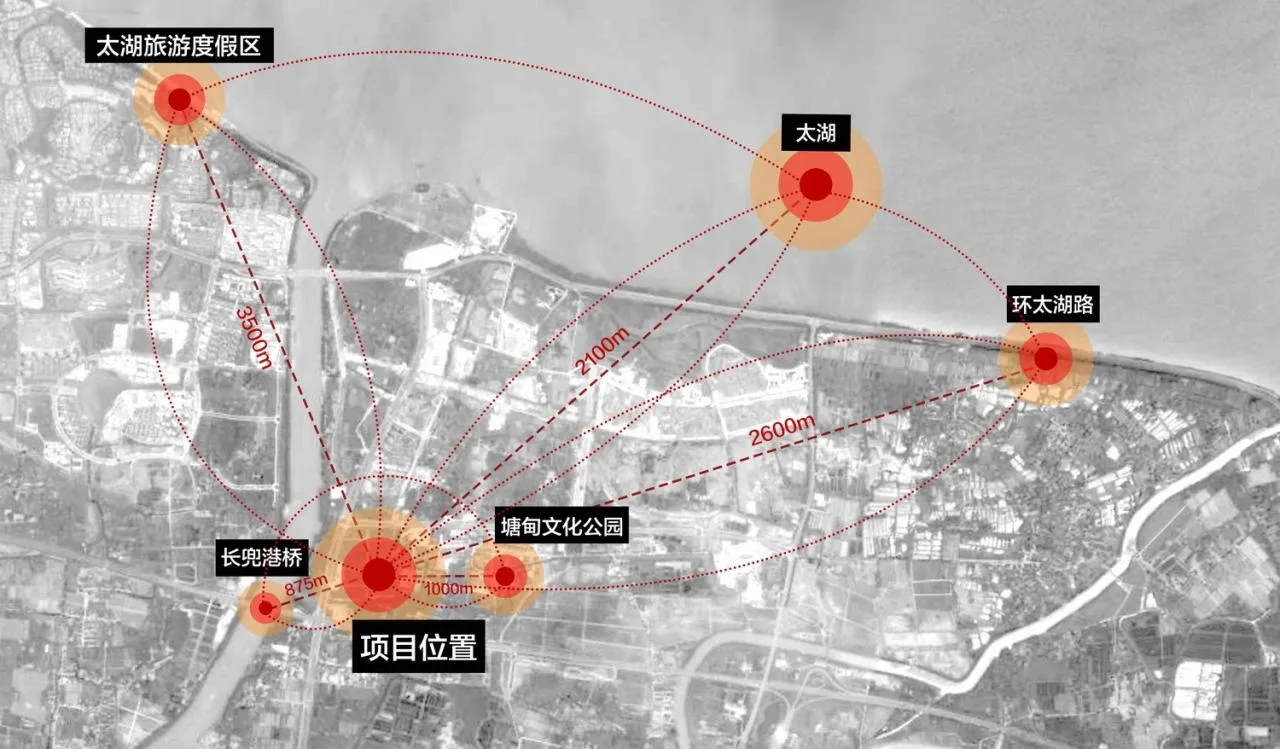
▲ Location analysis
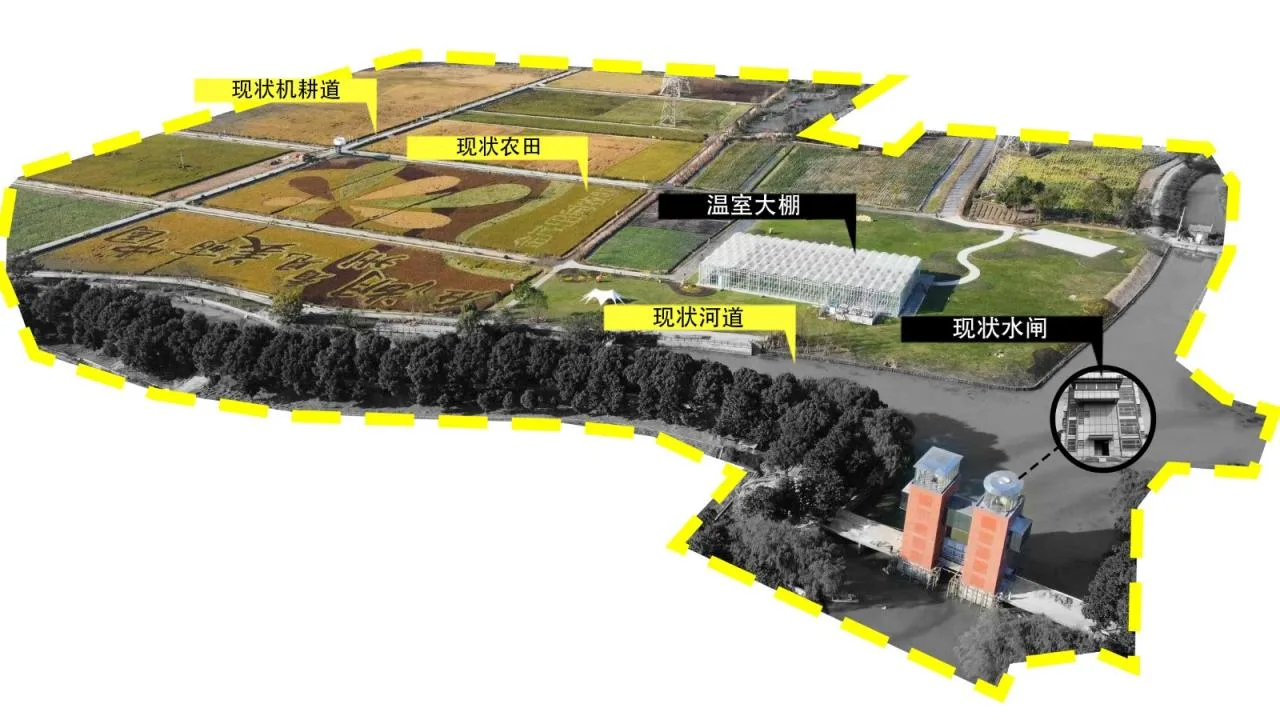
▲ Surrounding environment analysis
Narrative 1: Rebuilding Infrastructure
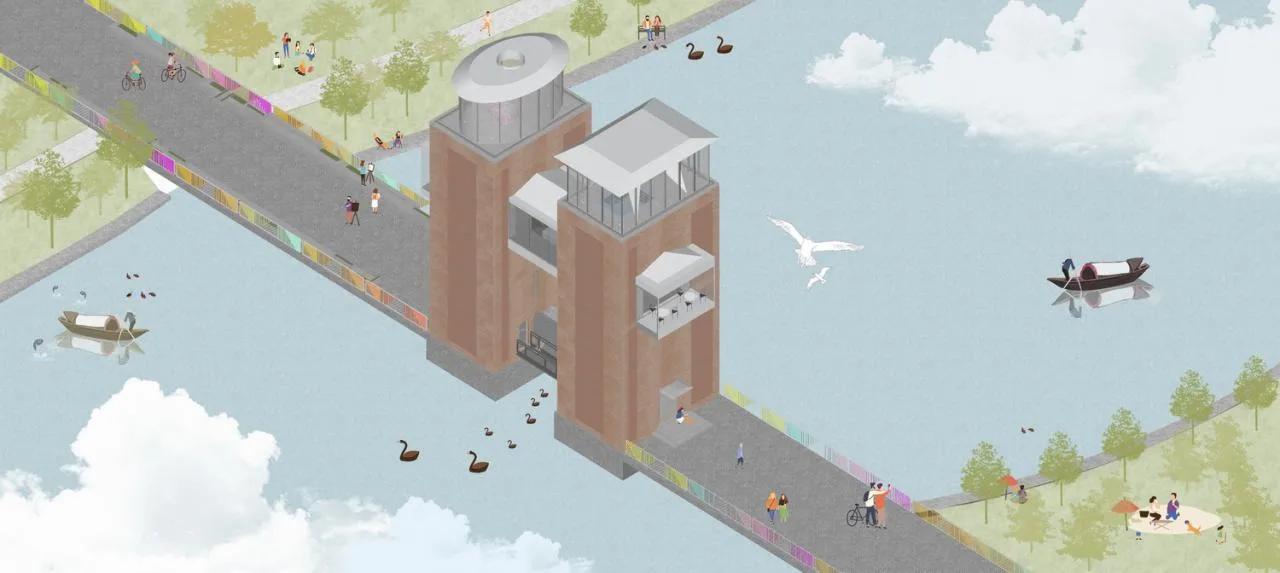
▲ Aerial view illustration of the Water Lock
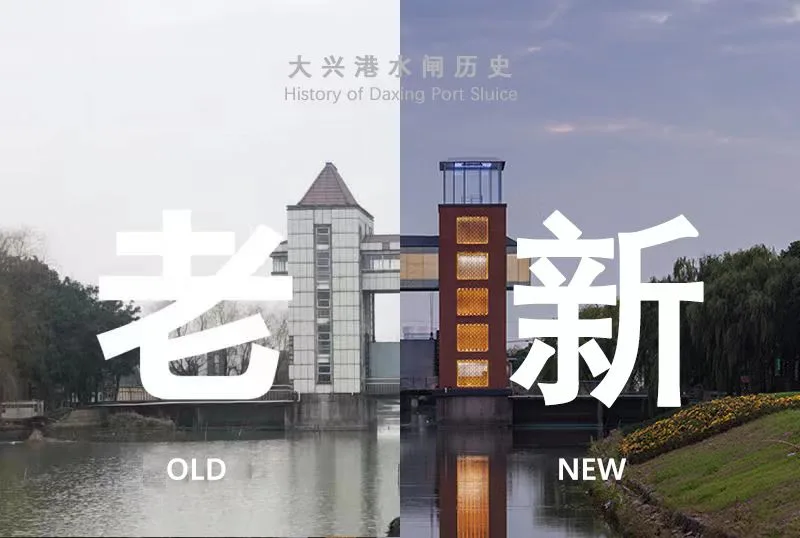
▲ Before and after comparison
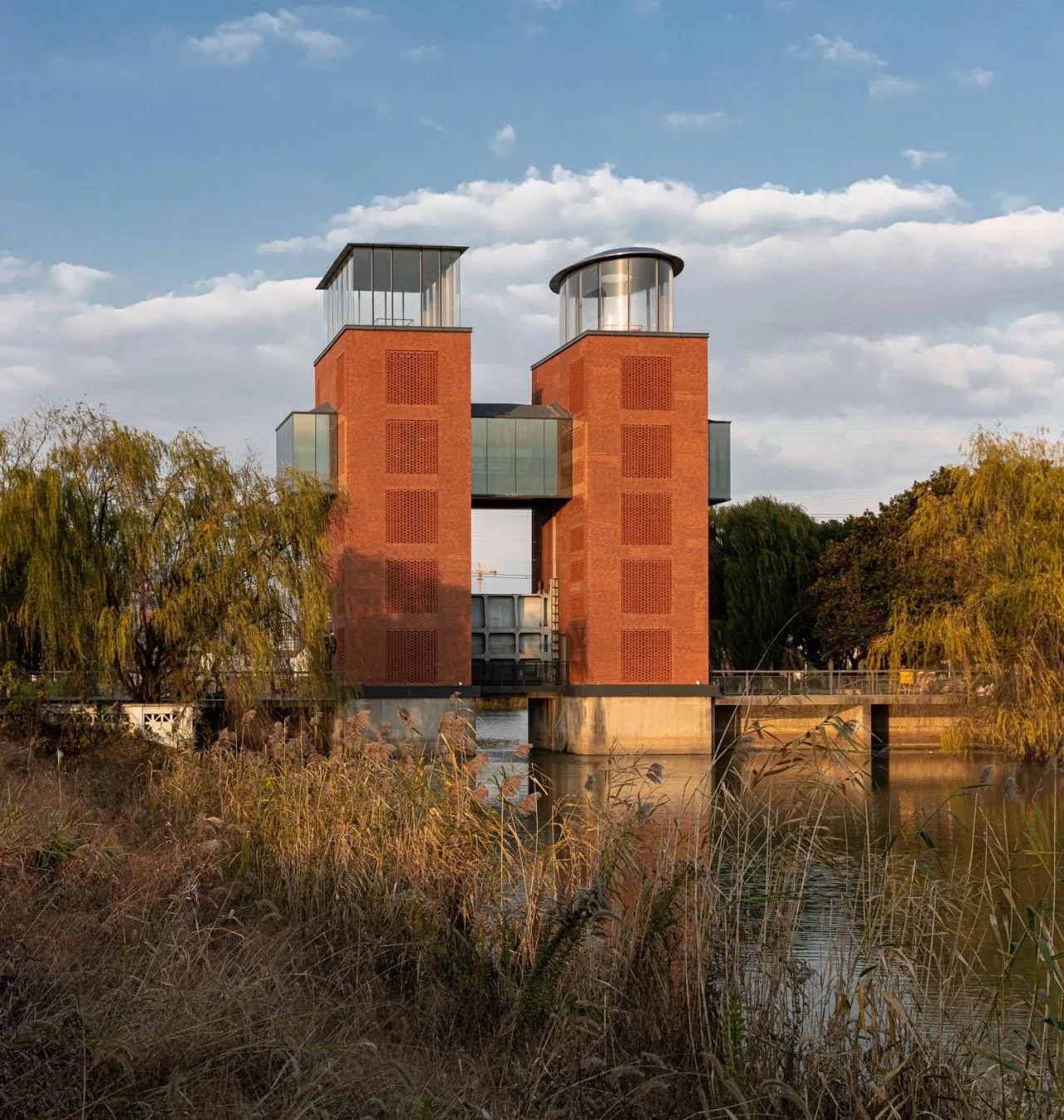
▲ On-site photos
Reconstructing Industrial Relics
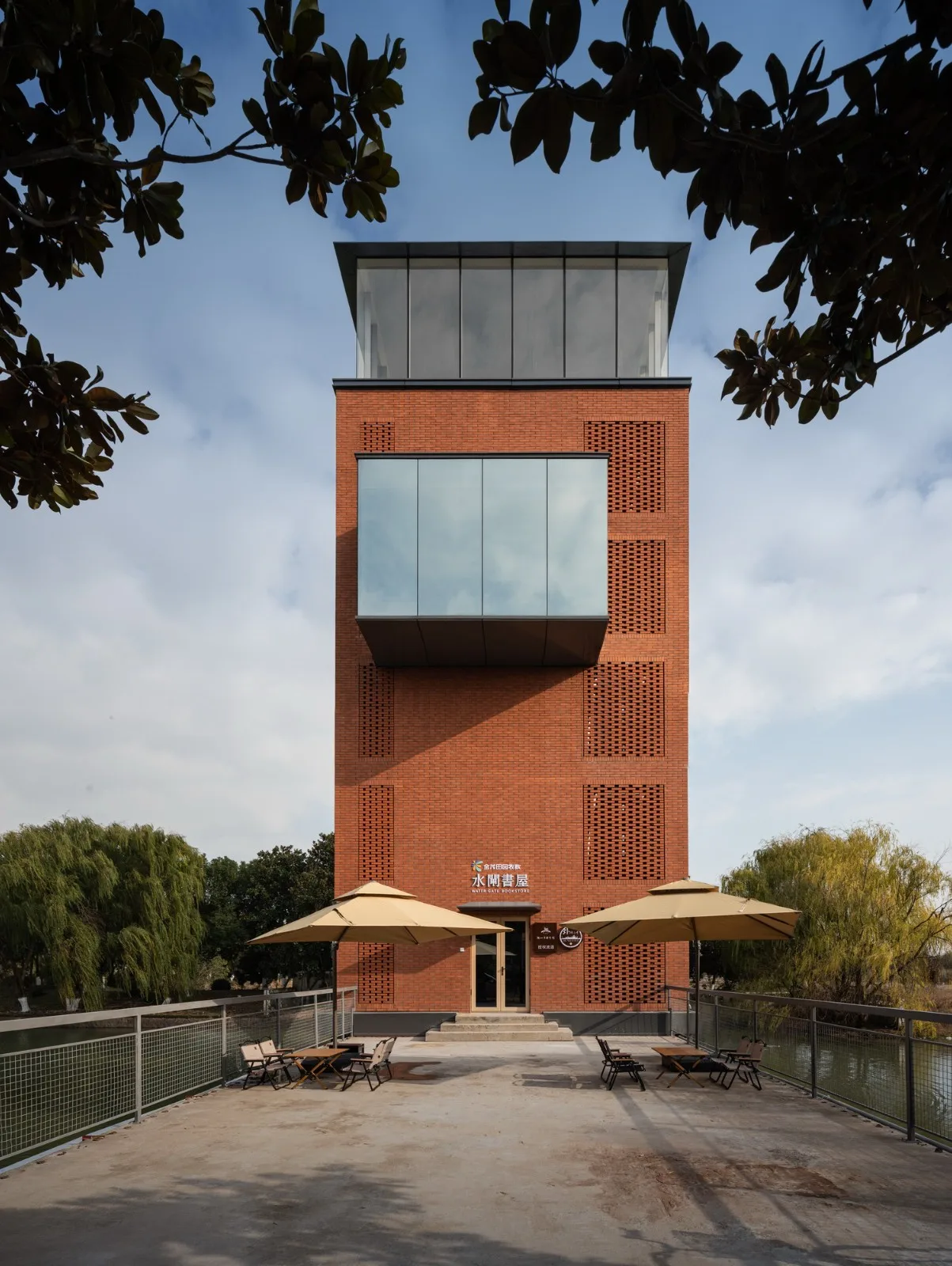
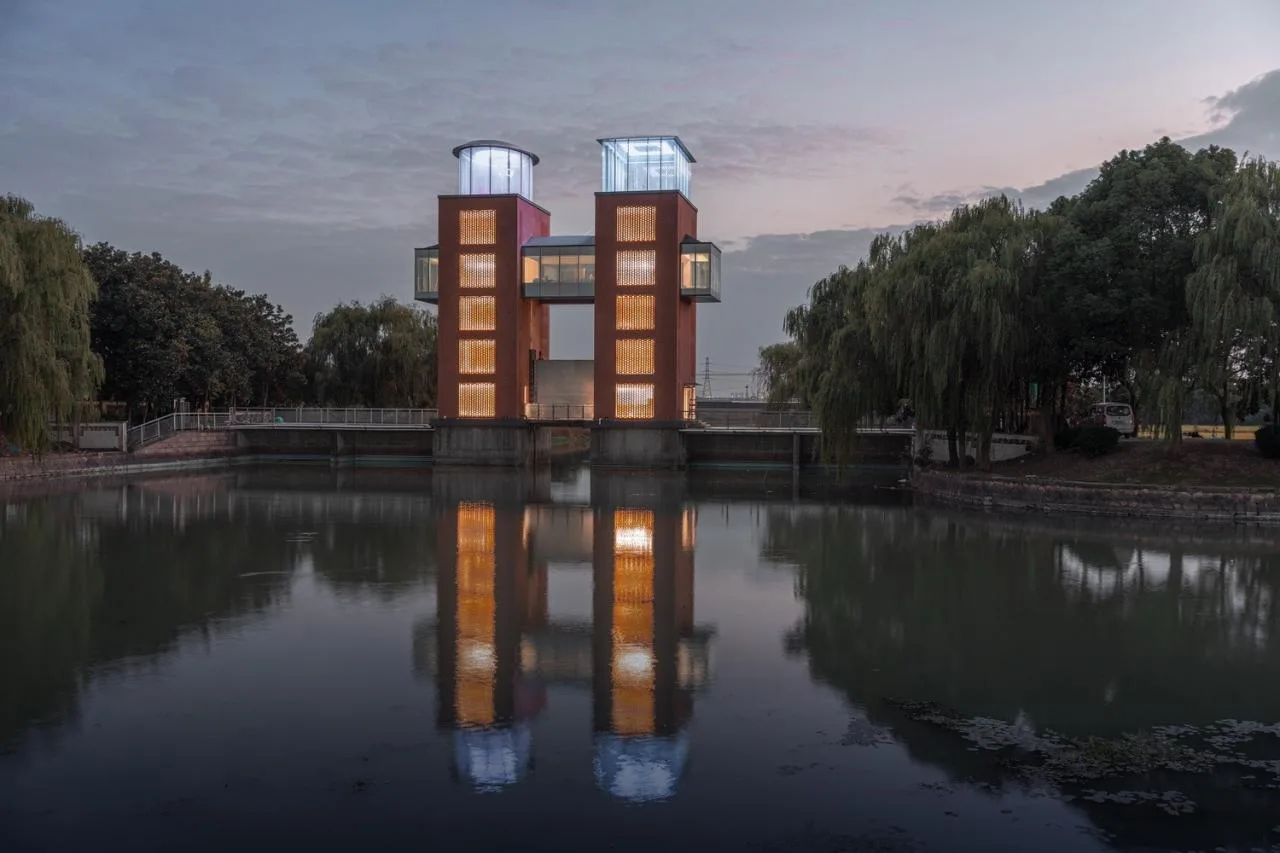
The new water gate maintains the original twin-facing structure, with the spires transformed into geometric shapes—one square, one circular—symbolizing the process of creation from nothing. Located within a transparent pointed space, visitors can overlook the entire Jinmao Wilderness.
The water gate stands like a guardian facing east in the fields. At dawn, visitors can watch the sunrise; at night, illuminated lights transform it into a lighthouse guiding nighttime travelers.
The renovation, based on twin towers, reflects the emotional journey of human relationships—distance and closeness, separation and reunion—ultimately symbolizing a new beginning.
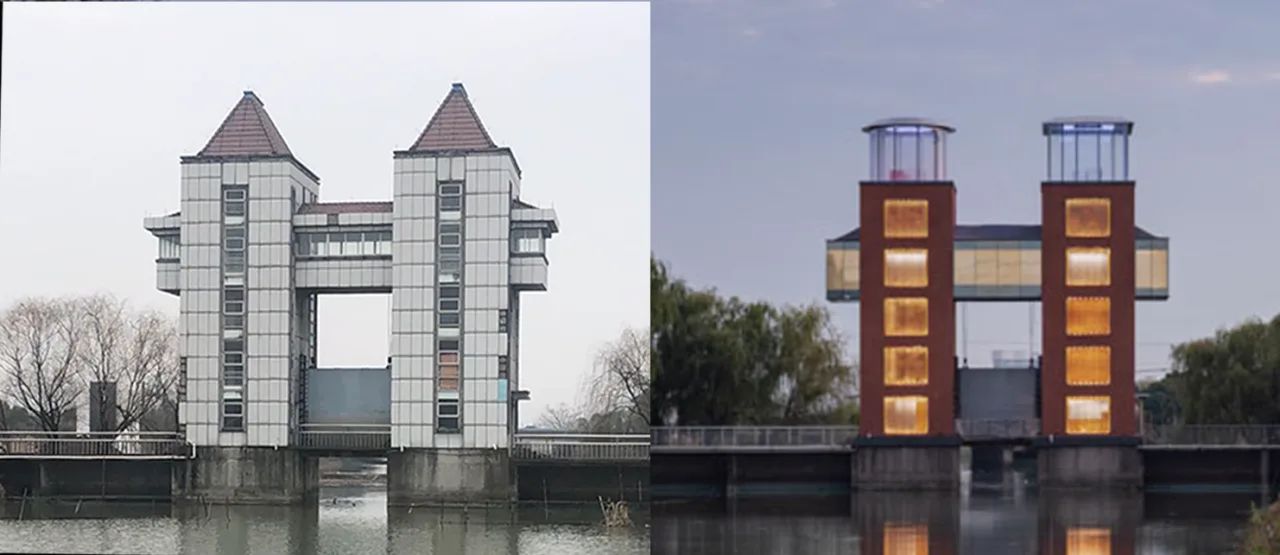
▲ Renovation before and after comparison
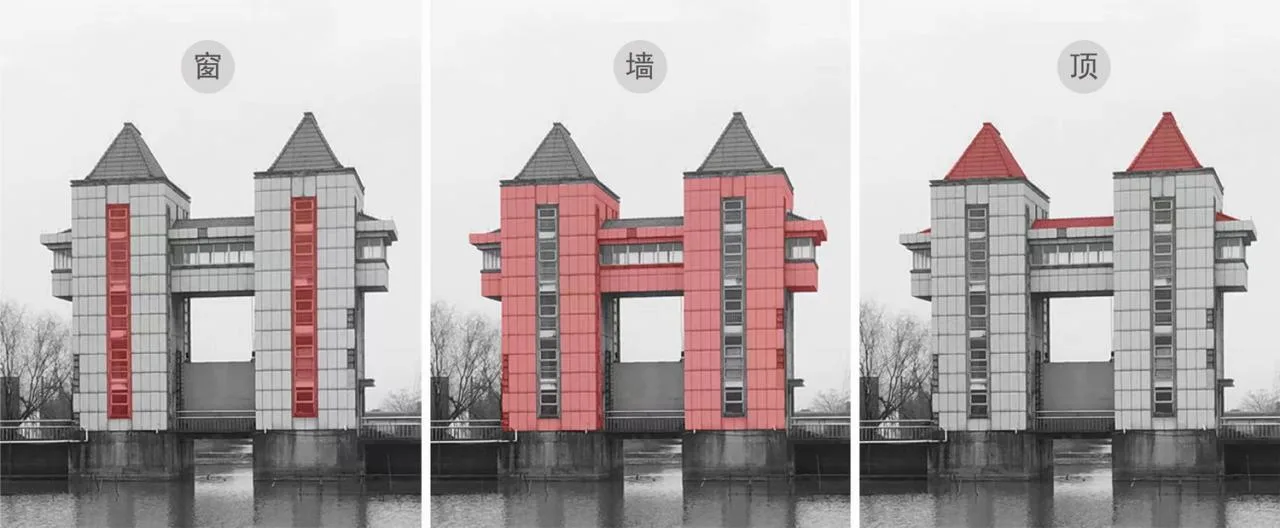
▲ Transformation strategy
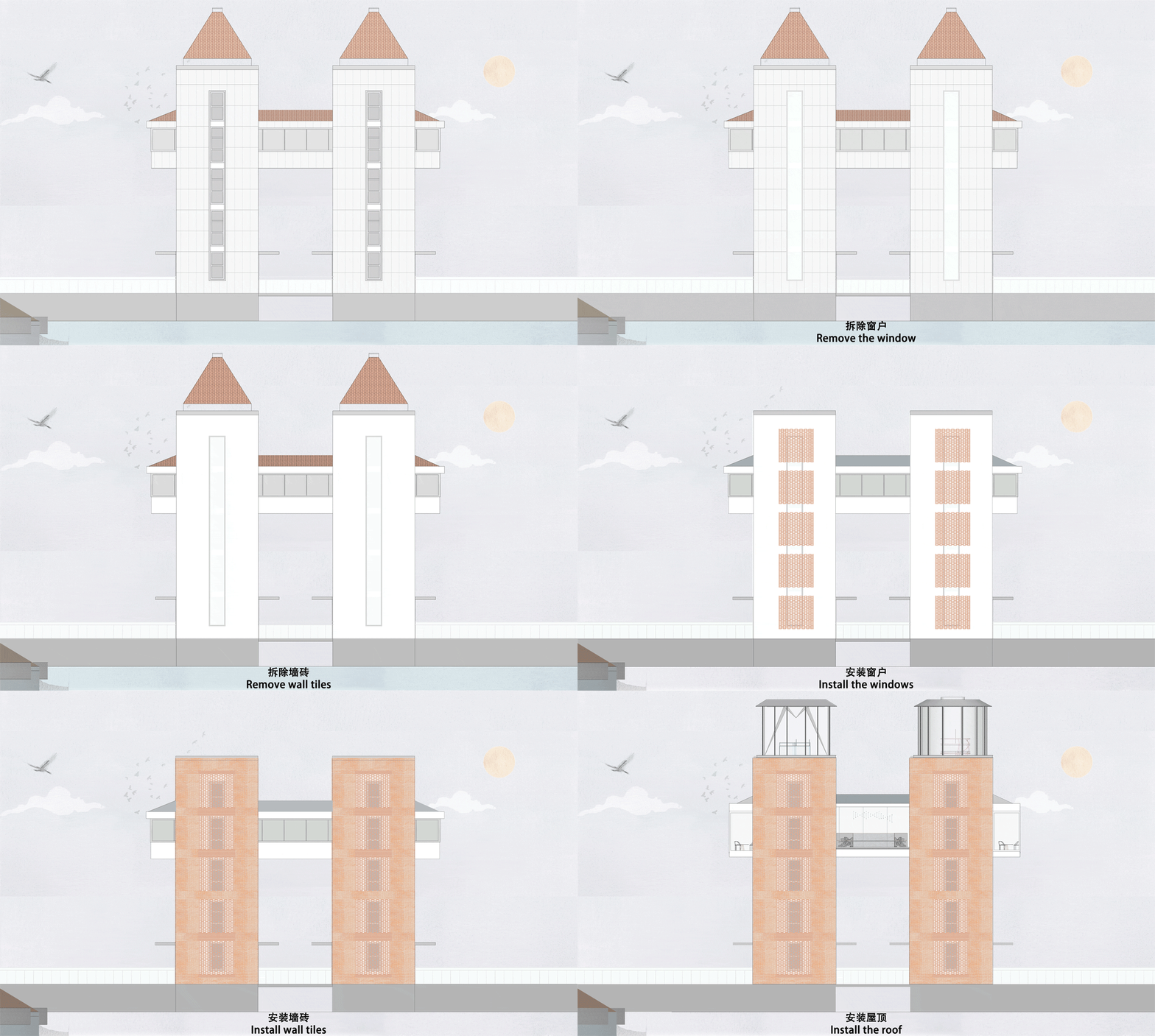
▲ Facade renovation strategy
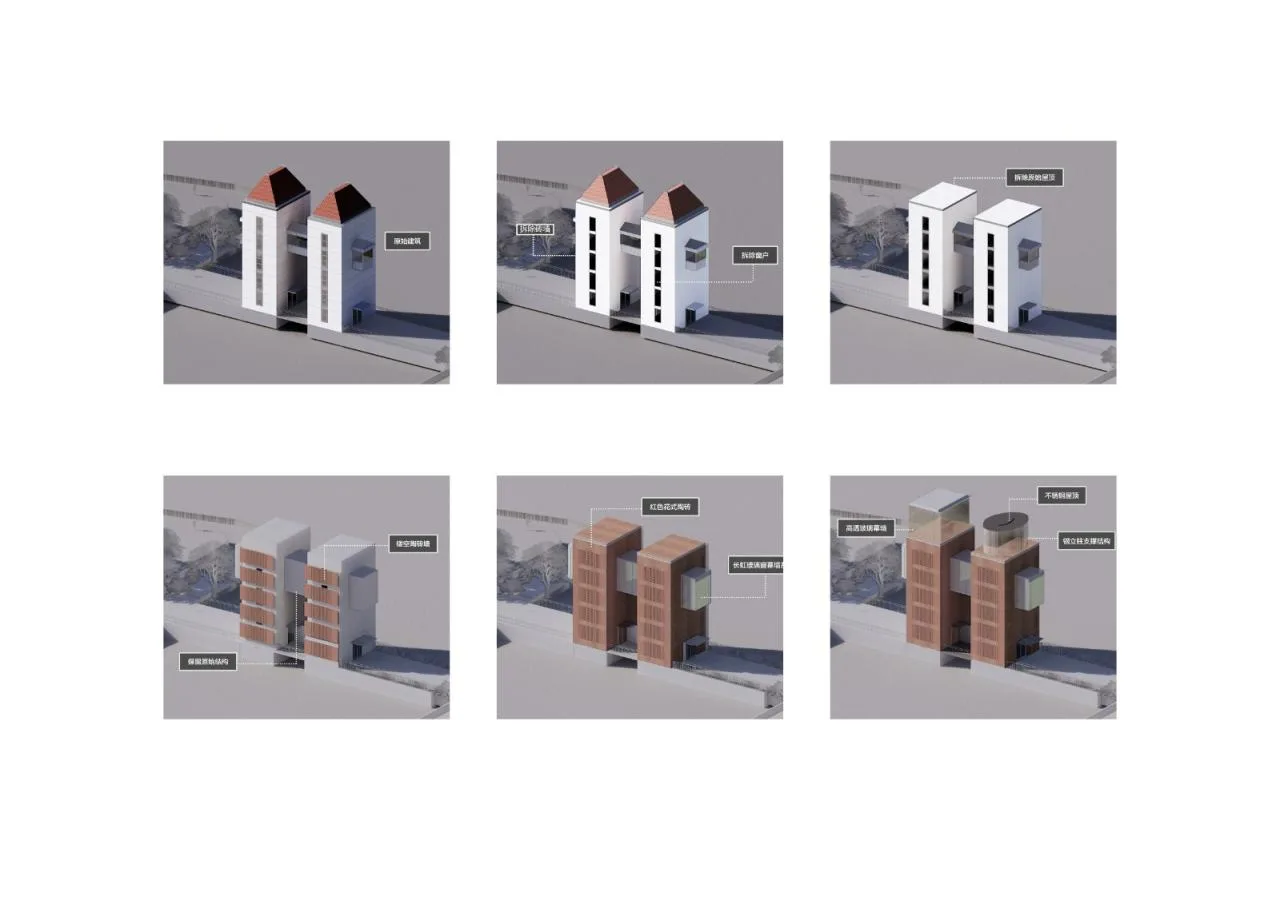
▲ Transformation strategy
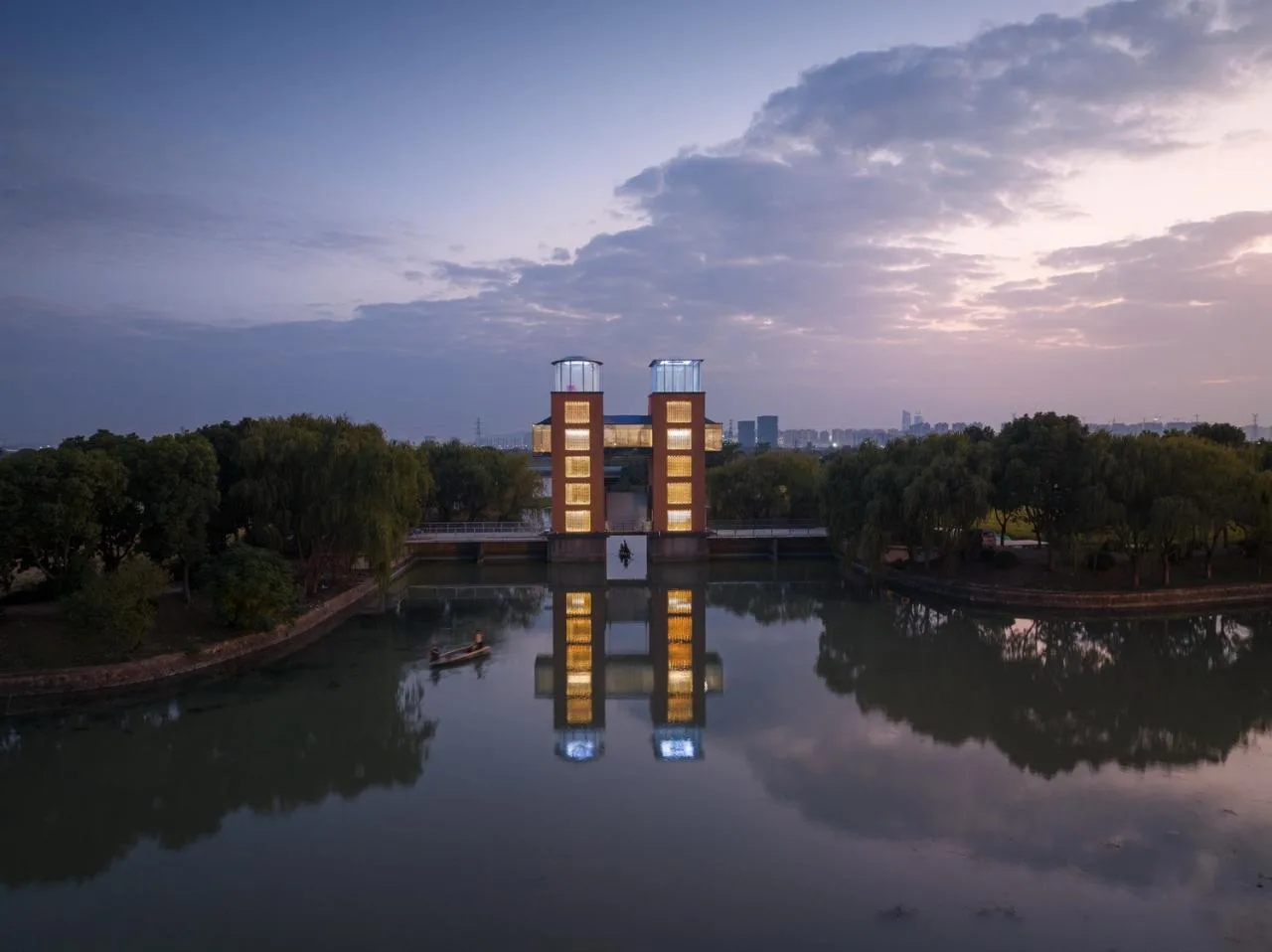
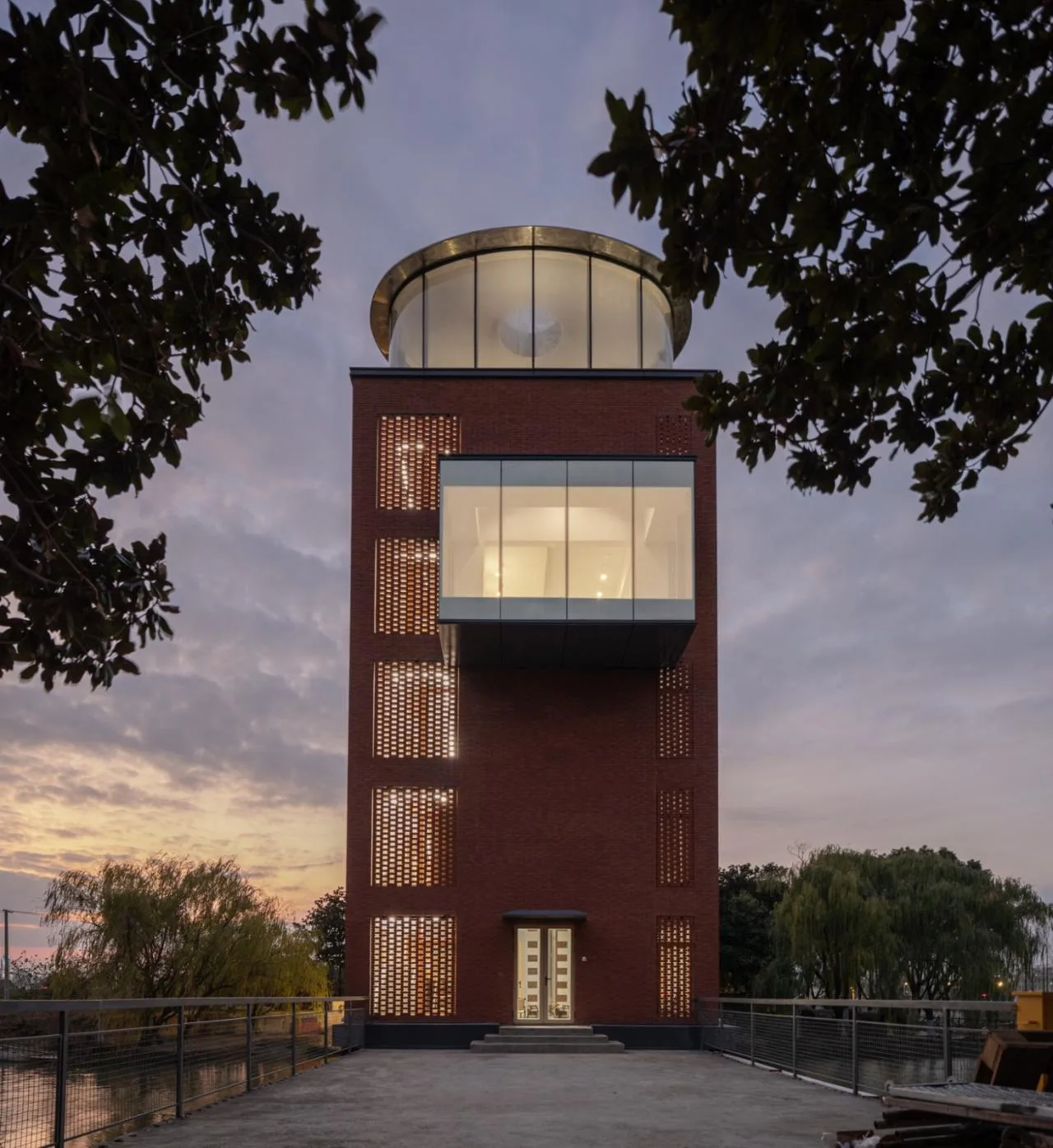
▲ Photo of the water gate
Within the great narrative of rural life, human emotions and struggles are deeply embedded. The simple love of ordinary people may seem small in the grand scheme, but it remains the last warmth in modern cities.
The water gate, originally functional infrastructure, still serves its purpose. The intertwining of aesthetic life and labor is inseparable, perhaps embodying an ideal existence. Historically, agricultural production has always been integrated into the construction and use of buildings in China. Water gates represent both spatial aesthetics and foundational agricultural systems.
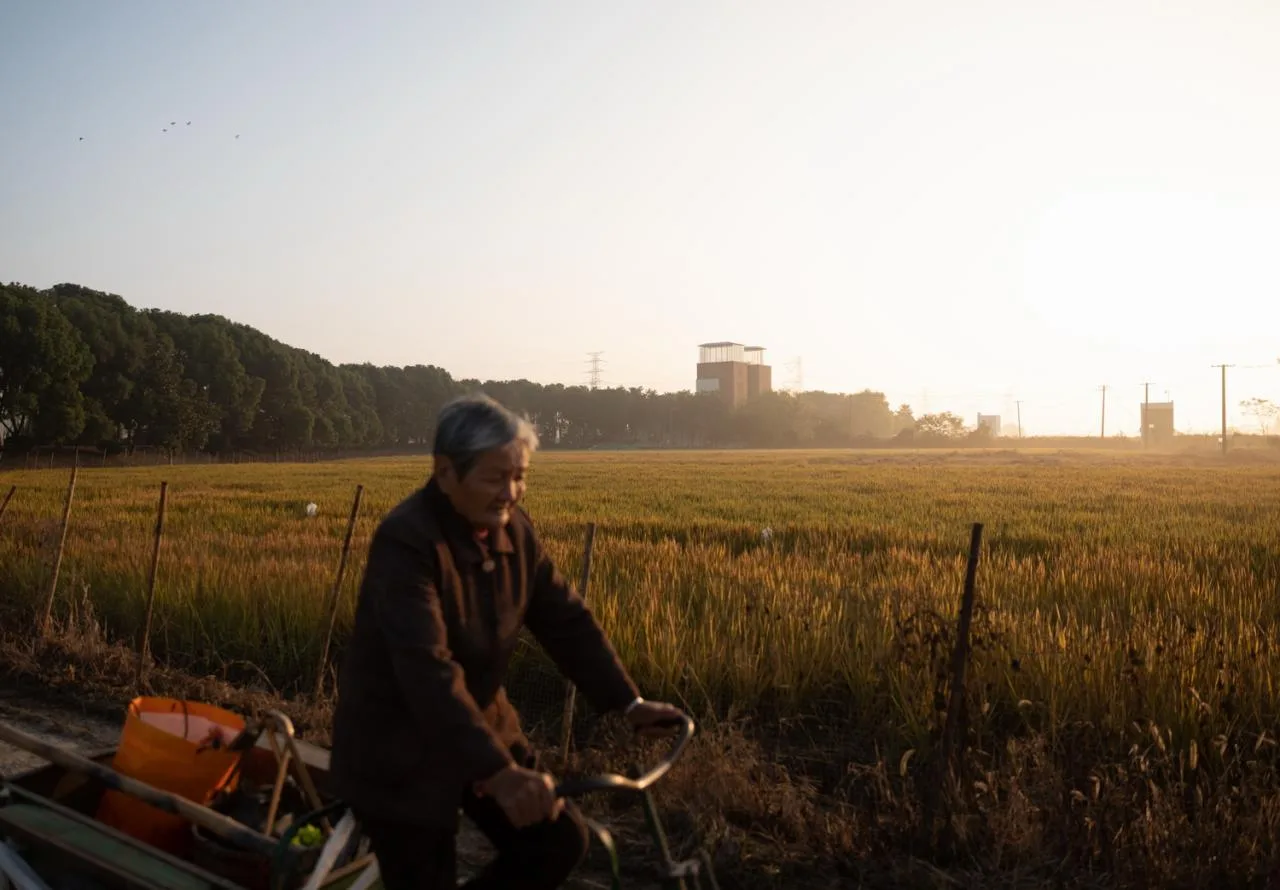
▲ Photo of the water gate
Exploring the Space
The foundation of literature and art returns to nature. Below the floating coffee space in the water gate building stands a tower library, enriching the cultural atmosphere and highlighting creative surroundings.
The ground floor hosts a reception and office for staff. Interiors emphasize plain concrete and wood tones, accented with mirror-finish stainless steel and glass. Stairs to the tower’s top, shaped as a circle and square, are coated pink and blue symbolizing a boy and girl guarding one another.
▲ West entrance of the water gate
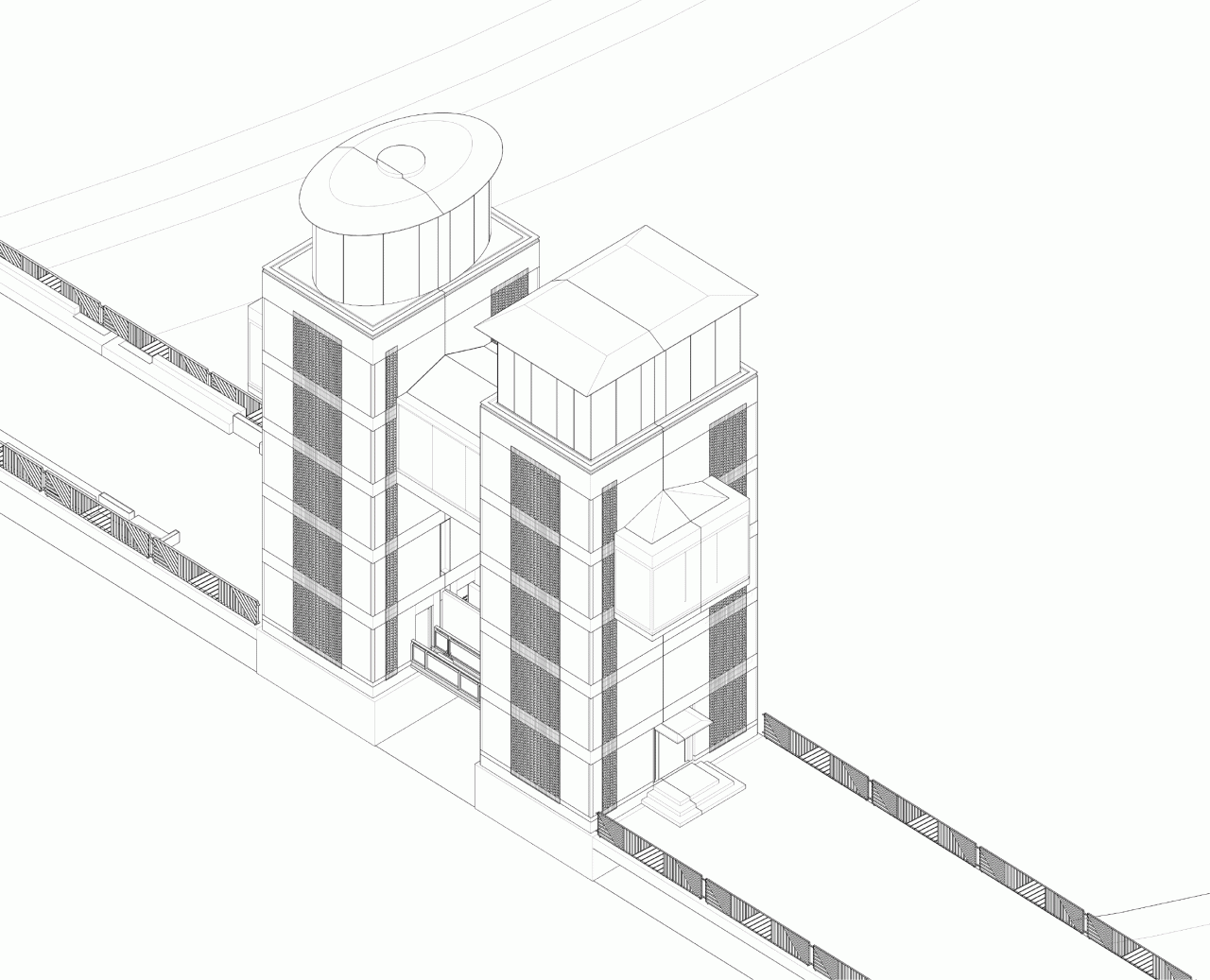
▲ Sectional dynamic diagram
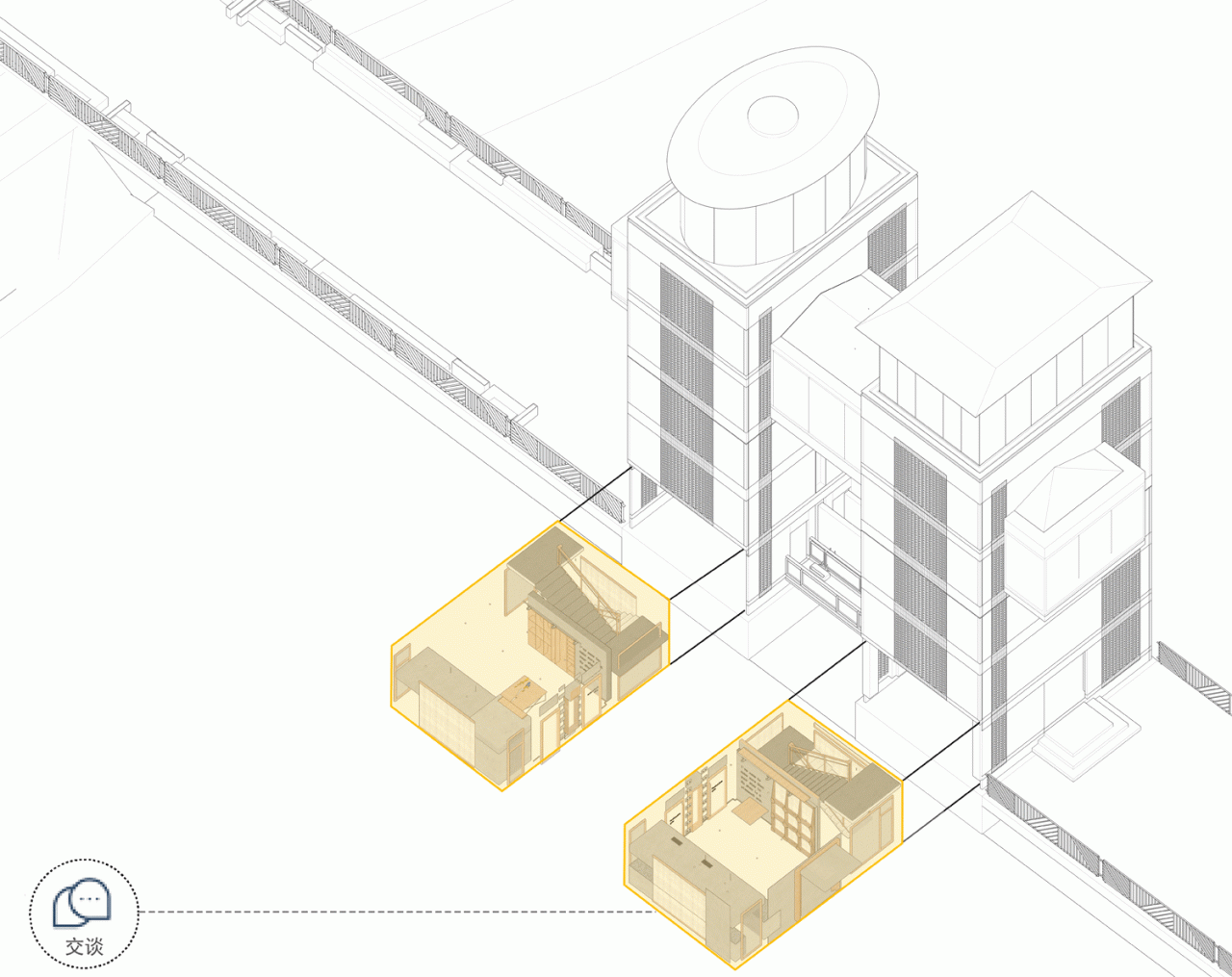
▲ Flow chart
The water gate’s red brick wall is connected by a central corridor, with transparent glass curtain walls offering unobstructed views of the river and fields. The original water gate machinery remains centrally placed, maintaining its function, while the sides have been transformed into floating coffee spaces.
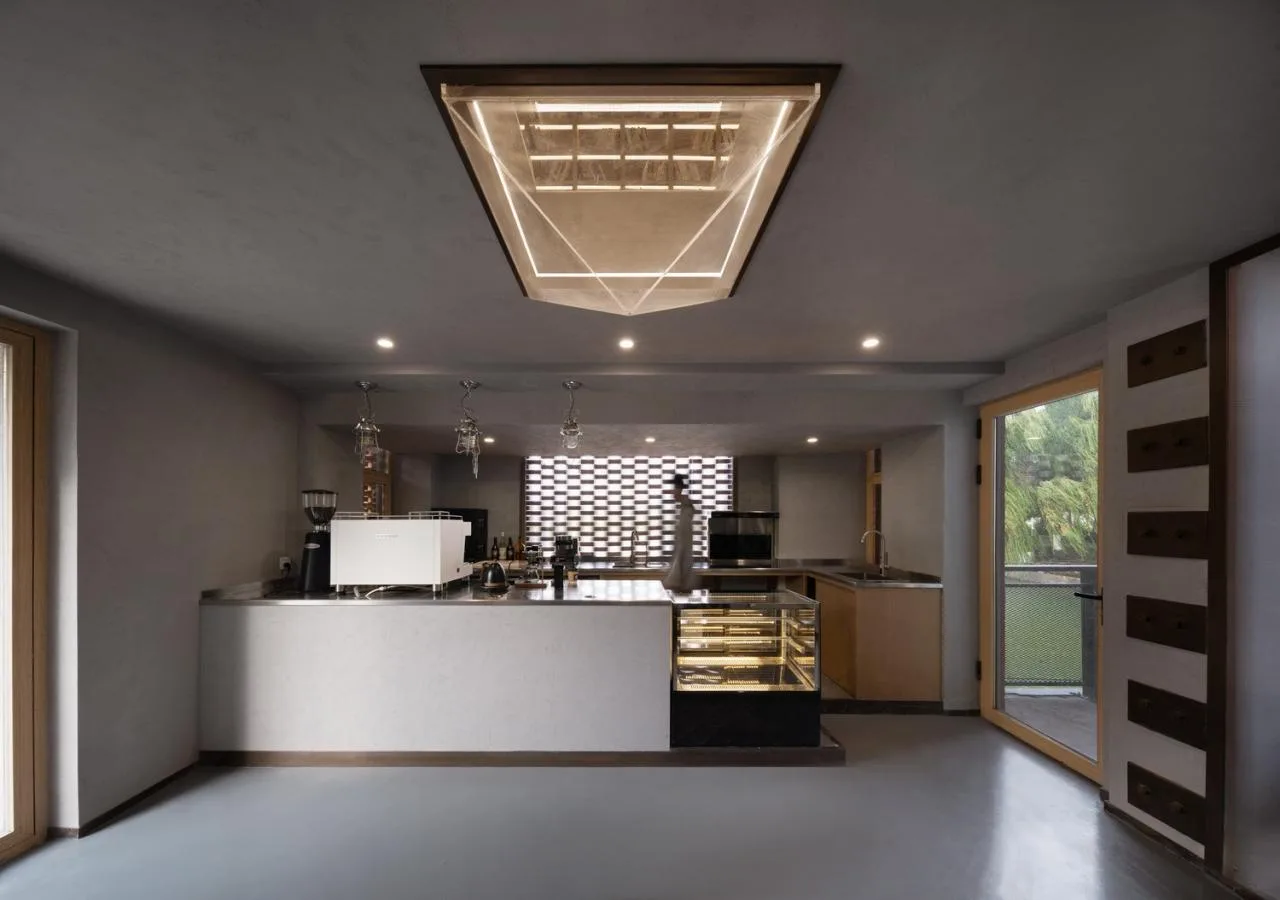
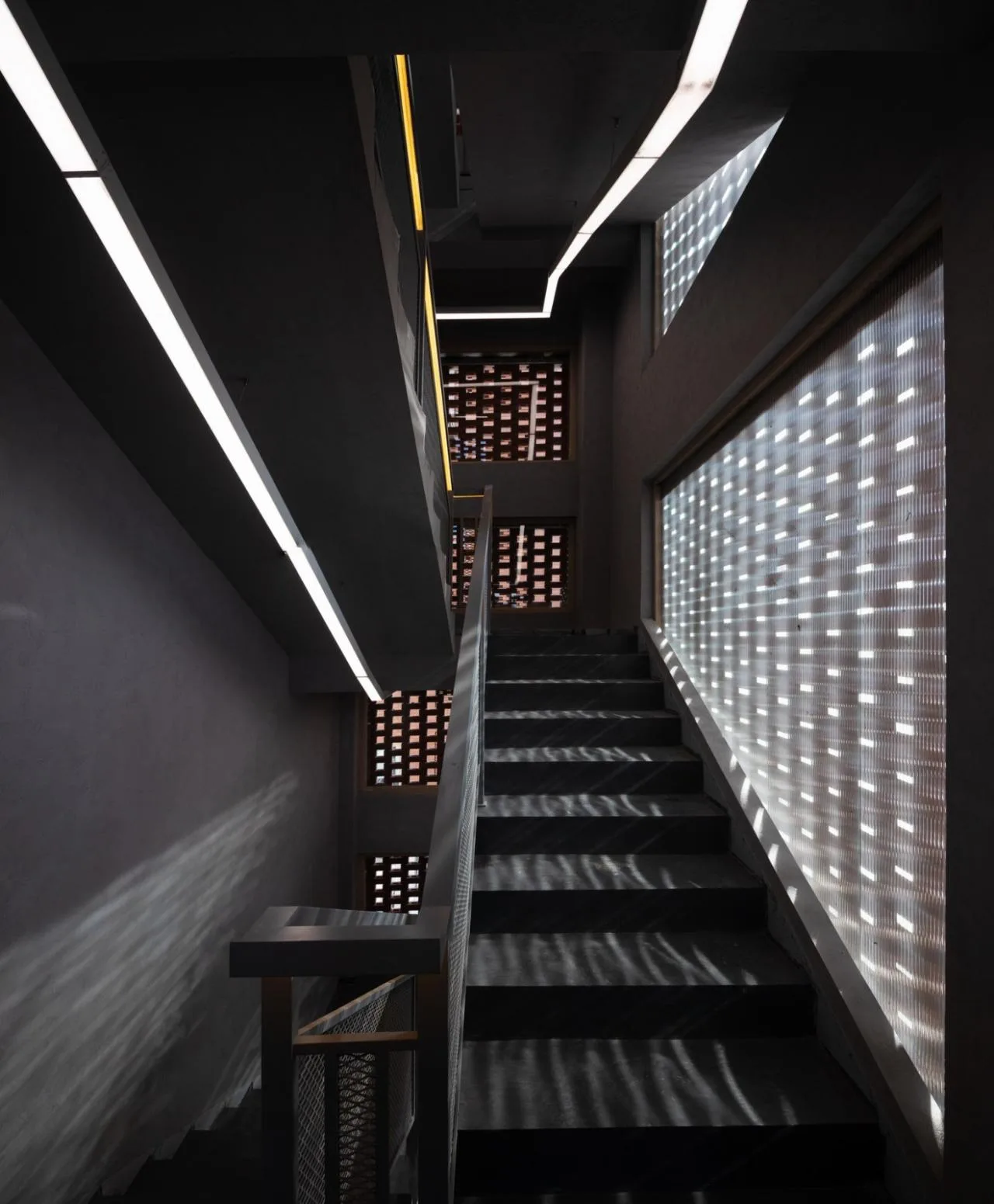
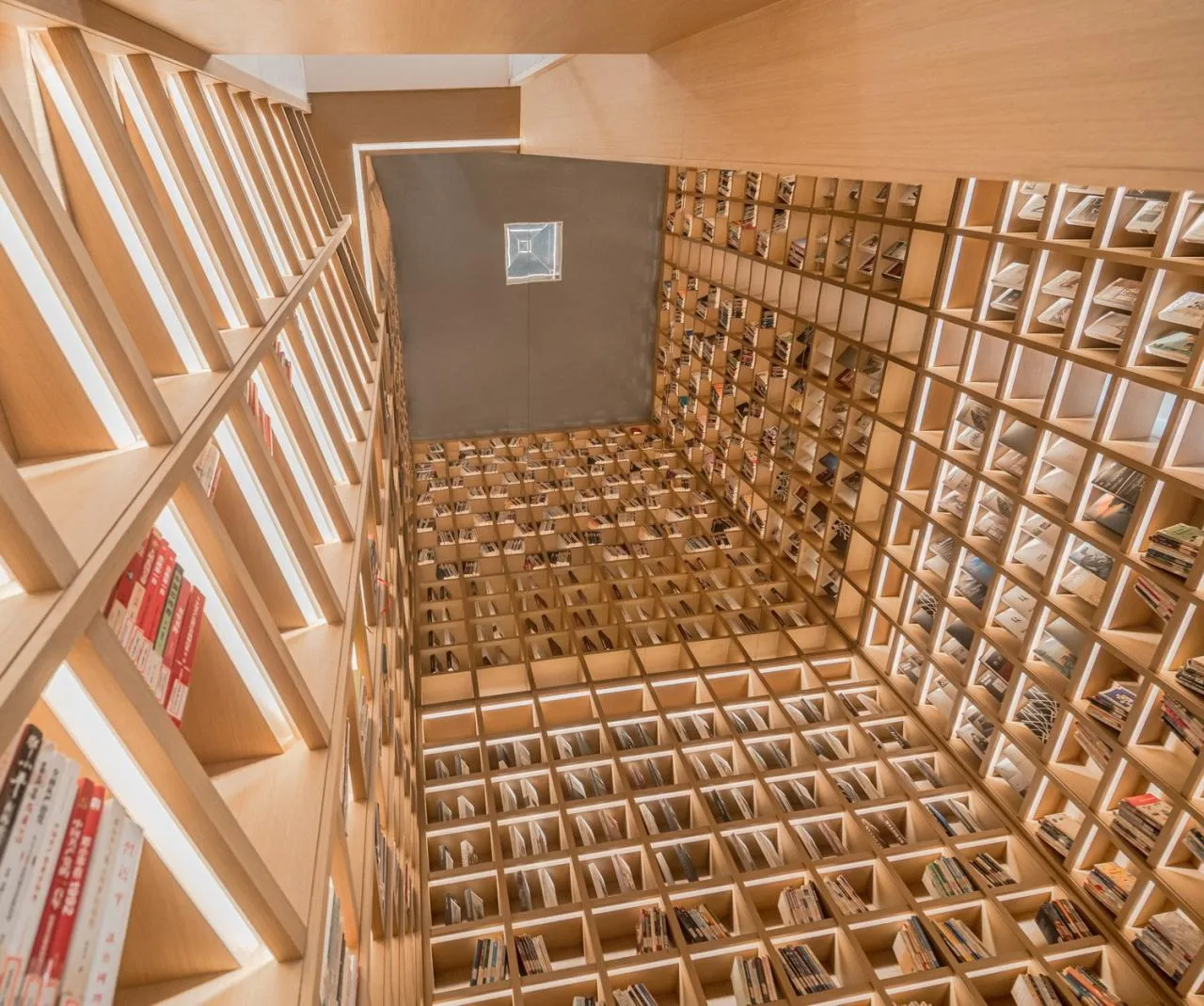
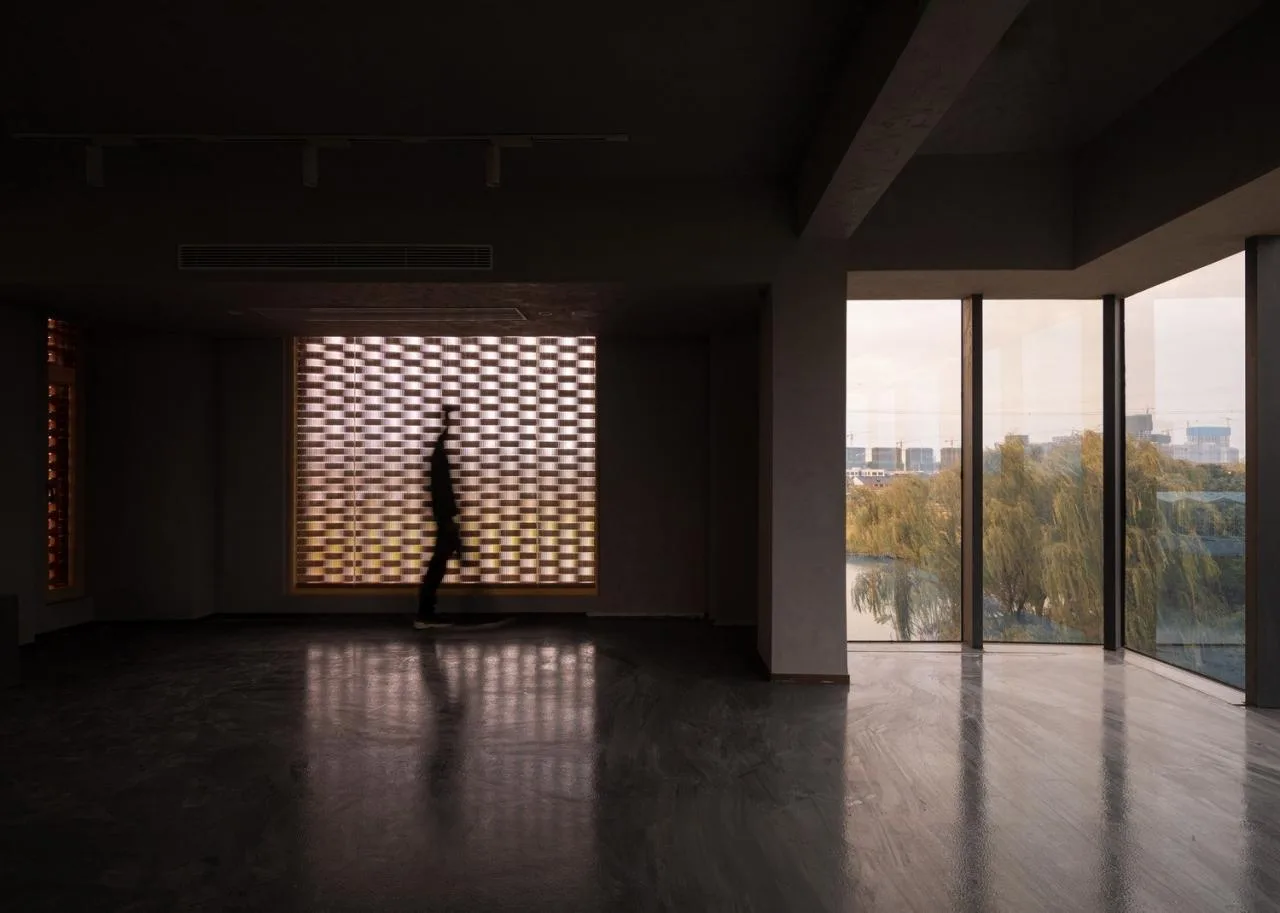
▲ Indoor real-life photos
– Horse House Coffee (First Floor)
The design features plain concrete material, creating a simple, modern, and relaxed atmosphere. Natural materials like wood and fabric complement the concrete to add warmth and a natural feel. Furniture is minimalist to maintain openness, and ambient lighting enhances a quiet, cozy space.
An inverted triangle hanging from the ceiling subtly reveals the upper-level library’s spatial presence, breaking the floor slab’s visual limitation.
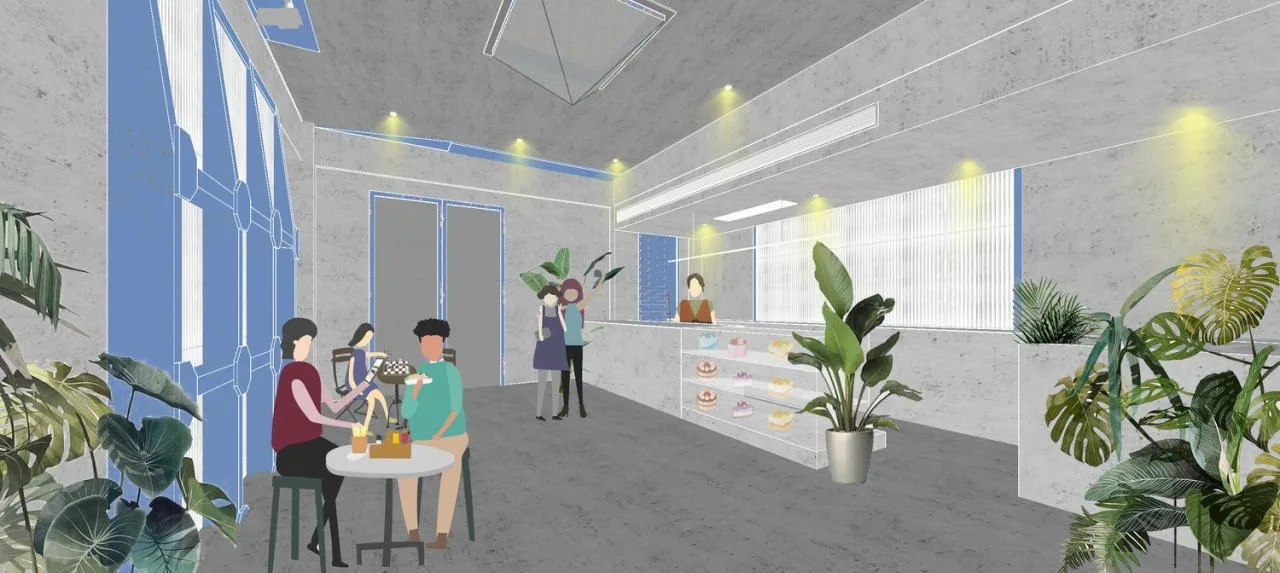
▲ Scene illustration
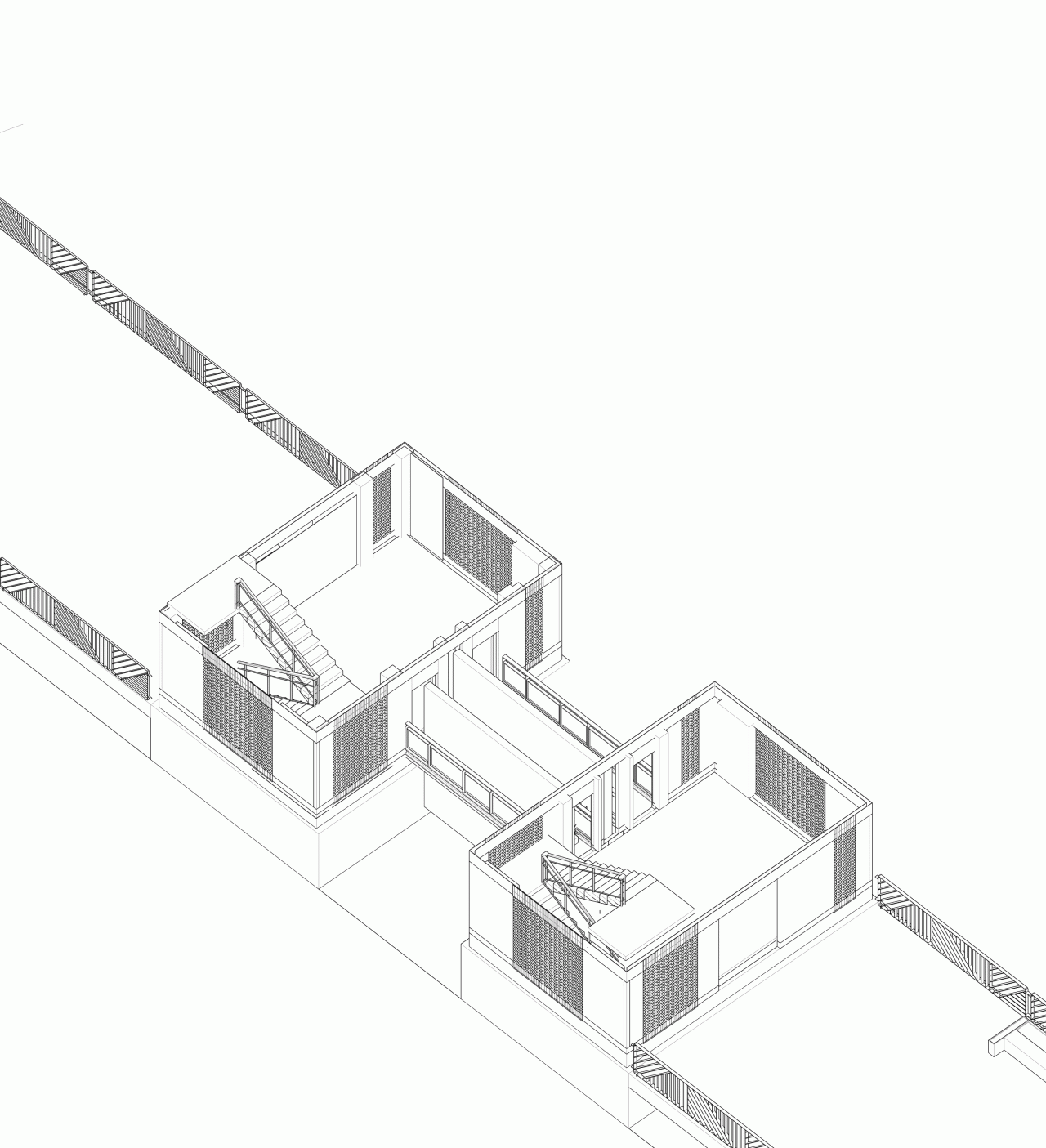
▲ Dynamic transformation strategy diagram
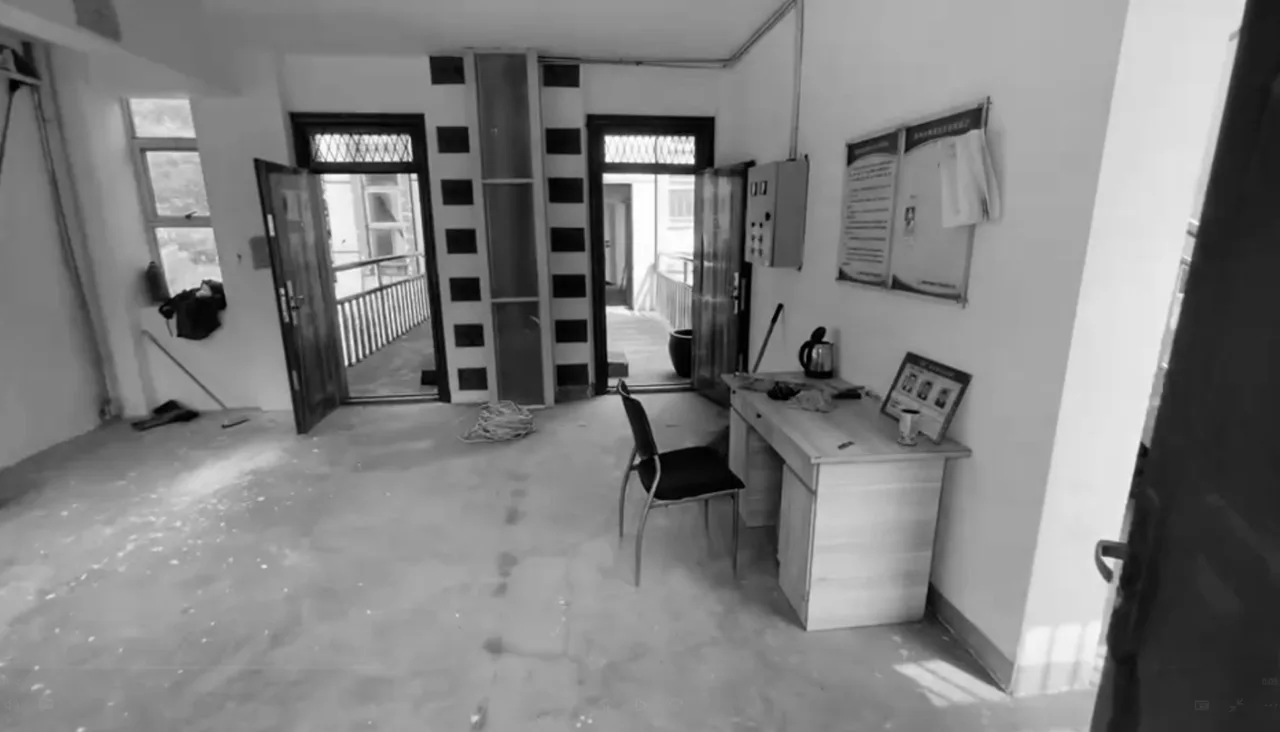
▲ Original photos of first floor
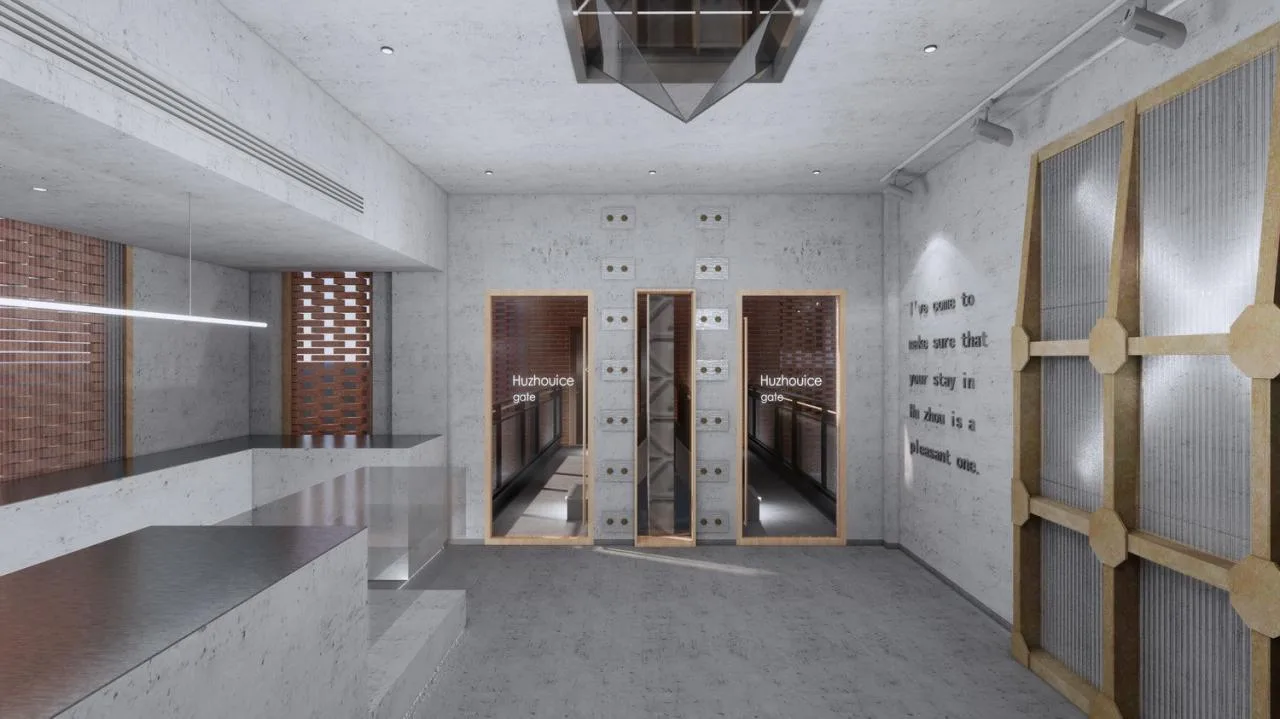
▲ Design scheme rendering
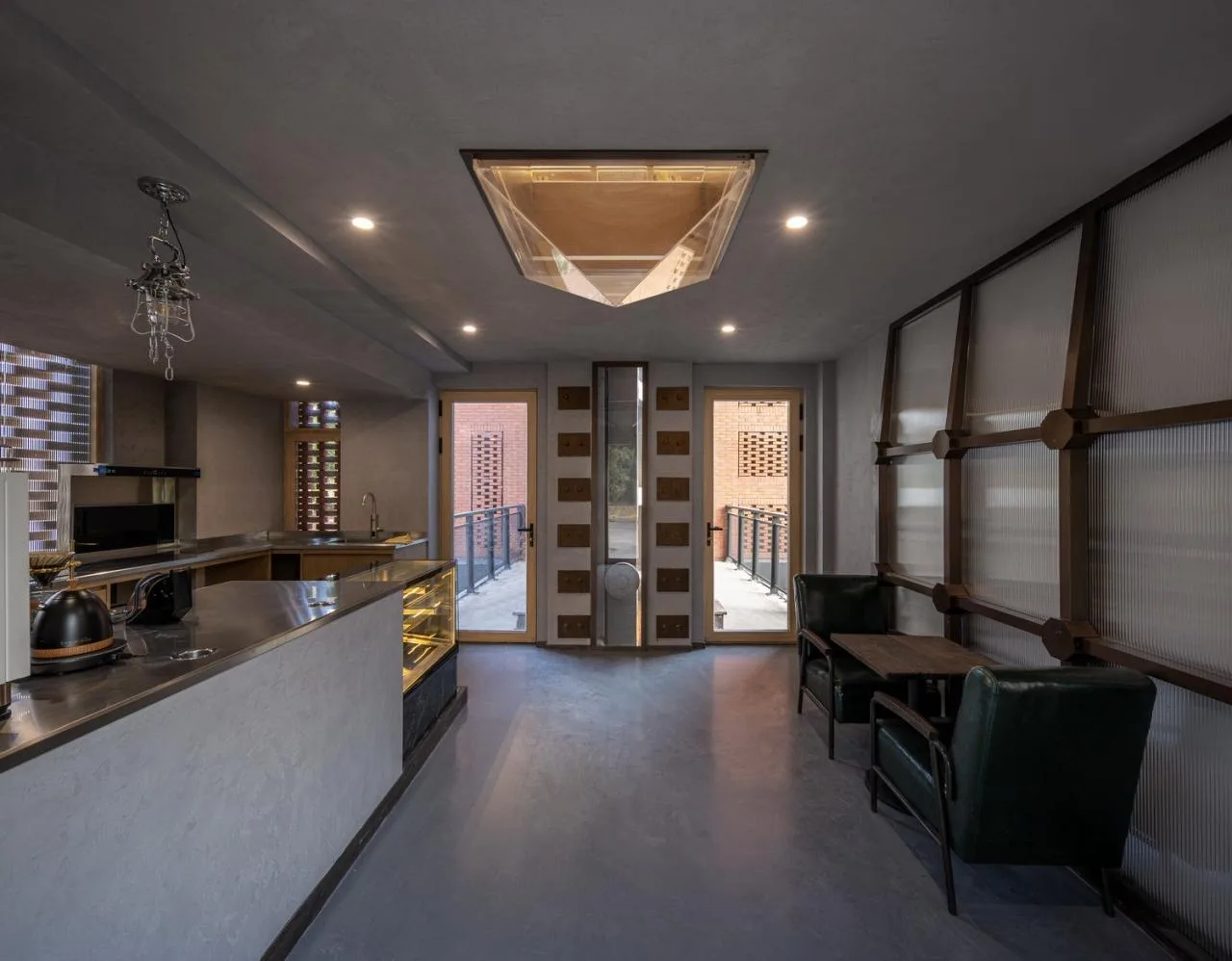
▲ Real photo of the first floor coffee shop
– Infinite Library (Second Floor)
The library, primarily made of wood, features a double-height design with a mirrored stainless steel ceiling, creating a sense of infinite vertical space. It connects visually with the first-floor coffee shop through glass panels in the floor slab.
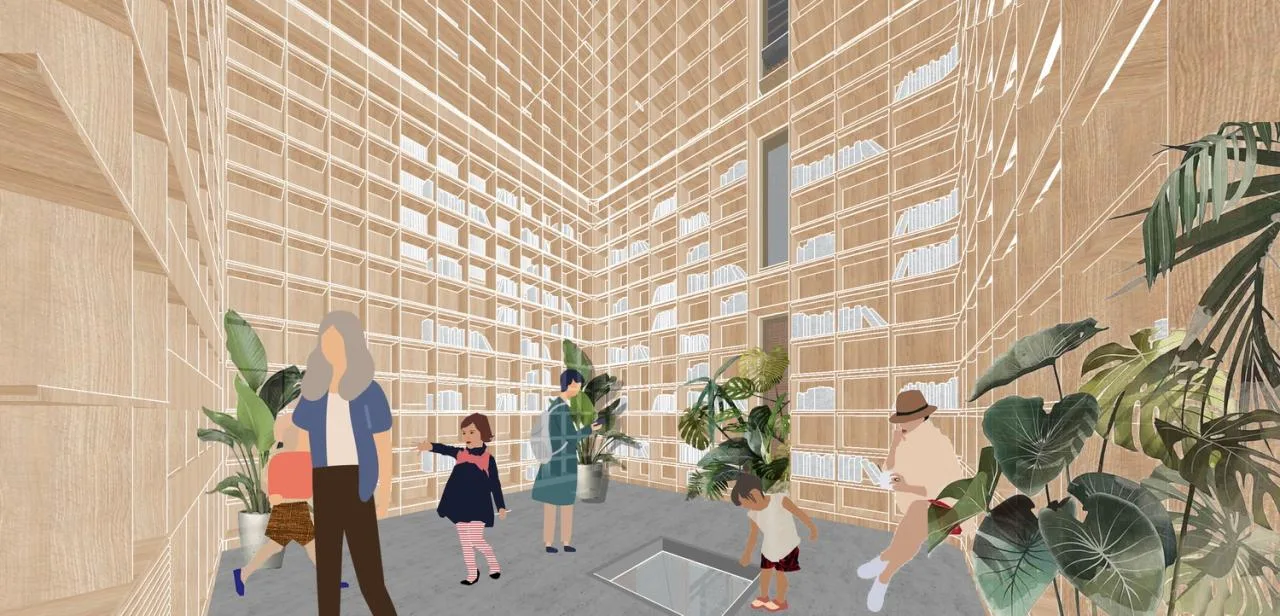
▲ Second floor scene illustration
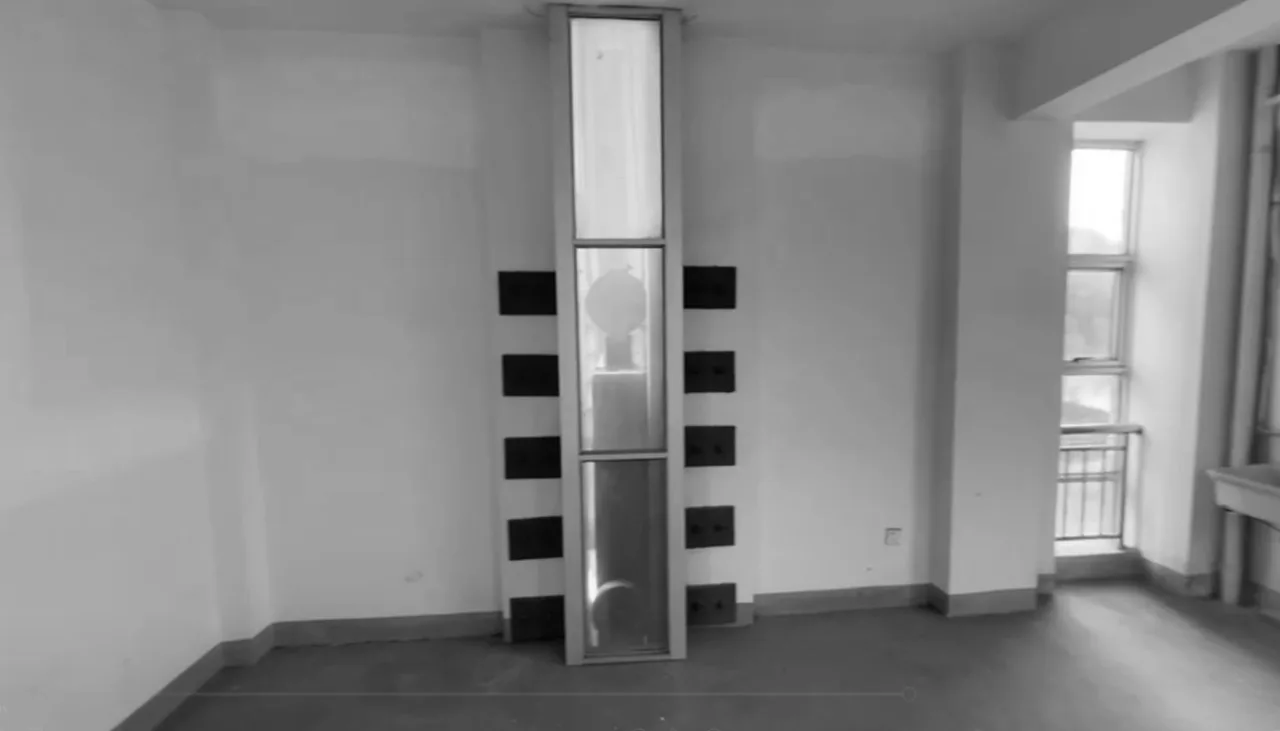
▲ Original photos on the second floor
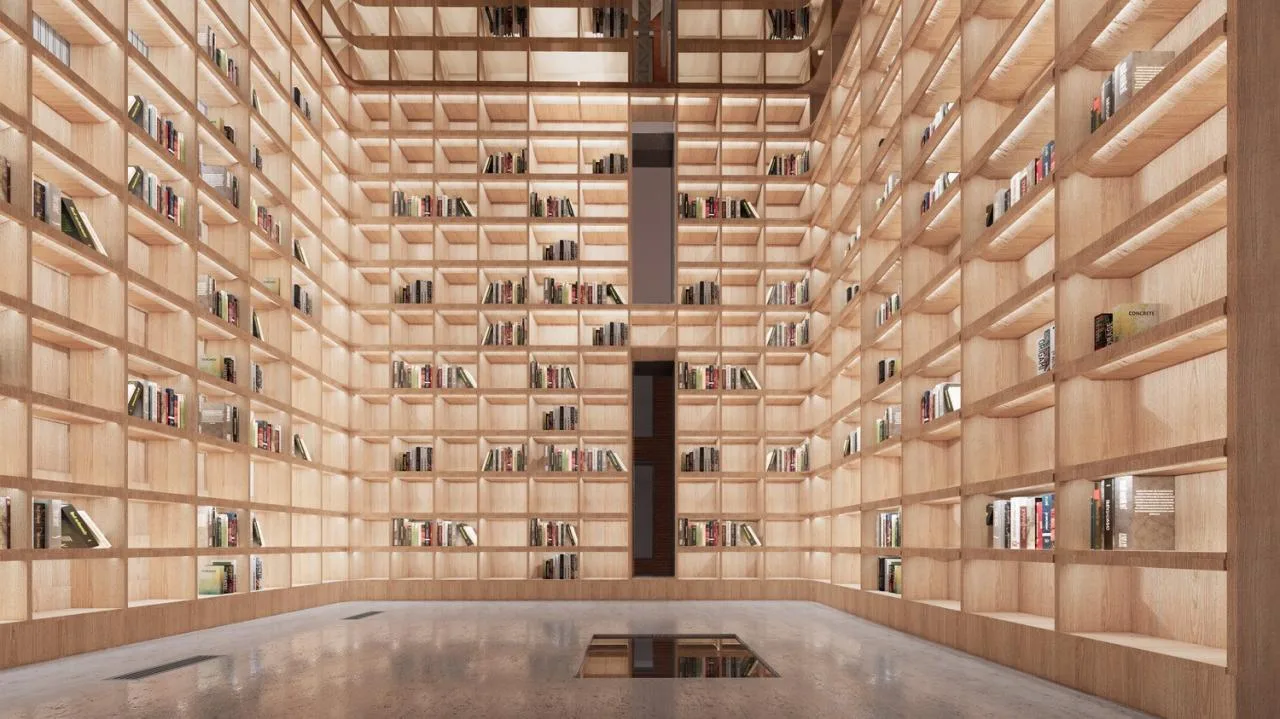
▲ Design scheme rendering
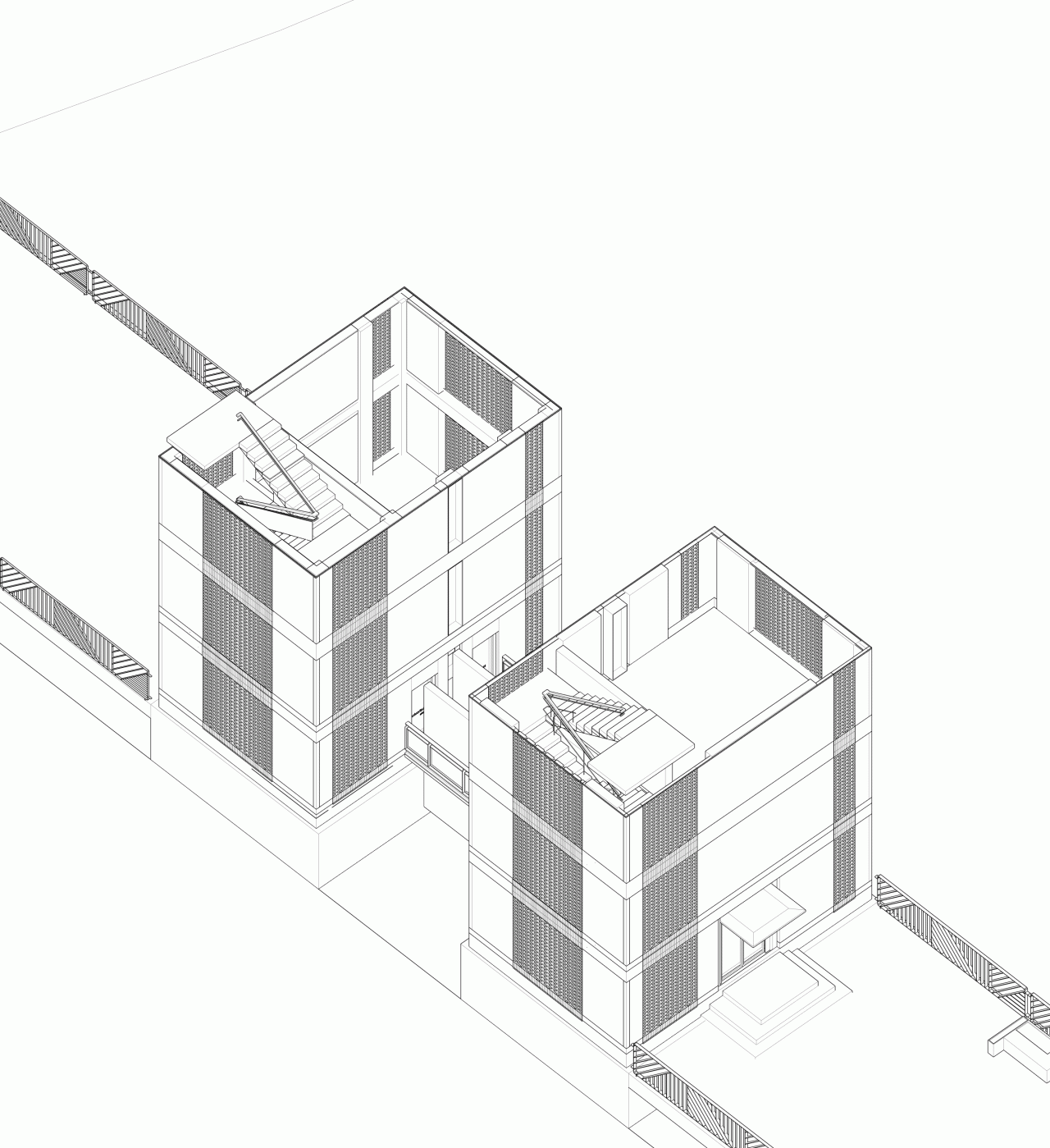
▲ Dynamic transformation strategy diagram
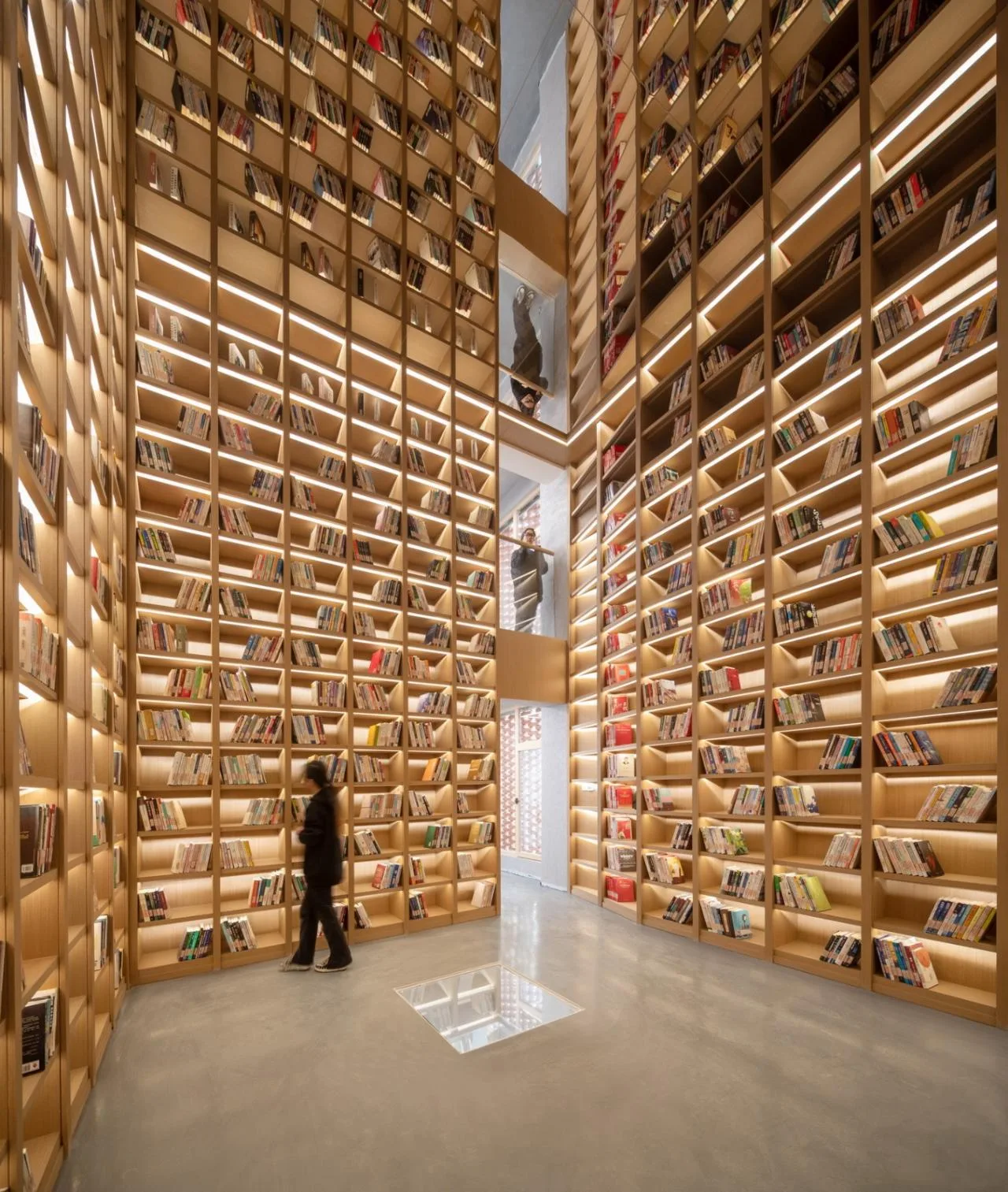
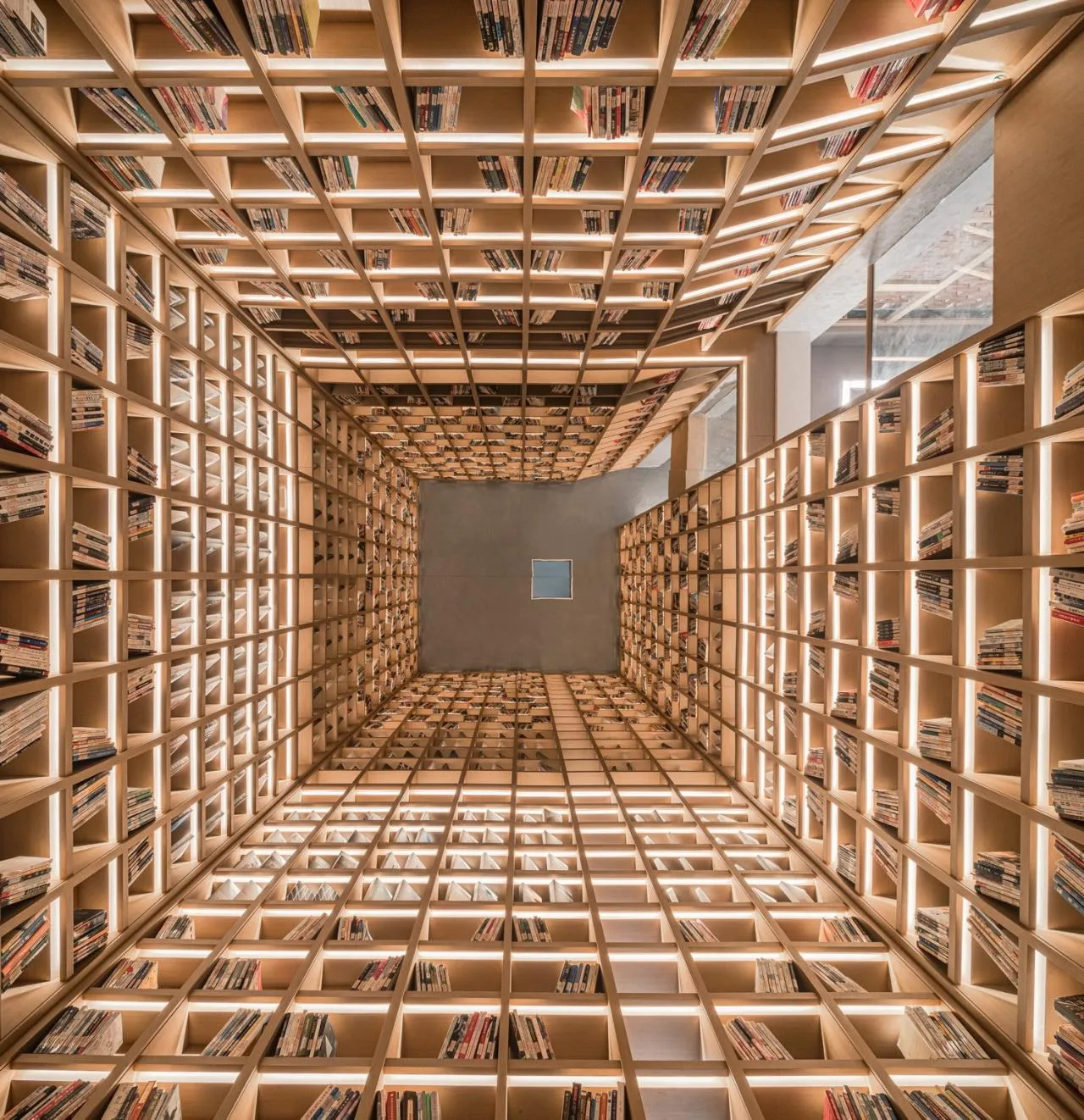
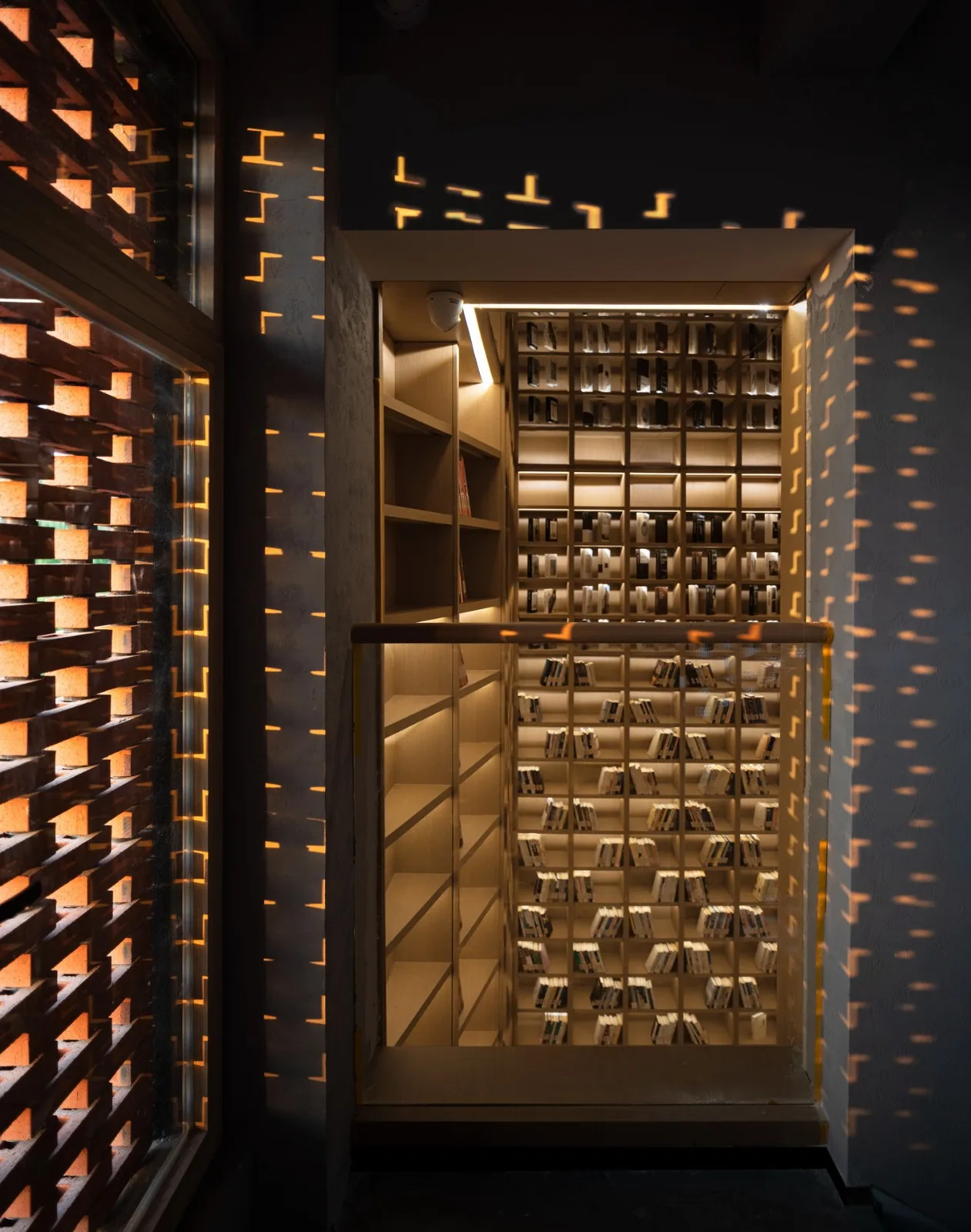
▲ Photo of second floor book space
– View Corridor (Fourth Floor)
The fourth floor connects the twin towers and provides expansive views through floor-to-ceiling mirror glass, overlooking the entire agricultural landscape.
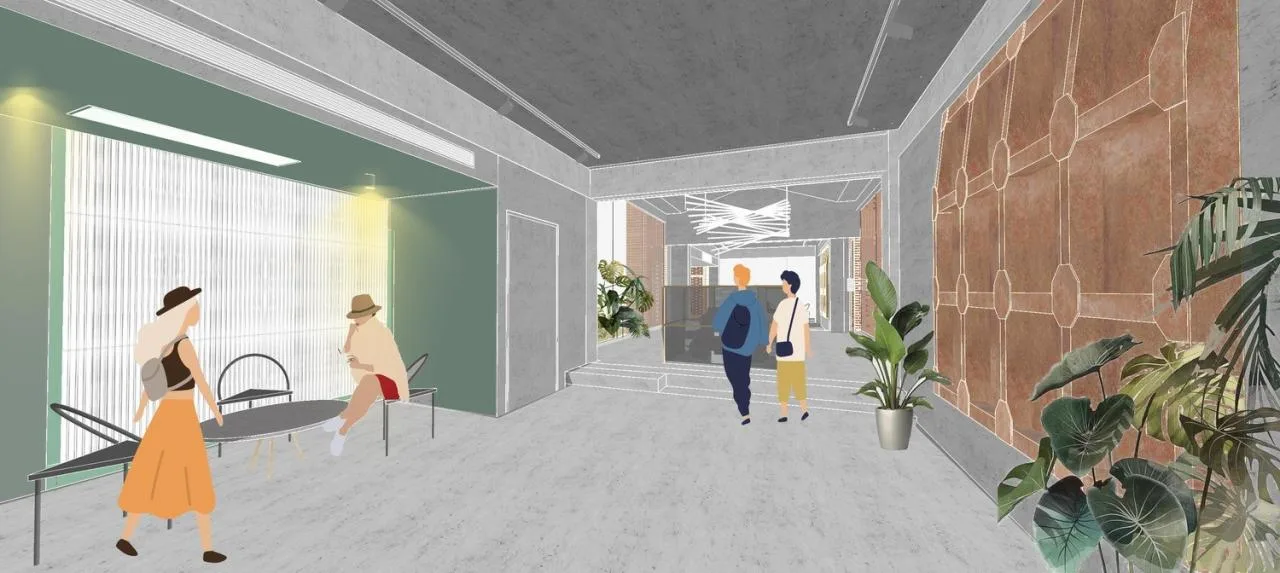
▲ Fourth floor scene illustration
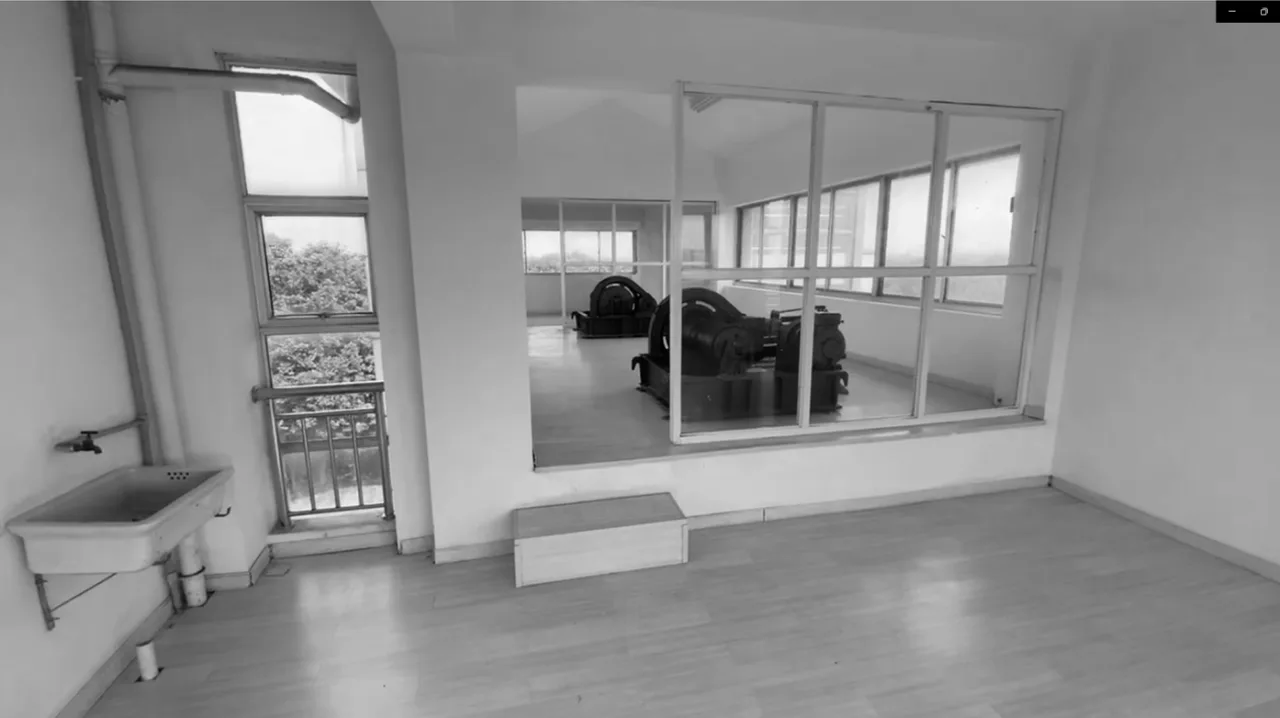
▲ Original photos of the fourth floor
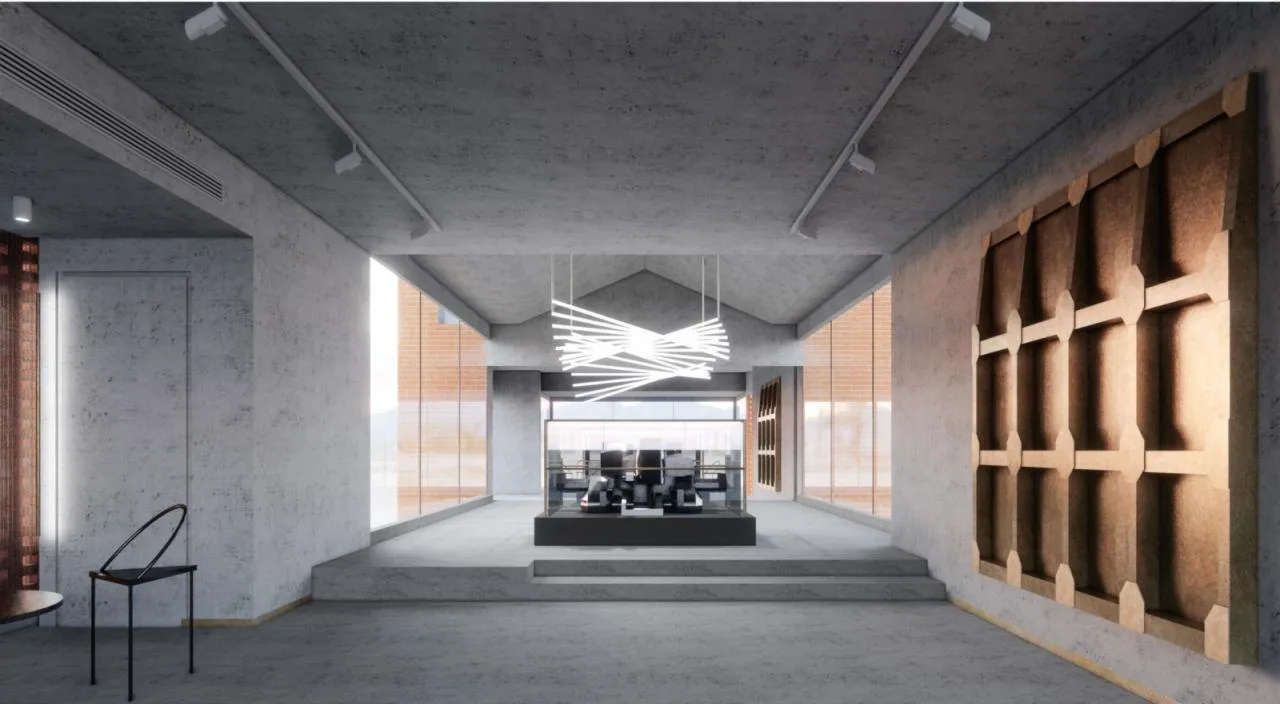
▲ Scheme rendering
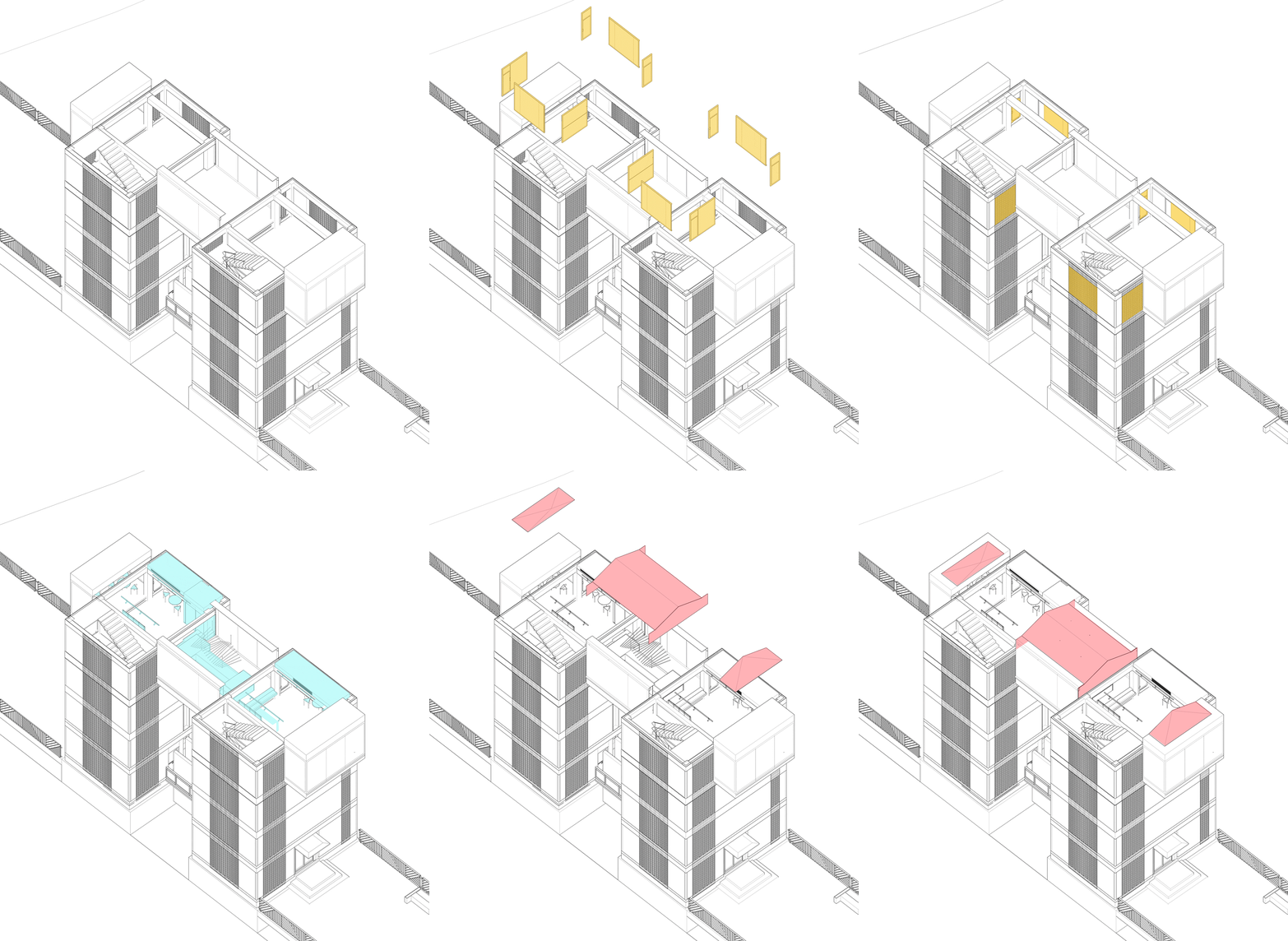
▲ Dynamic transformation strategy diagram
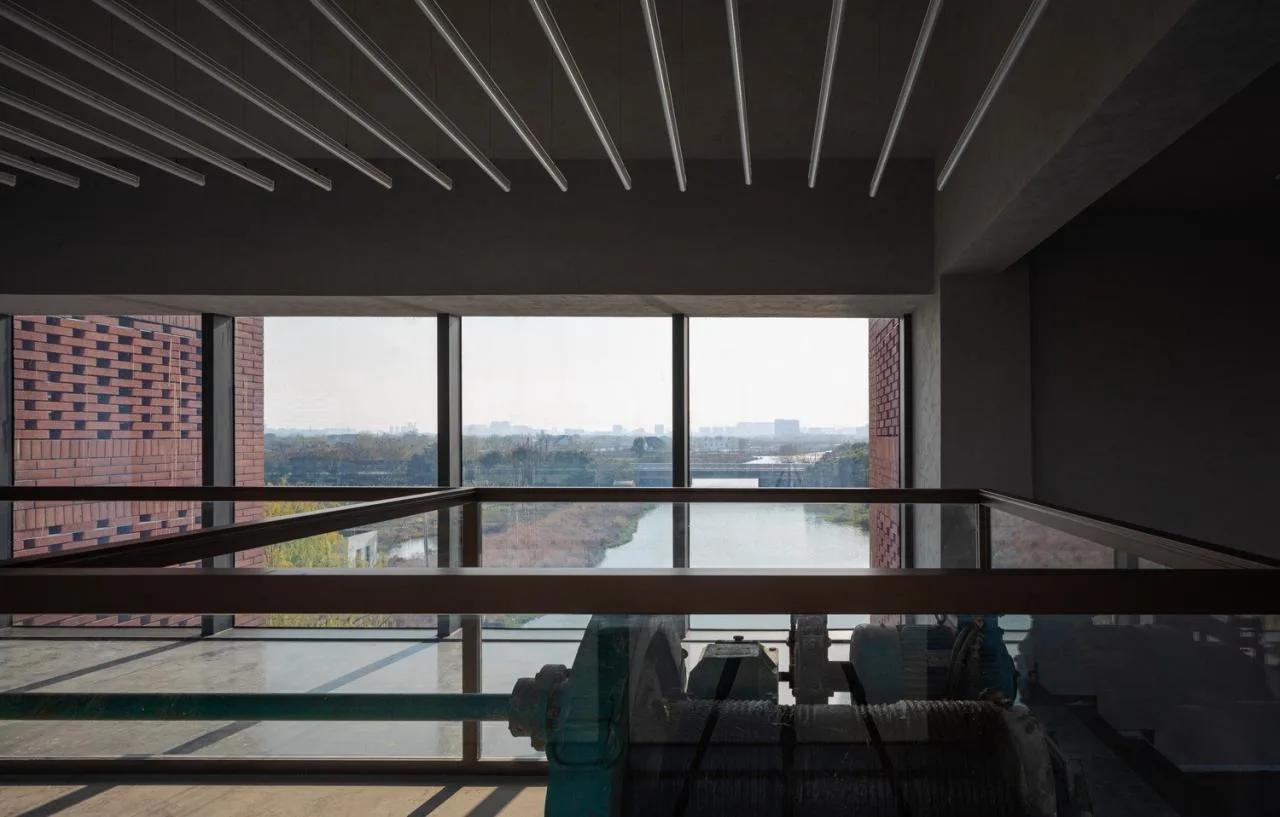
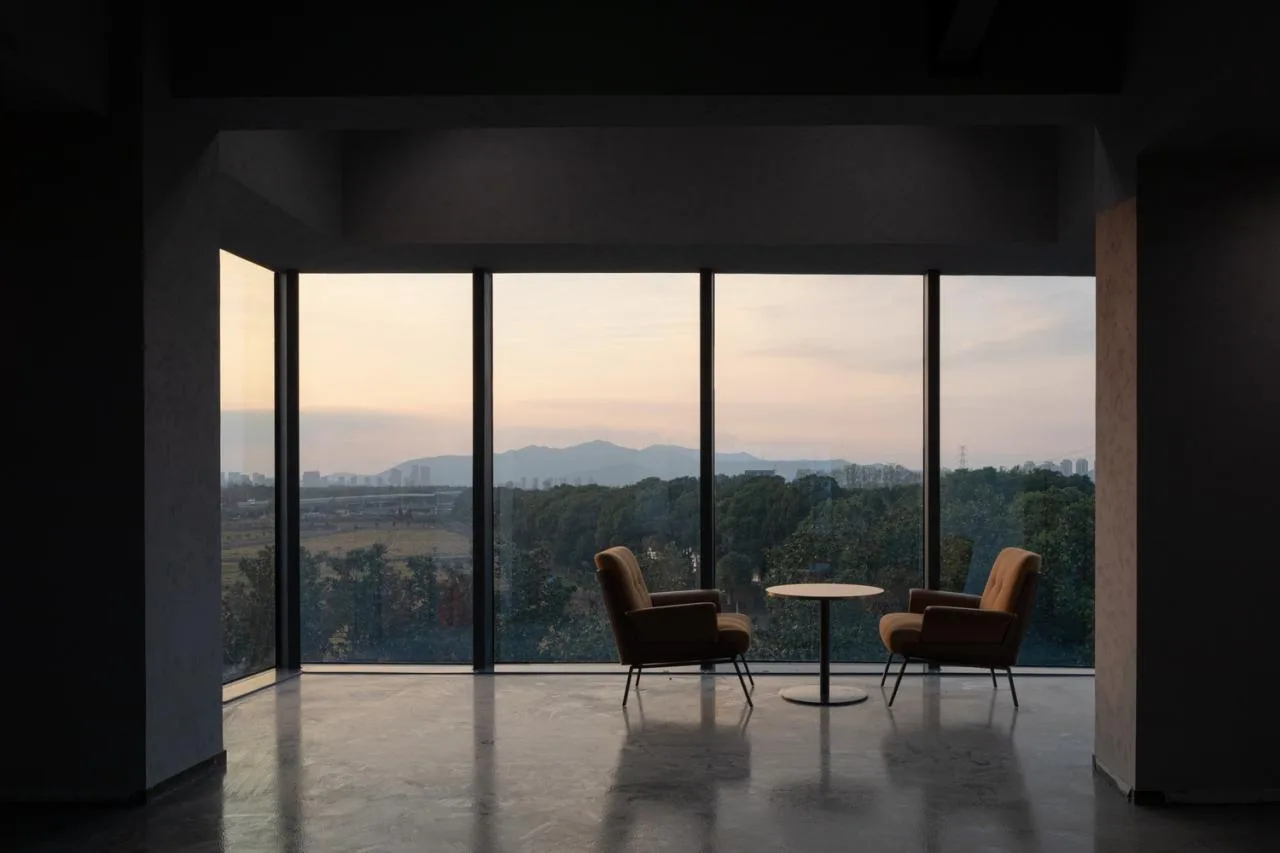
▲ Photo of the fourth floor recreational space
– Meditation Layer (Fifth Floor)
An exhibition space primarily built with plain concrete, linking the tower’s top via two staircases painted in different colors on each side.
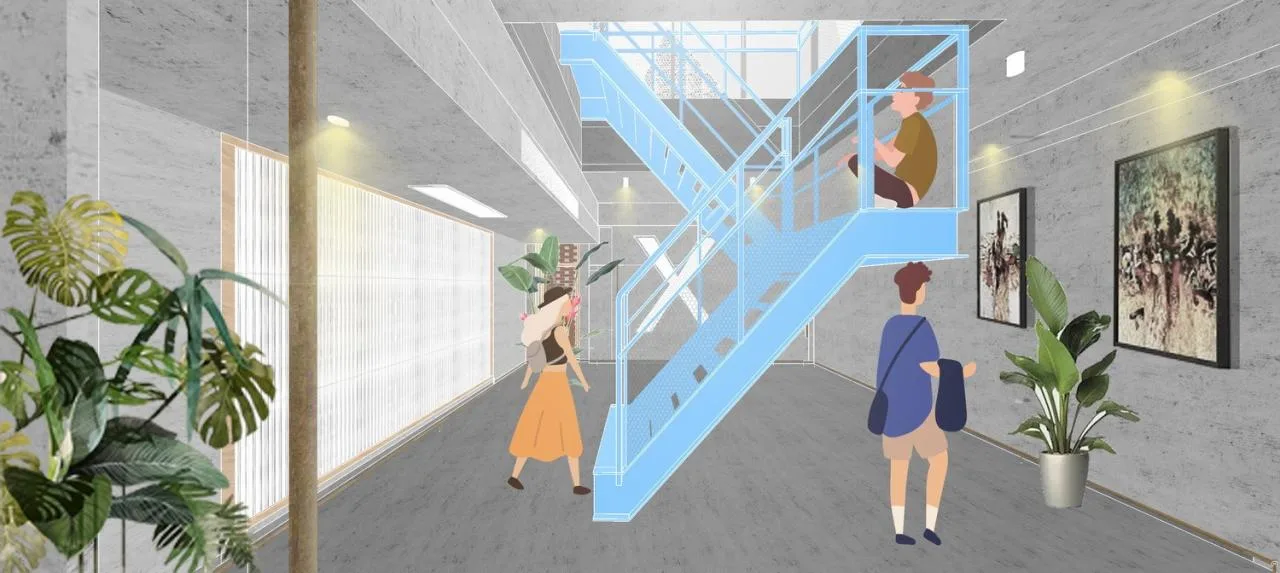
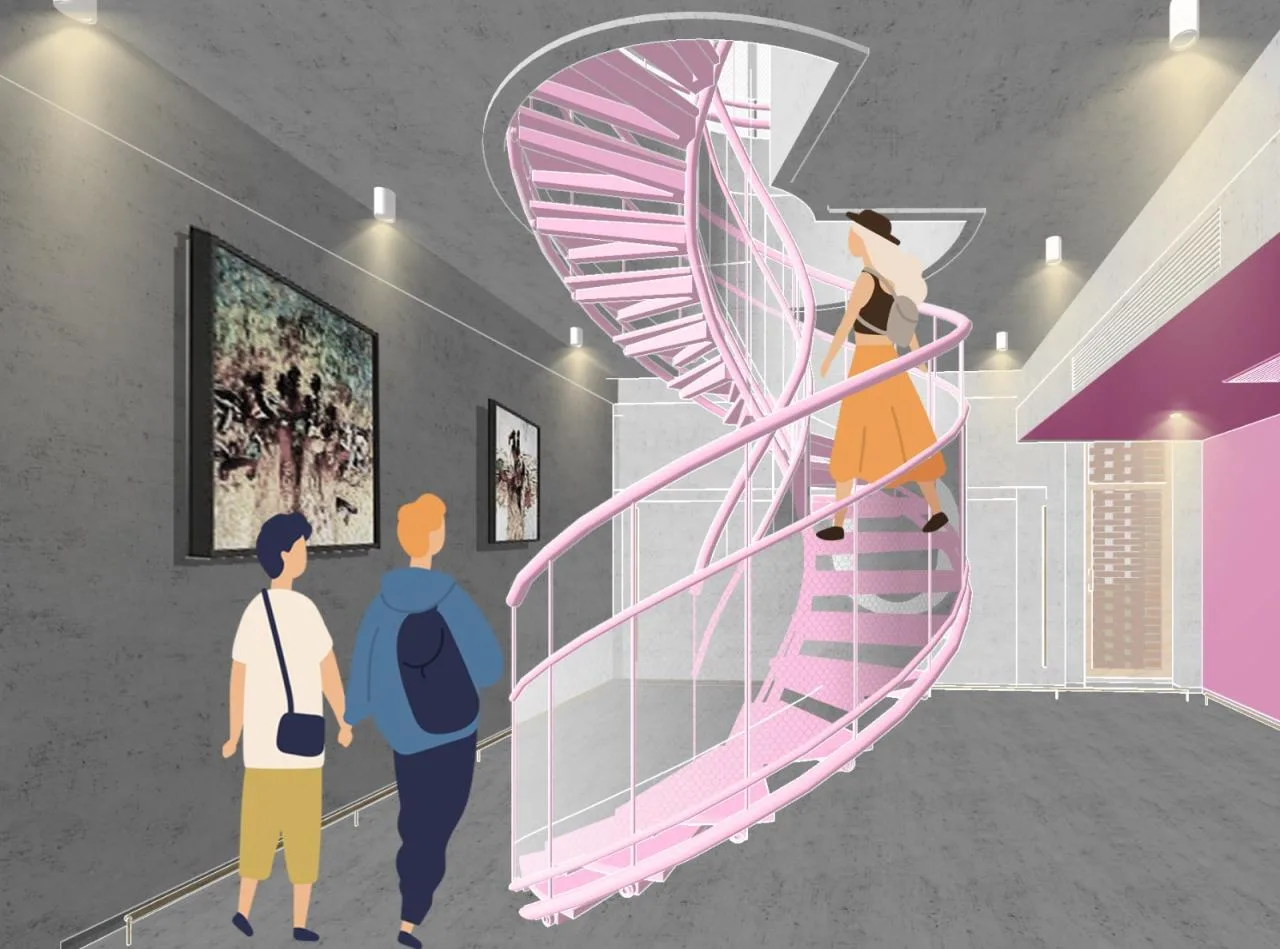
▲ Fifth floor scene illustration
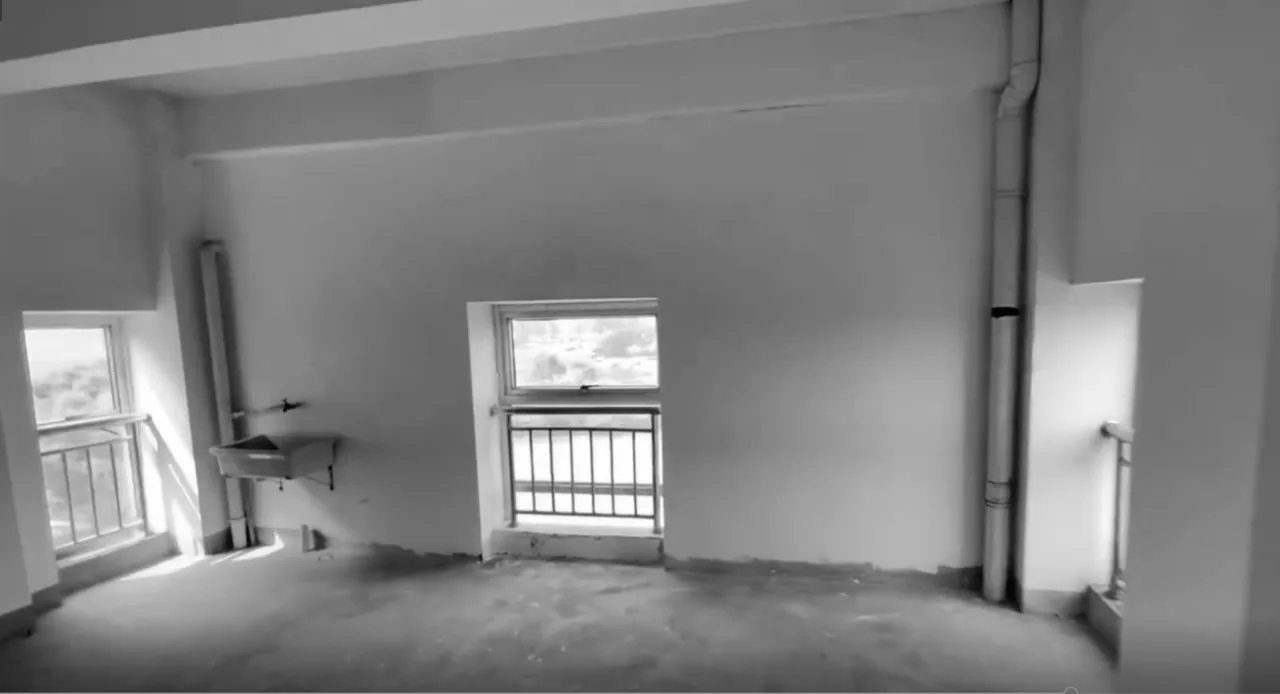
▲ Original photos on the fifth floor
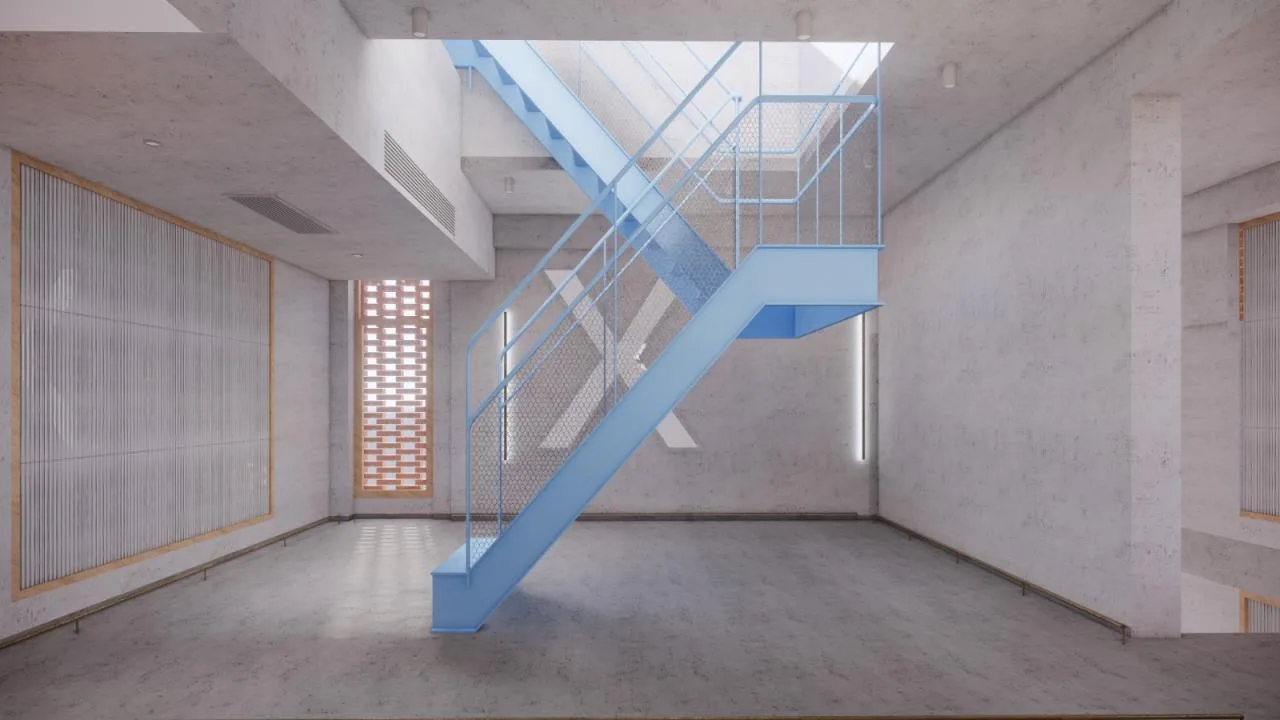
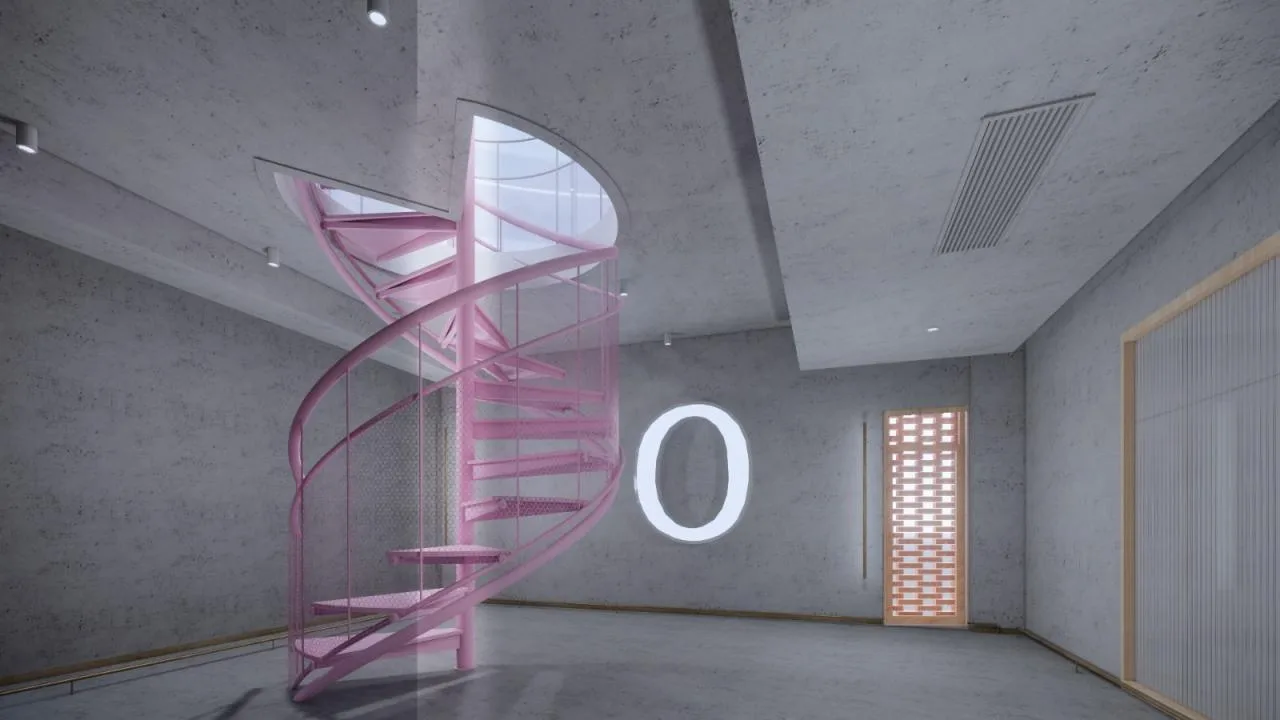
▲ Design scheme rendering
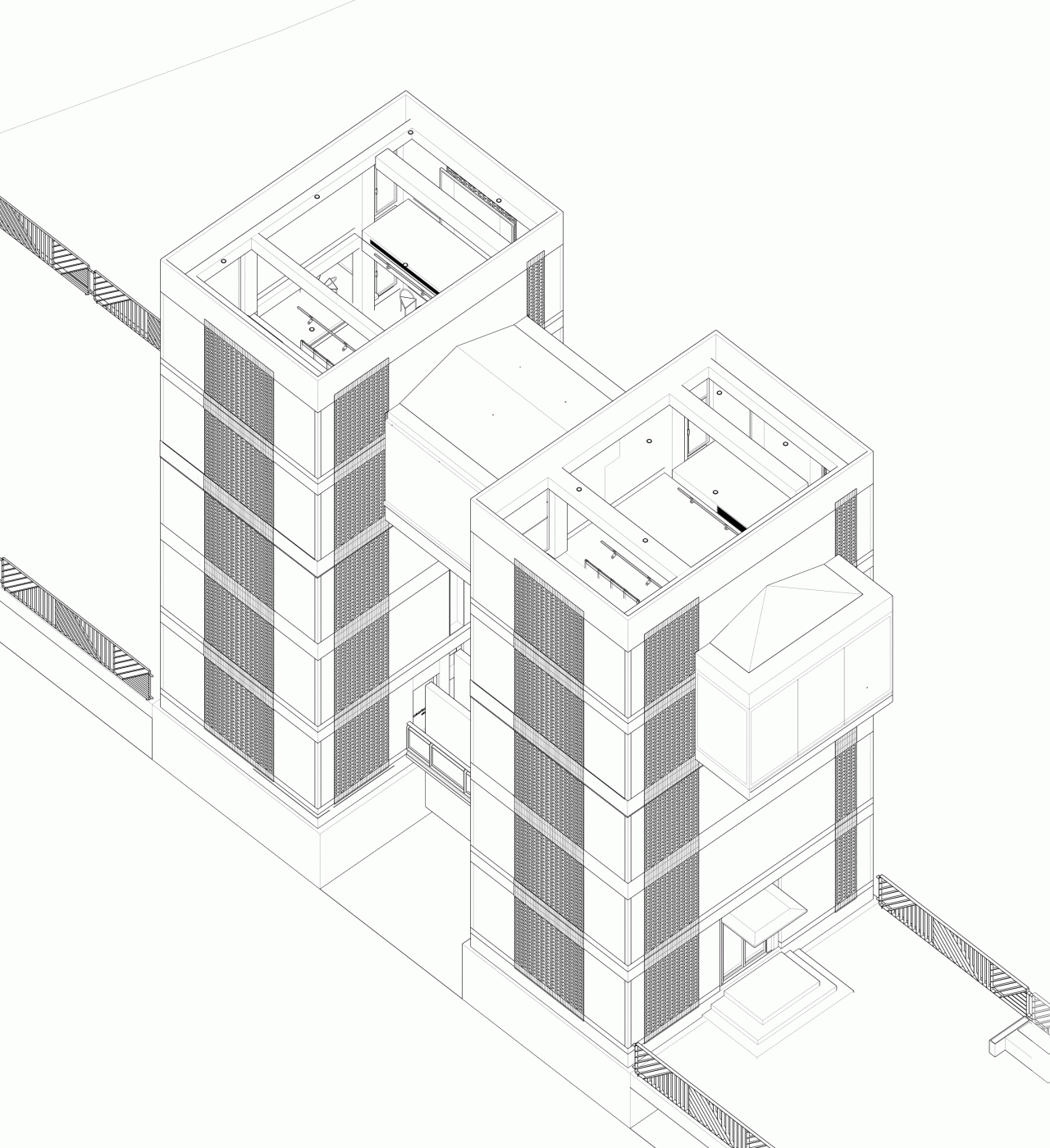
▲ Dynamic transformation strategy diagram
– Insight (Roof Level)
The top floor is a 360-degree panoramic viewing space, mainly enclosed with glass curtain walls. The original roof was removed to create this open vista.
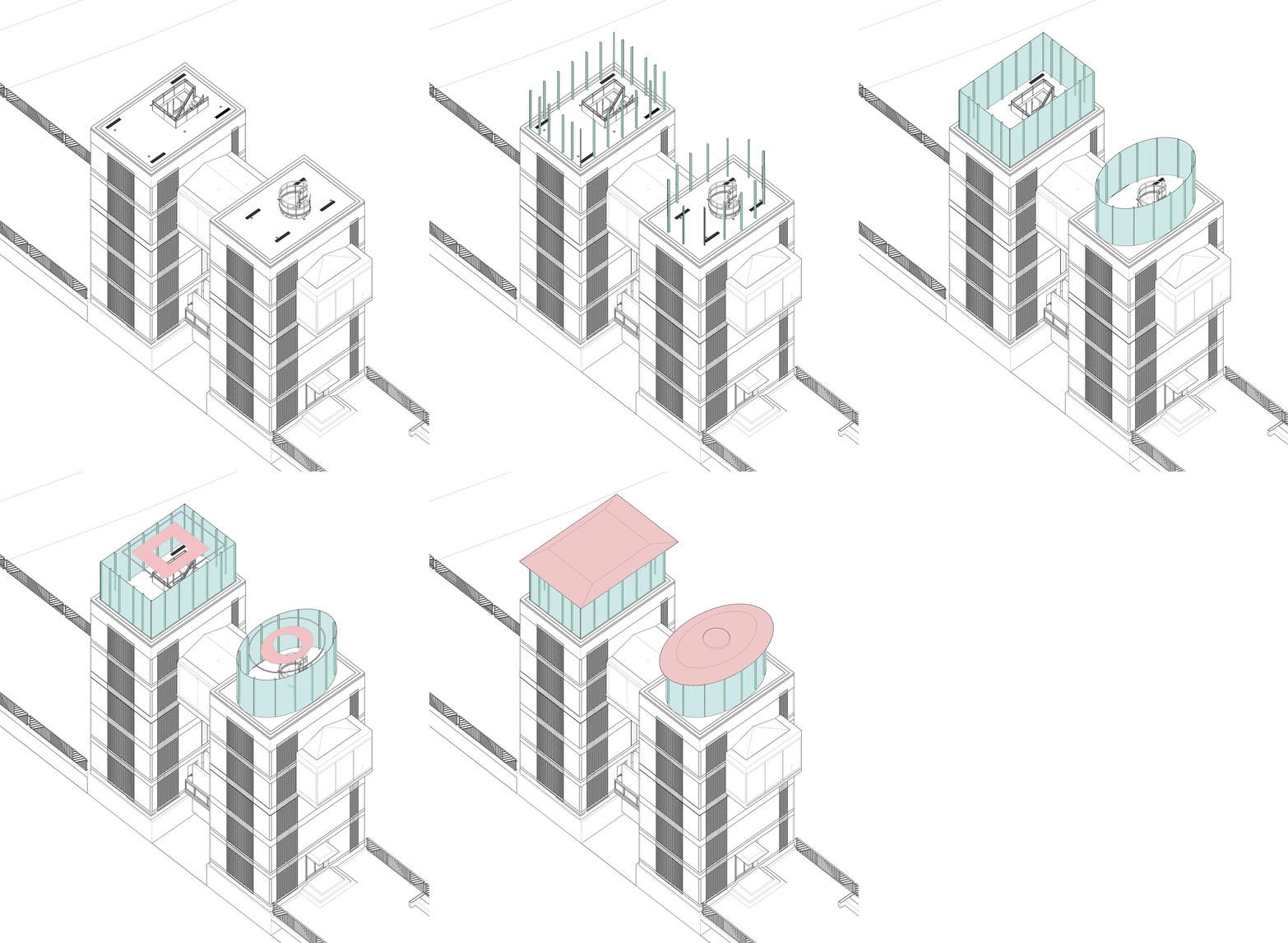
▲ Dynamic transformation strategy diagram
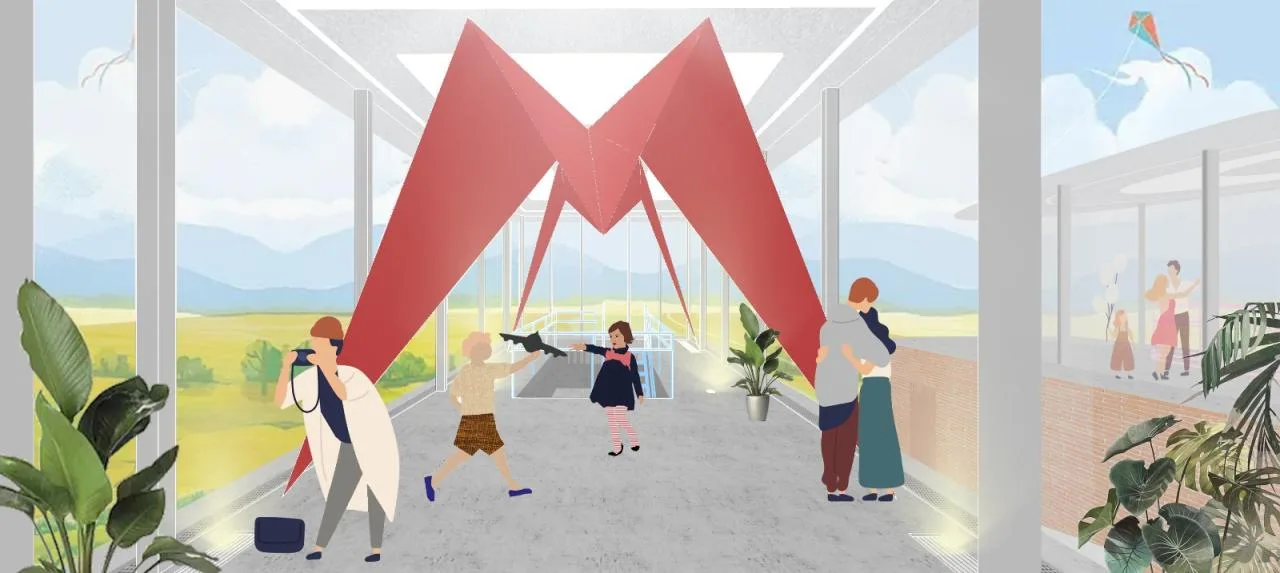
▲ Roof scene illustration
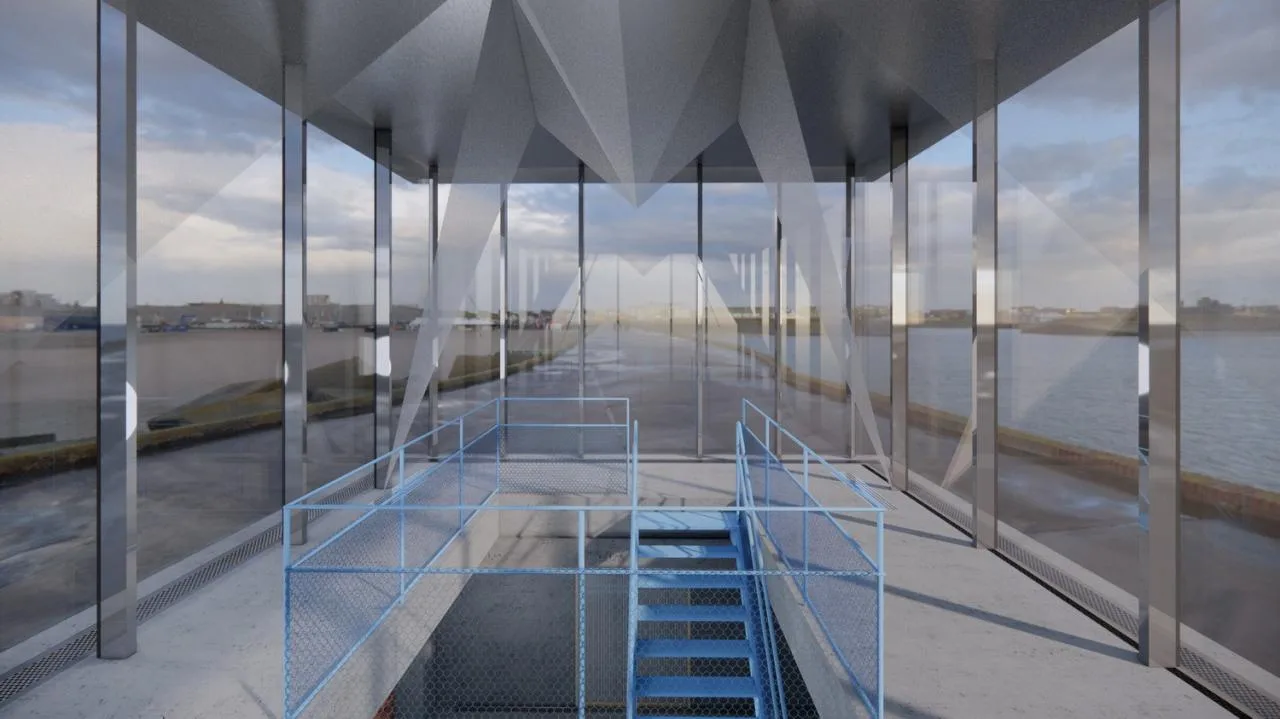
▲ Scheme rendering
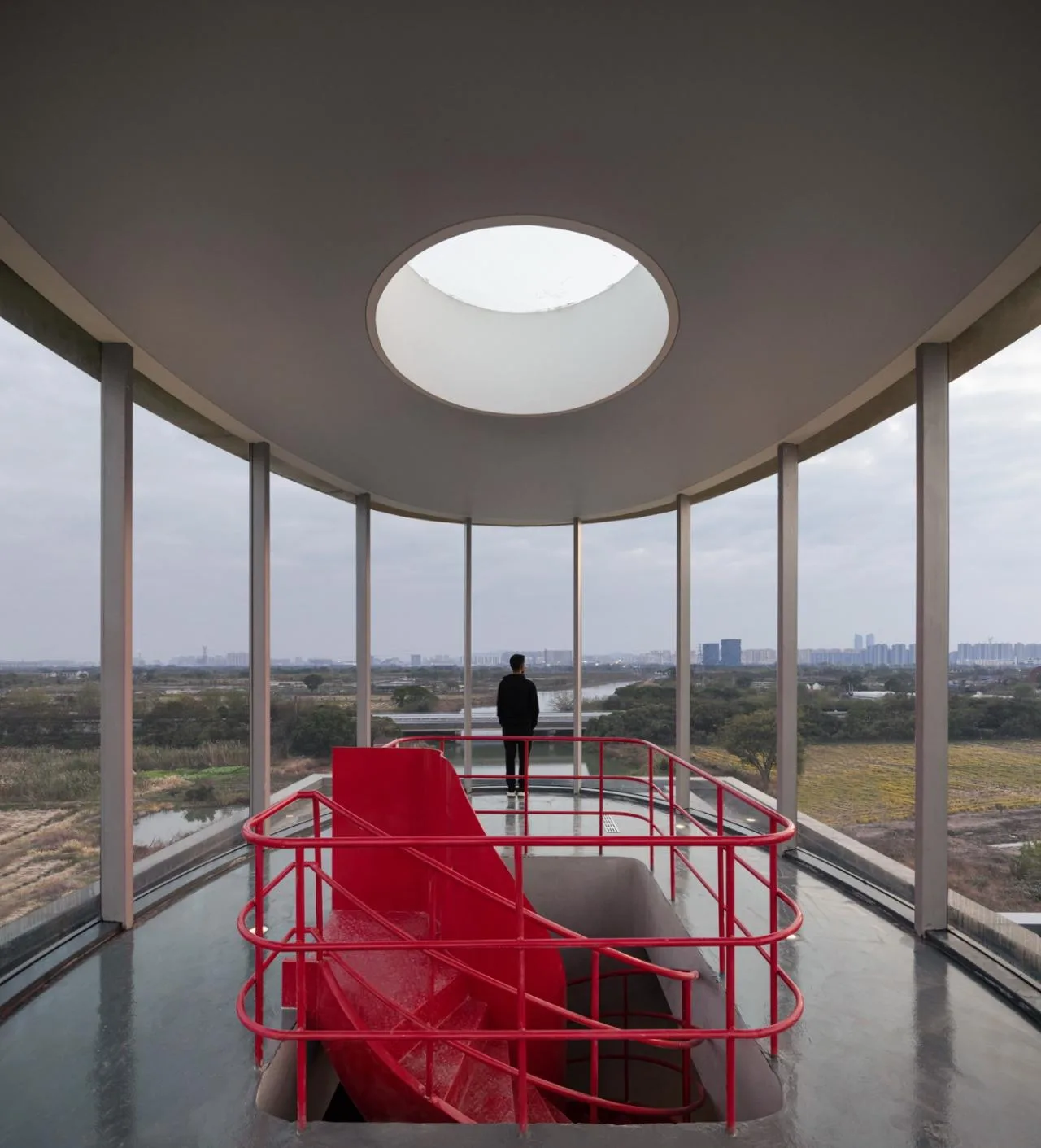
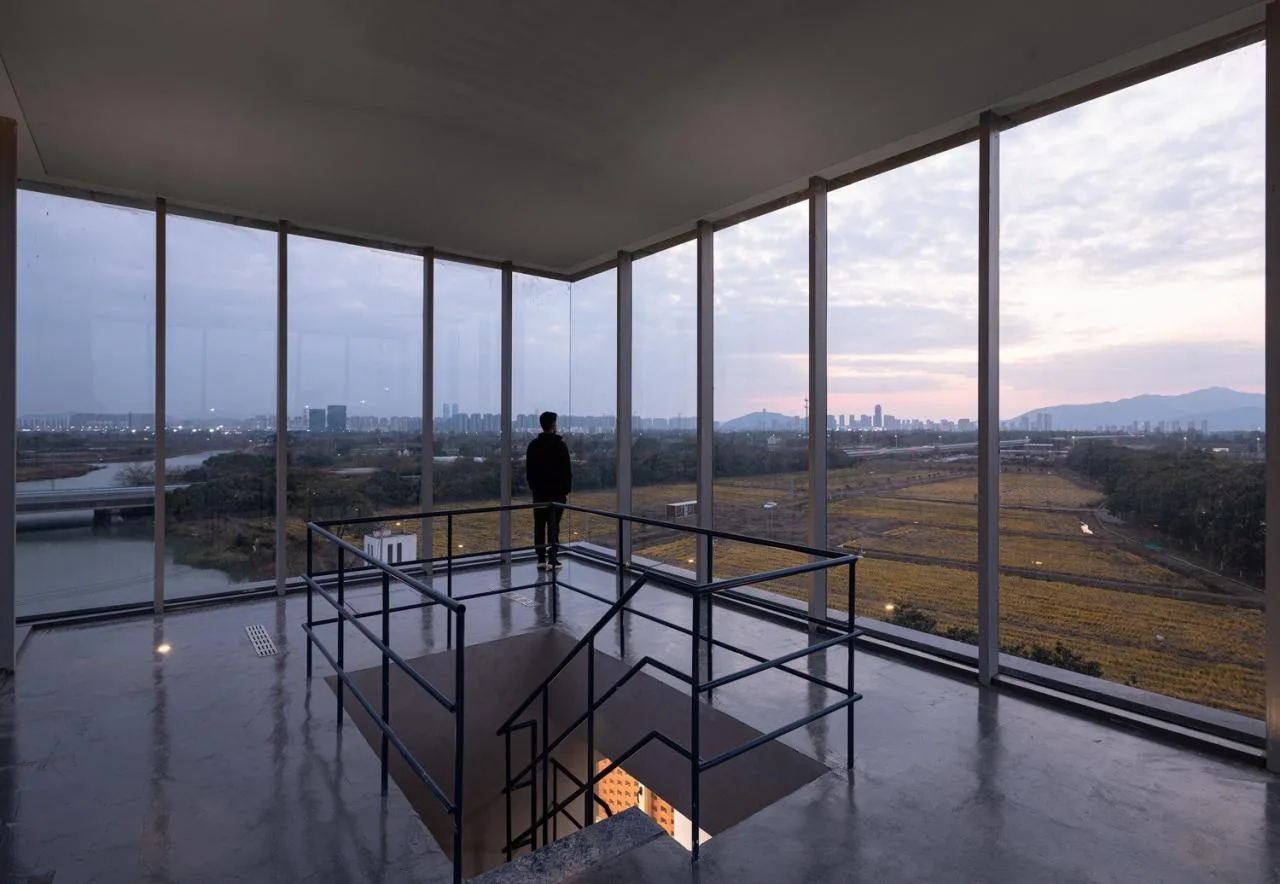
▲ Photo of the roof viewing space
Architectural Details
The architectural theme remains consistent, with the original roof replaced by a glass canopy supported by columns. The structure is enclosed, then glass panels form the walls, capped with a glass top.
Hollow brick walls are reconstructed by inserting steel structures into existing wall cavities, layering red bricks in staggered patterns to create a unique perforated effect.
The original aluminum panel curtain walls are replaced by traditional red PK brick systems, lending an elegant, pastoral aesthetic.
Original entrance windows are updated with red patterned ceramic brick and Changhong glass curtain walls, enhancing the building’s charm.
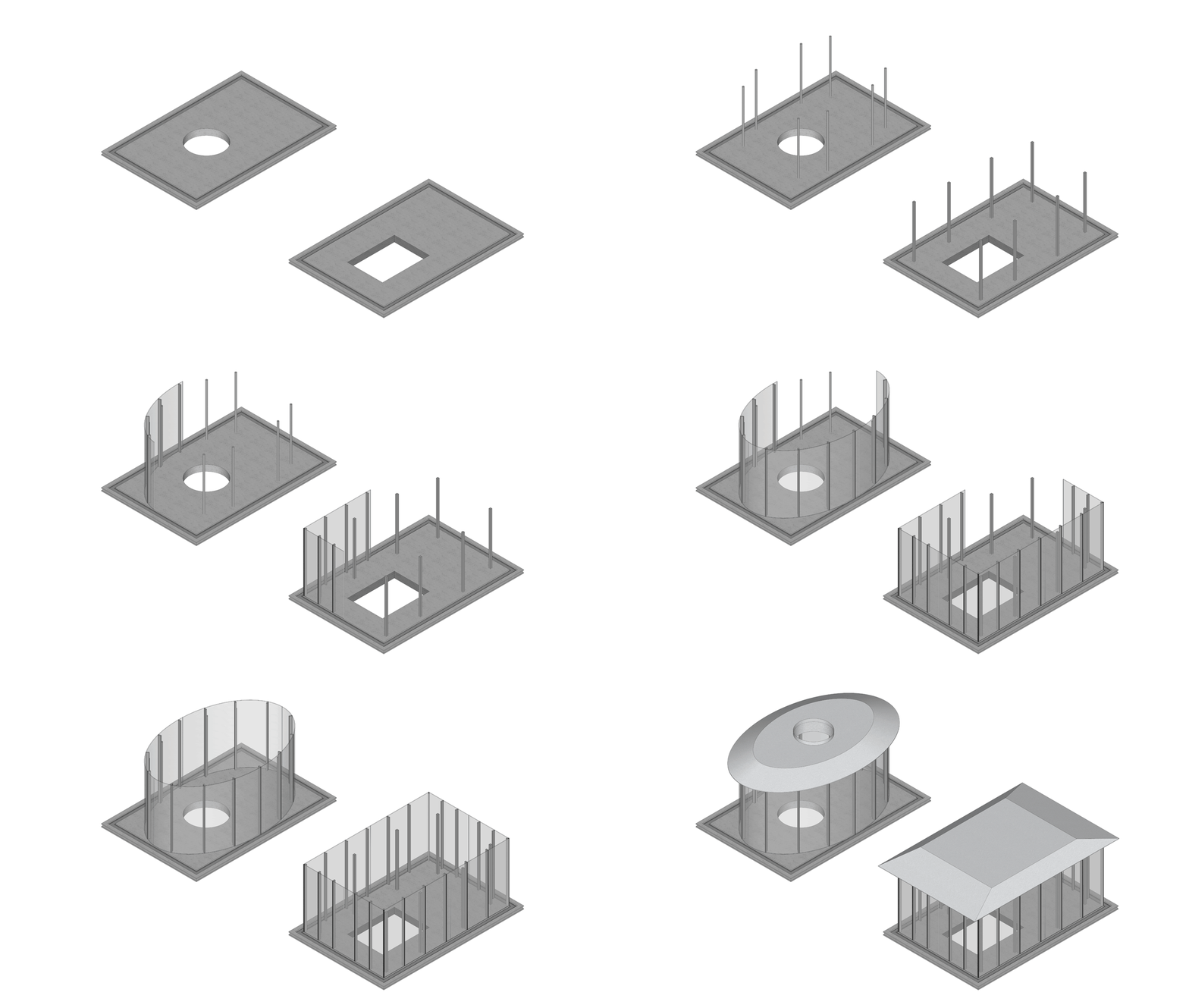
▲ Roof construction technology
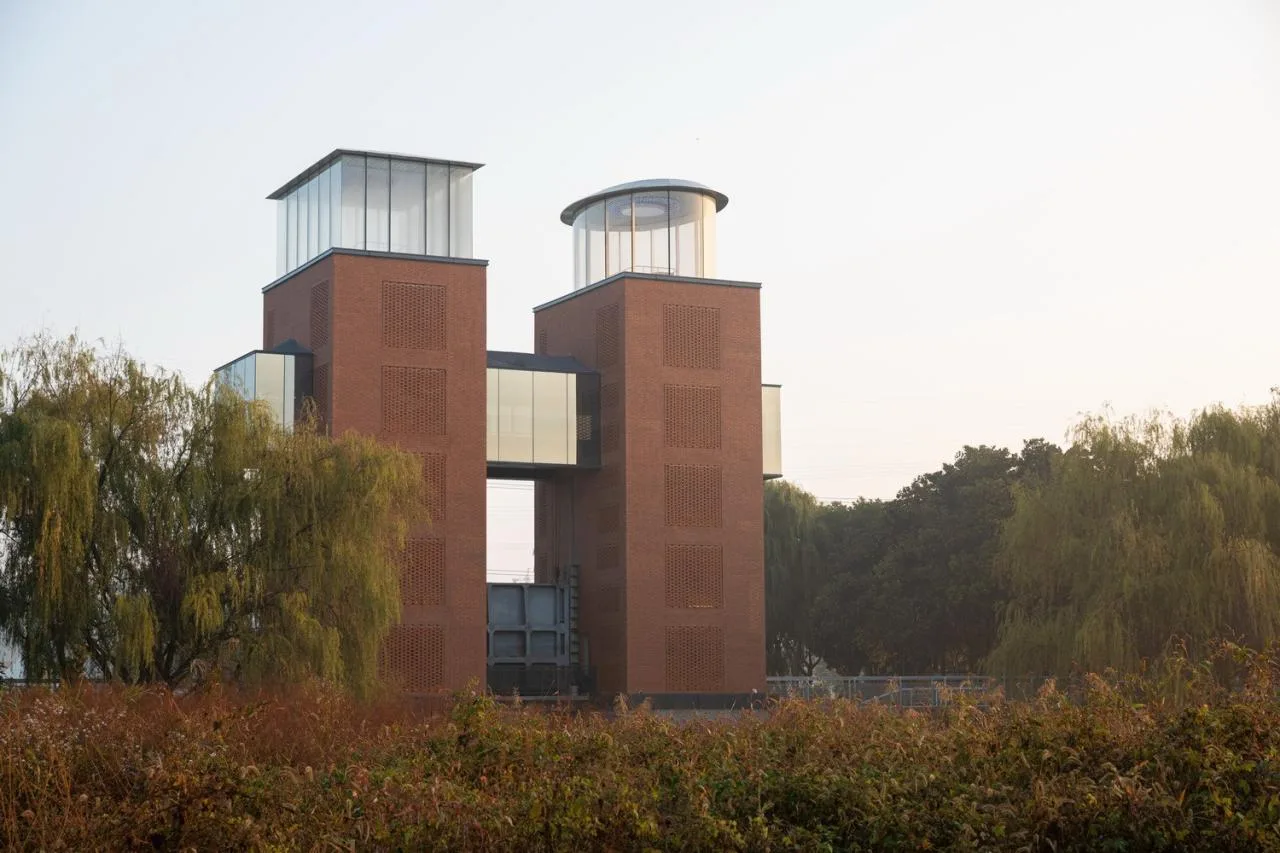
The fancy ceramic brick curtain wall opens in the same manner as the large red PK brick wall, creating a seamless, unified facade blending with the sky.
The perforated brick design serves both functional and artistic purposes—during the day, windows and walls blend harmoniously; at night, varied lighting shines through, creating an enchanting atmosphere.
Original aluminum panel curtain walls and windows on the balcony are replaced with a hidden glass curtain wall system featuring large reflective panels, enhancing the building’s upscale feel.
Interior lighting is soft, maintaining privacy while offering clear outdoor views.
Decorative elements and walls of the red tile spires are removed and replaced with transparent glass curtain walls and an impermeable steel roof.
The curtain walls use large ultra-white laminated glass supported by steel columns directly connected to the roof structure.
The roof panels are made of large stainless honeycomb panels, combining simplicity and sophistication. The east side features square glass walls, the west elliptical ones, all covered by an elegant stainless steel roof.
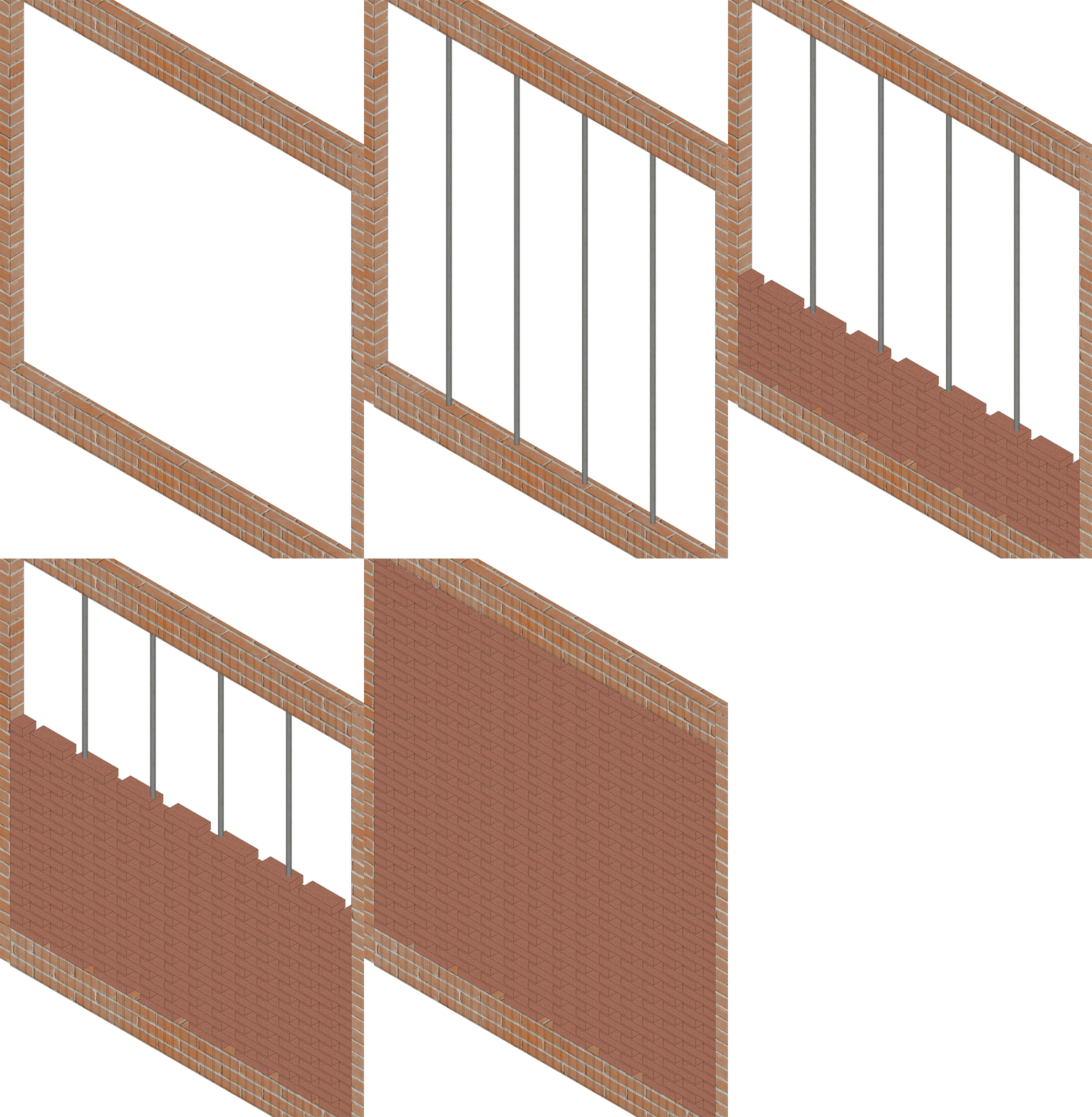
▲ Hollow brick construction technology
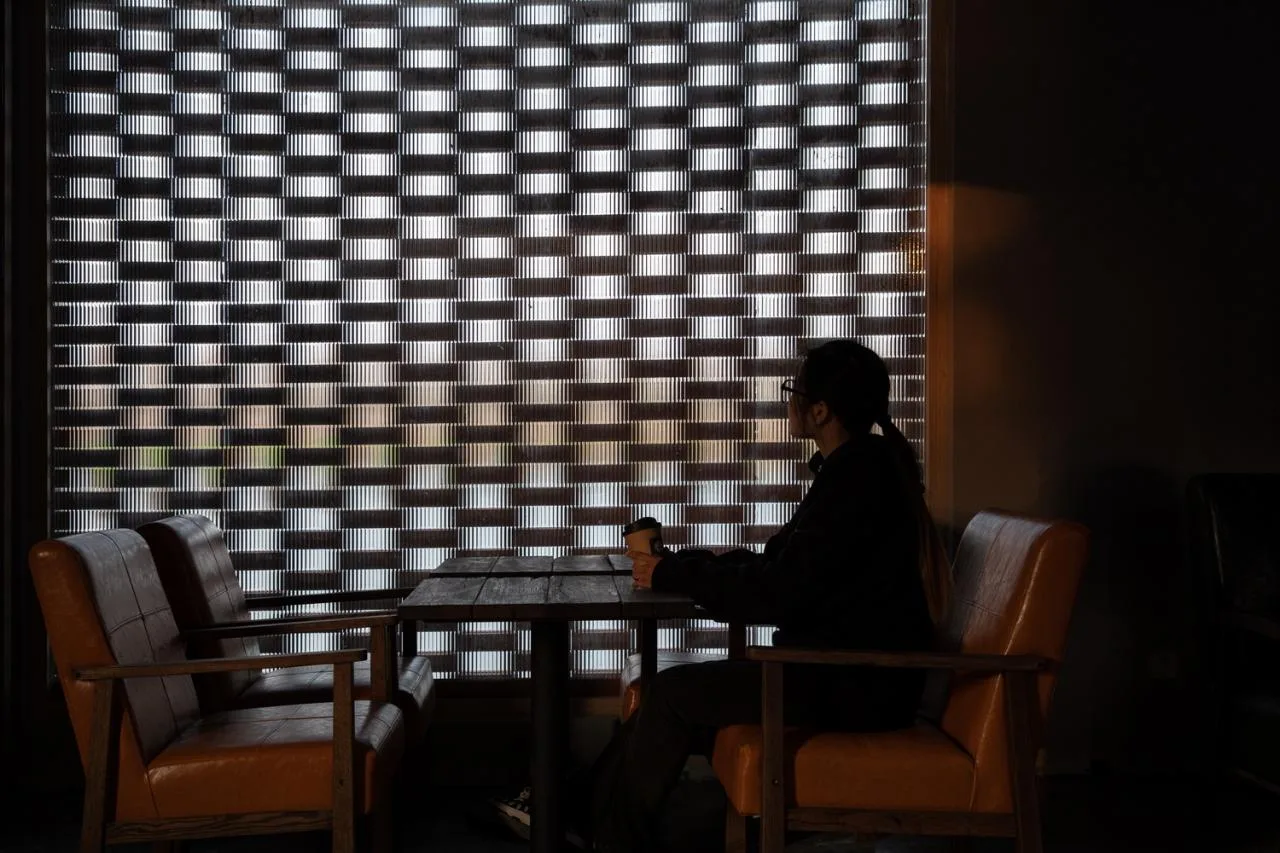
Time and Civilization
On this small, dim blue dot in the universe, everyone you love, know, or have heard of, has lived their lives. Our joys and sorrows, diverse religions, ideologies, economic theories, heroes, villains, creators, destroyers, kings, farmers, young couples, parents, hopeful children, inventors, explorers, respected teachers, corrupt politicians, superstars, and leaders—all have made their mark here.
Civilization is filled with anxiety, calculation, struggle, and deception, but genuine human emotions remain one of the last refuges. Against the vast backdrop of space and time, watching history unfold feels like a fleeting moment in the cosmos.
Yet, for each of us, this encapsulates civilization itself. The lighthouse is a known beacon in the dark, and our task is to light it.
At dusk, as night falls, the lighthouse light shines. In the lonely sea of flowers and fields, our encounter is a story of meeting this beacon—of connection, gain, loss, growth, release, and harvest.
I have let go of the old, and the coming year will still bring flowers.
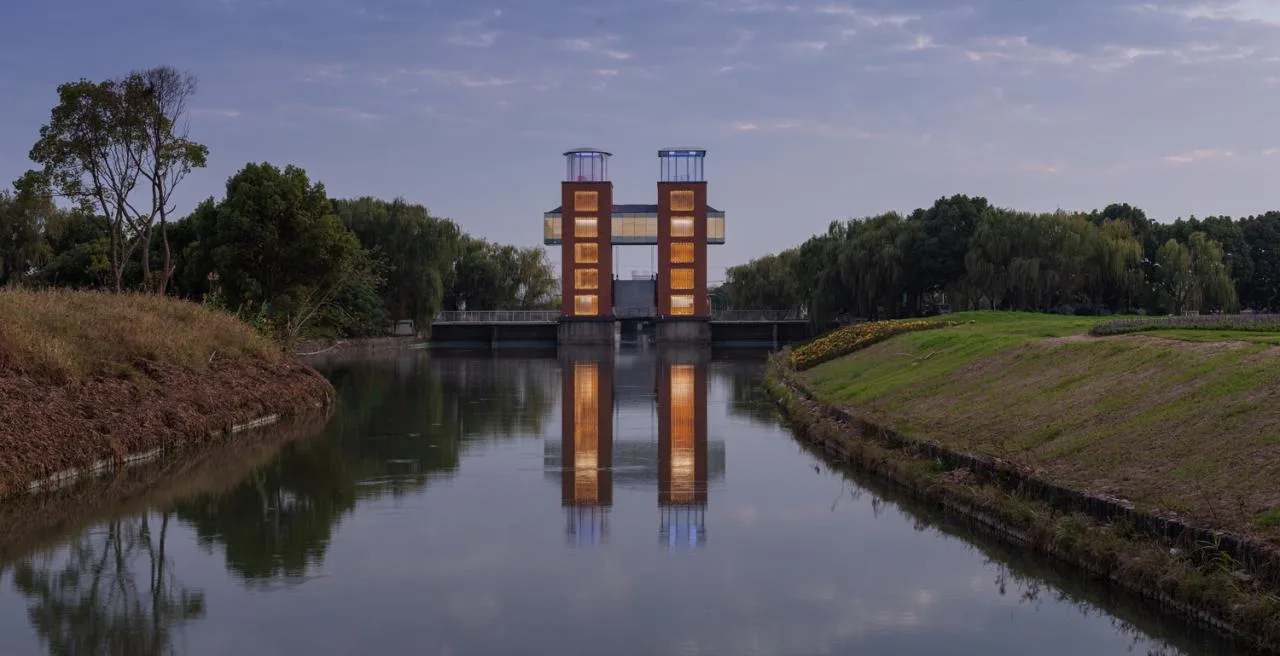
▲ Photo of the water gate
Narrative 2: Art Leads, Clouds of the Earth
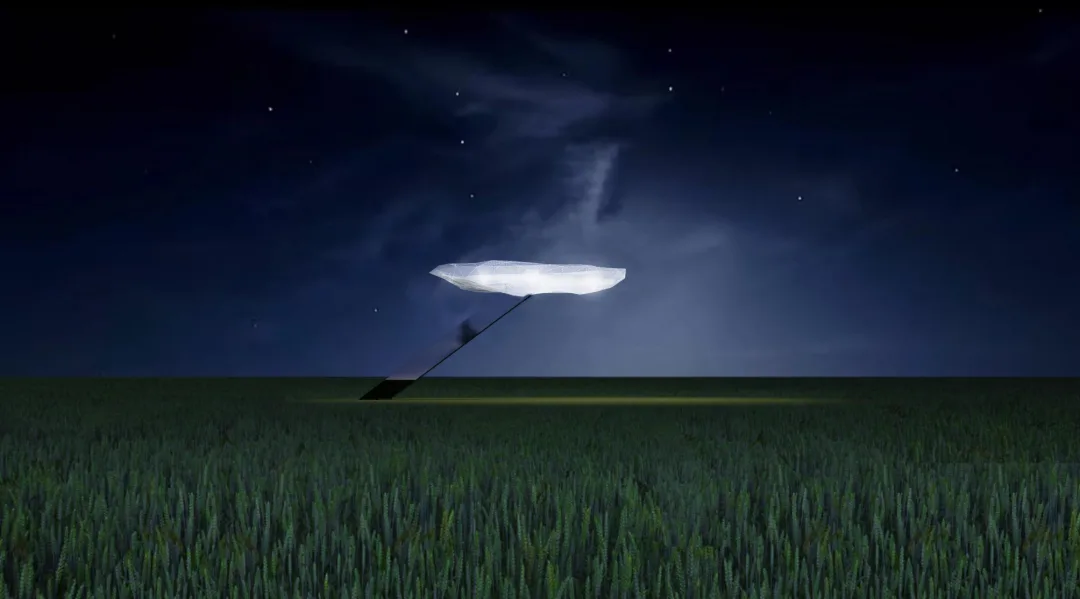
▲ Rendering
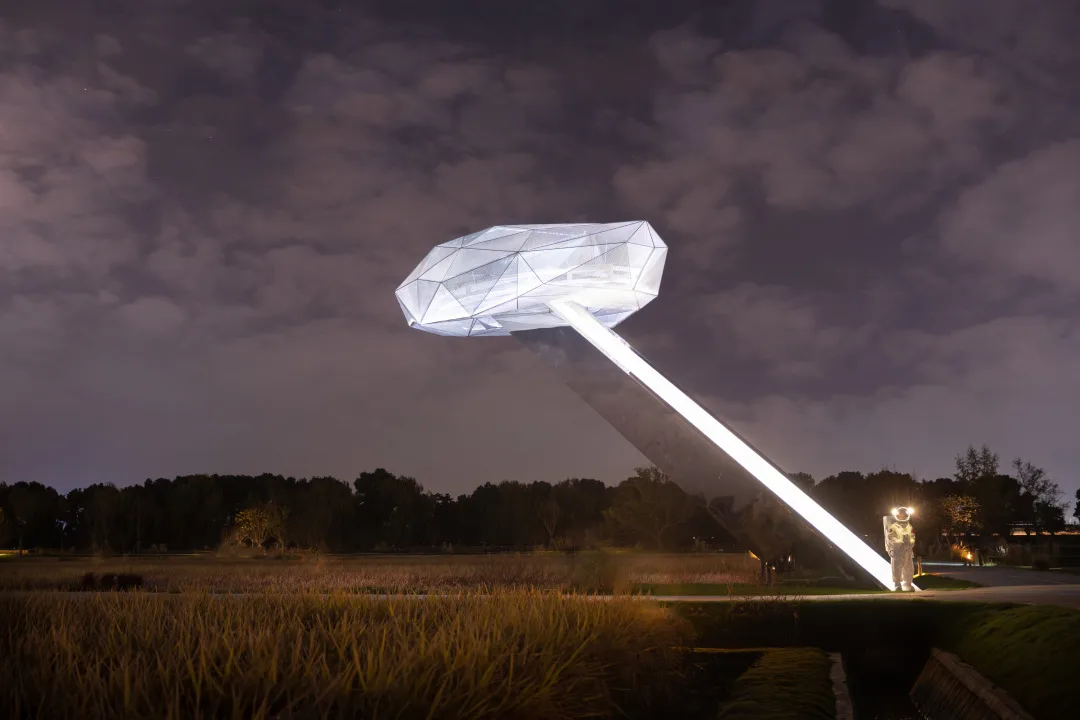
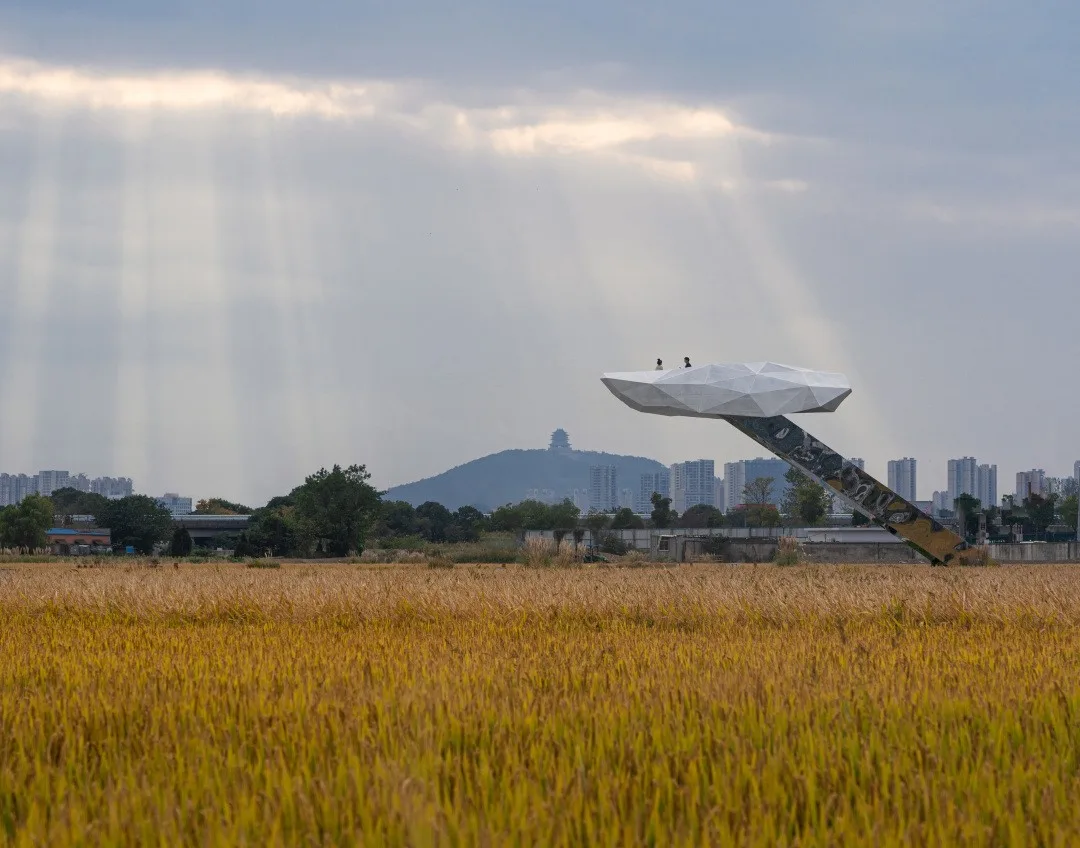
If the Cloud Knows Device
Field Ears
01
Missing is a long thread,
Connecting a lover’s arm,
A traveler’s luggage,
The concern of family members.
This design concept, “If the Cloud Knows,” suspends the entire structure above rice paddies and irrigation channels, harmonizing with the vast farmland and distant green mountains.
It resembles giant hands supporting the sky, a spacecraft descending from space, or a vessel carrying harvest food. The combination of rice fields, water canals, mountains, and clouds symbolizes the pastoral song of hard work, joy, and love.
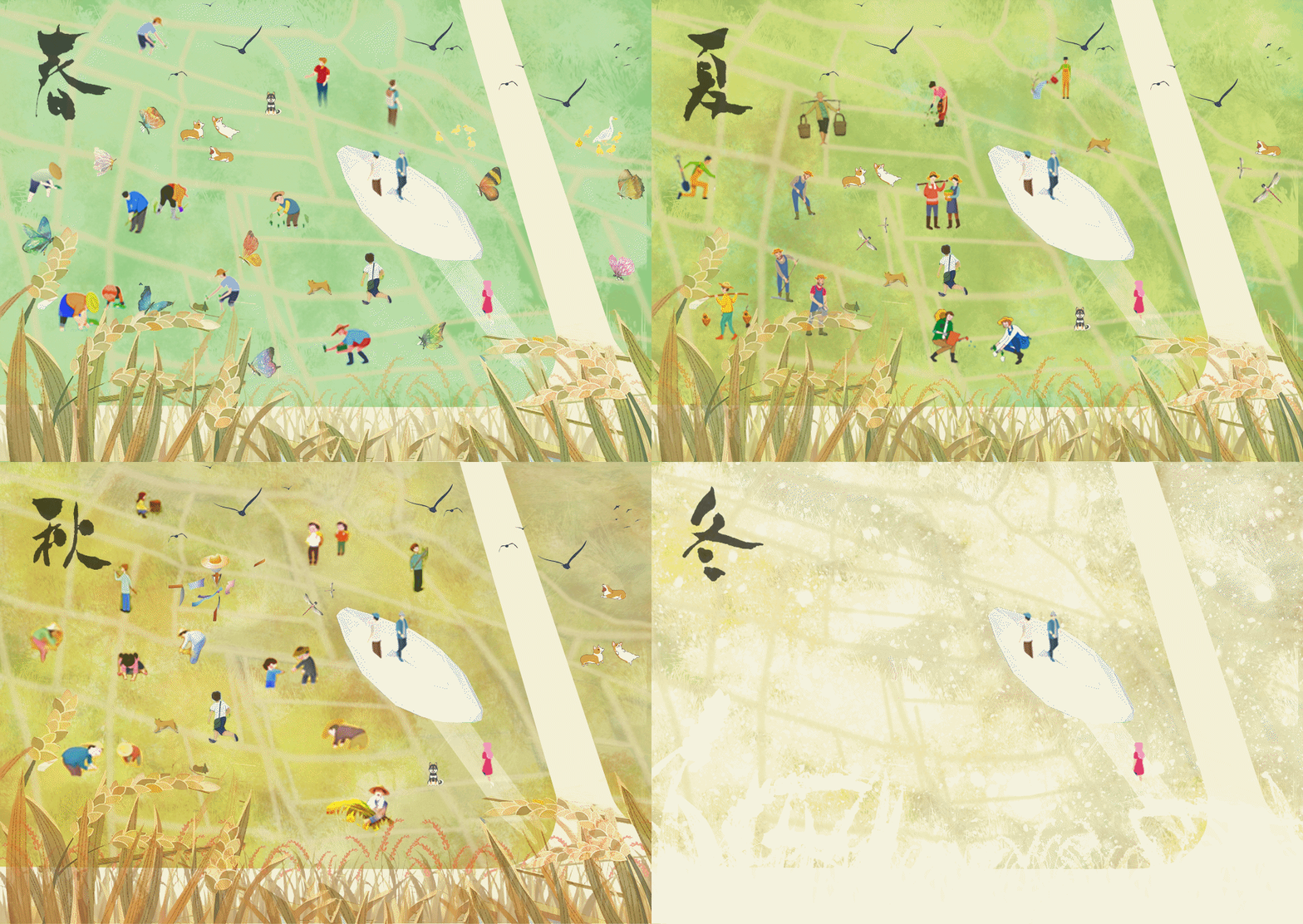
▲ Four season concept map of cloud devices
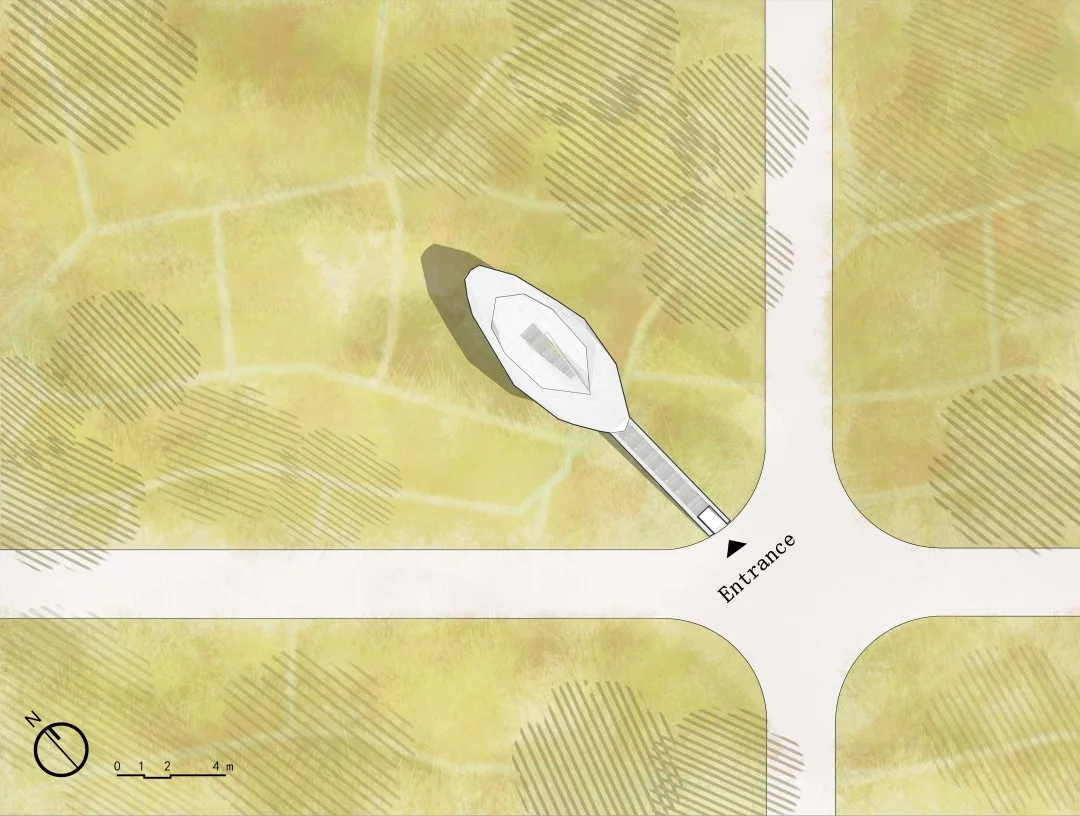
▲ Yunzhi Device Overall Plan
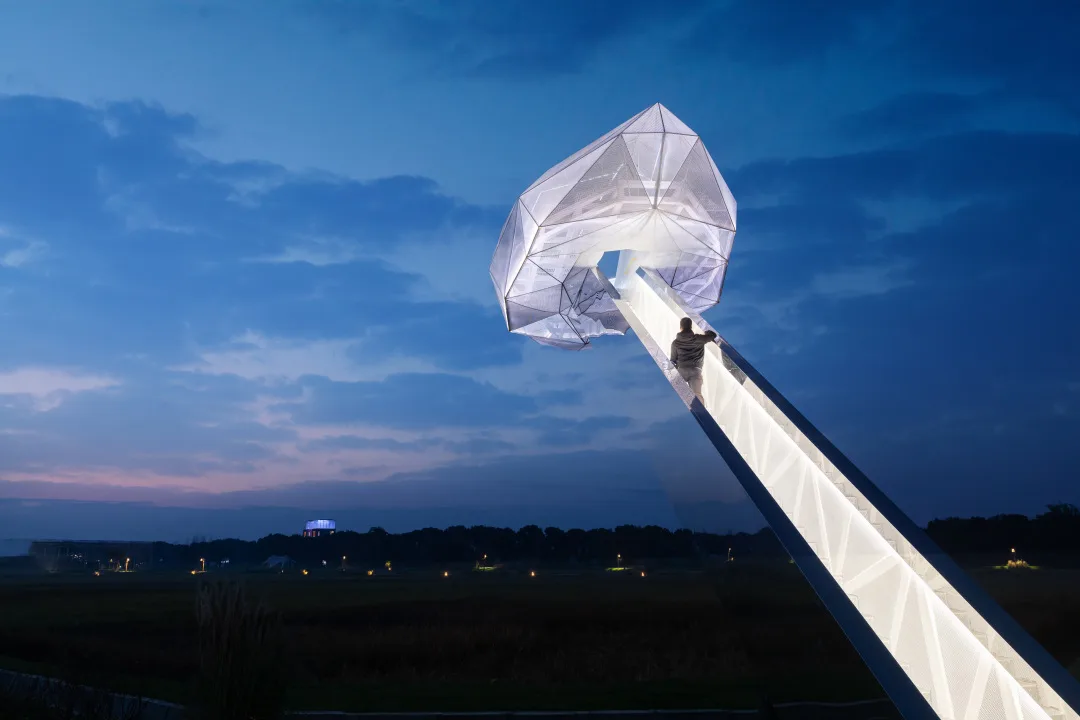
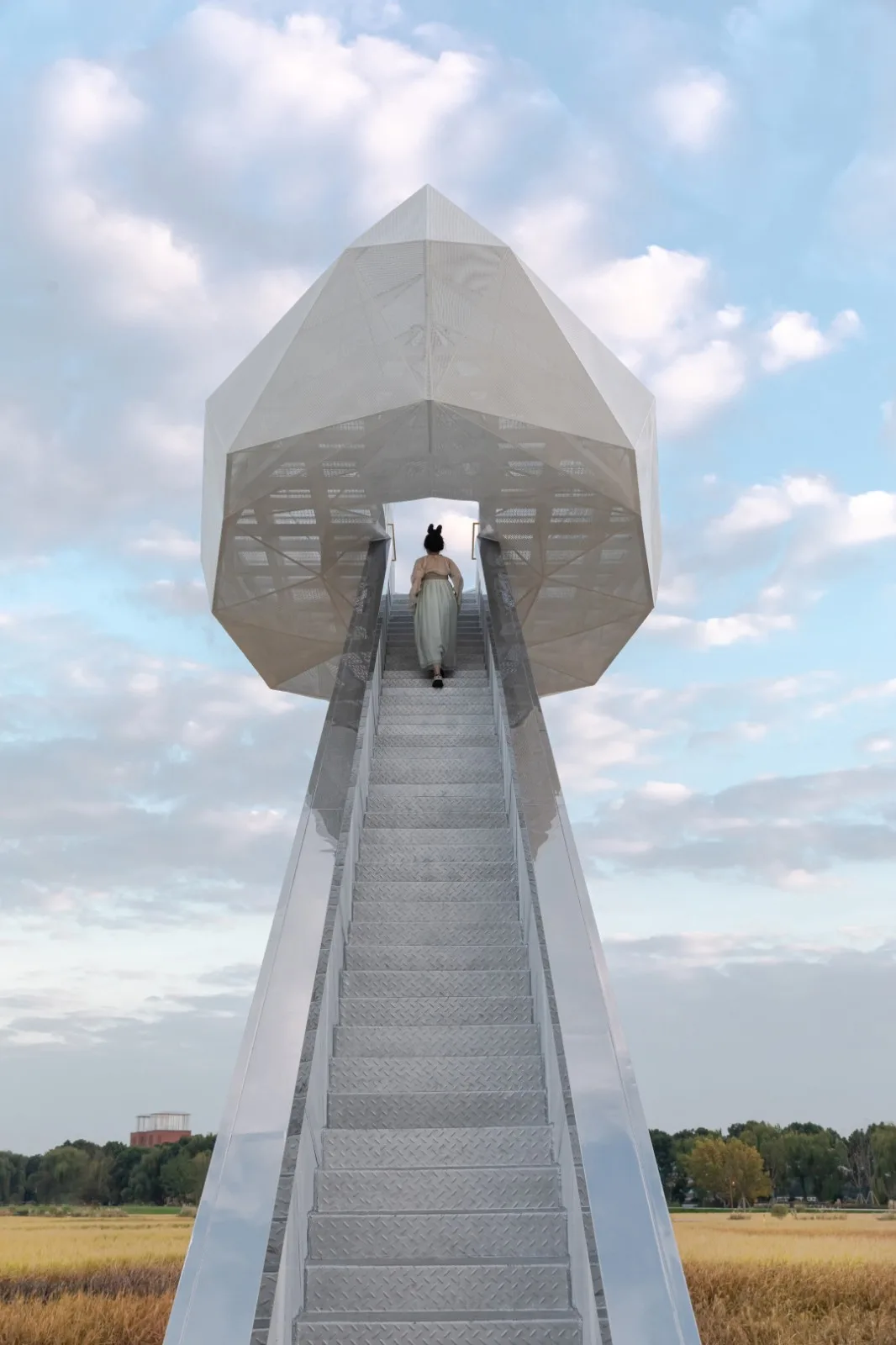
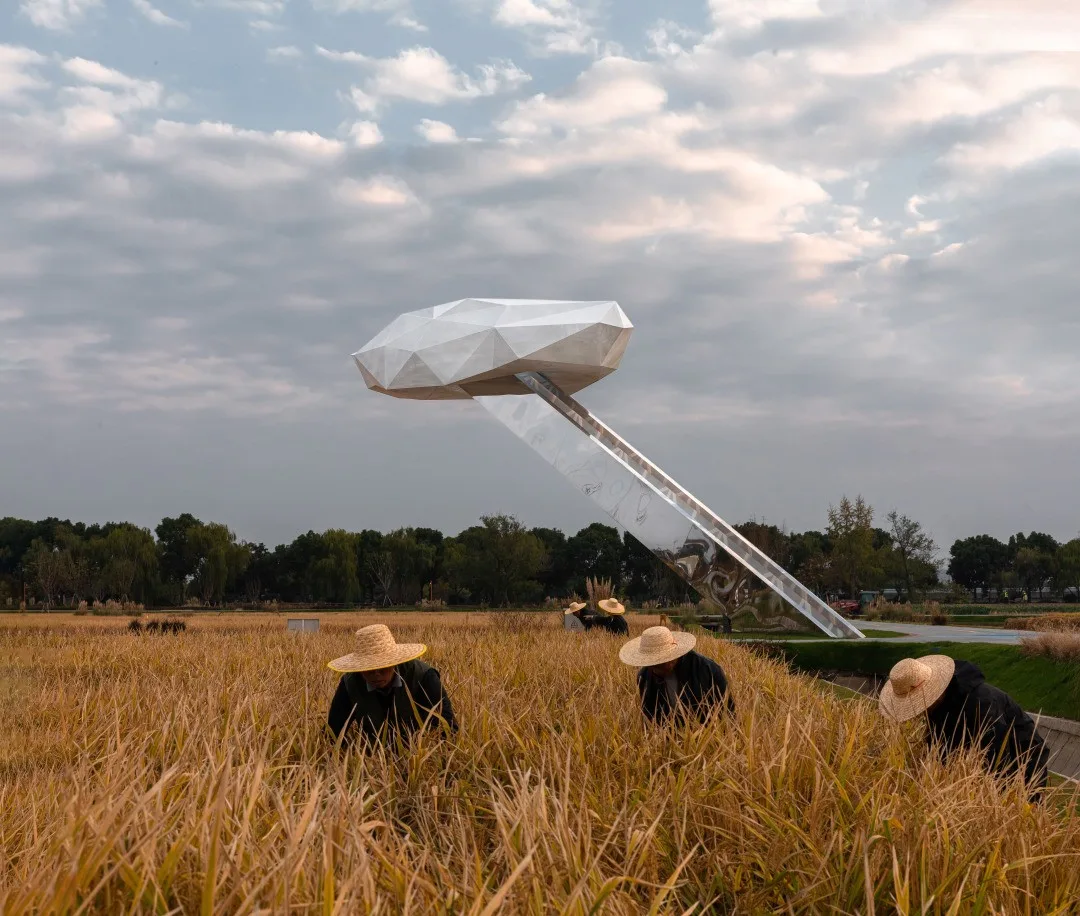
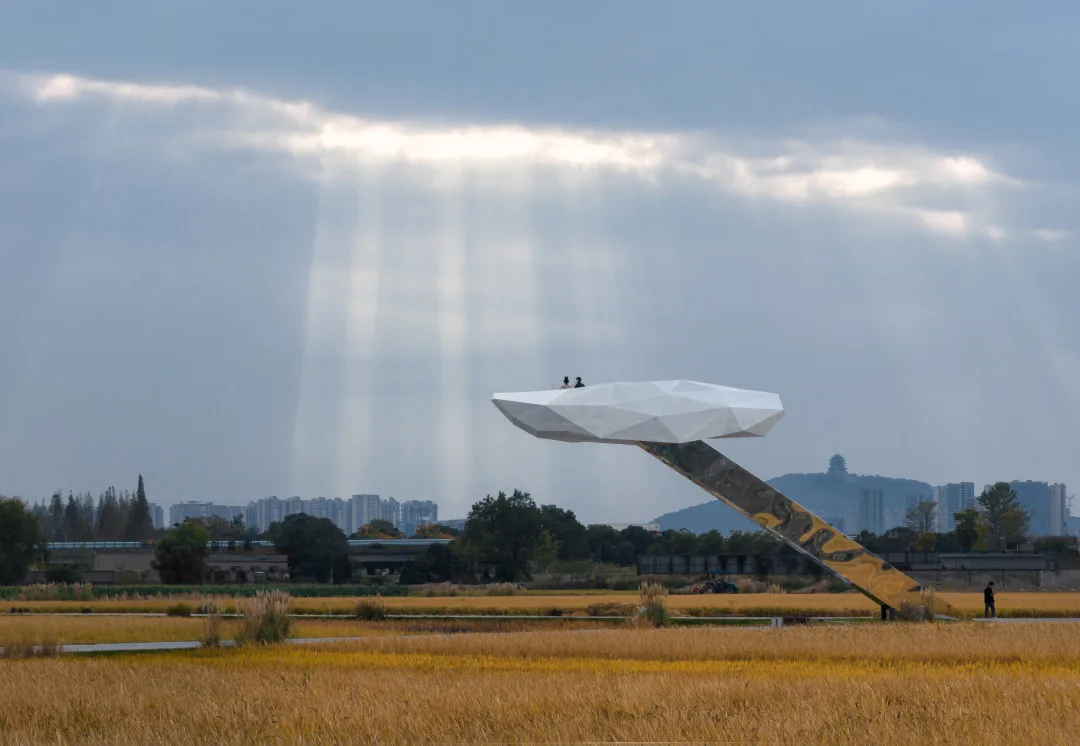
▲ Cloud Knows Device Photo
The Vision of Dreams
02
Missing is a fleeting dream,
The embrace of lovers,
The return journey of the wanderer,
Family meals.
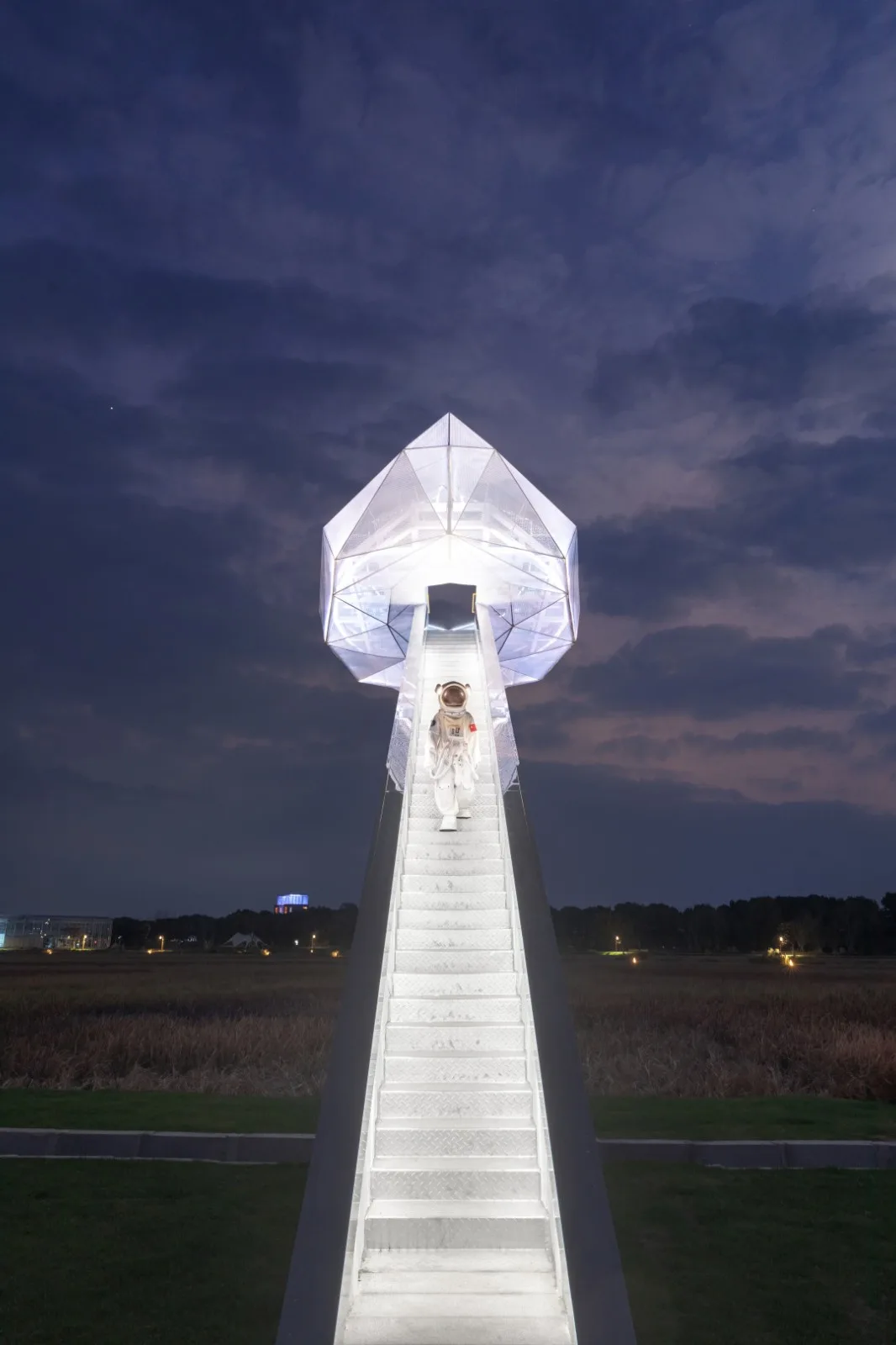
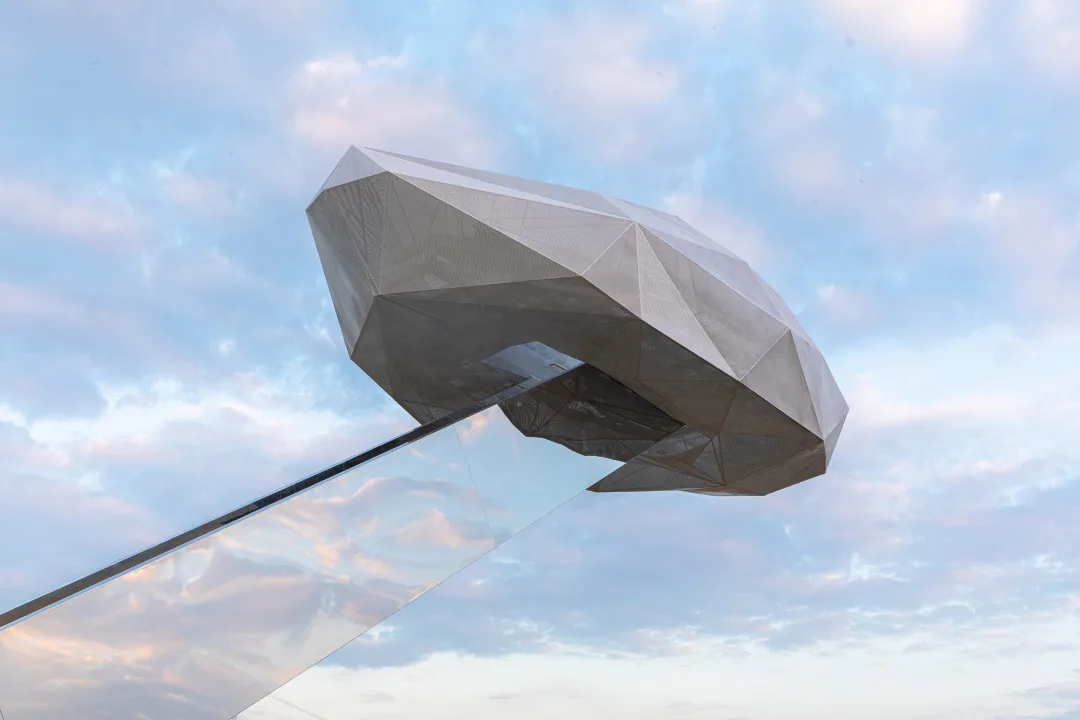
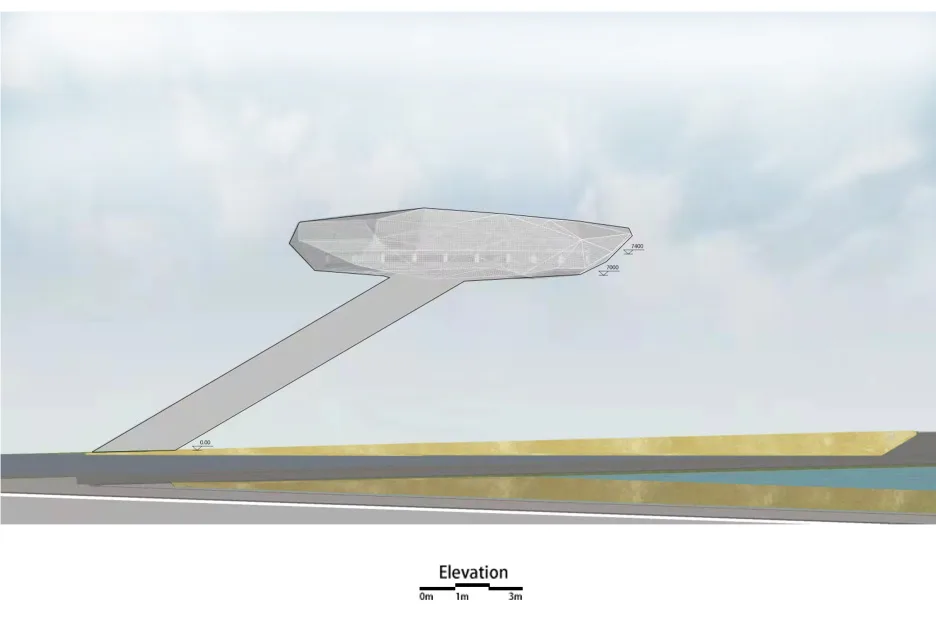
The design stands simply in the environment, with a cloud-shaped parametric line form full of power. The white, clean material suspends a 12-meter staircase leading straight into the clouds.
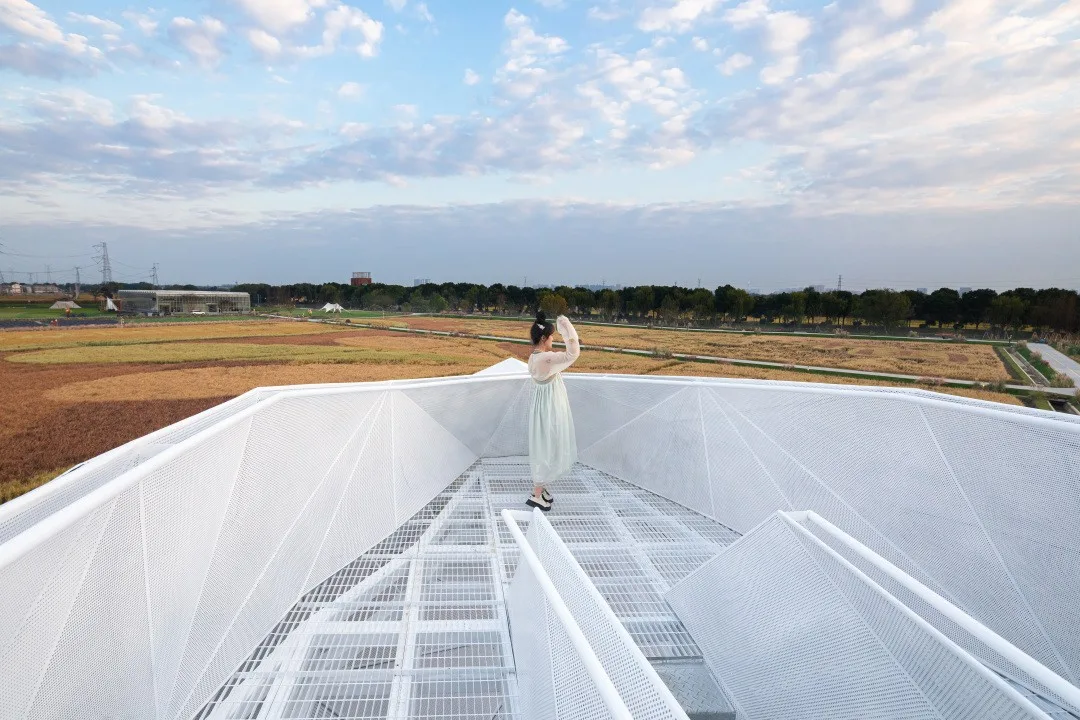
At the top, one experiences the sensation of standing among clouds. Triangles form the matrix, emphasizing strength and impact. The landscape tower’s cantilevered structure enhances the surreal floating effect.
The cantilevered platform sits at the center of the rice fields, with a fully open cloud-shaped observation deck facing the landmark Water Gate Bookstore.
Visitors enjoy 360-degree panoramic views of the natural landscape from the platform.
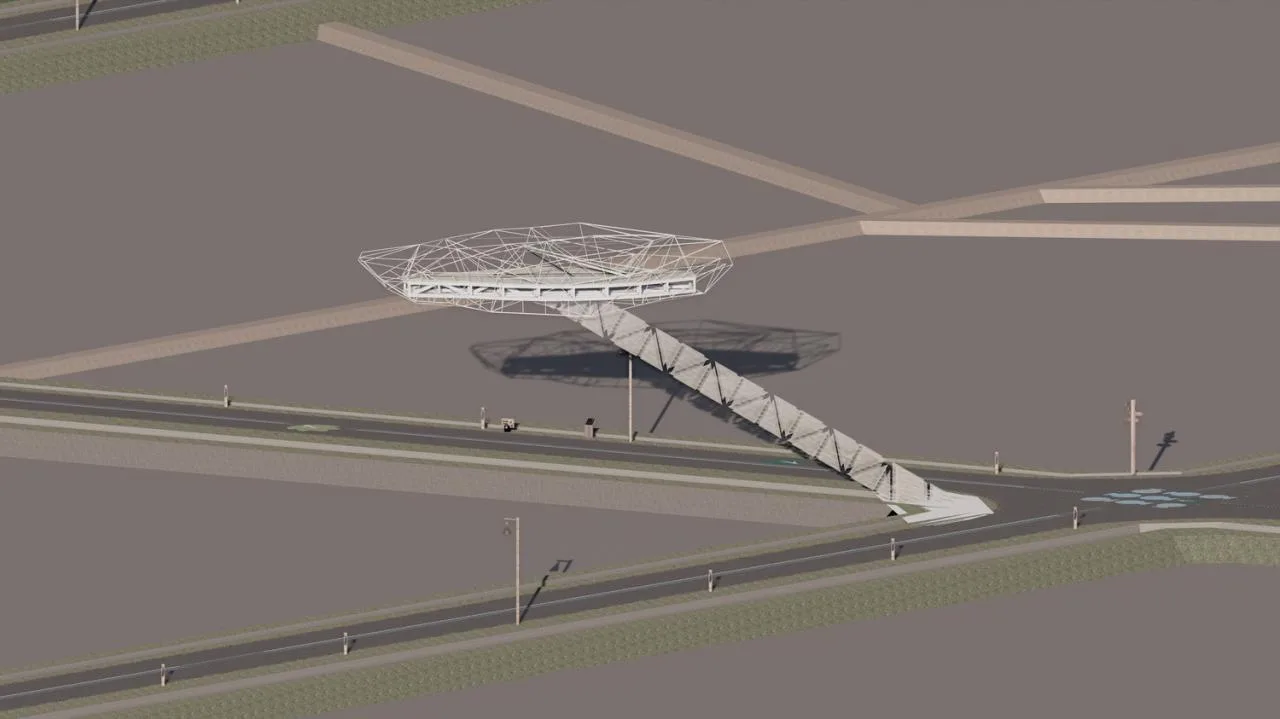
▲ Building strategy
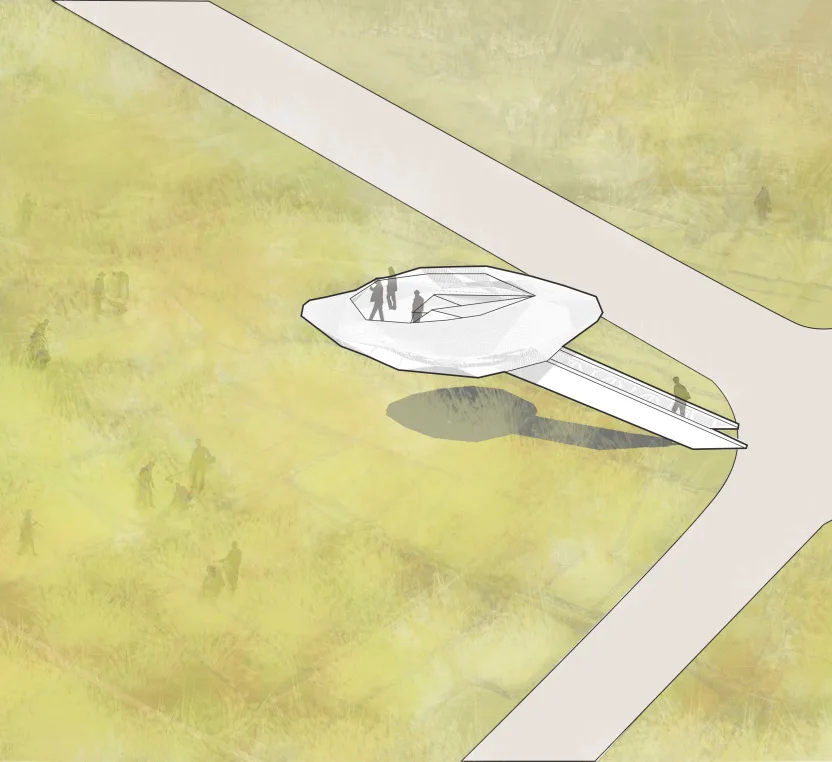
▲ Concept diagram of installation
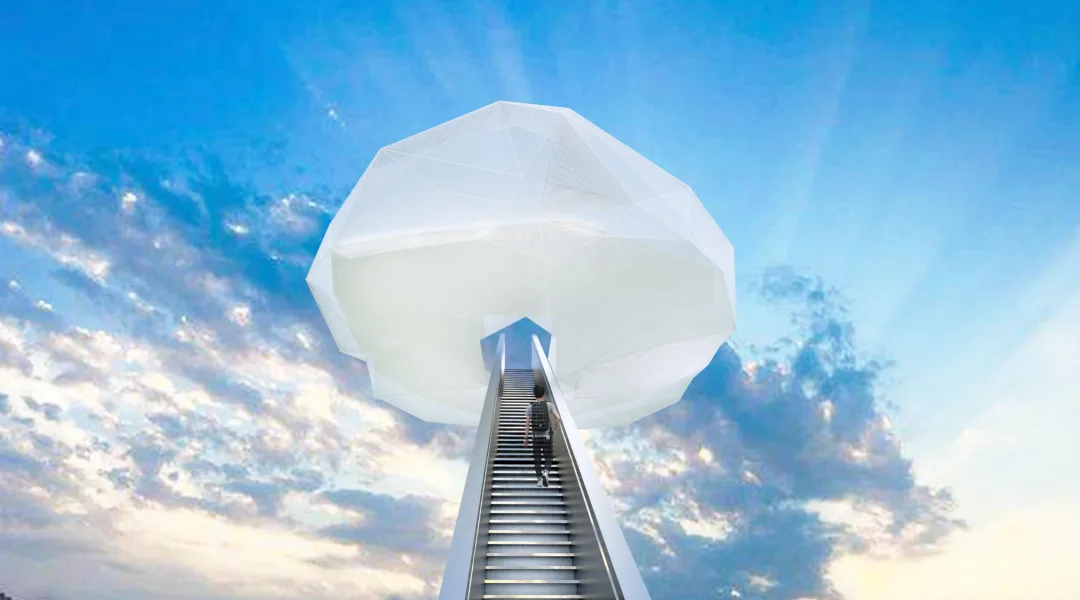
▲ Scheme rendering
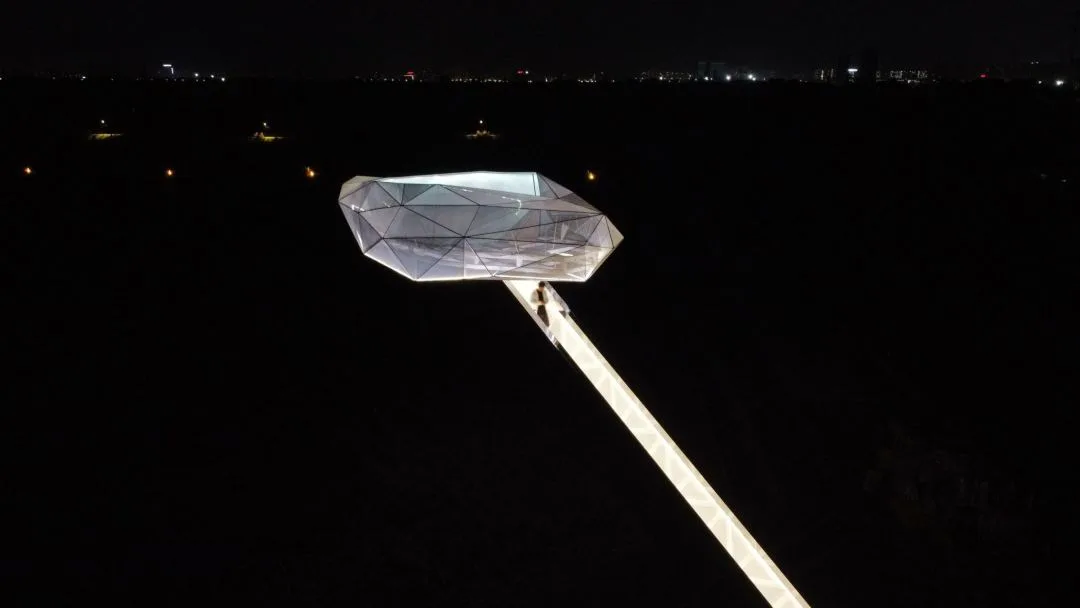
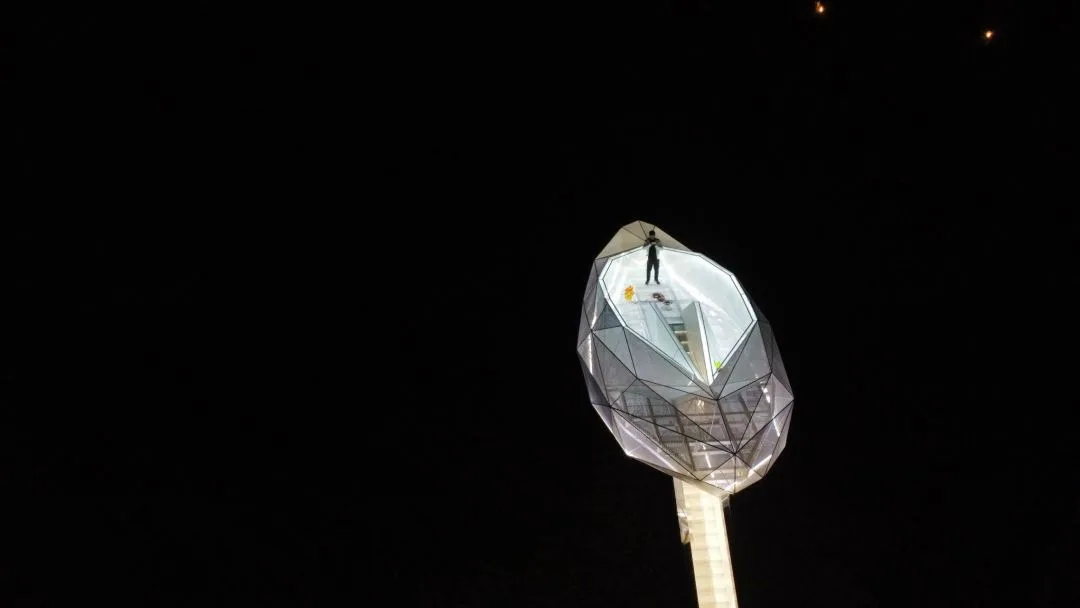
▲ Cloud Knowing Device at night
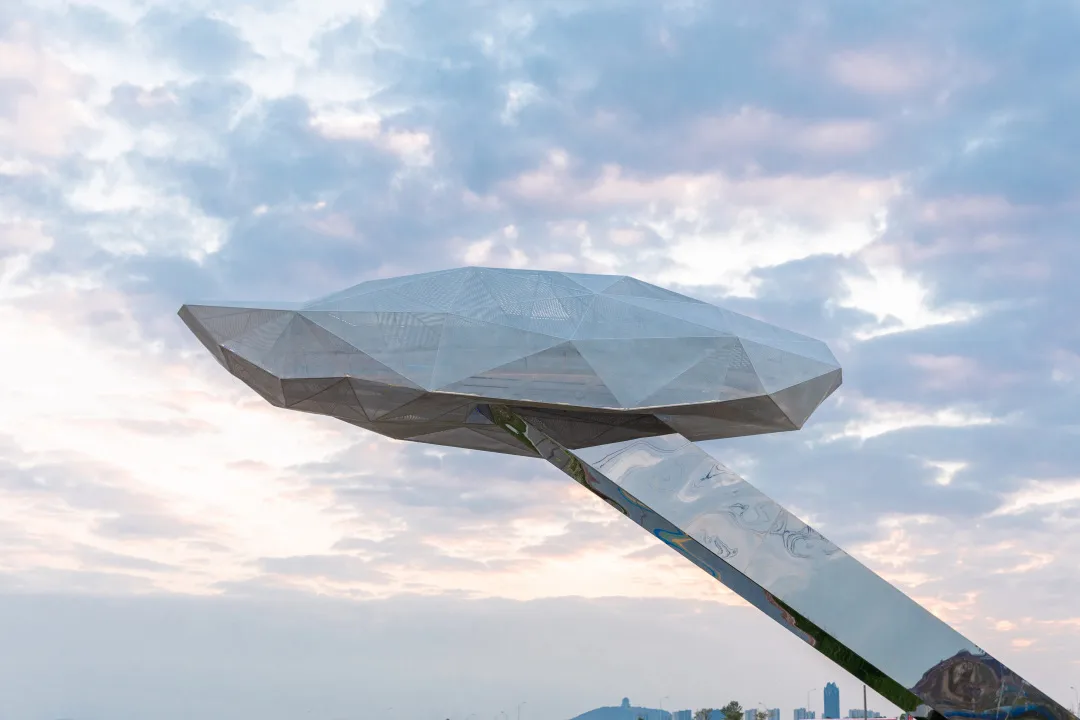
▲ Cloud Knows Device daily scenes
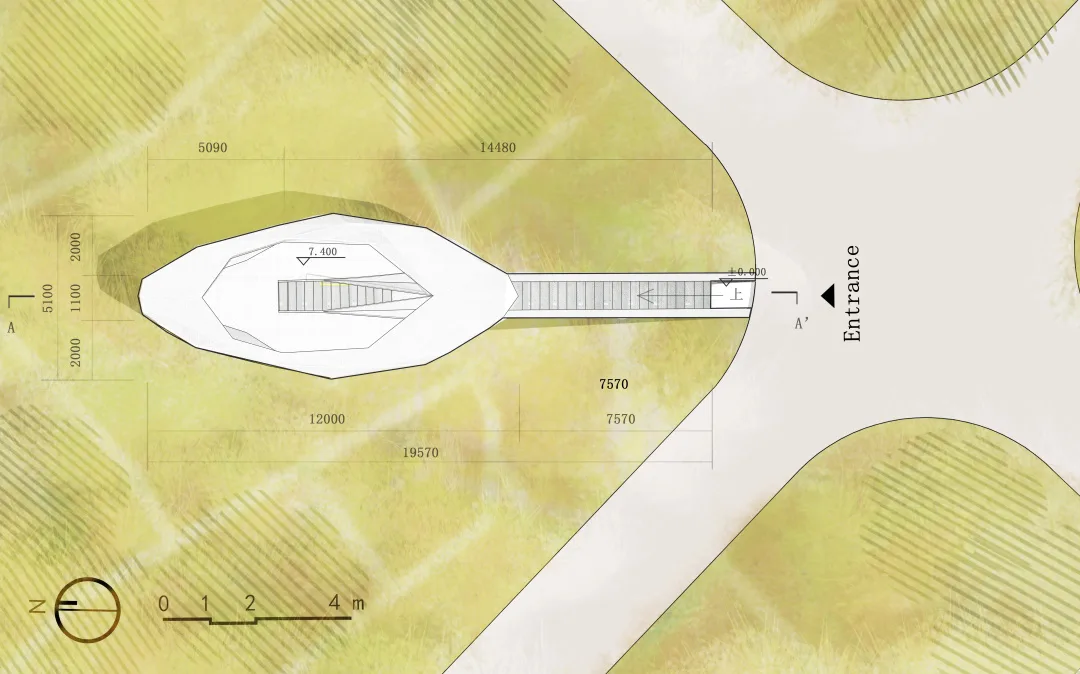
▲ Yunzhi Device Overall Plan
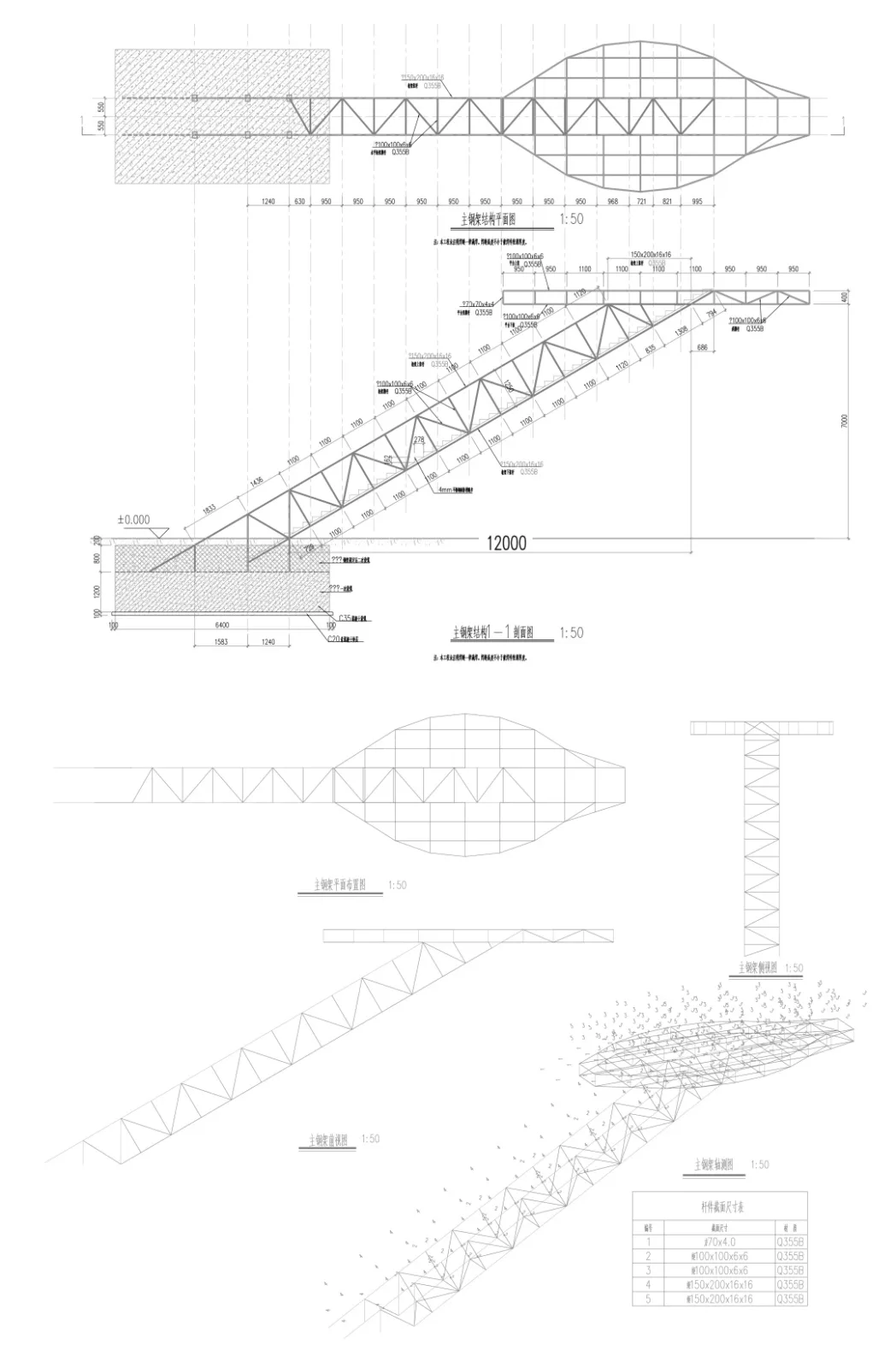
▲ Yunzhi Device structure drawing
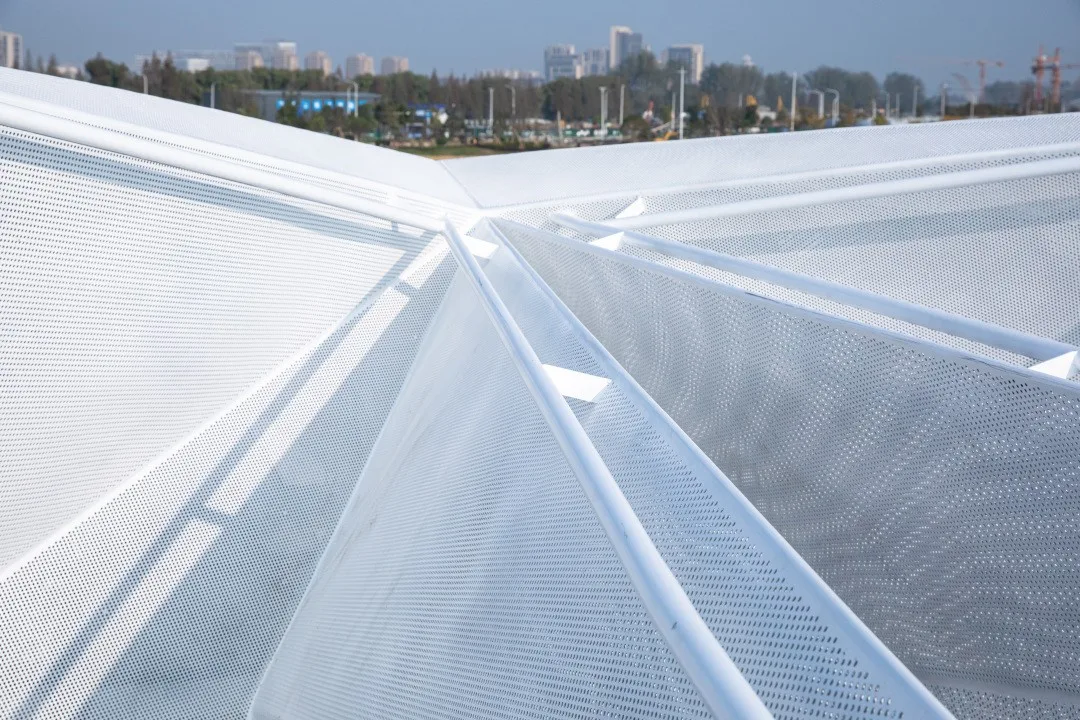
▲ Device details
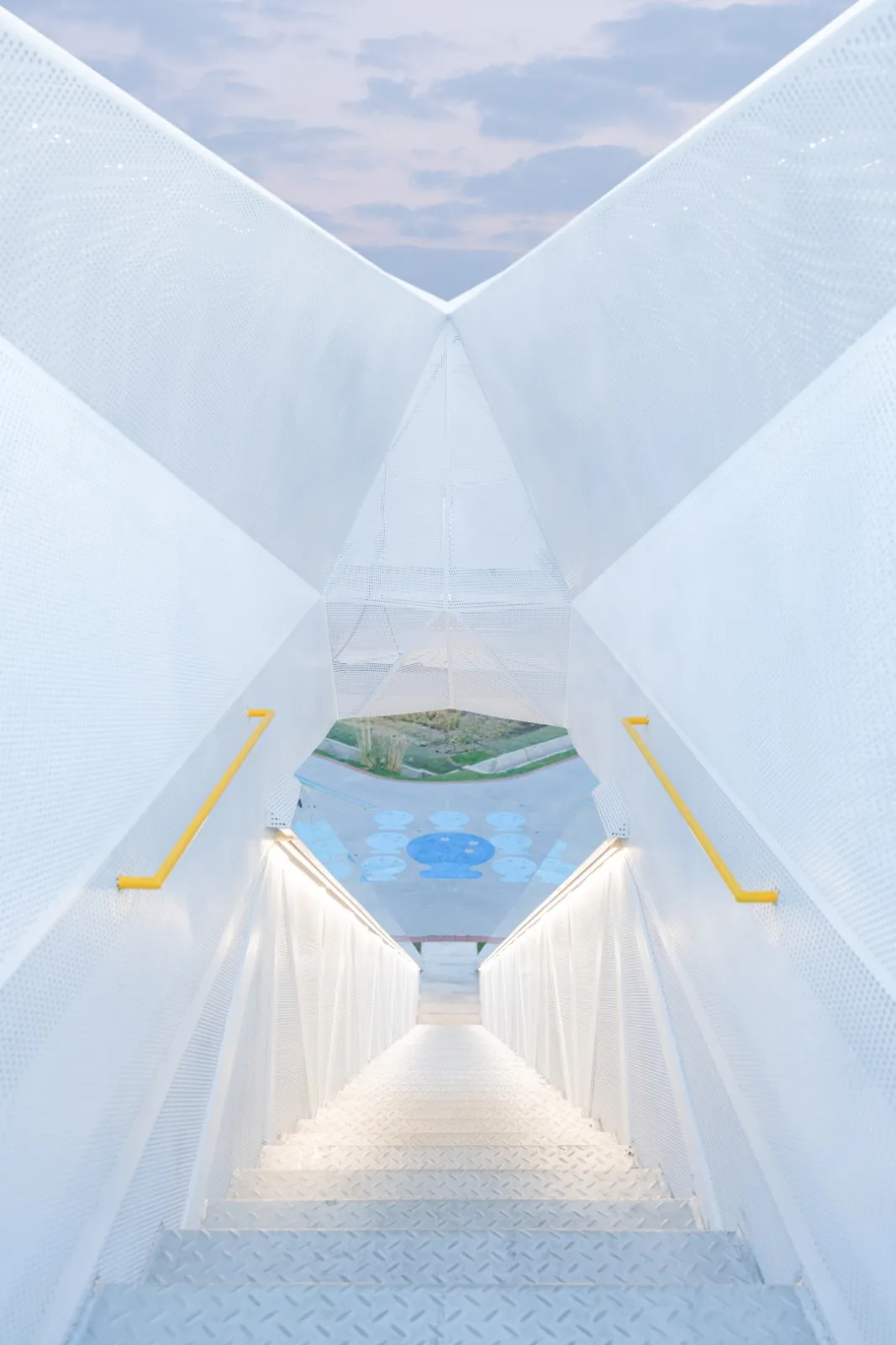
If the Cloud Knows Device Ladder
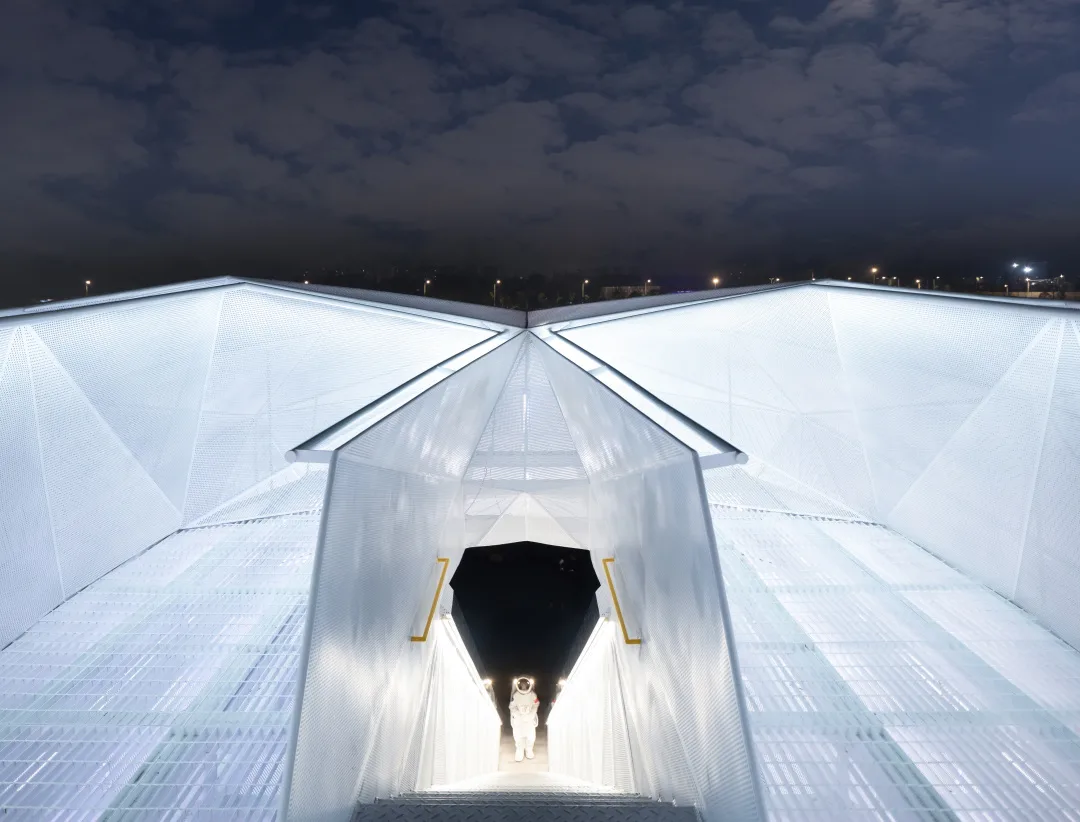
If the Cloud Knows Device
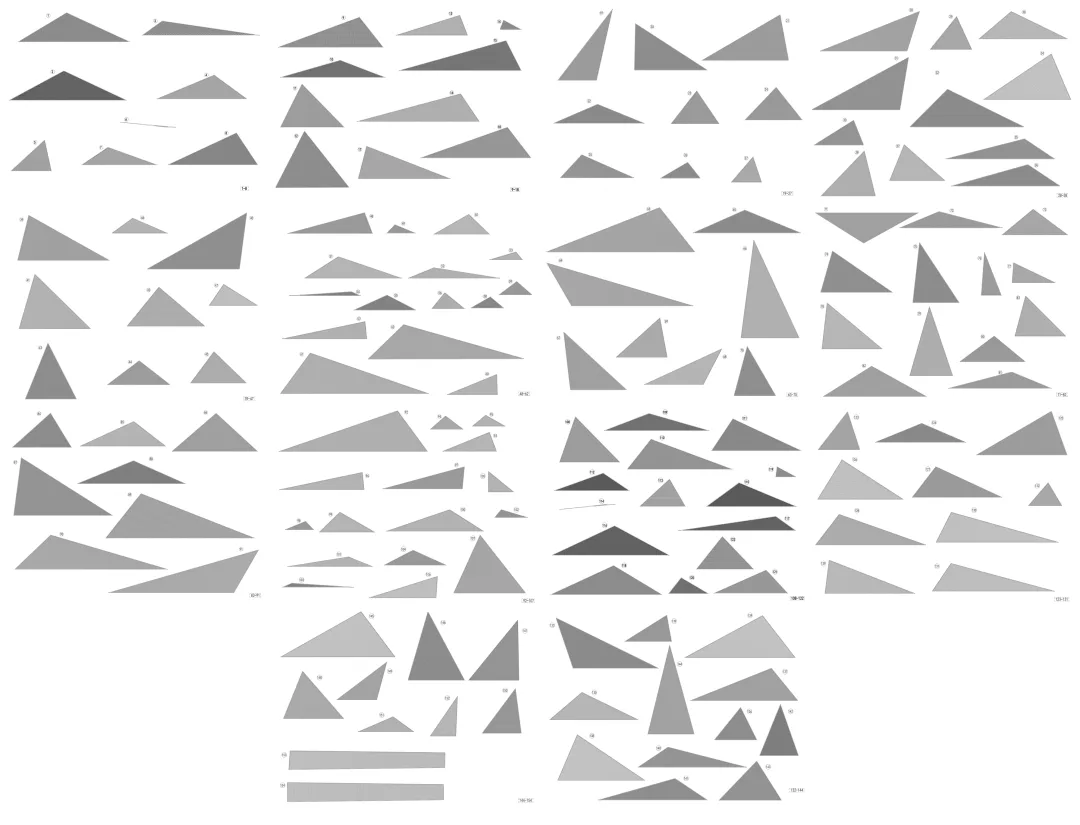
▲ Material slice diagram
Color and Light (Material Design)
Missing is a high cloud,
It is the friendship of lovers,
The remote delivery of wanderers,
The support of family members.
The staircase is made of fully reflective aluminum plates that mirror the environment, camouflaging the cantilevered structure.
The cloud’s form is crafted from perforated metal plates with semi-transparent haze, blending industrial design with agricultural ecology and nature, symbolizing industrialization and intelligent manufacturing.
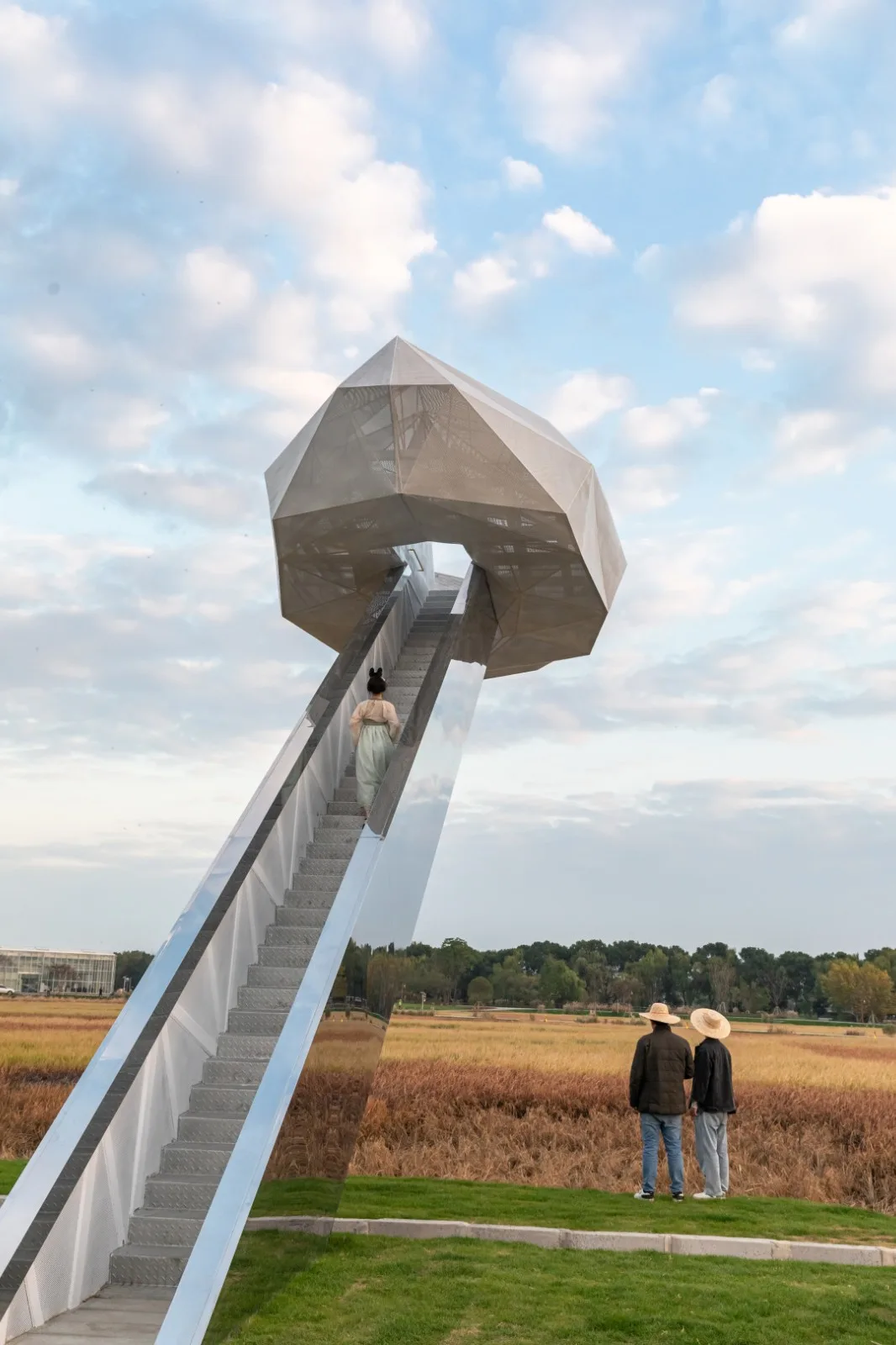
▲ Cloud Knows Device Photo
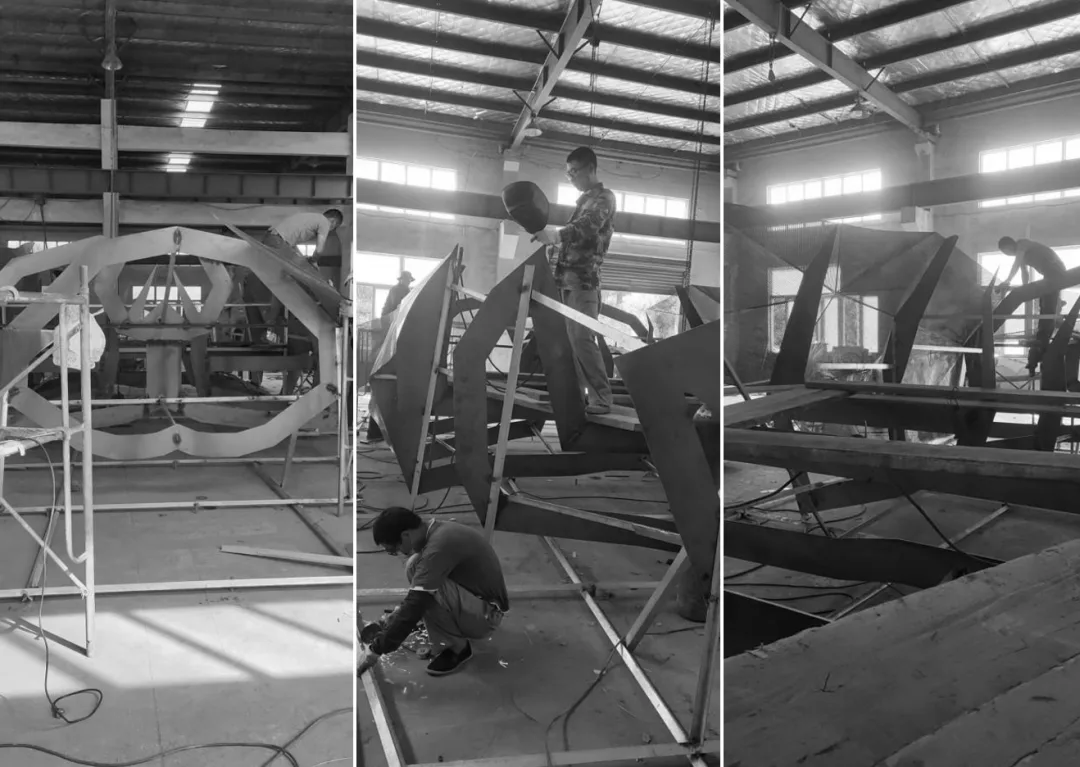
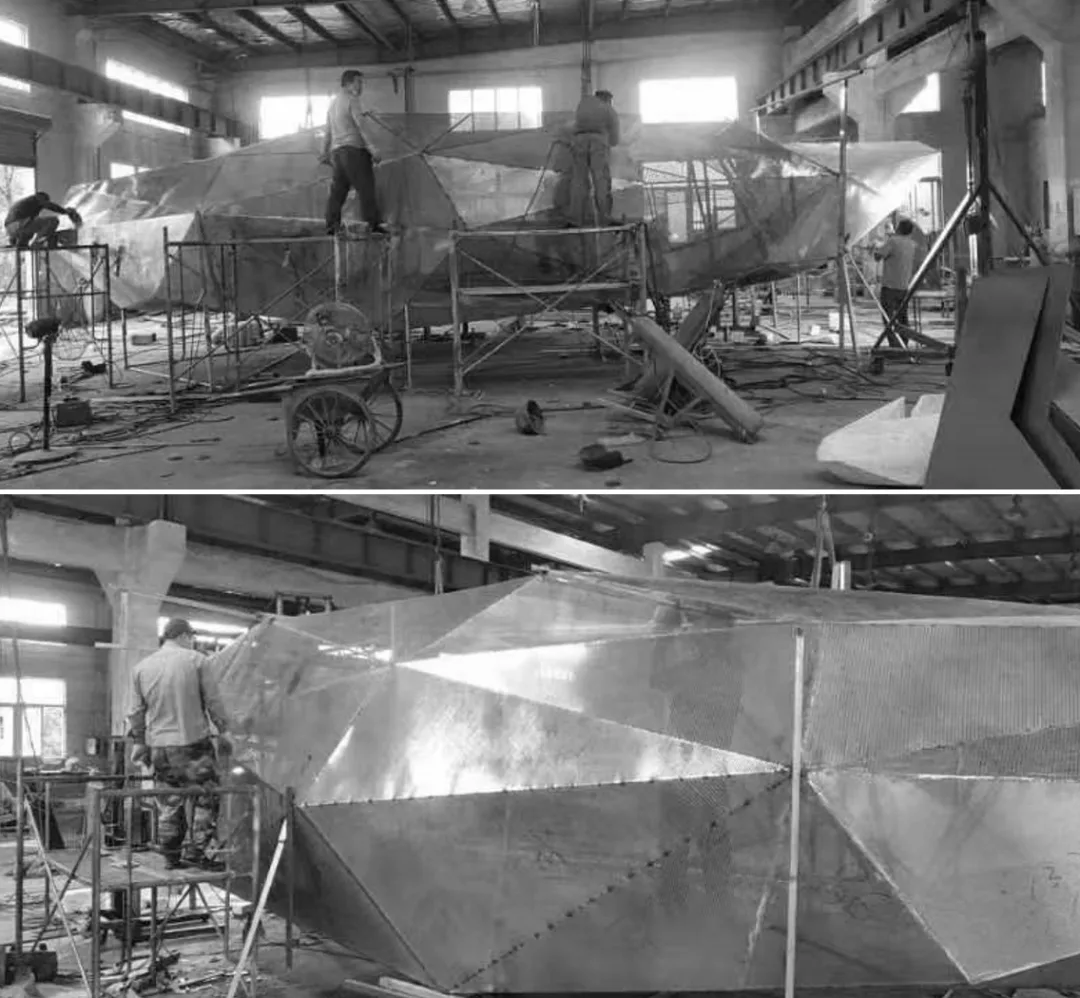
▲ Construction assembly site of the device
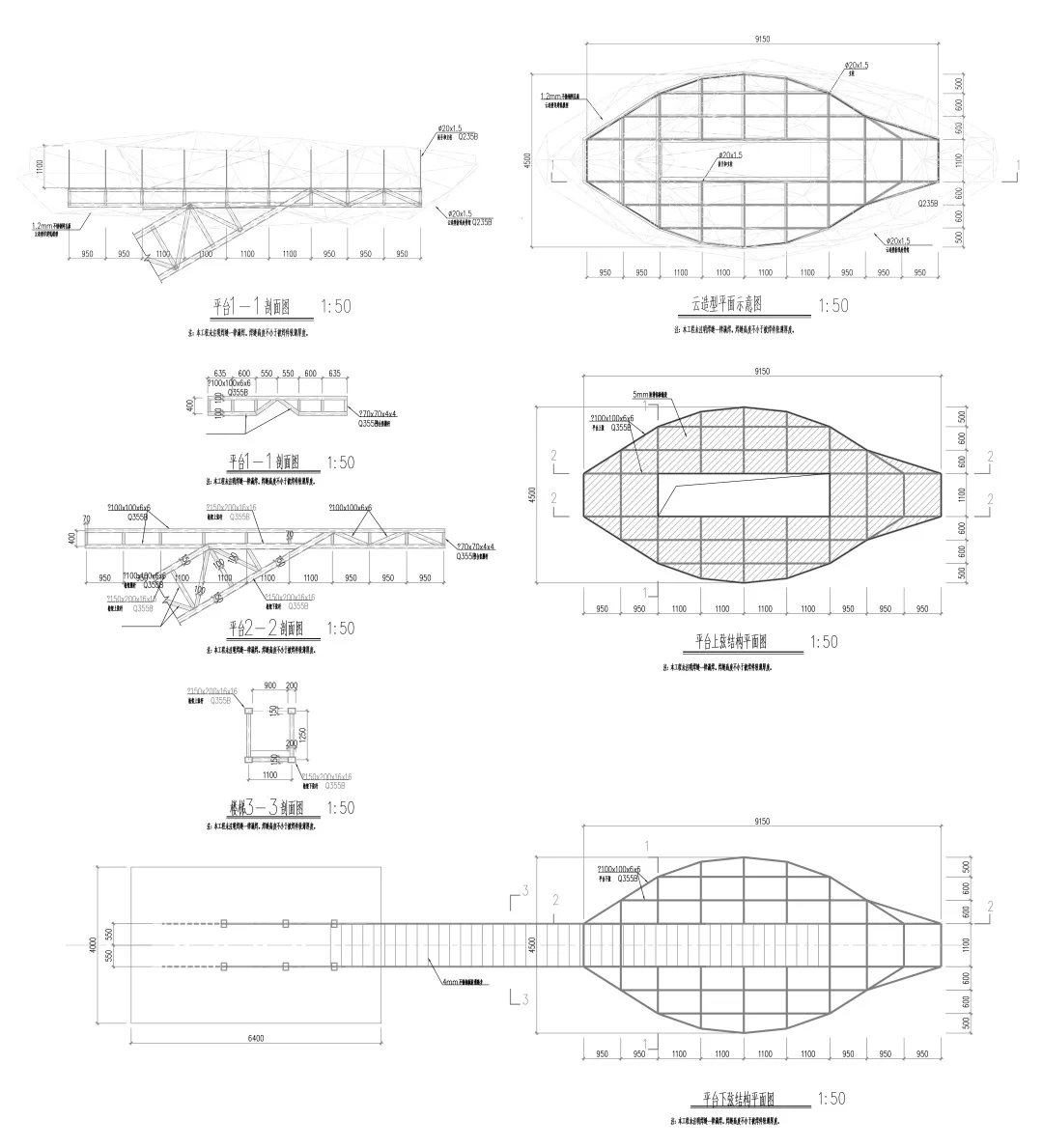
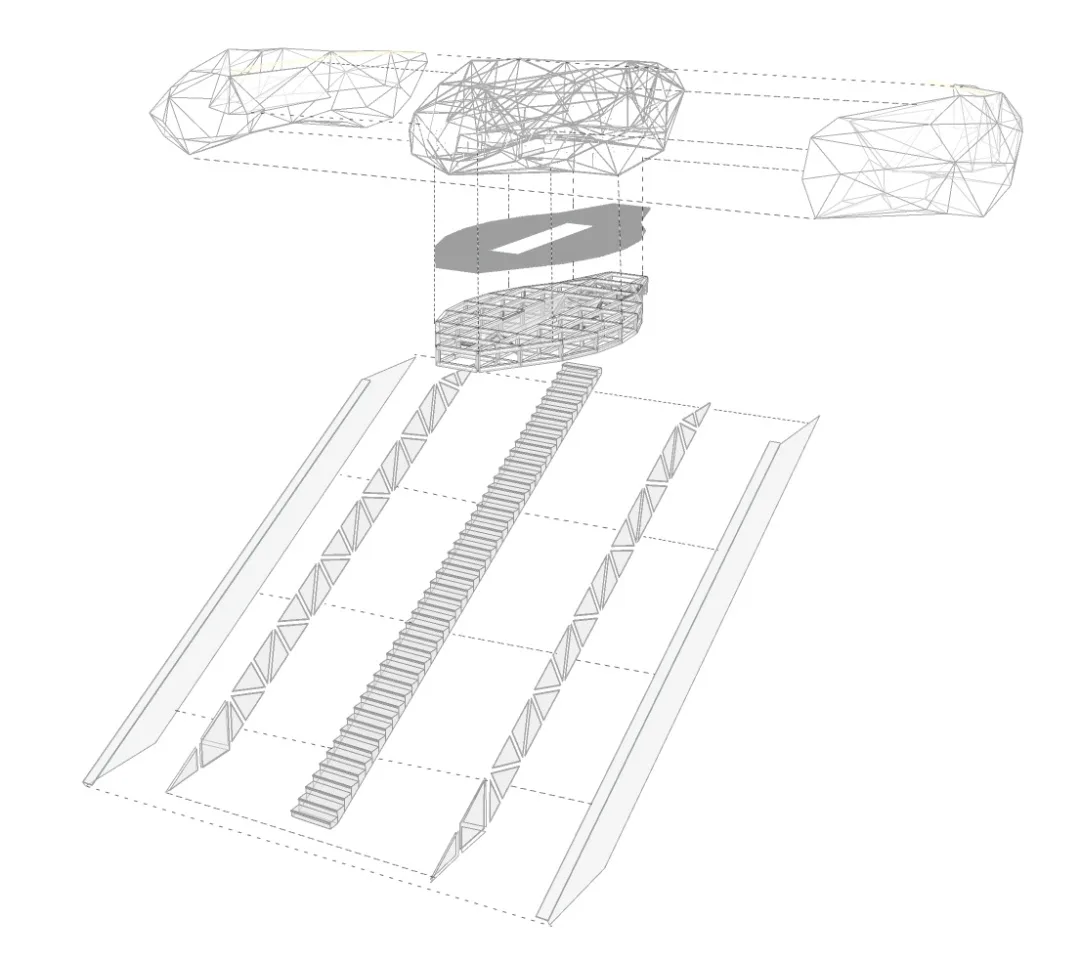
▲ Device structure diagram
Human Emotions
04
If the cloud knew,
It would convey this longing to those far away.
Standing in this cloud, I stand beside you.
At night, as lanterns light up, the internal illumination reveals the cloud’s shape. Above vast rice paddies, a solitary white cloud floats, becoming a landmark.
The rice canals have taken shape and risen swiftly. Whether a wanderer far from home, a close-knit couple, or a hardworking farmer, all can find spiritual solace in the “If Cloud Knows” device.
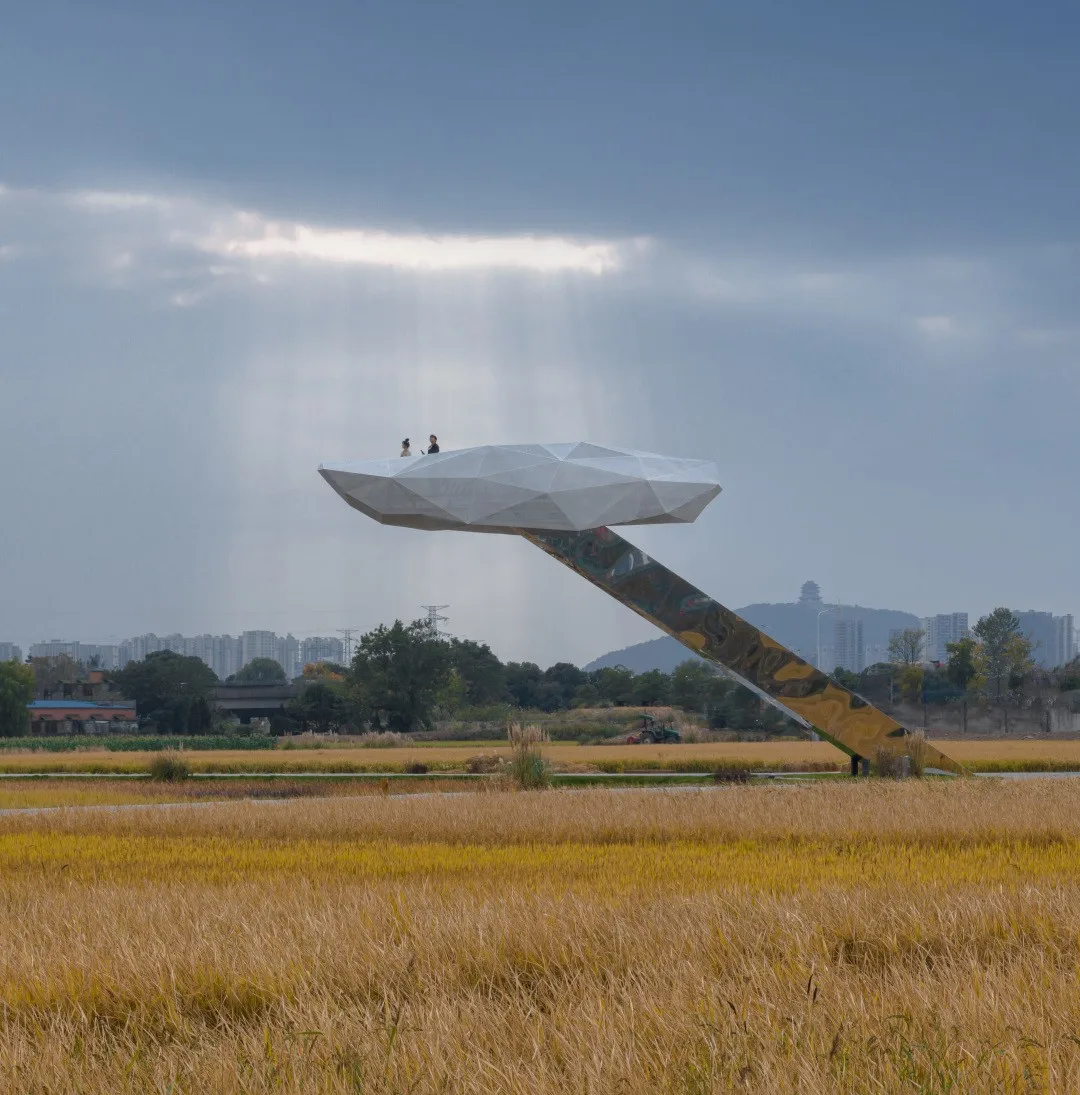
If the Cloud Knows Device photos
Let’s Go to the Countryside!
The unique natural environment of rural areas, like a paradise on earth, increasingly attracts young people and artists alike to stay. The countryside, once idealized as a poetic dwelling, is becoming a reality again.
Guided by systematic rural revitalization, we hope our modest buildings contribute meaningfully to this transformation.
Project Drawings
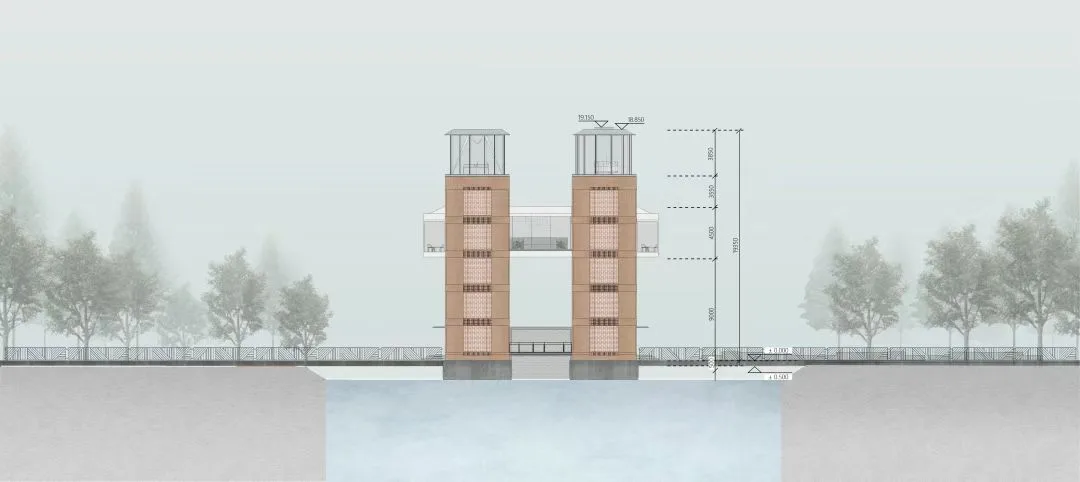
▲ Front view of water gate
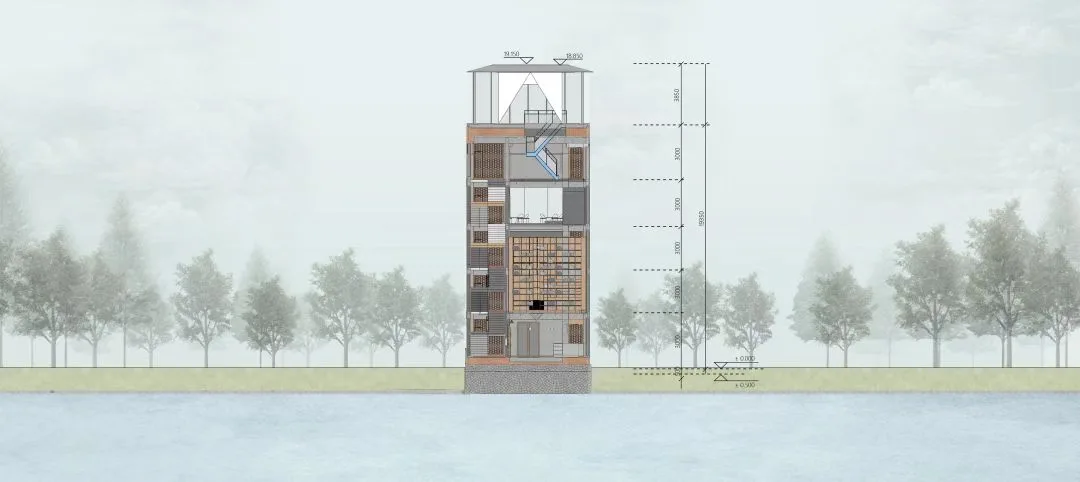
▲ Sectional drawing of water gate
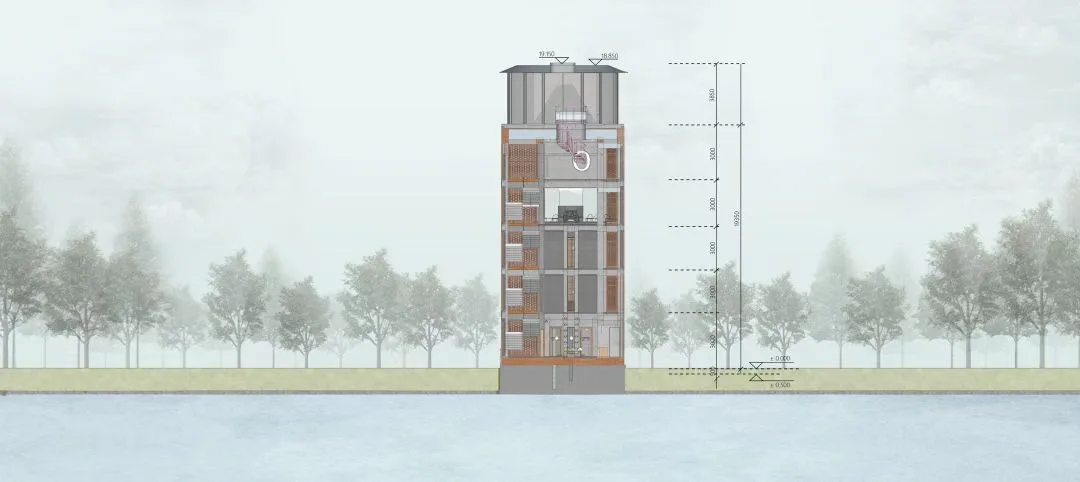
▲ Sectional drawing of water gate
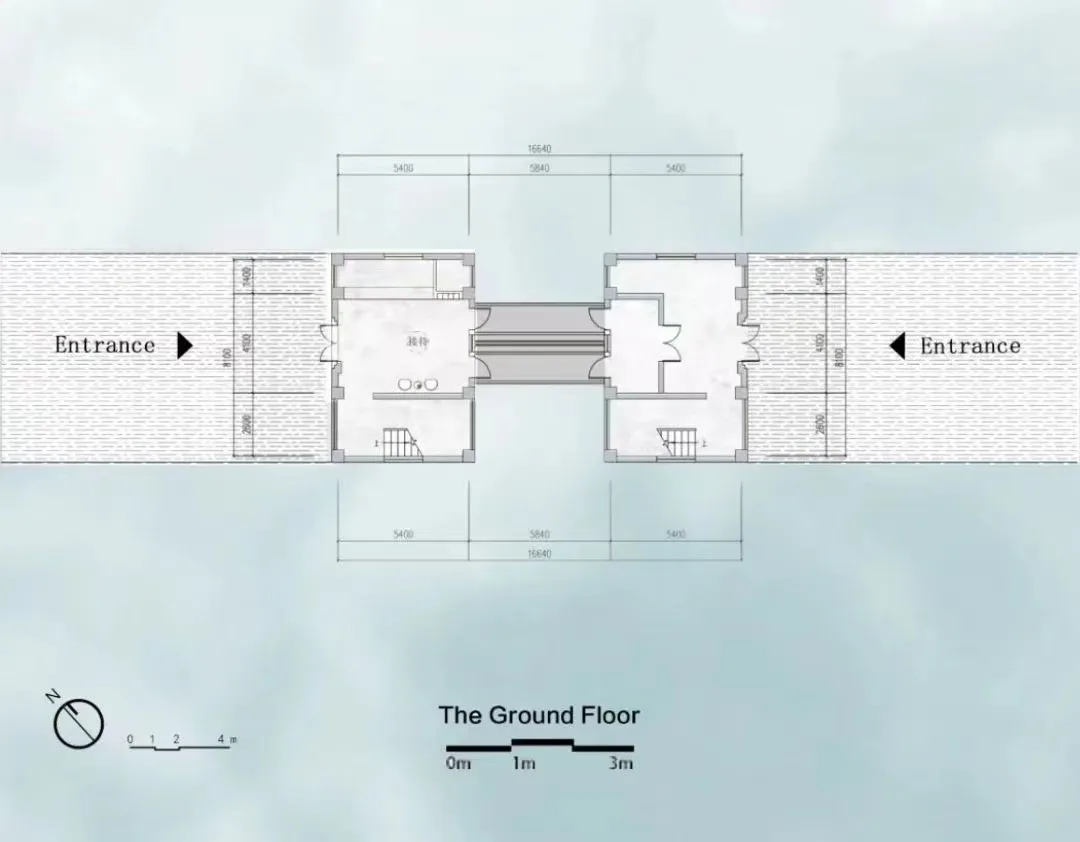
▲ First floor plan of the water gate
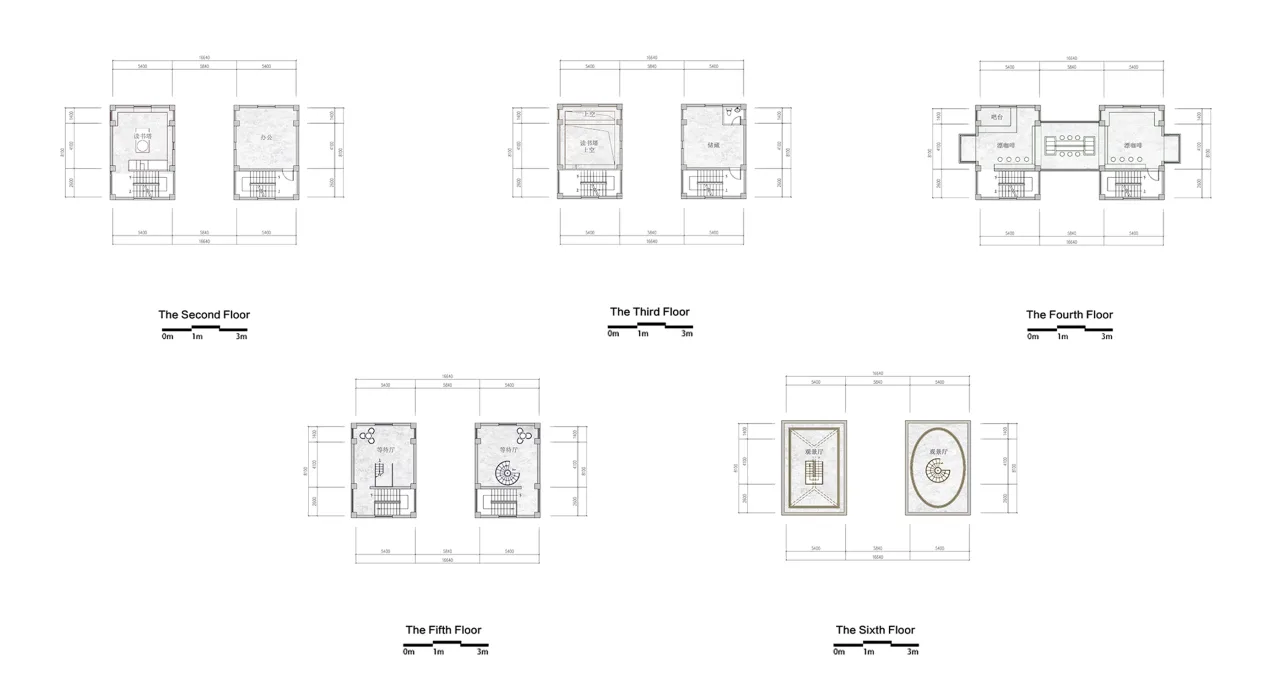
▲ Floor plans of the water gate
▲ Steel frame structure section diagram
Project Information
Water Gate Renovation
Owner: Jinmao East China Region, China
Location: South of Taihu Lake, Huzhou
Design Unit: Aoming Studio, Shanghai Jiao Tong University
Lead Designers: Zhang Haiao, Xu Hang
Jinmao Design Team: Yang Zhenyu, Tang Dan, Xu Wenbin, Yin Yuanyuan, Huanhu Company Design Team
Architectural Design Team: Wang Jingchuang, Pan Wenqi, Li Jinhai, Ma Libao, Qian Kun, Zhang Minghui
Fine Decoration Construction Drawing: Jinmao Decoration
Curtain Wall Deepening Design: Hyde Curtain Wall
Structural Design Consultant: Shanghai Tongda Planning and Architectural Design Co., Ltd.
Landscape Design: MAO
Lighting Consultant: Hyde Curtain Wall
Architectural Photography: Su Shengliang
If the Cloud Knows
Owner: Jinmao East China Region, China
Location: South of Taihu Lake, Huzhou
Design Unit: Aoming Studio, Shanghai Jiao Tong University
Lead Designers: Zhang Haiao, Li Di
Architectural Design Team: Yang Ge, Li Yihang, Tang Ling, Liu Jingru
Jinmao Design Team: Yang Zhenyu, Tang Dan, Xu Wenbin, Yin Yuanyuan, Huanhu Company Design Team
Structural and Curtain Wall Deepening Design: Beijing Yongyige International Exhibition Co., Ltd.
Construction Project Director: Liu Qingzhe (Yong Yige)
Architectural Photography: Su Shengliang















Must log in before commenting!
Sign Up