
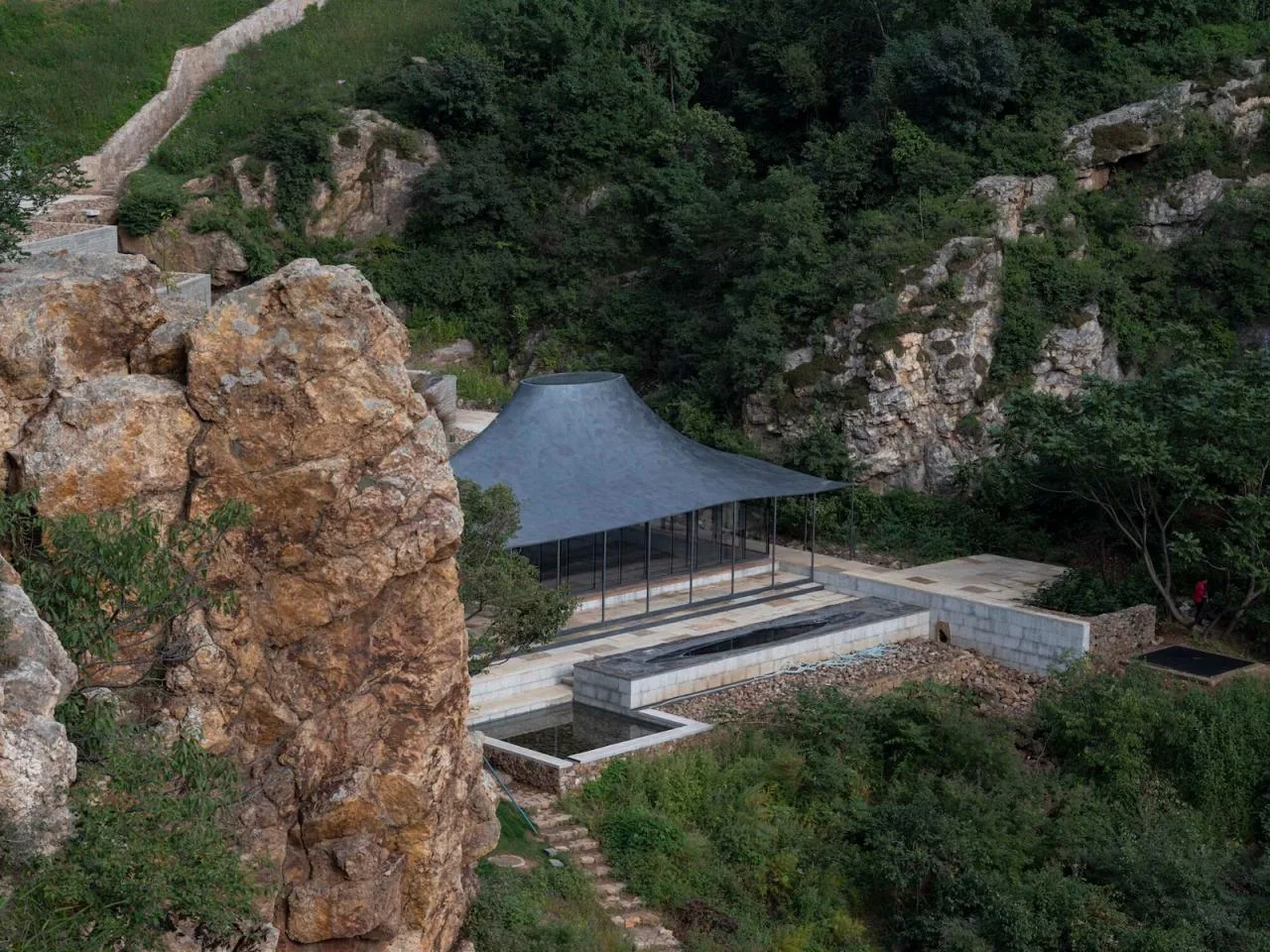
Entering the ancient temple in the early morning, sunlight filters through the forest canopy. A winding path leads to a secluded meditation room, surrounded by lush flowers and trees. The mountain light delights the birds, while reflections in the pool calm the mind. All is silent here, yet faint bells and chimes linger in the air. —From Chang Jian’s “Inscription on the Zen Temple Behind the Po Shan Temple” (Tang Dynasty)
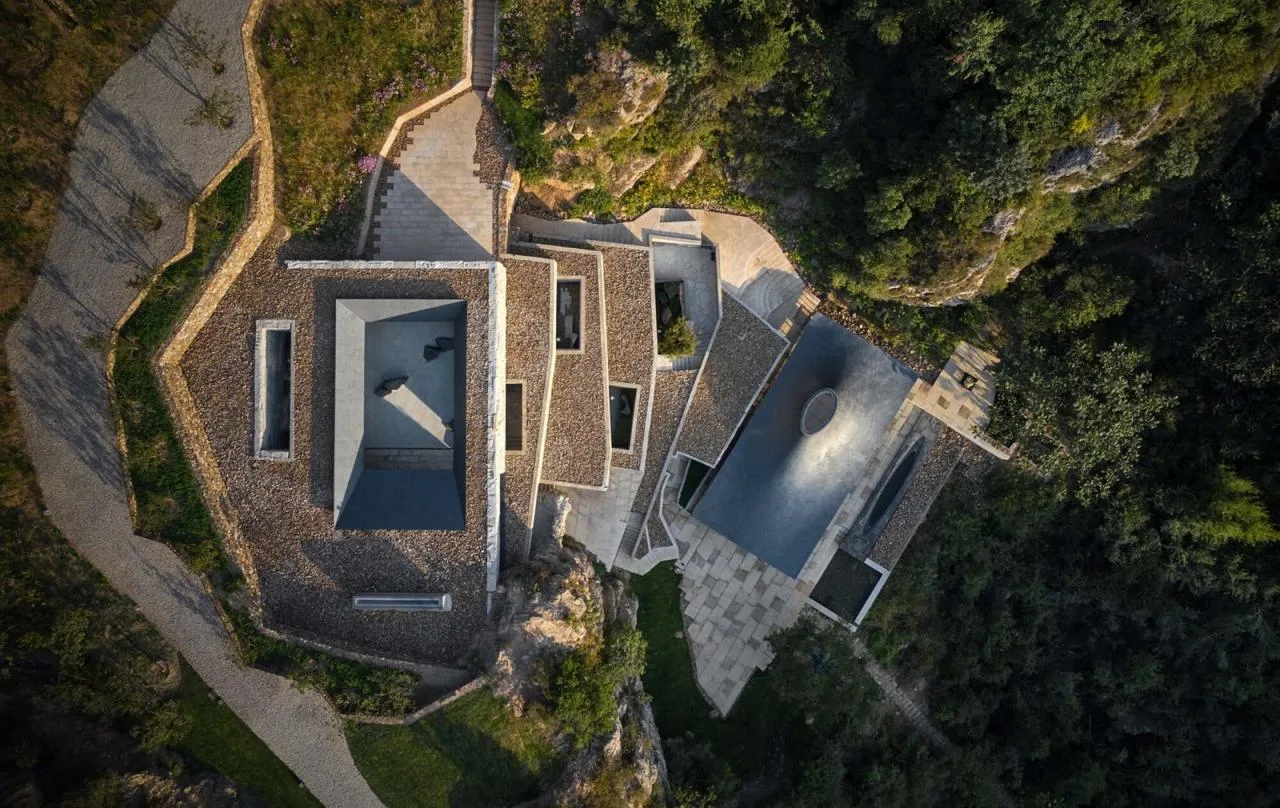
Jinshanling Shangyuan is not an ancient temple, yet the nearby ancient Great Wall stands as a remarkable relic of antiquity. The construction of the Upper House introduces a new chapter in the history of this valley.
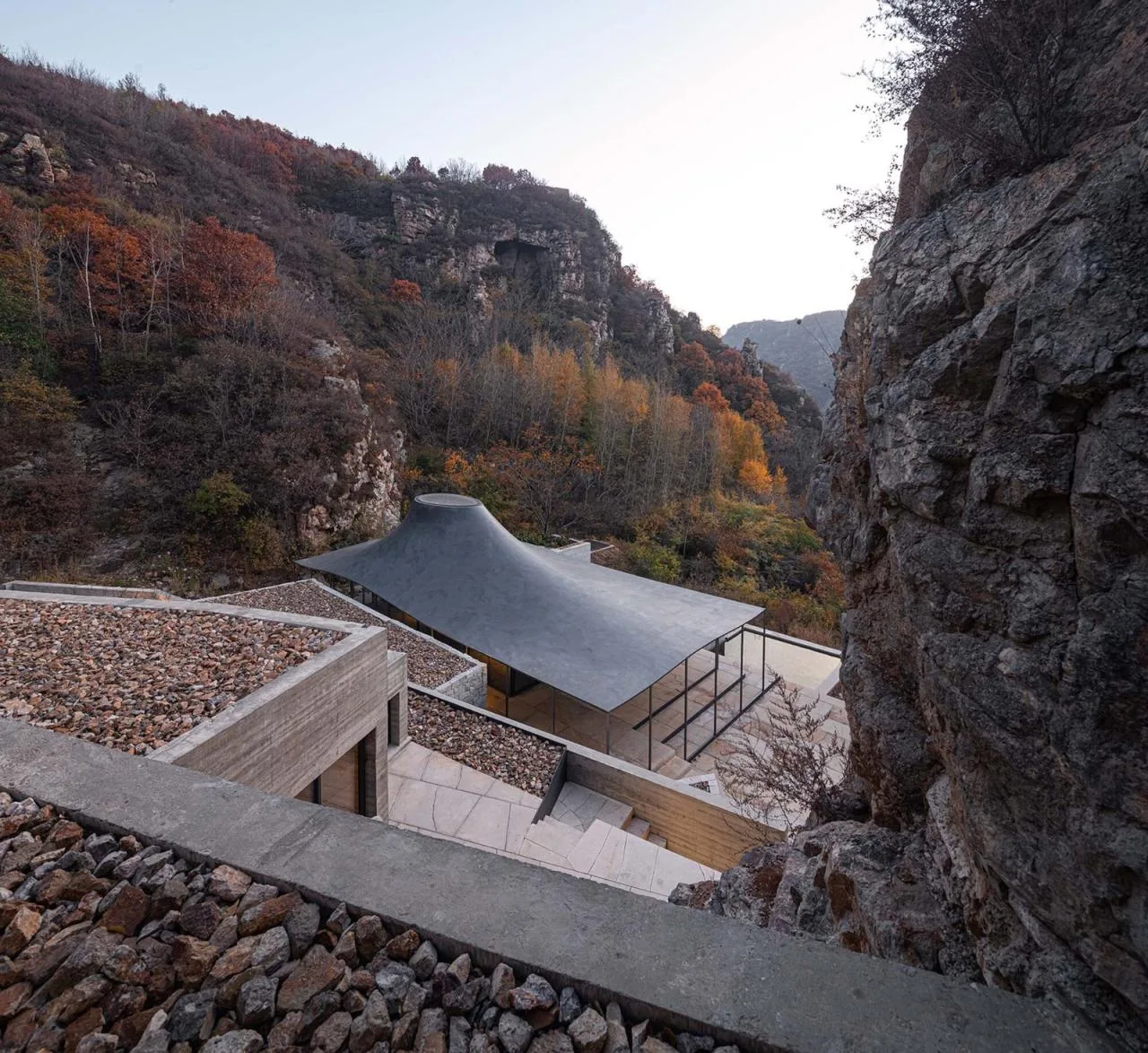
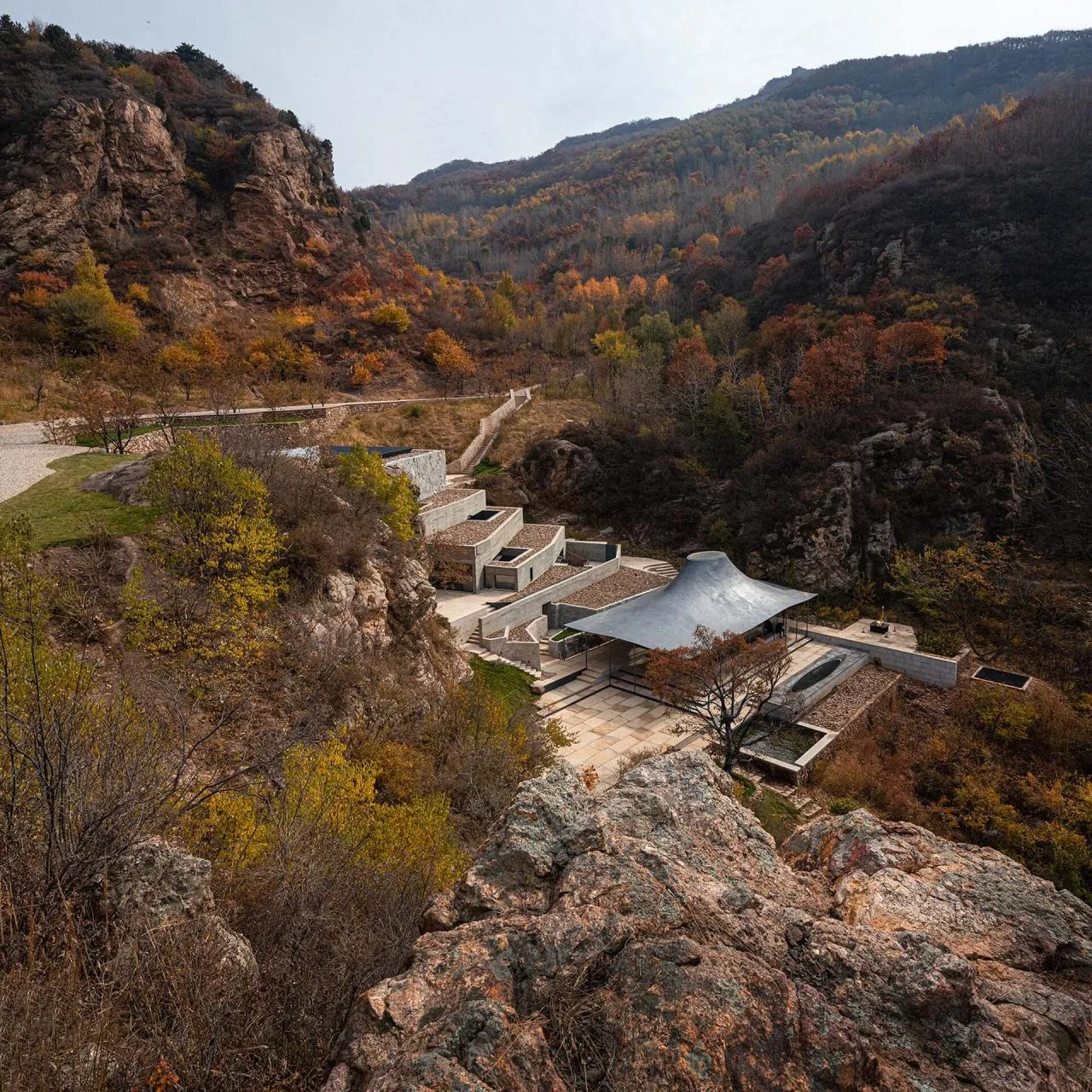
The Alanruo meditation hall, light and delicate in its design, features a slender, lightweight structure that bridges the temporal gap between the new building and the ancient Great Wall. It redefines the valley’s timeline through human architectural intervention. The Upper Courtyard itself creates an internal sense of time through the atmosphere and spatial transitions from the upper entrance courtyard to the open meditation hall below. This new construction engages in a dialogue not only with the Great Wall’s history but also harmonizes with the valley’s terrain, landforms, and natural wilderness.
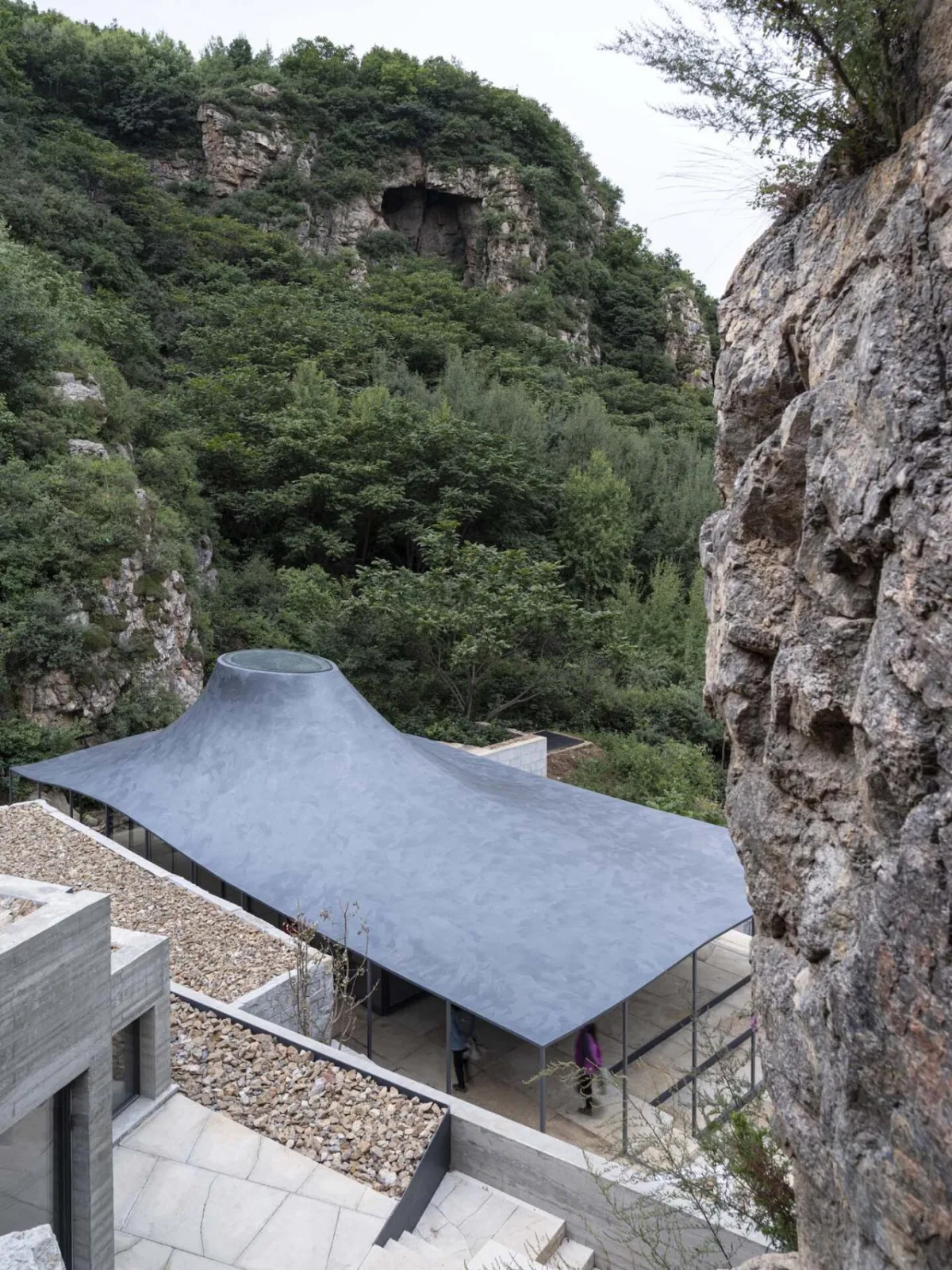
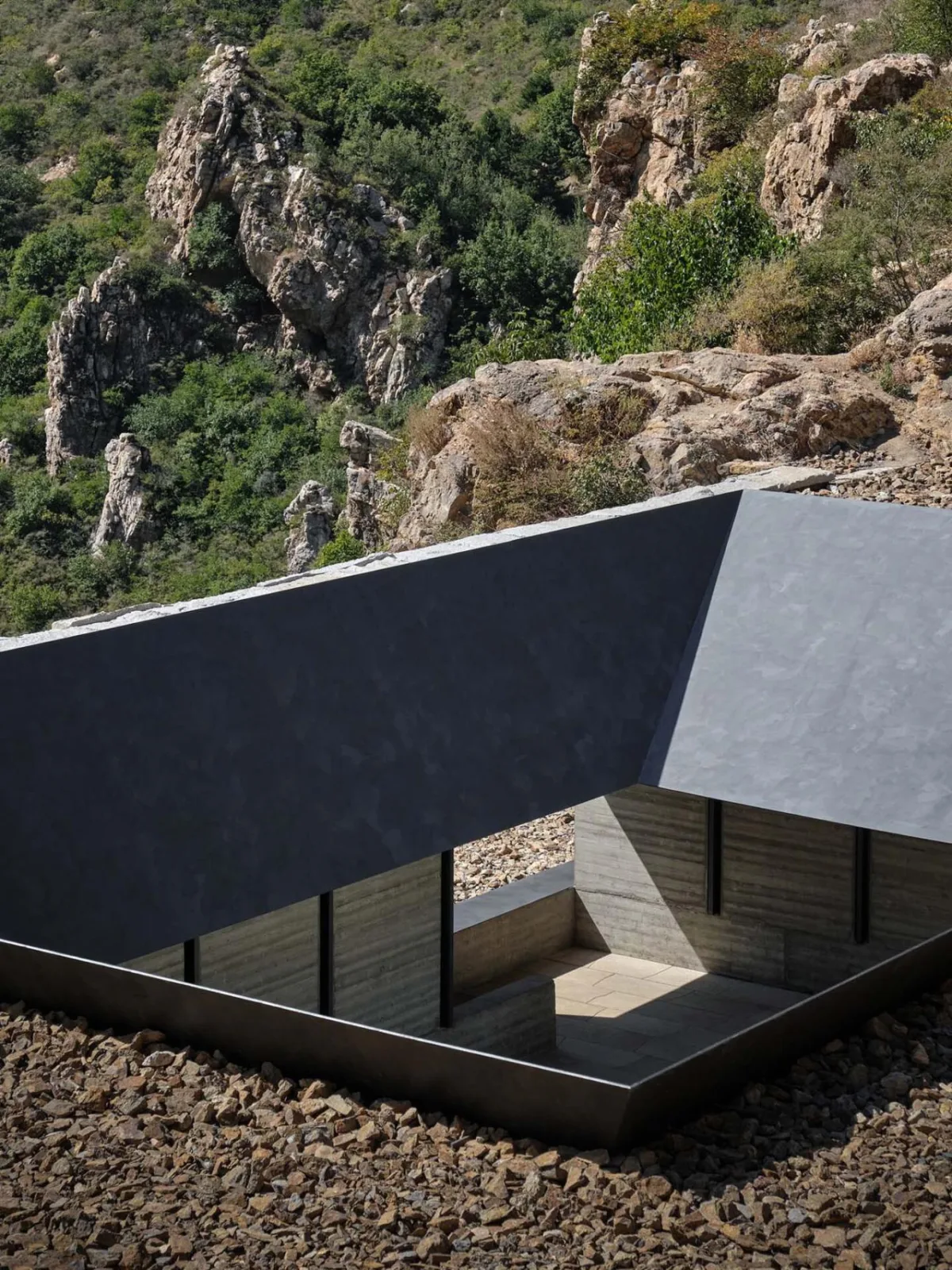
The valley chosen for the final site has a history of coal mining and terraced farming. Beneath the weeds, remnants of retaining walls built by villagers remain visible, forming a unique landscape feature. The new Upper Courtyard building, alongside the open meditation hall on the lower terrace, carefully follows the mountain terrain. It translates the 1.6-meter stepped landscape into the spatial form and scale of the architecture, embodying both the terrain and the building itself.
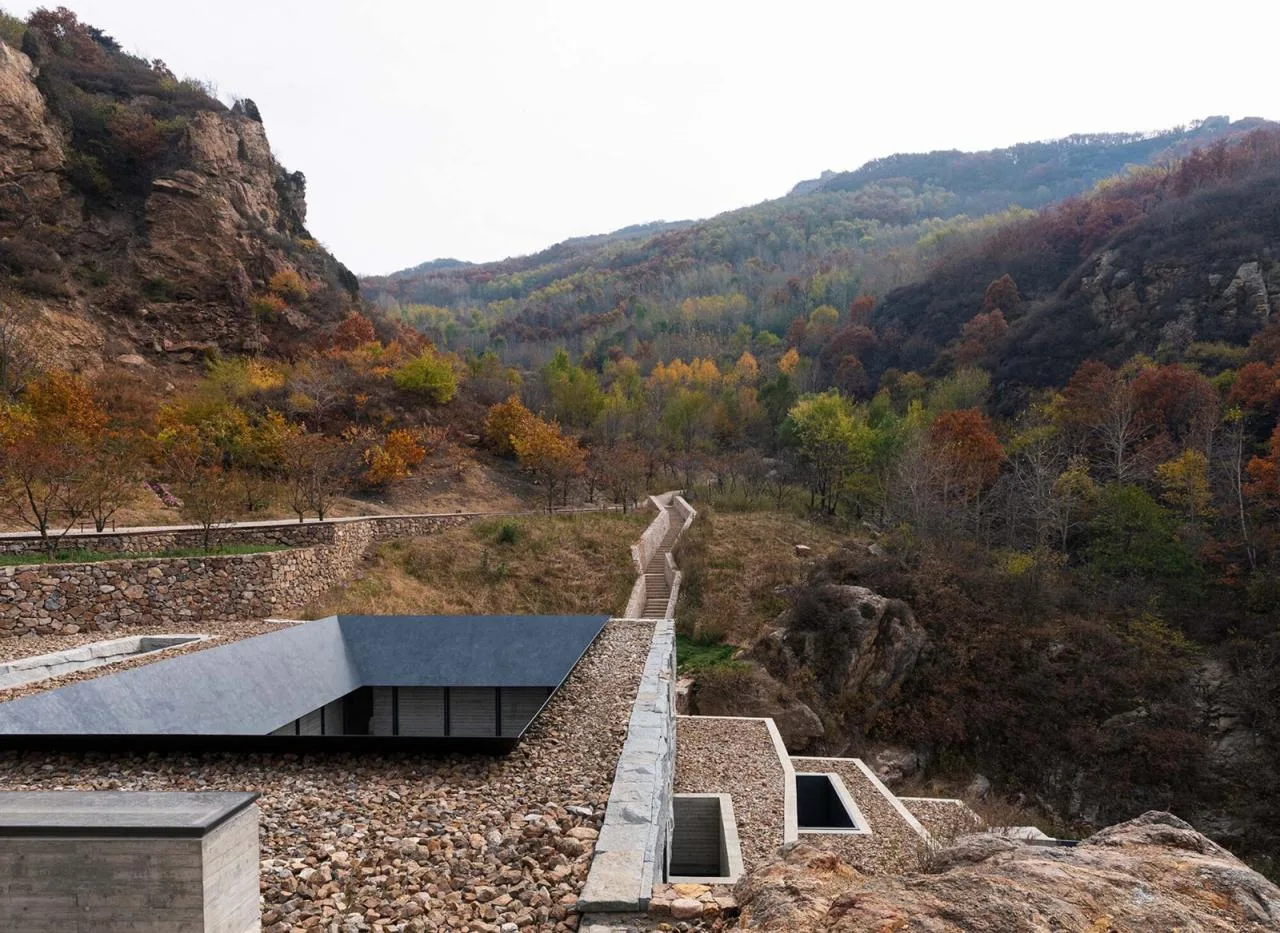
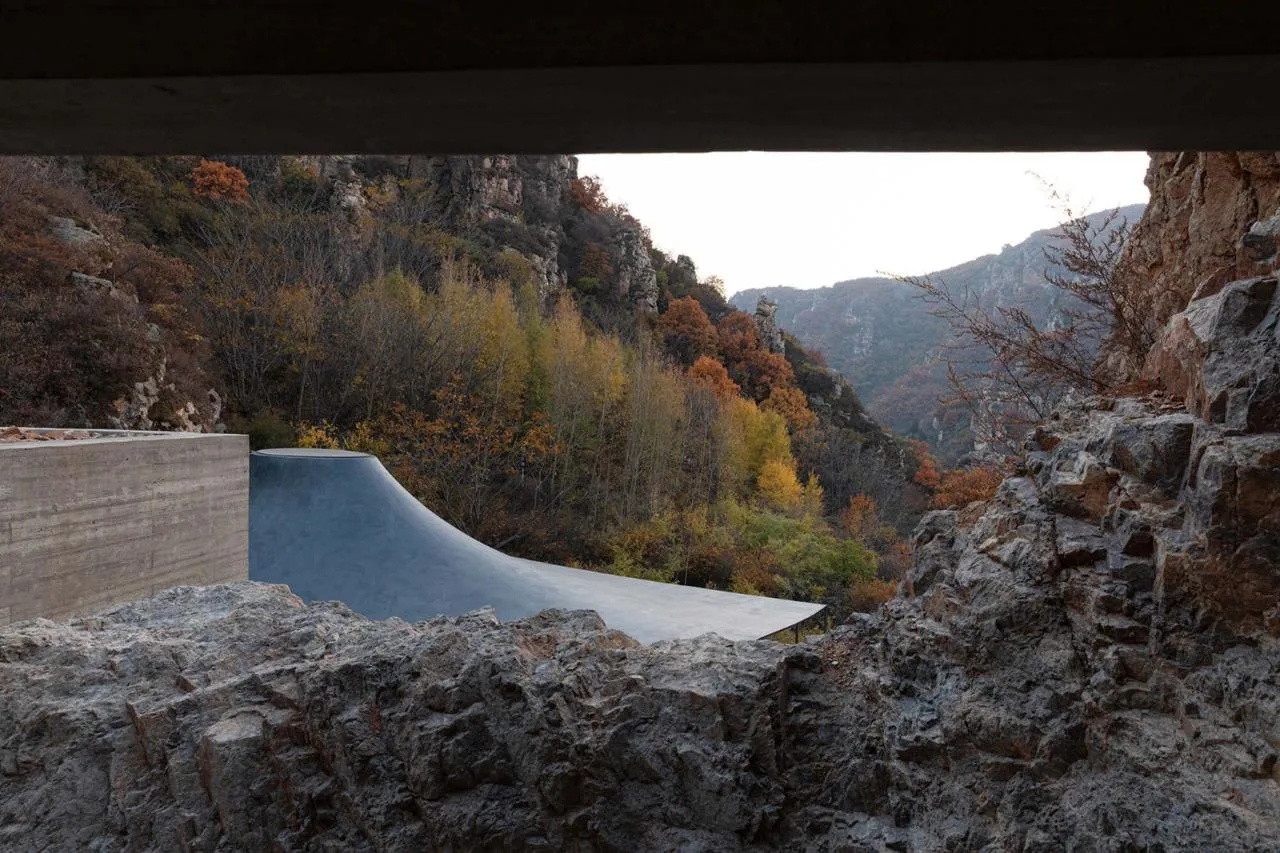
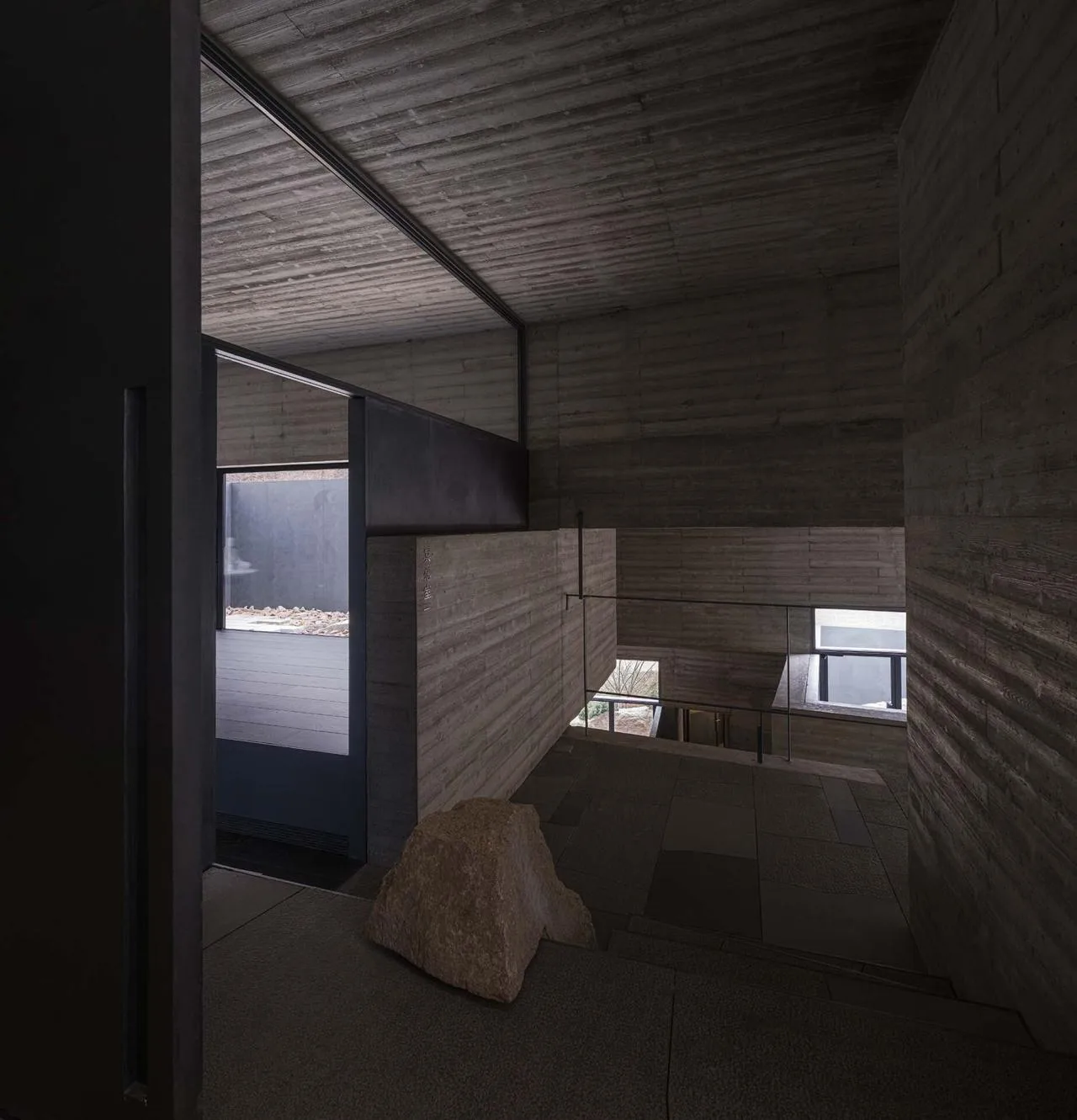
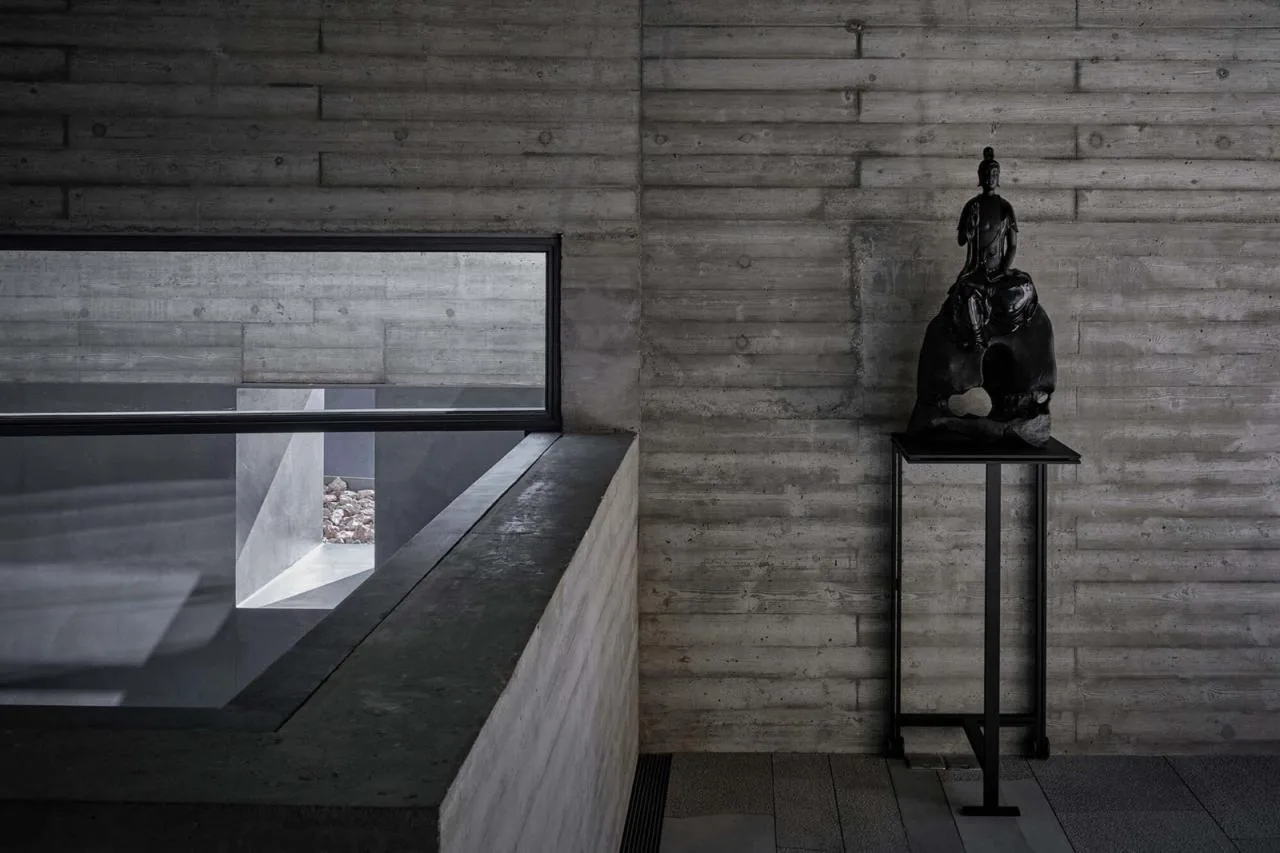
The entrance courtyard is centered around an open stone plaza, with a Buddhist temple on one side housing Buddha statues. This hollow courtyard evokes the spatial atmosphere of traditional corridor courtyards, featuring thin steel plates suspended inward and slender steel columns attached to the concrete enclosure walls. The upward opening frames a view of the sky, distant mountains, beacon towers, cliffs, and drifting clouds. The horizontal opening facing the western valley perfectly frames the ancient Great Wall alongside a natural stone statue.
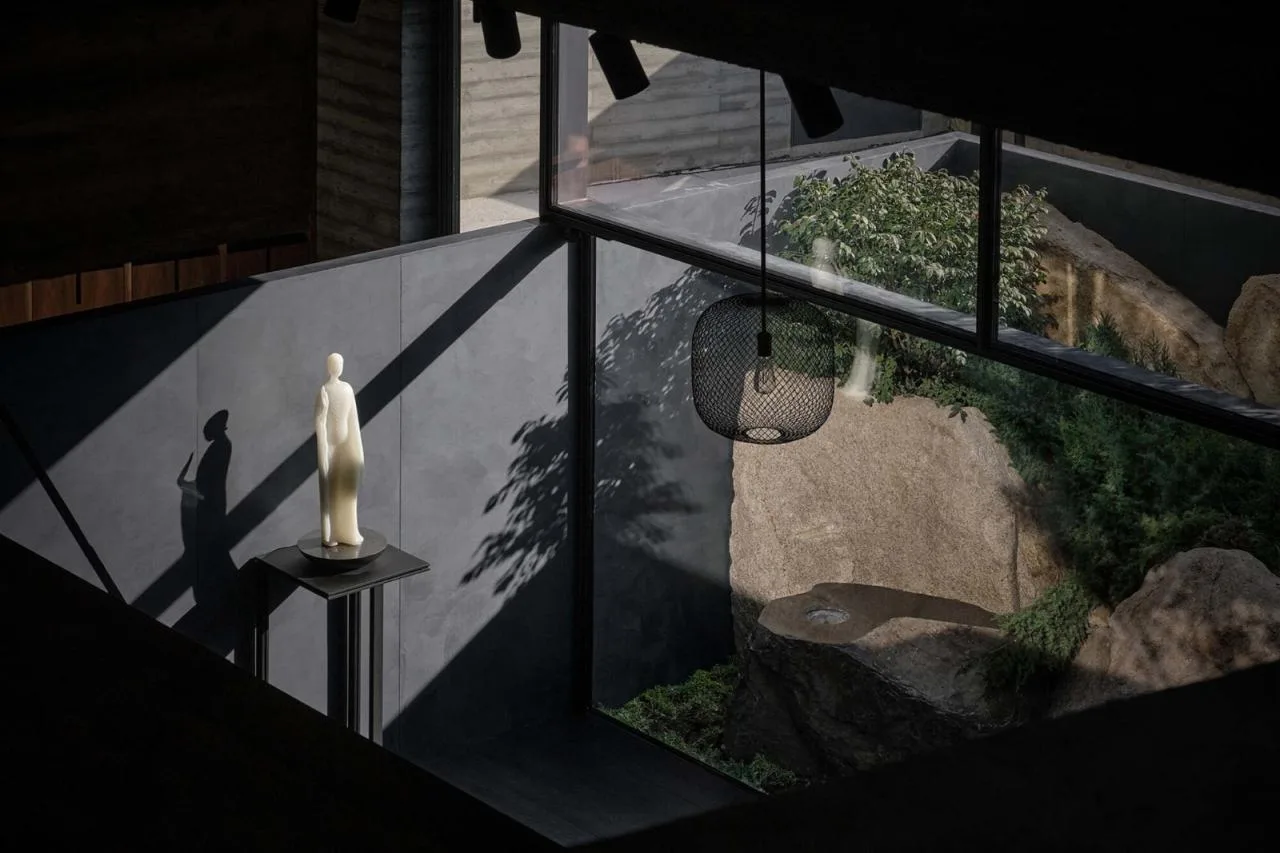
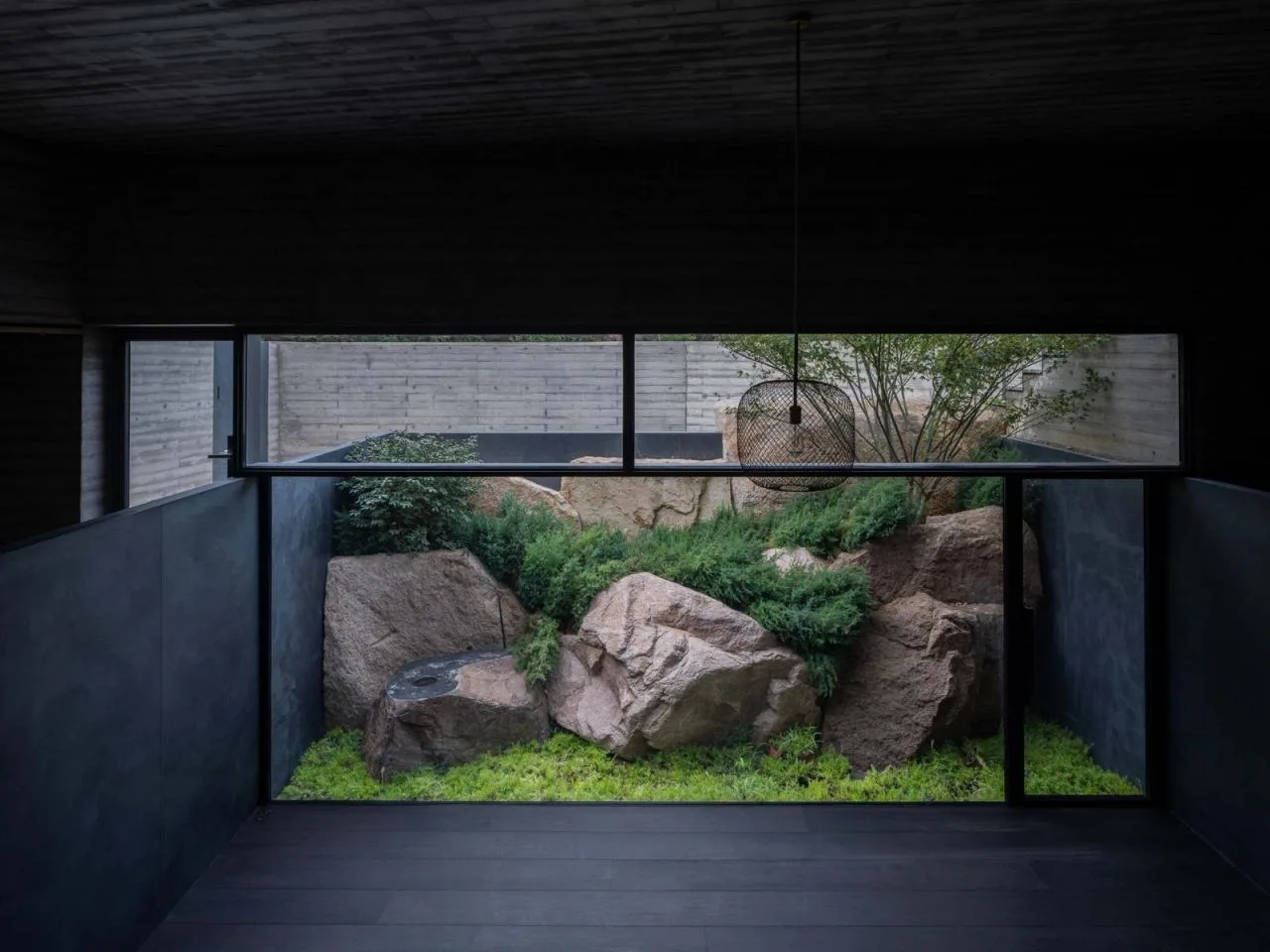
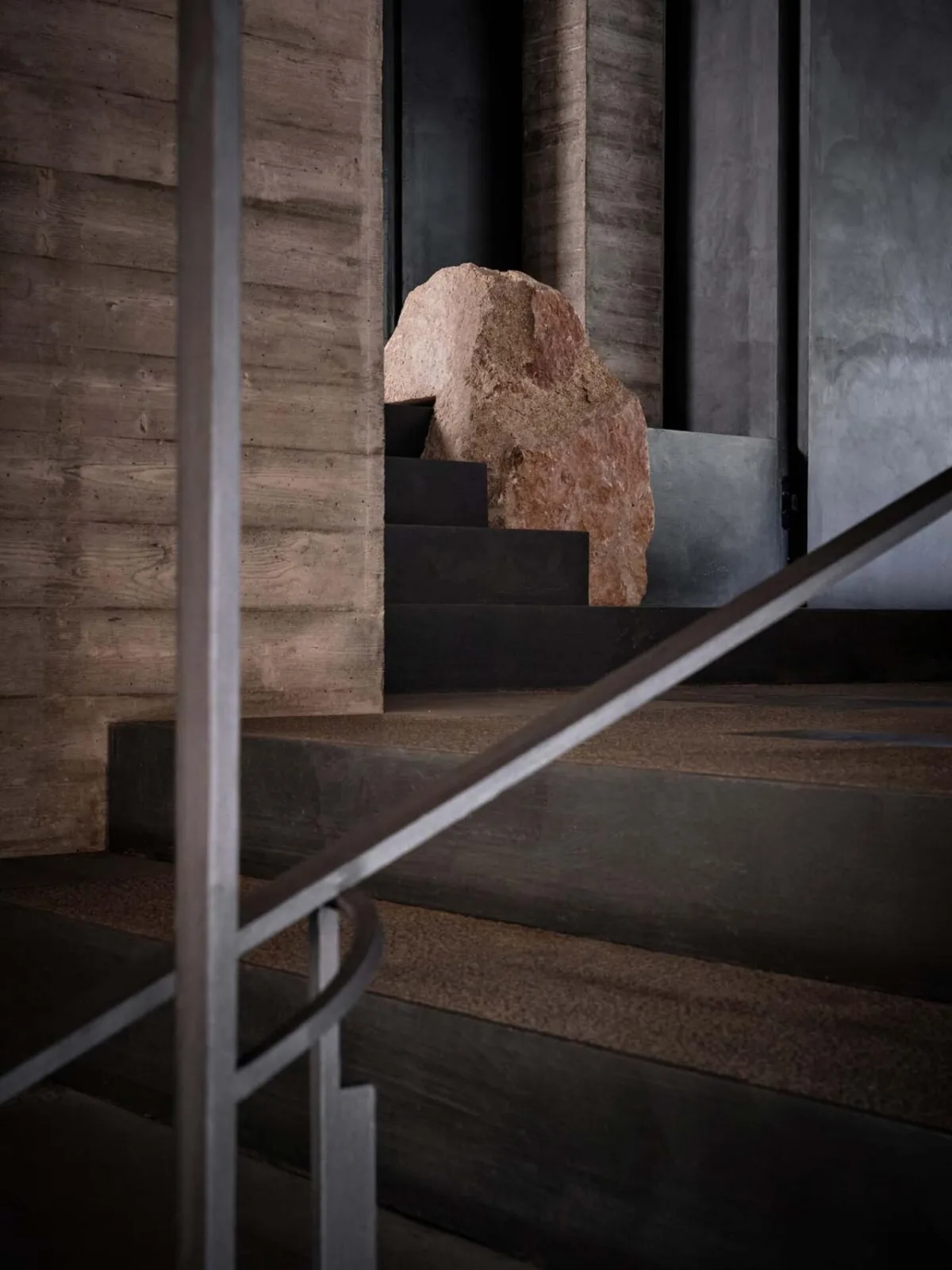
The Buddhist temple, named “Quanzhi Hall,” symbolizes the wisdom of omniscience that dispels afflictions. Natural rocks are intentionally left exposed within the temple space, blending nature with architecture.
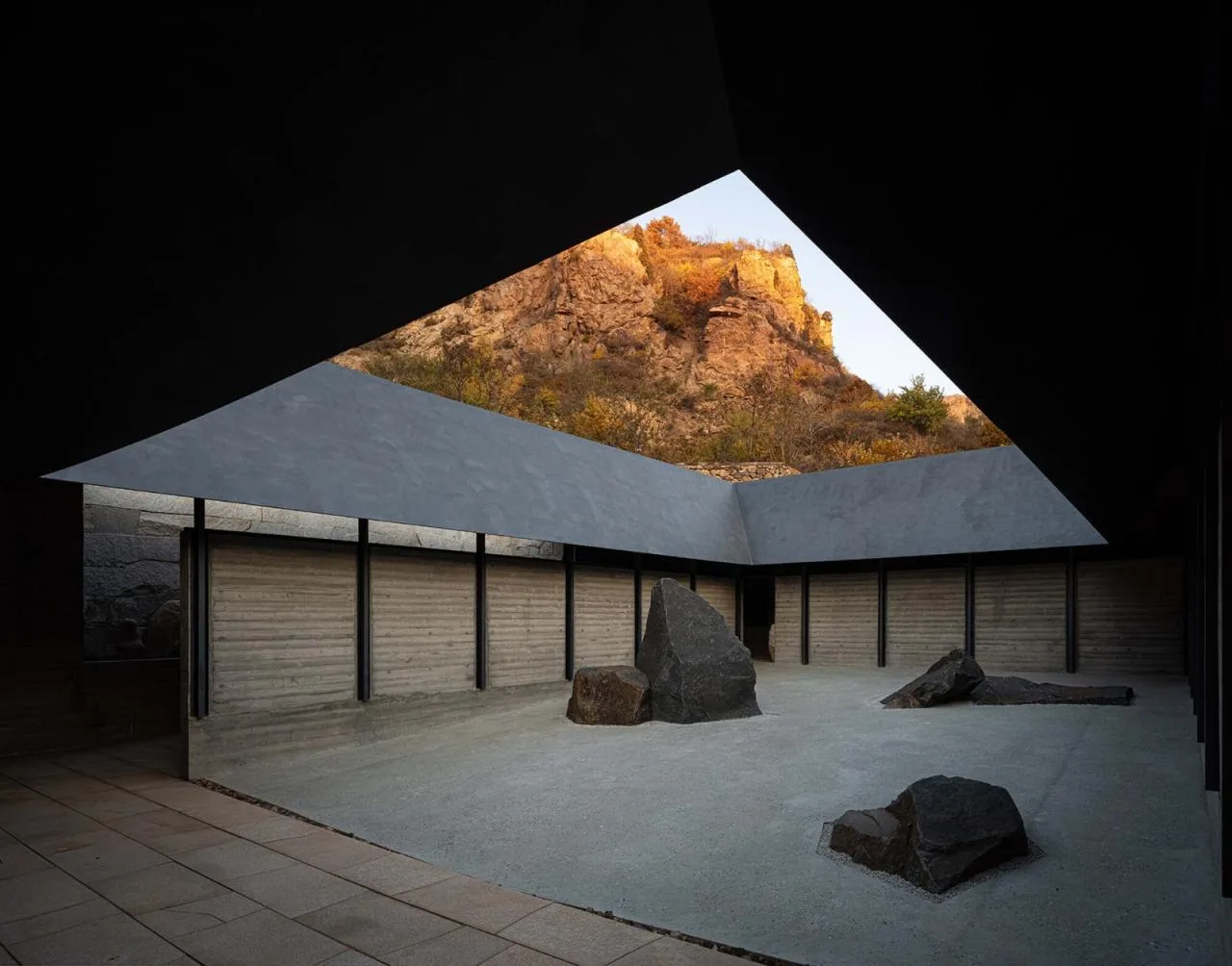
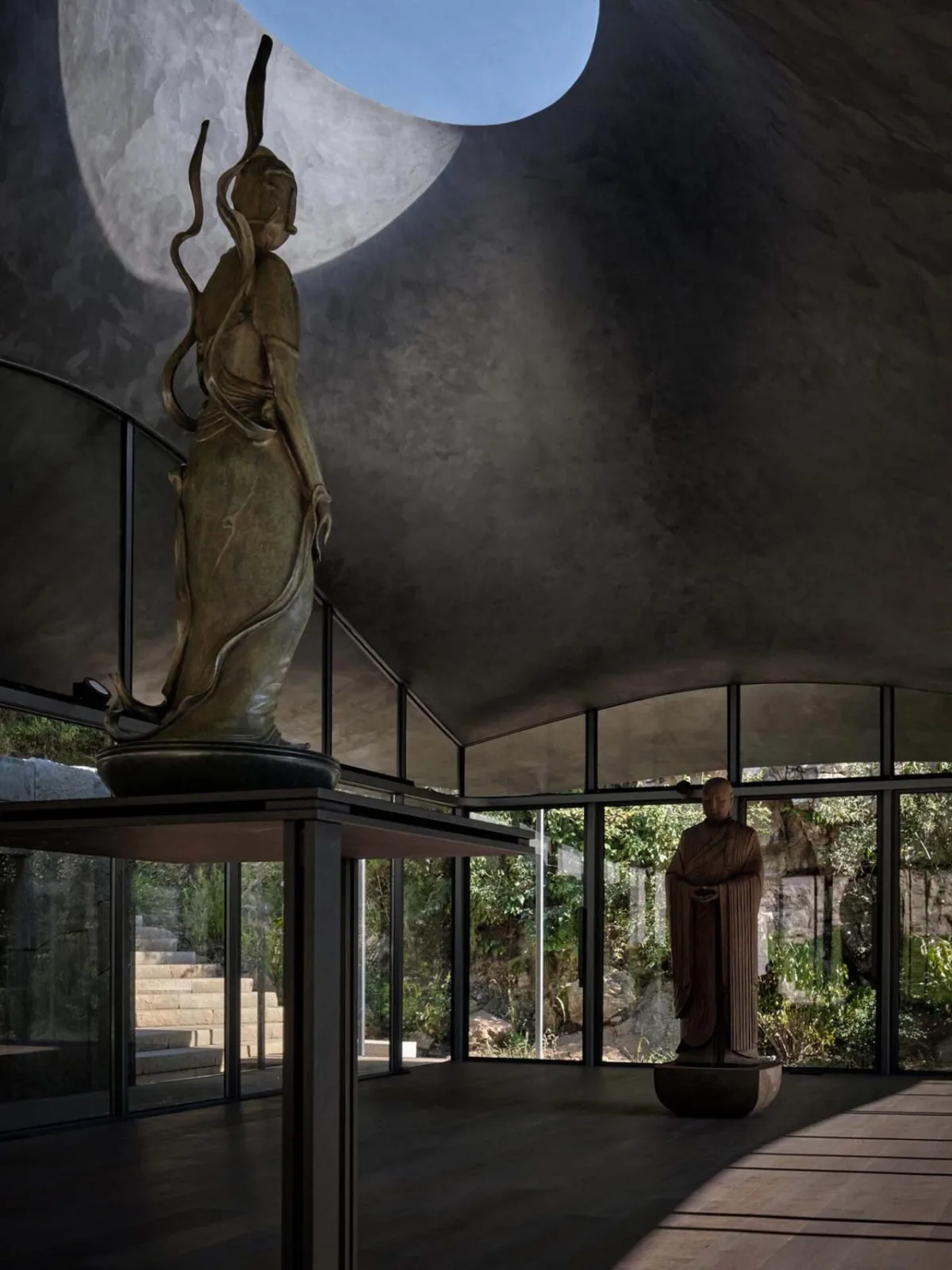
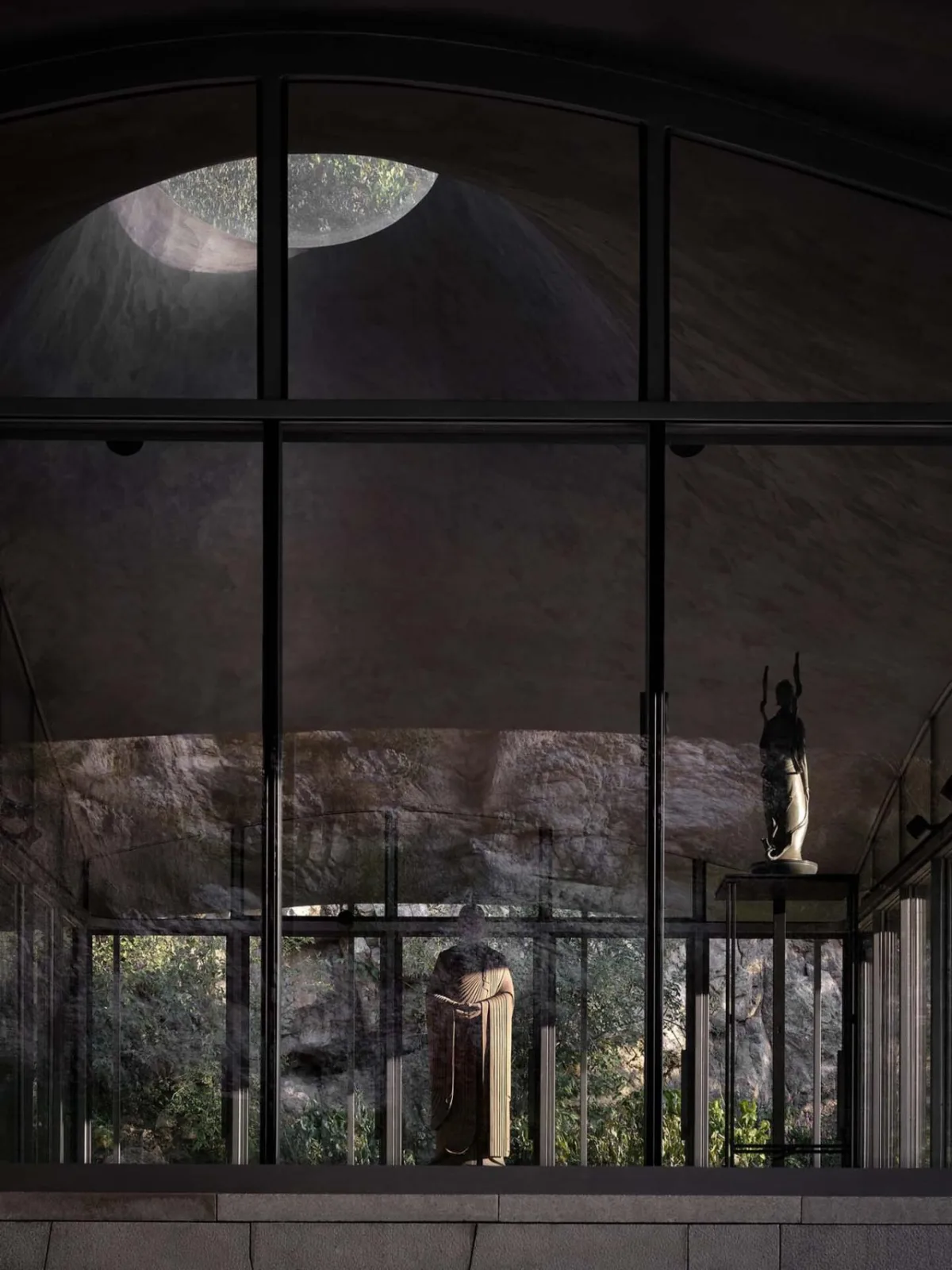
The upper courtyard features several inner gardens designed by Shunmei Kano, who is both a landscape designer and a monk. The entrance stone pavilion is formed by five natural mountain stones of varied shapes, symbolizing the five aggregates of Buddhist philosophy: color, perception, thought, action, and consciousness—elements that give rise to all phenomena.
The courtyard floor is crafted from light-colored chiseled capillary stone concrete. In the evening, lighting transforms the stone courtyard into a glowing sea of moonlight. The five stone peaks are grouped in threes, standing or lying, evoking the endless ocean. This space is named “Endless Meaning.”
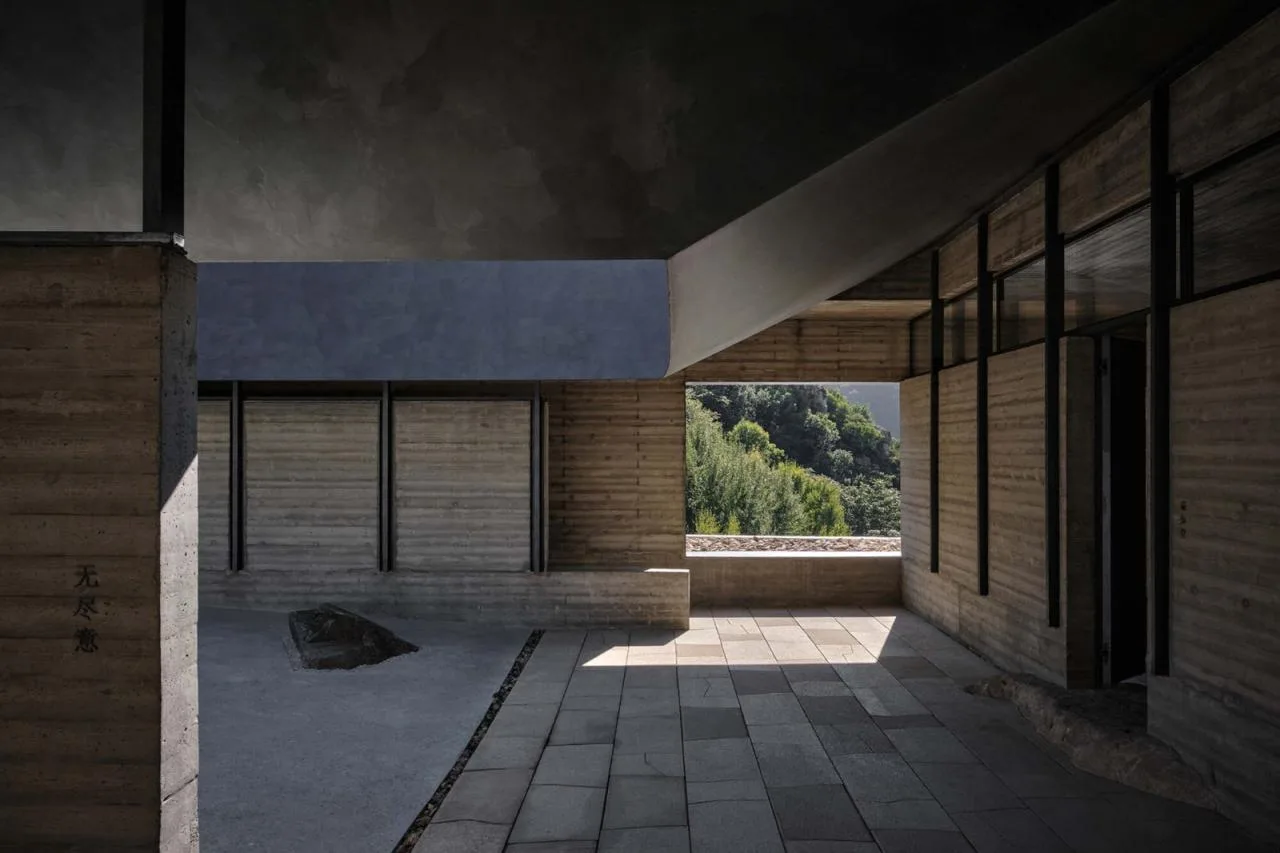
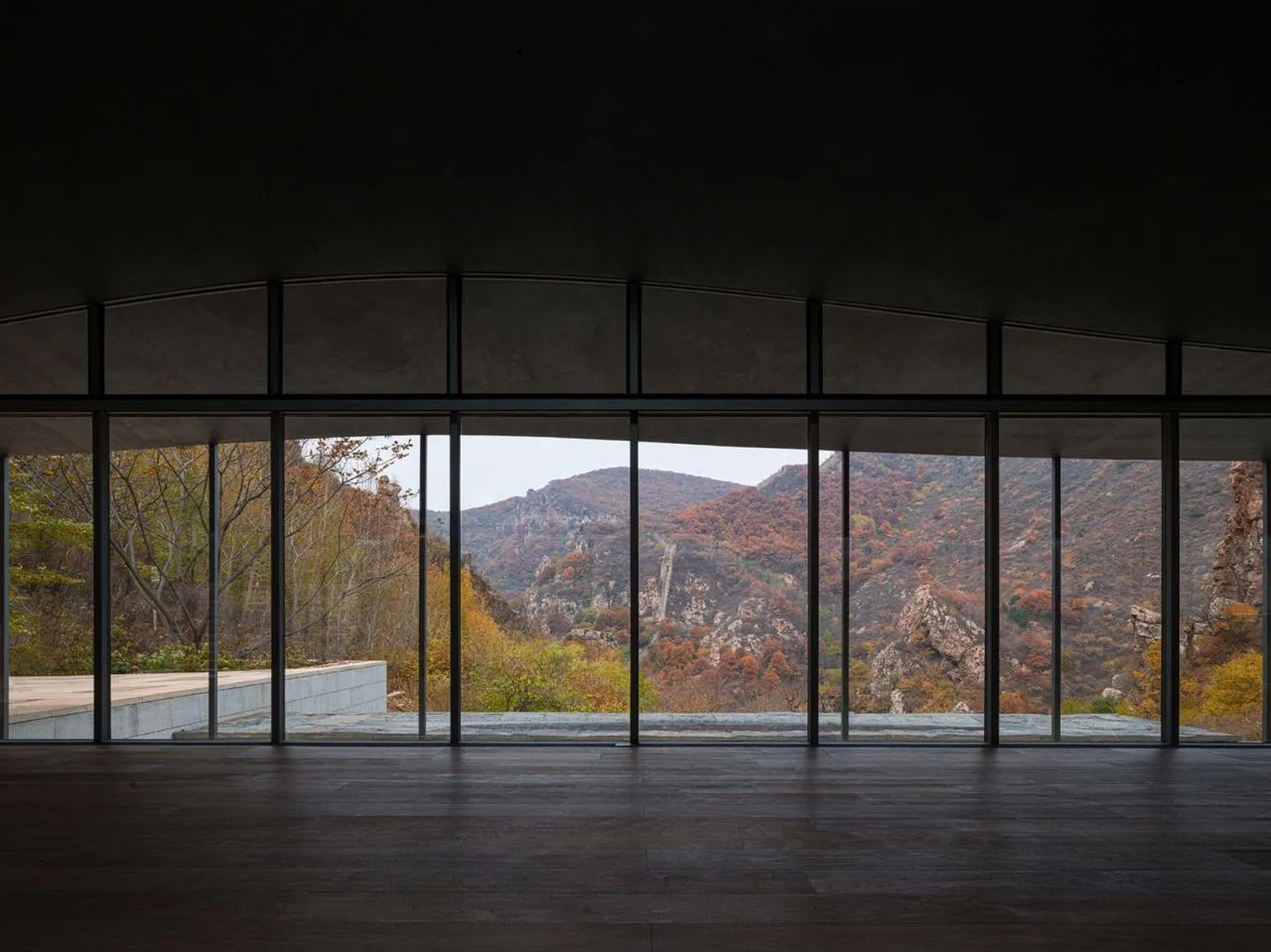
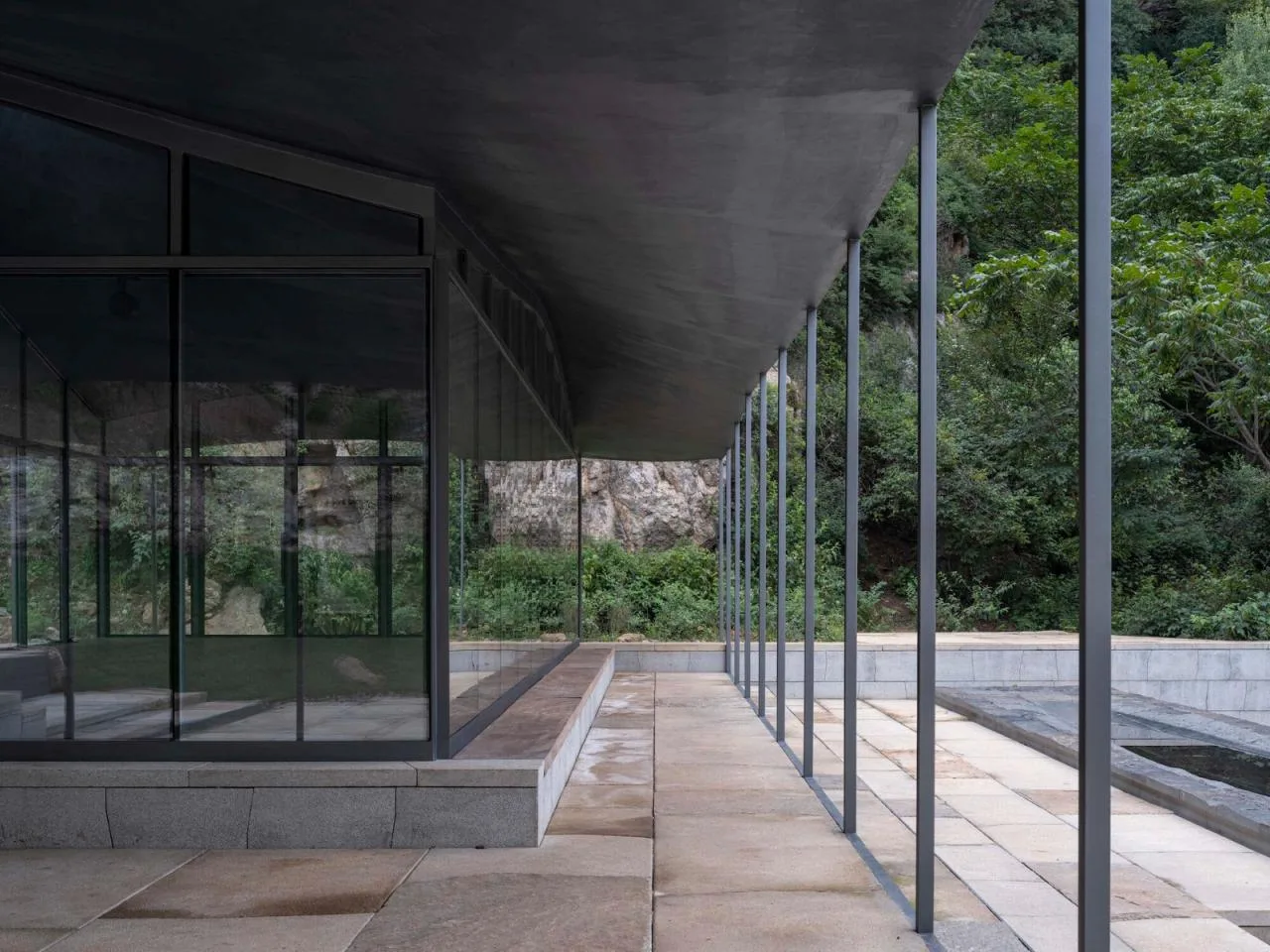
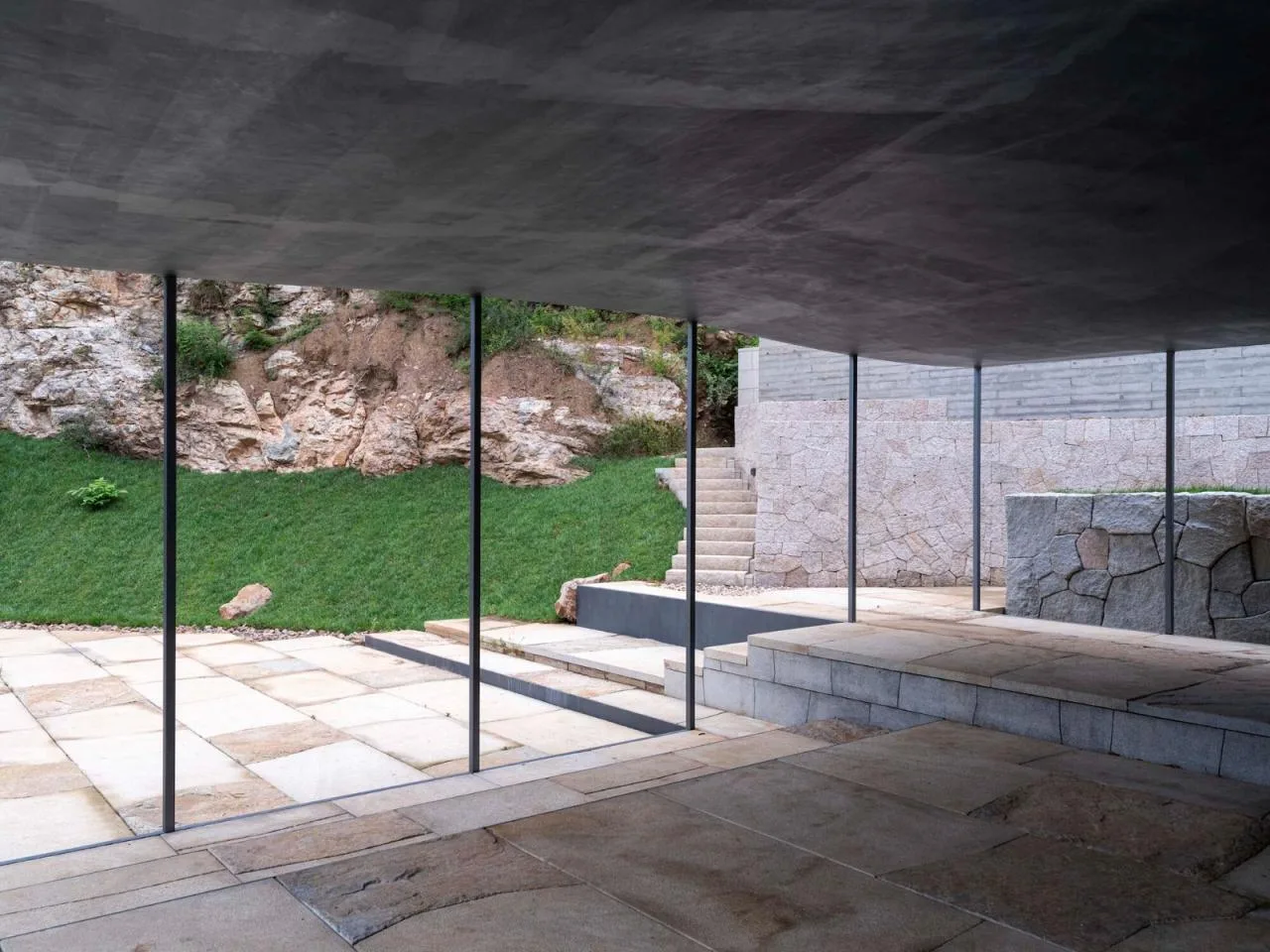
The Zen hall at the foot of the mountain features a steel structure and carbon fiber roof that reinterpret the Chinese character “she” through its pictographic components. The character consists of three parts: “亼” (roof), “屮” (beam and column), and another “屮” (base).
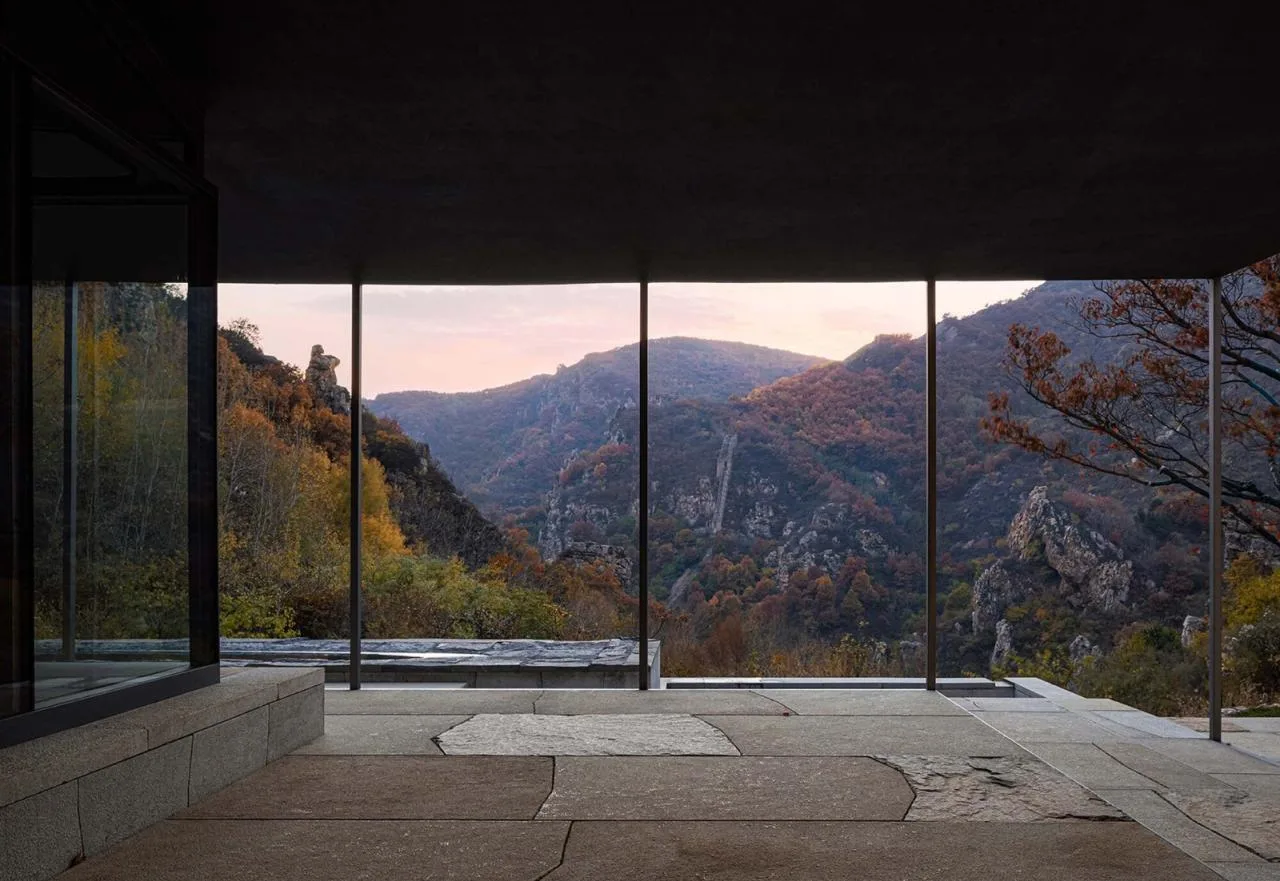
Two slender steel columns inside and outside support the curved roof. The square base height adapts to the mountain terrain, with outer steel columns varying in length accordingly. The transparent Zen hall uses the mountain valley’s side walls as natural enclosures, with only the valley-facing side fully open. Nearby, the Ming Dynasty Great Wall stands as a timeless relic, while the design fosters a tranquil atmosphere.
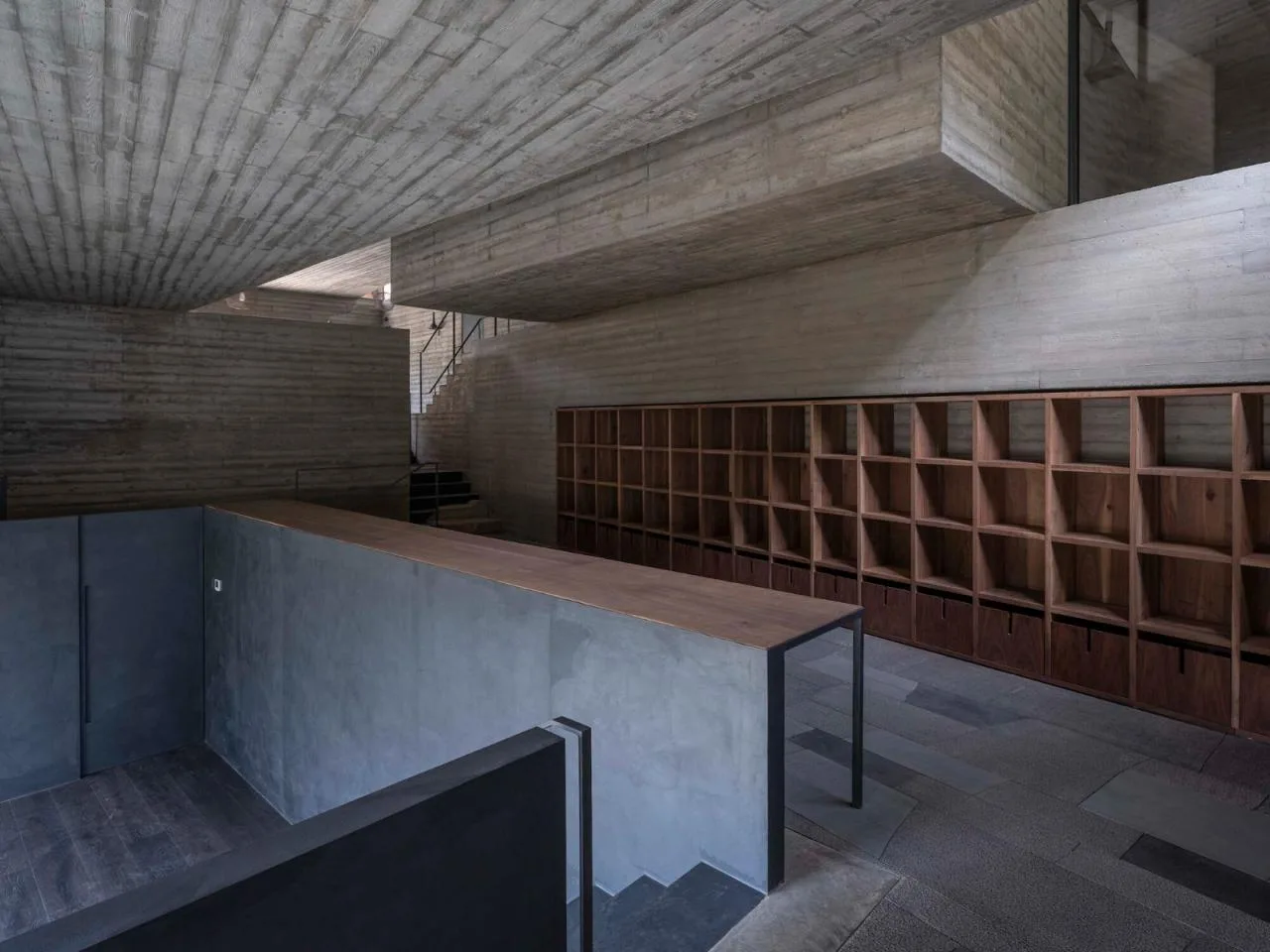
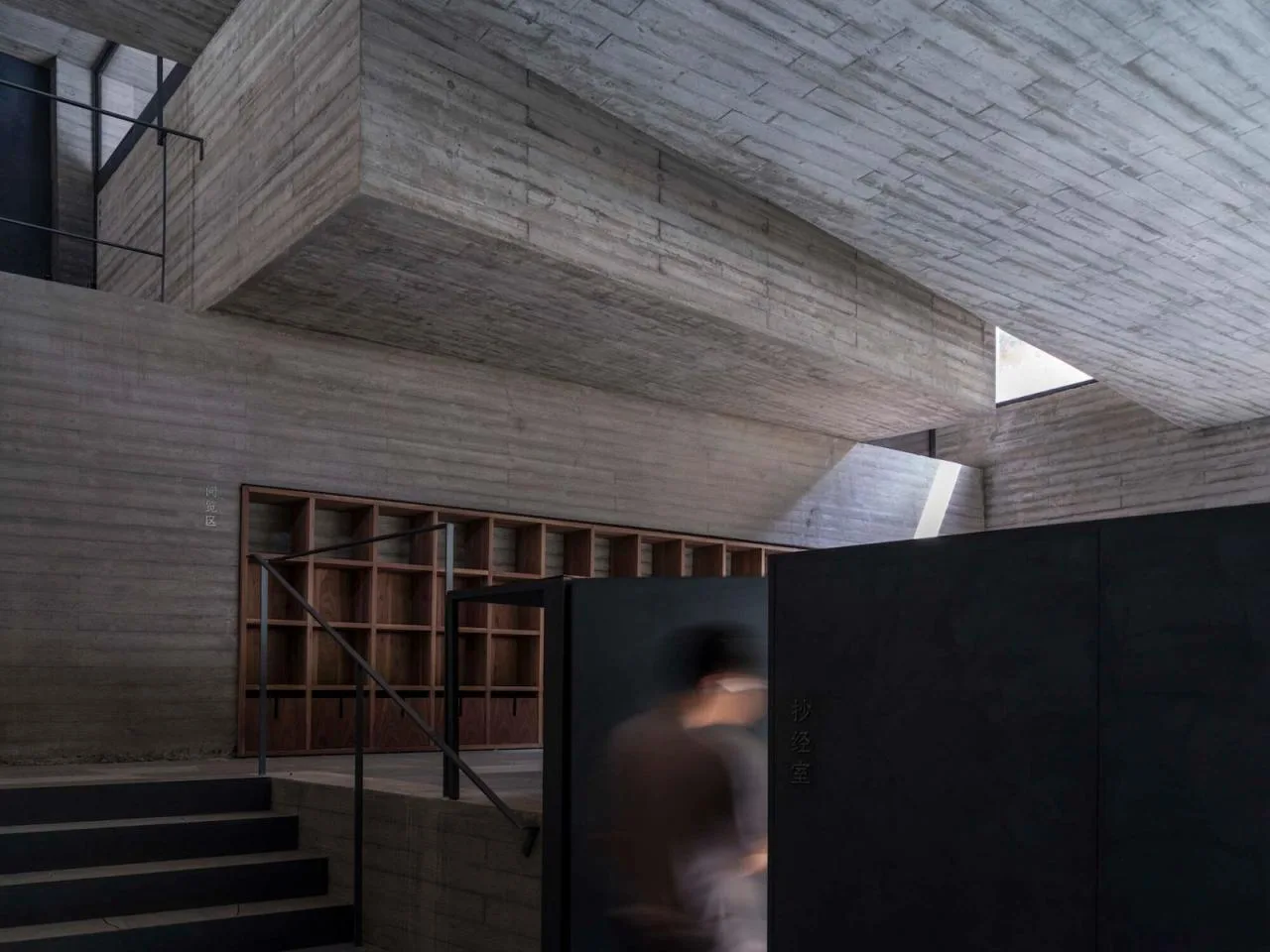
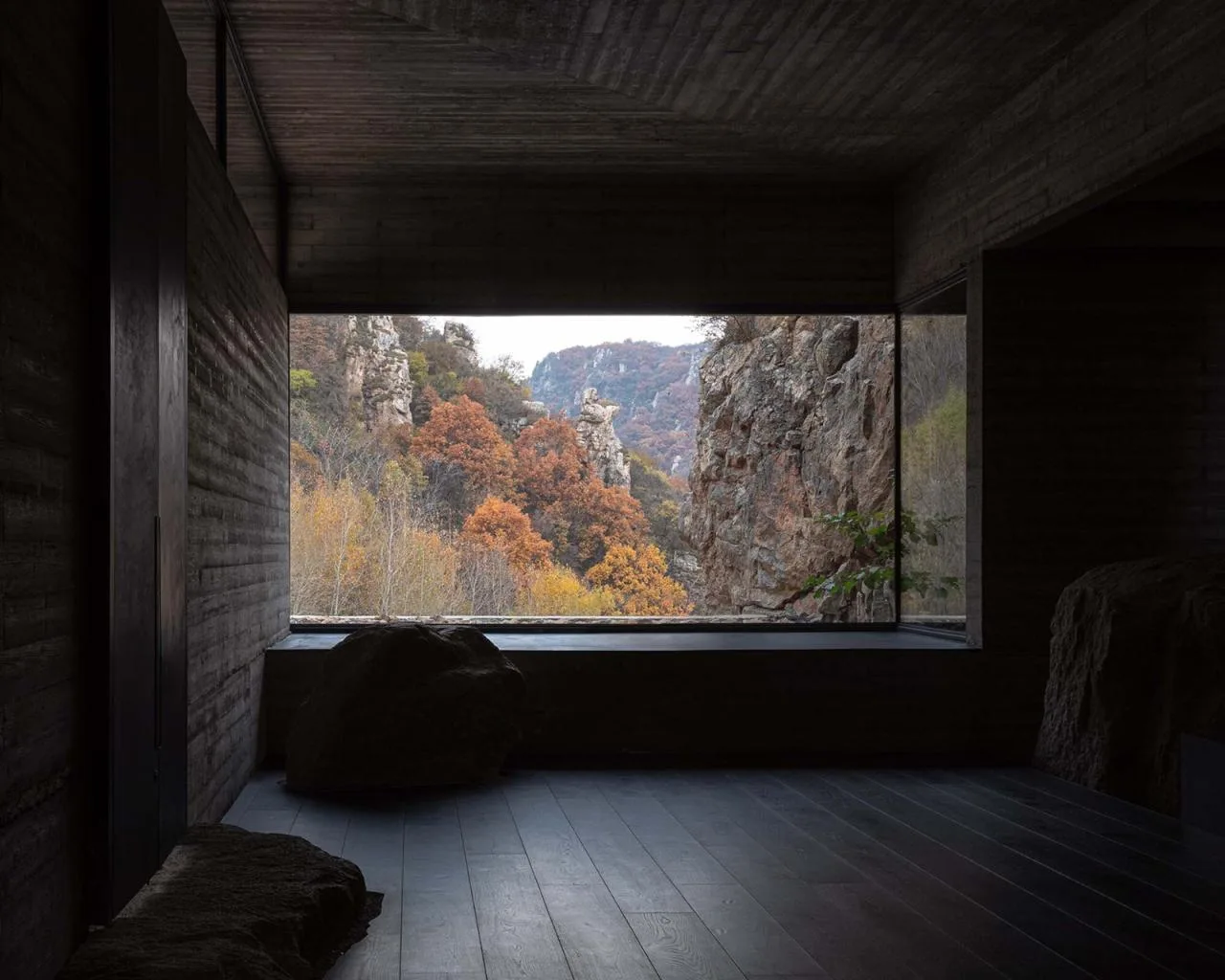
The name “Alanruo” for the Zen hall and its surrounding deep spaces reflects the original meaning of Aranya: “a place of silence in the world, where one can rediscover their true self.” The pool before the hall mirrors the mountain scenery and sky, enhancing the peaceful ambiance. Watching the clouds rise at sunset or dawn, one finds tranquility within the soul.
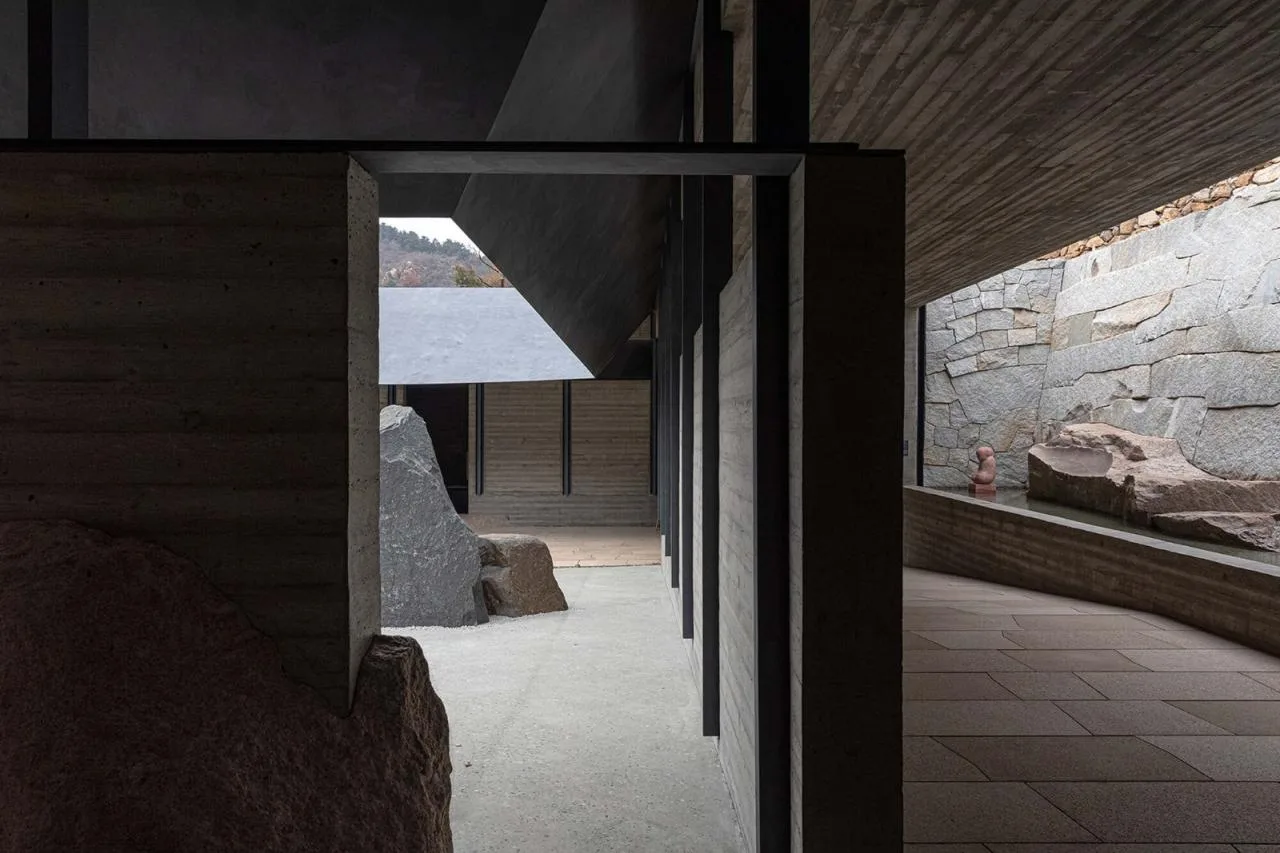
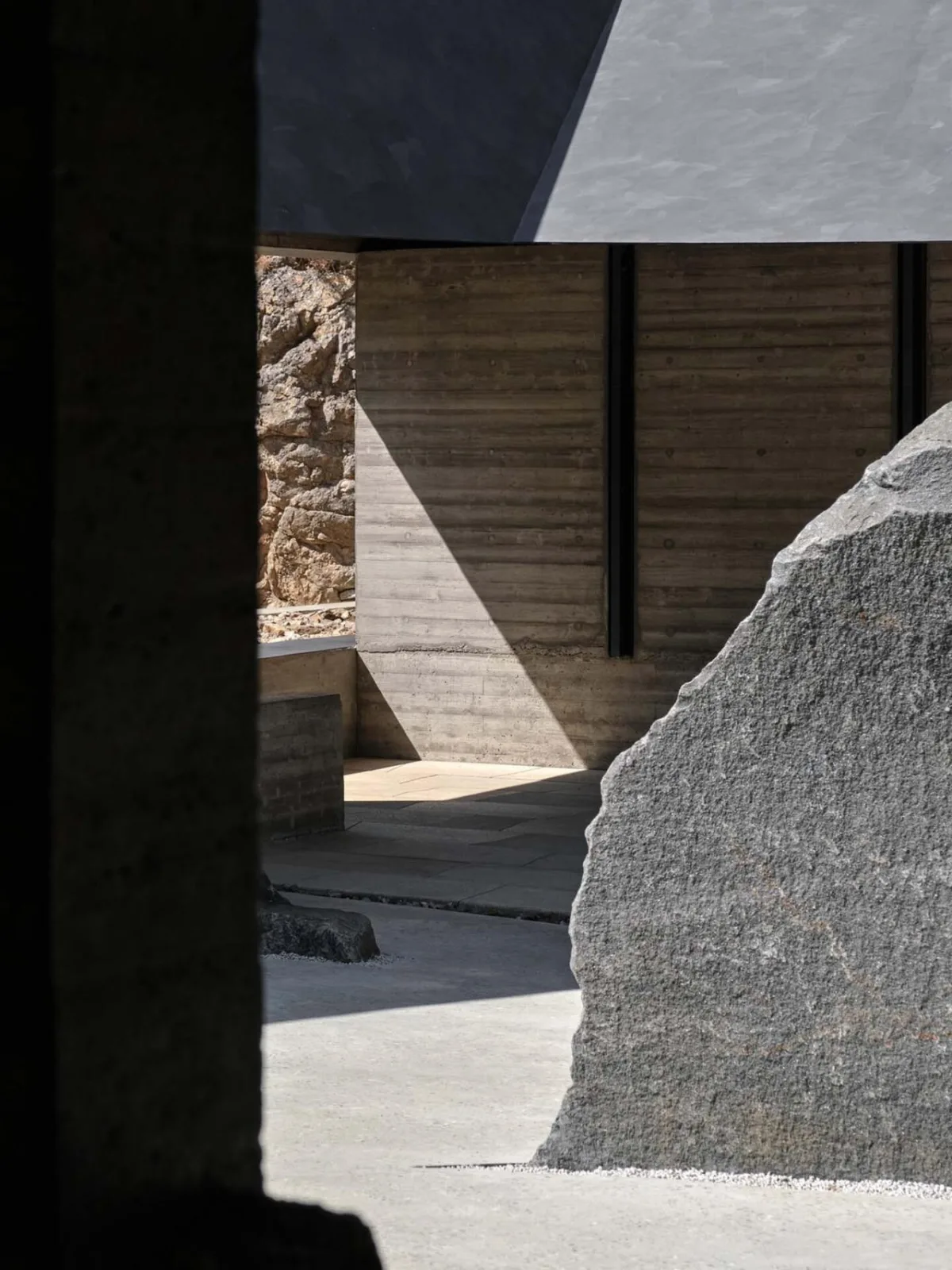
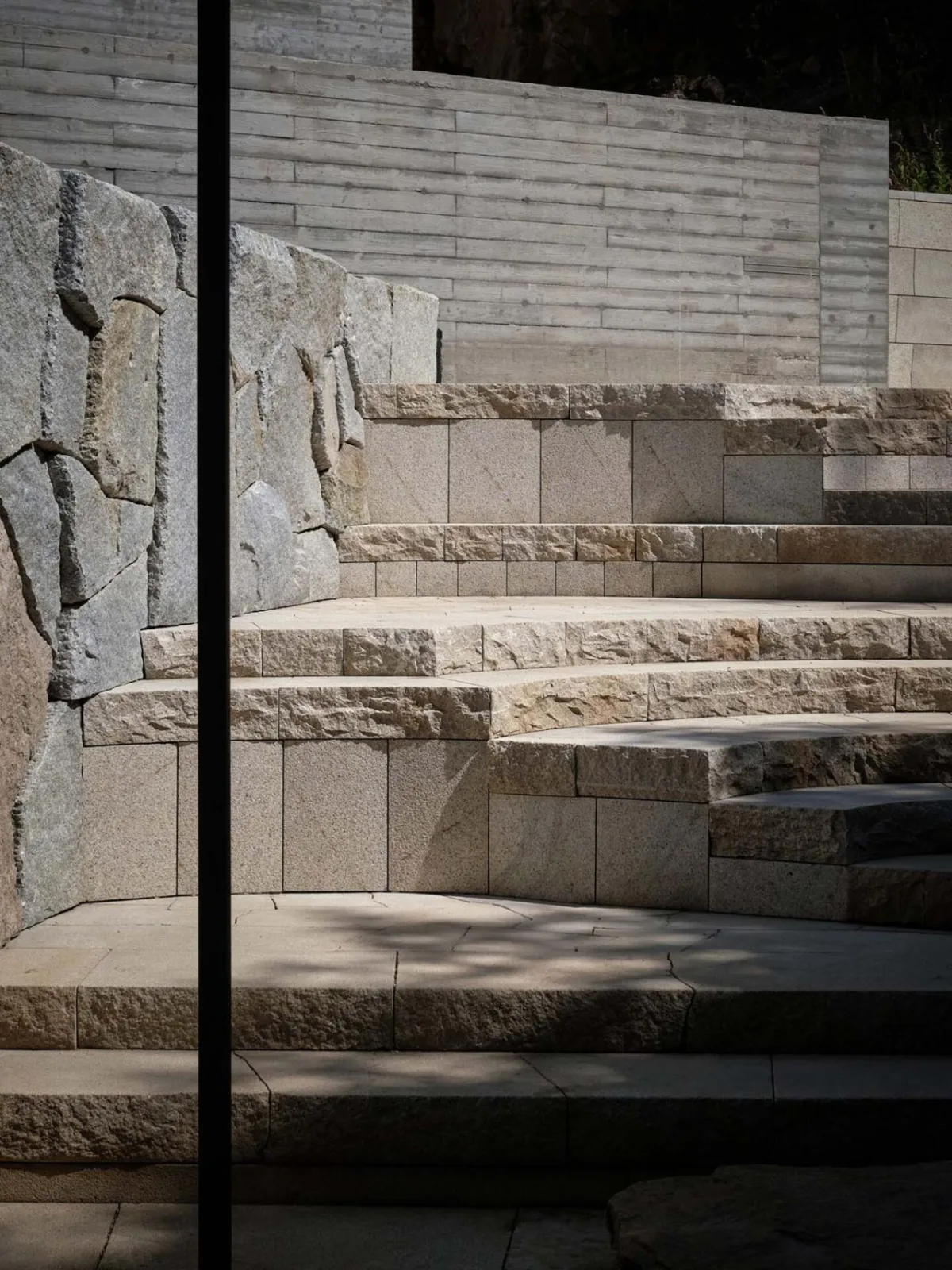
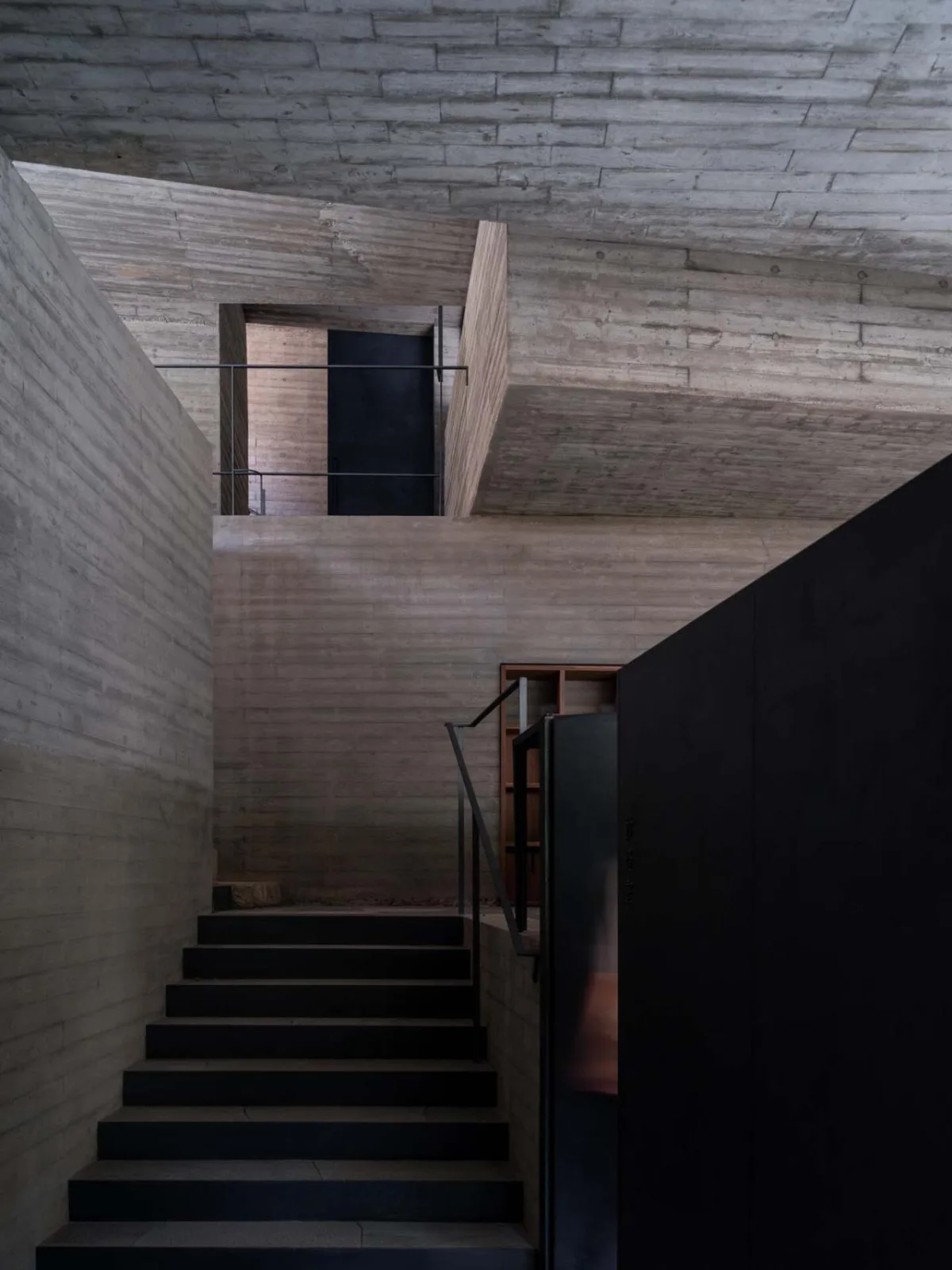
A sequence of spaces unfolds from top to bottom, including the Stone Pavilion (“Endless Intent”), Buddhist Hall (“Universal Knowledge Hall”), Meditation Room, Reading Room, Writing Room, and Zen Hall (“Alanruo”). These are integrated with the terrain, featuring a rhythm of opening and closing between interior and exterior spaces.
The valley beneath the Chantang Garden is lush with fruit trees and grass, with winding stone paths leading to the ancient Great Wall. Once the water well and original coal mine ruins in the lower courtyard are restored, Jinshanling Upper Court will be complete.
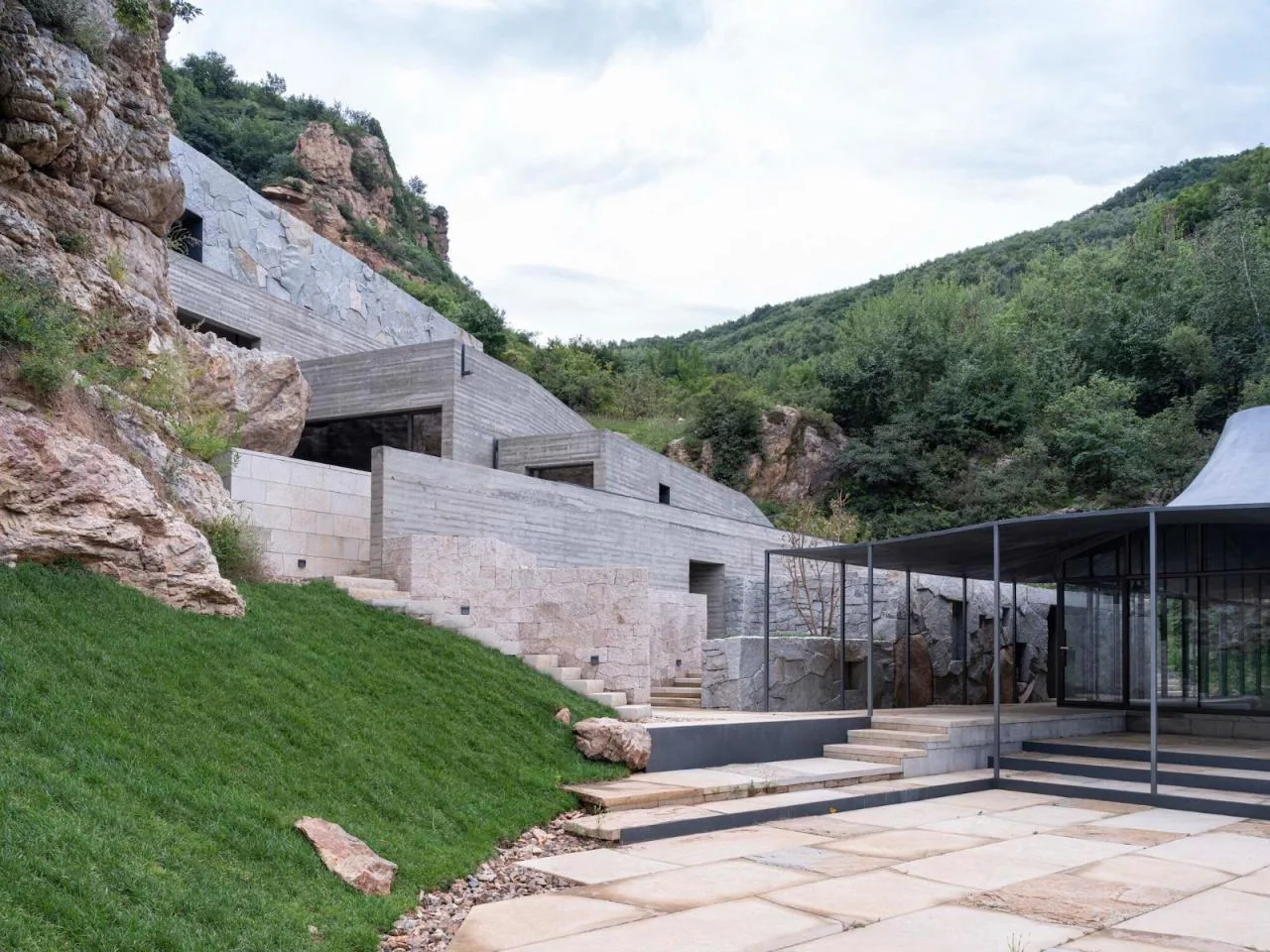
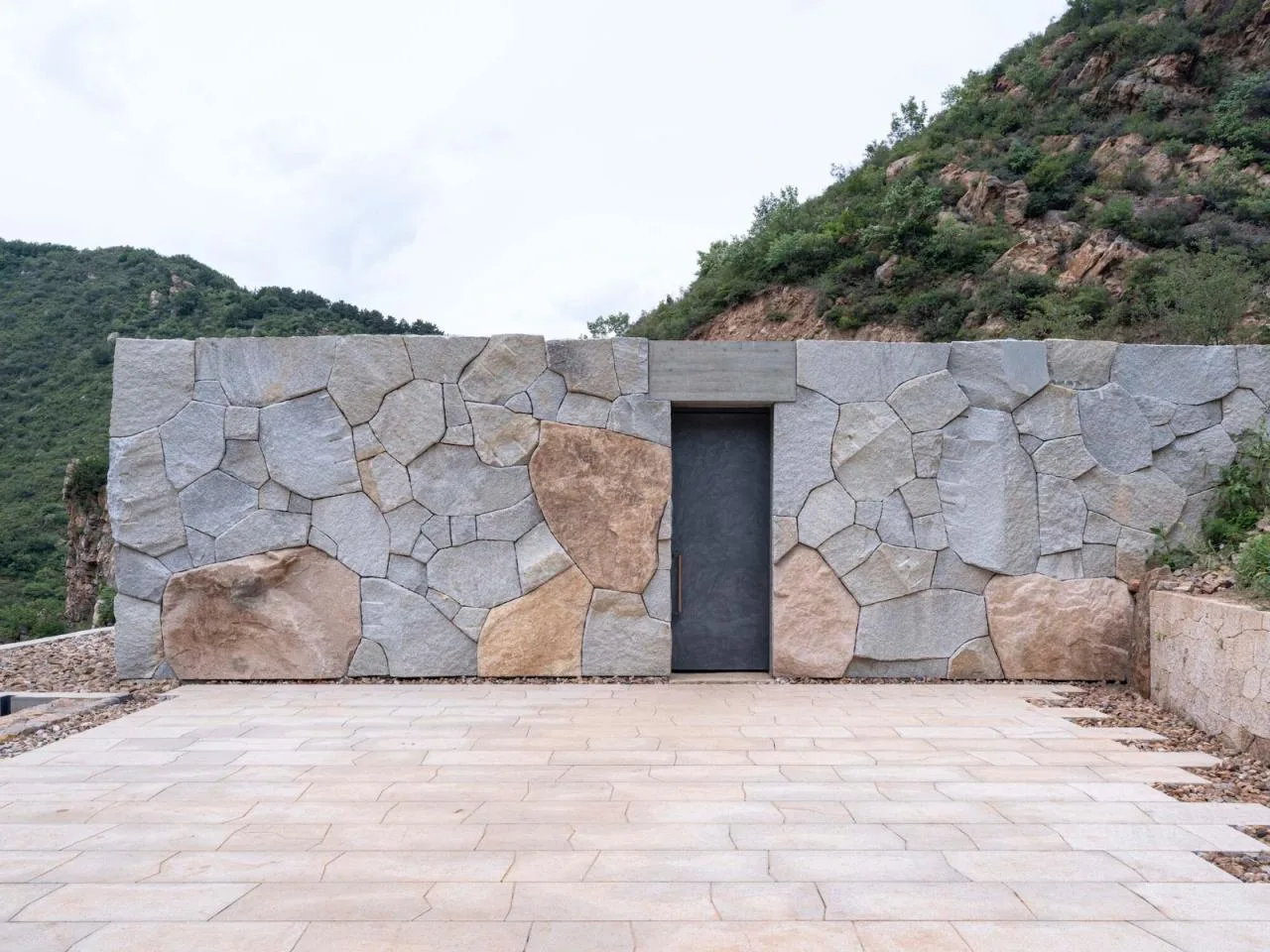
Project images
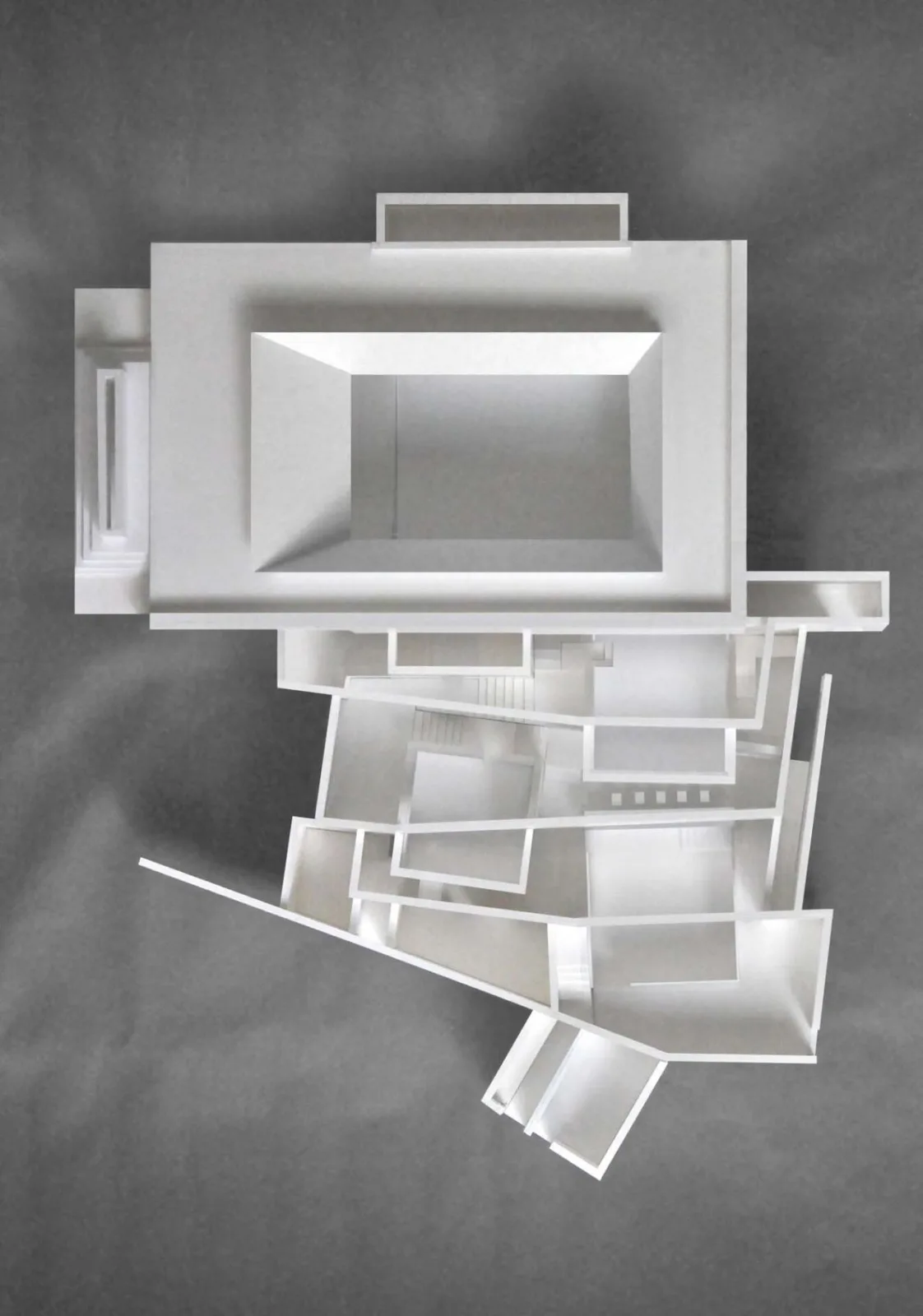
△ Project Model
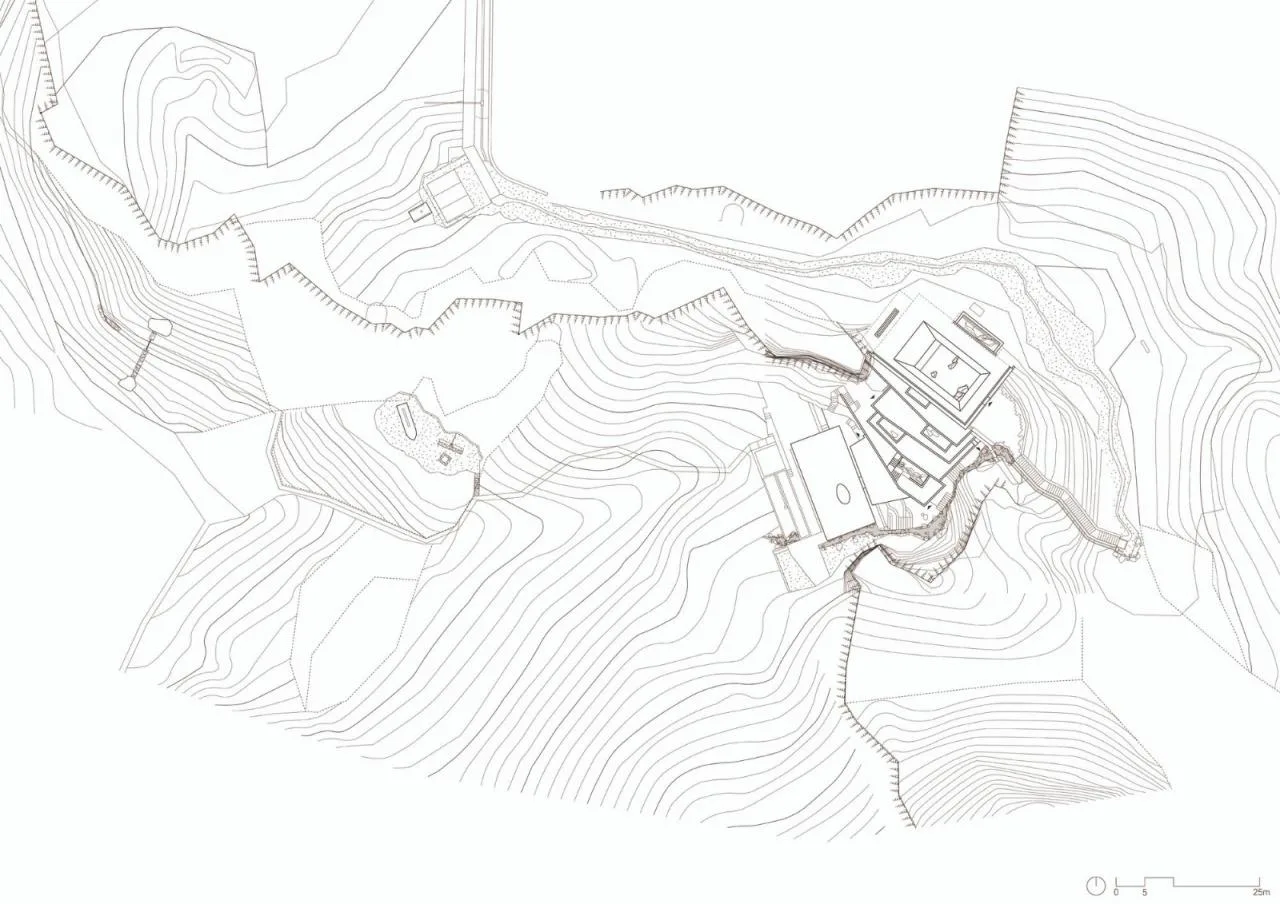
△ General Layout Plan
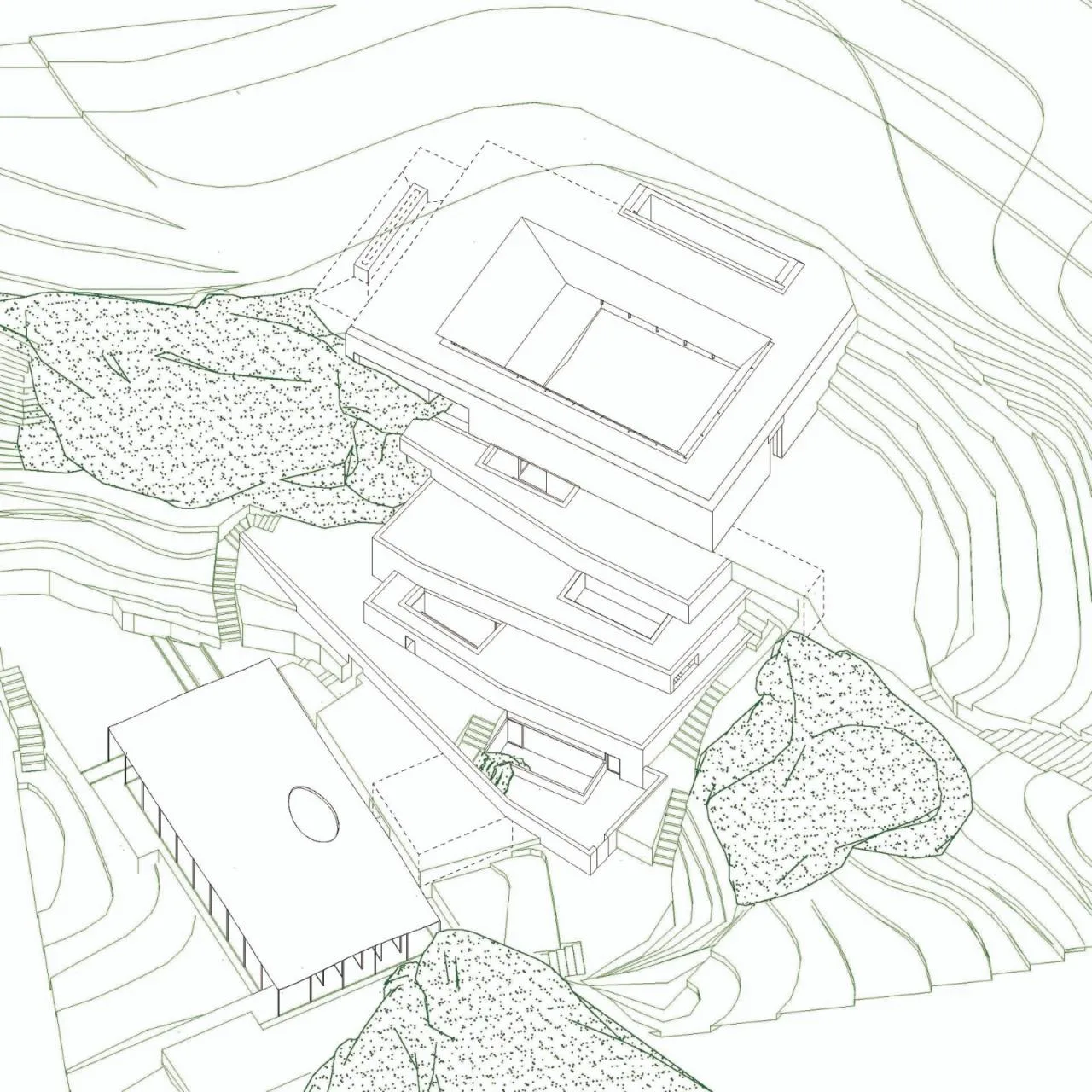
△ Axonometric Diagram
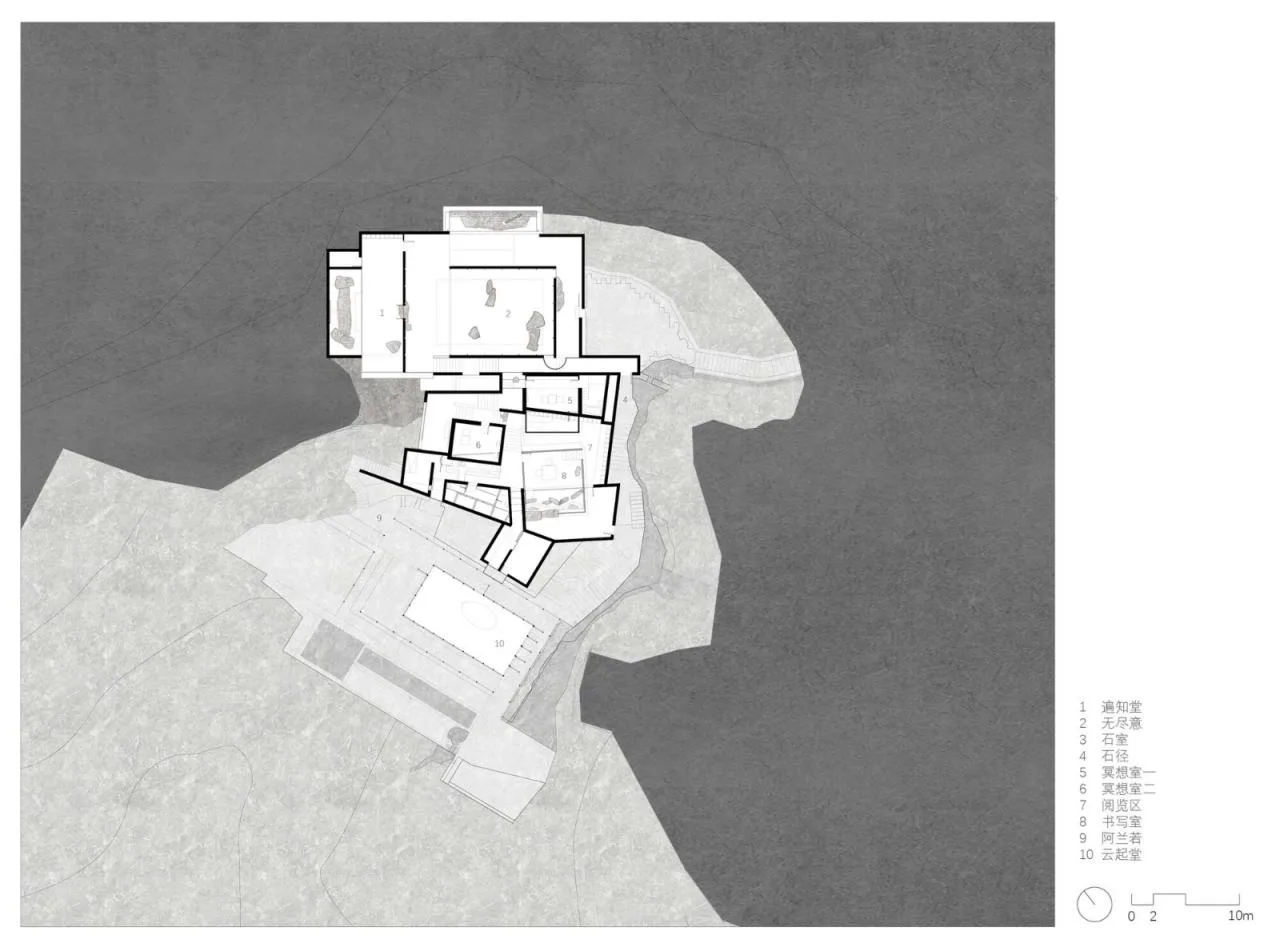
△ Plan View
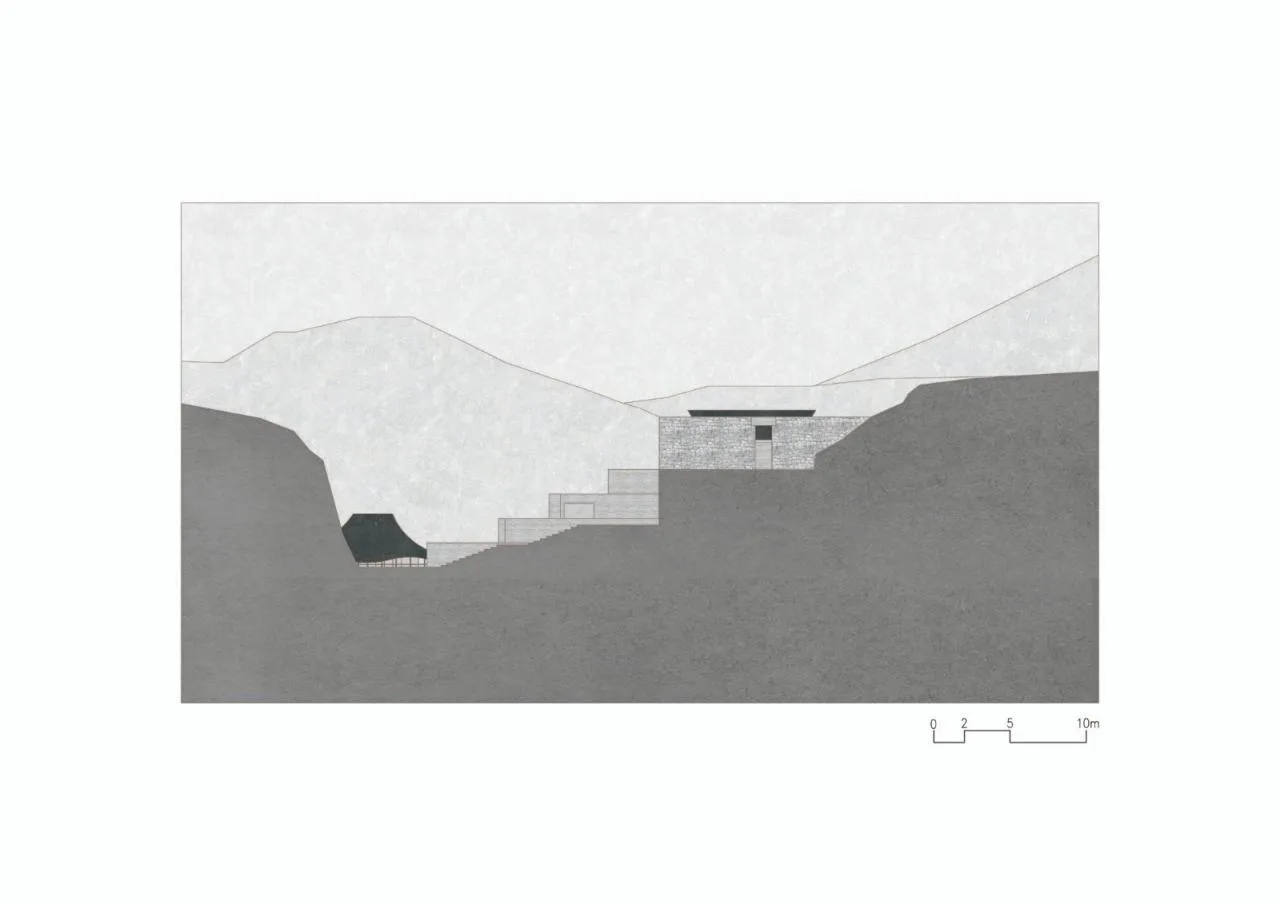
△ Elevation Drawing
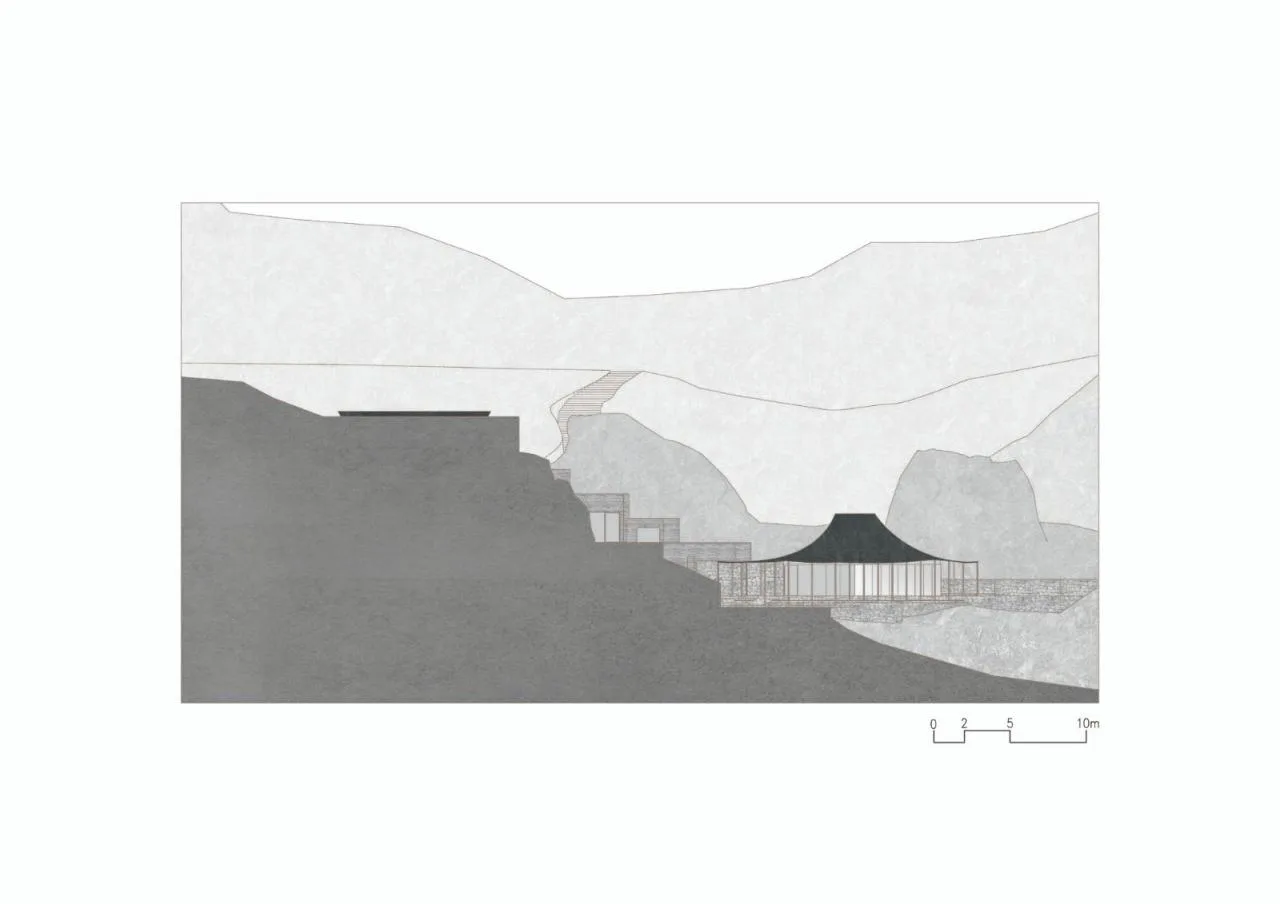
△ Elevation Drawing
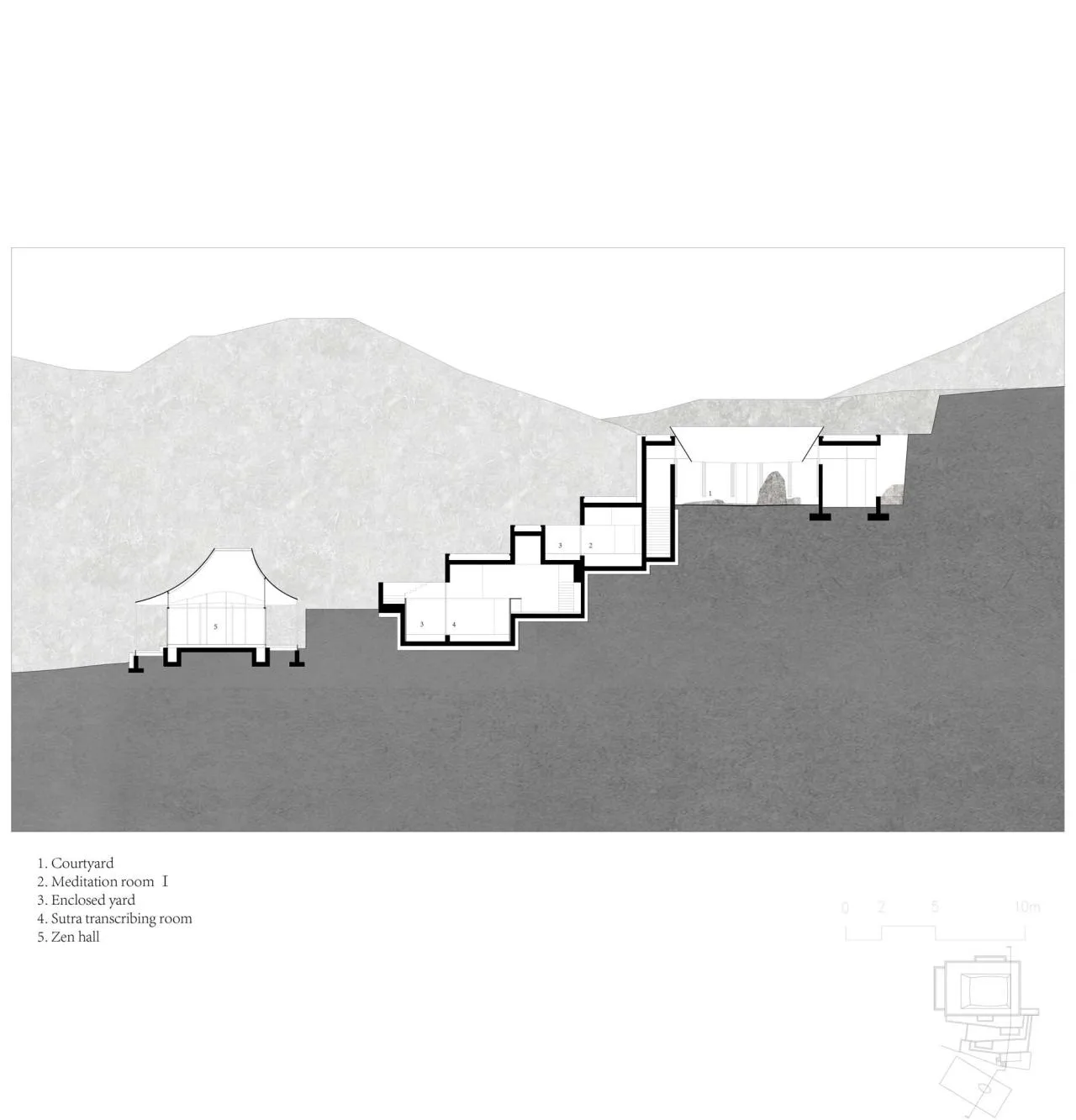
△ Section Diagram
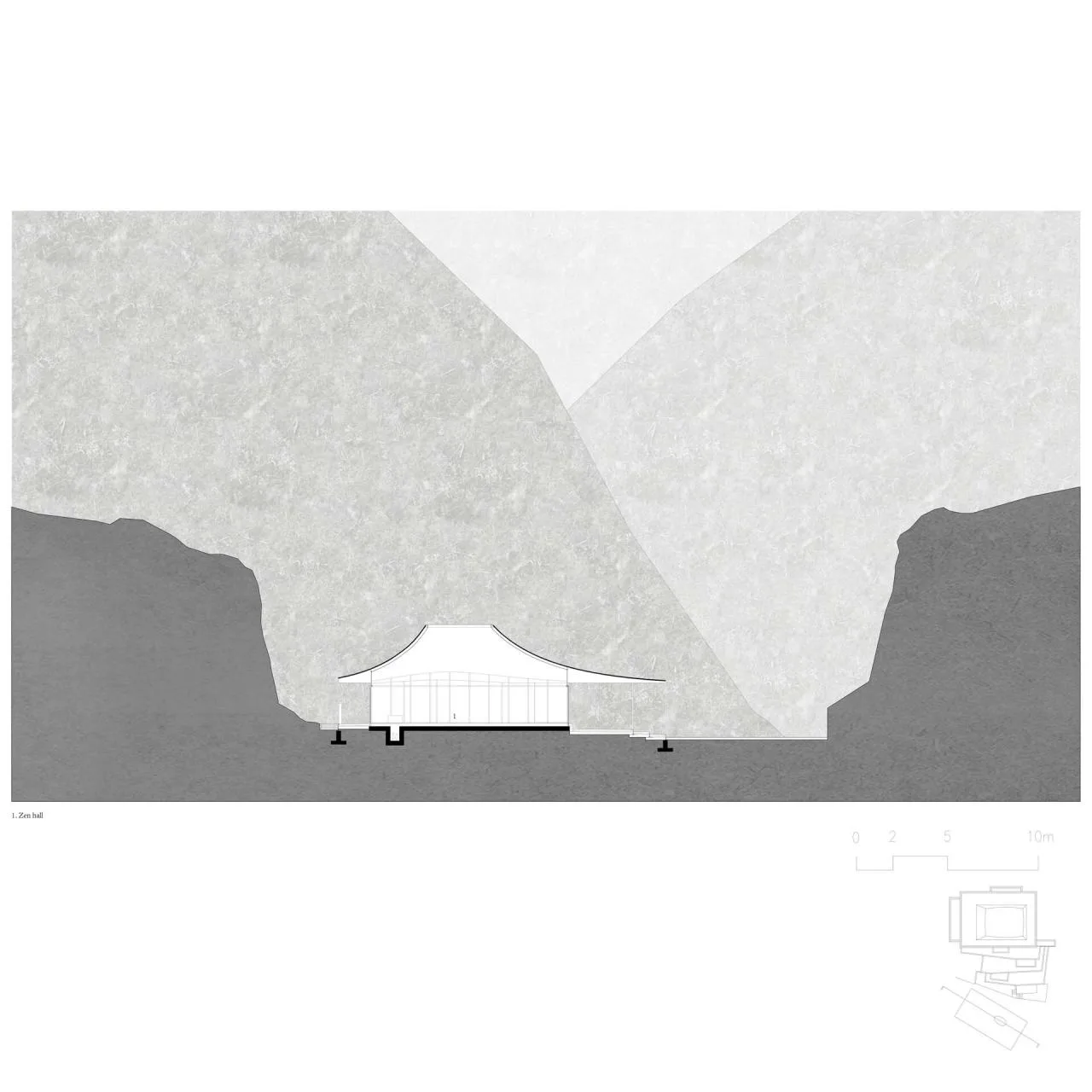
△ Section Diagram
Project Information
Architect: Dashe Architectural Design Firm
Area: 615 square meters
Project Year: 2022
Photographers: Tian Fangfang, Jonathan Leijonhufvud, Su Shengliang
Design Team: Liu Yichun, Shen Wen, Chen Xiaoyi, Wang Longhai, Gong Yu, Zhang Xiaoqi, Wang Yi, Sun Huizhong, Ji Hongliang, Zhang Zhun (structure), Zhang Chongchong (structure)
Structural Design Consultant: Hezuo Structural Architecture Research Institute
Structural Electromechanical: Beijing Yanhuang United International Engineering Co., Ltd
Landscape Design: Junming Kano + Japanese Garden Design (Garden), Guangzhou Indigenous Landscape (Surroundings)
Buddha Statue: Jiang Jiaban
Lighting Consultants: Zhongchen Yuanzhan (Beijing) Lighting Design Co., Ltd., Shanghai Yushao Lighting Design Co., Ltd
Construction: Chengde Hongsheng Construction and Installation Co., Ltd., Jiamusi Sanjiang Construction Engineering Co., Ltd
Interior Decoration: Beijing Wandanhui Architectural Decoration Engineering Co., Ltd
Landscape Construction: Changzhou Innovation Landscape Engineering Co., Ltd
Intelligent Construction: Shanghai Dajie Robot Technology Co., Ltd. (Chantang)
Steel Structure: Shanghai Dexu Construction Development Co., Ltd
Art Paint: Shanghai Yujia Architectural Technology Co., Ltd
Carbon Fiber: Shandong Huaye Wind Energy Equipment Co., Ltd
Door and Window Glass: Shanghai Rilang Doors and Windows Co., Ltd., Shanghai Lanshi Special Glass Products Co., Ltd
Stone: Quyang County Yiboyuan Sculpture Co., Ltd
Client: Chengde Anaya Real Estate Development Co., Ltd
Location: Chengde















Must log in before commenting!
Sign Up