
In 2022, Line+ Architecture Firm secured the design rights for the architecture, interior, and landscape of the iFlytek Global Headquarters. Meng Fanhao, co-founder and lead architect of Line+, was appointed by the client as the chief architect and main creative force behind the project. He leads the multidisciplinary collaboration involving architecture, interior design, landscape, curtain wall, and lighting, overseeing the project from concept through to execution. After several rounds of design optimization, construction is now fully underway, with phased completion expected throughout 2023.
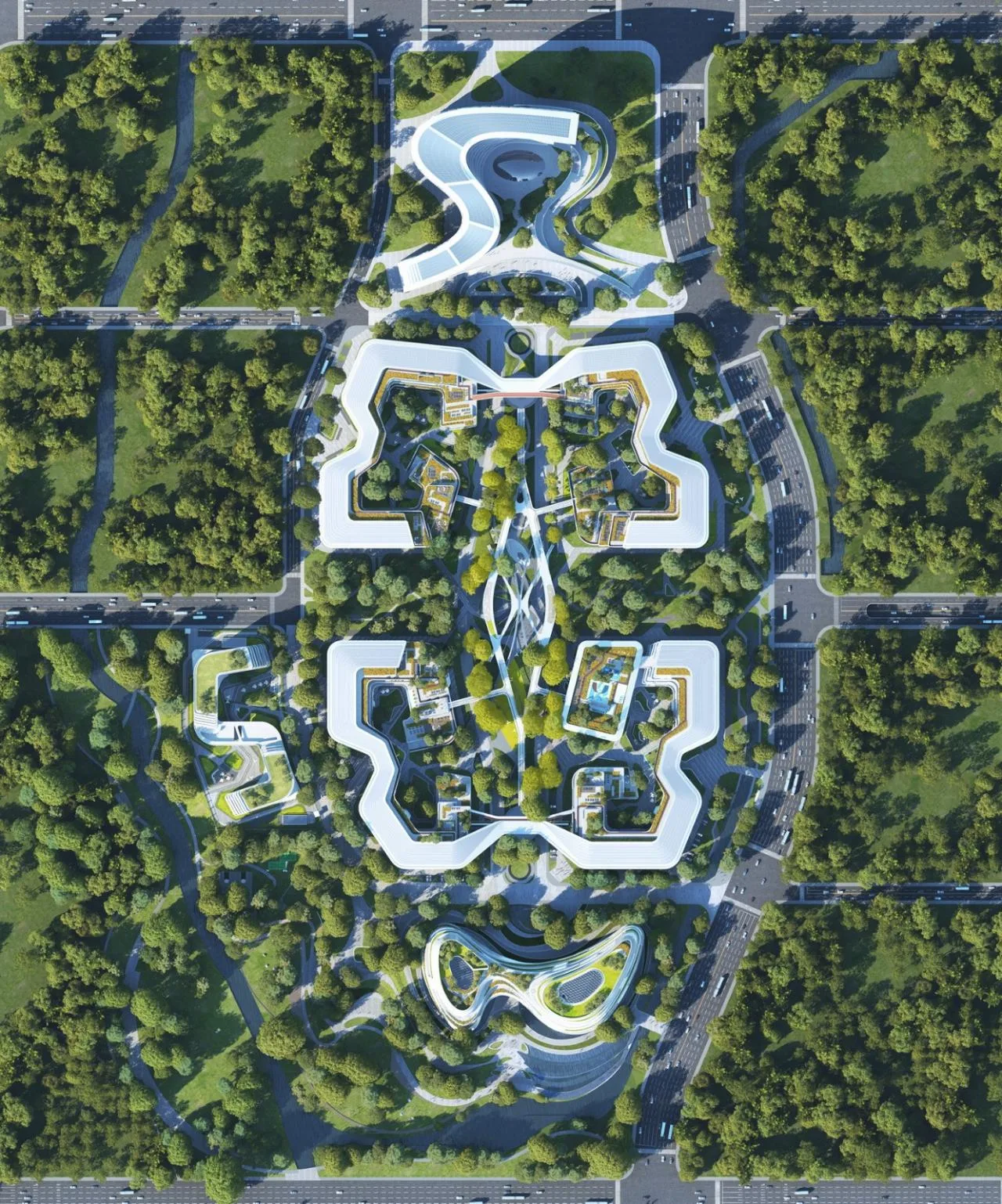
Artificial intelligence is a highly interdisciplinary and cutting-edge field. For iFlytek, a globally influential Chinese AI technology company, the headquarters campus is not only a corporate symbol but also a representation of Eastern wisdom and humanistic values beneath its technological surface. As Meng Fanhao explains, the design aims to create a “super cell” spatial system that fosters deep connectivity, strong interaction, and scalability by intertwining work, life, and natural elements. The result is an open, shared urban park that serves as a dynamic, creative, and inspiring home for the iFlytek community.
The project is situated in Hefei High-Tech Zone, covering a planned land area of over 200 mu (around 13 hectares) with a total floor area of approximately 400,000 square meters. It will house the iFlytek corporate headquarters, a national open platform for artificial intelligence, and a State Key Laboratory for cognitive intelligence, among other facilities. Once completed, the campus is expected to accommodate around 15,000 industrial and research personnel.
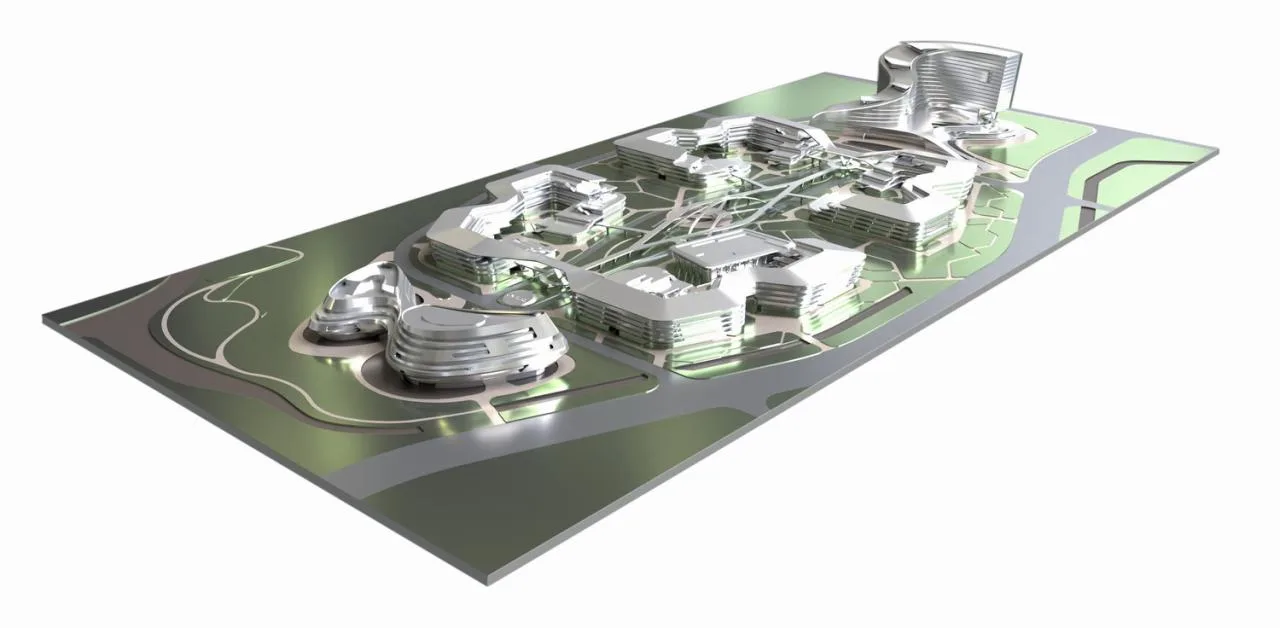
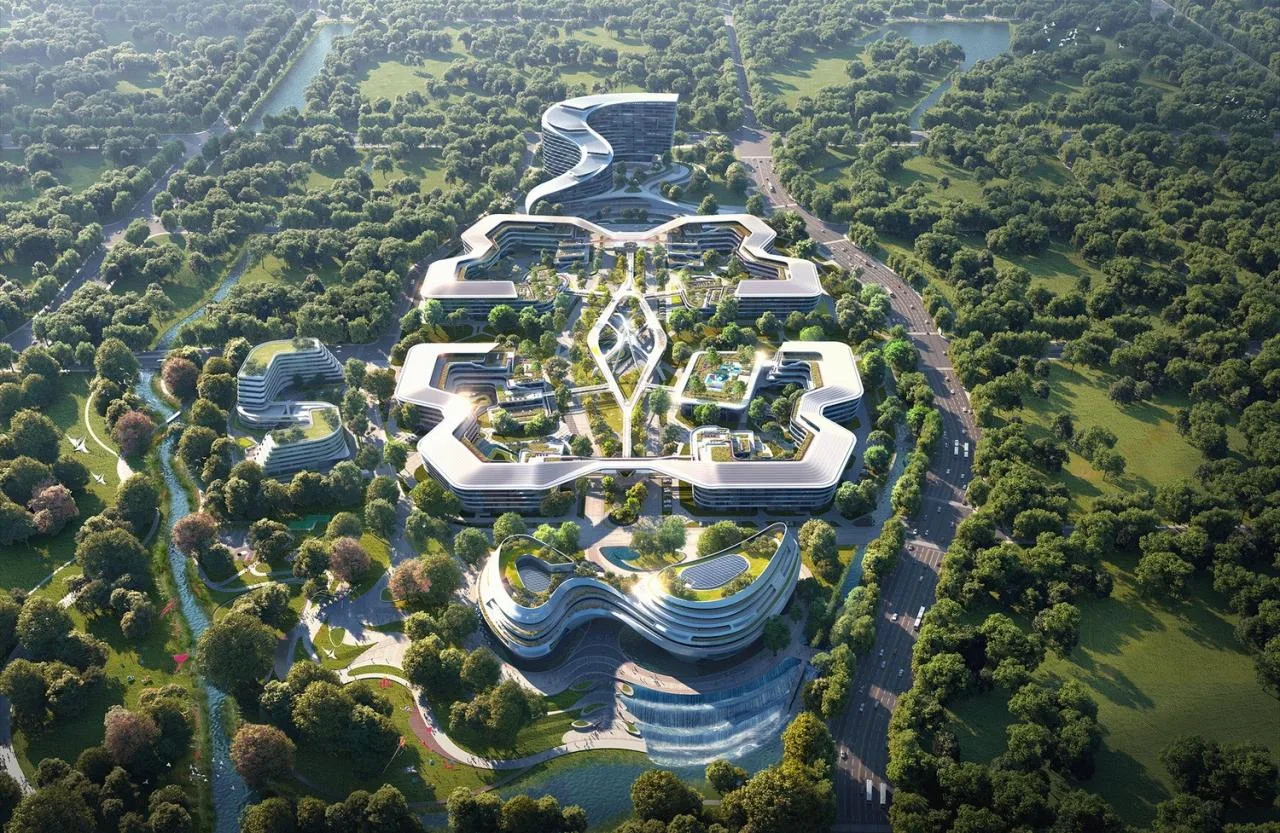
△ Model view
As a pioneer in intelligent voice and AI industries in the Asia-Pacific region, and a core member of China’s Artificial Intelligence National Team, iFlytek has been dedicated to innovation since its founding in 1999. Its mission remains steadfast: to leverage artificial intelligence to build a better world. For its new headquarters in Hefei High-Tech Zone, iFlytek has set ambitious goals: to establish the world’s leading enterprise headquarters in intelligent voice and AI, to create a vibrant industry-city integration hub for young tech and entrepreneurial talent, and to set a benchmark for smart parks in the AI era. The design also seeks to embody Eastern philosophical values such as sunshine and nature, goodwill and harmony, simplicity and transparency, creativity, and inspiration.
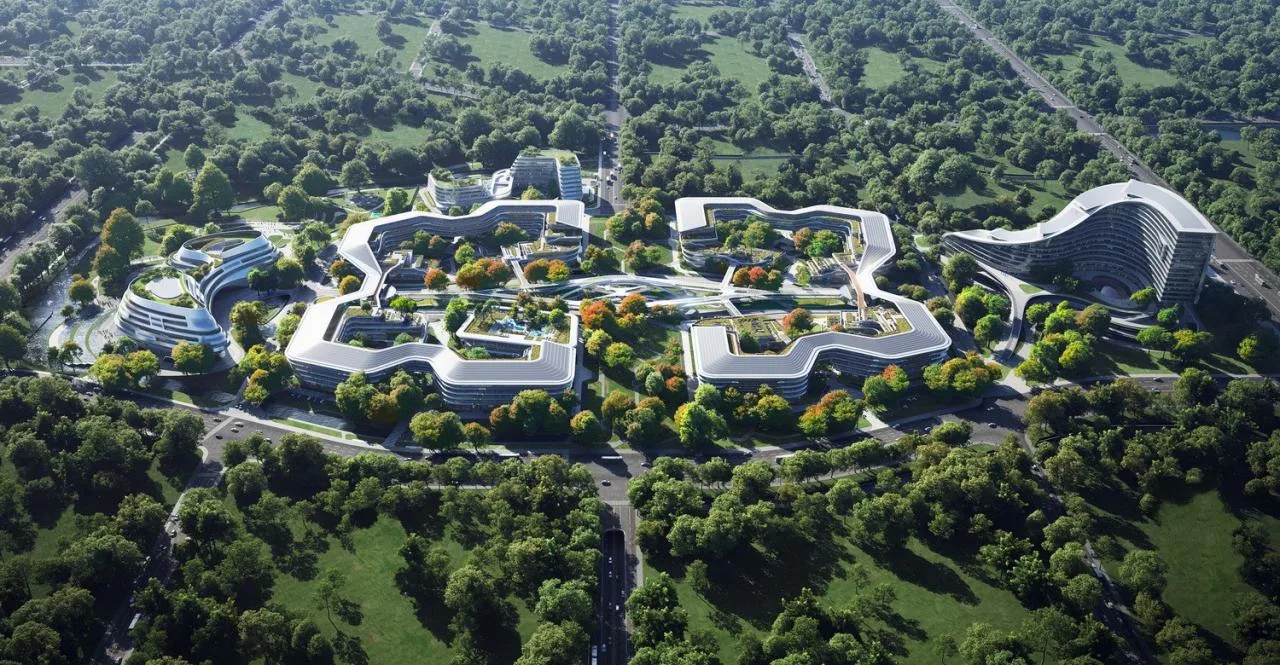
Aligning with iFlytek’s vision for their future home, Line+ approaches the design from an urban planning perspective. The concept of “Park X” and the spatial model “Campus X” are introduced to bridge gaps between plots through integrated urban park design. This strategy activates the area while preserving the site’s natural characteristics. The goal is to create a functional, diverse, and efficient park environment at a human scale, shaping a new headquarters layout that harmoniously combines office space and green surroundings.
Headquarters in “Park X”
“Park X” gives the site a dual ecological meaning: it serves both as a large-scale urban park and as a green, sustainable office environment. The development envisions a “headquarters within a park,” prioritizing the park as a public amenity first, with the headquarters embedded within it. From a macro urban perspective, this green space will organically grow into the “lung of the city” in Hefei’s high-tech industrial base, like a precious jewel in the city’s western area. The park will cater to residents’ daily leisure needs and support cultural activities, environmental beautification, and disaster prevention.
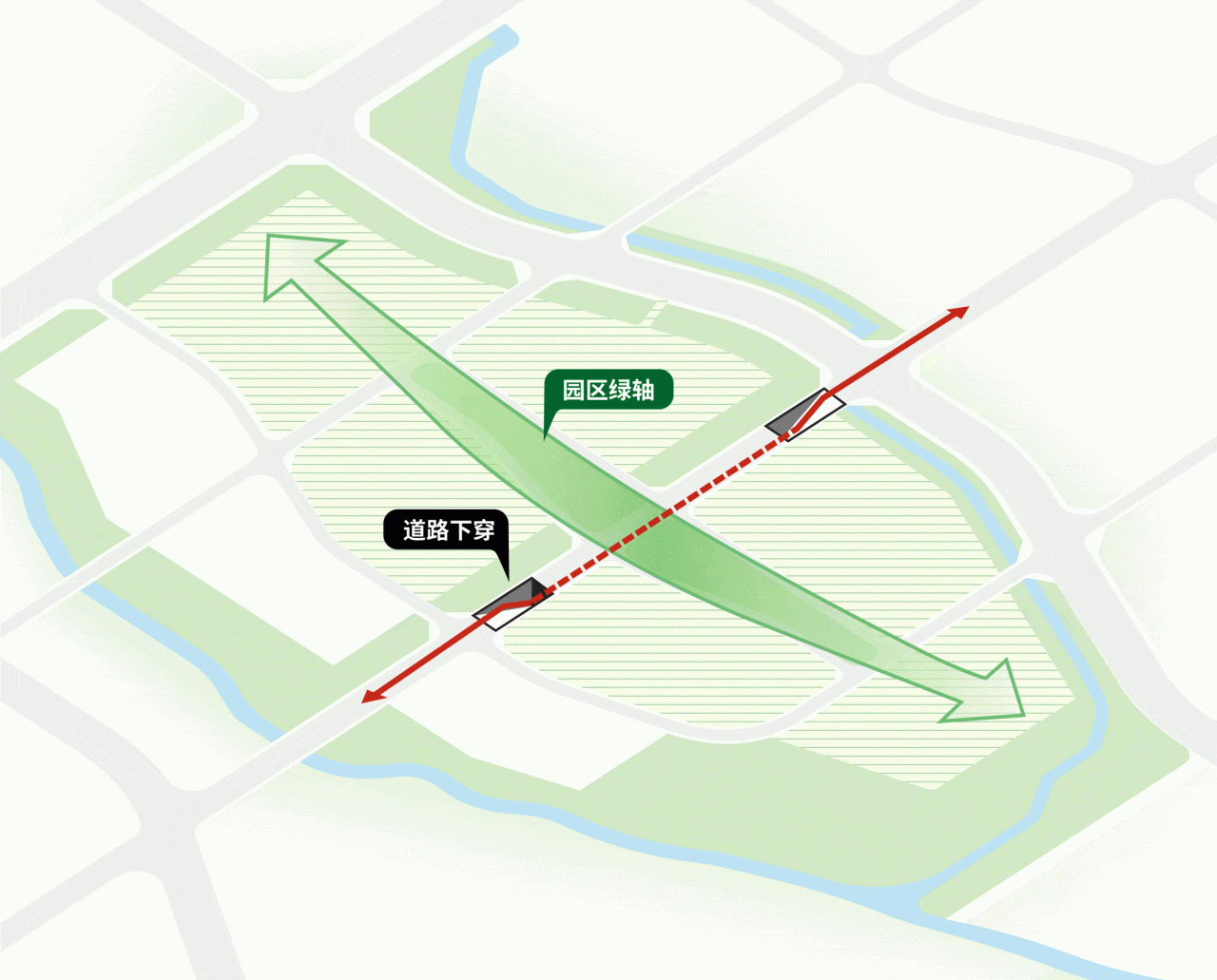
△ Planning generation analysis
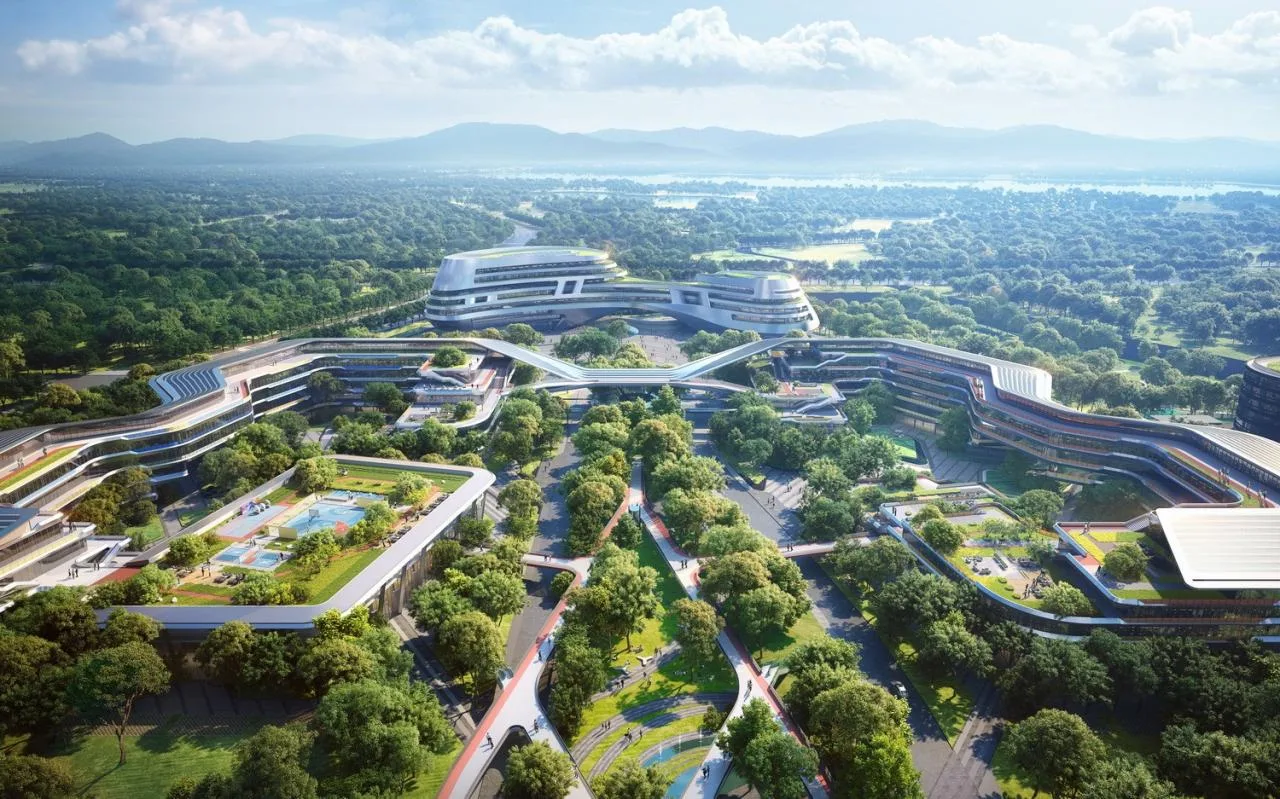
The architectural strategy encloses the large-scale structures inward, freeing up substantial landscape space within the site. To reinforce the “park” concept, the design features an open, shared interface with the city and a comprehensive pedestrian network throughout the campus. Office buildings incorporate continuous terraces, rooftop running tracks, and solar photovoltaic panels, maintaining an ecological and engaging building form. This approach blends office functions seamlessly with the three-dimensional dynamics of park life.
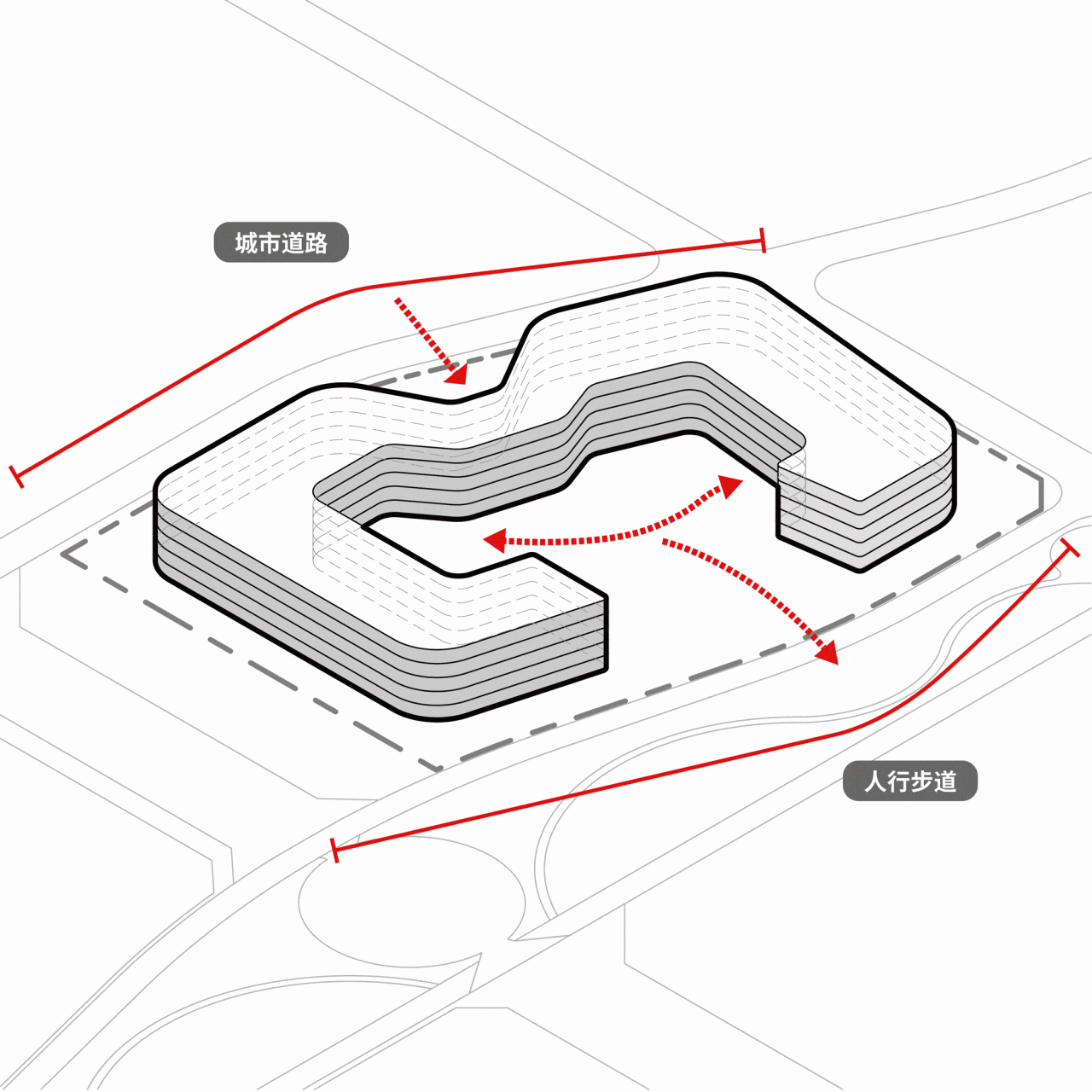
Analysis of individual office building development
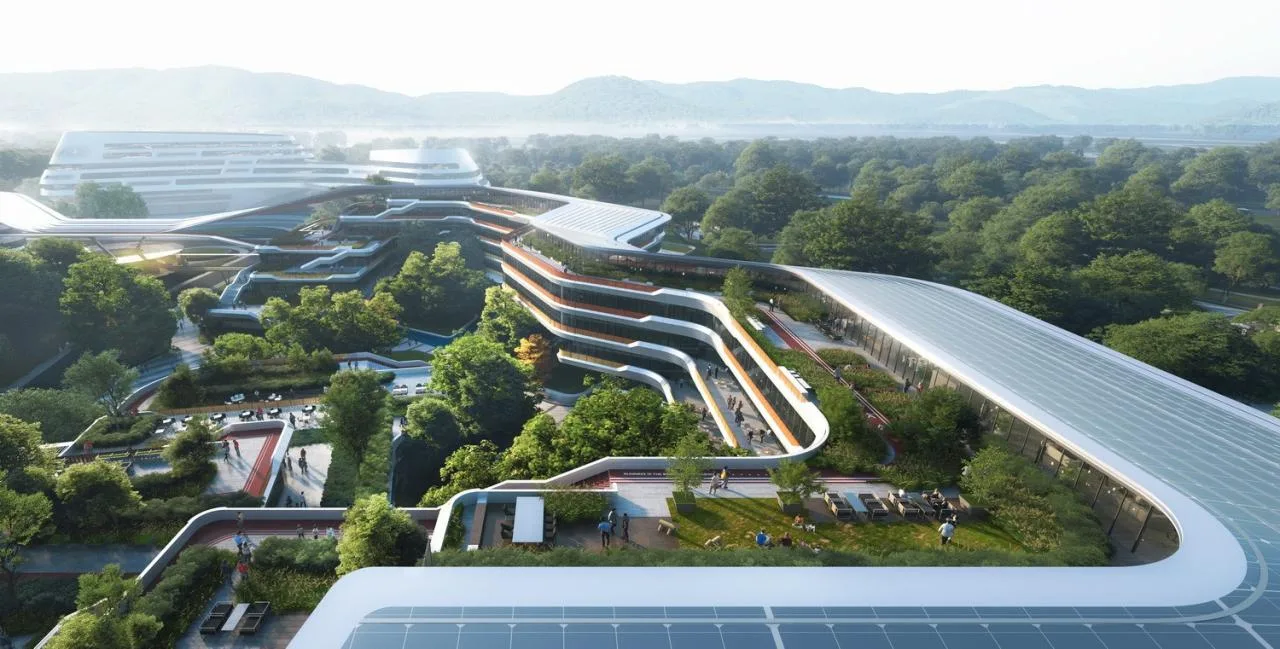
Line+ carefully balances privacy and openness at various spatial levels, responding to the evolving urban context of the headquarters campus. Four independent office clusters are interconnected by landscaped corridors, forming a functional layout that combines clustered structures with public hierarchies. This design meets diverse user needs while minimizing travel distances and enhancing operational efficiency.
Terraces, foyers, aerial walkways, the city’s AI technology exhibition hall, a central ecological corridor, multiple AI interactive landscape installations, and waterfront gardens with promenades create a comprehensive urban art park. This facilitates a unique blend of technological cultural experiences, allowing visitors and employees alike to enjoy exhibitions and leisure in a natural setting. Thoughtful traffic planning separates public activities from office circulation, ensuring smooth flows and distinct paths while maintaining scenic enjoyment.
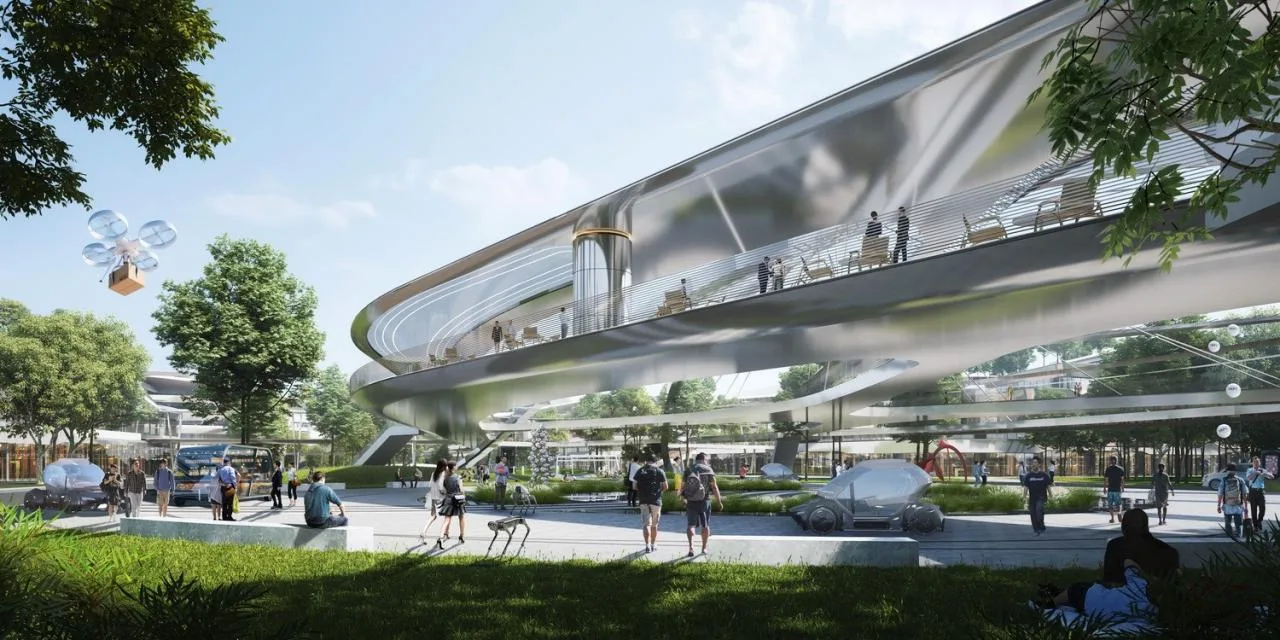
02 Campus X: A Future Campus-Style Headquarters
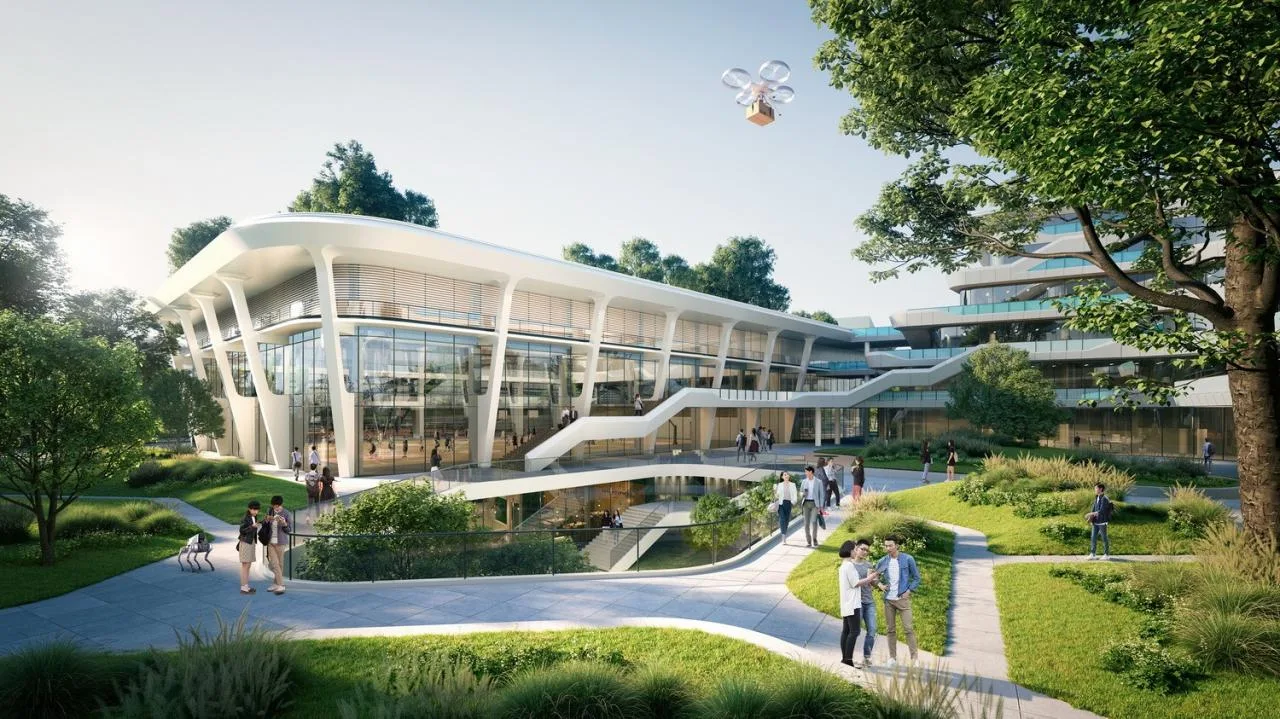
The “campus” concept reflects spatial patterns based on student behavior, aligning with iFlytek’s focus on young talent and drawing from the University of Science and Technology of China’s roots. This new-era headquarters park, with its mixed functional requirements, fosters diverse scenes and layered spatial meanings through the combination and juxtaposition of different place identities.
Campus X borrows from the classical university’s central axis layout, emphasizing sequence and ceremony, while also embracing the innovative, independent, and open spirit of modern universities. This creates a future-forward campus-style headquarters that balances tradition and urban openness.
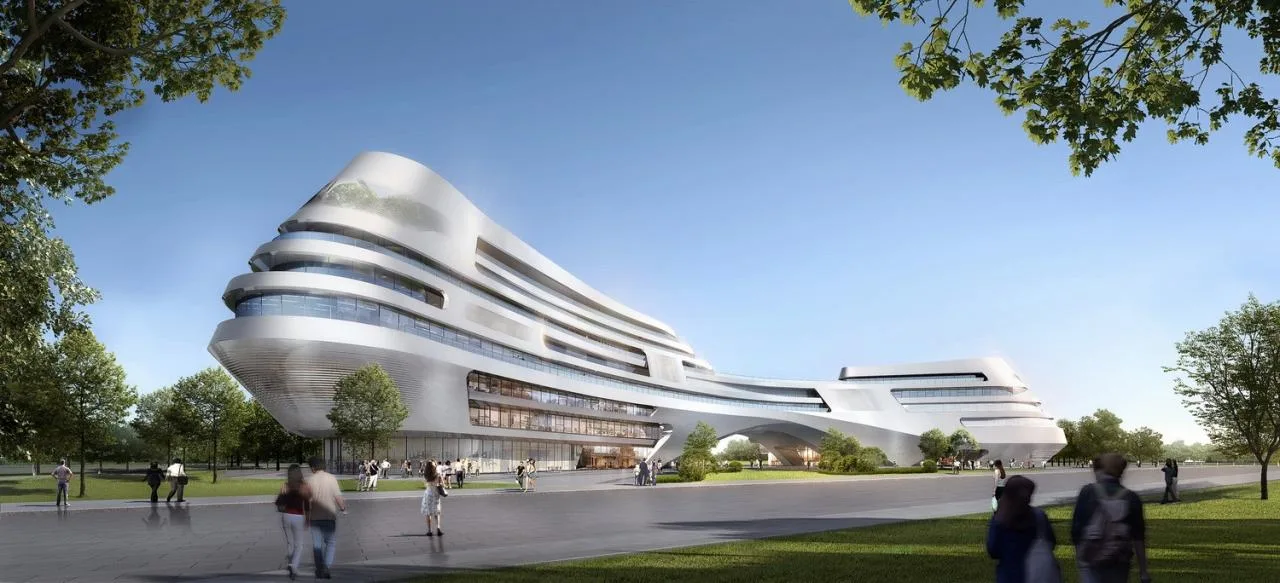
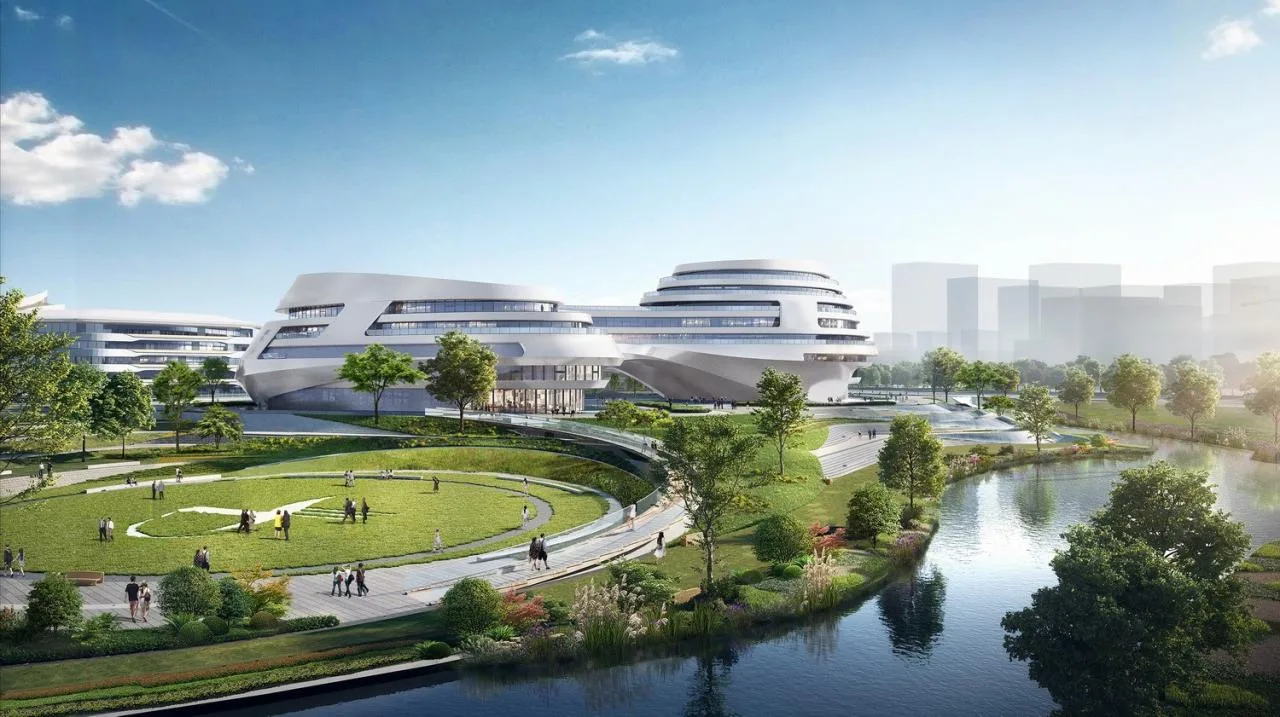
By integrating family-scale amenities such as cafeterias, sports centers, and rooftop running tracks within the super-scale urban landmark building, the design creates vibrant and inspiring activity hubs that foster a youthful campus culture. Leveraging clustered industrial resources alongside public ecological landscapes encourages interaction and integration with the city, promoting a symbiotic development of industry and urban life.
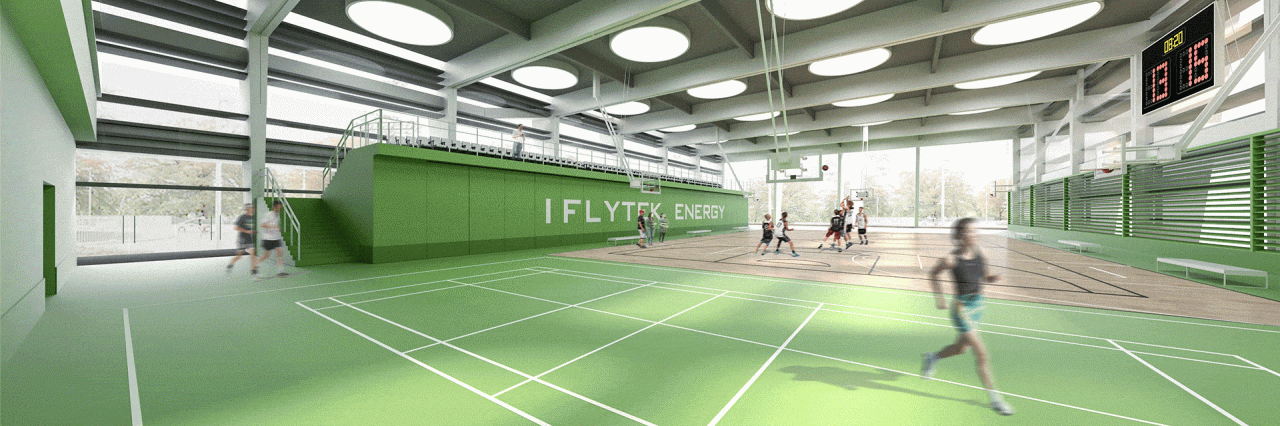
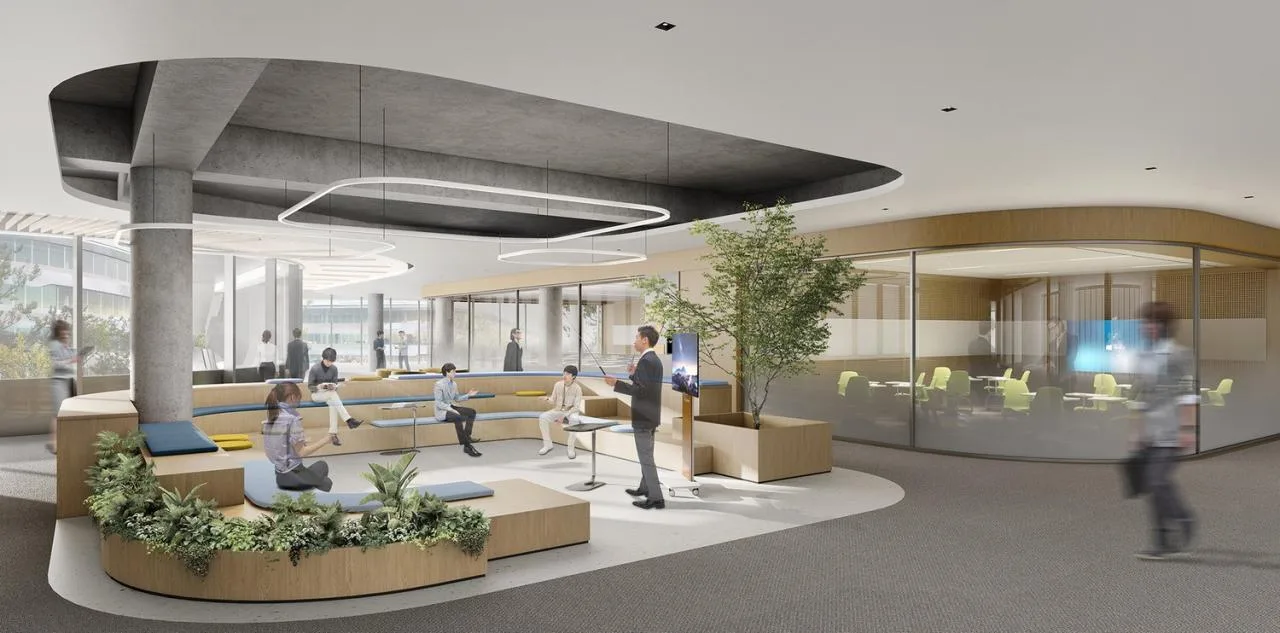
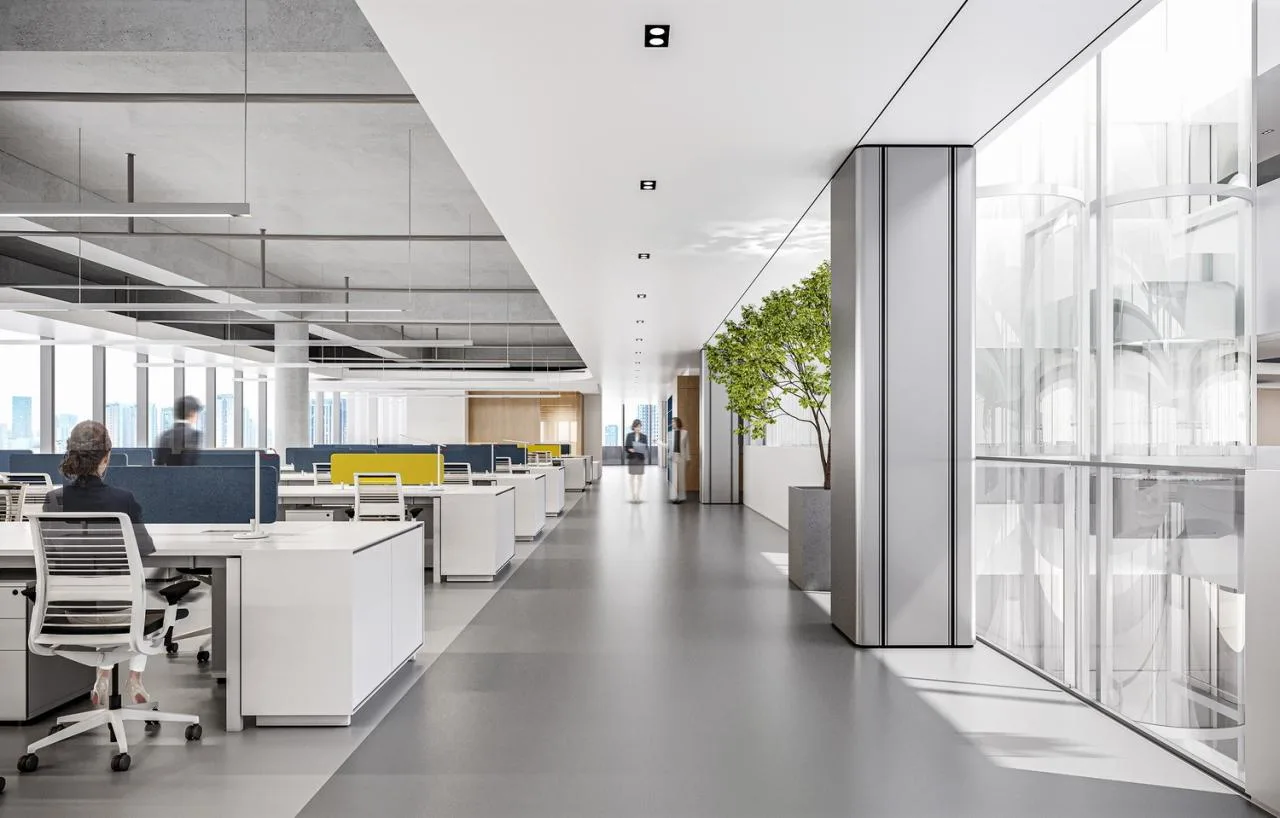
Line+ emphasizes the integration of sunlight and nature within indoor spaces, envisioning future offices as ecological, intelligent, multi-experiential, and socially engaging environments. They propose diverse, flexible, and borderless shared spaces that inspire creativity anytime, enhance collaborative efficiency, and make work more enjoyable.
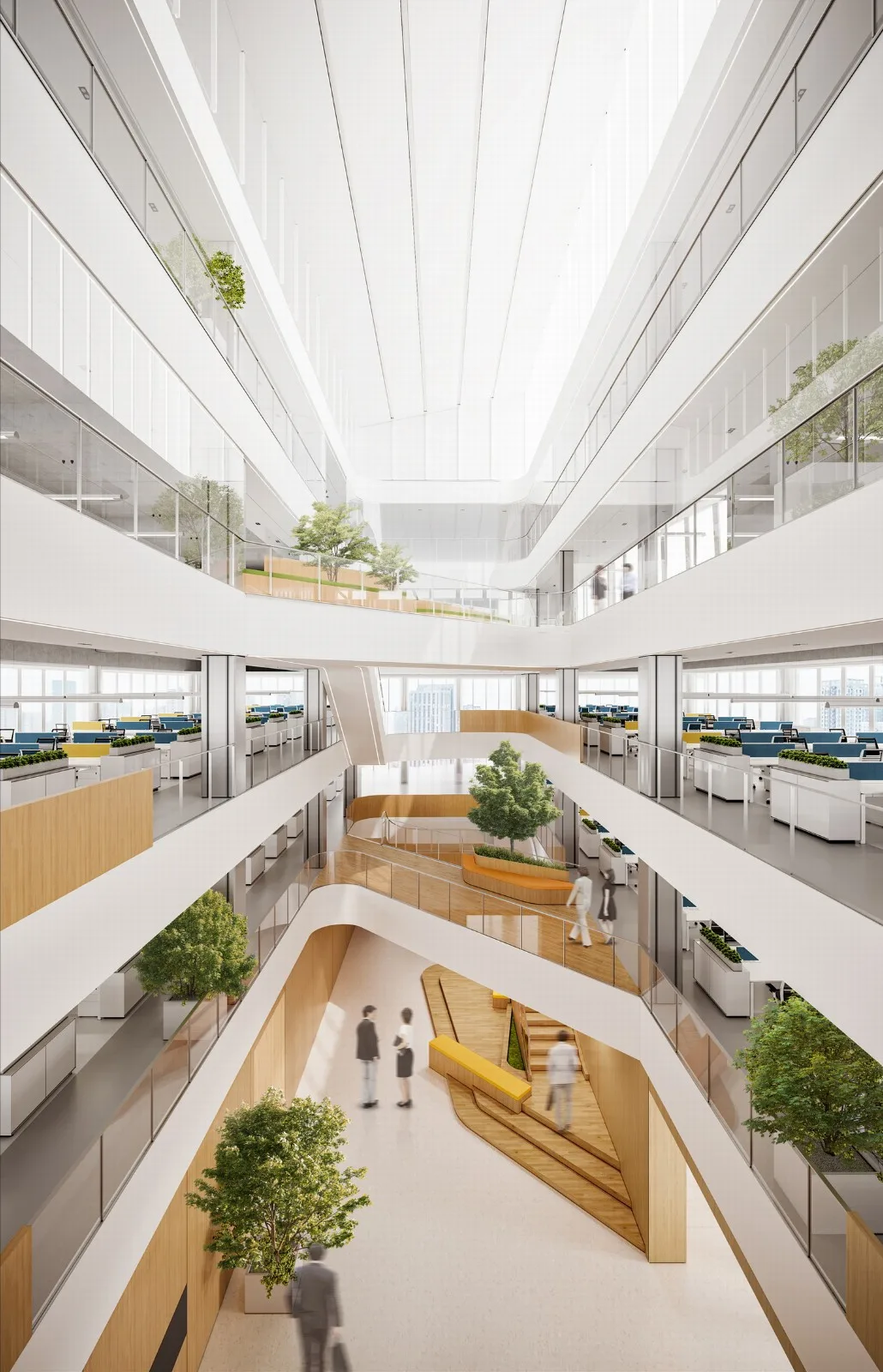
Within a flexible modular system, indoor functions are divided into four modules—office, meeting, charging, and communication—to fully support diverse future work scenarios. Modular spatial layouts and soft decor enable easy functional upgrades and customization after occupancy, optimizing costs and tailoring the headquarters to evolving needs.
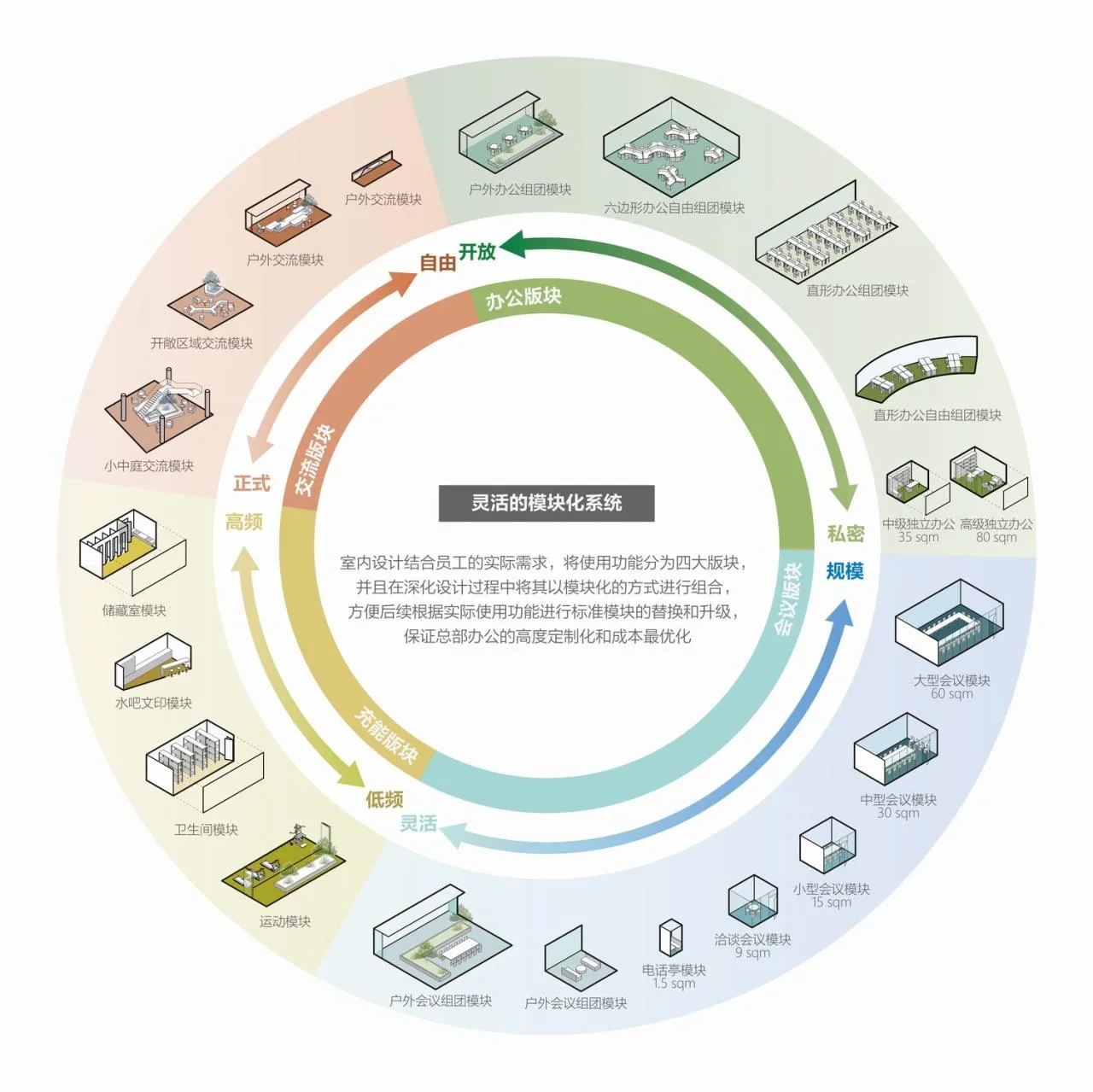
Modular system overview
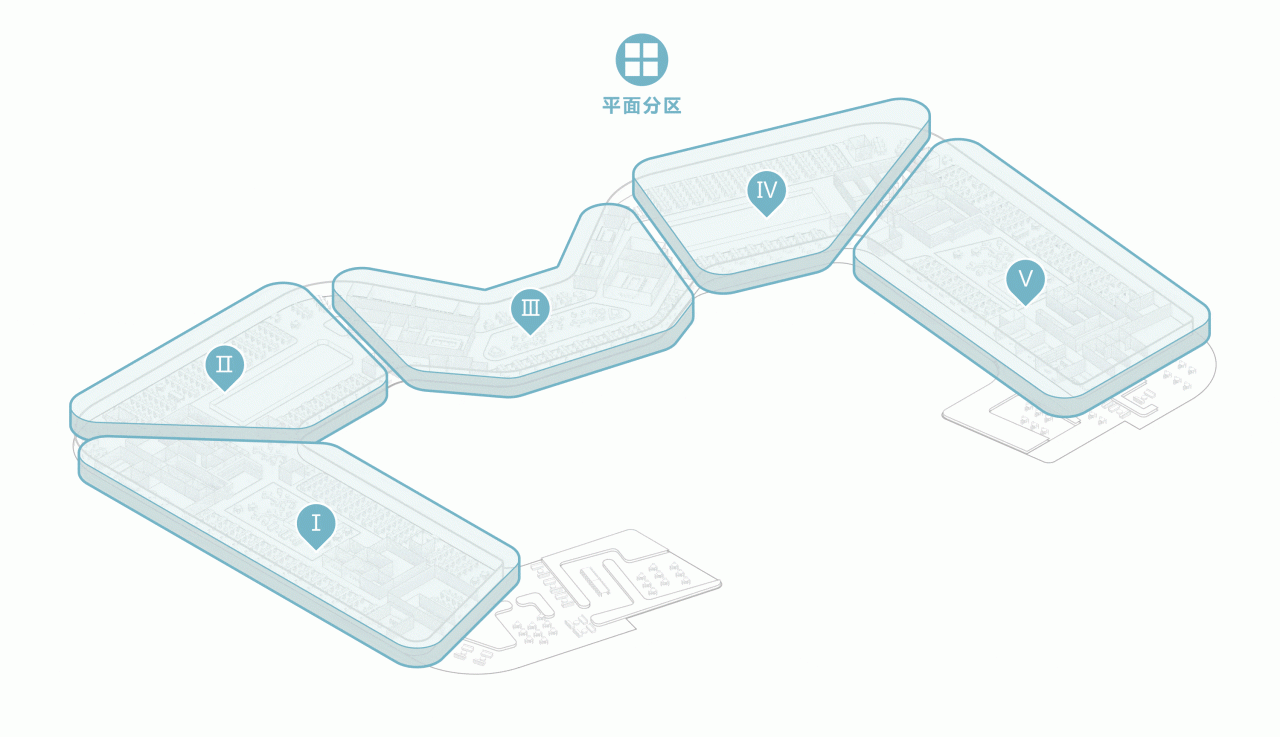
△ Single-floor indoor cluster analysis
03 X: A New Image for iFlytek
Chinese AI has risen to the global forefront, with companies like iFlytek shaping international technological trends. Designing iFlytek’s headquarters also involved crafting a new identity for this advanced technology enterprise.
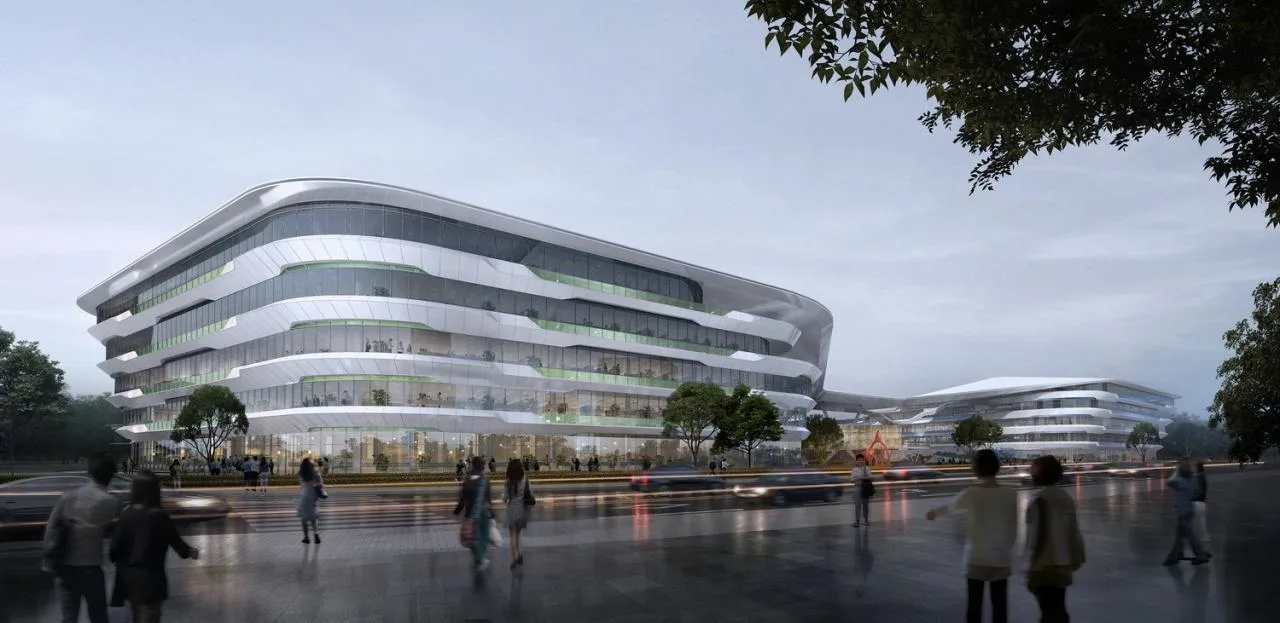
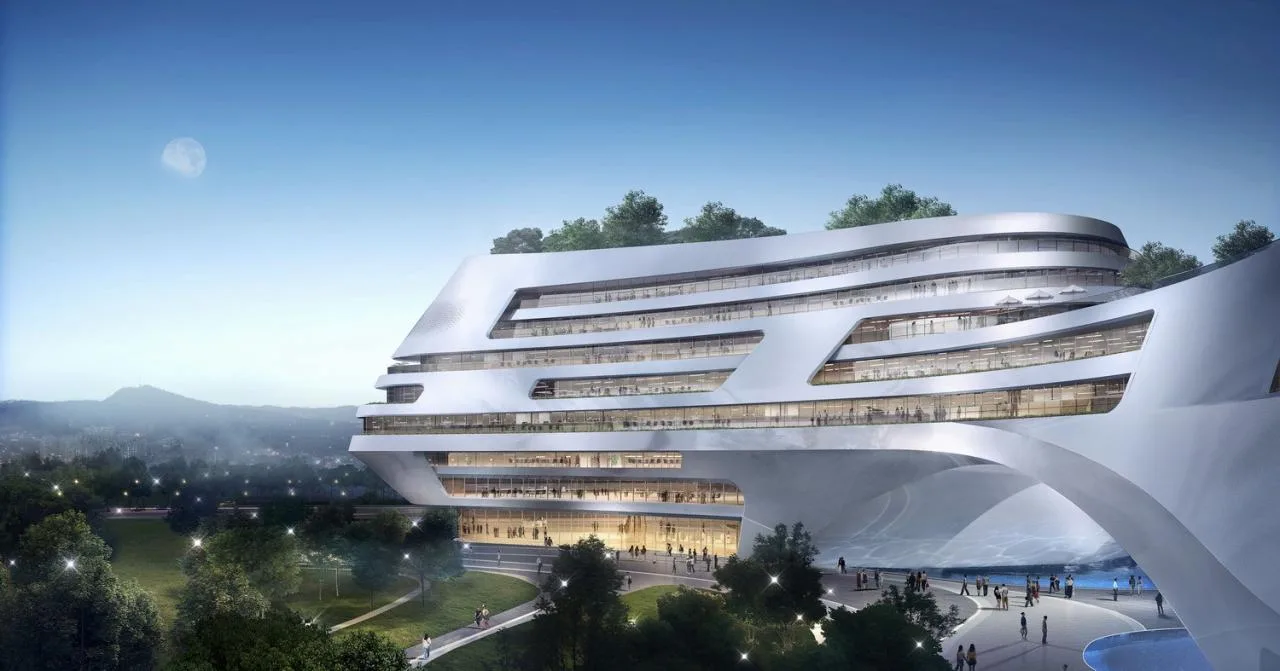
Line+ believes the futuristic technological façade first communicates the company’s innovative image externally, but more importantly, it builds meaningful spaces internally. This aligns with iFlytek’s grand vision of “building a beautiful world with AI,” where “beautiful world” reflects harmony—the harmonious relationships among people, between people and their environment, and between architecture and nature. It is about integrating high-tech exteriors with a humanistic, ecological interior experience.
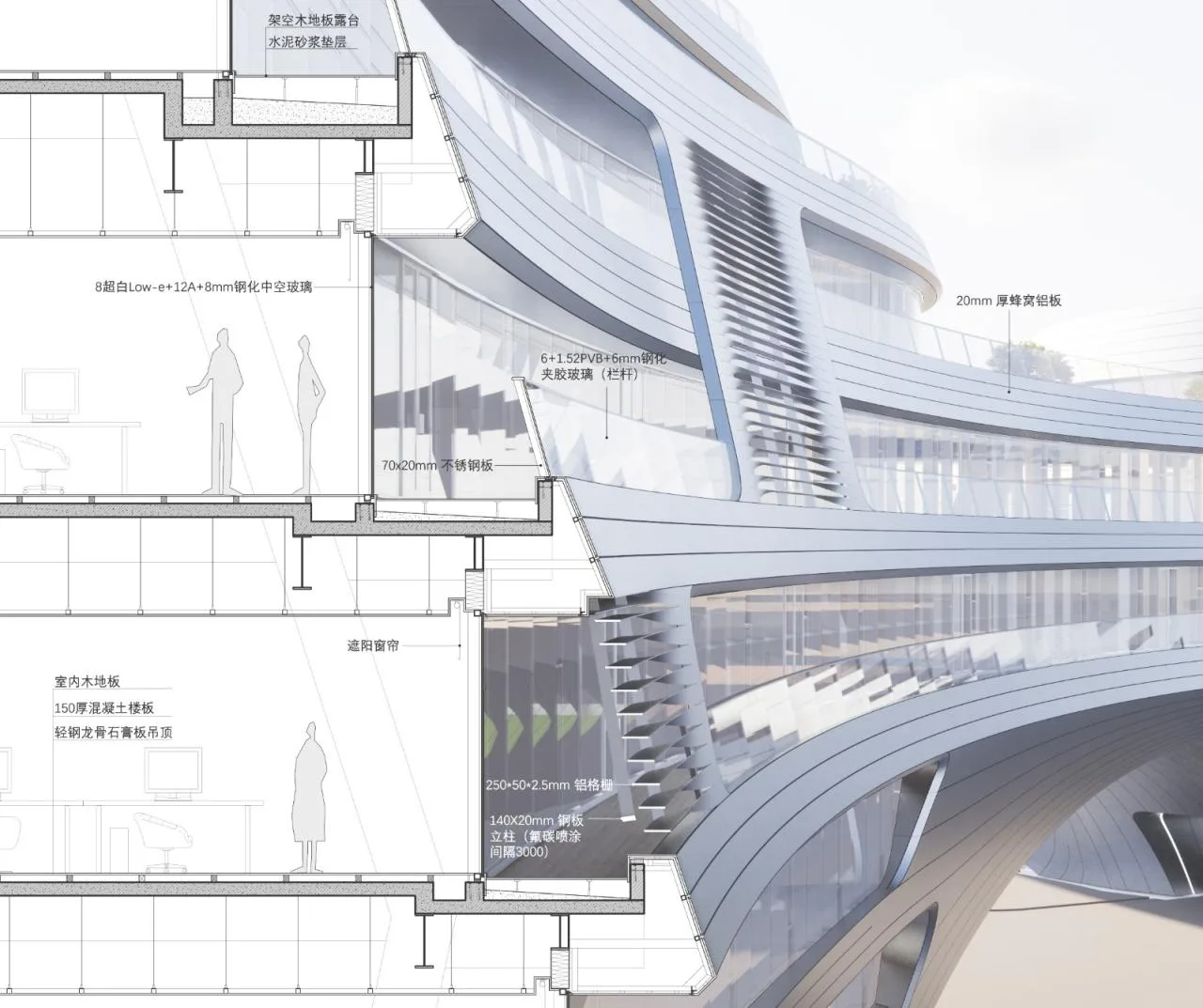
△ Wall material samples
Facade design focuses on simplicity and refined detail, utilizing primary materials such as Low-E ultra-white glass, colored glazed glass, and silver-gray aluminum panels. The colored glazed glass features AI-generated glazed points that add depth and hierarchy to the façade. Transparency plays a key role, fostering a natural, seamless connection between interior and exterior spaces.
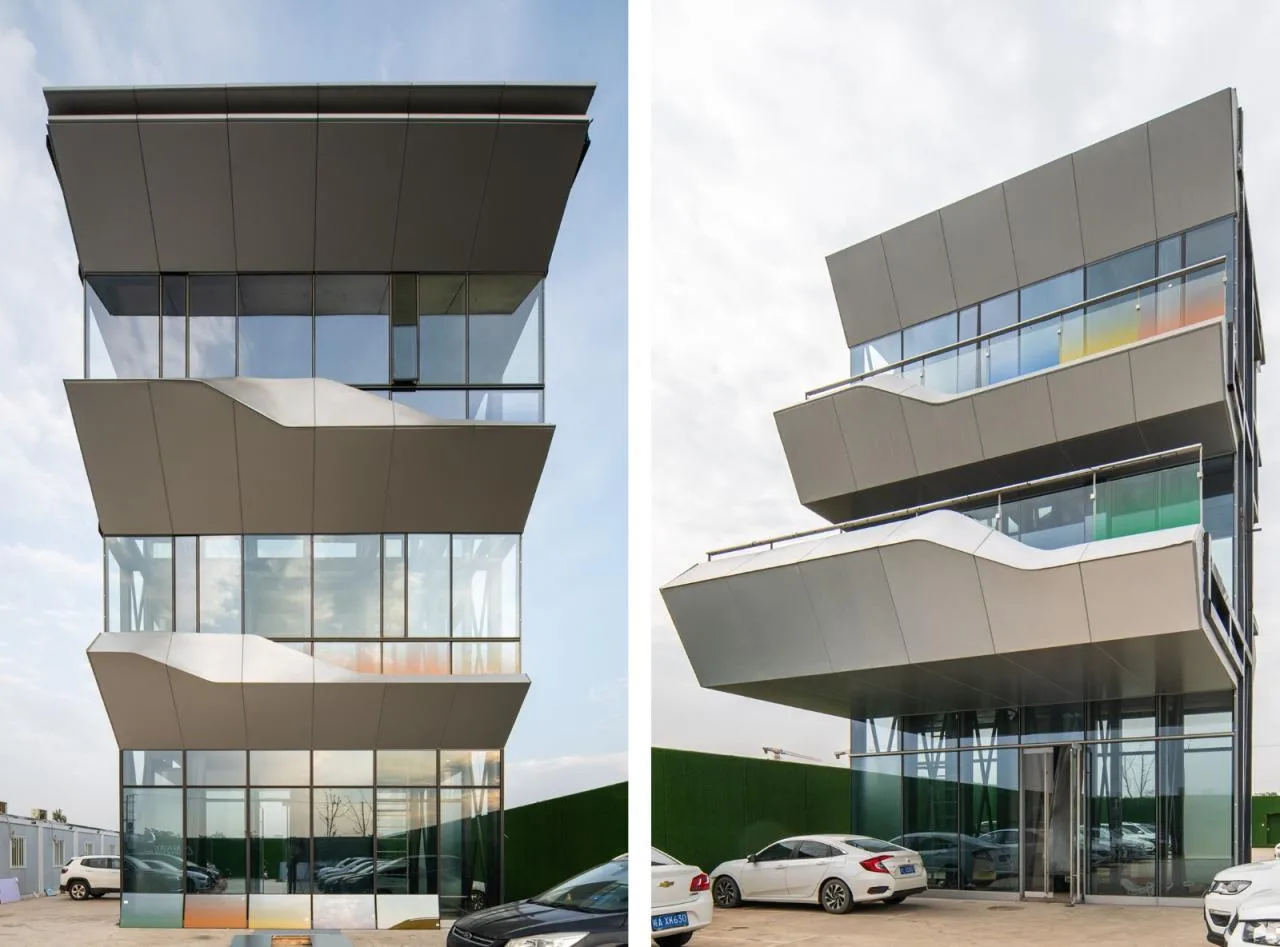
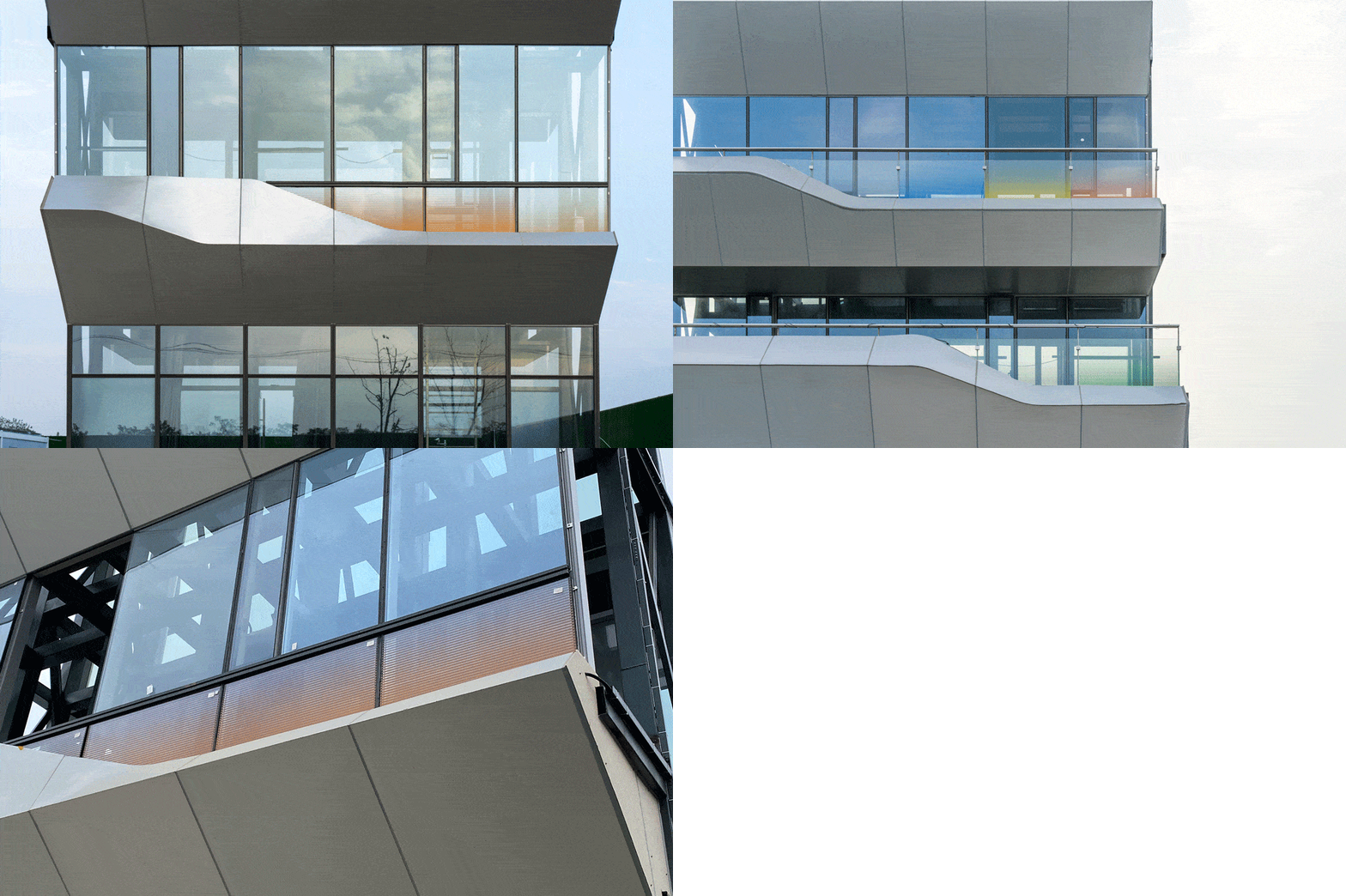
△ Facade material and process sampling
04 Conclusion
The iFlytek Global Headquarters design reorganizes spatial typologies and creates rich venues that accommodate diverse building functions and usage scenarios. It strikes a thoughtful balance between the grandeur of a corporate image and the practical scale of office space. With a forward-looking approach to holistic urban design and industry-city integration, this project leads the activation of high-tech zones, links urban development, and contributes to building a “future city of technology.”
As a local Chinese design agency, Line+ aspires to craft a world-class headquarters campus for leading local tech companies. Embracing both challenges and opportunities, the design empowers iFlytek through spatial innovation to realize a “beautiful world”—a new hub for the global AI industry. The future is bright.
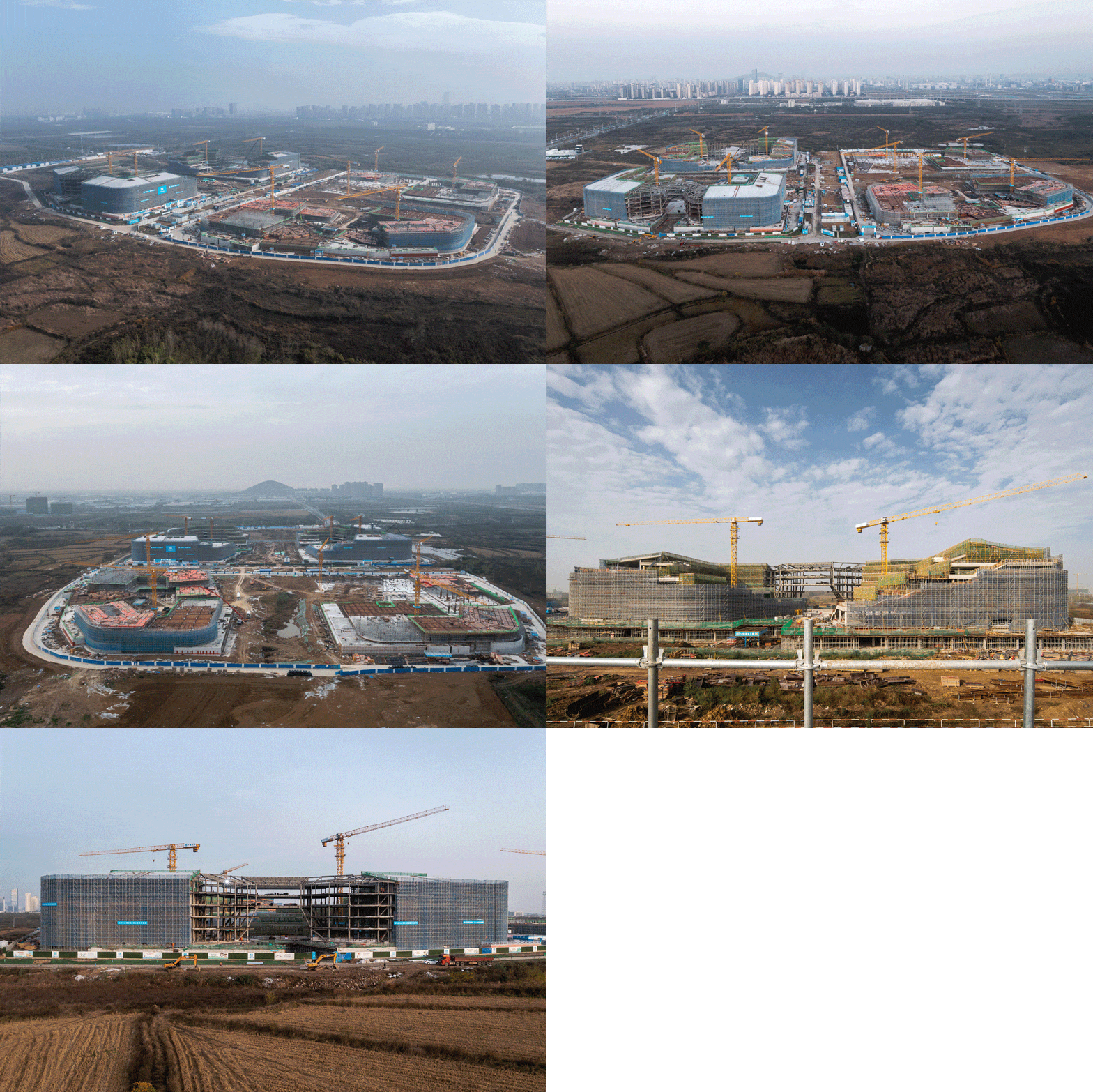
△ Main construction site
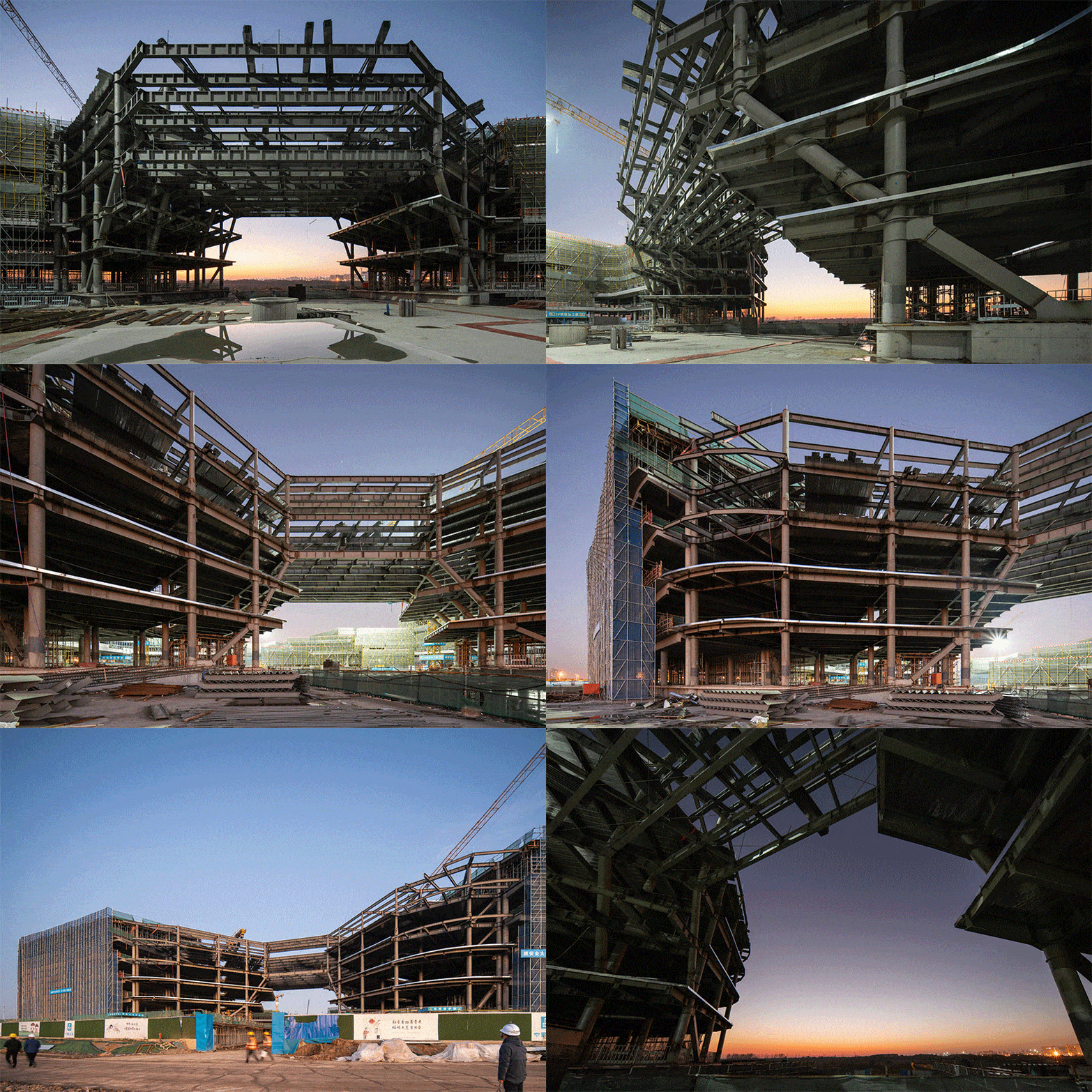
△ Steel structure construction site
Project Details
Project Name: iFlytek Global Headquarters Base (Phase I)
Architectural, Interior, and Landscape Design: Line+ Architecture Firm
Owner: iFlytek Co., Ltd
Lead Architect / Project Creator: Meng Fanhao
Design Team (Competition Stage):
Zhu Min, He Yaliang, Chen Guanxing, Xing Shu, Huang Ye, Li Jing, Wang Yubin, Xu Hao, Huang Jiaofeng, Zhang Erjia, Li Renjie, Liu Chao, Pan Yiming, Shi Yuhang, Chen Bin, Shen Rui, Xu Yifan, Ji Xin, Ye Huazhou, Ge Jiaqi (Architecture)
Zhu Jun, Zhang Sisi, Yang Li, Ge Zhenliang, Deng Hao, He Yukuan, Fan Xiaoxiao, He Zhiyi, Lv Siqi (Interior)
Li Shangyang, Lu Yuping, Chi Xiaomei, Li Jun (Landscape)
Design Team (Implementation Stage):
Zhu Min, Li Xinguang, He Yaliang, Chen Guanxing, Hao Jun, Liu Chao, Li Hang, Li Jing, Huang Yukun, Huang Ye, Shi Yuhang, Xu Yifan, Xu Hao, Xing Shu, Li Renjie, Lin Yu, Zhang Wenxuan, Hong Yang (Architecture)
Su Kelun, Zhang Sisi, Deng Hao, Ge Zhenliang, He Yukuan, Yang Li, Fan Xiaoxiao, He Zhiyi, Wang Ziyi (Interior)
Li Shangyang, Lu Yuping, Jin Jianbo, Zhang Wenjie, Rao Feier, Chi Xiaomei, Li Jun (Landscape)
Line Drawing: Yang Hanyue, Huang Hanyi
Construction Drawing Units: Shanghai Shuishi Architectural Planning and Design Co., Ltd., Qingdao Beiyang Architectural Design Co., Ltd
Landscape Construction Drawing Unit: Zhejiang Lansong Landscape Design Group Co., Ltd
Interior Partners: Suzhou Golden Mantis Architectural Decoration Co., Ltd., CCD Hong Kong Zhengzhong Design Firm
Lighting Consultant: Tongji Design Group (TJAD) Architectural Lighting Institute
Transportation Consultant: Shenzhen Urban Transportation Planning and Design Research Center Co., Ltd
Curtain Wall Consultant: Hangzhou Zhongchuang United Building Technology Co., Ltd
Construction Agent: Greentown Management Holdings Limited
Project Location: Hefei, Anhui Province
Building Area: 243,104 sqm (above ground), 158,000 sqm (underground)
Design Period: November 2021 – November 2022
Construction Period: March 2022 – ongoing
Structure: Frame and steel structure
Materials: Glass, aluminum panels, photovoltaic roof















Must log in before commenting!
Sign Up