
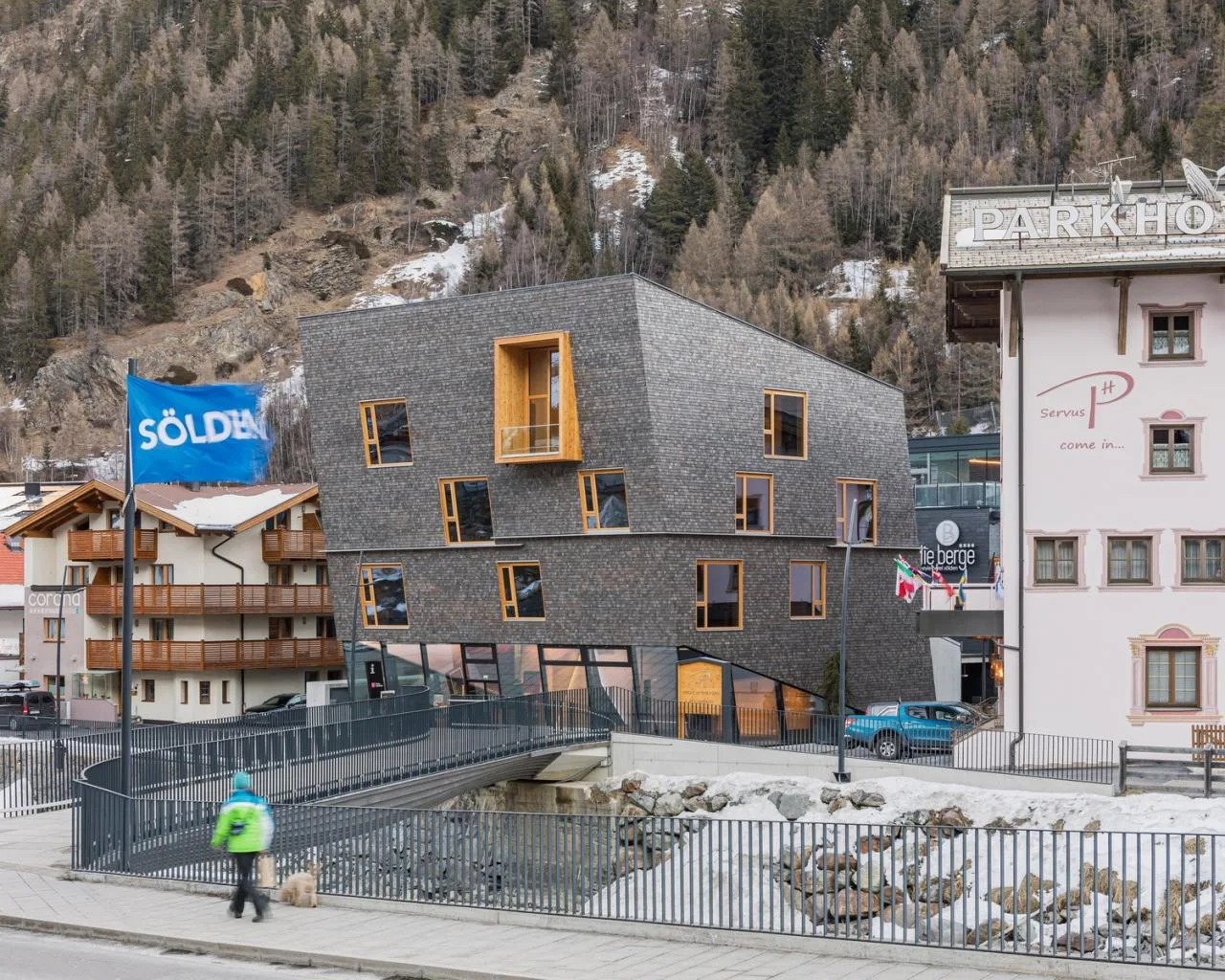
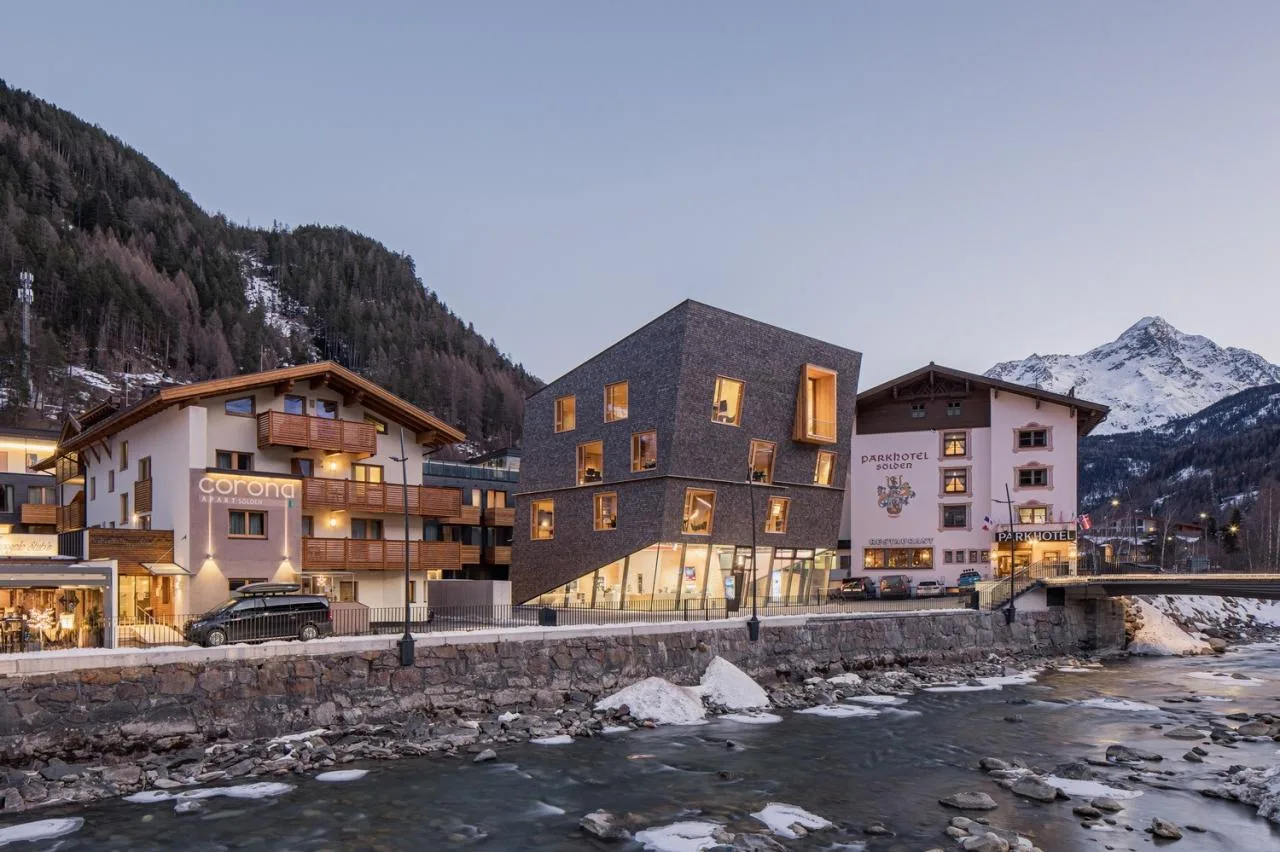
The design of the Ötztal Tourist Center carefully maintains a respectful distance from the surrounding residential buildings. The lighting levels, visual connections with the landscape, and the numerous gaps between the existing environmental textures and the new building mass have been thoughtfully planned to integrate harmoniously with the site.
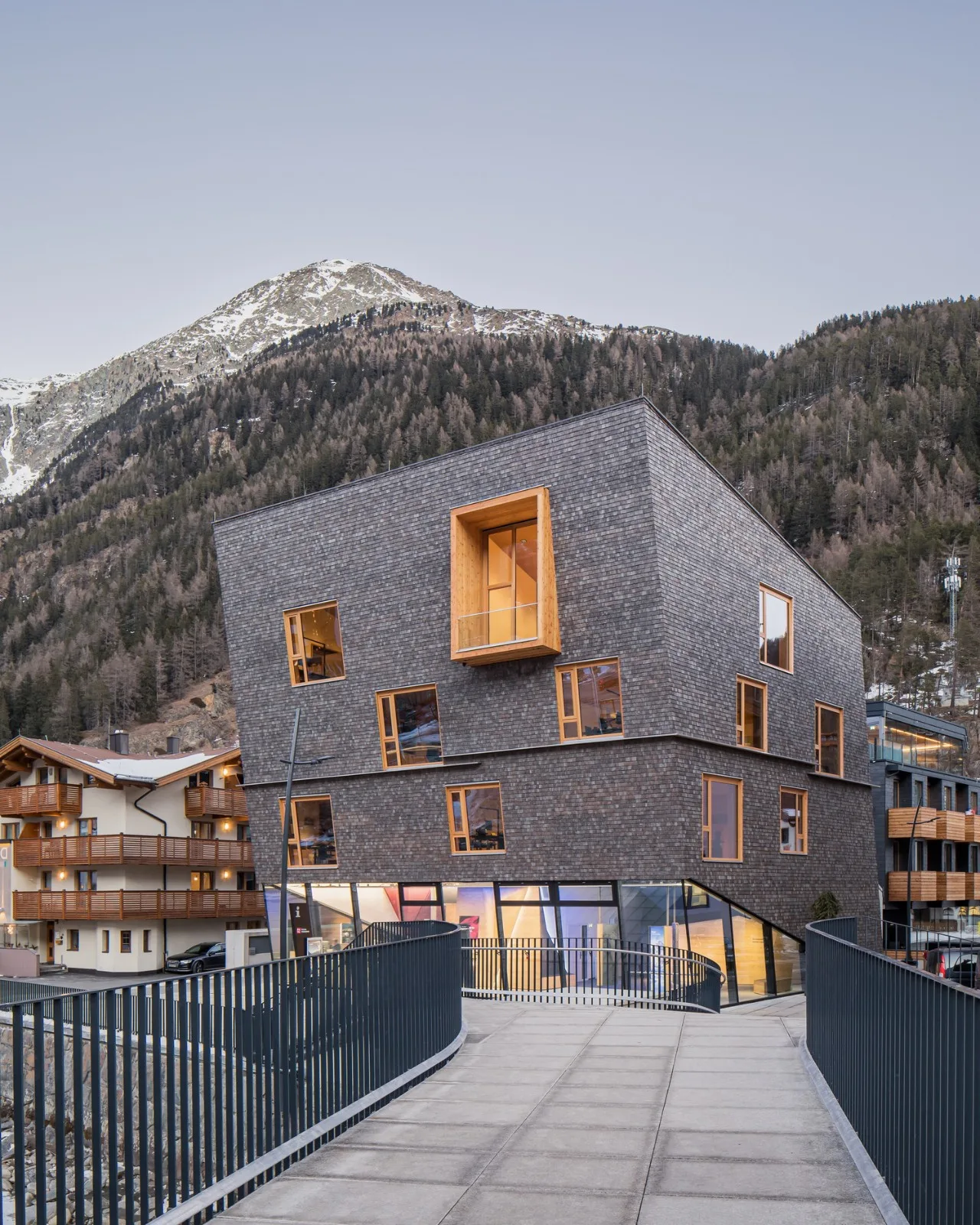
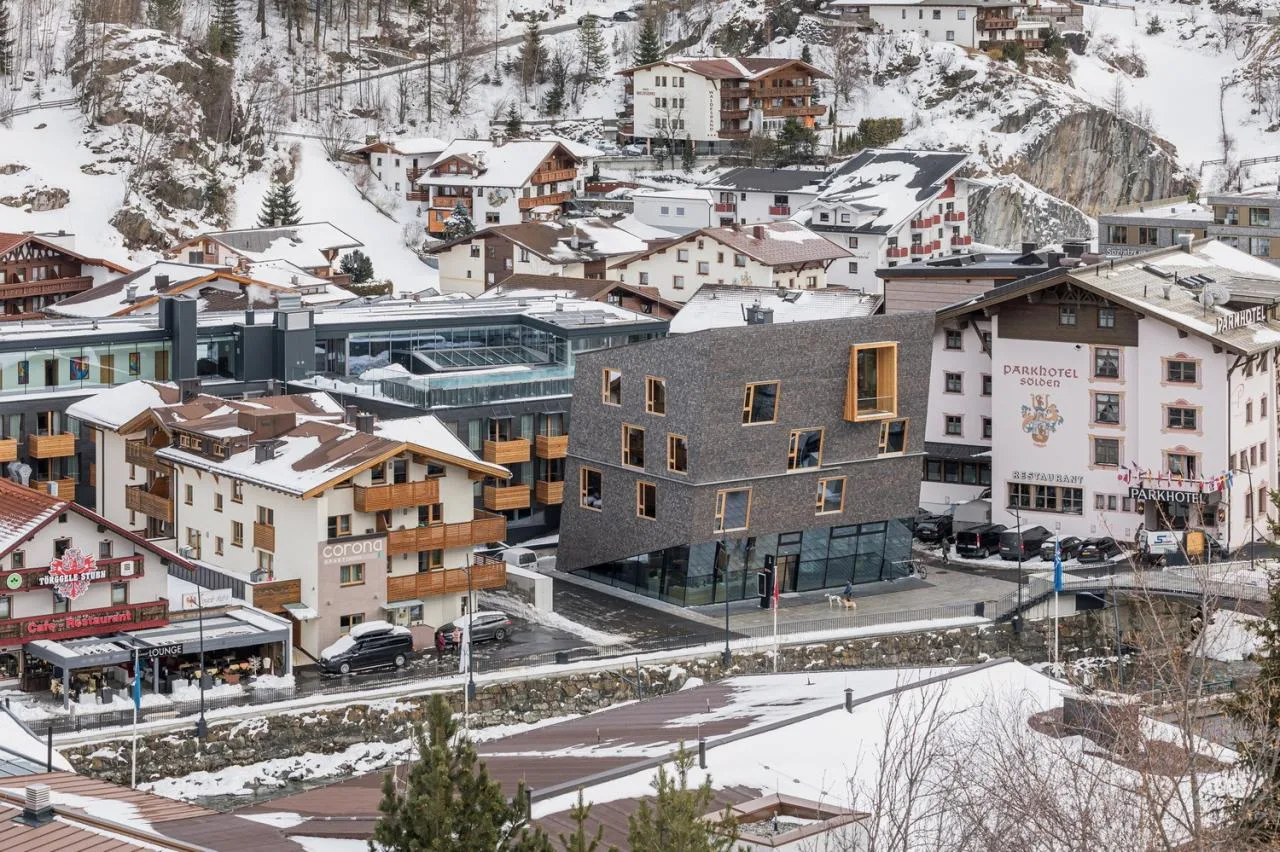
In terms of height and volume, the buildings respond sensitively to their surroundings by rising and sinking along a designated path. This approach shapes the building’s appearance to align ideally with its location. The forward-leaning dynamic form of the structure embraces the front square, emphasizing its civic role and symbolically welcoming visitors.
The consistent paving materials on the front square and ground floor purposefully blur the boundary between indoor and outdoor spaces, inviting guests to engage with the building. The glass façade on the west side of the first floor enhances this openness, as the wooden shell appears to lift and open towards the square and river.
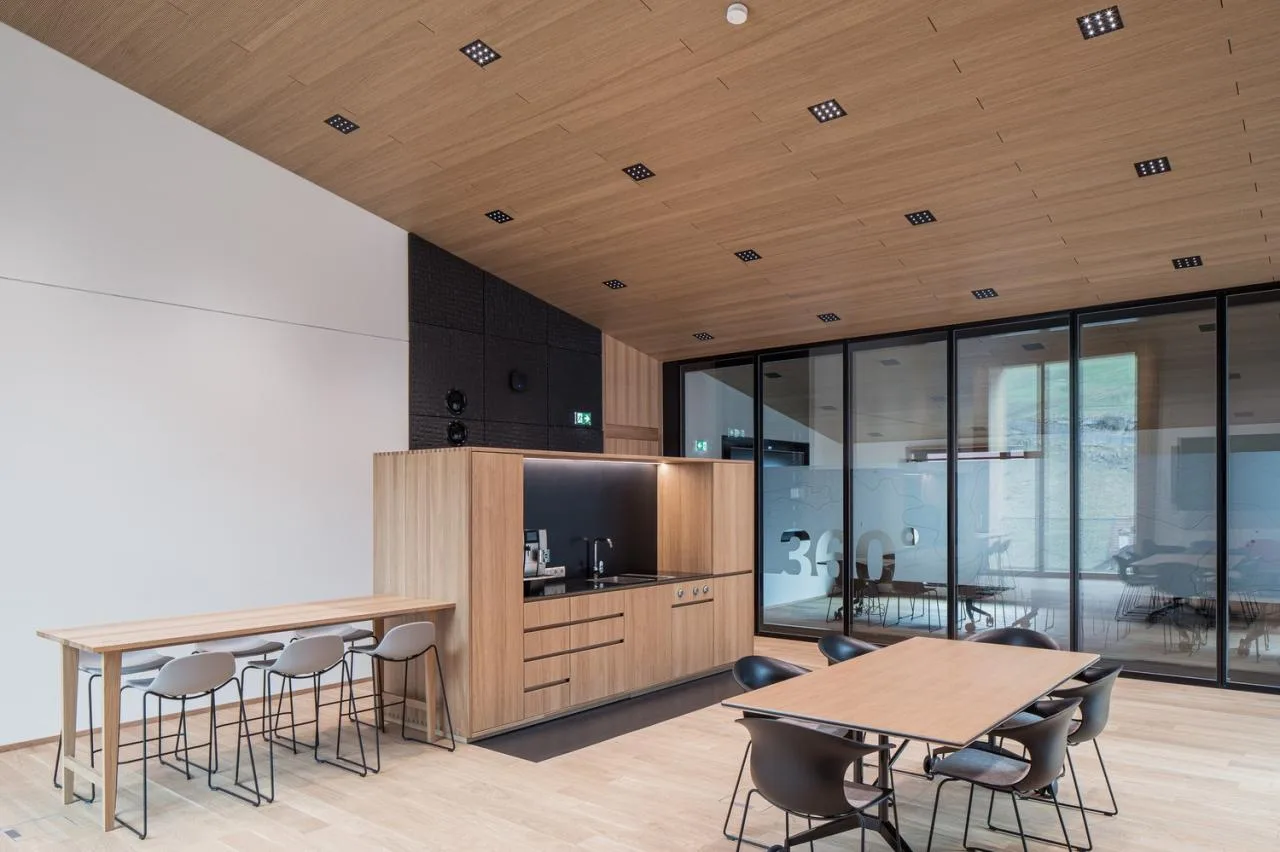
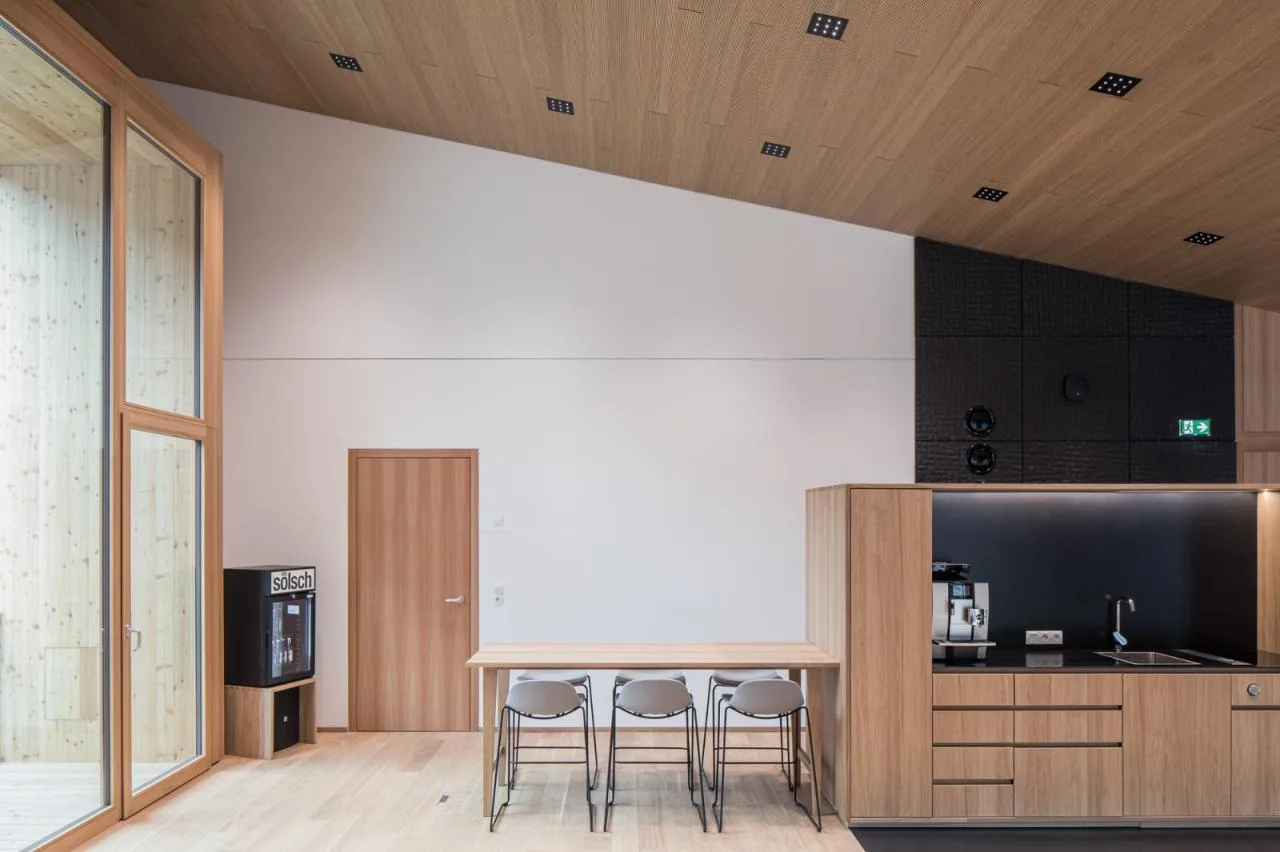
The flexible design of the square allows for a variety of activities to be organized easily. Inside, interactive exhibitions highlight the nearby natural environment and its untapped potential. The building’s interior is organized around a vertically distributed core, featuring open staircases and elevators that enhance connectivity. Vehicle access is provided via the underground garage of the adjacent hotel.
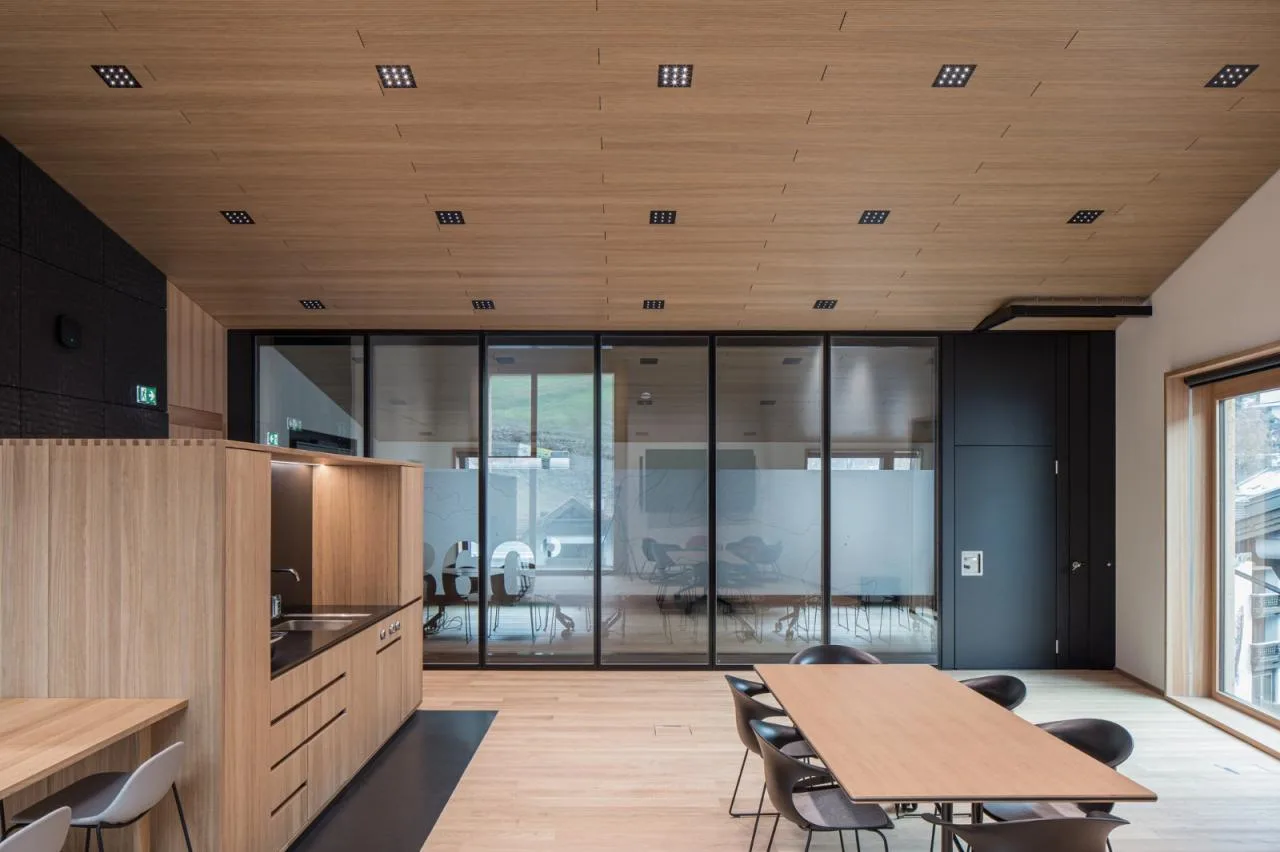
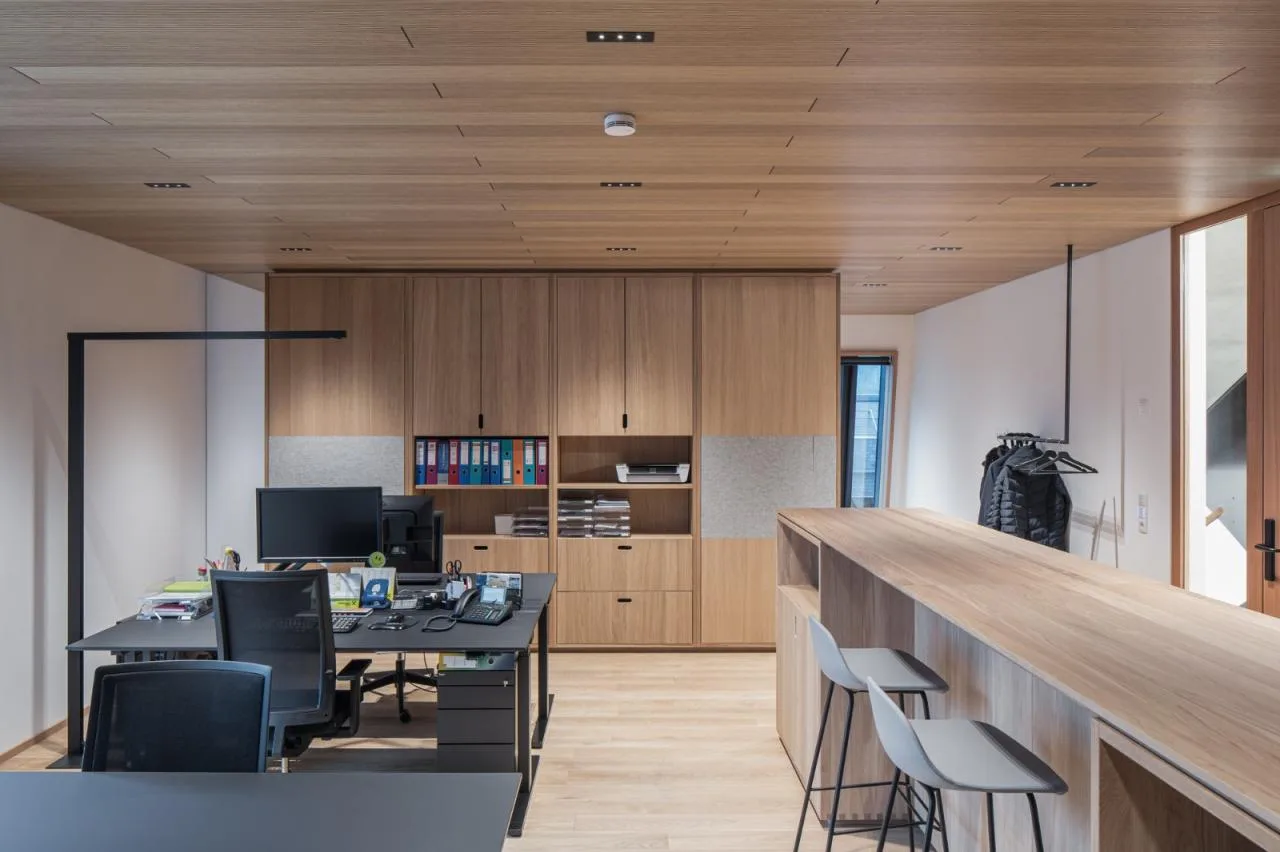
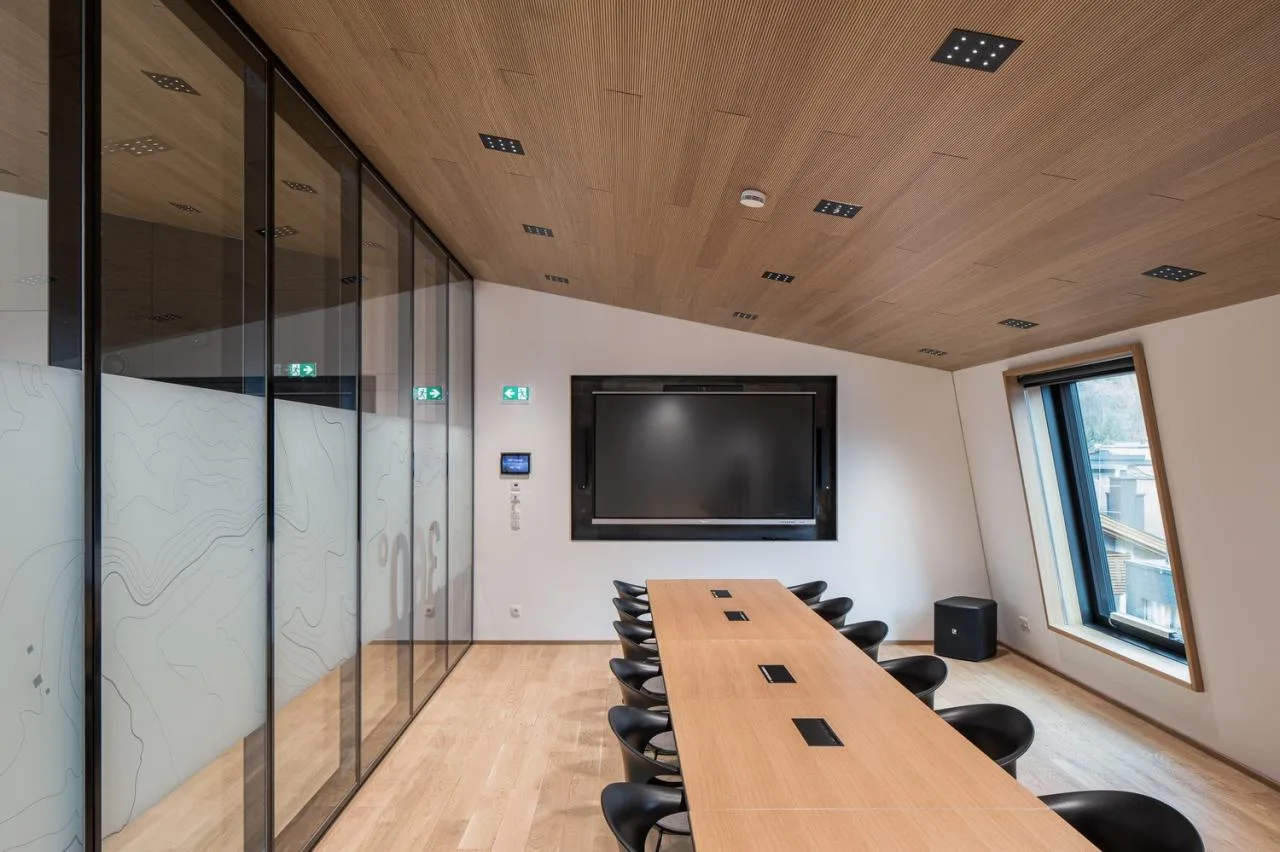
On the upper floors, flexible layouts with floor-to-ceiling furniture and glass partitions clearly define work groups and themed zones. These areas can be reconfigured as needed, with structural elements supporting multifunctional uses throughout different phases. The sloping roof on the top floor creates spacious interiors, while oversized glass frames establish strong connections between the natural environment, the building, and its users.
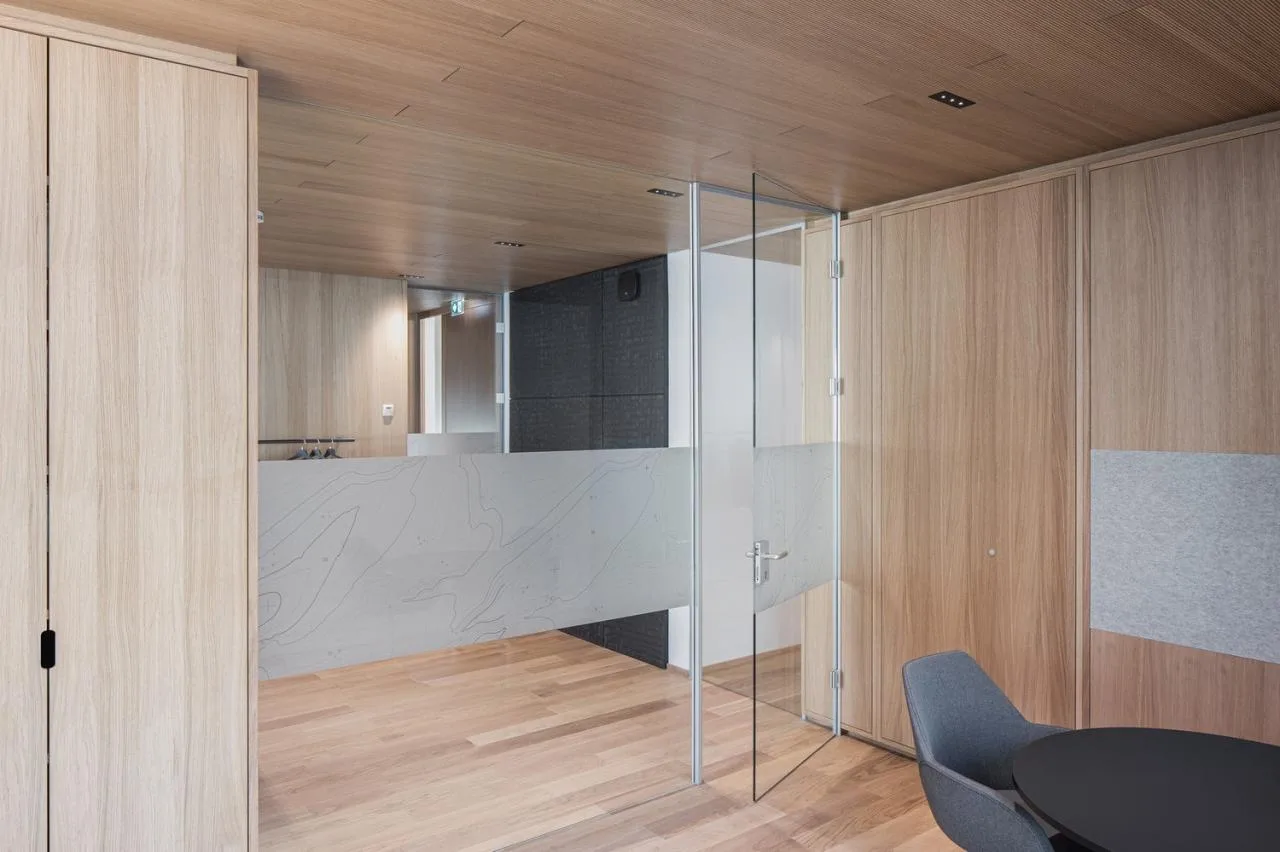
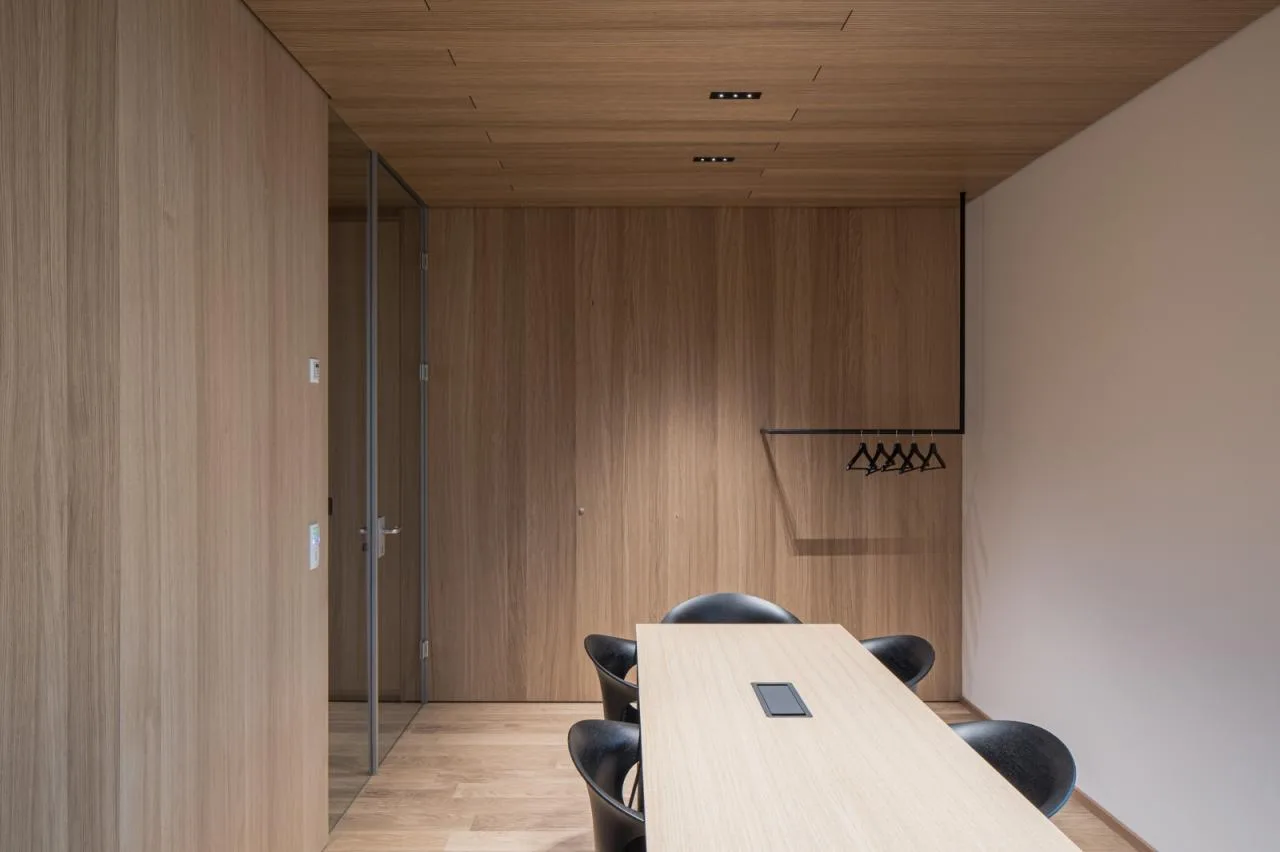
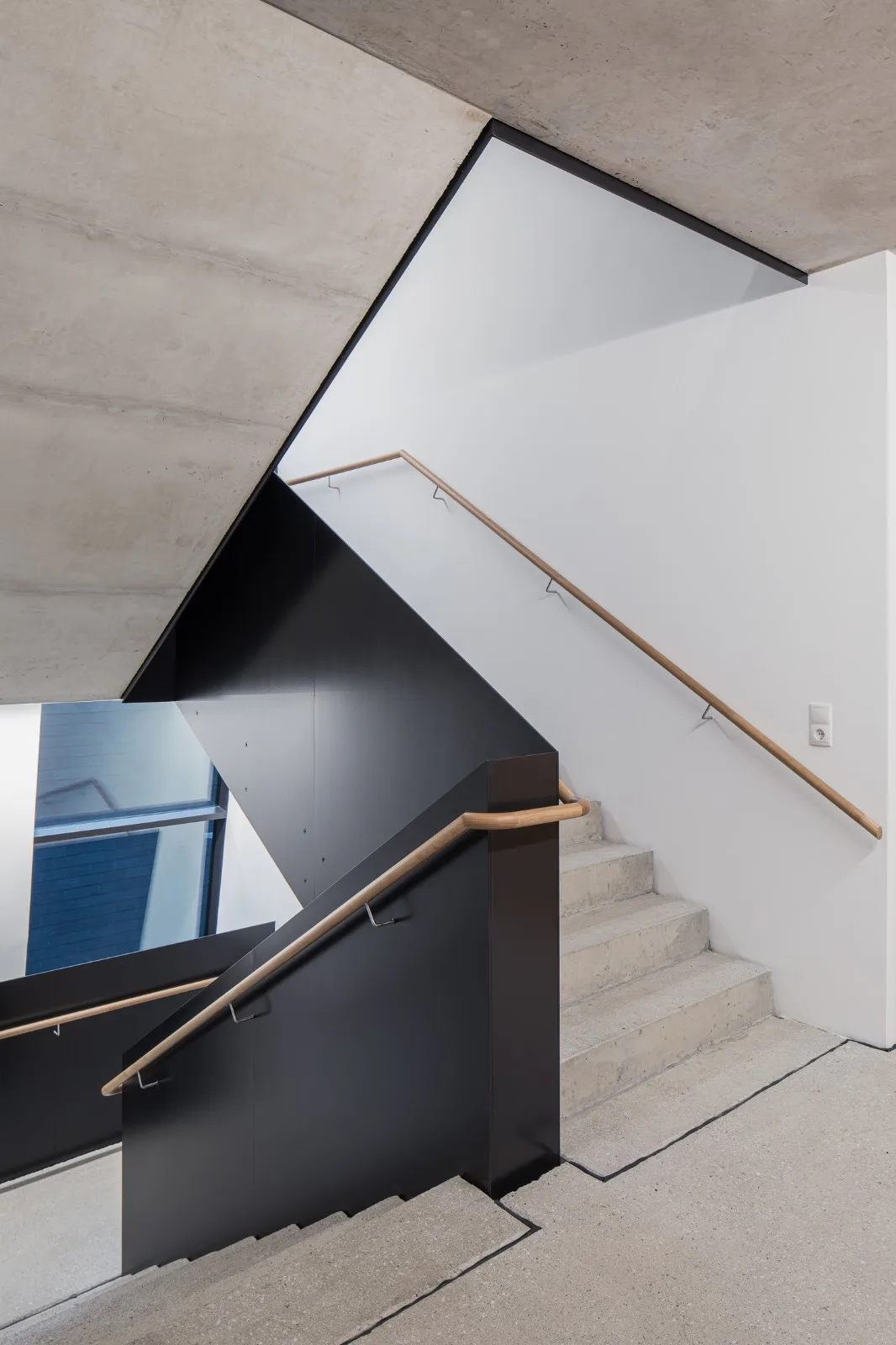
We chose to use structural wooden components to shorten construction time, demonstrating our commitment to sustainability. These materials can be sourced locally and delivered quickly. The project follows low-energy consumption standards to optimize building efficiency. The basement is constructed with waterproof reinforced concrete, and the underground garage is designed to maximize parking capacity.
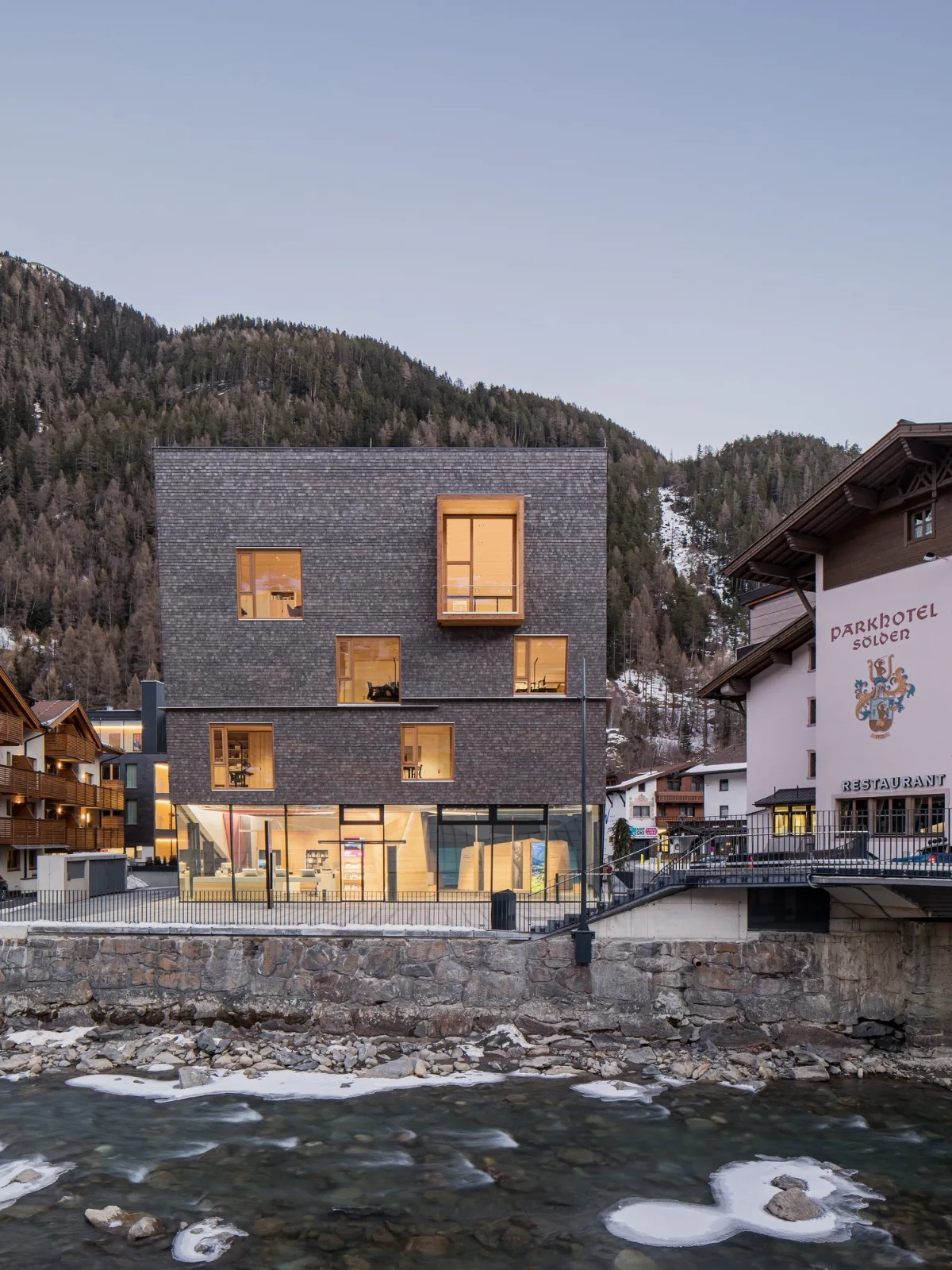
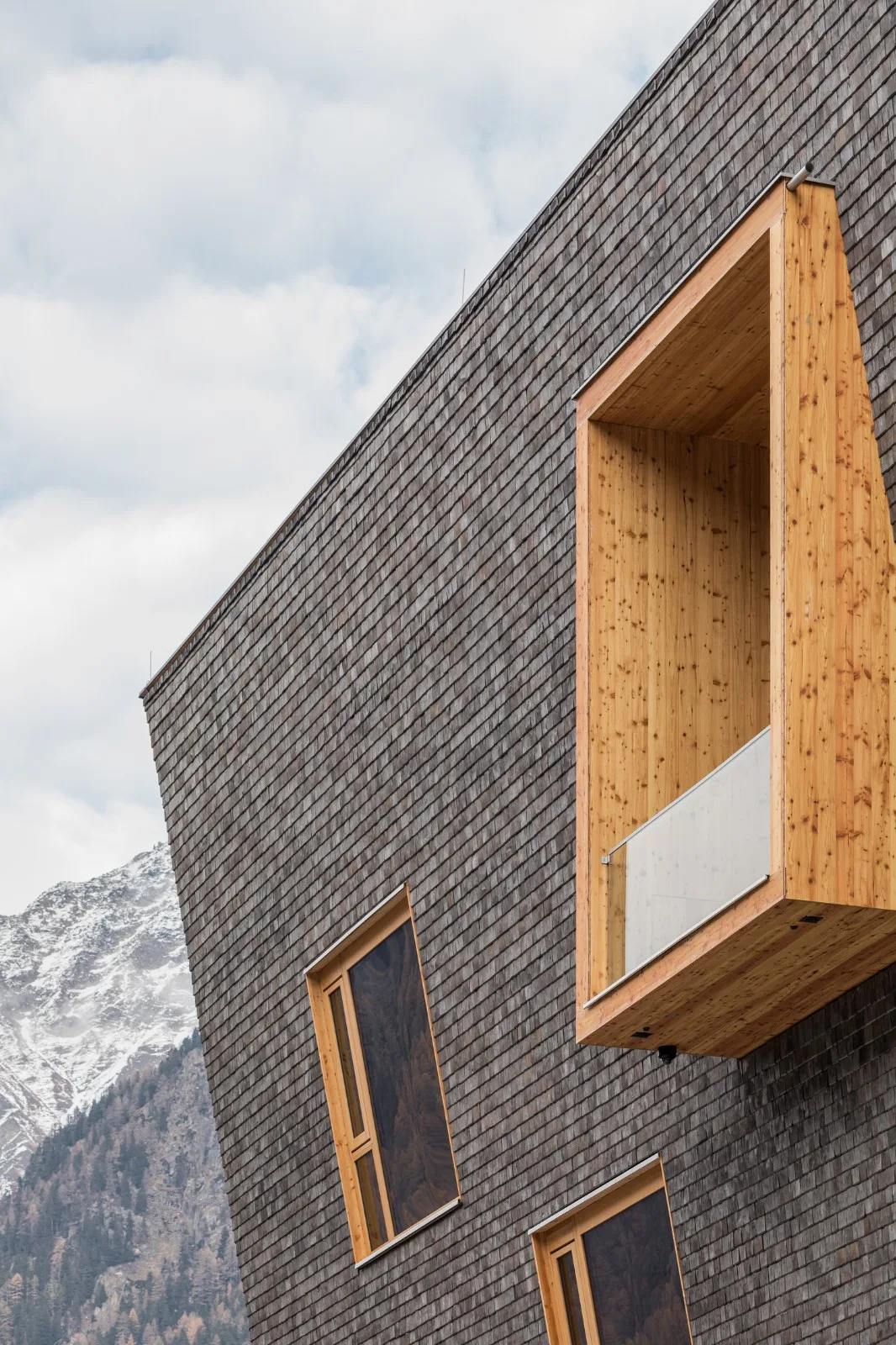
The material palette clearly references the local environment, with carefully selected regional materials. Through skillful arrangement and combination, the building balances modern design with authentic qualities, heavily influenced by traditional local craftsmanship.
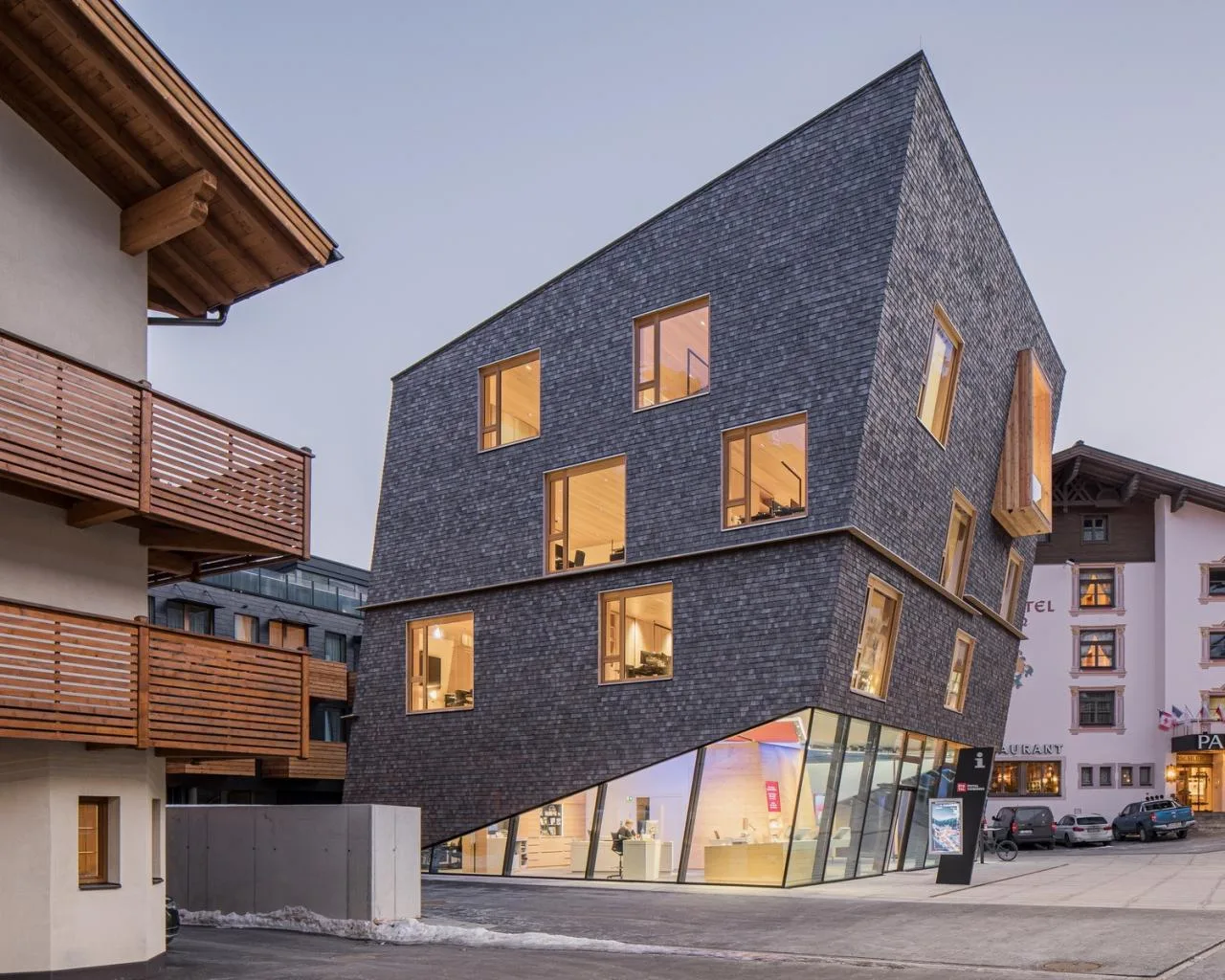
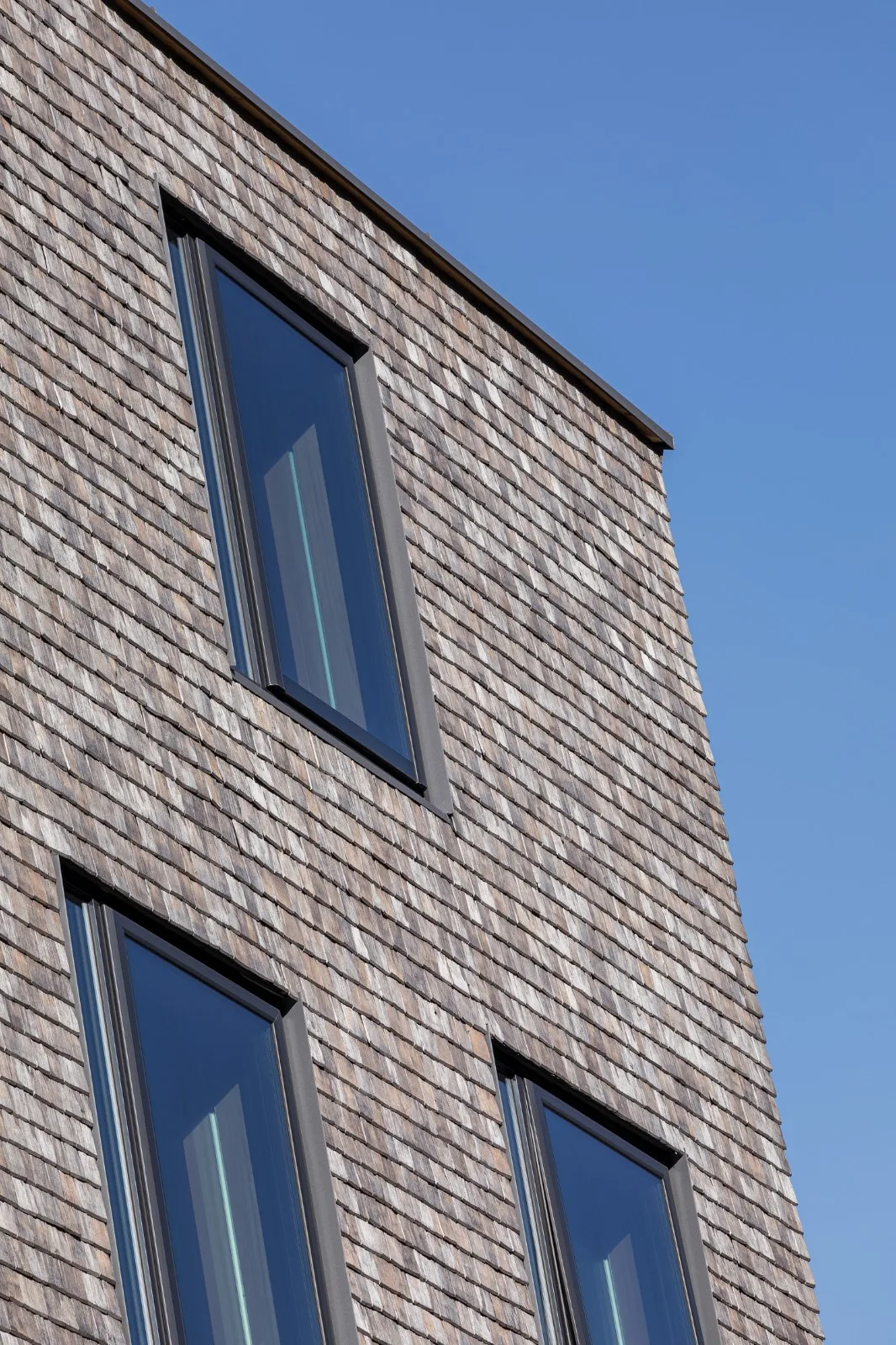
The spacious first floor features high-tech information points and a minimalist linear design, reflecting the forward-thinking strategy of the Ötztal tourism industry. The exterior is clad with gray larch shingles, full-height wooden windows, and an open glass curtain wall on the first floor, creating a distinctive image that stands apart from surrounding buildings.
Project Drawings
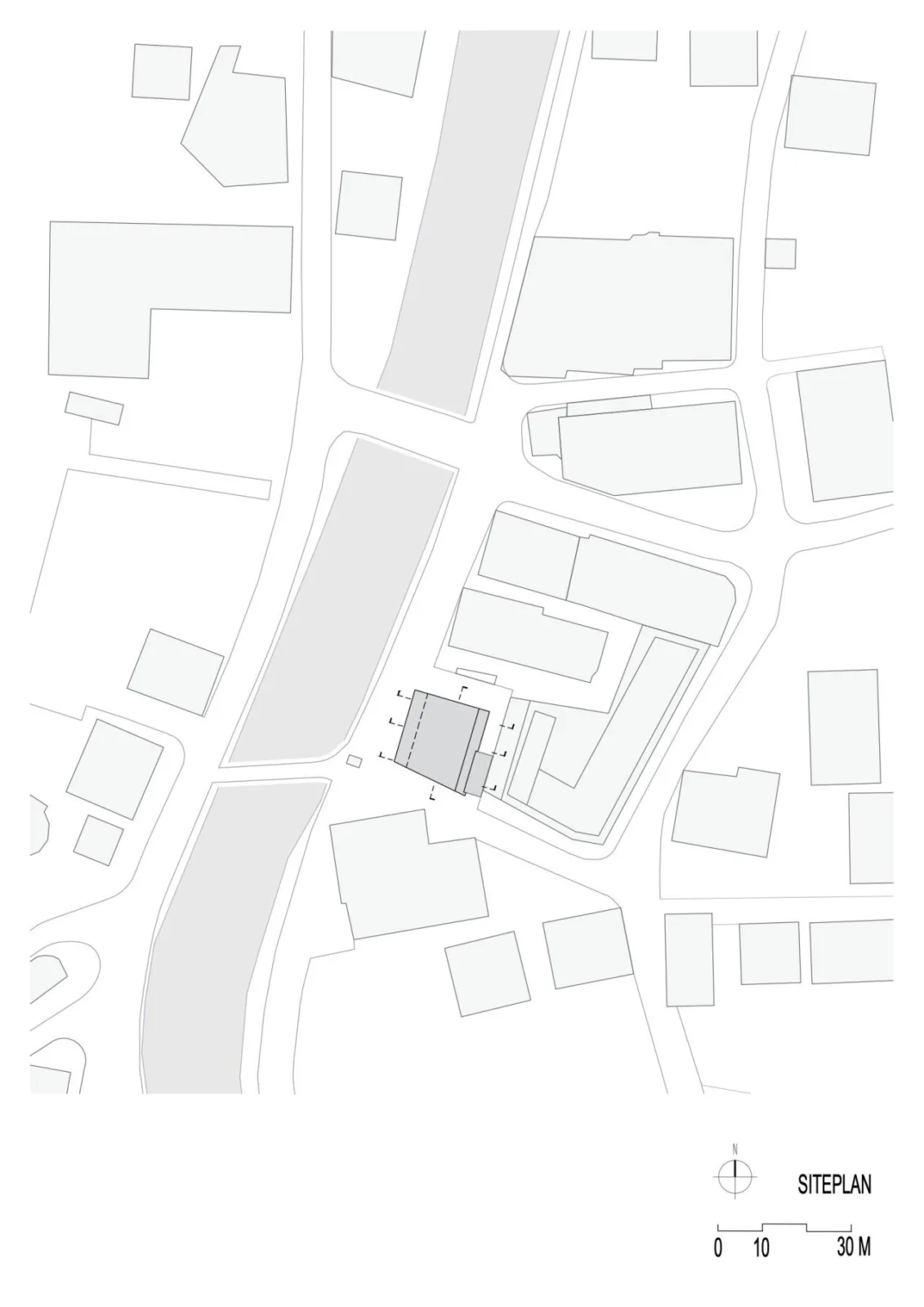
△ Base schematic diagram
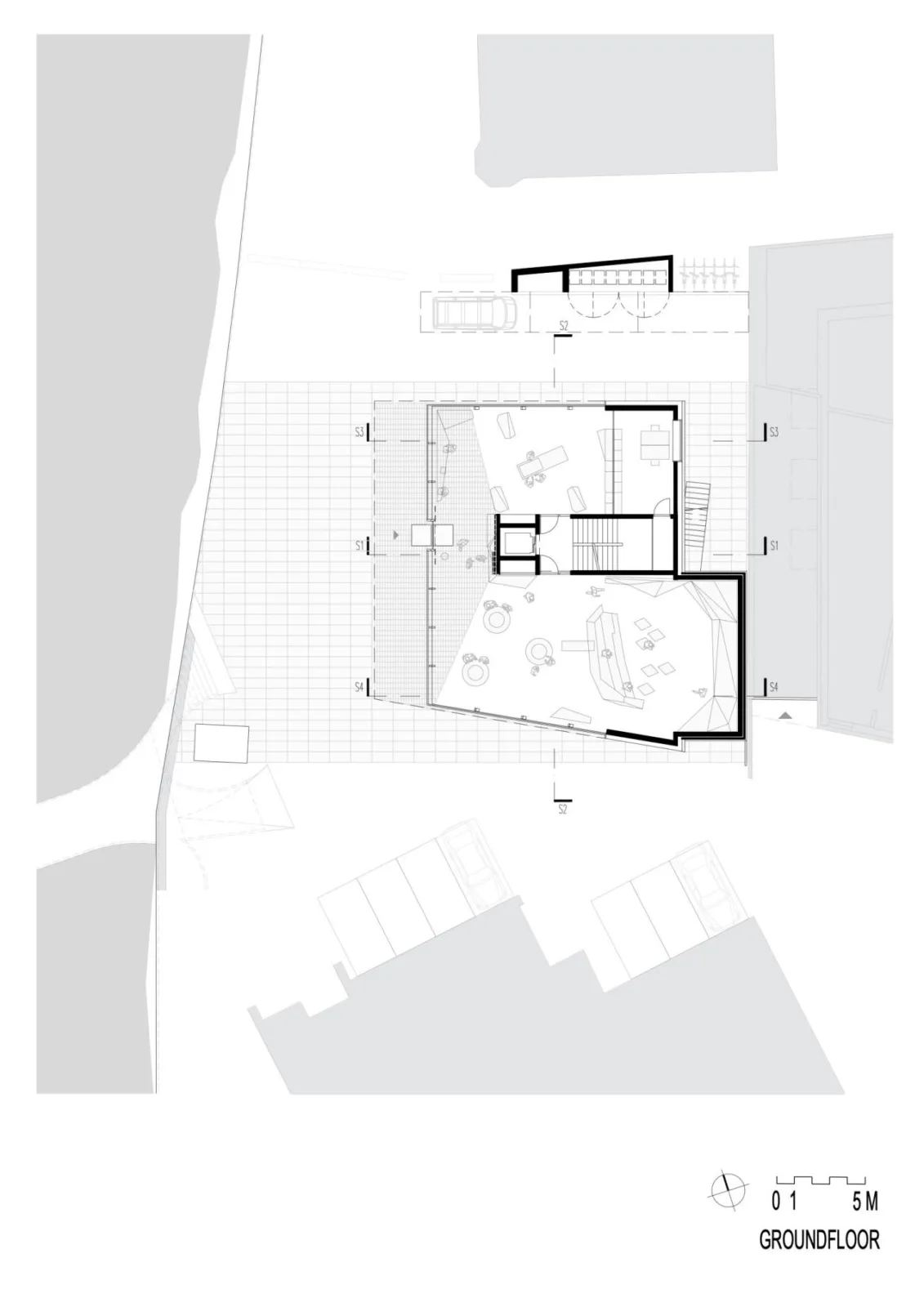
△ First floor plan
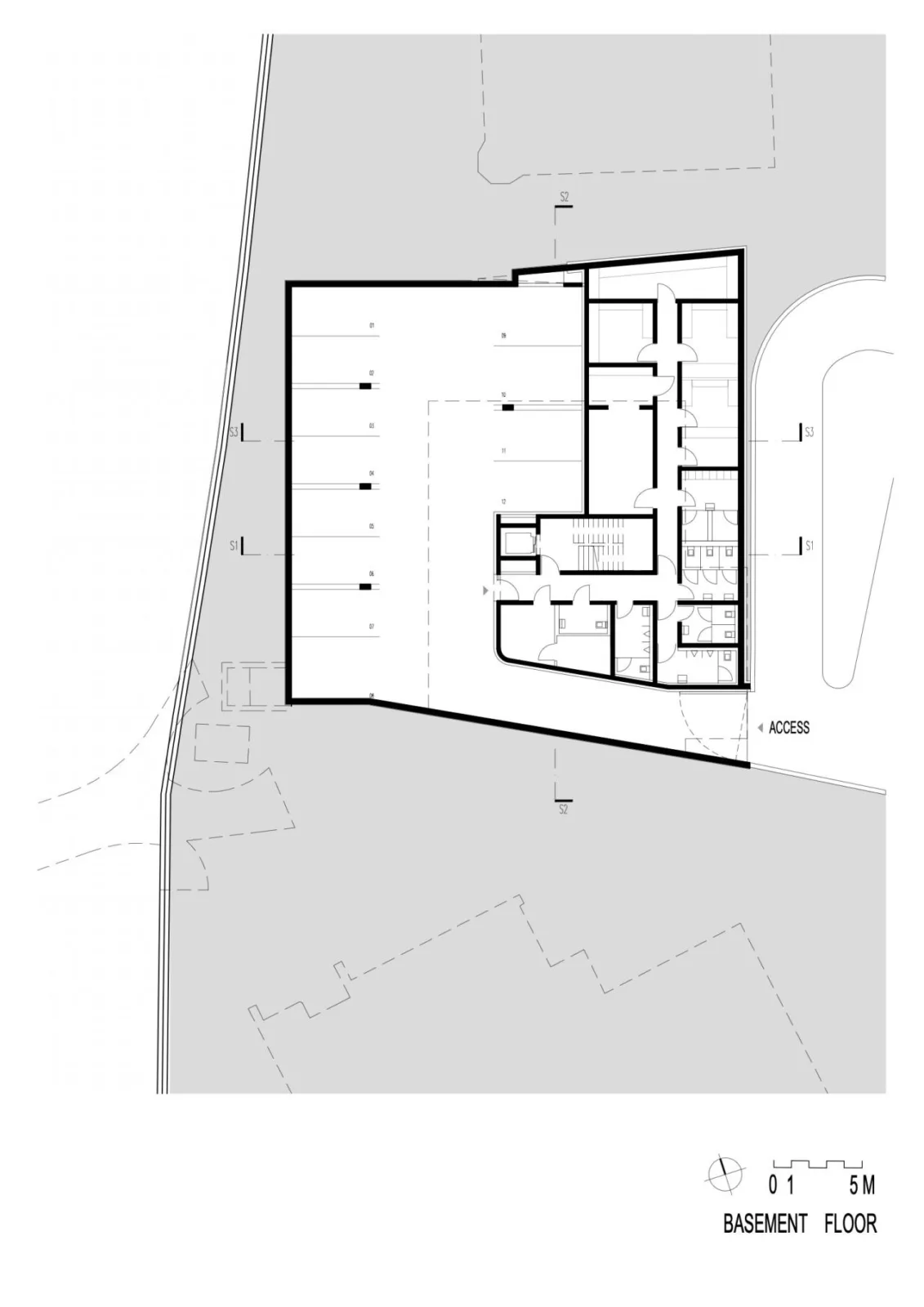
△ Negative floor plan
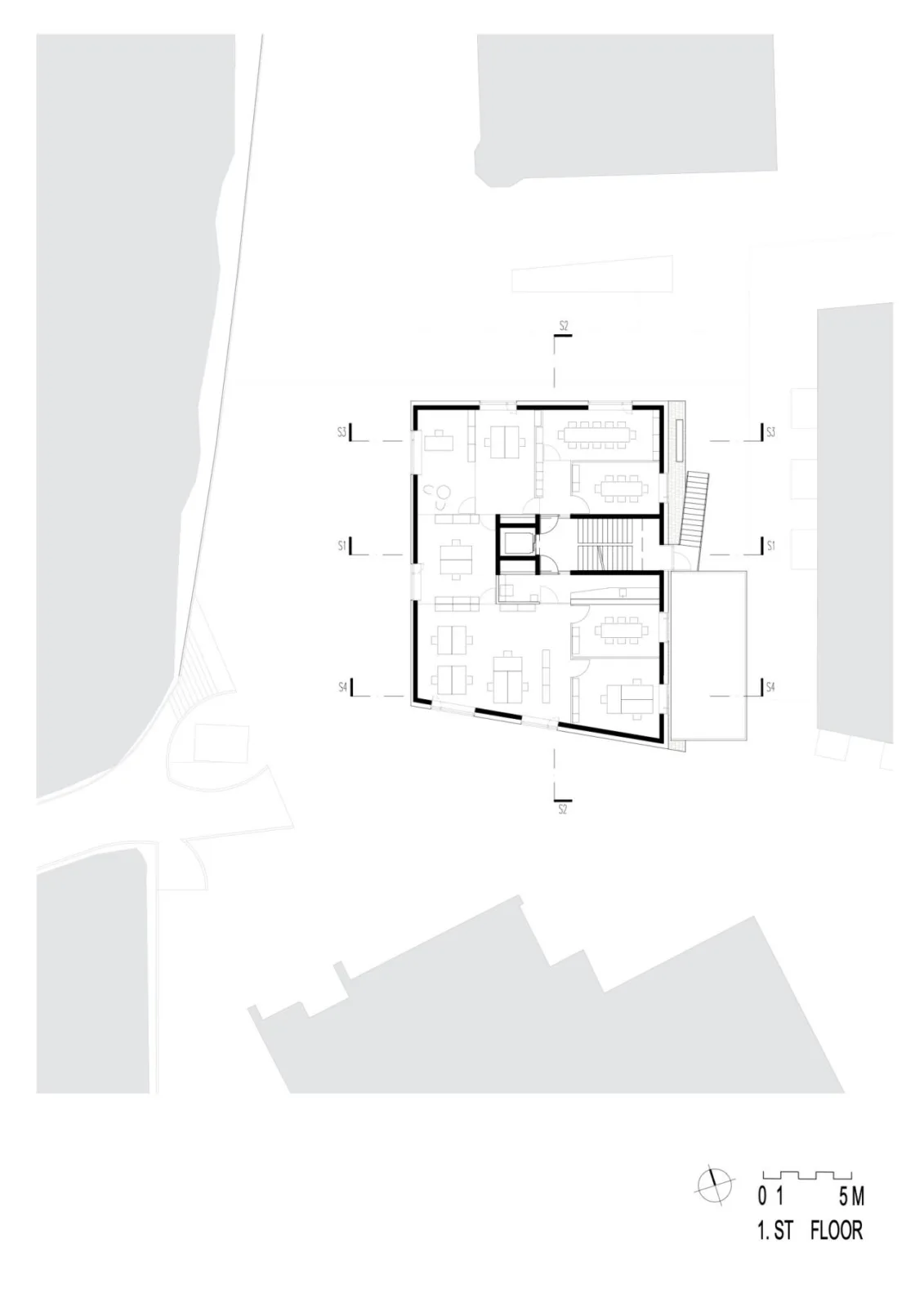
△ Second floor plan
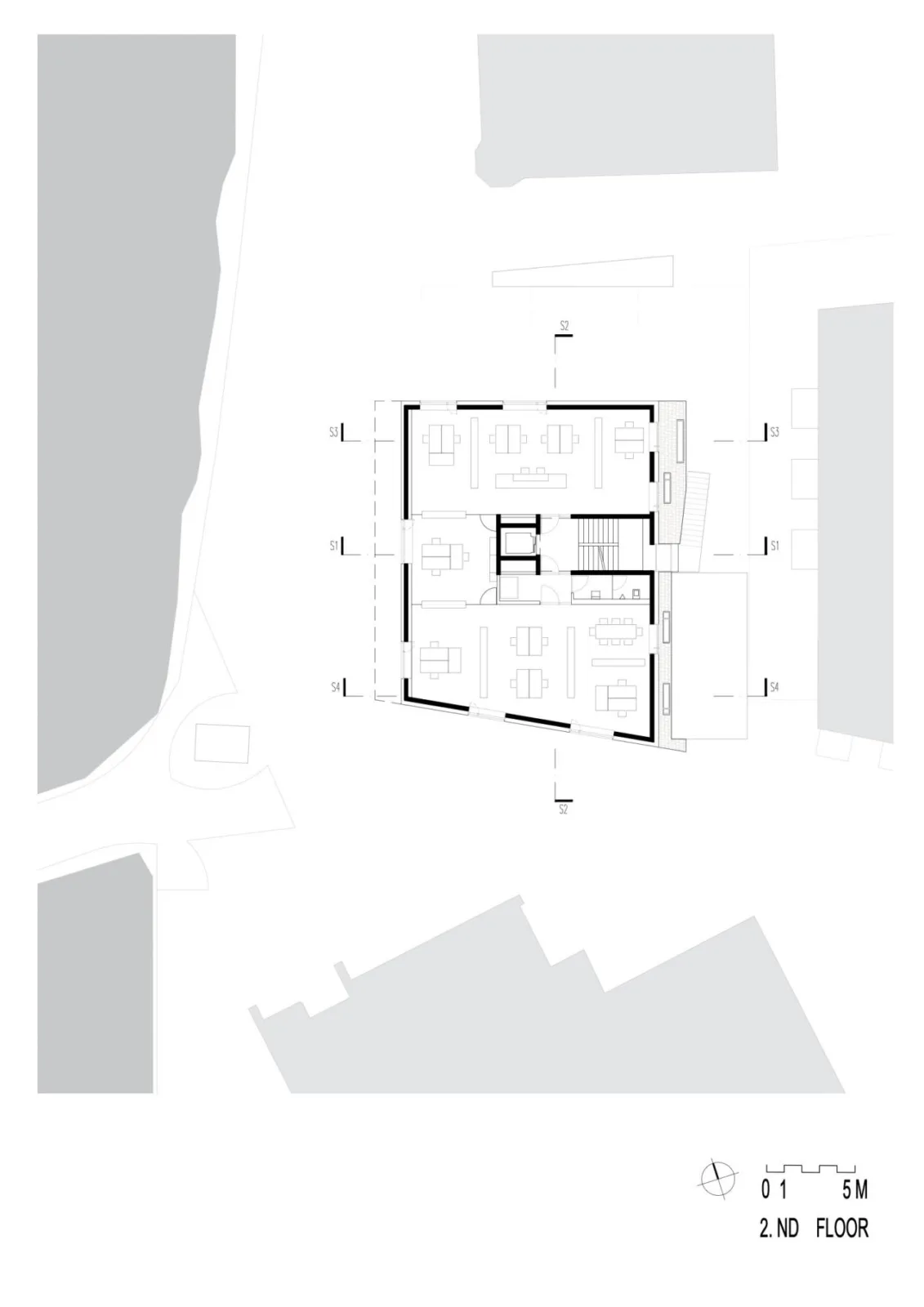
△ Third floor plan
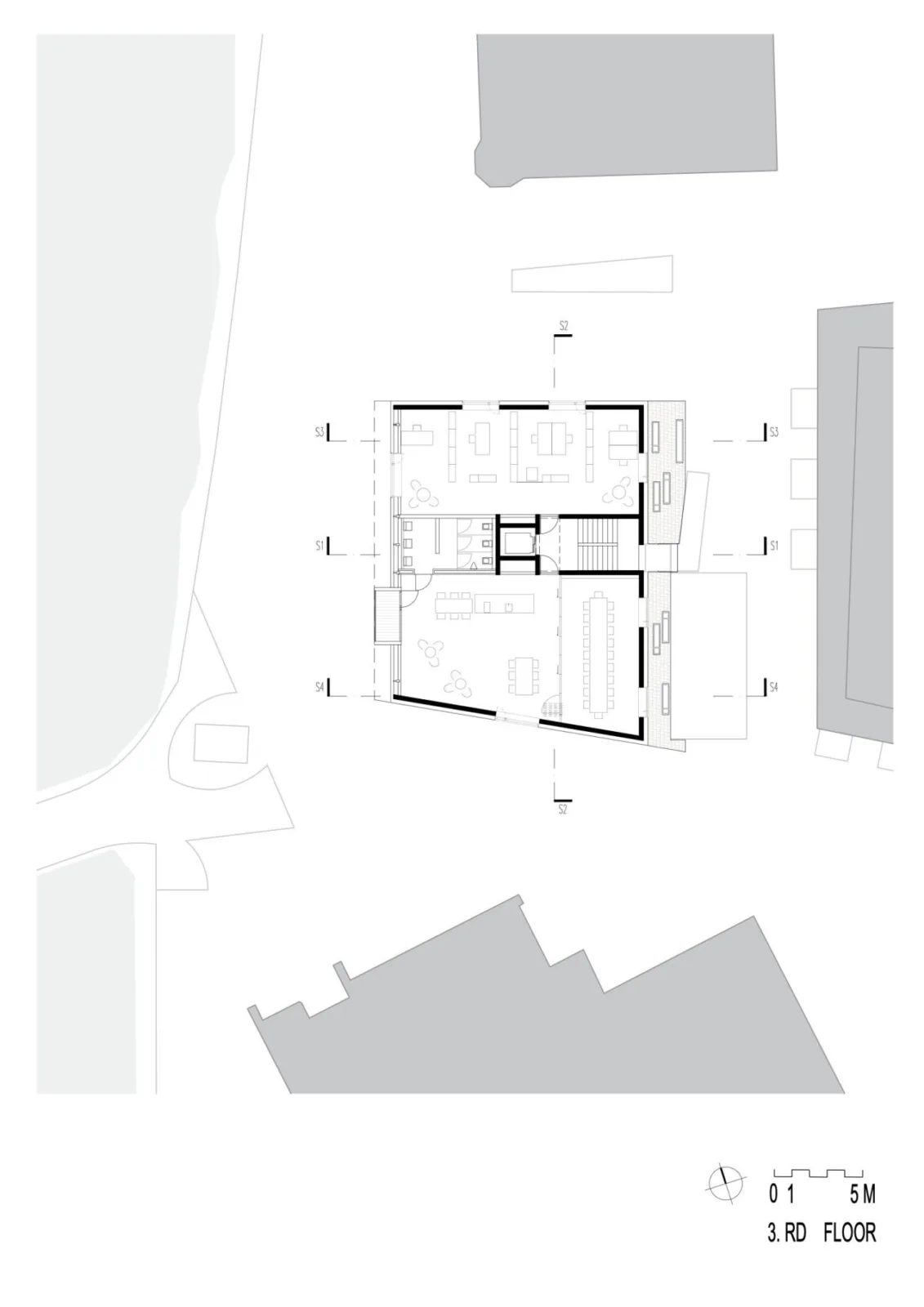
△ Fourth floor plan
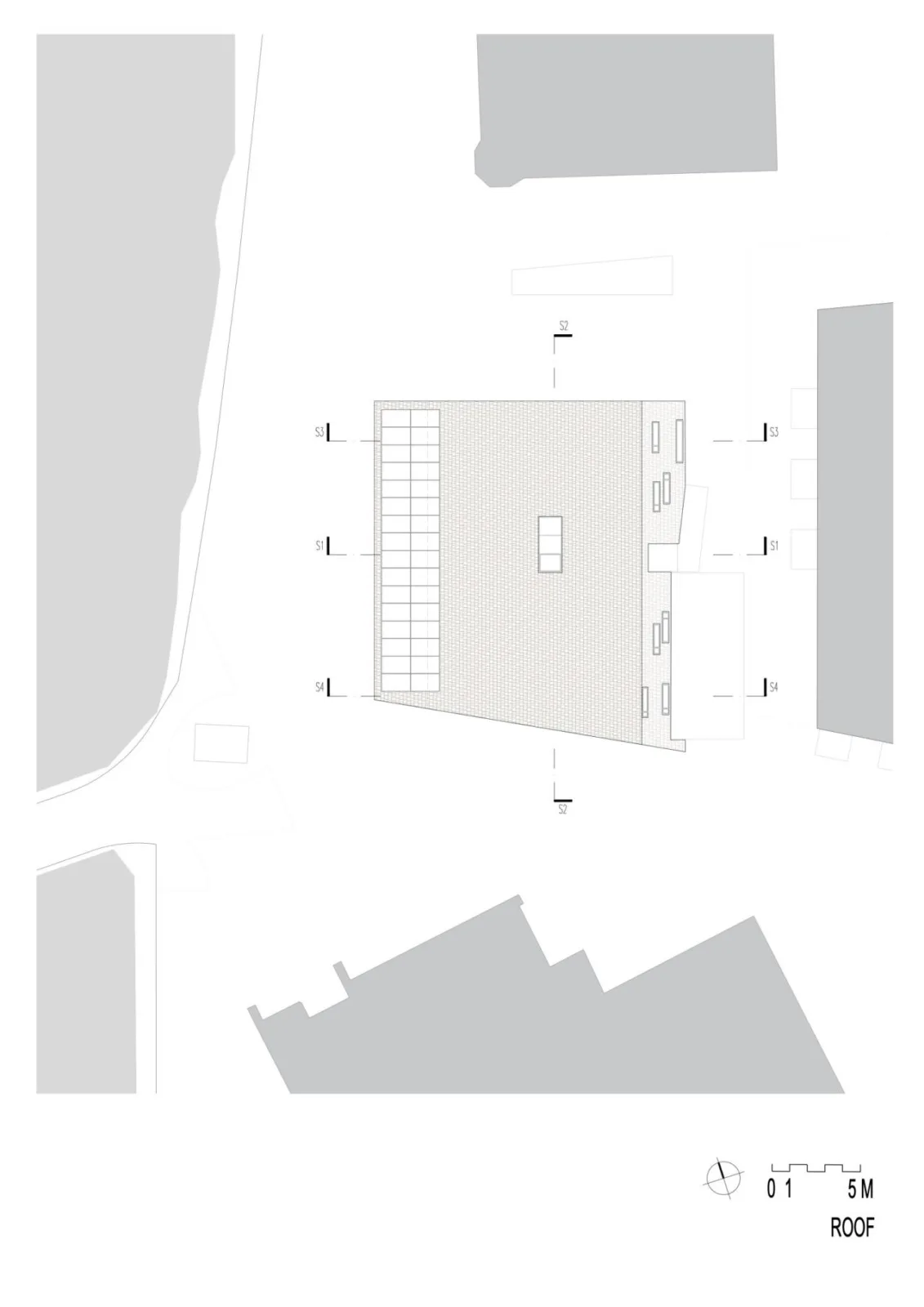
△ Roof plan
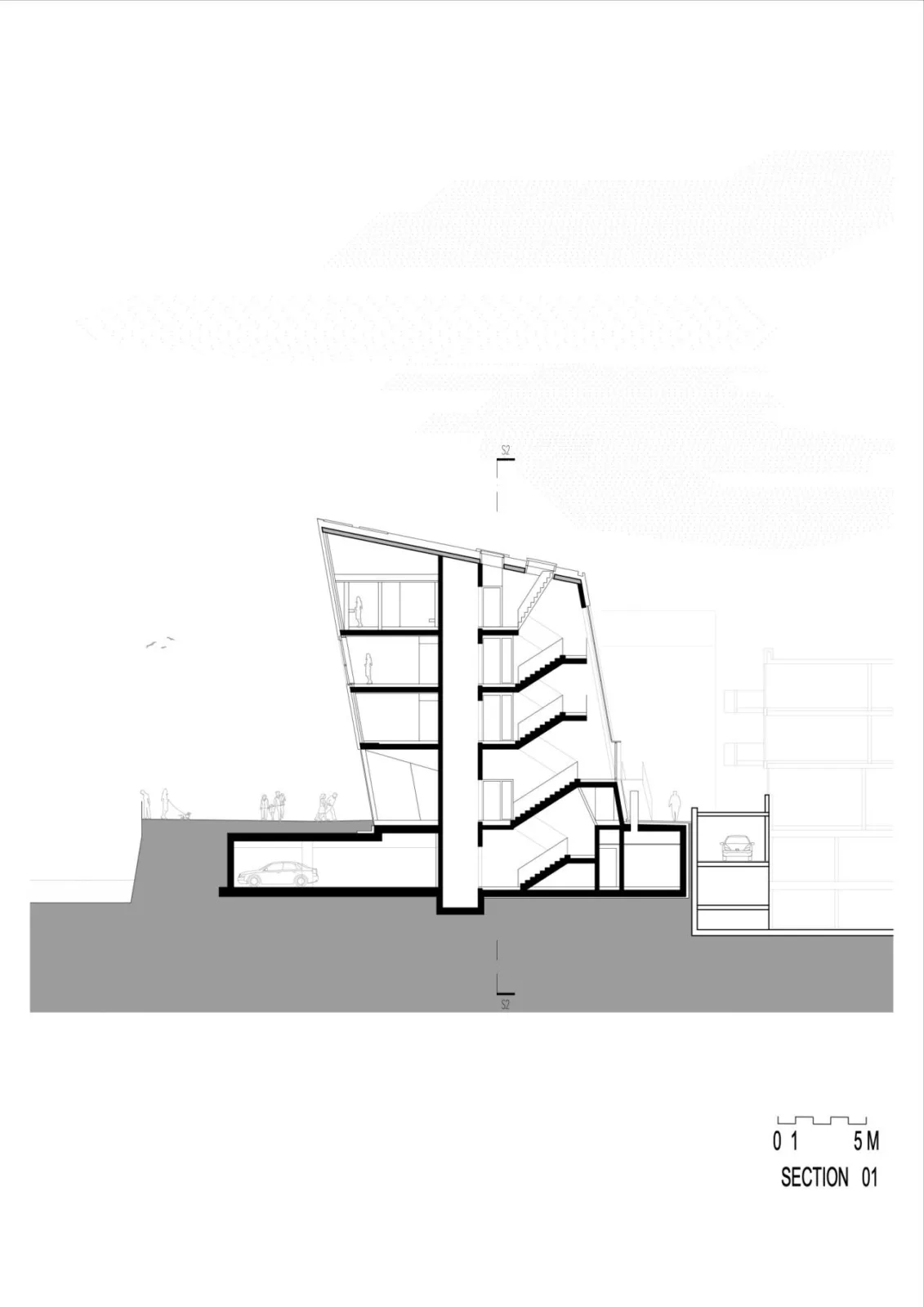
△ Section diagram
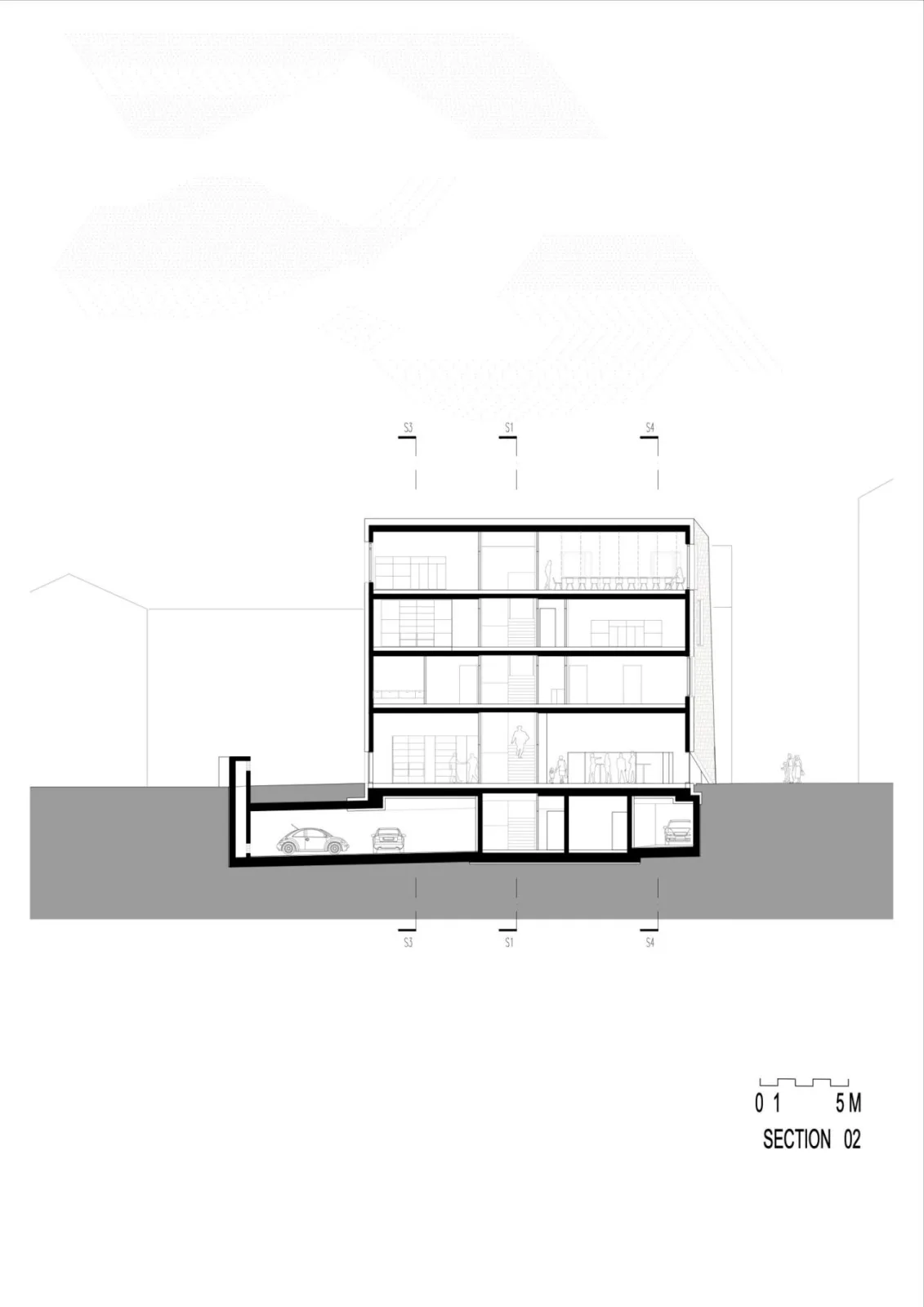
△ Section diagram
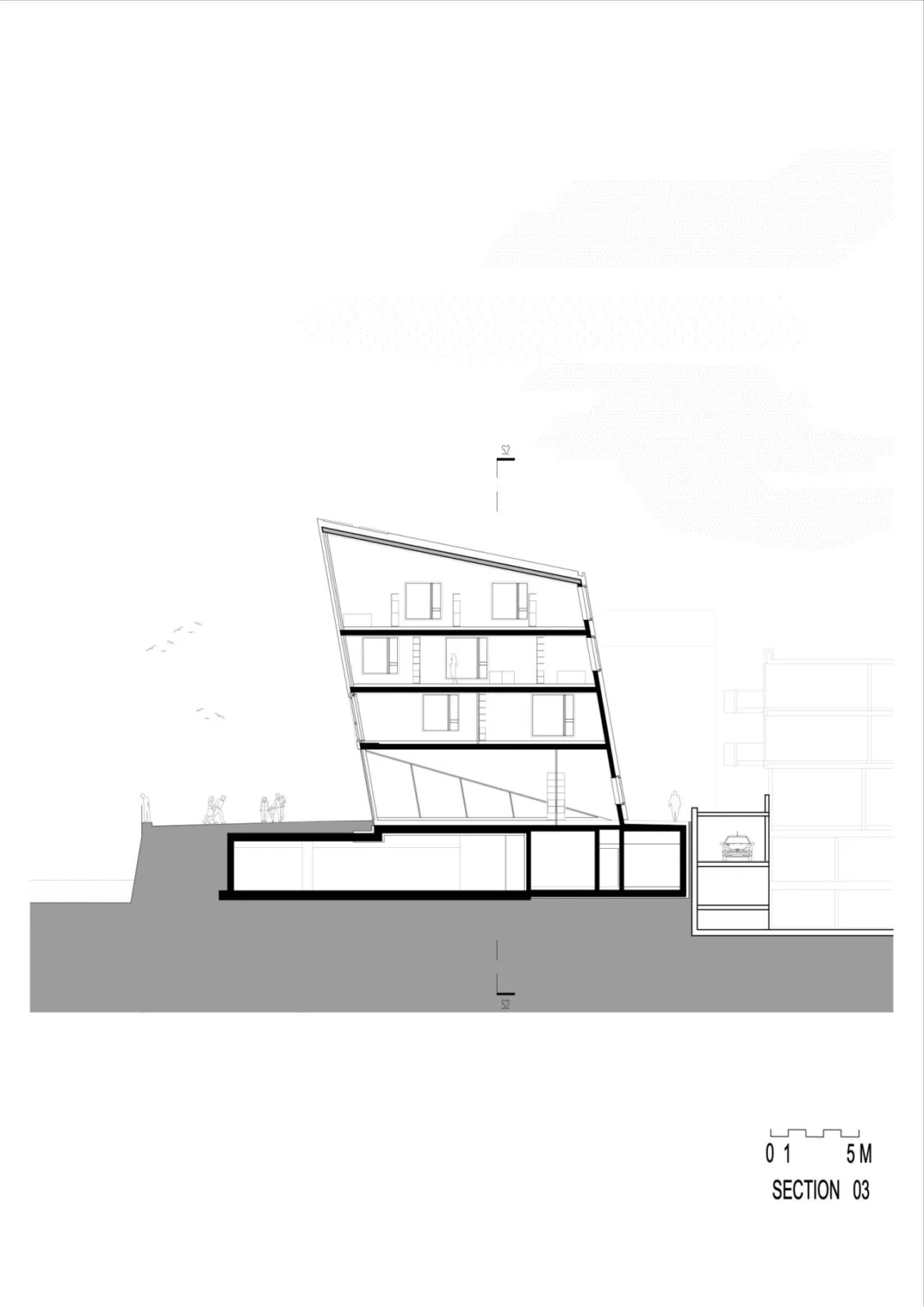
△ Section diagram
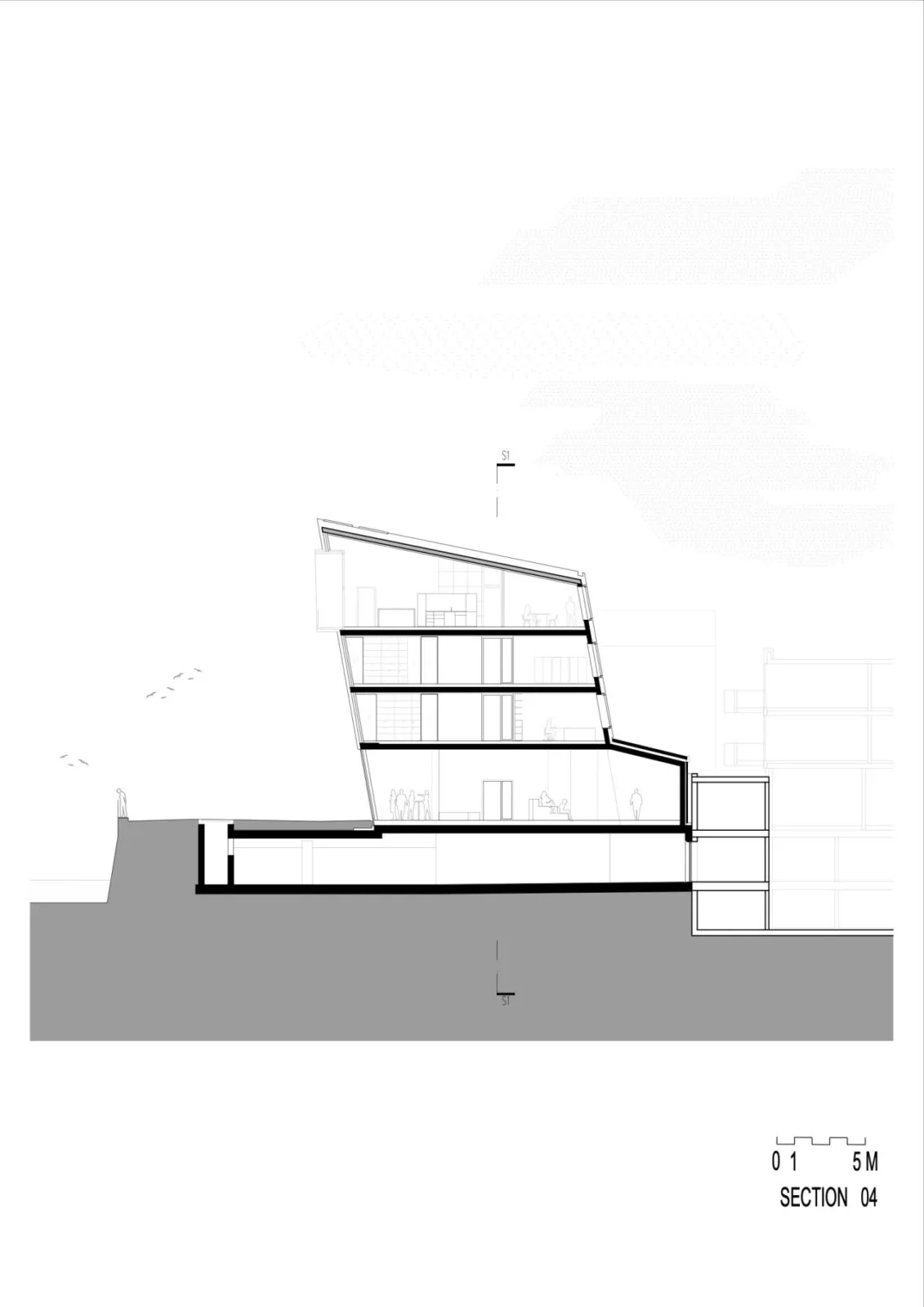
△ Section diagram
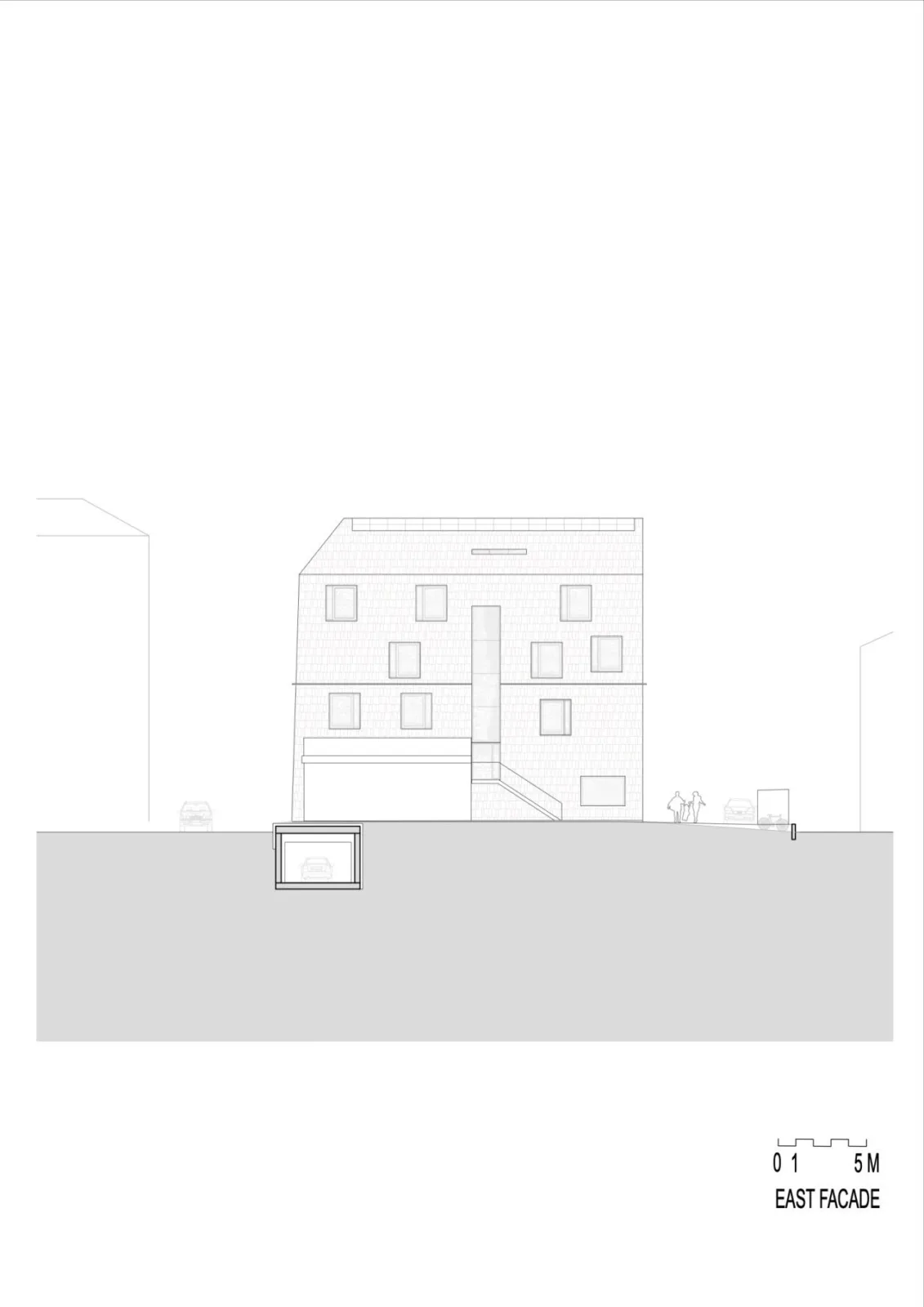
△ Elevation drawing
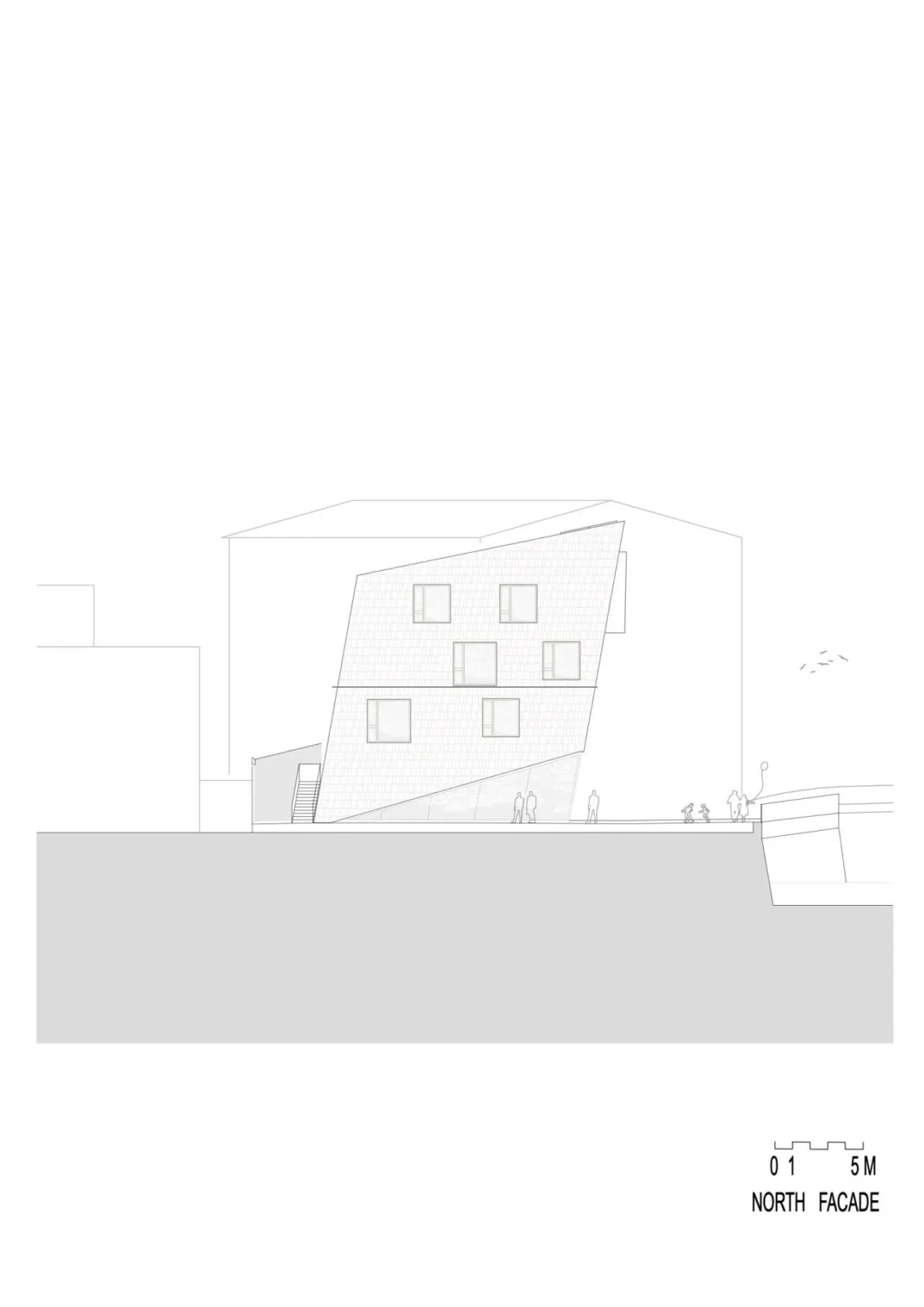
△ Elevation drawing
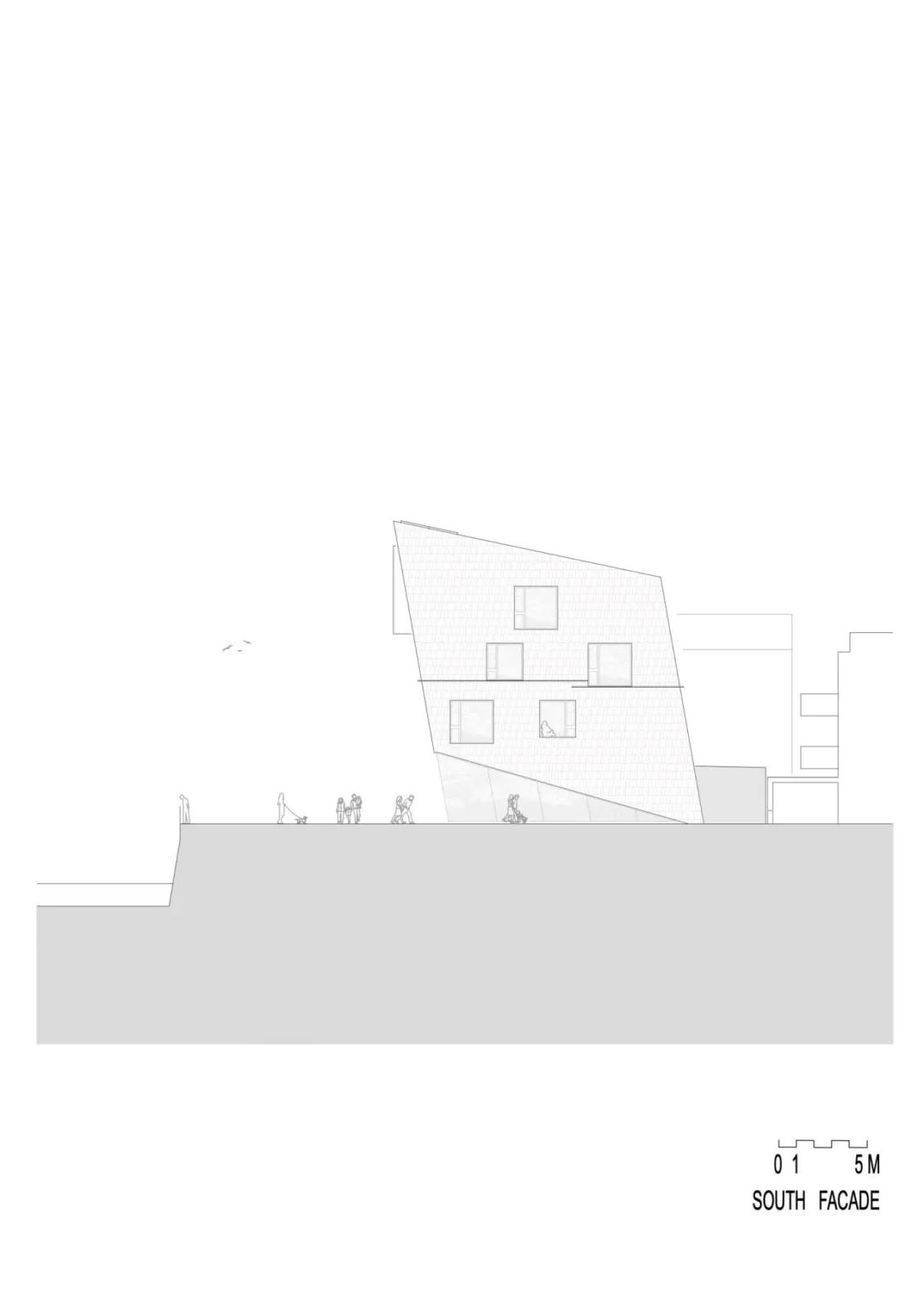
△ Elevation drawing
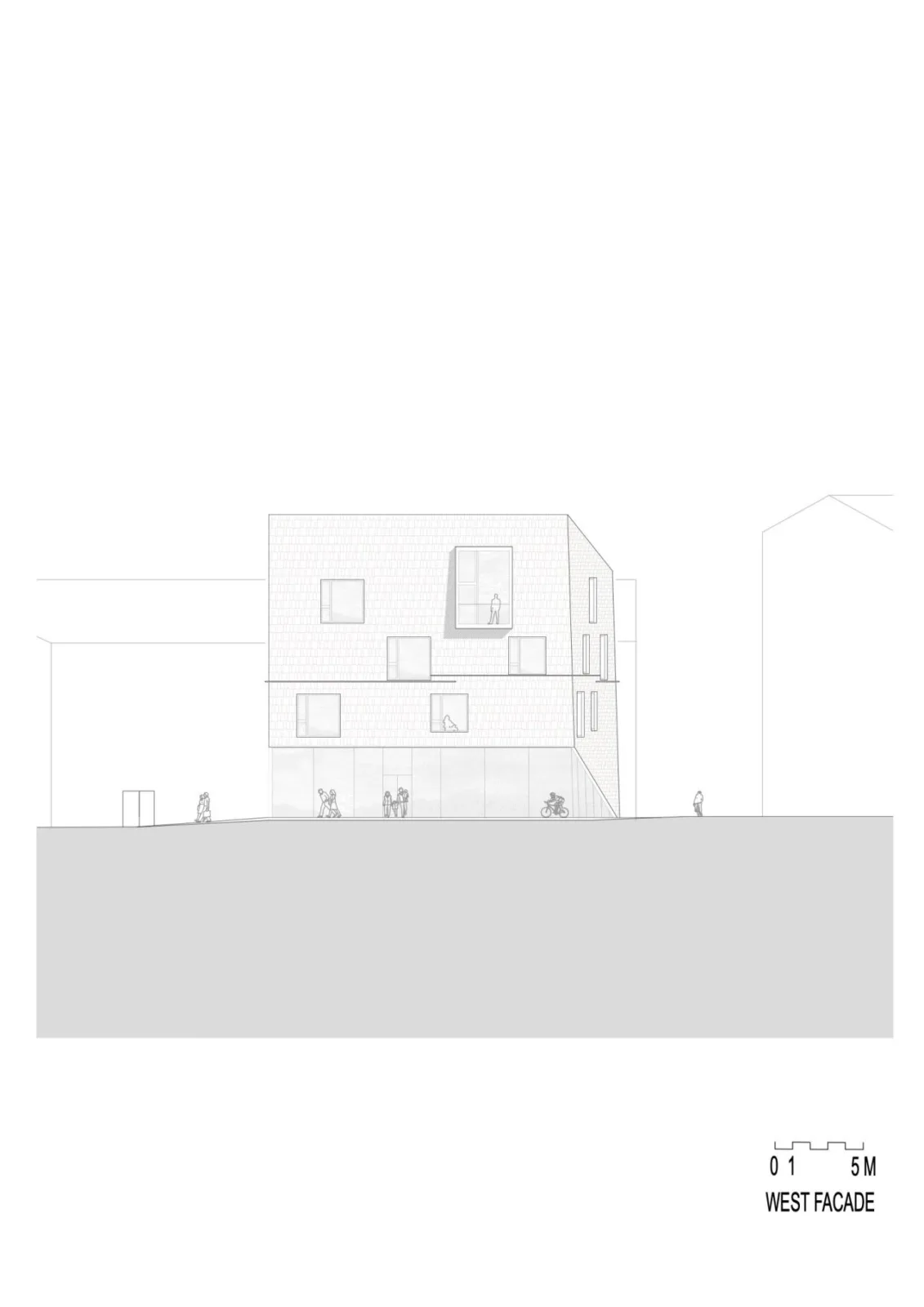
△ Elevation drawing
Project Information
Architect: obermoser+partner architekten
Area: 15,985 ft²
Project Year: 2021
Photographer: Christian Flatscher
Manufacturers: AutoDesk, Nocker, Tip Top Window, Tischlerei Riml, Zimmerei Thurner
Project Creator: Johann Obermoser
Lead Project Execution: Christoph Neuner
Architectural Team: Felix Fehr, Sandra Seeber, Andreas Norz
Building Function: Public information center and offices
Structural Engineer: ZSZ Ingenieure ZT GmbH
Electrical Engineer: Eidelpes Ingenieurbüro für Elektrotechnik
Acoustic Consultant: FIBY ZT GmbH
Location: Sölden, Austria












Must log in before commenting!
Sign Up