
With China’s 14th Five-Year Plan highlighting a shift in urban development from “incremental growth” to “stock renewal,” the renovation of old buildings across various regions is booming. In response, we embarked on a bold exploration with a design firm. Our goal was to ensure that renovating existing buildings goes beyond conventional interior and exterior updates.
We aimed to rethink how these old structures can contribute more meaningfully to city life, gaining new vitality while actively engaging with urban boundaries to spark potential synergies. This project explores fresh possibilities between architecture and urban environments, offering innovative perspectives for urban renewal and the creative use of public spaces.
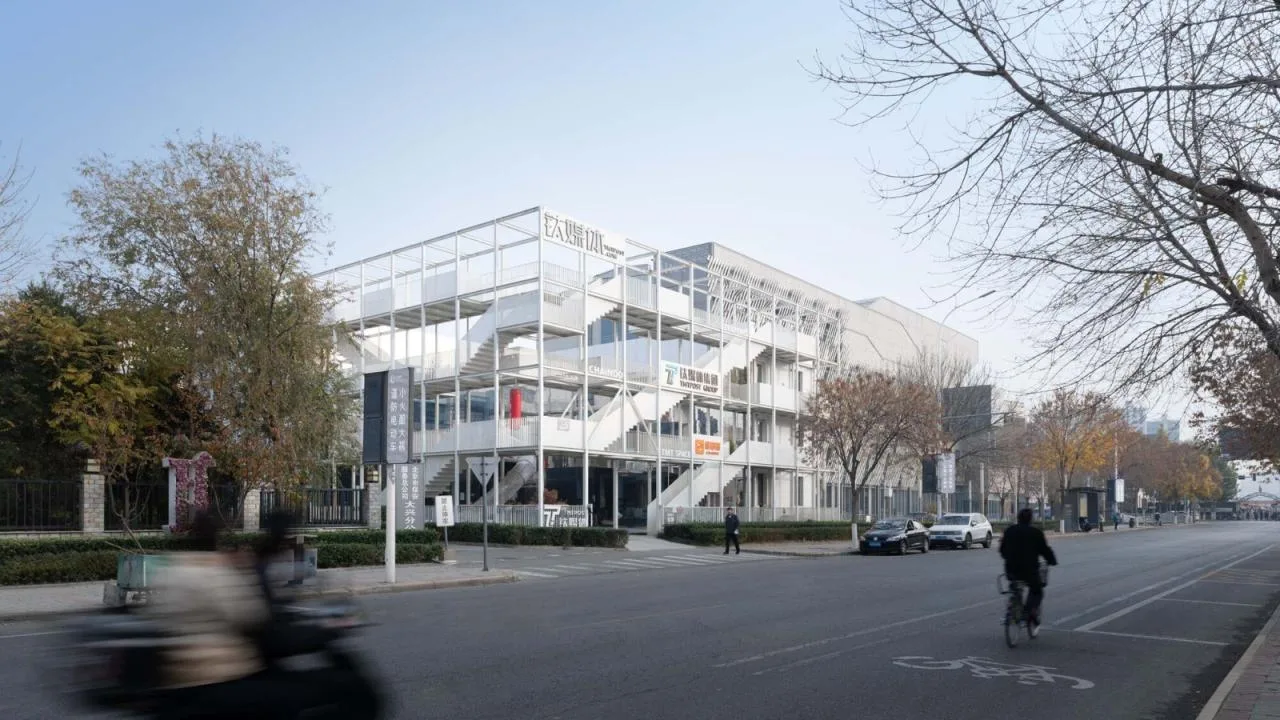
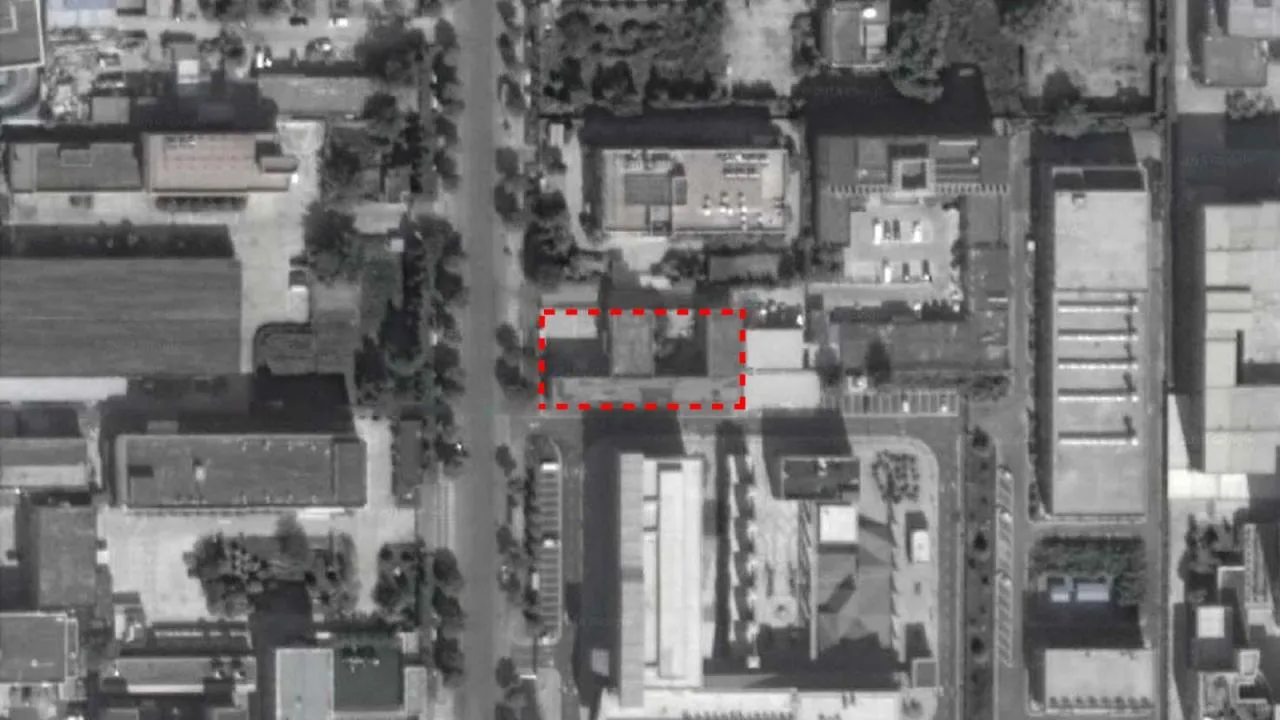
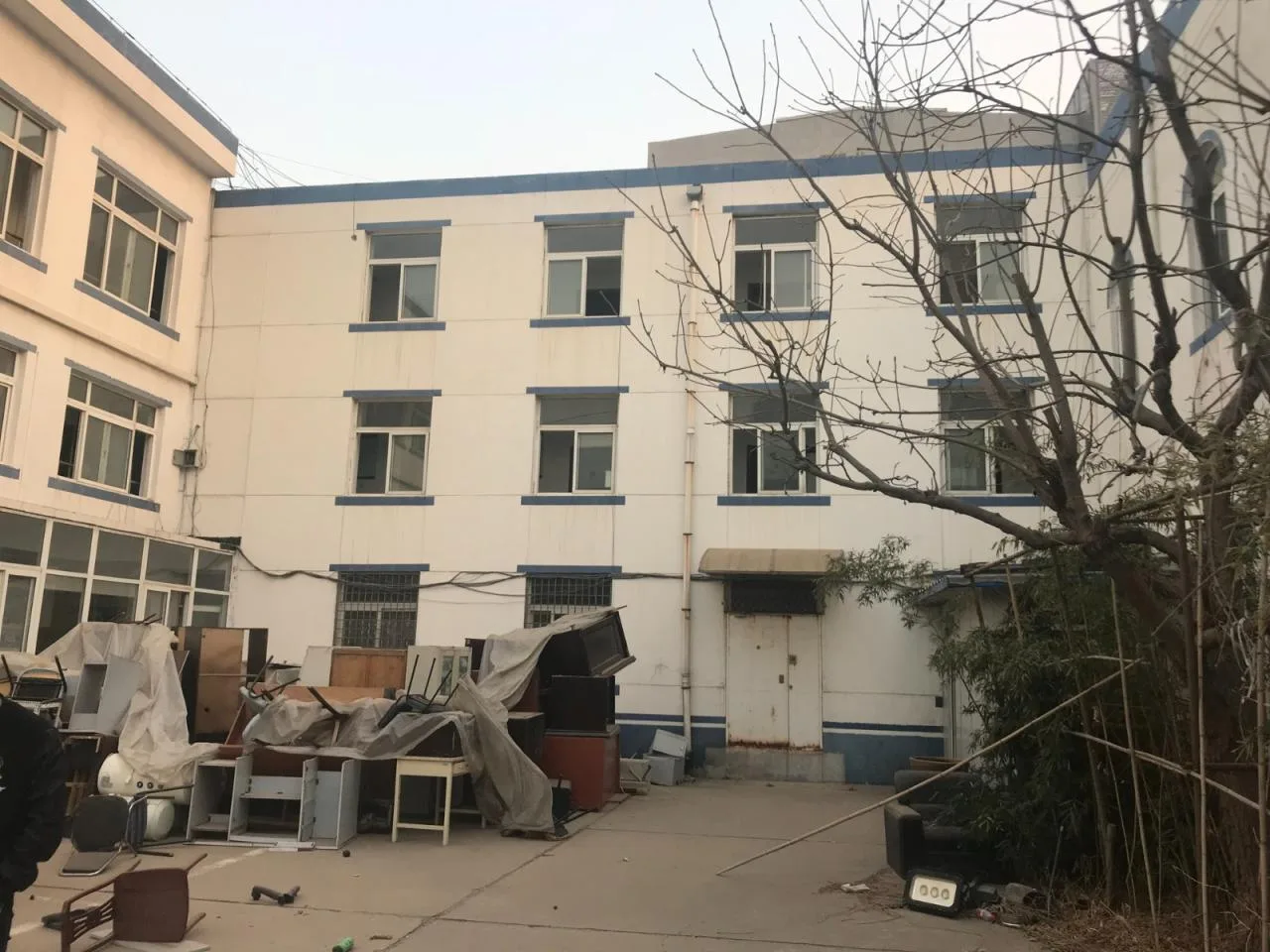
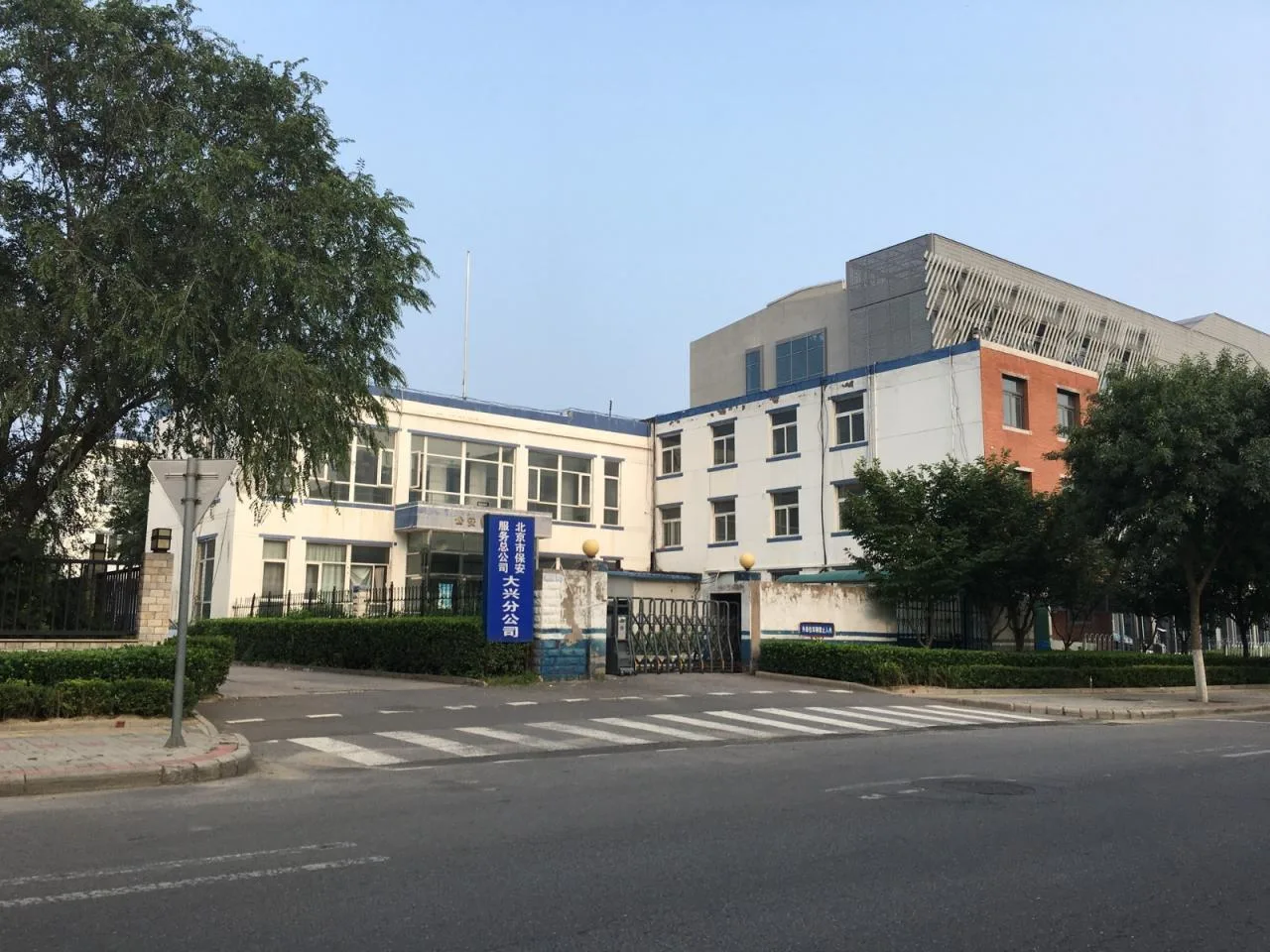
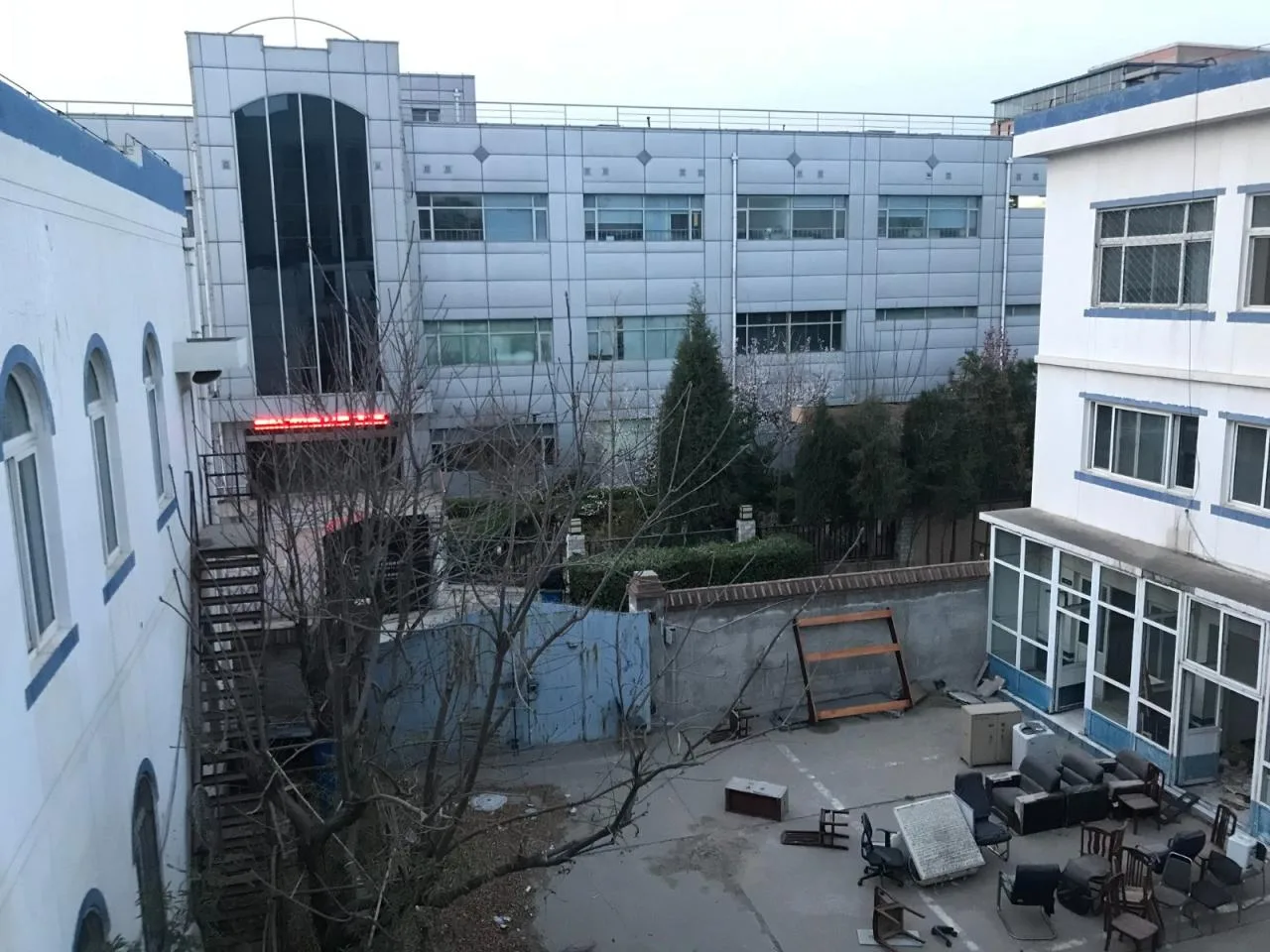
This project is located in the historic urban area of Daxing District, Beijing. The original police station, shaped like an “F,” occupies a compact site. The new owner, Titanium Media Group—a prominent fintech and new media platform—commissioned the design firm in early 2018 to convert the police station into their Beijing headquarters.
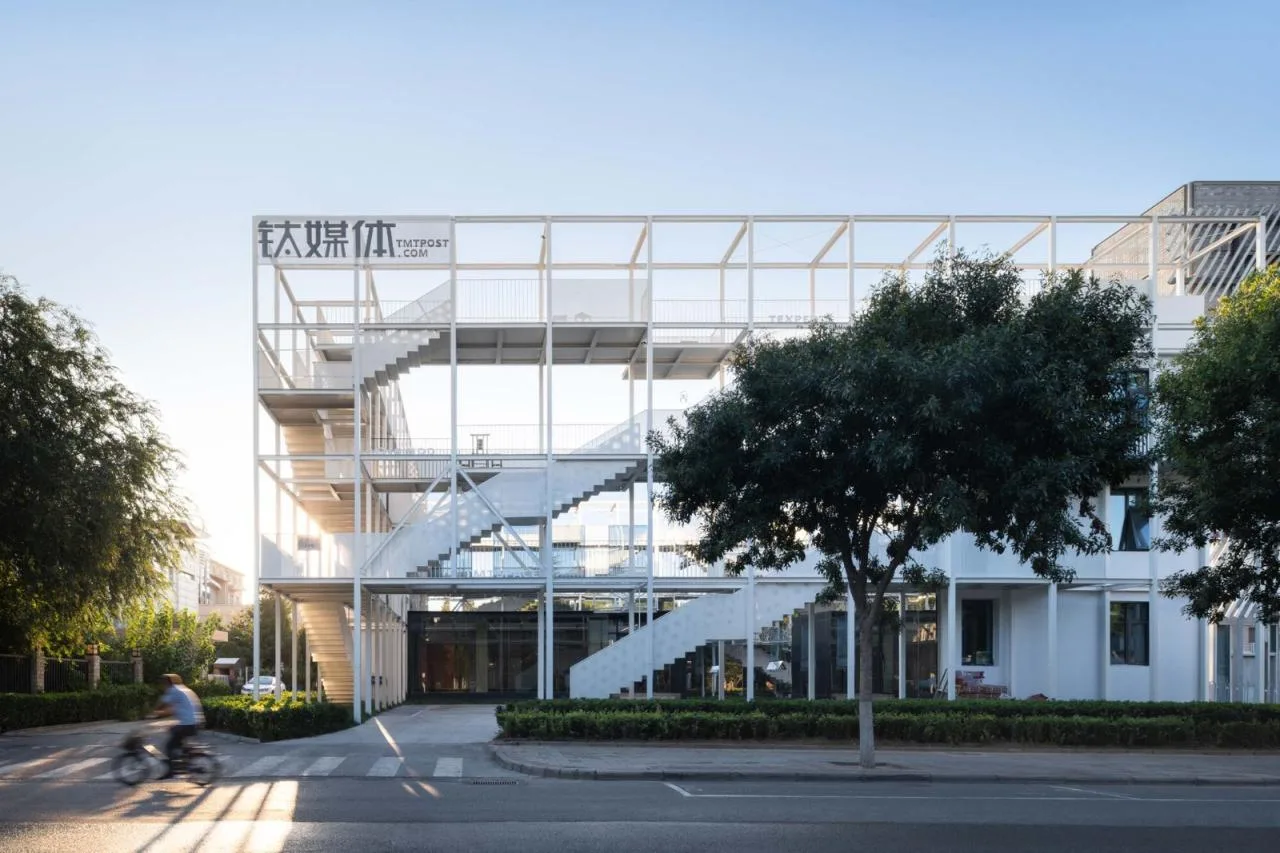
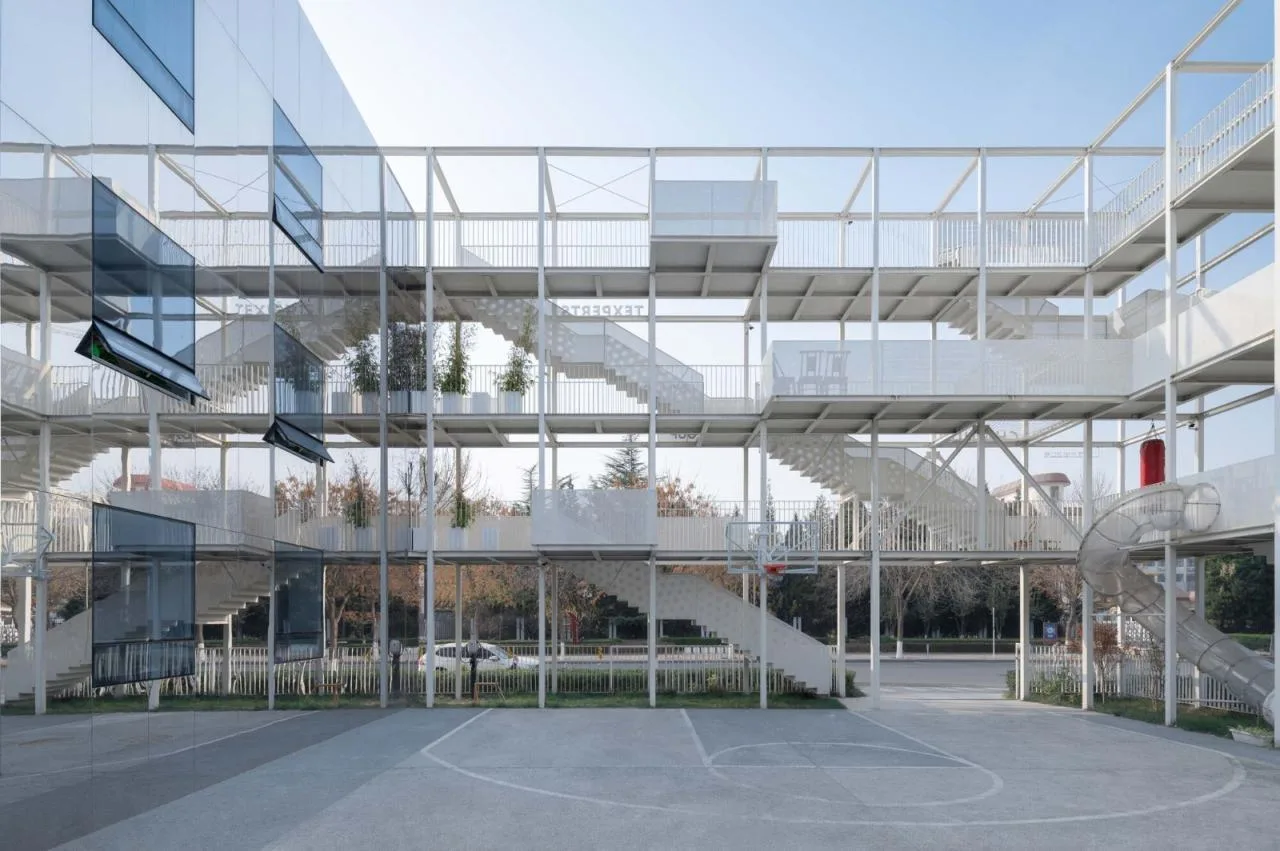
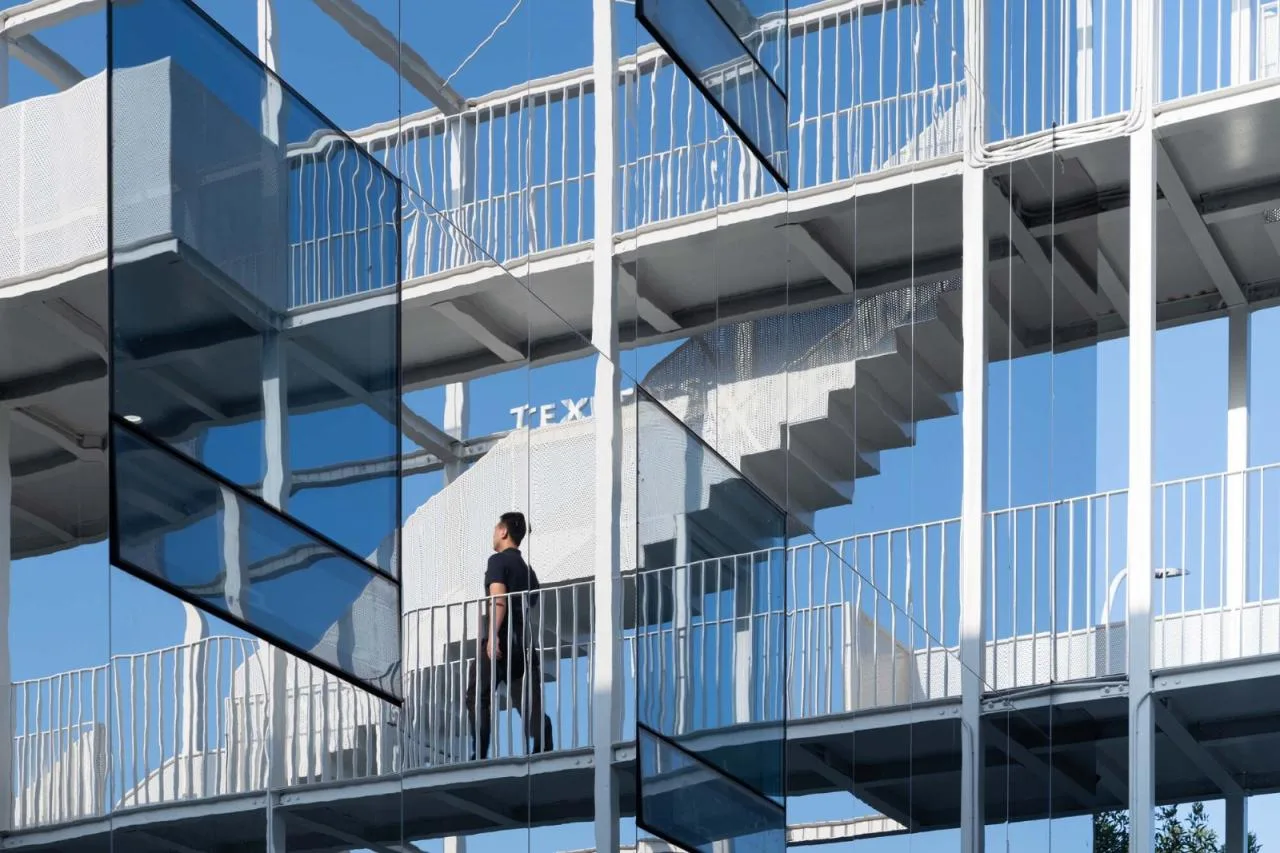
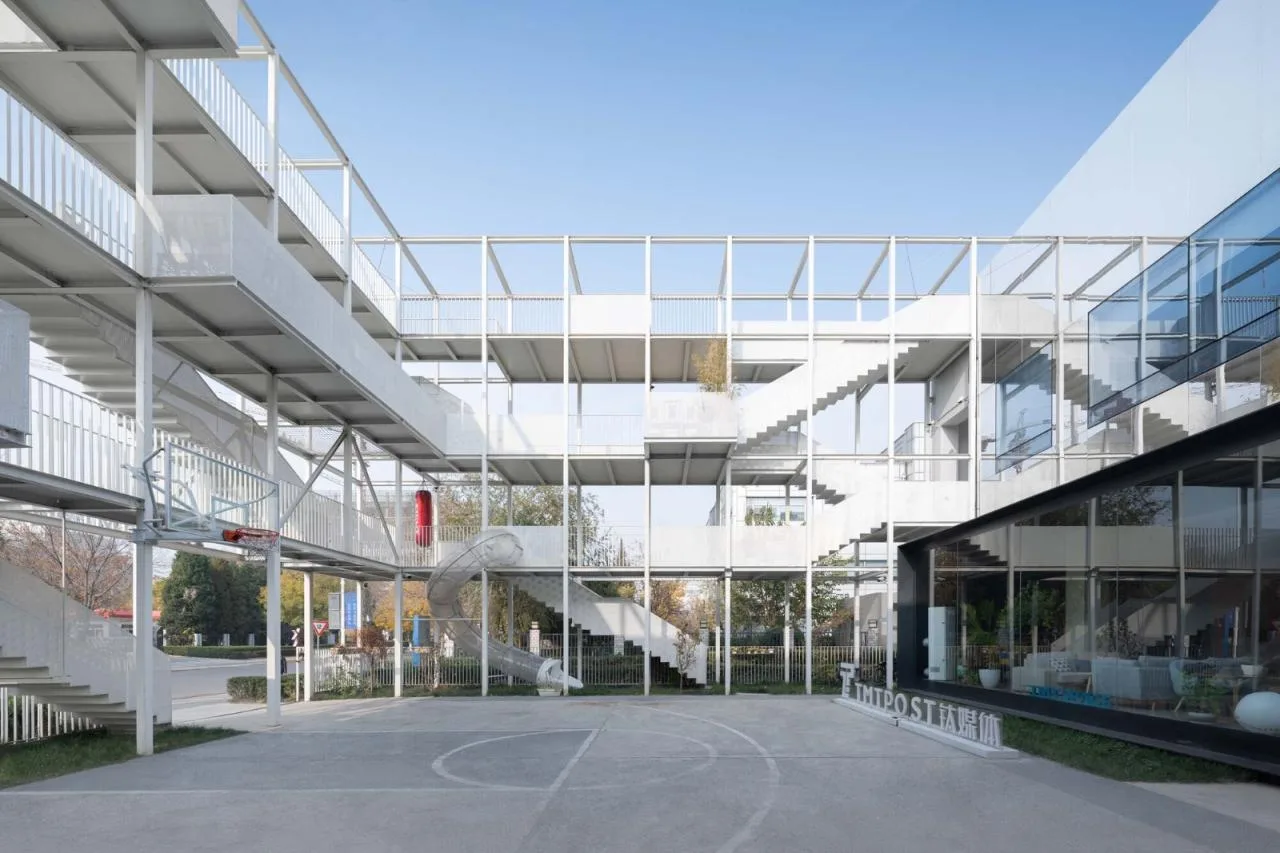
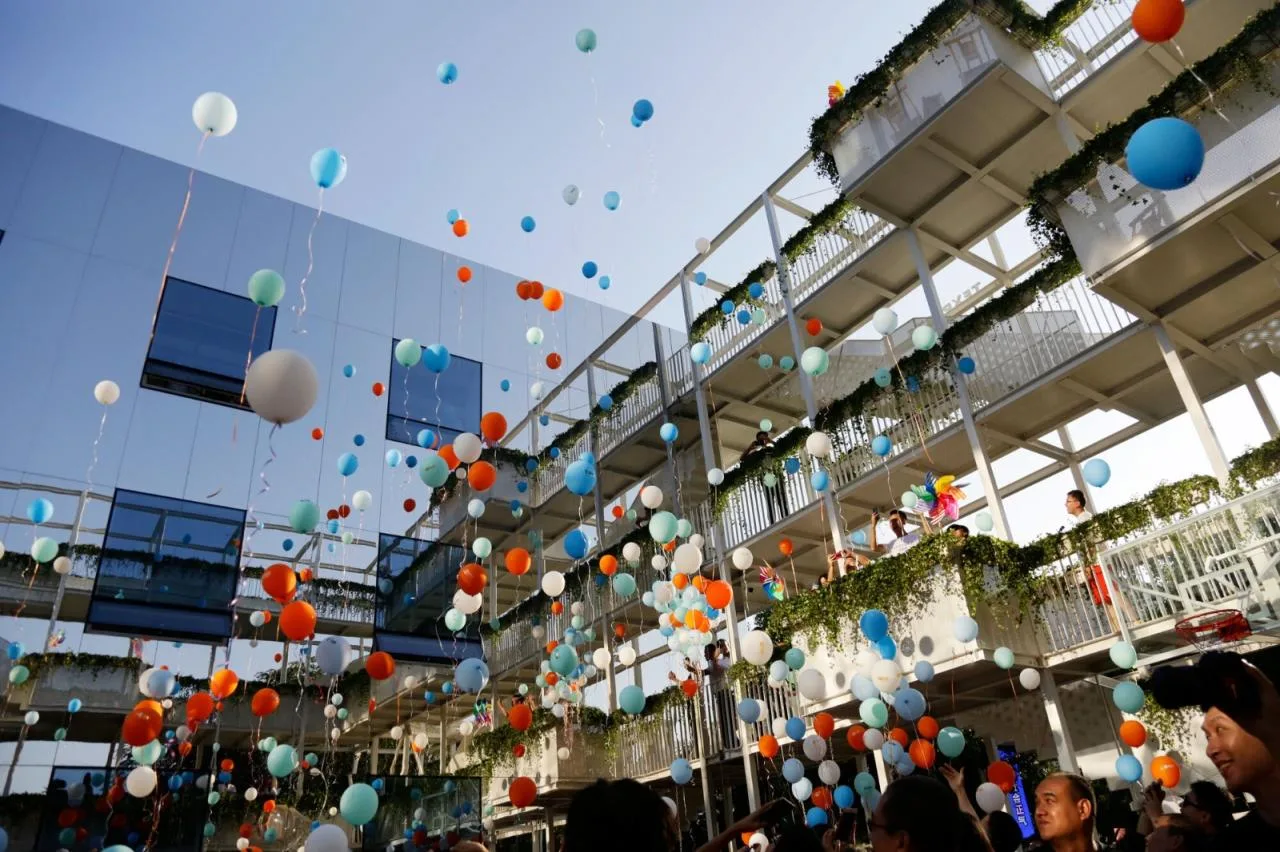
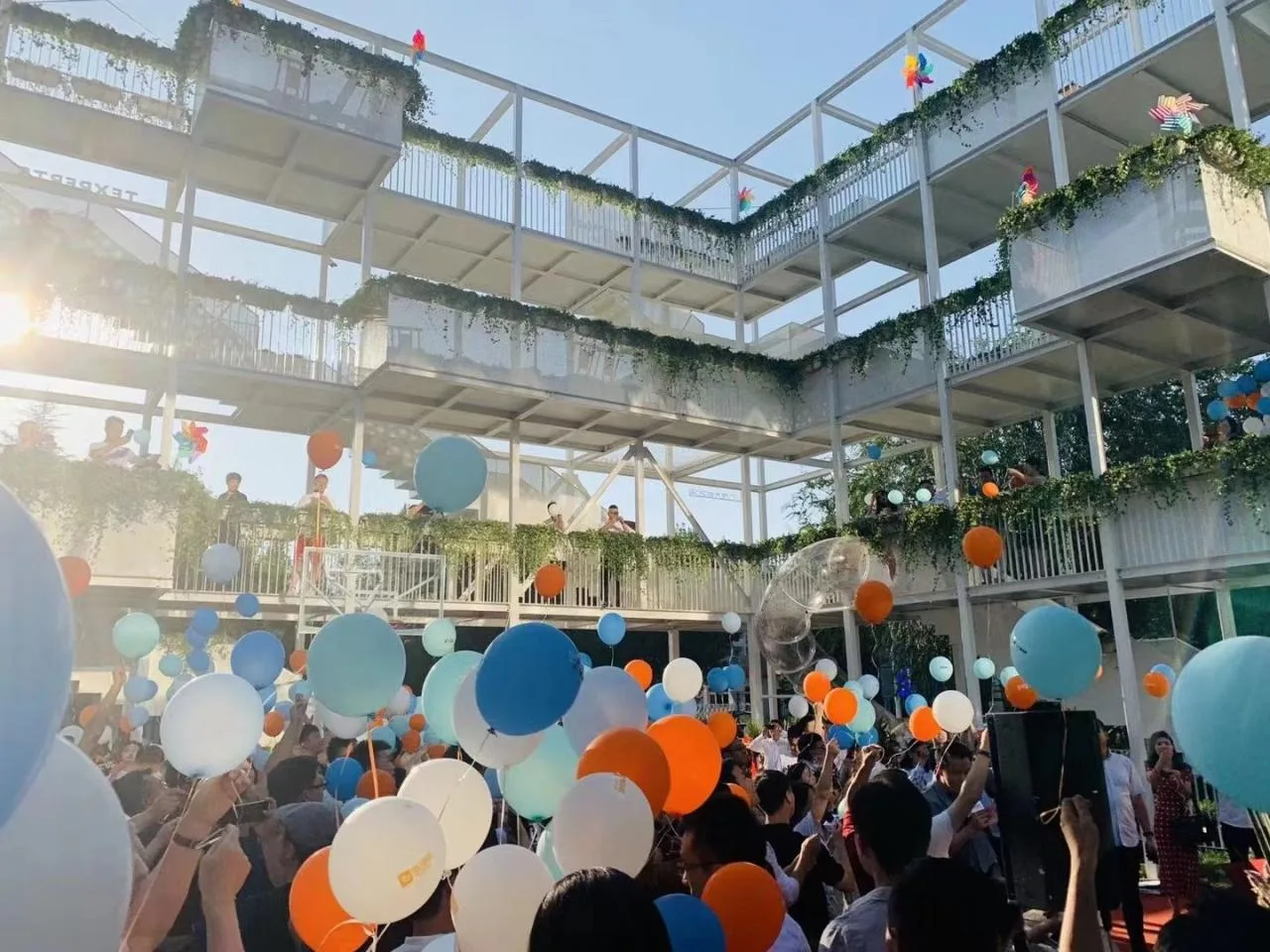
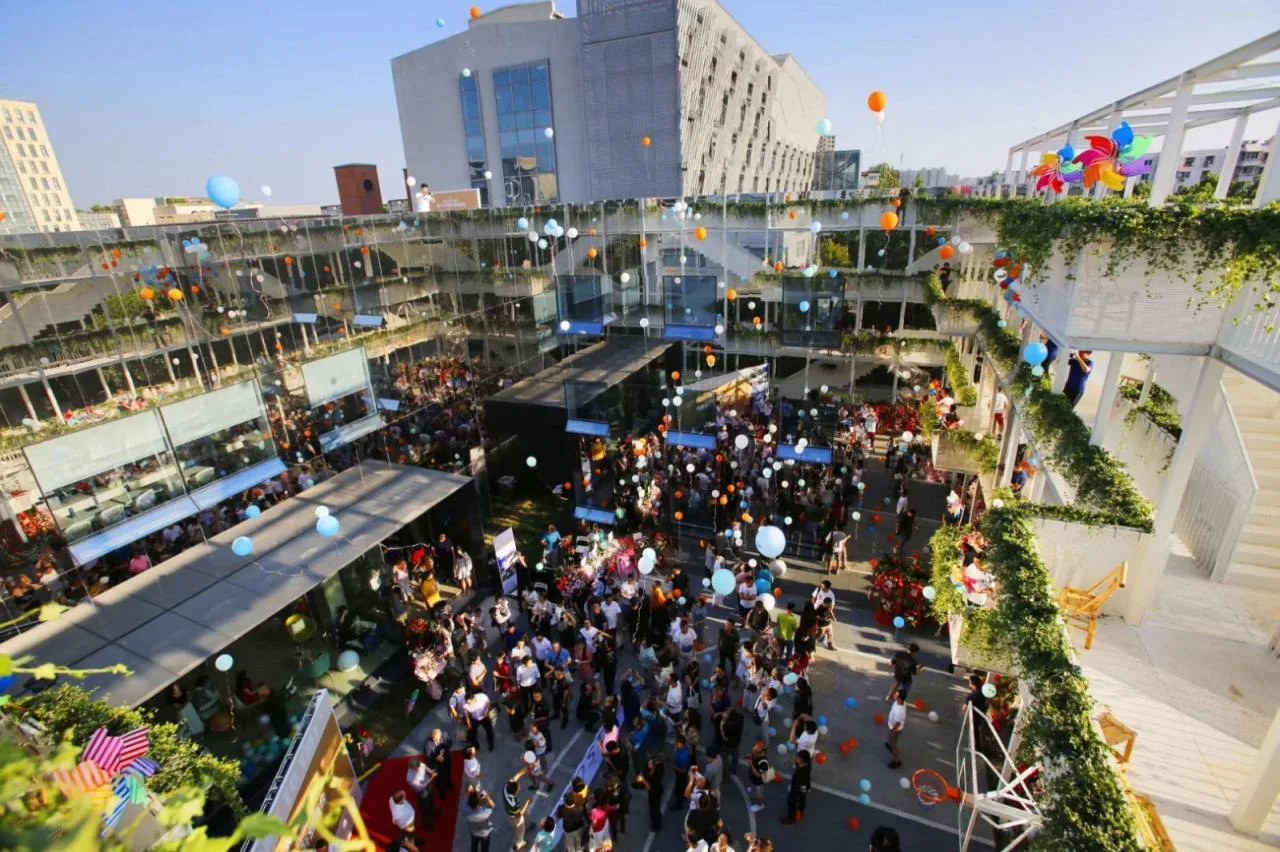
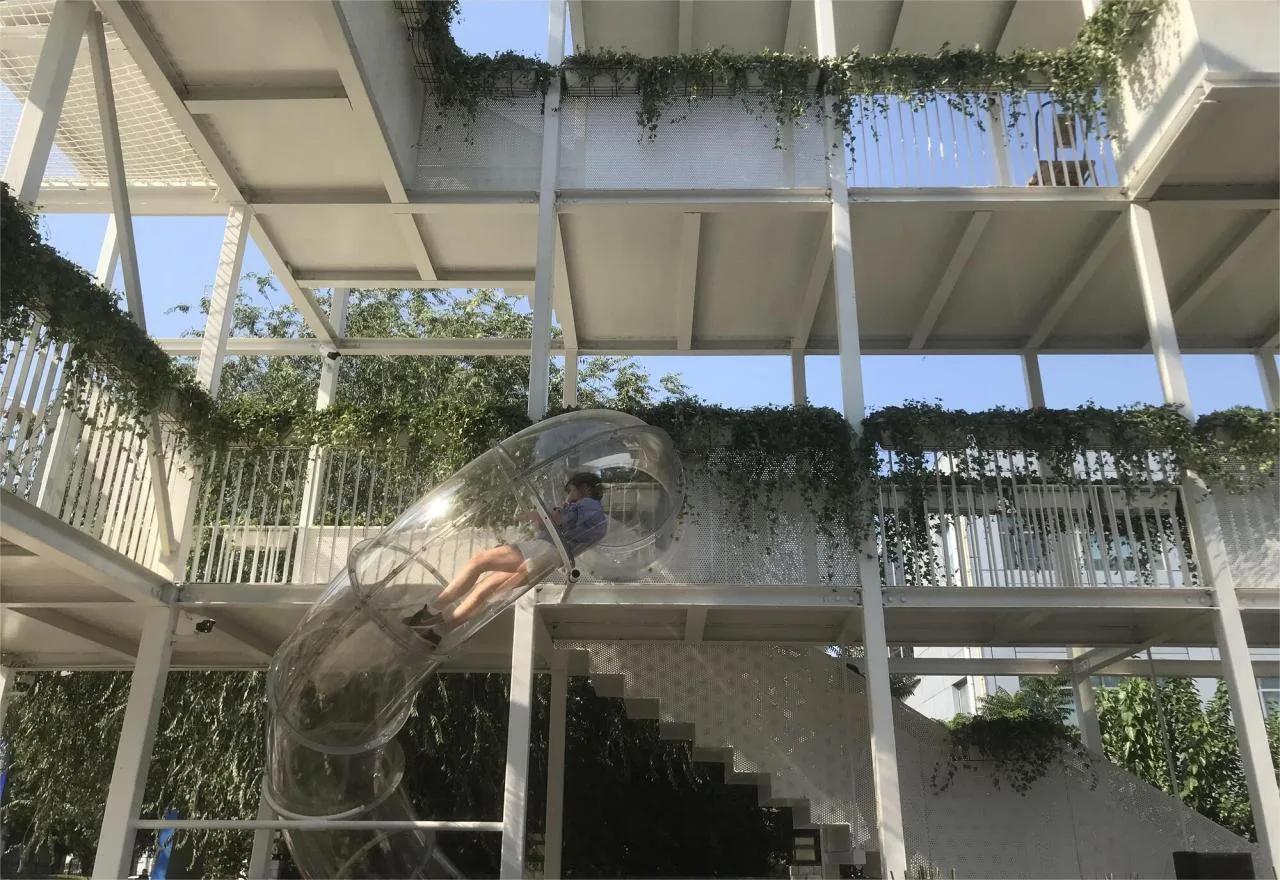
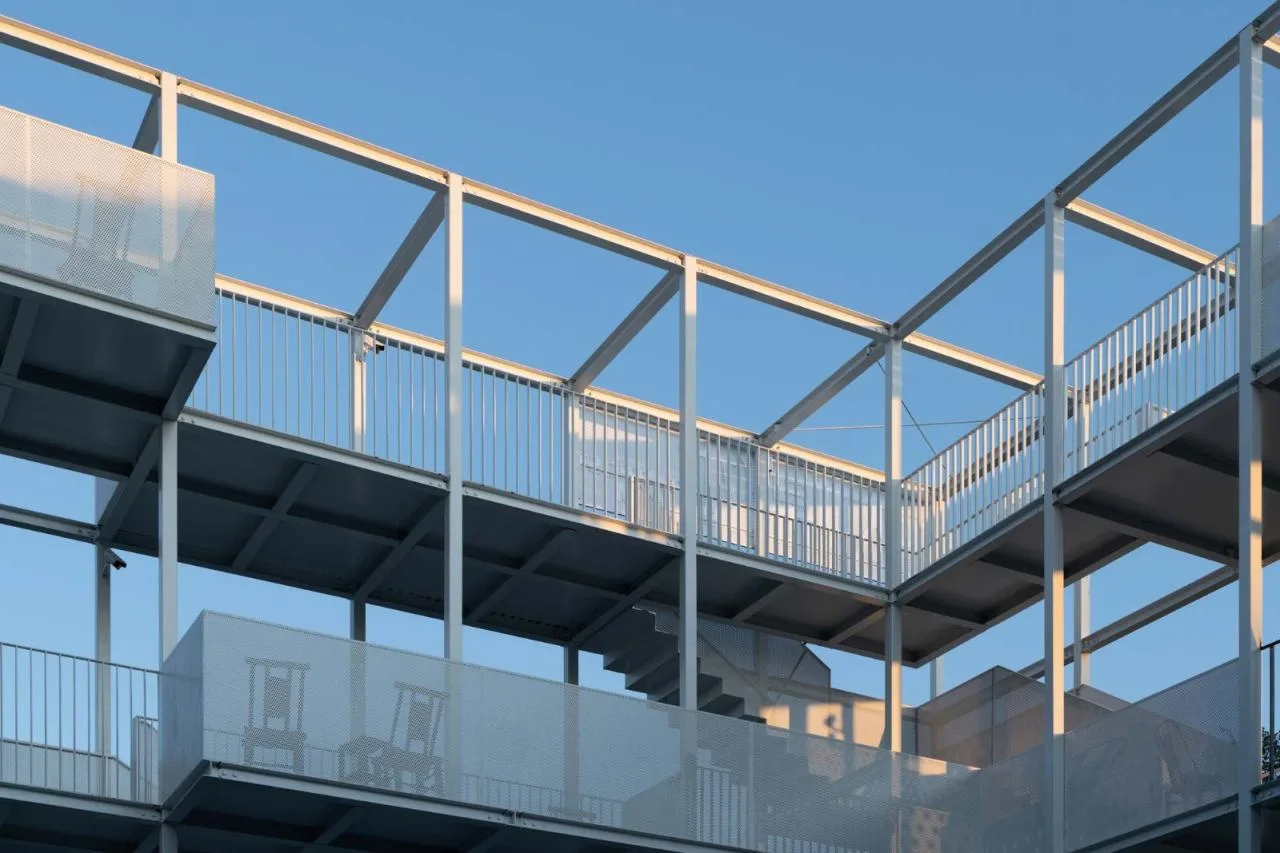
The design of “Folding Park” reimagines the traditional flat park into a slim, vertical green space created through multiple “folds.” This vertical park hugs the boundary of the “F”-shaped building, minimizing ground contact and replacing the original wall as the new site perimeter.
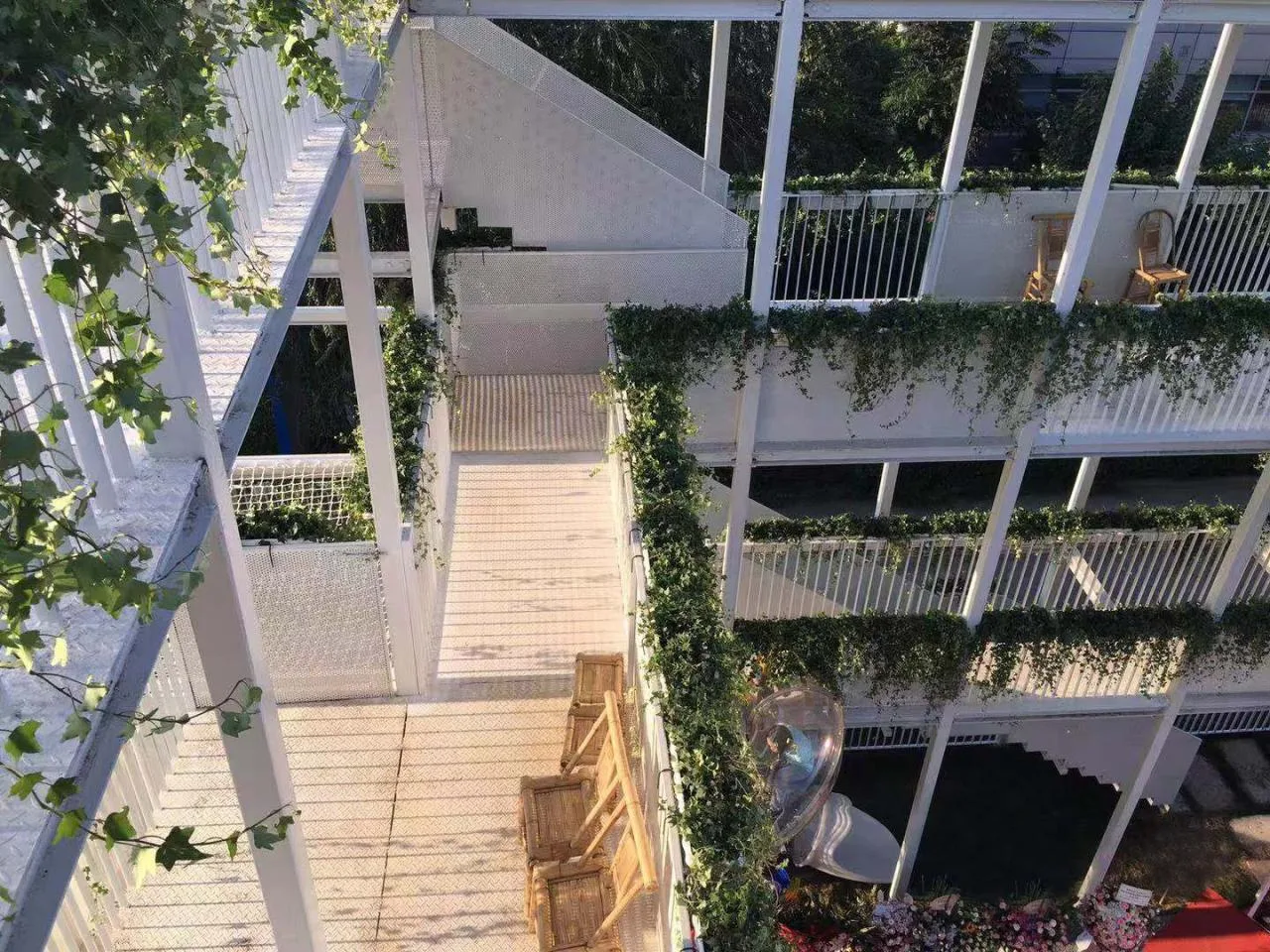
Traditional walking paths now wind through these folded boundaries, transforming from flat trails into engaging three-dimensional routes. This creates a dynamic, interwoven walking experience that extends the limited space infinitely through circular movement.
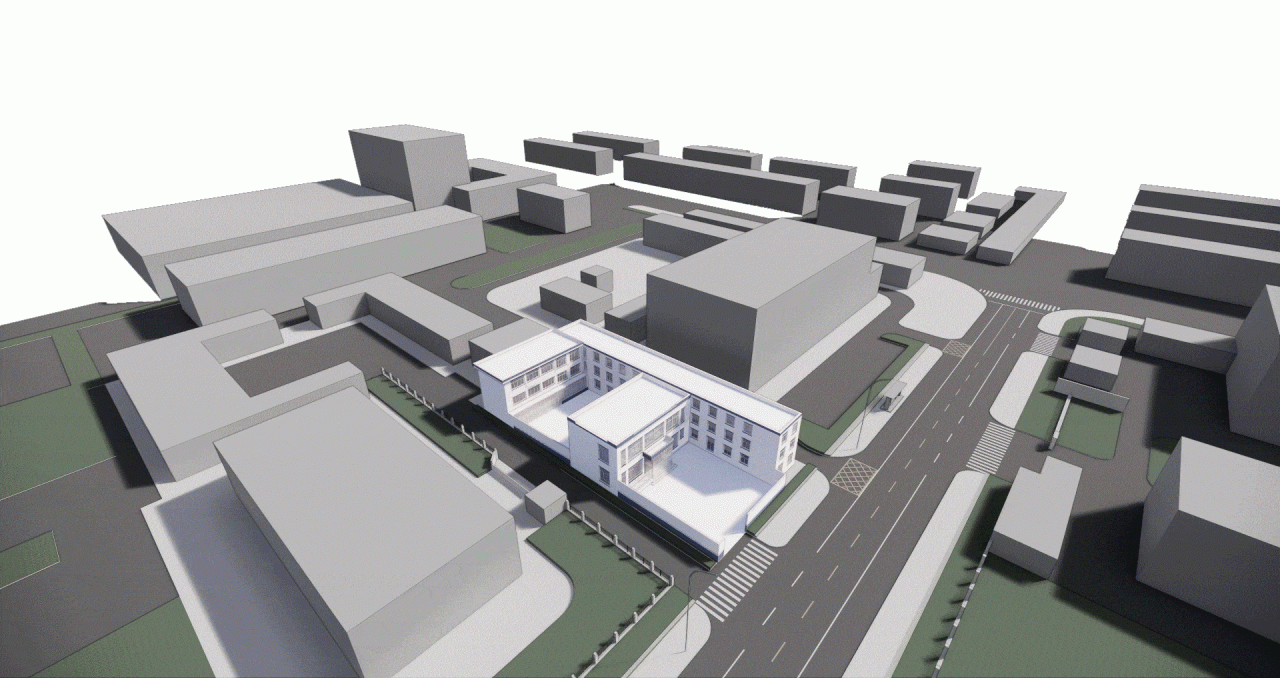
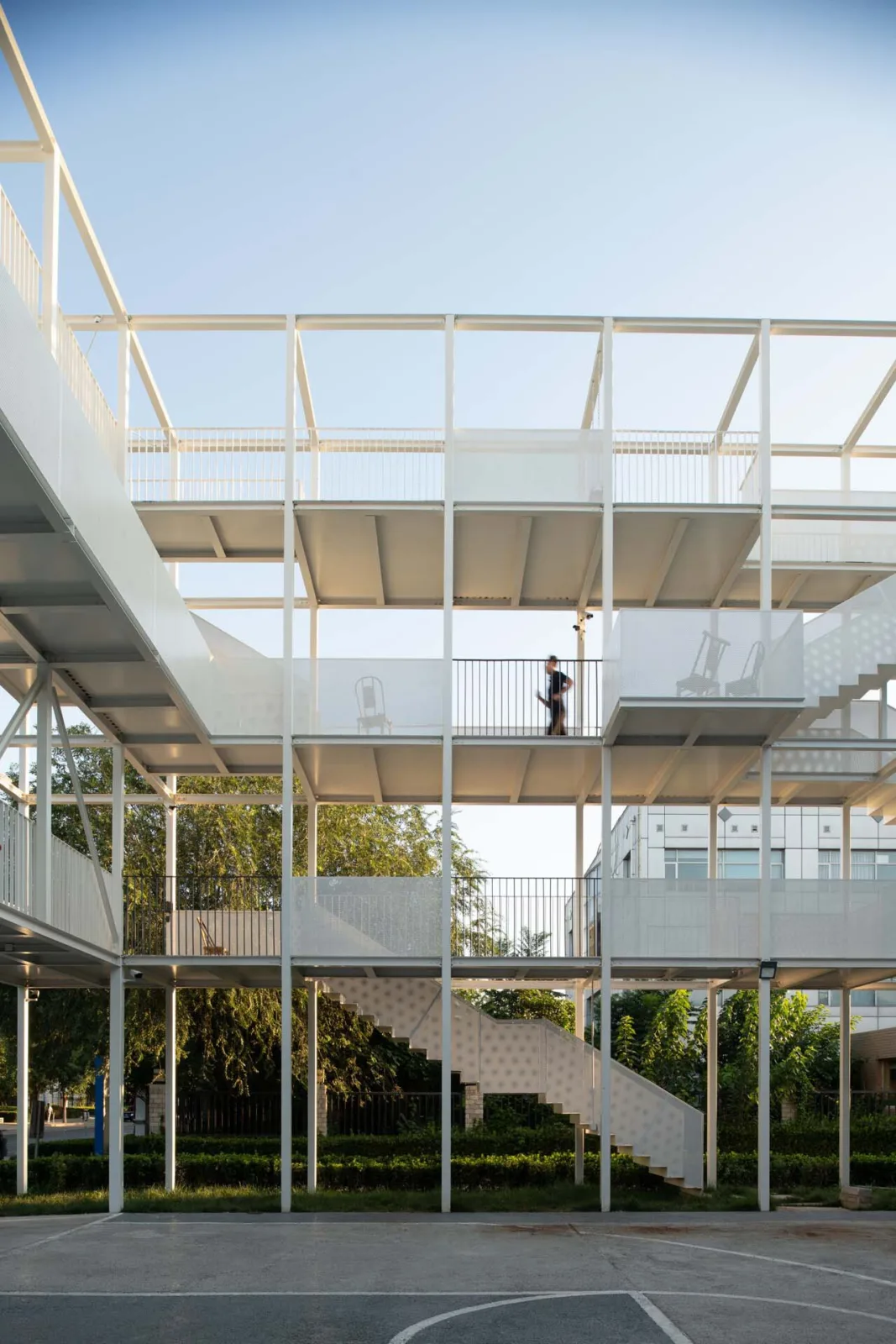
After folding, the “soft” site boundary creates a blurred, architectural-like spatial feature within the park. The entire “folded park” exists in a continuous, soft spatial state—neither fully indoors nor outdoors. Visitors are enveloped by this space, which offers shelter from sun and rain while blending seamlessly with fresh air, providing both physical comfort and a sense of freedom.
This soft boundary also diminishes the rigid divide between architecture and city, creating a gentle transition between the two. The park features multiple entrances and exits facing streets, courtyards, and building floors, allowing equal access from all sides. An intelligent access control system ensures park activities remain separate from the building’s interior.
At every path intersection, enlarged platforms with traditional Beijing bamboo chairs offer diverse resting spots at varying scales and heights, encouraging visitors to pause and enjoy the environment.
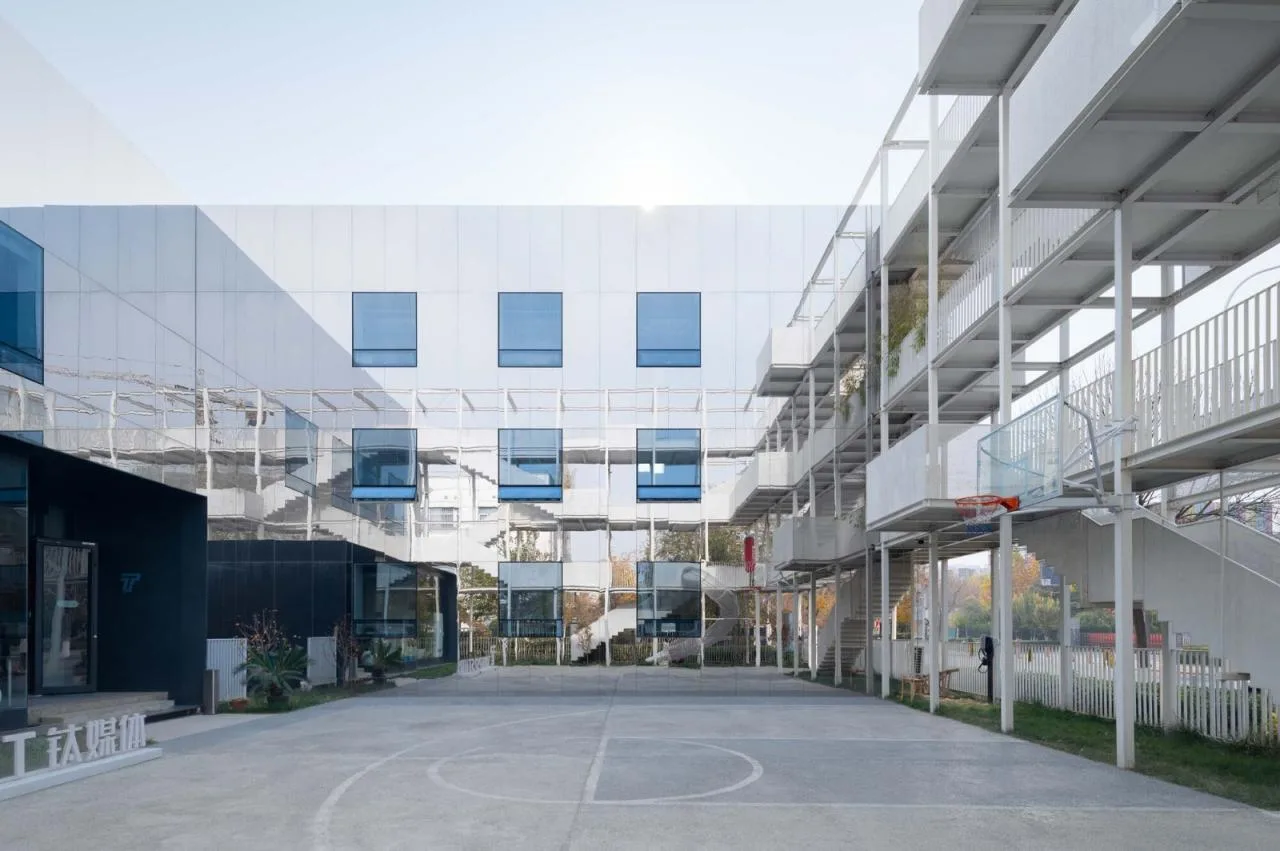
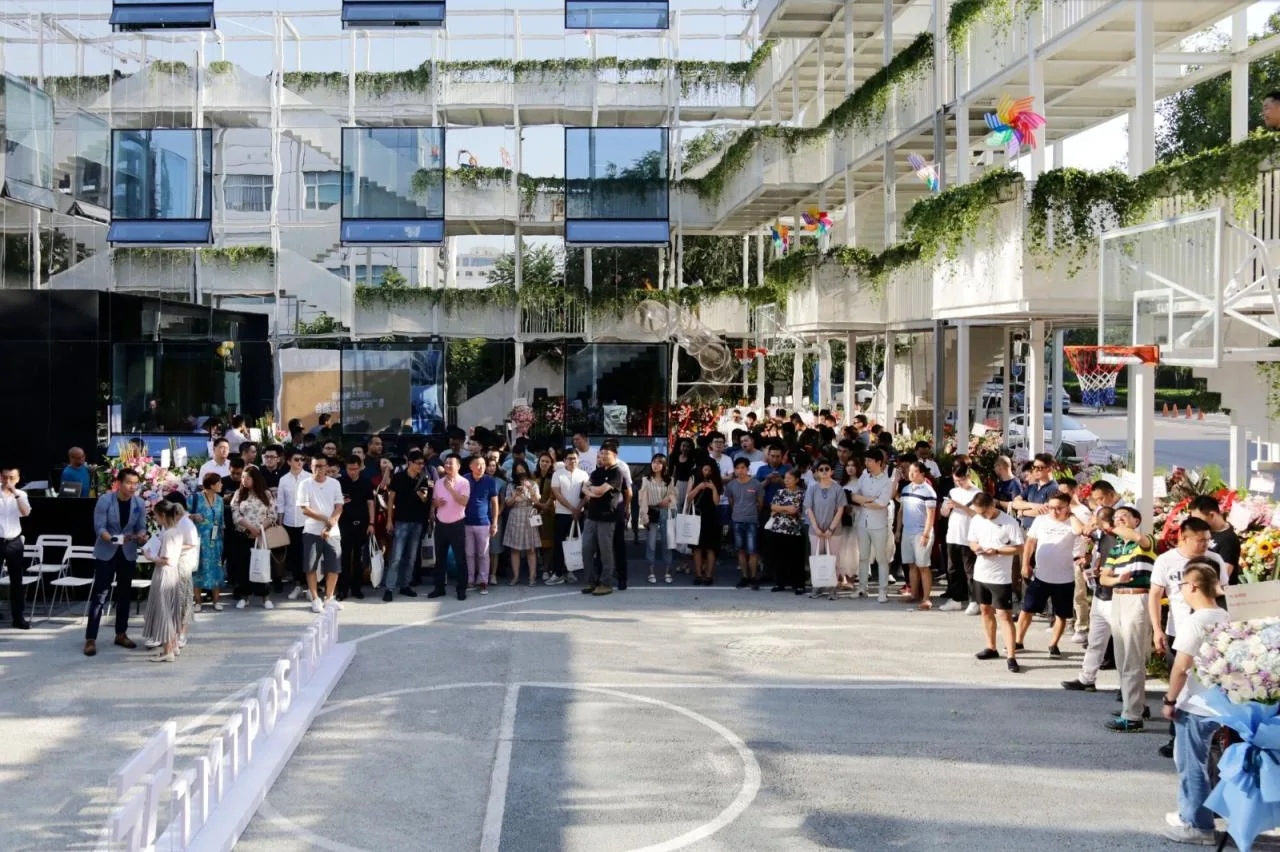
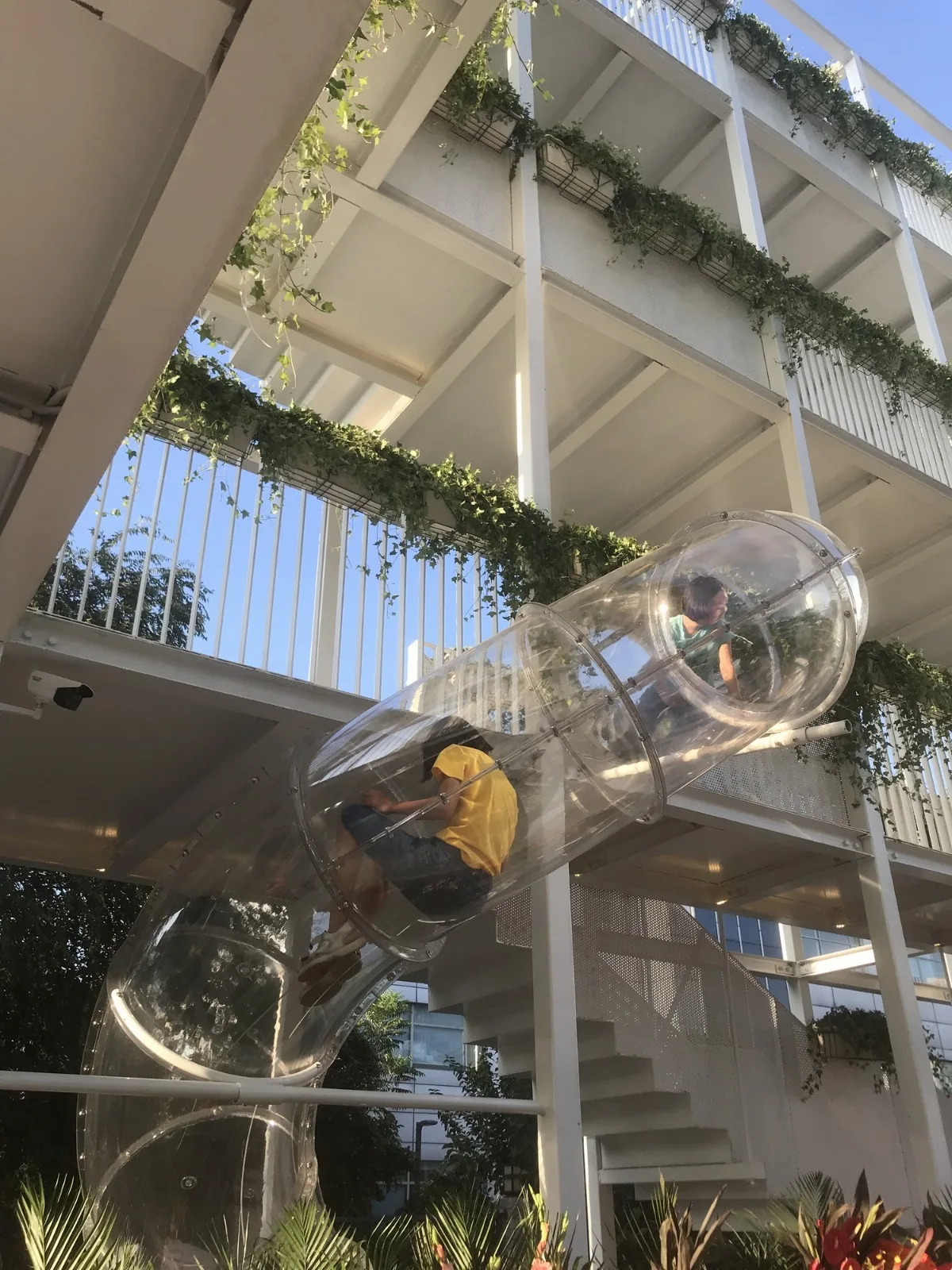
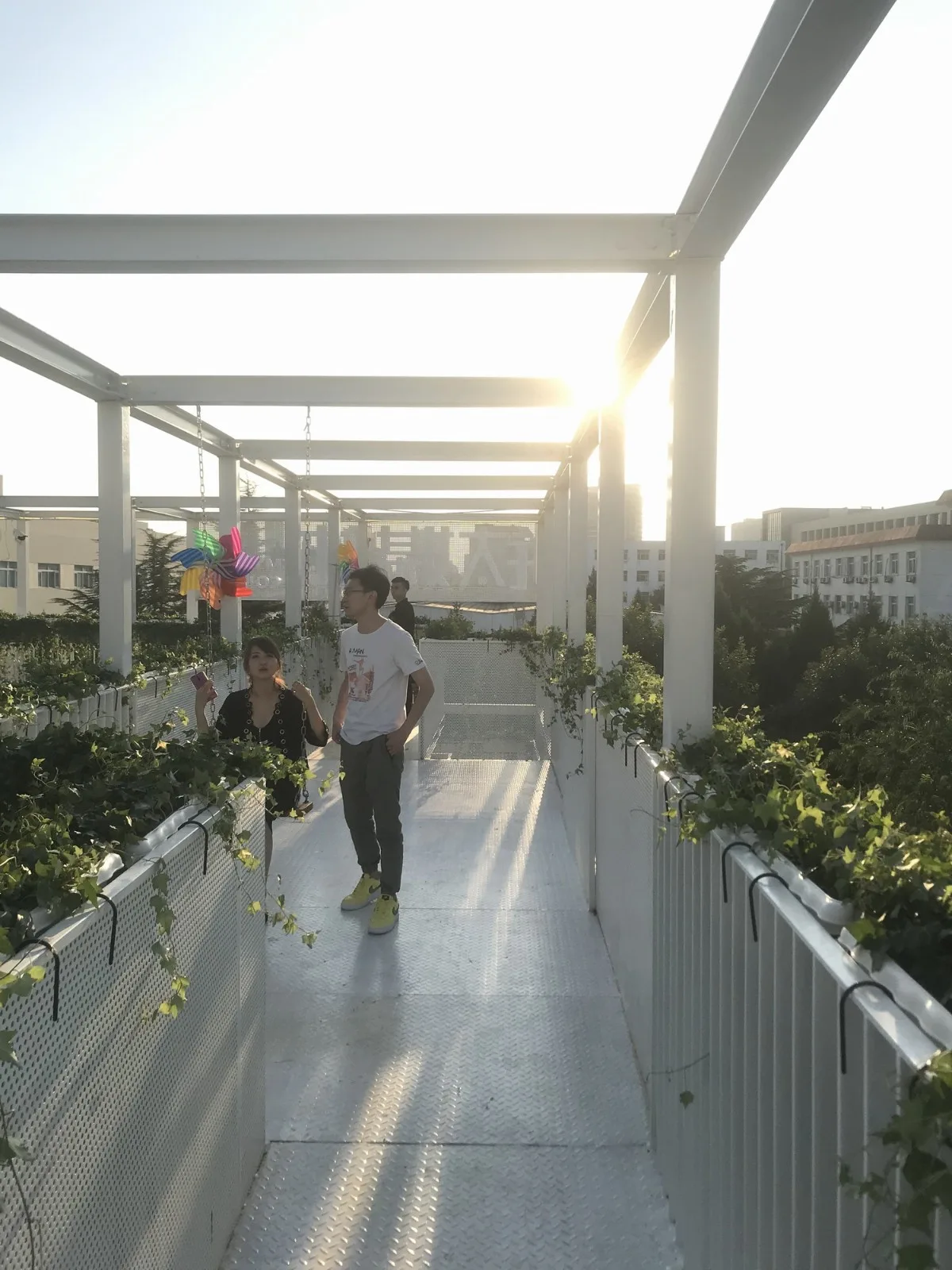
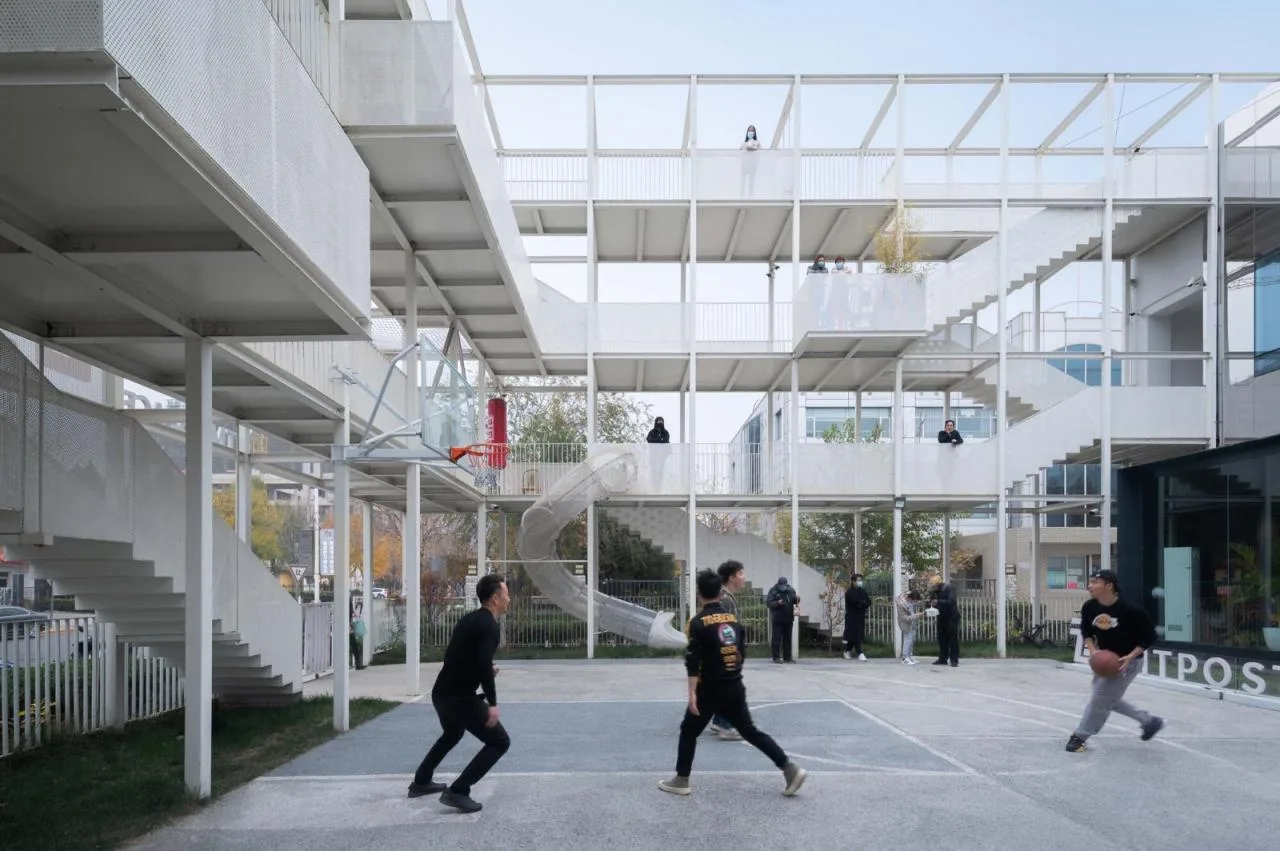
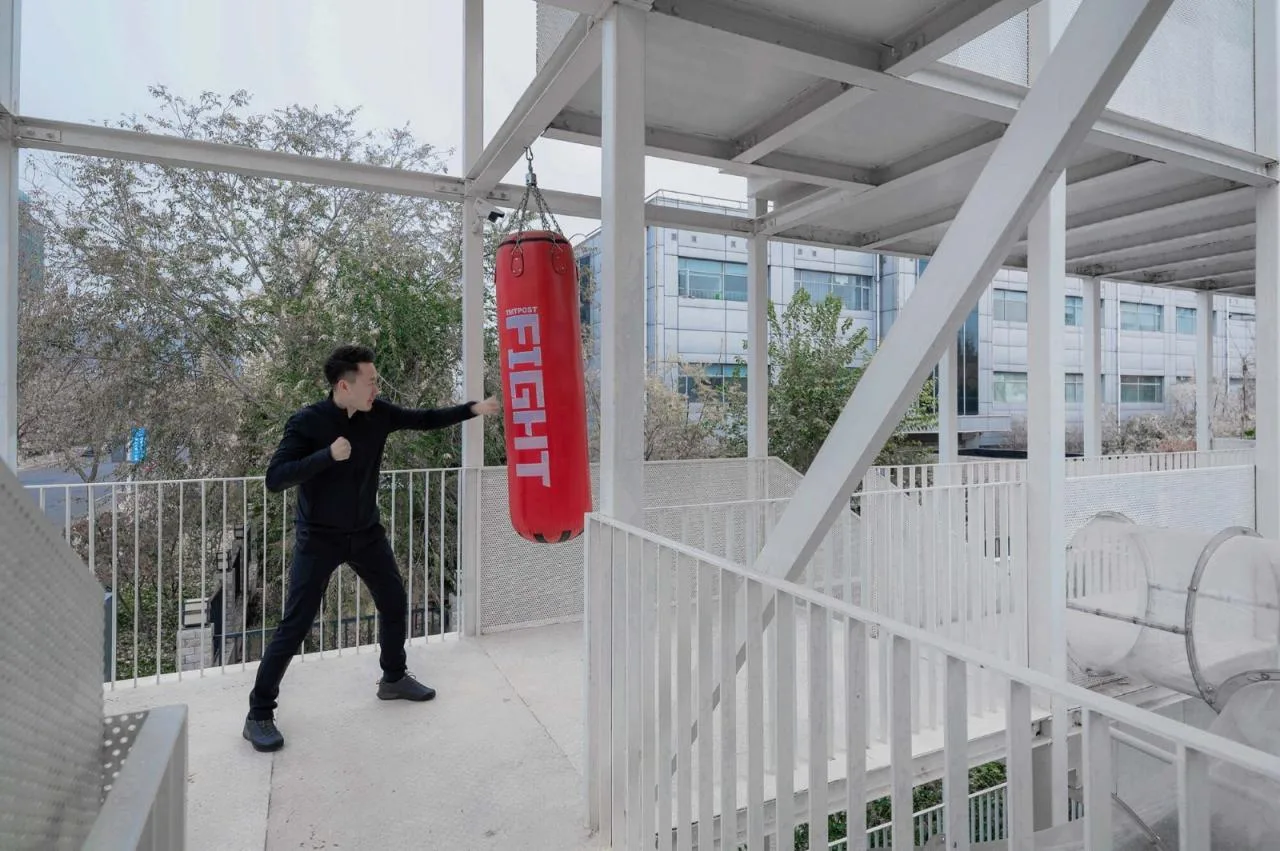
Within the “Free Growth” park, various engaging facilities such as swings, hammocks, punching bags, seesaws, and slides invite visitors to interact and connect, sparking lively community activities. This park can be imagined as a giant “Lego toy,” ready to be enhanced with new ideas and to grow freely alongside people’s creativity.
The original concept for the park’s structural elements was to use common construction scaffolding, aiming for an affordable, fast-assembled, and easily replicable urban “catalyst space.” However, due to structural engineering limitations and lack of precedent for scaffolding as a permanent structural system, square steel pipes and I-beams were ultimately selected for calculability and safety.
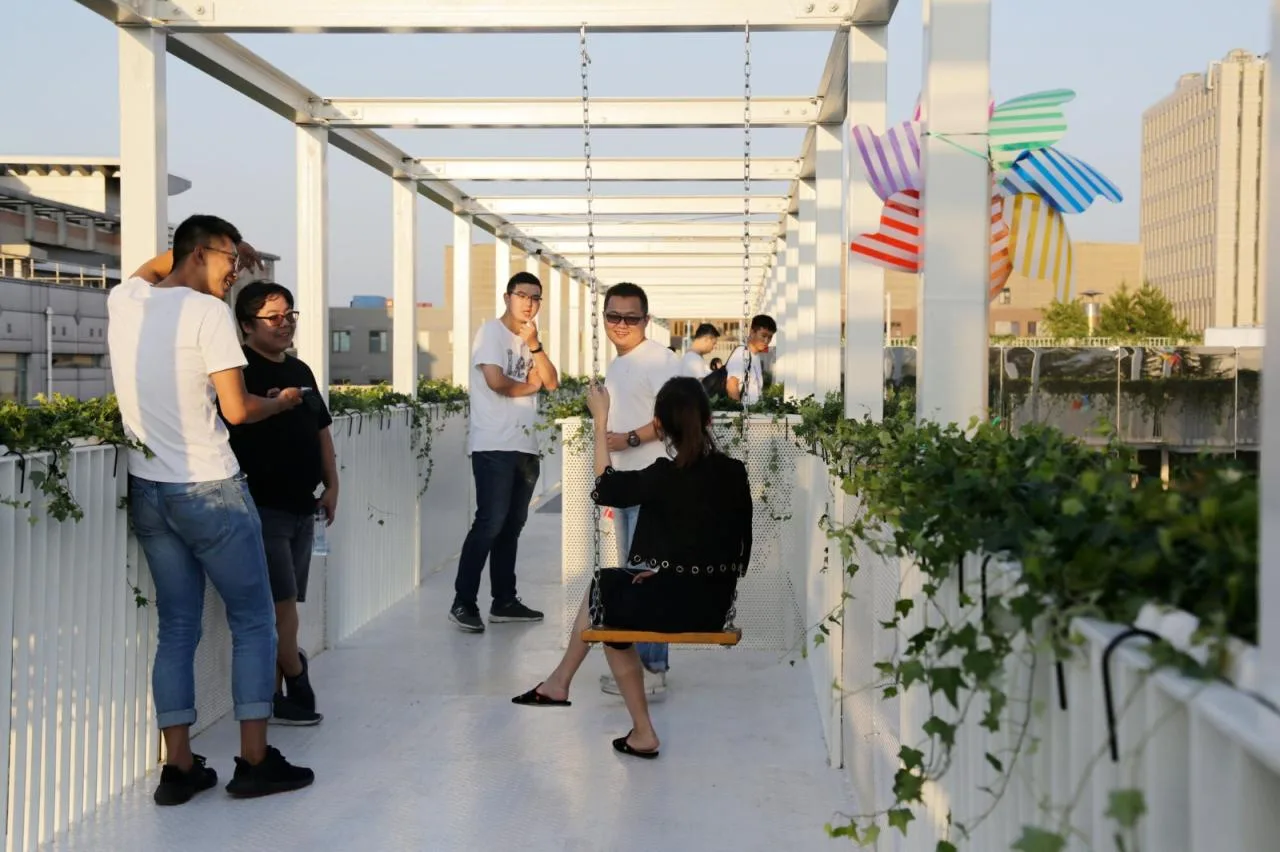
To create an authentic park atmosphere, extensive green plant walls were designed using facade grids. However, during construction, the planned real plants were replaced by artificial ones in the contractor’s bid. Despite negotiations, we rejected the fake greenery plan.
In the end, the absence of fixed plants opened up more space for users’ imagination. Owners and communities can customize decoration themes and greenery levels, allowing the park to present rich and varied possibilities. Within a short distance, this transformed boundary—a cold line once merely marking territory—has become a vibrant catalyst zone, infusing new life into daily urban experiences and becoming the community’s most popular spot.
Extending the ‘Catalyst Space’
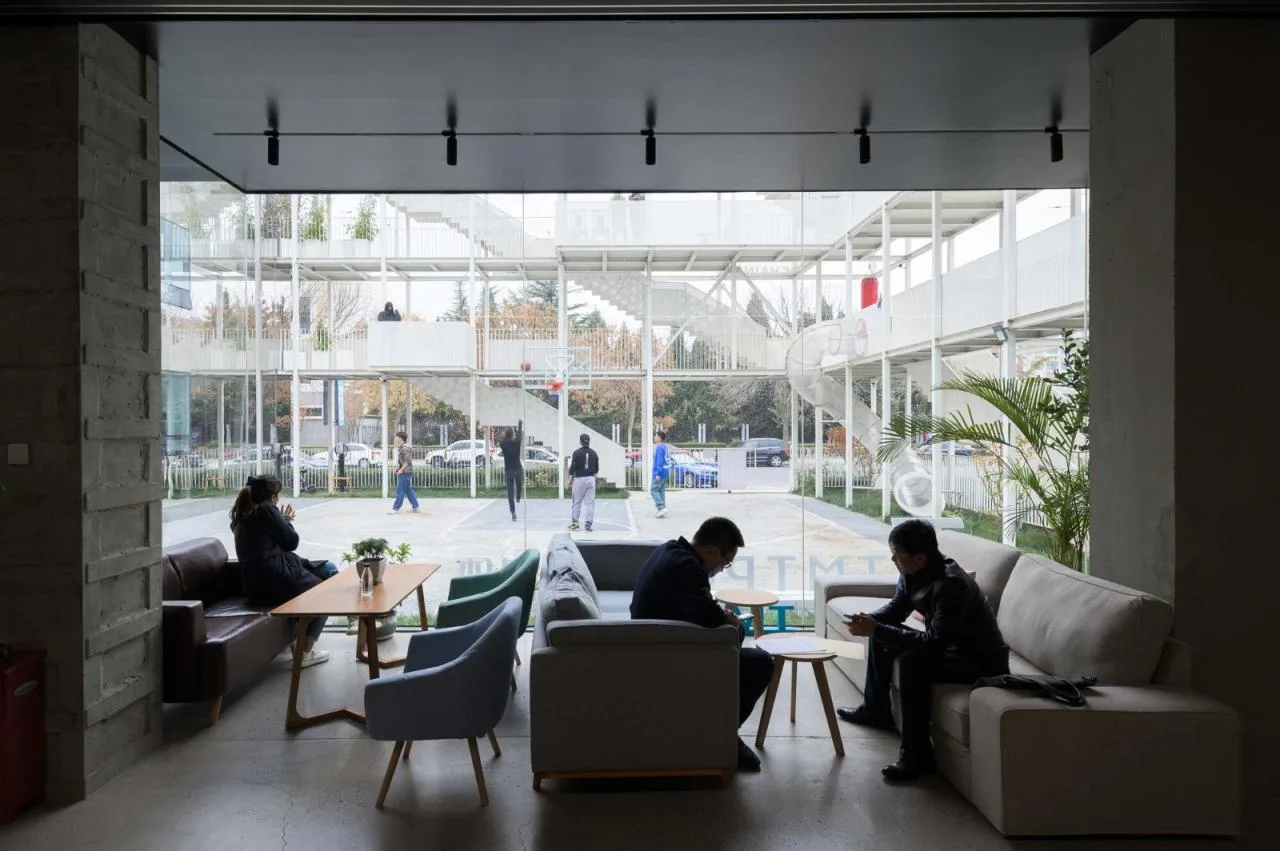
A basketball hoop installed in the “Folding Park” turns the front yard into the only basketball court on the street, enabling spontaneous street basketball games. The park acts as a grandstand, providing varied spectator viewpoints.
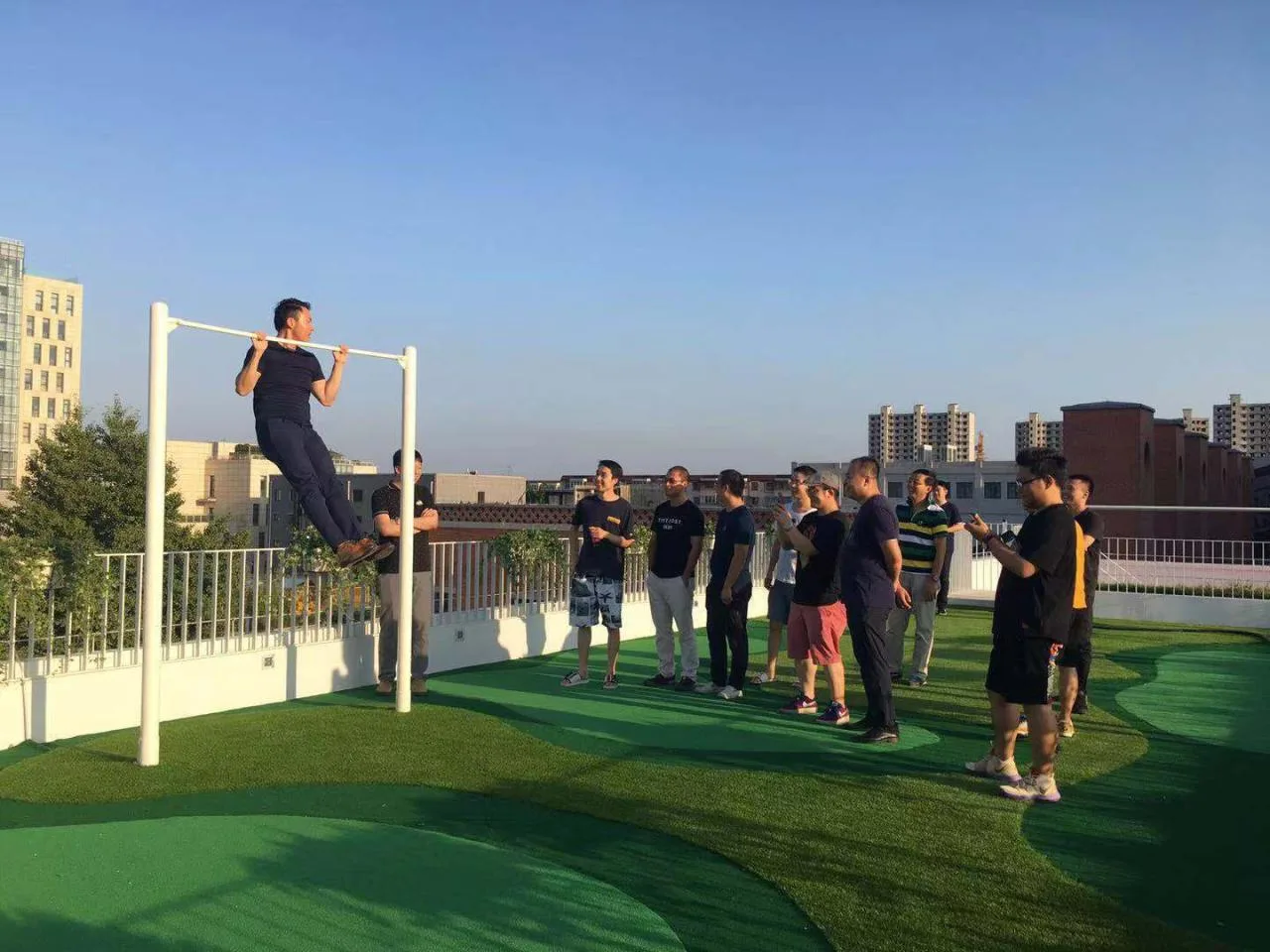
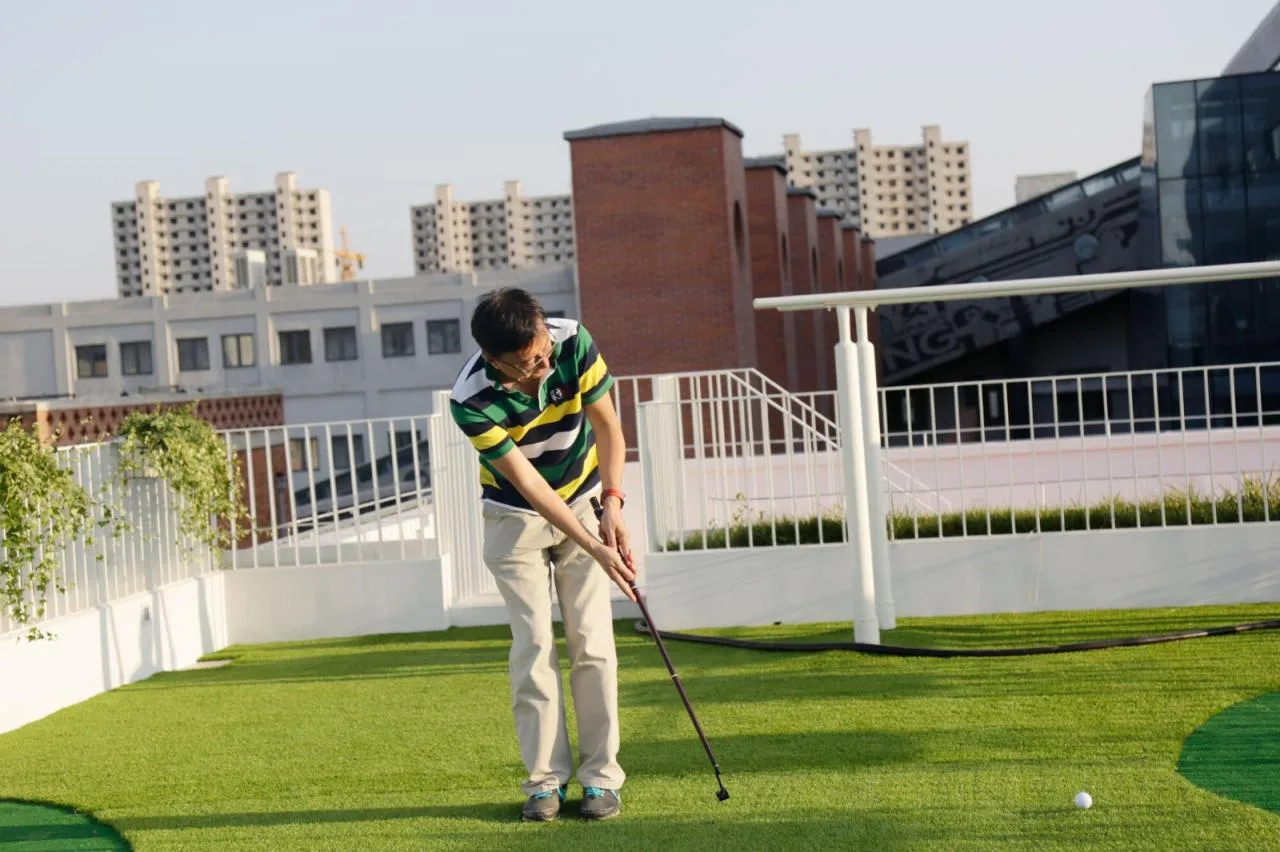
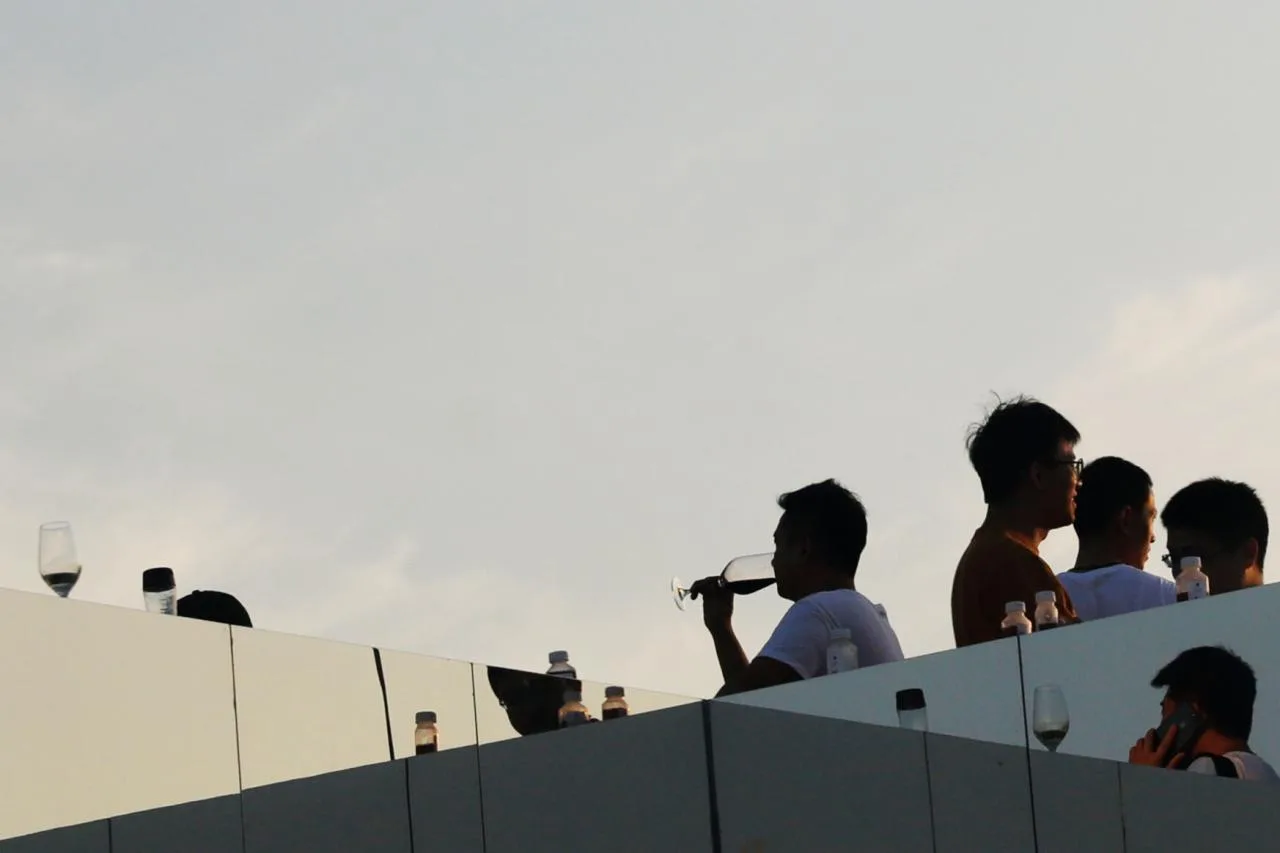
The walking paths naturally lead visitors up to the roof, transforming the previously unused rooftop into an extension of the park. The long side of the “F”-shaped roof serves as a jogging track, while the two shorter sides are designed for cocktail parties and a mini golf fitness area.
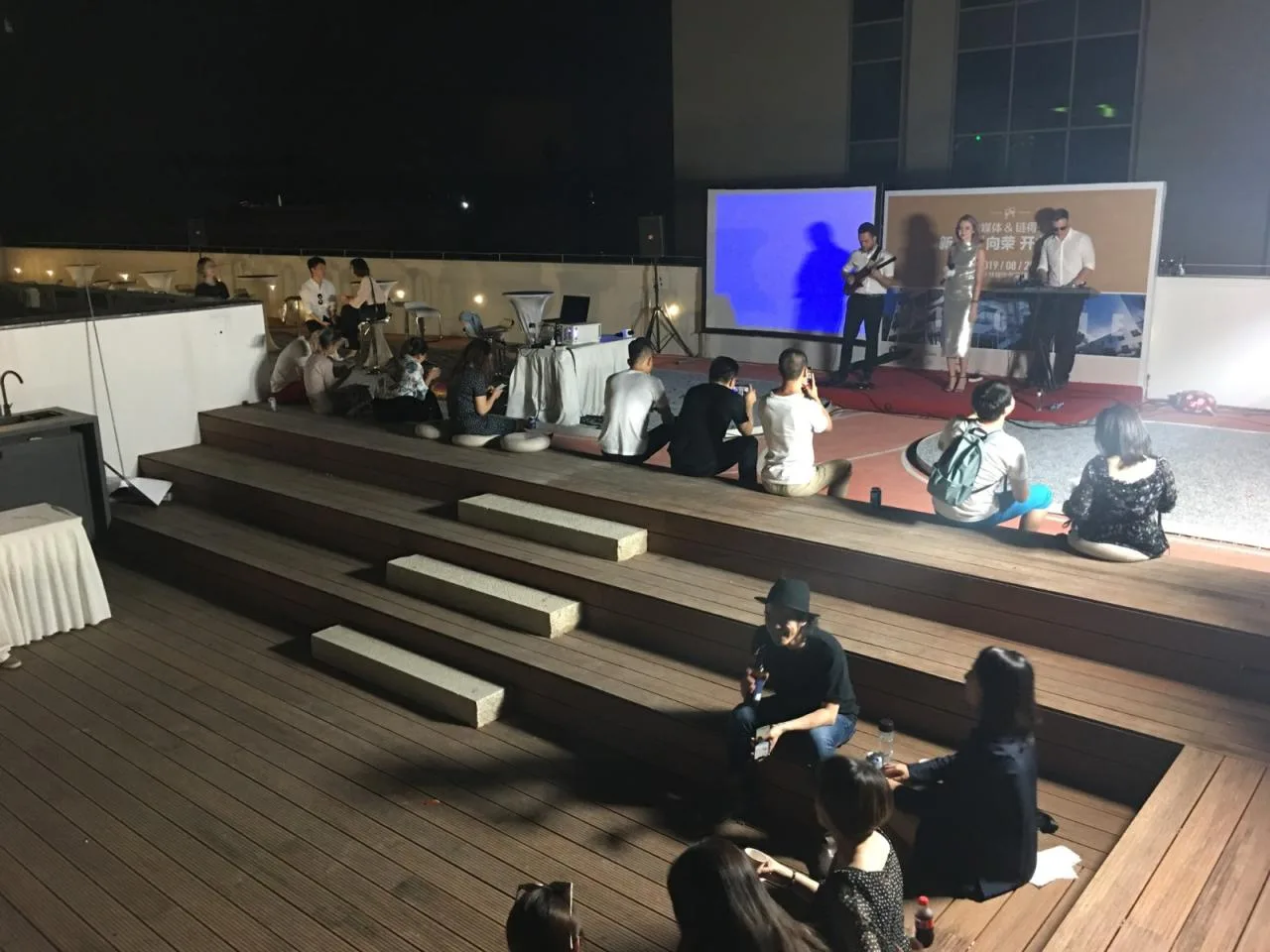
The height differences between roof sections form a semi-enclosed small theater. This panoramic and easily accessible rooftop encourages exercise, relaxation, gatherings, and community events.
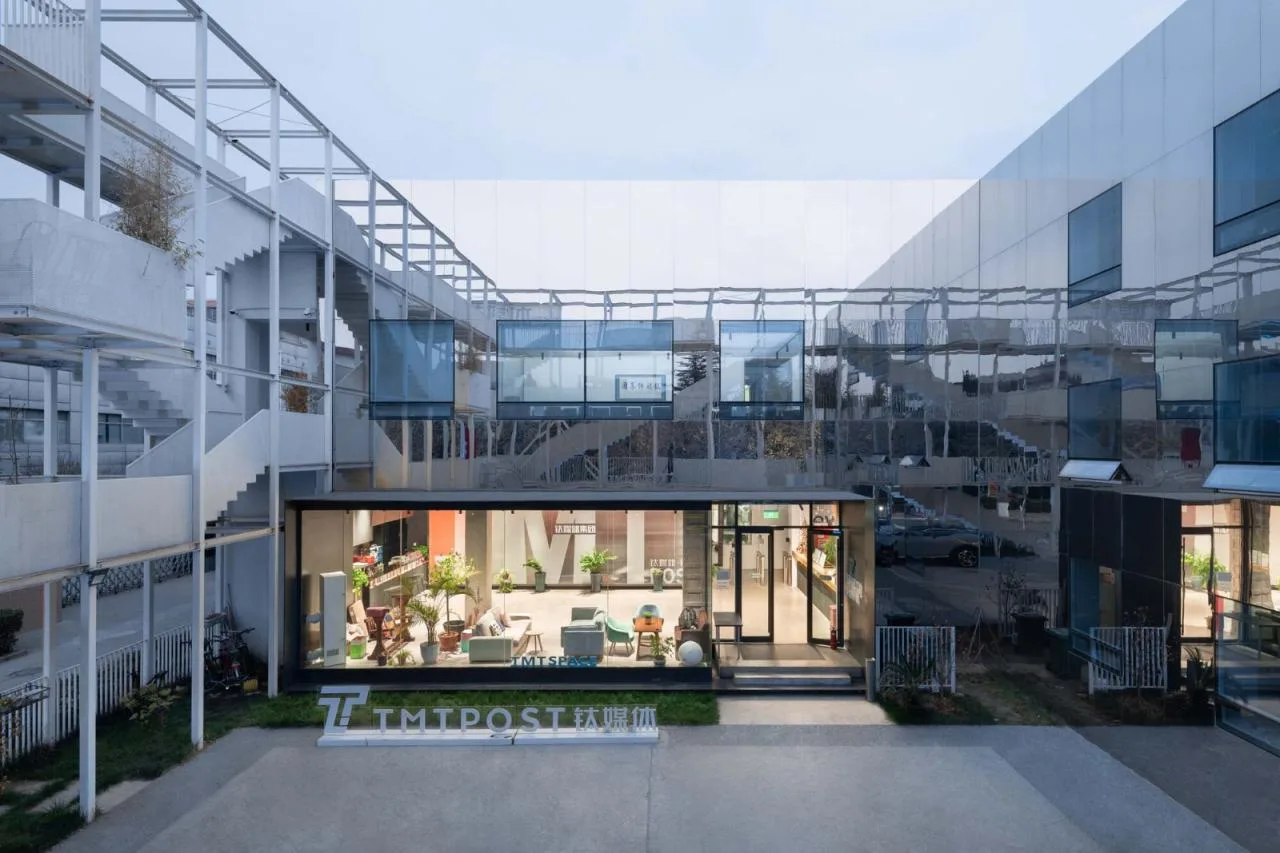
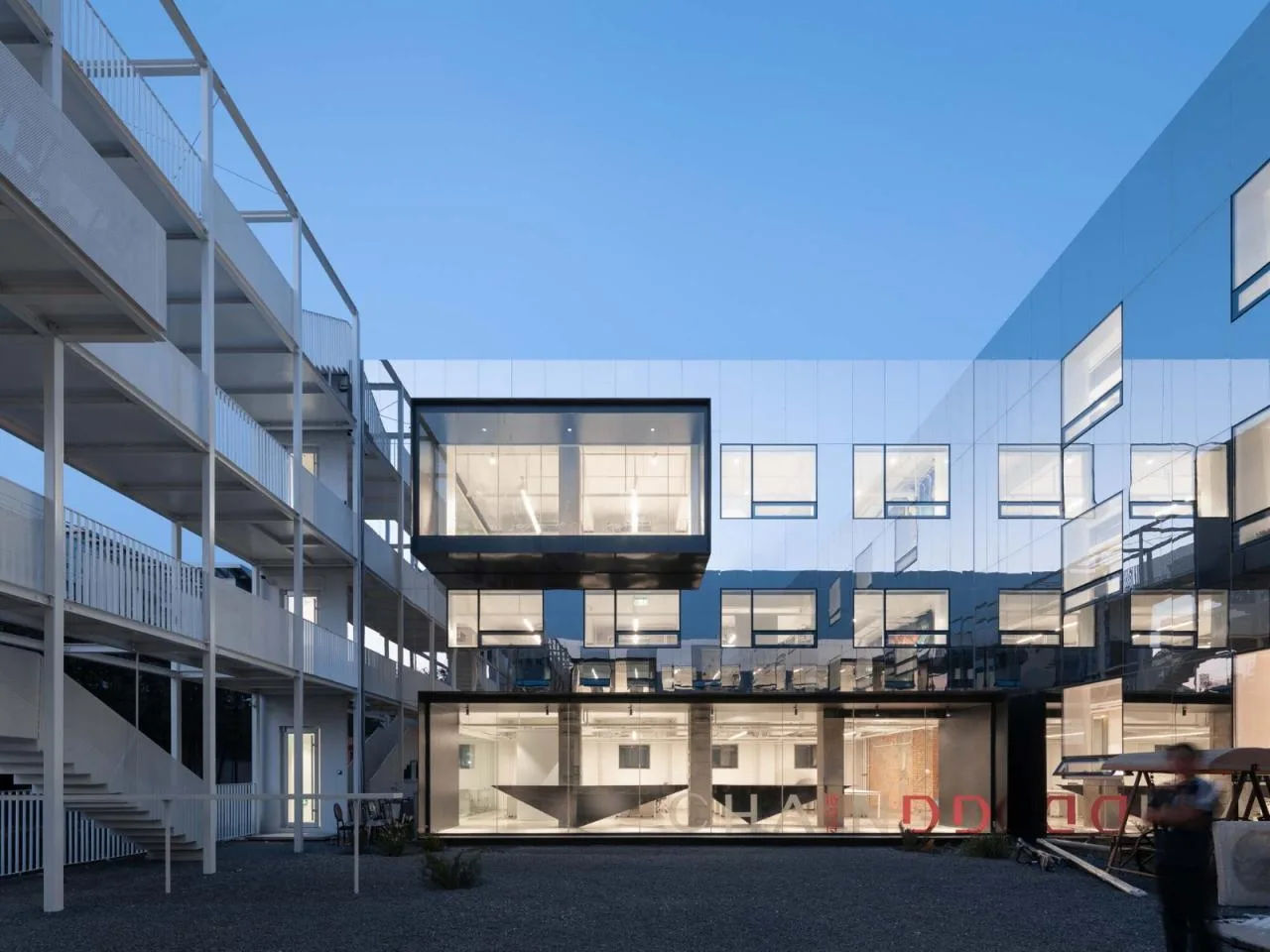
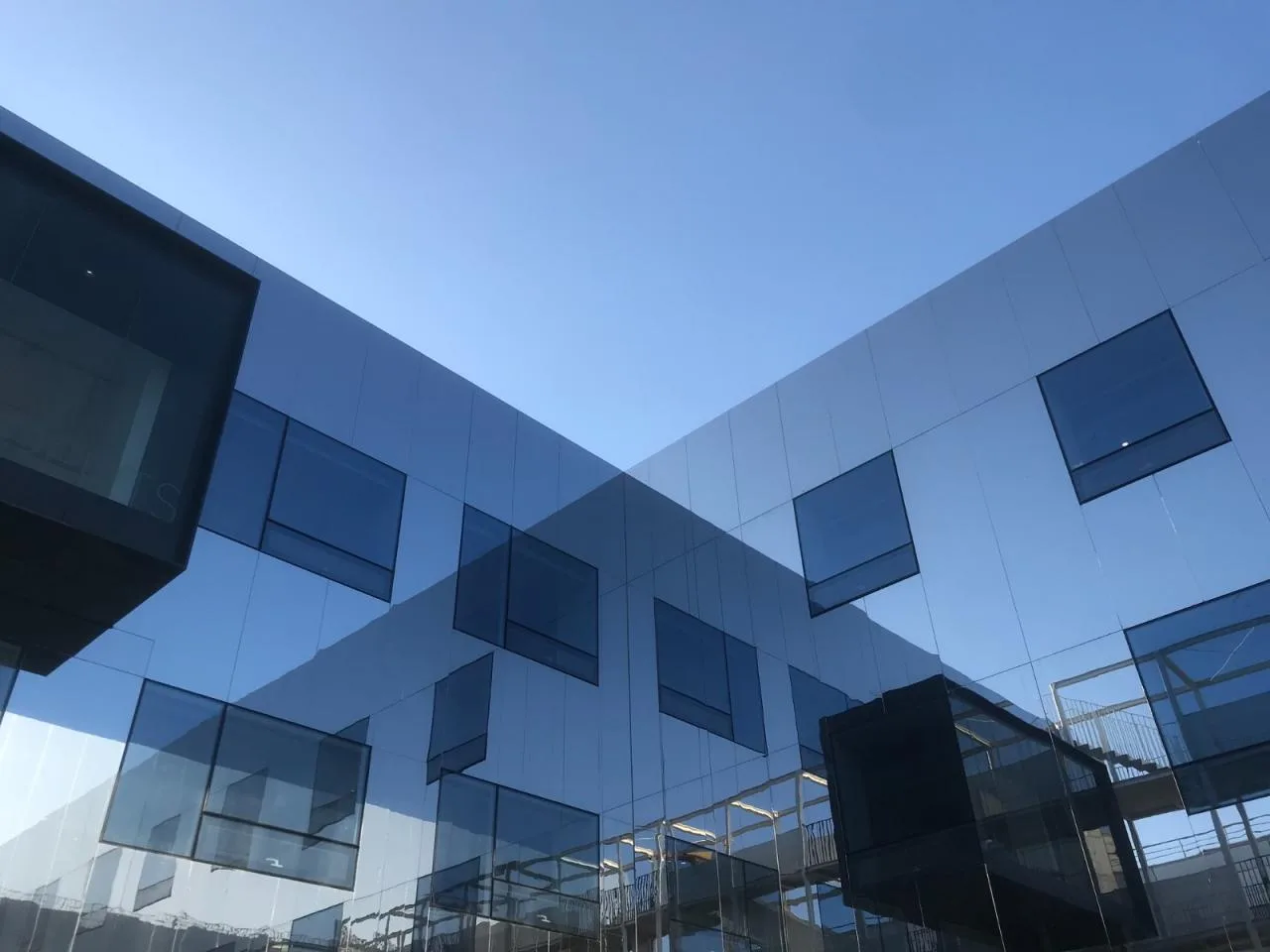
Rather than carving out the building’s appearance, the design cloaks all facades facing the site interior with mirrored honeycomb panels. This causes the buildings to visually recede, allowing the surrounding environment and human activities to become the building’s most vivid “expressions.”
The originally narrow courtyard and limited park space are visually amplified through mirror reflections, creating a “reverse folding” of space that merges virtual and real experiences.
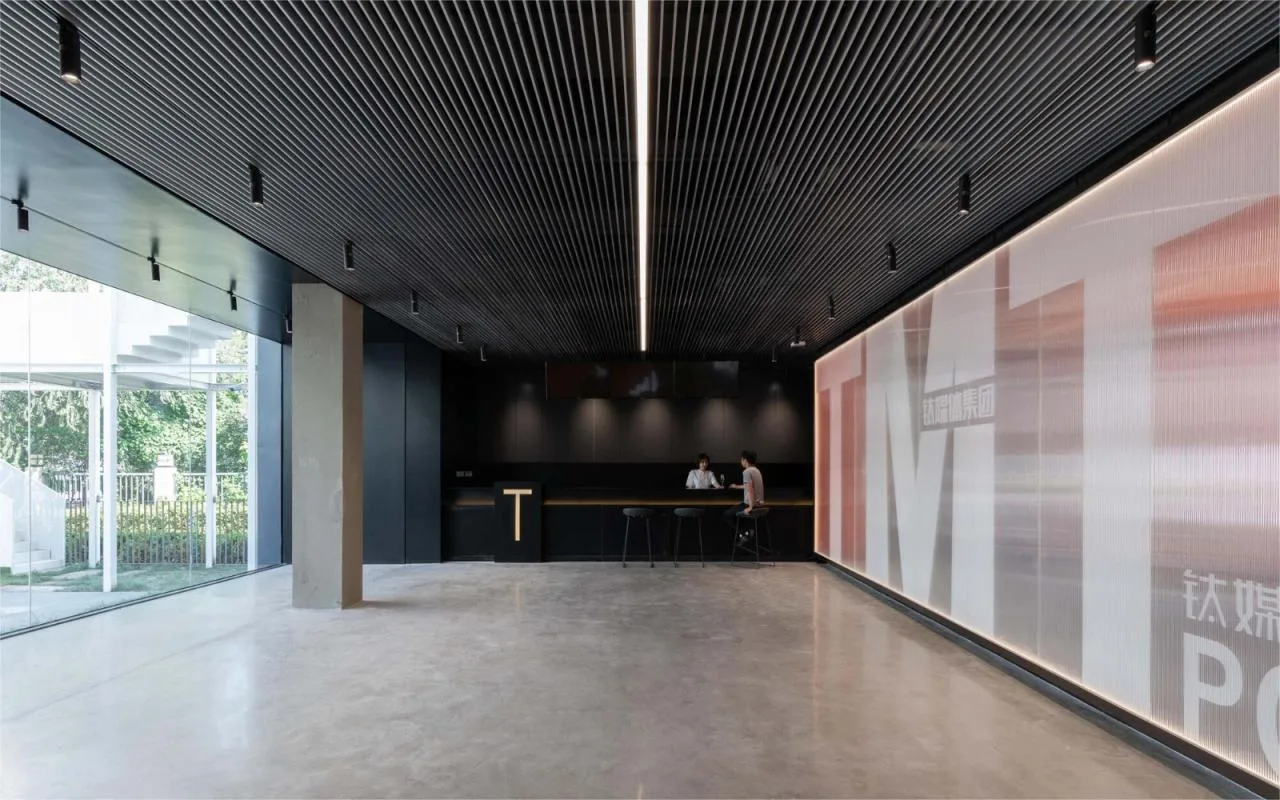
The interior renovation addressed the original police station’s cramped and enclosed spaces, which conflicted with the open, free-flowing atmosphere needed for a new media office.
Preserving the main structure, the design deconstructs and reshapes internal spaces and circulation. The entrance hall’s exterior wall was replaced with a lightweight, transparent glass box that blurs the boundary between indoors and the front yard, flooding the interior with natural light and views.
Inside the lobby, a glass box houses a gym. Semi-transparent rainbow glass creates playful light and shadow effects on its surface, connecting interior and exterior activities visually.
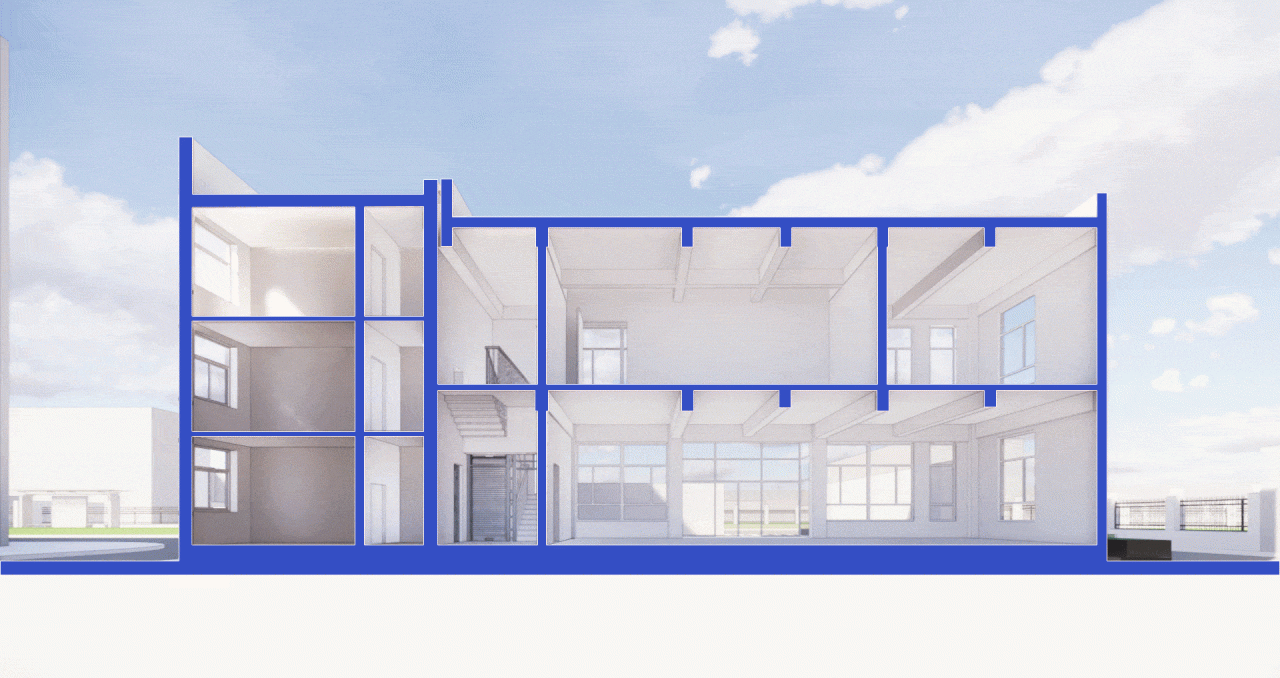
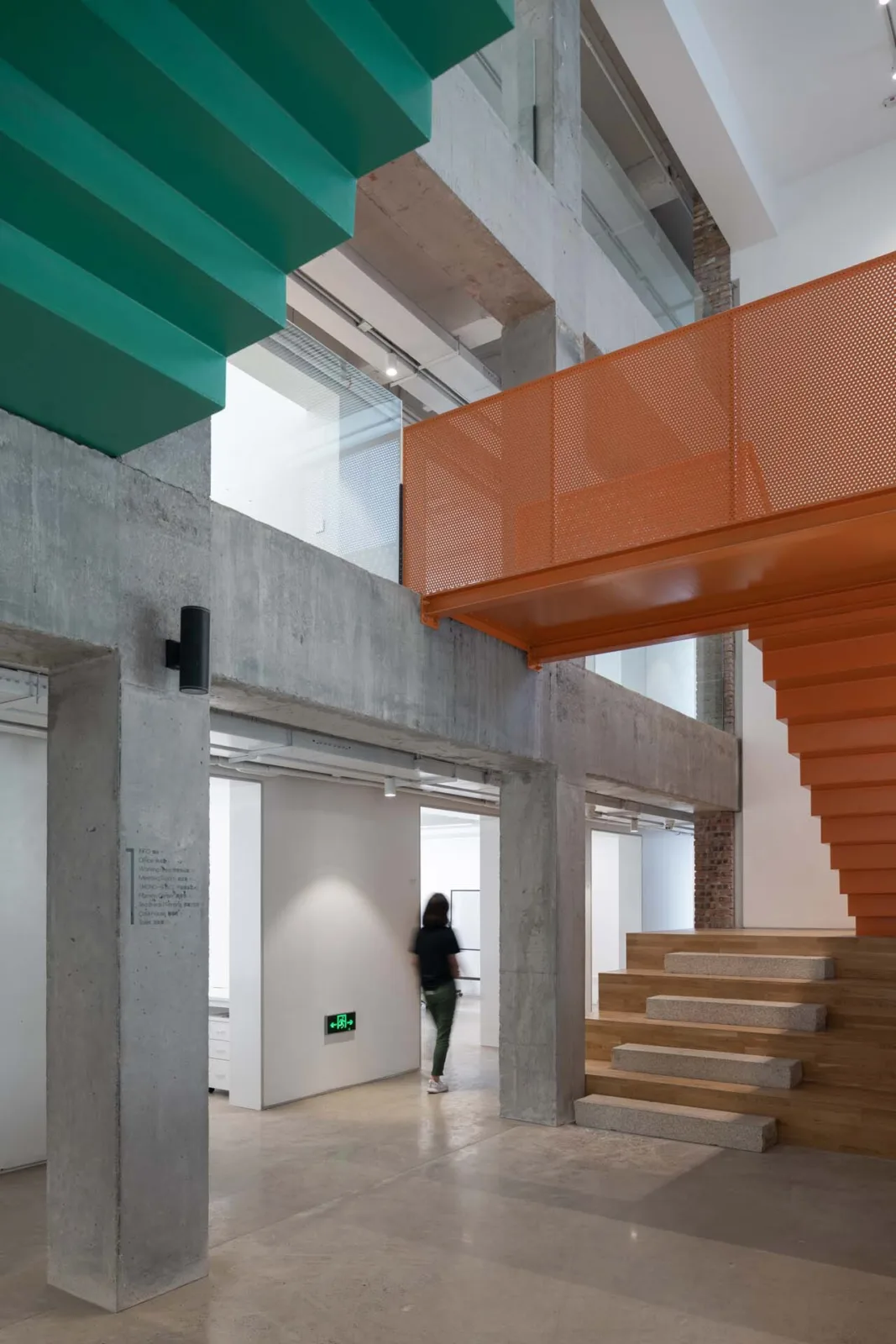
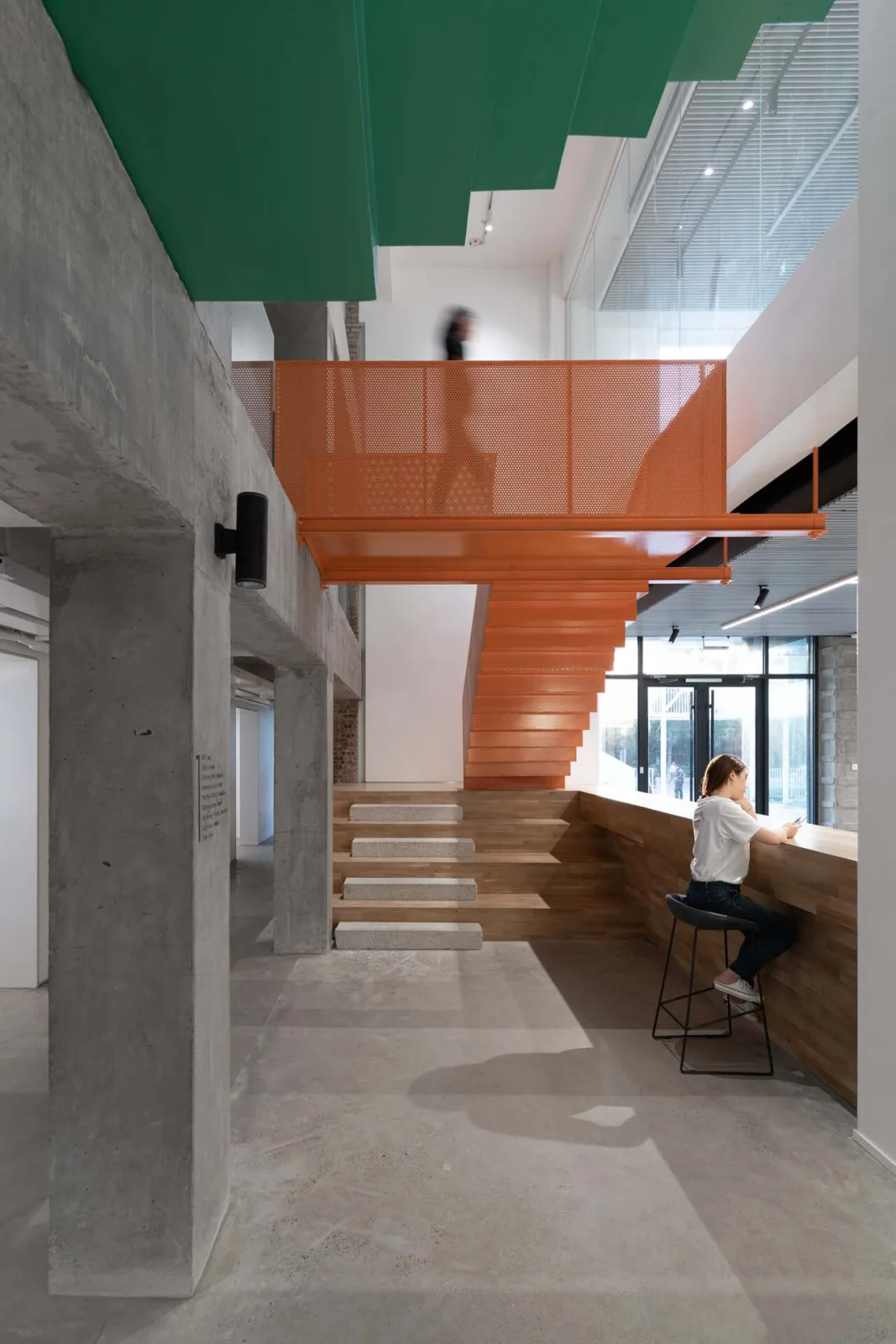
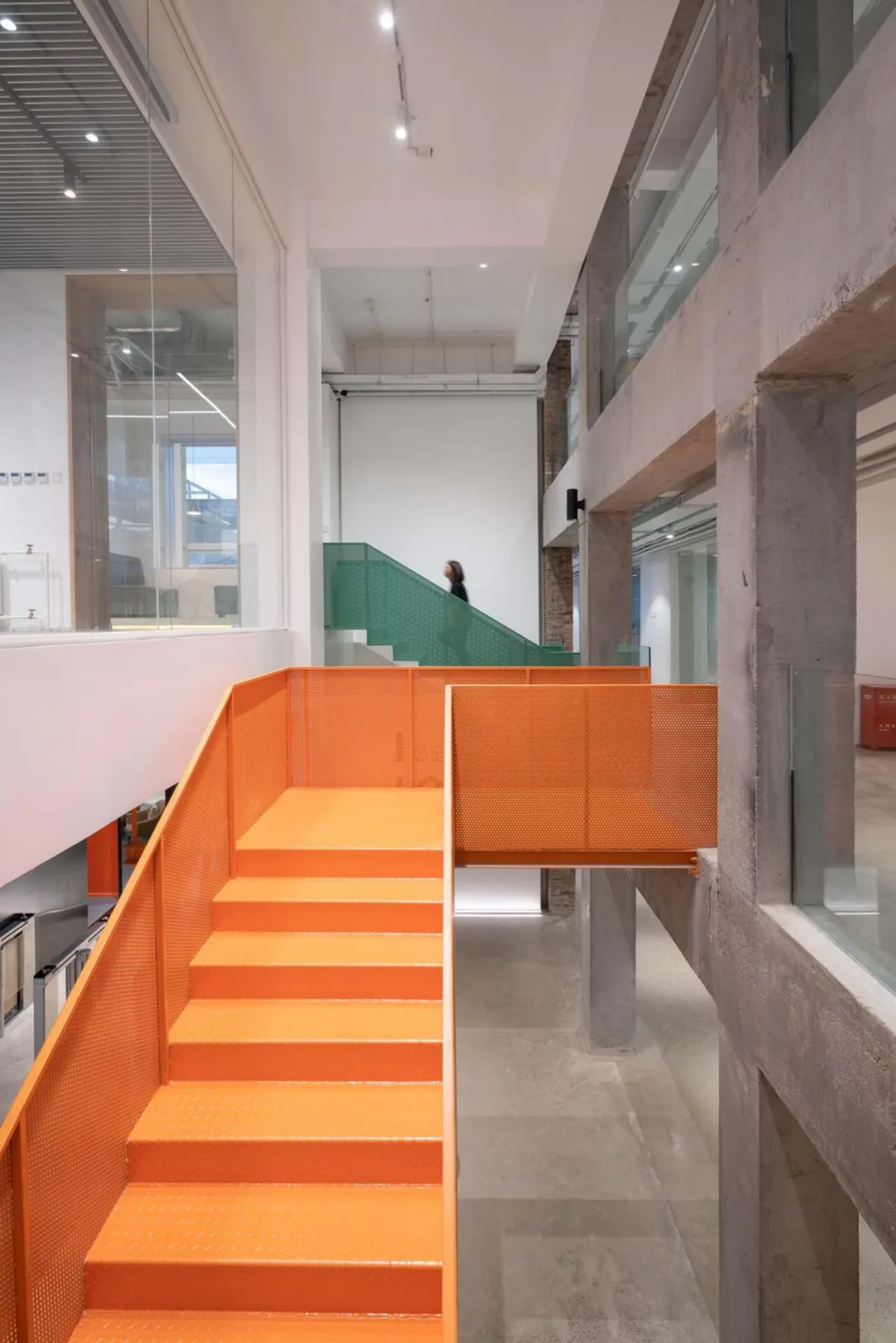
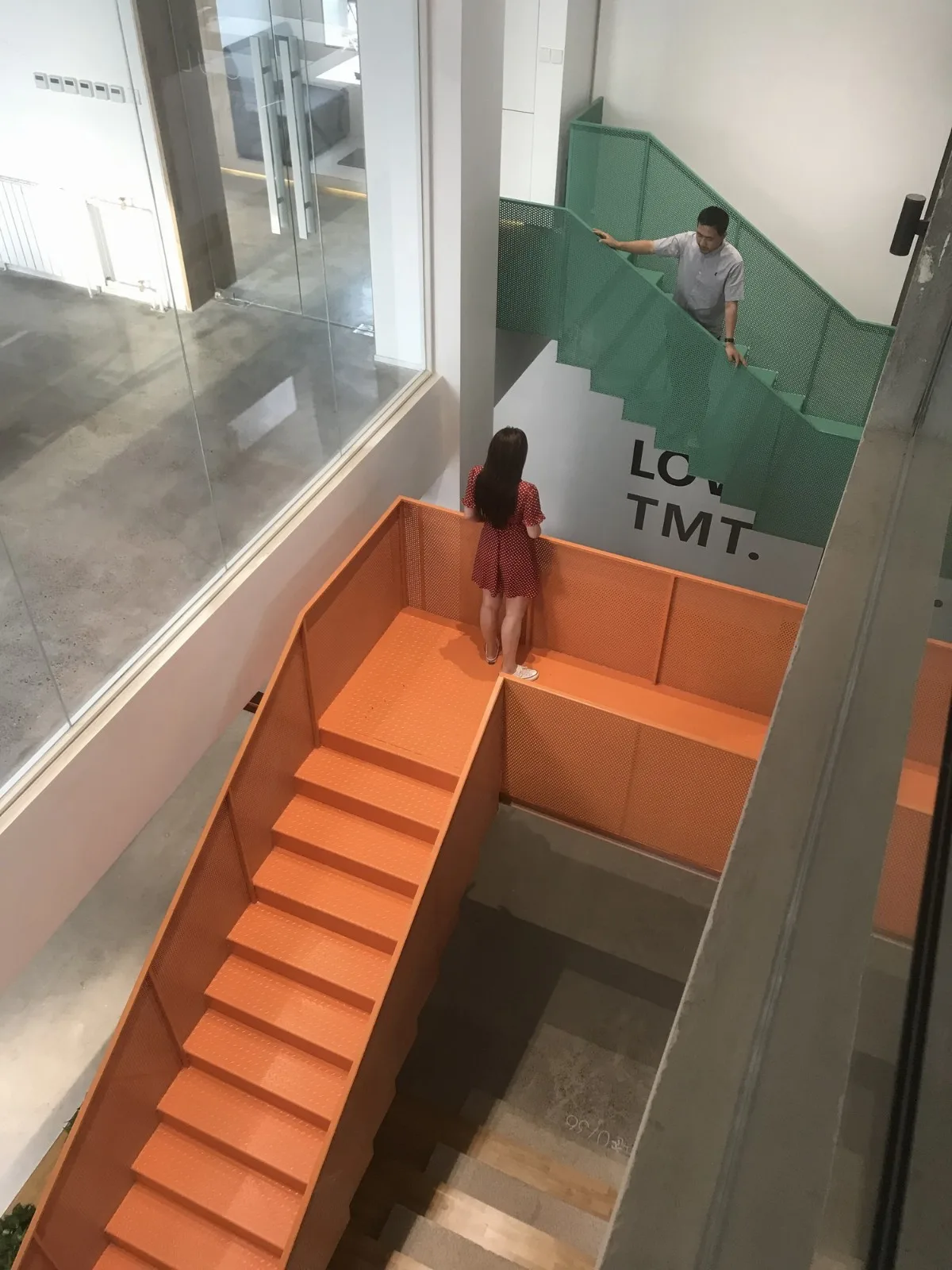
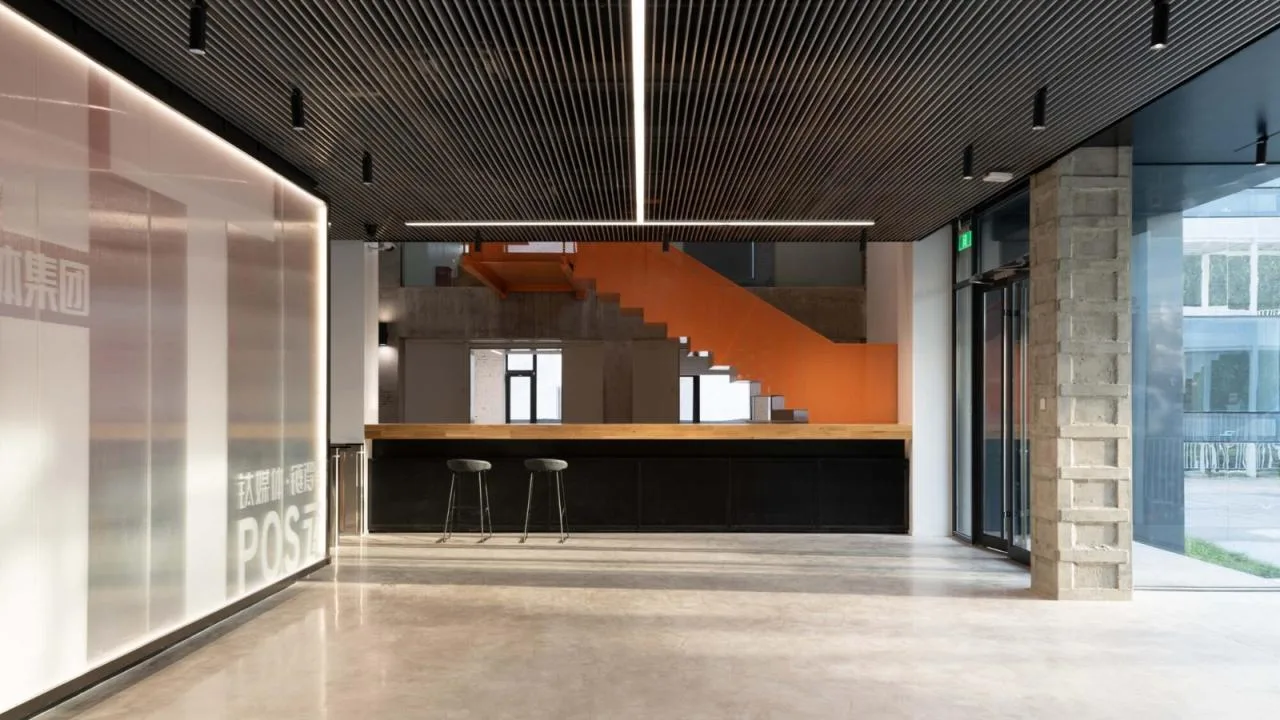
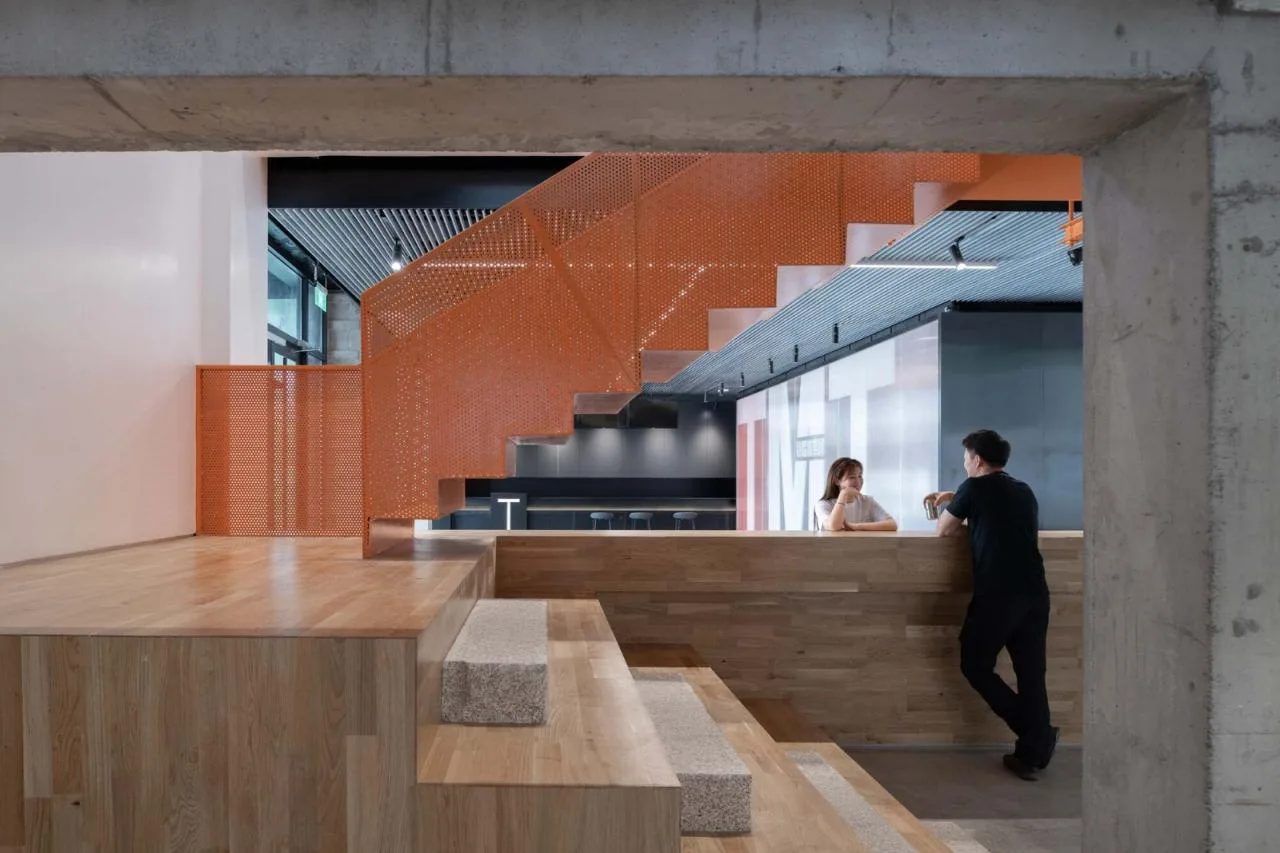
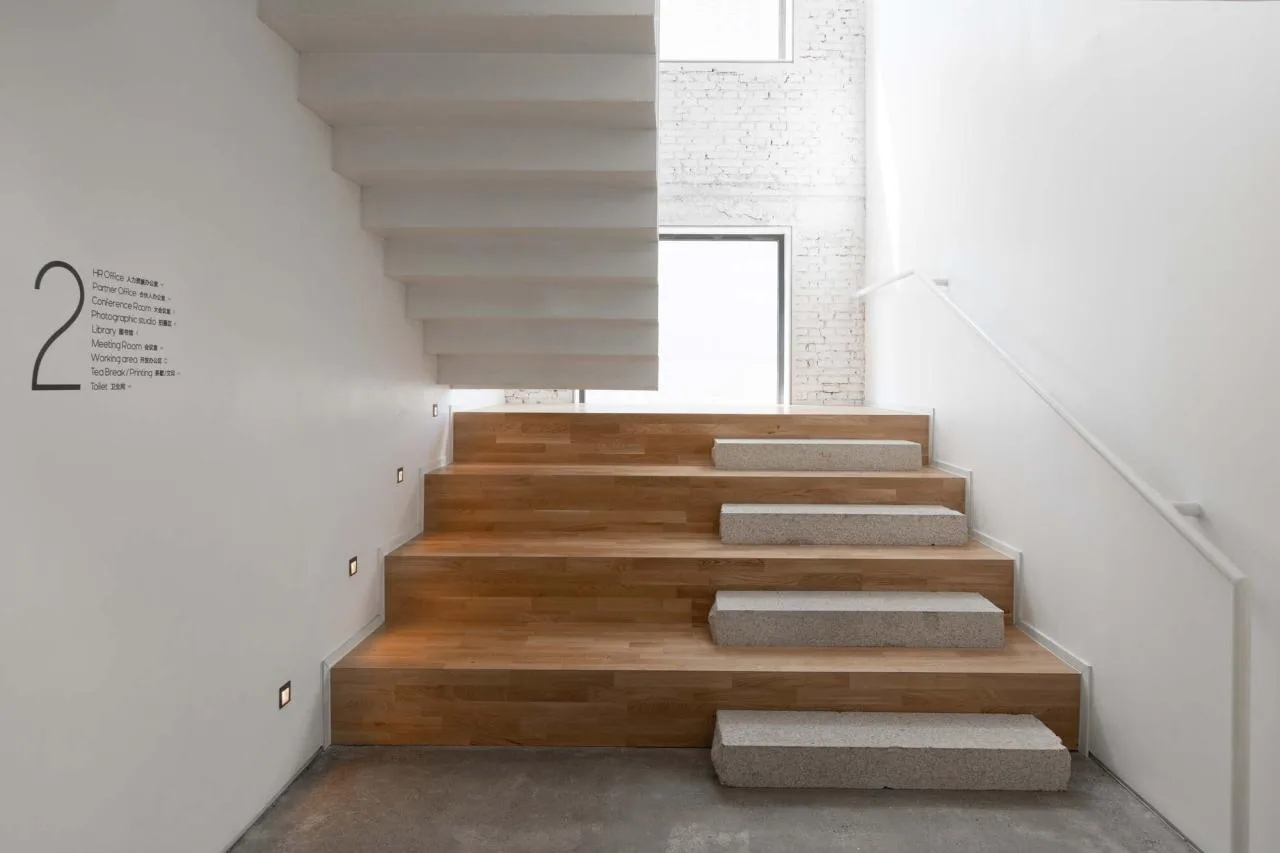
The staircase on the entrance hall’s south side was expanded into a raised atrium, connecting three previously isolated floors visually and spatially. The stair itself was dismantled and rebuilt, staggered between courtyards to maximize opportunities for people to see and interact with each other.
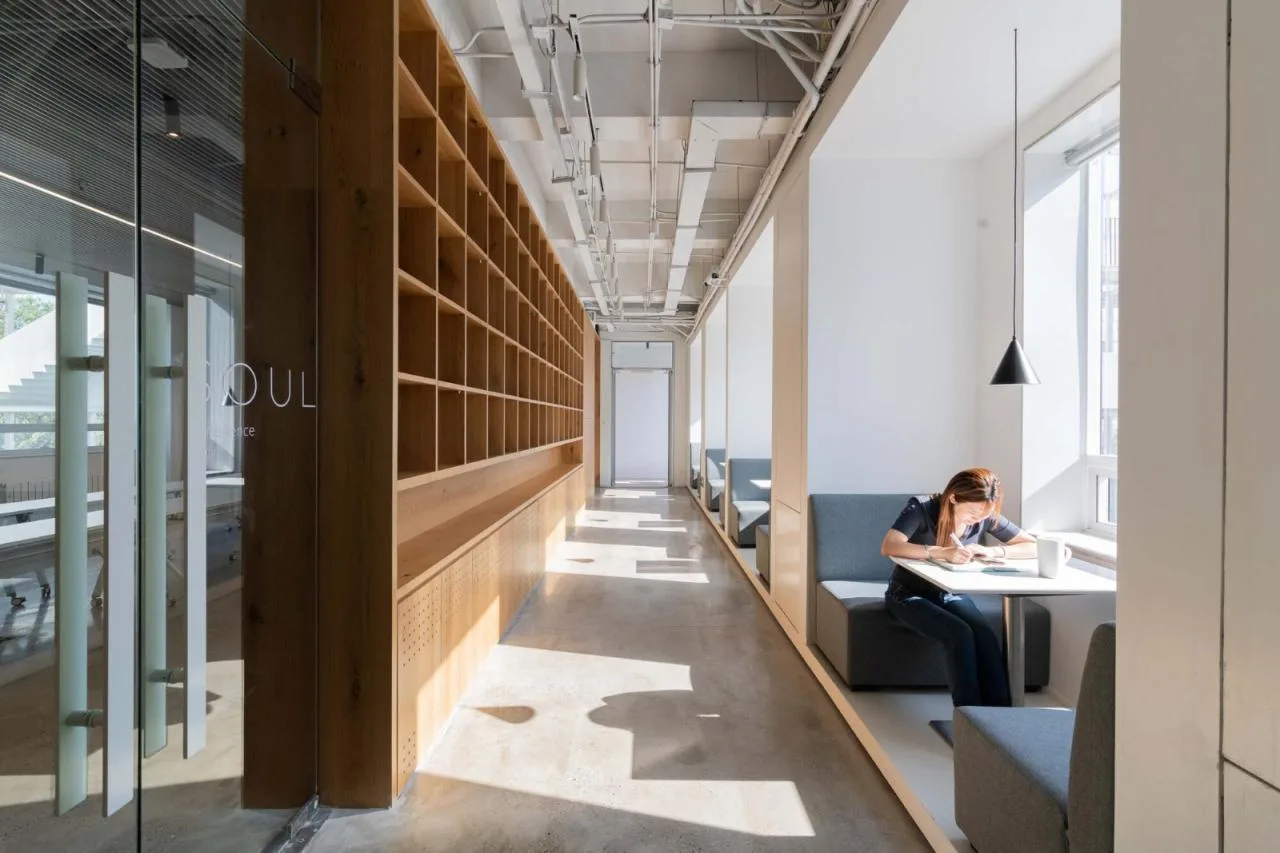
Through subtle spatial movements and functional integration, many areas serve multiple purposes. Corridor widths were precisely calculated to accommodate reading rooms; the bottom of the stairs was enlarged into a wooden retreat platform that doubles as a display and seating area.
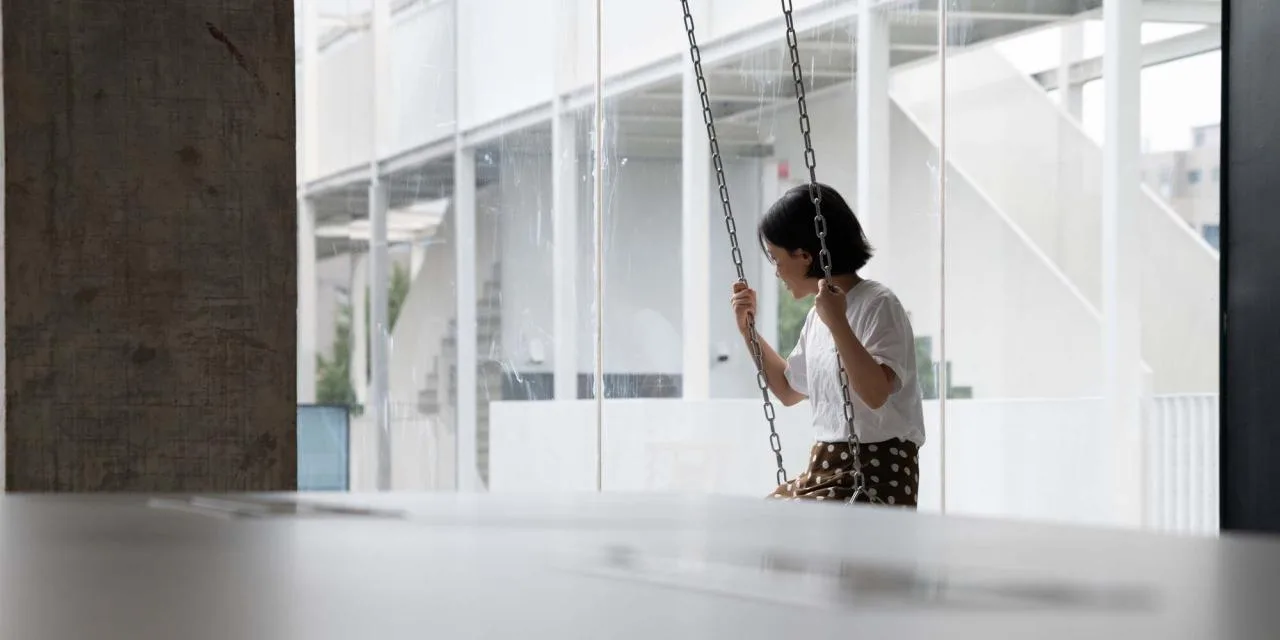
The first floor extends towards the inner courtyard, forming a bar-style workspace around the columns. A glass box protruding into the air serves as both a conference room and a lounge with swings.
Conclusion
This may be considered an “improper” architectural design, as the building—which originally dominated the entire site—disappears into its surroundings. Instead, the overlooked and seemingly insignificant outdoor spaces become the site’s main focus.
We view architecture not as an end in itself but as a medium. Rather than creating a bold, heroic structure, we chose to create a humble, soft, and inviting spatial state. Our hope is that this environment quietly nurtures and attracts public life, continuously generating new urban vitality, even though it is not a public building.
This design does not chase novelty in form but explores the potential of urban public spaces from a grassroots perspective. It seeks to uncover overlooked public values within conventions and inspire similar projects.
Throughout design and construction, many challenges arose. We extend special thanks to local government and users for their trust, support, and coordination, which made this exploration possible.
Before Renovation
Project Drawings
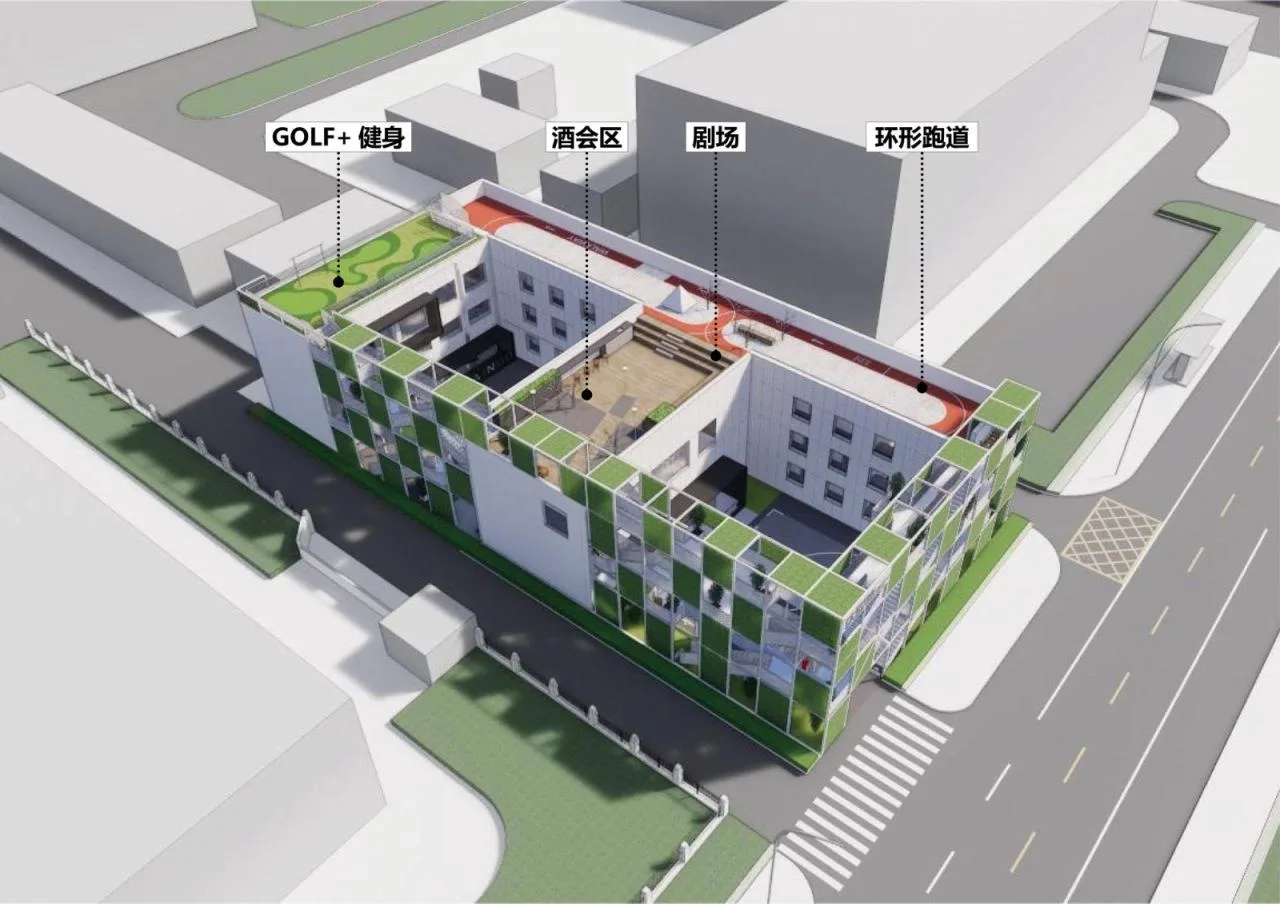
△ Functional Zoning
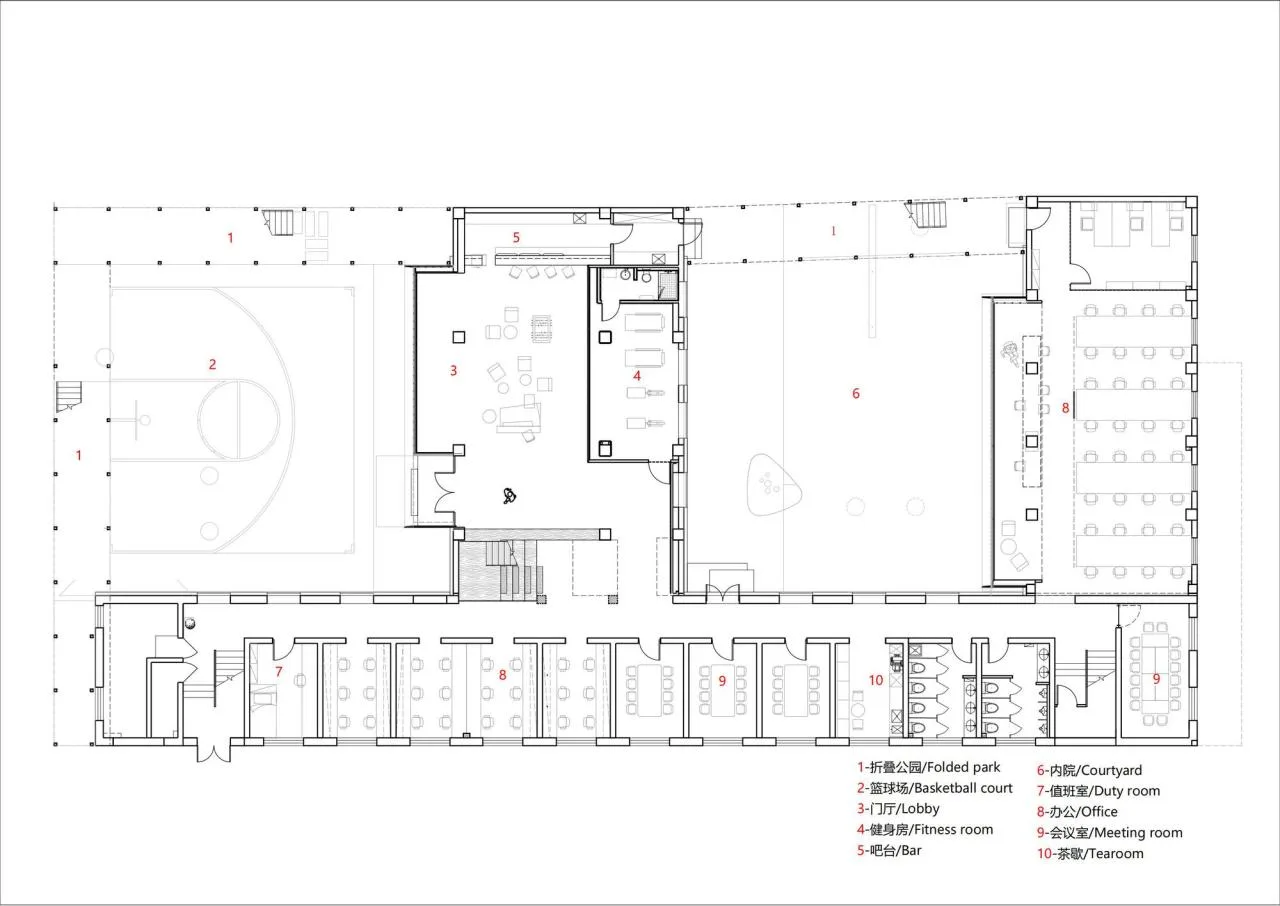
△ First Floor Plan
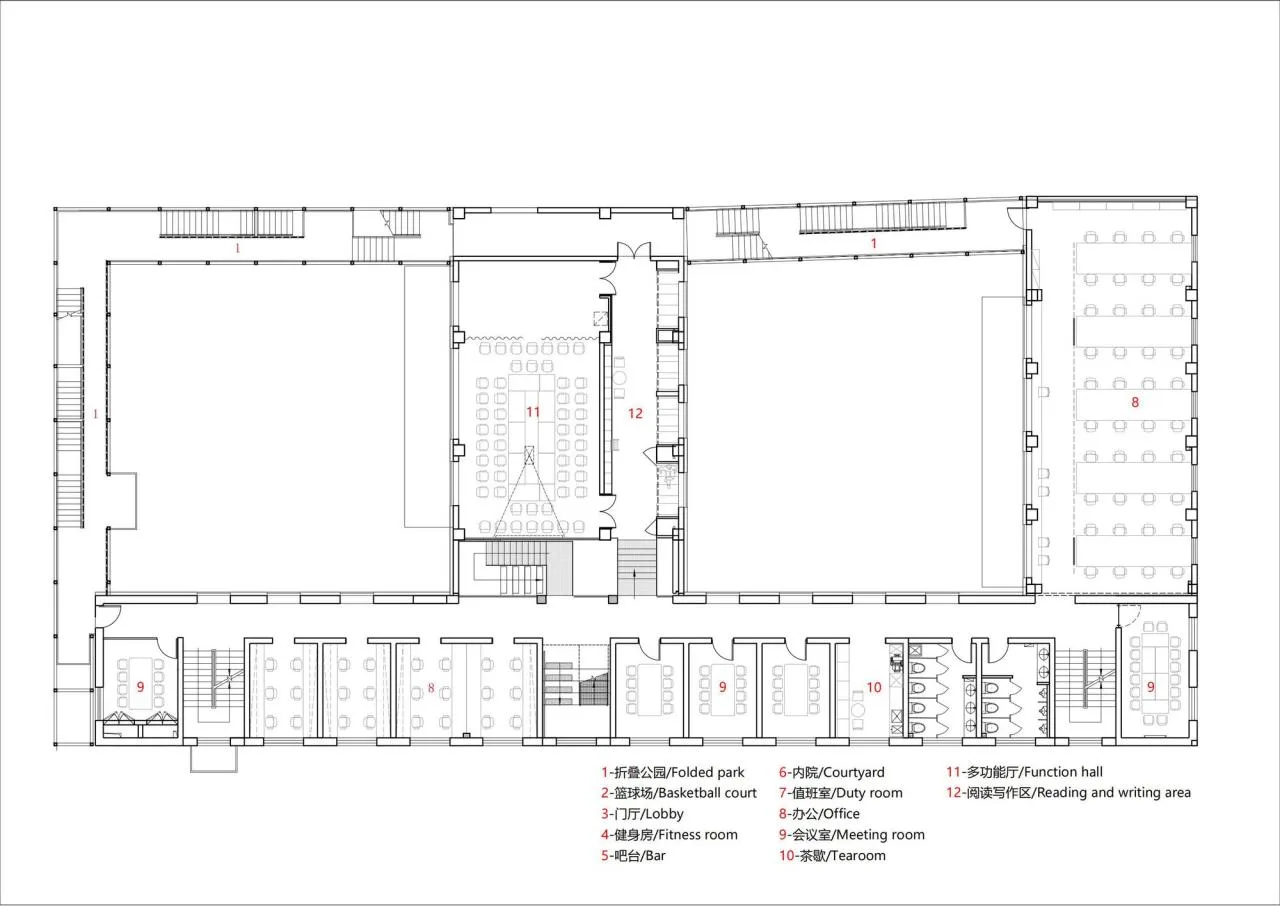
△ Second Floor Plan
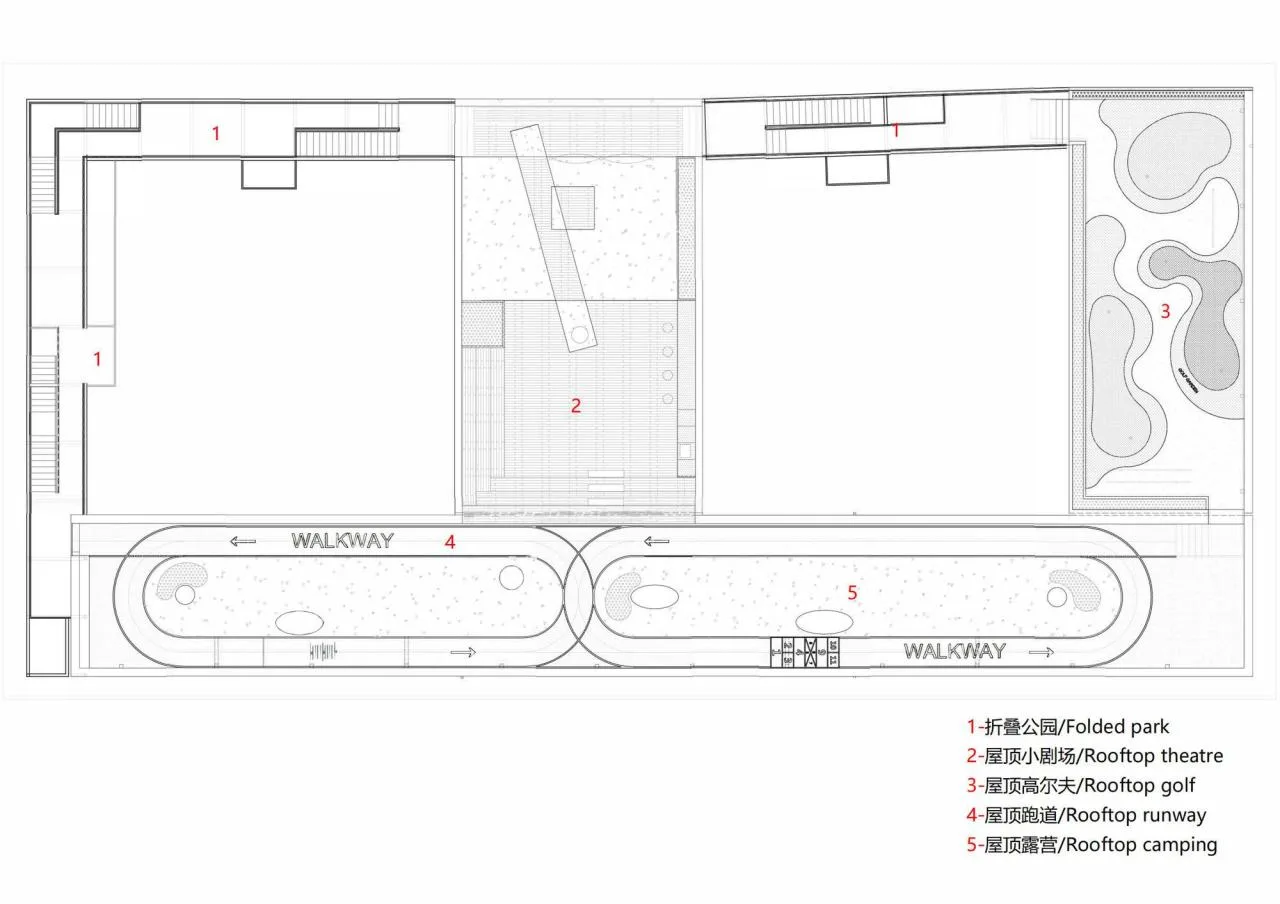
△ Roof Plan
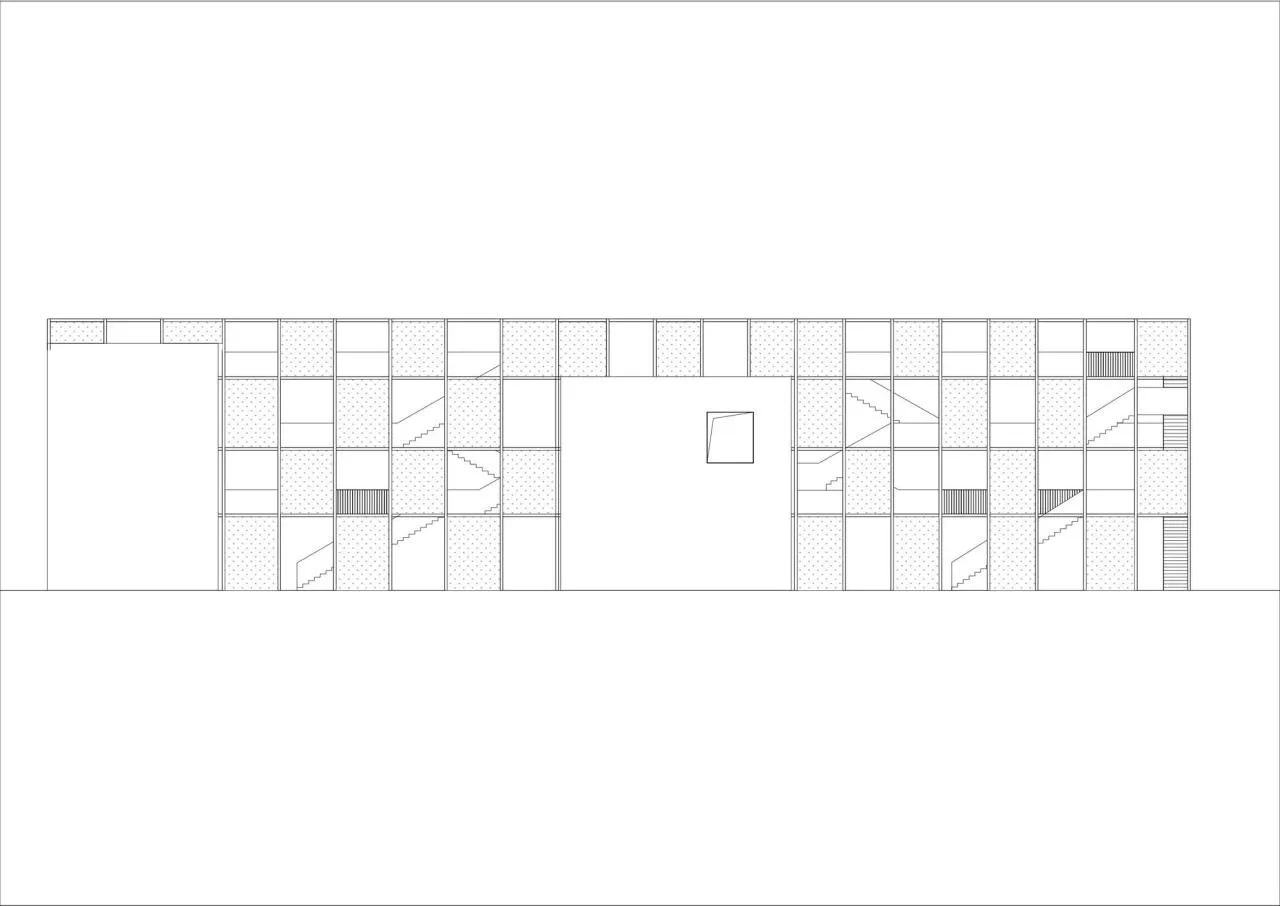
△ Elevation Drawing
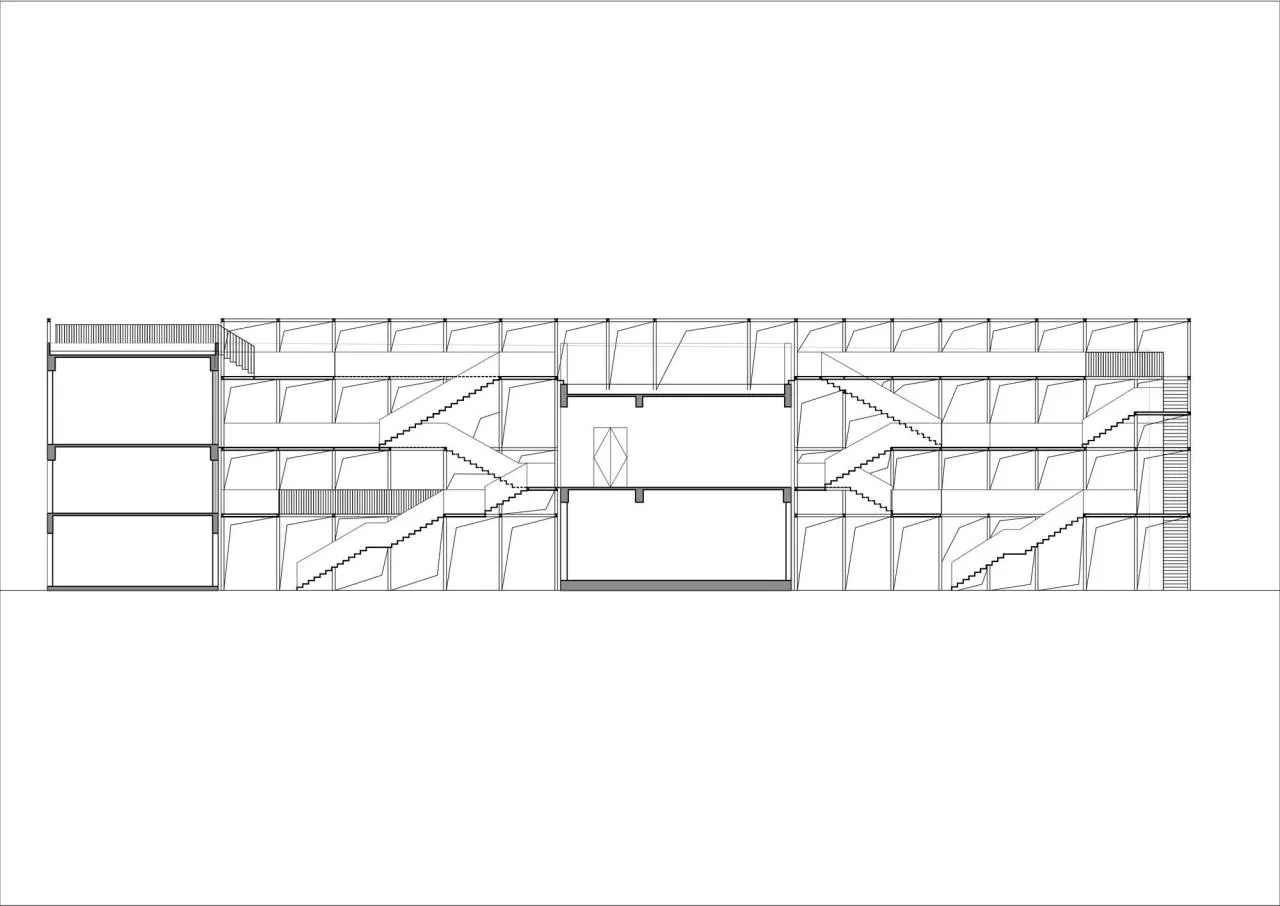
△ Section Diagram
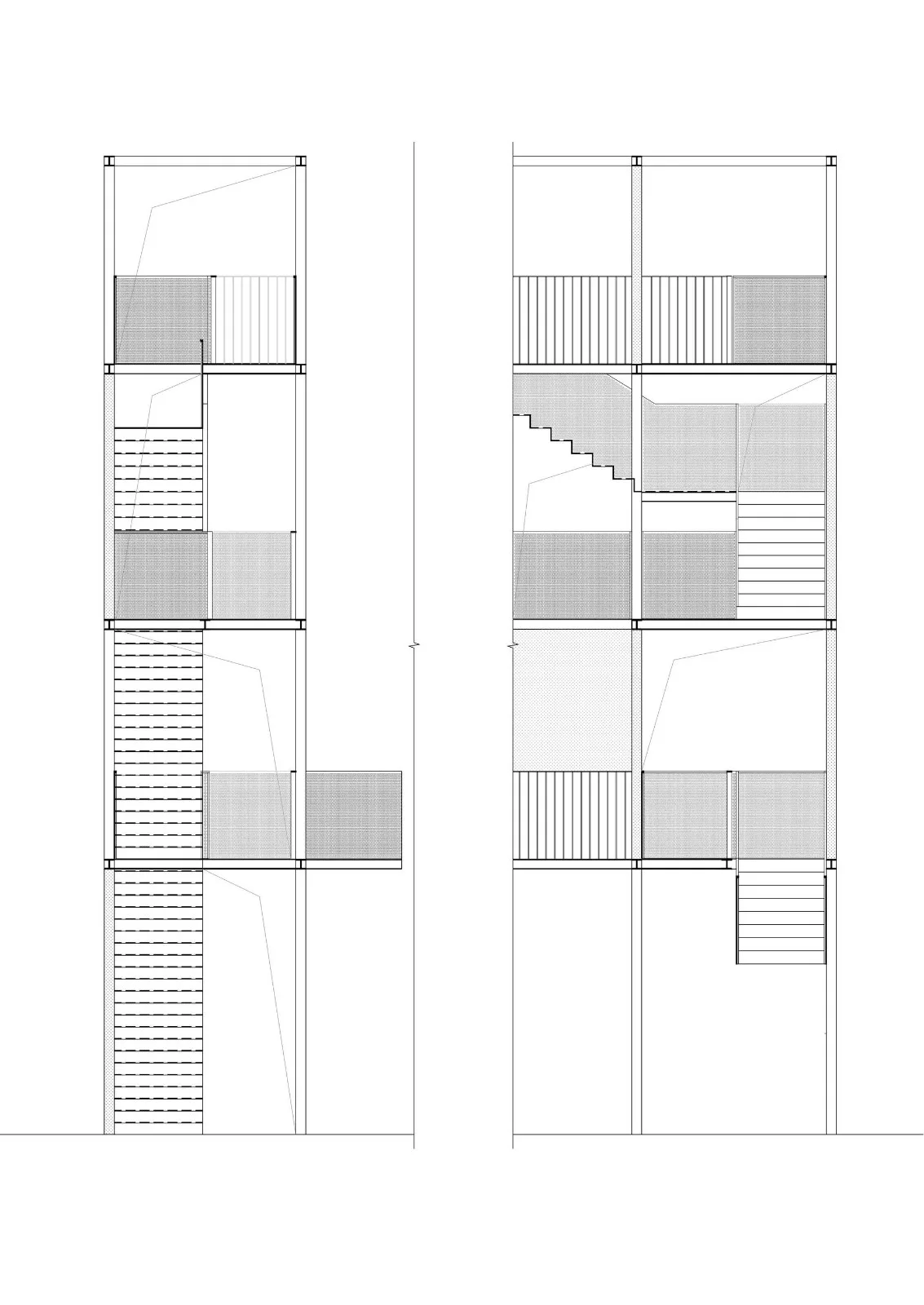
△ Stair Section Diagram
Project Information
Architect: Close to Design
Area: 1844 m²
Project Year: 2019
Photographer: Nature Image
Lead Architect: Madi
Partner: Zhejiang University of Technology Engineering Design Group Co., Ltd
Project User: Titanium Media Group
Location: Beijing














Must log in before commenting!
Sign Up