
The traditional process of reviewing BIM model drawings mainly involves receiving construction drawings from the owner. Various professionals then familiarize themselves with these drawings to identify any issues. Following this, relevant personnel—including supervisors, design teams, project managers, production managers, business managers, technicians, construction workers, budget officers, and quality inspectors from the project management department—gather to collectively review the drawings. They discuss and address the problems found, and finally, document the meeting minutes as a guide for construction.
The application of BIM technology significantly enhances the drawing review process by enabling model creation and collision detection. The details are as follows:
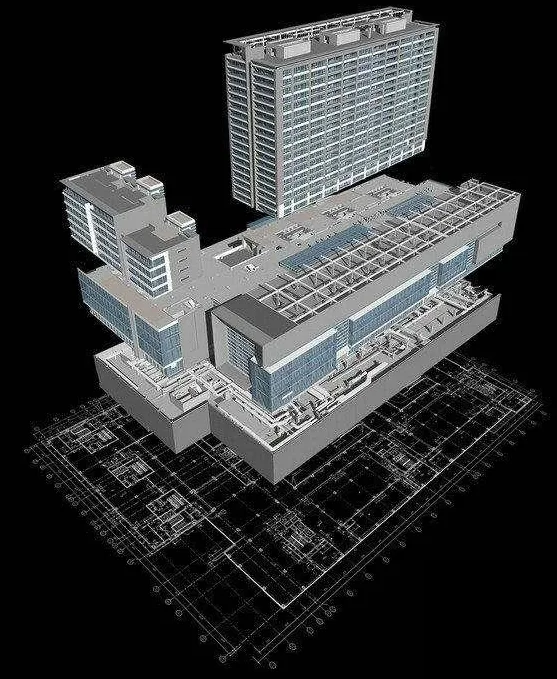
1. Identifying Drawing Issues During Model Creation
During the process of building models across various disciplines within the project, numerous drawing problems are uncovered. These include missing or incorrect dimensions, inaccurate elevation annotations, inconsistencies between detailed drawings and floor plans, and mismatches between system diagrams and floor plans. All these issues are carefully recorded and summarized during model creation. They are then communicated and disclosed to all stakeholders during the drawing review phase to prevent delays and quality issues during construction, ultimately saving project costs.
2. Revealing Collision Issues Through Detection
After creating the basic BIM models for each discipline, the models are linked to Revit 2014, and the Revit collision detection feature is used to identify conflicts. As shown in the image, collisions between pipelines and other elements are detected. Many of these conflicts have been effectively resolved in advance through this collision checking process.
That concludes our overview of how BIM models can assist in the drawing review process. We hope this article provides valuable insights for everyone involved!
















Must log in before commenting!
Sign Up