
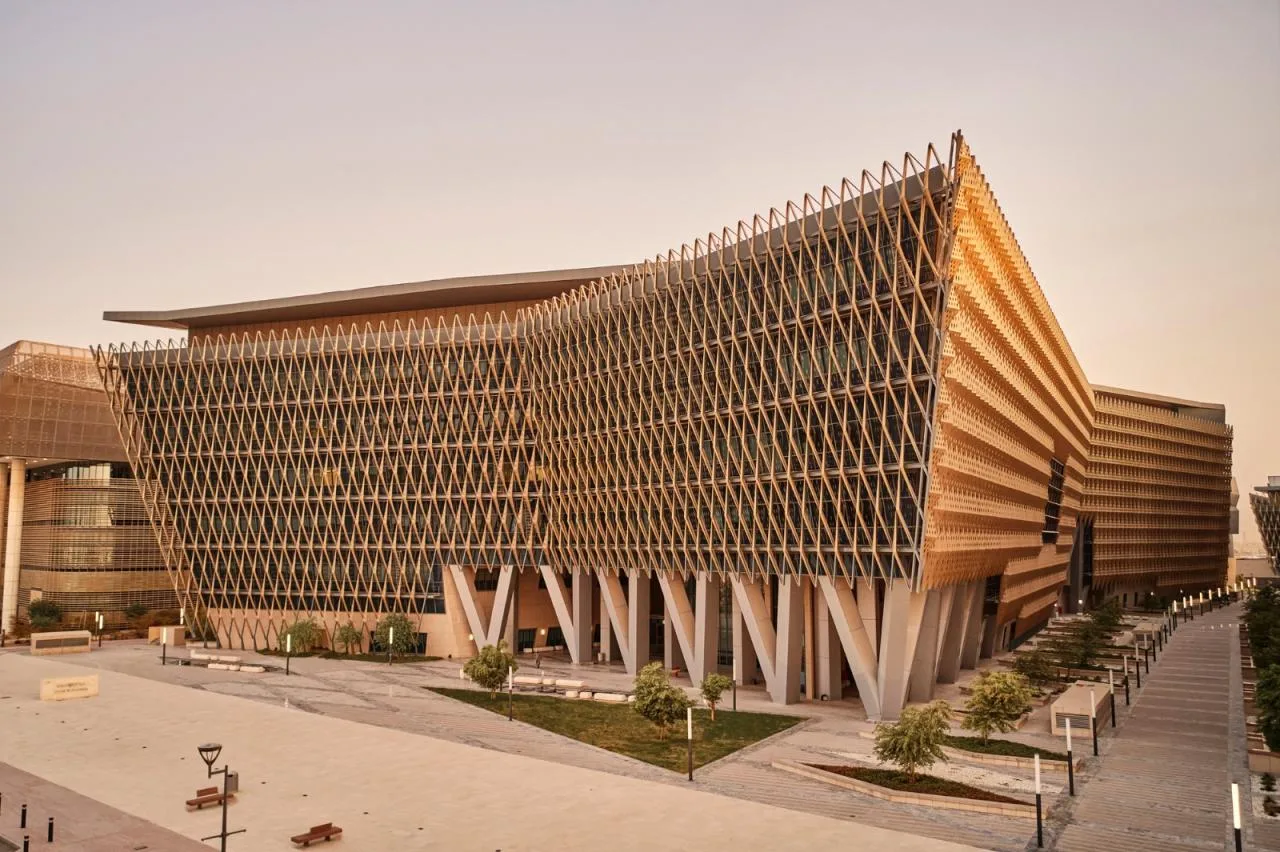
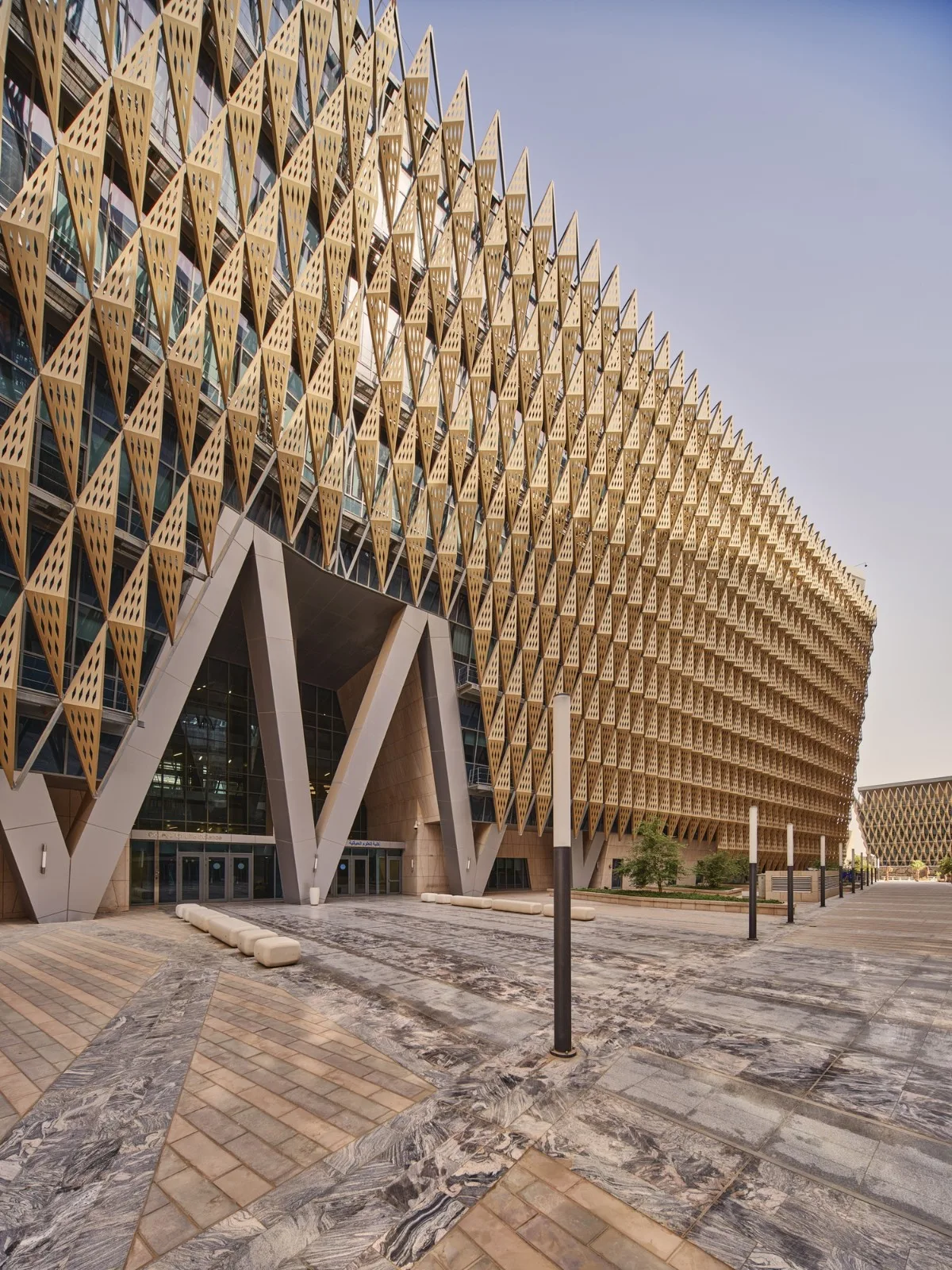
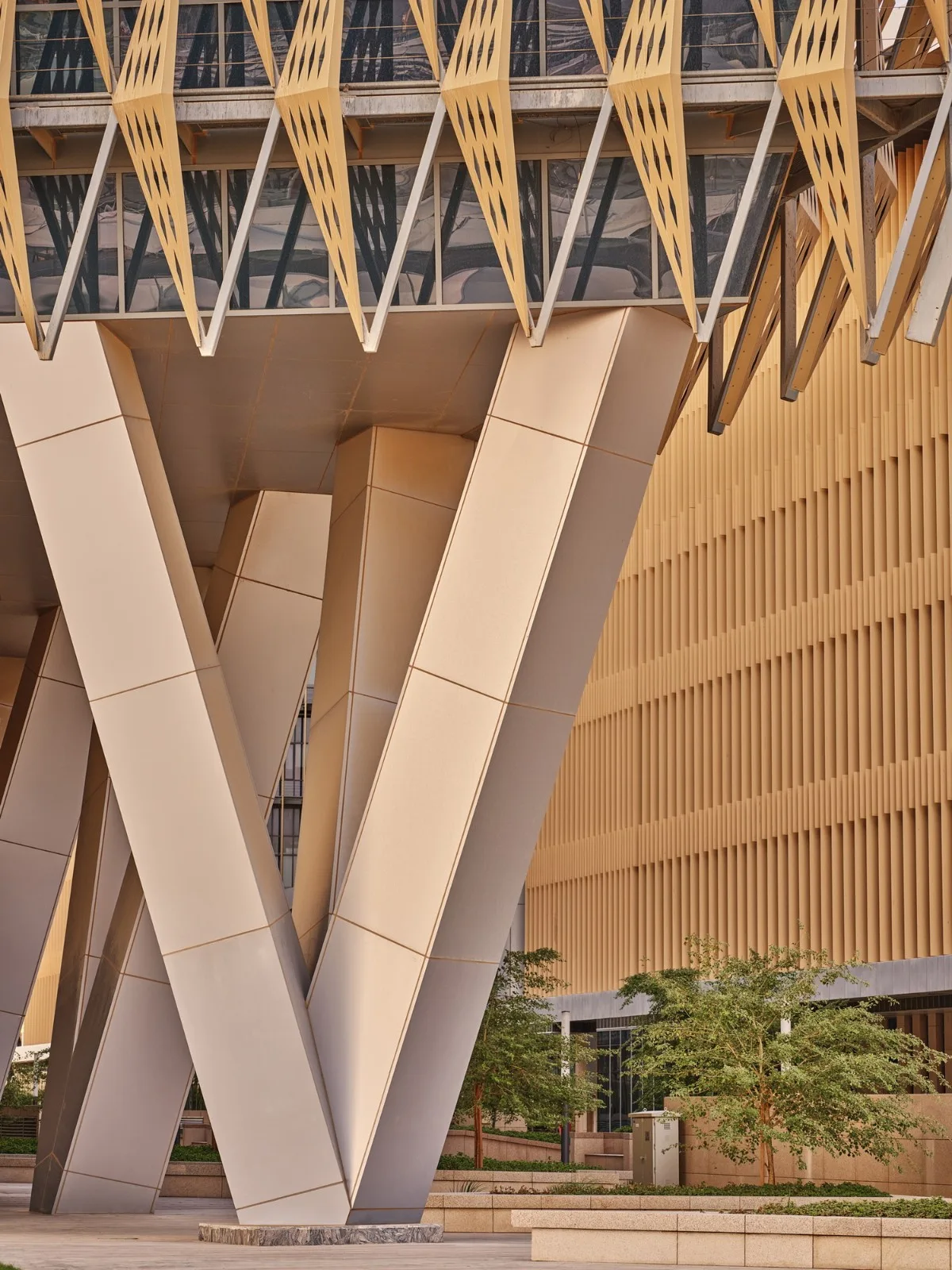
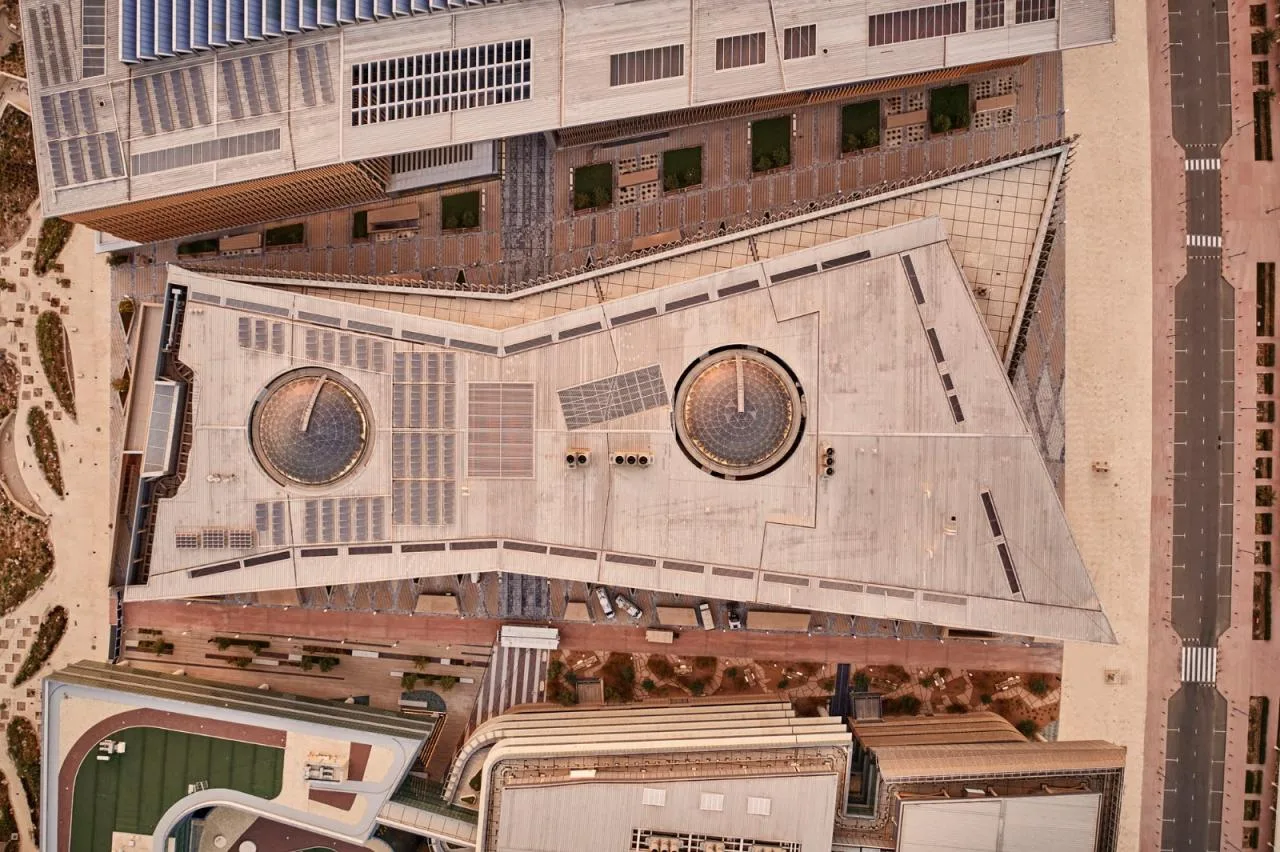
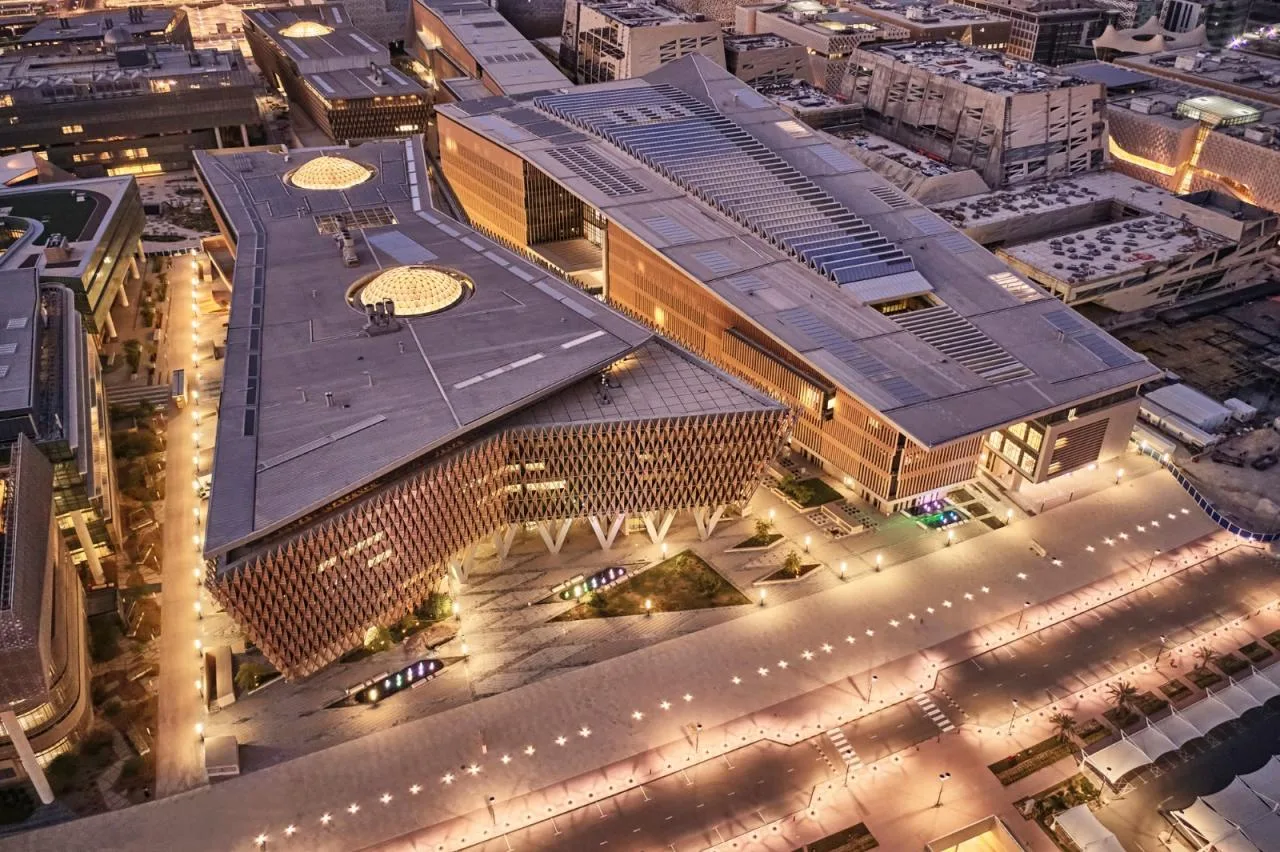
The Faculty of Life Sciences at Kuwait University stands as a refined architectural example that thoughtfully combines functional planning with sensitivity to site-specific and environmental conditions. This integration creates a distinctive and highly suitable environment for studying art and environmental sciences. The building is harmoniously embedded within the site, featuring a striking angular façade clad in desert-colored textured materials that draw immediate attention.
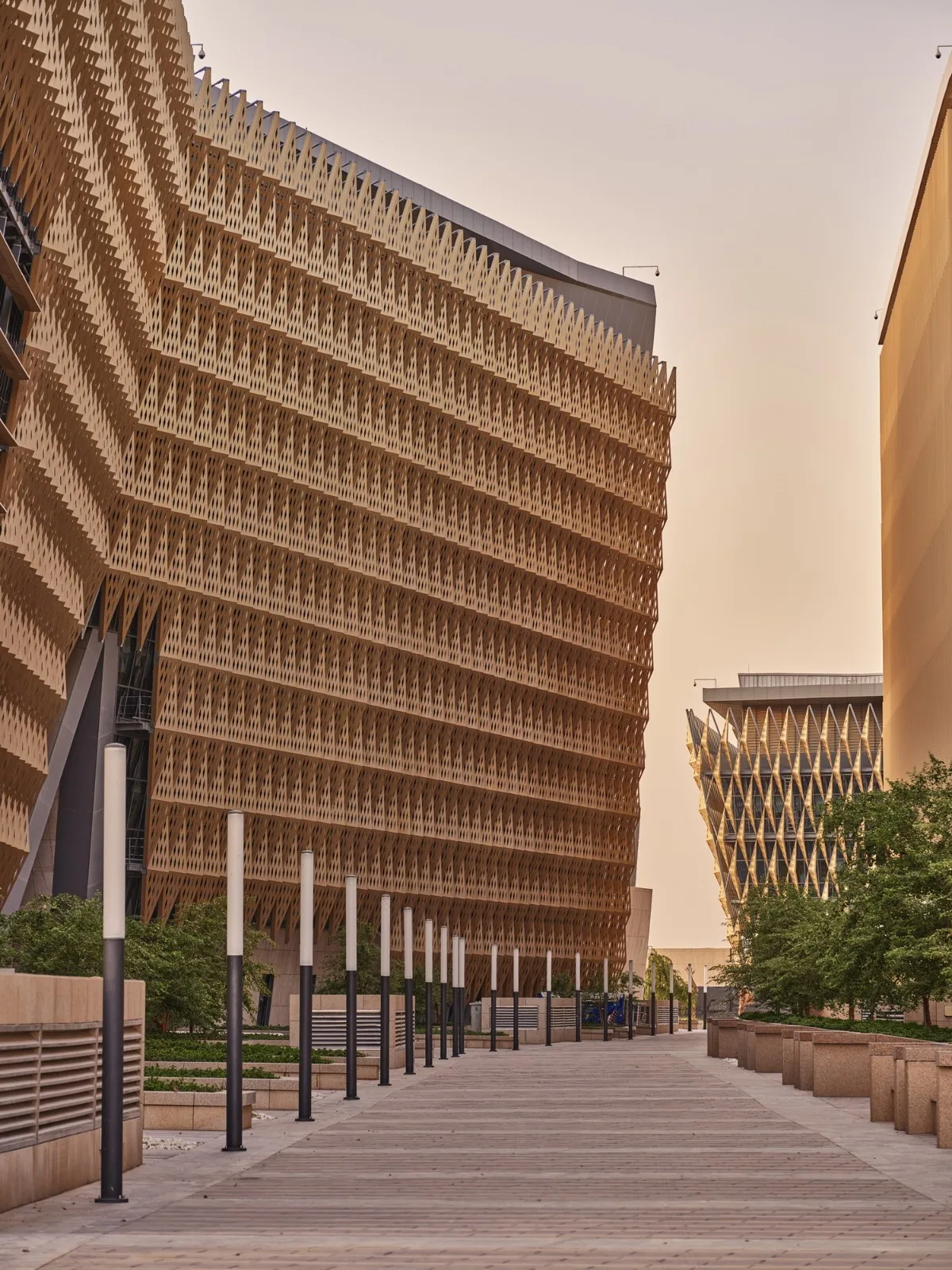
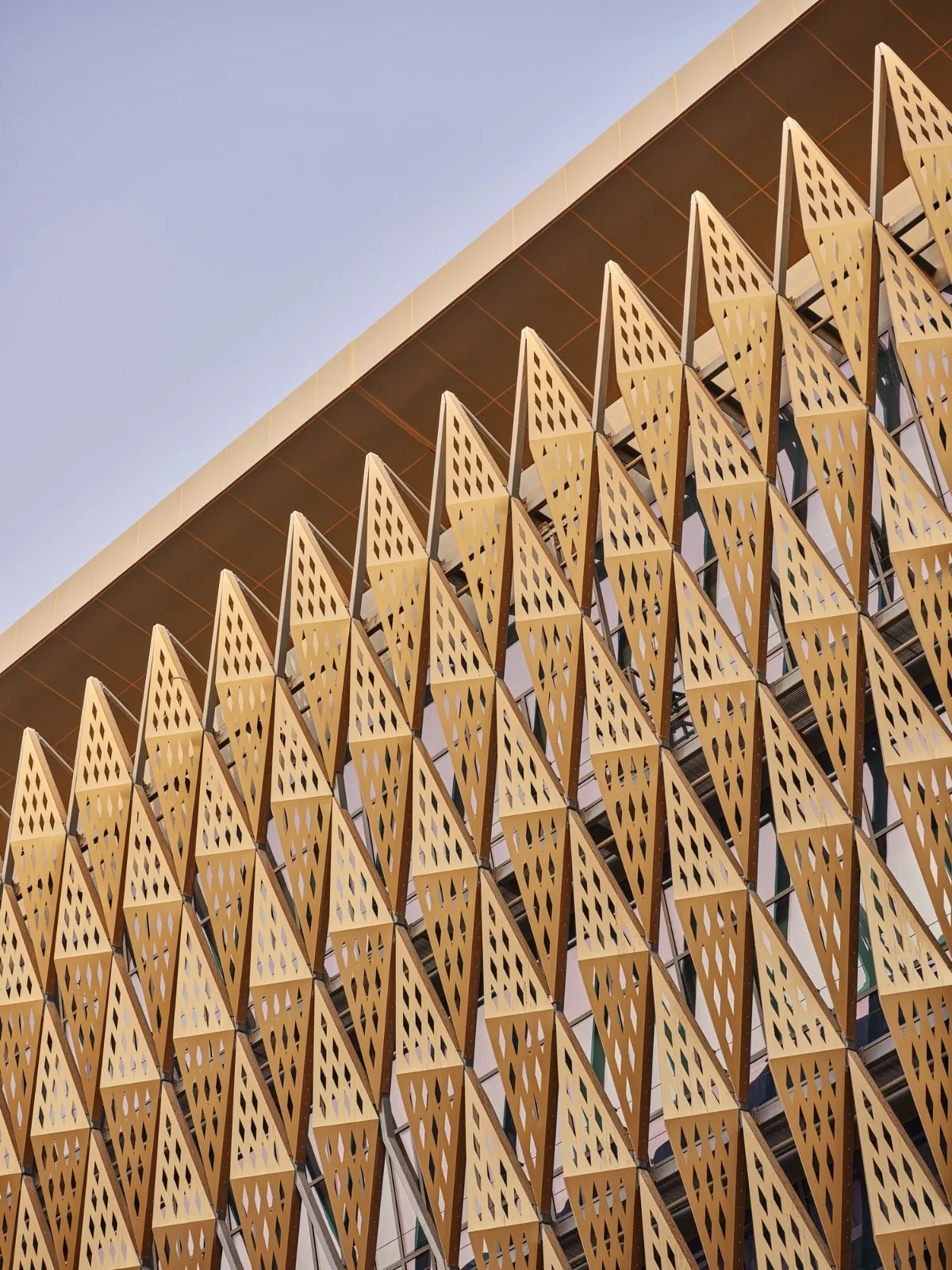
A series of diamond-shaped perforated metal panels filter natural light while shielding the interior from harsh sunlight. The golden-hued structure’s color intensity shifts throughout the day with the sun’s movement, mirroring the surrounding desert landscape. The angular panels, arranged in a consistent pattern on the façade, echo elements of the nearby terrain.
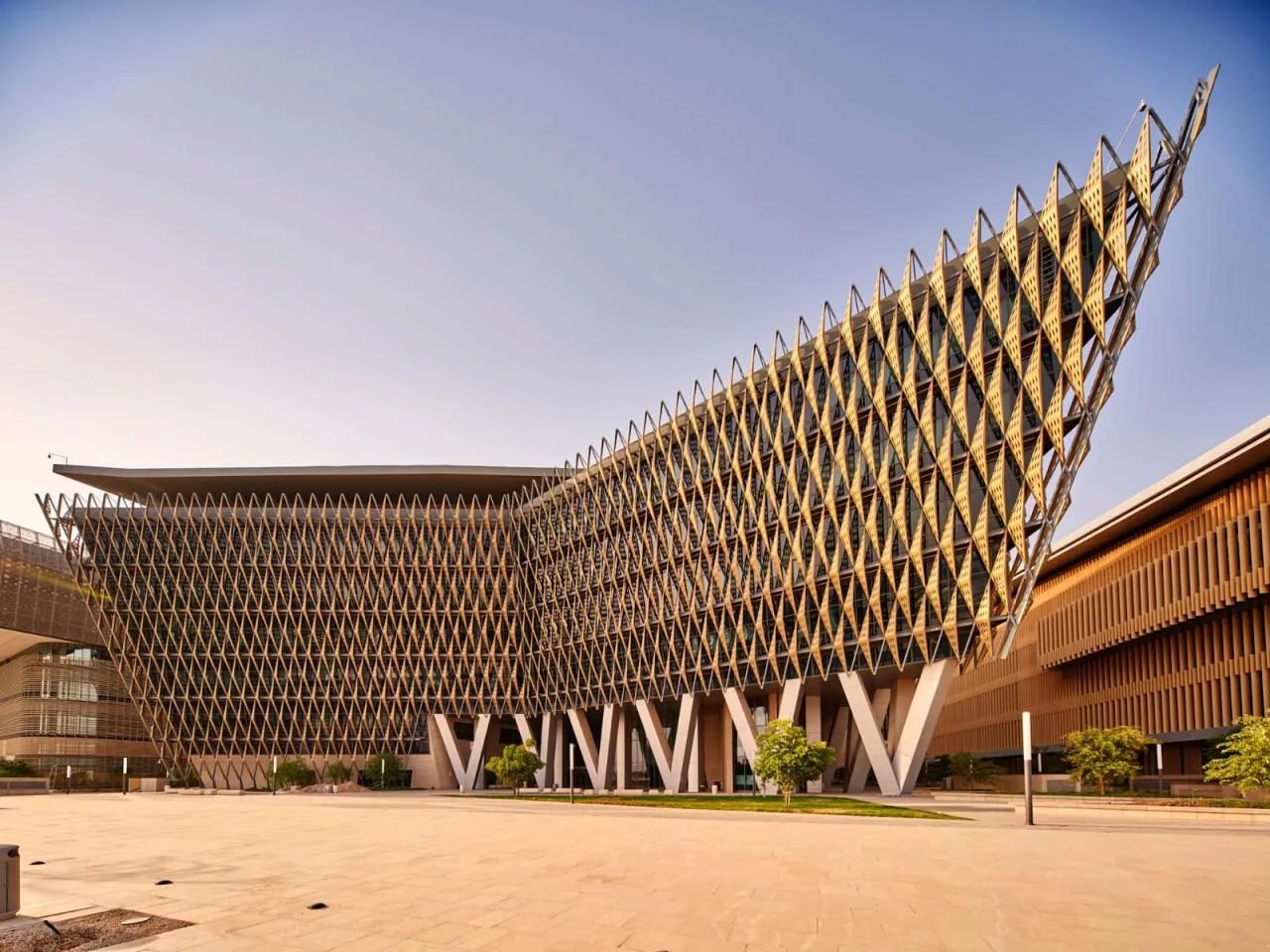
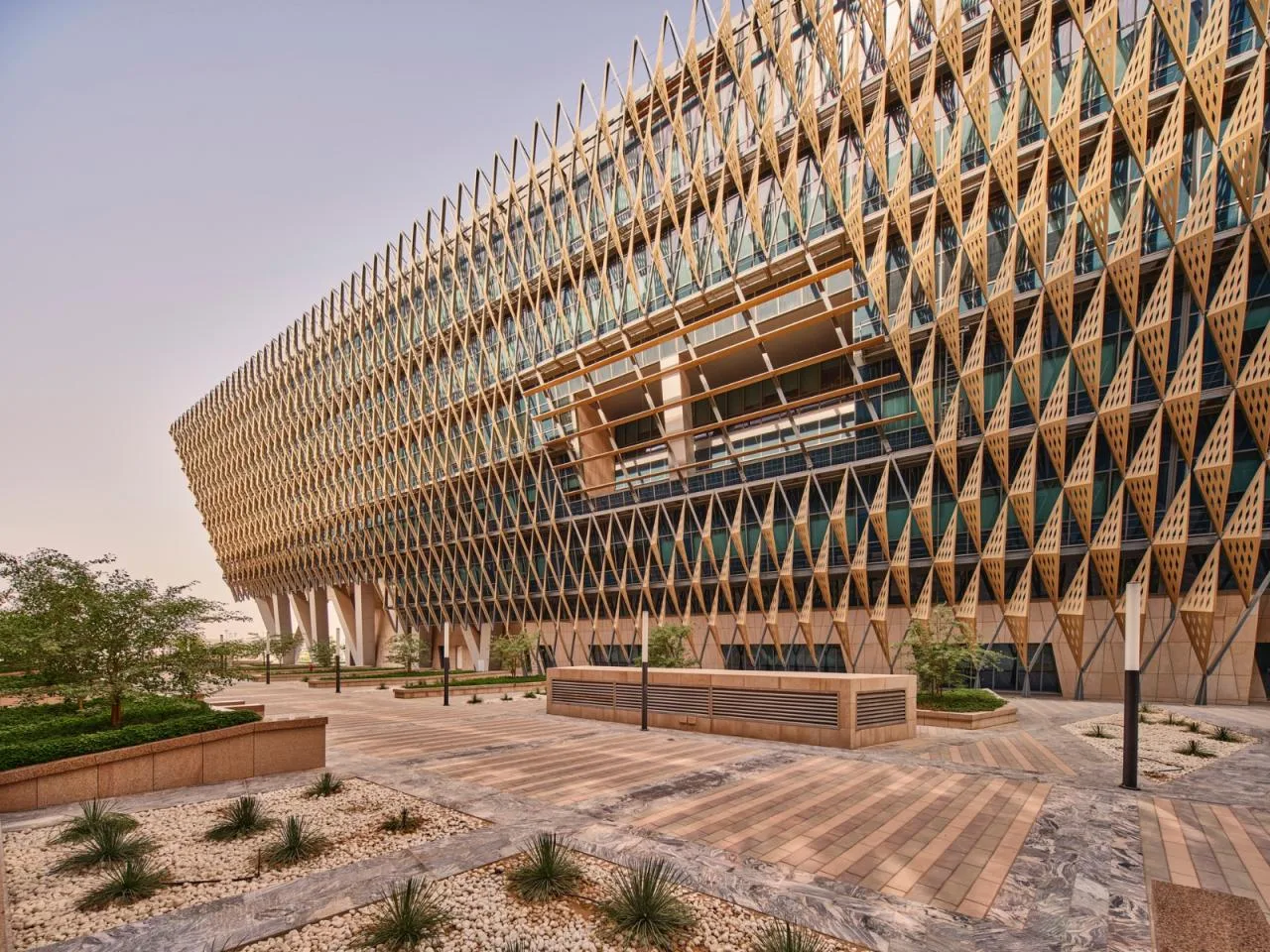
The façade slopes outward with increasing floor height, serving dual purposes: it provides shading to reduce unwanted heat gain and offers occupants expansive views of the outdoors. The perforated metal sunshade system enhances this effect by directing sightlines and minimizing solar glare. Louvers are installed on every building surface to control light according to orientation; for example, the north-facing areas receive ample indirect light, ideal for art studios.
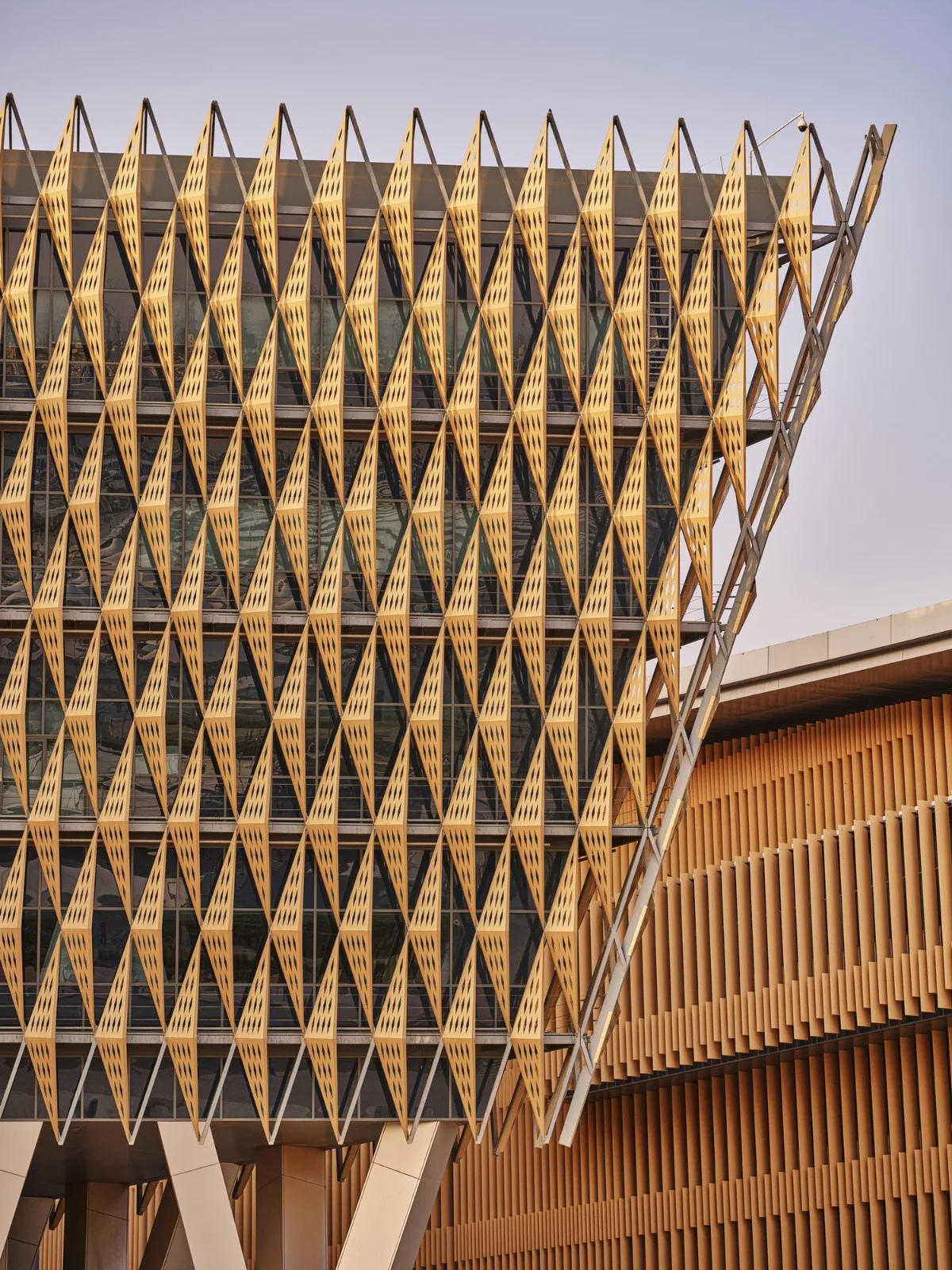
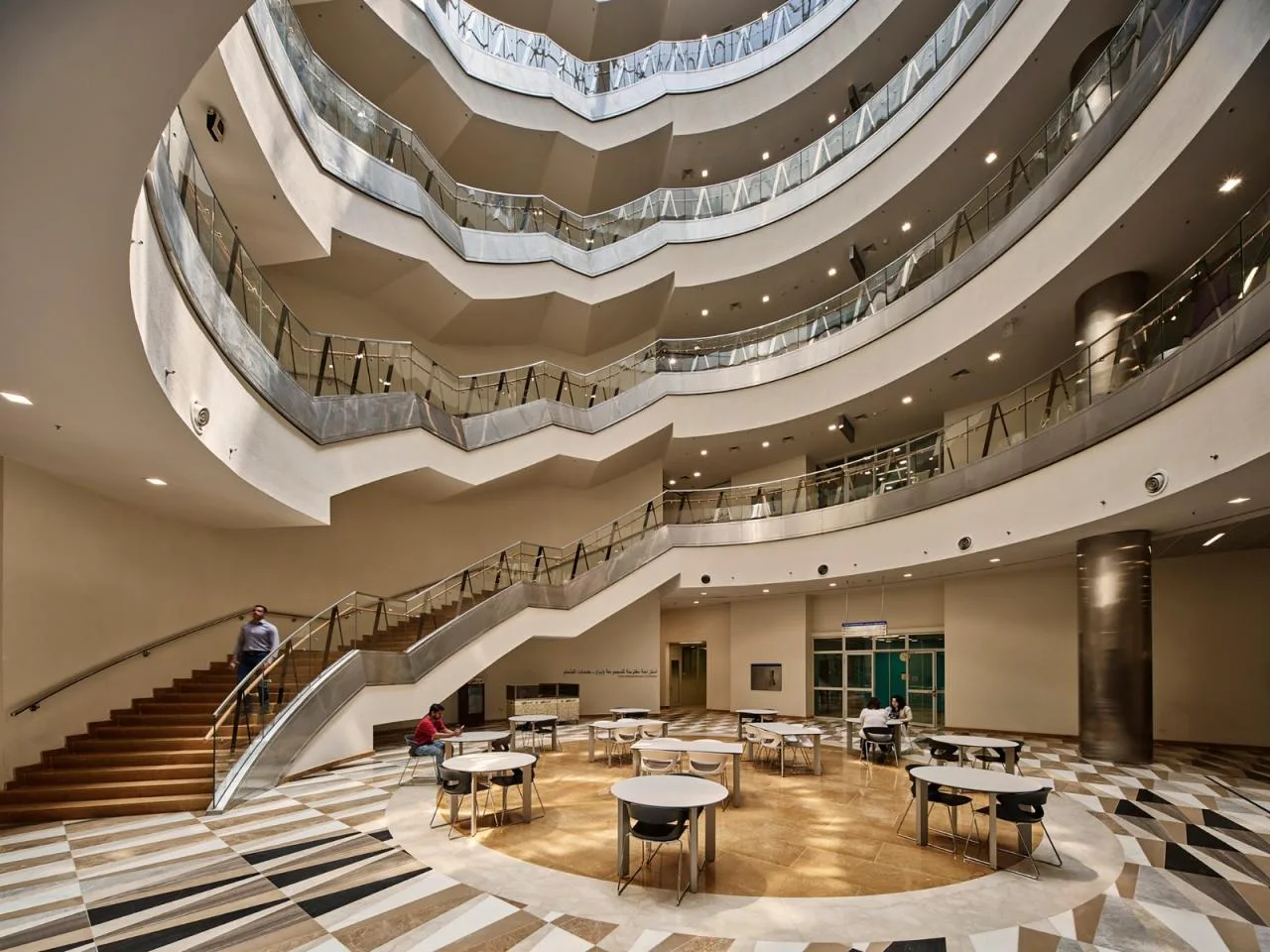
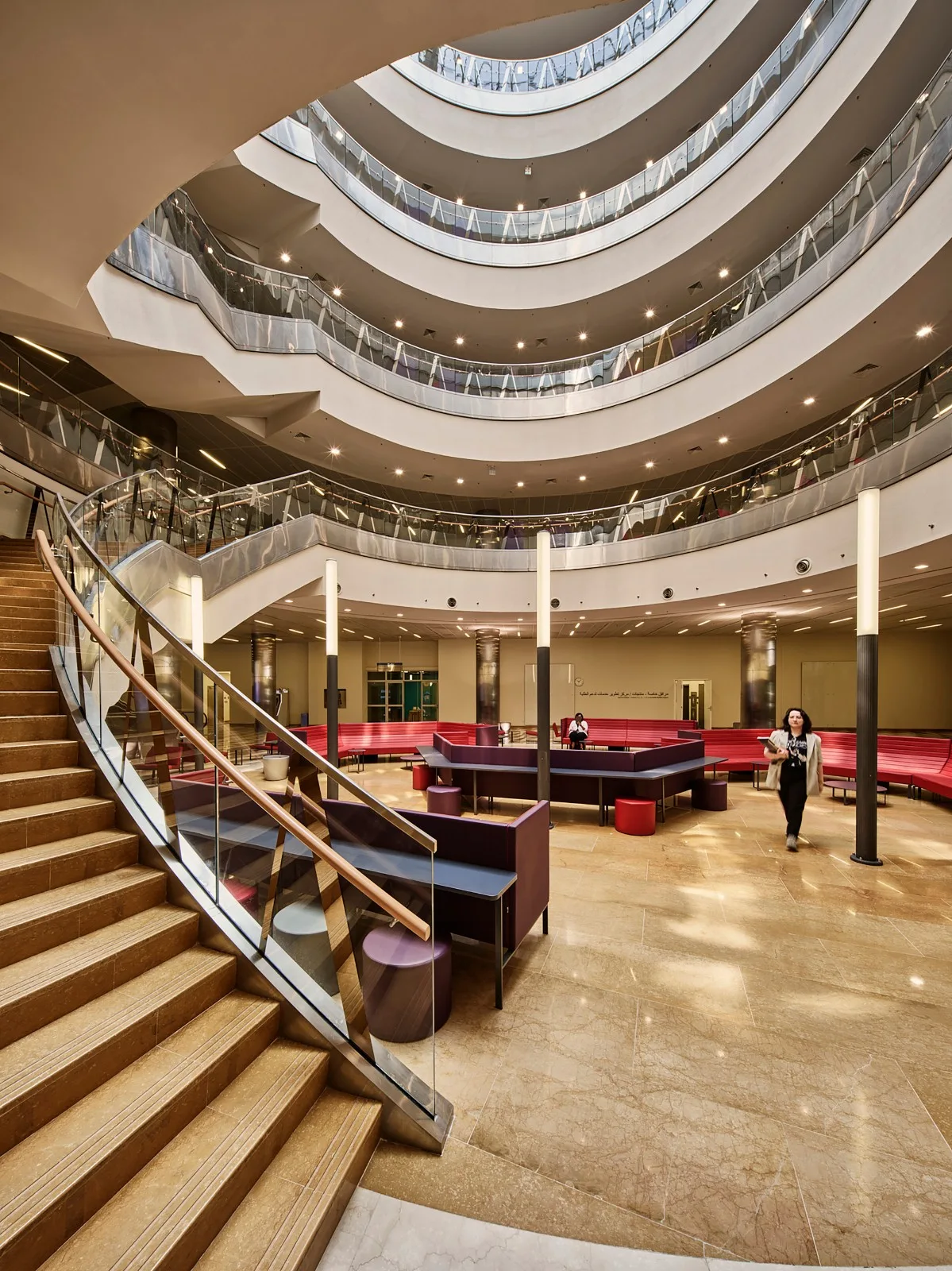
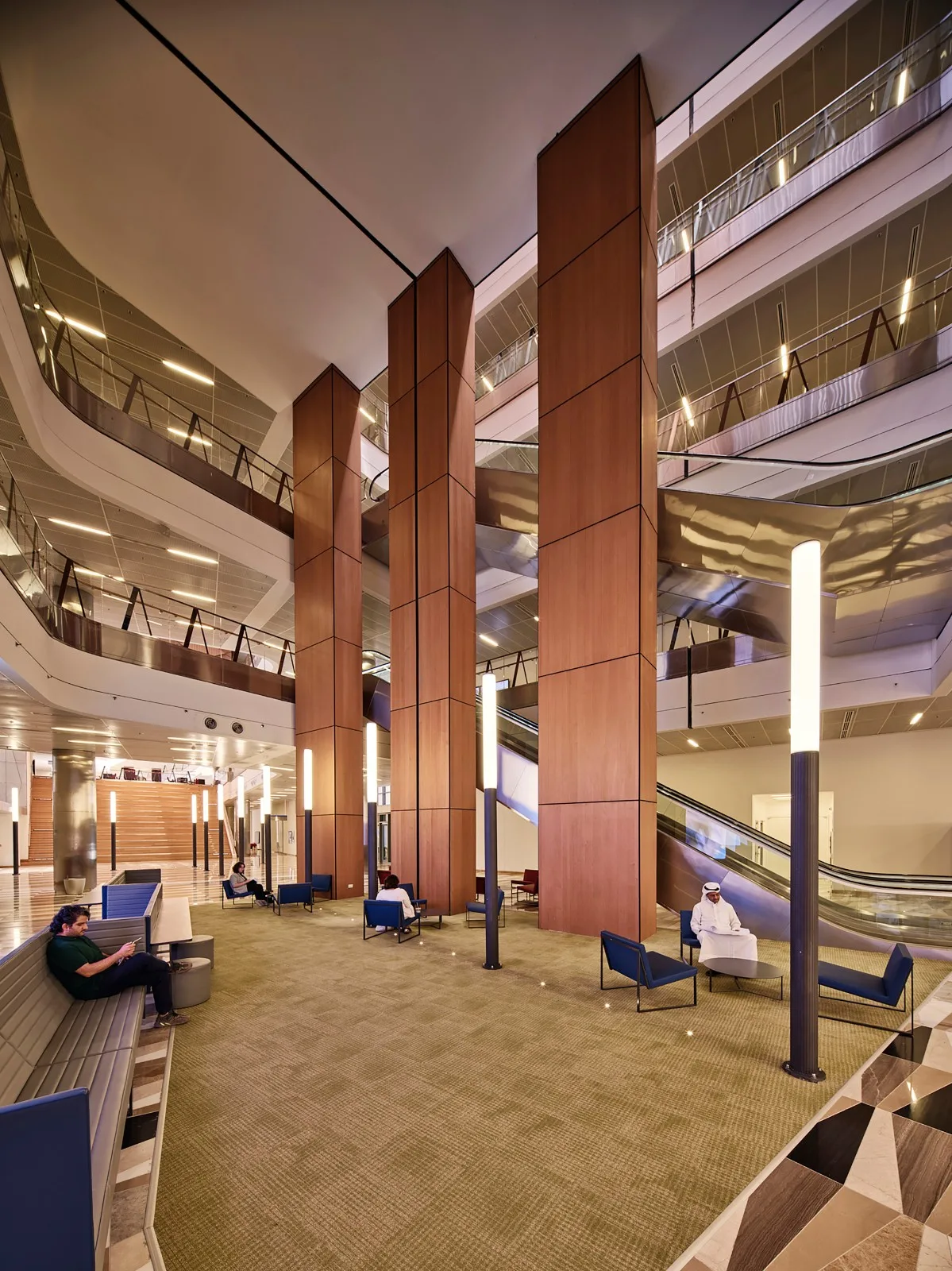
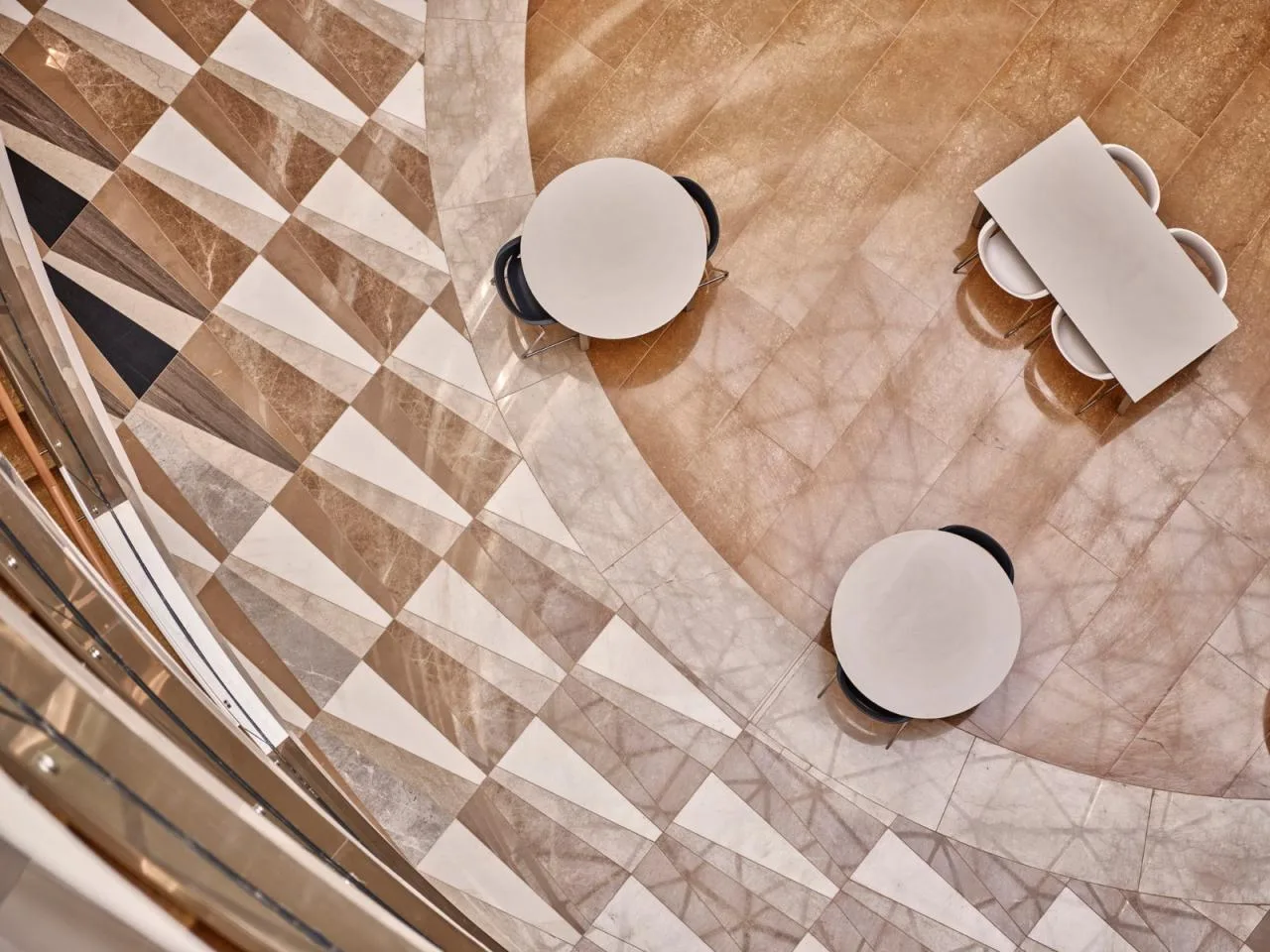
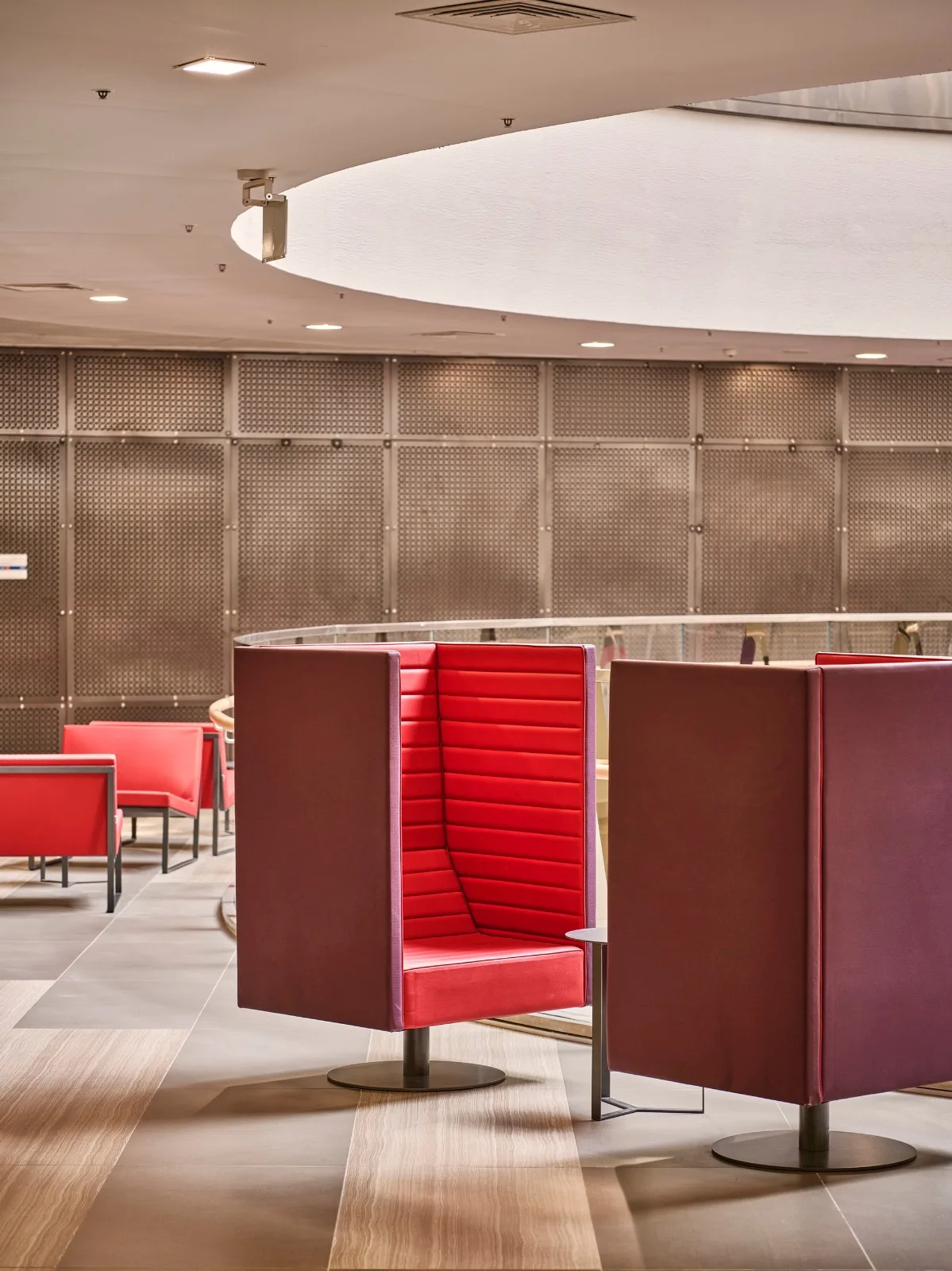
The louvers on the south and west façades are designed to be more compact, balancing indoor comfort with views of the surrounding landscape. Inside, the College of Life Sciences (COLS) is centered around two vibrant multi-level atriums. One atrium focuses on student services, featuring a food court and informal meeting spaces. The other is designed for public engagement, showcasing student work through demonstration laboratories and internship clinics.
These atriums function as windows into the school’s activities, fostering interaction between students and faculty. A gently sloping spiral staircase wraps around each atrium, providing access to every floor and culminating in a skylight-style dome overhead. The layout encourages student collaboration, informal learning, social interaction, and highlights academic achievements, all centered around these two courtyards.
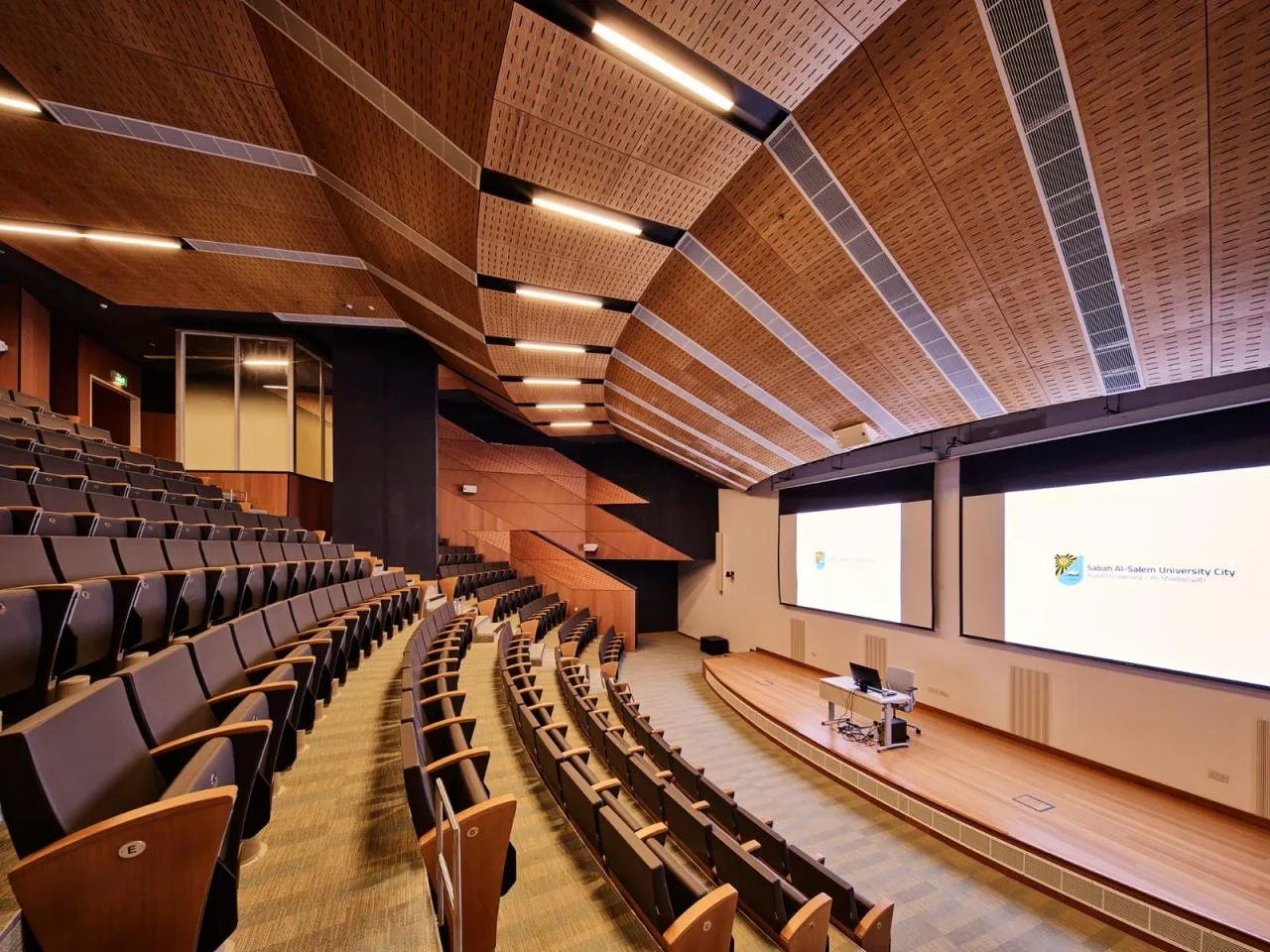
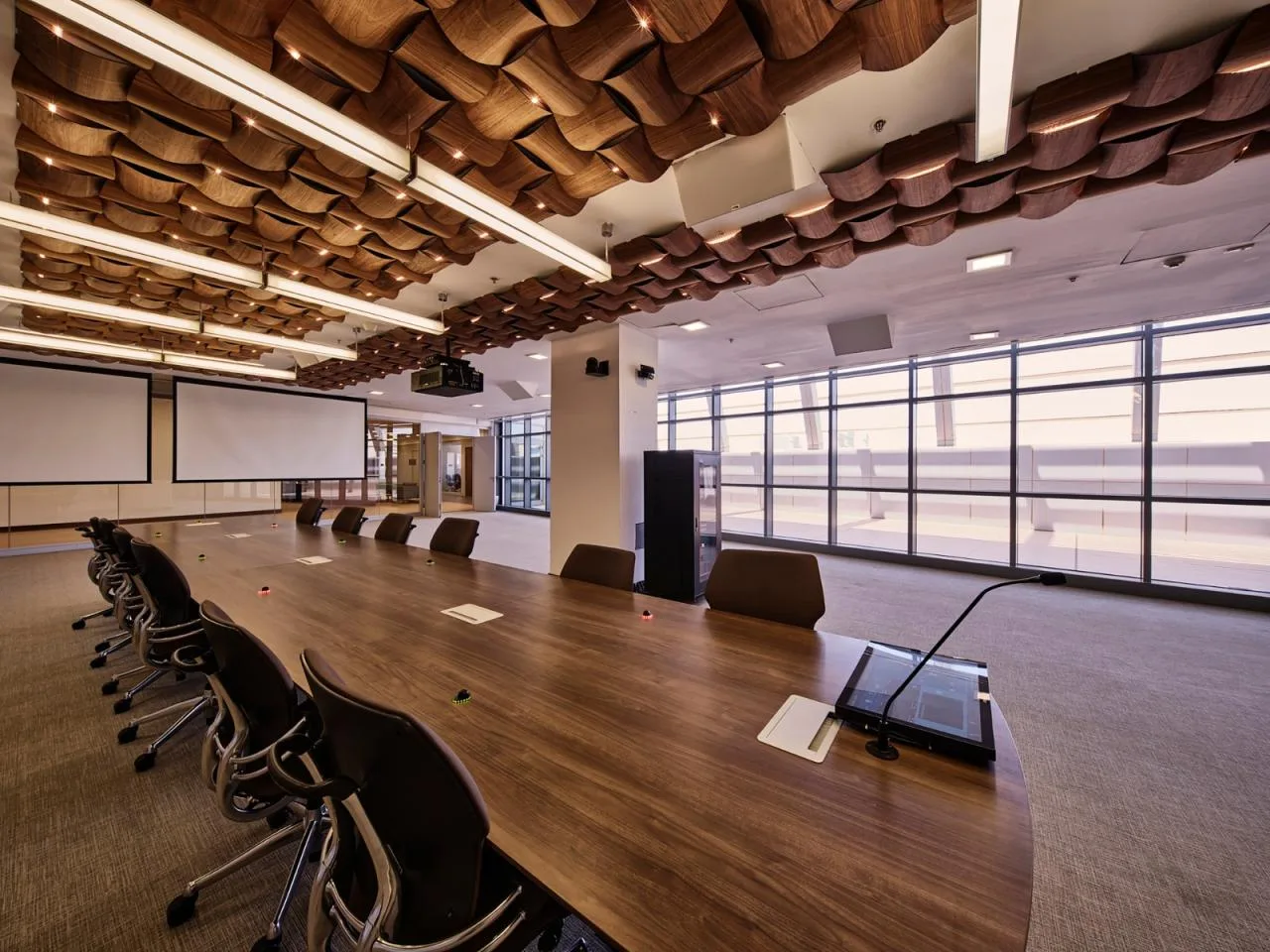
Open visual connections within classrooms, laboratories, and studios underscore the value of student creativity and the dynamic process of discovery. The atrium adjacent to the student cafeteria and non-academic services supports both work and leisure activities. Throughout the building, informal seating, technology for project collaboration, and tiered seating areas invite students to pause, socialize, exchange ideas, or enjoy meals during breaks.
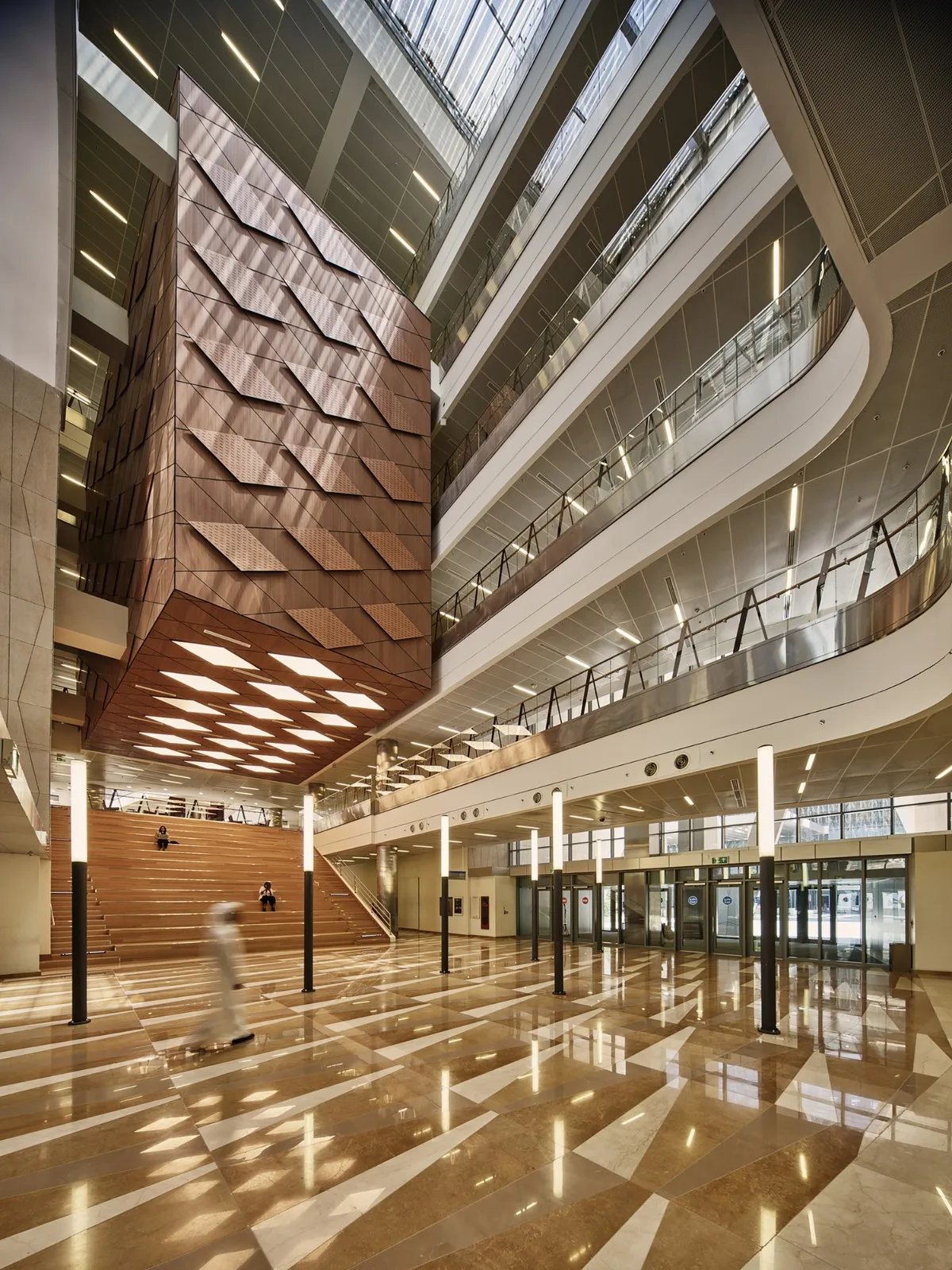
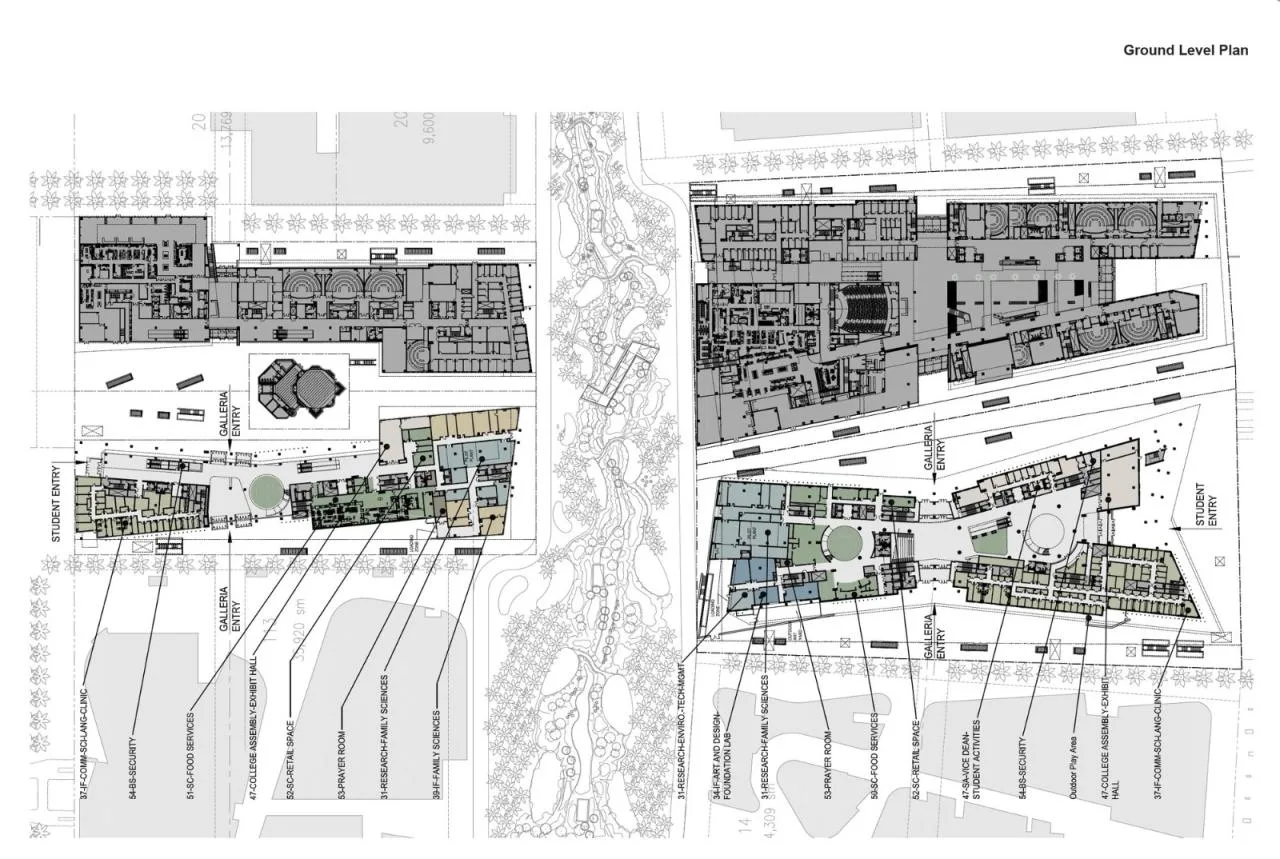
The college’s circulation is organized along two parallel north-south building volumes flanking the atrium. These pathways form the core of knowledge exchange and teaching, intersecting with an east-west corridor that connects various campus colleges. These intersections act as hubs within the School of Life Sciences, with student activities centered around these nodes, including dining, retail, clubs, lounges, exhibition spaces, and large lecture halls.
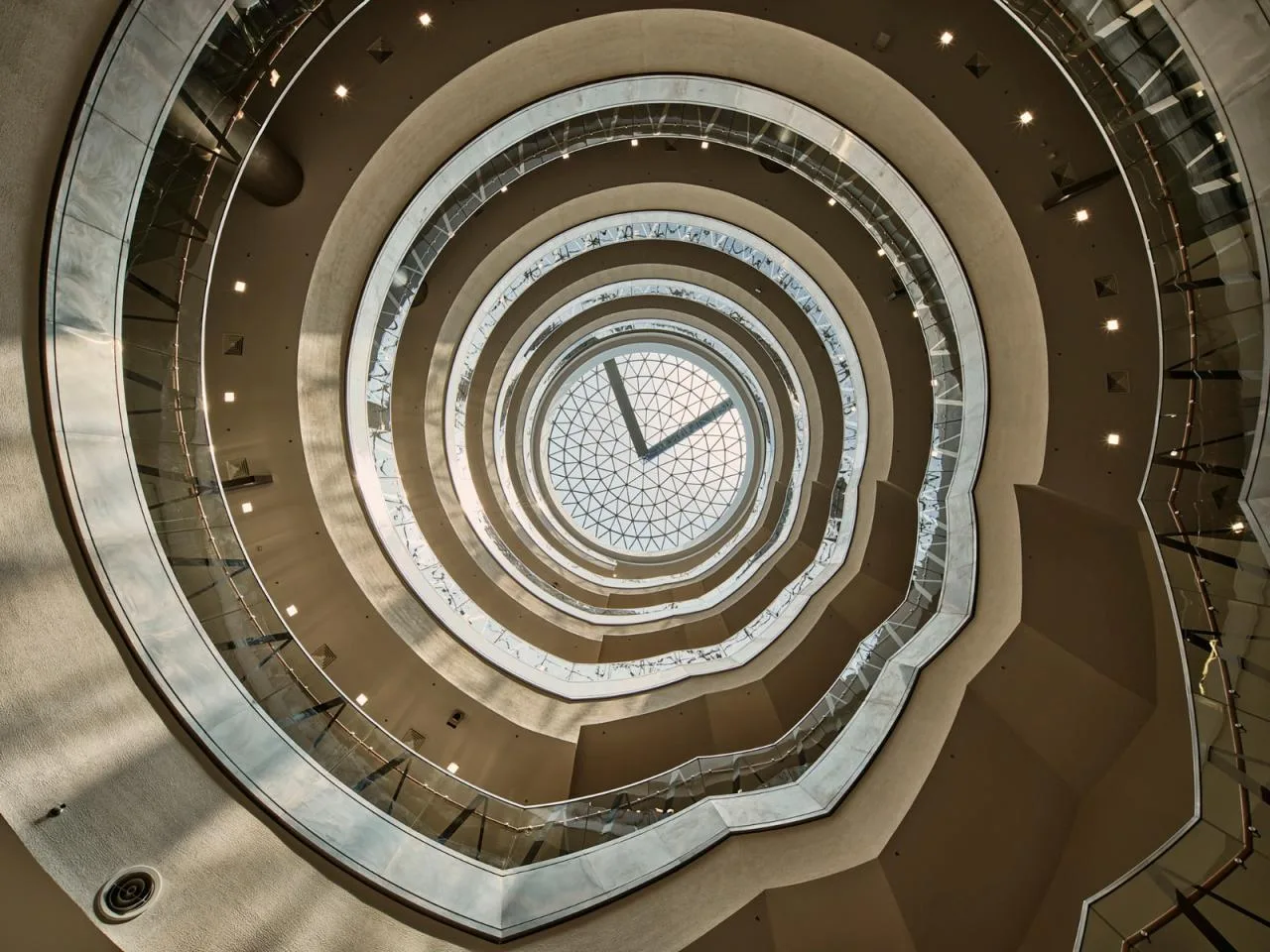
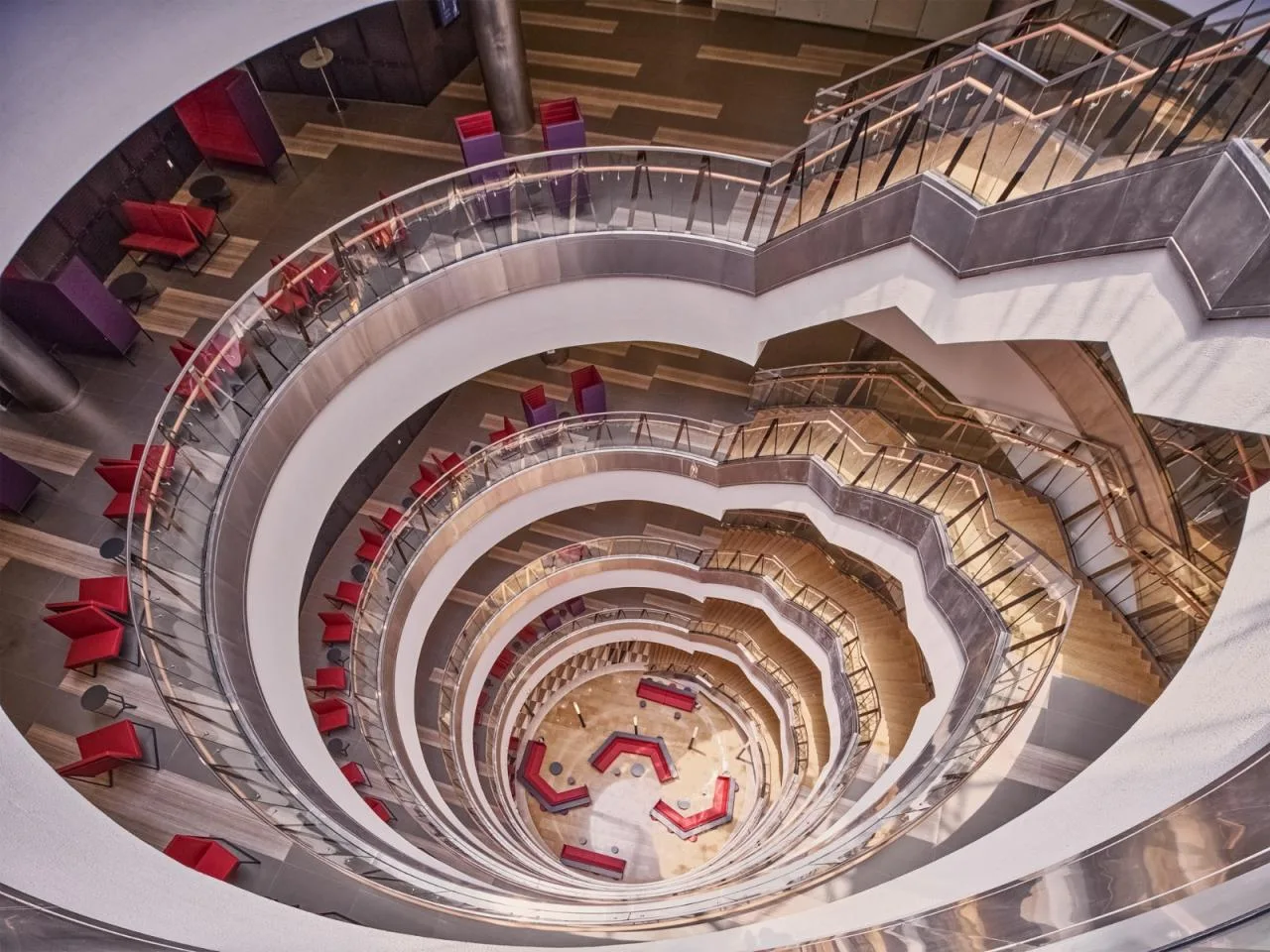
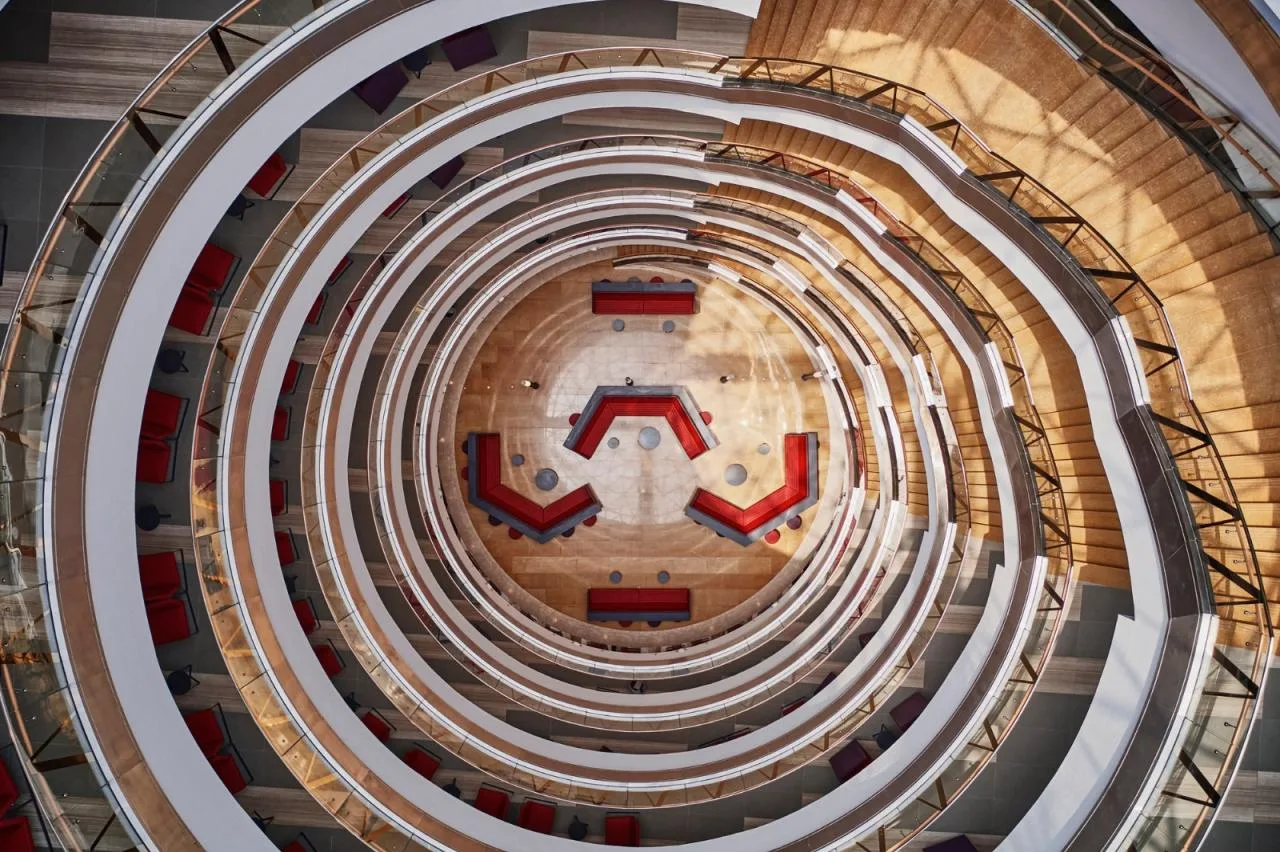
A spacious, clearly defined entrance guides students and visitors from the arrival area into the main atrium, where an open tiered seating area fosters student interaction. The essential innovative element in the architecture is visibility: students engage with each other in the atrium; laboratories and classrooms buzz with activity; student achievements are displayed along the corridors; and the design offers sweeping views of the oasis and entire campus. The School of Life Sciences emphasizes visibility as a cornerstone of its design philosophy.
Project Drawings
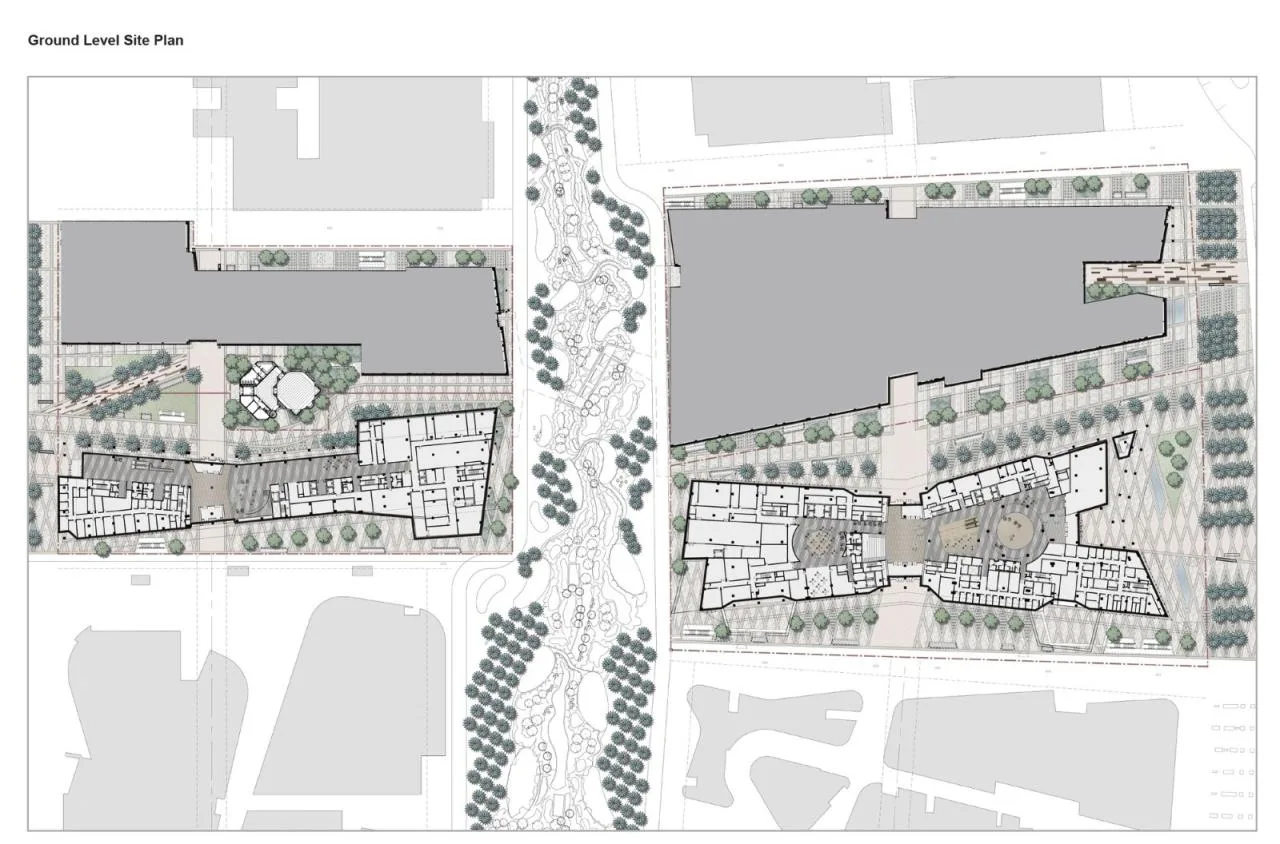
△ General Layout Plan
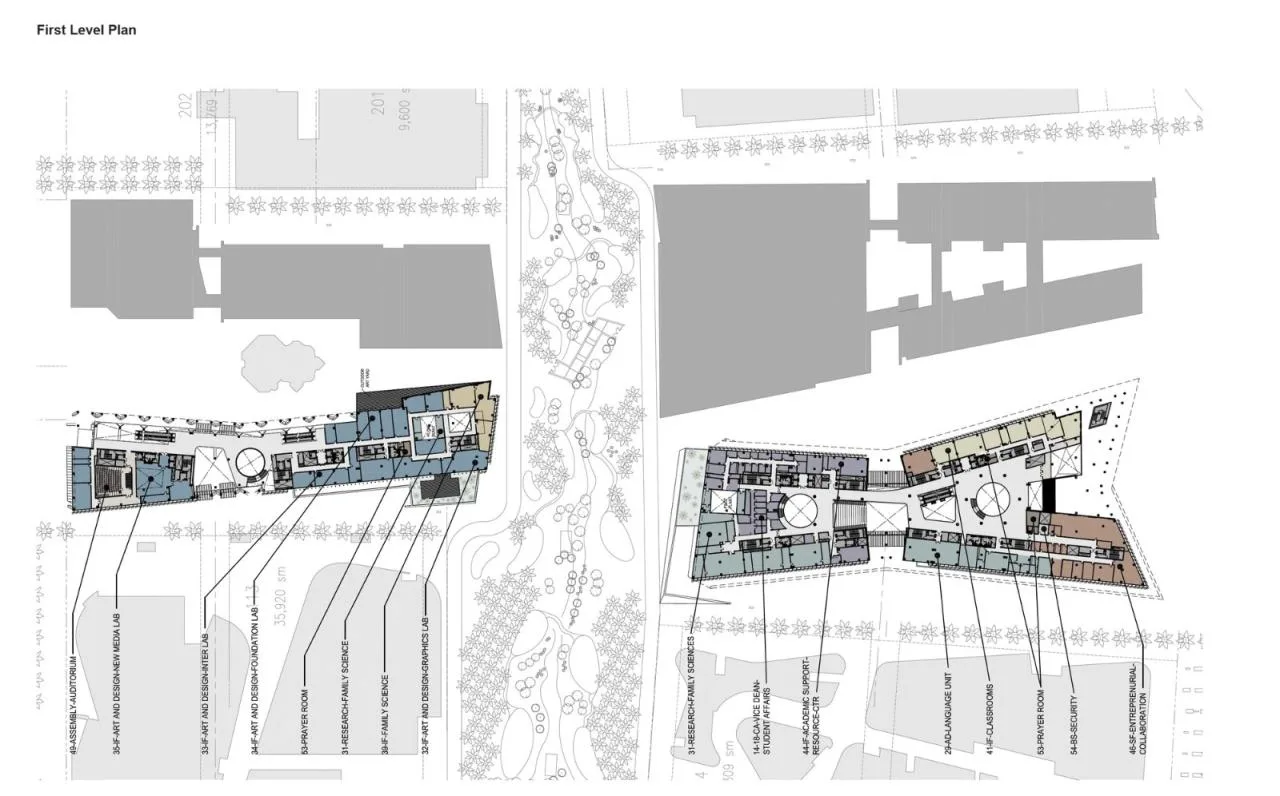
△ First Floor Plan
△ Second Floor Plan
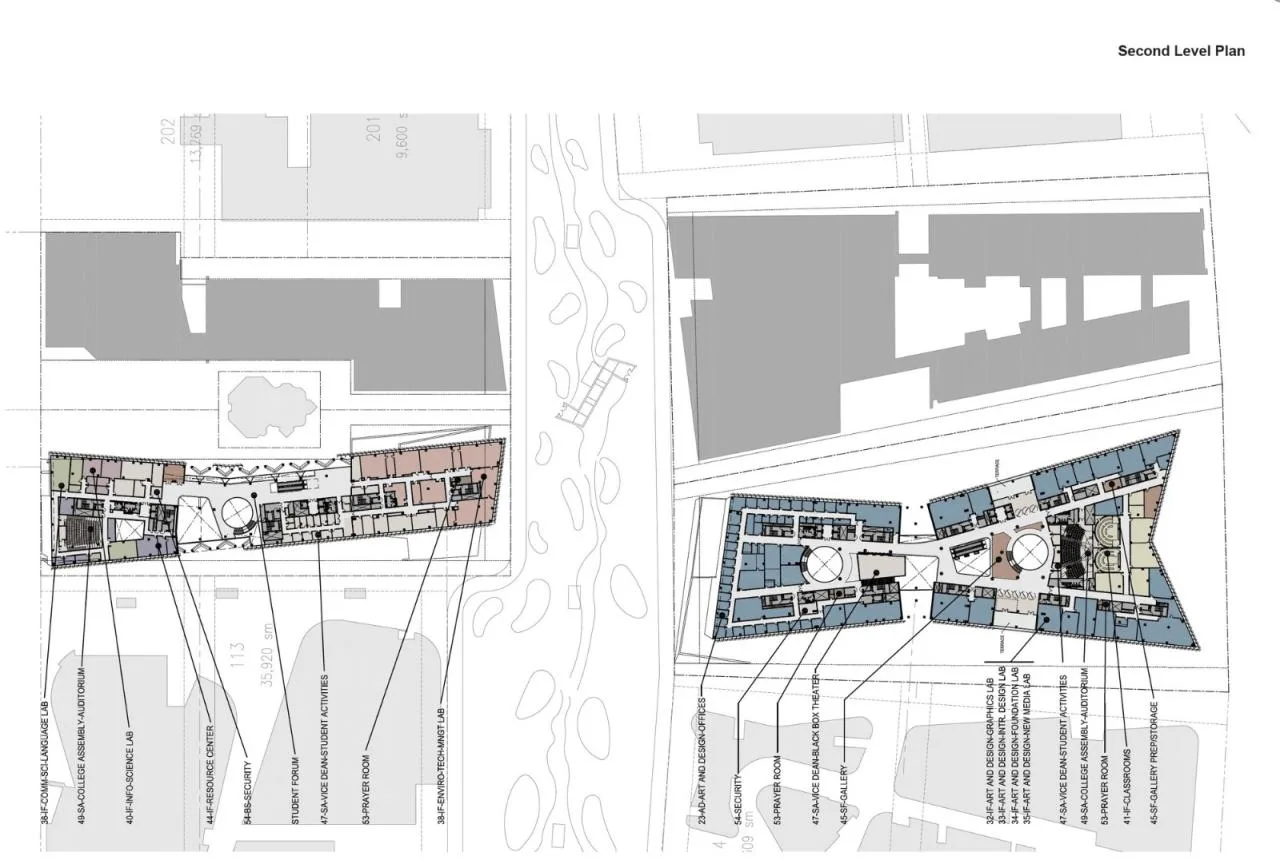
△ Third Floor Plan
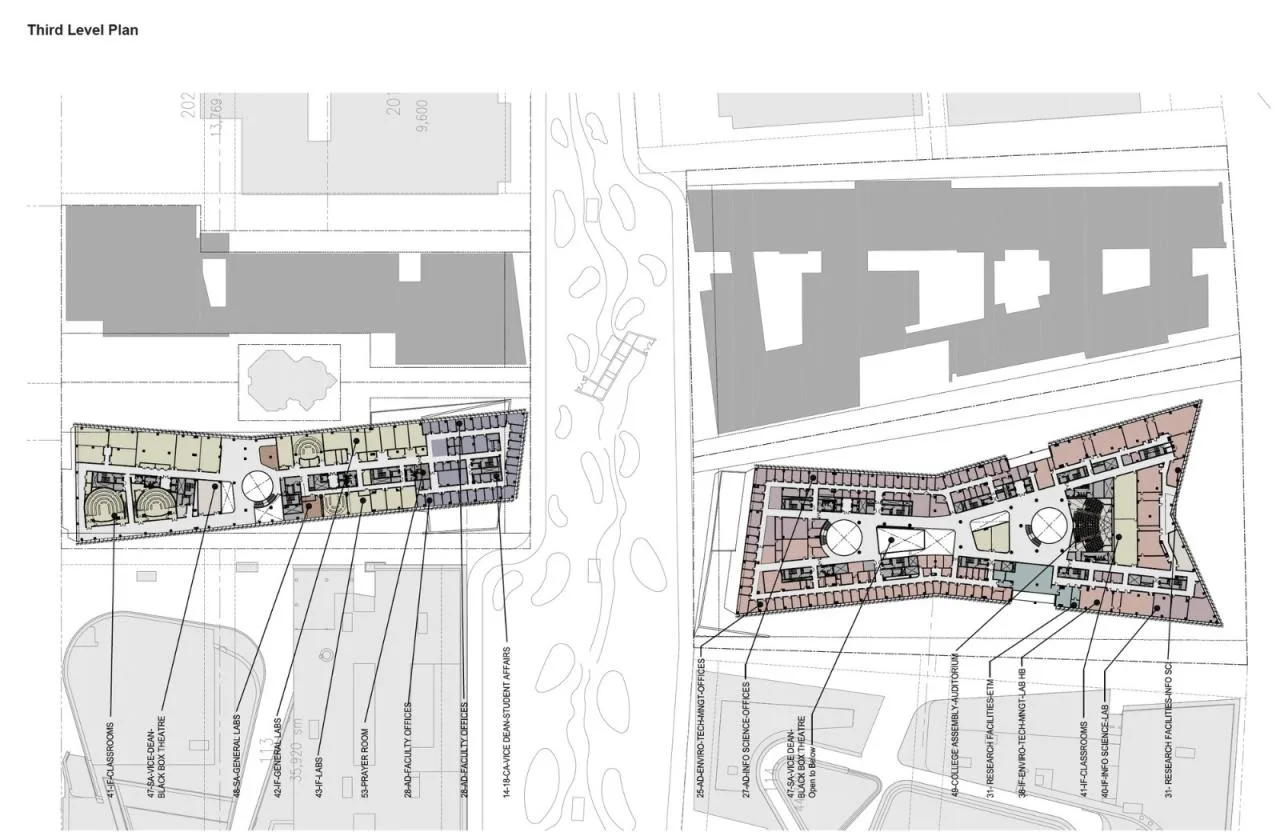
△ Fourth Floor Plan
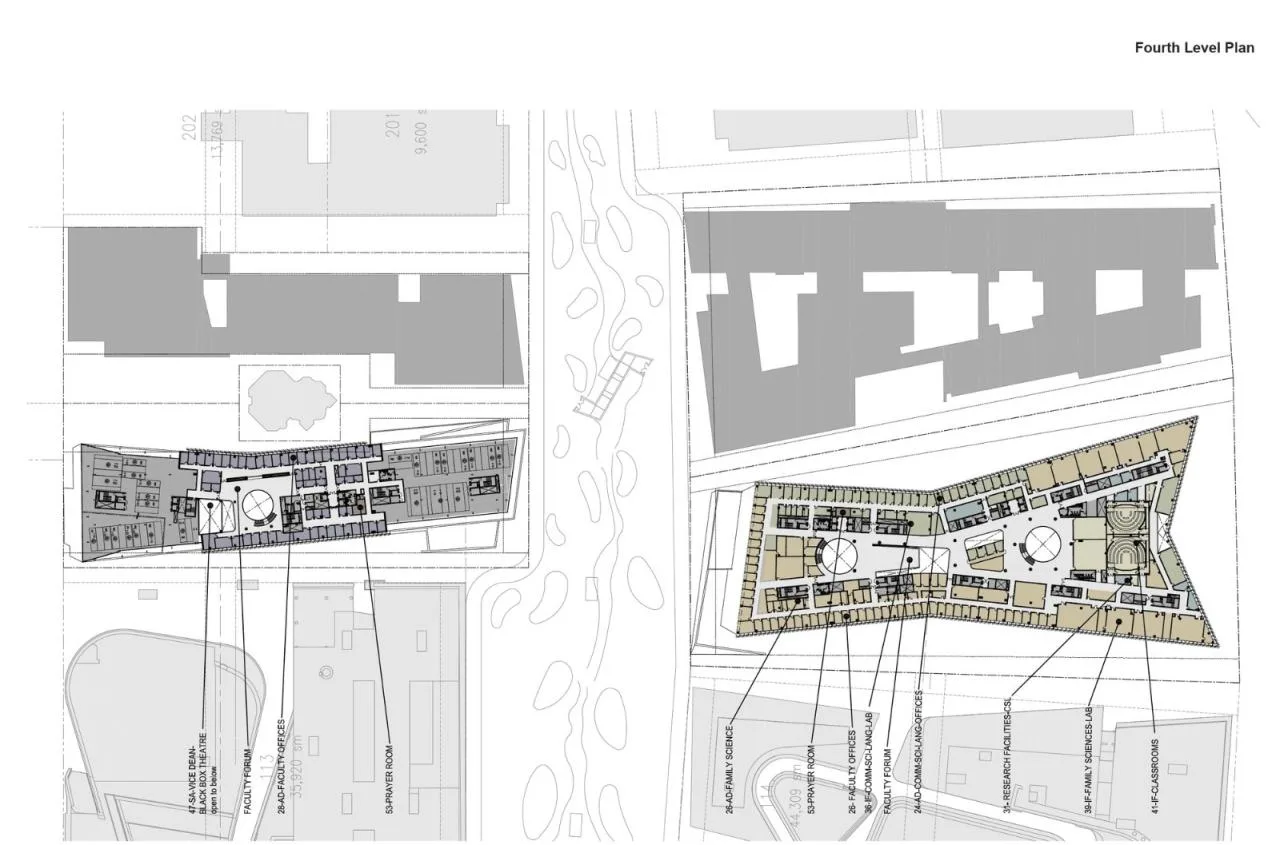
△ Fifth Floor Plan
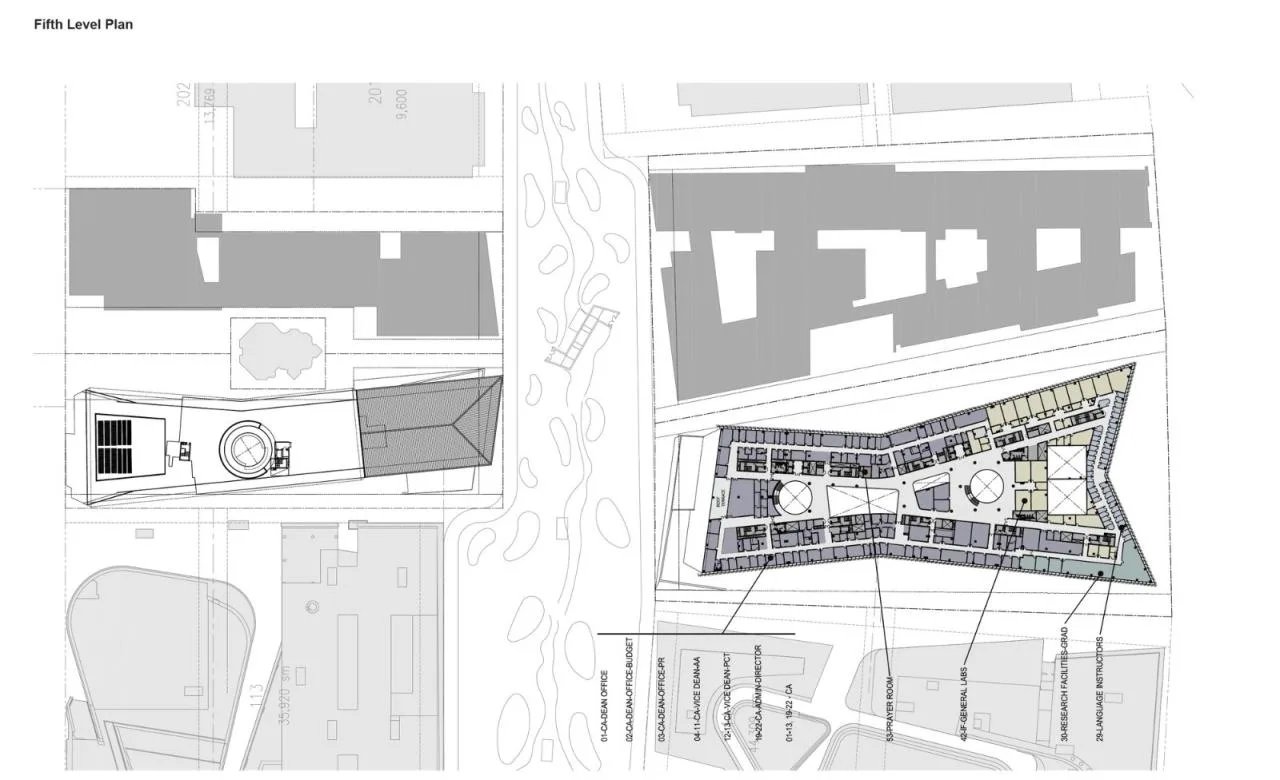
△ Sixth Floor Plan
Project Information
Architects: Cambridge Seven, Gulf Consult
Area: 74,322 m²
Year of Completion: 2020
Photographer: Mohammad Taqi
Suppliers: Armstrong, Bega Germany, Clestra Hauserman, Crane Pumps & Systems – USA, Deutschtec Germany, Dorma, EBARA Japan, Ebara Italy, Froch Enterprises Taiwan, Inds Metal Center, International Environmental – USA, MIRCOM TECHNOLOGIES, Mechline, Milliken / Constantine, Mobatime Switzerland, Otis, PULSAFEEDER USA, Pentair, Rendisk, Samsung, and others
Design Director: Marc Rogers
Project Leaders: Patricia Intrieri, Najla Alghanim, Robert Bander, Hank Recor, Jay Stoughtenger
Manufacturer: WUHAN LINGYUN BUILDING DECORATION ENGINEERING CO., LTD
Main Contractors: SINOHYDRO Corp. Ltd., Al-Hani Construction and Trading Co.
Lighting Design: Quentin Thomas Associates
AV Design: Vantage Technologies
Location: Ardiya, Kuwait












Must log in before commenting!
Sign Up