
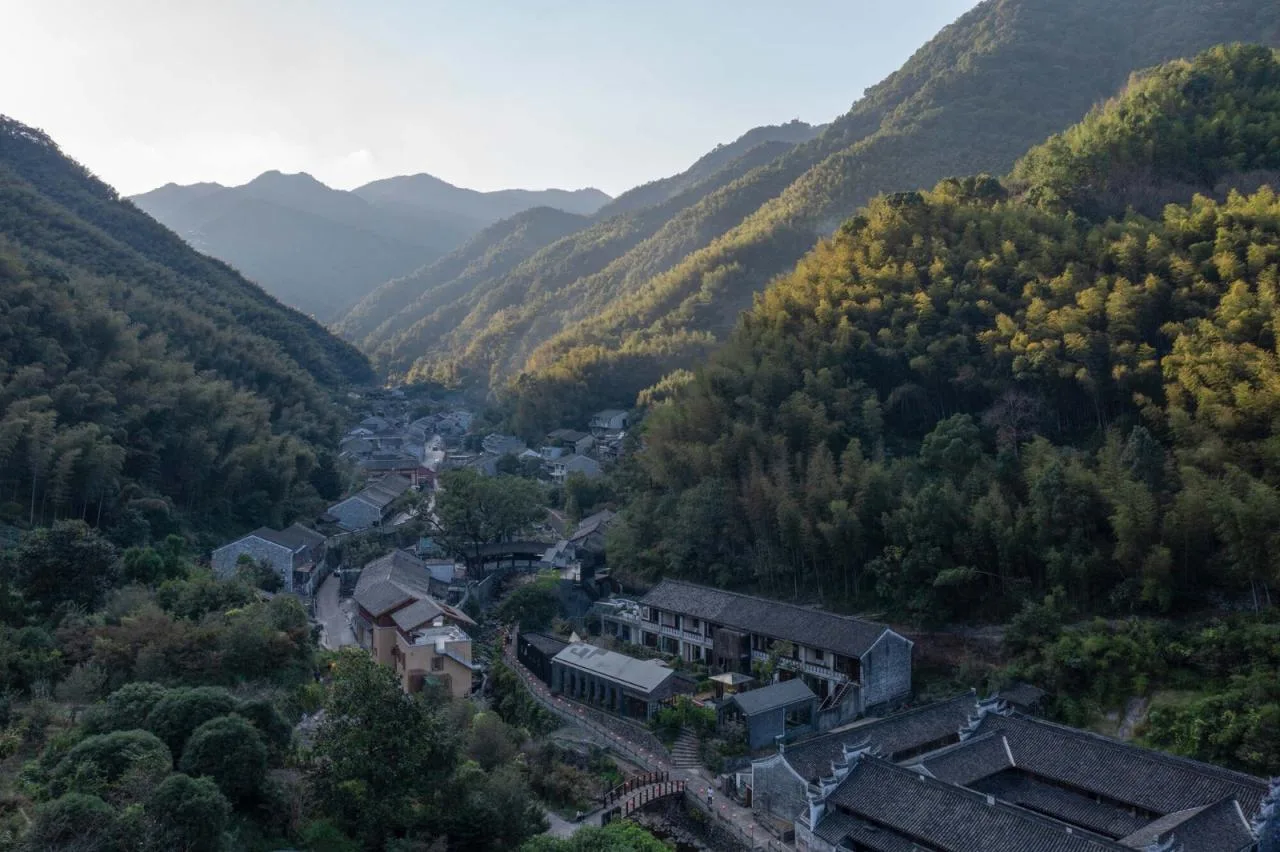
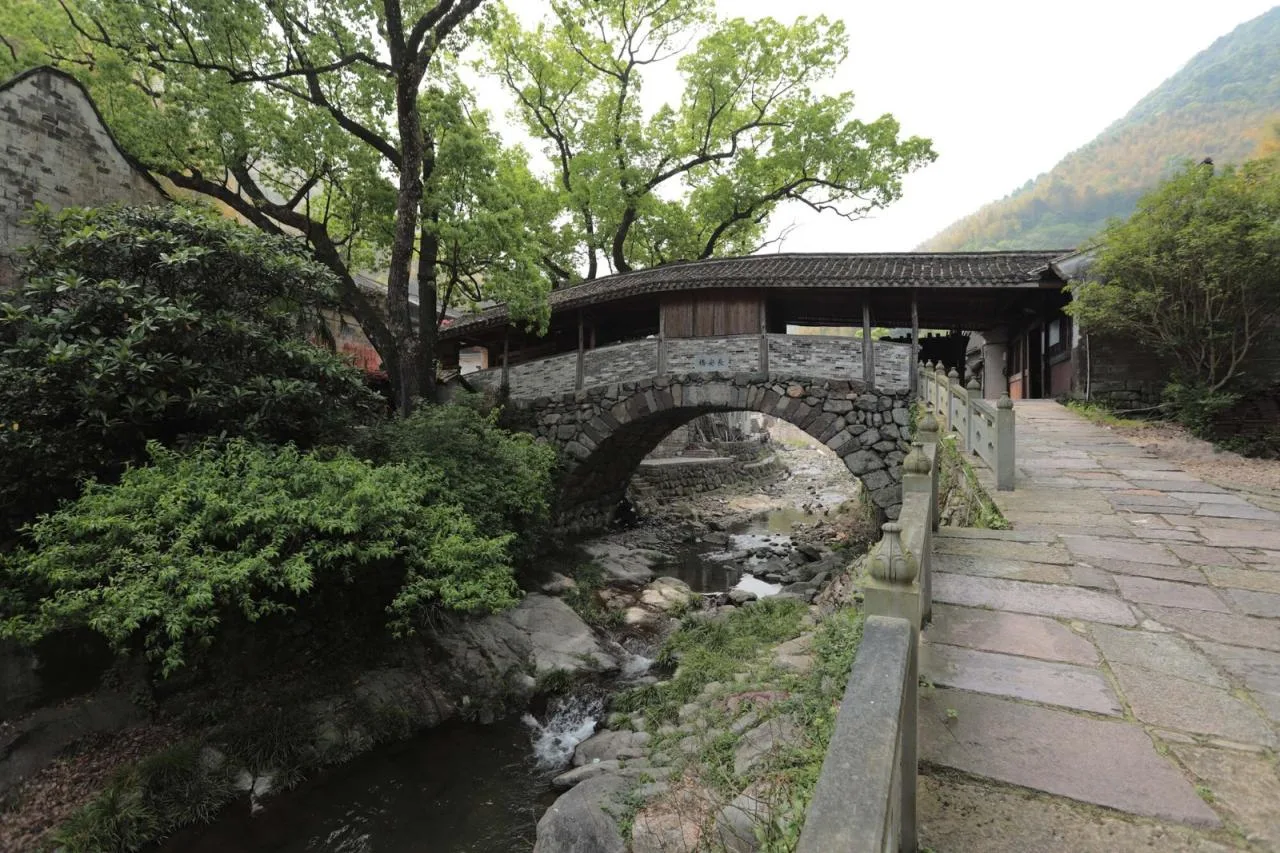
Qixiakeng Village, situated in Xikou Town, Fenghua, marks the beginning of the ancient Qixiakeng Road. This narrow historic path is enveloped by dense forests and surrounded by mountains, with a long, secluded canyon. Formerly known as Taohuakeng, the village was later renamed Qixiakeng. In autumn, the mountains burst into vibrant red maple foliage. Nestled in a mountain valley, the village features homes lining both sides of a stream, connected by small bridges over clear flowing water, ancient trees, and traditional stone bridges. The rising smoke from cooking fires adds to the charm of this classic Jiangnan village.
Driving to Qixiakeng Village involves exiting the highway and navigating a winding mountain road that skirts a reservoir for over ten minutes, with no villages along the way. On clear days, the sparkling lake surrounded by distant mountains offers a breathtaking view.
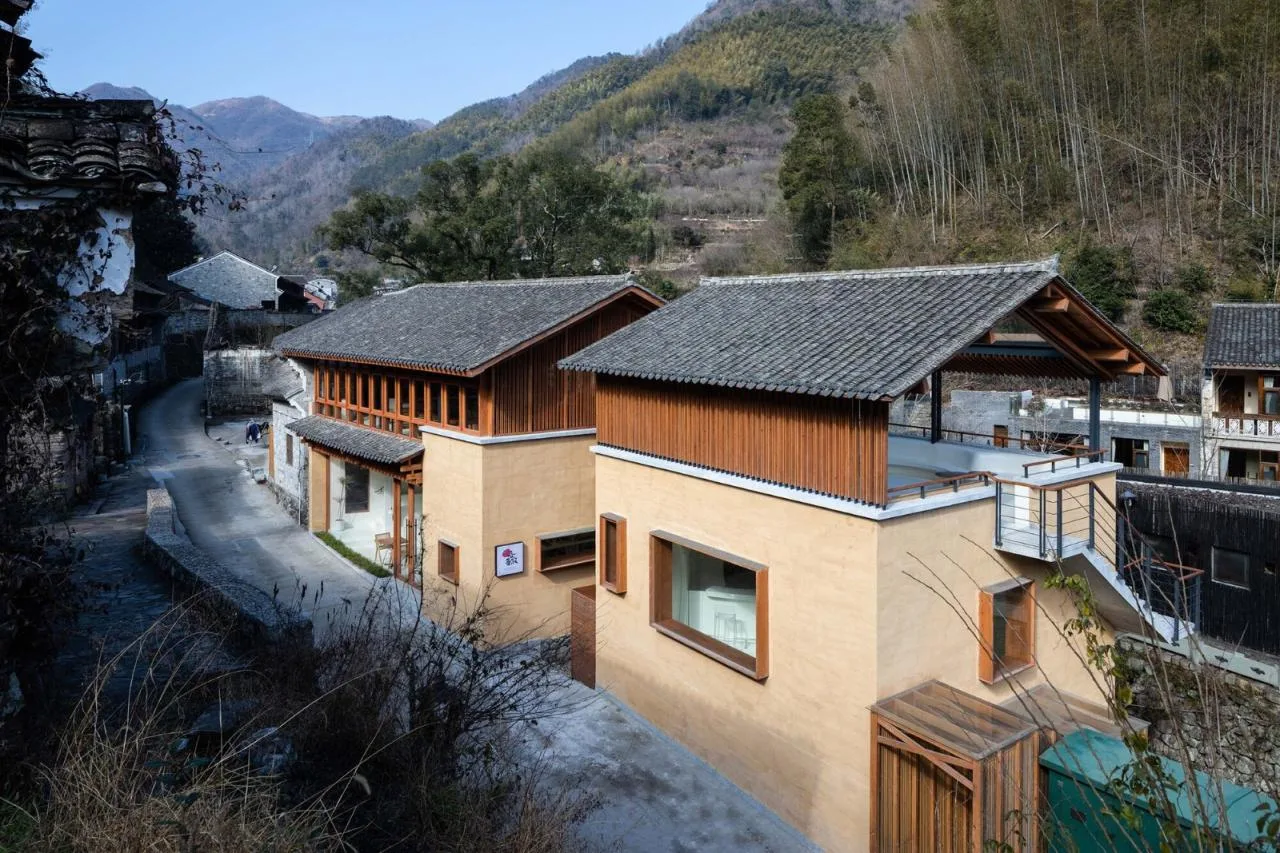
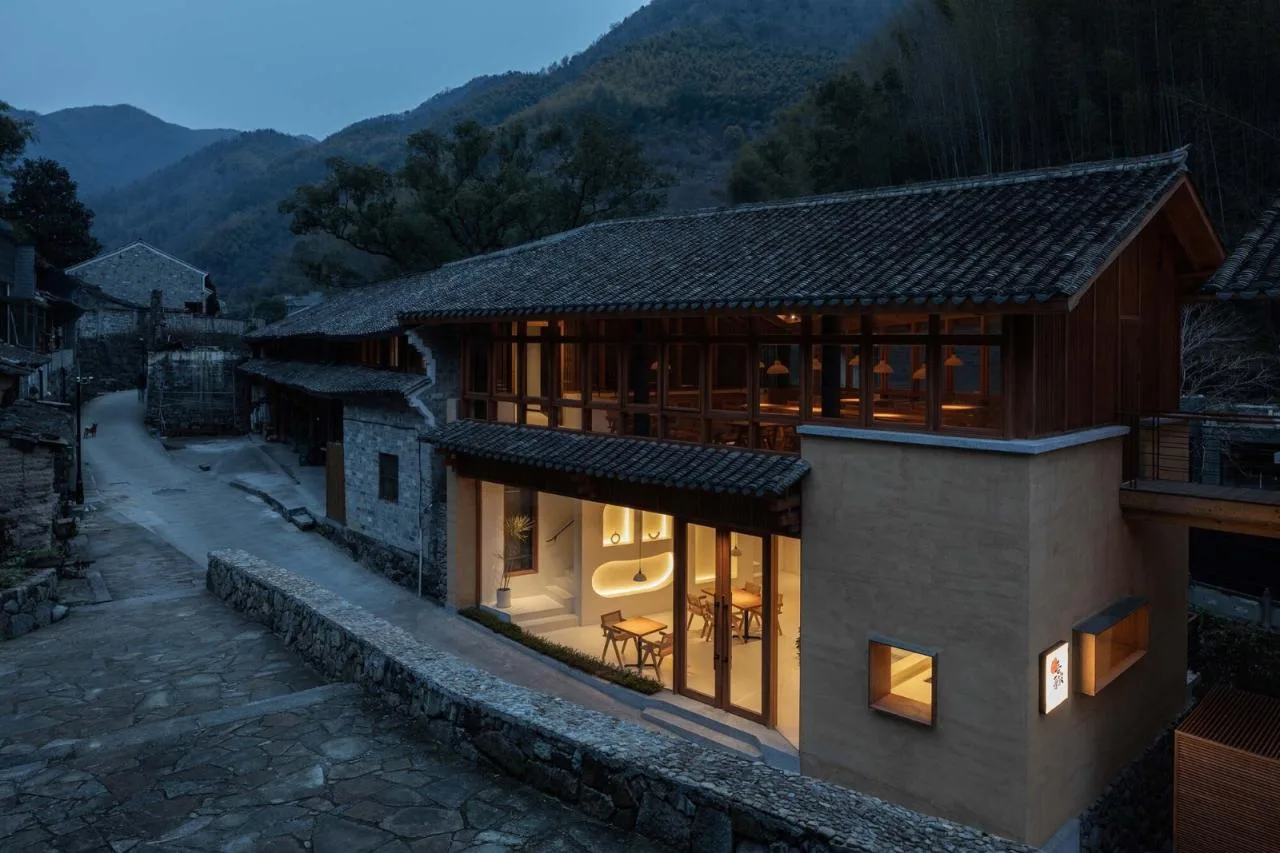
The restaurant, part of the village’s cultural tourism homestay complex, sits alongside the stream visible upon entering the village. It was renovated from an old power station. The village entrance road is narrow, just over 3 meters wide, with a raised stone ridge on one side. To preserve the street’s character, the building’s outer boundaries were kept within the original structure’s footprint.
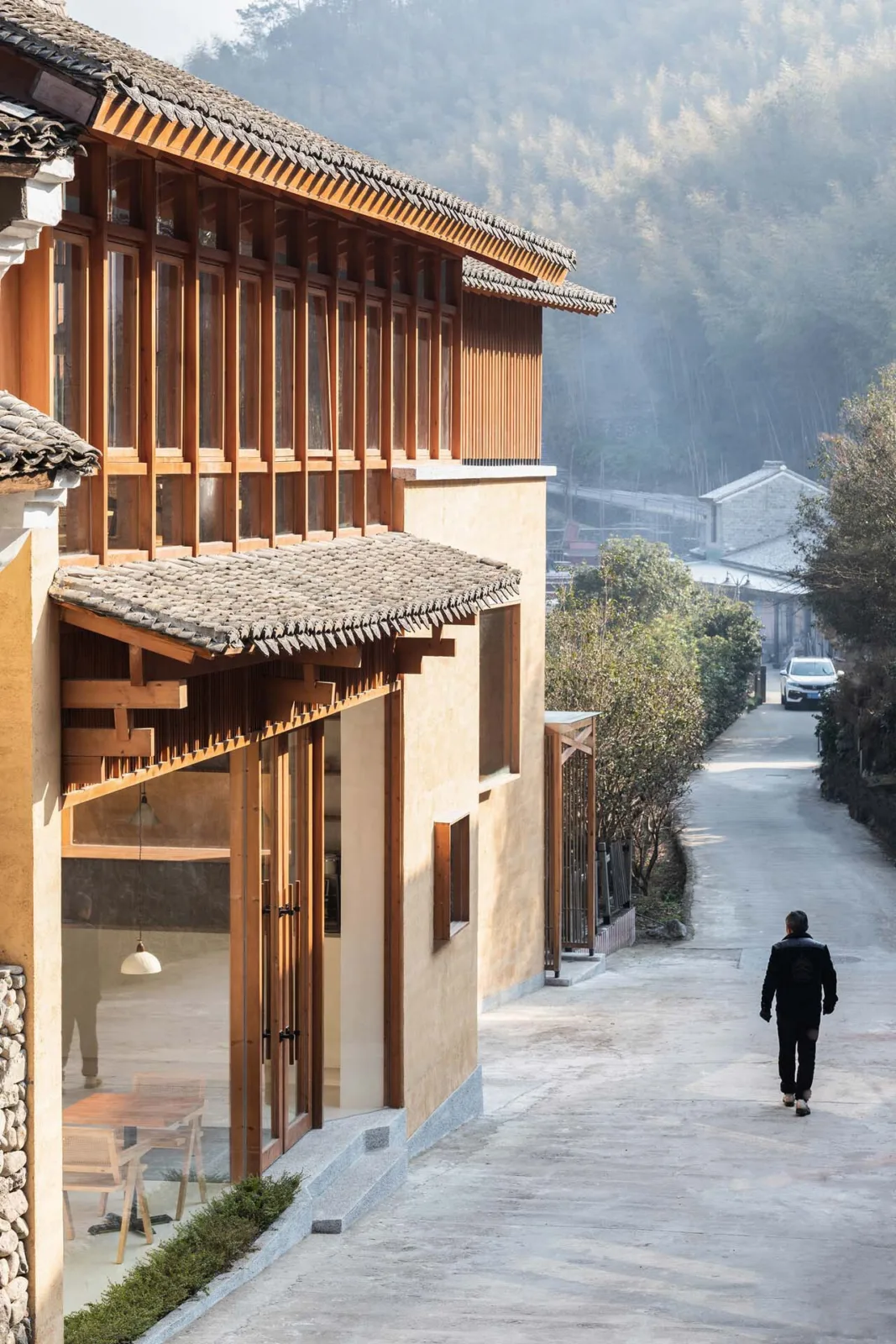
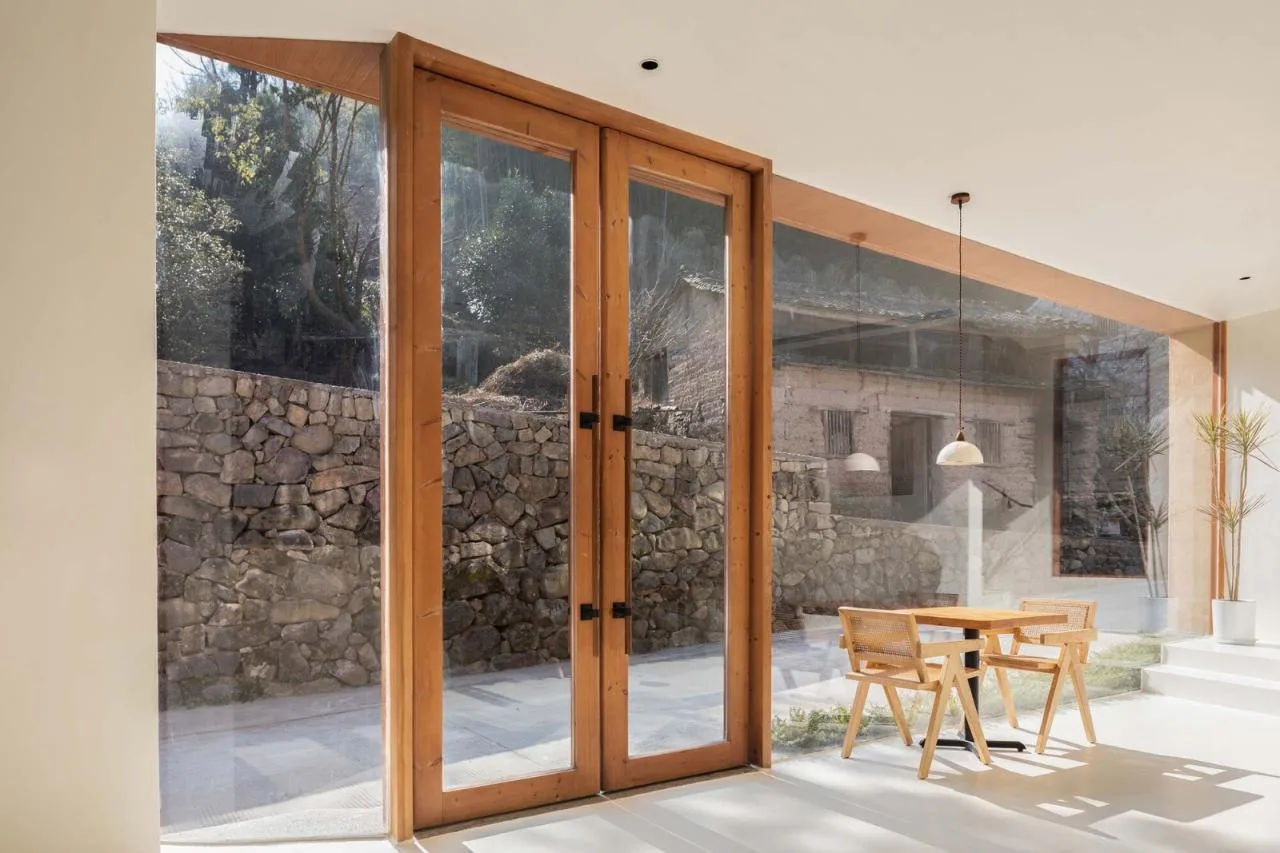
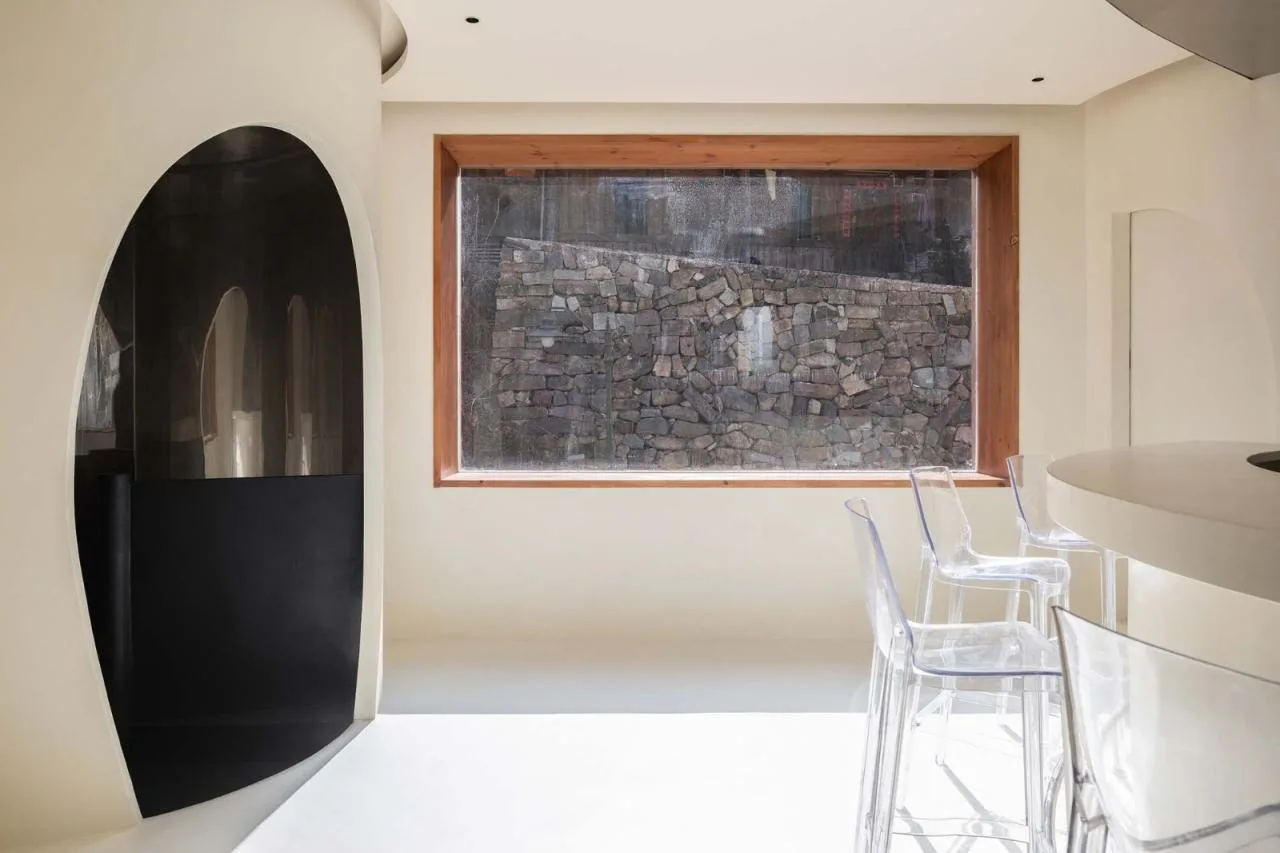
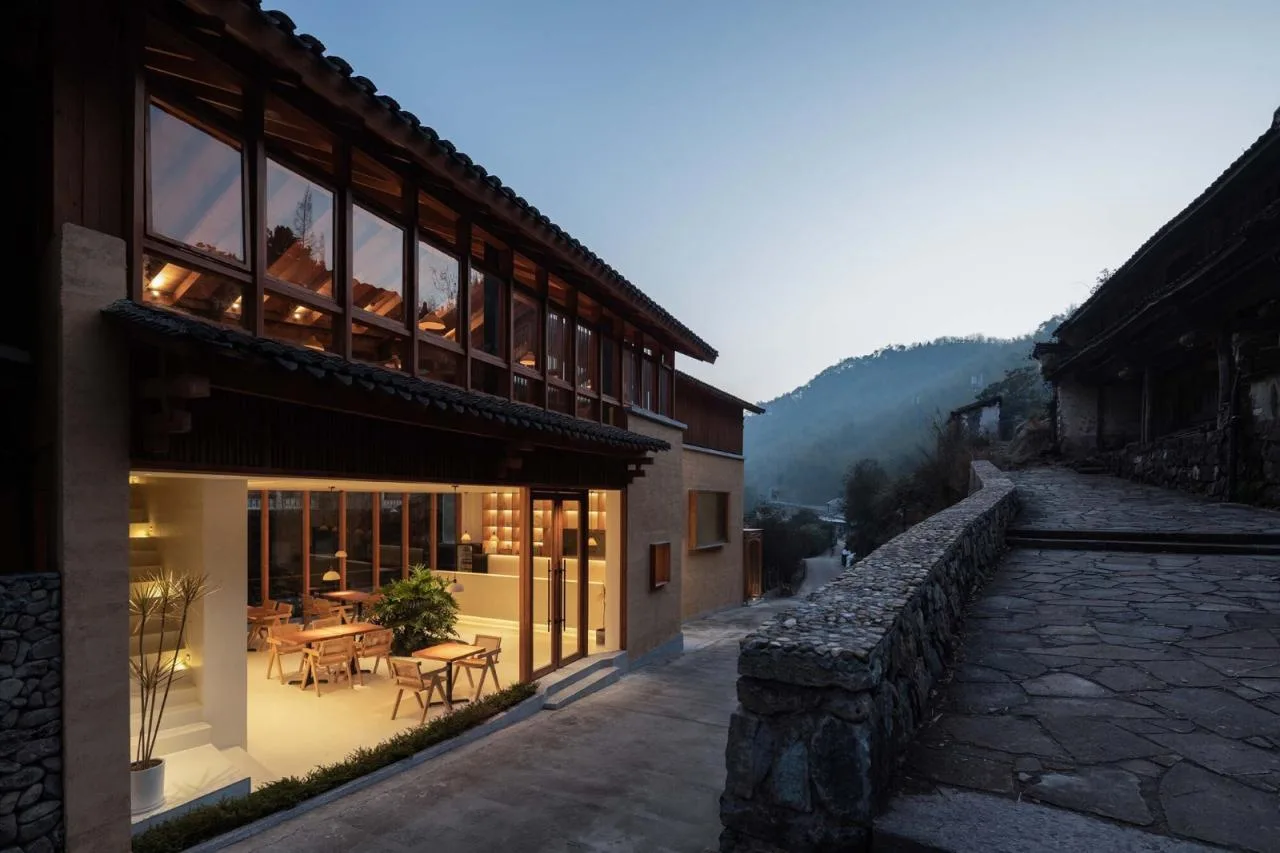
Facing the village road, the restaurant’s front facade opens onto the street with a large glass panel on the first floor, set back within the old house’s interface. This expansive glass surface fosters a strong connection between the interior ground floor and the street, encouraging interaction and visual permeability. Passersby can easily glimpse the water bar inside, naturally drawing them in.
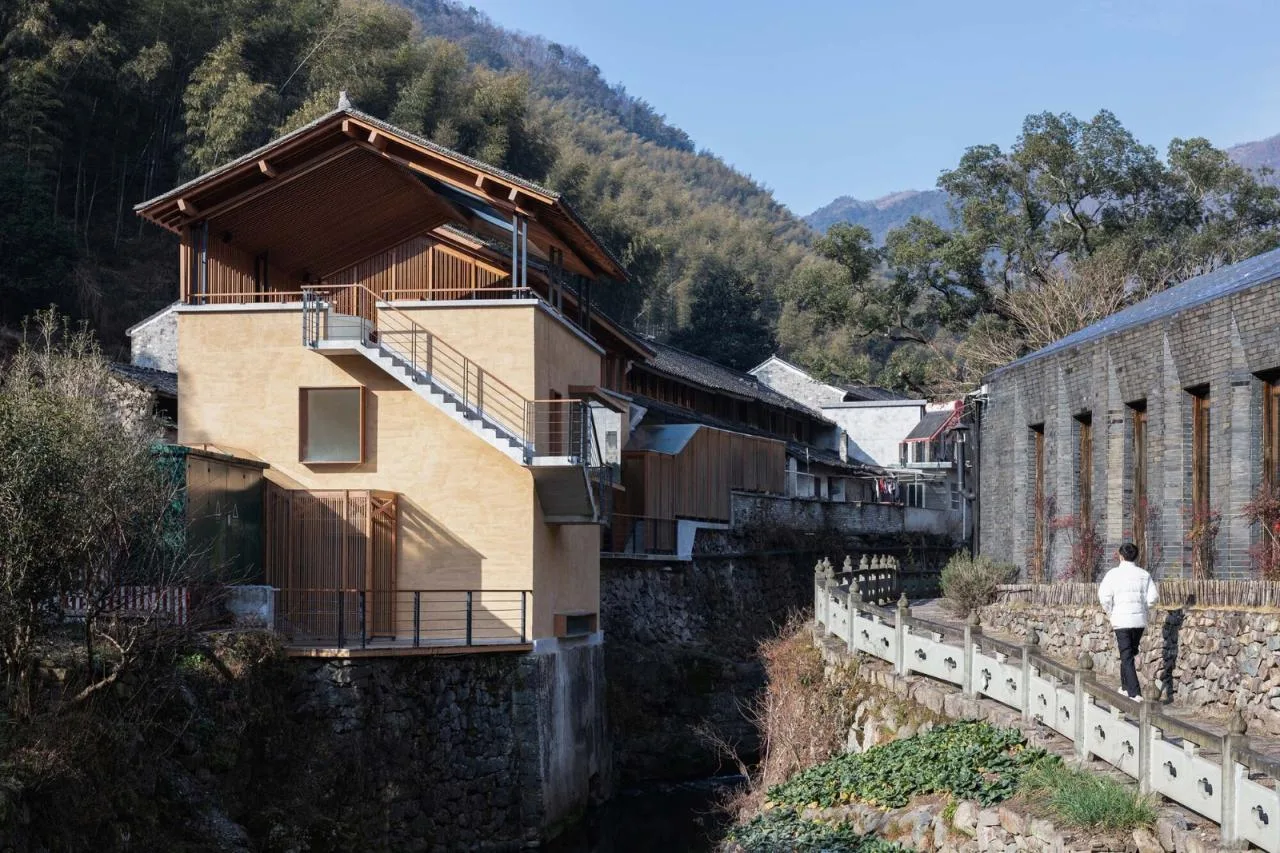
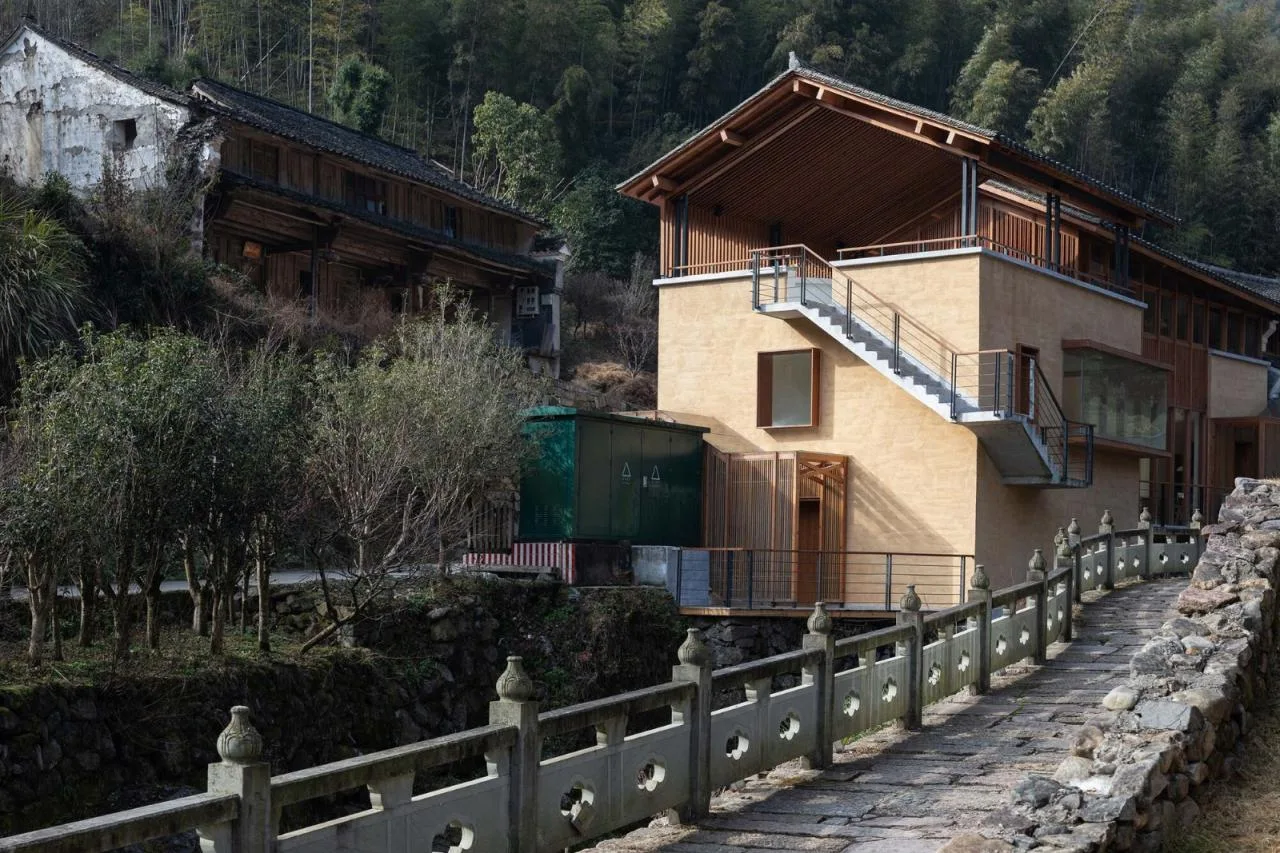
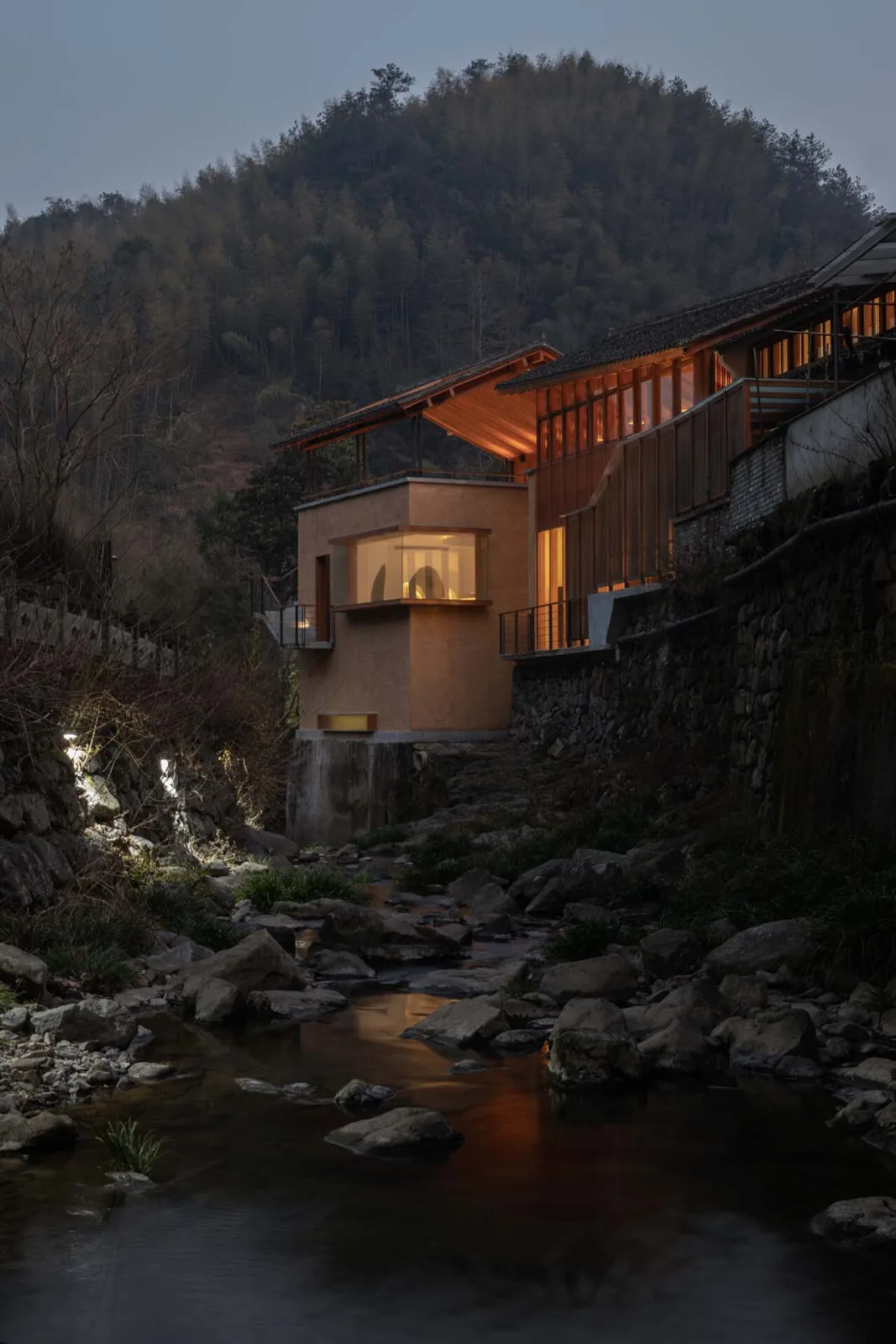
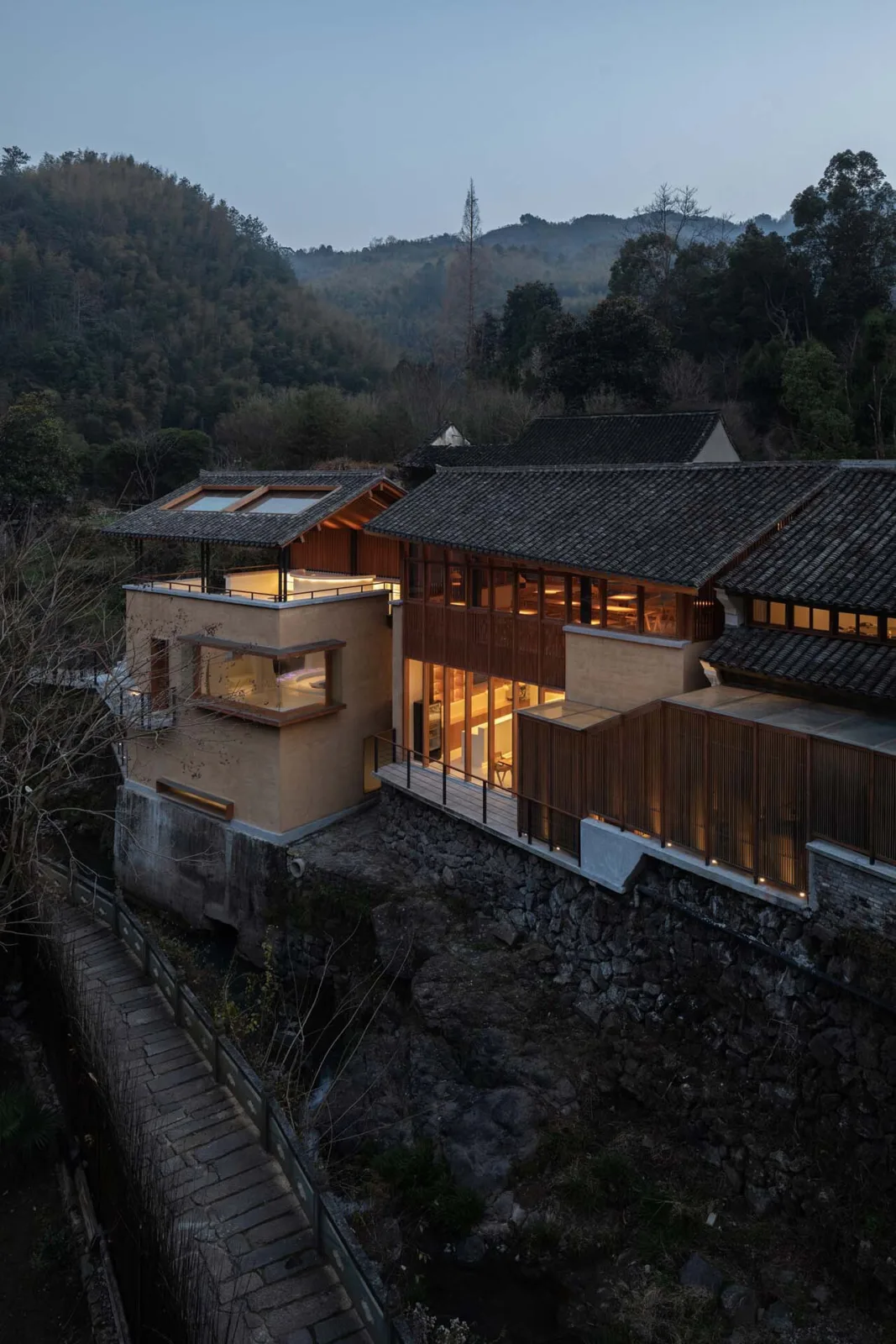
The Vivid Restaurant occupies a trapezoidal plot beside the stream. Due to limited space, the building fully occupies the site, resulting in an irregular trapezoid shape with only one right-angled corner in the floor plan. The roof ridge runs parallel to the road boundary, with one side featuring horizontal eaves and the opposite side forming a “diagonal notch.” This roof style is common in the village, where many old houses adopt sloping eaves due to the terrain.
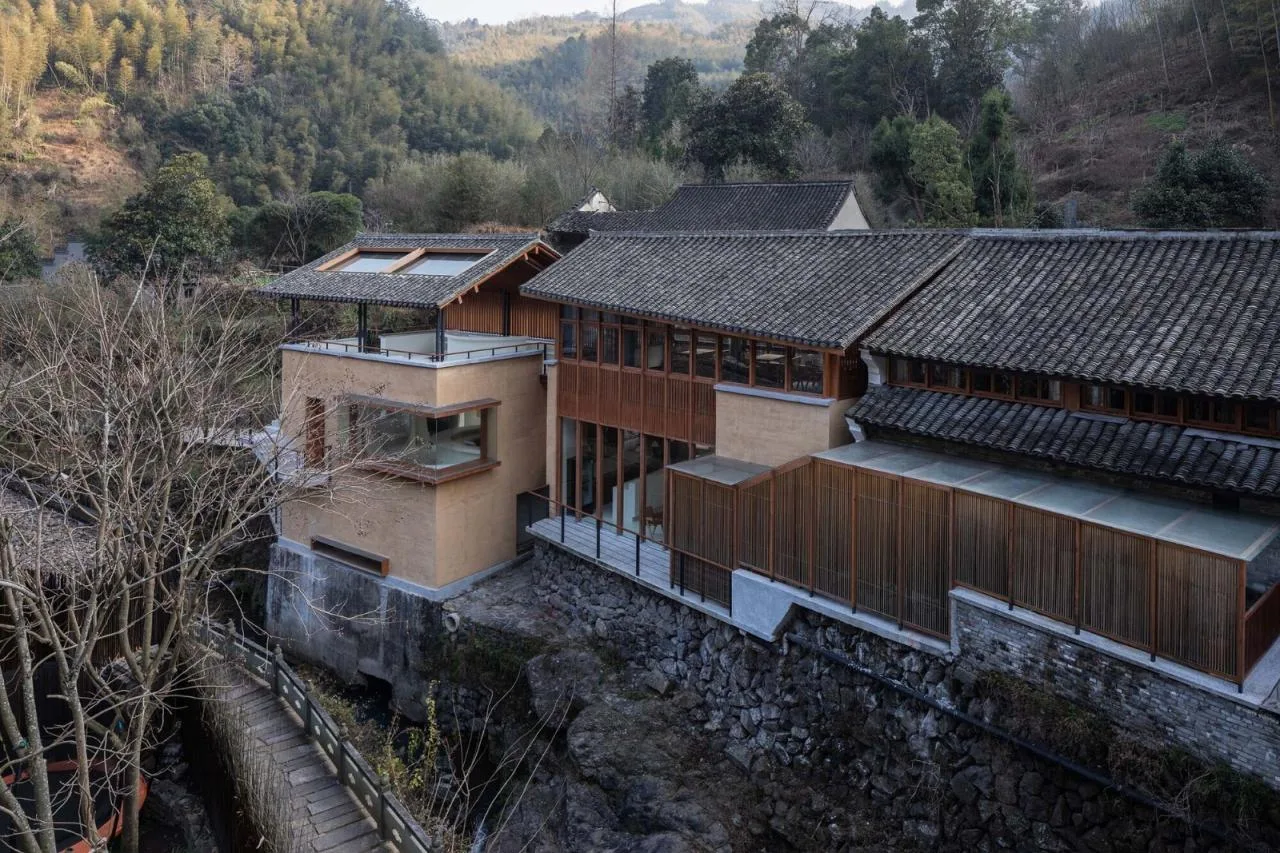
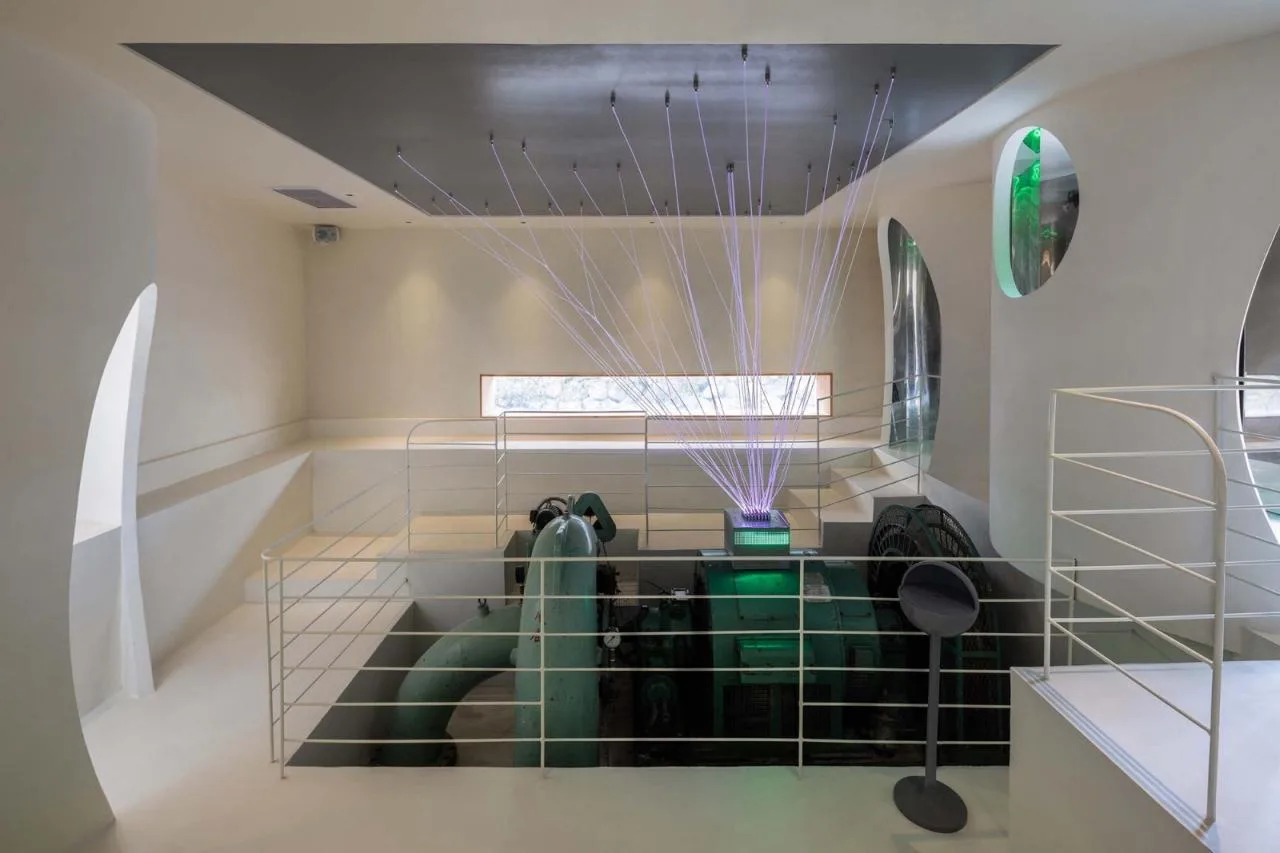
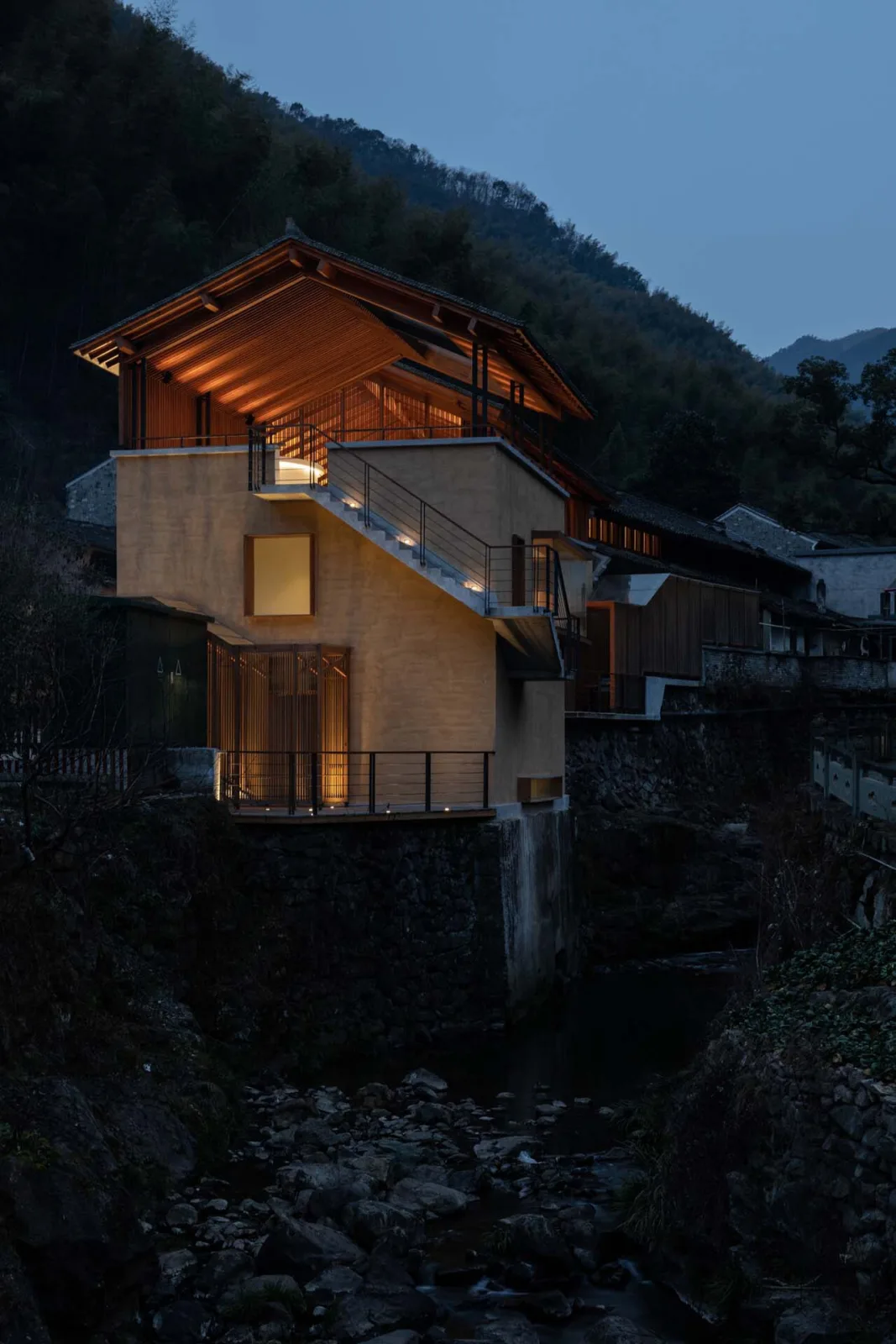
This unique eave shape creates a dynamic relationship with the stream and surrounding buildings, making the restaurant feel naturally integrated into its environment. The original power station was a two-story, bulky structure that contrasted sharply with the village’s atmosphere. To harmonize with the surroundings, the upper part was removed, lowering the building height by one floor and creating a sunken space.
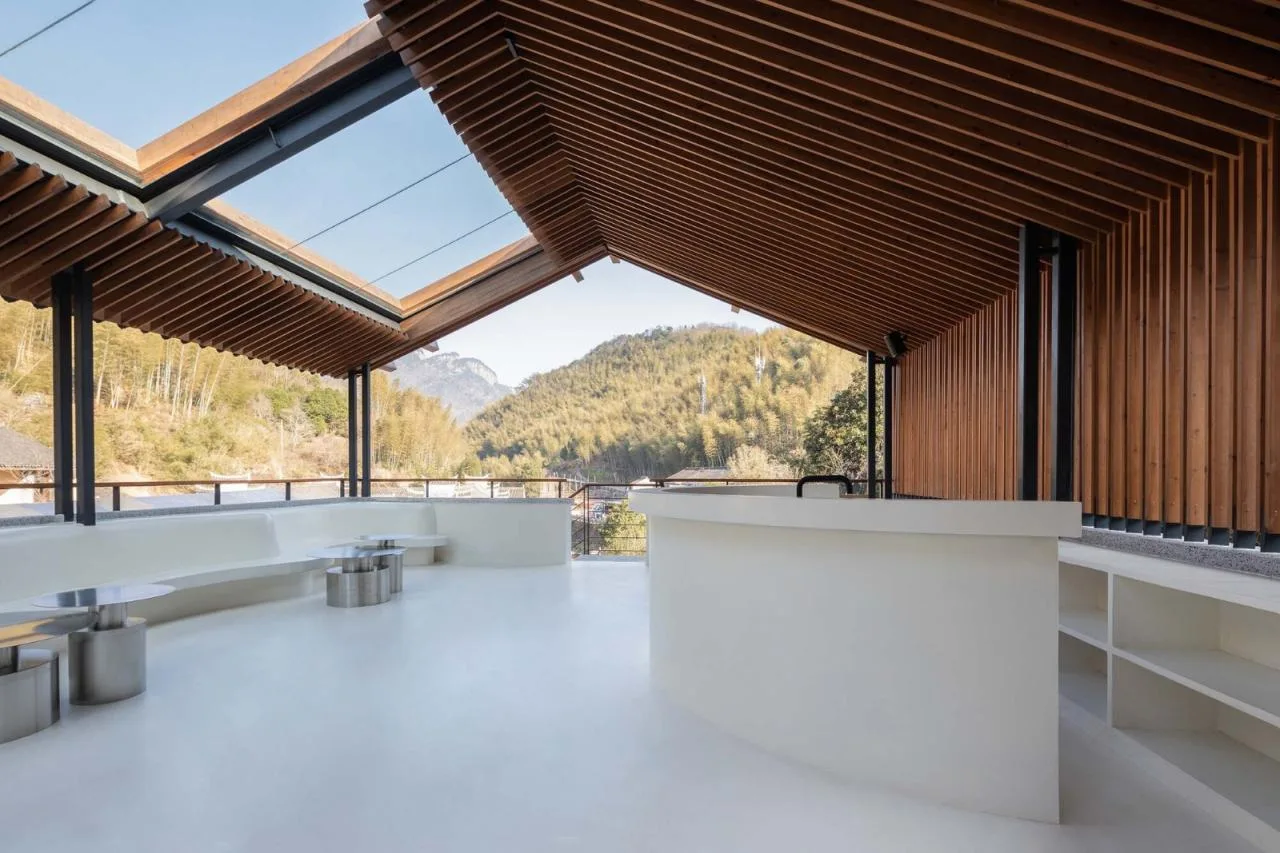
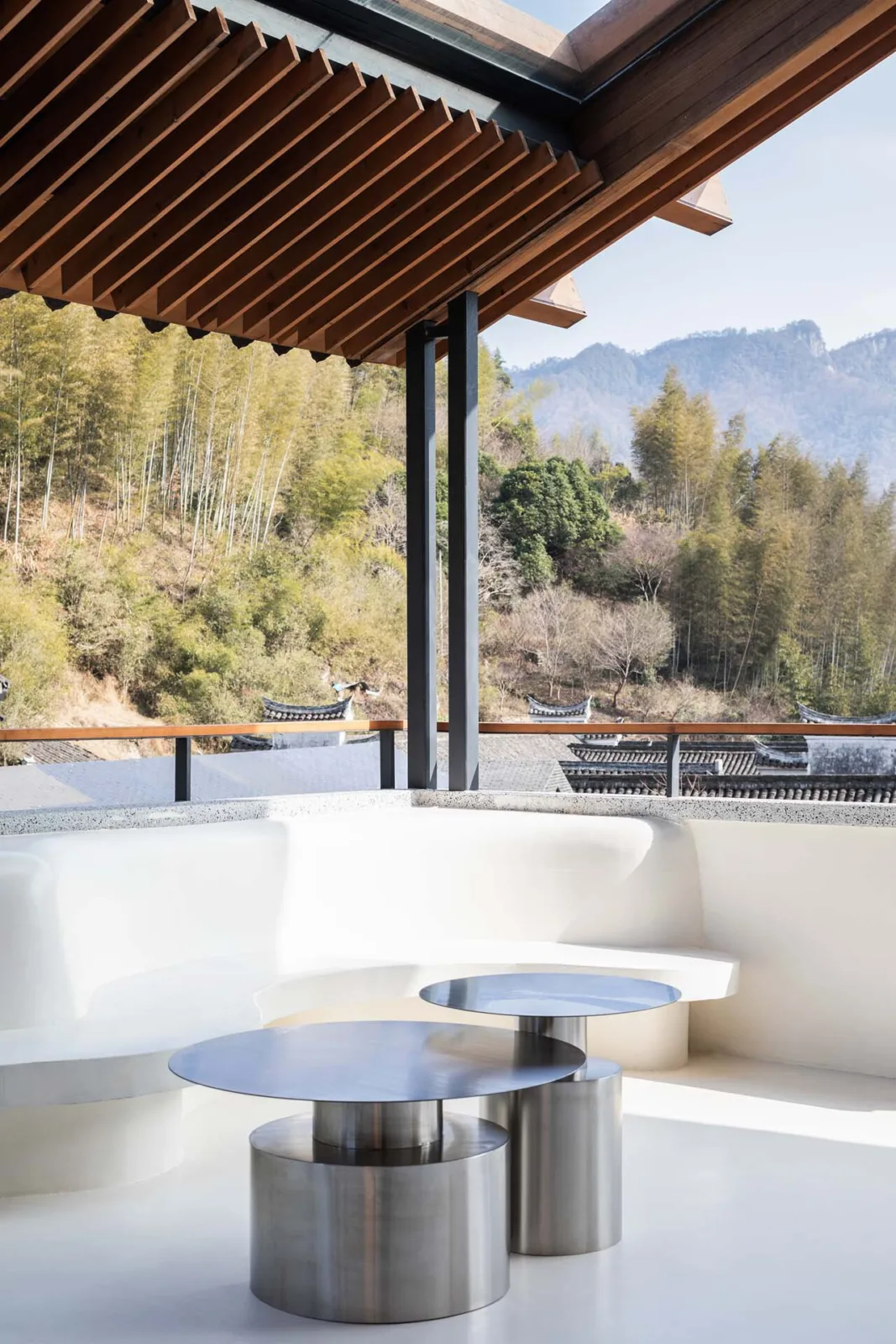
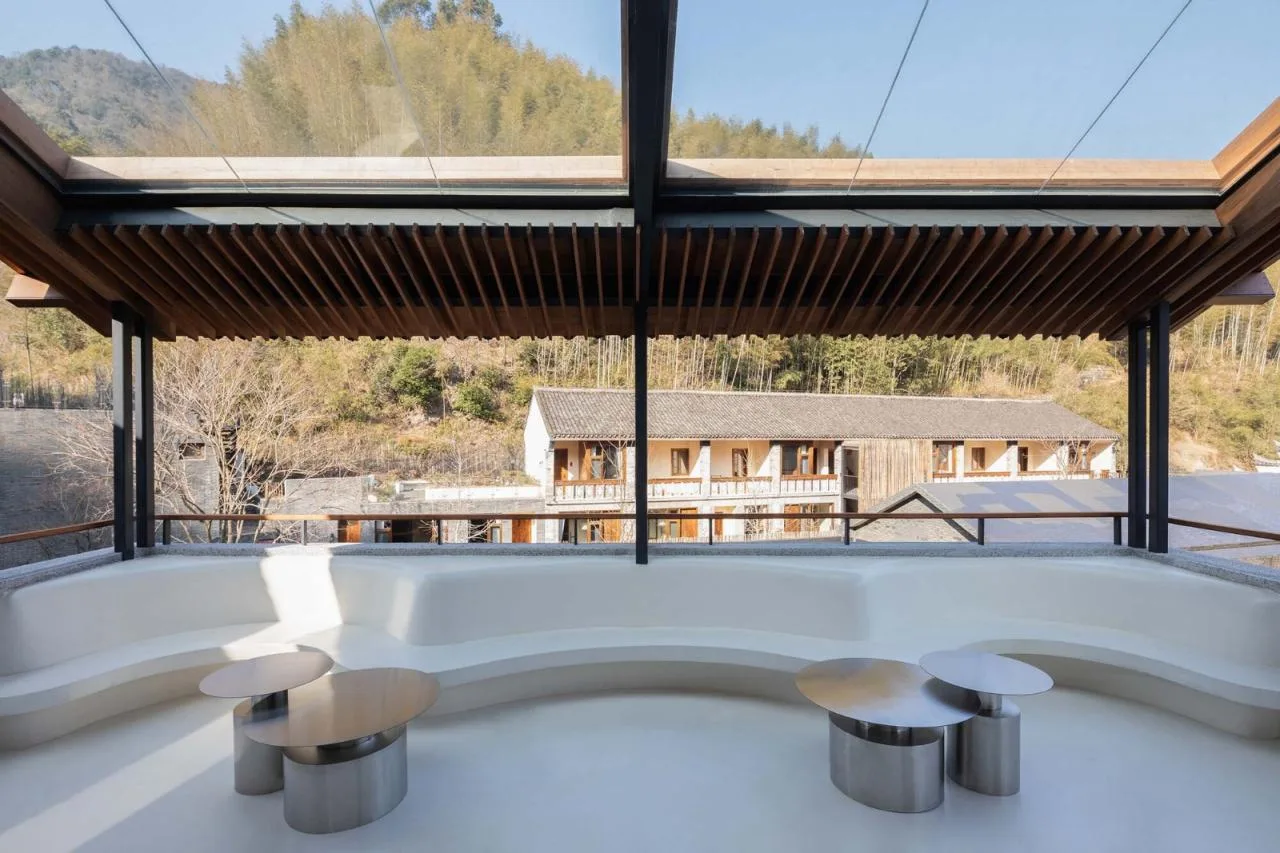
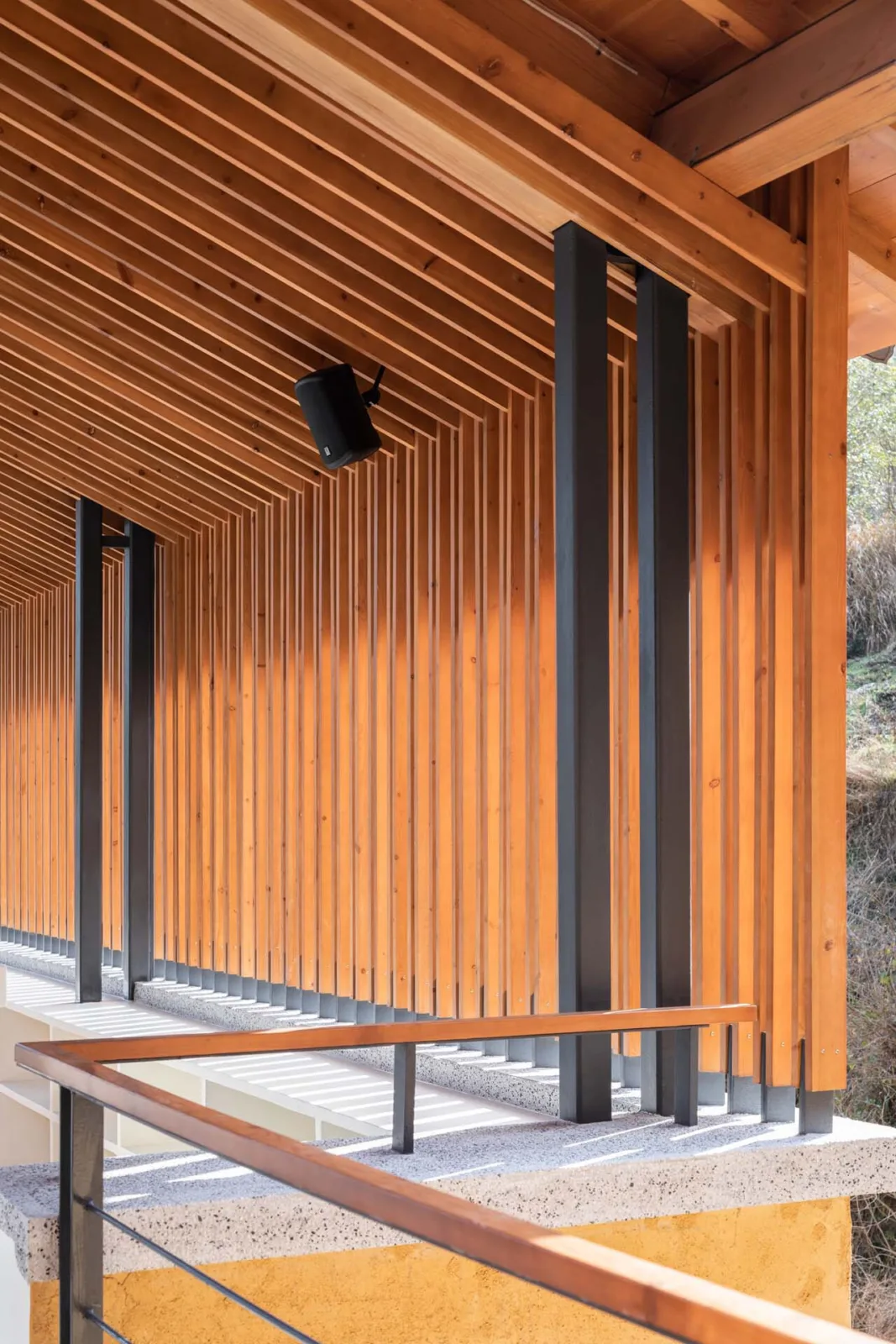
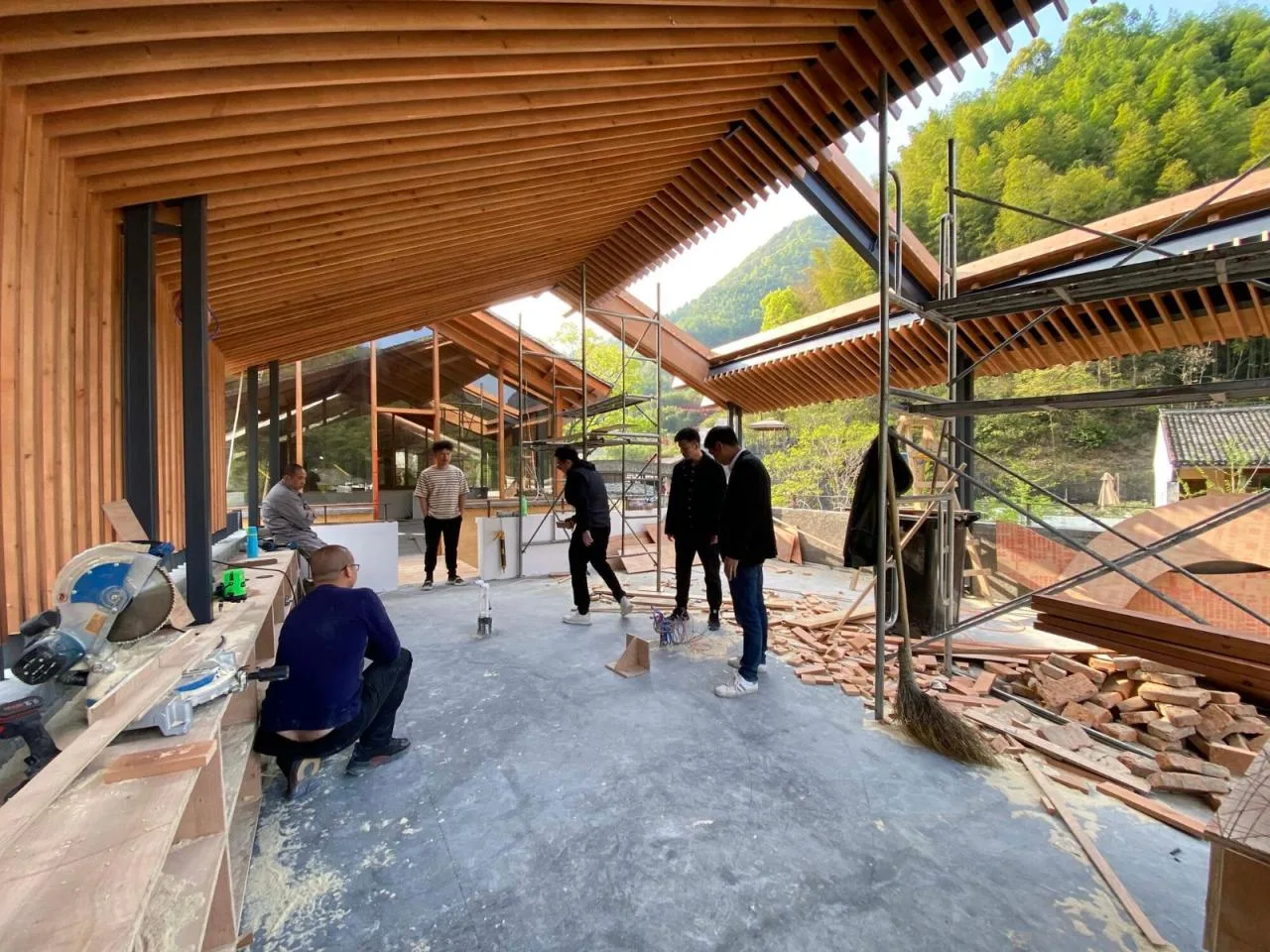
An additional semi-outdoor space was introduced atop the building, without enclosing walls, featuring two large skylights on the roof to open the interior to nature. Structural adjustments were made to lighten the roof space, aligning with the village’s intuitive environmental feel.
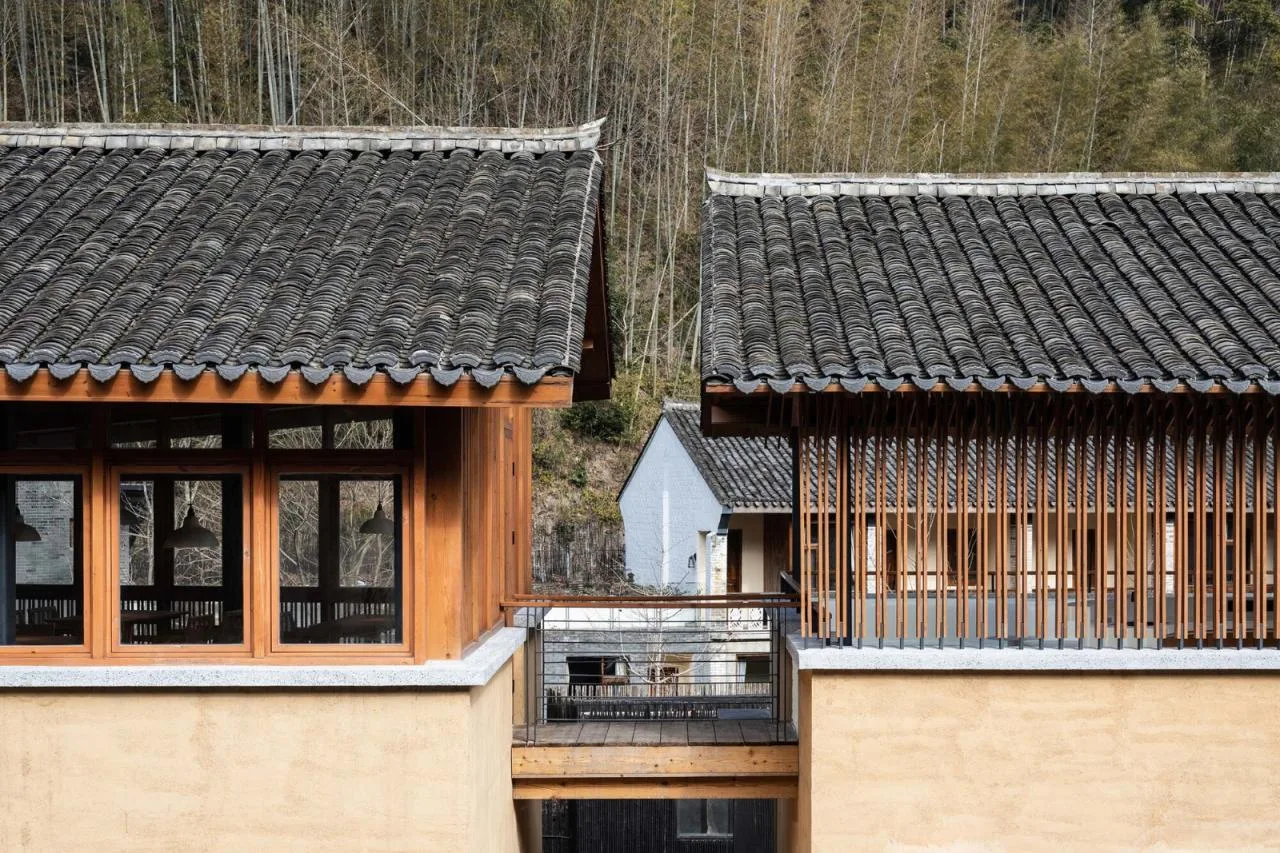
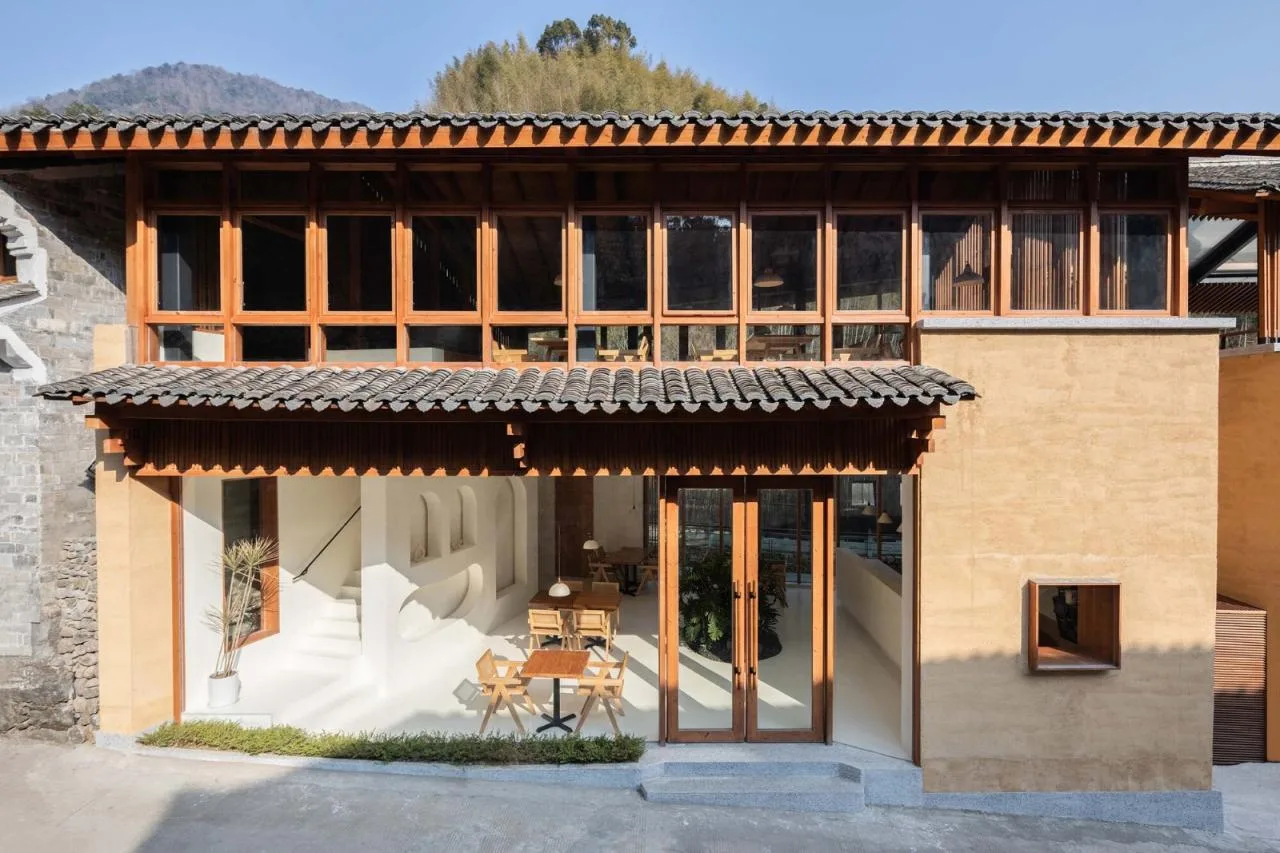
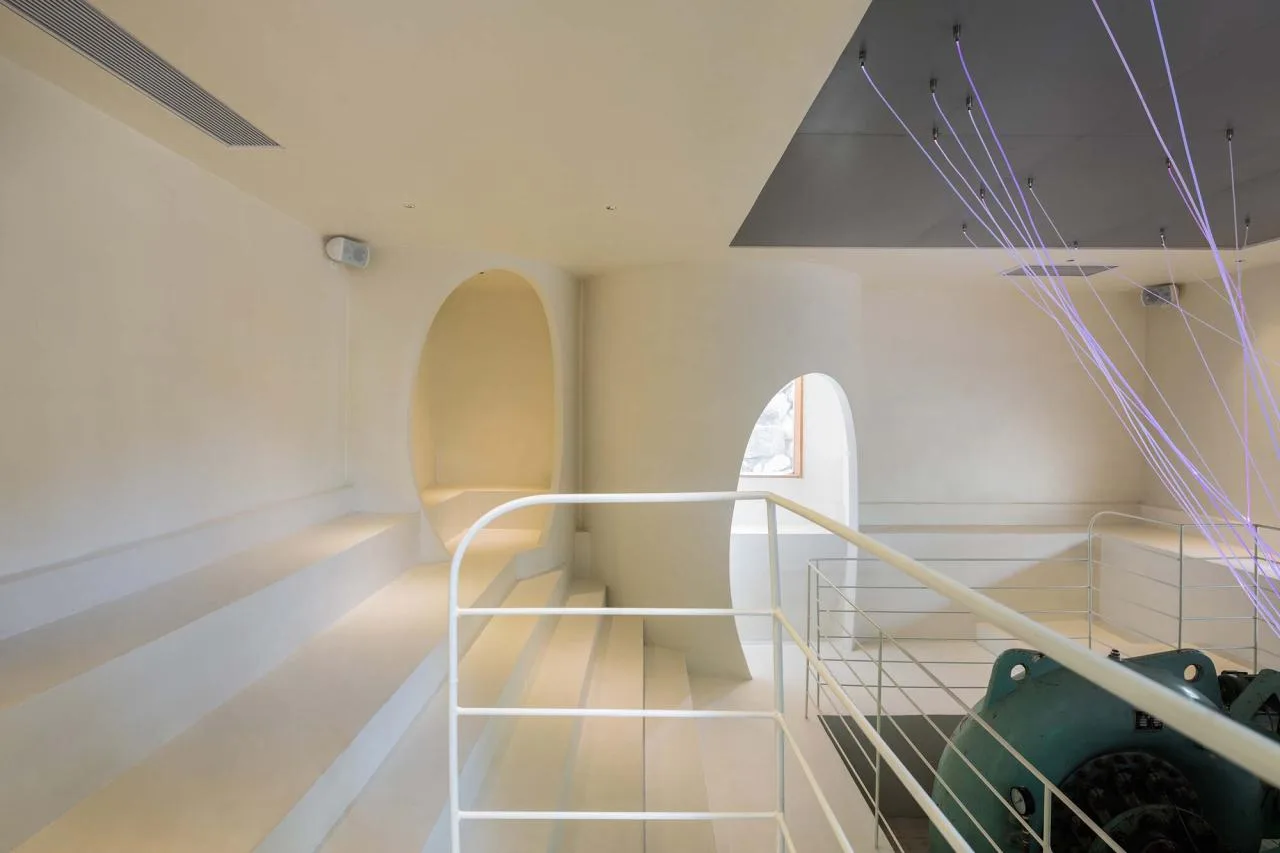
The renovated power station, now transformed into a bar and restaurant, symbolizes the village’s connection to its past. Once abandoned and obsolete, the preserved generator in the bar stands as a monument to the passage of time. Memory preservation is a vital theme in rural areas; without memory, culture cannot endure.
While restoring traditional buildings and maintaining their exteriors preserves material heritage, the essence of life’s memories must be transmitted symbolically. As rural development moves toward prefabricated construction, energy efficiency, and planned communities, caution is needed to avoid homogenization and standardization. Embracing local conditions to create spaces with distinct lifestyles and characteristics is a more meaningful approach to rural development and cultural heritage.
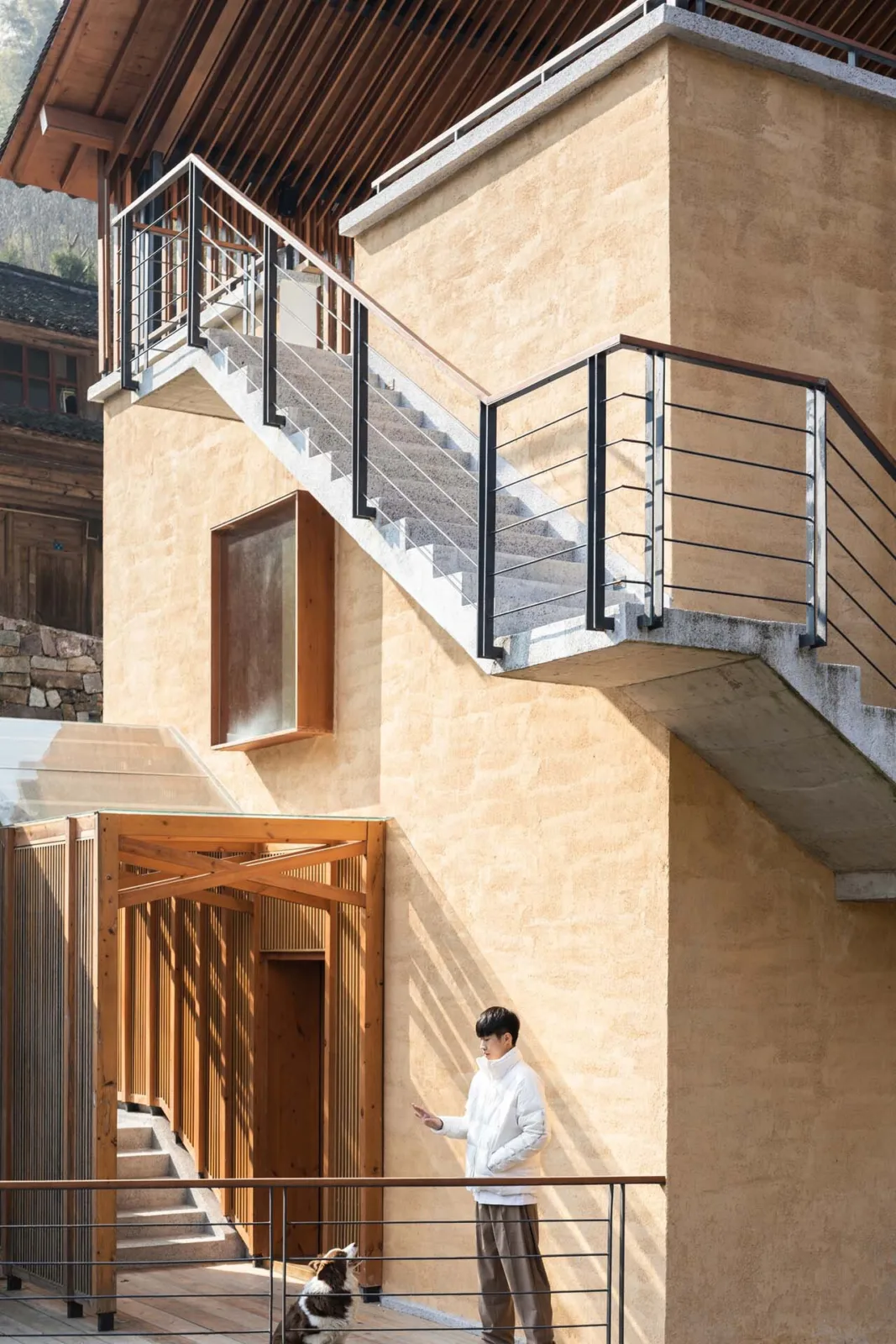
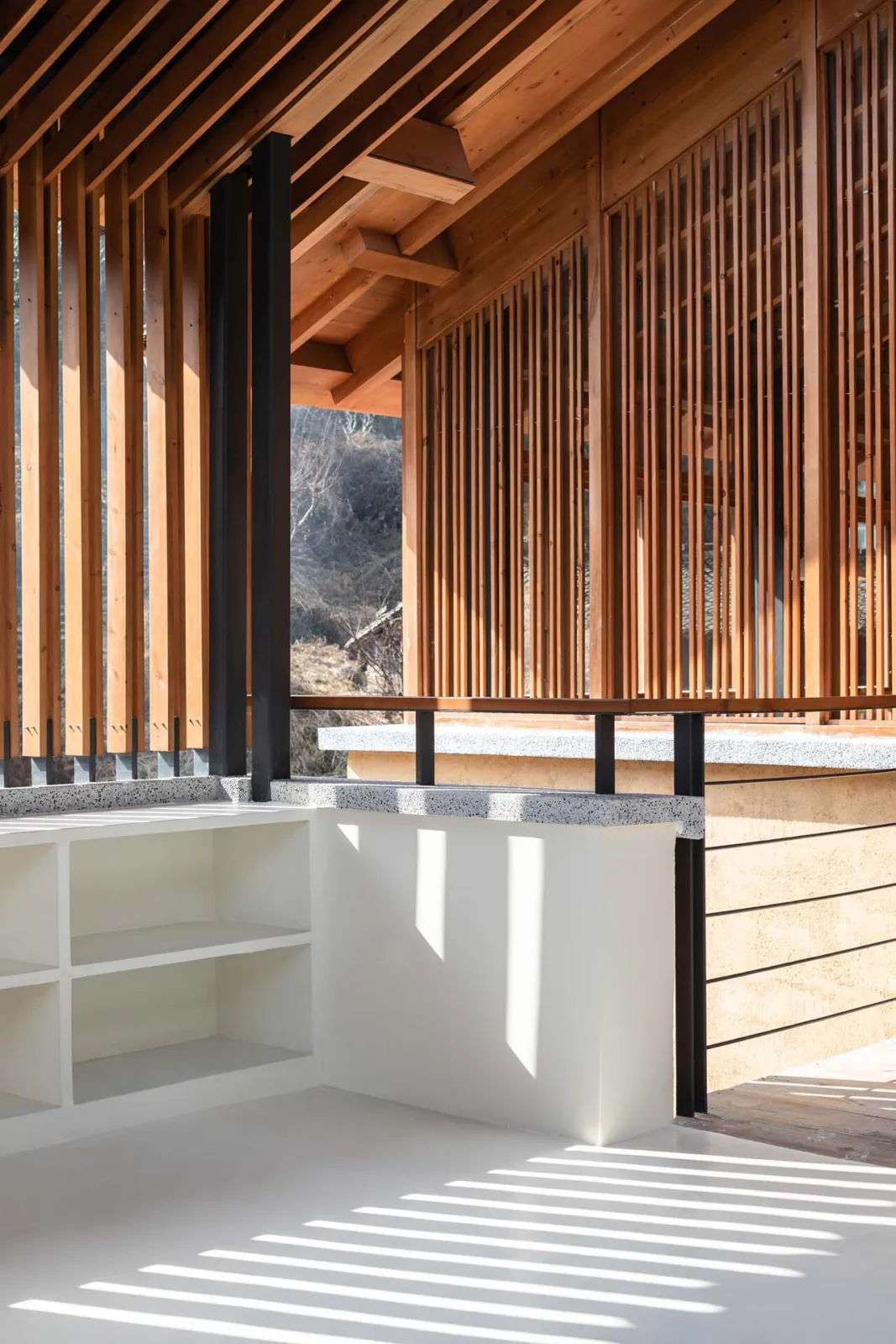
After analyzing the village’s old houses, we found common design elements: wooden walls, doors, and windows fill the wooden structural frames on the first floor. The roofs are single-sloped with central eaves. The first floor features recessed facades, creating shaded gray spaces. On the second floor, the flat facades are set back under large eaves to shield wooden materials from rainwater damage. In Jiangsu and Zhejiang regions, wooden parts are often protected within eaves to avoid direct exposure to rain.
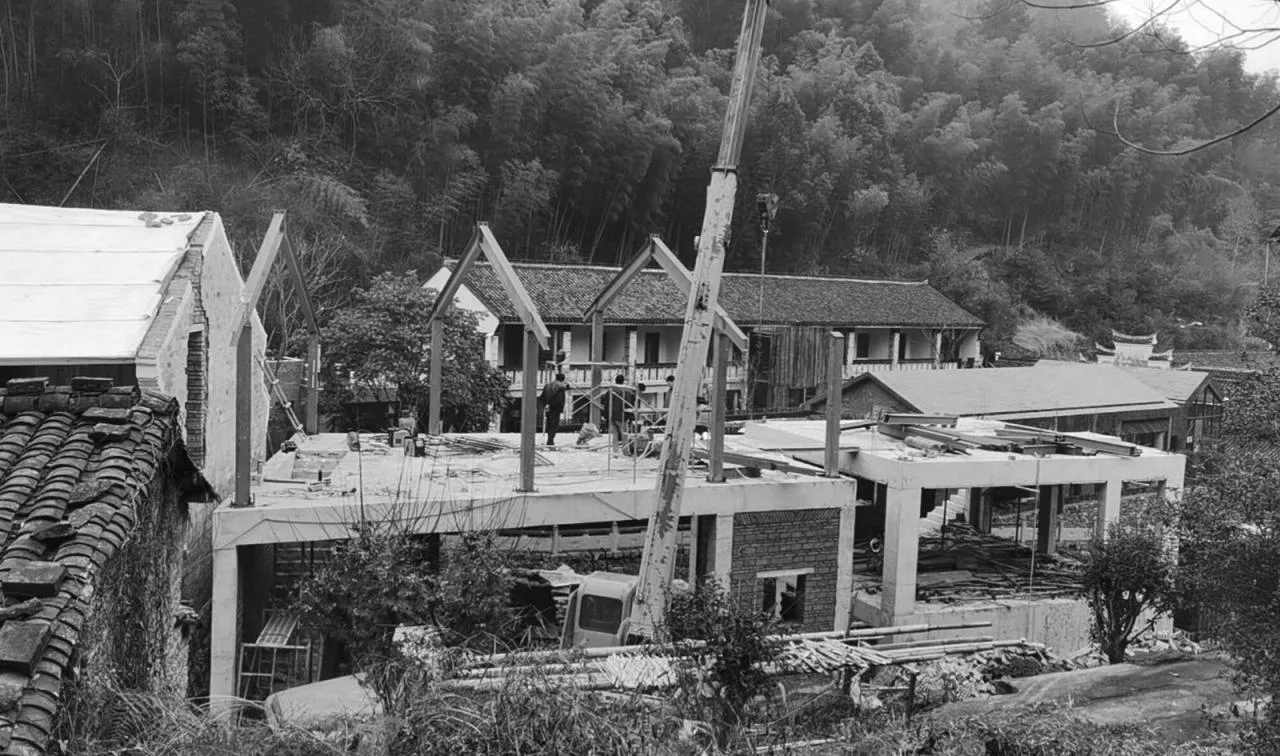
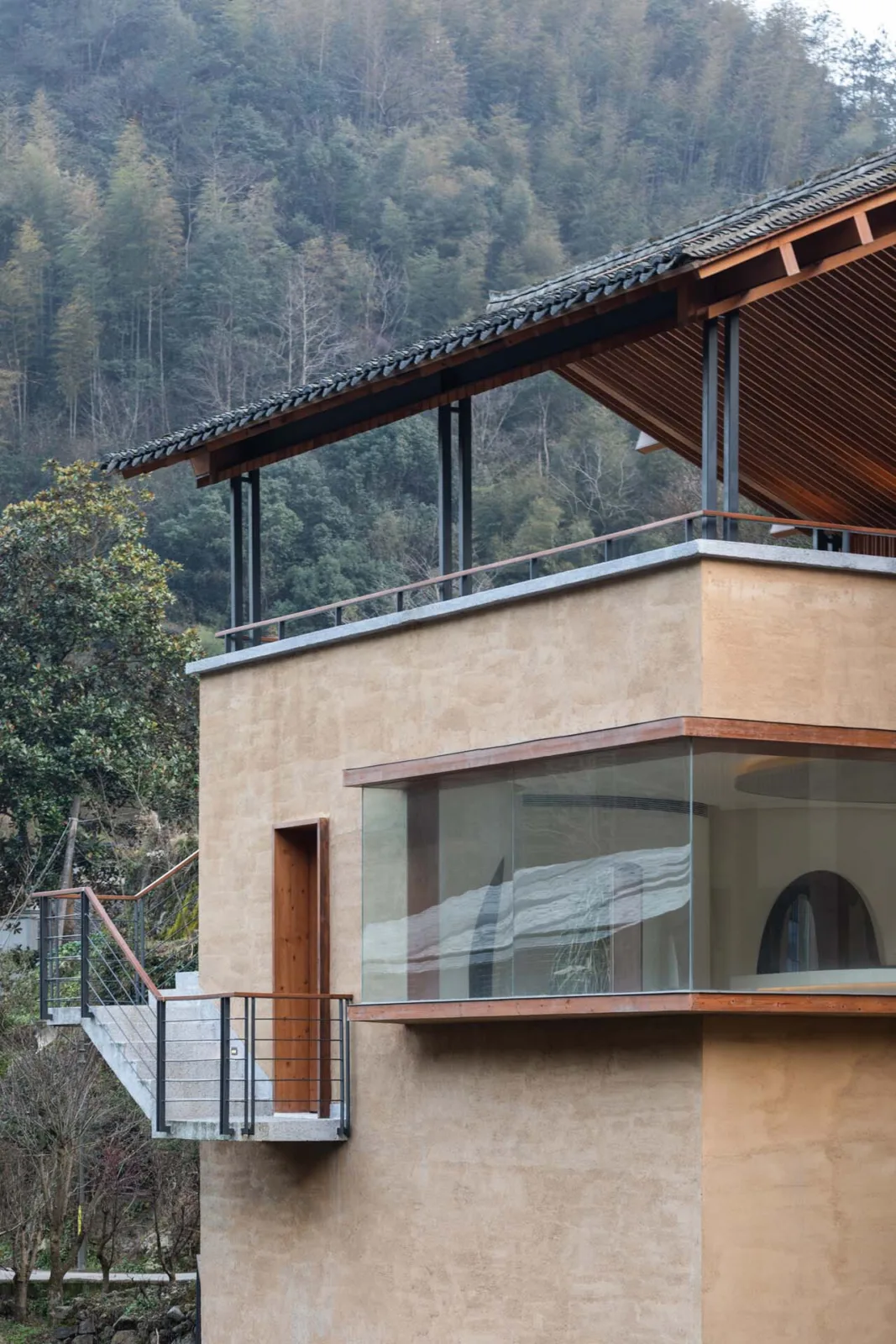
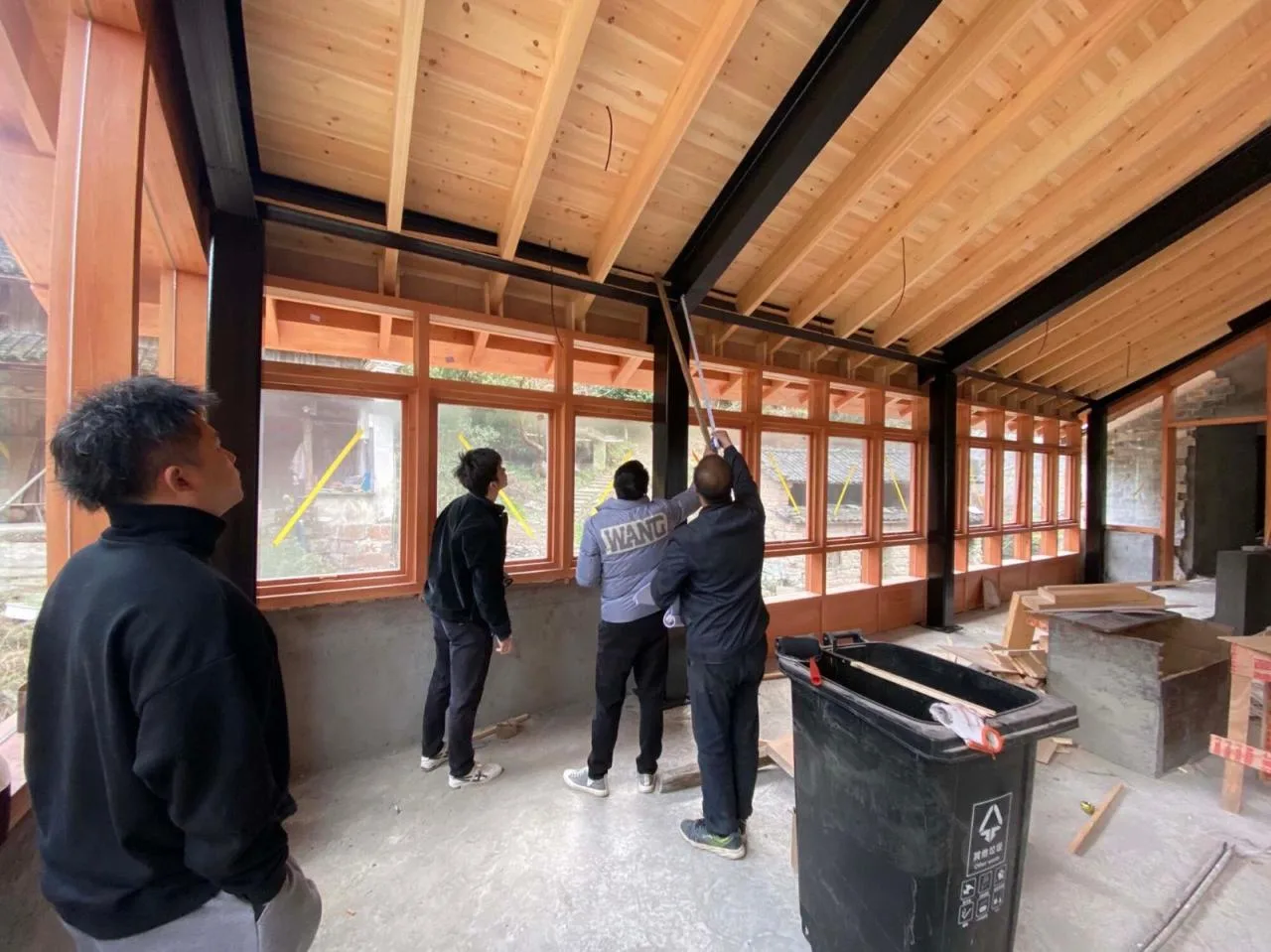
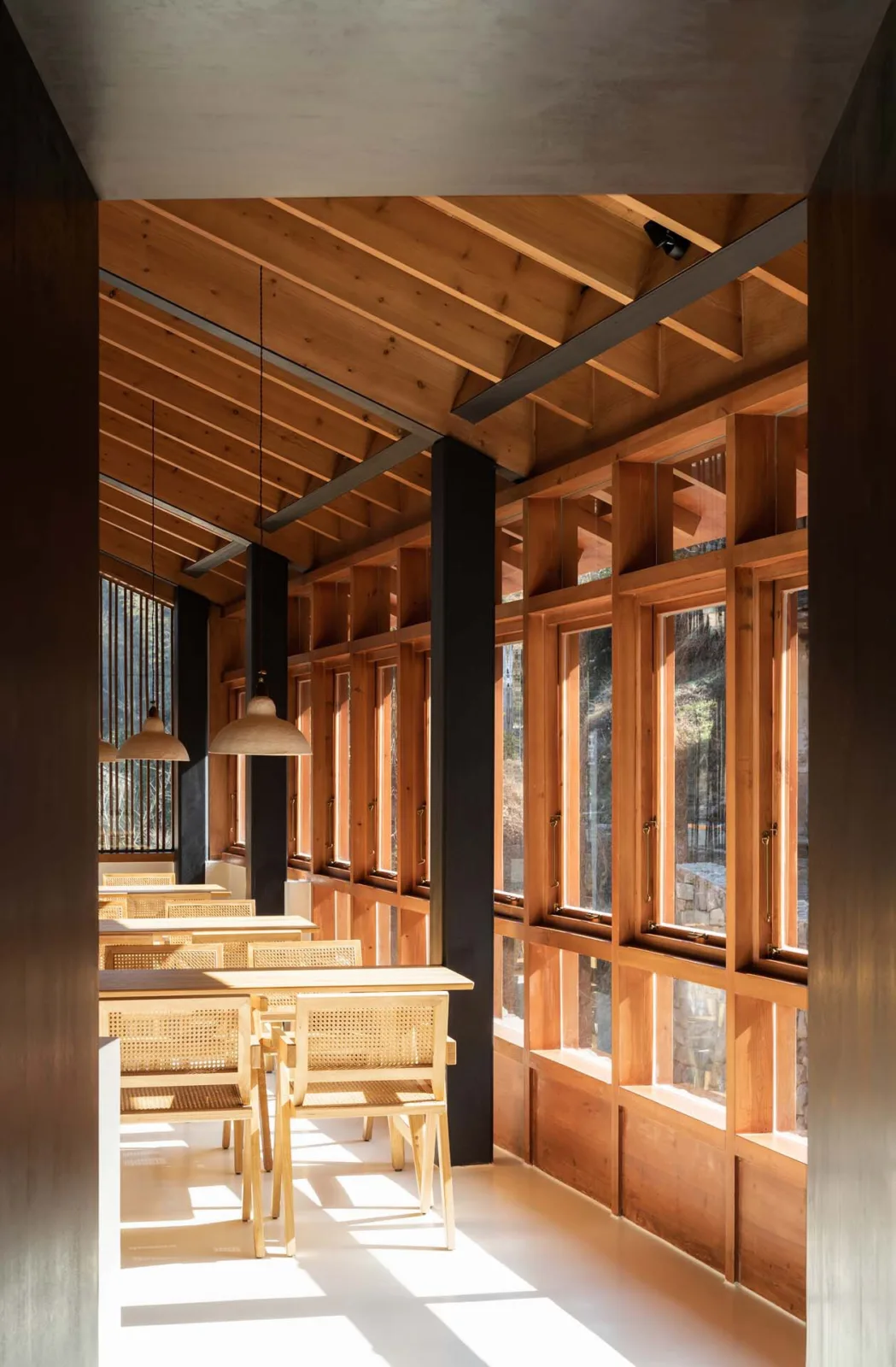
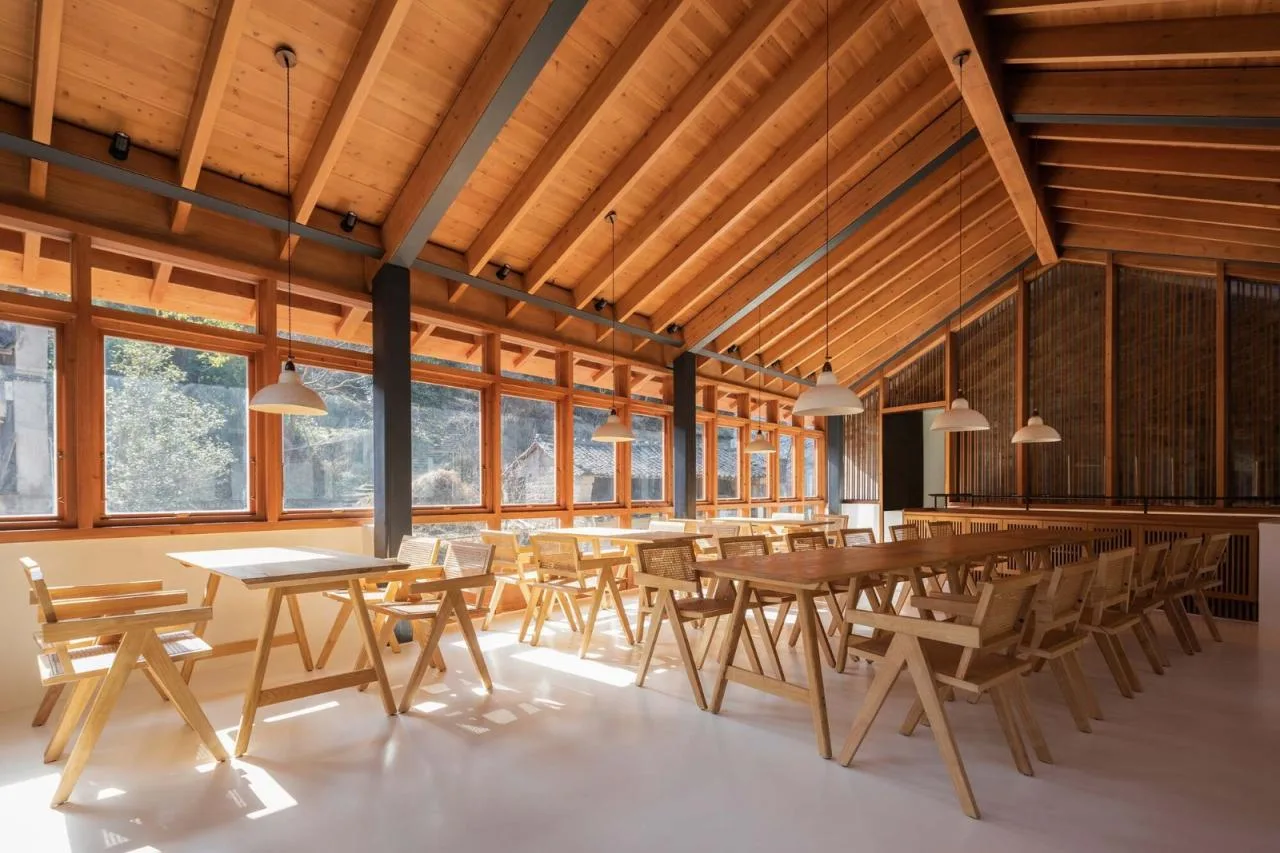
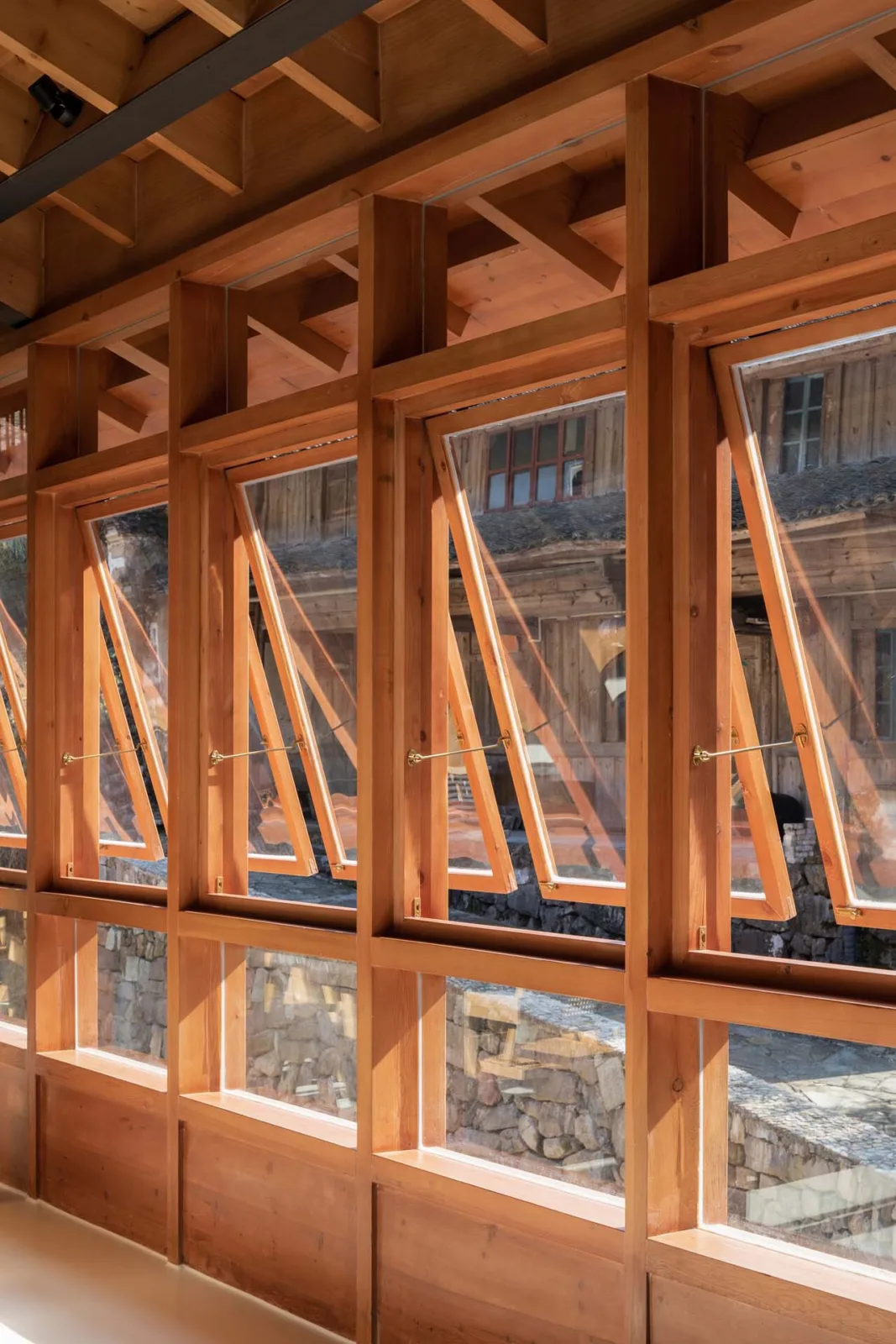
We aimed to create a column-free, spacious first floor in the restaurant through structural renovation. To maintain spatial transparency and integrity, columns were staggered strategically, preserving unobstructed views on both sides. The second floor’s exterior facade is a transparent wooden frame with glass, separating the facade system from the structure. A portal steel frame system is recessed onto the first floor beams, while the roof combines steel and wood structures for both integration and transition.
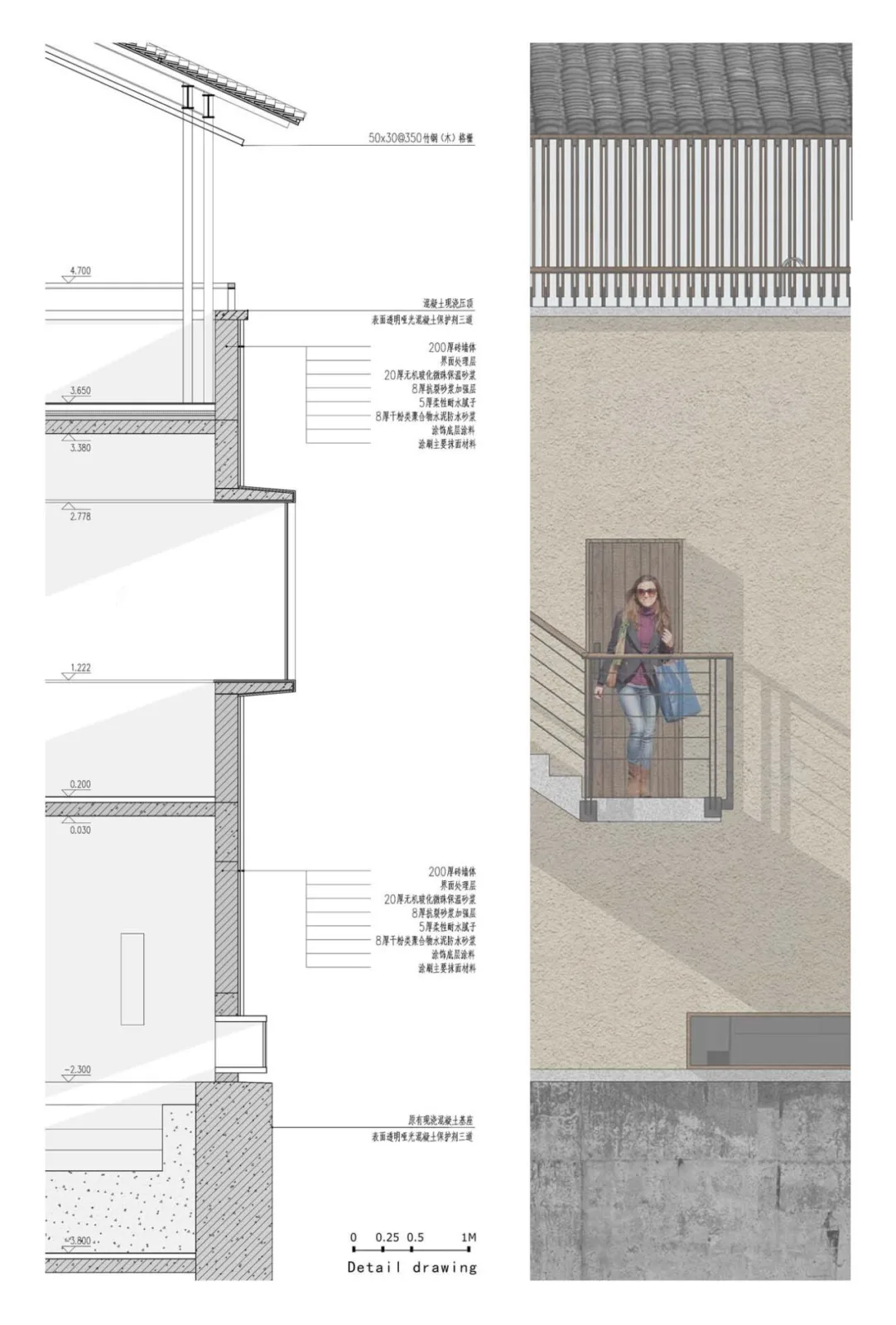
Though the restaurant occupies a small footprint, its structural design is complex. The bar area retains the power station’s thick concrete foundation and rises with a concrete frame. The roof was transformed into a slender steel structure, splitting large steel columns into smaller square ones to eliminate visual bulk. Moving from concrete to steel to wood, the building’s structure transitions from heavy to light.
This rural project allowed us to explore various architectural possibilities, making construction more practical and aligned with contemporary rural development.
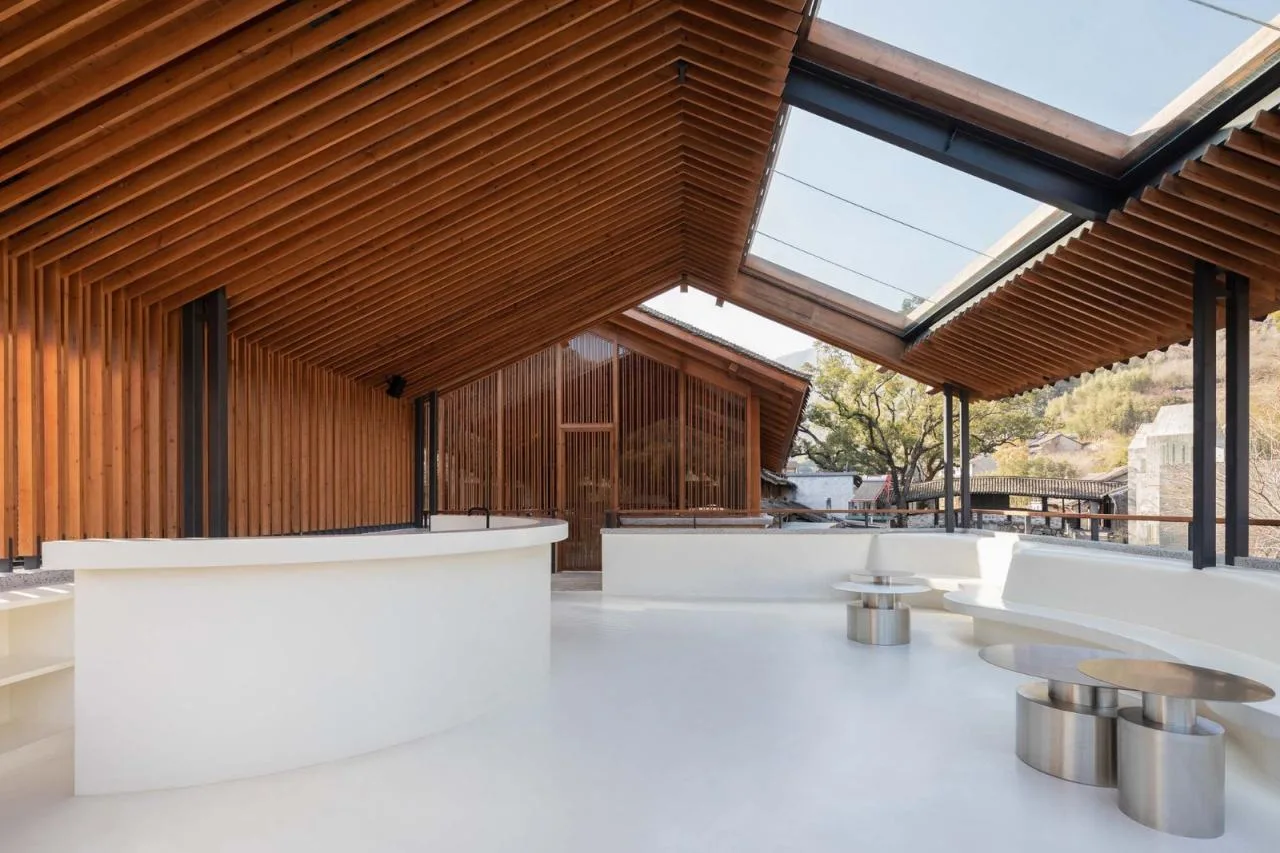
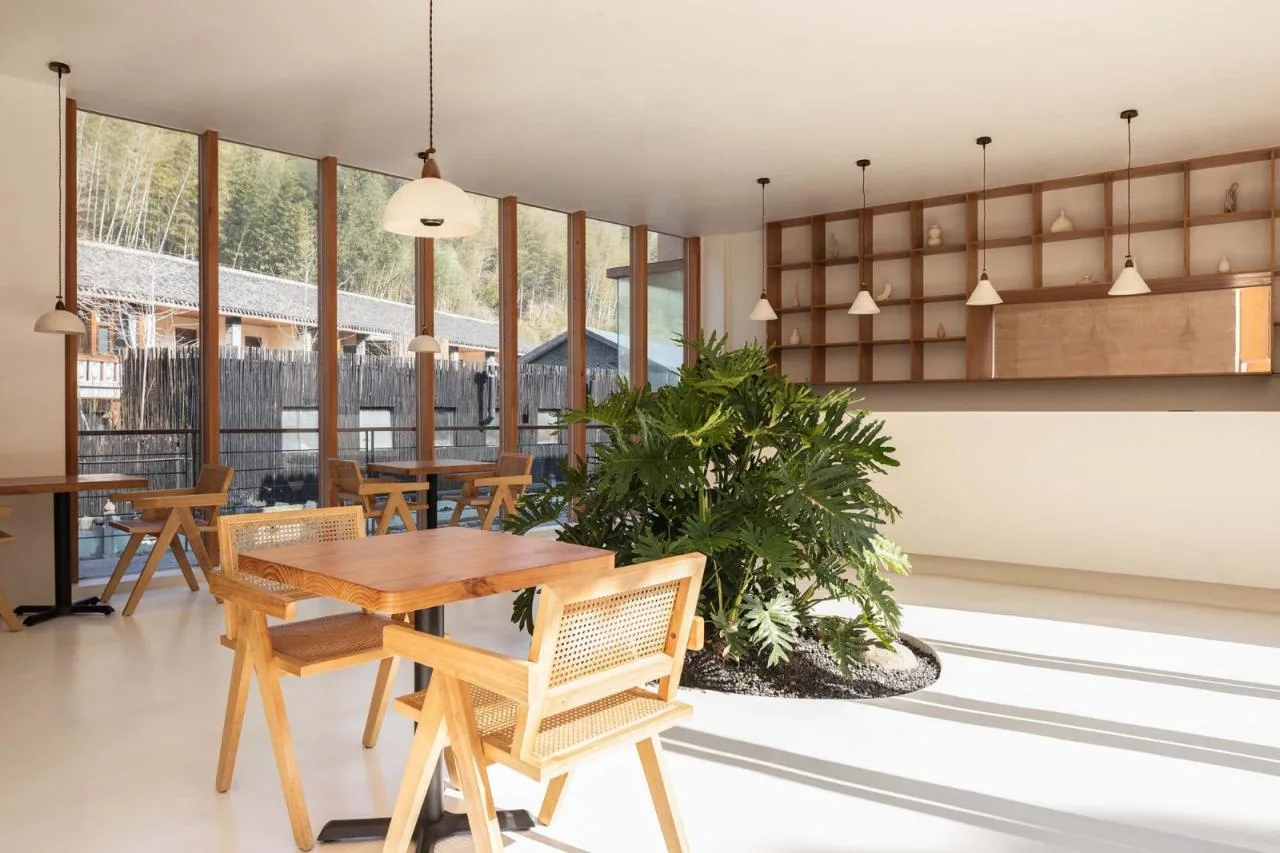
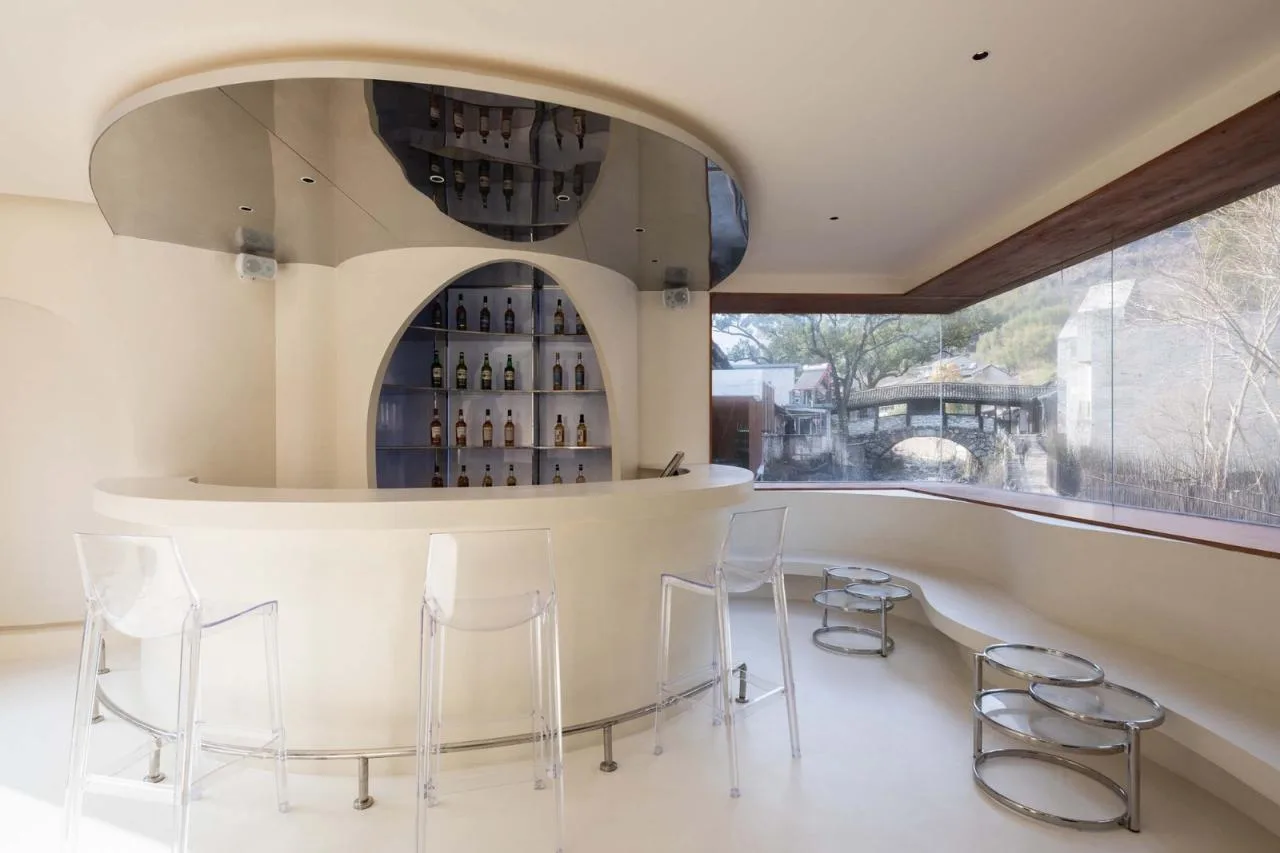
One of the biggest early design challenges was how to create three interconnected yet independent spaces on such a small site. The restaurant’s core is a new building situated between two old structures. Its elevation balances the heights of adjacent buildings, connecting on one side to private rooms and kitchen spaces in the old house, and on the other to the renovated power station bar.
The power station bar’s base sits low, surrounding the original generator in a sunken space. Utilizing this height difference, we created a semi-outdoor activity area on the bar’s upper floor. This area connects to the restaurant’s second floor, serving as an extension for multipurpose use.
An external staircase links the bar and restaurant, softening functional boundaries and allowing these spaces to be both separate and integrated. This flexible design encourages shared use and spatial fluidity. As rural areas evolve with more diverse, experiential uses, flexible and multifunctional spaces promise higher utilization.
From the enclosed old house to the open restaurant and then to the semi-outdoor terrace, visitors experience a transition from enclosed to open environments, matching the functional character of each space. Architecture shapes physical and mental experiences, influencing how people sense and interact with their surroundings.
The interaction between observing and being observed, as well as the relationship with the existing environment, is crucial in any building, regardless of size. The environment possesses its own unique spirit, and surrounding elements shape architectural character. Buildings constructed without respect for their environment risk becoming mere functional products, lacking depth and diversity.
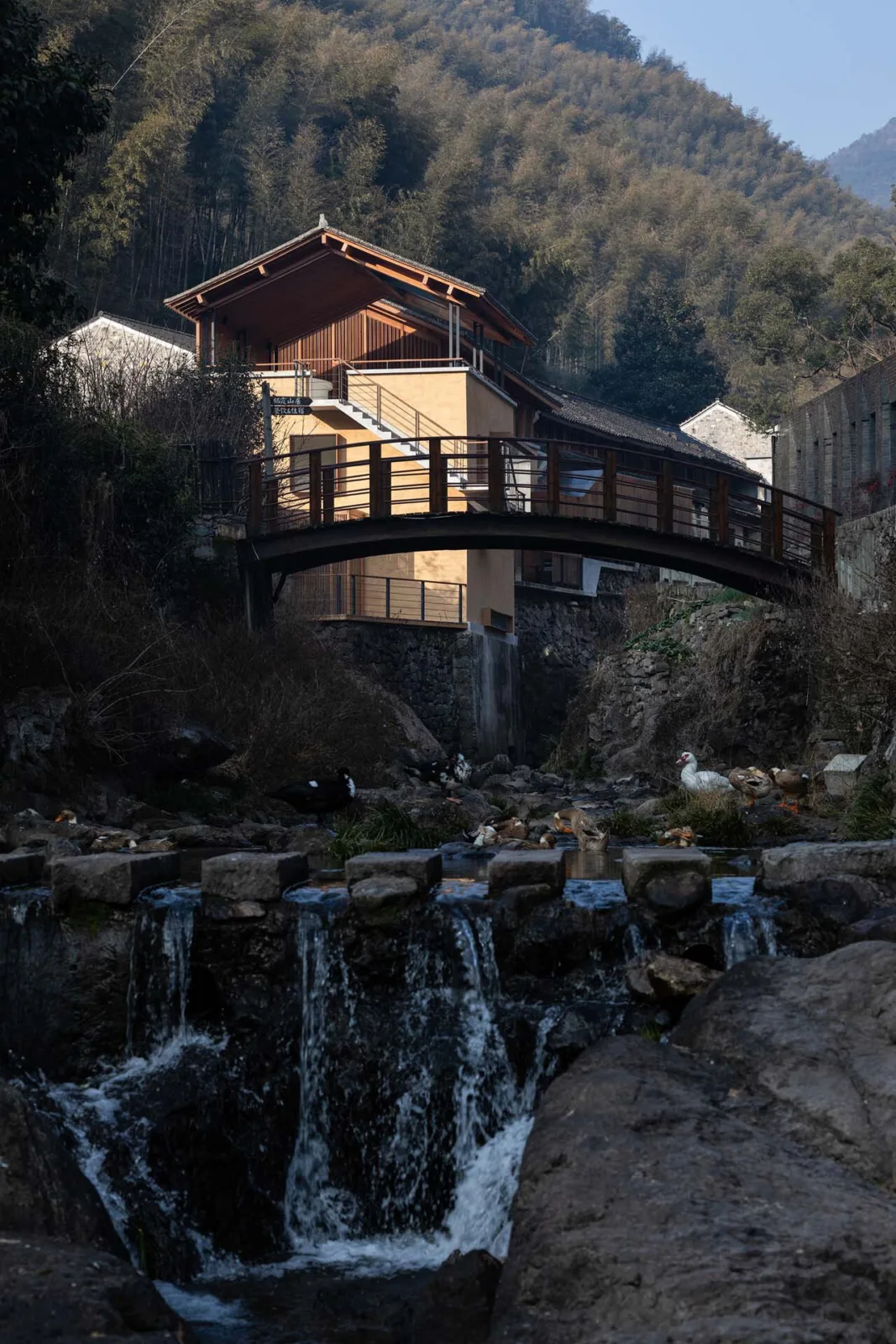
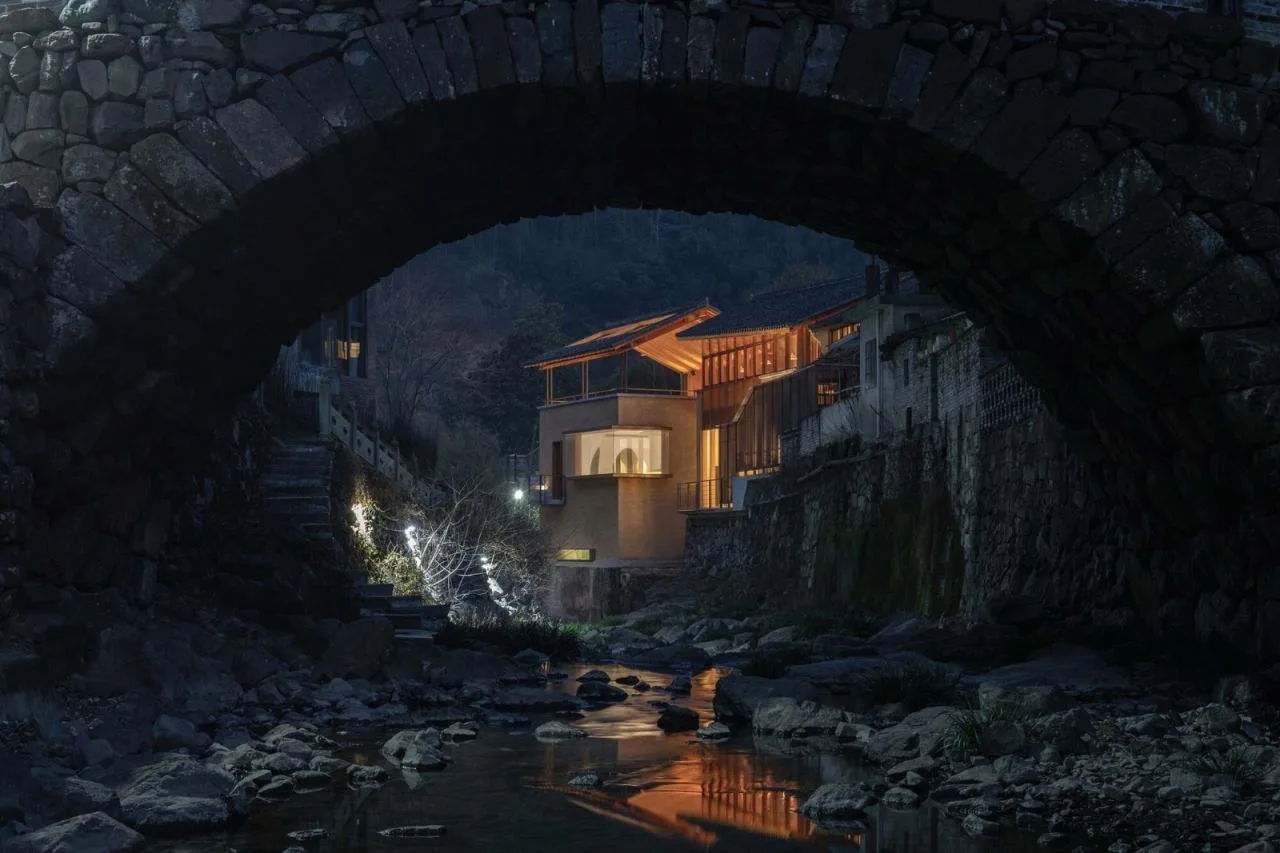
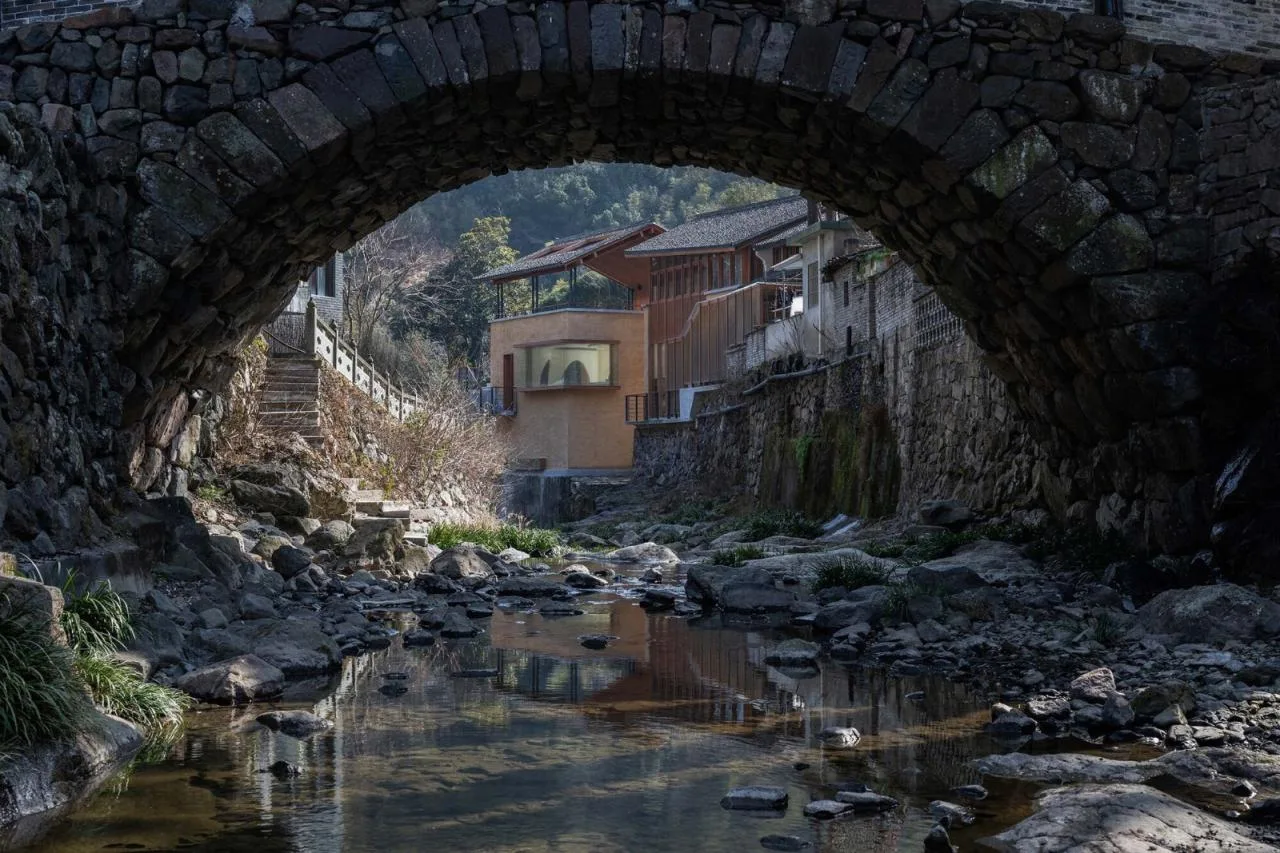
Designing amid rich environmental features—roads, trees, streams, ancient bridges, old houses, bamboo forests, and mountains—allows for dynamic and expressive architecture. People on the bridge watch the scenery, while those enjoying the view notice you upstairs. This reciprocal relationship enriches daily life with poetic moments.
From the vantage point of the ancient bridge, the restaurant itself becomes a scenic attraction, framing views of old camphor trees and the flowing stream. This creates a compelling tension between connection and distance, or between seeing and being seen, adding depth and interest to the spatial experience.
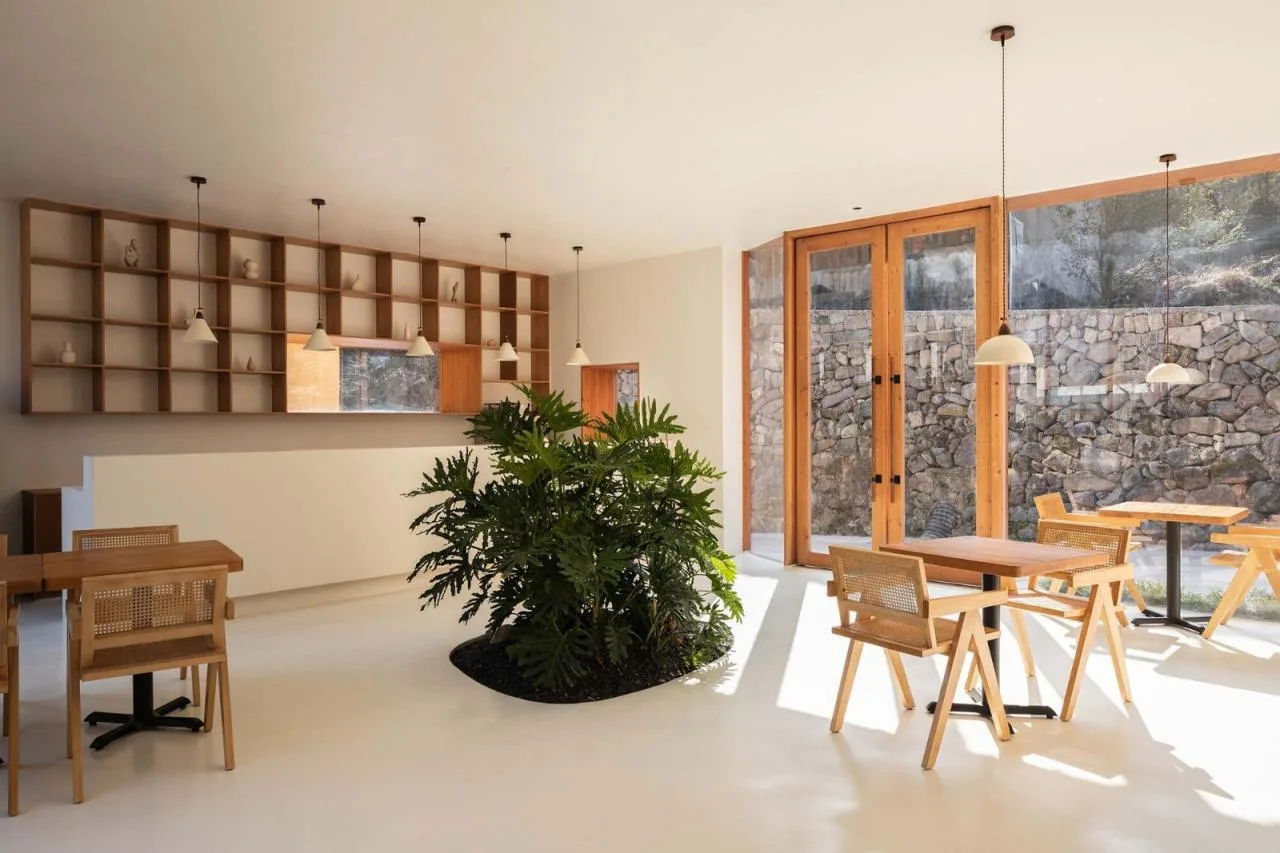
The project owner is originally from Fujian Province. As a Fujian native, they have a natural appreciation for a joyful lifestyle and a calm, orderly personality, which reflects in their meticulous approach to food. Every meal features carefully prepared soup, and during site visits, we were often treated to new dishes crafted by the owner.
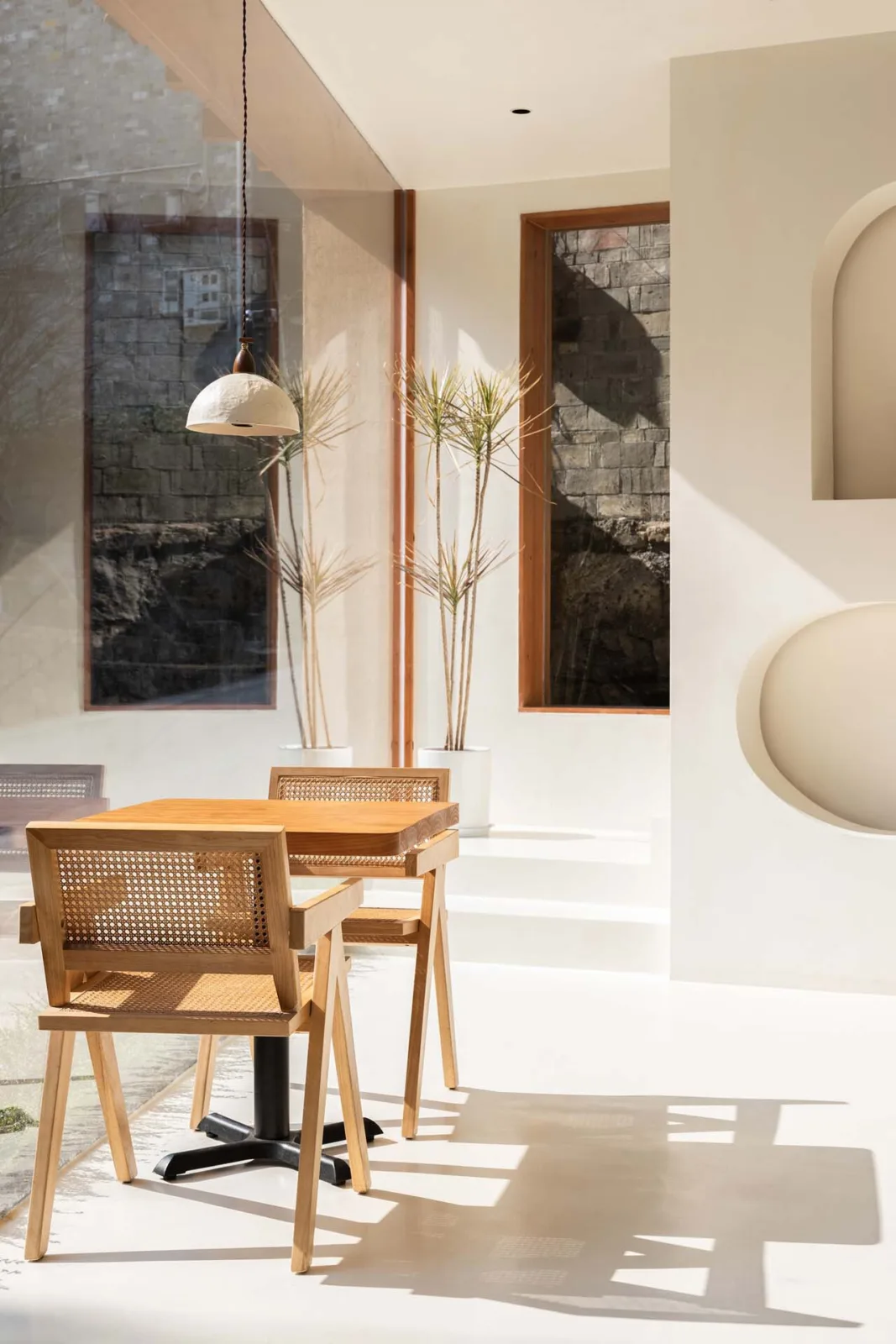
The construction team was also brought from Fujian, including the contractor. They traveled twice between Ningbo and Xiamen to ensure quality. The workers’ expertise in woodworking is evident, with on-site carpentry work matching factory-level precision. The final finish is excellent, with well-executed details.
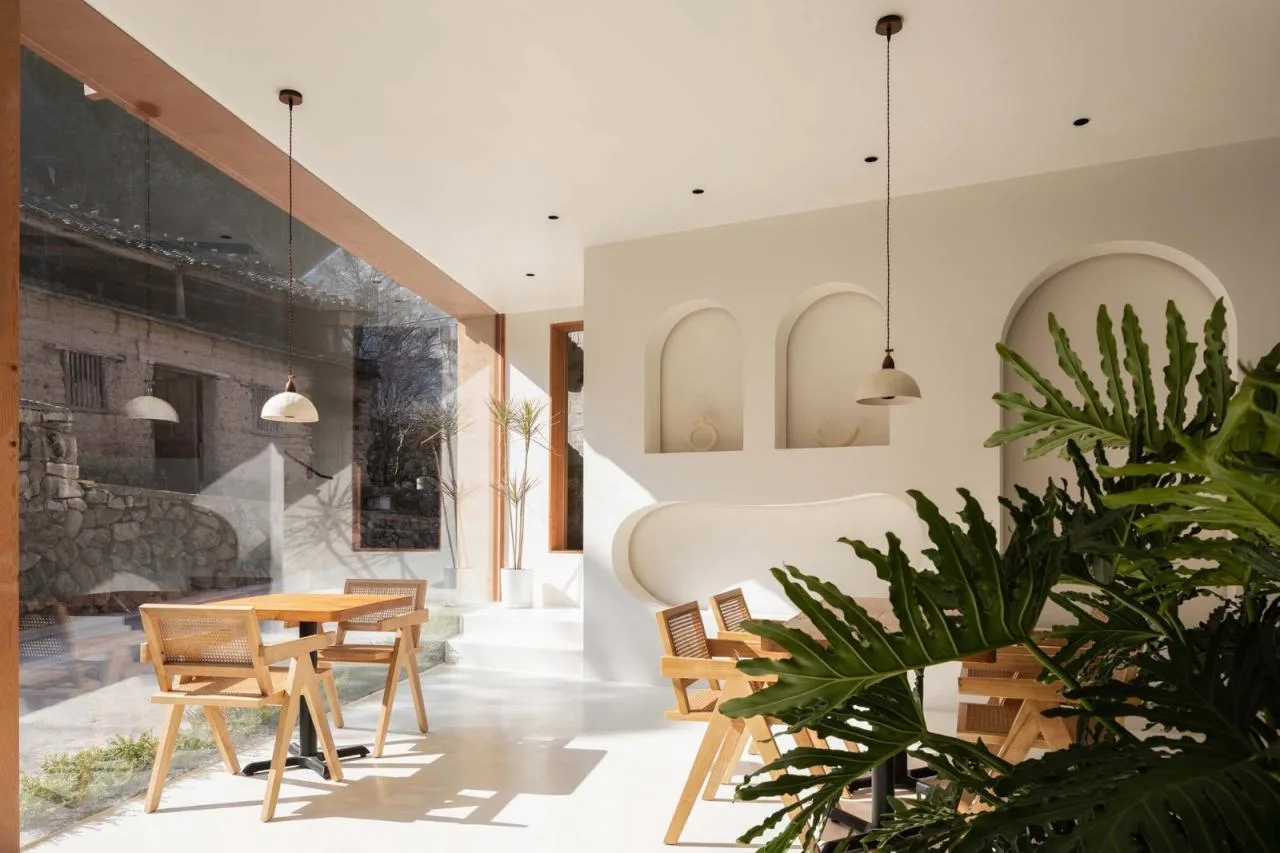
We experimented with many paint samples, aiming to avoid colors that were too light, yellowish, or dull. Eventually, we applied a layered coating to achieve the current comfortable color tone and ambiance within the space.
Project Drawings
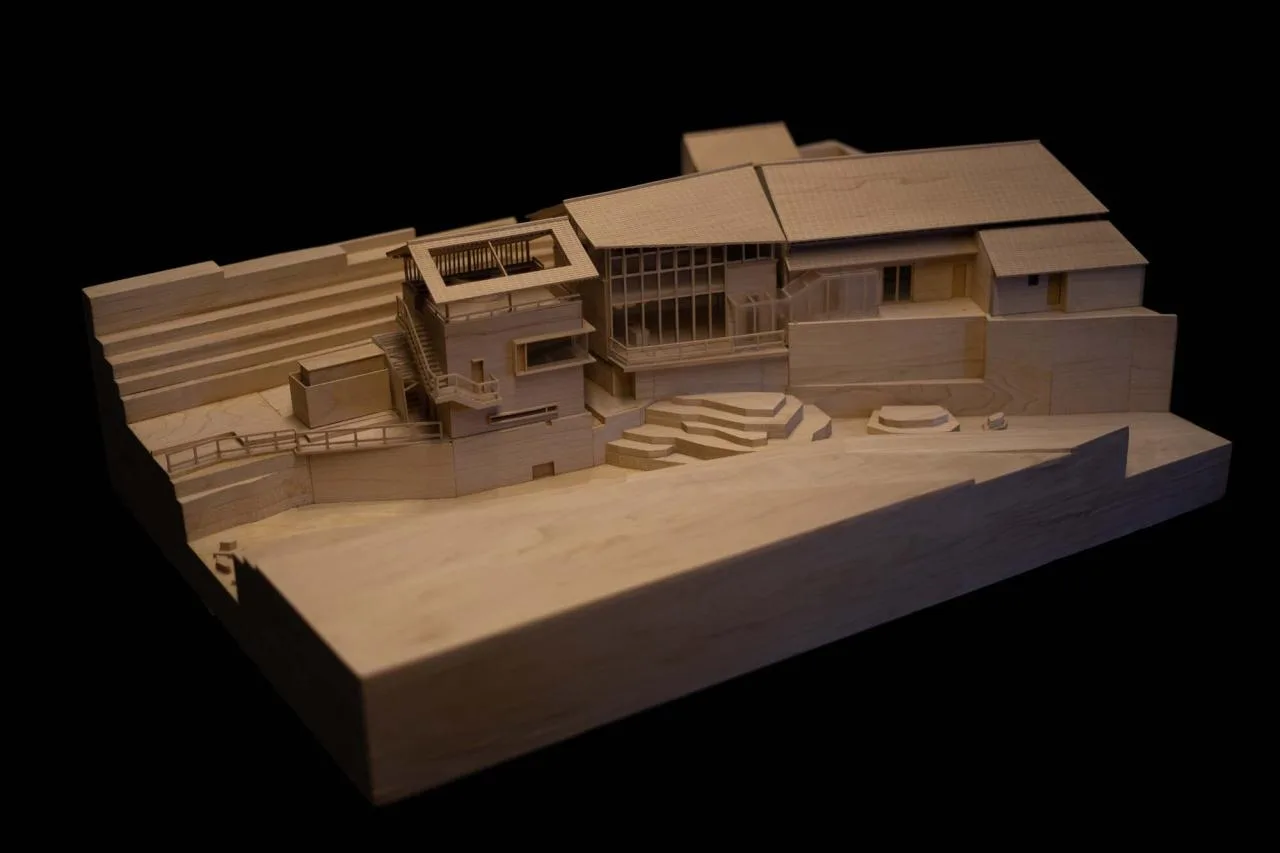
△ Project Model
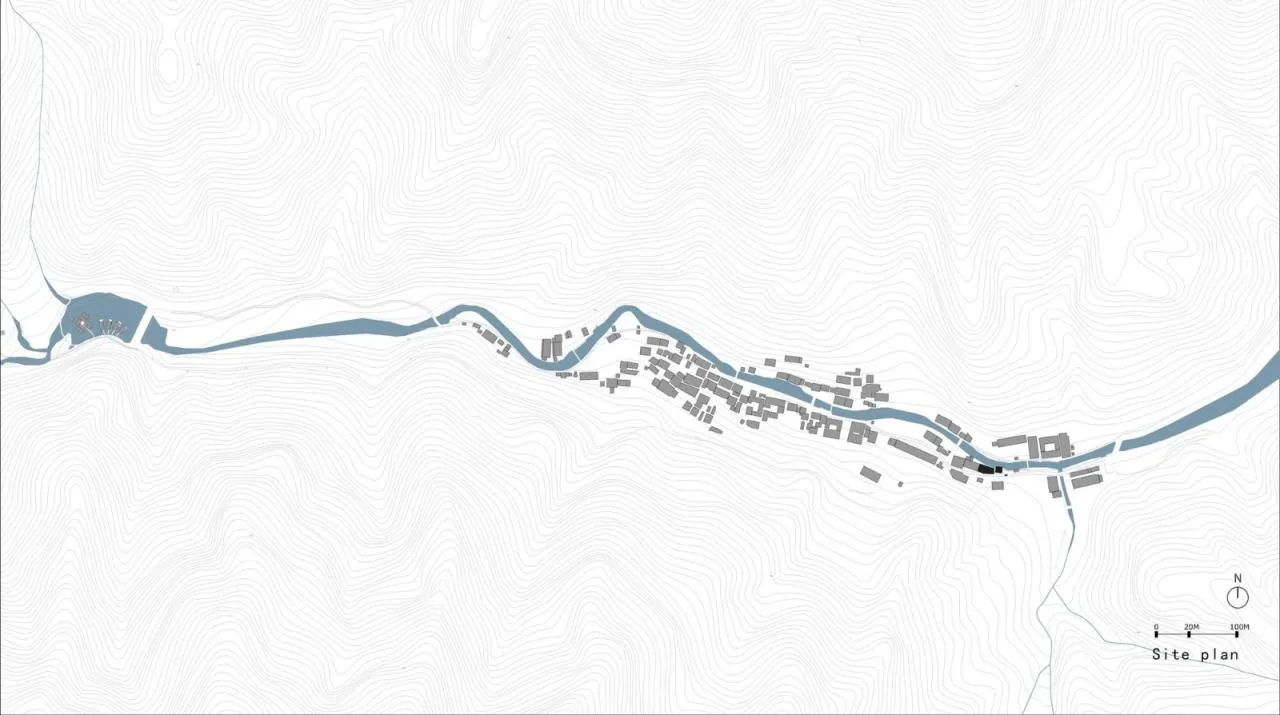
△ Site Plan
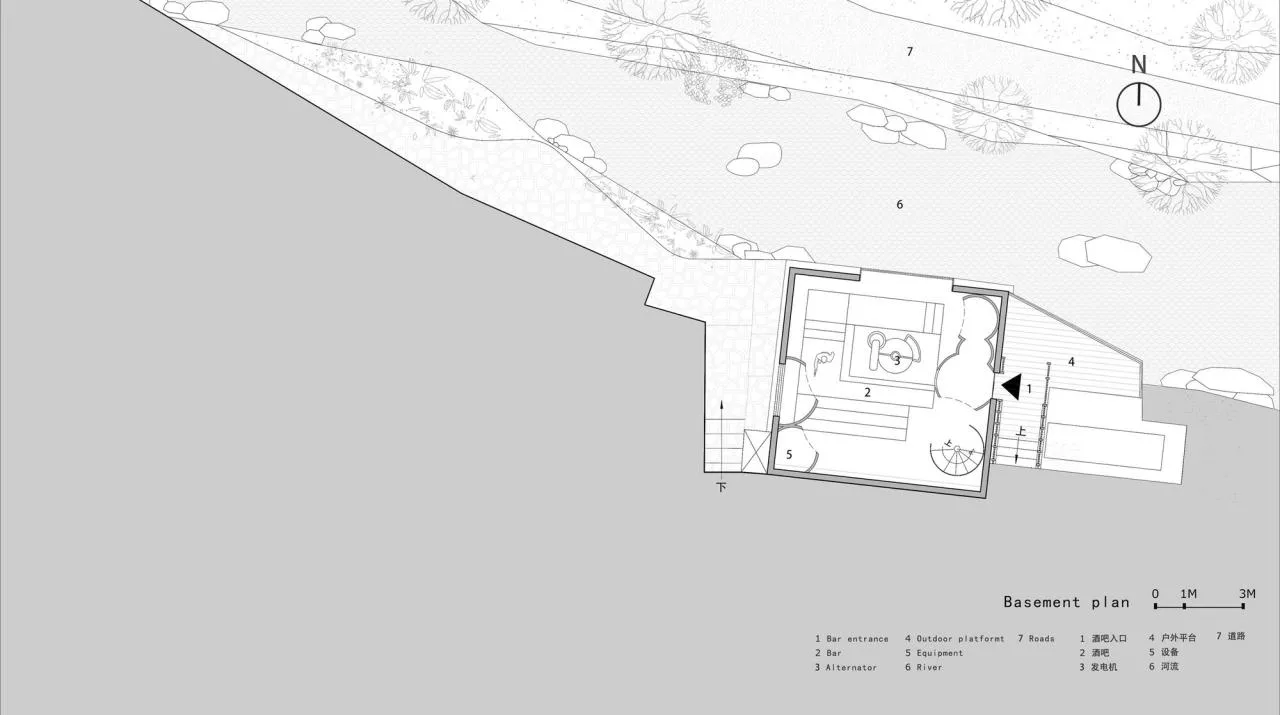
△ Basement Floor Plan
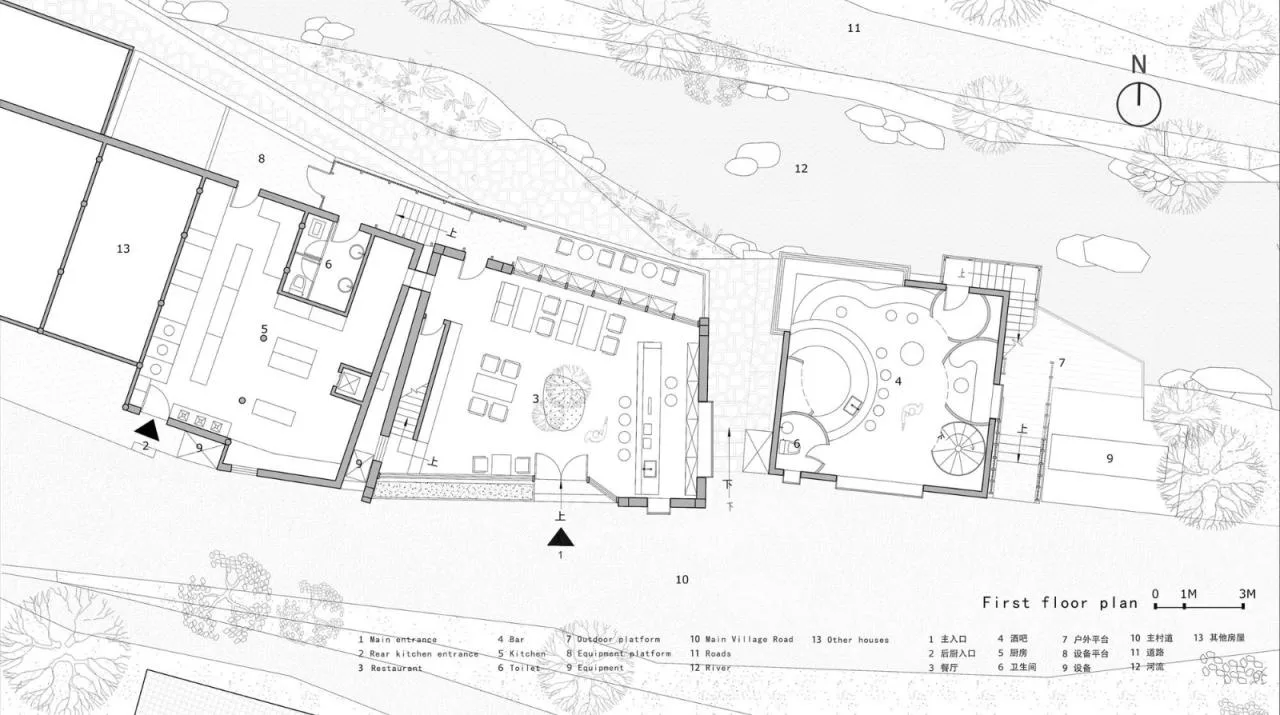
△ First Floor Plan
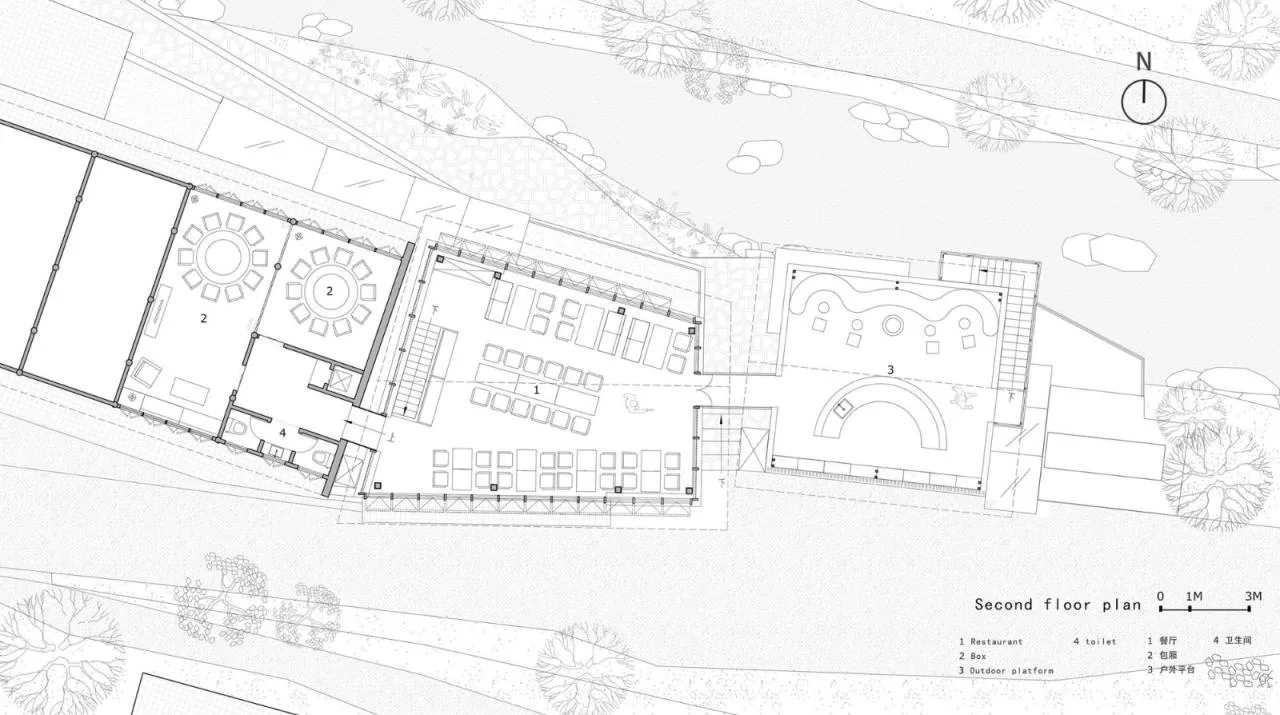
△ Second Floor Plan
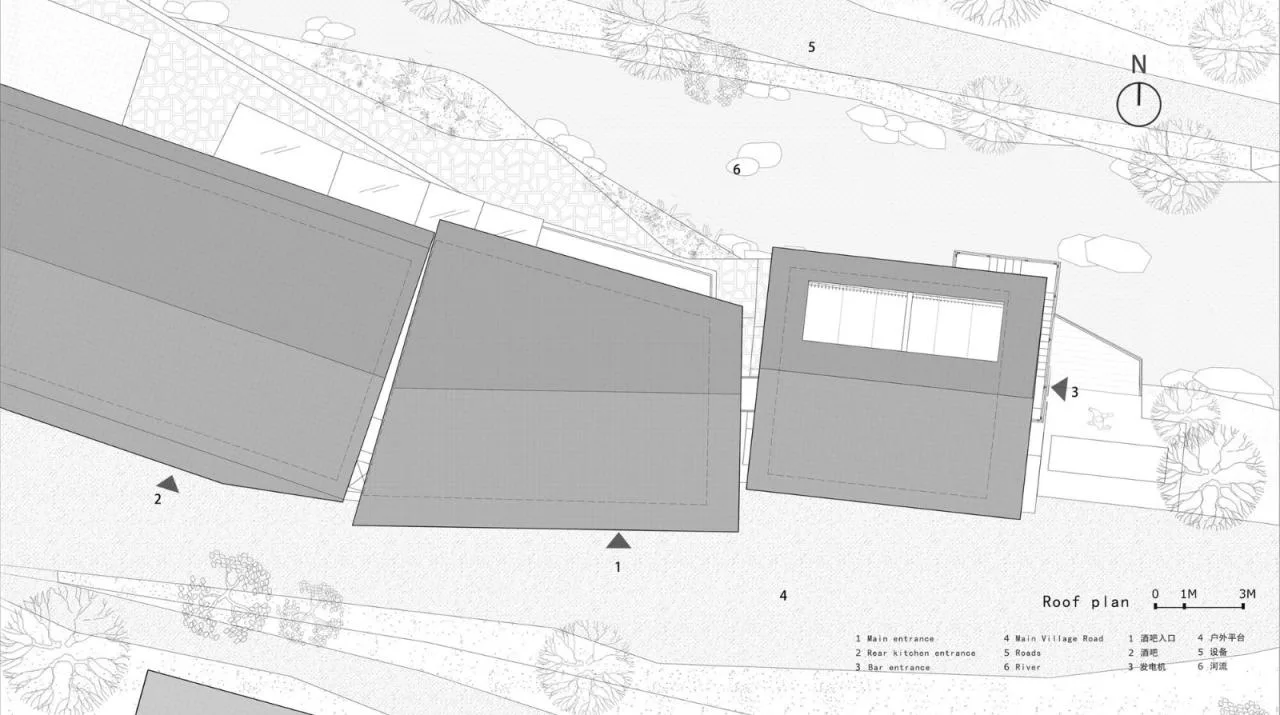
△ Roof Plan
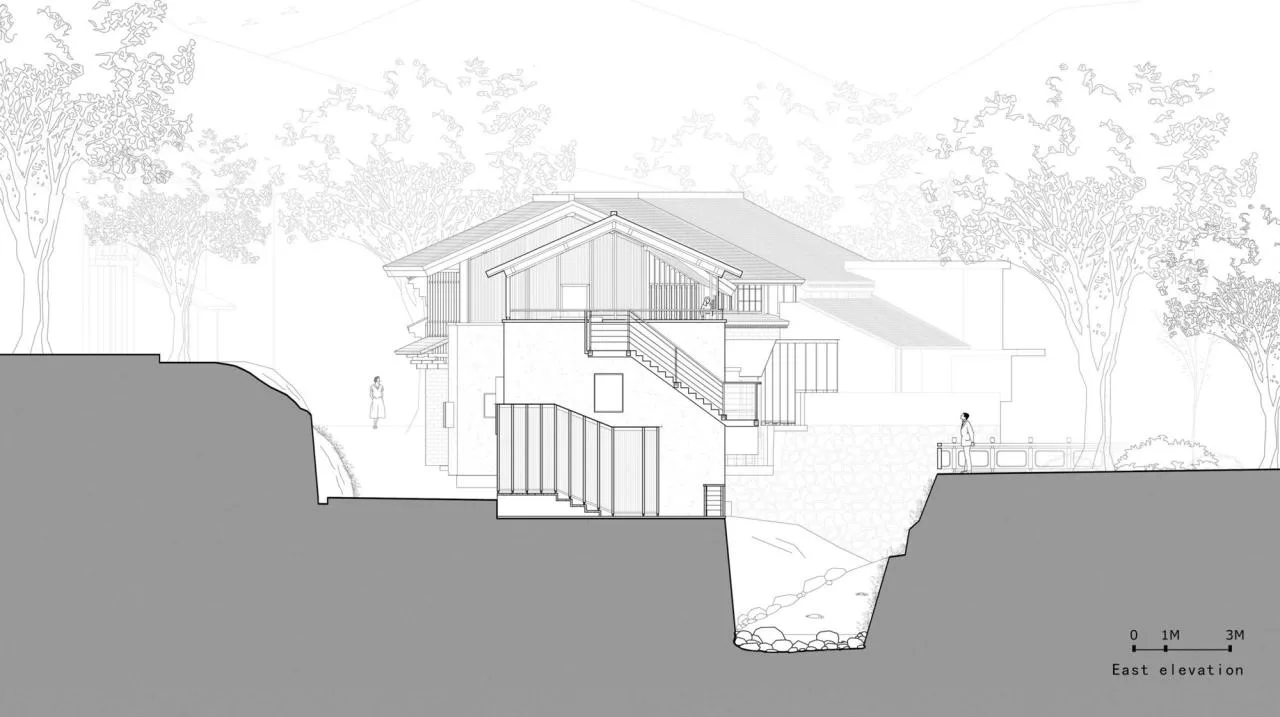
△ Elevation
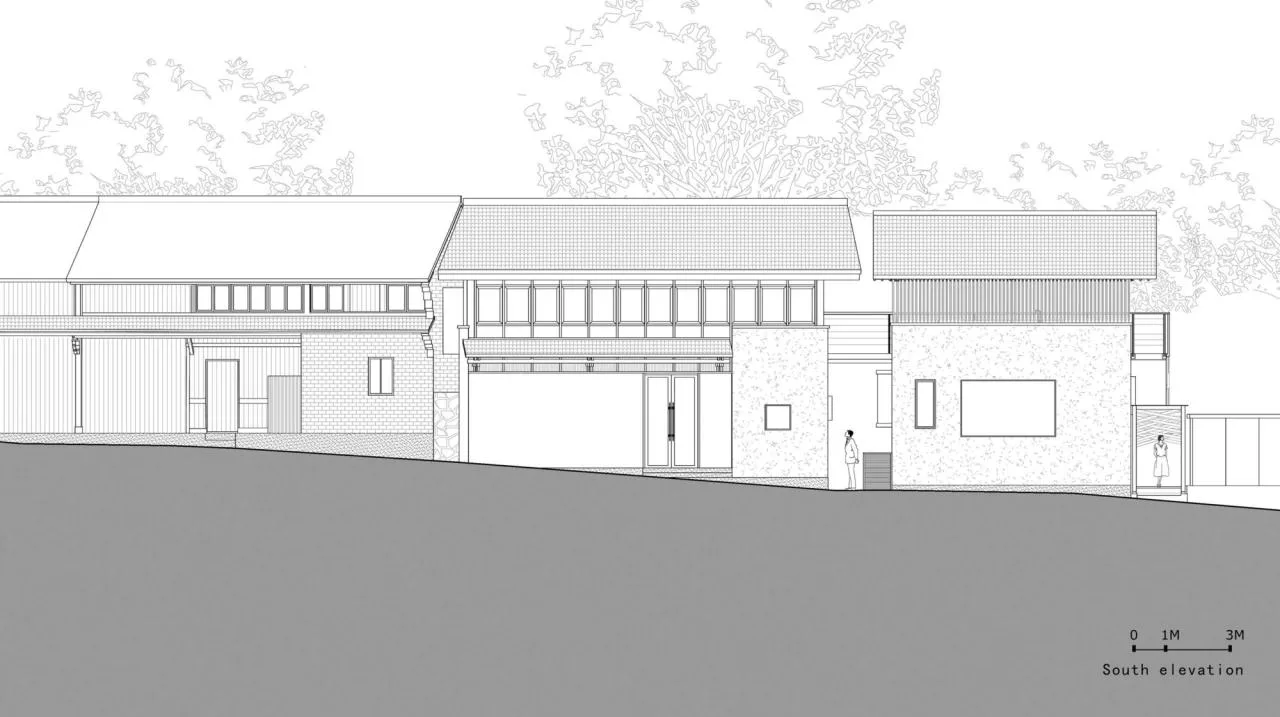
△ Elevation
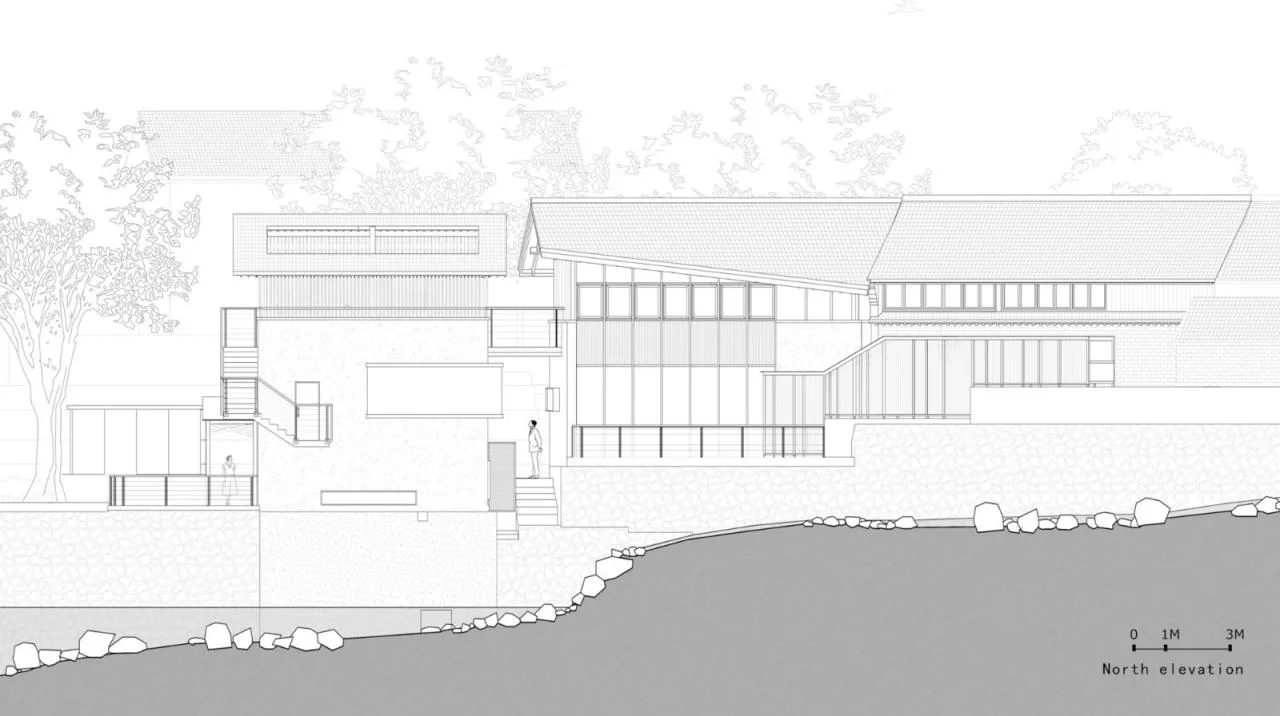
△ Elevation
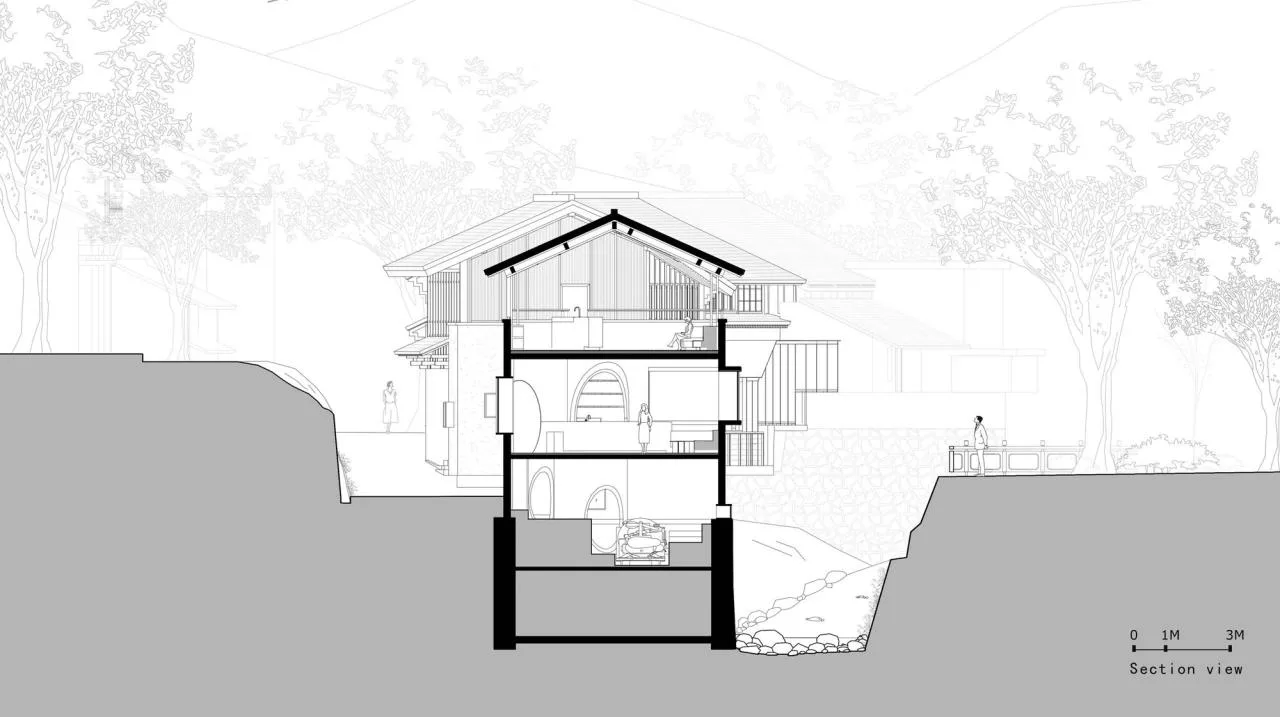
△ Section
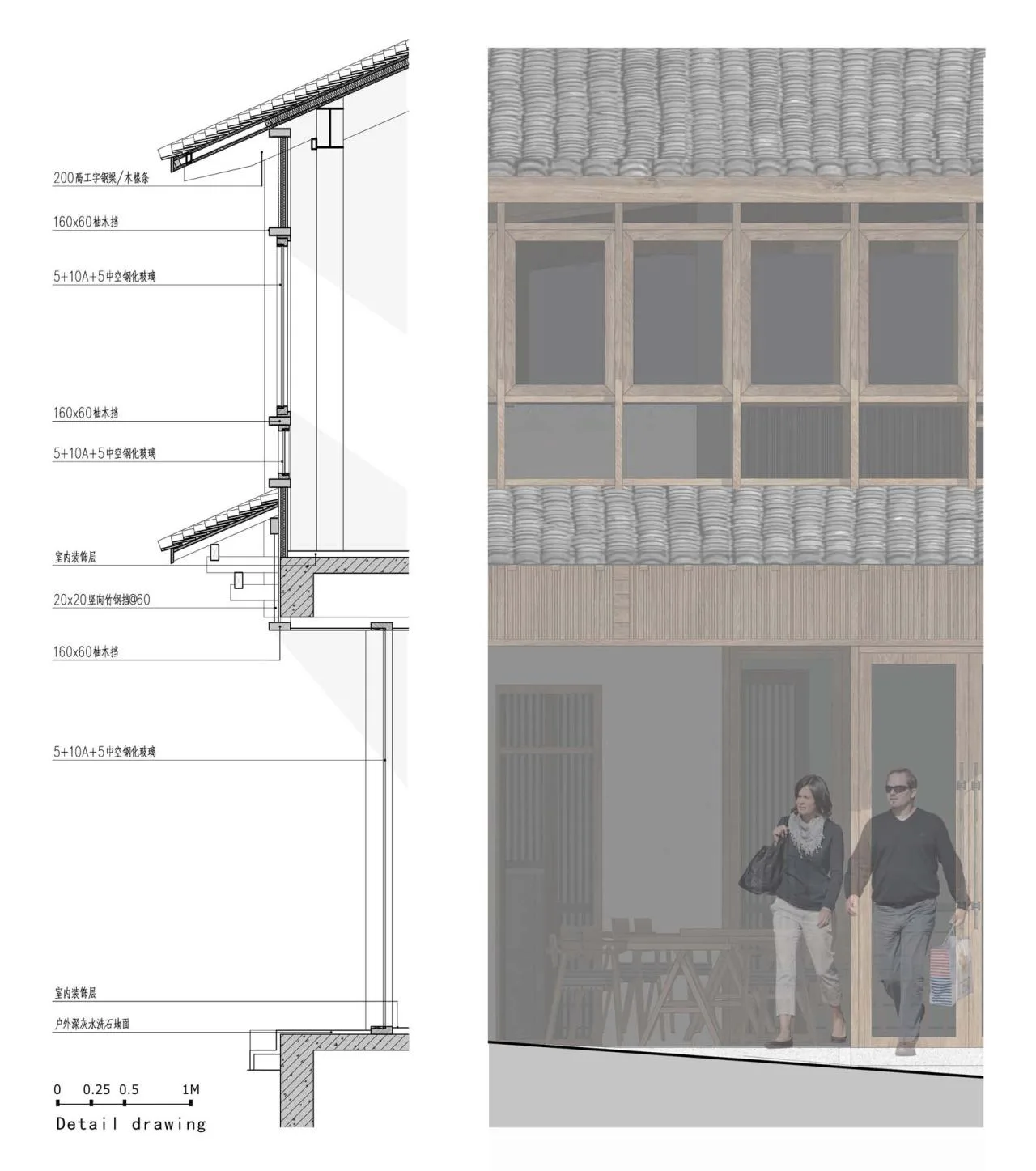
△ Detail Drawings
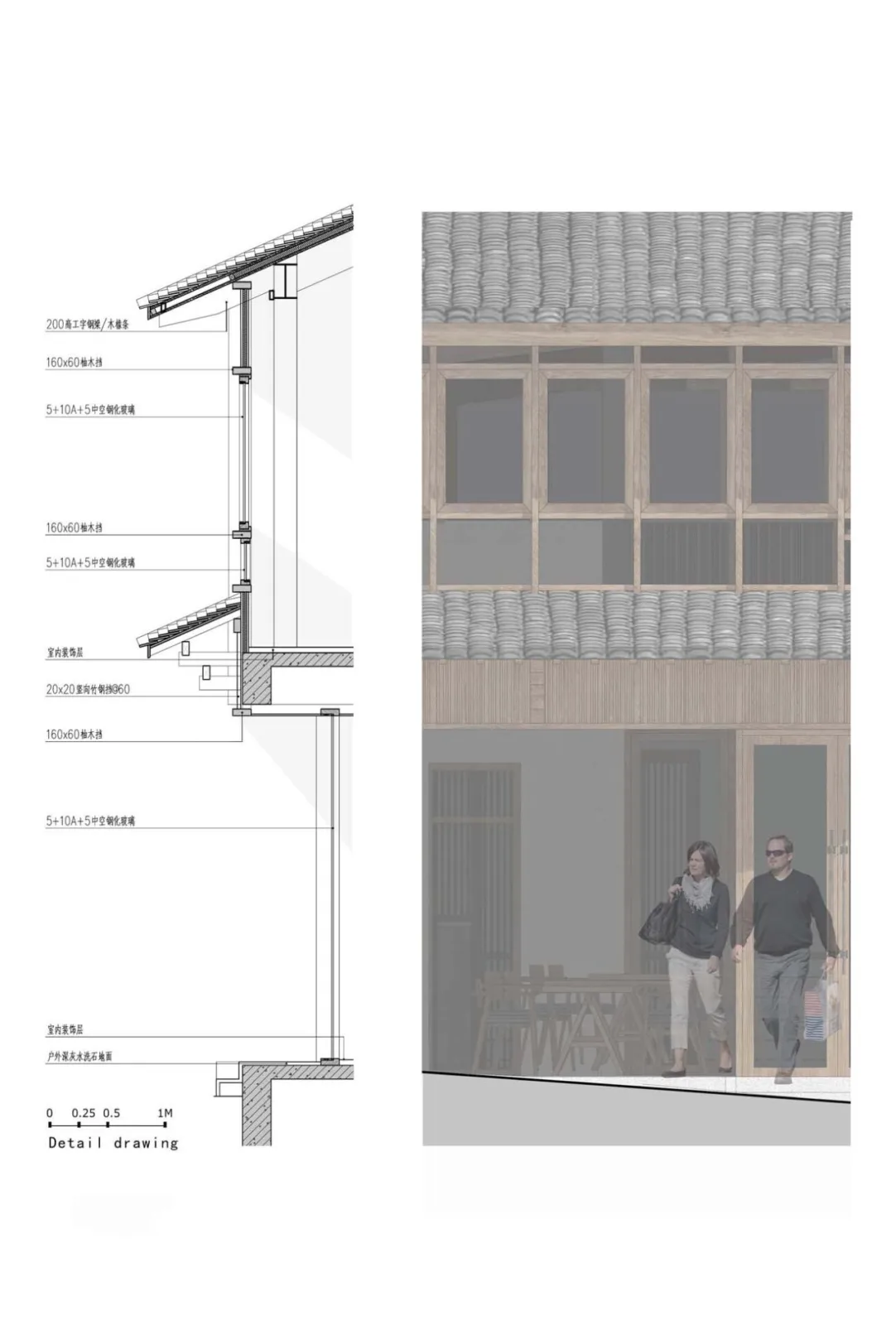
△ Detail Drawings
Project Information
Architect: Jian Lin Architectural Design Firm
Area: 424 m²
Project Year: 2021
Photographer: Wu Ang
Lead Architects: Chen Lin, Liu Dongying
Interior Design: Zhang Aiyun
Structural Design: Chen Liwen
Design Consultant: Xiamen Paradise Island Cultural Tourism Development Co., Ltd.
Construction: Ningbo Jiahua Building Decoration Engineering Co., Ltd.
Design Director: Tang Bojun
Owner: Ningbo Qiyu Tourism and Culture Development Co., Ltd.
Location: Ningbo















Must log in before commenting!
Sign Up