
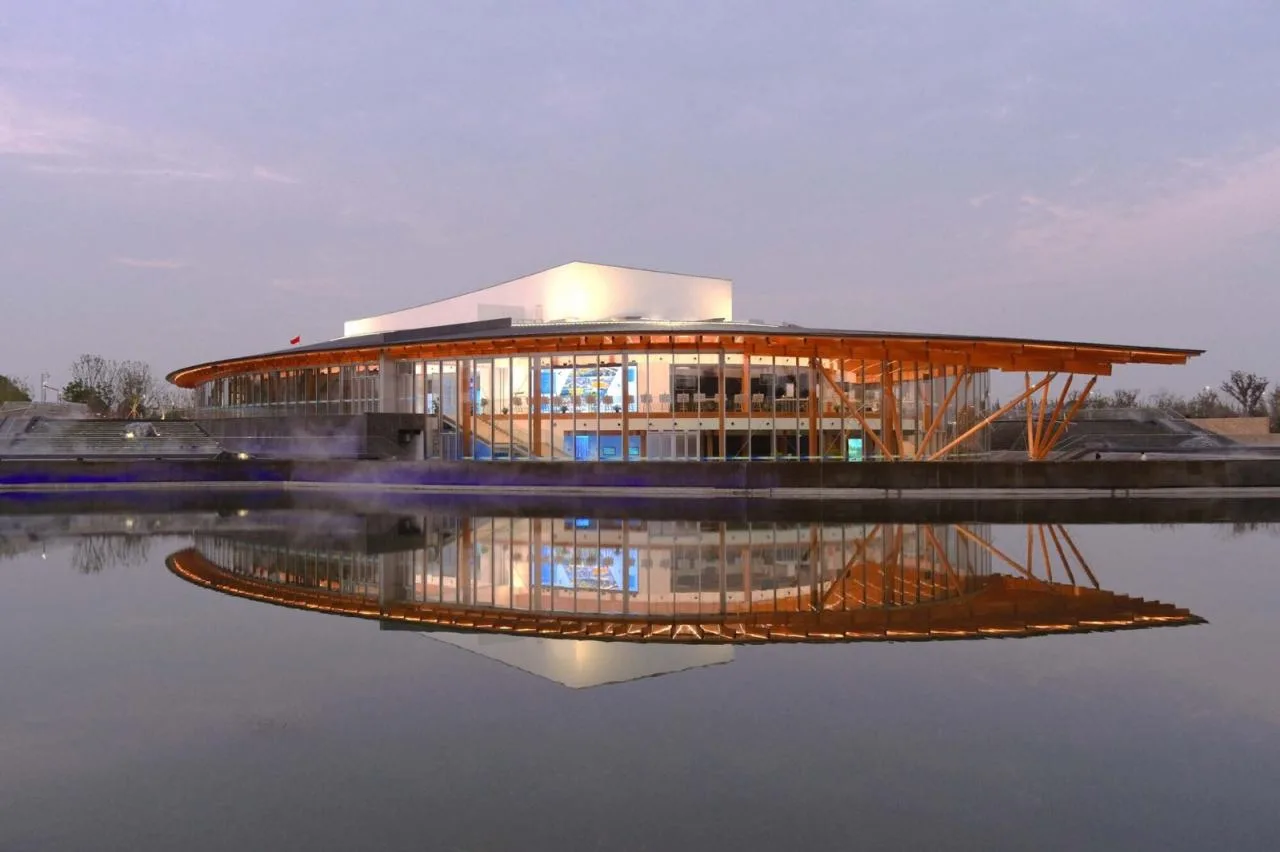
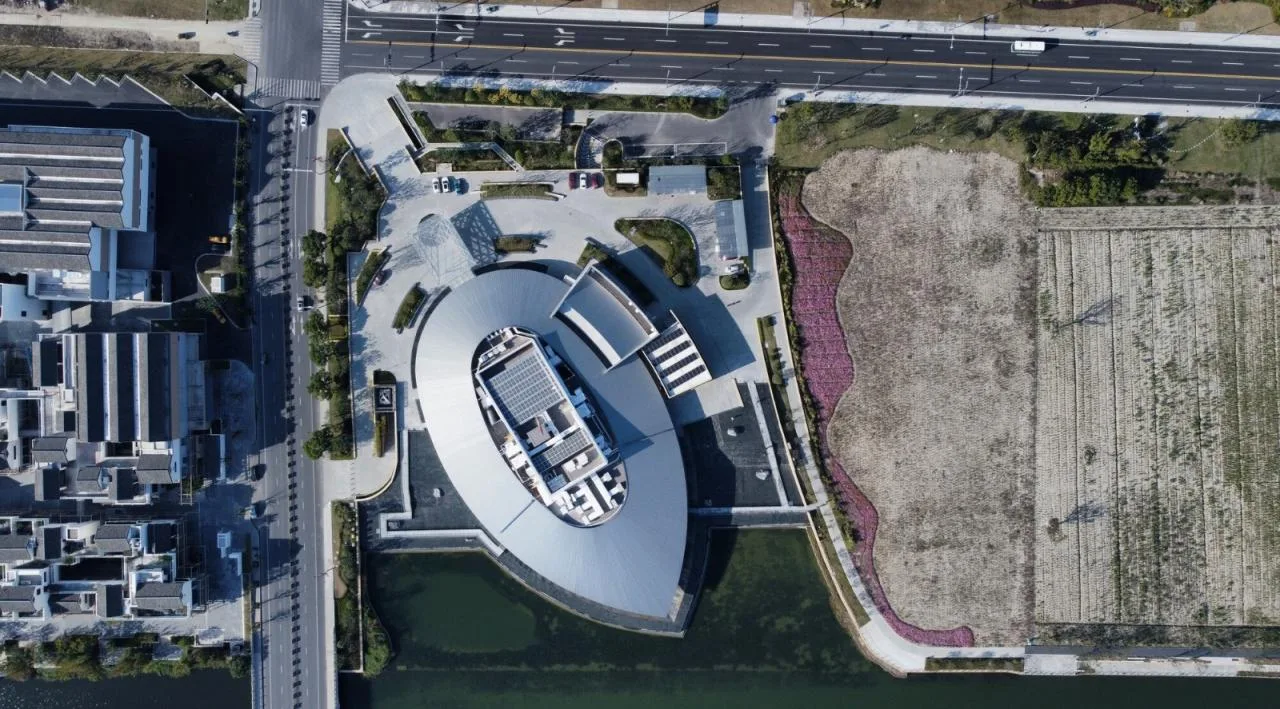
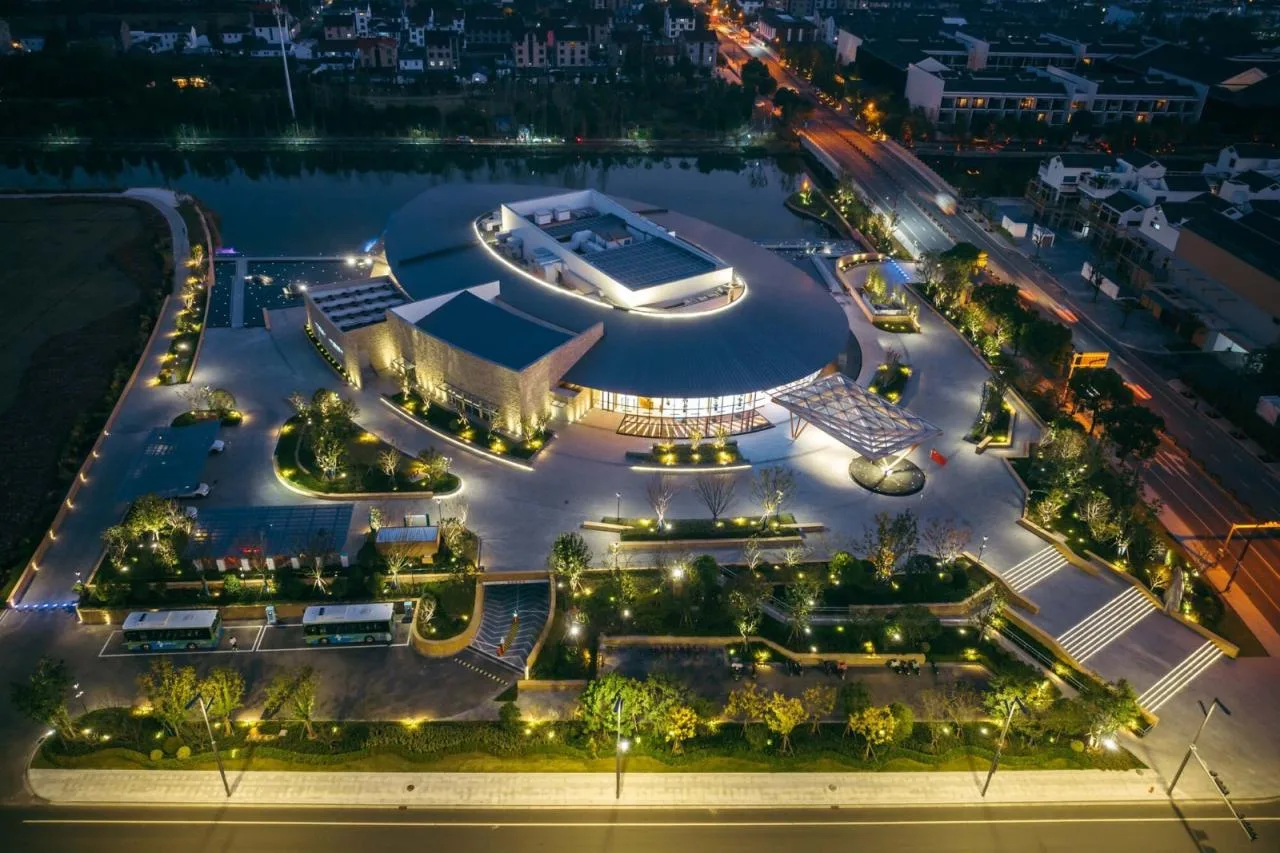
Project Overview: Situated southeast of the intersection between Zhongxing Road and Zhenguan Road in Xitang Town, Jiashan County, this project connects the Shiligang natural water system to the south with Xitang, a millennium-old ancient town to the west. To the east, it borders Xiangfu Dang, linking north and south to the origin of the Yangtze River Delta—the Water Town Living Room. Guided by the themes of integration and high quality, the project aims to establish a green building benchmark that embodies Jiangnan characteristics while meeting advanced international standards.
Covering approximately 12,800 square meters with two above-ground floors, the facility features large and medium conference rooms, reception areas, indoor exhibition halls, parking facilities, and outdoor activity spaces. It can host up to 500 participants simultaneously for conferences, exhibitions, and educational events.
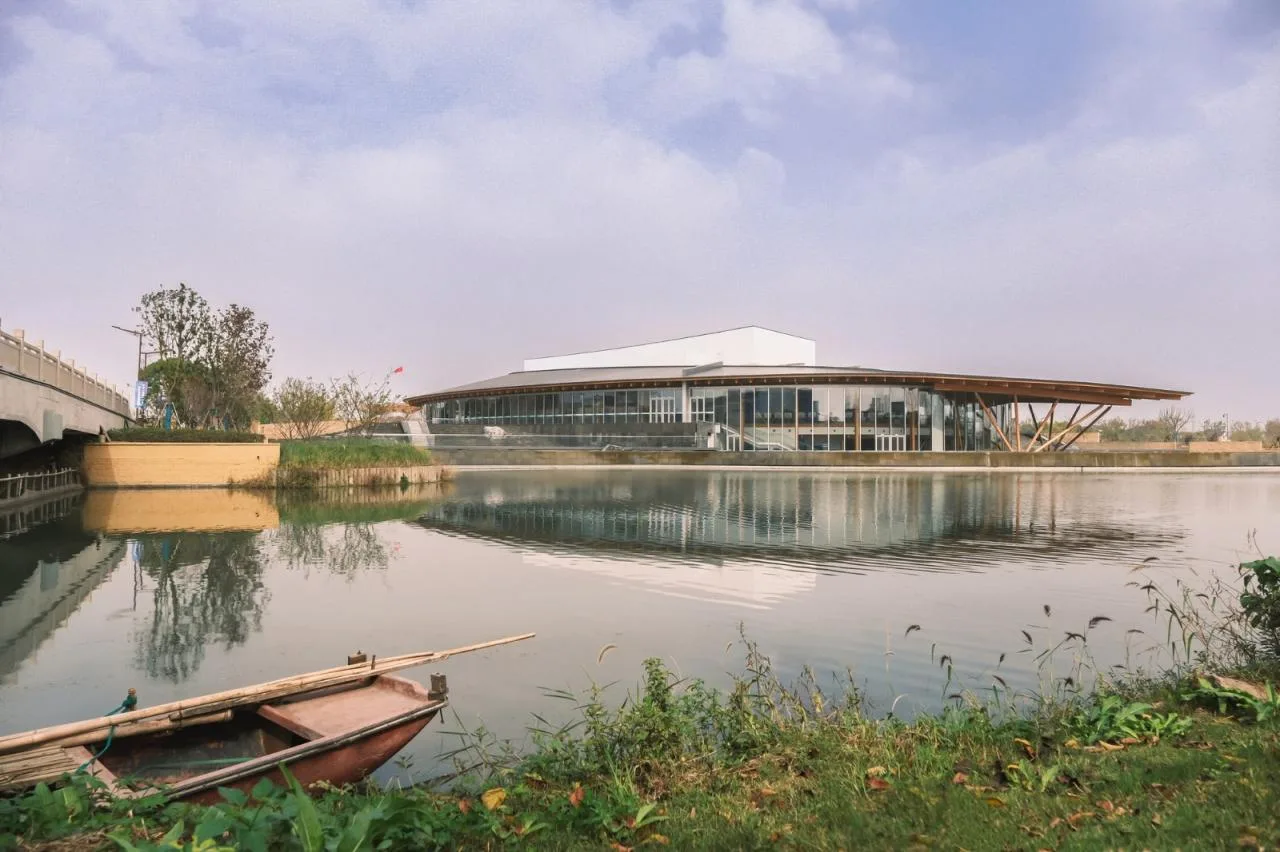
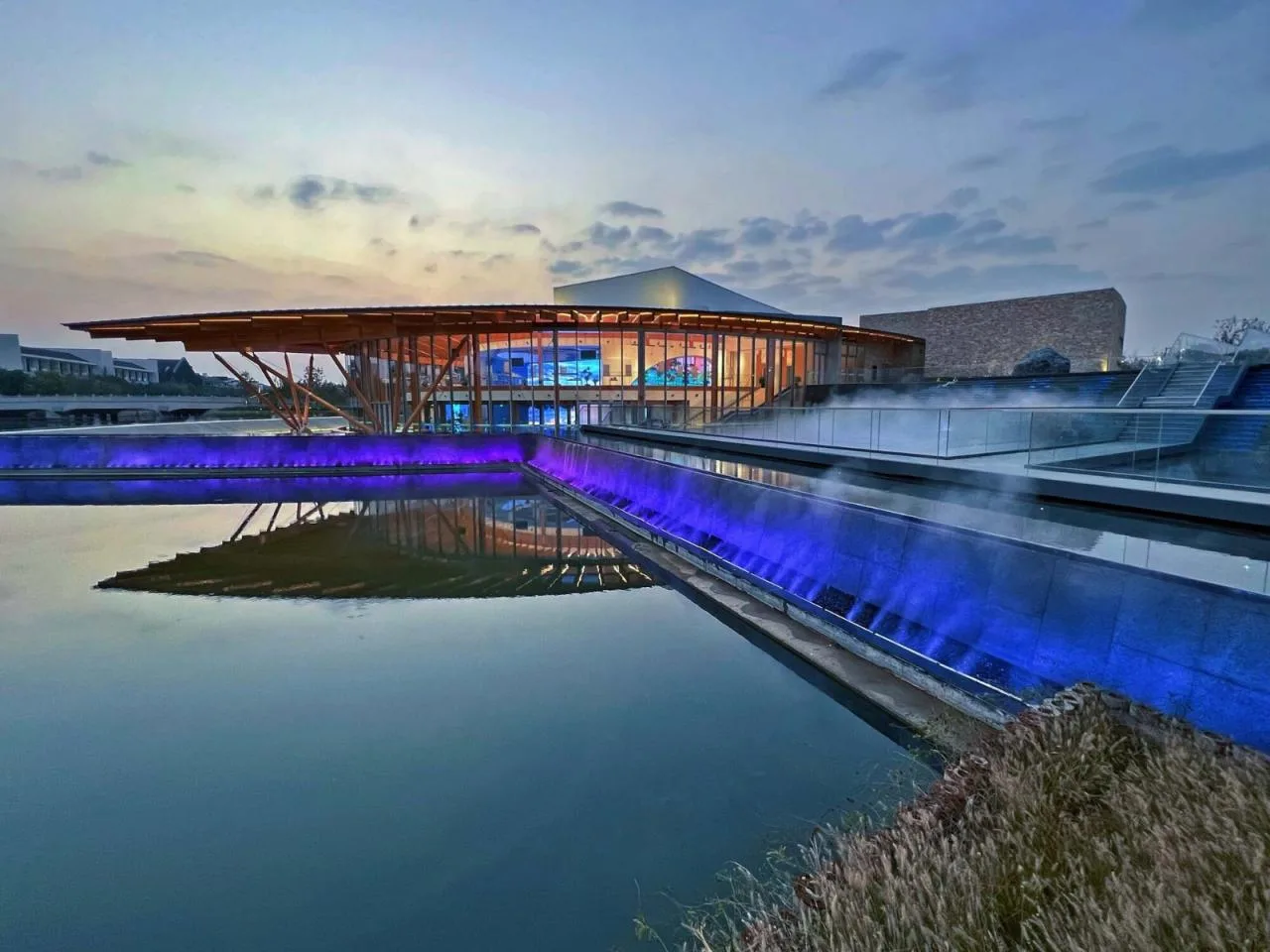
The design concept, inspired by the poetic phrase “a hundred years of smoke and rain, a single leaf of a flat boat”, reflects the architectural goals of low carbon emissions, energy efficiency, sustainability, and cultural integration. It pays tribute to Jiangnan’s rich history and heritage, particularly the iconic long corridors of Xitang Ancient Town.
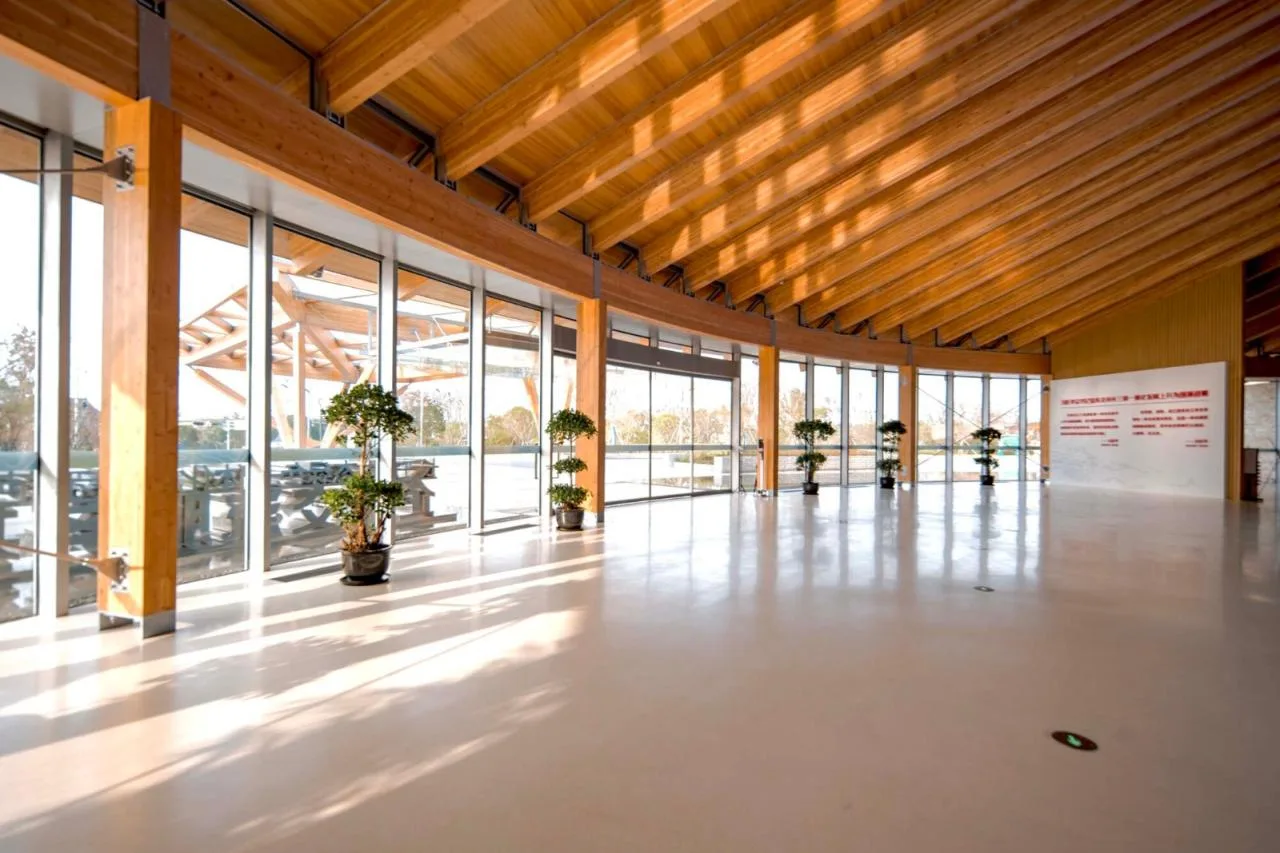
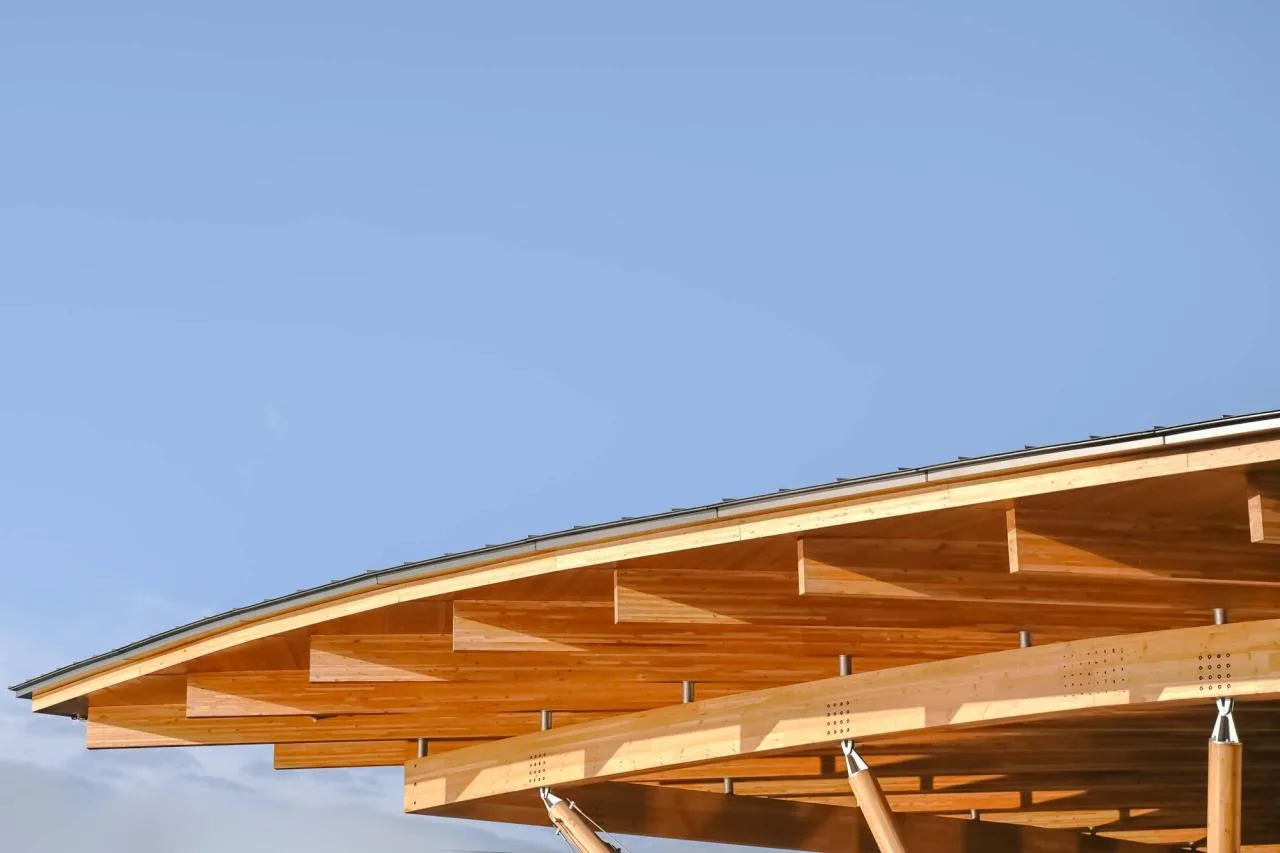
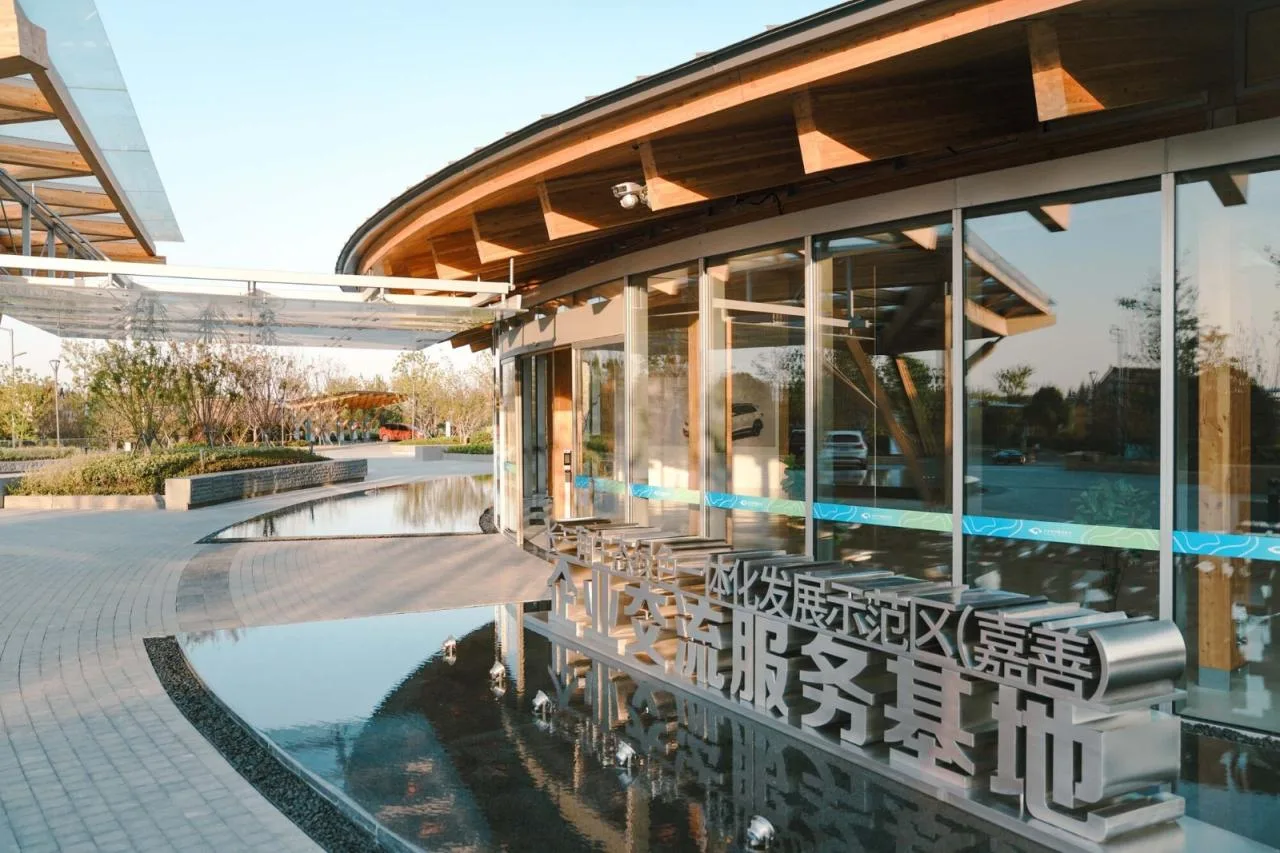
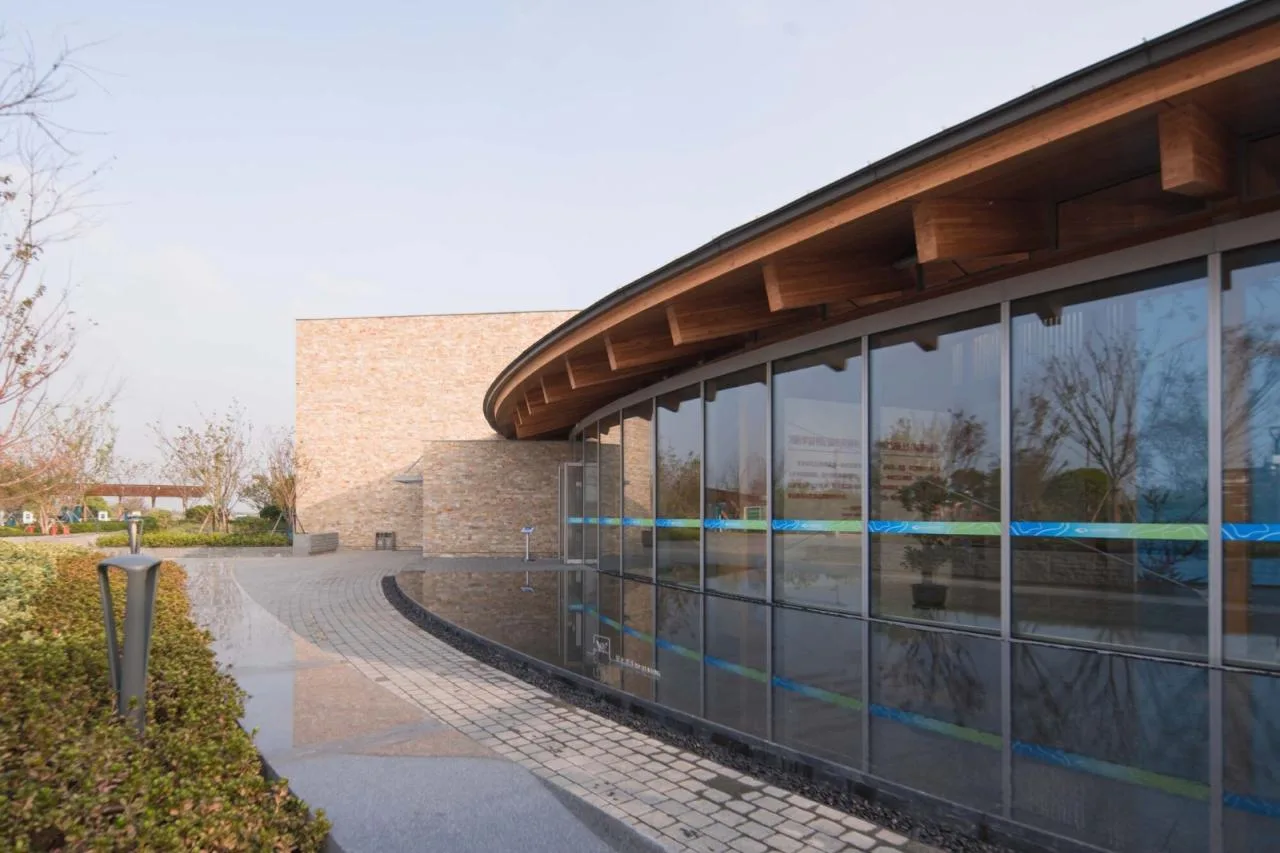
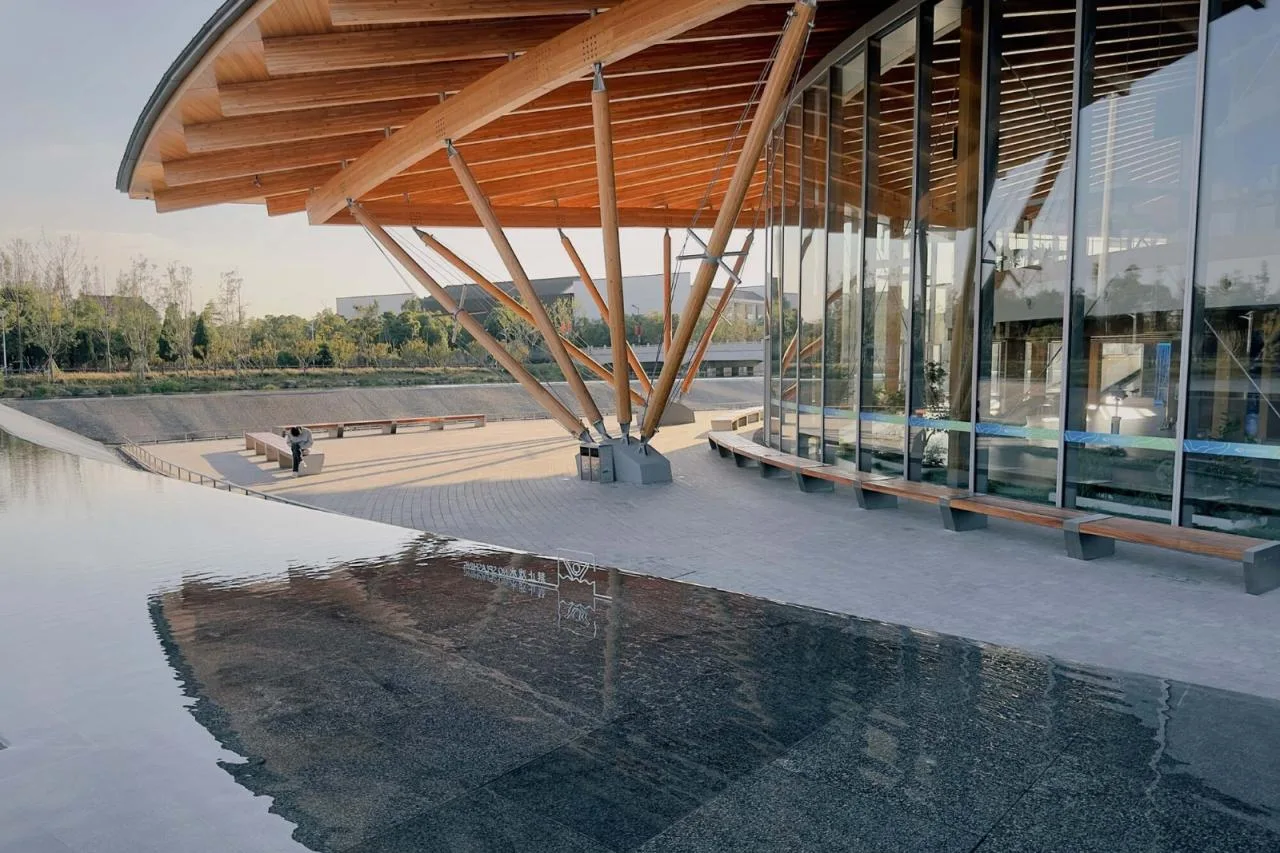
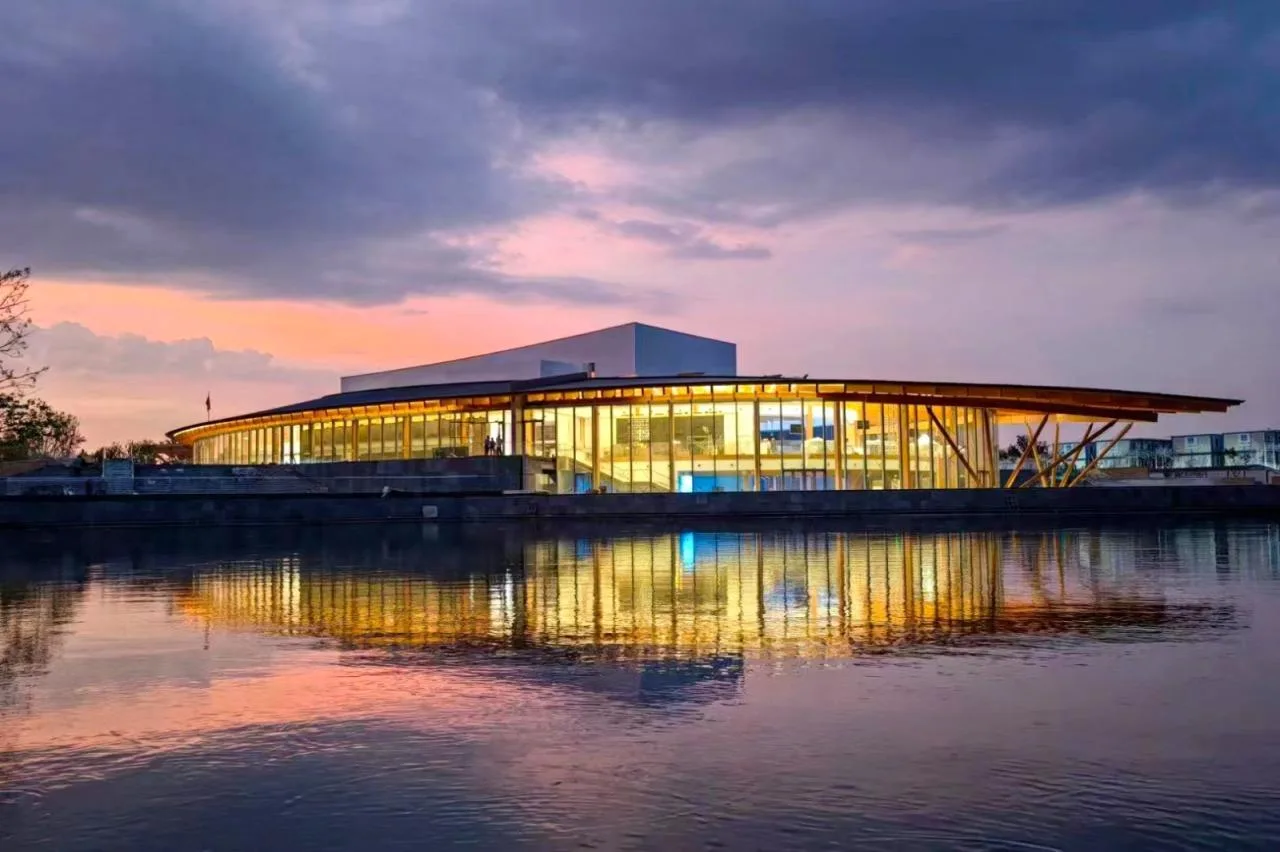
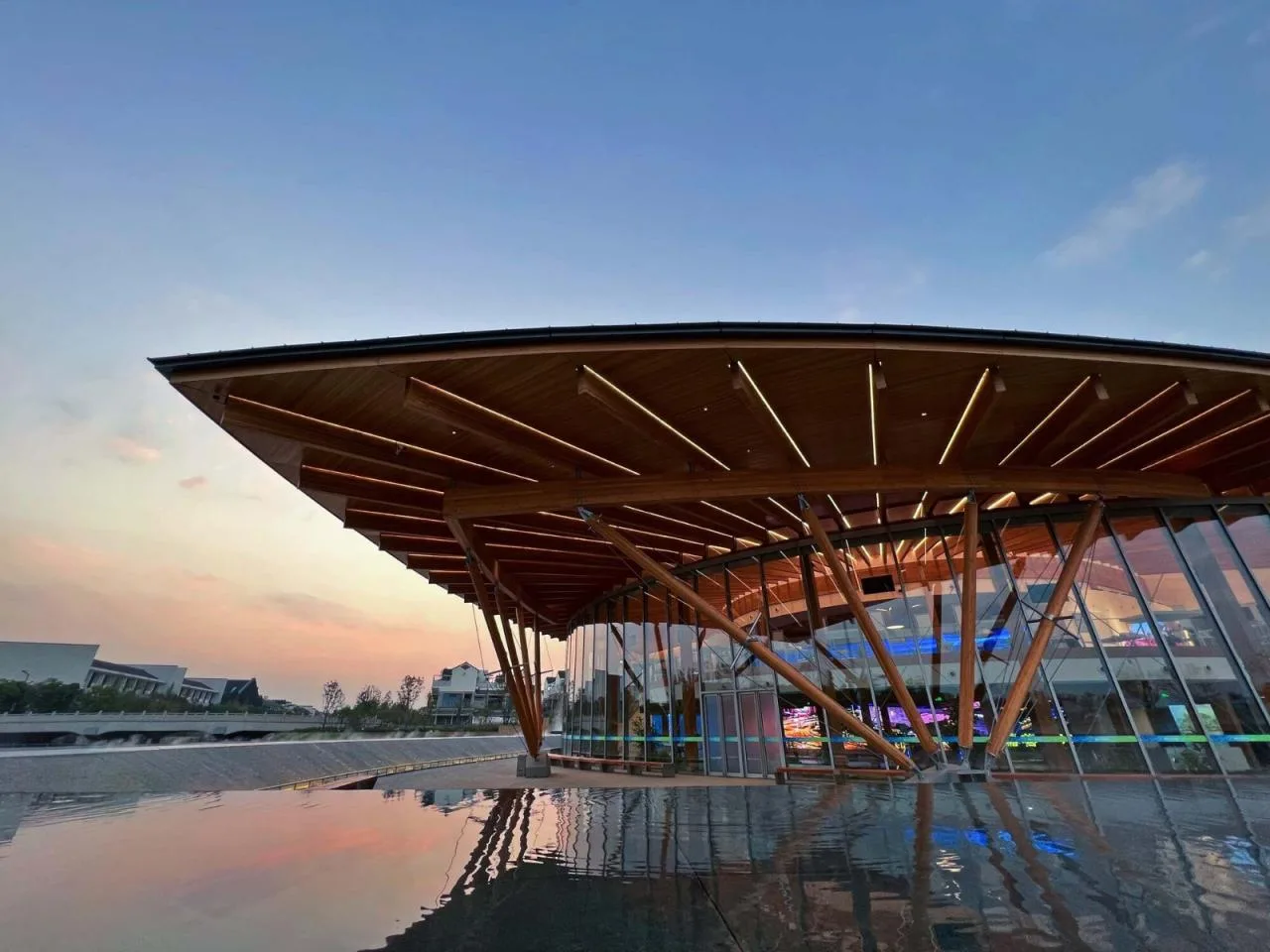
The spatial arrangement echoes the traditional spatial network of Xitang, with architectural features such as the curved roofs inspired by the town’s misty rain corridors. The three-meter-long eaves embrace the surrounding water surfaces, symbolizing a contemporary interpretation of the misty rain corridors enveloping the water. Visitors strolling through the exhibition hall are invited to experience the centuries-old atmosphere of Jiangnan’s misty rain.
The overall structure resembles a flat boat, amplified by the adjacent water of the Ten Mile Port to the south, evoking the image of a ship breaking through water and setting sail—an homage to Jiaxing’s famed Red Boat culture.
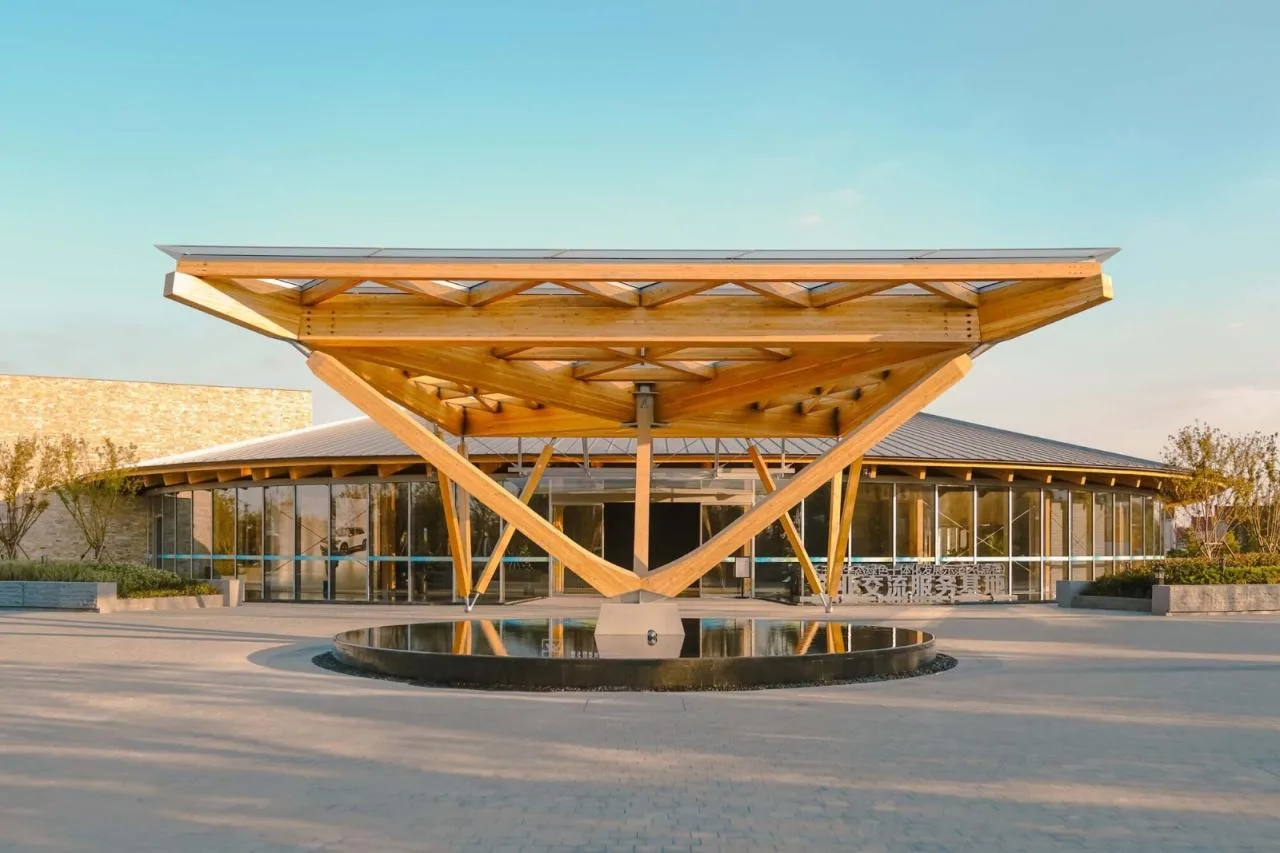
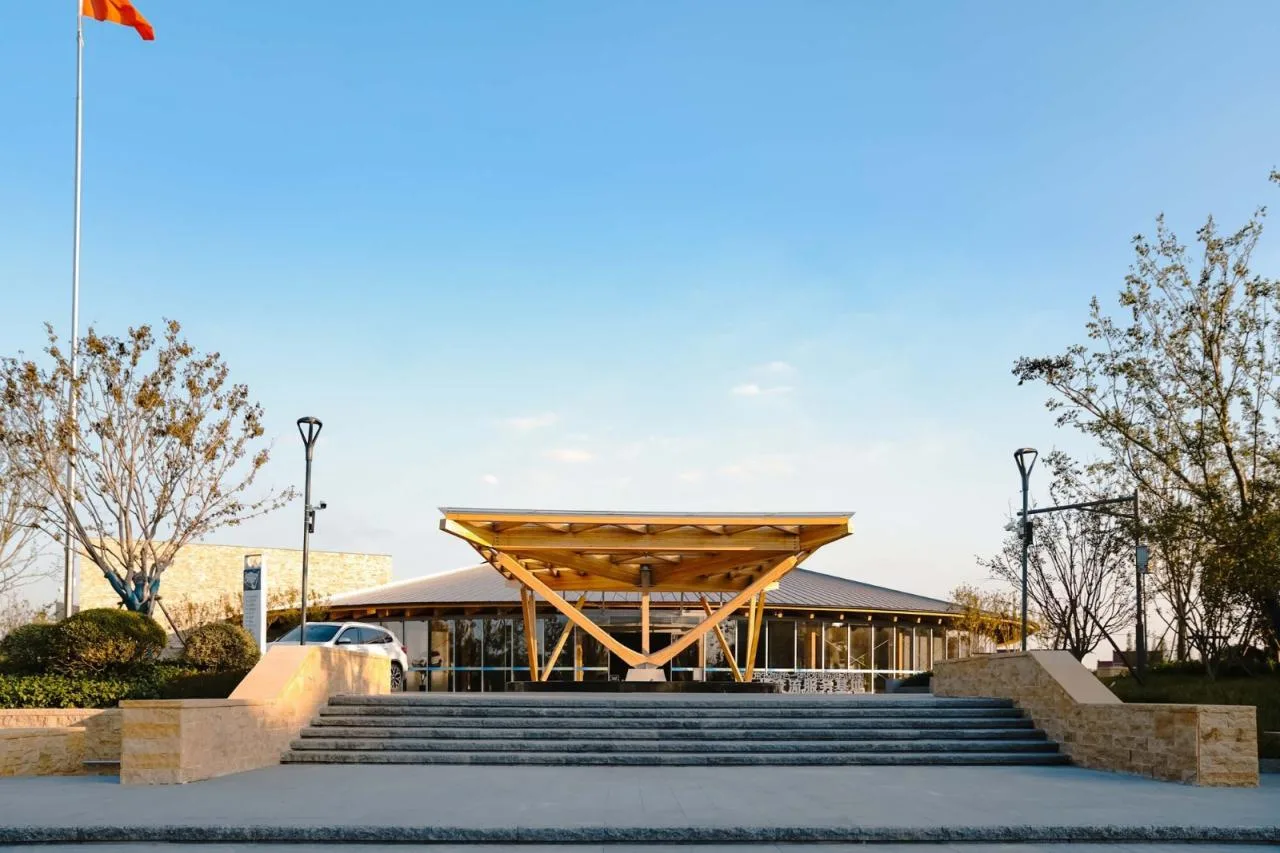
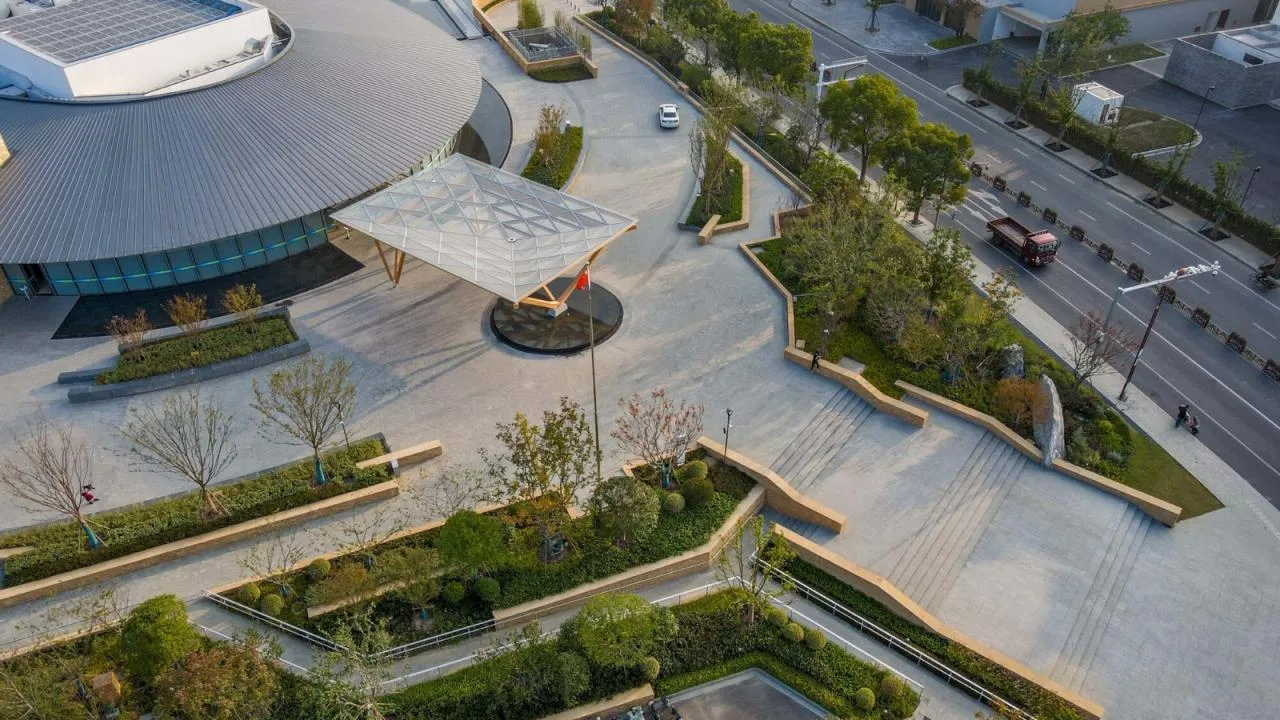
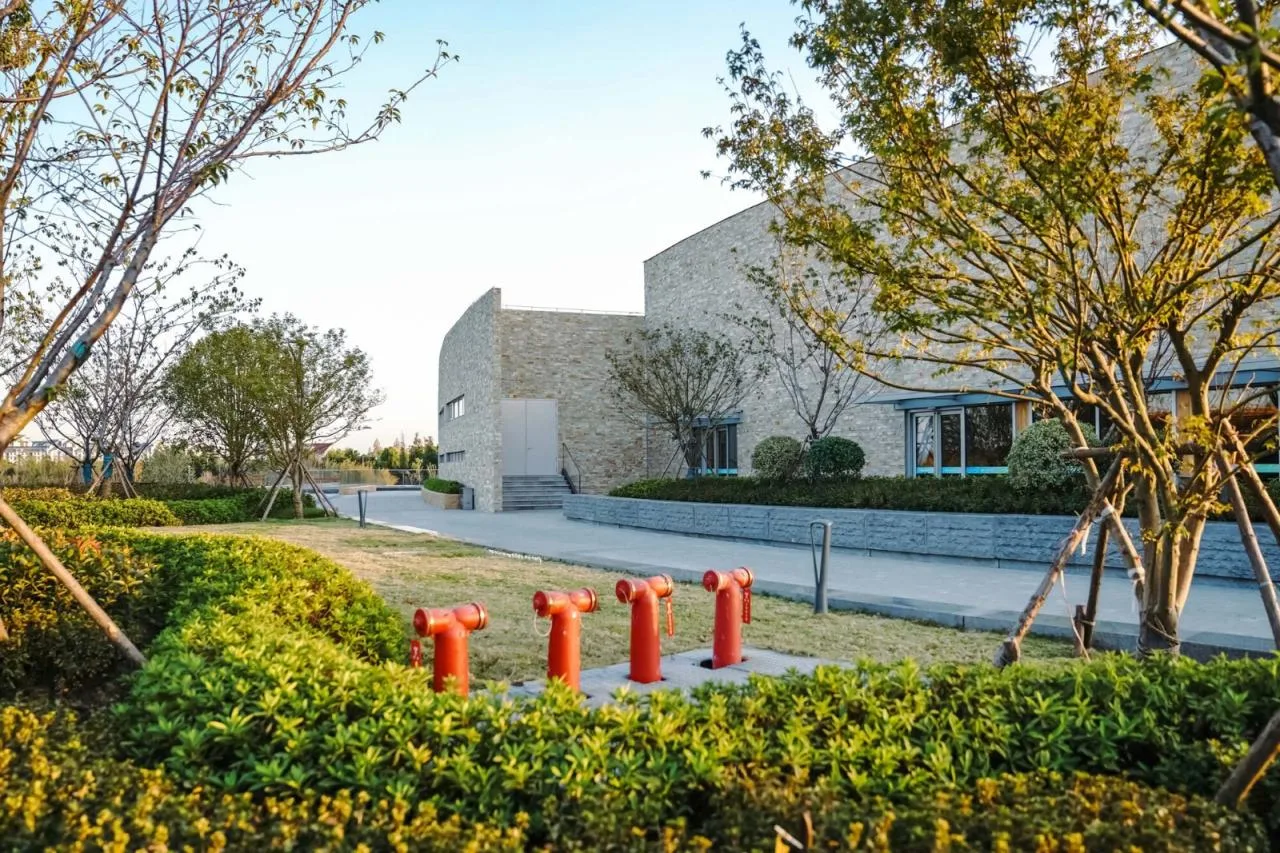
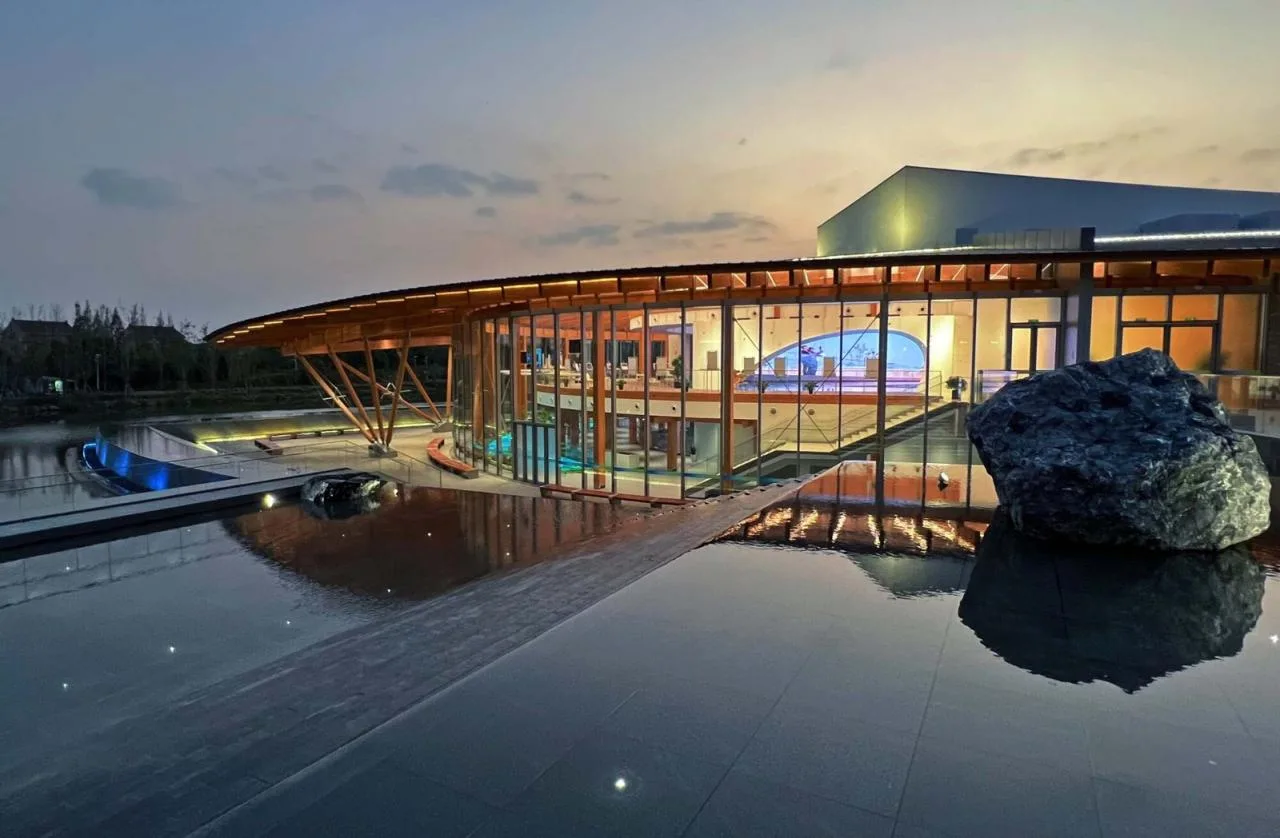
The architectural design thoughtfully addresses the relationship between varying water levels and landforms, inspired by traditional garden design principles of “tidying mountains and managing water.” Water is central to Jiangnan’s beauty, and the circular water features surrounding the buildings mirror their forms, symbolizing the close relationship between Xitang Ancient Town and its waterways.
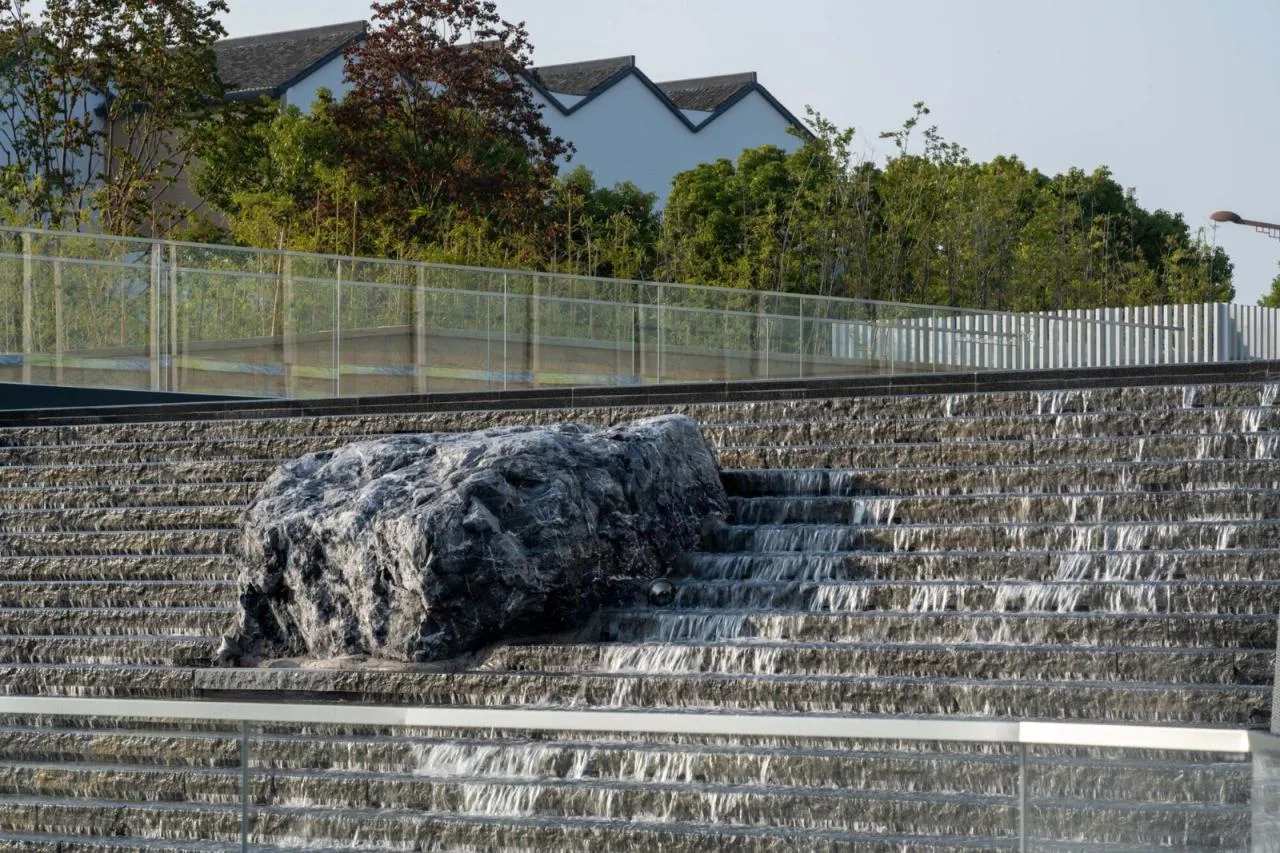
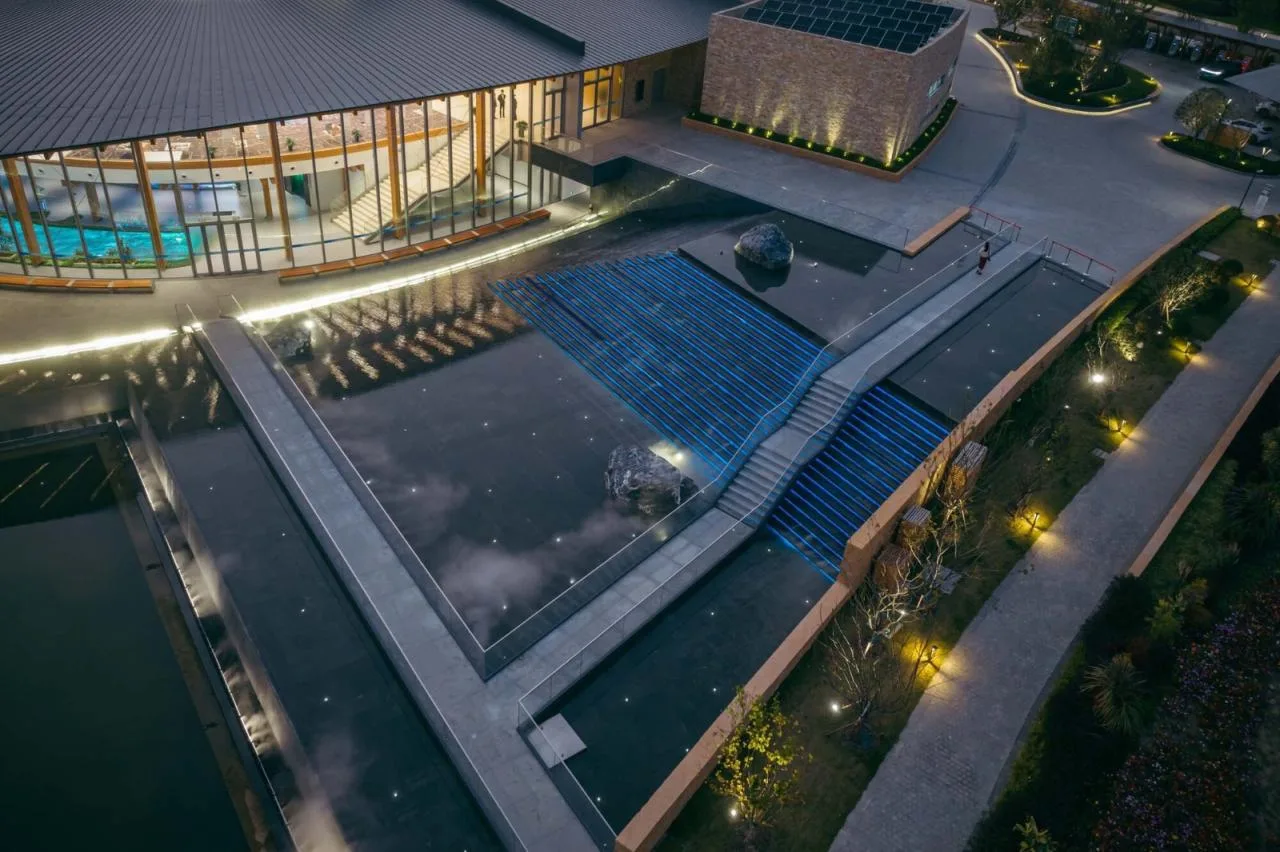
The Shiligang water system expands and curves around both sides of the building, representing the ancient Shuikou Wharf. The architecture harmoniously blends with nature, creating an exhibition area that evokes natural landscapes with rolling hills and rivers. Water cascades down broad steps, seamlessly connecting to the natural surface of Ten Mile Harbor. Three scenic stones atop these steps embody the traditional concept of “one pond and three mountains.”
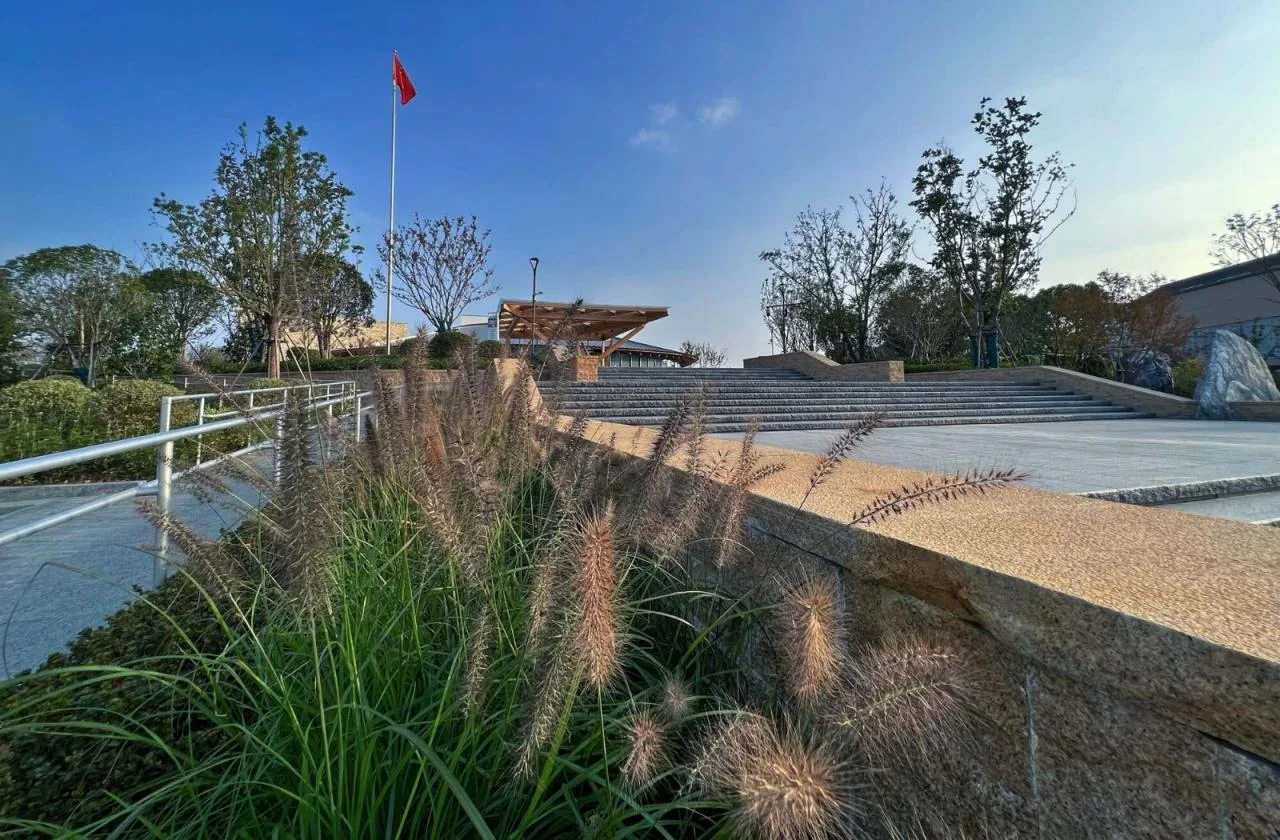
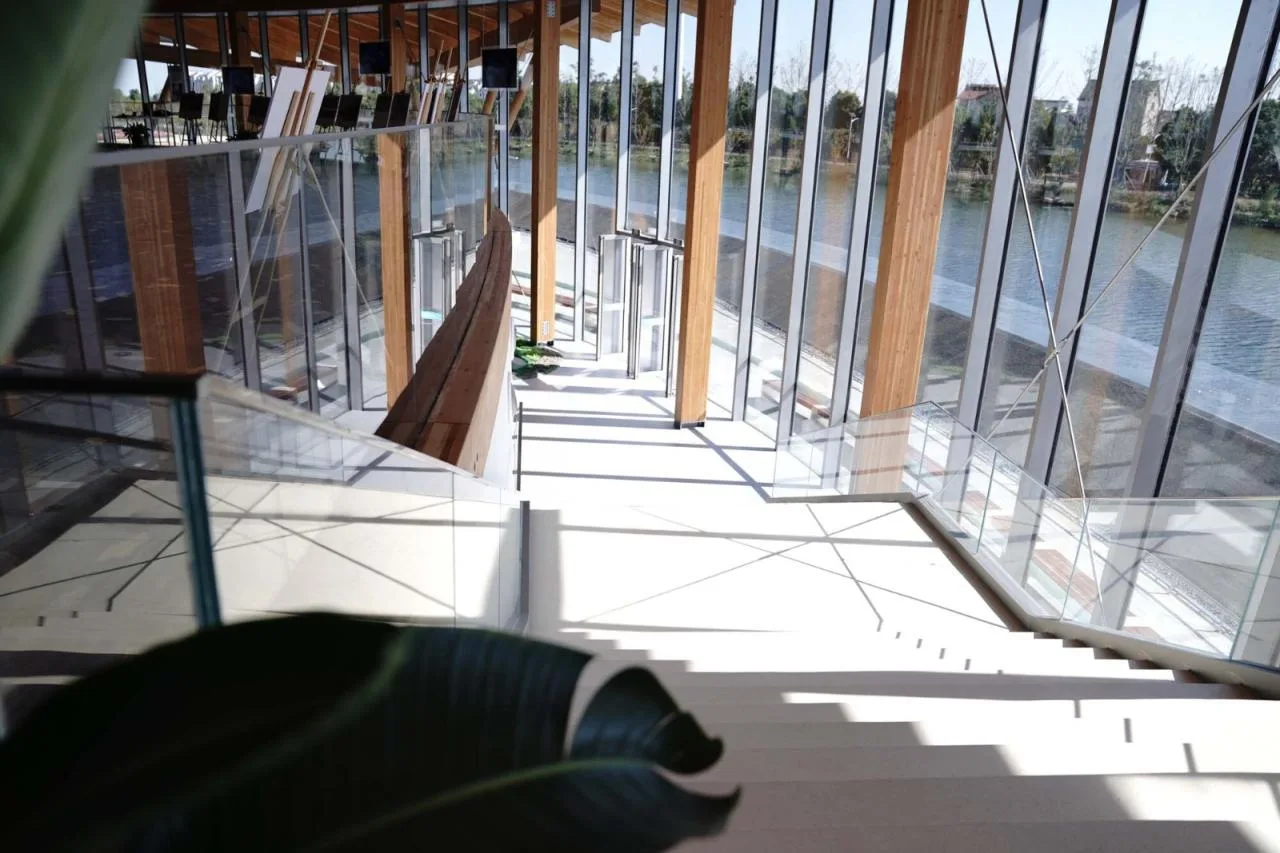
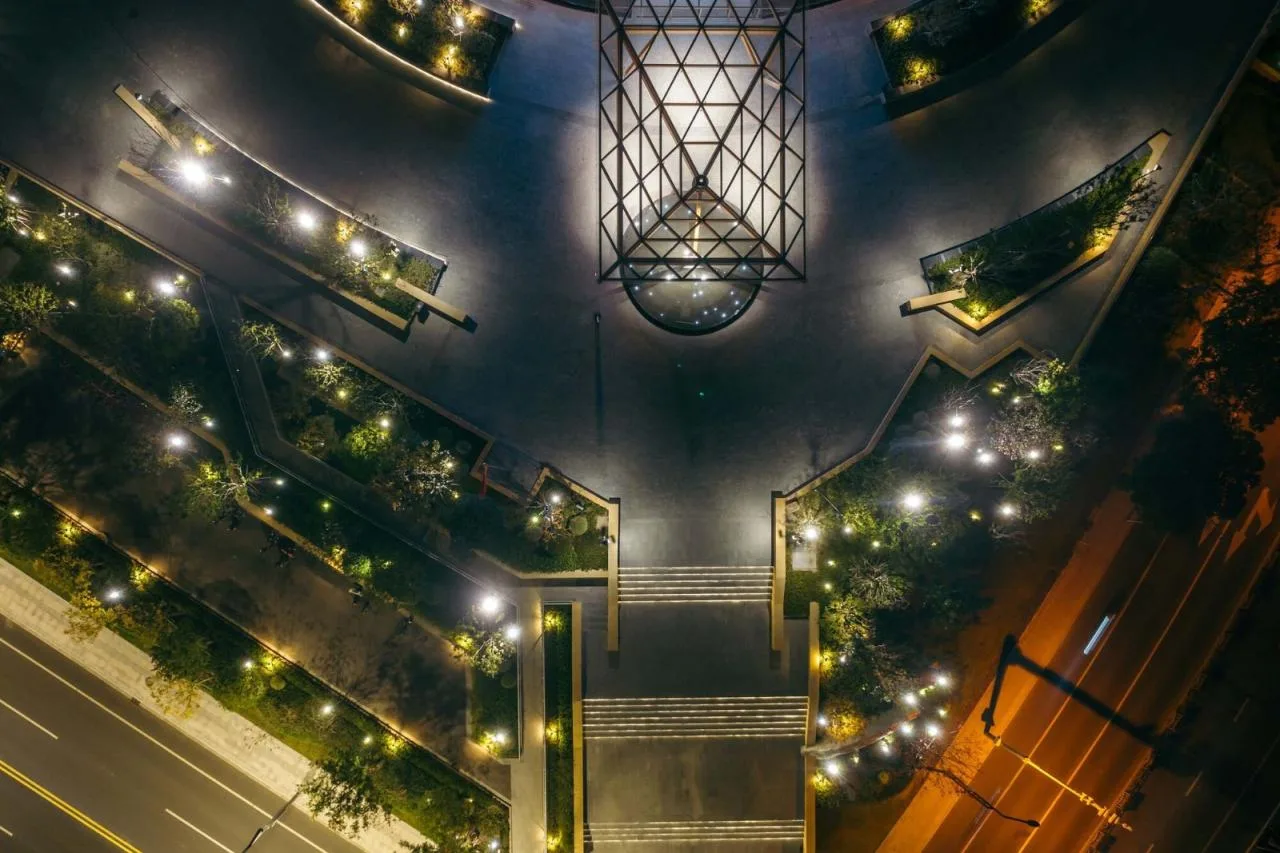
At the northwest corner, three large elevated steps abstract the arch bridge steps of the ancient town, creating a descending flow. Ascending these steps reveals tiered green plant squares unfolding in sequence. Along the central axis, the impressive views encompass the large steps, grand canopy, curved roof, and glass skylight, illustrating the traditional axis order.
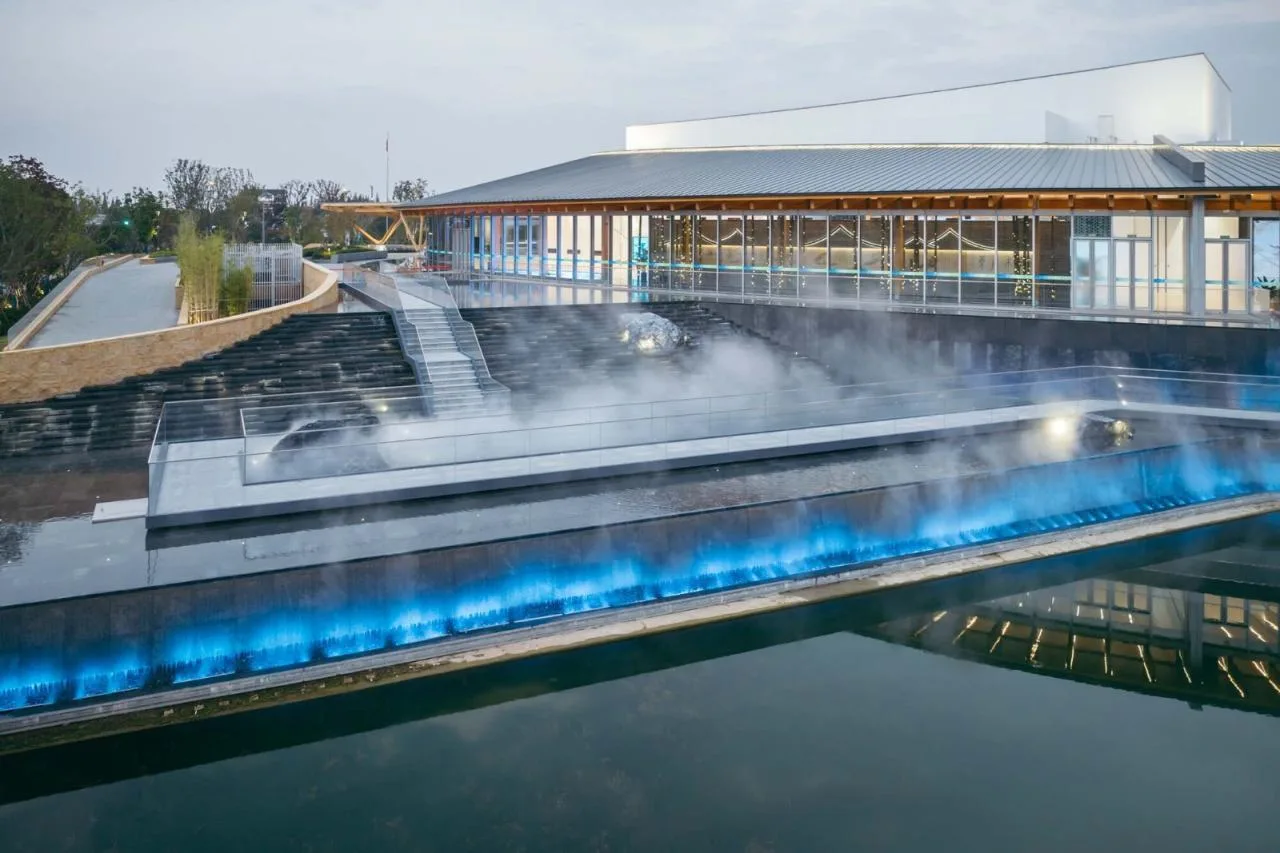
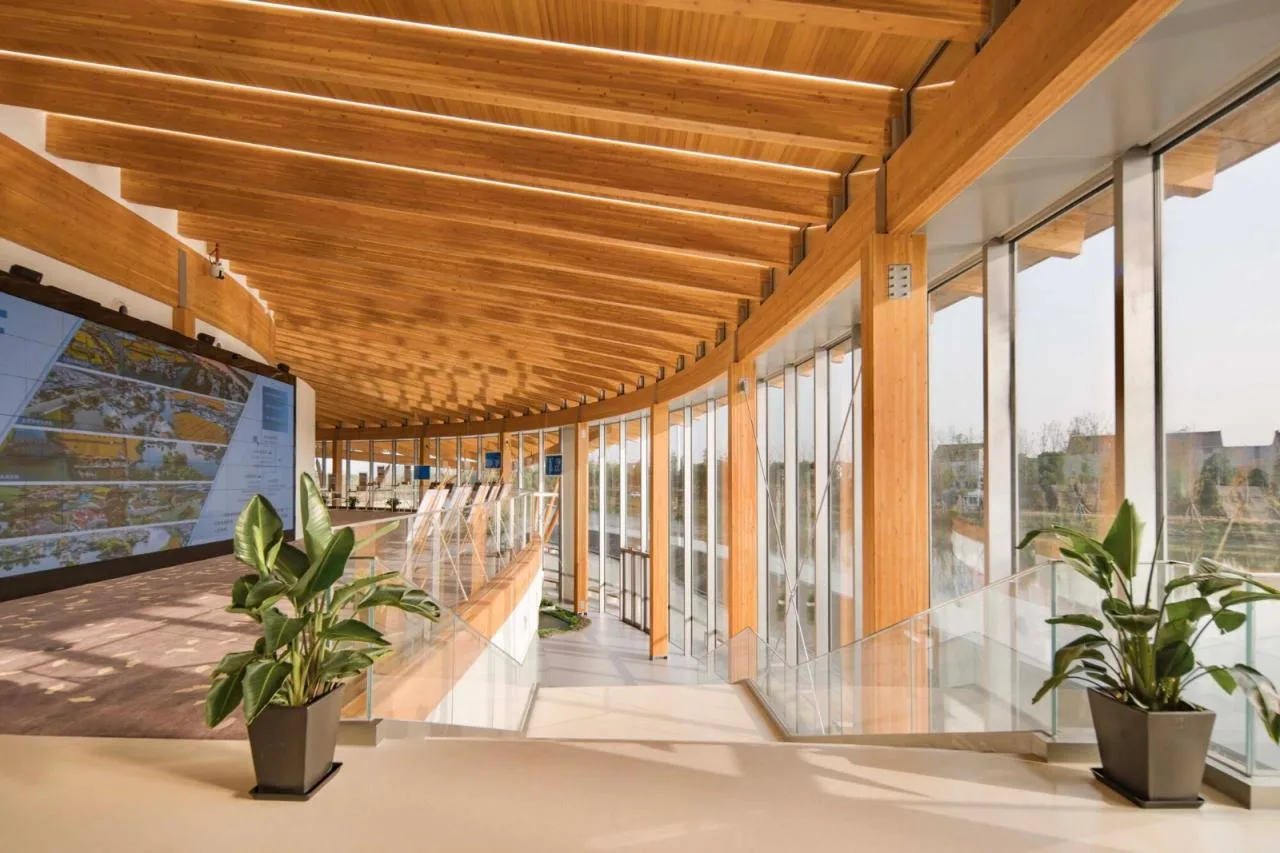
The integration of large and small conference rooms and VIP halls within the spatial architecture draws inspiration from the deep courtyard dwellings of ancient towns. These spaces are surrounded by long corridors, allowing visitors to enter through courtyards and gradually be drawn into the experience.
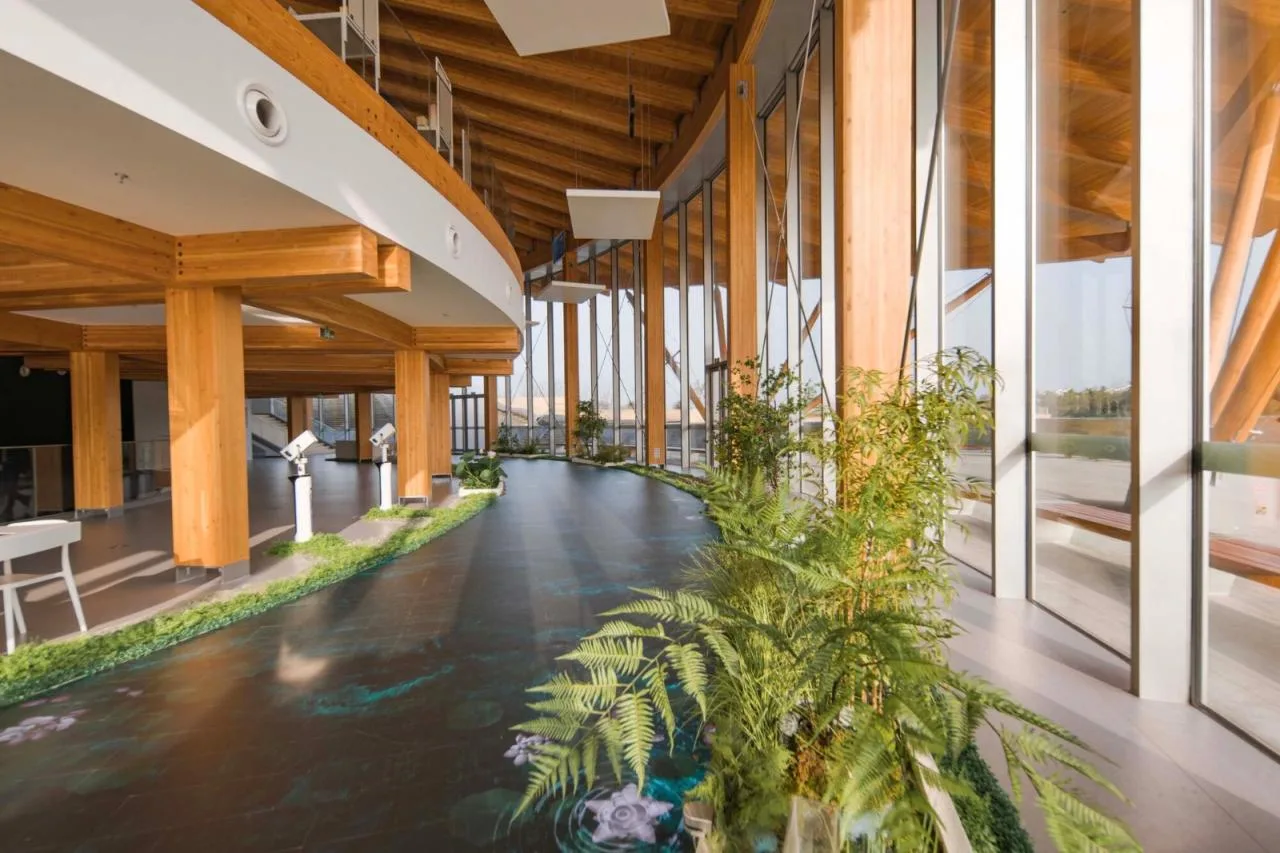
As visitors progress along the main entrance, the view outside the windows unfolds from lush greenery to shimmering water surfaces. Standing at the boat’s bow on the second floor, one can gaze into the distance before descending the stairs, where the extended eaves guide the eye downward toward the water. At this moment, the deck, waterfall, and architecture outside seamlessly merge with nature, creating a profound sense of harmony.
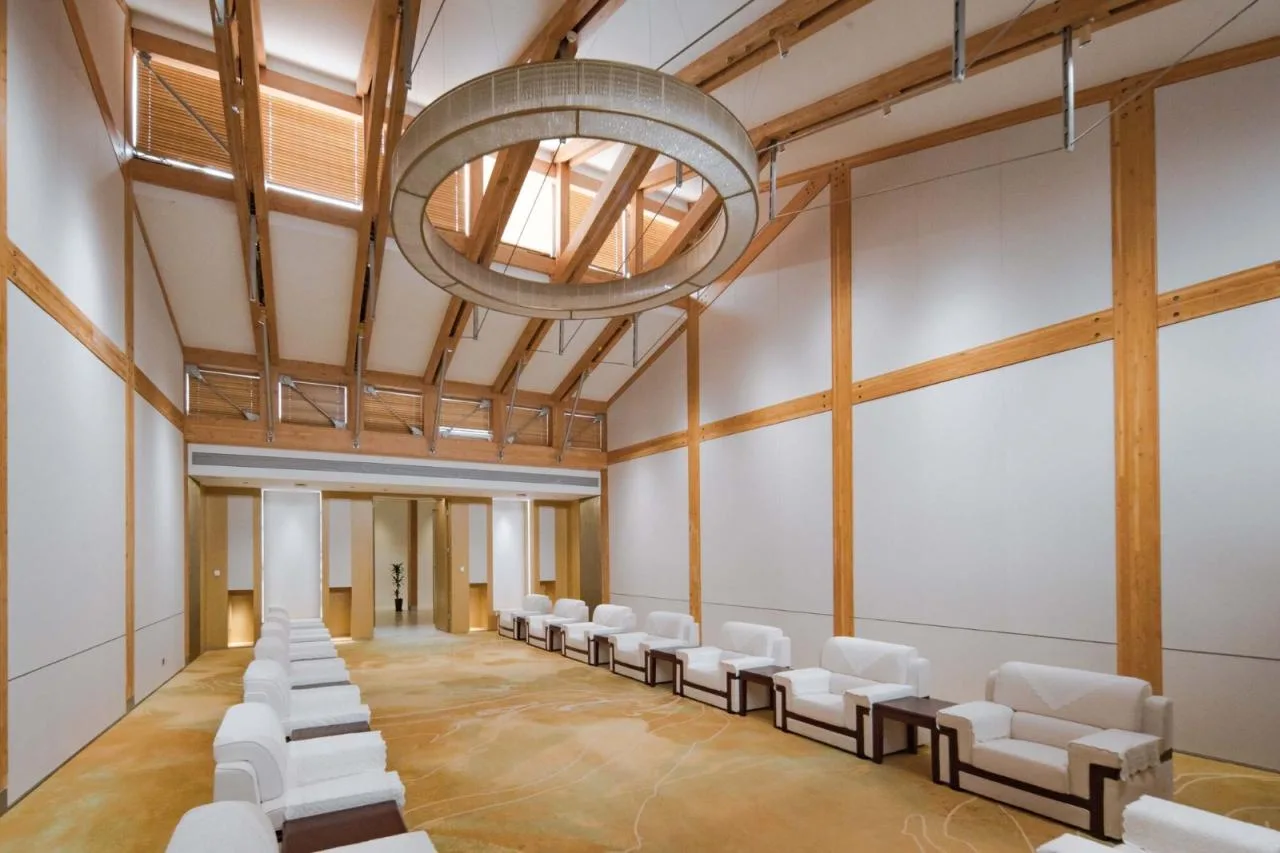
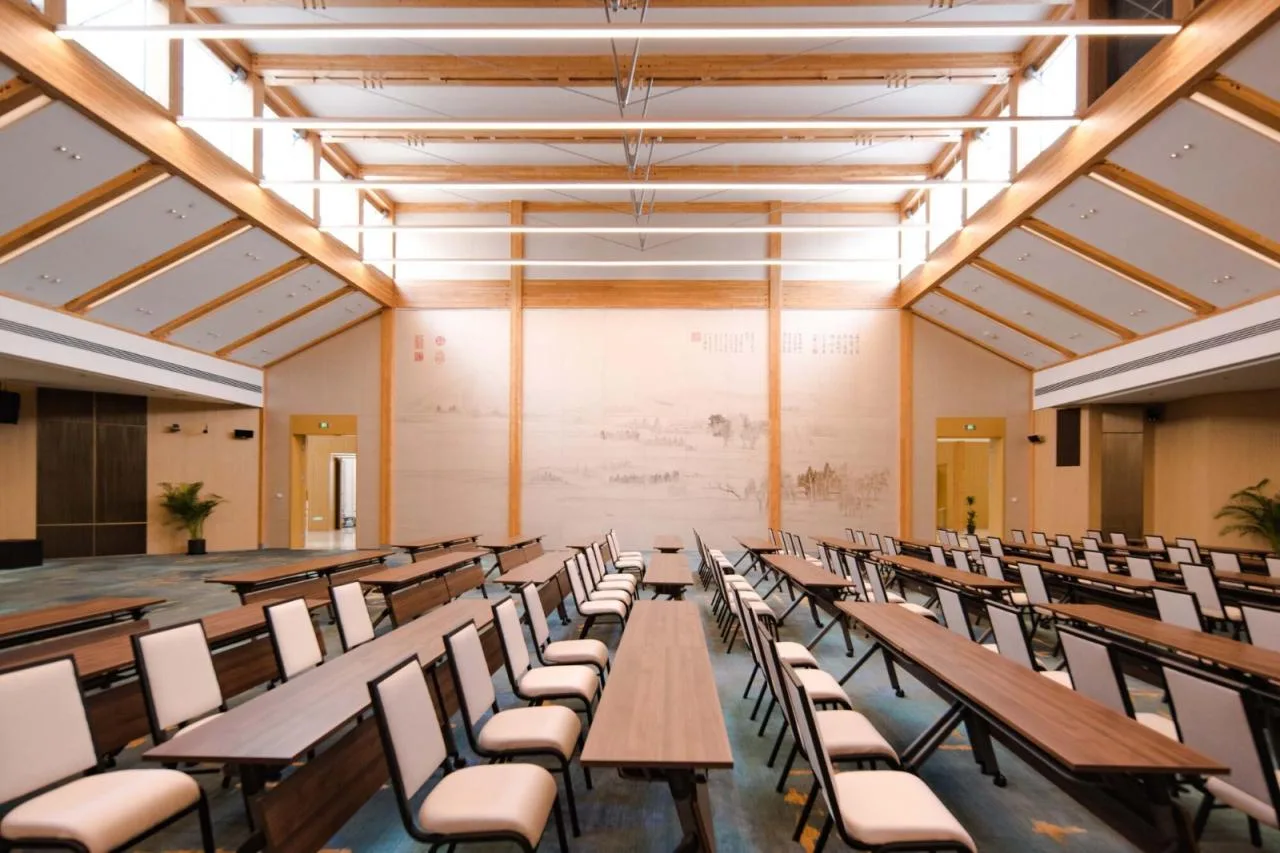
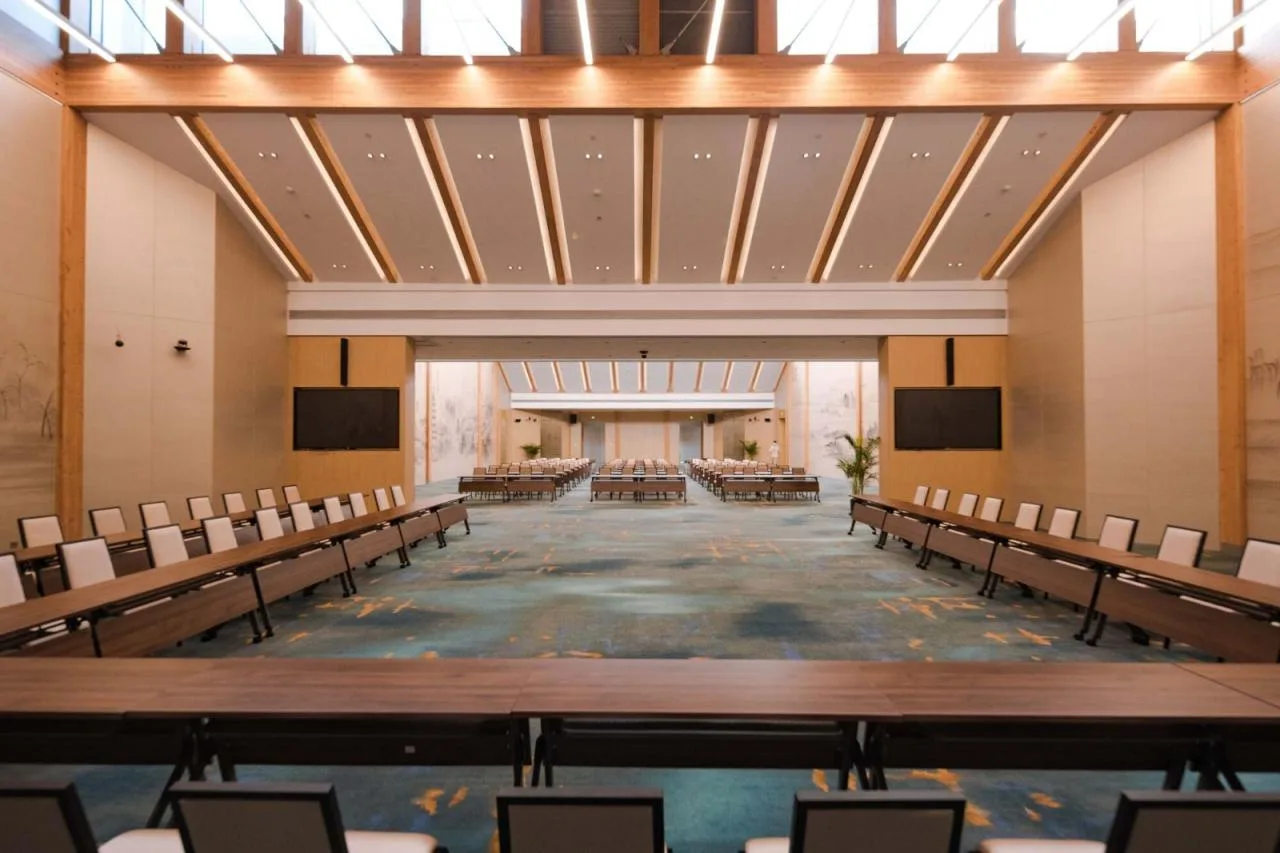
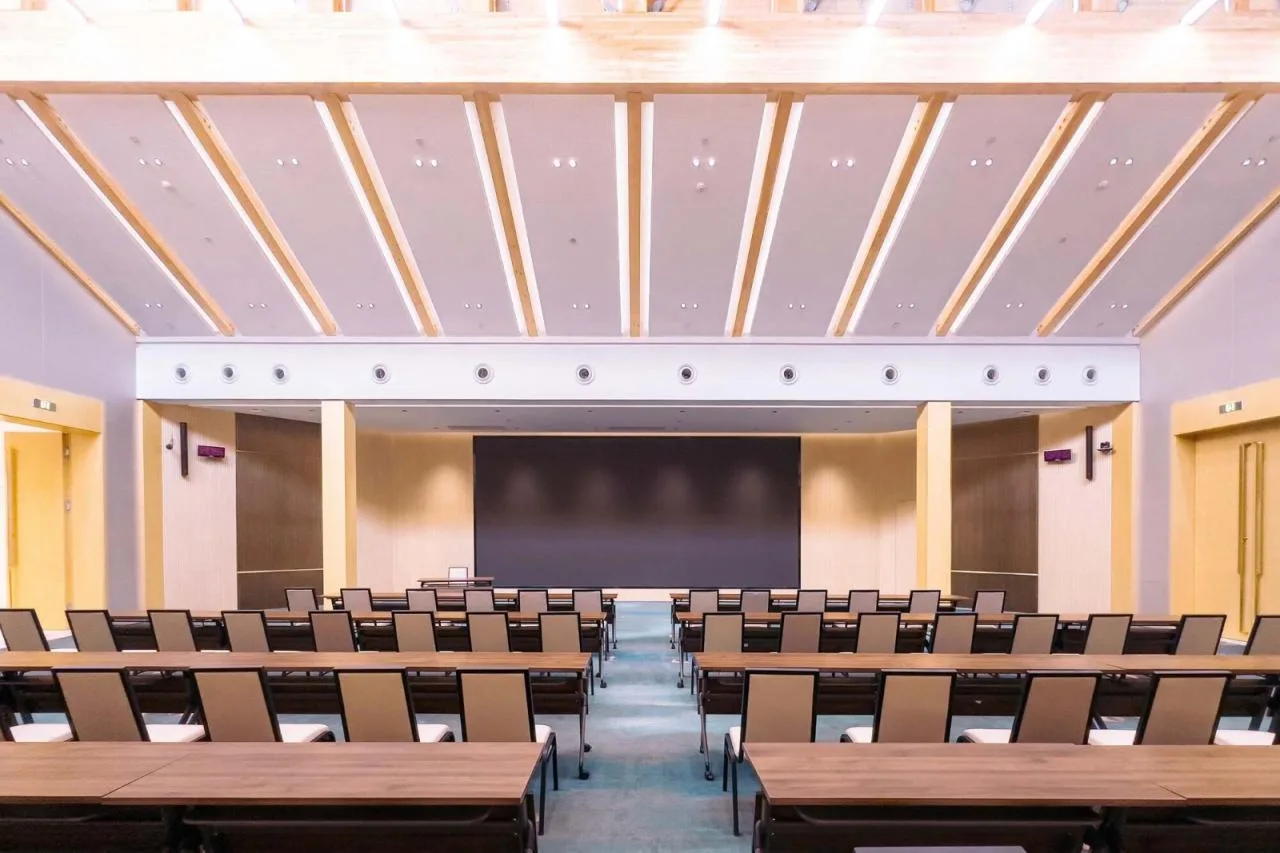
The wooden framework inside the conference rooms draws from the traditional beam-lifting style found in Jiangnan halls. The design features low ceilings, tall side windows, and inner courtyards nestled between circular corridors and the large conference room, evoking the freehand garden spaces typical of traditional courtyards.
Natural light and greenery permeate the solid building structure, showcasing a design agility that distinctively bridges Eastern and Western architectural philosophies.
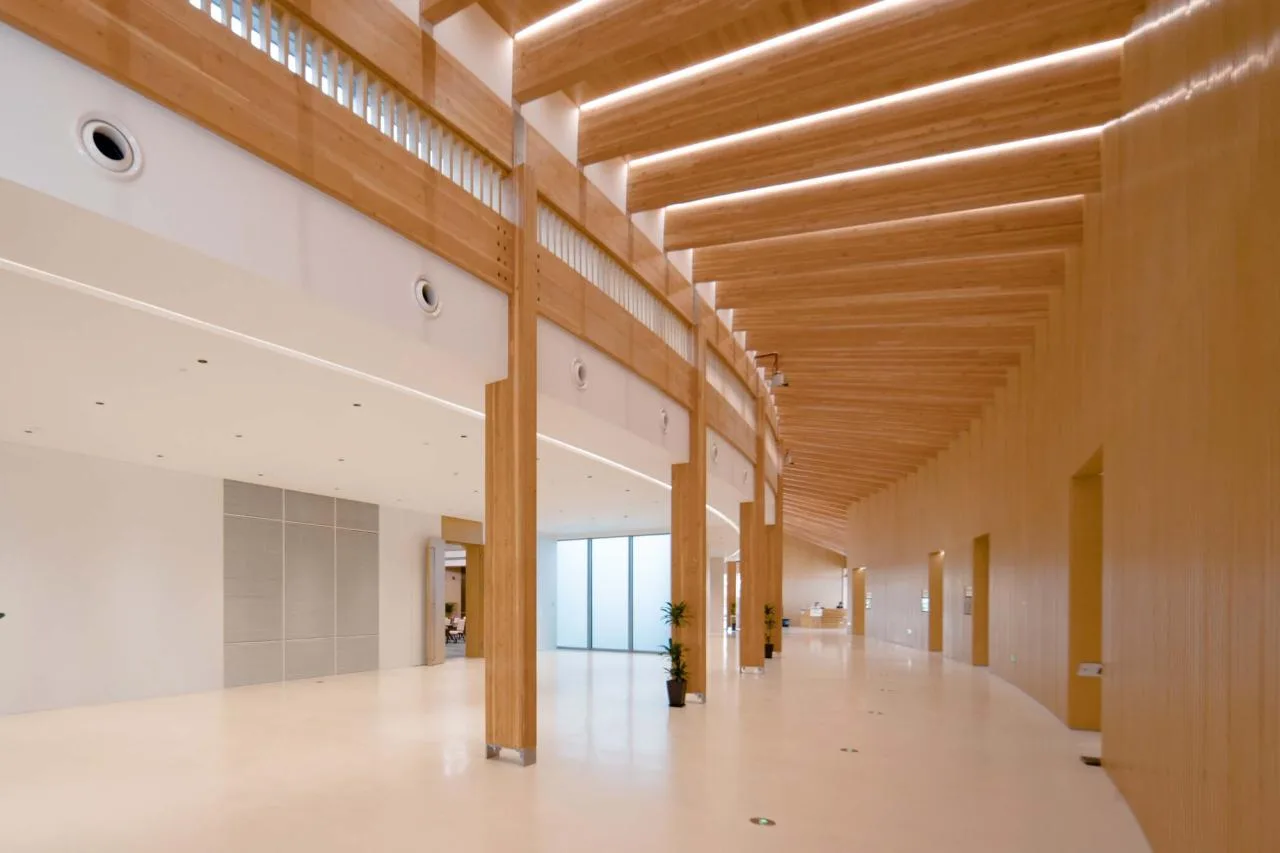
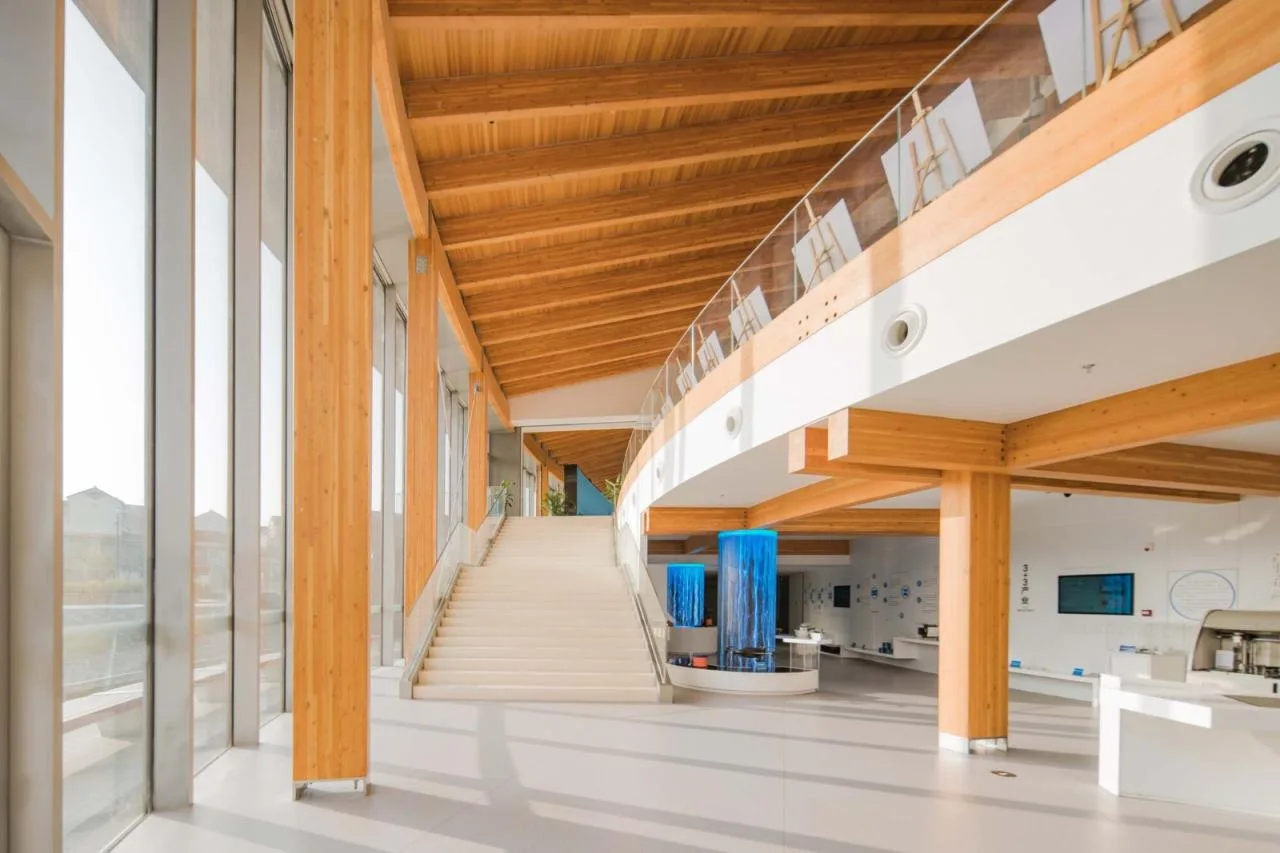
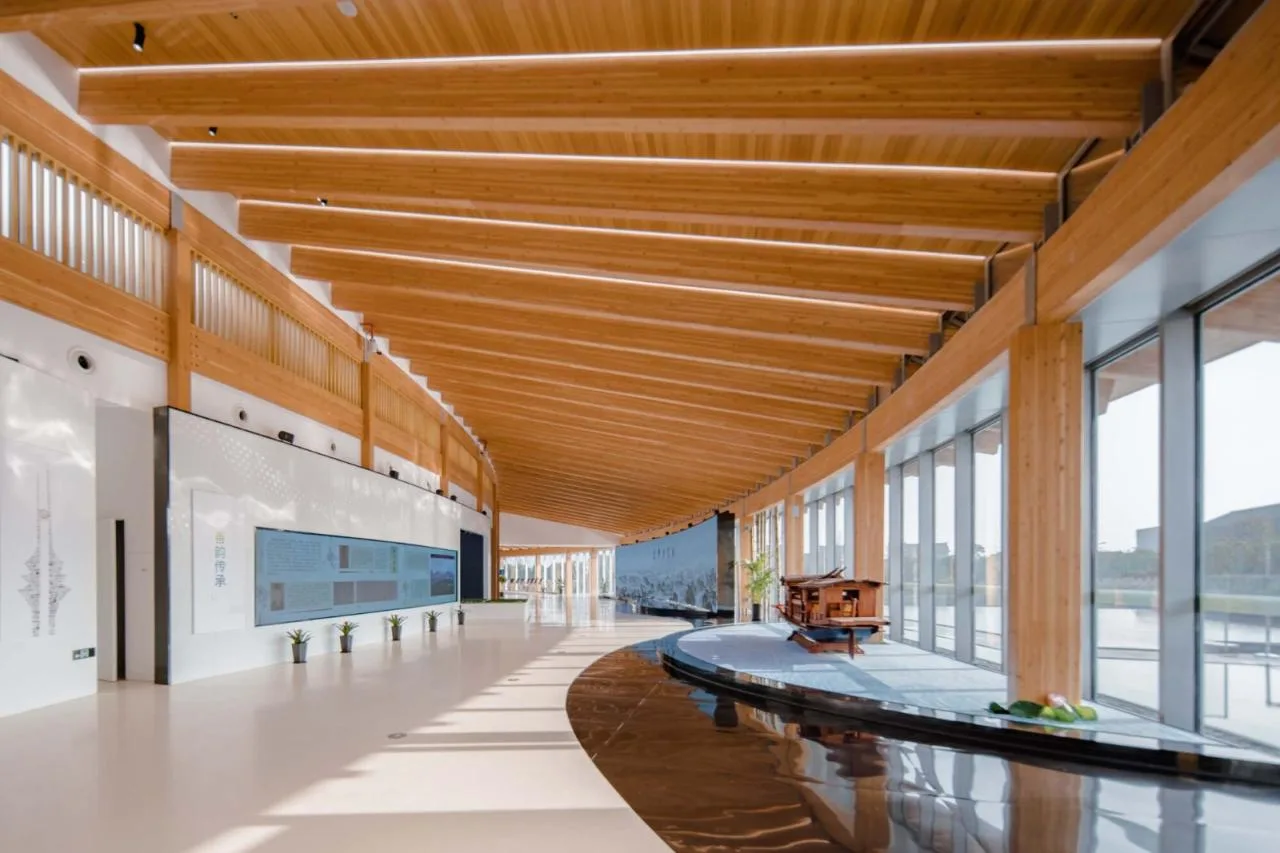
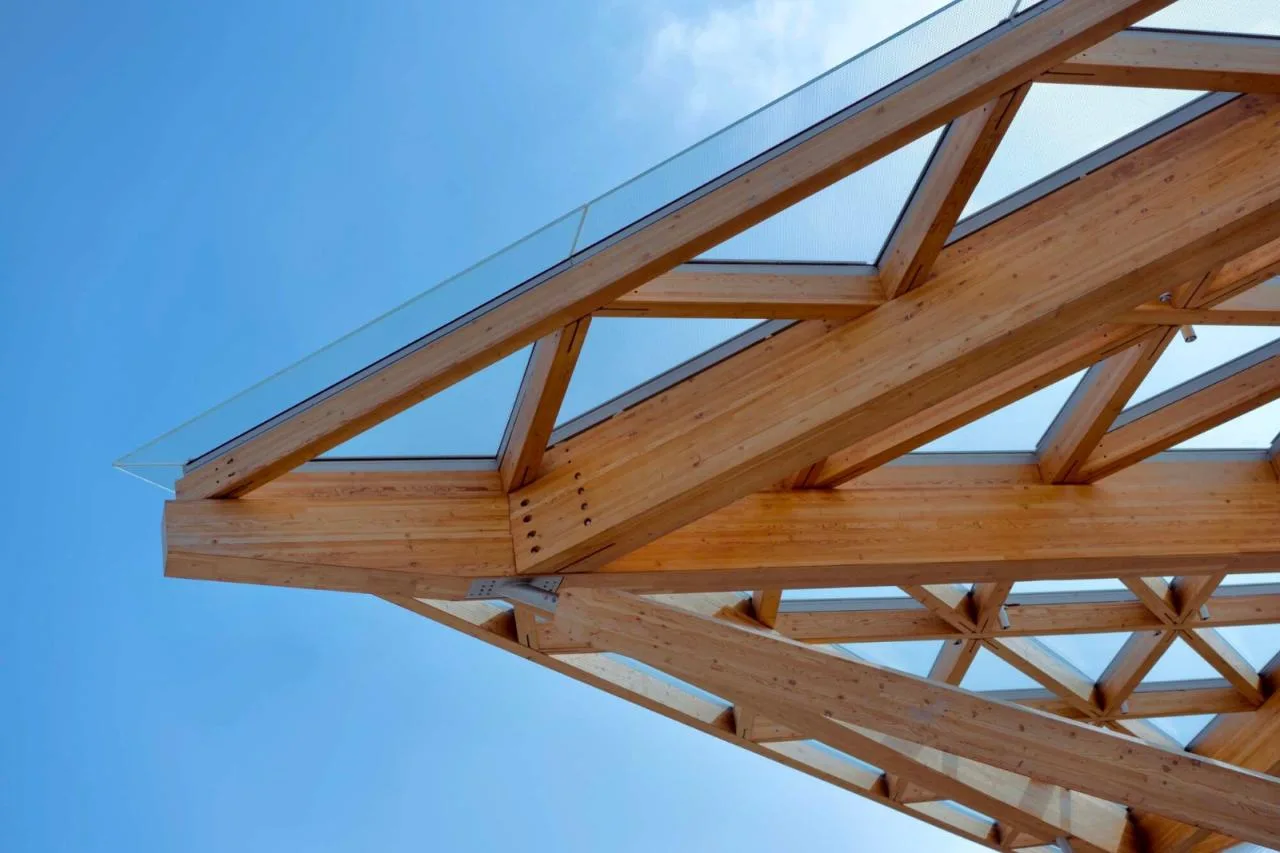
The architectural order of the Corridor is defined by four tangent symmetrical arcs. The north-south shorter arcs are divided into 15° segments, while the east-west longer arcs are divided into 4.5° segments. Based on this framework, the glass curtain wall, metal roof panels, roof ribbed beams, and triangular roof trusses of the small conference room are further subdivided.
The large conference room construction follows a uniform 1.8 by 1.8-meter grid. It features 12 steel-wood composite trusses spanning 18 meters between the east and west mountain walls, with longitudinally spaced steel-wood suspension beams every 1.8 meters. This design allows for flexible meeting spaces arranged in two “convex” rows.
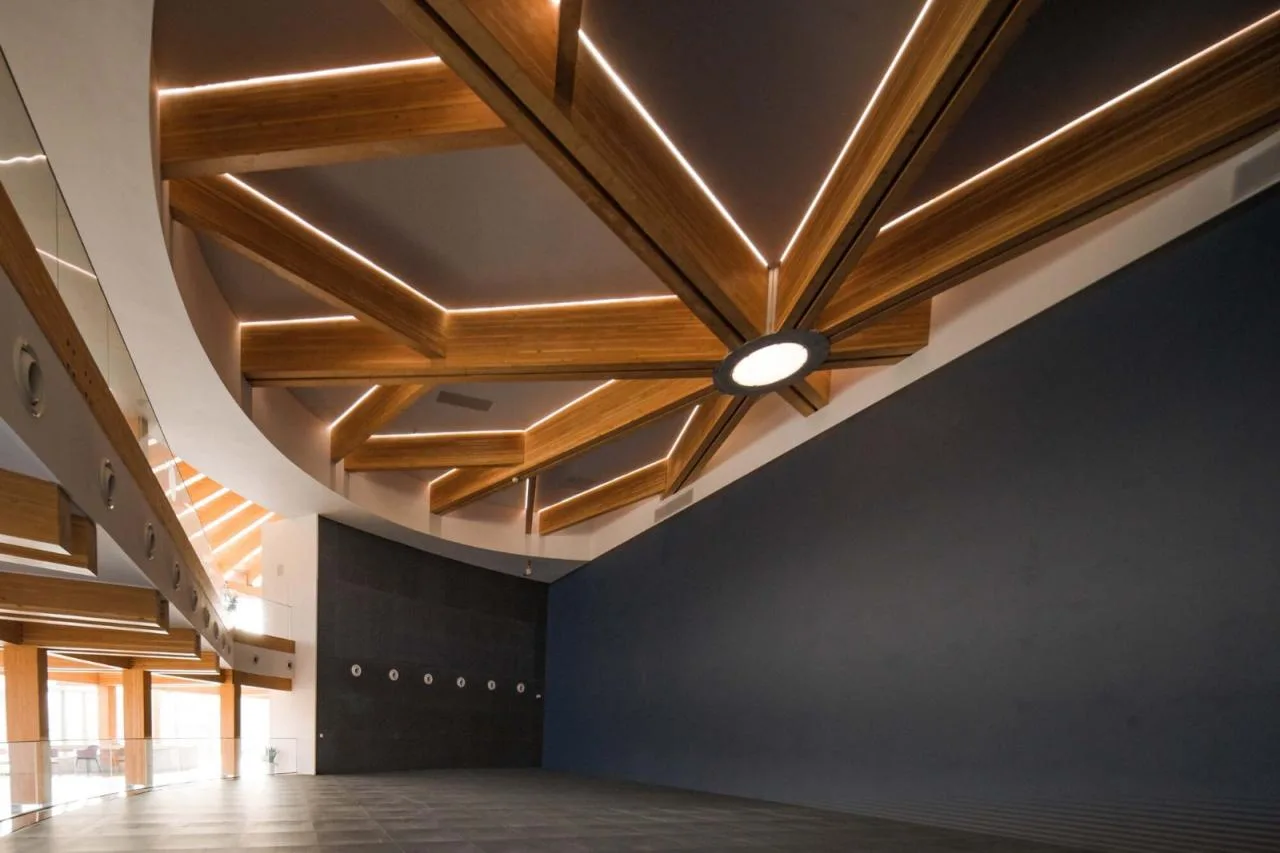
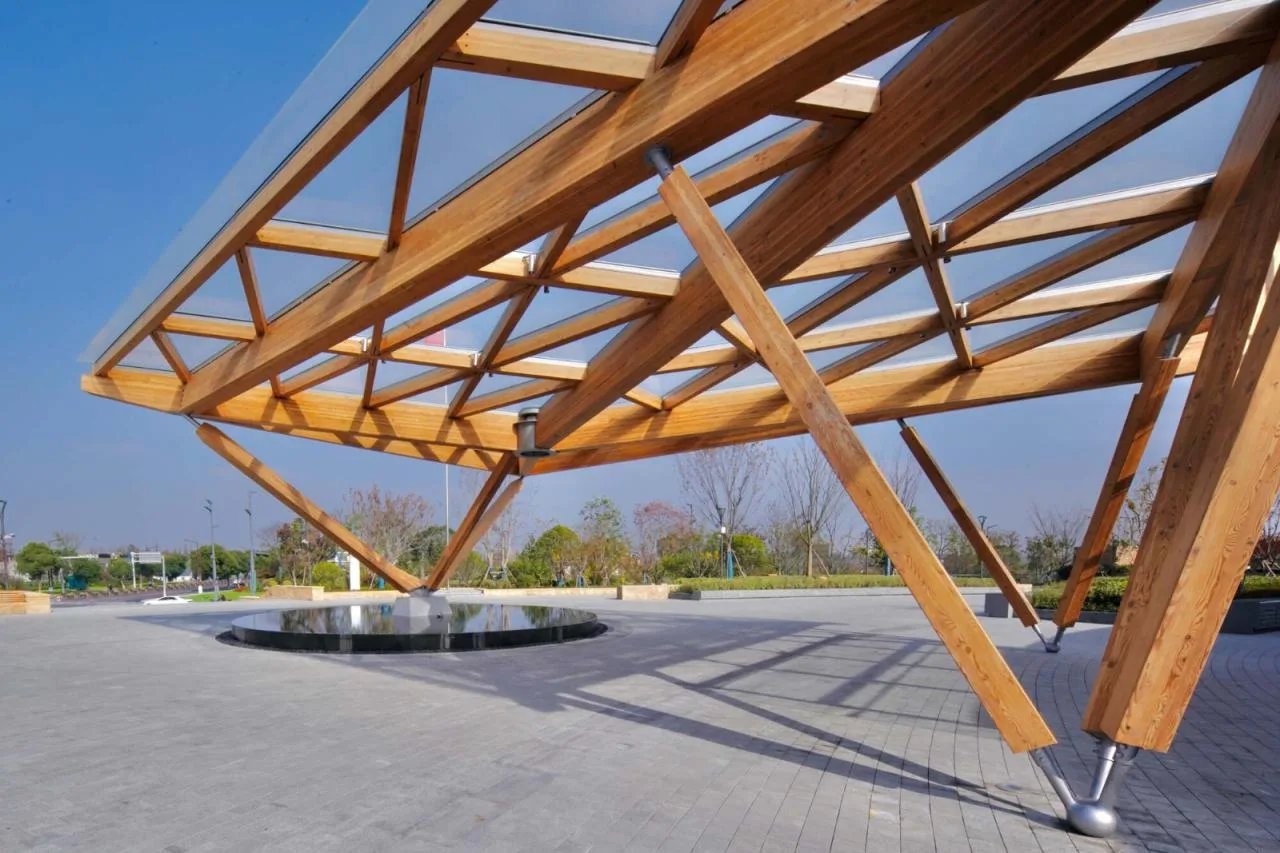
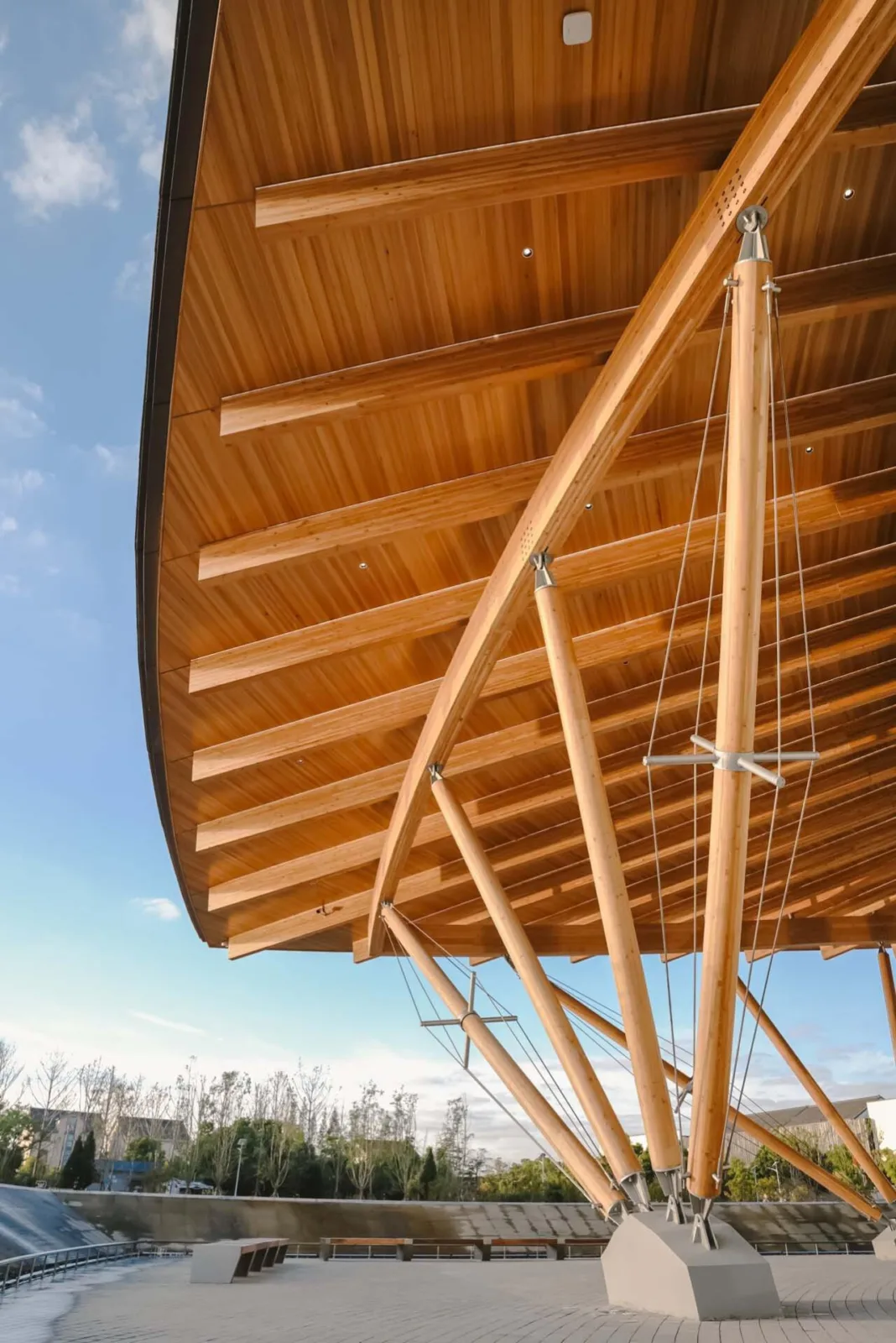
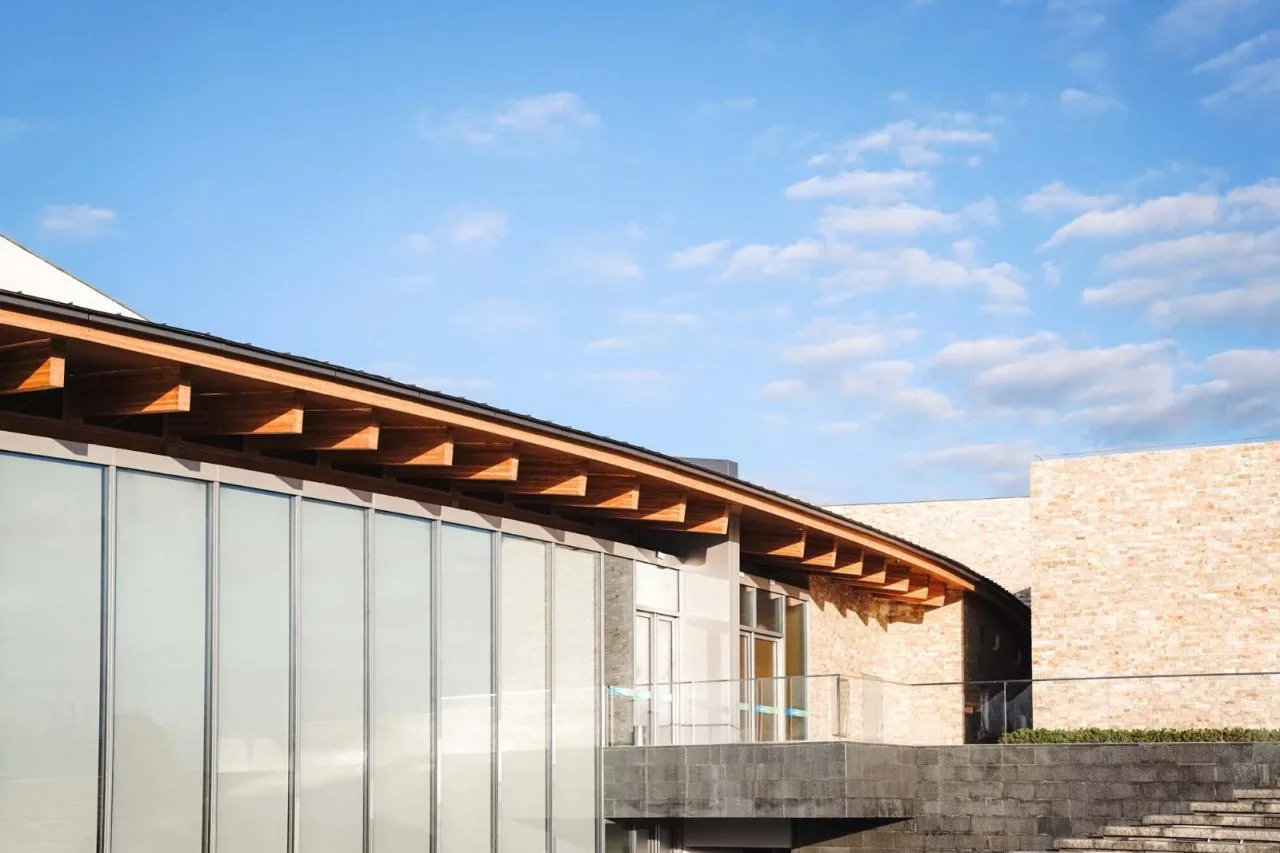
The building’s material palette honors traditional wood and stone craftsmanship, reinterpreted with modern wooden structures. The inner ring of the circular roof ascends gradually from south to north, reflecting a contemporary take on the traditional “lifting and folding” roof design.
The outer eaves form a natural curve, rising and then descending gracefully, creating an elegant roof surface through simple geometric rules. The large conference room’s construction system translates traditional bucket and beam lifting methods into a modern context.
Wooden columns integrated into mountain wall murals symbolize the bucket elements, while trusses and secondary beams evoke the lifting beams, together forming a conference space that exudes the warm atmosphere of a traditional Jiangnan hall.
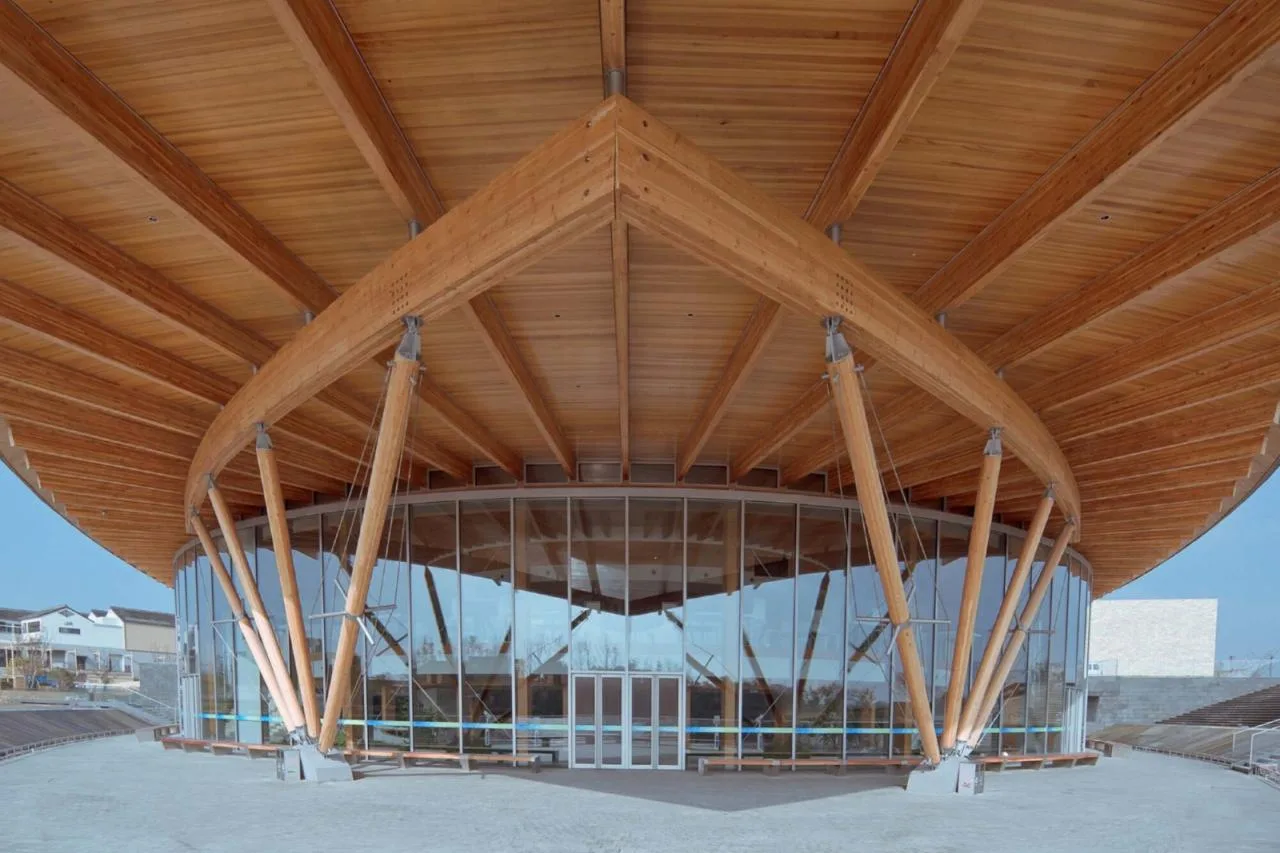
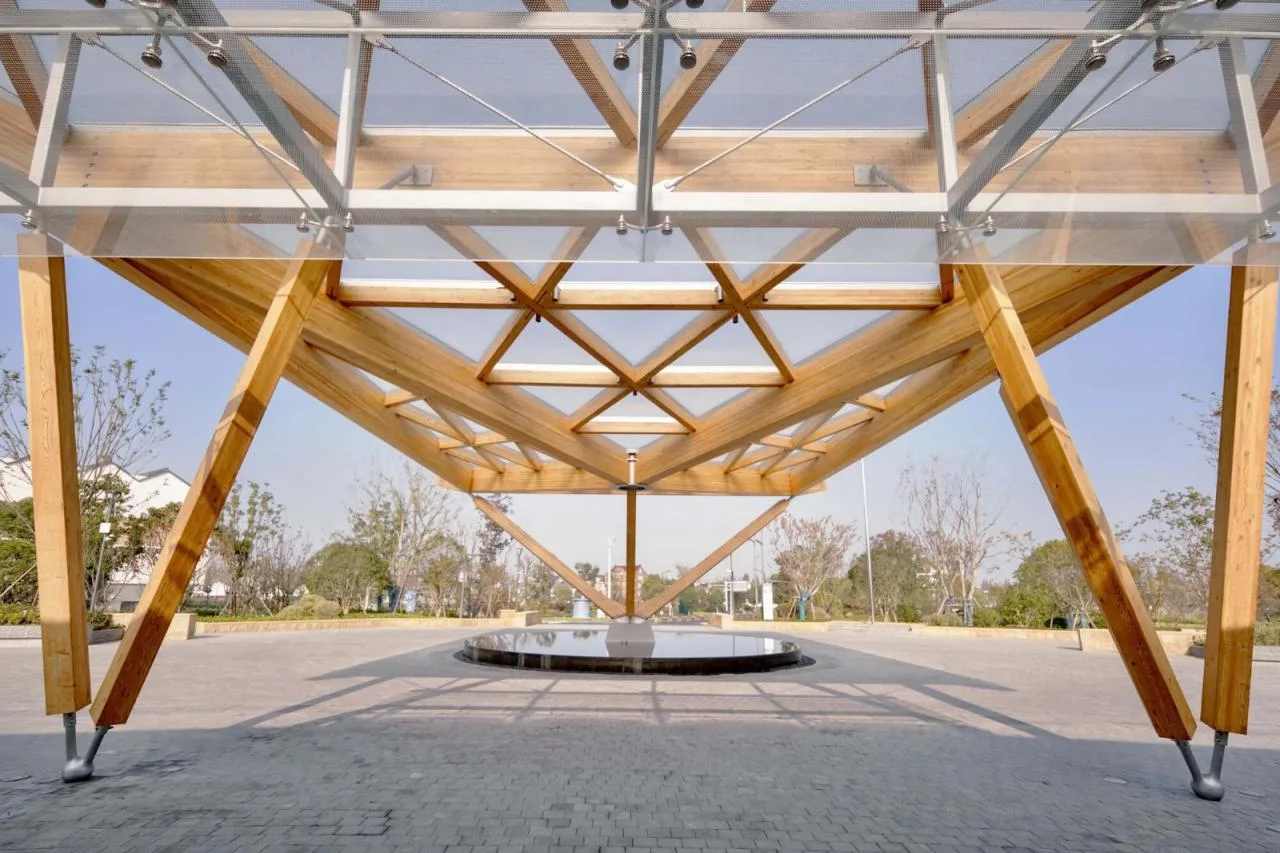
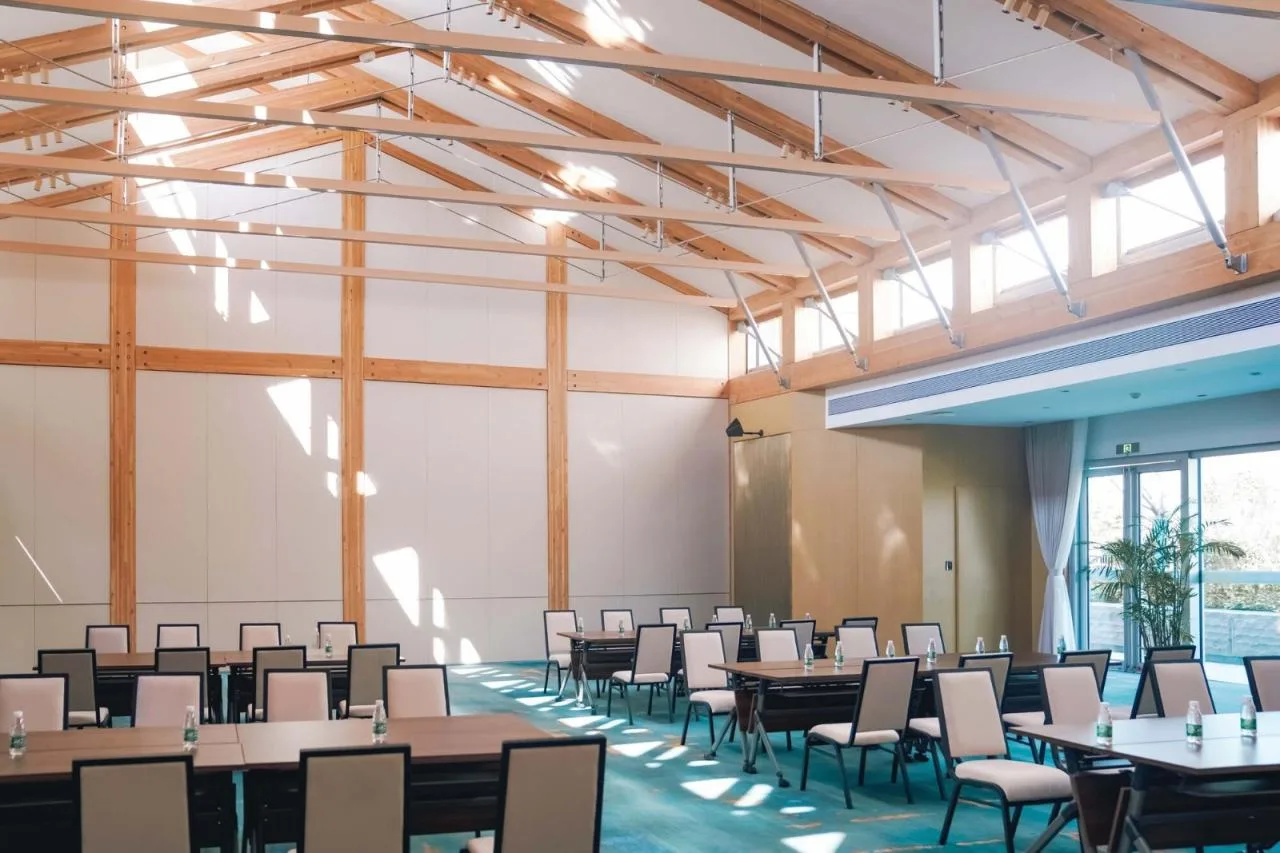
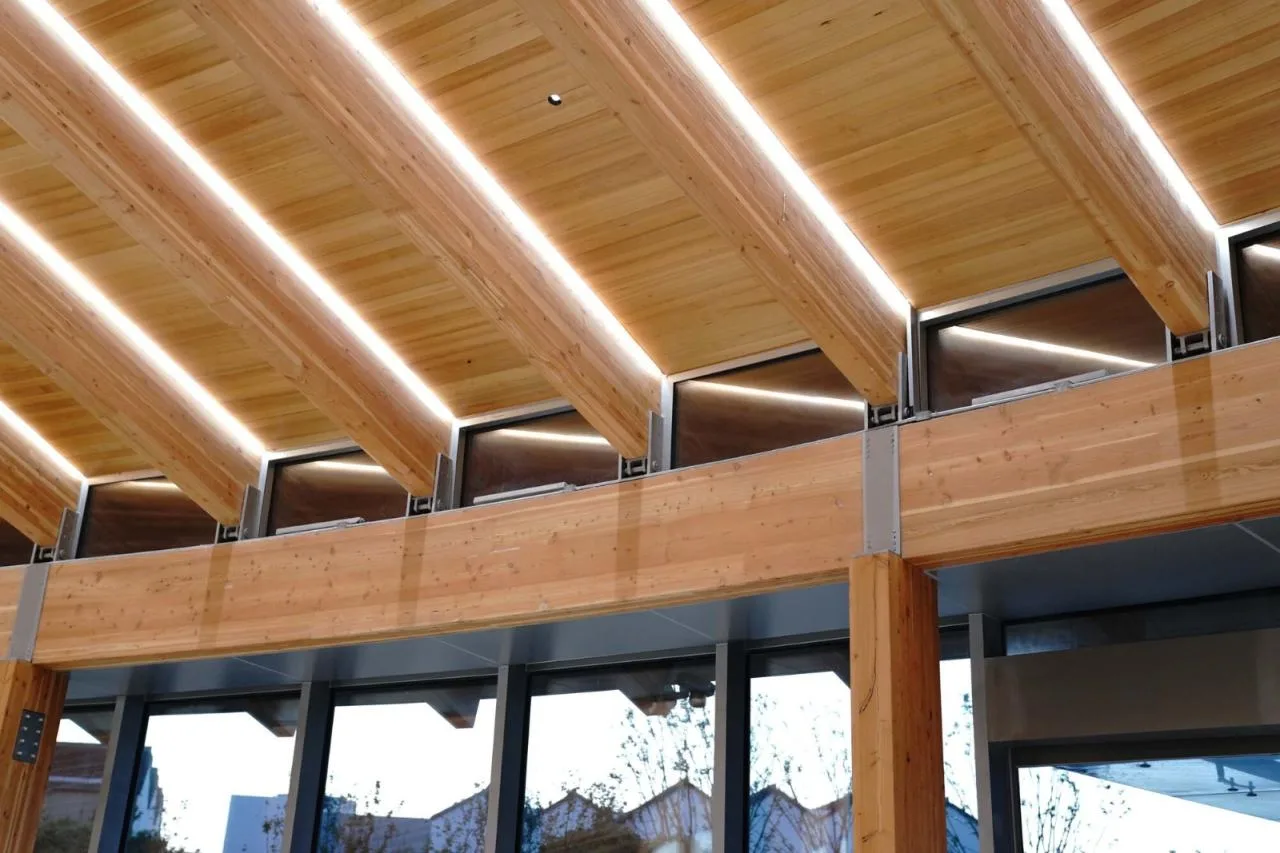
The small conference room features a triangular roof truss with slotted secondary beams arranged every 4.5 degrees along the curved truss foundation. This variation in roof truss forms between the large and small conference rooms aligns with the traditional wooden structure grading system.
The structure integrates roof lighting and equipment pipelines within the truss beams, which also serve as the source for the side high windows. Uniformly spaced slotted secondary beams create 8cm-wide grooves that accommodate fire sprinklers, lighting fixtures, and other equipment pipelines.
Project Drawings
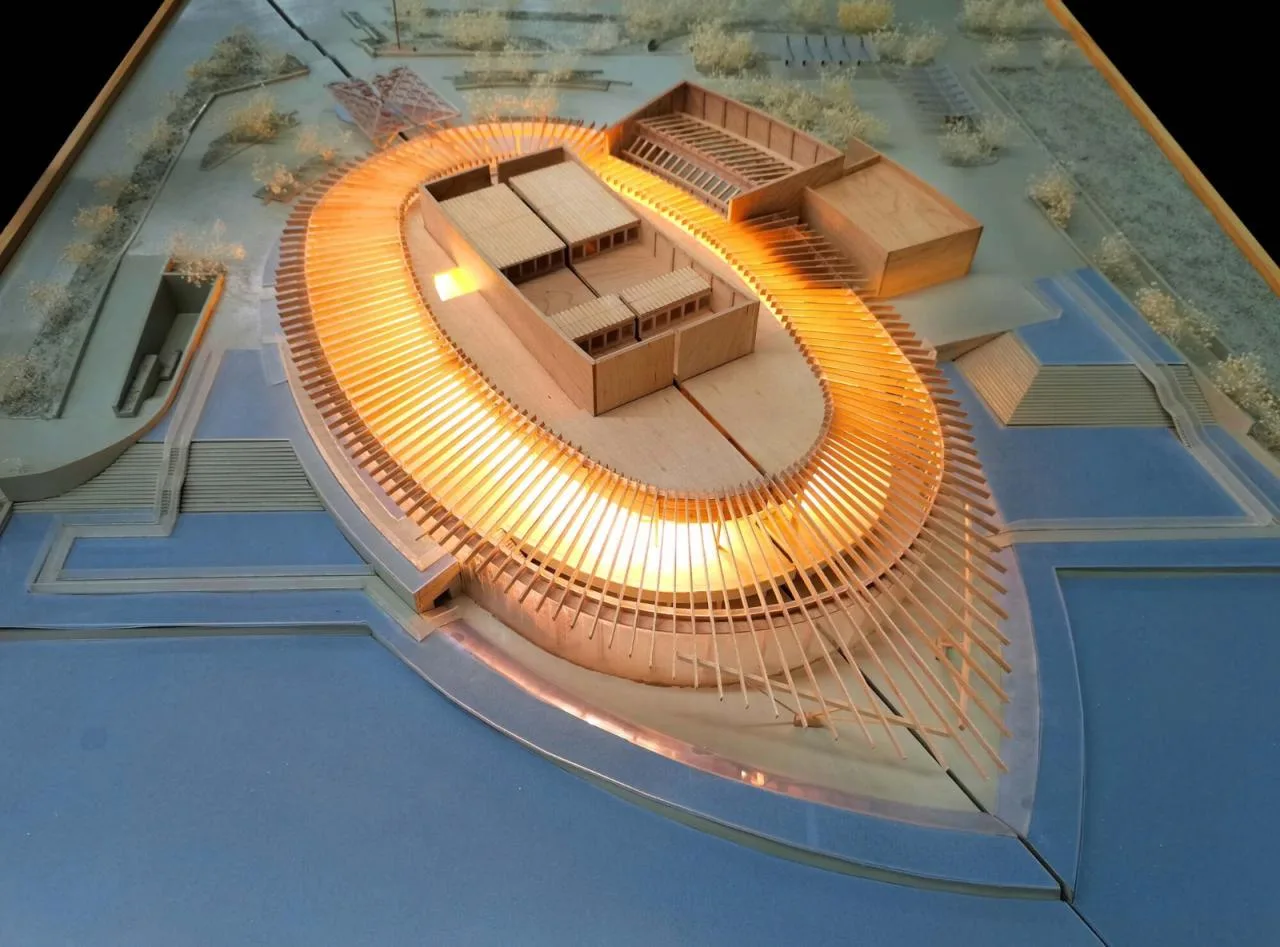
△ Model Diagram
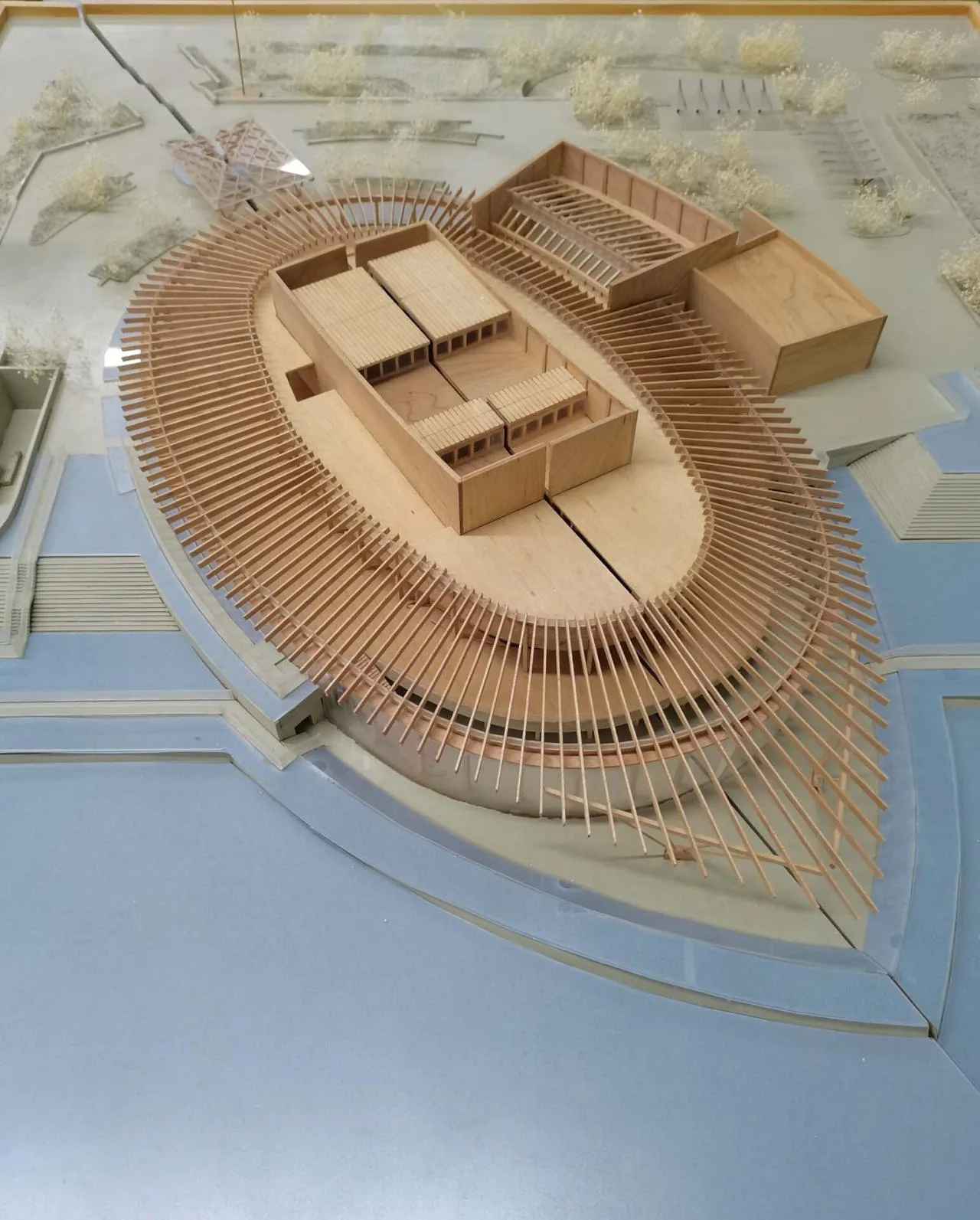
△ Model Diagram
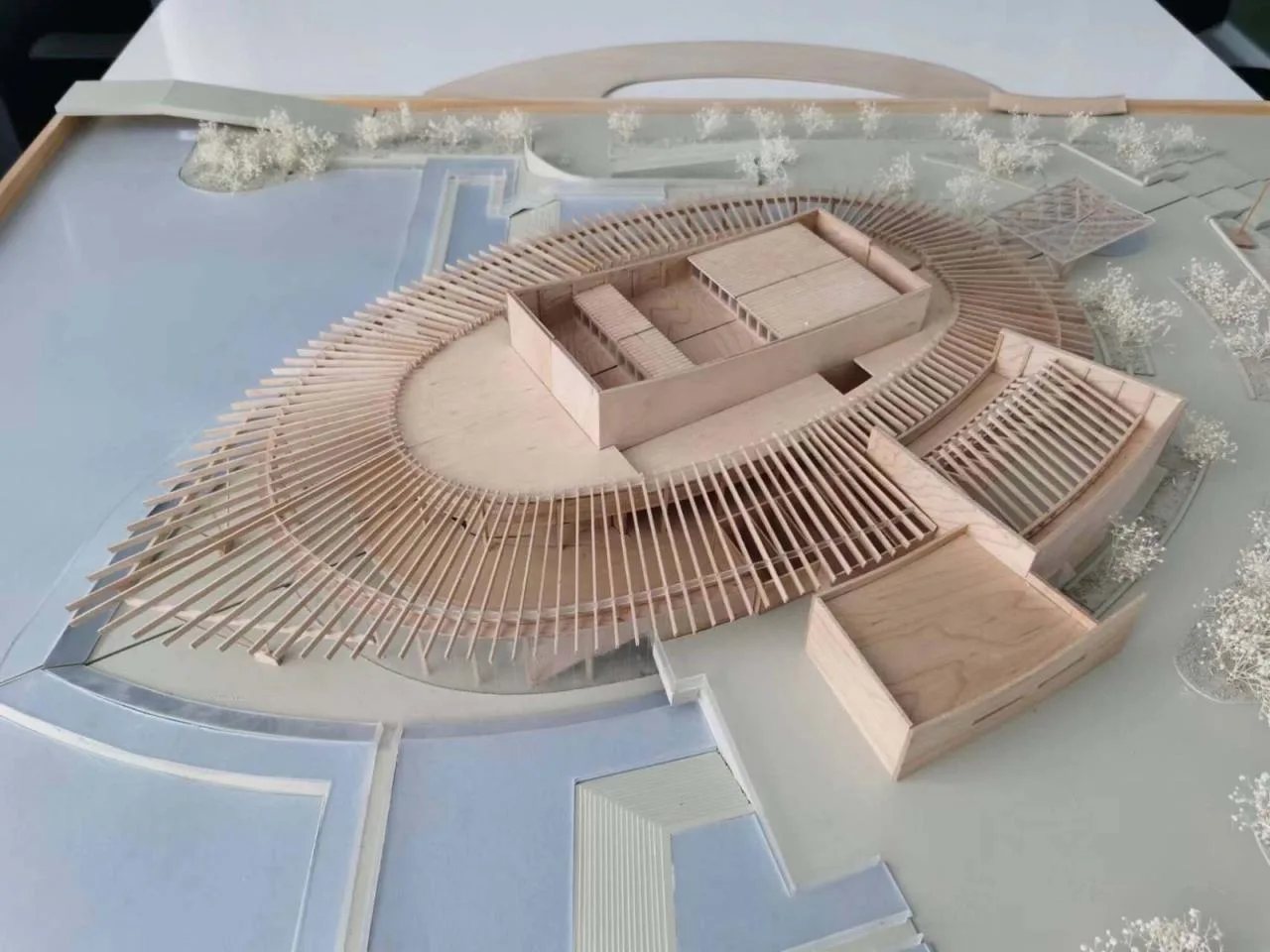
△ Model Diagram
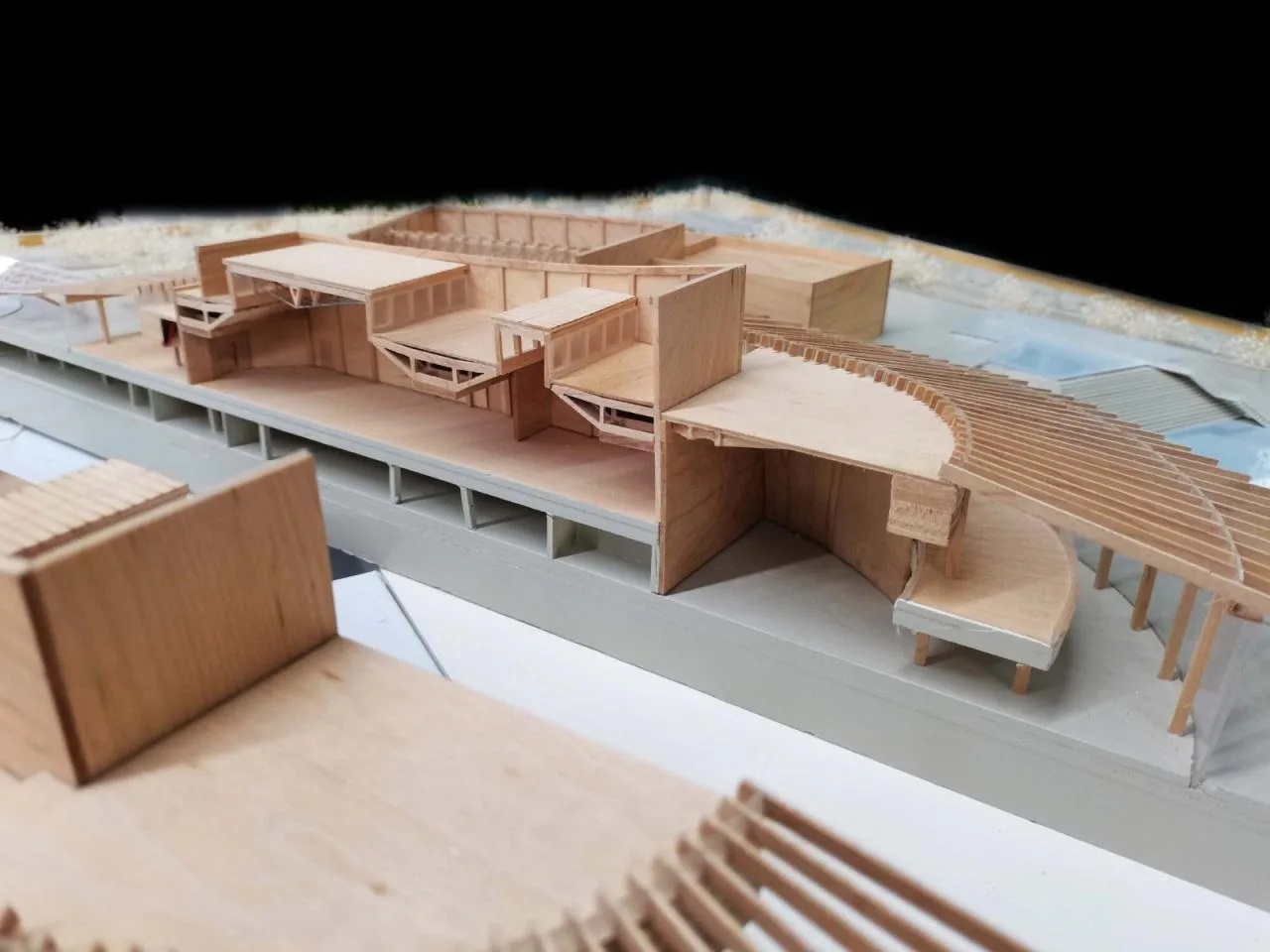
△ Model Diagram
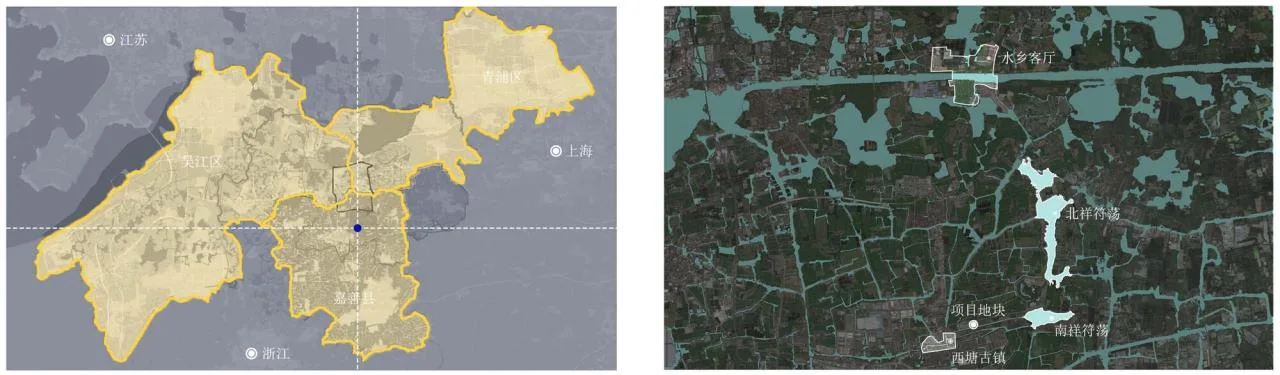
△ Location Analysis
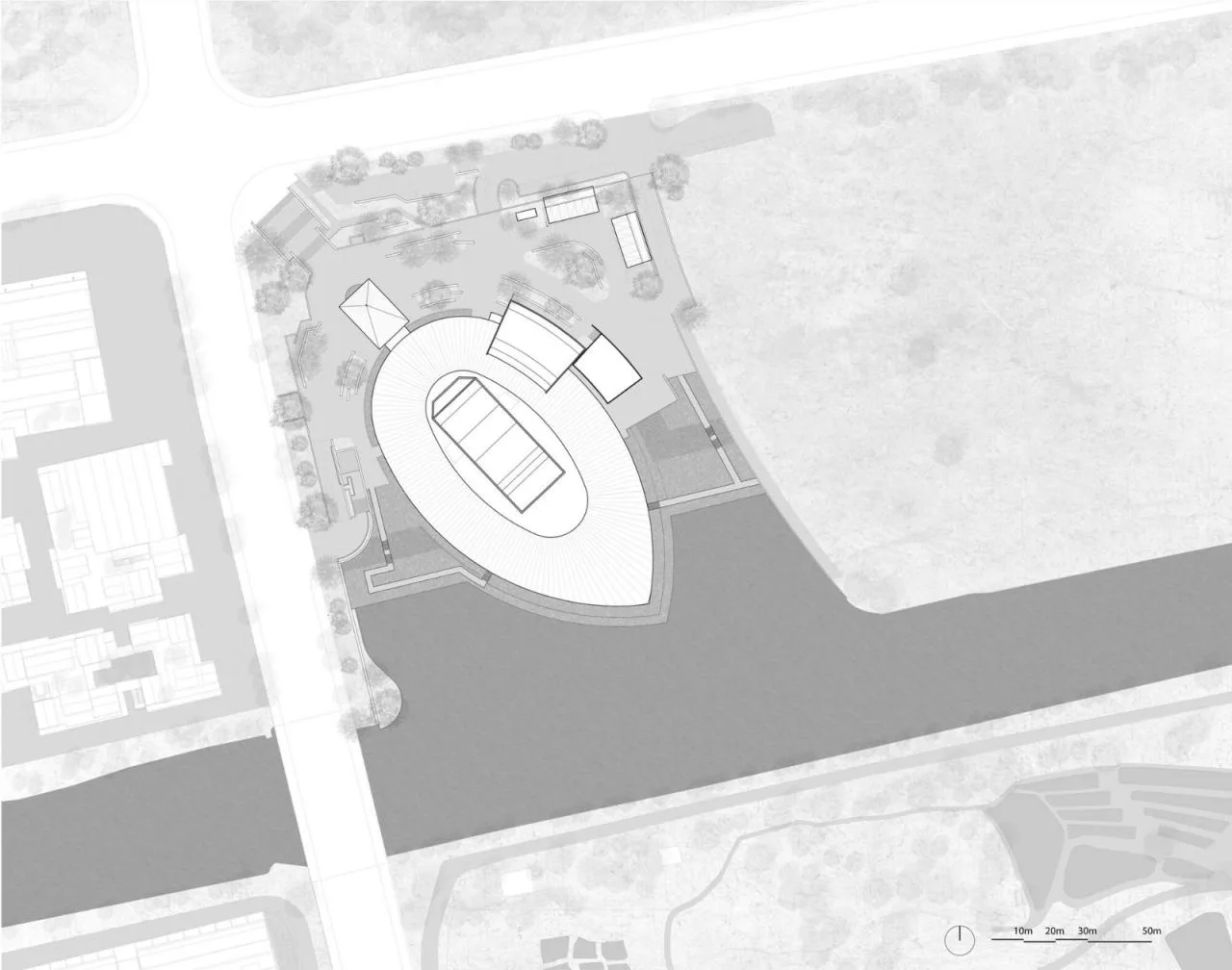
△ General Layout Plan
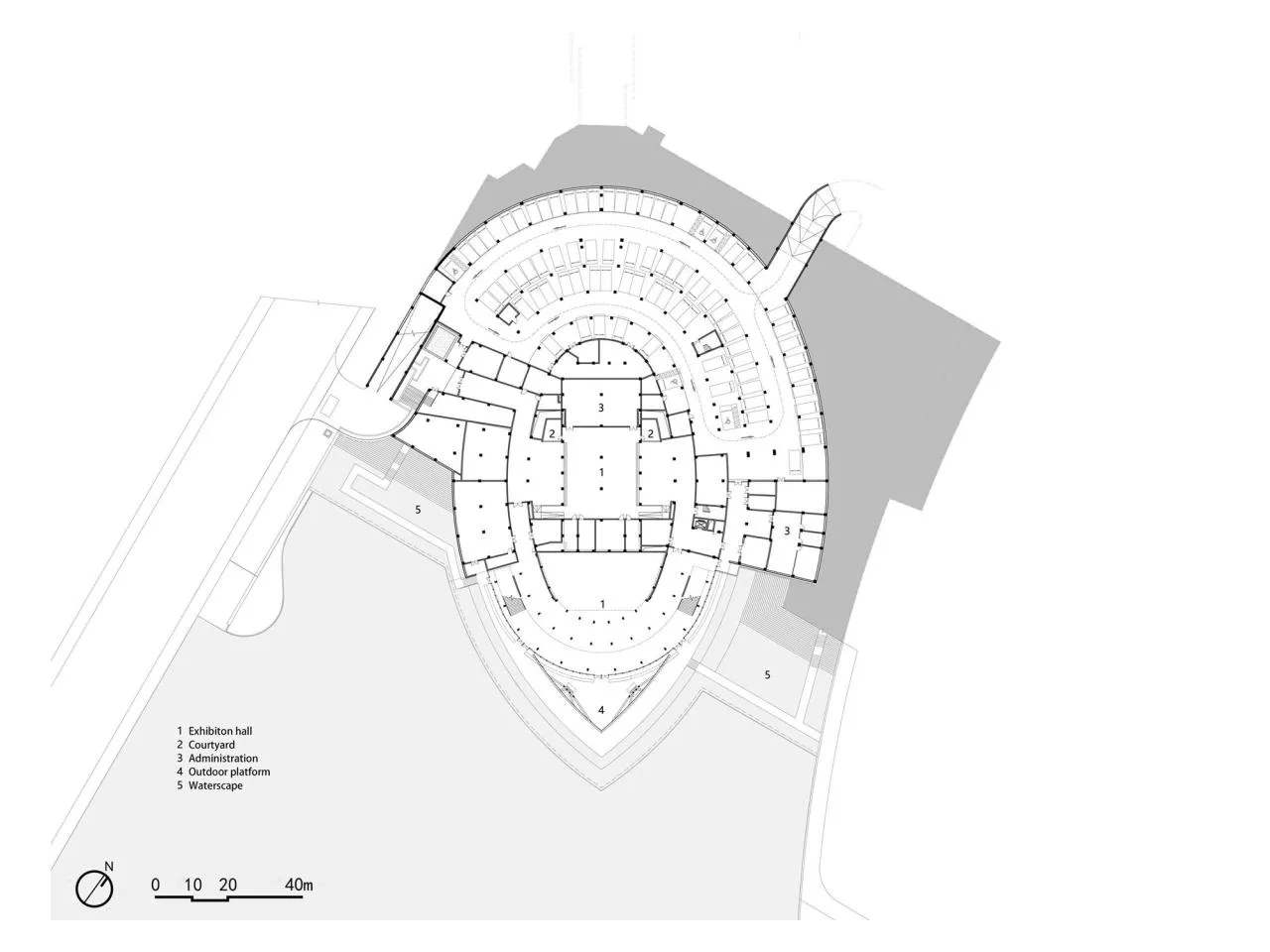
△ First Floor Plan
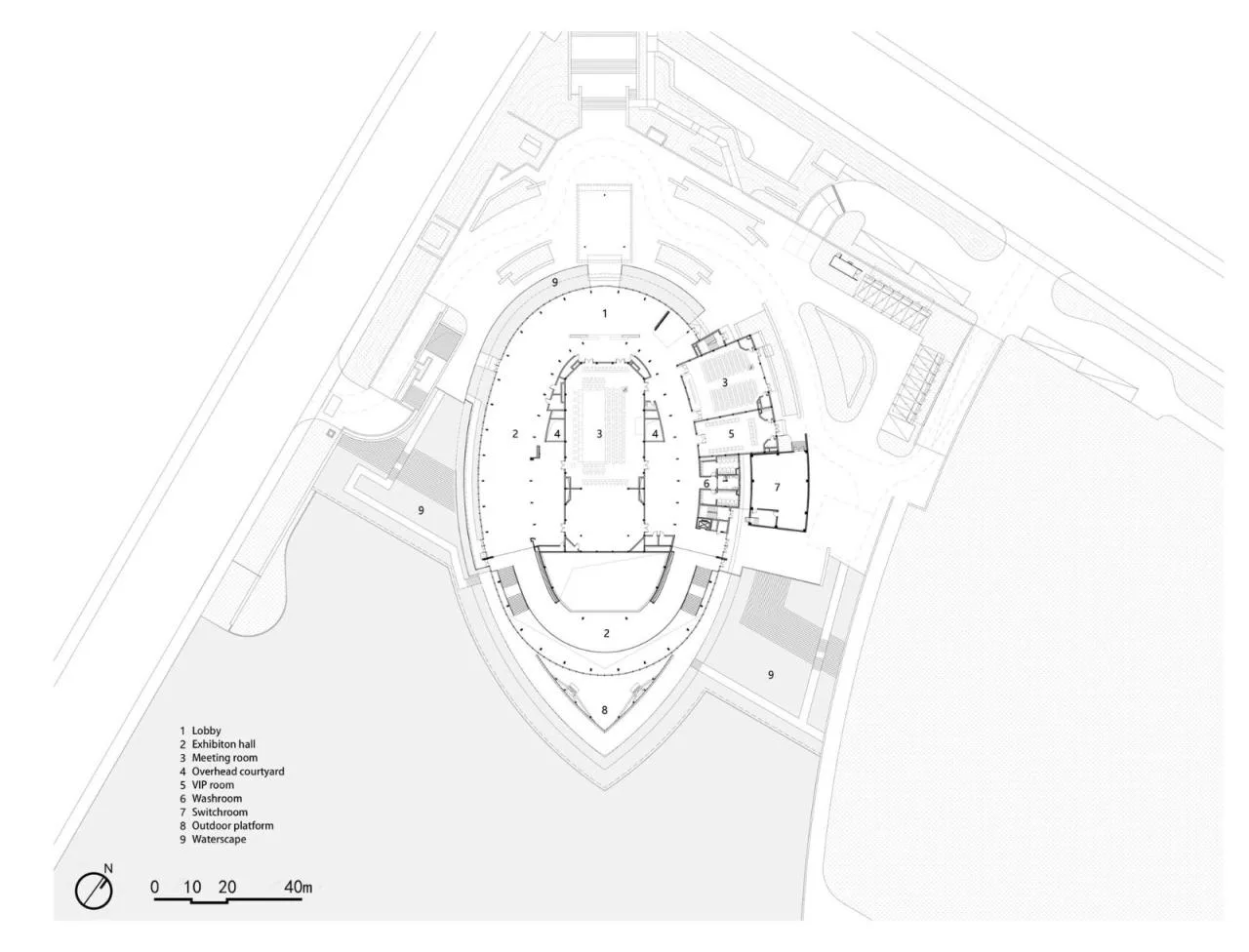
△ Second Floor Plan
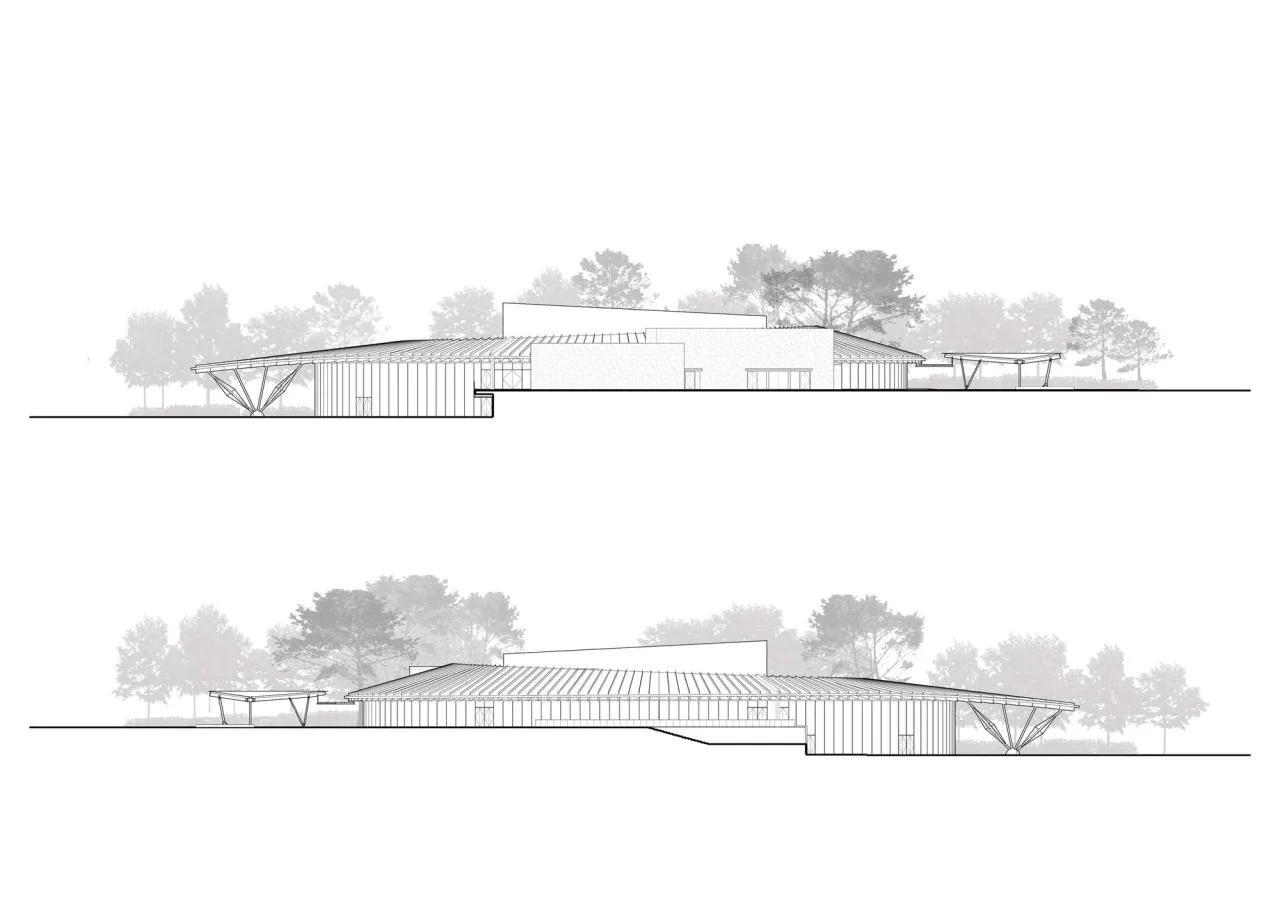
△ Elevation Drawing
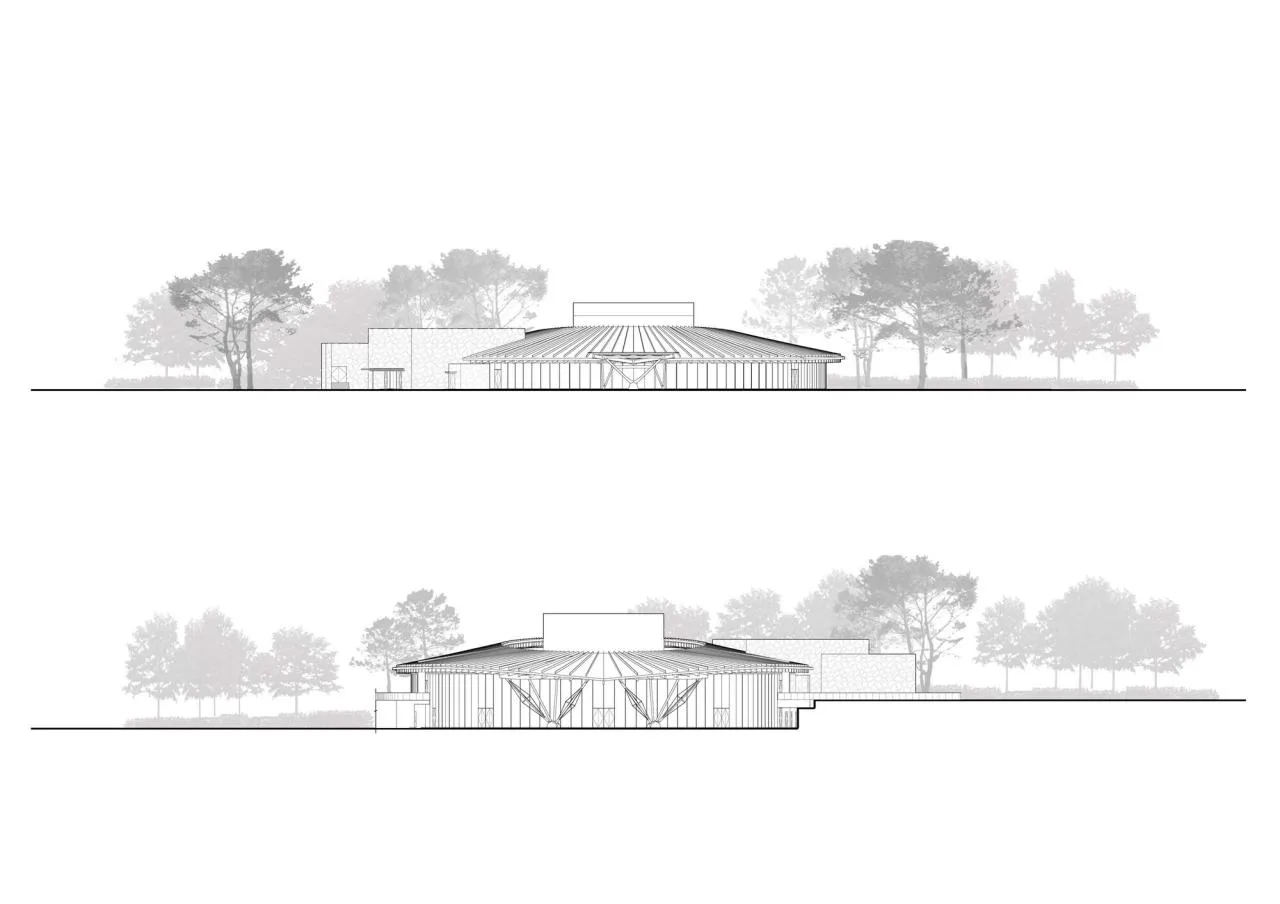
△ Elevation Drawing
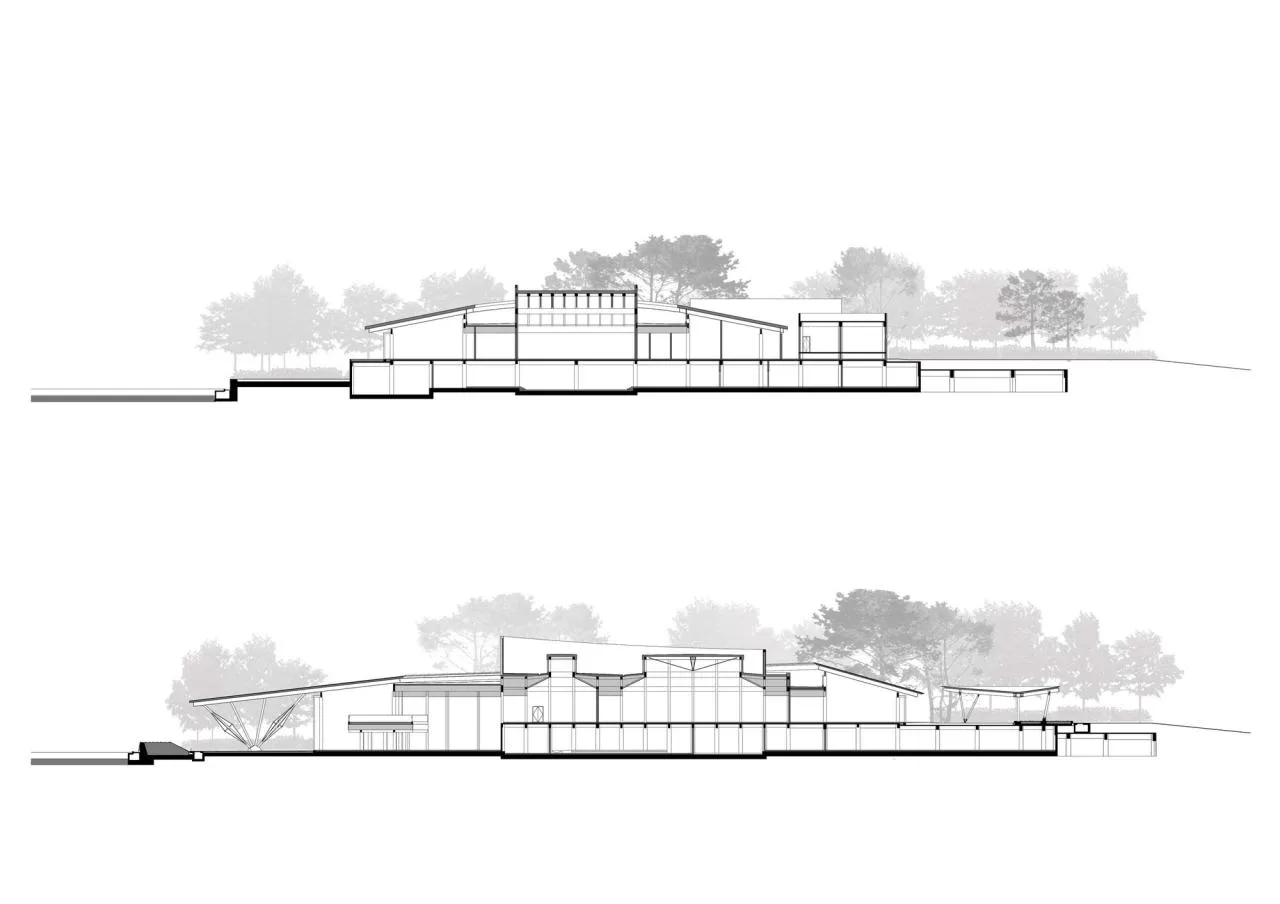
△ Section Diagram
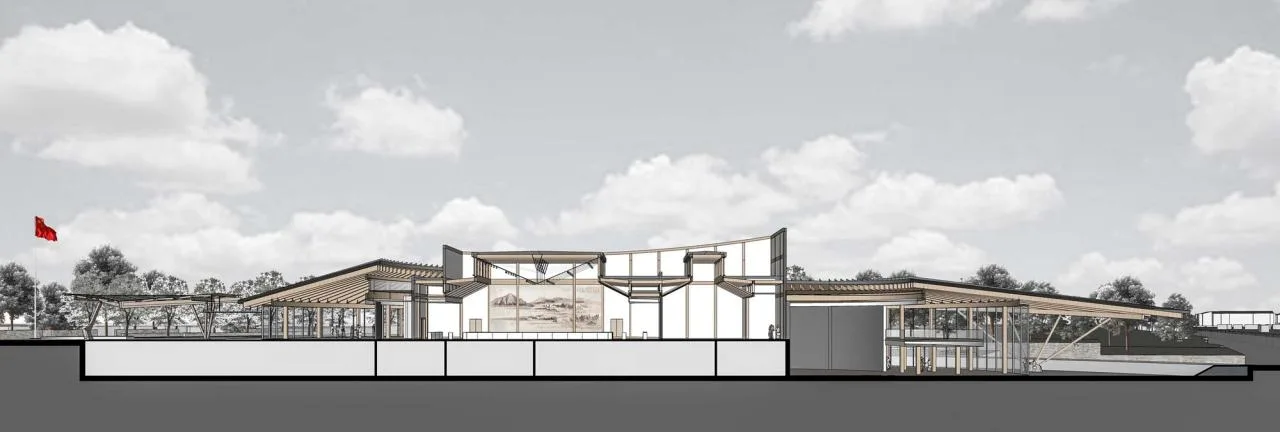
△ Sectional Perspective
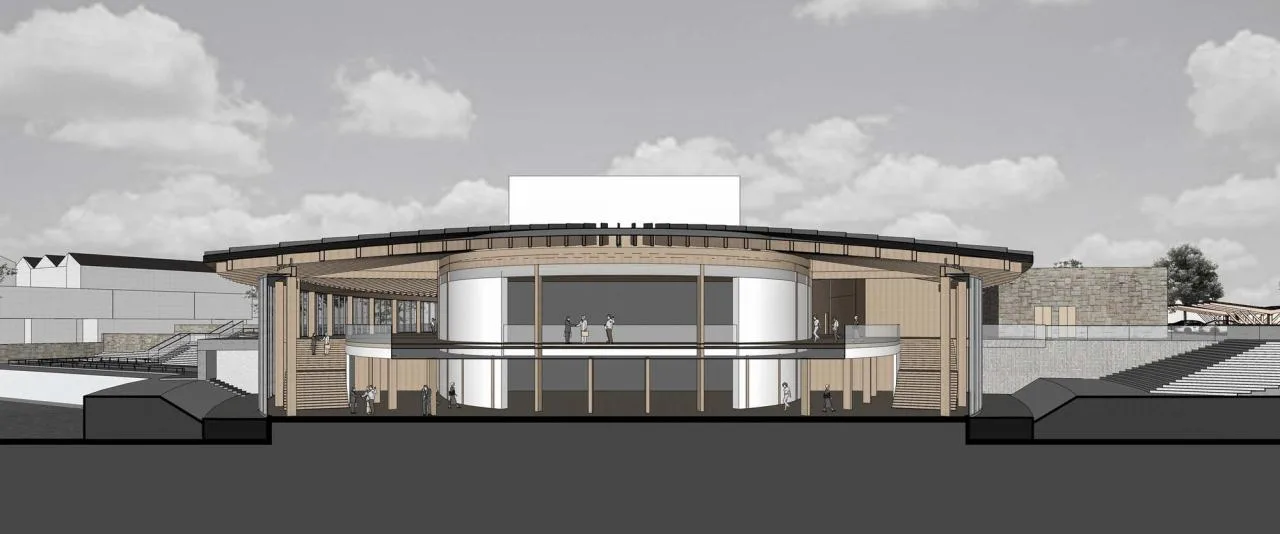
△ Sectional Perspective
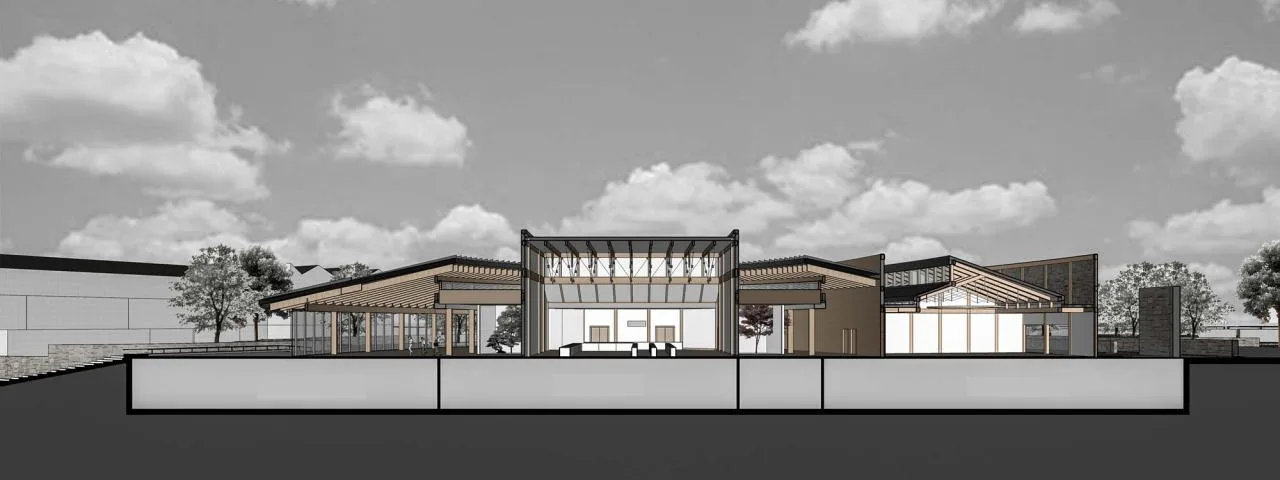
△ Sectional Perspective
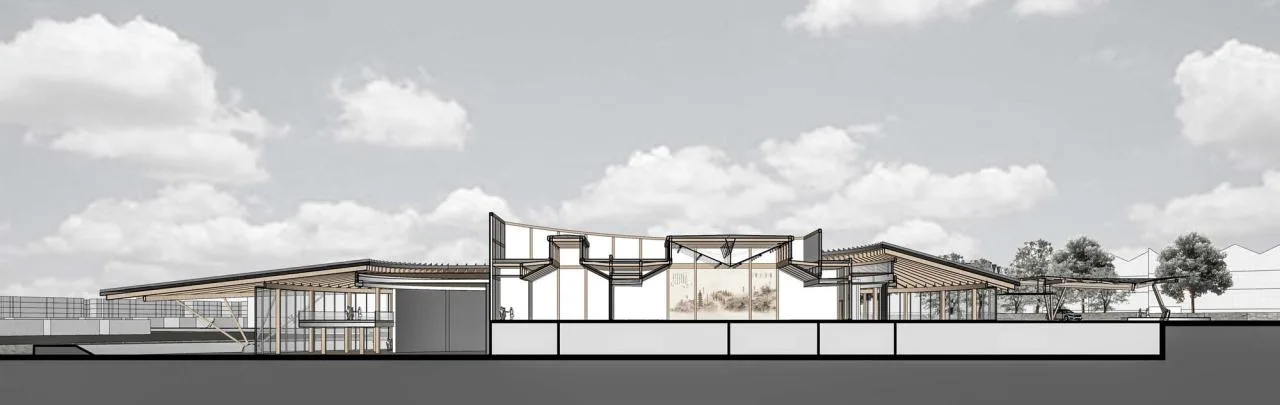
△ Sectional Perspective
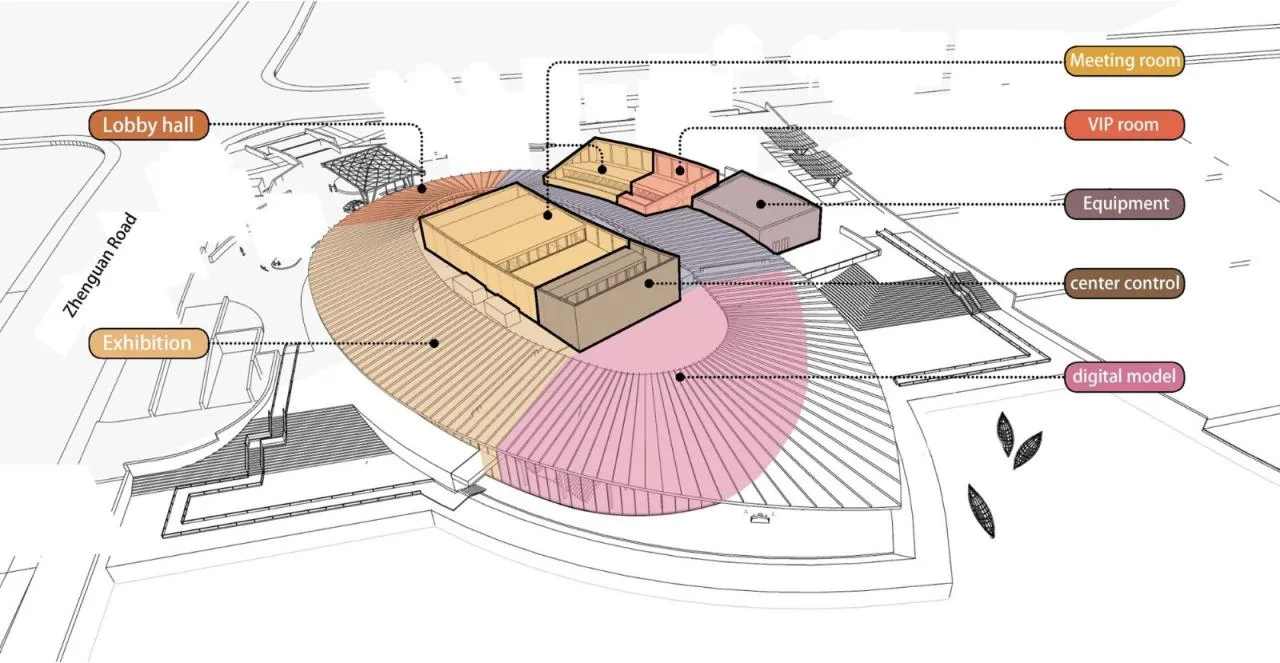
△ Analysis Chart
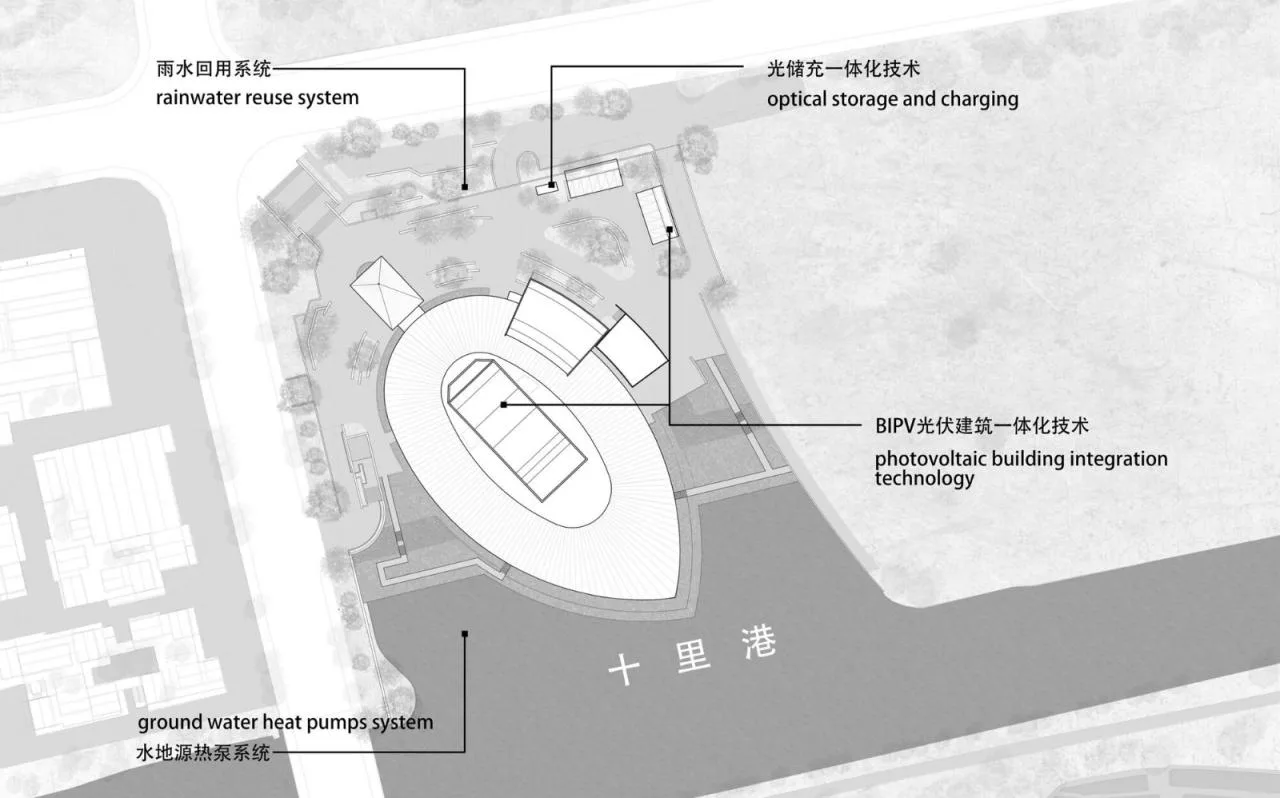
△ Analysis Chart
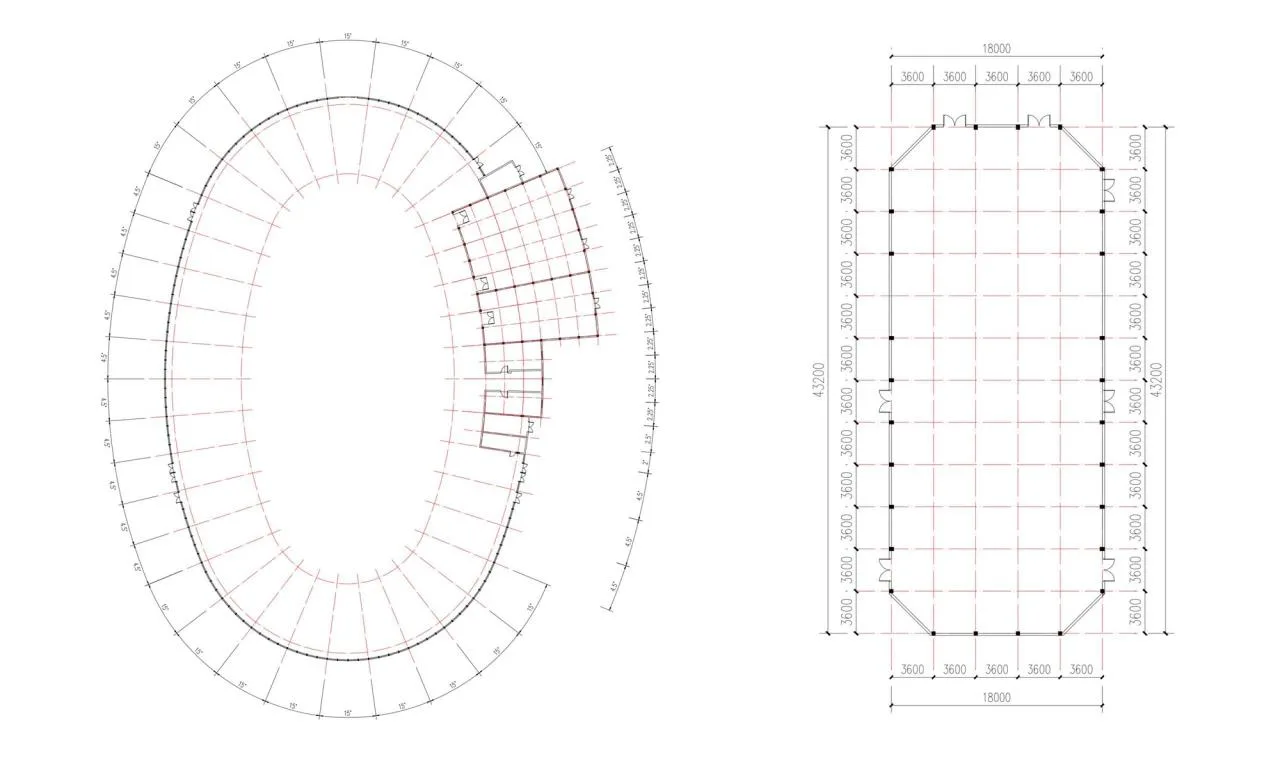
△ Analysis Chart
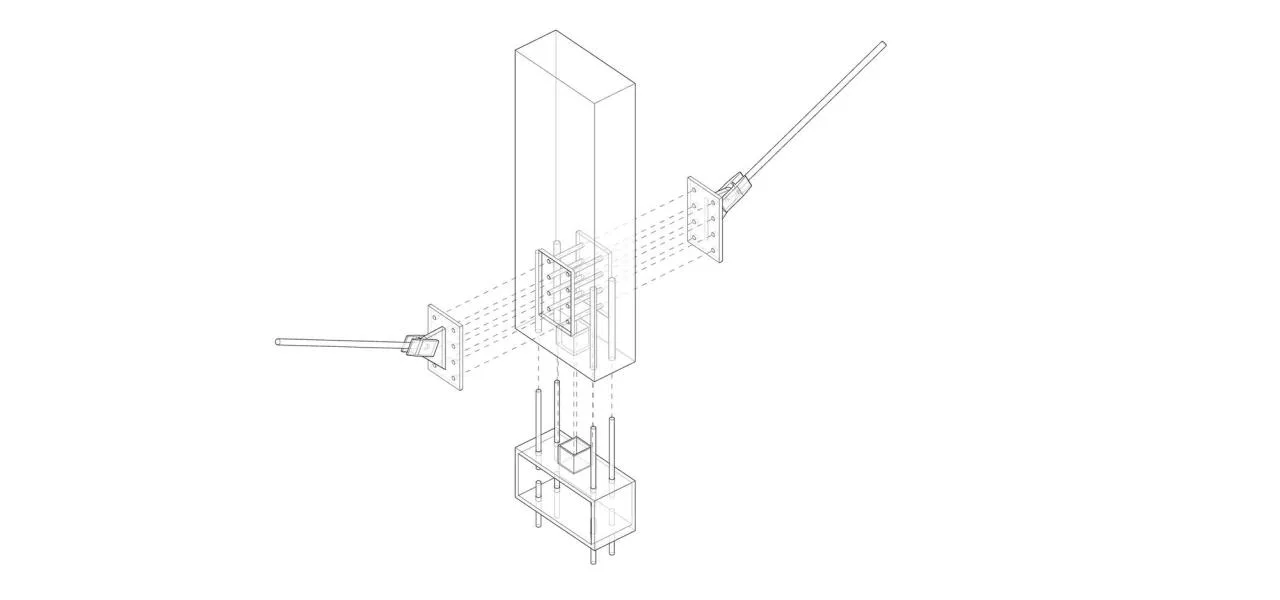
△ Local Structure Diagram
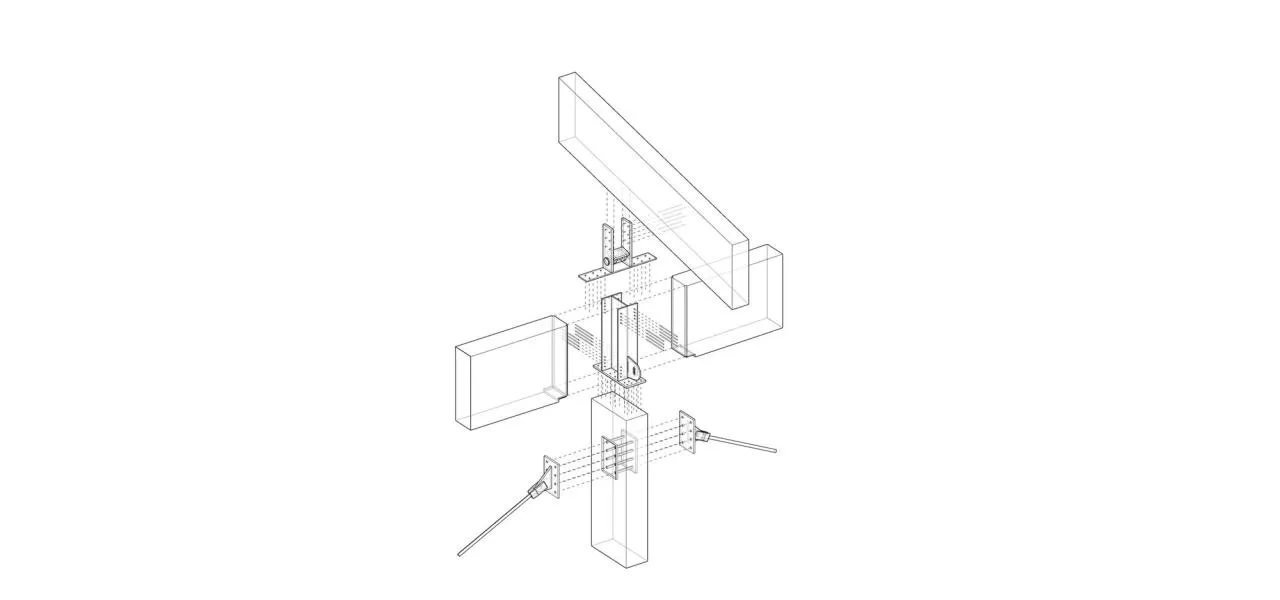
△ Local Structure Diagram
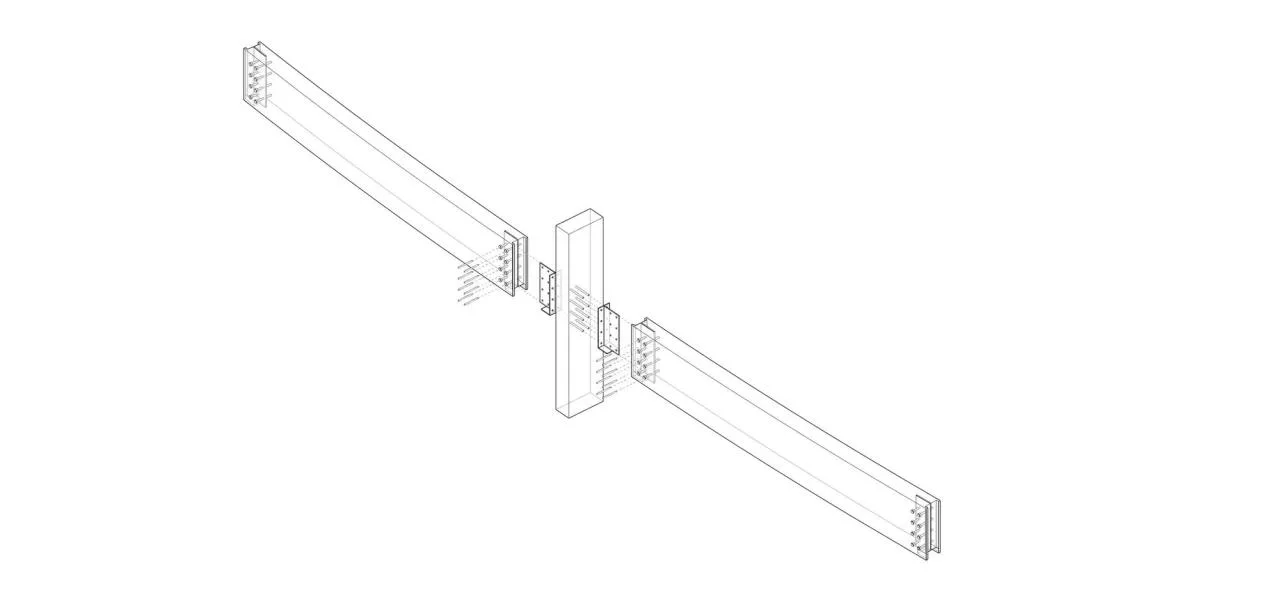
△ Local Structure Diagram
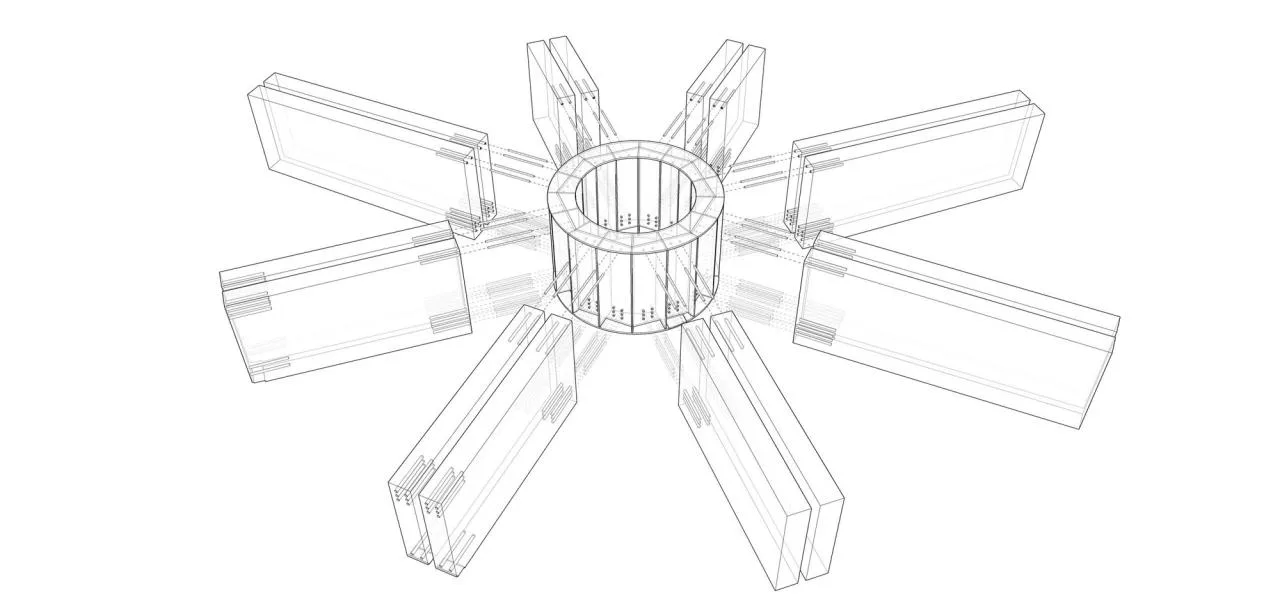
△ Local Structure Diagram
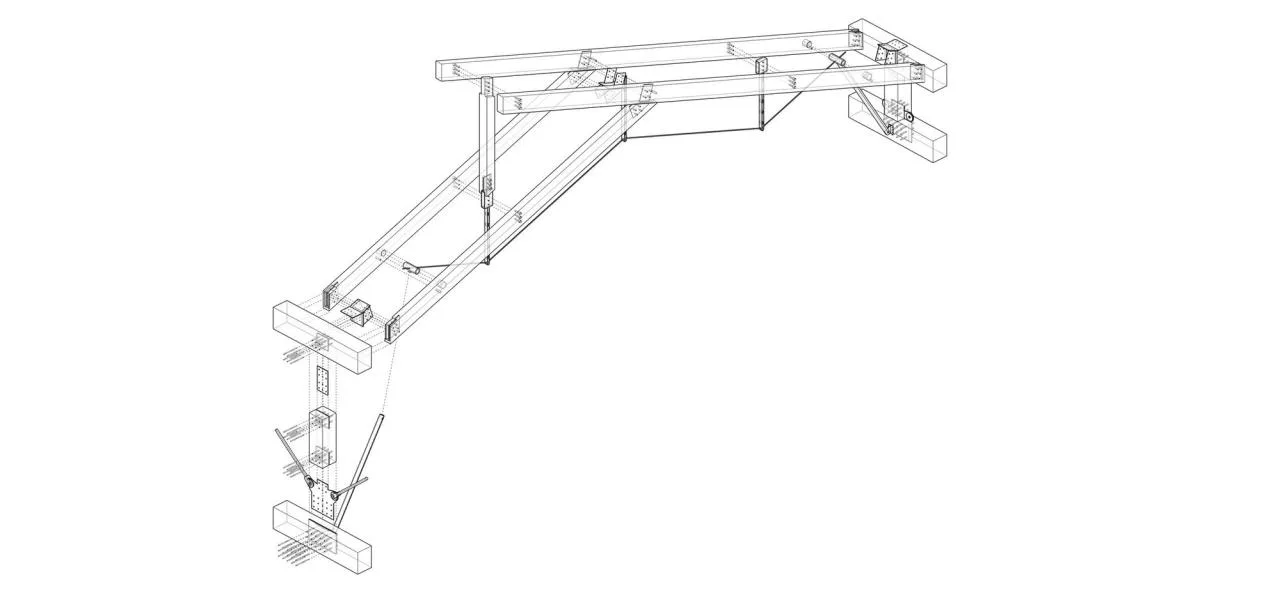
△ Local Structure Diagram
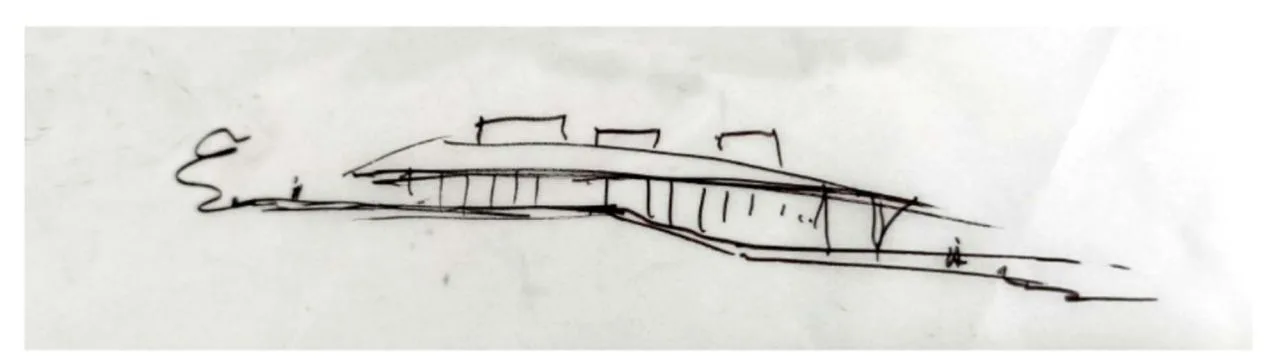
△ Hand-drawn Drawing
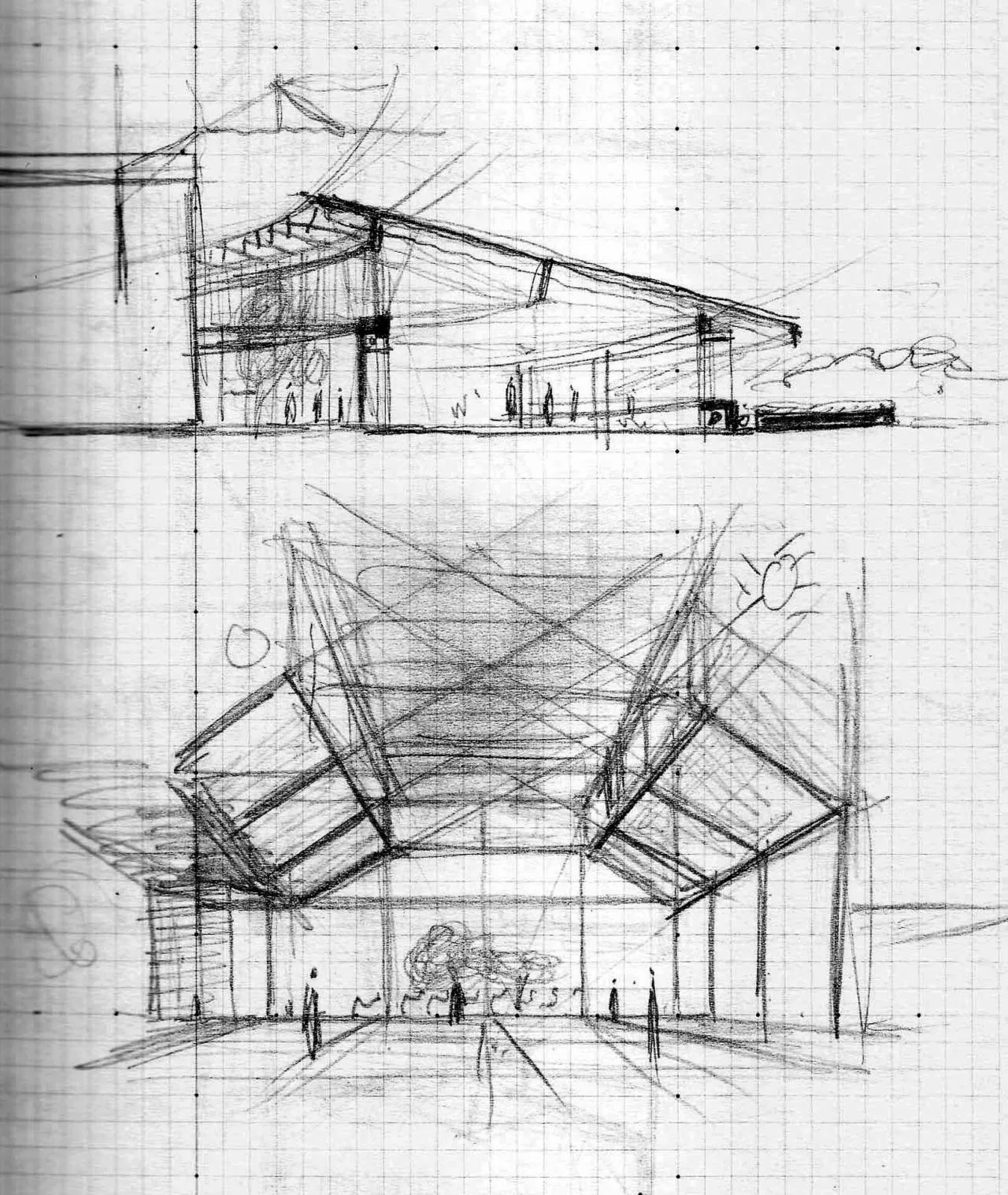
△ Hand-drawn Drawing
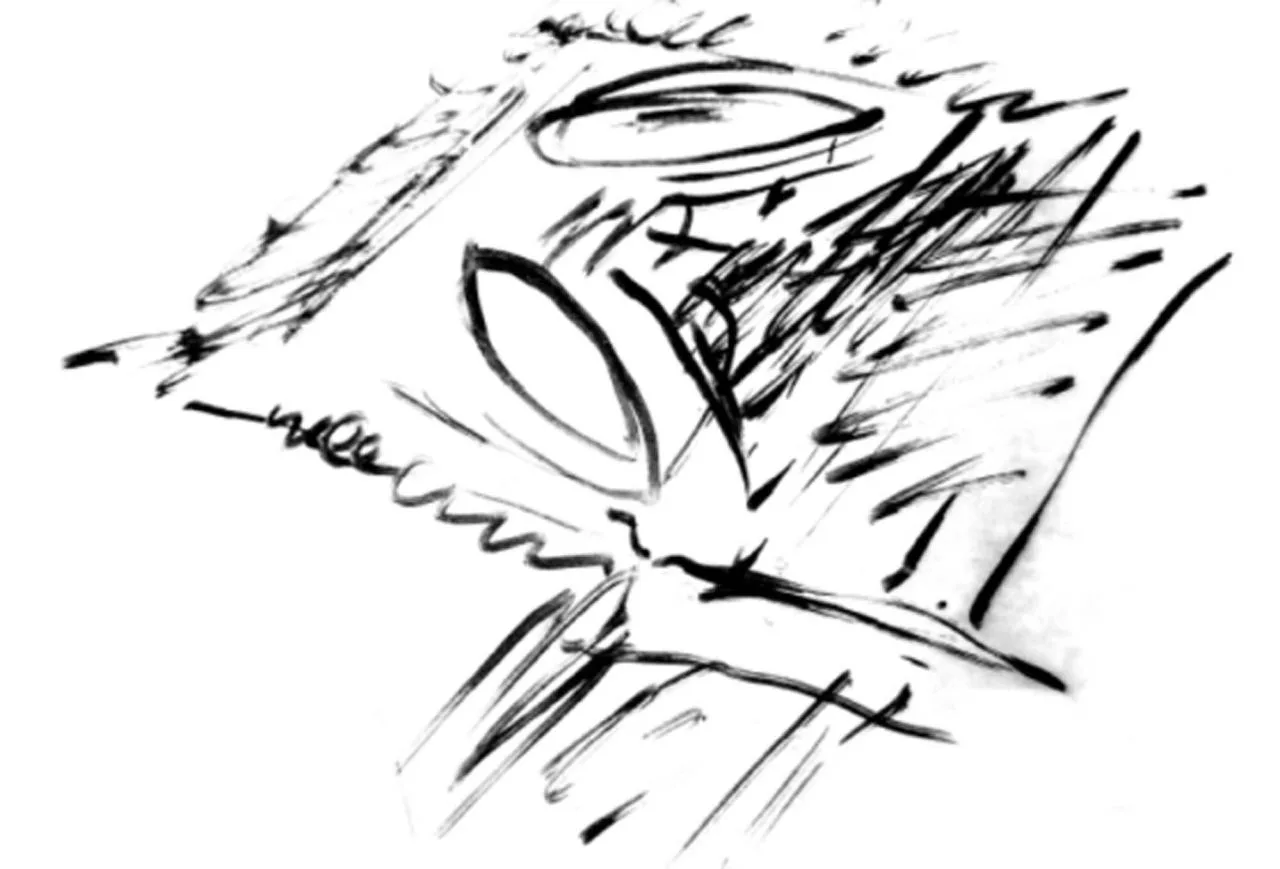
Project Information
Architect: Shanghai Green Building Design Firm
Area: 12,800 m²
Project Year: 2022
Photographers: Zhuang Zihan, A Liang Photography
Manufacturers: Crown Homes, Rothoblaas
Lead Architect: Tang Fenglong
Design Team: Zhu Sha, Sun Liming, Luo Wei, Mu Kunxing, Qin Jize, Zhang Xueshuo, Yang Zhigang, Li Jingyi
Planning and Control: Professor Shen Lei’s Chief Engineer Team
Design Director: Zhu Weiwei
Resident Architect: Shen Yukui
Wood Structure Consultant: Canadian Wood Industry
Indoor Consultant: Li Li
Mechanical and Electrical Consultant: Gao Yongping
Curtain Wall Consultant: Zhou Yonghua
Landscape Consultant: Shanghai Bangyue Engineering Consultant Co., Ltd.
Lighting Consultant: Stacked Hidden Lighting
Intelligent Consultant: Shanghai Baishuling
Exhibition Consultant: Suzhou Shuimu Tsinghua University
Engineering Consulting: Zhejiang Guangchuan Engineering Consulting Co., Ltd.
Identification Consultant: Shanghai Tiangong Identification Co., Ltd.
Green Building Design: China Construction Technology Group Co., Ltd.
Consulting Unit for Entire Process: China Resources (Shenzhen) Co., Ltd.
EPC: Shanghai New Space Engineering Design Management Co., Ltd.
General Contractor: China Construction Eighth Engineering Division Co., Ltd.
Wooden Structure Construction: Suzhou Kunlun Green Building Wooden Structure Technology Co., Ltd.
Client: Jiashan Quanyu Cultural Tourism Development Co., Ltd.
Location: Jiaxing















Must log in before commenting!
Sign Up