
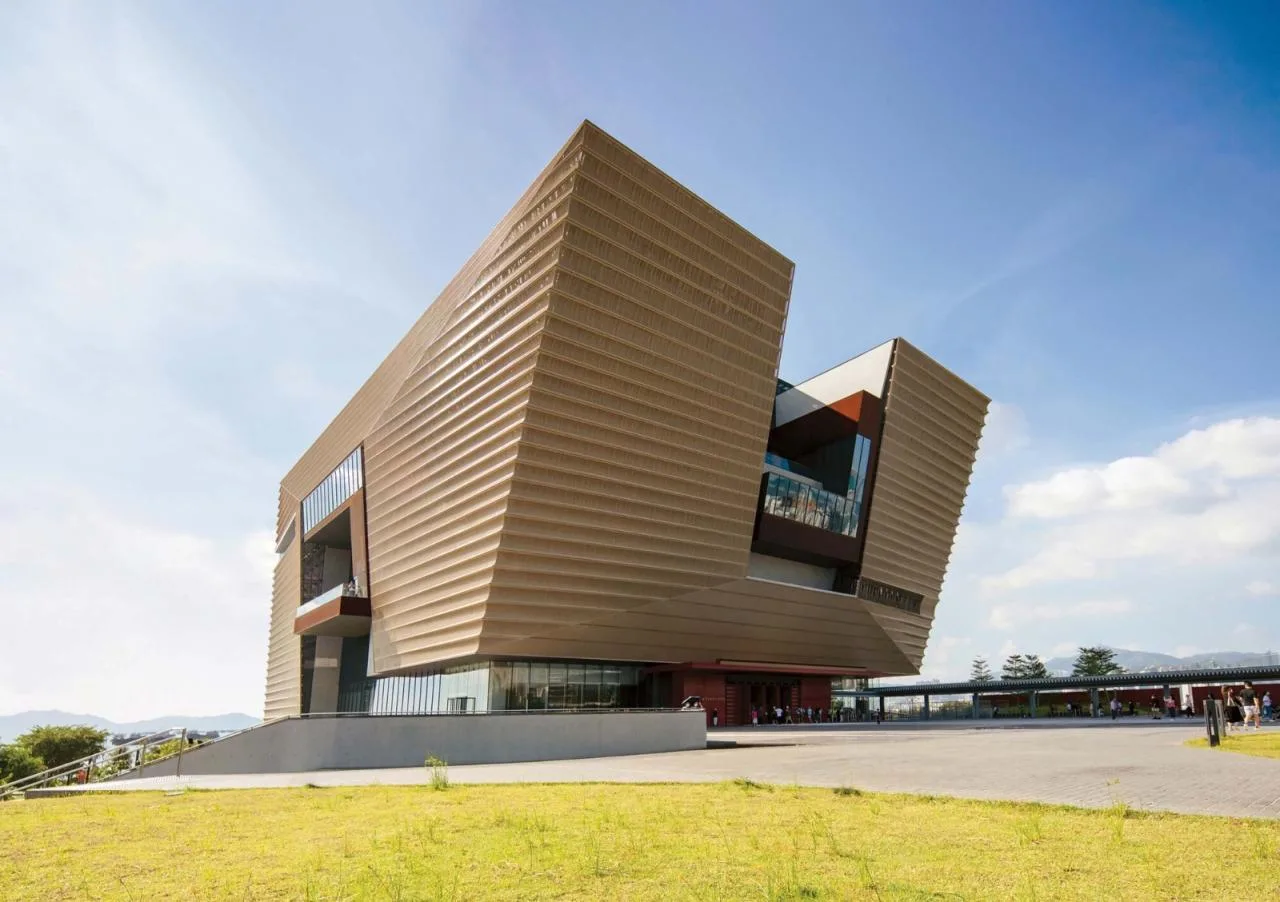
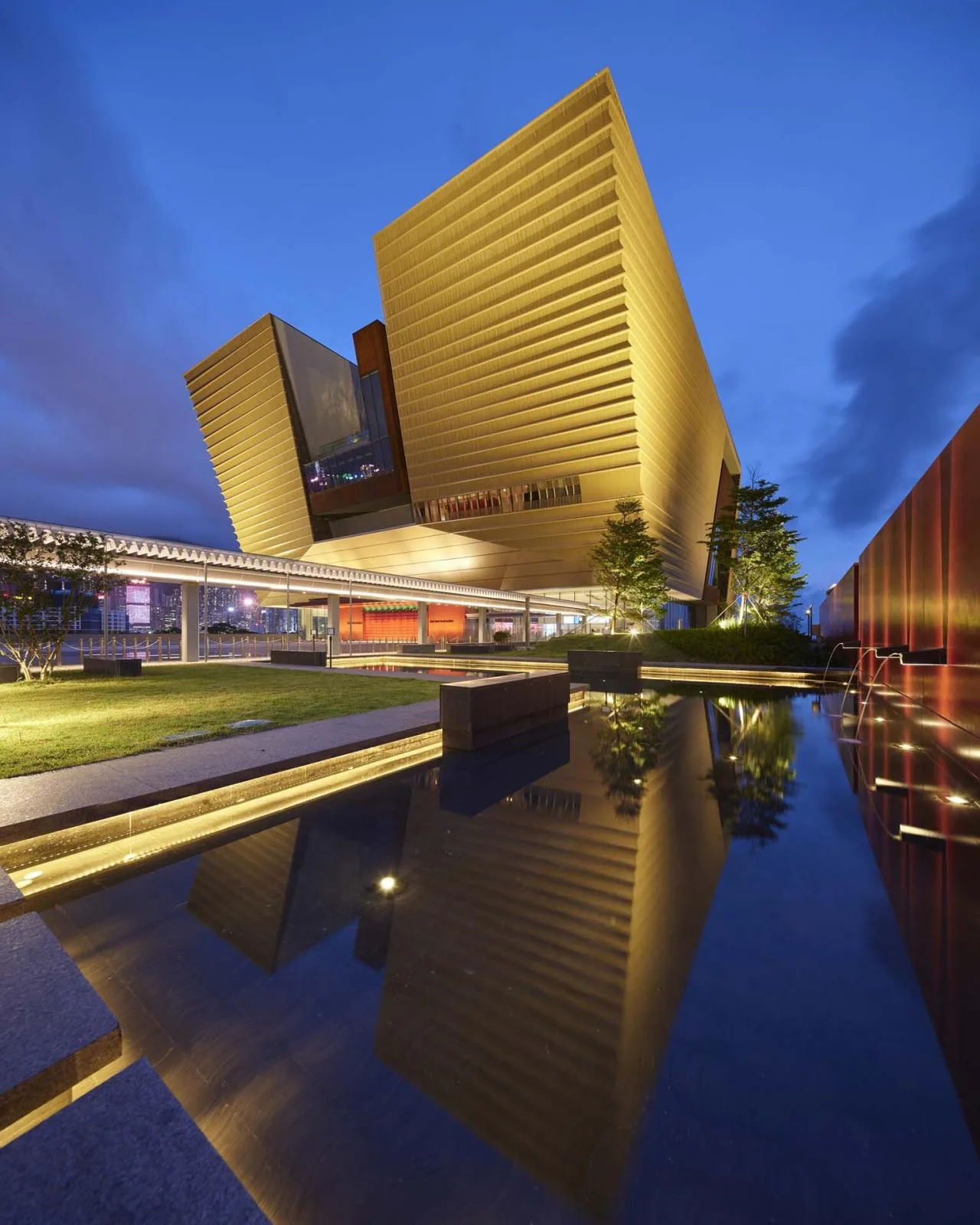
The Palace Museum in Hong Kong, designed by Yan Xunqi Architectural Firm, is the flagship project of the West Kowloon Cultural District and has officially opened its doors. As a new hub for Chinese art and cultural relics, the museum houses over 900 precious artifacts from Beijing’s Palace Museum, including nearly 160 national first-class treasures.
More than just a landmark, the Hong Kong Palace Museum offers residents and visitors a vibrant cultural experience. It regularly hosts interactive exhibitions that explore Chinese cultural relics from fresh perspectives, aiming to deepen the younger generation’s understanding of Chinese history and culture.
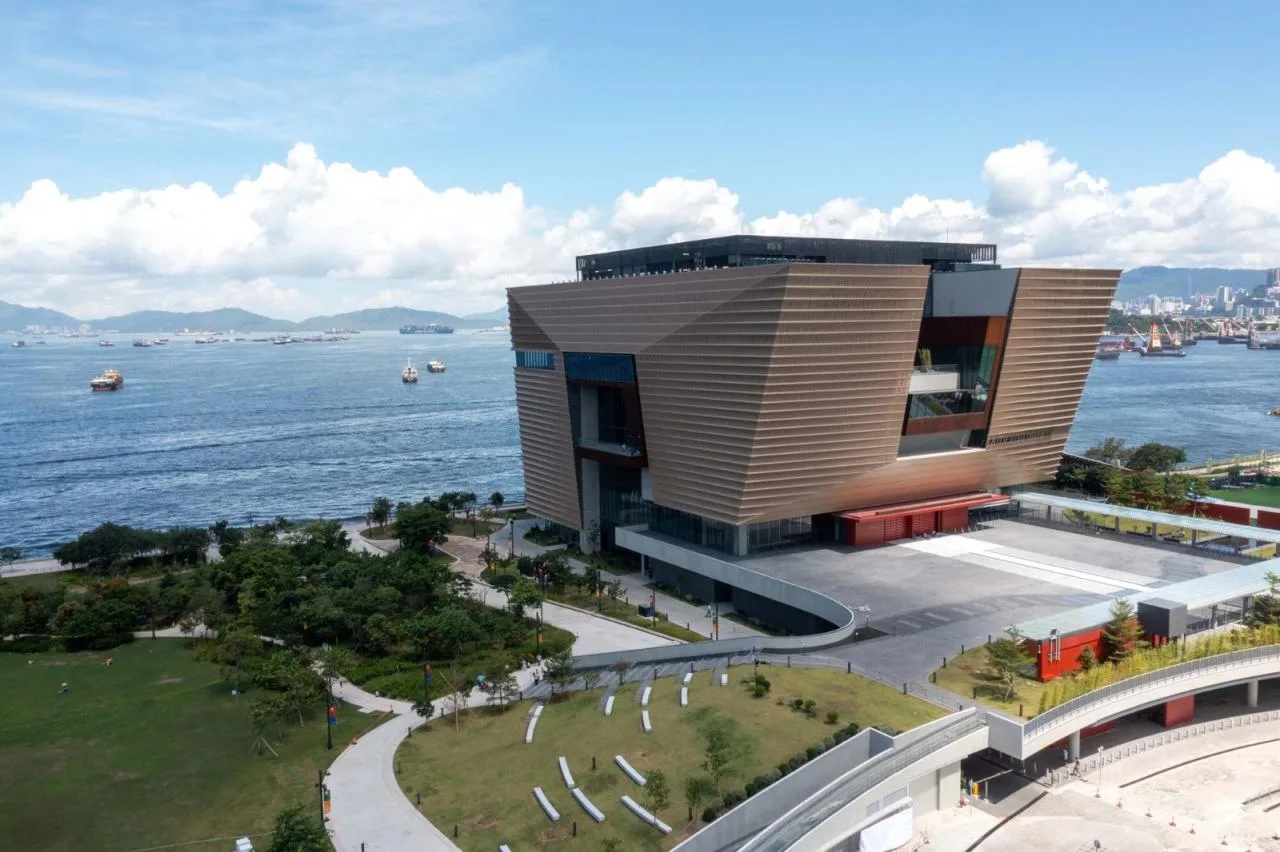
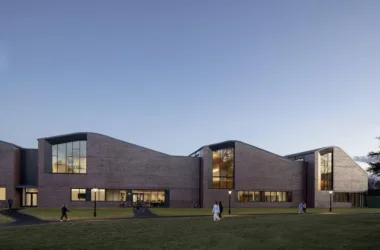
Occupying a total area of 30,000 square meters, the museum is situated at the western edge of the West Kowloon Cultural District by the waterfront, adjacent to an art park, and offers sweeping views of Victoria Harbour. The design embraces the concept of presenting traditional Chinese culture to modern audiences through a contemporary architectural interpretation.
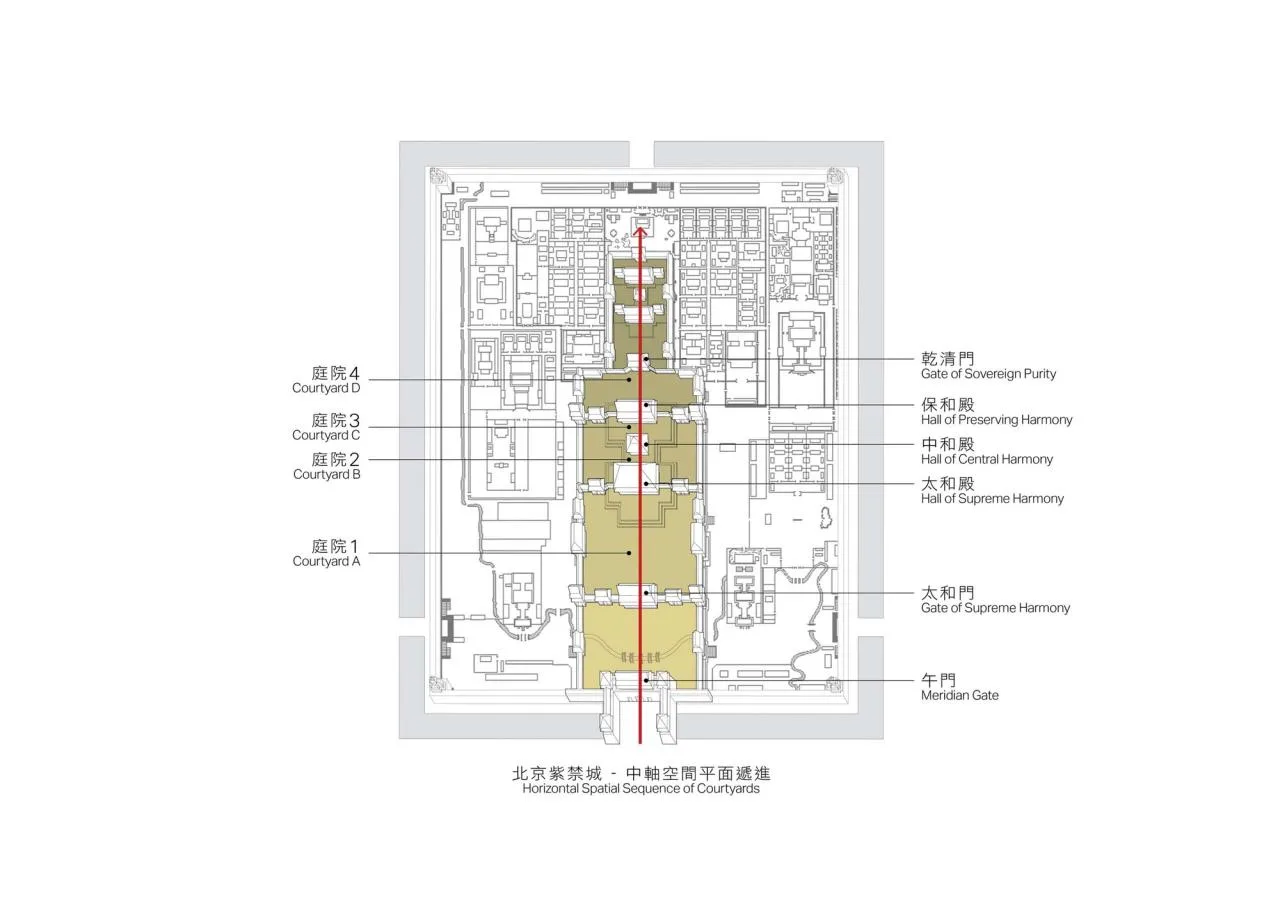
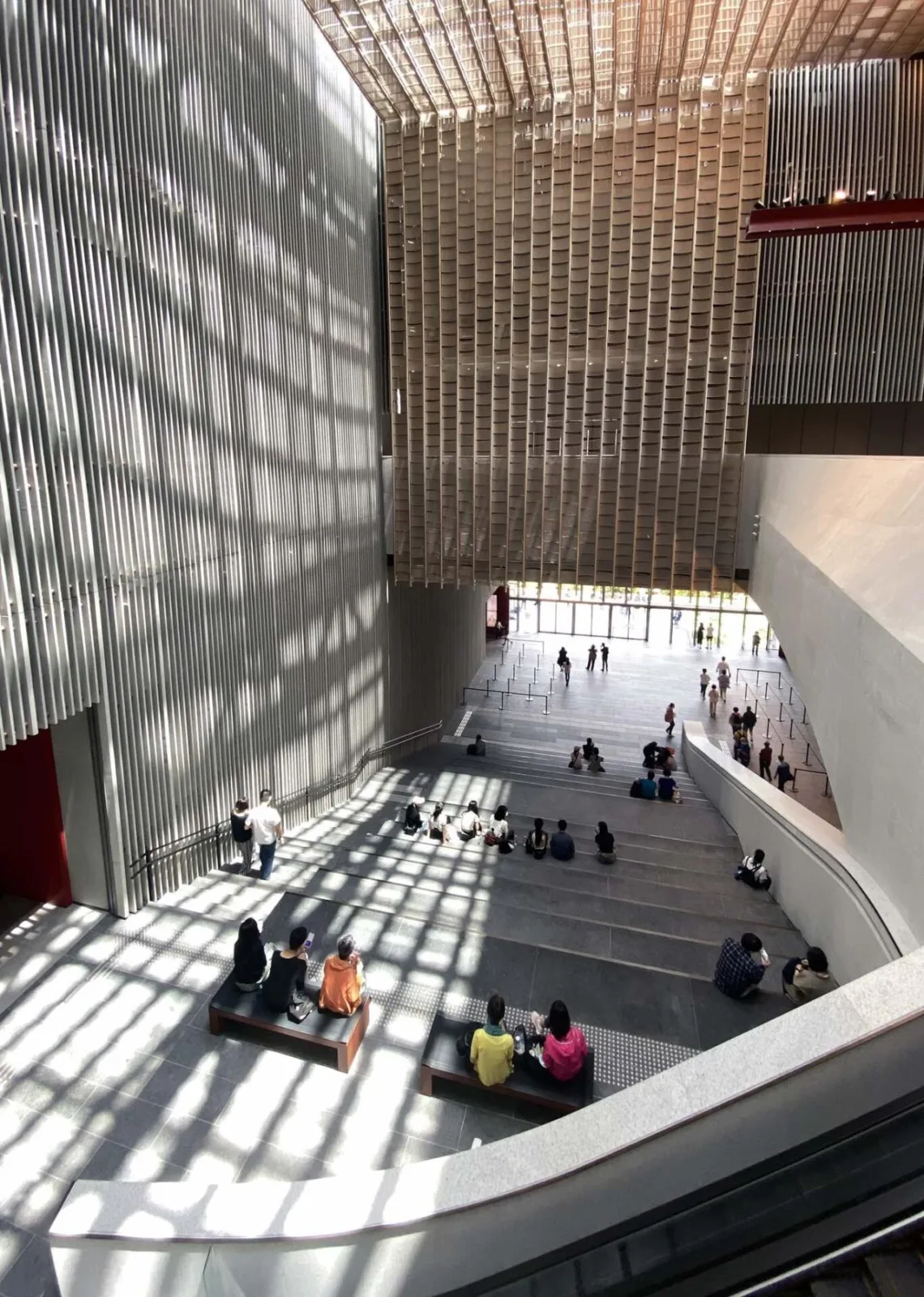
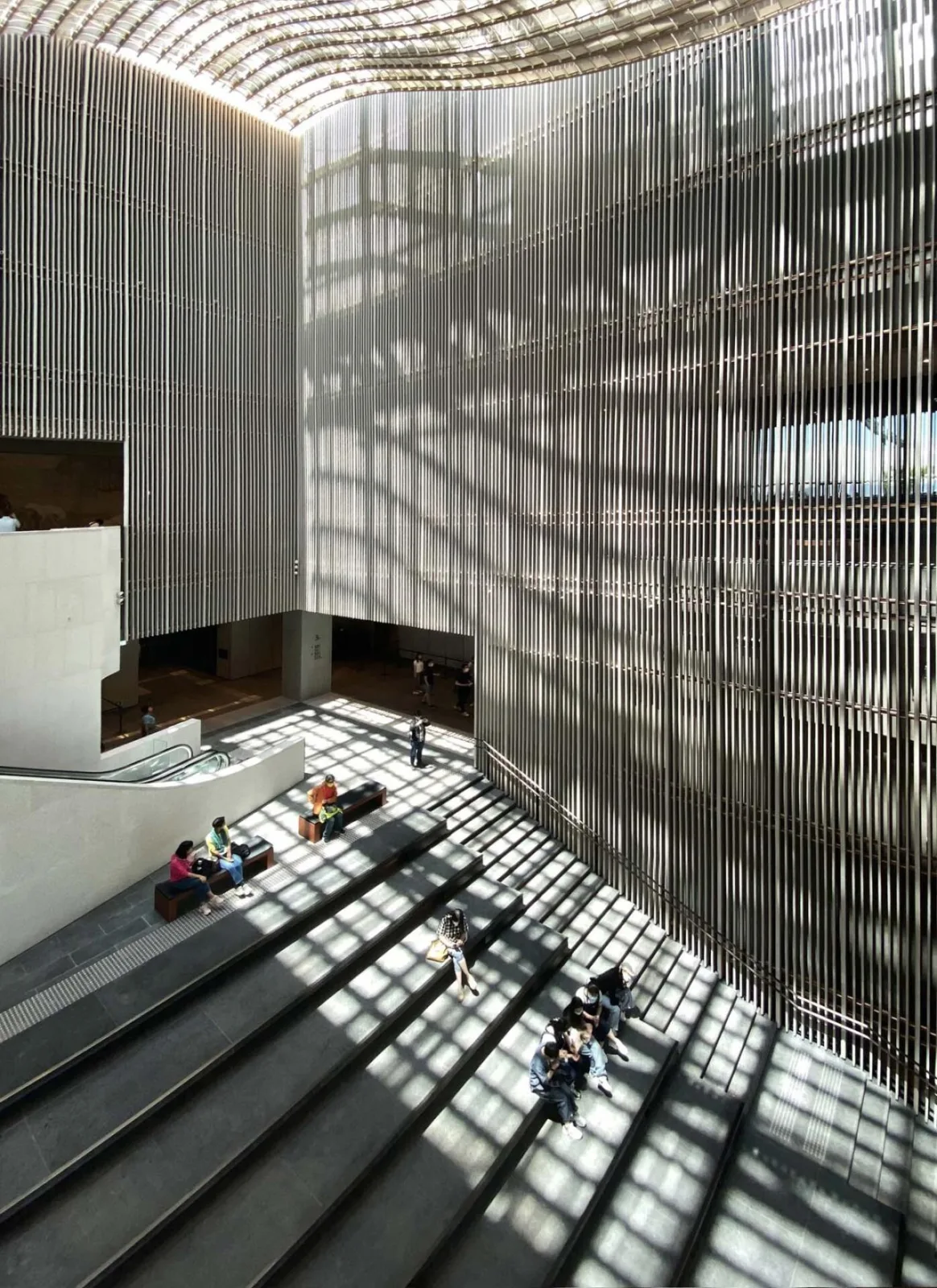
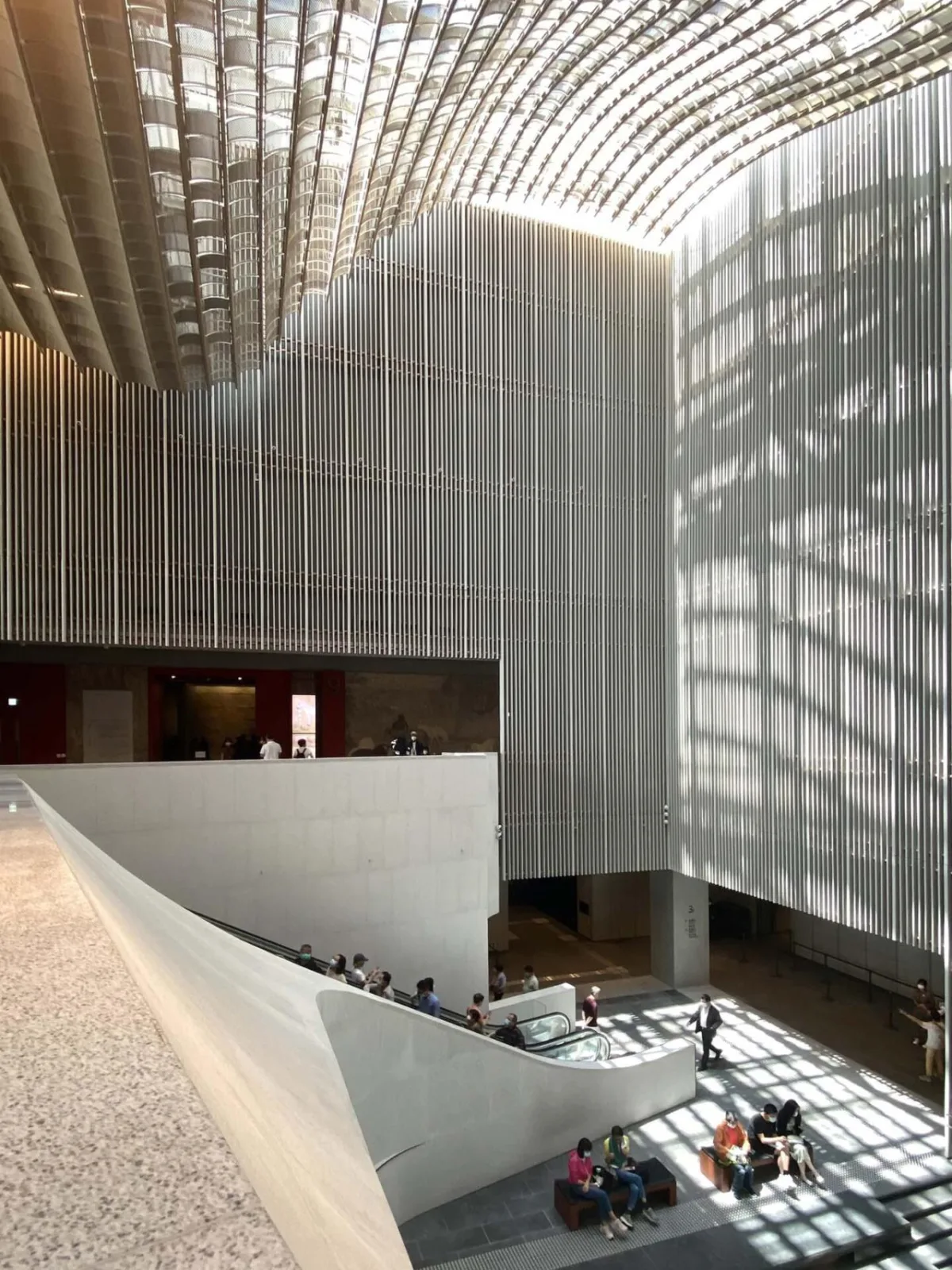
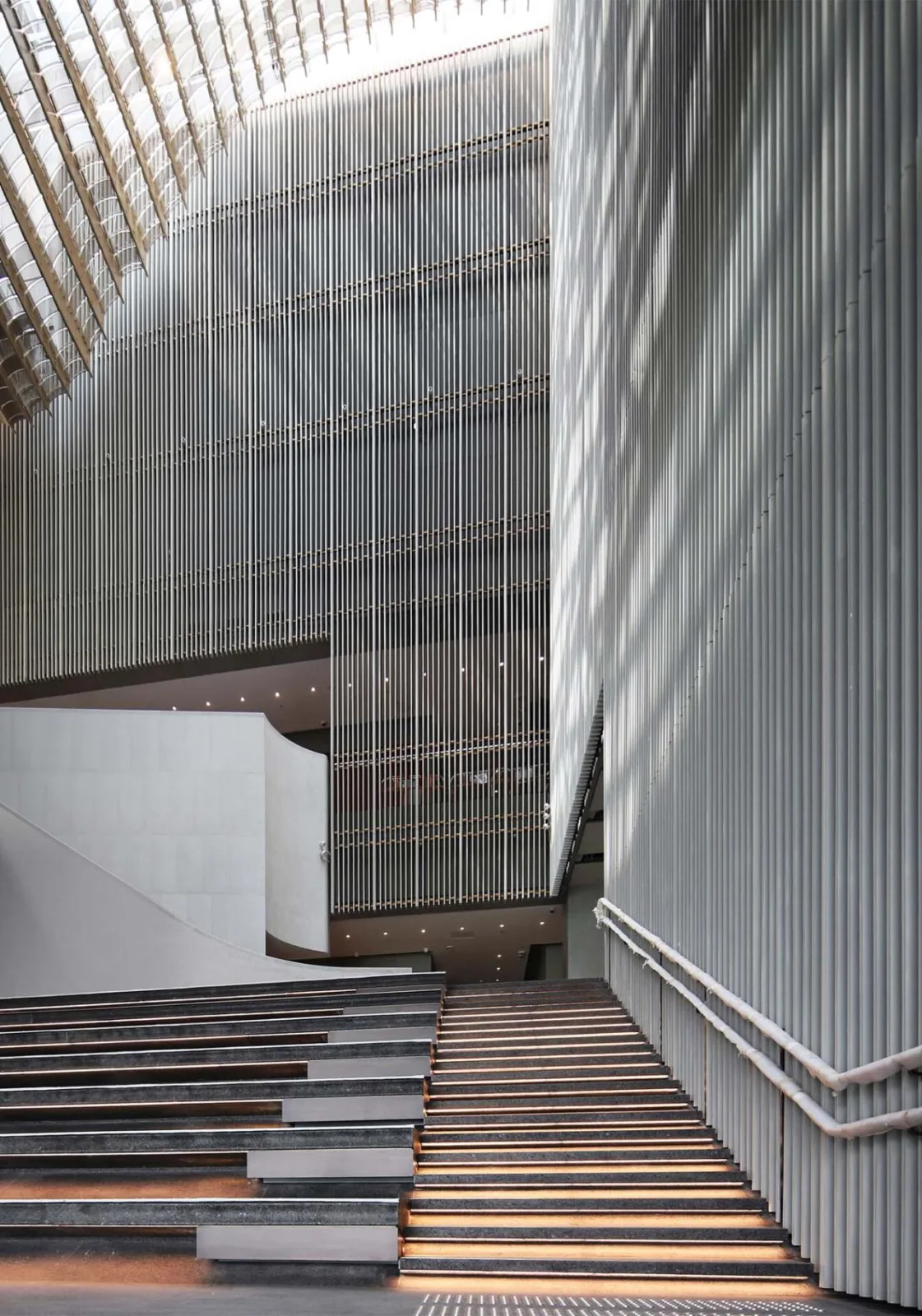
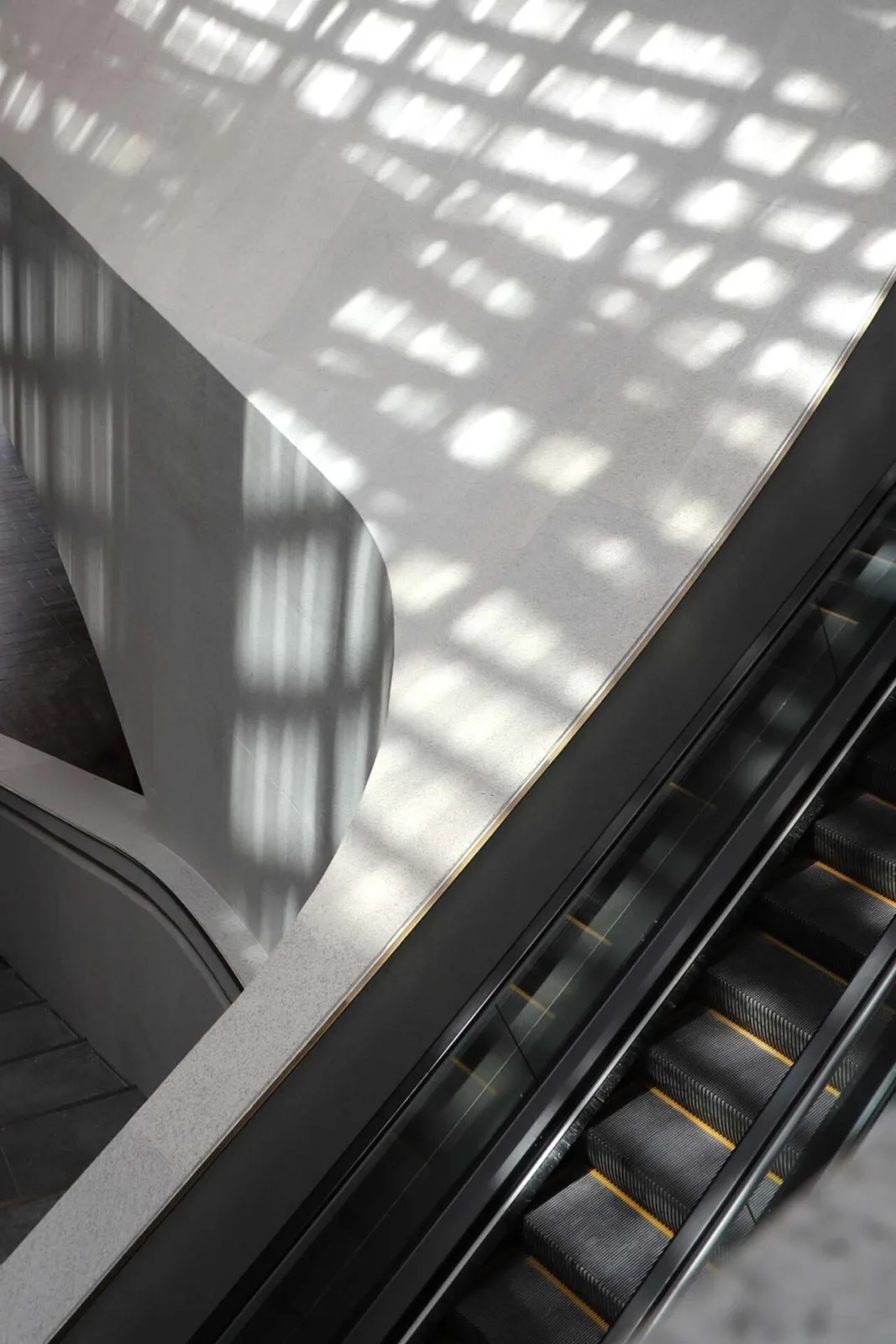
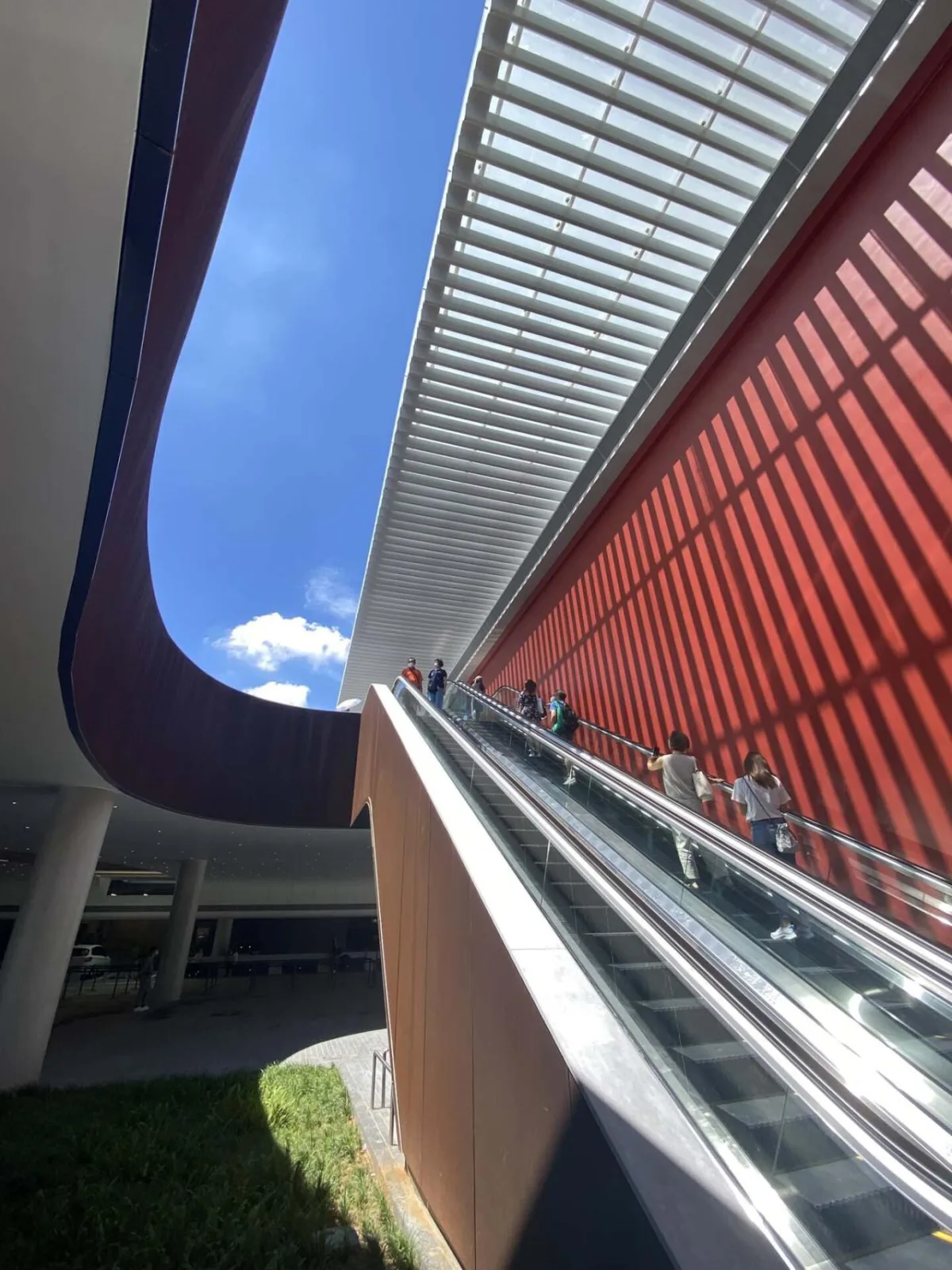
Inspired by the Forbidden City’s courtyard and hall layout, which extends horizontally along a central axis, the museum features three stacked atrium spaces that guide visitors through multiple floors. This vertical progression echoes Hong Kong’s dense urban environment and allows for open green spaces on the ground floor, maximizing the preservation of natural landscape.
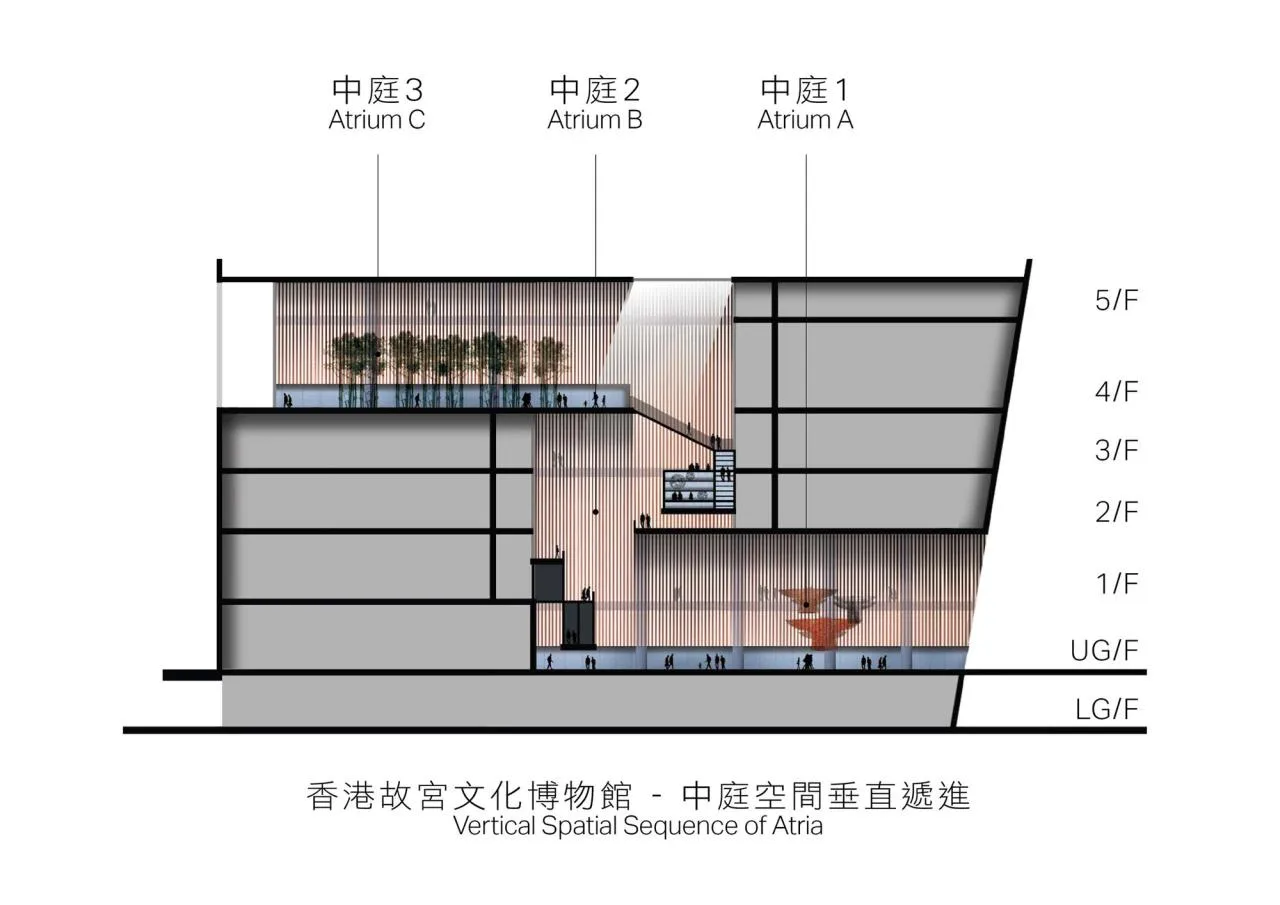
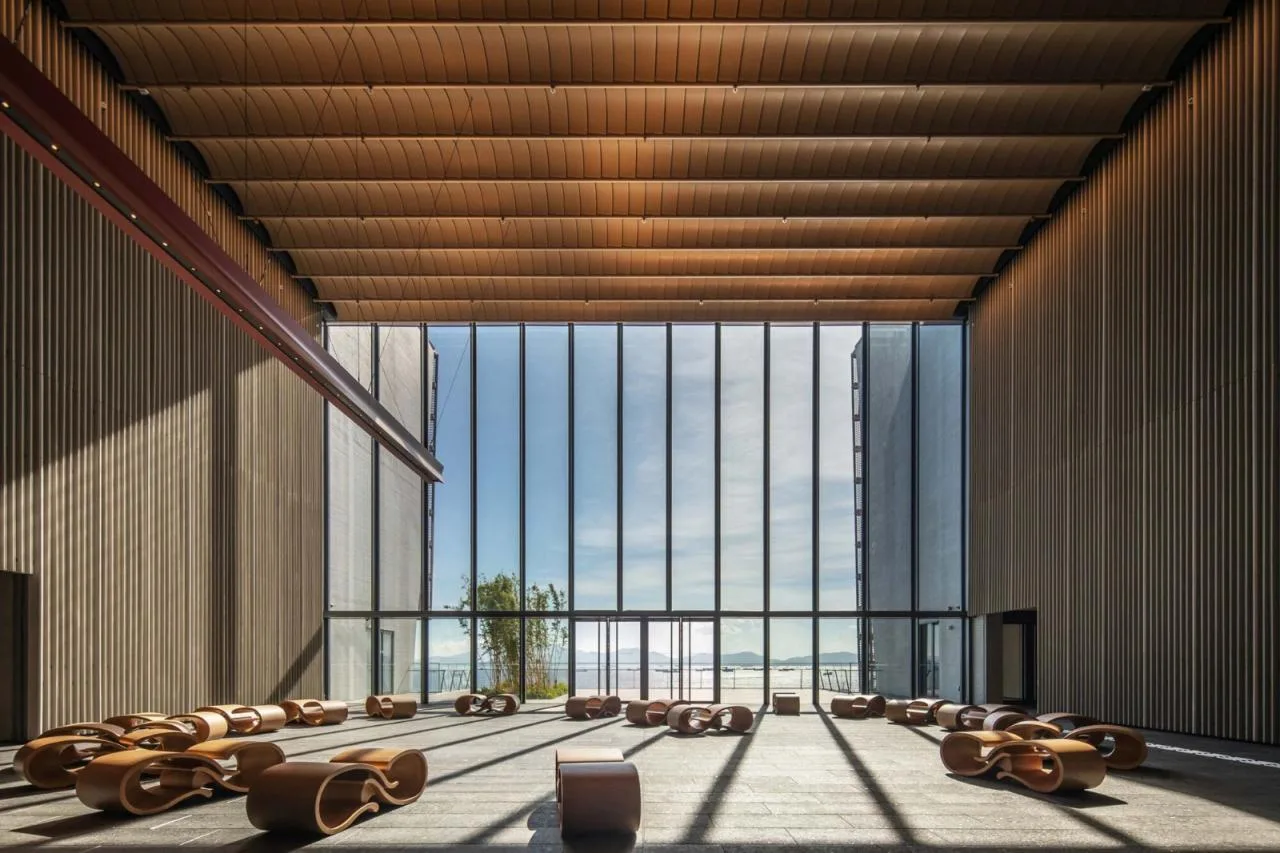
The museum’s three courtyards face different directions, offering panoramic views of the city. The entrance courtyard looks east towards the opera center at the district’s eastern end. The south-facing atrium opens onto an outdoor observation deck with expansive sea views and the iconic Hong Kong skyline—making it a popular attraction. On the top floor, the west-facing West Central Court overlooks Lantau Island and the South China Sea, providing a broad vista.
These courtyards serve as social hubs within the museum, where visitors can discuss art while enjoying the scenery and newly discovered relics. They also offer a unique perspective on Hong Kong’s urban landscape and future development, including plans for Lantau Island.
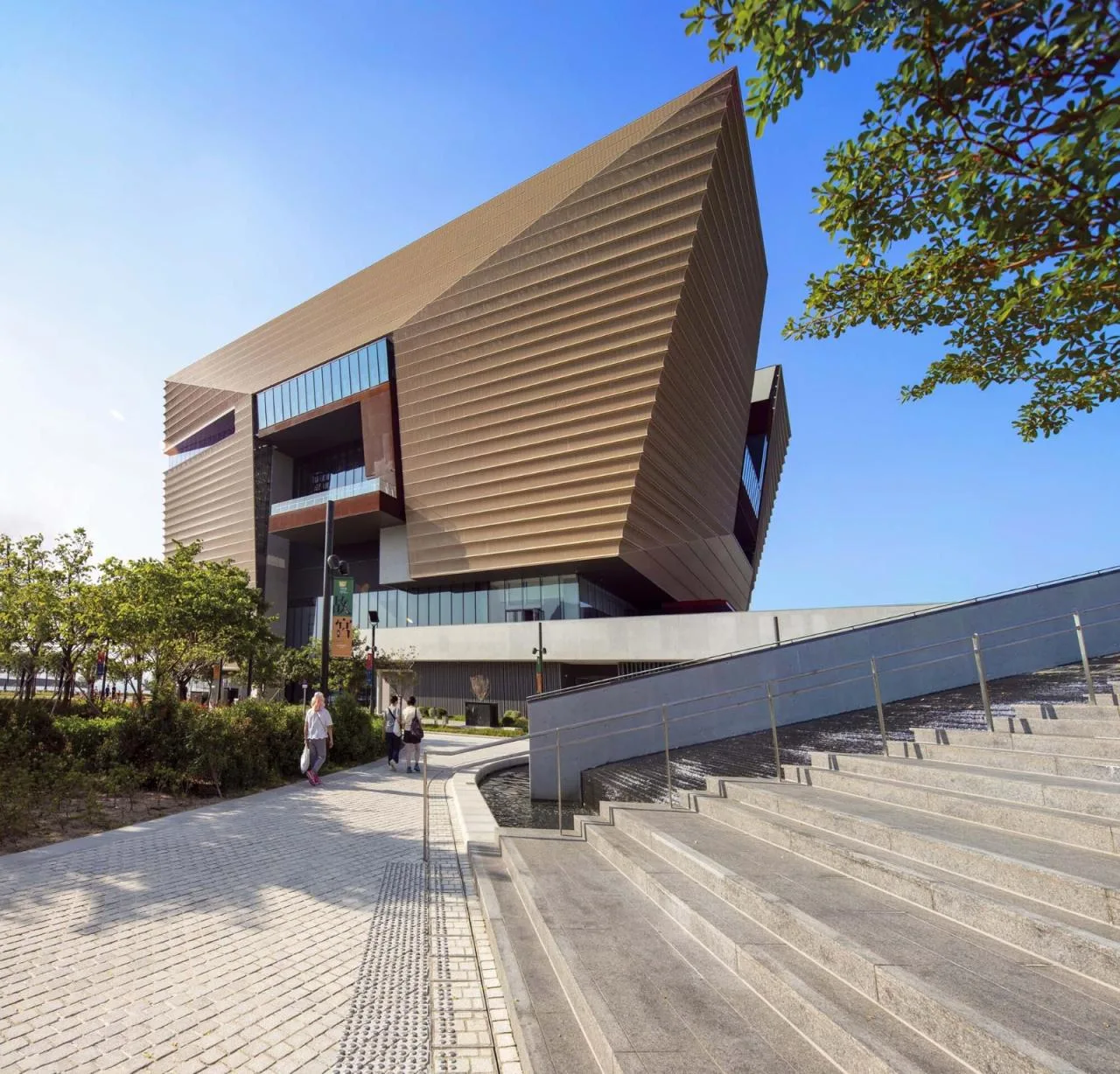
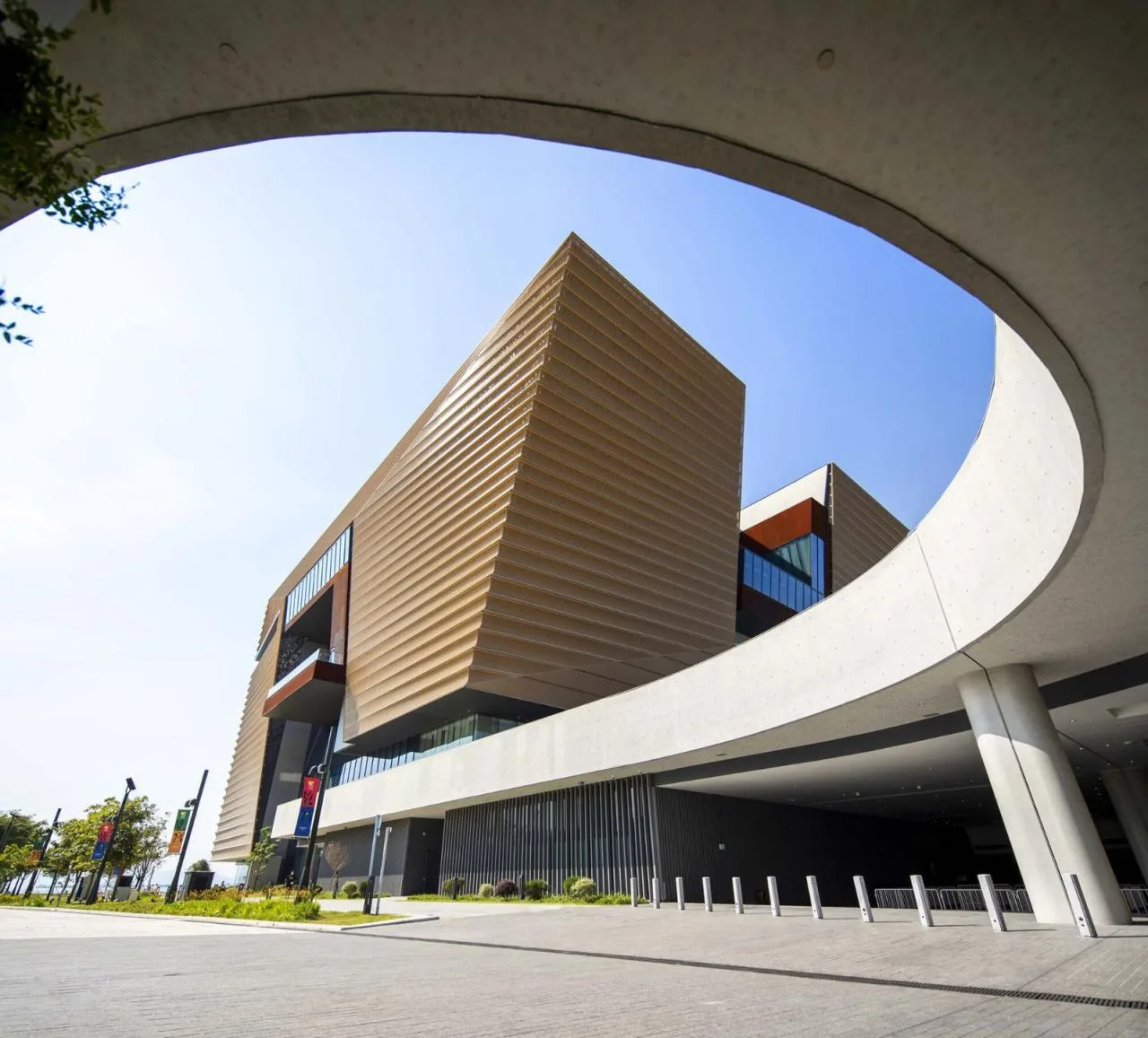
In front of the museum entrance is an open plaza designed to host large installations, traditional performances, or dance events. This square reflects the design of the Forbidden City’s city walls, featuring surrounding corridors that lead visitors directly into the museum.
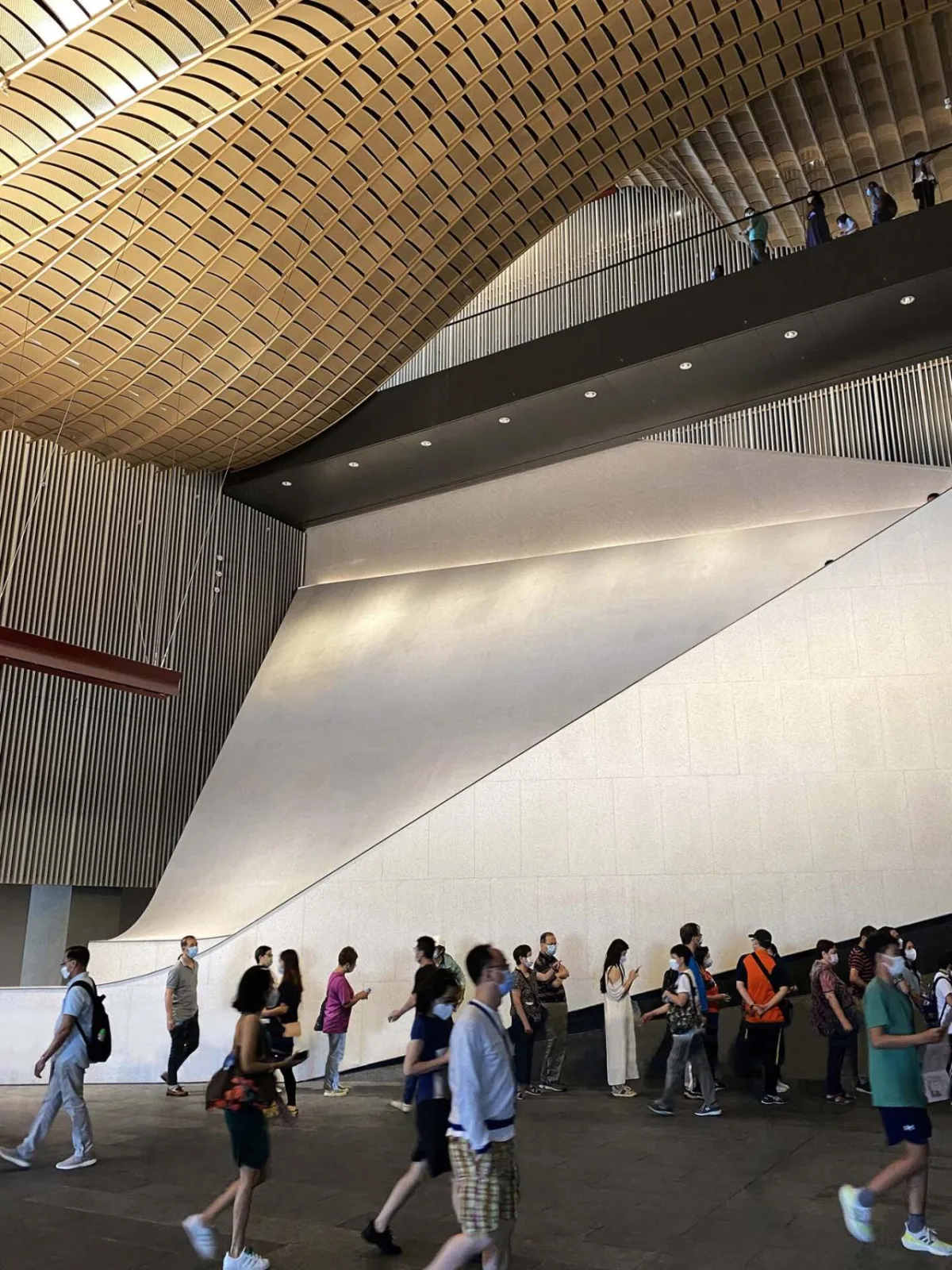
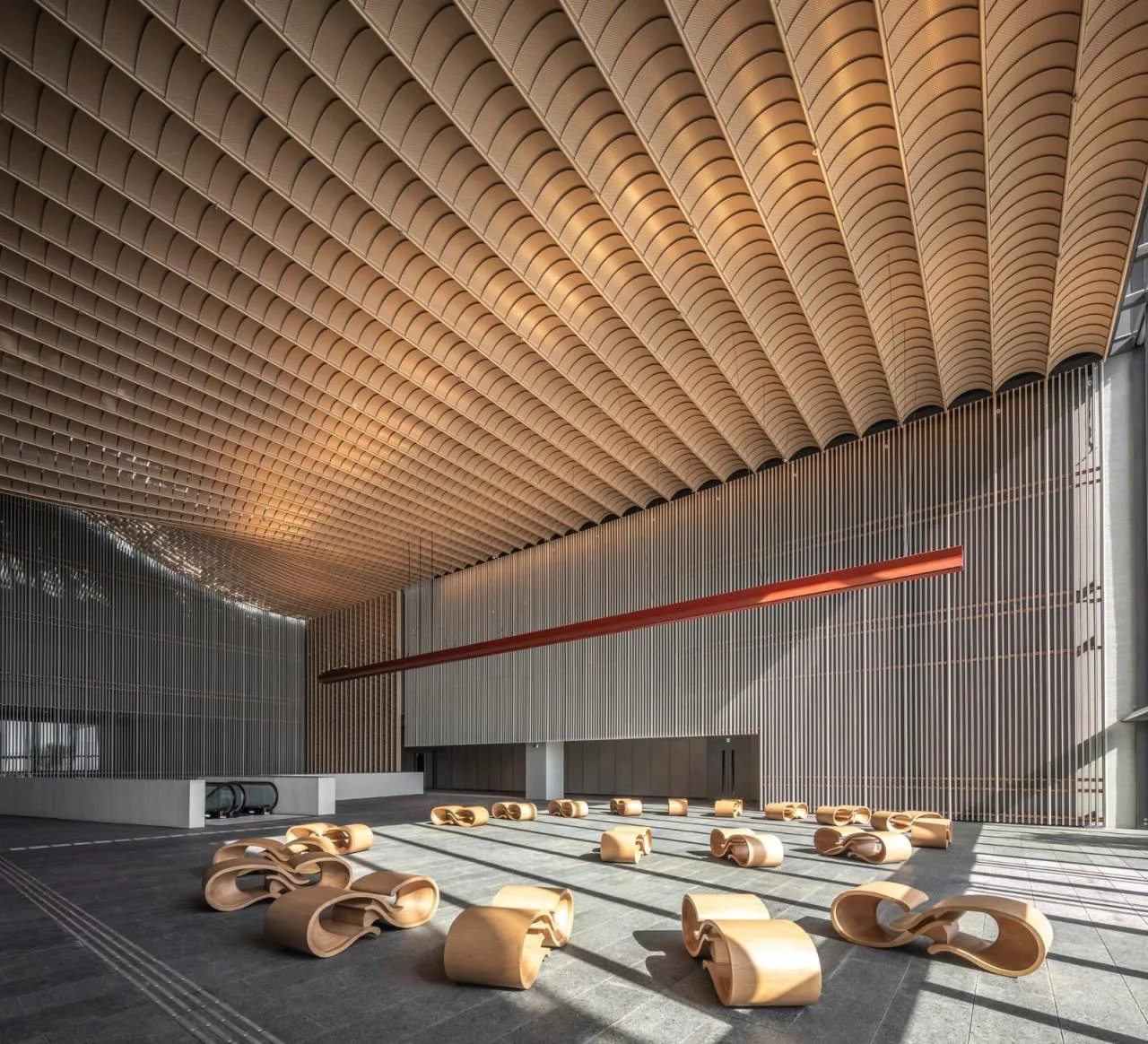
Upon entering, visitors are welcomed into a spacious lobby where they can relax, socialize, and learn about current exhibitions.
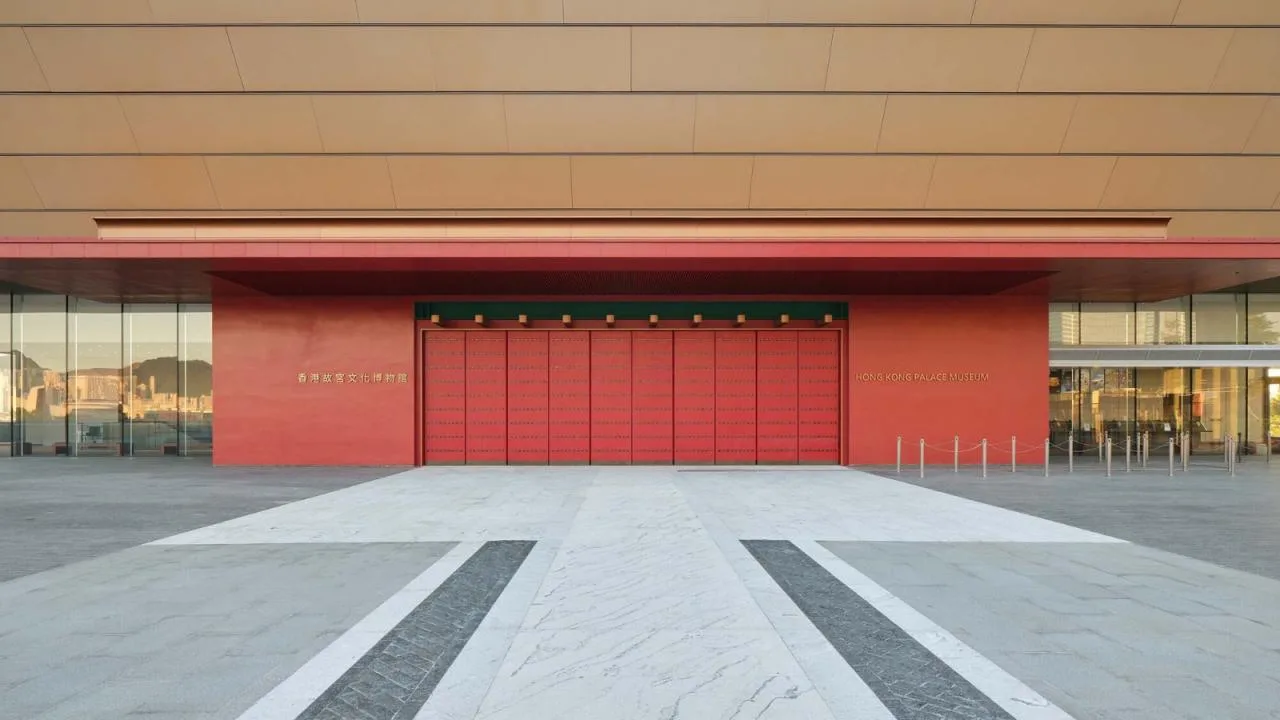
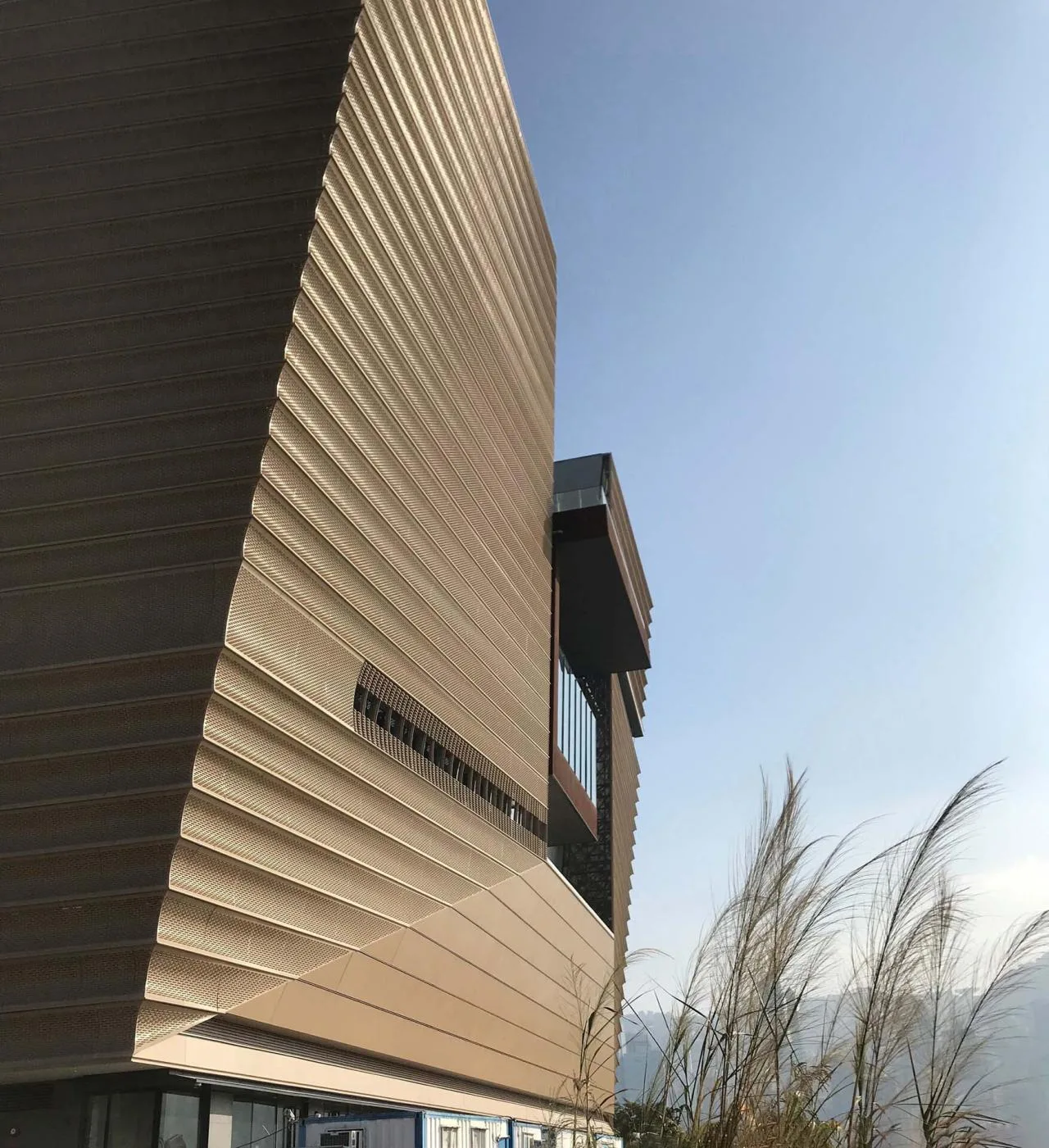
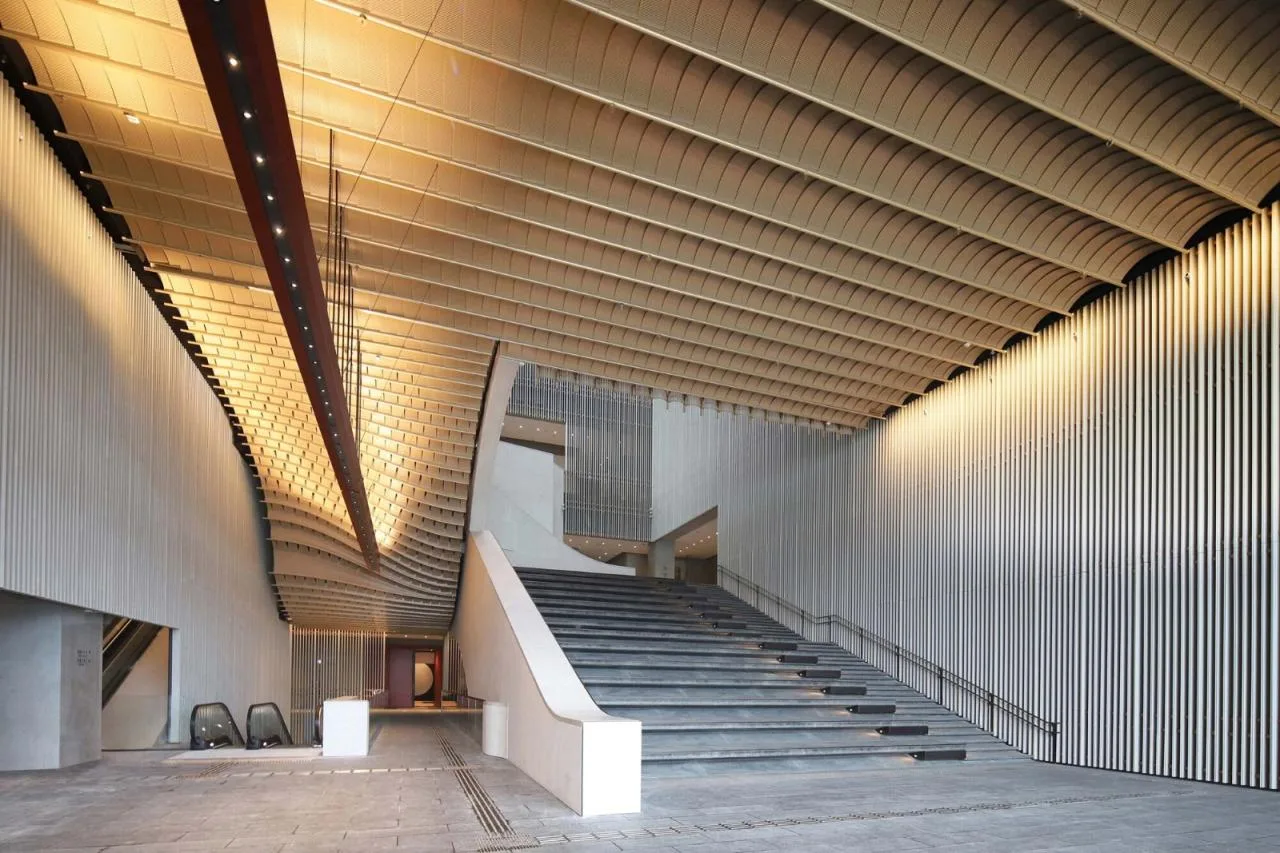
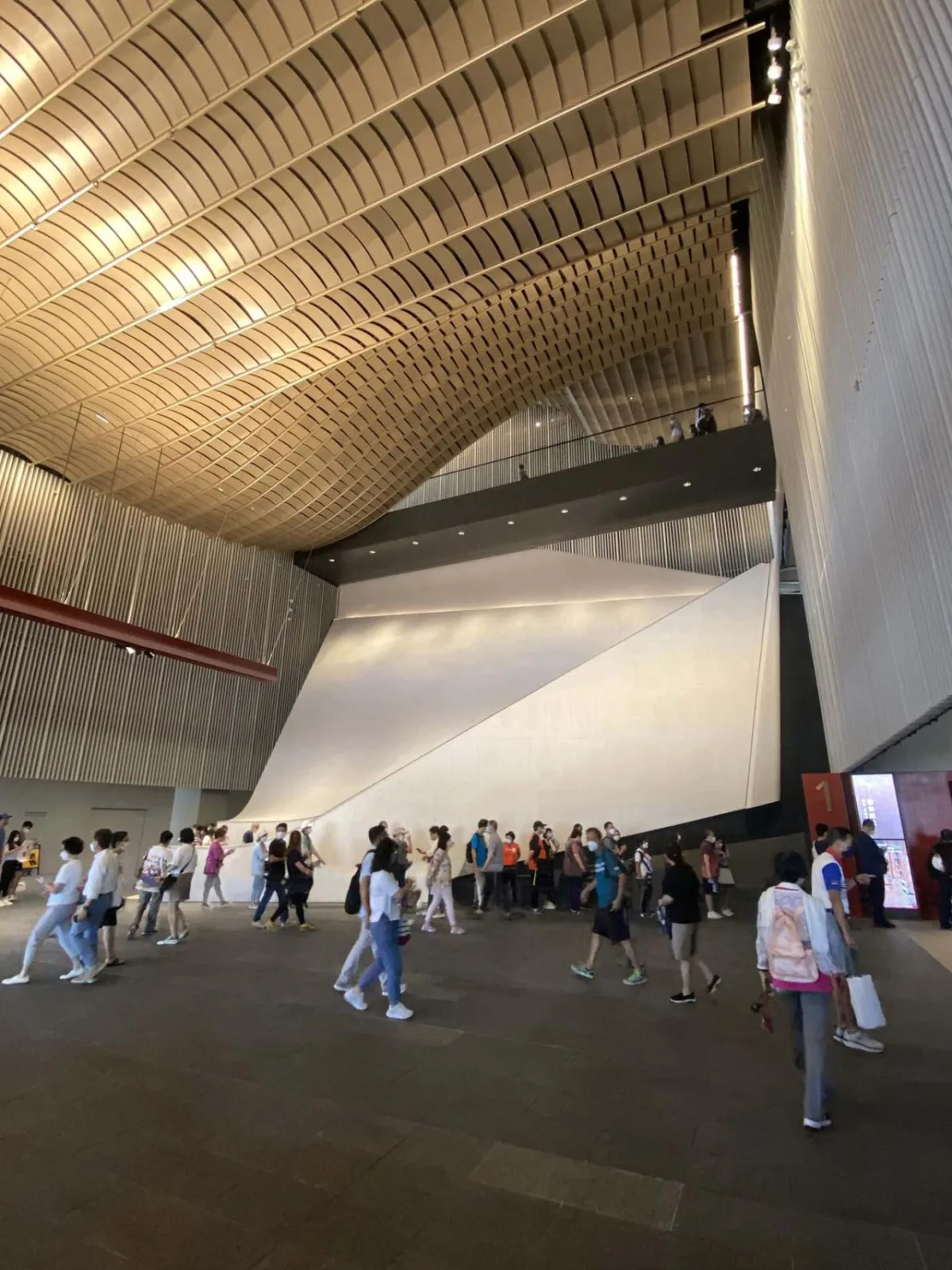
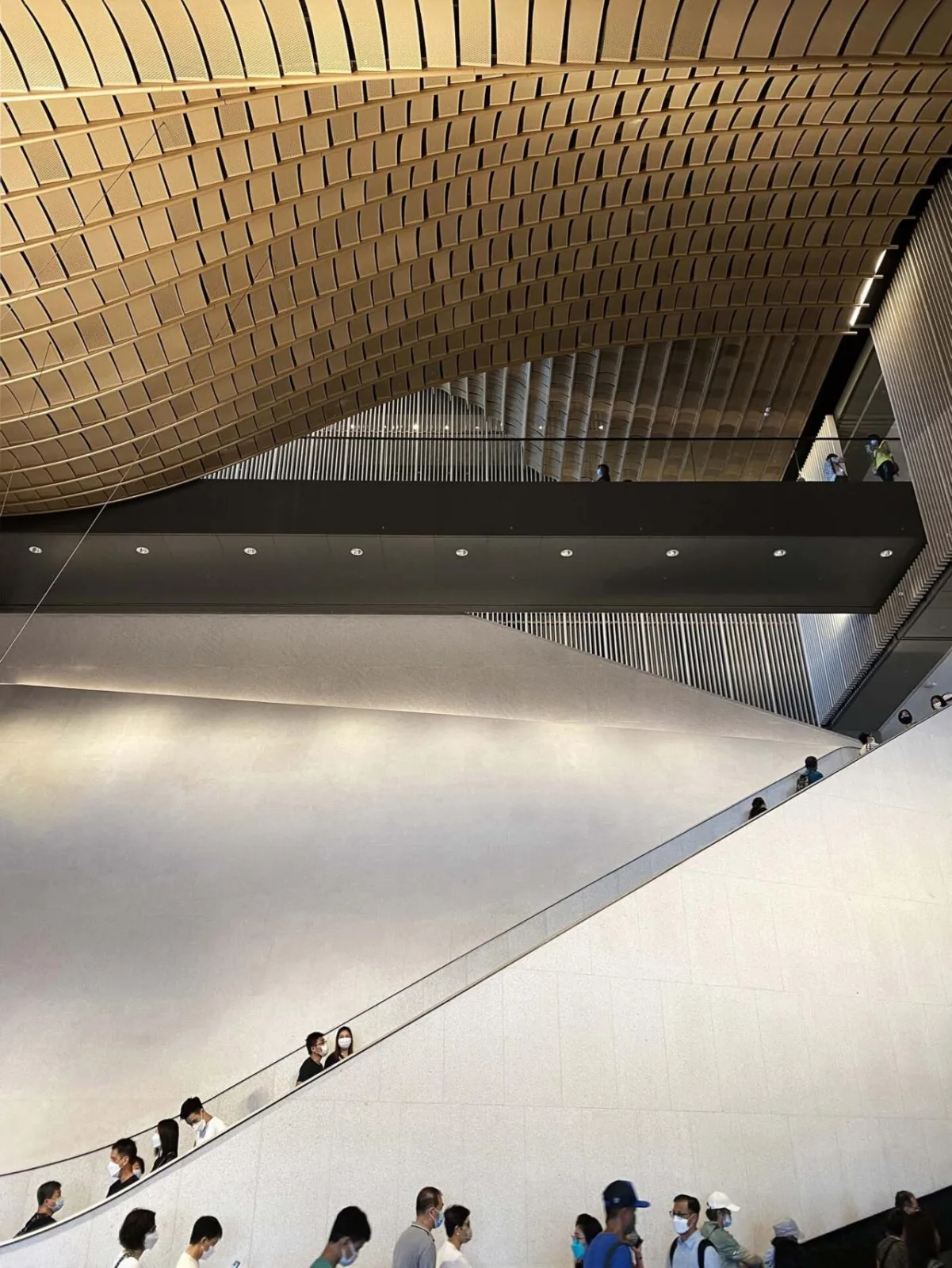
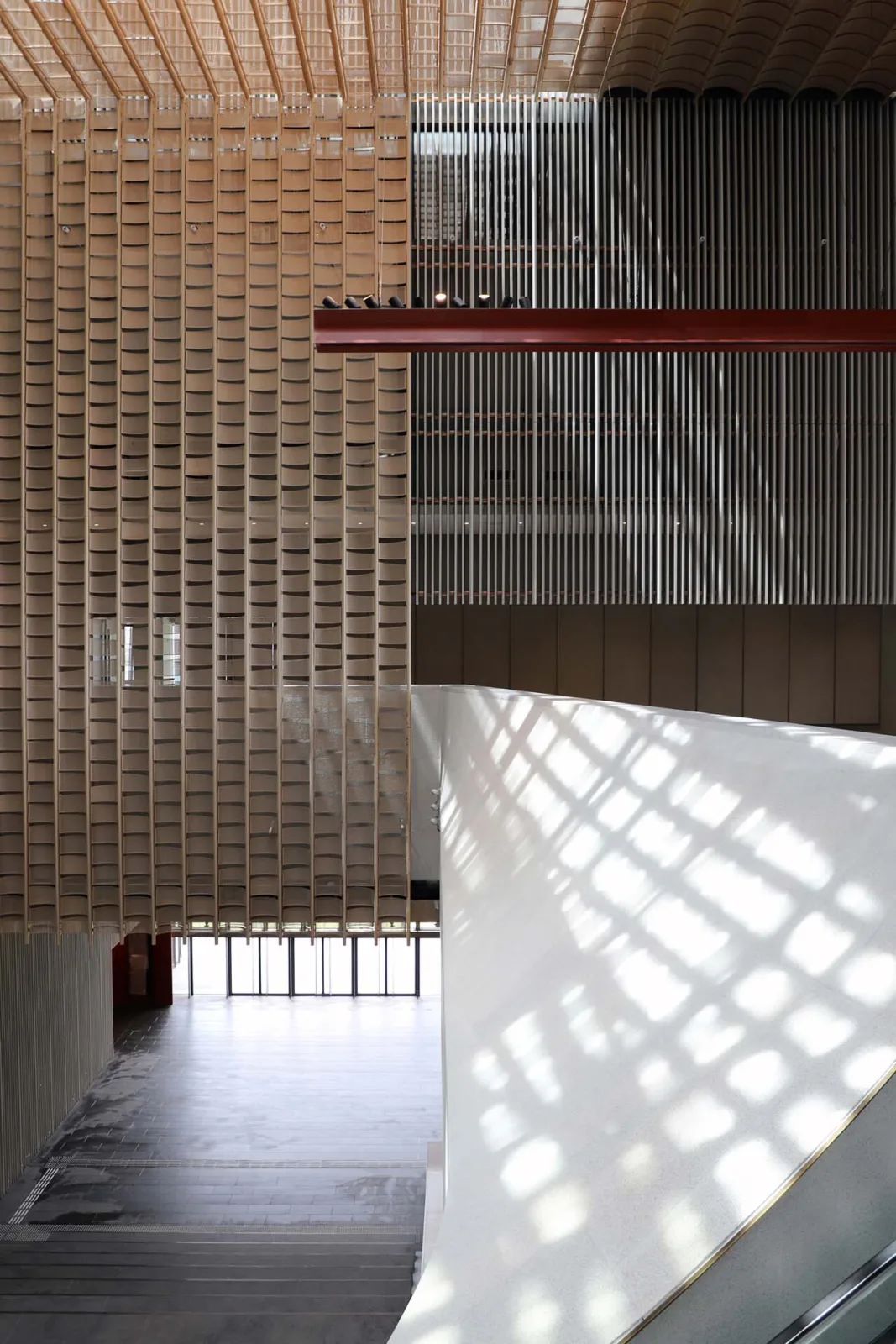
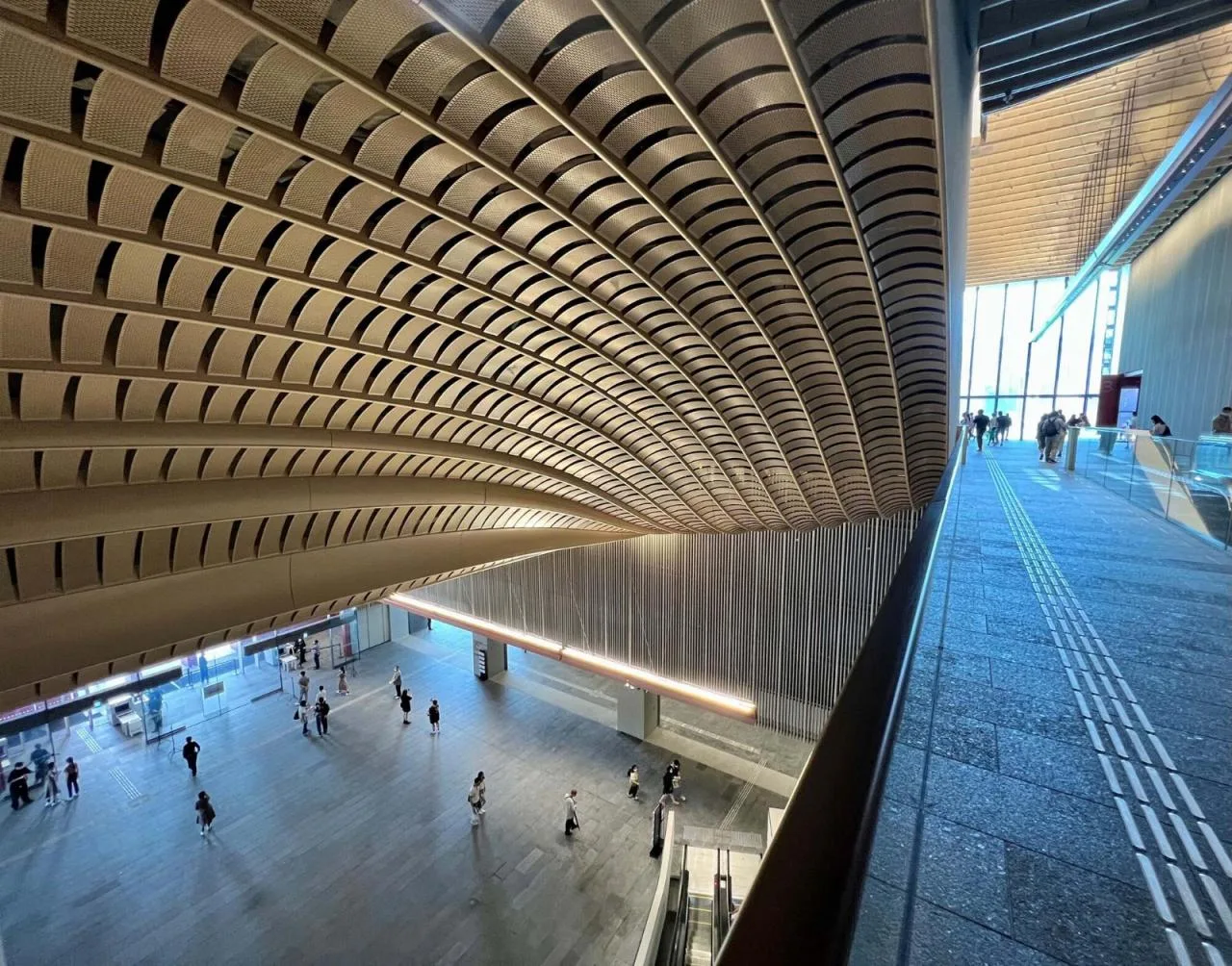
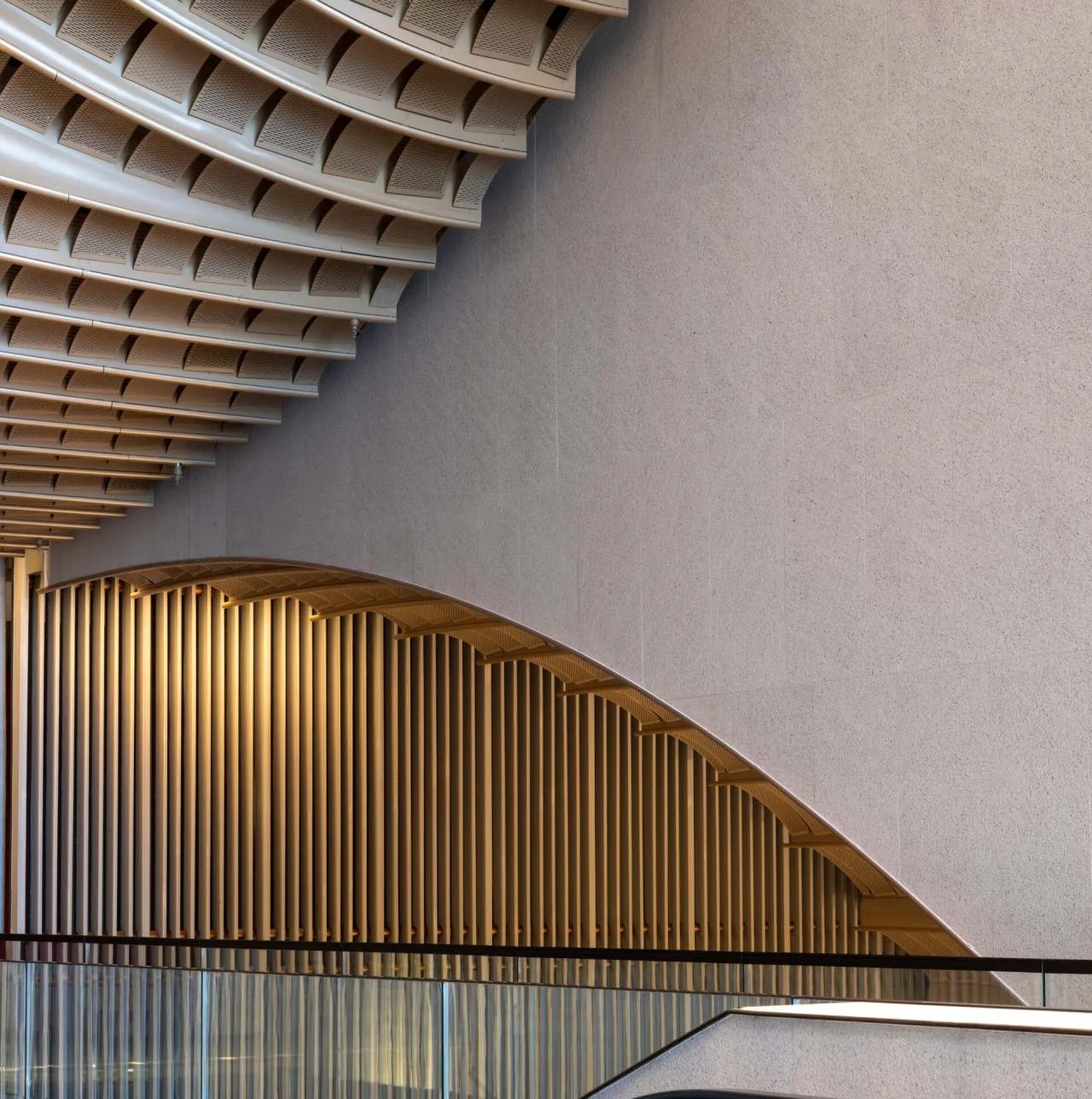
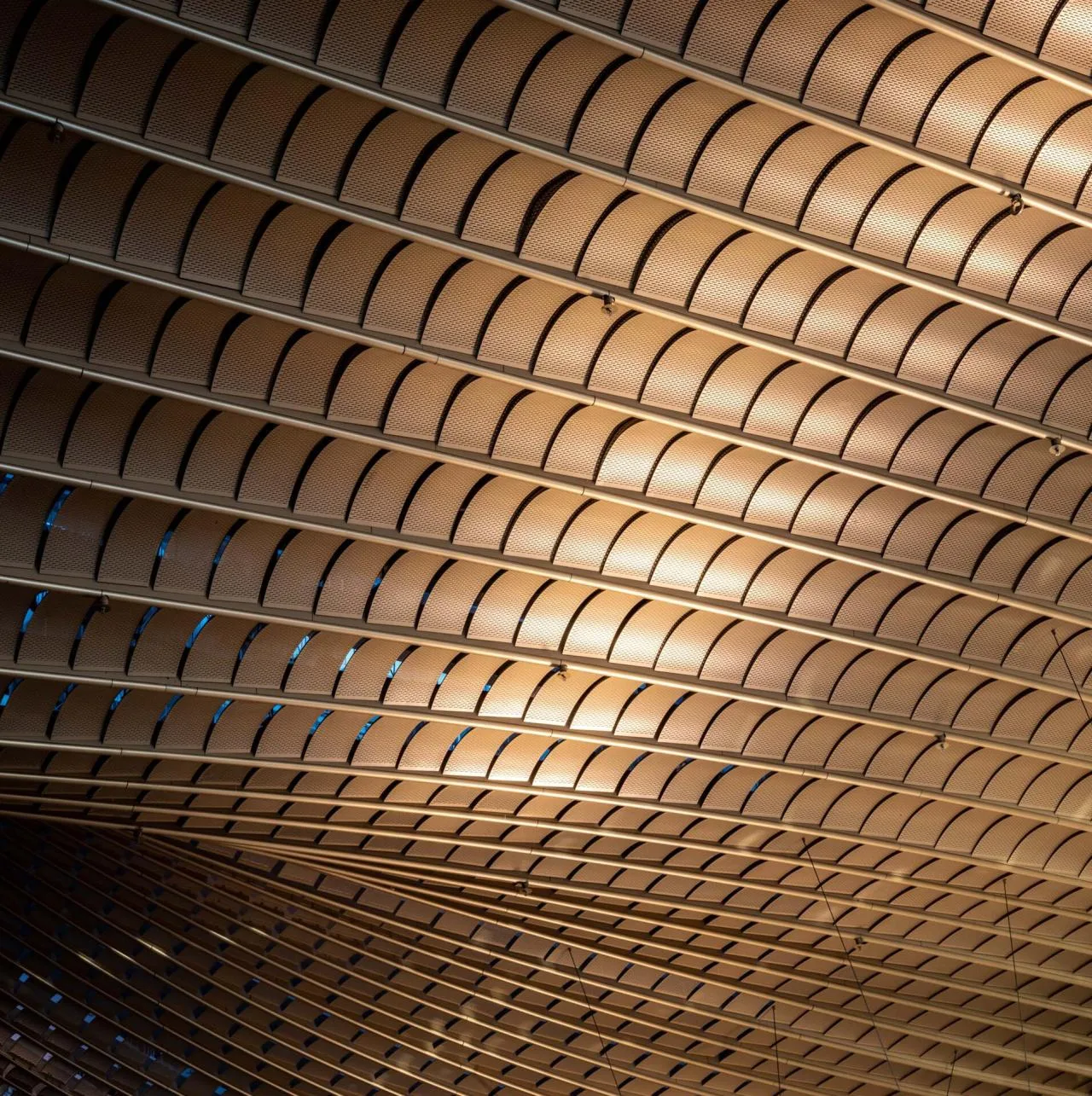
Inside, a striking wavy brass ceiling runs along the building’s central axis, evoking the golden roofs of Beijing’s Forbidden City. This sculptural ceiling wraps vertically from bottom to top, enhancing the sense of spatial continuity while allowing natural light to flood the interior from above.
The ceiling’s directional design complements the stone and concrete structure, adding elegance and highlighting the museum’s refined aesthetic.
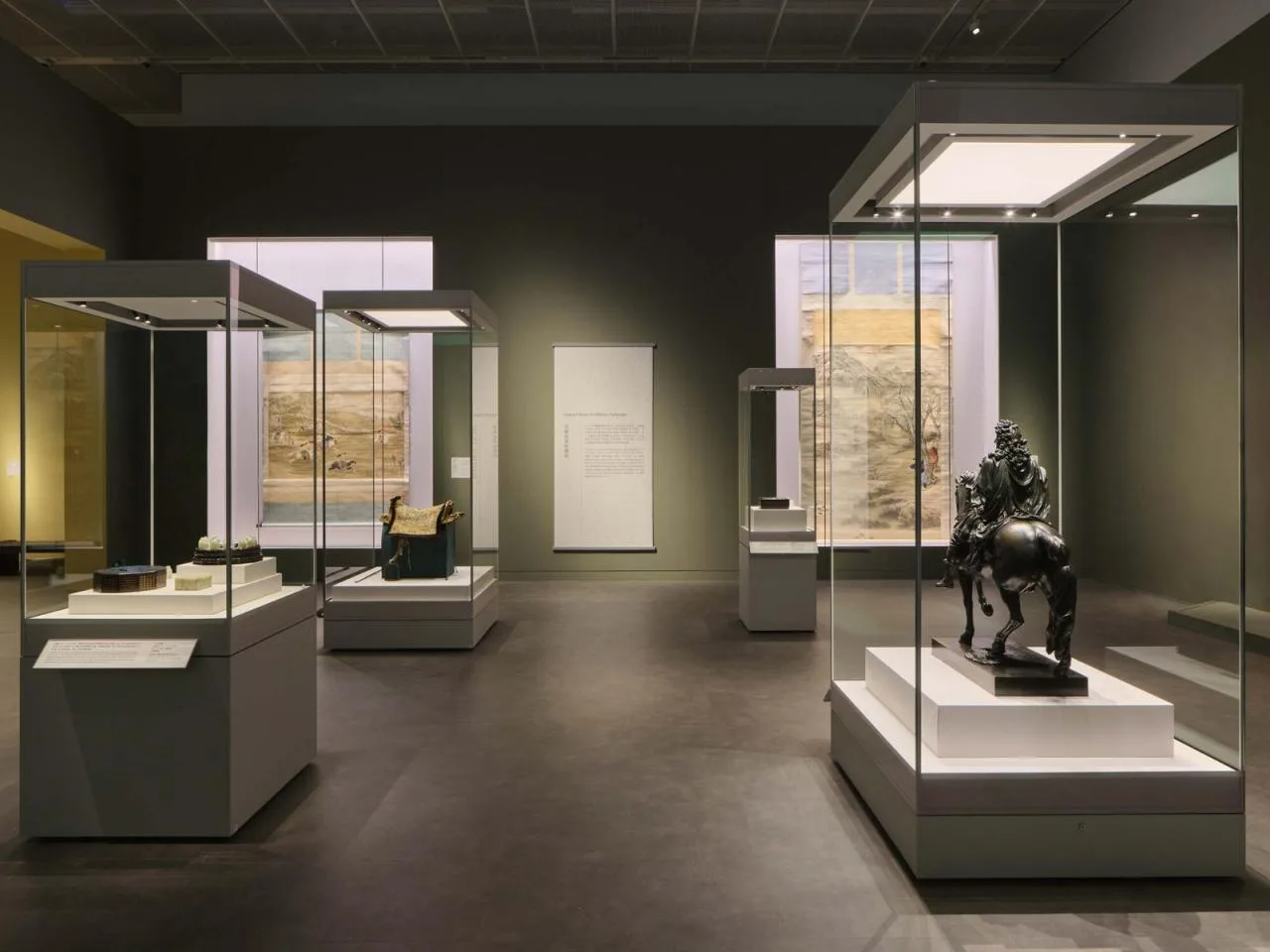
The museum features nine exhibition halls, offering a total of 7,800 square meters of exhibition space. The collections span a long historical timeline, dating back to the Jin Dynasty (226–420 AD), and include calligraphy, paintings, ancient texts, and decorative arts made of gold, silver, bronze, and jade.
While most exhibition halls are dedicated to long-term displays, the themed exhibition hall on the fourth floor offers double-height space and regularly updated exhibits. This hall supports innovative curatorial approaches, including highly interactive and technologically immersive exhibitions. It also showcases international collections, with the opening exhibition featuring treasures loaned from the Louvre in Paris, symbolizing cultural exchange through Chinese and foreign artifacts.
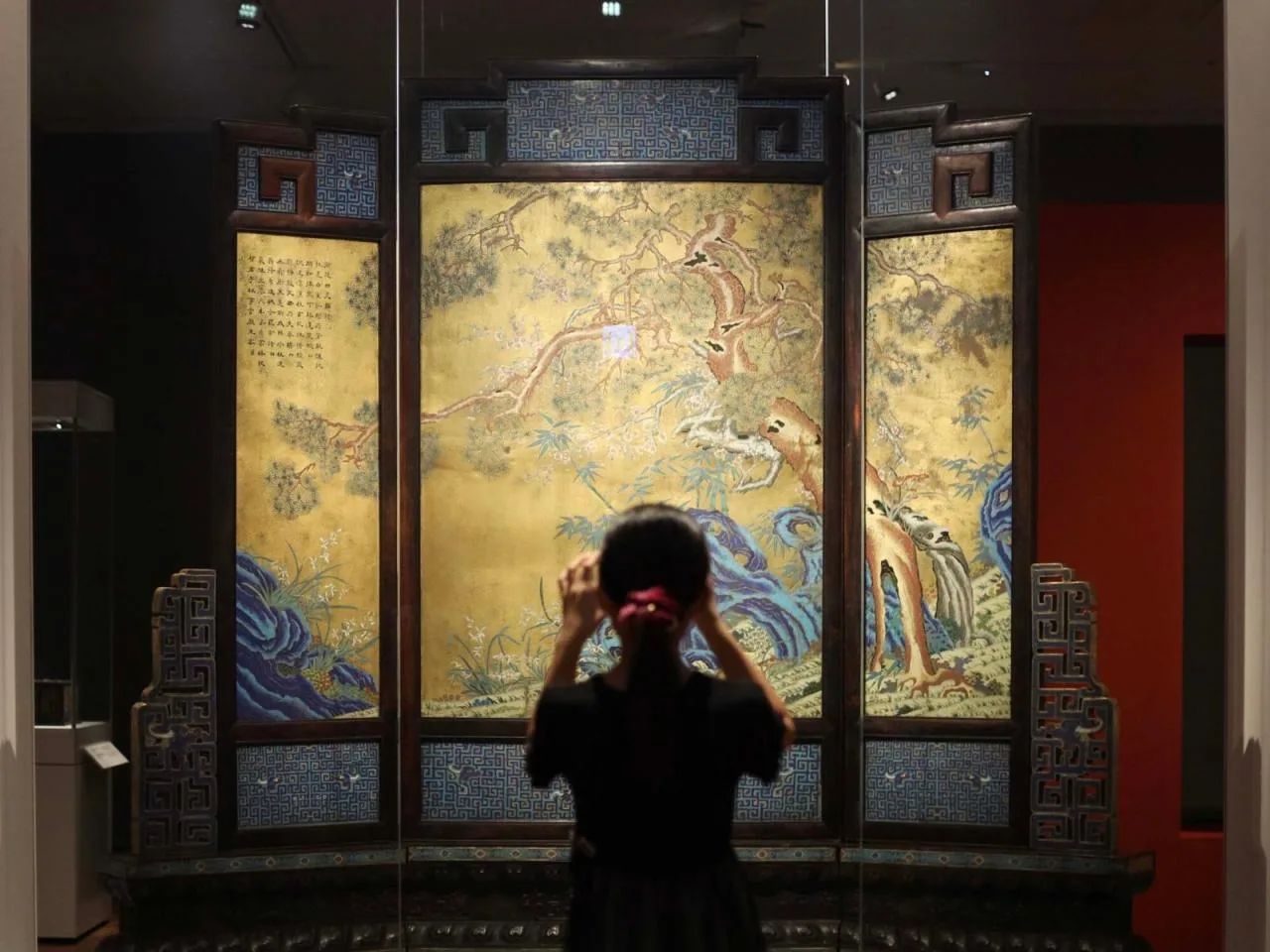
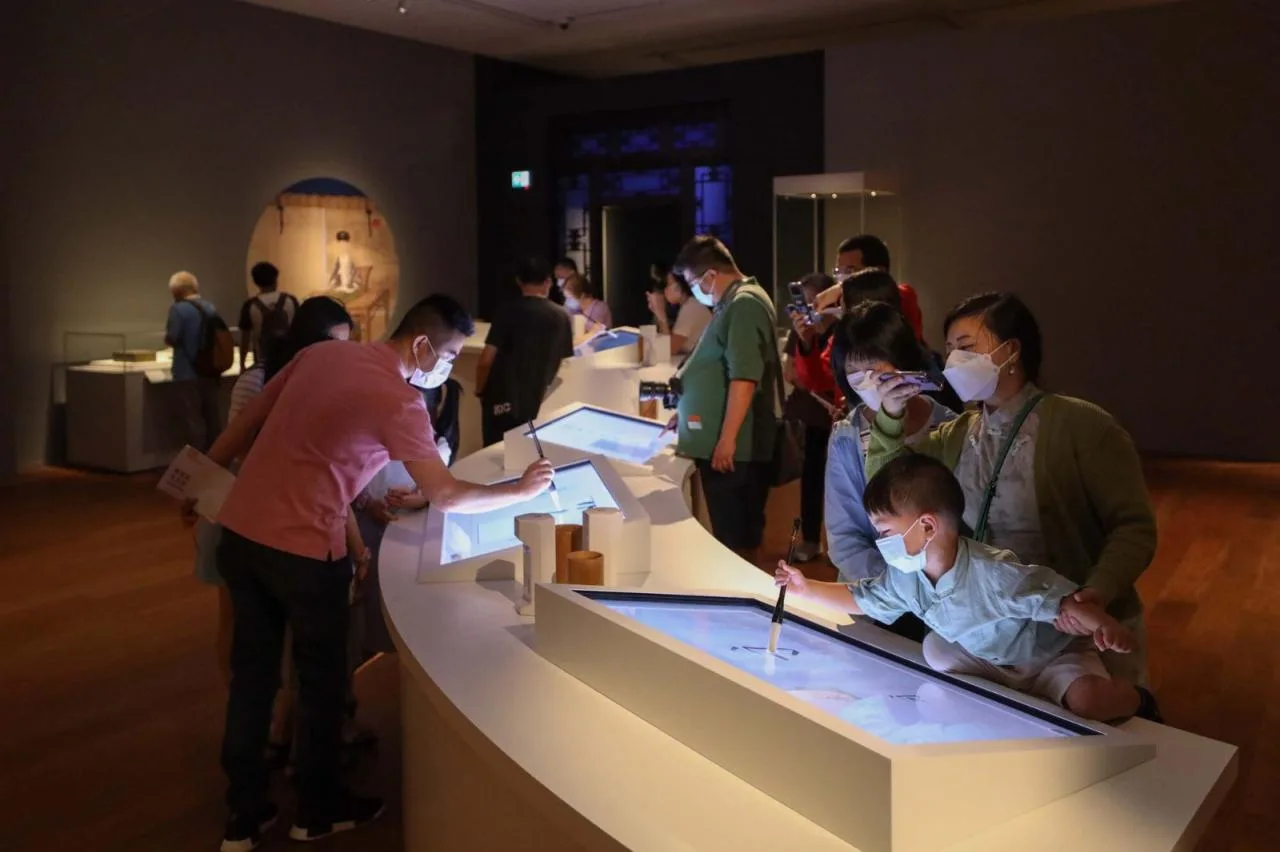
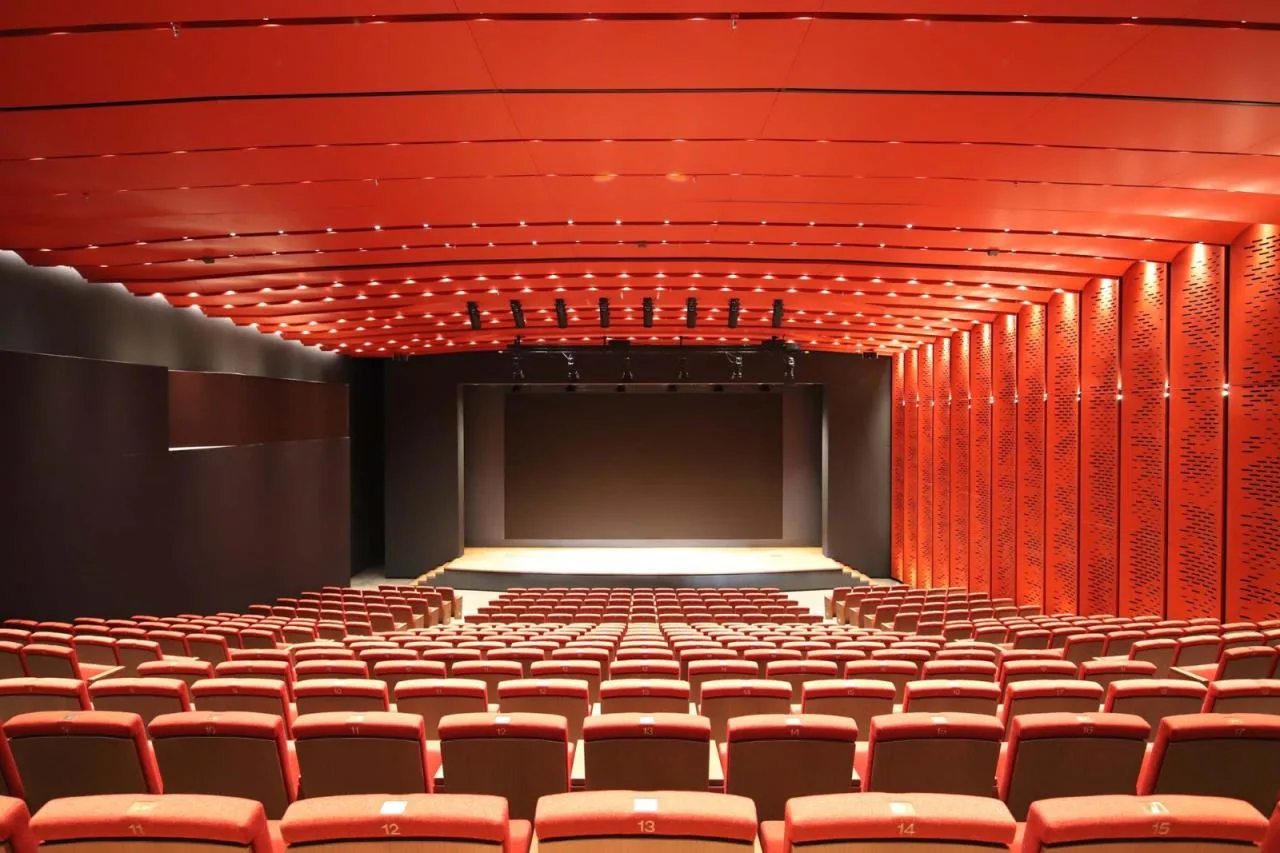
The museum also includes a 400-seat lecture hall and activity rooms designed for public events and performances. On the ground floor, restaurants and gift shops connect seamlessly to the adjacent art park and seaside promenade, creating a lively cultural atmosphere. The museum officially opened in July 2022.
Project Drawings
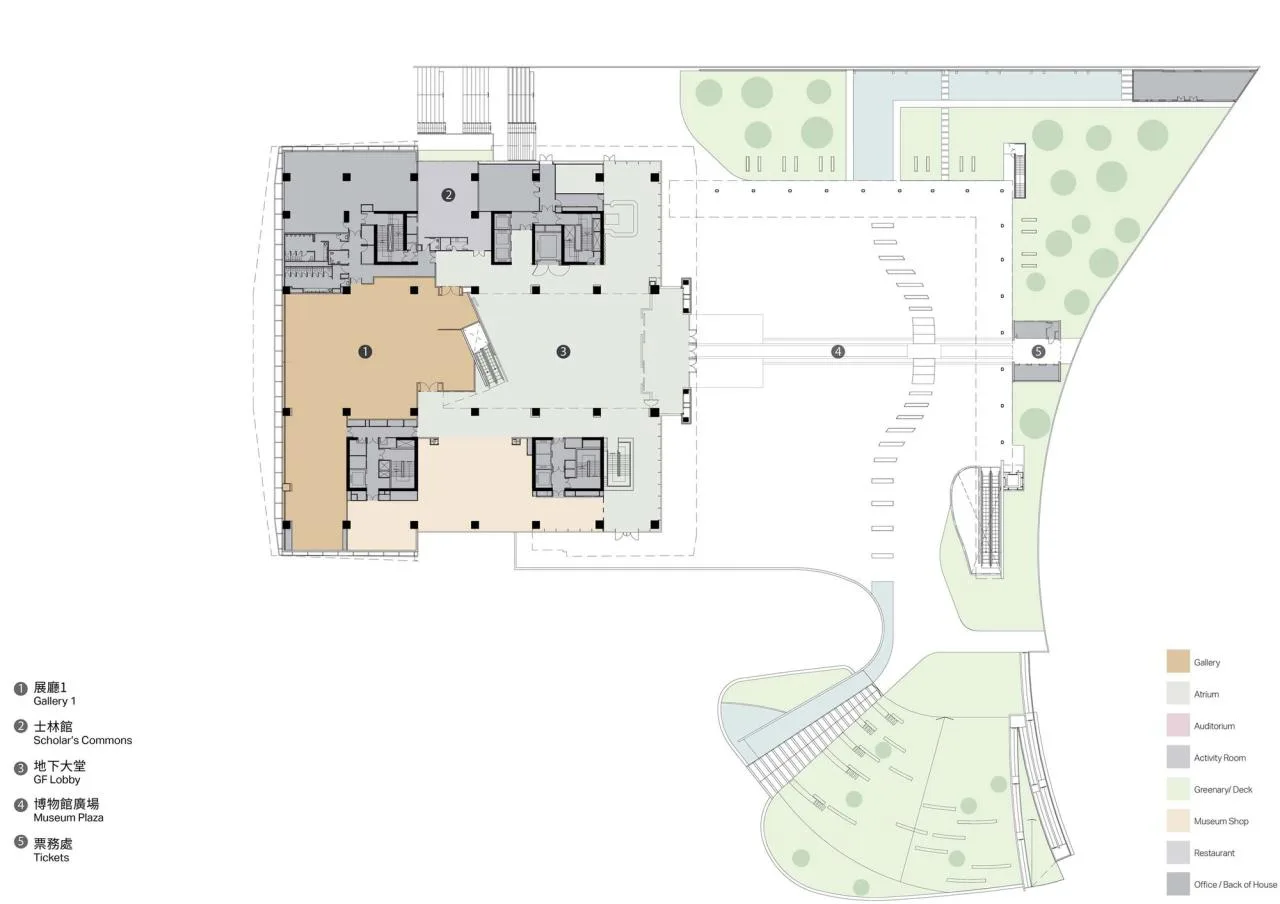
△ First Floor Plan
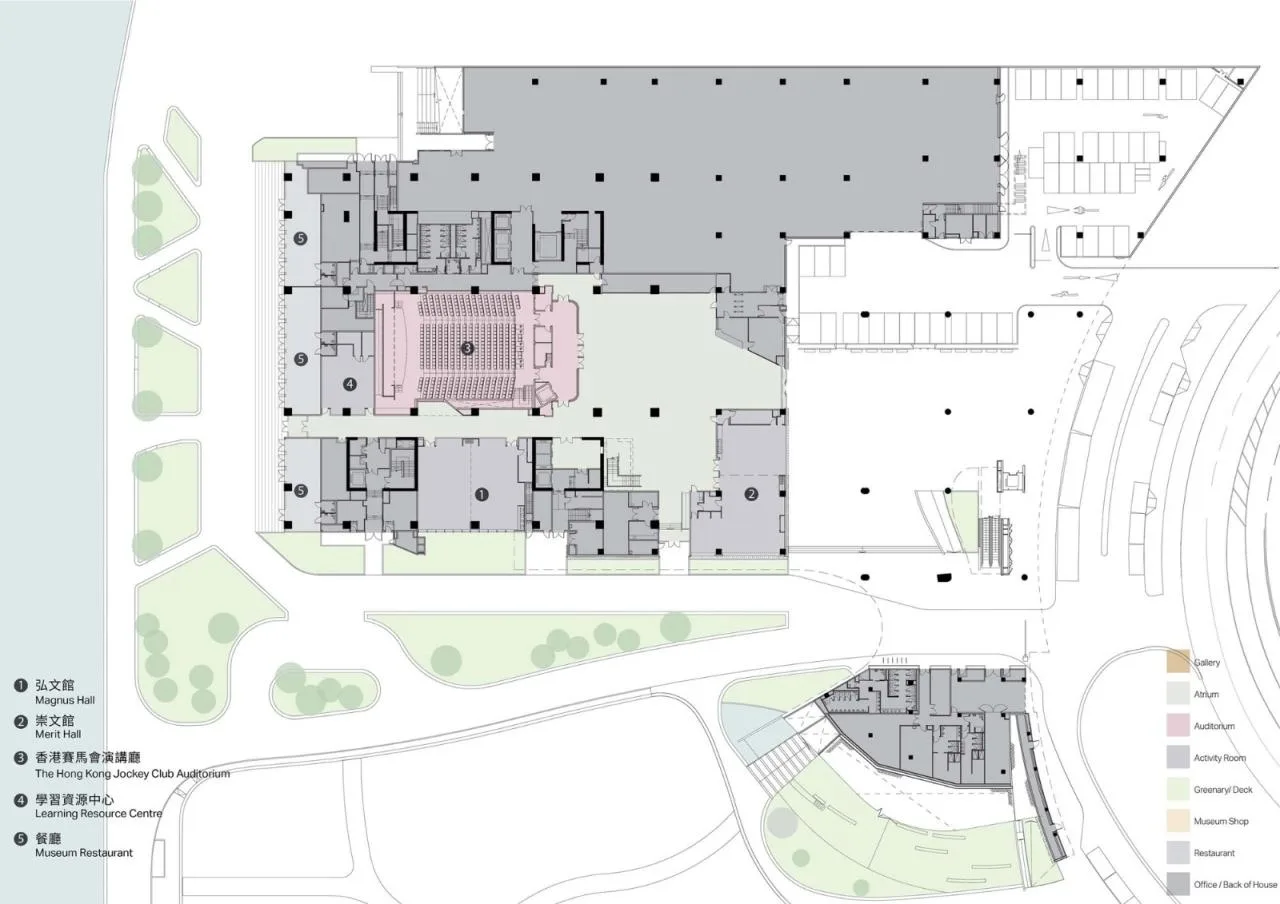
△ Basement Floor Plan
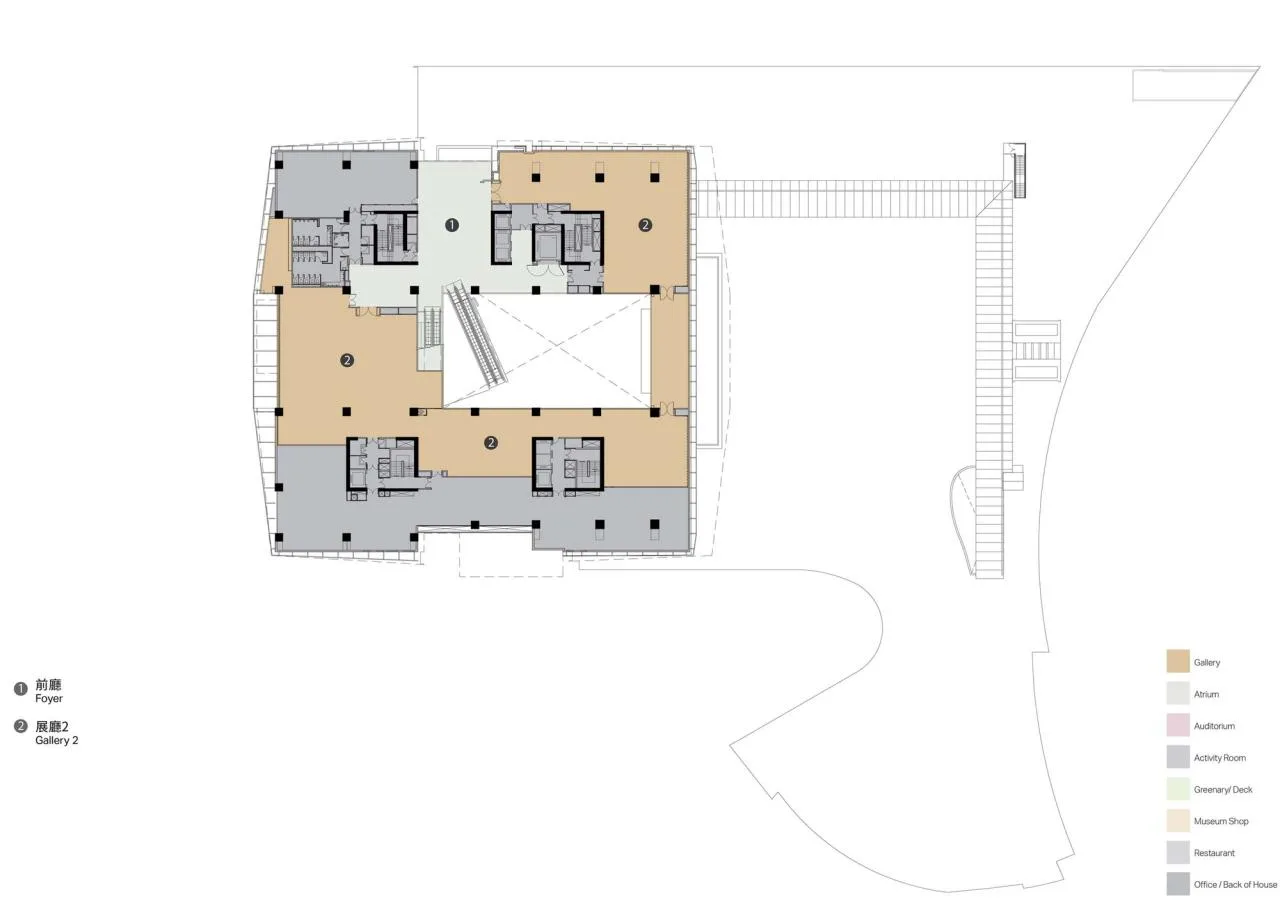
△ Second Floor Plan
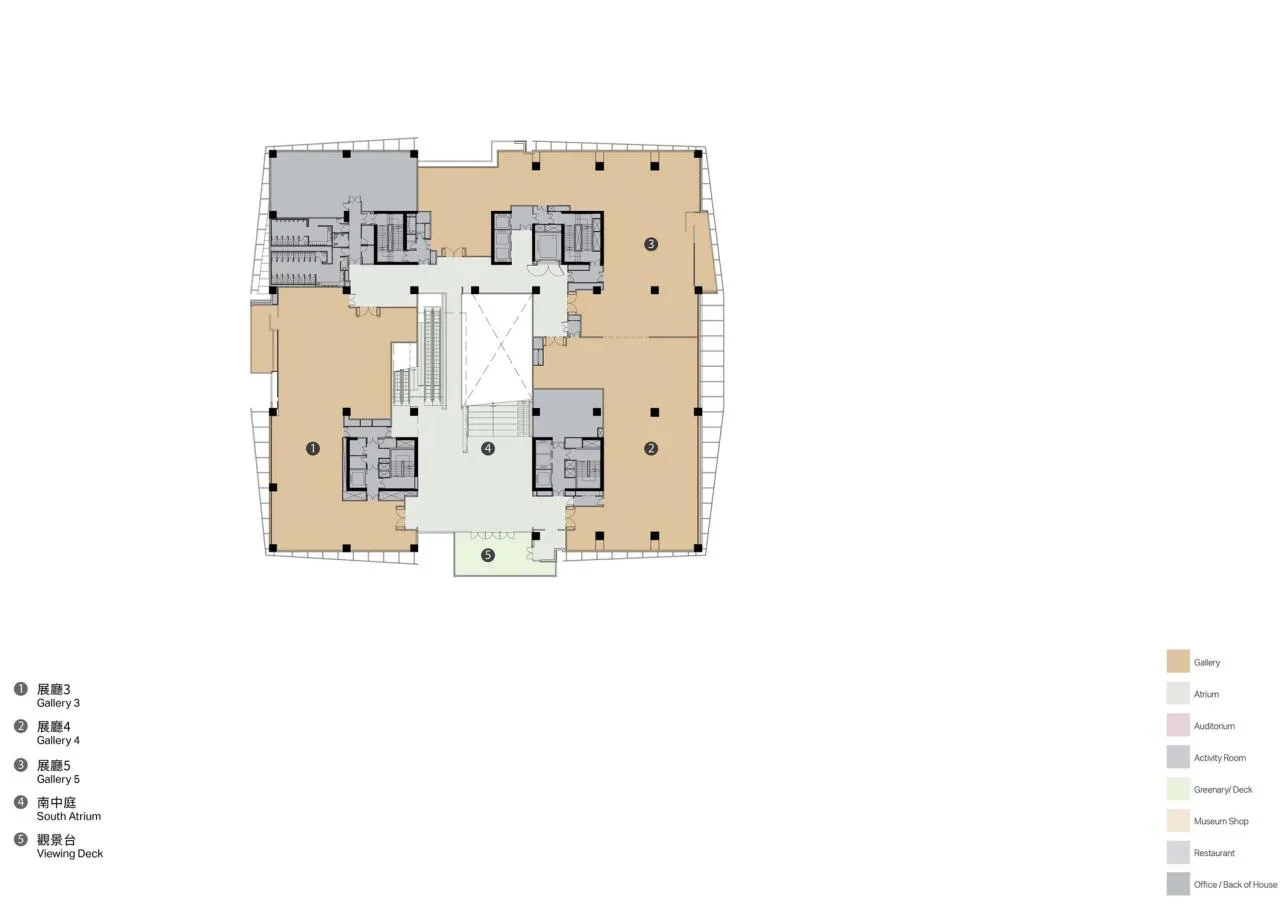
△ Third Floor Plan
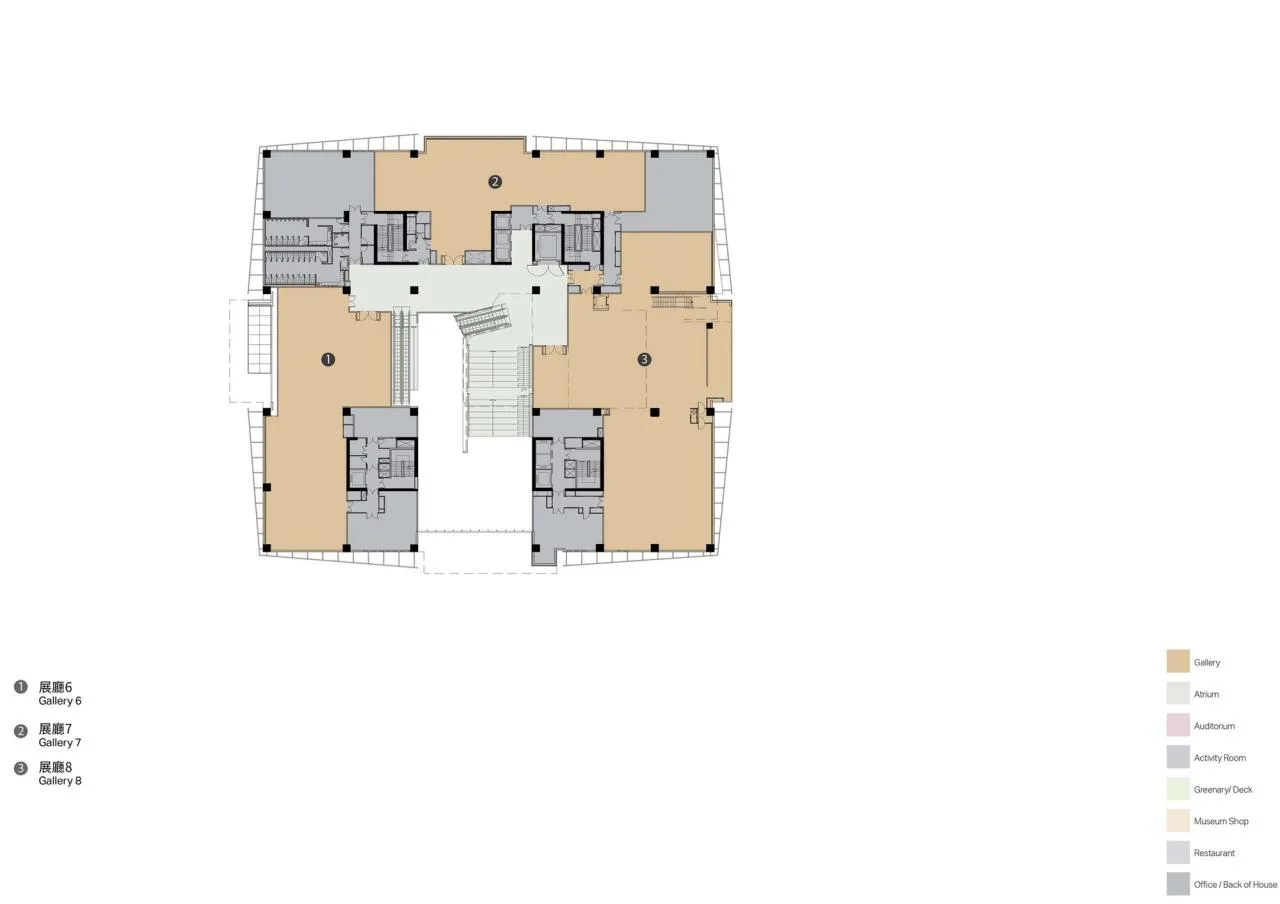
△ Fourth Floor Plan
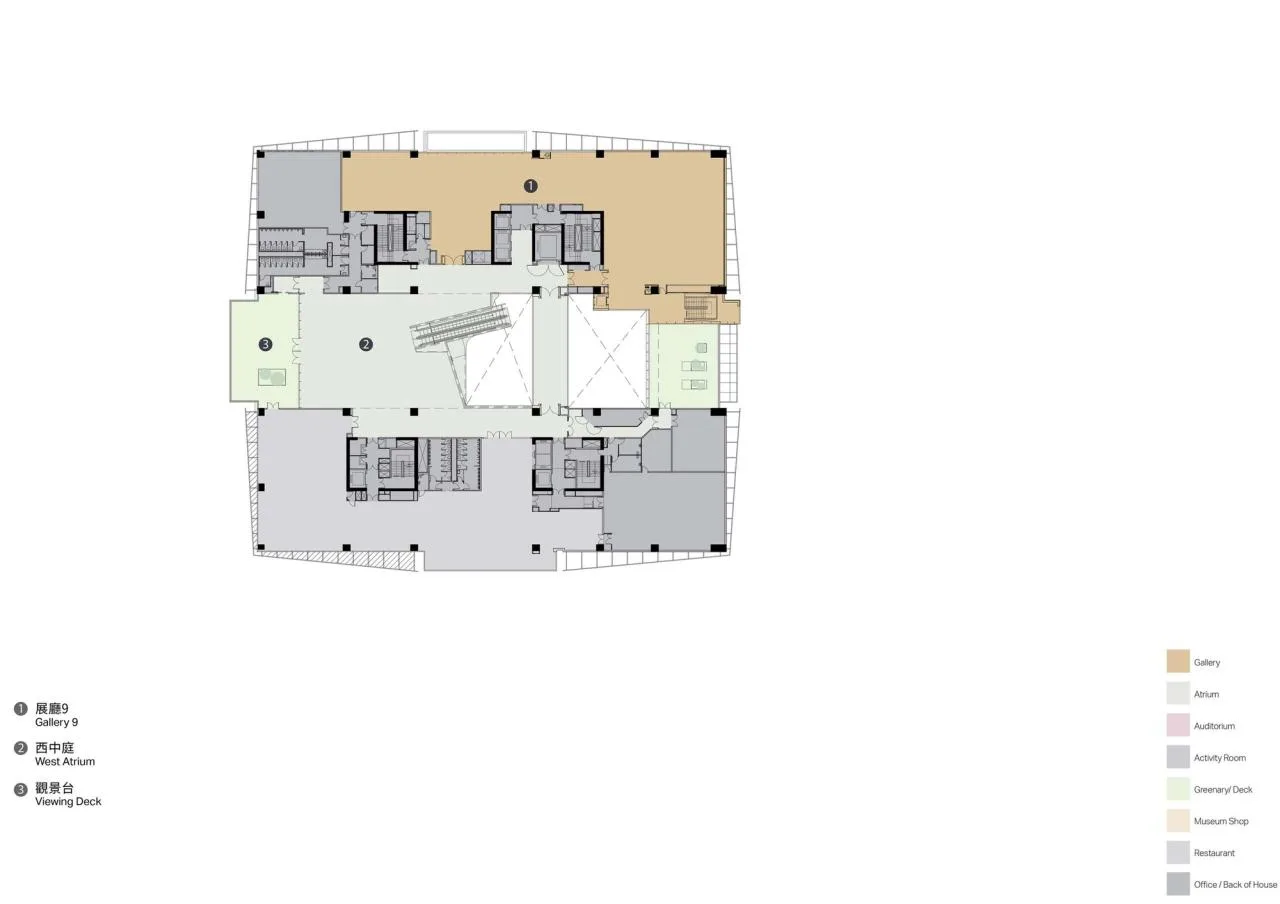
△ Fifth Floor Plan
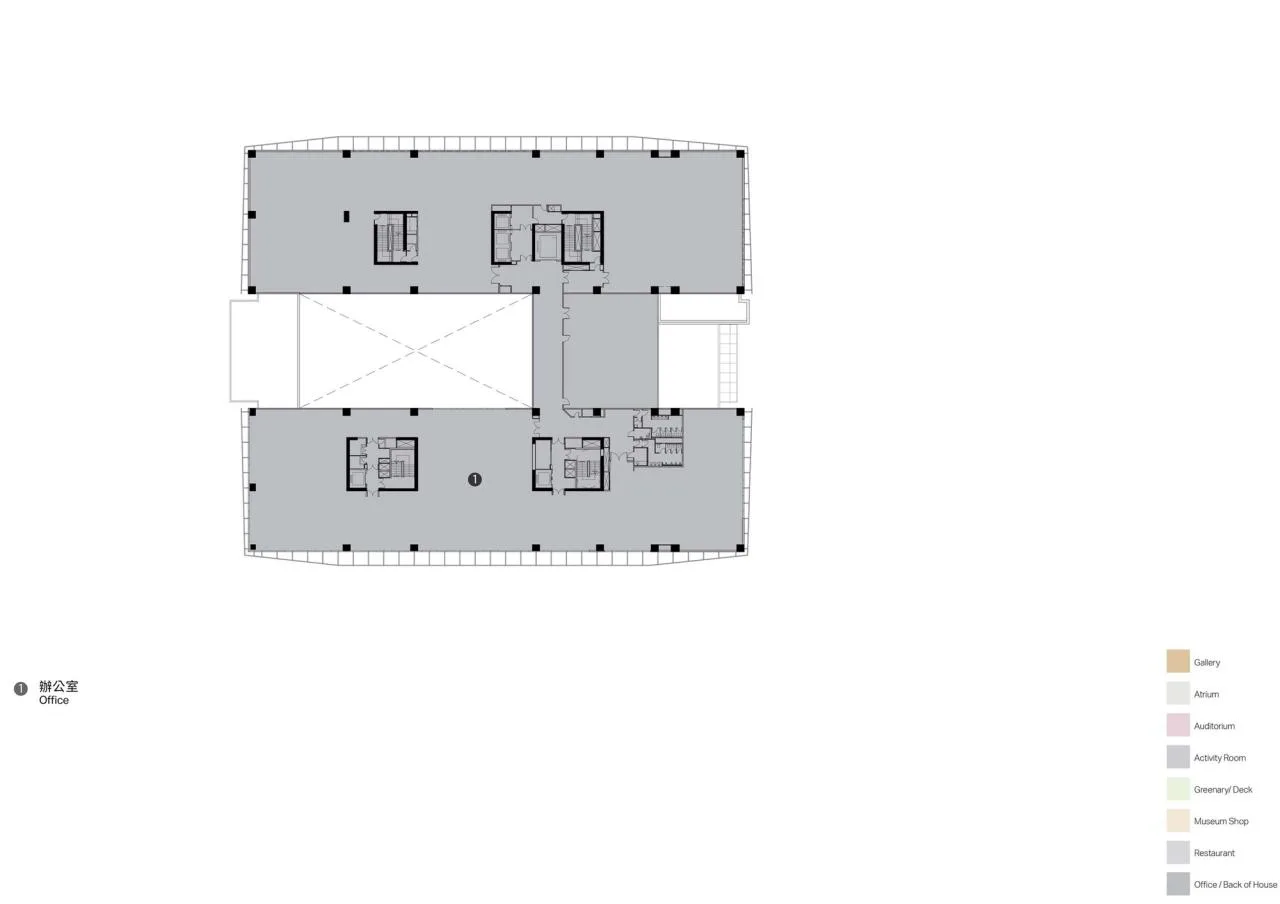
△ Sixth Floor Plan
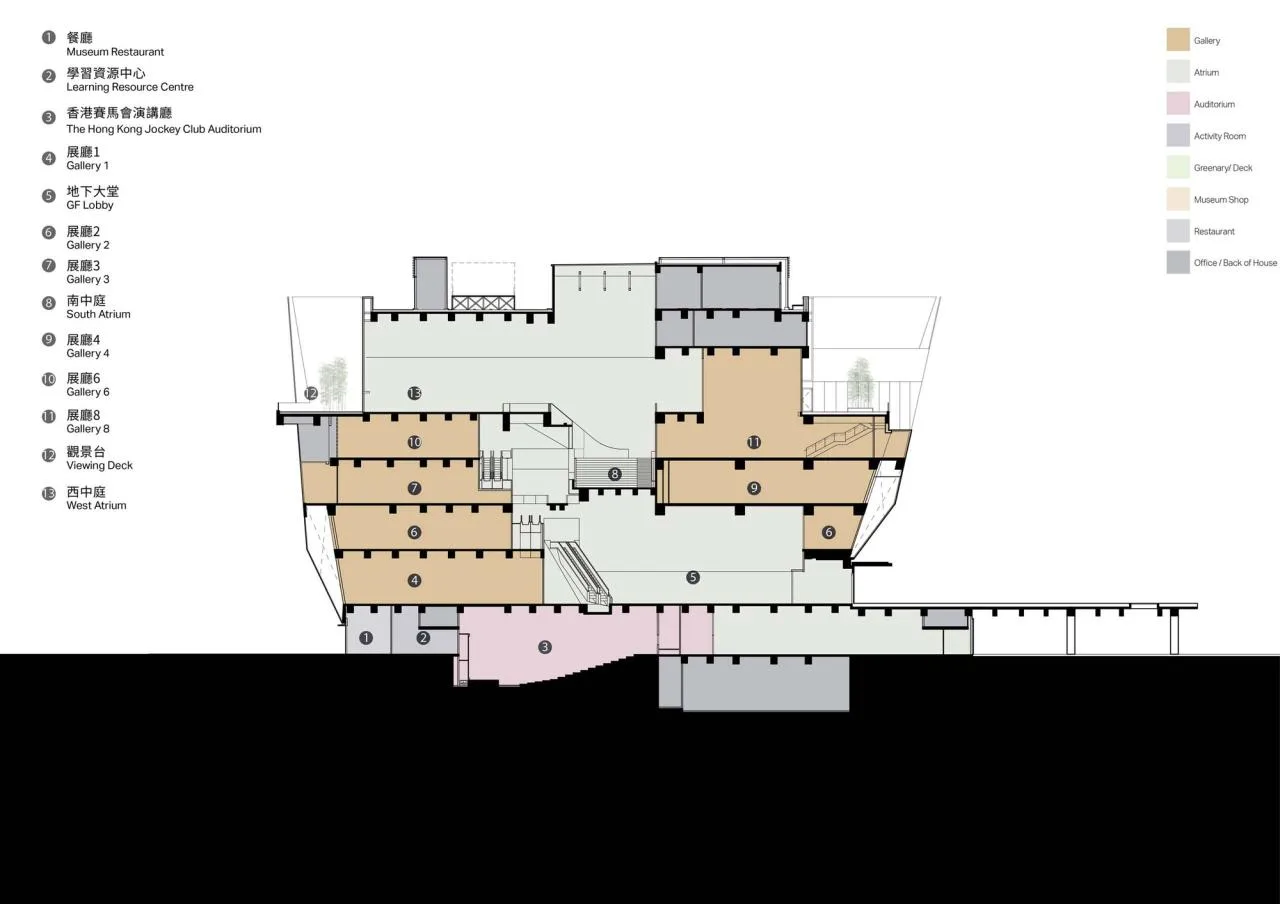
△ Section Diagram
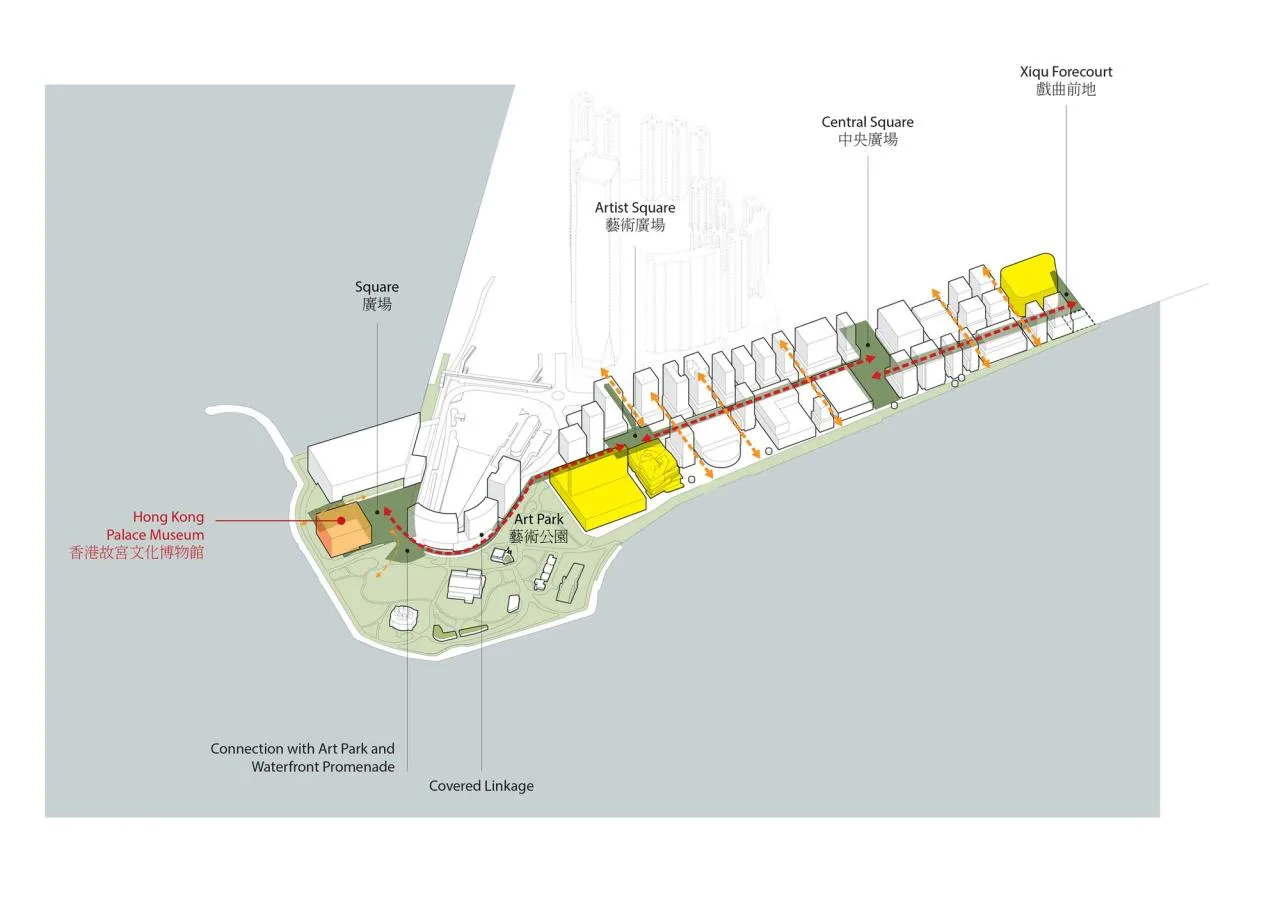
△ Analysis Chart
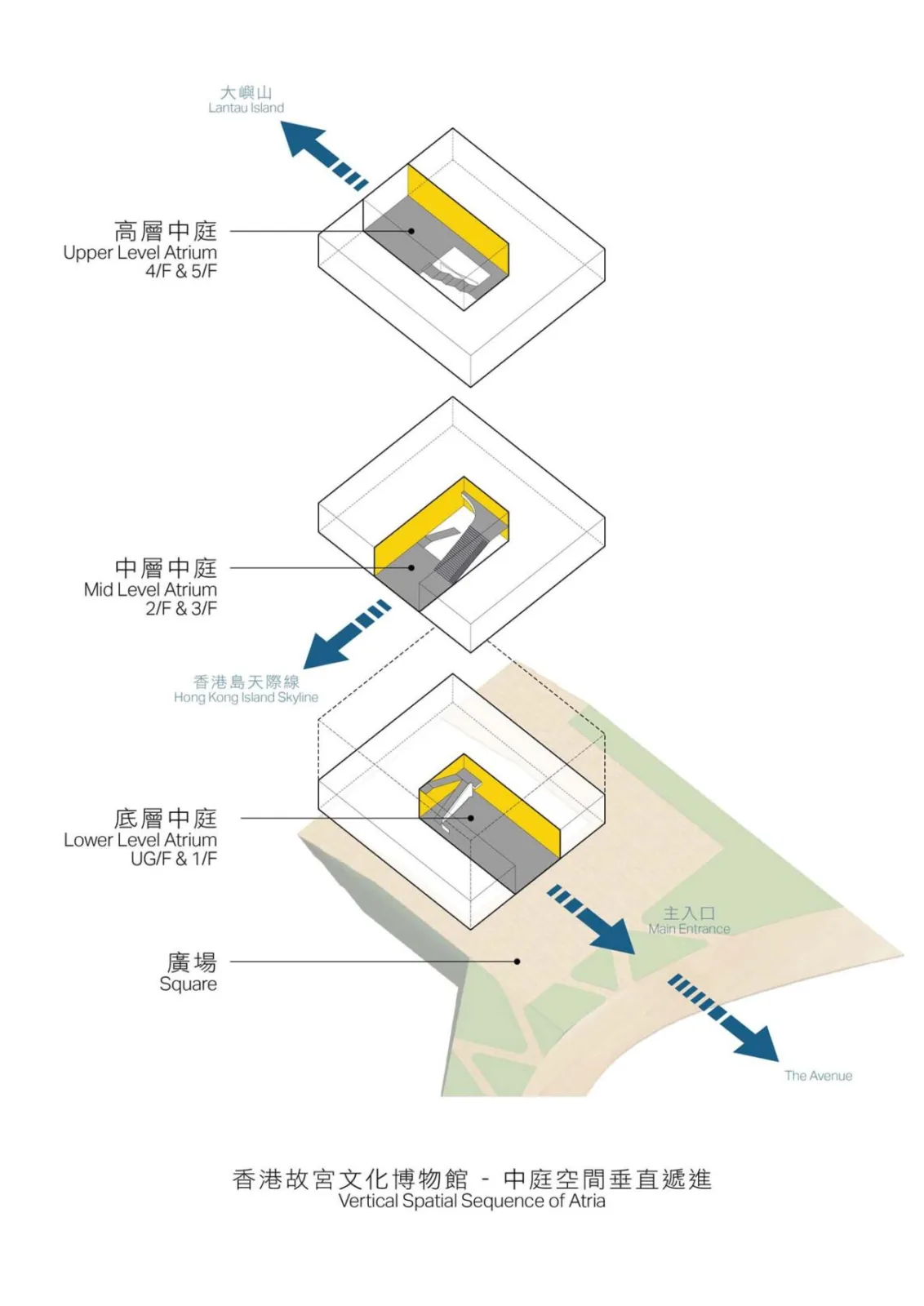
△ Analysis Chart
Project Information
Architect: Yan Xunqi Architectural Firm
Area: 30,000 m²
Project Year: 2022
Photographer: Edmon Leong, Hong Kong Palace Museum
Principal Architect: Yan Xunqi
Design Team: Yan Xunqi, CM Chan, Freddie Hai, Shi Haiwei, Liang Rui’an, Li Weilian, Wang Guangqiao, Li Qingyue, Yu Duolisi, Samuel Wong, Bong Yeung, Thomas Cheng, Elaine Tsui, Felix Chow, Pak-Chuen Chan, Zhu Wei
Structural Engineering: Arup Engineering Consultant
Building Equipment Engineering: Arup Engineering Consultant
Engineering Cost: Libi Limited
Landscape Design: Arup Engineering Consultant
Transportation Design: Arup Engineering Consultant
Security Consultant: Arup Engineering Consultant
Acoustic Design: Arup Engineering Consultant
Construction Unit: China State Construction Engineering (Hong Kong) Co., Ltd
Construction Party: China State Construction Engineering (Hong Kong) Co., Ltd
Location: Hong Kong, China















Must log in before commenting!
Sign Up