
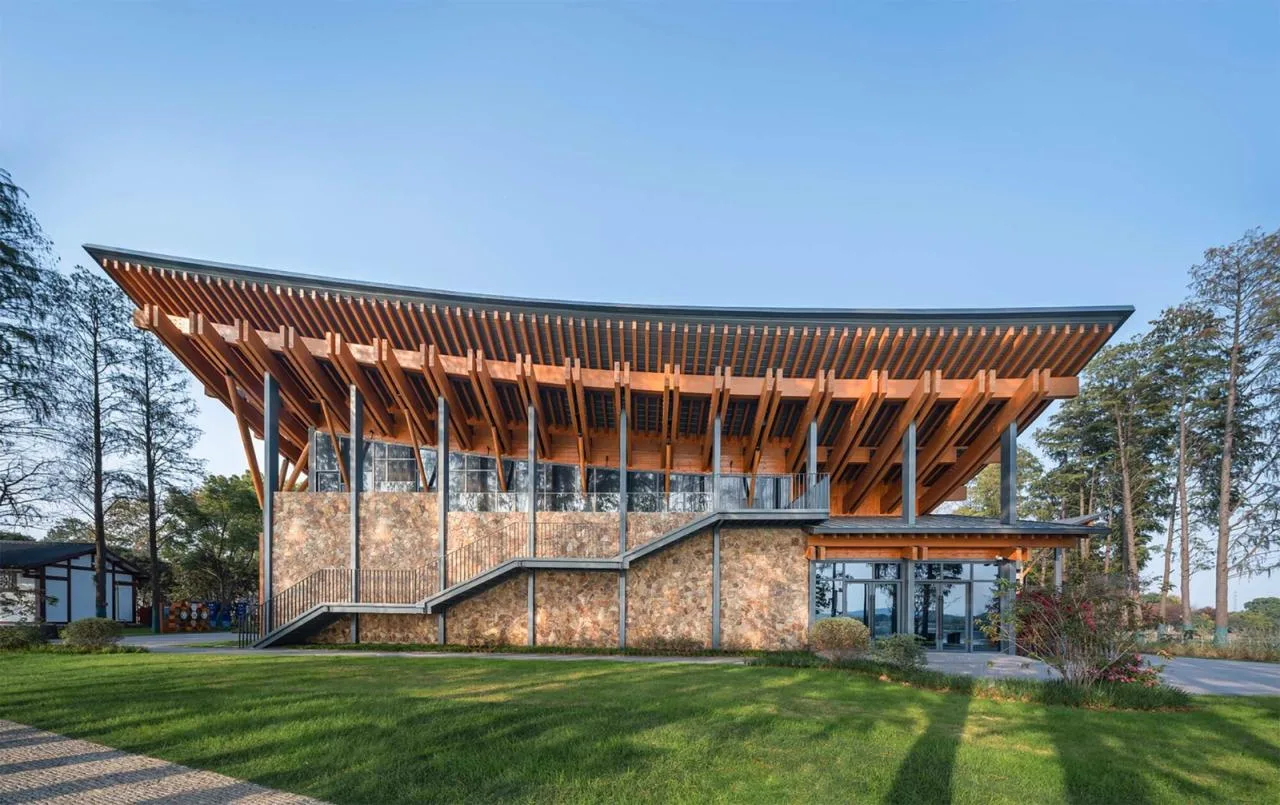
Wetlands are invaluable natural resources that play a crucial role in combating climate change, safeguarding water resources, preserving biodiversity, reducing disaster risks, and enhancing carbon sequestration. Since the World Wetlands Convention came into effect 51 years ago, it has seen 172 contracting parties and recognized 43 wetland cities globally. China leads with 13 designated wetland cities, the highest number worldwide.
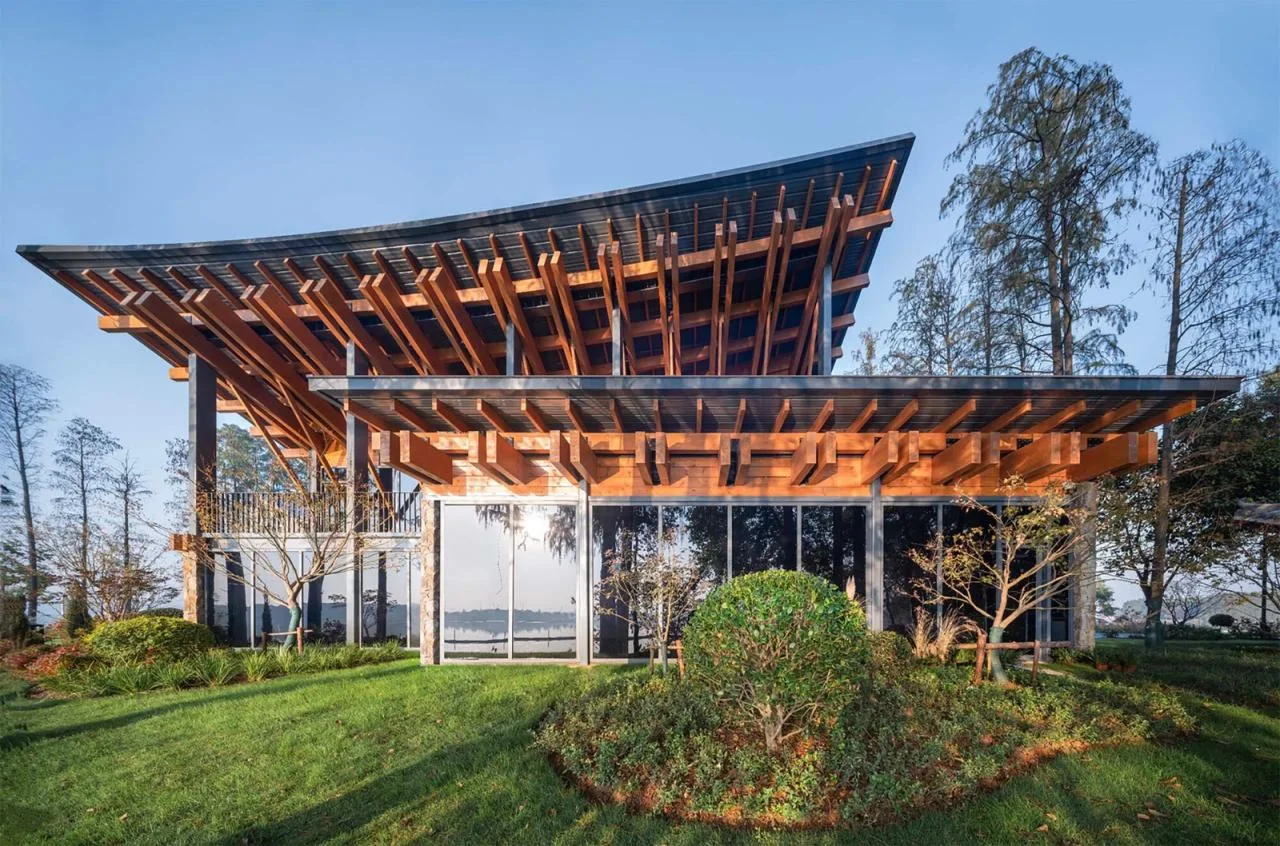
In celebration of this milestone, the 30th Anniversary Achievement Exhibition Hall of China’s Implementation of the Wetland Convention was constructed on Luoyan Island in Donghu Lake. In February 2021, China began preparations to host the 14th Conference of the Parties to the Convention on Wetlands in Wuhan, a city renowned for its numerous lakes. This exhibition hall served as a key supporting venue for the conference, situated prominently in Donghu Lake.
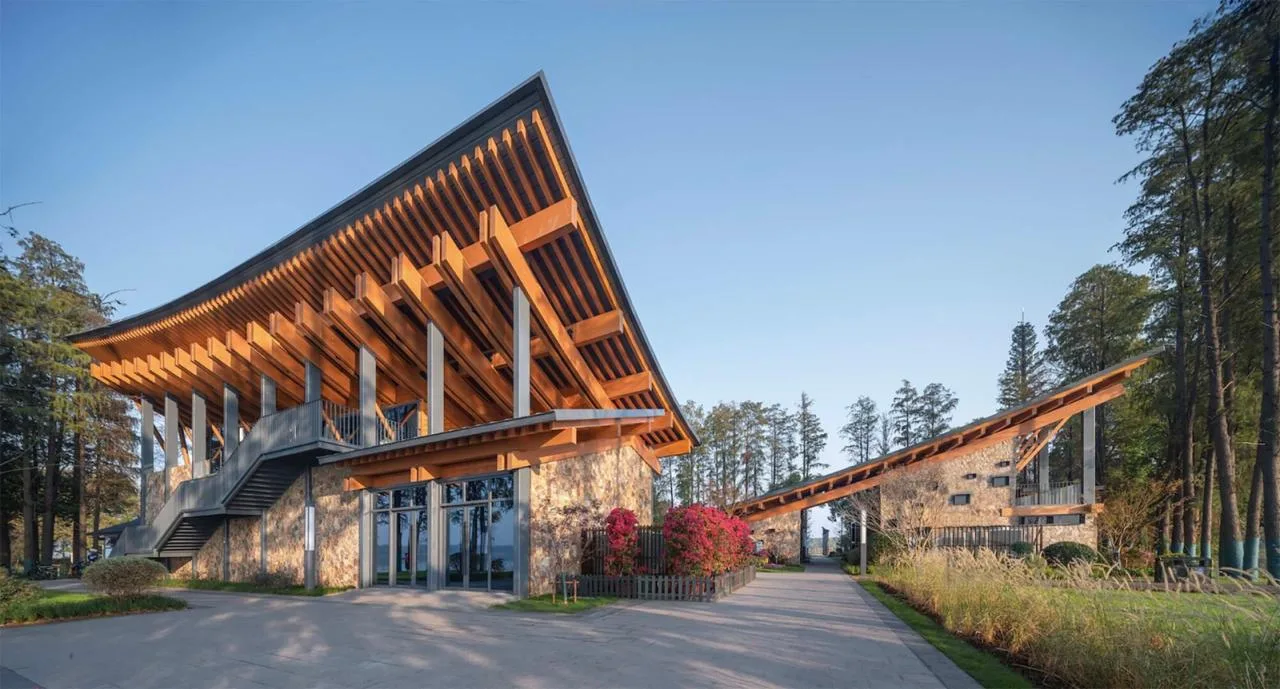
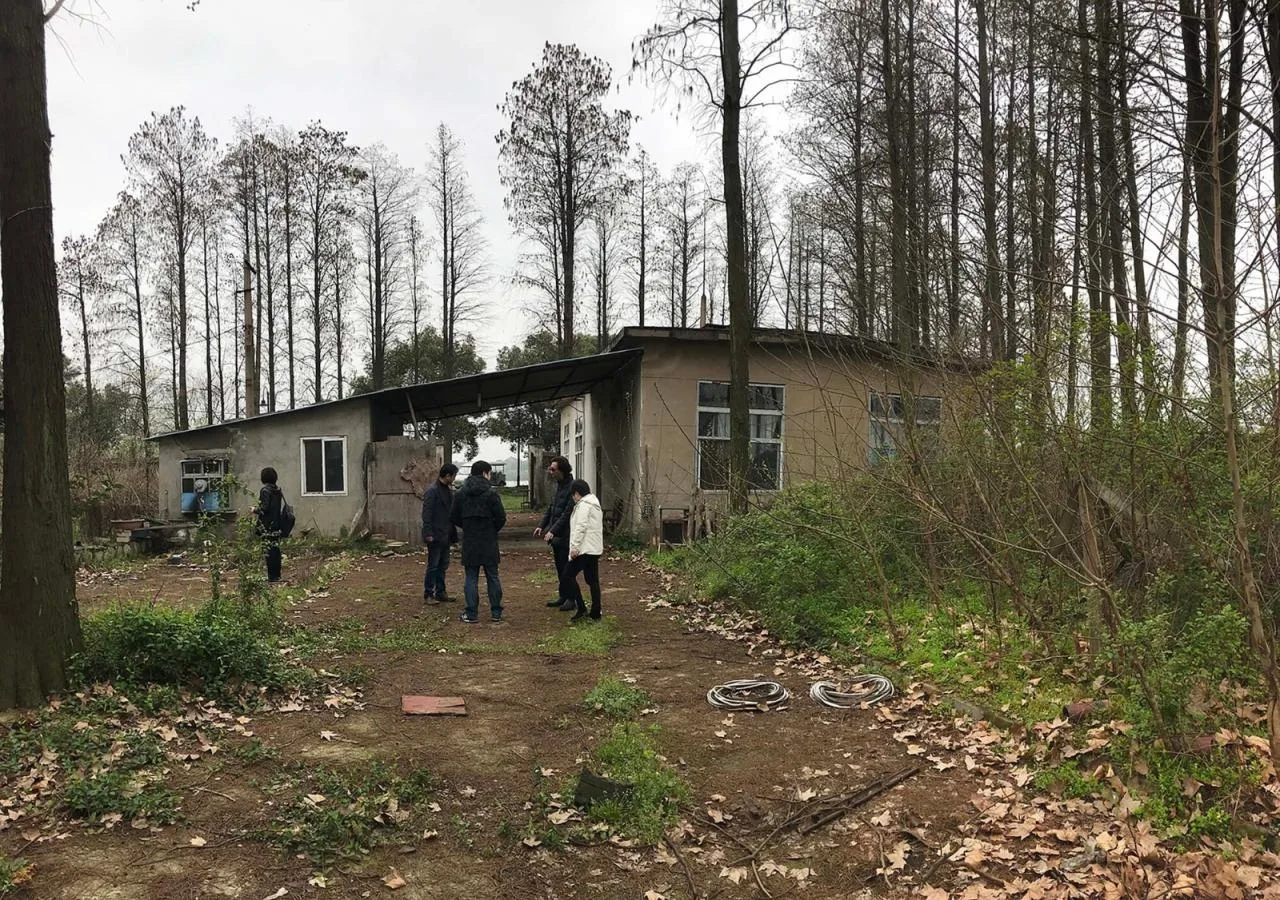
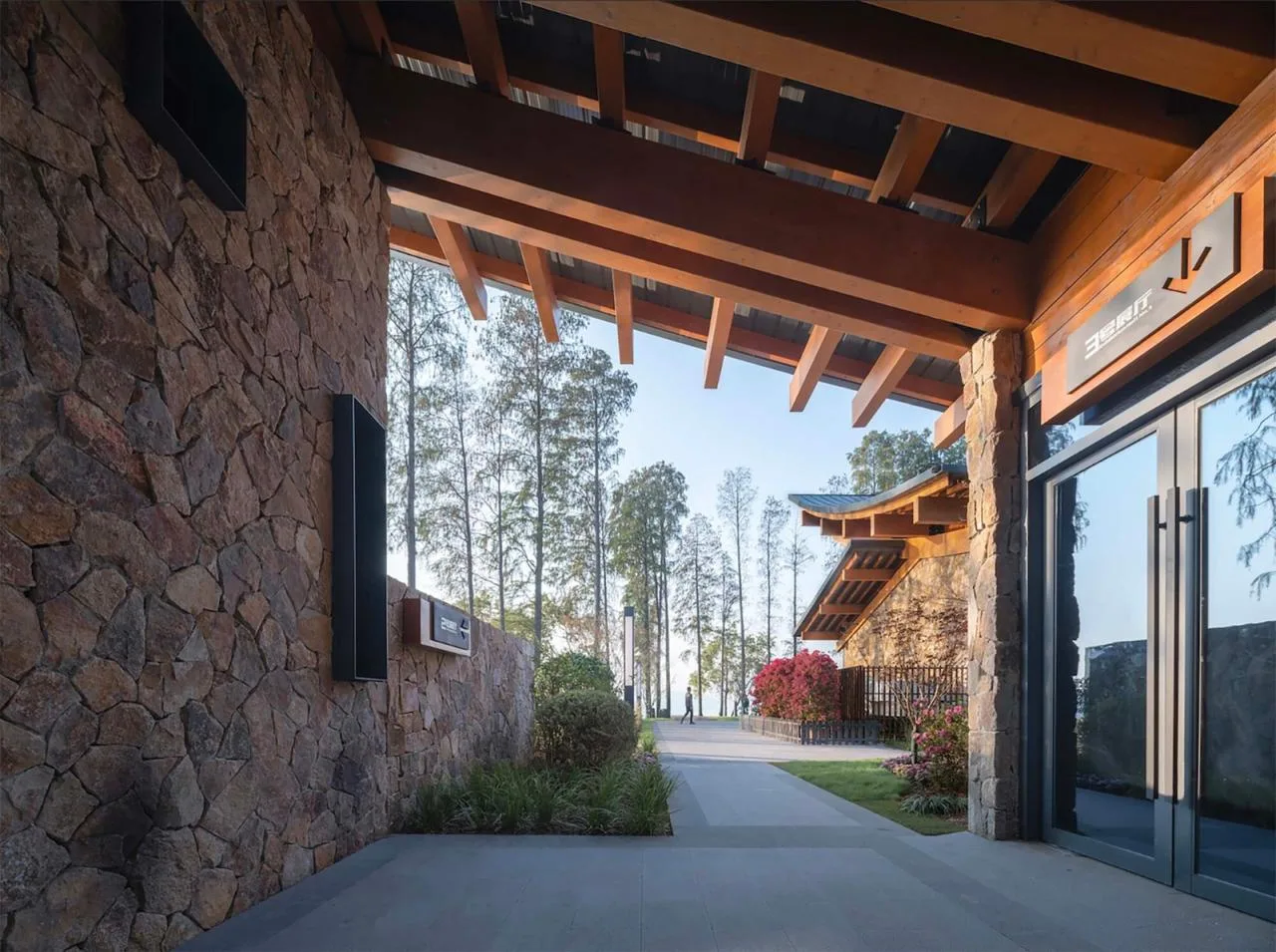
According to the protection policies for the core scenic area of Donghu Scenic Area, construction of non-scenic facilities is strictly prohibited. Controls are enforced on the height, color, volume, and style of new buildings. Donghu Lake exemplifies typical Chinese wetlands, and Luoyan Scenic Area, where this project is located, boasts unique landscapes and abundant bird species, making it a concentrated hub for wetland resources. The exhibition hall’s location perfectly aligns with its content. After multiple discussions, stakeholders agreed to transform a cluster of abandoned buildings on Luoyan Island through minimal intervention.
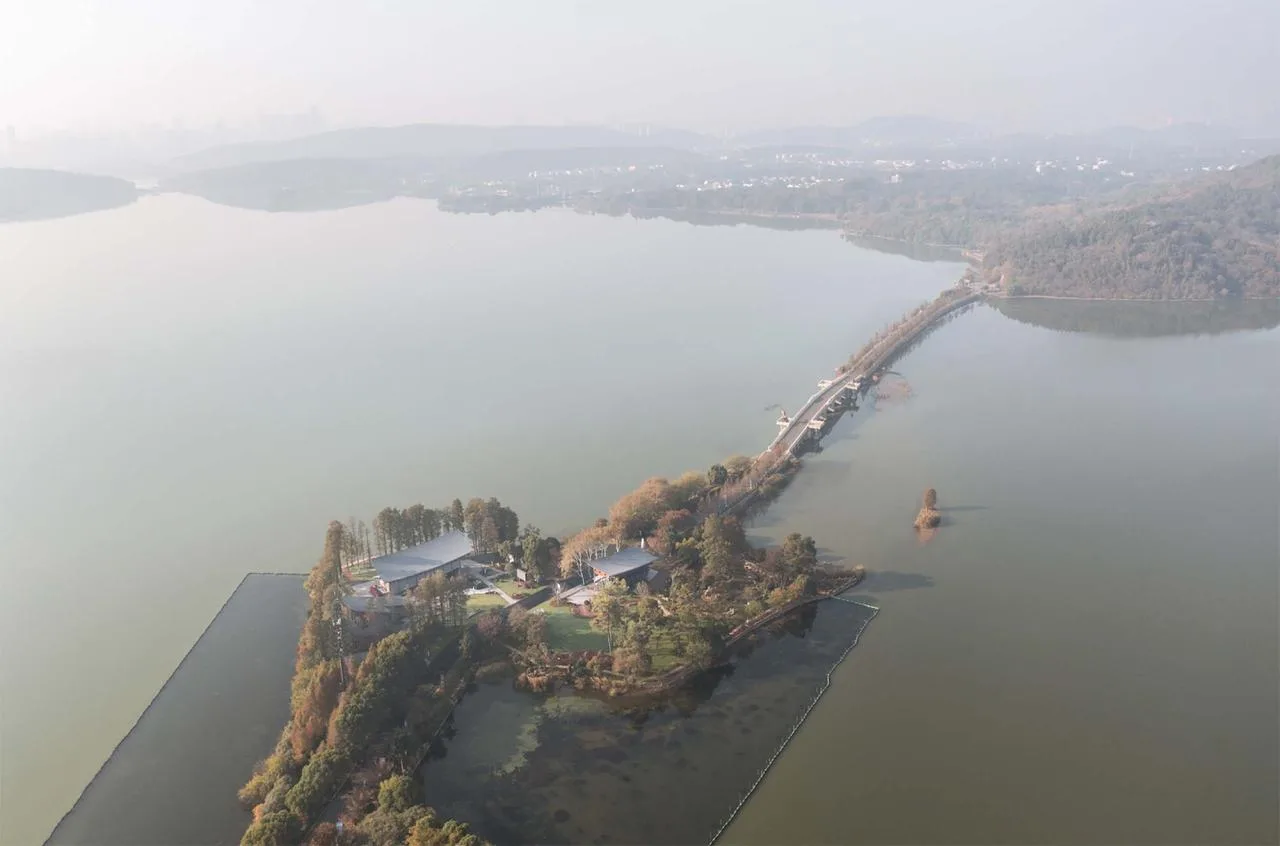
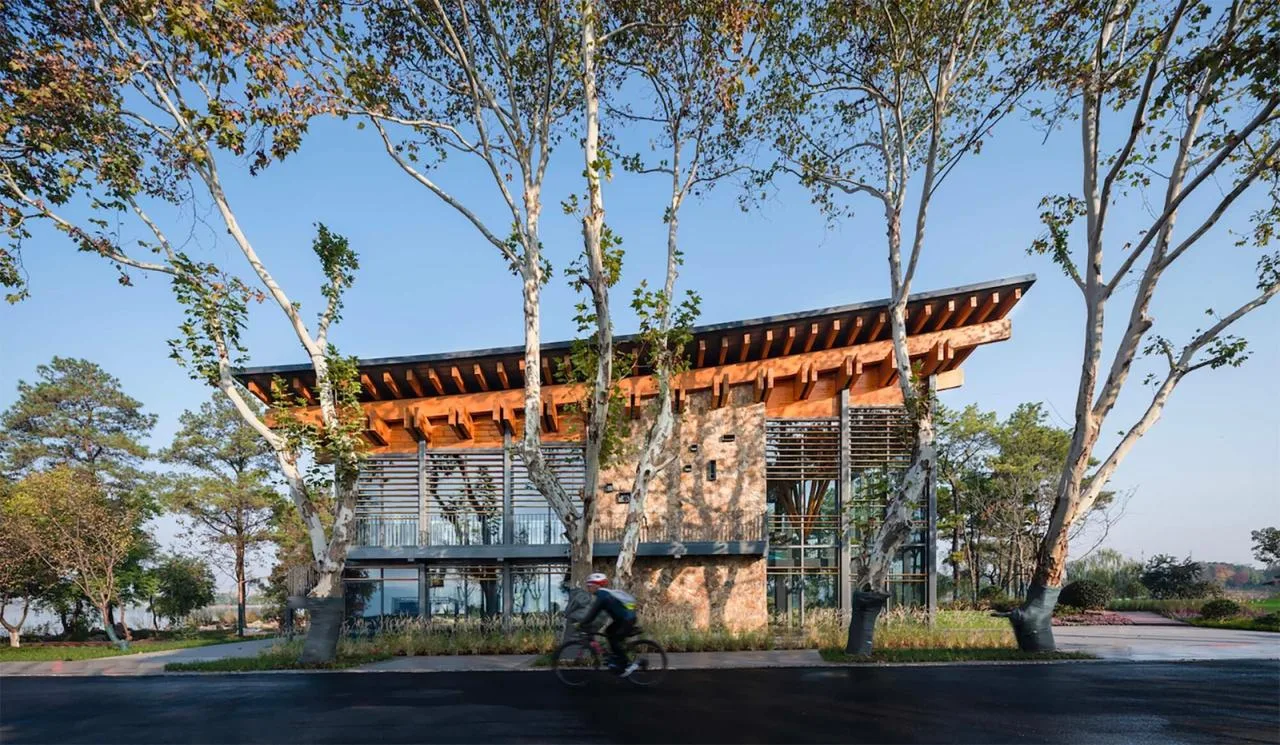
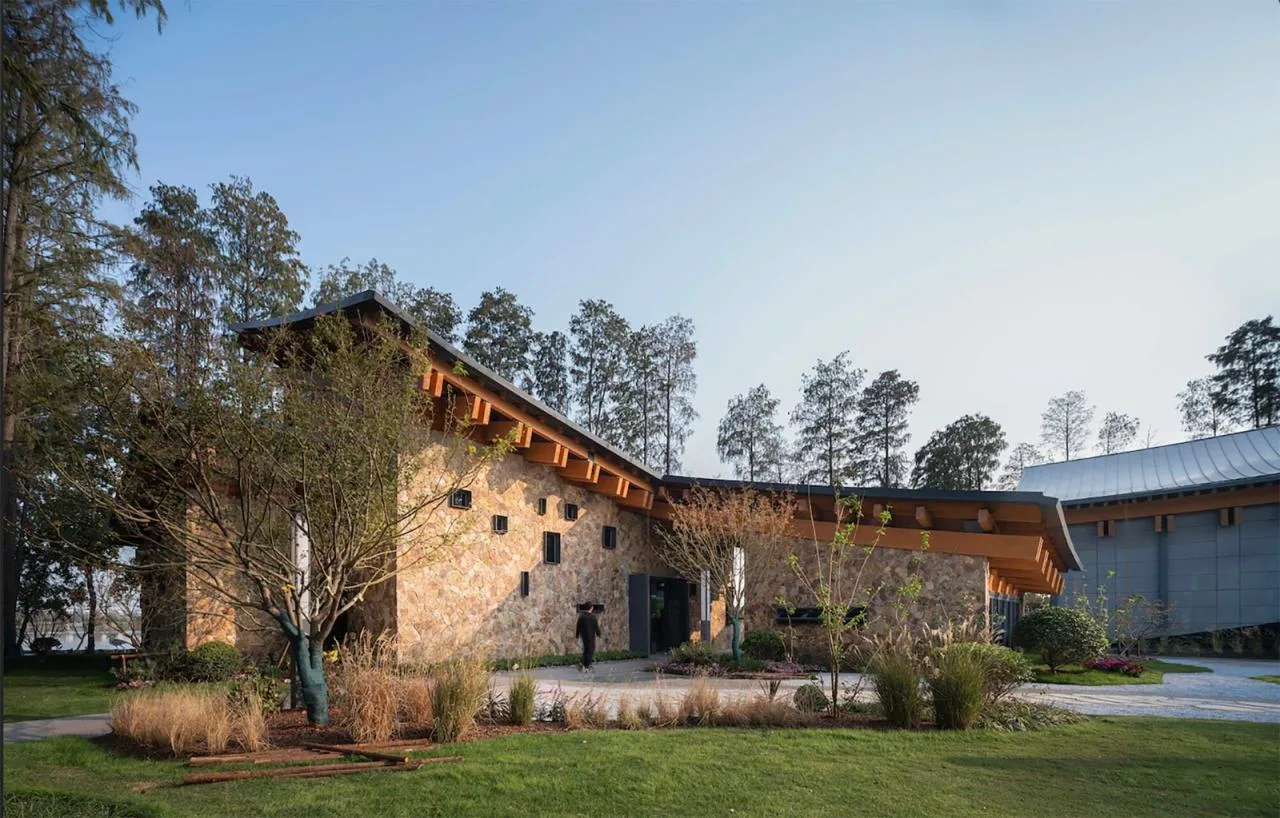
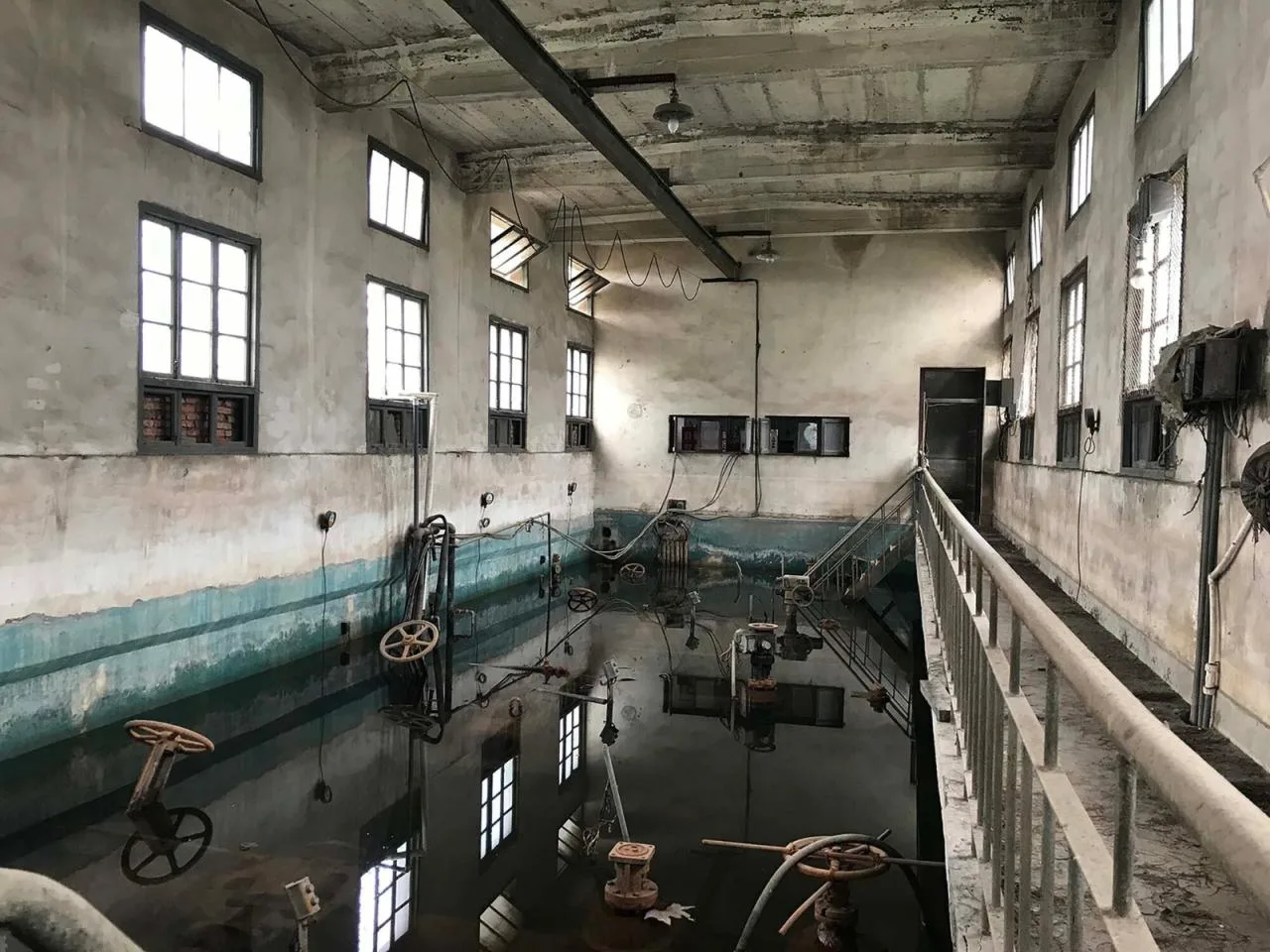
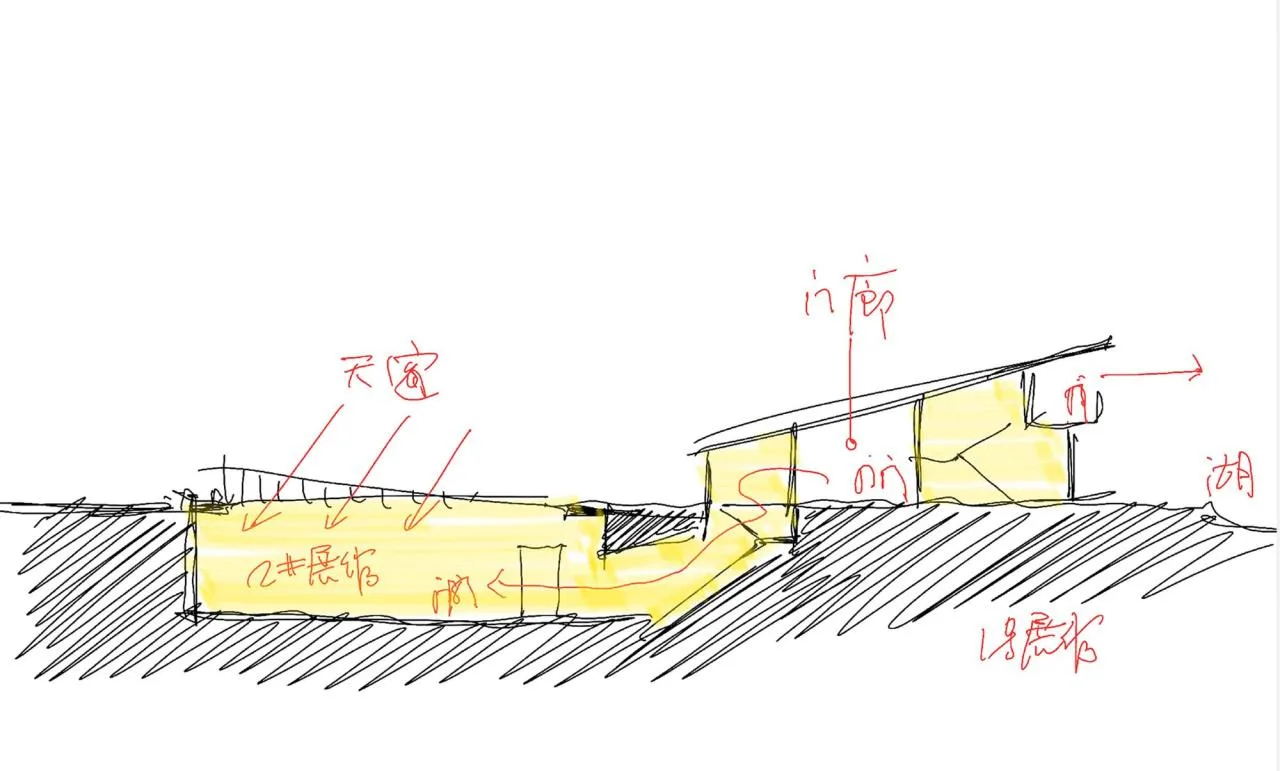
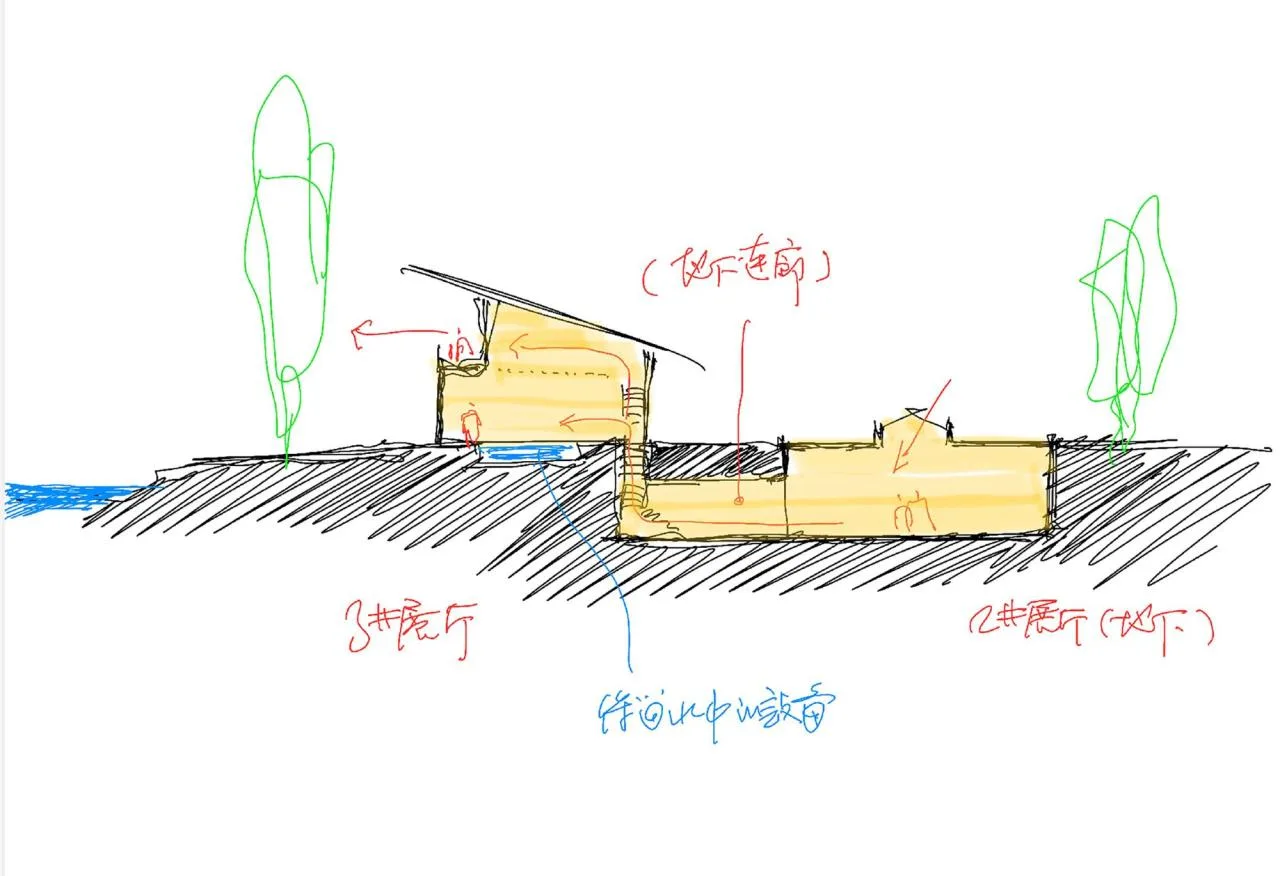
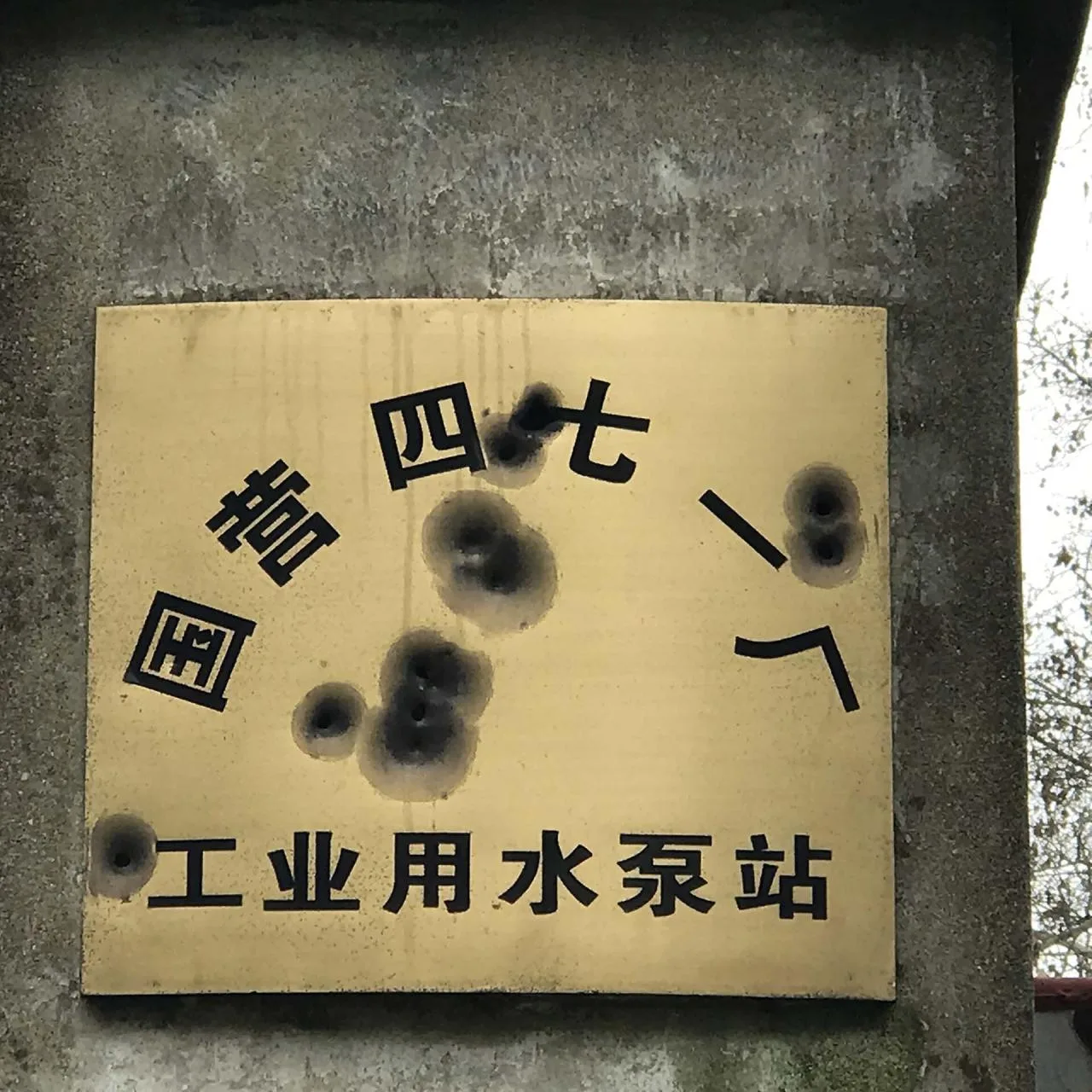
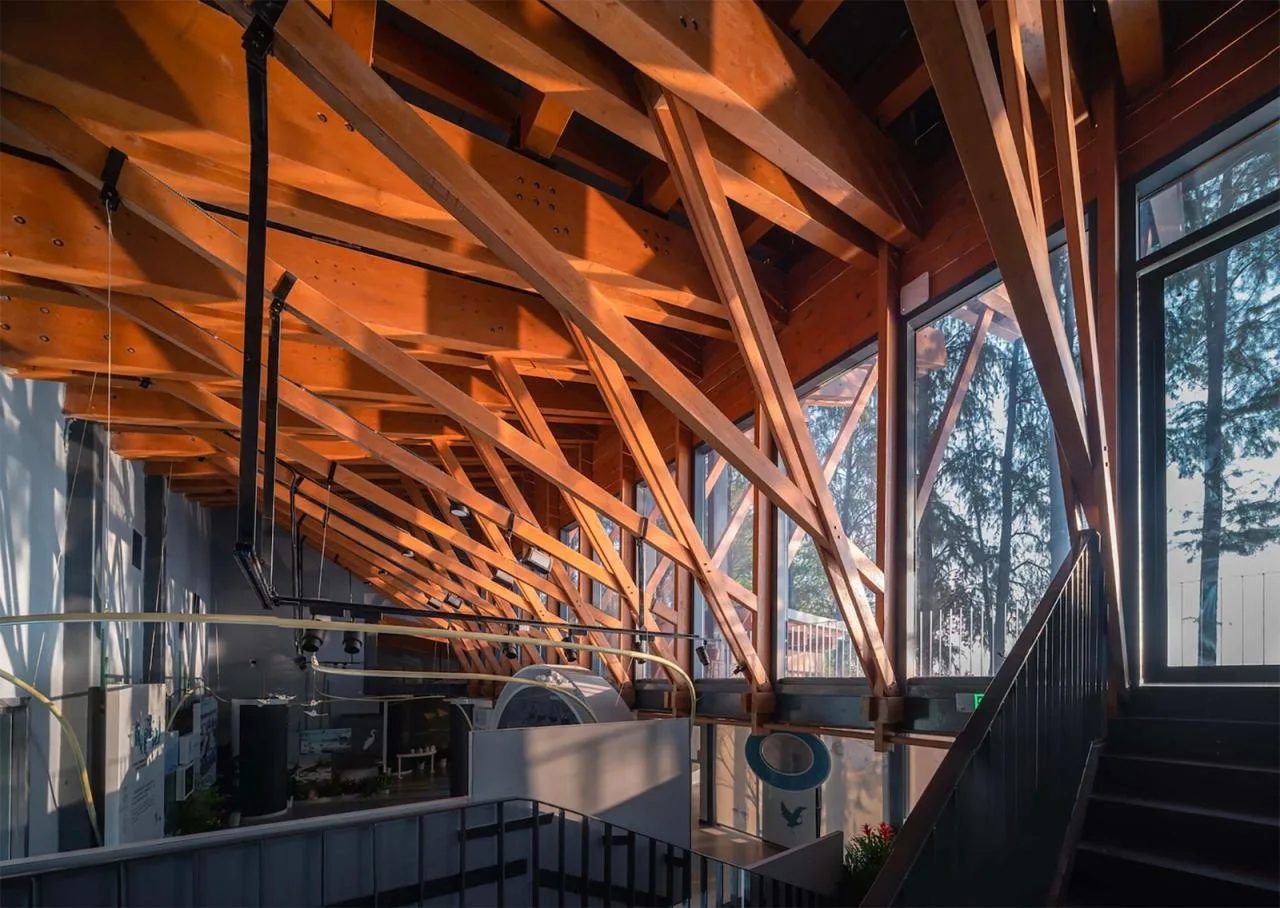
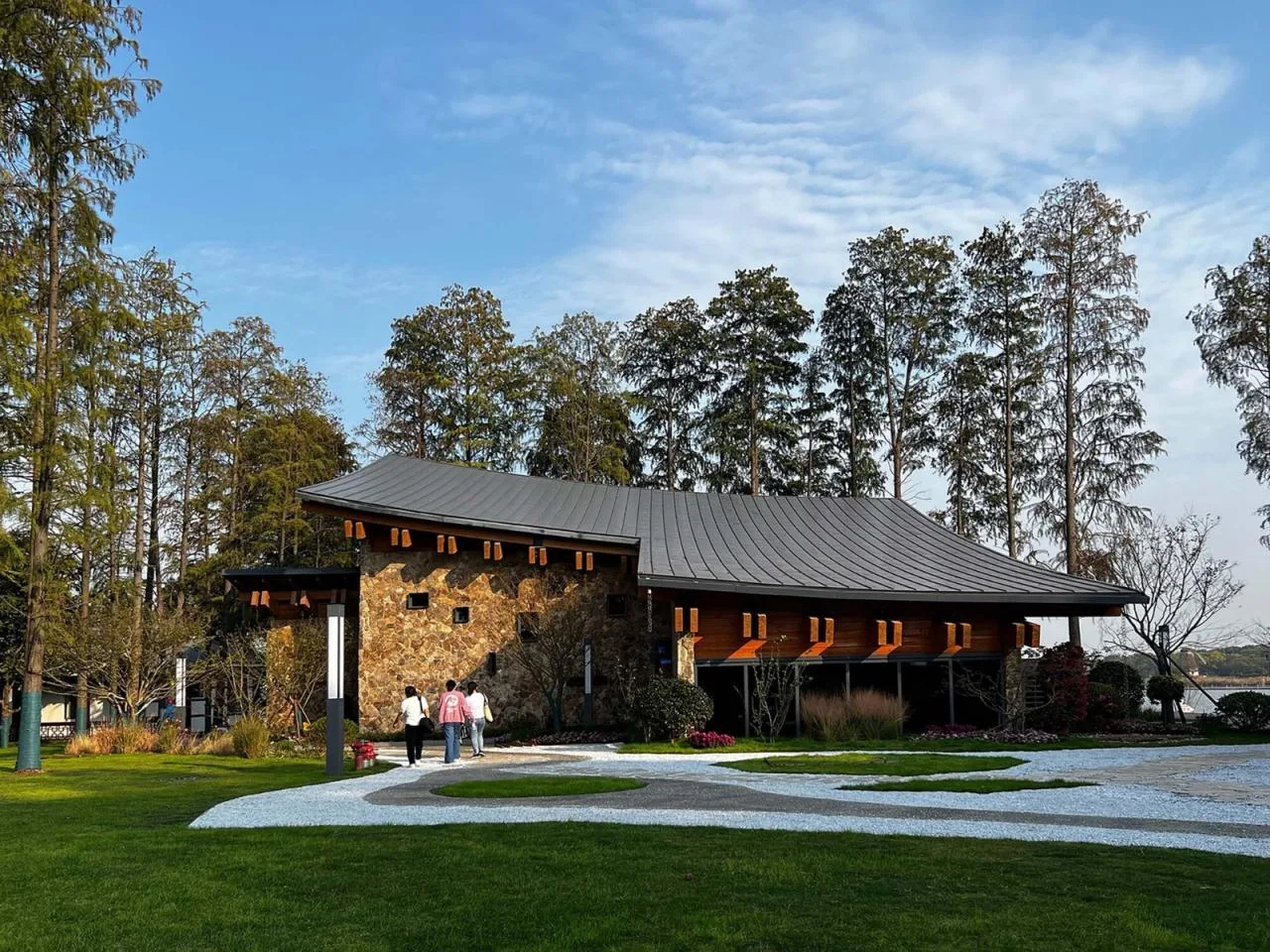
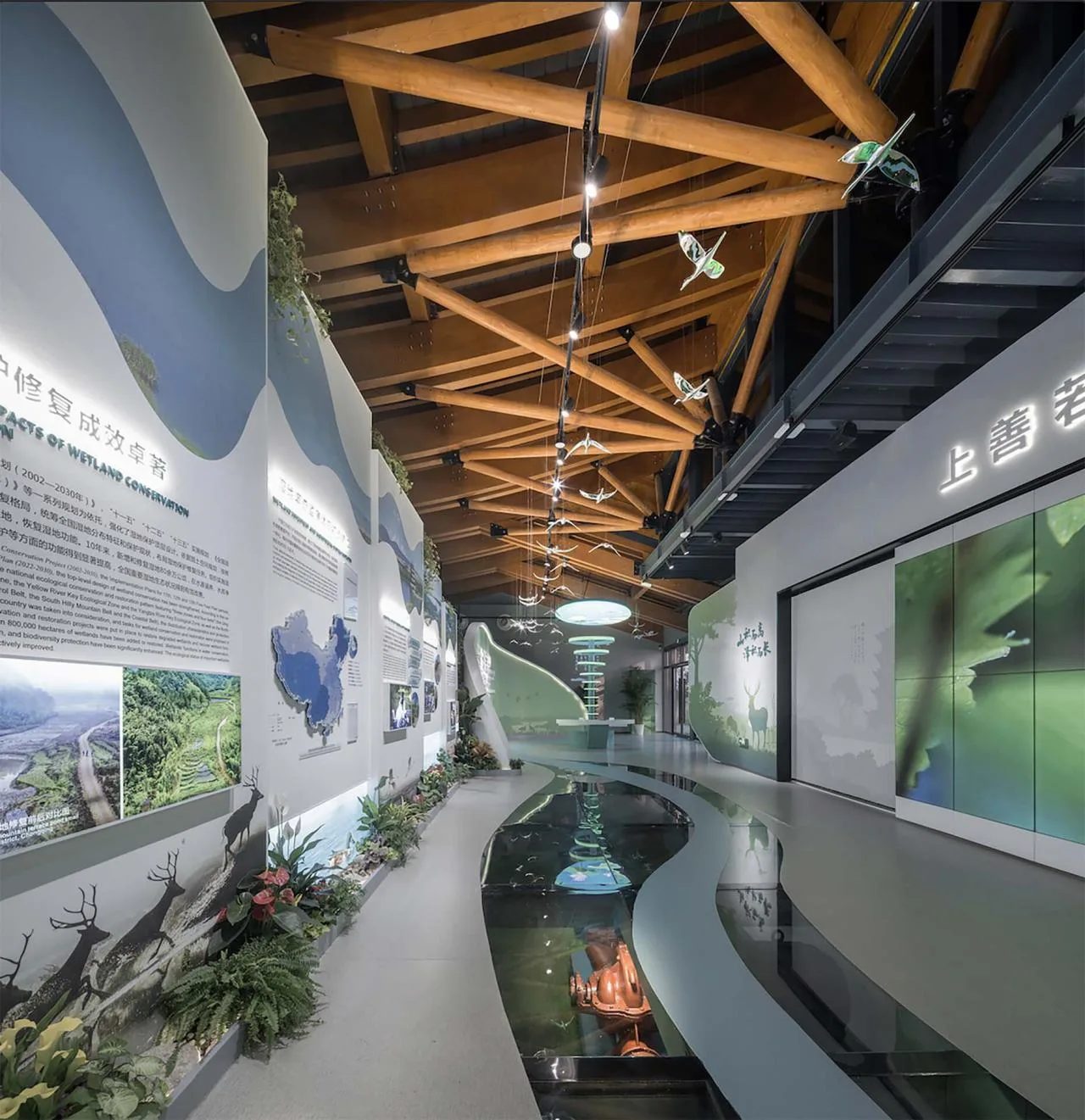
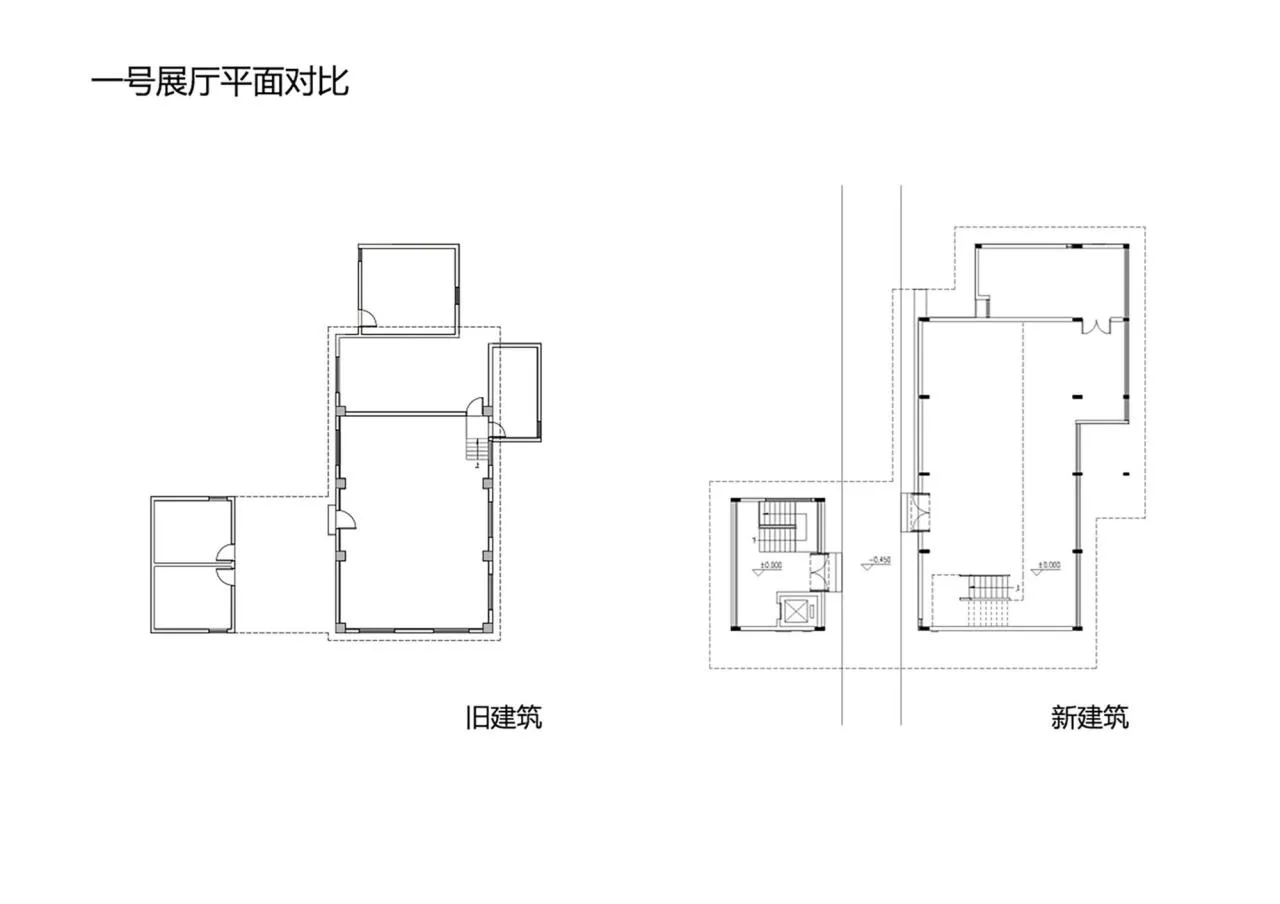
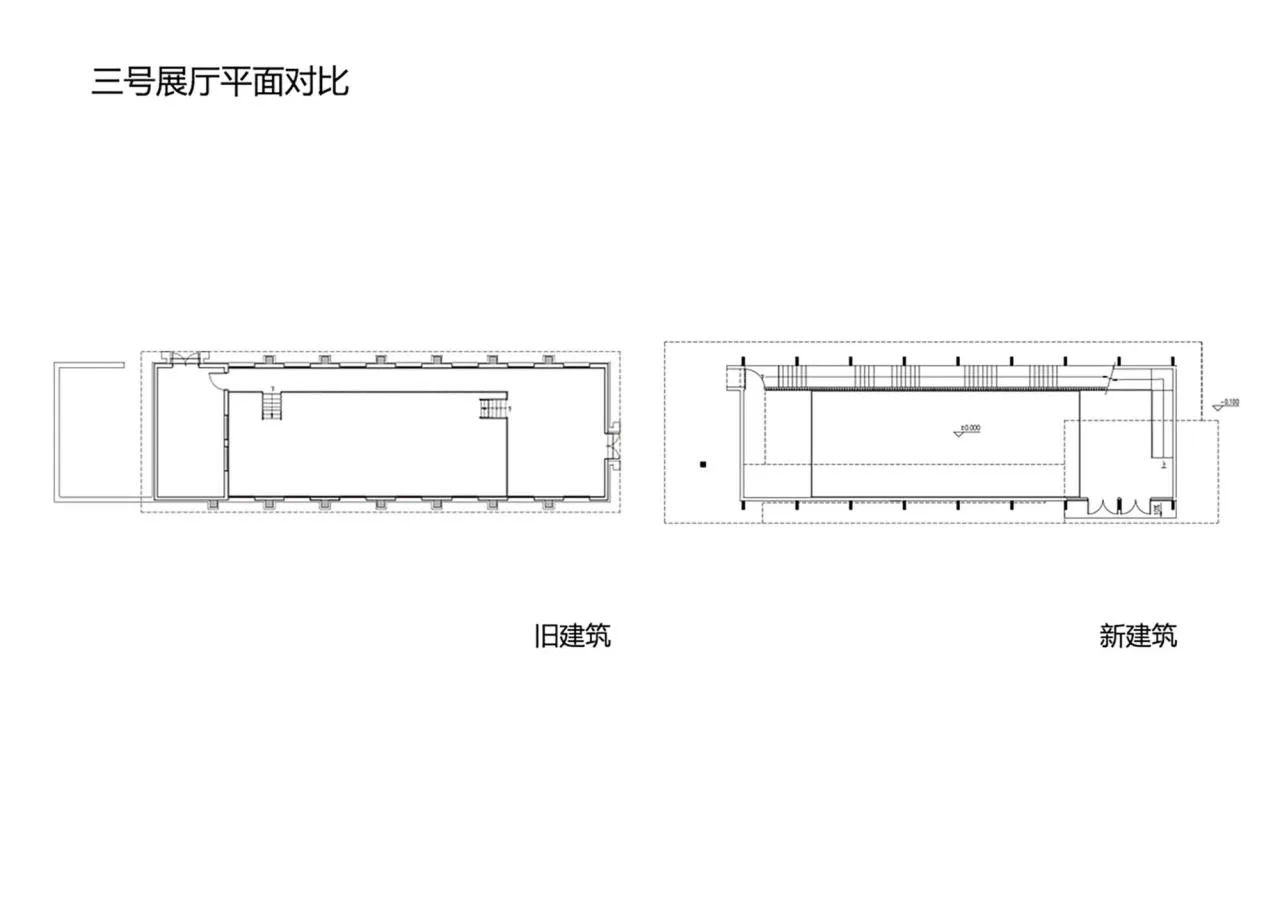
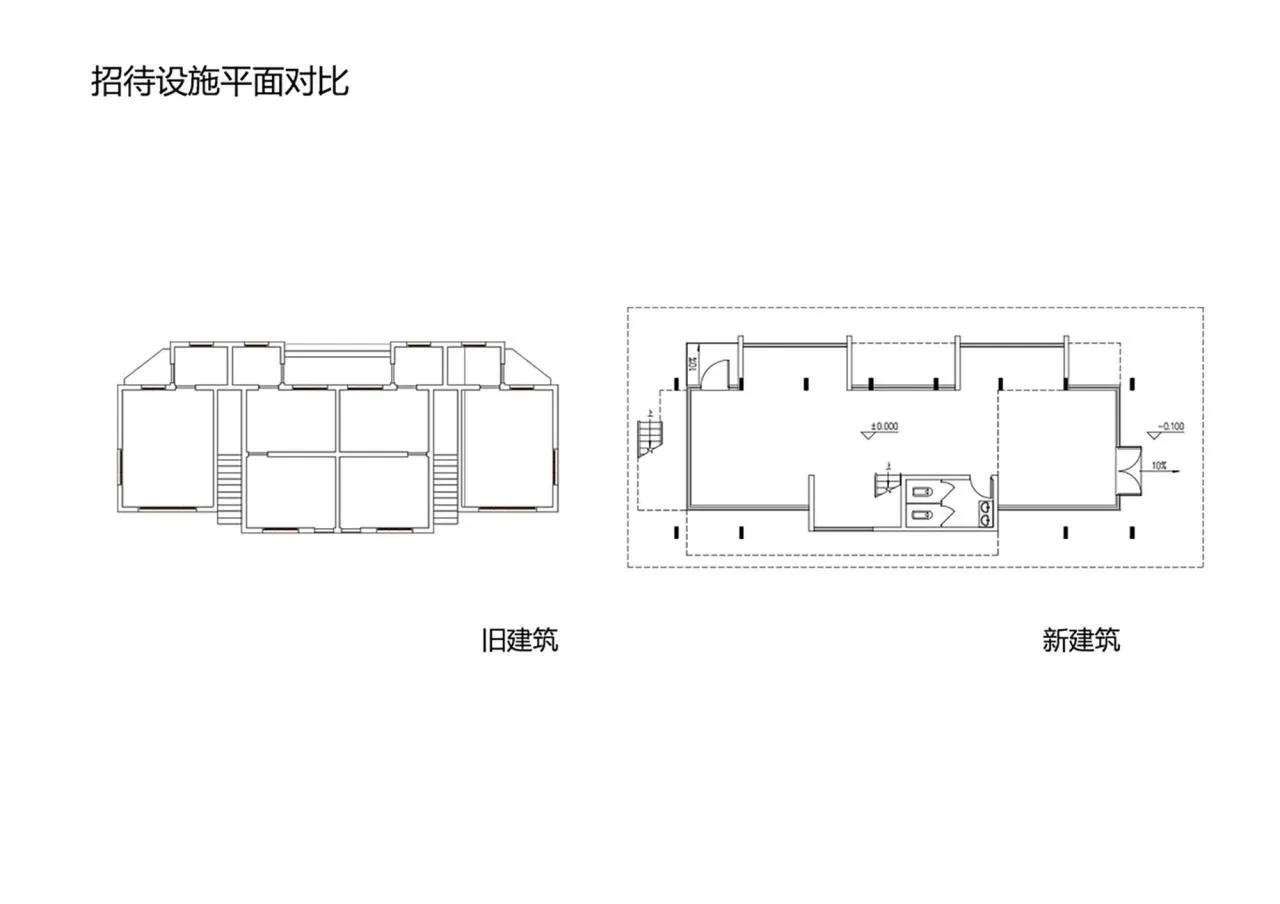
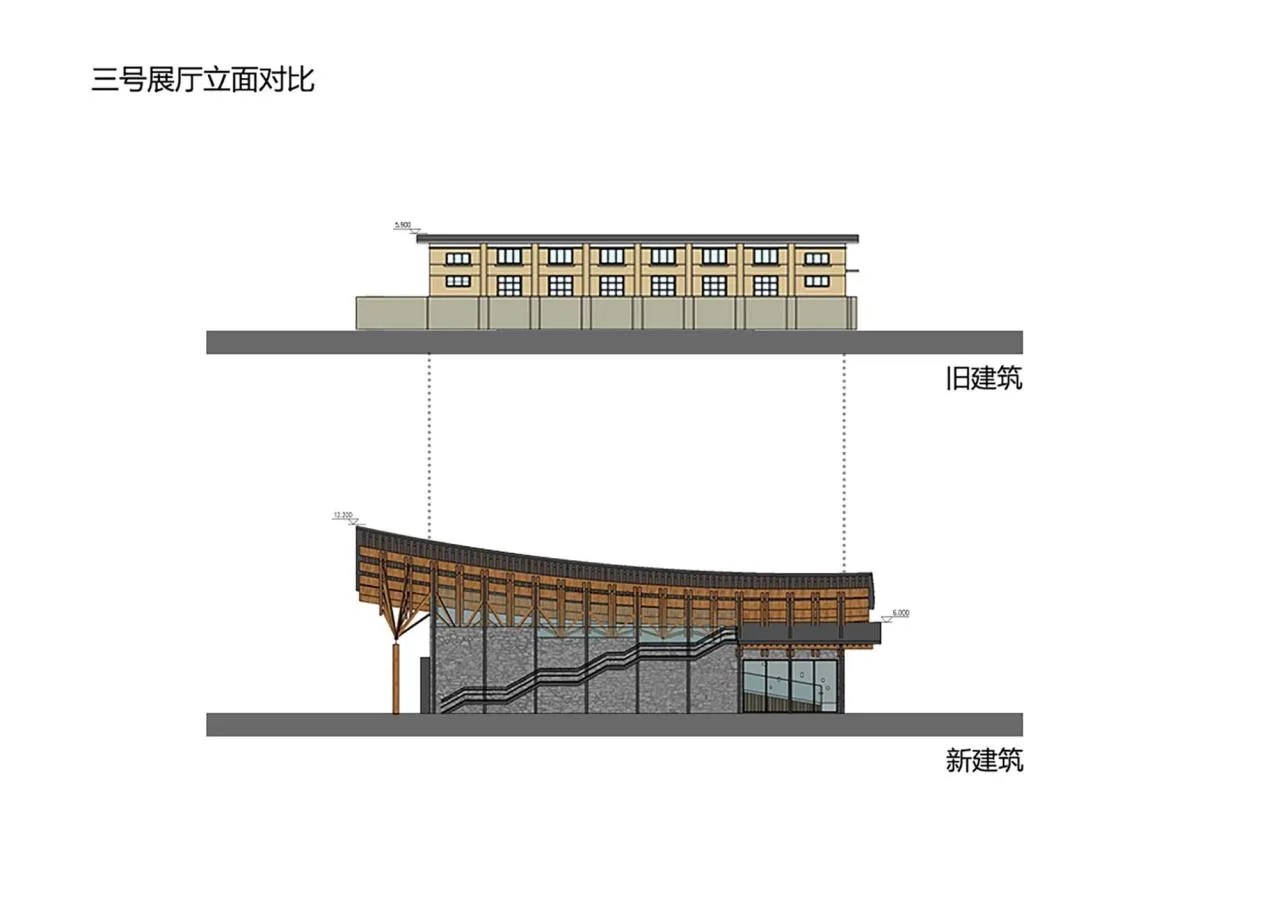
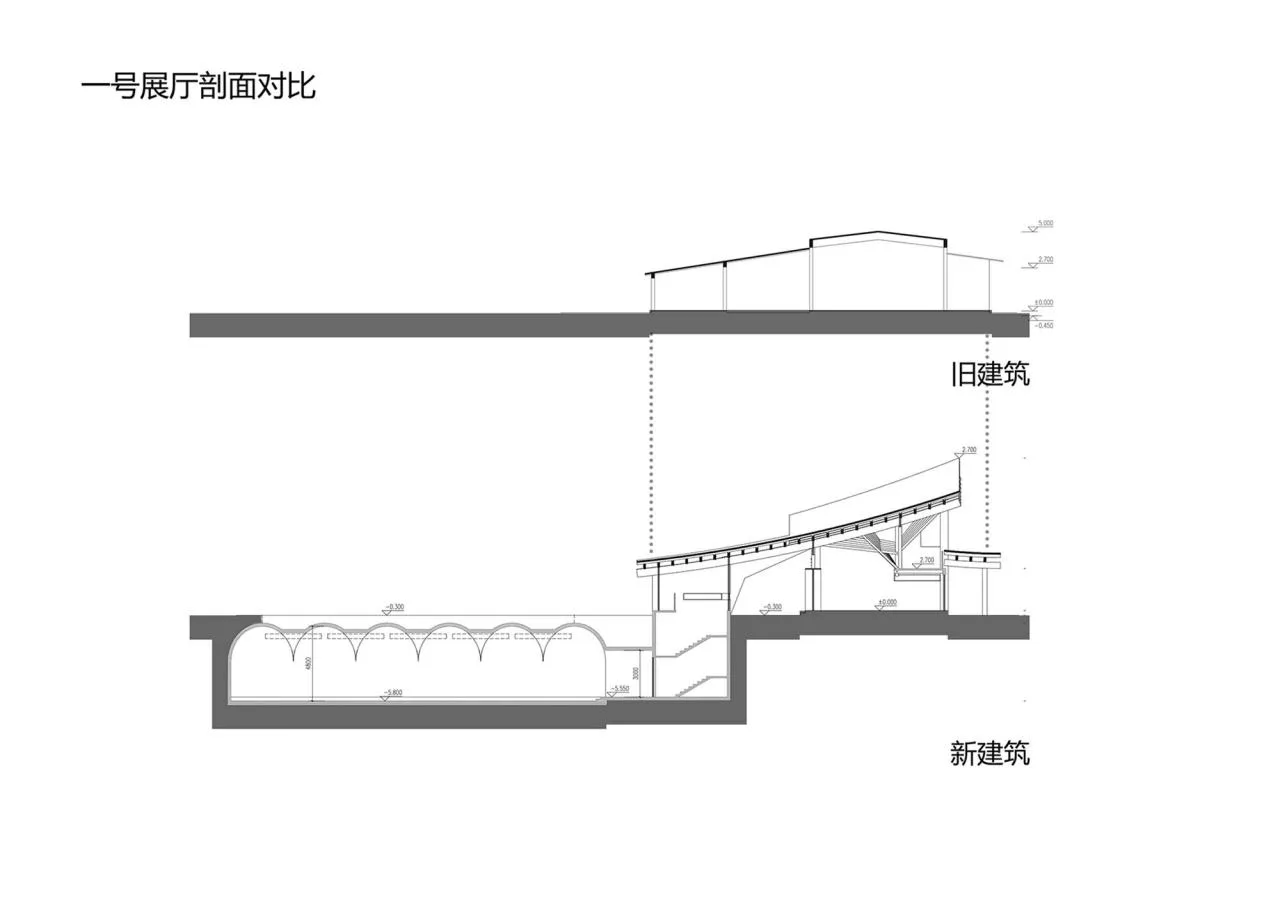
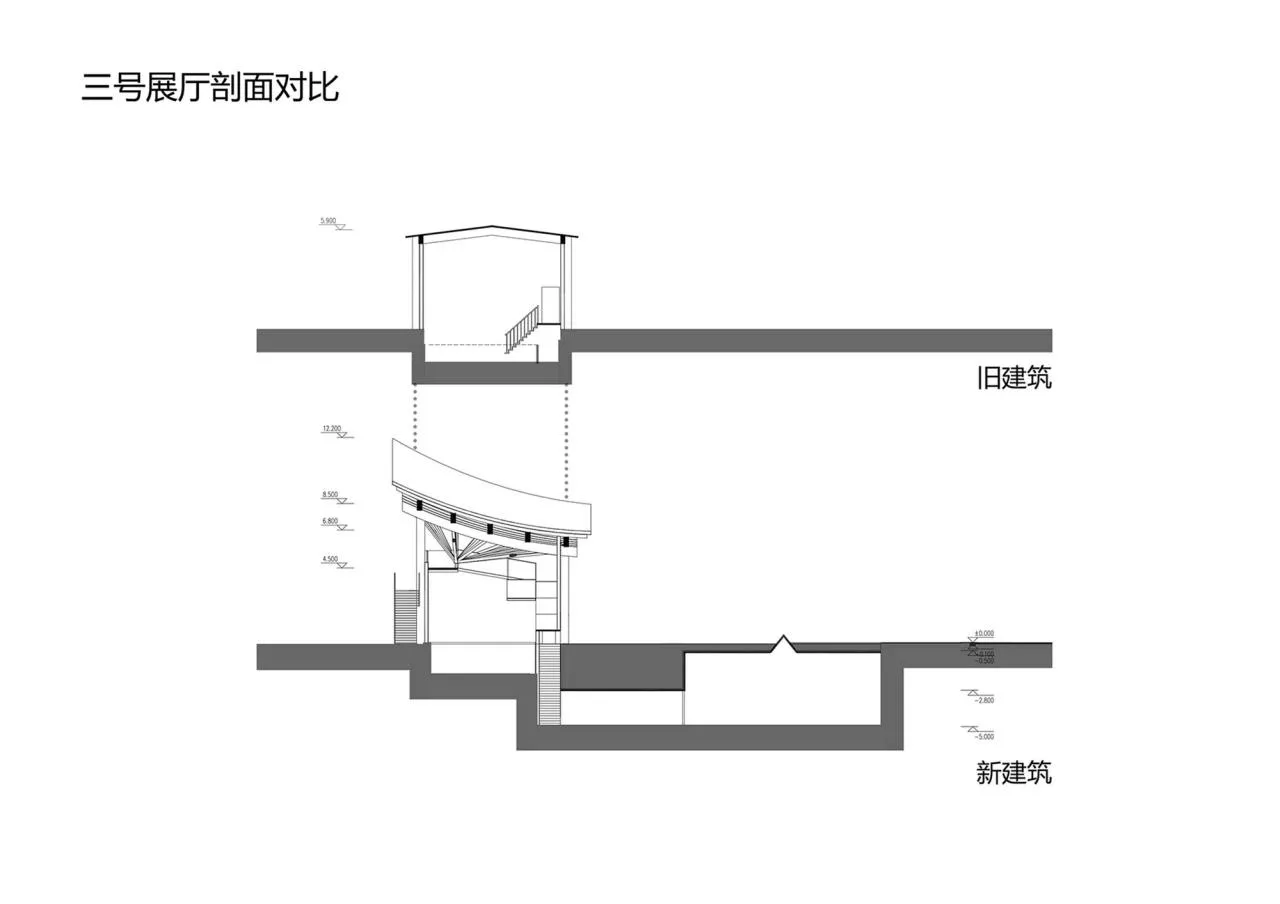
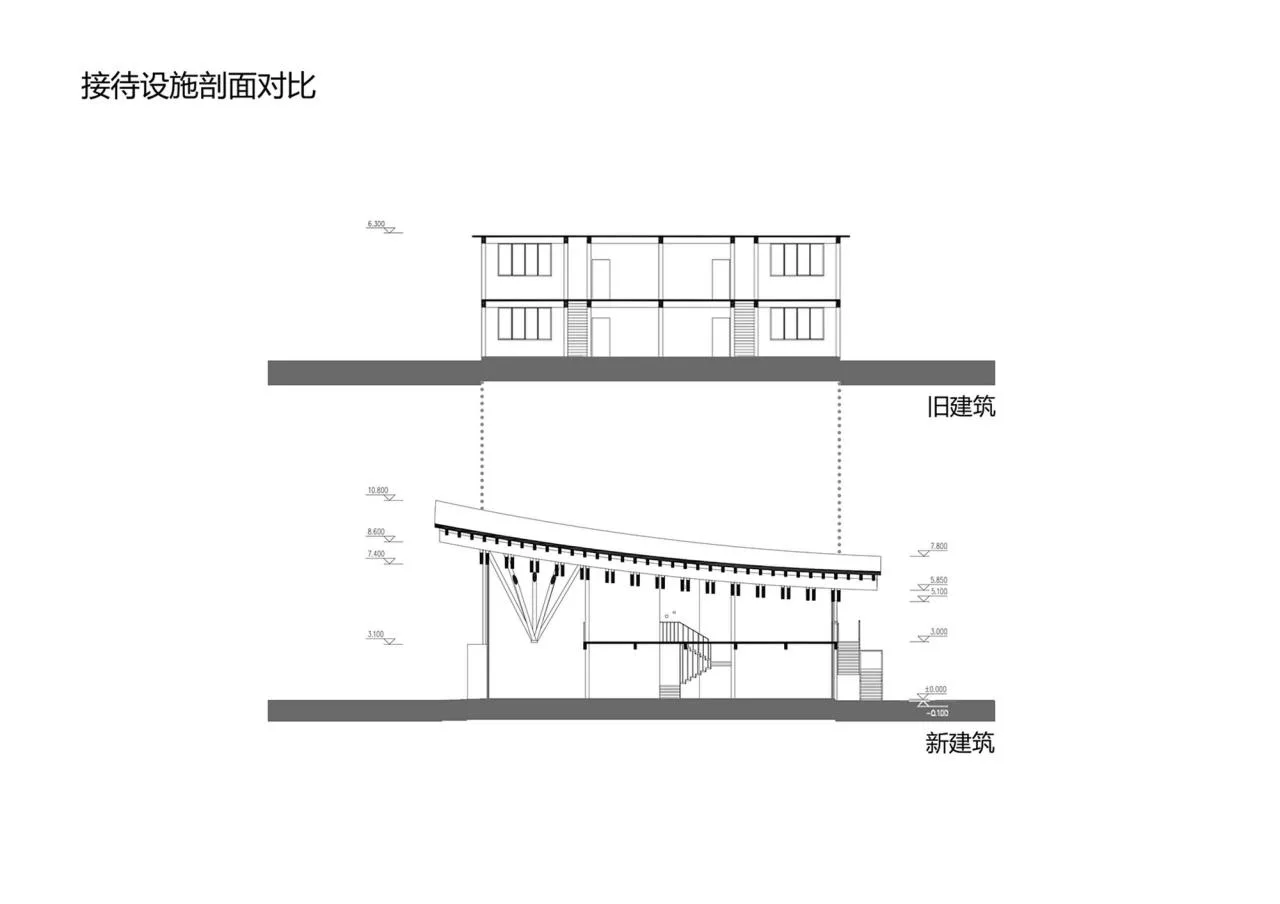
The site was originally an industrial water plant, featuring a water pump room, staff canteen, kitchen, and dormitory. Although abandoned over 20 years ago, the buildings and mechanical equipment remain intact. Our design aims to revitalize this old factory, preserving its historical memory while integrating new cultural and exhibition functions. The exterior walls and roofs were redesigned, and the exhibition route reconfigured. As the original building was too small to house all exhibits, a 7-meter-deep basement was excavated at the rear, serving as a multimedia exhibition hall. The tall, spacious factory interior did not require its full height for display purposes, so a mezzanine facing the large lake was added, creating a contemporary exhibition space combining text, artifacts, and multimedia across ground, mezzanine, and underground levels. From its industrial origin to abandonment for environmental protection, the old water plant now thrives again, embodying sustainability through wetlands.
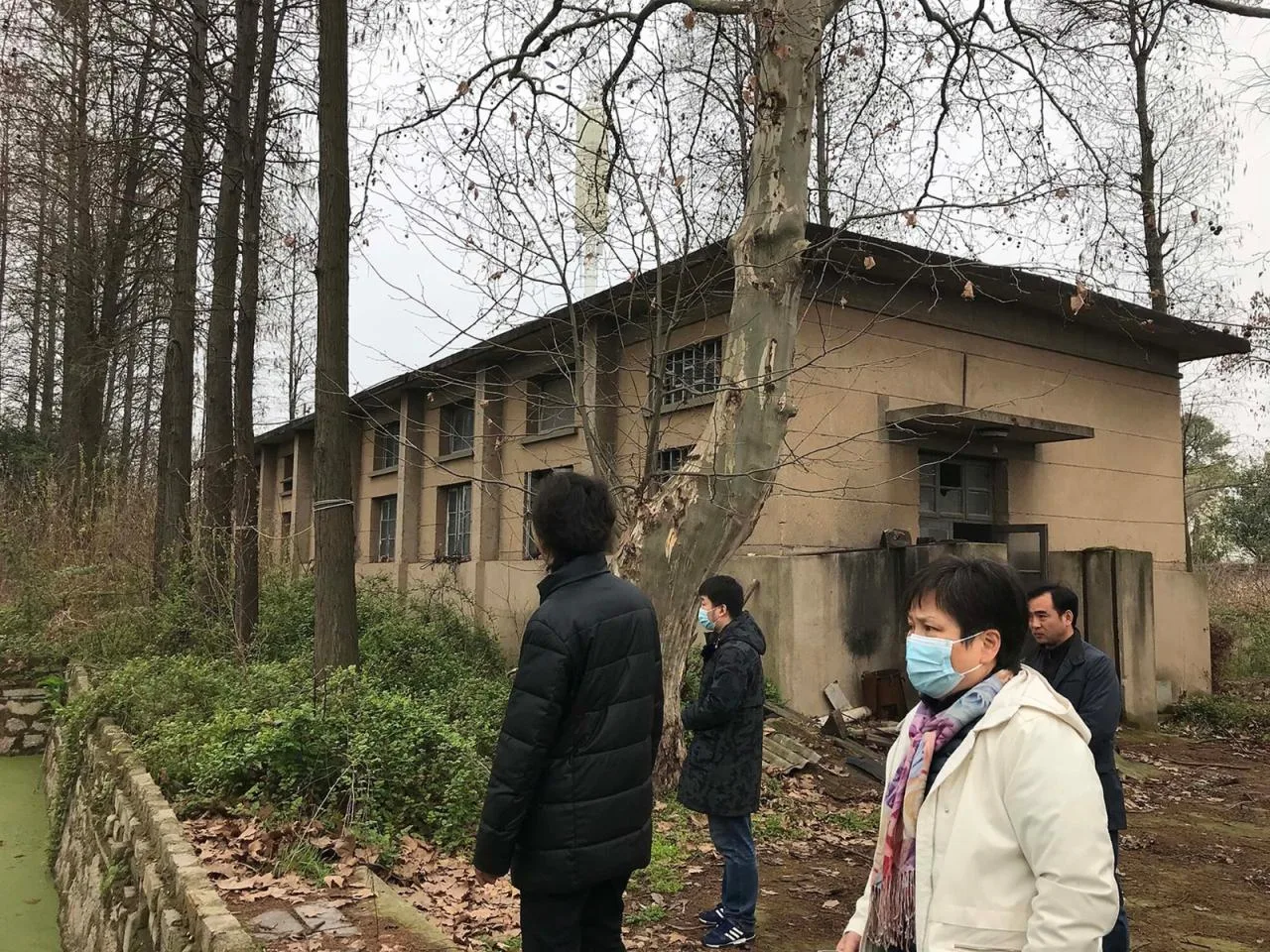
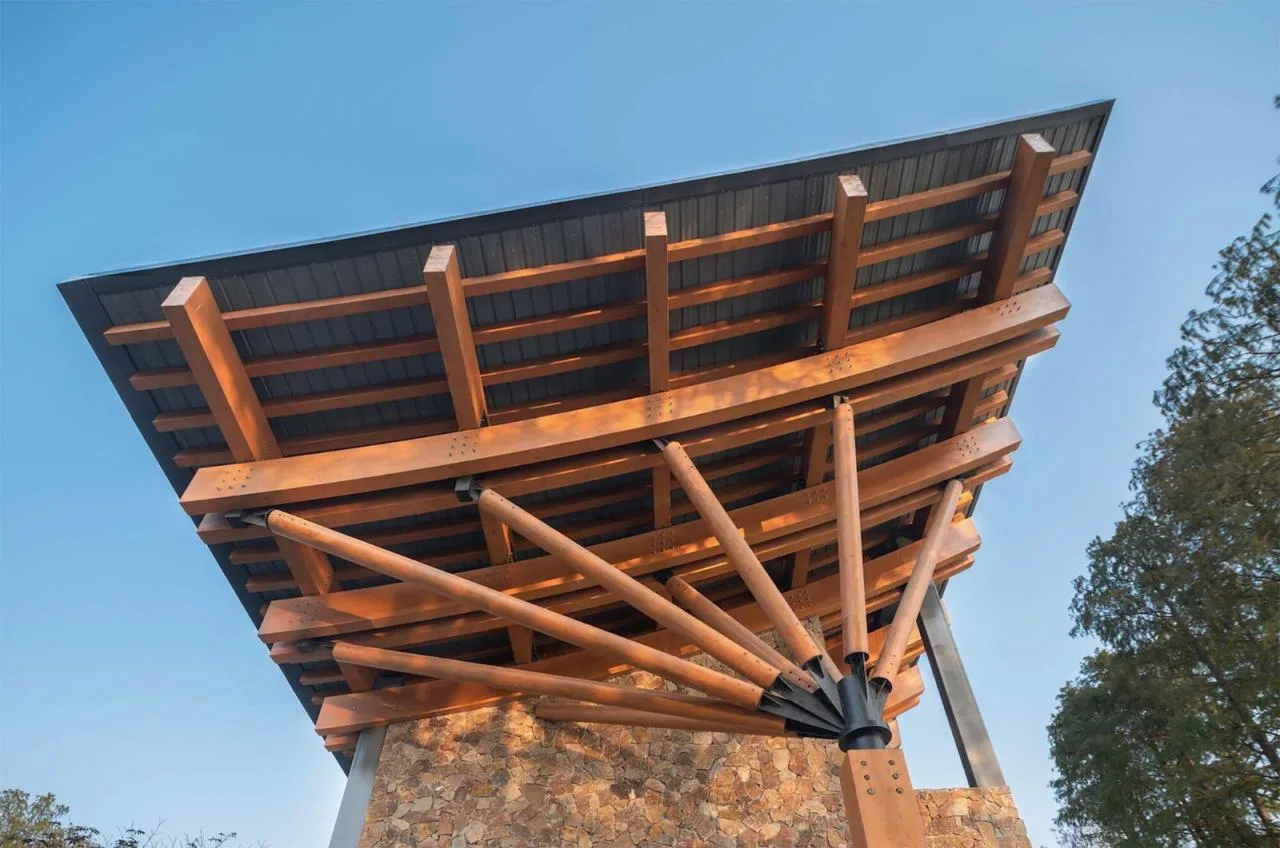
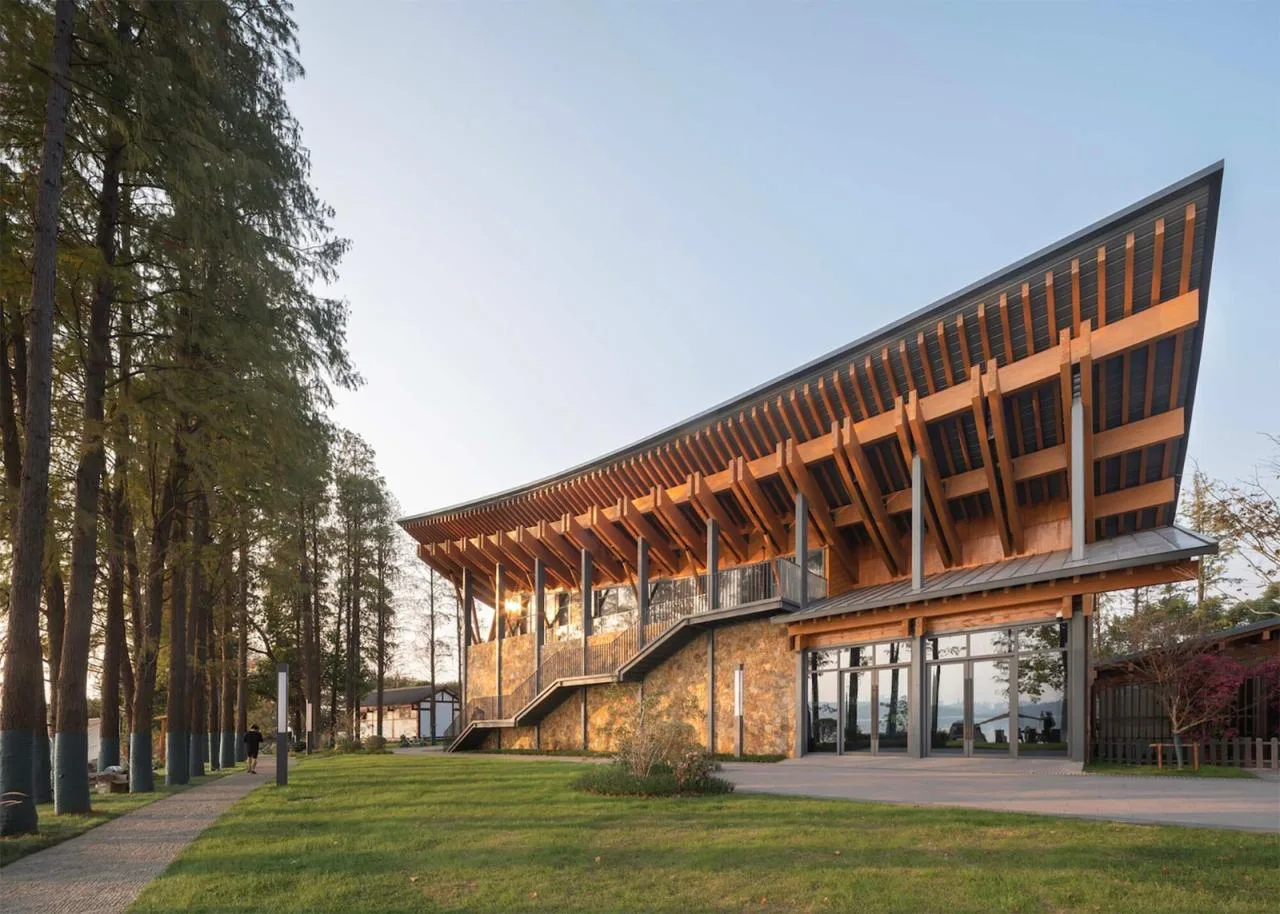
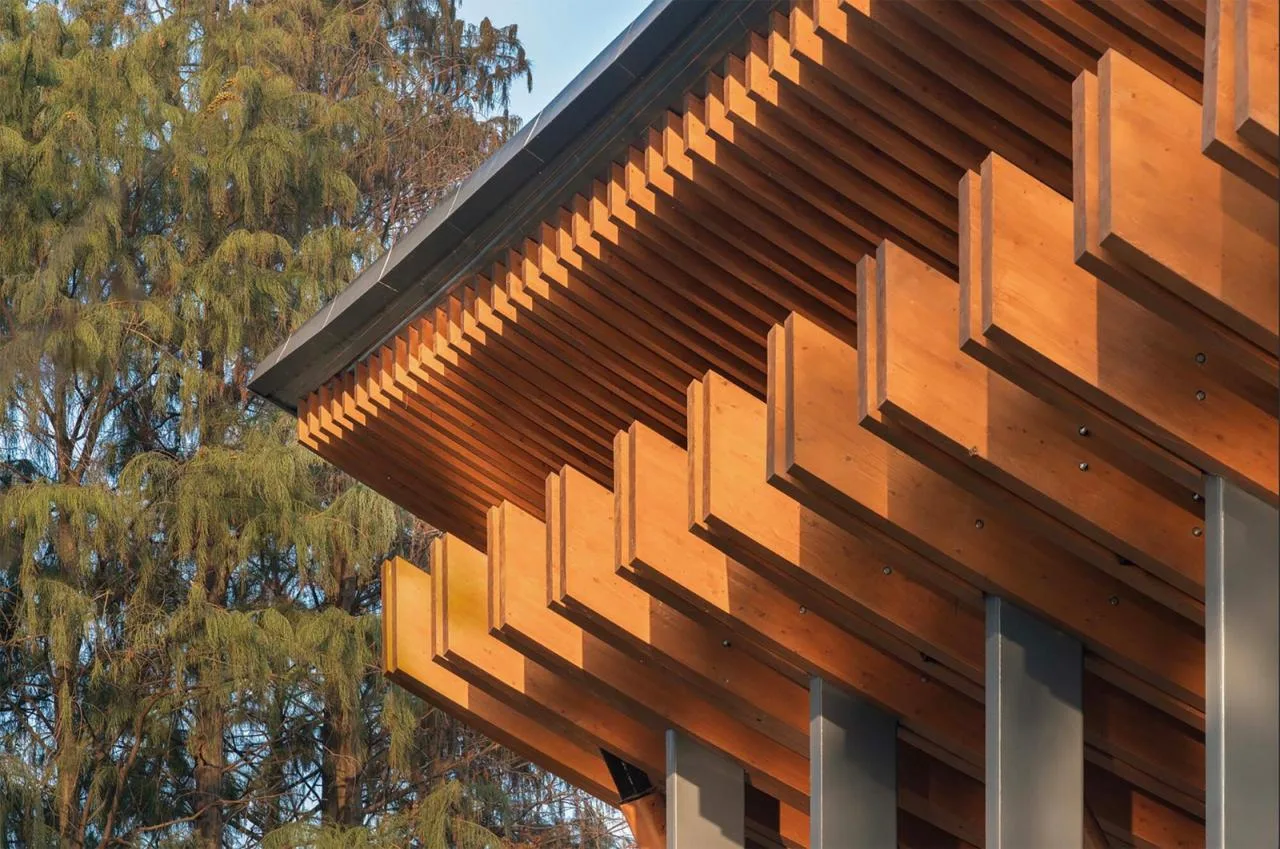
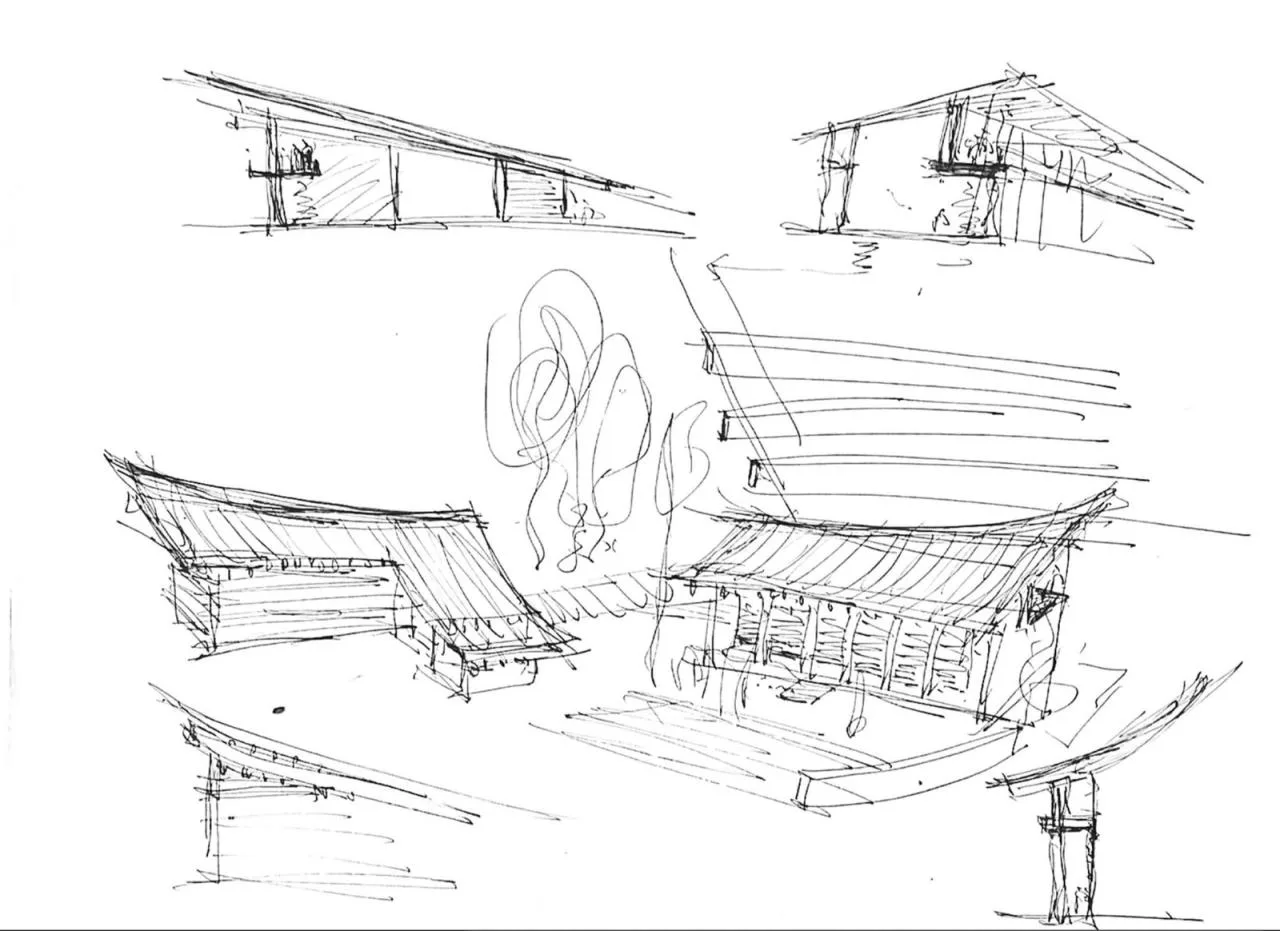
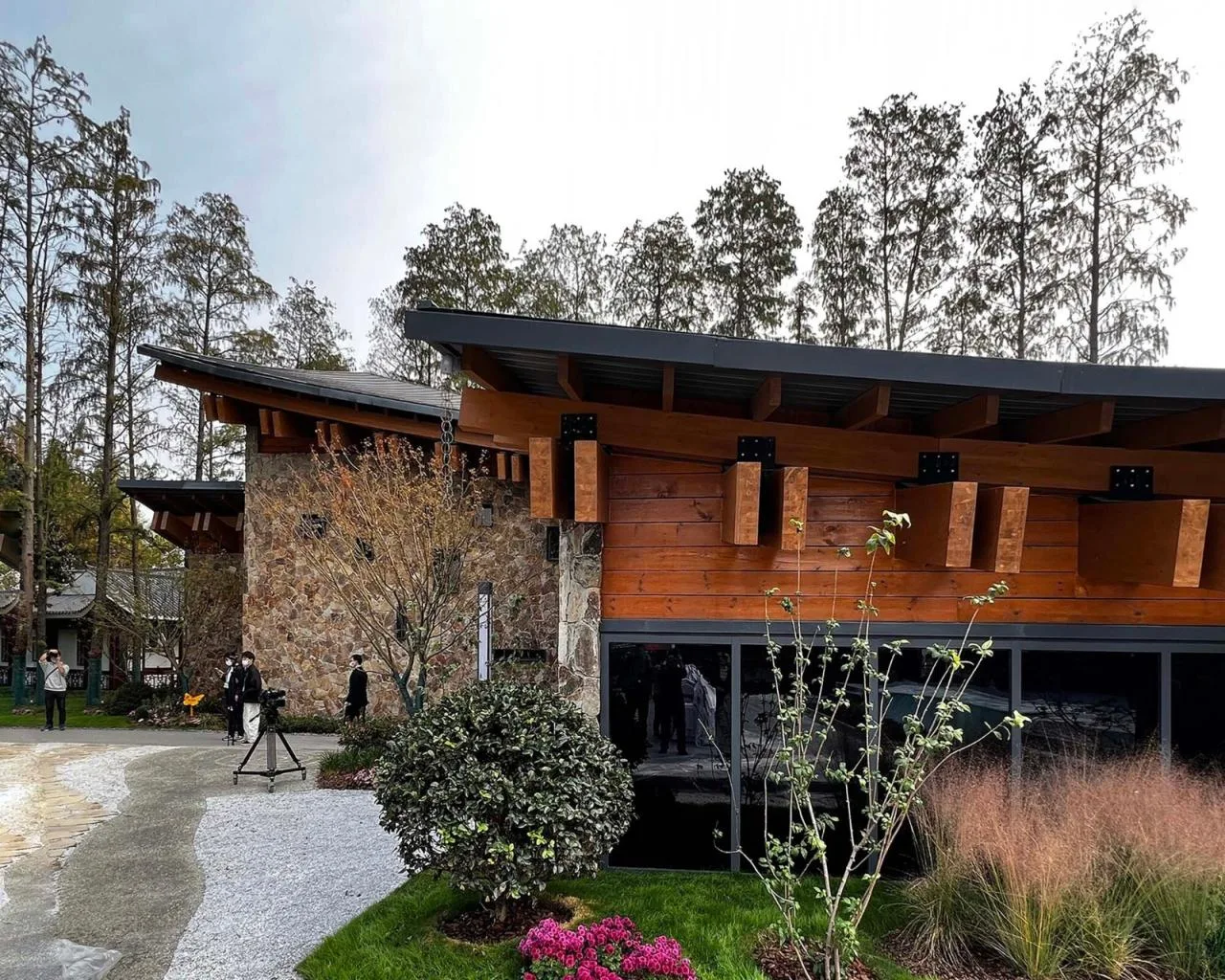
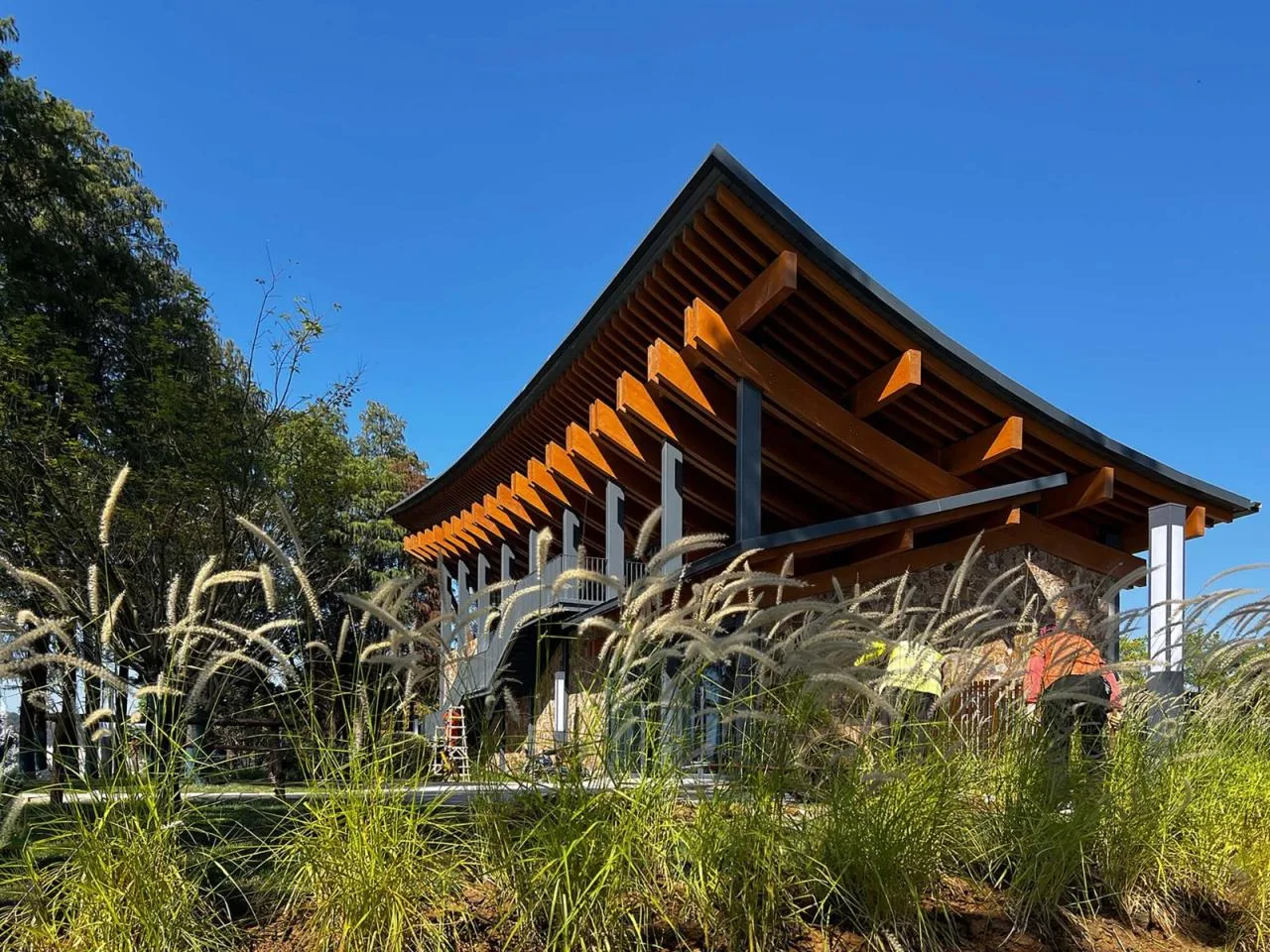
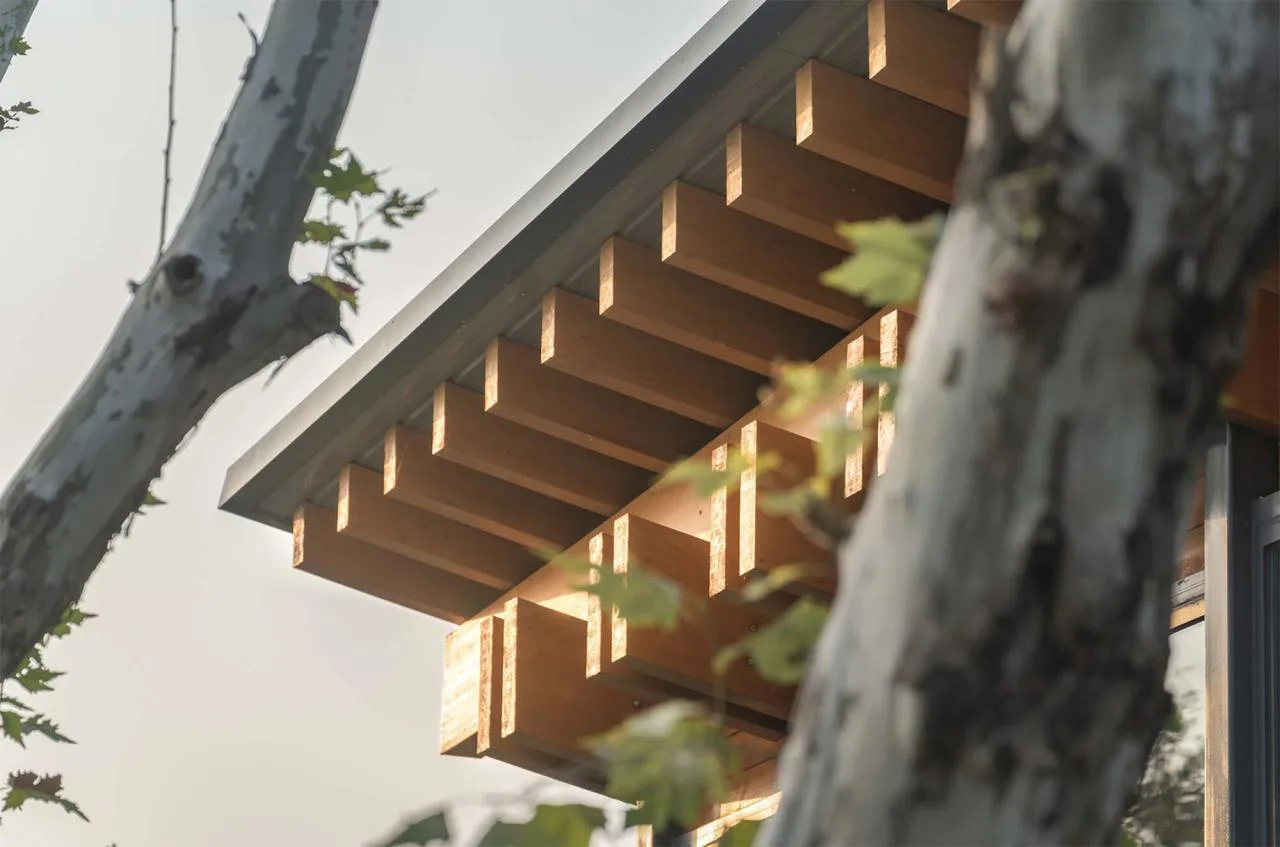
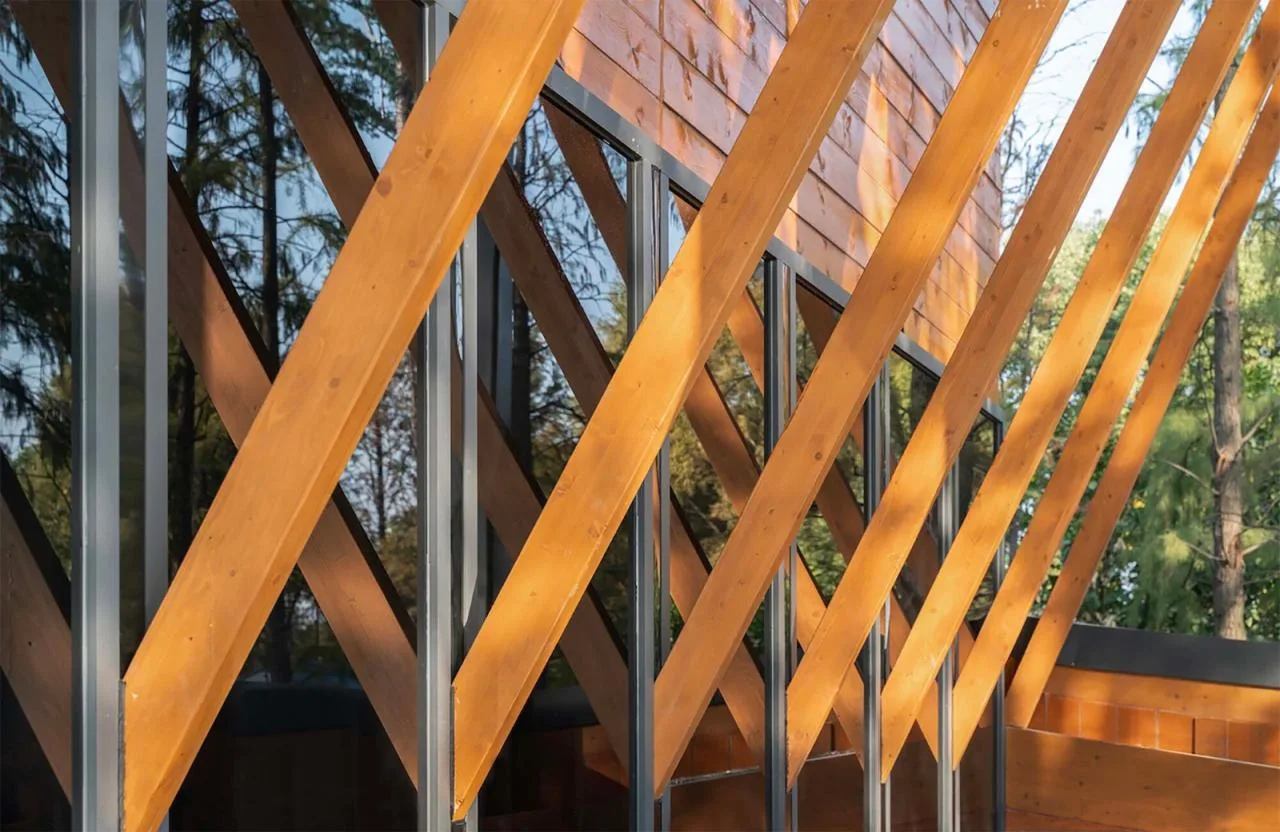
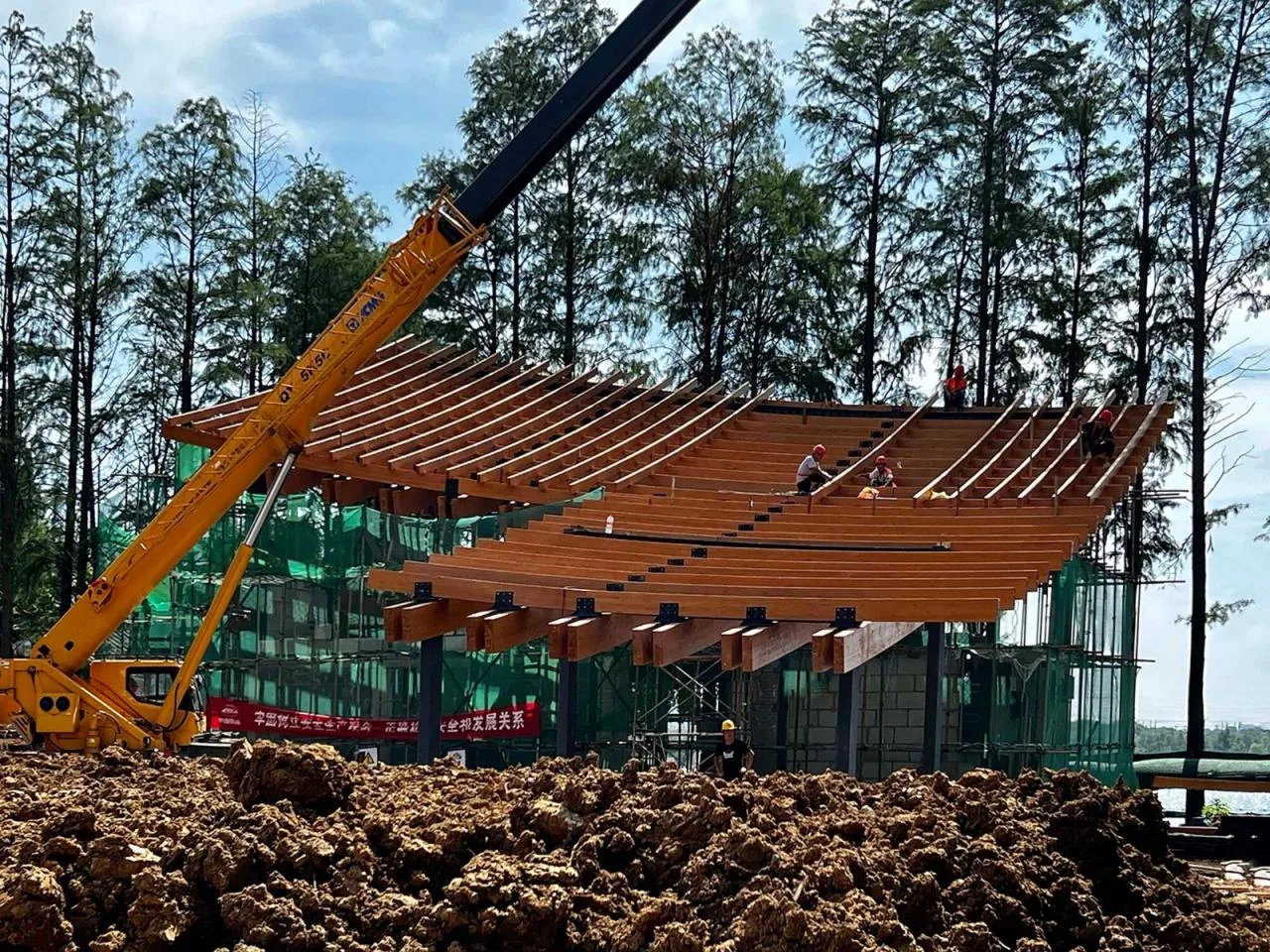
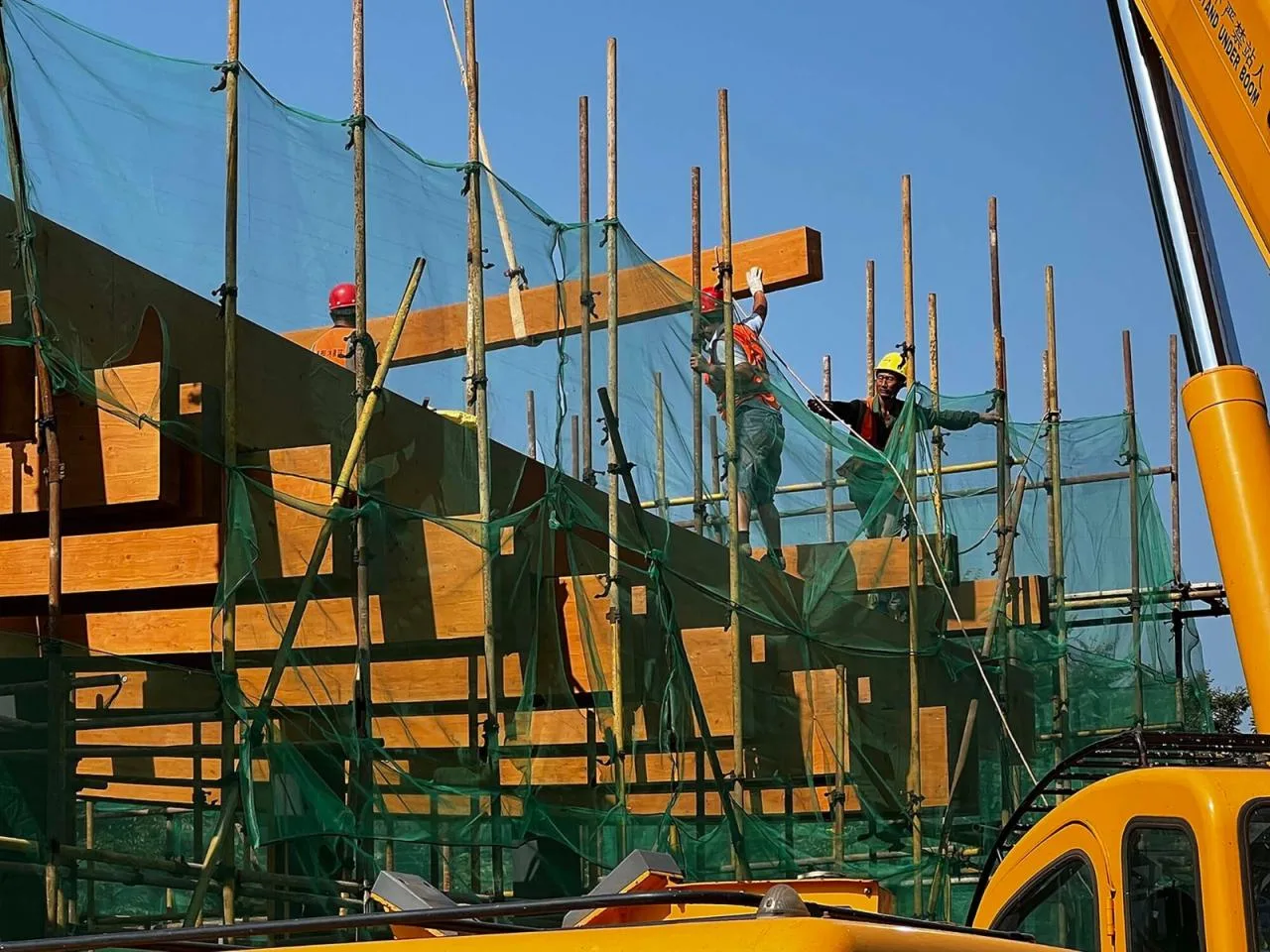
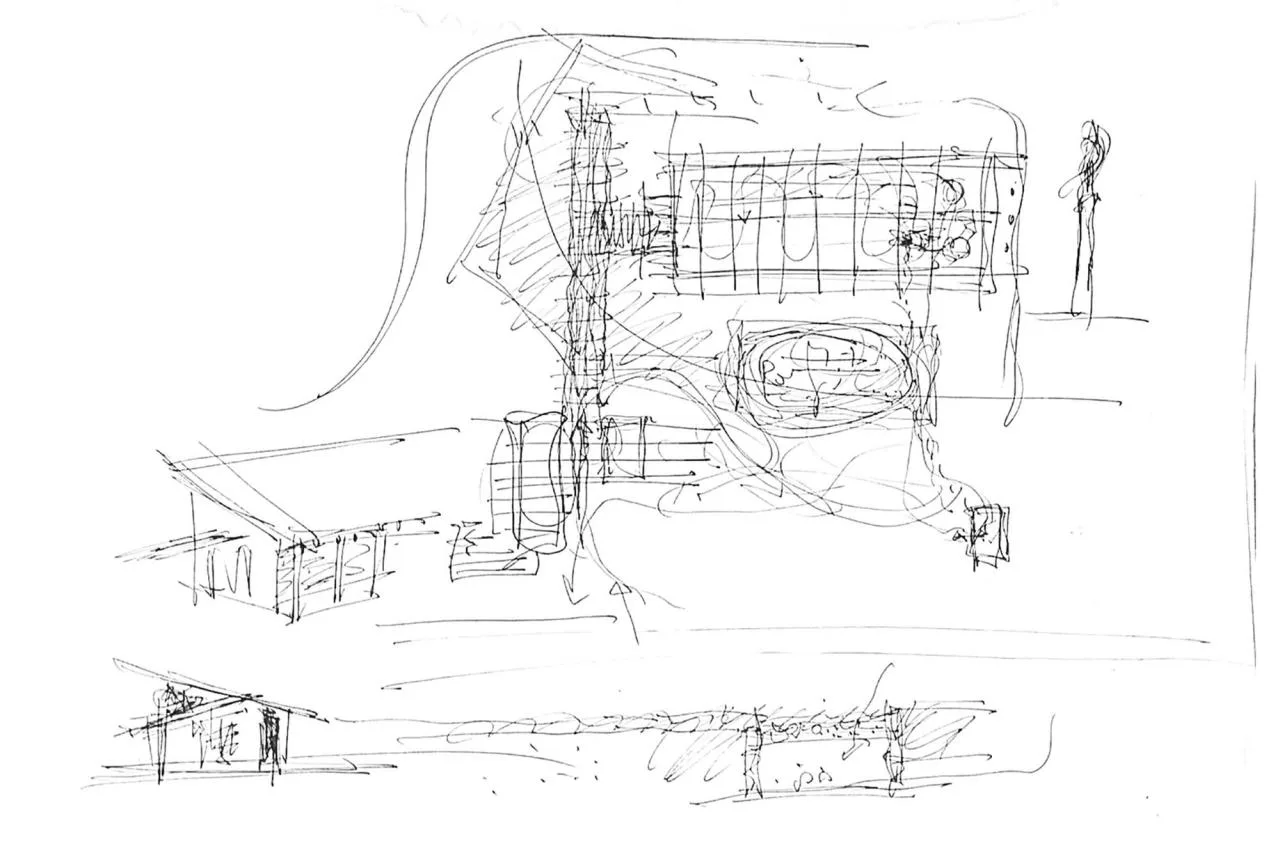
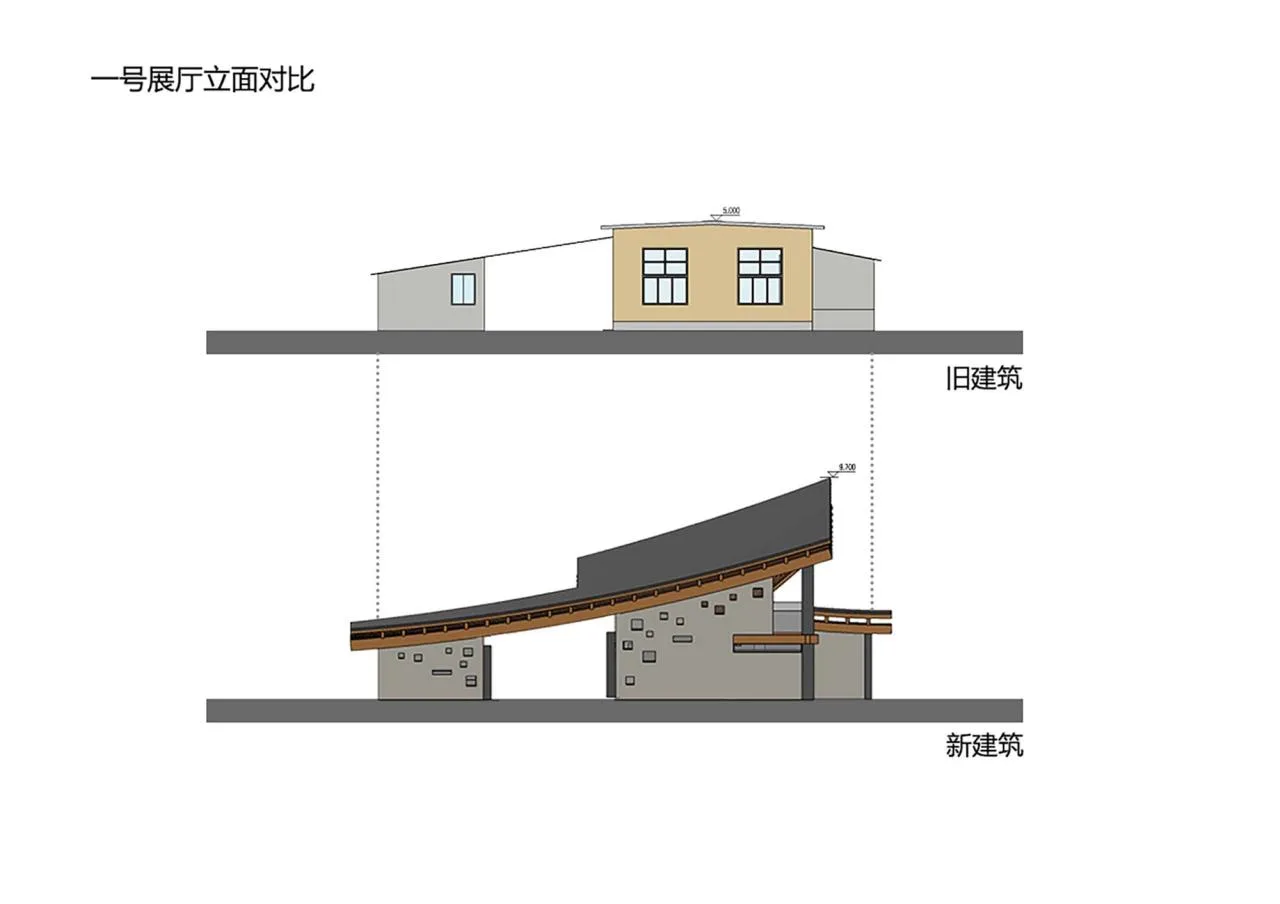
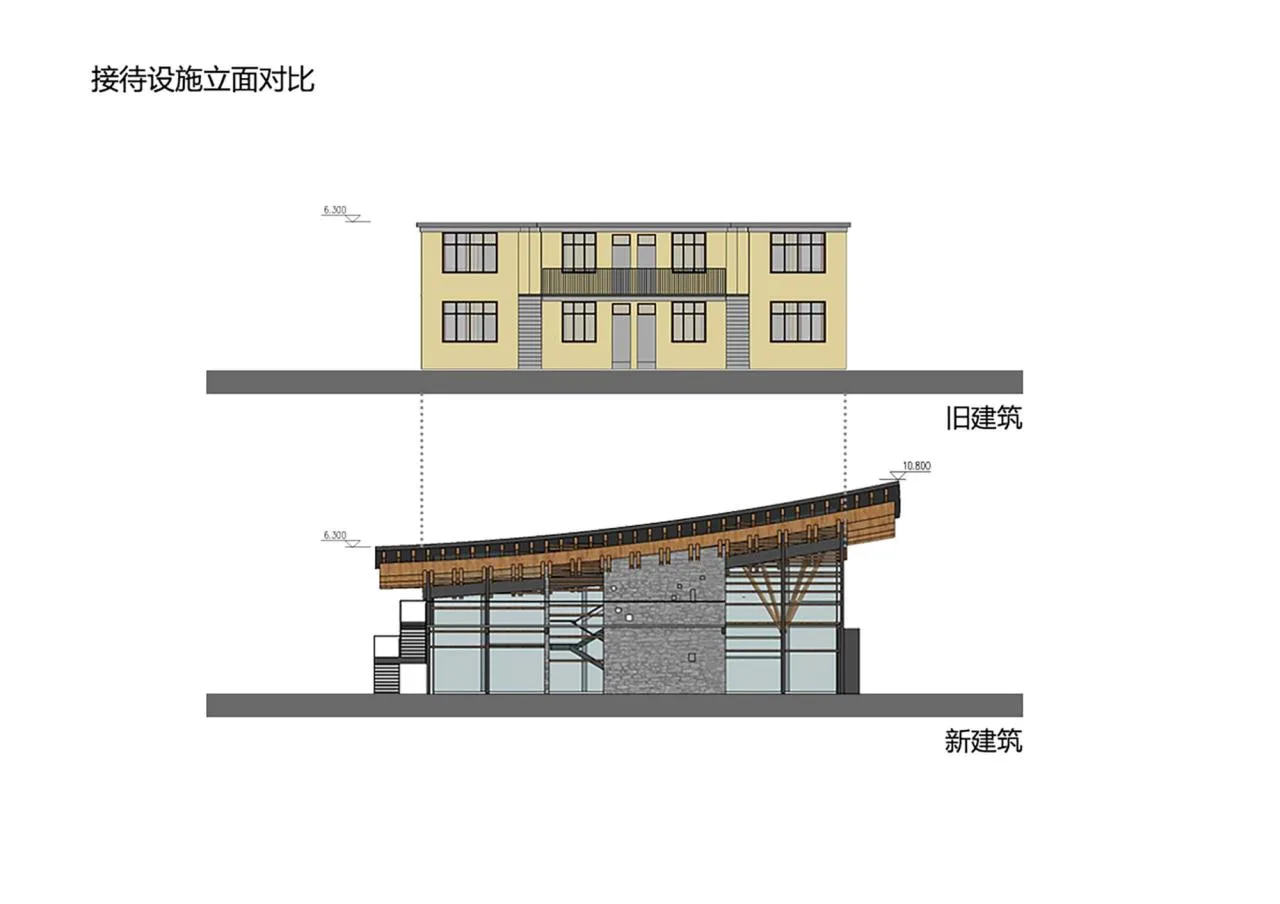
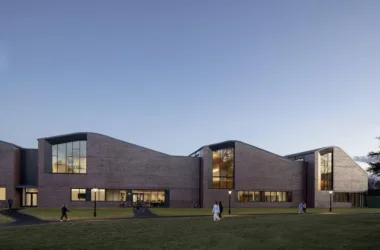
The original factory roofs appeared dull and worn; the single-sloped roofs of the staff canteen and kitchen were rough and shabby, while the flat roofs of the dormitories clashed with the natural beauty of Donghu Lake. Inspired by the shape of waterbird wings and the lifting, folding curves of traditional Chinese wooden architecture, we designed a single-sloped roof with extended eaves. A mezzanine on the higher side facing the lake serves as a viewing and birdwatching platform. Embracing traditional Chinese construction logic of “fully exposed and transparent structures,” all wooden framework under the eaves is deliberately visible, showcasing craftsmanship. Upon completion, the building’s form evokes various images: soaring birds, wild trees, fishing boats reflecting waterbirds, shadows reminiscent of bells unearthed in Hubei, piano keyboard metaphors, and features of Chu culture. Some see the nine-headed bird, a mythical symbol, embodying both sky and land, enriching the building’s meaning through its ambiguous form.
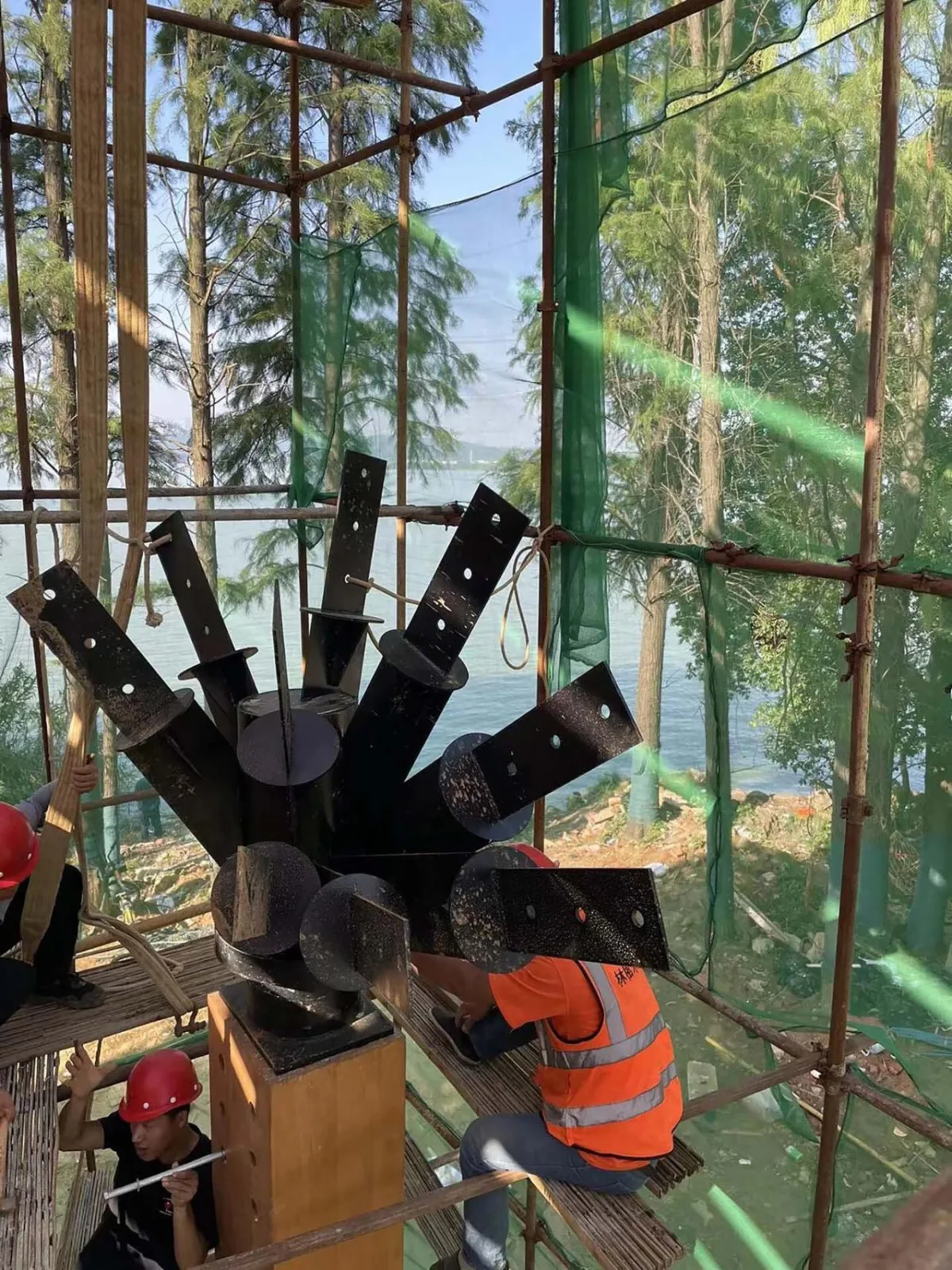
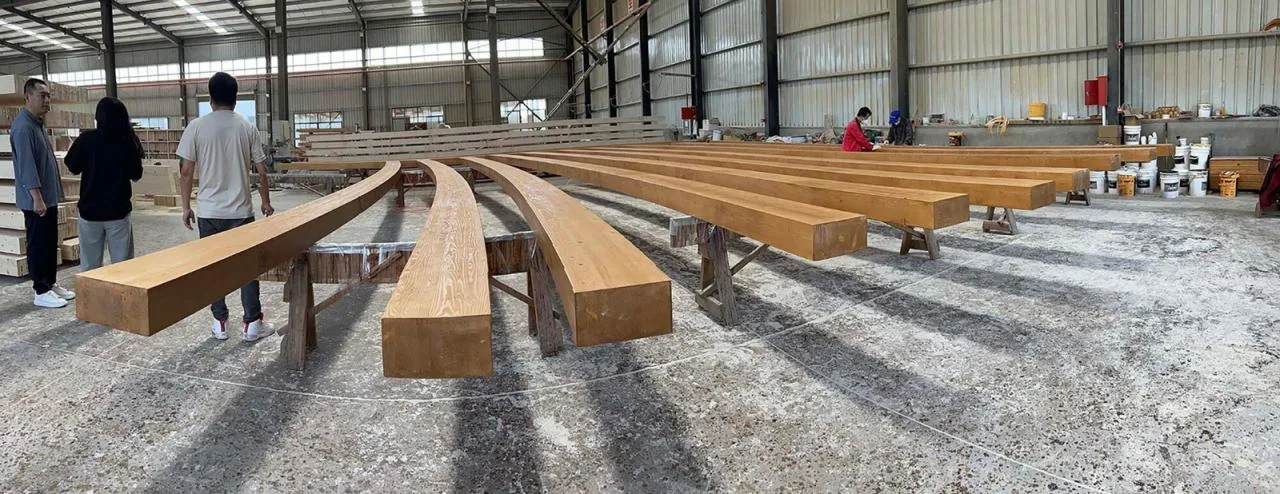
Crafting the hyperbolic roofs required custom curved primary and secondary beams, a challenge for traditional manufacturing. Yet, thanks to the digital era, the entire process—from CAD (computer-aided design) through CAM (computer-aided manufacturing) to CAE (computer-aided engineering)—was seamlessly executed using digital technology and robotic arms, fully realizing the original design vision.
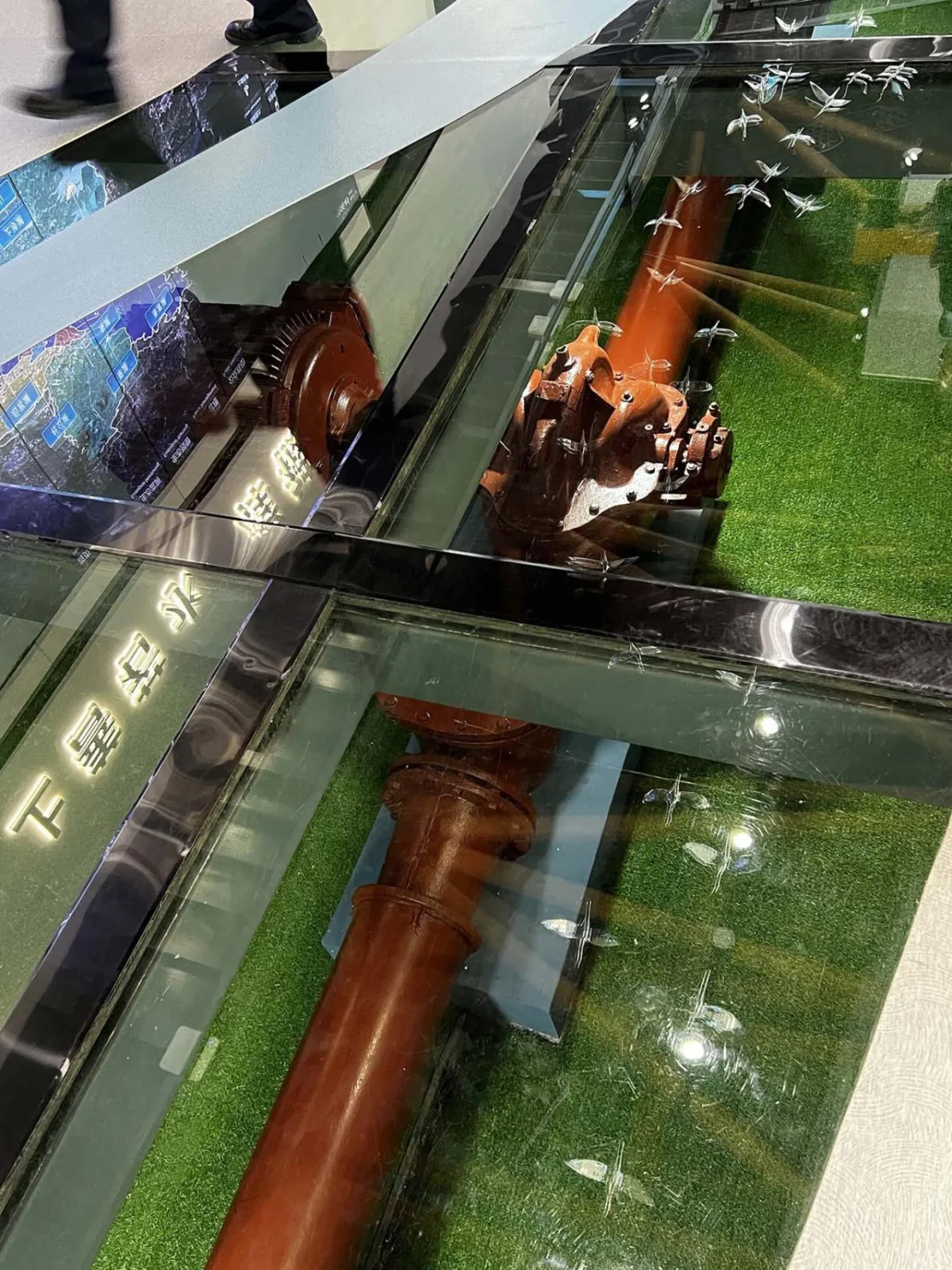
The old water plant housed core mechanical equipment—water pumps, pipes, valves—that we aimed to preserve intact within the new exhibition hall. This concept received strong approval from supervisors and was successfully implemented.
Building within scenic areas poses an enduring question of values and methodology. Some advocate for antique-style architecture to blend with the environment, while others argue that “coordination” is subjective and that modern architecture should be the goal for contemporary designers. This project strives to humbly carve a path for architecture that belongs to its moment and place.
Project Drawings
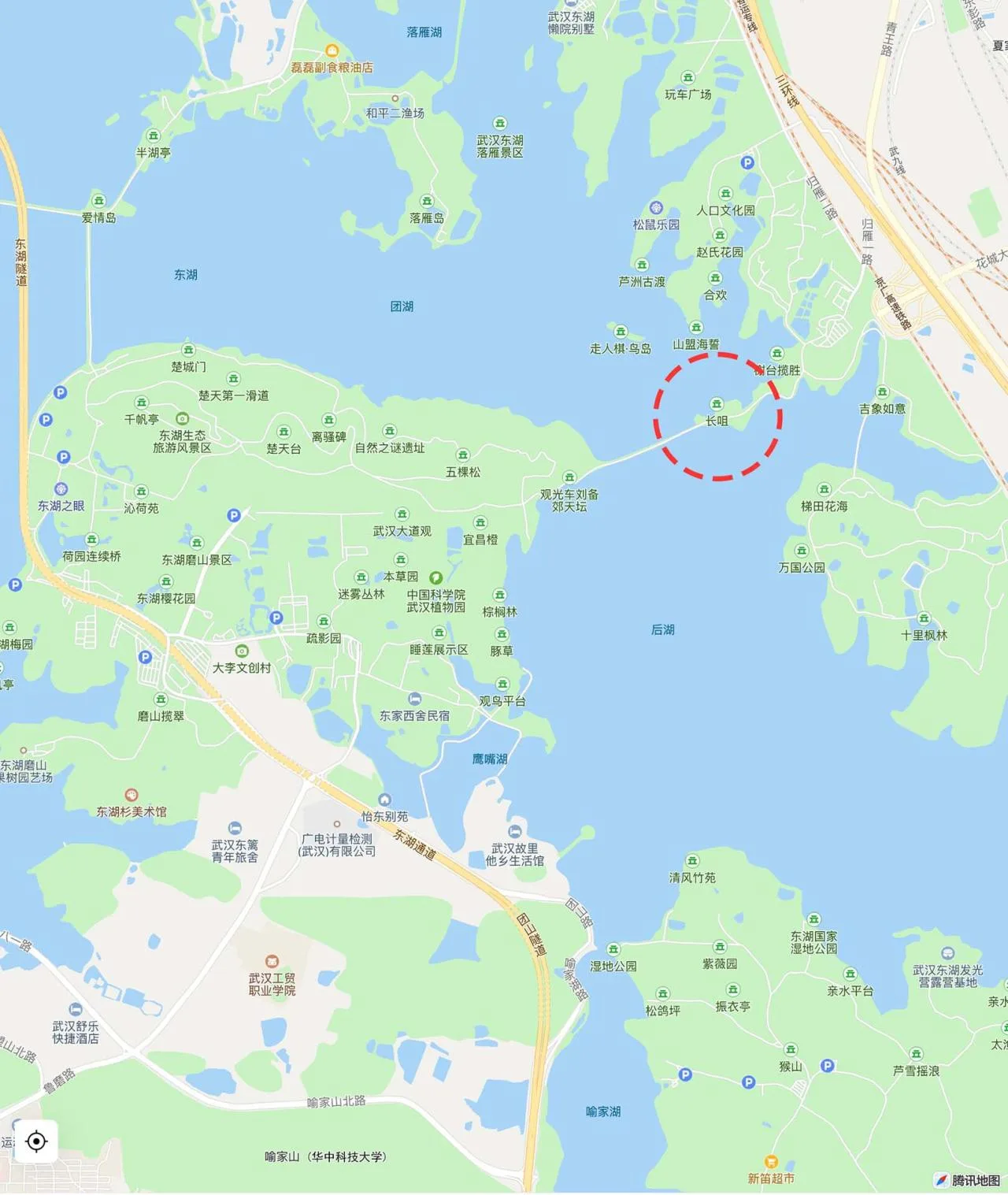
△ Location Map
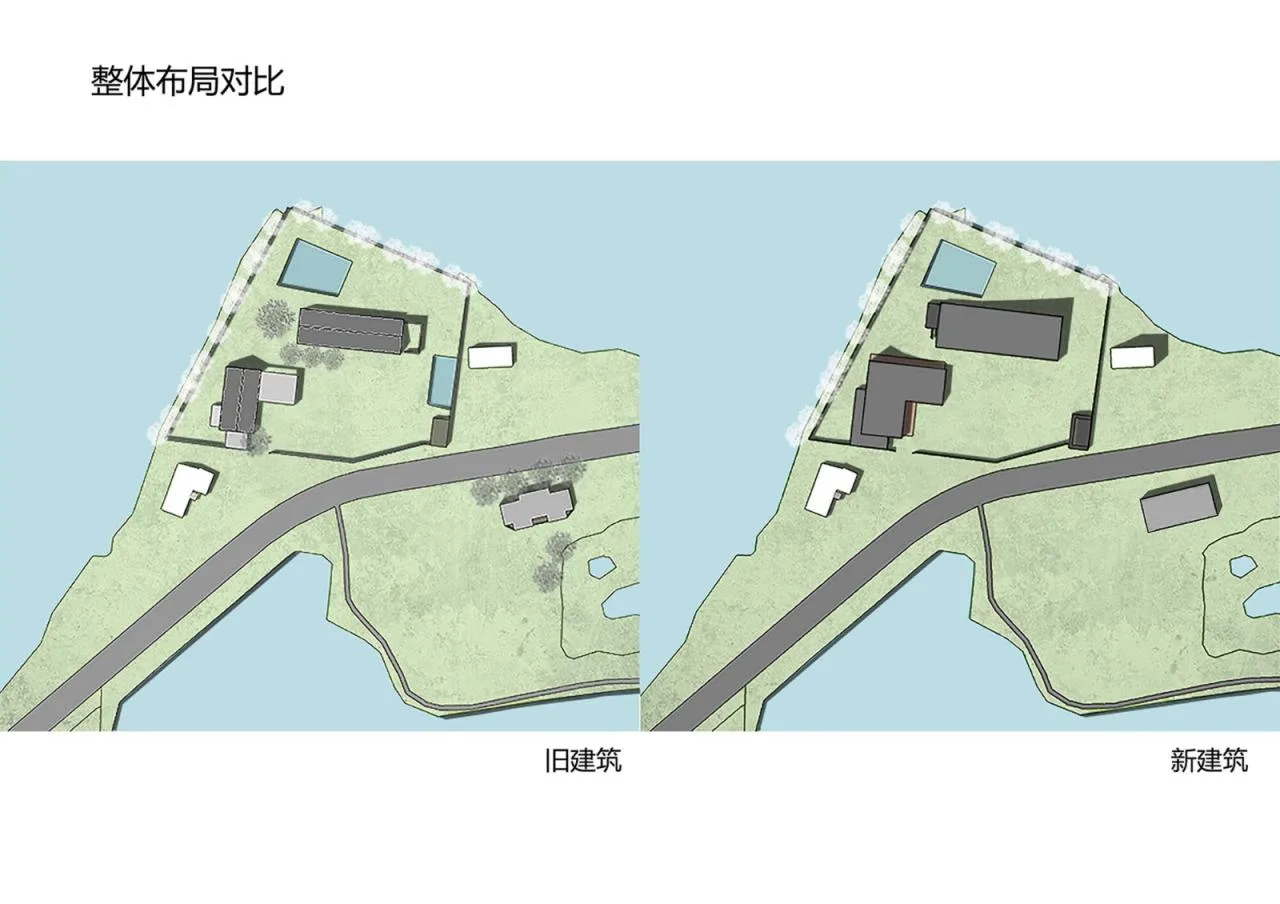
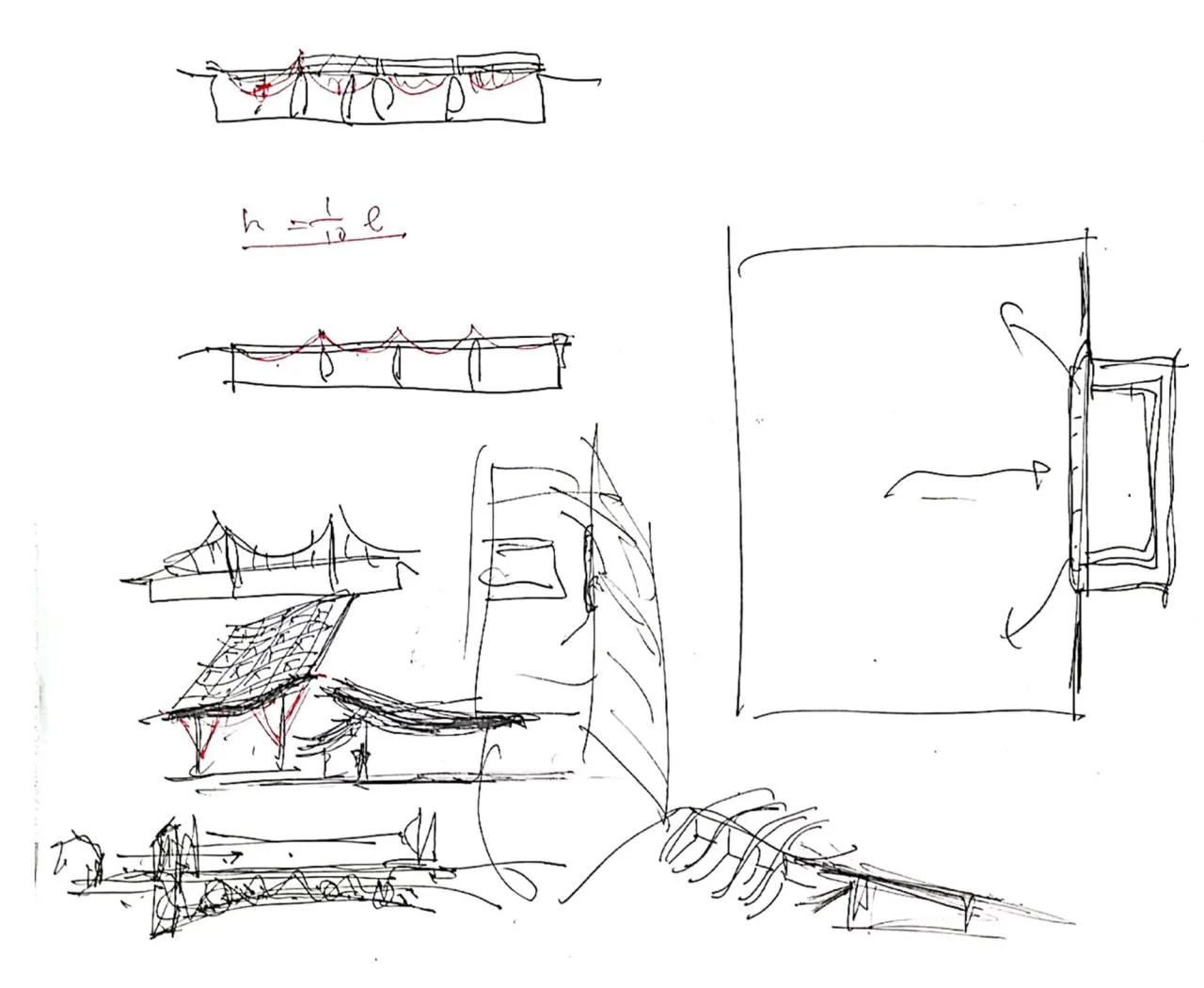
△ Hand-drawn Sketch
△ Hand-drawn Sketch
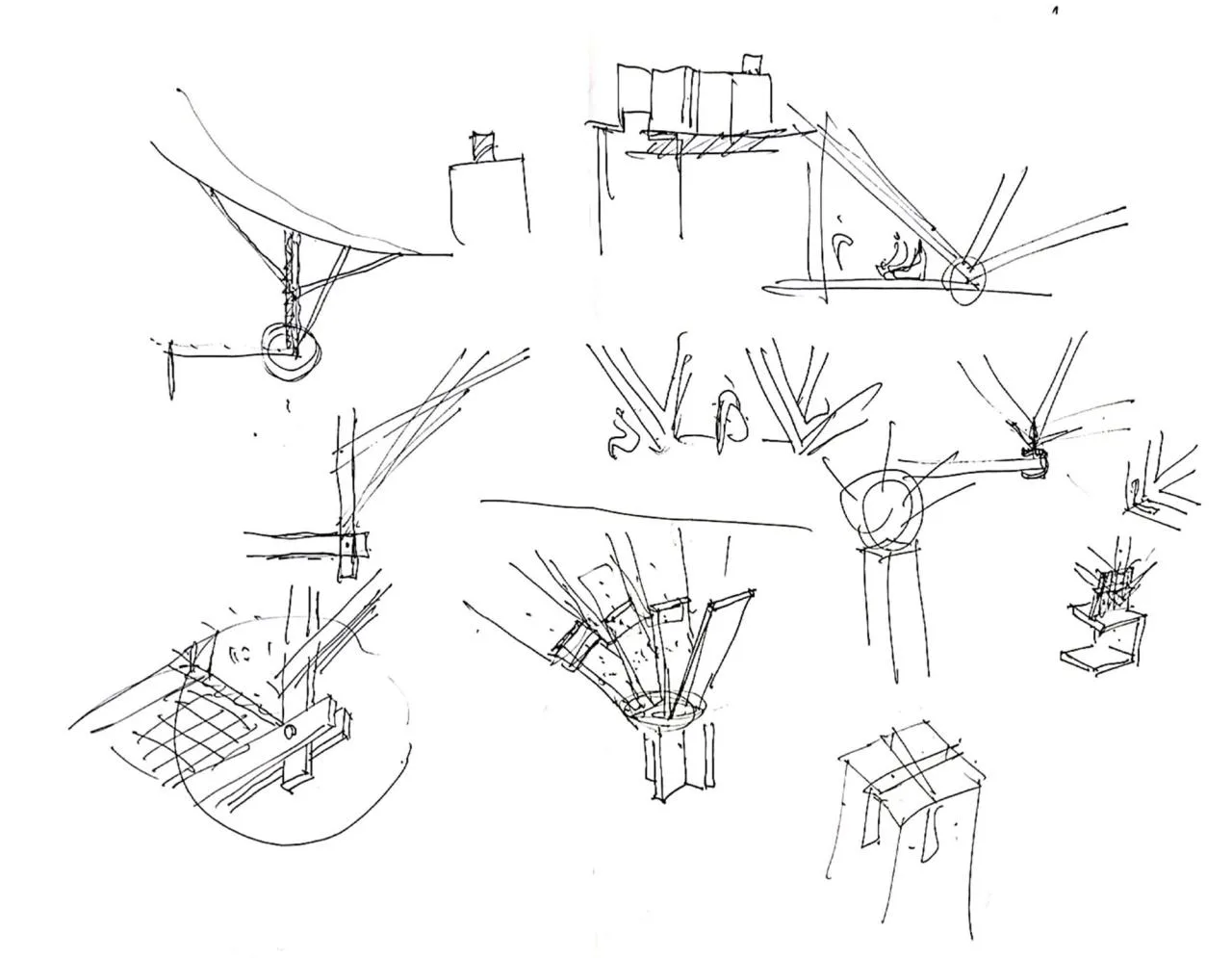
△ Hand-drawn Sketch
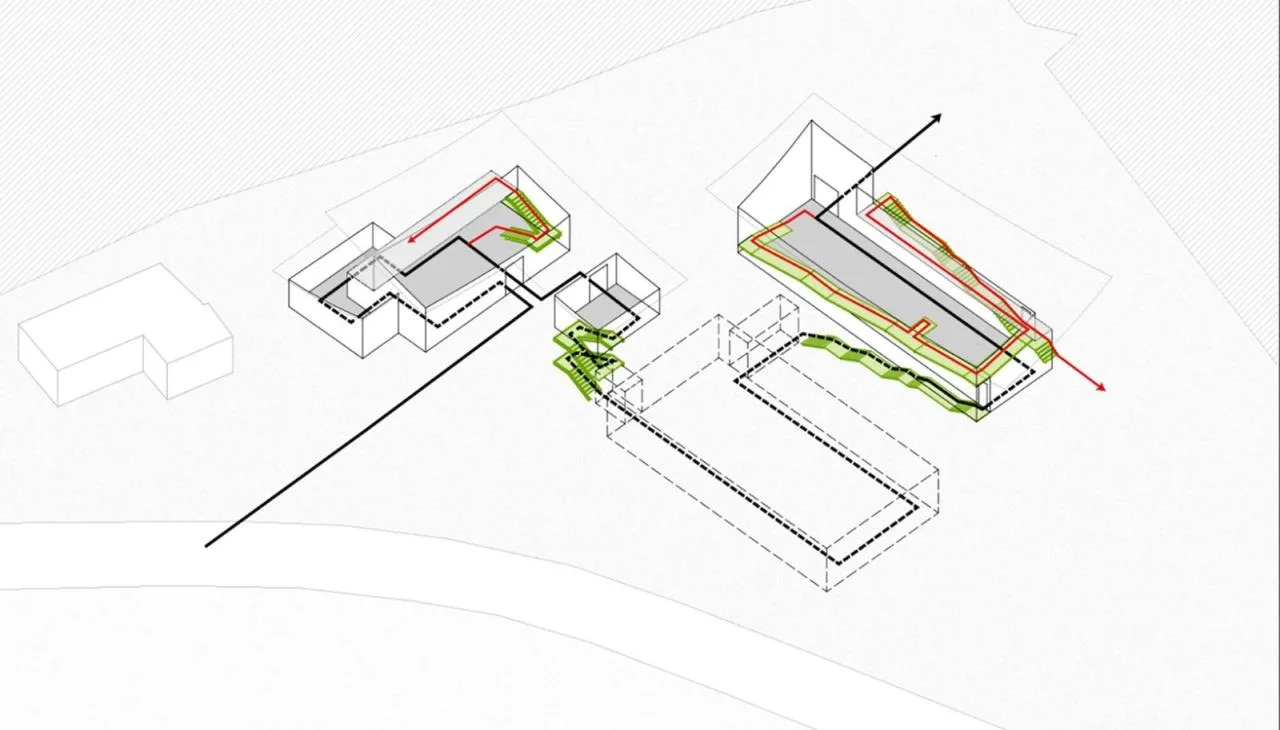
△ Route Analysis Diagram
Project Information
Architect: Li Baofeng Architecture Studio, Huazhong University of Science and Technology
Area: 1431 m²
Year: 2022
Photographer: Zhao Yilong
Lead Architect: Li Baofeng
Design Team: Li Baofeng, Tan Wenjun, Zhang Ruifang
Structural Design: Wuhan Landscape Architecture Planning and Design Institute Co., Ltd. – Zhu Peihong, Mei Fang
Wood Structure Calculation: Manmu Technology Co., Ltd. – Huang Jing
Landscape Design: Hubei Zhongchuang Huanya – Yu Zhiguang; Wuhan Landscape Architecture Planning and Design Research Institute Co., Ltd. – Mei Zhangbin, Xiao Xueyuan
Construction Drawing Design: Wuhan Landscape Architecture Planning and Design Institute Co., Ltd. – Zhang Lei, Wei Weiping (Architecture), He Yaping (Water Supply and Drainage), Wang Ping (Electrical), Liu Liangquan (HVAC)
Wood Structure Construction: Wuhan Linlangmu Construction Engineering Technology Co., Ltd.
Partner: Wuhan Landscape Architecture Planning and Design Institute Co., Ltd.
Client: Luoyan Management Office of Donghu Scenic Area, Wuhan City
Wood Structure Design: Manmu Technology Co., Ltd.
Construction Party: Wuhan Linlangmu Construction Engineering Technology Co., Ltd.
Location: Wuhan














Must log in before commenting!
Sign Up