
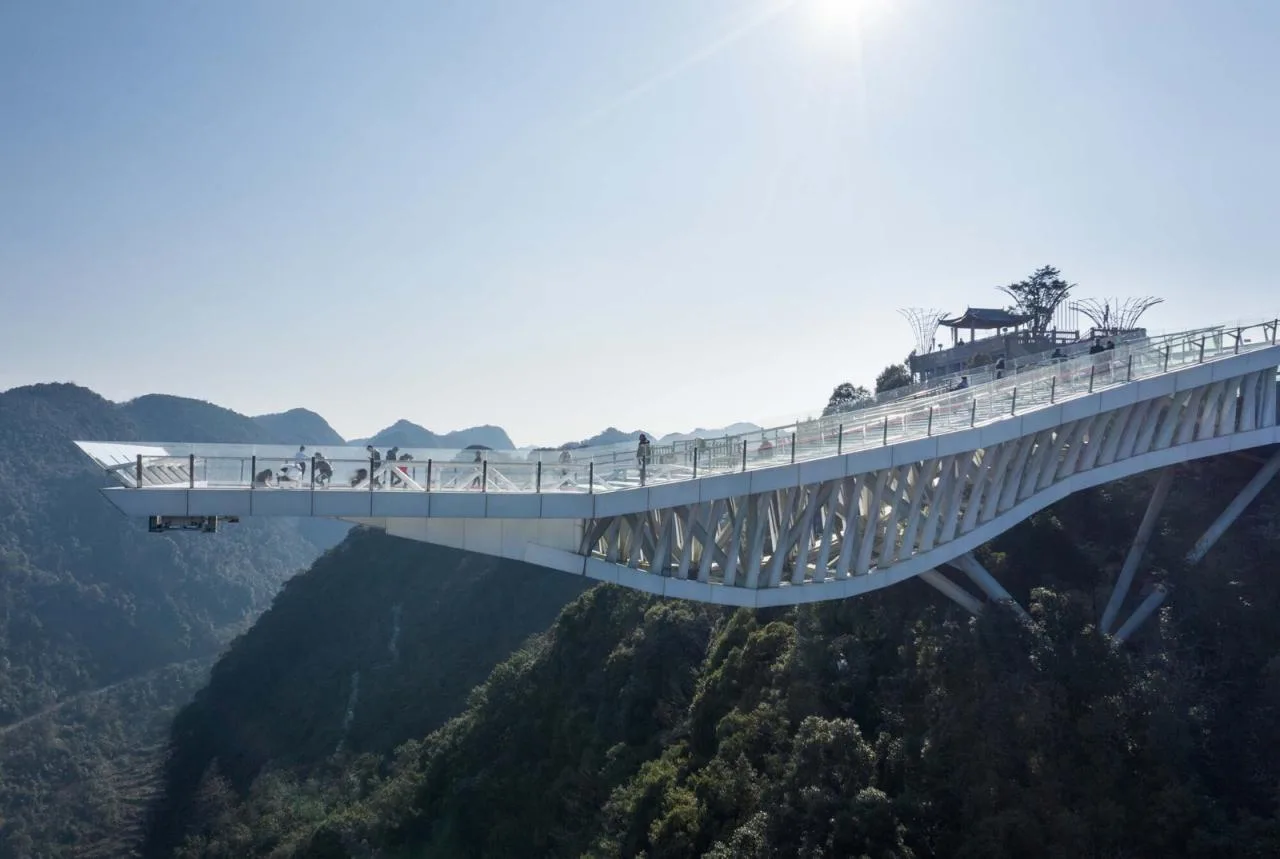
Karst landforms are predominantly found in regions such as Guangxi, Guizhou, and Chongqing, with Guangxi exhibiting the most extensive distribution. Karst, a geological phenomenon, occurs primarily through the chemical dissolution of soluble rocks by water, accompanied by mechanical processes like erosion, subterranean dissolution, and collapse caused by flowing water. The landscape of Guilin is a classic example of karst terrain, featuring geographical formations such as karst caves and sinkholes shaped by erosion.
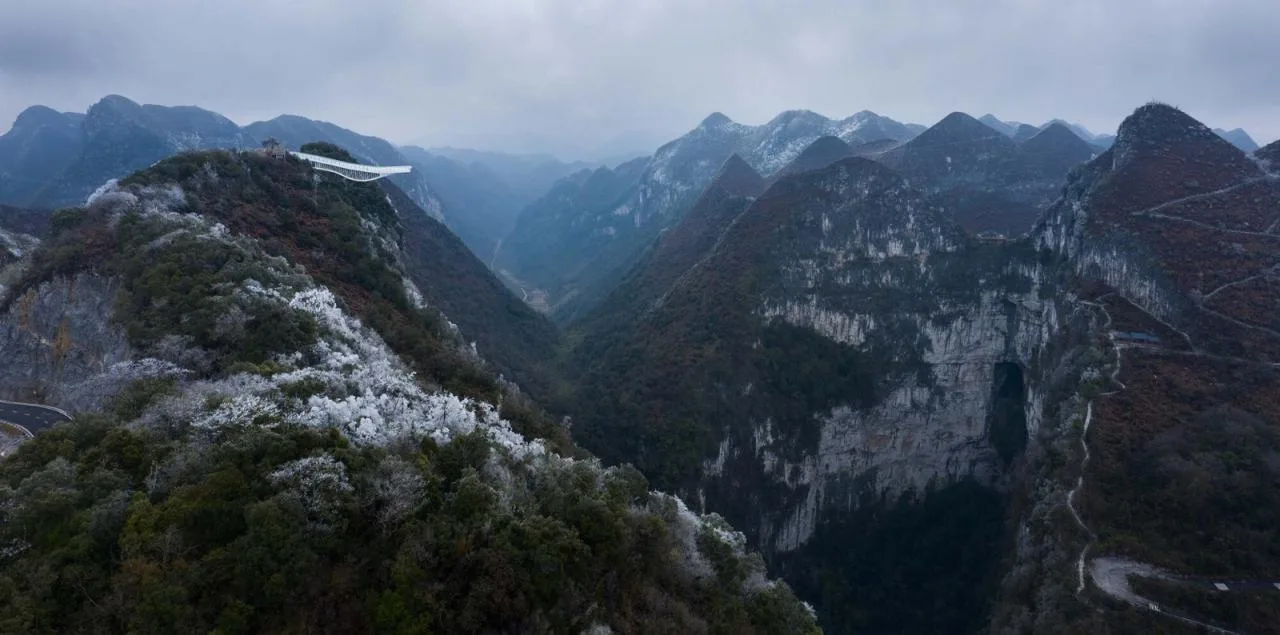
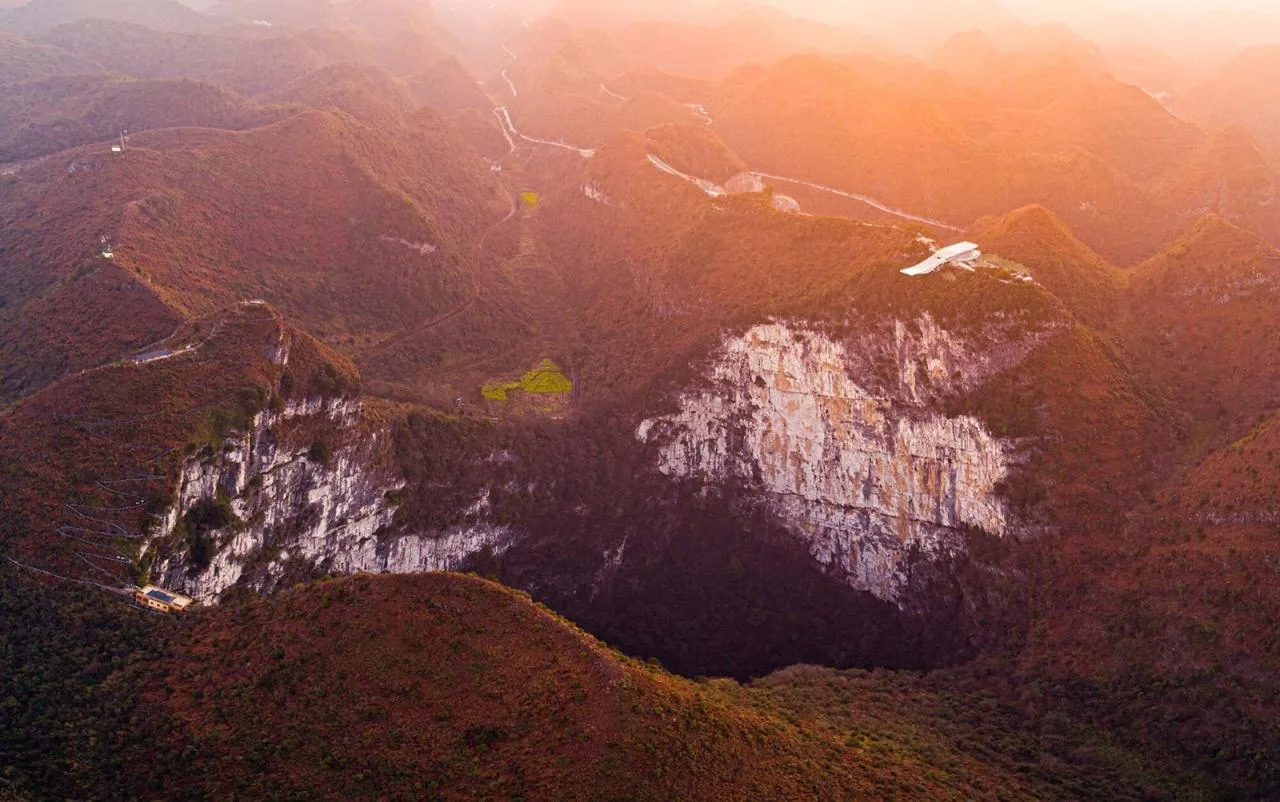
The Dashiwei Tiankeng Group in Leye County stands as the largest sinkhole cluster globally and is renowned as the “World Tiankeng Museum.” The Cloud Sea Sky Boat project is designed to immerse visitors in this grand geological marvel. Drawing inspiration from iconic sites like the Grand Canyon Viewing Platform in Colorado, Arizona, USA—which combines architectural drama with visitor flow through its suspended donut shape—the project aims to evoke a similar soaring sensation. Similarly, the Hanging Temple in Shanxi integrates seamlessly with cliff faces, reflecting the essence of Chinese landscape painting. The cliffs of Dashiwei Tiankeng are lushly covered with vegetation from the mountaintops, and to fully experience the dramatic height of the Tiankeng, visitors must approach or even extend beyond the cliff edges. A donut-shaped design would require substantial rear supports to balance the forward cantilever.
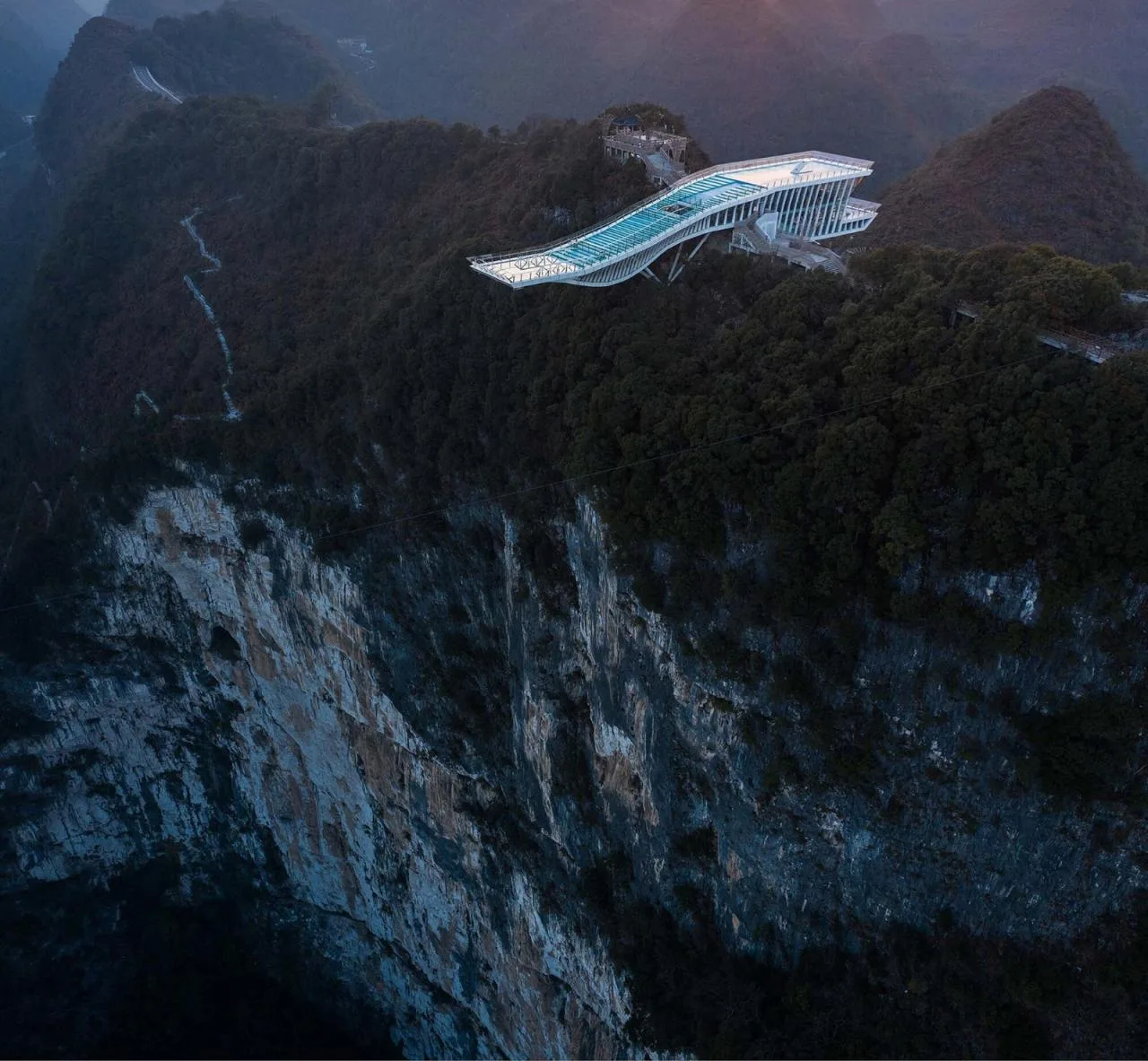
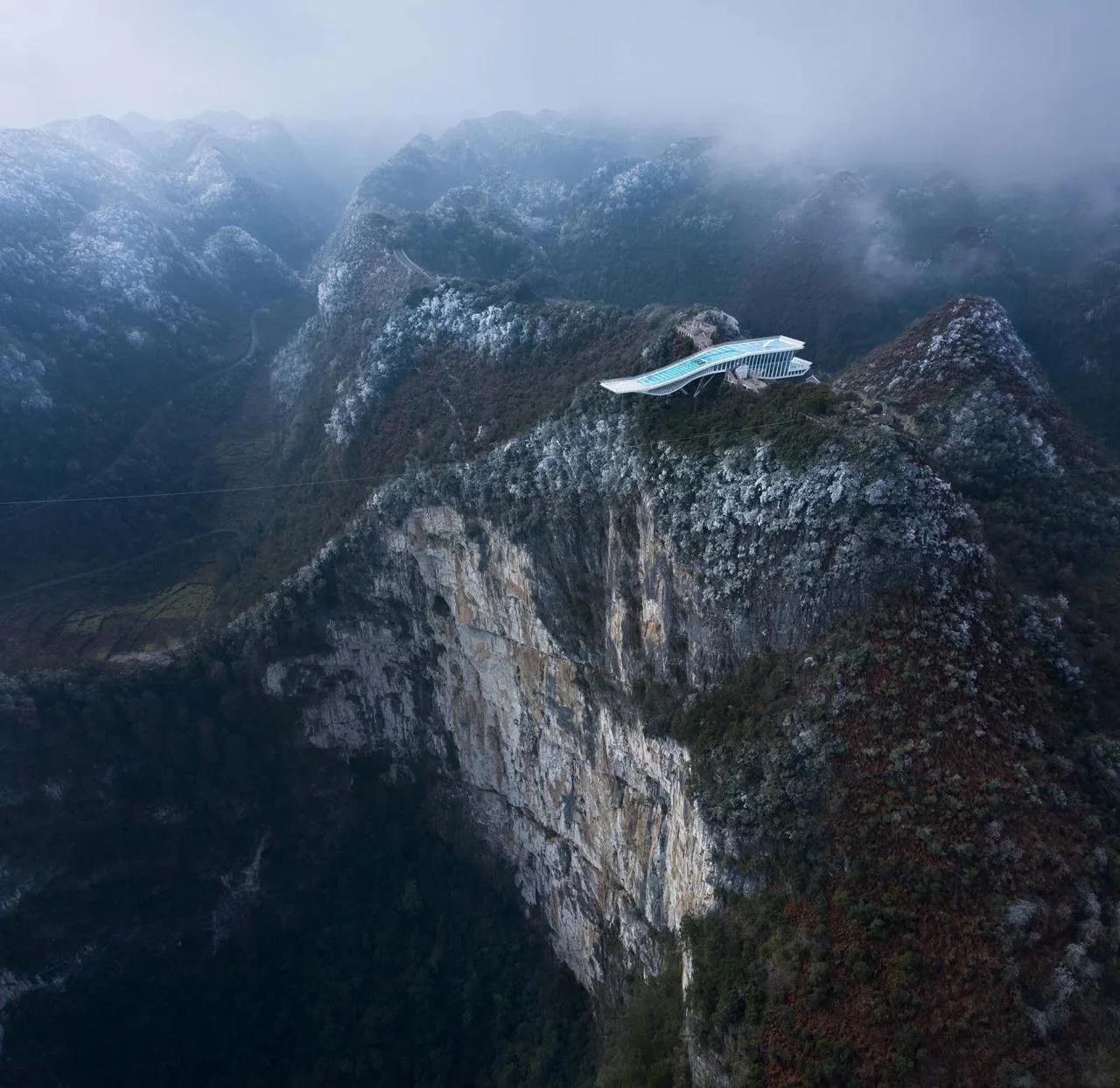
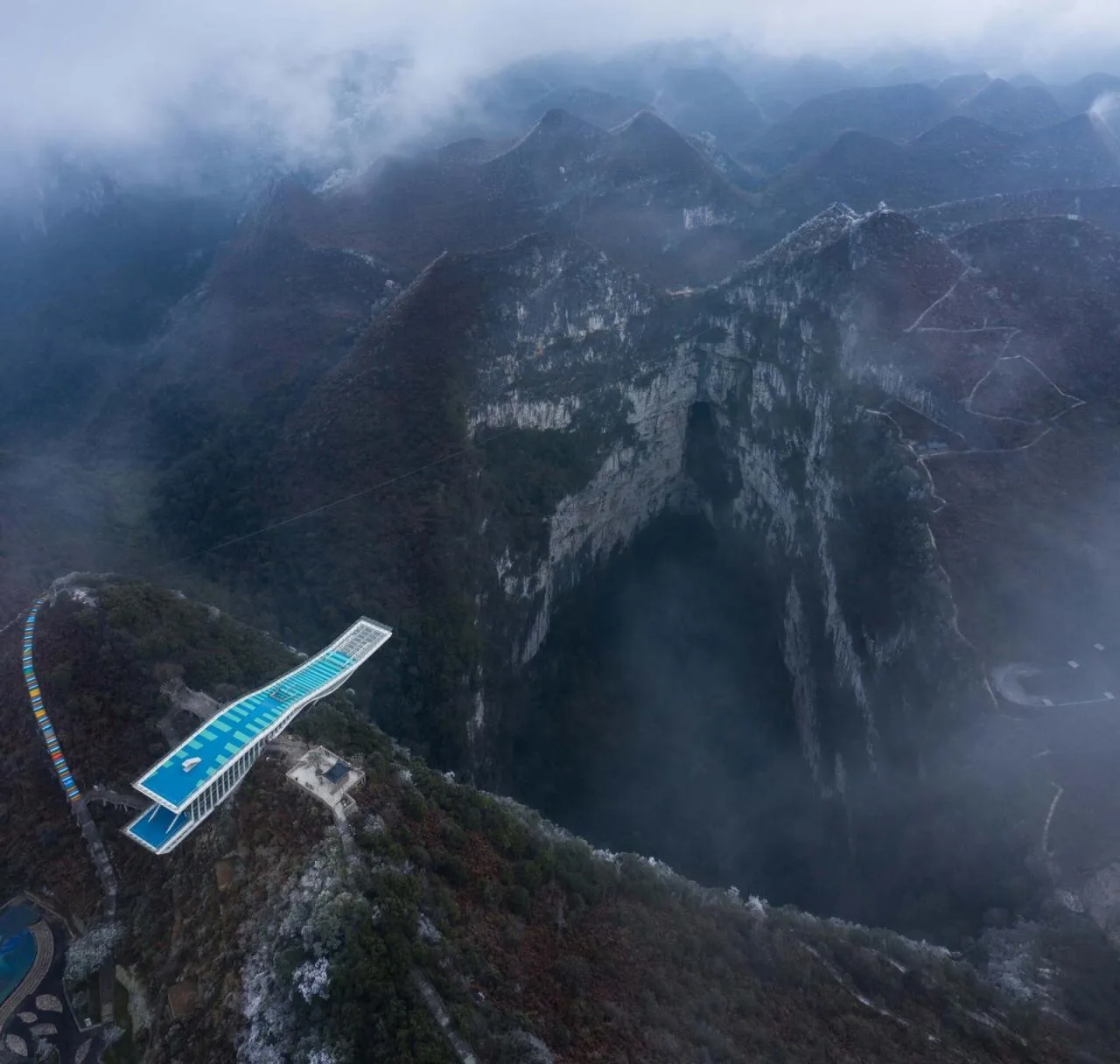
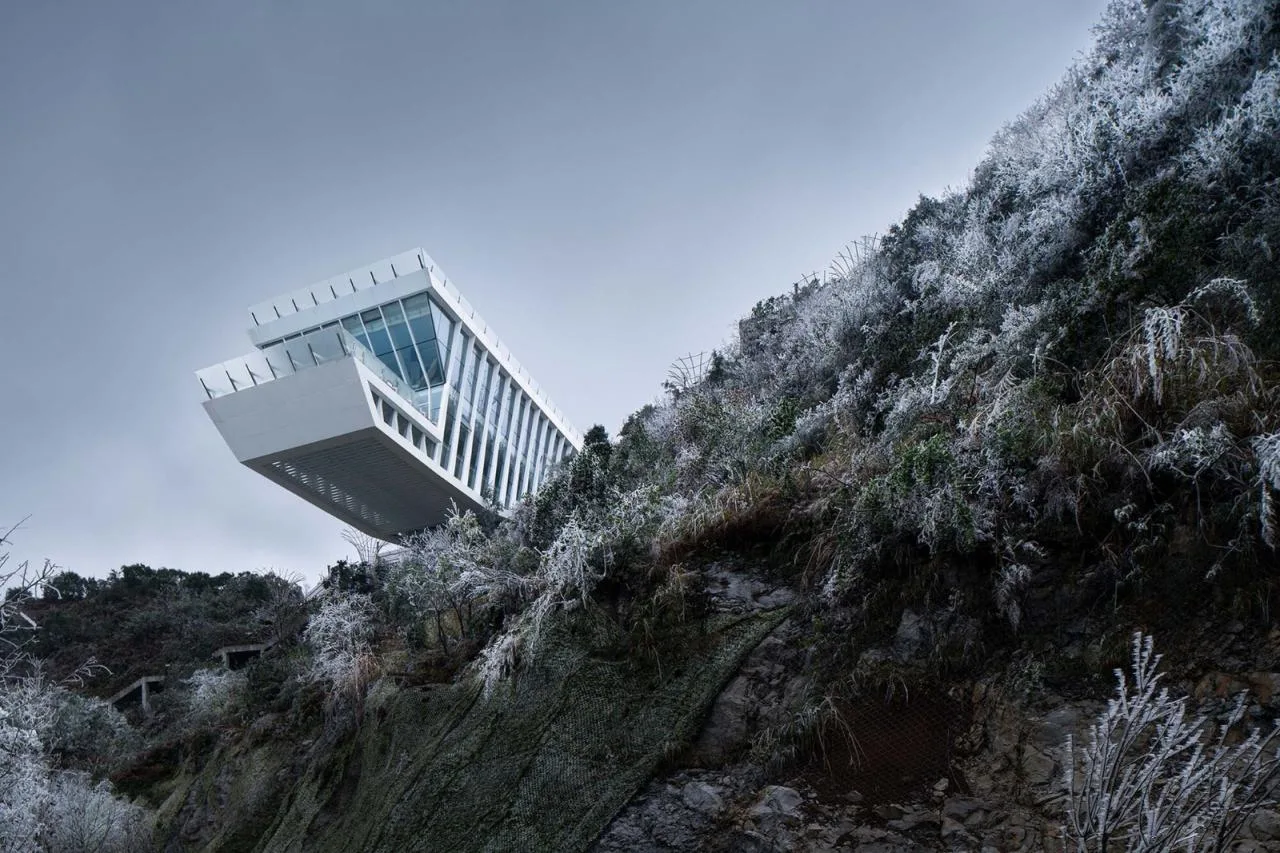
During the design process, inspiration struck when the designer received a Teacher’s Day gift from a classmate—a pole-shaped tumbler. This object sparked a rethink of the viewing platform’s placement. Drone terrain surveys revealed that to fully appreciate the cliff’s depth and the 613-meter sinkhole, the platform needed to extend 24 meters beyond the ridge pivot towards the cliff wall. Ultimately, a cantilever length of 34 meters was chosen.
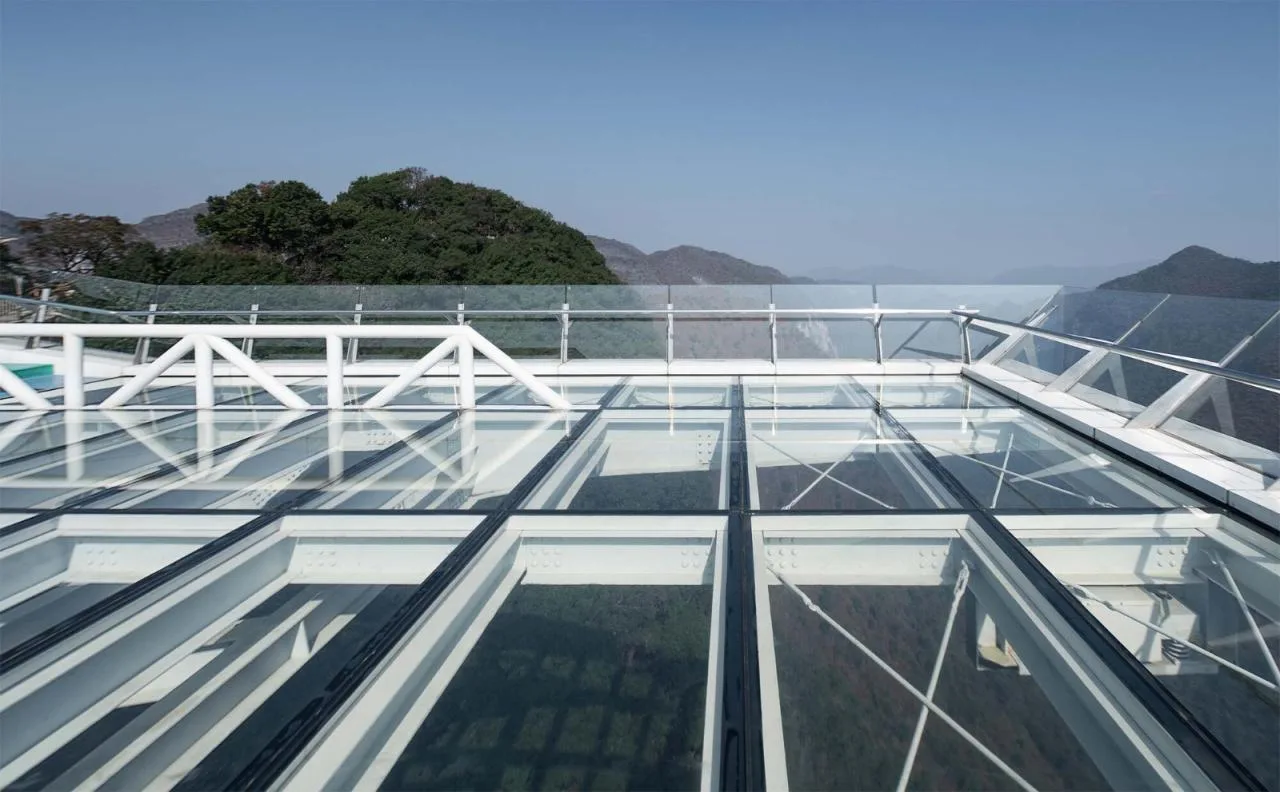
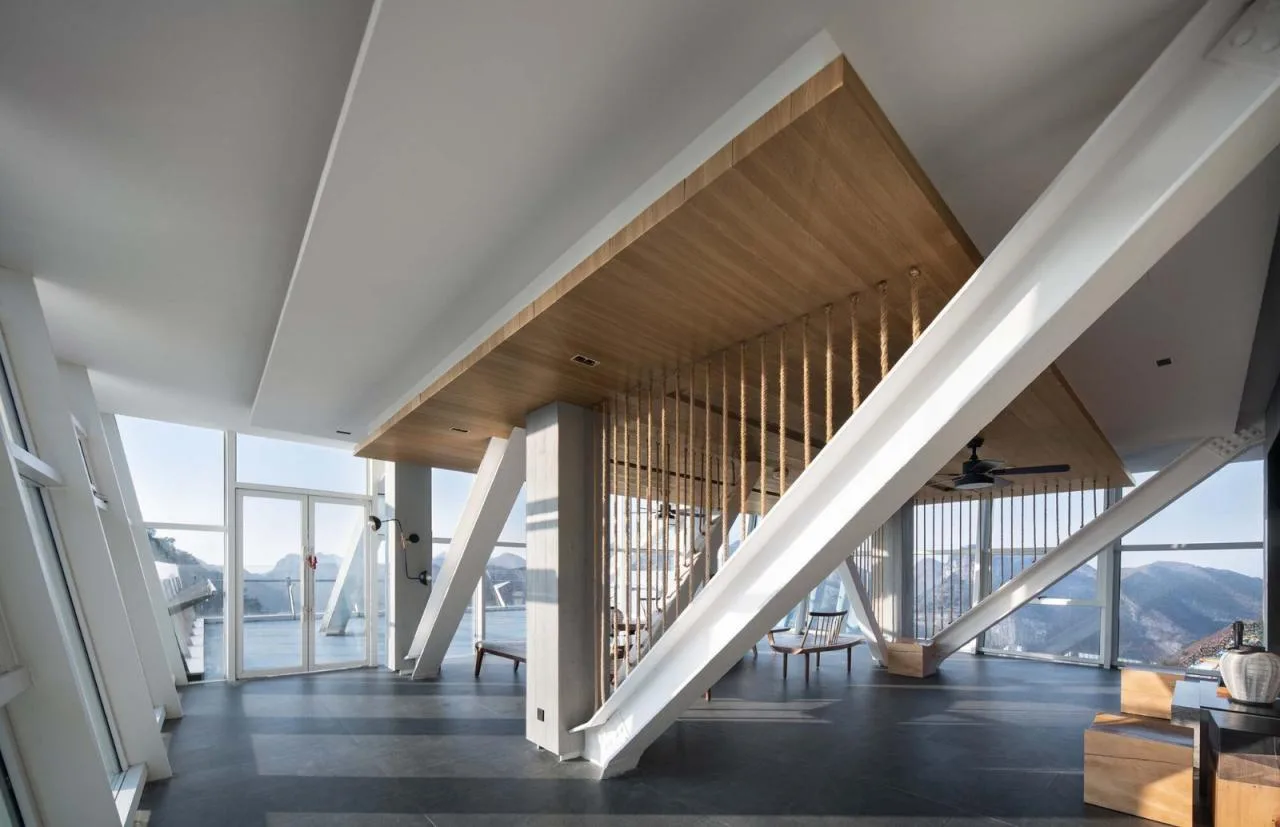
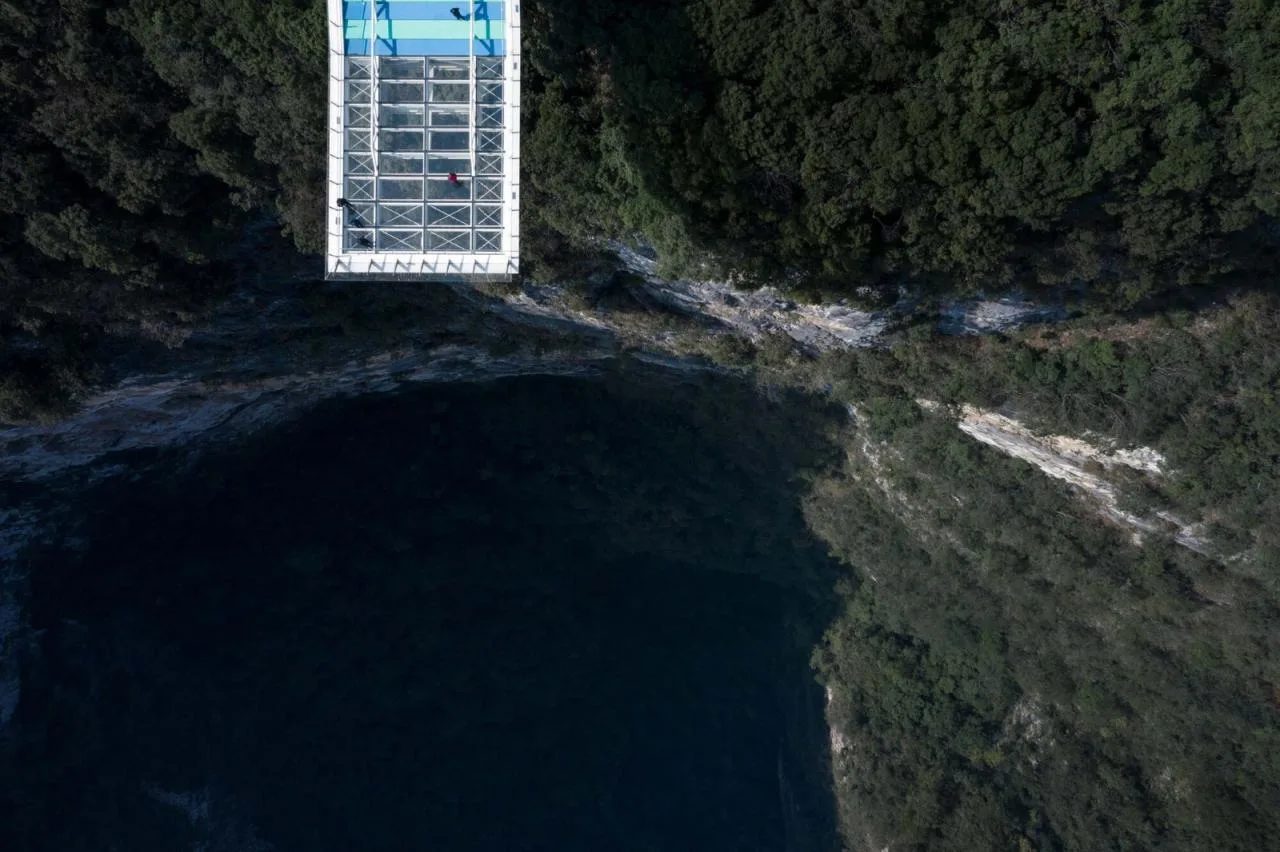
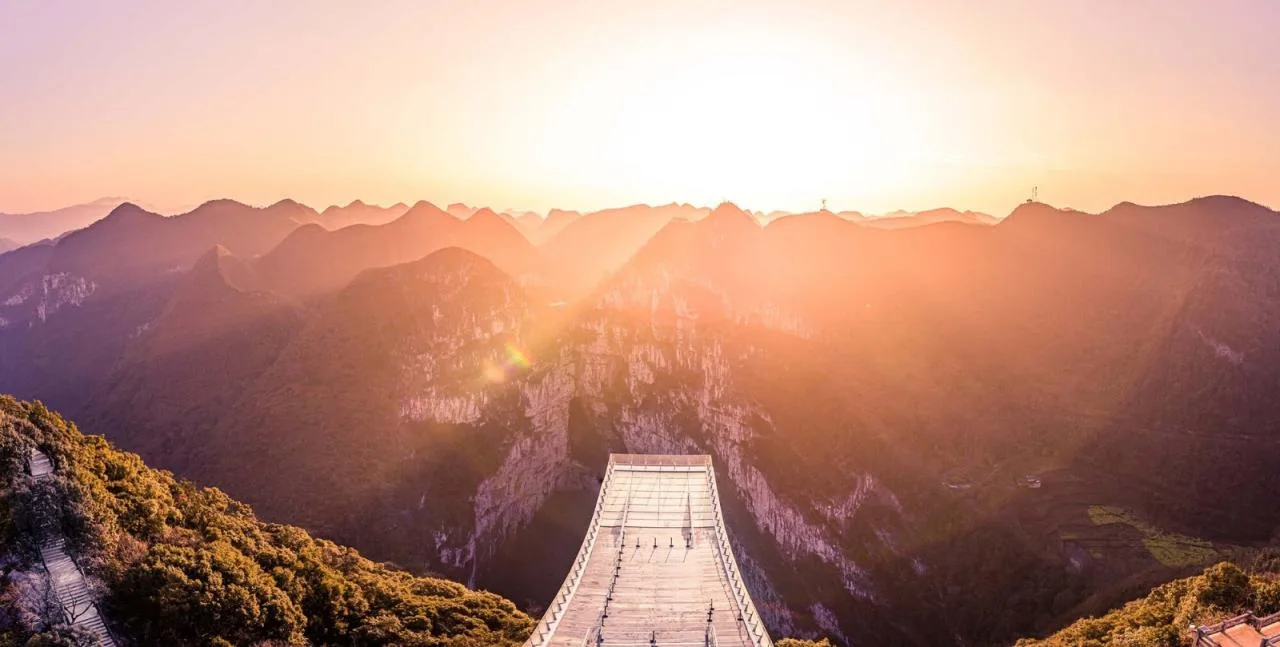
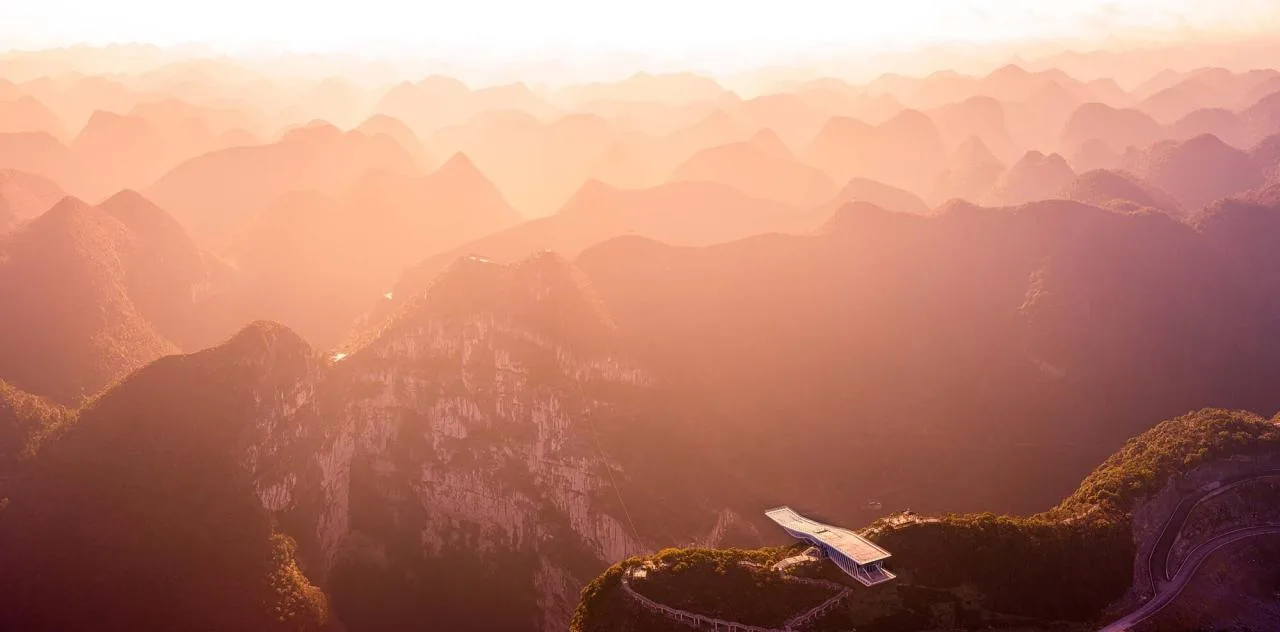
The Cloud Sea Sky Boat features two winding curves, each forming a viewing platform that stretches from the ridge toward the cliff, gradually descending to bring visitors as close as possible to the edge. The lower curve accommodates the necessary height for an internal coffee shop and structural elements. A V-shaped support minimizes the platform’s footprint by confining the building’s landing area. At the front edge, transparent glass flooring offers a thrilling sensation of hovering 34 meters above the abyss.
From the coffee shop, looking away from the sinkhole, visitors can admire towering mountain scenery. This transition—from the dizzying depths of the abyss to the openness of the mountains—evokes a powerful emotional journey, mirroring the dramatic landscape itself.
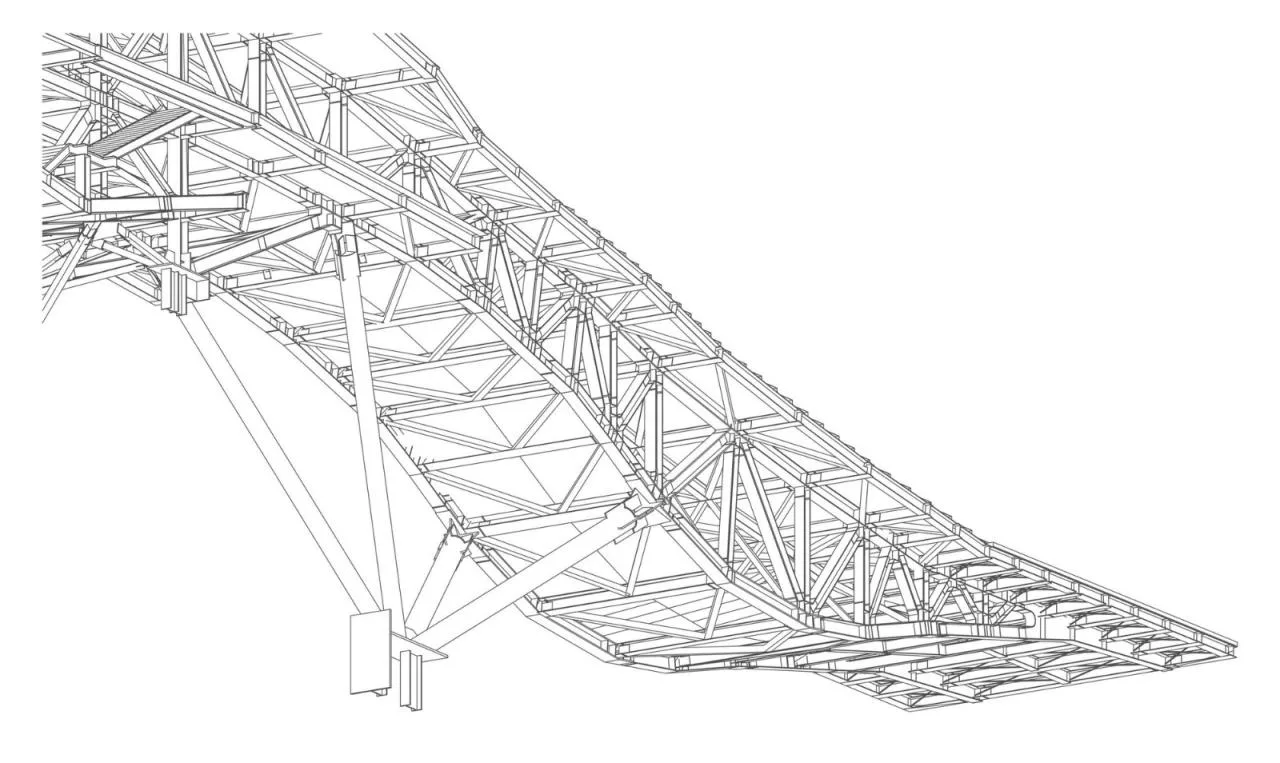
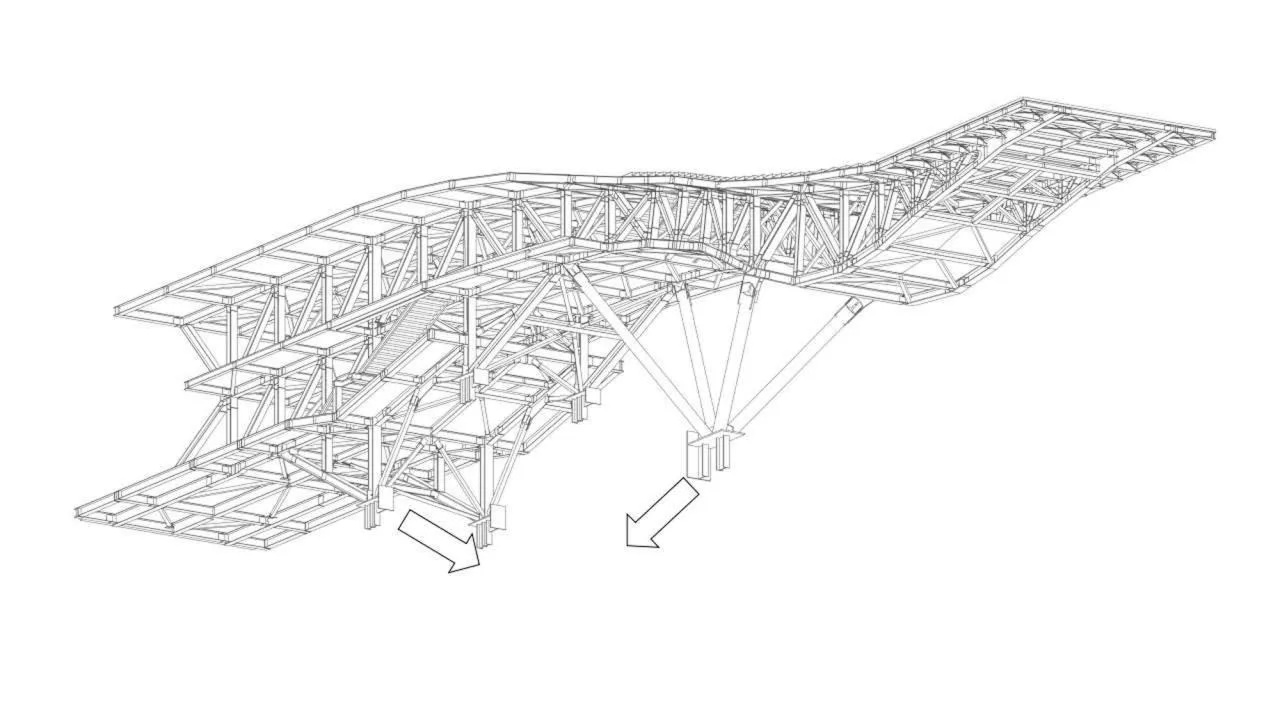
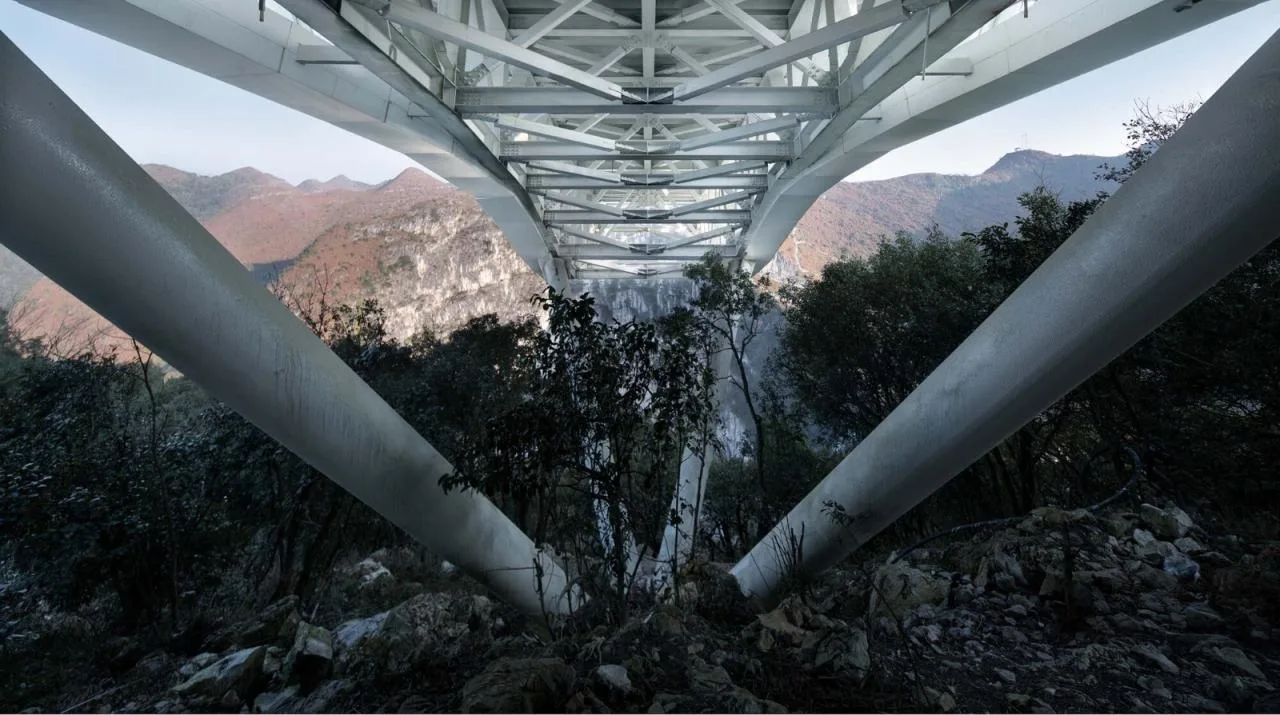
Achieving a 34-meter cantilever presented significant challenges beyond size alone. Controlling deformation and vibration was crucial to ensure a psychologically secure experience for visitors. A 400-meter-long crack atop the ridge posed a major instability risk. To address this, grouting treatments were applied, and the building’s supports were designed to lean inward, creating a horizontal force that hugs the ridge and enhances stability.
The structural design integrates the building’s components strategically, shifting the area of greatest deformation backward toward the ridge “neck,” resulting in reduced movement at the cantilever’s front end. Additionally, liquid damping boxes help control vibration amplitude and frequency.
To minimize environmental impact, the building’s self-weight was reduced to match that of the excavated rock foundation. The viewing platform’s main structure utilizes a spatial steel truss system, incorporating the front railing as part of the truss to keep the cantilever thin and lightweight. By extending the length of the support pillars, a prestressed arch structure was created in the cantilever, compensating for deflections under static and partial live loads and protecting the glass from excessive deformation.
The arrangement of structural components is optimized to correspond precisely with force distribution and the building’s geometry.
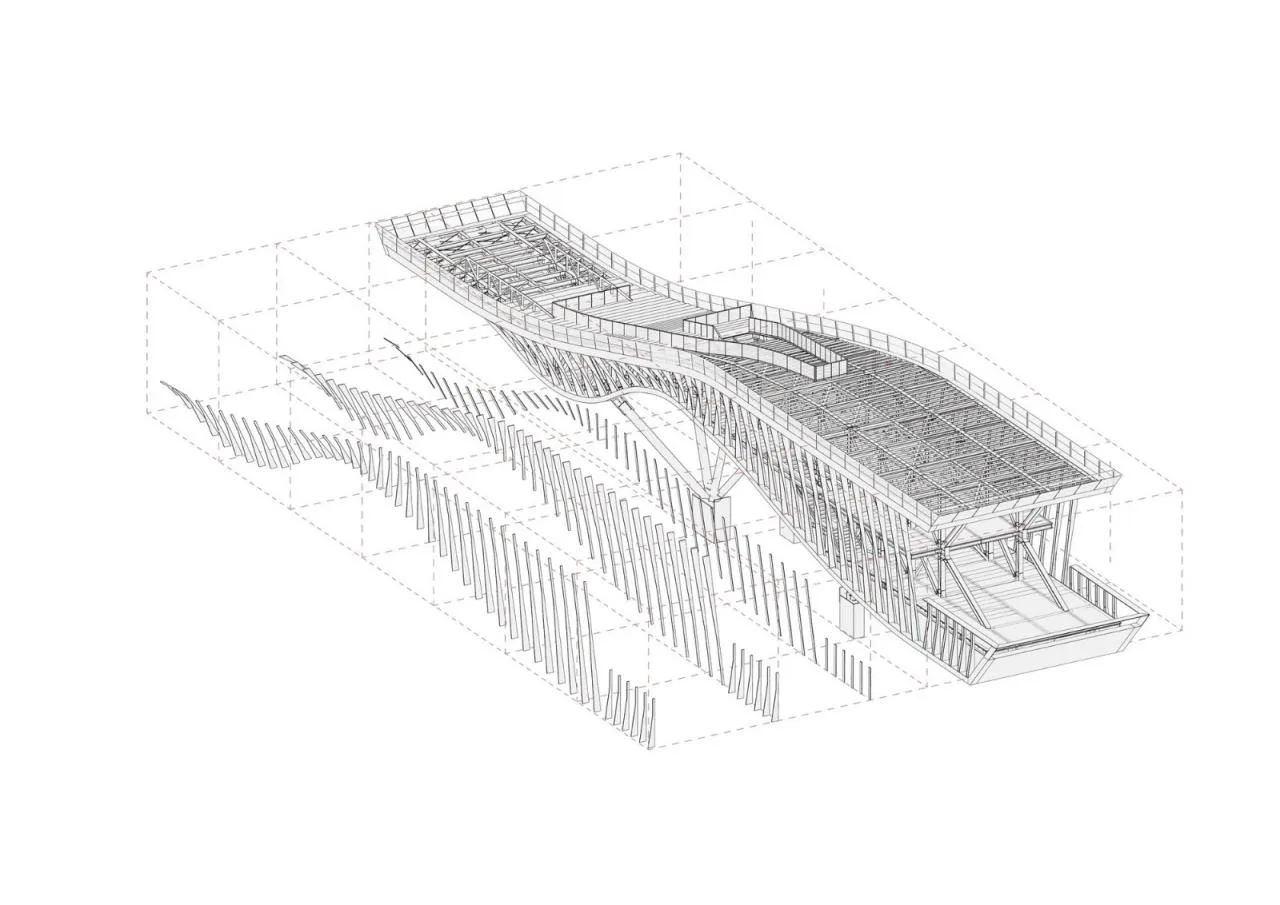
The curtain walls were designed parametrically, with the two main structural control curves positioned on different planes. The twisted side facade glass curtain wall was analyzed as a ruled surface. The curtain wall frame layout minimizes obstruction of the panoramic landscape views. Parametric design methods ensured precise positioning of continuously changing components.
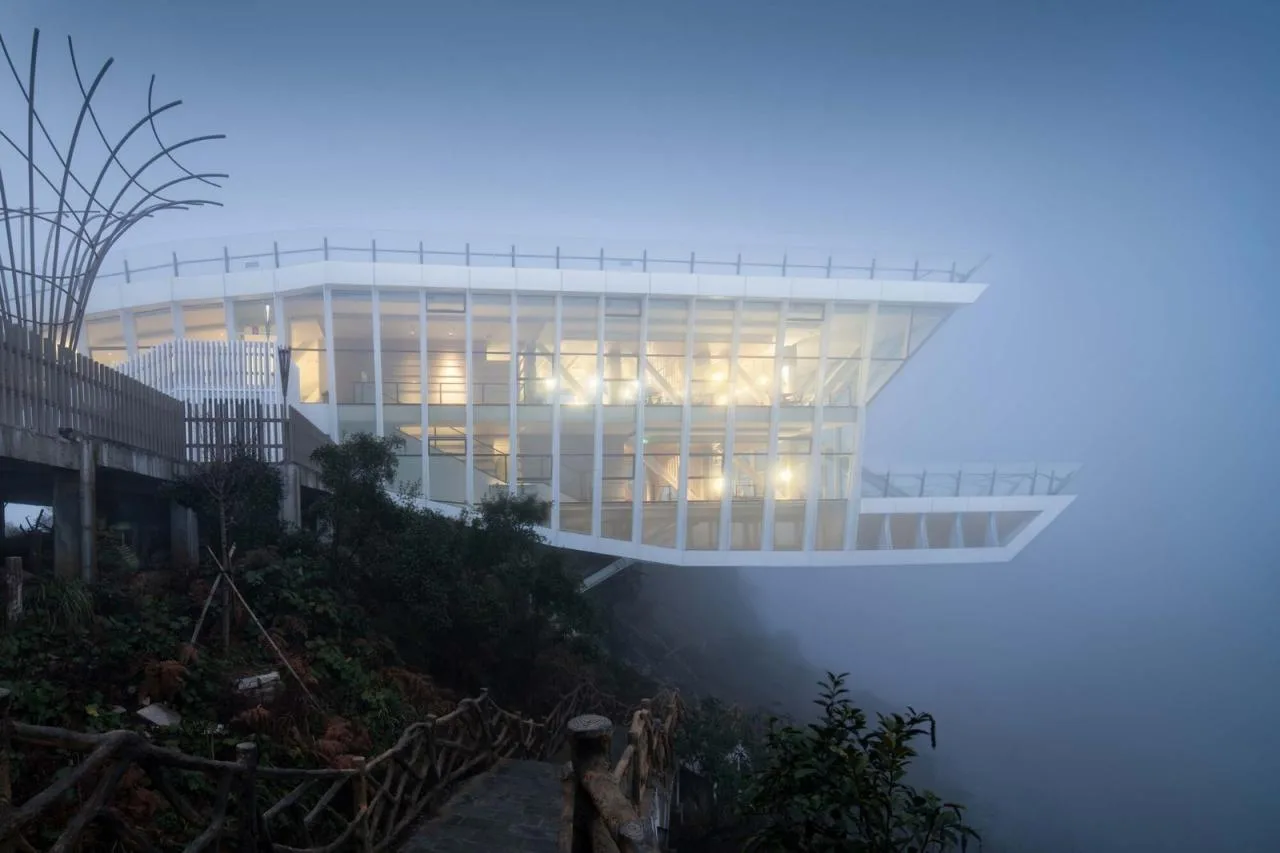
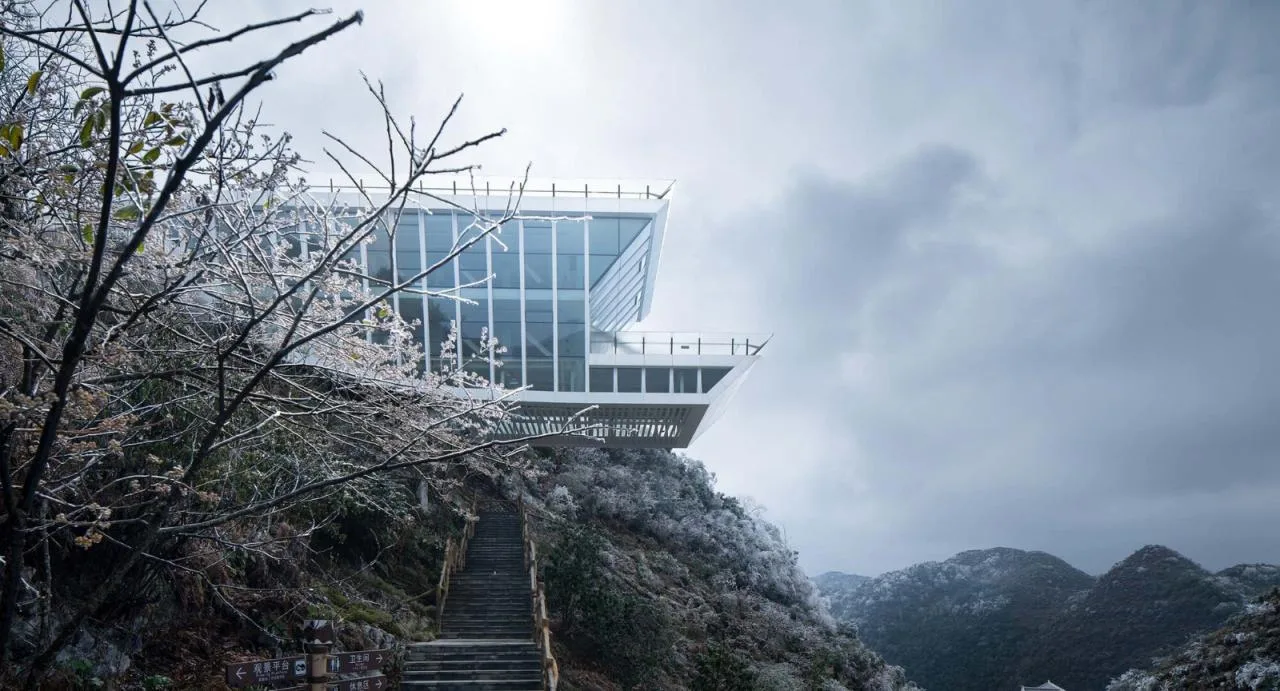
Due to the challenges of water retention in karst terrain, slow growth of local vegetation, and fragile ecological conditions during construction, the observation building was confined to an 80-meter-long by 10-meter-wide footprint on the ridge. Three tower cranes lifted pre-assembled components to the mountaintop, successfully completing the project.
The Yunhaitian Boat design offers a thoughtful solution balancing natural landscape preservation and utilization through both design philosophy and technology. Technology was applied not only to meet digital cantilever size targets but also to reconcile conflicting design goals, naturally arriving at an optimal solution. This allows more people to experience the awe-inspiring karst sinkholes.
The architecture carefully respects the fragile geology with a bold yet rational approach founded on thorough analysis. The 34-meter cantilever is a daring structural feat. Amid the vast sinkhole complex, the Cloud Sea Sky Boat resembles a small boat nestled within the mountain scenery.
Project Information
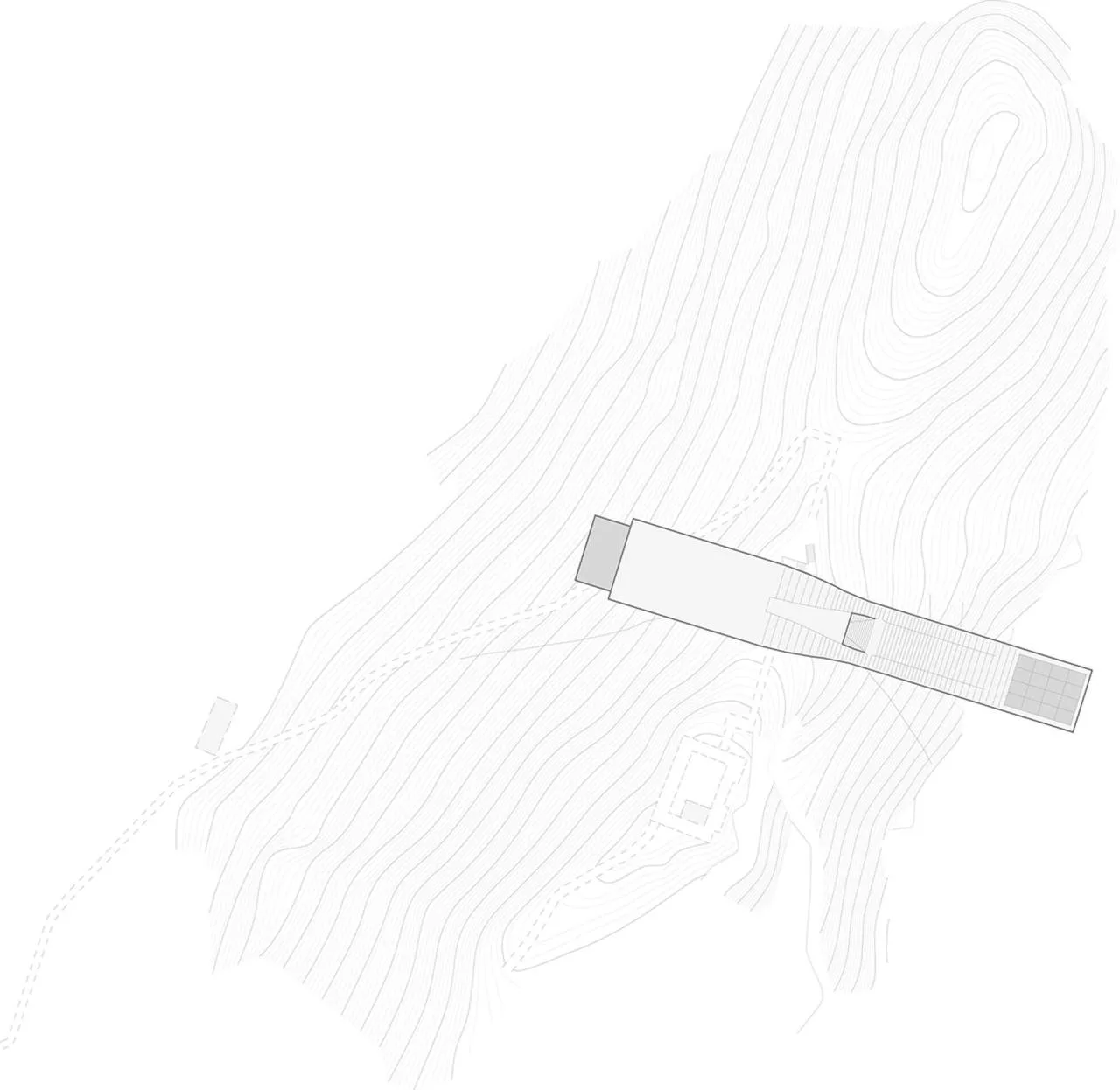
△ General layout plan
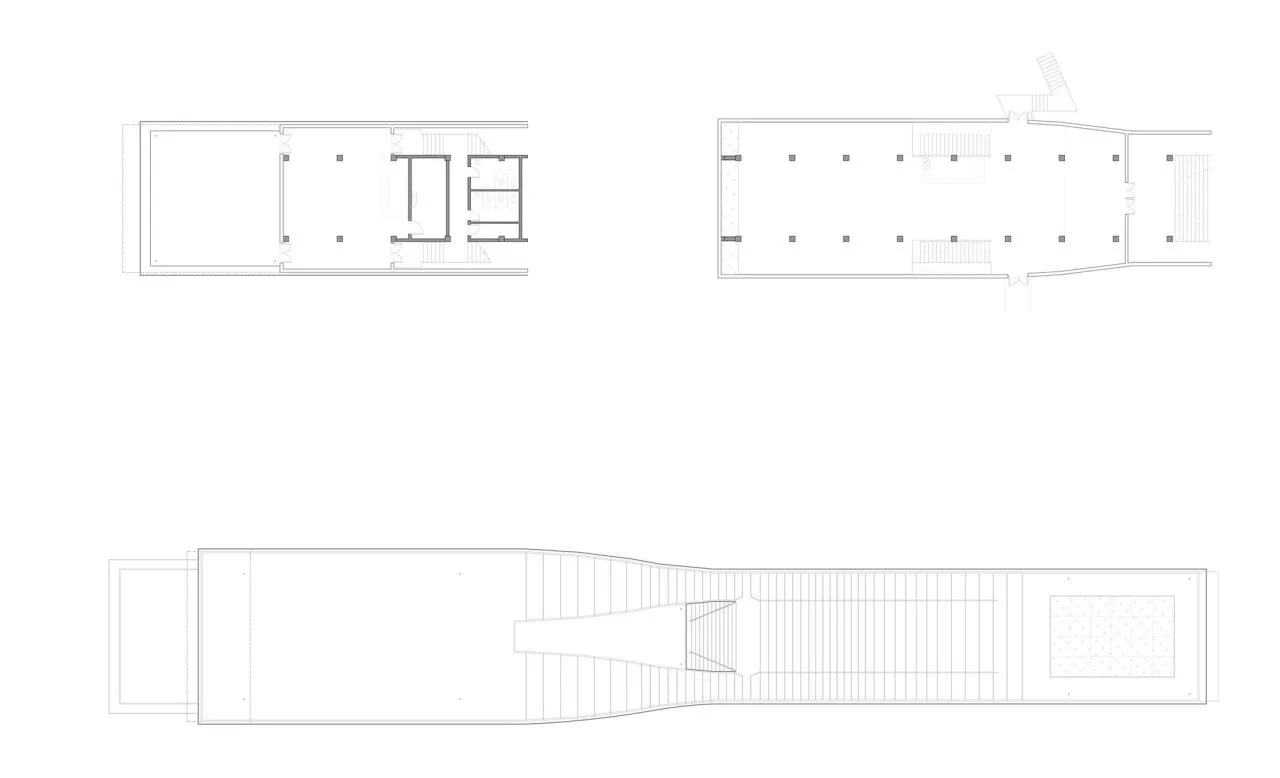
△ Plan view
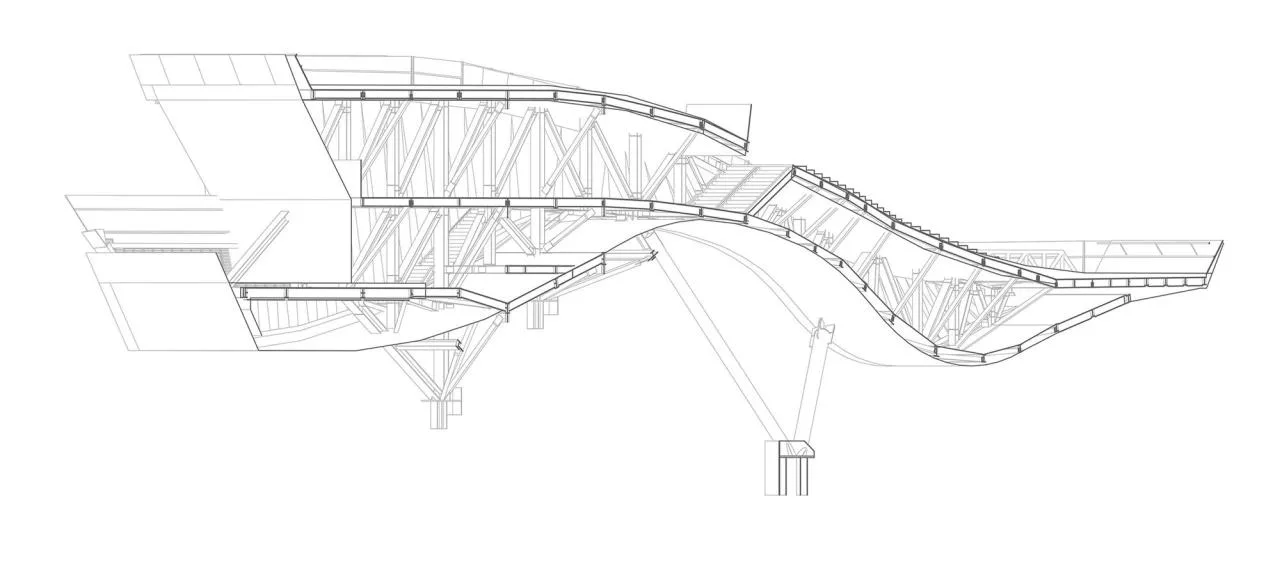
△ Sectional perspective
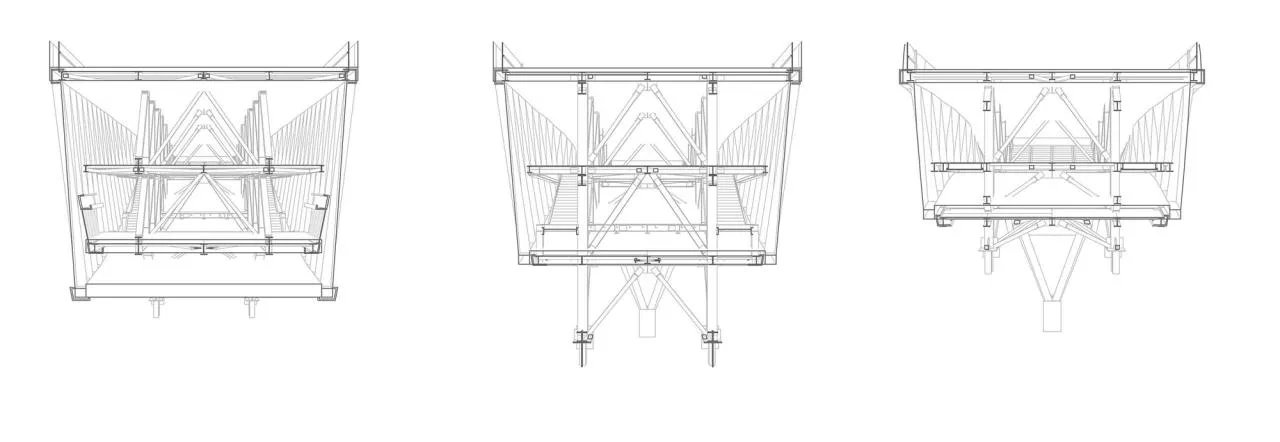
△ Section diagram
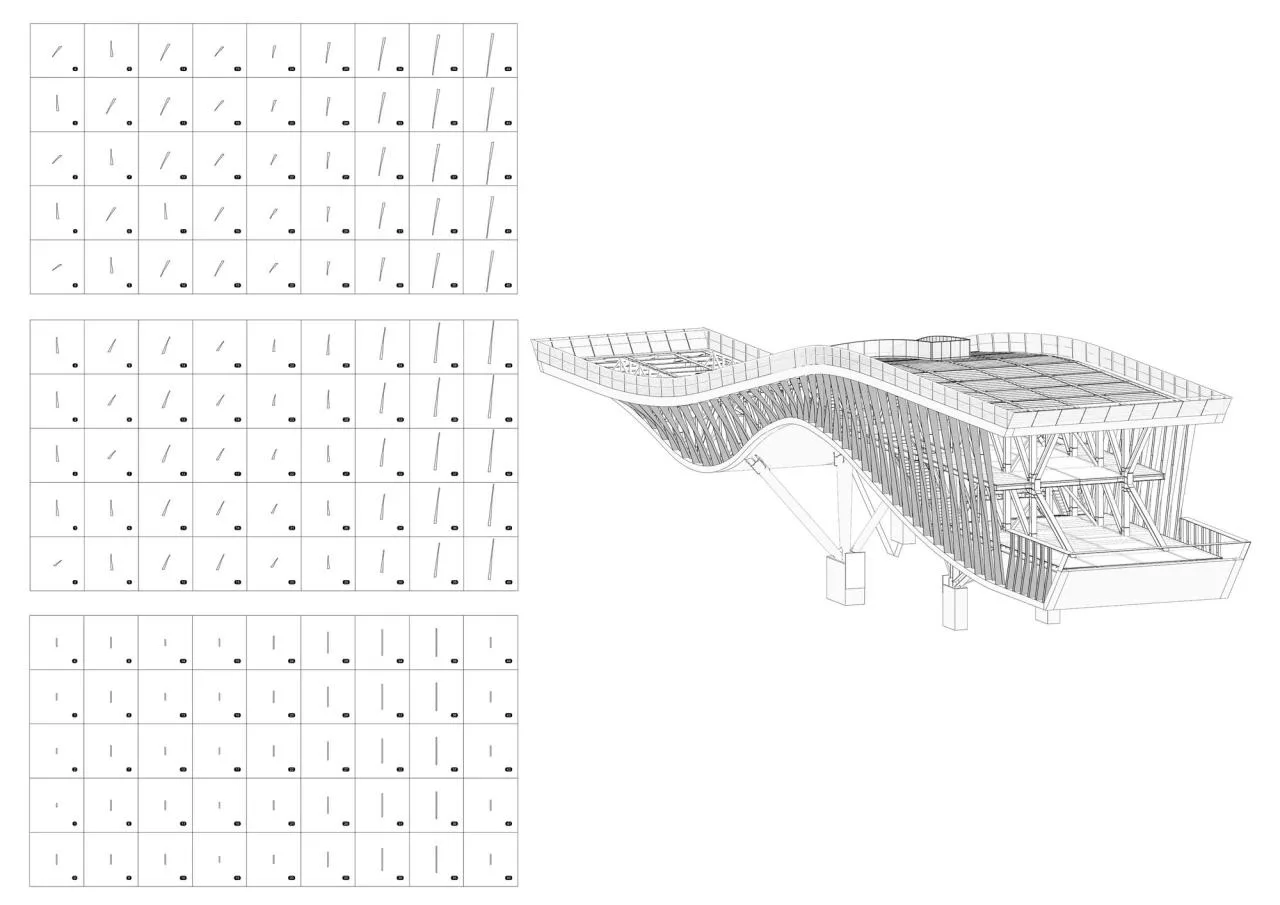
△ Structural schematic diagram
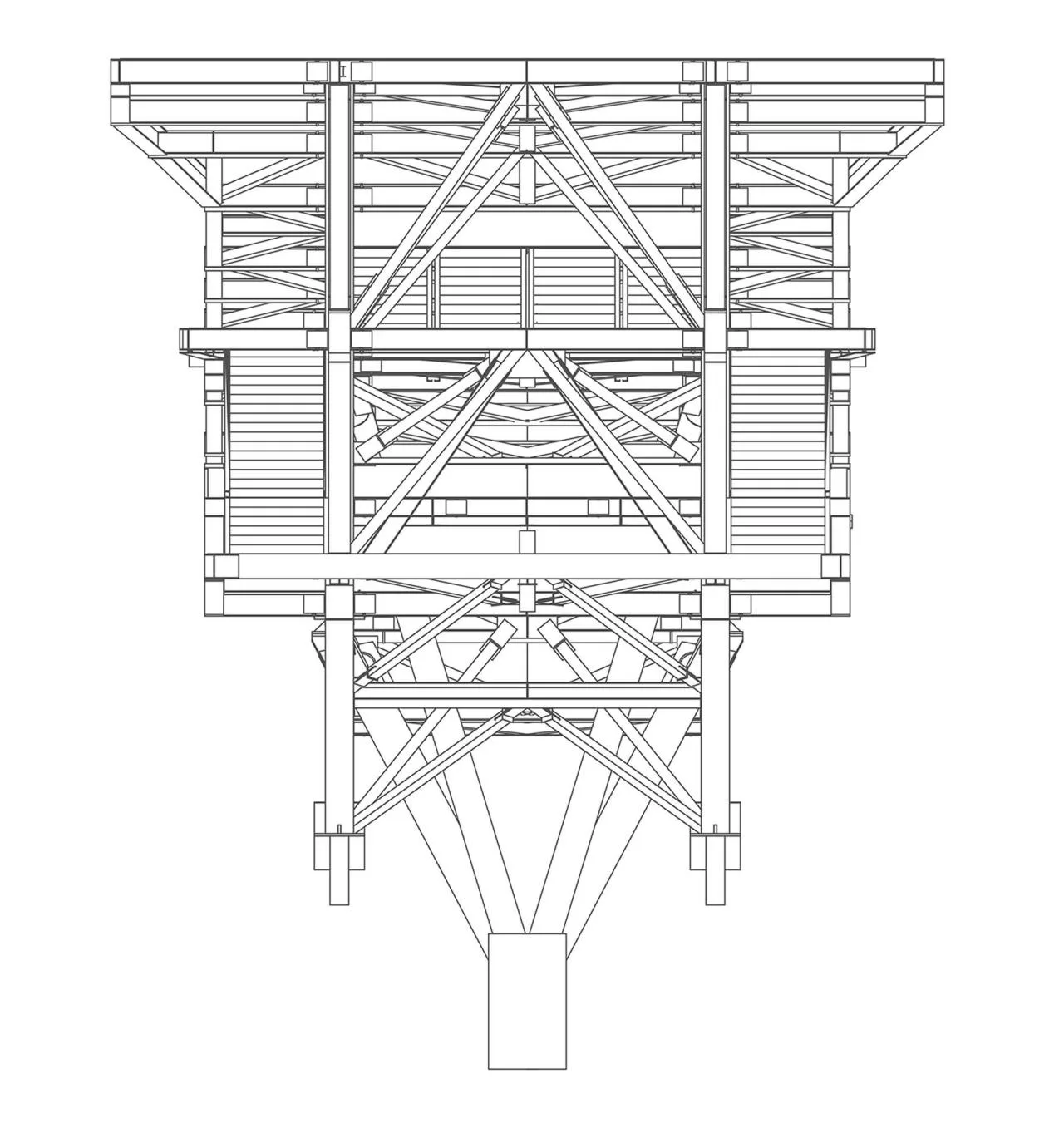
△ Structural schematic diagram
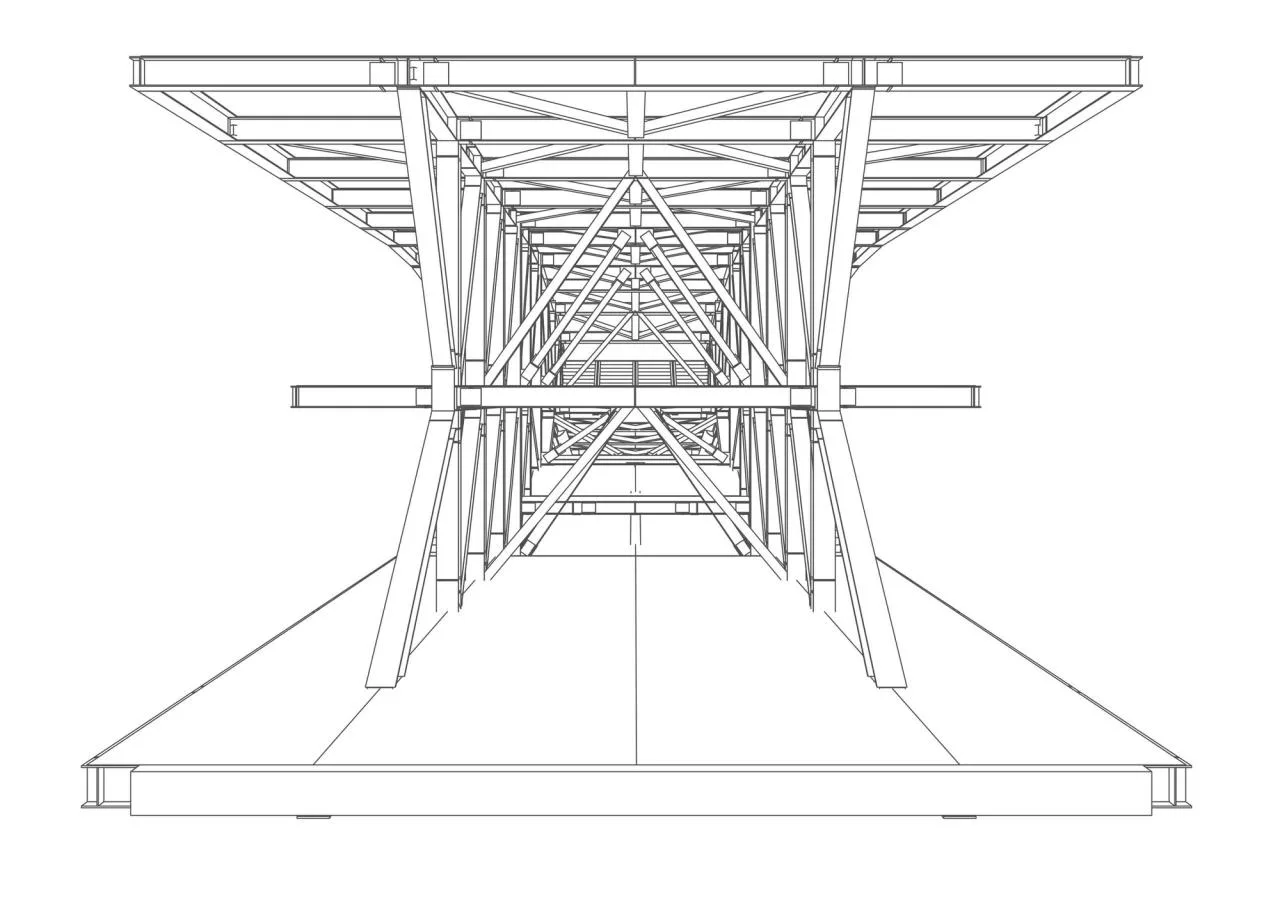
△ Structural schematic diagram
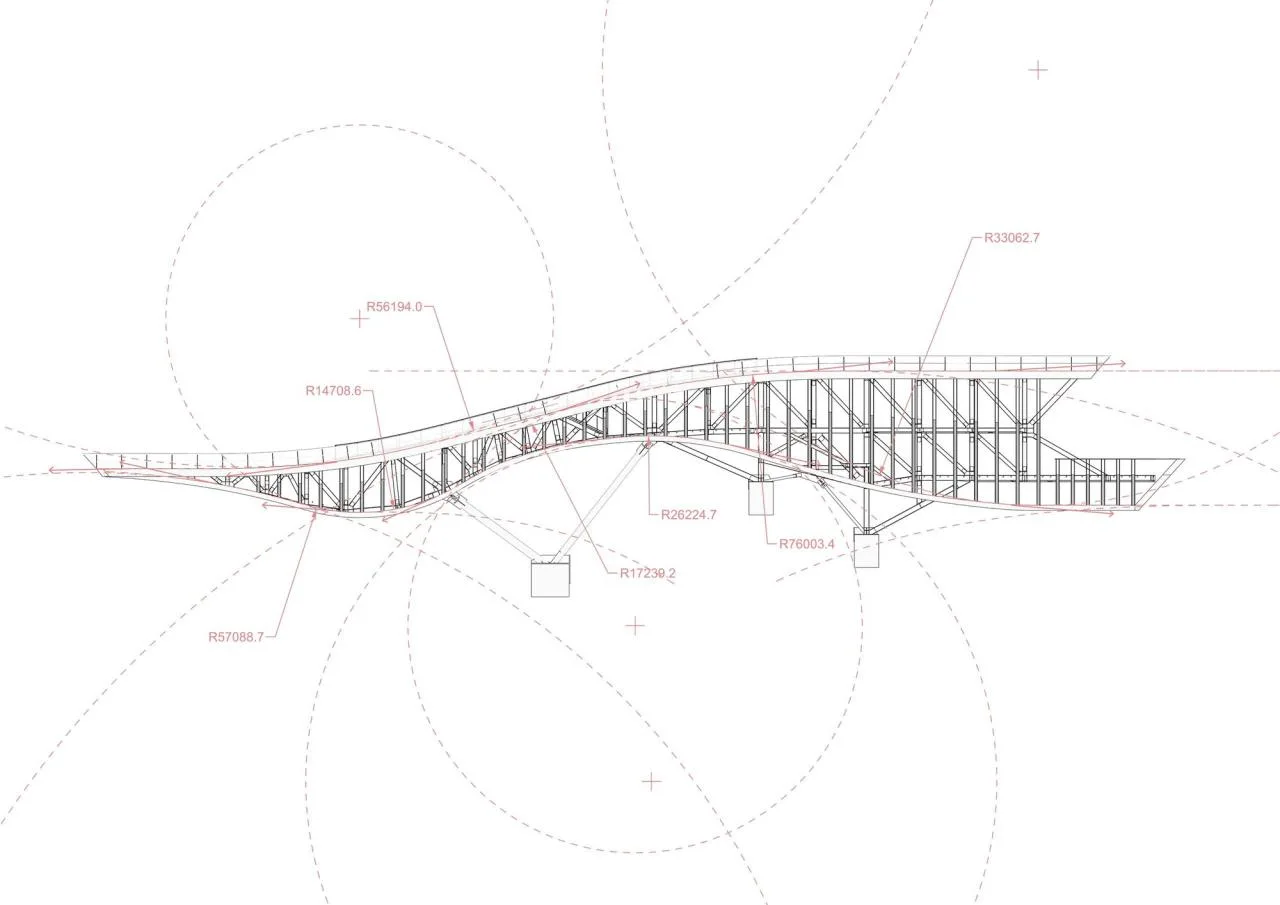
△ Structural schematic diagram
Project Information
Architect: Nanjing University Architecture Zhong Huaying Studio
Area: 800 m²
Project Year: 2022
Photographer: Hou Bowen
Lead Architect: Zhong Huaying
Design Team: Zhong Huaying, Hong Qing, Xu Mengwei, Dai Qinglai
Structural Design: Yuan Xin, Liu Hongzhang, Fan Lei
Construction Drawing Design: Li Li, He Junli
Principal: Guangxi Leye Dashiwei Tourism Development Co., Ltd
Location: Baise City















Must log in before commenting!
Sign Up