
The integration of BIM technology in construction projects leverages its unique advantages such as resource conservation, information traceability, and efficient production. This has addressed many shortcomings in traditional construction processes. BIM not only enhances resource utilization but also strongly supports the industrialization of construction.
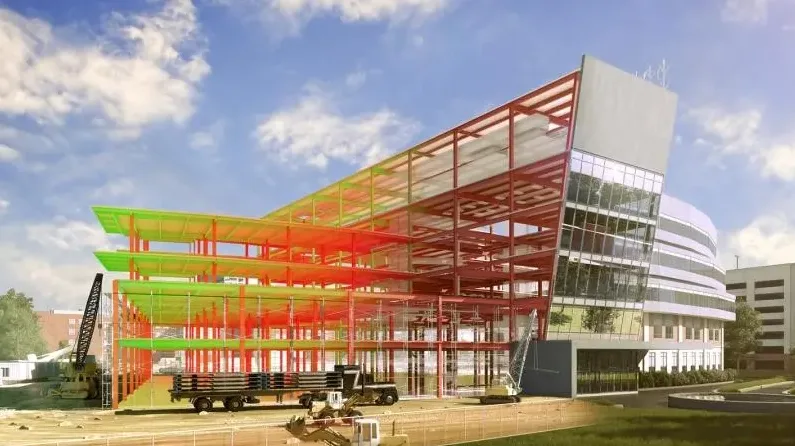
1. Design Phase
Pipeline Design: BIM technology offers greater sensitivity and precision in pipeline layout. It allows special components in equipment engineering pipelines to be rendered more clearly and accurately, helping designers save time and effort. Designers can use BIM software to generate contour lines from any angle, improving efficiency and reducing construction complexity. Clear and accurate modeling of heating, ventilation, and air conditioning (HVAC) pipelines helps avoid technical conflicts, collisions between small pipelines, unnecessary redesigns, and human resource waste. This ultimately saves materials during construction and enhances overall project quality.
Physical Design: Designing equipment engineering systems requires careful consideration of the distances between pipelines, building components, and overall structures to minimize construction impact. BIM technology displays equipment height, position, and other details directly within building models, offering a clear and efficient visualization of pipeline and equipment layout. This facilitates technical and structural coordination as needed. Additionally, BIM enables simulation of design schemes to identify and resolve potential issues early, optimizing the project before construction begins.
2. Virtual Construction
BIM technology extends beyond physical structures to provide powerful virtual construction capabilities. It allows detailed virtual process analysis for building equipment installation, helping to prevent problems and reduce unnecessary disruptions to construction personnel. Designers are unable to foresee all potential issues, but BIM simplifies this task by enabling simulation and evaluation of different solutions. The advanced computing power of BIM systems helps identify the best construction strategies, improving installation efficiency and supporting the advancement of the construction industry.
3. Construction Phase
The building equipment system encompasses various components such as electrical engineering, bridge systems, distribution boxes, wiring, ventilation, air conditioning, duct materials, fans, smoke exhaust facilities, pipelines, and water supply and drainage accessories. BIM uses computational techniques to analyze quantitative data for these components. It not only coordinates the installation of building equipment, electrical devices, plumbing, lighting fixtures, switches, sockets, and lightning protection systems, but also creates a comprehensive simulation environment for equipment engineering.
Particularly, BIM facilitates collision detection for pipeline layouts across different disciplines, helping save materials and maintain project schedules. Construction workers can visualize and assess work progress within a virtual environment that closely mimics real conditions. This combination of virtual and real elements allows workers to intuitively understand the installation effects, while providing a realistic experience for observers.
Using 3D modeling, construction plans can be optimized in real time by anticipating challenges and eliminating potential issues. This integration enhances the feasibility of construction strategies and streamlines equipment installation and pipeline laying. Overall, BIM ensures a more detailed, practical, and quality-focused installation of building equipment systems.
4. Operation and Maintenance
Once the building equipment system is operational, users and managers benefit from an intuitive, BIM-based understanding of the system. The technology simplifies maintenance by overcoming problems caused by lost documentation, hidden projects, or inadequate handovers due to staff changes. When system failures occur, managers can combine on-site conditions with 3D spatial data and the collected equipment information within the software to quickly identify issues.
BIM’s advantages are especially significant for concealed engineering projects, reducing time spent on operation, supervision, and routine maintenance while lowering technical costs.
In summary, these are the key ways BIM technology can be applied to building equipment. We hope this article provides helpful insights for everyone interested in BIM’s role in construction.
















Must log in before commenting!
Sign Up