
BIM technology has seen earlier development abroad, primarily within the construction industry. Its capabilities include 3D modeling, simulation testing, information integration, and data sharing. BIM can be effectively applied throughout the entire lifecycle of construction projects—from planning and collaborative design to clash detection, construction supervision, and facility management. This technology significantly reduces communication costs among project stakeholders, helps control design changes, minimizes rework, and shortens construction timelines.
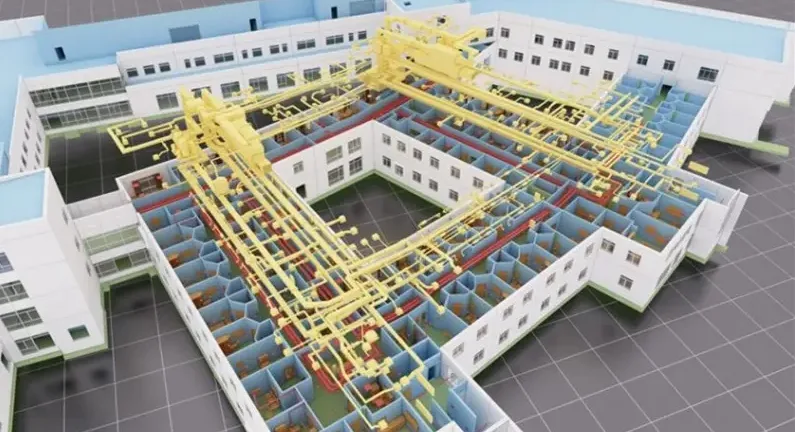
Although many professionals have begun actively adopting this technology and it has gained recognition within the industry, BIM is still not fully mature. Several areas require improvement. One major challenge is that many practitioners lack systematic training in BIM, resulting in limited understanding and inaccurate application of the technology. Consequently, they struggle to build effective, project-specific models and encounter various issues during implementation. To overcome these challenges, professionals need to dedicate themselves to continuous learning, gain hands-on experience, and develop a comprehensive mastery of BIM while working.
Regarding BIM’s application model, it currently operates in a decentralized manner—moving from single-point use to multi-point deployment where each point functions independently yet remains connected. This approach can make it difficult for users to fully adopt BIM’s integrated mindset, leading to operational problems. Therefore, design teams must consistently cultivate BIM thinking and standardize their workflows to ensure smooth implementation.
The challenges outlined above represent the current obstacles to BIM adoption in China. Nevertheless, the technology is expected to evolve and improve significantly in the future. I hope this article provides useful insights for everyone interested in BIM’s development!
















Must log in before commenting!
Sign Up