
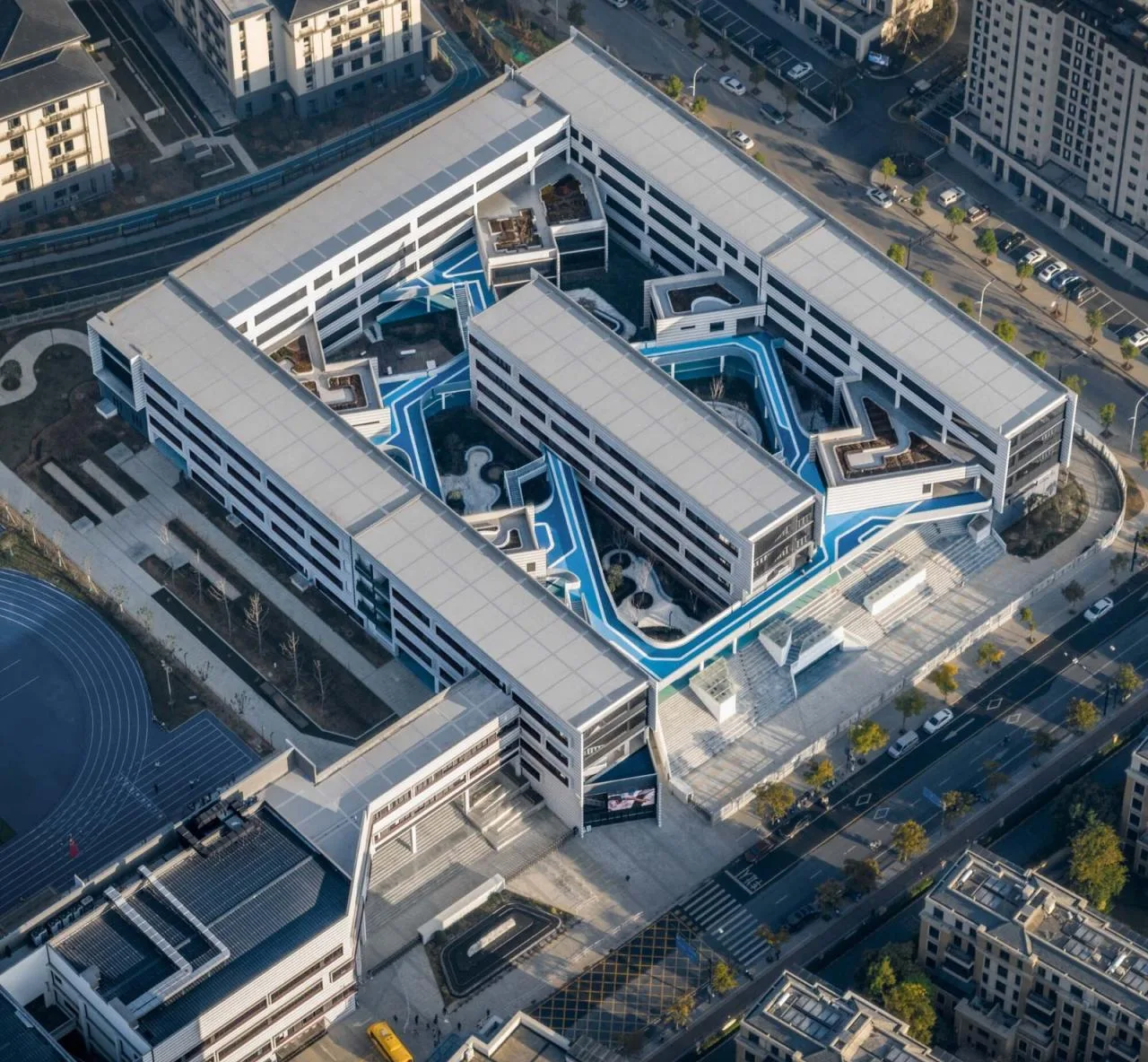
Quzhou Xinhua Second Primary School, designed and executed by LYCS Architecture for both architecture and interior, has recently opened its doors. Built to comply with the latest “Zhejiang Province Compulsory Education Standardized School” standards, it covers approximately 37,182 square meters and accommodates up to 48 classes simultaneously.
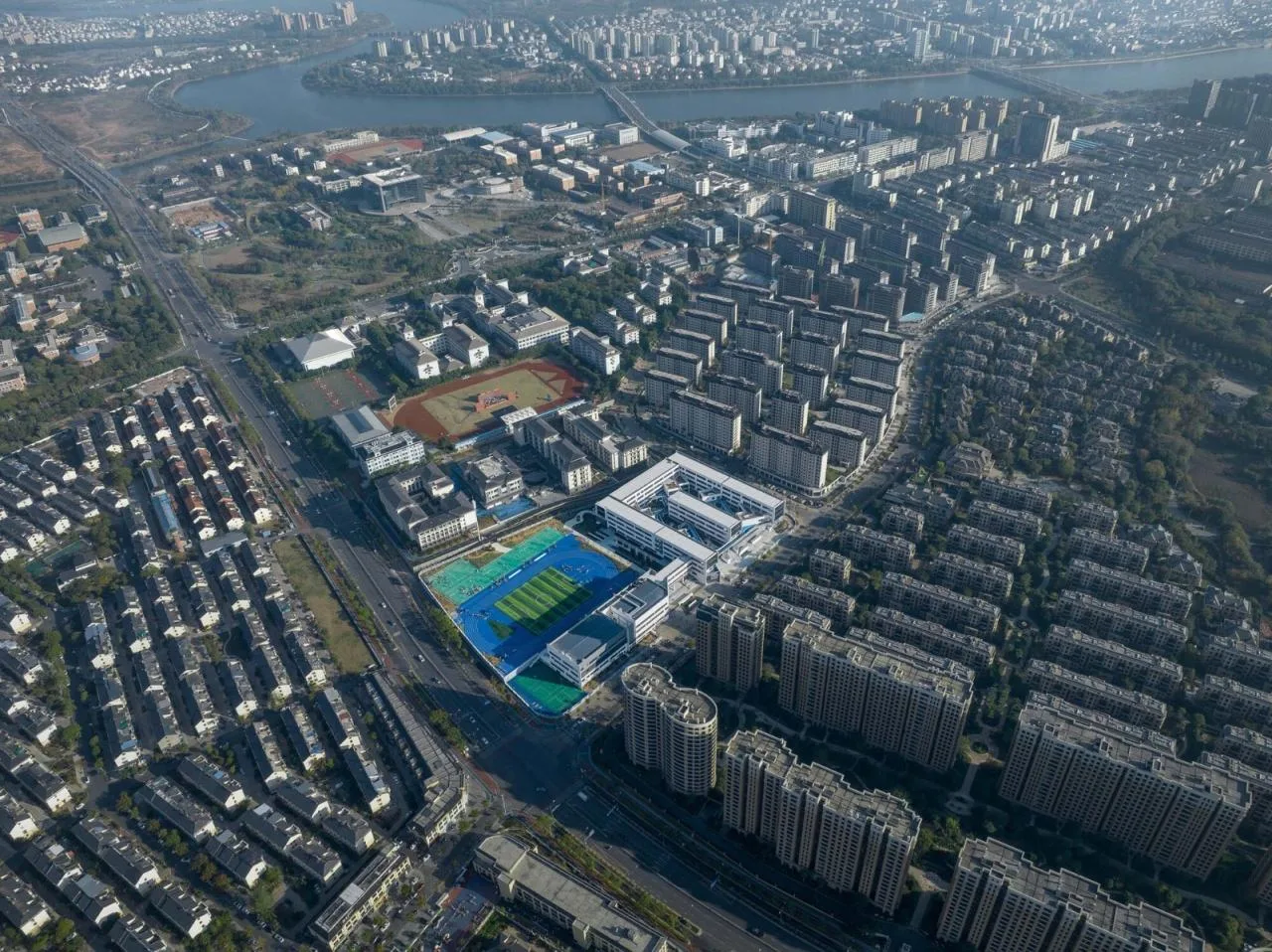
Located in the rapidly developing Quzhou Smart New City, the school is surrounded by residential neighborhoods on the south, north, and west. To the east, it connects with Quzhou Jingcai High School and Quzhou No.1 Middle School, forming part of the new city’s cultural and educational district. The school extends into the residential area like a “peninsula” of this district, integrating urban living with education.
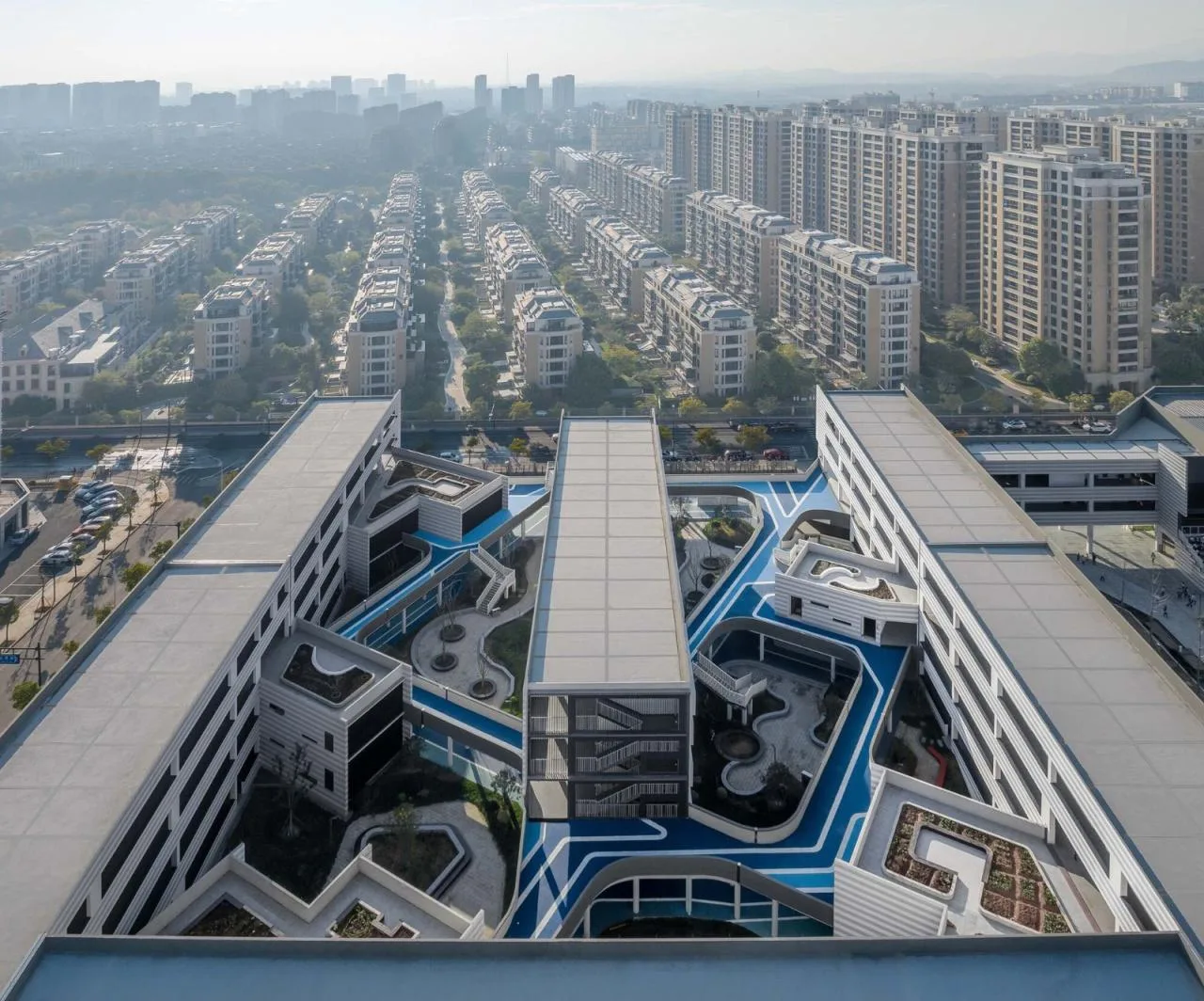
The urban environment here is vibrant yet noisy, characterized by heavy traffic and constant activity. The interaction between spatial surroundings and psychological behavior is evident; in such chaotic settings, children may feel overwhelmed or insecure. The challenge was to create a distinct “safe haven” within the city that fosters a strong sense of belonging for the students.
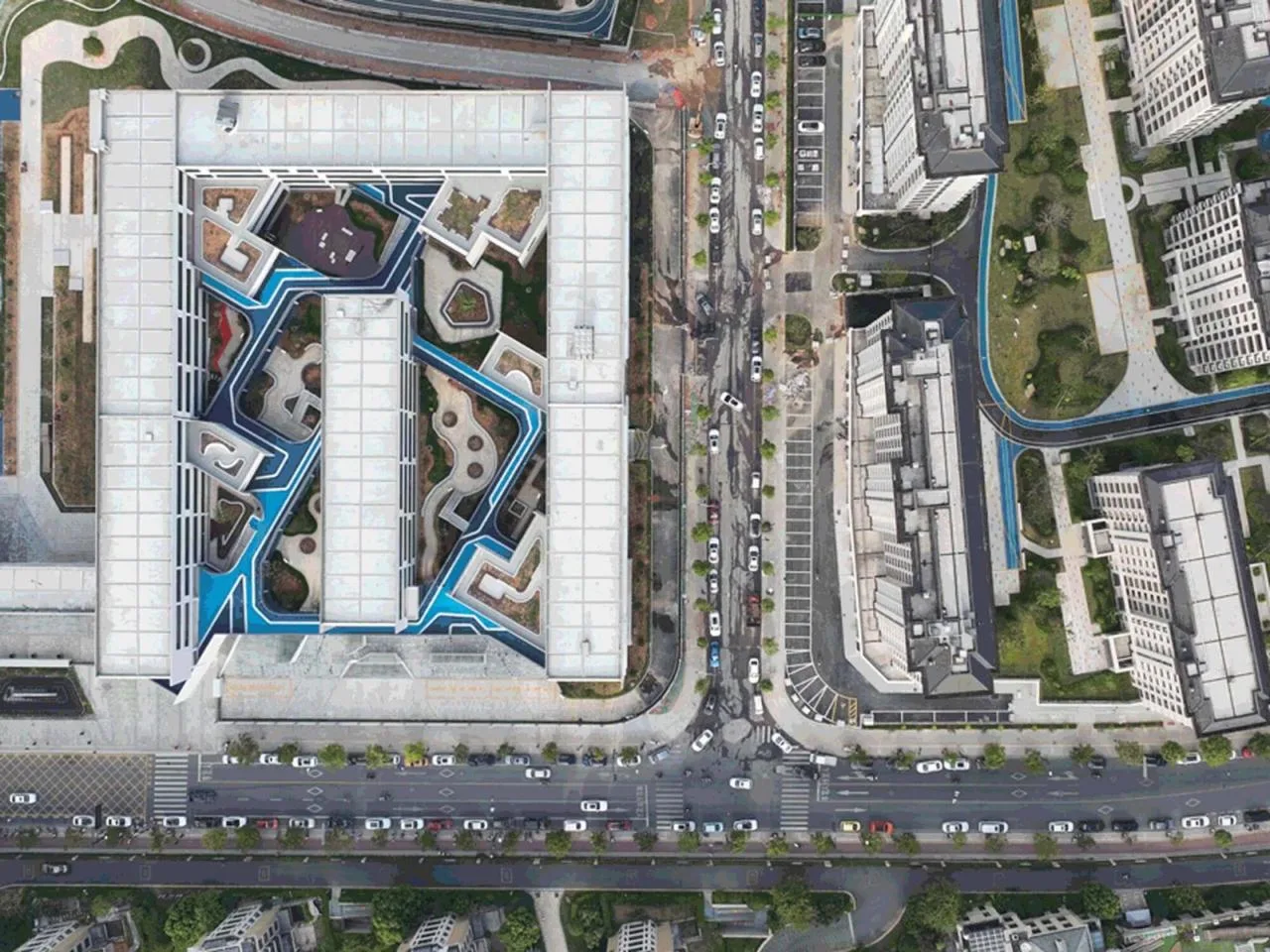
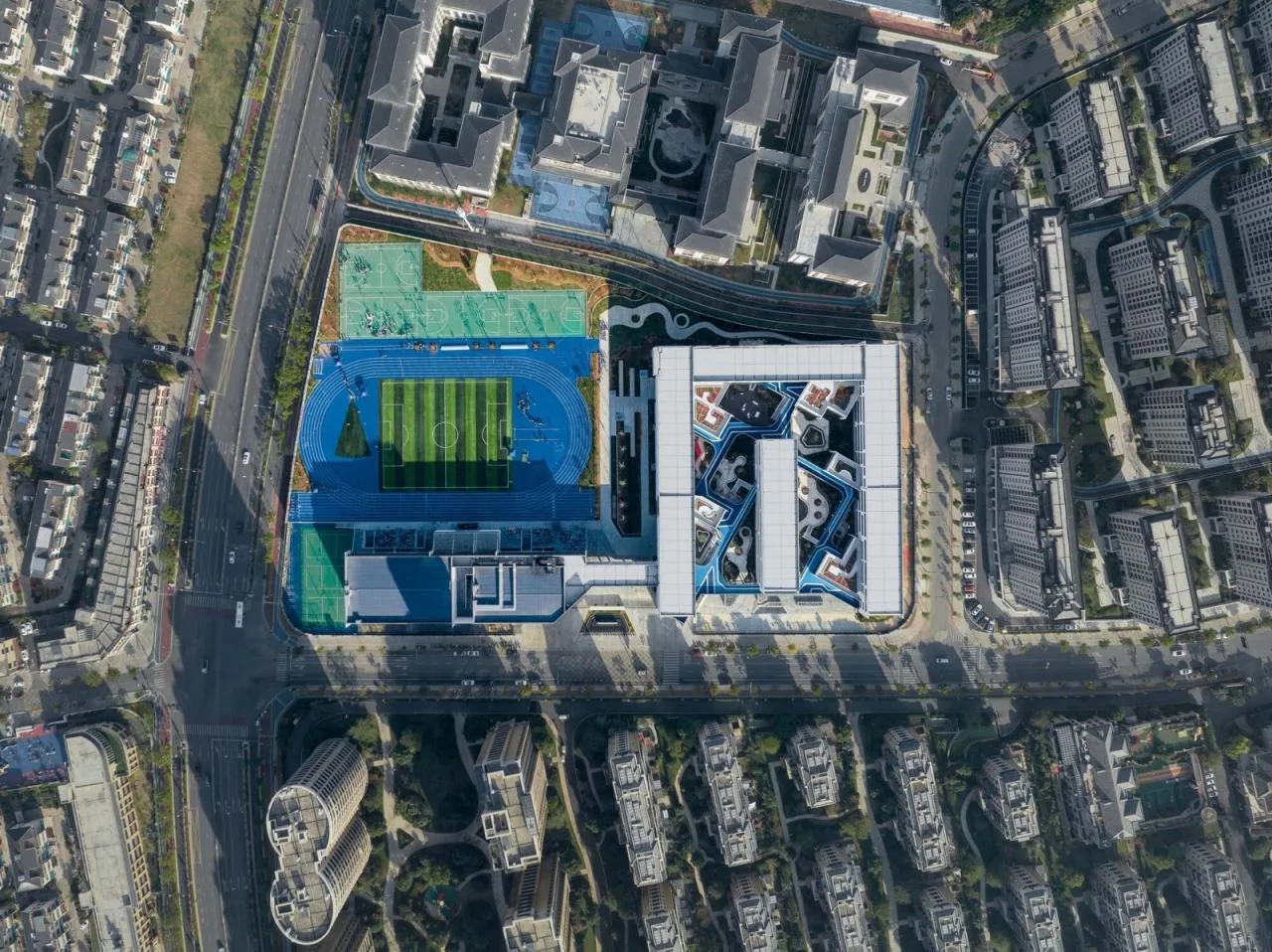
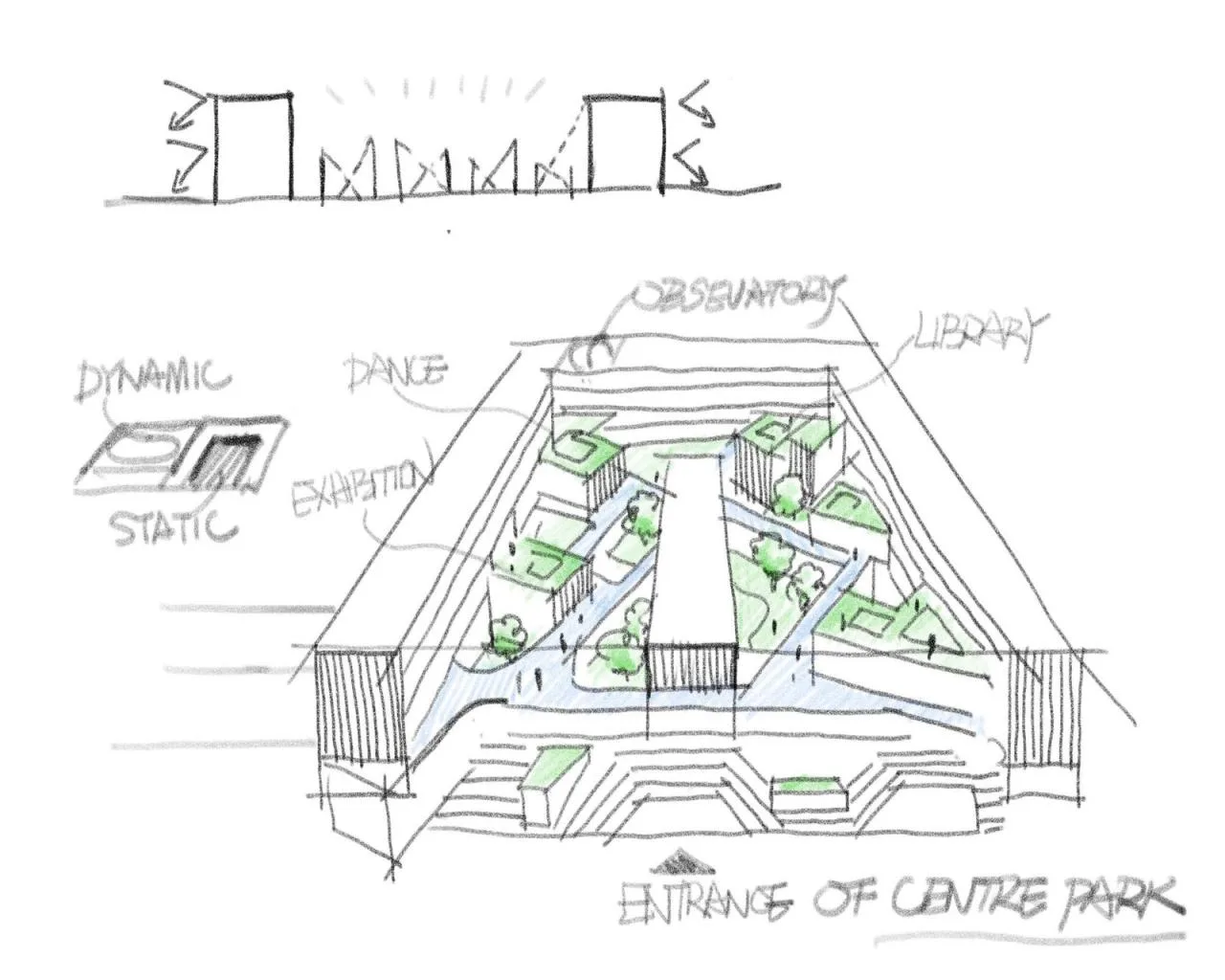
Starting from the core concept of “protection,” 01 City Architecture Firm developed a design strategy called “big city and small courtyard.” This approach surrounds children with large-scale buildings forming a “big city” within the urban context, while integrating smaller houses and corridors that create intimate “small courtyards.” These spaces offer children safe areas to run, play, and enjoy the campus atmosphere.
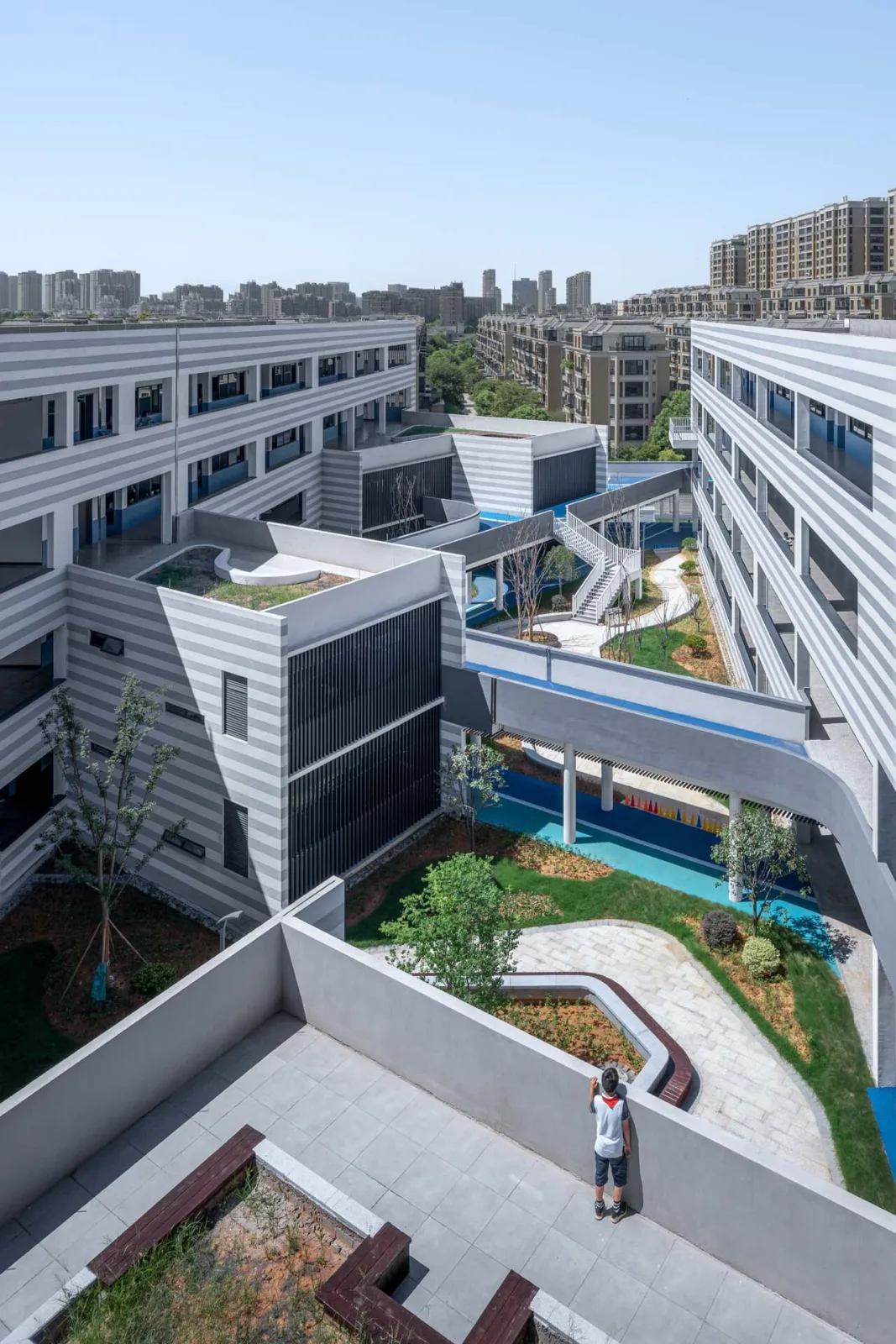
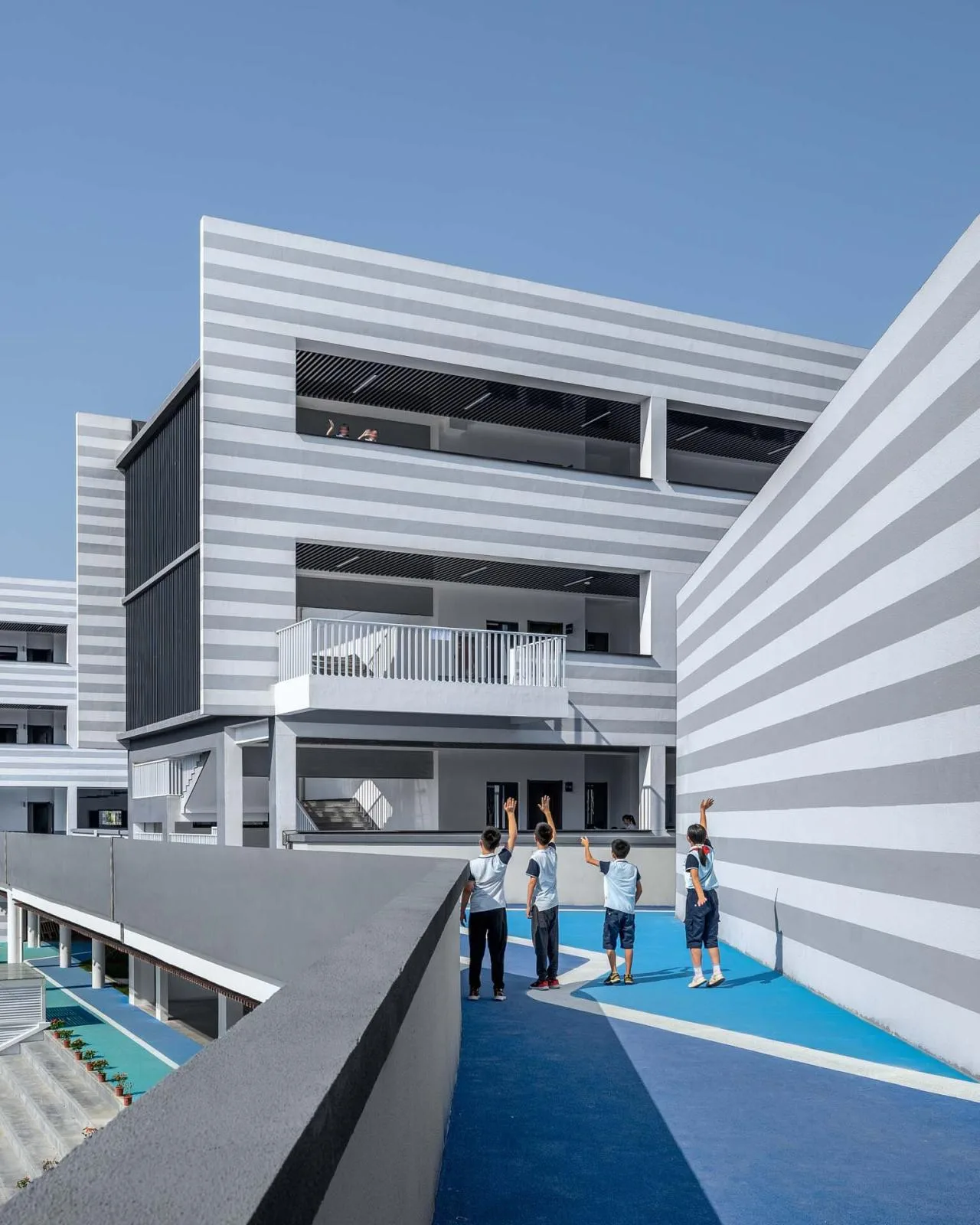
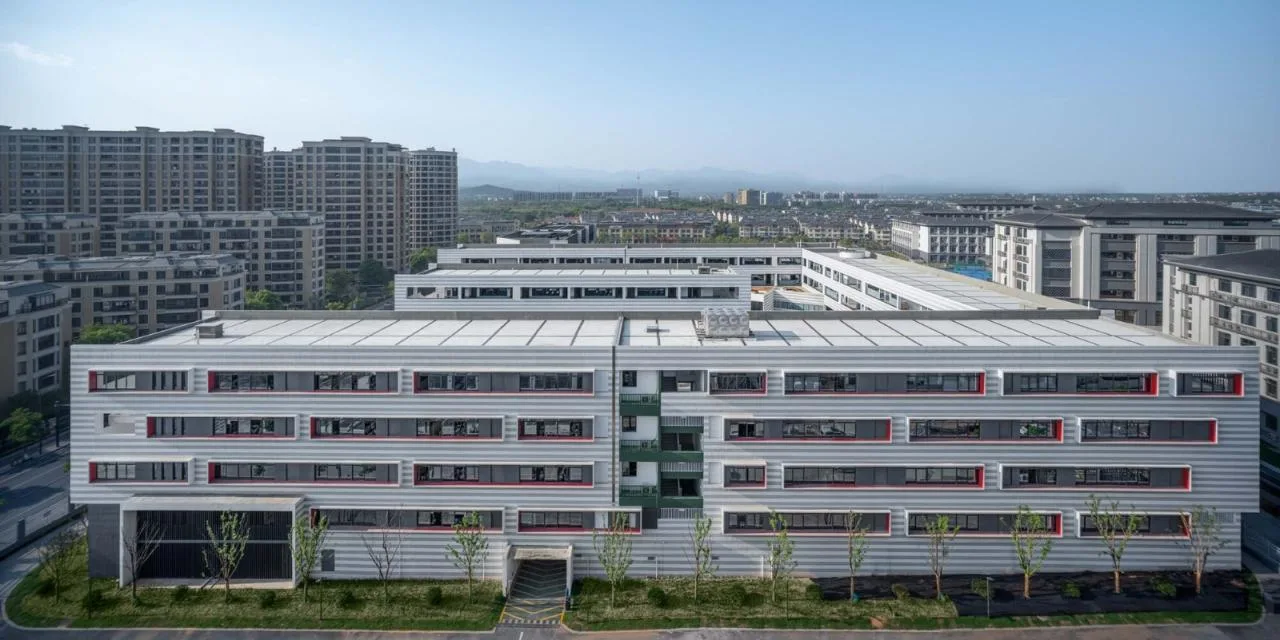
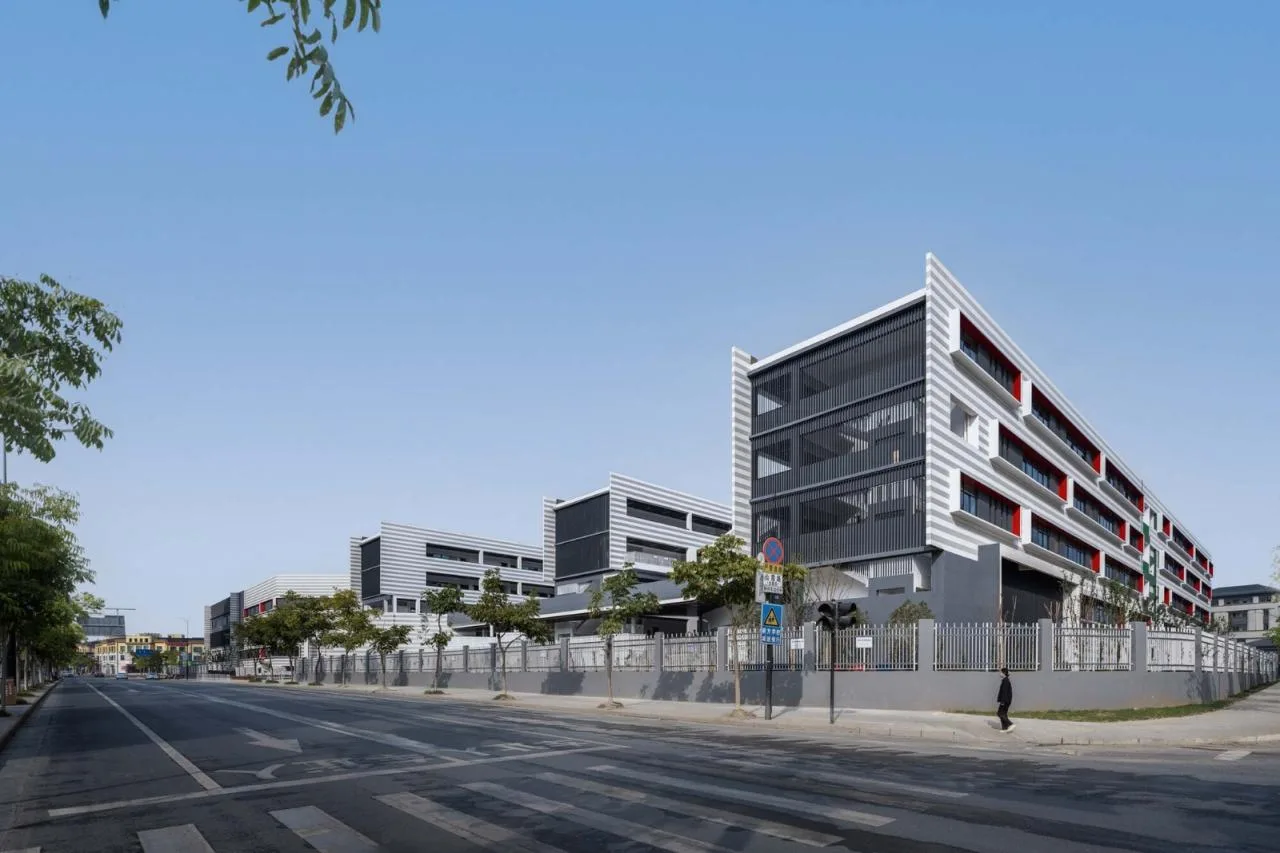
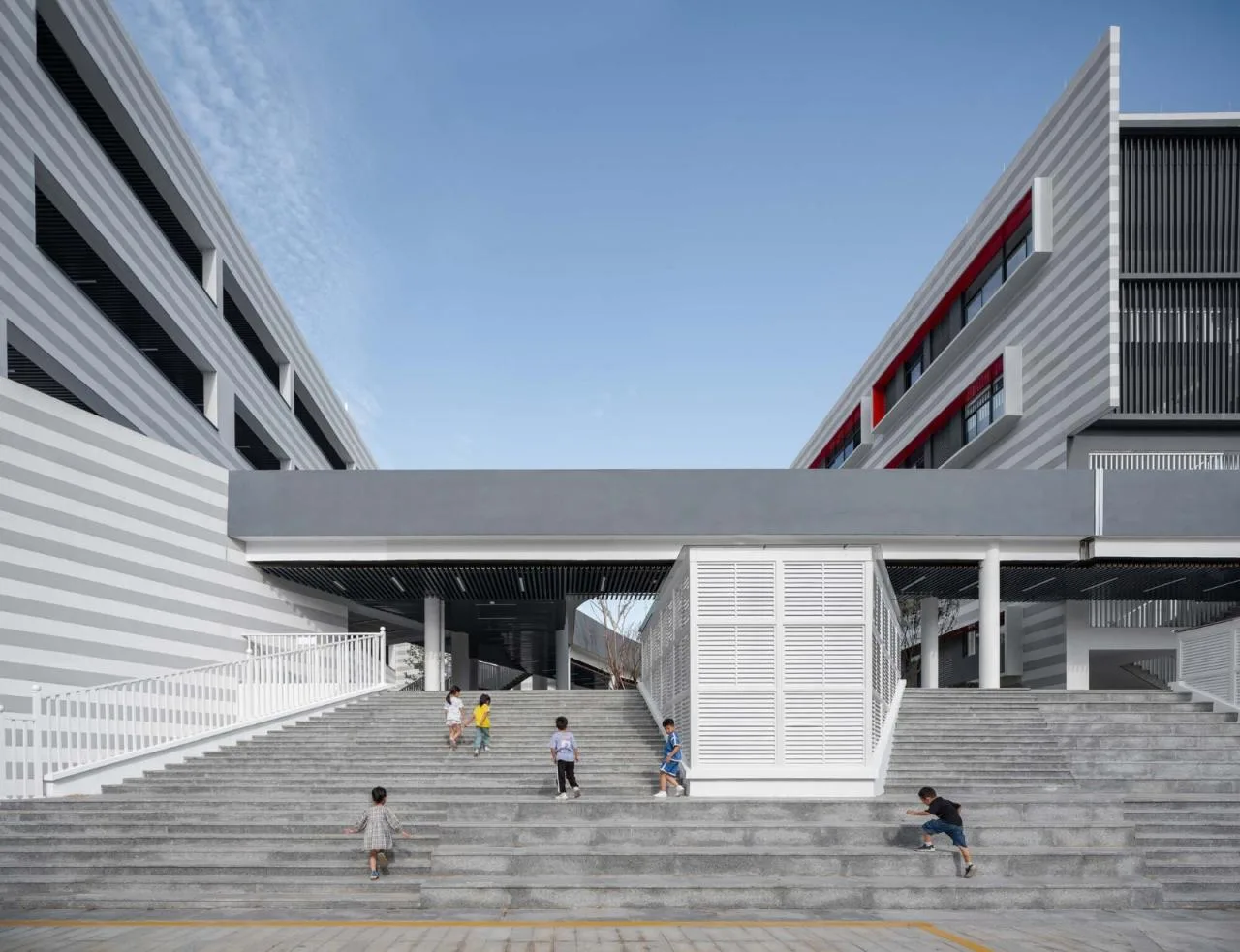
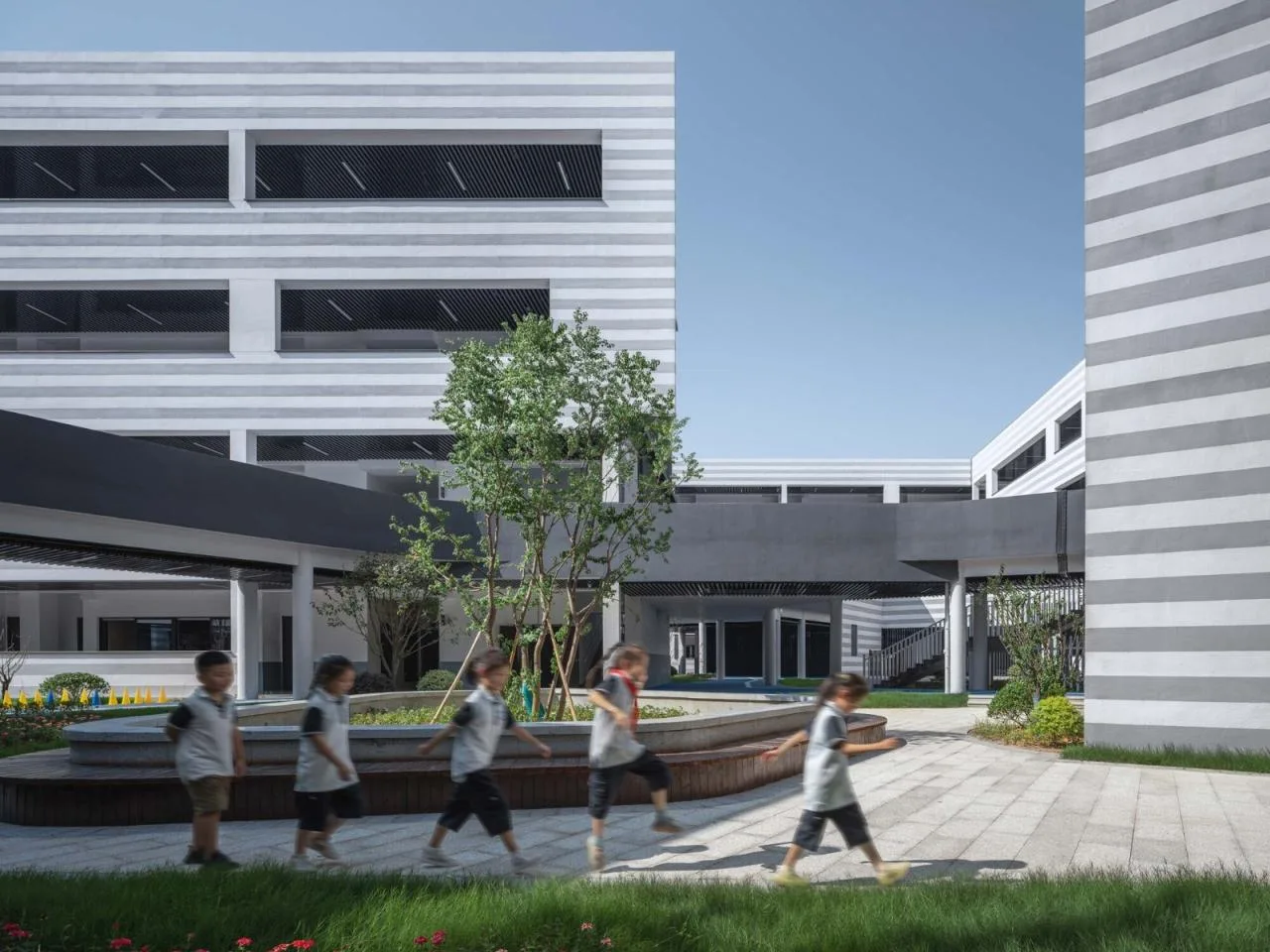
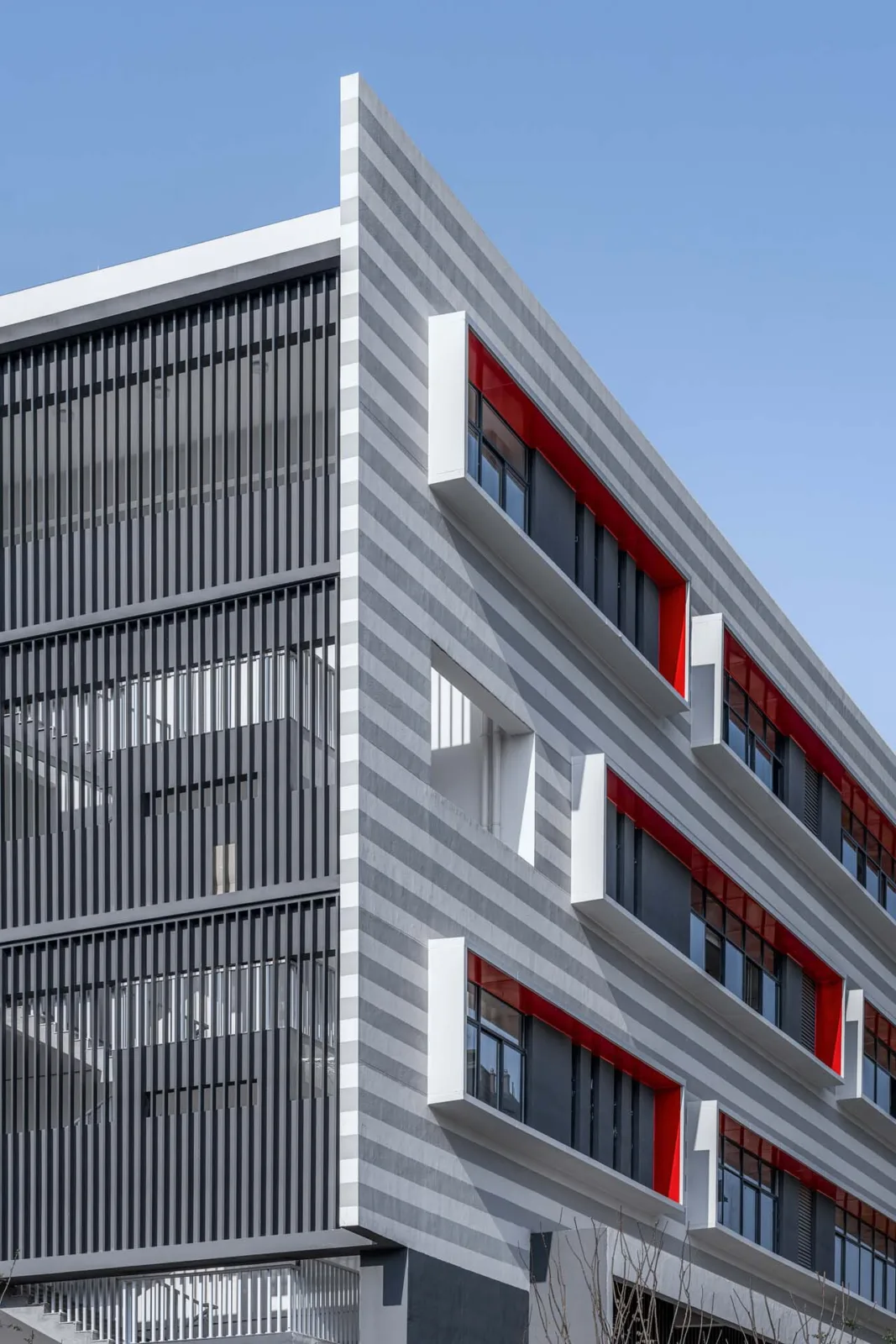
Facing west along Yingjia Mountain Road stands the modern “Dacheng” building, stretching about a hundred meters. Its white facade with zebra-like stripes appears to float, accented by red horizontal windows and green traffic spaces. The combination of simple gray and white striped stone paint with red window frames conveys agility and a childlike charm, breaking the imposing scale of the street-facing façade.
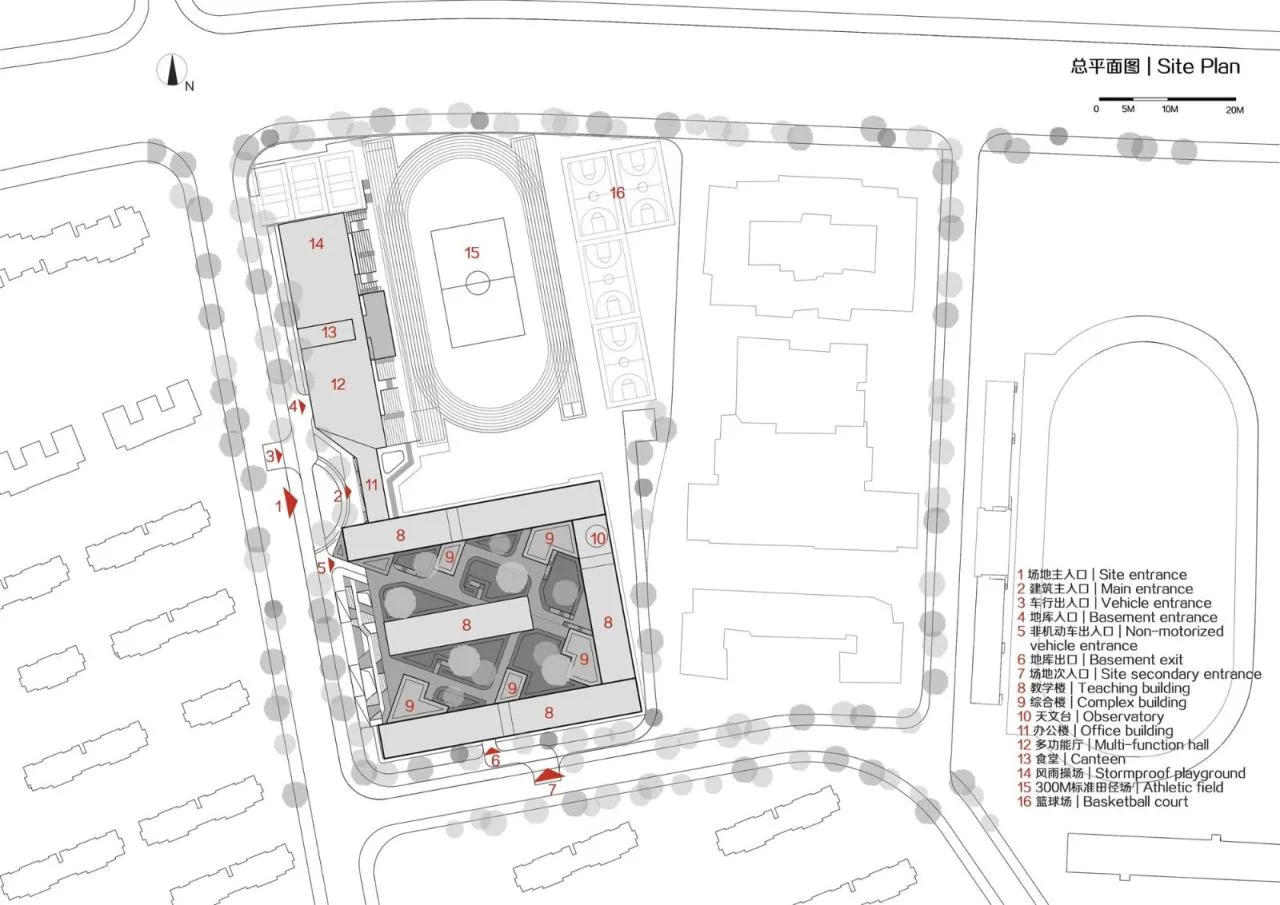
On the west side, Xianxia Road serves as a secondary traffic artery adjacent to residential areas. The main campus entrance, housed in “Dacheng,” faces Xianxia Road, welcoming students openly and fostering a sense of community connection.
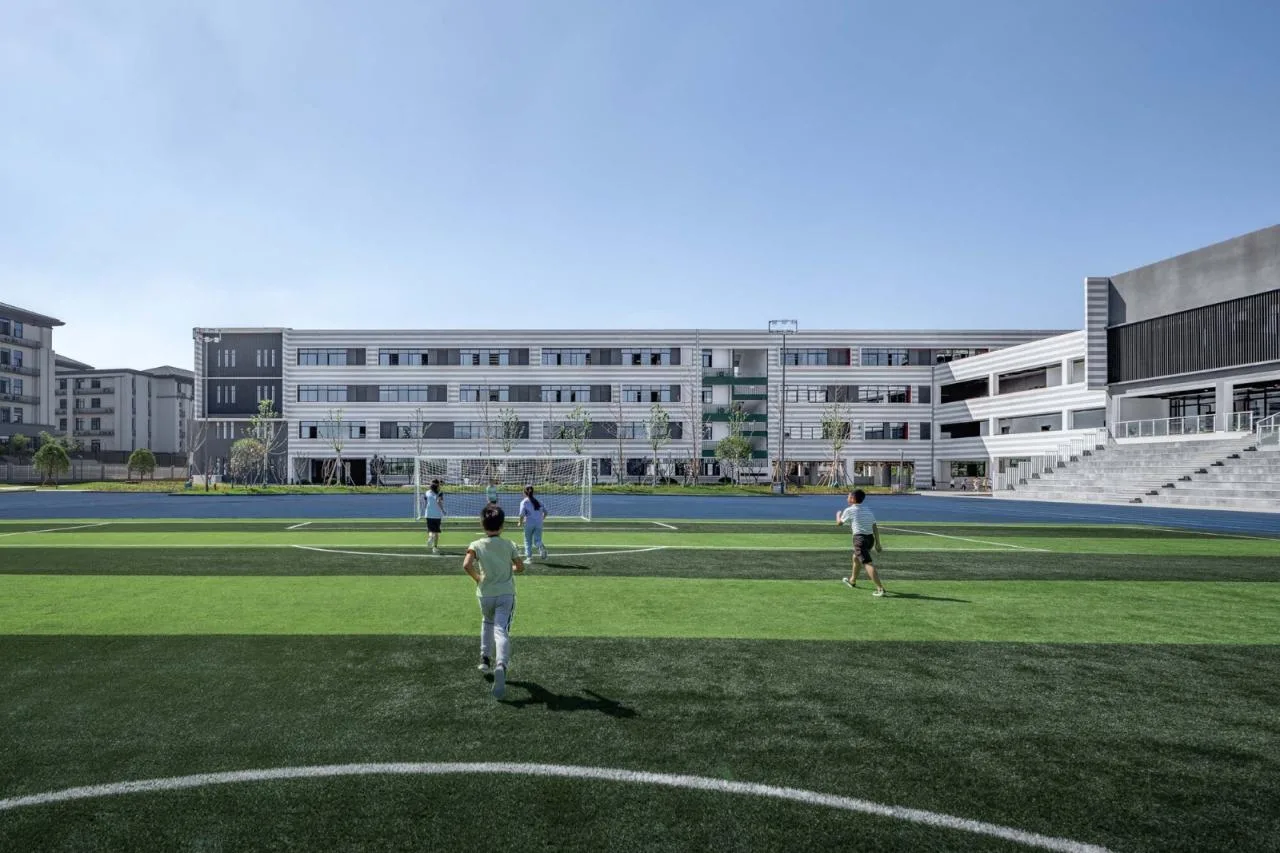
Inside the school, the main entrance serves as a central axis with the northern area designated as the “dynamic zone.” This zone includes a sheltered playground and various sports fields designed to buffer the noise from Yingchuan East Road, the main traffic artery. The area also serves as a community sports park, shared on a time-scheduled basis in cooperation with administration.
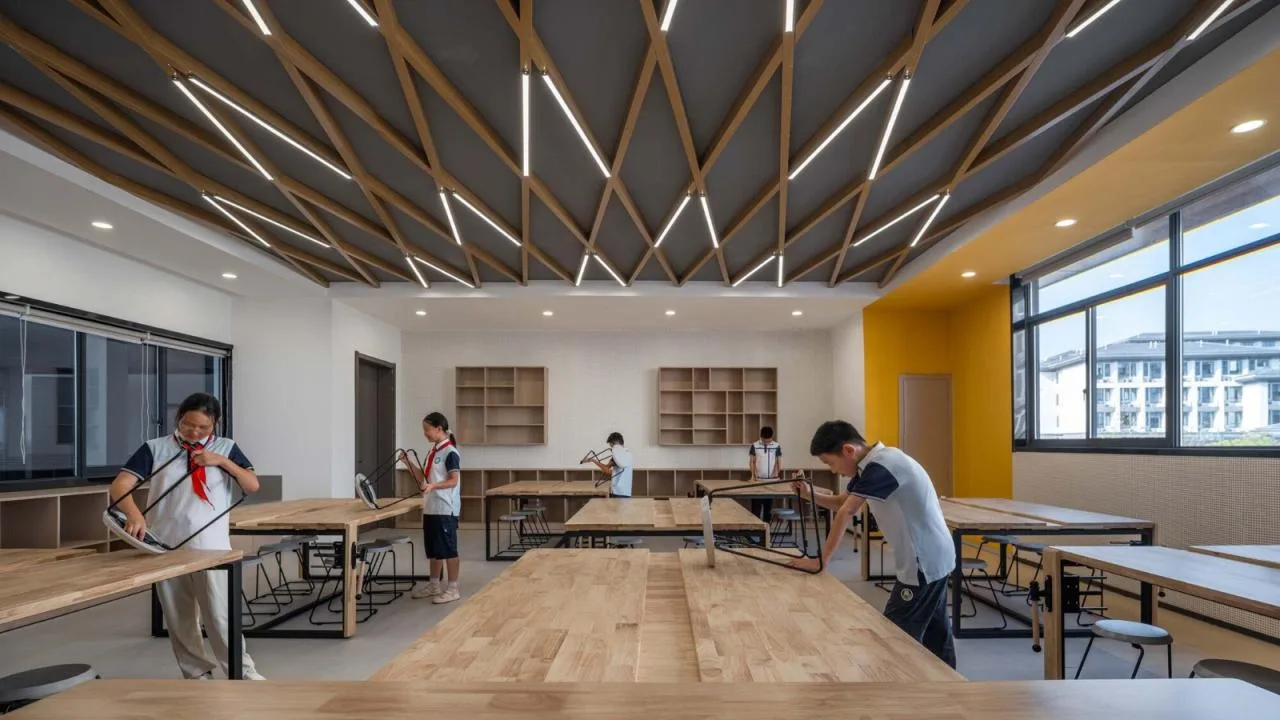
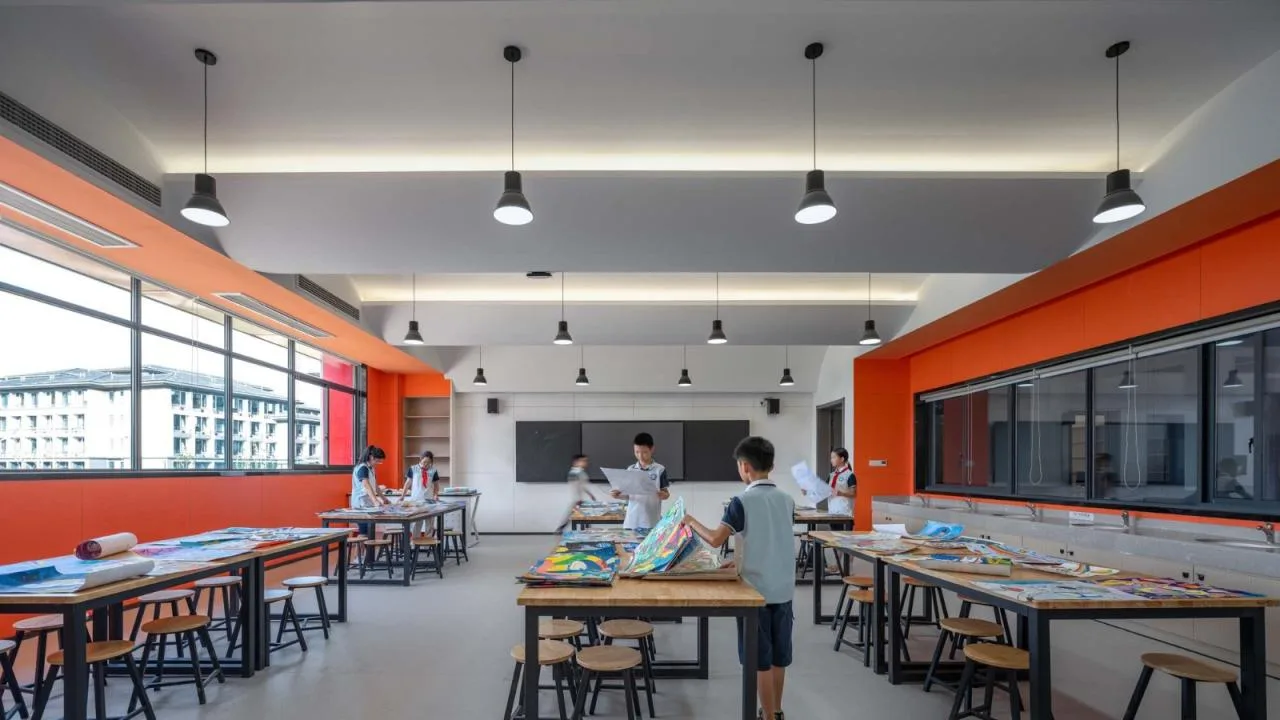
To the south lies the “quiet zone”—the “big city” teaching area. The “Dacheng” building stretches approximately 300 meters in a U-shape. Standard classrooms face south, while music, labor, and technical classrooms are located on the east side. These are linked by a horizontal corridor, facilitating multifunctional coordination and interaction.
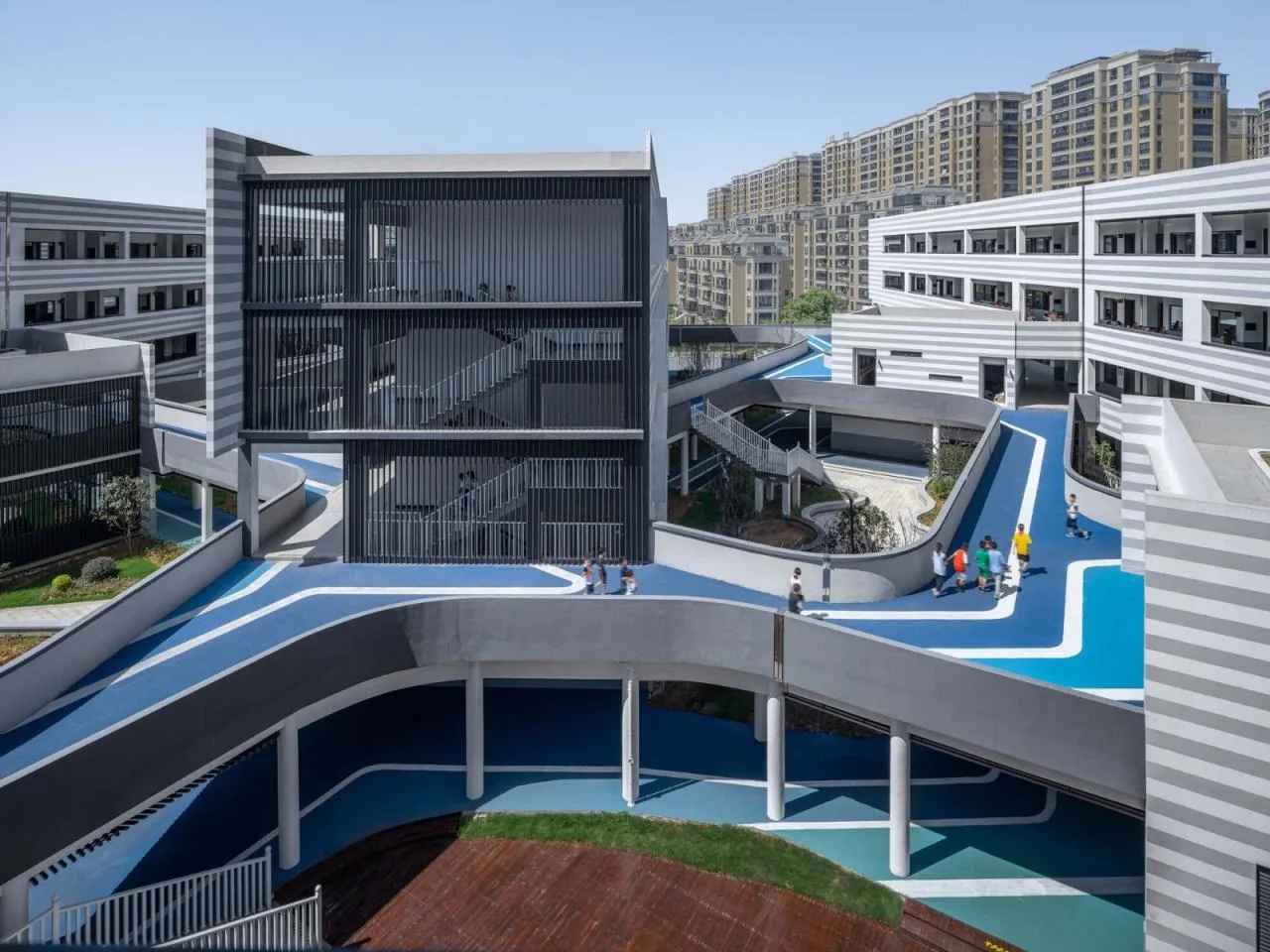
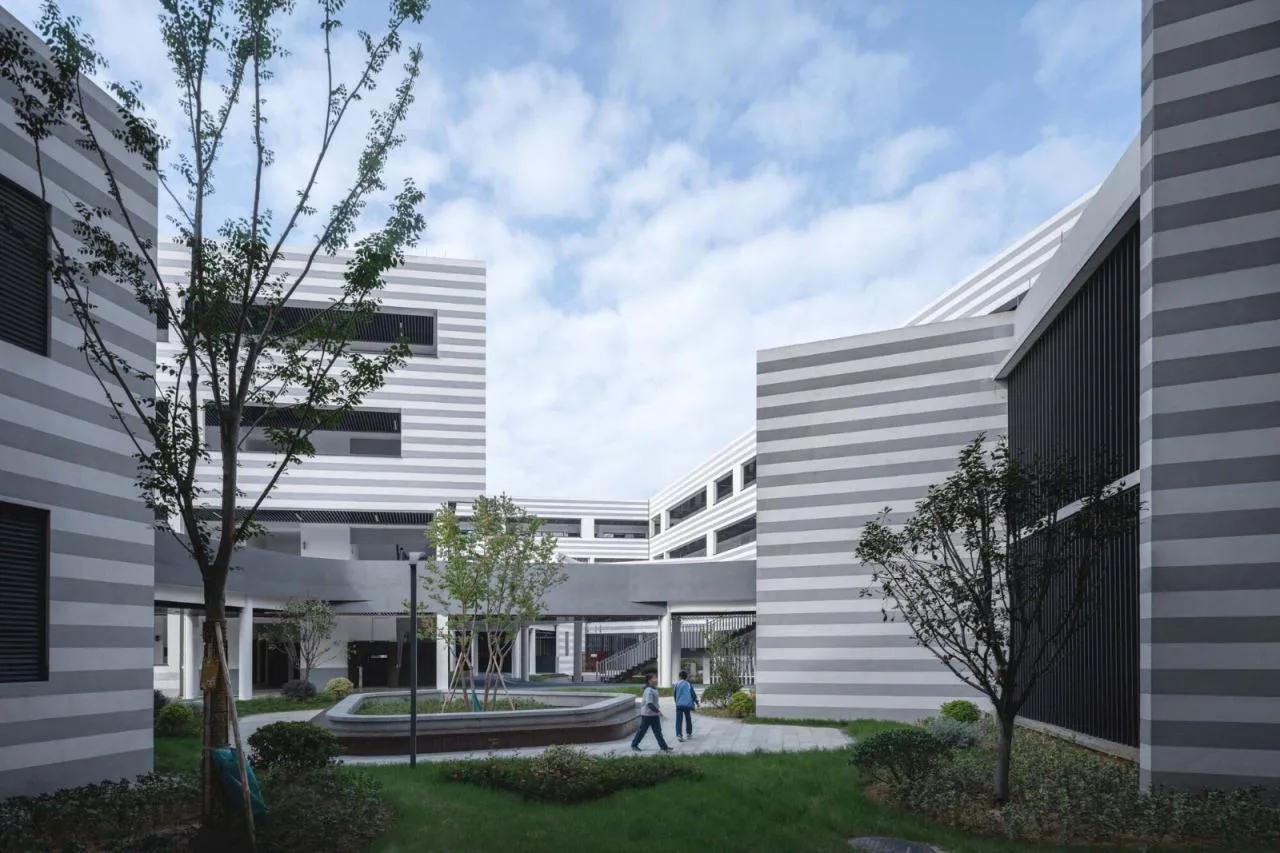
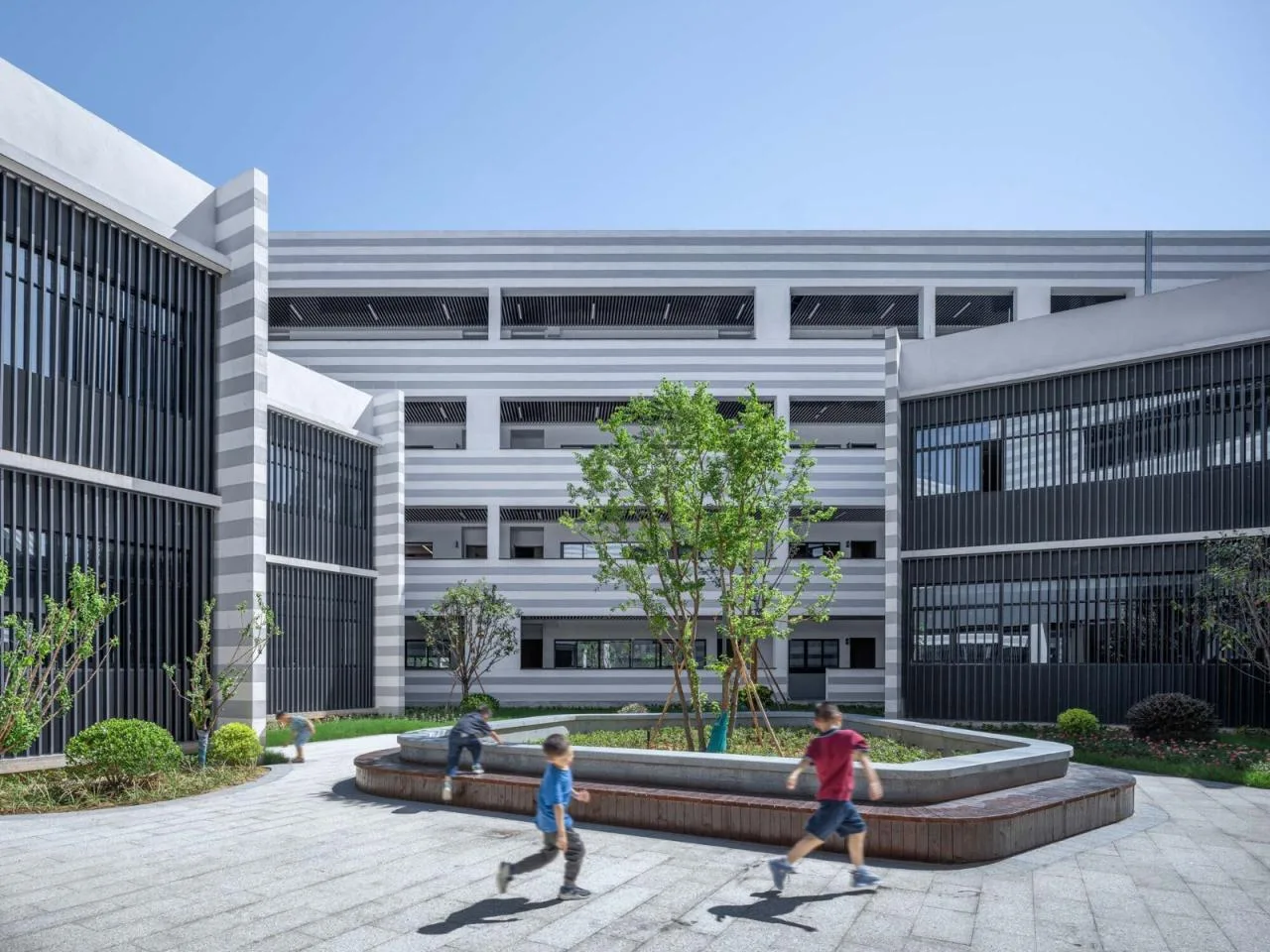
The U-shaped building acts as a boundary with the city on the outside, while enclosing a large courtyard oriented inward, creating a miniature park-like “small courtyard” for children.
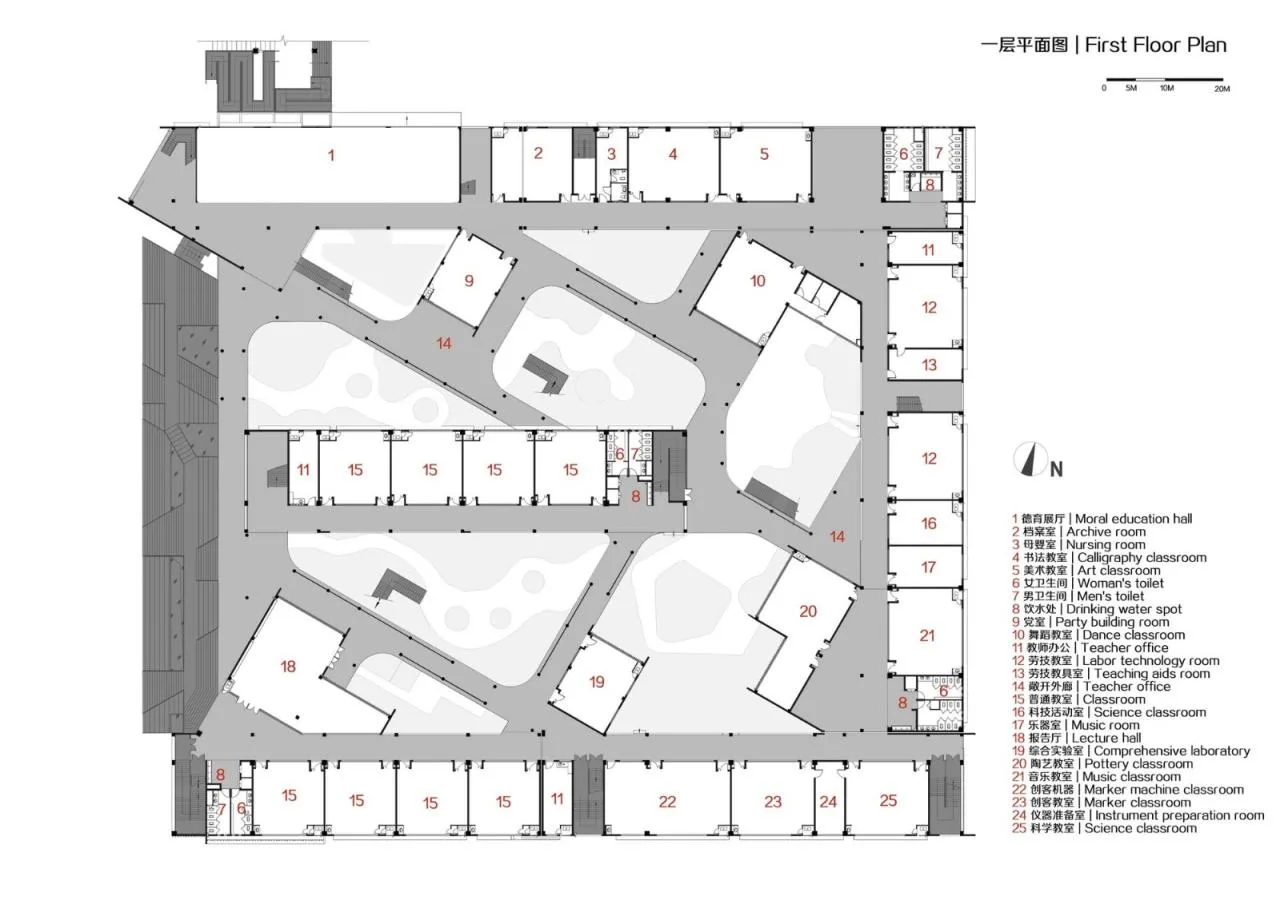
The “Xiaoyuan” buildings rotate the streamline grid by 30 degrees, connecting with the U-shaped “big city” layout. This creates a dynamic and heterogeneous courtyard pattern within the linear corridors on the first and second floors, transforming student circulation from a simple linear path into a network of interconnected routes at varying scales, enriching the overall experience.
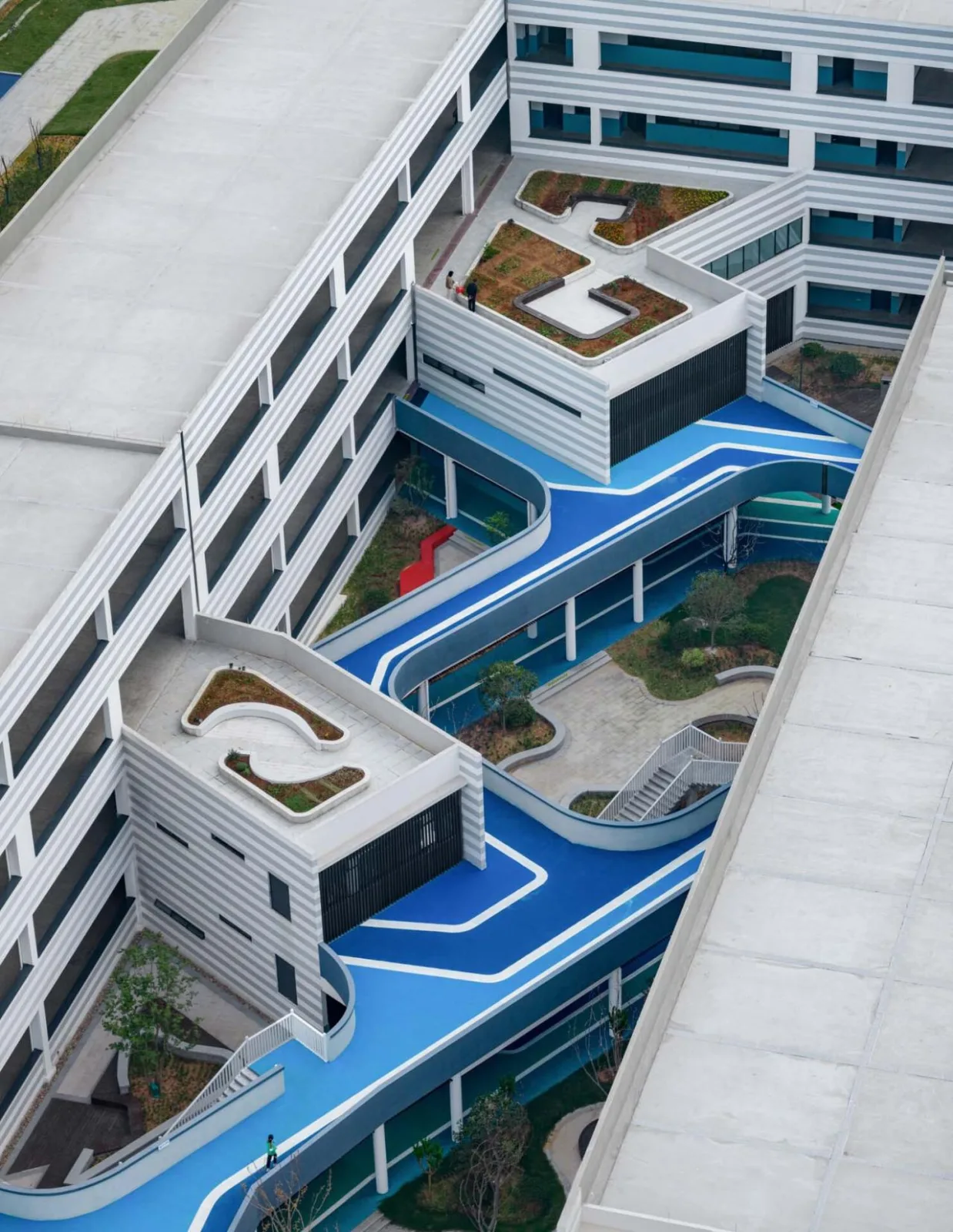
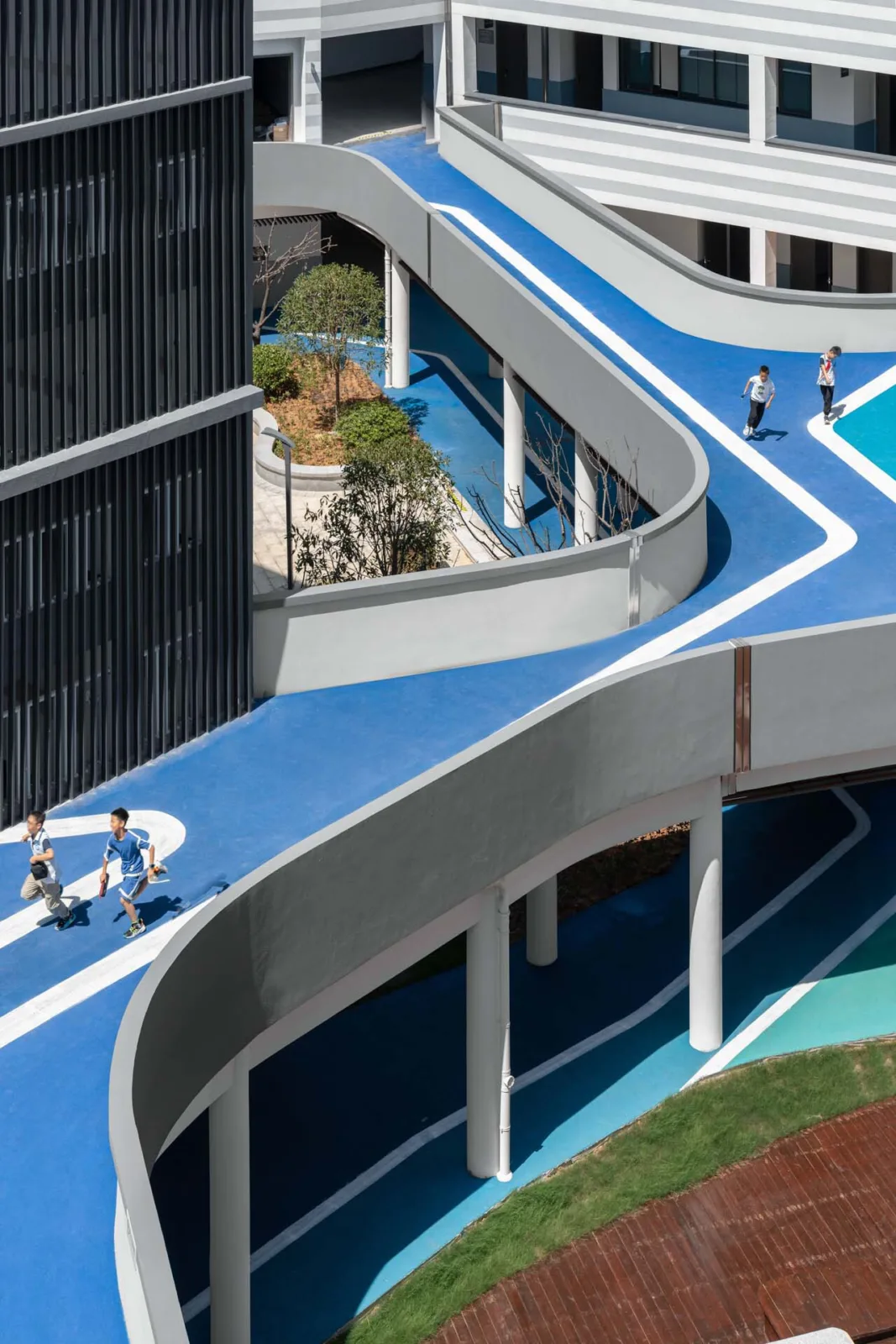
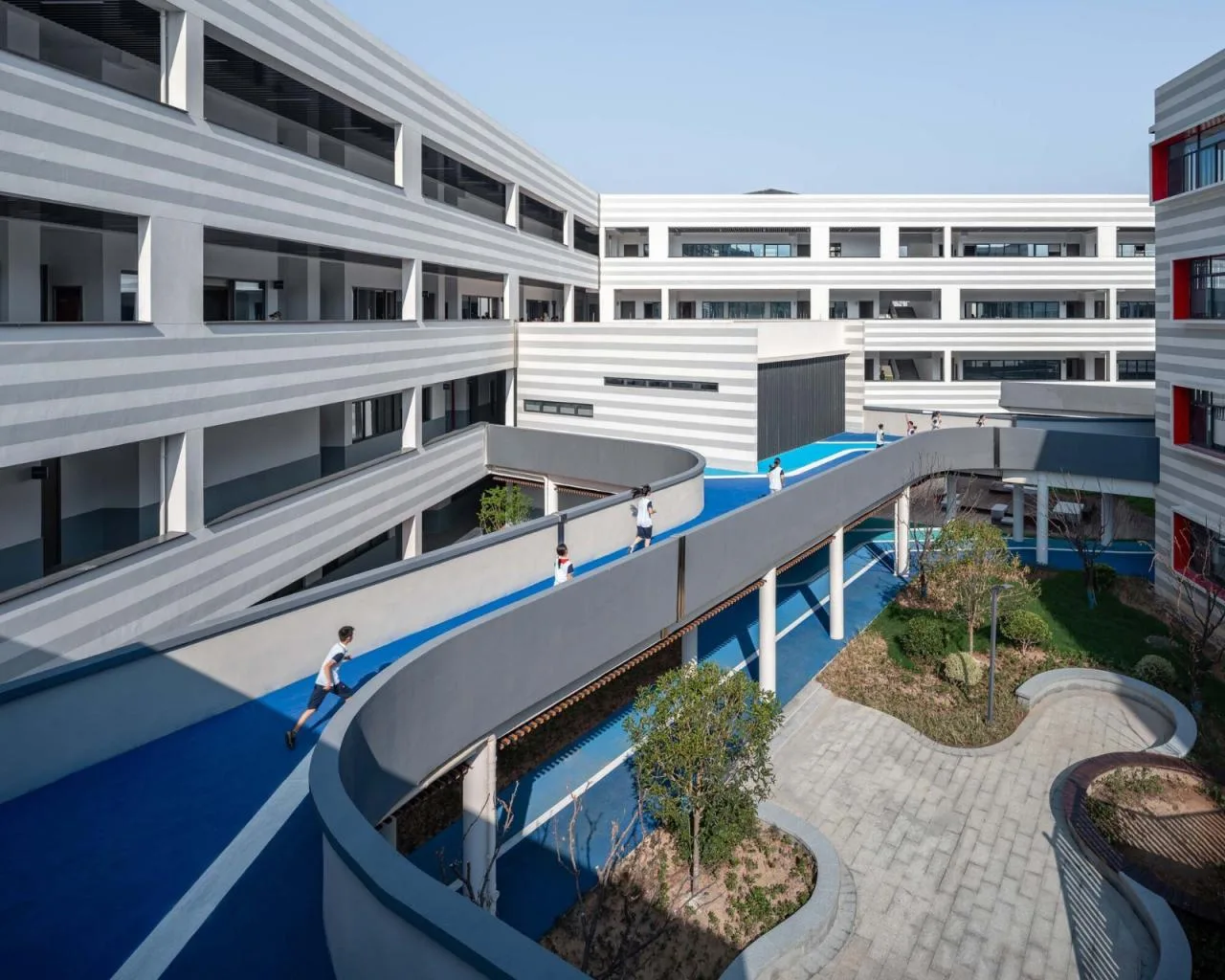
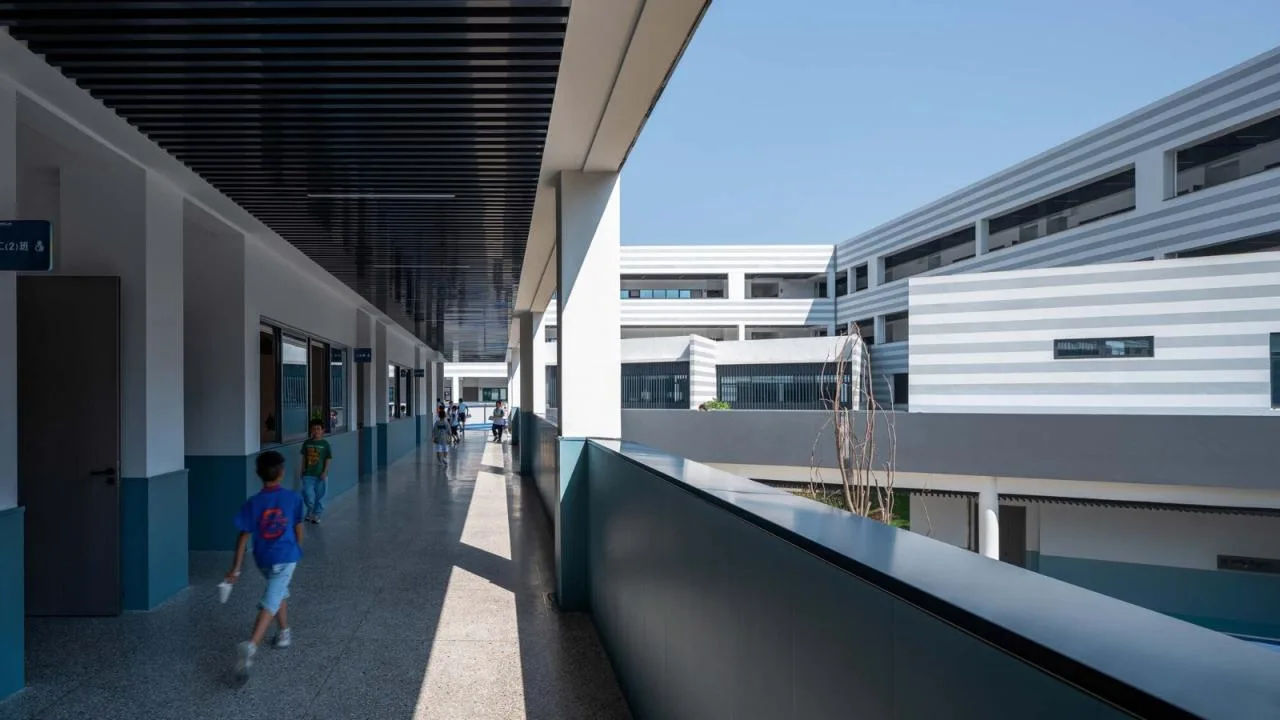
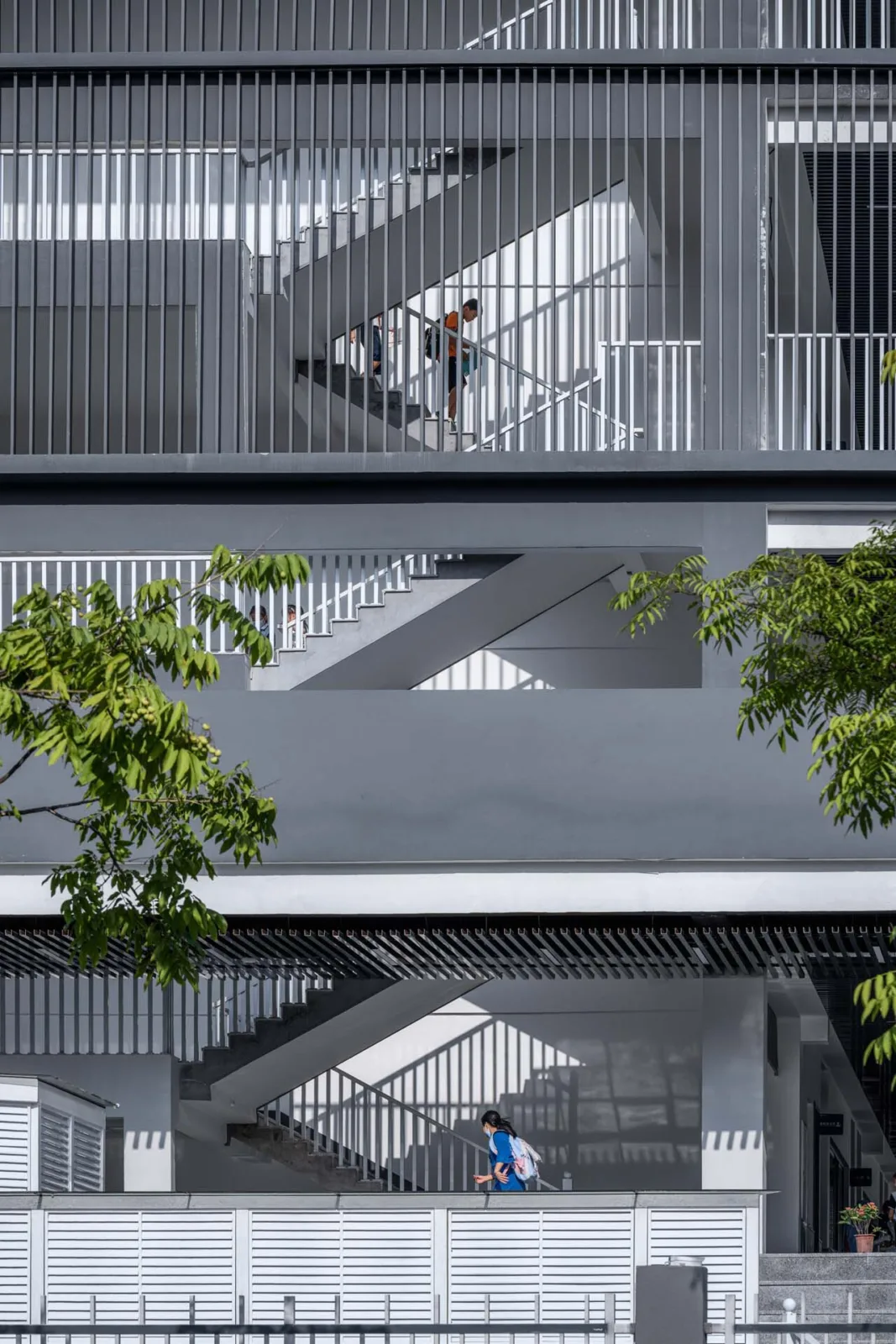
The corridors serve both as thoroughfares and public spaces, enhancing the journey’s appeal. As students move beneath the corridor bridges, the campus environment continuously shifts, with winding paths leading to secluded spaces. These bridges also provide shelter during bad weather, encouraging children to socialize beyond their immediate classmates and meet new friends.
The second-floor outdoor corridor extends the first-floor experience, allowing children to run freely in the sunlight. This vertical interaction between the two floors forms a “double first floor,” expanding activity options.
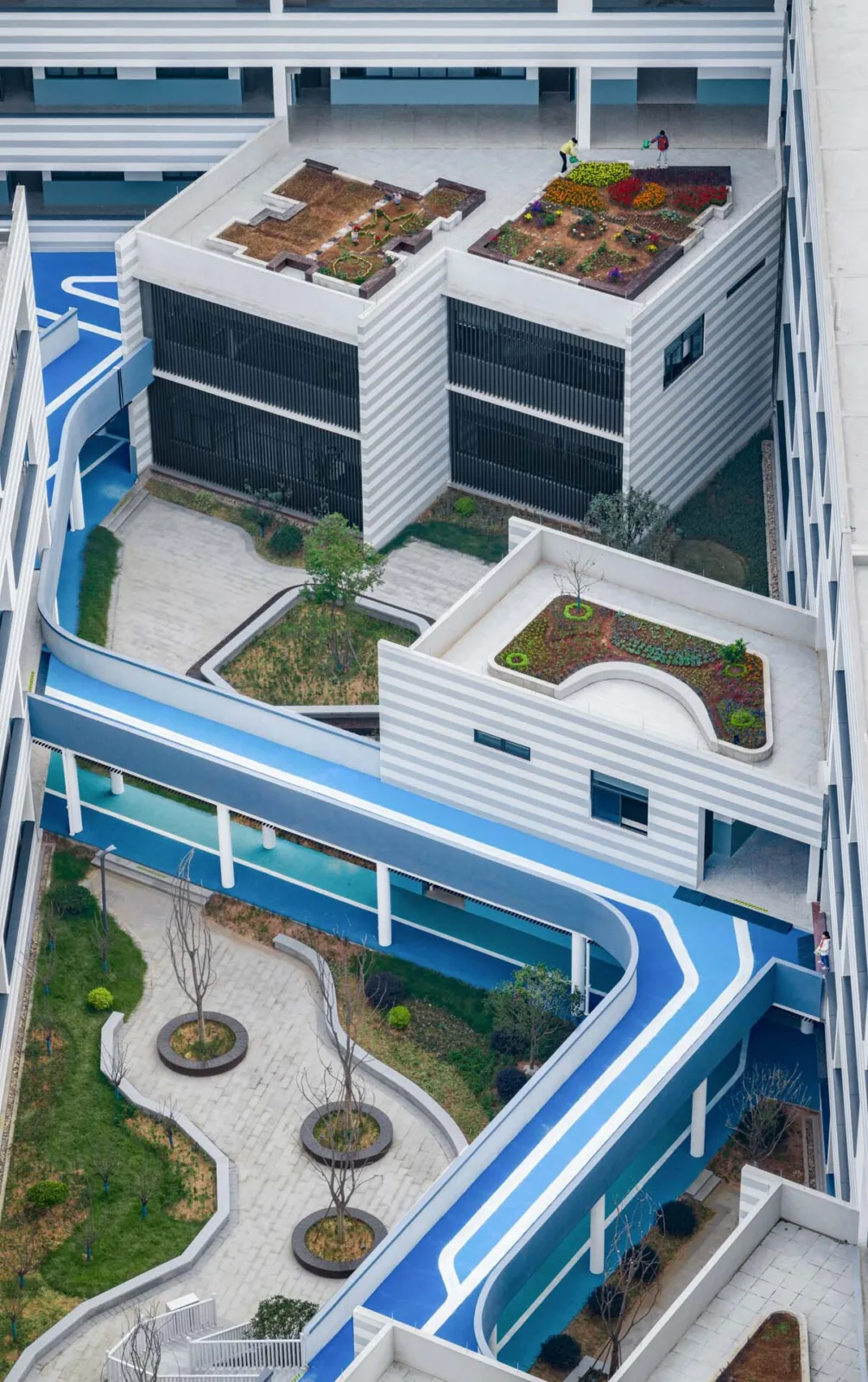
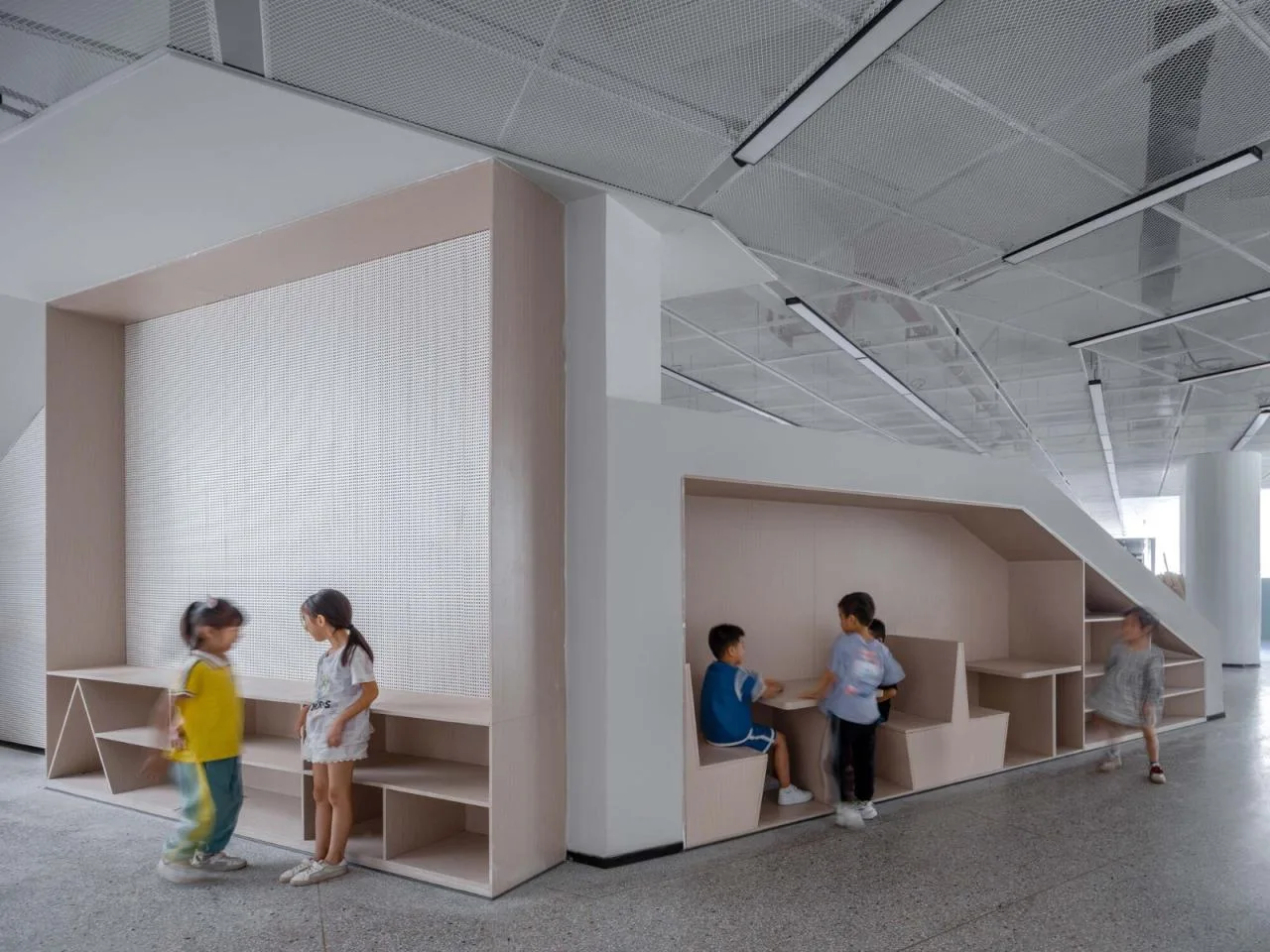
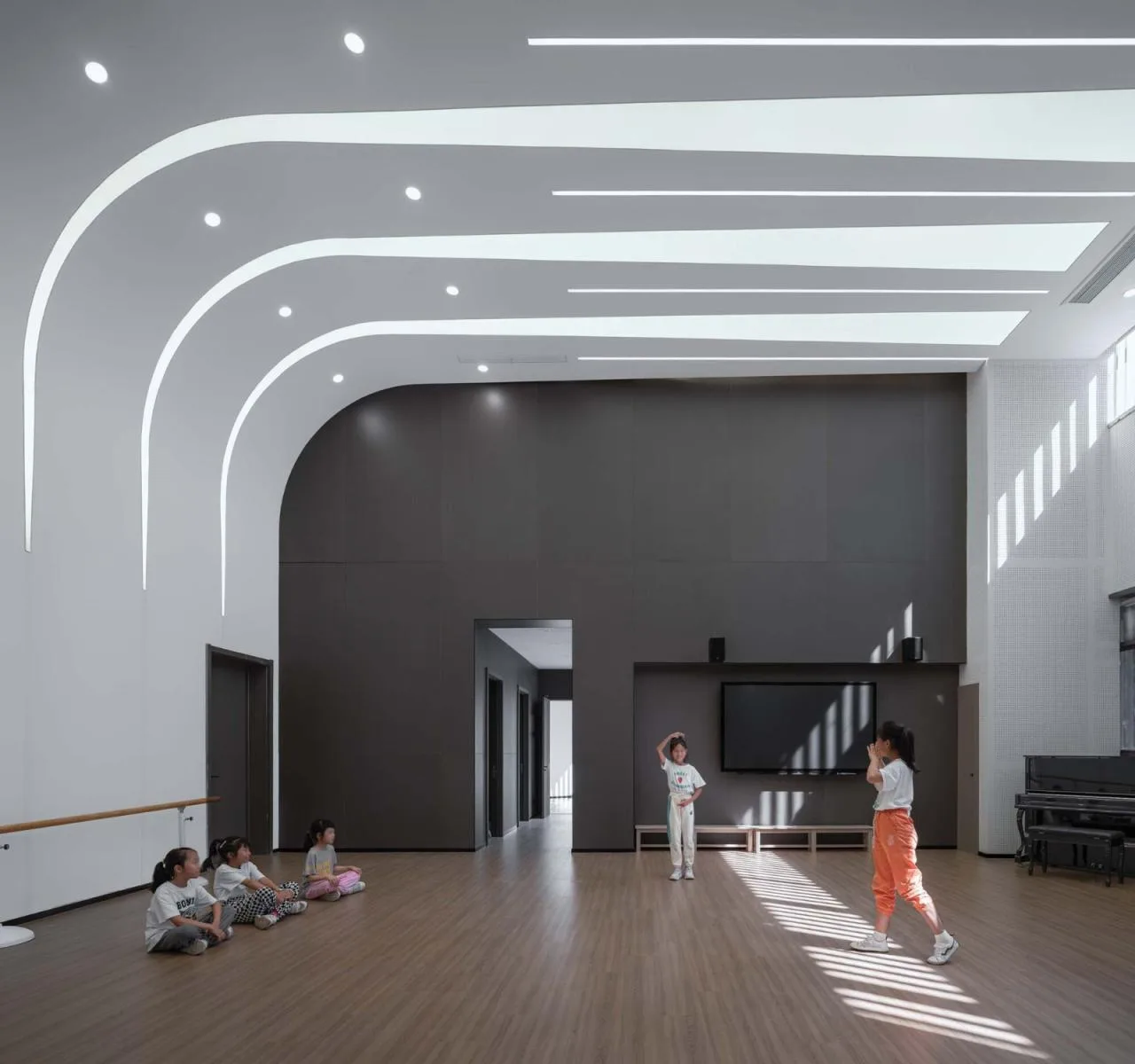
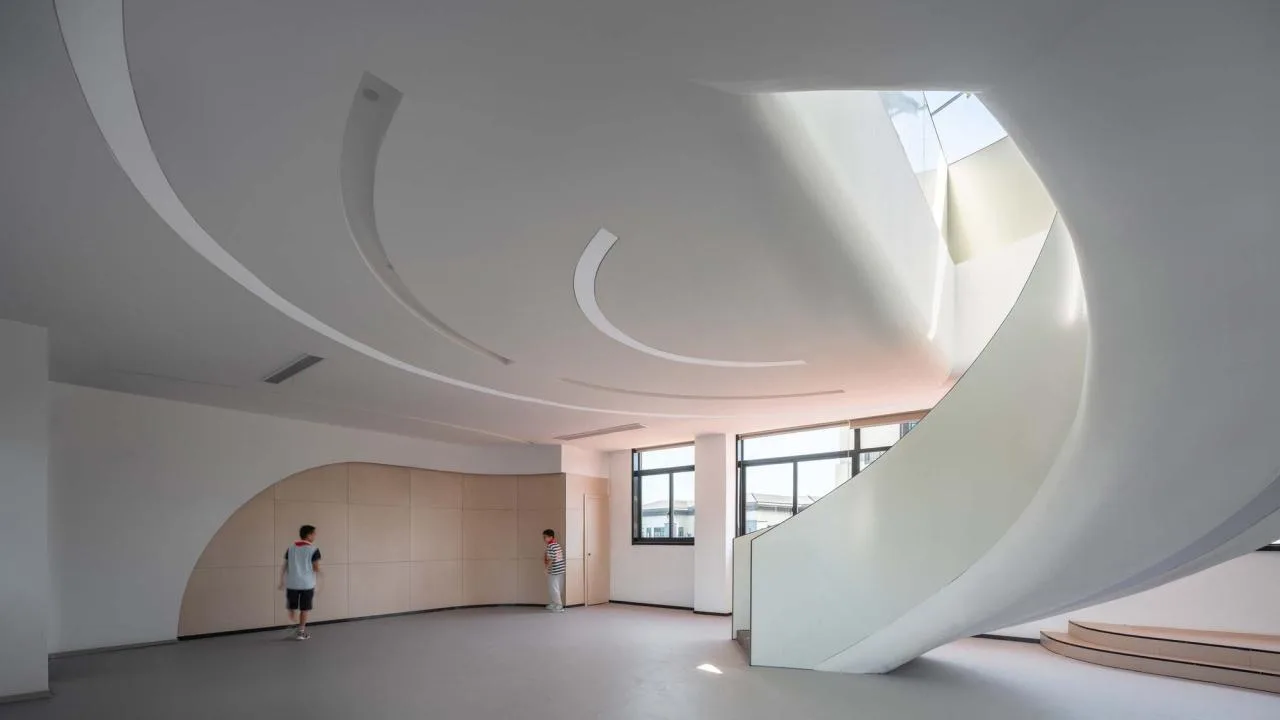
Complementing this axis are small two-story “boxes” scattered throughout the large courtyard, each paired with rooftop gardens. These approachable structures offer ideal leisure spots during breaks, housing educational and recreational spaces such as dance studios and student reading rooms.
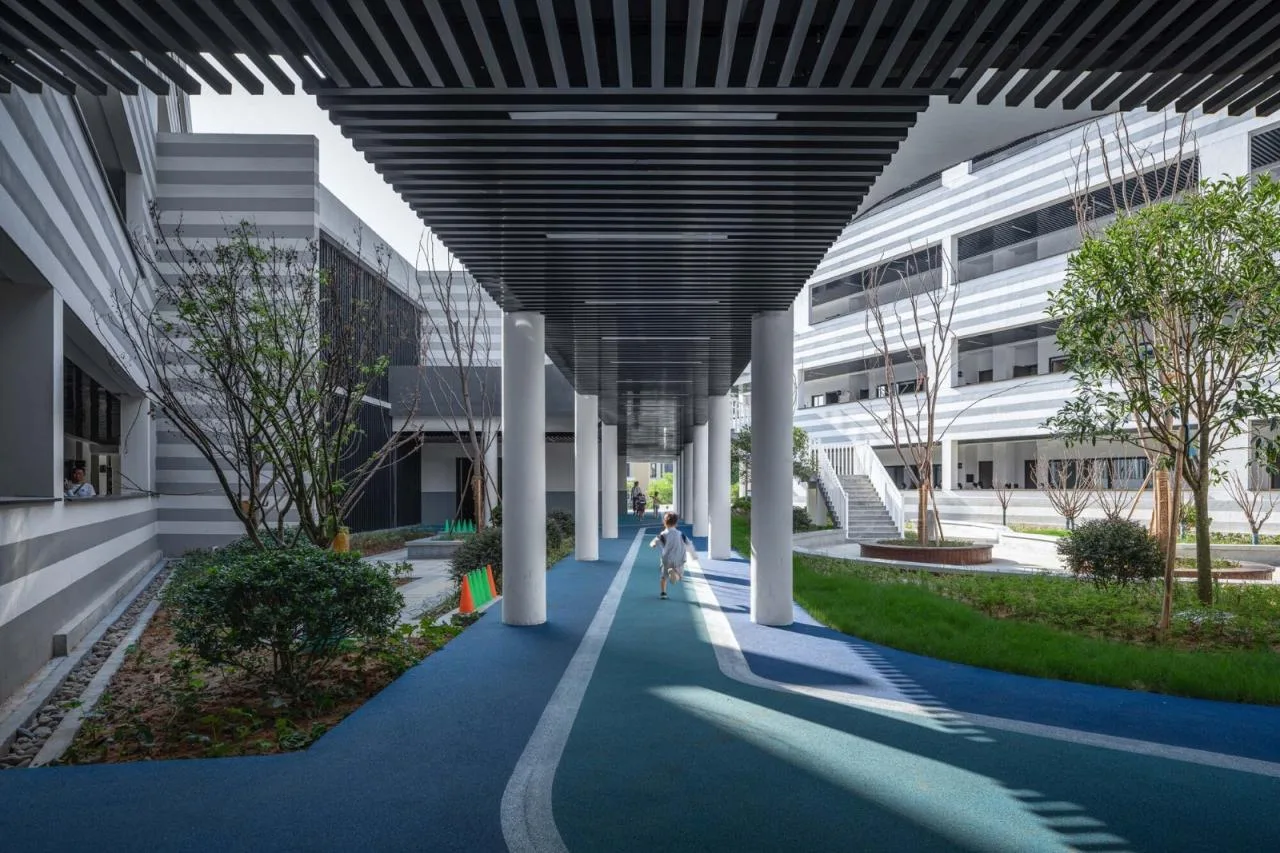
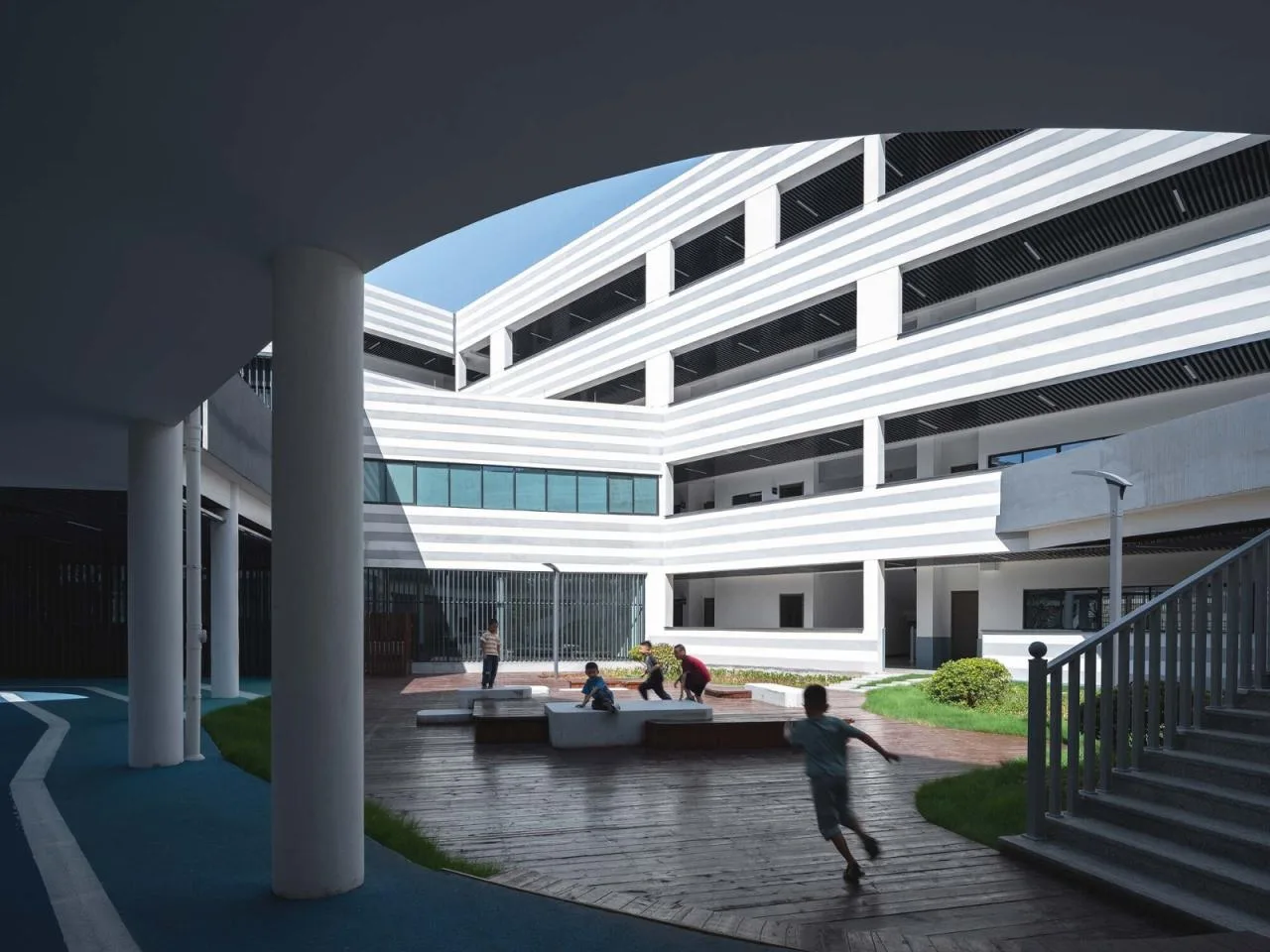
These “boxes” and corridors segment the large courtyard into pocket parks of various sizes, where students gather during breaks to play and relax amidst natural surroundings, recharging their energy.
The integration of the first-floor corridor and pocket parks, second-floor outdoor corridors, and third-floor rooftop gardens creates a layered, three-dimensional landscape throughout the campus. Children run along corridors, meet under bridge-covered walkways, and convene in parks, fostering a rich and engaging campus atmosphere that positively influences their behavior and development.
The design of Quzhou Xinhua Second Primary School offers a valuable reference for future experiential campus planning. Despite the rapid pace of urbanization and increasing density, this dedicated space for students remains constant—a place where children aged 7 to 12 transition from childhood into adolescence, gather to learn and grow, and ultimately spread their wings to embrace the wider world.
Project Drawings
△ Concept Diagram
△ General Layout Plan
△ First Floor Plan
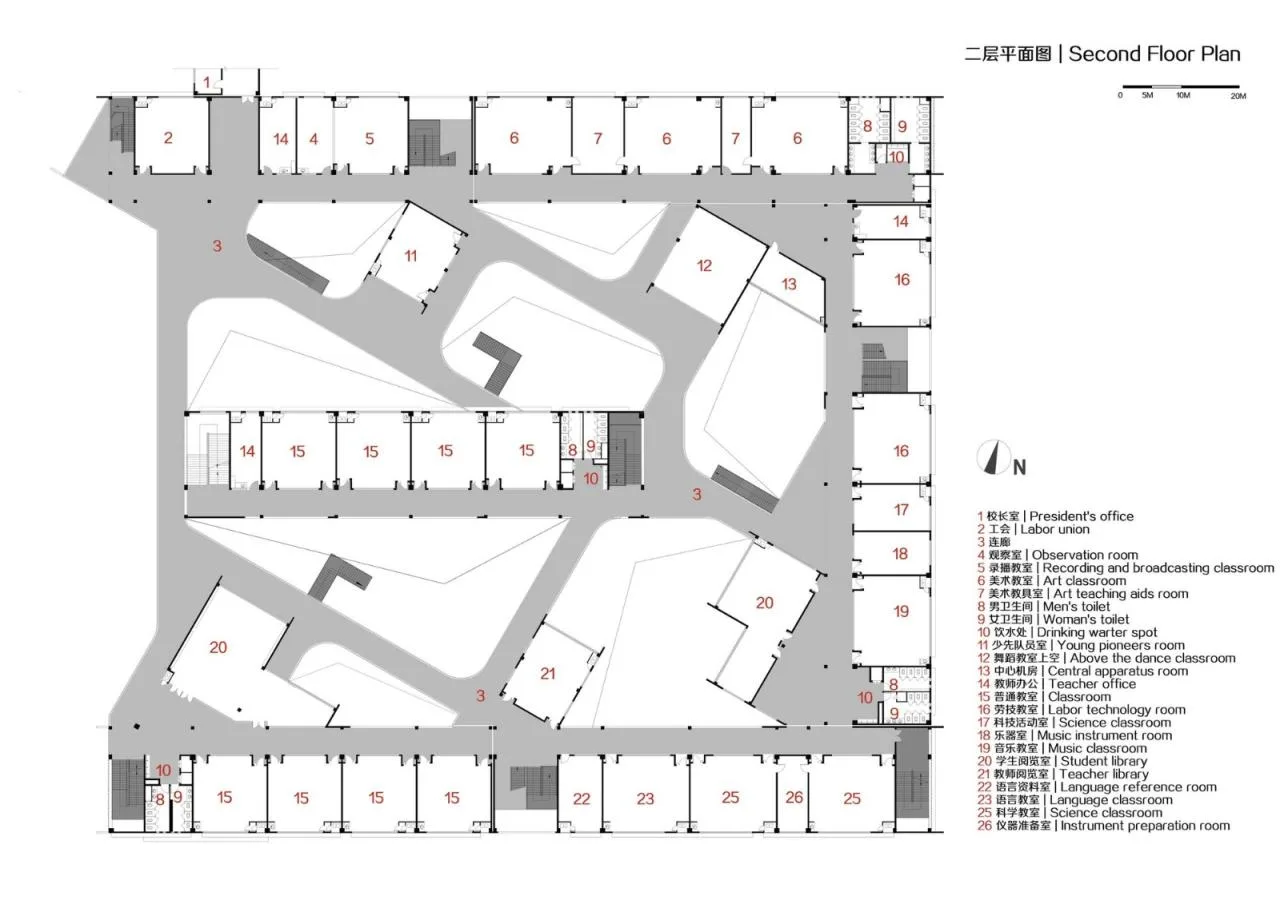
△ Second Floor Plan
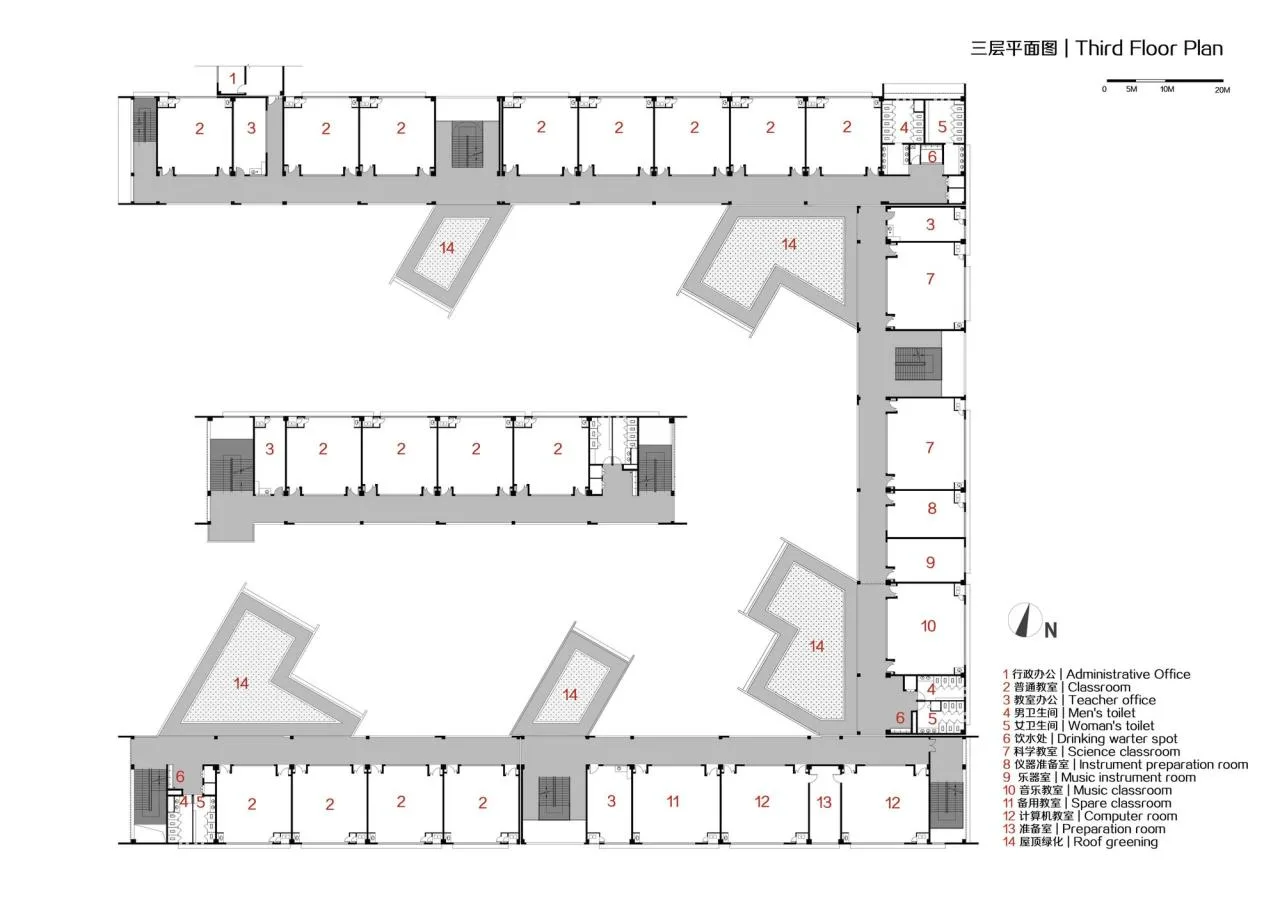
△ Third Floor Plan
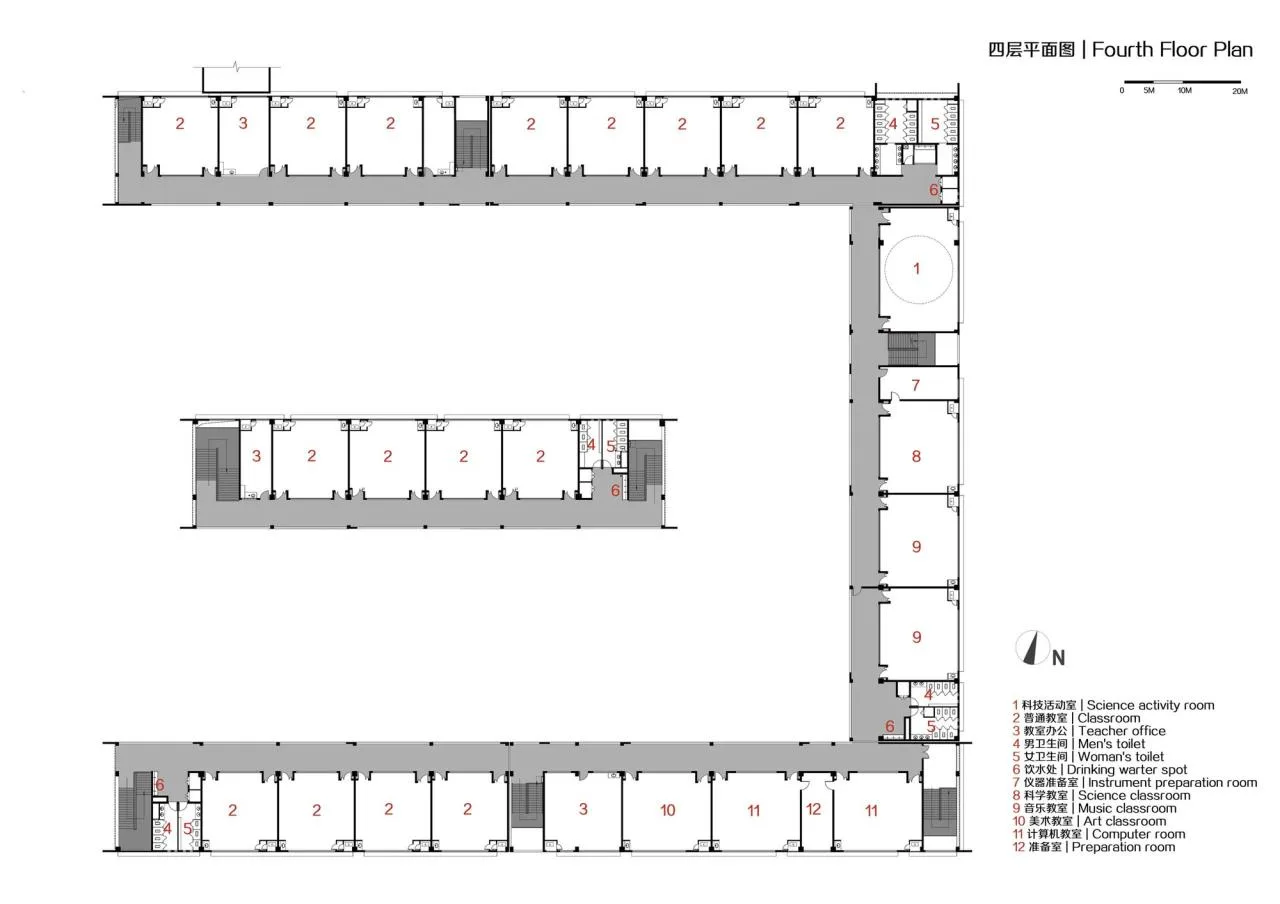
△ Fourth Floor Plan
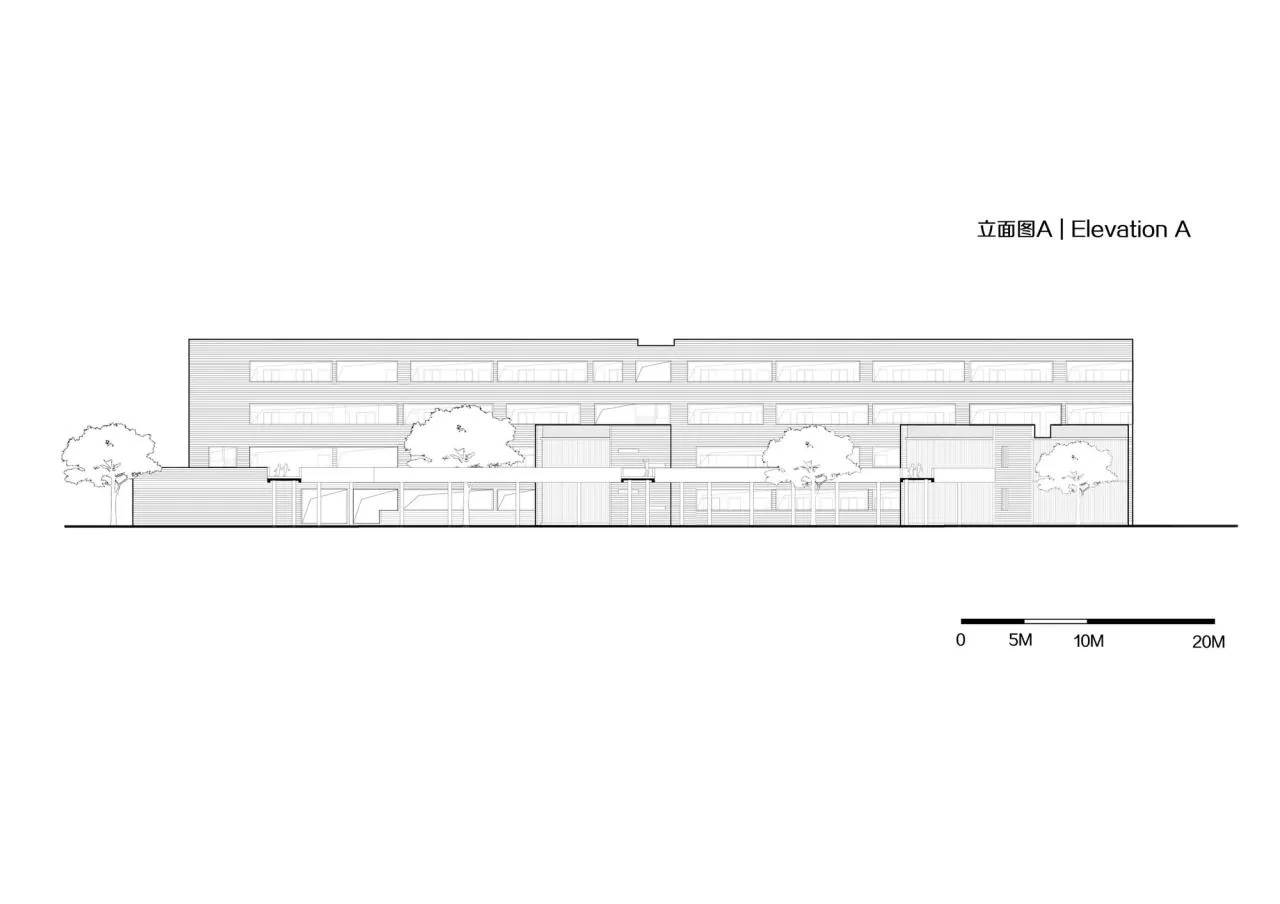
△ Elevation Drawing
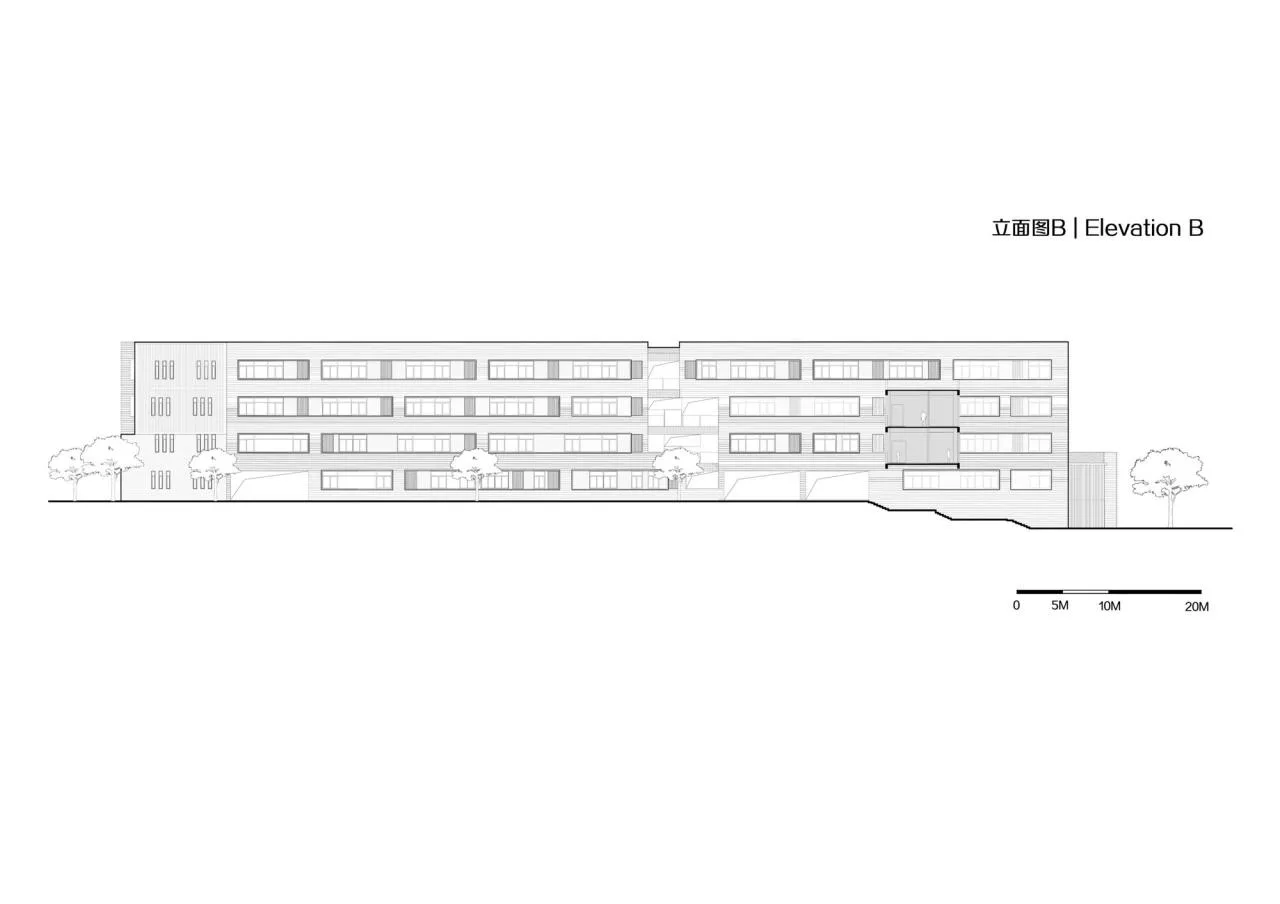
△ Elevation Drawing
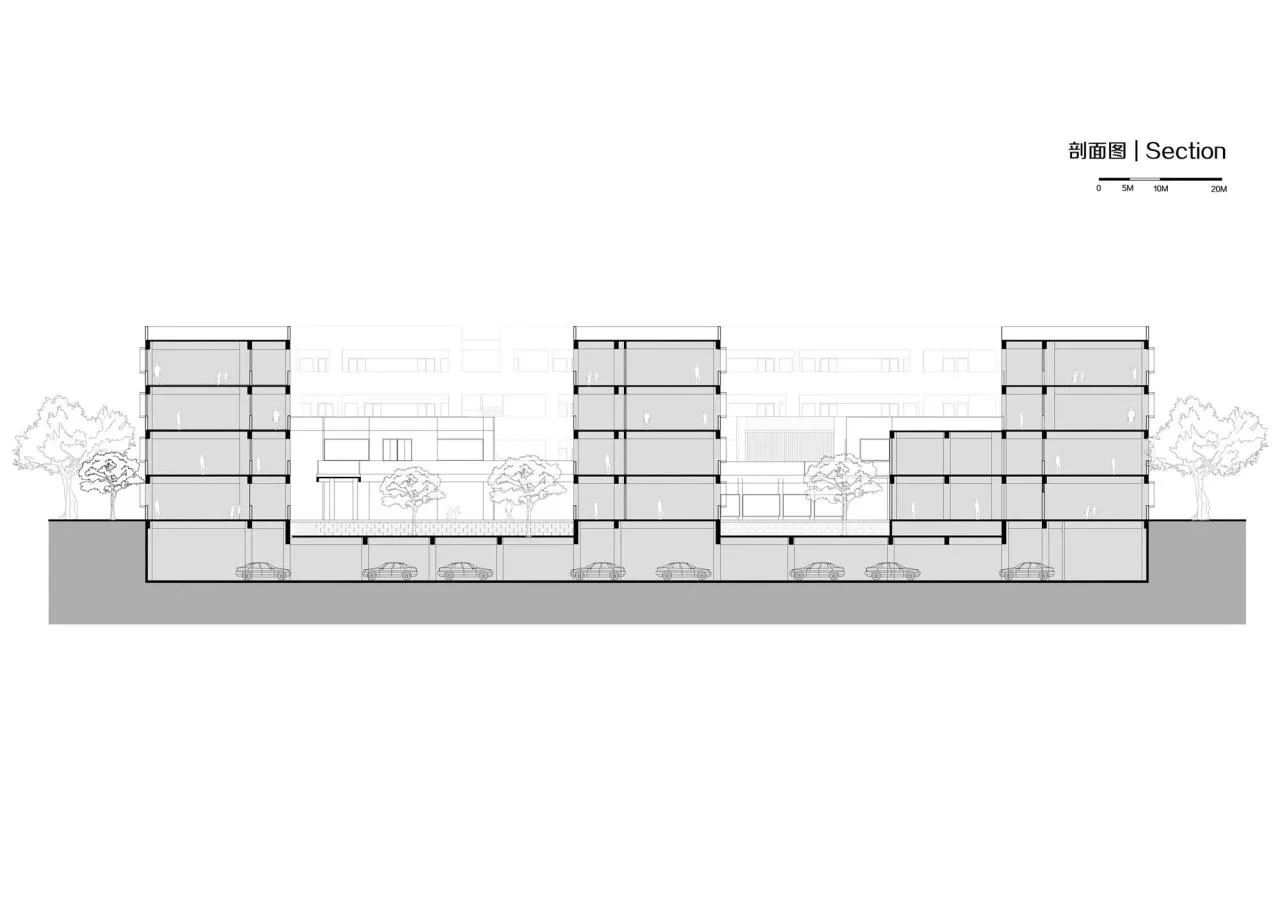
△ Section Diagram
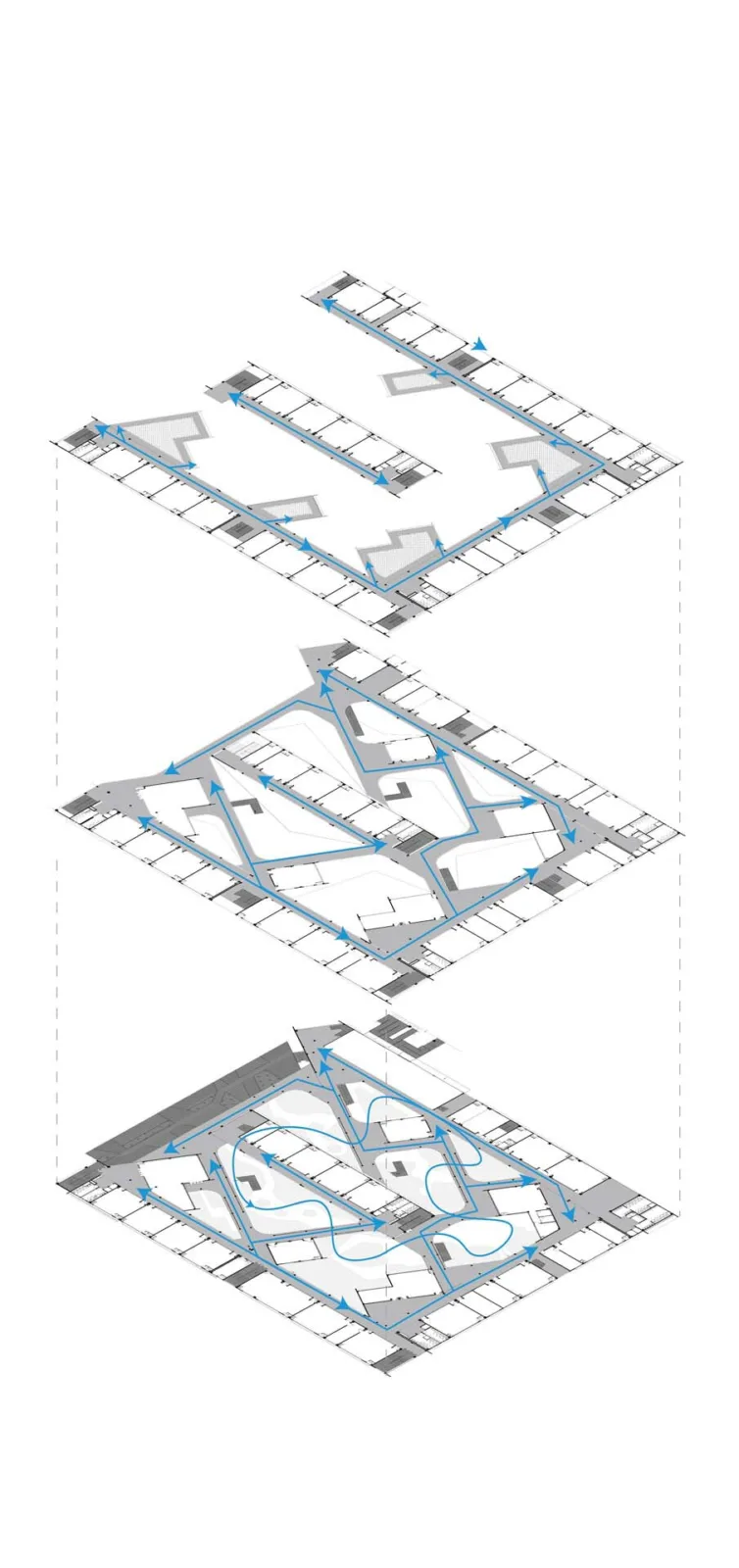
△ Analysis Chart
Project Information
Architect: Zero One City Architecture Firm
Area: 37,182 m²
Project Year: 2022
Photographer: Wu Qingshan
Design Team: Ruan Hao, Zhan Yuan; Liu Dongyuan, Guo Yanlan, Liang Yibin, Zhang Jingyi, Xu Mengjia, Fang Chen, Lu Xianhui, Shi Boren, Xiao Ke
Interior Design: Liu Dongyuan, Lu Xianhui, Xie Jie, Guo Yanlan, Ruan Wenjuan, Li Honghui, Shang Li, Fang Chen, Ruan Ziming, Xie Lianchun, Xu Sheng, Wang Danlu, Xin Xin, Wang Jianhong, Liu Dongyuan
Landscape Design: Liu Dongyuan, Guo Yanlan
Partner: Tianshang Design Group Co., Ltd
Construction: Zhejiang Xinhua Construction Group Co., Ltd
Owner: Quzhou Xiqu Investment Co., Ltd
Location: Quzhou















Must log in before commenting!
Sign Up