
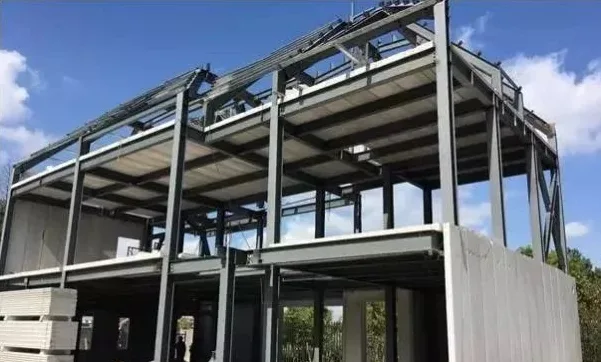
BIM technology has become widely adopted in the construction of prefabricated buildings due to its rapid assembly process and shortened project timelines, significantly reducing overall construction costs. Additionally, it enhances user experience by allowing certain components to be dismantled and reused, minimizing waste. Let’s explore how BIM technology is applied in prefabricated buildings.
1. Architectural Scheme Design
Traditional design processes for prefabricated buildings often encounter conflicts and require rework. After completing the design, discussions are held based on material analysis. With BIM technology, various building materials and parameters can be integrated into a collaborative model, facilitating interdisciplinary cooperation. This improves design efficiency and helps select the best possible design solution.
2. Prefabricated Shear Wall Structures
BIM plays a key role in the detailed design, production, transportation, and installation of prefabricated shear wall components. These include concrete shear wall exterior panels, composite panels, reinforced concrete balcony panels, air conditioning panels, and parapets. BIM supports site analysis, detailed design, manufacturing, logistics, and hoisting processes.
3. Prefabricated Frame Structures
The application of BIM in prefabricated frame structures covers detailed design, production, transportation, and installation of frame columns, beams, composite panels, and external cladding panels. BIM aids in site analysis, architectural planning, visualization, construction simulation, and quantity takeoffs, ensuring effective use of prefabricated frame elements.
4. Collaborative Construction Management
In traditional prefabricated construction, collaboration across different phases is challenging, often resulting in design outputs that do not perfectly fit on-site conditions, leading to waste.
BIM technology integrates design, construction, and other stages by enabling data sharing and direct model-based production aligned with on-site components during construction, ensuring precise fits and reducing waste.
Overall, BIM technology provides essential technical support for prefabricated projects, streamlining project management and data analysis while enhancing the utilization of prefabricated components. This brings significant advantages to prefabricated construction projects. I hope this article proves helpful to everyone!
















Must log in before commenting!
Sign Up