
The role of BIM technology in design is becoming increasingly important and effective. The shift from 2D drafting to 3D modeling represents a revolutionary change in architectural design. The growth of the design industry directly influences the advancement of BIM in construction, and the success of BIM implementation during the design phase ensures its continuity and effectiveness throughout subsequent project stages. The main applications of BIM in the design phase include:
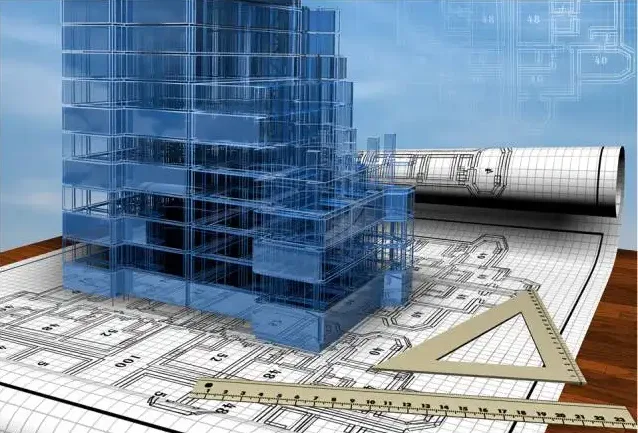
1. Visual Design
Visualization is one of BIM’s most intuitive advantages. During the design phase, BIM technology enables the creation of detailed 3D models that allow for direct observation of the building’s appearance and an in-depth analysis of its functional layout and structural design. This dynamic visualization significantly improves efficiency compared to traditional methods and enhances communication between stakeholders.
Designers and clients can examine both overall and localized views, indoors and outdoors, at any time. Especially valuable is the immersive indoor experience from a human perspective, which refocuses designers on spatial experience. This makes abstract ideas and conceptual judgments more tangible, facilitating a clearer understanding of the design intent. It also creates a shared environment where designers, clients, and constructors collaborate without depending solely on interpreting 2D drawings.
Since design changes directly impact costs, repeated modifications during construction can extend timelines and increase expenses. BIM helps prevent drawing errors early on by accurately reproducing spatial layouts and routing of various systems. 3D design enables easier error detection and increases design depth, reducing issues such as clashes, omissions, and deficiencies. This minimizes costly changes later and saves money.
2. Collaborative Design
BIM fosters collaboration by allowing architects, structural engineers, and MEP (Mechanical, Electrical, and Plumbing) professionals to work on a unified platform. With cloud technology, team members can access and update models anytime, anywhere.
This real-time model updating enables immediate detection and resolution of design conflicts, eliminating the need for late-stage coordination. Ultimately, all disciplines contribute to a comprehensive engineering model, which streamlines coordination and ensures timely problem-solving throughout the design process.
3. Design Simulation and Analysis
Thanks to the 3D BIM model, various simulation tools can analyze building performance, including but not limited to:
- Outdoor wind environment simulation
- Indoor natural ventilation simulation
- Thermal environment analysis in residential areas
- Building noise environment analysis
- Outdoor landscaping environment analysis
- Architectural lighting analysis
- Sunshine and sunlight analysis
- Energy-saving design optimization
- Planning and design scheme enhancements
4. Pipeline Integration
Using 3D models, BIM integrates information across disciplines to create coordinated models for architecture, structure, and MEP systems. This allows for comprehensive visual optimization of pipelines and systems. Particularly in large and complex projects, BIM leverages computing power to handle vast amounts of data, making pipeline coordination one of its most vital functions.
5. Design Estimation
Quantity calculation is essential during construction, and investors prioritize cost control from the design phase onward. Traditionally, this requires specialized engineers and is time-consuming and prone to errors.
BIM streamlines this process by extracting data directly from the 3D model database. This method reduces manual effort, improves calculation speed and accuracy, and provides precise quantity estimates more efficiently. This supports better project management and investment control.
Overall, integrating BIM technology throughout architectural design optimizes project quality, enhances management, boosts design and construction efficiency, and reduces costs. It is an inevitable trend in the evolution of China’s architectural design industry. We hope this article has been helpful!
















Must log in before commenting!
Sign Up