
Currently, the adoption of BIM technology in domestic rail transit is being strongly promoted. However, the large size and elongated layout of rail transit systems pose significant challenges to BIM application. This article explores the issue of lightweighting BIM models, focusing specifically on rail transit projects. The goal is to enable efficient browsing and management of BIM models on low-end devices by applying lightweighting techniques to real-world projects.
Rail transit projects are progressing rapidly, and BIM has become a vital tool in construction management with growing industry-wide adoption. Beyond national initiatives, both industries and local governments are actively encouraging the use of BIM technology within the rail transit sector.
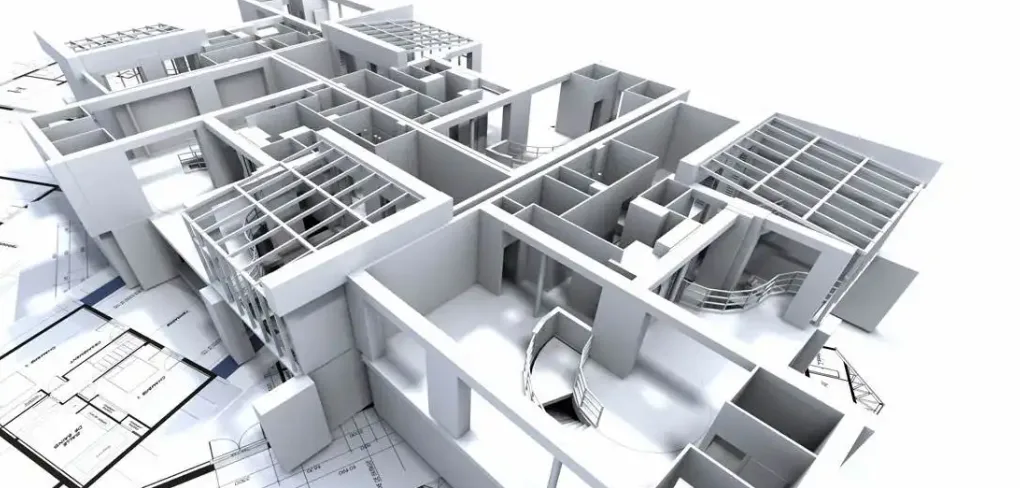
Applying BIM in the rail transit industry reveals that models tend to be massive and distributed in a strip-like fashion, which severely affects computer performance. To work smoothly with BIM designs, high-end graphics workstations are often required, incurring high costs that many small companies cannot afford. Even property owners find it impractical to invest in expensive graphics hardware for on-site BIM use.
Therefore, to maximize BIM’s benefits across design, construction, operation, and maintenance phases, it is critical to reduce model size by lowering the number of points, surfaces, and other elements. This process—known as lightweighting—ensures models remain manageable without sacrificing essential detail.
Various lightweighting methods exist, including vertex deletion, tile folding, and Level of Detail (LOD) techniques. More aggressive simplifications remove interior components and display only external surfaces, but this approach sacrifices the ability to query internal component information. Some methods optimize peripheral patches by treating them as a whole to reduce volume, but this resembles a 3D model rather than a fully informative BIM model.
The lightweighting approach presented here focuses on two main aspects. First, geometric model simplification involves deleting vertices and faces to reduce the number of triangular facets while maintaining component integrity. A widely used technique is the edge folding algorithm, which calculates the cost of folding each edge, prioritizes the lowest cost edges, and folds them until no further folding is possible. This process merges points and adjusts connected edges accordingly, removing redundant triangles and edges.
When geometric simplification alone is insufficient, model instancing is applied. This keeps only one copy of identical models, with mirrored copies referencing the original. Additionally, the model’s topological structure is reorganized to eliminate duplicate points and faces, further reducing file size.
For data volume reduction, several strategies can be employed:
1. Decompose BIM design data into stages, limiting the amount of information loaded at each phase. This partial loading reduces data volume and is widely adopted in the industry.
2. Use mirroring to store a single copy of repeated data, replacing duplicates with index references, similar to geometric instancing.
3. Compress stored data using specialized algorithms to minimize size. Efficient decompression is required during access. Some vendors also implement data encryption to enhance security.
4. Apply display simplification methods such as LOD, which focus on rendering models with varying detail levels based on display priorities. This technique primarily operates at the visualization layer.
5. The BIM system described here includes a plugin that rapidly lightweight BIM models into smaller versions. These reduced models can be quickly rendered on both BIM and GIS platforms, facilitating seamless BIM-GIS integration and interaction tailored to user needs.
In summary, these are the key challenges and solutions for lightweighting BIM models. We hope this information proves helpful to everyone working in this field!
















Must log in before commenting!
Sign Up