
BIM technology utilizes three-dimensional digital tools in construction projects to integrate various information into comprehensive engineering data models. Today, BIM is widely recognized for its capabilities in visualization, coordination, simulation, optimization, and graphic output.
Water supply and drainage engineering design has unique characteristics. First, it involves a wide range of materials and complex calculations. Different functions within building water supply and drainage systems require various pipeline materials and installation standards. Second, these systems feature numerous types, quantities, and complexities of pipelines. Third, although water supply and drainage typically represent less than 10% of the total project investment, their impact is significant. The quality of the water supply and drainage design directly affects the building’s safety and comfort, making it a vital part of any construction project.
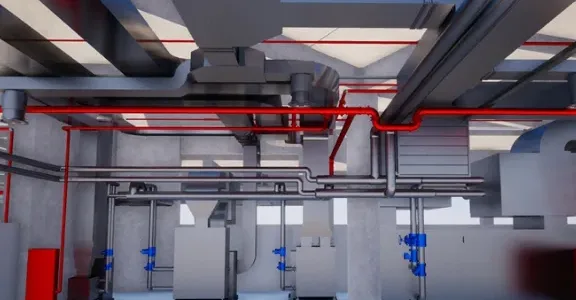
Currently, BIM demonstrates value in water supply and drainage engineering design in at least five key areas:
1. Collaborative Design
Traditional design methods rely on CAD as a simple drawing tool with limited data capacity. Water supply and drainage designers must manually provide load information to structural and electrical teams. In contrast, BIM consolidates all information within a unified model, enabling cross-disciplinary data access. For example, adjusting the water pump power in the plumbing model automatically updates the electrical load calculations. This unified approach simplifies workflows, enhances collaboration efficiency, and allows drainage system designers to monitor changes made by all disciplines in real time, resulting in a significant leap in cooperative design.
2. Material List Management
Previously, designers manually measured and calculated materials from CAD drawings—a process that was time-consuming, error-prone, and labor-intensive. BIM functions as a dynamic information database, generating real-time, accurate material lists. These lists support preliminary design comparisons, cost estimation, and project budgeting with greater reliability and efficiency.
3. Pipeline Integration
BIM greatly simplifies pipeline coordination by visually representing spatial clearances and system layouts. The 3D models allow engineers to detect clashes and interferences during the design phase. Using built-in or external collision detection tools, designers can identify and resolve conflicts early, ensuring that pipeline arrangements meet architectural requirements and avoid costly adjustments during construction.
4. Installation Simulation
BIM enhances construction planning by integrating the time dimension into 3D models, creating detailed 4D installation schedules. This approach enables pre-visualization of construction sequences, helping to optimize installation timelines and coordinate multiple trades. It reduces overlaps and conflicts common in traditional methods, minimizes waste, accelerates project completion, and lowers the risk of design revisions.
5. Visual Design
Traditional civil engineering designs rely on CAD’s 2D views—plans, elevations, and sections—which can fragment or distort complex information, especially under tight deadlines. BIM’s intuitive and real-time 3D models maintain the integrity and consistency of data throughout the design process. This global perspective facilitates system understanding and control, making it easier to identify and adjust design details accurately.
In summary, BIM technology adds substantial value to drainage engineering design by improving collaboration, accuracy, efficiency, and visualization. I hope this overview proves helpful to everyone interested in the field!
















Must log in before commenting!
Sign Up