
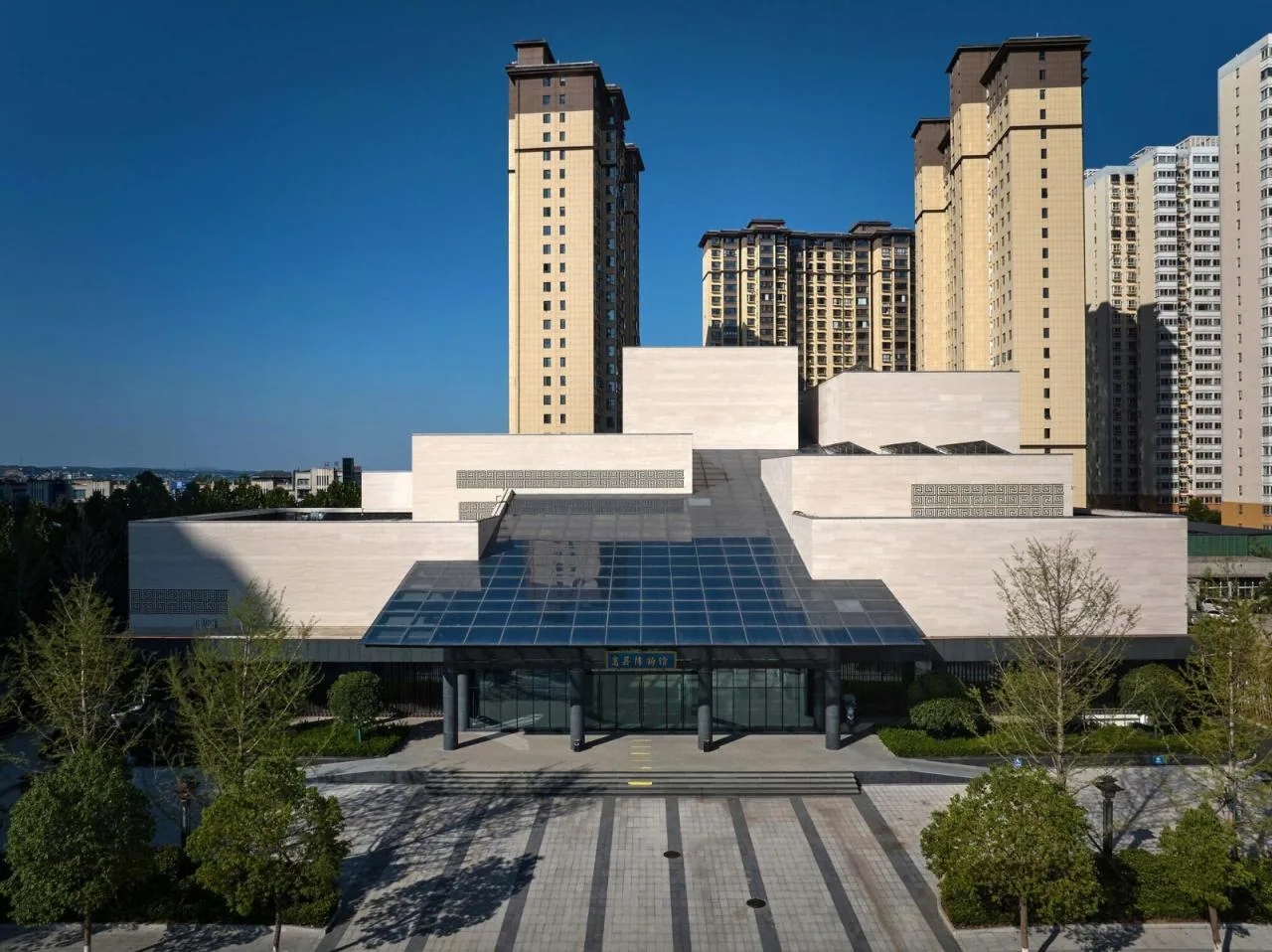
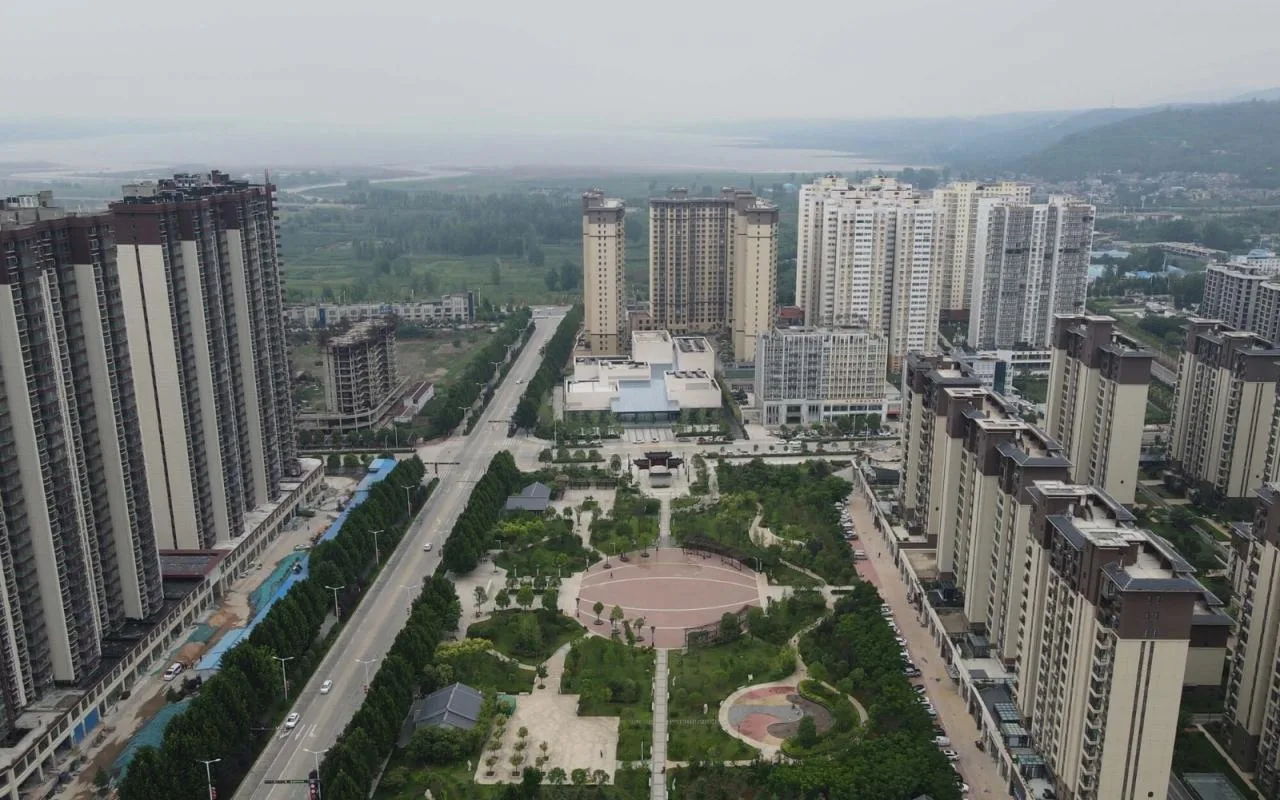
The Three in One Construction Project in Song County is situated in the new city area across the Yi River. Occupying a site of less than 9,000 square meters, this building integrates the key functions of museums, archives, and planning centers. The above-ground building area totals 10,000 square meters, with a plot ratio as high as 1.14, which is exceptionally compact for cultural buildings. As the county’s first comprehensive cultural facility, it plays a vital role in preserving and showcasing Song County’s historical heritage and future vision.
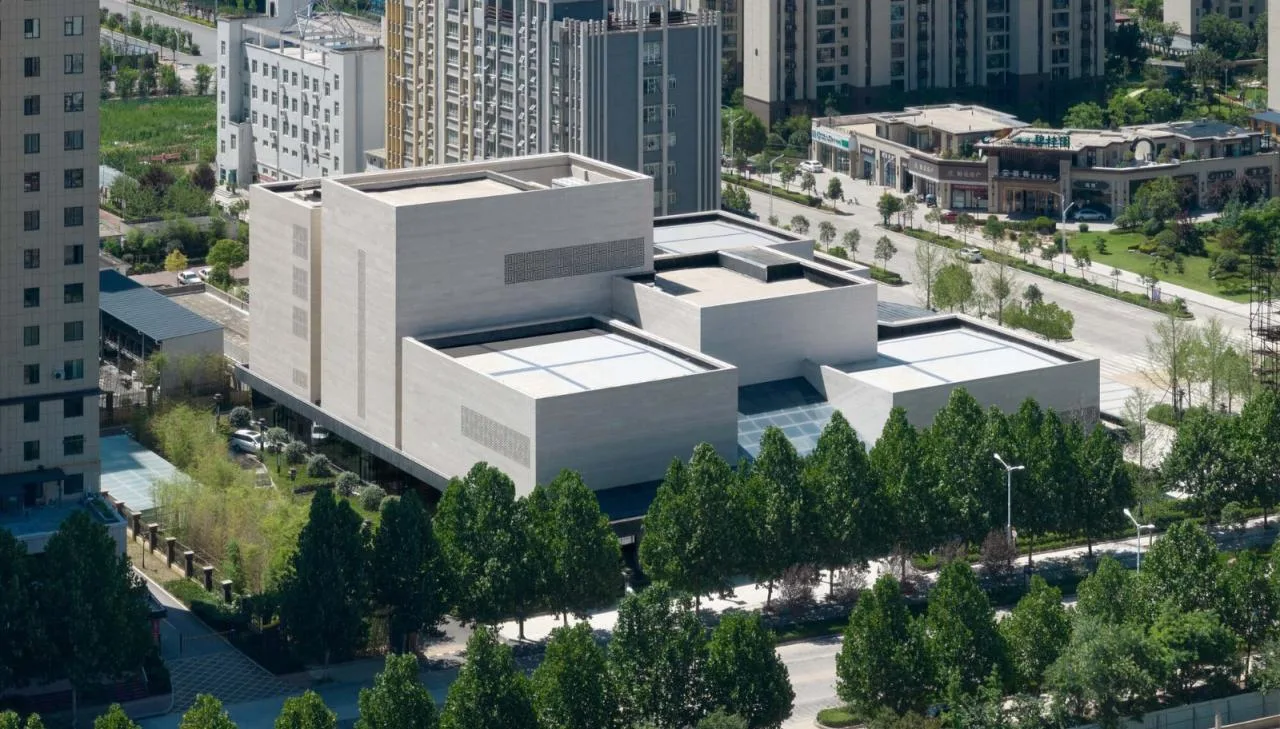
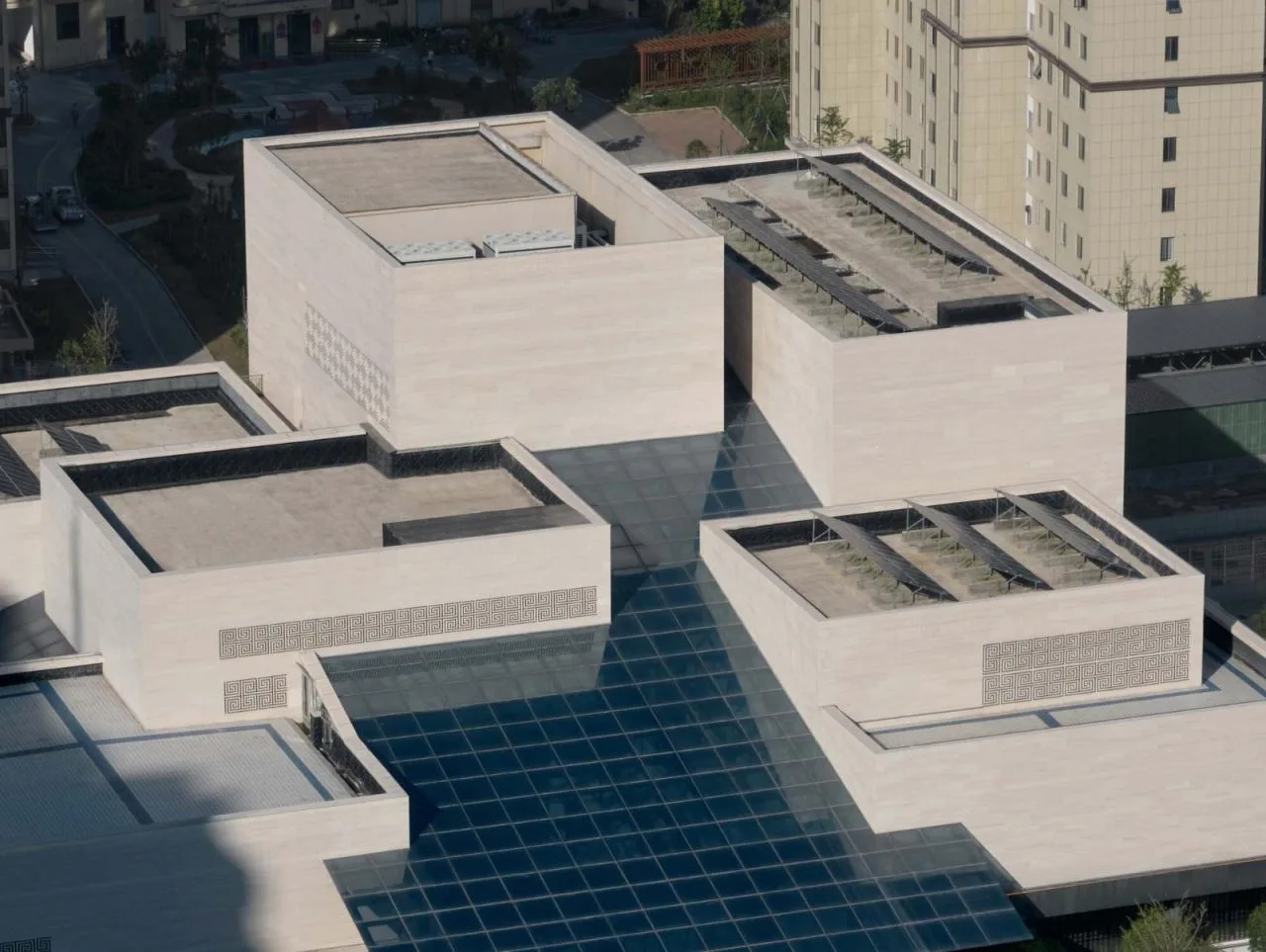
For humans, the natural landscape is an eternal presence, shaping the visual memory of generations. The local “Eight Scenic Spots of Song County” serve as a curated expression of this shared heritage. Among these, the sound of autumn in Yishui and the lush Seven Peaks represent the nearby mountains and rivers that the new city embraces. Thus, responding to the surrounding natural landscape in an abstract manner was a natural choice to ground this building in its place.
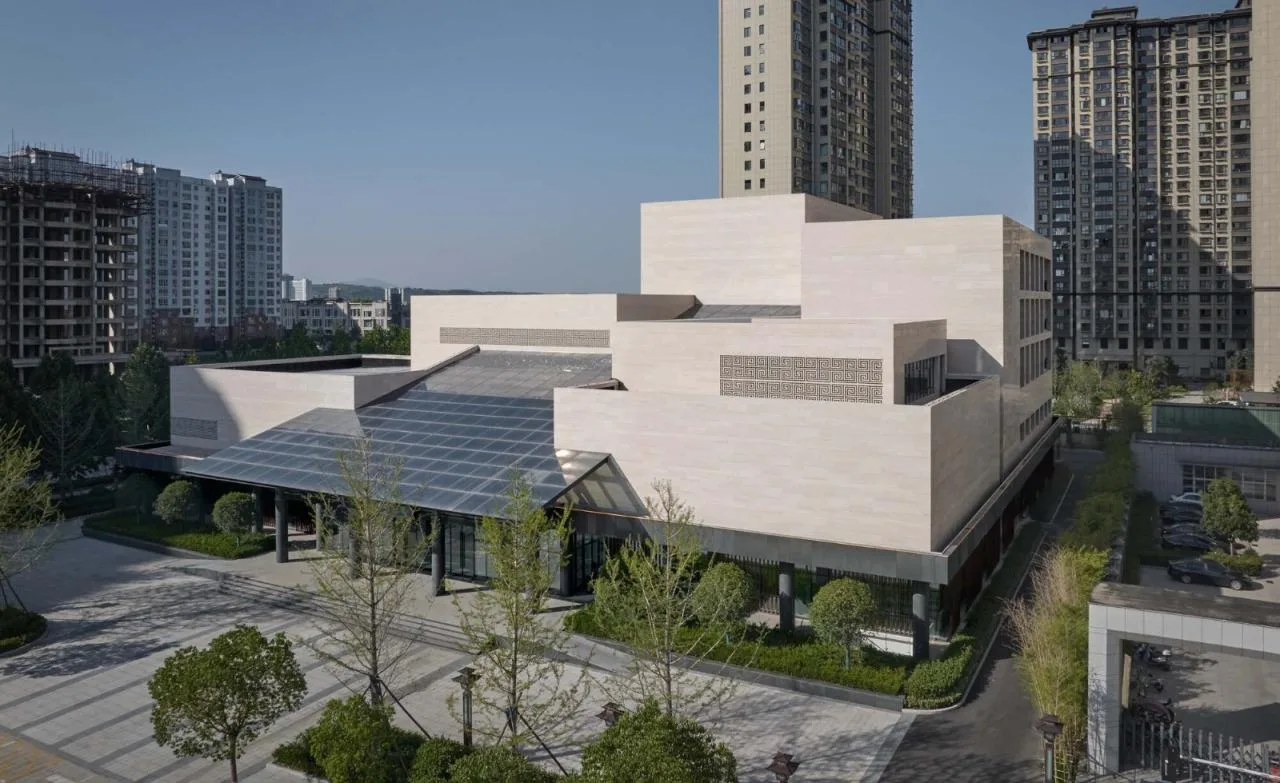
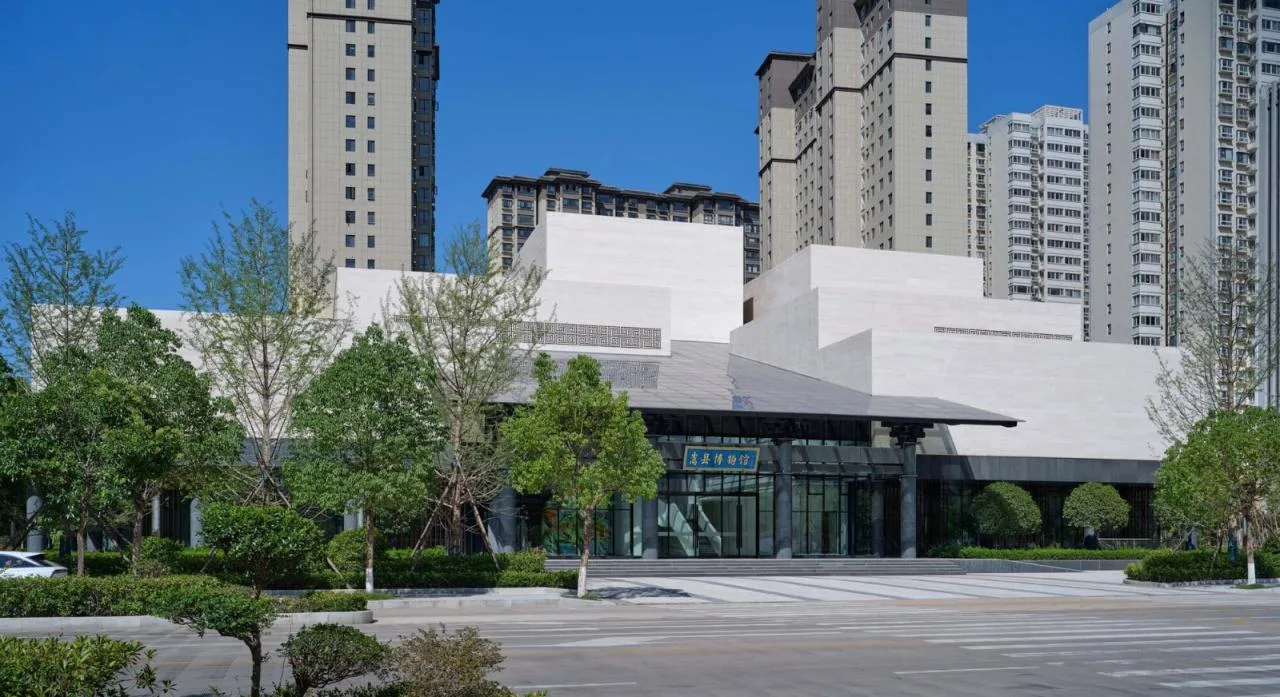
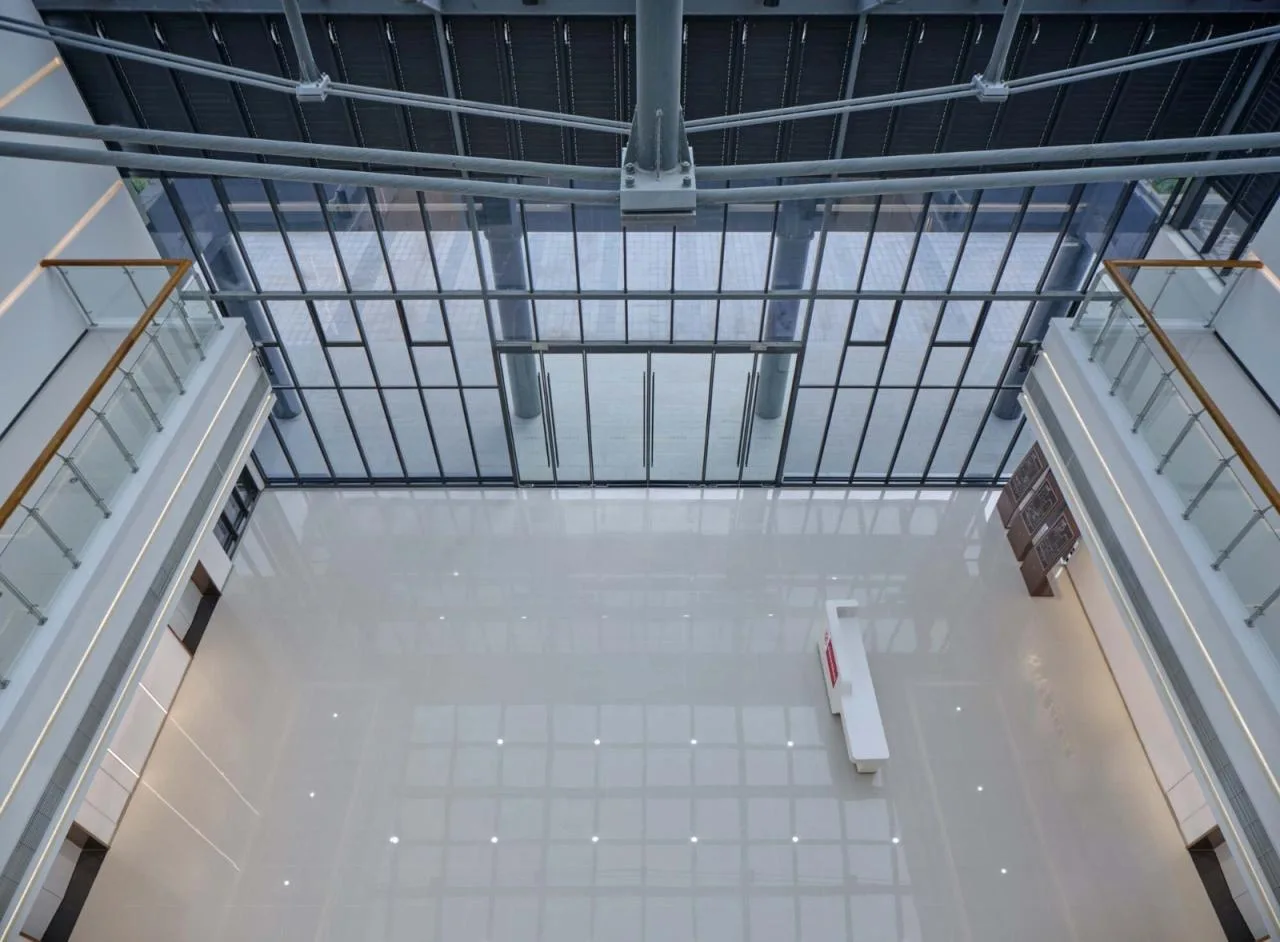
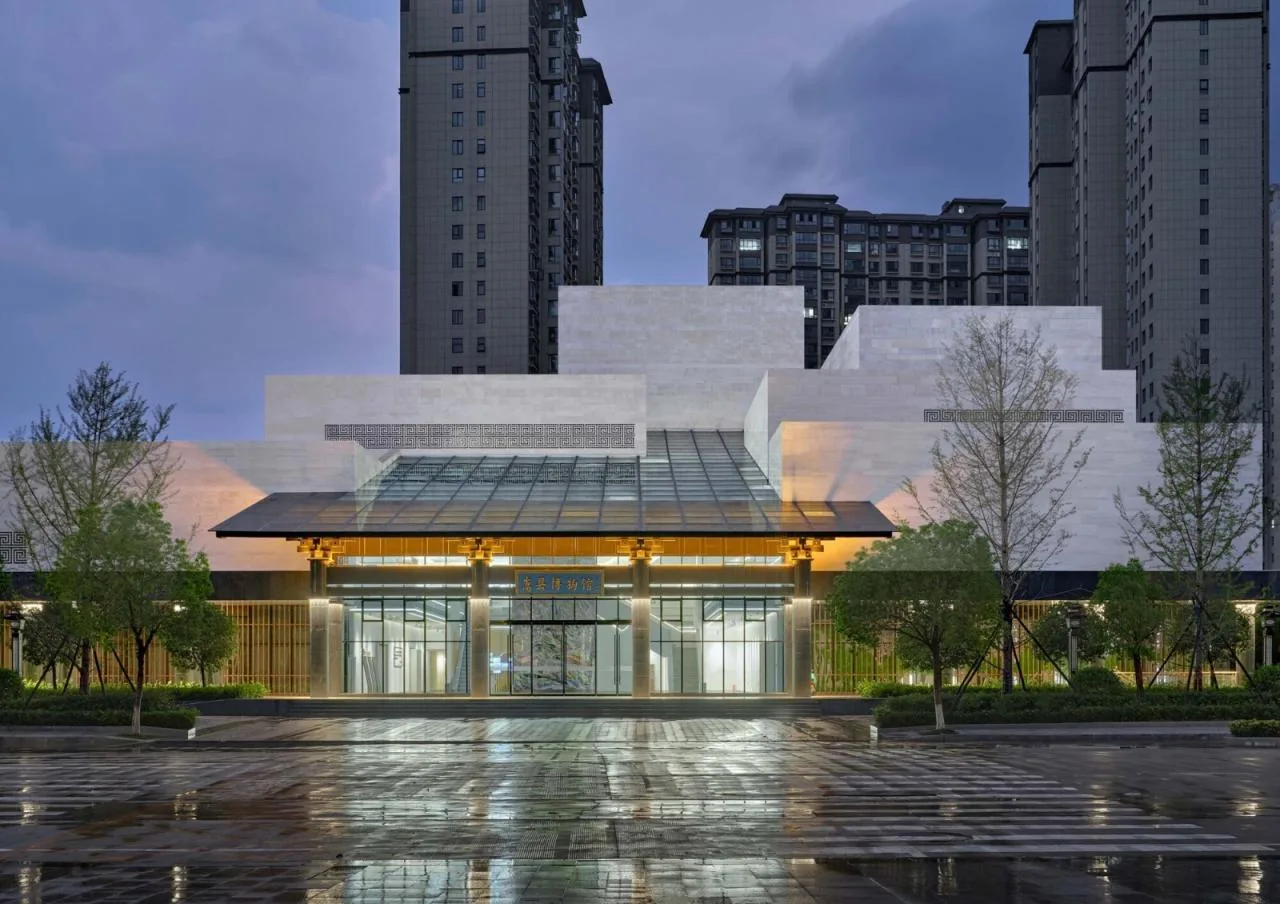
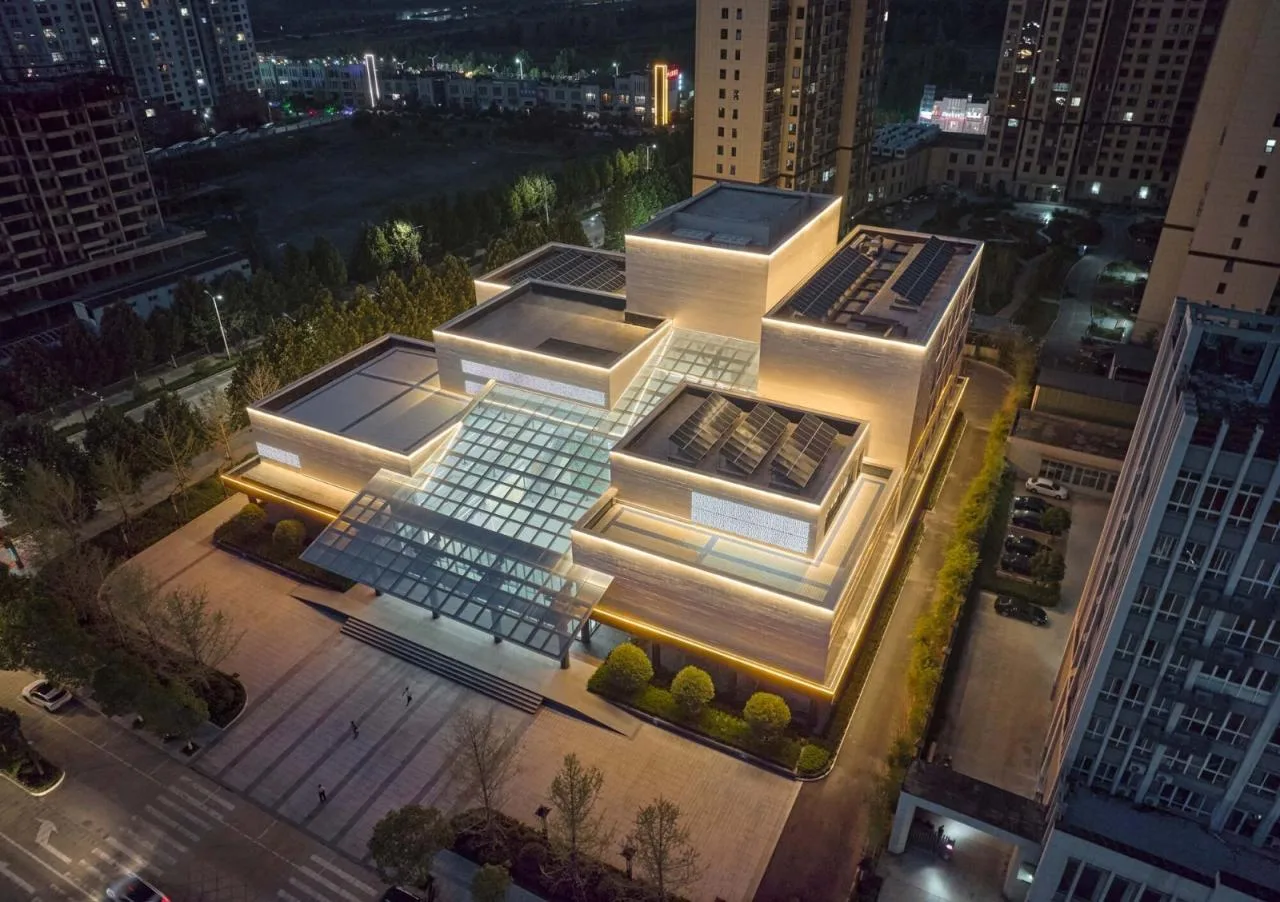
The design thoughtfully considers the dual relationship between mountains and water, integrating this binary concept into the building’s volume, spatial openness, and functional logic. Geometric shapes are combined to create an abstract expression: museums, archives, and other functional spaces form the “mountains” externally, while glass roofs resembling flowing streams cascade from these mountains, covering the shared hall and archive lobby in two directions.
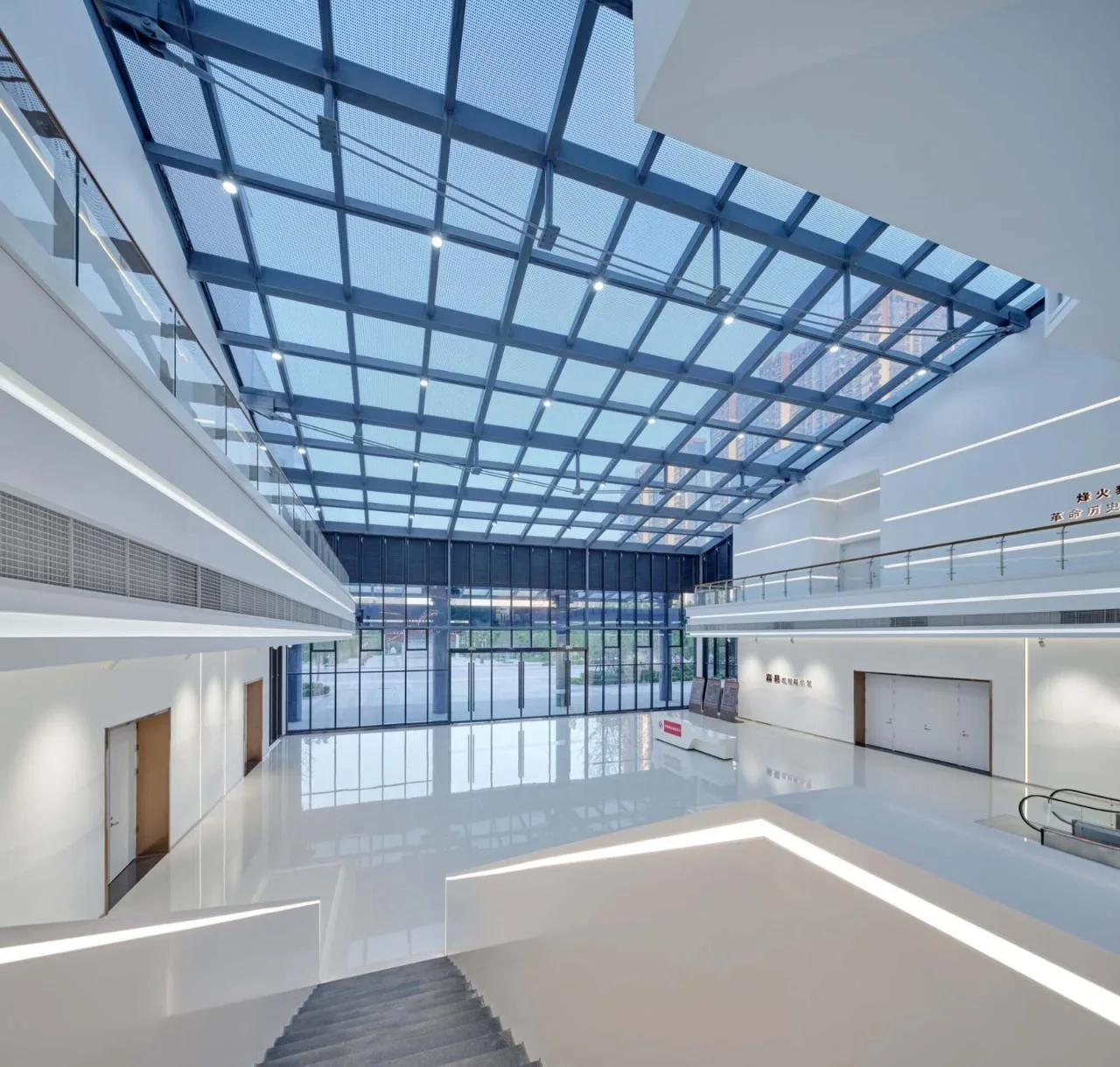
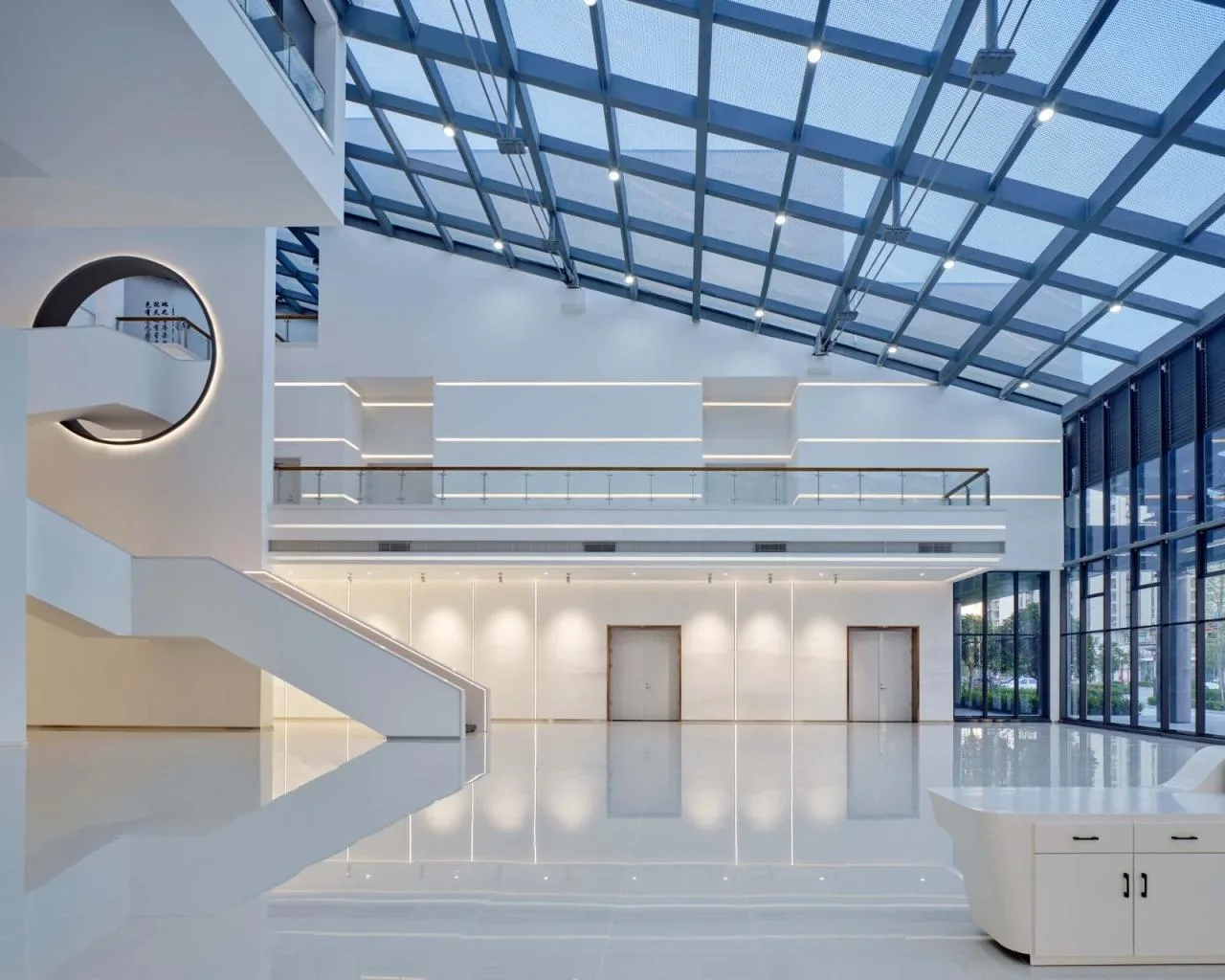
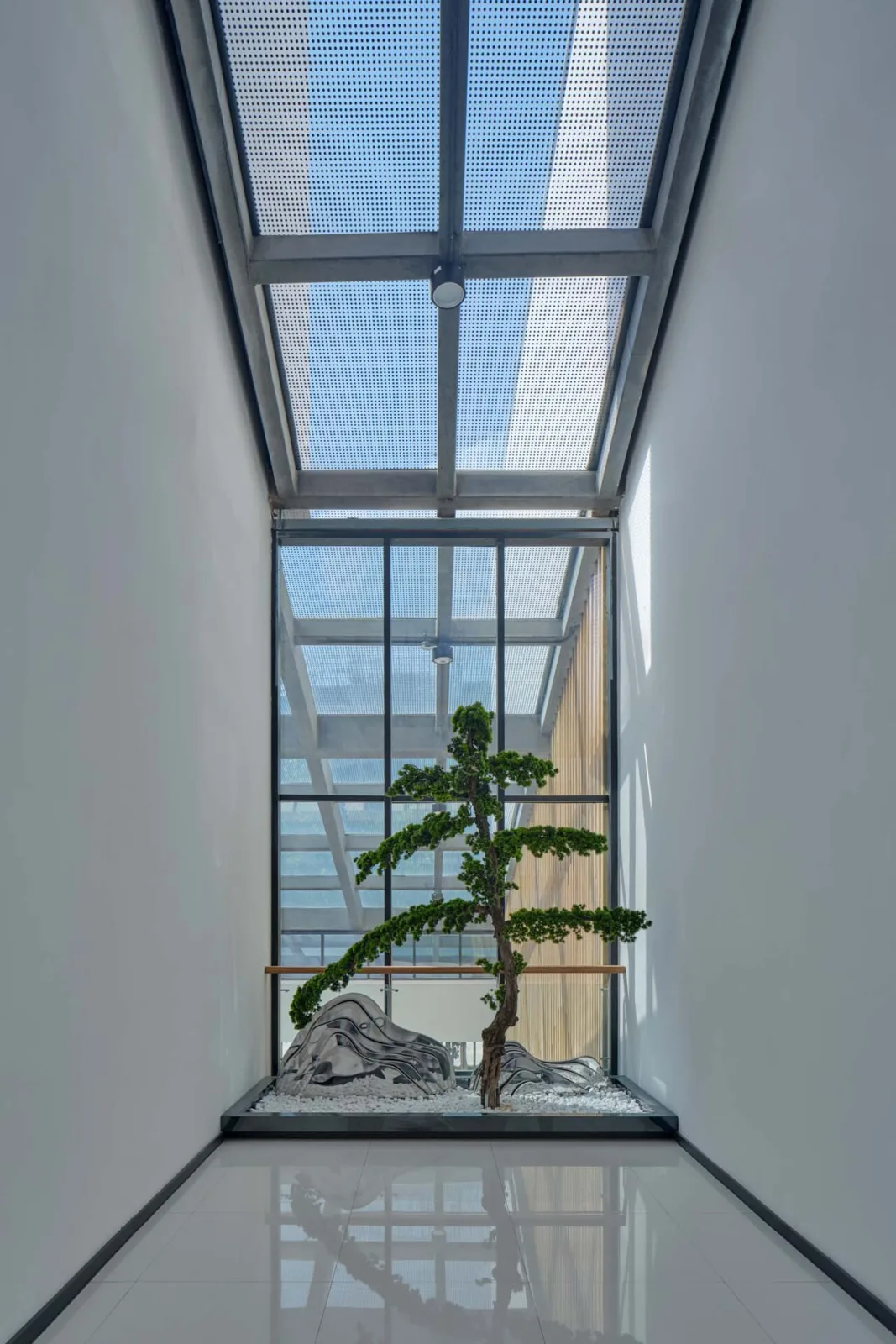
Upon entering the museum hall during the Xishan tour, visitors are enveloped by the mountain-like structure and can look up through the roof to see layered mountain forms and large stones suspended beneath. Ascending the stairs evokes the experience of tracing a stream through a valley—sometimes passing under towering mountains and winding waters, sometimes encountering twists or unique caves. This journey captures the poetic spirit of ancient travels through mountains and rivers, and the profound emotions inspired by forests and springs.
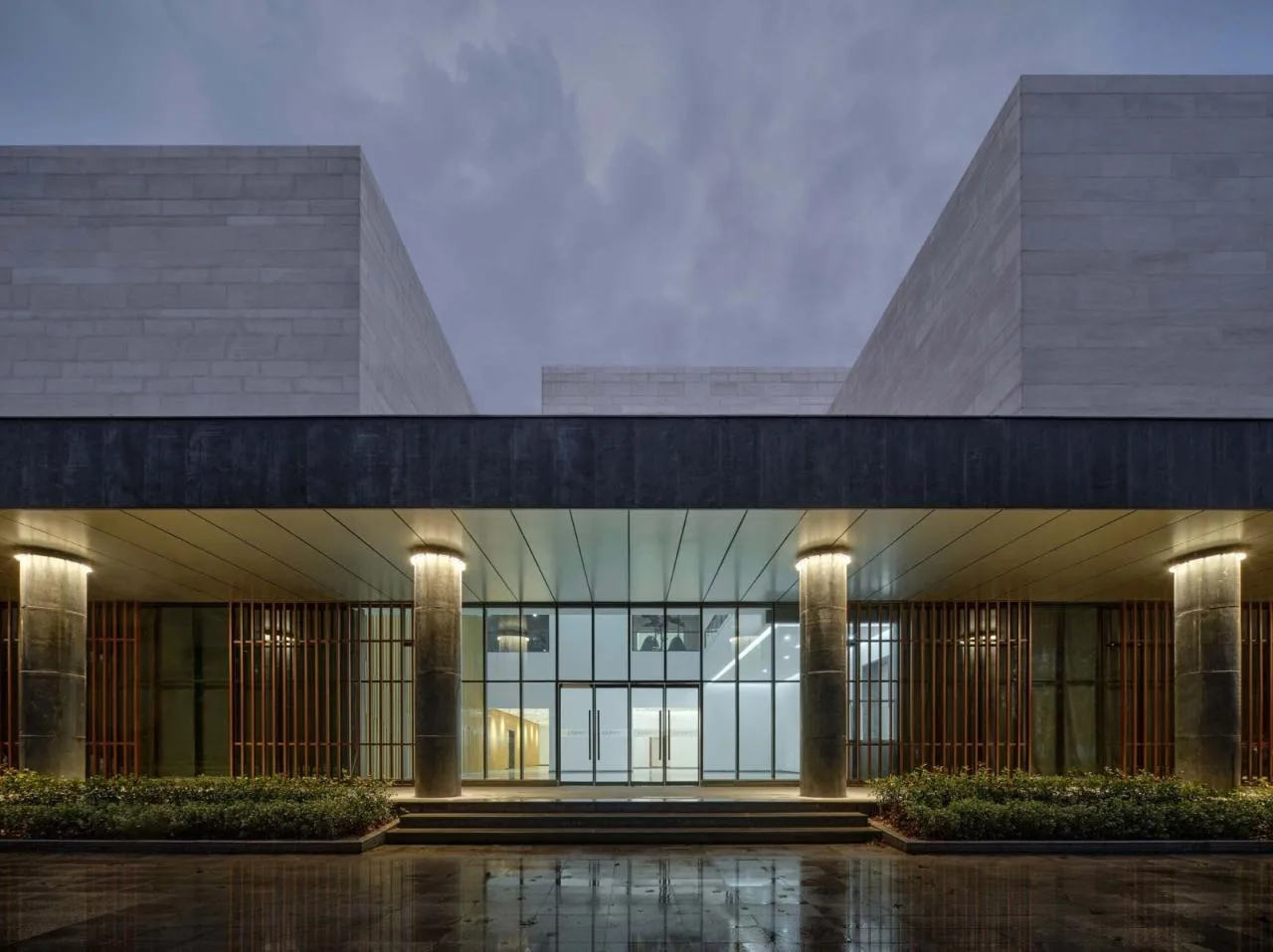
The ancient saying, “The distant mountains have no feet, the distant trees no roots, and the distant boats no bodies (only visible sails),” reflects principles of painting and garden design (Chen Congzhou’s Shuoyuan). The ground floor of the three pavilions is designed to be visually blurred, surrounded by colonnades and glass, lifting the mountainous forms above and emphasizing their towering presence—capturing the essence of “distant mountains without feet.”
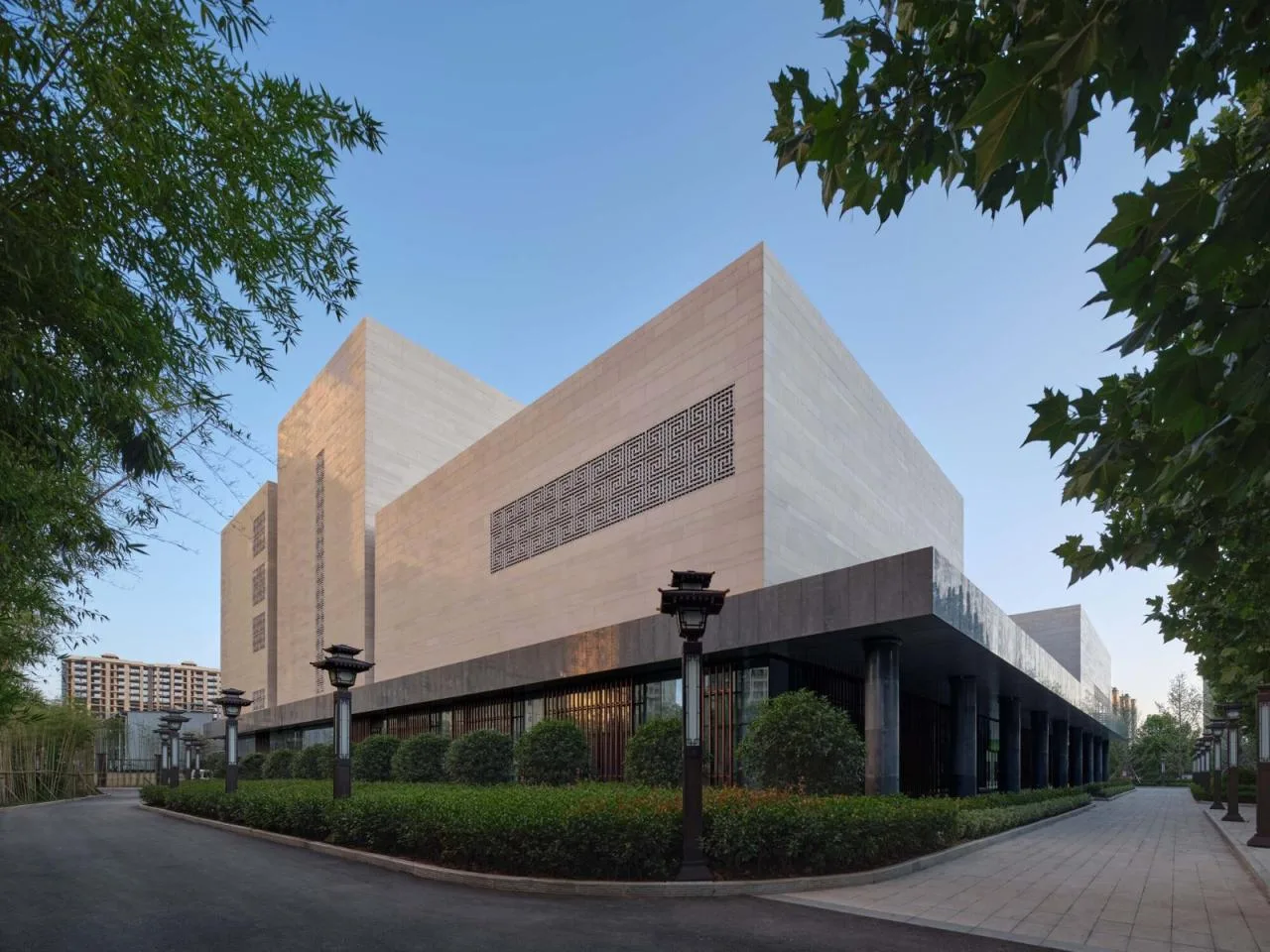
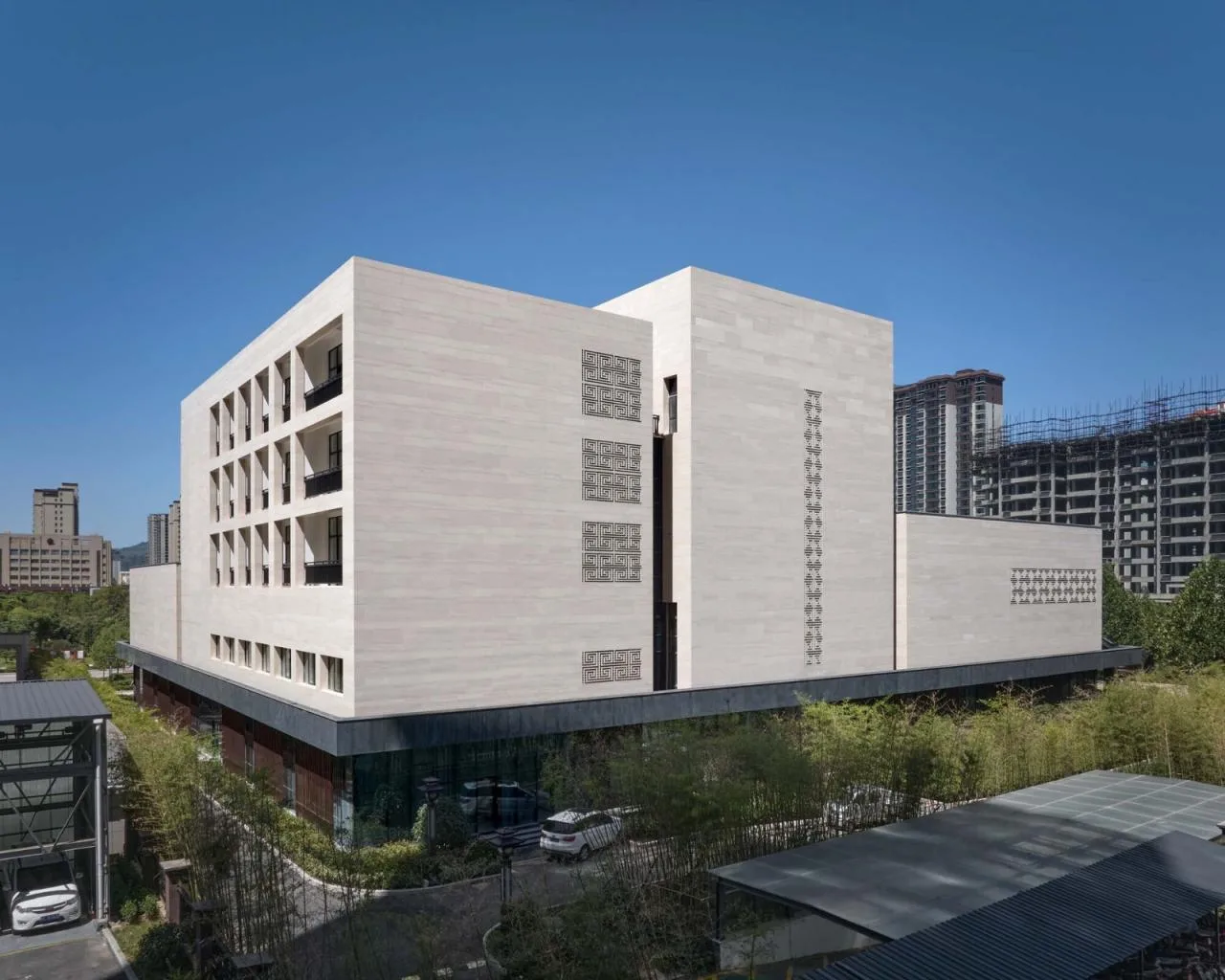
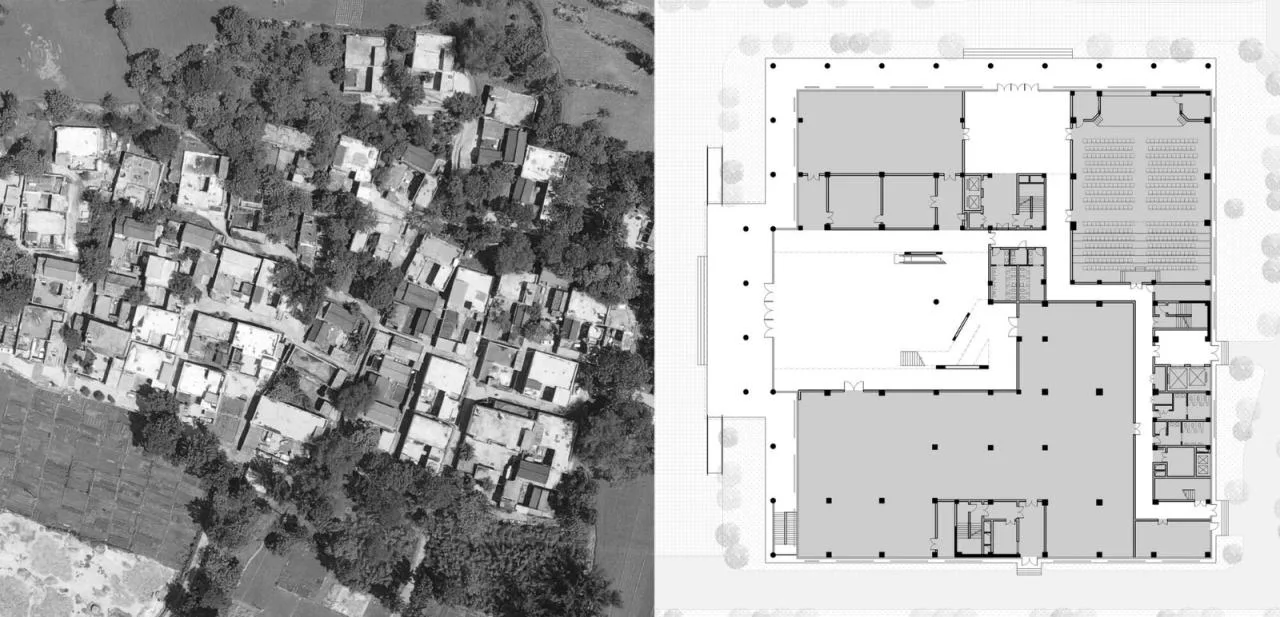
The traditional “Triple Courtyard” typology is common in Song County’s local houses, typically consisting of a main room flanked by east and west wings (known locally as “Xiafang”). These courtyards are spacious and allow better sunlight during winter. The spatial layout of the three pavilions echoes this tradition: a main side with two courtyards—one large, one small. Both halls feature glass roofs and remain directly accessible, mirroring the local residential pattern.
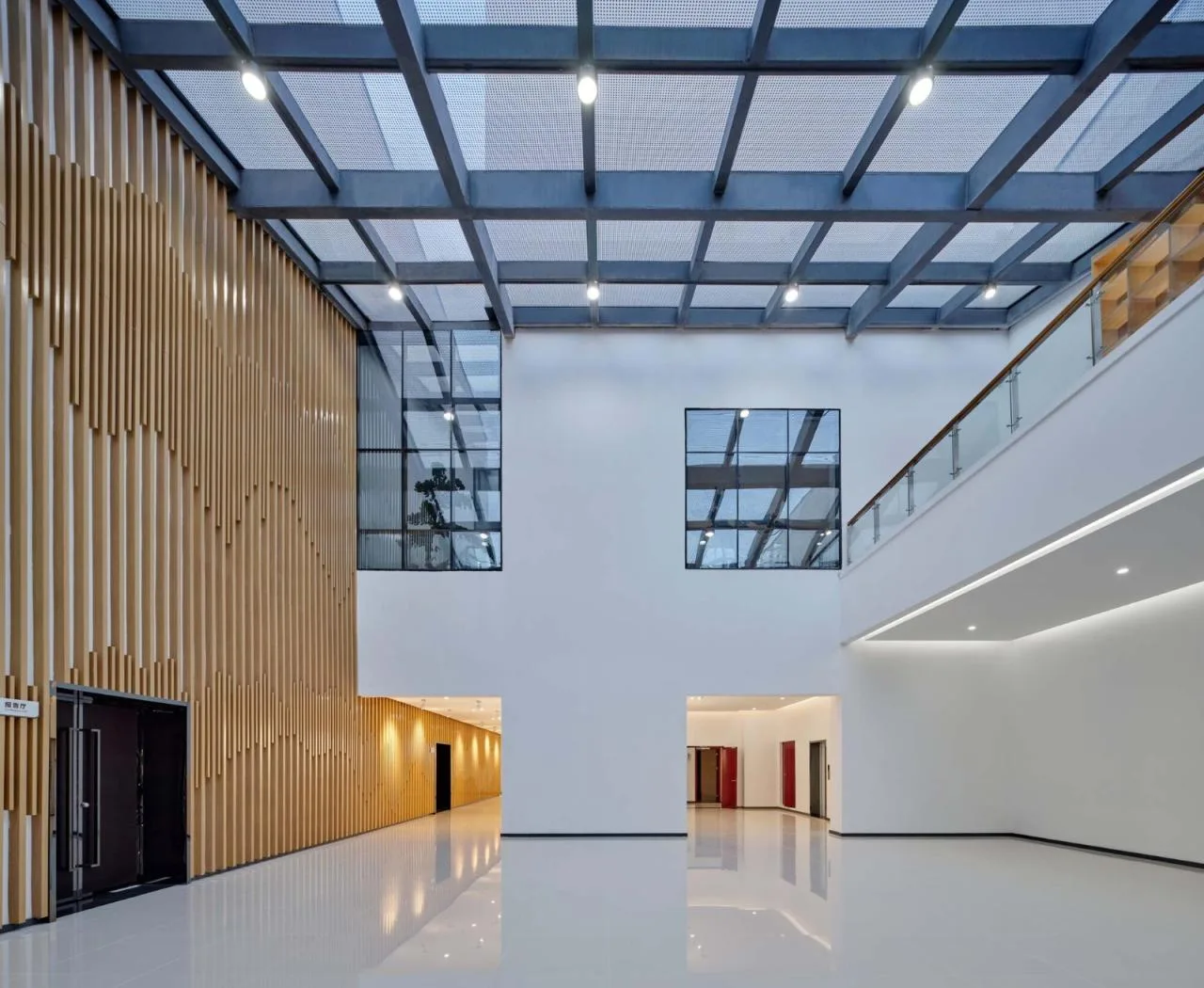
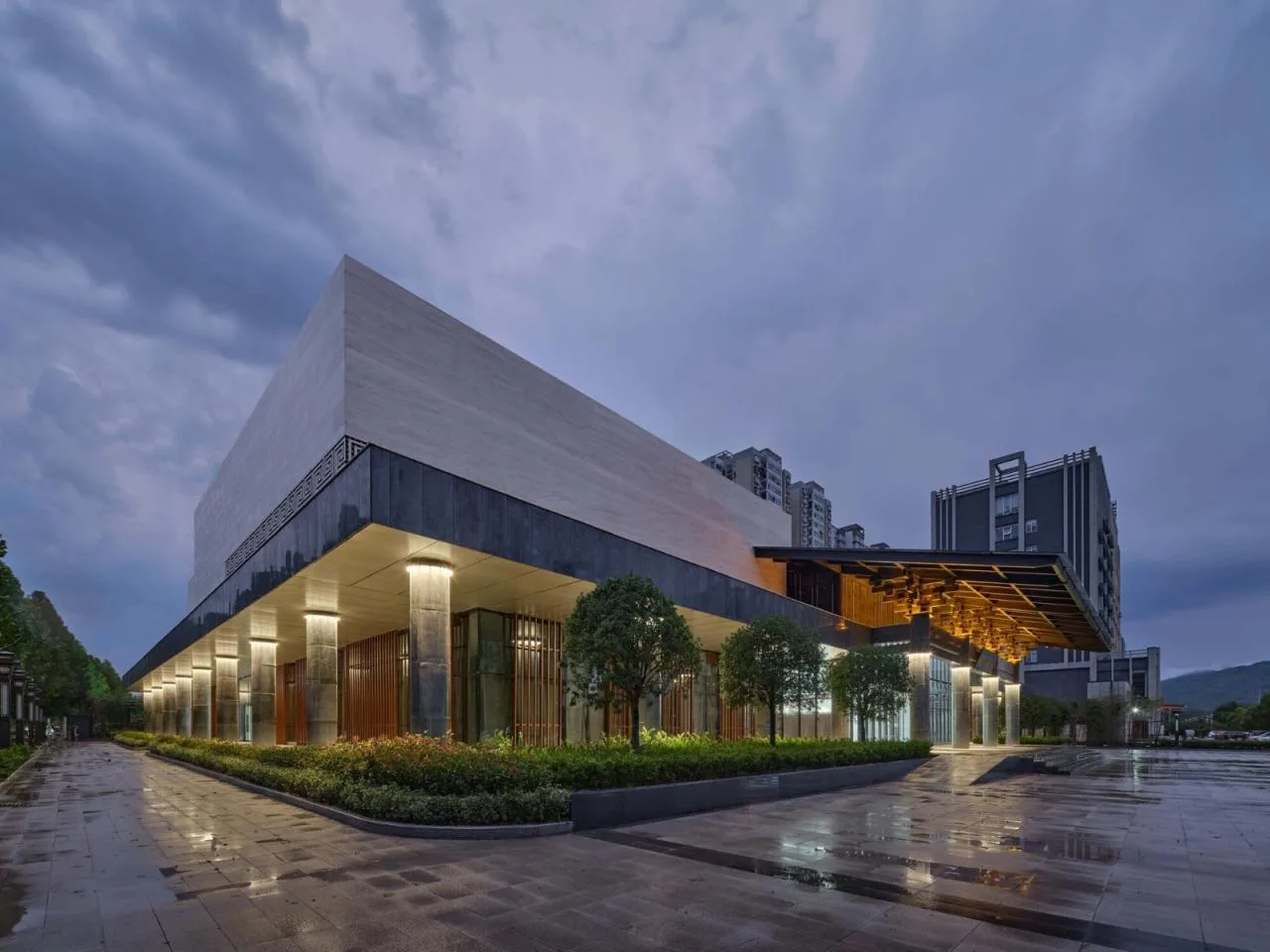
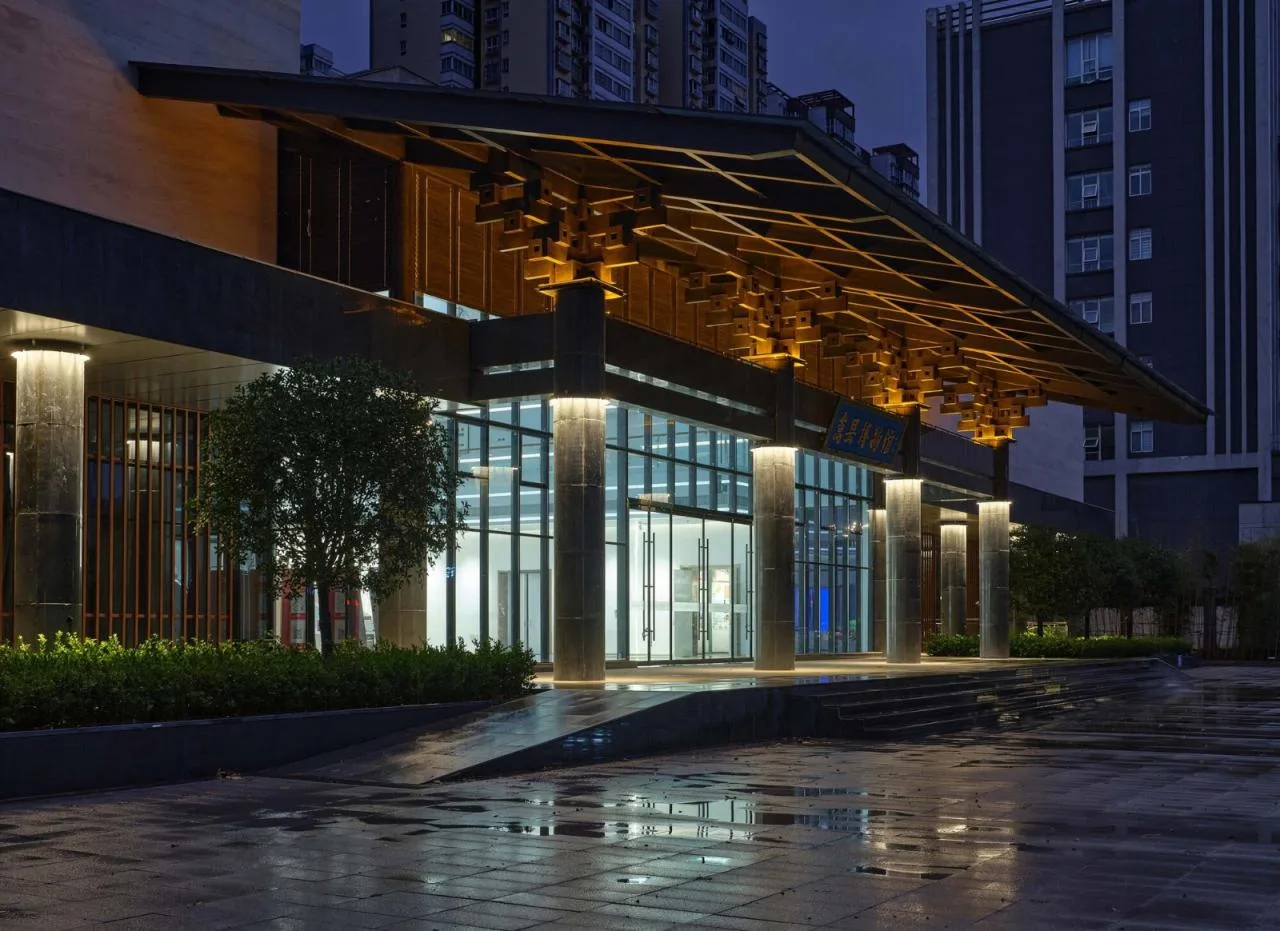
The lower levels of the stepped street facade recess to create a continuous colonnade reminiscent of “secondary steps” in ancient architecture. The column spacing closely follows the √2 ratio, identified by researchers Wang Guixiang, Wang Nan, and others at Tsinghua University as a prevalent proportion in classical Chinese architecture. The front shared hall and colonnade extend forward by half a bay, evoking the form of a “hugging mansion.” The glass roof with flowing water forms a canopy at the main entrance, where steel components connect the column heads to the roof—avoiding the thin appearance typical of steel structures compared to traditional wooden brackets.
Japanese architects are well known for their refined exploration of the “dougong” (traditional wooden bracket) form, often using a single component stacking technique to express cultural precision. In contrast, the San Guan project adopts a dualistic approach, separately extracting “dougong” and “gong” elements and recombining them according to traditional logic. The resulting steel structure column heads strike a balance between abstraction and concreteness, maintaining the traditional compositional relationships of the dougong.
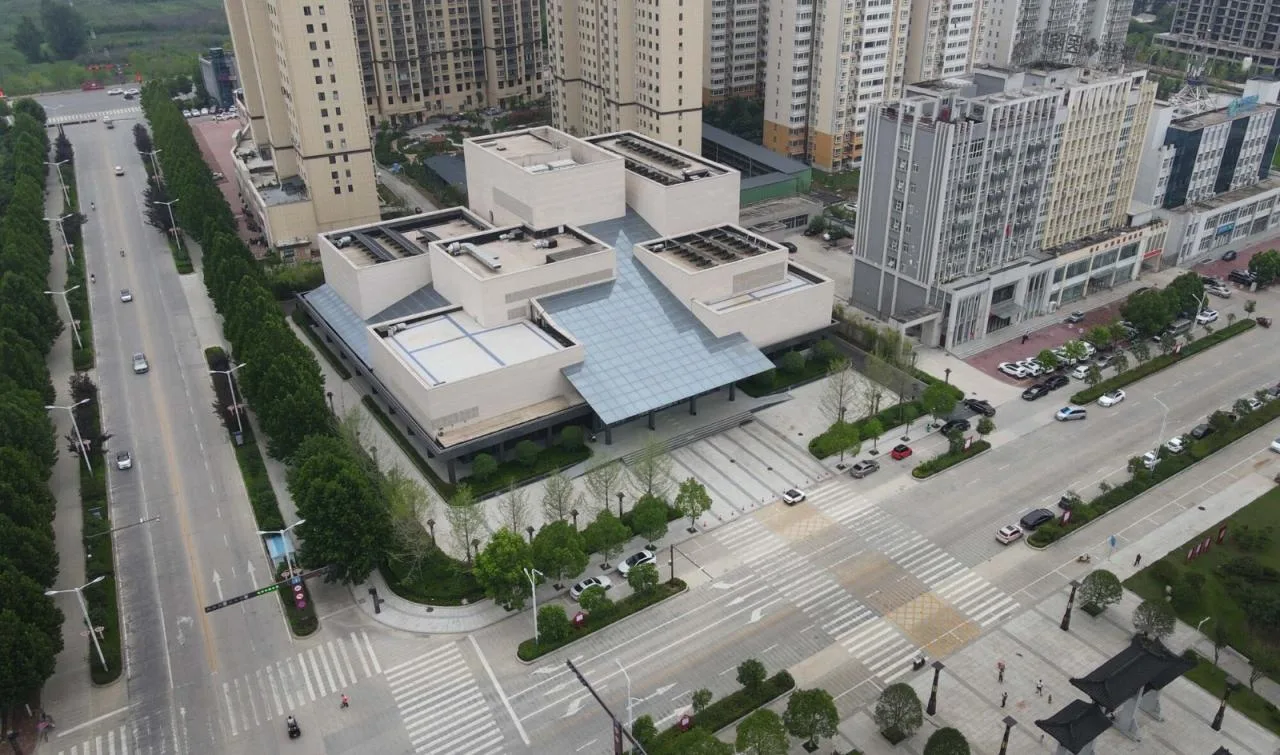
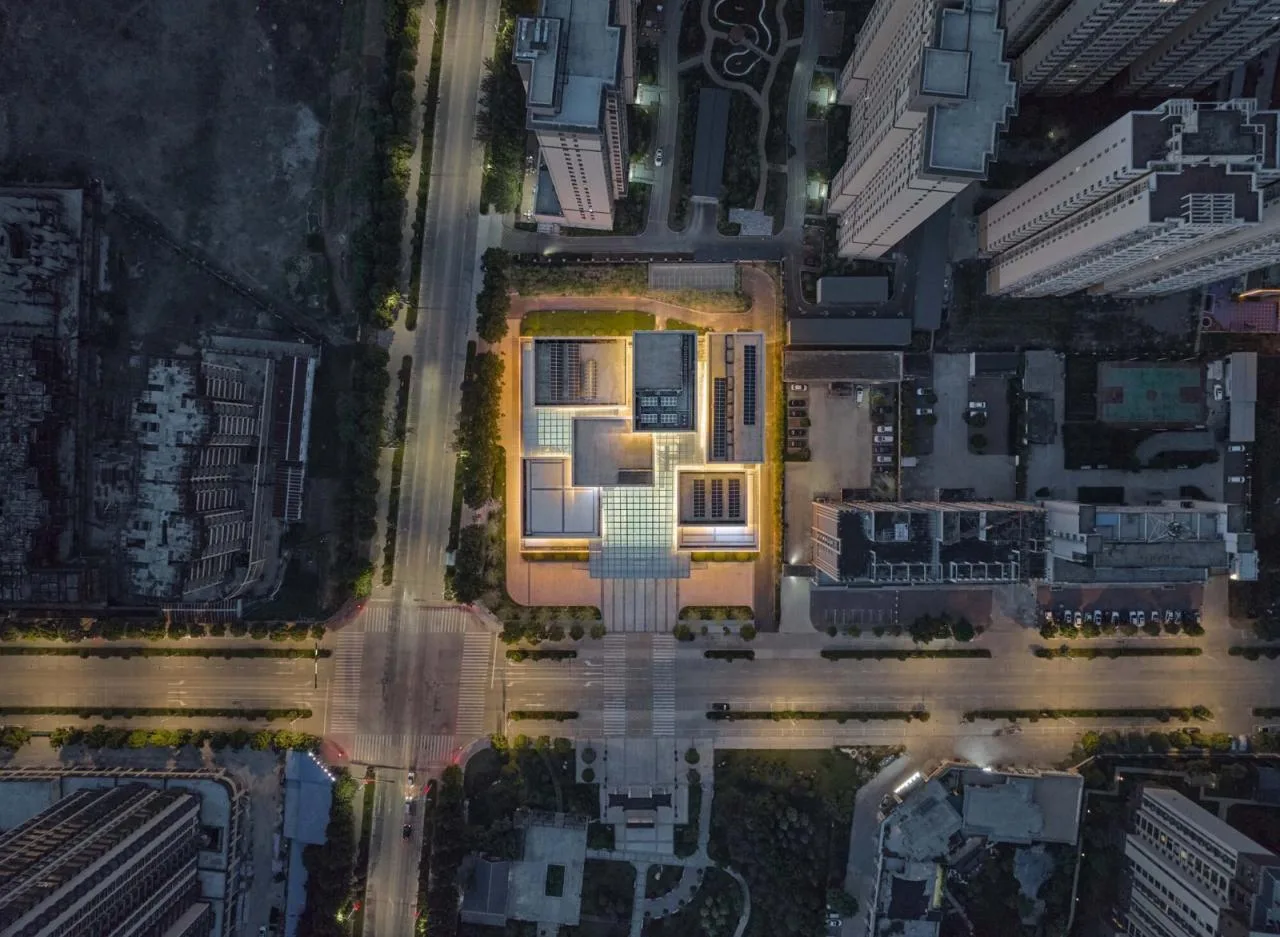
The site for the three pavilions is surrounded by high-rise buildings, presenting a significant challenge. Despite the limited land area, the design makes concessions along the street frontage to create a welcoming public space. A 4-meter-wide colonnade on the ground floor offers a semi-outdoor area for citizens to use at any time. To avoid overwhelming the streetscape, the three pavilions are arranged diagonally from the road intersection, with a stepped volume that is lower at the front and higher at the back—enhancing the openness of the urban street environment.
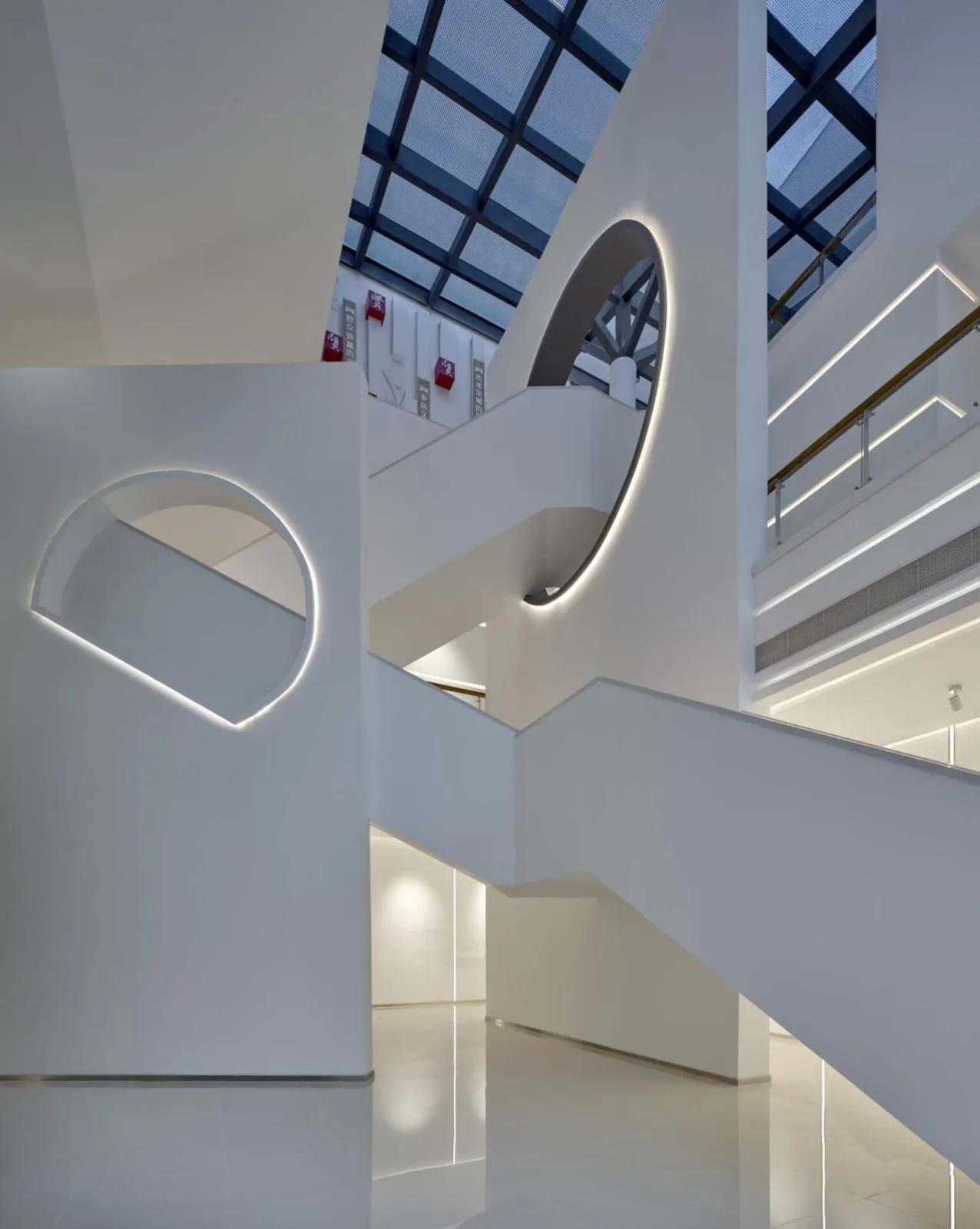
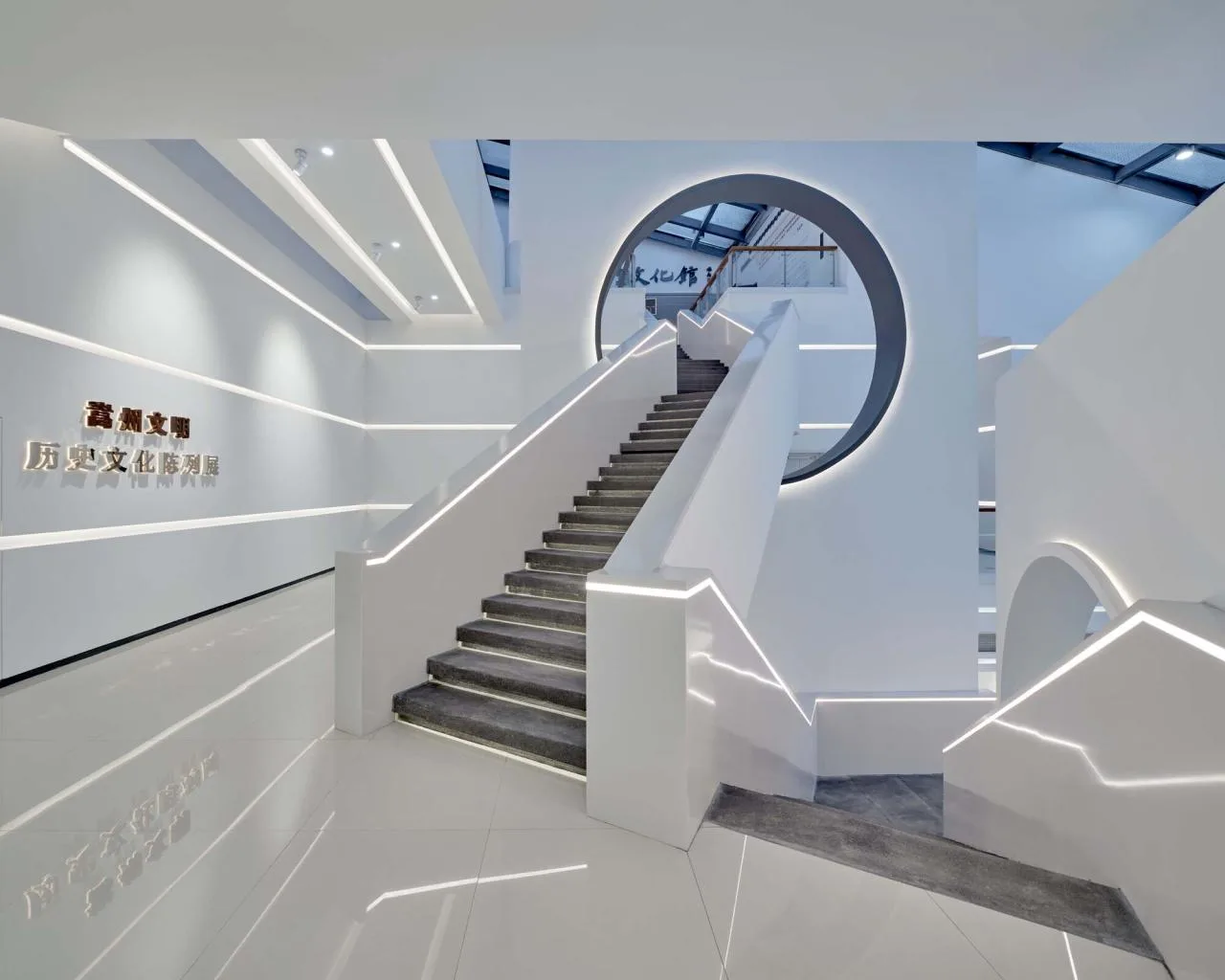
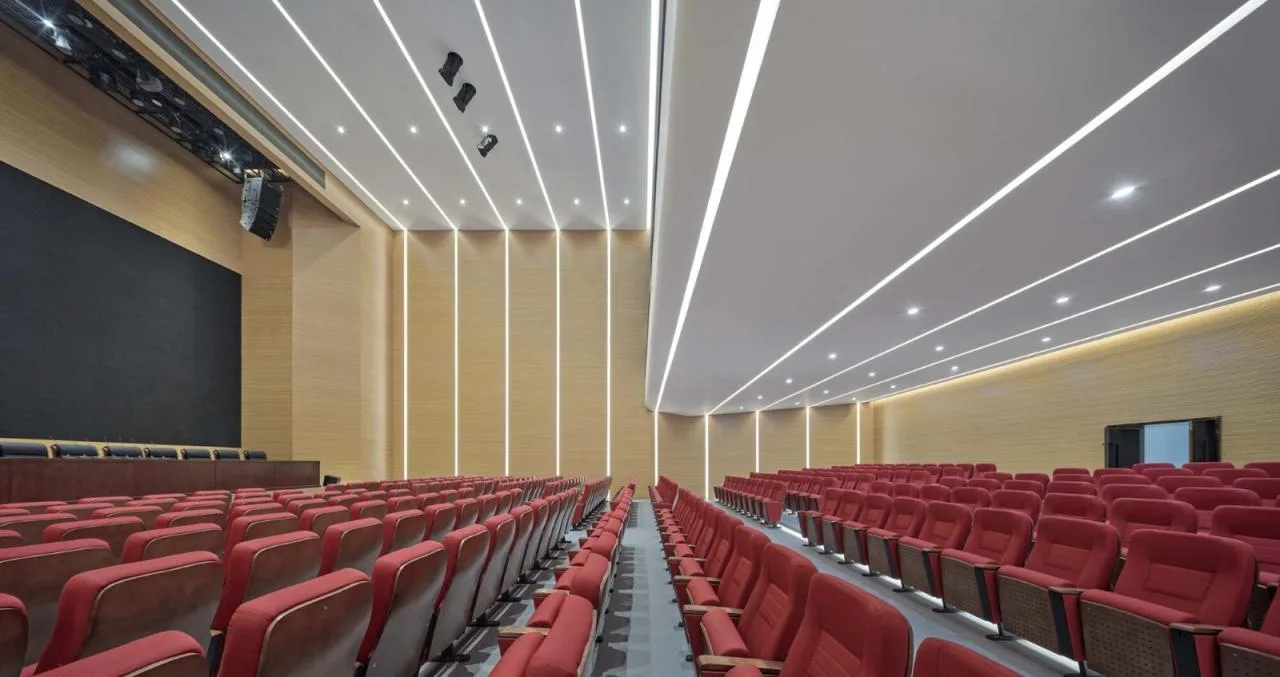
Addressing the practical challenge of maximizing space efficiency, the facility accommodates museums, archives, planning halls, and conference rooms within 10,000 square meters. The layout of the three museums is compact, with shared public spaces, stairways, elevators, and restrooms optimized for common use. The planning hall, which experiences high foot traffic, is positioned on the ground floor, while the museum occupies the 2nd and 3rd floors, both organized around a shared hall. The 3rd to 5th floors house archives with lower accessibility, featuring an independent entrance hall on the northwest side. Conference attendees use this separate entrance to avoid interfering with public visitors.
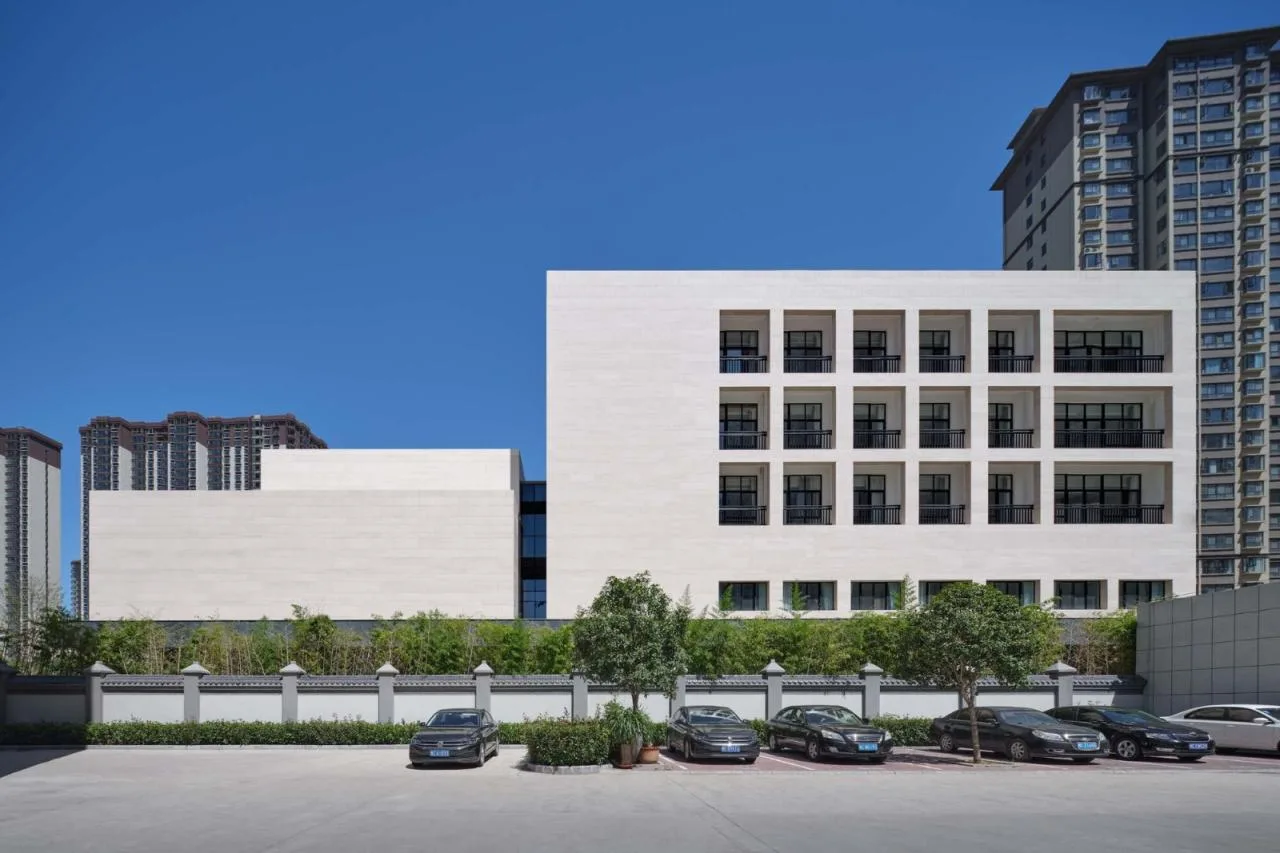
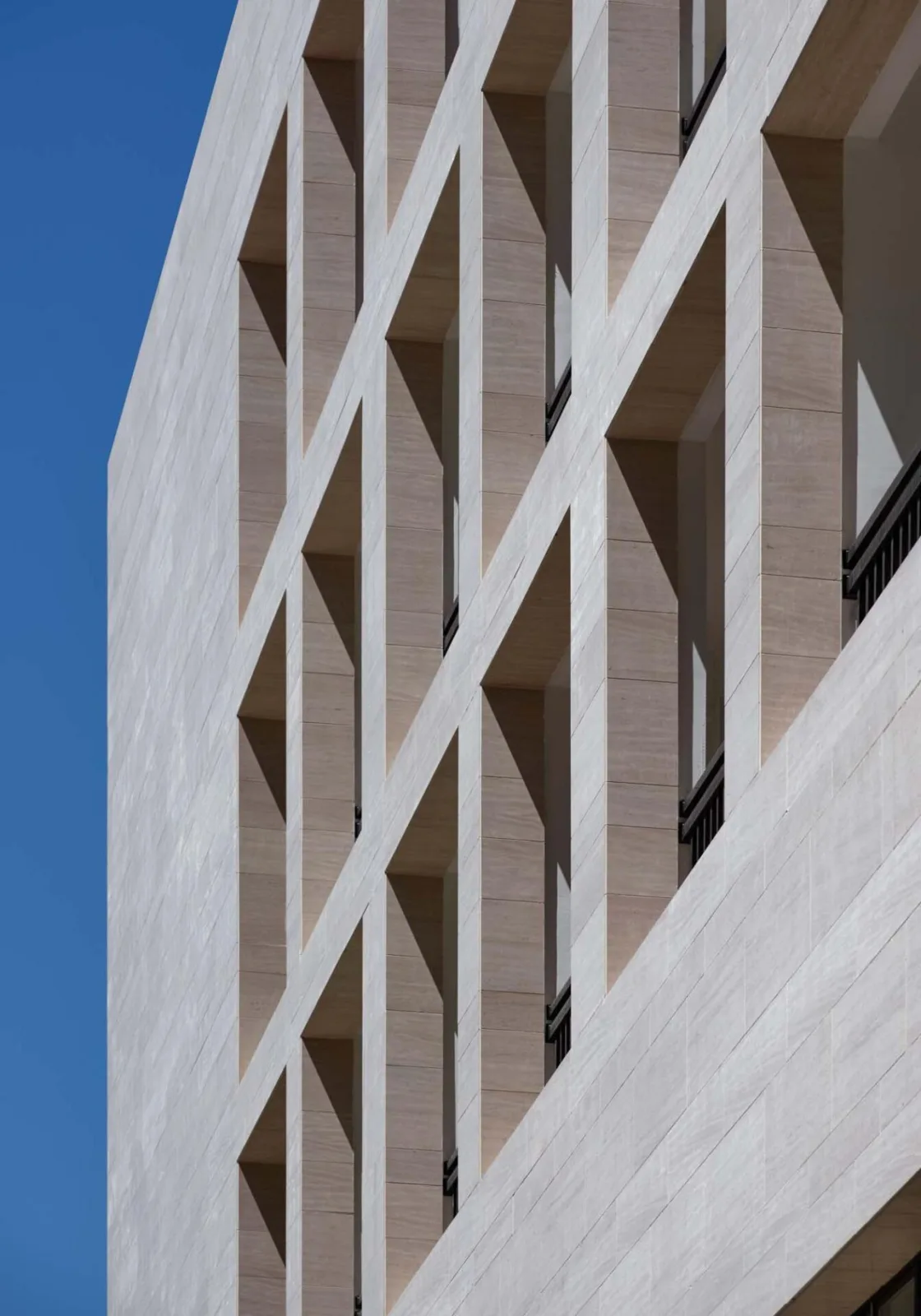
The building’s materials and structure emphasize contrast and harmony. Light-colored limestone forms the main facade, while darker granite is used for the lower eaves and colonnades. Limestone panels come in three sizes to enhance the horizontal rhythm and natural aesthetic. Structurally, steel-reinforced concrete columns with a 60-centimeter diameter support the extensive overhanging volumes above the hall. Lightweight string beams in the hall minimize the thickness and weight of the glass ceiling structure, achieving a balance between solidity and transparency.
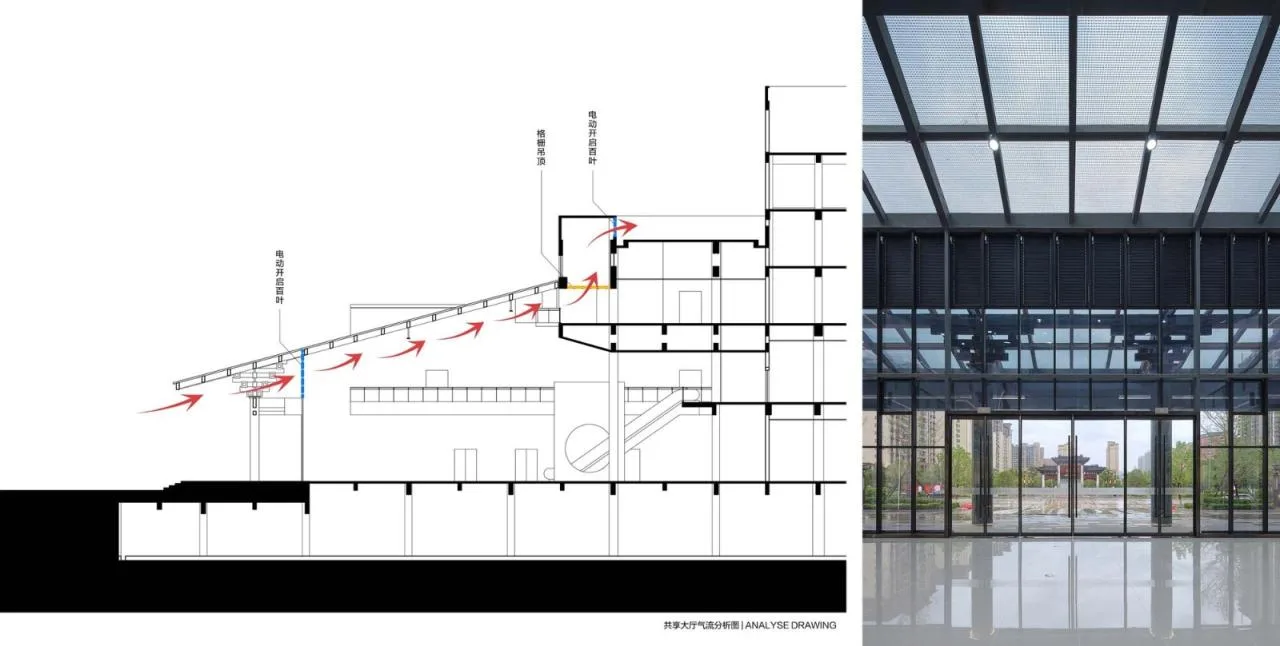
To reduce the summer greenhouse effect caused by large glass roofs, the project employs passive green building technologies. These include triple-layer Low-E insulated glass with plated points and electrically operated louvers installed at both the lower and upper ends of the hall roof. Utilizing the principle of hot air rising, natural ventilation carries heat away from under the roof, improving thermal comfort.
The design of the Three Pavilions in Song County deconstructs regional culture into three core aspects: nature, tradition, and reality. It seeks the greatest common denominator among these “functional values” to create a built environment that responds thoughtfully to real-world challenges, honors cultural heritage, and reflects the timeless landscapes deeply rooted in the hearts of the local community.
Project drawings
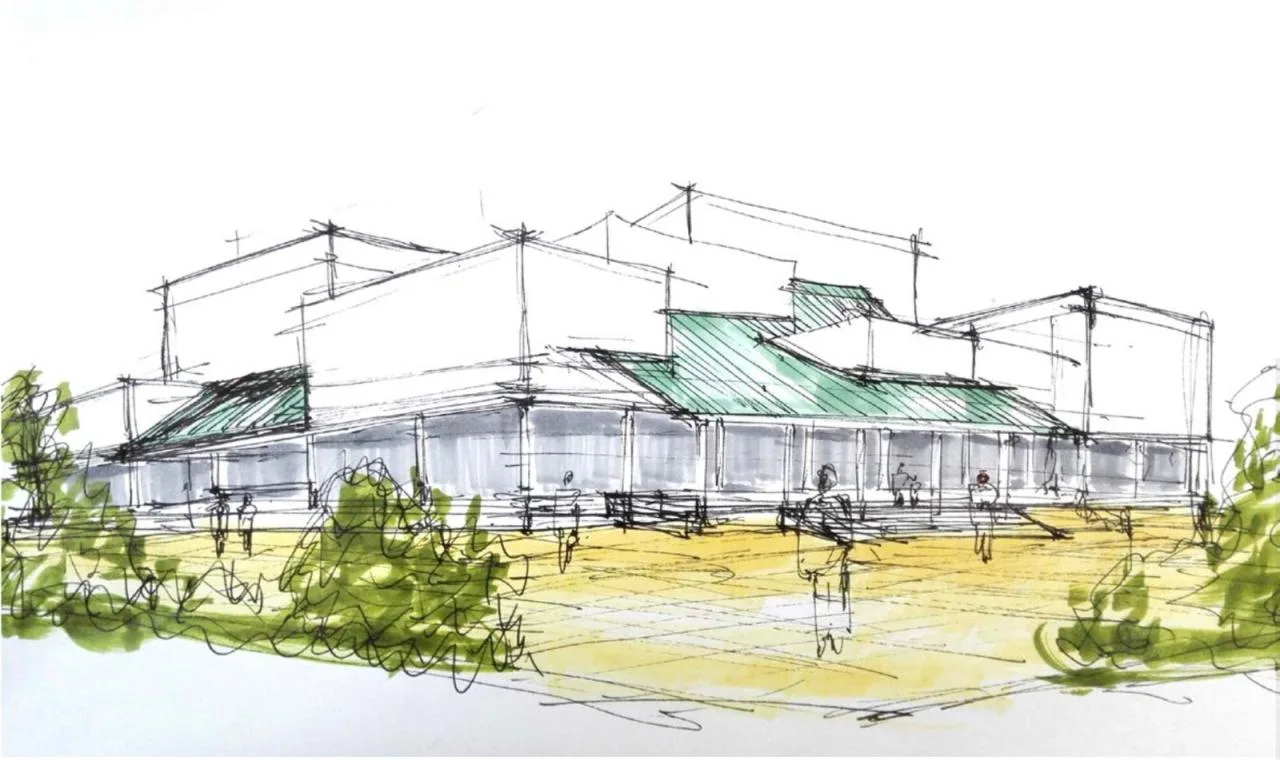
△ Hand-drawn sketch
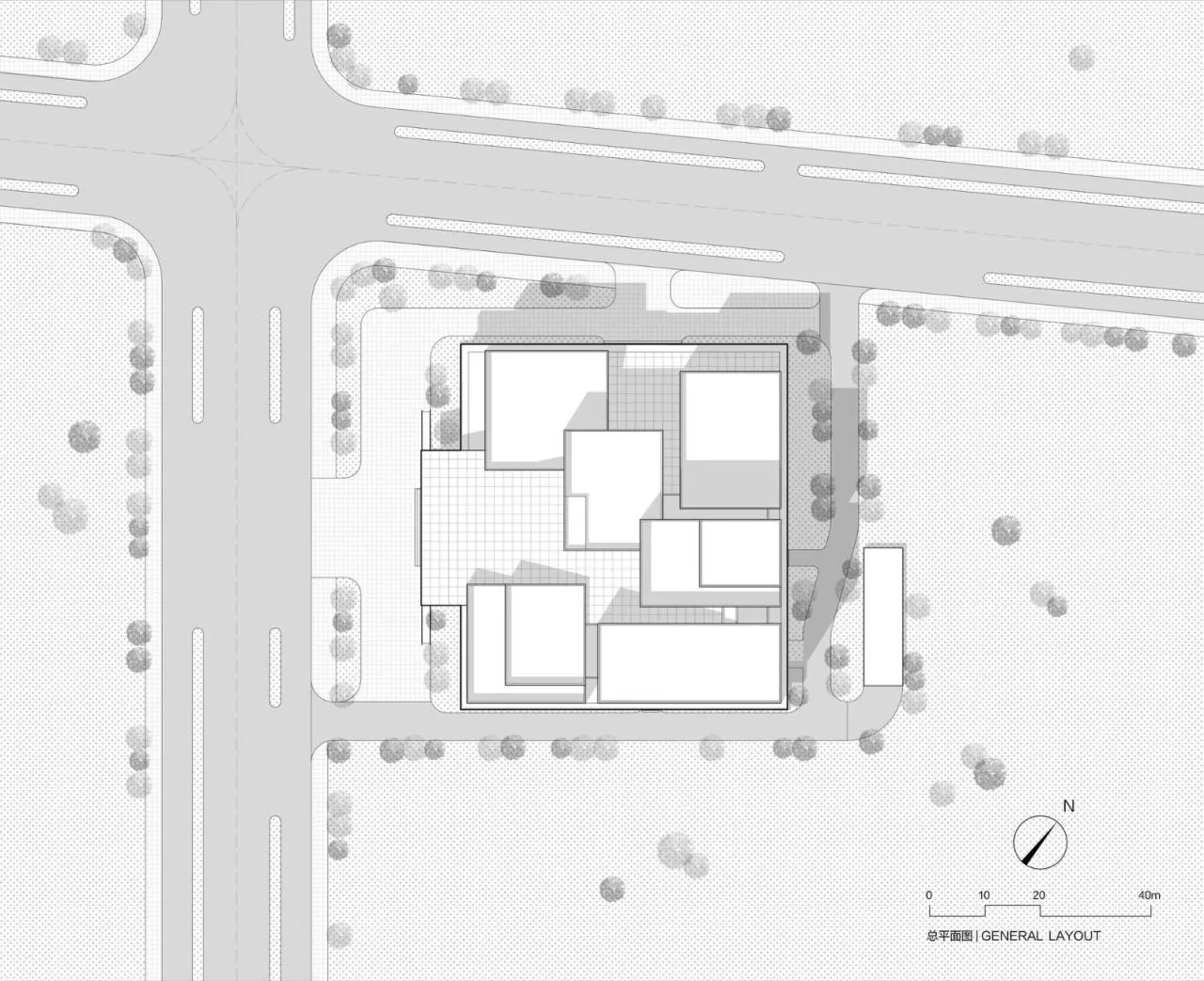
△ General layout plan
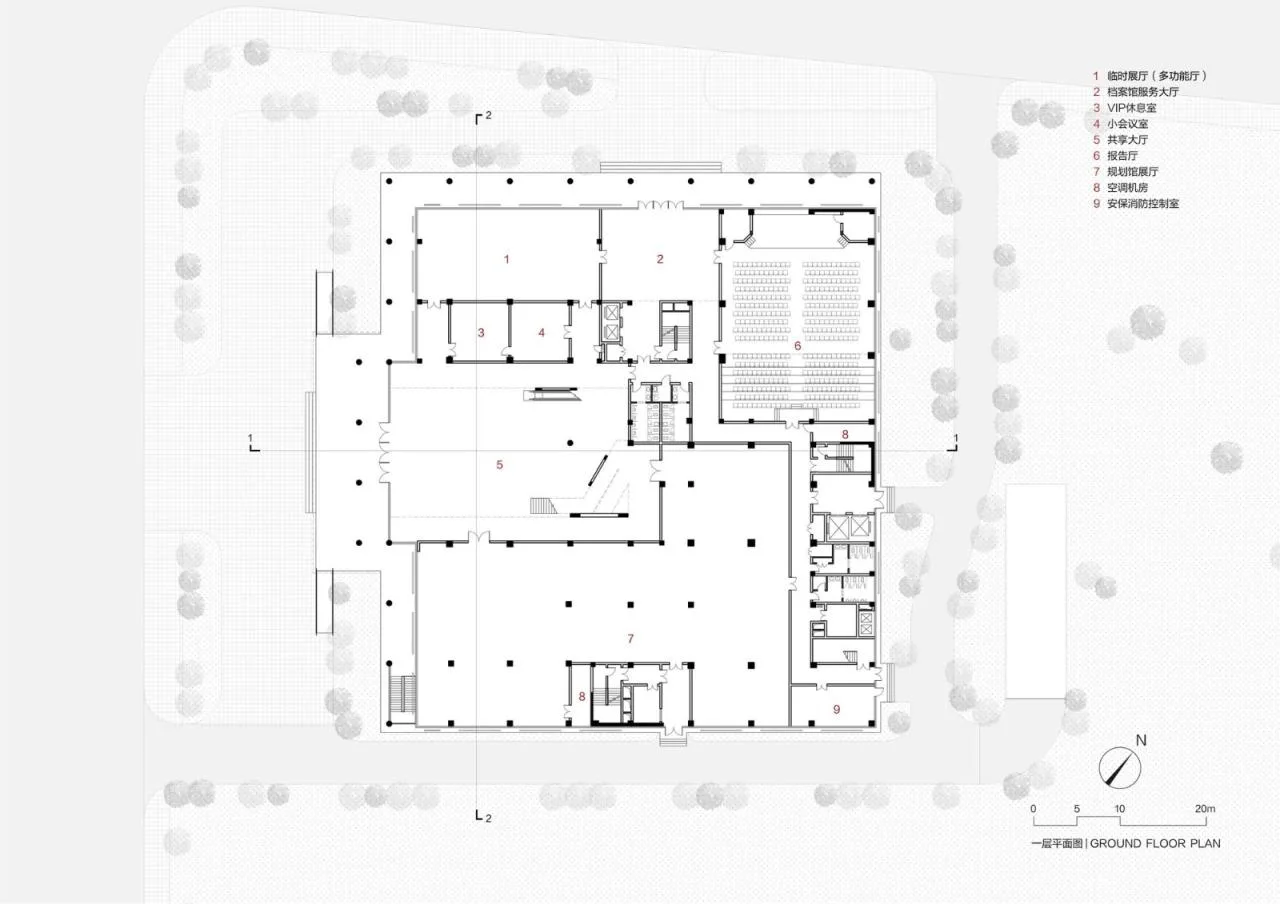
△ First floor plan
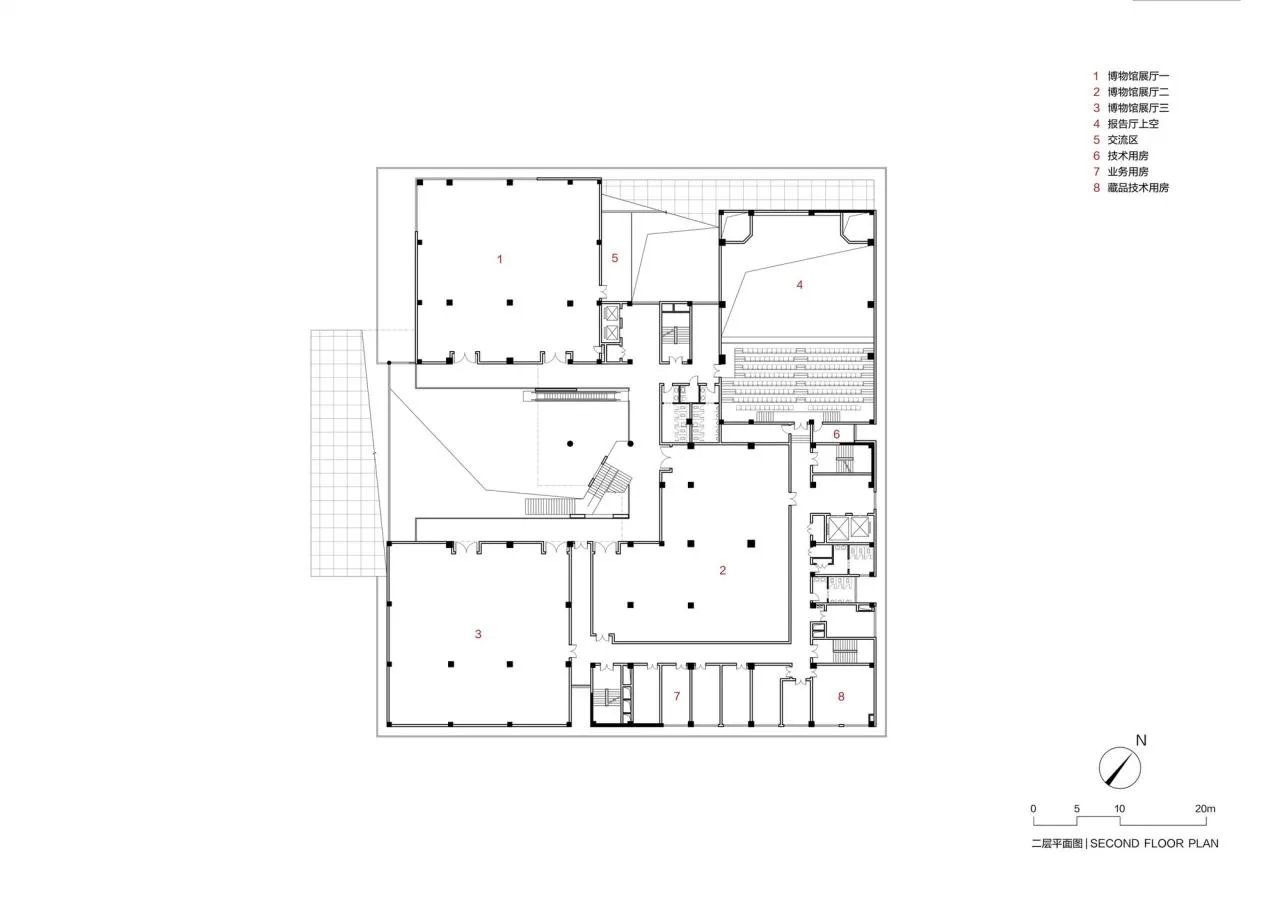
△ Second floor plan
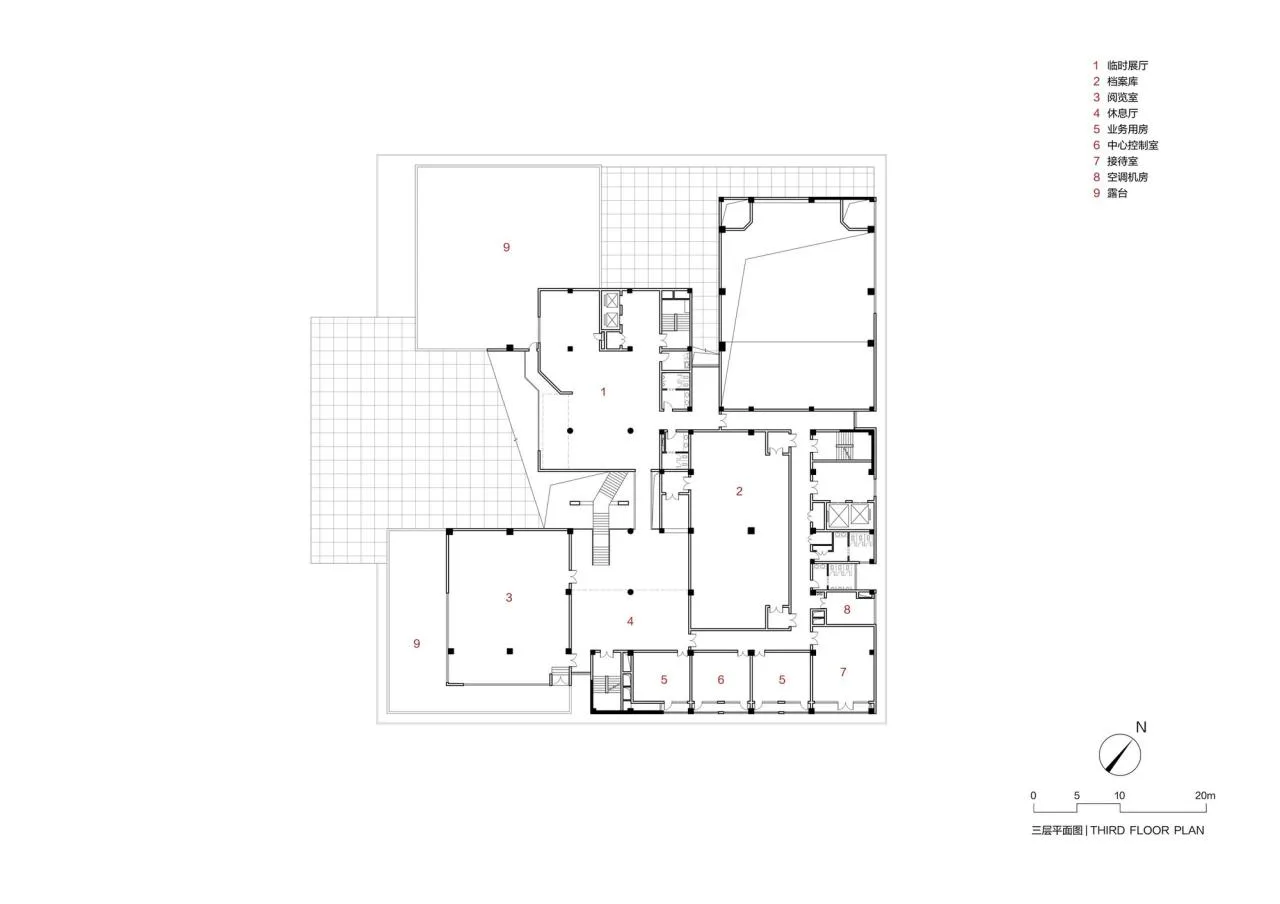
△ Third floor plan
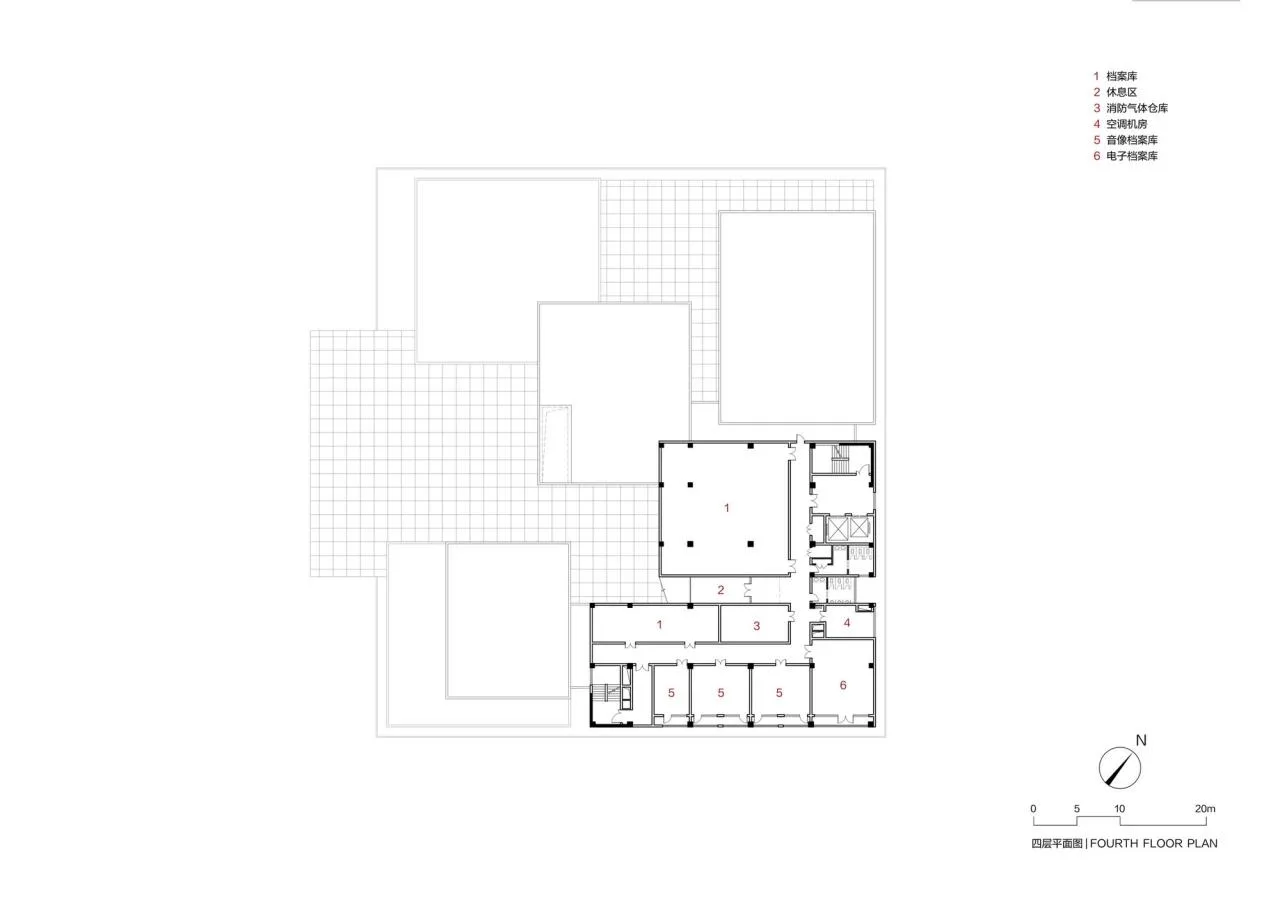
△ Fourth floor plan
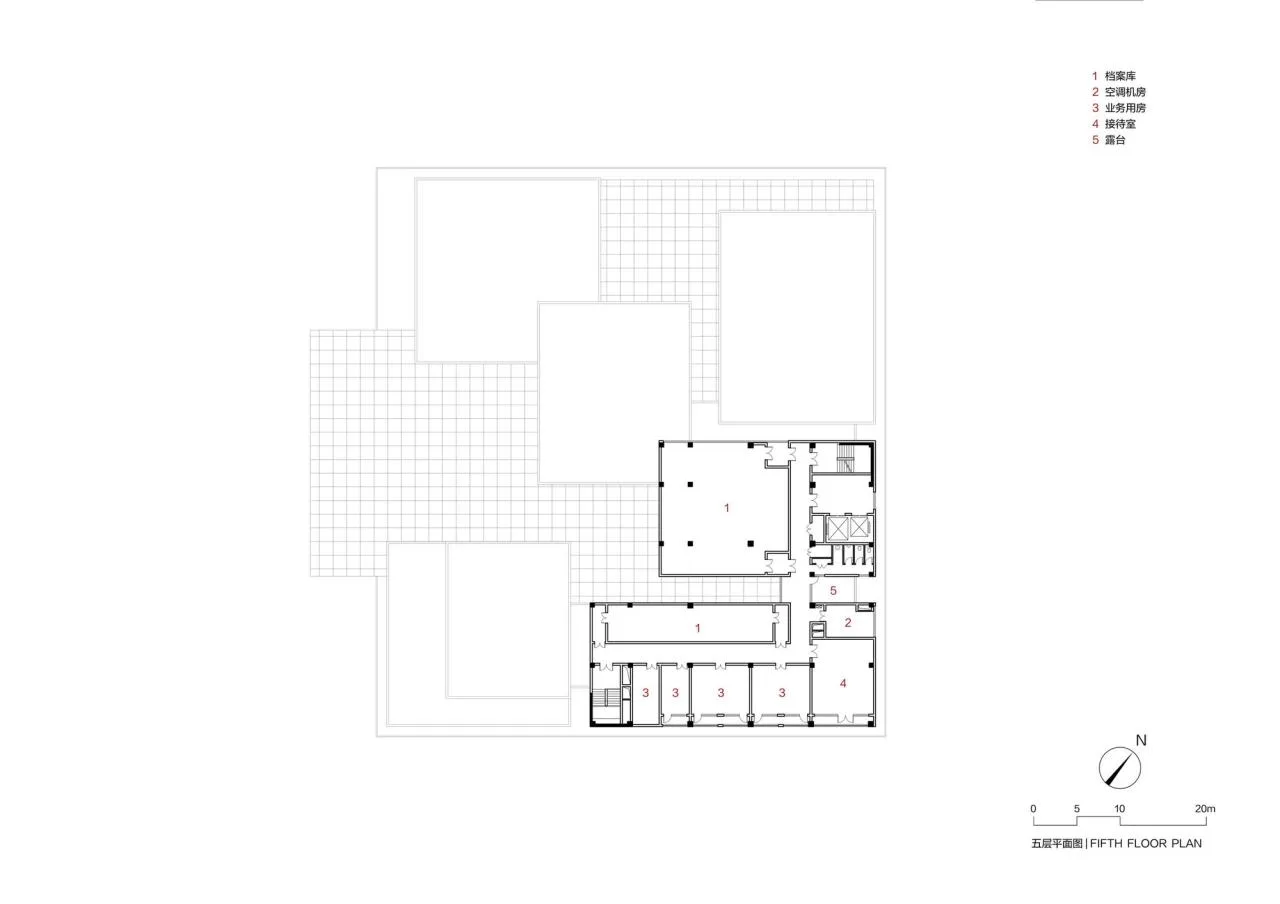
△ Fifth floor plan
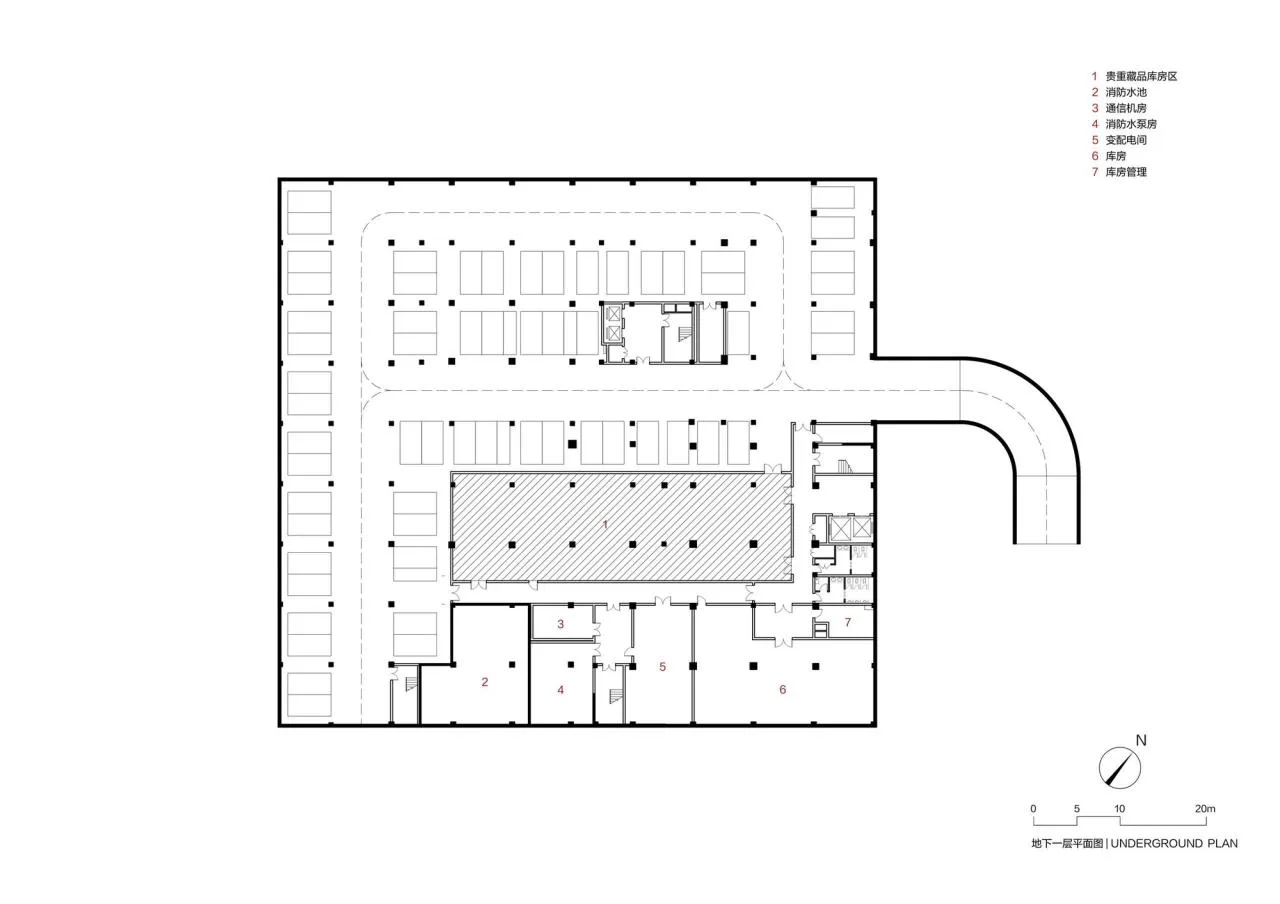
△ Underground floor plan
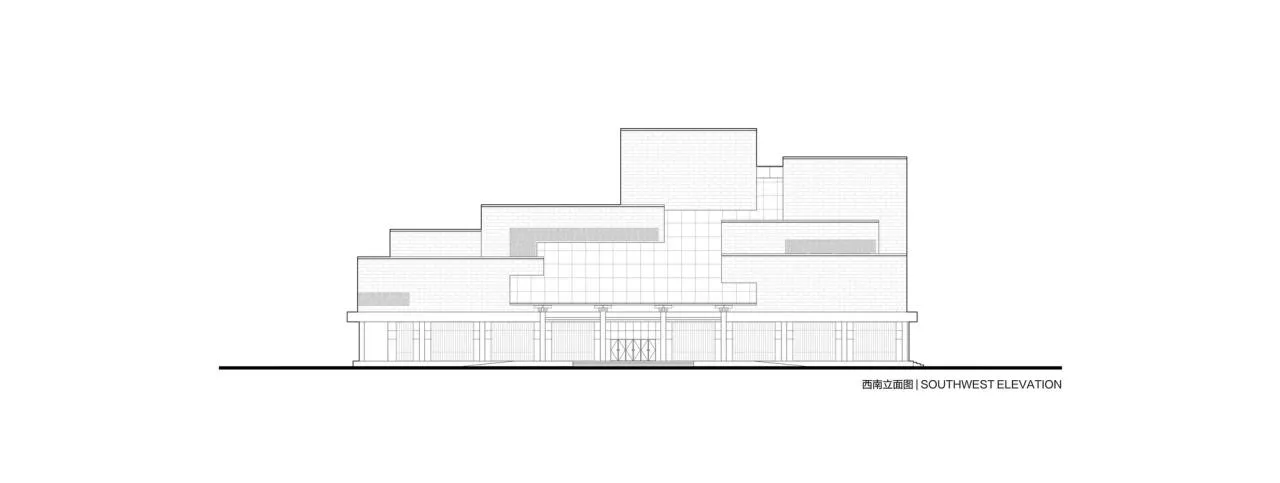
△ Elevation drawing
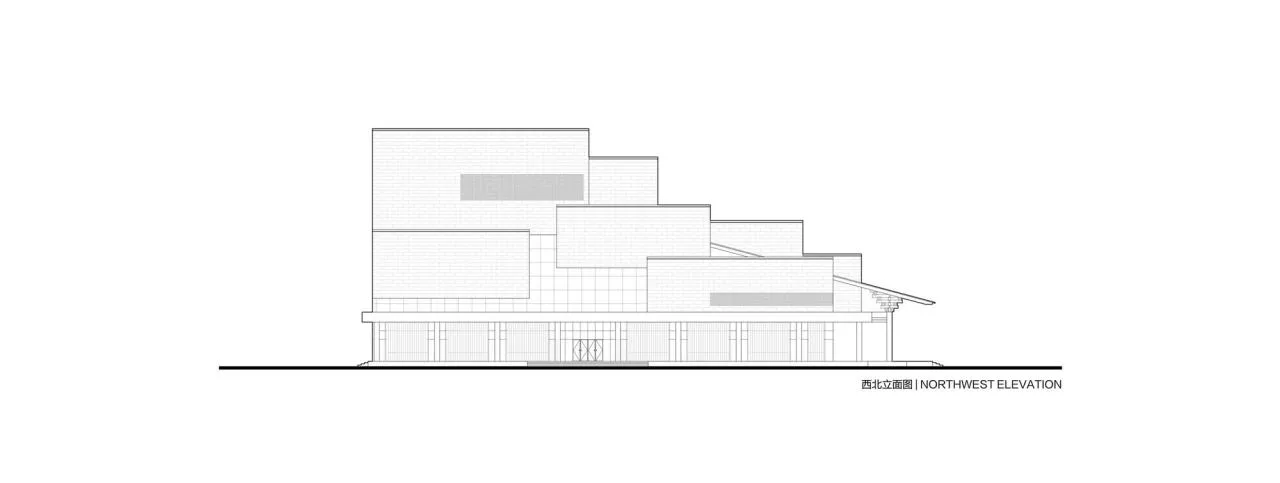
△ Elevation drawing
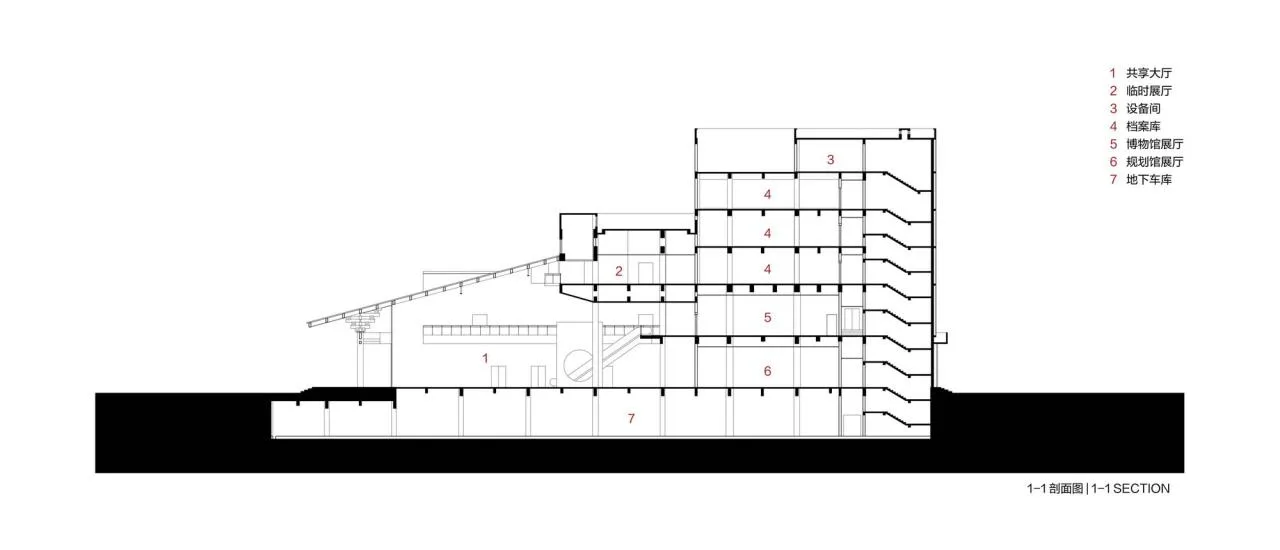
△ Section diagram
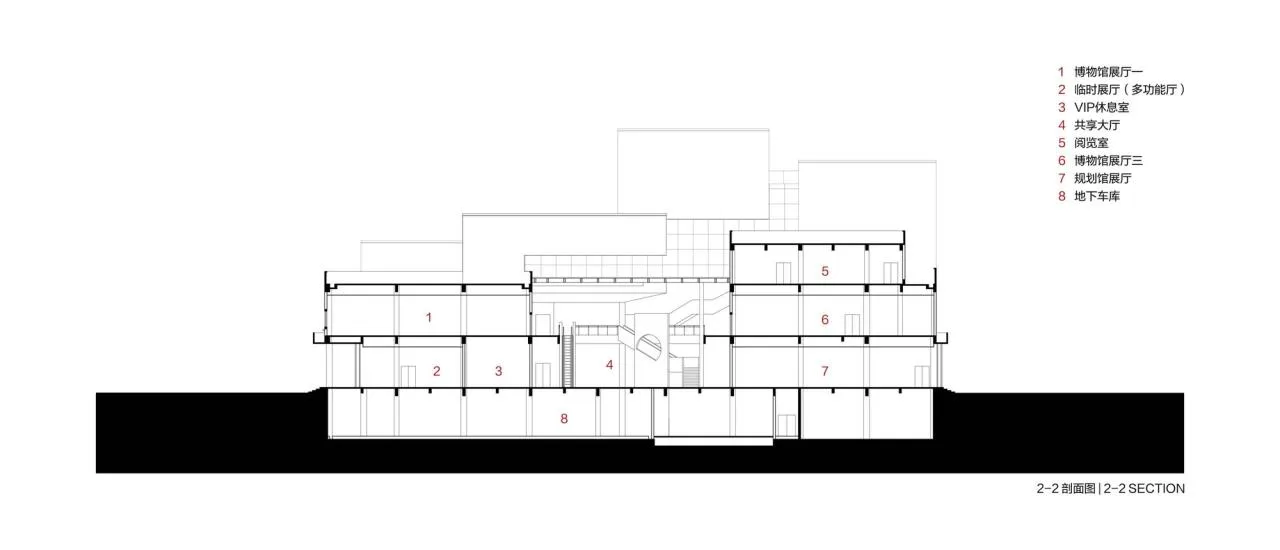
△ Section diagram
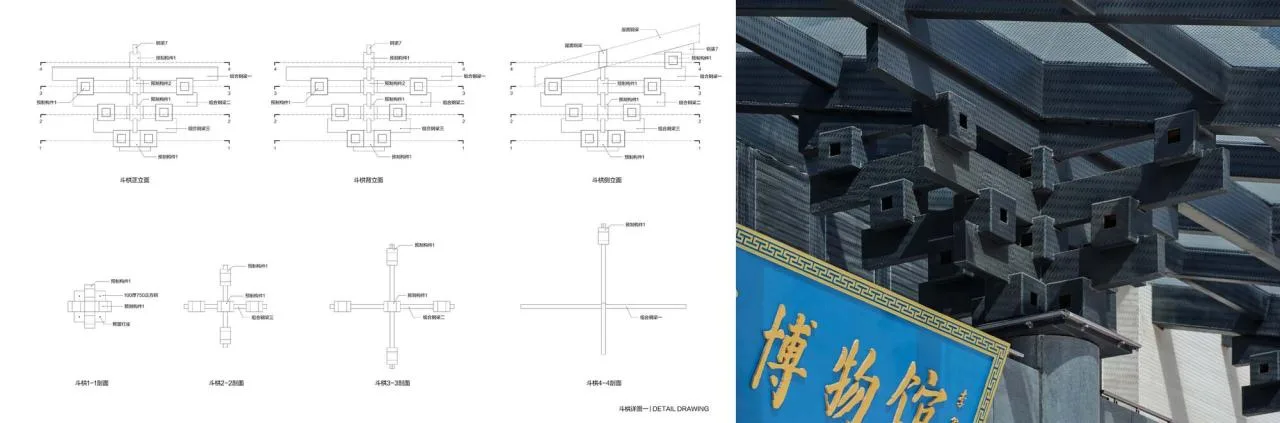
△ Wooden architecture arch analysis diagram
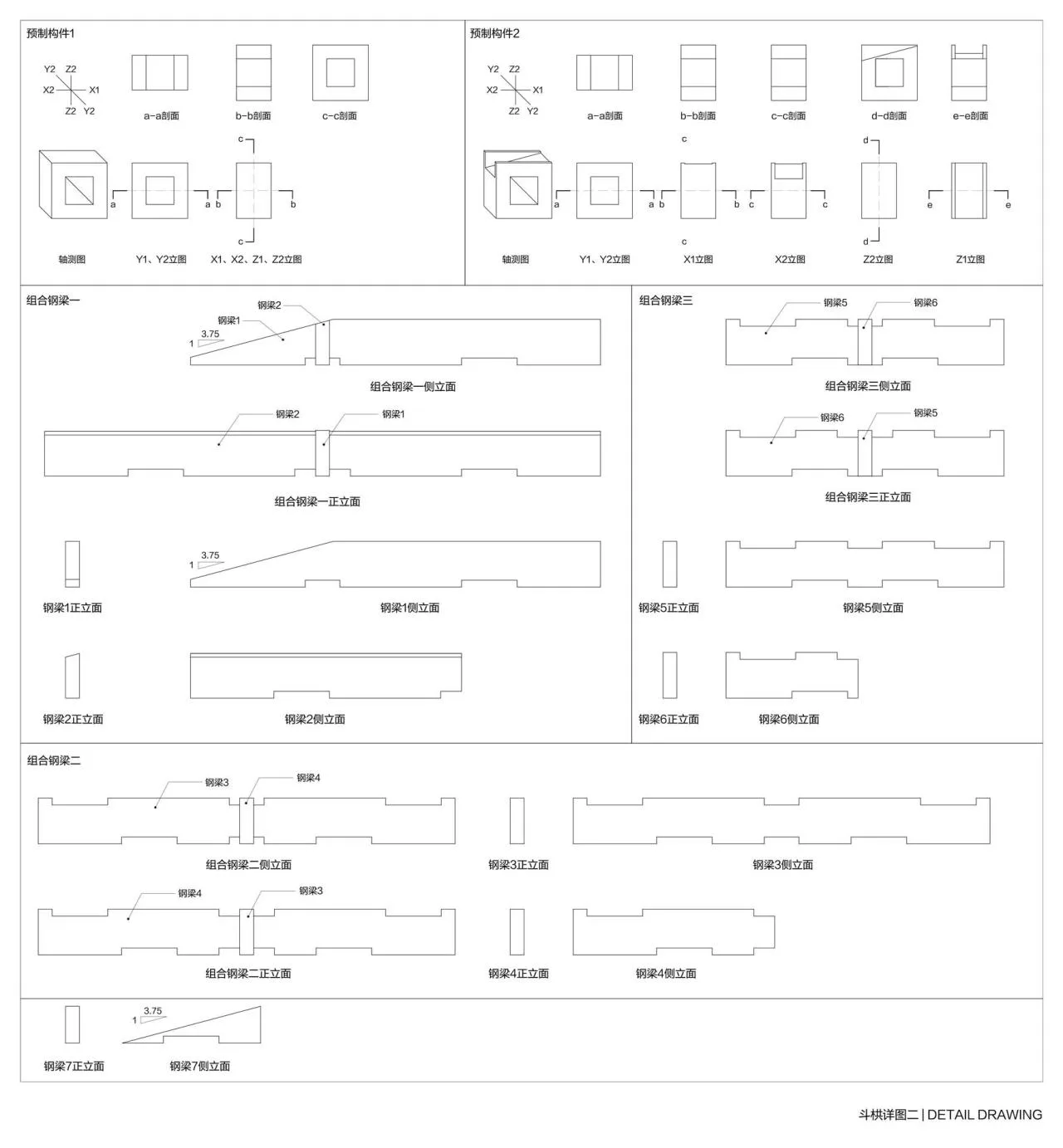
△ Wooden architecture arch analysis diagram
Project Information
Architect: Wang Hui Architecture Studio
Area: 8,796 square meters
Project Year: 2022
Photographer: ZY Studio
Manufacturer: STAD
Lead Architect: Wang Hui
Design Team: Wang Rongrong, Zhu Ming, Zeng Yuting, Qin Tianyi, Ye Jiacheng
Main Responsible Specialists: Cai Fukui (Architecture), Yang Guosong (Structure), Yi Yuanshan (Water Supply and Drainage), Zhu Jiaquan (Electrical), Zhang Jian (HVAC)
Collaborative Design Institute: Tianshang Design Group Co., Ltd
Interior and Exhibition Design: Shanghai Fengyuzhu Cultural Technology Co., Ltd
Principal Entities: Housing and Urban-Rural Development Bureau, Archives Bureau, and Cultural, Radio, Film, and Television Bureau of Song County
Location: Luoyang














Must log in before commenting!
Sign Up