
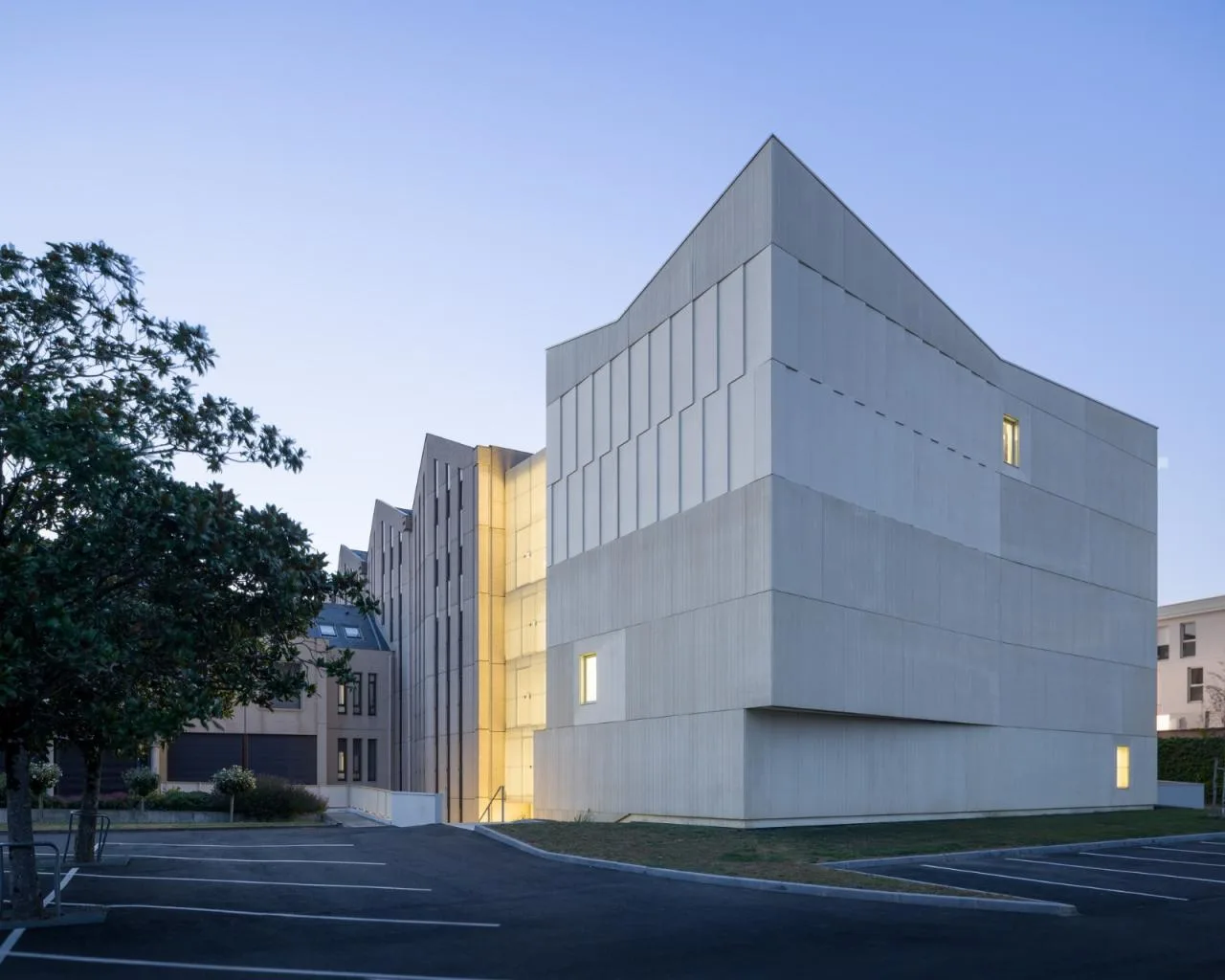
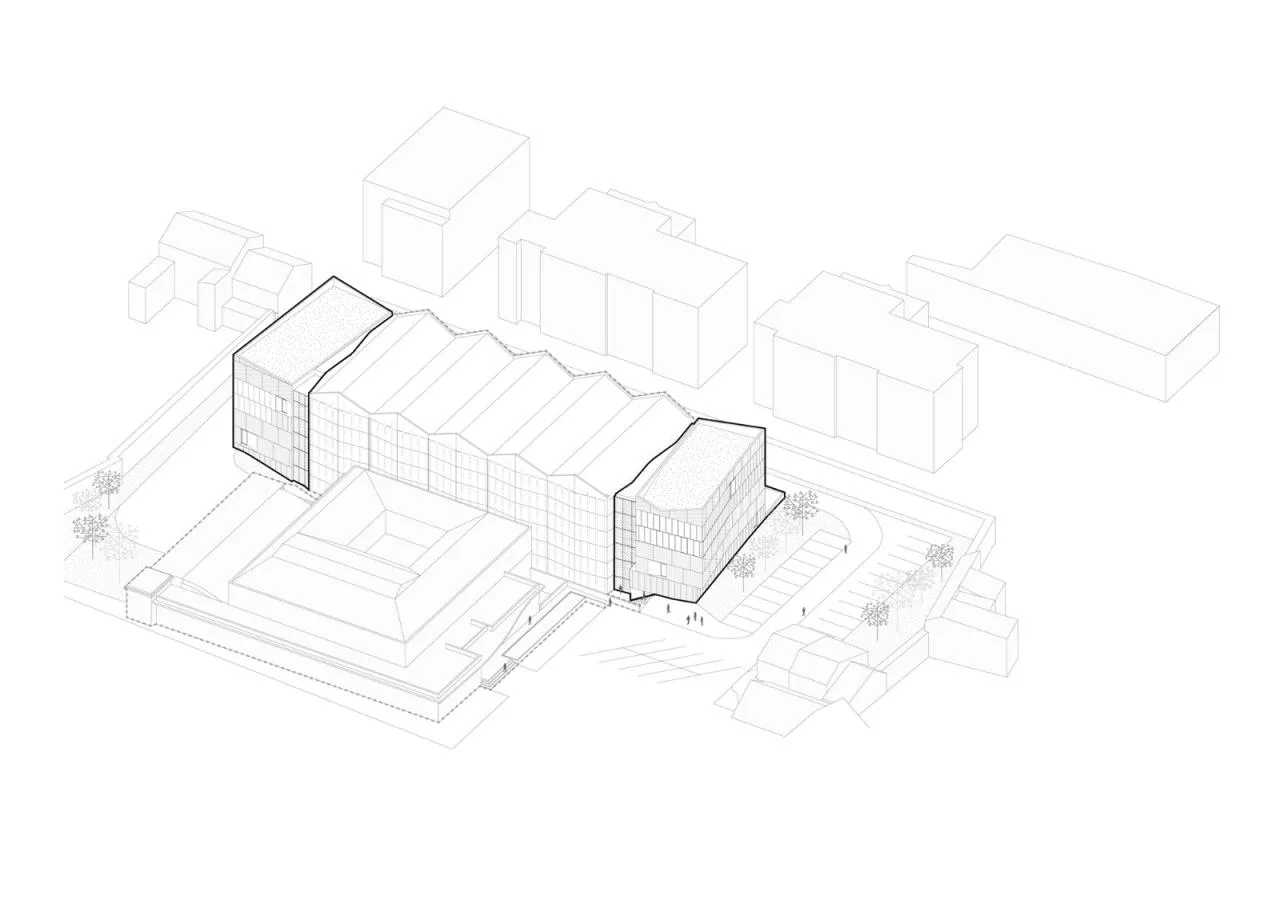
The project, located in the heart of Angers—the capital of the Maine et Loire department in France—is shaped by strict site constraints and functional demands. It occupies a closed urban plot, consisting of two complementary additions situated at either end of the existing archive facility.
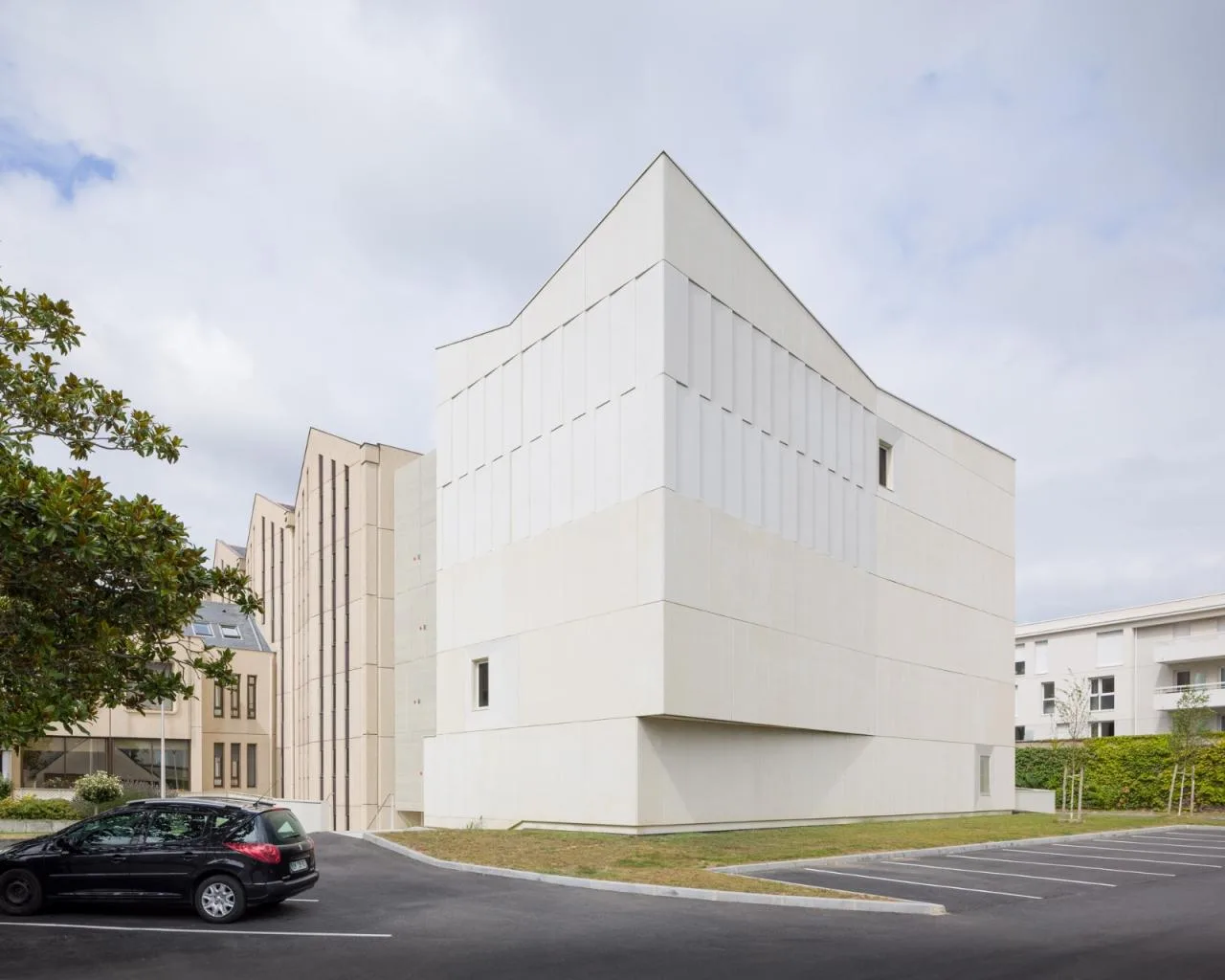
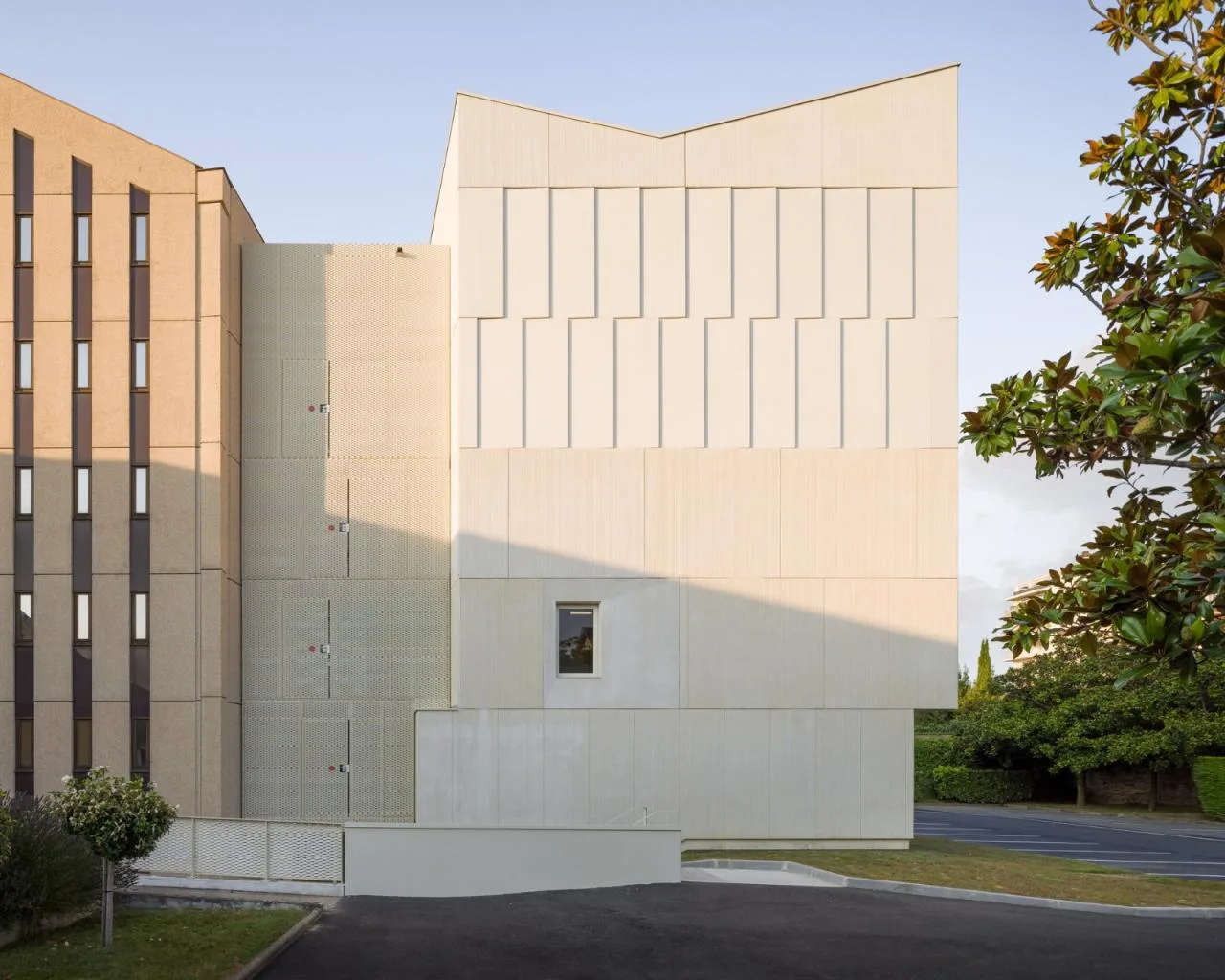
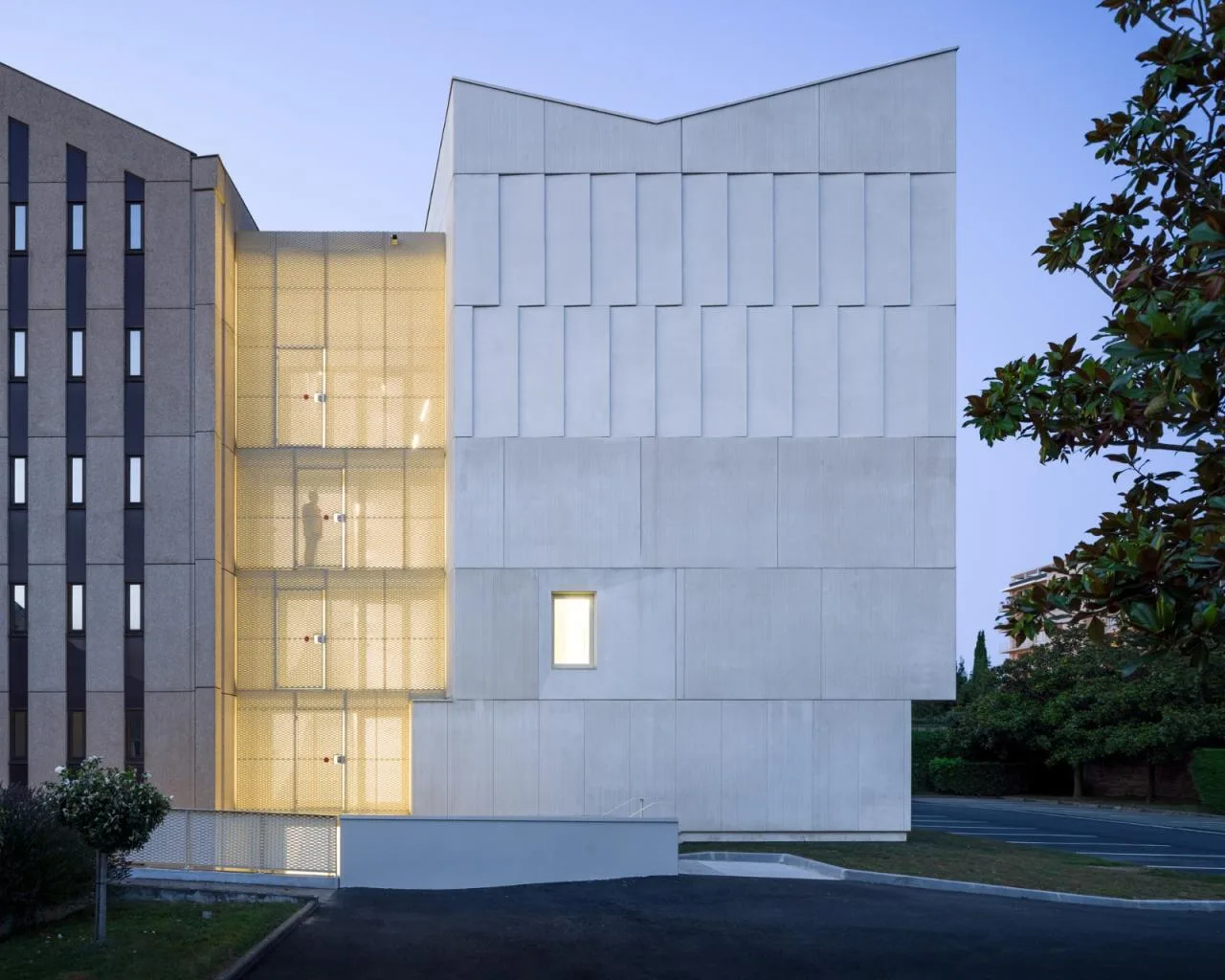
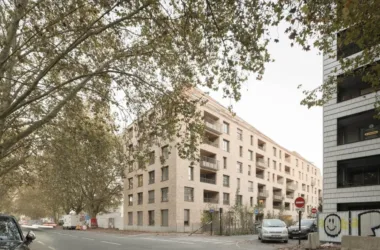
The new addition to the Maine et Loire archives establishes a distinctive presence while engaging in a respectful dialogue with its surroundings. Its design draws inspiration from the site’s context, particularly the existing jagged rooflines, and employs a clean, refined exterior language with elegant materials. The architects reinterpret minimalist architecture, emphasizing sharpness and dynamic upward orientations.
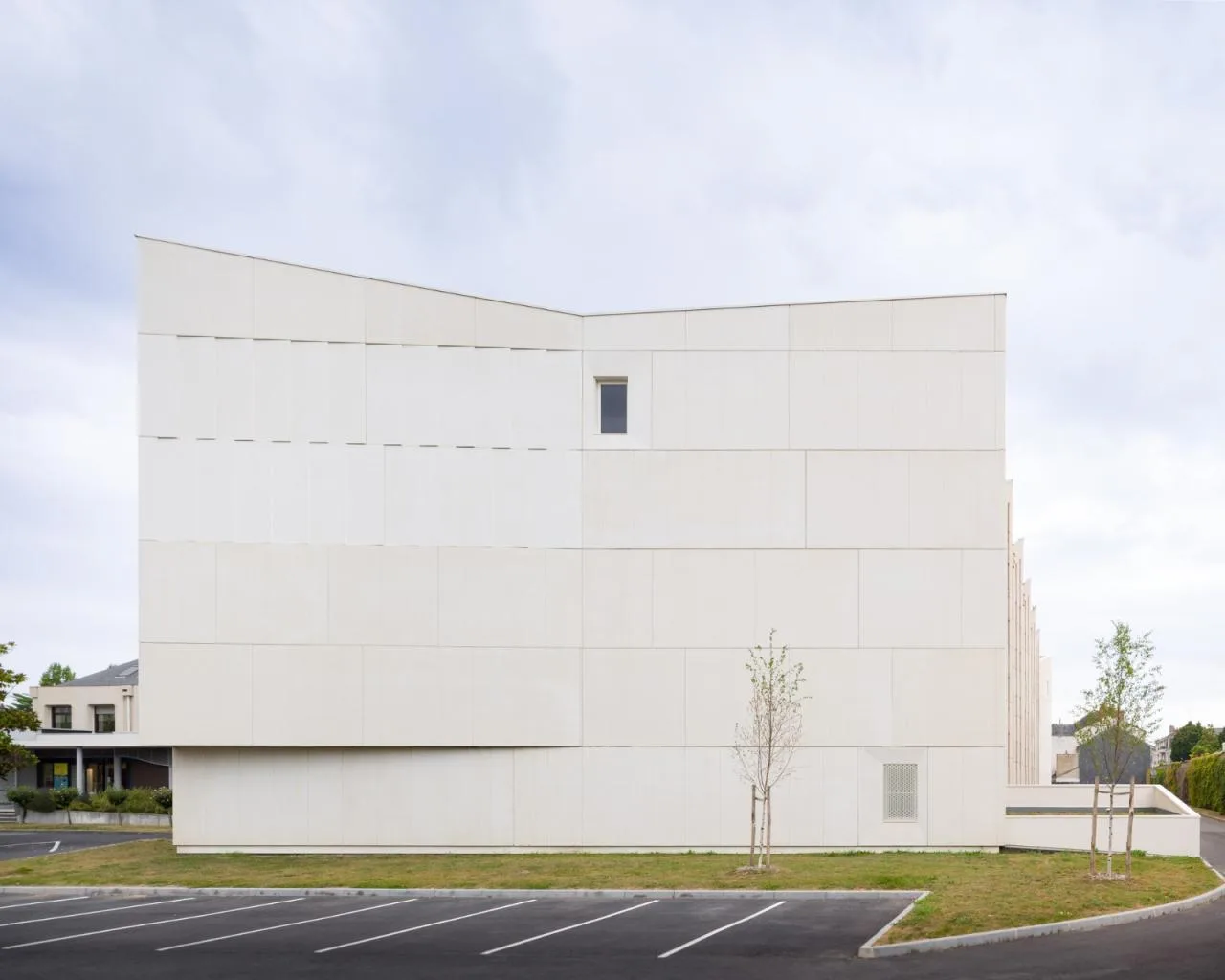
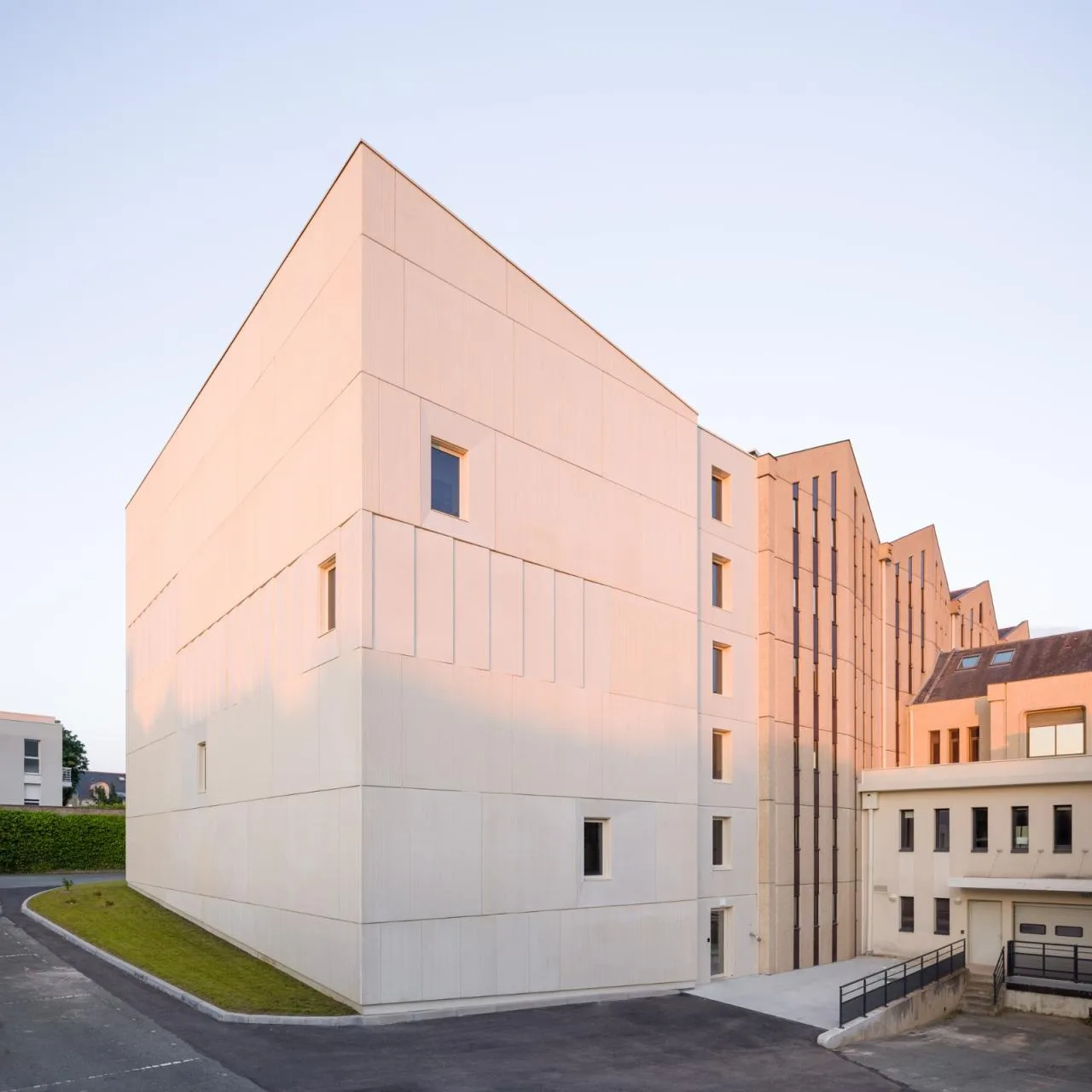
The centerpiece of this expansion is a cohesive architectural unit characterized by crisp lines and sharp angles, clearly visible from the main entrance. The second addition, positioned behind the original building, echoes the architectural language but deliberately recedes into the background.
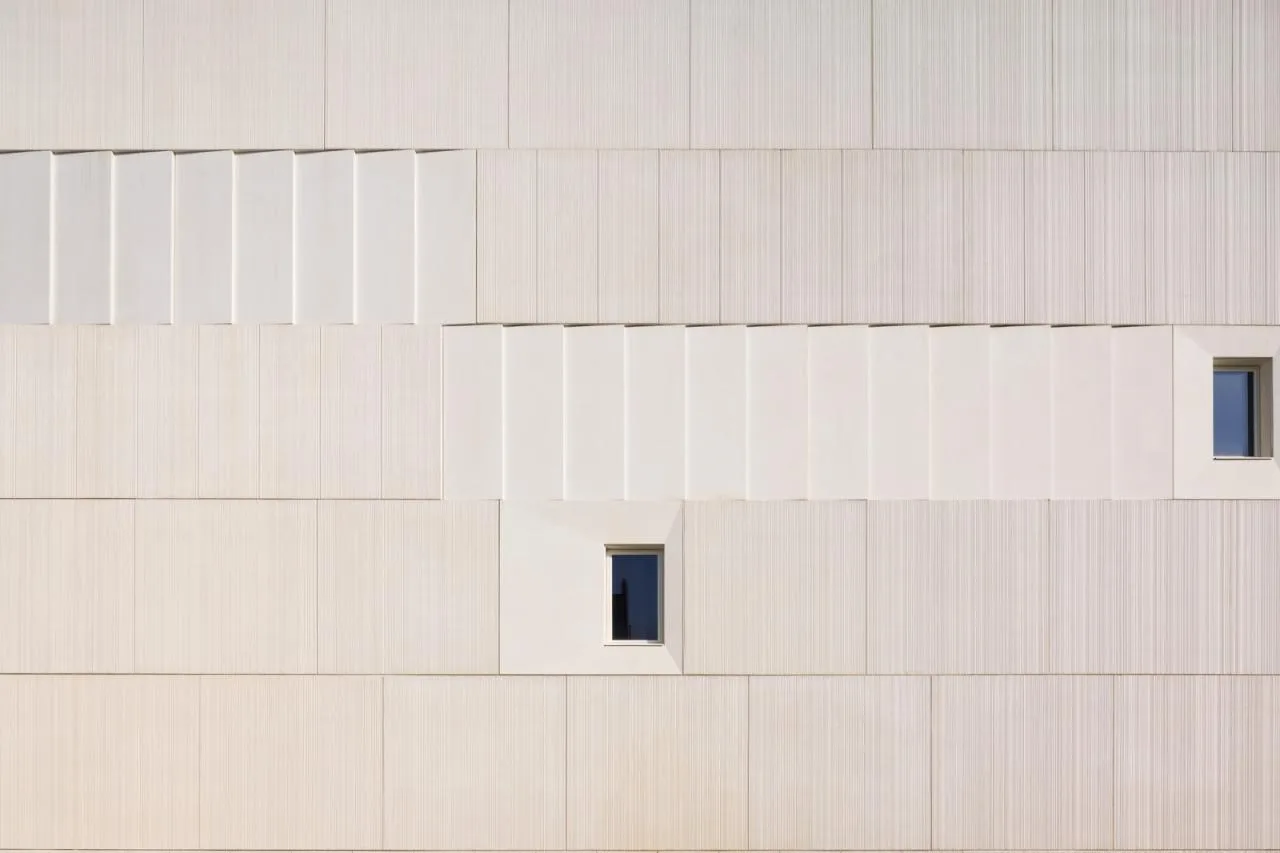
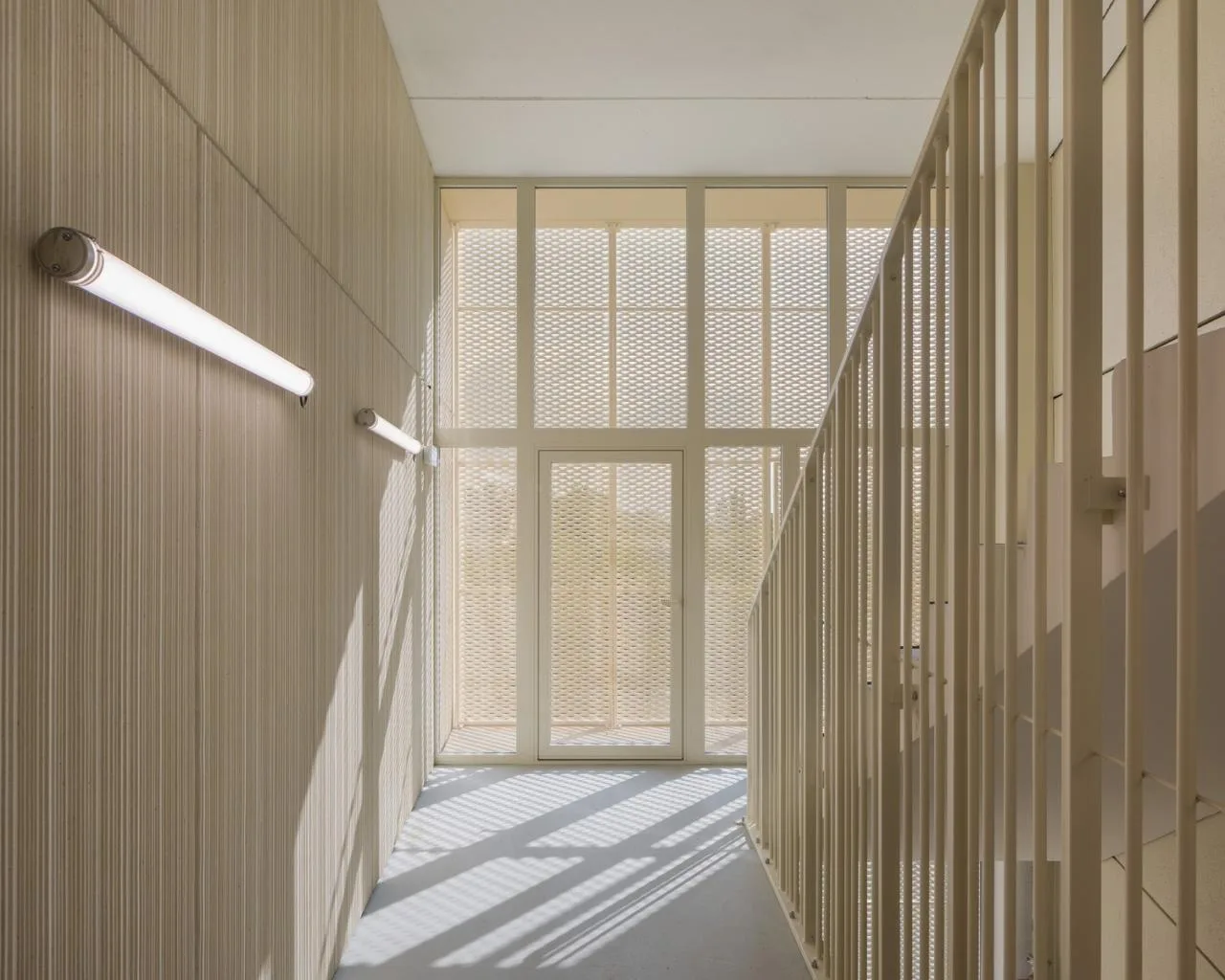
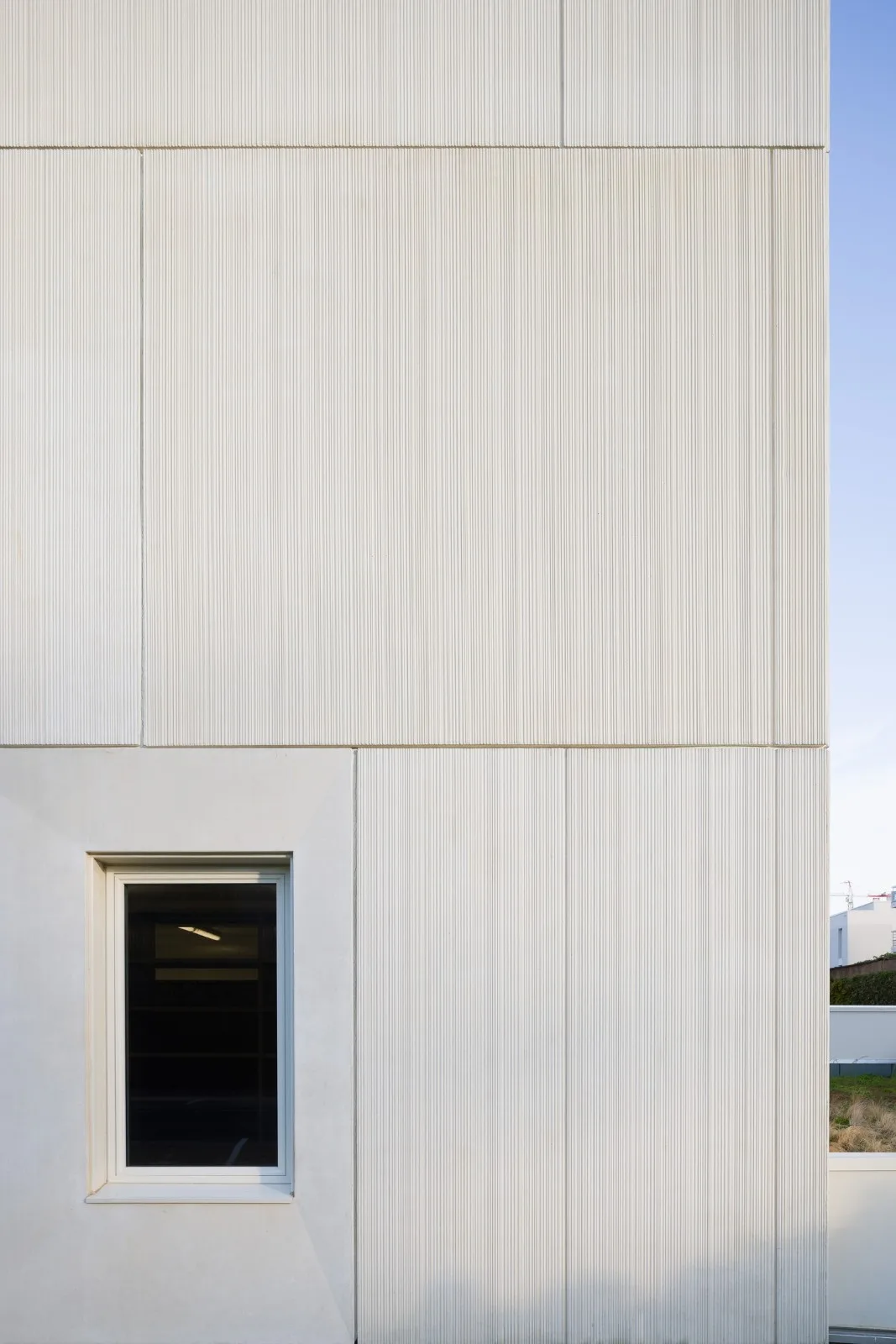
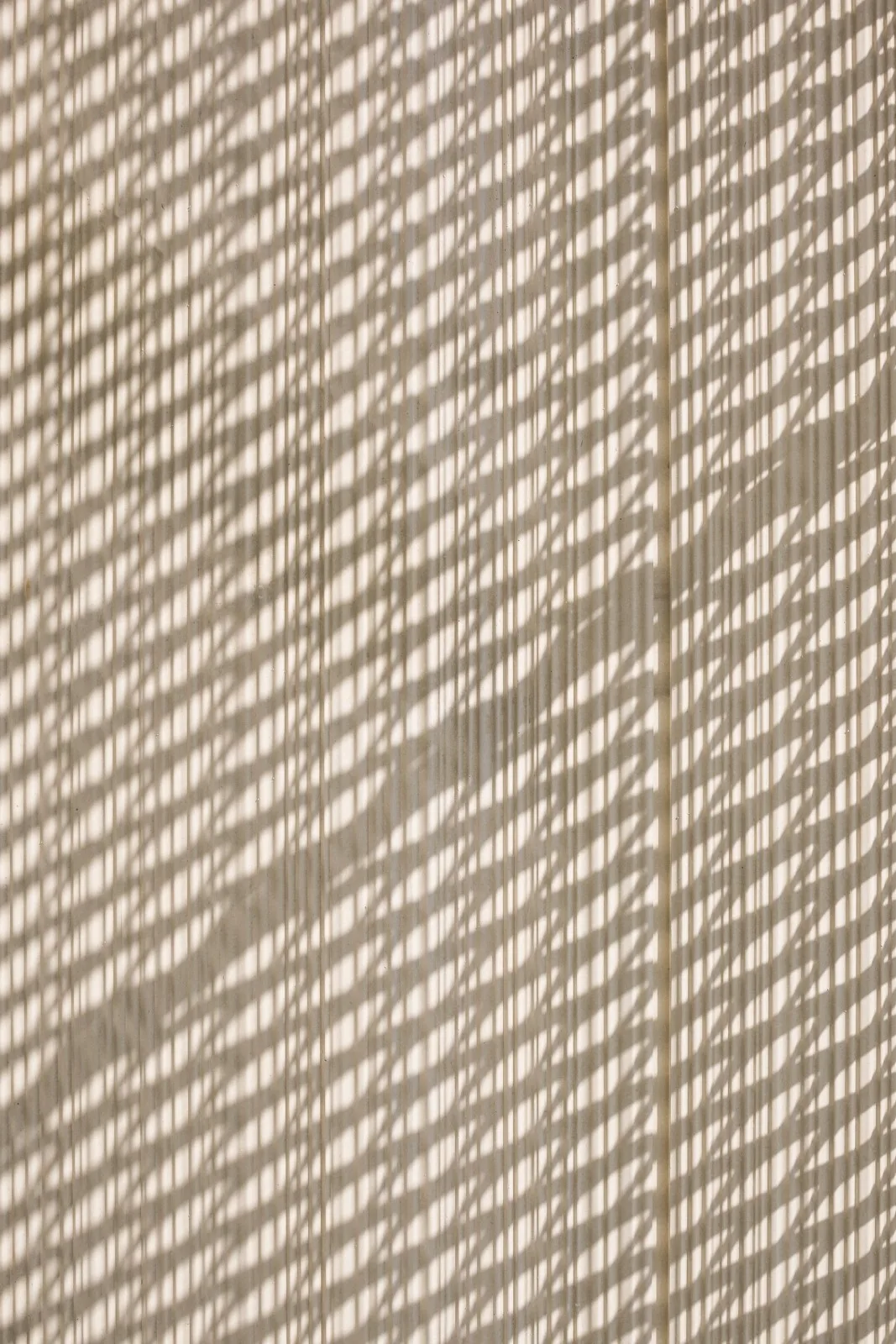
The project’s refined materiality and subtle variations define the overall simplicity of its form. Concave stripes on the facade generate unique light and shadow effects across flat and textured surfaces. Some may interpret these as abstract minimalist decorations, while others see a poetic metaphor conveyed through diverse textures reminiscent of a book’s pages. Approximately 150 custom-made precast concrete slabs (covering around 1640 square meters) were crafted by local experts specifically for this project. The aggregates used were carefully selected and blended to closely match the renowned local limestone found along the Loire Valley coast.
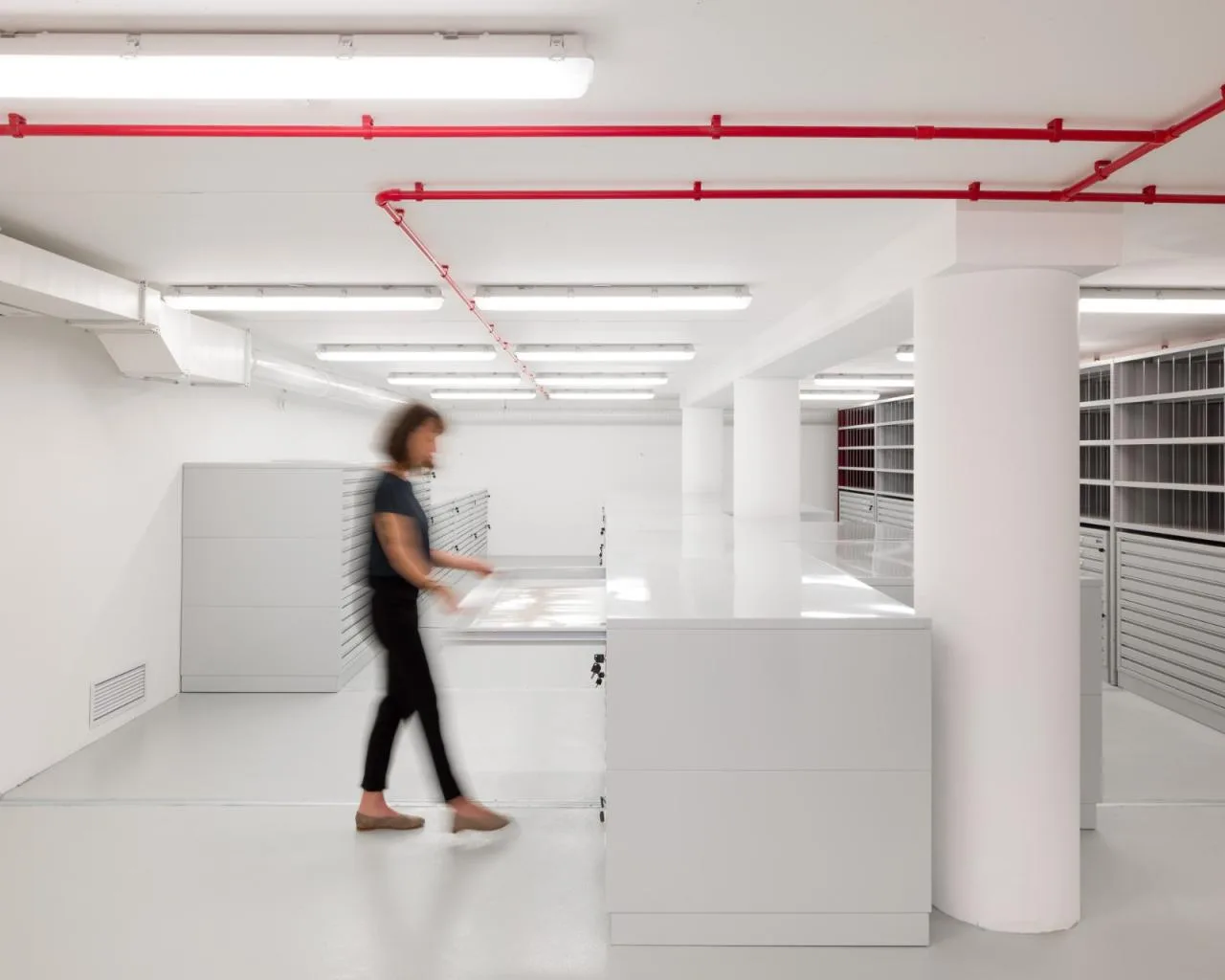
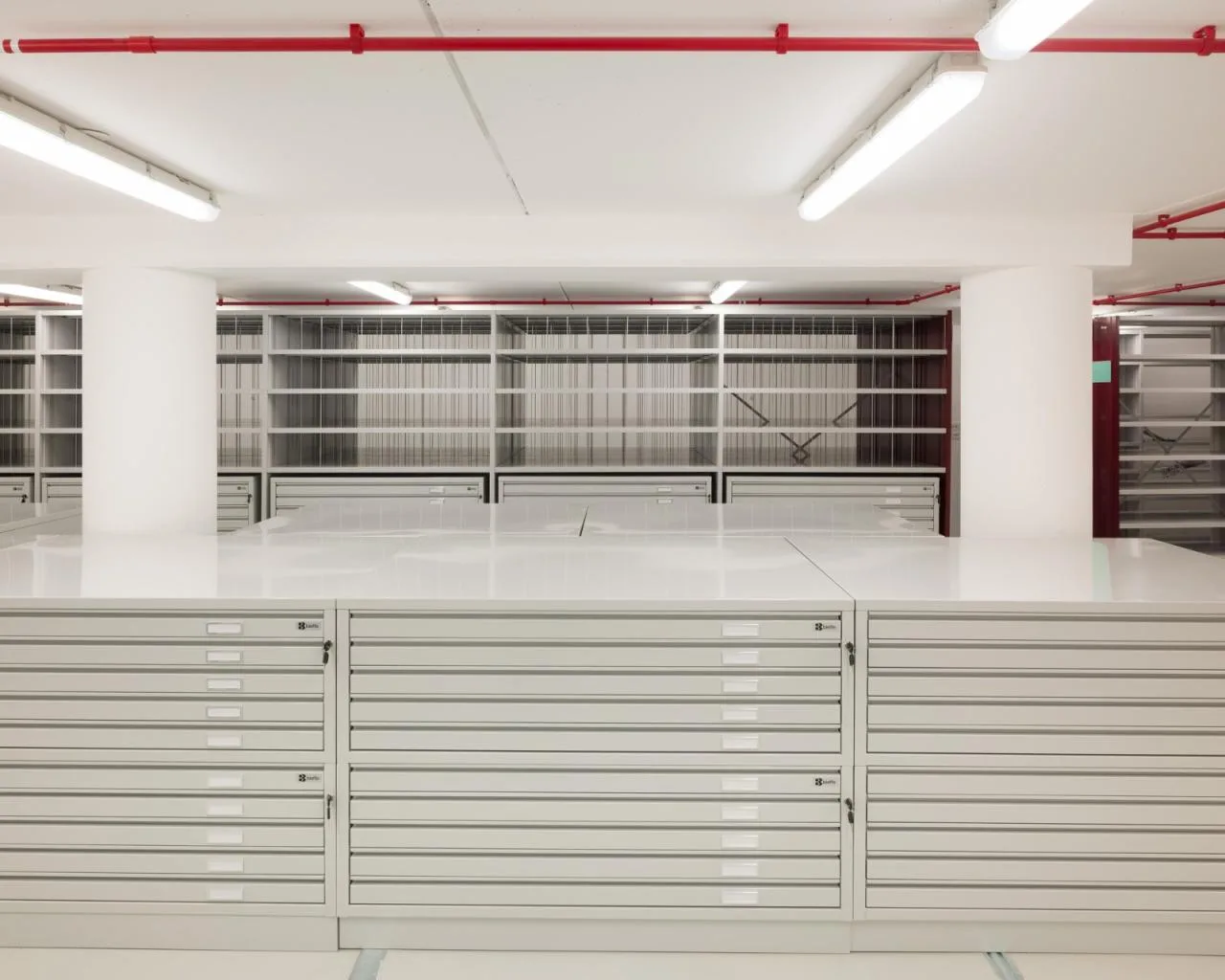
Storage techniques for archives are continuously evolving, especially given the sensitivity of paper records to ultraviolet light, temperature, and humidity variations. The architects focused on three main design goals: optimizing space and user comfort, ensuring long-term preservation of paper documents, and maintaining flexibility and scalability of the facility.
Each new addition rises six stories, following a strict and efficient floor plan that maximizes linear storage capacity while minimizing horizontal travel distances.
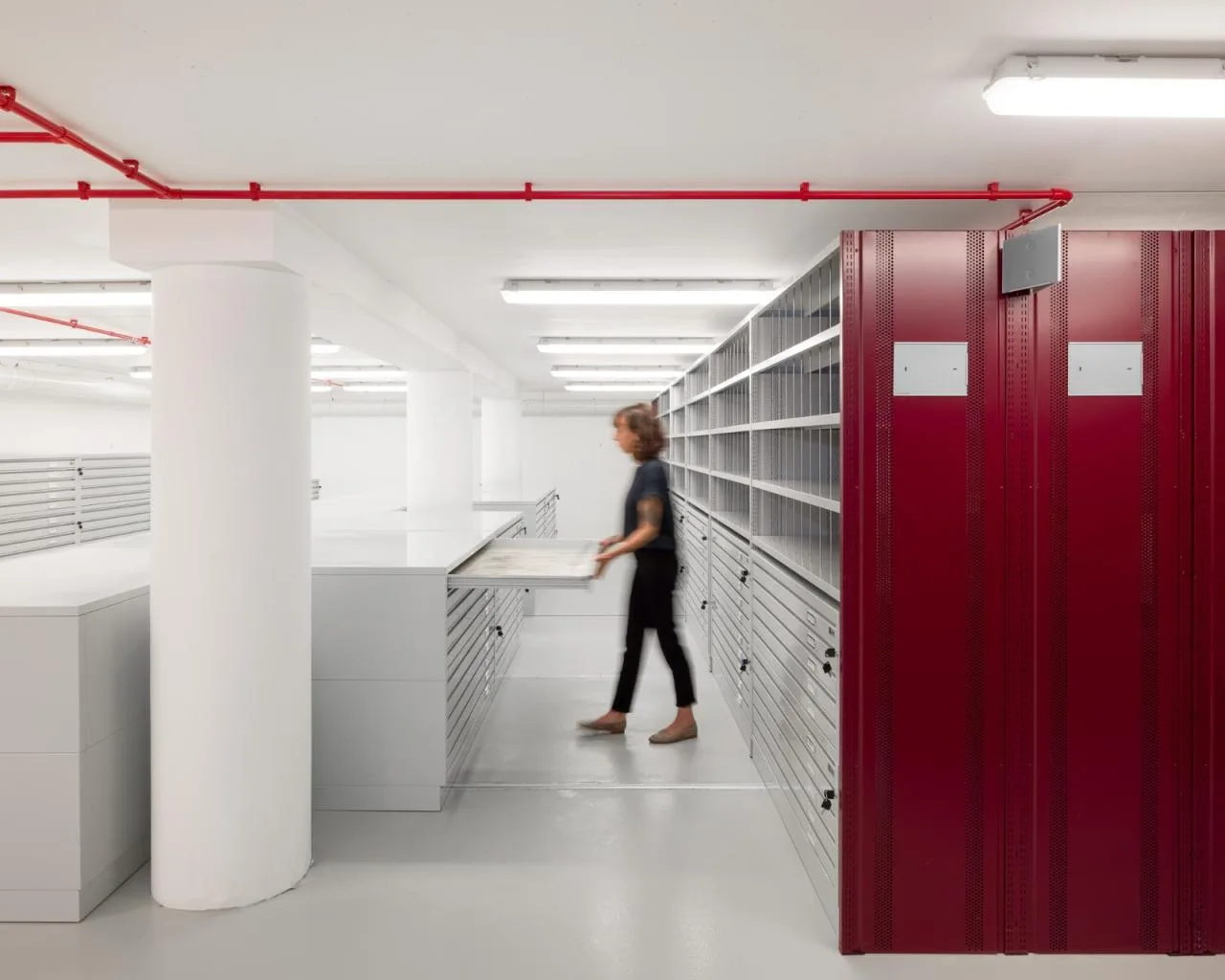
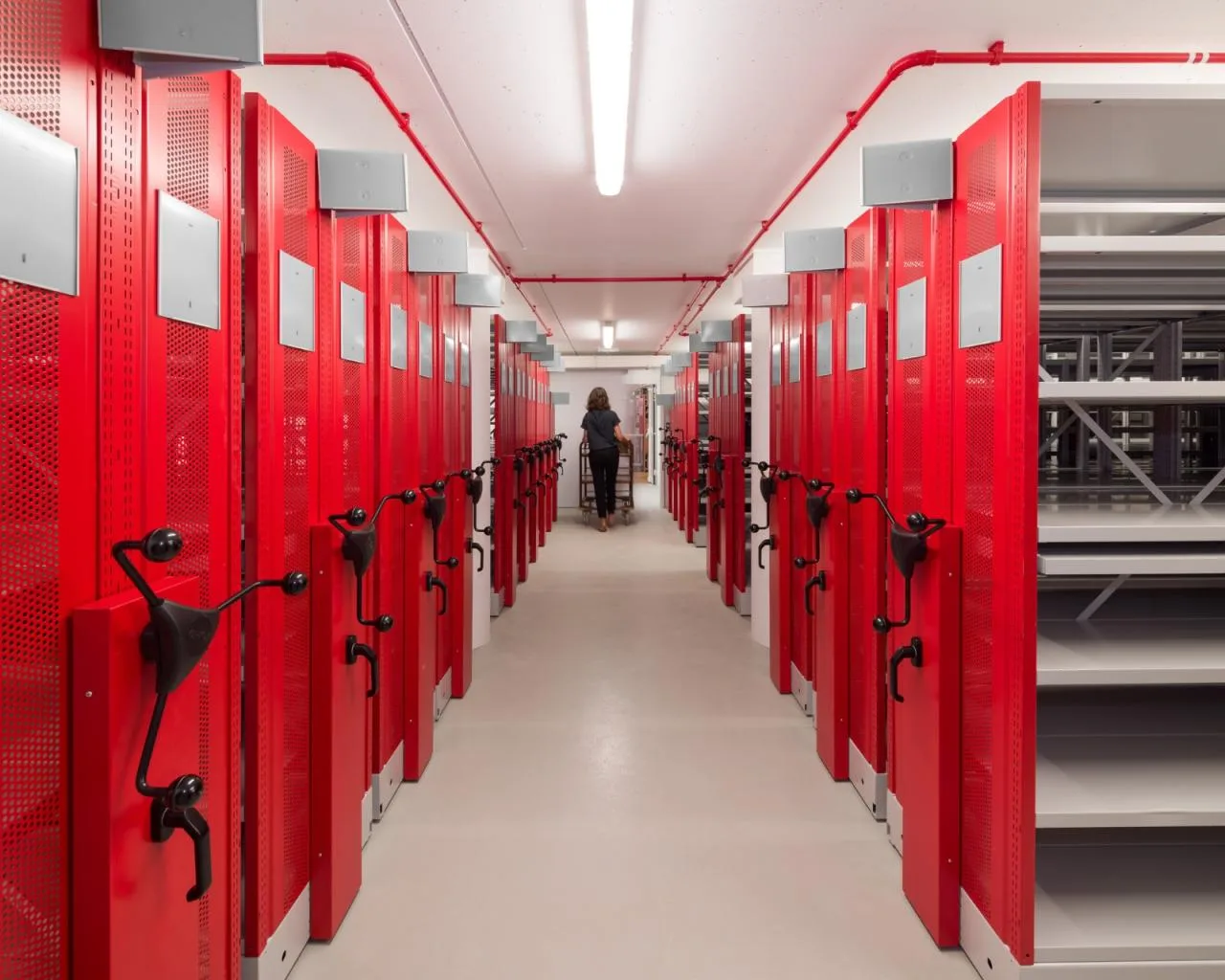
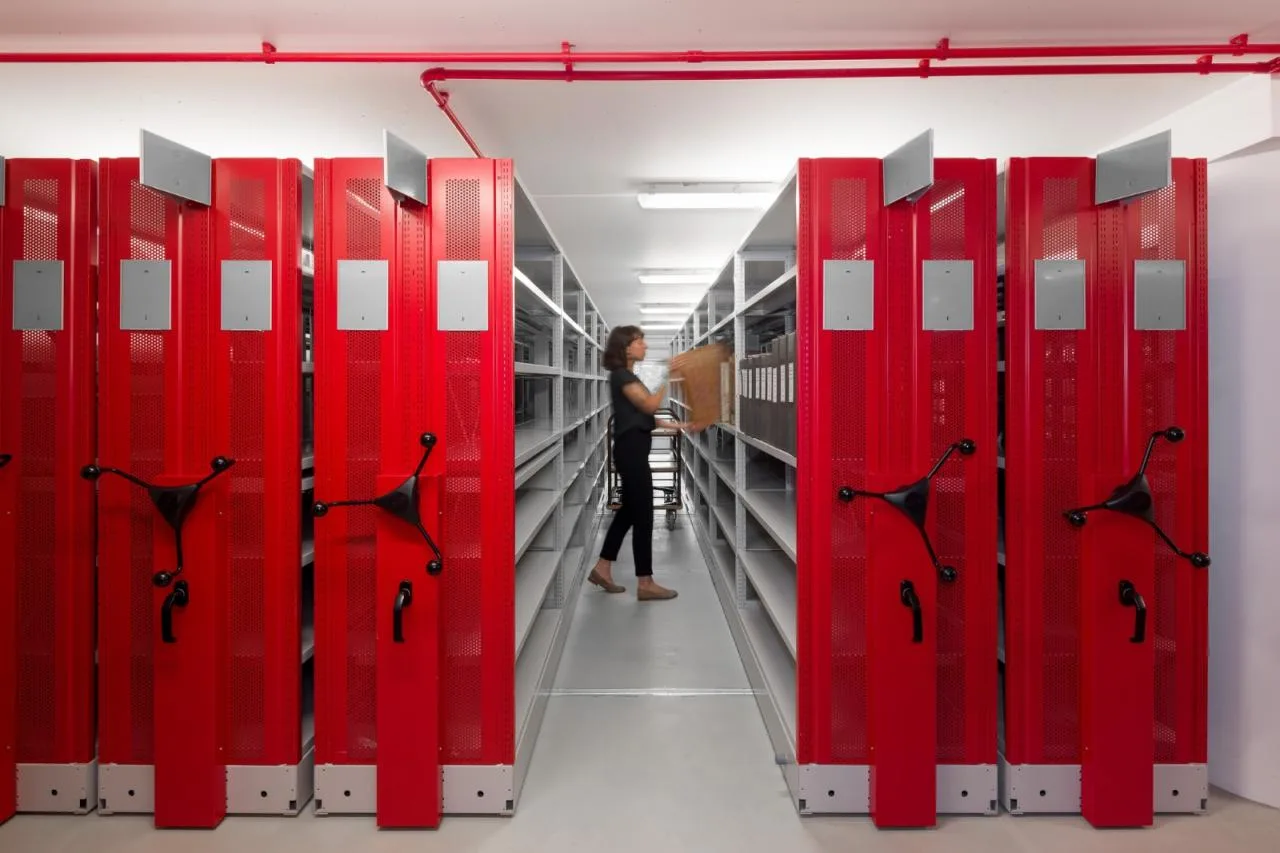
The design anticipates future expansion by carefully planning vertical circulation. It also streamlines daily workflows and relocates intermediate spaces to maximize natural light throughout the building.
Prefabricated panels were selected for their insulating properties and effective humidity control. The interior maintains a simple, functional aesthetic that highlights the archive’s technological capabilities while keeping the focus on the preservation of paper documents.
Project Drawings
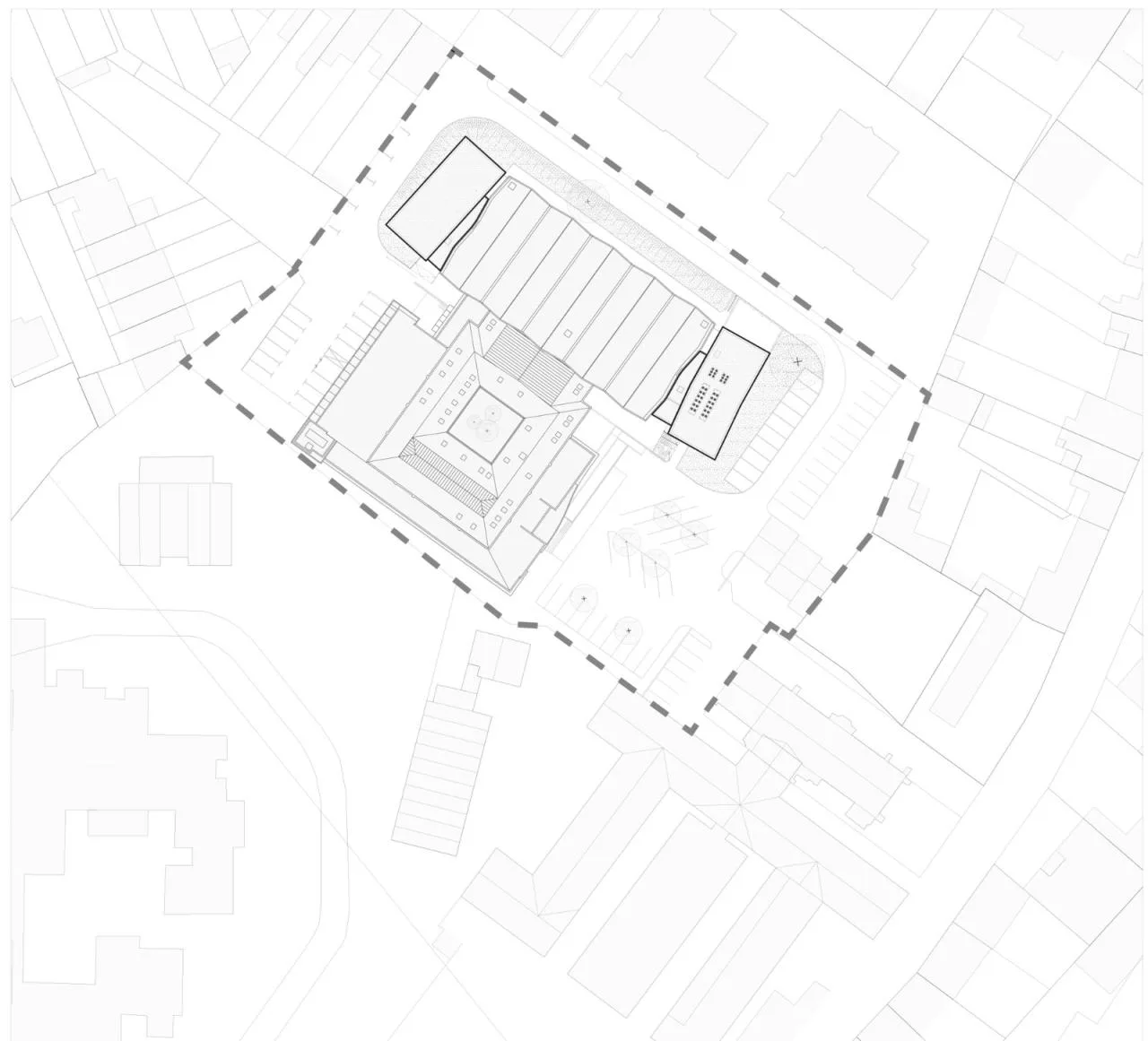
△ Base schematic diagram
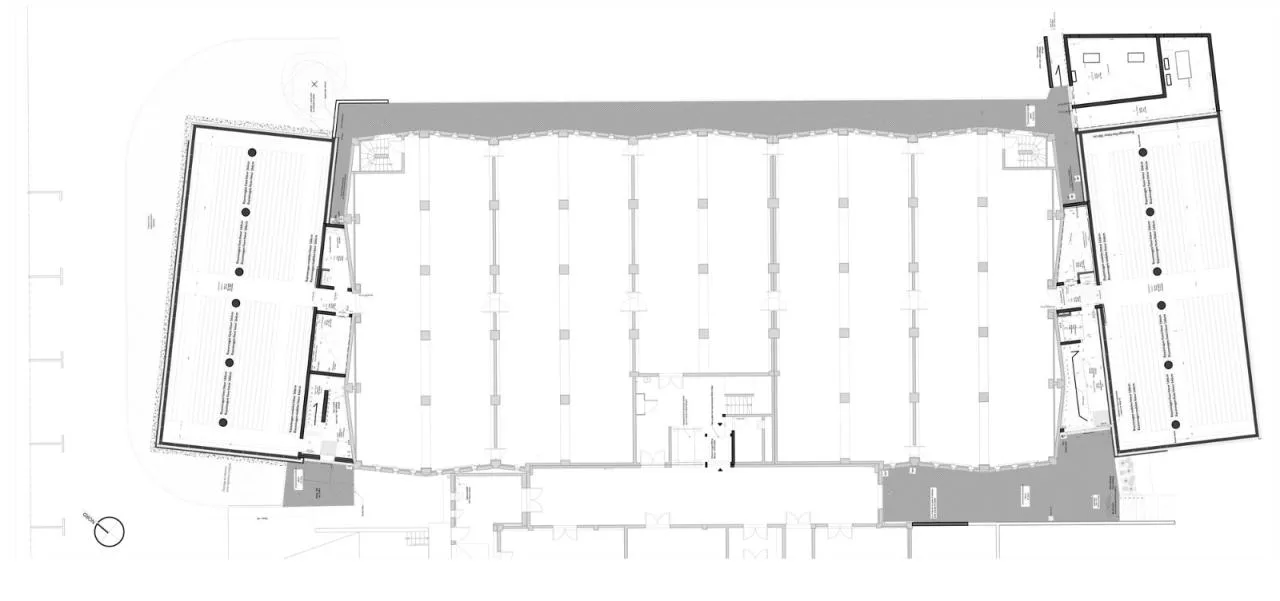
△ Floor plan view
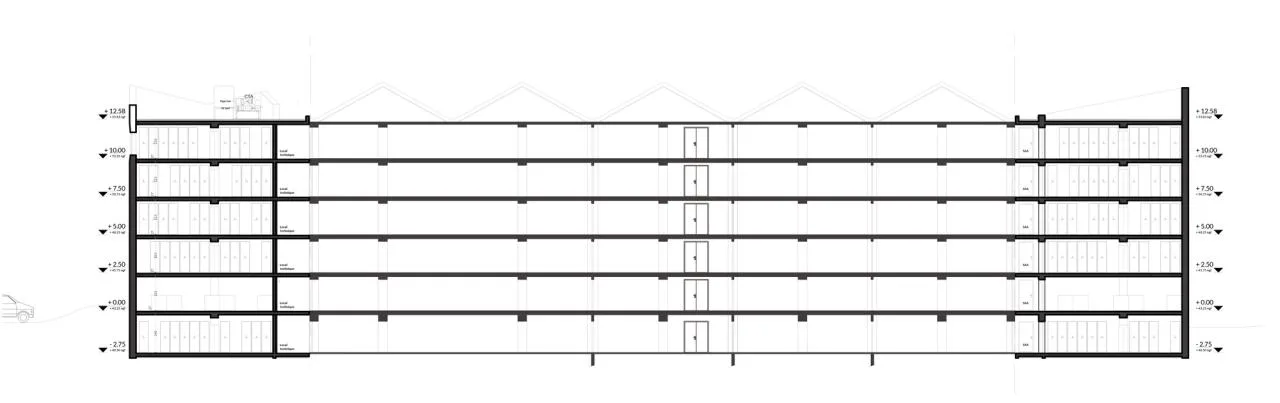
△ Section diagram
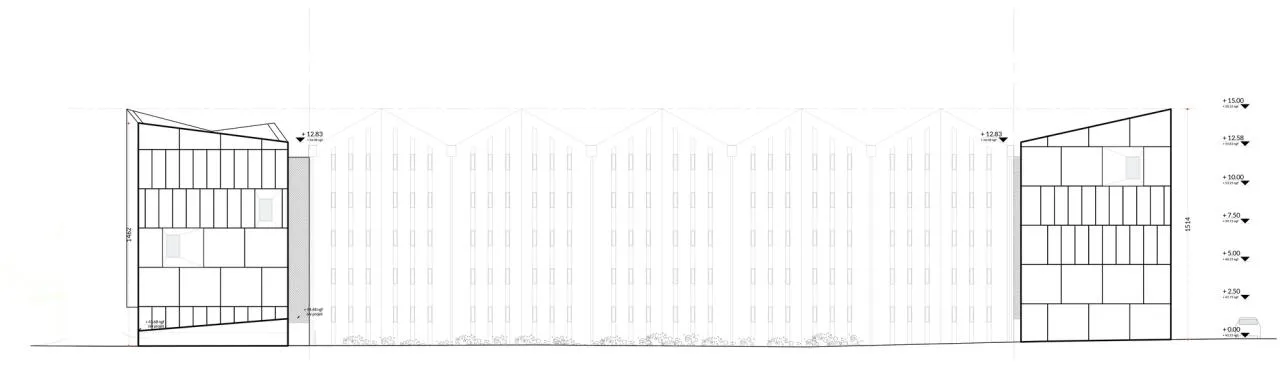
△ Section diagram
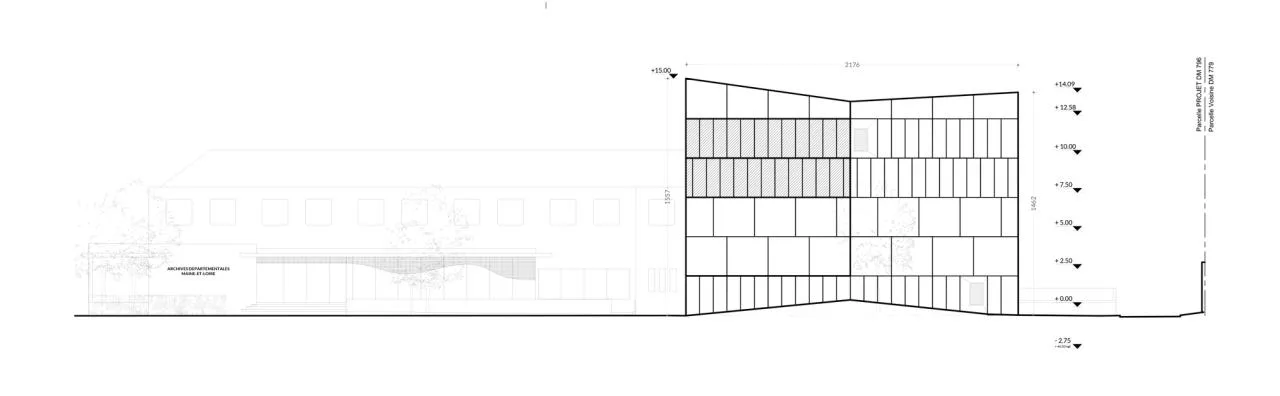
△ Section diagram
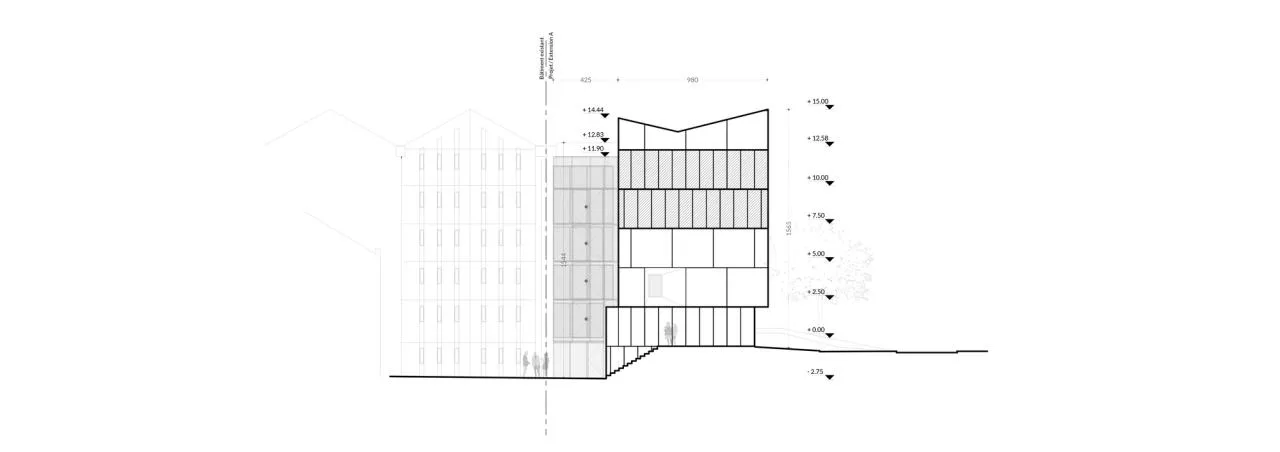
△ Section diagram
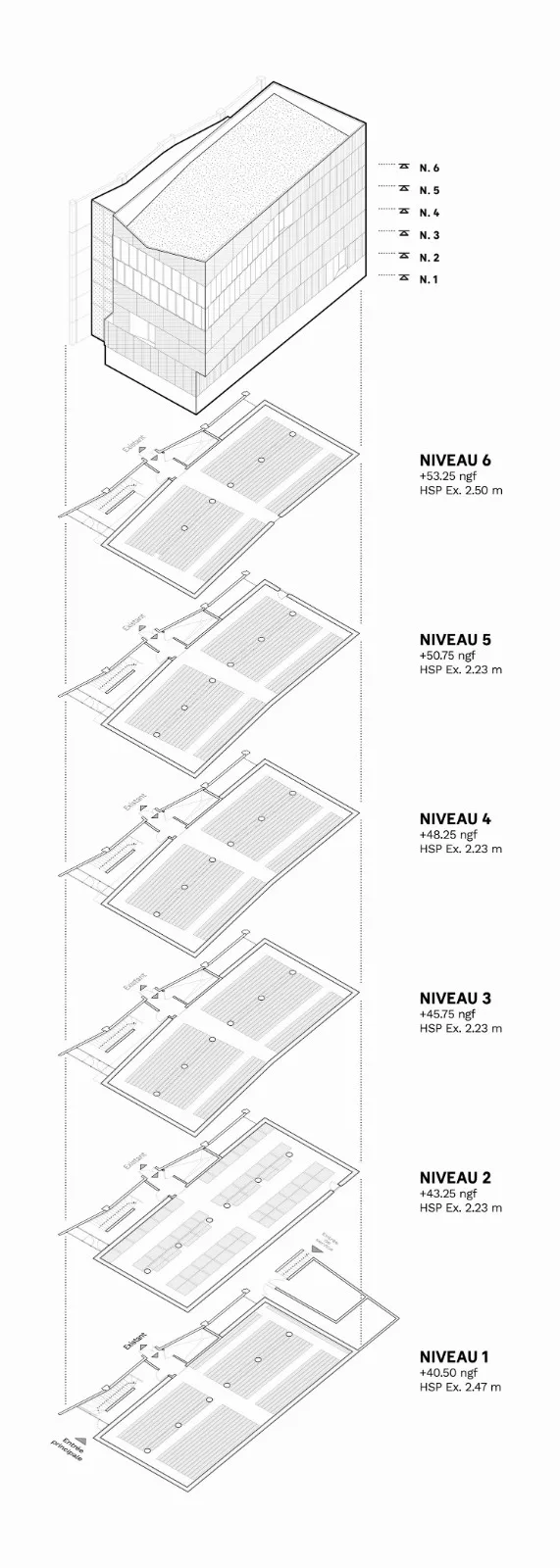
△ Exploded axonometric diagram
Project Information
Architect: Magnum architects & urbanistes
Area: 2,540 m²
Completion Year: 2022
Photographer: François Dantart
Manufacturers: Reckli, SORIBA, Samodef Forster













Must log in before commenting!
Sign Up