
The key to applying BIM technology in construction change management lies in process reengineering. While zero-change construction remains an ideal vision, transforming traditional change management—which is often inefficient, lengthy, and costly—into a process that is efficient, timely, and capable of dynamic cost control will better unlock the value of BIM. So, what specific functions does BIM technology serve in engineering? Let’s explore.
1. BIM Model Maintenance
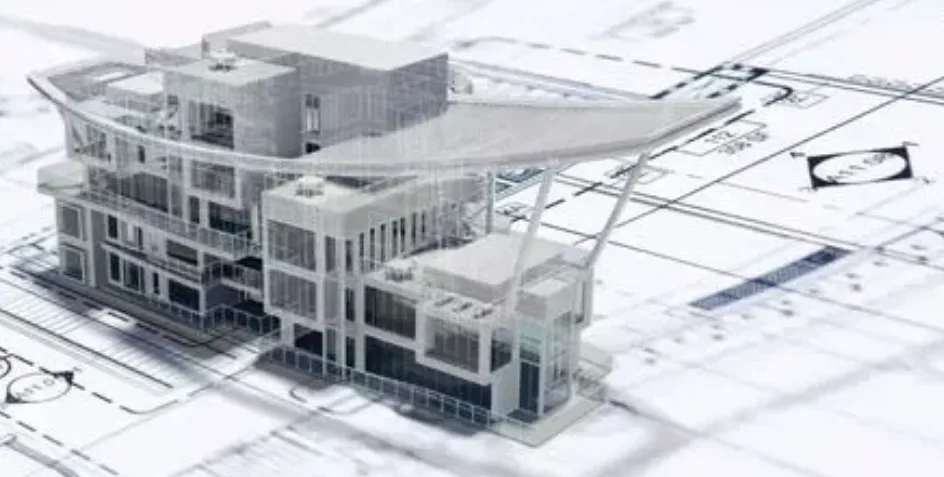
Creating and maintaining a BIM model aligned with project construction progress involves aggregating all project information from various teams on a BIM platform. This integration eliminates information silos, organizing data alongside a 3D model for easy sharing among stakeholders throughout the project lifecycle. Since the purpose of BIM dictates the detail accuracy of the model, and no single BIM tool accomplishes all tasks, the industry generally adopts a “distributed” BIM model approach. These specialized models—such as design, construction, schedule, cost, manufacturing, and operational models—are developed as needed to meet the project’s conditions and intended uses.
2. Site Analysis
Site analysis studies key factors affecting building positioning, spatial orientation, and its relationship with the surrounding landscape. During the planning phase, factors like topography, vegetation, and climate significantly influence design decisions. Site analysis examines diverse elements such as landscape planning, environmental conditions, construction facilities, and post-construction traffic flow. Traditional methods suffer from limited quantitative analysis, heavy reliance on subjective judgment, and difficulty processing large data sets. By integrating BIM with Geographic Information Systems (GIS), spatial data for the site and proposed buildings can be modeled effectively. Leveraging the combined power of BIM and GIS software enables rapid, convincing analyses that support optimal site planning, traffic organization, and building layout decisions early in the project.
3. Architectural Planning
Unlike traditional approaches that rely on experience to define design content and basis, architectural planning with BIM uses logical and mathematical analyses of social environments and related factors. This method guides project task formulation, scientifically establishing the architectural design basis and content. BIM assists teams in understanding complex spatial standards and regulations through spatial analysis during planning, saving time and enabling more value-added activities. When clients discuss needs and evaluate solutions, BIM and related analysis data facilitate critical decision-making. Throughout the design phase, BIM’s seamless information flow and traceability help architects verify that preliminary designs meet client requirements and planning criteria, significantly reducing costly redesigns caused by non-conformities discovered late in the process.
4. Scheme Demonstration
During scheme demonstration, project investors can use BIM to assess layout, sightlines, lighting, safety, ergonomics, acoustics, textures, colors, and compliance with standards. BIM enables detailed analysis of specific building components, quickly identifying potential issues during design and construction. It also provides cost-effective options for investors to compare and select among alternatives through data comparison and simulation, helping evaluate investment costs and timelines efficiently. For designers, BIM facilitates highly interactive spatial evaluation, gathering valuable feedback from users and owners. Real-time design modifications based on this feedback are easier to implement. The BIM platform makes key project concerns more transparent, accelerating consensus and reducing decision-making time compared to traditional methods.
5. Visual Design
3D visualization tools like 3ds Max and SketchUp have improved communication between owners, end-users, and designers by making architectural concepts more accessible. However, these tools have limitations in design functionality and often fall short of accurately representing the final design. BIM not only provides designers with true “what you see is what you get” 3D visualization capabilities but also enables architectural design through 3D thinking. This empowers owners and end-users to overcome technical barriers and clearly understand what their investments will achieve at any stage.
6. Collaborative Design
Collaborative design is a modern approach that allows designers from different disciplines and locations to work together via the internet. This method arose from industry changes and the need to update traditional design practices. Previously, CAD-based collaboration was limited since CAD files primarily describe graphics without embedding additional information, causing a lack of data correlation across disciplines. BIM transforms collaboration by providing robust technical support that spans beyond design to encompass the entire building lifecycle, involving planning, design, construction, and operation phases. This expanded collaboration scope significantly enhances comprehensive project outcomes and benefits.
7. Performance Analysis
In the CAD era, performance analysis software required manual data input, demanding trained professionals and repeated work after design adjustments. This led to building performance analyses, like energy assessments, being postponed to the final design stages and often treated as symbolic tasks, disconnecting them from design decisions. BIM models, created during design, already contain extensive information such as geometry, material properties, and component attributes. Importing these models into analysis software automates data input, accelerating performance evaluations, improving design quality, and enabling firms to offer more specialized services to owners.
8. Quantity Statistics
With CAD, the lack of embedded data for automatic quantity calculations meant relying on manual measurements or specialized costing software that required re-modeling whenever designs changed. This process was labor-intensive, error-prone, and often delayed, resulting in outdated quantity data. BIM serves as a rich engineering database that enables computers to rapidly and accurately calculate quantities, reducing manual work and errors. The consistent link between quantity data and design schemes allows for early cost estimations, budget-based design exploration, cost comparisons among alternatives, pre-construction budgeting, and final settlement after project completion.
In summary, these are the key functions and applications of BIM technology in engineering, aimed at providing a clearer understanding for everyone interested in the field.
















Must log in before commenting!
Sign Up