
Since the introduction of BIM technology into China’s engineering construction sector, its impact has gone beyond technical advancements to reshape management processes throughout the entire building lifecycle. Its value has steadily gained recognition and has become increasingly prominent, demonstrating rapid growth especially over the past two years. Currently, the primary applications of BIM technology in construction include:
1. Clash and Interference Detection
BIM’s 3D technology enables effective collision detection, optimizing project design by identifying potential errors early. This reduces rework, accelerates construction progress, and lowers costs for owners. Collision detection typically addresses conflicts between structural elements and between structures and equipment. By modeling two-dimensional structural and architectural drawings in 3D, BIM software intelligently detects spatial errors, omissions, and clashes, providing detailed reports that help prevent discrepancies between architectural and structural plans.
2. Virtual Simulation
Using BIM to model project data allows for more precise cost estimation and real-time monitoring of construction activities. Additionally, creating multidimensional models with BIM supports a more scientific construction schedule, helping to ensure timely project completion.
3. Component Assembly
BIM technology facilitates virtual assembly of building components, enabling early detection of potential hazards. This approach saves time and money while reducing resource waste. Starting with detailed BIM designs, component layouts are created using parametric design principles combined with data from component libraries to automate rapid modeling. BIM’s automatic verification functions then check for design errors, allowing pre-assembly testing of components to ensure accuracy and constructability.
4. Field Layout Design
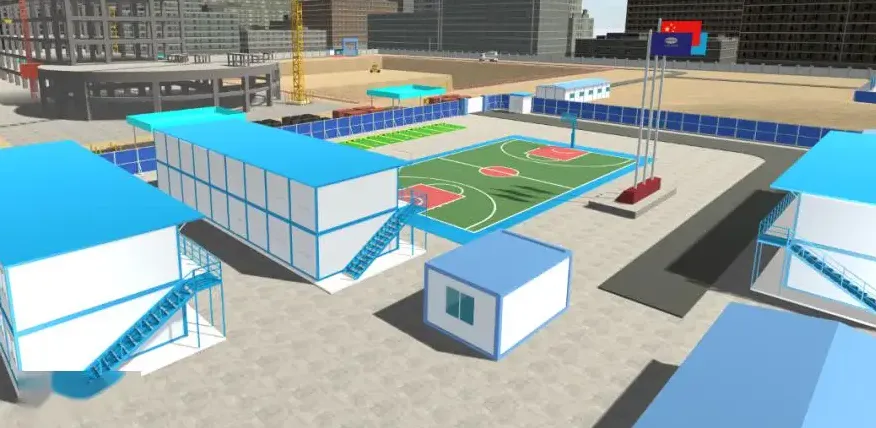
Recently, design institutes have widely adopted the concept of “forward design,” also known as “3D collaborative design,” which emphasizes a direct transition from 3D design schemes straight to 3D construction models. Unlike the traditional CAD process that moves from 3D designs to 2D drawings and back to 3D construction models, this method streamlines workflows and enhances collaboration.
5. Construction Coordination
Modern construction demands stricter overall coordination of tasks and equipment use. BIM technology supports this by automatically selecting optimal solutions, which improves construction efficiency and quality while maximizing equipment effectiveness.
6. 3D Rendering
BIM enables highly realistic visualizations based on construction drawings. It can accurately display construction site layouts and help develop reasonable construction plans. By comparing multiple options, the best plan can be selected. Even after BIM models are completed, 3D rendering enhances model accuracy and increases the likelihood of winning construction bids.
7. Fast Computation
BIM’s visualization capabilities allow virtual construction monitoring, helping management track progress and collaborate efficiently. When issues arise during construction, managers can quickly analyze causes and implement corrective measures.
8. Construction Quality Control
BIM improves construction efficiency and quality by addressing key challenges. It stores detailed data on materials and equipment within layout plans and uses internet technology to enable project staff to quickly verify material and equipment information. This helps ensure that on-site materials match requirements and prevents the use of unqualified materials, promoting proper resource utilization.
Regarding construction techniques, BIM simulates processes and establishes standardized procedures so workers can follow consistent standards, aligning planning with actual construction effectively.
9. Visualizing 3D Presentations
BIM breaks down 1:1 scale node models into process-based exploded diagrams, offering dynamic, vivid depictions of construction sequences and nodes. This 3D format replaces traditional text and tables, significantly improving communication during project presentations and aiding material procurement. It also boosts construction quality and allows companies to build proprietary node libraries for use in future projects.
In summary, BIM technology plays an indispensable role in advancing building development. I hope this overview helps you better understand its practical applications in construction!
















Must log in before commenting!
Sign Up