
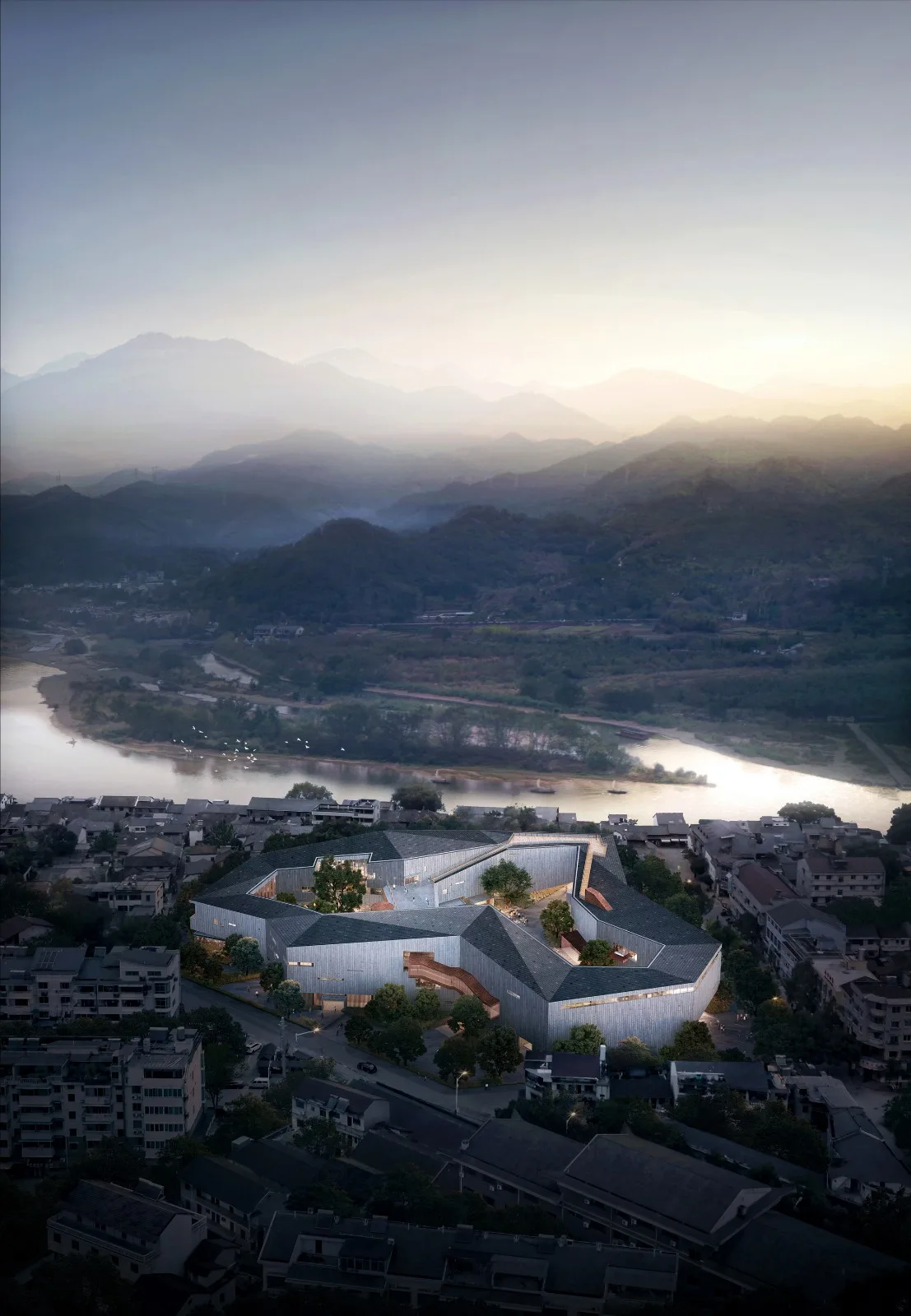
The Zhejiang Lishui Guyan Painting Town Art Center, designed by Meng Fanhao and his team at Line+, has been officially unveiled. Covering approximately 20,000 square meters, this Art Center will serve as a key cultural platform and landmark for the future artistic development of the Guyan Painting Township Scenic Area. Construction began in late 2021 and is projected to be completed and operational by 2023.
Designing cultural spaces involves more than just creating physical structures; operating them effectively is often the greater challenge. Rather than a purely formal art center, the Lishui Guyan Painting Village Art Center aims to be vibrant and multifaceted. It will host exhibitions and shopping during the day, offer spaces for strolling and leisure in the evening, and come alive with markets, gatherings, and square dances at night. The grand suspended structure provides a distinctive identity, while the scattered small-scale shops on the ground floor create a warm, communal atmosphere. Here, art and local market life will nourish each other, blending and coexisting to create a truly shared everyday space.
— Meng Fanhao
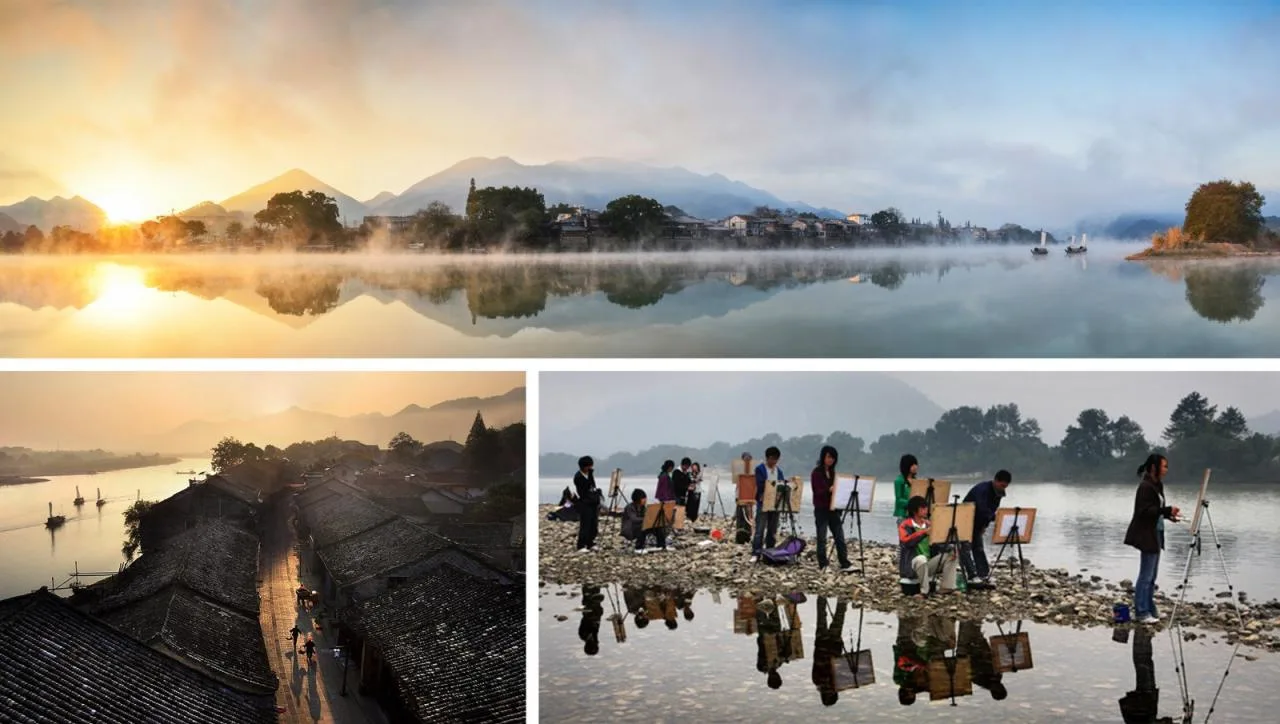
The name “Ancient Weir Painting Village” refers to two key elements: “Ancient Weir,” the Tongji Weir irrigation heritage site built in 505 AD, and “Painting Village,” home to the renowned Lishui Barbisson Painting School, a prominent sketching base for the Academy of Fine Arts. Located 23 kilometers from Lishui city center in Zhejiang Province, the scenic area’s natural landscape has fostered a rich local artistic culture. Since the turn of the century, through targeted planning and management, the area has evolved into an integrated ecological system combining residential neighborhoods, sketching bases, art streets, galleries, and leisure resorts. Art and daily life together form the unique character of the Guyan Painting Township.
In this context, the local government plans to build an art center to meet the growing demands of residents, tourists, and artists. It will serve as a unique venue for exhibitions and public education, functioning both as an art container for external display and a hub for information exchange, further elevating the village’s cultural influence within Zhejiang Province and beyond.
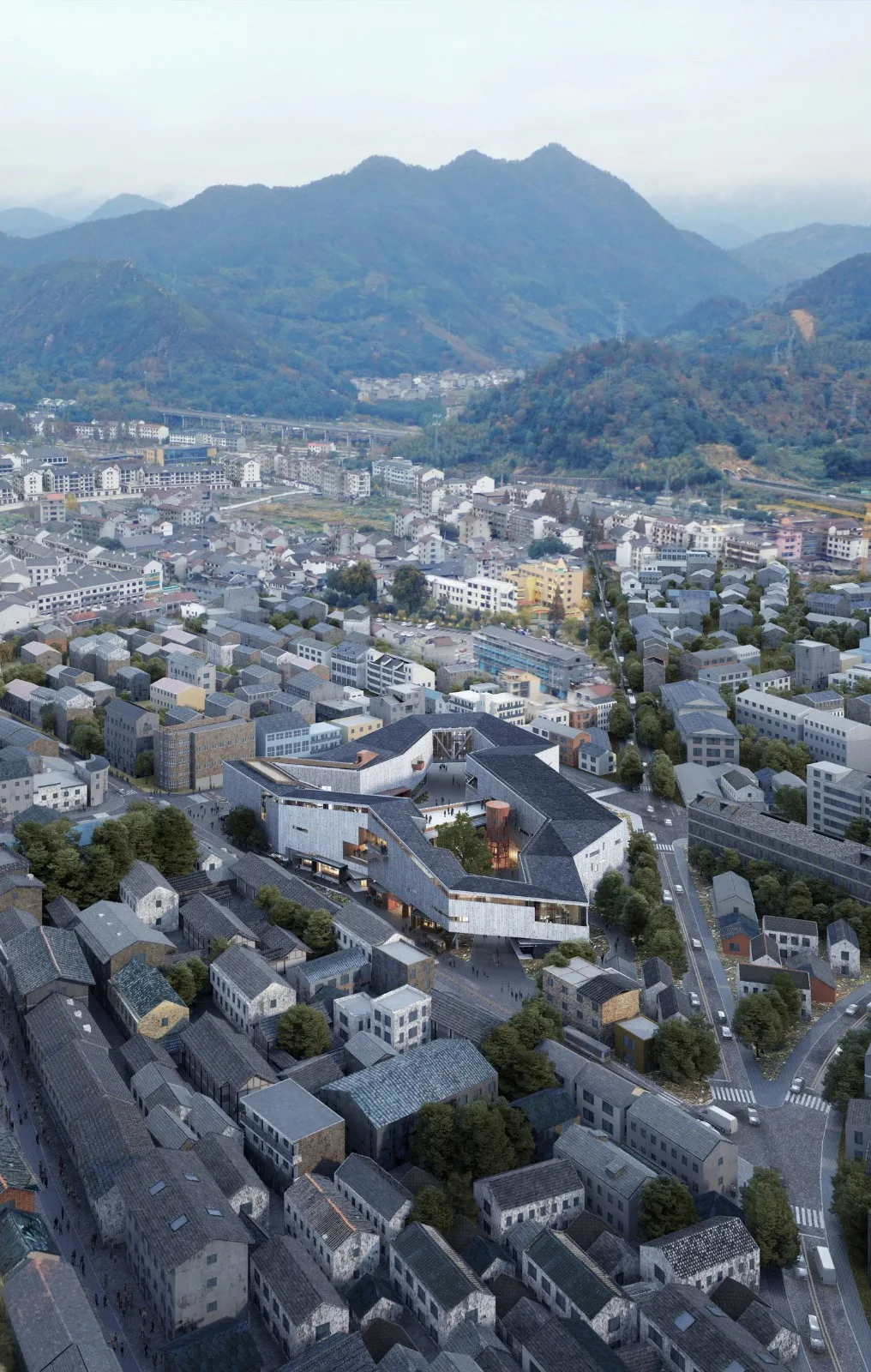
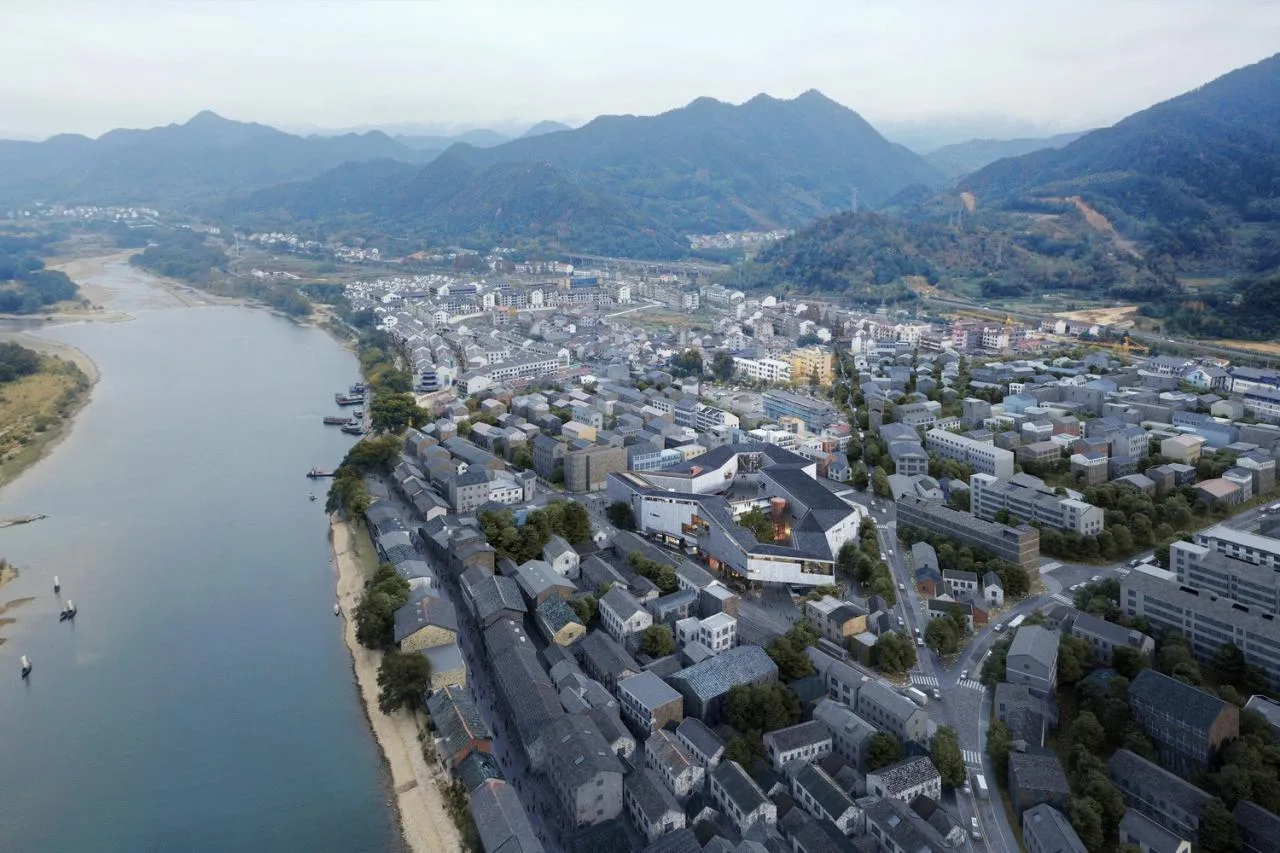
The project site lies less than 100 meters from the core scenic area called “Oujiang and Ancient Street,” which retains its traditional settlement patterns. Just to the north is the Oujiang Daxi section, encircled by mountains. Currently, the site functions as a temporary parking lot for the scenic area, bordered by residential buildings constructed in the 1980s and 1990s.
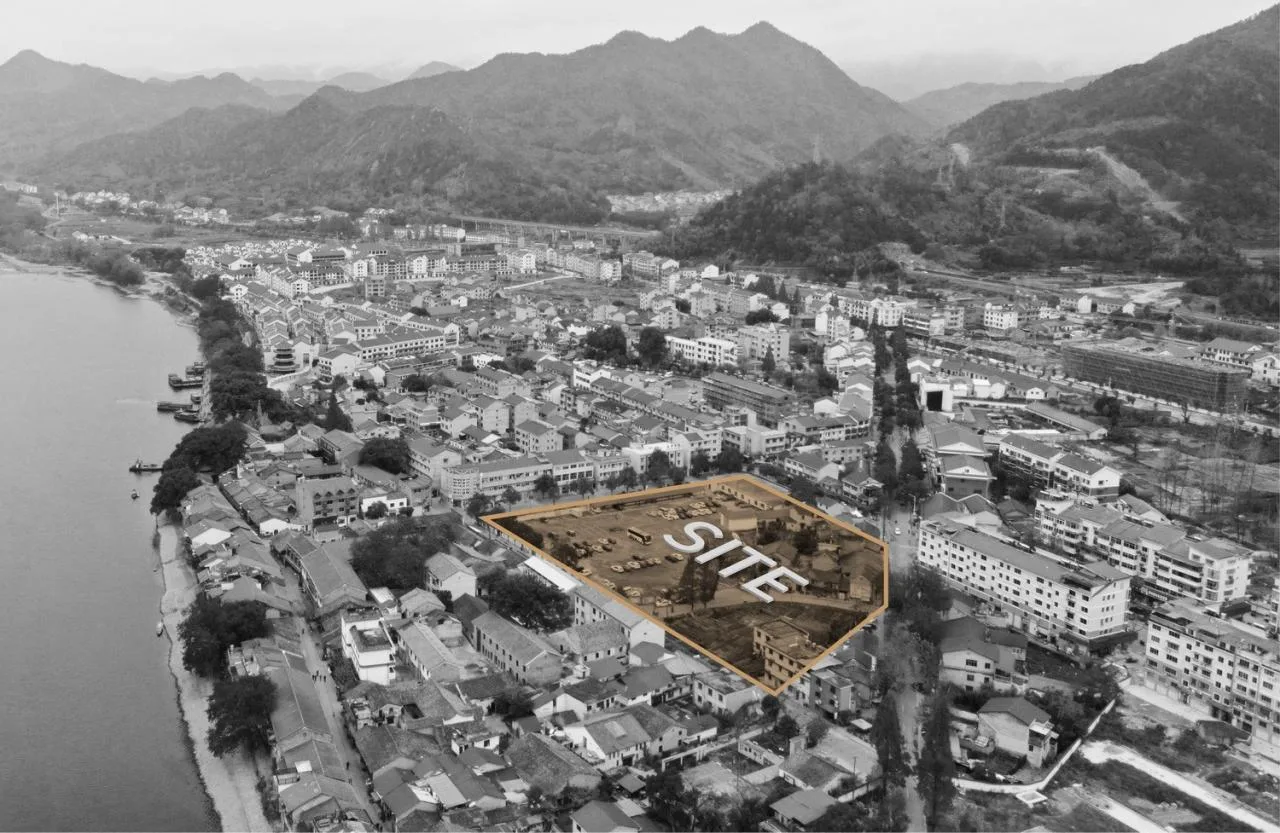
△ Location Map
01 Strategy and Vision
Early site research made it clear that this project was not a typical public art space in a major city. Although the town has an established art industry foundation, sustaining a large-scale art center with its own exhibitions would be difficult, especially operationally. From the government’s perspective, this major investment needed to maximize value and efficiency.
At the concept stage, we introduced the idea of pre-operation and discussed positioning and sustainable operation models with the client. Together, we developed a design brief to ensure the project becomes a highly efficient public space once completed. We believe an art space should go beyond exhibition—it should embrace everyday life. It is a fusion of chance encounters and daily routines, elegance and the common, the fringe and the mainstream. Its uniqueness preserves memories distinct from urban homogenization, while its daily rhythm connects casually with residents, valuing emotional life.
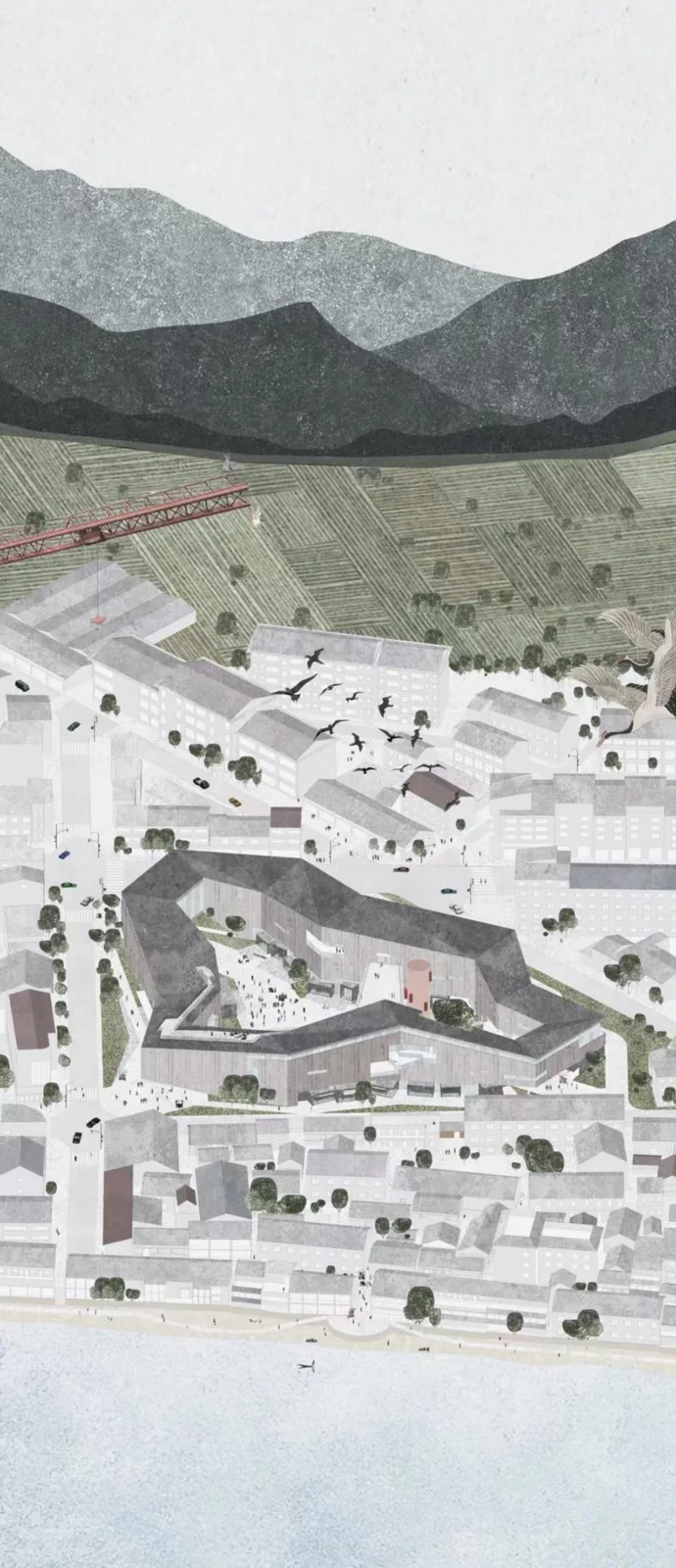
Our vision combines the artistic needs of visitors with the daily life of locals, merging the public and artistic nature of the center with small-town life. The goal is a future art center that integrates commercial activity, cultural events, public squares, exhibitions, training, and education—a vibrant mixed-use space to stimulate vitality.
02 Hyperscale and Everyday Life
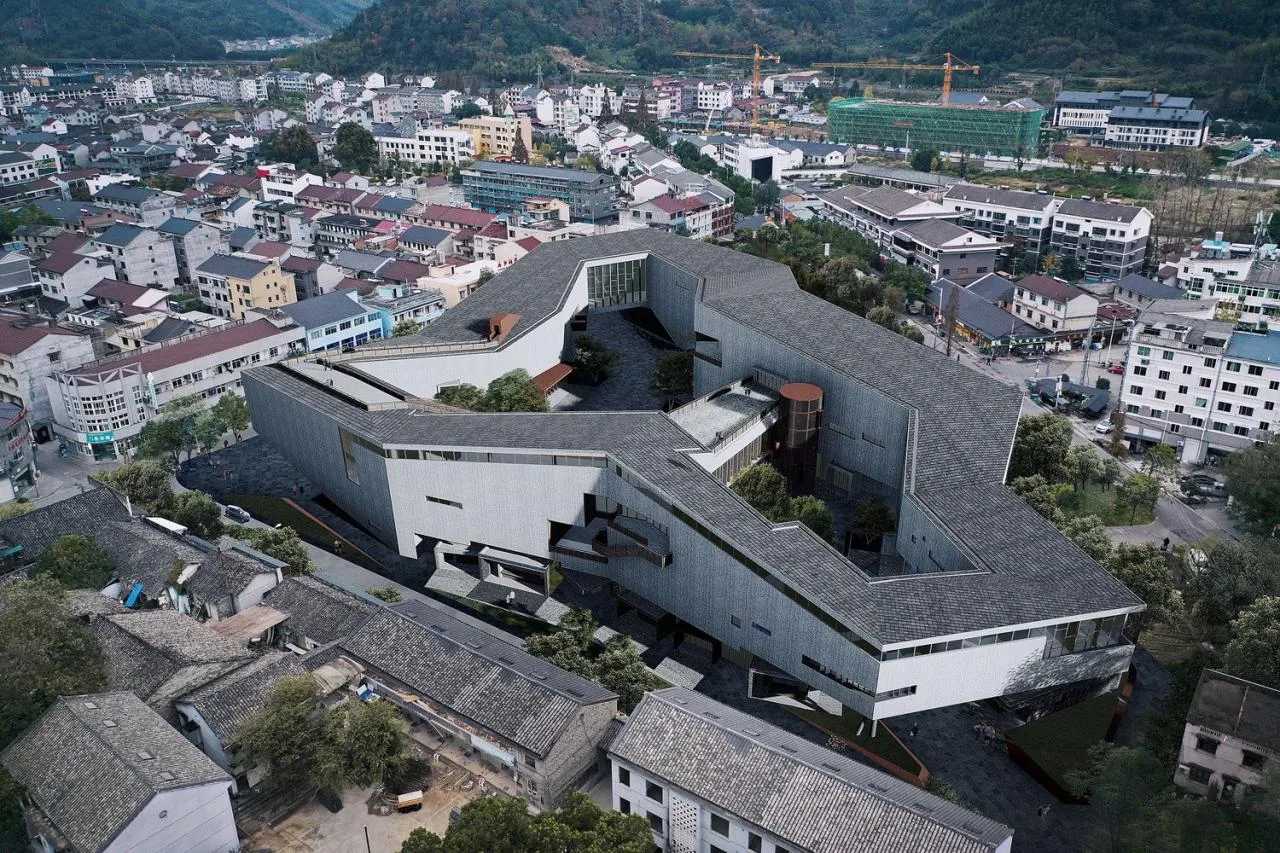
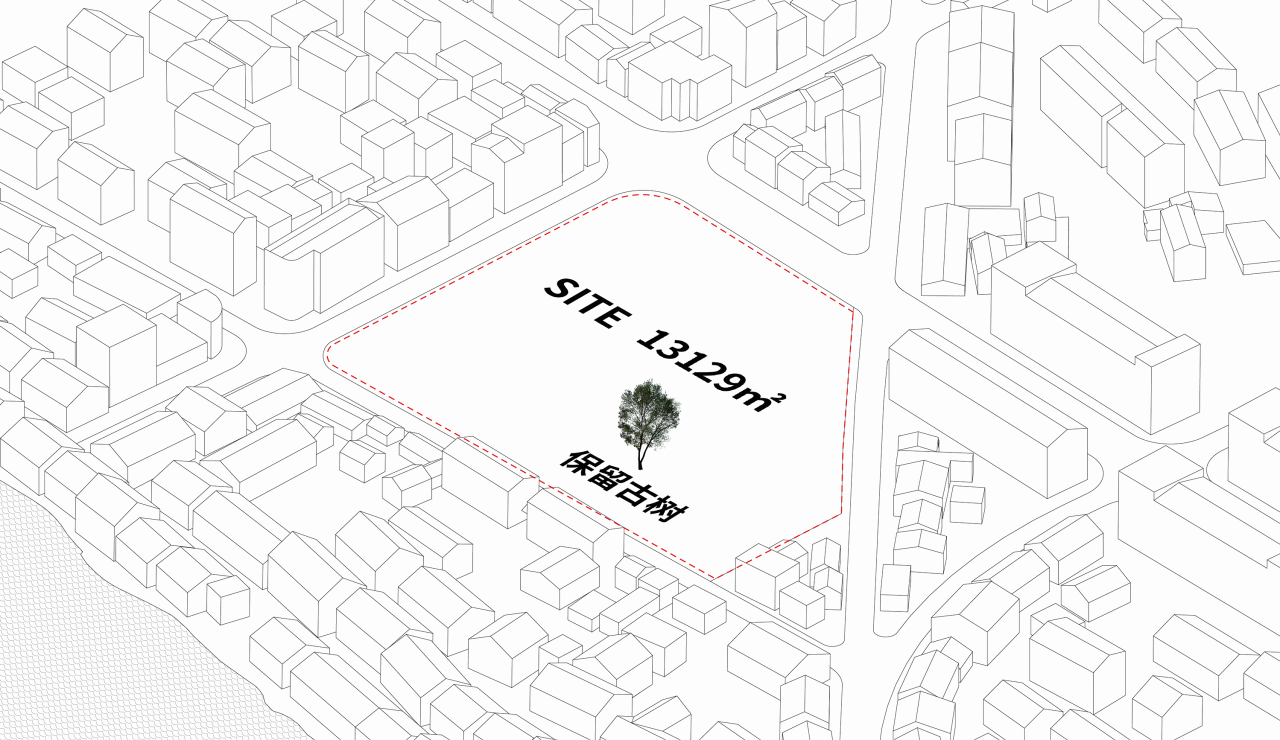
The project covers 13,129.92 square meters with a floor area ratio of 1.05. The 13,000 square meters of above-ground space is designed to become a new town landmark, contrasting with the surrounding dense, small-scale scenic area. This contrast calls for an artistic landmark to enhance visibility, while also integrating seamlessly into the town’s human scale with everyday warmth—striking a balance between the two.
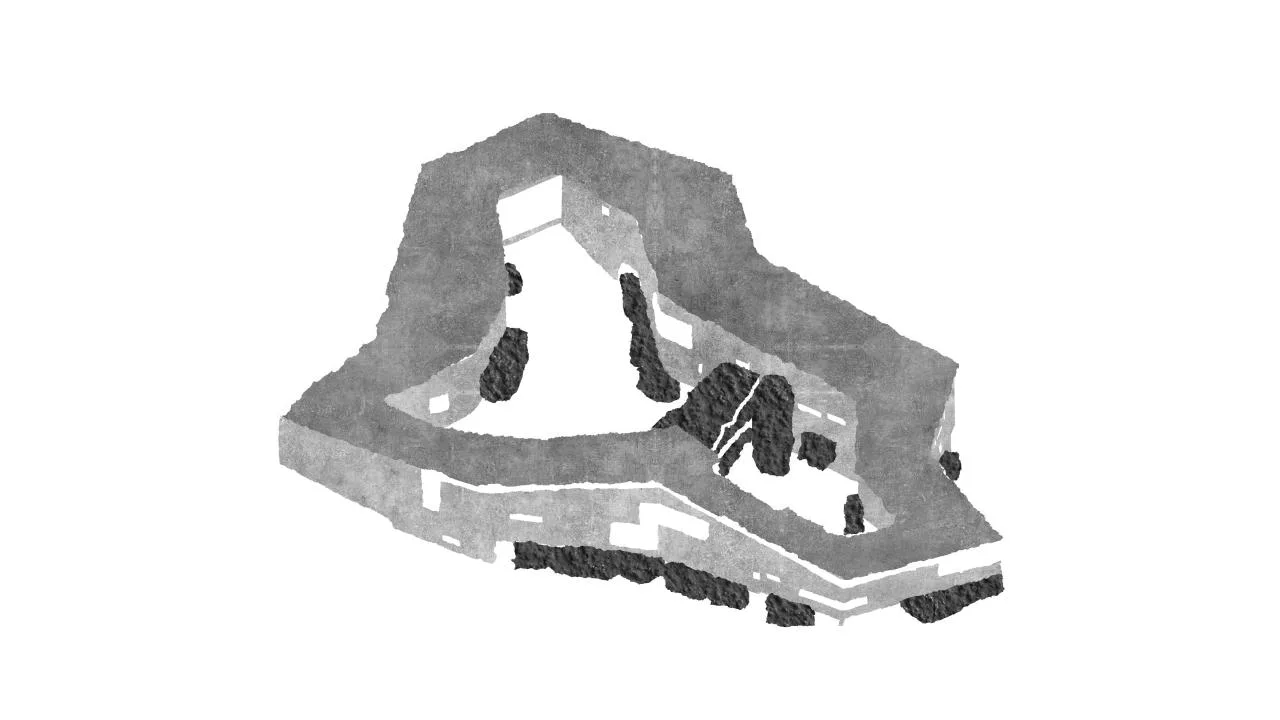
△ Shape generation analysis
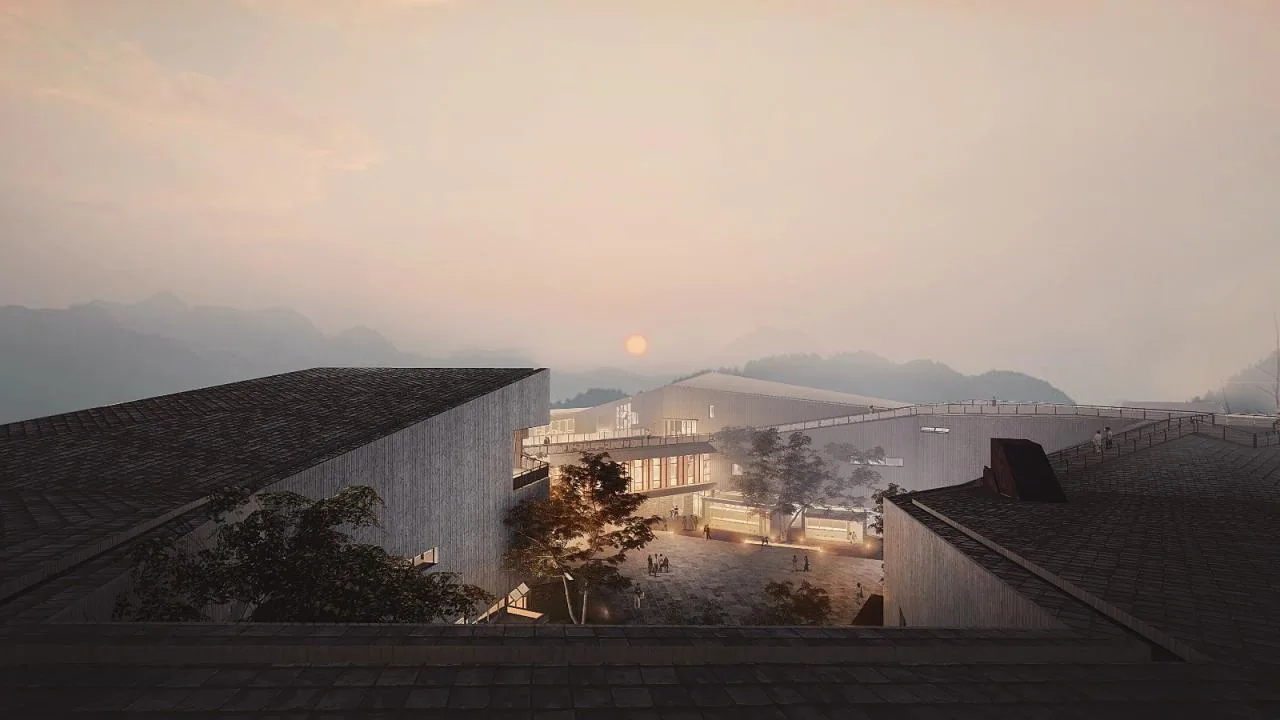
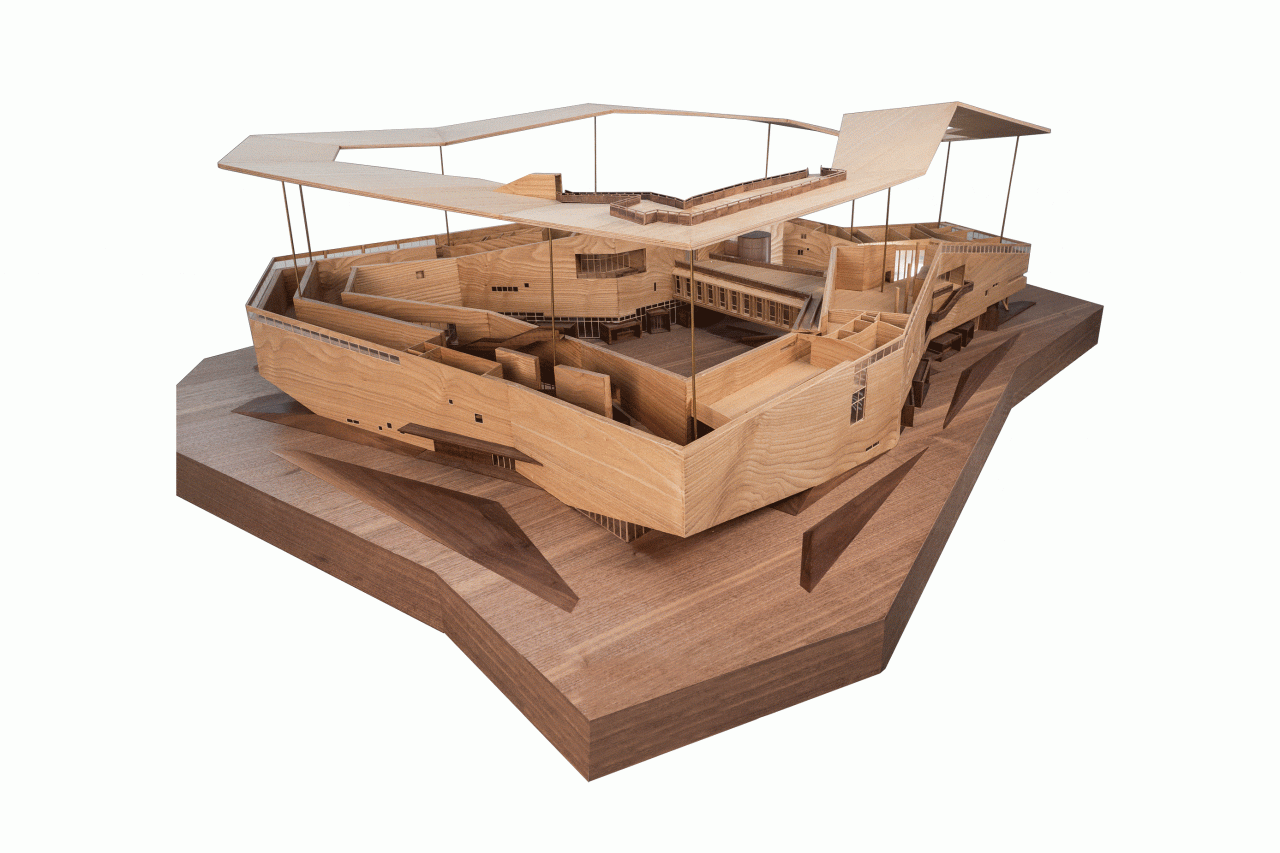
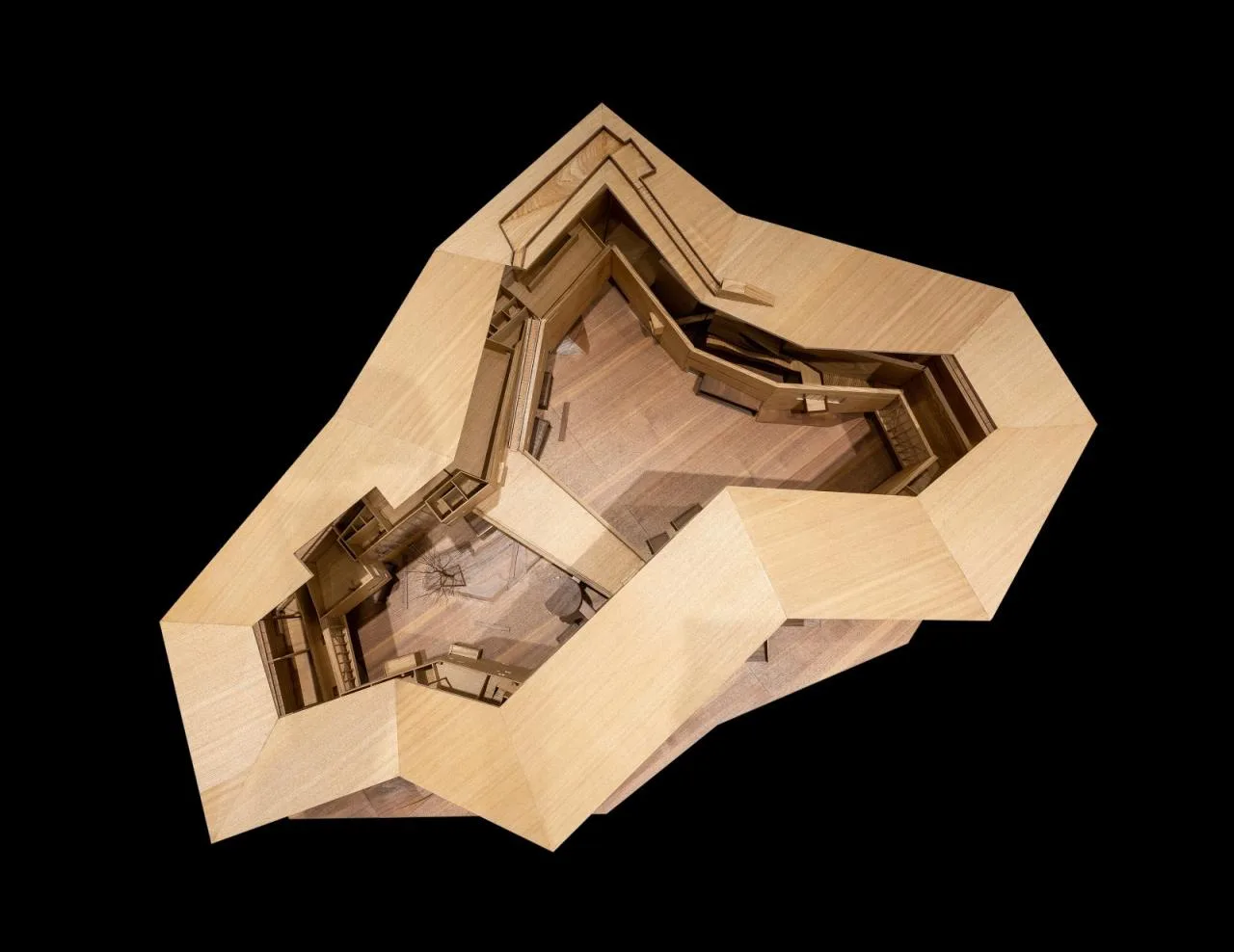
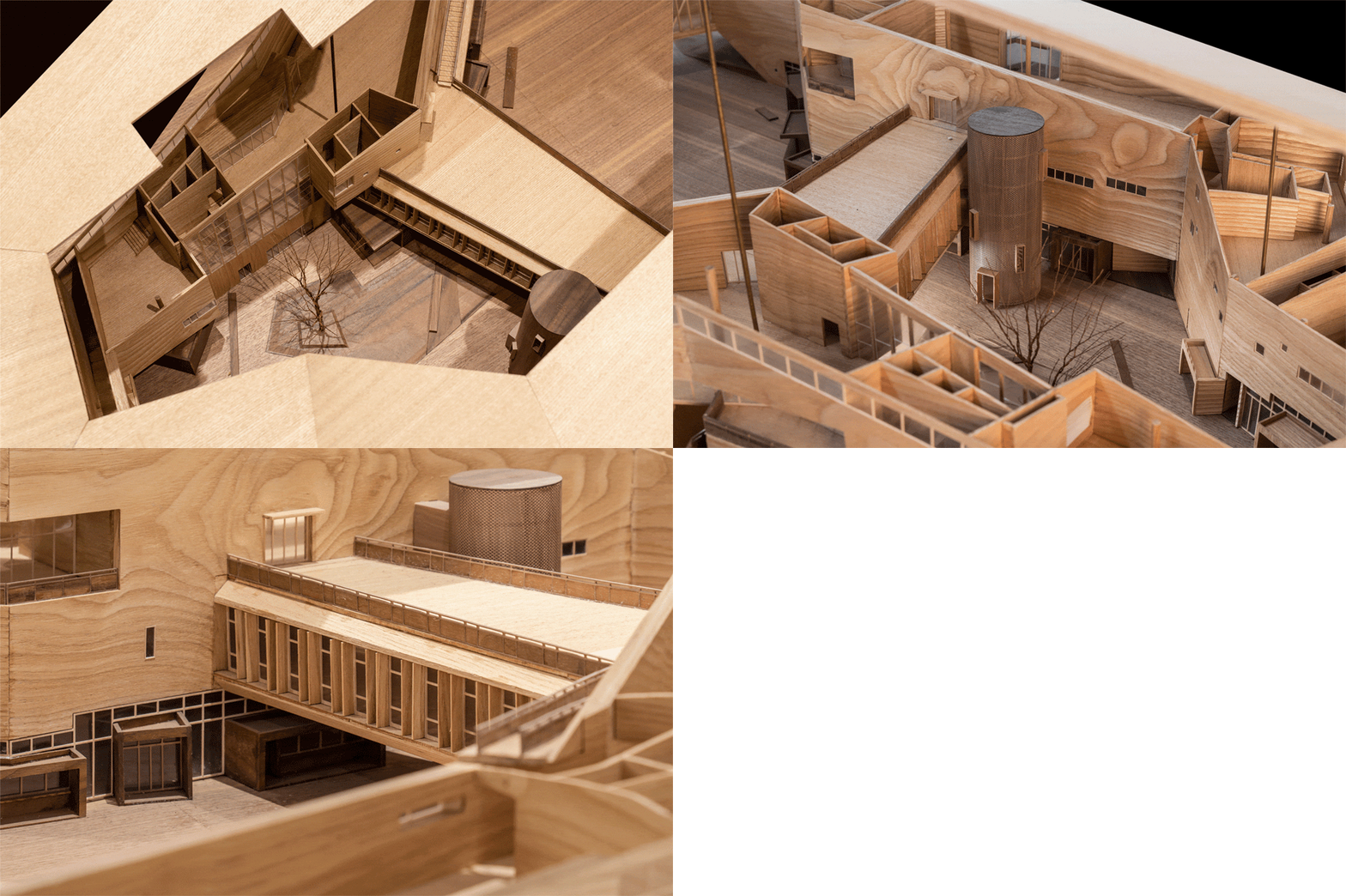
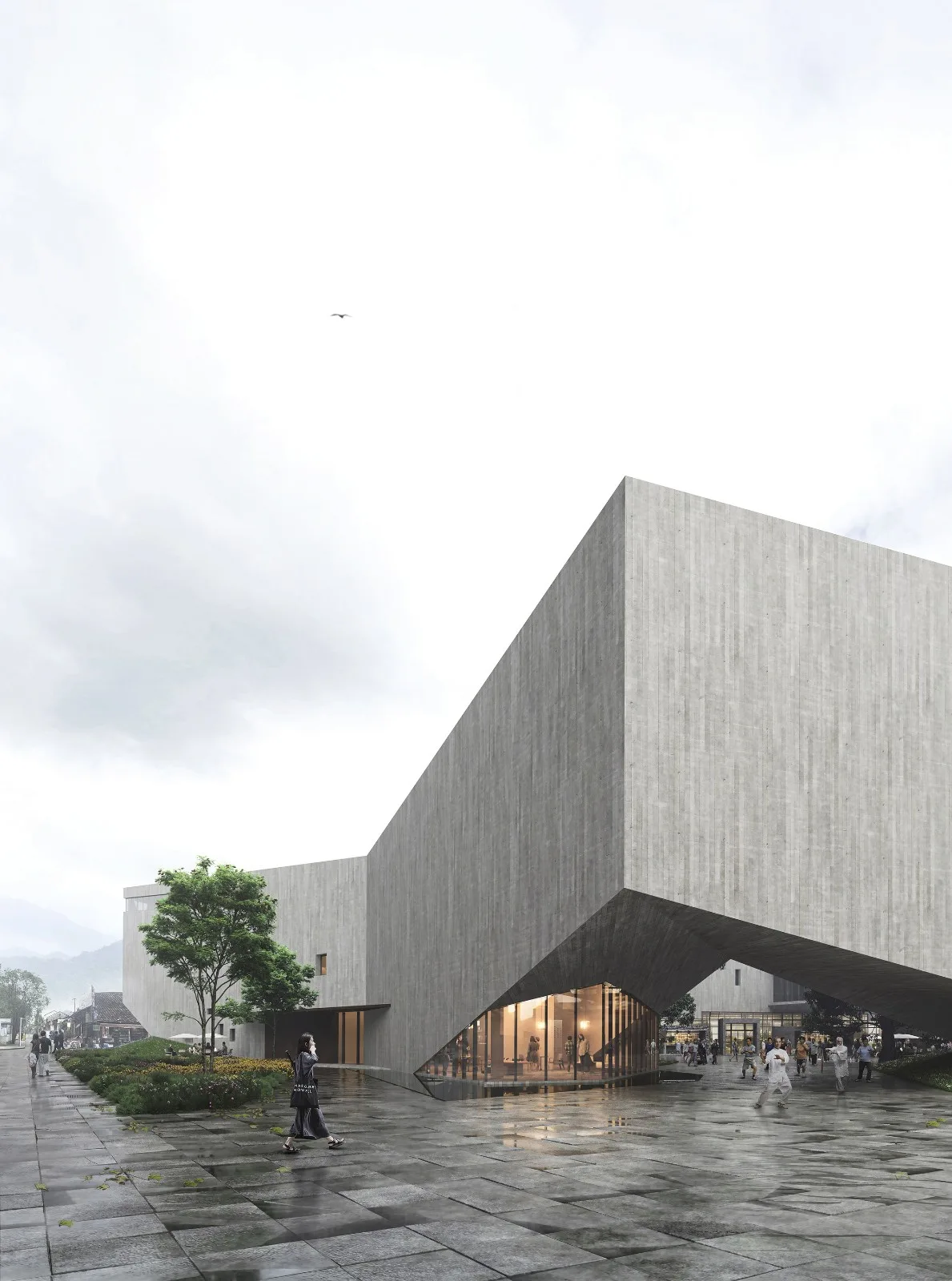
Responding to these objectives, we developed design strategies emphasizing central enclosure and open ground floors, multiple scales, and mixed functions. Buildings align closely with the site boundary, preserving the continuity of streets and alleys while respecting the old street’s edges. Two courtyards, one large and one small, are enclosed inwardly. The building’s upper section features a grand, irregularly undulating suspended form, echoing nearby mountains and distinguishing itself from surrounding residences with a modest yet distinctive visual identity.
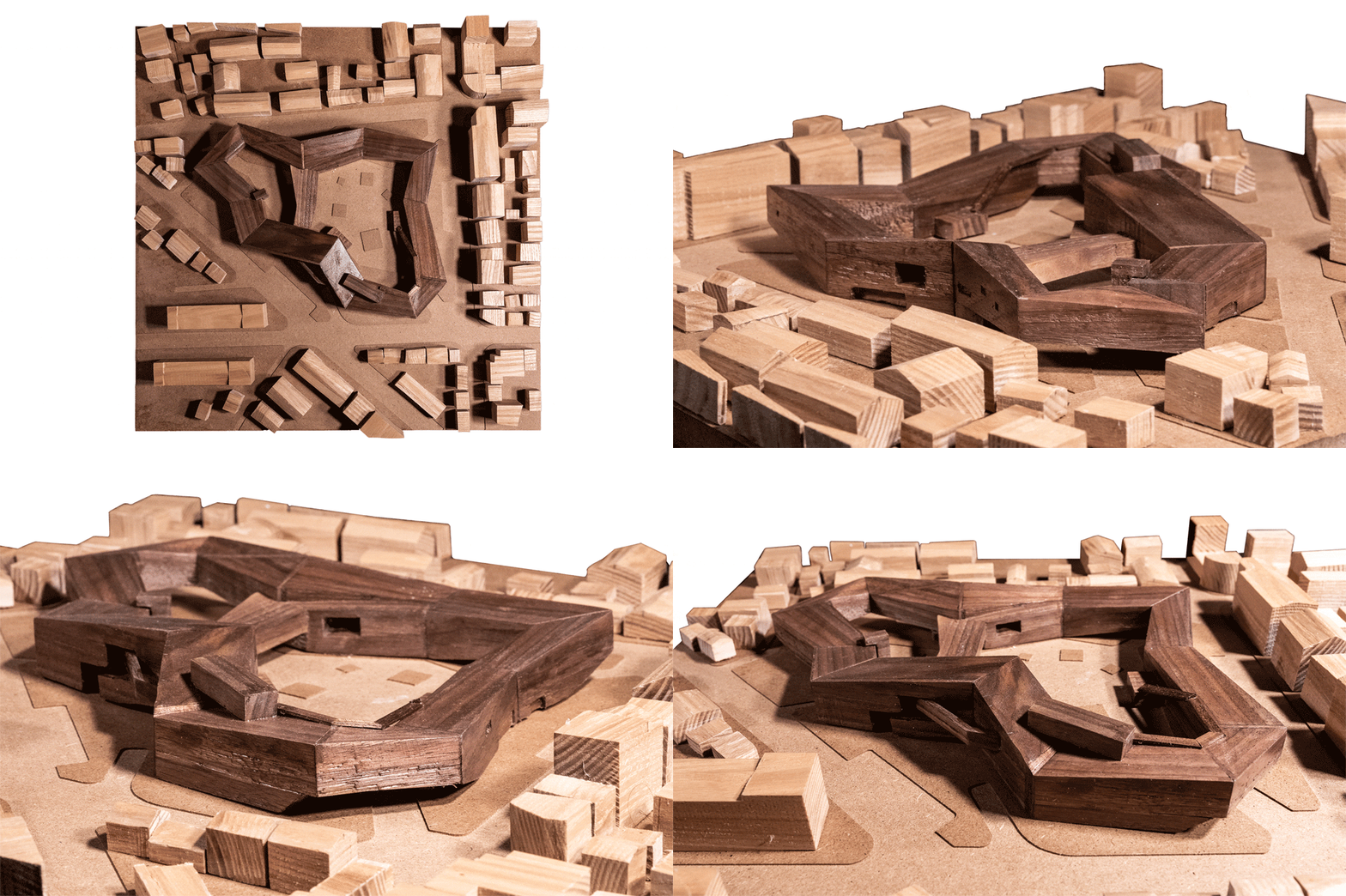
△ Conceptual volume model
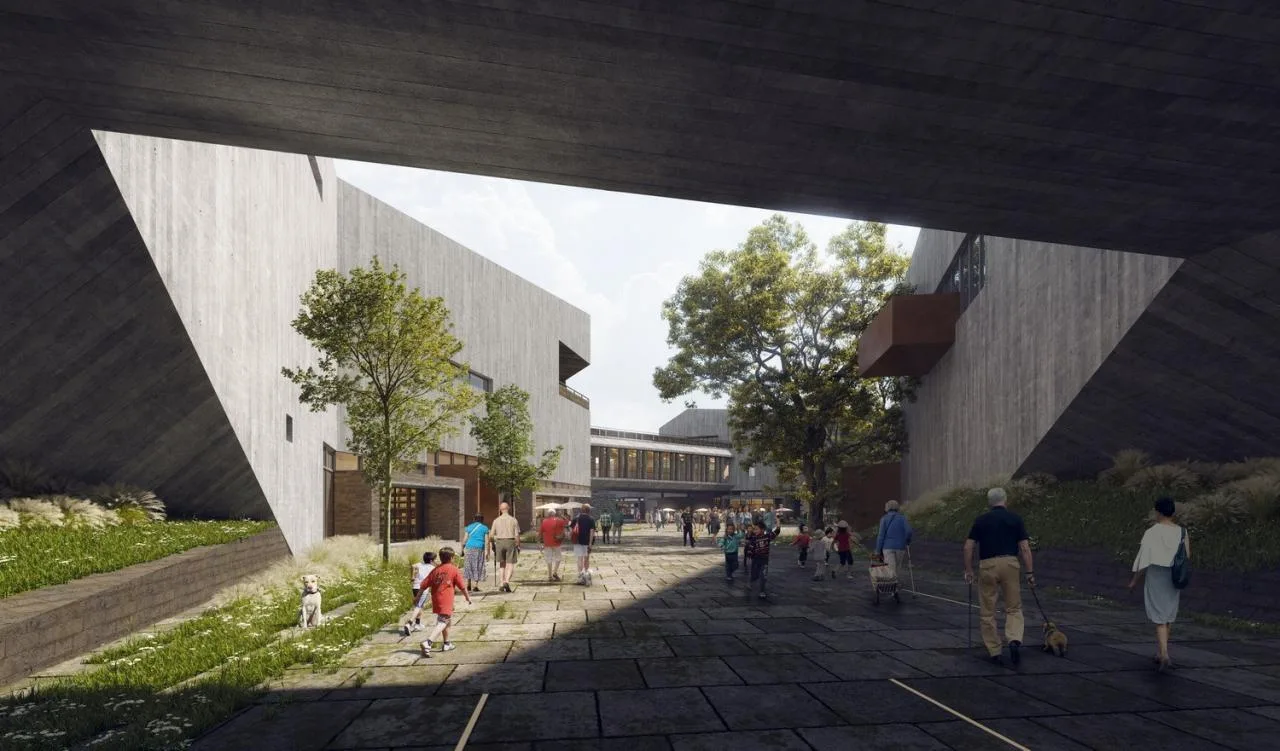
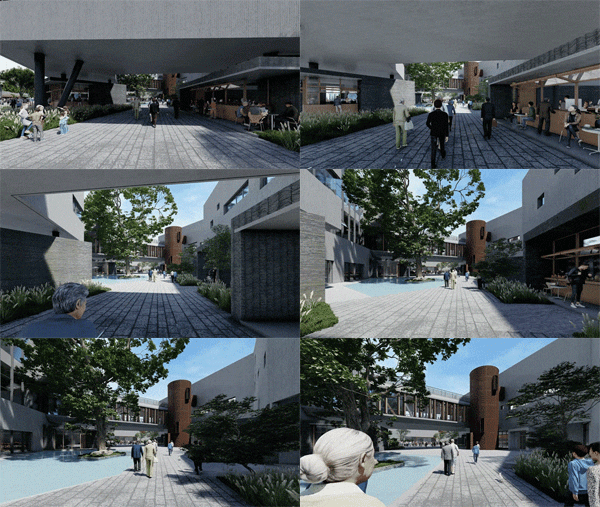
Daily life is integrated through three main design approaches. First, three street corners facing the old street and town are shaped by boundary setbacks and lifted corners, creating large public plazas and elevated ground-floor spaces that welcome visitors into the building.
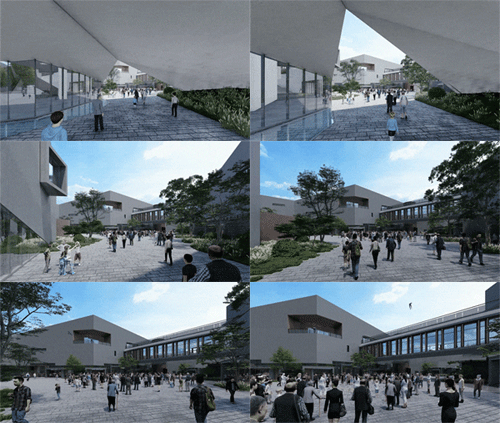
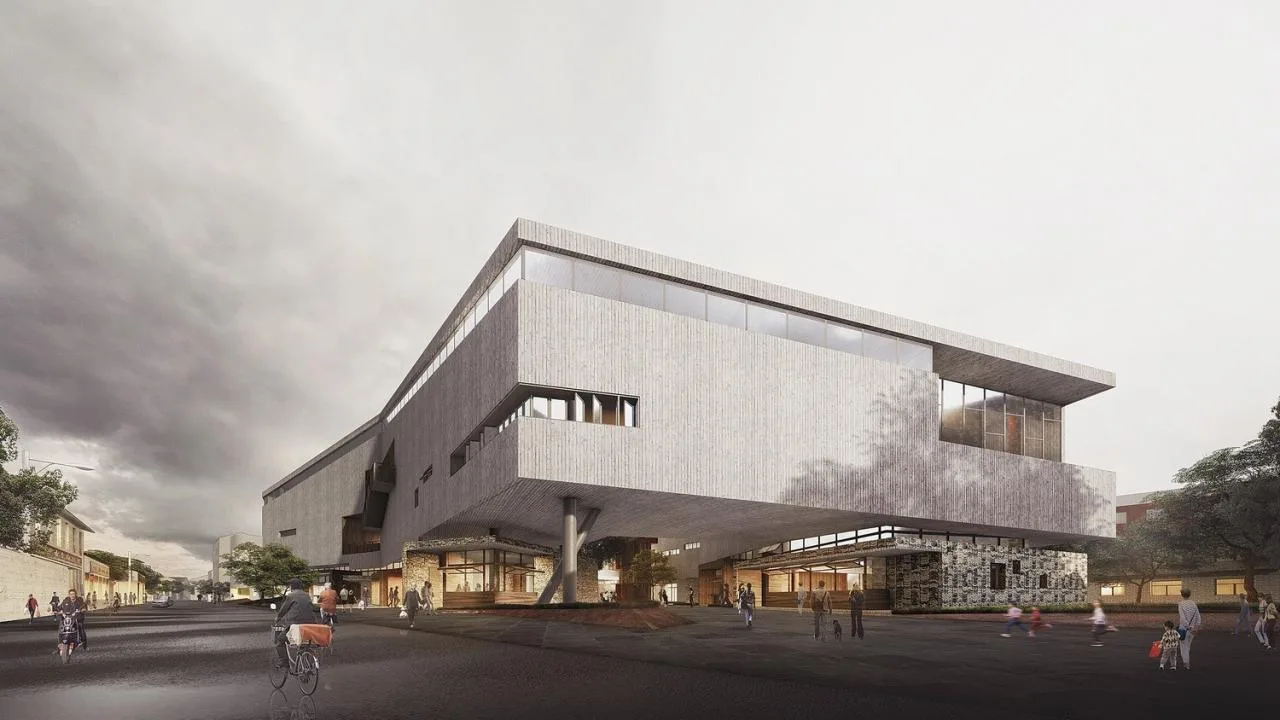
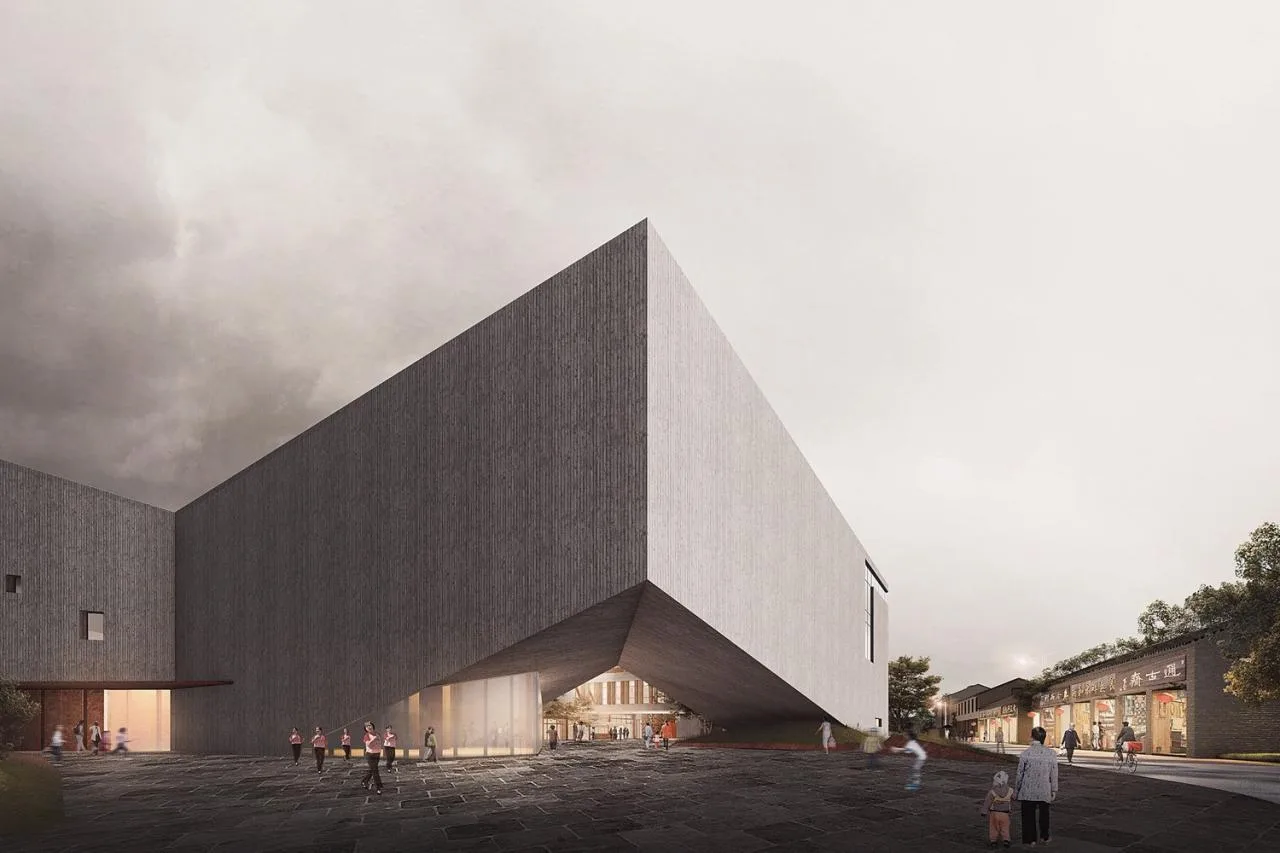
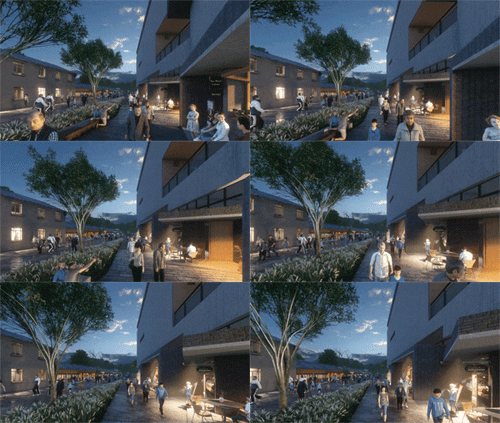
Second, the first floor’s design reinterprets the surrounding spatial texture, with multiple residential-scale commercial volumes rotated and interspersed. These volumes are strategically set back to create appropriately sized streets and alleys alongside low-rise residences, reducing the building’s scale to a human level and preserving the site’s memory.
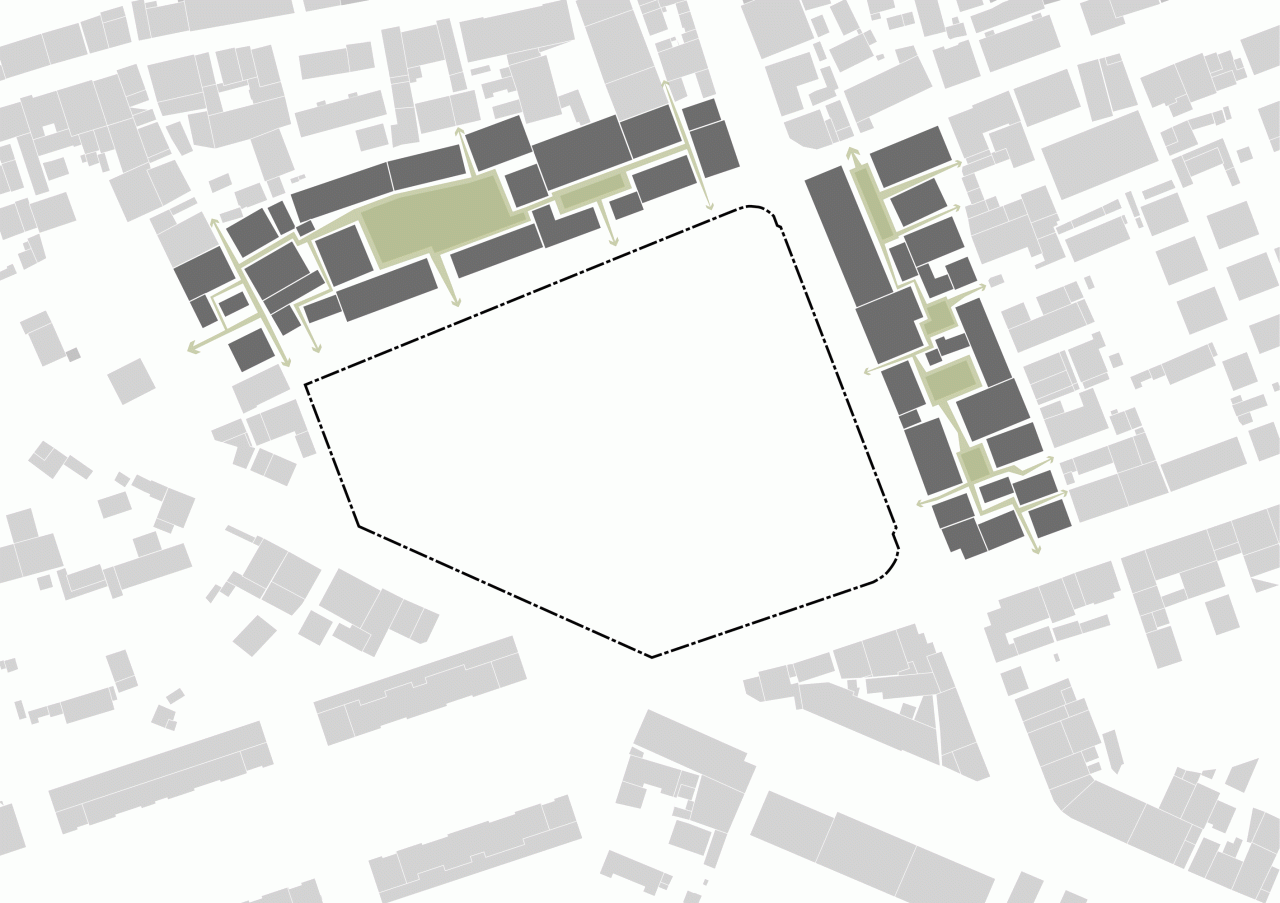
Analysis of the first floor spatial texture
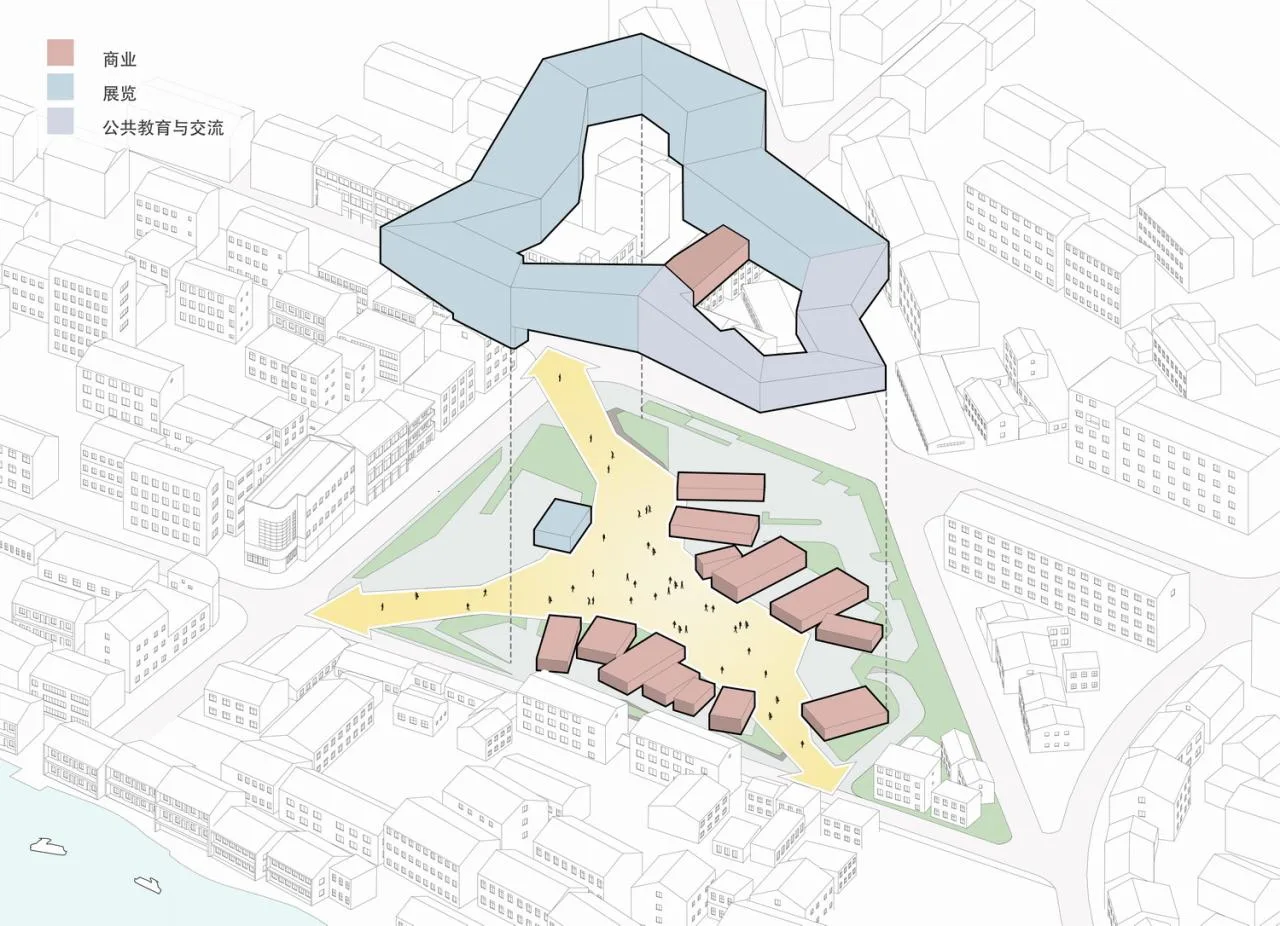
△ Functional analysis
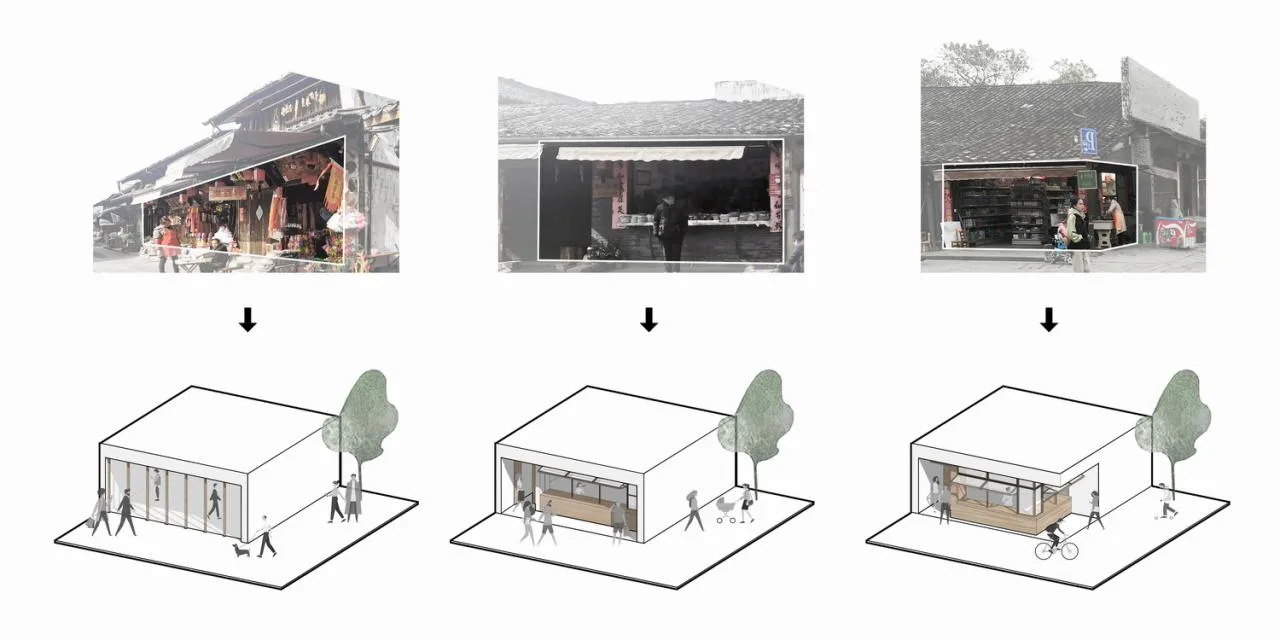
△ Inspired by rural and urban first-floor commercial boxes
△ Ground-level commercial boxes
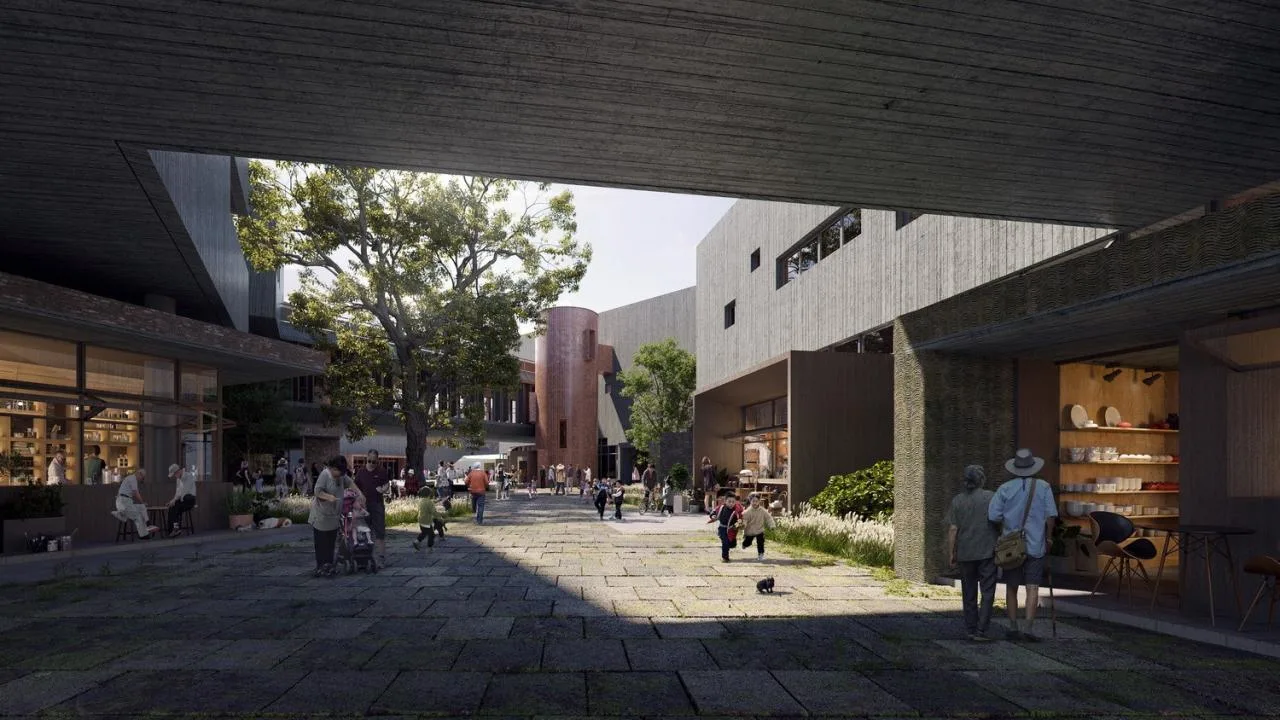
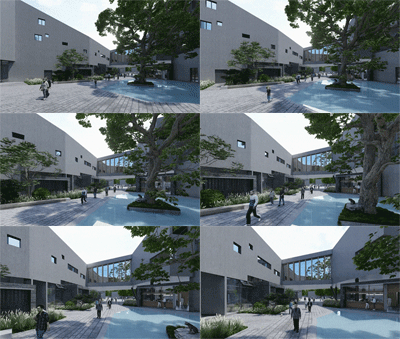
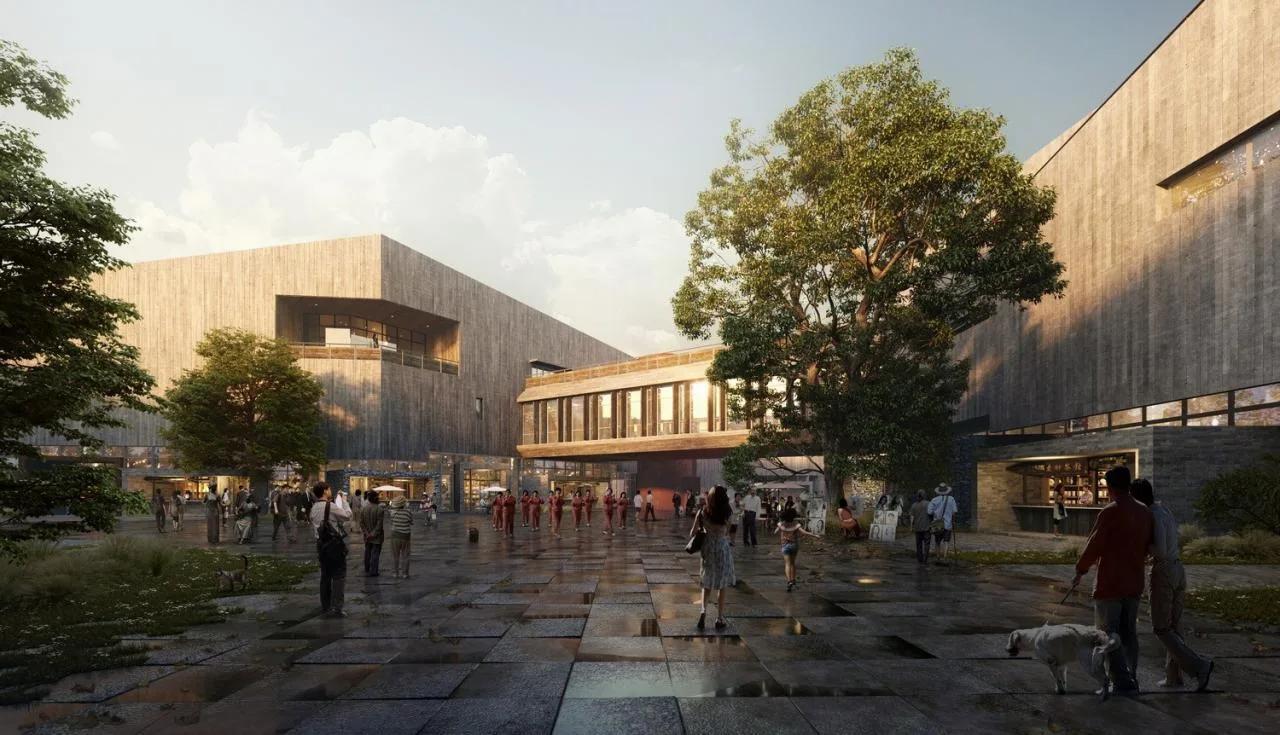
Third, an elevated corridor on the second floor breaks up the large spatial volume inside. The courtyards of varied sizes enhance the center’s public life: the large courtyard accommodates gatherings of thousands, while the smaller one centers around a preserved century-old camphor tree, continuing the township’s tradition of public green spaces.
The Art Center’s courtyard spaces
03 Three-Dimensional Viewing and Spatial Transformation
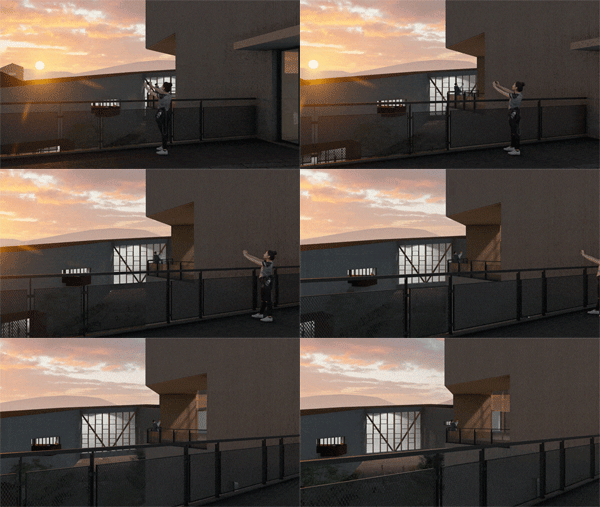
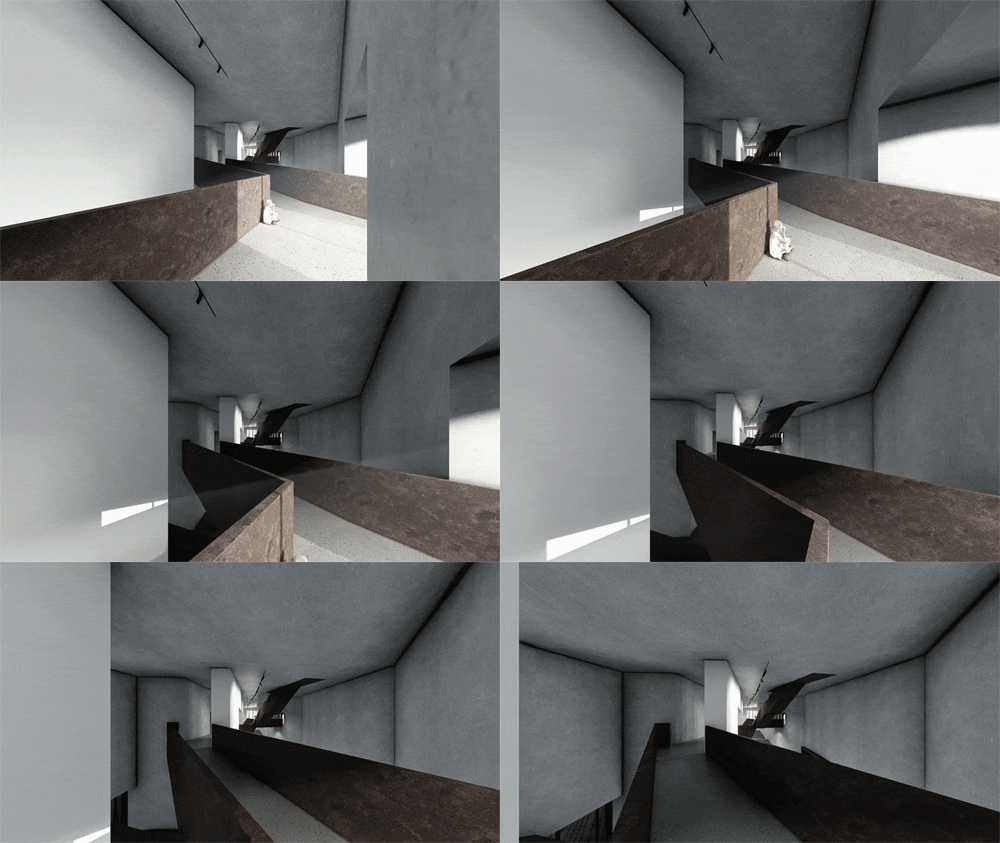
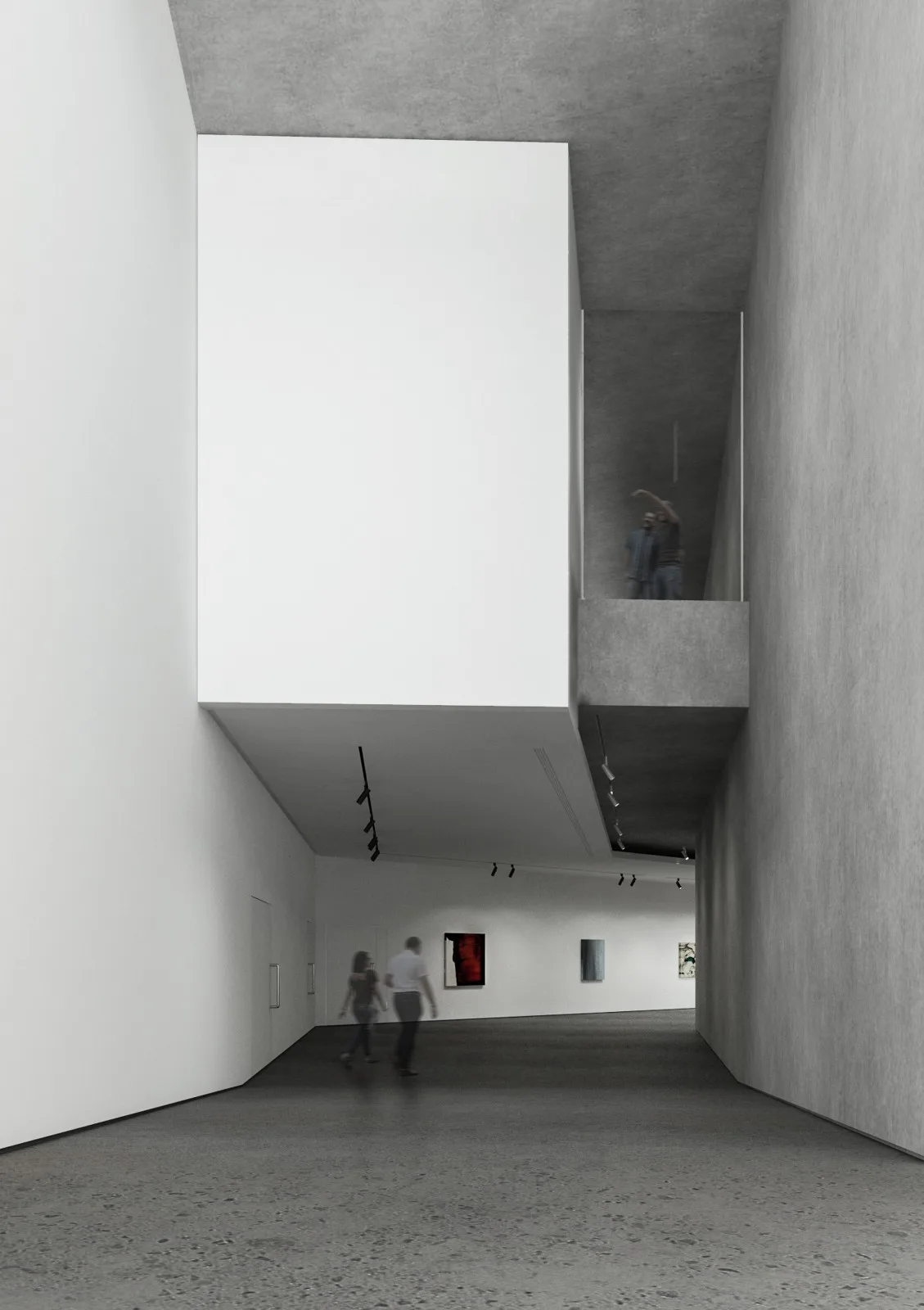
The building’s undulating form creates a dynamic transition within the internal exhibition spaces, guiding visitors through a fluid journey.
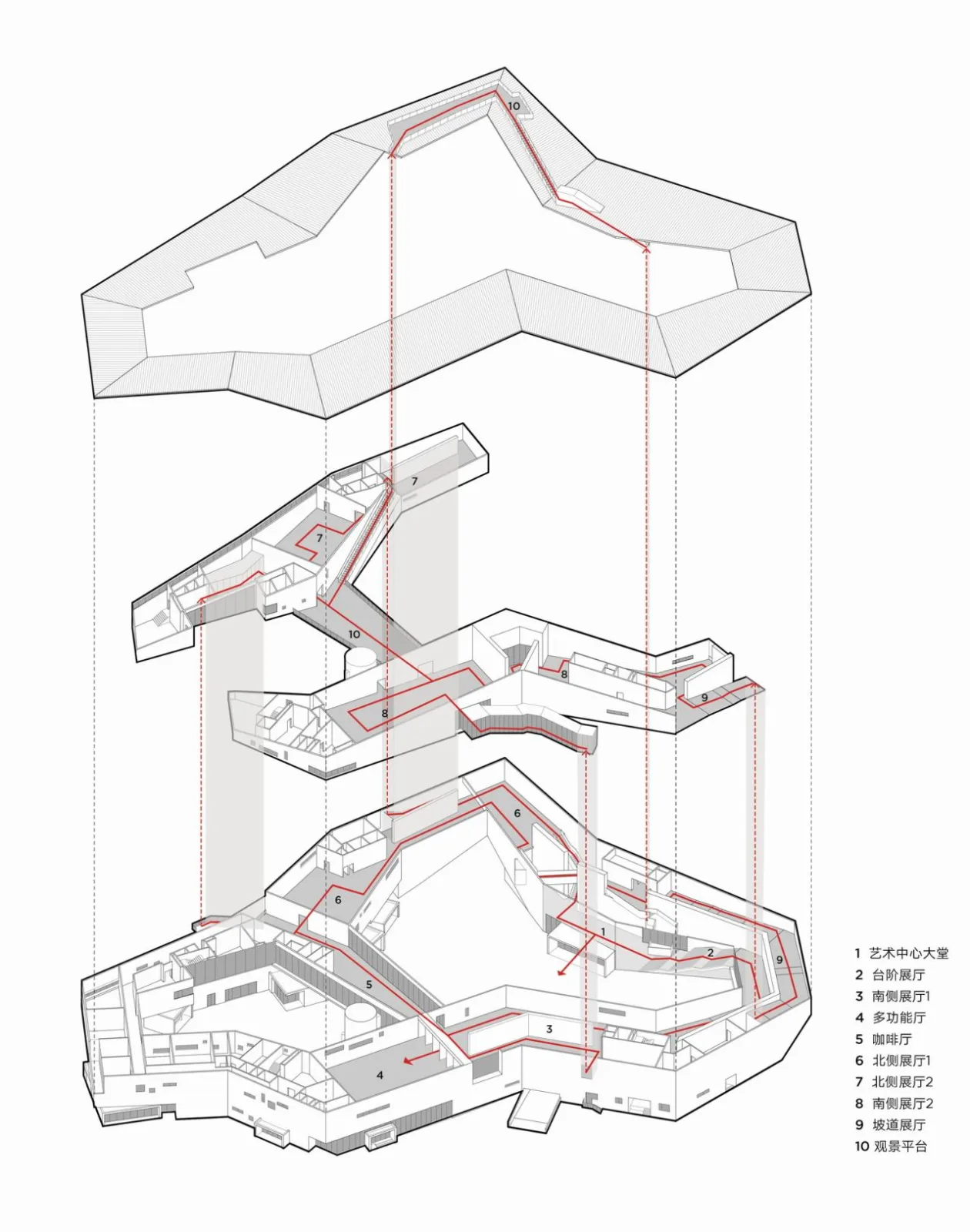
△ Visitor pathway
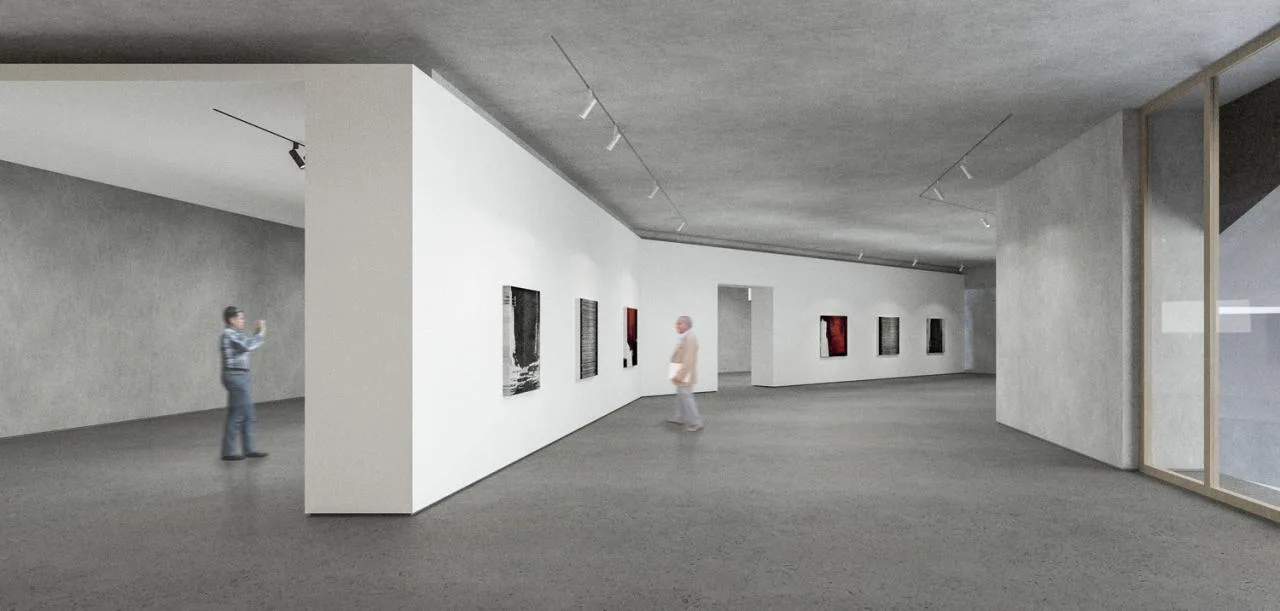
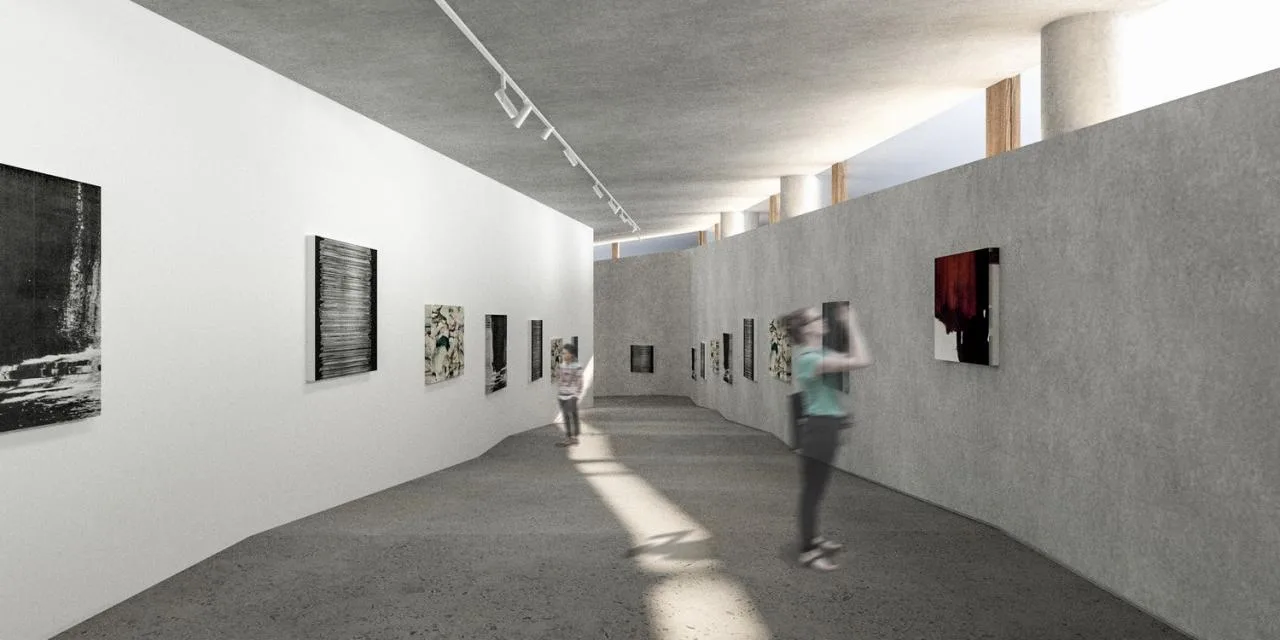
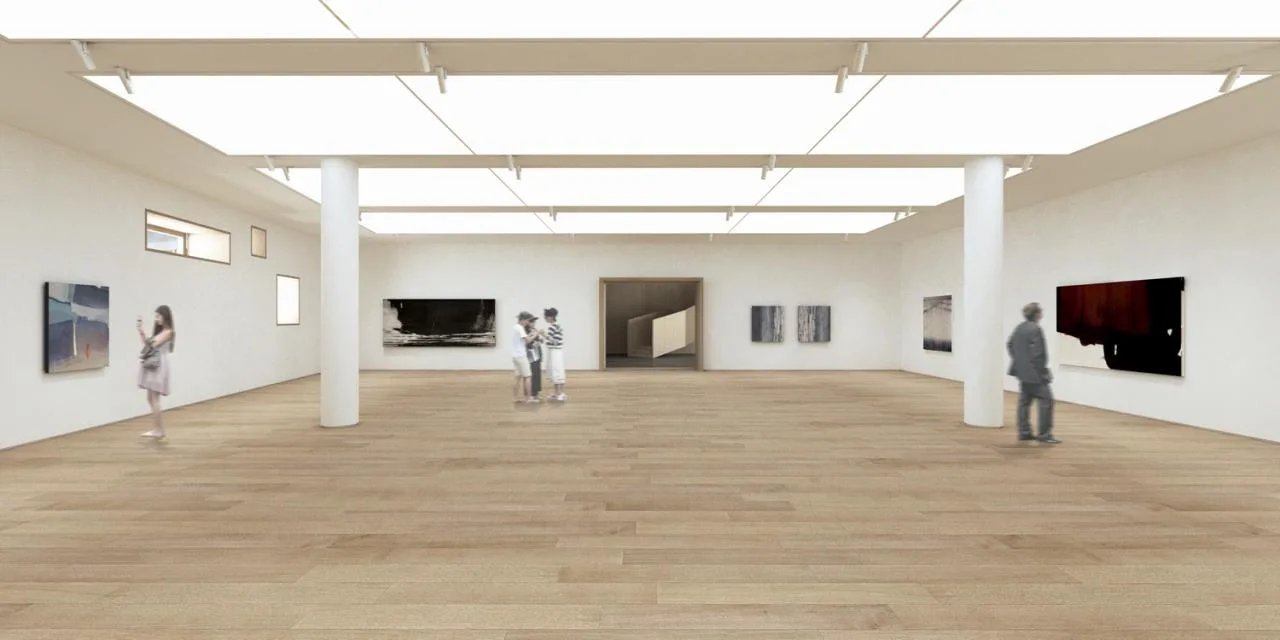
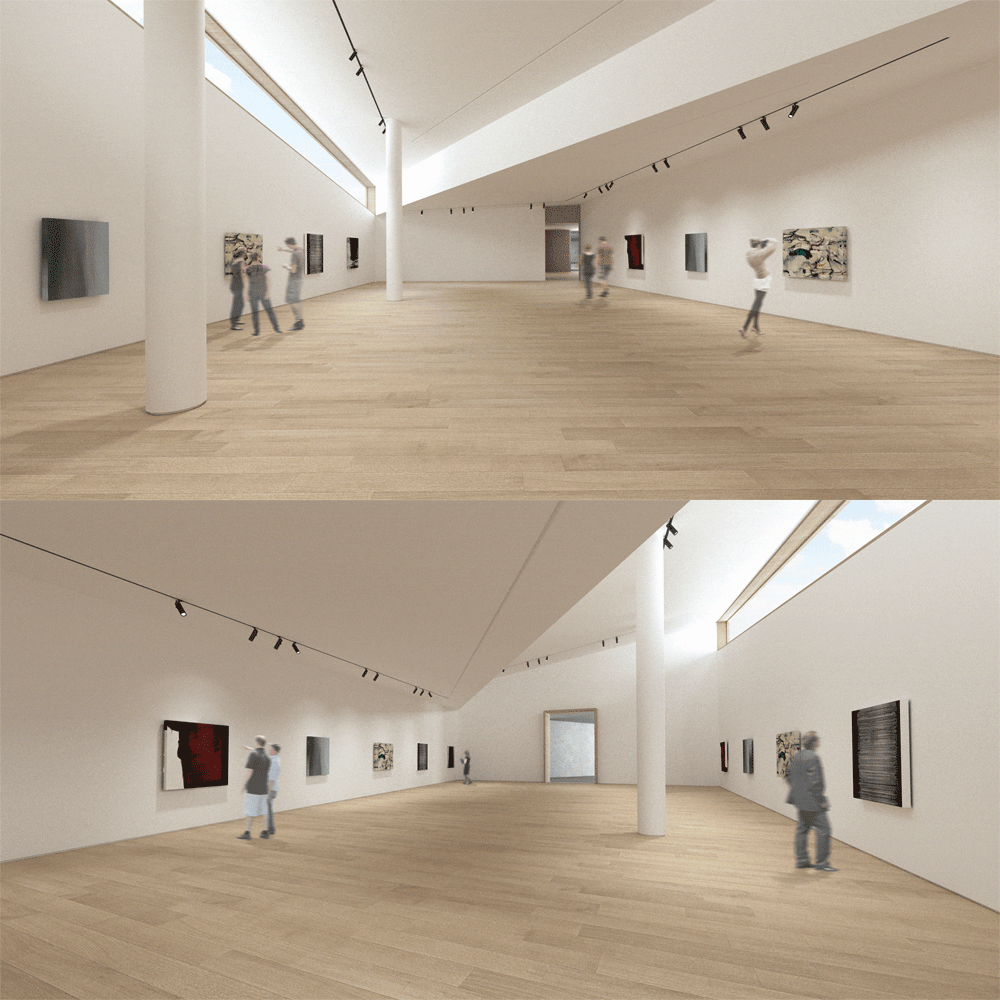
△ Interior view of the Art Center
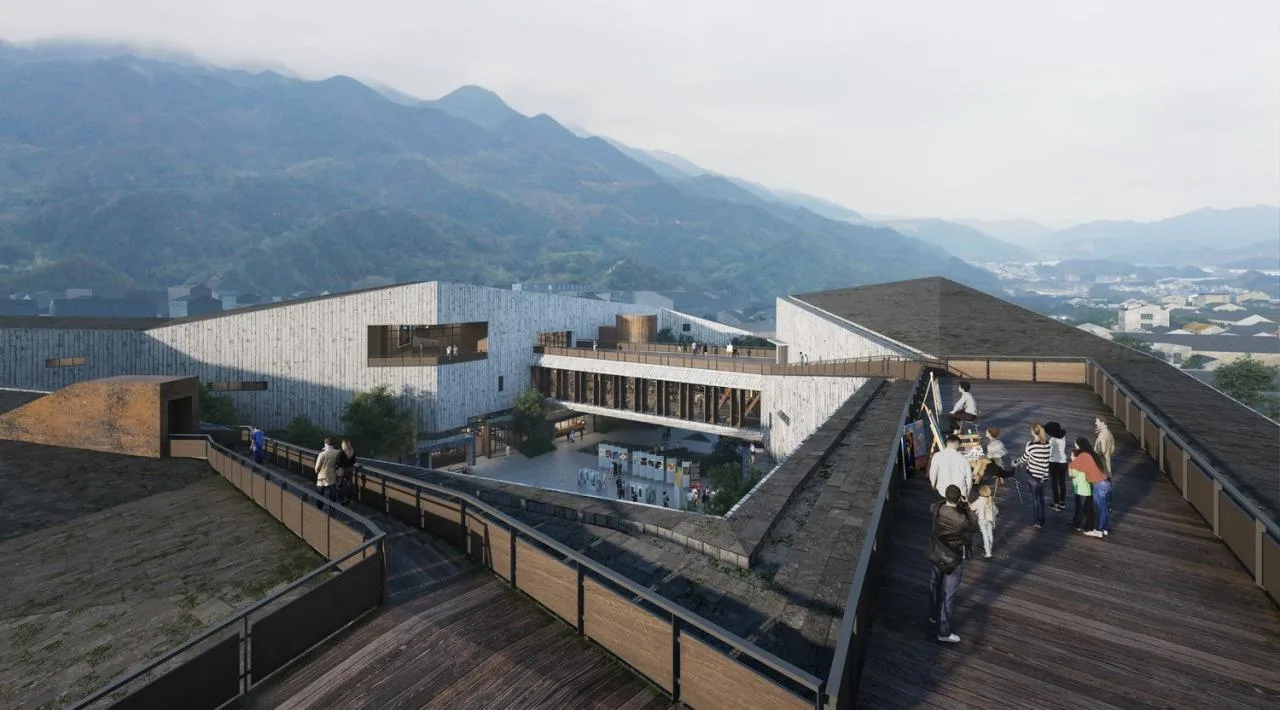
The visitor path begins from the street and plaza, passes through elevated ground-floor spaces and courtyards, enters the art center, and journeys along gently stepped exhibition halls, a long sloping ramp, and a suspended bridge, culminating at the rooftop.
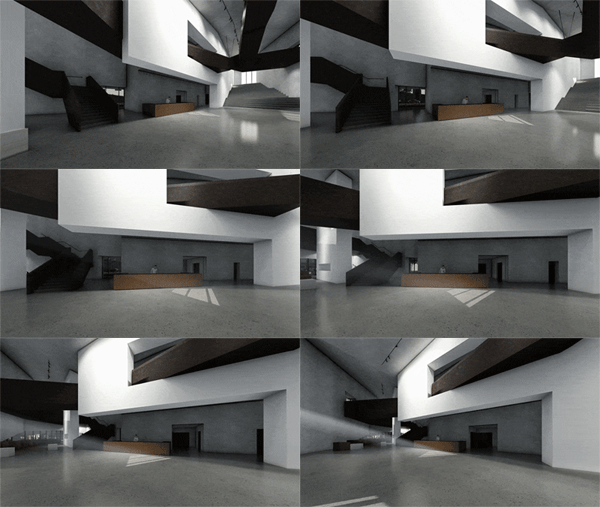
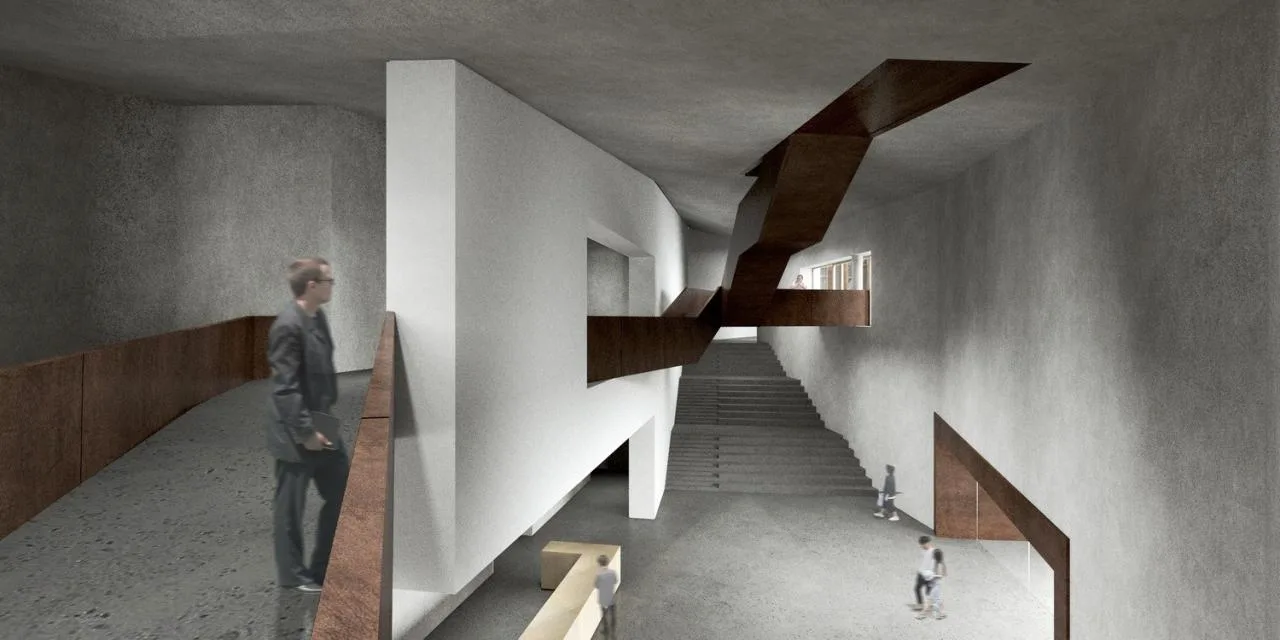
Through spatial transitions—ascending and descending, indoor and outdoor, and shifting between exhibits and scenery—the visitor experiences the art center as a moving landscape. At the rooftop platform, views unfold over the old street, Oujiang River, and surrounding mountains. Dynamic local landscapes blend with static art, offering visitors an immersive artistic pinnacle.
04 Material Memory and Place Identity
The exterior primarily features wood formwork concrete, presenting a gentle color palette and simple texture. This softens the imposing scale of the building, lending it an elegant, understated character that harmonizes with the historic small-town environment.
Recycled old bricks and tiles are used for the first-floor commercial boxes, site paving, and rooftops, reinterpreting original village textures and preserving the local spatial memory.
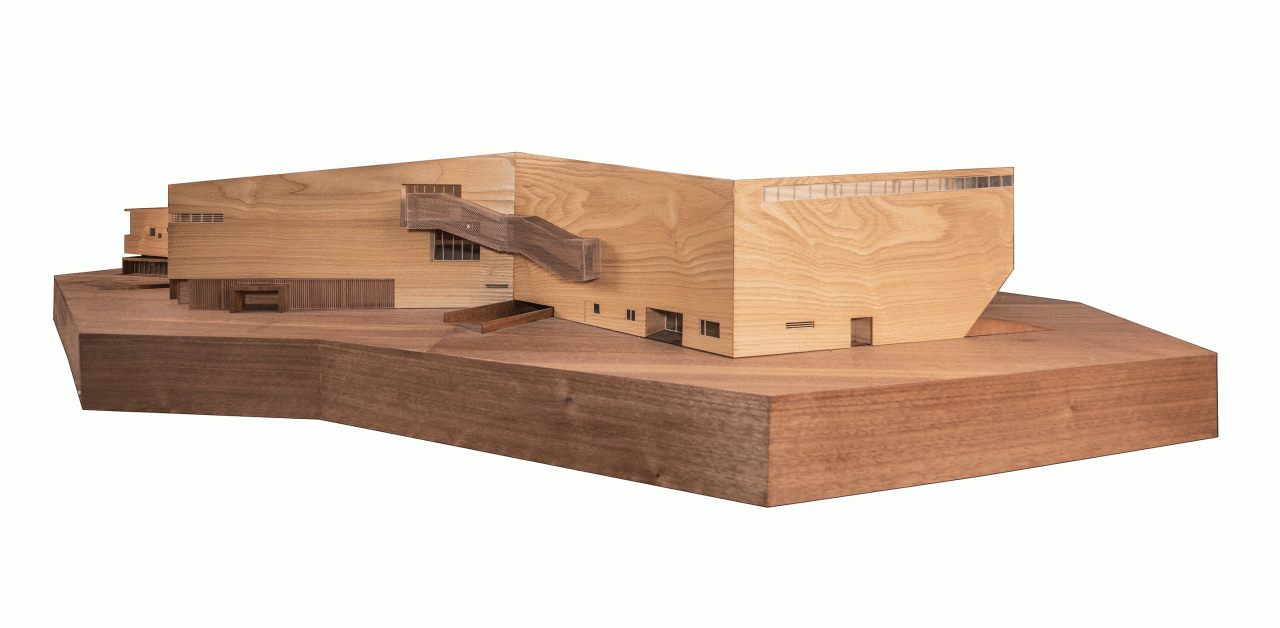
△ Model facade
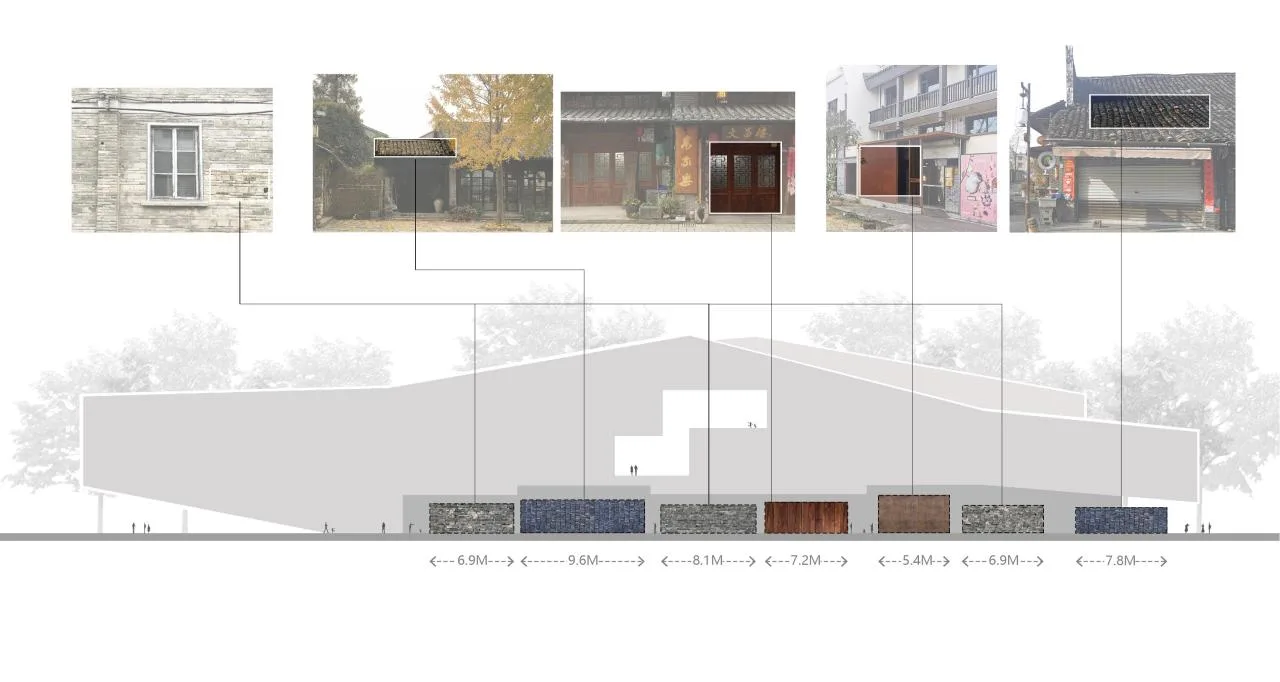
Material restructuring analysis for the first-floor commercial boxes
05 Everyday Art: Who Is This Art Center For?
The Tongji Weir, a world irrigation engineering heritage site dating back to 505 AD, continues to nurture the small town that gave rise to the Lishui Barbisson Painting School. Scenes of rowing boats, ancient camphor trees, and locals returning home in the evening light capture the picturesque daily life of Guyan Painting Village, celebrated by many.
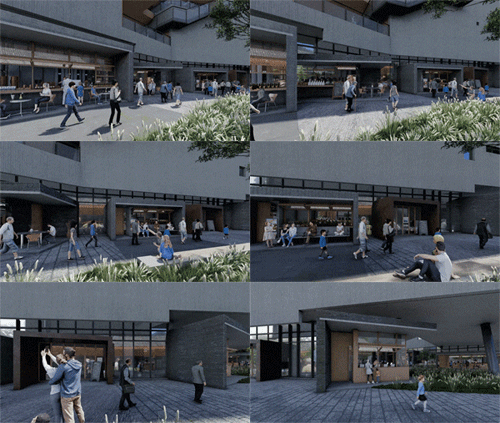
Rather than building a purely refined, modern cultural space focused on visual impact, we preferred the art center to engage with the town in a “daily life” manner. Instead of a conventional art center, we created an art complex that integrates commerce, culture, exhibitions, training, and education.
We envision the center not only attracting tourists and hosting professional exhibitions but also accommodating abundant, grassroots public activities for local residents. Through these daily art spaces, the center fosters closer communication and interaction with the township, establishing a lasting artistic presence that quietly enriches and empowers community life.
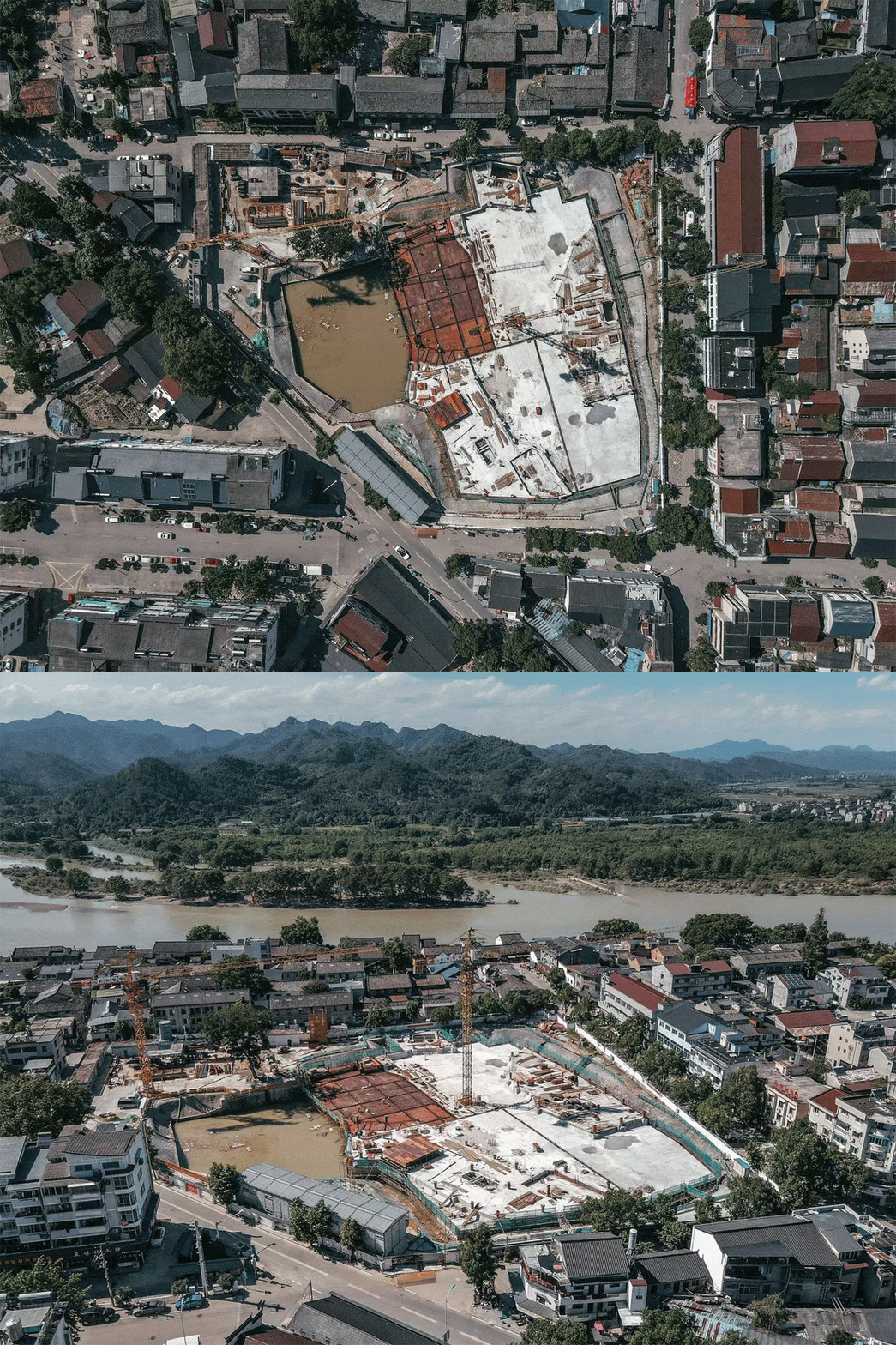
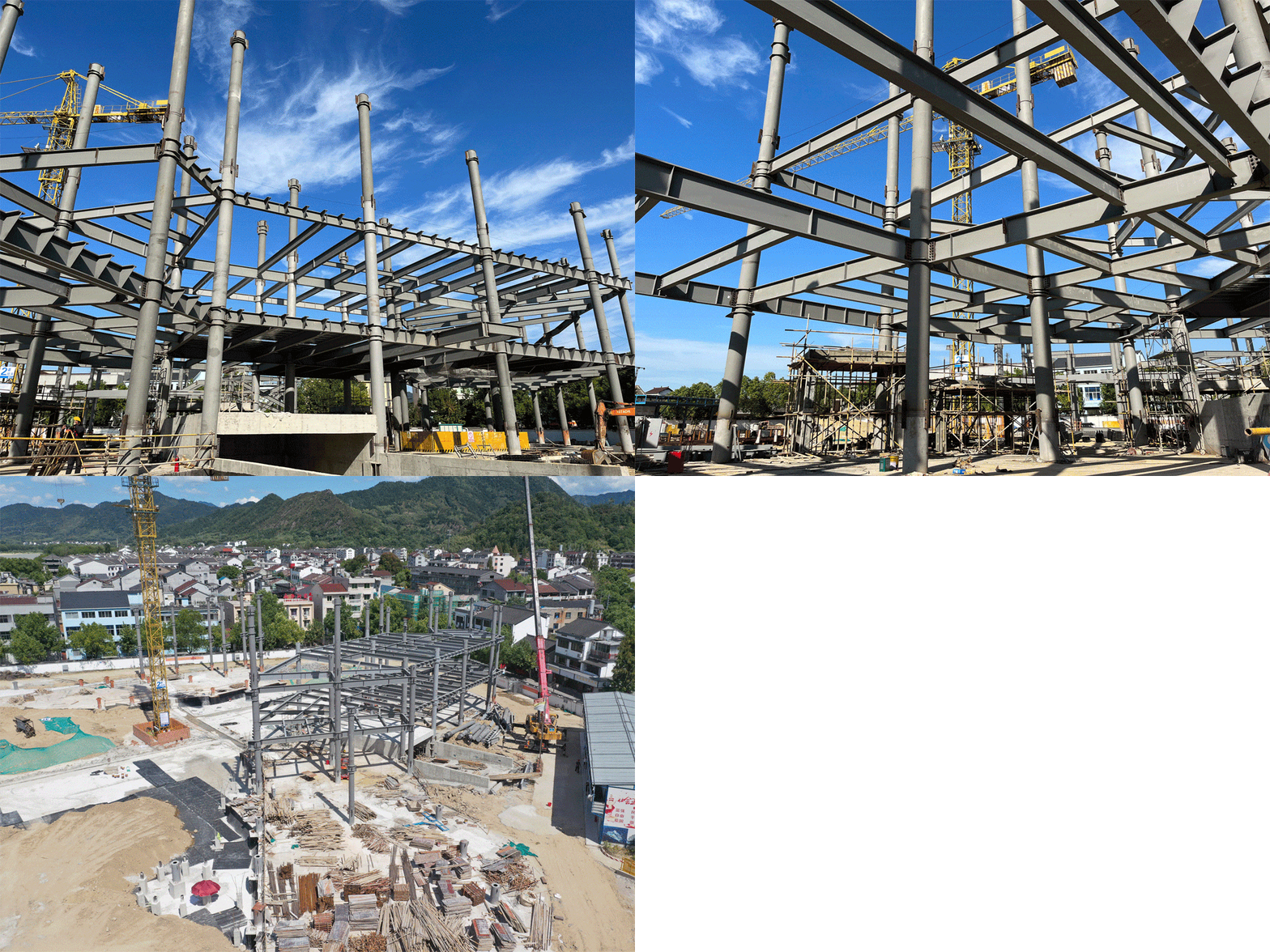
△ Construction site
Project Information
Project Name: Lishui Guyan Painting Township Art Center
Location: Guyan Painting Township Scenic Area, Lishui City, Zhejiang Province
Design Firms: Line+ Architectural Firm (Architecture, Interior, Landscape)
Lead Architect: Meng Fanhao
Design Team: Li Xinguang, Hao Jun, He Yaliang, Xu Hao, Wan Yuncheng (Architecture); Zhu Jun, Yang Li, Zhang Sisi, Lv Siqi, Deng Hao, Ge Zhenliang, Qiu Limin, Chen Wen (Interior); Li Shangyang, Jin Jianbo, Rao Feier, Li Jun, Zhang Wenjie (Landscape); Liu Xinhui (Visual Identity)
EPC Manager: Ding Yibo
Owner: Lishui Liandu District Tourism Investment Development Co., Ltd
Collaborators: Xicheng Engineering Design Group Co., Ltd
Curtain Wall Consultant: Shanghai Yidu Curtain Wall Construction Consulting Co., Ltd
Lighting Design: Zhang Xin Studio, School of Architecture, Tsinghua University
Building Area: 13,738.96 square meters above ground and 6,463.65 square meters underground
Status: Under construction















Must log in before commenting!
Sign Up