
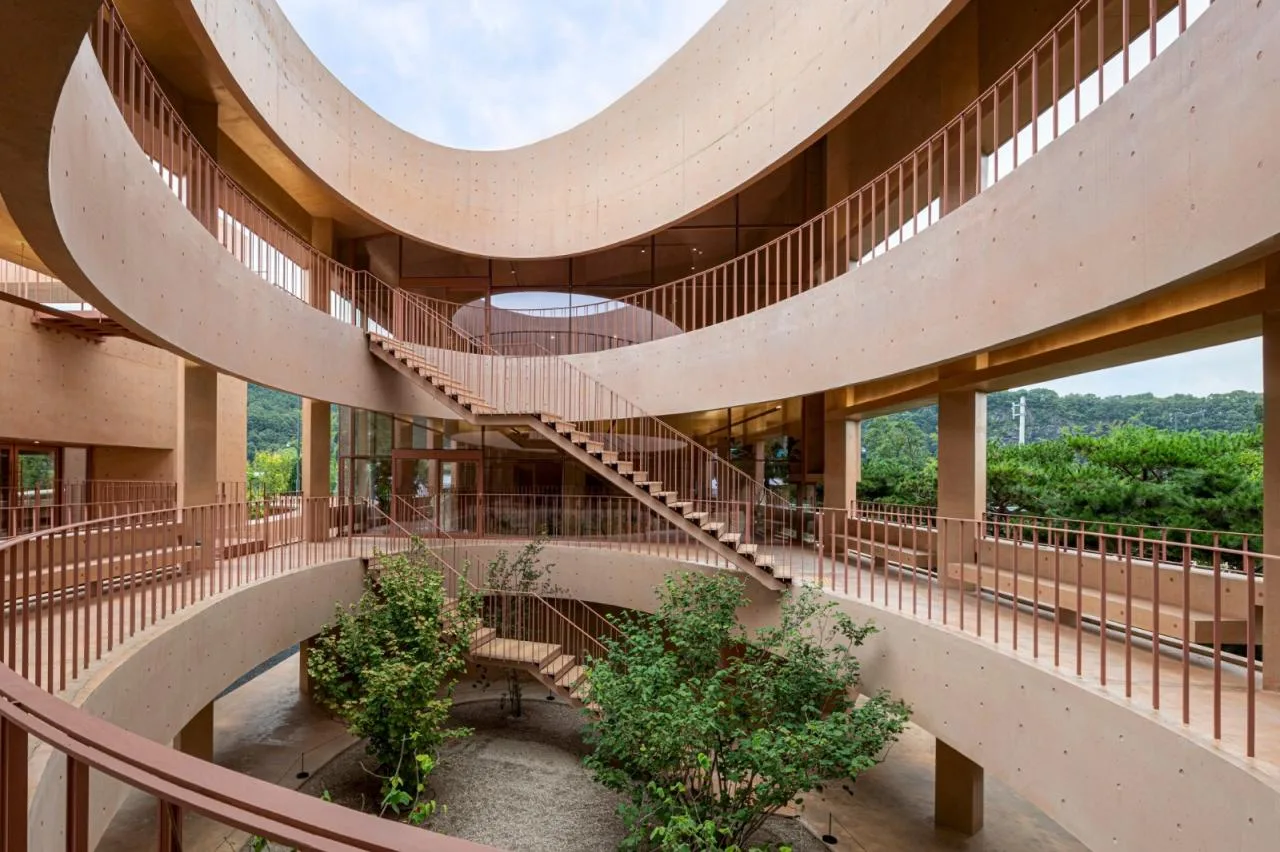
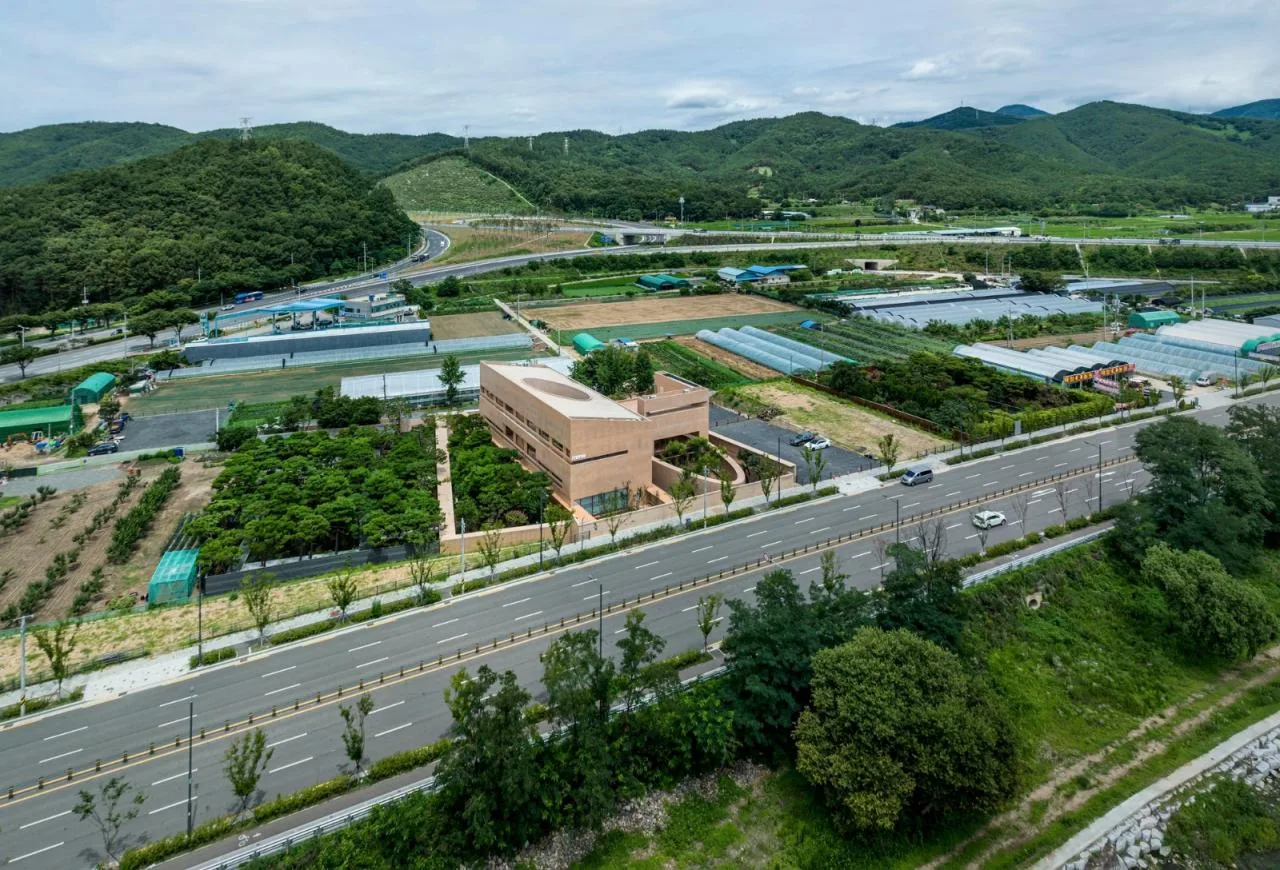
The MRNW Daegu project transforms a landscape tree farm inherited from the client’s father into a revitalized space. Located on the northern edge of Daegu, the site is designated as a restricted development area and has served as a landscape farm for 20 years. The southern boundary faces Donghuachuan Road, a two-way six-lane street about 2.3 meters above ground level, while the northern side borders Hugu Road, a one-way single-lane street. The boundary along Tiger Valley Road is marked by a farm fence lined with pine trees.
When the project began, the site was densely populated with landscape plants cultivated by the client’s father over two decades, both as a personal passion and for commercial purposes. An ancient garden sits within a spacious lawn, surrounded by five warehouses and management housing situated behind them.
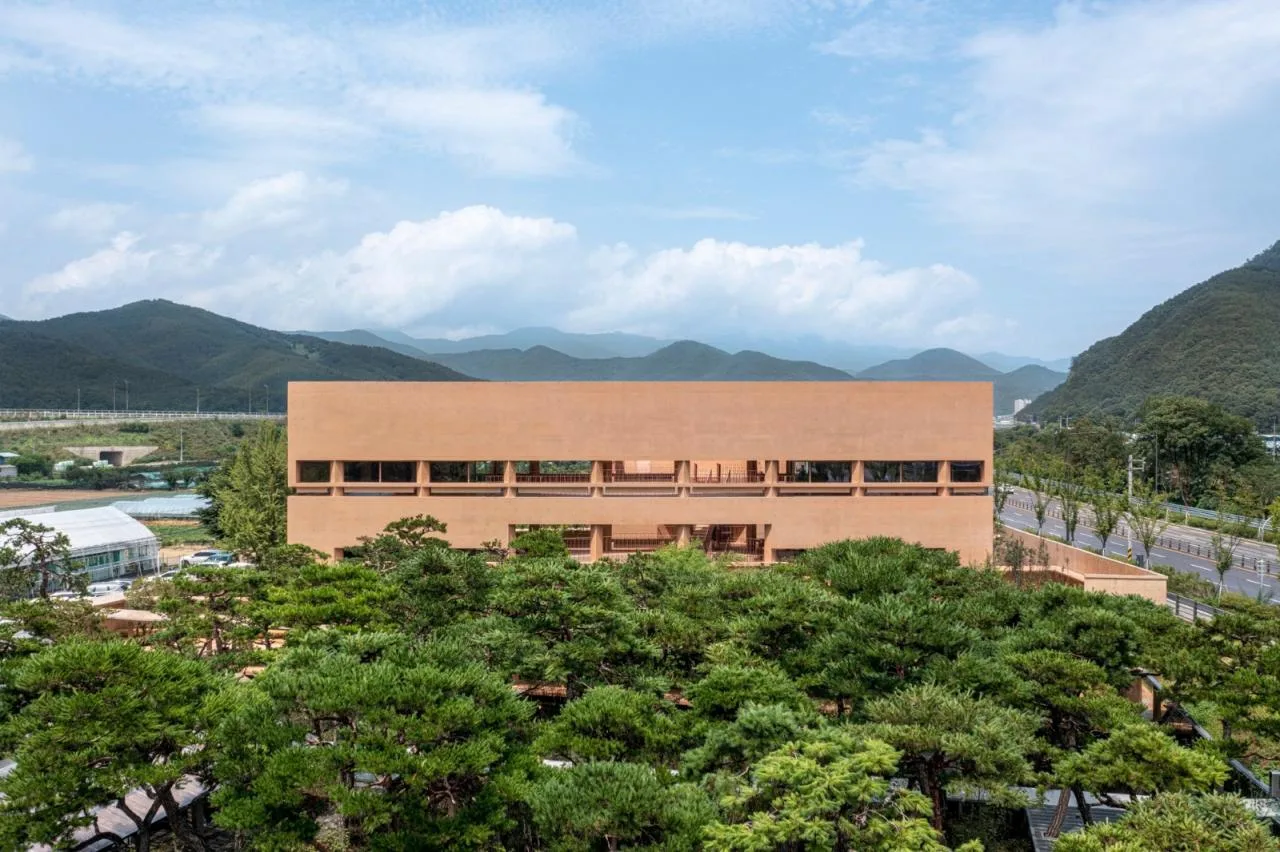
The project carefully establishes a relationship between architecture and landscape. The planting density around the buildings is nearly forest-like, reflecting the client’s father’s taste and dedication. The site includes a management building and five warehouses, with some areas preserving ancient gardens.
Finding a location for the new building involved balancing demolition and preservation, aiming to minimize tree relocation. A forest, as a primitive shelter, features a canopy supported by pillars that allow sunlight and rain to filter through. This atmosphere, developed over 20 years, is challenging to replicate artificially in a short time. Instead, the design embraces this heritage, allowing the new structures to actively engage with the existing forest. The site’s overall plan is shaped by the forest, creating a deliberate contrast between built and natural environments.
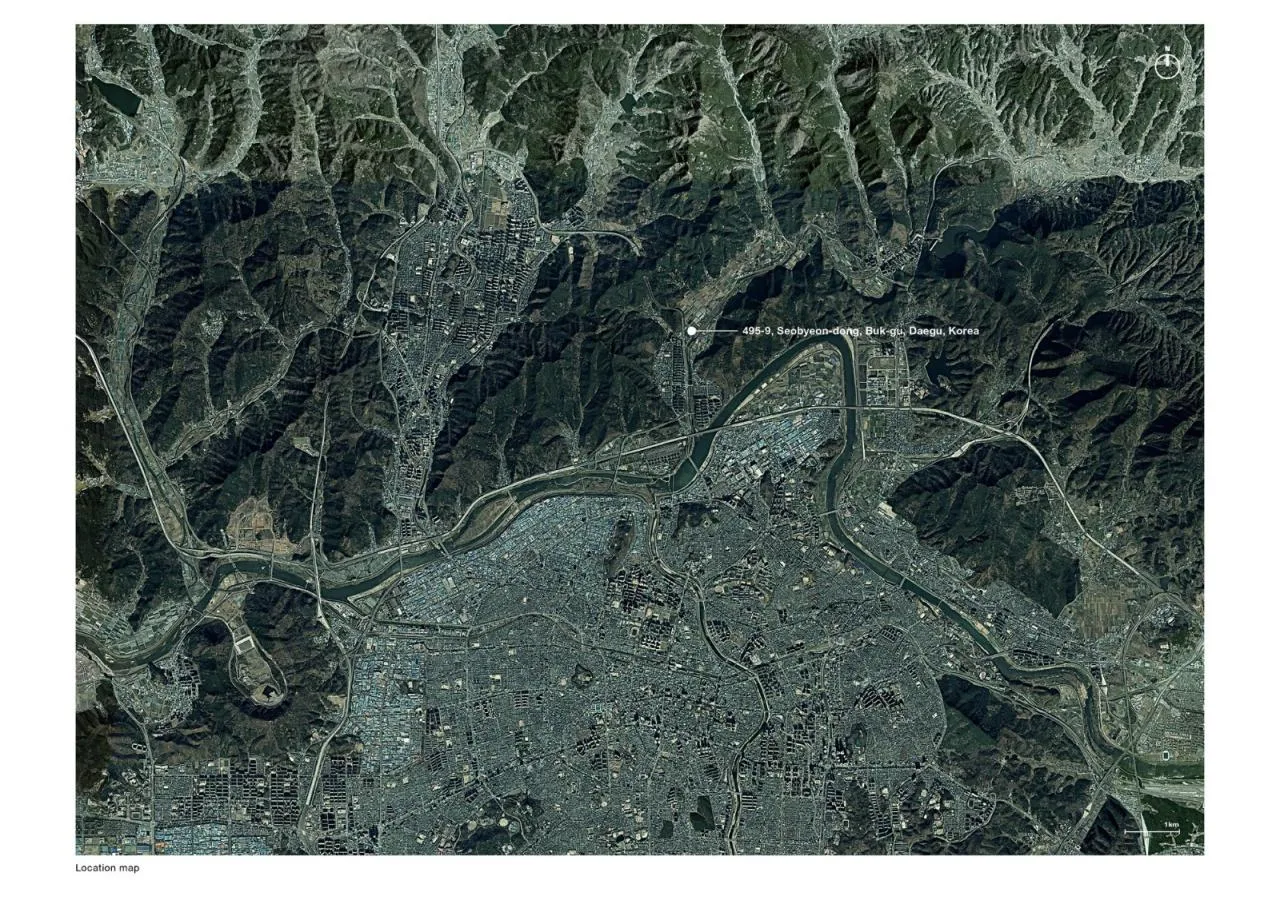
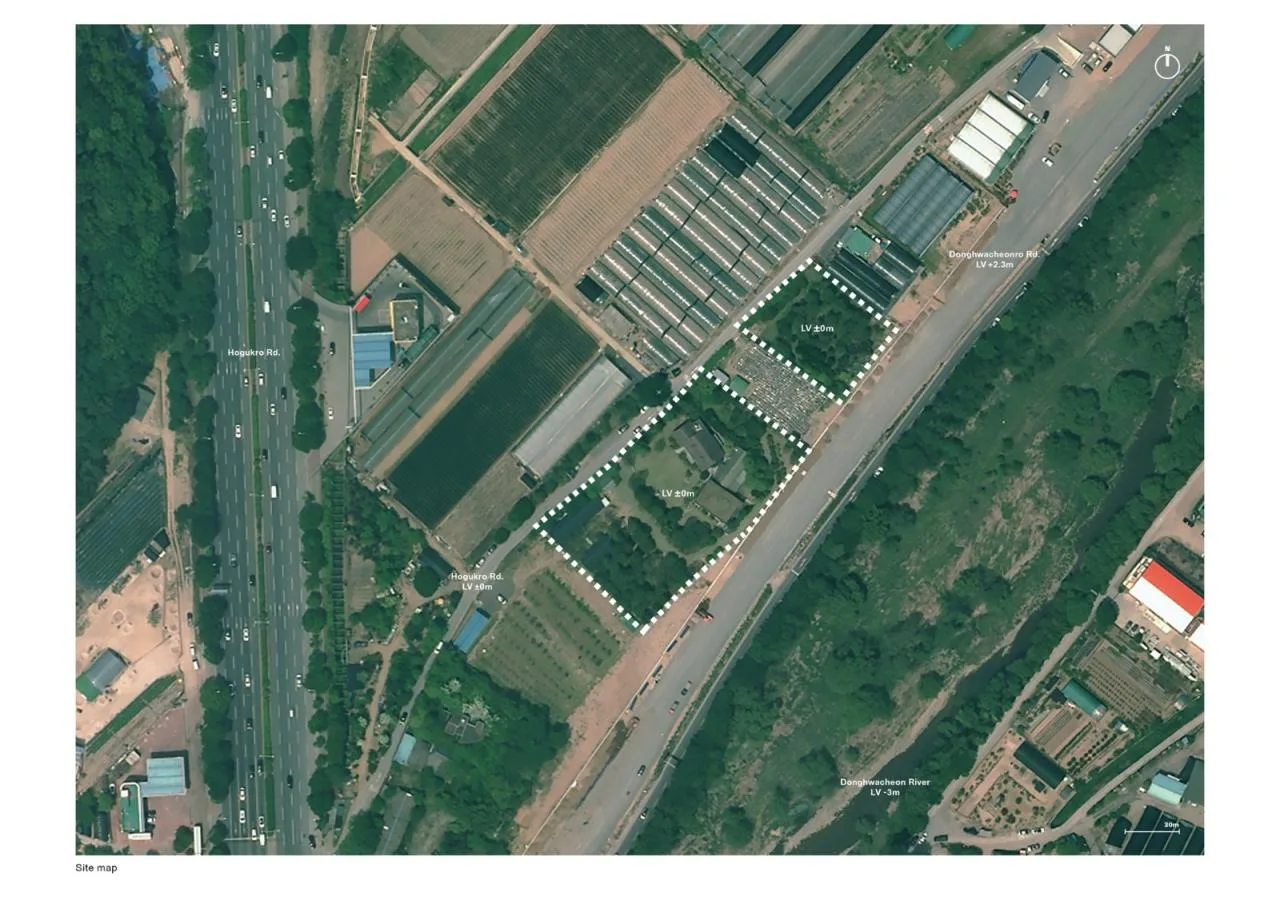
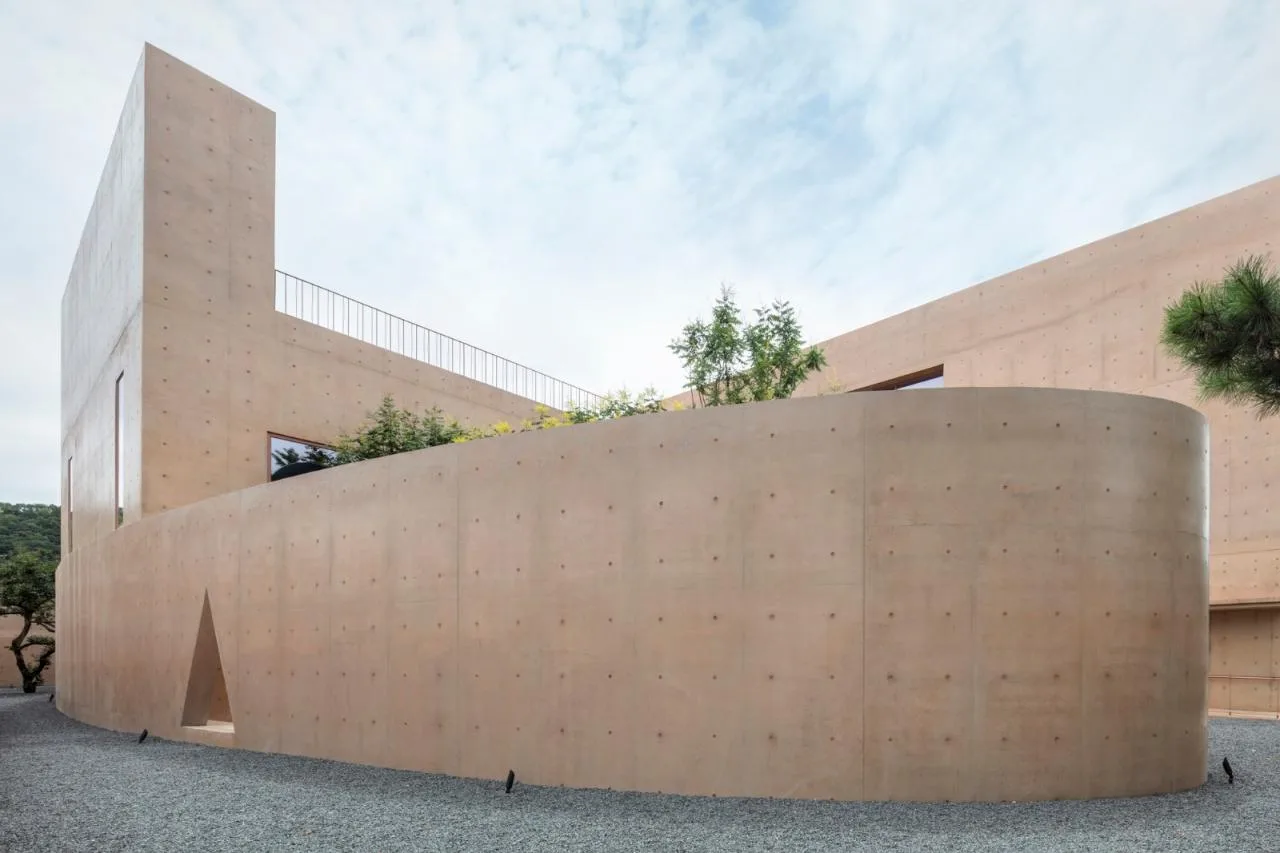
The southeast side of the site faces a main road elevated about two meters, while the northwest side borders a back road. Walls extending from the buildings shield the complex from traffic noise and speed, while also creating a strong regional identity.
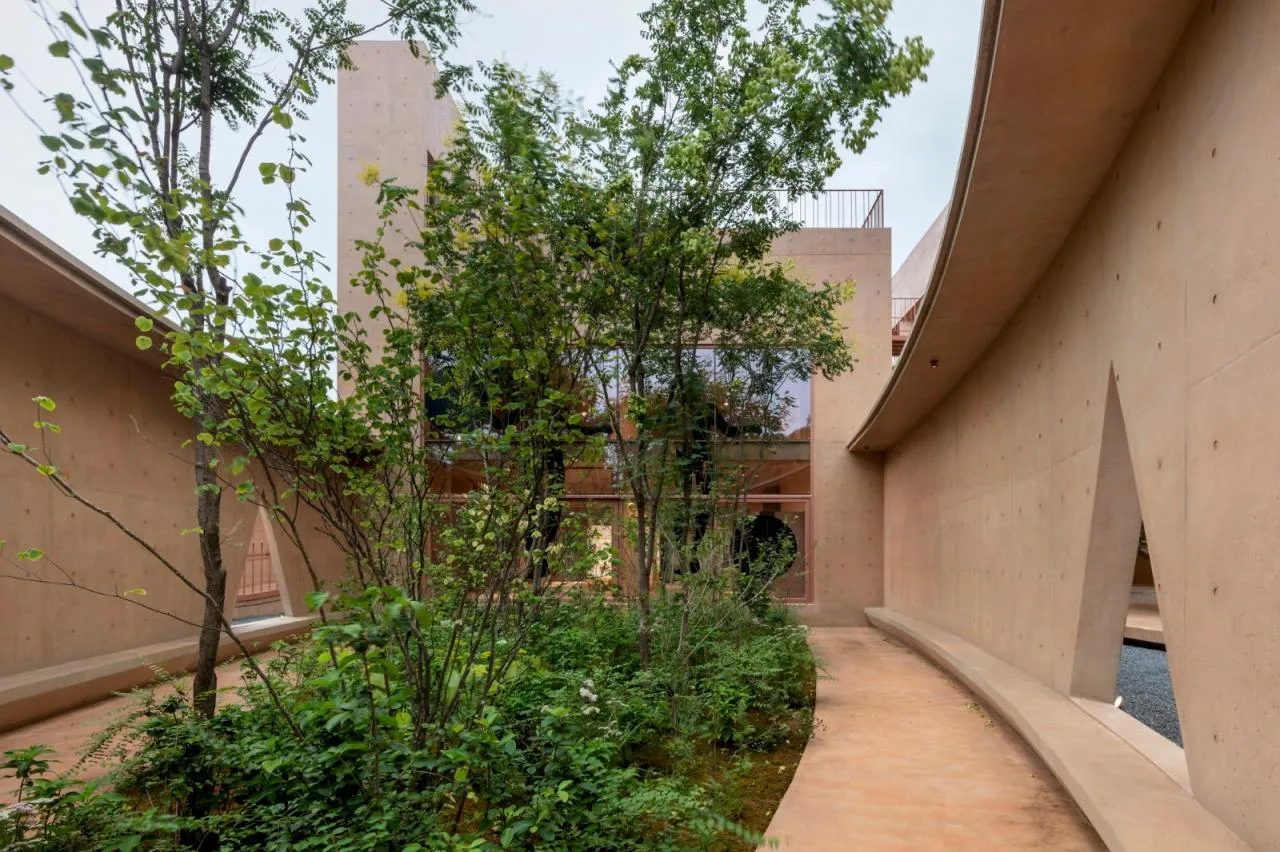
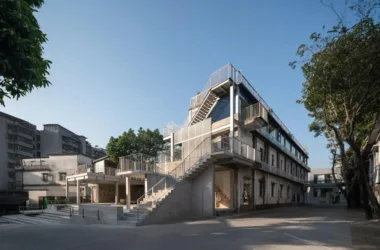
Architectural elements such as walls, eaves, corridors, and benches integrate with the exterior façades responding to the garden-facing sides of the buildings. A corridor encloses an antique garden, with benches along the walls providing seating and views of the garden. Visitors passing between the two buildings move beneath low eaves approximately two meters high, marking a clear spatial transition.
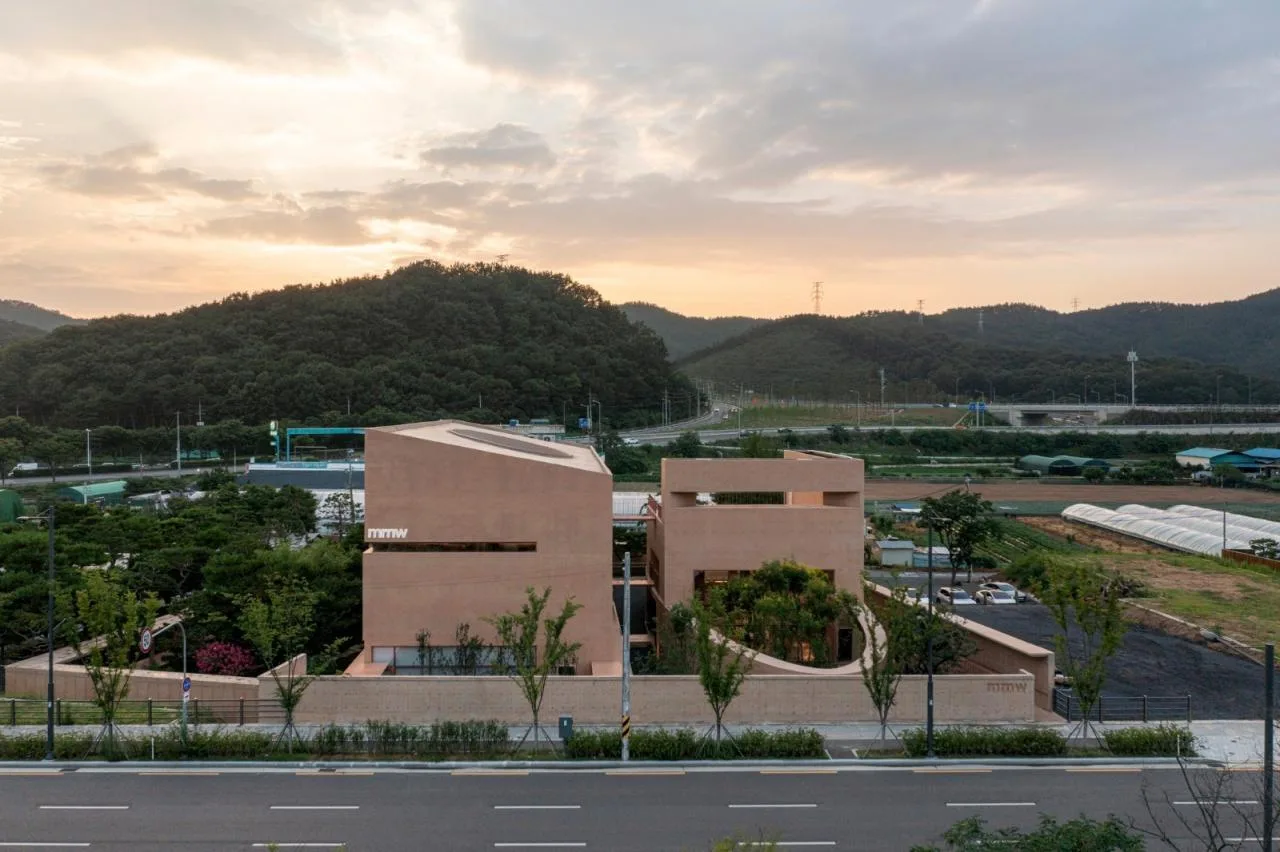
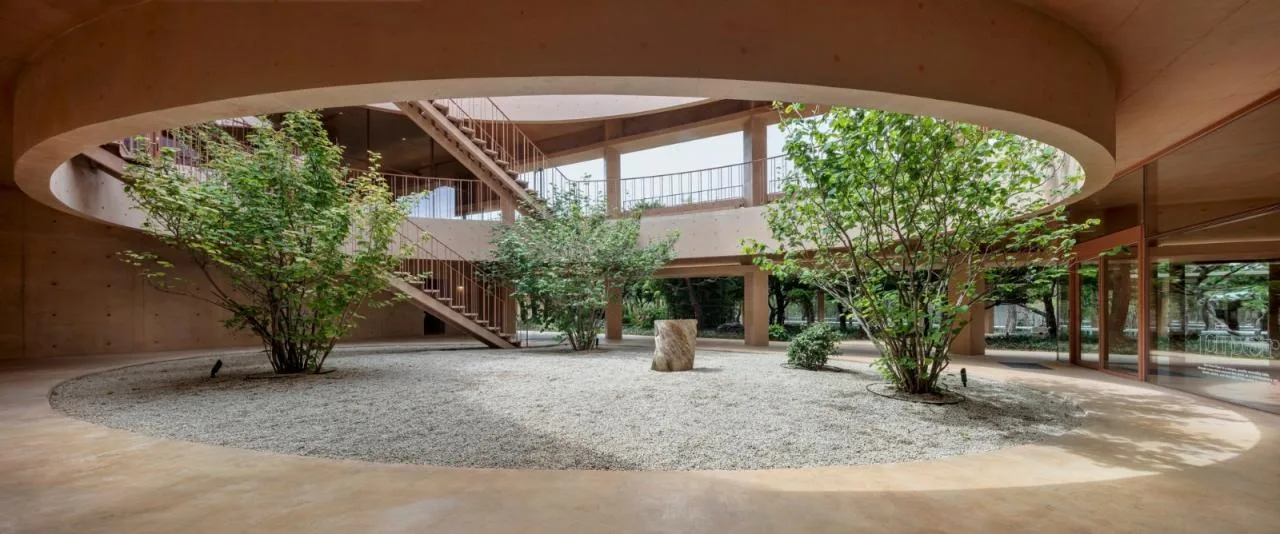
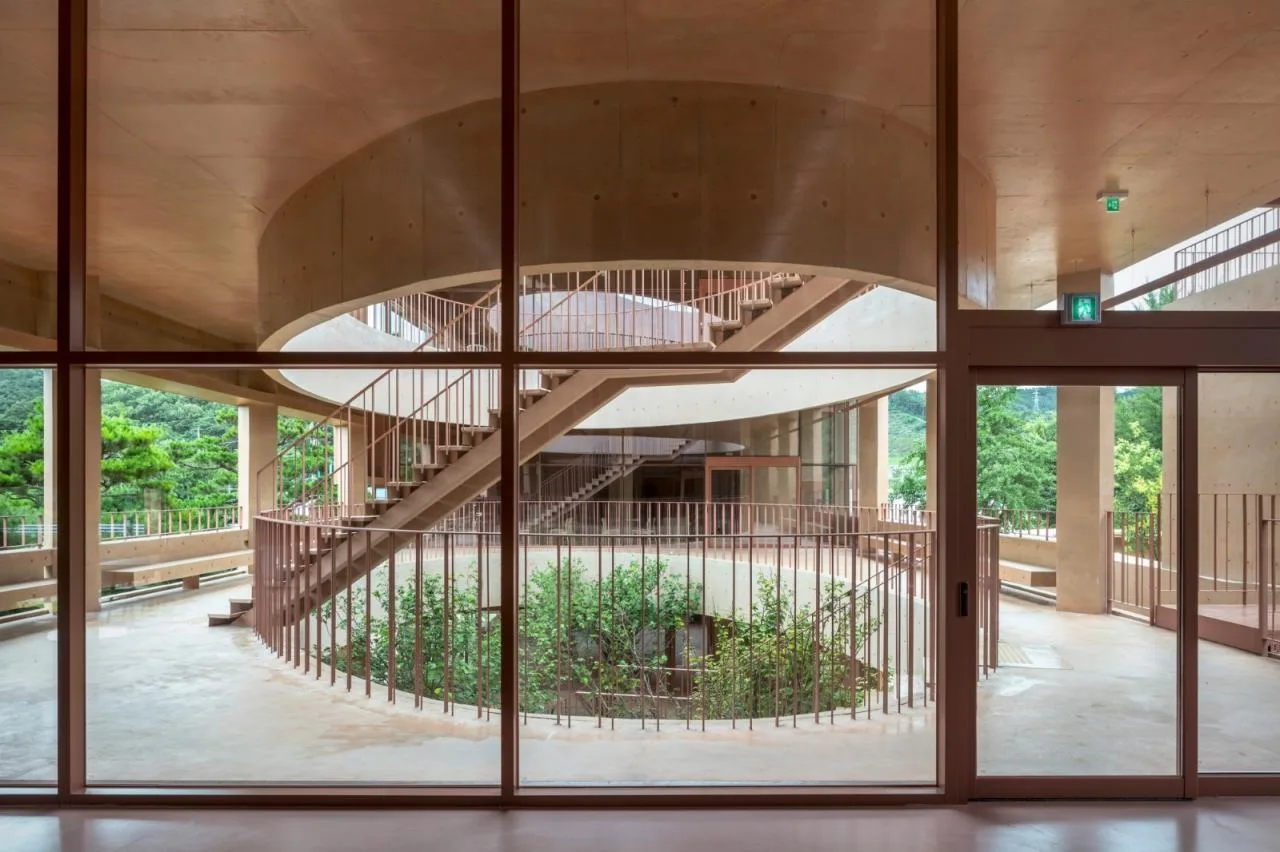
The internal and external spaces of the two buildings are vertically divided into three zones on the floor plan. Building 1 features a central living room flanked by courtyards on either side, while Building 2 reverses this layout, placing the courtyard in the center with living rooms on both sides.
Arranged side by side along a north-south axis, Building 1’s interior faces Building 2’s courtyard. These main spaces follow a 3×3 grid structure, connecting the client’s father’s retro garden adjacent to Building 2. The entire site, including the outdoor space between the buildings, is designed to blur the boundaries between indoor and outdoor environments. The goal is to treat the exterior as an “outdoor room” aligned seamlessly with the interior.
MRNW Daegu’s design links various elements—corridors, walls, mirrored gardens, open courtyards, an old garden, and a pine forest—into an interconnected and fluid spatial experience.
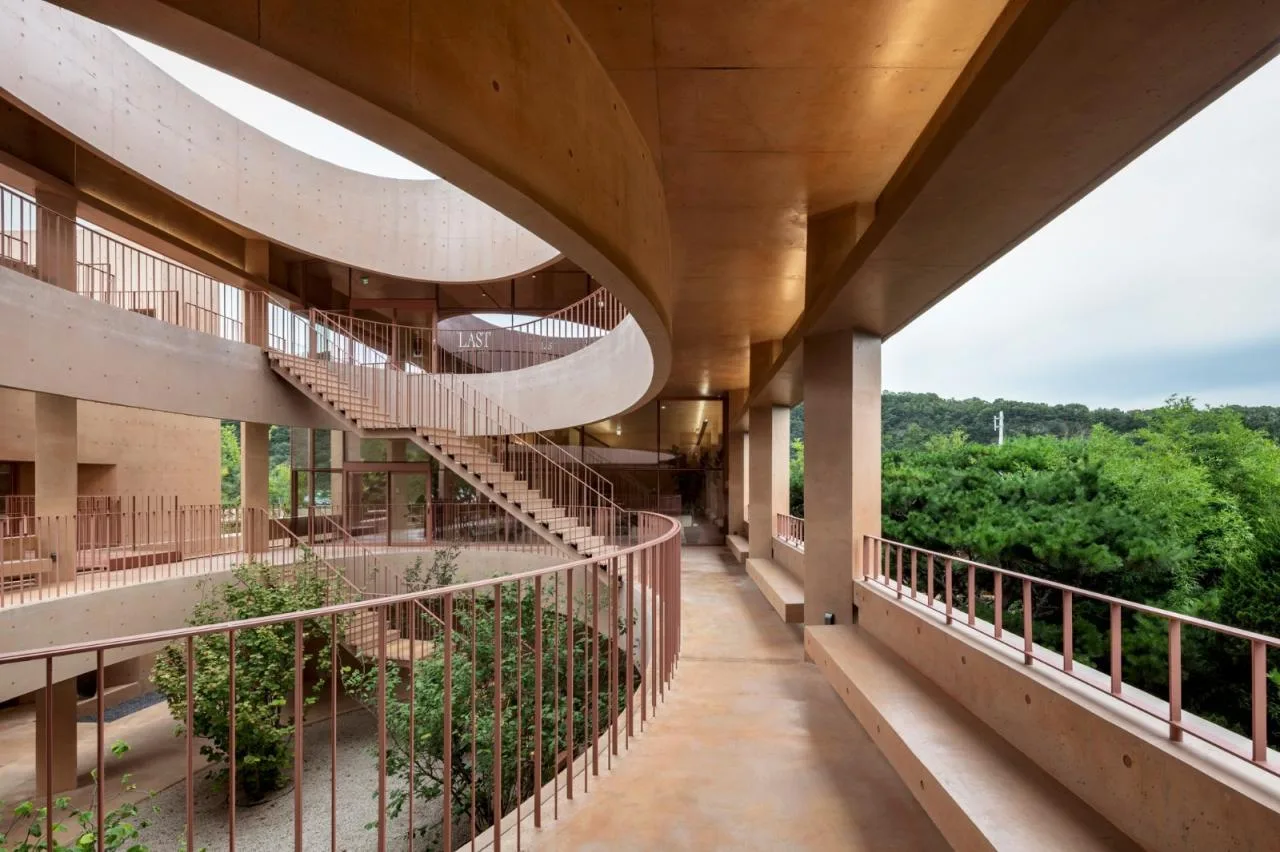
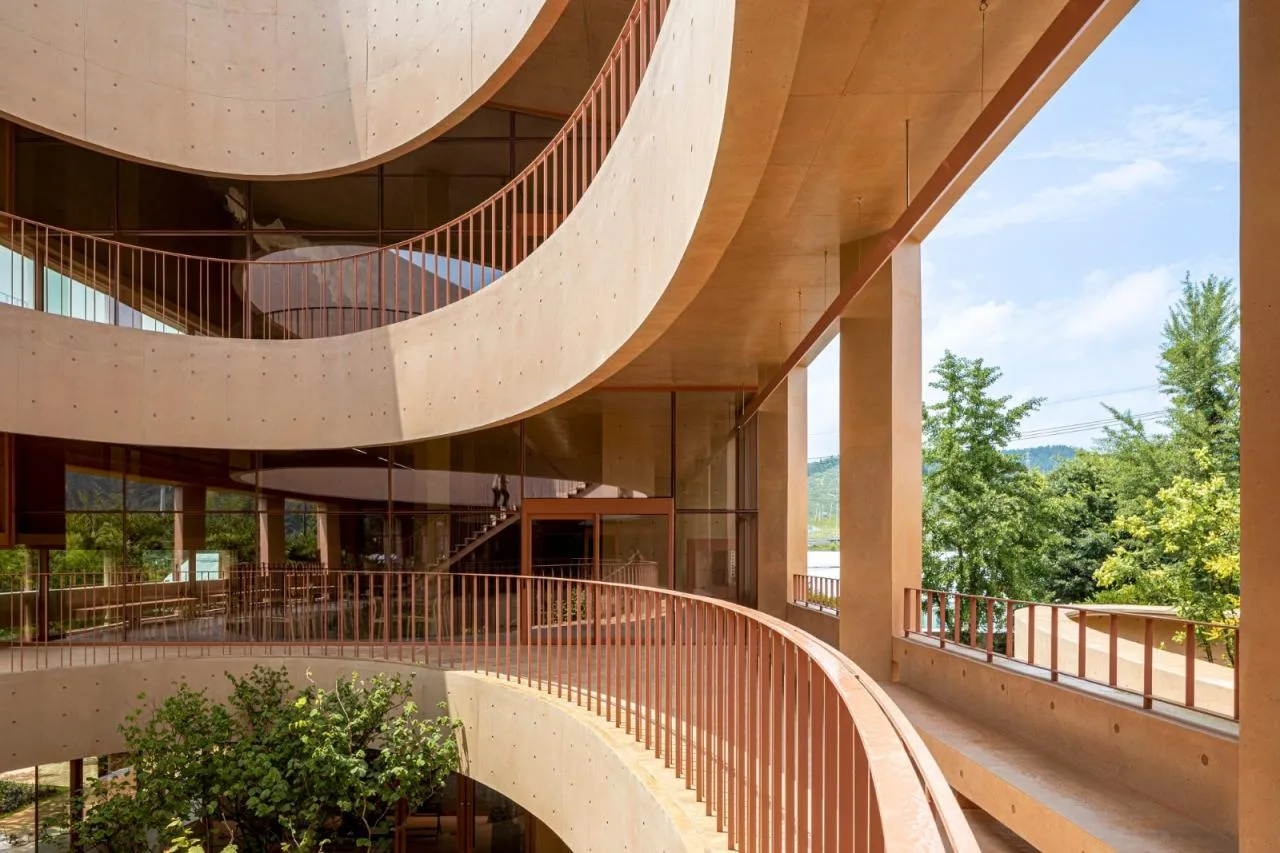
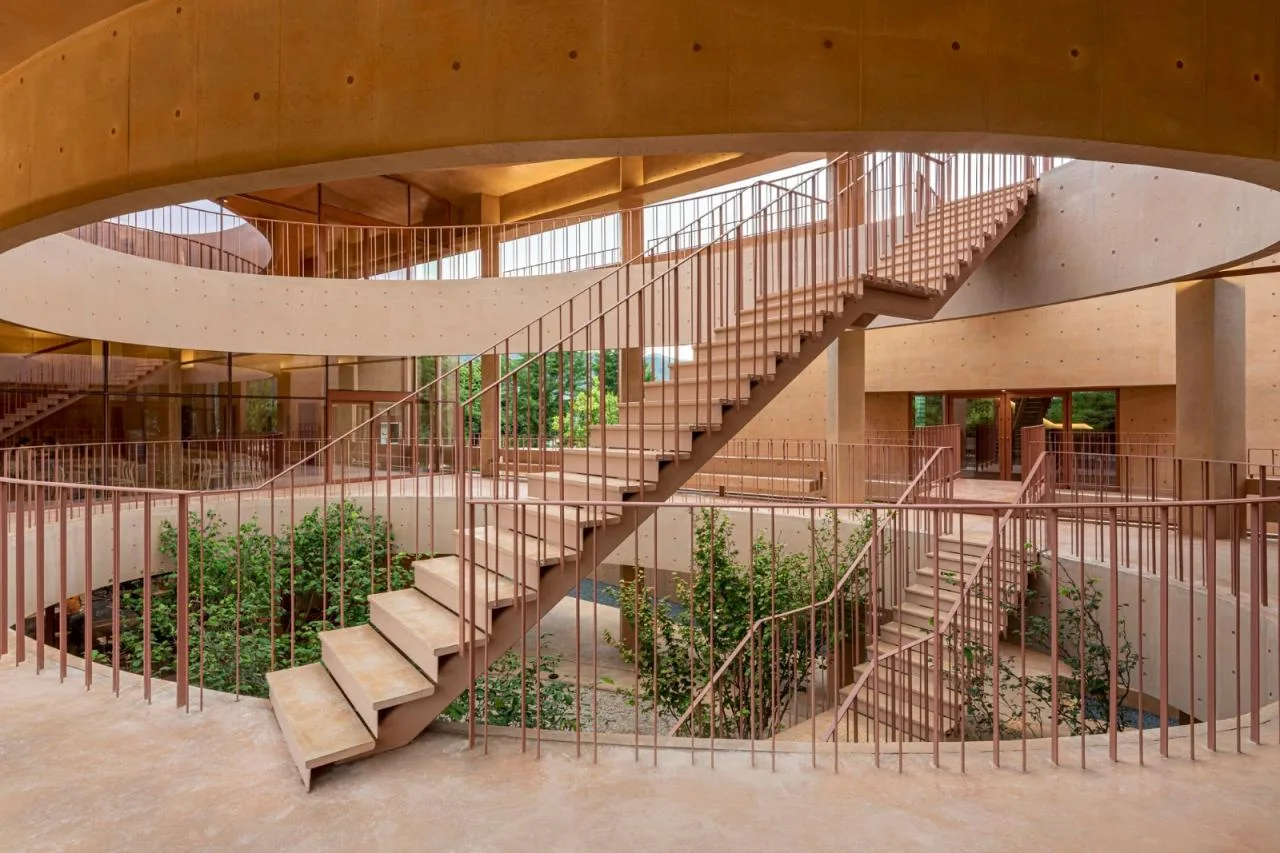
Following the layout principles of traditional Korean architecture, these spaces offer unique experiences. For instance, after walking along a wall, a visitor might open a door leading to an outdoor space or, conversely, enter an indoor area from outside. Inspired by Soswaewon Garden, which organizes buildings and forest into a continuous flow through open walls, MRNW Daegu adopts a similar planning strategy.
The walls, corridors, and exterior façades define the regional character of adjacent outdoor spaces. Interior and exterior spaces connect through central elements such as eaves or terraces, completing the spatial narrative.
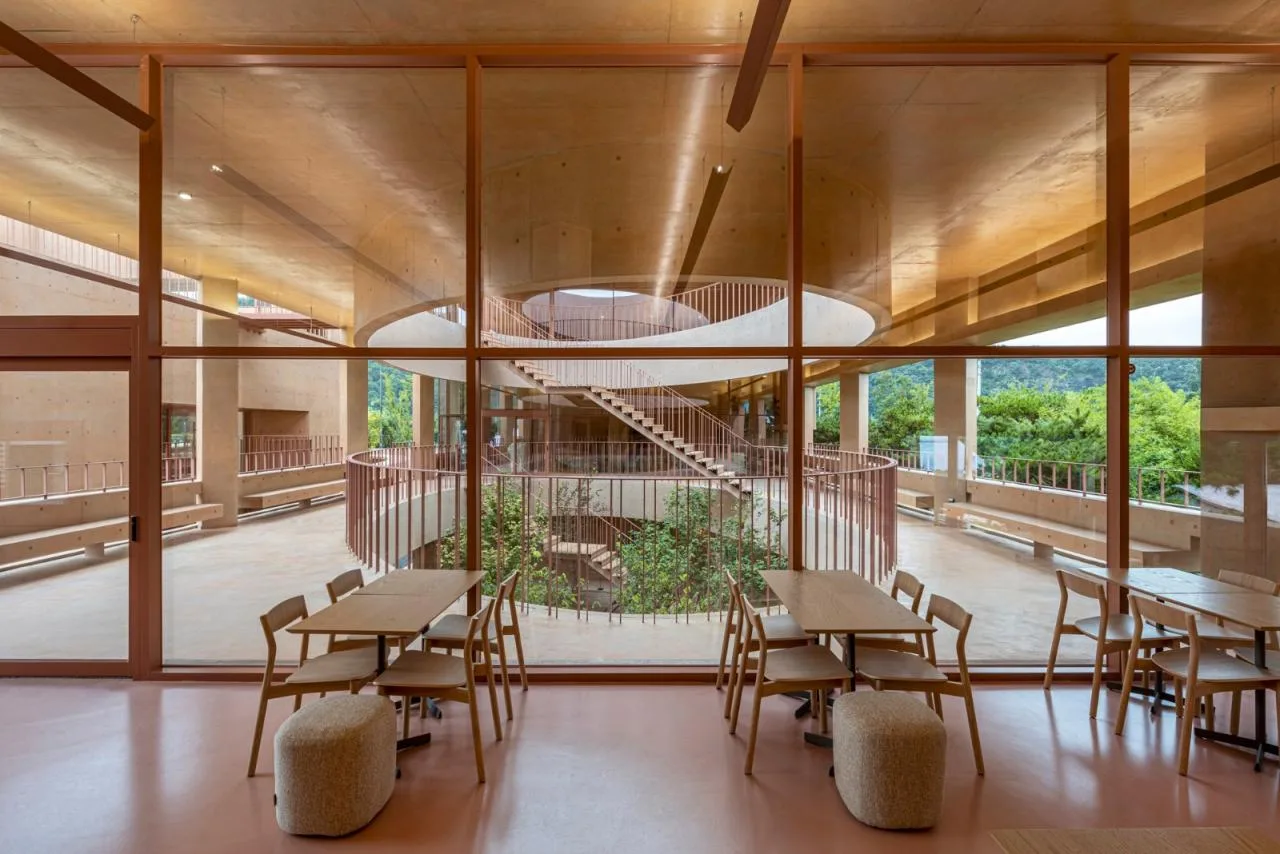
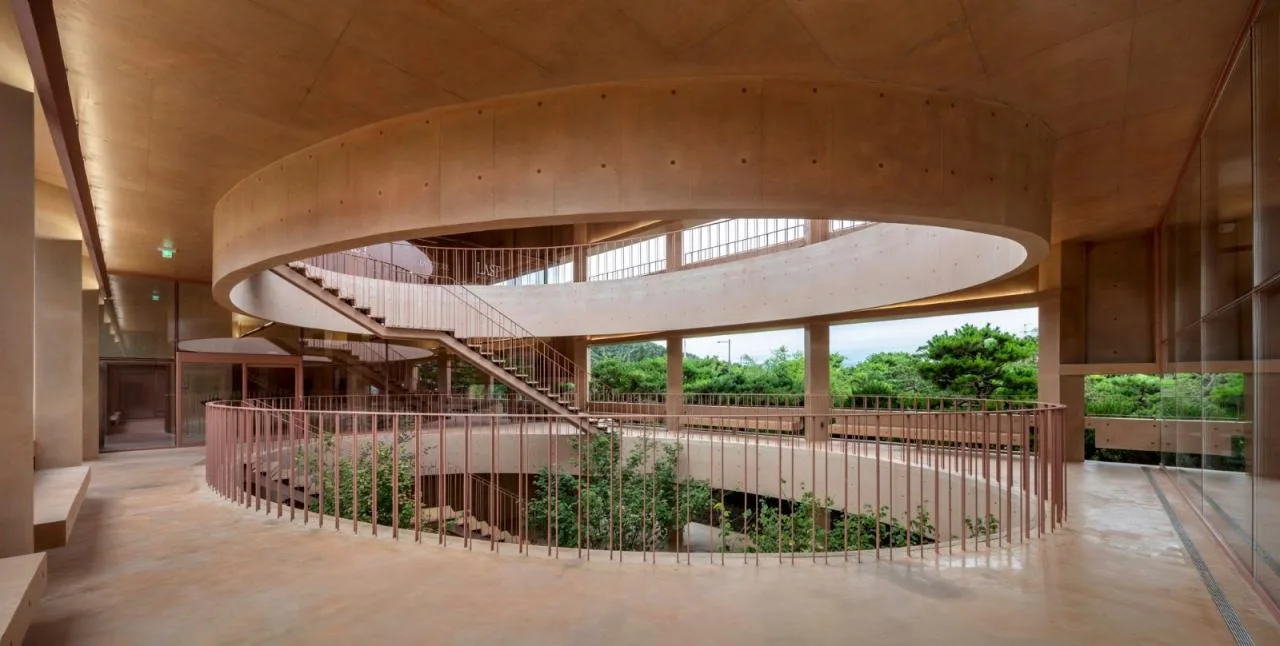
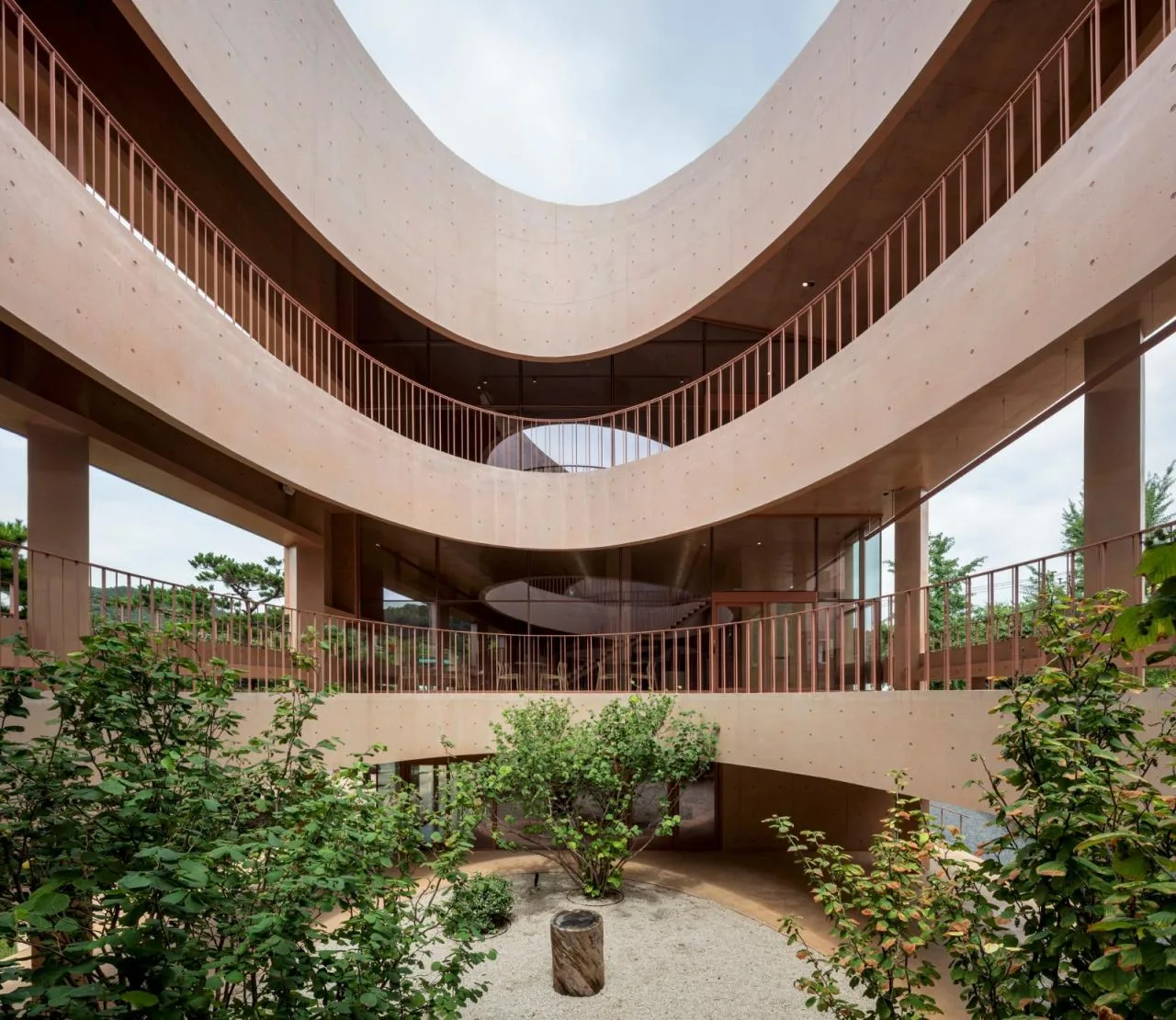
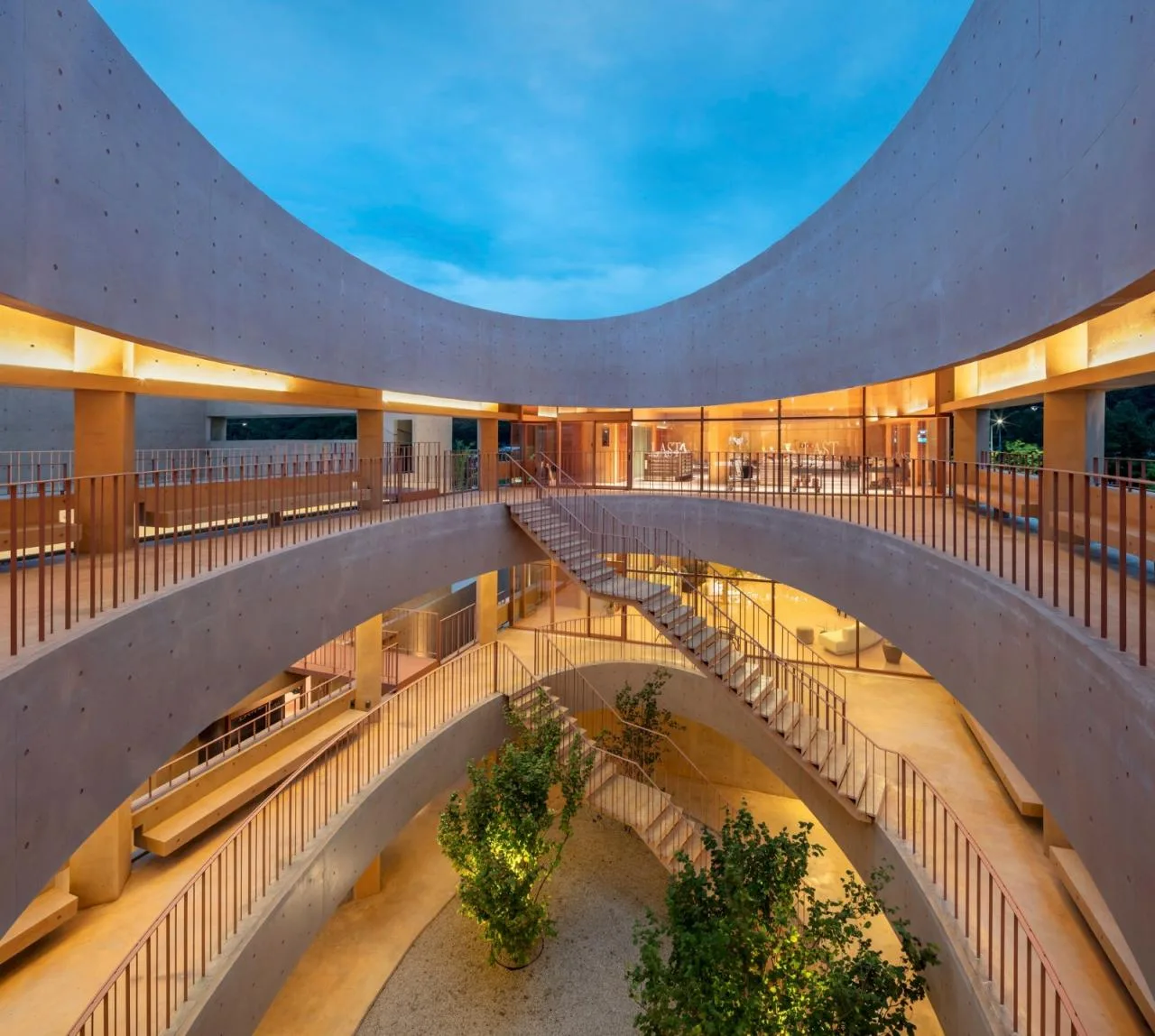
Simple geometric forms and monumental courtyards provide the space with a strong identity. Depending on whether geometry is expressed as volume or void, it affects the spatial experience differently. When combined with scale, it can convey a commemorative quality.
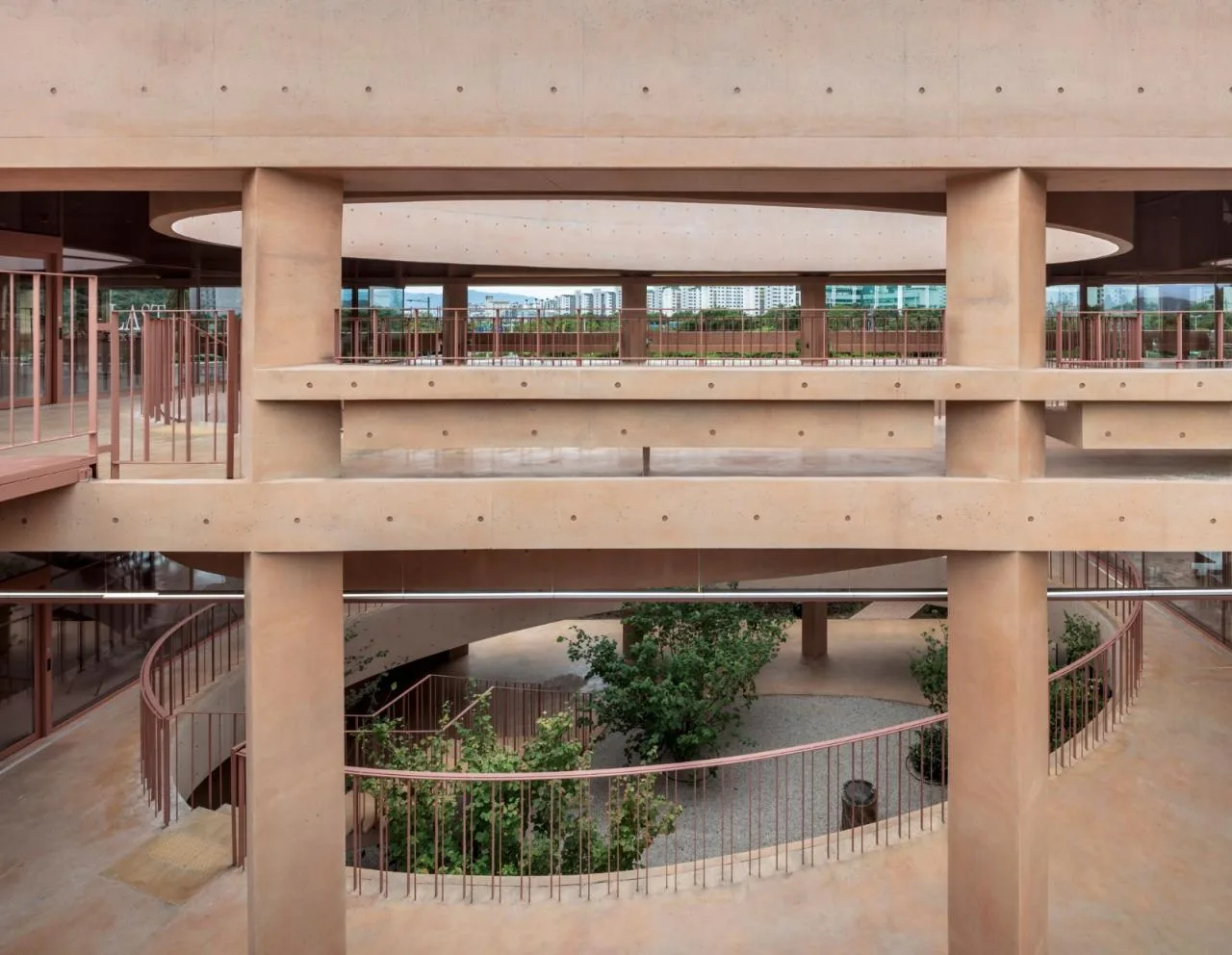
Though the space is modest in size, it achieves strong centrality by juxtaposing contrasting shapes such as ellipses and squares. The elliptical void acts as a passage or a defining wall for the garden, while the arrangement of geometric shapes highlights distinct spatial zones. This design encourages visitors to imagine spaces beyond the immediate environment, offering complexity beyond a regular grid layout.
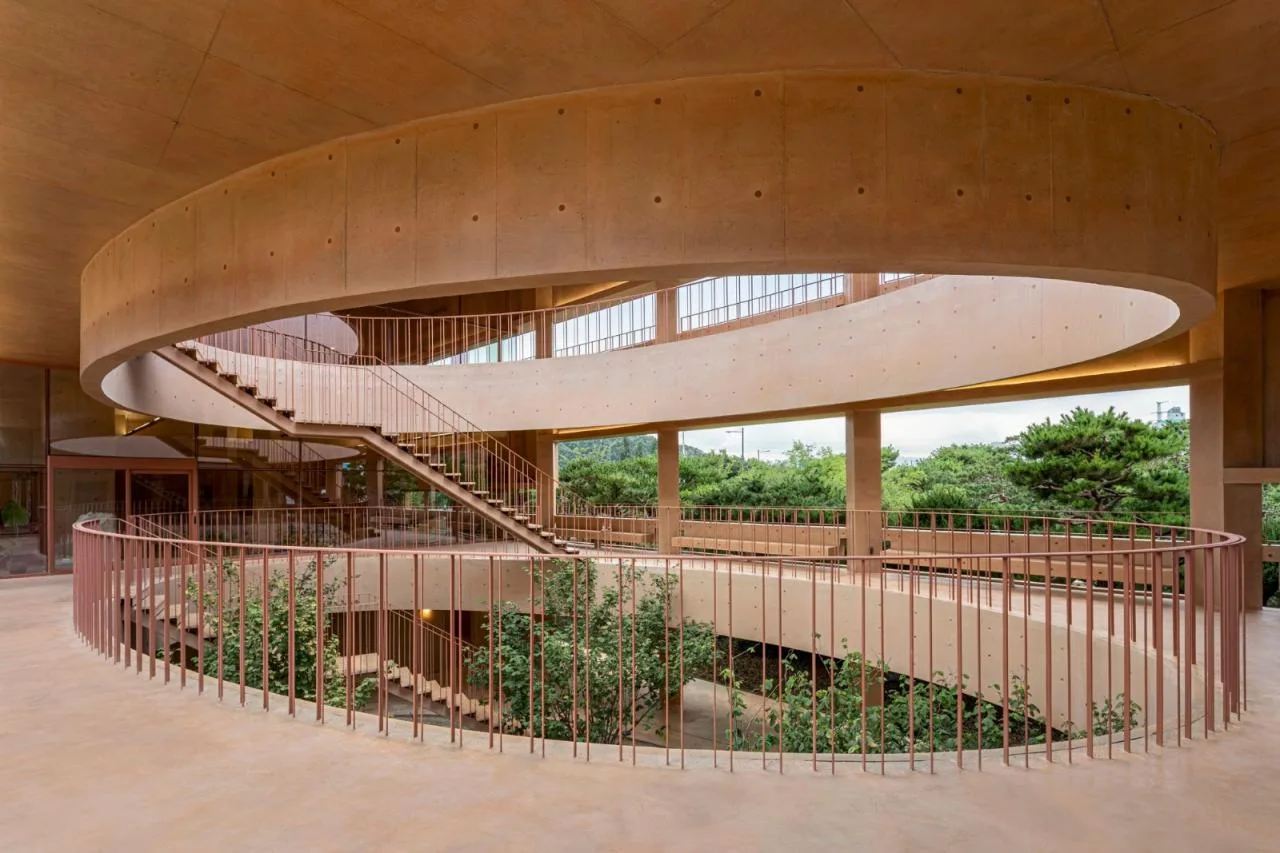
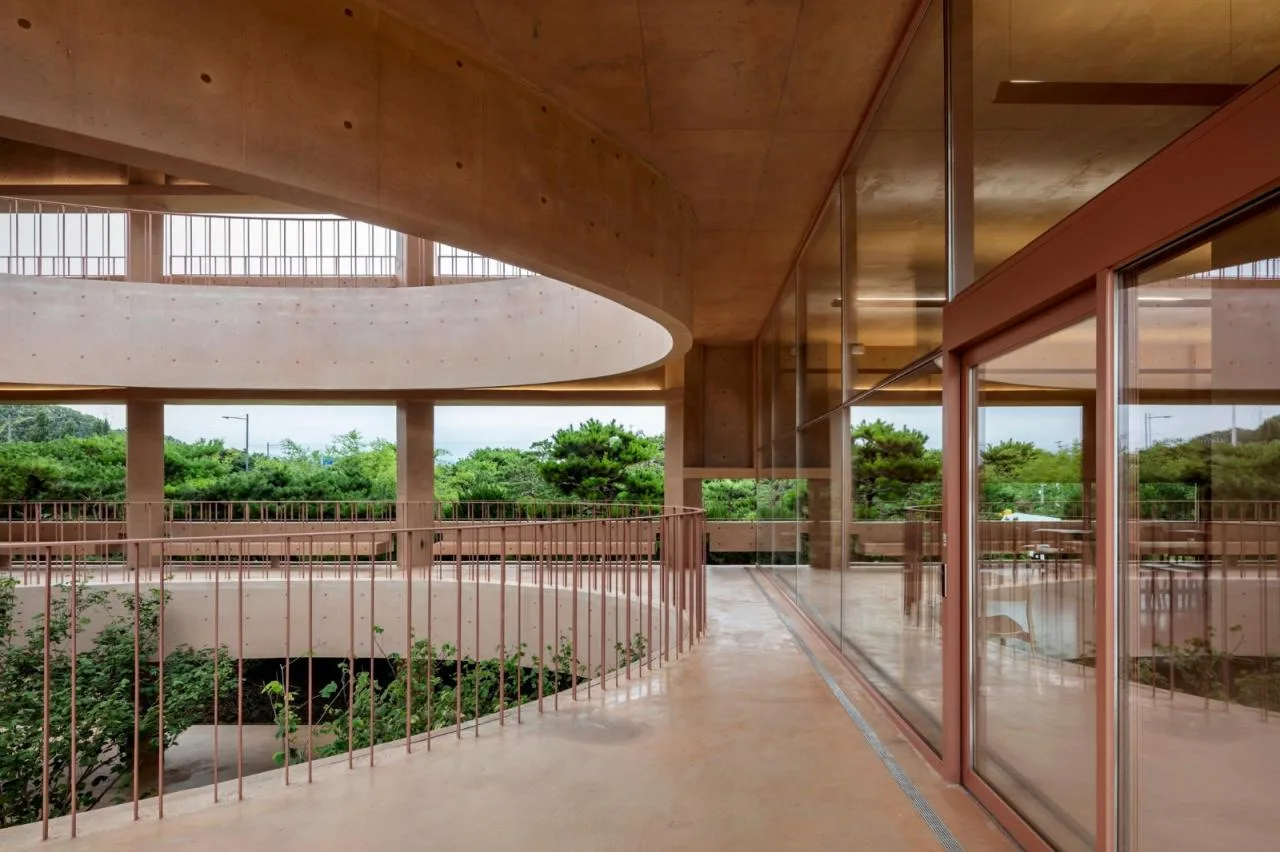
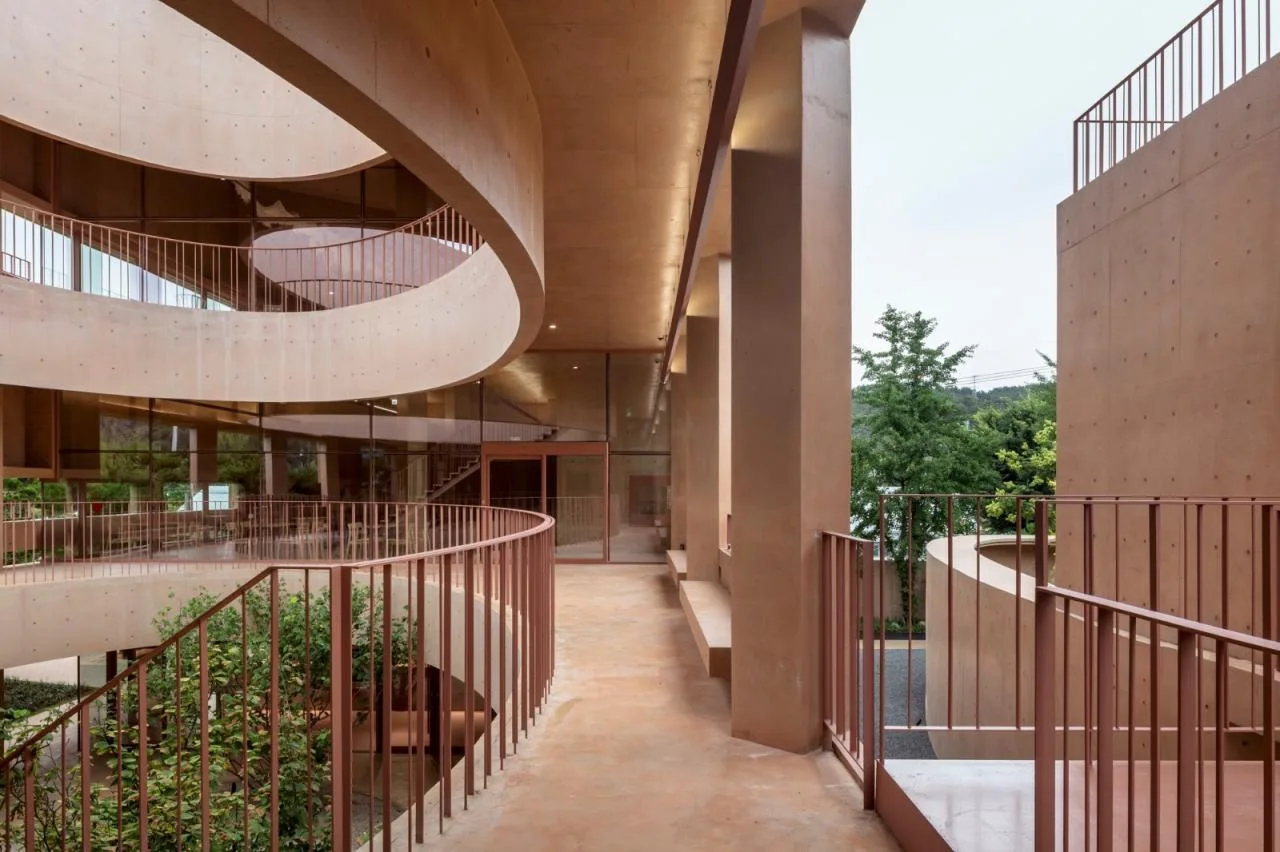
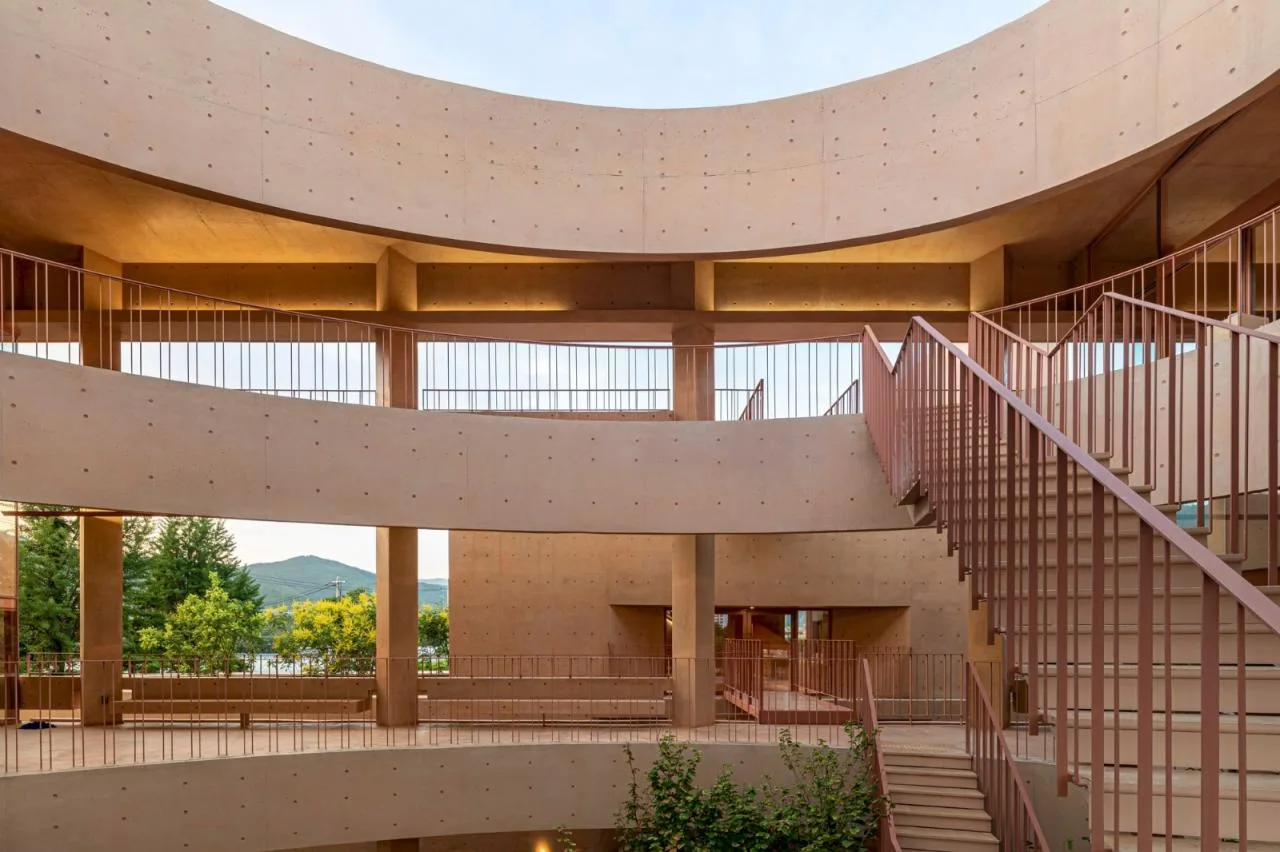
Key architectural elements include walls, eaves, corridors, columns, and hanging walls. While walls in urban contexts often signify ownership defensively, MRNW Daegu’s spacious site allows walls to function as inviting design features that encourage walking and enrich outdoor spaces.
The dense trees on the farm serve as a backdrop to the fences. Architectural elements such as walls, eaves, corridors, columns, suspended walls, and exterior benches define spatial relationships between buildings and their orientation towards the gardens. Walls extending from the buildings mark designated outdoor areas and help make external spaces feel like extensions of indoor rooms.
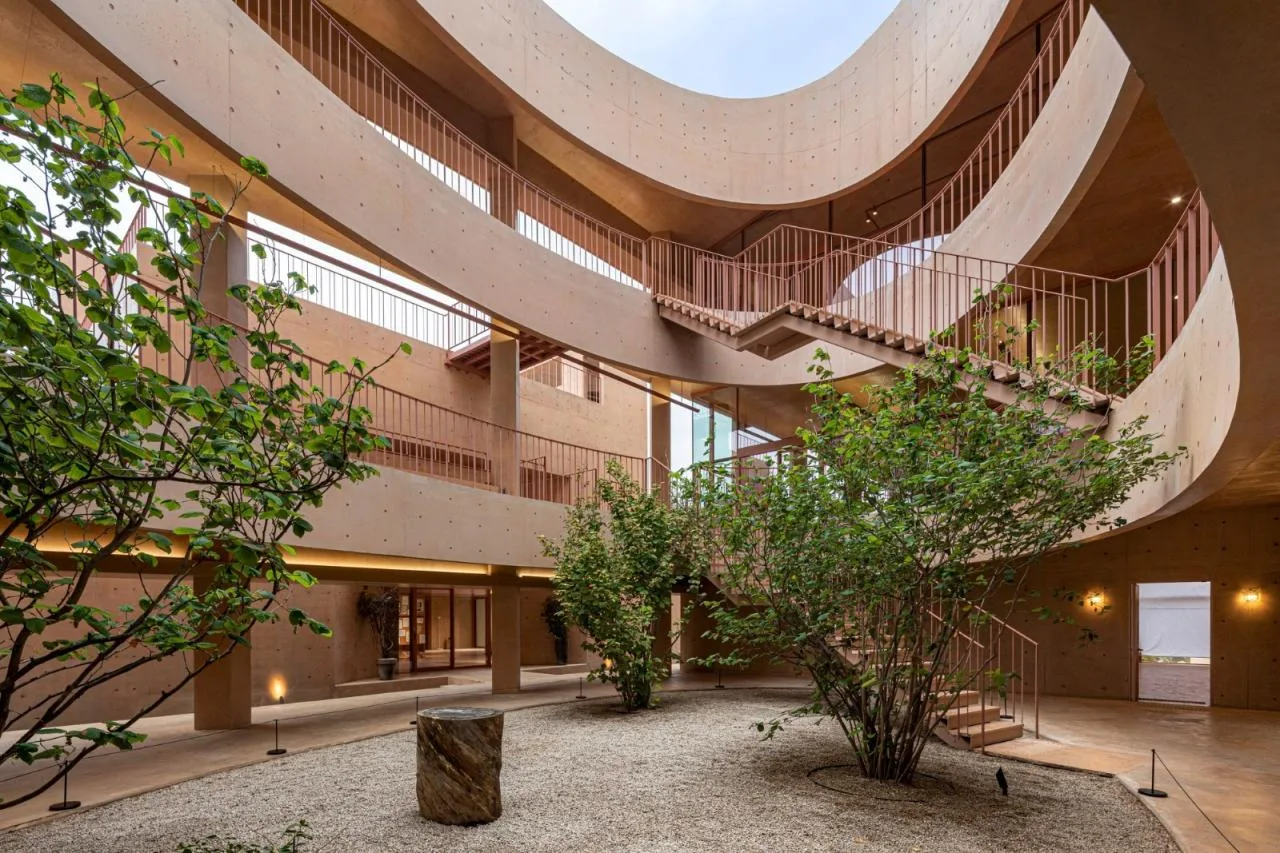
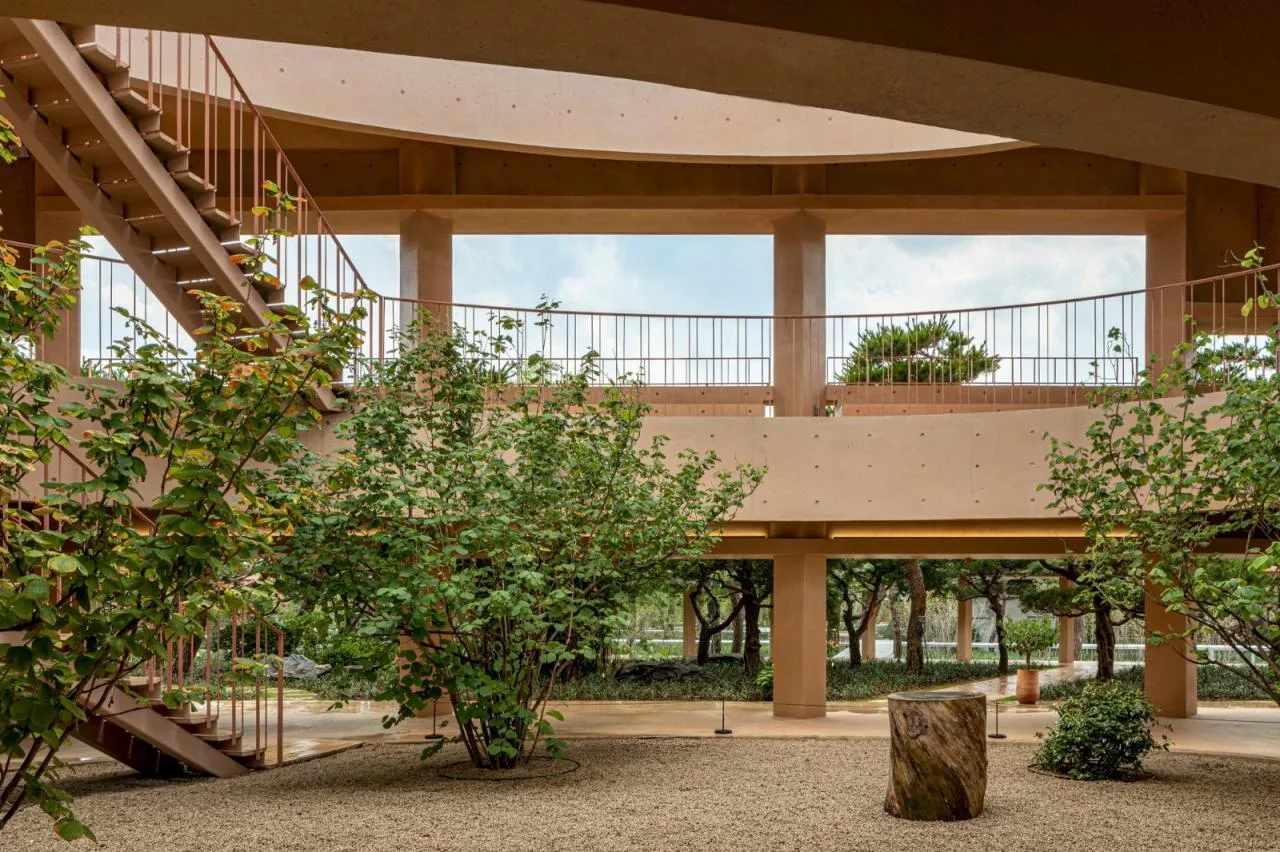
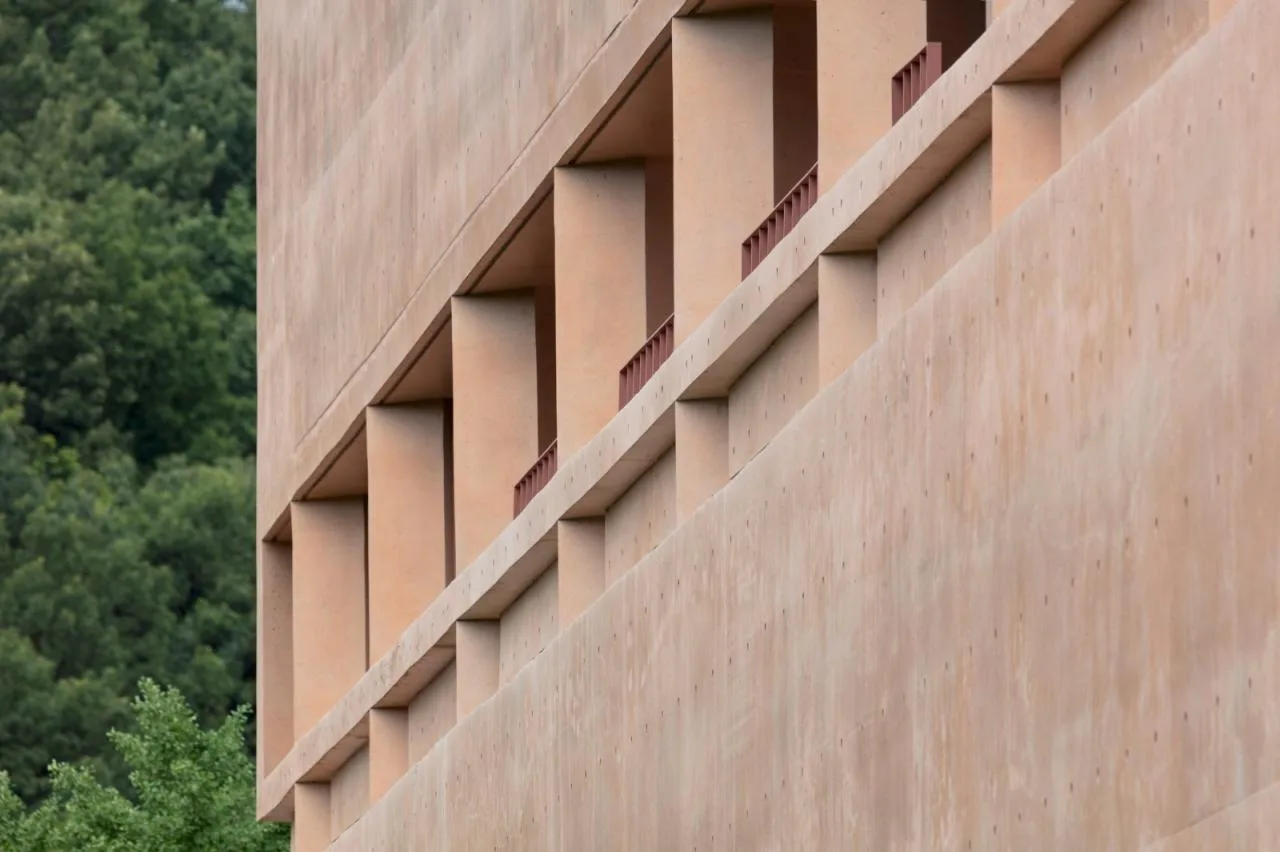
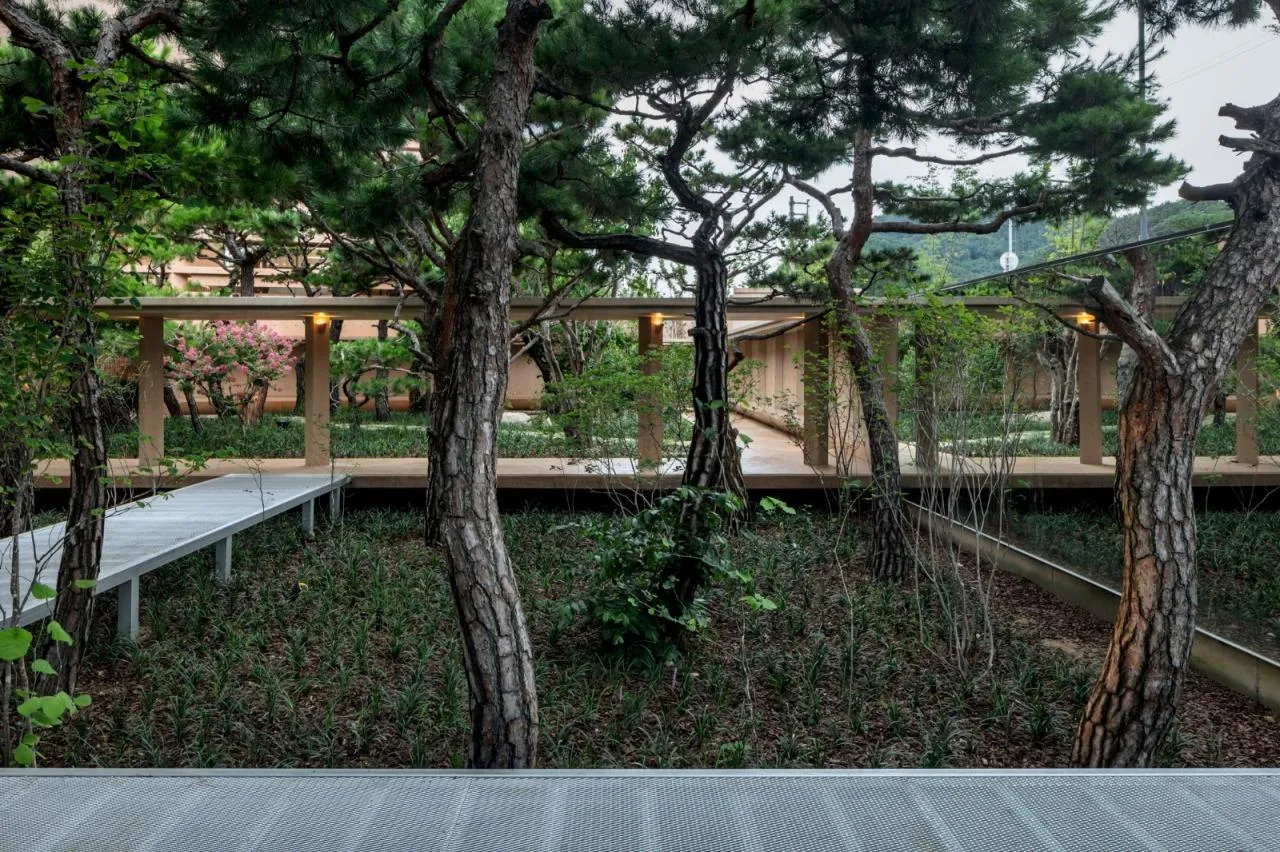
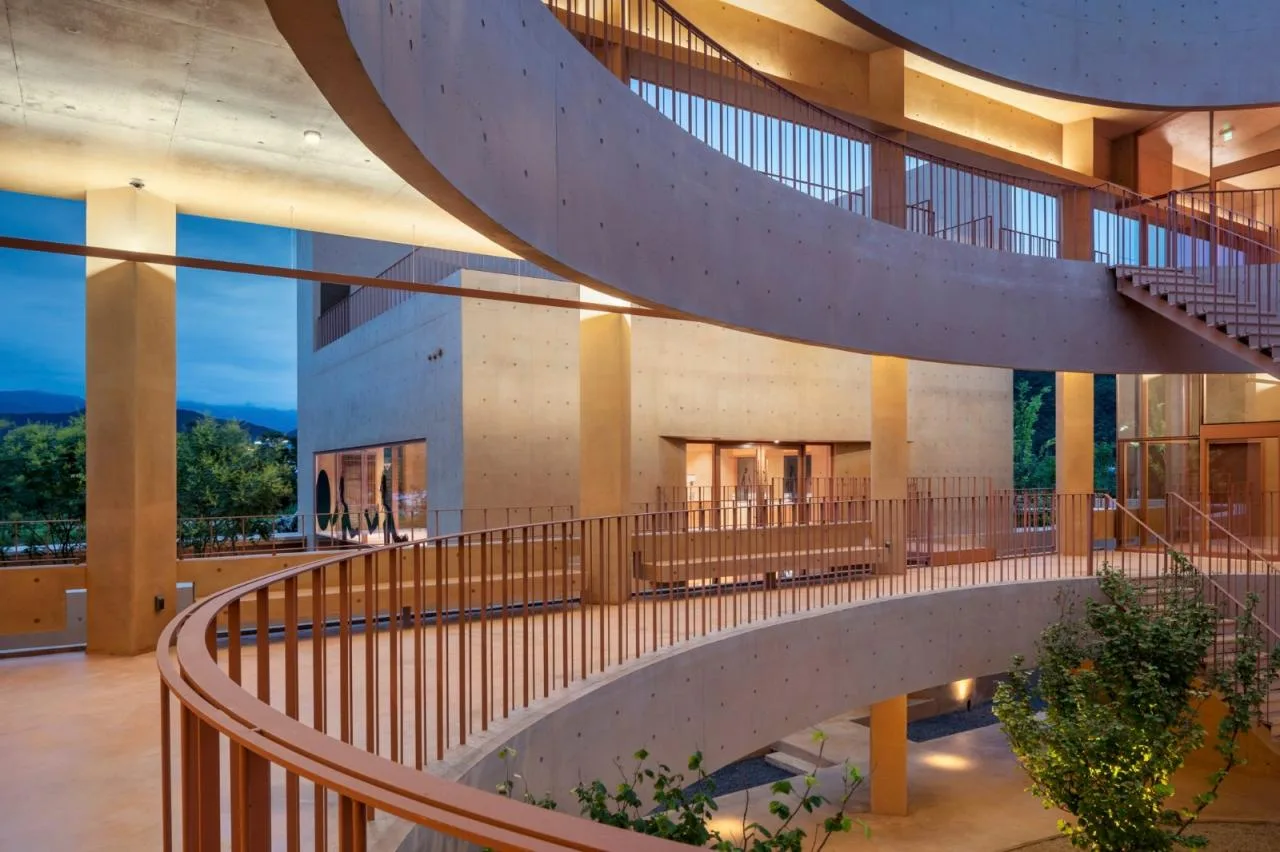
The corridor runs between the client’s father’s old garden and the pine forest, subtly dividing these previously unbounded spaces to create multi-layered spatial depth. All columns are rotated 45 degrees around their axis, defining the boundary of the main external space and adding three-dimensionality to the façade.
Eaves are designed at a reachable height of two meters, allowing transitions between spaces to maximize openness. Hanging water walls emphasize verticality and echo the elliptical shape of the courtyard and buildings. Benches integrated into exterior walls provide seating with views towards the outdoor surroundings.
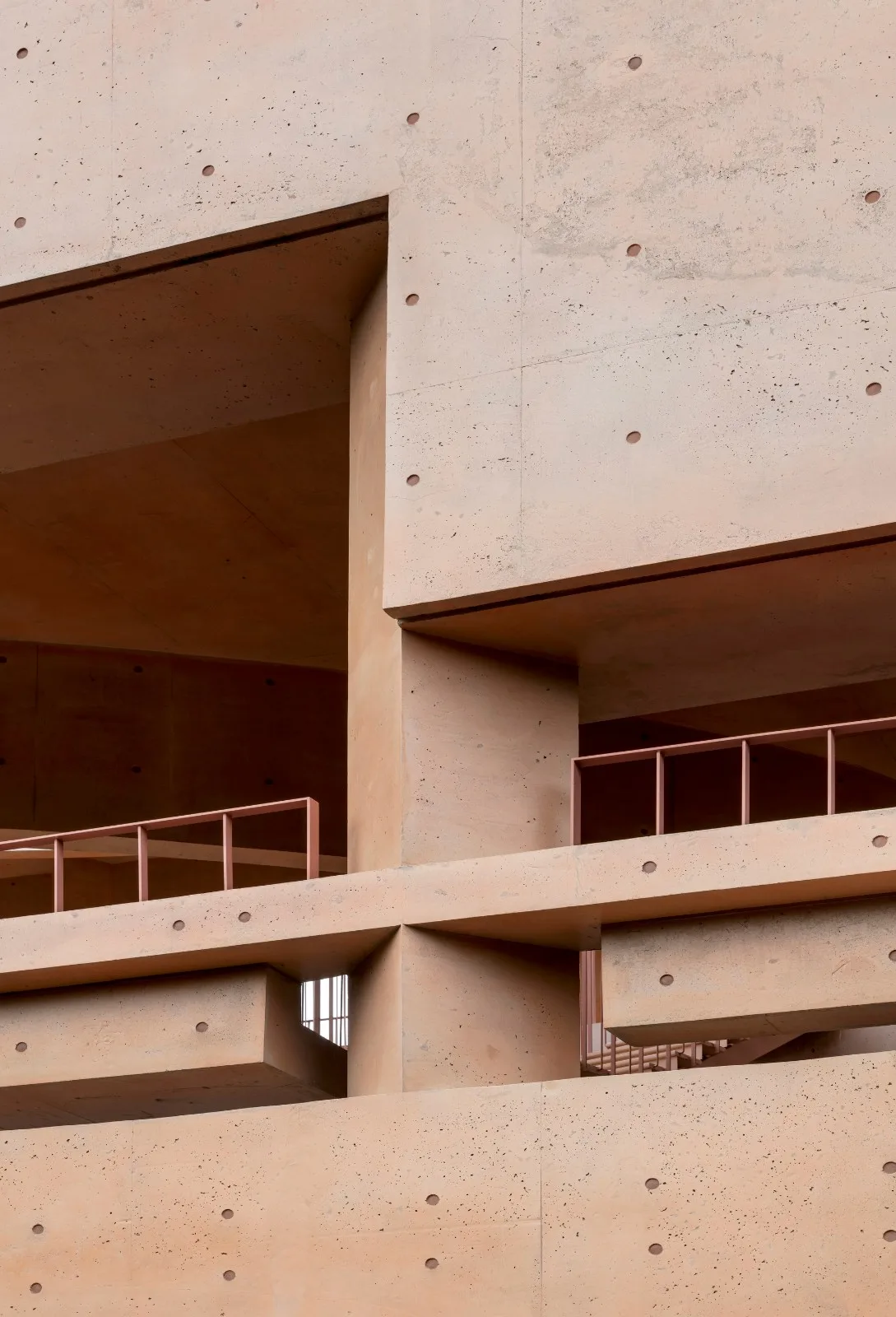
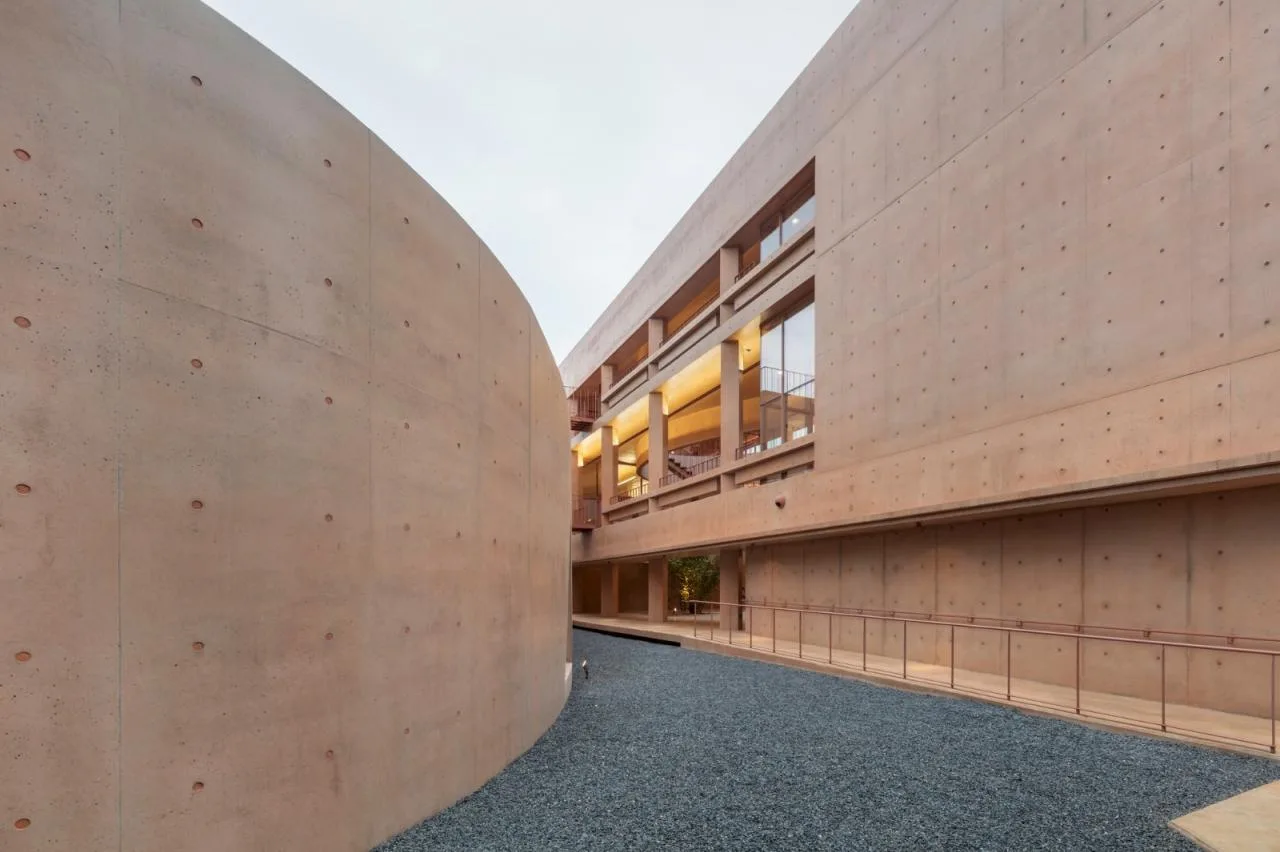
To unify these architectural elements within the simple geometric volumes, exposed concrete serves as the primary building material. Columns, eaves, walls, and corridors are incorporated into the exterior, forming a thick, textured façade.
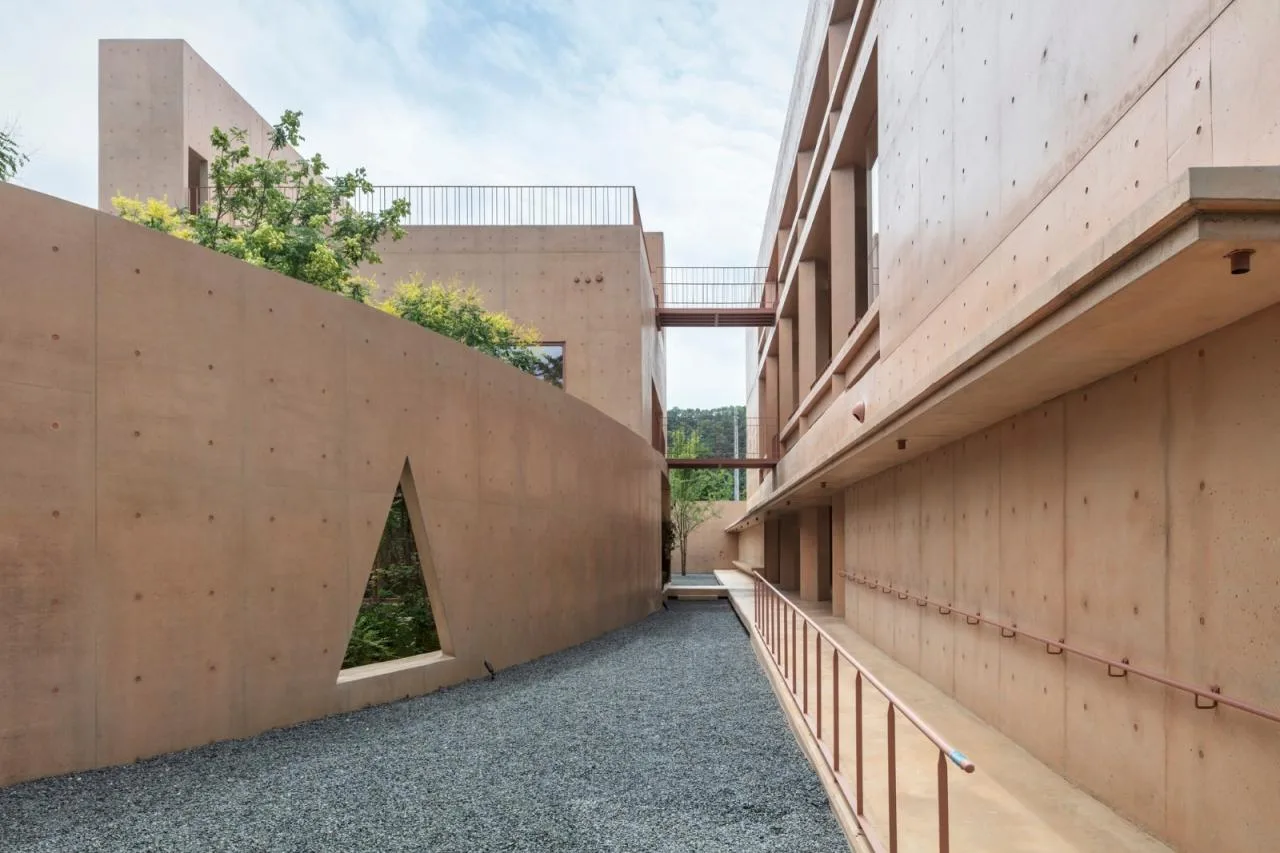
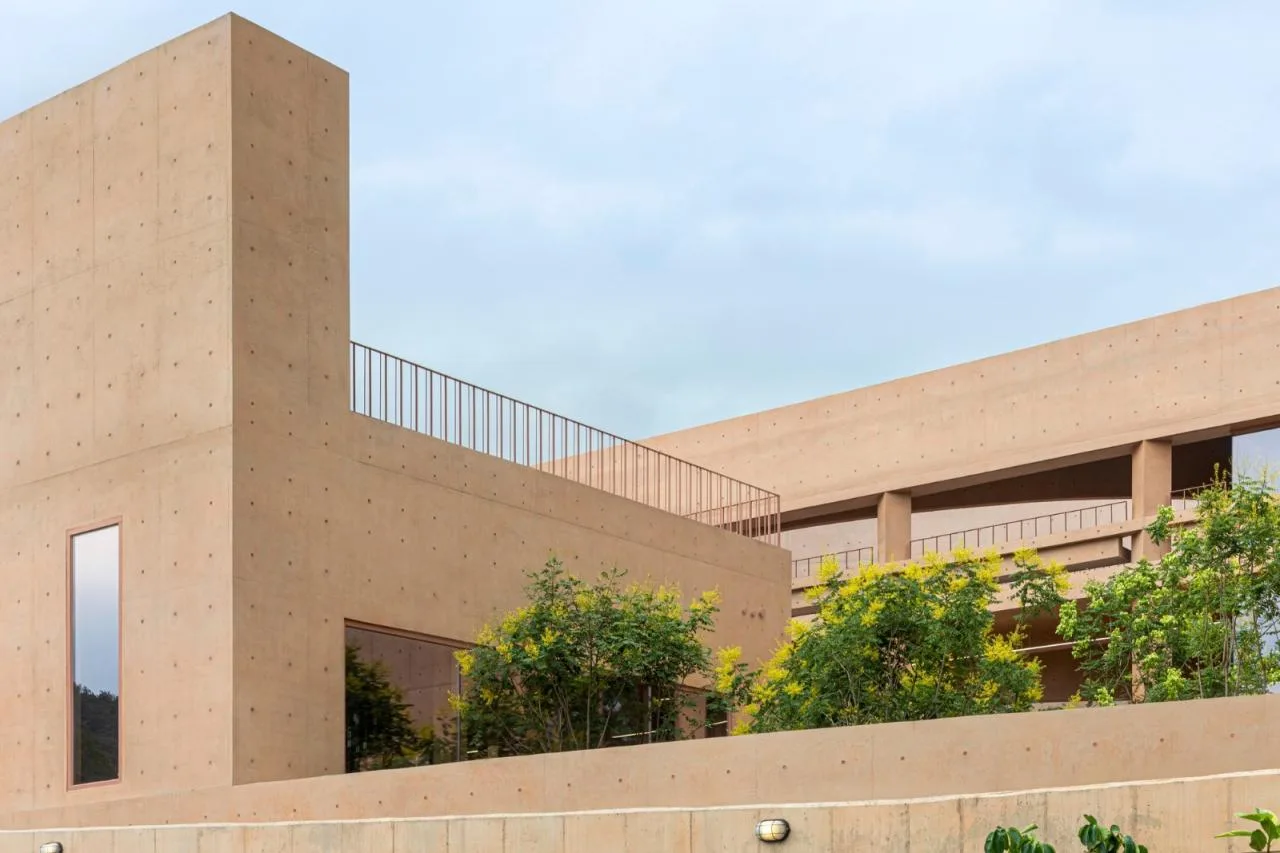
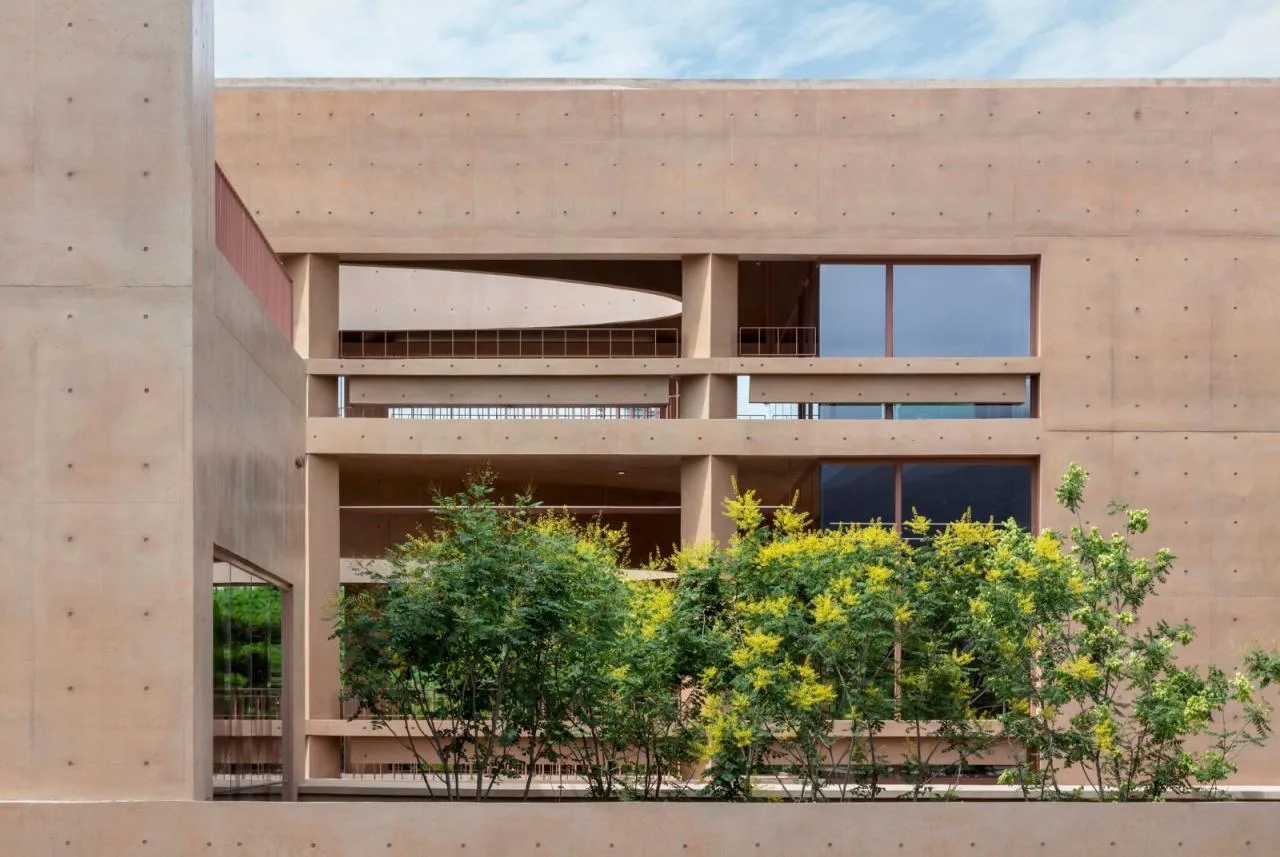
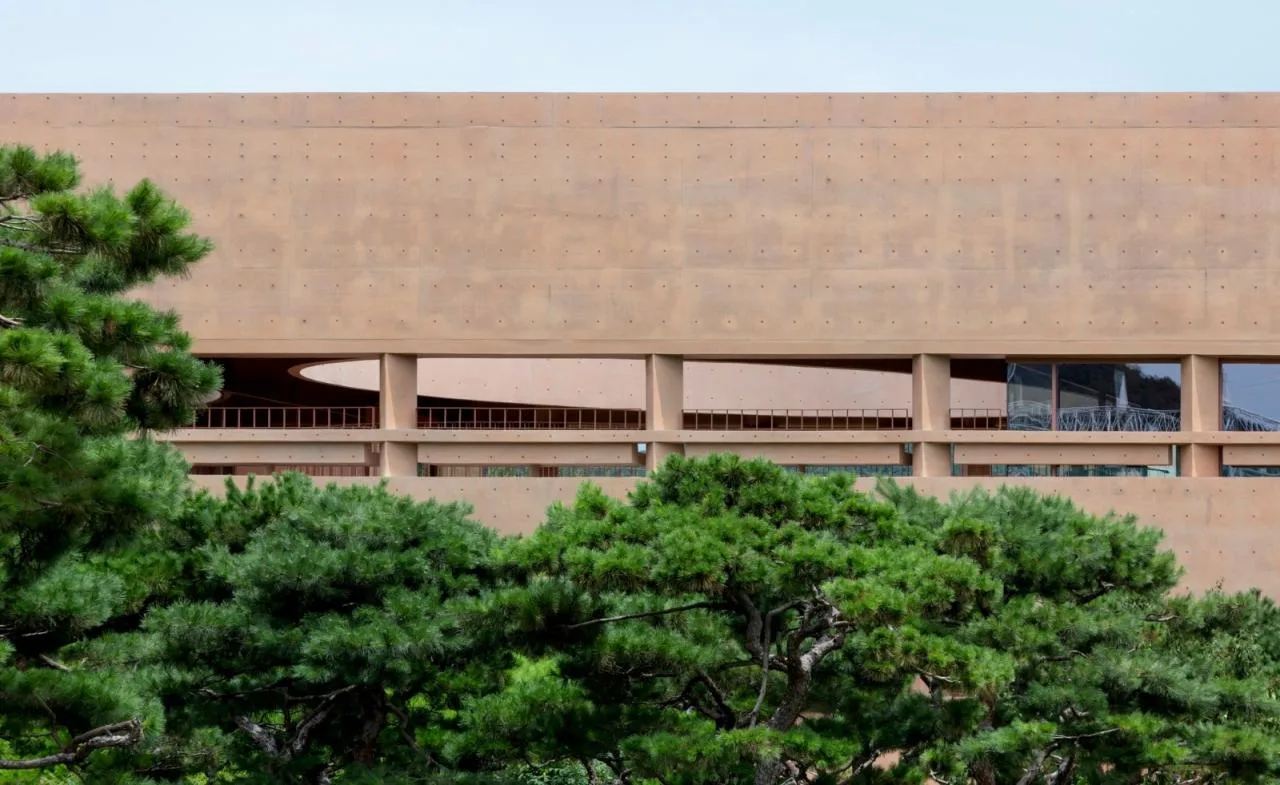
To emphasize the mediating role of thick walls between interior and exterior, the design reveals the depth and volume of surfaces. At MRNW Daegu, all horizontal and vertical elements—benches integrated into walls, columns rotated 45 degrees, awnings, and openings—are highlighted individually.
This articulation creates recessed and protruding surfaces within the wall thickness, generating varying shadows and expressions throughout the day. Facing the three-story exterior wall adjoining the pine forest, this framework not only allows views of the forest from inside but also serves as a backdrop to the forest when seen from outside.
The narrative space begins with a narrow entrance passing a pale pink exposed concrete wall, where two mature persimmon trees and a newly planted golden nanmu tree with yellow blossoms come into view. This scene is key to understanding the MRNW concept.
MRNW started with careful interventions across generations, respecting the dense, ancient gardens cultivated by the client’s father. Buildings act as frames or backgrounds for the trees, controlling views and creating shaded platforms beneath the exposed concrete walls. The site is divided into five areas: parking, cafes, gardens, courtyards, the quaint old garden, and pine forest, layered in sequence.
The indoor and outdoor spaces intersect, creating diverse visual relationships. Visitors experience a variety of atmospheres as they follow the entrance ramp toward the main entrance, encountering a series of vibrant scenes.
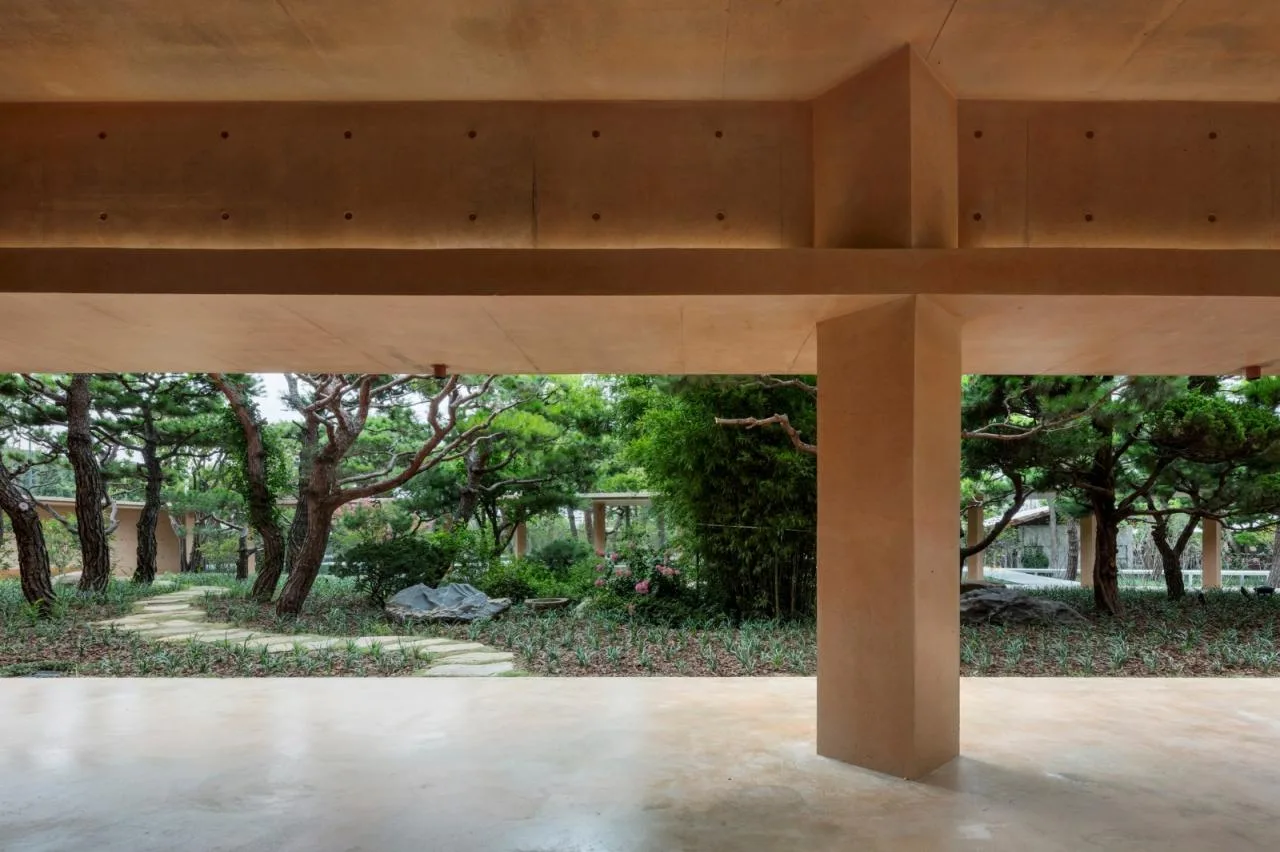
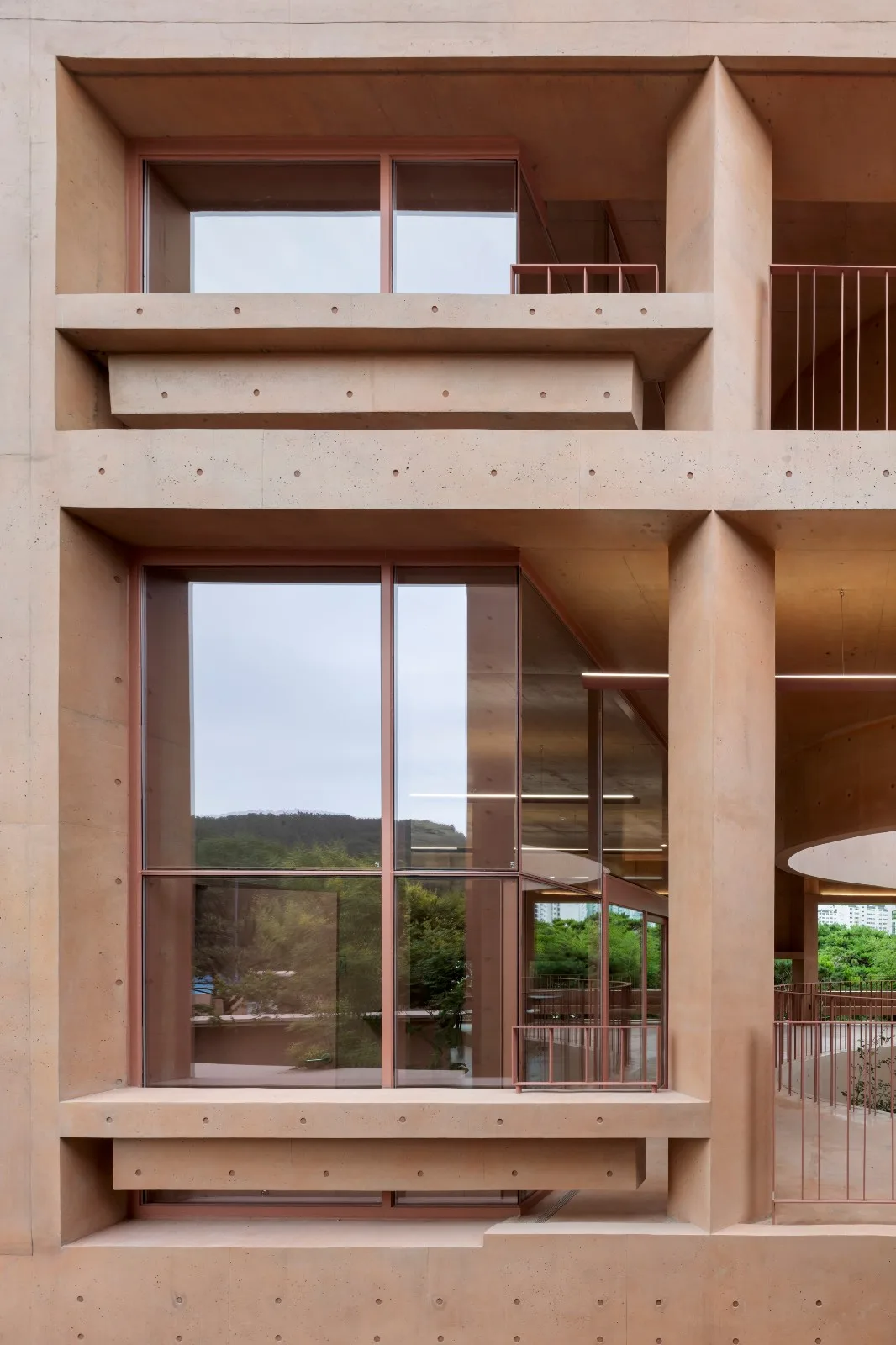
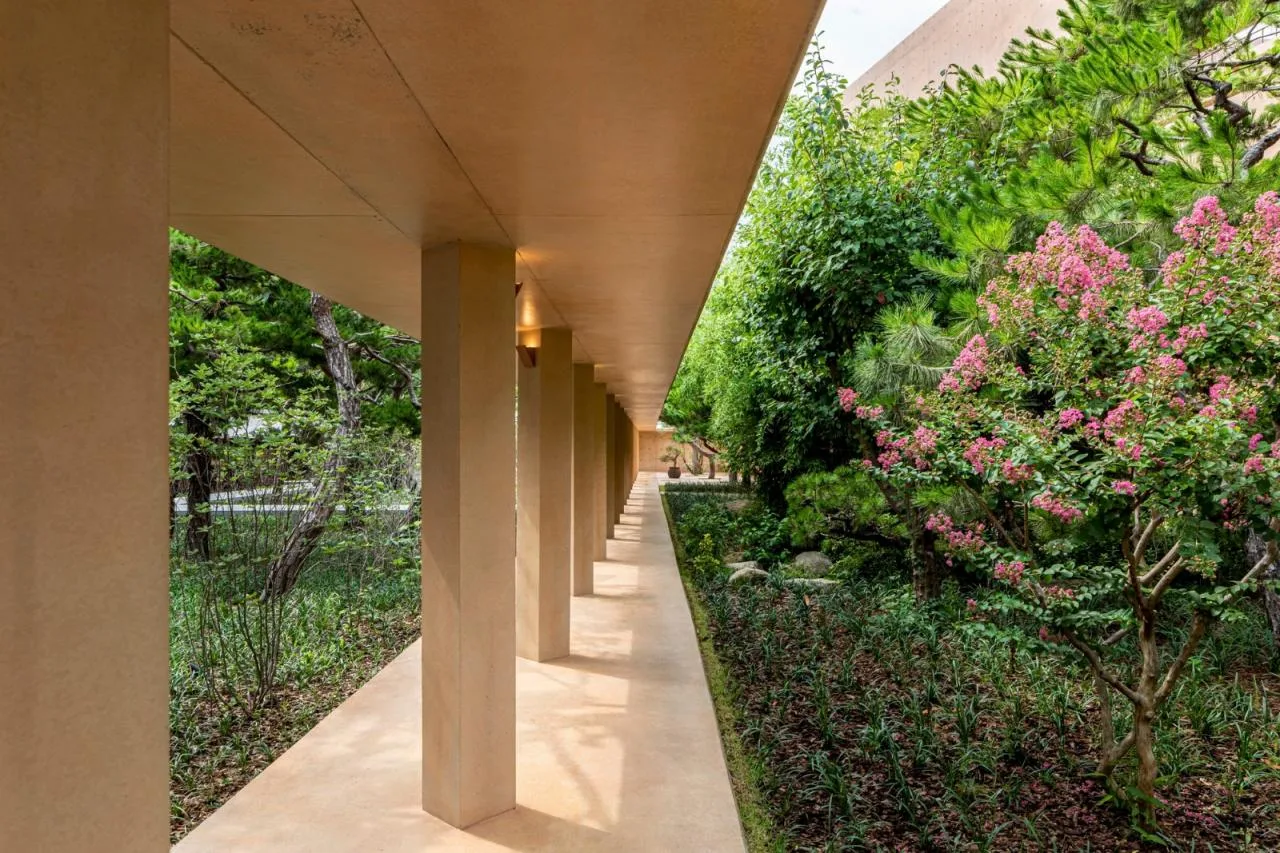
The two separate buildings are positioned on one side of the site, naturally creating multiple levels. The elliptical and straight walls connect to define spaces of varying widths, while the exposed concrete ceiling adjusts in height to maintain spatial tension.
The smooth, coated plywood concrete surfaces cast strong shadows, and the 45-degree-rotated square columns add charm. Beyond the buildings, new landscaping and stainless steel walls enhance the ancient pine forest’s vitality.
To offer different perspectives of the pine forest, a steel deck is installed approximately five steps high. Through minimal renovation, two old warehouses now cast evocative shadows, inviting visitors on a journey through time. This dynamic landscape combines uncertain programs with the dialogue between trees and buildings from different eras.
Project Drawings
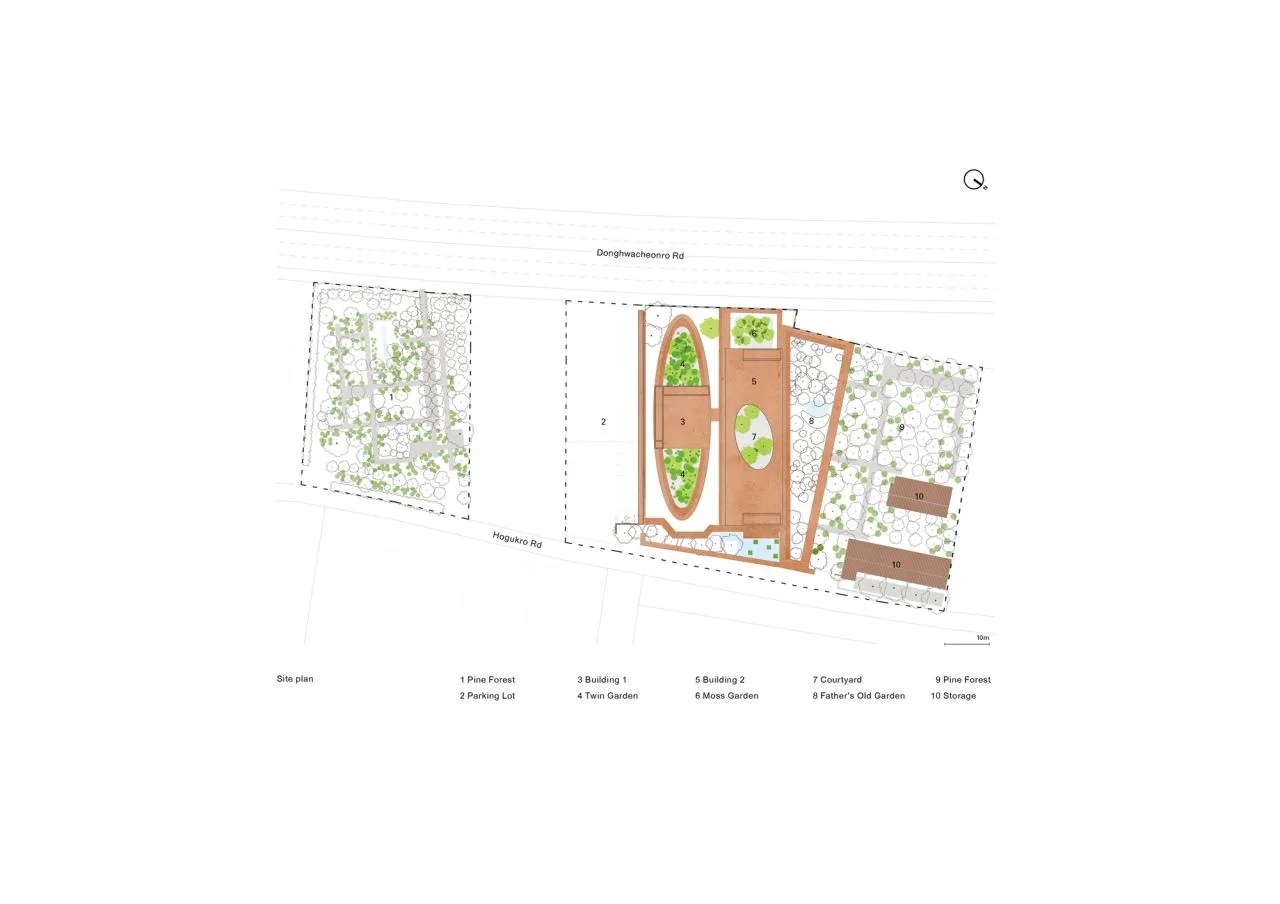
△ Base schematic diagram
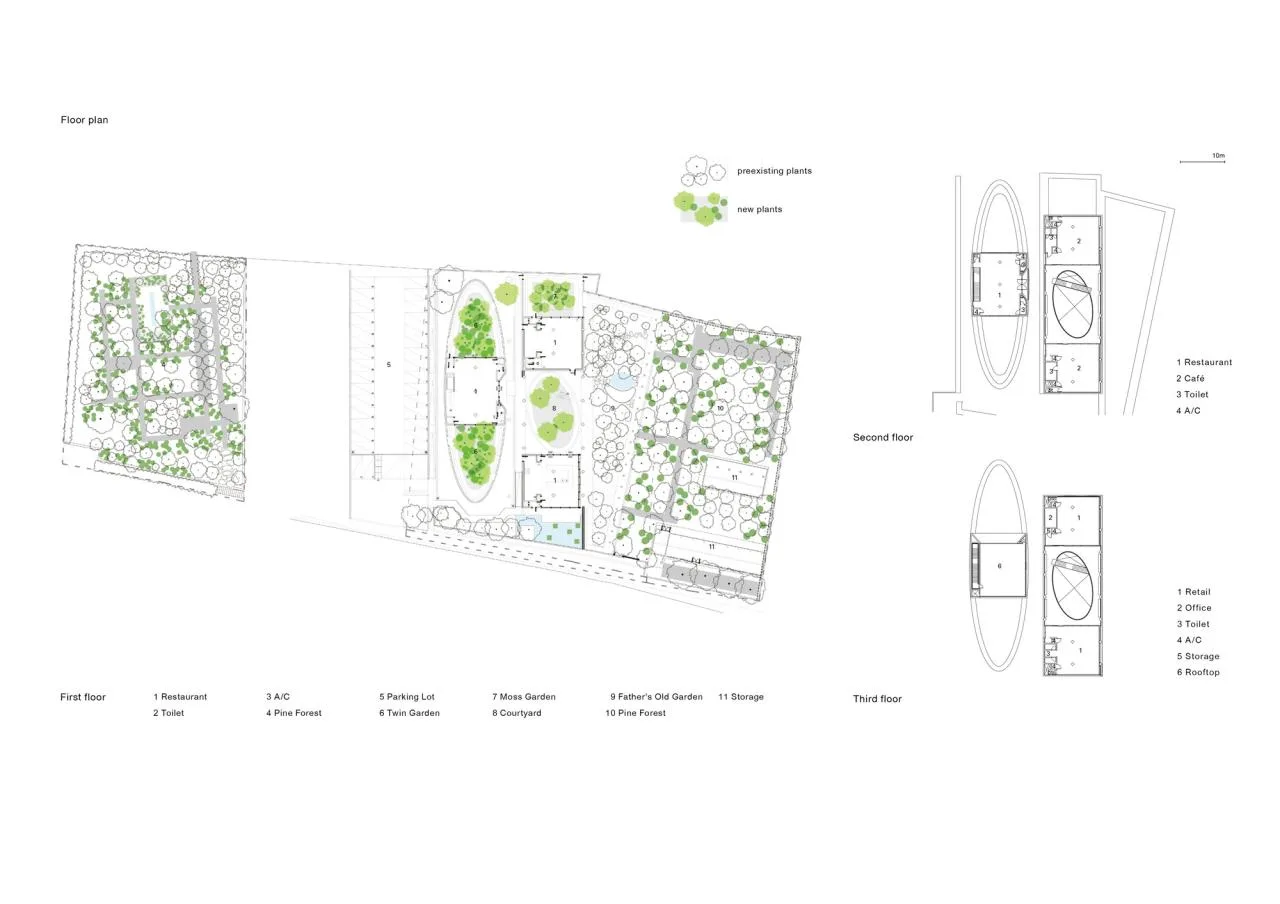
△ First floor plan
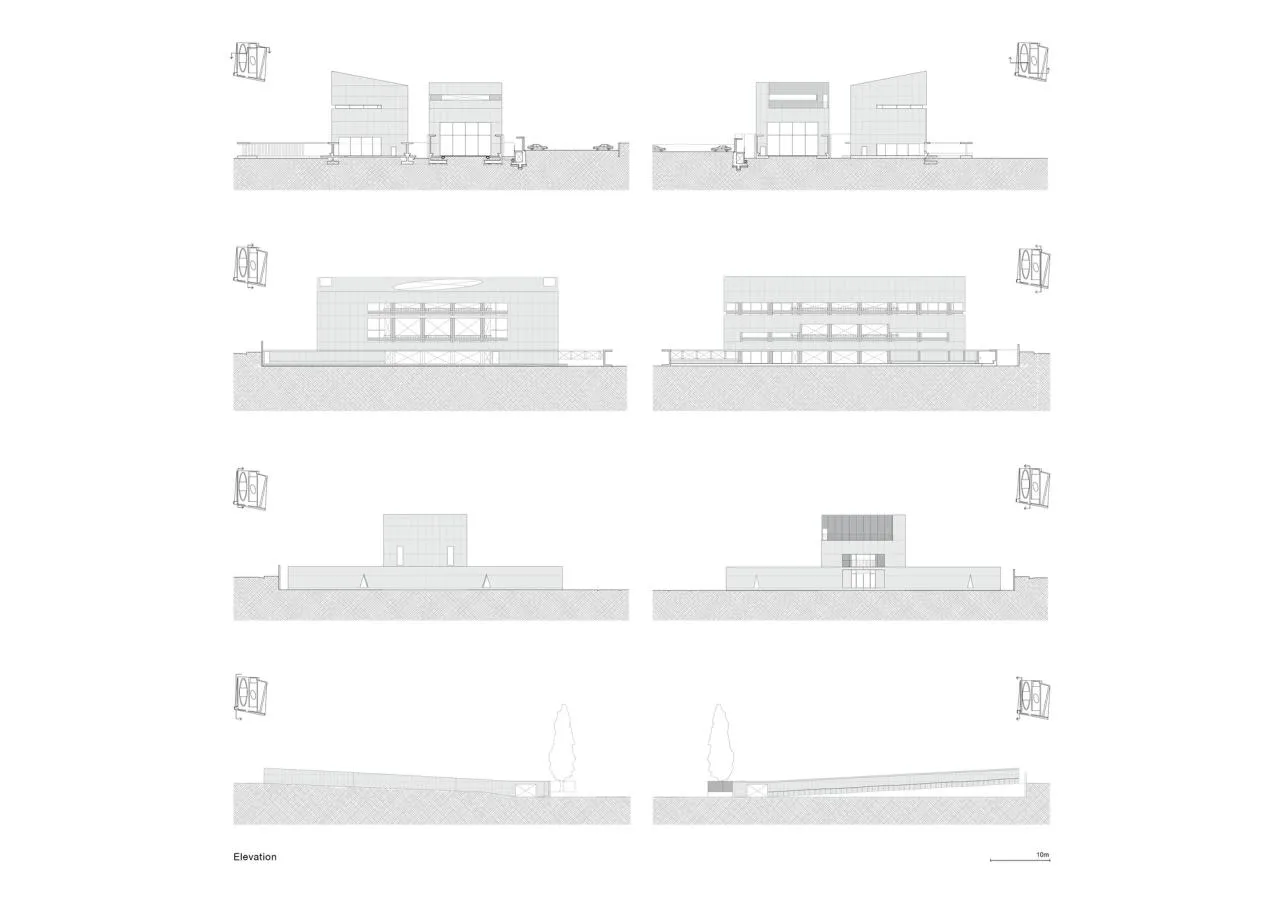
△ Elevation drawing
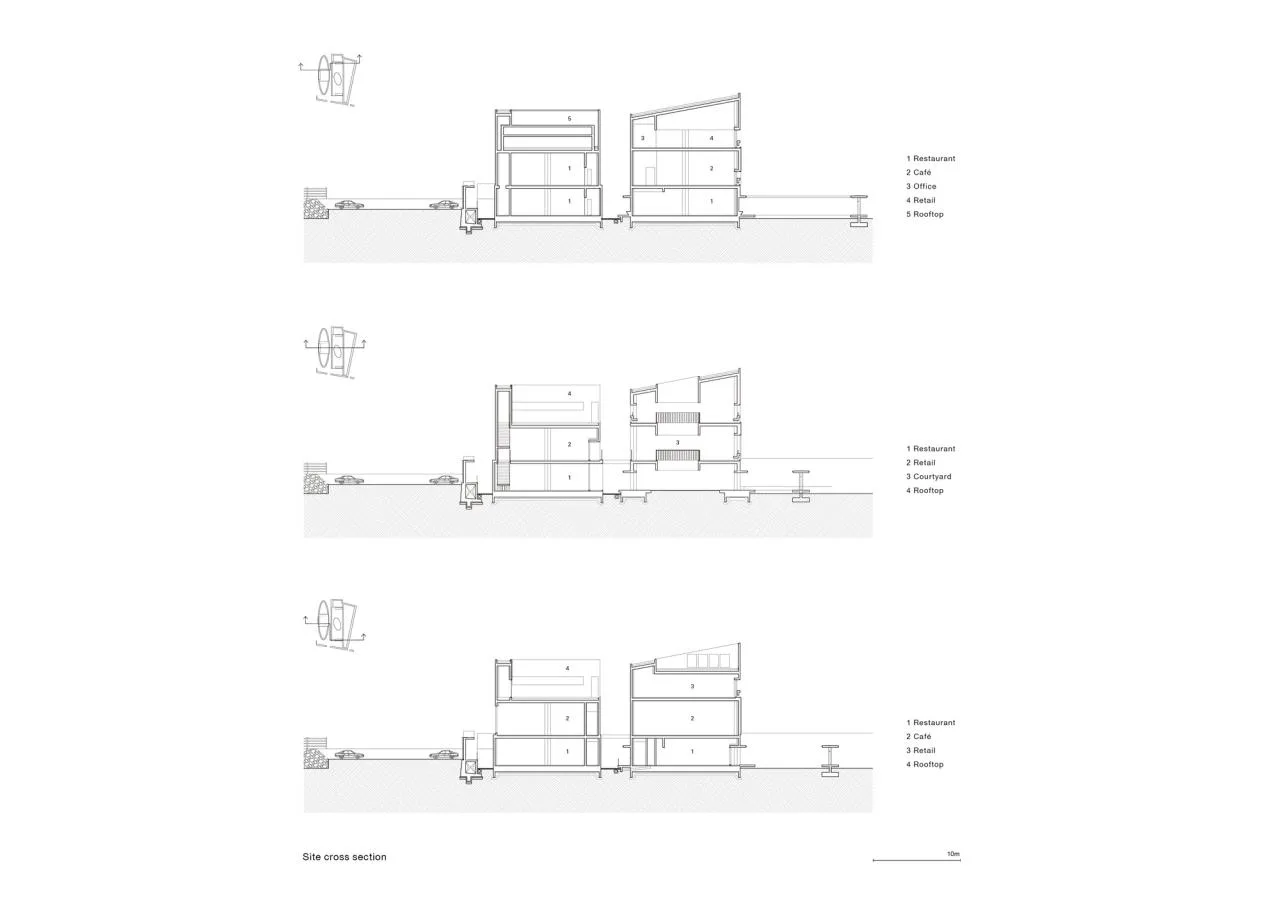
△ Section diagram
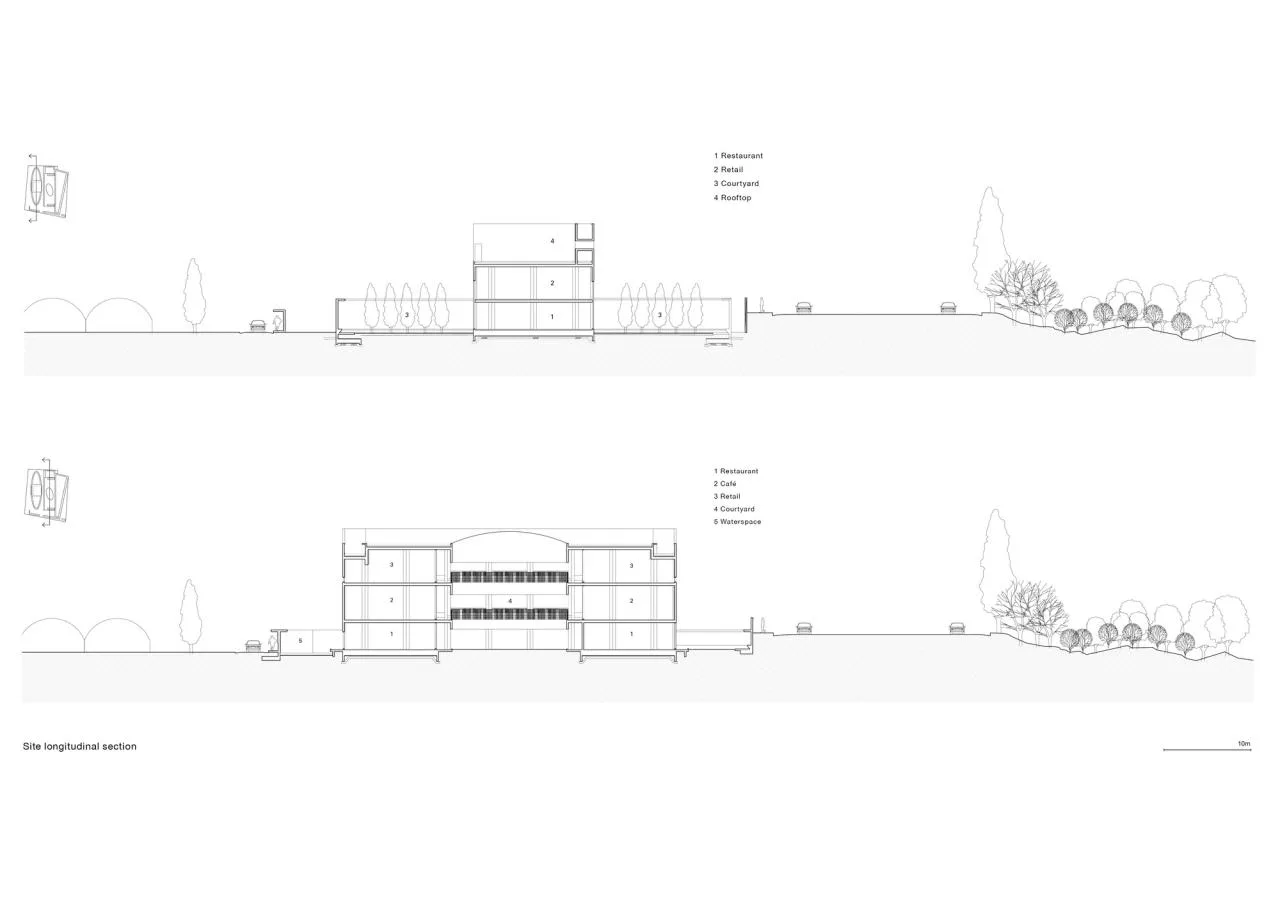
△ Section diagram
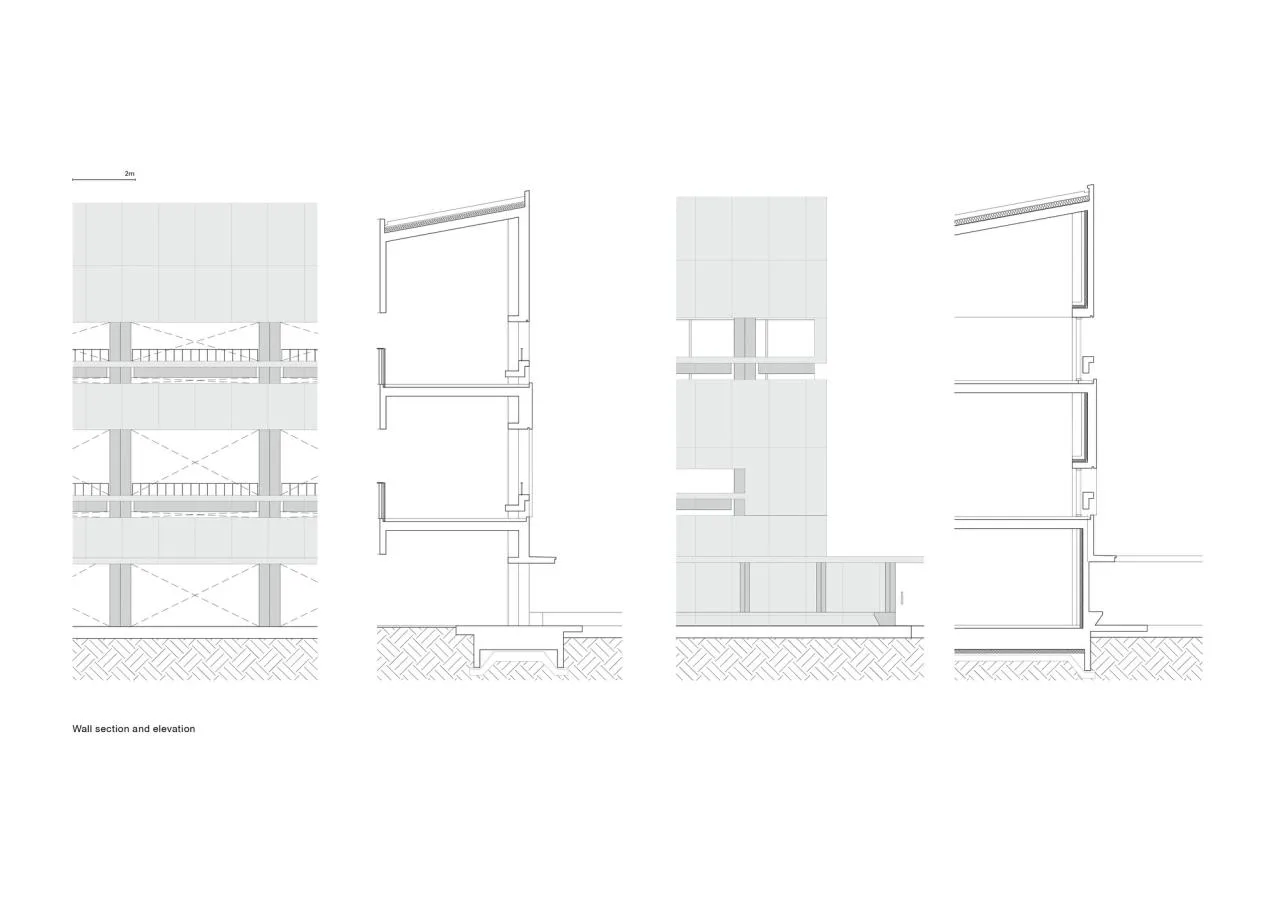
△ Detailed drawing
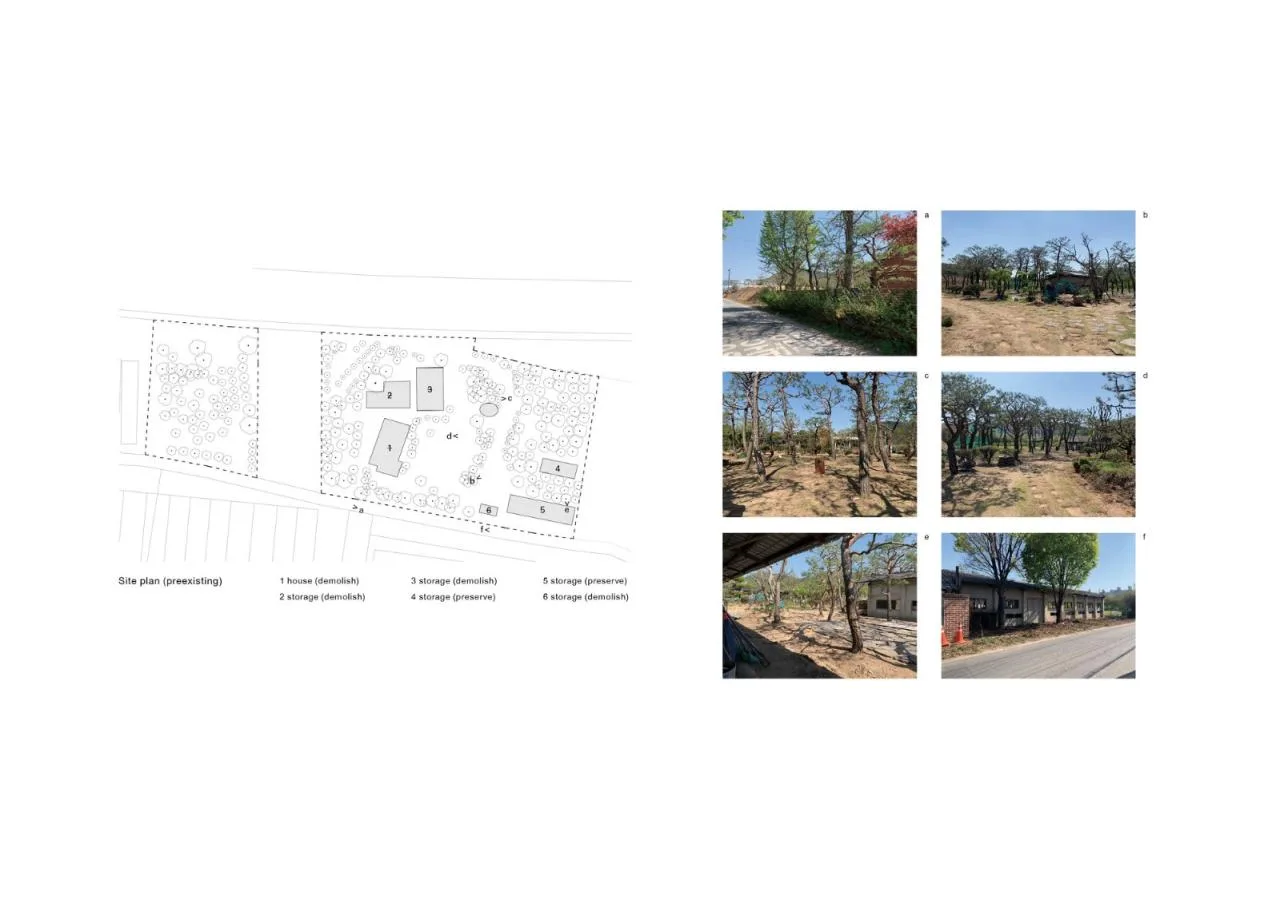
△ Original site schematic diagram
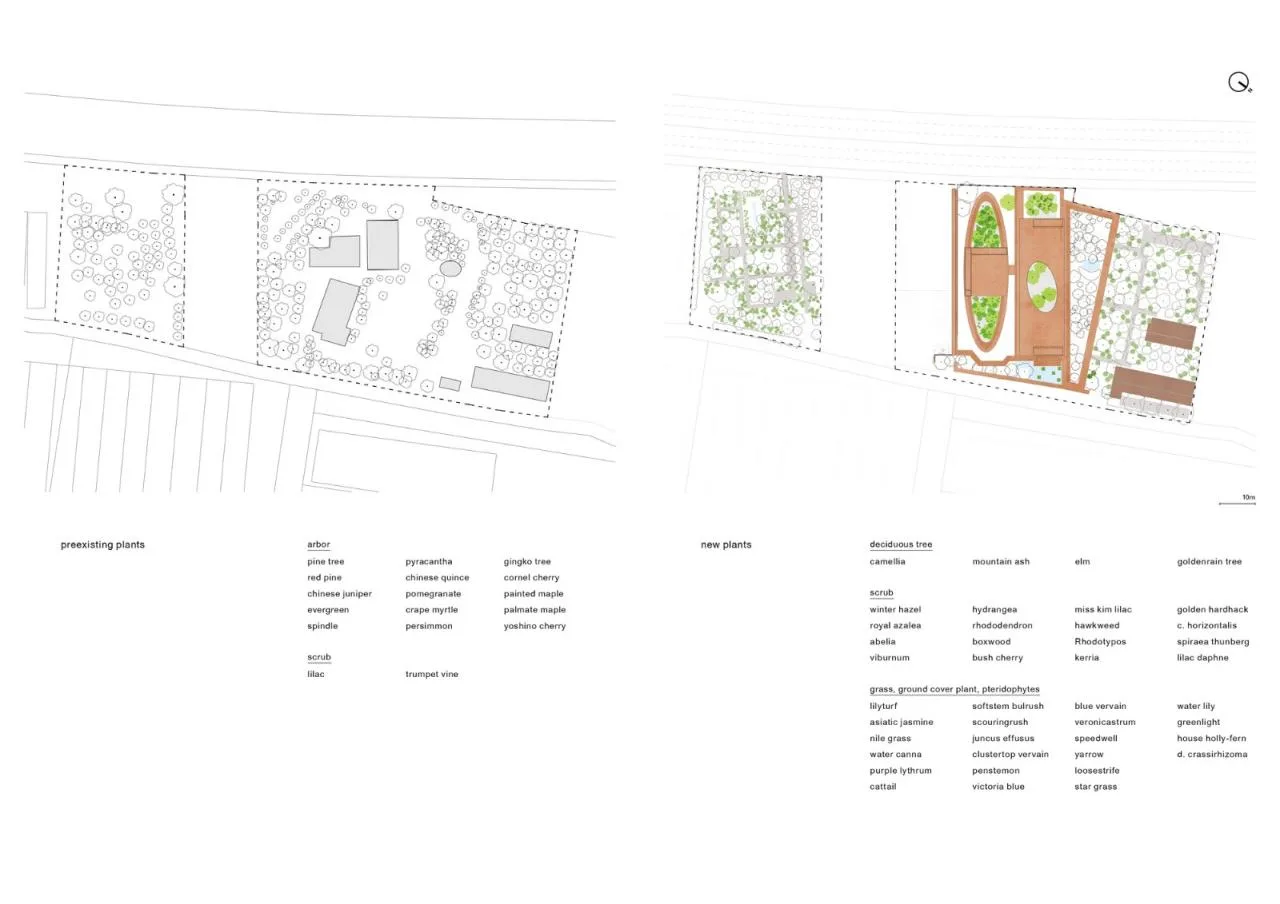
△ Comparison chart before and after renovation
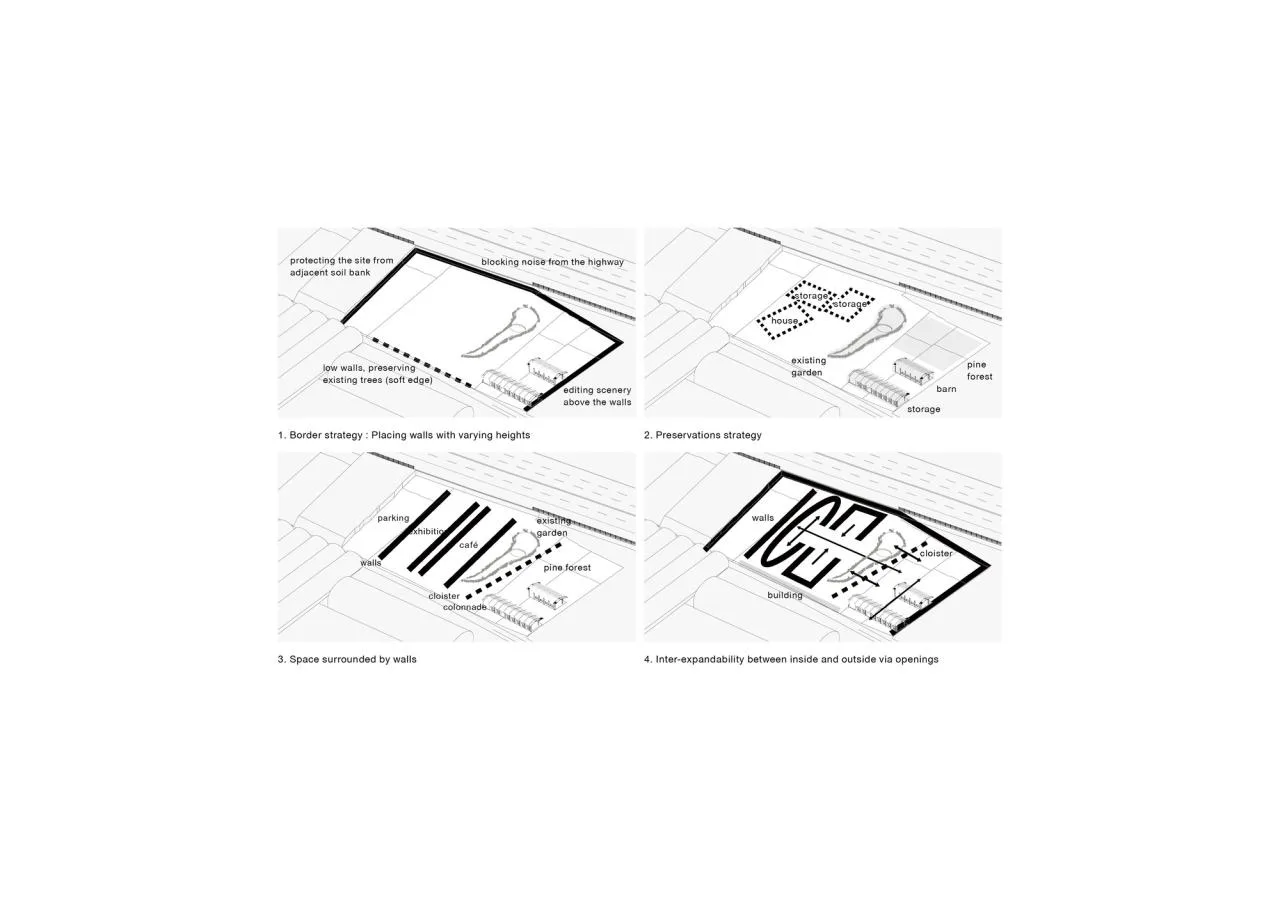
△ Analysis chart
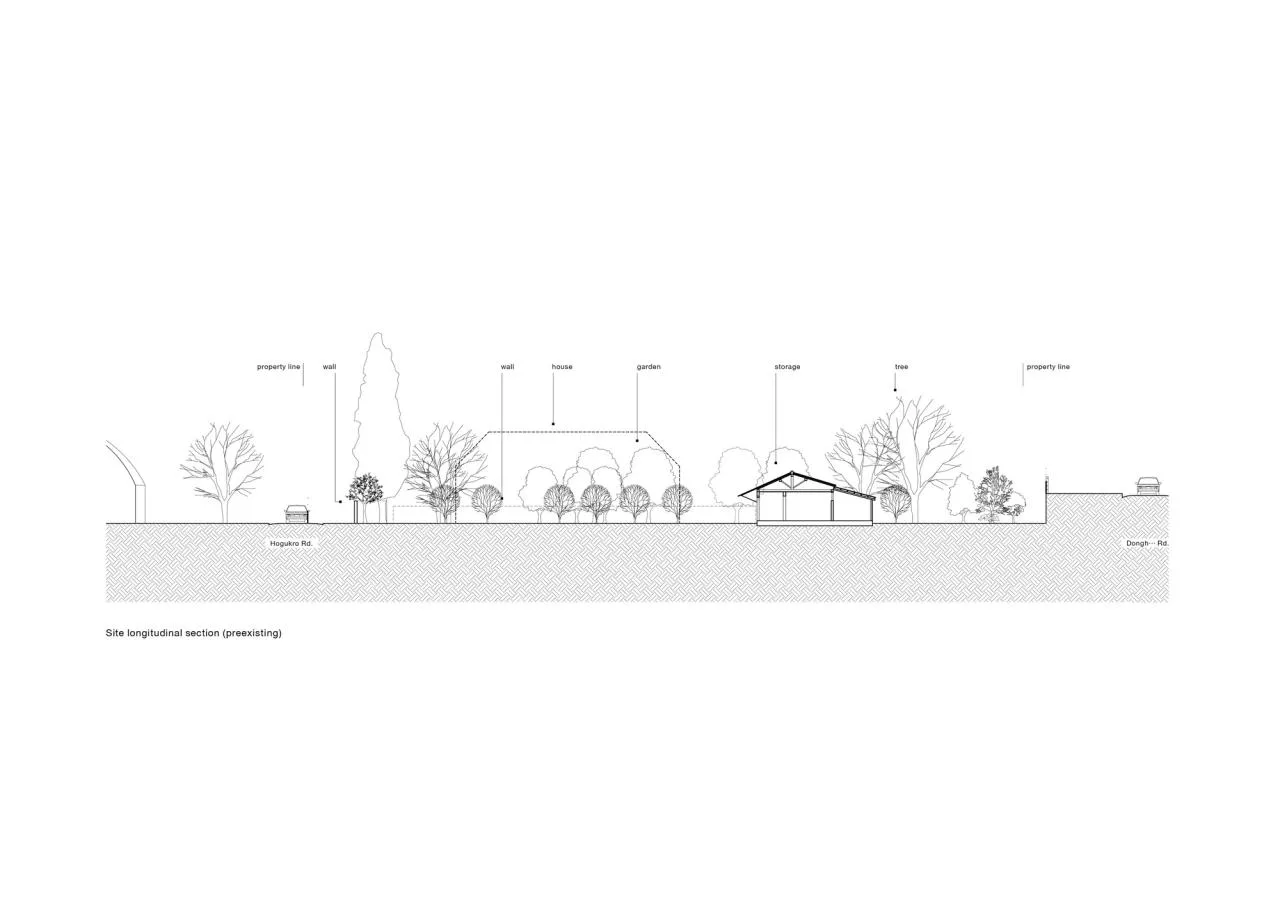
△ Analysis chart
Project Information
Architect: Society of Architecture, Yerin Kang
Area: 1,384 m²
Project Year: 2022
Photographer: Texture on Texture, Kyungsub Shin
Manufacturers: Behr, Namsun Aluminum
Architectural Design: Society of Architecture, Chihoon Lee, Joohee Han, Yerin Kang, Jeongyeon Lee, Haeun Rim
Structural Engineer: Base Structural Consultants
Construction: Mirero
Mechanical Engineer: Ju Sung ENG
Electrical Engineer: Chung Song Engineering & Construction
Landscape Designer: Design Studio Loci
Location: Daegu-si, South Korea













Must log in before commenting!
Sign Up