
BIM technology is applied throughout the entire lifecycle of construction projects. However, many people are unfamiliar with its key features and core components. Today, let’s explore the main characteristics of BIM together.
1. 3D Model Visualization
Traditional 2D diagrams lack the ability to clearly represent overlapping elevations or the spatial relationships between components. Understanding these plans requires experienced professionals who can visualize the design in three dimensions, which is often unintuitive and prone to misinterpretation. This can lead to coordination challenges and overlooked issues. BIM’s 3D visualization feature accurately reflects the architect’s design intent, enabling all project participants to reduce communication errors and improve collaboration efficiency.
2. Parametric Design
The BIM model system consists of parameterized components such as columns, beams, and walls. These components can be pre-built within the software or created by users. Each element carries specific parameters that define dimensions or custom attributes. When a component’s parameters are modified, the entire model updates automatically, ensuring consistency across the design without manual adjustments.
3. Bidirectional Connectivity
One of the strengths of parametric design is its ability to synchronize changes. When a component’s size or information is updated, these changes are simultaneously reflected across all related drawings. Labels and annotations linked to parameters also update automatically, preventing discrepancies and ensuring accuracy throughout construction documentation.
4. Multi-Party Collaboration
Traditional construction projects often face communication challenges because participants come from diverse professions and backgrounds. BIM facilitates collaboration by allowing different stakeholders to work from real-time models. Owners gain access to comprehensive property information; architects can align designs with client requirements; contractors can organize materials and construction details within the model. This integrated approach streamlines communication, enhances coordination, and supports accurate cost estimation for better budget control.
5. Support Throughout the Project Lifecycle
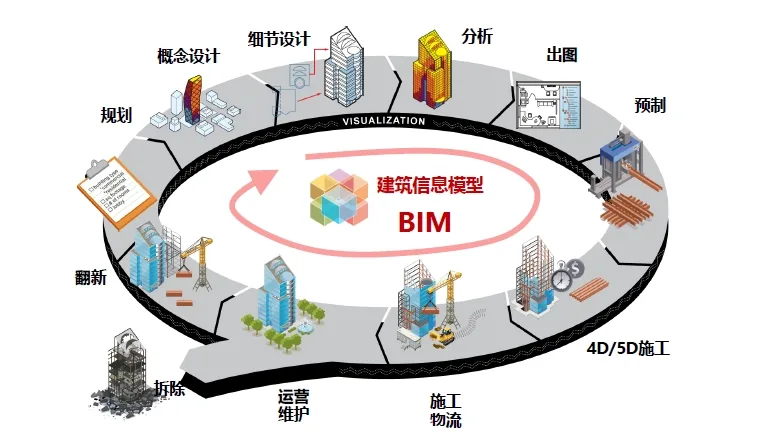
Construction projects span long periods with varying focuses at each stage. During planning, owners must consider many factors, often involving multiple stakeholders with different requirements, making coordination complex. During construction, design information is translated into physical structures, where errors can cause costly rework and delays. After construction, BIM continues to add value by supporting operations such as leasing, maintenance, and equipment updates. By integrating information across all phases, BIM simplifies communication and information management, boosting overall project efficiency.
In summary, these are the key characteristics and core content of BIM technology. We hope this overview helps you better understand its significance!
















Must log in before commenting!
Sign Up